We Know That the Earth is Billions of Years Old

As I mentioned in a previous post I would like to launch a second a blog. The topic would be facts and insights that are either widely disputed or often misunderstood amongst the public, yet important and known to be true to the experts and scientists in the relevant field. I’ve identified hundreds of such cases.

In my previous post I discussed the fact that despite the fact that the scientific community states that Earth is 4.5 billion years old and that humans evolved over millions of years a 2019 Gallup poll, showed that 40% of US adults believe that God created humans in their current form within the last 10,000 years. As a teenager I believed that myself. That was before I knew much about science. I had read agenda driven books that left out, or wrongfully dismissed the evidence for an old earth while presenting faulty arguments for a young earth. Just learning about the relevant science was enough for me to realize that I had been bamboozled. At first, I dug my heels in, but I eventually realized that the belief that earth was 6,000 years old was not tenable and unsupportable by science.

A photo of planet earth. North America is facing the camera.
Is Earth 4.5 billion years old or 6,000 years old? Photo by Pixabay on Pexels.com

My goal for the blog is not to be an exhaustive source for these kinds of topics, or a deep dive into these topics, but just to collect a large set of these unnecessarily controversial topics and provide some insight into the surrounding misunderstandings. Not a complete insight into the topics, but some. Perhaps my blog will lead to some new insights for some, or intellectually honest reflection as well as interesting and friendly discussions.

A man sitting on a rock by the ocean look at the senset.
Perhaps some new insight. Perhaps some intellectually honest reflection. Photo by Keegan Houser on Pexels.com

The format I decided on is to present the evidence for the fact or insight in question as a headline in bold followed by a list of failed objections to that evidence. Then, if applicable, failed arguments for the opposing point in bold as well, followed by an explanation as to why the argument does not work. It may seem like this setup is biased. However, the point is that the fact or insight in question is not commonly contested among the experts for good reasons, and therefore this setup is natural. Naturally, I would be open to counter arguments. I could, of course, be wrong and then I have to remove the fact/insight from my list.

A woman is shouting into the man's face using a megaphone.
I will certainly be open to counter arguments but let’s keep it friendly. Photo by Mikhail Nilov on Pexels.com

Radiometric dating of meteorite material, terrestrial material and lunar samples demonstrate that earth is 4.5 billion years, or more precisely 4.54 billion years old.

  • Radioactive decay rates have changed: This objection does not work because rates of radiometric decay (the ones relevant to radiometric dating) are thought to be based on rather fundamental properties of matter, such as the probability per unit time that a certain particle can “tunnel” out of the nucleus of the atom. Analysis of spectra from quasars show that the fine structure constant has not changed over the last ten billion years. There are dozens of radiometric dating methods that are consistent with each other throughout time. Also, for a young earth you would need the decay rates to have been millions of times faster in the past, which would require changes in fundamental properties that would have plenty of noticeable effects on processes other than radioactive decay, not to mention the radiation being millions of times stronger than today. It would have fried everything.
  • Young earth creationists sometimes make the claim that the initial ratios between isotopes may have been different: That the initial ratios/condition were different in the past and therefore radiometric dating is unreliable. This is a better objection, but it also fails. In this case you must take it case by case for each radiometric dating method and situation. But in many cases the amount of the daughter isotope is known to have been zero, which makes it easy and reliable.
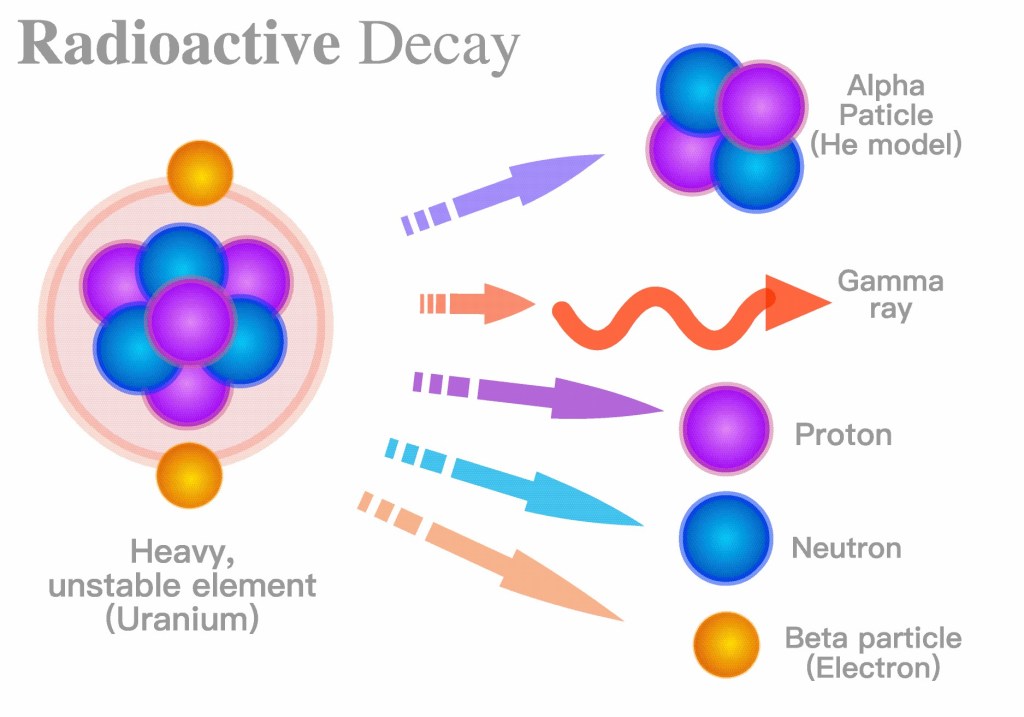
On the left a Uranium nucleus. On the right an alpha particle, gamma ray, proton, neutron, and a beta particle (electron), originating from the uranium nucleus.
Radioactive decay wasn’t a million times faster 6,000 years ago. Stock Vector ID: 2417370135 by grayjay

We can see galaxies that are billions of lightyears away. This does not establish the age of the earth, but it makes a young earth and a young universe implausible.

A common objection to this observation is that lightspeed in vacuum has changed: Similar to above this objection does not work because the light speed in vacuum is a fundamental constant that is not believed to change. It has been measured and no change has been seen. An example is the Einstein’s equivalence of energy and mass E = mc2. If the speed of light once was millions of times faster than now, the energy contained in a kilogram would be a trillion times larger than now. Where did all that energy go? The speed of light is determined by the inverse of the square root of the electric constant multiplied by the magnetic constant. You would have to drastically change the strength of the electric and magnetic fields (by the trillions) to get the speed of light to be millions of times faster. Wouldn’t that be noticeable? The light speed in vacuum shows up in many other physical relations as well. It is not a tenable objection.
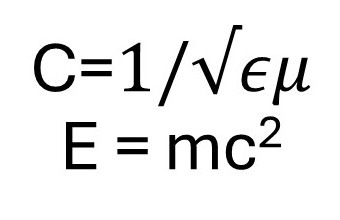
Two equations, James Clerk Maxwell's equation for the speed of light and Albert Eintein's energy and mass equivalency E=mc2
A couple of equations in which the speed of light in vacuum is a fundamental constant.

We know stars are old because they develop according to certain physical processes that for some stars take billions of years. An example is our sun. It has fused (burned up) up five billion years’ worth of hydrogen.

The heavier elements in our solar system originate with older stars that burned out and exploded.

Electromagnetic radiation, including light, heat transfer if you will, travels from the inside of the sun to the surface and this takes 100,000 years. The photons are emitted and reabsorbed over and over, which is why the electromagnetic transfer is lower than in vacuum. If the sun is only 6,000 years old, how can we see it?

Finally, some objections to old earth by young earth creationists.

The earth’s magnetic field has been weakening during the last 130 years as if it was formed from currents resulting from earth being a discharging capacitor (claim by Thomas Barnes). This would make an impossibly strong magnetic field already 8,000 years ago. I remember this being the argument in a young earth creationist book I read as a teenager.

  • The first problem with this argument is that there is no good reason to believe that earth’s magnetic field acts this way.
  • We know that earth’s magnetic field has reversed itself several times thus disproving the discharging capacitor model.
  • Thomas Barnes’ extrapolation completely ignores the nondipole component of the field.
  • Conclusion, this objection is not reasonable.
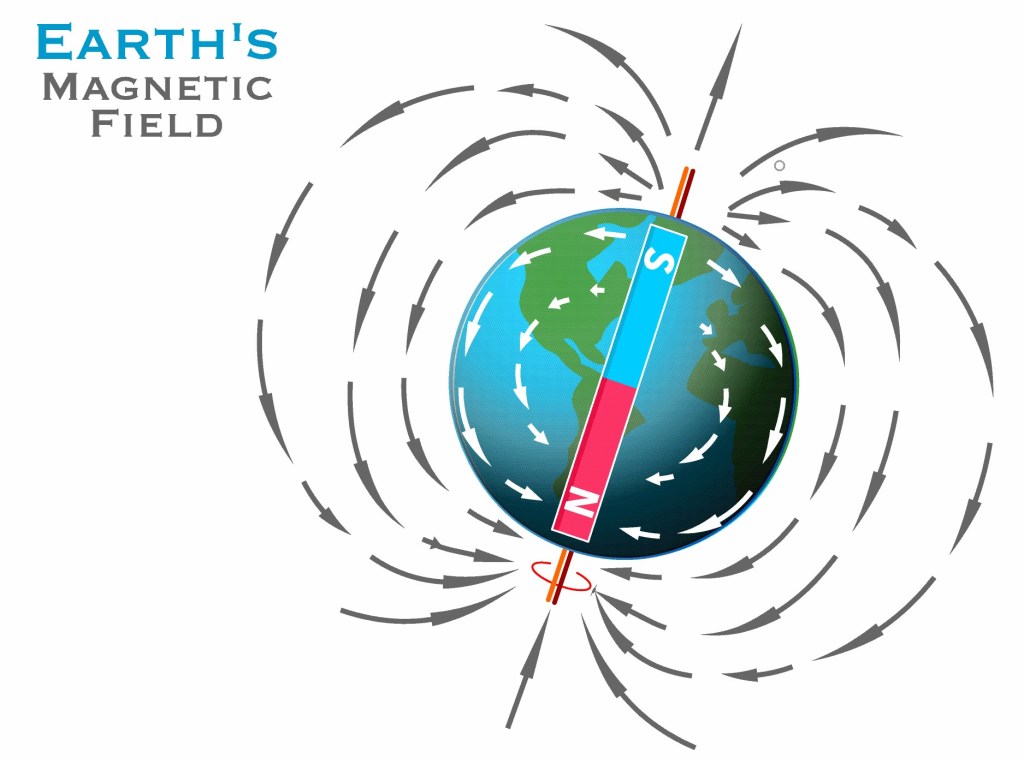
A picture showing earth's magnetic field around planet earth. The north pole end of the magnetic field being in the south and the south end in the north.
Earth’s magnetic field. Stock Vector ID: 1851166585 by grayjay.

If the earth and the moon were billions of years old there would be a hundred feet thick dust layer from meteorites  on the moon. The moon landing proved otherwise. This is another argument I remember reading in a young earth creationist book (Scientific Creationism by Henry Morris) as a teenager.

The problem with this argument, as I would later find out, is that Morris’ claims about a hundred feet thick dust layer was based on faulty and obsolete data. The expected depth of meteoritic dust on the Moon is less than one foot (after billions of years).

If I had known and understood any of this when I was 14 years old, I would not have been bamboozled by the young earth creationists, but it was not the only time I was bamboozled.

Anyway, this is how I envision one blog post in my upcoming blog post adventure. It is a brief overview of why experts/scientists can be trusted in regards the topic of the post. I have not yet decided on a name for my new blog.

My Second Blog Idea

I’ve been thinking about launching a second blog for quite a while. The topic would be facts, or insights that are widely disputed or misunderstood amongst the public, yet important and known to be true. I believe I have identified hundreds of such facts so far. These facts and insights are not seriously disputed amongst the experts and scientists in the relevant fields and the evidence for their veracity is overwhelming. Therefore, verifying the accuracy of these facts and insights should not be difficult, just ask the respective expert community. However, finding the best way to express and explain these facts, determining whether they are important, and verifying that they are widely disbelieved may be more difficult.

One example of such a fact is that the Earth is a lot older than a few thousand years old (6,000 or 10,000 years old). Despite the fact that the scientific community states that Earth is 4.5 billion years old and that humans evolved over millions of years a 2019 Gallup poll, showed that 40% of US adults believe that God created humans in their current form within the last 10,000 years. The evidence from a large variety of scientific fields, biology, geology, paleontology, physics, astronomy, astrophysics, cosmology, etc., contradicts young earth creationism whilst the attempts to discredit the old earth narrative have fallen short.

Trilobite fossil Shutter Stock Photo ID: 1323000239 by Alizada Studios

The reason for wanting to do this is not to prove anyone wrong, but because it is interesting, and it provides a growth opportunity for everyone including myself. In the past I believed false facts and I probably still do. Discovering these and learning about why you most likely are wrong could sometimes be unpleasant at the same time as it is an opportunity for growth and an opportunity to better understand the world. I am hoping to make the site interactive. Readers can suggest such facts, politely dispute my assessments, and add evidence. However, I should say I would like to avoid politics.

When I was a teenager, I believed that Earth and the Universe was 6,000 years old, and that evolution was a hoax. I read young earth books that appeared scientific, and which presented a long list of objections to the established scientific narrative. My religious background had something to do with it, but I also thought that I had the scientific facts on my side. I was interested in science, and I got accepted to “Naturvetenskaplig linje”, a Swedish high school program for students with good grades and who showed aptitude for science. This program was like taking lots of AP classes in math/calculus, physics, biology, and chemistry, and it prepared me well for my university level studies in engineering physics and electrical engineering.

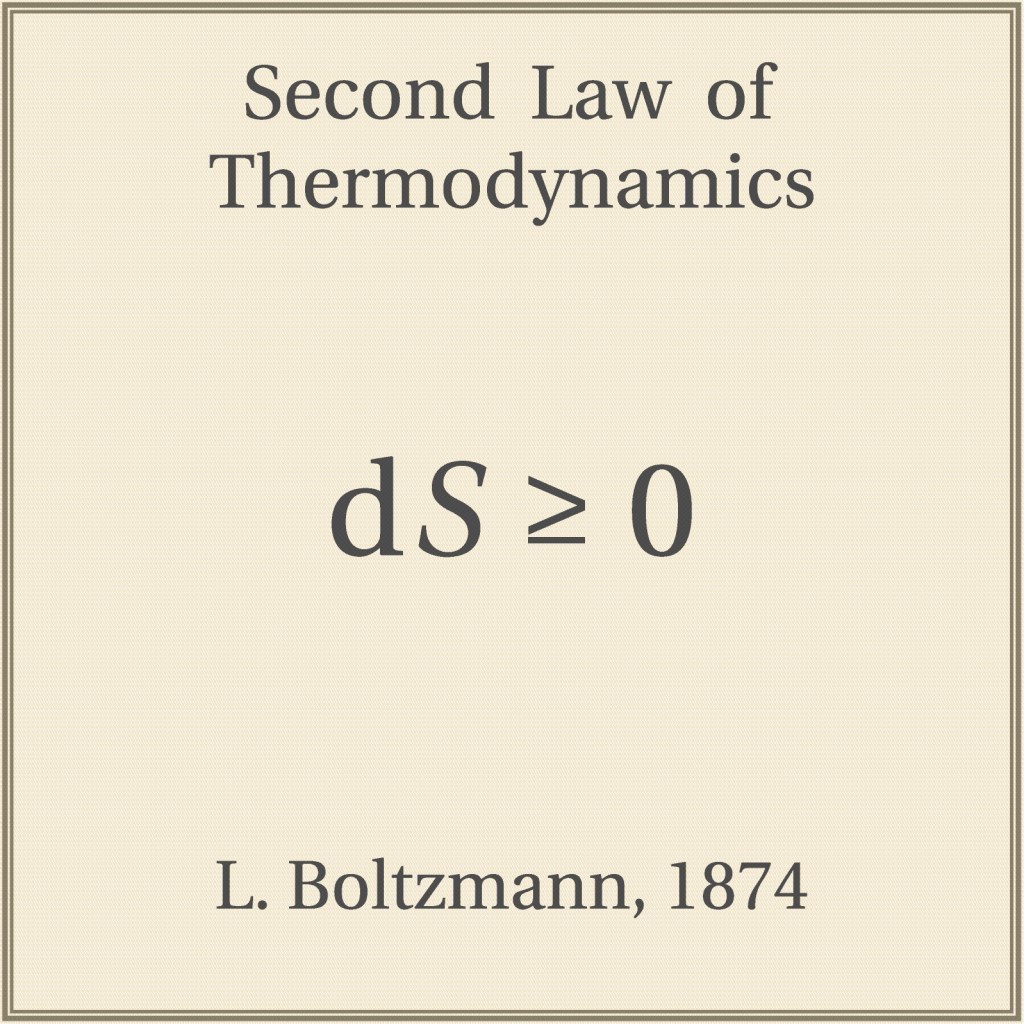
In physics I learned about radiometric dating. Sure, that topic had been mentioned in the young creationist books as well, but they had insisted that radiometric dating was unreliable, and they had suggested that radioactive decay rates might have changed. Now I learned why radiometric dating was very reliable, why radioactive decay rates remained constant, about the physical laws involved, not to mention the facts that highly sped up radioactive decay rates would have resulted in not just a very radioactive world, it would have forced changes to physical laws that would have broken the world. In thermodynamics I learned that the claim that the second law of thermodynamics contradicted evolution was based on a very simple, in fact silly, misunderstanding of the second law of thermodynamics.

Ludwig Boltzman’s formula from 1874
Second law of thermodynamics Shutter Stock Vector ID: 2342031619 by Sasha701

From astronomy and astrophysics, I learned that it takes 100,000 years for light to travel from the inside of the sun to its surface. I learned that distances between stars and galaxies were thousands, millions, and even billions of lightyears, yet we could see them. How can we see a galaxy whose light has been traveling for 10 billion years if the Universe is only 10,000 years old? The young earth answer to that was that light might have travelled at a much faster speed in vacuum in the past, neglecting the fact that the speed of light in vacuum is a universal constant that is part of a lot of formulas E= mc2 (energy content of mass), the ratio of the electric and magnetic force, time and space formulas, the size of black holes, Einstein’s gravitational constant (strength of gravity). 10 billion years versus 10,000 years means that the speed of light must have been a million times faster, gravity a trillion trillion (septillion) times weaker, and according to E = mc2 99.99999999% of the Universe’s energy must have vanished.

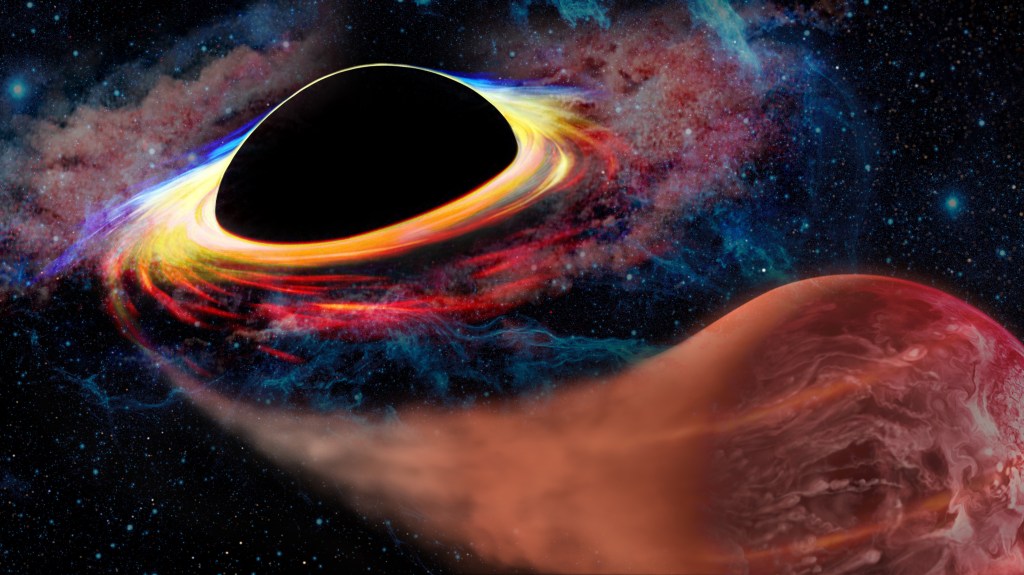
A black hole is sucking in a planet
Black Hole Stock Photo ID: 2024419973 by Elena11

As time went on every single claim that the young earth creationist had made fell apart. In other words, knowing some science made the young earth narrative not only untenable but silly. To be honest with myself I had to give up the young earth belief system. Naturally, the universe could have been created yesterday, our memories could be implanted, and we could all be dreaming like in the Matrix. Science isn’t 100% certain, but some beliefs are much more plausible than others.

Young earth creationism wasn’t the only time I had been bamboozled. I think because I have a fairly strong science background combined with the facts that I have been bamboozled and I have accepted that reality, and the fact that my interests are so wide makes me a good candidate for launching this type of blog. I would like to present the fact and instead of arguing just give the reader a basic and understandable overview of the evidence with links to reliable sources. The reader can then sort it out for themselves. Again, I am hoping to get some help with suggestions and growing it to eventually thousands of examples/posts. Then I want to select, let’s say, the 100 best ones. Below are some examples of what I am interested in.

  • We know that the world is a lot older than 10,000 years old and yet many dispute that.
  • Evidence for evolution is strong, evidence against it is lacking, something many don’t know or deny.
  • We know that economic externalities are real (market failures), yet market fundamentalists are unaware of this.
  • Someone creating a duplicate account of you on Facebook does not mean you were hacked, yet many make that assumption.
  • Wind power is not a major cause of bird death. Fossil fuels and cats are a lot worse (hundreds of times).
  • We know that homeopathy does not work, yet it is widely used.
  • Global warming is real and is known to be caused by us, yet many deny this.
  • Plastic is not a big environmental problem for the US.
  • Poverty, violence, child mortality has been sharply reduced worldwide to the surprise of many.

My question now is what should I call the blog? Super Facts, Deep Insights, Eye Openers, Transformative Facts, Bamboozle Medicine, Big Memos, ….