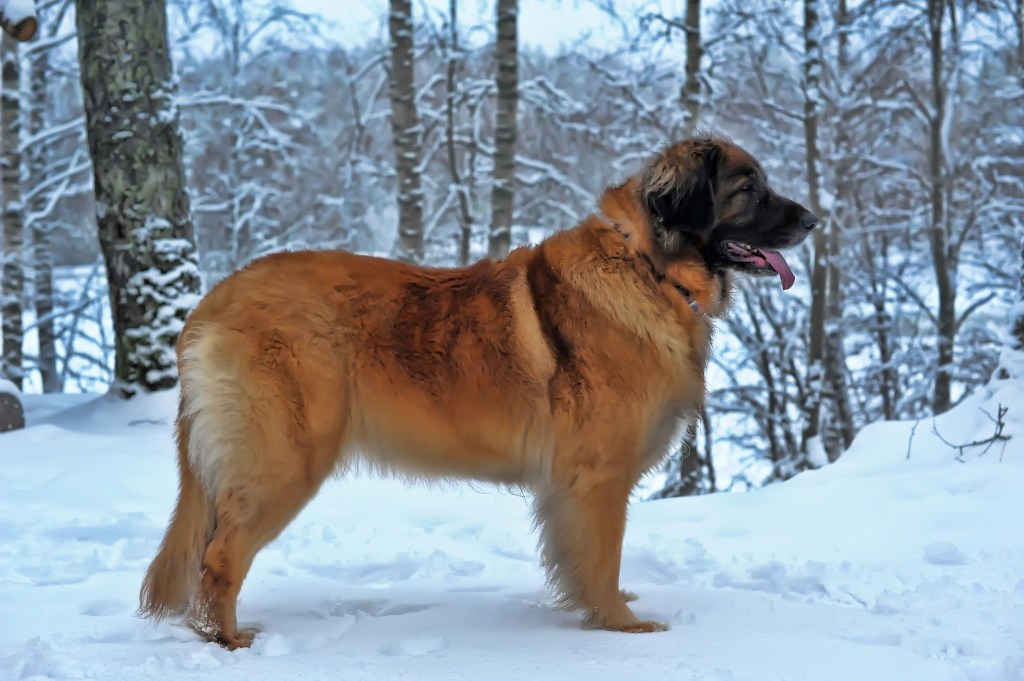
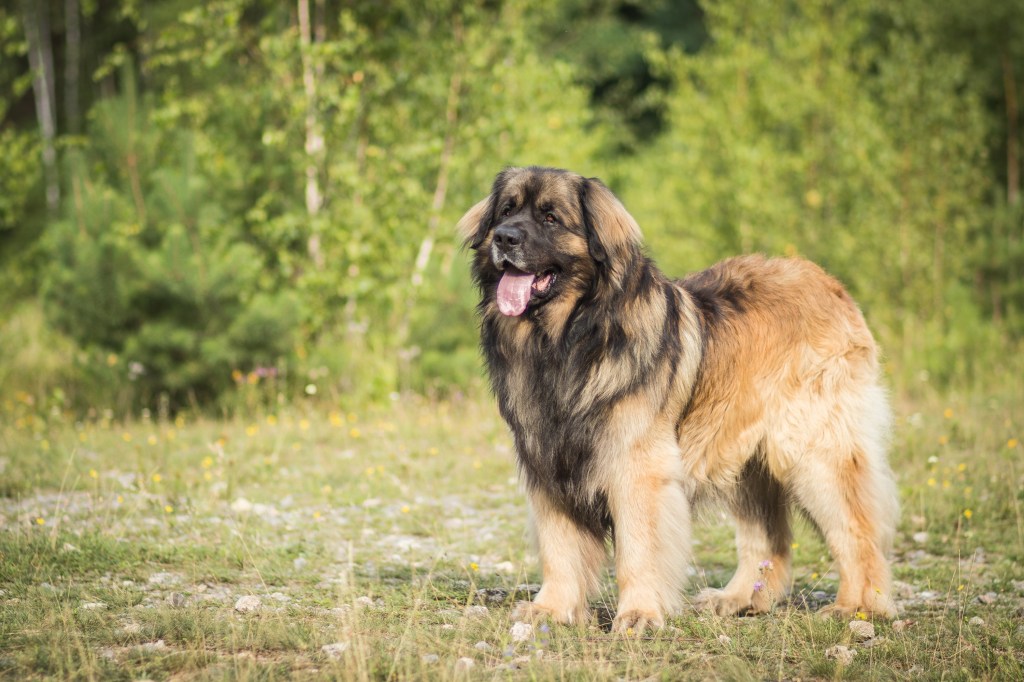
Swedish Norrlandish English French and Dog

Daily writing prompt
Which languages do you speak and how did that impact your life?

The focus of this blog is Leonberger dogs but sometimes I write about other things, for example, about myself. This time I am responding to the daily Writing prompt “Which languages do you speak and how did that impact your life?”.

Swedish or Norrlandish

My native language is Swedish because that is where I was born and grew up. Since I lived in northern Sweden, I speak Swedish in a dialect referred to as Norrlandish. I was told by a Dutch linguist that Norrlandish is different enough from main Swedish that Norrlandish could be considered its own language, especially in the region where I grew up where the Norrlandish dialects are especially distinct. He was very familiar with the local variants of my dialect, which I found to be amazing. I was also amazed by the fact that he spoke so many languages. If I don’t remember incorrectly this linguist claimed that he spoke 30 languages.
Swedish flag on blue sky with white clouds. 6 June. Flag. Celebration Holiday National Day Festive.
Flag of Sweden in sunny rays high on the flagpole. Shutterstock asset id: 2344367957 by GenOMart.
Anyway, languages evolve, including Swedish. Things like Television, local travel, etc., tend to dilute and evolve dialects. However, I’ve been in the US for a few decades, and I’ve lived in Texas for 25+ years, which means that the way I speak Norrlandish has not evolved much, which has led to some interesting situations.
For example, once when I was shopping at a local grocery store in northern Sweden the cashier told me, “It is so nice to hear someone who still speaks the old way”. She was curious about how I had managed to keep the old dialect, and she asked me where I was living. Maybe she expected me to live in a cabin deep in the forest without a TV or radio. It was obvious from her reaction that she did not expect “I live in Dallas, Texas”.

Now I speak American or as some call it English

An American flag on the background of a blue sky.
The flag of the United States of America Shutterstock asset id: 2566207745 by Ashley Grise.

One of the languages I studied back in school was English. The other was German. My parents did not speak any English, well, at first. However, my dad took English classes as an adult and was able to get by. My guess is that when I was done with school, I spoke English at the B1 level, possibly B2 level, according to the Common European Framework of Reference for Languages, which rates your language skills in any language from A1 to C2 (A1 is beginner, then comes, A2, B1, B2, C1, C2, C2 is like a native speaker).

B1 means that you can participate in a conversation with some difficulty, understand a newspaper article that does not have difficult language, write a short essay on any unexpected topic using multiple tenses, and understand a radio newscast that is not too fast.

In 1987 I was sent to Case Western Reserve University by my University, Uppsala University, Sweden, as a university level exchange student for one year. I was studying electrical engineering and physics. During that year I met my wife and after living in both the US and Sweden we ended up staying in the US. I had some difficulties with my English at first but with respect to learning a different language nothing beats being embedded in the language and I soon spoke and understood English I think pretty well. The type of English that we had studied in Swedish school was British English, but now the English that I absorbed was American English. Thereof the tongue in cheek of the title of this section.

I view being fluent in the main language of the country you live in to be of high importance. I have no problem understanding, speaking, reading or writing in English. However, it is very difficult to lose your accent when you have learned a new language as an adult. Just think of Arnold Schwarzenegger. Children can do it more easily. They say that the cut-off age is 12 years old. It is quite uncommon for people who are not fluent in at least two or more different languages to grasp this. On several occasions people have expressed their surprise over the fact that I still have an accent. Sorry the accent stays, and it is not my choice. You can read a related post “Accents are very difficult to lose” over at my second blog.

Another second language fact that you will find in that post is that Spanish has 74 million non-native speakers in the world, making it number eight with respect to the number of non-native speakers (second language). Oh, you thought it was the most popular second language in the world after English? Well, that is a common misconception here in the US due to the closeness to Latin America. I have often come across people who do not consider me bilingual just because I don’t speak Spanish. There are thousands, actually millions, of ways of being bilingual.

Now I am learning French

French flag against blue sky
Flag of France. Shutterstock asset id: 2457252007 by Kyrylash Stanislav.

My wife has a sister in France and her parents speak French. When she decided to improve her French by taking French lessons for adults, I joined in with her. I don’t know if it is because of age, or because I am not putting in enough time into it, but it is going slow. However, I did pass the French B1 exam, which means I can participate in a conversation with some difficulty, understand a radio broadcast if they don’t speak fast, read a newspaper, and write short essays in French. However, I don’t think I can become fluent in French unless I somehow stay in France, or another French speaking country for some time.

So far, my experience in French has not been of very high importance to me. However, it is a hobby, it is something interesting that my wife and I can do together, and French speakers cannot speak behind my back without me knowing.

Speaking Dog

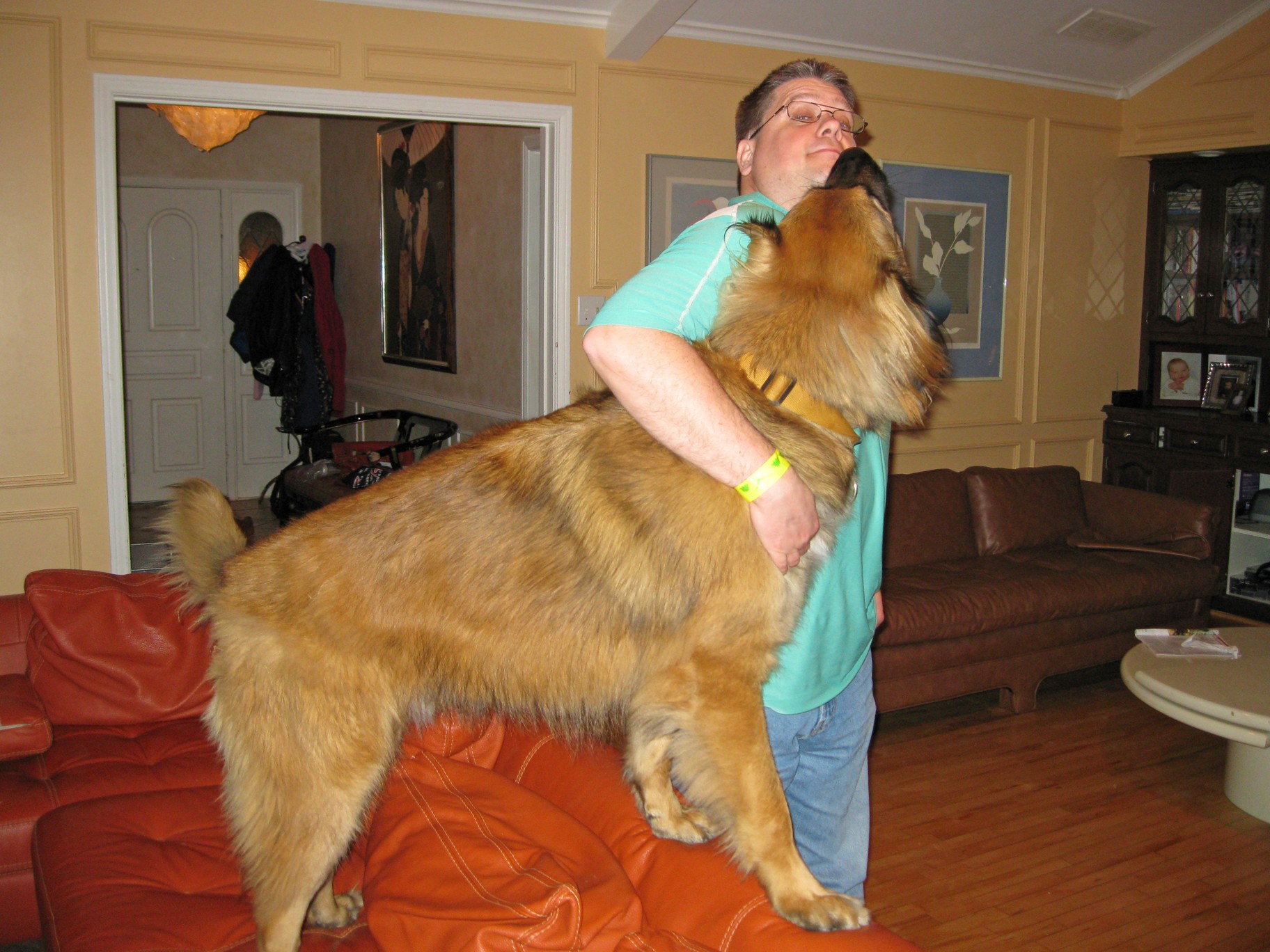
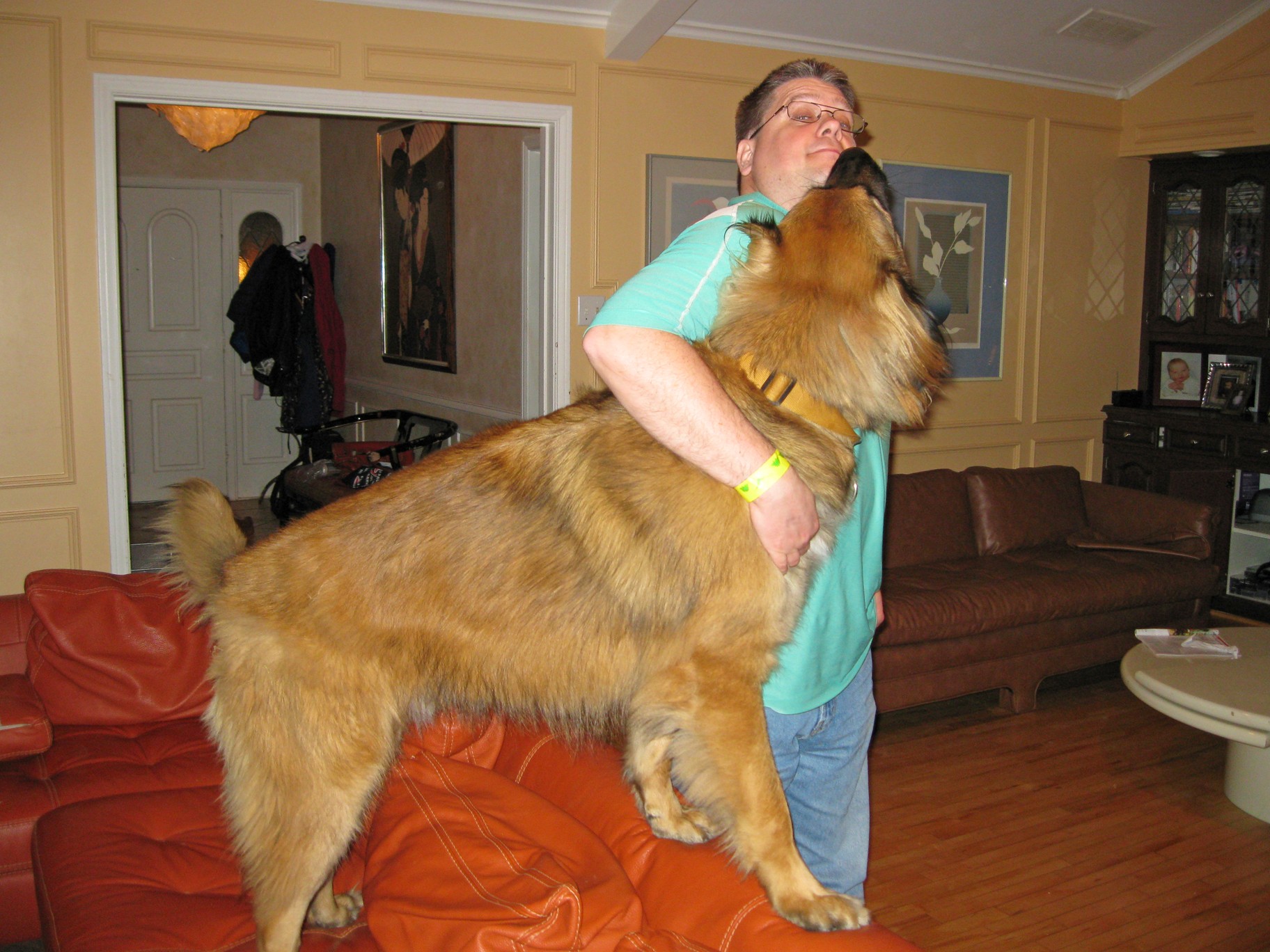
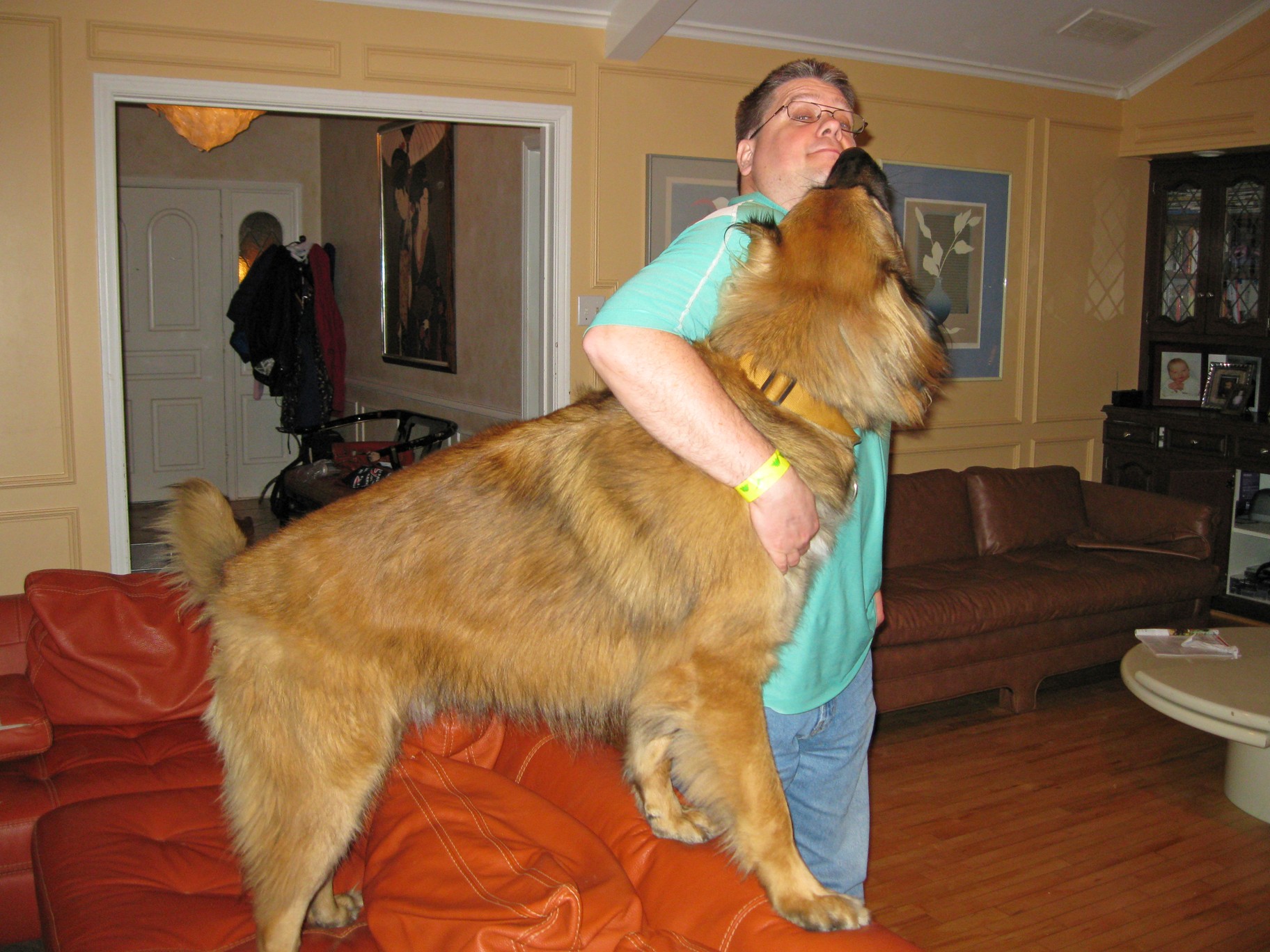
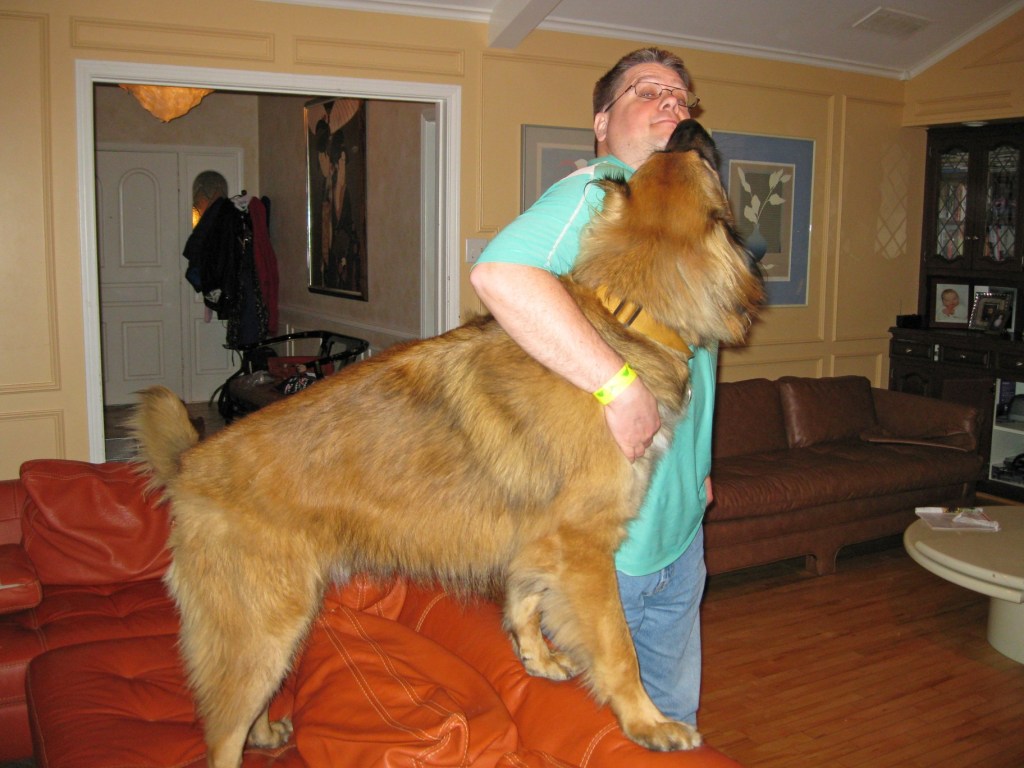
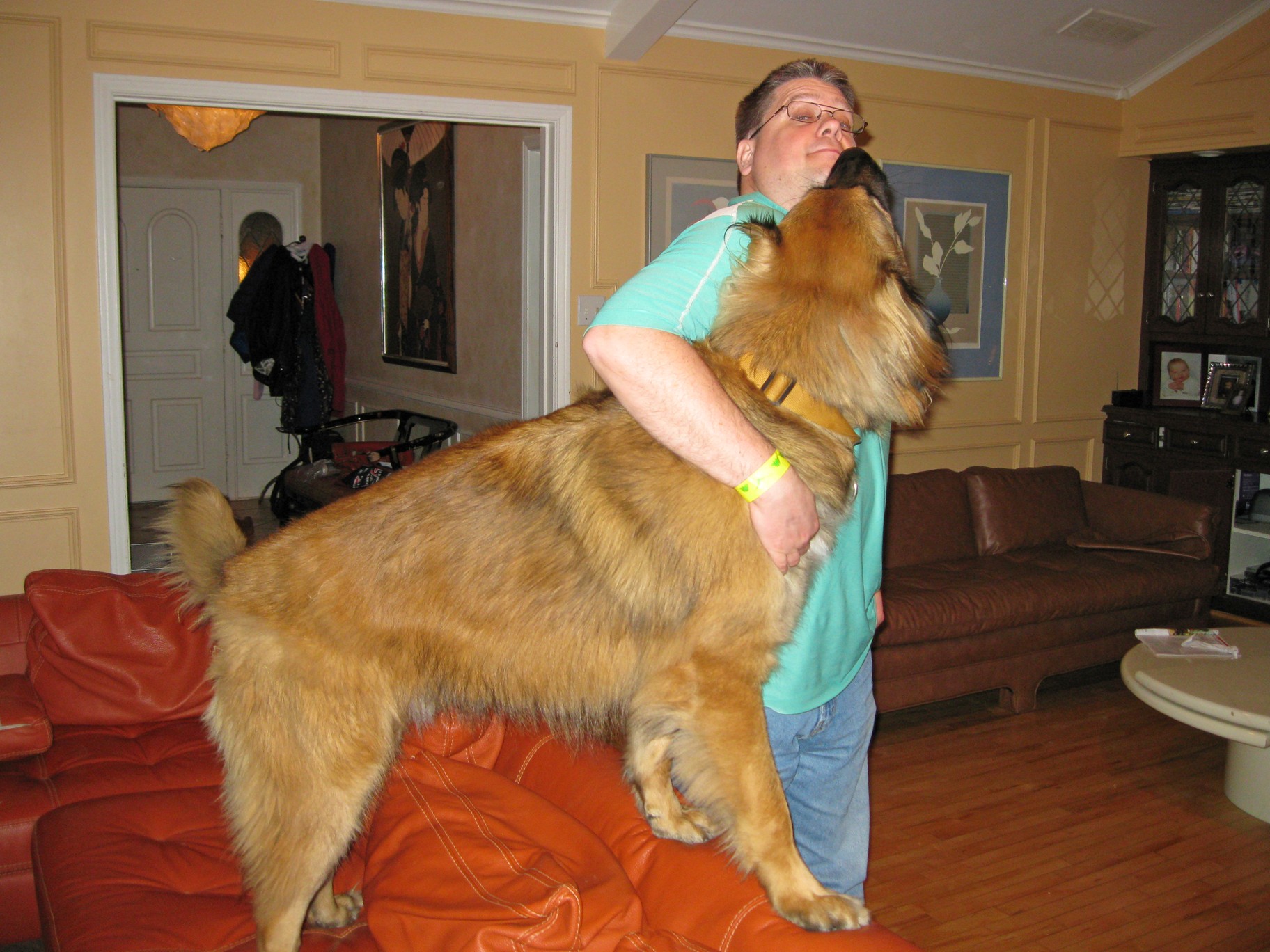
Big brown Leonberger dog standing on our red leather sofa stretching forward to give me a hug.
My Leonberger dog Bronco is giving me a hug.
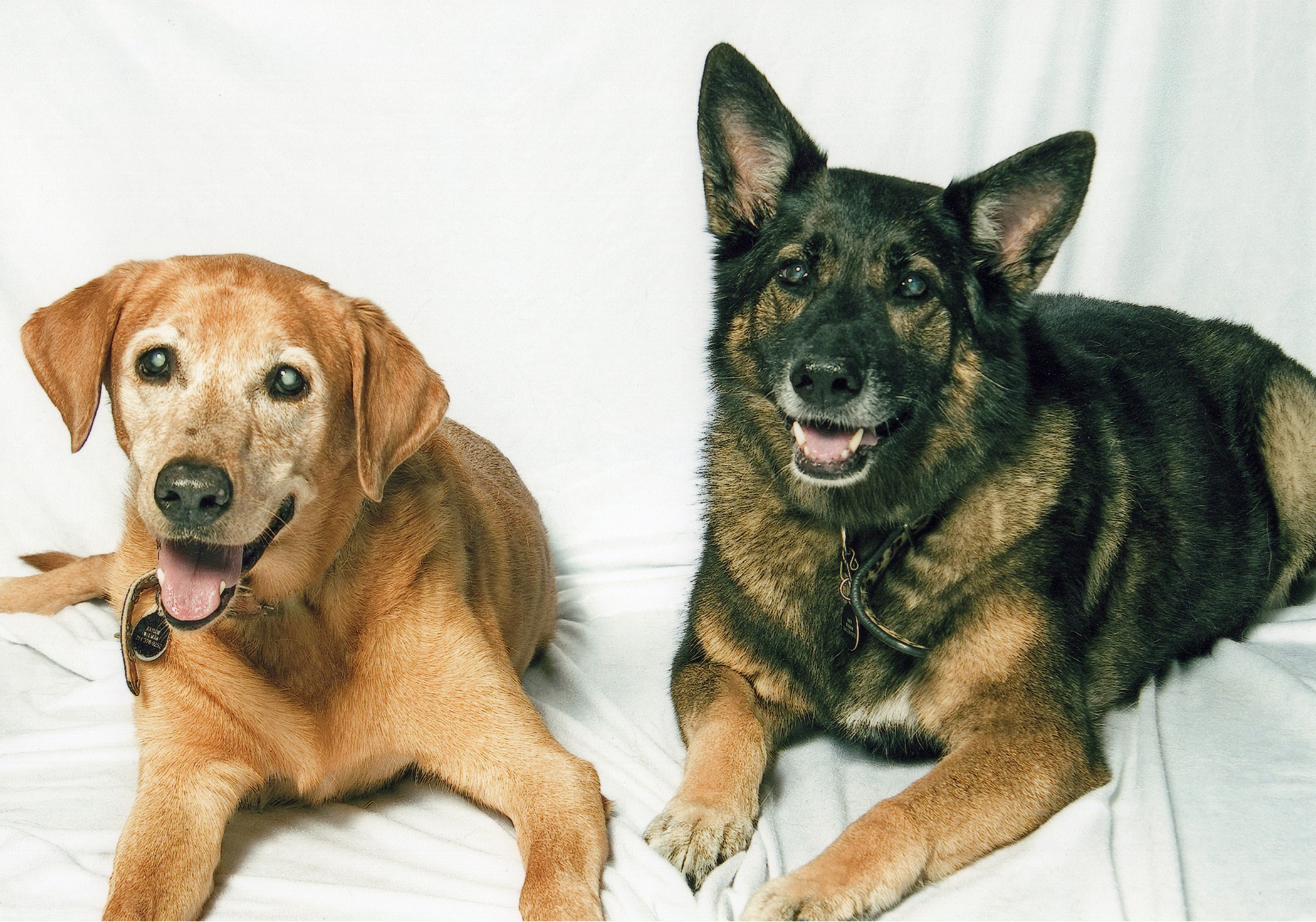
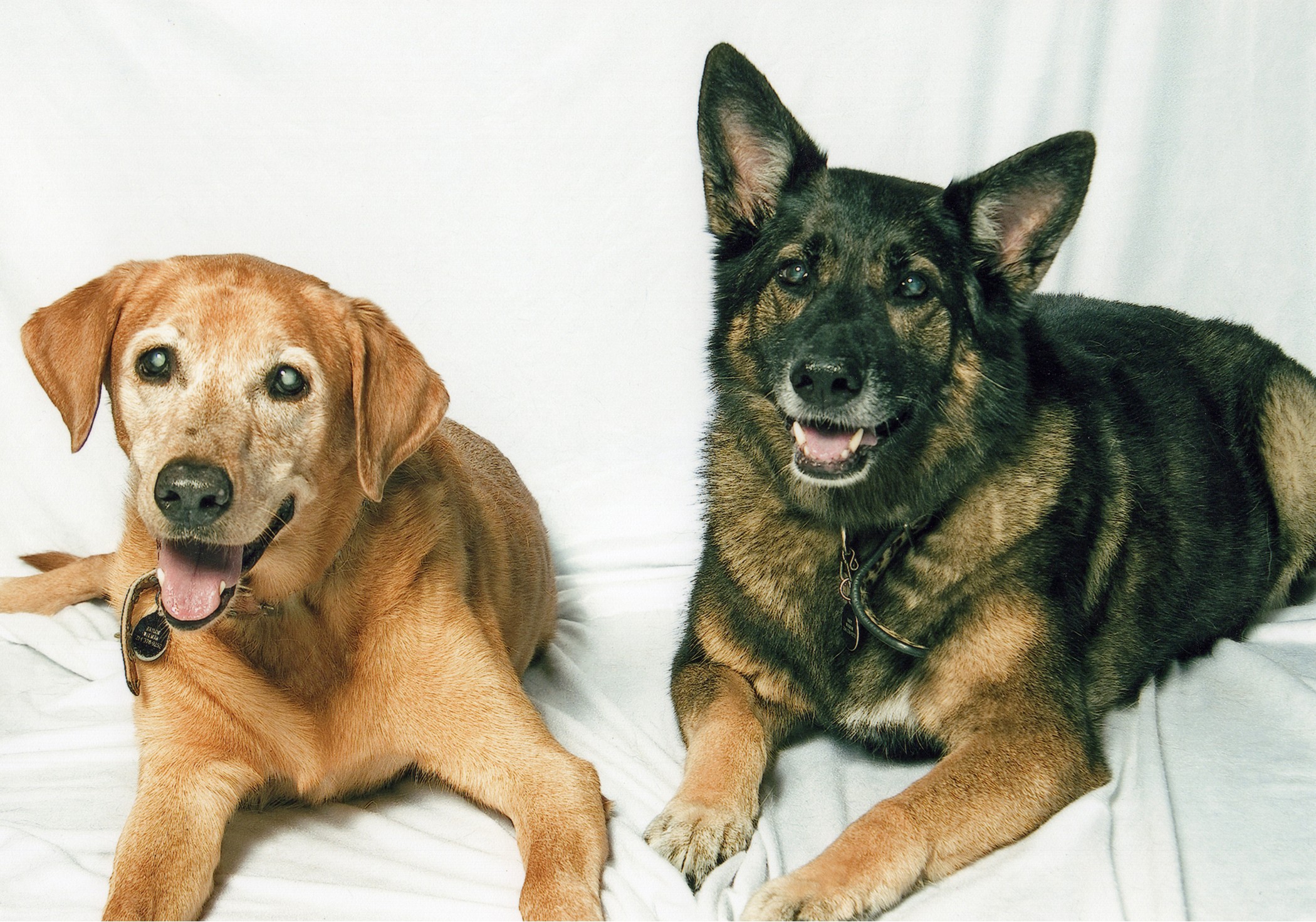
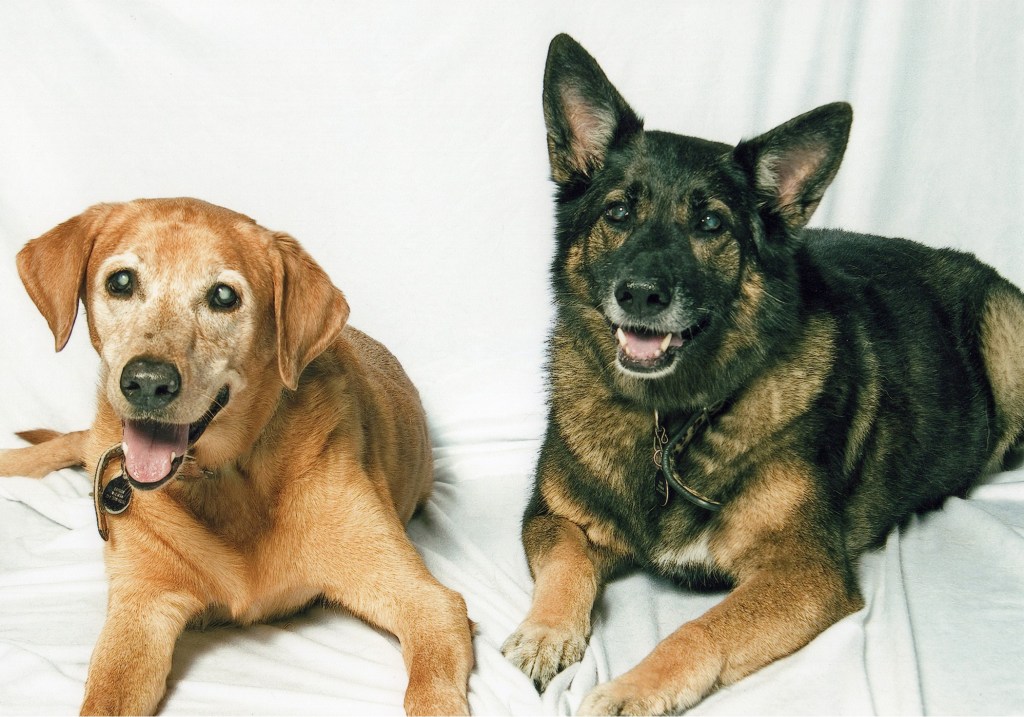
Our yellow Lab Baylor is sitting on the left. Our brown-black German Shepherd Baby is sitting on the right.
Our Labrador Baylor and German Shepherd Baby. They were both rescues.
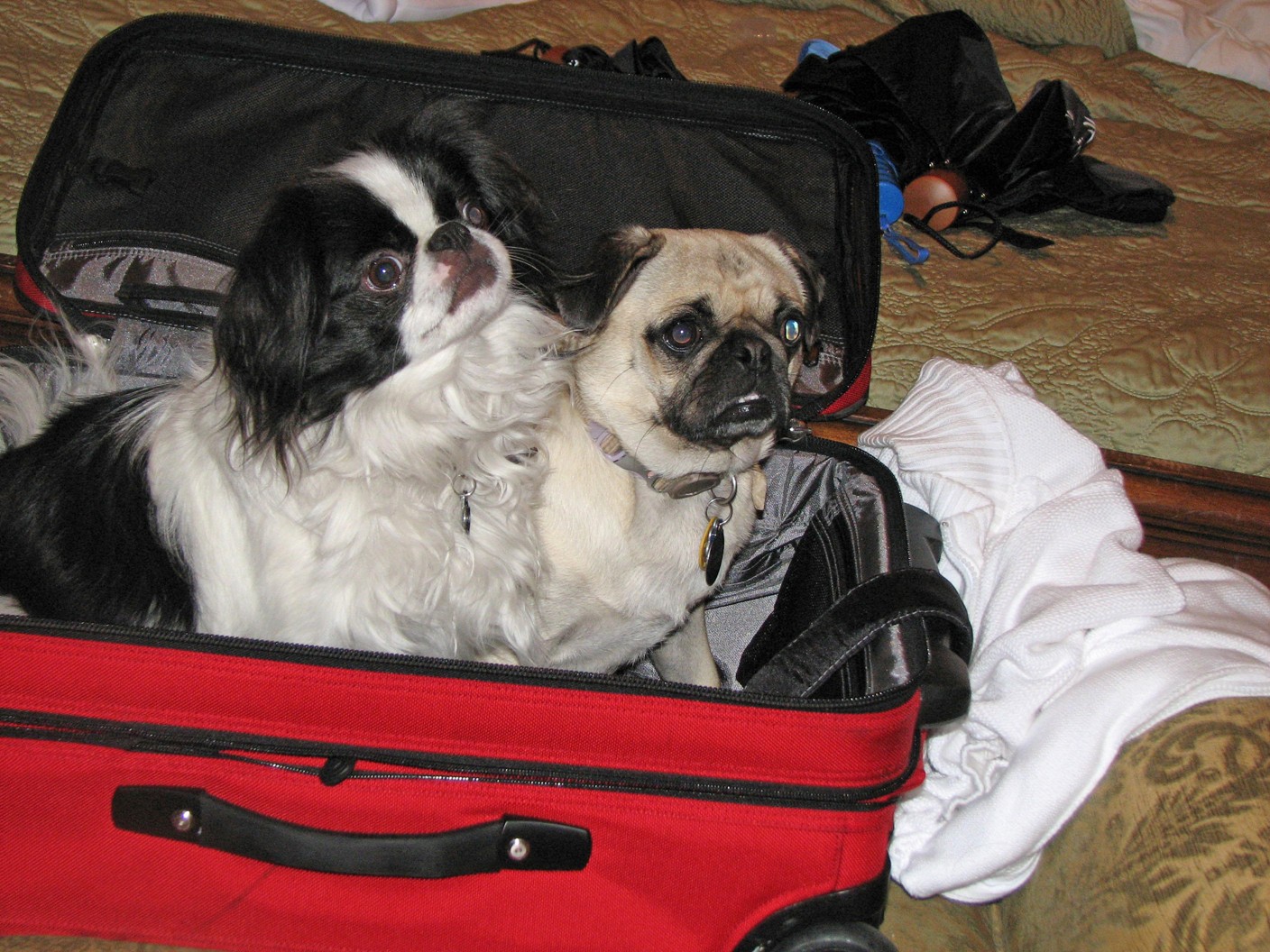
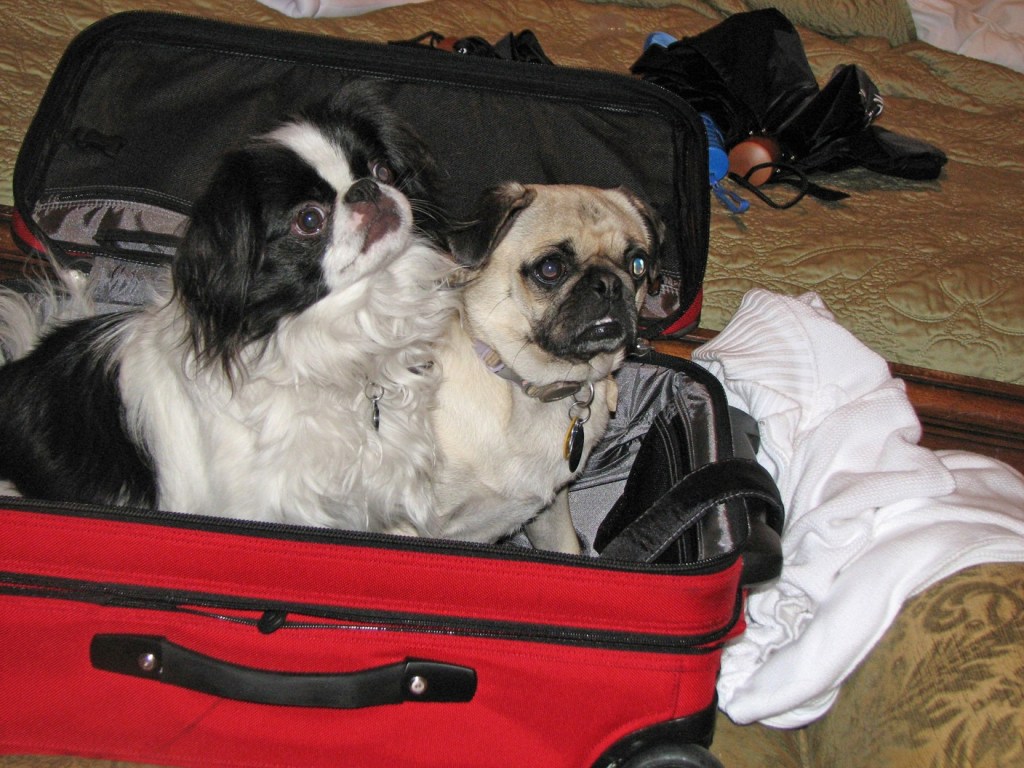
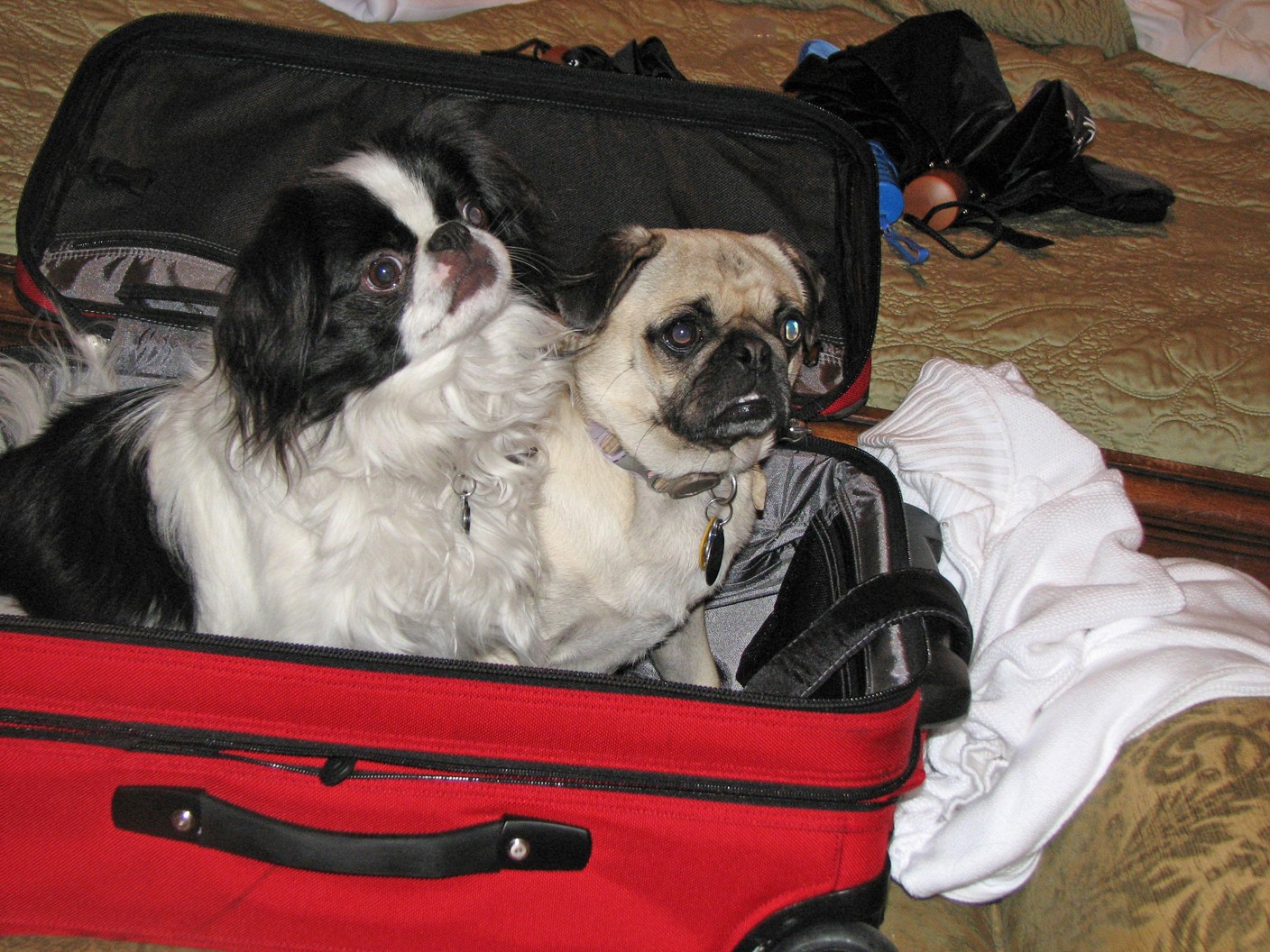
Ryu and Daisy are sitting inside a red suitcase looking defiant.
Our Japanese Chin Ryu and Pug Daisy staging a protest against us travelling.
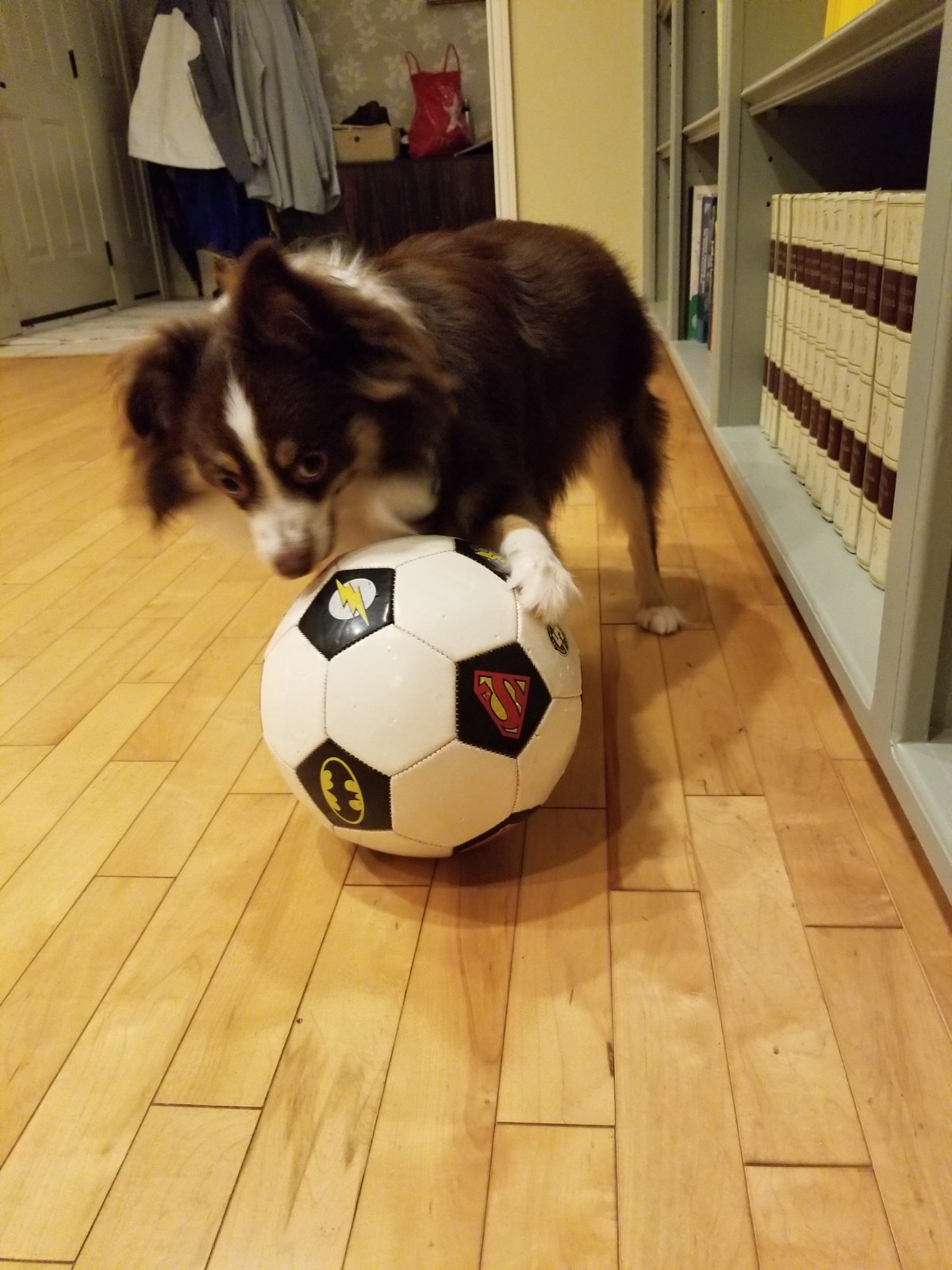
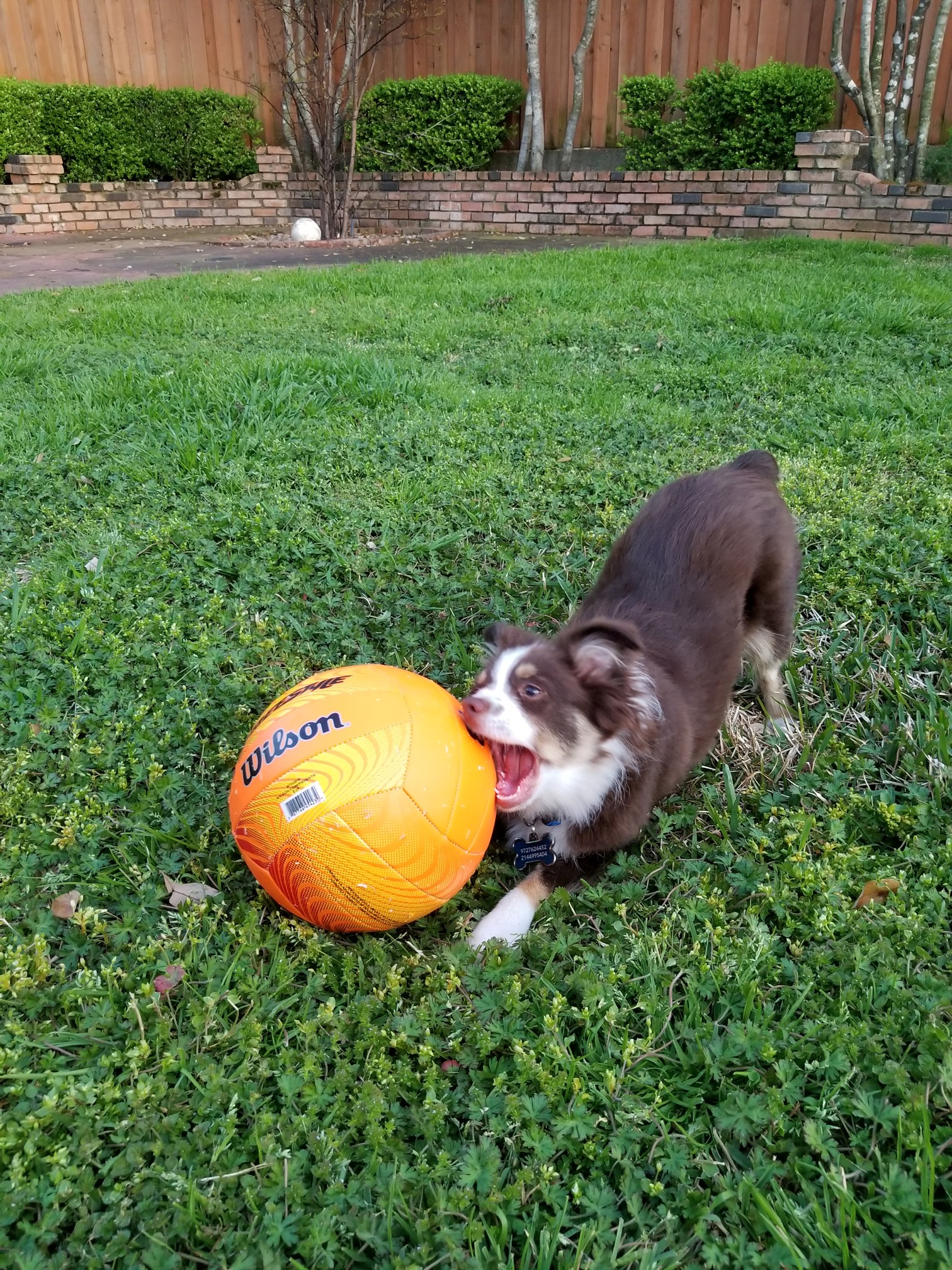
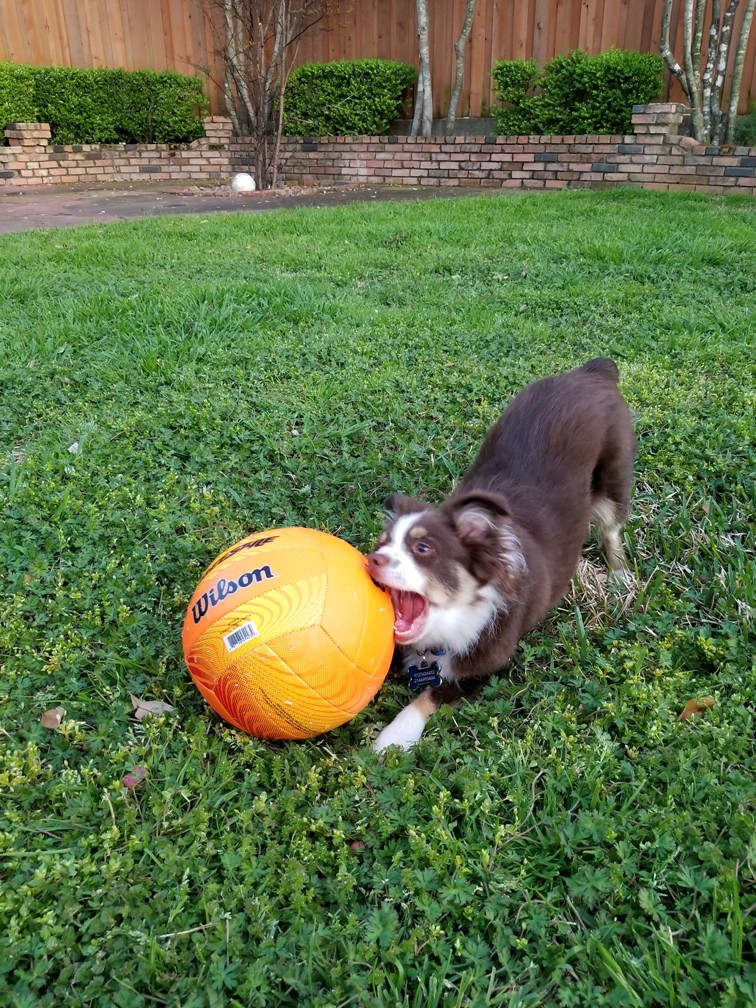
Our mini-Australian Shepherd puppy Rollo is playing with an orange volleyball on the green grass.
Our mini-Australian Shepherd puppy Rollo playing with an orange ball.
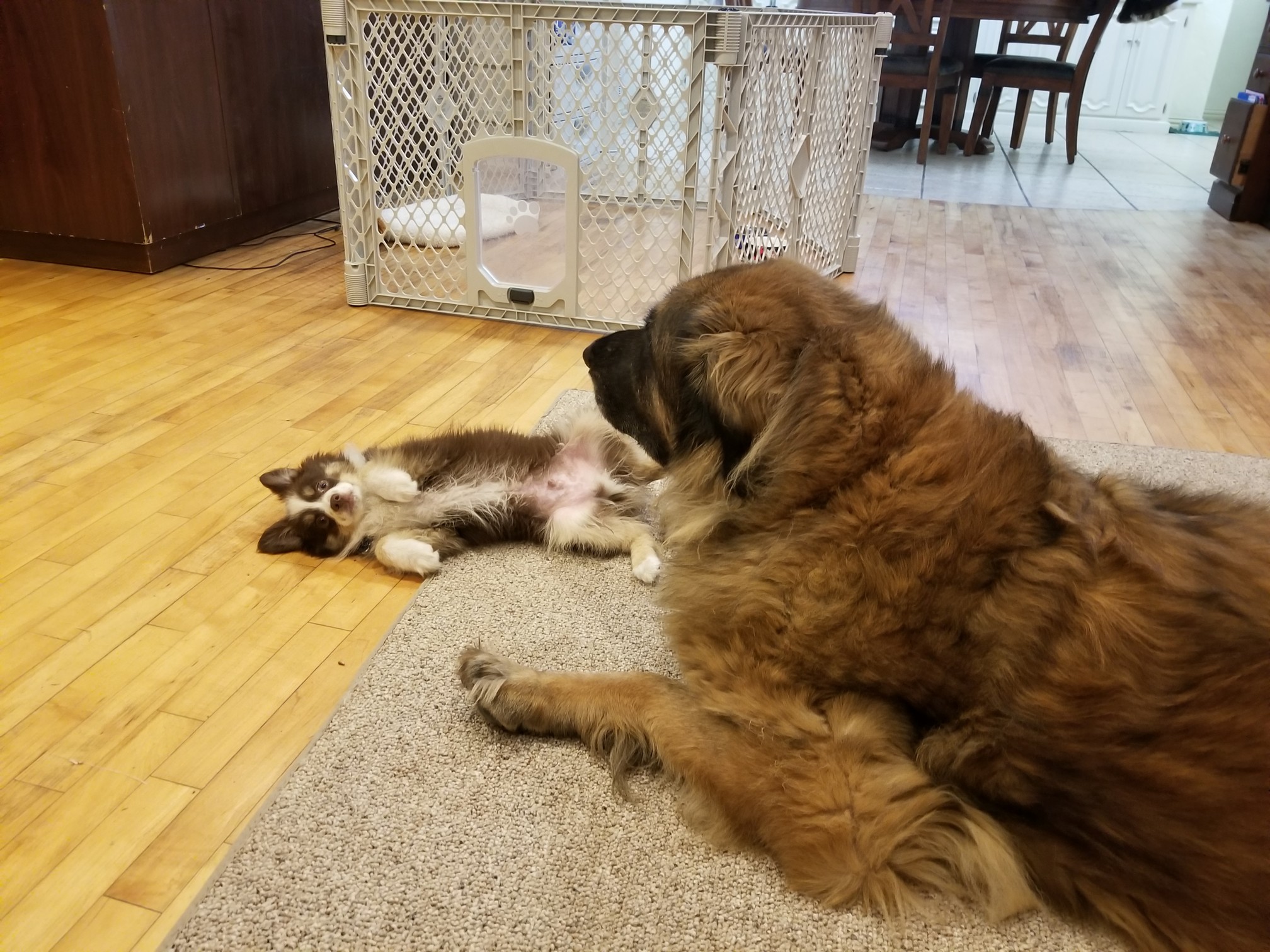
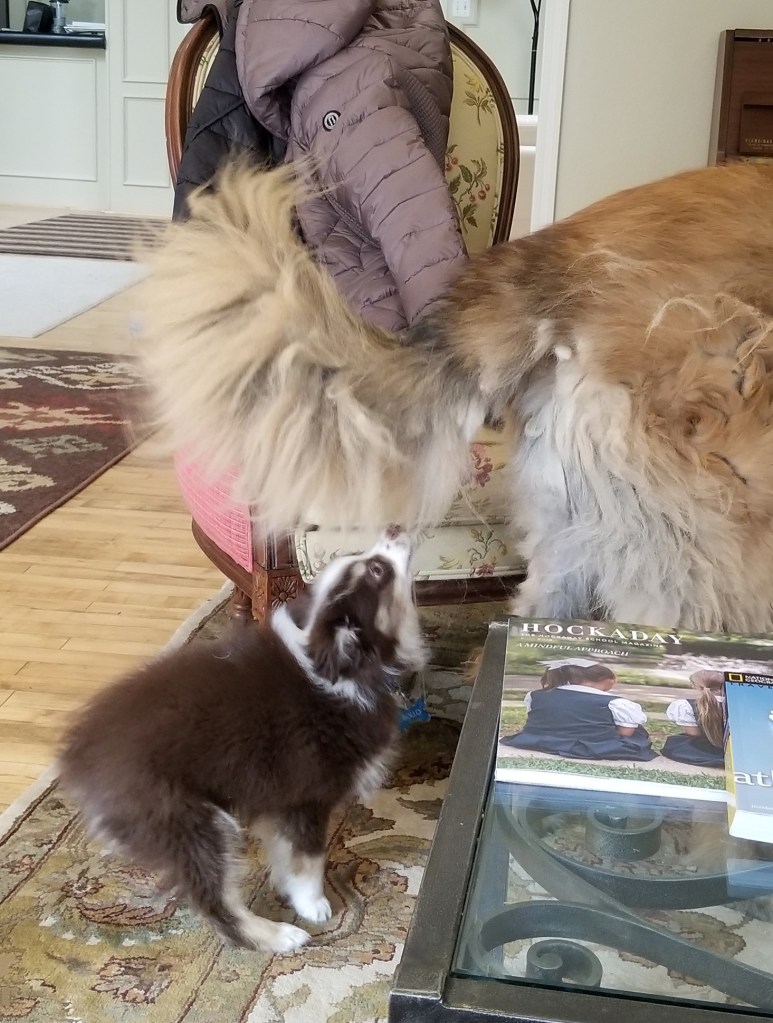
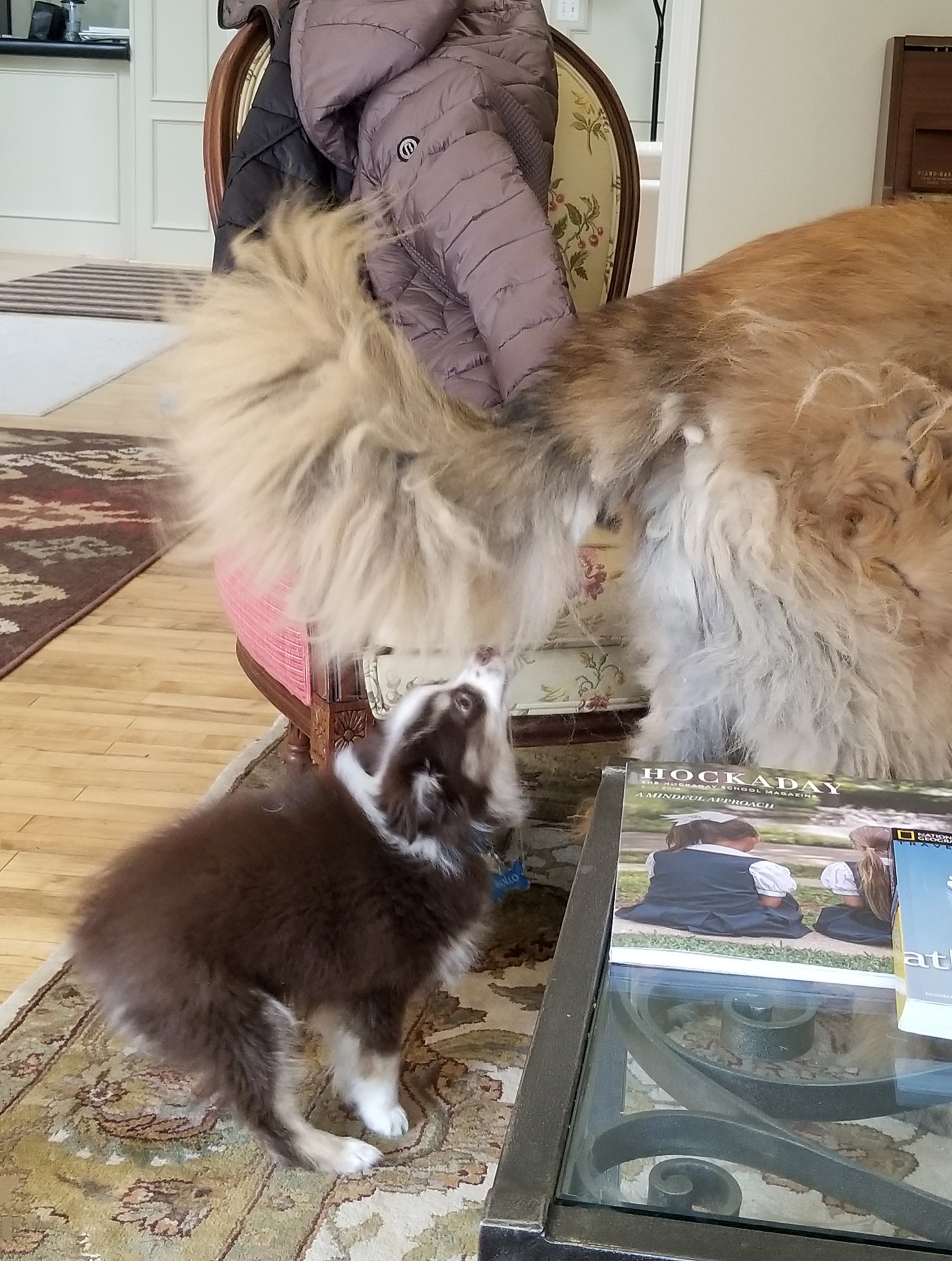
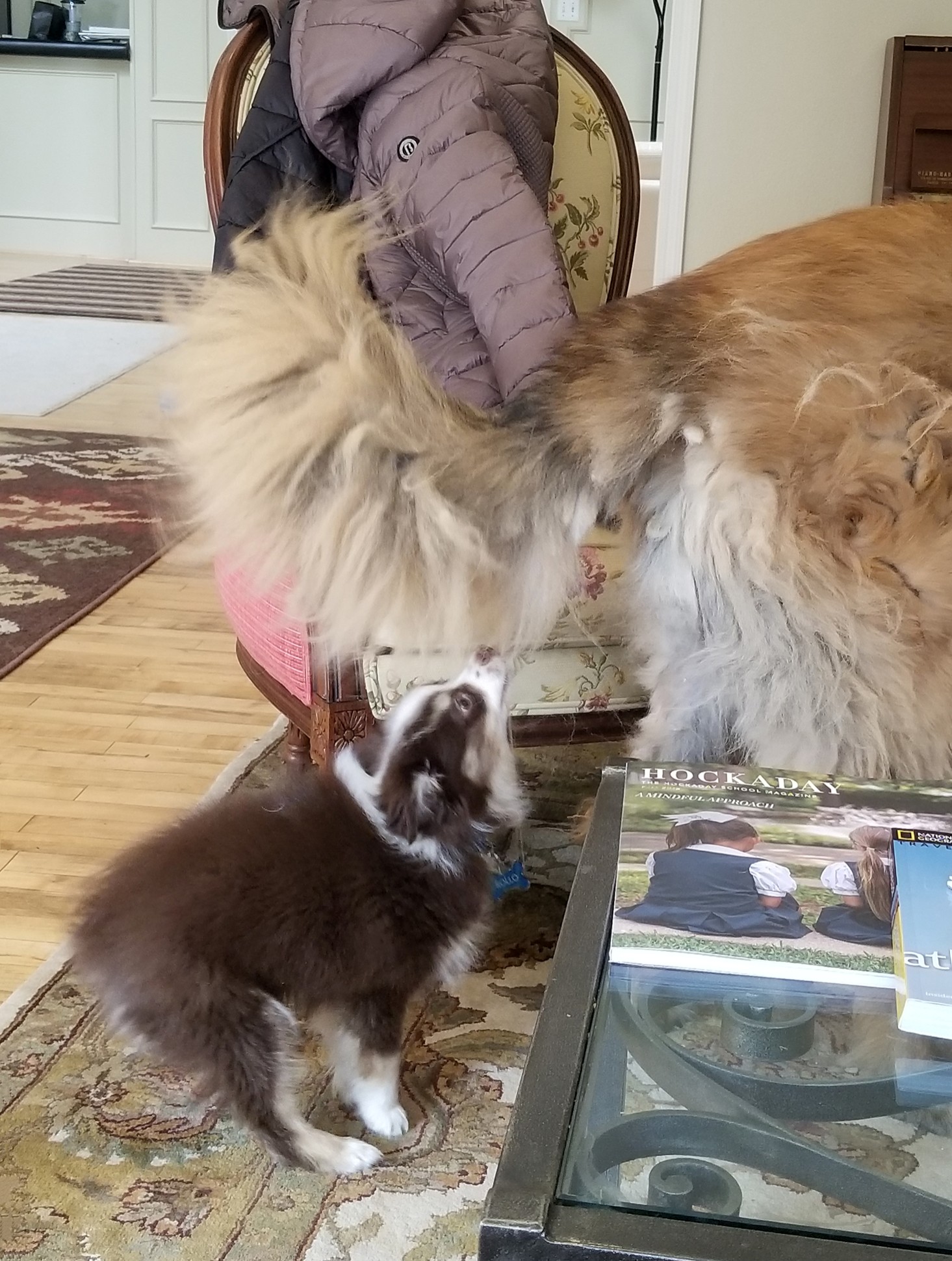
The photo shows a dark brown/black and white mini-Australian Shepherd biting a Leonberger dog’s tail in the living room.
Our mini Australian Shepherd is harassing our Leonberger dog Bronco and biting his tail. Bronco was very patient with him.

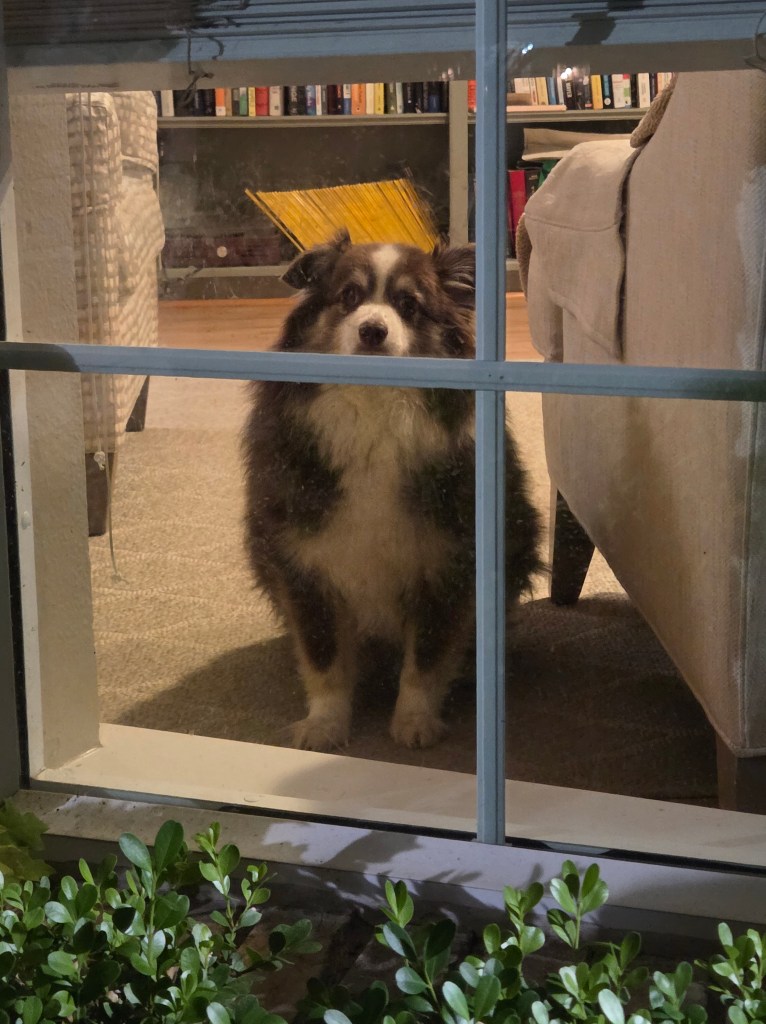
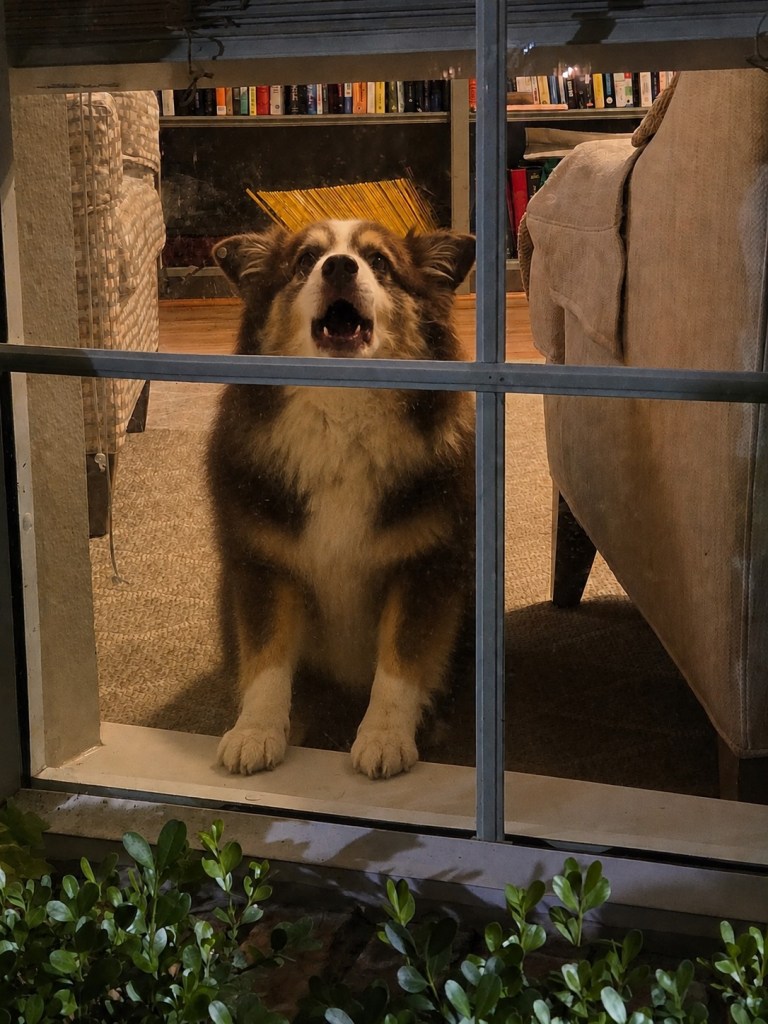
Dogs don’t speak human languages, but they can understand many words and react to them. Some dogs such as our mini-Australian Shepherd Rollo understand several hundreds of words. If you tell him, “Rollo go look out the window”, he goes and looks out the window. If you tell him, “We are going to Jack and Etty”, he starts screaming happily and running around in circles, because he knows he will get snacks there. If you say “bribe” he comes running expecting a handout, just like a politician. I could go on.

Dogs don’t speak with words, but they express themselves through body language and different kinds of barks, and if you pay attention, they can tell you a lot. For example, when Rollo lays down on his side and lets out one loud bark, he wants a belly rub. When it is 4PM and he starts staring at me, he wants dinner. When I am sitting in the sofa and he scratches my leg with his paw, it means, “move over so I can sit in the sofa”. So, you could say I also speak Dog. Sometimes people call me the dog whisperer, which I like to hear. Well, except for the sarcastic tone.

Managing Stress for Dog Owners

A professional content writer by the name of Ryan Goodchild contacted me about me posting an  article he had written on how to manage stress for dog owners. The title of the article is “How to Manage Stress Naturally with Simple Daily Habits”  and you can see the article below. Ryan wrote the article and I provided pictures.

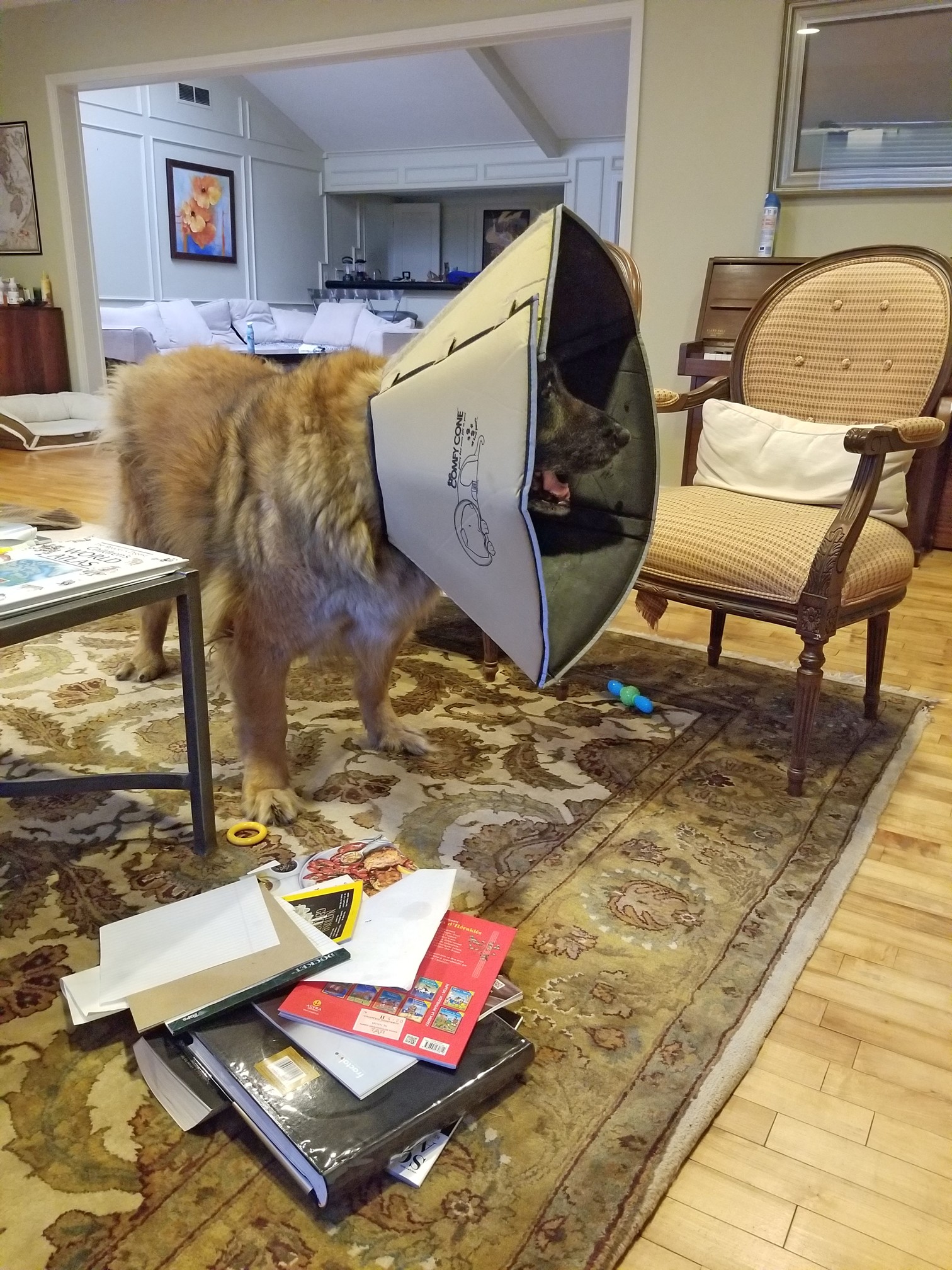
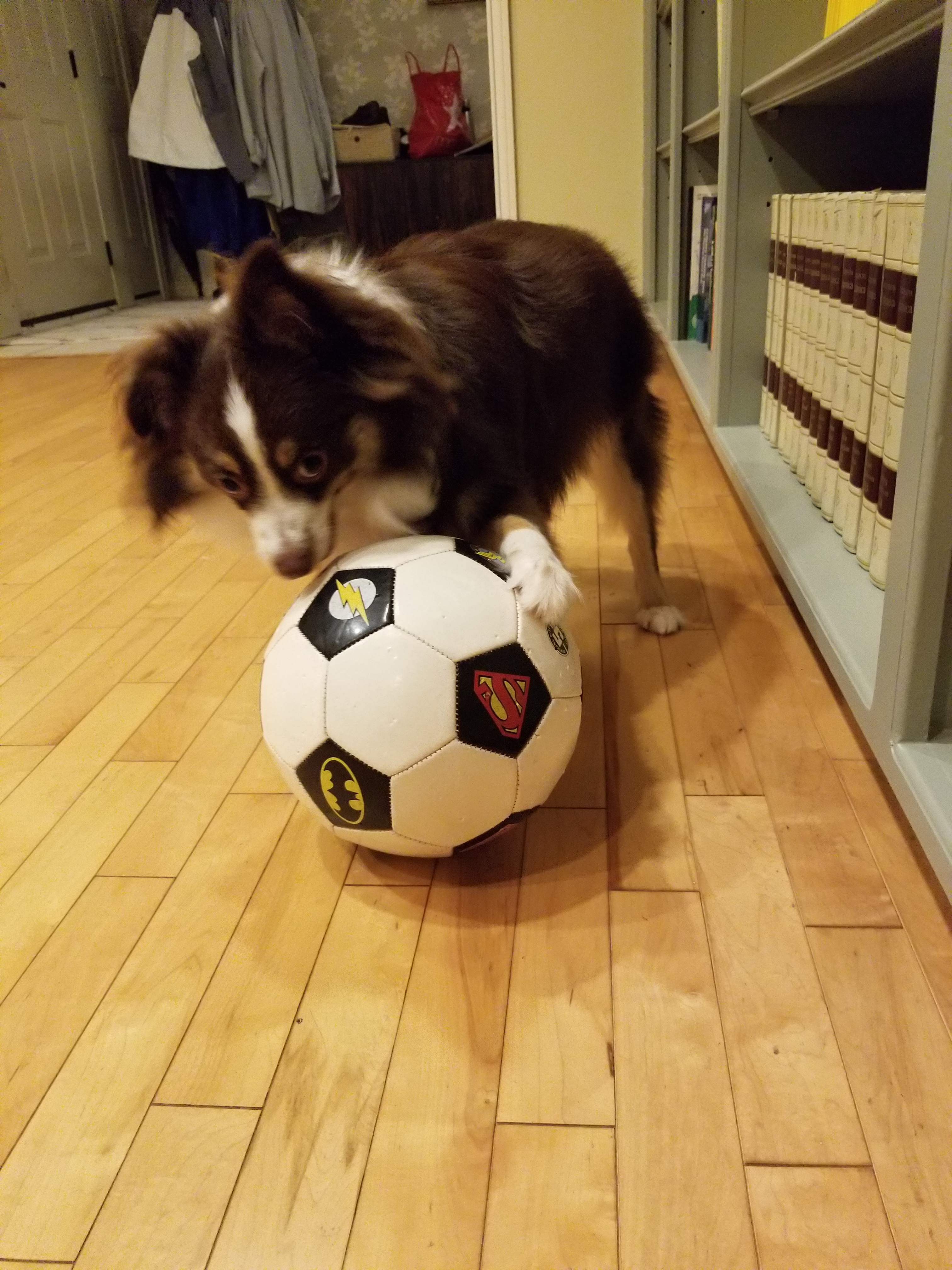
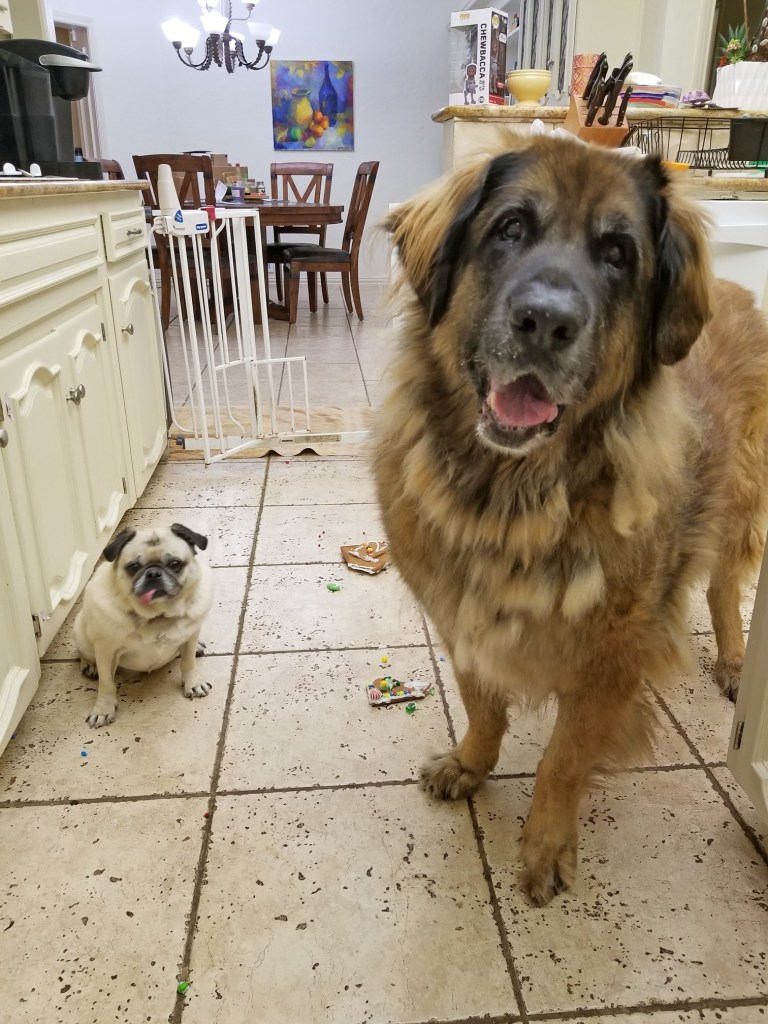
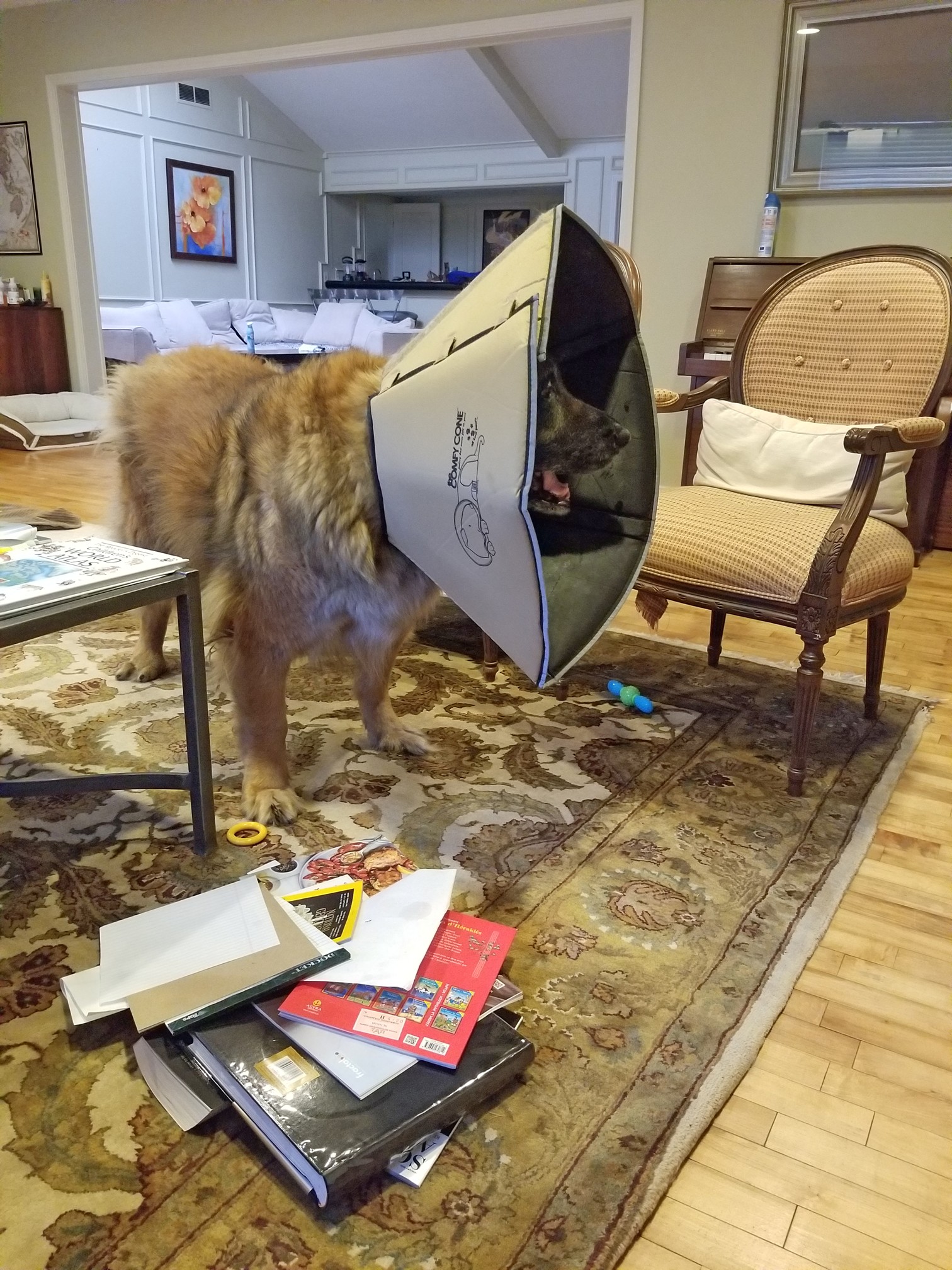
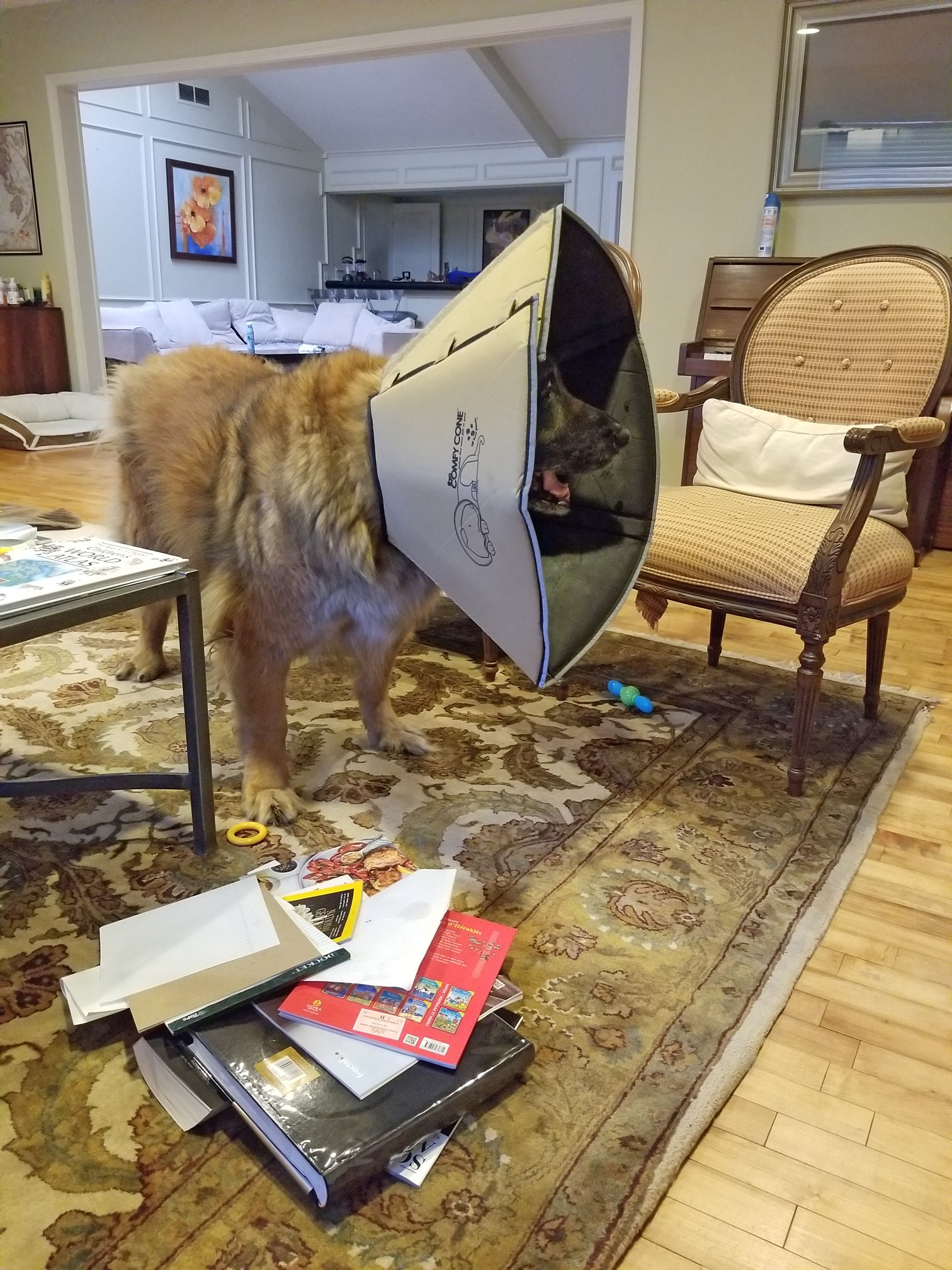
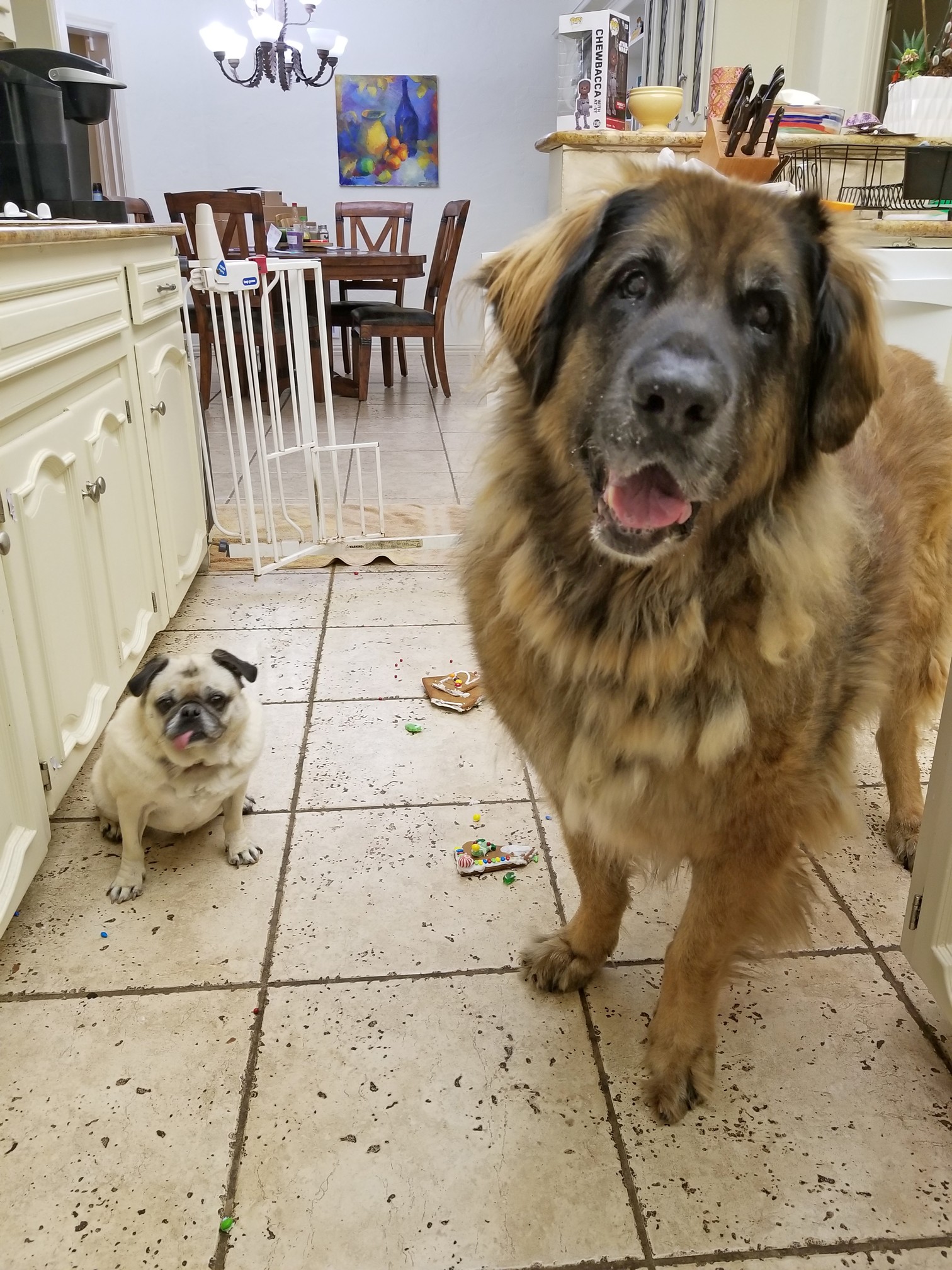
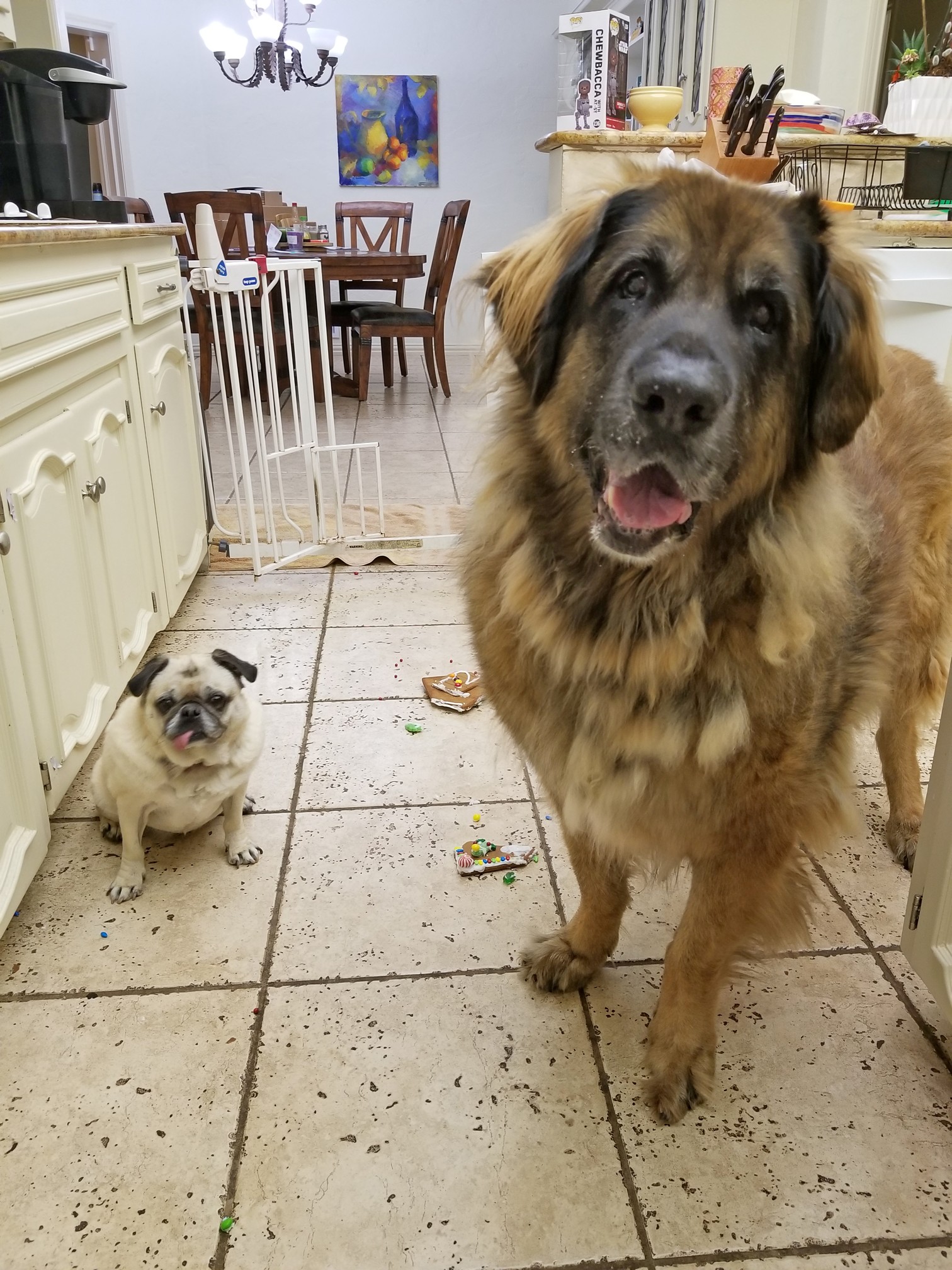
Dogs can calm your nerves as well as cause some stress. Our mini Australian Shepherd Rollo chewing up my shoe. Our Leonberger dog Bronco clears tables with his cone. Our mini Australian Shepherd harassing our Leonberger dog and biting his tail. Our Leonberger and our Pug raiding the kitchen and eating the gingerbread house. Our Japanese Chin Ryu and Pug Daisy staging a protest against us travelling. Our Leonberger dog is trying to sit in my wife’s lap.

How to Manage Stress Naturally with Simple Daily Habits

Busy dog owners who are already juggling work, family schedules, and a million small decisions often find themselves struggling with stress management and hoping things will just calm down a bit. The hard part is that stress rarely comes from one big event; it builds from sources of stress like constant notifications, unresolved conflicts, money worries, or even a packed calendar that never resets. Without recognizing stress triggers, it’s easy to treat the noise instead of the cause, and the stress impact on wellbeing can show up as irritability, poor sleep, or feeling stuck in overdrive. Spotting what actually sets stress off turns a vague problem into something that can be handled.

A Leonberger dog with a powerful bite crushing a laptop could be one of many sources of stress. Illustration by Naomi Rosenblatt.

Try Gentle Stress-Relief Modalities

When you can name what’s contributing to your stress levels, it’s easier to choose the right tool for the moment.

  • Breathwork: slow, steady breathing practices that help your body downshift.
  • Mindfulness: simple attention training to reduce mental spirals.
  • Rhodiola rosea supplements: may help support energy levels, mental focus, and resilience to everyday stress and fatigue.
  • Essential oils: calming scents used through diffusion or a personal inhaler (skip skin use unless properly diluted).
  • THCa: a hemp-derived option some people explore; if you’re curious, you can read more about a THCa cartridge.
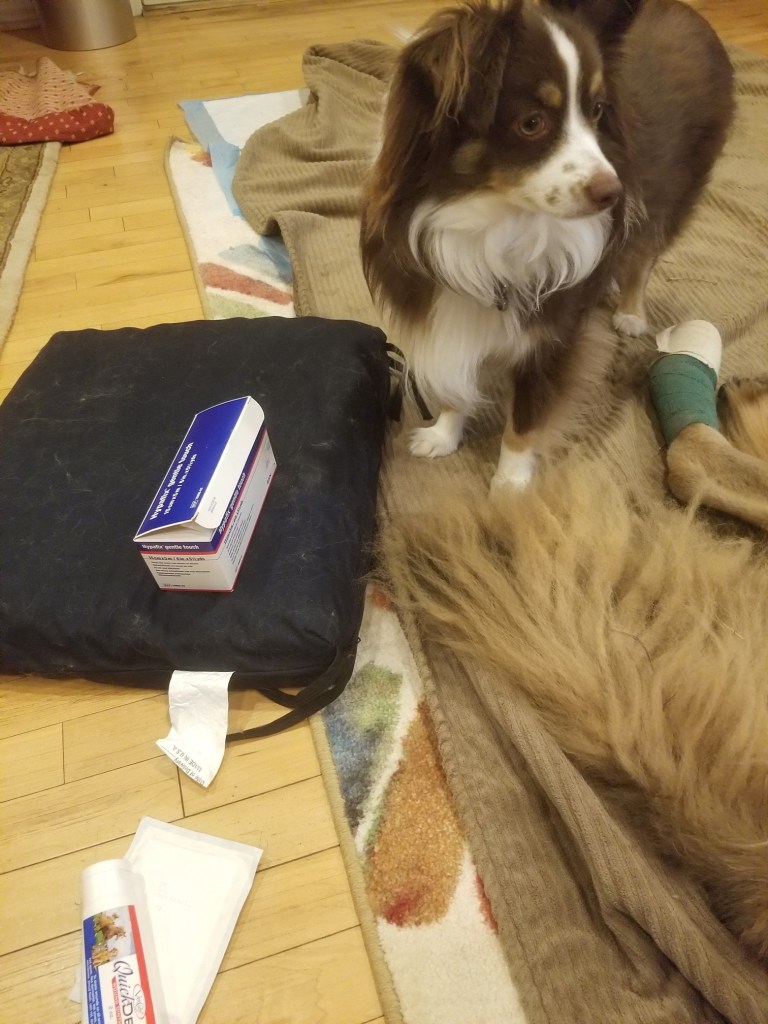
You can see the paws and bandaged legs of our Leonberger dog on the right. Our mini-Australian Shepherd is standing on the left.
Putting bandages on the legs of our injured Leonberger dog Bronco. This is a stressful situation, but our mini-Australian Shepherd Rollo is calmly observing and learning.

Understanding Your Stress Response

Stress is your body’s built-in alert system, not a personal failure. The Cleveland Clinic calls it a natural reaction to changes or challenges, and it can show up in your thoughts, feelings, and actions. When you learn your early signals, you can separate “I’m stressed” from “something is wrong with me.”

This matters because stress patterns are often predictable. Spotting your common causes of stress and your most frequent symptoms helps you choose the right support faster and recover sooner. It also keeps you from treating every bad day like a character flaw.

Picture a typical morning: a late start, nonstop notifications, and a tense conversation. Your shoulders climb, your patience drops, and you reach for caffeine or scrolling. That’s your cue to connect the trigger and the response, then adjust. The same pattern recognition can help you notice stress signals in your pets, too.

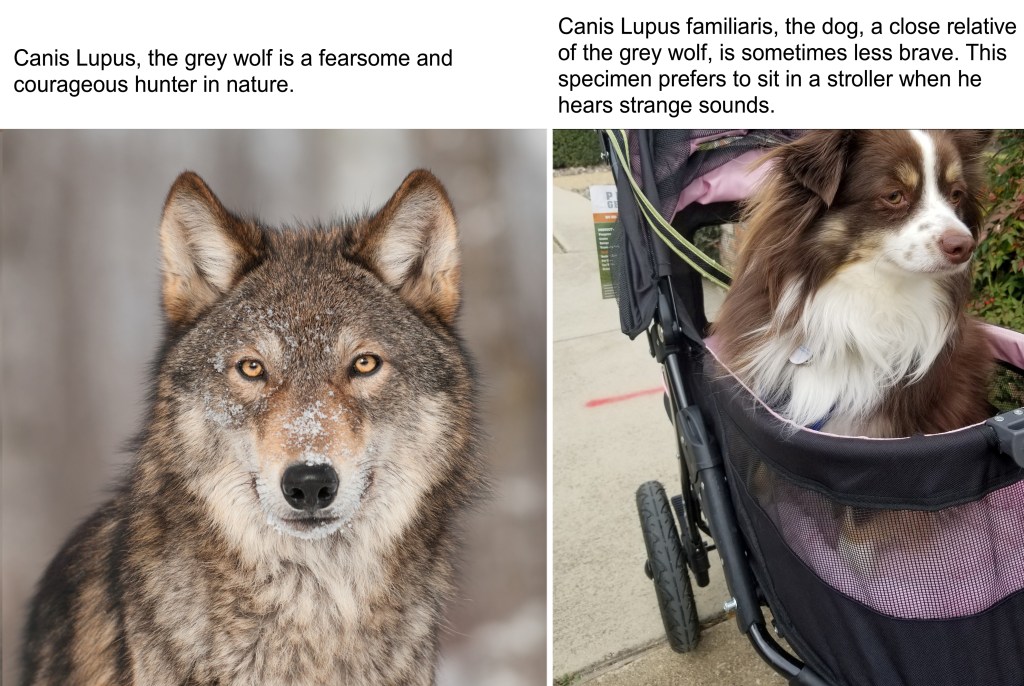
On the left is a picture of a wolf. The text says “Canis Lupus, the grey wolf is a fearsome and courageous hunter in nature.”  On the right is our mini-Australian Shepherd sitting in a stroller. The text says “Canis Lupus familiaris, the dog, a close relative of the grey wolf, is sometimes less brave. This specimen prefers to sit in a stroller when he hears strange sounds.”
Dogs get stressed out too. Our mini-Australian Shepherd get stressed out by strange sounds and when we had a stroller with us, he wanted to sit in the stroller when he heard strange sounds. Unfortunately, this is probably not an option for you.

Calm Together: Reduce Stress for You and Your Dog

Once you start noticing how stress shows up in your body and habits, it’s easier to see how it can ripple out to the beings around you, especially your dog. Dogs are keen observers, and a shift in your schedule, voice, or body language can register as “something’s off.” Calm, family-oriented breeds like Leonbergers often mirror the mood of the home, so when you’re rushed, inconsistent, or tense, they may become more clingy, withdrawn, restless, or reactive.

The good news is that the same steady routines that help you feel grounded can help your dog feel safe. Regular walks burn off nervous energy for both of you, and consistent feeding and sleep times make the day more predictable. Add a little quiet bonding time, sitting together, gentle attention, an unhurried presence, and create a calm space where your dog can settle when the house feels busy.

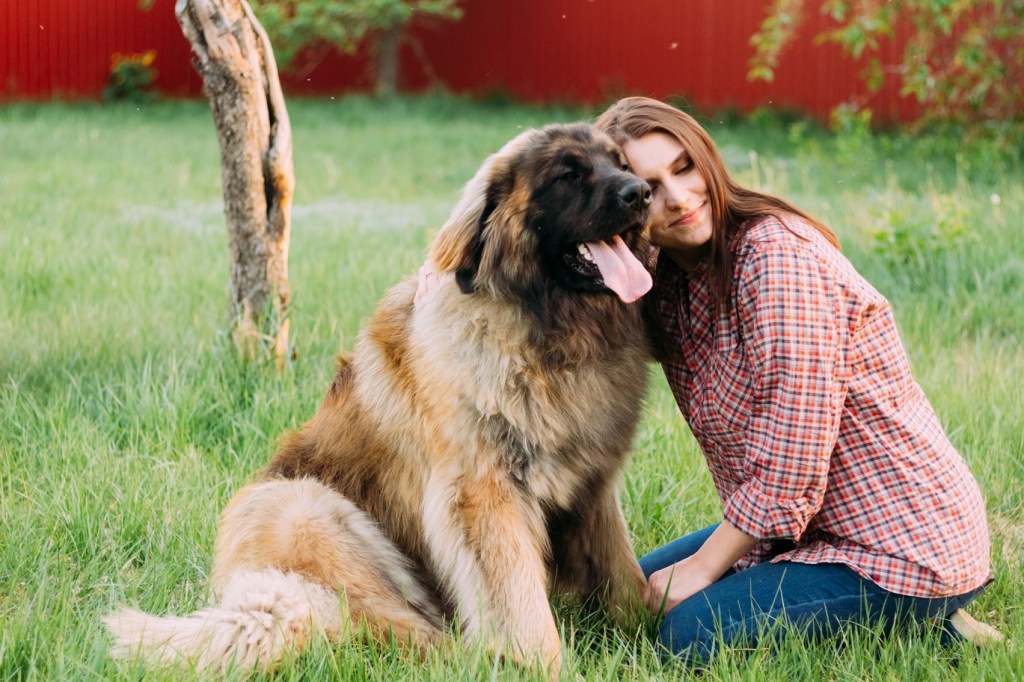
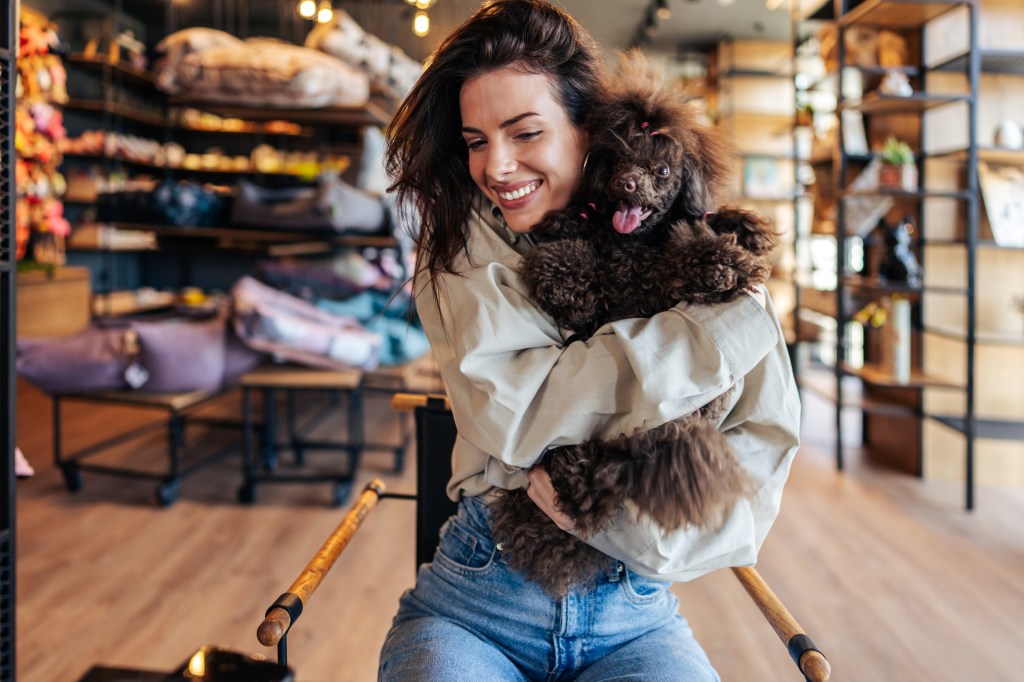
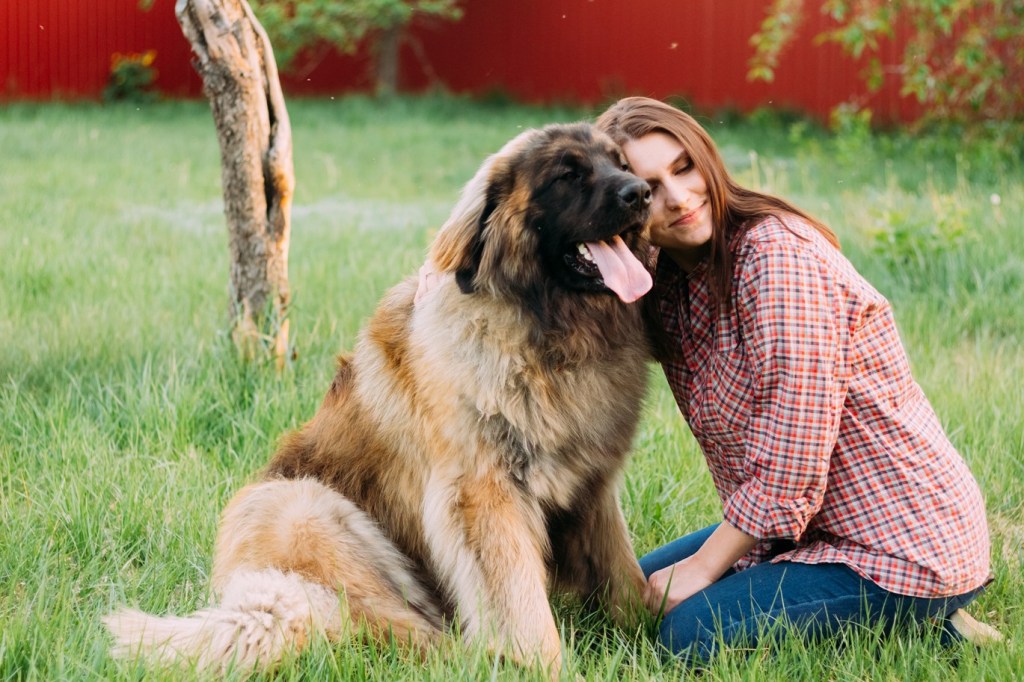
A pretty dark-haired Caucasian girl in a plaid shirt hugs her cute Leonberger dog, concept of friendship and loyalty
Calm, family-oriented breeds like Leonbergers often mirror the mood of the home. Shutter Stock Asset id: 1741753382 by Elena Podrezenko

Daily Stress-Soothing Habits You Can Repeat

These habits work because they are simple enough to repeat on busy days, which helps your nervous system learn what “safe and settled” feels like over time. Pick one or two, practice them consistently, and let the routine support both you and your home.

Two-Minute Breath Reset
  • What it is: Do six rounds of 30-second deep breathing while sitting comfortably.
  • How often: Daily, or before stressful moments.
  • Why it helps: Slow breathing lowers body tension and helps your mind re-center.
Light-and-Move Morning Start
  • What it is: Get daylight, drink water, and take a 10-minute easy walk.
  • How often: Most mornings.
  • Why it helps: Movement and light support energy, mood, and calmer focus.
Workday Boundary Check
  • What it is: Choose a clear stop time and do a 3-minute tidy reset.
  • How often: Weekdays.
  • Why it helps: A clean ending reduces rumination and protects your evening.
Stress-Smart Plate
  • What it is: Build meals with protein, fiber, and a color, then snack intentionally.
  • How often: Daily.
  • Why it helps: Stable blood sugar can reduce jitters and irritability.
Screen-Free Wind-Down
  • What it is: Put your phone away and do a short stretch or shower.
  • How often: Nightly, last 30 minutes.
  • Why it helps: Less stimulation helps your body shift toward sleep.
A big brown Leonberger dog lying on his back on a leather sofa.
When you are relaxed your dog can relax. This is our Leonberger dog Bronco splayed out on the leather sofa.

Stress-Relief Questions People Ask Most

Q: How do I choose a relaxation technique that actually works for me?
A: Pick the one you will realistically repeat, not the “perfect” method. Start with something low-friction like slow breathing, a short walk, or gentle stretching, then notice what changes first: sleep, irritability, or focus. If you hate a technique, it is okay to swap it.

Q: Why do I feel worse when I try to relax?
A: This is more common than people realize, especially if you have been running on adrenaline for a long time. Try a lighter version: shorter sessions, eyes open, or movement-based calming like walking. If panic spikes, pause and choose grounding actions like naming five things you see.

Q: When I miss a day, should I start over?
A: No, you are practicing a skill, not passing a test. Restart with the smallest version of your habit and anchor it to something you already do, like after brushing your teeth. Consistency over time matters more than streaks.

Q: When is professional support the safest next step?
A: Reach out if stress is affecting sleep for weeks, causing frequent panic, or leading you to rely on alcohol, drugs, or self-harm thoughts. A clinician can help you build a plan that protects both your body and mind. If you ever feel unsafe, seek urgent help right away.

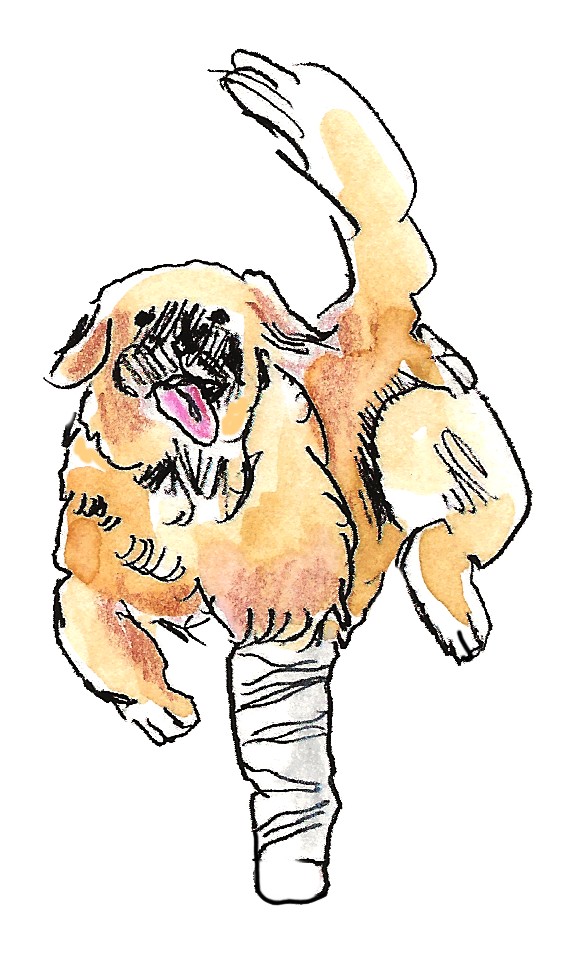
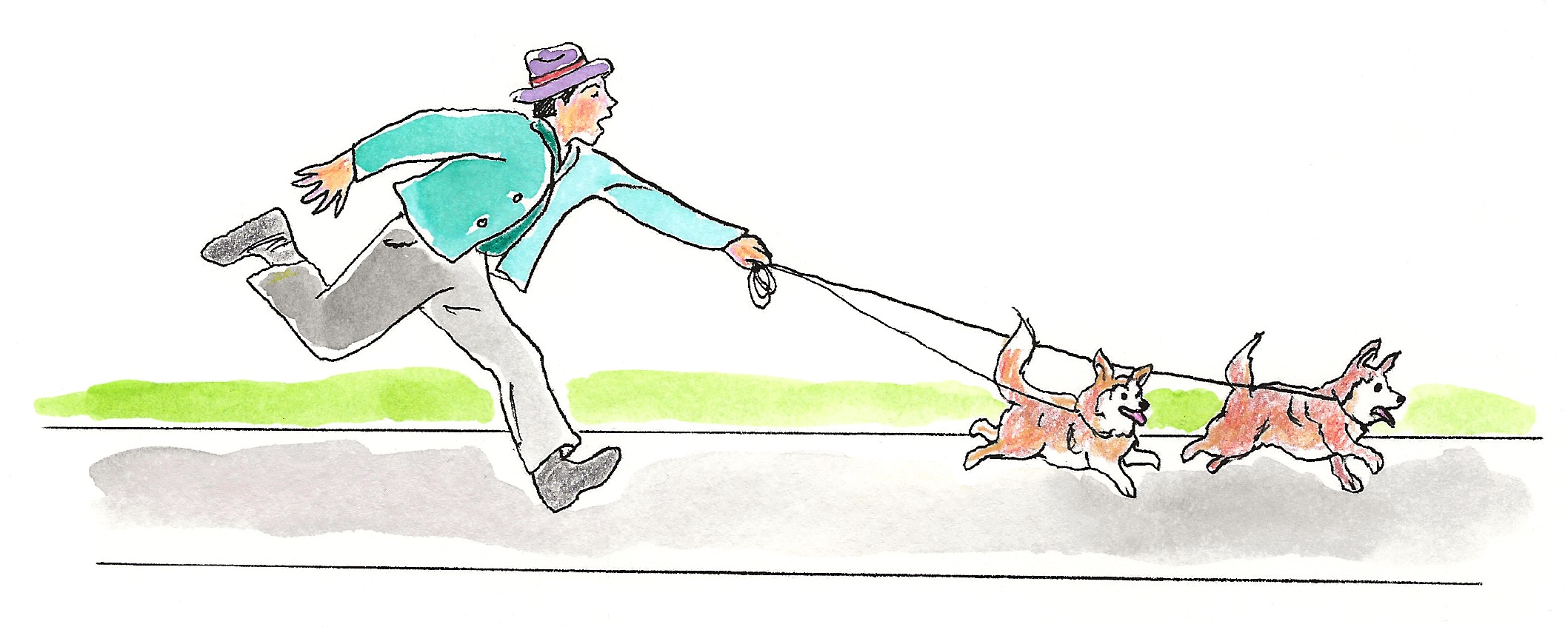
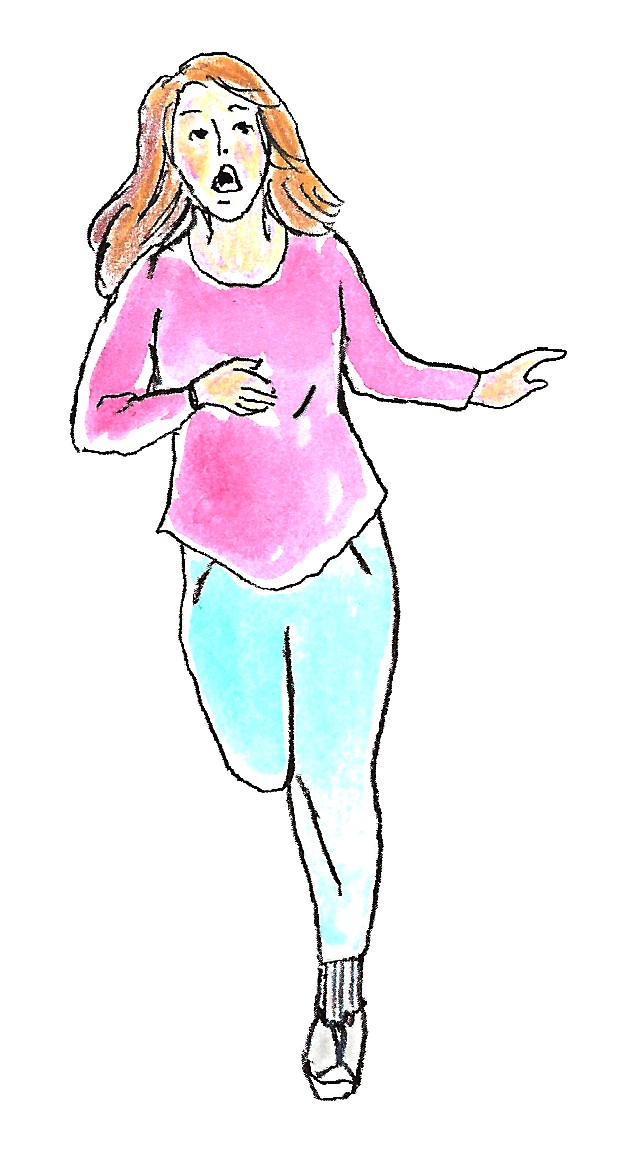
This was a stressful situation. Our Leonberger dog Bronco, wearing a cast chased our neighbor and his Corgis down the street. He was limping badly but wanted a walk so we took him outside just for a little bit. We did not think he needed a leash in his condition, but it turned out he could run. He was not supposed to bump his cast and not chase neighbors either. Illustrations by Naomi Rosenblatt.

Small Habits, Lasting Calm

Managing stress naturally does not require a complete lifestyle overhaul. By learning to recognize your stress triggers, understanding how your body responds, and building a few simple, repeatable habits into your day, you can create more resilience and balance over time. Whether you find relief through breathwork, mindful routines, supportive supplements, or simply creating calmer rhythms for yourself and your family, consistency matters more than perfection. Small daily actions can add up to meaningful changes, helping you navigate life’s challenges with greater clarity, energy, and peace of mind.

Launching A Pet Boarding Business

A professional content writer by the name of Ryan Goodchild contacted me about me posting an  article he had written on launching a pet boarding and pet daycare business. The title of the article is “A Step-by-Step Guide to Launching Your Pet Boarding and Daycare Business”  and you can see the article below. Ryan wrote the article and I provided pictures.

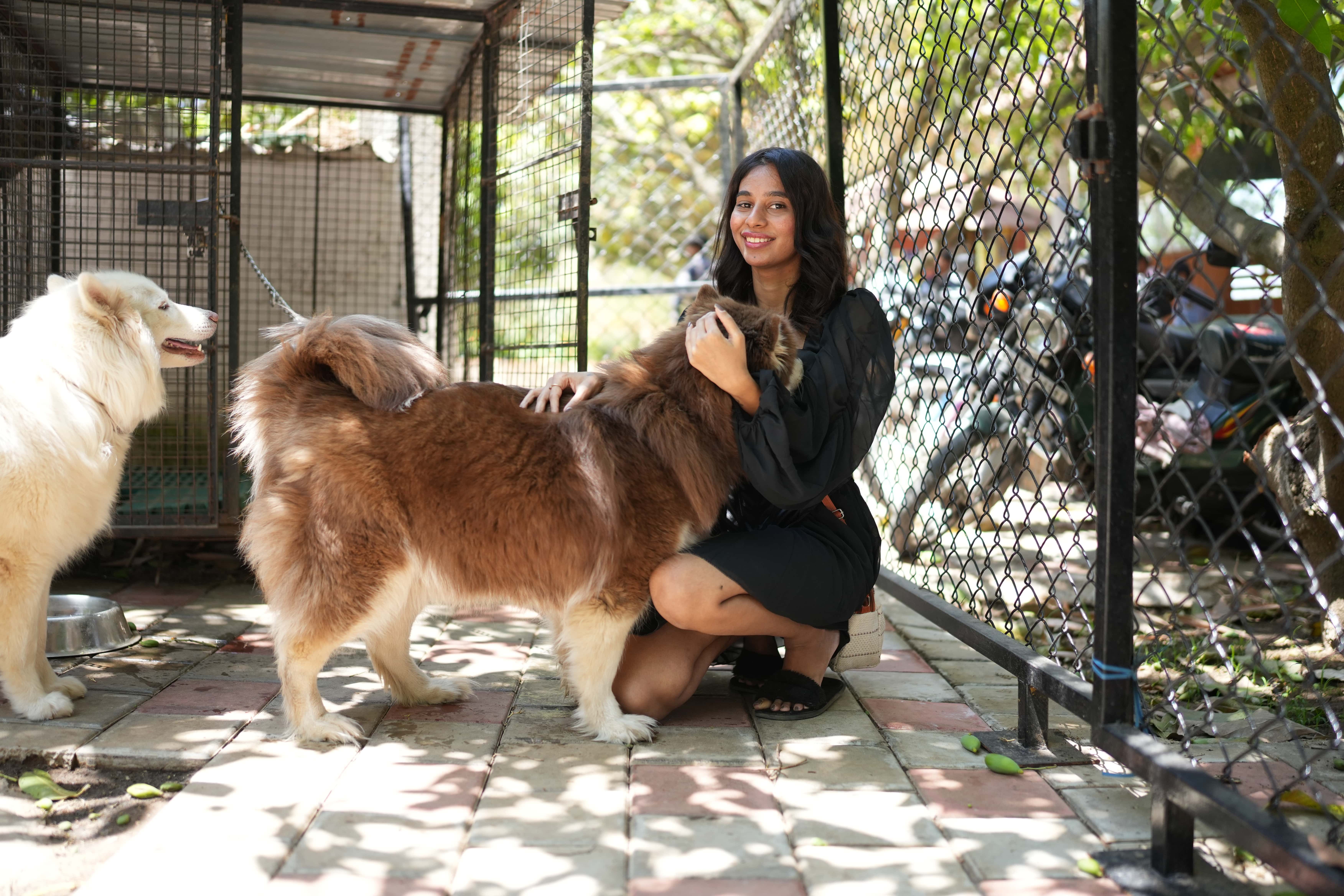
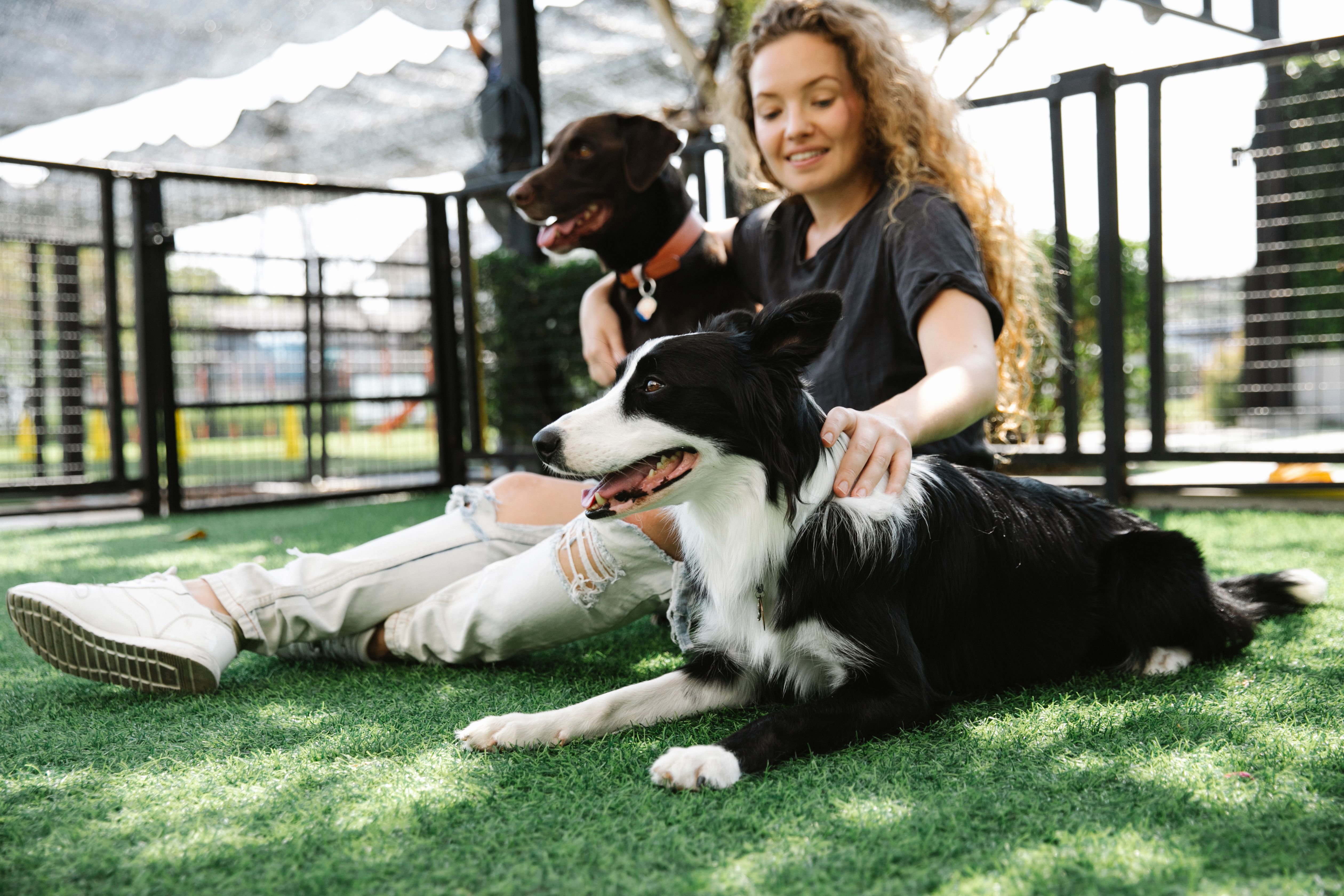
Photos from Pexels.com by Nataliya Vaitkevich, Aishu gowda, Austin Briones, and Blue Bird. At the top left, me with our Leonberger dog Bronco.


A Step-by-Step Guide to Launching Your Pet Boarding and Daycare Business

For local business owners and new pet service entrepreneurs, a pet boarding business opportunity can feel obvious, until the local pet daycare market reveals crowded options in one area and unmet needs in another. The core challenge is separating real community pet care demand from friendly encouragement, so a small business startup in the pet industry doesn’t open to empty spots or unhappy neighbors. The upside is meaningful: reliable support for working families, safer care for pets, and a business built on trust and consistency. Clear demand and clear standards are what turn pet care into a lasting local service.

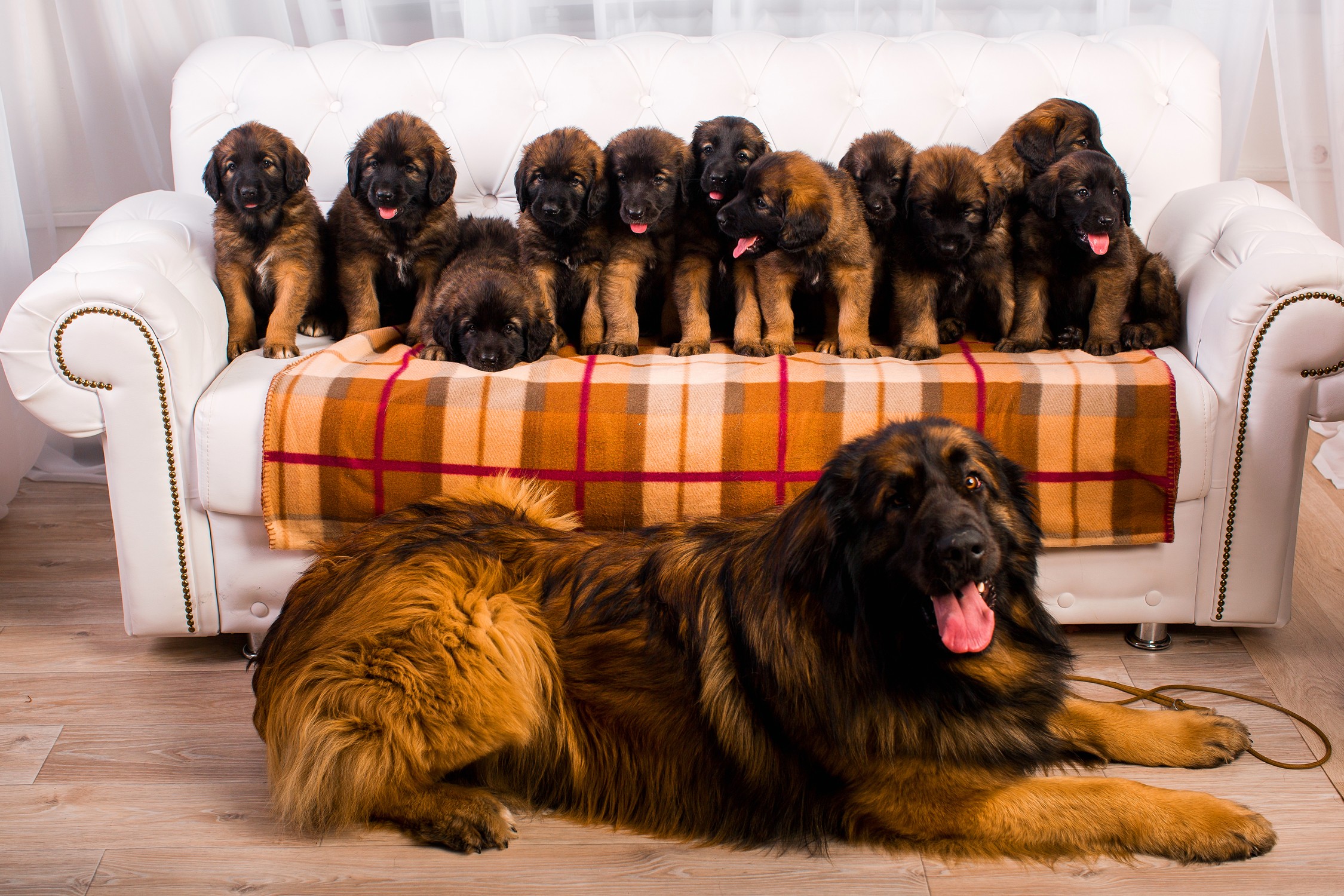
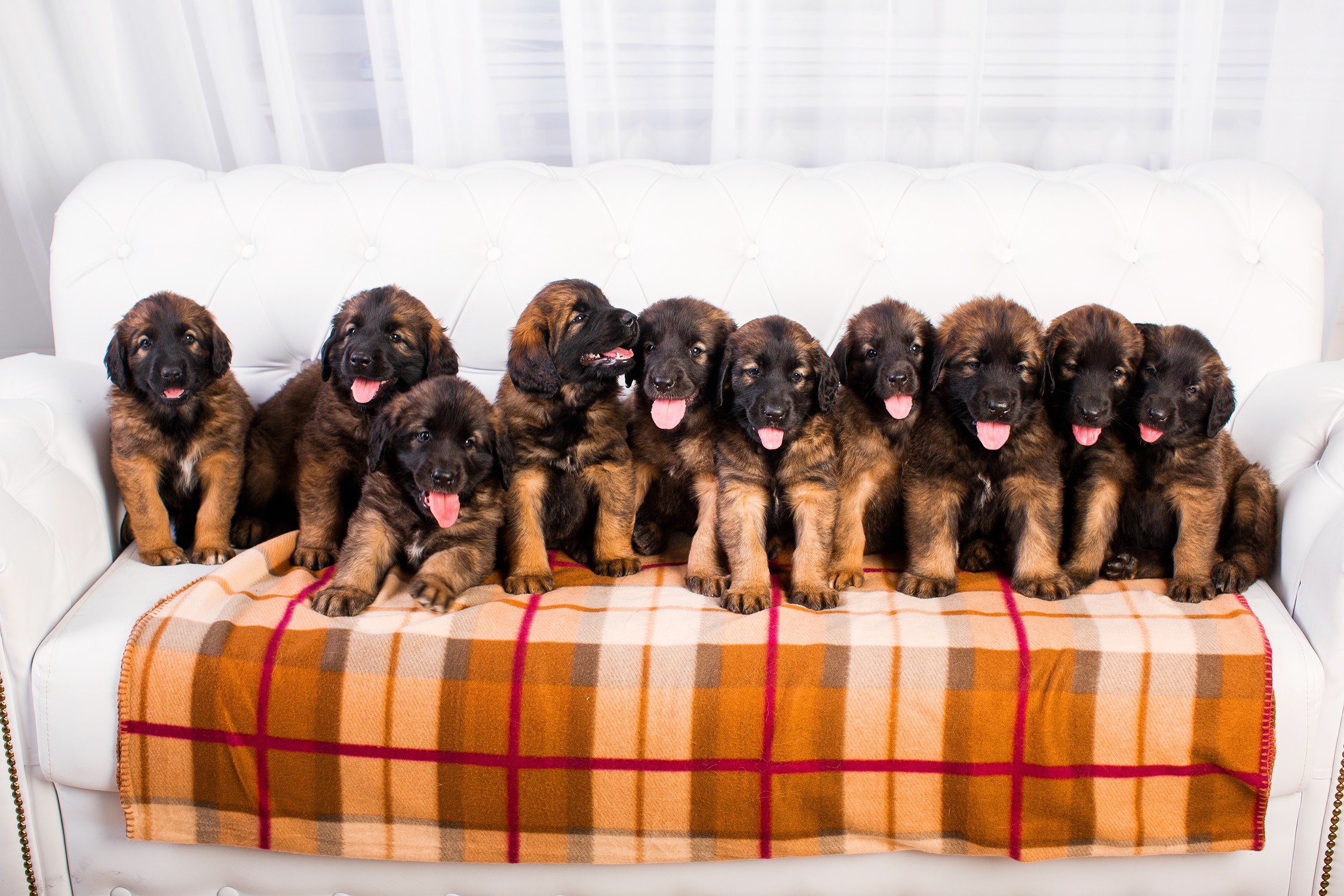
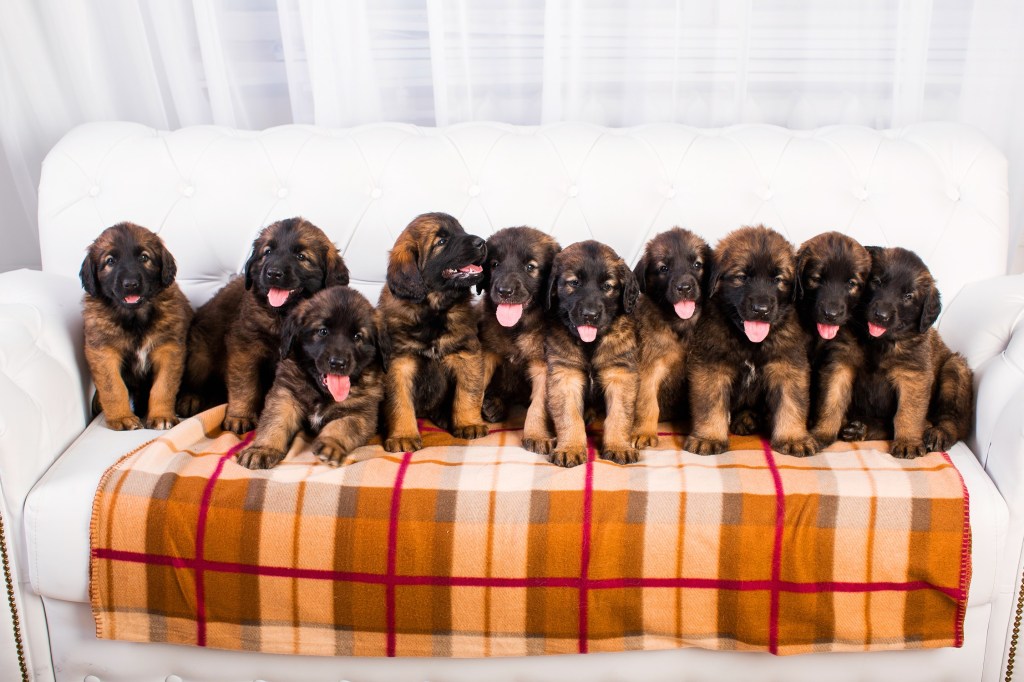
Ten Leonberger puppies sitting on a sofa. They are brown with black face masks.
Ten Leonberger puppies, about two months old. Shutterstock-ID:561107710 by Akbudak Rimma.

Build Your Pet Boarding Business From Plan to Opening

This roadmap helps you turn a pet boarding and daycare idea into a real opening day plan, with fewer legal, safety, and customer service surprises. It matters because most “small” gaps, like paperwork, intake rules, or staffing, are exactly what shape trust in your community.

  1. Confirm demand and define your offer
    Start with a simple business plan that names who you serve, what problems you solve, and how many pets you can safely handle per day. Talk to local vets, groomers, and pet parents to learn which hours, services, and price points are actually missing. Use what you hear to choose a clear niche, like small-dog daycare, senior pet boarding, or extended-hour drop-offs.
  2. Choose your structure and line up licensing
    Pick a legal setup, register your business, and get an EIN so you can open accounts and hire staff cleanly. A checklist like choosing a business structure can help you decide how to organize liability, taxes, and ownership from day one. Then contact your city or county to confirm permits, zoning, signage rules, and any kennel or animal care licensing requirements.
  3. Set up a safe, workable facility
    Choose a location and layout that supports calm movement, easy cleaning, and separation when needed, such as by size, temperament, or health status. Before you commit, visit the facility you plan to use so you can notice noise, odor control, drainage, entry security, and how pets would flow through the space. Build your setup around safety basics like double-door entry, secure fencing, sanitation stations, and clear emergency exits.
  4. Train your team and lock in operating standards
    Write simple, repeatable rules for supervision, playgroup grouping, feeding, medication, cleaning schedules, and incident reporting. Train staff on body language basics, de-escalation, and how to follow checklists, not memory, during busy rushes. Consistent standards reduce accidents and make your service feel dependable even as you grow.
  5. Create intake procedures and launch marketing
    Set an intake process that protects pets and sets expectations, including vaccination proof, temperament notes, emergency contacts, and a trial day for new clients. Then market what you can deliver consistently: capacity, hours, safety practices, and your booking process, not just cute photos. Ask early customers for reviews, and build referral partnerships with nearby pet professionals so your first month is not a guessing game.
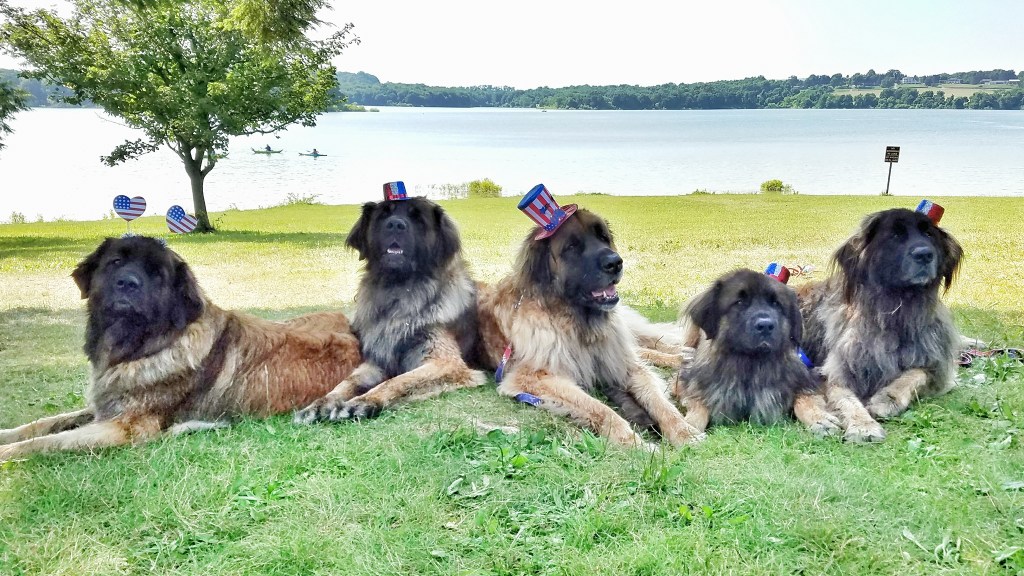
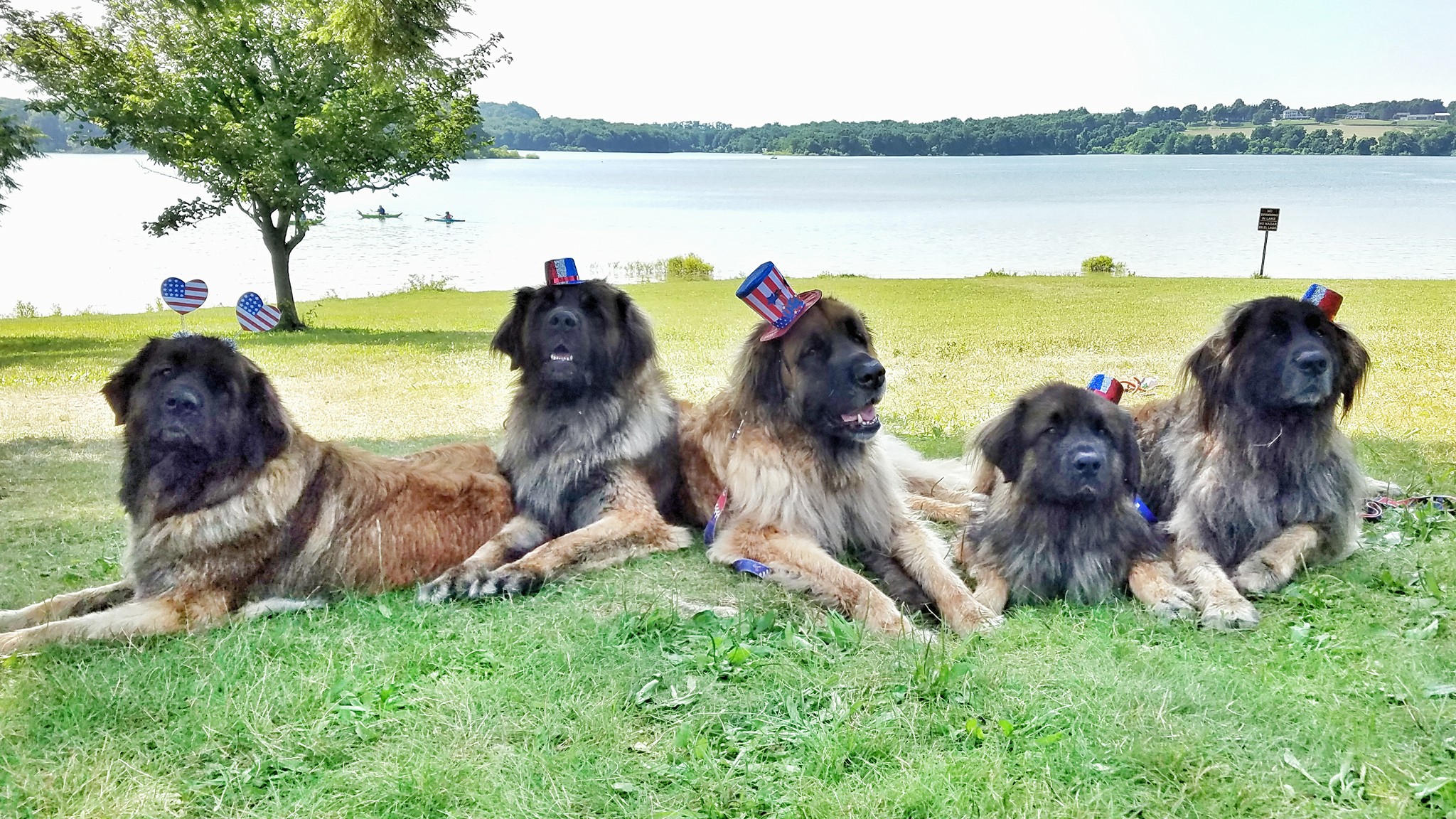
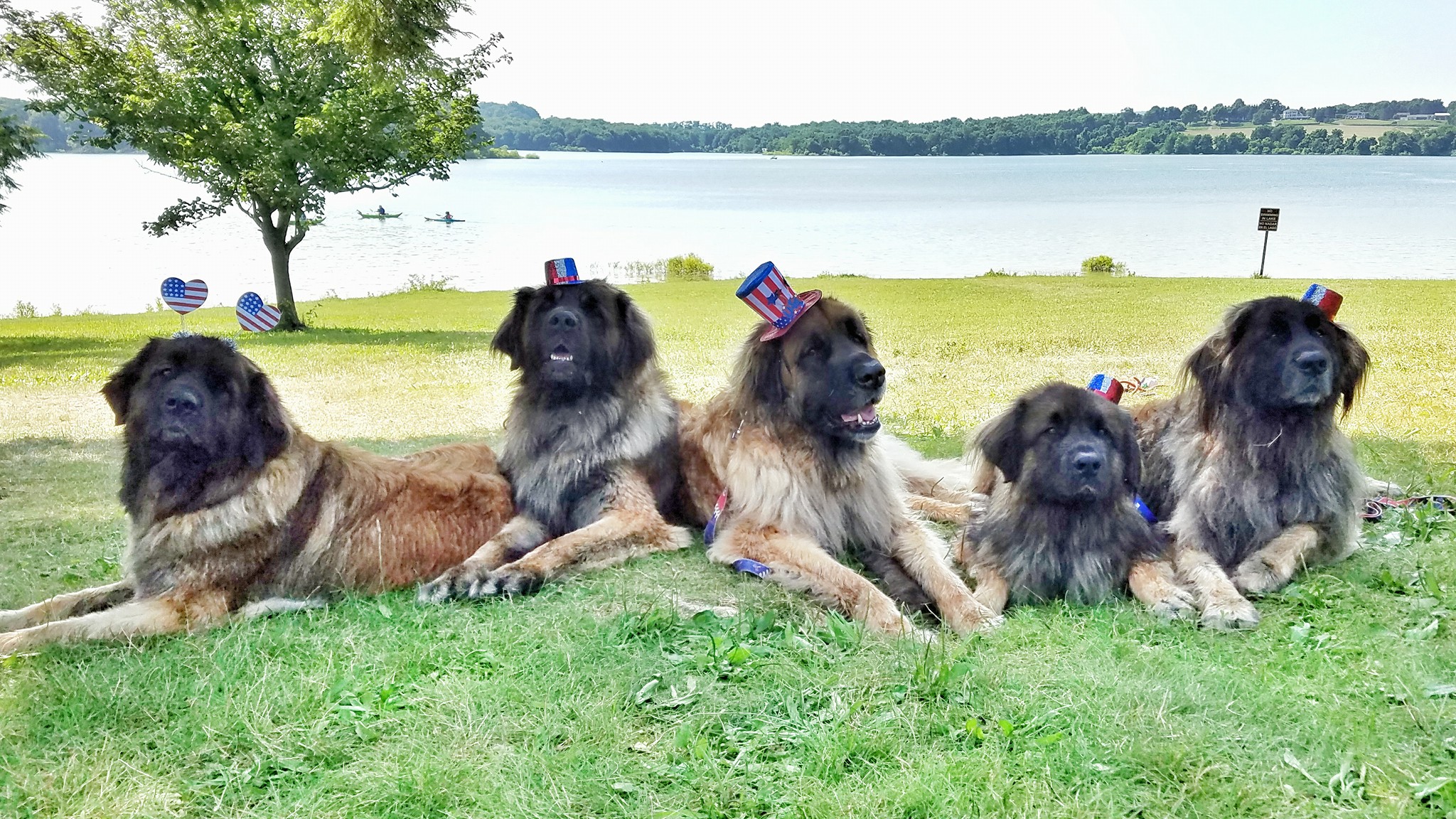
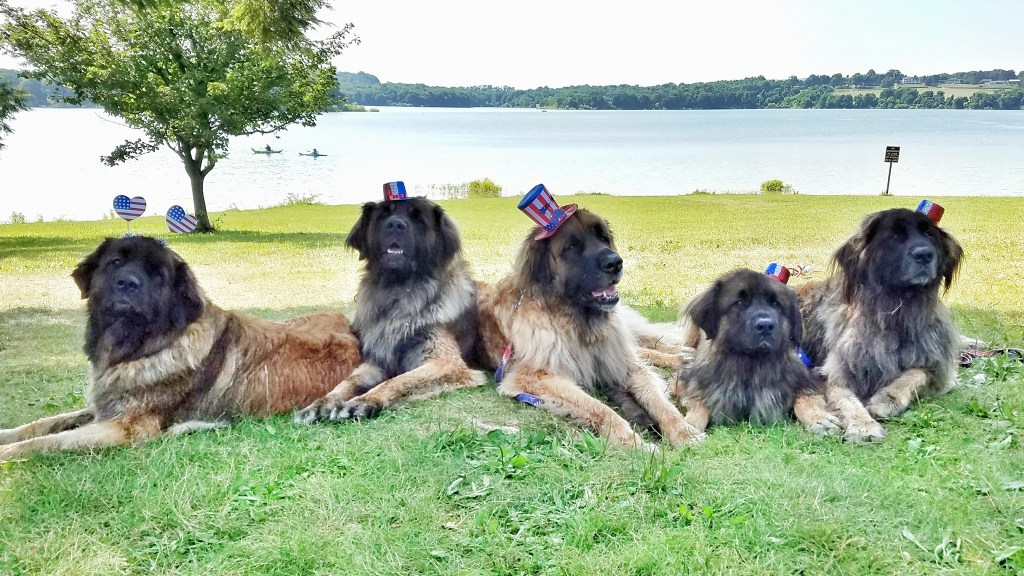
Five Leonbergers lying in the grass. They are wearing hats showing the American flag.
Five Leonbergers including Digory on 4th of July 2023. Photo by my friend Jen O’Keefe.

Build the Business Skills That Keep Pet Care Profitable

Boosting your business acumen can be as practical as earning an online business degree, giving you structured training to support smarter choices as you grow. Earning a business management degree can help build skills in leadership, operations, and project management, the same capabilities you’ll lean on when you’re coordinating people, processes, and services. An online format can make it easier to learn on a flexible schedule while still applying what you study to your business in real time; for additional info, explore the program details.

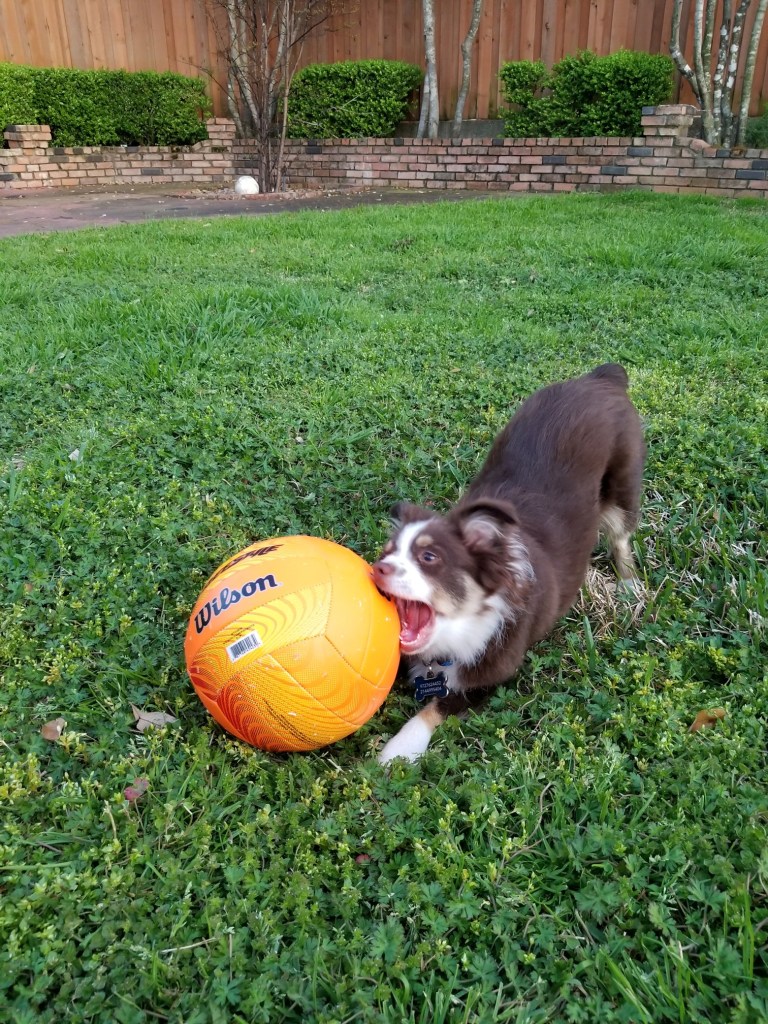
Our mini-Australian Shepherd puppy Rollo is playing with an orange volleyball on the green grass.
Our mini-Australian Shepherd puppy Rollo playing with an orange ball.

Pet Boarding and Daycare Startup Questions

Q: What licenses or rules do I need before I take my first booking?
A: Start with your city or county business license, zoning approval, and any kennel or animal care permits your state requires. Ask specifically about occupancy limits, noise rules, waste disposal, and vaccination requirements. Create a simple compliance binder with permits, inspection notes, and written policies so you can prove you are operating responsibly.

Q: How much insurance do I really need, and what should it cover?
A: Look for liability coverage that includes animal bailee or care, custody, and control, plus protection for bites, escapes, and property damage. Many sitters benchmark options by noting 78% of members in a major industry survey used one insurer, but the right choice depends on your services and facility. Get quotes from at least three providers and confirm exclusions in writing.

Q: How do I set prices without scaring off new clients?
A: Price around your true costs first: staffing, cleaning, rent, insurance, and supplies, then add a profit margin. A practical reference point is the pricing range $25-$65/day for day boarding, adjusted for your local demand and service level. Offer clear add-ons like medication, late pickup, or enrichment instead of discounting your base care.

Q: Should I hire staff right away, or start solo?
A: Many owners start lean, then hire when supervision and cleaning tasks begin to compete with customer service and sales. If you do hire, prioritize reliability and calm handling skills over pet ownership alone. Use paid working interviews and require proof of any claimed certifications.

Q: How can I prevent fights, illness, or mix-ups between pets?
A: Use temperament screenings, separate play groups by size and energy, and set firm criteria for when a pet must be kenneled or isolated. Require vaccination records, a signed emergency authorization, and clear ID on every collar and kennel. Daily cleaning checklists and incident logs help you spot patterns before they become big problems.

An old lady at the hotel reception. She has a small dog.
From pexels.com cottonbro studio

Open-Ready Startup Checklist

This checklist keeps your launch organized so you can open confidently and care for pets safely. Use it to spot gaps early, avoid last minute scrambles, and create a smooth first impression.

✔ Confirm business license, zoning clearance, and required animal care permits

✔ File insurance policies and document coverage limits, deductibles, and exclusions

✔ Set pricing sheet with add-ons, cancellation terms, and pickup windows

✔ Prepare intake packet with vaccine proof, emergency contacts, and behavior notes

✔ Stock supplies list for cleaning, enrichment, feeding, and first-aid essentials

✔ Create daily routines for sanitation, headcounts, and incident reporting

✔ Verify staff identities, references, and hands-on handling competence

✔ Launch local outreach with a simple website, reviews plan, and referral perk

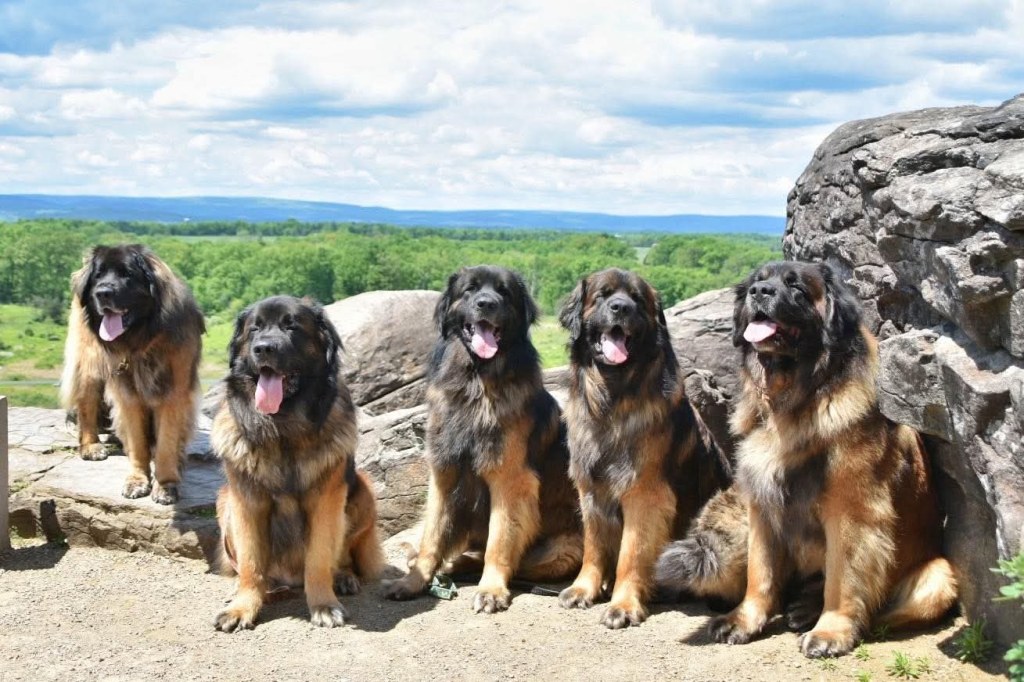
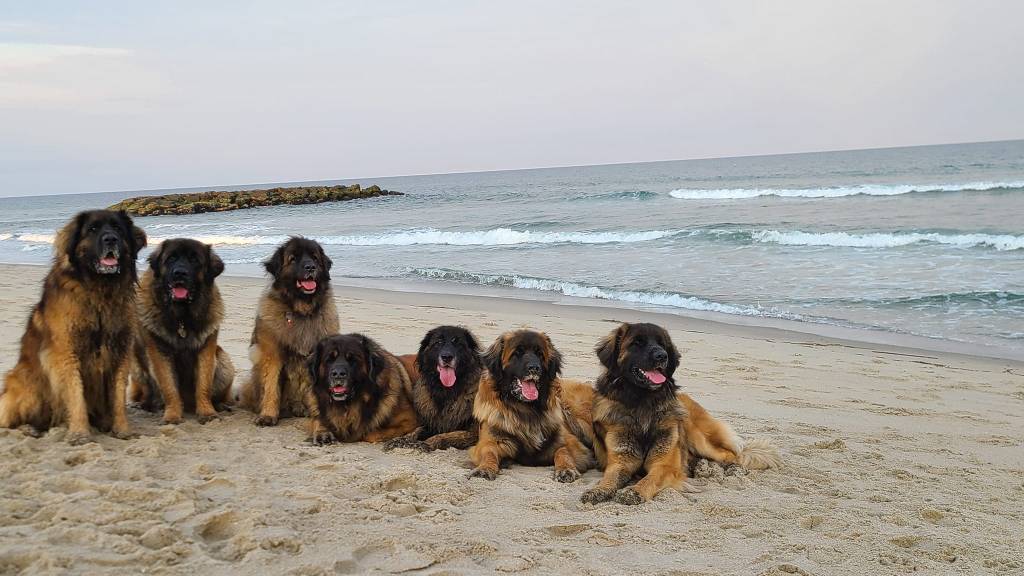
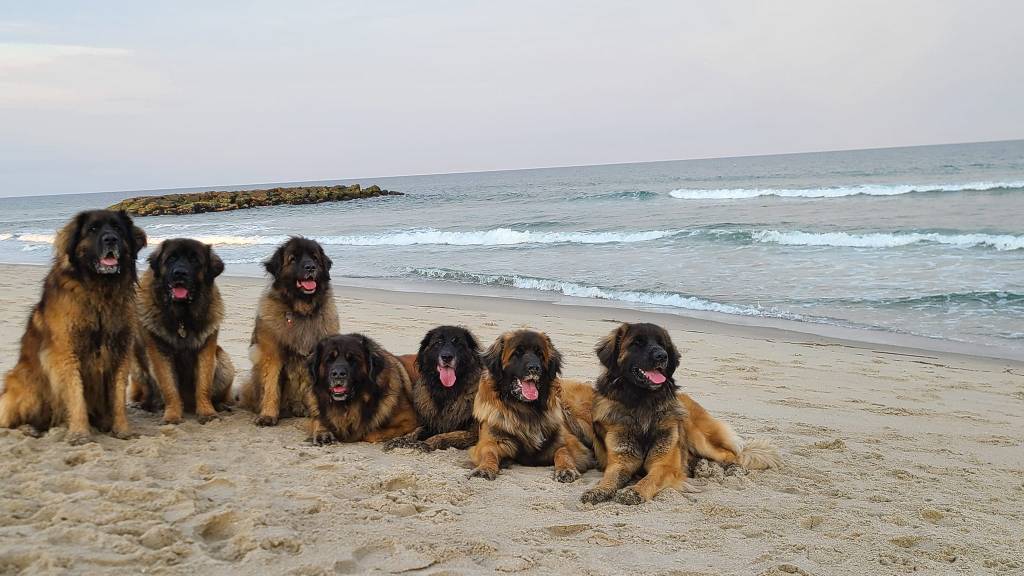
Seven Leonbergers lying or sitting on the sand on a beach.
Seven Leonbergers at the beach. Photo by my friend Jen O’Keefe.

Turn Your Pet Care Plan Into a Trusted Local Business

Starting a pet boarding and daycare business can feel overwhelming because pets’ safety, regulations, and expectations all land on day one. The path forward is a community-first mindset, use your open-ready checklist, stay consistent, and build trust through clear standards and a customer satisfaction focus. When those pieces are in place, entrepreneurial motivation turns into confidence building for new owners, steady referrals, and long-term growth strategies that make the operation resilient. A calm, prepared launch is the fastest way to earn trust and keep it.

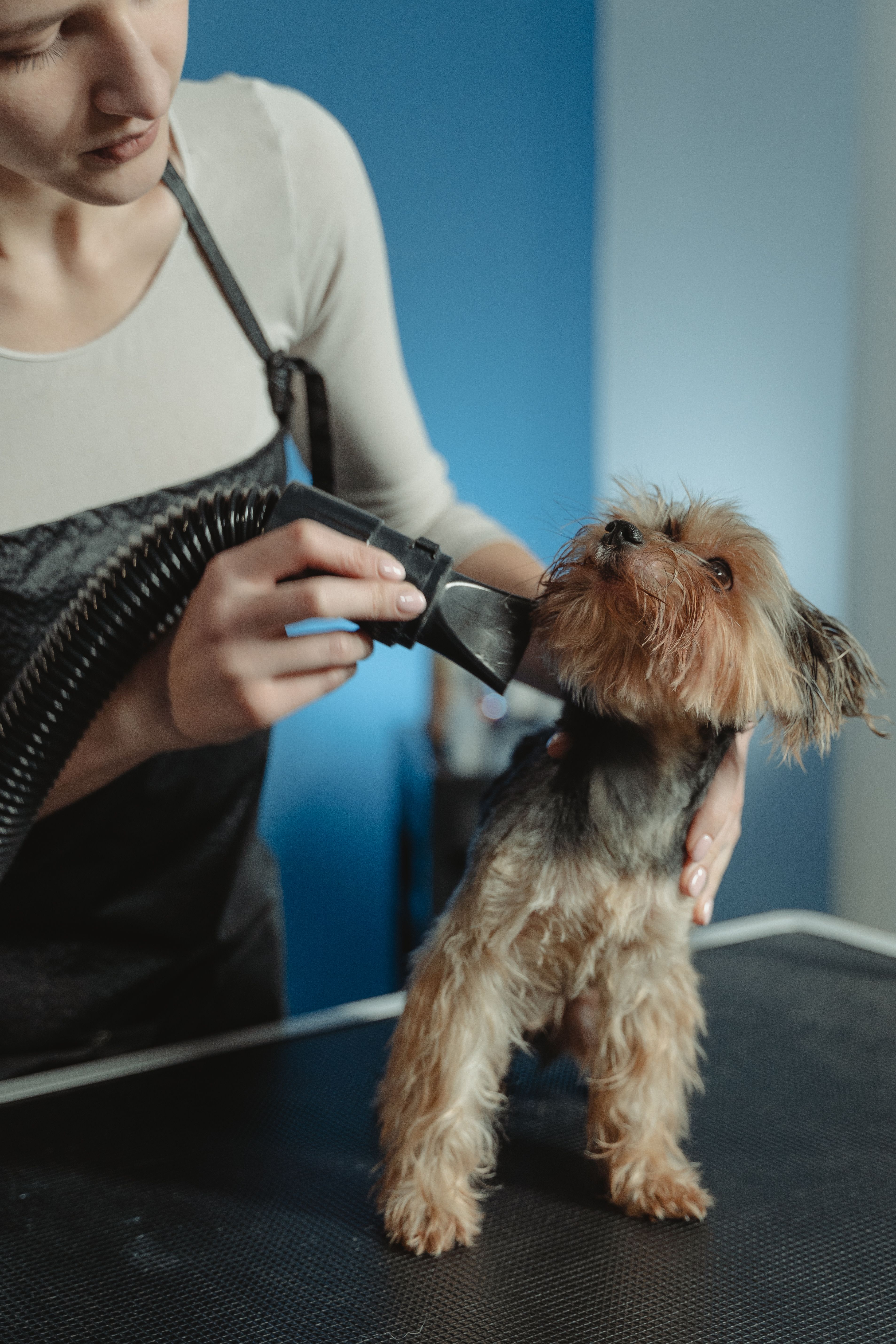
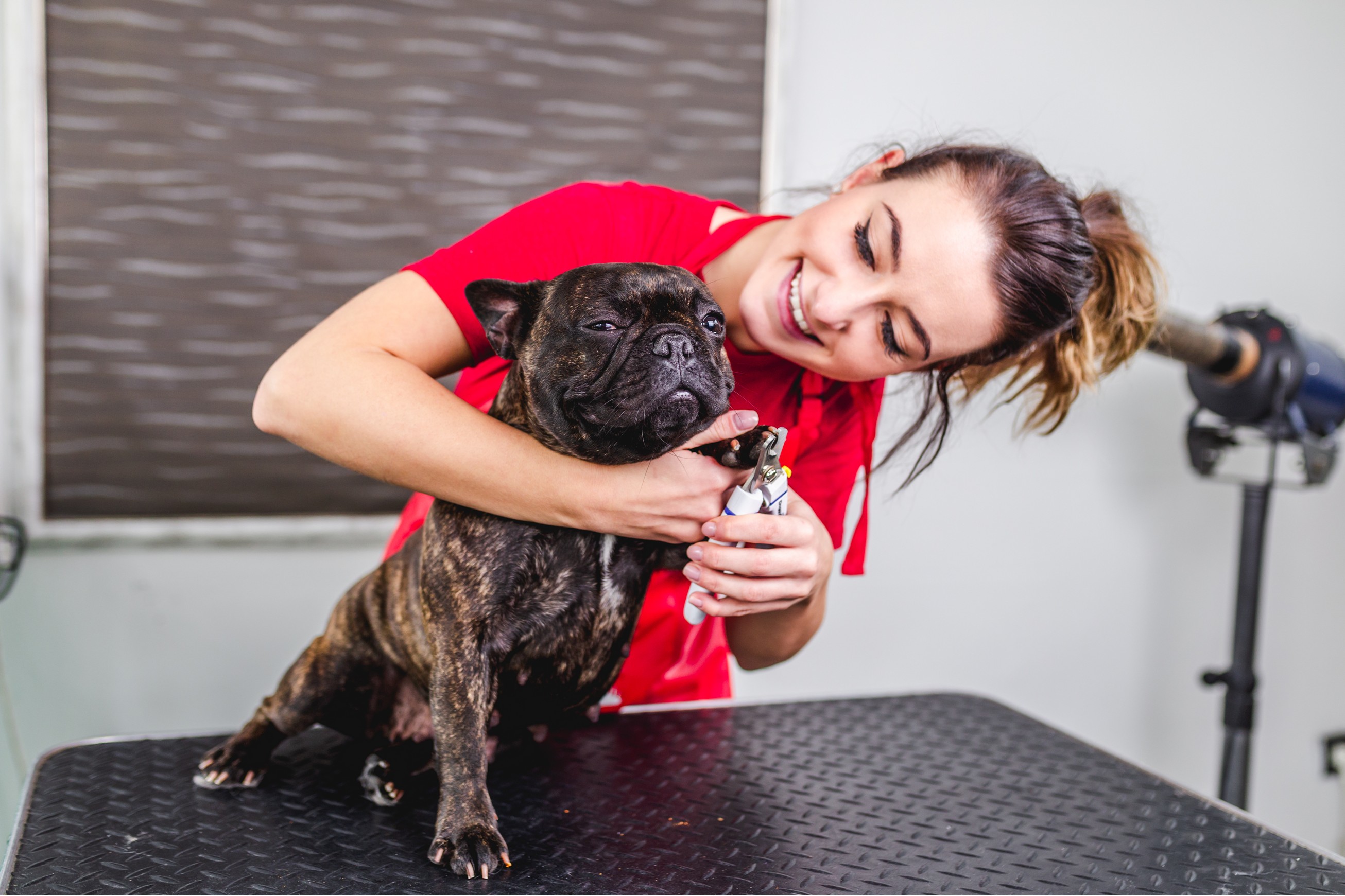
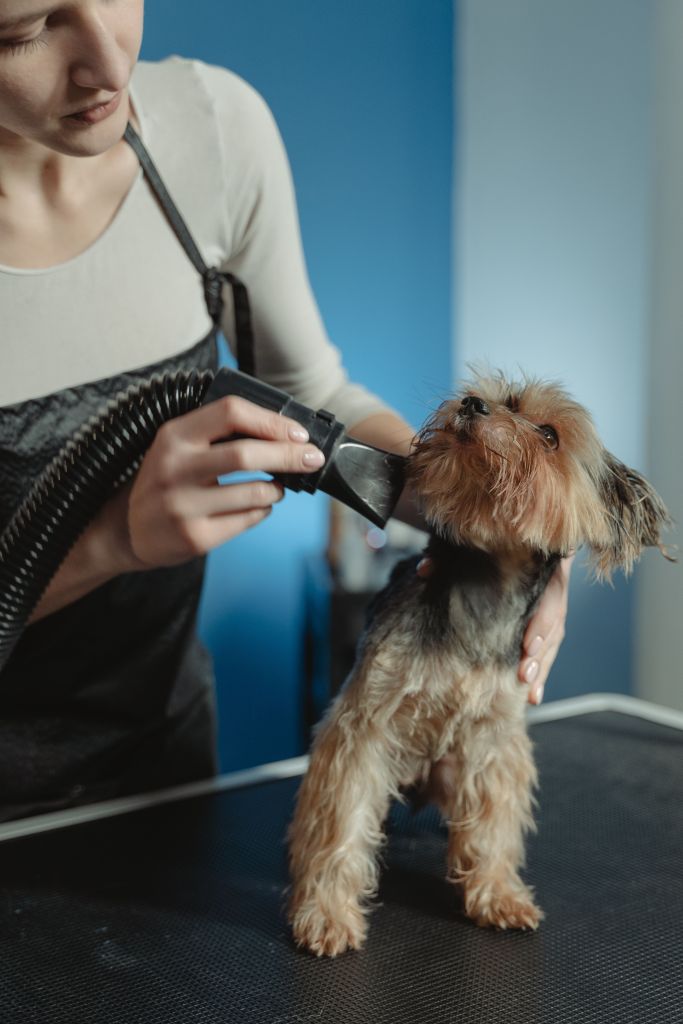
A woman is grooming a small hairy dog.
From pexels.com by Tima Miroshnichenko

Making a Difference for Shelter Pets

A professional content writer by the name of Ryan Goodchild contacted me about me posting an  article he had written on making a big difference for shelter dogs in your community. There are many ways that you can help as described in his article below. His article certainly contains a lot of great advice for all of us. I know that some of my regular readers volunteer at shelters and my gratitude goes out to all of you. You are heroes.

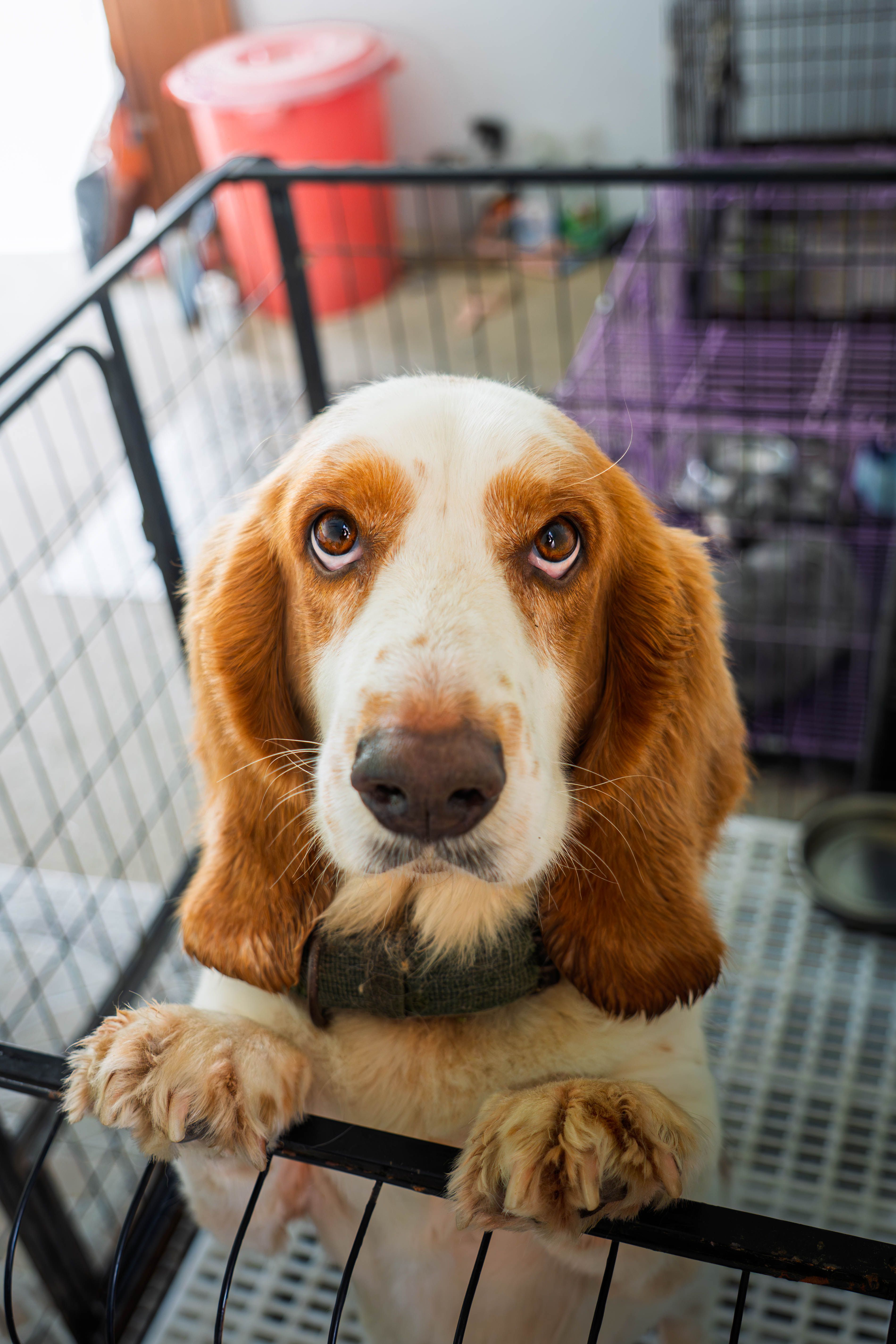
The photo tile above includes five photos of dogs in shelter. The photos are from pexels.com and the photographers are Laura Beauty Designer, lair arce, halilibrahimxq, 12photography and A P E R T U R E.

I should say that Leonberger dogs, the main topic of this blog, rarely end up in shelters and the reason for that is that Leonberger owners tend to be responsible dog owners and perhaps more importantly, it is difficult to get a Leonberger from a breeder that is not LCA certified. LCA is the acronym for the Leonberger Club of America. LCA requires breeders to take the dog back if anything goes wrong and they also keep an eye on Leonberger owners. If you mistreat a Leonberger, or sell or donate one in an unauthorized way, you can never own a Leonberger again. You have to sign a contract before you can buy a Leonberger. Below is a photo of a group of Leonbergers.

Five Leonbergers lying in the grass. They are wearing hats showing the American flag.
Five Leonbergers including Digory on 4th of July 2023. Photo by my friend Jen O’Keefe.

Our first two family dogs, a Labrador and a German Shepherd, came from a shelter via our niece and my wife’s sister. Their photo is below.

Our yellow Lab Baylor is sitting on the left. Our brown-black German Shepherd Baby is sitting on the right.
Our Labrador Baylor and German Shepherd Baby. They were both rescues.

The title of Ryan’s article is “How Anyone Can Make a Big Difference for Shelter Pets in Their Community”. While Ryan did all the writing, I added some photos. See below.

How Anyone Can Make a Big Difference for Shelter Pets in Their Community

Busy parents juggling work and school schedules, apartment renters with limited space, and local business owners trying to stay afloat often care deeply about animals but feel unsure how to create real animal welfare impact. Community needs are big, yet time, money, and energy are tight, and it can feel like only experts can move the needle. In reality, community support for shelter pets is the backbone of local rescues, from volunteering at shelters to helping more families feel confident about rescue pet adoption. Small, consistent involvement changes outcomes for animals waiting today.
Understanding the Three Ways to Help Shelter Pets

Most people make the biggest difference when they pick a help style that matches their real life. A simple framework covers almost every option: donate time through specific shelter volunteer roles, offer space by fostering, or give money to fund care and services. Think of it as choosing the lever you can pull consistently.

This matters because shelters run on steady support, not one-time bursts. Time keeps daily routines moving, space reduces crowding and stress, and money covers essentials like food, medical care, and outreach. The scale adds up fast when many people contribute in small ways: one volunteer community donated 211,307 hours of service.

Picture a typical week: you cannot adopt, but you can walk dogs on Saturdays, foster during a quieter month, or set up a $10 monthly gift. Fostering works because fostering is a temporary arrangement that moves an animal into a calmer home environment.

Clear, shareable graphics make those adoption and donation asks easier for your network to act on.

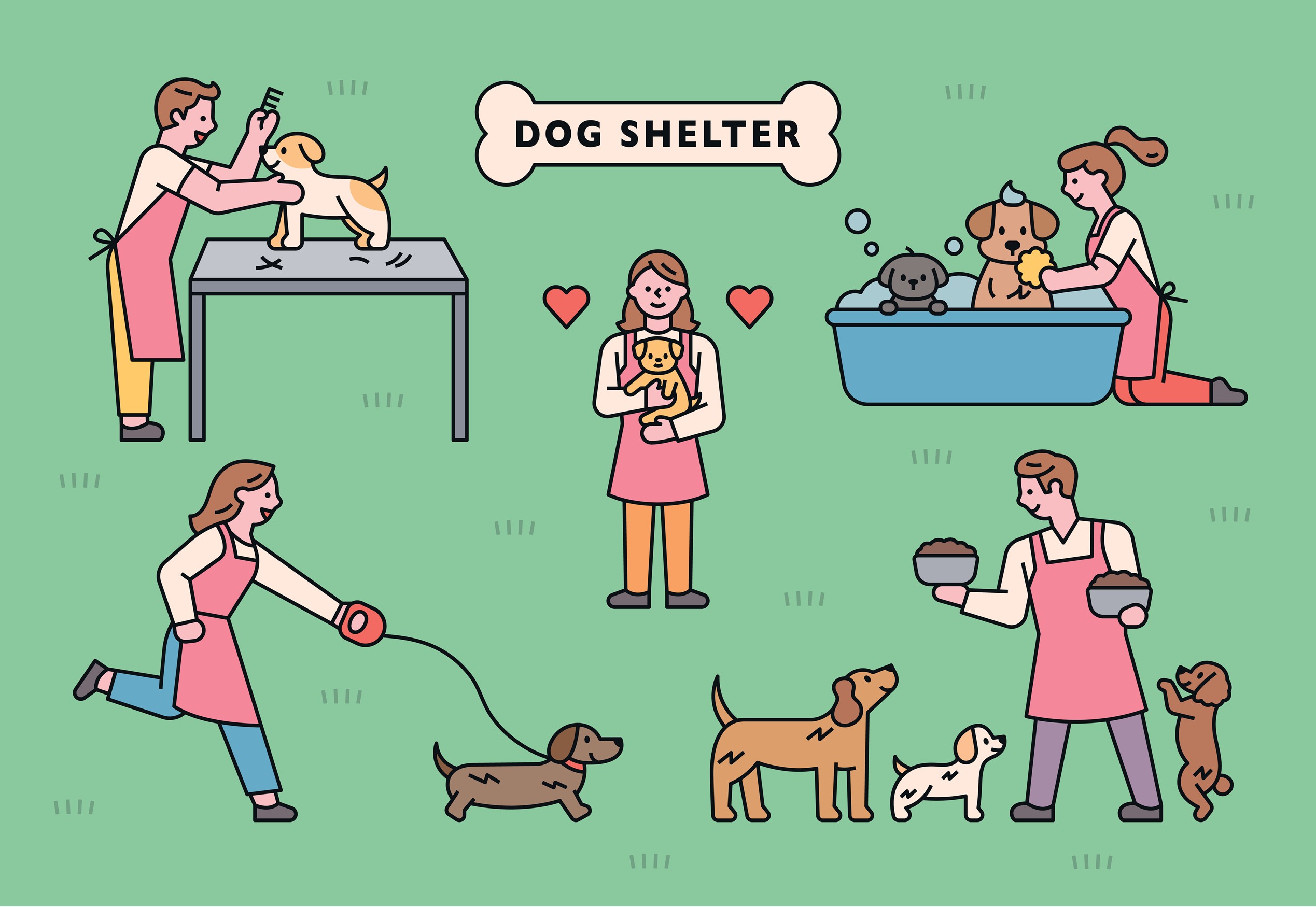
The illustrations show a woman holding a puppy in the middle, and volunteers grooming, bathing, walking and feeding dogs.
Dogs and volunteers at abandoned dog shelters. flat design style minimal vector illustration. Shutterstock asset id: 1817304344 by miniwide

Create Scroll-Stopping Adoption and Fundraiser Graphics in Minutes

Once you know whether you’re giving time, space, or money, one of the fastest ways to amplify that help is to make adoptable pets and urgent needs stand out online.

Volunteers can use free online tools to create eye-catching graphics that showcase adoptable pets and support fundraising, think social media posts, adoption flyers, or promotional materials for an upcoming event. Clear, shareable visuals can help more people notice a pet’s face and key details as they scroll, or understand what a donation drive is for at a glance. With an AI tool like Adobe Firefly’s AI graphic design generator, you don’t need design experience: you describe what you need (for example, an adoption post for a specific dog or a fundraiser graphic for medical costs), and the tool generates a customized visual you can share.

From there, you can pick from more high-impact actions that fit your schedule, skills, and comfort level.

Choose High-Impact Actions to Support Local Rescues

Pick two or three actions you can sustain, and do them consistently. Shelters and rescues run on tight timelines, so reliable help (even small) often beats one big burst.

  1. Foster with a clear “lane” (weekend, medical, or shy pets): Ask the rescue which foster type is most urgent, then choose one that matches your schedule, like a 72-hour “decompression foster,” a two-week post-surgery foster, or a quieter home for a fearful dog or cat. Get expectations in writing: who provides food, crates, meds, and vet care, plus a backup plan if you travel. Fostering shelter pets frees kennel space and gives the rescue better notes, photos, and behavior insights to share.
  2. Volunteer at animal shelters in one repeatable shift: Instead of “whenever,” pick a predictable slot like every other Saturday morning. Offer a specific role that reduces staff load: laundry, dishes, kennel reset, enrichment stuffing (Kongs/snuffle mats), dog walking, cat socialization, or adoption desk support. Consistency builds trust, which often unlocks higher-impact tasks like handling fearful animals, transport, or mentoring new volunteers.
  3. Run a targeted pet supply drive (one list, one week, one drop-off point): Start by asking for a “Top 10 Most Needed” list and preferred brands/sizes, then set a tight window (5–7 days) so donations arrive when they’re needed. Make it easy: one drop-off location, clear hours, and a single photo graphic showing exact items, your quick adoption/fundraiser design skills are perfect here. Add a goal tracker (“20 cans of kitten food” or “15 slip leads”) and post one daily update.
  4. Donate strategically, not randomly: Unrestricted monthly gifts help organizations plan medical care and staffing, and even $10–$25/month is meaningful when it’s reliable. It makes a difference: animal and environment donations make up 3% of all donations, so steady support can close real gaps. If you prefer “restricted” giving, fund a specific line item the rescue requests, spay/neuter vouchers, heartworm treatment, or emergency boarding.
  5. Become the “story + visuals” helper for one adoptable pet at a time: Offer to take 10 phone photos in good window light, capture a 15-second walking video, and write a short bio using a simple template: what the pet loves, what they’re learning, and the best home fit. Turn it into a clean graphic for social media (same colors, big readable text, one clear call-to-action) so volunteers can post fast without reinventing the wheel. This supports adoptions and fundraising without requiring you to handle animals.
  6. Advocate locally with one concrete ask: Start small: request pet-friendly rental policies at your workplace housing program, ask your city council to fund shelter improvements, or push for accessible spay/neuter and microchip clinics. Show up once: attend a meeting, bring a one-page summary, and share a few rescue-approved graphics to help neighbors understand the issue quickly. Community advocacy for animals works best when it’s specific, respectful, and focused on solutions.

If you’re unsure what fits your time, budget, allergies, or experience, choose the smallest version of one idea and build from there, doing the “right-size” help consistently is what changes outcomes.

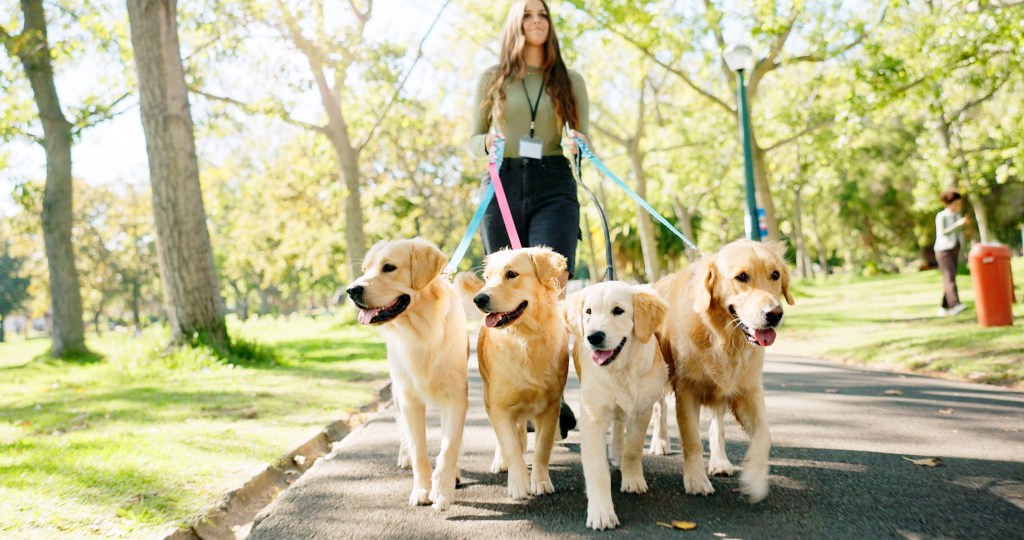
A woman with at least five dogs. She is caressing them.
Animal shelter volunteer takes care of dogs. Animal volunteer takes care of homeless animals. Shutterstock asset id: 2390820575 by andysavchenko

Shelter Pet Support: Questions People Ask Most

A few quick answers can make starting feel a lot easier.

Q: How do I help if I only have an hour or two a week?
A: Choose one small, repeatable job and stick to it, like laundry, enrichment prep, or photo posting. Many people give time in bite-size chunks, and 63 million people volunteer, so shelters are used to scheduling around real life.

Q: What if I show up to volunteer and the tasks feel boring or awkward?
A: That is normal, especially at first. Many roles are repetitive, dry, and unremarkable tasks that still protect animal health and keep operations moving. Ask for a clear checklist so you can be helpful even when you do not feel “plugged in” yet.

Q: Can I foster if I have pets, kids, or allergies at home?
A: Often yes, if you choose the right match and set boundaries. Request a foster that fits your household, confirm separation options, and get medical and behavior expectations in writing before pickup.

Q: How do I know my donation is actually used well?
A: Ask what their most urgent need is this month and whether they can share a simple breakdown of spending or program outcomes. If you want tighter accountability, fund a specific item they request and ask for a receipt or confirmation note.

Q: What should I avoid when adopting so I do not end up returning the pet?
A: Do a lifestyle match first: time alone, energy level, grooming, and realistic training needs. Ask about decompression time, medical history, and a support plan, and start with a slower transition rather than a packed social calendar.

Small, steady help adds up faster than you think for the pets counting on it.

Choose One Small Commitment That Helps Shelter Pets Thrive

Shelters are stretched thin, and it’s easy to care deeply yet feel unsure where help truly lands. The way forward is a steady, community-minded approach: choose practical roles, communicate clearly, and keep support consistent so good intentions become real relief. When that mindset sticks, making a difference for shelter pets looks like fuller foster networks, stronger outcomes from encouraging pet adoption, and volunteer impact stories that motivate others to join in. One reliable helper can change the daily reality for dozens of animals. Pick one next step today, sign up for a shift, submit a foster application, or set a small recurring donation, and put it on the calendar. Ongoing support for animal welfare builds the stability that lets pets and rescues recover, connect, and thrive.

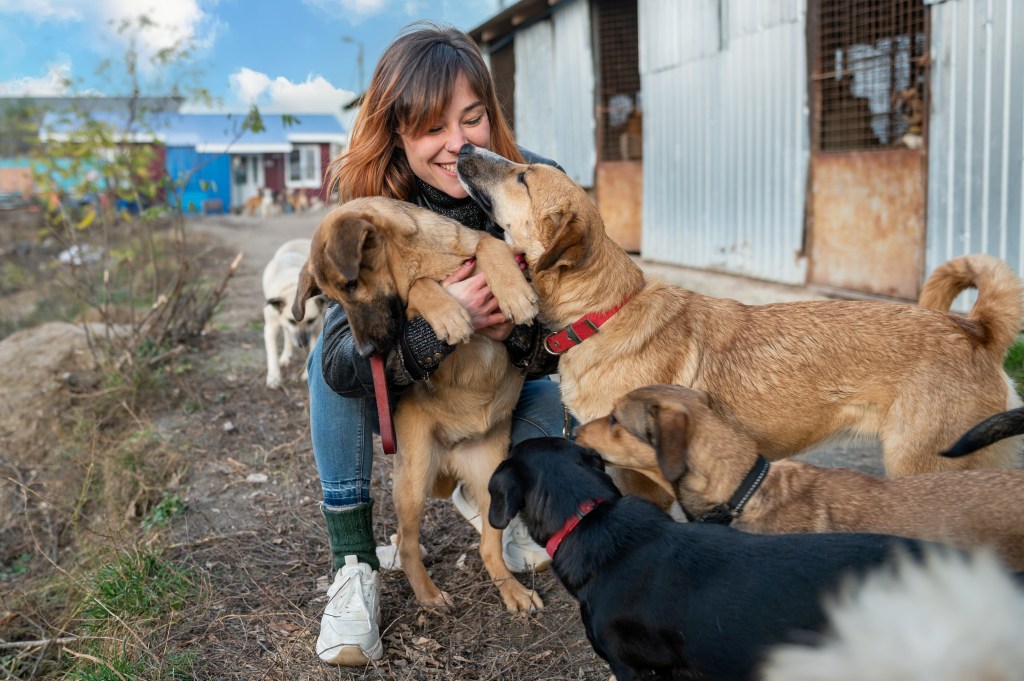
A woman in a red sweater feeding a beagle in a cage.
Woman feeds a dog at an animal shelter for adoption at a rescue center. Wellness, charity, and youth and women volunteering with an adoptive dog and pet at the local kennel. Shutterstock asset id: 2428340131 by Yiistocking

The Joy of Having a Pet

Esther’s writing prompt: June 3 : Pet

Click here or here  to join in.

I grew up not having any pets even though I really wanted a dog. However, both my parents were working, and my brother and I walked to and from school every day. We stayed by ourselves until our parents came back home. That is not a good situation for a dog or for many other kinds of pets. This all changed after I met my wife. She was used to having dogs and other pets. While we were still students we had an aquarium, hamsters, a rabbit, and a cat. Unfortunately, I was extremely allergic to the cat and I got very sick. Luckily, we found someone who could take care of the cat.

After we got married and had kids we had a couple of aquariums, a pet snake, a frilled lizard, hamsters, and eventually dogs. On one occasion we went fishing in a lake here in Texas. We used minnows for bait. My daughter wanted to take the leftover minnows home and put them in an aquarium. She named all of them Sally. Sally #1, Sally #2, Sally #3, Sally #4, Sally #5, Sally #6, etc. She was very young at the time and did not take care of her Sallys’ very well. She wanted them to have cranberry juice, so she poured cranberry juice in the aquarium. She wanted them to have a beautiful red aquarium, so she poured red paint in it. Well eventually the minnows died.

Freshwater fish Riffle minnow (Alburnoides bipunctatus) underwater photography. Minnow in clean water and nature habitat. Natural light. Lake and river habitat. Wild animal. Underwater photo of fish.
Sally #1 and Sally #2 Asset id: 1182854671 by Rostislav Stefanek

Our first dogs as a family were our Labrador Baylor and our German Shepherd Baby. To be precise, Baylor was a mix, one quarter Rhodesian Ridgeback and three quarters yellow Labrador. They were both rescues that were adopted by our niece (Baylor) and Claudia’s sister (Baby). They were both wonderful dogs. Baylor loved swimming and he was brave and very playful.

Our yellow Lab Baylor is sitting on the left. Our brown-black German Shepherd Baby is sitting on the right.
Our Labrador Baylor and German Shepherd Baby. They were both rescues.

Next, we got a Leonberger dog by the name Le Bronco von der Löwenhöhle, or Le Bronco, or just Bronco for short. He was a big friendly goofball who saved our Pug Daisy’s life, probably saved Baylor’s life my smelling out an oncoming insulin shock, found and saved run away hamsters, and saved the entire neighborhood by chasing off a trespasser / intruder / peeping Tom. I wrote a book about him “The Life and Times of Le Bronco von der Löwenhöhle”.

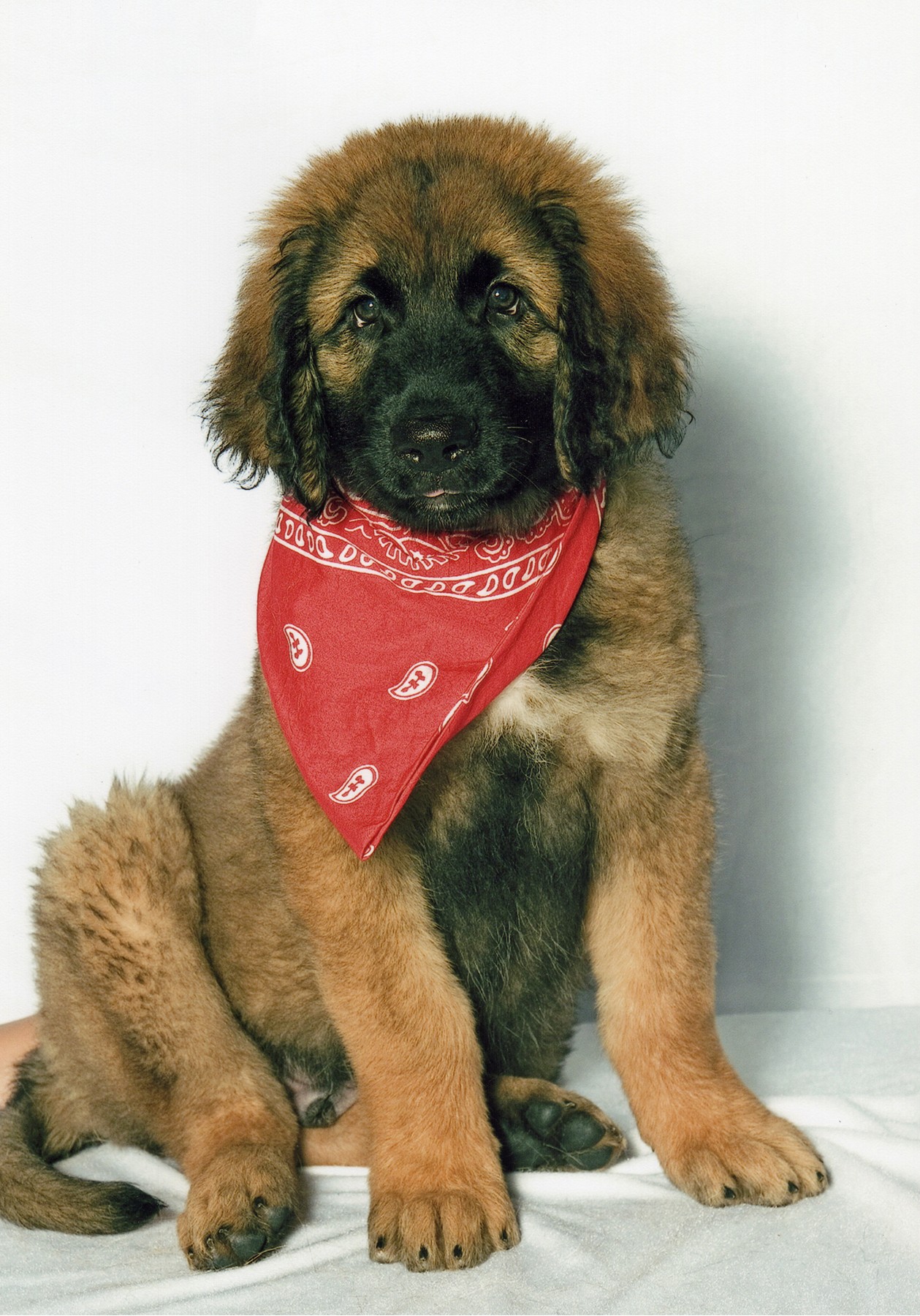
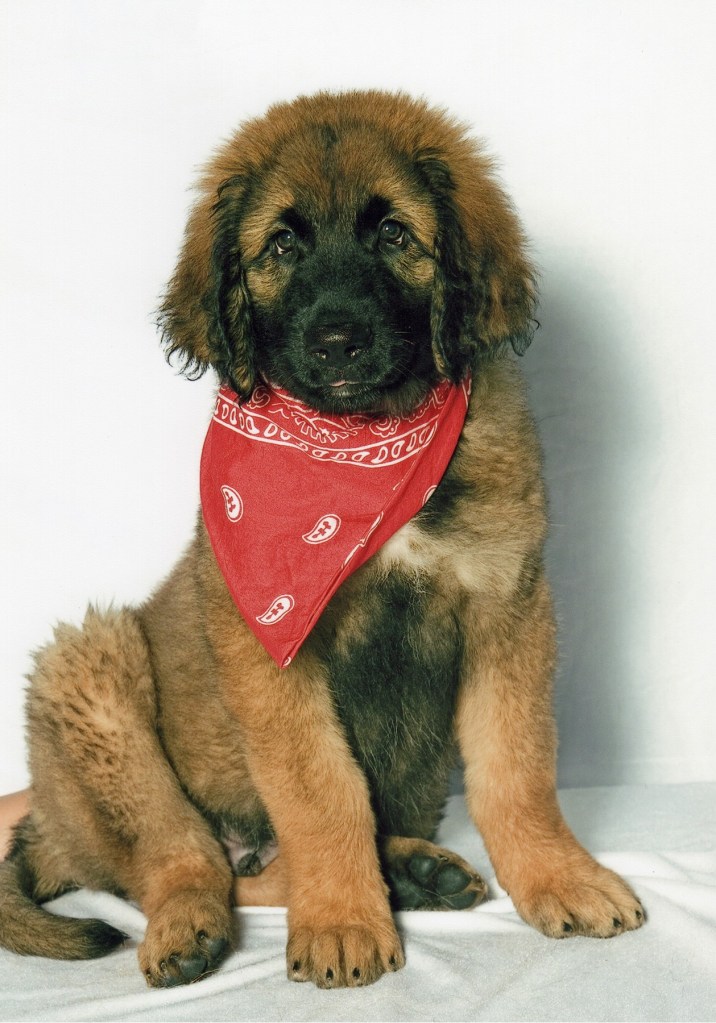
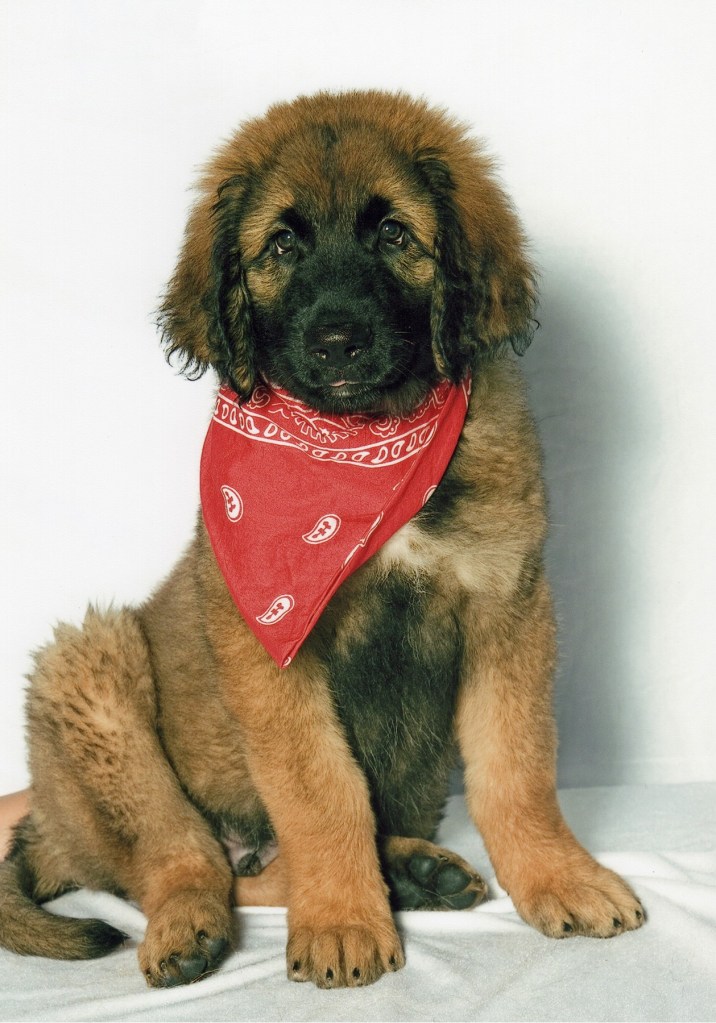
A photo of our Leonberger as a puppy. He is wearing a red scarf.
Our Leonberger Dog Bronco at 3 months old
Our Leonberger Bronco is standing on our red sofa. He is giving me a hug.
Me with our Leonberger Bronco. He was not yet fully grown.
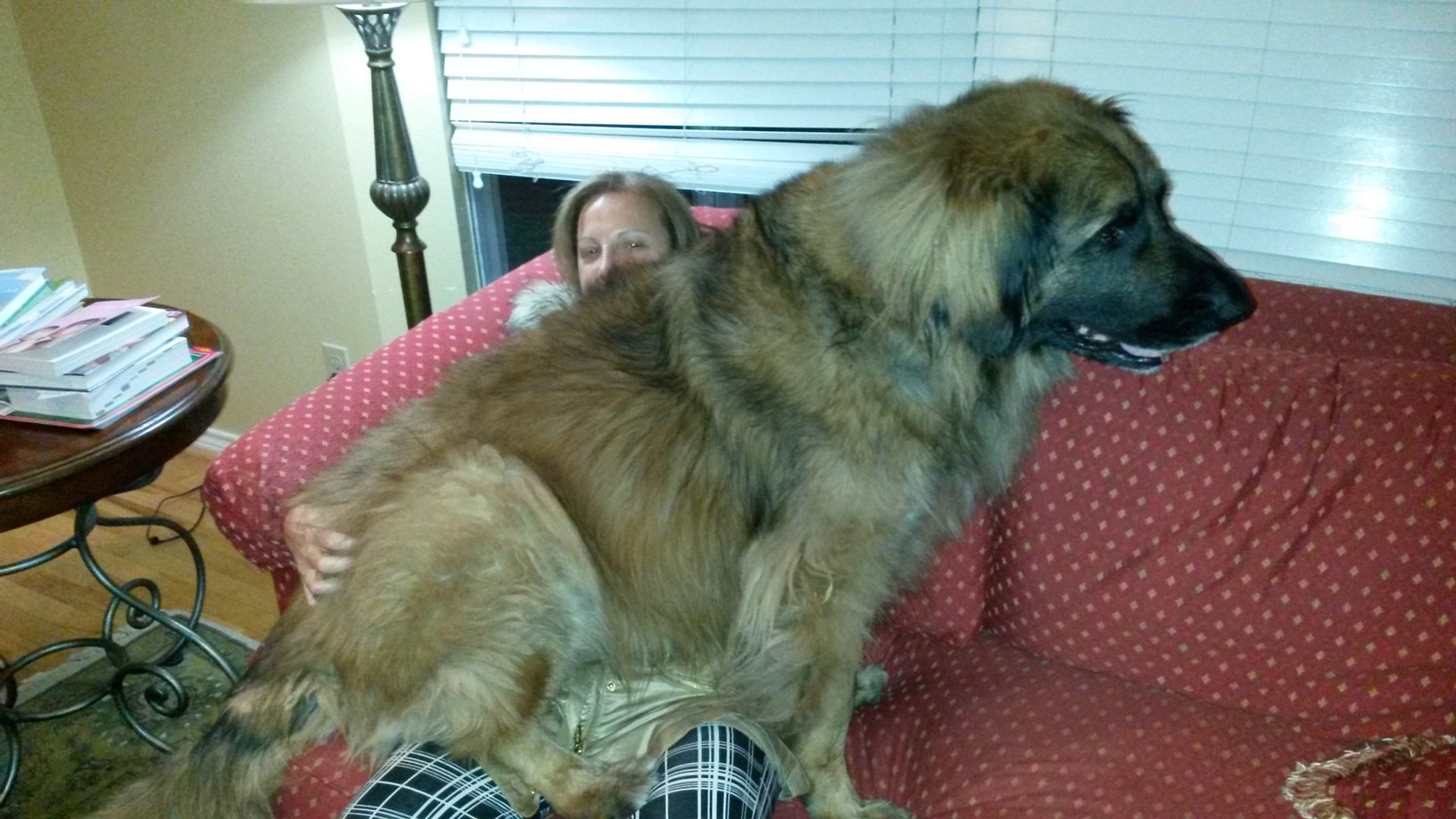
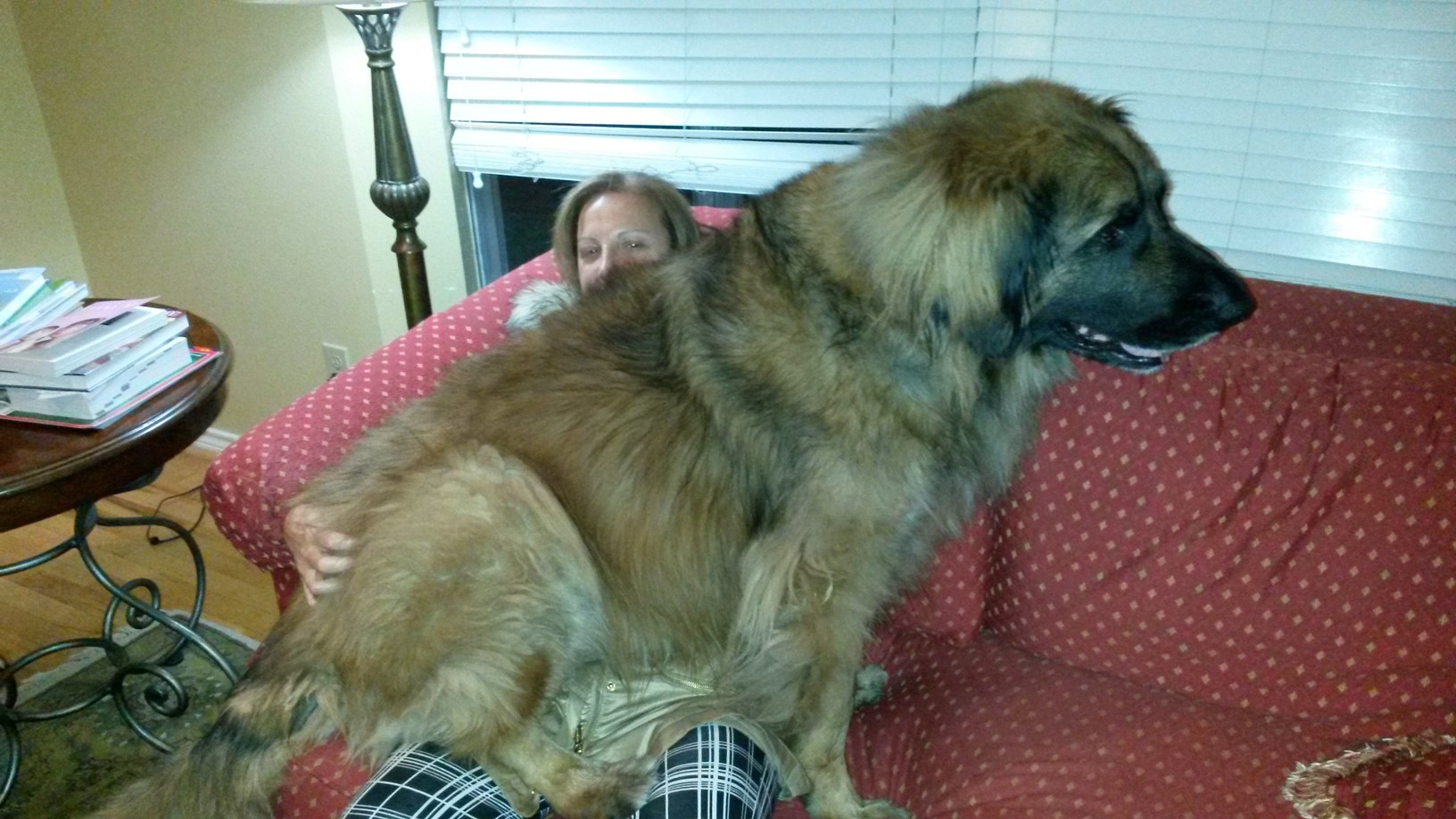
My wife is sitting on a red sofa. Our large Leonberger Bronco is sitting in her lap. He is big and heavy, and she is barely visible underneath him.
Our large but cuddly 167lb Leonberger Bronco is sitting in my wife Claudia’s lap.

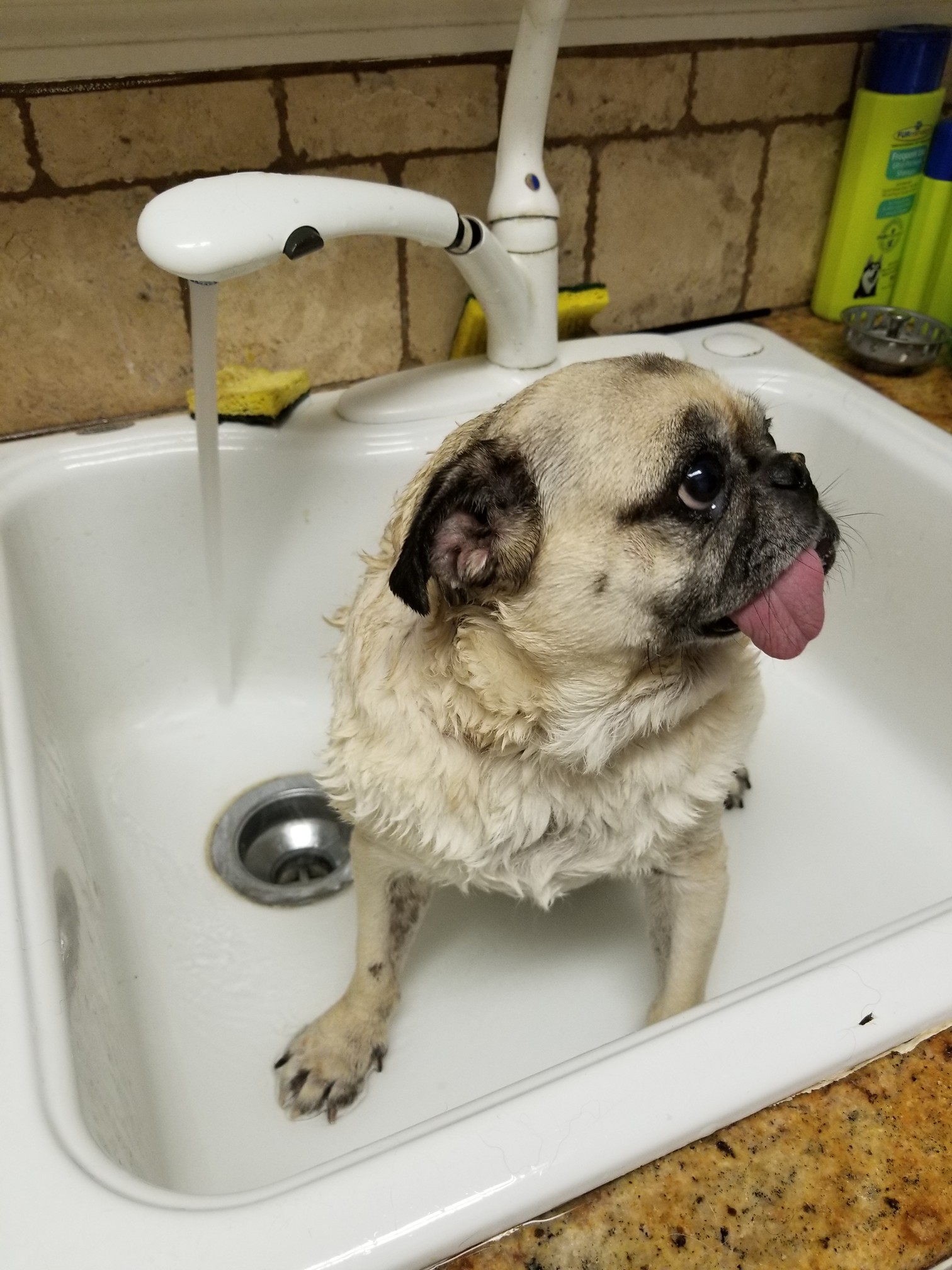
Next, we got a Japanese Chin named Ryu and the Pug Daisy. Two little energetic and funny dogs. Ryu loved howling and he sounded like an opera singer. He loved the applause he got. Daisy was a funny girl, and she loved being around Ryu. They did not like it when we travelled and on one occasion they staged a protest. They defiantly sat down in one of the suitcases and refused to move.

Our Japanese Chin is sitting on the left in suitcase and our pug on the right.
Our Japanese Chin Ryu and our Pug Daisy are protesting our travel by sitting in our suitcase. They want to come with us.

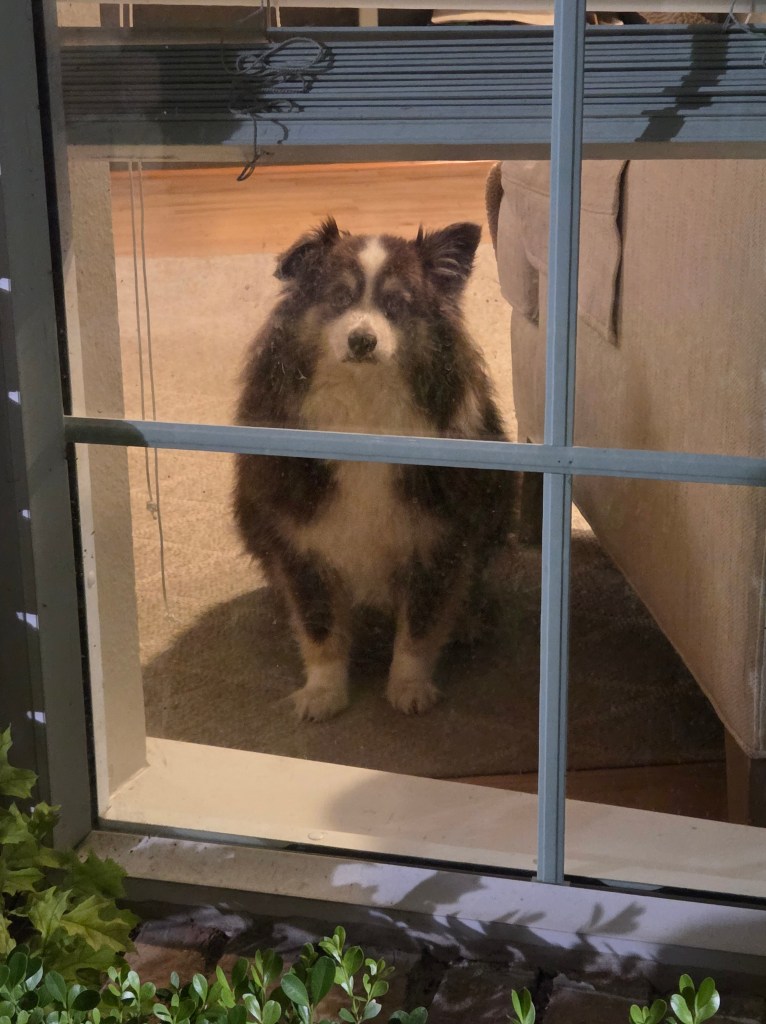
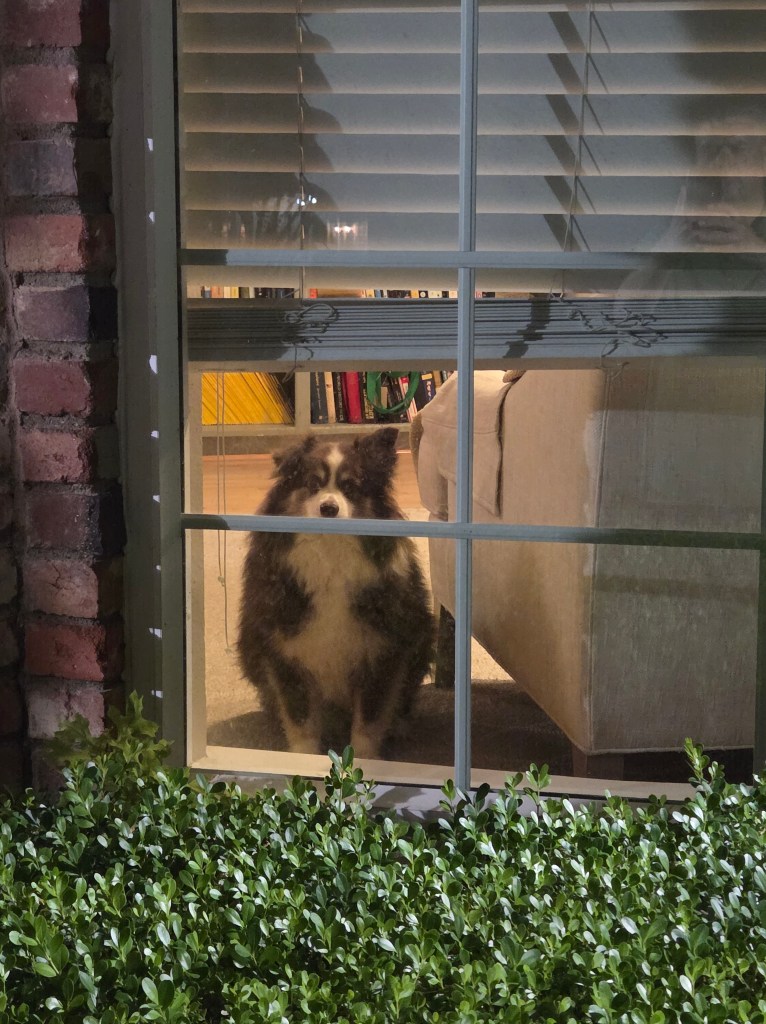
Finally, we got our little rascal, the mini-Australian Shepherd Rollo. He is an intelligent, curious, energetic, anxious and spoiled dog that is a chore. He probably understands several hundred words. When we still had Bronco, they were best buddies. He was pestering Bronco, biting his tail and even swinging in it. Luckily, Bronco was patient. When we leave for a little bit, he sits in the window and looks out into the street. When we say “Rollo, go look out the window” he runs to the window. He knows we are leaving. He is our most misbehaved dog, but he is full of life and full of joy.

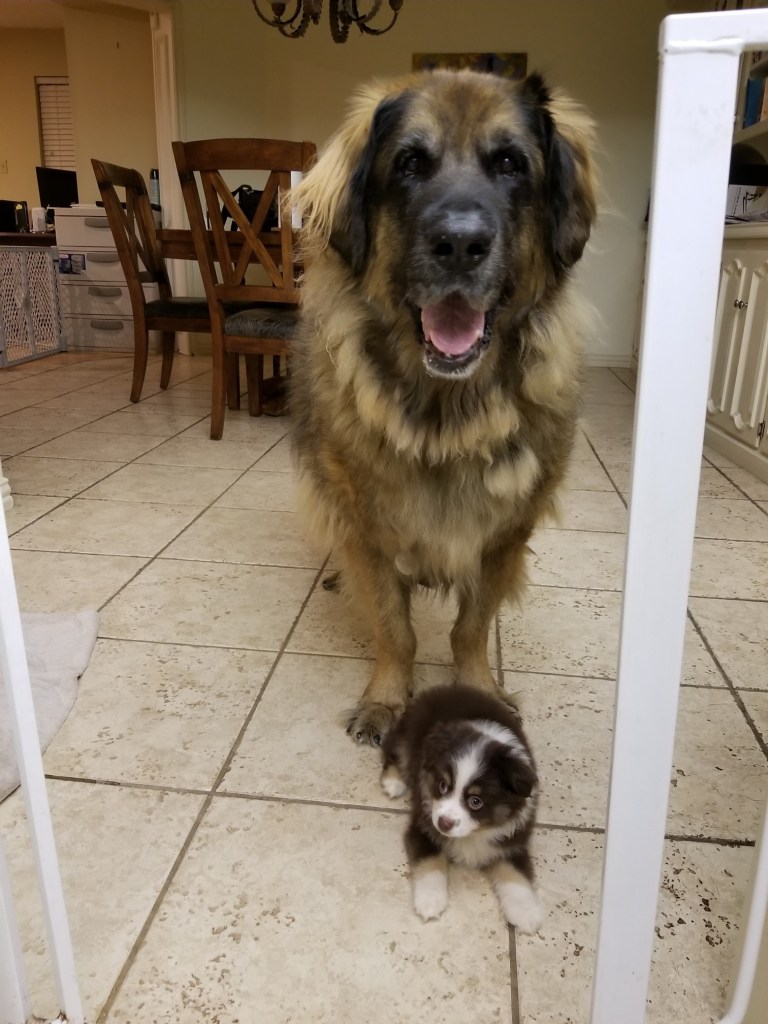
Bronco is standing behind Rollo. Rollo is black and white and very small. They are standing in front of the kitchen.
Our Leonberger Bronco with our new puppy Rollo, a mini-Australian Shepherd.
our mini-Australian Shepherd on the left, is biting and pulling Bronco’s tail. Bronco is on the right.
Rollo, our mini-Australian Shepherd could be a pest. He loved biting Bronco’s tail and even swung in it as if it was a swing.
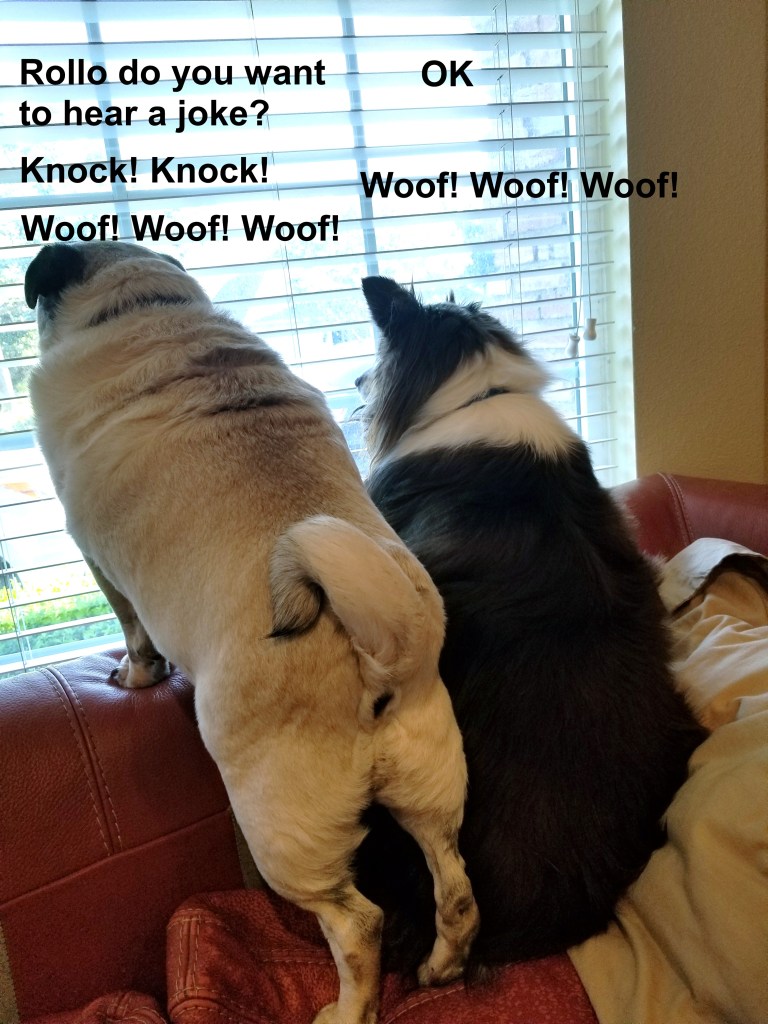
The joke in the photos is : Daisy says, “Rollo do you want to hear a joke”, Rollo says “OK”, Daisy says “knock! knock!”, then they both start barking “Woof! Woof! Woof!”, “Woof! Woof! Woof!”
Our Pug Daisy and our mini-Australian Shepherd barking at people passing by our house. Notice the joke.

The Joy of Having a Pet

Pets give you unconditional love, company, adventure, memorable moments, hilarious moments, protection, and lots of joy. Playing with them or taking a dog for a walk is good for your health, as this article from the Mayo clinic states.

My Other Responses to Esther’s Prompts

25 Sweet Leonberger and Dog Photos

Today is the third time I participate in Linda Hill’s streams of consciousness. To read about the rules and participate click here, or here. To read my two previous entries (prompt was pre) click here “Prediction Failures and My Lucky Day from Hell”, or here “Reindeer Hide Memories”.

The badge features a twig with rain drops and it says Stream of consciousness Saturday #SoCS
2019-2020 SoCS Badge by Shelley!

Today’s prompt for Stream of Consciousness Saturday May 16 is “sweet”. Use it way you’d like. The first rule is: there should be minimal planning and no editing except typos. 

The first thing that came to my mind was how sweet my dogs have been and how many sweet dog photos I have taken of Leonbergers and of our other dogs throughout the years. I’ve also downloaded many shutterstock photos of Leonbergers. I intend to pick just a few of those. So, my stream of consciousness is to randomly pick sweet dog photos from the thousands of photos that I have. I will select 25 photos, but I don’t know yet which photos that will be. Let’s see!

25 Sweet Leonberger and Dog Photos my Quick Picks

This is color photo of our Leonberger puppy Bronco at three months old. He is sitting and staring at the camera. He is wearing a silk scarf.
Our Leonberger Bronco at three months old.
Our yellow Labrador Baylor is on the left and our brown and black German Shepherd Baby is on the right.
Our Labrador Baylor and our German Shepherd Baby. Photo taken at the same time as the photo above. However, we couldn’t get Bronco sit still between Baylor and Baby.
Our black and white Japanese Shin Ryu is on our red sofa. You can see our pug Daisy in the upper left corner.
Our Japanese Shin Ryu when he was young.
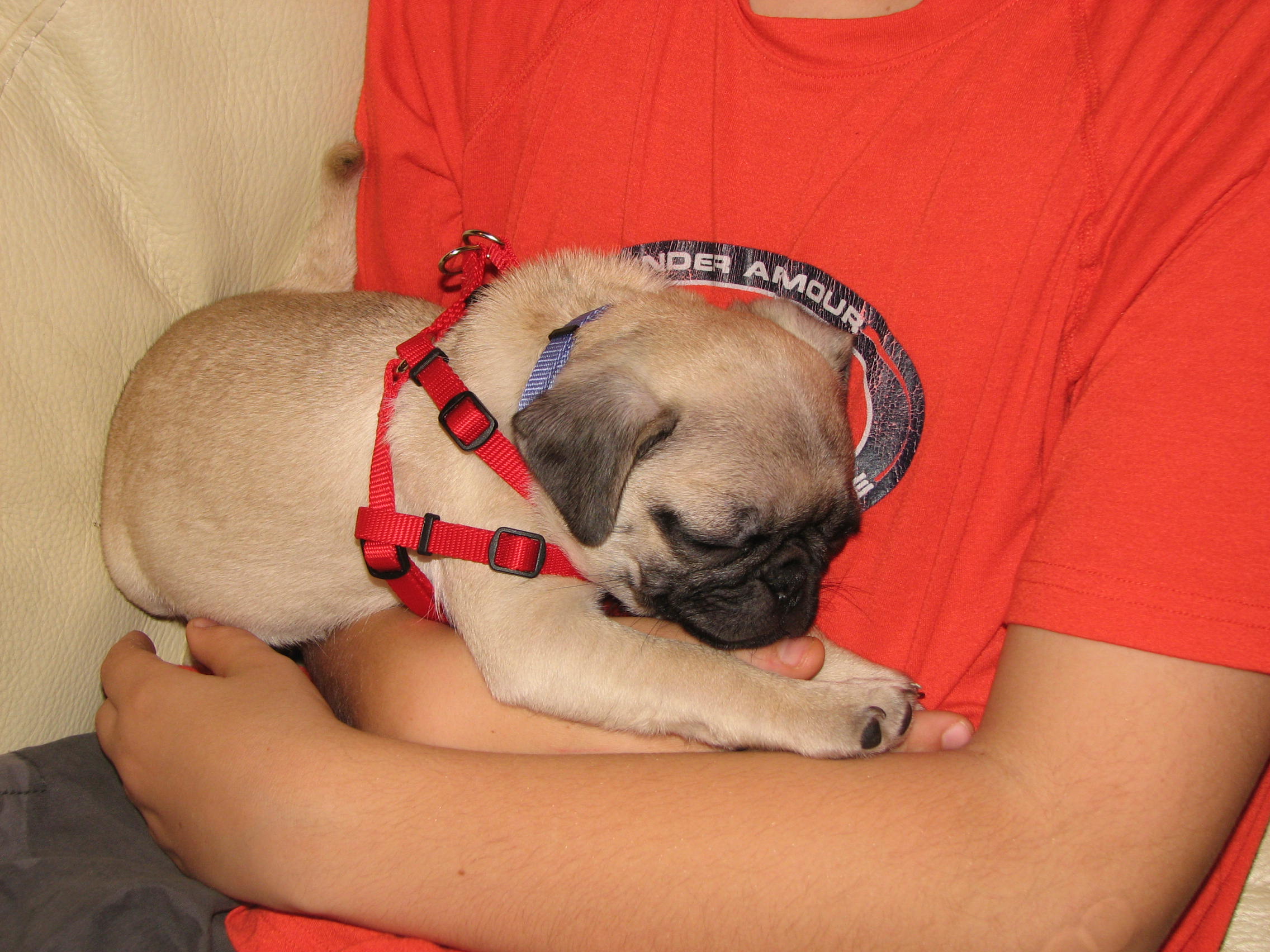
Photo of our son David on the sofa holding a little pug puppy in his arms.
Our son David with our pug Daisy when she was a puppy.
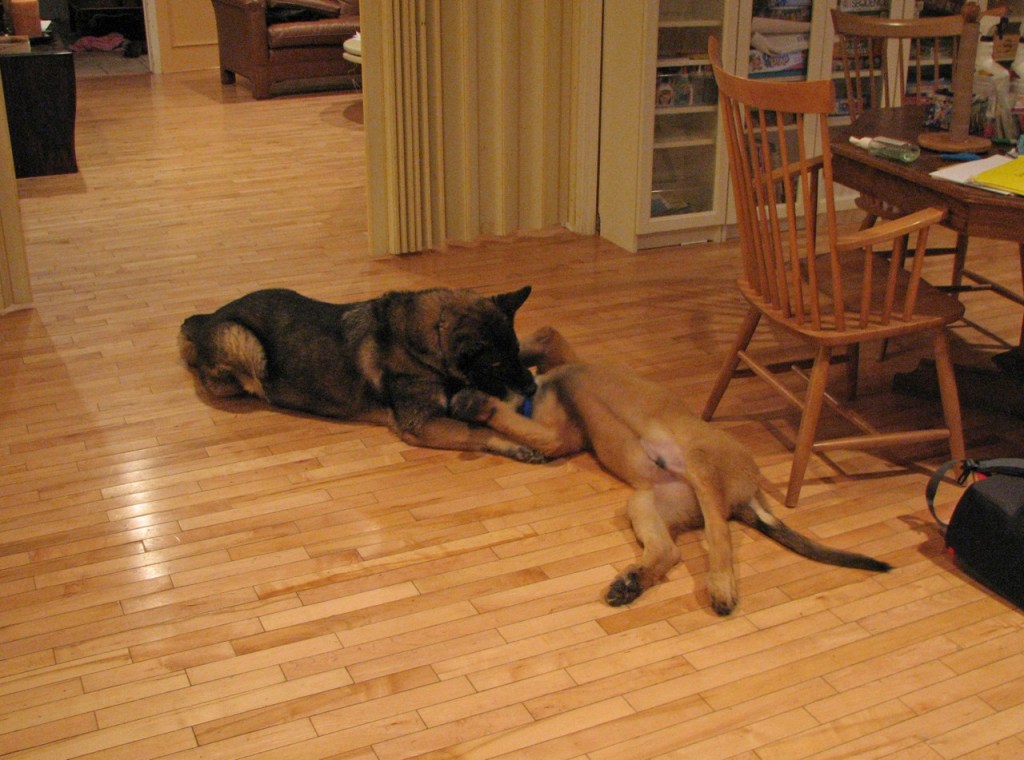
The German Shepherd is lying on the floor and the Leonberger puppy is on his back.
Our German Shepherd Baby playing with our 4 months old Leonberger Bronco.
Bronco is standing on our red leather sofa giving me hug and a kiss.
Bronco our Leonberger is giving me a hug. He is about one year old and not yet fully grown.
Two brown Leonberger puppies lying on a wood floor.
Two Leonberger puppies. Shutter stock Photo ID: 2294202331 by Olga Shusters.
Ten Leonberger puppies sitting on a sofa. They are brown with black face masks.
Ten Leonberger puppies. My guess is that they are about two months old. Shutterstock-ID:561107710 by Akbudak Rimma.
Leonberger puppy running through green grass. The puppy has its mouth open, and he is looking straight into the camera.
Leonberger puppy. My guess is that he is around two months old. Shutterstock-ID: 629624396 by TOM KAROLA.
Two sand colored Leonberger puppies playing in the snow. The play seems to be a little bit rough. Like all Leonbergers they have a black facemask.
Two light colored Leonberger puppies playing. My guess is that they are three months old. Shutterstock-ID: 2141564415 by AnetaZabranska.
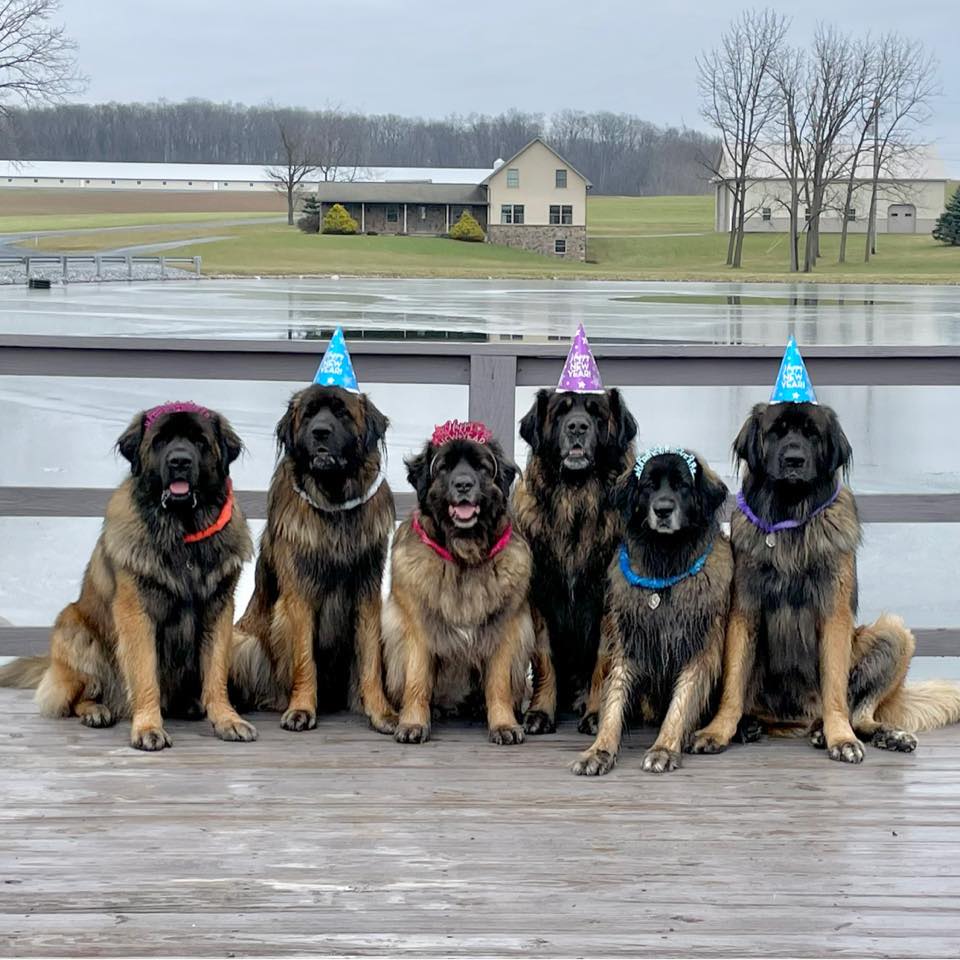
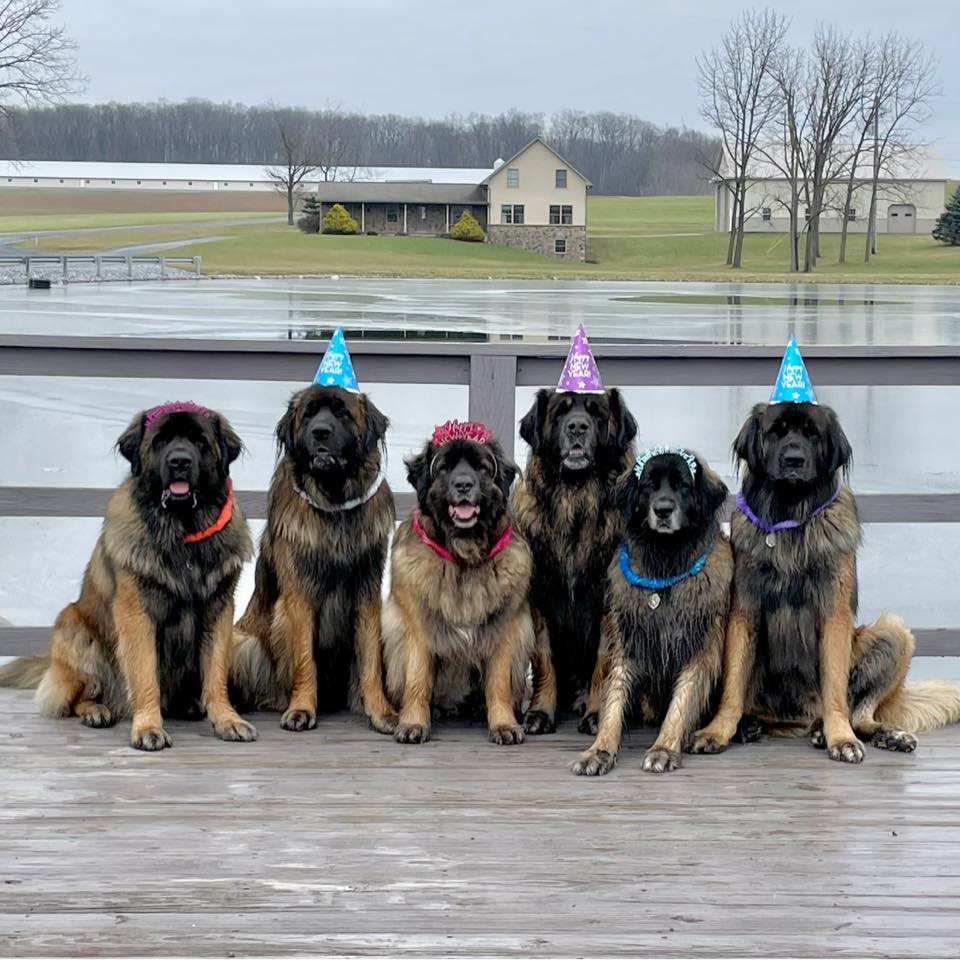
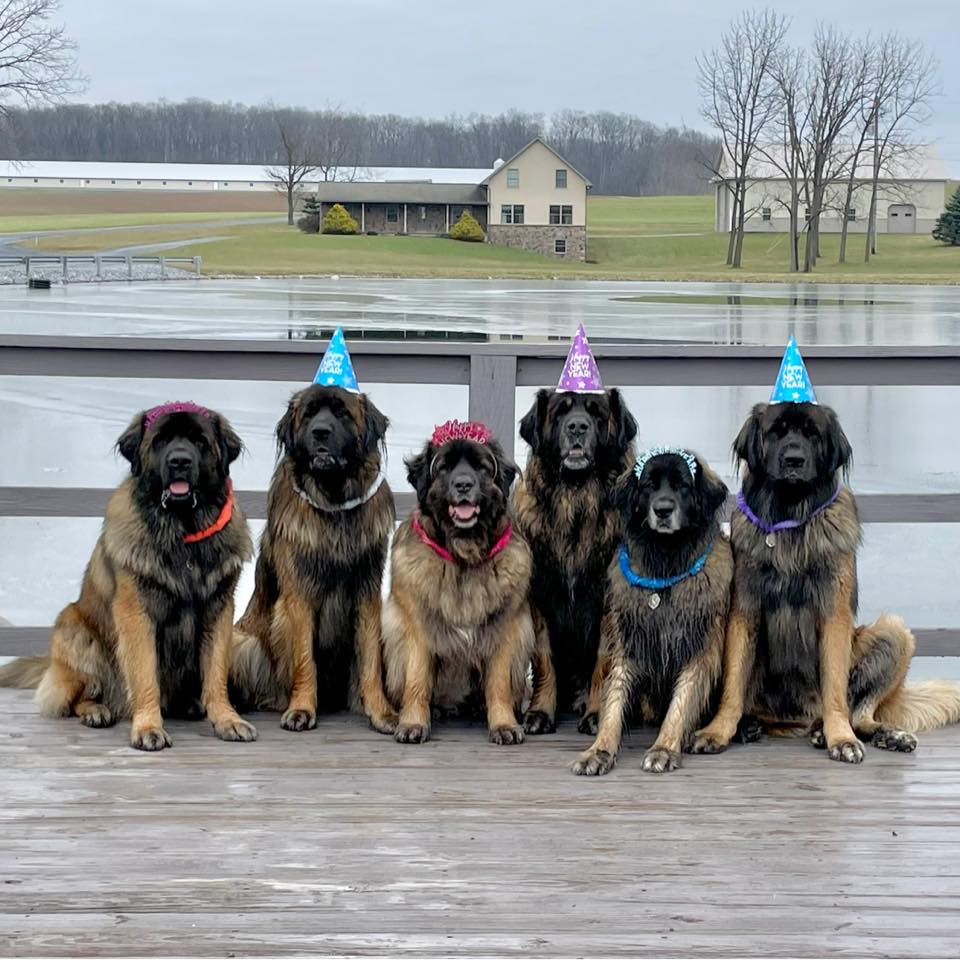
Six Leonbergers with celebration hats are looking straight into the camera.
Six Leonbergers and a birthday celebration. Photo by friend Jen O’Keefe.
Seven Leonbergers lying or sitting on the sand on a beach.
Seven Leonbergers by the beach. Photo by my friend Jen O’Keefe.
Five Leonbergers lying in the grass. They are wearing hats showing the American flag.
Five Leonbergers including Digory on 4th of July 2023. Photo by my friend Jen O’Keefe.
Our black and white Japanese Shin Ryu (left) sleeping next to our beige pug Daisy (right).
Our Japanese Shin Ryu sleeping next to our pug Daisy.
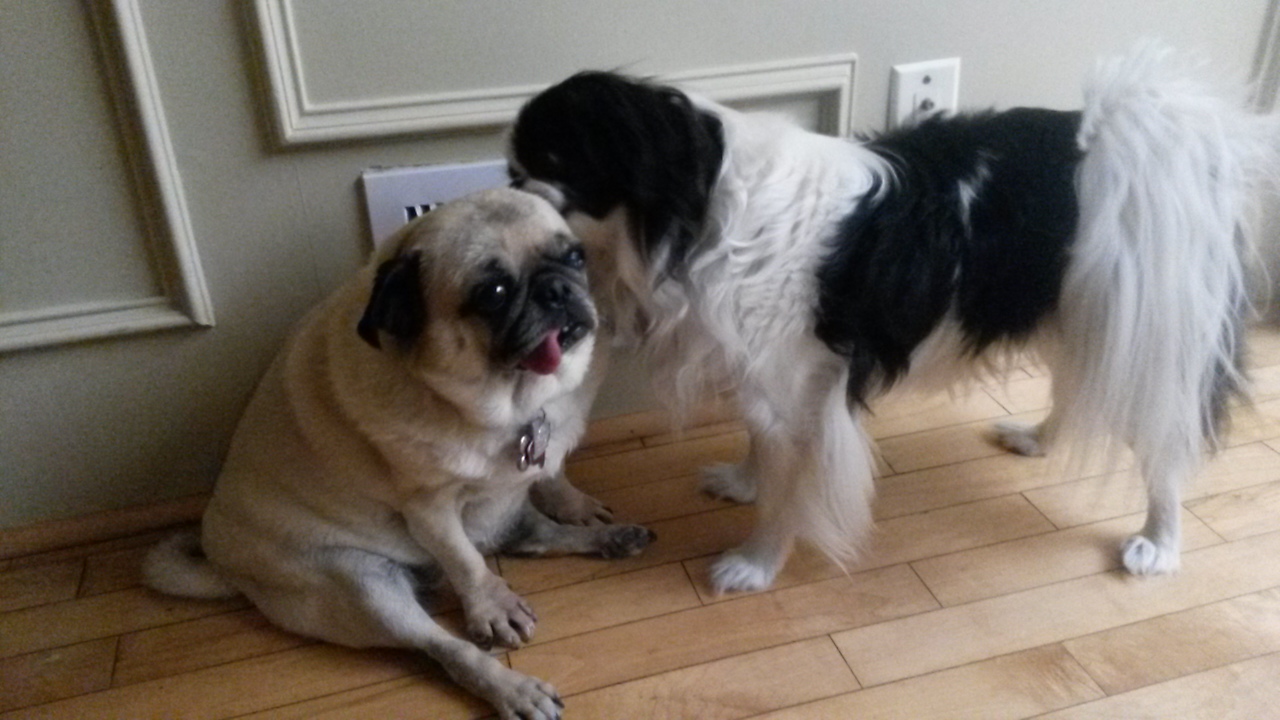
Our black and white Japanese Shin Ryu (right) licking our pug Daisy’s ear (left).
Our Japanese Shin Ryu licking our pug Daisy’s ear.
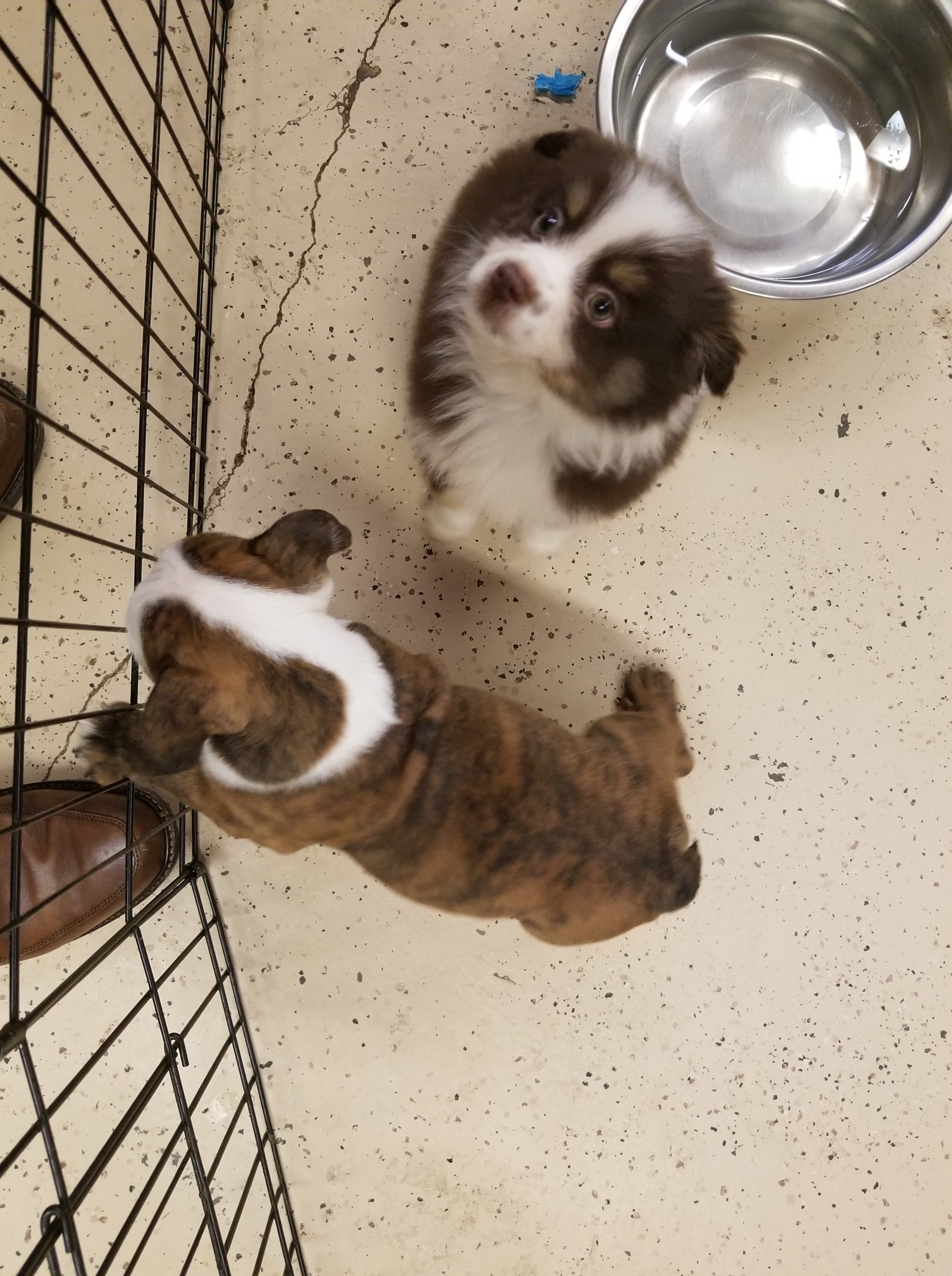
Photo shows a little mini-Australian Shepherd puppy on top. He is looking up at us. Right below him is an English Bulldog puppy.
The day we picked up our mini-Australian Shepherd Rollo. He was nine weeks old. The other puppy is an English bulldog puppy.
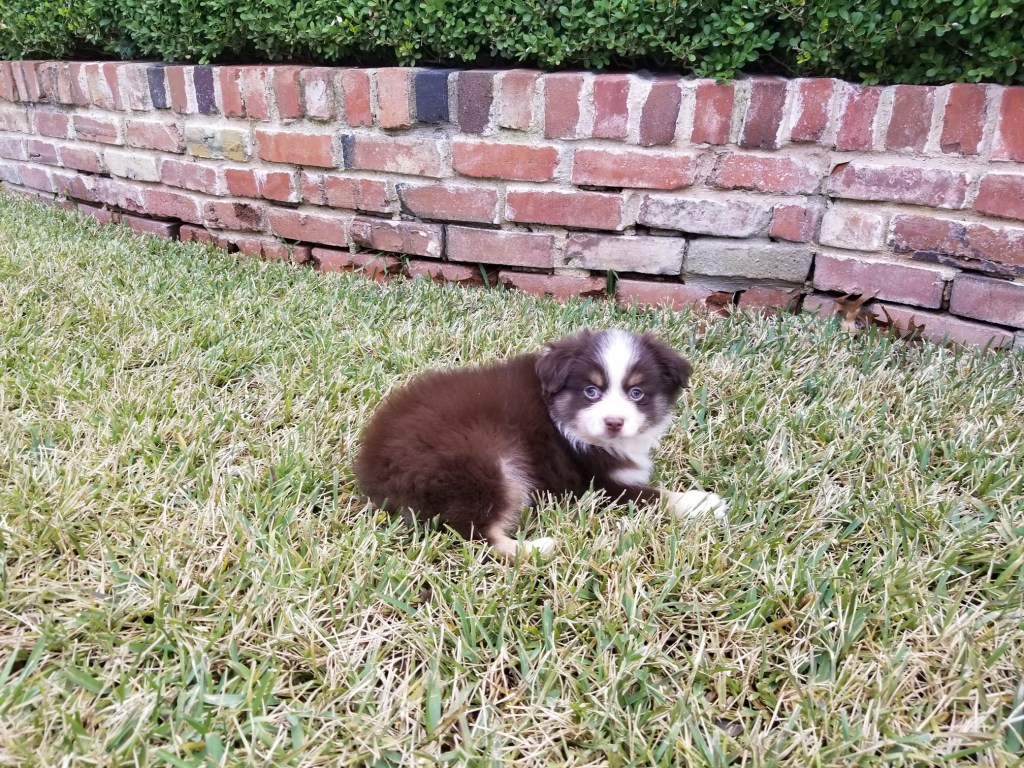
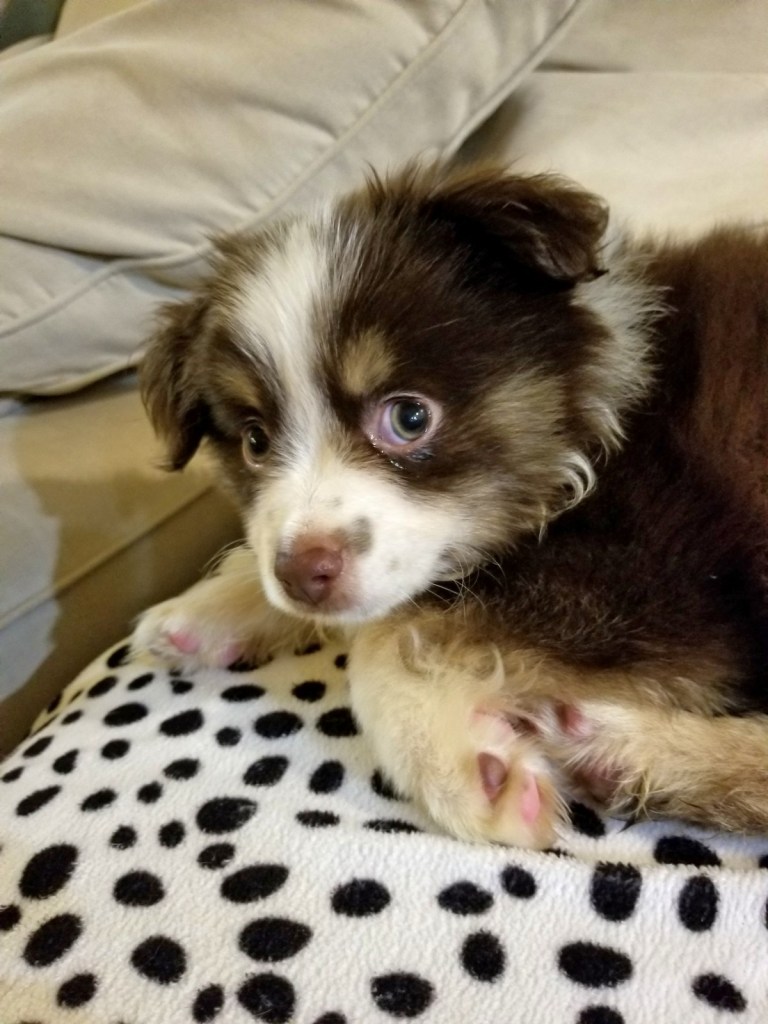
Our mini-Australian Shepherd puppy Rollo is lying on the grass.
Our mini-Australian Shepherd puppy Rollo.
Our mini-Australian Shepherd puppy Rollo is lying on a blanket.
Our mini-Australian Shepherd puppy Rollo.
The photo shows our pug Daisy on the right and our little mini-Australian Shepherd puppy Rollo on the left. They are on the sofa.
Our pug Daisy and our mini-Australian Shepherd puppy Rollo.
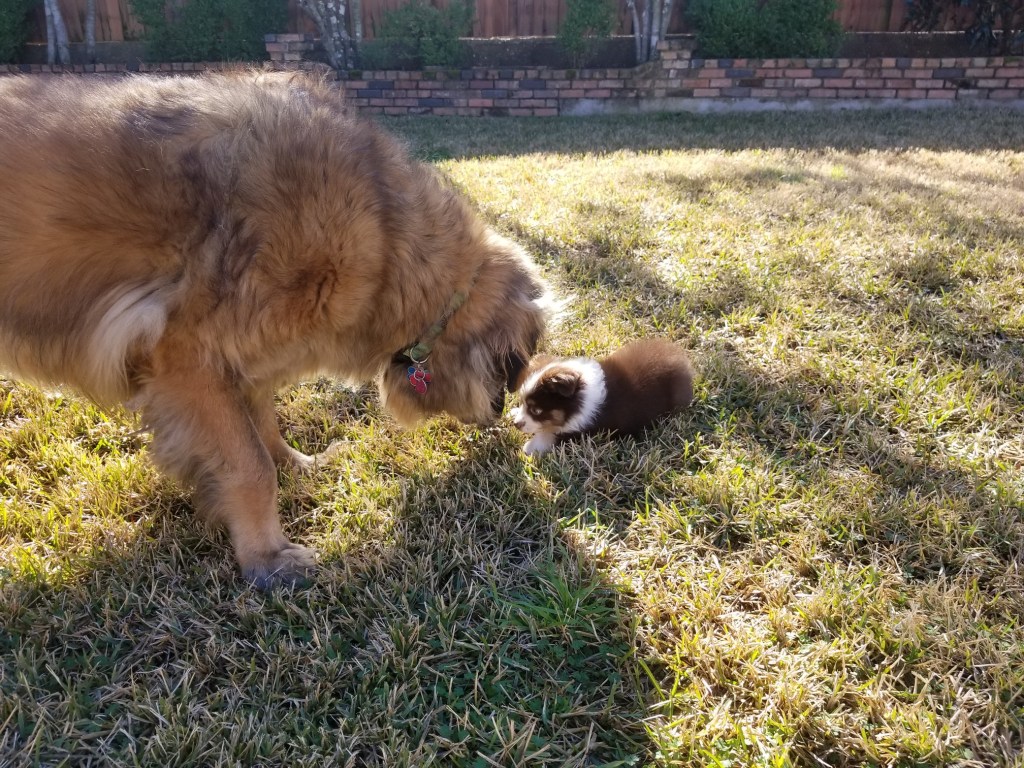
The photo shows our big Leonberger on the left and our little mini-Australian Shepherd puppy Rollo on the right. They are in the backyard.
Bronco and our mini-Australian Shepherd puppy Rollo.
The photo shows our big Leonberger standing behind our little mini-Australian Shepherd puppy Rollo.
Bronco and our mini-Australian Shepherd puppy Rollo.
The photo shows our daughter wearing a pajama and petting our Pug Daisy and mini-Australian Shepherd Rollo.
Our daughter with our Pug Daisy and mini-Australian Shepherd Rollo.
Little Rollo is lying in front of Bronco. Rollo is on the left. Bronco is on the right.
Bronco our Leonberger and Rollo our mini-Australian Shepherd.
Our mini-Australian Shepherd puppy Rollo is playing with an orange volleyball on the green grass.
Our mini-Australian Shepherd puppy Rollo playing with an orange ball.
Our mini-Australian Shepherd Rollo (left) is biting Bronco’s tail and pulling on it.
Our mini-Australian Shepherd Rollo is playing with our Leonberger Bronco’s tail. Once he even dangled in it like a swing.


Finally, if you want to see other 25 sets of dog photos see below (this list I copied from another of my posts).

Taking Great Photos and Videos of Leonbergers

A professional content writer by the name of Ryan Goodchild contacted me about me posting a Leonberger related post he had written on my Leonberger blog, which I am certainly happy to do. The title is “How to Take Stunning Photos and Videos of Your Leonberger Dog”. I should mention that I used my Samsung Galaxy phone to take less than professional photos of our Leonberger. I’ve included a few photos of our Leonberger below, but most of the photos are from friends or stock photos. However, me not having many great photos that I took myself, won’t stop you from learning how to take great photos. See the article below. While Ryan did all the writing, I added photos.

The photo tile above includes three photos of our Leonberger Bronco. One from when he was a three months old puppy and one from when he was 12 years old, and in one photo our mini-Australian Shepherd is biting his tail. There is a shutter stock photo ID:731020957  by Peter Josto, a photo of a woman and her Leonberger dog, asset id: 1741753382 by Elena Podrezenko, and two photos showing Leonberger puppies with flowers, asset id: 561113224 and 561111403 by Akbudak Rimma and . The photo of five Leonbergers wearing patriotic hats lying on grass by a lake was taken by Jen O’Keefe, (from left to right; Obi, Delfi, Aslan, Gryphon, Digory). There is also a photo of six Leonbergers celebrating a birthday. That photo was also taken by Jen O’Keefe.

How to Take Stunning Photos and Videos of Your Leonberger Dog

Leonberger dog owners who love Instagram dog photography often discover a frustrating truth: photographing large dog breeds is both deeply rewarding and deceptively hard. A Leonberger’s size, dark coat, and constant motion can turn sweet moments into blurry frames, while shedding, drool, and aging-pet sensitivities add real pet photography challenges. On top of that, Leonberger personality capture depends on comfort and timing, and anxious dogs read tension fast. With a few grounded principles and a supportive dog owner community mindset, those everyday moments can become images worth sharing.

Photo of a Leonberger sitting on snowy ground. There is a lake in the background as well as snowcapped mountains.
Leonberger in a beautiful landscape. Shutterstock-ID:1333669760 by Britta Paasch.

Quick Summary: Leonberger Photo and Video Tips

  • Use an adjustable tripod and remote-friendly setup for steady, stress-free shots.
  • Use natural lighting techniques to bring out your Leonberger’s coat and expressions.
  • Choose a comfortable, familiar location so your dog stays relaxed and engaged.
  • Try flattering dog photo angles to highlight size, face, and signature fluff.
  • Practice patience during pet photography to capture calm, authentic moments on camera.
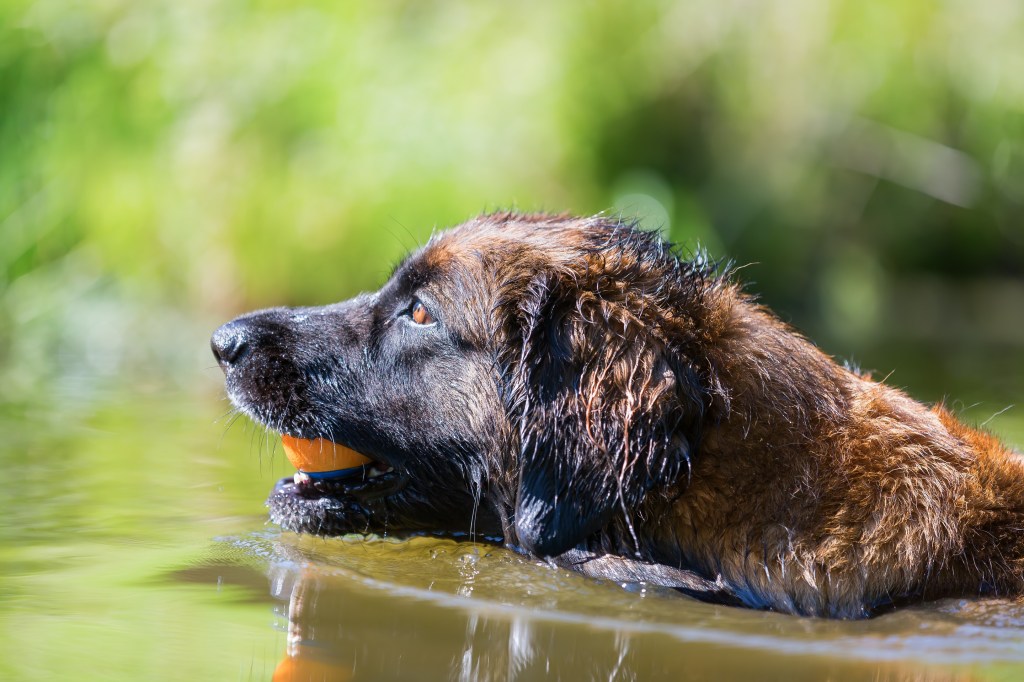
Photo of a Leonberger swimming water and there is green tall grass in the background. The Leonberger has a ball in his mouth.
Leonberger swims with a ball. Stock Photo ID: 720242263 by Christian Mueller.

Polish Leonberger Clips with AI-Assisted Video Creation

Once you’ve nailed the basics, good light, a clean background, and a steady angle, you can make your Leonberger videos feel even more “finished” with a little AI help. AI-assisted editing can tighten the story in your raw footage, smooth over rough moments, and add subtle creative effects without requiring advanced skills. With an AI video generator, you can turn a simple clip into dynamic, engaging Instagram content by adding cinematic b-roll effects, smooth camera motion, and stylized visuals, all from a text prompt or existing footage. If you’re curious what that looks like in practice, explore tools designed for high-quality video generation.

Set Up and Capture Camera-Ready Leonberger Shots

These steps turn “hope for a good moment” into a simple routine you can repeat on walks, in the yard, or at home. You will set up your gear, pick flattering angles for a big fluffy dog, and use quick cues and rewards so your Leonberger looks engaged in both photos and video.

  1. Lock in a stable, dog-safe setup
    Start with a phone or camera you already own, then add stability: prop it on a solid surface or use a tripod at about chest height for your dog. Turn on grid lines, wipe the lens, and pick a wide frame so you are not constantly re-aiming while handling your Leonberger. If you can, connect a Bluetooth remote or use a 3 to 10 second timer so your hands stay free for cues and treats.
  2. Choose an angle that flatters size and fluff
    Drop your camera to your dog’s eye level to make your Leonberger feel present and powerful rather than “tiny in a big world.” Frame with breathing room so the pose looks natural, and follow the composition reminder to give the dog space in the direction they are looking. For extra sparkle in the eyes, turn your dog slightly toward the light and avoid shooting straight into the bright sun.
  3. Rehearse two easy cues for “photo mode”
    Pick one stationary behavior like sit or down and one attention cue like “look” or name response, then practice for 30 seconds before you start shooting. Keep sessions upbeat with tiny treats or a favorite toy, and reward fast for eye contact. Research on an increase in non-verbal communication highlights how attention and interaction can build, which is exactly what you want for a focused expression on camera.
  4. Use remote shooting to capture the best expression
    Stand just behind or beside the camera so your Leonberger’s gaze lands near the lens, then click the remote in short bursts while you cue and reward. For photos, take 10 to 20 frames quickly because the “perfect face” comes and goes in a blink. For video, keep clips to 5 to 15 seconds and repeat the same action (sit, look, release to sniff) so you get clean, usable takes.
  5. Get both a still and a clip from each setup
    Once you have a good pose, grab one sharp portrait, then immediately record a short video of the same scene with one simple movement like a head tilt, a step forward, or a gentle tail wag. This creates a matched set you can share across platforms without reinventing the session. Finish with a jackpot reward and a quick break so your dog stays eager the next time you bring out the camera.
An old Leonberger is lying down. In the background is beautiful nature, plants, and mountains.
Leonberger in nature in Norway. Stock Photo ID: 1779931691 by Britta Paasch

Habits That Make Leonberger Shots Consistently Great

Stunning Leonberger photos and videos come from routines your dog can predict and you can repeat. These practices fit real life, so your handling, timing, and results improve week by week.

Two-Minute Location Scout
  • What it is: Walk your route and pre-pick two clean backgrounds and one shaded spot.
  • How often: Weekly or before a planned shoot.
  • Why it helps: You spend less time searching and more time capturing great expressions.
30-Second Calm-and-Focus Warmup
  • What it is: Practice sit, down, and one “look” rep, then release to sniff.
  • How often: Before every session.
  • Why it helps: Your Leonberger settles faster and offers steadier eye contact.
Light Check Habit
  • What it is: Note sun direction, then move to open shade or side light.
  • How often: Every time you arrive.
  • Why it helps: Flattering light keeps fur detail and reduces squinting.
Settings Baseline Card
  • What it is: Save a note for aperture, shutter speed, ISO starting points for portraits and action.
  • How often: Per milestone, then adjust seasonally.
  • Why it helps: You get sharp eyes more often with fewer guess-and-check minutes.
Fifteen-Minute Editing Finish
  • What it is: Run a standardized photo-editing workflow for one photo and one clip.
  • How often: Weekly.
  • Why it helps: Your best moments become share-ready instead of stuck in your camera roll.
Photo of a Leonberger standing in snow. In the background there is snowy forest.
Leonberger standing in a snowy forest. Shutterstock-ID: 705193912 by Eric Isselee.

Build Confidence by Practicing and Sharing Leonberger Moments

Big, dark-coated, fast-moving floof can make it feel like the camera never catches what makes a Leonberger so special. The steadier path is the mindset used throughout: simple, repeatable habits, scouting, small patience cues, and a light editing routine, supported by community support for dog photographers who trade tips and celebrate wins. With regular pet photo practice, confidence builds and more sessions end with sharp eyes, true color, and videos that match real-life charm. Consistency captures the Leonberger you love, even on ordinary walks. Pick one tip to try on the next walk, share one memorable dog image, and set a long-term pet photography goal worth revisiting. Those small choices preserve connection and joy, and they keep celebrating Leonberger beauty as a calm, lasting part of life.

25 Photos of Leonbergers with Plants Flowers and Trees

This is another post with the “25 Leonberger photos” theme. This time the theme is “25 Photos of Leonbergers with Plants Flowers and Trees”. I think  plants, flowers and trees are perfect for Earth Day. I’ve selected photos of our late Leonberger Bronco that also feature plants as well as Leonberger photos by friends with greenery and stock photos showing Leonbergers with plants, flowers and trees. Below is a list of the previous posts using the theme 25 Leonberger photos.

Also, if you have not checked out my superfactful blog yet feel free to do so.

25 Photos of Leonbergers with Plants, Flowers and Trees

Our Leonberger Bronco’s head is sticking up above the bushes.
Our Leonberger Bronco in the bushes.
Our Leonberger Bronco standing on grass in front of bushes with flowers.
Our Leonberger Bronco at a park close to our house. On his right front leg there is missing hair from a surgery he had (toe amputation).
Our Leonberger Bronco lying on green grass and you can see our brick house in the background.
Our Leonberger Bronco on our front lawn.
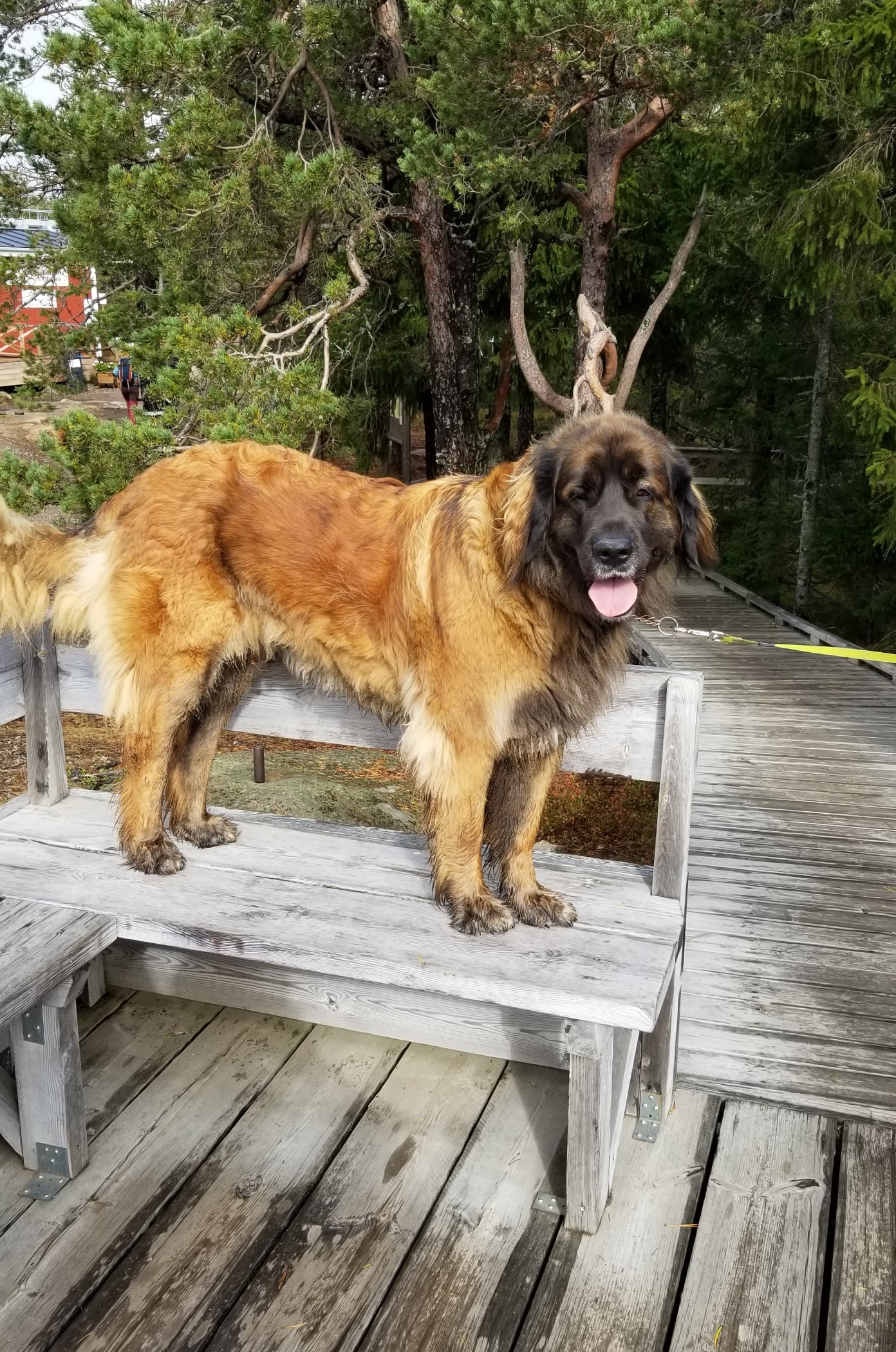
Photo of a Leonberger standing on top of a bench and there are trees and a small red cabin in the background.
Amie, a female Swedish Leonberger on top of Skuleberget (Skull Mountain) in northern Sweden. We just happened to run into them after climbing the mountain.
Photo of a Leonberger standing on top of a bench and there are trees in the background.
Second photo of Amie. Amie and her owner had climbed the mountain.
Five Leonbergers wearing patriotic hats lying on grass by a lake.
This photo was provided by Jen O’Keefe, Urgent Animal Care of Arlington. From left to right; Obi, Delfi, Aslan, Gryphon, Digory.
Photo of a Leonberger standing in snow. In the background there is snowy forest.
Leonberger standing in a snowy forest. Shutterstock-ID: 705193912 by Eric Isselee.
Photo of a Leonberger puppy running in green grass on a field. My guess is that he is around two months old.
Leonberger puppy running in a field. Shutterstock-ID: 629624396 by TOM KAROLA.
A majestic looking Leonberger is sitting on a green hill.
A majestic Leonberger on a grassy knoll. Shutterstock-ID: 731020957 by Peter Josto.
Photo of two Leonbergers swimming in a pond.
Two Leonbergers swimming. Tall grass in the background. Stock Photo ID: 1989806678 by Taibomaus.
Photo of a Leonberger swimming water and there is green tall grass in the background. The Leonberger has a ball in his mouth.
Leonberger swims with a ball. Stock Photo ID: 720242263 by Christian Mueller.
Photo of a Leonberger sitting on snowy ground. There is a lake in the background as well as snowcapped mountains.
Leonberger in a beautiful landscape. There are some grasses and plants. Shutterstock-ID:1333669760 by Britta Paasch.
Photo of a Leonberger and a pug running in snow. The pug is a head of the Leonberger.
Leonberger and pug running in the snow. There is a snowy forest in the background. Shutterstock- ID:1659034960 by AnetaZabranska.
Photo of two light brown Leonberger puppies playing in the snow in the forest.
Two light colored Leonberger puppies playing. There is a snowy forest in the background. My guess is that they are three months old. Shutterstock-ID: 2141564415 by AnetaZabranska.
Photo of a majestic dark and wet Leonberger standing in a river.
Leonberger standing in river. Brush in the background. Photo by Stephanie Lucero on Unsplash.
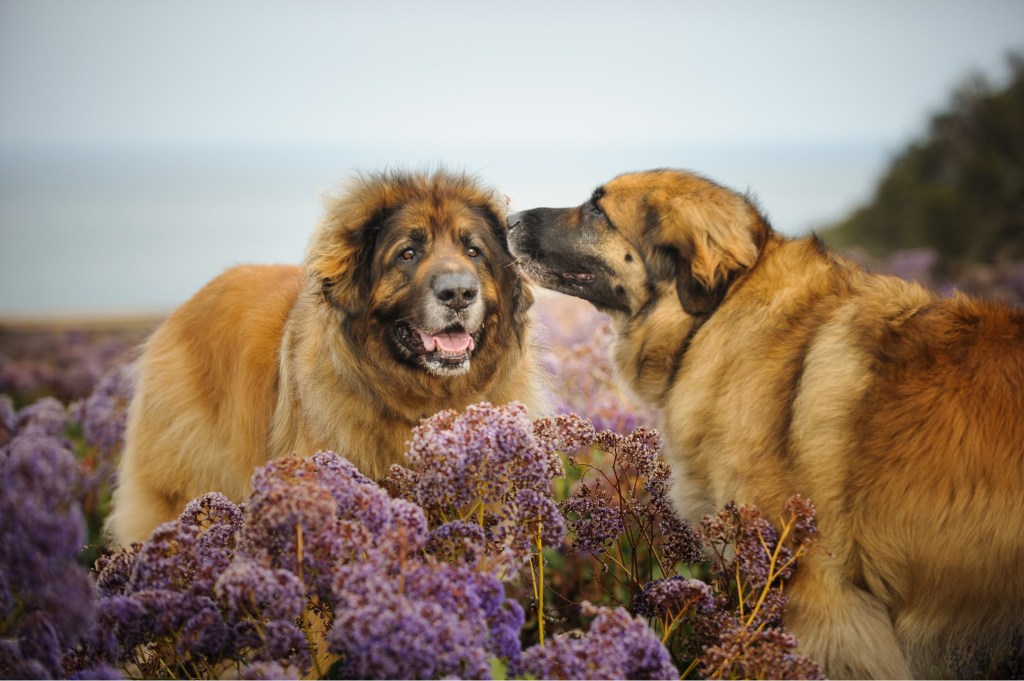
Leonberger dogs in field of purple flowers saying hello to each other.
Shutterstock Asset id: 450770140 by everydoghasastory
Leonberger puppy in front of white background. His head is covered by flowers.
Leonberger puppy with flowers in his hair. Shutterstock Asset id: 1921825460 by cynoclub.
Leonberger puppy in front of white background. His head is covered by flowers.
Leonberger Puppy with flowers on his head – Shutterstock Asset id: 2154719621 by cynoclub.
Leonberger puppy sitting next to pink flowers.
Leonberger puppy Stock Photo ID: 561111403 by Akbudak Rimma.
Leonberger puppy sitting on a white sofa. On his left is a bouquet of pink flowers.
Leonberger puppy on a white sofa Asset id: 561113224 by Akbudak Rimma.
A Leonberger is sniffing two pinkish-reddish tulips.
A Leonberger is sniffing a couple of tulips. Shutterstock Asset id: 1352450168 by EmmaEEVPersson.
An old Leonberger is lying down. In the background is beautiful nature, plants, and mountains.
Leonberger in nature in Norway. Stock Photo ID: 1779931691 by Britta Paasch
Two months old Leonberger running on green short grass and moss. There is a fallen tree in the background.
Leonberger puppy running on a green grass. There’s a fallen tree in the background. Asset id: 629624387 by TOM KAROLA.
There is also a grass in the background.
Woman and her Leonberger dog on grass. Shutterstock asset id: 1741753382 by Elena Podrezenko.
Majestic Leonberger standing on grass and there is a forest in the background.
Healthy Leonberger posing in front of a forest. Shutterstock asset id: 1474761425 by AnetaZabranska.


Happy Earth Day

Leonberger Dogs with Flowers

Esther’s writing prompt: April 15 : Flower

Click here or here  to join in.

This post features various photos or illustrations of Leonbergers with flowers. The second photo below is our late Leonberger Bronco in the tall grass plants at our in-laws and the rest of the pictures are pictures featuring Leonbergers with flowers that I generated using ChatGPT or Shutterstock photos with Leonbergers and flowers (I have a shutterstock account).

The image shows a Leonberger surrounded by rose bushes. It is holding a pink rose in its mouth.
Leonberger with a rose. I generated this picture with the help of ChatGPT.
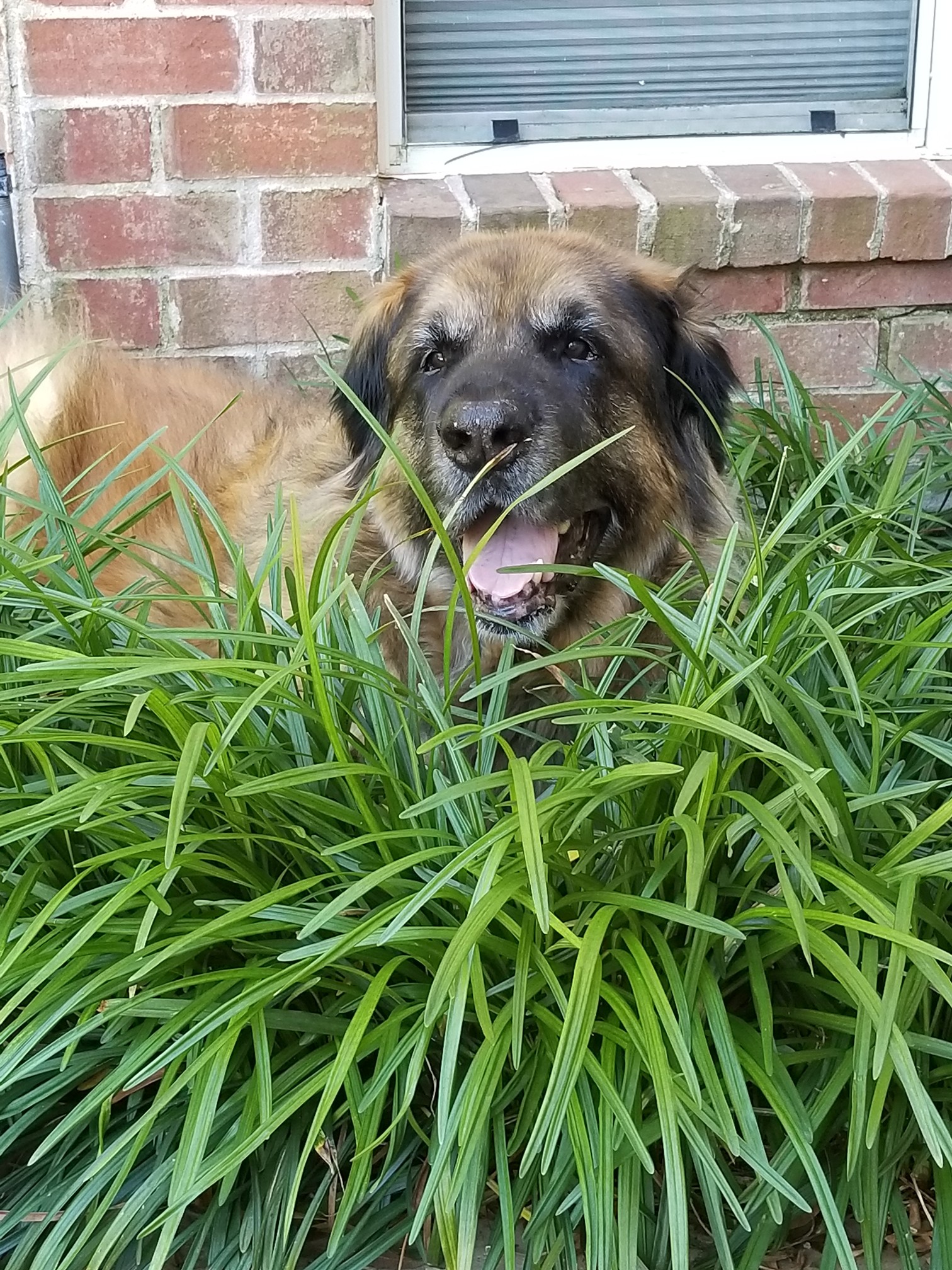
A Leonberger is sitting in what looks like very tall grass or bushes, and he is looking towards the camera.
Our Leonberger Bronco in the bushes in front of my in-laws house.
A Leonberger is sniffing two pinkish-reddish tulips.
A Leonberger is sniffing a couple of tulips. Shutterstock Asset id: 1352450168 by EmmaEEVPersson.
Leonberger dogs in field of purple flowers saying hello to each other.
Shutterstock Asset id: 450770140 by everydoghasastory.
Leonberger puppy sitting next to pink flowers.
Leonberger puppy Stock Photo ID: 561111403 by Akbudak Rimma.
Leonberger puppy sitting on a white sofa. On his left is a bouquet of pink flowers.
Leonberger puppy on a white sofa Asset id: 561113224 by Akbudak Rimma.
Leonberger puppy in front of white background. His head is covered by flowers.
Leonberger puppy with flowers in his hair. Shutterstock Asset id: 1921825460 by cynoclub.
Leonberger puppy in front of white background. His head is covered by flowers.
Leonberger Puppy with flowers on his head – Shutterstock Asset id: 2154719621 by cynoclub.
A Leonberger standing in a field of sunflowers.
Leonberger with sunflowers. I generated this picture with the help of ChatGPT.
A Leonberger standing in a field of colorful flowers.
Leonberger in a field of flowers. I generated this picture with the help of ChatGPT.
White Magnolia flower on top of a Magnolia tree. There are also some opened buds in the photo.
And a bonus photo. No Leonberger in this photo. Our Magnolia tree in our backyard just opened up its first flower for the season (lots of buds but they are still closed).

My Other Responses to Esther’s Prompts

National Love Your Pet Day

I was alerted to the existence of National Love Your Pet Day by this post. Because I was busy all day I did not get a chance to post anything until now. However, it is still National Love Your Pet Day here where I live.

National Love Your Pet Day is an annual observance dedicated to celebrating animals. With this post I just wanted to show some photos of our current dog the mini-Australian Shepherd Rollo and our past dogs the Labrador Baylor (mix ¼ Rhodesian Ridgeback), the German Shepherd Baby, our big Leonberger Bronco, or Le Bronco von der Löwenhöhle, our Japanese Chin Ryu and our Pug Daisy. We love(d) them all and will forever be in our hearts.

Photos of our Dogs

My wife, opening the trunk of our red van as Baylor, our Labrador is preparing to jump.
My wife Claudia and our first family dog the Labrador Baylor. This was back in the day. Our niece gave us Baylor because she was going to college. In turn she had gotten him from a shelter. He was a mix, one quarter Rhodesian Ridgeback and three quarters Yellow Labrador. He was able to jump up into the trunk of our van. Baylor was my first dog (not my wife’s first dog), and he taught me a lot about being a dog parent.
The photo shows a yellow labrador swimming in the middle of an Olympic sized pool.
Our Labrador Baylor is swimming in Claudia’s parents pool. He loved swimming, and he loved that pool and swam in it a lot.
A dark brown and black German Shepherd walking around in a dog park.
Our German Shepherd Baby at the dog park.
Two dogs looking into the camera. An old yellow Labrador on the left and the dark brown and black German Shepherd on the right.
Our Labrador Baylor and our German Shepherd Baby. Baylor was older in this picture. We had just gotten our Leonberger Bronco.
The photo shows a Leonberger puppy wearing a red scarf. He is looking into the camera.
This is our Leonberger Bronco (Le Bronco von der Löwenhöhle) at three months old.
Our Leonberger dog is standing on a red leather sofa, and he is leaning over to give me a hug.
Bronco our Leonberger dog was a very affectionate dog.
Three dogs sitting on the floor, a Leonberger, a Japanese Chin and a Pug.
Our Leonberger Bronco (Le Bronco von der Löwenhöhle), our Japanese Chin Ryu, and our Pug Daisy in the front right.
Three dogs running. On the left and unknown dog, in the middle a yellow Lab and on the right a Japanese Chin.
At the White Rock Lake dog park. Baylor our Labrador in the middle. He was old in this photo. Our Japanese Chin Ryu on the right.
The photo shows a Pug in the front left and a black and white Japanese Chin in the back to the right.
Our Pug Daisy and our Japanese Chin Ryu.
Our Japanese Chin Ryu is licking our beige pug Daisy’s ear. She is sitting in front of a vent.
Our Pug Daisy often sat in front of vents when she was cold. Daisy and our Japanese Chin Ryu were very close, like a couple. Daisy was obviously grieving when Ryu died, from cancer a bit early at only ten years old. Bronco was grieving as well.
Daisy our beige pug is lying over the back of our beige leather sofa.
Daisy is exhausted after doing nothing for a whole day.
A big Leonberger splayed across a big wide red leather sofa.
Our Leonberger Bronco sleeping on our big red leather sofa.
Our Leonberger dog Bronco is standing in front of me and looking straight into the camera. I am sitting down.
Our old Leonberger dog Bronco is coming up to me. Maybe it is dinner time.
The photos show a cage containing two dogs, a black and white mini-Australian Shepherd and an English Bulldog.
In December of 2018 we picked up our mini-Australian Shepherd Rollo. His friend was an English Bulldog.
The photo shows a mini-Australian Shepherd puppy on the floor and behind him is our big Leonberger Bronco.
Our Leonberger Bronco is welcoming Rollo.
The photo shows a young mini-Australian Shepherd puppy and beige pug on a black spotted blanket.
Our pug Daisy and Rollo are saying hello.
The photo shows a dark brown and white mini-Australian Shepherd puppy sitting on a beige tile floor.
Our mini-Australian Shepherd puppy Rollo at 3 months old.
The photos show a mini-Australian Shepherd puppy play fully lying on his side in front of our Leonberger Bronco.
Our mini-Australian Shepherd puppy Rollo and our Leonberger Bronco.
The photo shows a mini-Australian Shepherd standing on a chair and having his front paws on the table.
Our mini-Australian Shepherd Rollo at the table on his seventh birthday. This is a more recent picture, from October of this year.
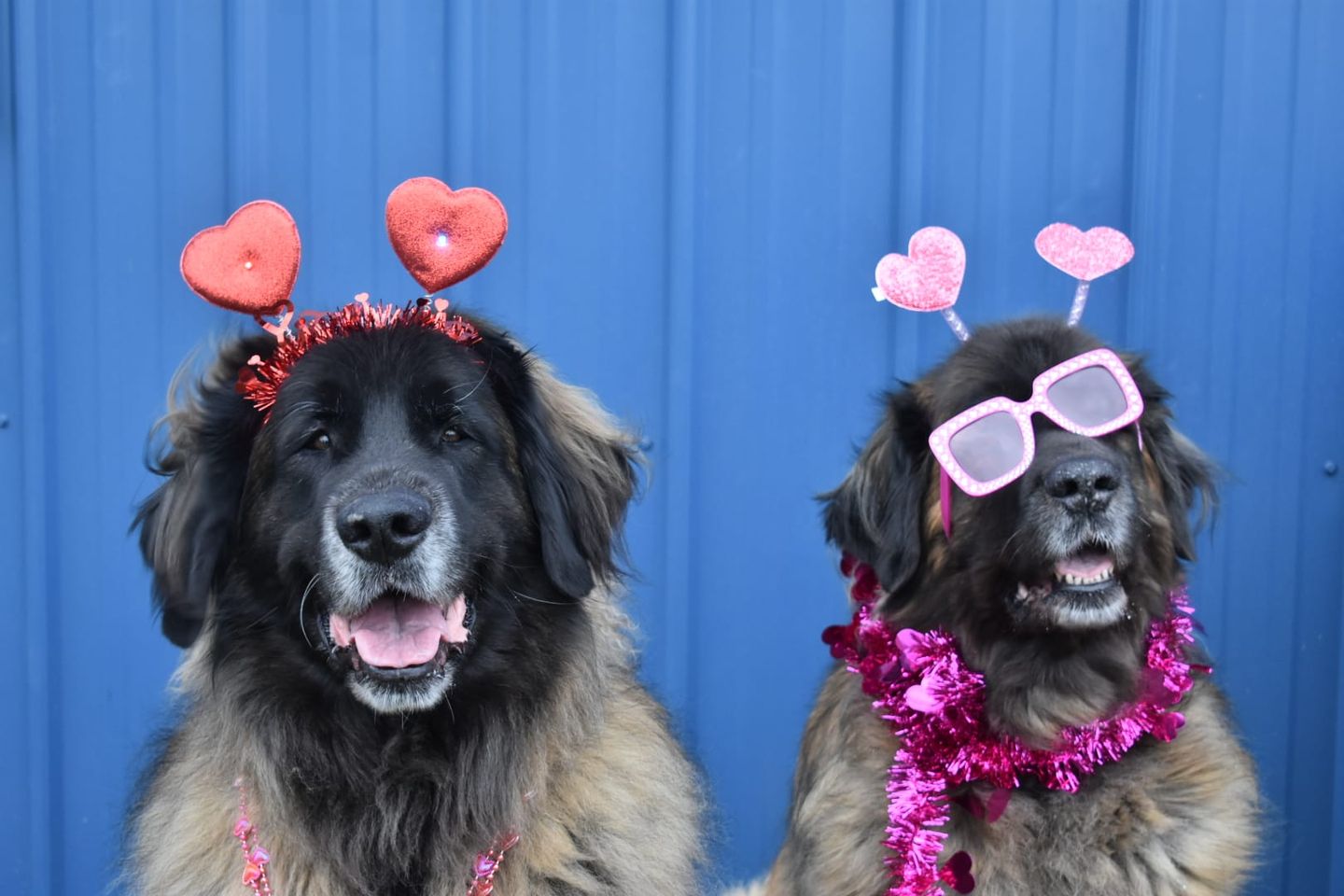
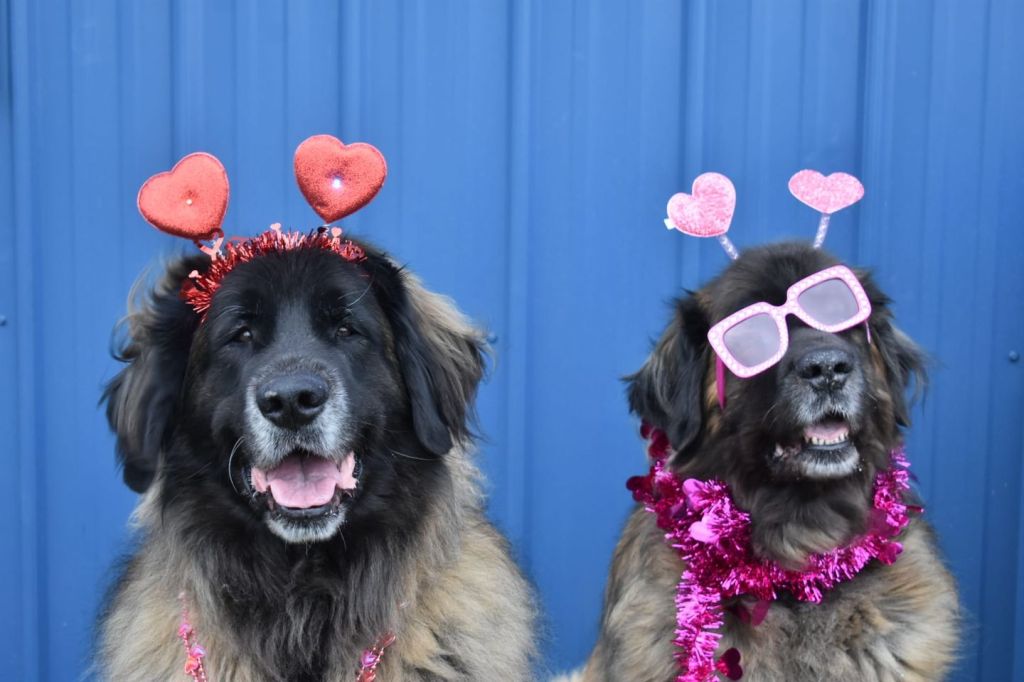
Two Leonbergers standing next to each other and wearing party headwear typical for a carnival.
Digory and Obi two old sweetheart Leonbergers sending all of your pets their love and sending all of you their love as well. Photo by Jen O’Keefe a friend.


Love Your Pets Every Day


Feel free to add links to your posts about pets in the comments. There is a maximum of two links per comment (how it is set up) so if you want to post many links you need to spread it out over many comments. I am late so don’t worry your comment being late. Any day is fine.