
This is a Leonberger blog, but sometimes I also post reviews for books that are not about Leonbergers and when I do it is books that I love and that I want others to read. Today I am posting a review for a book that I loved, “A Brief History of Time: And Other Essays” Hardcover – September 1, 1998, updated in 2017. It was written by Stephen Hawking. A long time ago I read the original “A Brief History of Time” but now I read this updated version. It is still the original but the adjustments/corrections for more recent discoveries are described in the appendix. Contrary to what Amazon claims I don’t think this is a book “Told in language we all can understand”. In my opinion you need a little bit of a physics background or at least a serious interest in the subject. Otherwise, it will be too much abstract information at once. I should add that I bought the Hardcover.
- Hardcover – Publisher : Bantam; Anniversary edition (September 1, 1998), updated 2017, ISBN-10 : 0553109537, ISBN-13 : 978-0553109535, 240 pages, Item Weight : 2.31 pounds, dimensions : 6.18 x 0.83 x 9.29 inches, it cost $16.14 on US Amazon. Click here to order it from Amazon.com.
- Paperback – Publisher : RANDOM HOUSE UK; First Edition (January 1, 1990), ISBN-10 : 0553176986, ISBN-13 : 978-0553176988, 211 pages, Item Weight : 2.31 pounds, dimensions : 4.33 x 0.71 x 7.05 inches, it cost $20.85 on US Amazon. Click here to order it from Amazon.com.
- Kindle – Publisher : Bantam; 10th edition (May 4, 2011), ASIN : B004WY3D0O, 242 pages. It is currently $9.99 on Amazon.com. Click here to order it from Amazon.com.
- Audiobook – Publisher : Phoenix Books, Inc., Release date : January 06, 2022, ASIN : B09NLFY54Z, Listening length 5hrs 49 minutes. Click here to order it from Amazon.com.
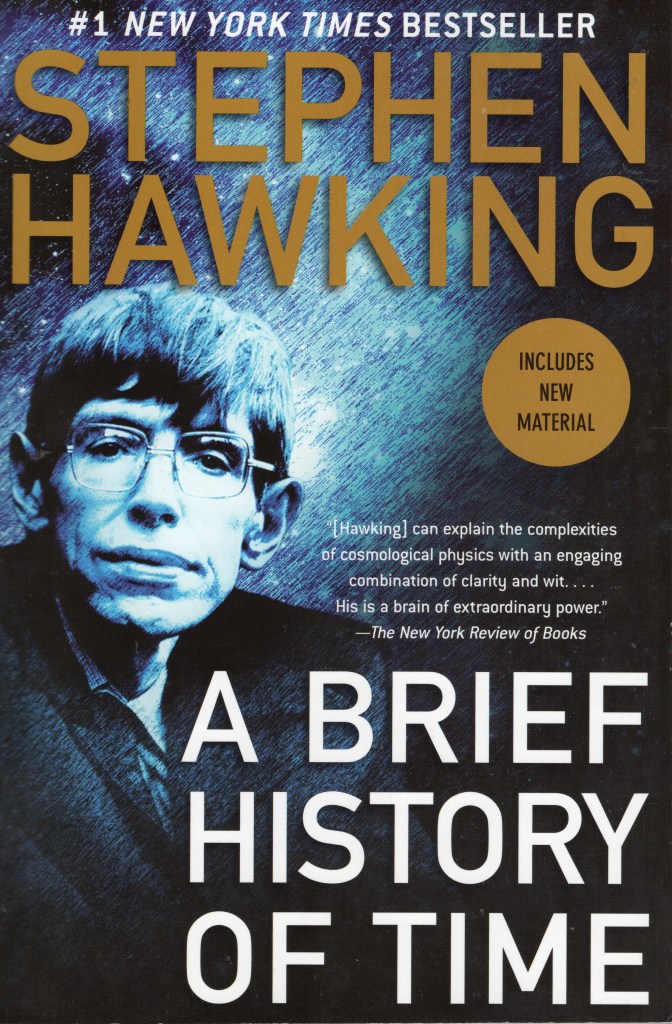
Amazon’s description of the book
Published more than two decades ago to great critical acclaim and commercial success, A Brief History of Time has become a landmark volume in science writing. Stephen Hawking, one of the great minds of our time, explores such profound questions as: How did the universe begin—and what made its start possible? Does time always flow forward? Is the universe unending—or are there boundaries? Are there other dimensions in space? What will happen when it all ends?
Told in language we all can understand, A Brief History of Time plunges into the exotic realms of black holes and quarks, of antimatter and “arrows of time,” of the big bang and a bigger God—where the possibilities are wondrous and unexpected. With exciting images and profound imagination, Stephen Hawking brings us closer to the ultimate secrets at the very heart of creation.
This is my five-star Amazon review for A Brief History of Time: And Other Essays by Stephen Hawking
Relativity, Quantum Mechanics, Black Holes, and Cosmology in just 200 Pages.
First, I should mention that even though I bought the hardcopy version of the book released in 1998, I received the updated version released in 2017. The same will probably happen to you if you buy it. I certainly did not mind. The 2017 version is identical to the 1998 version, but it contains additional material including corrections that are featured in an appendix at the end of the book. For example, in 1998 it was discovered that the expansion of the universe is accelerating, making the Friedmann models he discussed in chapter 3 almost obsolete. In addition, since 1998 Hawking’s no-boundary condition has become more certain, as well as the existence of multiverses. Therefore, it is important not to skip the appendix, and perhaps it is best to read the appendix first, so you know what to ignore in the original text of “A Brief History of Time”. I should mention that I read the original book from 1990, a very long time ago.
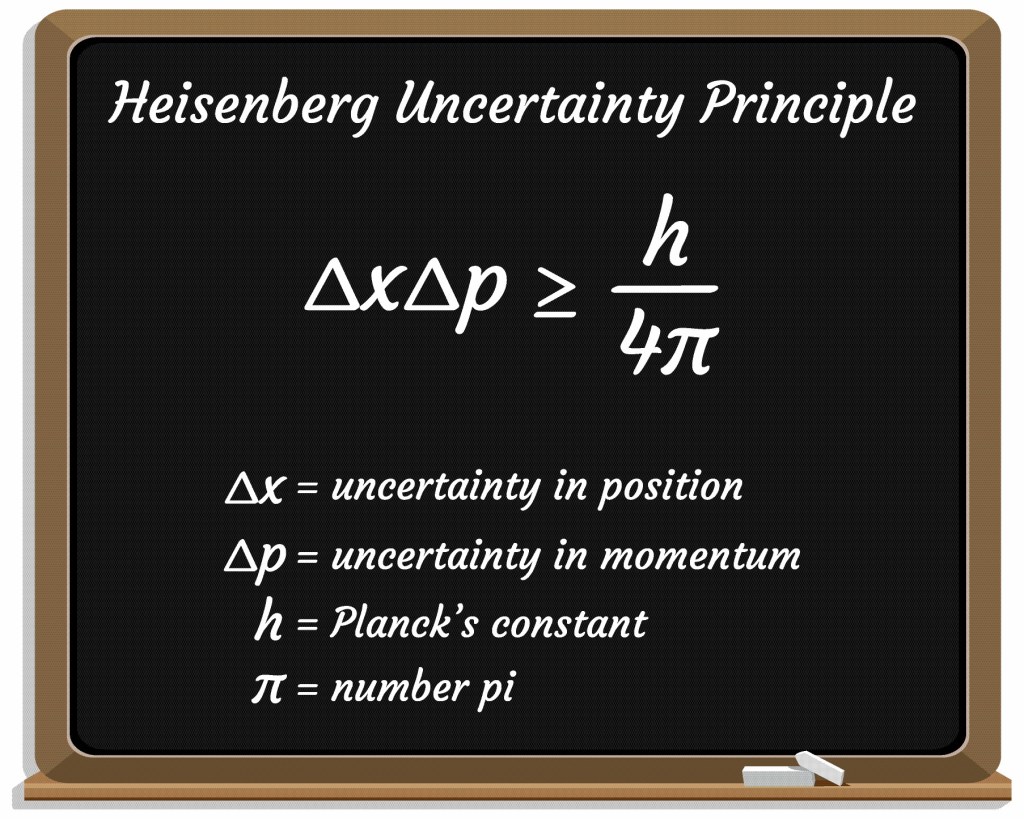
The book covers a lot of material. He describe past models of the universe, space and time and special and general relativity, light cones, cosmology, the expanding universe, quantum physics, Heisenberg’s uncertainty principle, the two slit experiment, the wave particle duality, anti-particles, Feynman’s sum over histories, elementary particles, particle spin, fundamental forces, entropy, black holes, event horizons, space-time singularities, the cosmic censorship hypothesis, virtual particles, the big bang, the inflationary model and the new inflationary model, the anthropic principle, imaginary time, quantum gravitational effects, the no-boundary condition, three arrows of time, Gödels incompleteness theorem, Einstein-Rosen bridges, or so called wormholes, supergravity, string theory, the unification of physics, renormalization, eternal inflation and the multiverse, etc. In summary, he covers a lot in less than 200 pages.
I have a degree in physics (I became an engineer) and I have an interest in these kind of topics, and therefore I understood most of the content in this book, at least at some level. However, I can see how people without a background in physics would have a hard time with this book. Hawking is for the most part doing a great job explaining these topics, but many of the topics are very abstract and the book covers a lot of them. I think it might be too much for some people, but I don’t see that as necessarily a fault of the book. It is just an acknowledgement that this is not an easy subject. If you want to understand what we know about the universe you have a lot of work ahead of you, no matter how great your teachers or authors are.
One potentially controversial item is the implications of the no-boundary condition derived from the combination of general relativity and quantum mechanics (quantum gravity). It is natural to think that the universe has either existed for an infinite time or that it had a beginning. The no-boundary condition offers up a third option. Space-time is finite and yet there is no singularity. In addition, the universe is self-contained meaning it does not have a beginning or an end. Just like in a universe that has existed for an infinite time there is no moment of creation.
In chapter 10 he discusses wormholes and time travel. Kurt Gödel, the guy with the incompleteness theorem, showed that under certain circumstances General Relativity allowed for time travel. Also, when you travel faster than the speed of light you are traveling backwards in time, something most science fiction authors depicting spaceships traveling faster than the speed of light conveniently ignore. However, the conclusion of the discussion that followed was basically, in practice you can probably not time travel. Just imagine that you could travel back in time and kill your mother. That way you would never be born so now you could not travel back in time and kill your mother, and poff, now you exist again, but now you can travel back in time and kill your mother. Time travel comes with various logical problems. By the way where are all the time travelers from the future?
One thing I disagree with was that he on page 156 says that intelligent beings can only exist in the expanding phase of the universe. His explanation for this statement is not convincing and I don’t believe it. However, since we now know that the universe is likely to expand forever it is a moot point. He also keeps calling entropy “disorder”. This is very common, but “disorder” in common vernacular is a vague term that does not exactly correspond to the mathematical definition of entropy, and this should at least be pointed out. These are very minor and unimportant complaints, but I wanted to mention them. The Amazon description states: “Told in language we all can understand”, which as I mentioned is not really true. But that is the Amazon description of the book, not a problem with the book.
In summary, I think this is a very interesting and informative book and I think it is well written and well organized. The fact that it is difficult reading for many people is because of the subject matter and is not the fault of the author. I highly recommend the book to anyone with a background in physics and anyone else who is really interested in the subject and doesn’t mind looking up concepts a bit more in depth. I give it five stars.

About the Author

Stephen Hawking’s ability to make science understandable and compelling to a lay audience was established with the publication of his first book, A Brief History of Time, which has sold nearly 10 million copies in 40 languages.
Hawking has authored or participated in the creation of numerous other popular science books, including The Universe in a Nutshell, A Briefer History of Time, On the Shoulders of Giants, The Illustrated On the Shoulders of Giants, and George’s Secret Key to the Universe.
I can add that I also read The Grand Design by Stephen Hawking, which I also recommend but with the same caution as for this book. It’s a bit abstract.


 Leonberger Life