What CCL Volunteers Did This Summer

I have not posted in a while, and I have not read blog posts either because I’ve been focused on the annual Citizens Climate Lobby (CCL) conference and lobby days in Washington DC. Part of this event was about 1,000 CCL volunteers having meetings with more than 400 congressmen and senators. I organized and participated in a meeting with senator Ted Cruz’ office (Texas) and I participated in a meeting with  Senator Wicker’s office (Mississippi). I also had a small one-man (just me) meeting with the office of another Texas congressman and a delivery to my own congresswoman Beth Van Duyne (Texas district 24).

The photo is of a dial which can be used to decrease or increase CO2 emissions.
CO2 emissions dial. Shutter stock Photo ID: 1928699927 by NicoElNino

Some technical background. The United States congress consist of two houses, the house of representatives with 435 congressmen, and the Senate with 100 Senators, two from each state. Each proposed law or bill/act has a number in the house of representatives on the form H.R.xxxx and S.xxxx in the Senate. To become a law, a bill/act must be approved by the house of representatives with a vote of at least 50% as well as approved by the Senate with a vote of at least 60% (filibuster rule) or 50% if you can make it part of a budget bill (so called budget reconciliation). I can add that the president can also veto a bill that has passed both houses.

Photo of empty streets with the white Capitol building in the background.
How it looked like when I arrived at the Capitol building in Washington DC the early morning of Tuesday June 11, 2024.

The majority of the house of representatives is Republican and the majority of the Senate is Democratic, but the split is very even. Unfortunately, the current congress is also very partisan, and pretty much war like,  making passing any laws nearly impossible. Most bills are introduced to impress respective side’s partisan base and for grandstanding, not with the intention of it becoming law. I’ve read that the current congress is the most dysfunctional in United States history. Into this mess CCL is proposing or supporting climate related legislation that is bipartisan, or introduced jointly by Democratic and Republican congressmen, and therefore has a chance of passing. CCL is a bipartisan organization and has good relations with both Democrats and Republicans.
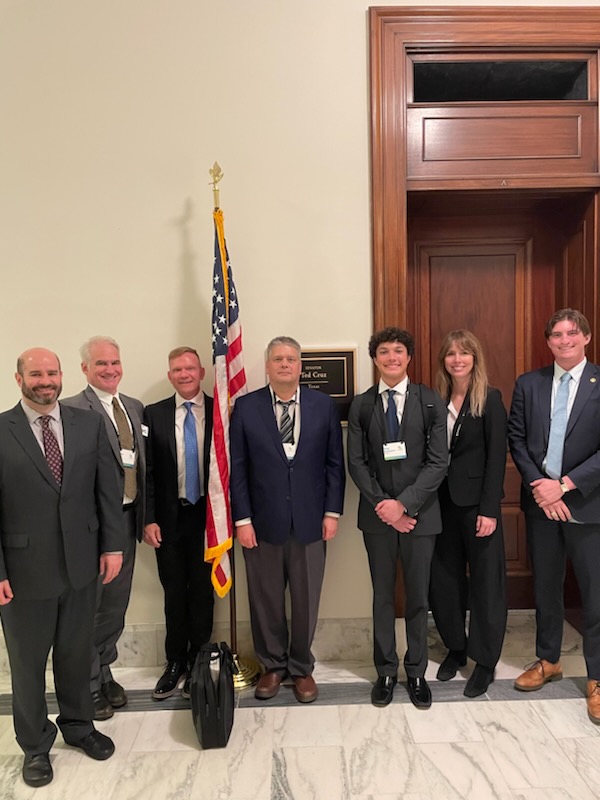
Seven people standing in front of Senator Ted Cruz office.
The CCL group meeting with Senator Ted Cruz’ office. The staff member, Jackson Tate, is standing the furthest to the right. I am standing in the middle, immediately to the right of the flag.

Our favorite piece of legislation is the carbon fee and dividend, but we did not discuss it for reasons I will soon explain. The carbon fee and dividend policy consist of three parts. First, a price/fee/tax is placed on carbon emissions. This makes sense because ruining the atmosphere for everyone on earth should not be free of charge. Second, the proceeds are returned to people/consumers on an equal basis, as a dividend, a check or a direct deposit. Most people will receive more money than they lose from paying higher prices, while the incentive to buy less carbon intensive products will remain. You are rewarded for polluting less than the average. Thirdly, a carbon border adjustment, or a fee at the border, will be enacted on imported carbon intensive products that are produced with higher carbon emissions than the average for the United States. A subsidy is applied to exported products created using less carbon emissions. According to economists, a carbon fee and dividend  is a very effective policy in reducing emissions. In fact, an optimal way of reducing carbon emissions. At the same time, it does not harm the economy. This is why CCL loves it.

Unfortunately, it is currently not politically viable. In Canada something similar has been implemented and even though 80% of Canadians come out ahead financially from this policy, almost no one believes it because doing the accounting is not easy. It is also incorrectly blamed for inflation. Add the fact that the Republican party has turned against it, thus making it a partisan policy (no longer bipartisan). Therefore, we have to wait.
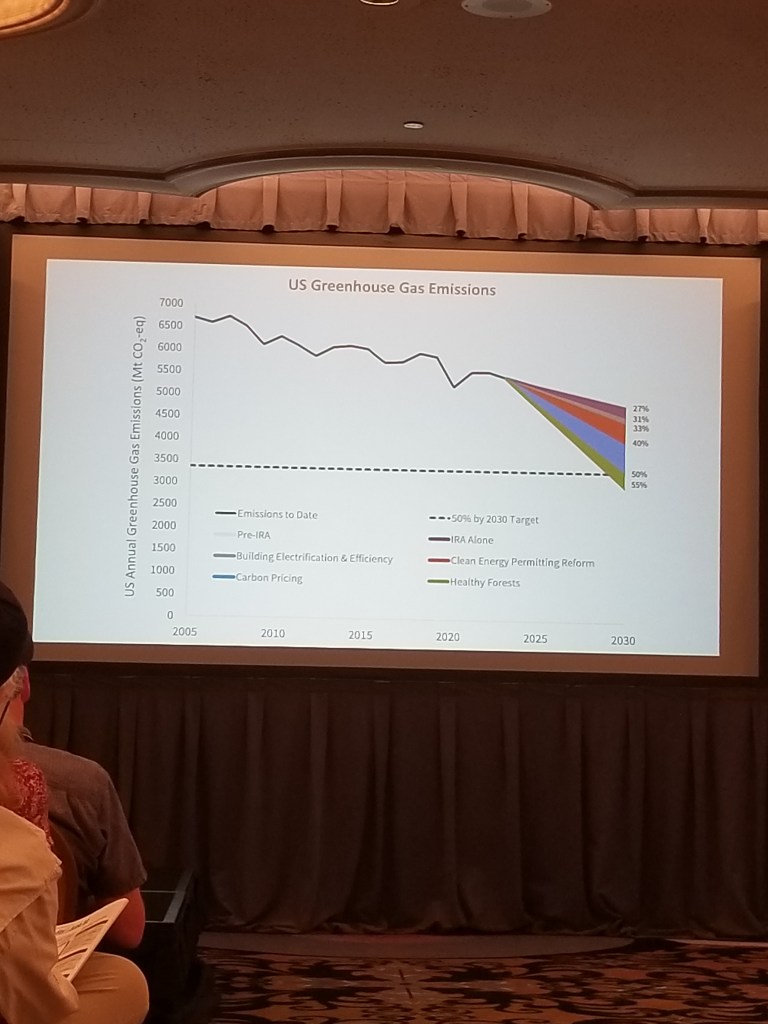
This graph shows that US annual carbon emissions have been decreasing but not fast enough. Additional policies, shown in different colors, are projected to lower emissions even more, even reaching our Paris agreement goal by the year 2030.
This graph is showing US annual carbon emissions. The black line is the actual US emissions up to the end of 2023. The multicolored graphs are estimated emissions reductions resulting from different policies. The blue triangle corresponds to a specific quite reasonable form of carbon fee and dividend, but we can’t use it right now. The second largest triangle, the dark red triangle, correspond to clean energy permitting reform, a policy area that is very bipartisan and viable.

For this year we had four “Asks”. Four policy proposals or areas for which we are asking support from congress.

  • Prove It Act S.1863
  • Energy Permitting Reform
  • Seedlings for Sustainable Habitat Restoration Act of 2023 S.1164 / H.R.5015
  • Increased TSP Access Act of 2023 S.1400 / H.R.3036
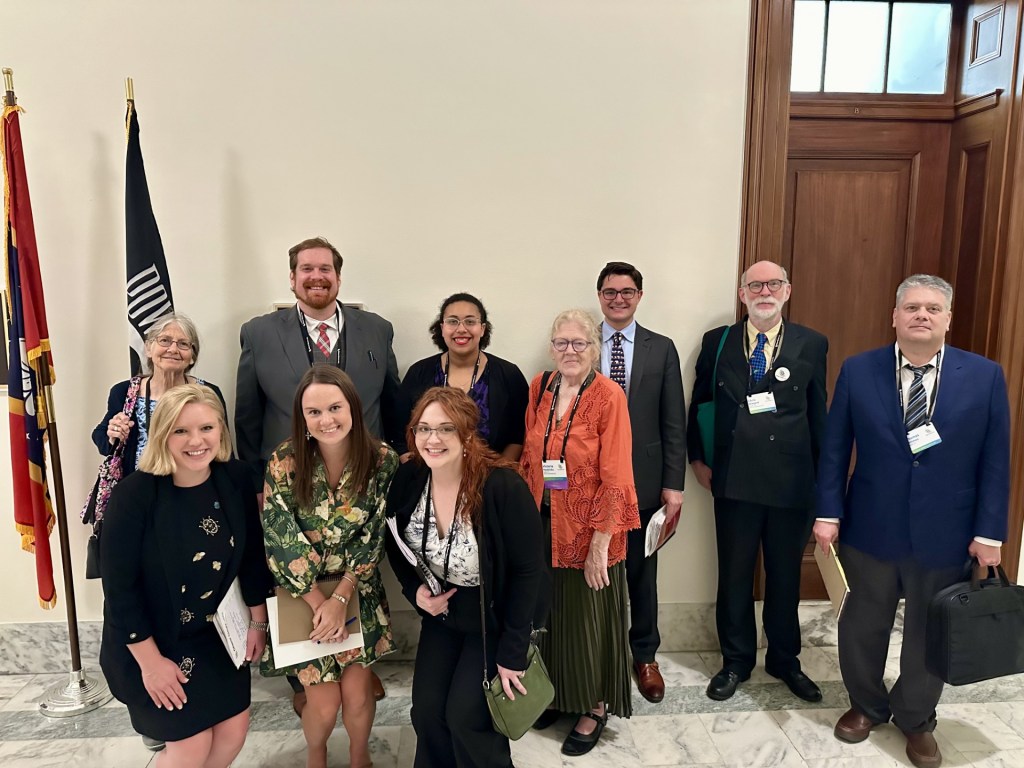
There are 10 people in the photo. Three staff and seven CCL volunteers.
The CCL group meeting with Senator Wicker’s office. The staff members were Julia Wood, Flannery Egner, and Wade Roberts. Julia and Flannery are standing front left and Wade middle back. I am standing on the far right.

Below are the summaries of our four asks. Below each short summary I have included the full text from our flyers. I don’t expect anyone to read the full text, but naturally you can if you are really interested.

Prove It Act S.1863

This bipartisan act introduced by Senators Chris Coons (D-DE) and Kevin Cramer (R-ND) would require the Department of Energy to study the emissions density of certain emissions intense products, cement, aluminum, steel, fossil fuels, etc., in the United States and in other countries. US products are much cleaner than the same products from many other countries such as China and India. Having the data will help us capitalize on this advantage, for example, in trade negotiations and attracting foreign buyers of these products. It is good business for the United States.

Full CCL text of Prove It Act S.1863

The bipartisan Providing Reliable, Objective, Verifiable, Emissions Intensity and Transparency Act of 2023 (S.1863), or PROVE IT Act, introduced by Sens. Chris Coons (D-DE) and Kevin Cramer (R-ND), would require the Department of Energy (DOE) to study the greenhouse gas emissions intensity of certain products — including aluminum, cement, crude oil, fertilizer, iron, steel, plastic, and others — that are produced in the United States and in certain covered countries. The PROVE IT Act is not a carbon tax or carbon border tariff.

The PROVE IT Act was approved by the Senate EPW Committee in a large bipartisan vote (14-5) in January and is expected to be introduced in the House by Reps. John Curtis (R-UT-03) and Scott Peters (D-CA-50) in the coming weeks.

Greenhouse gas emissions are a global issue, and trade and the power of the American market are some of the best tools we have to reduce global emissions. Since many U.S. industries are among the least carbon intensive in the world, producing products here is good for the U.S. economy and good for the climate. In addition, U.S. industries have had to unfairly compete with industries from higher-polluting foreign countries with lax labor and environmental standards. As Sens. Coons and Cramer have said, “The PROVE IT Act would put high-quality, verifiable data behind these practices and bolster transparency around global emissions intensity data to hold countries with dirtier production accountable.”

The PROVE IT Act is endorsed by the American Petroleum Institute, American Conservation Coalition Action, Bipartisan Policy Center Action, American Iron and Steel Institute, Center for Climate and Energy Solutions, Citizens’ Climate Lobby, Climate Leadership Council, Citizens for Responsible Energy Solutions, Environmental Defense Fund, Information Technology and Innovation Foundation, Third Way, Progressive Policy Institute, Independent Petroleum Association of America, Steel Manufacturers Association, and the United States Chamber of Commerce.

The PROVE IT Act is an important bipartisan step to protect American industry and drive down global carbon pollution. Citizens’ Climate Lobby urges all members of Congress to cosponsor the PROVE IT Act and take action to pass the bill this Congress.

Energy Permitting Reform

The biggest obstacle to expanding the utilization of clean energy isn’t building clean energy but building the power lines needed to bring the power from the clean energy sources to households. It takes 10-20 years to get a powerline approved while building a wind power facility takes months. There are also energy technology specific hurdles for building, for example, nuclear power stations and renewables including endless judicial reviews and several layers of bureaucratic approval processes. We can’t wait decades for yes or no. It is important to speed up the process for building America’s clean energy infra structure. Some has been done but more needs to be done. This is an area that will make a big difference that both Democrats and Republicans seem to agree on.

Full CCL text of Energy Permitting Reform

Citizens’ Climate Lobby believes it is critical to speed up the process for building America’s clean energy infrastructure. Changes to the current process for permitting energy projects must be made so America can lower greenhouse gas emissions and ensure American households have access to affordable clean energy. CCL appreciates that the Fiscal Responsibility Act of 2023 included some provisions that will help streamline clean energy permitting and several new agency and FERC rules intended to speed the energy permitting process have been finalized. However, more comprehensive permitting reform is still needed and should be done in a way that protects communities, preserves their ability to provide input, and maintains environmental standards. We also know that further changes to our permitting process will need to have bipartisan support.

In each of the past three years, at least 84% of the new energy capacity built in the United States was clean energy. More than 95% of new energy projects currently awaiting permits are solar, wind, and battery storage. Building a new electrical transmission line, on average, takes over a decade and solar, wind, and transmission projects are litigated at higher rates than other infrastructure projects. If construction of energy infrastructure continues at this pace, we will not be able to lower our emissions at the speed and scale necessary and ensure Americans have affordable and reliable energy in the 21st century.

We still need key reforms to our energy permitting process, such as but not limited to:

  • Allow transmission lines to be permitted and built much faster: We must permit, site, and build interregional transmission and require that regions be able to transfer significant power between regions.
  • Reasonable timelines for judicial review: There are new time limits for NEPA reviews, but litigation still has the potential to delay needed energy projects almost indefinitely. We need a reasonable statute of limitations that allows impacted communities to have a voice and stop bad projects but does not allow for infinite delays.
  • Ensuring robust and early community engagement: Any permitting reform must still provide a thorough, accessible process for community engagement and input.
  • Technology-specific permitting: There is also a critical need to modernize permitting for specific technologies like nuclear, hydropower, and geothermal power.

We urge Congress to work in a bipartisan manner to enact needed changes to our energy infrastructure permitting process. We believe both parties must come to an agreement on reforms that can pass both the House and Senate and be signed into law.

Seedlings for Sustainable Habitat Restoration Act of 2023 S.1164 / H.R.5015

The Seedlings for Sustainable Habitat Restoration Act was introduced by Texas Senator John Cornyn (R), and a couple of Democrats jumped on board as well. It will authorize the secretary of agriculture to carry out eco system restoration activities particularly the development of seedling nurseries, which will significantly aid forest recovery from wildfires. It is part of CCL’s Healthy Forest initiative.

Full CCL text of Seedlings for Sustainable Habitat Restoration Act of 2023 S.1164 / H.R.5015

The Seedlings for Sustainable Habitat Restoration Act was introduced in the Senate by Sen. Ben Ray Lujan (D-NM), Sen. John Cornyn (R-TX) and Sen. Martin Heinrich (D-NM) and in the House by Rep. Leger Fernandez (D-NM-03). The legislation ensures that funding from the Bipartisan Infrastructure Law of 2021 is available to support the development of seedling nurseries to improve and expand reforestation efforts.

Specifically, the bill would:

  • Authorize the Secretary of Agriculture, acting through the Chief of the Forest Service, to enter into contracts, grants and agreements to carry out certain ecosystem restoration activities.
  • Clarify that funding from the Bipartisan Infrastructure Law is available for the development of seedling nurseries at state forestry agencies, local or non-profit entities and institutions of higher education.

The Seedlings for Sustainable Habitat Restoration Act has the potential to significantly aid in forest recovery from wildfires. From 2001 to 2021, the nation lost 11.1 million hectares of tree cover from wildfires and 33.1 million hectares from all other loss. Although the Bipartisan Infrastructure Law provides funding for replanting programs, it does not address the need for expanded nurseries. The Seedlings for Sustainable Habitat Restoration Act rectifies this omission by providing funding for crucial seedling nurseries to further our nation’s progress toward resilient forestry. The bill complements another one of CCL’s secondary asks, the Save our Sequoias Act, through aiding its regeneration efforts.

On April 16, 2024, the House version of the Seedlings for Sustainable Habitat Restoration Act was voted out of the Committee on Natural Resources by unanimous consent. It now awaits action by the full House. The Senate companion was referred to the Committee on Agriculture, Nutrition, and Forestry on March 3, 2023, where it awaits review.

Increased TSP Access Act of 2023 S.1400 / H.R.3036

There is a current Technical Service Providers Shortage that needs to be addressed. Farmers and ranchers need help with resilient and climate smart practices, and this bill streamlines and improves the certification process. It was introduced by Senators Mike Braun (R-IN) and Michael Bennet (D-CO) in the Senate and Representatives James Baird (R-IN-04) and Abigail Spanberger (D-VA-07) in the House. It is a small step forward but easy and inexpensive to do.

Full CCL Text of Increased TSP Access Act of 2023 S.1400 / H.R.3036

The bipartisan Increased TSP Access Act of 2023 has been introduced by Sens. Mike Braun (R-IN) and Michael Bennet (D-CO) in the Senate and Reps. James Baird (R-IN-04) and Abigail Spanberger (D-VA-07) in the House. The bill would address the current Technical Service Providers (TSPs) shortage, which is impacting the ability of agricultural producers to fully utilize current conservation and climate programs.

As extreme weather events increase in frequency and strength, we are seeing increasingly devastating effects throughout our agricultural and food systems. Farmers, ranchers and forest-owners are on the front lines of climate change and can also mitigate its effects through resilient and climate-smart practices.

TSPs help producers to access USDA conservation programs through one-on-one assistance. For example, TSPs can help producers to develop grazing management plans, nutrient management plans and sustainable forestry plans. TSPs will be key to leveraging the recent $20 billion investment in agricultural conservation programs and conservation technical assistance.

USDA’s current TSP program has failed to adequately train and certify TSPs, even though the 2018 Farm Bill included language (Section 2502) that would allow USDA to approve non-Federal entities to certify TSPs. The Increased TSP Access Act would address the TSP shortage by expanding on the framework first envisioned in the 2018 Farm Bill.

  • Non-Federal Certifying Entities: The bill directs USDA to establish a process to approve non-Federal certifying entities within 180 days of enactment. The bill ensures that USDA’s process will allow agricultural retailers, conservation organizations, cooperatives, professional societies and service providers to become certifying entities. It also puts clear deadlines on USDA to ensure that the agency is responsive in administering the program.
  • Streamlined Certification: The bill directs USDA to establish a streamlined certification process for TSPs who hold appropriate specialty certifications (including certified crop advisors) within 180 days of enactment. This guarantees that applicants with other certifications aren’t burdened with duplicative training, but are still trained in the competencies needed to serve as a TSP.
  • Parity in Compensation: The bill ensures that TSPs—who are often paid using conservation program dollars—are paid the fair market rate for their services.

The Increased TSP Access Act was referred to the House Agriculture Committee, Subcommittee on Conservation, Research and Biotechnology, and to the Senate Committee on Agriculture, Nutrition, and Forestry on May 2, 2023, where it awaits consideration.

But wait a minute! That’s not what the bill says.

I should mention that the full CCL texts of the aforementioned bills above are still summaries of the real bills that are even longer. This makes the Senators and the Representatives job difficult, which is why they have their staff read and summarize the bills for them. The staff is often young kids making this a little bit risky.

One of the Senators that we (including me) met with had voted no on one of the bills above in committee. The bill had still passed out of committee to be voted on in the Senate later, but we wanted to know why he voted no. The reason given made no sense. He had misunderstood the bill. This was a great opportunity for us to correct the misunderstanding. Hopefully, he will vote differently in the Senate.

Would you be willing to visit your representatives regarding matters you would like to address?

The Climate Journeys of Thomas and Larry

This blog is focused on Leonbergers but every now and then I post about something else, typically a book I want to promote. This post is different. I have many hobbies and one of them is volunteering for a climate change organization called Citizens Climate Lobby

Photo of Citizens Climate Lobby Badge.
CCL, 200,000 supporters in the US, 10,000 supporters in Texas, non-partisan and non-profit. CCL supports all energy options that can be used to reduce emissions, renewables, nuclear, natural gas replacing coal, carbon capture.

This post is about my journey towards becoming an advocate for a livable planet for future generations as well as the climate journey of my friend Larry Howe, who is a lifelong Texas Republican who became a climate activist (and he is still a Republican). Larry’s three-part article is focused mostly on solutions, and my post is focused mostly on how I got here. We both started out as “skeptical” of global warming and we both support the same solutions, so the two posts complement each other. CCL talks to both sides of the political spectrum, and we try to foster good relations with everyone. Below is a photo of us with Senator Ted Cruz.

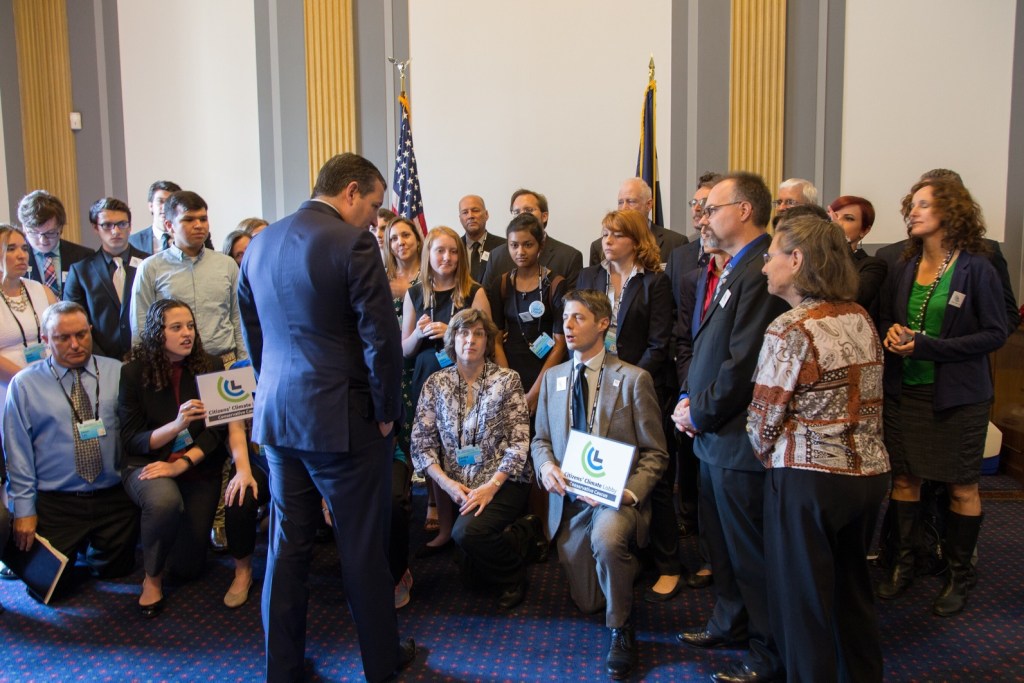
Peter Bryn the leader of the conservatives’ action team is presenting our carbon fee and dividend proposal to Senator Ted Cruz in 2017. Ted Cruz is turned away from the camera facing Peter Bryn. The CCL Texas delegation (about 30 people) is standing in the background.
Peter Bryn the leader of the conservatives’ action team is presenting our carbon fee and dividend proposal to Senator Ted Cruz in 2017. The CCL Texas delegation is standing in the background.

Citizens Climate Lobby is a volunteer driven non-partisan organization focused on educating the public and lobbying/talking to politicians, industries and organizations. We are not professional lobbyists. We don’t bring a billion dollars to political offices, in fact not even one dollar. We just bring ourselves as voters and constituents, and a friendly and positive attitude. We present well researched proposals for solutions and ideas. We require that the proposals are effective in reducing emissions, good for the economy, market oriented, non-partisan and acceptable to both Democrats and Republicans. In addition, we listen to the concerns of the lawmakers. One of my volunteer positions within CCL is to be the CCL liaison to Senator Ted Cruz office. Climate Change may not be Senator Ted Cruz’ cup of tea, but he voted for one climate bill that we supported, the Growing Climate Solutions Act.

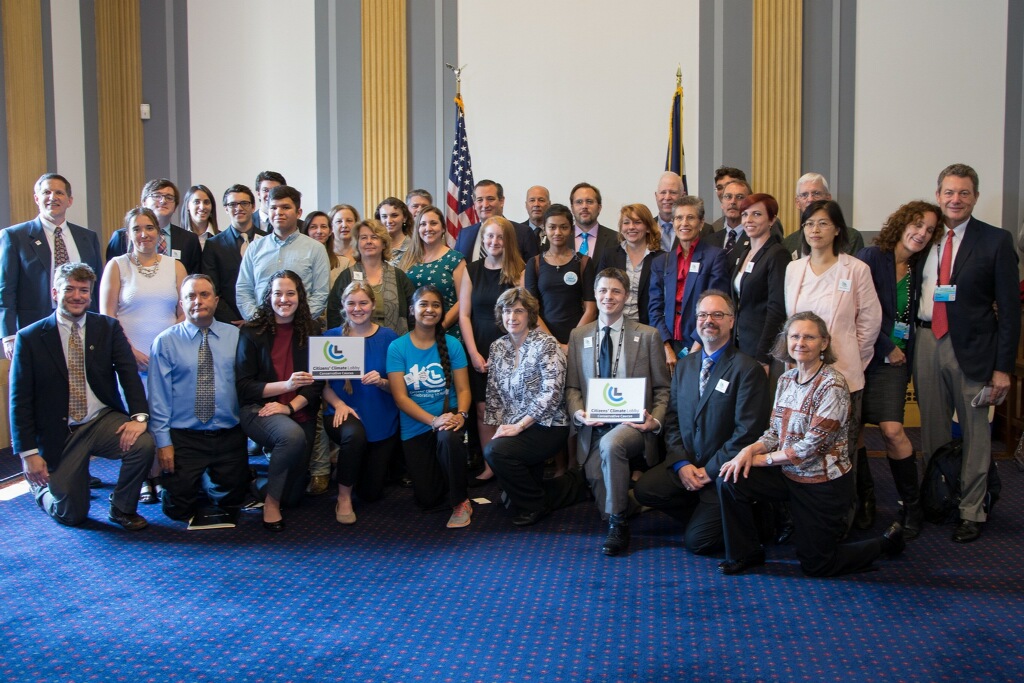
CCL's Texas delegation all standing facing the camera. I Thomas Wikman, my wife and daughter are next to the American flag and next to Senator Ted Cruz.
Senator Ted Cruz TXJR with Citizens Climate Lobby in 2017. The senator is standing immediately to the right of the American flag, and I am standing immediately to the left of the American flag.

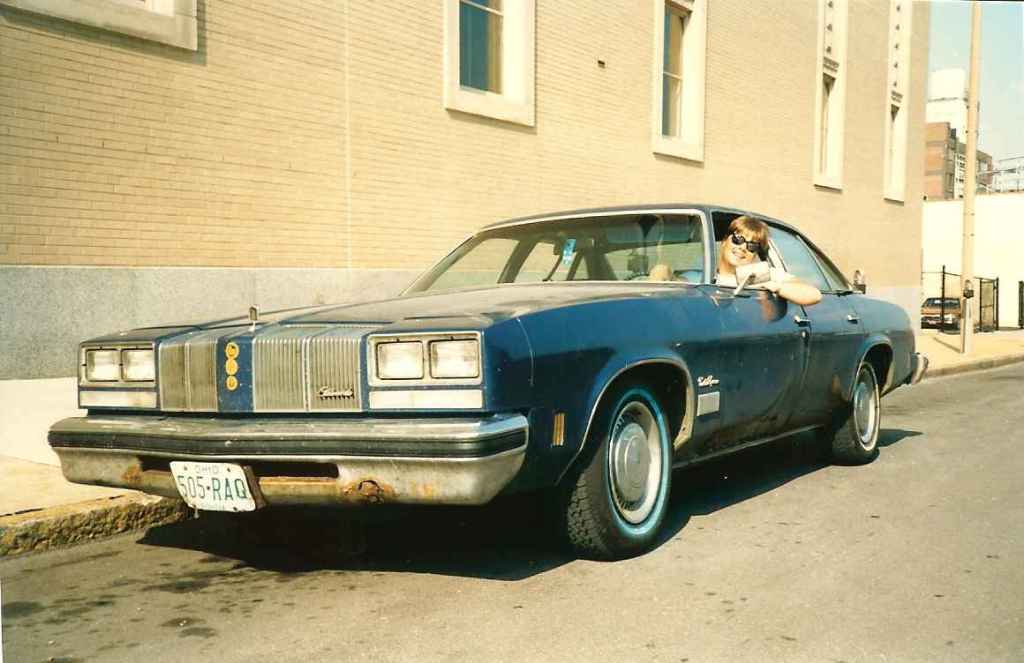
In June of 1988 I embarked on a journey with a friend and with my brother around the United States in an old Oldsmobile Cutlass Supreme 1976. I had just earned a master’s degree in electrical engineering and applied Physics from Case Western Reserve University, Cleveland, Ohio, as well as a degree in engineering physics from the University of Uppsala in Sweden (well they were really the same degree). It was an unusually hot summer. June 23, 1988 was the first time I heard the word “global warming”. I was watching some of Dr. James Hansen’s testimony before the United States Senate Committee on Energy and Natural Resources. I thought it made sense what he said. After all, I knew that greenhouse gases would increase the temperature of the atmosphere. It is hundreds of years old simple basic science and I had certainly not slept through my physics classes. It is why Venus is the hottest planet in the solar system and not Mercury.

Me, Thomas Wikman, sitting in the driver seat of my blue Oldsmobile Cutlass Supreme 1976 in 1988. It was frequently called the Swedemobile.
Me in my Oldsmobile Cutlass Supreme 1976 in 1988. I bought it for $250.

As time went by (about 10-15 years ago), I became increasingly skeptical and doubtful of global warming or climate change as it was more commonly called later on. The reason was that I almost exclusively read and watched rightwing news media such as world-net-daily (tended to push conspiracy theories), Newsmax and Fox News. I believed in the concept of global warming, it is basic science after all, but I thought that it was exaggerated and that it was promoted and distorted by left-wing agendas, and I incorrectly believed that there was no scientific consensus on the issue. I also bought into the false narrative that this was about environmentalist ideology, politics, or even a sort of environmentalist religion, and not a real and serious problem. My disdain for environmentalists, my ideology, and my gut feelings certainly aided the propaganda in misleading me. In addition, I read a lot by Björn Lomborg and Patrick J. Michaels and I believed them. To clarify, I did not know it at the time, but I was wrong, very wrong. Below is a video from NASA showing the annual shrinkage of the arctic sea ice.

To see the NASA web page from where the YouTube video of the shrinking arctic ice is taken click here.

I should say that I had some lingering doubts about my own “climate skepticism”. During my travels to national parks, the great barrier reef, and other places, I encountered guides who were scientists, as well as others, and they told me about coral bleaching, ocean acidification, receding and disappearing glaciers, the pine beetle problem, white pine blister rust, the destruction of forests due to global warming, and I could see some of the effects with my own eyes in northern Sweden, which is close to the arctic and therefore the effects of global warming are more visible.

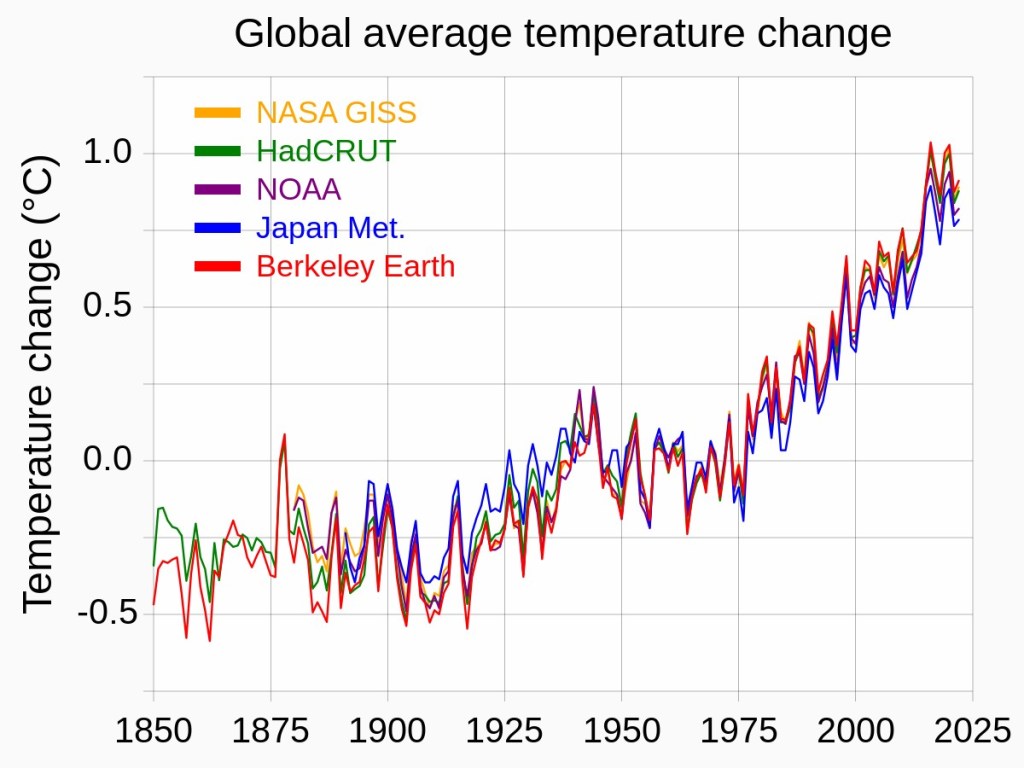
Graph showing global temperature rise since 1850 to 2022. There are five nearly identical graphs shown in different colors. Temperature anomaly graphs from 
NASA GISS - orange
HadCRUT - green
NOAA - purple
Japan Meteorological Agency - blue
Berkley Earth - red

The jagged curves show more than a 1.2 degrees Celsius increase.
Temperature anomaly graphs from NASA, Hedley Center, Japan Meteorological Agency, NOAA, and Berkley.

It also bothered me that my physics hero Stephen Hawking was a global warming alarmist and that other leading physicists and astrophysicists whom I admired, such as Michio Kaku, promoted and warned us about human caused global warming. Add that popular science magazines I subscribed to, such as Discover and Scientific American frequently wrote about global warming. I should say that I tended to skip those articles and I believed those magazines had a left leaning bias.

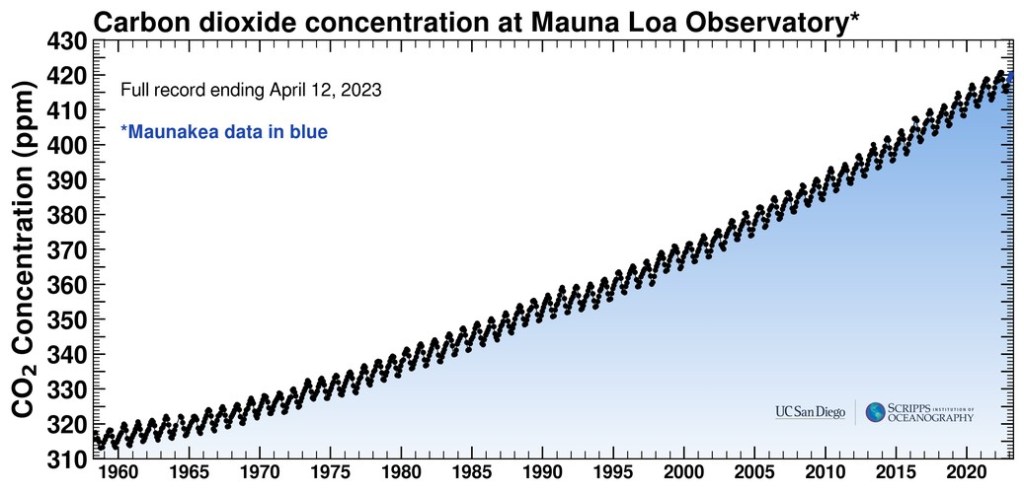
The Keeling curve starting in 1958 ending in 2022 showing the increase in carbon dioxide in the atmosphere.
The carbon dioxide concentration measurements began in 1958 at the Mauna Loa Observatory on the island of Hawaii. Since then, several other ways of measuring carbon dioxide concentration have been added.

However, there were too many red flags regarding my “climate skepticism”. It seemed like a lot of people knew and understood something I didn’t. This prompted me to take a deep dive into the matter. I had a decent scientific background. I had a master’s degree in engineering physics and a PhD in electrical engineering / computer science/ robotics and I was used to reading and writing research papers, and I had been on both sides of the peer review process, and I love mathematics. Electrical engineering and robotics is certainly not atmospheric physics but I wasn’t going to judge or review papers, I just wanted to know what scientists in the field actually were saying, and due to my background I was able to understand the papers.

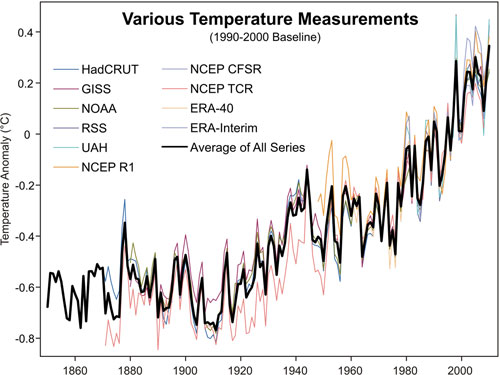
Global temperature graph showing 10 graphs from 10 organizations all in close agreement.
Another temperature anomaly map, this time ten different organizations.

I read peer-reviewed research articles on the topic, I read several dozens of books on the topic, including climate skeptic books, I subscribed to Nature, a very respected science journal publishing peer reviewed articles, I conversed with or listened to climate scientists online. I found out that my cousin Per Wikman-Svahn was a physicist who worked as an expert on the ethics surrounding climate change, and I extracted information from him.

Global temperature graph starting at 20,000 years ago. 20,000 to 10,000 years ago the temperature rose, then it was stable for the next 10,000 years except for the sharp uptick at the end.
Global temperature going back twenty thousand years, a hockey stick graph. Notice the stable temperature during the last 10,000 years, coinciding with the development of human civilization, and then a sudden sharp increase at the end.

I learned that the evidence that climate change is happening is undeniable and overwhelming including these few examples. I learned that the current global warming is mainly caused by our greenhouse gas emissions. I learned that global warming is not caused by natural cycles, something the experts on natural climate cycles repeatedly stressed. It is not the sun, or volcanoes and as you can see in the hockey stick graph above, it isn’t a normal cycle, and the recent increase in temperature is disturbingly quick.

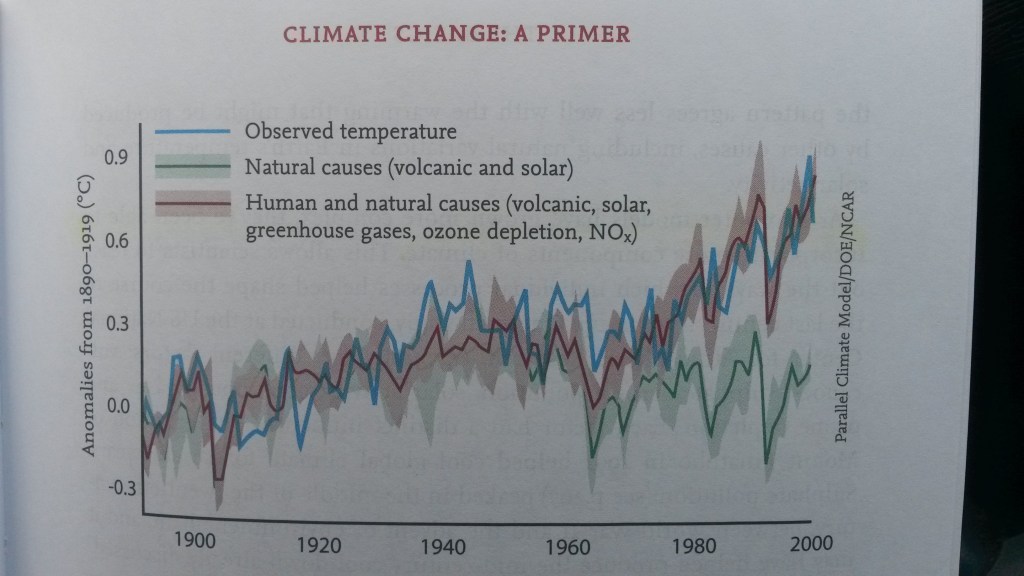
Graph showing possible causes for the observed temperature (blue), natural causes (volcanic, solar), human and natural causes (volcanic, solar, greenhouse gases, NO2, ozone depletion).
Natural causes for global warming / climate change would have cooled the planet, not warm it.

I also learned that warming caused by greenhouse gas emissions have a certain fingerprint; the arctic will warm faster, nights will warm faster, the tropopause would be pushing up the boundary with the stratosphere, the mesosphere would be cooling and contracting (think the troposphere as being a blanket). All of that has been observed. It was greenhouse gases, not something else. I learned that scientists had used spectral analysis to verify that most of the warming came from increasing amounts of CO2 in the atmosphere, and they had even used carbon isotopes (C-12, C-13, C-14) in corals and the atmosphere to verify that the new CO2 added to the atmosphere and oceans come from hundreds of millions of years old underground carbon.

This video shows the temperature anomaly world-wide in detail since 1880. Click here to go to the original NASA page.

I learned that satellite measurements agree with surface thermometers, contrary to what the rightwing media I had read claimed. I learned that nearly all actively publishing climate scientists say humans are causing climate change (~99%). I learned that no national or international scientific body in the world rejects the findings of human-induced effects on climate change. I learned that Rachel Carson was not a fraud and that she had not killed 500 million people. I learned that Dr. Michael Mann was not a fraud and that he was right about his hockey stick curve. I learned that the so-called climate gate scandal was manufactured.

Hockey stick curve going back 1,000 years. The recent uptick in global temperature is very sharp and very sudden.
Hockey stick curve last 1,000 years, blue-Michael Mann’s original curve (proxy measurements such as tree rings), green-dots 30-year average, red temperature measurements.

I would later learn that among tens of thousands of climate change related papers only 38 are skeptical of the consensus and they all contain errors that if corrected for they ended up agreeing with consensus. I learned that the vast majority of climate skeptic papers originated with rightwing think tanks. I had foolheartedly donated to one of these organizations, the Heartland Institute. I realized that rightwing media engaged in defamation, harassment and attacks on climate scientists.

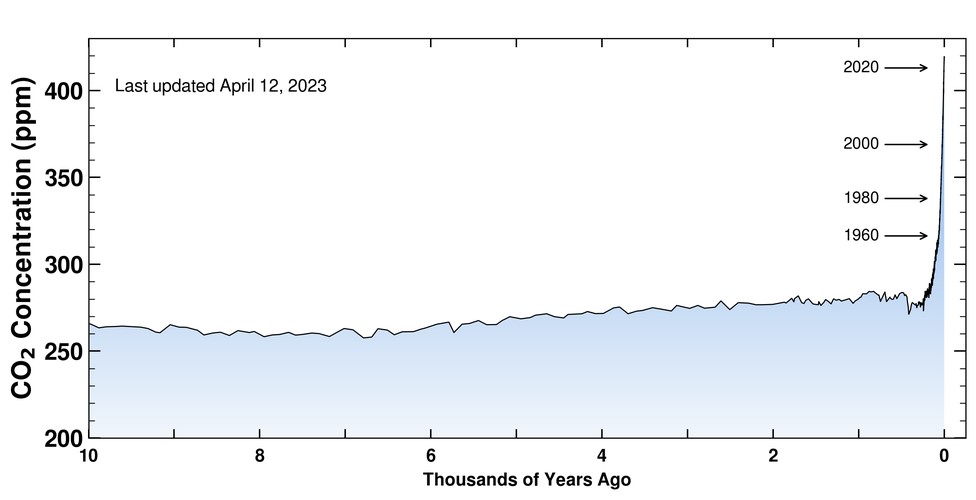
Curve showing CO2 concentration starting 10,000 years ago. Again a very sharp uptick towards end.
From Scripps institute. Keep two things in mind. First the warming from CO2 is delayed and may result in positive feedback that can manifest decades and centuries later. Secondly, human civilization developed during a period of stable climate. That CO2 levels and temperatures were higher millions of years ago is not much comfort.

Above all I learned that I had been bamboozled and misled and that I had believed maybe hundreds of false claims. I learned that there is a very powerful industry consisting of fossil fuel advocates and rightwing think tanks that are trying to confuse and mislead the public, attack and harass scientists, and that if you want the truth you need to trust the scientific evidence and the data, not arguments based on ideology and second guessing the motives of climate scientists is just nonsense.

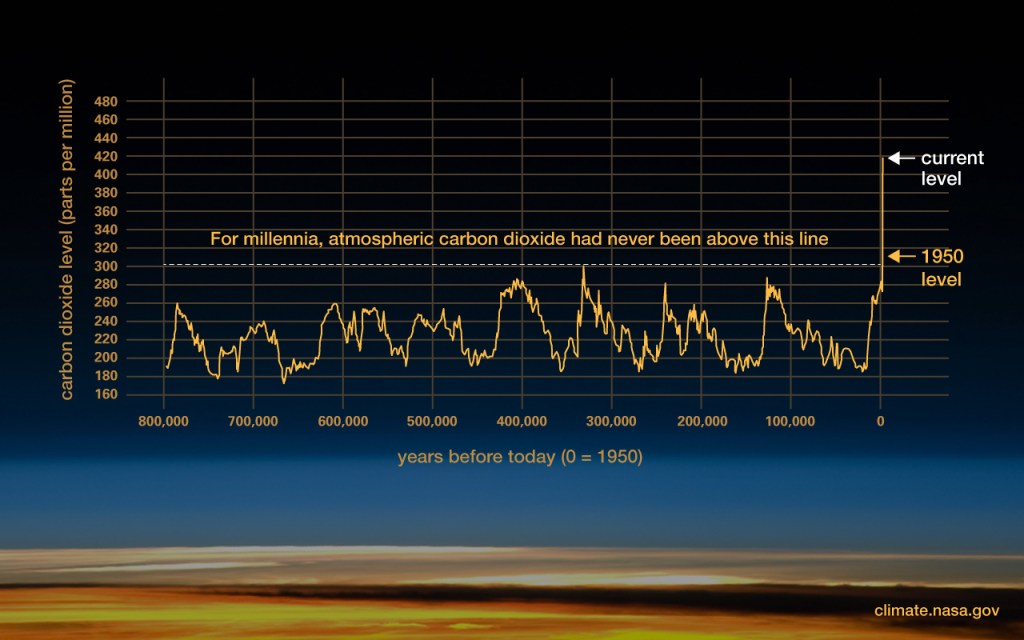
Graph showing CO2 concentrations starting 800,000 years ago. The curve is wavy until it suddenly shoots up towards the end.
Going back 800,000 years. From Scripps institute.

Long story short, we know with certainty that global warming / climate change is real and that we are causing it, chiefly with our greenhouse emissions, and we have known this for several decades. The scientific debate is over, but the public is still confused due to propaganda. Again, I had been bamboozled by rightwing think tanks, like so many others, so I understand.

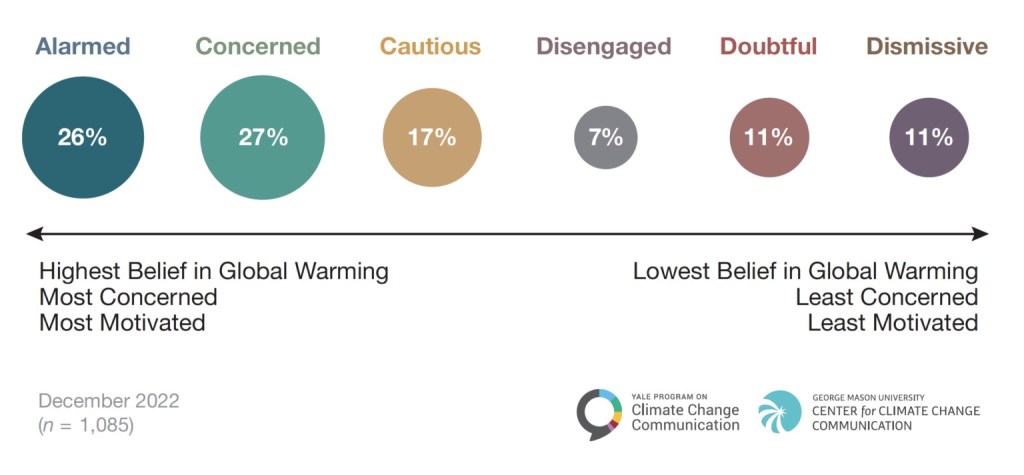
In this graph Americans are classified into six groups, dismissive, doubtful, disengaged, cautious, concerned, and alarmed. The two biggest groups are alarmed and concerned.
Instead of using somewhat disparaging popular labels such as “believers” or “climate change deniers” Yale University classify people into six groups. For example, climate change deniers are referred to as dismissive.

I do not think I was a “dismissive” but I was “doubtful” due to all the misinformation I had allowed myself to be fed. Again, we know with certainty that global warming / climate change is real and that we are causing it, chiefly with our greenhouse gas emissions, and we have known this for several decades. If you pay attention, there is no good reason to be doubtful, and certainly not dismissive. After reading a book by James Hansen (Storms of My Grandchildren: The Truth About the Coming Climate Catastrophe and Our Last Chance to Save Humanity) in 2013 I decided it was time for me to get involved.

This graph shows the relative size of the six groupings of Americans (according to Yale University), with respect to attitudes toward climate change, dismissive, doubtful, disengaged, cautious, concerned, and alarmed. The alarmed group has grown the most.
American attitudes over the last 10 years. From the Yale Program on Climate Communication.

At first, I tried to argue with those who were dismissive, either by inserting myself into a discussion or after they approached me, typically because of something I said either on-line or personally. This was a surreal experience. I remember trying to explain to an acquaintance who claimed to be an expert in science (he wasn’t) about the measurements made on the age of the added carbon using isotopes. He resolutely stated that isotopes did not exist, all atoms of the same element are identical, and the peer reviewed research article I provided was fake. He claimed to be an expert on science based on reading biased media (he had no degree) and he had not even heard of isotopes, neutrons, and radiometric dating. I sent him a link to Wikipedia explaining isotopes, just as a help, but that was a mistake. He thought that since Wikipedia is sometimes wrong it proved that I was making up the entire concept of isotopes.

What NASA Knows from Decades of Earth System Observations. To see the original page, click here.

I came across so many dismissive people who thought they understood climate change much better than the scientists themselves or believed that most or all climate scientists in every country on earth were liars. I came across a lot of conspiracy theories and many very strange arguments focusing on speculative assessments of the character of climate scientists or activists rather than focusing on the data and evidence. Many invoked Al Gore, as if it was him, who invented climate science, or the UN. It is nuttier to believe that Al Gore invented climate science than that he invented the internet. However, the worst part was the insults, the mockery, the rage, and the trolls. It became clear to me that dismissives tended not to be reasonable people and that they are louder than most. Considering that they tended to be older angry guys who were unable to convince anyone, especially not the younger and educated, I came to realize that arguing with them was a waste of time. You could not have good-faith arguments with them, and after all they did not matter. There are more productive ways to engage.

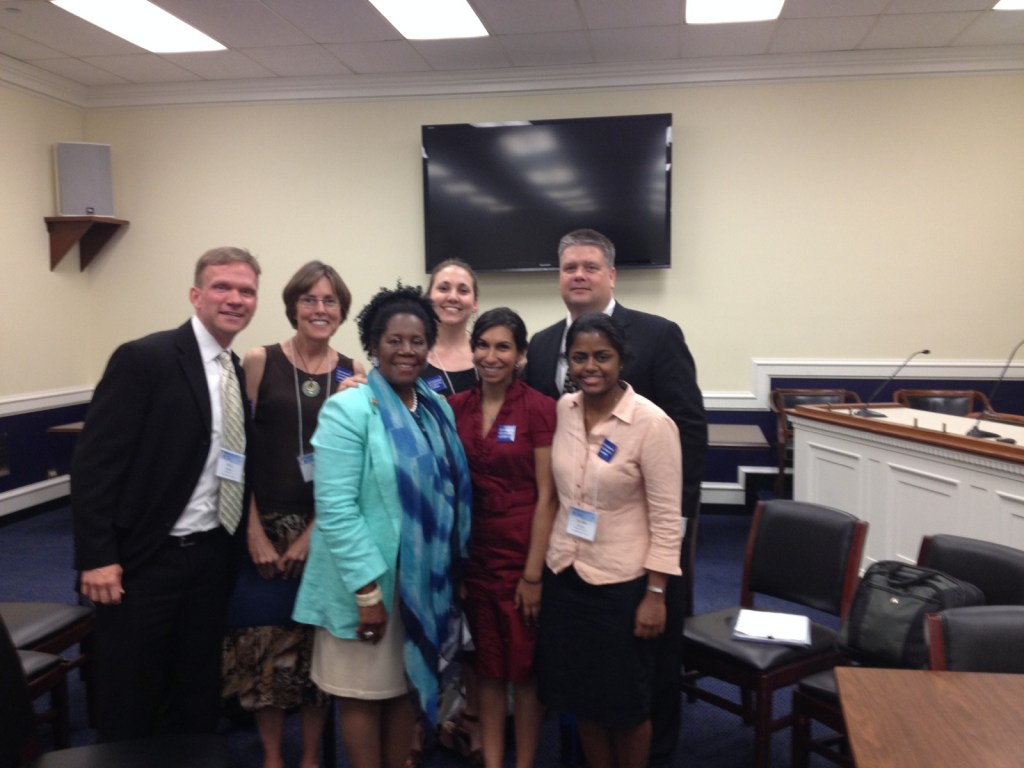
6 CCL members with Congresswoman Sheila Jackson Lee
CCL meeting with Democratic Congress Woman Sheila Jackson Lee (front). She took us on an impromptu two-hour tour of congress. I am the big guy back-right.

I felt I needed to do something for future generations, especially since I had been on the “wrong side” of the issue and also considering that I understood something many people did not, that climate change was a real and serious issue that we could do something about. In James Hansen’s book Storms of My Grandchildren, I had learned about solutions that seemed effective and doable, one of them being the carbon fee and dividend. I googled carbon fee and dividend and I stumbled upon Citizens Climate Lobby. I decided to join them and as it turns out so did James Hansen, as a board member. My first CCL volunteer position was as the CCL liaison to Congressman Pete Sessions office. He is one of the most conservative congressmen from Texas. In a meeting with the congressman, we asked him whom he trusted the most on the issue, and he answered Trammel Crow (the younger), one of the six children in the Trammel Crow Dallas real estate businesses (billionaires) who was also his biggest donor. Well, after talking to Trammel Crow we got the endorsement from Trammell Crow Company, which we handed to Pete Sessions.

Six CCL members plus Ryan Ethington, legislative director for congressman Pete Sessions, and to the far left an economist assisting Ryan Ethington.
In the photo we are meeting with Pete Sessions legislative director Ryan Ethington who was very supportive of us and loved to talk to us about climate solutions. Ryan was a football player and very tall. The three people on the right are me, my wife and our daughter.

Next is the climate journey of my friend Larry Howe, a lifelong Texas Republican and native Texan, and climate activist. We, 90 Texas CCL members to be specific, recently came back from Austin, Texas, where we lobbied (talked to) 67 Texas lawmakers for the first time in history. This was Larry Howe’s brainchild and doing. Larry is very active and a great leader. His post (in three parts) is more focused on solutions, whereas mine was about the how and why regarding my turn around on the issue.

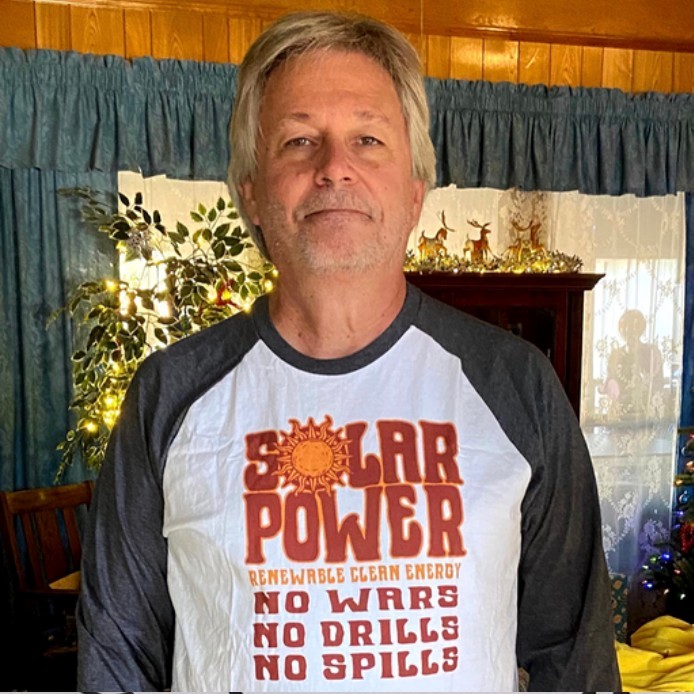
Larry Howe a leader in Citizens Climate Lobby in his solar power shirt.
Click on the picture to visit the three-part climate journey of Larry Howe.