
As I mentioned in a previous post I would like to launch a second a blog. The topic would be facts and insights that are either widely disputed or often misunderstood amongst the public, yet important and known to be true to the experts and scientists in the relevant field. I’ve identified hundreds of such cases.
In my previous post I discussed the fact that despite the fact that the scientific community states that Earth is 4.5 billion years old and that humans evolved over millions of years a 2019 Gallup poll, showed that 40% of US adults believe that God created humans in their current form within the last 10,000 years. As a teenager I believed that myself. That was before I knew much about science. I had read agenda driven books that left out, or wrongfully dismissed the evidence for an old earth while presenting faulty arguments for a young earth. Just learning about the relevant science was enough for me to realize that I had been bamboozled. At first, I dug my heels in, but I eventually realized that the belief that earth was 6,000 years old was not tenable and unsupportable by science.

My goal for the blog is not to be an exhaustive source for these kinds of topics, or a deep dive into these topics, but just to collect a large set of these unnecessarily controversial topics and provide some insight into the surrounding misunderstandings. Not a complete insight into the topics, but some. Perhaps my blog will lead to some new insights for some, or intellectually honest reflection as well as interesting and friendly discussions.

The format I decided on is to present the evidence for the fact or insight in question as a headline in bold followed by a list of failed objections to that evidence. Then, if applicable, failed arguments for the opposing point in bold as well, followed by an explanation as to why the argument does not work. It may seem like this setup is biased. However, the point is that the fact or insight in question is not commonly contested among the experts for good reasons, and therefore this setup is natural. Naturally, I would be open to counter arguments. I could, of course, be wrong and then I have to remove the fact/insight from my list.

Radiometric dating of meteorite material, terrestrial material and lunar samples demonstrate that earth is 4.5 billion years, or more precisely 4.54 billion years old.
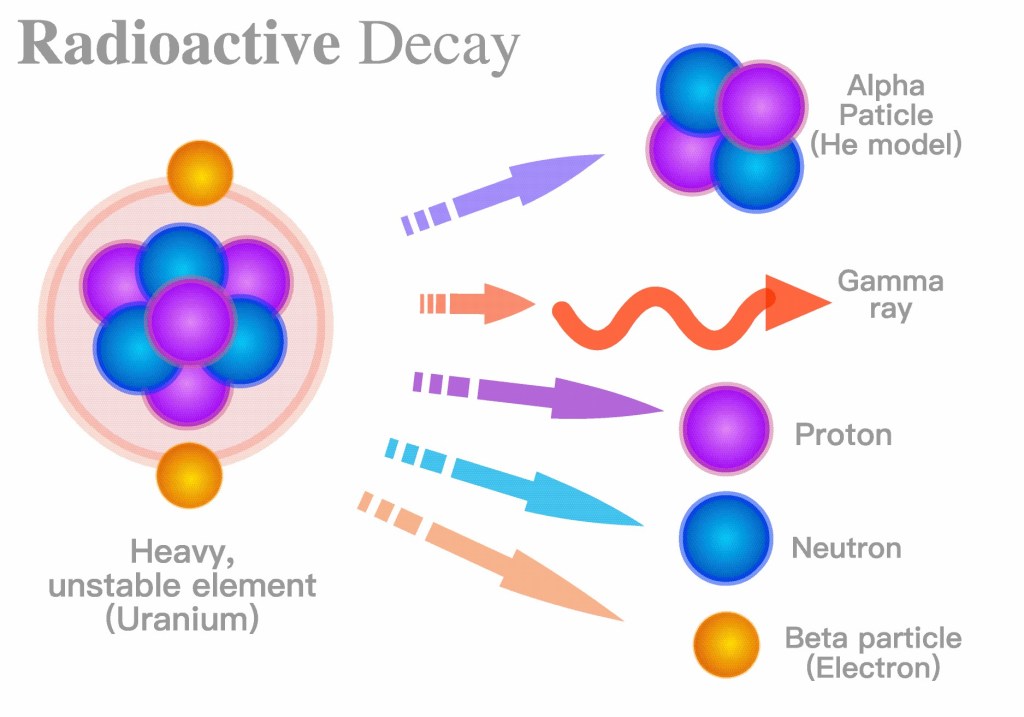
- Radioactive decay rates have changed: This objection does not work because rates of radiometric decay (the ones relevant to radiometric dating) are thought to be based on rather fundamental properties of matter, such as the probability per unit time that a certain particle can “tunnel” out of the nucleus of the atom. Analysis of spectra from quasars show that the fine structure constant has not changed over the last ten billion years. There are dozens of radiometric dating methods that are consistent with each other throughout time. Also, for a young earth you would need the decay rates to have been millions of times faster in the past, which would require changes in fundamental properties that would have plenty of noticeable effects on processes other than radioactive decay, not to mention the radiation being millions of times stronger than today. It would have fried everything.
- Young earth creationists sometimes make the claim that the initial ratios between isotopes may have been different: That the initial ratios/condition were different in the past and therefore radiometric dating is unreliable. This is a better objection, but it also fails. In this case you must take it case by case for each radiometric dating method and situation. But in many cases the amount of the daughter isotope is known to have been zero, which makes it easy and reliable.
We can see galaxies that are billions of lightyears away. This does not establish the age of the earth, but it makes a young earth and a young universe implausible.
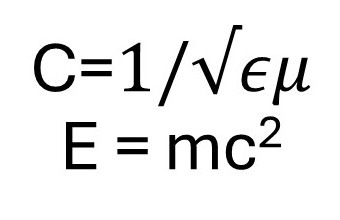
A common objection to this observation is that lightspeed in vacuum has changed: Similar to above this objection does not work because the light speed in vacuum is a fundamental constant that is not believed to change. It has been measured and no change has been seen. An example is the Einstein’s equivalence of energy and mass E = mc2. If the speed of light once was millions of times faster than now, the energy contained in a kilogram would be a trillion times larger than now. Where did all that energy go? The speed of light is determined by the inverse of the square root of the electric constant multiplied by the magnetic constant. You would have to drastically change the strength of the electric and magnetic fields (by the trillions) to get the speed of light to be millions of times faster. Wouldn’t that be noticeable? The light speed in vacuum shows up in many other physical relations as well. It is not a tenable objection.
We know stars are old because they develop according to certain physical processes that for some stars take billions of years. An example is our sun. It has fused (burned up) up five billion years’ worth of hydrogen.
The heavier elements in our solar system originate with older stars that burned out and exploded.
Electromagnetic radiation, including light, heat transfer if you will, travels from the inside of the sun to the surface and this takes 100,000 years. The photons are emitted and reabsorbed over and over, which is why the electromagnetic transfer is lower than in vacuum. If the sun is only 6,000 years old, how can we see it?
Finally, some objections to old earth by young earth creationists.
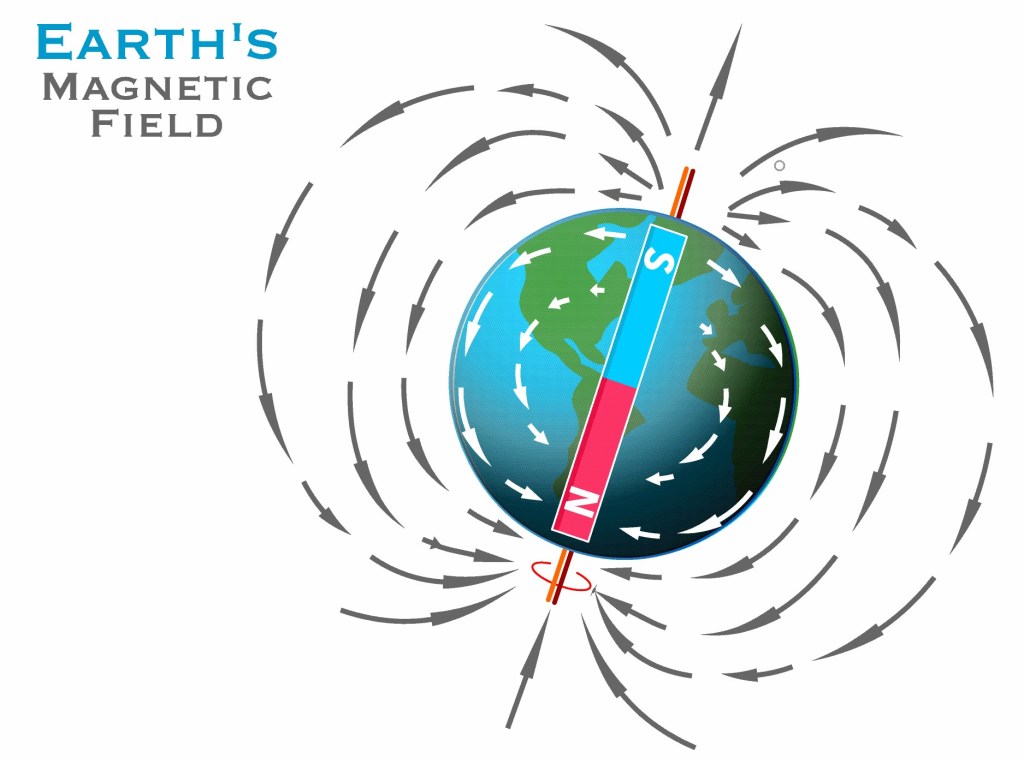
The earth’s magnetic field has been weakening during the last 130 years as if it was formed from currents resulting from earth being a discharging capacitor (claim by Thomas Barnes). This would make an impossibly strong magnetic field already 8,000 years ago. I remember this being the argument in a young earth creationist book I read as a teenager.
- The first problem with this argument is that there is no good reason to believe that earth’s magnetic field acts this way.
- We know that earth’s magnetic field has reversed itself several times thus disproving the discharging capacitor model.
- Thomas Barnes’ extrapolation completely ignores the nondipole component of the field.
- Conclusion, this objection is not reasonable.
If the earth and the moon were billions of years old there would be a hundred feet thick dust layer from meteorites on the moon. The moon landing proved otherwise. This is another argument I remember reading in a young earth creationist book (Scientific Creationism by Henry Morris) as a teenager.
The problem with this argument, as I would later find out, is that Morris’ claims about a hundred feet thick dust layer was based on faulty and obsolete data. The expected depth of meteoritic dust on the Moon is less than one foot (after billions of years).
If I had known and understood any of this when I was 14 years old, I would not have been bamboozled by the young earth creationists, but it was not the only time I was bamboozled.
Anyway, this is how I envision one blog post in my upcoming blog post adventure. It is a brief overview of why experts/scientists can be trusted in regards the topic of the post. I have not yet decided on a name for my new blog.
 Leonberger Life