
This is a Leonberger blog but sometimes I post about other things, especially if it concerns me personally. Today November 1st is National Author Day so I thought that since I am originally from Sweden that I would post a poem by a celebrated Swedish 19th century author and poet by the name Viktor Rydberg. The poem is “Tomten” (the Tomte) published in 1881.
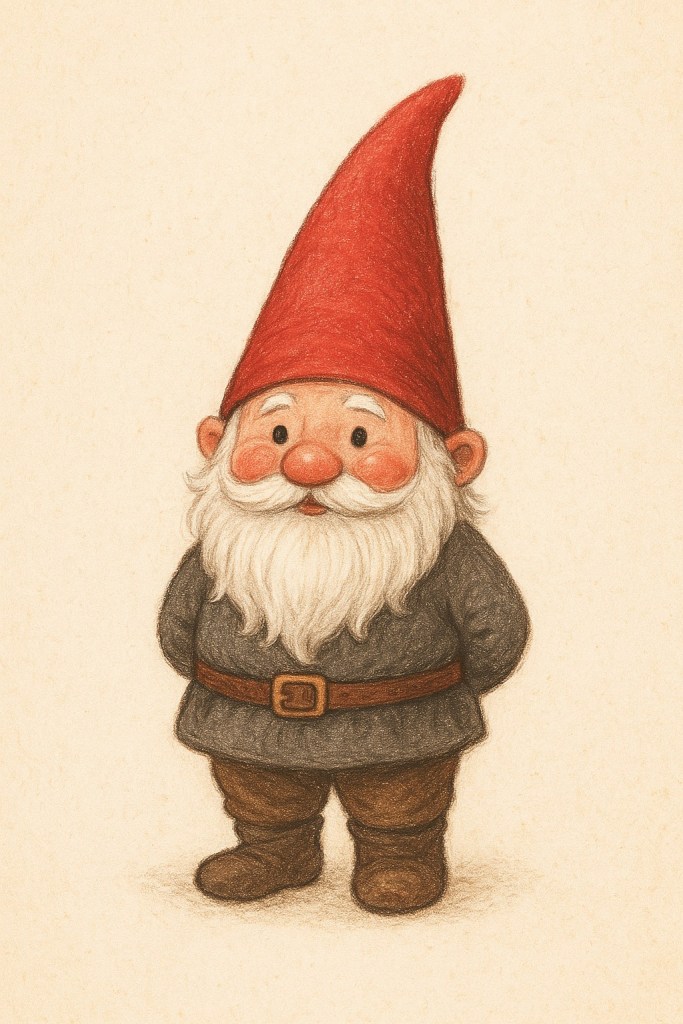
A Tomte is a type of small magical people, or gnomes, related to Vitter folk. There are many Tomtar (Tomte in plural), and traditionally each farmhouse had a Tomte who might secretly help the farmers with their tasks, warn them of danger, and protect the animals. They are friendly and is the inspiration behind the Swedish version of Santa Claus, which is therefore a bit different from the Disney version of Santa Claus that has become so popular.
For one thing, the Disney version of Santa Claus flies around on a reindeer sled and delivers all the presents to all the good kids around the world. Therefore, he needs to move faster than the speed of light, which a Tomte does not need to do. The Tomte may bring you gifts for Christmas if you in return put out food for them, such as porridge.
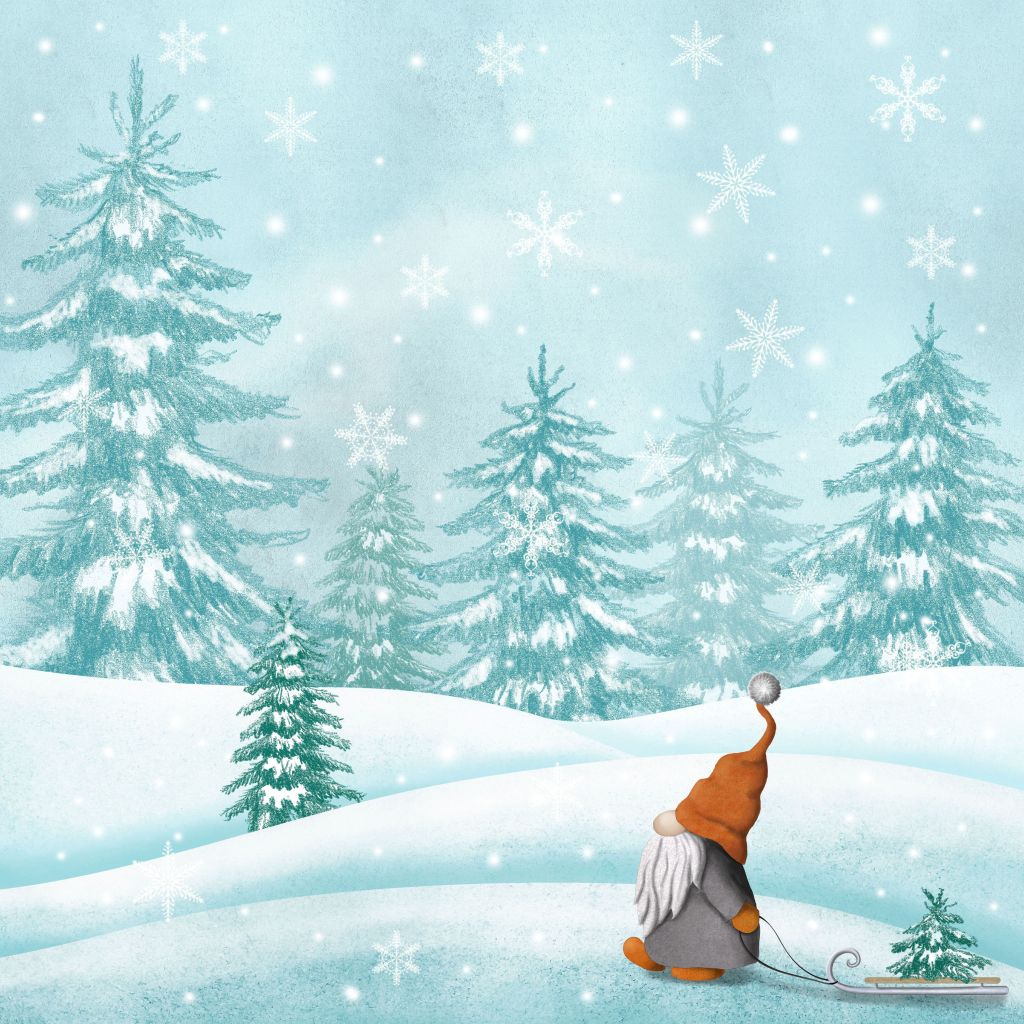
Tomten is a beautiful long poem and every line is rhymed, which is impressive. At first, I took the Swedish poem, and I just dropped it into Google Translate hoping it would translate into English. This was a disaster. Poems are notoriously difficult to translate. First of all, you lose the rhymes, and for this poem the rhymes add a lot to the atmosphere and feeling of the poem.
Secondly, you may lose some of the beautiful language and the special choices of words that create the right atmosphere. For example, Google Translated Tomte to Santa, which is not quite right. Normally, when you think about Santa you think about the Walt Disney version of Santa and this poem was written 20 years before Walt Disney was born, and the Tomte as depicted is very different from Santa Claus. Add to that the fact that a lot of the words were just plainly mistranslated and wrong. Part of the reason for that was that the poem is written in old fashioned Swedish, which Google Translate cannot handle (but I can). Thirdly, due to the different sentence structure, syntax, and grammar of different languages you lose some of the rhythm. In summary, Google Translate butchered the poem and turned it into nonsense.
However, I translated the poem into English myself, with some help from Google Translate. Unlike Google Translate, I know what the author is saying, and I can read old Swedish without problems. Naturally, all the rhymes are gone, but I think I succeeded in preserving some of the beauty of the descriptions of the Tomte and the environment. Another thing that was preserved was the philosophical context of the poem. This poem raises some existential dimensions. Tomten is an immortal creature, and he is deeply puzzled by the fact that people come into existence as babies, they live, get old and then they disappear again. Generations come, generations go, one after another, but the Tomte lives on, and he cannot figure out this mysterious puzzle no matter how long he thinks about it. Obviously, he cares about the people who come and go. He wants to know.
Anyway, below is my translation of the poem. The poem should be read slowly and with thoughtful emphasis. Not all the sentences are proper English because I wanted to preserve some of the poetic nature of the stanzas. Again, in the Swedish original all the lines rhyme. For example, the word “hard” is “hård”, and “house” is “gård”, the word “roofs” is “taken”, and “awake” is “vaken”.
My Translation of Tomten
The cold of the midwinter night is hard,
the stars sparkle and twinkle.
Everyone sleeps in their house
deep in the midnight hour.
The moon wanders its silent course,
the snow shines white on pine and fir,
the snow shines white on the roofs.
Only the Tomte is awake.
Standing there so gray by the barn door,
gray against the white drift,
watching, like many winters before,
up against the disk of the moon,
looking towards the forest, where spruce and fir
draws its dark wall around the yard,
pondering, although without success,
over a strange riddle.
He runs his hand through beard and hair,
shakes head and hood
“no, this riddle is too difficult,
no, I cannot guess this”
he banishes the thought,
as he usually does,
so he can attend to his tasks,
and go about his business.
He goes to the storage and the tool house,
he feels all the locks
the cows dream by the light of the moon
summer dreams in the booth;
forgetful of harness and whip and empty
Pålle (a horse) in the stable also has a dream:
the manger he leans over
filled with fragrant clover;
He goes to the fence for the lambs and sheep,
see how they sleep in there;
goes to the hens, where the rooster stands
proud of his highest stick;
Karo in the dog bed with straw feels good,
wakes up and wags its tail slightly,
Karo his elf knows,
they are good friends.
The Tomte tiptoes at last to see
the family he holds so dear,
for long and well he has known that they
hold his diligence in honor;
he tiptoes to the children’s chamber
and approach to see the sweet little ones,
let no one doubt it:
they are his greatest happiness.
Thus, he has seen them, father and son,
through so many generations
in deep sleep as children; but from where
did they come down here?
Generation soon followed generation,
they flourished, aged, and then went — but where?
The insolvable riddle to his mind
has thus returned!
The Tomte walks to the loft of the barn:
there he has a home and stronghold
high up in the scent of the hay,
near the swallow’s nest;
now the swallow’s nest is empty,
but when spring comes with leaves and flowers
she will probably be back
followed by her close mate.
Then she always has something to chirp about
of her many travel memories,
nothing, however, about the riddle, which
moves in the Tomte’s mind.
Through a gap in the barn wall
the moon shines on the Tomte’s beard,
the streak on the beard shines,
The Tomte broods and ponder.
Quiet is the forest and all the heath,
life out there is frozen,
only from a distance of the falls of the rapids
can be heard very slowly the noise.
The Tomte listens and, half in a dream,
seems to hear the flow of time,
wondering where it will go,
wondering, where the source must be.
The cold of the midwinter night is hard,
the stars sparkle and twinkle.
Everyone sleeps in their house
well into the morning hours.
The moon lowers its silent course,
the snow shines white on pine and fir,
the snow shines white on the roofs.
Only Santa is awake.
The Original Poem Tomten
Midvinternattens köld är hård,
stjärnorna gnistra och glimma.
Alla sova i enslig gård
djupt under midnattstimma.
Månen vandrar sin tysta ban,
snön lyser vit på fur och gran,
snön lyser vit på taken.
Endast tomten är vaken.
Står där så grå vid ladgårdsdörr,
grå mot den vita driva,
tittar, som många vintrar förr,
upp emot månens skiva,
tittar mot skogen, där gran och fur
drar kring gården sin dunkla mur,
grubblar, fast ej det lär båta,
över en underlig gåta.
För sin hand genom skägg och hår,
skakar huvud och hätta —
»nej, den gåtan är alltför svår,
nej, jag gissar ej detta» —
slår, som han plägar, inom kort
slika spörjande tankar bort,
går att ordna och pyssla,
går att sköta sin syssla.
Går till visthus och redskapshus,
känner på alla låsen —
korna drömma vid månens ljus
sommardrömmar i båsen;
glömsk av sele och pisk och töm
Pålle i stallet har ock en dröm:
krubban han lutar över
fylls av doftande klöver; —
Går till stängslet för lamm och får,
ser, hur de sova där inne;
går till hönsen, där tuppen står
stolt på sin högsta pinne;
Karo i hundbots halm mår gott,
vaknar och viftar svansen smått,
Karo sin tomte känner,
de äro gode vänner.
Tomten smyger sig sist att se
husbondfolket det kära,
länge och väl han märkt, att de
hålla hans flit i ära;
barnens kammar han sen på tå
nalkas att se de söta små,
ingen må det förtycka:
det är hans största lycka.
Så har han sett dem, far och son,
ren genom många leder
slumra som barn; men varifrån
kommo de väl hit neder?
Släkte följde på släkte snart,
blomstrade, åldrades, gick — men vart?
Gåtan, som icke låter
gissa sig, kom så åter!
Tomten vandrar till ladans loft:
där har han bo och fäste
högt på skullen i höets doft,
nära vid svalans näste;
nu är väl svalans boning tom,
men till våren med blad och blom
kommer hon nog tillbaka,
följd av sin näpna maka.
Då har hon alltid att kvittra om
månget ett färdeminne,
intet likväl om gåtan, som
rör sig i tomtens sinne.
Genom en springa i ladans vägg
lyser månen på gubbens skägg,
strimman på skägget blänker,
tomten grubblar och tänker.
Tyst är skogen och nejden all,
livet där ute är fruset,
blott från fjärran av forsens fall
höres helt sakta bruset.
Tomten lyssnar och, halvt i dröm,
tycker sig höra tidens ström,
undrar, varthän den skall fara,
undrar, var källan må vara.
Midvinternattens köld är hård,
stjärnorna gnistra och glimma.
Alla sova i enslig gård
gott intill morgontimma.
Månen sänker sin tysta ban,
snön lyser vit på fur och gran,
snön lyser vit på taken.
Endast tomten är vaken.
The cold of the midwinter night is hard,
the stars sparkle and twinkle.
Everyone sleeps in their house
well into the morning hours.
The moon lowers its silent course,
the snow shines white on pine and fir,
the snow shines white on the roofs.
Only Santa is awake.
 Leonberger Life