Speaking to Politicians About Climate Change or Any Other Issue

I’ve mentioned in other posts that I am a volunteer for a non-partisan organization called Citizen Climate Lobby, CCL for short. The name is maybe misleading insofar as we are not “normal” lobbyists, just volunteers, without money, who are trying to get politicians interested in climate change related legislation. We do many things, but one thing we do is meeting with congressmen, house representatives as well as senators, state legislators, including state representatives and state senators, and mayors and city council members, as well as corporations, organizations, and grass roots, that’s regular folks. Naturally we discuss different things with a US senator compared to a city council member. We discuss national legislation with a US Senator and local pollution issues with a city council member.

The photo is of a dial which can be used to decrease or increase CO2 emissions
CO2 emissions dial. Shutter stock Photo ID: 1928699927 by NicoElNino

CCL has been successful

Overall, I think CCL has been quite successful. We are well known in congress, we have a good reputation, and people tend to want to meet with us. We have been instrumental in passing legislation and in 2016 a Climate Solutions Caucus was created in the house by one Republican congressman and one Democrat congressman. It was CCL that was behind this and who brought the two congressmen together. The first two years the caucus had an equal number of Democrats and Republicans. Before the election in 2018 there were 40 Democrats and 40 Republicans on the caucus. After the election many of the typically moderate Republicans in the climate caucus lost and the numbers are no longer equal. I can add that I am the CCL liaison for Senator Ted Cruz office.

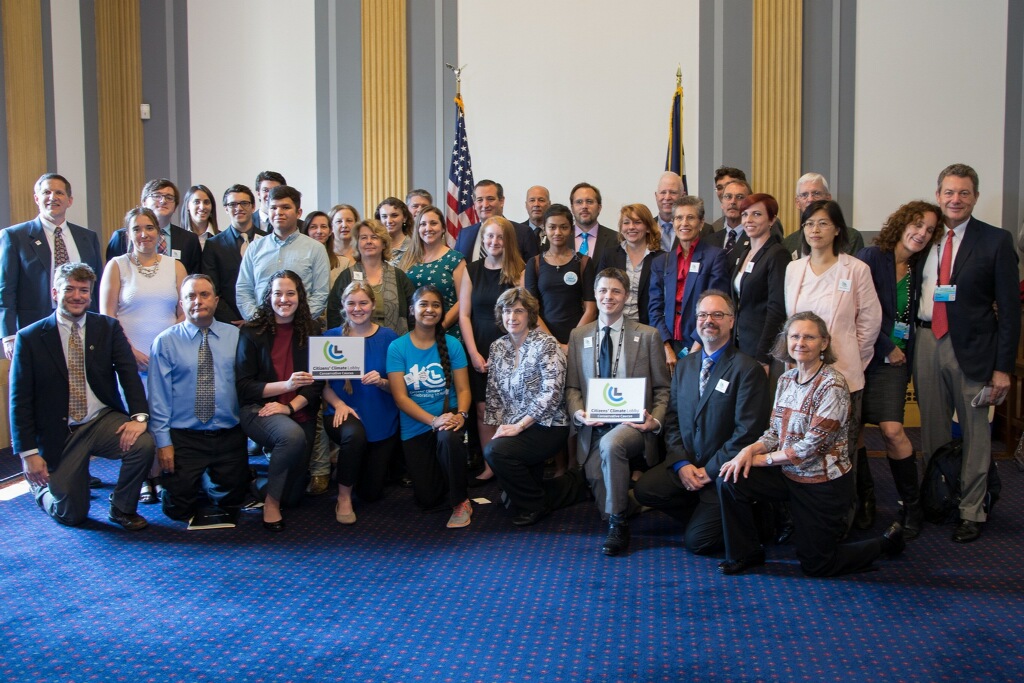
40 people with Senator Ted Cruz
Senator Ted Cruz TXJR with Citizens Climate Lobby in 2017. The senator is standing immediately to the right of the American flag, and I am standing immediately to the left of the American flag. My wife and daughter are also there.

Be Organized and Polite

I think the reason that CCL has been successful is that the CCL volunteers are trained to be polite, to listen and ask questions. Politicians and their staff are flooded by angry, rude and toxic messages from opiniated people on both sides of an issue, and they have delete-buttons and trashcans for that. Protesting, screaming, insulting, threatening, showing your feelings, is not as effective as some people think. When you push people, they will push back or ignore you. You need to win people over, not alienate them.

We’ve had a few accidents when some volunteers lost their temper but otherwise, when someone acts dismissive or hostile to your message you still try to find common ground, or you can ask if you can get back to them with research articles or other information from reliable sources. You don’t argue and you definitely do not get angry. In addition, you need to listen, ask them why they believe what they believe, and write it down for future purposes. You also need to be well informed. If you don’t know something, promise to get back them, research it, and then give them the information by email once you have it. Keep all communication to the point and easy to understand. Don’t ramble. Respect their time. You have one issue. They have a hundred and one.

Seven CCL volunteers with Senator Ted Cruz
This photo is from the CCL meeting with Ted Cruz office June 2023. I set up the meeting, but I was not there because my son was getting married at the same time.

How to Set Up a Meeting

To set up meetings with congress, call/write to the scheduler the first time around about 2-4 weeks ahead of when you want to meet with them. If you already have the emails or phone numbers of a staff member then use that. Don’t just walk in and don’t try to schedule too far ahead. Keep the request simple, short and humble but clear, and don’t expect an immediate response. Suggest a time but be open to other times. Don’t start spamming them if they don’t reply. Give it a few days and then email them again or call them. Refer to / include your previous email to remind them that you have already tried to request a meeting. It is a little easier to get a meeting with a council member than a US senator.

A woman on a phone with a laptop
Photo by Ivan Samkov on Pexels.com

The Meeting

The most common is that you will meet with one or more staff members. Don’t expect to meet the congressman, not the first time. If you are meeting with a state representative or a city council member you have a better chance of getting to speak to your representative. Don’t bring too few and not too many people. Five or six people is a recommended group size. Try to have at least one constituent in the group. A constituent is someone who lives in the congressman’s district or the city council member’s district. Ask how much time you have. At a congressional office you typically have half an hour. Respect that time. It is best to ask for two things. First, what you really want. That’s the “primary ask”. Then an easier version of the “primary ask” or an alternative. That’s called the “secondary ask”. The reason is that psychology has shown that if they are against the “primary ask” and have to say no, they’ll try to please you by saying yes to the secondary ask. Thank them for meeting with you before and after the meeting.

Six people in a meeting room
Photo by Christina Morillo on Pexels.com

Avoid Asking for More Tax

Be aware that requests that require the politician to spend money or raise taxes are more difficult for them to accept. The climate legislation that Senator Ted Cruz voted yes on, the Growing Climate Solutions Act, which was about supporting farmers and forest landowners doing things sustainably, required very little government assistance. Once when I sent an email to my Dallas city council member (a libertarian), whom I already knew, I asked him to replace diesel buses with EV buses. It was a Sunday. His immediate reply (within 5 minutes) to me was along the lines: Hi Thomas. The EV buses cost money and since I promised not to raise taxes, I’ve got to cut something else. I am at city hall right now working on the budget. Could you please come down to city hall and help me find which item to cut. I am having a really hard time with this. I thought that once you find the item to cut for me maybe you could volunteer to take the blame for cutting it.

A bit snarky maybe, but I got his sarcastic tone, and I dropped the subject. I told him “Never mind”. I should mention that he voted yes on another issue that we had asked of him, despite him at first telling us no. However, that issue required no tax money. I can also add that a few years later Dallas got EV buses.
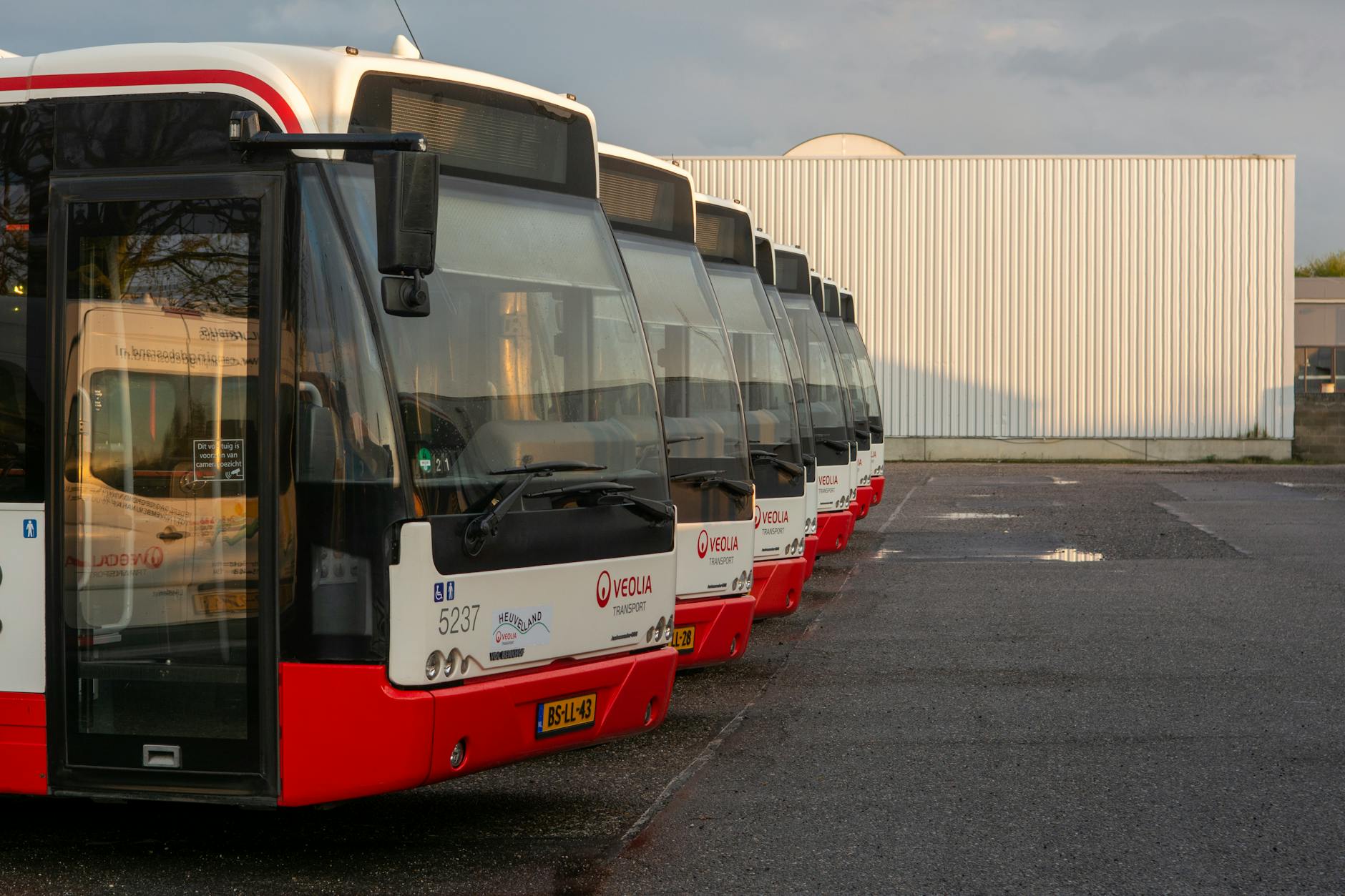
A line of buses
Photo by Jan van der Wolf on Pexels.com

I hope this advice will be helpful to you when you want to talk to your representatives about your issue(s). Ask me any questions.

Citizen Climate Lobby is Calling to Action

I am a volunteer for an organization called Citizen Climate Lobby, CCL for short. CCL is a grassroots bipartisan organization consisting of 200,000 volunteers from the entire political spectrum, from conservative, libertarian, independent, and liberal / left. Considering that we are volunteers and just regular people the part of our name that says “Lobby” may seem out of place. However, it refers to the fact we visit congressional offices and talk to politicians. We don’t bring any gifts, like real lobbyists, not millions of dollars, not even donuts. What we bring is useful information, our voices, community leaders, our votes, and gratitude and respect for our representatives, whether we agree with them or not.

A man wearing signs saying volunteer
Citizens Climate Lobby, or CCL, is volunteer organization seeking to create political will for climate solutions. Photo by Mikhail Nilov on Pexels.com

I am the liaison for Senator Ted Cruz office. Despite him not being a “climate champion” he  voted Yes on one of the resolutions we supported, the Growing Climate Solutions Act (Senate bill S.1251, house bill HR.2820). They typically meet with us 3 or 4 times a year and they have never turned down a meeting request. We have a good relationship with the vast majority of congressional offices despite the partisanship that’s ripping congress apart. I remember having a really good meeting in one office then having another great meeting with a congress woman who told us about how evil the guy we had just met was. It felt funny getting along well with two people who seemed to hate each other (or maybe that’s just how they talk). So, in addition to the climate question, I think we are helping to heal some of the divisions in congress as well.

A note about the bill numbers. Any law/resolution must pass both houses and they have different numbers in each house even though they are essentially identical. For the senate it is S.####, and for the house HR.####. Even though a bill passes both houses there are things like the filibuster in the senate and Presidential vetoes, so passing a bill is not easy.

40 people with Senator Ted Cruz
Senator Ted Cruz TXJR with Citizens Climate Lobby in 2017. The senator is standing immediately to the right of the American flag, and I am standing immediately to the left of the American flag. My wife and daughter are also there.

I should say that I used to be quite “skeptical” of “global warming”. I knew, of course, that greenhouse gases cause a warming effect (like a blanket), that’s just hundreds of years old basic science, like we breathe oxygen or that the pressure in an enclosed gas container will increase when heated. However, I thought that the issue was politicized, and that there were natural explanations for the warming such as the sun, orbital cycles, cosmic radiation, volcanoes, etc. I was misinformed because at the time I almost exclusively read rightwing media and literature.

The sharp uptick at the end is not natural, for example, because the distribution of the warming vertically, geographically and temporally (the fingerprint) matches exactly the greenhouse gases we’ve released and contradicts natural causes.

After studying scientific literature and keeping an open mind I came to realize that I was wrong. It had been known for decades that Global Warming, or Climate Change, as it would be called later on, was mostly caused by carbon emissions from fossil fuels, and scientists knew that it was a serious problem. Not necessarily a “we are all going to die” issue, but a serious problem that we should not hand over to our children and grandchildren without trying to mitigate. After reading the book “The Storms of my Grand Children” by the physicist Dr. James Hansen I decided to volunteer. I wanted a non-political organization, if possible, so I chose the Citizens Climate Lobby. You can read more about my Climate Journey here.

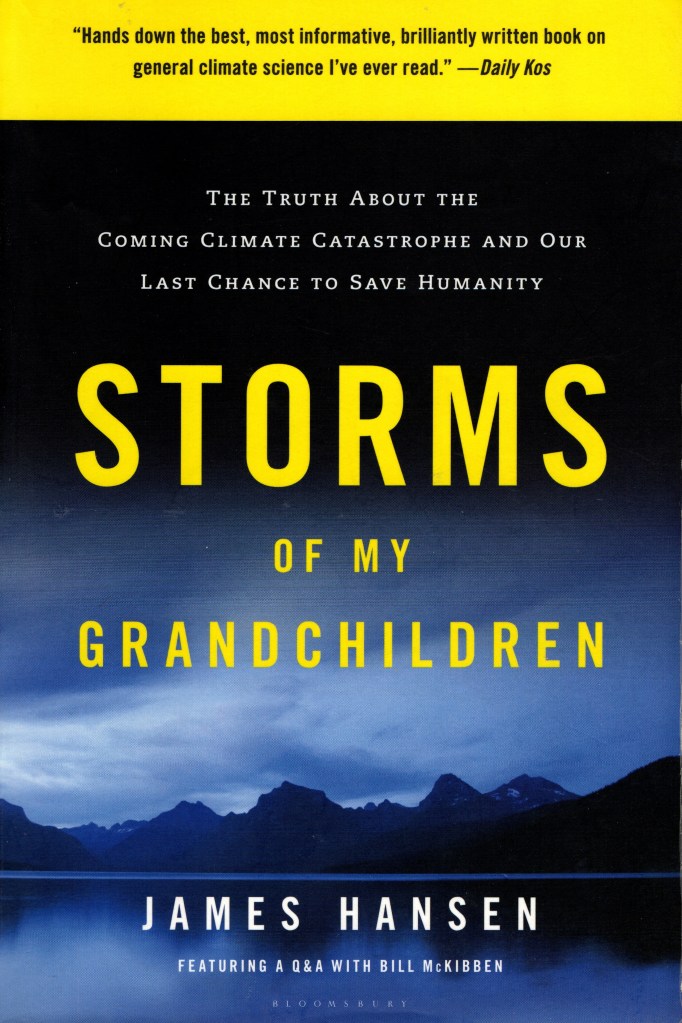
The front cover features the title on the background of a mountainous landscape.
Front cover of the Storms Of My Grandchildren by Dr. James Hansen.

CCL is focused on four areas.

Carbon Pricing

CCL’s favorite carbon price policy is what is called a carbon fee and dividend. There is currently a resolution in the house, the Energy Innovation Act, HR.5744 which implements this policy. A senate version S.#### has not yet been introduced.

  • Carbon Fee: This policy puts a fee on fuels like coal, oil and gas. It starts low and grows over time.
  • Carbon Dividend: The money collected from the carbon fee is allocated in equal shares every month to the American people to spend as they see fit. The carbon fee would raise the prices on carbon intensive products but since the money is returned to households the dividend would more than make up for the shortfall. This would financially benefit low-income families, specifically the lower 2/3 of income.
  • Border Carbon Adjustment: To protect U.S. manufacturers and jobs, imported good will pay a border carbon adjustment, and goods exported from the United States will receive a refund under this policy. This also allows American businesses to reap the rewards of their carbon advantage over other countries.
Photo by Pixabay on Pexels.com

Healthy Forests

America’s natural resources — forests, grasslands, wetlands and oceans — act as natural climate solutions by pulling carbon out of the air. We can manage these natural resources to maximize their climate change-fighting impacts. CCL has supported a number of forest or agriculture related bills in congress.

Photo by Rudolf Jakkel on Pexels.com

Building Electrification and Efficiency

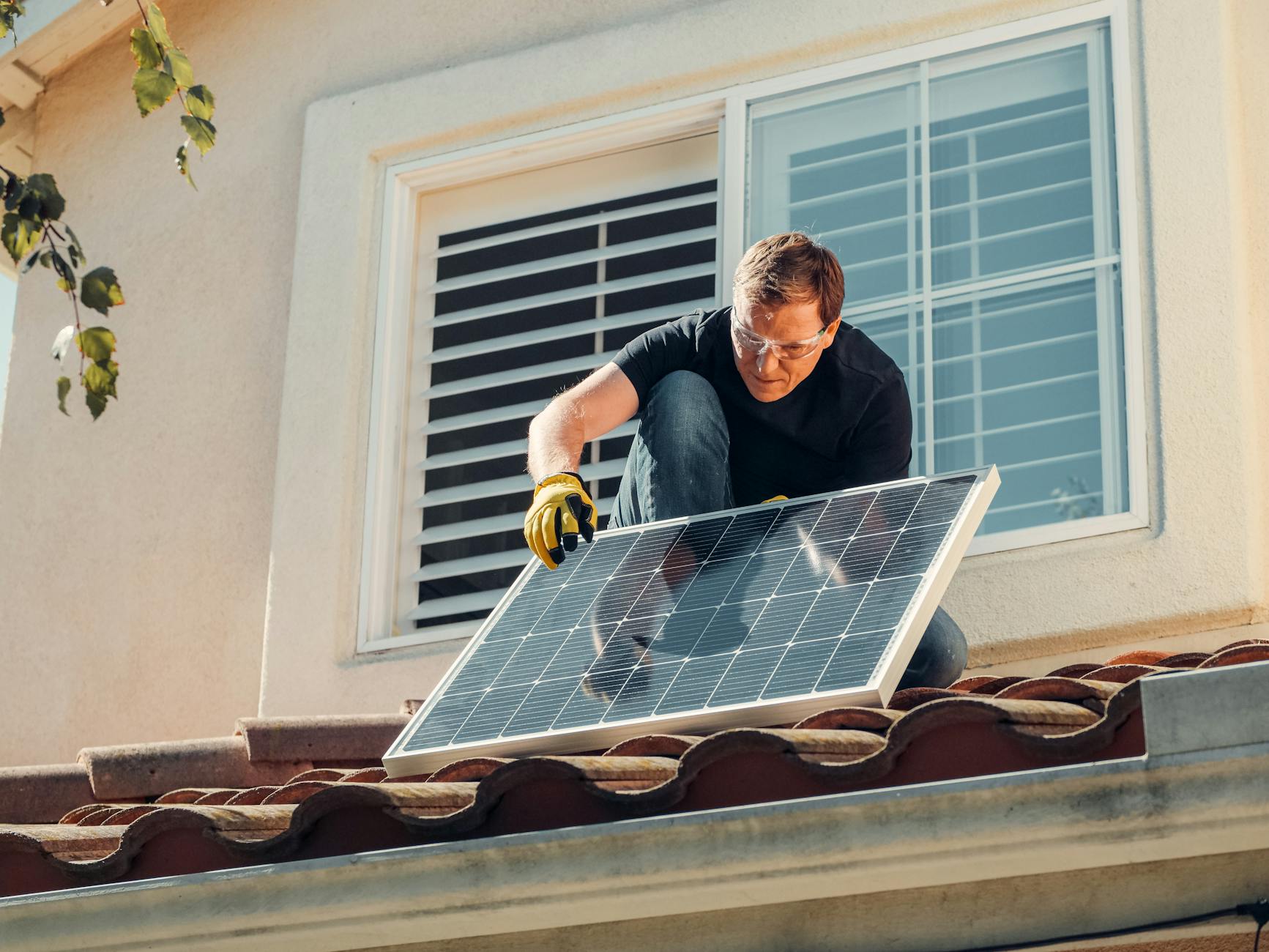
By upgrading our homes and buildings to be electric and making them more energy efficient, we can save money and eliminate a major source of carbon pollution.

Photo by Kindel Media on Pexels.com

Permitting Reform

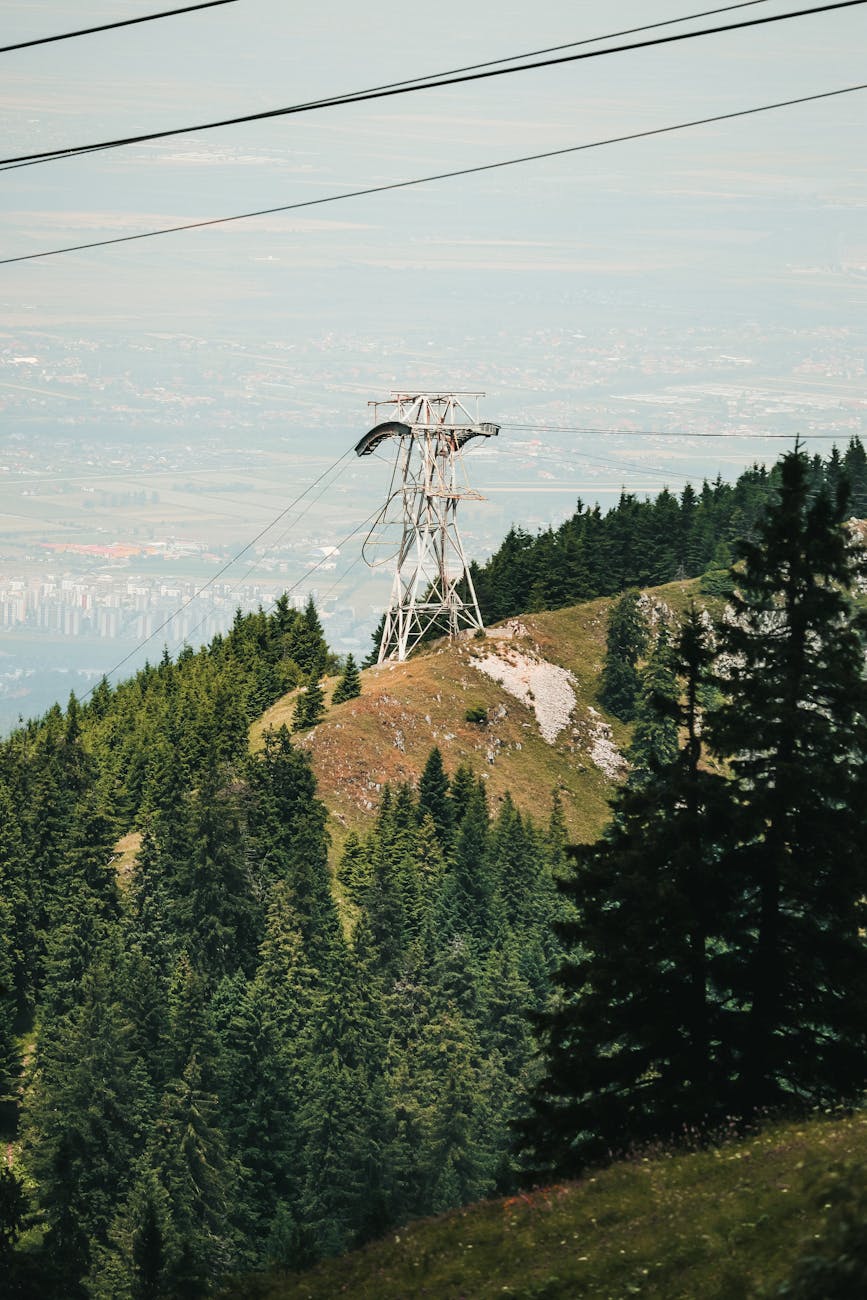
Building electrical powerlines is very complicated in the United States. Building a wind power station takes months, getting approval for a powerline can take decades. The bureaucracy is daunting. This is a big problem as we try to expand the use of renewables, but it is also a threat to our energy supply regardless of energy source. America’s transmission shortfall is contributing to grid outages across the country and inflating energy prices for American families and businesses.

Photo by Ana-Maria Antonenco on Pexels.com

Permitting reform will make it possible to unlock the clean energy infrastructure that’s waiting to be built, and by getting that clean energy to American households and businesses. About half of the potential emissions reductions delivered by Inflation Reduction Act (IRA) in 2030 are lost if transmission expansion is constrained to 1% per year, and roughly one quarter are lost if growth is limited to 1.5% per year. There are bills in congress which address this, such as the the BIG WIRES Act (Senate version of the bill is S.2827, and house version is HR.5551). Note, CCL did not come out in support of IRA because it was a partisan bill, but many of us liked it.

The Conversation

More than 70% of Americans are worried about climate change. But most of us still avoid discussing it because we feel like it’s too political, too doom and gloom, or too overwhelming. But we can’t solve a problem if we don’t talk about it. Therefore, for the month of April CCL have requested that we volunteers initiate 25,000 climate conversations. So that is what I am doing here. Preaching is not conversation and therefore I invite you all to agree or disagree with me, and to consider the following questions.

Are you worried about climate change ?

Would you consider joining a climate organization ?

What’s your impression of CCL ?

What do you think about the four policy areas ? Would you like to add some ? Remove a policy area ?

Also ask me any questions