
As I mentioned in a previous post I would like to launch a second a blog. The topic would be facts and insights that are either widely disputed or often misunderstood amongst the public, yet important and known to be true to the experts and scientists in the relevant field. I’ve identified hundreds of such cases.
In my previous post I discussed the fact that despite the fact that the scientific community states that Earth is 4.5 billion years old and that humans evolved over millions of years a 2019 Gallup poll, showed that 40% of US adults believe that God created humans in their current form within the last 10,000 years. As a teenager I believed that myself. That was before I knew much about science. I had read agenda driven books that left out, or wrongfully dismissed the evidence for an old earth while presenting faulty arguments for a young earth. Just learning about the relevant science was enough for me to realize that I had been bamboozled. At first, I dug my heels in, but I eventually realized that the belief that earth was 6,000 years old was not tenable and unsupportable by science.

My goal for the blog is not to be an exhaustive source for these kinds of topics, or a deep dive into these topics, but just to collect a large set of these unnecessarily controversial topics and provide some insight into the surrounding misunderstandings. Not a complete insight into the topics, but some. Perhaps my blog will lead to some new insights for some, or intellectually honest reflection as well as interesting and friendly discussions.

The format I decided on is to present the evidence for the fact or insight in question as a headline in bold followed by a list of failed objections to that evidence. Then, if applicable, failed arguments for the opposing point in bold as well, followed by an explanation as to why the argument does not work. It may seem like this setup is biased. However, the point is that the fact or insight in question is not commonly contested among the experts for good reasons, and therefore this setup is natural. Naturally, I would be open to counter arguments. I could, of course, be wrong and then I have to remove the fact/insight from my list.

Radiometric dating of meteorite material, terrestrial material and lunar samples demonstrate that earth is 4.5 billion years, or more precisely 4.54 billion years old.
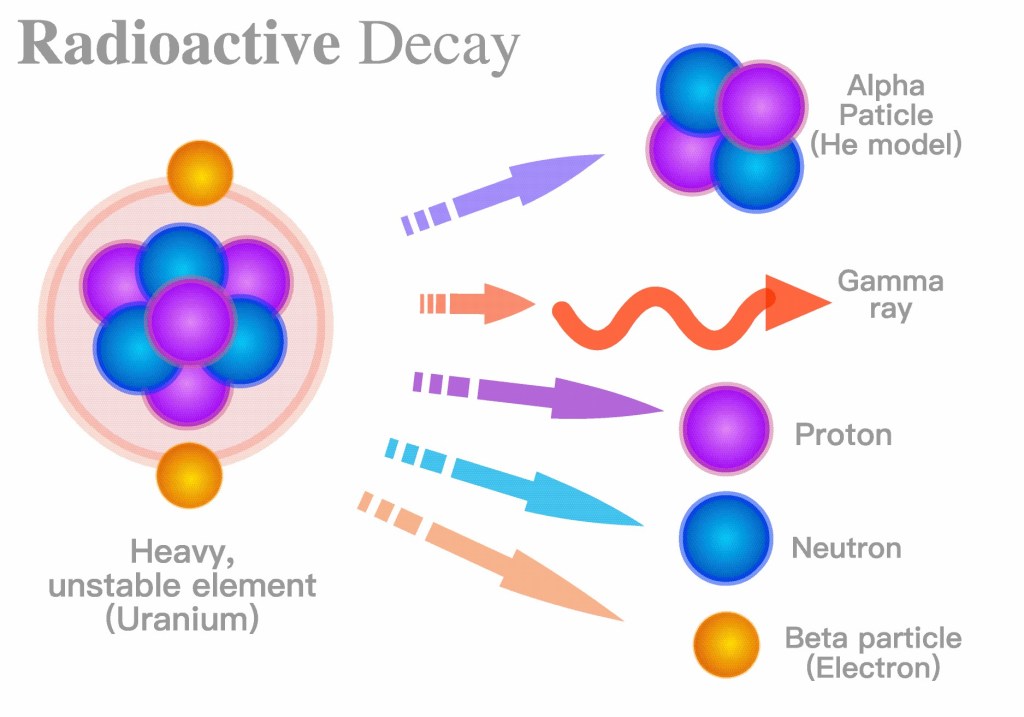
- Radioactive decay rates have changed: This objection does not work because rates of radiometric decay (the ones relevant to radiometric dating) are thought to be based on rather fundamental properties of matter, such as the probability per unit time that a certain particle can “tunnel” out of the nucleus of the atom. Analysis of spectra from quasars show that the fine structure constant has not changed over the last ten billion years. There are dozens of radiometric dating methods that are consistent with each other throughout time. Also, for a young earth you would need the decay rates to have been millions of times faster in the past, which would require changes in fundamental properties that would have plenty of noticeable effects on processes other than radioactive decay, not to mention the radiation being millions of times stronger than today. It would have fried everything.
- Young earth creationists sometimes make the claim that the initial ratios between isotopes may have been different: That the initial ratios/condition were different in the past and therefore radiometric dating is unreliable. This is a better objection, but it also fails. In this case you must take it case by case for each radiometric dating method and situation. But in many cases the amount of the daughter isotope is known to have been zero, which makes it easy and reliable.
We can see galaxies that are billions of lightyears away. This does not establish the age of the earth, but it makes a young earth and a young universe implausible.
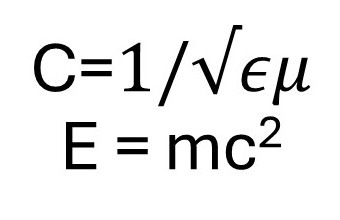
A common objection to this observation is that lightspeed in vacuum has changed: Similar to above this objection does not work because the light speed in vacuum is a fundamental constant that is not believed to change. It has been measured and no change has been seen. An example is the Einstein’s equivalence of energy and mass E = mc2. If the speed of light once was millions of times faster than now, the energy contained in a kilogram would be a trillion times larger than now. Where did all that energy go? The speed of light is determined by the inverse of the square root of the electric constant multiplied by the magnetic constant. You would have to drastically change the strength of the electric and magnetic fields (by the trillions) to get the speed of light to be millions of times faster. Wouldn’t that be noticeable? The light speed in vacuum shows up in many other physical relations as well. It is not a tenable objection.
We know stars are old because they develop according to certain physical processes that for some stars take billions of years. An example is our sun. It has fused (burned up) up five billion years’ worth of hydrogen.
The heavier elements in our solar system originate with older stars that burned out and exploded.
Electromagnetic radiation, including light, heat transfer if you will, travels from the inside of the sun to the surface and this takes 100,000 years. The photons are emitted and reabsorbed over and over, which is why the electromagnetic transfer is lower than in vacuum. If the sun is only 6,000 years old, how can we see it?
Finally, some objections to old earth by young earth creationists.
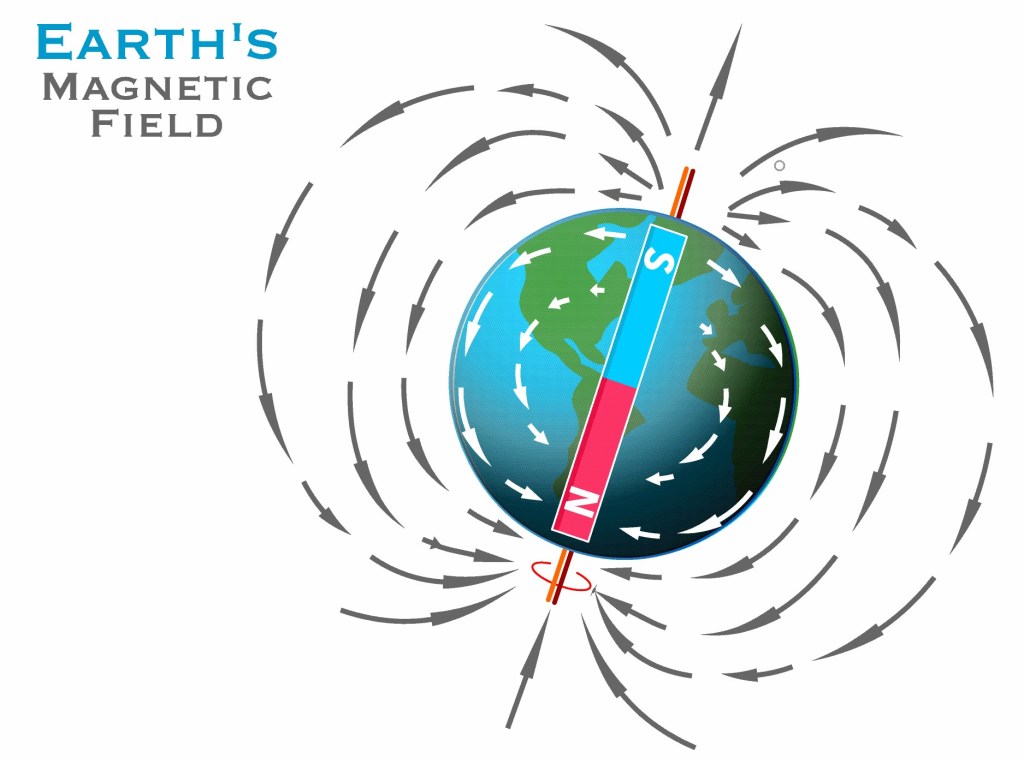
The earth’s magnetic field has been weakening during the last 130 years as if it was formed from currents resulting from earth being a discharging capacitor (claim by Thomas Barnes). This would make an impossibly strong magnetic field already 8,000 years ago. I remember this being the argument in a young earth creationist book I read as a teenager.
- The first problem with this argument is that there is no good reason to believe that earth’s magnetic field acts this way.
- We know that earth’s magnetic field has reversed itself several times thus disproving the discharging capacitor model.
- Thomas Barnes’ extrapolation completely ignores the nondipole component of the field.
- Conclusion, this objection is not reasonable.
If the earth and the moon were billions of years old there would be a hundred feet thick dust layer from meteorites on the moon. The moon landing proved otherwise. This is another argument I remember reading in a young earth creationist book (Scientific Creationism by Henry Morris) as a teenager.
The problem with this argument, as I would later find out, is that Morris’ claims about a hundred feet thick dust layer was based on faulty and obsolete data. The expected depth of meteoritic dust on the Moon is less than one foot (after billions of years).
If I had known and understood any of this when I was 14 years old, I would not have been bamboozled by the young earth creationists, but it was not the only time I was bamboozled.
Anyway, this is how I envision one blog post in my upcoming blog post adventure. It is a brief overview of why experts/scientists can be trusted in regards the topic of the post. I have not yet decided on a name for my new blog.

 Leonberger Life
A man after my own heart. Thank you!
LikeLiked by 1 person
Thank you so much Maggie.
LikeLike
❤️🌷💖
Blessed and Happy Sunday 🌞
Greetings pk 🌎
LikeLike
Hi Thomas, I’ve never heard these arguments or commentaries. When I was a girl, I never linked my religious learnings with other subjects like geography or history so I never had any conflict. Strange but true.
LikeLiked by 1 person
Yes you are right. You have to be able to let your religious beliefs coexist with scientific findings, but some people don’t.
LikeLiked by 1 person
I know. It’s a mystery to me.
LikeLiked by 1 person
I fell down the ‘magnetic reversals’ rabbit hole for months when I originally researched my early man books. Such a fascinating way to date stuff.
LikeLiked by 2 people
That is interesting. Thank you so much Jacqui.
LikeLiked by 1 person
40%!! That’s shocking! I don’t think I know anyone who believes in creationism. I’m sure they’re out there, but I had no idea it was so pervasive in the US. Maggie
LikeLiked by 2 people
I grew up with creationist beliefs and I know many who still hold these beliefs, It is still quite common.
LikeLike
That’s awesome you’re creating a blog about fact checking and disproving common myths.
I grew up similar to you and read a few creationist books “proving” a young earth. One book was called The Flood. Lol
I since became an atheist and life makes more sense.
I’d love to see more of your posts!
LikeLiked by 1 person
Thank you so much for your kindness Sara. The Flood. I recognize that. I think I’ve read that one when I was young.
LikeLiked by 1 person
That’s so funny we both read that one. 😂 It was written in the 70s I think. It perfectly embodies the creationism argument. Another one was “When science fails” but that whole book was such a straw man argument.
LikeLiked by 1 person
Yes that is funny. I read several of those books until I no longer was able to believe them. Well I read one such book much later on, maybe 10-15 years ago. The author had zero understanding of the related scientific issues and it made for a painful read. I wrote a one star review on Amazon but other people were not happy about my review.
LikeLike
Yikes. 😅 It’s true though how their arguments simply don’t stand up to what science has shown. If they have to deny fossil records and carbon dating, etc. their beliefs are based on a lie.
LikeLiked by 1 person
Yes you are so right Sara. Ones beliefs has to be consistent with scientific facts that we know to be true. If not you have to fix your belief.
LikeLiked by 1 person
Well done Thomas. I look forward to more. I never let the claims of the church interfere with my science beliefs and visa versa
LikeLiked by 1 person
Thank you John. I think that sounds very sensible.
LikeLiked by 1 person
Thanks, Thomas
LikeLiked by 1 person
Thanks for sharing, Thomas. I love the look of the blog and how you laid out facts. Religion and science have often clashed, but it’s hard to argue with scientific proof!
LikeLiked by 1 person
Yes you are right Jan. Beliefs has to be consistent with scientific facts we know to be true. If they are not, they need an adjustment.
LikeLiked by 1 person
I’m really looking forward to reading more, Thomas! This was such an informative post (and honestly, I feel like I probably learned more from this than I did during science and geography lessons in school). With life being so busy, I often feel that I don’t do enough to broaden my range of knowledge. Thank you for inspiring me to get back into the learning process and read up more about areas I’ve neglected.
LikeLiked by 1 person
Thank you so much Damayanti for your very kind words. I am hoping to make 100’s of posts like this once I get my second blog started in a few weeks, and I hoping to learn a lot myself.
LikeLike
We should always be able to make our religious beliefs coexist with scientific discoveries, even if I know that for many it is difficult.
I wonder if they are ignorant and lack critical spirit or have unshakable faith and blindly believe in religious dogmas
LikeLiked by 1 person
You are right Luisa. I think probably a little bit of both. Speaking for myself and the people I grew up with, there was a lot of misinformation spread by young earth creationists claiming that scientists had an atheistic agenda. In addition, these young earth creationists misrepresented the science, which worked well because people did not understand the science. Once you have been bamboozled it takes a while to get over that, but if you have enough knowledge from the start, probably around a few AP classes or some college education, then it is much harder to fool you because you’ll notice the problems.
LikeLiked by 1 person
Thanks for the valuable reply, dear Thomas
PS, just this morning I read this quote: “Faith is a cop-out. If the only way you can accept an assertion is by faith, then you are conceding that it can’t be taken on its own merits.” -Dan Barker, former preacher, musician (born 25 Jun 1949)
LikeLike
That is an interesting quote. Thank you Luisa.
LikeLiked by 1 person
My sincere pleasure ❣️
Glad you liked it.
LikeLiked by 1 person
Great post, Thomas!
LikeLiked by 1 person
Thank you so much Denise
LikeLike
This is great info, Thomas. I’ve met young-earth creationists from the U.S. and have always thought it was in part to blame on spotty science education here. Now, we have politicians wanting to hang the Ten Commandments in classrooms. Why not the Bill of Rights? Or the Law of Thermodynamics? But I digress.
LikeLiked by 1 person
Thank you so much Denise. Yes, there are more young earth creationists in the US than in Sweden. A decent science education definitely makes a difference but there are other things, like culture and attitudes, which makes a difference. People tend to form echo chambers.
What I’ve seen happen is that young earth creationists are very quick to dismiss problems with their belief, such as how come we can see galaxies billion of light years away, with simple minded counter arguments like, oh what if the speed of light was much faster in the past, which you would only try if you didn’t know physics. Lack of a basic science education protects the young earth creationist belief. On the other hand there are many people who don’t know much about the related physics who don’t fall for those arguments, so it is culture and attitude as well.
LikeLike
*Laws. Cant’s ypte.
LikeLiked by 1 person
Great share Thomas. You obviously did a lot of research. I’m always interested in phenomena and such, I think I will enjoy your new blog. Although, I would recommend doing a special series of posts on this blog because babysitting two blogs can be a headache. 🙂
LikeLiked by 1 person
Thank you so much Debby. I think I will make a few posts here and then switch these posts to the new blog and if it is too much to handle two blogs then I figure out something else.
LikeLiked by 1 person
Go you my friend! 🙂
LikeLiked by 1 person
Thank you Debby
LikeLike
It’s an important topic to cover. I suspect, however, the people who need to hear it the most will still dig in their heels and refuse to consider their beliefs might be wrong. Religion, God, and science can coexist.
LikeLiked by 1 person
Yes you are so right Patti. Religion, God, and science can coexist, like you say. There’s no need to complicate life by insisting on untenable beliefs like earth is 6,000 years old.
LikeLiked by 1 person
Great post thanks.
LikeLiked by 1 person
Thank you JR
LikeLike
Simply awesome, Thomas! I appreciate the research you have done for the post, which throws light on less known facts. Scientific facts always have an upper edge. Such a post is unique and certainly readers like me will look forward to more posts of this nature. Well done, Thomas!
LikeLiked by 1 person
Thank you so much Kaushal, for your kind words. I’ve always been interested in science at the same time as I’ve been bamboozled by religious and political biases. I’ve learned and want to share.
LikeLiked by 1 person