
This is a Leonberger blog but sometimes I post about books that are not about Leonbergers but that are books that I love and want to promote. This is another one of those. I recently read “How Beautiful We Were” by Imbolo Mbue an author from Cameroon. It is a novel about Africans who had their land taken away by a dictatorial regime and given to a petroleum company called Pexton. They are being poisoned and oppressed and then massacred when they protest. It is a dark but hopeful tale. I read the hardcover version of the book.
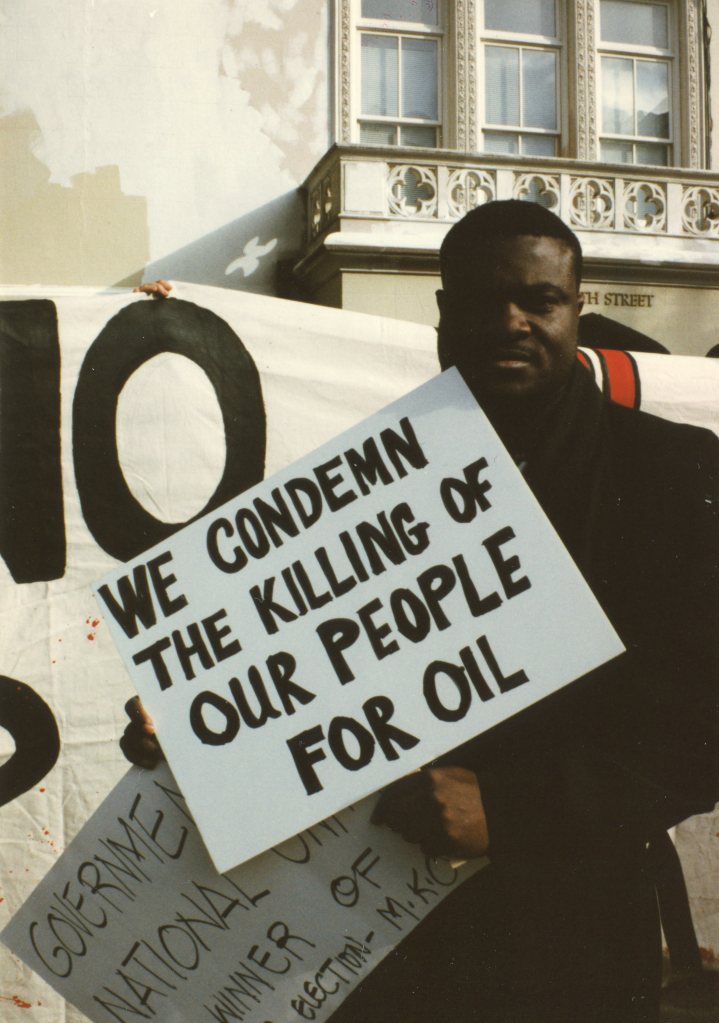
It is fiction; however, the story is inspired by the author’s own experiences. The story is especially influenced by the struggle of the Ogoni people in Nigeria who had their land impacted and exploited for oil by Shell and the Nigerian government. They protested peacefully but were met with violence. I did not mention this information in my Amazon review. Based on my experience I am pretty sure Amazon would not have accepted a review for a novel that mentioned names of real corporations and people. However, I can say it here.
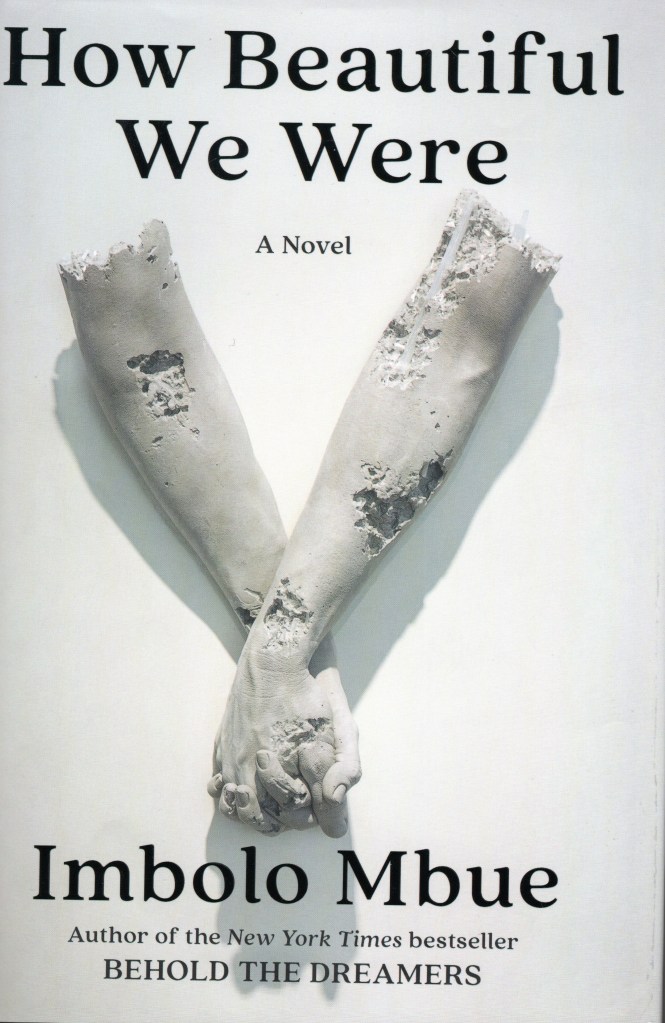
- Hardcover– Publisher : Random House (March 9, 2021), ISBN-10 : 0593132424, ISBN-13 : 978-0593132425, 384 pages, Item Weight : 1.3 pounds, dimensions 6.3x 1.2 x 9.5 inches, it cost $11.95 on US Amazon. Click here to order it from Amazon.com.
- Paperback – Publisher : Random House Trade Paperbacks (February 1, 2022), ISBN-10 : 0593132440, ISBN-13 : 978-0593132449, 384 pages, Item Weight : 2.31 pounds, dimensions 5.1 x 0.82 x 7.98 inches, it cost $10.10 on US Amazon. Click here to order it from Amazon.com.
- Kindle – Publisher : Random House (March 9, 2021), ASIN : B07XN8W4BC, ISBN-13 : 978-0593132432, 364 pages. It is currently 8.99 on Amazon.com. Click here to order it from Amazon.com.
- Audibook – Publisher : Random House (March 9, 2021), ASIN : B081K5518W, Listening Length : 14 hours and 7 minutes. It is currently 0.99 on Amazon.com with membership. Click here to order it from Amazon.com.
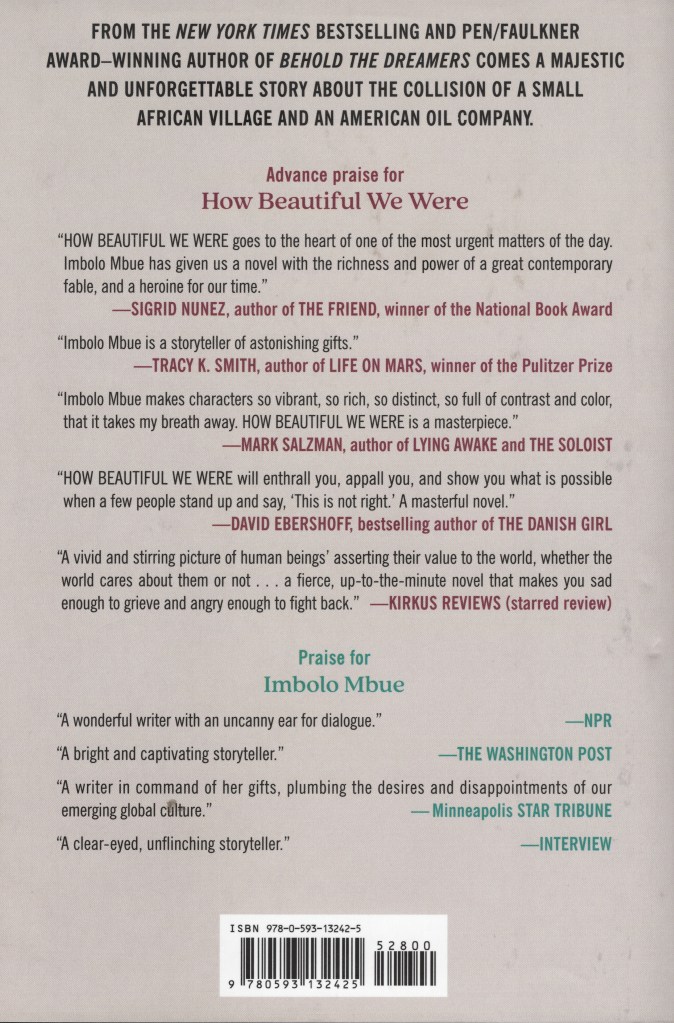
Amazon’s description of the book
A fearless young woman from a small African village starts a revolution against an American oil company in this sweeping, inspiring novel from the New York Times bestselling author of Behold the Dreamers.
ONE OF THE TEN BEST BOOKS OF THE YEAR: The New York Times, People • ONE OF THE BEST BOOKS OF THE YEAR: The New York Times Book Review, The Washington Post, Esquire, Good Housekeeping, The Christian Science Monitor, Marie Claire, Ms. magazine, BookPage, Kirkus Reviews
“Mbue reaches for the moon and, by the novel’s end, has it firmly held in her hand.”—NPR
We should have known the end was near. So begins Imbolo Mbue’s powerful second novel, How Beautiful We Were. Set in the fictional African village of Kosawa, it tells of a people living in fear amid environmental degradation wrought by an American oil company. Pipeline spills have rendered farmlands infertile. Children are dying from drinking toxic water. Promises of cleanup and financial reparations to the villagers are made—and ignored. The country’s government, led by a brazen dictator, exists to serve its own interests. Left with few choices, the people of Kosawa decide to fight back. Their struggle will last for decades and come at a steep price.
Told from the perspective of a generation of children and the family of a girl named Thula who grows up to become a revolutionary, How Beautiful We Were is a masterful exploration of what happens when the reckless drive for profit, coupled with the ghost of colonialism, comes up against one community’s determination to hold on to its ancestral land and a young woman’s willingness to sacrifice everything for the sake of her people’s freedom.
This is my five-star review for How Beautiful We Were
Bitter Tears Arising from Oil Exploitation
This book is the story of the traditional animists people of Kosawa a fictional village in Africa. Their land has been given to an American oil company called Pexton by His Excellency, the cruel dictator of the unnamed country where they live. They continue living on their land, but oil spills, chemical spills, and accidents ruin the soil, kill their crops, and kills their children. They suffer terribly but at first, they just try to plead with Pexton but as things get worse, they begin protesting and eventually they take more forceful action. His Excellencies soldiers respond with extreme cruelty and massacres. News reports in western media about the situation are called fake news by His Excellency and his government. Their situation seems hopeless but Thula the daughter of Sahel who is an educated woman organize an uprising.
Over 2-3 generations we follow the lives of the villagers of whom several act as narrators for the story including Bongo, Sahel, Thula, Yaya, Juba and the children. We see the events through their eyes. There are also letters from some of them which carry the narrative. You really get to know the main characters well and you empathize and care for them. I felt like I knew them, their good sides and their weaknesses. In other words, the character development was excellent. The villagers were often superstitious. However, not only did that element add authenticity, there are a lot of superstitions here in the west that’s widely accepted, such as astrology and homeopathy.
Imbolo Imbue is a great author and she is a great storyteller who writes beautiful lyrical prose filled with emotion. Even though this is a fictional story it is inspired by real events that the author witnessed in her native country. It became obvious to me that much of what she was writing about was experienced. The book was sad, many people died, often cruel deaths, and there were torture, rapes, and children dying. On the other hand, the book was also hopeful, and the action was fast paced and suspenseful. It was a mesmerizing and perhaps a shocking story.
In summary, this book is captivating, emotive and beautifully written. It tells a gripping and authentic story despite being fiction. It feels real and it opens your eyes to the struggles of victims of oil exploitation. I loved this book and I highly recommend it.


Thanks for the review, Thomas. Much appreciated.
LikeLiked by 2 people
Thank you Lynette
LikeLiked by 1 person
Thomas, thank you so much for your powerful and insightful review. ‘How Beautiful We Were’ sounds like an incredible book and how inspired by the writer to create a piece of fiction around the actual harrowing events. This was the author gains a scope of freedom and ability to use their gifted artistic abilities. Definitely a book I want to read.
LikeLiked by 2 people
Thank you Annika. She is a great author and the book felt very authentic, like if it was something she experienced.
LikeLike
This sounds very interesting.
LikeLiked by 2 people
Thank you Sara. I have a feeling you might like this book. Thula in the book is a strong woman.
LikeLiked by 1 person
I will have to check it out.
LikeLiked by 1 person
Thula reminded me of your characters. BTW I bought the paperback version of your latest book from Amazon and according to Amazon it is arriving tomorrow. I am certainly looking forward to reading it.
LikeLiked by 1 person
I’ll likely enjoy it if she’s as brave as I am. I like memoirs about risk takers since mine is about that too! Thank you so much for buying & I hope you enjoy it! I’m excited to hear your thoughts on it.
LikeLiked by 1 person
Yes Thula (the main character) reminded me of Lydia in When Cottonfields Burn. A strong, brave and smart African woman.
LikeLiked by 1 person
I can see how she’d be similar to Lydia! Sounds very interesting.
LikeLiked by 1 person
Yes I think so, and BTW your latest book is out for delivery where I live.
LikeLiked by 1 person
Woohoo! That’s amazing! I hope you enjoy when it arrives. So cool you’ll be holding a physical copy of it soon.
LikeLiked by 1 person
It looks great. I’ve started reading it. Thank you very much Sara.
LikeLiked by 1 person
Ooh that was fast! I hope you enjoy it! It starts off as the usual gritty vibe and I hope you like the direction it goes in!
LikeLiked by 1 person
Yes very much. Thank you so much Sara.
LikeLiked by 1 person
Lulu: “Our Dada says this reminds him of a documentary they watched once called Darwin’s Nightmare which was about how they introduced the Nile perch to Lake Victoria in the hopes of creating a fishery and instead it destroyed the economy and livelihood of everyone around the lake when the perch ate all the other fish that lived in it. And now they export cheap fish to other countries and nobody around the lake has any fish of their own to catch anymore …”
LikeLiked by 2 people
Wow Lulu, that is a tragic story. Unfortuntaly, there are a lot of stories like that.
LikeLike
How heart-breaking. I’m glad the book is bringing notice to the problem.
LikeLiked by 1 person
Thank you Jacqui. It is easy for companies to take advantage when their is a corrupt government. It is a story that is easy to forget.
LikeLiked by 1 person
Thank you for reviewing this book, Thomas. It sounds compelling. As I read a fictional tale like this one, I always wonder how much of it is influenced by the author’s own experiences. As soon as I finish typing this, I’m going to look it up and consider buying it.
LikeLiked by 2 people
Thank you Pete. I think that she did not directly experience this but that she was around people and situations where similar things happened. It felt like she experienced it when you read it. The characters in the book appeared to be the kind of people she must have grown up with.
LikeLiked by 1 person
One standard quality I find in most great books is that they draw the reader in, making you feel as if you’re seeing things through their eyes.
LikeLiked by 1 person
Yes that is exactly it. Thank you Pete
LikeLiked by 1 person
this sounds like a devastating experience for the country, the land, and especially, the people. it sounds wonderfully written and a compelling read, certainly a story that needs to be told.
LikeLiked by 1 person
Thank you Beth. Yes this was one of the most captivating reads I’ve read. It felt self-experienced, especially with respect to the culture and how they lived, believed and talked. She may not have experienced the actual events herself but she knew about similar events where she grew up.
LikeLiked by 1 person
Most enjoyable and enlightening read, thanks.
LikeLiked by 3 people
Thank you for your kind words Michael
LikeLike
Hi Thomas
Thanks for your detailed review. It’s important that these cruelties are published.
Have a happy week
The Fab Four of Cley
🙂 🙂 🙂 🙂
LikeLiked by 3 people
Thank you so much Klaus. You are right, it is fiction, but we need to be aware that things like this have happened.
LikeLiked by 1 person
Hi Thomas, i can tell that this is based on real events. Abuse of local communities is rife in Africa and America is far from being the only abuser. In fact. America probably behaves better than many other countries.
LikeLiked by 2 people
Yes I have a feeling that what you are saying is true. I am starting to learn about it. This book was my first introduction to the problem. I should say that in the book the real bad guys was His Excellency and his government as Pexton quietly took advantage of the situation. It was also a few decades in the past.
LikeLike
Thank you for reviewing what is clearly a powerful and important book. “News reports in western media about the situation are called fake news by His Excellency and his government,” sounds familiar. I hope they make a movie from it this book. I’m not sure I can bear to read it as my empathy is more easily overwhelmed than when I was younger and my body has become more sensitive to reading detailed descriptions of cruelty. But I appreciate learning about the situation here. I’m curious about when these events happened and realize they are probably still happening.
LikeLiked by 2 people
Googling implies that she was largely basing the book on the oppression and killing of the Ogoni people and their leader (Saro-Wiwa) / (Thula in the book). In 1993 2,000 Ogoni people were attacked and killed after 2,976 oil spills (1976 to 1991) and Benzene (a carcinogen) contamination 900 times above the allowed levels (according to WHO). I took that from Wikipedia BTW.
LikeLiked by 1 person
Thank you, Thomas. Sobering facts to go with the heartfelt story. Both are important.
LikeLiked by 1 person
Yes you are right. Thank you JoAnna.
LikeLiked by 1 person
This sounds like a fascinating book! Thanks for sharing your wonderful review! From what I’ve read, petroleum is a huge part of the Nigerian economy. It doesn’t surprise me that there have been abuses against ordinary people.
LikeLiked by 1 person
Thank you so much Dawn. Yes if you don’t have a democracy and not good government it is easy for companies to take advantage of the situation. We can’t expect them to take the moral highground. It must start with good government. I read that reality was even worse than the fictional story in the book. 2,000 people were killed.
LikeLiked by 1 person