
Esther’s writing prompt: February 18 : Memories
Click here or here to join in.
I have false memories, memories of things I know never happened. Not too long ago I made a post on my other blog about false memories and collective false memories, referred to as the Mandela Effect. You can read about that here. In addition to false memories I have memories that are strange, but that I know happened. I also have gaps, or holes in my memory. Memories that are lost to amnesia.
It all goes back to a ski accident that I had at the age of 22. We were a group of youngsters who rented a bus and drove from Sweden to Garmisch-Partenkirchen in Bavaria in Germany. Garmisch-Partenkirchen is a beautiful Bavarian town, and it is one of the most famous German ski resorts. Zugspitze, Germany’s highest mountain is nearby Garmisch-Partenkirchen providing for an impressive scenery.

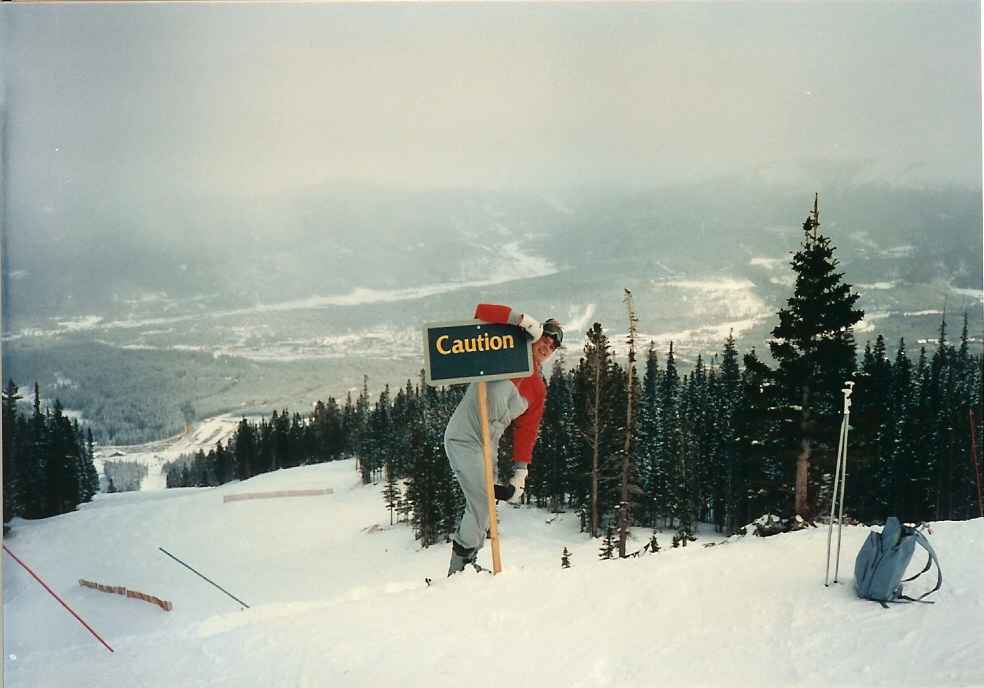
I love skiing and I challenged myself by skiing fast and selecting difficult slopes but on one of the days I made a very bad decision. I have no memories of what follows in this paragraph. It is what I have been told. There was a steep double black diamond slope with a sign stating that the conditions were dangerous and not to go down this slope. I did it anyway, and I fell badly, hit my head (I had no helmet), and I got a severe shoulder displacement. My arm was hanging on my back. I went looking for my skis and I tried to put them back on to continue skiing, but some Germans came down to stop me.
An ambulance was called, and they sent snowmobiles to pick me up. However, the snowmobiles were unable to get there, so they used a pist-machine to pick me up instead. On the way down I discovered my shoulder displacement several times. I was equally shocked every time. That’s how they knew that my short term memory was gone. I also had no pain sensation.

Amnesia
The next few days after the accident I suffered from amnesia. I did not remember where I was or my friends. I should say I still remembered my name. The first 2-3 days after the accident are essentially gone. However, I remember my friends coming into my room asking me questions such as “what’s my name?”, “do you remember me?”, “do you know where we are?”. The leader of the trip was devastated, and she was allegedly crying all day. You can say that I ruined the trip for everyone.
False Memories
On the way down to Germany, at the German border we changed out our studded tires because studded tires are not allowed on the autobahn. As my memories started to return on the third day after the accident my friends asked me what happened at the German border. I told them that we had studded tires (that part was correct) and that we all took pliers and removed the studs (that part was false). The funny thing is, to this day I remember us walking around the bus with pliers and removing studs. However, I know this never happened. How did that false memory get implanted in my head?
Strange Memories
I also have some strange memories from that trip that according to my friends happened. We stayed at a youth hostel. It was nice but it had a strange feature. There were loudspeakers in all the hallways. At 10:00PM on our first evening at the youth hostel the loudspeakers came on and someone started shouting in German “Achtung! Achtung! All guests must now wash their faces and brush their teeth and the lights started dimming and women and men had to go to their quarters. Music is forbidden. The loudspeaker came on every now and then barking orders at us in German and all windows and doors were locked electronically. Being from Sweden we followed orders, but we were laughing about it.
Suddenly new voices started shouting in the loudspeaker. It was younger sounding voices. It was still in German but this time we were told to rebel against the hotel management, we were told to refuse to go to bed, and they started singing fighting songs in German. Then, suddenly the loudspeakers went quiet. The hotel management was back. We all had to go to bed. It sounds like a false memory, but this one is real. Well, it was budget lodging after all.
Unpleasant Memories of Statistical Mechanics
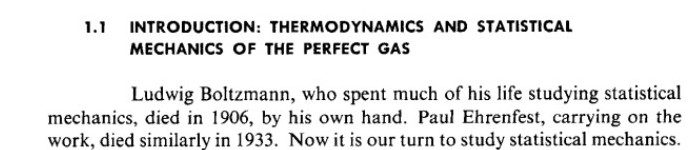
The epic opening above from the textbook says : Ludwig Boltzmann, who spent much of his life studying statistical mechanics, died in 1906, by his own hand. Paul Ehrenfest, carrying on the work, died similarly in 1933. Now it is our turn to study statistical mechanics.
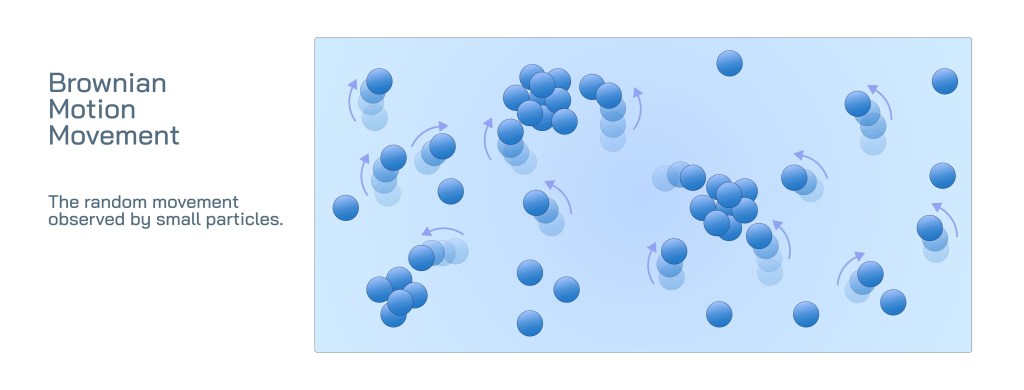
One day I found a book on Statistical Mechanics under my bed, and some very unpleasant memories came back to me. I had a final exam in Statistical Mechanics after our vacation. Statistical mechanics is a mathematical framework that applies statistical methods and probability theory to large assemblies of microscopic entities.
More specifically, you do statistical calculations over large sets of atoms and molecules to figure out the macro condition of the corresponding gas or material. For example, temperature corresponds to the average kinetic energy of atoms, and entropy refers to the logarithm of the number of microstates compatible with the system’s measurable macroscopic state, often loosely referred to as the disorder of the system. Statistical Mechanics includes classical Statistical Mechanics as well as its Quantum Mechanical counterpart, which is a lot more abstract and complicated.
Once I was back in Sweden, I went to see my professor, and I explained the situation to him: “hello professor, I had a ski accident, hit my head, and I lost my memory. My amnesia made me forget statistical mechanics.”. He could also see that my left arm was in a cast. I said, “could I take the exam a little later?” He asked me “are you right-handed or left-handed?” I said, “I am right-handed”. The professor answered, “well then you take the exam on time like everybody else”. It wasn’t what I wanted to hear but I took it, and I passed but not with flying colors.
It may seem like my professor was a bit harsh. However, I was later thinking that maybe he had a lot of students coming into his office claiming head injuries with amnesia. It was after all a final exam in statistical mechanics.
My Other Responses to Esther’s Prompts
- Prompt : Small : Small Microscopic Subatomic and Strings
- Prompt : Kind : Leonbergers Are Kind Dogs
- Prompt : Charge : Electric Charge is not the only type of Fundamental Charge
- Prompt : Promises : Promises To My Dog
- Prompt : Shade : A Total Solar Eclipse the Ultimate Moon Shade
- Prompt : Money : Ten Money Facts
- Prompt : Edge : The Edge of the Observable Universe is 46.5 billion Light Years Away
- Prompt : Fish : Ten Amazing Fish Facts
- Prompt : Promise : I Promise Not to Post AI Generated Comments
- Prompt : Respect : Respect your Dog
- Prompt : Giving : Leonbergers Giving Gifts to Pugs
- Prompt : Family : Dogs Are Family
- Prompt : Snow : Snow and Ice in Norrland
- Prompt : Red : The Universe has a Redshift and its Increasing
- Prompt: Shapes : Conic Sections are the Shapes that Shape Our World
- Prompt: Flying : 10 Wind Blowing Facts About Birds
- Prompt: Drive : Letting Your Dog Drive the Car
 Leonberger Life