This blog feature amusing and heartwarming stories about our late Leonberger dog Bronco, as well as other Leonbergers. It also has a lot of information about the Leonberger breed, the history, care, training, Leonberger organizations, etc. I also wrote a Leonberger book, which I am featuring in the sidebar.
Purebred large dog breeds tend to have shorter life spans compared to most other dogs and they have more health issues. However, Leonbergers are fortunate compared to other large breeds, especially those bred in North America, primarily for three reasons:
The Leonberger breed standard does not call for traits that can be detrimental to health.
The precise and restrictive breeding regulations of the Leonberger Club of America (LCA) and other Leonberger clubs.
The work of the Leonberger Health Foundation International or LHFI, have resulted in Leonbergers being relatively free of inherited illnesses compared to other large dog breeds in America.
Today I received my first payment for the sale of my book from Amazon (for the month of July) and I donated all proceeds to the Leonberger Health Foundation International like I said I would. Regardless of whether you get my book or not you can donate to LHFI. It is one of my favorite charities. LHFI “facilitate the solicitation and distribution of donations given to support health related breed-specific research.” The LHFI also administers a program that collects DNA samples from Leonbergers to share with universities and research institutions.
Among the organization’s achievements are the eradication of Addison’s disease among Leonbergers, the raising of nearly half a million dollars for research into conditions that affect canine health, including osteosarcoma, hemangiosarcoma, glaucoma, cardiac diseases, thyroid diseases, and neurological disorders. Another notable achievement is the fact that since 2011, no Leonbergers with two copies of the LPN1 gene mutation, which causes Leonberger polyneuropathy, have been recorded in LHFI’s biobank (featuring 9,000 Leonbergers). Its research also supports healthful longevity and aging as well as population diversity.
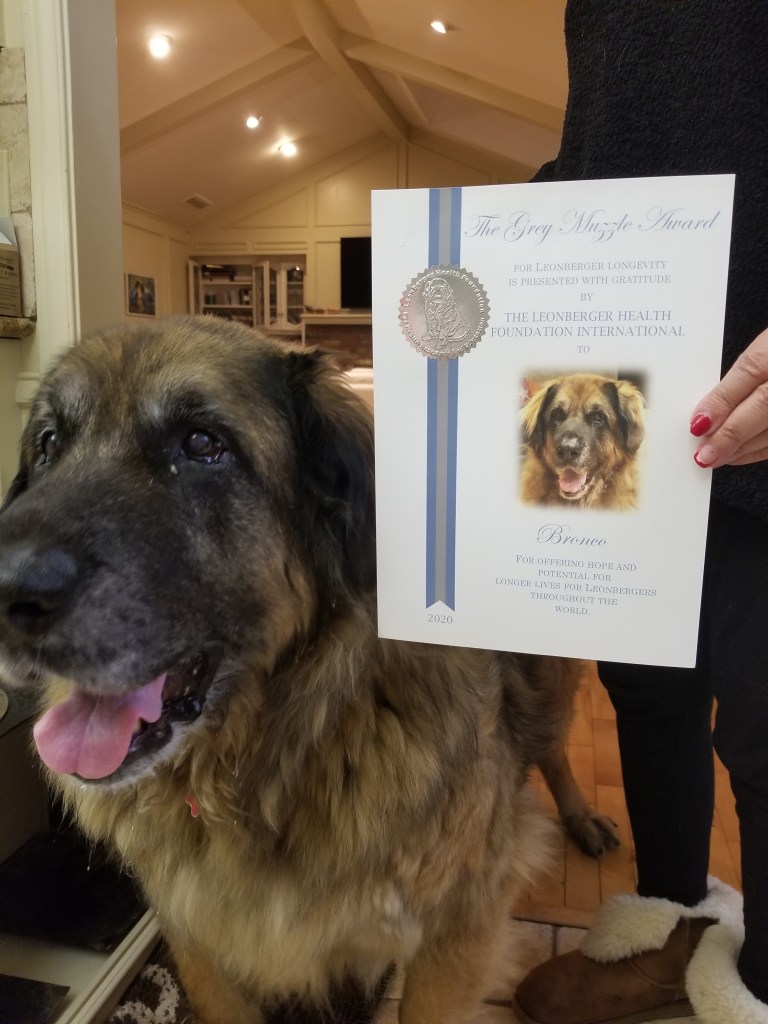
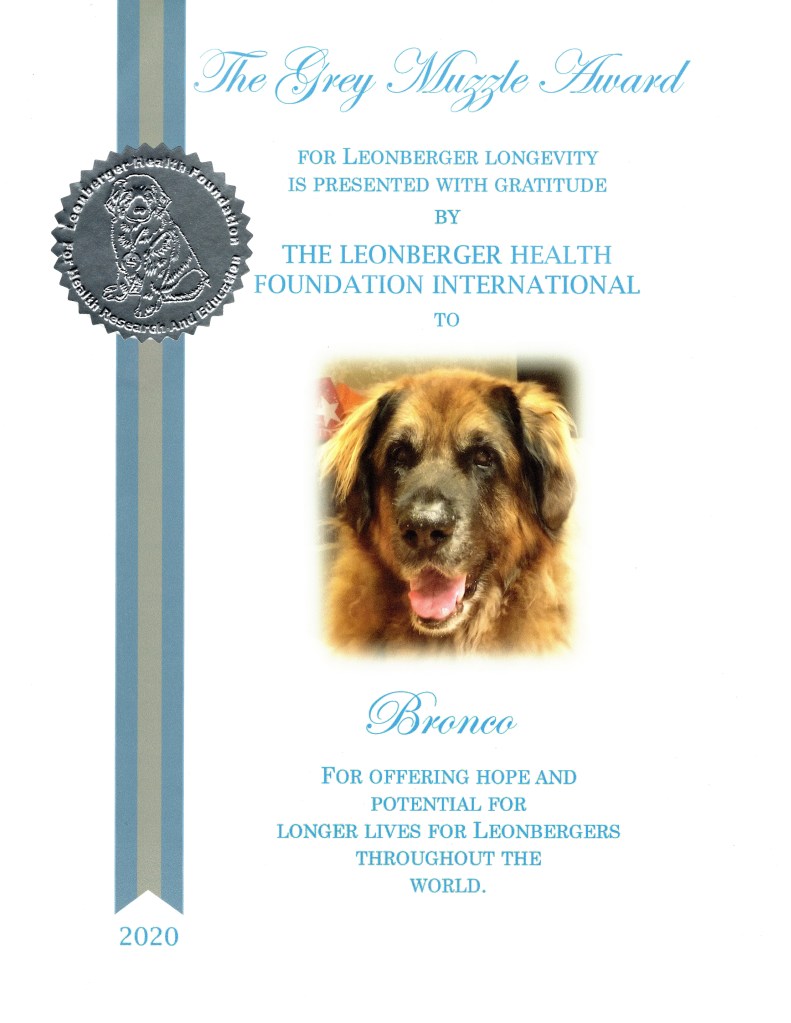
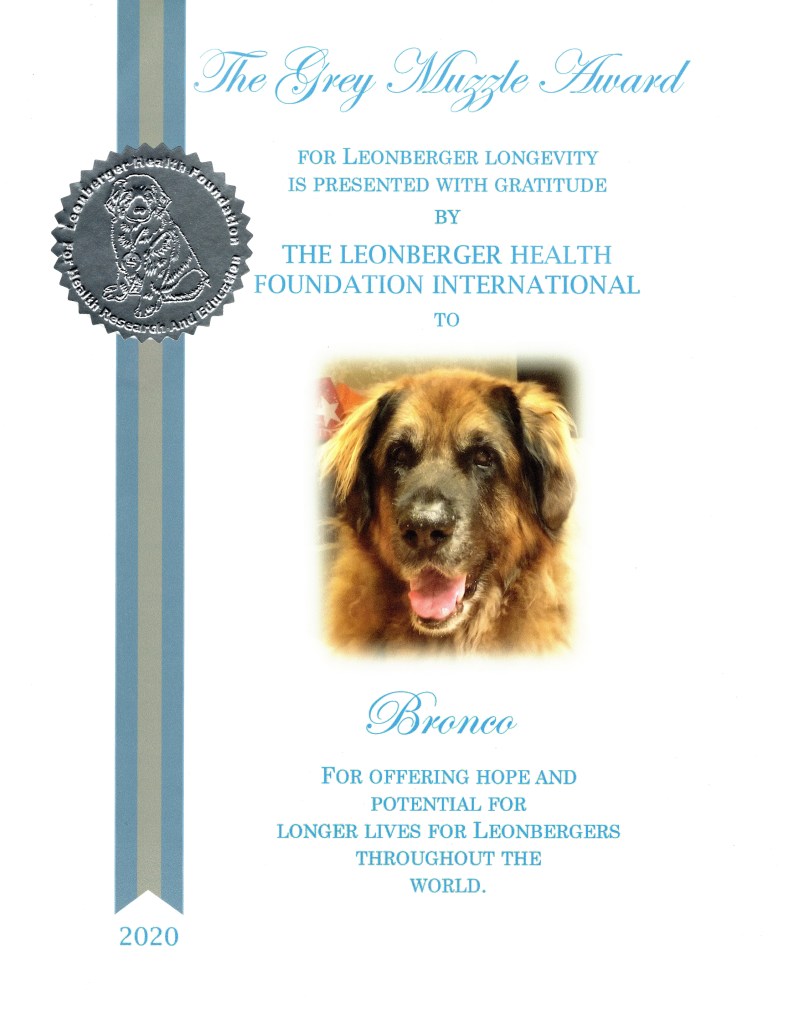
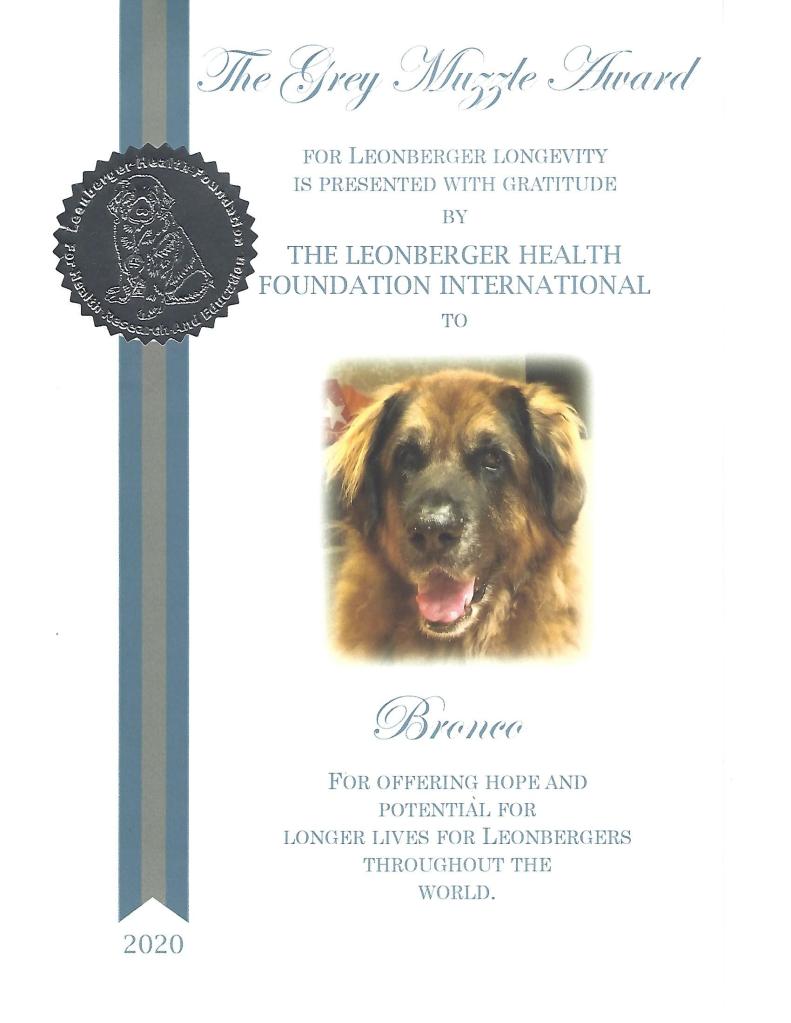
One happy event for our family was when Bronco received his Grey Muzzle Award, which is an award given for longevity by LHFI. LHFI bestows the award on any Leonberger who has reached the age of twelve. To find out more about the Grey Muzzle Award click here. To see the 2019–2020 awardees video featuring Bronco click here.
Bronco receiving his grey muzzle award.Grey Muzzle Award certificate from the Leonberger Health Foundation International.The Grey Muzzle Award from the Leonberger Health Foundation International.
I can add that when Bronco passed away, we sent his DNA to the University of Minnesota to be used in research. This was facilitated by the LHFI.
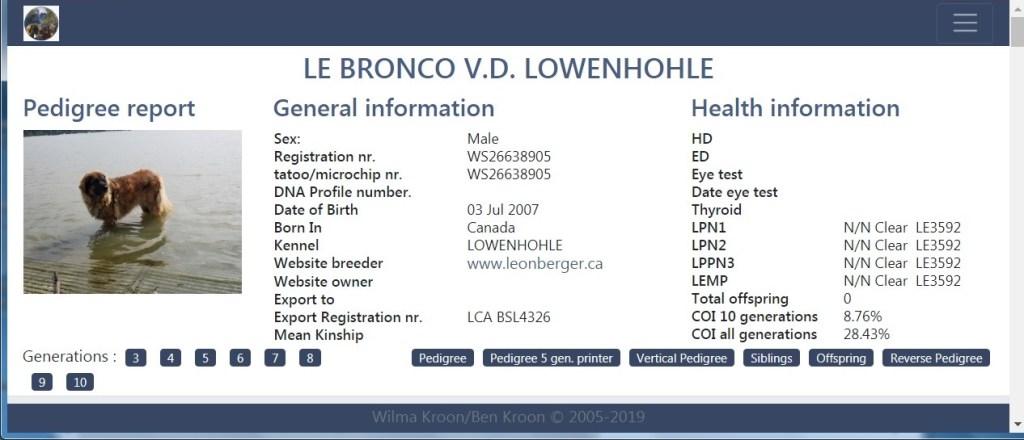
Our Leonberger Bronco or Le Bronco von der Löwenhöhle lived a very long life for a Leonberger. Large dogs do not live as long as small dogs and giant breeds such as St. Bernards, Great Danes, and Leonbergers have much shorter life spans. The average life span for Leonbergers is 8 years. Bronco died two weeks short of 13 years. He got a so called, Grey Muzzle Award, from the Leonberger Health Foundation International, and we submitted his DNA to a lab for research. The Leonberger Health Foundation International is an organization that support health related Leonberger-specific research. They fund research on various illnesses common in Leonbergers as well as the longevity of Leonbergers. This research benefit other giant breeds as well.
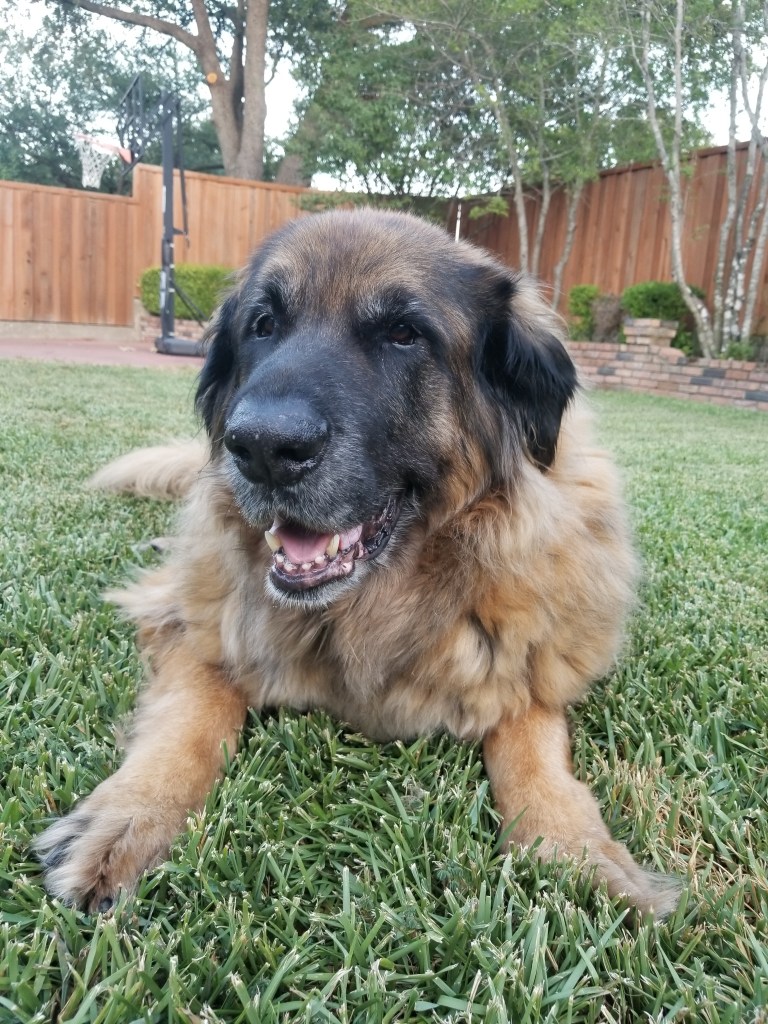
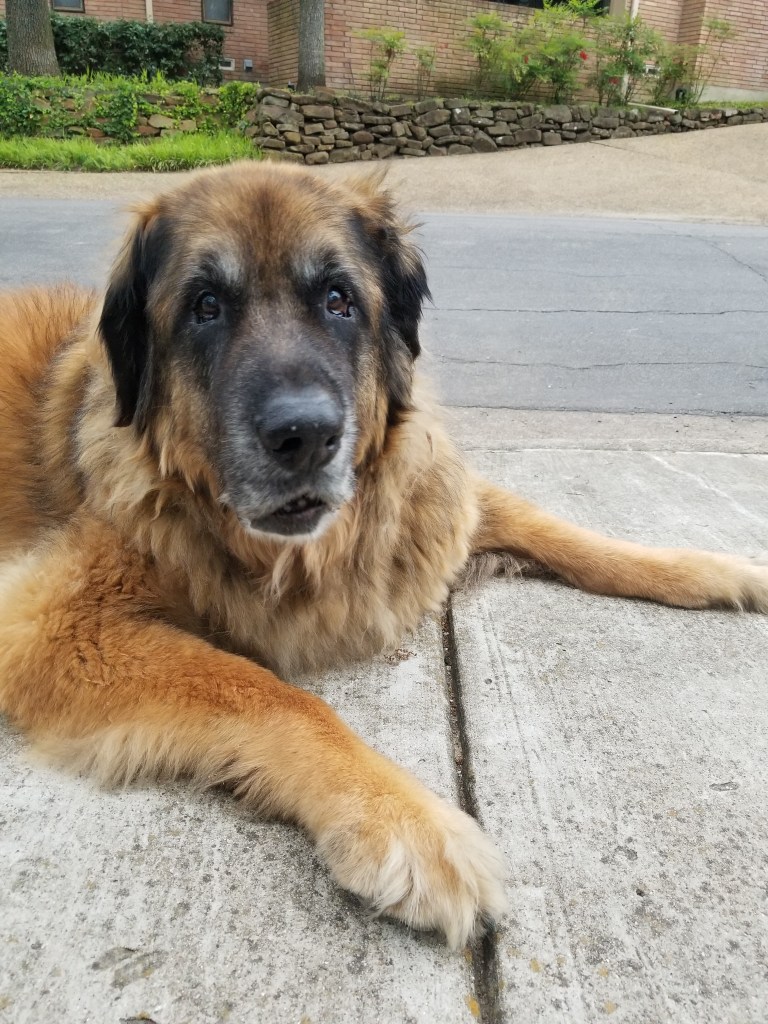
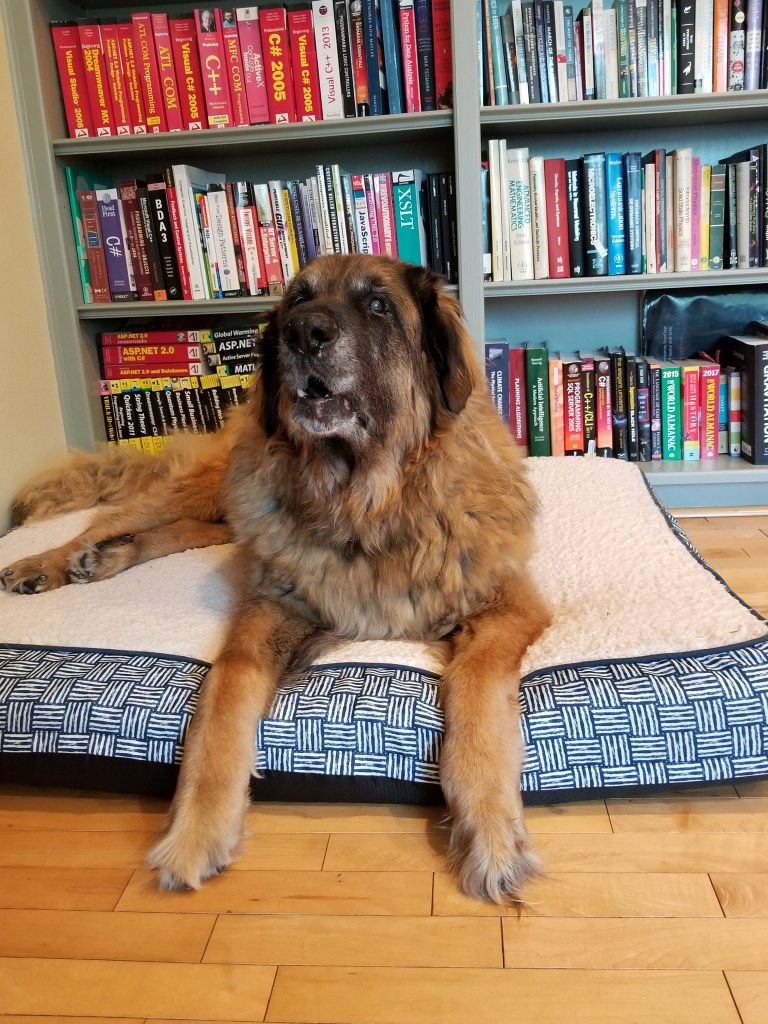
Dogs are considered senior after they pass 2/3 of their expected lifespan (5.3 years), which means that Bronco technically was a senior for more than 2/3’s of his life. This posts, feature 20 photos from his old age.
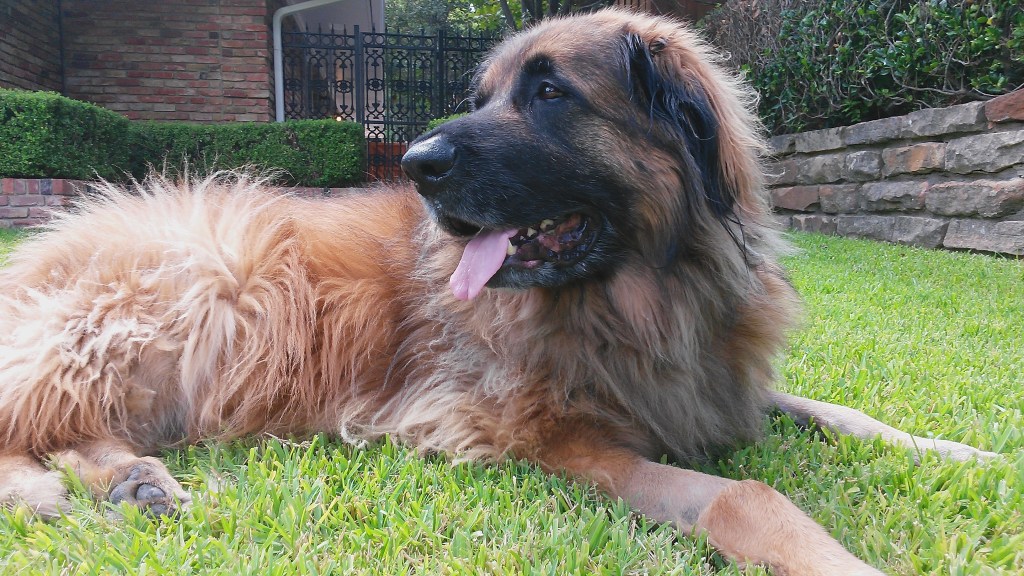
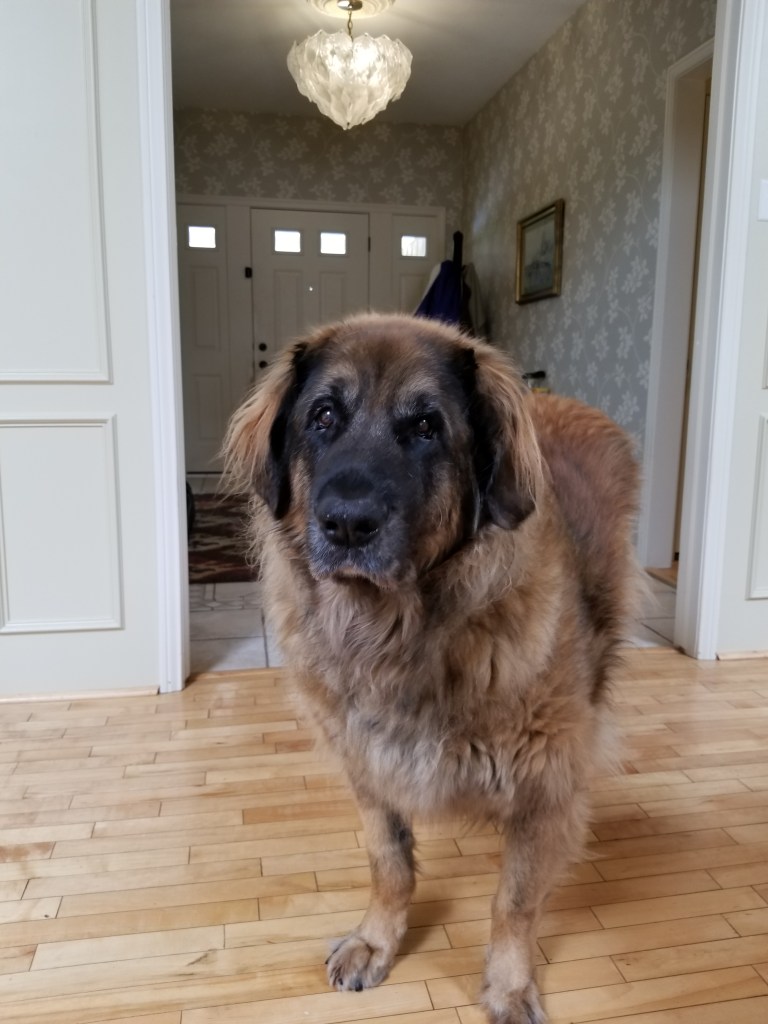
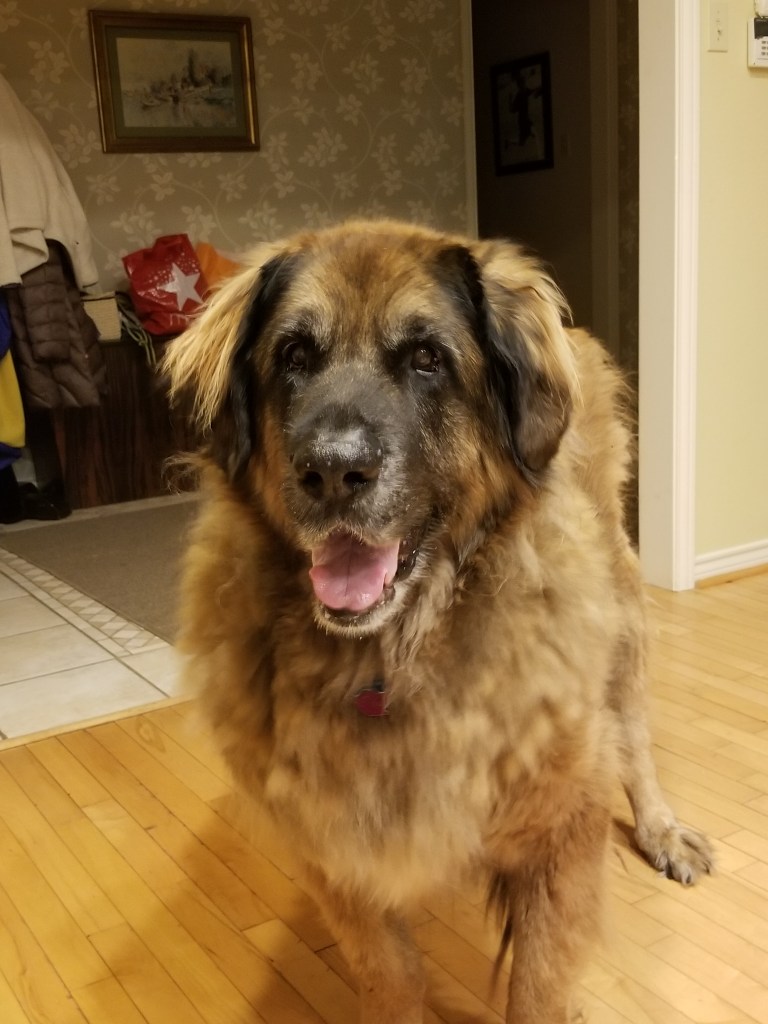
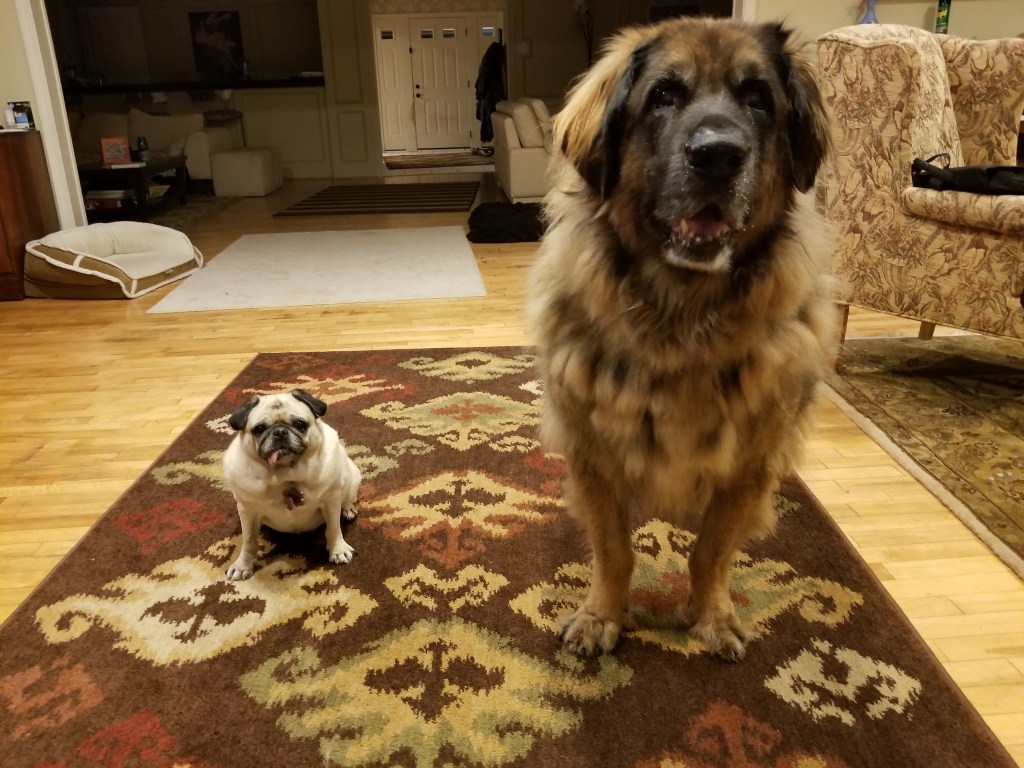
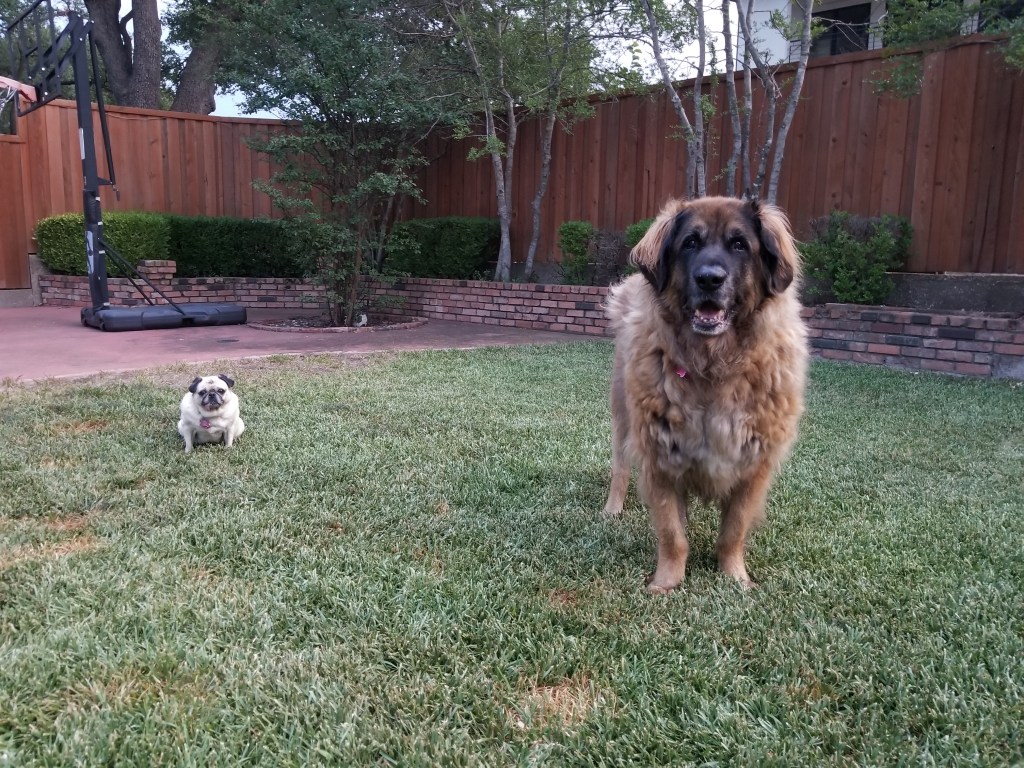
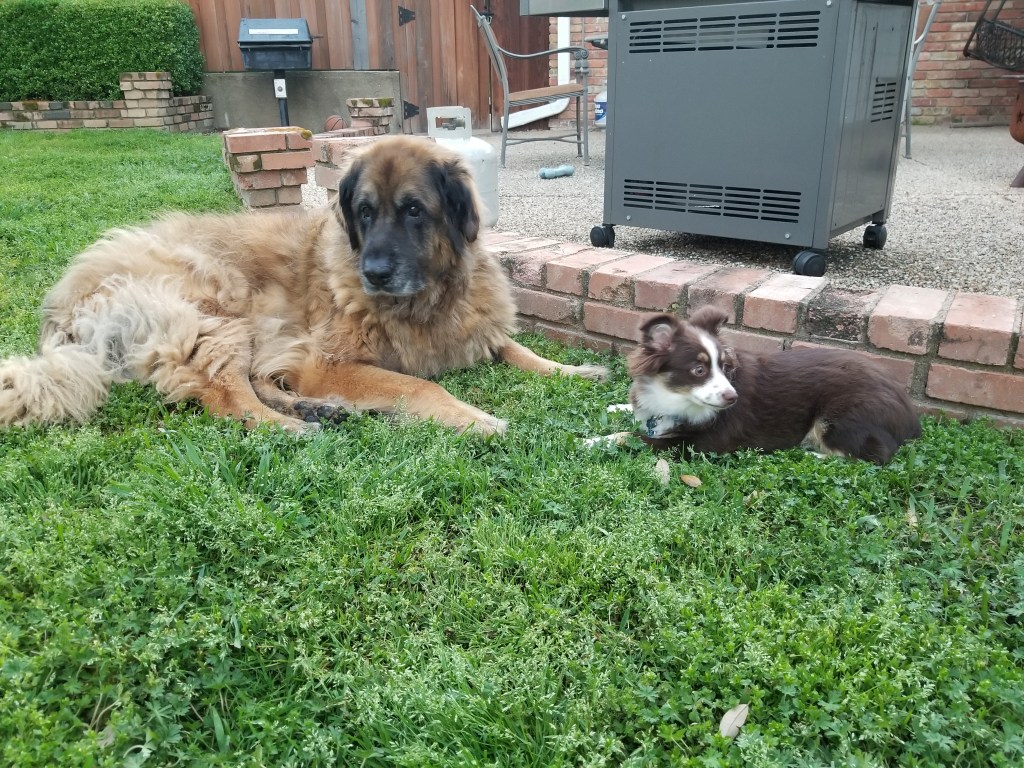
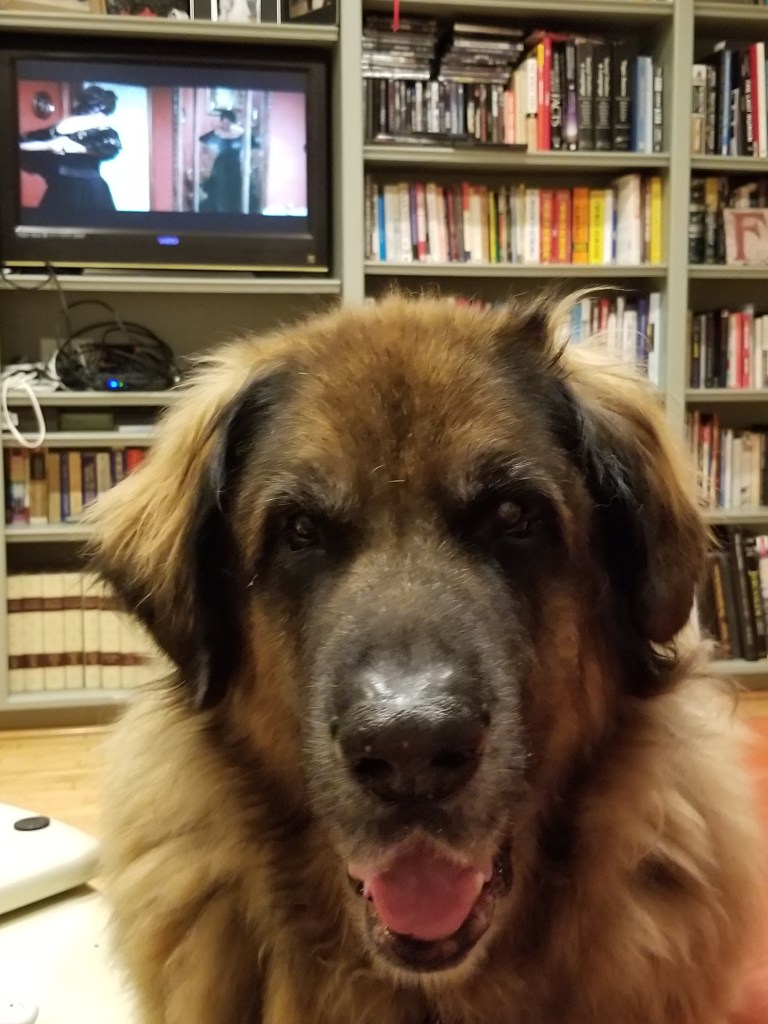
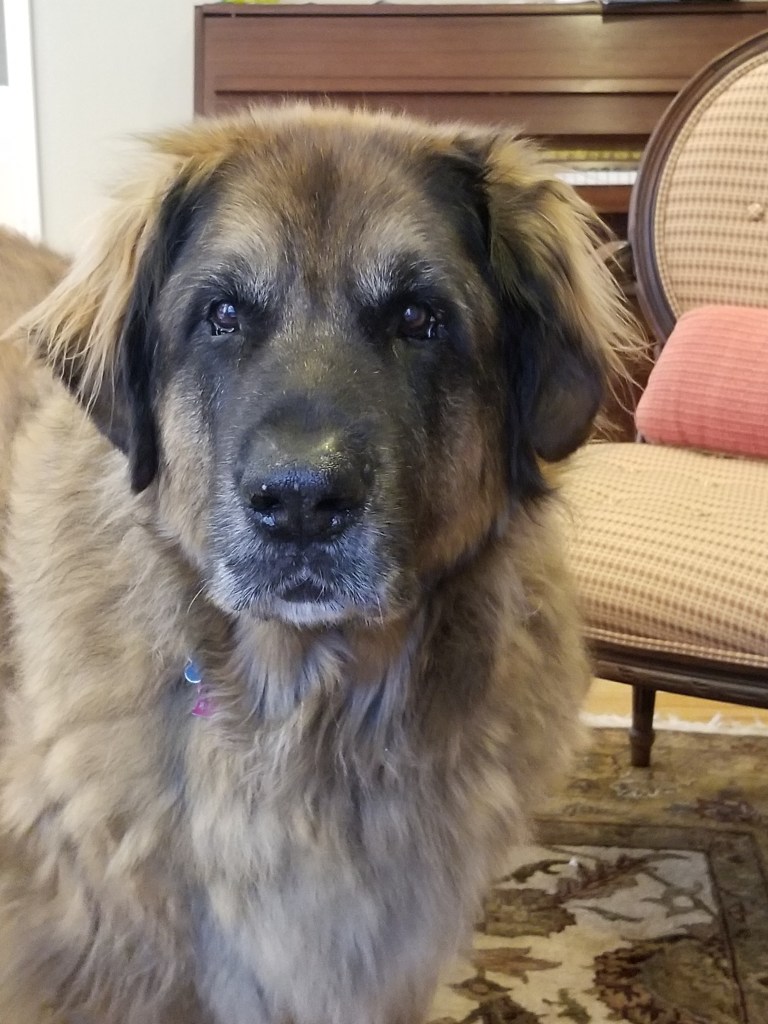
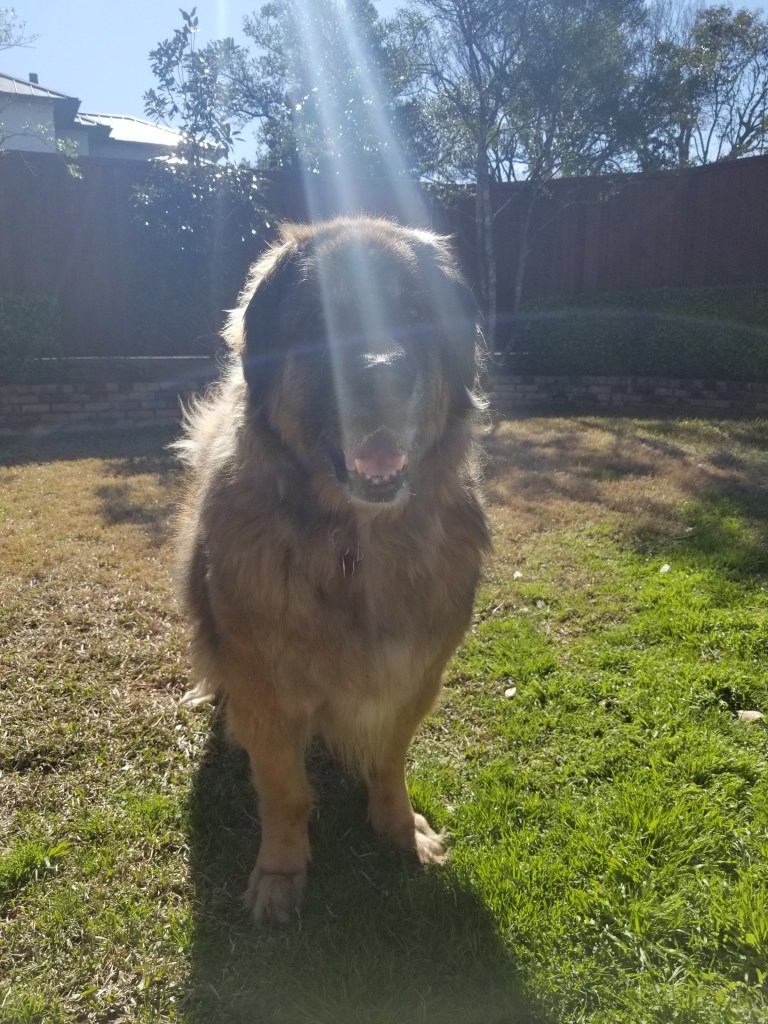
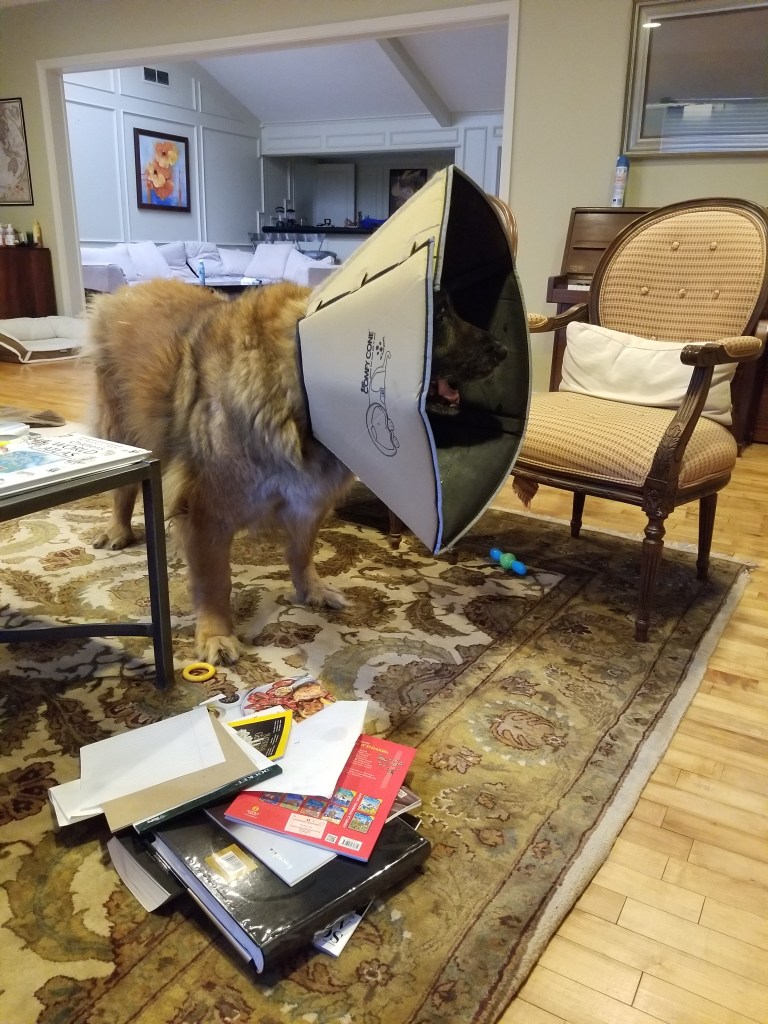
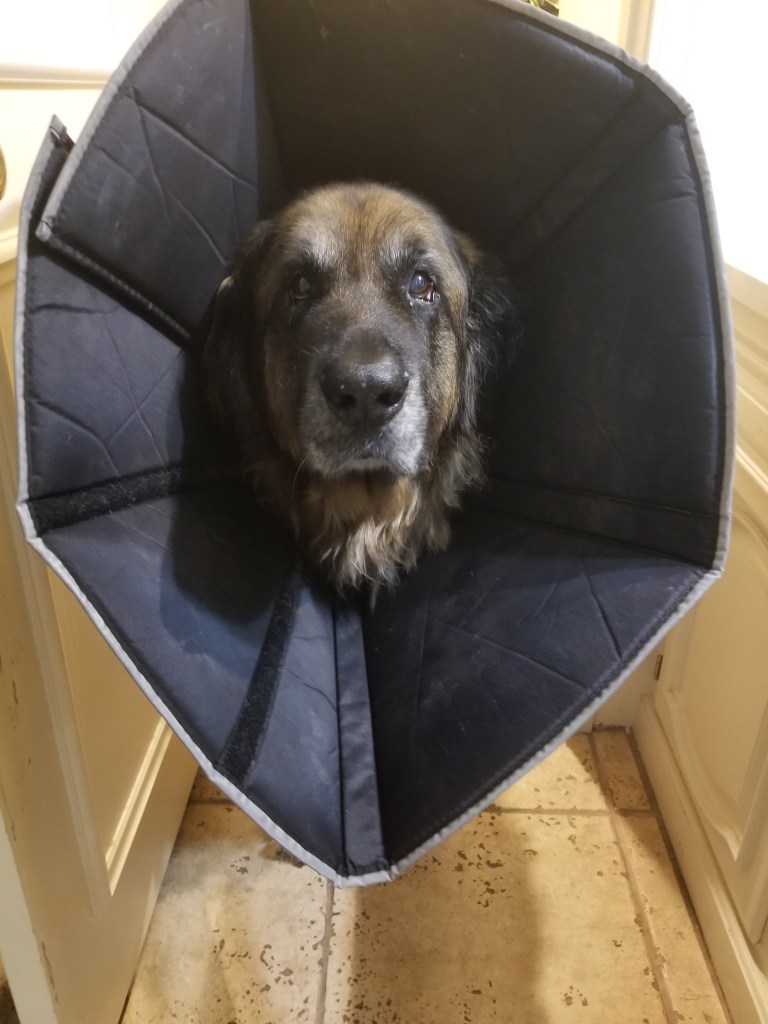
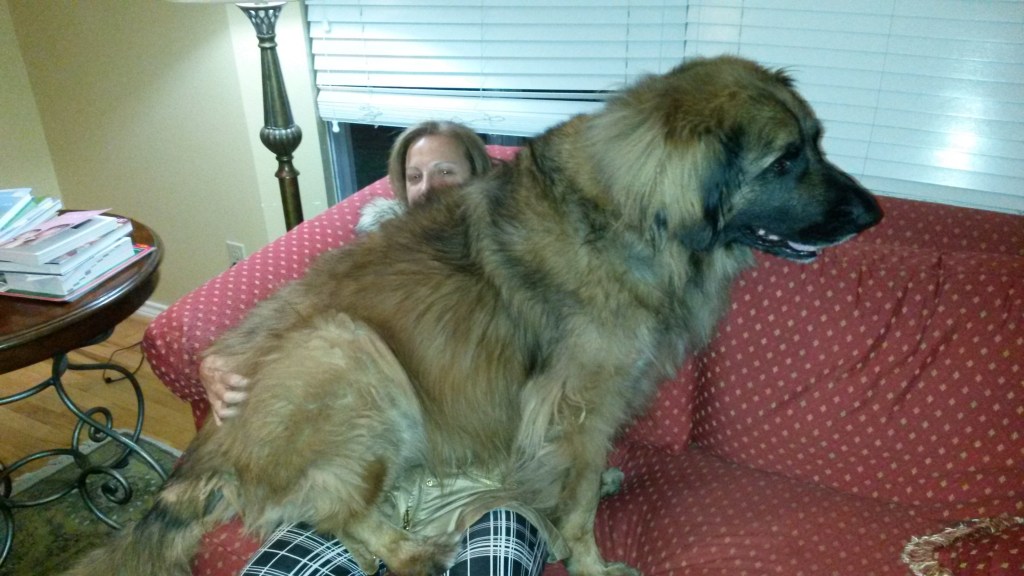
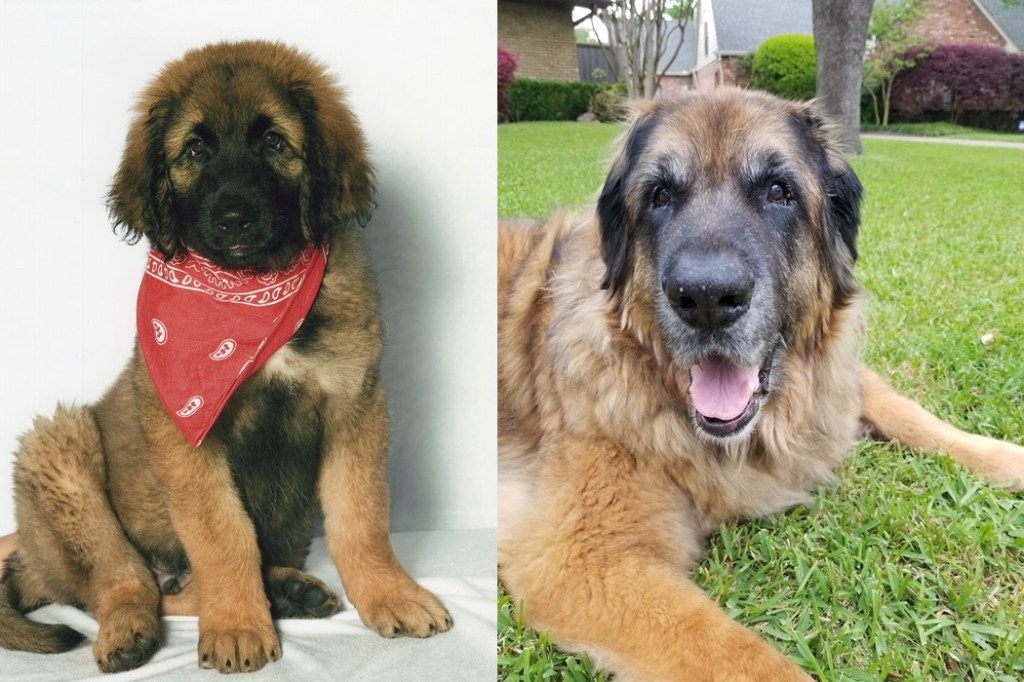
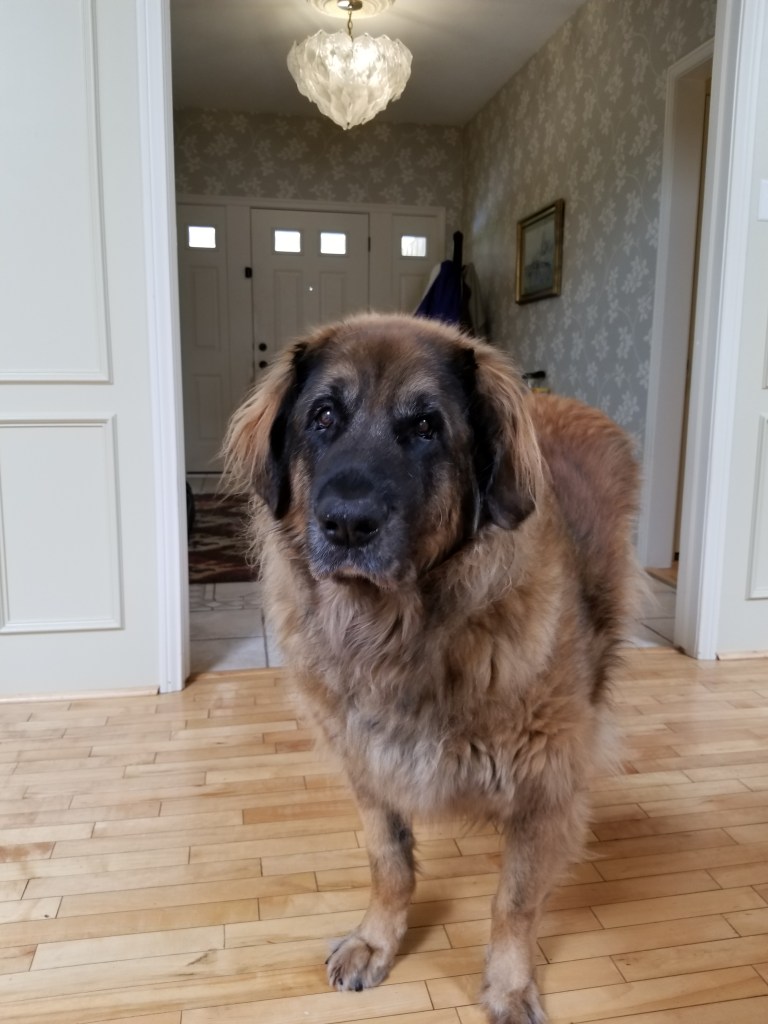
Our Leonberger Bronco sitting in the front lawn.In this photo our Leonberger Bronco is eleven years old and standing in front of our hallway. Old age is starting to set in. In this photo he has already had squamous cell carcinoma a toe-skin cancer and he has amputated a couple of toes.Our Leonberger Bronco eleven years old, looking a little bit scruff and getting grey hair.Bronco with our pug Daisy whom he protected with his life. He saved her life by intervening when a lose German Shepherd went after her and he even shared food with her he had stolen from me.Bronco loved our big red sofa. It was great for him but too deep to be comfortable for humans.Bronco and Daisy in the backyard.Bronco is welcoming a new puppy, a mini-Australian Shepherd called Rollo.Rollo loved playing with Bronco. He walked all over him, sat on his head like a hat and dangled in his tail. Bronco was patient.Two buddies in the backyard.Bronco is hungry and is coming to get my attention.Our Leonberger Bronco in Grandpa’s bushes.Our Leonberger Bronco is twelve years old in this photo, a quite respectable age for a Leonberger.Our Leonberger Bronco was a saint. He saved Daisy’s life, he might have saved the life of our Labrador Baylor as well, when he sniffed out an oncoming insulin shock before it happened.A tornado ravaged our neighborhood, smashed our chimney, ruined our roof, and partially damaged our fence. It was not Bronco huffing and puffing. He had just had a toe amputation due to a reoccurrence of squamous cell carcinoma. He has a bandage on his leg, which was protected by a one-gallon zip-lock bag when he is walking outside.Bronco’s Grey Muzzle Award has arrived. He received the award for living longer than 12 years, a rare feat for a Leonberger. It is the Leonberger Health Foundation International that give out this award.Our Leonberger Bronco with the, so called, cone of shame. Well, it was a soft cone for comfort and the largest size to match his size. Unfortunately, he swung that cone around sometimes clearing tabletops.Bronco barging into the bathroom with his cone and all. He didn’t like being alone.Old Bronco sitting in the backyard.Our Leonberger Bronco was almost 13 years old in this photo.Among the last photos of Bronco. After this photo he passed away from a heart failure. He always had a heart of gold but even hearts of gold don’t last forever.
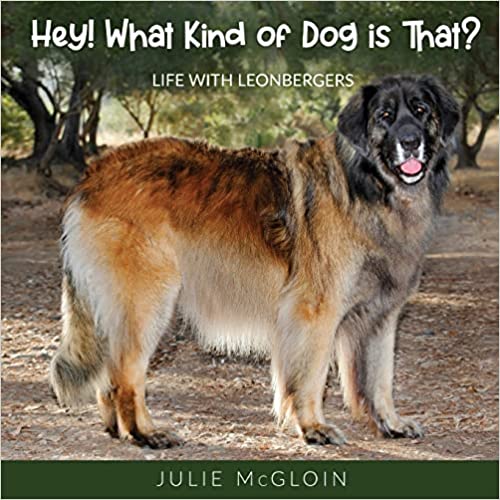
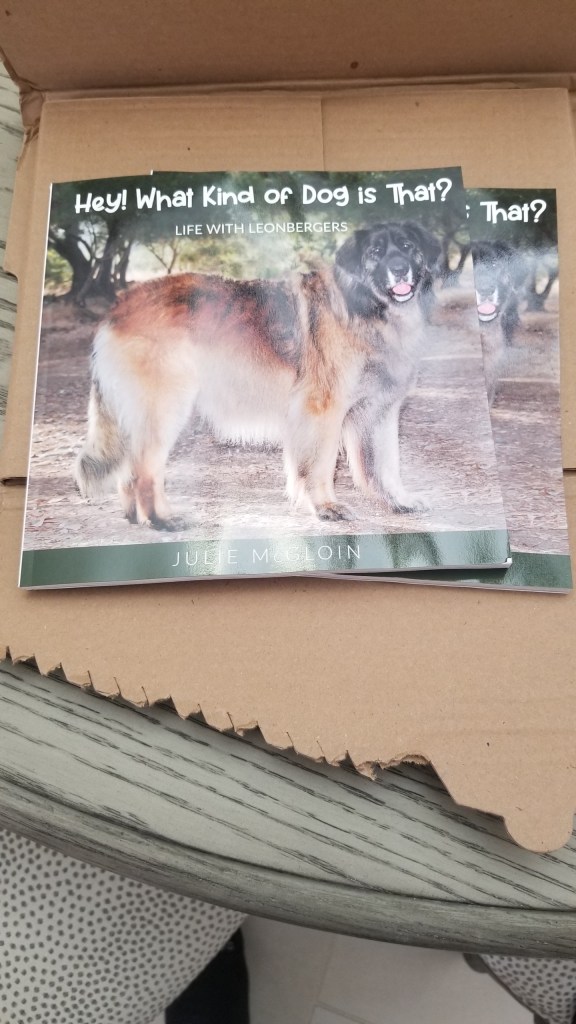
This is the third Leonberger book review on my blog. I am reviewing and recommending Leonberger books that I loved. This time I am reviewing Hey! What Kind of Dog is That?: Life With Leonbergers, by Julie McGloin, ISBN 978-1662913679. You can buy it from Amazon and Barnes & Noble. It is currently $13.88 on Amazon and $30.00 on Barnes and Noble. It is 104 pages, in a medium sized format (8.5 x 0.28 x 8.5 inches, 9.3 ounces) and it is in color.
Hey! What Kind of Dog is That?: Life With Leonbergers, by Julie McGloin. Click on the photo to go to the Amazon page for the book.
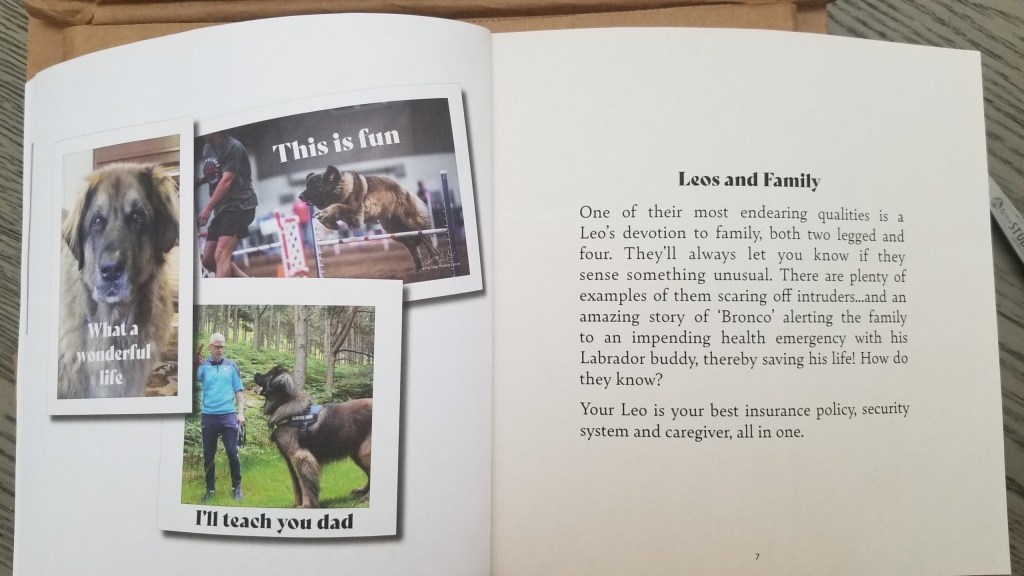
This book is a photographic tribute to a remarkable dog breed, the Leonberger. It is a fairly new book. It was launched early March 2022 and uploaded to Amazon at the end of February 2022. The author did not only include photos of her own Leonbergers but included photos from many other Leonberger owners as well. The book feature 100’s of beautiful color photos from around the world as well as interesting and useful information about Leonbergers. Our Leonberger Bronco is featured on page 6-7, which is something we are grateful for.
Page 6 & 7 spread in Hey! What Kind of Dog is That?: Life With Leonbergers, featuring our late Leonberger Bronco. Click on the photo to go to the Barnes and Noble page for the book.
I loved reading about all the other Leonbergers and learning a little bit more about the Leonberger breed. The information and the photos are presented in a charming and fun way, and it is easy reading. Leonbergers are beautiful and majestic, they love swimming, they love winter and snow, they love to eat, they are friendly and intelligent, and they are way too cute as puppies. All of this is reflected in the gorgeous photographs throughout the book. The book is for all ages and a great tabletop book. Below is the spread for page 64 & 65.
Page 64 & 65 spread in Hey! What Kind of Dog is That?: Life With Leonbergers, featuring Leonbergers in water.
Another important thing to mention is that a portion of the sale proceeds from this book is donated to the Leonberger Health Foundation International. I guess this book started a trend. Hopefully all Leonberger book authors will donate to the Leonberger Health Foundation International from now on. I highly recommend this book to all dog lovers and anyone thinking about getting a Leonberger.
Two copies of “Hey! What Kind of Dog is That?: Life With Leonbergers” arriving at my house.
All purebred dogs are more or less inbred, which comes with inherent health risks. That is especially true for large breeds. However, Leonbergers, especially those bred in North America, are fortunate compared to other large breeds. The Leonberger breed standard does not call for traits that can be detrimental to health. The precise and restrictive breeding regulations of the Leonberger Club of America (LCA) and other Leonberger clubs, and the work of the Leonberger Health Foundation International or LHFI, have resulted in Leonbergers being relatively free of inherited illnesses compared to other large dog breeds in America. For more information see Humane Society Veterinary Medical Association, “Guide to Congenital and Heritable Disorders in Dogs,” rev. 2011
The Leonberger Health Foundation International (LHFI) was founded in 2000 by Waltraut Zieher and other members of the LCA’s health, education, and research committee to “facilitate the solicitation and distribution of donations given to support health related breed-specific research.” The LHFI also administers a program that collects DNA samples from Leonbergers to share with universities and research institutions.
LHFI’s global biobank contains DNA samples from more than nine thousand Leonbergers. Among the organization’s notable achievements are the eradication of Addison’s disease among Leonbergers and the raising of nearly half a million dollars for research into conditions that affect canine health, including osteosarcoma, hemangiosarcoma, glaucoma, cardiac diseases, thyroid diseases, and neurological disorders. Its research also supports healthful longevity and aging as well as population diversity. Another success is the fact that since 2011, no Leonbergers with two copies of the LPN1 gene mutation (which causes Leonberger polyneuropathy) have been recorded in LHFI’s biobank.
One happy event for our family was when Bronco received his Grey Muzzle Award, which is an award given for longevity by LHFI. LHFI bestows the award on any Leonberger who has reached the age of twelve. These Leonbergers are the canine equivalents of centenarians, humans who are at least one hundred years old. The Grey Muzzle Award is also given to breeders, because they are partially responsible for the dogs’ longevity. The Grey Muzzle Award was certainly a happy event in Wikman family. If you have a twelve-year-old Leonberger, simply fill out a form on the LHFI website or send an email to lhfgreymuzzle@gmail.com.
The foundation will ask for some information, including the registered name and call name of the dog; the breeder’s name, kennel name, address, and email; the dam’s registered name; the sire’s registered name; the owner’s name, address, and email; the birth date of the dog; and whether the dog is alive or dead. If the latter, they will want to know the cause of death. In addition, they would like you to write a one-paragraph tribute to the dog and send two (preferably high-resolution) photos—one head shot and one favorite photo. To find out more about the Grey Muzzle Award click here. To see the 2019–2020 awardees video featuring Bronco click here.
Grey Muzzle Award certificate from the Leonberger Health Foundation InternationalThe Grey Muzzle Award from the Leonberger Health Foundation International
I can add that when Bronco passed away, we sent his DNA to the University of Minnesota to be used in research. This was facilitated by the LHFI.
LHFI is one of my favorite charities and all proceeds from this book will be donated to the Leonberger Health Foundation International.
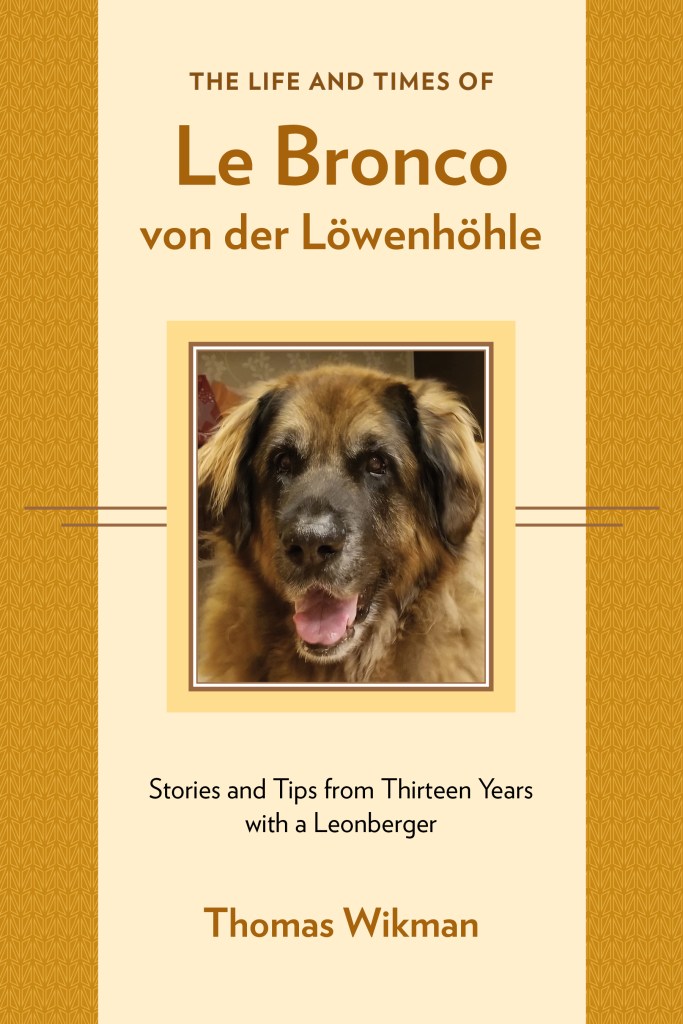
This is the front cover of the book The Life and Times of the Le Bronco von der Löwenhöhle, Stories and Tips from Thirteen Years with a Leonberger. The feature crazy and amusing stories about our late Leonberger as well as information about Leonbergers. The book will be available on Amazon and many other bookstores on July 3rd 2022. July 3rd 2022 would have been Bronco’s 15th birthday.
This post features a list of the five most commented blog posts out of the 26 posts I’ve made. Click on the photo to see the blog post. Check and see if you missed one or maybe more of them, and feel free to add more comments. I love comments.
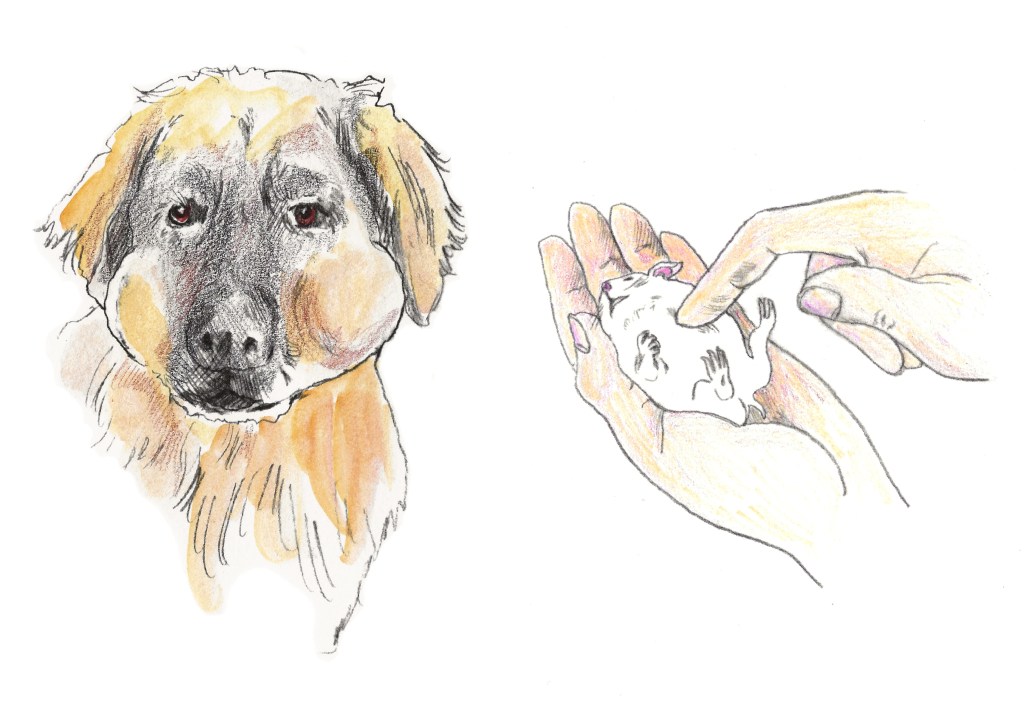
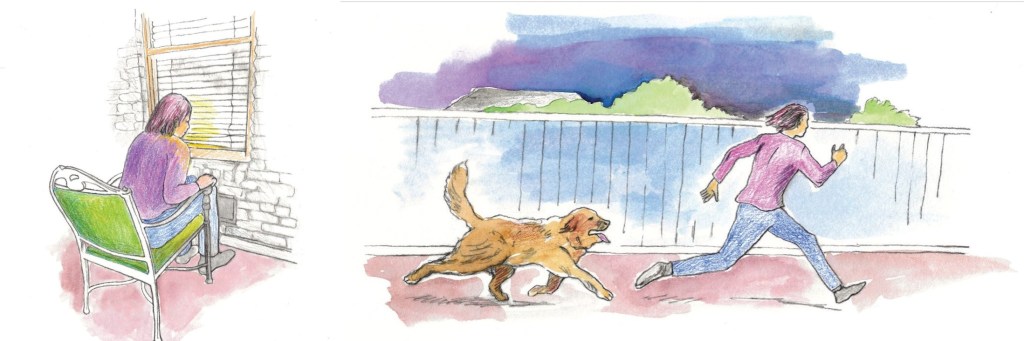
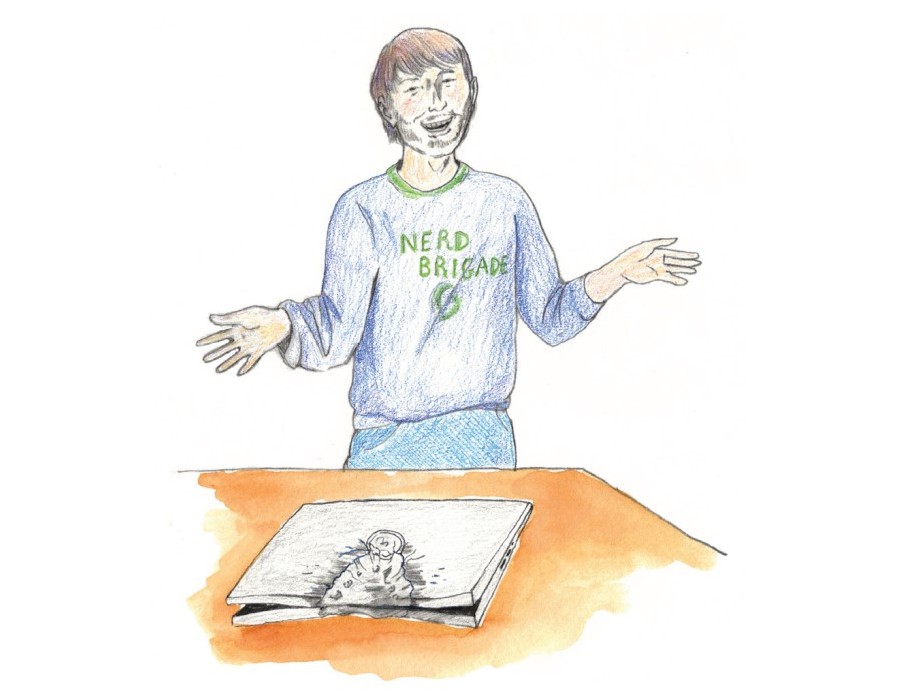
Our Leonberger Bronco was good at searching and finding run away Hamsters. His puffy cheeks are due to hamsters in his mouth and on the right a hamster is receiving CPR (it was successful). Click to read the story. Drawing by Naomi Rosenblatt.
Our Leoberger Bronco received the Grey Muzzle Award from the Leonberger Health Foundation International when he turned 12. Leonbergers, like all giant breeds, don’t live very long, on average eight years. The Leonberger Health Foundation International is trying to extend the life span of Leonbergers and in the extension all giant breeds.
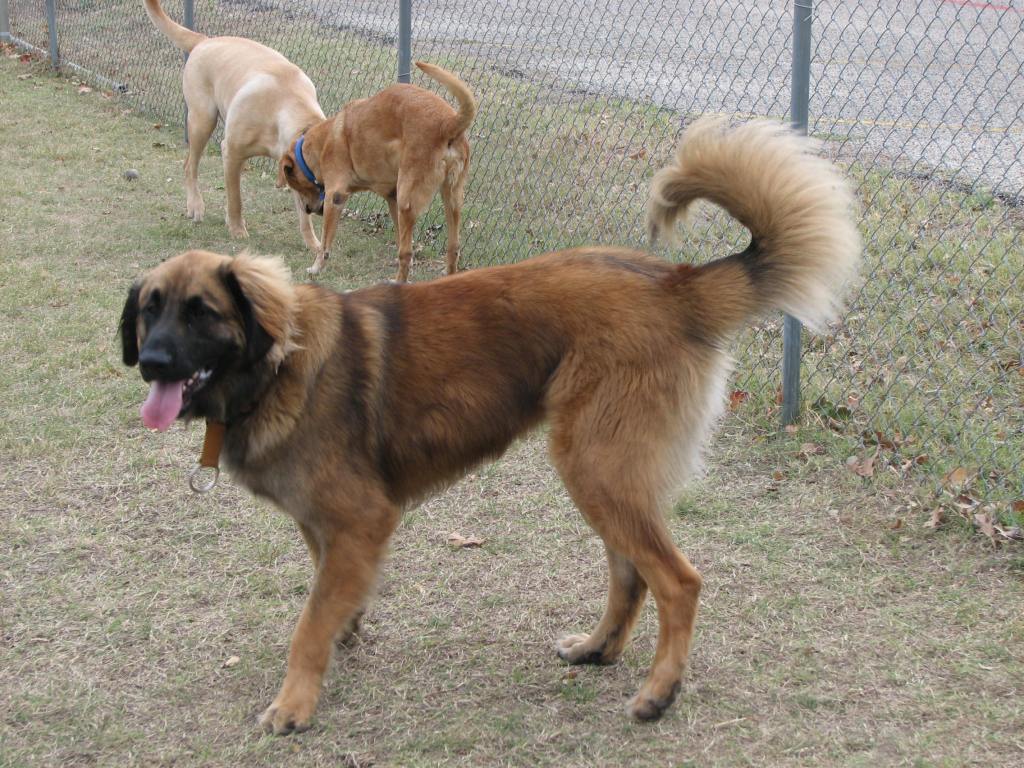
A young, gangly, not yet filled out Leonberger Bronco. However, despite his youth he was still entirely unafraid of thunder and lightning, it was not very frightening to him.
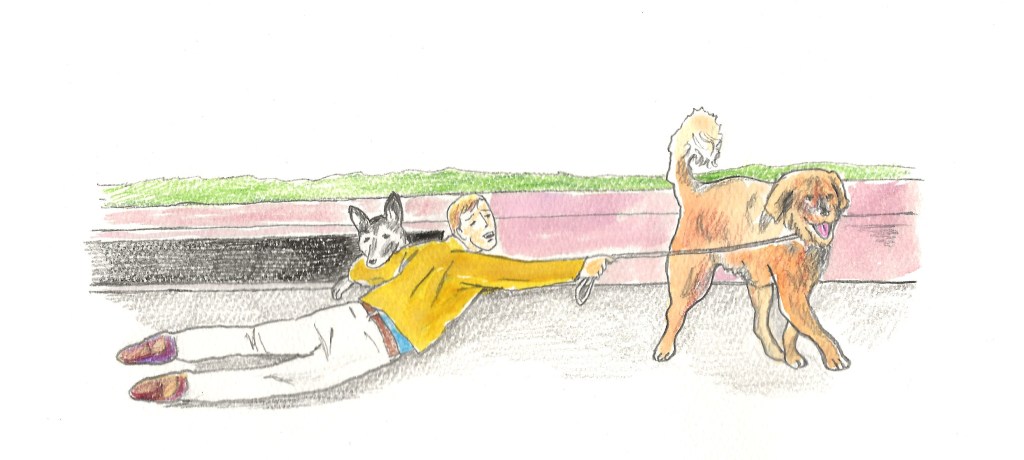
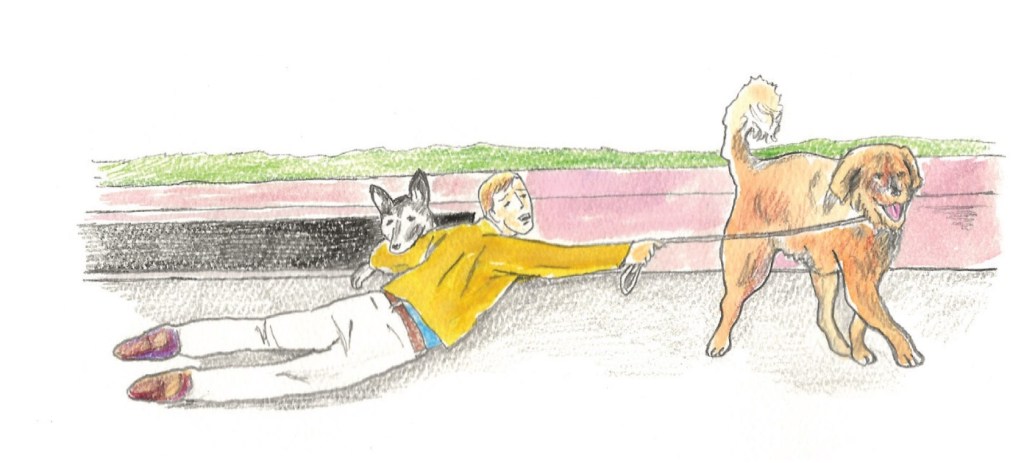
Me rescuing our German Shepherd Baby from a storm drain while holding onto an agitated Bronco our young Leonberger. To read about this crazy adventure click on the image. Drawing by Naomi Rosenblatt.
Our Leonberger Bronco was very big indeed and he had powerful jaws. The only person he ever bit was, and was in my derriere. To read about this misadventure click on the photo.
Leonbergers have a long history in North America and the United States—despite the fact that until 1985, there were only seventeen Leonbergers known to be living in the United States.
See: Lusby, Leonberger, page 15.
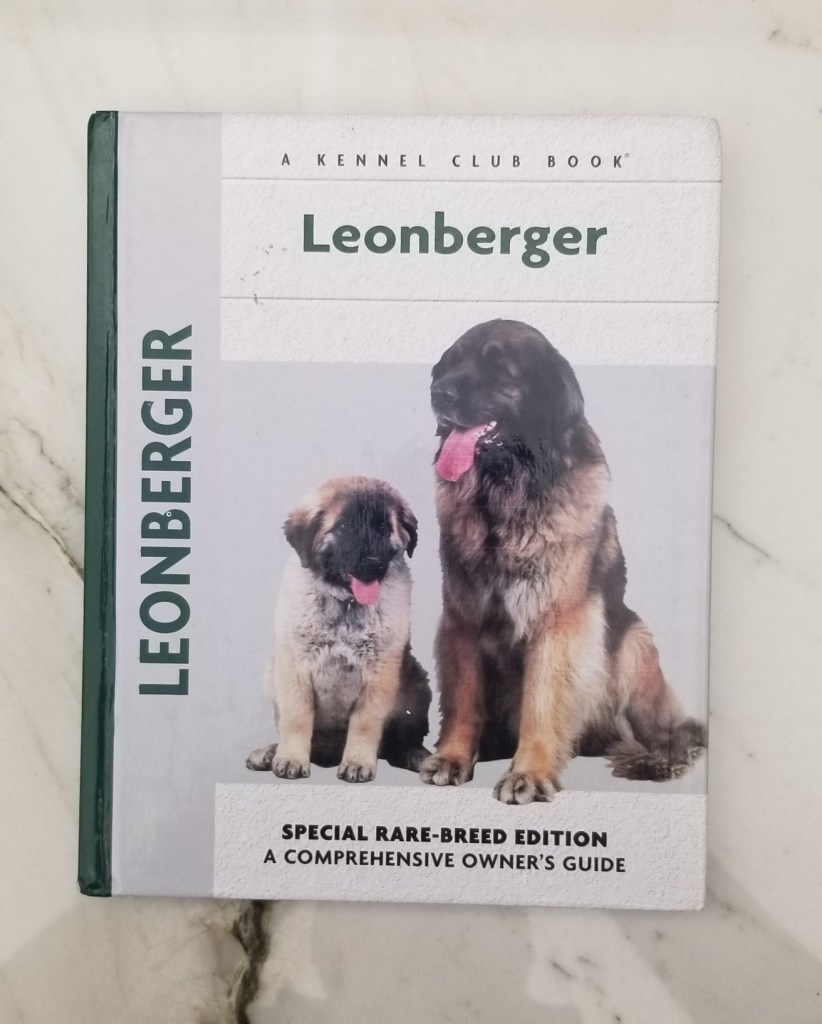
Leonberger, Special Rare-Breed Edition, A Comprehensive Owners Guide, Madeline Lusby
In the 1870s, Leonbergers were brought to Newfoundland to invigorate the stock of Newfoundland dogs. Around the same time, two Leonbergers named Caesar and Sultan were purchased from Essig’s kennel and transported across the ocean to join the Wellesley-Sterling theater company in the United States as the stars of their productions. Then in 1879, Caesar and Sultan visited President Ulysses S. Grant, who called them the largest and most magnificent dogs he had ever seen and presented them with gold medals. During the years between World War I and World War II, a New Jersey family, the Wolfs, opened their home as a temporary refuge for Jews fleeing Germany: they also imported Leonbergers. Unfortunately, this introduction of the breed into the United States did not last, and it would be another fifty years before the Leonberger appeared in America again.
See: Bliss-Isberg, Leonberger, page 60.
See: Bliss-Isberg, Leonberger, page 64
See: Bliss-Isberg, Leonberger, page 101.
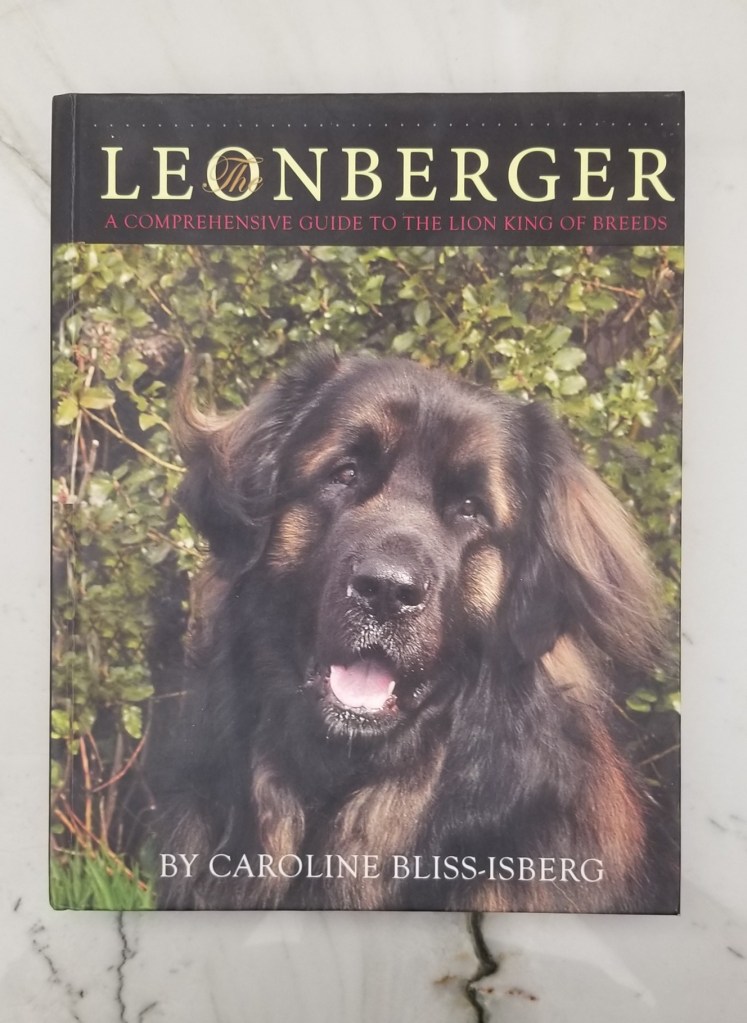
Leonberger, A comprehensive guide to the lion king of breeds, Caroline Bliss-Isberg
During the late 1970s and the 1980s, a few families—Waltraut and Klaus Zieher, Brian Peters, Manfred and Sylvia Kaufmann, Keri Campbell and Melanie Brown, and Mary and Reiner Decher brought Leonbergers to the United States. The Dechers had started a breeding program and were looking for a mate for their first dam, Viona. By chance their neighbor discovered through a newsletter that there was another Leonberger in the United States, and that led to the families’ finding and connecting with one another. I should add that the Dechers were careful to conform to the German breeding regulations and performed hip X-rays that they then submitted to the Orthopedic Foundation for Animals (OFA). Viona became the first OFA-certified Leonberger in America.
See: Bliss-Isberg, Leonberger, page 152.
On Saturday, November 2, 1985, eight of these Leonberger enthusiasts met at a hotel in Denver, Colorado, to found the Leonberger Club of America (LCA). This group of founders, which has since been dubbed the Denver Eight, appointed a registrar, formulated a breeding acceptability checklist, and instituted various policies, including the requirement that OFA certification is mandatory for breeding. LCA membership grew: it held social gatherings, began publishing LeoLetter, and imported an increasing number of dogs. Now the LCA has thousands of members across the country, and Leonbergers receive high ratings on health tests relative to other large breeds. For example, in 2000, the OFA reported that only 14.6 percent of Leonbergers tested positive for hip dysplasia, compared to 47 percent of Saint Bernards.
See: Bliss-Isberg, Leonberger, page 154.
See: Bliss-Isberg, Leonberger, page 176.
Another important historical event was the founding of the Leonberger Health Foundation International (LHFI), in 2000 (it was just called the Leonberger Health Foundation back then). According to its website, the organization was founded by Waltraut Zieher and other memers of the LCA’s health, education, and research committee to “facilitate the solicitation and distribution of donations given to support health related breed-specific research.” The LHFI also administers a program that collects DNA samples from Leonbergers to share with universities and research institutions, and of course it administers the Grey Muzzle Award.
LHFI’s global biobank contains DNA samples from more than nine thousand Leonbergers. Among the organization’s notable achievements are the eradication of Addison’s disease among Leonbergers and the raising of nearly half a million dollars for research into conditions that affect canine health, including osteosarcoma, hemangiosarcoma, glaucoma, cardiac diseases, thyroid diseases, and neurological disorders. Its research also supports healthful longevity and aging as well as population diversity. Another success is the fact that since 2011, no Leonbergers with two copies of the LPN1 gene mutation (which causes Leonberger polyneuropathy) have been recorded in LHFI’s biobank. LHFI is one of my favorite charities.
The end of the twentieth century marked not only the end of the Cold War but also the beginning of what I call the Dog Wars of America. In 1985, the American Kennel Club (AKC) registry comprised one-third of the world’s known dog breeds. But the AKC had recognized only a few new breeds since 1887—a period of ninety-eight years. So the organization decided to change that policy, but this did not always go smoothly. The members of rare-breed clubs often did not want to be part of the AKC. For example, the Australian Shepherd Club of America (ASCA) was very reluctant to join, so a relatively small splinter group, the United States Australian Shepherd Association, was formed and designated the official member club of the AKC, which was not welcome news to the ASCA. The border collie is another example. Charles Krauthammer, the late political columnist, called the AKC the politburo of American dog breeding.
See: Bliss-Isberg, Leonberger, page 159.
Similarly, in 2003, a new Leonberger club was formed—the Leonberger Club of the United States—with the goal of becoming the Leonberger member club of the AKC. This essentially forced the LCA’s hand, so they applied for membership in the AKC, a process that took years to complete. But ultimately the AKC approved the LCA as members in 2010: Leonbergers would officially become part of the Working Group. Fortunately, 90 percent of LCA breeders agreed to continue following LCA regulations regardless of whether the club would remain independent or become part of the AKC. Also fortunately, AKC membership afforded more opportunities for Leonbergers to participate in dog shows, which is important to many owners.
See: Bliss-Isberg, Leonberger, page 187
For information on the history of the Leonberger starting in 1830’s see this link
This is post number 20 for my Leonberger/Bronco blog. I decided to make it a list of posts. Not all posts were equally popular and maybe you missed the posts you would have liked the most. You can click on the link or the picture to see a post, then click back or “Home” (at the top) go back. If you read a post I certainly would love to get a “like” or maybe a comment.
Leonberger’s live on average 8-9 years. However, the Leonberger Health Foundation International is working hard to extend the lifespan of Leonbergers. They give an award to all Leonbergers who have survived passed their 12th birthday. The award is called the Grey Muzzle Award.
Bronco, who was not at his best in this picture, rests next to our tornado damaged fence. We put a plastic bag around his bandage when he went outside.
















 Leonberger Life