This blog feature amusing and heartwarming stories about our late Leonberger dog Bronco, as well as other Leonbergers. It also has a lot of information about the Leonberger breed, the history, care, training, Leonberger organizations, etc. I also wrote a Leonberger book, which I am featuring in the sidebar.
With this post I just wanted to highlight my other blog superfactful. The purpose of that blog is to find facts that are important and true with very high certainty and yet disputed by many amongst the public (but not scientists/experts), surprising to many, and perhaps shocking. Imagine telling a medieval peasant who believes that Earth is flat like a pancake that it is closely spherical. That Earth is not flat like a pancake is true with a very high certainty (BTW nothing outside of logic and math is absolutely 100%), it is kind of important, and would probably be surprising to him. Maybe he’ll call it BS, but that is the point.
I call these kinds of facts SUPER FACTS, and I am the super fact hunter. I am trying to make the blog fun and educational. I use reputable sources to back up my claims that I hope will shock many without resorting to clickbait. It is not an academic blog, but I am linking to thousands of academic sources. Below I am listing my five last super facts. To see the full post, you have to click on the links.
Wind Energy is Indeed Clean Energy
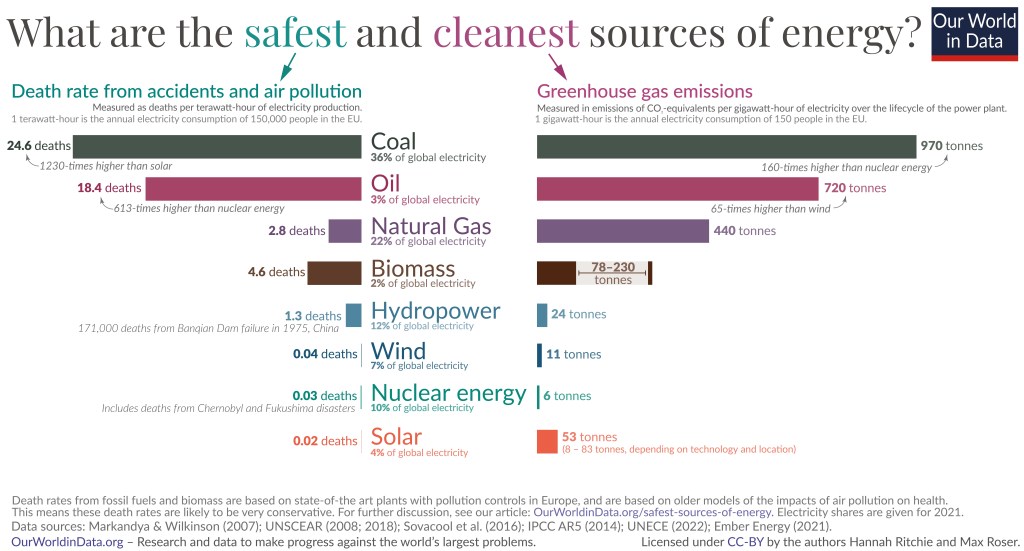
Superfact 87: Wind energy is a clean, renewable, and sustainable power source that produces no atmospheric emissions or water pollution during operation. Manufacturing and installation have a small carbon footprint that is much smaller than the carbon footprint of the fossil fuels they potentially replace.
Early Homo Sapiens lived at the same time as many other human species
Super fact 86 : Early humans, early homo sapiens, lived at the same time as many other human species including Neanderthals, Denisovans, Homo floresiensis, Homo naledi, Homo luzonensis. Homo heidelbergensis, Homo erectus, and maybe other species as well.
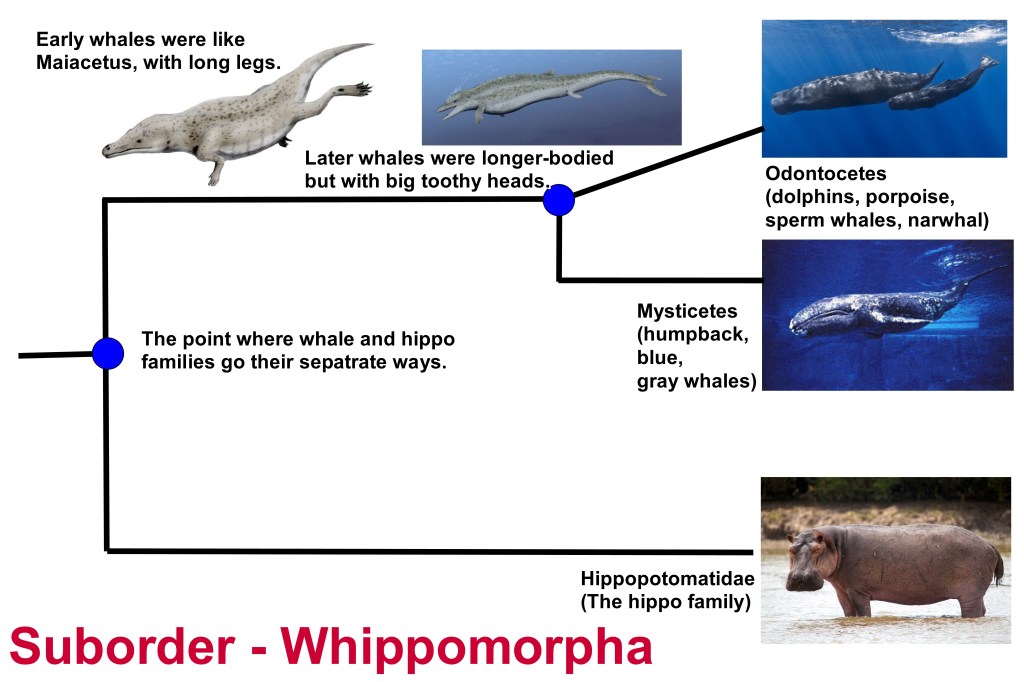
Super fact 85 : Scientists recognized that whales descended from land animals already in the 19th century. However, it was not until the 1980’s that intermediate fossils for whale evolution were found. In addition, molecular and genetic / DNA studies showed that Hippopotamus and whales were closely related. Until then the evolution of whales was a bit of a mystery and creationists frequently mocked the lack of intermediate fossils for whale evolution.
All living cetaceans including whales, dolphins, porpoises, sperm whales and hippopotamids / hippopotamus belong to a suborder of artiodactyls called whippomorpha. Just like humans and chimpanzees have a common ancestor hippopotamus and whales have a common ancestor.
Super fact 84 : Modern birds are classified as part of the clade Dinosauria. They are direct descendants of small, feathered maniraptoran dinosaurs that survived the Cretaceous-Paleogene extinction event 66 million years ago. Maniraptoran dinosaurs in turn are a major subgroup of coelurosaurian theropod dinosaurs. In other words, birds are avian dinosaurs.
Velociraptor with feathers (well a little bit). Shutterstock Asset id: 2636534673 by Shutterstock AI Generator
Super fact 83 : Everyone experiences false memories. They are a normal part of how human memory works and are very common. There are also false memories that are shared among large groups of people and that are often socially reinforced. This is called the Mandela effect.
Shutterstock Asset id: 717504940 by durantelallera
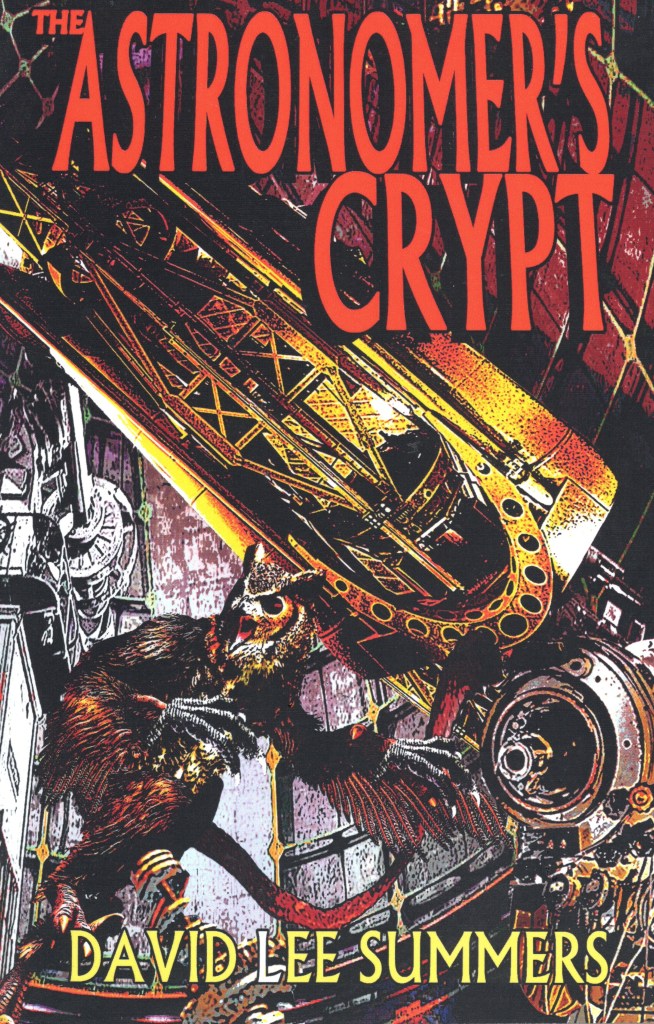
The focus of this blog is Leonbergers but sometimes I post about books that are not about Leonbergers but that I want to promote. Halloween is over but I would like to promote a great thriller or horror story taking place at an astronomical observatory in New Mexico, The Astronomer’s Crypt by David Lee Summers. It is an action packed and fun story that is not as heavy as the previous book I reviewed (Mr. B. Gone).
Paperback – Publisher : Hadrosaur Press (June 2, 2020), ISBN-10 : 1885093918, ISBN-13 : 978-1885093912, 256 pages, Item Weight : 11.7 ounces, Dimensions : 5.5 x 0.64 x 8.5 inches, it cost $12.95 on US Amazon. Click here to order it from Amazon.com.
Kindle – Publisher : Hadrosaur Press; 2nd edition (June 2, 2020), ASIN : B089LRV6BC, 258 pages, it costs $3.99 on US Amazon. Click here to order it from Amazon.com.
Front cover of The Astronomer’s Crypt. Click on the image to go to the Amazon page for the paperback version of the book.
Amazon’s description of the book
Two years ago on a stormy night, in the dead of winter, Mike Teter experienced something that would change his life forever. Mike was a telescope operator at the world renowned Carson Peak Observatory in New Mexico. We won’t tell you what he saw that night on the mountain nor what happened afterward on a dark stretch of highway, because it would haunt you just as it has haunted Mike. But what we will tell you is that Mike is back at Carson Peak. And what he witnessed that night two years ago is about to become a reality…
An Intense and Fun Horror Thriller Taking Place in an Astronomical Observatory
The protagonist Mike Teter is a telescope operator at a fictitious observatory in New Mexico, the Carson Peak observatory. The Carson Peak observatory features two large buildings hosting a 5-meter and a 2.5-meter telescope. It is located on sacred land adjacent to an Apache reservation. There are caves nearby that host ancient sacred artifacts that should not be removed from the caves. The observatory is a labyrinthine and dangerous place that appears to be haunted. There are long corridors and hidden rooms. The observatory has a history of deadly accidents. For example, a Dr. Burroughs and a graduate student had been killed there.
One day Mike has what seems to be hallucinations. A large ancient evil creature looking like a mix of a dinosaur and a bird appears before him, and he encounters a talking coyote that gives him a warning about the sacred portals, he sees the ghost of Dr. Burroughs, and he witnesses the gruesome death of his friend the Astronomer Dr. Wallerstein. He’s had enough and he quit his job only to return to it at a later time. He thought that the things he saw were just nerves. However, this time things really go amiss. A creepy but wealthy lawyer by name of Mr. Vassago is trying to acquire sacred artifacts. There are drug cartel thugs, greedy adventurers, freak accidents, severe storms, hostage situations, ghosts, and ancient evil monsters. Mike Teter is faced with a very complicated and nightmarish situation.
The story is action packed, suspenseful and features a lot of plot twists. The characters are well-developed, relatable and multi-layered. The observatory is realistically described, and it is obvious that the author is very familiar with astronomical observatories. As you read this book you will learn something about observatories as well as the job of telescope operators. The author skillfully creates a chilling scenery of a dark haunted observatory, which brought my imagination to the spaceship in the movie Alien. It is obvious that the author is highly intelligent. A lot of things happened in just a few pages, and it was difficult to put the book down. It is one of the most intense and fun horror thrillers I’ve ever read, and I highly recommend it.
Back cover of The Astronomer’s Crypt. Click on the image to go to the Amazon page for the kindle version of the book.
About the Author
David Lee Summers is an author, editor and astronomer living somewhere between the western and final frontiers in Southern New Mexico. He is the author of twelve novels. His short stories and poems have appeared in numerous magazines including Cemetery Dance, Realms of Fantasy, Star*Line, and The Santa Clara Review.
David also edited Tales of the Talisman Magazine for ten years. When he’s not writing, he operates telescopes at Kitt Peak National Observatory.
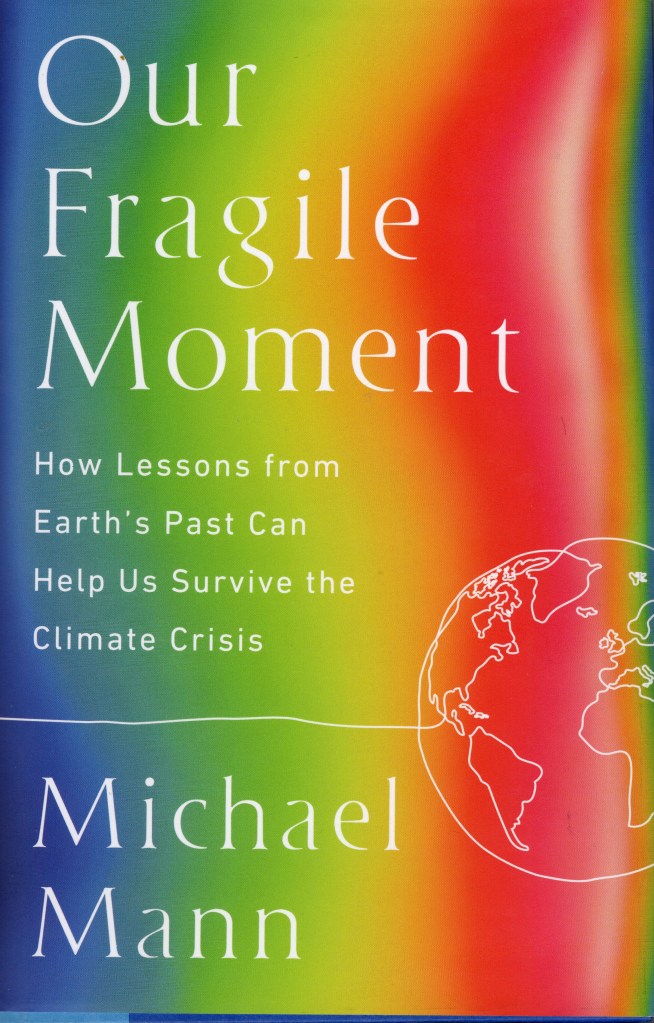
This is a Leonberger blog, but sometimes I also post reviews for books that are not about Leonbergers and when I do it is for books that I love and that I want others to read. Today I am posting a review for Our Fragile Moment: How Lessons from Earth’s Past Can Help Us Survive the Climate Crisis by Dr. Michael E. Mann. If you don’t know who Michael Mann is, he is the creator of the hockey-stick curve (in 1998), which is a curve that shows the variation of average global temperature throughout history. For recent times (last 150 years) he used measured temperatures and for temperatures further in the past he used so called proxy data to estimate global temperatures. As the name indicates the graph looked like a hockey stick laying down, which did not sit well with climate change deniers, and as a result he was viciously attacked, threatened, and defamed. He was a young post-doc student at the time. February 8, 2024, Dr. Michael Mann was awarded one million dollars in a defamation lawsuit against Fox talk show host Mark Steyn and another $1,000.00 from Rand Simberg.
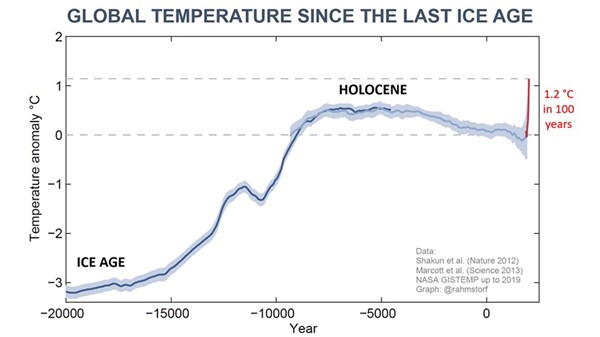
Hockey stick curve for the last 1,000 years, blue-Michael Mann’s original curve (proxy measurements such as tree rings), green-dots 30-year average, red temperature measurements. From Wikipedia Commons.Global temperature going back twenty thousand years, another hockey stick graph. Notice the stable temperature during the last 6-7,000 years, coinciding with the development of human civilization, and then a sudden sharp increase at the end.
I should say that at first, I believed myself that Dr. Mann was a fraud. As I took a deep dive into the topic and learned more about it, I came to realize I was wrong and that his critics were wrong, and that Michael Mann was right. Since his original hockey stick curve there have been several dozen hockey stick curves produced by other independent researchers, often going back further in time, and they all confirm his findings. Today the scientific community has entirely accepted the hockey stick as correct. Despite this fact Dr. Mann is still being attacked by various organizations and individuals. Typically graphs put people to sleep, but this one started a war that is still ongoing. Charles Darwin was also attacked for his scientific discoveries and now history is repeating itself.
Anyway, about this book. This book mentions the hockey stick curve, but it is not the focus of the book. This book goes back 4.5 billion years and explains what is known about past climate which is surprisingly much. Science does not know everything, otherwise it would stop, but it knows a lot. He discusses various past climate shocks, various climate cycles, extinction events, etc., and analyses what past climate means for us today. There is bad news and there is good news. The book is packed with information and data, but I loved it.
Hardcover – Publisher : PublicAffairs (September 26, 2023), ISBN-10 : 1541702891, ISBN-13 : 978-1541702899, 320 pages, Item Weight : 1.15 pounds, dimensions : 6.4 x 1.06 x 9.55 inches, it cost $19.59 on US Amazon. Click here to order it from Amazon.com.
Paperback – Publisher : PublicAffairs (October 15, 2024), ISBN-10 : 1541702905, ISBN-13 : 978-1541702905, 320 pages, Item Weight : 1.11 pounds, dimensions : 5.5 x 0.8 x 8.25 inches, it cost $19.99 on US Amazon. Click here to order it from Amazon.com.
Kindle – Publisher : PublicAffairs (September 26, 2023), ASIN : B0BRJ6SCFM, 392 pages. It is currently $18.99 on Amazon.com. Click here to order it from Amazon.com.
Audiobook – Publisher : PublicAffairs, Release date September 26, 2023, ASIN : B0BWKCPSDY, Listening length 9 hours and 38 minutes. Click here to order it from Amazon.com.
Front cover of Our Fragile Moment: How Lessons from Earth’s Past Can Help Us Survive the Climate Crisis by Michael E. Mann. Click here or the picture to visit the Amazon.com page for the Hardcover version of the book.
Amazon’s description of the book (from the Amazon page)
In this sweeping work of science and history, the renowned climate scientist and author of The New Climate War shows us the conditions on Earth that allowed humans not only to exist but thrive, and how they are imperiled if we veer off course.
For the vast majority of its 4.54 billion years, Earth has proven it can manage just fine without human beings. Then came the first proto-humans, who emerged just a little more than 2 million years ago—a fleeting moment in geological time. What is it that made this benevolent moment of ours possible? Ironically, it’s the very same thing that now threatens us—climate change.
The drying of the tropics during the Pleistocene period created a niche for early hominids, who could hunt prey as forests gave way to savannahs in the African tropics. The sudden cooling episode known as the “Younger Dryas” 13,000 years ago, which occurred just as Earth was thawing out of the last Ice Age, spurred the development of agriculture in the fertile crescent. The “Little Ice Age” cooling of the 16th-19th centuries led to famines and pestilence for much of Europe, yet it was a boon for the Dutch, who were able to take advantage of stronger winds to shorten their ocean voyages.
The conditions that allowed humans to live on this earth are fragile, incredibly so. Climate variability has at times created new niches that humans or their ancestors could potentially exploit, and challenges that at times have spurred innovation. But there’s a relatively narrow envelope of climate variability within which human civilization remains viable. And our survival depends on conditions remaining within that range.
In this book, renowned climate scientist Michael Mann will arm readers with the knowledge necessary to appreciate the gravity of the unfolding climate crisis, while emboldening them—and others–to act before it truly does become too late.
A Palaeoclimatological Journey Accompanied by Intelligent Analysis And What It Means for Us
In this book the author takes us on a journey through earth’s climate history. He discusses the climate during the different eras and periods of earth’s history starting with the Hadean and Archean and ending with the Holocene. There have been extreme changes in the climate, caused by shocks to the system, followed by mass extinctions. The many devastating large swings in the climate often took hundreds of thousands of years or millions of years to run their course. Species disappeared while species better adapted to the new climate evolved. As he gets to modern times, the Holocene, he gives us more detail and analyzes the climate for much shorter intervals. It is clear from his discussion on more recent climate that climate has shaped us, and we have shaped climate.
He also discusses the various climate cycles that effected our climate in the past as well as currently, including the Milankovitch cycles, such as the eccentricity of Earth’s orbit, earth’s obliquity and precession. Other cycles he is discussing include the El Niño–Southern Oscillation, the north Atlantic Oscillation (NAO), and the Atlantic Multidecadal Oscillation (AMO), which as it turns out does not exist. The purpose of all this is to determine what this means for our civilization and the unnatural and extremely rapid warming that we are causing today primarily via our carbon emissions.
I found some of the climate shocks he discussed quite interesting. During the Paleoproterozoic era 2 billion years ago the biological innovation of oxygen-generating photosynthesis led to a rapid drawdown on atmospheric carbon dioxide and in addition the positive feedback from the increased albedo from the ice buildup turned the planet into a snowball. This was reversed as the ice prevented absorption of carbon dioxide. Eventually the carbon dioxide concentration in the atmosphere reached 200 times of what it is today, and the snowball rapidly melted, and the carbon dioxide concentration settled again. The greatest extinction event in geological history was the Permian-Triassic extinction event 250 million years ago when 90% of all species on Earth perished. It was primarily caused by a substantial release of carbon dioxide from Siberian Trap volcanic eruptions.
Another interesting climate shock was the dinosaur-killing K-Pg event 66 million years ago. An asteroid collision made Earth’s climate much colder, and all large species died out. It took four million years for flora and fauna to reestablish itself but with new species. The losers were the non-avian dinosaurs, and the winners were the mammals and the avian dinosaurs or birds. The PETM event 55 million years ago was triggered by carbon-enriched volcanic eruptions that led to a rapid increase in temperature of 7-11 Fahrenheit in just 10,000 years. This event is eerily similar to what we are experiencing now, except our warming is even faster. He also describes the cooling that happened 50 million years ago because of the forced uplift of the Himalayas due to the collision of India with Eurasia. For more recent times he is discussing the various glacial and interglacial periods (ice-ages), driven by Milankovitch cycles.
His chief goal with his paleoclimate discussion is to find out what the paleoclimate record implicates for us. For example, establishing what is the equilibrium climate sensitivity (ECS), which is the increase in Earth’s average surface temperature that occurs after the climate system fully adjusts to a sustained doubling of atmospheric carbon dioxide. Another is Earth System Sensitivity (ESS), which describes how much warming you ultimately get in response to a doubling of CO2, after all the slow-response feedback mechanisms fully unfold.
Yet another climate feature is the existence of hysteresis loops, in which the value of a physical property lags behind changes in the effect causing it. For example, setting back CO2 to what it was before an event may not bring temperatures and climate back to what it was for 100,000 years. He is also analyzing the risk for ocean conveyor disruption and the risk for future methane bombs. The latter, which turns out to be low risk. Another piece of good news is that we are not at risk of a run-away greenhouse effect like the one Venus underwent two billion years ago. His conclusions are a mixed bag of good news and bad news. I can add that naturally he is also discussing the hockey-stick curve. He was the inventor of it.
The book contains a lot of information, and it sometimes features complex discussions, but if you read the book carefully it makes perfect sense. It is logical, intelligently written, and avoids hyperbole and exaggerations. However, if you are not very familiar with science and have a hard time with complexity it may not be the book for you. He stresses that the greatest threat to meaningful climate action is no longer denial, but despair and doomism, premised on the flawed notion that it is too late to do anything. We will not all perish from climate change, but neither is it a good thing. The facts justify immediate and dramatic action, but we are not going to fall off a cliff. Climate change is a crisis, but a solvable crisis. The question is how much damage we will do to future generations.
I highly recommend this brilliant, and fact filled deep dive into paleoclimate and what it means for humanity today, to anyone willing and able to tackle some complexity.
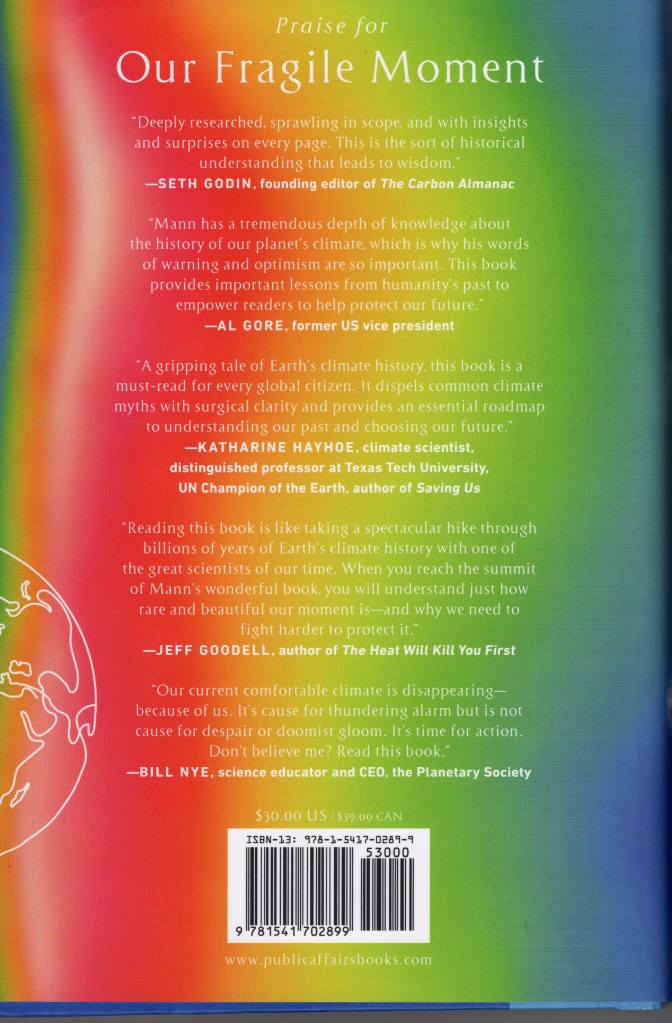
Back cover of Our Fragile Moment: How Lessons from Earth’s Past Can Help Us Survive the Climate Crisis by Michael E. Mann. Click here or the picture to visit the Amazon.com page for the Paperback version of the book.
About the Author
Dr. Michael E. Mann, famous for the hockey stick curve, is Presidential Distinguished Professor in the Department of Earth and Environmental Science at the University of Pennsylvania, with a secondary appointment in the Annenberg School for Communication. He is director of the Penn Center for Science, Sustainability, and the Media (PCSSM).
Dr. Mann has received a number of honors and awards including NOAA’s outstanding publication award in 2002 and selection by Scientific American as one of the fifty leading visionaries in science and technology in 2002. He contributed, with other IPCC authors, to the award of the 2007 Nobel Peace Prize. He was awarded the Hans Oeschger Medal of the European Geosciences Union in 2012. In 2020 he was elected to the US National Academy of Sciences. He is the author of more than 200 peer-reviewed and edited publications and five books. His research involves the use of theoretical models and observational data to better understand Earth’s climate system.
The Silurian Hypothesis
For all science fiction fans, the book also featured an idea that would make a good science fiction story. 55 million years ago there was an exceptionally fast warming of 9 degrees Fahrenheit (5 degrees Celsius) that was in many regards similar to what is happening now. It was not quite an extinction event, that requires more than 75% of all species to be gone in less than 2 million years, but it was catastrophic. This event is referred to as the PETM event. I can add that we are warming the earth at a rate 10 times faster today.
If we were to destroy ourselves what would a future species know about us 55 million years from now? Well, all traces of our civilization would be gone and finding fossils of us would be very likely despite our large population, because fossilization events are extremely rare. What would be left of us are the traces of the global warming we caused and long-lived chemicals such as nitrates from our fertilizers. That’s exactly what the PETM event has left behind, signs of a sharp increase in CO2, global warming and a sudden spike in nitrates that remain unexplained. Could it be that we are not the first intelligent species on earth and that our predecessors caused global warming as well? Well, this was just entertaining speculation, not science, but could there be something to it?
As I previously mentioned I would like to launch a second blog featuring small facts or insights that are widely disbelieved despite being known to be true by the experts in the relevant field or facts that are very surprising or misunderstood by a lot of people. These facts shouldn’t be trivia but important facts that are somewhat easy to understand despite their status as being unthinkable to many. They are not scientific theories or complex sets of facts or information, but facts that you can easily state. They may be part of a scientific theory, or a result of an established scientific theory but not an entire scientific theory. I’ve collected hundreds of these facts because to me they seem to be extraordinarily important. They are worldview altering facts, big shocking facts to some, facts that many people deny regardless of the evidence, super-facts if you will.
In a previous post I discussed that despite the fact that the scientific community states that Earth is 4.5 billion years old and that humans evolved over millions of years a 2019 Gallup poll, showed that 40% of US adults believe that God created humans in their current form within the last 10,000 years. The evidence proves that this 40% of the population is wrong. The scientists aren’t guessing. They make their claim that earth is 4.5 billion years old based on a lot of strong evidence. Evidence which is unknown to a lot of people. In this post I am discussing a fact that once was widely disputed but today is more just surprising or not understood by many and that is that the speed of light in vacuum is a universal constant.
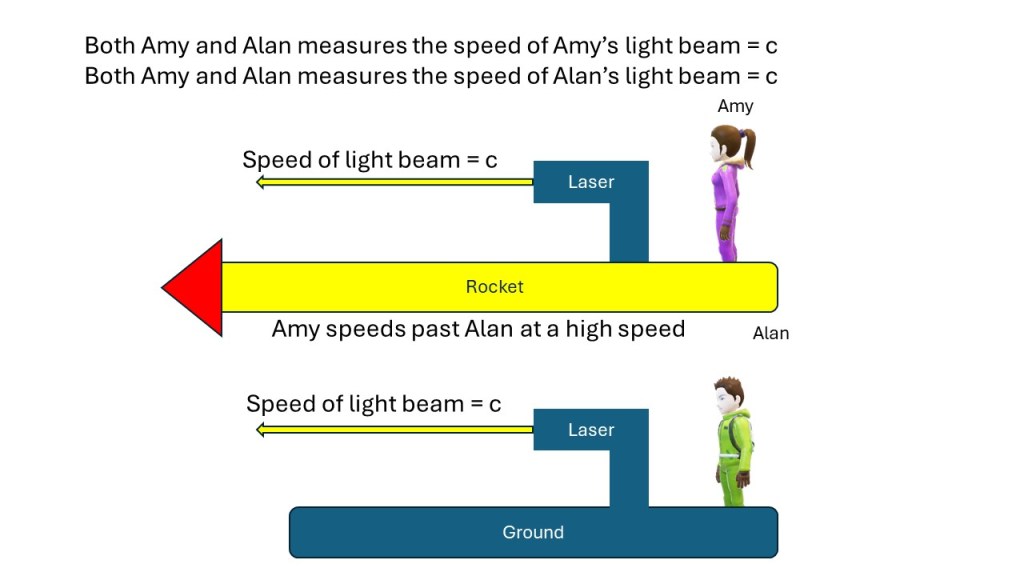
No matter how fast you travel, what direction, or where you are you will measure the speed of light compared to yourself to be c = 299,792,458 meters per second or approximately 186,000 miles per second or 671 million miles per hour.
In this picture Amy is traveling past Alan in a rocket. Both have a laser. Both measure the speed of both laser beams to be c = 299,792,458 meters per second.
In the picture above let’s say Amy is flying past Alan at half the speed of light. If you believe Alan when he says that both laser beams are traveling at the speed of c = 186,000 miles per second, then you would expect Amy to measure her laser beam to travel at a speed that is half of that c/2 = 93,000 miles per hour, but she doesn’t. She measures her laser light beam to travel at the speed of c = 186,000 miles per second just like Alan. This seems contradictory. The solution that the special theory of relativity offers for this paradox is that time and space are relative and Amy and Alan measure time and space differently (more on that in another post).
Time is going to be different for me. From shutterstock Illustration ID: 1055076638 by andrey_l
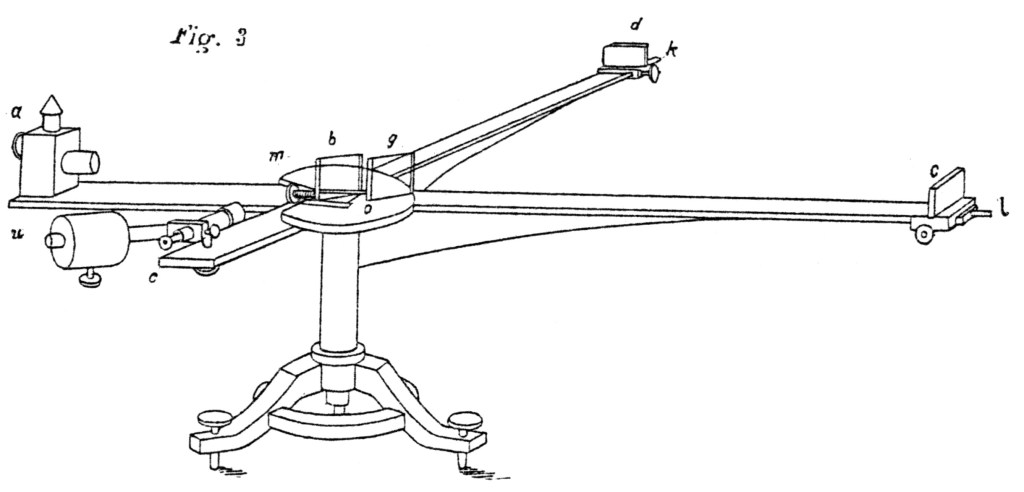
I should add that the realization that the speed of light in vacuum is a constant regardless of the speed or direction of the observer or the light source was a result of many experiments, which began with the Michelson-Morley experiments at Case Western Reserve University, Cleveland, Ohio in the years 1881-1887. At first scientists thought that there was an ether that compressed the experimental equipment and distorted clocks so that it seemed like the light vacuum always came out the same. With the special theory of relativity in 1905 those speculations were laid to rest.
The first Michelson-Interferometer from 1881. It was used to measure the speed difference of two light beams (well a split light beam) with a very high accuracy (for the time). The light traveled with the same speed in all directions and no matter what earth’s position and speed was in its orbit around the sun. This picture is taken from Wikipedia and is in the public domain of the United States.
The speed c = 299,792,458 meters per second is a universal speed limit created by time and space
I should point out that there is nothing magical about the speed of light in a vacuum. Light traveling through matter, like glass or water, does not travel at this speed c, but slower. It also isn’t entirely correct to say that the speed of light in vacuum is a universal constant, because it isn’t about light per se. What is happening is that light traveling completely unimpeded through vacuum is prevented from traveling infinitely fast by the way time and space is set up. All massless particles / radiation, or anything that hypothetically could be traveling at an infinite speed is prevented from doing that because of the way time and space are related. Light in vacuum just happened to be what we first discovered to be restricted by this universal speed limit. Yes, time and space are annoying that way, putting a limit on the speed of light and on massless particles.
So how is time and space arranged to cause this universal speed limit? Well, that is an even more surprising blog post for another day (I will link to it once I have made the post). From this discovery about time and space came a lot of other interesting realizations but that is also for another post, but let’s just give a brief summary:
Time for travelers moving fast compared to you is running slower.
Length intervals for travelers moving fast compared to you are contracted.
Simultaneous events may not be simultaneous for another observer.
The order of events may be reversed for different observers.
If you accelerate to a speed that is 99.999% of the speed of light you still haven’t gotten any closer to the speed of light from your perspective. Light in vacuum will still speed off from you at c = 186,000 miles per second.
Acceleration will get harder the closer you get to the speed of light in vacuum. The force required will reach infinity as you approach the speed of light in vacuum.
Forces, the mass of objects, momentum, energy and many other physical quantities will reach infinity as you approach the speed of light in vacuum assuming you are not a massless particle.
Mass is energy and vice versa E = mc2
Magnetic fields pop out as a relativistic side-effect of moving charges.
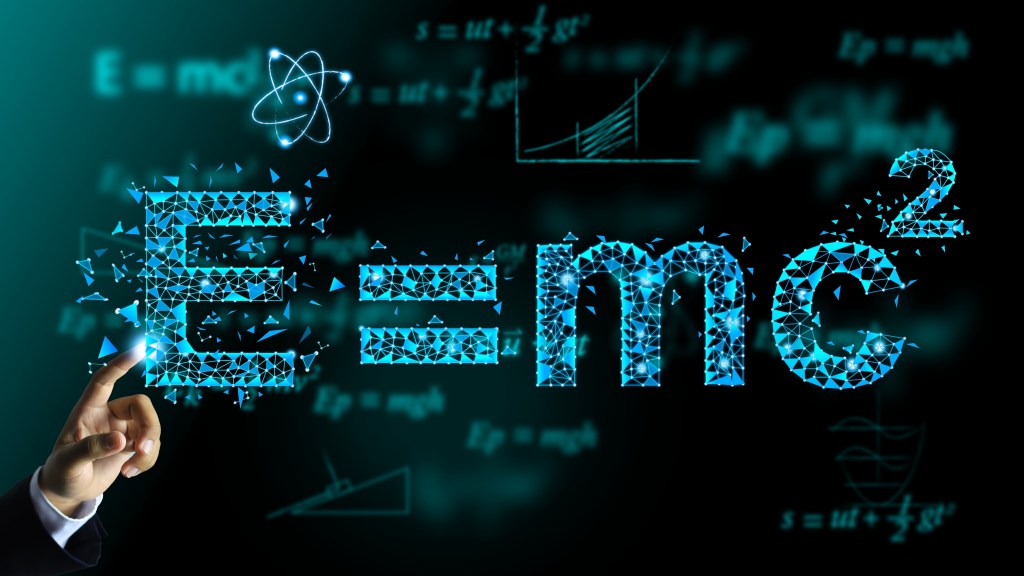
Mass is energy and vice versa, a direct result of the way time and space are related. Stock Photo ID: 2163111377 by Aree_S
How do you feel about time and space creating this universal speed limit in which light in vacuum travel?
As I mentioned in a previous post I would like to launch a second a blog. The topic would be facts and insights that are either widely disputed or often misunderstood amongst the public, yet important and known to be true to the experts and scientists in the relevant field. I’ve identified hundreds of such cases.
In my previous post I discussed the fact that despite the fact that the scientific community states that Earth is 4.5 billion years old and that humans evolved over millions of years a 2019 Gallup poll, showed that 40% of US adults believe that God created humans in their current form within the last 10,000 years. As a teenager I believed that myself. That was before I knew much about science. I had read agenda driven books that left out, or wrongfully dismissed the evidence for an old earth while presenting faulty arguments for a young earth. Just learning about the relevant science was enough for me to realize that I had been bamboozled. At first, I dug my heels in, but I eventually realized that the belief that earth was 6,000 years old was not tenable and unsupportable by science.
Is Earth 4.5 billion years old or 6,000 years old? Photo by Pixabay on Pexels.com
My goal for the blog is not to be an exhaustive source for these kinds of topics, or a deep dive into these topics, but just to collect a large set of these unnecessarily controversial topics and provide some insight into the surrounding misunderstandings. Not a complete insight into the topics, but some. Perhaps my blog will lead to some new insights for some, or intellectually honest reflection as well as interesting and friendly discussions.
Perhaps some new insight. Perhaps some intellectually honest reflection. Photo by Keegan Houser on Pexels.com
The format I decided on is to present the evidence for the fact or insight in question as a headline in bold followed by a list of failed objections to that evidence. Then, if applicable, failed arguments for the opposing point in bold as well, followed by an explanation as to why the argument does not work. It may seem like this setup is biased. However, the point is that the fact or insight in question is not commonly contested among the experts for good reasons, and therefore this setup is natural. Naturally, I would be open to counter arguments. I could, of course, be wrong and then I have to remove the fact/insight from my list.
I will certainly be open to counter arguments but let’s keep it friendly. Photo by Mikhail Nilov on Pexels.com
Radiometric dating of meteorite material, terrestrial material and lunar samples demonstrate that earth is 4.5 billion years, or more precisely 4.54 billion years old.
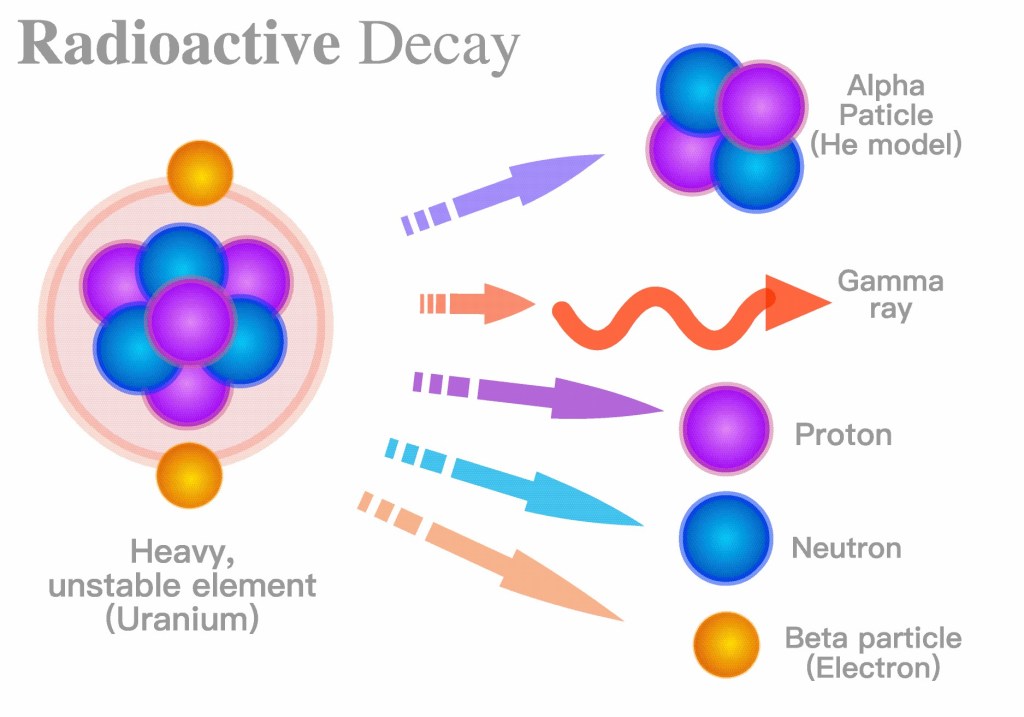
Radioactive decay rates have changed: This objection does not work because rates of radiometric decay (the ones relevant to radiometric dating) are thought to be based on rather fundamental properties of matter, such as the probability per unit time that a certain particle can “tunnel” out of the nucleus of the atom. Analysis of spectra from quasars show that the fine structure constant has not changed over the last ten billion years. There are dozens of radiometric dating methods that are consistent with each other throughout time. Also, for a young earth you would need the decay rates to have been millions of times faster in the past, which would require changes in fundamental properties that would have plenty of noticeable effects on processes other than radioactive decay, not to mention the radiation being millions of times stronger than today. It would have fried everything.
Young earth creationists sometimes make the claim that the initial ratios between isotopes may have been different: That the initial ratios/condition were different in the past and therefore radiometric dating is unreliable. This is a better objection, but it also fails. In this case you must take it case by case for each radiometric dating method and situation. But in many cases the amount of the daughter isotope is known to have been zero, which makes it easy and reliable.
Radioactive decay wasn’t a million times faster 6,000 years ago. Stock Vector ID: 2417370135 by grayjay
We can see galaxies that are billions of lightyears away. This does not establish the age of the earth, but it makes a young earth and a young universe implausible.
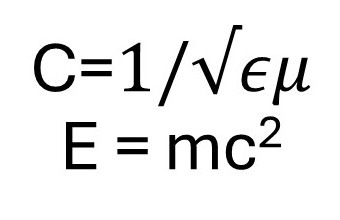
A common objection to this observation is that lightspeed in vacuum has changed: Similar to above this objection does not work because the light speed in vacuum is a fundamental constant that is not believed to change. It has been measured and no change has been seen. An example is the Einstein’s equivalence of energy and mass E = mc2. If the speed of light once was millions of times faster than now, the energy contained in a kilogram would be a trillion times larger than now. Where did all that energy go? The speed of light is determined by the inverse of the square root of the electric constant multiplied by the magnetic constant. You would have to drastically change the strength of the electric and magnetic fields (by the trillions) to get the speed of light to be millions of times faster. Wouldn’t that be noticeable? The light speed in vacuum shows up in many other physical relations as well. It is not a tenable objection.
A couple of equations in which the speed of light in vacuum is a fundamental constant.
We know stars are old because they develop according to certain physical processes that for some stars take billions of years. An example is our sun. It has fused (burned up) up five billion years’ worth of hydrogen.
The heavier elements in our solar system originate with older stars that burned out and exploded.
Electromagnetic radiation, including light, heat transfer if you will, travels from the inside of the sun to the surface and this takes 100,000 years. The photons are emitted and reabsorbed over and over, which is why the electromagnetic transfer is lower than in vacuum. If the sun is only 6,000 years old, how can we see it?
Finally, some objections to old earth by young earth creationists.
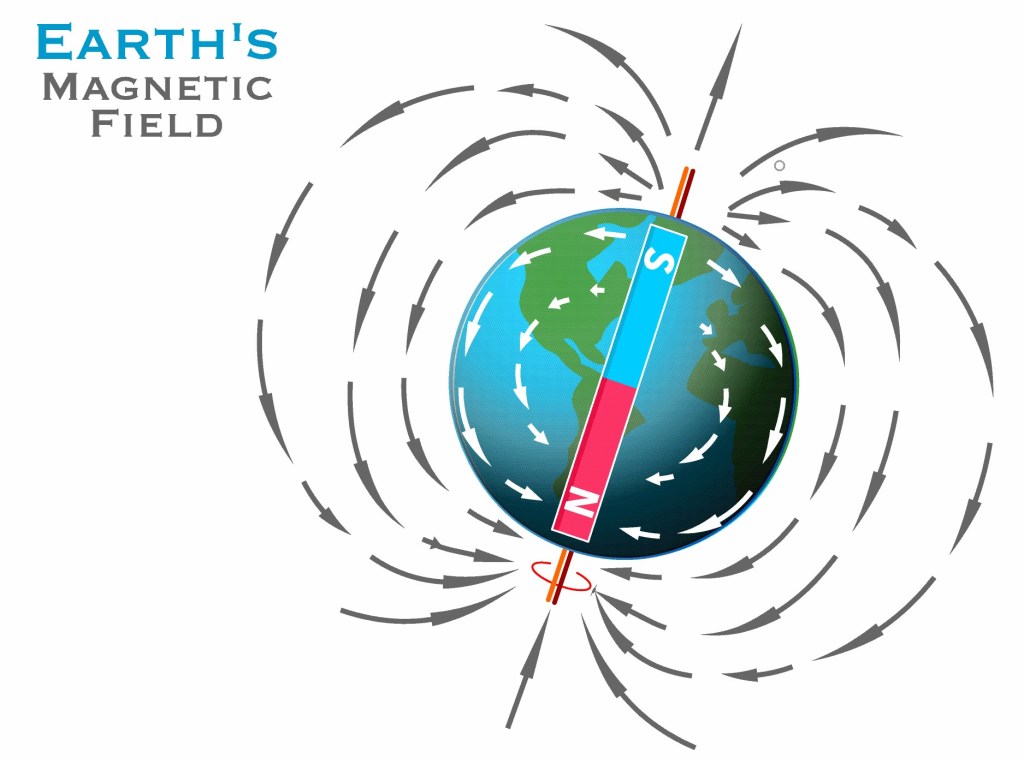
The earth’s magnetic field has been weakening during the last 130 years as if it was formed from currents resulting from earth being a discharging capacitor (claim by Thomas Barnes). This would make an impossibly strong magnetic field already 8,000 years ago. I remember this being the argument in a young earth creationist book I read as a teenager.
The first problem with this argument is that there is no good reason to believe that earth’s magnetic field acts this way.
We know that earth’s magnetic field has reversed itself several times thus disproving the discharging capacitor model.
Thomas Barnes’ extrapolation completely ignores the nondipole component of the field.
Conclusion, this objection is not reasonable.
Earth’s magnetic field. Stock Vector ID: 1851166585 by grayjay.
If the earth and the moon were billions of years old there would be a hundred feet thick dust layer from meteorites on the moon. The moon landing proved otherwise. This is another argument I remember reading in a young earth creationist book (Scientific Creationism by Henry Morris) as a teenager.
The problem with this argument, as I would later find out, is that Morris’ claims about a hundred feet thick dust layer was based on faulty and obsolete data. The expected depth of meteoritic dust on the Moon is less than one foot (after billions of years).
If I had known and understood any of this when I was 14 years old, I would not have been bamboozled by the young earth creationists, but it was not the only time I was bamboozled.
Anyway, this is how I envision one blog post in my upcoming blog post adventure. It is a brief overview of why experts/scientists can be trusted in regards the topic of the post. I have not yet decided on a name for my new blog.
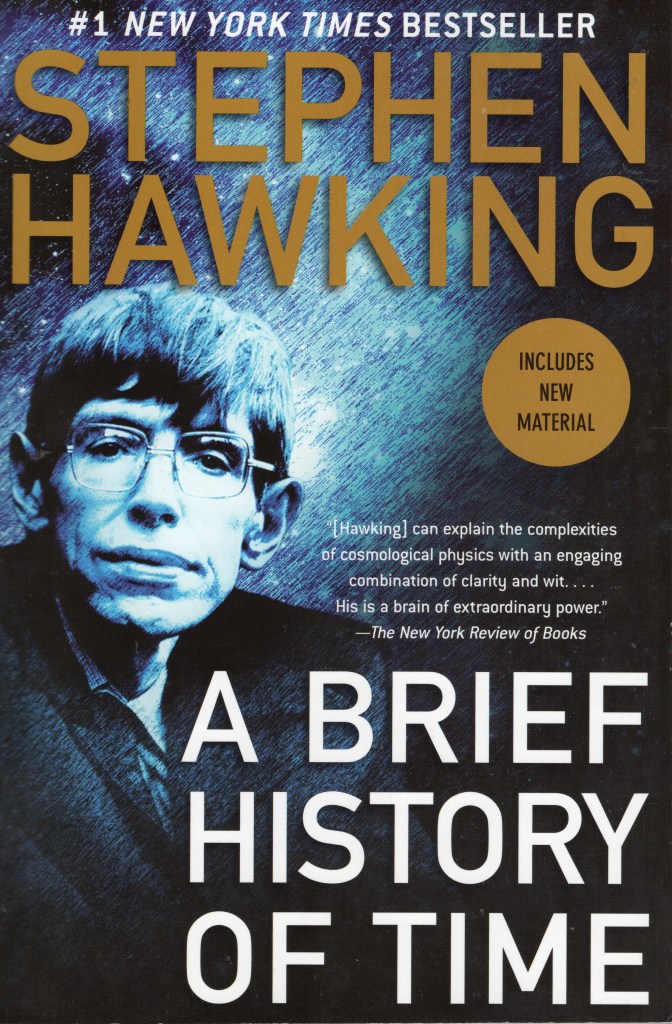
This is a Leonberger blog, but sometimes I also post reviews for books that are not about Leonbergers and when I do it is books that I love and that I want others to read. Today I am posting a review for a book that I loved, “A Brief History of Time: And Other Essays” Hardcover – September 1, 1998, updated in 2017. It was written by Stephen Hawking. A long time ago I read the original “A Brief History of Time” but now I read this updated version. It is still the original but the adjustments/corrections for more recent discoveries are described in the appendix. Contrary to what Amazon claims I don’t think this is a book “Told in language we all can understand”. In my opinion you need a little bit of a physics background or at least a serious interest in the subject. Otherwise, it will be too much abstract information at once. I should add that I bought the Hardcover.
Hardcover – Publisher : Bantam; Anniversary edition (September 1, 1998), updated 2017, ISBN-10 : 0553109537, ISBN-13 : 978-0553109535, 240 pages, Item Weight : 2.31 pounds, dimensions : 6.18 x 0.83 x 9.29 inches, it cost $16.14 on US Amazon. Click here to order it from Amazon.com.
Paperback – Publisher : RANDOM HOUSE UK; First Edition (January 1, 1990), ISBN-10 : 0553176986, ISBN-13 : 978-0553176988, 211 pages, Item Weight : 2.31 pounds, dimensions : 4.33 x 0.71 x 7.05 inches, it cost $20.85 on US Amazon. Click here to order it from Amazon.com.
Kindle – Publisher : Bantam; 10th edition (May 4, 2011), ASIN : B004WY3D0O, 242 pages. It is currently $9.99 on Amazon.com. Click here to order it from Amazon.com.
Audiobook – Publisher : Phoenix Books, Inc., Release date : January 06, 2022, ASIN : B09NLFY54Z, Listening length 5hrs 49 minutes. Click here to order it from Amazon.com.
Front cover of A Brief History of Time: And Other Essays Hardcover by Stephen Hawking. Click here or the picture to visit the Amazon.com page for the Hardcover version of the book.
Amazon’s description of the book
Published more than two decades ago to great critical acclaim and commercial success, A Brief History of Time has become a landmark volume in science writing. Stephen Hawking, one of the great minds of our time, explores such profound questions as: How did the universe begin—and what made its start possible? Does time always flow forward? Is the universe unending—or are there boundaries? Are there other dimensions in space? What will happen when it all ends?
Told in language we all can understand, A Brief History of Time plunges into the exotic realms of black holes and quarks, of antimatter and “arrows of time,” of the big bang and a bigger God—where the possibilities are wondrous and unexpected. With exciting images and profound imagination, Stephen Hawking brings us closer to the ultimate secrets at the very heart of creation.
Relativity, Quantum Mechanics, Black Holes, and Cosmology in just 200 Pages.
First, I should mention that even though I bought the hardcopy version of the book released in 1998, I received the updated version released in 2017. The same will probably happen to you if you buy it. I certainly did not mind. The 2017 version is identical to the 1998 version, but it contains additional material including corrections that are featured in an appendix at the end of the book. For example, in 1998 it was discovered that the expansion of the universe is accelerating, making the Friedmann models he discussed in chapter 3 almost obsolete. In addition, since 1998 Hawking’s no-boundary condition has become more certain, as well as the existence of multiverses. Therefore, it is important not to skip the appendix, and perhaps it is best to read the appendix first, so you know what to ignore in the original text of “A Brief History of Time”. I should mention that I read the original book from 1990, a very long time ago.
The book covers a lot of material. He describe past models of the universe, space and time and special and general relativity, light cones, cosmology, the expanding universe, quantum physics, Heisenberg’s uncertainty principle, the two slit experiment, the wave particle duality, anti-particles, Feynman’s sum over histories, elementary particles, particle spin, fundamental forces, entropy, black holes, event horizons, space-time singularities, the cosmic censorship hypothesis, virtual particles, the big bang, the inflationary model and the new inflationary model, the anthropic principle, imaginary time, quantum gravitational effects, the no-boundary condition, three arrows of time, Gödels incompleteness theorem, Einstein-Rosen bridges, or so called wormholes, supergravity, string theory, the unification of physics, renormalization, eternal inflation and the multiverse, etc. In summary, he covers a lot in less than 200 pages.
I have a degree in physics (I became an engineer) and I have an interest in these kind of topics, and therefore I understood most of the content in this book, at least at some level. However, I can see how people without a background in physics would have a hard time with this book. Hawking is for the most part doing a great job explaining these topics, but many of the topics are very abstract and the book covers a lot of them. I think it might be too much for some people, but I don’t see that as necessarily a fault of the book. It is just an acknowledgement that this is not an easy subject. If you want to understand what we know about the universe you have a lot of work ahead of you, no matter how great your teachers or authors are.
One potentially controversial item is the implications of the no-boundary condition derived from the combination of general relativity and quantum mechanics (quantum gravity). It is natural to think that the universe has either existed for an infinite time or that it had a beginning. The no-boundary condition offers up a third option. Space-time is finite and yet there is no singularity. In addition, the universe is self-contained meaning it does not have a beginning or an end. Just like in a universe that has existed for an infinite time there is no moment of creation.
In chapter 10 he discusses wormholes and time travel. Kurt Gödel, the guy with the incompleteness theorem, showed that under certain circumstances General Relativity allowed for time travel. Also, when you travel faster than the speed of light you are traveling backwards in time, something most science fiction authors depicting spaceships traveling faster than the speed of light conveniently ignore. However, the conclusion of the discussion that followed was basically, in practice you can probably not time travel. Just imagine that you could travel back in time and kill your mother. That way you would never be born so now you could not travel back in time and kill your mother, and poff, now you exist again, but now you can travel back in time and kill your mother. Time travel comes with various logical problems. By the way where are all the time travelers from the future?
One thing I disagree with was that he on page 156 says that intelligent beings can only exist in the expanding phase of the universe. His explanation for this statement is not convincing and I don’t believe it. However, since we now know that the universe is likely to expand forever it is a moot point. He also keeps calling entropy “disorder”. This is very common, but “disorder” in common vernacular is a vague term that does not exactly correspond to the mathematical definition of entropy, and this should at least be pointed out. These are very minor and unimportant complaints, but I wanted to mention them. The Amazon description states: “Told in language we all can understand”, which as I mentioned is not really true. But that is the Amazon description of the book, not a problem with the book.
In summary, I think this is a very interesting and informative book and I think it is well written and well organized. The fact that it is difficult reading for many people is because of the subject matter and is not the fault of the author. I highly recommend the book to anyone with a background in physics and anyone else who is really interested in the subject and doesn’t mind looking up concepts a bit more in depth. I give it five stars.
Back cover of A Brief History of Time: And Other Essays Hardcover by Stephen Hawking. Click here or the picture to visit the Amazon.com page for the Hardcover version of the book.
About the Author
Stephen Hawking’s ability to make science understandable and compelling to a lay audience was established with the publication of his first book, A Brief History of Time, which has sold nearly 10 million copies in 40 languages.
Hawking has authored or participated in the creation of numerous other popular science books, including The Universe in a Nutshell, A Briefer History of Time, On the Shoulders of Giants, The Illustrated On the Shoulders of Giants, and George’s Secret Key to the Universe.
I can add that I also read The Grand Design by Stephen Hawking, which I also recommend but with the same caution as for this book. It’s a bit abstract.
As I mentioned in a previous blog post I’ve been thinking about launching a second blog. The topic would be facts, or insights that are widely disputed or misunderstood amongst the public, yet important and known to be true. However, I am also thinking about adding another aspect to the blog and that is facts, or insights that are highly surprising to people, yet important and known to be true. Curious or strange facts if you will. Not strange trivia but important stuff. People wouldn’t necessarily dispute these facts, well they might, but they may appear unintuitive to a lot of people. So, the true facts that people are disputing would be “cluster-A” and the facts that just would seem strange, ponderous, or counter intuitive would be “cluster-B”. I will post about both.
This particular blog post gives an example of a cluster B fact. To express myself a little bit simplistic, science does not know everything (otherwise it would stop), but it knows a lot. By studying the light from a distant star, we can determine what elements it is composed of. The star may be composed of 71% hydrogen, 27% helium, 1% Lithium, and 1% other elements, and we can know that just from its light. We can determine the distance to the star, how it is moving compared to us, its temperature, roughly its age and longevity, and more. 150 years ago, we could not have dreamed of this capability.
We can know so much about a star from its light. Shutter Stock Illustration ID: 566774353 by Nostalgia for Infinity.
Yet we know that there are things we can never know, no matter how advanced science becomes. Infinite experimentation, super intelligence, a quintillion super genius, infinite time, cannot breach some knowledge. The universe itself forbids some knowledge. It also means that the statement “nothing is impossible” is false. My natural reaction to such a claim is, “come on you can’t say that with certainty”, and I expect many others will feel the same. However, the reason some knowledge will never be attainable is that physical laws as well as mathematics and logic forbid some knowledge. Some things are not meant to be known. I will explain in the four sections below: the event horizon, the Heisenberg uncertainty principle, beyond the observable Universe, and Gödels incompleteness theorem.
I should say in my future blog I will explore each of the four examples below more in depth, and put them in their own blog posts, and I might add or remove examples as I learn more.
The Event Horizon of a Black Hole
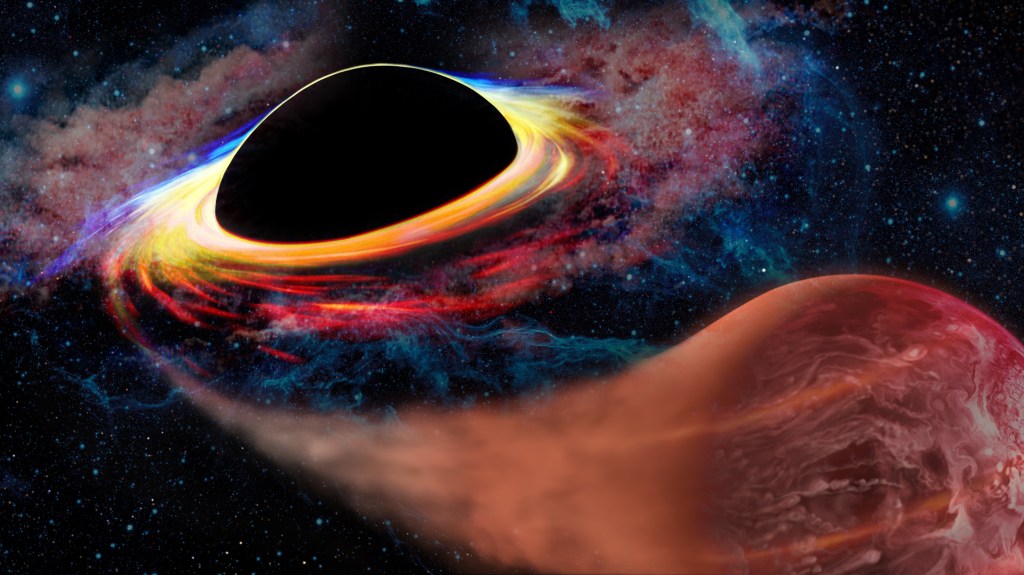
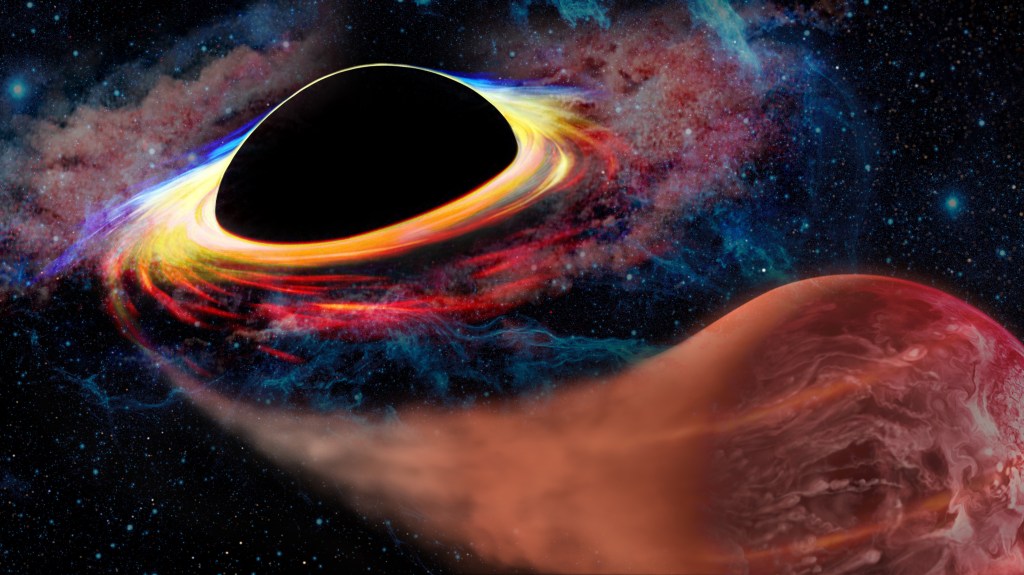
A black hole is a region of spacetime where gravity is so strong that nothing, including light, can escape it. The boundary of no escape is called the event horizon. If you pass the event horizon you cannot come back out no matter how much energy, you expand. Nothing can escape, no matter, no radiation, not light or other electromagnetic radiation, and no information. Nothing at all can escape. The curvature of time and space itself forbids it. I should add that right at the event horizon, there is so called Hawking radiation, but without complicating things it is not the same thing as escaping a black hole.
Black Hole Stock Photo ID: 2024419973 by Elena11
Some black holes are formed when large stars die and collapse. These black holes are estimated to have a mass of five to several tens of solar masses. However, there are also super massive black holes that reside in the center of galaxies. The super massive black hole at the center of our galaxy, the Milky Way, is called Sagittarius A* and is estimated to have a mass of four million times the mass of our sun. The largest known supermassive black hole TON 618 is 66 billion times more massive than our sun. There are an estimated 100 million black holes in our own galaxy, the Milky Way. One interesting fact is that celestial objects can orbit a black hole, just like planets orbit the sun, but as you get too close you will rush, at the speed of light, into the depths of the black hole You are “poff and gone”.
The fact that nothing, including information, can escape a black hole means that we can never observe what is on the inside. You can venture inside and be lost. You can extrapolate from physical laws what might be inside, but you can never observe and report what is inside to planet Earth.
The Heisenberg uncertainty principle
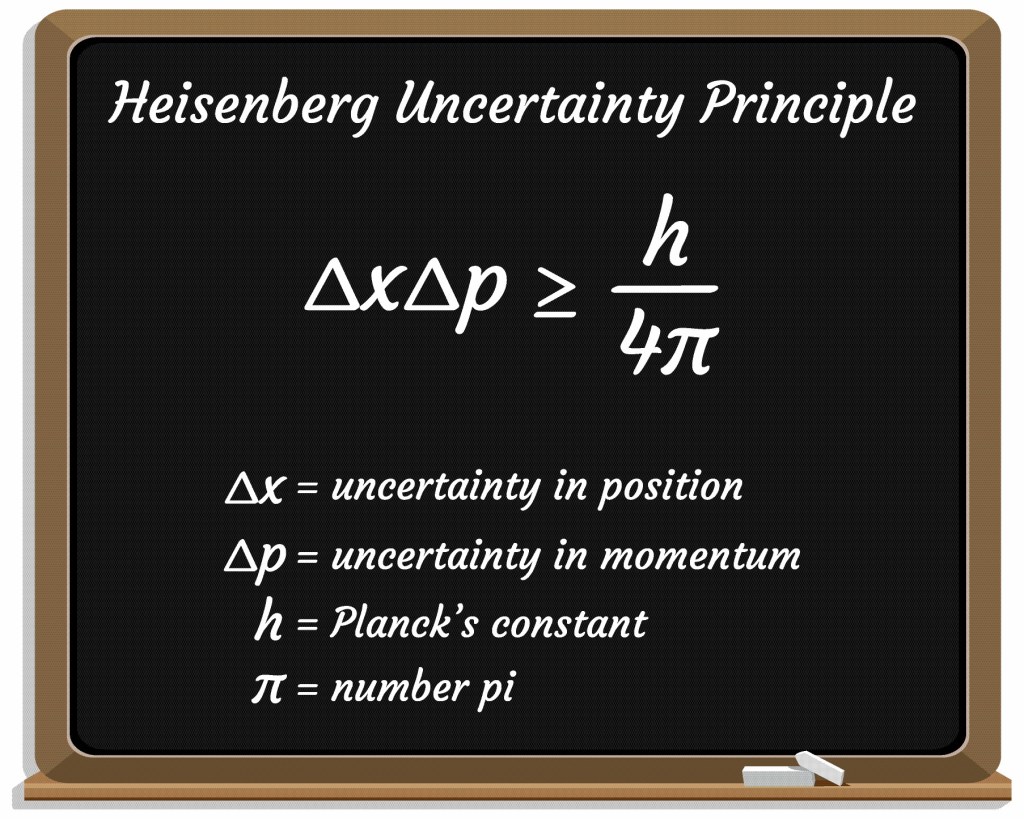
The Heisenberg uncertainty principle states that it’s not possible to know the position and momentum of an object with perfect accuracy at the same time. Another way of saying that is that we cannot know both the position and speed of a particle, such as a photon or electron, with perfect accuracy. The formula is: dX * dP >= h/4pi , uncertainty in position (dX) times uncertainty in momentum (dP) is larger than half of Planck’s constant, which is very small. There is also an energy and time precision : dT * dE >= h/4pi. It basically means that there are no perfectly exact measurements or knowledge. Everything is a bit fuzzy. Planck’s constant is very small, so Heisenberg uncertainty principle does not matter for everyday objects, but it matters when sizes are very small (positions, energies, etc.) Note, Heisenberg uncertainty principle is not regarding a limitation of our equipment, but a limit set by a law of physics. It is a limitation set by the Universe.
Heisenberg uncertainty principle Shutter Stock Vector ID: 2380436193 by Sasha701
Beyond the observable Universe
The observable universe is a ball-shaped region of the universe consisting of all matter that currently can be observed from Earth or its space-based telescopes. The radius of the observable universe is 46.6 billion light-years. The size of the observable universe is growing. Unfortunately, at those distances, space itself is stretching/expanding faster than the speed of light. Since no signal or information can travel faster than the speed of light we are losing, not gaining, celestial objects from the observable universe. Further, in the past we’ve lost many galaxies this way. I can add that the universe may be infinite. Since the expansion is accelerating, we will keep losing more galaxies beyond the boundary of the universe and some galaxies were always lost (with respect to observation).
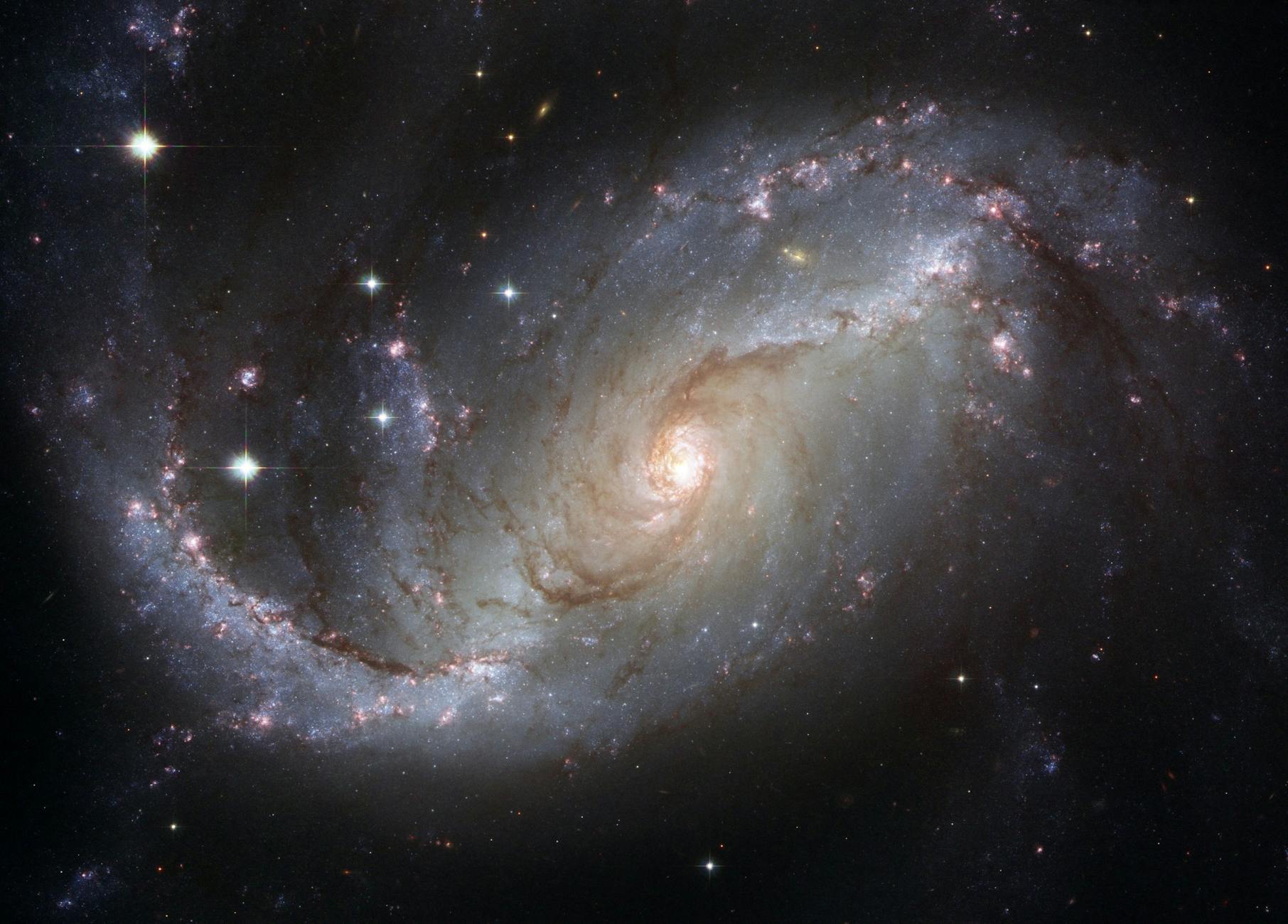
A view of a galaxy full of stars. Photo by Pixabay on Pexels.com
If we are wrong about the fact that the expansion of the universe is accelerating, then perhaps we can observe more galaxies in the future. But if not, then there are galaxies that we have never observed, galaxies that we can never observe, and there are galaxies that will become unobservable in the future. Depending on the size of the universe we may never be able to observe more than an infinitesimally small portion of the universe. Again, the universe is stopping us from knowing something.
Gödels incompleteness theorem(s)
The theorem states that in any reasonable mathematical system there will always be true statements that cannot be proved. In other words, to find a complete and consistent set of axioms for all mathematics is impossible. There are forever hidden truths in mathematics. For the case of natural numbers this means that there will always be statements about natural numbers that are true, but that are unprovable. I can add that there is also a second incompleteness theorem that states that a formal system cannot prove that the system itself is consistent. Basically, there are limits to mathematics set by logic.
There are forever hidden truths in mathematics in the form of unprovable truths. Photo by Andrea Piacquadio on Pexels.com
I have a book on Gödels incompleteness theorem, which I have not read, but I will read it before I make a post about it.
Some other topics for strange yet important facts
Light speed in vacuum is a Universal Constant.
Time is relative (deeper explanation).
Non-simultaneity and simultaneity are relative.
The strange double slit experiment.
Quantum Tunneling.
Quantum entanglement.
The Monty-game-door trick, 3-doors.
The butterfly effect.
Mandela effect.
What do you think about mixing in some very strange but important facts in my future blog about facts people dispute even though they are known to be true?
I’ve been thinking about launching a second blog for quite a while. The topic would be facts, or insights that are widely disputed or misunderstood amongst the public, yet important and known to be true. I believe I have identified hundreds of such facts so far. These facts and insights are not seriously disputed amongst the experts and scientists in the relevant fields and the evidence for their veracity is overwhelming. Therefore, verifying the accuracy of these facts and insights should not be difficult, just ask the respective expert community. However, finding the best way to express and explain these facts, determining whether they are important, and verifying that they are widely disbelieved may be more difficult.
One example of such a fact is that the Earth is a lot older than a few thousand years old (6,000 or 10,000 years old). Despite the fact that the scientific community states that Earth is 4.5 billion years old and that humans evolved over millions of years a 2019 Gallup poll, showed that 40% of US adults believe that God created humans in their current form within the last 10,000 years. The evidence from a large variety of scientific fields, biology, geology, paleontology, physics, astronomy, astrophysics, cosmology, etc., contradicts young earth creationism whilst the attempts to discredit the old earth narrative have fallen short.
Trilobite fossil Shutter Stock Photo ID: 1323000239 by Alizada Studios
The reason for wanting to do this is not to prove anyone wrong, but because it is interesting, and it provides a growth opportunity for everyone including myself. In the past I believed false facts and I probably still do. Discovering these and learning about why you most likely are wrong could sometimes be unpleasant at the same time as it is an opportunity for growth and an opportunity to better understand the world. I am hoping to make the site interactive. Readers can suggest such facts, politely dispute my assessments, and add evidence. However, I should say I would like to avoid politics.
When I was a teenager, I believed that Earth and the Universe was 6,000 years old, and that evolution was a hoax. I read young earth books that appeared scientific, and which presented a long list of objections to the established scientific narrative. My religious background had something to do with it, but I also thought that I had the scientific facts on my side. I was interested in science, and I got accepted to “Naturvetenskaplig linje”, a Swedish high school program for students with good grades and who showed aptitude for science. This program was like taking lots of AP classes in math/calculus, physics, biology, and chemistry, and it prepared me well for my university level studies in engineering physics and electrical engineering.
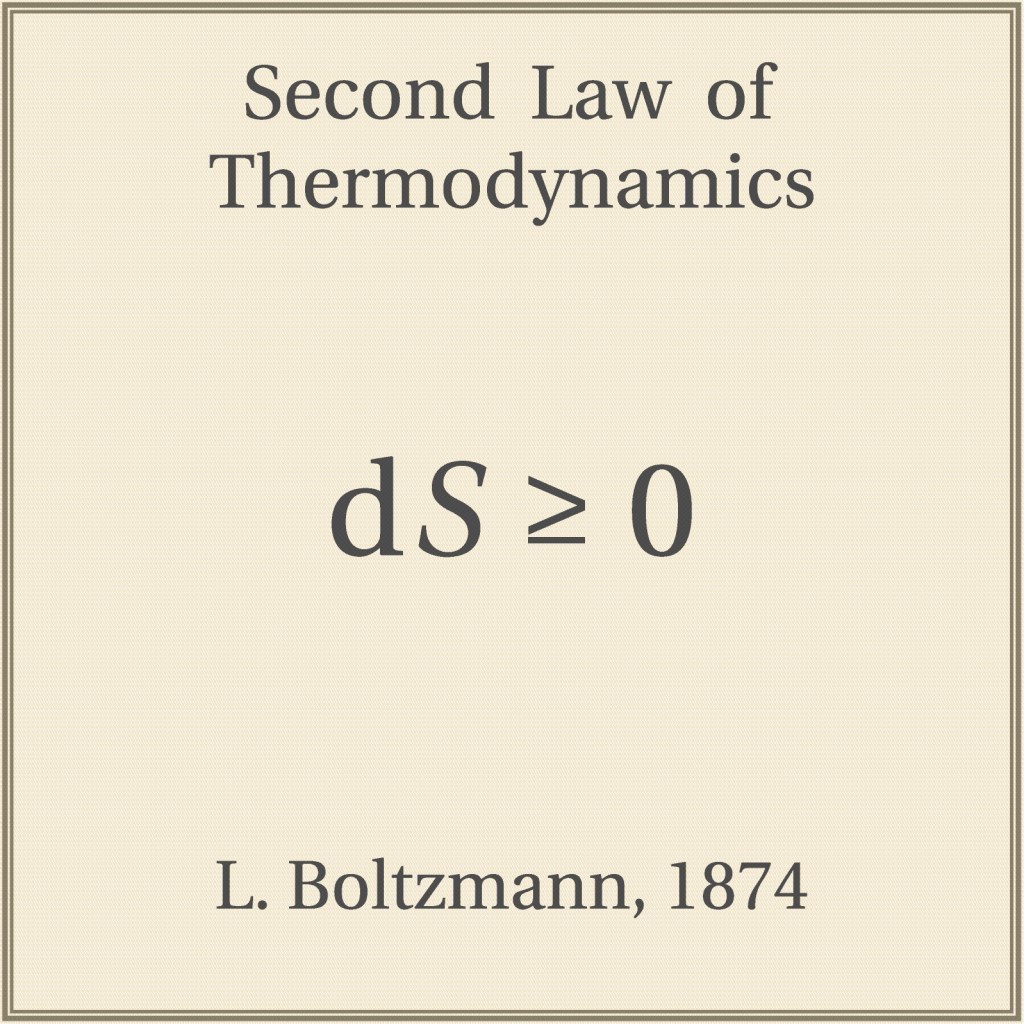
In physics I learned about radiometric dating. Sure, that topic had been mentioned in the young creationist books as well, but they had insisted that radiometric dating was unreliable, and they had suggested that radioactive decay rates might have changed. Now I learned why radiometric dating was very reliable, why radioactive decay rates remained constant, about the physical laws involved, not to mention the facts that highly sped up radioactive decay rates would have resulted in not just a very radioactive world, it would have forced changes to physical laws that would have broken the world. In thermodynamics I learned that the claim that the second law of thermodynamics contradicted evolution was based on a very simple, in fact silly, misunderstanding of the second law of thermodynamics.
Second law of thermodynamics Shutter Stock Vector ID: 2342031619 by Sasha701
From astronomy and astrophysics, I learned that it takes 100,000 years for light to travel from the inside of the sun to its surface. I learned that distances between stars and galaxies were thousands, millions, and even billions of lightyears, yet we could see them. How can we see a galaxy whose light has been traveling for 10 billion years if the Universe is only 10,000 years old? The young earth answer to that was that light might have travelled at a much faster speed in vacuum in the past, neglecting the fact that the speed of light in vacuum is a universal constant that is part of a lot of formulas E= mc2 (energy content of mass), the ratio of the electric and magnetic force, time and space formulas, the size of black holes, Einstein’s gravitational constant (strength of gravity). 10 billion years versus 10,000 years means that the speed of light must have been a million times faster, gravity a trillion trillion (septillion) times weaker, and according to E = mc2 99.99999999% of the Universe’s energy must have vanished.
Black Hole Stock Photo ID: 2024419973 by Elena11
As time went on every single claim that the young earth creationist had made fell apart. In other words, knowing some science made the young earth narrative not only untenable but silly. To be honest with myself I had to give up the young earth belief system. Naturally, the universe could have been created yesterday, our memories could be implanted, and we could all be dreaming like in the Matrix. Science isn’t 100% certain, but some beliefs are much more plausible than others.
Young earth creationism wasn’t the only time I had been bamboozled. I think because I have a fairly strong science background combined with the facts that I have been bamboozled and I have accepted that reality, and the fact that my interests are so wide makes me a good candidate for launching this type of blog. I would like to present the fact and instead of arguing just give the reader a basic and understandable overview of the evidence with links to reliable sources. The reader can then sort it out for themselves. Again, I am hoping to get some help with suggestions and growing it to eventually thousands of examples/posts. Then I want to select, let’s say, the 100 best ones. Below are some examples of what I am interested in.
We know that the world is a lot older than 10,000 years old and yet many dispute that.
Evidence for evolution is strong, evidence against it is lacking, something many don’t know or deny.
We know that economic externalities are real (market failures), yet market fundamentalists are unaware of this.
Someone creating a duplicate account of you on Facebook does not mean you were hacked, yet many make that assumption.
Wind power is not a major cause of bird death. Fossil fuels and cats are a lot worse (hundreds of times).
We know that homeopathy does not work, yet it is widely used.
Global warming is real and is known to be caused by us, yet many deny this.
Plastic is not a big environmental problem for the US.
Poverty, violence, child mortality has been sharply reduced worldwide to the surprise of many.
My question now is what should I call the blog? Super Facts, Deep Insights, Eye Openers, Transformative Facts, Bamboozle Medicine, Big Memos, ….
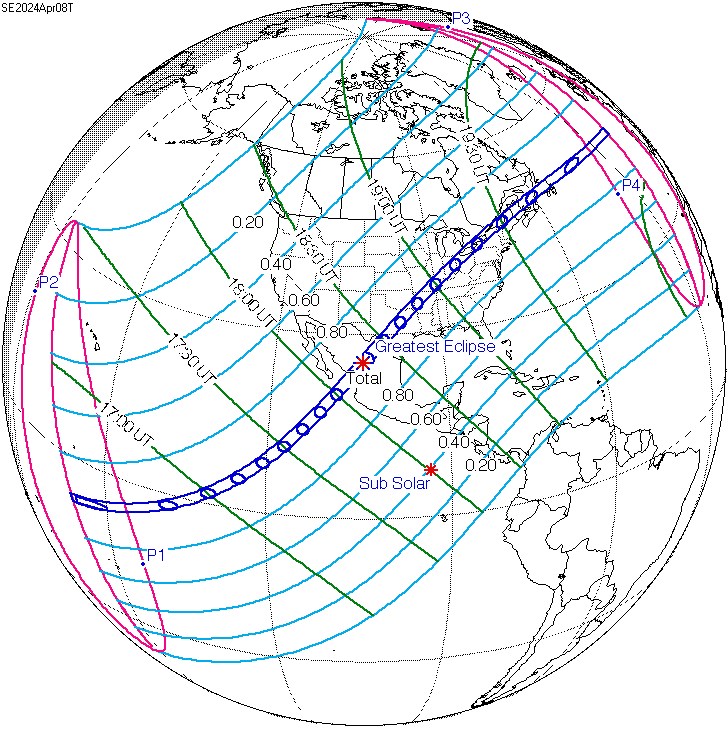
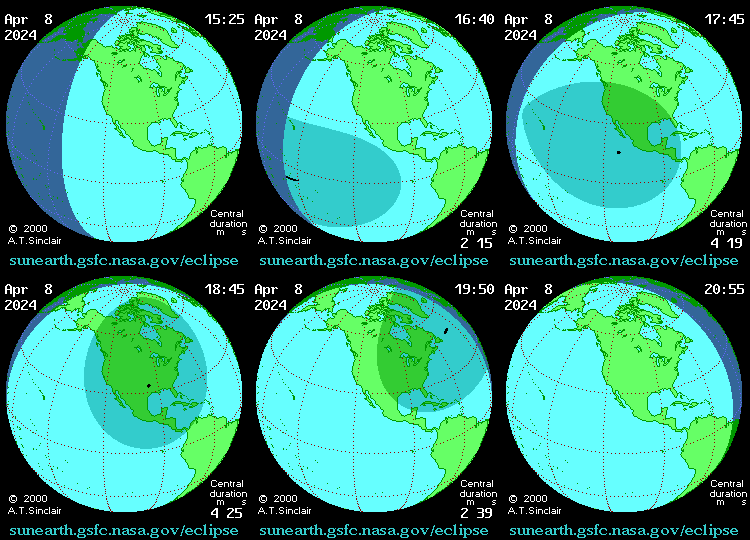
This post is a brief reminder of the total solar eclipse happening April 8, 2024. Dallas, Texas, where I live, will experience totality, and the total time in totality in Dallas will be 3 minutes and 51 seconds (1:40:43 PM CDT to 1:44:34 PM CDT), one of the longest durations across the country. If you are content with just a partial eclipse you can see that from any of the 48 states, and it will last for hours. This event is less than two months away.
Path of totality (total solar eclipse). I am allowed to use this image as long as I link back to the National Eclipse. Click on the image to visit the National Eclipse.Alternative map showing the path of totality from Travel + Leisure.
According to those who have experienced a total solar eclipse it is a lot more profound experience than a partial solar or an annular eclipse. A partial eclipse is definitely cool. You can see the crescent shadows of tree leaves and if you have the right glasses, you can see the sun partially covered by the moon. However, it won’t get dark. In a total solar eclipse, it will get dark, and many say that the birds will stop singing, it will become quiet. This is the last total solar eclipse in the United States until 2044. It will be my first total solar eclipse (I saw a partial in 2017). Hopefully the weather will cooperate.
Overview of path of totality and partial solar eclipse worldwide. Public domain – NASA. Eclipse Predictions by Fred Espenak.Gif animation illustrating totality and extent of partial solar eclipse. Official work for NASA.My solar eclipse glasses that I bought on Amazon.
Click here or here to read more about the solar eclipse on April 8, 2024.


















 Leonberger Life