
This post is not about Leonbergers but about something entirely different; culture shock, which I think is an interesting topic. The Merriam-Webster dictionary defines culture shock as : “a sense of confusion and uncertainty sometimes with feelings of anxiety that may affect people exposed to an alien culture or environment without adequate preparation”.

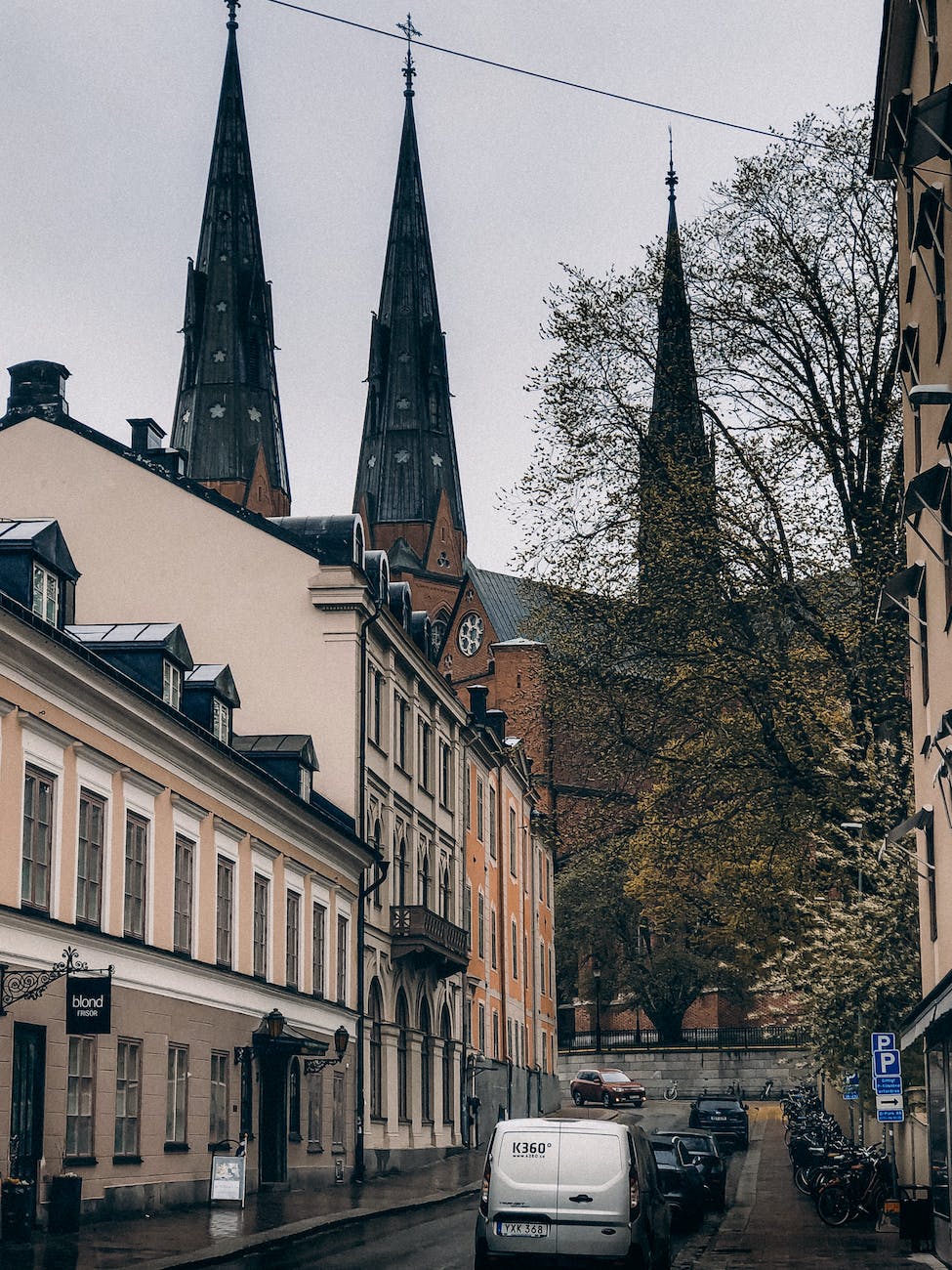
In 1987 I was selected to be part of a university level exchange student program. The exchange program was between Uppsala University in Sweden and Case Western Reserve University in Cleveland, Ohio. In total we were six Swedes (two from Uppsala). I was studying Engineering Physics in Sweden but in the US, I would continue studying Electrical Engineering because the Swedish Engineering Physics program was very similar to the Electrical Engineering program at CWRU.



I arrived in the US in August 1987, and I was not well prepared for what I would experience. That doesn’t mean it wasn’t a great experience but there were challenges. Interestingly, I would later experience reverse culture shock. Reverse culture shock means that after adjusting to your new country you experience another shock when coming back to your old country.

One of my first unpleasant discoveries was that the US uses imperial units instead of the metric system unlike most of the rest of the world. I quickly had to learn how to use inches, feet, miles, ounces, pounds, cups, gallons, etc. I knew about miles per hour versus kilometers per hour, but it had not dawned on me that it applied to everything. This is quite important in engineering.

The academic environment was also quite different. In the US there were fewer classes, but you were often required to participate and there were quizzes and homework in addition to the final exam, which was short and relatively rushed. In Sweden you showed what you had learned on one big final exam that lasted 6-8 hours. How you achieved success on that exam was up to you. Well certain lab work had some weight also.

In addition, in Sweden there were no dorms, no fraternities, no Greek life, no meal plans, no college sports teams, no tuition, and no health insurance. Attending a university in Sweden is more like working for a company. You are more independent, and tuition is free, and Sweden has national healthcare. In Sweden there are clubs, organizations, and parties you can go to, but it is more adult and has no likeness to fraternities. I have no opinion on which system is better, but it was a challenge to suddenly adjust to a dorm, meal plans, a different kind of student life, tuition waivers (provided by Uppsala University), etc.

Another difficulty was that I was not fluent in English at the time. I had a hard time with conversation as well as understanding portions of some lectures. People in English speaking countries often do not understand the amount of work that goes into learning how to speak a second language fluently because unlike most of the rest of the world they never had to do it. English being the premier second language comes with great benefits for native English speakers. Learning to speak a language fluently is one thing, learning to speak it without an accent if you primarily learned it as an adult is quite another. A question I’ve gotten many times is ”why do you still speak with an accent?”. Well, Arnold Schwarzenegger certainly knows the answer to that question.

Another thing people in English speaking countries sometimes miss is that people in the rest of the world are often not as familiar with the culture in English speaking countries as they might expect them to be. Well at least that was the case back then. In high school I studied Swedish and Scandinavian literature, and a little bit of German, French, Italian, and English/American literature, but I did not know much about Shakespear or famous American authors, and if you think about it, this is not strange. In addition, I did not know much about American movies or American music, but that was because I, unlike most Swedes, had not paid much attention to English speaking culture and music in general.

Add to that, the fact that Americans do not know much about cultural phenomenon in the world outside of the United States. For example, most Americans knew nothing about the world’s largest music competition, Eurovision. Eurovision is the largest song contest in the world. Countries compete against each other, and the final typically has as many viewers as the Superbowl, about 200 million. Americans also don’t know much about the second largest comic genre (largest at the time) in world, the French-Belgian Bandé-Dessiné (Astérix, Tintin, Spirou, etc.). So, we knew different things and were used to talking about different things, sometimes leading to awkward situations.

Which brings me to handegg. What most of the world call football is called soccer here, whilst a sport in which you handle an egg-shaped object mostly with your hands is called football, when it should be called “handegg”. When I arrived in the US, I had never heard of American football, but I quickly realized that I better know something about it. Later in the year I went to an indoor football game with a friend in Madison Square Garden in New York. Indoor football is a sport that has almost vanished, but it was still a thing back then. Can you guess who was called down to the field to play football at half time? I was. I told the host that I was from Sweden and that it was the first time I held a football. He showed me how to hold the ball and announced that I was from Sweden and had never held a football. The crowd was cheering for me, and luckily, I threw the ball into the goal two times out of three. Our team did not win but I did well.


Which brings me to the fact that Americans are typically polite, friendly and supportive of the underdog. They communicate well, they say excuse me when they bump into people, they smile a lot, and are often good conversationalists. Americans can be loud and not everyone is friendly but in general most Americans are friendly. I think this is a good thing that I am trying to emulate but it was yet another thing I needed to learn.

One thing that might sound like critique is that Americans back then did not know world geography very well. Today’s youth seem to be a lot better educated in this regard. I should say that by the age of ten I knew every country in the world and their capitals, and I could say something about most of the larger countries. So, it was a little bit frustrating to me to speak to people who did not know where anything was. We met people who asked how long the drive from Sweden / or Europe was. A woman asked me where I was from and I said Sweden to which she replied, “is that where all the men wear skirts?”. I said, “no that is Scotland”. I believe that’s what she meant. Another woman asked me the same thing, and after hearing my answer, she said “Sweeting, that’s the name of your country? What a cute name for a country”. Or how about this conversation between the PhD advisor to a friend of mine and my friend’s boss:
Boss : My name is …, what is your name?
PhD advisor : My name is Bahram.
Boss : Baddam, that’s not an American name, is it?
PhD advisor : No, I am from Iran.
Boss : Iran I’ve never heard of that. Where is that?
PhD advisor : It’s in Persia.
Boss : Oh yeah Persia I’ve heard of that.

I overcame my culture shock, and we all did well at CWRU. It was a good year. Later that year I met my wife Claudia and with her I would experience a reverse culture shock a few years later. I was working for a Swedish robotics company, and we moved to Sweden with our oldest son for one and a half year. Not only did my wife have a culture shock but I did too, coming back to Sweden. How did that happen? Well, one reason was that in the US I had gotten used to a mix of cultures and ethic groups and Sweden is a very homogenous country. This mattered because through my wife, who is not Swedish, I got to know immigrants to Sweden. It is difficult to fit in when you are different and therefore immigrants tend to hang around other immigrants, so I learned to see Swedish society through their eyes, and I saw what I had never seen before. It took some time to get used to.


Have you experienced culture shock? How about a reverse culture shock?


The entire soccer/ football game can be entirely confusing until you get used to it… And the difference between European and American education systems is definitely striking. It may sound biased but I surely prefer Europe. Not that I’ve ever been abroad. The only “cultural” shock I’ve ever experienced was traveling from my city to other cities in my country, where people are slightly different, architecture differs, even food- for example restaurants with completely different menus and recipes, different designs, etc. Different way of living. Honestly I would move to one of those cities but I do love my hometown, where everything is not as expensive as in those other cities I’ve seen. So yeah. Loved reading this post of yours. 🙂
LikeLiked by 2 people
Thank you for your kind words Inner Musings. That is interesting. I have to admit I still don’t know which is your country. Can I guess? Is it Great Britain? I’ve been there twice, London and Gateshead.
LikeLiked by 1 person
It’s not UK. It’s actually Romania 🙂
LikeLiked by 1 person
Sorry my guess was not a very good one. I’ve been to Romania. We visited Bucharest, part of Walachia, and Transylvania but we did not visit the other provinces and I know they are all different with different architectures and culture. It was a great trip and we learned a lot.
LikeLiked by 2 people
Glad to hear you visited and you enjoyed it. 🙂 Romania is a beautiful country. Though, all countries have their own uniqueness. There’s something to see everywhere you go in this world.
LikeLiked by 1 person
Thank you and yes you are so correct inner musings.
LikeLiked by 1 person
Experiencing differences in culture is always interesting… and Asterix and Tintin comics were the best…
LikeLiked by 2 people
Yes I certainly agree with you.
LikeLiked by 1 person
I spent a summer in an Eskimo fishing village. I was the only English-only speaking white person, and I wasn’t a commercial fisher. That was something, and very fun. But the bigger cultural shock was when I spent a semester in China in the 1980s. It was an incredibly controlled society, and the people I met didn’t understand how controlled they were (what they were taught in school, what the newspapers said, what was on TV, what the morning overhead speakers said, how they couldn’t travel or live wherever they wanted, etc., etc.) But they were very gracious people and super hospitable.
LikeLiked by 4 people
Wow that is a very different experience. That must have been a big culture shock. I wonder, was that in Alaska? I’ve never been to Alaska.
LikeLiked by 1 person
Yes, the fishing village was in Alaska. There was space, air, and tundra. The Chinese experience was difficult at times (even though the people were gracious) because of the crowds, polluted air, and very little greenery except for crops miles out of town where the farmers were.
LikeLiked by 1 person
Thank you Priscilla. I can understand that China in 1980’s must have been a huge culture shock and not a good one. I have never been to China but as I understand it has evolved quite a bit since then.
LikeLiked by 1 person
That was fascinating. The metric system alone keeps me from moving out of the country! You are gutsy, Thomas. Even in my youth, I don’t think I could move countries and absorb a new culture.
Here’s a culture story for you from my US Naval Academy daughter: Friday nights, the Mids (what they call students) party by seeing who could swallow a live goldfish and then spit it up–still alive. What a hoot, don’t you think? Oh those crazy engineering students.
LikeLiked by 4 people
Wow, that I would have a hard time with. Fermented herring, a specialty from where I come from is not everyone’s favorite dish, even if I like it, but swallowing a live goldfish and then spit it up, well that sounds just crazy.
LikeLiked by 1 person
My daughter passed on the Rite of Passage!
LikeLiked by 1 person
That is impressive but it could not have been easy.
LikeLiked by 1 person
I don’t have any culture shock stories to tell, but when we first moved out to the San Diego area (well, I mean, I guess that was a bit of a culture shock, moving from rural Central New York to Southern California, but it’s still the U.S.) we became good friends with my Swedish coworker and her husband. She was born in Minnesota, I think it was, so she had dual citizenship, and they had decided to come here to work for a while. They stayed her for several years and before moving back to Sweden (the Örebro area). They were fun and reliable and we miss hanging out with them!
LikeLiked by 2 people
That is a nice story. Thank you for telling me. Most of the time moving within the US (as I have done) does not cause a big culture shock, well except when you move from the country side to a big city and vice versa. That is still a lot to get used to.
LikeLike
So interesting to read your story and know a little more about you. I have had culture shock and reverse, too. Being a military Army wife, my husband was sent lots of places. We lived for a year or so in Germany, and a year or so in Japan. Both very different cultures. Then when we got back to the States, it was strange, because it took awhile to get back into our normal life again. 🙂
LikeLiked by 2 people
Thank you for your kind words. Yes I understand that as an army wife you certainly had your share of culture shocks, and it was interesting to read about your reverse culture shock. As an army wife you served as well, so thank you for your service.
LikeLiked by 1 person
I definitely want to see Eurovision! I had heard of it before from reading blogs here on wordpress, but I haven’t personally experienced it.
This post was so good, Thomas. I enjoyed learning more about you and your experiences.
LikeLiked by 2 people
Thank you so much for your kind words Kymber. Yes the Eurovision is fun to watch because there are so many countries competing against each other in a friendly manner. It is difficult to find on TV in the US though. I’ve tried.
LikeLiked by 1 person
It looks like so much fun. 🙂
LikeLiked by 1 person
As a U.S.-born child of immigrants from Colombia, I can relate to this post’s narrative. I “reverse-migrated” to South America in 1966 (my mom’s parents convinced her to move back to Colombia one year after my dad died in a plane crash). I don’t remember “culture shock” back then cos I was so young that I adapted quickly. That happened when Mom and I returned to the States 51 years ago. In Bogota, I’d gone to a Catholic private school (with uniform and religious classes); in Miami, I attended public school with no uniform (but a dress code) or religious classes.
I had to relearn English, too. Yes, in Colombia we had mandatory English lessons, but back then there was no way to immerse yourself in a foreign language (no TV, barely any movies not dubbed), so whatever I “learned” in the second or the beginning of the third grade in Bogota went in one ear and out the other. In Miami? Well, Mom helped by not allowing me to watch more than one hour per week of Spanish-language TV (which rarely aired stuff I liked to watch anyway) and immersed me in the lingua franca of the U.S.
I did suffer a massive case of reverse culture shock when I traveled (by myself, at that) to Bogota to visit my relatives in the summer of ’74 when I was 11 years old. It was so strange…the city that I’d left less than two years before felt…alien. I loved my family. Still do. But I did not enjoy that vacation much.
LikeLiked by 2 people
Thank you Alex, that is a very interesting story. I knew most of it already but it is still very interesting to read. I think little children don’t experience culture shock as much and if they do they don’t remember I think it happens when you are a bit older, like your reverse culture shock at 11. However, it could happen to small children to some degree. When we lived in Sweden our oldest son got the idea that children spoke Swedish and that adults spoke English, because that’s what we did. When we landed in Chicago after our time in Sweden he went up to some kids at a playground and said a few words in Swedish but no one reacted, so he tried again, and again no answer. Then he tried English and now the kids responded in English. Oh the look on his face! Kids speaking English. How weird!
Anyway, thank you for your interesting comment Alex.
LikeLiked by 1 person
That anecdote about your son speaking Swedish to kids in Chicago is quite surprising! Thanks for sharing, Thomas.
LikeLiked by 1 person
I should say, he was not even three years old yet
LikeLiked by 1 person
Very interesting story.
LikeLiked by 2 people
Thank you Mumbai
LikeLiked by 1 person
Great read, Thomas! Very interesting. I haven’t left the US yet, but I’m sure I’ll experience some massive culture shock when I do.
LikeLiked by 2 people
Thank you so much Kirsten. If you go on vacation, stay at a hotel, stay with fellow travelers, perhaps a guide, visit tourist spots, you most likely will not have a culture shock. However, if you move to another country to work, study, internship or similar, and you do things like people in that country does and live like them for a while, then you might.
LikeLiked by 1 person
Moving from the San Francisco Bay Area to the Arizona desert (the wild, wild west) was a huge culture shock. It took me at least 5 years to adjust.
LikeLiked by 2 people
Yes I can understand that. The difference just between American cities and the country side is pretty big in the US to begin with. In Sweden country side and cities are more similar in their thinking. Thank you for the comment Dawn.
LikeLiked by 1 person
haha thanks for sharing.
LikeLiked by 2 people
Thank you JR
LikeLiked by 1 person
A very interesting post. “…no college sports teams, no tuition, and no health insurance (national health insurance) all sound advanced, civilized, and better to me that what we have in the US. I had a bit of culture shock in my own country when I was 12 and my father retired from the military. Military bases were melting pots of Americans and I didn’t notice accents. When we moved to a civilian city in the southern US, most people had southern accents, black and white students rarely mingled, and teachers could hit students with a paddle for misbehavior. These things were foreign to me then.
LikeLiked by 2 people
Thank you JoAnna. I can certainly see that. Culture shocks certainly happens in other ways then moving between countries. Hitting students was outlawed in Sweden 1966 long before I started school. However, there was still one teacher doing it when I was in first grade. Luckily I did not have her. Thank you for your interesting story.
LikeLiked by 1 person
Interesting and amusing all at the same time, Thomas! 🙂 The “handegg” story made me laugh, as well as the fermented herring episode. I would experience culture shock with that, too. 😀 And now I’m picturing Swedish men in kilts! Or is that “Sweeting”? Hahaha!
There are some similarities between Sweden and Canada. Although tuition isn’t free here, we also have universal healthcare and use the metric system (but only since the 1970s, so most people are also familiar with the Imperial). Ours is a multicultural society, so we are more attuned to what’s going on abroad and also in the U.S., since it’s right next door. Whatever happens there usually affects us as well. And we’re pretty good with geography. 😉
My parents and I moved back and forth between Germany and Canada several times (father was in the army) and there was always a period of adjustment after those moves, as there are some significant differences. I loved watching the Eurovision song contest as well as the Italian one, San Remo (which we can watch on the Italian chennel here.)
LikeLiked by 2 people
Thank Debbie you for your very encouraging and entertaining comment. I think you are right. There are many similarities between Sweden and Canada. Well Sweden is obviously significantly smaller. Moving back and forth between Germany and Canada must have been quite a challenge, and a lot to adjust to. Thank you for the very interesting reading.
LikeLiked by 1 person
What an interesting post, Thomas. As an American who’s rarely traveled beyond my borders, I can’t wait to visit other countries and experience their cultures. Hopefully, I’ll do so with a sense of humor as I’m bound to stumble at times. It’s interesting how Americans are both diverse within our borders and often clueless outside them. One thing you proved here, is that travel is good for all of us. Thanks for sharing your experience.
LikeLiked by 2 people
Thank you so much for your kind words Diane. The companies I worked for ABB Robotics, De La Rue, Siemens sent me to different places around the world, various countries in Europe, India, and I traveled to different countries on my own too, about 50 countries. There is a lot to experience and see. I hope you get a chance to travel, and yes having some humor about inevitable misunderstandings is very good.
LikeLiked by 1 person
I hope to travel too, Thomas. What an experience.
LikeLiked by 1 person
Fascinating post. I admit — we visited Europe for the first time this spring. Such a wonderful and eye-opening experience.
LikeLiked by 2 people
Thank you much Brett. I am glad you got a chance to travel. Where in Europe did you go?
LikeLike
Paris, Switzerland, Italy. Such a joy. I’m so grateful.
LikeLiked by 1 person
Those are nice places. That is great!
LikeLiked by 1 person
I had culture shock to a certain extent when we moved from just outside New York City to a resort town in New Hampshire. I’d gone up there for many years in the summer, but it’s different when you’re a “flatlander” just visiting as compared to being a local. The main thing to adapt to was the slower pace and somewhat lackadaisical attitude here. You’ll set up an appointment with someone to work on your house and it takes longer to get the work done cause if it’s a nice day in the summer they take their kids fishing or something. Life is to be lived, and they’ll get the job done, just slower than I was used to.
LikeLiked by 2 people
That is interesting. I’ve realized that you can have culture shocks within the US, especially between cities versus country side. By the way I still cannot make comments on your website. I’ve seen other people can so it’s me but I don’t know why. Thank you for your comment Patti.
LikeLiked by 1 person
I don’t know why either. I’ve found a few where I can’t and I don’t know why
LikeLiked by 1 person
Hi Thomas, based on what you’ve written here, Sweden might be a culture shock for me. South Africa is very multicultural. We have 11 official languages and each language goes with a community that has its own culture. England is fairly multicultural too and also English speaking so I don’t have many difficulties there. When I was in Finland everything was in Finnish and that was a bit complicated. It was very different from what I’m used to.
LikeLiked by 2 people
I knew South Africa is a very multi-cultural country. I’ve met many people from South Africa here in Dallas. One of them opened a South African restaurant. Even though Sweden has five official languages, Swedish, Yiddish, Finnish, an old very different version of Swedish, and an aboriginal language, Sami. The languages other than Swedish are small and old cultural traditions. When I grew up everybody looked the same, spoke the same language, for the most part had the same cultural background, and there weren’t many tourists either. In the engineering physics program in Uppsala there was one non-white student among 400. However, this has changed with lots of immigration from the middle east. That changed a lot in the 1990’s.
LikeLiked by 1 person
Yes, the world has changed a great deal.
LikeLiked by 1 person
That’s so true about Americans not realizing how difficult it is to learn a different language. We are somewhat spoiled in that regard. I lived in Germany for a few years while in the military back in 1977, I didn’t experience a lot of culture shock, I just found it very interesting. I’ve been to 64 countries, but the first country I experienced culture shock was in 2009 traveling through Egypt and Jordan. It was a little scary. I’m glad there is Google translate now 😊
LikeLiked by 2 people
It is great that your stay in Germany did not give you a culture shock. You were probably well prepared or have a curious and very open mind. Jordan and Egypt, would definitely give me a culture shock. 64 countries is very impressive. Thank you for a very interesting comment.
LikeLiked by 1 person
this is fascinating! my mother is from Argentina, father from Spain, & I grew up moving around US & Spain – everywhere I went, I had a foreign accent – now my husband is from Iran… wondering how TX in particular is for you as that’s a whole culture unto itself, no?
LikeLiked by 1 person
That’s very interesting. Everywhere you went you had a foreign accent. That must have been a bit difficult.
Well I’ve had a foreign accent most of my adult life, since I came to the US. However, I’ve also had an accent before that when I lived in Uppsala/Stockholm. I am from northern Sweden and speak Norrlandish, which a linguist I talked to insisted is it’s own language and not a dialect. I am not sure about that, but it sounds different from the Swedish in and around Stockholm.
LikeLiked by 1 person