There are so many beer styles

Since it is St. Patrick’s Day today, I thought I’d make a post about beer.

Me Thomas wearing a green hat, a green shirt and drinking from a large cup of beer.
Me drinking Irish Goodbye an Irish Red Ale from Peticolas Brewery Dallas, Texas, ABV 6.5%. Photo taken today.

Bland pale mass produced lagers often made with low quality ingredients are very common now a day. Examples are Corona, Bud Light, Heineken, Miller Light, etc. However, there are many other beer styles. For example, there are:

Lagers:

  • Pale Lager that is not mass produced and not containing low quality ingredients
  • Dark Lager including Schwarzbier (essentially black)
  • Red/Amber Lager
  • Pilsner
  • Adjunct Lager
  • Rice Lager
  • Vienna Lager
  • India Pale Lager

Ales:

  • Stouts
  • Porter
  • Pale Ale
  • IPA / India Pale Ale (the second most popular beer style)
  • Hefeweizen
  • Kristallweizen
  • Witbier
  • Irish Red Ale (what I am drinking above)
  • Saison
  • Wild Ale
  • Lambic
  • Geueze
  • Gose
  • Smoked beer
  • Belgian Blonde Ale
  • Steam Beer
  • Kvass
  • Gruit
  • And much more

The beer advocate counts 120 beer styles of which I’ve had 107 so far. Beer advocate features around 250,000 different beers.

Bottle of BOMB!  Prairie Artisan Ales on left, glass with the beer and on the right my beer garden gnome.
The BOMB! From Prairie Artisan Ales, Tulsa, Oklahoma, ABV 13%. It is a so-called Imperial Stout, an extra strong stout and extra flavorful stout.

Generally speaking, beers are classified into two main types of beers, lagers and ales, or perhaps lagers and ales plus other beers. Steam beers are hard to classify and Lambics you don’t refer to as ales even though they technically are ales. Stouts, porters, hefeweizen, pale ales, IPAs, Wild Ales, Lambics are all ales. In the short list above, everything below Vienna Lager are ales.

Bottle of Atrial Rubicite on left, glass with the beer and on the right my beer garden gnome.
Atrial Rubicite is a world class Wild Ale from Jester King Brewery, Texas, my favorite Texas brewery. Wild Ales are fermented using wild yeast, which often gives them a fruity flavor. In this case they also added raspberries. It is considered the best raspberry Wild Ale in the world. I was once waiting for hours in a long line just to buy two bottles (the maximum allowed).

Lager beer is a relatively recent invention that originated in Bavaria. Lager beers use a special kind of yeast for the fermentation process, it is typically bottom fermented, and fermented and conditioned in cool temperatures, unlike other beer styles. Lager beers can be of many colors, pale, amber, dark, even black such as Schwarzbier. The Pale Lager originated in Pilsen in Bohemia (Western Czech Republic) in the mid-19th century. The pale lager has become the world’s most common beer style and bland tasting mass-produced pale lager beers dominate the market. In countries that are not traditional beer countries such as France, Italy, China, Japan and South America, the bland pale lager is very dominant. I’ve come across many people who think that the more tasteless the pale lager is, the better beer it is (people who love Corona).
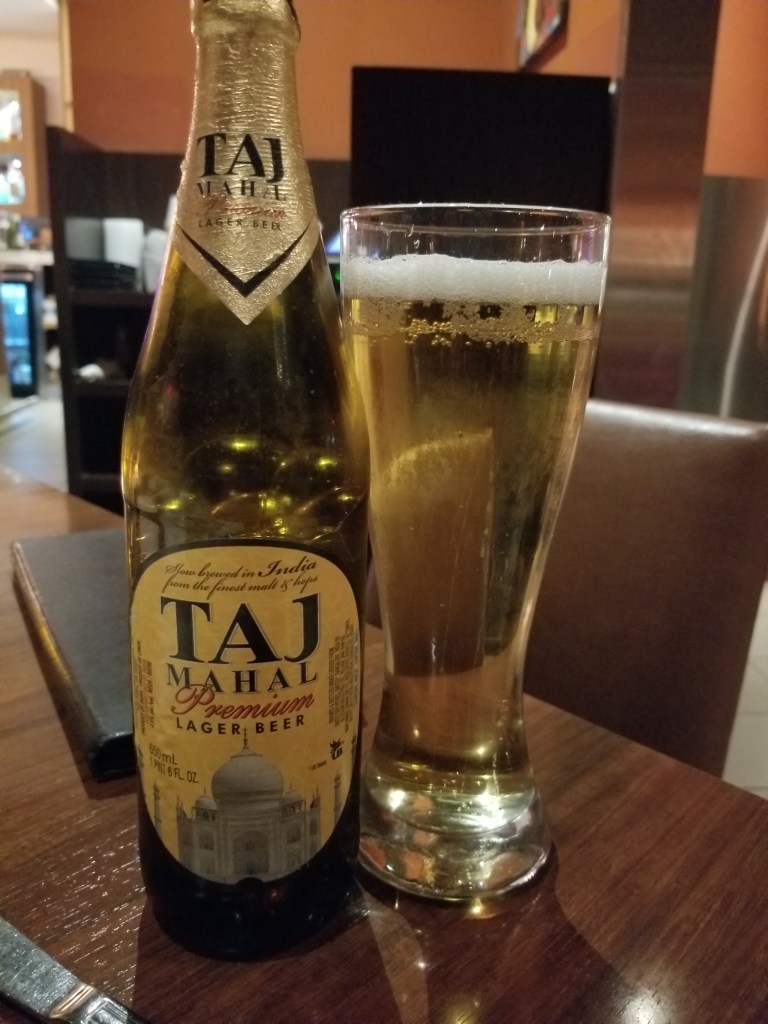
Bottle of Taja Mahal on left, glass with the beer on the right.
An American style mass produced Adjunct Lager from India. Adjunct lager means that they used ingredients such as corn and rice, which is not typical for higher quality lager beers. It wasn’t great, it was watery, but good with very spicy food. But then, water is probably best with very spicy food.

Stout is a dark, top-fermented beer / Ale style. Sub styles include dry stout, oatmeal stout, milk stout and imperial stout. It is derived from the Porter, which originated in London, England in the early 1720s. Stout is basically a stronger and more flavorful porter. However, there is no clear distinction between porter and stout. I am sure you have heard of Guinness Stout, a very Irish beer. Imperial stouts are extra strong, full bodied and flavorful stouts. Below is an imperial stout, which interestingly enough is not dark brown or black but golden/amber.

Glass with amber colored El Cuerro on left and can of El Cuerro on right.
El Cuerro is a so-called White Stout from Lone Pint Brewery, Texas, ABV 7.8%. The flavor is roasted malts, coffee and chocolate. I think it is pretty good.

IPAs, India Pale Ales is an extremely popular Ale that is typically flavorful and quite bitter. It is in a sense an anti-Lager. It is the beer style that I drink the most. The IPA is a type of Ale (fermented at warm temperatures, unlike, for example, lagers). It is typically a Pale Ale (exceptions are black IPAs). It was invented in England in the early 1800’s and became popular for exportation to India. It is characterized by its higher content of hops and the level of alcohol is often higher as well. More hops and more alcohol made it easier to preserve the beer for the trip to India.

A glass of my home brew on the left the bottle on the right
This is an India Pale Ale that I brewed at home. I call it “It’s Fine. I’m Fine. Everything is Fine.”  An artist friend of mine, Breanna, made the labels.

As I mentioned there are a lot of beer styles. One of the lesser-known ones is smoked beers. Smoked beer, or Rauchbier, is a type of beer with a distinctive smoke flavor imparted by using malted barley dried over an open flame. It goes great with barbecue. Below is an example of the style that I’ve had quite often.

Bottle of Aecht Schlenkerla on left, glass with the beer and then on the right my beer garden gnome.
Aecht Schlenkerla Rauchbier Märzen from Braurei Heller Bamberg, ABV 5.1%. It is a so called Rauchbier. The barley malts have been kilned over a fire of beech wood logs, giving it a smokey flavor. The flavor is smokey, very smokey malts or toasted bread, maybe smoked ham. I think it is delicious.

If you are paying attention to beer, you may have heard about “Trappist beers”. This is very special category that is not referring to a beer style, but by who makes it. Trappist beer is brewed by Trappist monks. There are tens of thousands of breweries in the world but there are only 13 Trappist breweries in the world. Trappist beers are considered to be very special. The most highly praised of the Trappist beers is Westvleteren 12 from Brouwerij Westvleteren founded in 1838 at the Trappist Abbey of Saint Sixtus in Vleteren, Belgium. Westvleteren 12 is a so called Quadrupel Belgian Ale. It is often said that Quadrupel means that it has been re-fermented four times, but it is often not true. However, quadruple means that it is a stronger, darker and more flavorful. Westvleteren 12 is extremely difficult to buy but I have been able to get my hands on several.

Big opener on the left, the glass with Westvleteren 12 in the middle and the Westvleteren 12 bottle on the right.
Westvleteten 12 is a Belgian Ale Quadrupel ABV 10.2% (Trappist). I think the taste is like raisin bread, dark fruits, plum, raisin, and some yeast and dark bread bitterness. There is a very small hint from the alcohol that adds nicely to the overall flavor. I love this beer.

I think my favorite type of lagers are Märzen and my favorite Ales are IPAs.

Do you have a favorite Lager? Do you have a favorite Ale?

IPA

The India Pale Ale, or IPA, is a very popular beer style, at least among beer connoisseurs. It is the beer style that I drink the most. The IPA is a type of Ale (fermented at warm temperatures, unlike, for example, lagers). It is typically a Pale Ale (exceptions are black IPAs). It was invented in England in the early 1800’s and became popular for exportation to India. It is characterized by its higher content of hops and the level of alcohol is often higher as well. More hops and more alcohol made it easier to preserve the beer for the trip to India.

A can of double Yellow Rose on the left. A can of Yellow Rose on the right. Both cans feature two ladies and a yellow theme. There are two IPA glasses in the middle containing each beer and two yellow lucia saffron buns.
Double Yellow Rose ABV 10.0%, IBU 90 (left) and Yellow Rose, ABV 6.8%, IBU 62 (right) both from Lone Pint, Magnolia, Texas. The flavor of both beers is mango, pineapple, orange, blueberry and then there is a grapefruit rind and pine resin like bitterness. The Double Yellow Rose has more pine resin like bitterness at the end. They are both delicious and so are the saffron/St.Lucia buns.

The aroma of the IPA is often floral, piney, and fruity, and it is less malty. If the flavor has fruity notes, it comes from the hops. The color can be light yellow, pale golden, reddish amber, brown or black. Just like lagers can be pale golden as well as black, so can IPAs, which combined with the fact that the beer advocate count 120 beer styles, is a good reminder that a broad classification of beers based on only color is not very helpful.

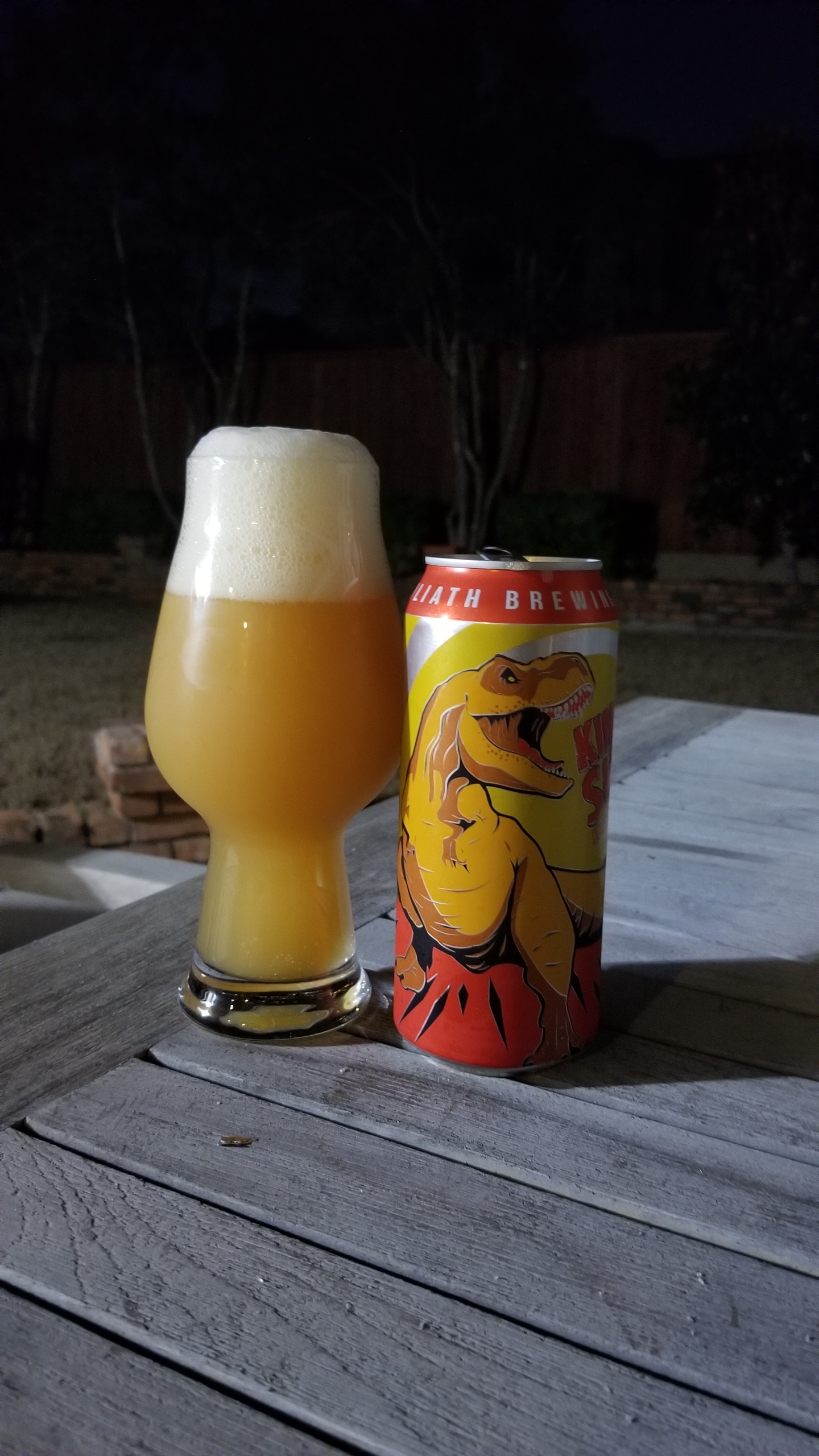
A glass filled with hazy pale golden beer  on the left with a can of King Sue on the right. There is a grill in the background.
King Sue is a New England style IPA from Toppling Goliath, ABV 7.80%. New England style means that is hazy and the flavor is fruitier with less bitterness than other IPAs (but certainly a lot more bitterness than lagers). The flavor is fruity plus some bitterness. I can taste mango, orange, pineapple, grapefruit and a grapefruit rind bitterness at the end. It is thirst quenching.

I tried to find out what share of the beer market IPAs have in the United States. I could not find that number, but I found out that in 2021 craft beer share of the American beer market was 26.8% and out of that IPAs share of the craft beer market was at least 40% (these two numbers according to statista), or 46% according to one source, which make the IPAs share of the American beer market at least 12.3%. It is probably closer to 20% since craft breweries aren’t the only ones brewing IPAs. I can add that craft beer is beer that is not mass produced, or not owned by large conglomerates. Examples are microbreweries and brewpubs.

A Scarborough Faire glass filled with Heady Topper IPA and the can to the right.
Heady Topper from the Alchemist, ABV 8.0%, IBU 100. It is the Imperial IPA that is ranked the highest in the world according to the beer advocate. If you like IPAs it is to die for. I can taste grapefruit and mango, citrus, and then a pine resin like hoppy bitterness. It is juicy, dank, bitter, in a good way, and thirst quenching.

Perhaps those among you who are Americans and were around in the 80’s remember the bitter beer face commercials. At that time beer was supposed to taste as little as possible. Bitter beer was to be avoided according to many. The IPAs have reversed that trend by making IPAs intentionally bitter, more bitter, and oh my golly super bitter having 100+ IBU. IBU stands for International Bitterness Units and brewers of IPAs often brag about the IBU, the more bitter the better. A public poll showed that more people prefer bitter beer over non-bitter beer.  Jabberwocky an IPA from Lone Pint below feature 117 IBU. Beyond 100-120 IBU the IBU scale begins to lose its meaning according to Wikipedia.

An IPA glass filled with Jabberwock IPA on the left and a Jabberwocky can on the right.
Jabberwocky from Lone Pint, Magnolia, Texas, ABV 8.5%, a very bitter beer that I love. The flavor is white bread, honey, it’s fruity with tart grapefruit, orange, and a dry tart bitterness like grapefruit rind and pine resin. Jabberwocky is quite bitter at the same time as it is fruity, juicy and dank. I think it is a delicious IPA.

The beer advocate divides the IPA style into American IPA (or Westcoast), Imperial IPA, New England IPA, Black IPA, Belgian IPA, English IPA, Brut IPA, and Milkshake IPA. The American IPA or Westcoast IPA is the most popular of the substyles and the most bitter. Imperial IPA is not really a substyle but just an indicator that it has more of everything including alcohol. The 120 minute IPA from Dogfish Head Brewery, is a very popular Imperial IPA with an ABV of 18%, IBU is 120. It is a bit sweet, very bitter in a good way, and this hides the alcohol, which is a bit dangerous.

A glass of 120 minutes IPA on the left and the bottle on the right. There is flip-flop shaped opener in the foreground.
It taste sweet, honey, dark fruits, plum maybe, grapefruit and then there’s a significant pine resin bitterness at the end. You can taste some booziness but not much for this ABV and it complements the overall flavor in a warming way.

Finally, miscellaneous IPA photos.

Measuring Alcohol in Homebrewed Beer

This is my third post in the “other hobbies” category. The other two are “The Climate Journeys of Thomas and Larry” and “Eurovision Victory for Sweden”. This category has nothing to do with Leonbergers and dogs, well almost nothing. I guess it is a get to know the blogger kind of category.

In this post I am explaining how you measure the alcohol level in a home beer brew. You can find this information online and in books, but I am explaining it very succinctly. It is quite simple, and you don’t need to read a ten-page explanation. A few photos with a brief explanation will do.

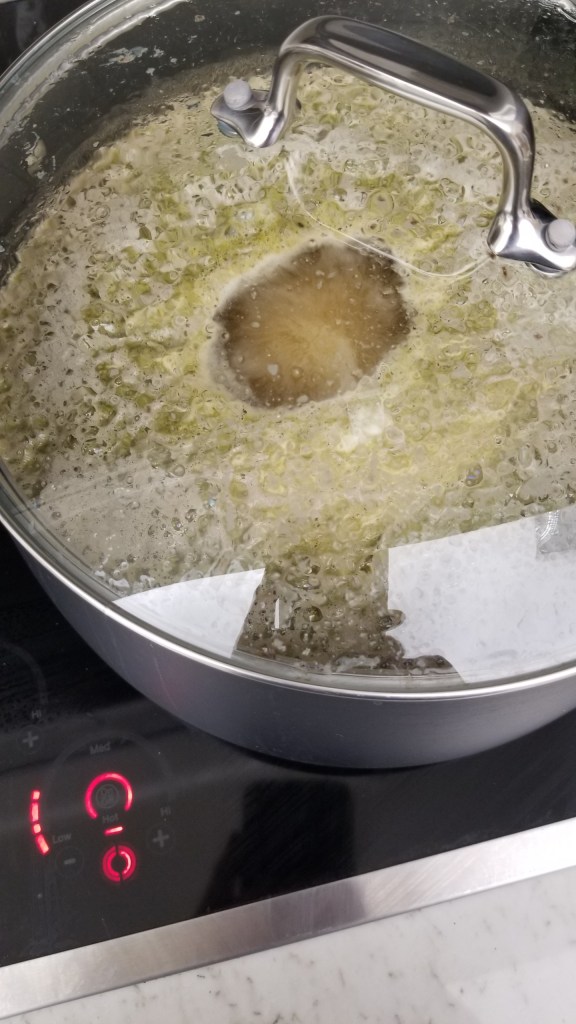
When you brew beer at home you start by boiling the wort. You boil water and you add the malts and the hops for the flavoring and the aroma at specific times. This all depends on the recipe you are following. The wort easily boils over, which upsets my wife, but luckily my dog Rollo loves to lick the wort off the kitchen floor. He’ll lay there and wait for me to screw up. Don’t worry, the wort contains no alcohol at this point, which makes this a good point to measure what is called gravity. I should mention that you need to let the wort cool off before doing your measurements and before adding the yeast (or you’ll kill it). I use an ice bath to do this.

A big pan boiling wort consisting of water, malts and hops.
Boiling wort, water, malts, hops.

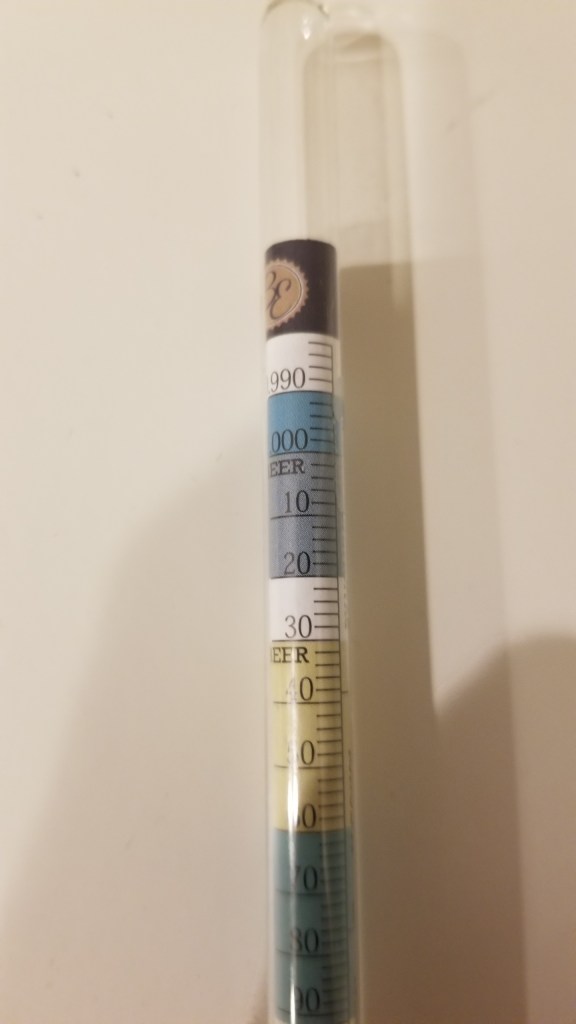
It is difficult to measure the alcohol directly. You need to set up a chemistry lab in the kitchen, which would upset your wife. Therefore, you use an indirect method using a hydrometer. During the fermentation process, yeast converts sugars into alcohol (and carbon dioxide). As the sugar is used up, the wort slowly becomes less dense. By measuring the density before and after fermentation, you can calculate how much alcohol is in the finished beer. In the beer world this is called measuring the gravity. You can buy a hydrometer in a lot of places including Amazon.

Photo of hydrometer in measure cup. It is showing 1.018.
Original gravity/density Was 1.072. Final gravity/density was 1.018 (in picture).

The density/gravity of water is used for reference as 1.000. To be exact, it also depends on the temperature, but for now we’ll ignore that. You measure the gravity before fermentation has started, just before you pitch (add) the yeast. The temperature at this point should be around room temperature, 72 degrees (60 to 75 degrees). This is called the original gravity (OG). Then after fermentation (in your container, carboy, whatever) you measure it again. This is called the final gravity (FG).

I should add that after the fermentation in your container/carboy is done you add a little bit more sugar (called priming sugar), you bottle the beer, and you let it ferment a little bit more, which will add a little bit more alcohol as well as carbon dioxide. You want some carbon dioxide in the beer but not too much. This extra amount of alcohol is not accounted for using the final gravity. However, it is typically around 0.2% and if you wish to include it, you can just add that number.

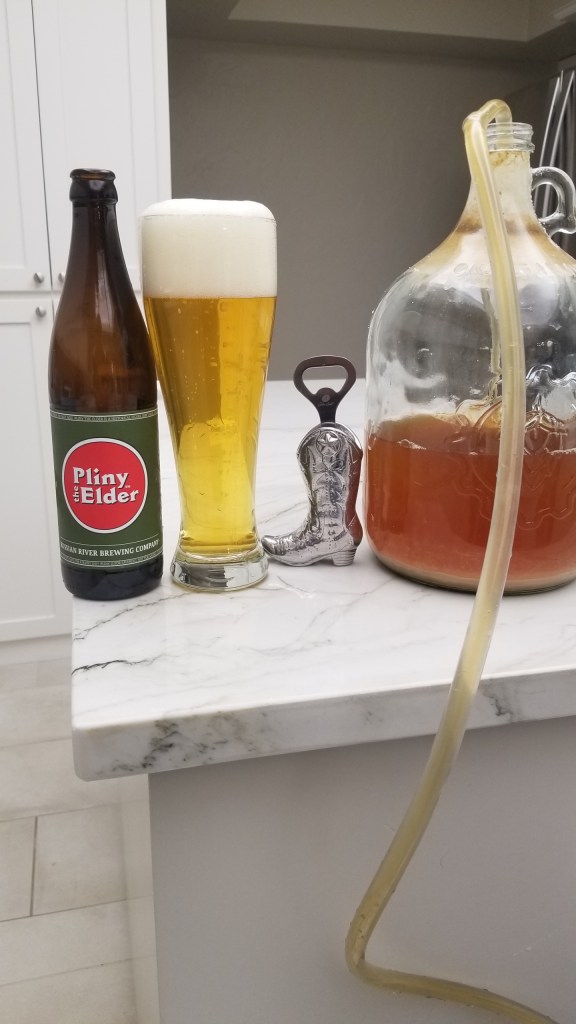
Photo of the homebrew bottling process using siphoning instead of pouring. This is to achieve some filtering and to avoid splashing. There is a beer in the photo. It is Pliny the Elder is one of the best India Pale Ales in the world.
The bottling process using siphoning instead of pouring to achieve some filtering and to avoid splashing. Splashing can cause excessive oxidation which can ruin the beer the same way bananas turn brown. The beer I am drinking Pliny the Elder is one of the best India Pale Ales in the world.

Using the original gravity (OG) and the final gravity (FG) you can now calculate the ABV, Alcohol By Volume, by using the formula below. For my latest brew, an IPA (India Pale Ale), which I bottled yesterday, I got OG = 1.072 and FG = 1.018. Ideally FG is around 1.010, but for whatever reason I did not get there.

ABV = (OG – FG) x 131.25 = 0.054 x 131.25 = 7.1%

So that would be 7.3% with the bottle fermentation.

There is a more exact formula:

ABV = (76.08 x (OG – FG) / (1.775 – OG)) * (FG/0.794) = which in my case yields ABV = 7.23% which would yield 7.43% with the bottling. I can add the recipe predicted ABV = 7.5%. There are also formulas that account for the temperature at the point of measurement of original gravity and the final gravity. But I think this is good enough.