IPA

The India Pale Ale, or IPA, is a very popular beer style, at least among beer connoisseurs. It is the beer style that I drink the most. The IPA is a type of Ale (fermented at warm temperatures, unlike, for example, lagers). It is typically a Pale Ale (exceptions are black IPAs). It was invented in England in the early 1800’s and became popular for exportation to India. It is characterized by its higher content of hops and the level of alcohol is often higher as well. More hops and more alcohol made it easier to preserve the beer for the trip to India.

A can of double Yellow Rose on the left. A can of Yellow Rose on the right. Both cans feature two ladies and a yellow theme. There are two IPA glasses in the middle containing each beer and two yellow lucia saffron buns.
Double Yellow Rose ABV 10.0%, IBU 90 (left) and Yellow Rose, ABV 6.8%, IBU 62 (right) both from Lone Pint, Magnolia, Texas. The flavor of both beers is mango, pineapple, orange, blueberry and then there is a grapefruit rind and pine resin like bitterness. The Double Yellow Rose has more pine resin like bitterness at the end. They are both delicious and so are the saffron/St.Lucia buns.

The aroma of the IPA is often floral, piney, and fruity, and it is less malty. If the flavor has fruity notes, it comes from the hops. The color can be light yellow, pale golden, reddish amber, brown or black. Just like lagers can be pale golden as well as black, so can IPAs, which combined with the fact that the beer advocate count 120 beer styles, is a good reminder that a broad classification of beers based on only color is not very helpful.

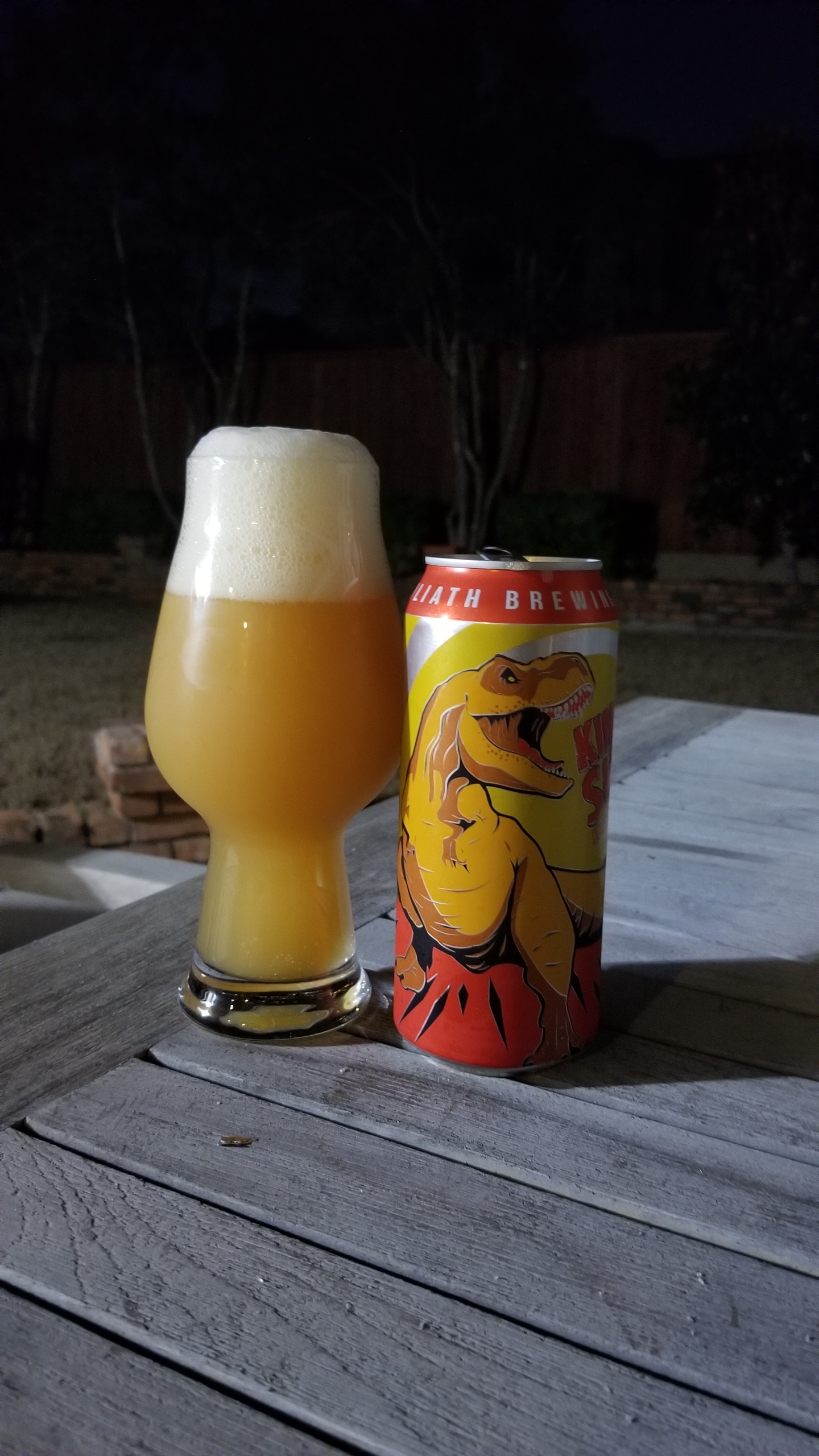
A glass filled with hazy pale golden beer  on the left with a can of King Sue on the right. There is a grill in the background.
King Sue is a New England style IPA from Toppling Goliath, ABV 7.80%. New England style means that is hazy and the flavor is fruitier with less bitterness than other IPAs (but certainly a lot more bitterness than lagers). The flavor is fruity plus some bitterness. I can taste mango, orange, pineapple, grapefruit and a grapefruit rind bitterness at the end. It is thirst quenching.

I tried to find out what share of the beer market IPAs have in the United States. I could not find that number, but I found out that in 2021 craft beer share of the American beer market was 26.8% and out of that IPAs share of the craft beer market was at least 40% (these two numbers according to statista), or 46% according to one source, which make the IPAs share of the American beer market at least 12.3%. It is probably closer to 20% since craft breweries aren’t the only ones brewing IPAs. I can add that craft beer is beer that is not mass produced, or not owned by large conglomerates. Examples are microbreweries and brewpubs.

A Scarborough Faire glass filled with Heady Topper IPA and the can to the right.
Heady Topper from the Alchemist, ABV 8.0%, IBU 100. It is the Imperial IPA that is ranked the highest in the world according to the beer advocate. If you like IPAs it is to die for. I can taste grapefruit and mango, citrus, and then a pine resin like hoppy bitterness. It is juicy, dank, bitter, in a good way, and thirst quenching.

Perhaps those among you who are Americans and were around in the 80’s remember the bitter beer face commercials. At that time beer was supposed to taste as little as possible. Bitter beer was to be avoided according to many. The IPAs have reversed that trend by making IPAs intentionally bitter, more bitter, and oh my golly super bitter having 100+ IBU. IBU stands for International Bitterness Units and brewers of IPAs often brag about the IBU, the more bitter the better. A public poll showed that more people prefer bitter beer over non-bitter beer.  Jabberwocky an IPA from Lone Pint below feature 117 IBU. Beyond 100-120 IBU the IBU scale begins to lose its meaning according to Wikipedia.

An IPA glass filled with Jabberwock IPA on the left and a Jabberwocky can on the right.
Jabberwocky from Lone Pint, Magnolia, Texas, ABV 8.5%, a very bitter beer that I love. The flavor is white bread, honey, it’s fruity with tart grapefruit, orange, and a dry tart bitterness like grapefruit rind and pine resin. Jabberwocky is quite bitter at the same time as it is fruity, juicy and dank. I think it is a delicious IPA.

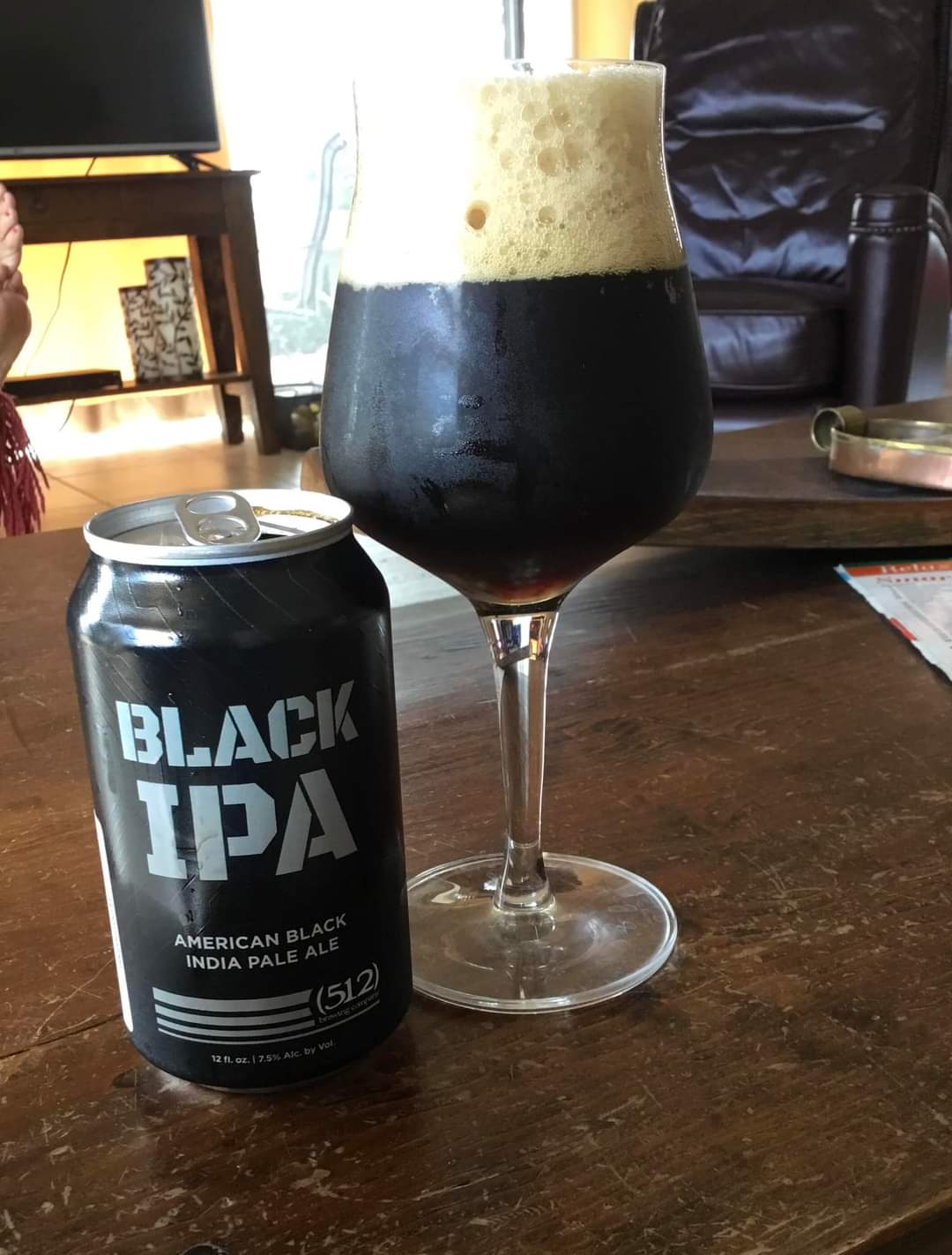
The beer advocate divides the IPA style into American IPA (or Westcoast), Imperial IPA, New England IPA, Black IPA, Belgian IPA, English IPA, Brut IPA, and Milkshake IPA. The American IPA or Westcoast IPA is the most popular of the substyles and the most bitter. Imperial IPA is not really a substyle but just an indicator that it has more of everything including alcohol. The 120 minute IPA from Dogfish Head Brewery, is a very popular Imperial IPA with an ABV of 18%, IBU is 120. It is a bit sweet, very bitter in a good way, and this hides the alcohol, which is a bit dangerous.

A glass of 120 minutes IPA on the left and the bottle on the right. There is flip-flop shaped opener in the foreground.
It taste sweet, honey, dark fruits, plum maybe, grapefruit and then there’s a significant pine resin bitterness at the end. You can taste some booziness but not much for this ABV and it complements the overall flavor in a warming way.

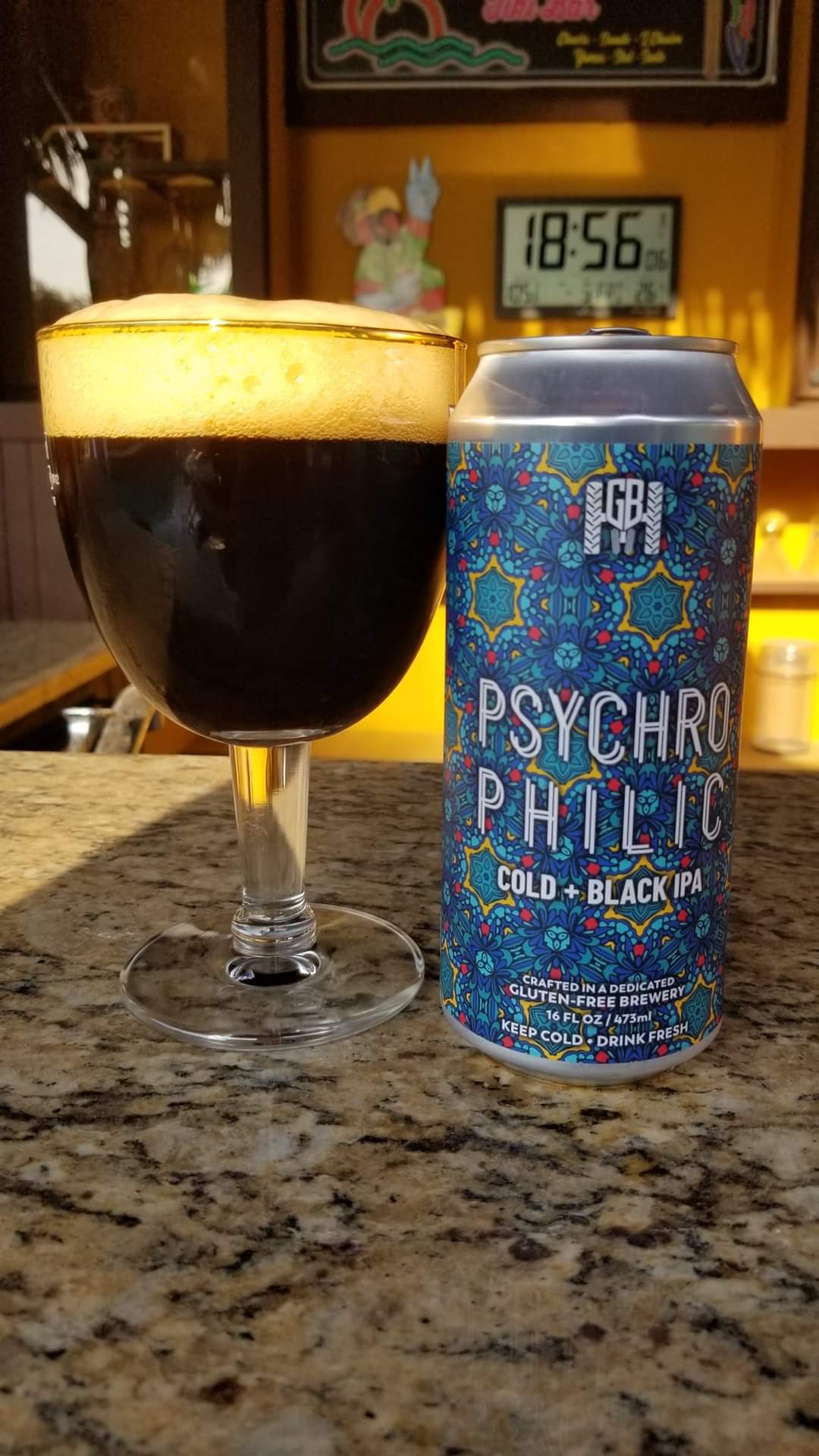
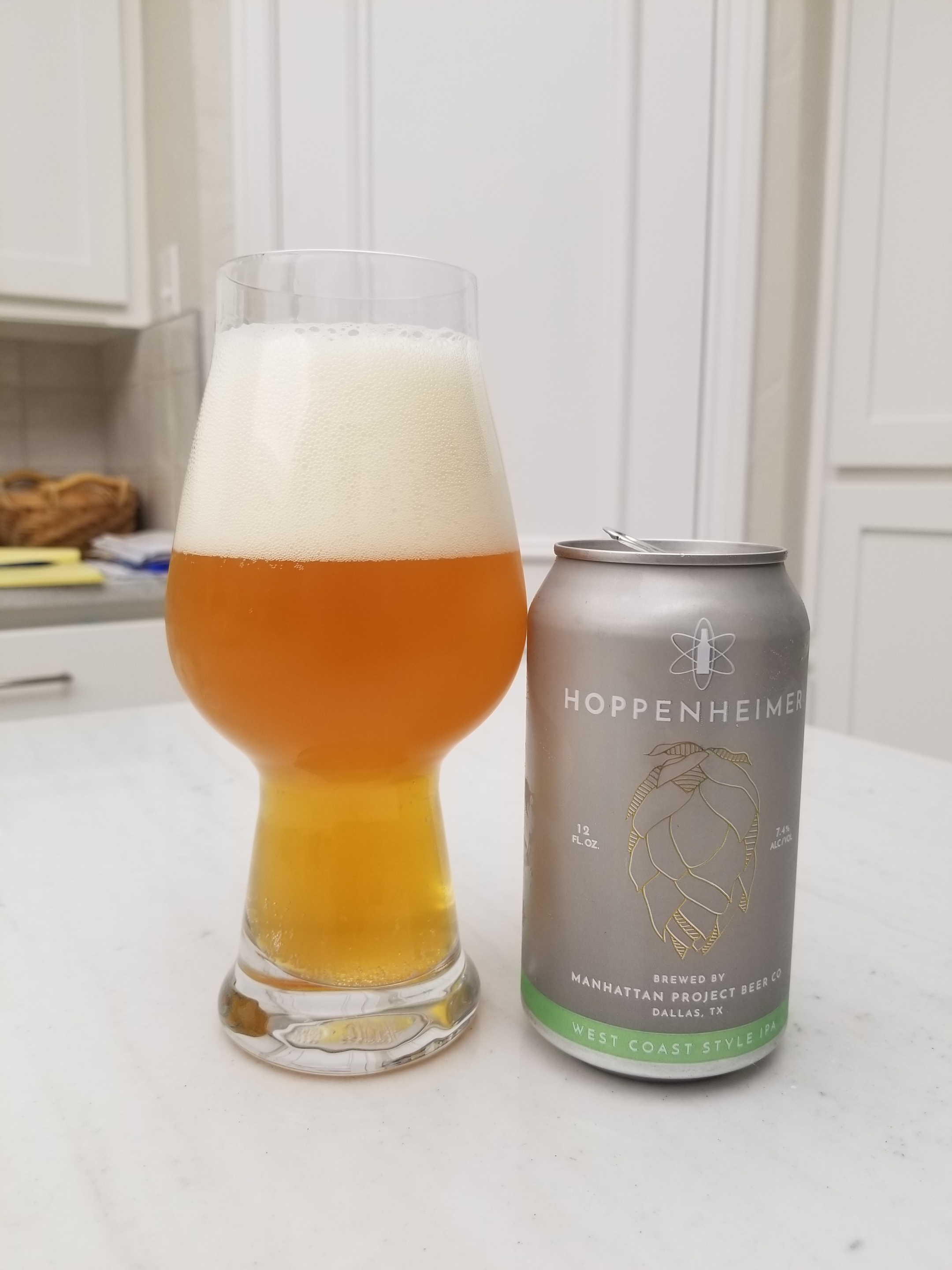
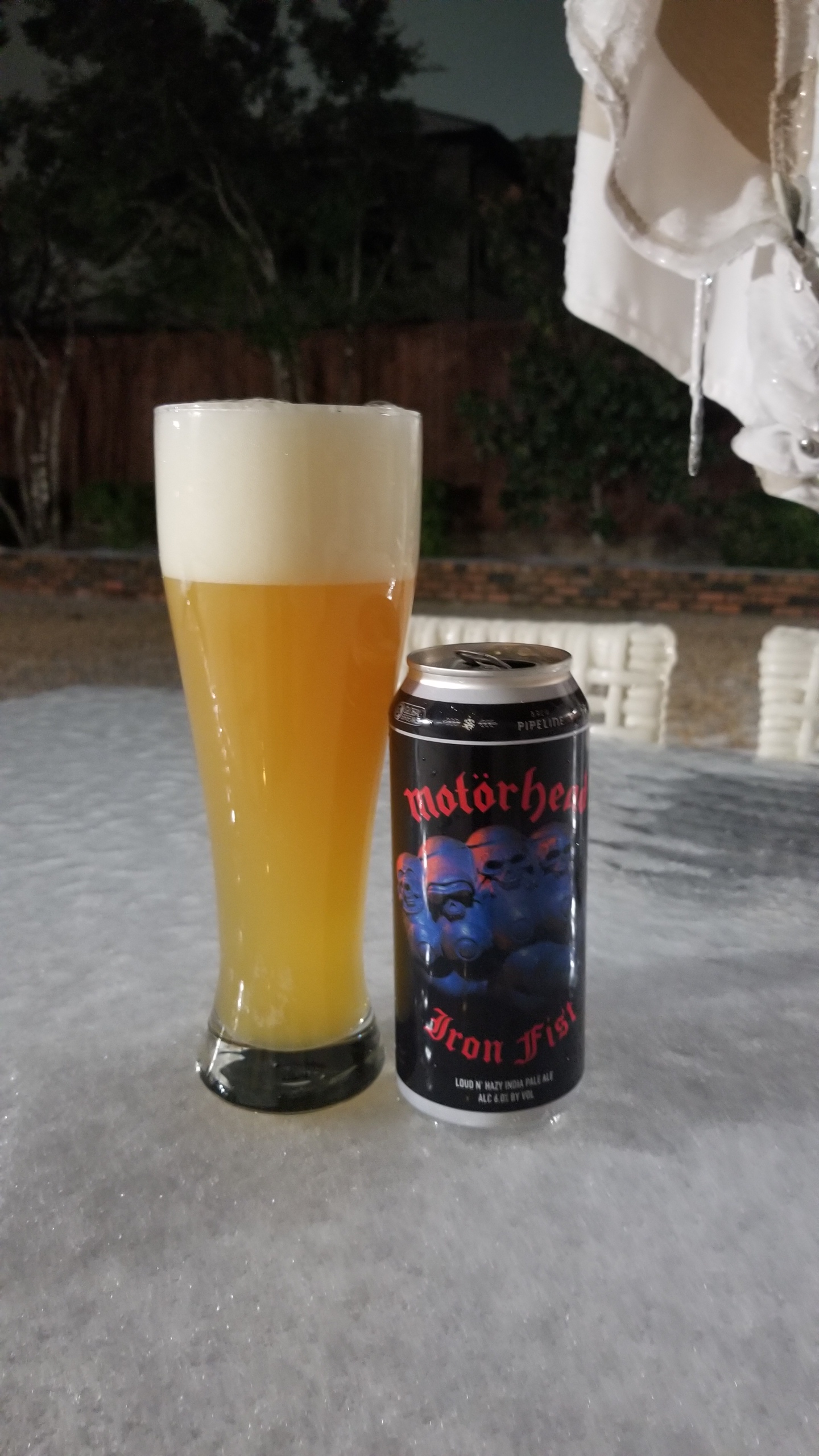
Finally, miscellaneous IPA photos.

Beer and Fruitiness

I wanted to write a post about craft beer, but I realized that putting everything I wanted to say about craft beer into one post would make it a very long post. I am starting with a post about fruity beers, craft beers or otherwise.

A woman drinking a beer
Photo by Engin Akyurt on Pexels.com

First a word about Lager beer. Lager beer is a relatively recent invention that originated in Bavaria. Lager beers use a special kind of yeast for the fermentation process, it is typically bottom fermented, and fermented and conditioned in cool temperatures, unlike other beer styles. Lager beers can be of many colors, pale, amber, dark, even black such as Schwarzbier. The Pale Lager originated in Pilsen in Bohemia (Western Czech Republic) in the mid-19th century. The pale lager has become the world’s most common beer style and bland tasting mass-produced pale lager beers dominate the market. In countries that are not traditional beer countries such as France, Italy, China, Japan and South America, the bland pale lager is very dominant. I’ve come across many people who think that the more tasteless the pale lager is, the better beer it is (Corona).

A photo of a bottle of corona with a lime
Photo by Arthur Swiffen on Pexels.com

Many people believe that beer is the same thing as pale lagers. However, the beer advocate counted 120 beer styles (so far). I can add that some mass-produced American pale lagers, such as Budweiser, contain adjuncts, such as rice and maize, which is prohibited by the German Reinheitsgebot tradition. The Reinheitsgebot tradition states that the only ingredients allowed in beer are water, malt, hops, and yeast and for bottom fermented beer (lager) the malt must be malted barley only. Therefore, what many people think of as beer, well, it’s complicated.

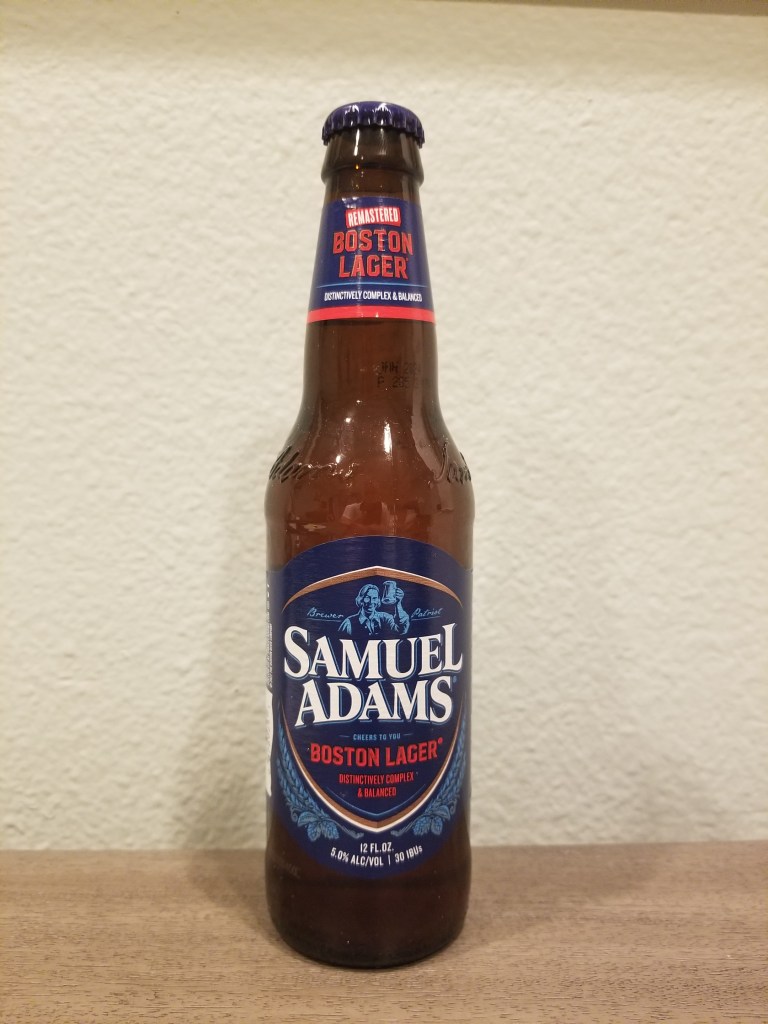
A photo of a bottle of Samuel Adams Remastered Lager.
Samuel Adams Remastered Lager is a pretty good lager beer.

Beers with fruity flavors

Pale lager beers aren’t associated with fruity flavors, which can lead to the incorrect impression that beer with fruity flavors isn’t real beer. However, beers with fruity flavors have a very long history, and many fruity beers, perhaps surprisingly to some, follow the German Reinheitsgebot tradition. In addition, many beers with fruity flavors are among the most celebrated beers in the world. There are many fruit Lambics (Belgium) that are sold for several hundred dollars per bottle. There are a number of ways to add fruit flavors to beer.

  • Hops is a flower that is used as a flavoring and stability agent in beer. It has been used since at least the 9th century and is allowed/part of the Reinheitsgebot tradition. There are at least 147 hop varieties in the world, many of them having fruity flavors. 
  • The fermentation process frequently generates esters (in addition to alcohol), a compound responsible for the fruity aromas and flavors in fruit. The amount of fruitiness that you get depends on the yeast and the grain used. For example, German and Belgian wheat beers often have more or less prominent notes of banana or pear due to an ester called Isoamyl acetate, also known as isopentyl acetate. Belgian lambics (not fruit lambics), gueuze, red flanders, and oud bruin beer styles has tart and very fruity flavors without any fruit or fruit juice being added. 
  • The German Berliner Weisse, a wheat beer, gets its fruity and tart flavor from a bacterium. Traditionally no fruit is added. However, now a day it is very common to add fruit or fruit syrup to enhance the fruit flavor. 
  • Sometimes fruity flavors can to some degree be added by aging the beer in, for example, wine barrels, adding notes of wine or grapes. 
  • Naturally you can also add fruit, or fruit juice, to the fermentation process. This is not in accordance with the German Reinheitsgebot tradition but perfectly acceptable among beer connoisseurs. Many of the highest rated beers in the world are so called fruit lambics that have added fruit. 
  • There are other ways to add fruit flavors in beer but above are four very common ones.

Below are some photos of beers with fruit flavors

Photo of a bottle of 3 Fonteinen Framboos standing on a table. There is a glass filled with Lambic.
The day I launched my book I drank 3 Fonteinen Framboos a so-called fruit Lambic. Raspberries were added to the fermentation process, so it does not follow the German Reinheitsgebot tradition. On the other hand, Reinheitsgebot has little meaning outside Germany and that includes Belgium. This beer is rated 100 out 100 on beer advocate and is listed as one of the best beers in the world.
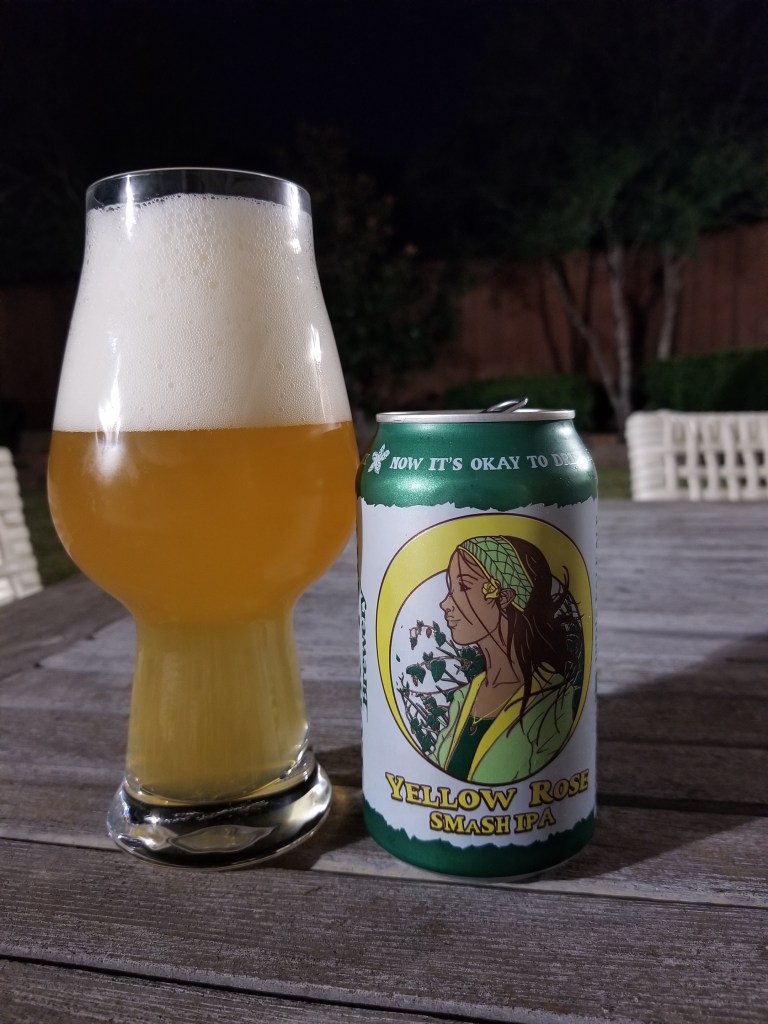
A can of Yellow Rose an IPA from Lone Pint Brewery, Texas. There is an IPA glass filled with Yellow Rose.
Yellow Rose, Lone Pint, Texas, is my favorite SMASH IPA. SMASH stands for Single Malt And Single Hop. IPA stands for India Pale Ale, and flavorful and bitter beer. The Hop in question is Mosaic Hops, which add notes of mango, other tropical fruits, blueberry, and grapefruit.
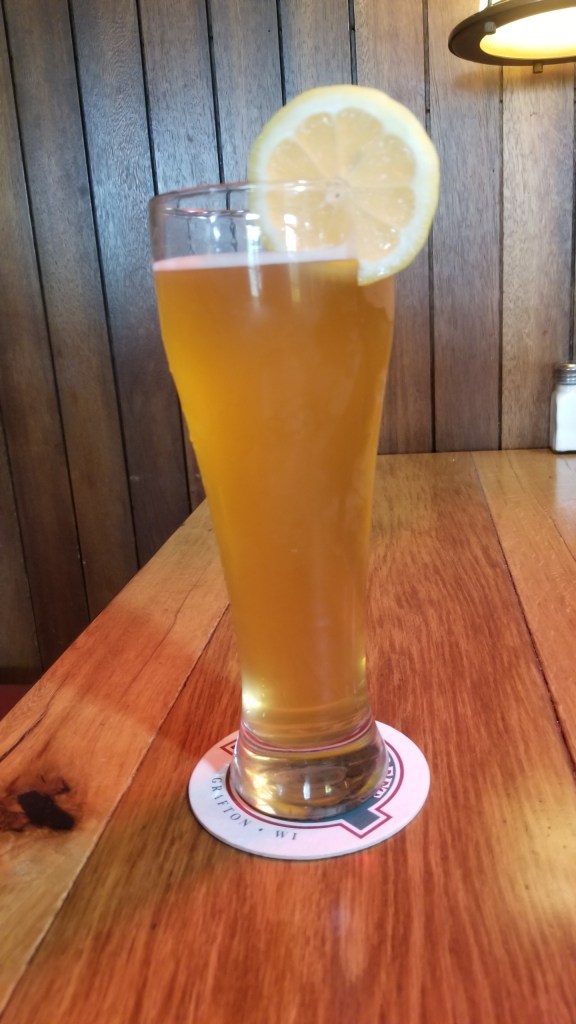
A tall glass filled with Hefeweizen beer. The glass has unfortunately a slice of lemon on top.
This is a Hefeweizen that I drank at a brewery in Wisconsin. It had strong notes of banana, in other words Isoamyl acetate, an ester generated during the fermentation process. The lemon slice is technically added fruit, but it happened after brewing and after pouring against my wishes.
A bottle of Oude Geuze from 3 Fonteinen is standing on table in my backyard. Our Pug Daisy is visible in the background.
Oude Geuze from 3 Fonteinen, Belgium, is blend of three Lambics. I think the flavor is tart green apple, lemon, grapefruit, white wine, some oak barrel woodiness. It is very fruity, but all the fruit flavor comes from esters generated during the fermentation process. There is no fruit added.
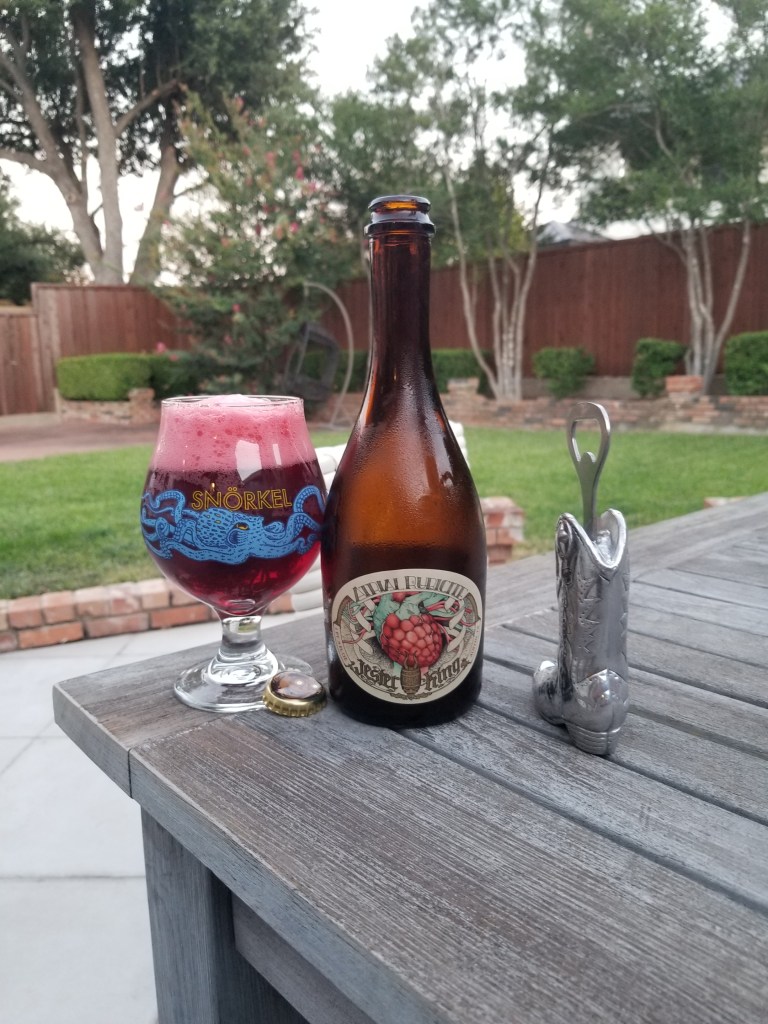
A bottle of Atrial Rubicite a so called Wild Ale from Jester King, Texas, is standing on a table in my backyard. There is a glass filled with Atrial Rubicite and boot shaped opener.
This is a so-called Wild Ale from Jester King, Texas. It is more specifically a raspberry Wild Ale. It is fermented using wild yeast (giving it a fruity and tart foundation), and raspberries have been added to the fermentation process. The result is a beer that taste like raspberry jam. It’s tart, sweet, thick body, lots of raspberry flavor. Most people that I’ve seen tasting it have a positive reaction to it. They think it is delicious even though it is not what they expect from a beer.
A can of Blue Dream, a Fruited Kettle Sour is standing on my brick wall. Next to it is my snörkel glass filled with Blue Dream.
Blue Dream is a so-called Fruited Kettle Sour from Martin Brewhouse, Fort Worth, Texas. Fruited Kettle Sours are a little different from the five examples I gave above. Bacteria is added to the wort to generate acid/tartness, then the bacteria are killed (boiling). Then it is fermented normally and the fruit, in this case blue raspberry, is added after primary fermentation. It was pretty sour, and it tasted like liquid jolly ranchers. The reactions to it were mixed. I liked it though. This type of beer is an American invention.
Standing on my table in my backyard, a box of Silent Blue (two cans) on the left, a glass of The Silent Blue (purple) in the middle and a can of The Silent Blue on the right.
The Silent Blue is another Fruited Kettle Sour from Martin Brewhouse, Fort Worth, Texas. The fruit/berry used in this case was blueberry, but it was also aged in whiskey barrels giving a whiskey aroma and flavor. So, it tasted like blueberry and whiskey, which I think turned out quite good.

The Great Dallas Tornado of October 20 2019

Today, October 20, 2023, is the 4-year anniversary of the EF3 Tornado that ravaged our neighborhood. Our house was damaged. Our chimney was smashed by a piece of concrete flying off a neighbor’s house, and our roof was damaged and needed to be replaced. In addition, our garage door was destroyed, and the wiring and pipes in the attic were destroyed, our fence was damaged, and my grill flew across the yard. The cost of the repairs was $50,000.00.

The photo shows our old Leonberger Bronco in front of a broken fence. His leg is in a bandage and around it is a plastic bag.
Bronco had just had a toe amputation. He did not blow down our fence.

However, we were lucky. Several of our neighbors’ houses were demolished and my wife’s parents house was a lot more damaged than our house was. The wind from the Tornado lifted my 89-year-old father-in-law up in the air and he was hit by a broken marble table that injured his back. The school where our boys used to go, St. Marks School of Texas, was badly damaged and the walls of the gymnasium blew away.

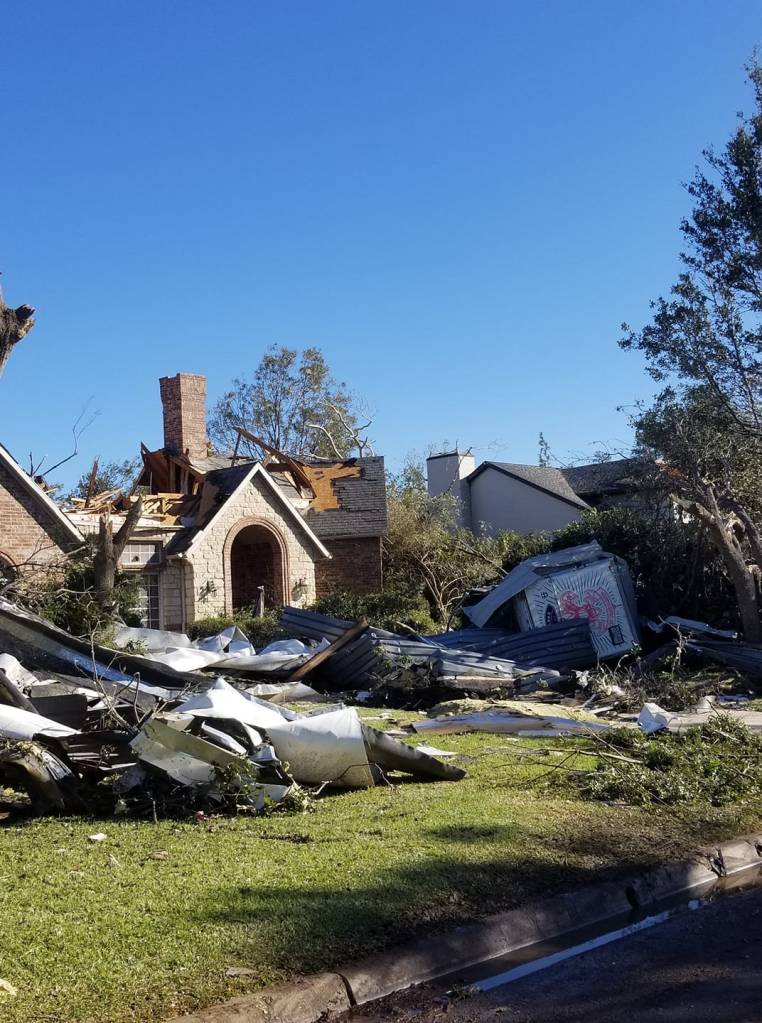
A blue-grey house severly damaged with half the roog gone. A tree in the middle of the street.
A neighbor’s house the morning of October 21st, 2019.

I remember this fateful day as if it was yesterday. I was sitting outside in my backyard drinking my favorite SMASH IPA, Yellow Rose, from Lone Pint, Texas, ABV 6.8%. IPA stands for India Pale Ale, a type of beer that contains a lot of hops. SMASH IPA is an IPA brewed with one type of Malts and one type of Hops (Single Malt, Single Hop). The single hop in this case is Mosaic.

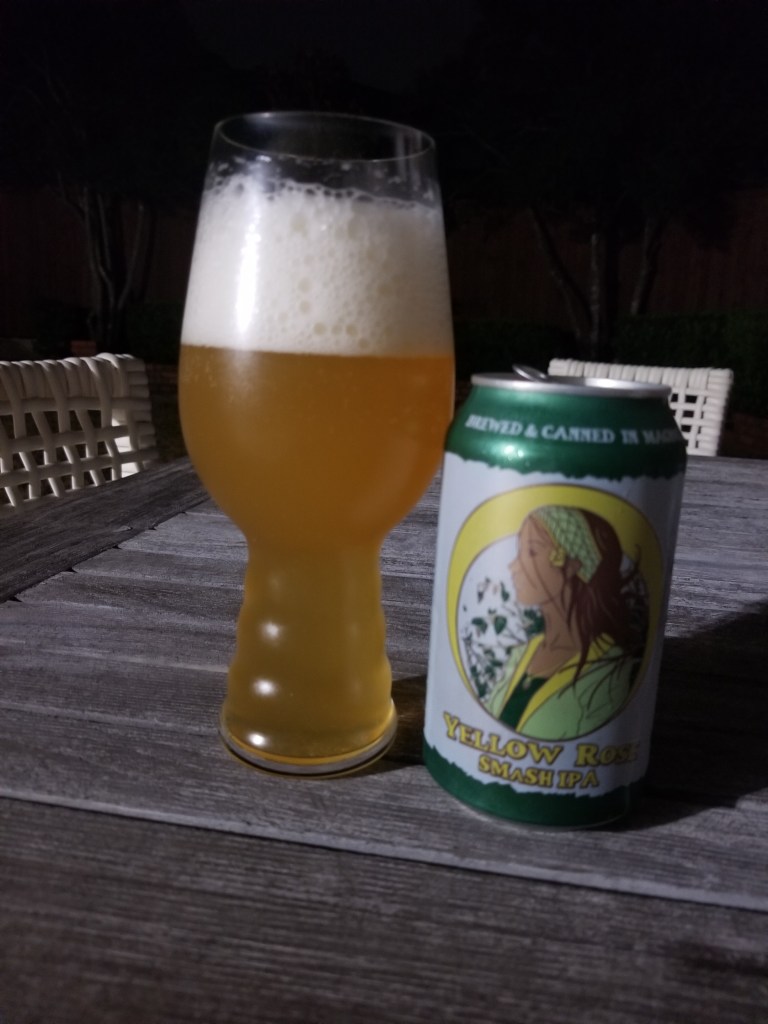
The photo is of a beer glass with beer and a can of Yellow Rose IPA
On October 20 2019, four years ago today, I was sitting in my backyard drinking my favorite SMASH IPA, Yellow Rose from Lone Pint Brewery, Texas, ABV 6.8%, IBU 62, as an EF3 Tornado was ravaging our neighborhood. I walked in right before it got crazy. The flavor is mango, pineapple, orange, blueberry and then there is a grapefruit rind and a pine resin like bitterness at the end. It is my favorite bad weather beer.

Anyway, my phone started making a loud sound. It was an alarm announcing a tornado warning and, in the distance, I could hear a faint tornado siren. At first, I thought it was nothing but when I saw the lightning approaching, I decided to go inside. Two minutes later a hailstorm made things very loud, the wind was strong, and the house shook, and then we heard a loud explosion. That was our chimney being smashed.

Photo of a house that is totally destroyed with lots if debris in the road.
Another neighbor’s house. This house was about 100 yards from our house. It took a direct hit from the tornado.

After the wind had died down a bit, I opened the door to the backyard, and what I saw shocked me. My gas grill had flown across the patio. There were bricks and pieces of concrete all over the patio and the lawn. There was a big sheet of metal lying on the patio. Big tree branches covered the lawn. There was debris everywhere. We had also lost power. It turns out that the EF3 tornado had gone through our neighborhood and passed within fifty to one hundred yards of our house.

Another photo of a house that is totally detsroyed
Another neighbor’s house.

My wife Claudia asked me to go check on her parents. I drove about 50-100 yards when a neighbor’s roof lying across the road stopped me. I turned around but this time I was stopped by a large pile of trees lying across the street. So, I started walking, but this time I was stopped by a group of firemen telling me that it was too dangerous to be outside. They told me to go back home, and I did.

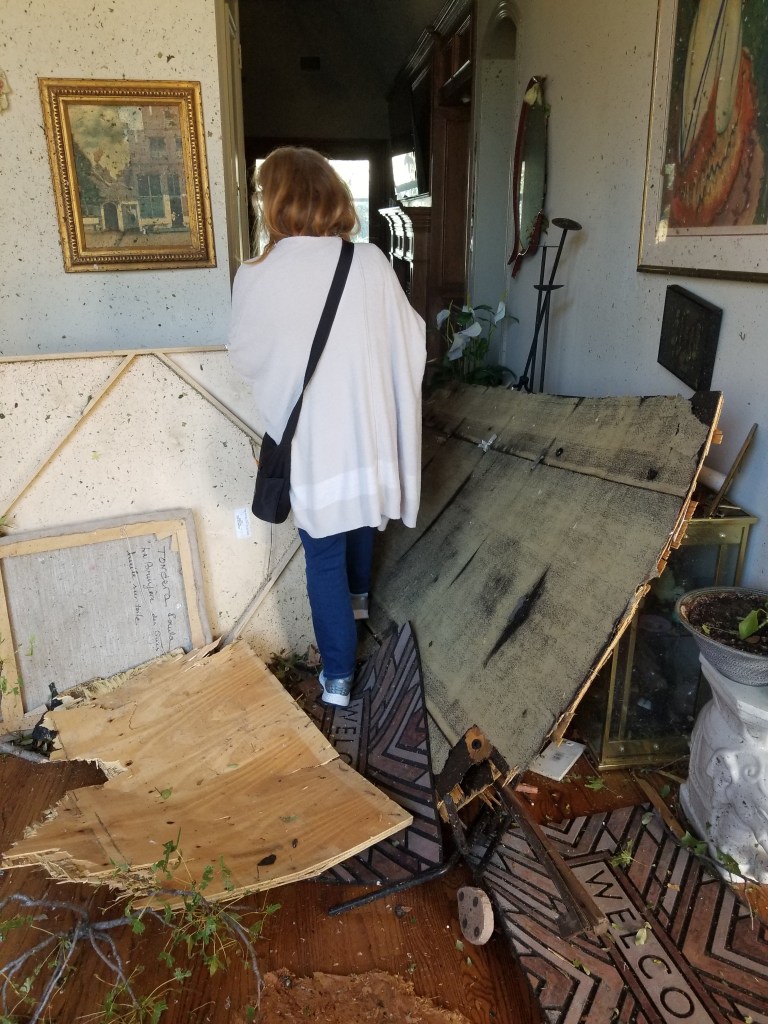
My wife Claudia is walking through a hallway full of debris.
Inside Claudia’s parents’ house. This was the morning after. We are walking into their house to check on them (that’s my wife).

October of 2019 was a very difficult month for our Leonberger Bronco. He was getting old. He was twelve years old, and he had the first signs of geriatric-onset laryngeal paralysis polyneuropathy (or GOLPP), which made his breathing a bit labored and affected his gait. In addition, he had developed another case of squamous cell carcinoma, a toe-nail cancer, and this time on his right rear paw. We amputated his toe on October 3—the day he turned twelve years and three months old.

Our mini-Australian Shepherd is standing in the middle of the room. On the right is our Leonberger Bronco's paw with a bandage.
We had to change Bronco’s bandages every now and then but Rollo, our mini–Australian Shepherd made sure we did it right.
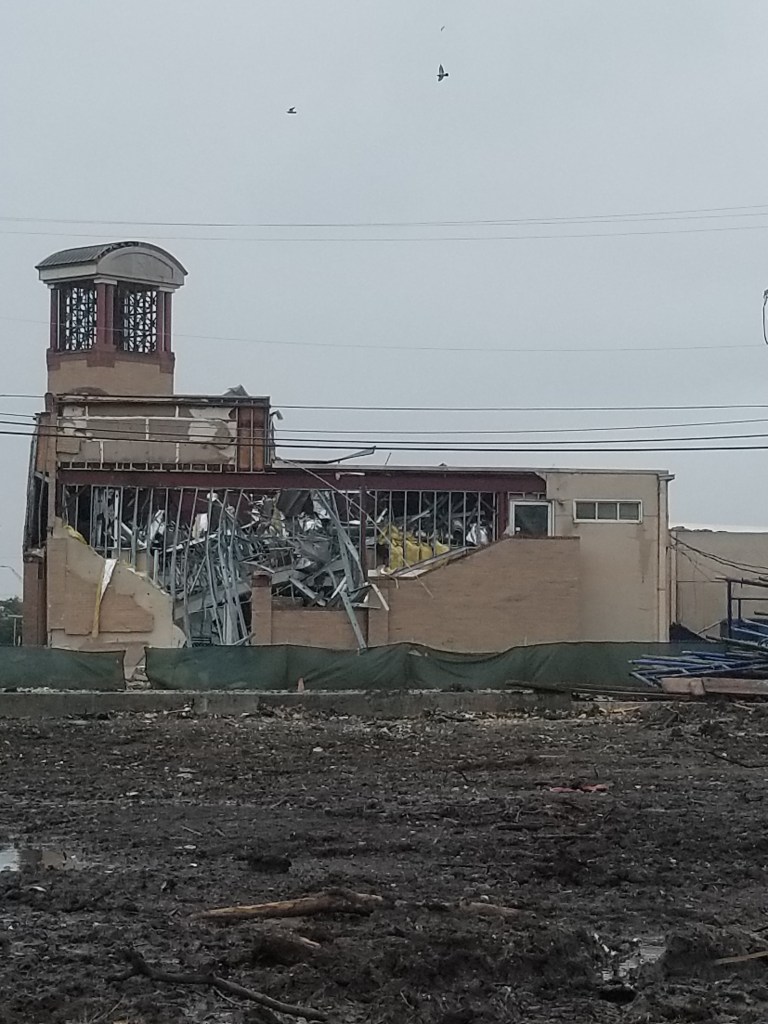
A photo of the Gap store nearby where we live. One of the walls is gone.
A store at a nearby shopping center (it’s the GAP).