This blog feature amusing and heartwarming stories about our late Leonberger dog Bronco, as well as other Leonbergers. It also has a lot of information about the Leonberger breed, the history, care, training, Leonberger organizations, etc. I also wrote a Leonberger book, which I am featuring in the sidebar.
Category: Non-Leonberger Book Promotions
Reviews of books that are not about Leonbergers. They are books I want to promote.
The books I review in this blog are normally Leonberger books but sometimes I review other kinds of books that I love and that I want to promote. In this post I will review the fifth and sixth book of an incredible series of books called the Harbor Point series. To see my reviews for books one and two click here and for books three and four click here. Below are the books I am reviewing in this post.
The Edge of Too Late by Jan Sikes comes in a paperback edition, and a Kindle edition and I read the paperback edition.
Paperback – November 28, 2023, ISBN-10 : 1732973962, ISBN-13 : 978-1732973961, 126 pages, Item Weight : 6.9 ounces, dimensions : 5 x 0.29 x 8 inches, it is currently $5.99 on Amazon. Click here to order it from Amazon.com.
Kindle – November 28, 2023, ASIN : B0CCQ1QB9X, 108 pages. It is currently $2.99 on Amazon.com (free with kindle unlimited). Click here to order it from Amazon.com.
The front cover of The Edge of Too Late by Jan Sikes. (Picture was a scan of the book).
This is Amazon’s description of the book.
The Harbor Pointe Inn has loomed on California’s cliffs for generations of Hawthornes. For some, it’s been a blessing. For others, a curse. Travel through two centuries of stories to discover the old inn’s secrets.
What’s the point of having it all when you have no one to share it with?
Brandon Miller has his dream job, financial security, and he’s madly in love. Only one thing is missing—a commitment.
Angela Cooper’s ex-husband left her with deep scars, souring her on the concept of marriage. She’s not interested in a do-over. Not with Brandon or anyone. Her heart is locked securely away behind a thick wall.
With a ring in his pocket and hope in his heart, Brandon arranges a romantic getaway to the historic Harbor Pointe Inn, where he plans to pop the question.
Before they reach the inn, Angela’s got her camera in hand and ghosts on her mind. But they arrive to find a much more tangible horror.
Accident or foul play?
Someone is up to no good, and Angela is the next target. When suspects can be worldly or otherworldly, danger and secrets lurk everywhere.
Poised at the perilous edge of too late, Angela and Brandon face the fight of their lives.
This is my five-star Amazon Review of The Edge of Too Late
A Most Eventful Weekend
Brandon Miller is a successful video game creator who wants to propose to his girlfriend Angela Cooper. His plan is to do so during a weekend getaway at the Harbor Pointe Inn, which is located next to a lighthouse. Angela loves Brandon but is reluctant to get married again because of her bad experiences in her first marriage. What they didn’t expect is that Harbor Pointe Inn and the lighthouse is haunted, by ghosts as well as dark souls of the human sort. There are mysterious and paranormal events, and danger is awaiting them.
This story is both romantic and a bit scary but above all else suspenseful and full of intriguing plot twists, both dark and happy ones. The character development is excellent, and you care for the characters. The relationship between Brandon and Angela is described beautifully and the dialogues are believable and interesting. The descriptions of nature, the oceanside, apparitions, the inn and the lighthouse are vivid and atmospheric. I can add that even though this book is part of a series, it can be read standalone. It was a pleasure to read, and it is certainly a page turner. I highly recommend it.
The back cover of The Edge of Too Late by Jan Sikes
About the Author
I’ve been an avid reader all my life. I can still remember the excitement that surged through me the first time I realized I could decipher words. There’s nothing I love more than losing myself in a story.
Oddly enough, I never had any ambition to be a writer. But I wound up in mid-life with a story that begged to be told. Not just any story, but a true story that rivaled any fiction creation. Through fictitious characters, the tale came to life in an intricately woven tale that encompasses four books. Not satisfied to stop with the books, I released music CDs of original music to match the time period of each story segment. In conclusion, to bring the story full circle, I published a book of poetry and art. I was done.
Wrong!
The story ideas keep coming, and I don’t intend to turn off the creative fountain.
I love all things metaphysical and often include those aspects in my stories.
I am a member of the Author’s Marketing Guild, The Writer’s League of Texas, Story Empire, and the Paranormal Writer’s Guild. I am an avid fan of Texas music and grandmother of five beautiful souls. I reside in North Texas.
The sixth book A Fathomless Affair by Staci Troilo also comes in a paperback edition, and a Kindle edition and in this case, I read the kindle version.
Paperback – December 5, 2023, ASIN : B0CKPBBVHH, ISBN-13 : 979-8863386881, 132 pages, Item Weight : 7 ounces, dimensions : 5 x 0.3 x 8 inches, it is currently $5.99 on Amazon. Click here to order it from Amazon.com.
Kindle – December 5, 2023 : ASIN : B0CCQLDX47, 115 pages. It is currently $2.99 on Amazon.com (free with kindle unlimited). Click here to order it from Amazon.com.
The front cover of A Fathomless Affair
This is Amazon’s description of the book.
The Harbor Pointe Inn has loomed on California’s cliffs for generations of Hawthornes. For some, it’s been a blessing. For others, a curse. Travel through two centuries of stories to discover the old inn’s secrets.
A narcissistic patriarch. A mystical legend. A fathomless affair.
Most people wouldn’t dread a weekend at the historic Harbor Pointe Inn. Lorelei Audley isn’t most people. The fresh sea air, breathtaking vistas, and gourmet meals can’t buoy her spirits. She’s there to coordinate her father’s latest wedding. The bride is a nightmare, yet somehow, the groom is worse. Lorelei steels herself to suffer through a few days of psychological abuse and abject misery.
She’s unprepared for a paranormal encounter, missing persons case, and police investigation.
Not to mention a budding romance.
A lot can happen in a short time, far more if the supernatural is involved. Lorelei has a small window in which to solve some very big problems—problems as numerous as the sands at the foot of the scenic Harbor Pointe cliffs.
This is my five-star Amazon Review of A Fathomless Affaire
Surreal Days at Harbor Pointe Inn
Lorelei Audley is organizing her father’s third wedding, which will take place at the Harbor Pointe Inn, a hotel located next to a lighthouse in northern California. Unfortunately, her father is selfish, ungrateful and rude and appears to be a narcissist and his new bride is equally obnoxious. He is also hiding some things, which leads to unpleasant surprises. Lorelei falls and hurts herself, she does not get enough sleep, and there’s a curse and a ghost ship. All this creates a surreal and stressful situation for Lorelei. Is she going crazy? Will she be able to handle the abuse and the family drama? Luckily, she befriends a clearheaded astronomer who is at the Inn to observe a newly discovered comet that is having a close encounter with earth.
A lot of things happen in this action packed and gripping adventure, but the author takes the time to describe and develop the characters well and you will empathize with and understand the characters, especially Lorelei. The family drama is outrageous and yet it seems familiar and comprehensible. As you read about Lorelei’s troubles and the strange events taking place you feel that you need to find out how things will turn out and you want explanations. In other words, it is a real page turner. If you love mysteries and drama this is the book for you. I highly recommend it.
About the Author
Staci Troilo grew up in Western Pennsylvania writing stories and poetry in her free time, so it was no surprise that she studied writing in college. After receiving creative and professional writing degrees from Carnegie Mellon University, she went on to get her Master’s Degree in Professional Writing, and she worked in corporate communications until she had her children.
When they had grown, she went on to become a writing professor, and now she is a freelance writer and editor.
Staci is a multi-genre author. Her fiction is character-driven, and despite their protests, she loves to put them in all kinds of compromising or dangerous situations.
You can find out more about her on her website (stacitroilo.com).
This is a Leonberger blog but sometimes I post about books that are not about Leonbergers but that are books that I want to promote. This is another one of those. I recently read Voice Of A Story Teller Paperback – by Sara Kjeldsen. It was a book that I loved and therefore I want to promote it.
Paperback – September 29, 2020, ASIN : B08KB137YM, ISBN-13 : 979-8690747237, 91 pages, Item Weight : 4.8 ounces, dimensions : 6 x 0.21 x 9 inches, it cost $4.65 on US Amazon. Click here to order it from Amazon.com.
Kindle – September 25, 2020, ASIN : B08K5Q3J7L, 66 pages. It is currently $3.99 on Amazon.com. Click here to order it from Amazon.com.
Front cover of Voice Of A Story Teller. Click here or the picture to visit the Amazon.com page for the paperback version of the book.
Amazon’s description of the book
A troubled war survivor named Barak becomes obsessed with a beloved story teller named Almaz. Though she is beautiful and charming, Barak is convinced that she is a fake and has the power to start wars. He can’t seem to control his violent thoughts toward her and they worsen every time she runs into him. Will Almaz be able to help Barak heal with her words, or will he act on his urges?
My Amazon Review of Voice Of A Story Teller
The Story of a Lonely Mind Darkened by Pain
This story takes place in a somewhat dystopian future. The narrator, Barak, lost his friends in a terrible war, something that deeply traumatized him. He feels forgotten by his society and he becomes obsessed with a charming storyteller Almaz whom he feels is arrogant and is stealing everyone’s attention away from what he thinks is important. His bitterness, self-pity, envy and anger result in him hating Almaz. We are following his dark thoughts, which leads him to commit dark acts, which in turn result in an intriguing tale with interesting consequences.
I hesitate to call Barak a protagonist, which is why I call him “the narrator”. You can understand him and feel sorry for him even though you disagree with his thinking and his ghastly actions. Culpability, being responsible, karma, still apply even when you are hurting, a truth that your self-pity may overshadow. The Abel and Cain story comes to mind, and I was also relating it to the confessions of the demon in Clive Barker’s Mr. B Gone. I guess the author used her expertise in therapy to make Barak’s dark character possible to understand, even relatable, at the same time as the story teaches us readers something.
This book is very well written, compelling and imaginative. It is full of interesting twists and surprises, wow moments, and may even be shocking at times. It is a book you want to think about after you are done reading it. The book also demonstrates the value of storytelling. Stories are powerful and they stay with us long after the storyteller is gone. It is certainly a page turner and I highly recommend it.
Back cover of Voice Of A Story Teller. Click here or the picture to visit the Amazon.com page for the kindle version of the book.
The books I review in this blog are typically Leonberger books but sometimes I review other kinds of books that I love and want to promote. In this post I will review the third and fourth book of an incredible series of books called the Harbor Point series. To see my reviews for book one and two click here.
The Destination comes in a paperback edition, and a Kindle edition and I read the kindle edition.
Paperback – October 31, 2023, ISBN-13 : 979-8865687214, 74 pages, Item Weight : 4.6 ounces, dimensions : 5 x 0.17 x 8 inches, it is currently $5.99 on Amazon. Click here to order it from Amazon.com.
Kindle – October 31, 2023 : B0CCQB7X1S, 64 pages. It is currently $2.99 on Amazon.com (free with kindle unlimited). Click here to order it from Amazon.com.
The Destination by D. L. Finn
This is Amazon’s description of the book.
The Harbor Pointe Inn has loomed on California’s cliffs for generations of Hawthornes. For some, it’s been a blessing. For others, a curse. Travel through two centuries of stories to discover the old inn’s secrets.
It’s 1967, and best friends Lacey and Sandy are enjoying a beach vacation, completely unaware of the danger that is lying in wait outside their door. Their room is quaint, with an amazing view of the Pacific Ocean and an old lighthouse, but a killer is stalking their next victim. Powerless, Annie the ghost watches, knowing there’s nothing she can do to help—not even her parents, the innkeepers. Who will survive their stay at the Harbor Pointe Inn, where the edge of evil lurks within the shadows?
Two best friends Sandy and Lacey are on vacation, and they are staying at Harbor Pointe Inn, a hotel next to a lighthouse by the California coast. There is a serial killer on the lose and there is also a ghost who is trying to be helpful. The setting is depicted skillfully so that you really feel as if you are present at the ocean side, the beach, the cliffs, the cave, the old hotel and lighthouse, and the old friendly couple at the Inn, etc. The story is entertaining and imaginative but foreboding and it builds tension. It features an ominous presence which is hinted at throughout the story until we find out about it at the end. To me this is a new take on the serial killer genre and seeing the situation develop through the eyes of unsuspecting people as well as through the eyes of an innocent ghost who knows the truth but has limited powers is quite intriguing.
The characters are well developed and believable, the dialogue is engaging, and the story is compelling and unique. You need to keep reading because you want to find out what is going on and what will happen. The ending was unique and emotional. I highly recommend this short story.
About the Author
D.L. Finn is an independent California local who encourages everyone to embrace their inner child. She was born and raised in the foggy Bay Area, but in 1990 relocated with her husband, kids, dogs, and cats to the Sierra foothills in Nevada City, CA. She immersed herself in reading all types of books, but especially loved romance, horror, and fantasy.
She always treasured creating her own reality on paper. Finally, being surrounded by towering pines, oaks, and cedars, her creativity was nurtured until it bloomed. Her creations vary from children’s books, young adult fantasy, and adult paranormal romance to an autobiography with poetry. She continues on her adventures with an open invitation for her readers to join her.
The fourth book The Seas of Time also comes in a paperback edition, and a Kindle edition and in this case, I read the paperback.
Paperback – November 13, 2023, 2023, ASIN : B0CMLMDC87, ISBN-13 : 979-8865687214, 151 pages, Item Weight : 8 ounces, dimensions : 5 x 0.35 x 8 inches, it is currently $7.50 on Amazon. Click here to order it from Amazon.com.
Kindle – November 14, 2023, 2023 : ASIN : B0CCQGRXH9, 145 pages. It is currently $2.99 on Amazon.com (free with kindle unlimited). Click here to order it from Amazon.com.
The front cover of The Seas of Time (scan)
This is Amazon’s description of the book.
The Harbor Pointe Inn has loomed on California’s cliffs for generations of Hawthornes. For some, it’s been a blessing. For others, a curse. Travel through two centuries of stories to discover the old inn’s secrets.
In 1858, a ship carrying ice from Alaska wrecked off the coast of California, and little does Taliah Keldan realize how that tragedy will impact her life in 1972.
When Tali decides to quit college and become a civil rights activist, her disappointed parents encourage her to think it over. What better spot for contemplation than at her aunt and uncle’s Harbor Pointe Inn, a charming seaside getaway with its own lighthouse? The place is under renovation and empty of guests. All she’ll have to deal with is the construction crew.
But the inn is far from peaceful.
Tali discovers an old Bible hidden in the lighthouse keeper’s cottage. Strange prayers angle down the margins, all but one ruined by the sea. When she deciphers the crude writing, a dark portal gapes open to a pre-civil war night when an escaped slave in a foundering ship prayed to his voodoo God. A winged creature emerges from the watery void, and her stay transforms into a nightmare.
With the aid of the construction foreman, Tali is determined to send the beast back through time, a choice that will risk their lives, test her convictions, and change her future.
Voodoo, Imagination, Action, a Great Story Originating with Slavery
This is a somewhat scary paranormal fantasy story with some comical passages, but above all, it is a good story. It is part of a series of books centered on a lighthouse at Harbor Point on the northern California coast. The story begins in 1858 on a ship traveling from Alaska to California. Onboard is an African American escaped slave whom the crew is planning to sell back into slavery. To save himself he uses voodoo. Next, we move forward to 1972 where we meet Tali, a young and determined African American woman who comes to Harbor Point for a temporary job as a caretaker. She accidentally summons the supernatural and so begins a wild adventure.
It is a unique story filled with horror, mystery, and fast paced action. The story is very imaginative with lots of fantastic imagery including some wormhole-like time travel, as well as some comedy. The character development is amazing, and you’ll find yourself caring for several of the characters. The characters grow and mature in ways that are both plausible and inspiring. I imagined Tali as being an older version of Abra Stone from Stephen King’s Dr. Sleep. It is a very good story, and I was very entertained the entire time as I read the book. I highly recommend it.
About the Author
A long-time reader, best-selling author D. Wallace Peach started writing later in life when years of working in business surrendered to a full-time indulgence in the imaginative world of books. She was instantly hooked.
In addition to fantasy books, Peach’s publishing career includes participation in various anthologies featuring short stories, flash fiction, and poetry. She’s an avid supporter of the arts in her local community, organizing and publishing annual anthologies of Oregon prose, poetry, and photography.
Peach lives in a log cabin amongst the tall evergreens and emerald moss of Oregon’s rainforest with her husband, two owls, a horde of bats, and the occasional family of coyotes.
The books I review in this blog are typically Leonberger books but sometimes I review other kinds of books that I love and want to promote. I’ve come across a very good series of 8 books called the Harbor Point Series. There are a couple of them I haven’t read yet, but I am certain they will be great as well. I decided to review two Harbor Point books at a time starting with the first two:
The Price of Atonement comes in one format, Kindle – September 26, 2023, ASIN : B0CCW59D94, 117 pages. It is currently $2.99 on Amazon.com (free with kindle unlimited). Click here to order it from Amazon.com.
The Price of Atonement by Mae Clair
This is Amazon’s description of the book.
The Harbor Pointe Inn has loomed on California’s cliffs for generations of Hawthornes. For some, it’s been a blessing. For others, a curse. Travel through two centuries of stories to discover the old inn’s secrets.
Some hauntings come from within.
Leviticus Sinclair has been a broken man since the murders of his wife and brother. Burdened by personal failures the night they were killed, he occupies himself by crossing the country, searching out departed spirits unwilling to move from this world to the next. His dead brother’s Bible and a pocket watch—forever frozen at the precise moment of his wife’s death—serve as grim reminders of a past he cannot exorcise.
Accompanied by Wyatt Resnick, a paid employee who fills the role of researcher and hired muscle, Leviticus arrives at the Harbor Pointe Inn amid rumors of a vengeful ghost. A phantom who may be the single spirit he has long sought, one capable of freeing him from his torment.
Set in the remote Pacific Northwest of 1887, The Price of Atonement is a story of jealousy, guilt, and one man’s relentless quest for absolution.
This is my five-star Amazon Review of The Price of Atonement
An Angry Ghost and A Mysterious Ghost Hunter
The Price of Atonement is the first book in the Harbor Point series, a series of eight spooky books centered around the Harbor Point lighthouse and the Harbor Point Inn, the adjacent hotel or Inn. At the beginning of this book, we learn that the Harbor Point lighthouse was constructed in 1870 and was built by Isaac Hawthorne. This story takes place in 1887. The Harbor Point books can be read independently but I recommend that you read this one so that you know the background.
Leviticus Sinclair arrives at Harbor Point Inn with his assistant Wyatt Resnik. Harbor Point is haunted by an angry and powerful ghost, which has not been good for business. The current owner is August Hawthorne, the son of Isaac Hawthorne, and his wife Etta. One source of the haunting is believed to be the sinking of the June Pearl in 1876, in which 2/3 of crew died. Leviticus has powerful paranormal abilities due to his unusual situation, but he is also acting like a detective. Leviticus and his assistant Wyatt has to figure out what is going on, which is not easy since not everyone is willing to share what they know. They reminded me a bit of Sherlock Holmes and Watson. All I will divulge is that we are in for some big surprises and interesting revelations.
This is a scary ghost story that should satisfy any fan of paranormal horror. It is also an intriguing mystery and a detective story. Above all it is a good story that is very spooky and fun and full of surprises. A haunted lighthouse may seem like a typical ghost story, but it is not. It is a very unique story. The characters are well developed and believable and you empathize with them. It is very well written. I highly recommend The Price of Atonement.
About the Author
A member of the International Thriller Writers, Mae Clair is also a founding member and contributor to the award-winning writing blog, Story Empire. She has achieved bestseller status on both Amazon and Barnes & Noble, with several of her novels chosen as book club selections.
Mae writes primarily in the mystery/suspense genre, flavoring her plots with elements of urban legend and folklore. Married to her high school sweetheart, she lives in Pennsylvania and is passionate about cryptozoology, old photographs, a good Maine lobster tail, and cats.
The second book, The Gift also comes in one format, Kindle – October 17, 2023, ASIN : B0CD15LV2Z, 85 pages. It is currently $2.99 on Amazon.com (free with kindle unlimited). Click here to order it from Amazon.com.
The Gift by Gwen M. Plano
This is Amazon’s description of the book.
The Harbor Pointe Inn has loomed on California’s cliffs for generations of Hawthornes. For some, it’s been a blessing. For others, a curse. Travel through two centuries of stories to discover the old inn’s secrets.
In an innocent 1958 American suburb, Shelly doesn’t know the power of a kiss. Or how it will change her entire life.
At sixteen years old, she falls in love with a young man. One night—just one night—they go too far. Months later, pregnant and shamed, Shelly’s parents banish her.
Alone and heavily pregnant, circumstances force Shelly to cross the country in an old pickup.
A mistaken turn leaves her lost in a forest amidst a severe snow storm and in labor.
In the dark of night. Shelly must get help for her new-born baby before they both perish. A light in the distance gives her the slimmest glimmer of hope.
After Shelly wraps the infant in her father’s old jacket, she trudges through the snow to a lighthouse keeper’s cottage. Snow half buries the squat stone building.
Will Shelly find shelter, or is it the beginning of the end?
This is my five-star Amazon Review of The Gift
A Christmas Miracle by the Lighthouse
This book is a little different from the others in the Harbor Point series in the sense that it is not a horror story or a spooky story. It features some mysteries, but it is more of a feel-good love story centered on the Harbor Point Lighthouse and the Harbor Point Inn. At the beginning of the story a 17-year-old pregnant girl named Shelly is sent away by her parents. They want nothing to do with her. Her father gives her his old truck and some money and off she goes. Bad things happen and her future looks grim but then things turn around. You could call it a Christmas miracle by the lighthouse.
It is a beautiful Christmas story, which I admit was not what I expected. It was pure coincidence that I read it on Christmas Day. I am writing this review on Christmas Day as well. Life is full of unexpected events, some of which may seem like miracles, and this story is about a Christmas miracle. A miracle, yes, but it is entirely believable. The author did a great job in making the reader feel good and the story was captivating, and the characters were believable and relatable. If you want to read a good story that makes you feel happier, read this story. I highly recommend it.
About the Author
Gwen M. Plano, aka Gwendolyn M. Plano, grew up in Southern California and spent most of her professional life in higher education. She taught and served as an administrator in colleges in Japan, New York, Connecticut, and California. Gwen’s academic background is in theology and counseling. Recently retired, she now lives in the high desert of Arizona, where she writes, gardens, and travels with her husband.
Gwen’s first book is an acclaimed memoir, Letting Go into Perfect Love. Her second book, The Contract between heaven and earth, is a thriller fiction novel, co-authored by John W. Howell. It has received multiple awards and is an Amazon Best Seller. The Choice, the unexpected heroes is the sequel to The Contract. It is also a thriller, involving the attempt of an unfriendly nation to take over the world. The third book in the series, The Culmination, a new beginning is an action-packed military thriller that spans the globe and involves multiple Heads of State and the threat of World War III. Only love can change the fate of humanity.
When Gwen is not writing, she’s often in the beautiful Red Rocks of Sedona, where she finds inspiration.
This is a Leonberger blog and most books that I review are Leonberger books but sometimes I present and review other kinds of books that I love and that I want to promote. Today I would like to present a great book on Romania called Dreamland: Banat, Crisana, Maramures, Transylvania, 100-WORD STORIES, Folklore and History, written by Patricia Furstenberg. I found this book to be very interesting and fascinating. It comes in a paperback edition, hardcover, and a Kindle edition and I read the paperback edition.
Paperback – June 10, 2022, ISBN-13 : 979-8835263172, 214 pages, Item Weight : 13.6 ounces, dimensions : 6 x 0.51 x 9 inches, it is currently $27.00 on Amazon. Click here to order it from Amazon.com.
Hardcover – June 25, 2022, ISBN-13 : 979-8838116918, 215 pages, Item Weight : 13.6 ounces, dimensions : 6 x 0.68 x 9 inches, it is currently $15.24 on Amazon. Click here to order it from Amazon.com.
Kindle – June 9, 2022, ASIN : B0B3QXD6GQ, 241 pages. It is currently $2.99 on Amazon.com (free with kindle unlimited). Click here to order it from Amazon.com.
This is my scan of the front cover of the paperback version of the book Dreamland. Click on the photo to go to the Amazon location for the paperback version of the book.
This is a truly fascinating book on four of the of the ten provinces of Romania, Banat, Crisana, Maramures and Transylvania. It features 117 100-word stories drawn from legends, folklore and history. I visited Transylvania in 2008 and this book reminded me of the many magical experiences we had there. Some of the photos in the book reminded me of the places we visited, including a photo of Dracula’s birthplace encompassing a little hotel where we stayed. When I saw the photo, I was reminded that I sat on one of the chairs in the picture and I shared my food with a stray dog. You can read about my travel story here.
This is Amazon’s description of the book.
For her books on Romania and her blog promoting Romania, Patricia Furstenberg was included in Top 100 Romanians from Everywhere Category Art 2023, Top 100 Români de Pretutindeni, by Repatriot, as featured in Newsweek Romania.
Discover the untold tales that shaped history and folklore in DREAMLAND through well-crafted 100-word stories: A Captivating Read, Delightful and Fascinating, A Magical Tour Through Romania’s History and Folklore.
Journey into the aftermath of a giant’s forbidden love, the chilling fate of a maiden turned to stone, the mystery surrounding the lost Dacian treasure, or the true reasons behind the terror inspired by Vlad the Impaler. Uncover hidden truths and well-guarded secrets behind these legendary stories of “happily ever after,” chilling origins, elusive warriors, and the enigmatic figures that have shaped Transylvania for millennia.
Dreamland reveals the epic narratives and whimsical photography behind the legends we thought we knew, inviting you to dive deeper into a world where history meets myth.
My Amazon Five Star Review of Dreamland: Banat, Crisana, Maramures, Transylvania, 100-WORD STORIES, Folklore and History
A Magical Historical Tour of Four Romanian Provinces
This is a truly fascinating and beautifully written book on four of the of the ten provinces of Romania, Banat, Crisana, Maramures and Transylvania. I would say that about half of the book is about Transylvania and half on the other three smaller provinces.
The book features 117 100-word long lyrical stories and poems. The 100-word stories are concise and written in a rich and expressive manner. These stories are based on legends and folklore about dragons, witches, giants, mythical creatures, kings, as well as local culture and historical events. Following each 100-word story were explanations of the historical context as well as nearly 90 gorgeous color photographs. Out of curiosity I counted the words in a few of them because I was curious as to whether they really were exactly 100 words, and the ones I counted were. I don’t think it is important that they are 100 words. However, the fact that the author was able to do it is kind of impressive.
The historical events depicted include the building of fortresses, fortified churches and cities, invasions, Roman and Ottoman invasions, the taking of slaves, kings, warlords and heroes and of course Vlad Tepes III or Vlad Draculea (Dracula). In the back there is a map showing the geographic location of each entry.
In 2008 I visited Transylvania with my son and his water polo team. The coach, Mihai, was from Transylvania and he took us on an incredible Dracula themed guided tour of Transylvania and some other parts of Romania (I was one of two chaperons). Therefore, I recognized many of the places described including Sighisoara, Brasov, Sibiu, Prejmer, Balea Lac, Rasnov, the Fagaras mountains, the Transfagarasan road, Biertan, Bran castle, and the Black Church in Brasov. It was an amazing feeling to read about these places and see the photos, which were much better than mine. It brought back many good memories. Romania is a fascinating country with a very rich history.
This book is very well written, the 100-word stories are interesting and impressive, the accompanying explanations informative, and the book is well organized. It is a true gem and I highly recommend it to anyone planning to visit Romania and to anyone interested in Romania.
This is a photo of the back cover of the book Dreamland. Click on the photo to go to the Amazon location for the kindle version of the book.
About the Author
Amazon Bestseller and Award Winning writer Patricia Furstenberg is the author of JOYFUL TROUBLE, SILENT HEROES: When Love and Values Are Worth Fighting for (chosen One in Five Books Everyone Should Read in Their Lifetime), and new releases DREAMLAND and TRANSYLVANIA’S HISTORY A to Z. With a medical degree behind her, Patricia writes about unconditional love and war, while her keen interest for history and dogs brought her writing, through a perfect loop, to her native Romania, Patricia being the creator of #Im4Ro hashtag, sharing positive stories.
Her latest books, “Dreamland” and “Transylvania’s History A to Z” are “a wonderful combination of stories, photos, history, and legends”, “a novel idea and a captivating read”.
In this Leonberger blog I sometimes post about books that are not about Leonbergers but that I want to promote, and this is a book that I would like to promote. I recently read In the Tree’s Shadow: A collection of stories that exist in your dreams… and nightmares the paperback version, by D. L. Finn. I found this book to be very imaginative, fun and great reading for Halloween, and therefore I would like to promote it. It comes in a paperback edition and a Kindle edition.
Paperback – April 14, 2023, ASIN : B0C1J5GSFZ, ISBN-13 : 979-8986158723, 214 pages, item weight : 10.2 ounces, dimensions : 6 x 0.49 x 9 inches, it is currently $ 11.24 on Amazon. Click here to order it from Amazon.com.
Kindle – April 17, 2023, ASIN B0BWL7LX9K, 225 pages. It is currently $2.99 on Amazon.com. Click here to order it from Amazon.com.
This is a photo of the front cover of the book In the Tree’s Shadow. Click on the photo to go to the Amazon location for the paperback version of the book.
This book is a delightful collection of entertaining and suspenseful horror, paranormal, sci-fi, and fantasy stories. There are a few dark ones, but the stories are mostly imaginative, fun and captivating. Perfect for Halloween for those of you who want something a bit less disturbing than Hellbound Heart. At the end of the book there is also a 23-page teaser for another of her books “This Second Chance”.
This is Amazon’s description of the book.
Nestled inside these pages, you’ll meet a couple in their golden years who take a trip with an unexpected detour, a boy desperate to give his brother the Christmas gift he asked for, a girl with a small glass dragon who is at the mercy of her cruel uncles, and a young mother who has a recurring dream about murder. You’ll be introduced to worlds where people get second chances and monsters might be allowed their desires, while angels and dragons try to help. Happy endings occur, but perspective can blur the line between good and evil in these twenty-seven tales. Since the stories vary between 99 and 12,000 words, whether you have only five minutes or an entire evening to settle into reading, there is something that will suit your time and taste.
My Amazon Five Star Review of In the Tree’s Shadow
Nightmares and Beautiful Dreams
In the tree’s shadow is a collection of 27 captivating and unique short stories ranging from half a page to almost 30 pages. Some of the stories are paranormal horror stories, other stories are delightful fantasy and science fiction stories and yet other stories are personal journeys about finding your self-worth and inner strength to live the life you want. The stories feature nightmares, beautiful dreams, fantasy creatures, ghosts, space aliens, demon-like entities, castaways, karma, and civil war. You just don’t know what you are going to read next as you finish one story.
The book engages your imagination a lot, which I enjoy. It is also well written and easy to read. Some of the stories are dark and scary, like “A man on the pier”, but most of these stories are entertaining and intriguing, and even heartwarming. It is a perfect book for Halloween if you want to keep it a little bit on the lighter and happier side. For me the book was a page turner and I highly recommend it.
This is a photo of the back cover of the book In the Tree’s Shadow. Click on the photo to go to the Amazon location for the kindle version of the book.
About the Author
D.L. Finn is an independent California local who encourages everyone to embrace their inner child. She was born and raised in the foggy Bay Area, but in 1990 relocated with her husband, kids, dogs, and cats to the Sierra foothills in Nevada City, CA. She immersed herself in reading all types of books, but especially loved romance, horror, and fantasy. She always treasured creating her own reality on paper. Finally, being surrounded by towering pines, oaks, and cedars, her creativity was nurtured until it bloomed.
Her creations vary from children’s books, young adult fantasy, and adult paranormal romance to an autobiography with poetry. She continues on her adventures with an open invitation for her readers to join her.
This is a Leonberger blog but sometimes I post about books that are not about Leonbergers but that are books that I want to promote. This is a book I would like to promote. Last week I read The Bubble Reputation, Kindle Edition by Alex Craigie. I loved this book and therefore I would like to promote it. It comes in a paperback edition and a Kindle edition.
Paperback – October 12, 2022, publisher : Ashford Carbonell Publishing, ISBN-10 : 0995696640 ISBN-13 : 978-0995696648, 134 pages, Item Weight : 7.7 ounces, Dimensions : 6 x 0.31 x 9 inches, it is currently $4.38 on Amazon. Click here to order it from Amazon.com.
Kindle – October 11, 2022, Ashford Carbonell Publishing, ASIN B0BHZL8J9G, 147 pages. It is currently $2.99 on Amazon.com. Click here to order it from Amazon.com.
False claims and rumors can destroy your good reputation in instant, like a bubble popping. Click on the image to go to the amazon page for the book.
Today, just 10 minutes before I started working on this post, I came across a great and allegedly true story on Facebook. It was touching, infuriating, and engaging, but having developed a nose for fake stories on social media I suspected it might not be true. I looked in the comment section. People were touched, excited and infuriated by the story, and no one questioned the story except one person who stated that it was a fake story. I checked out the story and indeed, it was just another fake story debunked by snopes.com and by Stanford University, and it also contradicted what Wikipedia had written about the same incident. What I would like to point out is that almost everyone fell for it instantly. Almost everyone forgot to ask the simple basic question, is it true?
The incident I am hinting at in my review below was when a friend of mine shared a story on Facebook that could be defamatory of Syrian refugees. The source claimed that mainstream media did not want to tell the story, which is why it was not well known. I have learned that such claims are a red flag, so I checked it out. Snopes.com debunked it stating that it was false. The only source carrying the story was a site that intentionally creates and disseminates fake news and stories, and there were no records of the people in the story even existing. So, I left a helpful comment explaining that sorry, but it turns out that this is a fake story and provided a link to Snopes.com. My friend deleted my comment. I was the only one questioning the story and I got no support from anyone. I asked why he did that. He was angry with me for posting the comment and he told me I could be al-Qaeda’s lawyer, which had nothing to do with the story. After I tried posting it a second time and explaining that this was “bearing false witness” intentionally using religious language I hoped would work with him, he blocked me. Later on, he sent me a friend request which I briefly accepted. However, I soon blocked him after seeing that he had not learned his lesson. We are no longer friends.
Social media is full of fake stories, ill-intentioned trolls, conspiracy theorists, Qanon BS, defamatory fake news about actors and other celebrities, and people eat it up way too easily. That is a big problem. I believe I have noticed that it is especially my demography, white men of the age 50+ that keeps falling the most for fake news and stories. I read a study that confirmed what I believe I am seeing; my demography is the worst in this regard. I think it has a lot to do with a lack of social media savviness and a tendency to believe what you want to believe. Your existing beliefs and your gut feelings are your worst enemy in this regard. I believe a science background can really help you with this. In Science you learn to focus on the evidence.
What I wanted to say with all this, is that we may always have had this problem, but it has been amplified through social media and internet and don’t think for a minute that the gullibility and crazy behavior of people in this novella is in any way unrealistic or exaggerated. I also want to highlight how big of a problem this is. False news and conspiracy theories has resulted in genocide. Why do we have to believe what we want to believe rather than what is most likely true? Why can’t we be more rational? This is an incredibly important topic. Anyway, enough of my rant, now to the book.
The Bubble Reputation from the Amazon Page
If you want to destroy someone’s reputation, social media provides the perfect tool.
Emmie Hobson, children’s author and TV presenter, is riding high on a wave of popularity when an unscrupulous newspaper editor, desperate for a scoop, brings Emmie’s world crashing down.
Social media picks up the baton and a terrifying backlash of hate and abuse is unleashed. Threats are made and there are those, inflamed by the rhetoric, prepared to take the law into their own hands.
My Amazon Review of The Bubble Reputation
Bearing False Witness
Emmie Hobson is a popular children’s books author and TV personality. She is happily married, has a great relationship with her parents, and a rocky relationship with her sister who is an addict. One day an editor for a gossip magazine decide to slander Emmie in an attempt to boost sales. She fabricates evidence to support her false accusations. Despite the evidence being questionable a lot of people are quick to believe it and social media is used to supercharge and spread the false accusations even further, while inventing new rumors. People eat it up and suddenly Emelie is a hated pariah and a target for emotional and physical abuse.
I think this book is an important wakeup call for all of us because it highlights a very dark side of humanity that has grown worse. Gossipers, rumor mongers, conspiracy theorists, and mean trolls are tremendously successful today, thanks to social media, internet and divisions in society. “Bearing false witness” is a special kind of black lie that can kill. Defamatory conspiracy theories enabled the holocaust, the Tutsi genocide and the recent genocide in Myanmar. This is a very serious topic.
I found the apparent extreme gullibility of the public in this story to be very believable, perhaps even an understatement, because of what I’ve seen on social media. For example, someone posted a false defamatory story on Facebook, and I responded with a comment debunking it. My comment included a link to snopes stating that the story was false, I pointed out that the only source for the story was a fake news creation website, and that the story had other plausibility issues. Despite all that, all other commentors on the story believed it and the person posting it launched a silly ad hominem attack against me instead of arguing the case. Social media is indeed wild.
I can add that I don’t think it is as much gullibility as a desire to believe ill about others that is rooted in envy, politics, worldviews, bias, plain meanness, or perhaps a desire to be judgmental or feel superior. Accepting unsubstantiated claims whilst being very skeptical of what you don’t want to believe, isn’t skepticism but the opposite of it. We need to do better, use common sense, and examine the evidence. The story about Emmie, despite being fiction, makes it very clear as to why.
This is one of the most intense thrillers I’ve ever read, and it is very timely. The author is describing a very believable scenario that grows more and more intense and darker and darker. Many of the characters in the book are infuriating and yet so average, so unethical and foolish, yet so sure of their righteousness, so incredible yet so realistic. The author also describes the love between Emmie and her parents, and her husband, and their unyielding support for each other throughout all this craziness. The book asks us to be careful about what we believe and to stand up against rumors and lies. It is a gripping page turner that will shake you to your core while asking you to think. It describes a slice of a drama that we are all part of everyday. I highly recommend this excellent thriller.
About the Author
Alex Craigie is the pen name of Trish Power.
Trish was ten when her first play was performed at school. It was in rhyming couplets and written in pencil in a book with imperial weights and measures printed on the back.
When her children were young, she wrote short stories for magazines before returning to the teaching job that she loved.
Trish has had three books published under the pen name of Alex Craigie. The first two books cross genre boundaries and feature elements of romance, thriller and suspense against a backdrop of social issues. Someone Close to Home highlights the problems affecting care homes while Acts of Convenience has issues concerning the health service at its heart. Her third book. Means to Deceive, is a psychological thriller.
Someone Close to Home has won a Chill with a Book award and a Chill with the Book of the Month award. In 2019 it was one of the top ten bestsellers in its category on Amazon.
This is a Leonberger blog but sometimes I post about books that are not about Leonbergers but that are books that I want to promote. This is another one of those. I just read Sam, A Shaggy Dog Story (Kindle Edition), by Sally Cronin. It was a book that I loved and therefore I want to promote.
Kindle – November 10, 2013, Publisher : Moyhill Publishing, ASIN B0CBTY2K5C, 108 pages. It is currently $3.50 on Amazon.com. Click here to order it from Amazon.com.
Sam, the adorable Collie. Click here or the picture to visit the Amazon.com page for the book.
This book is about a dog, a Collie named Sam who comes to live with David and Sally Cronin in Ireland. The story of Sam’s life is told through his voice by Sally. Due to the author’s skill and understanding of her dog this way of imaginary telling of a dog’s story works extremely well. It is plausible and beautiful. Click here to view my review on Amazon.
My Amazon Review of Sam, A Shaggy Dog Story
The Story of the Life of a Dog Told by the Dog
This is the story of the Collie Sam, told through the voice of Sam. His mistress Sally imagines what he must have been thinking as we follow him on all of his adventures, including his happy, sad and crazy moments, throughout his life. Sam has many dog and cat friends, and he understands cat language and so does his mistress. There was his friend Henry, the almost dead stray cat who found a home with Sam’s family. There was Danny the mischievous little dog who led Sam astray, the dangerous attack by the big vicious dog, the car rides, the beaches, and how Sam learned how to say a word in English, for real, and much more. It is the life of a dog, told by the dog himself, and it is a story well told.
Sam is also a very well-traveled dog and as you are reading the book you will learn something about traveling with dogs within the EU. You also learn something about the dog owner’s experience. I think the author is apt at figuring out how a dog must be feeling and what he might be thinking in different situations. She is well informed about dog behaviors and the reasons behind them. I’ve owned many wonderful dogs throughout my life, and I felt that the author was interpreting dog behavior and putting it into imagined dog feelings and thoughts in a very plausible manner.
I think this was a fun and interesting read. It was a real page turner, well it’s kindle, so location traverser, as you want to find out what is going to happen to Sam next. It is gripping and emotional in a good way. I think putting the story of Sam as if it is told by Sam is a clever and unique way of presenting the story of a dog’s life. I highly recommend this kindle book to all dog lovers.
About the Author
Sally Cronin is the author of sixteen books including her memoir Size Matters: Especially when you weigh 330lb first published in 2001. This has been followed by another fifteen books both fiction and non-fiction including multi-genre collections of short stories and poetry.
As an author she understands how important it is to have support in marketing books and offers a number of FREE promotional opportunities on her blog and across her social media. The Smorgasbord Bookshelf.
What is the greatest intellectual achievement of the human race? Is it Beethoven’s third symphony? The book War and Peace by Leo Tolstoy? General Relativity? Quantum Physics? multi layered neural networks? Or is it a theory of almost everything that comprises quantum physics, special relativity, Noether’s theorem and gauge theories, as its basic elements, and then Quantum Electrodynamics, Quantum Chromodynamics, and a framework for all elementary particles, and more. This is the so called “standard model of elementary particles”, or the “standard model” for short. It is a subjective question.
The standard model of elementary particles, the greatest intellectual achievement of humankind. Close up illustration of atomic particle for nuclear energy imagery. From iStock photos.
Some people like to say, “Science does not know everything”. They are right. If it did, it would stop. However, the people who like to say that typically grossly underestimate what science knows, and not by a little but by a lot, like a million times, or a trillion times. There are things science knows and there are things it doesn’t know, and the difference is often not obvious unless you have near expert knowledge. However, we have figured out a lot. The book I am describing below is a breathtaking reminder of how much we know. It is the book about the theory of almost everything after all.
Science does not know everything, but it knows a lot. The standard model of elementary particles is the theory of almost everything. Collision of Particles in the Abstract Collider. From iStock photos.
I read The Theory of Almost Everything: The Standard Model, the Unsung Triumph of Modern Physics Hardcover – July 22, 2005, by Robert Oerter, more than 15 years ago. I wrote a lengthy review, which is still the top review for this book. The hardback version is 336 pages. It currently costs $31.93. The dimensions of the hardback are 6.5 x 1.25 x 9.75 inches, and the weight is 1.2 pounds, ISBN 978-0132366786. The paperback version is 336 pages. It currently costs $17.00. The dimensions of the paperback are 5.5 x 0.8 x 8.4 inches, and the weight is 10.9 ounces, ISBN 978-0452287860. The kindle version costs $13.99 and is 348 pages ASIN : B002LLCHV6.
Front cover of “The Theory of Almost Everything” by Robert Oerter. Click on the image to go to the Amazon location for the book.
Someone reminded me that today, Wednesday August 9, is National Book Lovers Day. Even though I already published a post on a Leonberger book today I decided to post about one more book, one of the most mind-blowing books that I’ve ever read. I have a master’s in engineering physics from Uppsala University that was turned into a master’s in electrical engineering and applied physics by Case Western Reserve University in Ohio. That is why I am interested in this topic, which I understand is not everyone’s cup of tea, maybe no one’s. I took a few classes in Quantum Physics, Nuclear Physics, and Molecular Physics, and I had heard of the standard model, I just never realized what it was. Then I read this book many years later and as I said, I was blown away.
Quick note, if you have never heard of Noether’s theorem, don’t worry, almost no one has, yet it is an extremely important discovery in mathematics. Emily Noether discovered that associated with every symmetry was a conservation law and vice versa. It is one of the greatest discoveries of mankind, yet almost no one has heard of it. For example, if you assume (rather acknowledge) that the laws of physics don’t change over time, then energy is conserved. If you acknowledge that the laws of physics don’t change as you change position, then momentum is preserved. You use mathematics to derive one from the other. This is very useful because, if you find a symmetry you can find a conservation law. If you find a conservation law, you can find a symmetry. This has turbo charged modern physics.
The standard model does not get a lot of love. One reason is that unless you have a physics education it is difficult to grasp. It is also a gigantic theory. Well actually not really. You can summarize it in a few formulas that almost no one can understand, as the author of the book does. Another reason is that as soon as physicists were done with it, they were looking to replace it. That was because of the “Almost” in “the theory of almost everything”. There were a few things it could not explain, and it was not compatible with General Relativity even though it incorporated Special Relativity. Anyway, I cleaned up my review a bit and it is given below. If you want to see my original Amazon review, click here.
The Langrangian function that summarizes all of the propagators and interactions in the standard model.
Note; when I wrote the review below, we had not yet found the Higgs Boson. It was found at LHC in Switzerland in 2012.
An introduction to the greatest intellectual achievement of the human race
This review is a little bit long; however, it is more than an assessment of the book, it will also help you prepare for reading the book and explain confusing parts of the book.
Imagine if we had found a two-billion-year-old alien underground civilization under the desert in Arizona several years ago, and you still knew nothing about it, because journalists thought this information was pretty boring stuff and therefore didn’t bother telling anyone about it. Well, that is most likely not true, but what is true is that the general public has entirely missed the greatest scientific revolution in the history of the human race partially because mainstream media has largely ignored this information, even though the Nobel Prize committee has been raining Nobel Prizes over it.
In the 70’s a theory explained, at the deepest level, nearly all of the phenomena that rule our daily lives came into existence. The theory called “The Standard Model of Elementary Particles” is a set of “Relativistic Quantum Field Theories” that explains how elementary particles behave, which elementary particles there are, and why they have the properties they have, for example, isospin, spin, charge, color charge, flavor, even mass, or mass relations in many cases. The theory explains how all of the fundamental forces in nature work except gravity. The theory describes how the elementary particles interact; decay, how long they are expected to exist, and how they combine into other subatomic particles. The theory uses only 18 adjustable parameters to accomplish this.
In the extension the theory thus explains how nucleons and atoms are formed and what properties the atoms will have, and how molecules will form and what properties molecules will have, their chemical reactions, and what elasticity, electric conductivity, heat conductivity, color, hardness, texture, etc. any material will possess. In the extension it explains why mass and matter exist, how the sun and the stars work, and the theory is therefore the ultimate basis of all other science. It also provides a formula, or an equation of almost everything. Best of all it has been thoroughly verified experimentally, in fact the predictions the theory has made have been confirmed with such stunning accuracy and precision that it could be considered the most successful scientific theory ever. A theory that successfully unites all of physics and basically all of human knowledge of the Universe into one single theory has never before existed.
However, “The Standard Model” does not incorporate gravity and the general theory of relativity, and cannot explain dark energy, dark matter and why neutrinos have mass. Therefore as soon as the theory came into existence physicists started looking for the next theory that would finish what the “The Standard Model” did not finish. Example of such theories are GUT theories, SO(5), SO(10), string theories (abandoned), super string theories, and M-theories. Even though those new theories are extremely interesting they have not been verified or able to predict anything. In comparison with the “Standard Model”; superstring theories, grand unified theories, chaos theories, you name it, are essentially nothing, but are still better known.
This book explains to the layman what the “Standard Model” is and how it came into existence. The book is by no means a perfect book. I think there are several problems with the book. However, I decided not to take off any star because there are very few books written for science interested non-physicists that explain the “Standard Model of Elementary Particles”. Dr. Oerter deserves five stars just for his fairly decent attempt at doing so.
Even though the book is a Physics book, it is also a book on Philosophy. In fact Physics is often the best and the deepest Philosophy, the kind of Philosophy that can be falsified, verified and proven wrong or correct. To understand what I mean consider Noether’s theorem. Noether’s theorem states that whenever a theory is invariant under a continuous symmetry, there will be a conserved quantity. As an example of what a continuous symmetry is the following: any physical experiment that is performed at a certain time will have the same result if it is performed exactly the same way a certain time later. That seemingly self-evident observation means that Energy is conserved. Another example is, any physical experiment that is performed at a certain place will have the same result if it is performed exactly the same way somewhere else. That seemingly self-evident observation means that momentum is conserved.
Let me add that “exactly the same way” really means that! Gravity, other forces, differences in light, or anything else cannot be different in the second experiment. The only thing allowed to be different is the position “x” (if that is our symmetry variable). That is what continuous symmetry means, changing just one thing, and everything stays the same.
Noether’s theorem has been the guiding principle behind the standard model, and it is used to find conservation laws where symmetries are found, and it is used to find symmetries where conservation laws are found. It is a spontaneous symmetry brake that allows the Higgs Boson to give all other particles their mass (excepting mass less particles). This is why matter and everything in our Universe exist. The Higgs Boson is also called the God particle (guess why). So Noether’s theorem is both very useful in a practical sense and deeply philosophical at the same time.
The God particle has not yet been found, but scientists will be looking for it using the new Large Hadron Collider (LHC) that will come on line this fall (fall of 2008). LHC will start operating in August and the first collisions are planned for October. It is the largest machine ever built and it has a circumference of 17 miles. However, a lawsuit has been filed in an attempt to stop the LHC from operating. Some people believe that the LHC will create small black holes that could suck up all of the earth. In essence, they believe that our attempt to find the God particle will be the end of the world.
In addition to Noether’s theorem the standard model is built upon the special theory of relativity and a modern formulation of quantum mechanics (Quantum field theory), QED, QCD, as well as some discoveries regarding elementary particles. I can add that Noether’s theorem was formulated by a Jewish woman, Emmily Noether, who could not get a job in academia because she was a woman. This theorem is one of those very important but mostly unknown discoveries, like the invention of paper by the Chinese Tsai Lun.
Oerter does not attempt to explain the special theory of relativity; however, he tries to give the reader an idea of what it is. The problem with his approach is that he gives the reader just enough information to enable the observant reader to come up with the apparent paradoxes within the special theory of relativity, but not enough information to help the reader to easily resolve them.
He also confuses the reader by not distinguishing between rest mass and relativistic mass. The observant reader will think that he is contradicting himself. The term relativistic mass is the total mass and the total quantity of energy in a body. The rest mass is the mass of a body when it is not moving. The formula E = mc² is always true, when it refers to relativistic mass, which is why we talk about an energy/mass equivalence. The other more complex formula Oerter presents refers to rest mass. There is no such thing as an energy/rest mass equivalence (except at speed 0) but that is what the reader who is not already familiar with the subject will end up believing.
Another mistake Oerter makes is in regard to the fact that the speed of clocks will be measured differently in different reference frames. On page 35 last paragraph Oerter writes “Here, we have an apparent paradox: If each reference frame sees the other as slowed down, whose clock will be ahead when the passengers leave the train?” Then he implies that the paradox has to be solved by incorporating the General theory of relativity. Even though that may be how it was first solved, you can solve this form of the so called “Twin Paradox” and other similar paradoxes from within the framework of the special theory of relativity itself.
Oerter explains Quantum Physics in a very typical manner, but he mostly avoids making it look much weirder than it actually is which he should be commended for. However, there is one thing that all Physicists seem to do when they explain Quantum Physics to the layman which annoys me greatly. The matter waves (or quantum fields) in Quantum Physics are quite strange entities. The reason they are so strange is because they do not exist in a real sense, they are more correctly stated mathematical abstractions. Oerter states this clearly, which is good. However, he then goes on to mention De Witts’ idea about multiple Universes without acknowledging that these “bizarre solutions” to Quantum Wave conundrums are completely unnecessary and worthless. There is no more reason to believe in multiple Universes based on matter waves than there is to believe in multiple Universes because we all have different reference frames.
In fact when I took my first class in Quantum Physics (as an engineering physics student) I successfully proved, using a combination of the Schrödinger equation and plain Galileo transformations, that the matter waves are not only “not real” they don’t even represent information in an objective sense, in fact every reference frame had its own matter wave for the same particle. Our own single Universe is thus already all the Universes you need all at once. My associate professor was just scratching his head but the leading Swedish authority on Quantum Physics at the time, Staffan Yngwe, immediately agreed with me. So, in summary there is no need to make Quantum waves weirder than they are or draw unwarranted conclusions from apparent conundrums. Just take them for what they are; one possible mathematical model (among many) of a particle as seen from your frame of reference only.
After giving a background to the special theory of relativity and Quantum Physics Oerter continues explaining relativistic Quantum Physics including the fantastic prediction you get when you combine the special theory of relativity with Quantum Physics; that for every particle there is a twin particle with exactly the same mass, and spin, but opposite charge and isospin. These particles were called anti-particles and until they were actually found physicists tried to get rid of them from the theory. However, the combination of the special theory of relativity and Quantum Physics would lead not only to much better explanation for such things as the radiation and light spectrum and the properties of atoms, it would also lead to new discoveries.
Richard Feyman came up with a new representation of relativistic quantum physics for electrons that did not use waves called Quantum Electro Dynamics, and this was one of the first steps towards the standard model. Physicists started discovering a lot of unexpected particles which remained unexplained for decades (until the standard model came about), QCD was invented, the Higgs Boson (the God particle), symmetry breaks, etc. The story is simply breath taking and Oerter does a good job telling this story, except I think he should have used more and better pictures. However, as I said I cannot honestly take any stars off for these minor flaws. Finally Oerter discusses possible modifications to the standard model, GUT’s, string theory (abandoned), super string theories, and M-theories.
I also would like to add an interesting fact that I think everyone should be aware of. There are elementary particles with whole number spin and they are called Boson’s, and there are elementary particles with half number spin called Fermions. The Pauli Exclusion Principle (that no two particles can occupy the same state) applies to Fermions but not Bosons and therefore the two different types of particles behave very differently and follow different kinds of statistical rules (Bose-Einstein statistics versus Fermi-Dirac statistics). All force carriers are Boson’s while some Fermions are used to build “nomral matter”. Examples of Bosons are the photon, gluons, W and Z Boson, mesons, the Higgs Boson (the God particle). The Fermions come in three families each with four particles and their anti particle.
Electron / positron
Neutrino / anti-neutrino
Up quark / anti up quark
Down quark / anti down quark
muon / anti-muon
Mu Neutrino / anti-mu-neutrino
Charm quark / anti charm quark
Strange quark / anti strange quark
tau / anti-tau
Tau Neutrino / anti-tau-neutrino
Top quark / anti top quark
Bottom quark / anti bottom quark
The quarks can be used to build other particles. For example, a quark and anti-quark pair is called a meson (there are many kinds of mesons). A triplet of quarks is called a Baryon. An example of a baryon is the proton which consists of two up quarks and one down quark. Another example is the neutron which consists of one up quark and two down quarks.
I highly recommend this book for anyone who wants to understand something about our world and the Universe. However, don’t expect to understand everything, it is not written so that you can. I wish Physicists would become a little better at explaining these things to the layman using nice descriptive pictures and a little bit of math too (don’t assume math is always bad). I once read a 30 page long Swedish book on the special theory of relativity that successfully explained the kinematics, dynamics, and magnetism in relativity, to your average high school kid. The Lorenz transforms, formulas for acceleration, E = mc², and magnetism were derived using simple algebra and a tiny bit of calculus at one point. That is the way these kinds of books should be written, but I have seen this only once in my life. Excluding this single example (Swedish book), Oerter’s book is one of the best books on Physics for the layman that I have ever read.
Finally, I would like to ask a question for discussion. Will you and our planet survive this coming fall considering that the LHC is coming online?
Back cover of “The Theory of Almost Everything” by Robert Oerter.
Normally the focus of my blog is on Leonbergers, especially our late Leonberger Bronco, but sometimes I present a good book which I want to promote. Today I would like to present and review The Climate Casino: Risk, Uncertainty, and Economics for a Warming World, Hardcover – October 22, 2013 and paperback– February 24, 2015 by William D. Nordhaus. The hardcover version has the dimensions 6.13 x 1.06 x 9.25 inches and the weight 1.54 pounds and currently cost $13.41 on Amazon.
Nordhaus received the Nobel prize in economics 2018 “for integrating climate change into long-run macroeconomic analysis” (Nobel Memorial Prize in Economic Sciences). Nordhaus is one of the most prominent economists in the world and without doubt a genius. He is worth listening to.
Before I present my Amazon review, I would like to point out that this book is very important for a few reasons.
Nordhaus has been referenced, for example, in articles in the Wall Street Journal as someone who claims that climate change / global warming is costlier to mitigate than to allow to happen and that it might even be beneficial. He vehemently denies that he ever said something along these lines, and it is important to understand how this misunderstanding came to be.
Nordhaus believes that climate change / global warming is happening, that it is dangerous, costly and that we humans are the cause of it.
When calculating the potential cost of climate change Nordhaus does not take into account things like the extinction of species, not because it doesn’t matter, but because it is so difficult to put an economic value on it. Therefore, his calculations should be viewed as a baseline, a minimum to consider. If death is free of charge, it is not included, which he makes clear.
Nordhaus takes into account the fact that technological progress and economic progress is making us more resilient. For example, despite the fact that natural disasters are getting worse, much fewer people are dying from them because we have become much better at preventing casualties. For example, WHO calculated that if global warming continues unabated 80 million additional people will die from malaria by 2050 due to the extended geographical spread of mosquitoes carrying malaria. Nordhaus takes into account the fact that future medical technology will be much better so that this may not be a big problem.
Nordhaus also takes into account discounting. The fact that money is more valuable today than it is tomorrow. Twenty thousand dollars may be worth one hundred thousand dollars fifty years from now if you let it earn interest. Therefore, we should not spend too much money today to fix future problems (despite that fact we should still spend money today). The annual discount rate he is using is 4%. Some say that is too high.
All that is mentioned above causes many environmentalists to jump to the conclusion that he is downplaying the cost of climate change / global warming. It also makes fossil fuel industry apologists falsely conclude that he is on their side. Thereof the confusion in Wall Street Journal articles.
What he is doing is making his economic arguments for action today unassailable. No matter how you downplay the risks they should be addressed today based on purely economic rationale.
He stresses the concept of economic externalities, something a lot of people don’t understand, especially people who learned economics from talk show hosts and politicians instead of taking classes in economics. An externality is an indirect cost or benefit to an uninvolved third party that arises as an effect of another party’s activity. It makes the free market fail and allows regulation to improve economic efficiency. It’s a big deal.
It should be noted that he is the world’s topmost expert on the economics of climate change / global warming. To see my original review, click here.
Front cover of the book The Climate Casino: Risk, Uncertainty, and Economics for a Warming World by Nobel Prize Winner in economics William Nordhaus. Click on the picture to go to the Amazon location for the hardcover of the book.
My Amazon Review
About The Thorniest of Externalities
In this book Nobel Prize Laurate in Economics (2018) William Nordhaus analyses the economic consequences of global warming. Nordhaus takes seriously the potentially catastrophic impacts of climate change, but he avoids all exaggeration and tries to be as realistic and conservative in his estimates as possible. He stresses that global warming is a major threat to humans and the natural world. That past climates were driven by natural sources, but that current climate change is increasingly caused by human activities. He gives us a brief introduction to climate science and the conclusions presented by the IPCC. He states that potential damage will be concentrated to low-income and tropical regions and explains that there are dangerous tipping points.
He explains that his economic analysis leaves out some potentially important consequences of climate change because they are difficult to quantity or because economic concerns are not the primary concern in those cases. He states that the most damaging impacts of climate change – in unmanaged and unmanageable human and natural systems – lie well outside the conventional marketplace. An example is species extinctions. There is no price tag on the value of a species. He explains that there have been five mass extinctions over the last 500 million years and now a sixth one is developing. That is a serious scenario he could not include in his economic analysis.
In his economic analysis he takes into account that many northern developed nations will be economically advantaged by global warming, as long as the temperatures do not rise too much. He takes into account that future generations will be wealthier, have better medicine, and will possess technologies that will help them adapt better to climate change. For example, the area in which malaria is endemic is likely to grow because of global warming thus potentially killing tens or hundreds of millions of people assuming today’s medical technology, but in the future medical technology will be better so that is not likely to happen. In fact, many of the health impacts of climate change are likely to be manageable in a future wealthier world. This is one reason why trying to slow economic growth to stop global warming is a bad idea that is counterproductive. There are much better ways.
Another important feature of his analysis is discounting. Money is more valuable today than tomorrow. Twenty thousand dollars may be worth one hundred thousand dollars fifty years from now if you let it earn interest. Therefore, it may not be worth paying a thousand dollars today to save future generations five thousand dollars. He uses a significant discount rate that has been criticized, but the important thing to remember is that this way he is not exaggerating. As it turns out, climate change is still expensive to future generations depending on how far we allow it to go. It is definitely worth investing today in slowing climate change. His graphs demonstrate that economic losses quickly become gigantic if you go too far beyond the temperature optimum (which depends on the assumptions behind the graph). One graph was 2 ¼ Celsius, another 3 ½ Celsius. Note, that is without considering unquantifiable consequences.
All his talk about discounting, certain economically positive consequences of climate change, that we will get better at adapting, etc., has led to misunderstandings by those with imperfect reading comprehension. Some environmentalists have concluded that he is underestimating climate change, and some climate skeptics have incorrectly concluded he is on their side. An article in the Wall Street Journal incorrectly claimed that William Nordhaus predicted that climate change would be economically beneficial.
Perhaps the most central concept in his analysis of how to approach the problem is externalities. An externality is an indirect cost or benefit to an uninvolved third party that arises as an effect of another party’s activity. For example, those who produce emissions/pollution do not pay for that privilege, and those who are harmed are not compensated. Global warming is a particularly thorny externality because it is global. Inventions correspond to positive externalities. Innovators are frequently paid only a small fraction of the benefits their innovations bring, while benefiting all of society. This is why subsidizing technology and innovation can be beneficial to the economy.
He states that economics teaches us that unregulated markets will not put the correct price on externalities like CO2. To make the market more fair, efficient, and grow the economy faster you try to correct for the externality and the best way to do that is a Pigouvian tax. Market fundamentalists who’ve learned economics from talk show hosts but never taken an economics class may balk at this, but it is a basic concept in economics, like supply and demand. Towards the end he strongly argues for some sort of a carbon price, which I saw as the conclusion of the book. I thought his book was very informative, excellent analysis, and very well written.
Back cover of the book The Climate Casino: Risk, Uncertainty, and Economics for a Warming World.

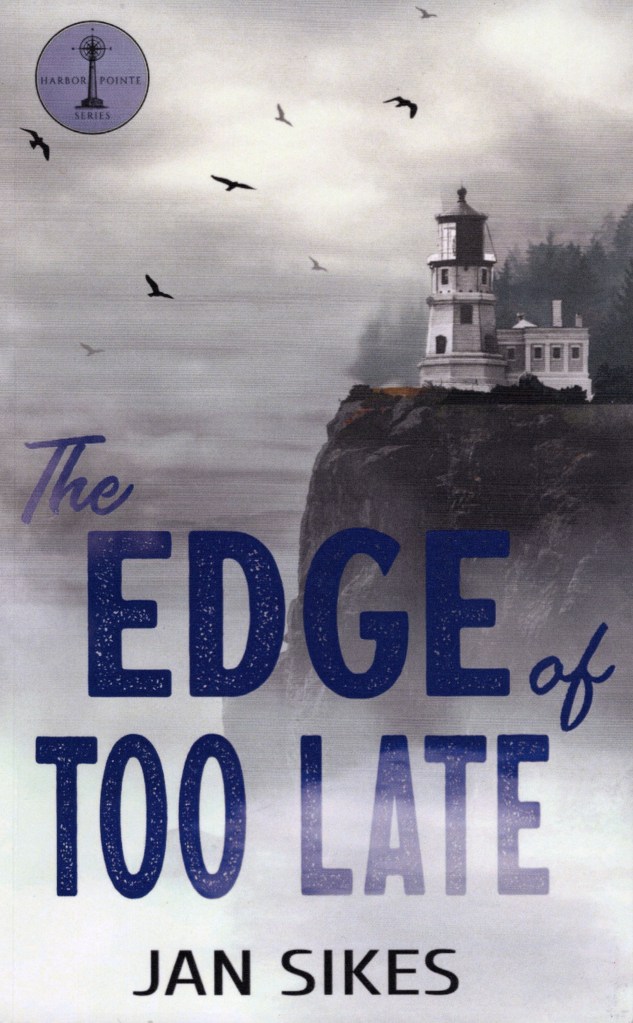








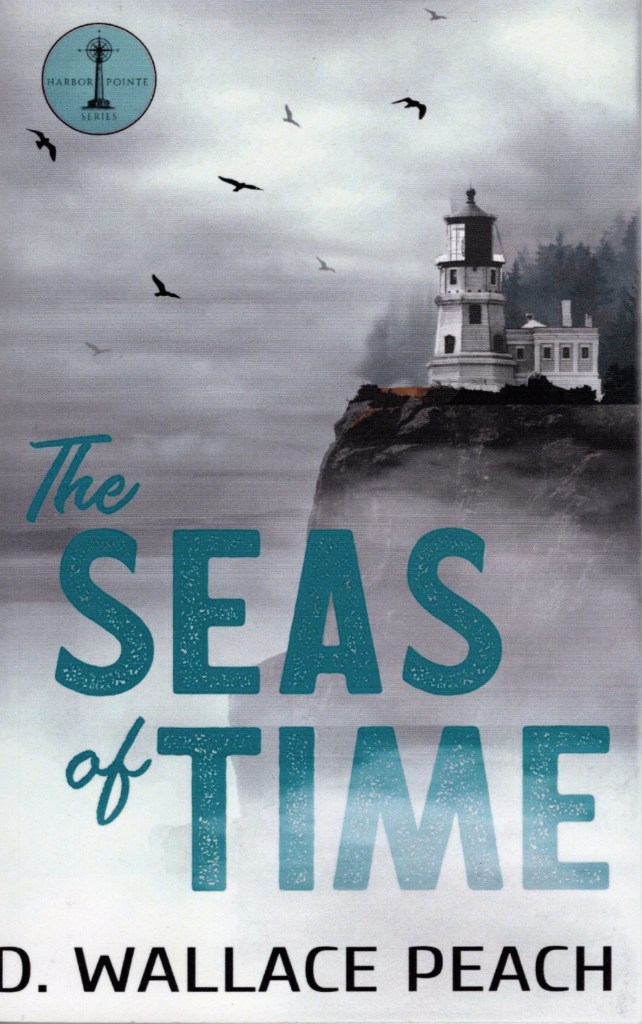
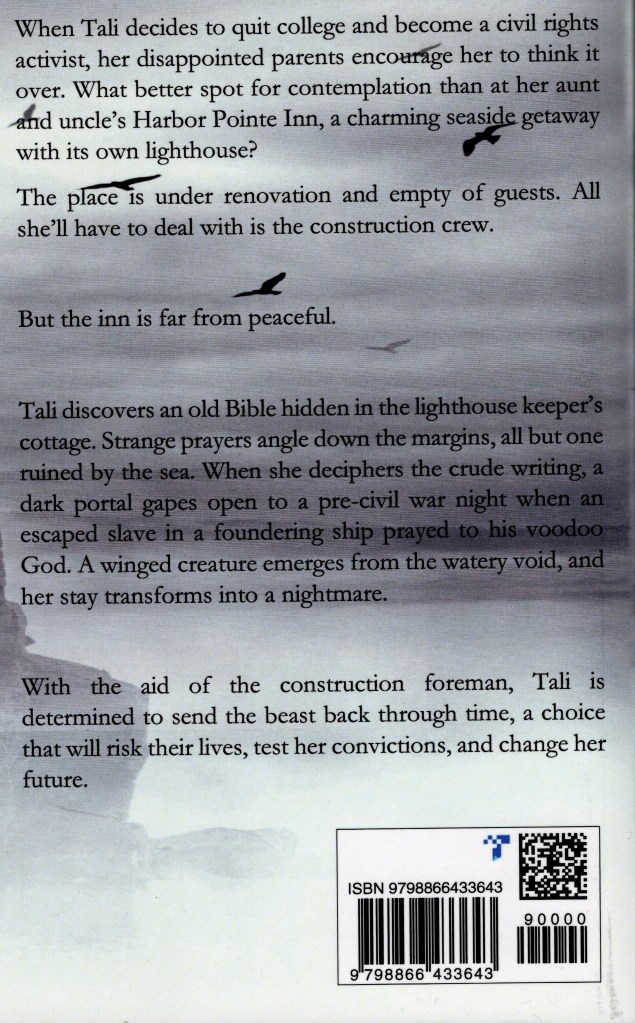

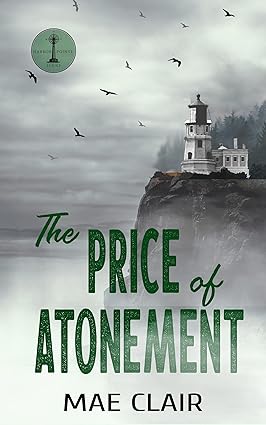






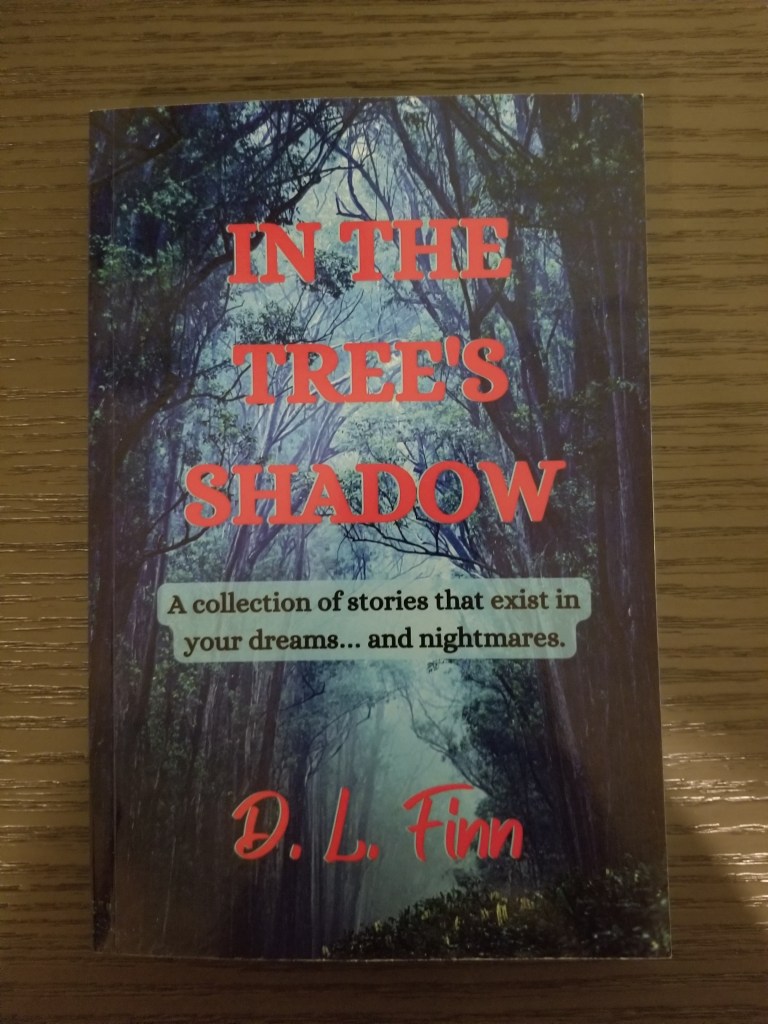
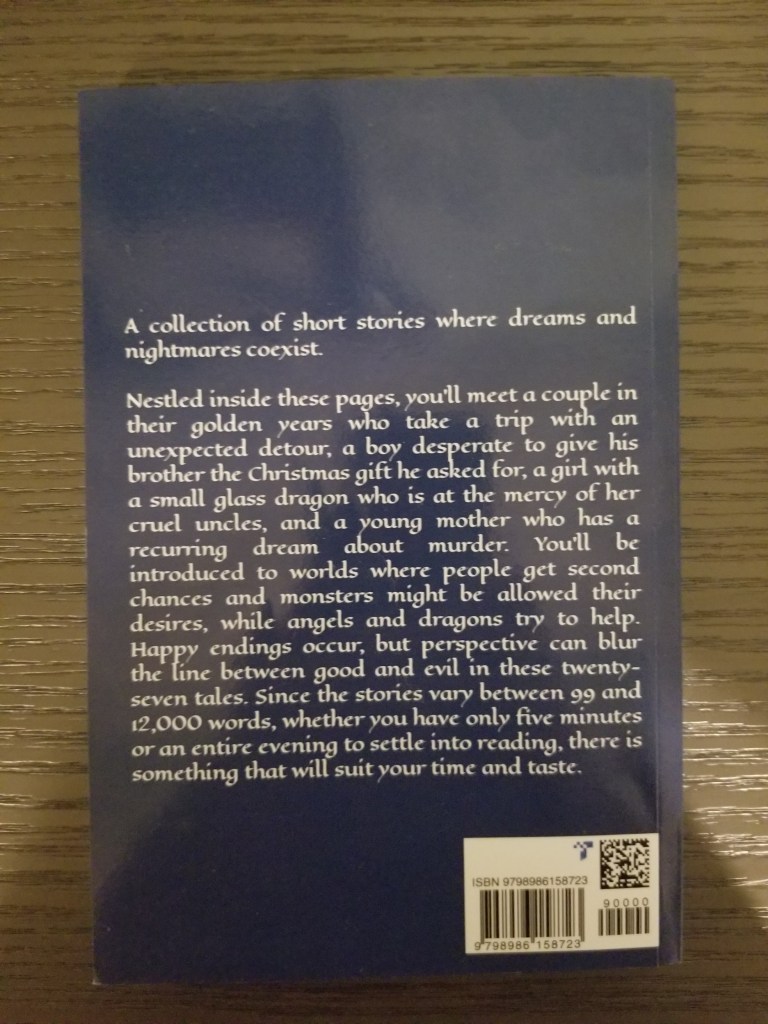






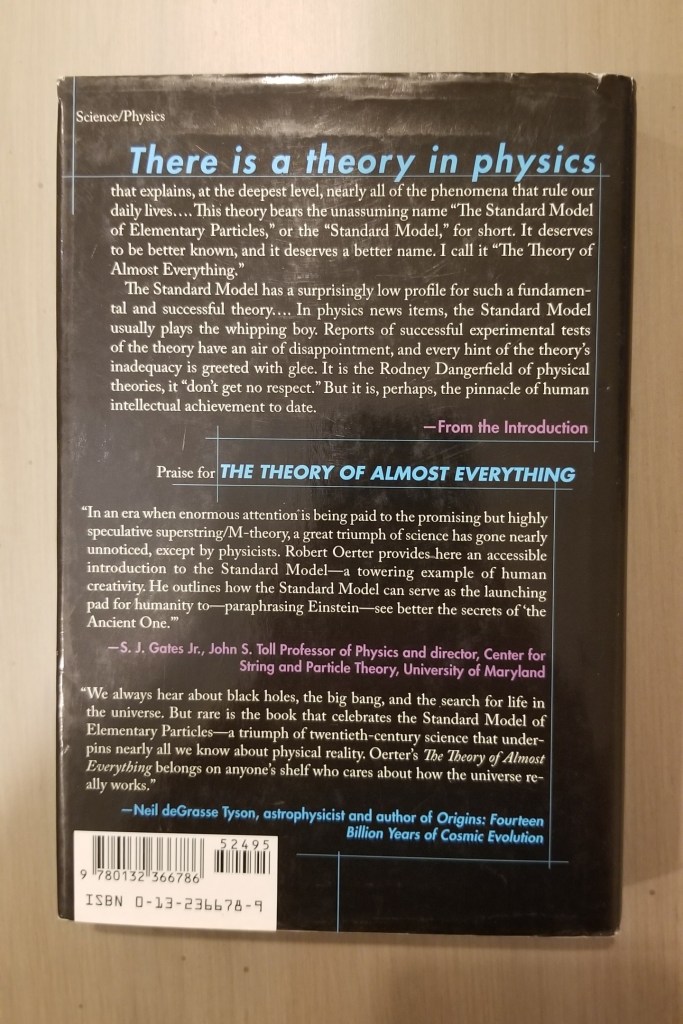



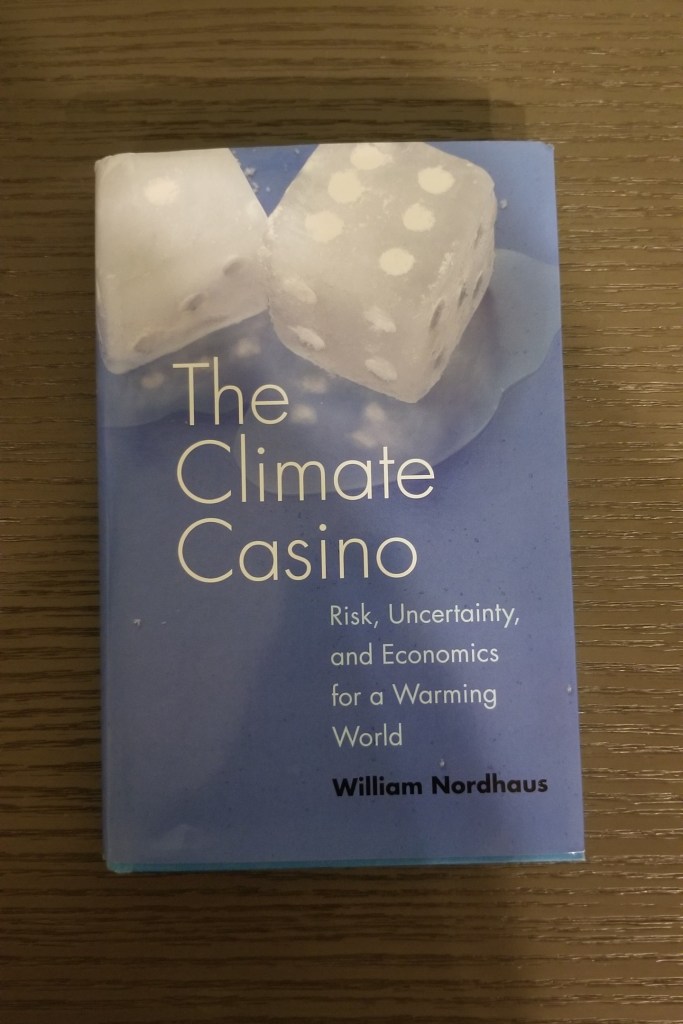

 Leonberger Life