The Blog Tag

Photo by Oleksandr P on Pexels.com

I just got tagged by deanne01 – Vegan Book Blogger for this blog tag. This is her last post. I’ve never been tagged before, and I have to admit I am not entirely sure how it works but as I understand I should tag other people by linking to their website. I am also linking to their last post to generate a pingback because I don’t know how you would know otherwise. I selected some random fellow bloggers who I thought might find these kinds of games amusing but I certainly don’t expect anyone to participate. It is only if you feel so inclined. However, the opposite is also true, if you want to do it, tell me and I will add you. Below are the people I picked.

If you have been tagged (or want to be tagged) and want to participate then you answer the six questions below. My answers are included below.

Photo by Nathan Cowley on Pexels.com


How did you come up with your blog name?

This blog was originally a blog about our late Leonberger dog Bronco and the book I wrote about him “Le Life and Times of Le Bronco von der Löwenhöhle”. The blog and the book is about his life so I chose the name “Leonberger Life”. The blog and the book also feature photos and information about Leonbergers. As time passed, I’ve added other topics too including my adventures and background as well as book reviews. I also launched a second blog “Super Factful”, which is about something different.

If your blog was a person (fiction or real), who would it be?

If my blog was a person, it would be our Leonberger dog Bronco. He was the best person ever.

What helps you create new content if you feel like you need some inspiration?

I get inspiration from looking at other people’s blogs or reading about Leonbergers.

Is there anyone you would like to collaborate with?

I have collaborated with a few people and that was fun. The first person I collaborated with was Jacqui Murray.

Is there anything more you wish you had or would like to learn as a blogger?

Yes, I need to learn how to use the Word Press features better, experiment with themes, and learn about SEO.

Do you have a specific style of blogging?

I am all over the place in terms of topics. When I review a Leonberger book I don’t hesitate to be critical, and I rate it from one star to five stars. I am trying to read all the Leonberger books there are, and I want to review them on my blog, so I need to rate the full spectrum. One day I would like to create a super post featuring around 40 Leonberger books. For other types of books, I like to keep it positive, so I only post books I thought were five stars. All other books I rate on Amazon but not on my blog. I like to add a lot of photos to my dog related posts.

I Wanna Hold the Hand Inside You

This post is not about Leonbergers. It is a post about me or rather about us, the family who would come to raise our Leonberger Bronco. Oh, how do I wish we could hold the hand inside Bronco. We miss him every day. “I Wanna Hold the Hand Inside You” or “Fade Into You” by Mazzi Star was released September 1993. That was when our first son Jacob was born in Akron, Ohio. At the time I was working on my PhD in Applied Physics and Electrical Engineering / Robotics at Case Western Reserve University, Ohio. The YouTube video below is from October 1994. I was done with my PhD, and I was working for ABB Robotics in Detroit. Our clients were the Detroit car industry. We were preparing for our move to Sweden where our young son would learn to speak English, the adult language, and some Swedish, the children’s language, or so he thought.

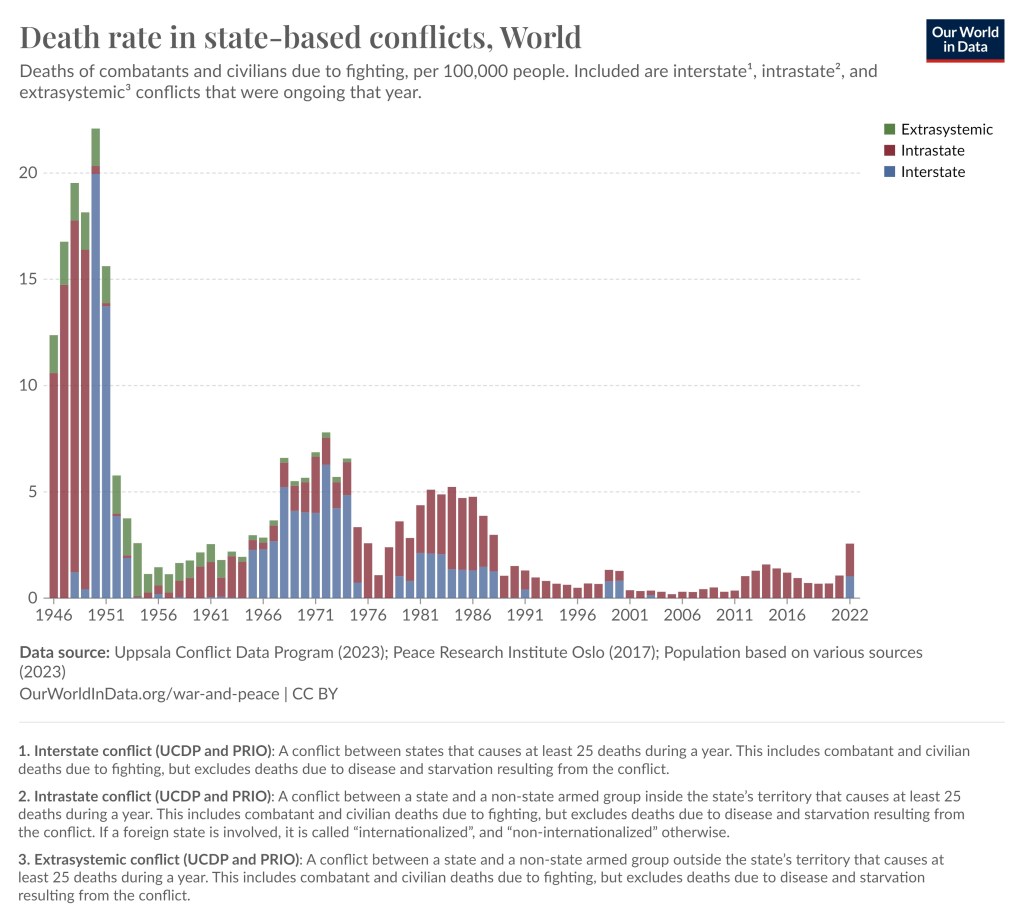
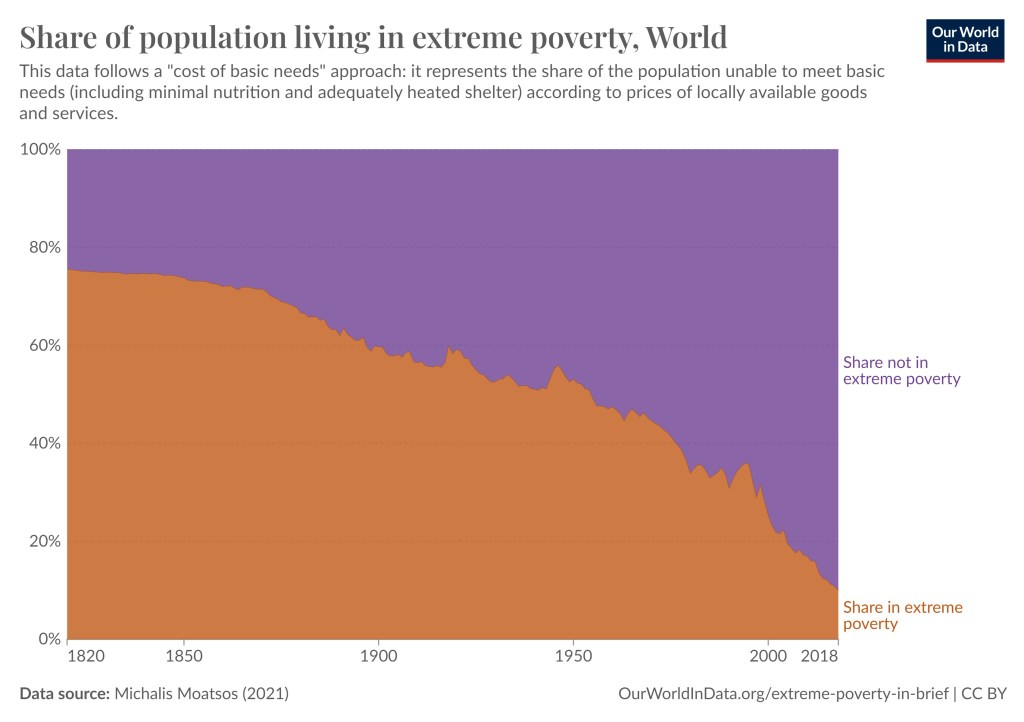
To me it seems like times were better back then, but the facts say otherwise. Crime in the US was much worse than it is today, there were more and worse wars, there was more poverty, more children starved, and the Rwandan genocide of Tutsis in 1994 had just finished. 800,000, nearly a million defenseless Tutsis had been intentionally slaughtered in just 100 days. Another thing that had happened that was close to home was that on September 28 1994 a ferry, M/S Estonia, sank in heavy seas as it going from Tallin to Stockholm, killing 852 people, most of them Swedes and Estonians. Only 137 people on board survived. Some of the vicitms worked at the location where I was going. Times were different back then, but they were not better, or were they? Perhaps the time of our youth is better no matter the state of the world.

This song reminds me of the word poignant. I like to use that word. As I understand it means sad, but beautiful and meaningful. The lyrics are poignant, but you don’t really use that word for music, but if you could, I think it would apply to the music as well.

Fade Into You by Mazzi Star recorded October 2nd 1994

The lyrics for “Fade Into”

I wanna hold the hand inside you
I wanna take the breath that’s true
I look to you and I see nothing
I look to you to see the truth
You live your life, you go in shadows
You’ll come apart and you’ll go blind
Some kind of night into your darkness
Colors your eyes with what’s not there

[Chorus]

Fade into you
Strange you never knew
Fade into you
I think it’s strange you never knew

[Verse 2]

A stranger light comes on slowly
A stranger’s heart without a home
You put your hands into your head
And then its smiles cover your heart

[Chorus]

Fade into you
Strange you never knew
Fade into you
I think it’s strange you never knew
Fade into you
Strange you never knew
Fade into you
I think it’s strange you never knew

You who are old enough to remember 1993 and 1994, do you think times were better back then?

Do you remember this song?

Covid-19 For the First Time

I am one of those lucky ones that avoided Covid-19 (technical name coronavirus SARS-CoV-2) for years. Now I have it for the first time. Five days ago, my wife got Covid-19, and my daughter had strep. Well, the virus is still with us, and it is evolving so maybe we should stop calling it Covid-19 and just call it Covid vintage 2023, Covid vintage 2024, etc. Yesterday (Monday), well now it is after midnight so technically the day before yesterday, I got what seemed to be a cold. I had a sore throat. Then during the night (last night) I started feeling weak and tired, I had some muscle pains and I got very strong fever chills. I did not measure my temperature but based on the strong fever chills I think it must have been at least 100 degrees.

Luckily for me, the Covid vintage 2024 is milder than the original. Right now, I have a fever and fever chills, but not as strong as last night. I went to our doctor’s office here in Dallas today to get professionally tested for covid and strep. I did not have strep, but I had covid. Naturally my wife and I need to isolate and maybe our daughter too. We suggested she takes into a hotel, so she does not get covid, but she does  not want to. I may not be as active blogging for a few days but here are some covid related jokes.

From the Shining a horror movie. Wendy, Jack and Danny are on their way to the overlook hotel.
Look at Jack’s smug face. This scene is funny. The photo is from BoredPanda.
The Goodfellas are sitting around laughing at a joke. Why are we running out of toilet paper? Because when someone sneezes a 100 people shit themselves.
Remember the toilet paper shortage?
Corona beer changes their name to avoid association with the Coronavirus outbreak. The new name is "Ebola Extra".
Poor Corona Beer. The photo is from BoredPanda.

Economic Externalities Are Spoilers of Free Markets

An economic externality or external cost is an indirect cost or benefit to an uninvolved third party that arises as an effect of economic activities. They are unpriced components of market transactions. An example is the gasoline you buy. Burning the gasoline causes pollution that harms other people including those who do not own cars, future generations, and it harms the environment including animals. Society incurs a cost from that pollution that you don’t pay for at the pump. The gasoline producers and vendors do not pay for it either. Unless you add a tax or make other adjustments the act of polluting is free of charge, even though there is a real cost associated with it. It is a cost that is invisible to unfettered “free markets”. It is a market failure. Note I am putting “free markets” in quotes because the free market does not exist all by itself. It exists within a framework of societal norms, culture, laws, a banking system, and entities such as limited liability corporations, etc.

In the photo factories are spewing pollution.
Pollution is an example of a negative externality. Photo by Chris LeBoutillier on Pexels.com

The existence of economic externalities is entirely uncontroversial among economists, including laissez-faire (libertarian) economists such as Milton Friedman, Friedrich Hayek, and Ludwig von Mises, even though Ludwig von Mises said that they arise from lack of “clear personal property definition.” In fact, Milton Friedman, Nobel prize winner in economics, and leading anti-tax champion, stated that pollution met the test for when government should act, but that when it did so, it should use market principles to the greatest extent possible — as with a pollution tax. However, in my experience the existence of economic externalities is unwelcome news to market fundamentalists who lack education in economic science, including many libertarian leaning politicians. If you bring up the subject you might be dismissed, scoffed at, or labeled as a leftist. I don’t have a Gallup poll to back this up, but I believe it is correct to say that economic externalities are controversial among significant portions of the public despite being a universally accepted and fundamental concept of economic science.

This simplified supply and demand graph shows two different graphs in blue. One for the private/production cost per unit of a goods and a second that also includes the cost of the externality.

In the simple supply-demand graph above we see how the price of a product per unit (private cost / or production cost) increases with the increased quantities produced. The increase in price could be because resources become increasingly scarce as more must be produced. The curves are typically not simple straight lines like this. It is just an illustration. As the price goes up demand goes down (the red demand curve/line) because fewer people want to buy the product or can afford the product. An equilibrium is reached where the curves meet. According to classical economics (micro-economics classes, or macro-economics classes) this equilibrium represents the optimum benefit for society assuming consumers and producers are perfectly rational (with respect to their self-interest) and there are no externalities.

Unfortunately, in this example, there is an externality and as we know the unfettered free market does not account for it. Let’s say that we know the cost of the externality and we find a way of adding that cost to the price, perhaps via a tax. The price is higher and fewer units will be sold and we have a new equilibrium. Now the economically optimal point is the ideal equilibrium that reflects social cost. In the 1920’s an economist Arthur Pigou argued that a tax, equal to the marginal damage or marginal external cost on negative externalities could be used to reduce their incidence to an efficient level. Notice this tax is not for redistributing wealth or bringing revenue for the government but to reduce economic harm to society. There are other ways to address the problem, but this type of tax is called a Pigouvian tax.

A picture of dollar bills
How a Pigouvian tax can reduce economic harm to society. Photo by Pixabay on Pexels.com

Finally, I would like to give a few examples of negative and positive externalities. Negative externalities could be :

  • Pollution
  • Climate Change
  • Depletion of fish due to overfishing
  • Depletion of other resources
  • Overuse of antibiotics
  • Spam email

Some positive externalities are :

  • A beekeeper keeps the bees for their honey, but a side effect or externality is the pollination of surrounding crops by the bees.
  • Education (societal benefits beyond the individual).
  • Research and development
  • Innovations
  • Scientific discoveries
  • Vaccination
This is a picture of a beehive
When a beekeeper keeps bees for their honey, a side effect is the pollination of surrounding crops by the bees. This is an example of a positive externality.. Photo by Pixabay on Pexels.com

As I previously mentioned I would like to launch a second blog featuring small facts or insights that are widely disbelieved despite being known to be true by the experts in the relevant field or facts that are very surprising or misunderstood by a lot of people. These facts shouldn’t be trivia but important facts that are somewhat easy to understand despite their status as being unthinkable to many. They are not scientific theories or complex sets of facts or information, but facts that you can easily state. I’ve decided to call these facts super facts (is that a stupid name?). This is the last super fact I am posting on my Leonberger blog. I will create a list of hundreds of super facts but that is for my upcoming blog. To see the other four super fact posts so far check the list below:

Had you heard of economic externalities before reading this?

The Speed of Light In Vacuum Is a Universal Constant

As I previously mentioned I would like to launch a second blog featuring small facts or insights that are widely disbelieved despite being known to be true by the experts in the relevant field or facts that are very surprising or misunderstood by a lot of people. These facts shouldn’t be trivia but important facts that are somewhat easy to understand despite their status as being unthinkable to many. They are not scientific theories or complex sets of facts or information, but facts that you can easily state. They may be part of a scientific theory, or a result of an established scientific theory but not an entire scientific theory. I’ve collected hundreds of these facts because to me they seem to be extraordinarily important. They are worldview altering facts, big shocking facts to some, facts that many people deny regardless of the evidence, super-facts if you will.

In a previous post I discussed that despite the fact that the scientific community states that Earth is 4.5 billion years old and that humans evolved over millions of years a 2019 Gallup poll, showed that 40% of US adults believe that God created humans in their current form within the last 10,000 years. The evidence proves that this 40% of the population is wrong. The scientists aren’t guessing. They make their claim that earth is 4.5 billion years old based on a lot of strong evidence. Evidence which is unknown to a lot of people. In this post I am discussing a fact that once was widely disputed but today is more just surprising or not understood by many and that is that the speed of light in vacuum is a universal constant.

No matter how fast you travel, what direction, or where you are you will measure the speed of light compared to yourself to be c = 299,792,458 meters per second or approximately 186,000 miles per second or 671 million miles per hour.

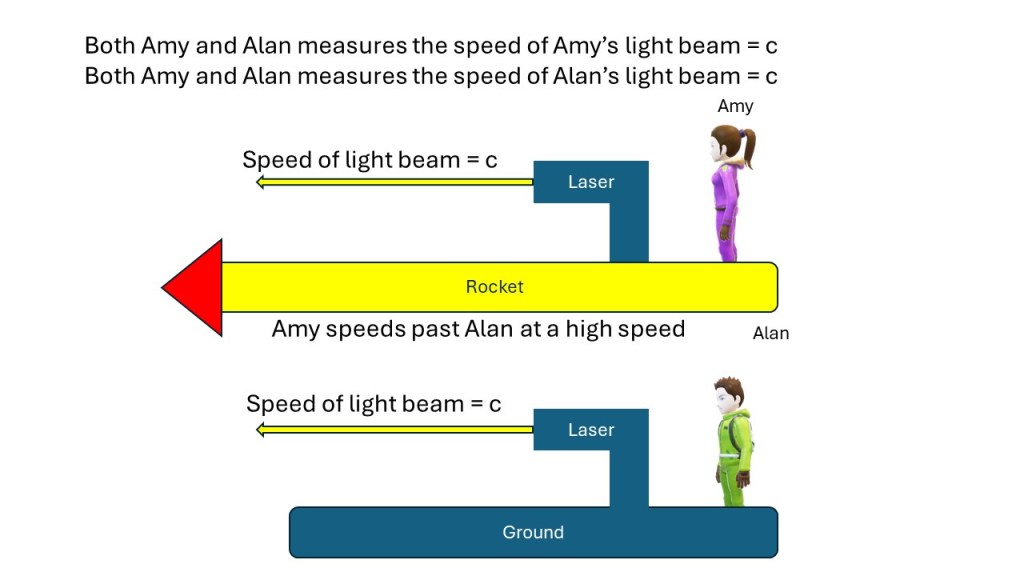
The picture shows two people Alan and Amy. Alan is on the ground. Amy is flying by Alan in a rocket speeding left. Both Alan and Amy are pointing lasers to the left.
In this picture Amy is traveling past Alan in a rocket. Both have a laser. Both measure the speed of both laser beams to be c = 299,792,458 meters per second.

In the picture above let’s say Amy is flying past Alan at half the speed of light. If you believe Alan when he says that both laser beams are traveling at the speed of c = 186,000 miles per second, then you would expect Amy to measure her laser beam to travel at a speed that is half of that c/2 = 93,000 miles per hour, but she doesn’t. She measures her laser light beam to travel at the speed of c = 186,000 miles per second just like Alan. This seems contradictory. The solution that the special theory of relativity offers for this paradox is that time and space are relative and Amy and Alan measure time and space differently (more on that in another post).

Clocks being sucked into a hole or possibly sped up into space
Time is going to be different for me. From shutterstock Illustration ID: 1055076638 by andrey_l

I should add that the realization that the speed of light in vacuum is a constant regardless of the speed or direction of the observer or the light source was a result of many experiments, which began with the Michelson-Morley experiments at Case Western Reserve University, Cleveland, Ohio in the years 1881-1887. At first scientists thought that there was an ether that compressed the experimental equipment and distorted clocks so that it seemed like the light vacuum always came out the same. With the special theory of relativity in 1905 those speculations were laid to rest.

This is a drawing of the Michelson interferometer used at Case Western Reserve University
The first Michelson-Interferometer from 1881. It was used to measure the speed difference of two light beams (well a split light beam) with a very high accuracy (for the time). The light traveled with the same speed in all directions and no matter what earth’s position and speed was in its orbit around the sun. This picture is taken from Wikipedia and is in the public domain of the United States.

The speed c = 299,792,458 meters per second is a universal speed limit created by time and space

I should point out that there is nothing magical about the speed of light in a vacuum. Light traveling through matter, like glass or water, does not travel at this speed c, but slower. It also isn’t entirely correct to say that the speed of light in vacuum is a universal constant, because it isn’t about light per se. What is happening is that light traveling completely unimpeded through vacuum is prevented from traveling infinitely fast by the way time and space is set up. All massless particles / radiation, or anything that hypothetically could be traveling at an infinite speed is prevented from doing that because of the way time and space are related. Light in vacuum just happened to be what we first discovered to be restricted by this universal speed limit. Yes, time and space are annoying that way, putting a limit on the speed of light and on massless particles.

So how is time and space arranged to cause this universal speed limit? Well, that is an even more surprising blog post for another day (I will link to it once I have made the post). From this discovery about time and space came a lot of other interesting realizations but that is also for another post,  but let’s just give a brief summary:

  • Time for travelers moving fast compared to you is running slower.
  • Length intervals for travelers moving fast compared to you are contracted.
  • Simultaneous events may not be simultaneous for another observer.
  • The order of events may be reversed for different observers.
  • If you accelerate to a speed that is 99.999% of the speed of light you still haven’t gotten any closer to the speed of light from your perspective. Light in vacuum will still speed off from you at c = 186,000 miles per second.
  • Acceleration will get harder the closer you get to the speed of light in vacuum. The force required will reach infinity as you approach the speed of light in vacuum.
  • Forces, the mass of objects, momentum, energy and many other physical quantities will reach infinity as you approach the speed of light in vacuum assuming you are not a massless particle.
  • Mass is energy and vice versa E = mc2
  • Magnetic fields pop out as a relativistic side-effect of moving charges.
So, it seems like we cannot travel faster than the speed of light in vacuum. It seems like the universal speed limit is really a hard limit, unlike the speed limits on Texas highways. That is maybe true, at least locally where we are. However, you could get around it, sort of cheating, by stretching and bending space to the extreme by using, for example, enormous amounts of negative energy. That’s happening to our Universe over a scale of tens of billions of lightyears. A lightyear is the distance light in vacuum travel over a year. Stretching and bending space is not part of the special theory of relativity. That is Einstein’s General Theory of Relativity, which is a very complicated theory, so you may not see any posts on that.
Mass is energy and vice versa, a direct result of the way time and space are related. Stock Photo ID: 2163111377 by Aree_S

How do you feel about time and space creating this universal speed limit in which light in vacuum travel?

We Know That the Earth is Billions of Years Old

As I mentioned in a previous post I would like to launch a second a blog. The topic would be facts and insights that are either widely disputed or often misunderstood amongst the public, yet important and known to be true to the experts and scientists in the relevant field. I’ve identified hundreds of such cases.

In my previous post I discussed the fact that despite the fact that the scientific community states that Earth is 4.5 billion years old and that humans evolved over millions of years a 2019 Gallup poll, showed that 40% of US adults believe that God created humans in their current form within the last 10,000 years. As a teenager I believed that myself. That was before I knew much about science. I had read agenda driven books that left out, or wrongfully dismissed the evidence for an old earth while presenting faulty arguments for a young earth. Just learning about the relevant science was enough for me to realize that I had been bamboozled. At first, I dug my heels in, but I eventually realized that the belief that earth was 6,000 years old was not tenable and unsupportable by science.

A photo of planet earth. North America is facing the camera.
Is Earth 4.5 billion years old or 6,000 years old? Photo by Pixabay on Pexels.com

My goal for the blog is not to be an exhaustive source for these kinds of topics, or a deep dive into these topics, but just to collect a large set of these unnecessarily controversial topics and provide some insight into the surrounding misunderstandings. Not a complete insight into the topics, but some. Perhaps my blog will lead to some new insights for some, or intellectually honest reflection as well as interesting and friendly discussions.

A man sitting on a rock by the ocean look at the senset.
Perhaps some new insight. Perhaps some intellectually honest reflection. Photo by Keegan Houser on Pexels.com

The format I decided on is to present the evidence for the fact or insight in question as a headline in bold followed by a list of failed objections to that evidence. Then, if applicable, failed arguments for the opposing point in bold as well, followed by an explanation as to why the argument does not work. It may seem like this setup is biased. However, the point is that the fact or insight in question is not commonly contested among the experts for good reasons, and therefore this setup is natural. Naturally, I would be open to counter arguments. I could, of course, be wrong and then I have to remove the fact/insight from my list.

A woman is shouting into the man's face using a megaphone.
I will certainly be open to counter arguments but let’s keep it friendly. Photo by Mikhail Nilov on Pexels.com

Radiometric dating of meteorite material, terrestrial material and lunar samples demonstrate that earth is 4.5 billion years, or more precisely 4.54 billion years old.

  • Radioactive decay rates have changed: This objection does not work because rates of radiometric decay (the ones relevant to radiometric dating) are thought to be based on rather fundamental properties of matter, such as the probability per unit time that a certain particle can “tunnel” out of the nucleus of the atom. Analysis of spectra from quasars show that the fine structure constant has not changed over the last ten billion years. There are dozens of radiometric dating methods that are consistent with each other throughout time. Also, for a young earth you would need the decay rates to have been millions of times faster in the past, which would require changes in fundamental properties that would have plenty of noticeable effects on processes other than radioactive decay, not to mention the radiation being millions of times stronger than today. It would have fried everything.
  • Young earth creationists sometimes make the claim that the initial ratios between isotopes may have been different: That the initial ratios/condition were different in the past and therefore radiometric dating is unreliable. This is a better objection, but it also fails. In this case you must take it case by case for each radiometric dating method and situation. But in many cases the amount of the daughter isotope is known to have been zero, which makes it easy and reliable.
On the left a Uranium nucleus. On the right an alpha particle, gamma ray, proton, neutron, and a beta particle (electron), originating from the uranium nucleus.
Radioactive decay wasn’t a million times faster 6,000 years ago. Stock Vector ID: 2417370135 by grayjay

We can see galaxies that are billions of lightyears away. This does not establish the age of the earth, but it makes a young earth and a young universe implausible.

A common objection to this observation is that lightspeed in vacuum has changed: Similar to above this objection does not work because the light speed in vacuum is a fundamental constant that is not believed to change. It has been measured and no change has been seen. An example is the Einstein’s equivalence of energy and mass E = mc2. If the speed of light once was millions of times faster than now, the energy contained in a kilogram would be a trillion times larger than now. Where did all that energy go? The speed of light is determined by the inverse of the square root of the electric constant multiplied by the magnetic constant. You would have to drastically change the strength of the electric and magnetic fields (by the trillions) to get the speed of light to be millions of times faster. Wouldn’t that be noticeable? The light speed in vacuum shows up in many other physical relations as well. It is not a tenable objection.

Two equations, James Clerk Maxwell's equation for the speed of light and Albert Eintein's energy and mass equivalency E=mc2
A couple of equations in which the speed of light in vacuum is a fundamental constant.

We know stars are old because they develop according to certain physical processes that for some stars take billions of years. An example is our sun. It has fused (burned up) up five billion years’ worth of hydrogen.

The heavier elements in our solar system originate with older stars that burned out and exploded.

Electromagnetic radiation, including light, heat transfer if you will, travels from the inside of the sun to the surface and this takes 100,000 years. The photons are emitted and reabsorbed over and over, which is why the electromagnetic transfer is lower than in vacuum. If the sun is only 6,000 years old, how can we see it?

Finally, some objections to old earth by young earth creationists.

The earth’s magnetic field has been weakening during the last 130 years as if it was formed from currents resulting from earth being a discharging capacitor (claim by Thomas Barnes). This would make an impossibly strong magnetic field already 8,000 years ago. I remember this being the argument in a young earth creationist book I read as a teenager.

  • The first problem with this argument is that there is no good reason to believe that earth’s magnetic field acts this way.
  • We know that earth’s magnetic field has reversed itself several times thus disproving the discharging capacitor model.
  • Thomas Barnes’ extrapolation completely ignores the nondipole component of the field.
  • Conclusion, this objection is not reasonable.
A picture showing earth's magnetic field around planet earth. The north pole end of the magnetic field being in the south and the south end in the north.
Earth’s magnetic field. Stock Vector ID: 1851166585 by grayjay.

If the earth and the moon were billions of years old there would be a hundred feet thick dust layer from meteorites  on the moon. The moon landing proved otherwise. This is another argument I remember reading in a young earth creationist book (Scientific Creationism by Henry Morris) as a teenager.

The problem with this argument, as I would later find out, is that Morris’ claims about a hundred feet thick dust layer was based on faulty and obsolete data. The expected depth of meteoritic dust on the Moon is less than one foot (after billions of years).

If I had known and understood any of this when I was 14 years old, I would not have been bamboozled by the young earth creationists, but it was not the only time I was bamboozled.

Anyway, this is how I envision one blog post in my upcoming blog post adventure. It is a brief overview of why experts/scientists can be trusted in regards the topic of the post. I have not yet decided on a name for my new blog.

What CCL Volunteers Did This Summer

I have not posted in a while, and I have not read blog posts either because I’ve been focused on the annual Citizens Climate Lobby (CCL) conference and lobby days in Washington DC. Part of this event was about 1,000 CCL volunteers having meetings with more than 400 congressmen and senators. I organized and participated in a meeting with senator Ted Cruz’ office (Texas) and I participated in a meeting with  Senator Wicker’s office (Mississippi). I also had a small one-man (just me) meeting with the office of another Texas congressman and a delivery to my own congresswoman Beth Van Duyne (Texas district 24).

The photo is of a dial which can be used to decrease or increase CO2 emissions.
CO2 emissions dial. Shutter stock Photo ID: 1928699927 by NicoElNino

Some technical background. The United States congress consist of two houses, the house of representatives with 435 congressmen, and the Senate with 100 Senators, two from each state. Each proposed law or bill/act has a number in the house of representatives on the form H.R.xxxx and S.xxxx in the Senate. To become a law, a bill/act must be approved by the house of representatives with a vote of at least 50% as well as approved by the Senate with a vote of at least 60% (filibuster rule) or 50% if you can make it part of a budget bill (so called budget reconciliation). I can add that the president can also veto a bill that has passed both houses.

Photo of empty streets with the white Capitol building in the background.
How it looked like when I arrived at the Capitol building in Washington DC the early morning of Tuesday June 11, 2024.

The majority of the house of representatives is Republican and the majority of the Senate is Democratic, but the split is very even. Unfortunately, the current congress is also very partisan, and pretty much war like,  making passing any laws nearly impossible. Most bills are introduced to impress respective side’s partisan base and for grandstanding, not with the intention of it becoming law. I’ve read that the current congress is the most dysfunctional in United States history. Into this mess CCL is proposing or supporting climate related legislation that is bipartisan, or introduced jointly by Democratic and Republican congressmen, and therefore has a chance of passing. CCL is a bipartisan organization and has good relations with both Democrats and Republicans.

Seven people standing in front of Senator Ted Cruz office.
The CCL group meeting with Senator Ted Cruz’ office. The staff member, Jackson Tate, is standing the furthest to the right. I am standing in the middle, immediately to the right of the flag.

Our favorite piece of legislation is the carbon fee and dividend, but we did not discuss it for reasons I will soon explain. The carbon fee and dividend policy consist of three parts. First, a price/fee/tax is placed on carbon emissions. This makes sense because ruining the atmosphere for everyone on earth should not be free of charge. Second, the proceeds are returned to people/consumers on an equal basis, as a dividend, a check or a direct deposit. Most people will receive more money than they lose from paying higher prices, while the incentive to buy less carbon intensive products will remain. You are rewarded for polluting less than the average. Thirdly, a carbon border adjustment, or a fee at the border, will be enacted on imported carbon intensive products that are produced with higher carbon emissions than the average for the United States. A subsidy is applied to exported products created using less carbon emissions. According to economists, a carbon fee and dividend  is a very effective policy in reducing emissions. In fact, an optimal way of reducing carbon emissions. At the same time, it does not harm the economy. This is why CCL loves it.

Unfortunately, it is currently not politically viable. In Canada something similar has been implemented and even though 80% of Canadians come out ahead financially from this policy, almost no one believes it because doing the accounting is not easy. It is also incorrectly blamed for inflation. Add the fact that the Republican party has turned against it, thus making it a partisan policy (no longer bipartisan). Therefore, we have to wait.

This graph shows that US annual carbon emissions have been decreasing but not fast enough. Additional policies, shown in different colors, are projected to lower emissions even more, even reaching our Paris agreement goal by the year 2030.
This graph is showing US annual carbon emissions. The black line is the actual US emissions up to the end of 2023. The multicolored graphs are estimated emissions reductions resulting from different policies. The blue triangle corresponds to a specific quite reasonable form of carbon fee and dividend, but we can’t use it right now. The second largest triangle, the dark red triangle, correspond to clean energy permitting reform, a policy area that is very bipartisan and viable.

For this year we had four “Asks”. Four policy proposals or areas for which we are asking support from congress.

  • Prove It Act S.1863
  • Energy Permitting Reform
  • Seedlings for Sustainable Habitat Restoration Act of 2023 S.1164 / H.R.5015
  • Increased TSP Access Act of 2023 S.1400 / H.R.3036
There are 10 people in the photo. Three staff and seven CCL volunteers.
The CCL group meeting with Senator Wicker’s office. The staff members were Julia Wood, Flannery Egner, and Wade Roberts. Julia and Flannery are standing front left and Wade middle back. I am standing on the far right.

Below are the summaries of our four asks. Below each short summary I have included the full text from our flyers. I don’t expect anyone to read the full text, but naturally you can if you are really interested.

Prove It Act S.1863

This bipartisan act introduced by Senators Chris Coons (D-DE) and Kevin Cramer (R-ND) would require the Department of Energy to study the emissions density of certain emissions intense products, cement, aluminum, steel, fossil fuels, etc., in the United States and in other countries. US products are much cleaner than the same products from many other countries such as China and India. Having the data will help us capitalize on this advantage, for example, in trade negotiations and attracting foreign buyers of these products. It is good business for the United States.

Full CCL text of Prove It Act S.1863

The bipartisan Providing Reliable, Objective, Verifiable, Emissions Intensity and Transparency Act of 2023 (S.1863), or PROVE IT Act, introduced by Sens. Chris Coons (D-DE) and Kevin Cramer (R-ND), would require the Department of Energy (DOE) to study the greenhouse gas emissions intensity of certain products — including aluminum, cement, crude oil, fertilizer, iron, steel, plastic, and others — that are produced in the United States and in certain covered countries. The PROVE IT Act is not a carbon tax or carbon border tariff.

The PROVE IT Act was approved by the Senate EPW Committee in a large bipartisan vote (14-5) in January and is expected to be introduced in the House by Reps. John Curtis (R-UT-03) and Scott Peters (D-CA-50) in the coming weeks.

Greenhouse gas emissions are a global issue, and trade and the power of the American market are some of the best tools we have to reduce global emissions. Since many U.S. industries are among the least carbon intensive in the world, producing products here is good for the U.S. economy and good for the climate. In addition, U.S. industries have had to unfairly compete with industries from higher-polluting foreign countries with lax labor and environmental standards. As Sens. Coons and Cramer have said, “The PROVE IT Act would put high-quality, verifiable data behind these practices and bolster transparency around global emissions intensity data to hold countries with dirtier production accountable.”

The PROVE IT Act is endorsed by the American Petroleum Institute, American Conservation Coalition Action, Bipartisan Policy Center Action, American Iron and Steel Institute, Center for Climate and Energy Solutions, Citizens’ Climate Lobby, Climate Leadership Council, Citizens for Responsible Energy Solutions, Environmental Defense Fund, Information Technology and Innovation Foundation, Third Way, Progressive Policy Institute, Independent Petroleum Association of America, Steel Manufacturers Association, and the United States Chamber of Commerce.

The PROVE IT Act is an important bipartisan step to protect American industry and drive down global carbon pollution. Citizens’ Climate Lobby urges all members of Congress to cosponsor the PROVE IT Act and take action to pass the bill this Congress.

Energy Permitting Reform

The biggest obstacle to expanding the utilization of clean energy isn’t building clean energy but building the power lines needed to bring the power from the clean energy sources to households. It takes 10-20 years to get a powerline approved while building a wind power facility takes months. There are also energy technology specific hurdles for building, for example, nuclear power stations and renewables including endless judicial reviews and several layers of bureaucratic approval processes. We can’t wait decades for yes or no. It is important to speed up the process for building America’s clean energy infra structure. Some has been done but more needs to be done. This is an area that will make a big difference that both Democrats and Republicans seem to agree on.

Full CCL text of Energy Permitting Reform

Citizens’ Climate Lobby believes it is critical to speed up the process for building America’s clean energy infrastructure. Changes to the current process for permitting energy projects must be made so America can lower greenhouse gas emissions and ensure American households have access to affordable clean energy. CCL appreciates that the Fiscal Responsibility Act of 2023 included some provisions that will help streamline clean energy permitting and several new agency and FERC rules intended to speed the energy permitting process have been finalized. However, more comprehensive permitting reform is still needed and should be done in a way that protects communities, preserves their ability to provide input, and maintains environmental standards. We also know that further changes to our permitting process will need to have bipartisan support.

In each of the past three years, at least 84% of the new energy capacity built in the United States was clean energy. More than 95% of new energy projects currently awaiting permits are solar, wind, and battery storage. Building a new electrical transmission line, on average, takes over a decade and solar, wind, and transmission projects are litigated at higher rates than other infrastructure projects. If construction of energy infrastructure continues at this pace, we will not be able to lower our emissions at the speed and scale necessary and ensure Americans have affordable and reliable energy in the 21st century.

We still need key reforms to our energy permitting process, such as but not limited to:

  • Allow transmission lines to be permitted and built much faster: We must permit, site, and build interregional transmission and require that regions be able to transfer significant power between regions.
  • Reasonable timelines for judicial review: There are new time limits for NEPA reviews, but litigation still has the potential to delay needed energy projects almost indefinitely. We need a reasonable statute of limitations that allows impacted communities to have a voice and stop bad projects but does not allow for infinite delays.
  • Ensuring robust and early community engagement: Any permitting reform must still provide a thorough, accessible process for community engagement and input.
  • Technology-specific permitting: There is also a critical need to modernize permitting for specific technologies like nuclear, hydropower, and geothermal power.

We urge Congress to work in a bipartisan manner to enact needed changes to our energy infrastructure permitting process. We believe both parties must come to an agreement on reforms that can pass both the House and Senate and be signed into law.

Seedlings for Sustainable Habitat Restoration Act of 2023 S.1164 / H.R.5015

The Seedlings for Sustainable Habitat Restoration Act was introduced by Texas Senator John Cornyn (R), and a couple of Democrats jumped on board as well. It will authorize the secretary of agriculture to carry out eco system restoration activities particularly the development of seedling nurseries, which will significantly aid forest recovery from wildfires. It is part of CCL’s Healthy Forest initiative.

Full CCL text of Seedlings for Sustainable Habitat Restoration Act of 2023 S.1164 / H.R.5015

The Seedlings for Sustainable Habitat Restoration Act was introduced in the Senate by Sen. Ben Ray Lujan (D-NM), Sen. John Cornyn (R-TX) and Sen. Martin Heinrich (D-NM) and in the House by Rep. Leger Fernandez (D-NM-03). The legislation ensures that funding from the Bipartisan Infrastructure Law of 2021 is available to support the development of seedling nurseries to improve and expand reforestation efforts.

Specifically, the bill would:

  • Authorize the Secretary of Agriculture, acting through the Chief of the Forest Service, to enter into contracts, grants and agreements to carry out certain ecosystem restoration activities.
  • Clarify that funding from the Bipartisan Infrastructure Law is available for the development of seedling nurseries at state forestry agencies, local or non-profit entities and institutions of higher education.

The Seedlings for Sustainable Habitat Restoration Act has the potential to significantly aid in forest recovery from wildfires. From 2001 to 2021, the nation lost 11.1 million hectares of tree cover from wildfires and 33.1 million hectares from all other loss. Although the Bipartisan Infrastructure Law provides funding for replanting programs, it does not address the need for expanded nurseries. The Seedlings for Sustainable Habitat Restoration Act rectifies this omission by providing funding for crucial seedling nurseries to further our nation’s progress toward resilient forestry. The bill complements another one of CCL’s secondary asks, the Save our Sequoias Act, through aiding its regeneration efforts.

On April 16, 2024, the House version of the Seedlings for Sustainable Habitat Restoration Act was voted out of the Committee on Natural Resources by unanimous consent. It now awaits action by the full House. The Senate companion was referred to the Committee on Agriculture, Nutrition, and Forestry on March 3, 2023, where it awaits review.

Increased TSP Access Act of 2023 S.1400 / H.R.3036

There is a current Technical Service Providers Shortage that needs to be addressed. Farmers and ranchers need help with resilient and climate smart practices, and this bill streamlines and improves the certification process. It was introduced by Senators Mike Braun (R-IN) and Michael Bennet (D-CO) in the Senate and Representatives James Baird (R-IN-04) and Abigail Spanberger (D-VA-07) in the House. It is a small step forward but easy and inexpensive to do.

Full CCL Text of Increased TSP Access Act of 2023 S.1400 / H.R.3036

The bipartisan Increased TSP Access Act of 2023 has been introduced by Sens. Mike Braun (R-IN) and Michael Bennet (D-CO) in the Senate and Reps. James Baird (R-IN-04) and Abigail Spanberger (D-VA-07) in the House. The bill would address the current Technical Service Providers (TSPs) shortage, which is impacting the ability of agricultural producers to fully utilize current conservation and climate programs.

As extreme weather events increase in frequency and strength, we are seeing increasingly devastating effects throughout our agricultural and food systems. Farmers, ranchers and forest-owners are on the front lines of climate change and can also mitigate its effects through resilient and climate-smart practices.

TSPs help producers to access USDA conservation programs through one-on-one assistance. For example, TSPs can help producers to develop grazing management plans, nutrient management plans and sustainable forestry plans. TSPs will be key to leveraging the recent $20 billion investment in agricultural conservation programs and conservation technical assistance.

USDA’s current TSP program has failed to adequately train and certify TSPs, even though the 2018 Farm Bill included language (Section 2502) that would allow USDA to approve non-Federal entities to certify TSPs. The Increased TSP Access Act would address the TSP shortage by expanding on the framework first envisioned in the 2018 Farm Bill.

  • Non-Federal Certifying Entities: The bill directs USDA to establish a process to approve non-Federal certifying entities within 180 days of enactment. The bill ensures that USDA’s process will allow agricultural retailers, conservation organizations, cooperatives, professional societies and service providers to become certifying entities. It also puts clear deadlines on USDA to ensure that the agency is responsive in administering the program.
  • Streamlined Certification: The bill directs USDA to establish a streamlined certification process for TSPs who hold appropriate specialty certifications (including certified crop advisors) within 180 days of enactment. This guarantees that applicants with other certifications aren’t burdened with duplicative training, but are still trained in the competencies needed to serve as a TSP.
  • Parity in Compensation: The bill ensures that TSPs—who are often paid using conservation program dollars—are paid the fair market rate for their services.

The Increased TSP Access Act was referred to the House Agriculture Committee, Subcommittee on Conservation, Research and Biotechnology, and to the Senate Committee on Agriculture, Nutrition, and Forestry on May 2, 2023, where it awaits consideration.

But wait a minute! That’s not what the bill says.

I should mention that the full CCL texts of the aforementioned bills above are still summaries of the real bills that are even longer. This makes the Senators and the Representatives job difficult, which is why they have their staff read and summarize the bills for them. The staff is often young kids making this a little bit risky.

One of the Senators that we (including me) met with had voted no on one of the bills above in committee. The bill had still passed out of committee to be voted on in the Senate later, but we wanted to know why he voted no. The reason given made no sense. He had misunderstood the bill. This was a great opportunity for us to correct the misunderstanding. Hopefully, he will vote differently in the Senate.

Would you be willing to visit your representatives regarding matters you would like to address?

Some Things are not Meant to be Known

As I mentioned in a previous blog post I’ve been thinking about launching a second blog. The topic would be facts, or insights that are widely disputed or misunderstood amongst the public, yet important and known to be true. However, I am also thinking about adding another aspect to the blog and that is facts, or insights that are highly surprising to people, yet important and known to be true. Curious or strange facts if you will. Not strange trivia but important stuff. People wouldn’t necessarily dispute these facts, well they might, but they may appear unintuitive to a lot of people. So, the true facts that people are disputing would be “cluster-A” and the facts that just would seem strange, ponderous, or counter intuitive would be “cluster-B”. I will post about both.

This particular blog post gives an example of a cluster B fact. To express myself a little bit simplistic, science does not know everything (otherwise it would stop), but it knows a lot. By studying the light from a distant star, we can determine what elements it is composed of. The star may be composed of 71% hydrogen, 27% helium, 1% Lithium, and 1% other elements, and we can know that just from its light. We can determine the distance to the star, how it is moving compared to us, its temperature, roughly its age and longevity, and more. 150 years ago, we could not have dreamed of this capability.

Bright white star with a planet and a moon.
We can know so much about a star from its light. Shutter Stock Illustration ID: 566774353 by Nostalgia for Infinity.

Yet we know that there are things we can never know, no matter how advanced science becomes. Infinite experimentation, super intelligence, a quintillion super genius, infinite time, cannot breach some knowledge. The universe itself forbids some knowledge. It also means that the statement “nothing is impossible” is false. My natural reaction to such a claim is, “come on you can’t say that with certainty”, and I expect many others will feel the same. However, the reason some knowledge will never be attainable is that physical laws as well as mathematics and logic forbid some knowledge. Some things are not meant to be known. I will explain in the four sections below: the event horizon, the Heisenberg uncertainty principle, beyond the observable Universe, and Gödels incompleteness theorem.

I should say in my future blog I will explore each of the four examples below more in depth, and put them in their own blog posts, and I might add or remove examples as I learn more.


The Event Horizon of a Black Hole

A black hole is a region of spacetime where gravity is so strong that nothing, including light, can escape it. The boundary of no escape is called the event horizon. If you pass the event horizon you cannot come back out no matter how much energy, you expand. Nothing can escape, no matter, no radiation, not light or other electromagnetic radiation, and no information. Nothing at all can escape. The curvature of time and space itself forbids it. I should add that right at the event horizon, there is so called Hawking radiation, but without complicating things it is not the same thing as escaping a black hole.

Black hole devouring a planet.
Black Hole Stock Photo ID: 2024419973 by Elena11

Some black holes are formed when large stars die and collapse. These black holes are estimated to have a mass of five to several tens of solar masses. However, there are also super massive black holes that reside in the center of galaxies. The super massive black hole at the center of our galaxy, the Milky Way, is called Sagittarius A* and is estimated to have a mass of four million times the mass of our sun. The largest known supermassive black hole TON 618 is 66 billion times more massive than our sun. There are an estimated 100 million black holes in our own galaxy, the Milky Way. One interesting fact is that celestial objects can orbit a black hole, just like planets orbit the sun, but as you get too close you will rush, at the speed of light, into the depths of the black hole You are “poff and gone”.

The fact that nothing, including information, can escape a black hole means that we can never observe what is on the inside. You can venture inside and be lost. You can extrapolate from physical laws what might be inside, but you can never observe and report what is inside to planet Earth.


The Heisenberg uncertainty principle

The Heisenberg uncertainty principle states that it’s not possible to know the position and momentum of an object with perfect accuracy at the same time. Another way of saying that is that we cannot know both the position and speed of a particle, such as a photon or electron, with perfect accuracy. The formula is: dX * dP >= h/4pi , uncertainty in position (dX) times uncertainty in momentum (dP) is larger than half of Planck’s constant, which is very small. There is also an energy and time precision : dT * dE >= h/4pi. It basically means that there are no perfectly exact measurements or knowledge. Everything is a bit fuzzy. Planck’s constant is very small, so Heisenberg uncertainty principle does not matter for everyday objects, but it matters when sizes are very small (positions, energies, etc.) Note, Heisenberg uncertainty principle is not regarding a limitation of our equipment, but a limit set by a law of physics. It is a limitation set by the Universe.

The picture shows the formula for the Heisenberg uncertainty principle
Heisenberg uncertainty principle Shutter Stock Vector ID: 2380436193 by Sasha701

Beyond the observable Universe

The observable universe is a ball-shaped region of the universe consisting of all matter that currently can be observed from Earth or its space-based telescopes. The radius of the observable universe is 46.6 billion light-years. The size of the observable universe is growing. Unfortunately, at those distances, space itself is stretching/expanding faster than the speed of light. Since no signal or information can travel faster than the speed of light we are losing, not gaining, celestial objects from the observable universe. Further, in the past we’ve lost many galaxies this way. I can add that the universe may be infinite. Since the expansion is accelerating, we will keep losing more galaxies beyond the boundary of the universe and some galaxies were always lost (with respect to observation).

A picture of a galaxy full of stars.
A view of a galaxy full of stars. Photo by Pixabay on Pexels.com

If we are wrong about the fact that the expansion of the universe is accelerating, then perhaps we can observe more galaxies in the future. But if not, then there are galaxies that we have never observed, galaxies that we can never observe, and there are galaxies that will become unobservable in the future. Depending on the size of the universe we may never be able to observe more than an infinitesimally small portion of the universe. Again, the universe is stopping us from knowing something.


Gödels incompleteness theorem(s)

The theorem states that in any reasonable mathematical system there will always be true statements that cannot be proved. In other words, to find a complete and consistent set of axioms for all mathematics is impossible. There are forever hidden truths in mathematics. For the case of natural numbers this means that there will always be statements about natural numbers that are true, but that are unprovable. I can add that there is also a second incompleteness theorem that states that a formal system cannot prove that the system itself is consistent. Basically, there are limits to mathematics set by logic.

There are forever hidden truths in mathematics in the form of unprovable truths. Photo by Andrea Piacquadio on Pexels.com

I have a book on Gödels incompleteness theorem, which I have not read, but I will read it before I make a post about it.


Some other topics for strange yet important facts

  • Light speed in vacuum is a Universal Constant.
  • Time is relative (deeper explanation).
  • Non-simultaneity and simultaneity are relative.
  • The strange double slit experiment.
  • Quantum Tunneling.
  • Quantum entanglement.
  • The Monty-game-door trick, 3-doors.
  • The butterfly effect.
  • Mandela effect.

What do you think about mixing in some very strange but important facts in my future blog about facts people dispute even though they are known to be true?

My Second Blog Idea

I’ve been thinking about launching a second blog for quite a while. The topic would be facts, or insights that are widely disputed or misunderstood amongst the public, yet important and known to be true. I believe I have identified hundreds of such facts so far. These facts and insights are not seriously disputed amongst the experts and scientists in the relevant fields and the evidence for their veracity is overwhelming. Therefore, verifying the accuracy of these facts and insights should not be difficult, just ask the respective expert community. However, finding the best way to express and explain these facts, determining whether they are important, and verifying that they are widely disbelieved may be more difficult.

One example of such a fact is that the Earth is a lot older than a few thousand years old (6,000 or 10,000 years old). Despite the fact that the scientific community states that Earth is 4.5 billion years old and that humans evolved over millions of years a 2019 Gallup poll, showed that 40% of US adults believe that God created humans in their current form within the last 10,000 years. The evidence from a large variety of scientific fields, biology, geology, paleontology, physics, astronomy, astrophysics, cosmology, etc., contradicts young earth creationism whilst the attempts to discredit the old earth narrative have fallen short.

Trilobite fossil Shutter Stock Photo ID: 1323000239 by Alizada Studios

The reason for wanting to do this is not to prove anyone wrong, but because it is interesting, and it provides a growth opportunity for everyone including myself. In the past I believed false facts and I probably still do. Discovering these and learning about why you most likely are wrong could sometimes be unpleasant at the same time as it is an opportunity for growth and an opportunity to better understand the world. I am hoping to make the site interactive. Readers can suggest such facts, politely dispute my assessments, and add evidence. However, I should say I would like to avoid politics.

When I was a teenager, I believed that Earth and the Universe was 6,000 years old, and that evolution was a hoax. I read young earth books that appeared scientific, and which presented a long list of objections to the established scientific narrative. My religious background had something to do with it, but I also thought that I had the scientific facts on my side. I was interested in science, and I got accepted to “Naturvetenskaplig linje”, a Swedish high school program for students with good grades and who showed aptitude for science. This program was like taking lots of AP classes in math/calculus, physics, biology, and chemistry, and it prepared me well for my university level studies in engineering physics and electrical engineering.

In physics I learned about radiometric dating. Sure, that topic had been mentioned in the young creationist books as well, but they had insisted that radiometric dating was unreliable, and they had suggested that radioactive decay rates might have changed. Now I learned why radiometric dating was very reliable, why radioactive decay rates remained constant, about the physical laws involved, not to mention the facts that highly sped up radioactive decay rates would have resulted in not just a very radioactive world, it would have forced changes to physical laws that would have broken the world. In thermodynamics I learned that the claim that the second law of thermodynamics contradicted evolution was based on a very simple, in fact silly, misunderstanding of the second law of thermodynamics.

Ludwig Boltzman’s formula from 1874
Second law of thermodynamics Shutter Stock Vector ID: 2342031619 by Sasha701

From astronomy and astrophysics, I learned that it takes 100,000 years for light to travel from the inside of the sun to its surface. I learned that distances between stars and galaxies were thousands, millions, and even billions of lightyears, yet we could see them. How can we see a galaxy whose light has been traveling for 10 billion years if the Universe is only 10,000 years old? The young earth answer to that was that light might have travelled at a much faster speed in vacuum in the past, neglecting the fact that the speed of light in vacuum is a universal constant that is part of a lot of formulas E= mc2 (energy content of mass), the ratio of the electric and magnetic force, time and space formulas, the size of black holes, Einstein’s gravitational constant (strength of gravity). 10 billion years versus 10,000 years means that the speed of light must have been a million times faster, gravity a trillion trillion (septillion) times weaker, and according to E = mc2 99.99999999% of the Universe’s energy must have vanished.

A black hole is sucking in a planet
Black Hole Stock Photo ID: 2024419973 by Elena11

As time went on every single claim that the young earth creationist had made fell apart. In other words, knowing some science made the young earth narrative not only untenable but silly. To be honest with myself I had to give up the young earth belief system. Naturally, the universe could have been created yesterday, our memories could be implanted, and we could all be dreaming like in the Matrix. Science isn’t 100% certain, but some beliefs are much more plausible than others.

Young earth creationism wasn’t the only time I had been bamboozled. I think because I have a fairly strong science background combined with the facts that I have been bamboozled and I have accepted that reality, and the fact that my interests are so wide makes me a good candidate for launching this type of blog. I would like to present the fact and instead of arguing just give the reader a basic and understandable overview of the evidence with links to reliable sources. The reader can then sort it out for themselves. Again, I am hoping to get some help with suggestions and growing it to eventually thousands of examples/posts. Then I want to select, let’s say, the 100 best ones. Below are some examples of what I am interested in.

  • We know that the world is a lot older than 10,000 years old and yet many dispute that.
  • Evidence for evolution is strong, evidence against it is lacking, something many don’t know or deny.
  • We know that economic externalities are real (market failures), yet market fundamentalists are unaware of this.
  • Someone creating a duplicate account of you on Facebook does not mean you were hacked, yet many make that assumption.
  • Wind power is not a major cause of bird death. Fossil fuels and cats are a lot worse (hundreds of times).
  • We know that homeopathy does not work, yet it is widely used.
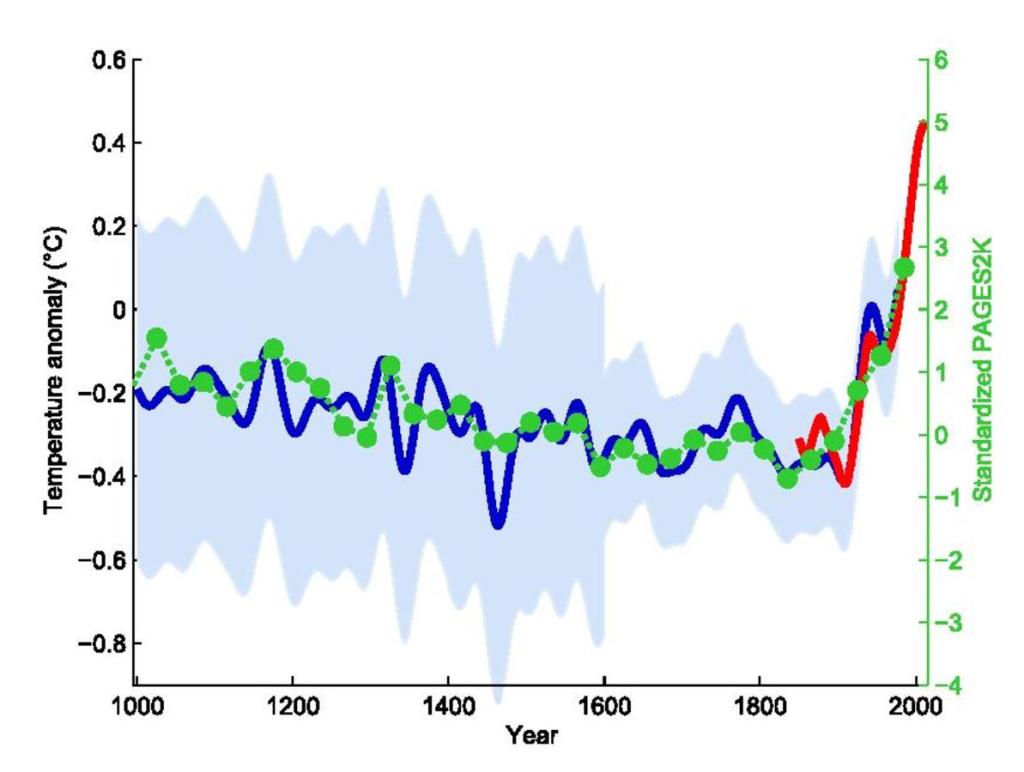
  • Global warming is real and is known to be caused by us, yet many deny this.
  • Plastic is not a big environmental problem for the US.
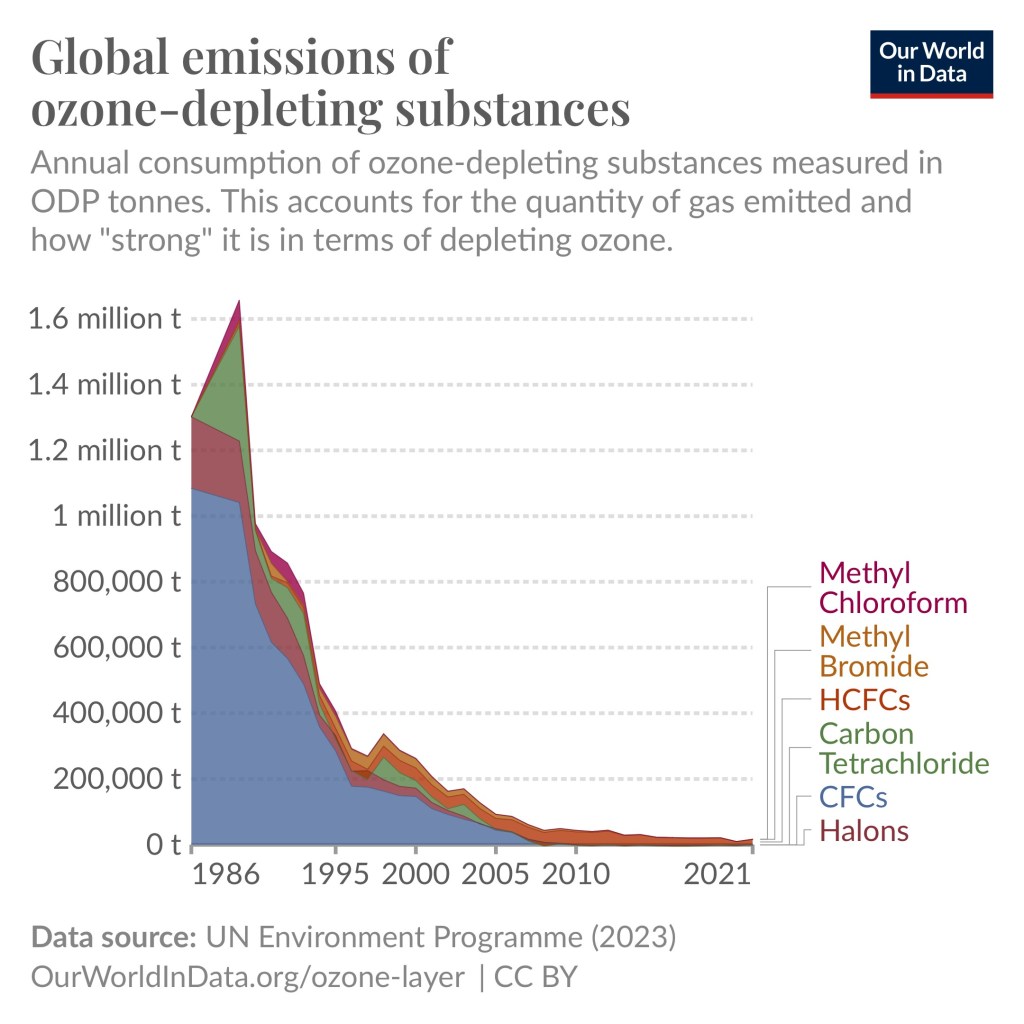
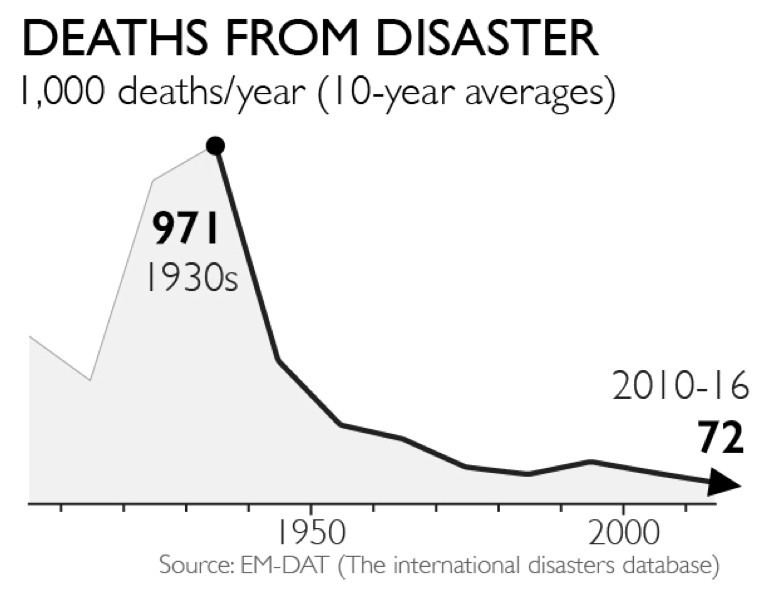
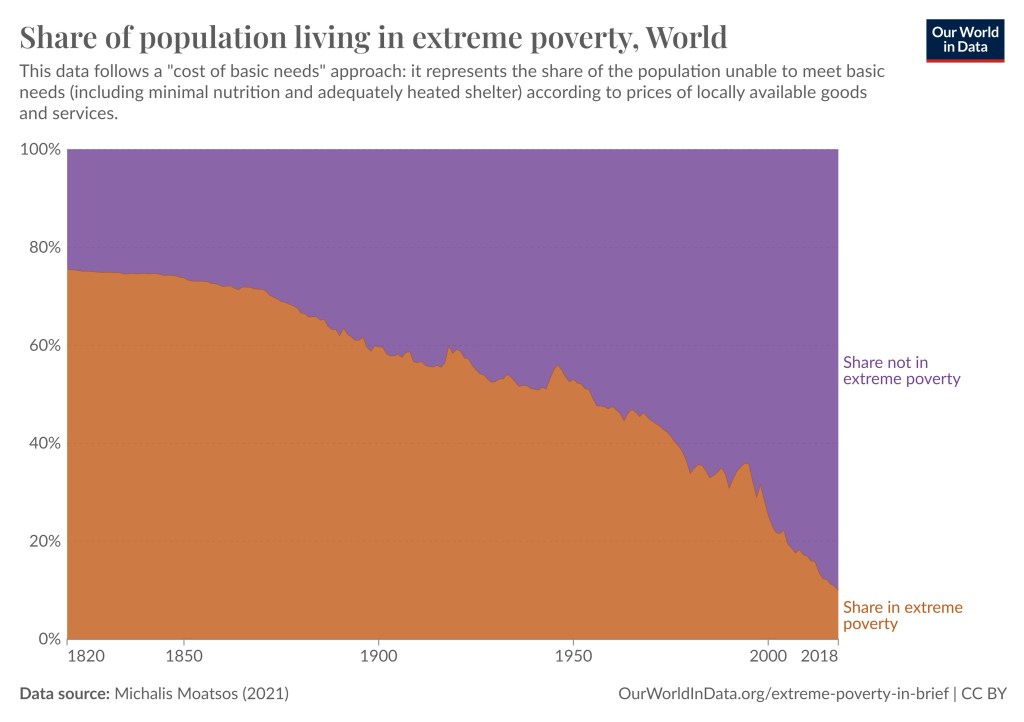
  • Poverty, violence, child mortality has been sharply reduced worldwide to the surprise of many.

My question now is what should I call the blog? Super Facts, Deep Insights, Eye Openers, Transformative Facts, Bamboozle Medicine, Big Memos, ….