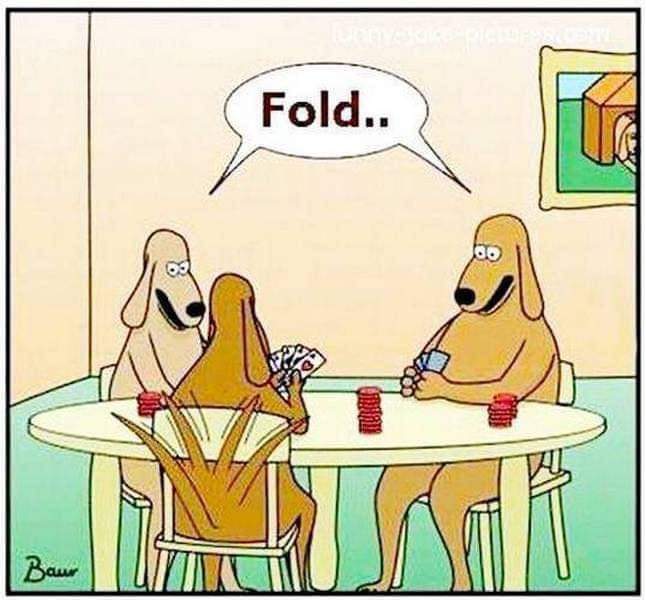
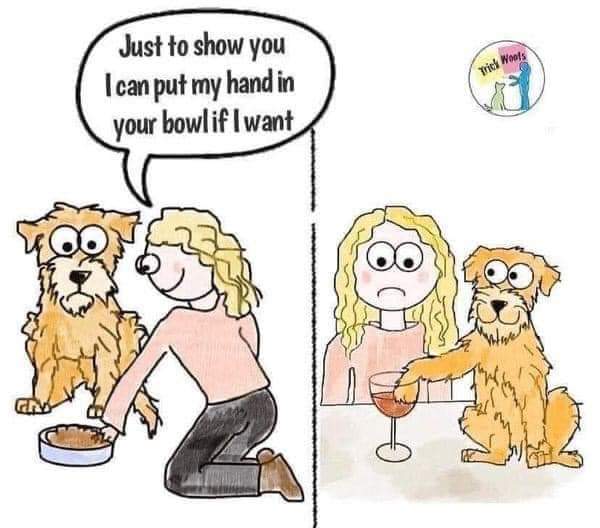
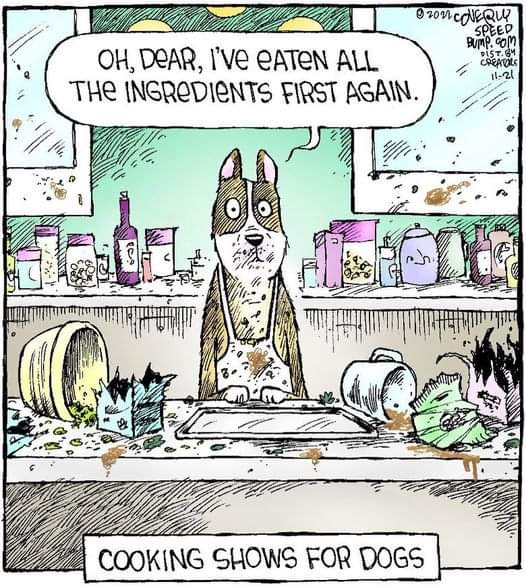
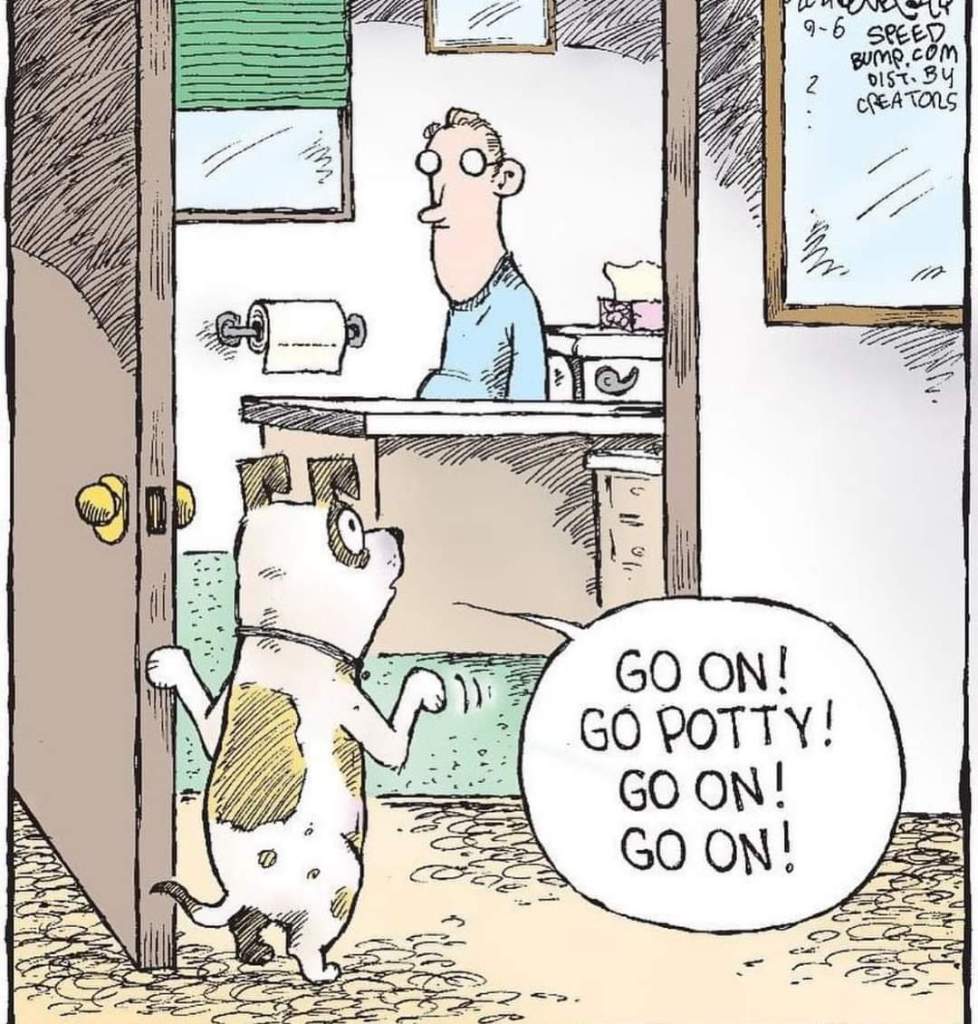
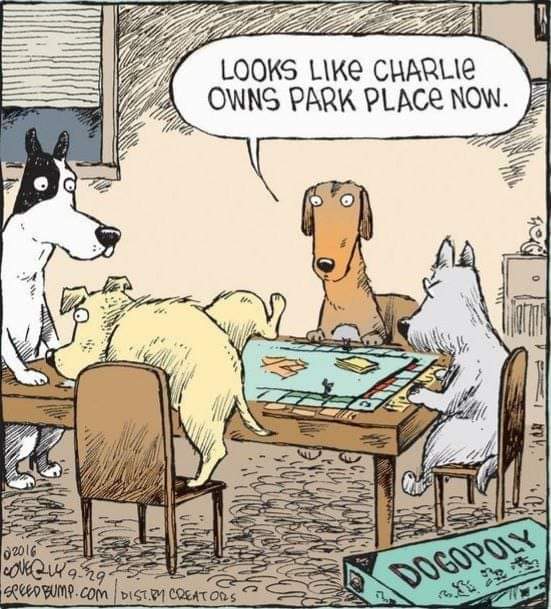
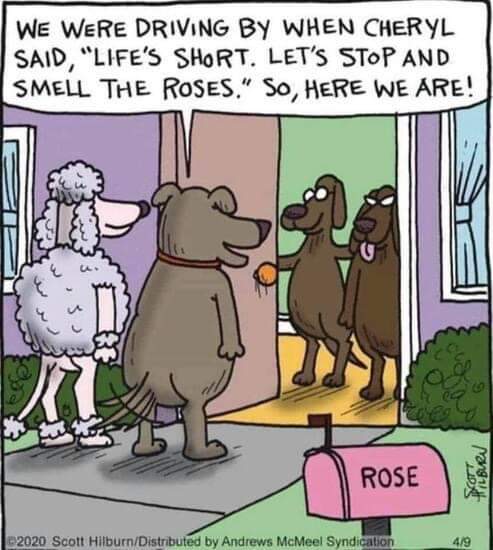
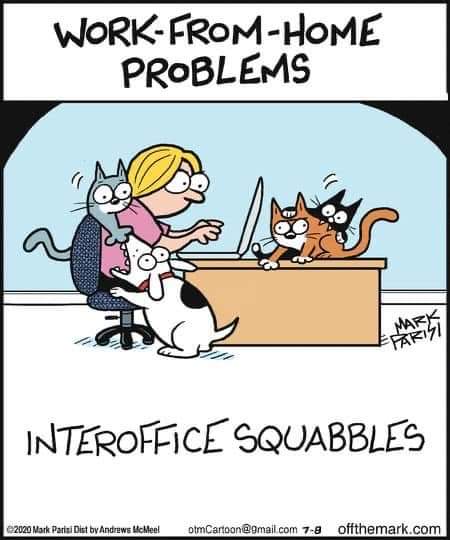
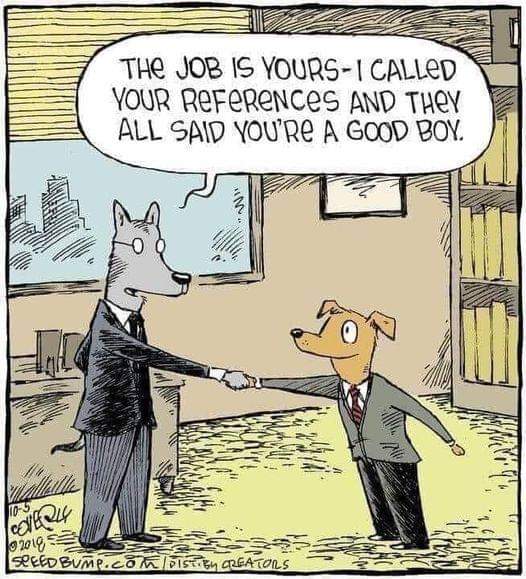
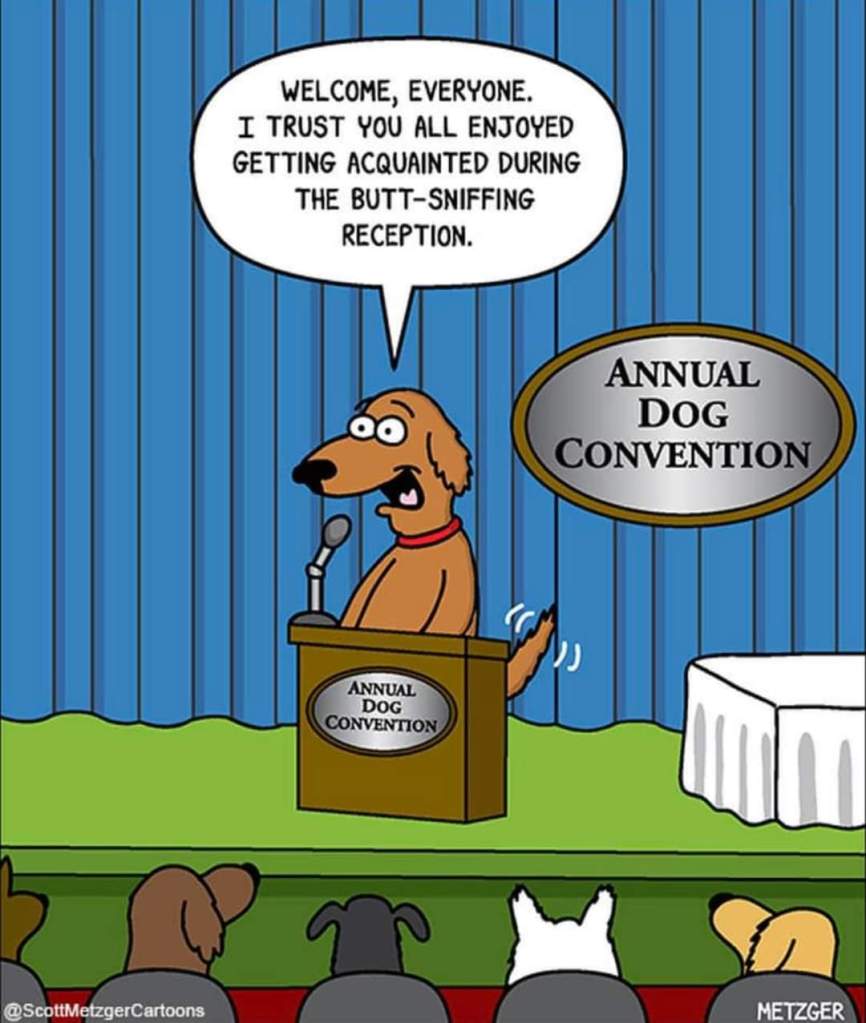
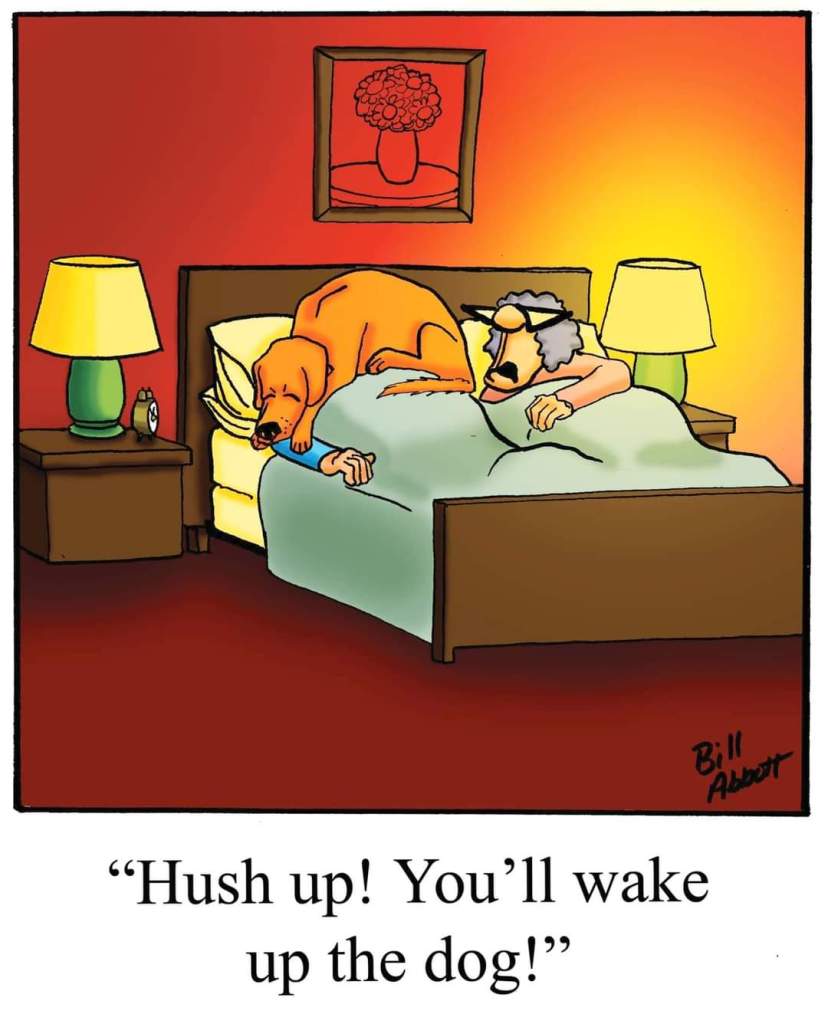
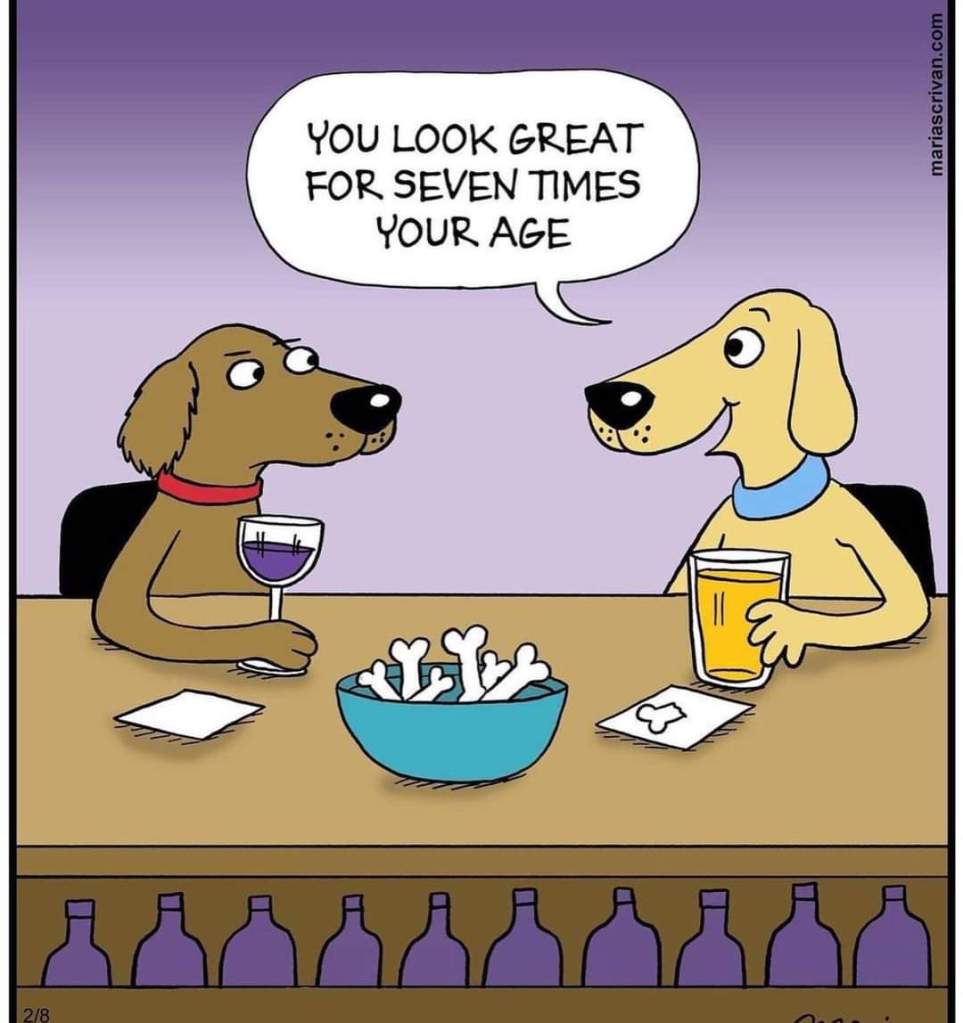
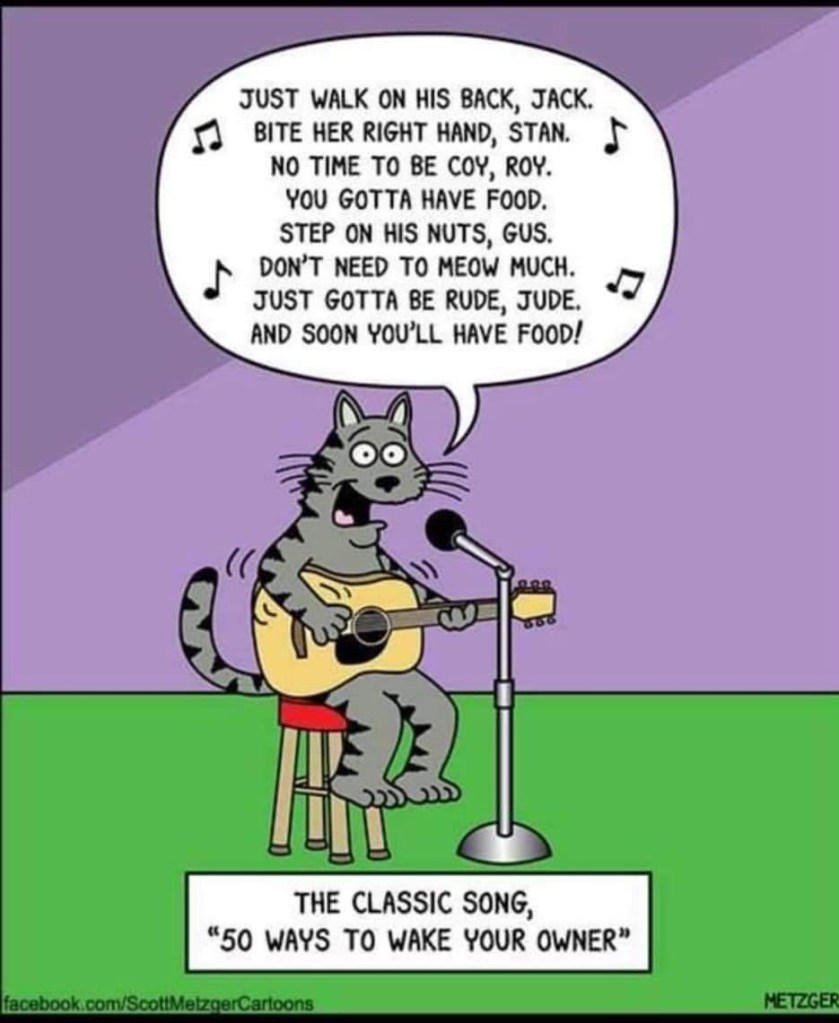
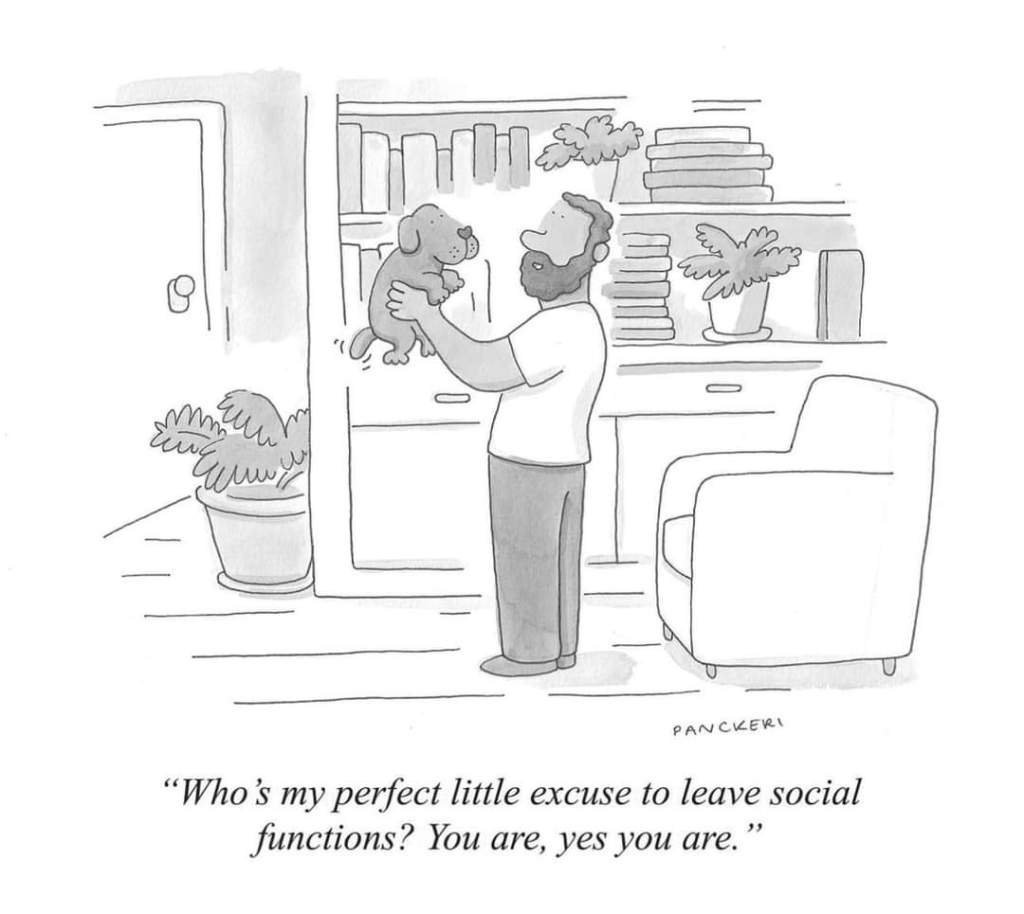
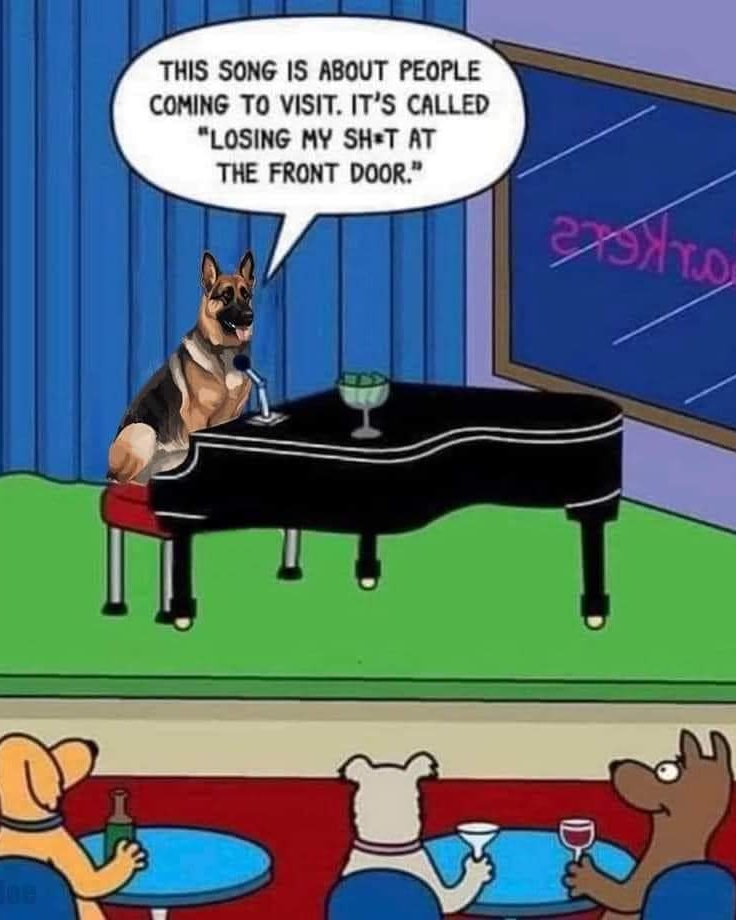
Below are dog cartoons copied from a Facebook pages, mostly Amazing Dogs. The original creator is noted on the cartoon.


This blog feature amusing and heartwarming stories about our late Leonberger dog Bronco, as well as other Leonbergers. It also has a lot of information about the Leonberger breed, the history, care, training, Leonberger organizations, etc. I also wrote a Leonberger book, which I am featuring in the sidebar.
Other topics not necessarily related to Bronco, Leonbergers or dogs.
Below are dog cartoons copied from a Facebook pages, mostly Amazing Dogs. The original creator is noted on the cartoon.
Since it is St. Patrick’s Day today, I thought I’d make a post about beer.

Bland pale mass produced lagers often made with low quality ingredients are very common now a day. Examples are Corona, Bud Light, Heineken, Miller Light, etc. However, there are many other beer styles. For example, there are:
Lagers:
Ales:
The beer advocate counts 120 beer styles of which I’ve had 107 so far. Beer advocate features around 250,000 different beers.

Generally speaking, beers are classified into two main types of beers, lagers and ales, or perhaps lagers and ales plus other beers. Steam beers are hard to classify and Lambics you don’t refer to as ales even though they technically are ales. Stouts, porters, hefeweizen, pale ales, IPAs, Wild Ales, Lambics are all ales. In the short list above, everything below Vienna Lager are ales.

Lager beer is a relatively recent invention that originated in Bavaria. Lager beers use a special kind of yeast for the fermentation process, it is typically bottom fermented, and fermented and conditioned in cool temperatures, unlike other beer styles. Lager beers can be of many colors, pale, amber, dark, even black such as Schwarzbier. The Pale Lager originated in Pilsen in Bohemia (Western Czech Republic) in the mid-19th century. The pale lager has become the world’s most common beer style and bland tasting mass-produced pale lager beers dominate the market. In countries that are not traditional beer countries such as France, Italy, China, Japan and South America, the bland pale lager is very dominant. I’ve come across many people who think that the more tasteless the pale lager is, the better beer it is (people who love Corona).
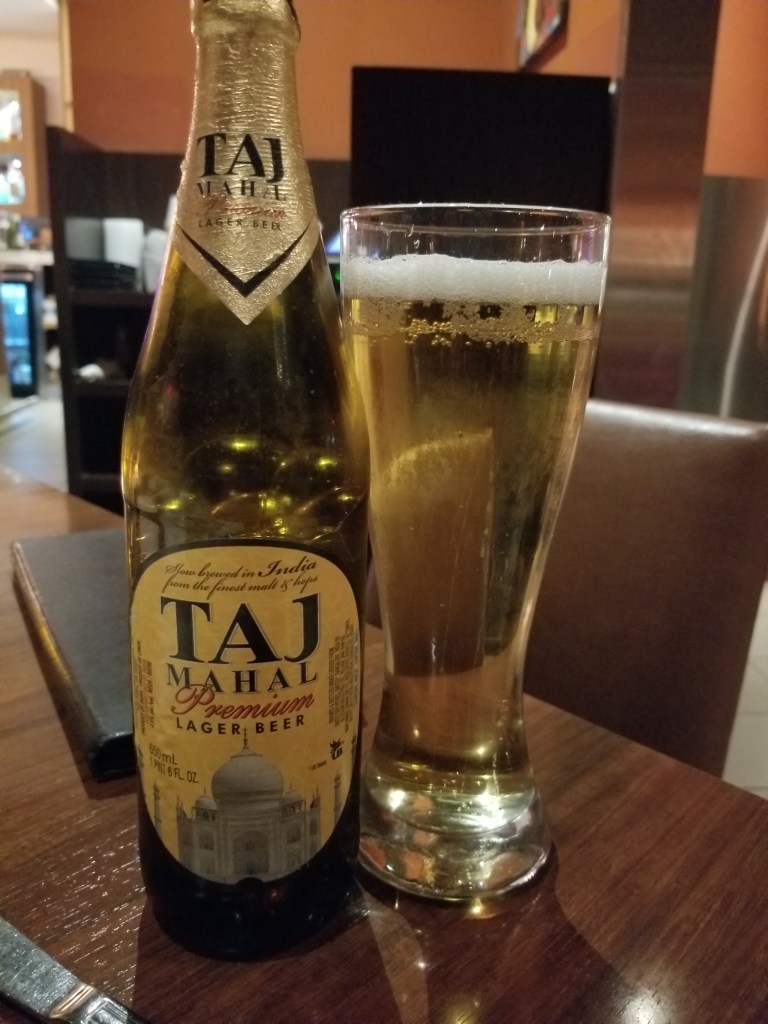
Stout is a dark, top-fermented beer / Ale style. Sub styles include dry stout, oatmeal stout, milk stout and imperial stout. It is derived from the Porter, which originated in London, England in the early 1720s. Stout is basically a stronger and more flavorful porter. However, there is no clear distinction between porter and stout. I am sure you have heard of Guinness Stout, a very Irish beer. Imperial stouts are extra strong, full bodied and flavorful stouts. Below is an imperial stout, which interestingly enough is not dark brown or black but golden/amber.

IPAs, India Pale Ales is an extremely popular Ale that is typically flavorful and quite bitter. It is in a sense an anti-Lager. It is the beer style that I drink the most. The IPA is a type of Ale (fermented at warm temperatures, unlike, for example, lagers). It is typically a Pale Ale (exceptions are black IPAs). It was invented in England in the early 1800’s and became popular for exportation to India. It is characterized by its higher content of hops and the level of alcohol is often higher as well. More hops and more alcohol made it easier to preserve the beer for the trip to India.

As I mentioned there are a lot of beer styles. One of the lesser-known ones is smoked beers. Smoked beer, or Rauchbier, is a type of beer with a distinctive smoke flavor imparted by using malted barley dried over an open flame. It goes great with barbecue. Below is an example of the style that I’ve had quite often.

If you are paying attention to beer, you may have heard about “Trappist beers”. This is very special category that is not referring to a beer style, but by who makes it. Trappist beer is brewed by Trappist monks. There are tens of thousands of breweries in the world but there are only 13 Trappist breweries in the world. Trappist beers are considered to be very special. The most highly praised of the Trappist beers is Westvleteren 12 from Brouwerij Westvleteren founded in 1838 at the Trappist Abbey of Saint Sixtus in Vleteren, Belgium. Westvleteren 12 is a so called Quadrupel Belgian Ale. It is often said that Quadrupel means that it has been re-fermented four times, but it is often not true. However, quadruple means that it is a stronger, darker and more flavorful. Westvleteren 12 is extremely difficult to buy but I have been able to get my hands on several.

I think my favorite type of lagers are Märzen and my favorite Ales are IPAs.
Do you have a favorite Lager? Do you have a favorite Ale?
I read today that Elon Musk said that “memory loss is a thing of the past”. It was an advert for a drug. True or not, in the past I’ve had severe memory loss. At the age of 22 I had Amnesia as a result of a ski accident in Garmisch-Partenkirchen in Bavaria in Germany. But I remember it as if it was yesterday. So, in my case you can say that “memory loss is a thing of the past”.

Garmisch-Partenkirchen is a beautiful Bavarian town, and it is one of the most famous German ski resorts. Zugspitze Germany’s highest mountain is nearby Garmisch-Partenkirchen providing for an impressive scenery. I was there with a large group of Swedish friends, and we stayed at a youth hostel. As is typical for a youth hostel men and women were separated. What was a bit unusual were all the loudspeakers.

Achtung! Achtung. Sei jetzt ruhig.
At 10:00PM on our first evening at the youth hostel the loudspeakers came on and someone started shouting “Achtung! Achtung. Sei jetzt ruhig. Alle Gäste müssen gehen und sich die Zähne putzen. Musik ist verboten. Die Lichter beginnen zu dimmen.” We had to be quiet and go brush our teeth. The lights started dimming and women and men had to go to their quarters. The loudspeaker came on every now and then barking orders at us in German and all windows and doors were locked electronically. Being from Sweden we followed orders, but we were laughing about it. Suddenly new voices started shouting in the loudspeaker. It was younger sounding voices. It was still in German but this time we were told to rebel against the hotel management, we were told to refuse to go to bed, and they started singing fighting songs in German. Then, suddenly the loudspeakers went quiet. The hotel management was back. We all had to go to bed. Well, it was budget lodging after all.

The Ski Accident
What happened the next day I do not remember myself, but this is what I have been told. I decided to go down an icy double black diamond slope despite the sign saying that the conditions were dangerous. I fell badly, hit my head (I had no helmet), and I got a severe shoulder displacement. My arm was hanging on my back. I went looking for my skis and tried to put them back on, but some Germans came down to stop me. They were screaming at me and calling me crazy. An ambulance was called, and they sent snowmobiles to pick me up. However, the snowmobiles were unable to get there so they got a pist-machine to get me instead. I had no pain, but I was confused, and I discovered my severe shoulder displacement about 10 times before I got to the hospital. I was equally shocked every time I noticed the condition of my arm. I had no short-term memory, and I had forgotten my friends and most other things.
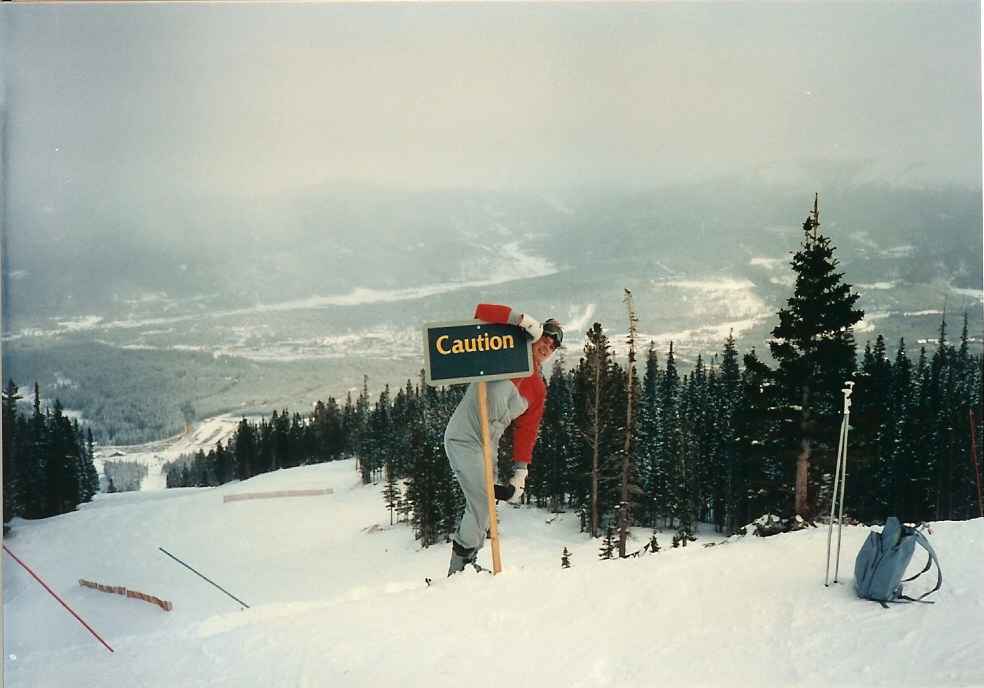
My memories come back
The next 2-3 days after the accident are essentially gone. However, I remember my friends coming into my room asking me questions such as “what’s my name?”, “do you remember where we are?”. I kind of liked all the attention I got but I understood that something was not right. No one knew whether I would ever get my memory back and going though immigration and customs might be an issue when you are, well out of it. The leader and organizer of the trip was very upset. However, my memories came back very quickly within just a few hours on the second or third day of amnesia. I have to admit I was happier when I couldn’t remember anything. I can add that my left arm was in a cast.

A shocking discovery of what’s under my bed
Under my bed I found a thick book on Statistical Mechanics. At first, I did not know what it was, but then I unfortunately remembered. I had a final exam in Statistical Mechanics after our vacation. Statistical mechanics is a mathematical framework that applies statistical methods and probability theory to large assemblies of microscopic entities. More specifically, you do statistical calculations over large sets of atoms and molecules to figure out the macro condition of the corresponding gas or material. For example, temperature corresponds to the average kinetic energy of atoms, entropy is the natural logarithm of the number of real microstates corresponding to the gas’s macrostate, often loosely referred to as the disorder of the system.

Statistical Mechanics includes classical Statistical Mechanics as well as its Quantum Mechanical counterpart, which is a lot more abstract and complicated. The class I was taking covered both. Some important scientists in the field are James Clerk Maxwell, Ludwig Boltzmann, Paul Ehrenfest, Albert Einstein, and Satyendra Nath Bose. If you love statistics and complicated mathematics, then Statistical Mechanics might be for you but more likely it will just kill your enthusiasm.
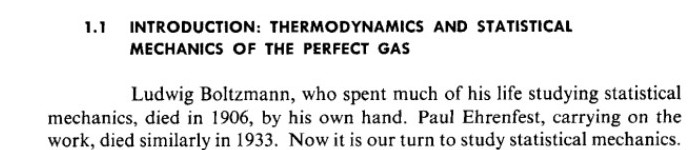
My Exam
Once I was back in Sweden, I went to see my professor, and I explained the situation to him: “hello professor, I had a ski accident, hit my head, and I lost my memory. My amnesia made me forget statistical mechanics.”. He could also see that my left arm was in a cast. I said, “could I take the exam a little later?” He asked me “are you right-handed or left-handed?” I said, “I am right-handed”. The professor answered, “well then you take the exam on time like everybody else”. It wasn’t what I wanted to hear but I took it and I passed but not with flying colors.
Have you had Amnesia?
If you were a teacher, would you accept amnesia as an excuse for postponing an exam?
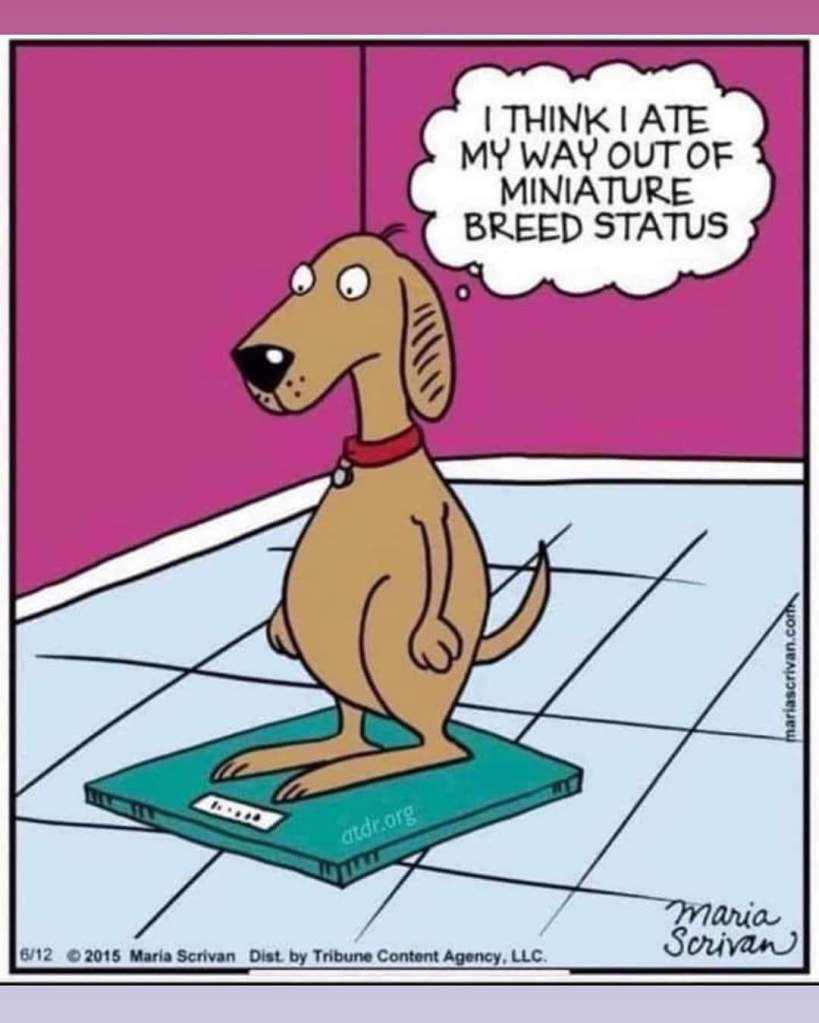
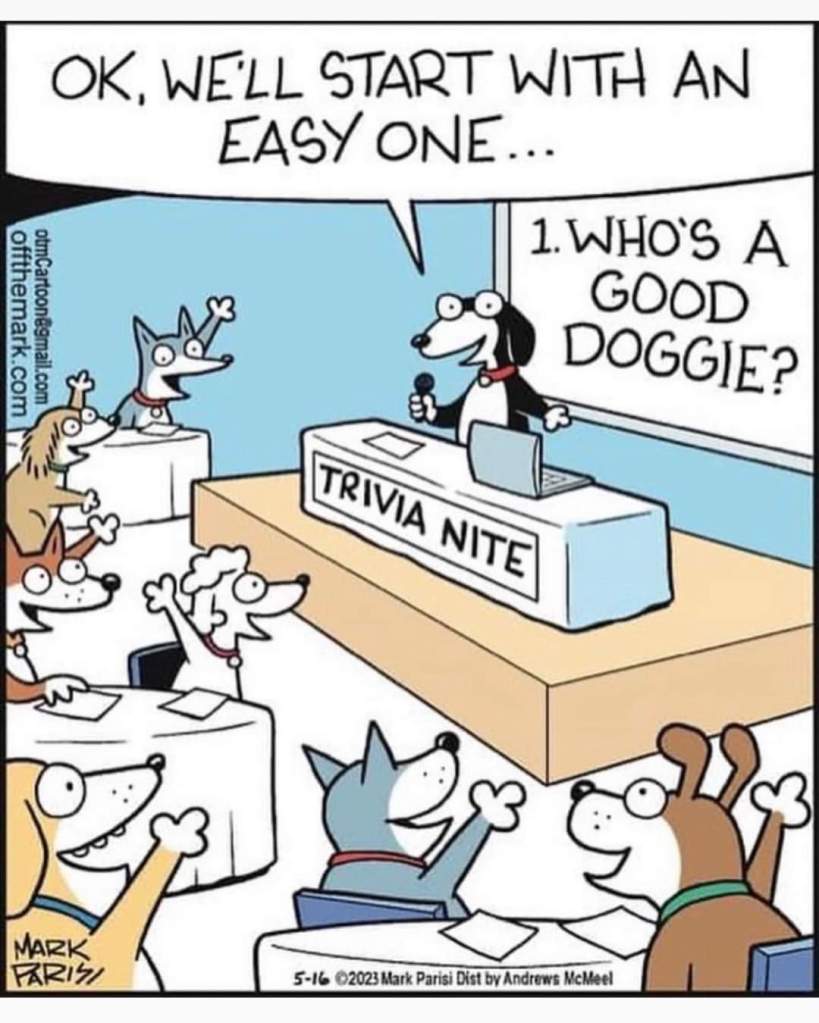
Below is copied from a Facebook pages, mostly Amazing Dogs. The original creator is noted on the cartoon.

This post is a brief reminder of the total solar eclipse happening April 8, 2024. Dallas, Texas, where I live, will experience totality, and the total time in totality in Dallas will be 3 minutes and 51 seconds (1:40:43 PM CDT to 1:44:34 PM CDT), one of the longest durations across the country. If you are content with just a partial eclipse you can see that from any of the 48 states, and it will last for hours. This event is less than two months away.


According to those who have experienced a total solar eclipse it is a lot more profound experience than a partial solar or an annular eclipse. A partial eclipse is definitely cool. You can see the crescent shadows of tree leaves and if you have the right glasses, you can see the sun partially covered by the moon. However, it won’t get dark. In a total solar eclipse, it will get dark, and many say that the birds will stop singing, it will become quiet. This is the last total solar eclipse in the United States until 2044. It will be my first total solar eclipse (I saw a partial in 2017). Hopefully the weather will cooperate.


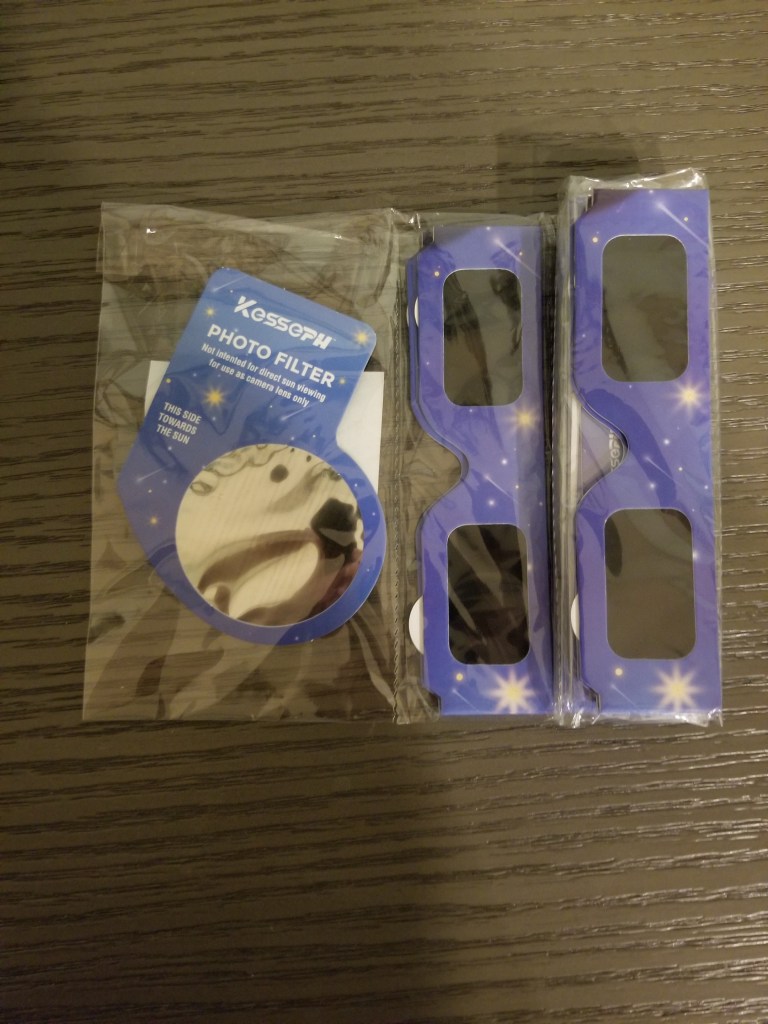
Click here or here to read more about the solar eclipse on April 8, 2024.
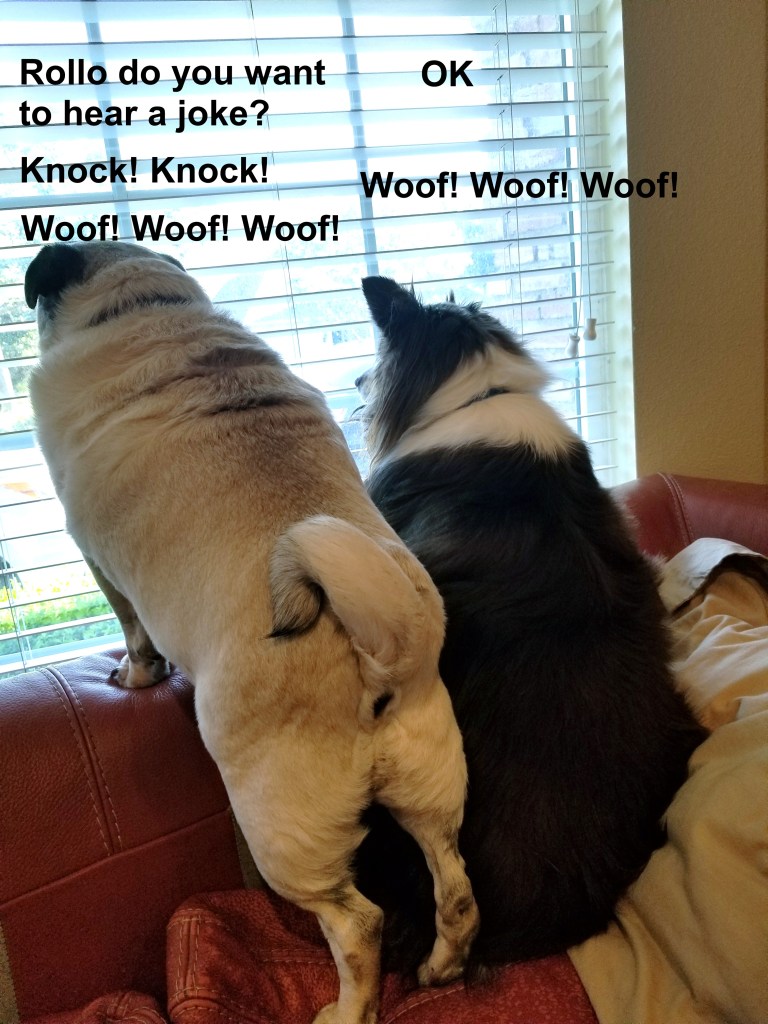
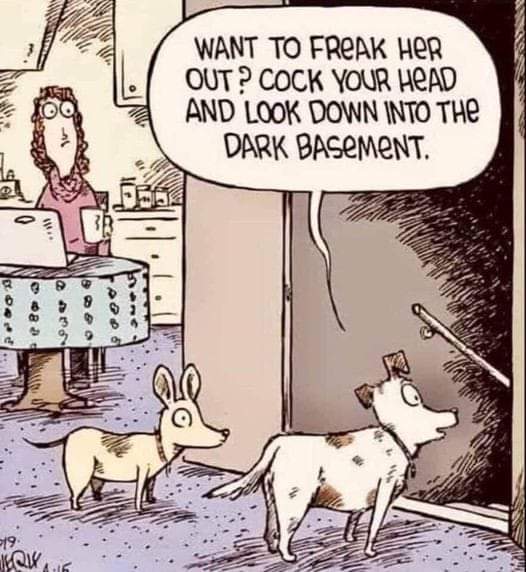
Photo above is mine. Below is from a Facebook page, Amazing Dogs and Far Side (bottom). The original creator is noted on the cartoon.

The India Pale Ale, or IPA, is a very popular beer style, at least among beer connoisseurs. It is the beer style that I drink the most. The IPA is a type of Ale (fermented at warm temperatures, unlike, for example, lagers). It is typically a Pale Ale (exceptions are black IPAs). It was invented in England in the early 1800’s and became popular for exportation to India. It is characterized by its higher content of hops and the level of alcohol is often higher as well. More hops and more alcohol made it easier to preserve the beer for the trip to India.

The aroma of the IPA is often floral, piney, and fruity, and it is less malty. If the flavor has fruity notes, it comes from the hops. The color can be light yellow, pale golden, reddish amber, brown or black. Just like lagers can be pale golden as well as black, so can IPAs, which combined with the fact that the beer advocate count 120 beer styles, is a good reminder that a broad classification of beers based on only color is not very helpful.

I tried to find out what share of the beer market IPAs have in the United States. I could not find that number, but I found out that in 2021 craft beer share of the American beer market was 26.8% and out of that IPAs share of the craft beer market was at least 40% (these two numbers according to statista), or 46% according to one source, which make the IPAs share of the American beer market at least 12.3%. It is probably closer to 20% since craft breweries aren’t the only ones brewing IPAs. I can add that craft beer is beer that is not mass produced, or not owned by large conglomerates. Examples are microbreweries and brewpubs.

Perhaps those among you who are Americans and were around in the 80’s remember the bitter beer face commercials. At that time beer was supposed to taste as little as possible. Bitter beer was to be avoided according to many. The IPAs have reversed that trend by making IPAs intentionally bitter, more bitter, and oh my golly super bitter having 100+ IBU. IBU stands for International Bitterness Units and brewers of IPAs often brag about the IBU, the more bitter the better. A public poll showed that more people prefer bitter beer over non-bitter beer. Jabberwocky an IPA from Lone Pint below feature 117 IBU. Beyond 100-120 IBU the IBU scale begins to lose its meaning according to Wikipedia.

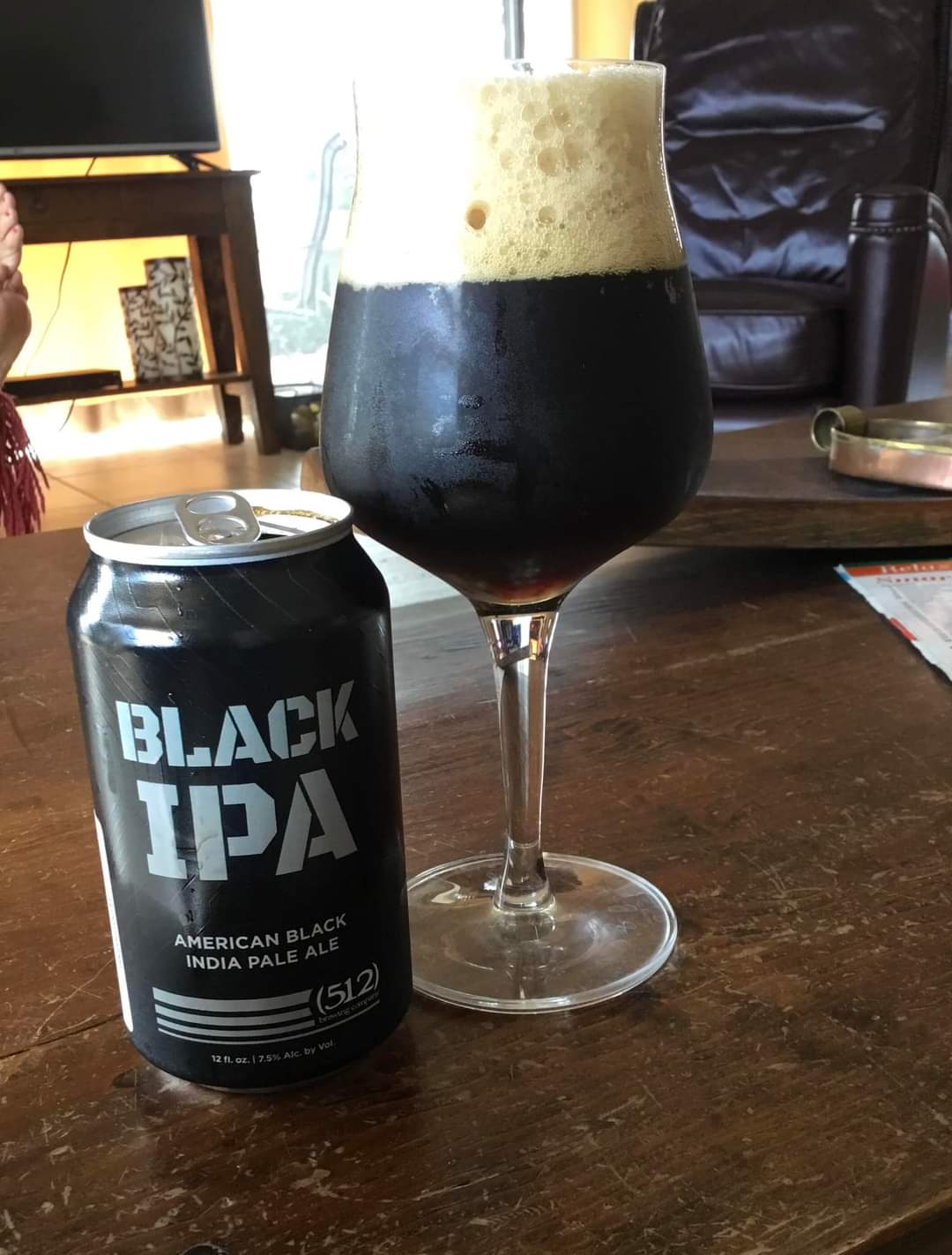
The beer advocate divides the IPA style into American IPA (or Westcoast), Imperial IPA, New England IPA, Black IPA, Belgian IPA, English IPA, Brut IPA, and Milkshake IPA. The American IPA or Westcoast IPA is the most popular of the substyles and the most bitter. Imperial IPA is not really a substyle but just an indicator that it has more of everything including alcohol. The 120 minute IPA from Dogfish Head Brewery, is a very popular Imperial IPA with an ABV of 18%, IBU is 120. It is a bit sweet, very bitter in a good way, and this hides the alcohol, which is a bit dangerous.

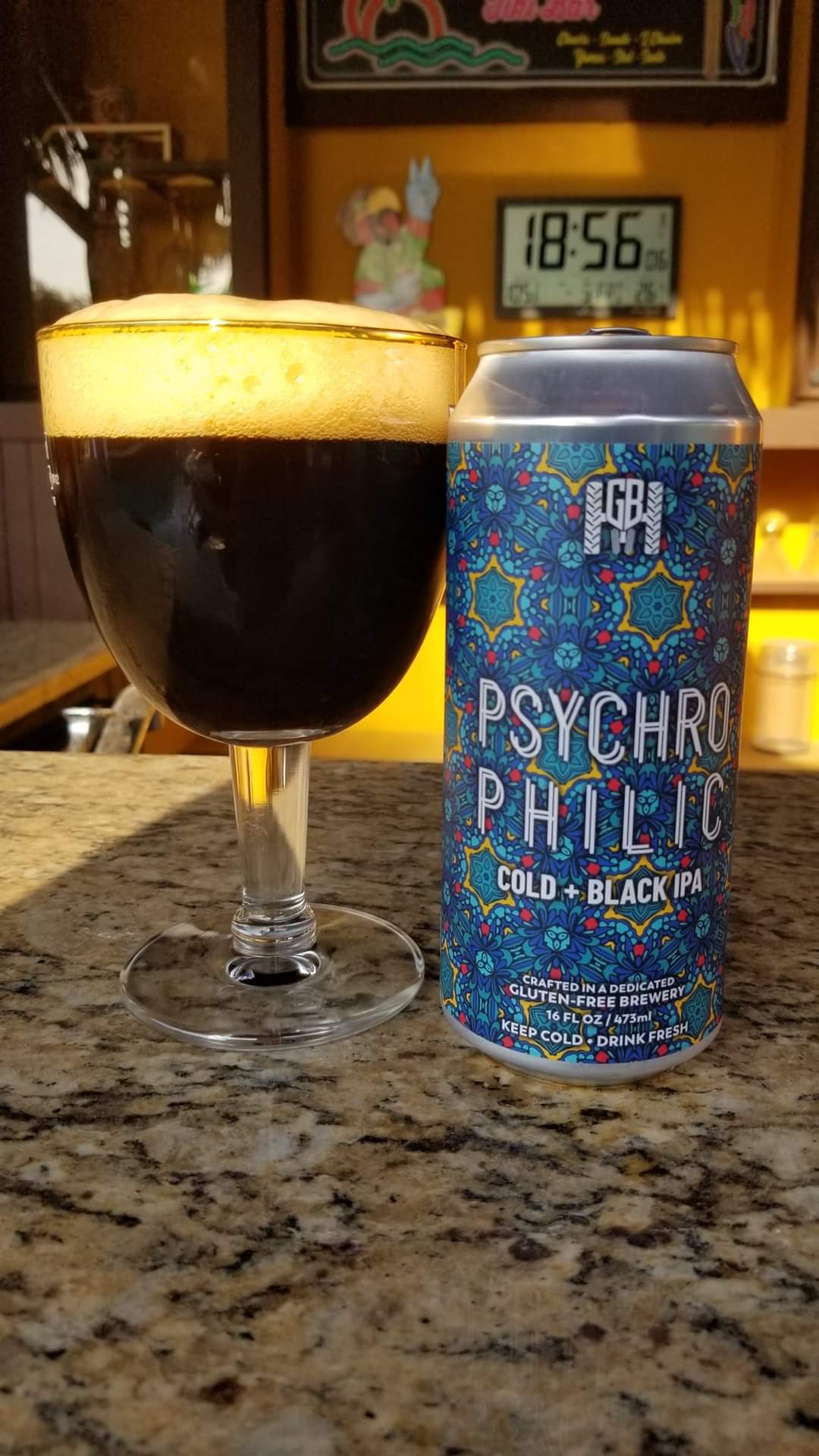
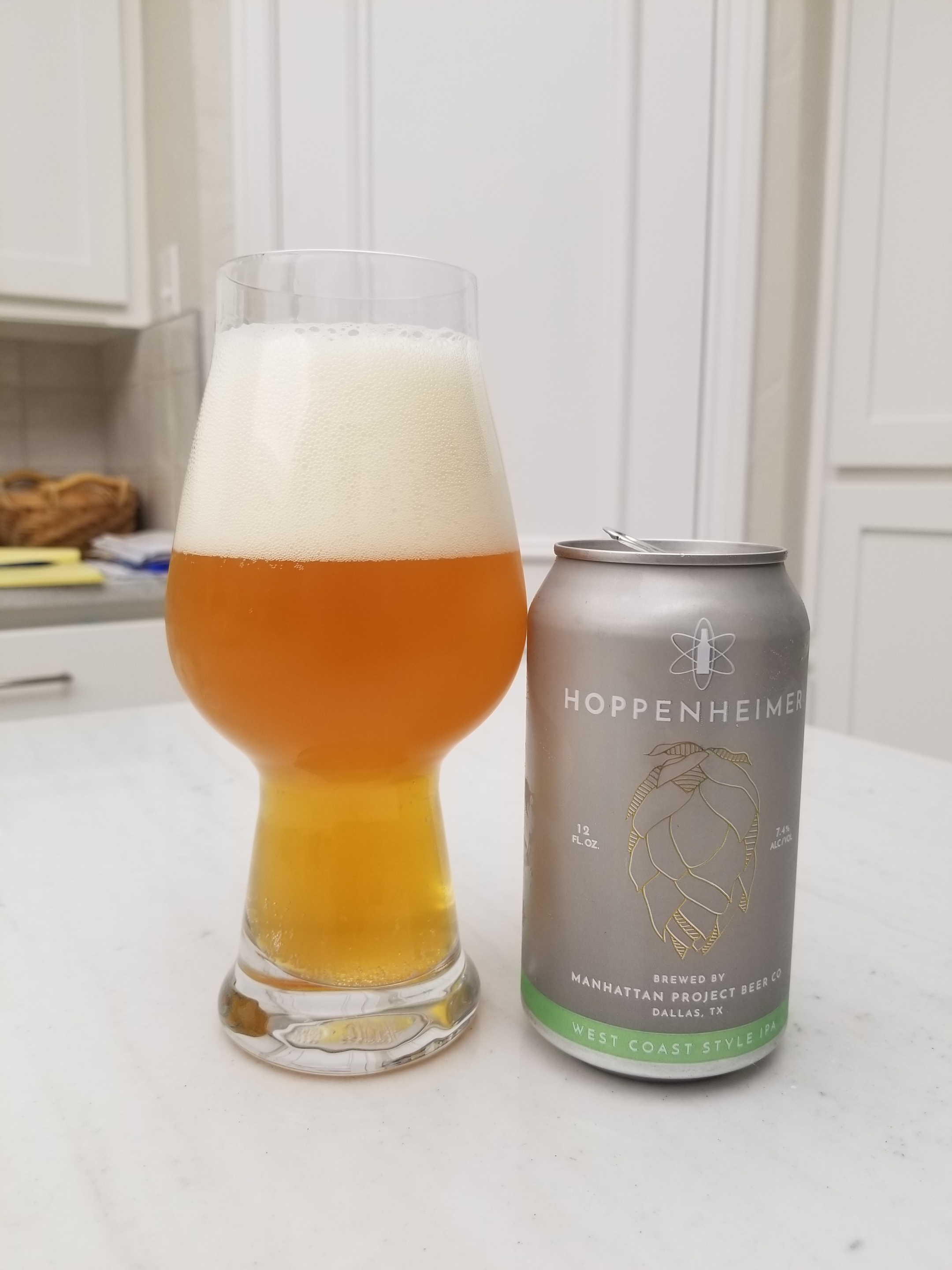
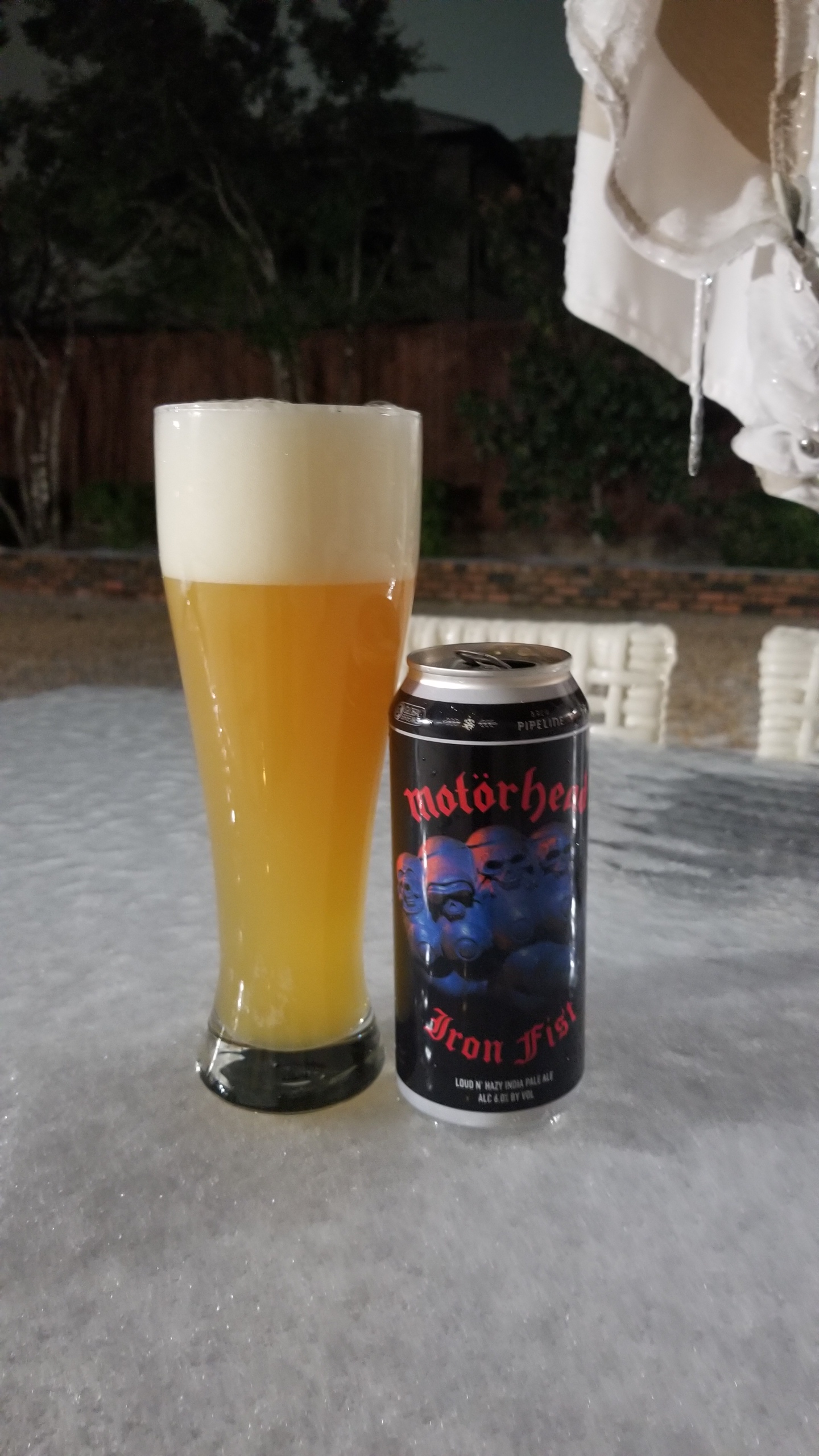
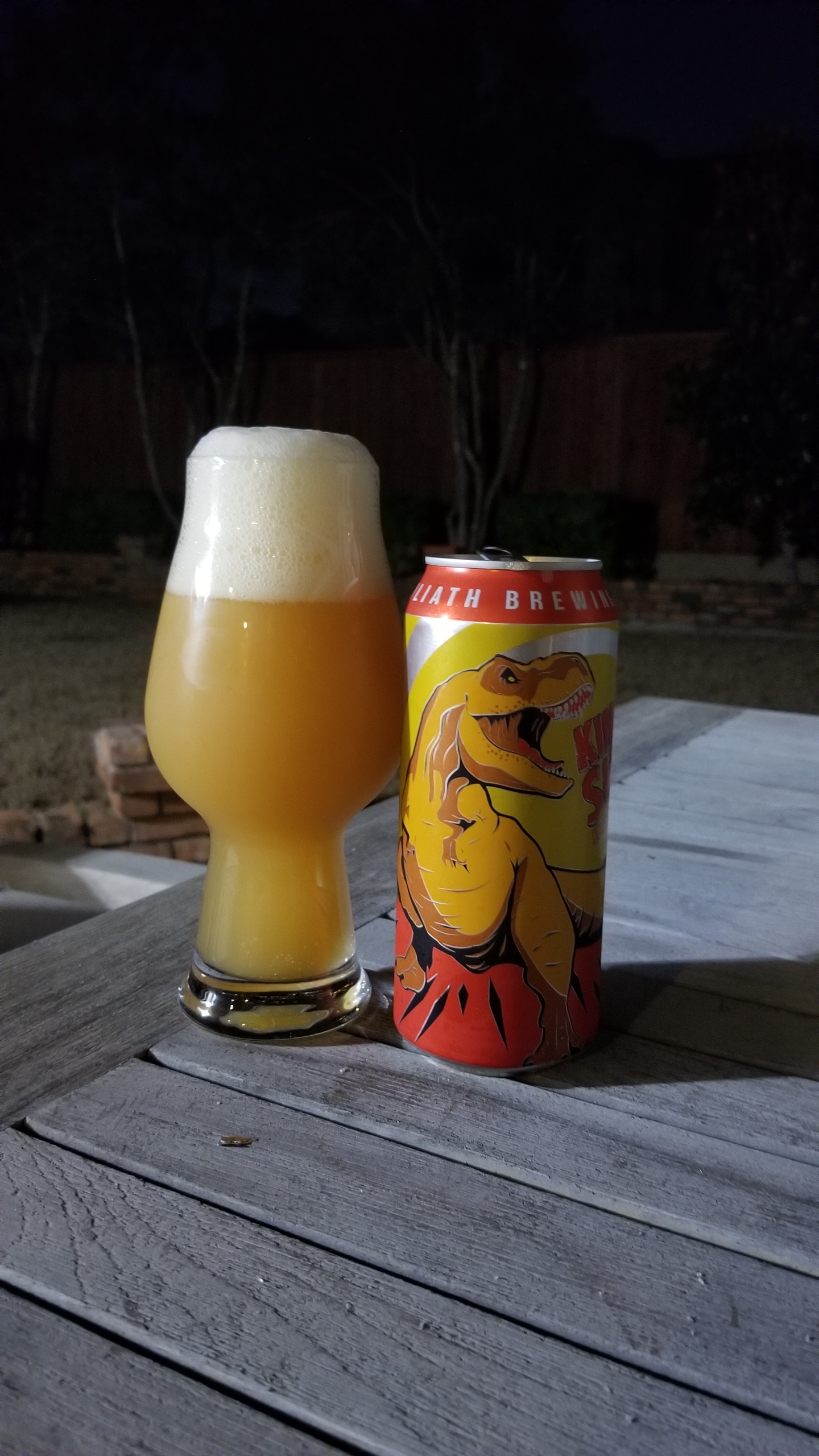
Finally, miscellaneous IPA photos.







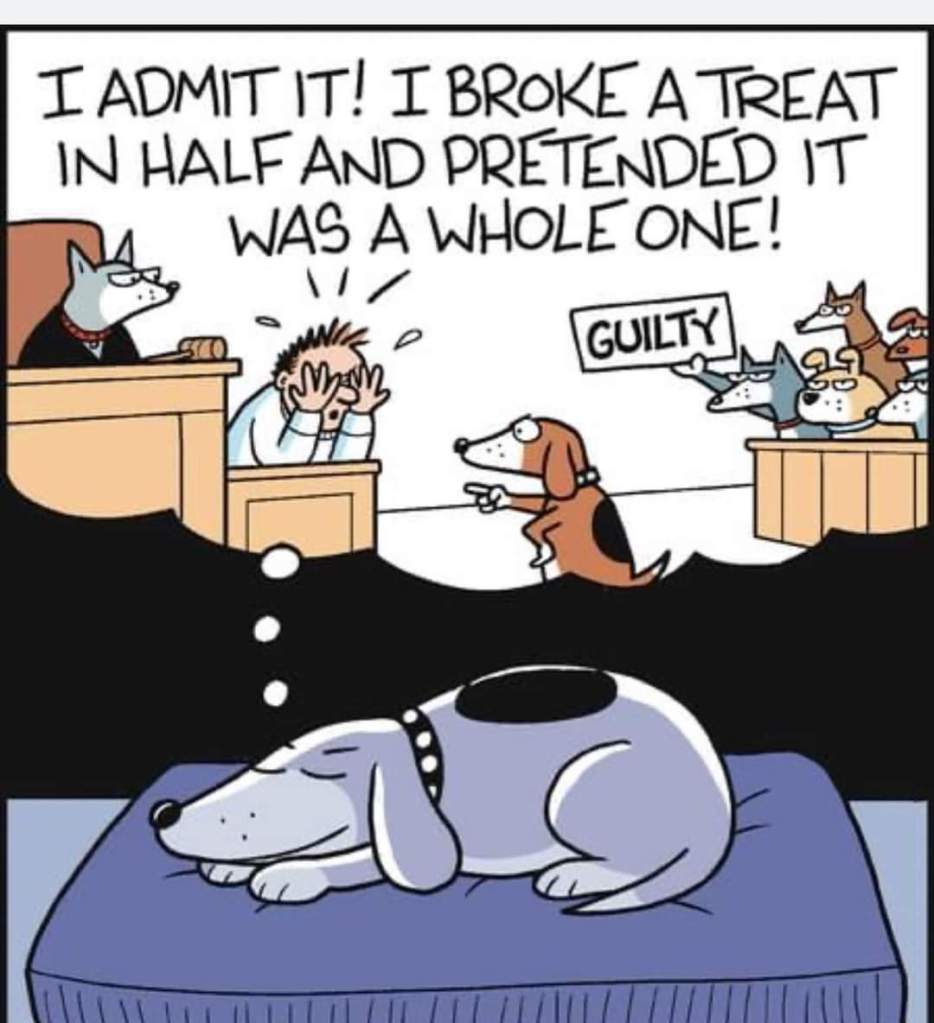

Enjoy some dog humor I picked from FB
I wanted to write a post about craft beer, but I realized that putting everything I wanted to say about craft beer into one post would make it a very long post. I am starting with a post about fruity beers, craft beers or otherwise.

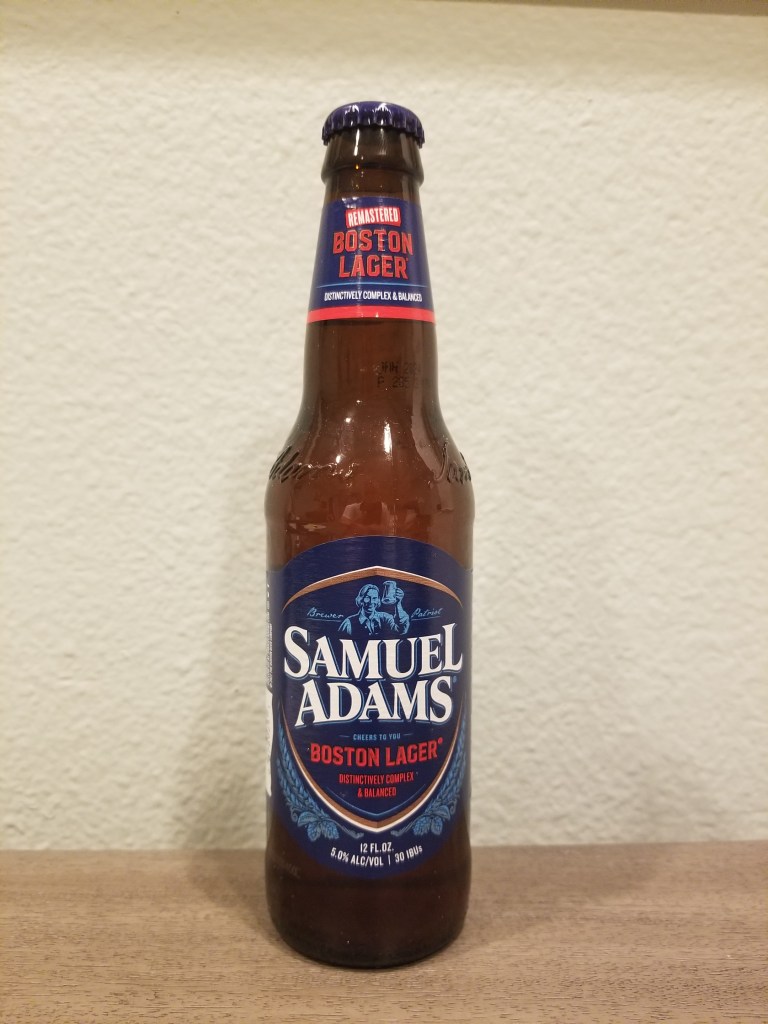
First a word about Lager beer. Lager beer is a relatively recent invention that originated in Bavaria. Lager beers use a special kind of yeast for the fermentation process, it is typically bottom fermented, and fermented and conditioned in cool temperatures, unlike other beer styles. Lager beers can be of many colors, pale, amber, dark, even black such as Schwarzbier. The Pale Lager originated in Pilsen in Bohemia (Western Czech Republic) in the mid-19th century. The pale lager has become the world’s most common beer style and bland tasting mass-produced pale lager beers dominate the market. In countries that are not traditional beer countries such as France, Italy, China, Japan and South America, the bland pale lager is very dominant. I’ve come across many people who think that the more tasteless the pale lager is, the better beer it is (Corona).

Many people believe that beer is the same thing as pale lagers. However, the beer advocate counted 120 beer styles (so far). I can add that some mass-produced American pale lagers, such as Budweiser, contain adjuncts, such as rice and maize, which is prohibited by the German Reinheitsgebot tradition. The Reinheitsgebot tradition states that the only ingredients allowed in beer are water, malt, hops, and yeast and for bottom fermented beer (lager) the malt must be malted barley only. Therefore, what many people think of as beer, well, it’s complicated.
Beers with fruity flavors
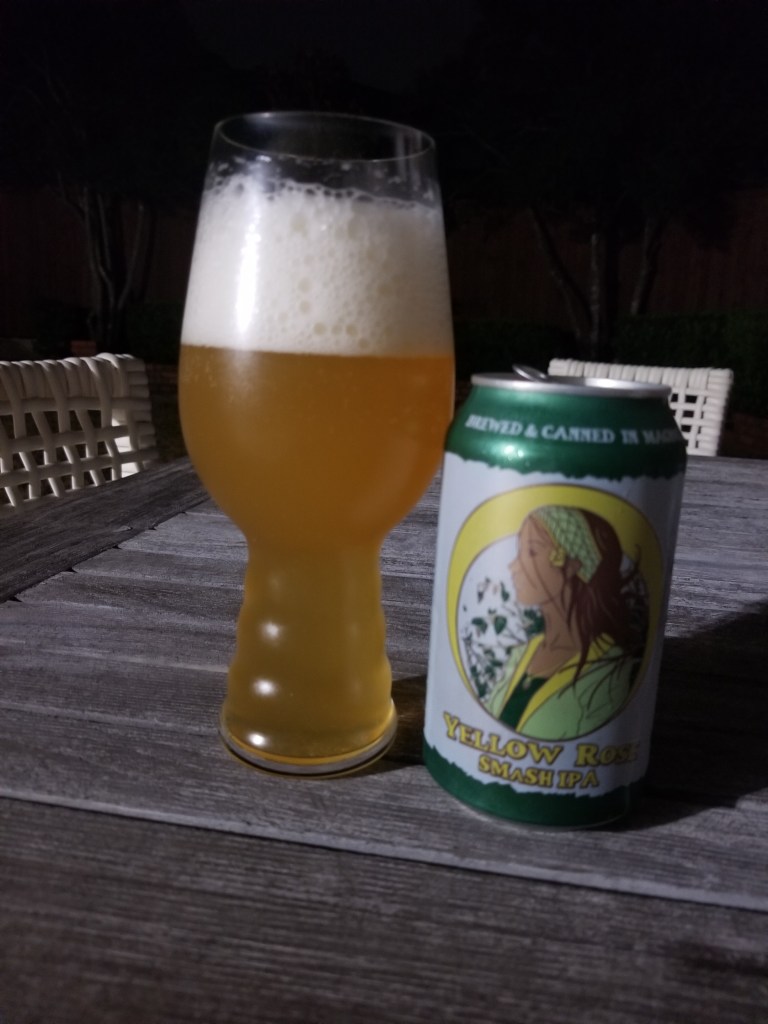
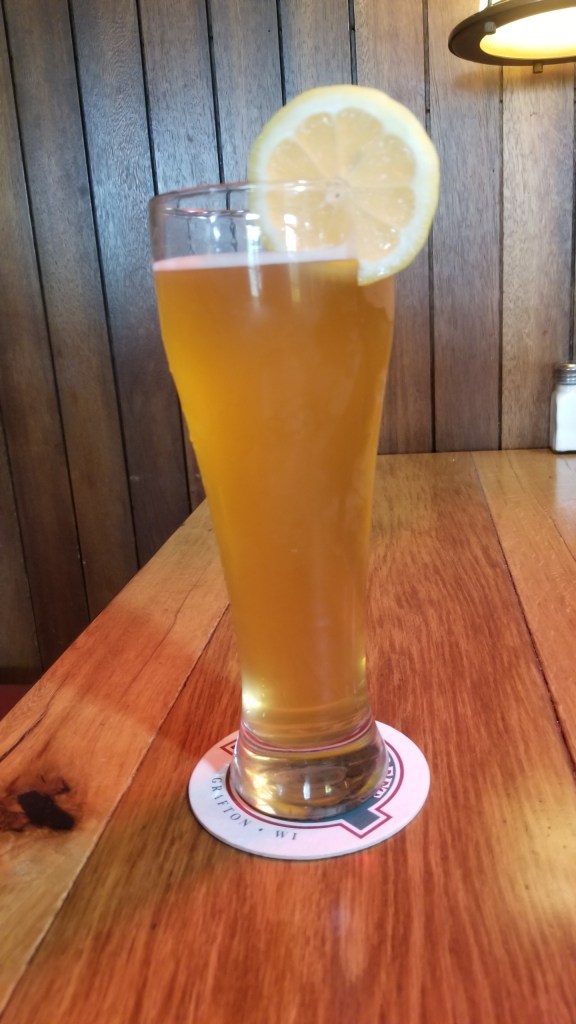
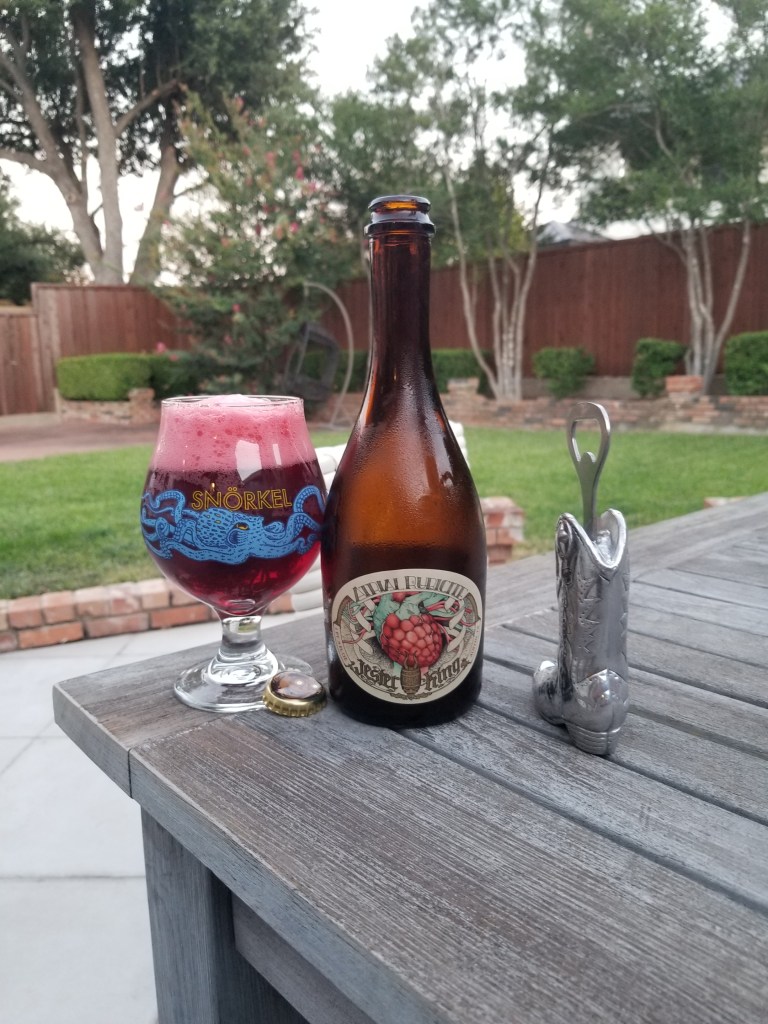
Pale lager beers aren’t associated with fruity flavors, which can lead to the incorrect impression that beer with fruity flavors isn’t real beer. However, beers with fruity flavors have a very long history, and many fruity beers, perhaps surprisingly to some, follow the German Reinheitsgebot tradition. In addition, many beers with fruity flavors are among the most celebrated beers in the world. There are many fruit Lambics (Belgium) that are sold for several hundred dollars per bottle. There are a number of ways to add fruit flavors to beer.
Below are some photos of beers with fruit flavors




I’ve got a number of hobbies, one of them being learning French. Back in December I took and passed the DELF / CEFR B1 level language test in French. The CEFR is a European standard for assessing an individual’s language proficiency that is being adopted around the world. It includes all European languages as well as other languages. The A1 & A2 tests are for beginners with A2 being more challenging. The B1 and B2 tests are for independent speakers, meaning you can get around without help, listening to the news, having conversations, etc. C1 & C2 are advanced levels, like native speakers and experts. If you immigrate to France, you need to pass the B1 test to become a citizen. Most countries do not have such a language requirement for citizenship. The A1, A2, B1, B2 tests (and maybe C1 & C2) consist of four parts but the different tests have different difficulty levels.

To pass the test you need 50 out of 100. As mentioned, the test is designed to assess your level. It is not like a test you take to get a grade at school. Therefore, if you do what is expected of you at the B1 level you may get 50-60 points and more if you can do more. If you get 80+ on the B1 test, then you probably should have taken the B2 test. There are no A, B, C, D or 1,2,3,4,5 grades.
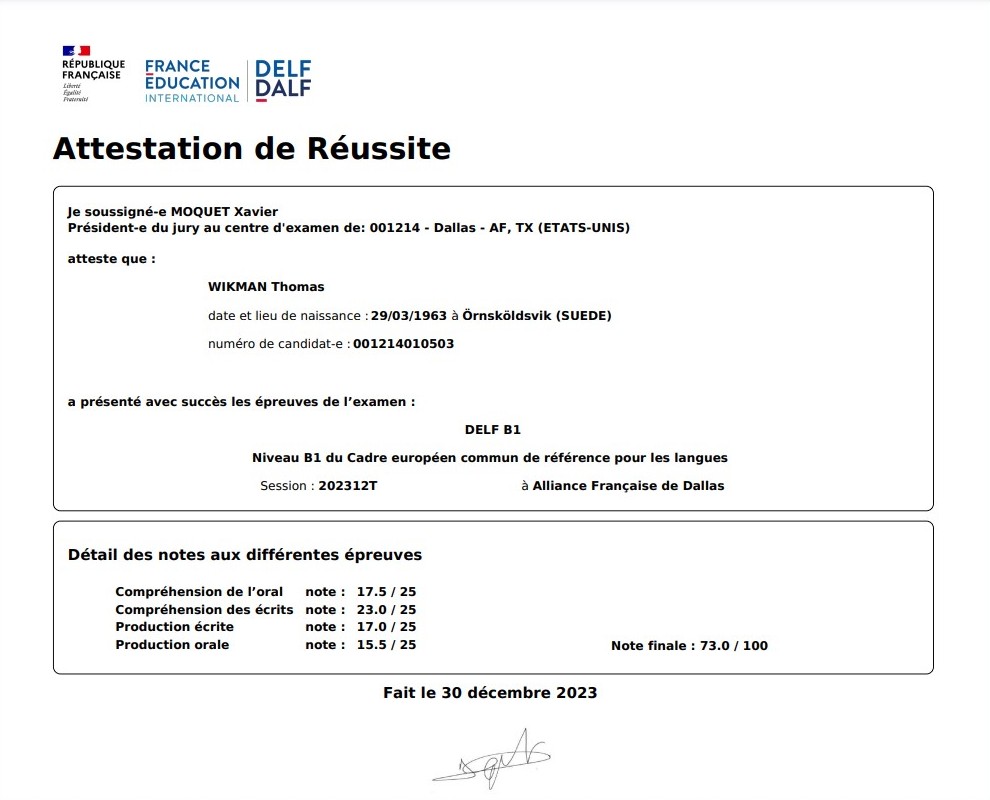
There are a couple of things that come to mind regarding these tests.
Learn to Speak 25 languages in one hour!
Yesterday I saw an advertisement on Facebook for the Pimsleur approach that stated, “start speaking a new language after just one lesson”. Well, I used the Pimsleur approach for French for a short while and I remember the first half an hour lesson. You learned to repeat one short sentence. That’s not speaking a new language in my opinion. The advertisement sounded like there should be more to it. I should say I think the Pimsleur approach is a good approach. It is the ad I have a problem with. I’ve seen other language program commercials stating that you will become fluent in 24 hours, or become conversant right away, and many other ads that are just BS.
There are some language geniuses but most of us need a lot of practice to learn a second language regardless of method. There is no way around the fact that you need to know a few thousand words, internalize sentence structure and grammar, etc., before you can be fluent. I think one reason these language companies get away with unrealistic promises is that many people expect ads to be BS and another that many language learners greatly overestimate their proficiency. These universally accepted tests are great for assessing true proficiency.

When our younger son (pictured above) was 6-7 years old my wife used to play a song in the car that featured Hello and Goodbye in 25 languages, and he learned that song. One day I was having a conversation with a waiter at a restaurant who noticed that I had an accent. He was curious about my native language Swedish. That’s when my son told him “I speak 25 languages”. So, the waiter started asking him questions about how to say hello and goodbye in the various languages he claimed to speak, and he knew. So, the waiter asked me, “does he really speak 25 languages?”. I said, well that’s what he says. Perhaps, the language companies could put this song in the first lesson and then claim, not entirely incorrectly, that with their method you’ll speak 25 languages in one hour.
Proficiency assessment for other subjects
I sometimes wonder if rather than assigning grades to students it would be more practical to allow people to attain certain levels in one or more fields that they are interested in. Naturally, people could reach their levels any way they like, and not necessarily through the university system. Considering the many failures of modern universities, extremely high tuition, student loan issues, grade inflation, crazy partying and drugs, failures to protect girls from sexual assault, political indoctrination, antisemitism on campuses, fewer people going to college, parents losing faith in universities (including myself), and the list goes on, maybe it is time for something new. What should replace it I don’t know. Perhaps assessing proficiency levels instead of class grades could be part of it.
 Leonberger Life