
An excerpt from my book : The Life and Times of Le Bronco von der Löwenhöhle
When Bronco was almost eight years old, we discovered a case of squamous cell carcinoma in one of his toes—or, rather, in one of his toenails. It was on his right rear paw.

Squamous cell carcinoma is a type of skin cancer that certain large-breed dogs, including Leonbergers, are susceptible to. It often grows out from the skin around the nail and can affect the bone and tissue around it. It is typically not very aggressive, but it can spread, and it is painful. It manifests itself as a swollen toe, or you may be able to see a large red papule that looks like a pimple. Sometimes the toenail falls off. The dog is likely to limp and lick the toe and may become reluctant to go for walks, although that was never the case with Bronco.
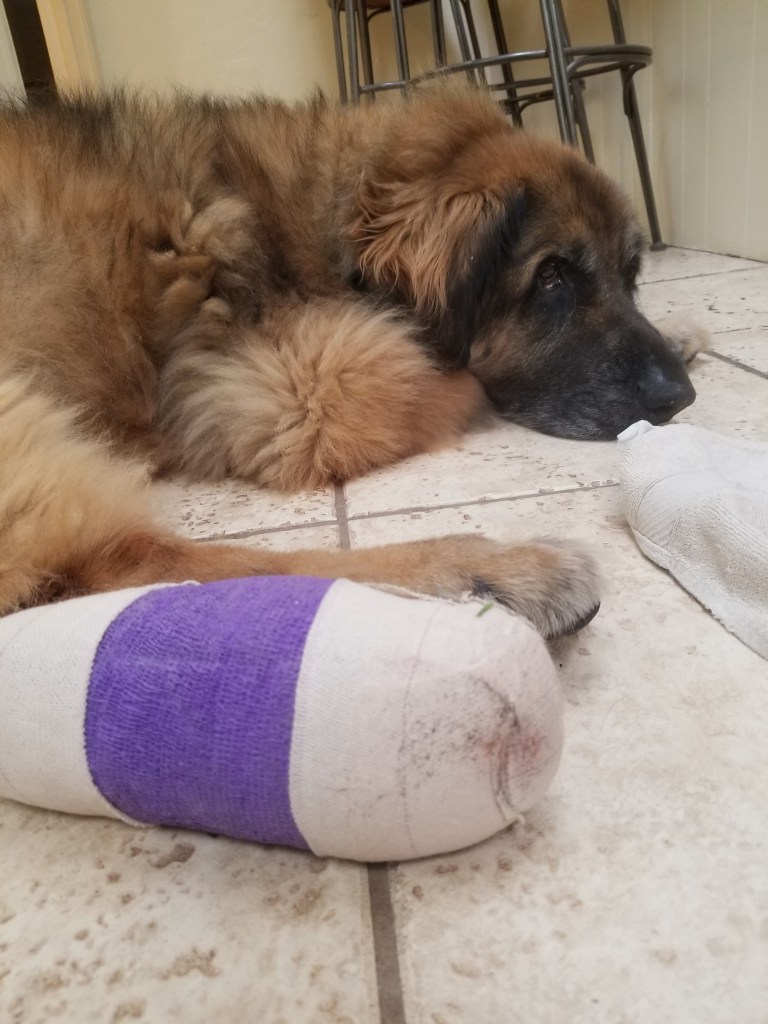
Primarily because of the pain, but also because of the small risk of metastasis, it is usually recommended that the affected toe be amputated. So we went through with the procedure. When we picked Bronco up the day after the surgery, his paw was in a bandage. But he got some treats, and he was in a good mood. We went back to the veterinary surgical center for a bandage change a few times, and then he was done.

Unfortunately, though, we discovered another lesion a year later. This time it was on a large toe on his left front leg. We asked the doctors if the cancer had spread to this toe. We were told no—Bronco was just prone to getting this type of cancer. But the cause could also have been something in the environment. In Texas, the ultraviolet radiation from the sun is significant. We really don’t know why this happened to him, but we were assured that it was not because the cancer had spread.
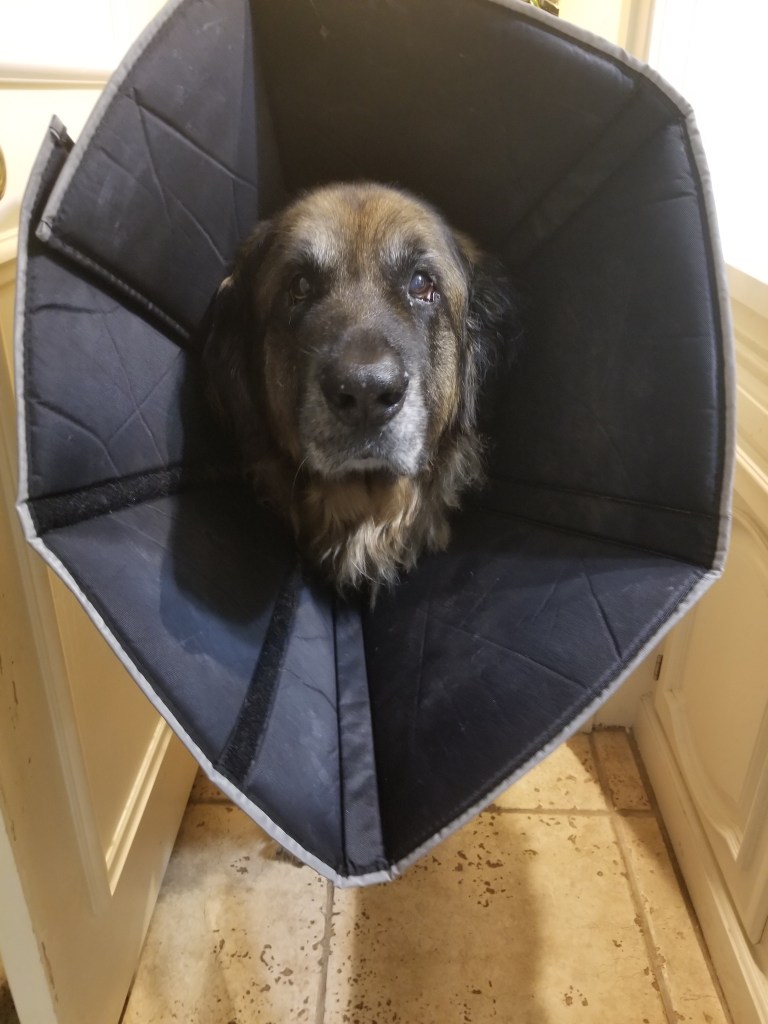
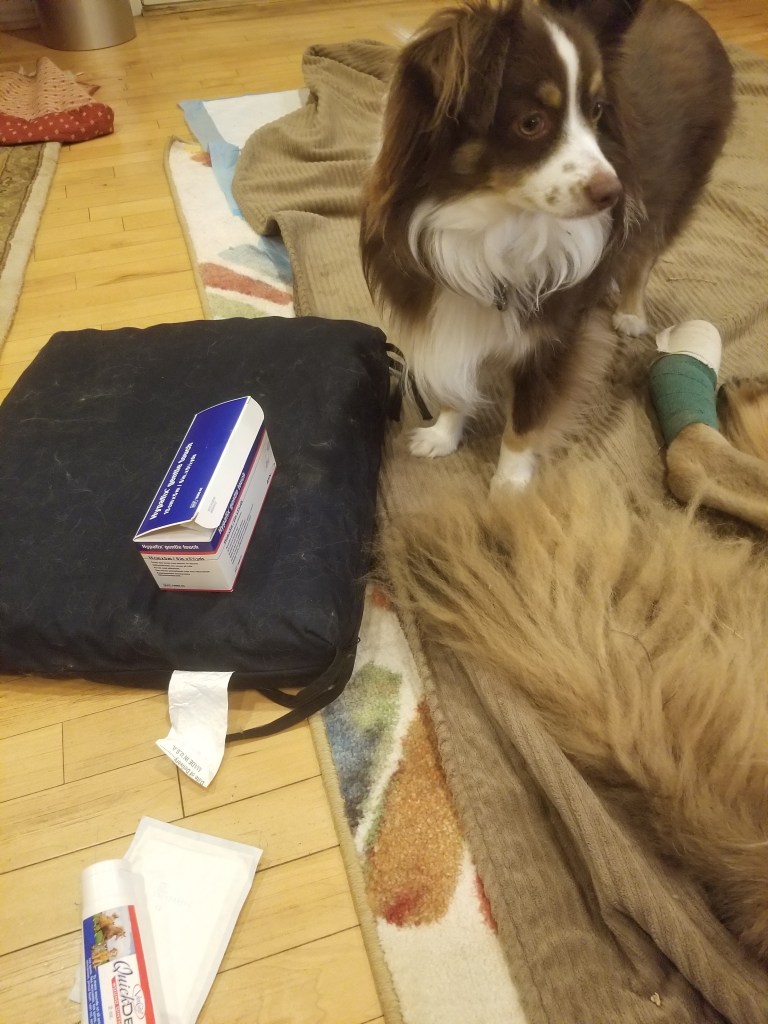
This time around, Bronco’s entire leg was put in a cast, to be replaced by a bandage after ten days. We were instructed to keep him inside during those ten days and keep him as still as possible. We were to make sure he wouldn’t bump the cast. This was, of course, almost impossible to do, but we were going to try.
However, Bronco really wanted to go out, which he showed us in various ways, such as scratching at the front door. After a week or so, Claudia suggested that we take him outside a little bit, just in our driveway. I agreed. When I handed her the leash, she said, “He can barely walk; do you think he’s going to run off without it?” We laughed, and I agreed that it didn’t seem like we needed it this time. So Claudia walked out with Bronco slowly limping beside her.

Less than a minute had passed when I heard shouting outside. I opened the door and looked outside to see what was going on. First I saw our neighbor and his two corgis running down the street as fast as they could. Our neighbor was screaming at he top of his lungs, “Get him off me! Get him off me!” Behind him, Bronco was running with his cast going kabonk-kabonk-kabonk as it hit the sidewalk. Behind Bronco ran Claudia, who was also screaming at the top of her lungs. Bronco! Sit! Stay! Stop!” Finally, Bronco stopped, and Claudia grabbed him. Holding his collar, she led him back in.
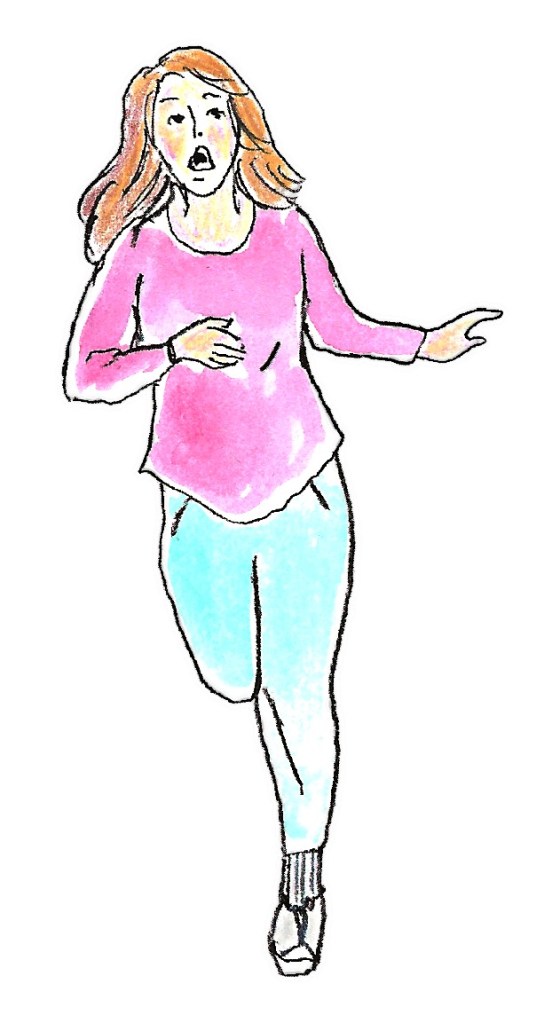
Our red-faced and sweaty neighbor was very nice about it and forgave us. He even forgave Bronco, though Bronco was chasing the corgis, not our neighbor. But still, if I had been chased by a big dog wearing a cast, I would not have gotten over it that easily. Our neighbor is clearly a better man than I am.
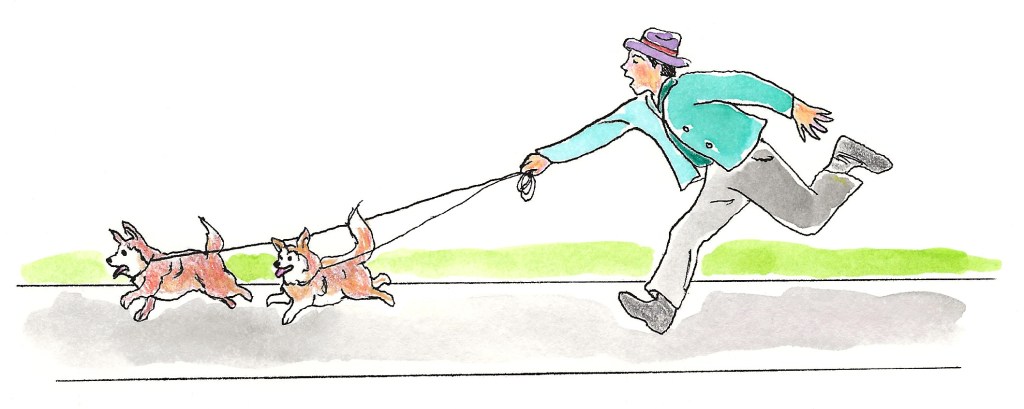
This was an embarrassing event for all of us, but at the same time it was one of the most surreal and amazing things I’ve ever seen. It was so unexpected, so bizarre, and so funny. I really wish I had had a video camera handy. Talk about a potentially viral video.
When we went back to the veterinary surgical center to have Bronco’s cast removed, we decided not to say anything about the incident to the doctors. We sat in the waiting room and wondered if the episode had caused any permanent damage to Bronco’s paw or leg. But when the veterinary technicians came back with Bronco in a bandage instead of a cast, they told us that everything looked good. Great job, everyone!
We thought they might not have checked his sore carefully enough, so we asked them again: Are you sure everything looks good? The sore, the stitches—did you really look at them thoroughly? They insisted that yes, they looked good. So Bronco got his treats, he looked happy, and we went home.

 Leonberger Life