This blog feature amusing and heartwarming stories about our late Leonberger dog Bronco, as well as other Leonbergers. It also has a lot of information about the Leonberger breed, the history, care, training, Leonberger organizations, etc. I also wrote a Leonberger book, which I am featuring in the sidebar.
I’ve mentioned in other posts that I am a volunteer for a non-partisan organization called Citizen Climate Lobby, CCL for short. The name is maybe misleading insofar as we are not “normal” lobbyists, just volunteers, without money, who are trying to get politicians interested in climate change related legislation. We do many things, but one thing we do is meeting with congressmen, house representatives as well as senators, state legislators, including state representatives and state senators, and mayors and city council members, as well as corporations, organizations, and grass roots, that’s regular folks. Naturally we discuss different things with a US senator compared to a city council member. We discuss national legislation with a US Senator and local pollution issues with a city council member.
CO2 emissions dial. Shutter stock Photo ID: 1928699927 by NicoElNino
CCL has been successful
Overall, I think CCL has been quite successful. We are well known in congress, we have a good reputation, and people tend to want to meet with us. We have been instrumental in passing legislation and in 2016 a Climate Solutions Caucus was created in the house by one Republican congressman and one Democrat congressman. It was CCL that was behind this and who brought the two congressmen together. The first two years the caucus had an equal number of Democrats and Republicans. Before the election in 2018 there were 40 Democrats and 40 Republicans on the caucus. After the election many of the typically moderate Republicans in the climate caucus lost and the numbers are no longer equal. I can add that I am the CCL liaison for Senator Ted Cruz office.
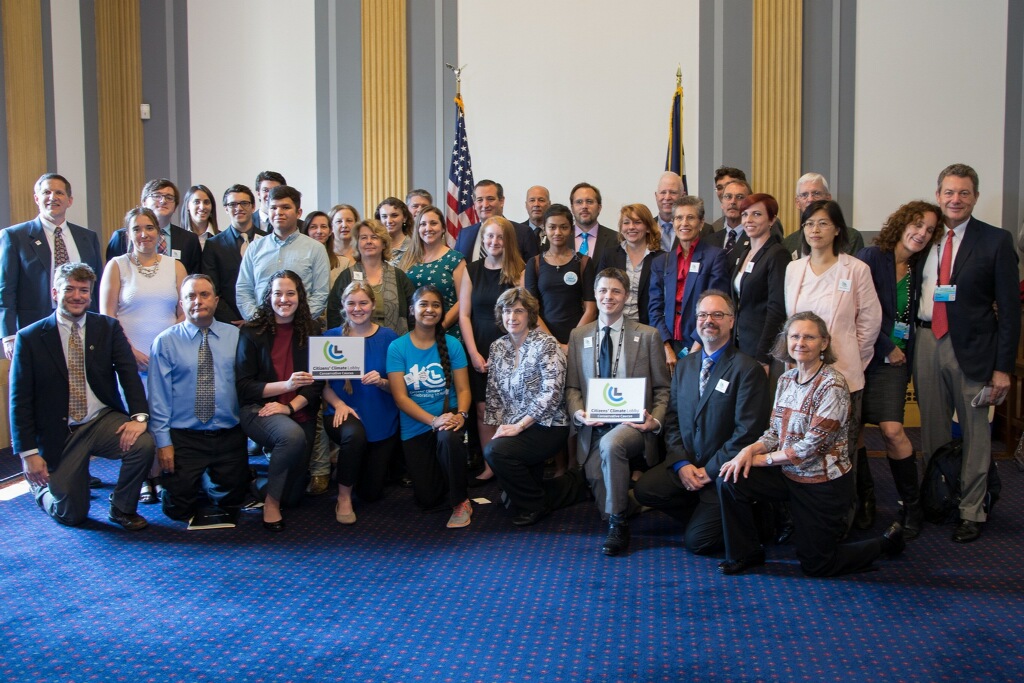
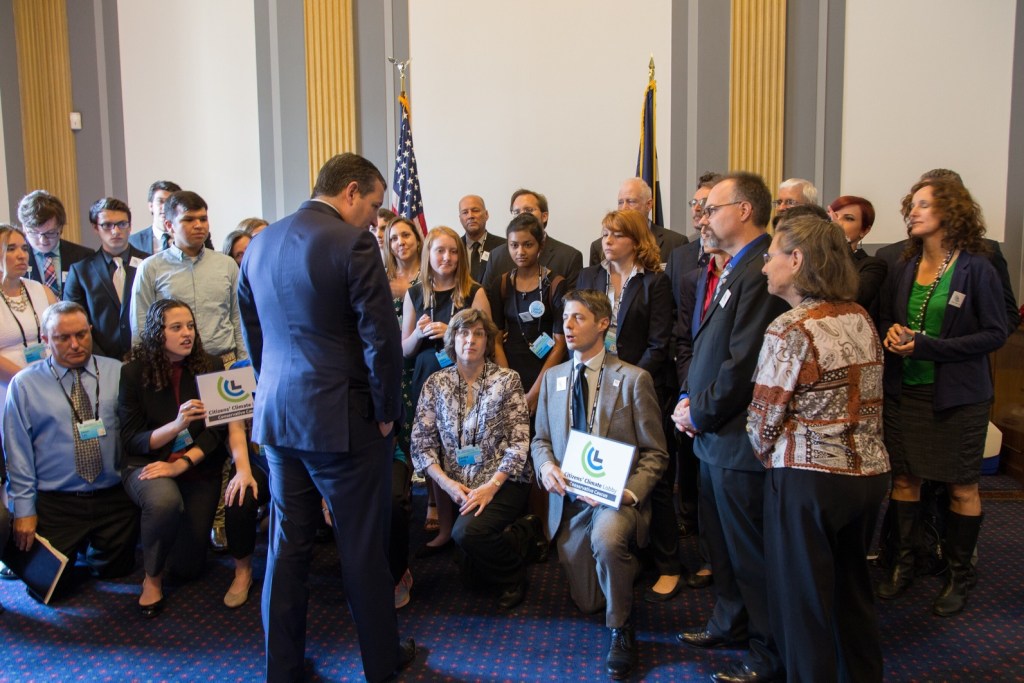
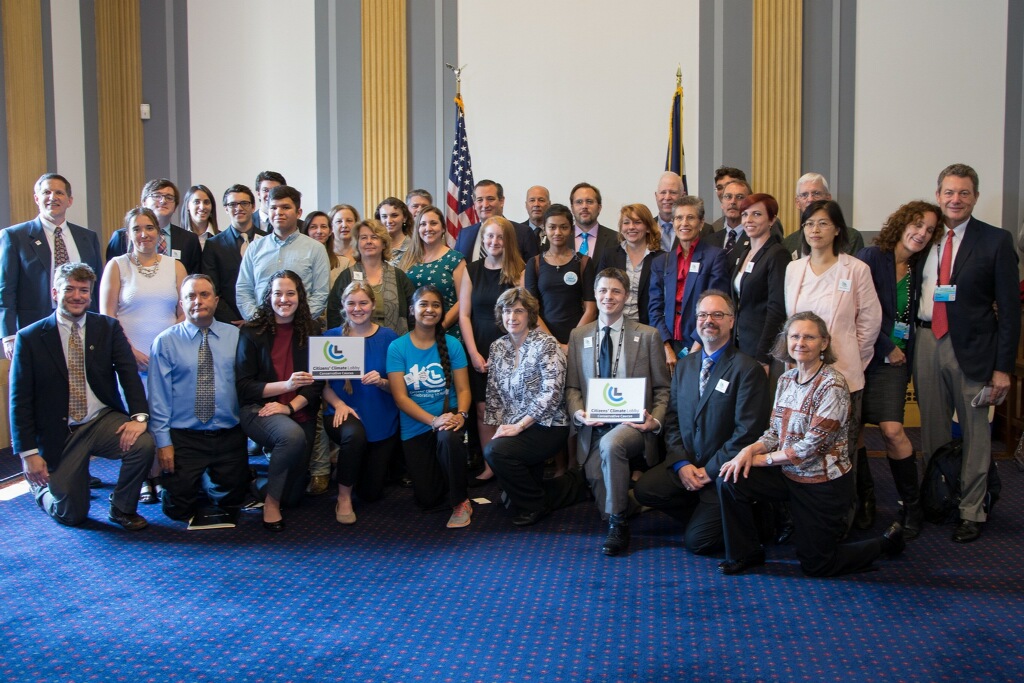
Senator Ted Cruz TXJR with Citizens Climate Lobby in 2017. The senator is standing immediately to the right of the American flag, and I am standing immediately to the left of the American flag. My wife and daughter are also there.
Be Organized and Polite
I think the reason that CCL has been successful is that the CCL volunteers are trained to be polite, to listen and ask questions. Politicians and their staff are flooded by angry, rude and toxic messages from opiniated people on both sides of an issue, and they have delete-buttons and trashcans for that. Protesting, screaming, insulting, threatening, showing your feelings, is not as effective as some people think. When you push people, they will push back or ignore you. You need to win people over, not alienate them.
We’ve had a few accidents when some volunteers lost their temper but otherwise, when someone acts dismissive or hostile to your message you still try to find common ground, or you can ask if you can get back to them with research articles or other information from reliable sources. You don’t argue and you definitely do not get angry. In addition, you need to listen, ask them why they believe what they believe, and write it down for future purposes. You also need to be well informed. If you don’t know something, promise to get back them, research it, and then give them the information by email once you have it. Keep all communication to the point and easy to understand. Don’t ramble. Respect their time. You have one issue. They have a hundred and one.
This photo is from the CCL meeting with Ted Cruz office June 2023. I set up the meeting, but I was not there because my son was getting married at the same time.
How to Set Up a Meeting
To set up meetings with congress, call/write to the scheduler the first time around about 2-4 weeks ahead of when you want to meet with them. If you already have the emails or phone numbers of a staff member then use that. Don’t just walk in and don’t try to schedule too far ahead. Keep the request simple, short and humble but clear, and don’t expect an immediate response. Suggest a time but be open to other times. Don’t start spamming them if they don’t reply. Give it a few days and then email them again or call them. Refer to / include your previous email to remind them that you have already tried to request a meeting. It is a little easier to get a meeting with a council member than a US senator.
The most common is that you will meet with one or more staff members. Don’t expect to meet the congressman, not the first time. If you are meeting with a state representative or a city council member you have a better chance of getting to speak to your representative. Don’t bring too few and not too many people. Five or six people is a recommended group size. Try to have at least one constituent in the group. A constituent is someone who lives in the congressman’s district or the city council member’s district. Ask how much time you have. At a congressional office you typically have half an hour. Respect that time. It is best to ask for two things. First, what you really want. That’s the “primary ask”. Then an easier version of the “primary ask” or an alternative. That’s called the “secondary ask”. The reason is that psychology has shown that if they are against the “primary ask” and have to say no, they’ll try to please you by saying yes to the secondary ask. Thank them for meeting with you before and after the meeting.
Be aware that requests that require the politician to spend money or raise taxes are more difficult for them to accept. The climate legislation that Senator Ted Cruz voted yes on, the Growing Climate Solutions Act, which was about supporting farmers and forest landowners doing things sustainably, required very little government assistance. Once when I sent an email to my Dallas city council member (a libertarian), whom I already knew, I asked him to replace diesel buses with EV buses. It was a Sunday. His immediate reply (within 5 minutes) to me was along the lines: Hi Thomas. The EV buses cost money and since I promised not to raise taxes, I’ve got to cut something else. I am at city hall right now working on the budget. Could you please come down to city hall and help me find which item to cut. I am having a really hard time with this. I thought that once you find the item to cut for me maybe you could volunteer to take the blame for cutting it.
A bit snarky maybe, but I got his sarcastic tone, and I dropped the subject. I told him “Never mind”. I should mention that he voted yes on another issue that we had asked of him, despite him at first telling us no. However, that issue required no tax money. I can also add that a few years later Dallas got EV buses.
I am a volunteer for an organization called Citizen Climate Lobby, CCL for short. CCL is a grassroots bipartisan organization consisting of 200,000 volunteers from the entire political spectrum, from conservative, libertarian, independent, and liberal / left. Considering that we are volunteers and just regular people the part of our name that says “Lobby” may seem out of place. However, it refers to the fact we visit congressional offices and talk to politicians. We don’t bring any gifts, like real lobbyists, not millions of dollars, not even donuts. What we bring is useful information, our voices, community leaders, our votes, and gratitude and respect for our representatives, whether we agree with them or not.
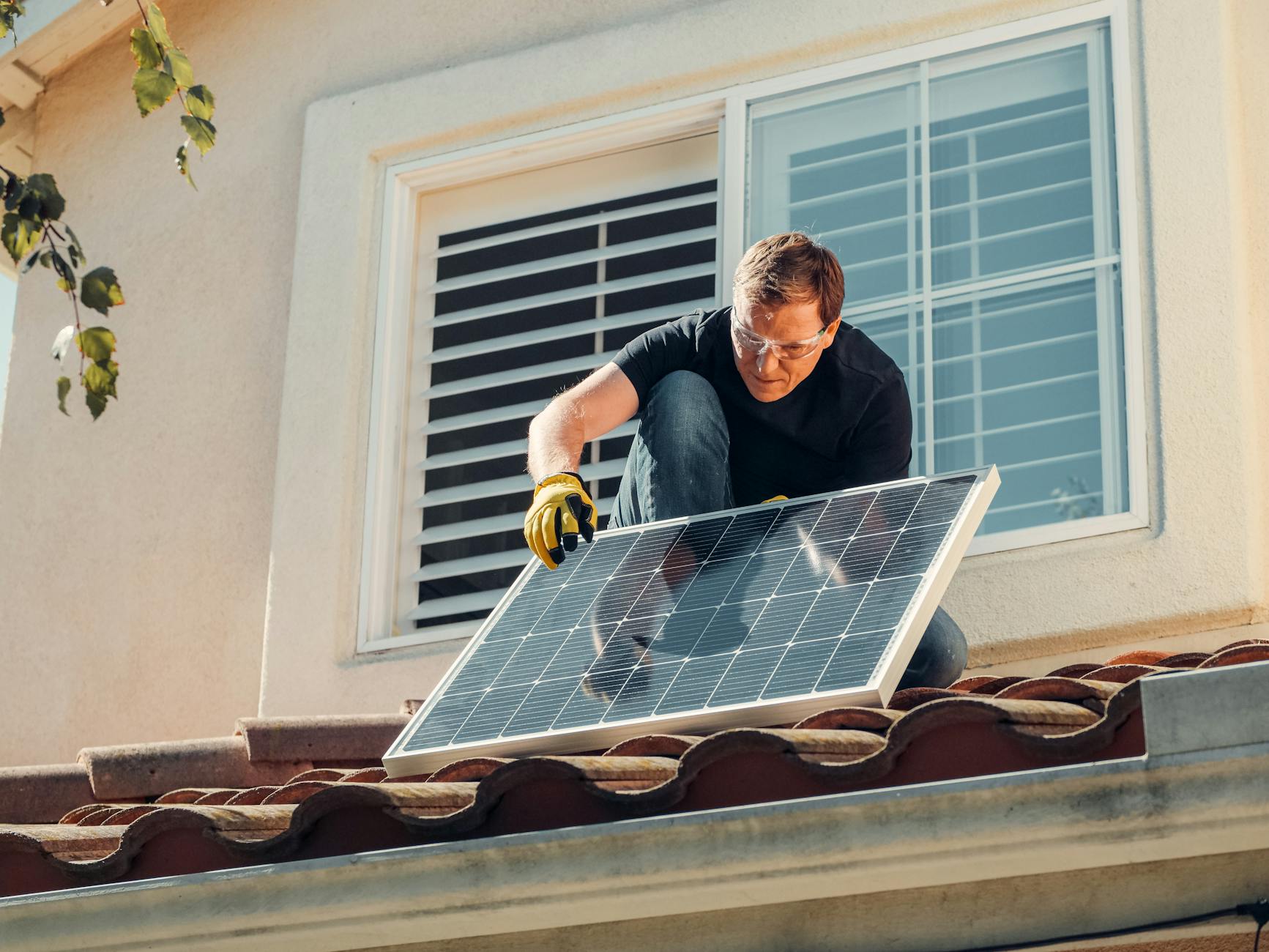
Citizens Climate Lobby, or CCL, is volunteer organization seeking to create political will for climate solutions. Photo by Mikhail Nilov on Pexels.com
I am the liaison for Senator Ted Cruz office. Despite him not being a “climate champion” he voted Yes on one of the resolutions we supported, the Growing Climate Solutions Act (Senate bill S.1251, house bill HR.2820). They typically meet with us 3 or 4 times a year and they have never turned down a meeting request. We have a good relationship with the vast majority of congressional offices despite the partisanship that’s ripping congress apart. I remember having a really good meeting in one office then having another great meeting with a congress woman who told us about how evil the guy we had just met was. It felt funny getting along well with two people who seemed to hate each other (or maybe that’s just how they talk). So, in addition to the climate question, I think we are helping to heal some of the divisions in congress as well.
A note about the bill numbers. Any law/resolution must pass both houses and they have different numbers in each house even though they are essentially identical. For the senate it is S.####, and for the house HR.####. Even though a bill passes both houses there are things like the filibuster in the senate and Presidential vetoes, so passing a bill is not easy.
Senator Ted Cruz TXJR with Citizens Climate Lobby in 2017. The senator is standing immediately to the right of the American flag, and I am standing immediately to the left of the American flag. My wife and daughter are also there.
I should say that I used to be quite “skeptical” of “global warming”. I knew, of course, that greenhouse gases cause a warming effect (like a blanket), that’s just hundreds of years old basic science, like we breathe oxygen or that the pressure in an enclosed gas container will increase when heated. However, I thought that the issue was politicized, and that there were natural explanations for the warming such as the sun, orbital cycles, cosmic radiation, volcanoes, etc. I was misinformed because at the time I almost exclusively read rightwing media and literature.
The sharp uptick at the end is not natural, for example, because the distribution of the warming vertically, geographically and temporally (the fingerprint) matches exactly the greenhouse gases we’ve released and contradicts natural causes.
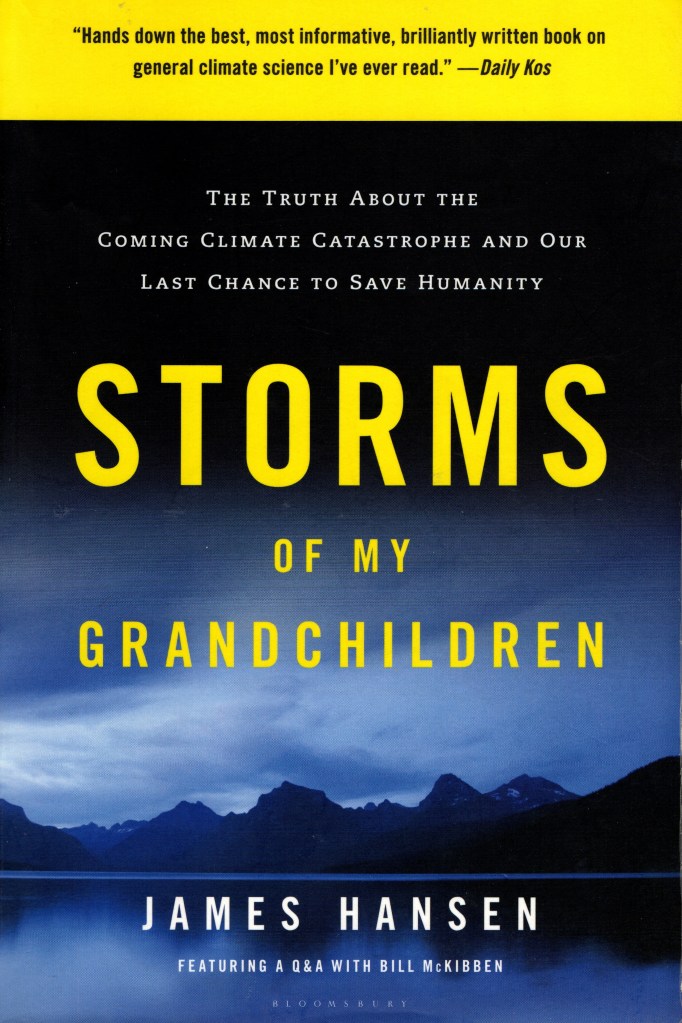
After studying scientific literature and keeping an open mind I came to realize that I was wrong. It had been known for decades that Global Warming, or Climate Change, as it would be called later on, was mostly caused by carbon emissions from fossil fuels, and scientists knew that it was a serious problem. Not necessarily a “we are all going to die” issue, but a serious problem that we should not hand over to our children and grandchildren without trying to mitigate. After reading the book “The Storms of my Grand Children” by the physicist Dr. James Hansen I decided to volunteer. I wanted a non-political organization, if possible, so I chose the Citizens Climate Lobby. You can read more about my Climate Journey here.
Front cover of the Storms Of My Grandchildren by Dr. James Hansen.
CCL is focused on four areas.
Carbon Pricing
CCL’s favorite carbon price policy is what is called a carbon fee and dividend. There is currently a resolution in the house, the Energy Innovation Act, HR.5744 which implements this policy. A senate version S.#### has not yet been introduced.
Carbon Fee: This policy puts a fee on fuels like coal, oil and gas. It starts low and grows over time.
Carbon Dividend: The money collected from the carbon fee is allocated in equal shares every month to the American people to spend as they see fit. The carbon fee would raise the prices on carbon intensive products but since the money is returned to households the dividend would more than make up for the shortfall. This would financially benefit low-income families, specifically the lower 2/3 of income.
Border Carbon Adjustment: To protect U.S. manufacturers and jobs, imported good will pay a border carbon adjustment, and goods exported from the United States will receive a refund under this policy. This also allows American businesses to reap the rewards of their carbon advantage over other countries.
America’s natural resources — forests, grasslands, wetlands and oceans — act as natural climate solutions by pulling carbon out of the air. We can manage these natural resources to maximize their climate change-fighting impacts. CCL has supported a number of forest or agriculture related bills in congress.
By upgrading our homes and buildings to be electric and making them more energy efficient, we can save money and eliminate a major source of carbon pollution.
Building electrical powerlines is very complicated in the United States. Building a wind power station takes months, getting approval for a powerline can take decades. The bureaucracy is daunting. This is a big problem as we try to expand the use of renewables, but it is also a threat to our energy supply regardless of energy source. America’s transmission shortfall is contributing to grid outages across the country and inflating energy prices for American families and businesses.
Permitting reform will make it possible to unlock the clean energy infrastructure that’s waiting to be built, and by getting that clean energy to American households and businesses. About half of the potential emissions reductions delivered by Inflation Reduction Act (IRA) in 2030 are lost if transmission expansion is constrained to 1% per year, and roughly one quarter are lost if growth is limited to 1.5% per year. There are bills in congress which address this, such as the the BIG WIRES Act (Senate version of the bill is S.2827, and house version is HR.5551). Note, CCL did not come out in support of IRA because it was a partisan bill, but many of us liked it.
The Conversation
More than 70% of Americans are worried about climate change. But most of us still avoid discussing it because we feel like it’s too political, too doom and gloom, or too overwhelming. But we can’t solve a problem if we don’t talk about it. Therefore, for the month of April CCL have requested that we volunteers initiate 25,000 climate conversations. So that is what I am doing here. Preaching is not conversation and therefore I invite you all to agree or disagree with me, and to consider the following questions.
Are you worried about climate change ?
Would you consider joining a climate organization ?
What’s your impression of CCL ?
What do you think about the four policy areas ? Would you like to add some ? Remove a policy area ?
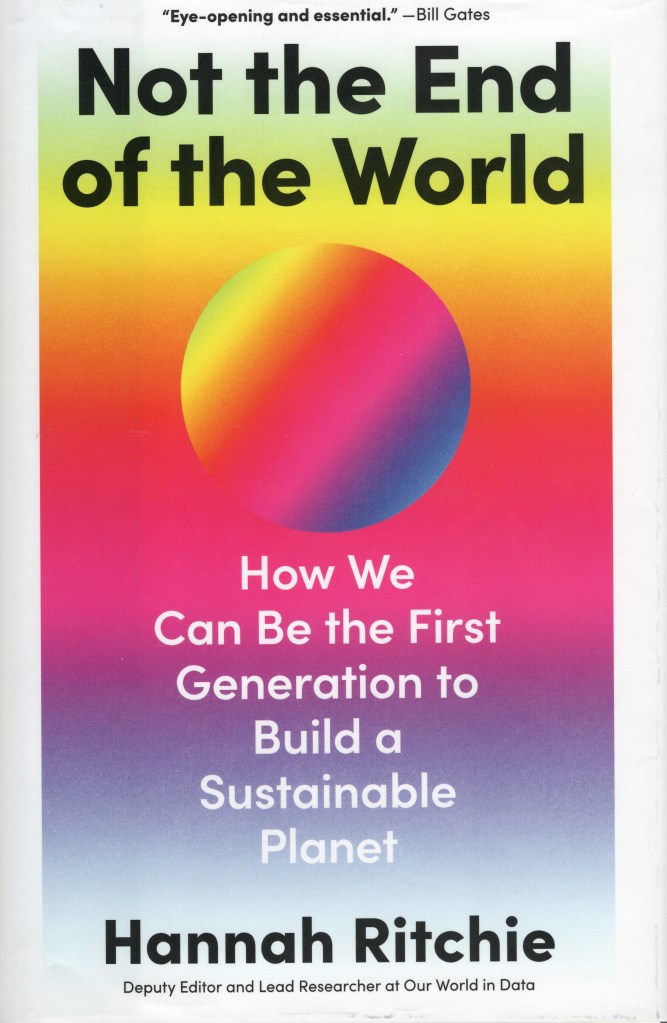
This is a Leonberger blog but sometimes I post about books that are not about Leonbergers but are books that I want to promote. This is one of those of those books. I want to promote it because it features a lot of important and often misunderstood information regarding the environment. It is based on extensive peer reviewed research and data collection, and it is not controversial among experts, but some content may be surprising to those not entirely familiar with the topic. I recently read Not the End of the World Hardcopy – by Hannah Ritchie as part of climate change book club.
Not the End of the World is a great book on environmental issues written in the optimistic but realistic Hans Rosling style of Factfulness. Environmental issues are very real, and they are very big problems, especially climate change, but we have solved very big environmental issues before (acid rain, ozone) and we are doing it now. Doomism (we are all gonna die) is an unhelpful and not very accurate perspective. This book is based on hundreds of peer reviewed research articles and statistics collected by respected science institutions. The author is a prominent environmental and data scientist.
Hardback – Publisher : Little, Brown Spark (January 9, 2024), ISBN-10 : 031653675X, ISBN-13 : 978-0316536752, 352 pages, Item Weight : 1.21 pounds, dimensions : 6.4 x 1.19 x 9.65 inches, it cost $26.03 on US Amazon. Click here to order it from Amazon.com.
Paperback – Publisher : Chatto Windus (January 11, 2024), ISBN-10 : 1784745014, ISBN-13 : 978-1784745011, Item Weight : 15 ounces, dimensions : 6.02 x 0.98 x 9.21 inches, it cost $21.13 on US Amazon. Click here to order it from Amazon.com.
Kindle – Publisher : Little, Brown Spark (January 9, 2024), ASIN : B0C3ZPN6NT, 311 pages. It is currently $14.99 on Amazon.com. Click here to order it from Amazon.com.
Audio Book – Publisher : Audible.com – Release Date: January 09, 2024, ASIN : B0C5JSZ6H9, Listening Length : 9 hours and 26 minutes. It is free on Amazon. Click here to order it from Amazon.com.
Front cover of Not the End of the World: How We Can Be the First Generation to Build a Sustainable Planet Hardcover. Click here or on the picture to visit the Amazon.com page for the hardcopy version of the book.
Amazon’s description of the book
This “eye-opening and essential” book (Bill Gates) will transform how you see our biggest environmental problems—and explains how we can solve them.
It’s become common to tell kids that they’re going to die from climate change. We are constantly bombarded by doomsday headlines that tell us the soil won’t be able to support crops, fish will vanish from our oceans, and that we should reconsider having children.
But in this bold, radically hopeful book, data scientist Hannah Ritchie argues that if we zoom out, a very different picture emerges. In fact, the data shows we’ve made so much progress on these problems that we could be on track to achieve true sustainability for the first time in human history. Did you know that:
Carbon emissions per capita are actually down
Deforestation peaked back in the 1980s
The air we breathe now is vastly improved from centuries ago
And more people died from natural disasters a hundred years ago?
Packed with the latest research, practical guidance, and enlightening graphics, this book will make you rethink almost everything you’ve been told about the environment. Not the End of the World will give you the tools to understand our current crisis and make lifestyle changes that actually have an impact. Hannah cuts through the noise by outlining what works, what doesn’t, and what we urgently need to focus on so we can leave a sustainable planet for future generations.
These problems are big. But they are solvable. We are not doomed. We can build a better future for everyone. Let’s turn that opportunity into reality.
My Amazon Review of Not the End of the World. I expanded my original Amazon review a little bit and added pictures. To see my original Amazon review click here.
A Factful Approach to the Environment
The facts regarding the environment can be confusing. The fossil fuel industry, climate deniers, right-wing pundits and politicians are bombarding us with falsehoods, but poorly informed environmentalists and sensationalist media are misleading us as well. The author takes special issue with doomism, the belief that it’s too late and that we are all going to die. Both denialism and doomism, as well as efforts to minimize the problems lead to inaction. She points out that we need to accept that climate change is happening and secondly that human emissions of greenhouse gases are responsible. We could do better, but we are addressing the problem. What we need is to have the correct information and to be realistic, which will make it possible for us to take the best action.
Climate change is not likely to result in an Armageddon because we are addressing the problem. credit : Marcus Millo, Stock photo ID:1177629542
We have solved big environmental problems before
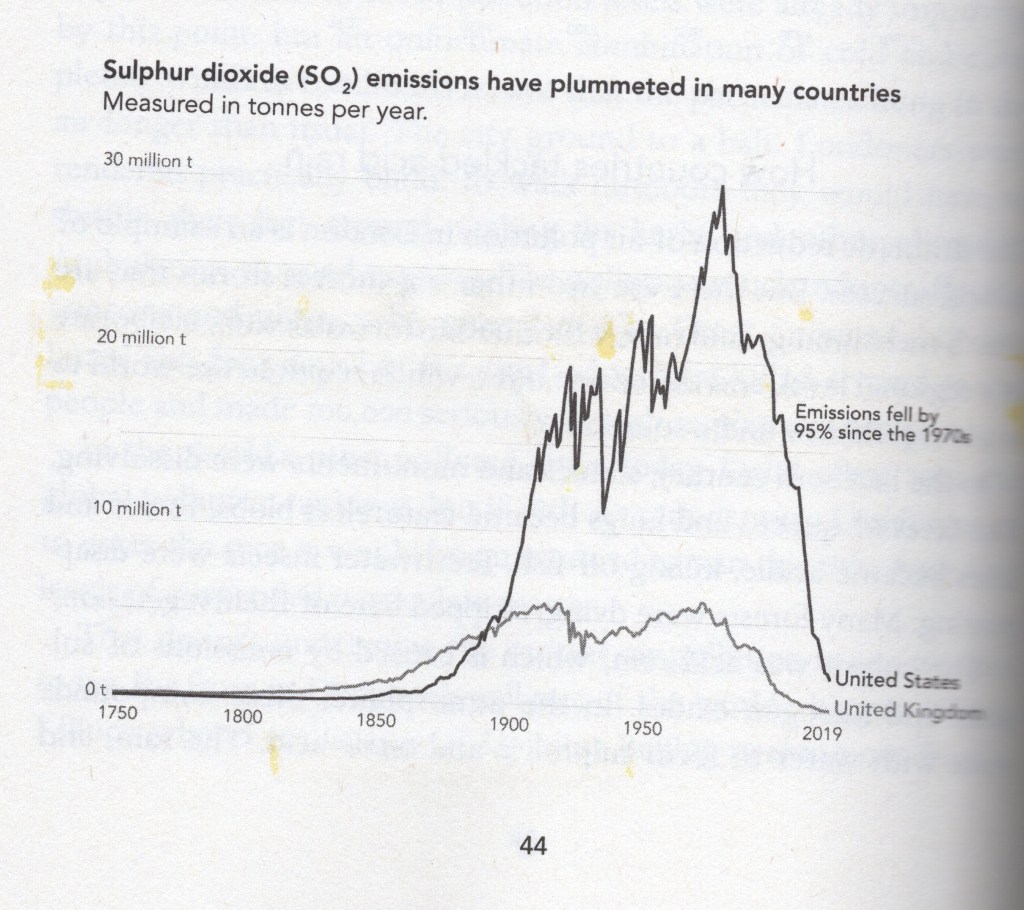
In the spirit of “Hans Rosling / Factfulness” she tells us about our successes and about our progress by using data. She shows us how things really are and how we can solve our current big problems. She explains that we are reducing malnutrition, eradicating poverty, and extending people’s life span all around the world despite a growing population. She mentions that we successfully tackled pollution in many large cities in the west, as well as the acid rain problem and the ozone layer/hole. Sulphur dioxide, a major cause of acid rain, has fallen by 95% in the US since the 1970’s largely thanks to scrubbers. By 2018 the emissions of ozone-depleting gases had fallen by 99.7%. The list goes on. When we make big environmental problems smaller, we stop talking about them.
Scan of graph on page 44 in the book Not the End of the World by Hannah Ritchie. Sulphur dioxide (and nitrogen dioxide) pollution causing acid rain has fallen sharply.
Greenhouse gas emissions have fallen in developed countries. It’s a start.
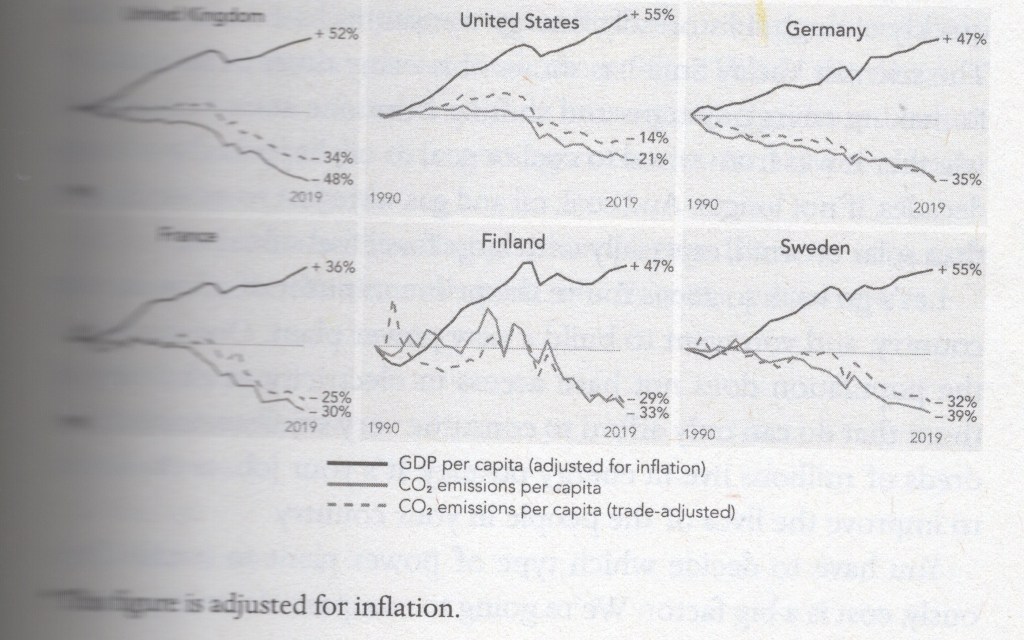
Climate change / global warming is a more difficult problem, but we are having some success here as well. The climate policies we have enacted so far are making a big difference. For example, greenhouse gas emissions in the US have fallen by more than 20% over the last 15 years. From 1990 to 2019 the greenhouse gas emissions fell by 21% despite the economy growing by 55% (in the 1990’s the emissions were still increasing). My native country Sweden is doing even better. Greenhouse gas emissions in Sweden has fallen by 39% over the same period despite the economy also growing by 55%.
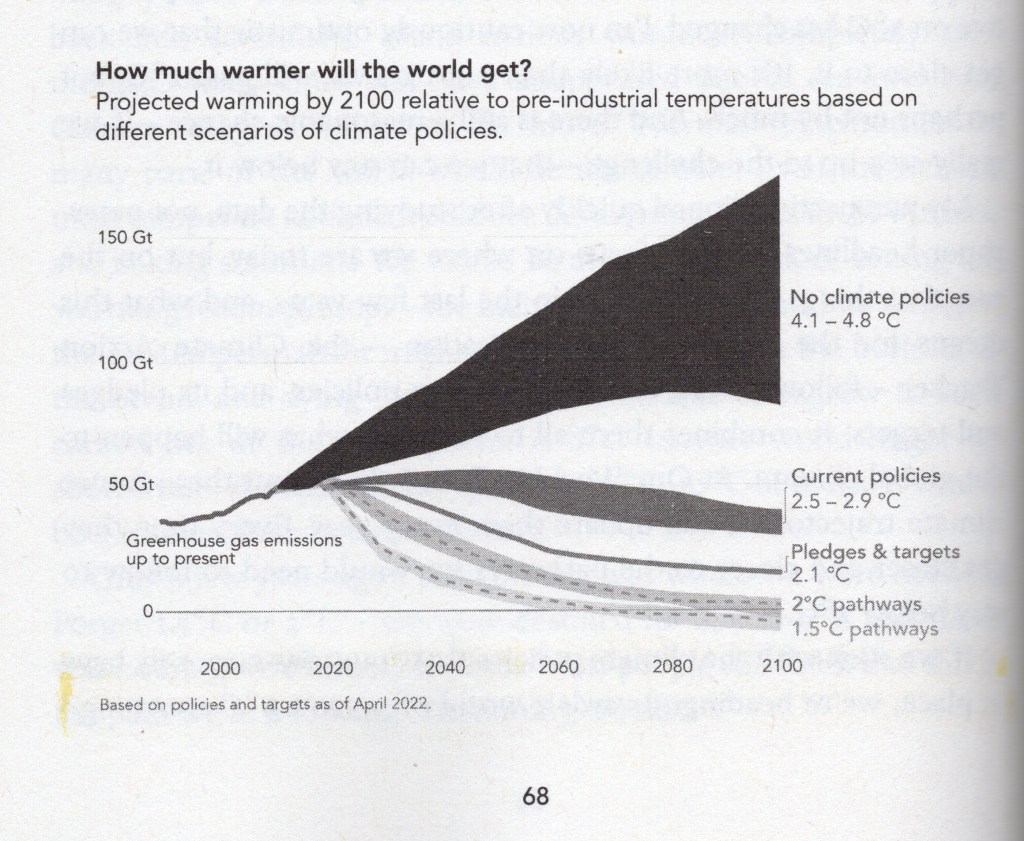
Scan of graph on page 83 in the book Not the End of the World by Hannah Ritchie. Greenhouse gas emissions (mostly CO2) have started to fall in developed countries despite economic growth, and they are starting to flatten out in developing countries. The dashed curve represents the fact that if a consumer buys a product from overseas, he could be said to be responsible for the associated greenhouse gas emissions (trade adjusted).Scan of graph on page 68 in the book Not the End of the World by Hannah Ritchie. Things would be horrible if we didn’t have policies, but we do.
EV Cars Really Are Really Helping to Save us
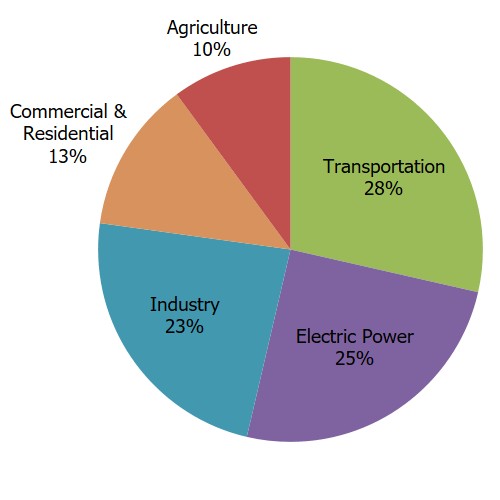
The origins of the world’s carbon emissions are: 25% Electricity and Heat, 24% Agriculture and Forestry, Industry 16%, Transport 14%, direct from buildings 6%, and other energy 10%. In the US Transportation is 28% and Agriculture 10%. Agriculture includes the effects of deforestation.
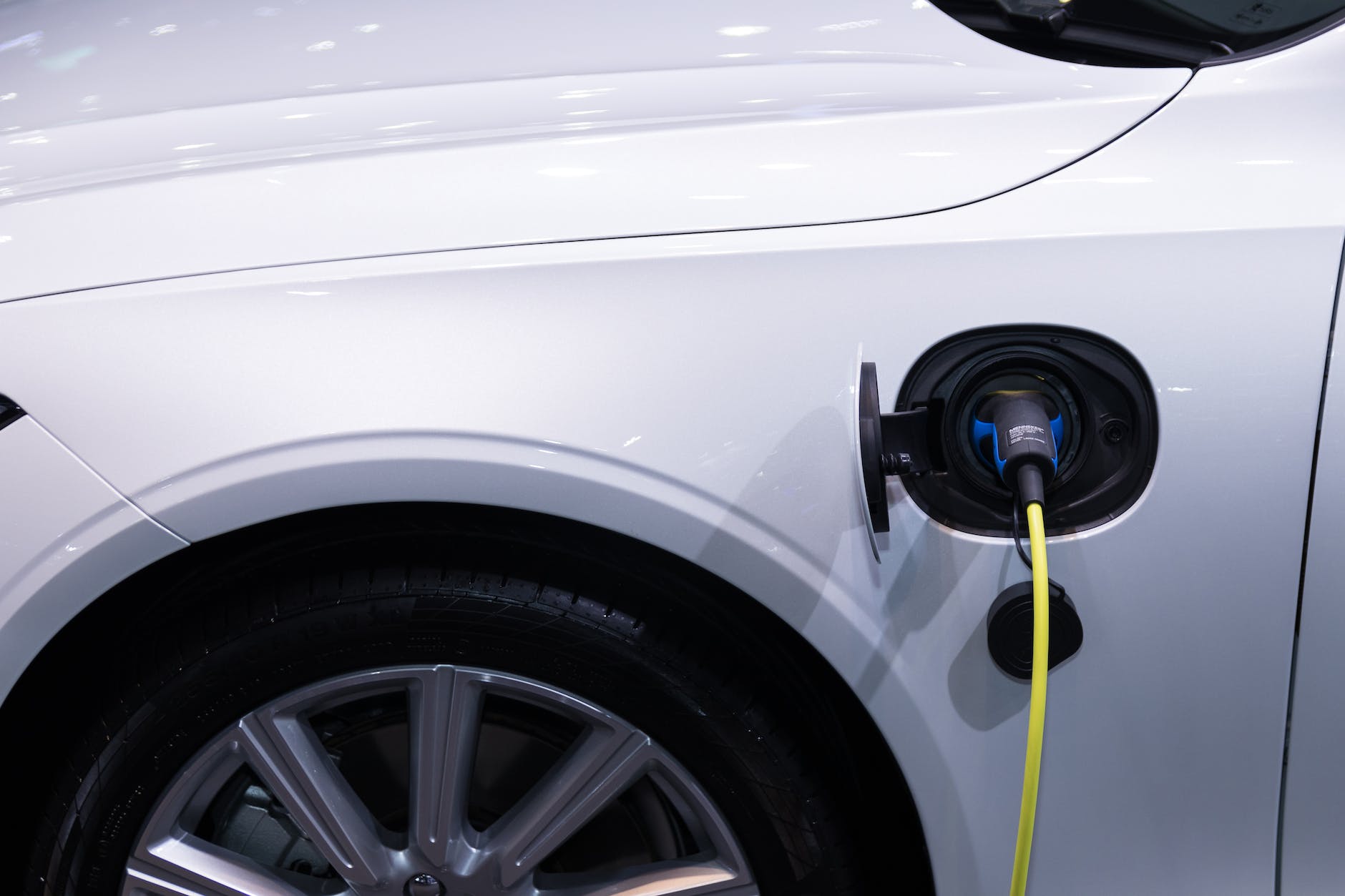
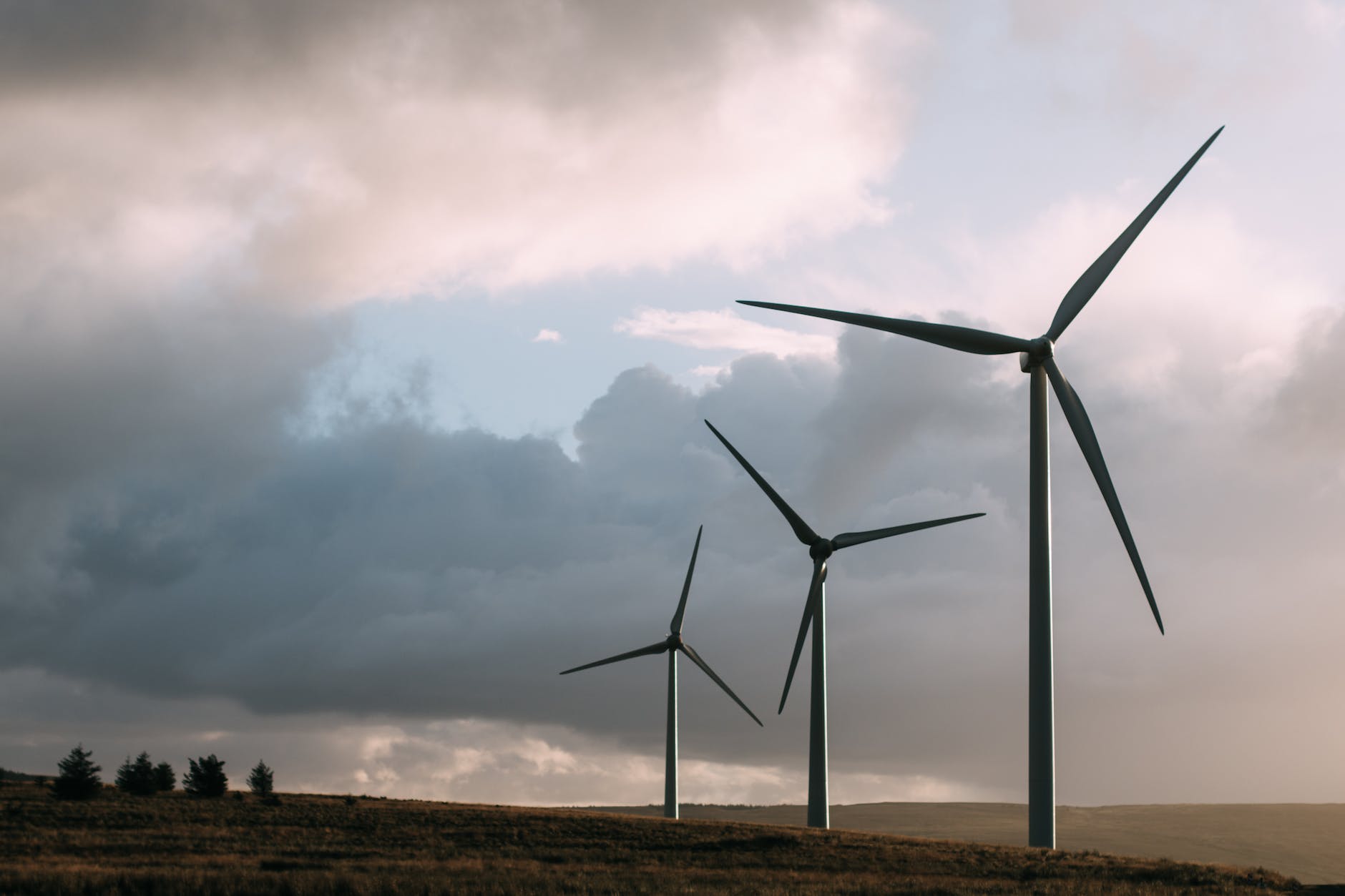
The good news is that the price of renewables is dropping, and they are now the cheapest while EV cars have become affordable. In Norway 88% of new car sales in 2022 were electric. In Sweden, my native country, 54% of car sales in 2022 were electric. The author urges people to switch to electric vehicles – they really are more climate friendly, contrary to what many will tell you here in Texas where I live. Even if their electricity comes from a dirty grid, they are cleaner than gasoline cars due to their higher efficiency, and the higher emissions caused by the production of the battery and other components is quickly neutralized by the lower emissions. With respect to minerals, mining, and land use their impact is much smaller than that of the gasoline cars they replace. Contrary to what is often asserted here in Texas where I live, electrical cars are indeed better for the environment and especially for slowing down global warming.
She also suggests that we try to avoid driving big SUV, fly less, try to use or support renewables, eat less red meat, depending on our circumstances (absolutism and judgmentalism is counterproductive). She advocates for carbon prices as an effective means to reduce emissions. Things that don’t matter or are counterproductive are recycling, not using plastic bags when shopping, turning off your laptop when you don’t use it, buying local (often makes emissions worse), buying organic food (often greatly increases land use), etc.
She mentions that landfills in the US and Europe are very well managed and are not a big environmental problem, unlike the developing countries. 1% of the plastic in the Ocean comes from Europe and I read elsewhere that 1% comes from the United States. The plastic in the ocean originates mostly in Asia and Latin America. A fact she mentions that may not sit well with some environmentalists is that nuclear power is a safe and clean source of energy, just like renewables, but without the problem with intermittency.
Landfills in the developed world are well managed largely avoiding the problem with plastic in the ocean. The same is not true for developing nations. Photo by Catherine Sheila on Pexels.com
Death rates from natural disasters have fallen
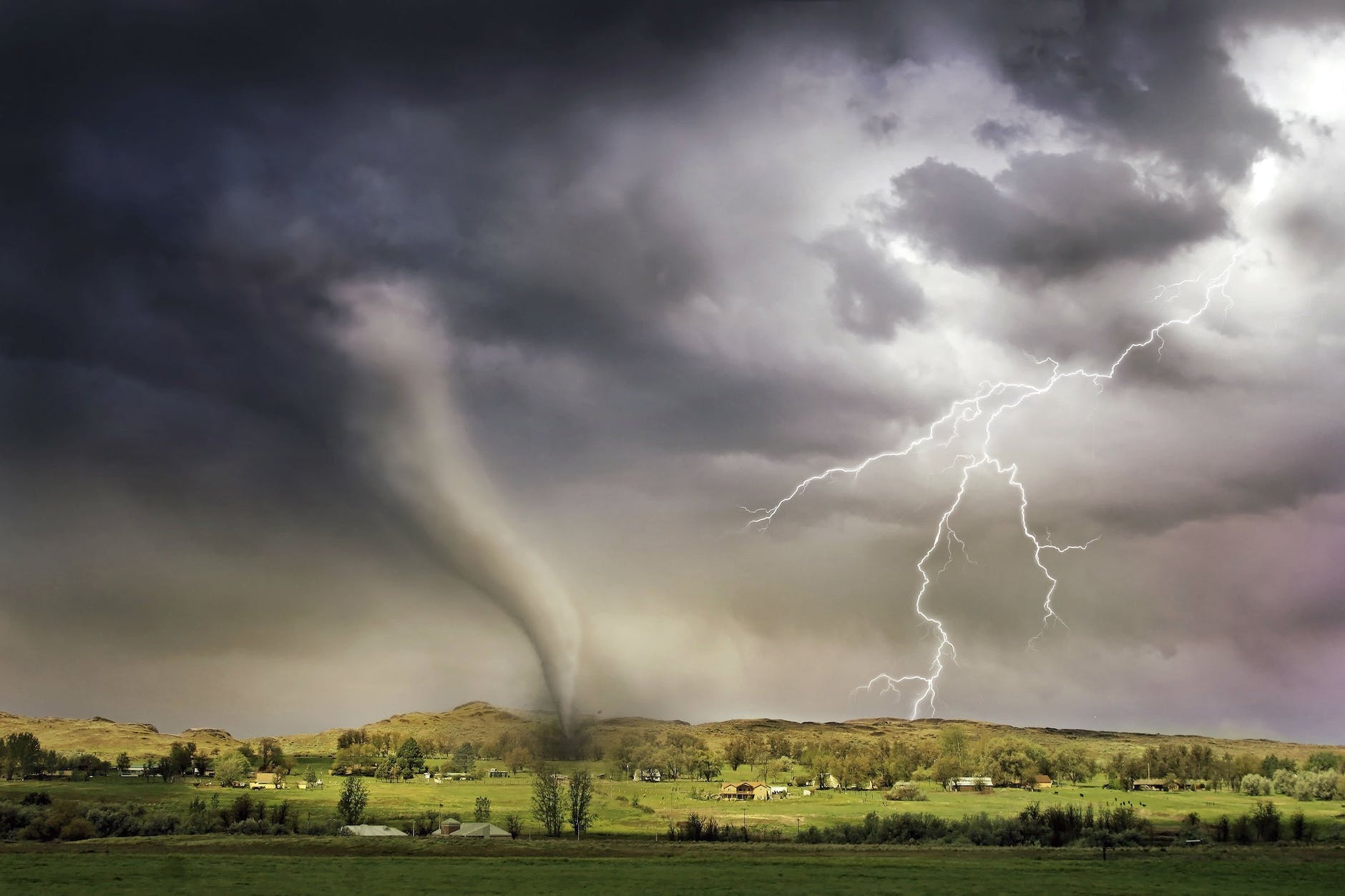
Another interesting fact is that death rates from natural disasters have fallen since the first half of the 20th century. And not just by a little bit. They have fallen roughly 10-fold. That is even though certain types of natural disasters have become worse and more frequent. The explanation is that science, technology, and economic development has allowed us to better protect ourselves and prevent the famines often associated with natural disasters in the past. The author explains that as nations begin to develop, they pollute more and their populations grow, but as it continues this trend reverses. As desperation subsides the environment and living conditions start to matter more, and the population growth subsides as well. She explains that trying to solve climate change by reducing growth or by trying to control population growth is a bad idea.
Better warning systems, shelters, logistics, modern medicine, prevention of famine, etc., have drastically reduced deaths from natural disasters.. Photo by Ralph W. lambrecht on Pexels.com
The Sixth Extinction is off to a roaring start but is slowing
There is no doubt that we’re destroying biodiversity at record rates. It is often said that extinctions are natural, and that is true, it is part of evolutionary history. In fact, 99% of the estimated 4 billion species that have lived on Earth are now gone. However, the extinction rate matters. Over the last 5-600 million years there’s been five mass extinctions. A mass extinction event is when 75% of all species go extinct in a short period of time, set to 2 million years. During recent human history species have gone extinct at a rate that is thousands of times faster than normal, and many more species are threatened. We are heading towards the sixth extinction very fast. On the other hand, our recent conservation programs have been quite successful, and it looks like we are turning things around. The author also points out that if the panda or the rhino go extinct, we will be OK, but the same cannot be said if certain worms and bacteria go extinct. She admits that is a bit cynical to say, but we also need to consider species that really matter to our survival.
In this review I mentioned a few facts from the book to give a taste of the content. Naturally, there is a whole lot more. All these claims and stats, as well as hundreds of other sometimes surprising claims that she makes she supports by referencing reliable sources and peer reviewed research. The book contains 100+ graphs, 335 references, hundreds if not thousands of interesting facts. I can add that Hannah Ritchie (PhD) is a young Scottish data scientist, senior researcher at the University of Oxford in the Oxford Martin School, deputy editor at Our World in Data, and she is the head of research at Our World in Data. She is quite an impressive young lady. I think this book is one of the most informative books on the topic of the environment that I have ever read. I think most of us will learn something important from this book. If there is a fact from the book that I’ve mentioned in my review that you doubt, why don’t you buy the book and find out the details and where it comes from. Maybe you will see the world with new eyes.
A final note is that the statement in the title “How We Can Be the First Generation to Build a Sustainable Planet” comes from the fact that using UN’s definition of sustainability we humans have never been sustainable, but with science, technology and good policy we can be sustainable.
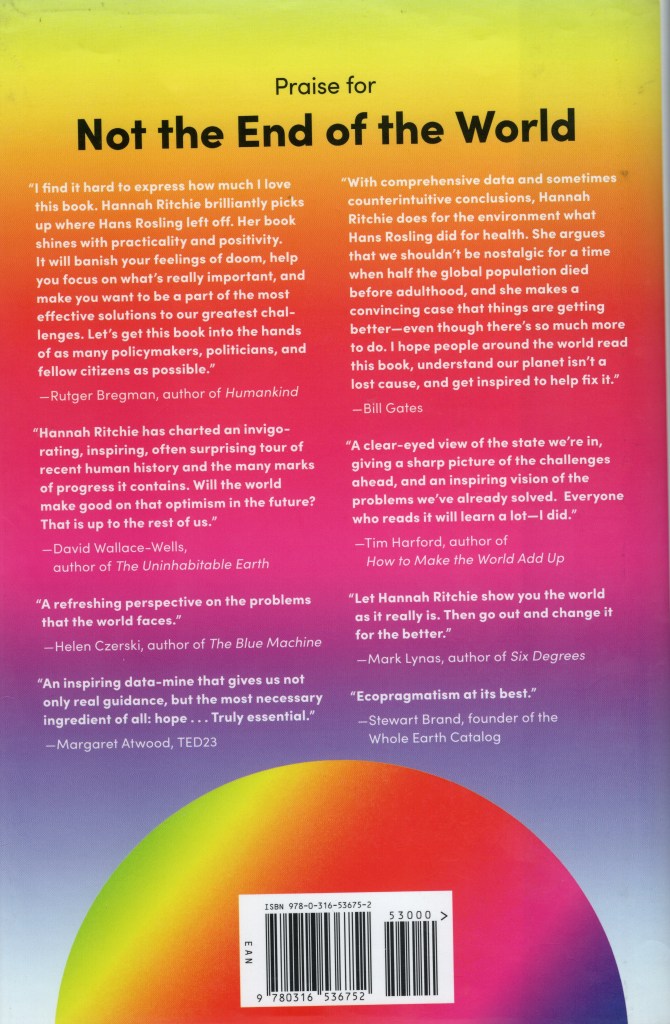
Back cover of Not the End of the World. Click here or the picture to visit the Amazon.com page for the kindle version of the book.
Normally the focus of my blog is on Leonbergers, especially our late Leonberger Bronco, but sometimes I present a good book which I want to promote. Today I would like to present and review The Climate Casino: Risk, Uncertainty, and Economics for a Warming World, Hardcover – October 22, 2013 and paperback– February 24, 2015 by William D. Nordhaus. The hardcover version has the dimensions 6.13 x 1.06 x 9.25 inches and the weight 1.54 pounds and currently cost $13.41 on Amazon.
Nordhaus received the Nobel prize in economics 2018 “for integrating climate change into long-run macroeconomic analysis” (Nobel Memorial Prize in Economic Sciences). Nordhaus is one of the most prominent economists in the world and without doubt a genius. He is worth listening to.
Before I present my Amazon review, I would like to point out that this book is very important for a few reasons.
Nordhaus has been referenced, for example, in articles in the Wall Street Journal as someone who claims that climate change / global warming is costlier to mitigate than to allow to happen and that it might even be beneficial. He vehemently denies that he ever said something along these lines, and it is important to understand how this misunderstanding came to be.
Nordhaus believes that climate change / global warming is happening, that it is dangerous, costly and that we humans are the cause of it.
When calculating the potential cost of climate change Nordhaus does not take into account things like the extinction of species, not because it doesn’t matter, but because it is so difficult to put an economic value on it. Therefore, his calculations should be viewed as a baseline, a minimum to consider. If death is free of charge, it is not included, which he makes clear.
Nordhaus takes into account the fact that technological progress and economic progress is making us more resilient. For example, despite the fact that natural disasters are getting worse, much fewer people are dying from them because we have become much better at preventing casualties. For example, WHO calculated that if global warming continues unabated 80 million additional people will die from malaria by 2050 due to the extended geographical spread of mosquitoes carrying malaria. Nordhaus takes into account the fact that future medical technology will be much better so that this may not be a big problem.
Nordhaus also takes into account discounting. The fact that money is more valuable today than it is tomorrow. Twenty thousand dollars may be worth one hundred thousand dollars fifty years from now if you let it earn interest. Therefore, we should not spend too much money today to fix future problems (despite that fact we should still spend money today). The annual discount rate he is using is 4%. Some say that is too high.
All that is mentioned above causes many environmentalists to jump to the conclusion that he is downplaying the cost of climate change / global warming. It also makes fossil fuel industry apologists falsely conclude that he is on their side. Thereof the confusion in Wall Street Journal articles.
What he is doing is making his economic arguments for action today unassailable. No matter how you downplay the risks they should be addressed today based on purely economic rationale.
He stresses the concept of economic externalities, something a lot of people don’t understand, especially people who learned economics from talk show hosts and politicians instead of taking classes in economics. An externality is an indirect cost or benefit to an uninvolved third party that arises as an effect of another party’s activity. It makes the free market fail and allows regulation to improve economic efficiency. It’s a big deal.
It should be noted that he is the world’s topmost expert on the economics of climate change / global warming. To see my original review, click here.
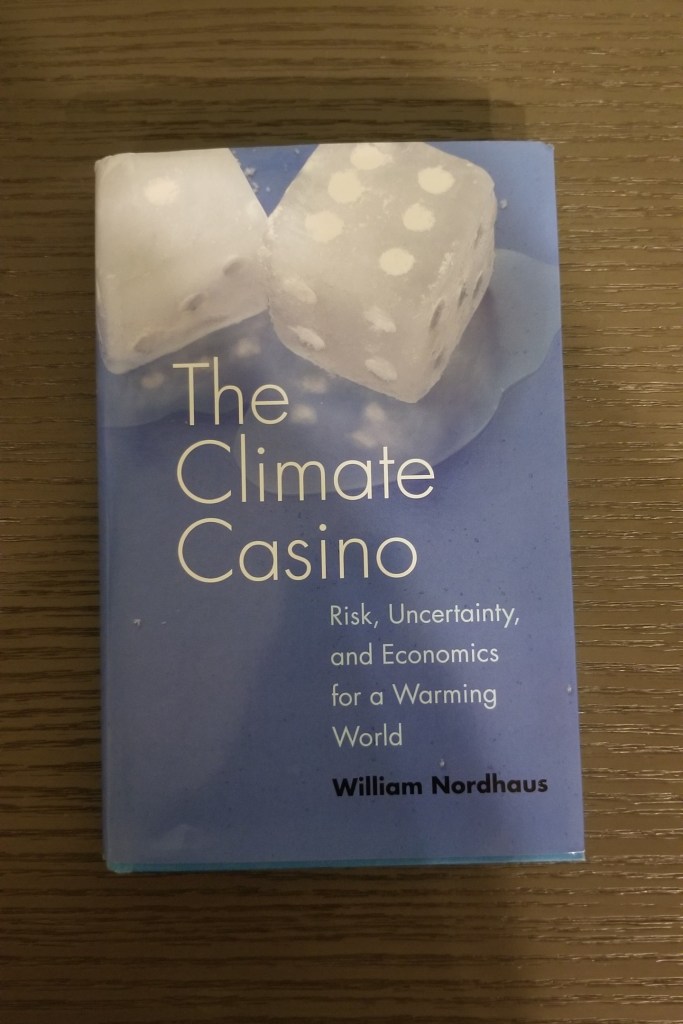
Front cover of the book The Climate Casino: Risk, Uncertainty, and Economics for a Warming World by Nobel Prize Winner in economics William Nordhaus. Click on the picture to go to the Amazon location for the hardcover of the book.
My Amazon Review
About The Thorniest of Externalities
In this book Nobel Prize Laurate in Economics (2018) William Nordhaus analyses the economic consequences of global warming. Nordhaus takes seriously the potentially catastrophic impacts of climate change, but he avoids all exaggeration and tries to be as realistic and conservative in his estimates as possible. He stresses that global warming is a major threat to humans and the natural world. That past climates were driven by natural sources, but that current climate change is increasingly caused by human activities. He gives us a brief introduction to climate science and the conclusions presented by the IPCC. He states that potential damage will be concentrated to low-income and tropical regions and explains that there are dangerous tipping points.
He explains that his economic analysis leaves out some potentially important consequences of climate change because they are difficult to quantity or because economic concerns are not the primary concern in those cases. He states that the most damaging impacts of climate change – in unmanaged and unmanageable human and natural systems – lie well outside the conventional marketplace. An example is species extinctions. There is no price tag on the value of a species. He explains that there have been five mass extinctions over the last 500 million years and now a sixth one is developing. That is a serious scenario he could not include in his economic analysis.
In his economic analysis he takes into account that many northern developed nations will be economically advantaged by global warming, as long as the temperatures do not rise too much. He takes into account that future generations will be wealthier, have better medicine, and will possess technologies that will help them adapt better to climate change. For example, the area in which malaria is endemic is likely to grow because of global warming thus potentially killing tens or hundreds of millions of people assuming today’s medical technology, but in the future medical technology will be better so that is not likely to happen. In fact, many of the health impacts of climate change are likely to be manageable in a future wealthier world. This is one reason why trying to slow economic growth to stop global warming is a bad idea that is counterproductive. There are much better ways.
Another important feature of his analysis is discounting. Money is more valuable today than tomorrow. Twenty thousand dollars may be worth one hundred thousand dollars fifty years from now if you let it earn interest. Therefore, it may not be worth paying a thousand dollars today to save future generations five thousand dollars. He uses a significant discount rate that has been criticized, but the important thing to remember is that this way he is not exaggerating. As it turns out, climate change is still expensive to future generations depending on how far we allow it to go. It is definitely worth investing today in slowing climate change. His graphs demonstrate that economic losses quickly become gigantic if you go too far beyond the temperature optimum (which depends on the assumptions behind the graph). One graph was 2 ¼ Celsius, another 3 ½ Celsius. Note, that is without considering unquantifiable consequences.
All his talk about discounting, certain economically positive consequences of climate change, that we will get better at adapting, etc., has led to misunderstandings by those with imperfect reading comprehension. Some environmentalists have concluded that he is underestimating climate change, and some climate skeptics have incorrectly concluded he is on their side. An article in the Wall Street Journal incorrectly claimed that William Nordhaus predicted that climate change would be economically beneficial.
Perhaps the most central concept in his analysis of how to approach the problem is externalities. An externality is an indirect cost or benefit to an uninvolved third party that arises as an effect of another party’s activity. For example, those who produce emissions/pollution do not pay for that privilege, and those who are harmed are not compensated. Global warming is a particularly thorny externality because it is global. Inventions correspond to positive externalities. Innovators are frequently paid only a small fraction of the benefits their innovations bring, while benefiting all of society. This is why subsidizing technology and innovation can be beneficial to the economy.
He states that economics teaches us that unregulated markets will not put the correct price on externalities like CO2. To make the market more fair, efficient, and grow the economy faster you try to correct for the externality and the best way to do that is a Pigouvian tax. Market fundamentalists who’ve learned economics from talk show hosts but never taken an economics class may balk at this, but it is a basic concept in economics, like supply and demand. Towards the end he strongly argues for some sort of a carbon price, which I saw as the conclusion of the book. I thought his book was very informative, excellent analysis, and very well written.
Back cover of the book The Climate Casino: Risk, Uncertainty, and Economics for a Warming World.
This is the story of the ban of my five-star review for the book “The New Climate War: The Fight to Take Back Our Planet” and the warning I received from Amazon. I certainly ruffled some feathers just by paraphrasing some content from the book. I highly recommend the book by the way.
At the end of March, I received this email from Amazon:
Hello,
One or more of your posts were found to be outside our guidelines. In order to help our customers make informed choices, we encourage them to review the product and contribute information about it. However, Community content that violate our guidelines or Conditions of Use will be removed.
Please consider this a first warning.
Before submitting your next post, please refer to our Customer Guidelines:
At first, I had no clue what post they were talking about. Then I realized that they had removed one of my reviews, for the book “The New Climate War: The Fight to Take Back Our Planet”, after they had initially approved it and let it be displayed for a month. There are many ways to violate guidelines, and I did not understand what they were referring to. I got a warning, so this was fairly serious. So, I asked community help which guidelines were violated but I received no reply. After three attempts to no avail, I asked Amazon customer service the same question, explaining that I understood it is not their area of concern, but I wanted them to help me with getting an answer. They knew I was a very good long-time customer. They promised me that community help would return an answer within 24-48 hours as they are supposed to, but they didn’t.
After engaging Amazon customer service three more times community help finally got back to me telling me that I had violated community guidelines, which I already knew. After engaging Amazon customer service one more time and receiving an assurance of a reply they finally admitted/told me what the problem was. They considered my review to be very offensive and also warned me about posting something like it again. I did not understand why it was so offensive but at least I had received an answer, so I replied with a thank you and I gave them a good rating on the survey.
Me and my friends whom I shared the review with, could not see why the review was so offensive so it is still a bit of mystery. I am certainly not going to try to repost the review on Amazon, that’s like asking to be banned. However, no one can stop me from posting it here, or on Barnes & Noble.
I liked the book in question, that was not the problem. I think that the problem was that the book discussed the campaigns launched against Dr. Michael Mann and other scientists perpetrated by certain rightwing thinktanks and populist politicians, and I paraphrased some of this information in my review. These campaigns were multi-billion-dollar sized aggressive campaigns that aimed to misinform the public about the climate science, defame, lie about and harass climate scientists, and even make people hate them and threaten them and to prevent research from being done on the topic. You can’t mention the basic facts about these climate wars, as Dr. Michael Mann calls them, without upsetting some people, and I included some of that in my review of the book. I often include some of the content from non-fiction books in my reviews of them to help me remember the content. I did not think much about it. However, I guess, if the book is inflammatory in some people’s eyes, then a review paraphrasing the book will be too.
Before I present my review, I should mention that why some “climate-denier” forces attacked Dr. Michael Mann was because of his hockey-stick curve created in the mid 1990’s. It was already known that the recent sharp global warming not only was real but was caused mostly by greenhouse gases emitted by us. We knew that from the way the warming happened, how it was distributed, how it affected the atmosphere, etc. However, that’s a complicated thing to explain to the public. Dr. Michael Mann was the first scientist to create the hockey stick curve using proxy temperature data from the pre-industrial times (not direct temperature measurements), and this curve made it obvious even to the uninformed layman that the current warming was not natural. You could see that just by looking at the curve. This is why he was so intensely targeted. For your information I have included two examples of hockey stick curves below, and for more information, click here.
Hockey stick curve last 1,000 years, blue-Michael Mann’s original curve (proxy measurements such as tree rings), green-dots 30-year average, red temperature measurements.Global temperature going back twenty thousand years, a hockey stick graph. Notice the stable temperature during the last 10,000 years, coinciding with the development of human civilization, and then a sudden sharp increase at the end.
Some basic information about “The New Climate War: The Fight to Take Back Our Planet ” – May 10, 2022 by Dr. Michael Mann. The paperback dimensions are 5.5 x 1.4 x 8.25 inches, and the weight is 11.2 ounces, ISBN 978-1541758216, 400 pages, and it currently costs $15.99 on Amazon in the US. The kindle version is $12.99 and the hardcover $14.29.
Front cover of the book “The New Climate War: The Fight to Take Back Our Planet” by Dr. Michael Mann. Click on the image to go the Amazon page for the book.
Below is my banned review, exactly as posted:
The Climate Deniers Lost but the same People Are Back with New Tricks
First off, this is not a book about climate science despite the fact that the author is a climate scientist. This is a book about the new form that the climate wars have taken. It is yet another topic on which the author is an expert because of his grueling personal experiences.
For decades climate scientists were attacked, defamed, misrepresented, lied about, and threatened. There was climate science denial, misdirection, distortions, lies, and mockery. It was a well-funded war launched by political groups such as the Heartland Institute, right wing politicians, corrupt industry funded scientists, extremist rightwing media and fossil fuel industry front groups such as the competitive enterprise institute, and the Koch brothers, and many other rightwing billionaires, etc. It was a war against scientists who were trying to find the truth, and a war against those telling us what was already known about the science, and a war against those who dared to speak up for the environment and future generations. Dishonest denialist bloggers, such as Anthony Watts, rose to fame as a result of the war. It was ugly and Dr. Michael Mann was in the middle of it. In the first chapter of this book, he describes what happened in the past and he describes his experiences. He was called a fraud and he was viciously attacked for his research that led to the Hockey Stick curve, a curve which is now established fact.
About a decade ago I believed myself that Dr. Michael Mann was a fraud and that his Hockey Stick curve was bogus. I had my doubts about the climate science. That’s because at the time I read and listened mostly to rightwing media. Then I took the time to understand as much as I could about the science, and I came to realize that I had been hoodwinked. Dr. Michael Mann and the other climate scientists were undoubtedly right. Well, that climate war is mostly over. Climate change deniers, or global warming deniers, whatever you call them (they were never skeptics), aren’t taken seriously anymore. However, the dark forces who launched the climate wars against the science didn’t disappear, they changed tactics. Instead of outright denial, the new tactic is downplaying, deflection, dividing, delaying and lastr but not least doomism. He refers to these bad actors as inactivists. Remarkably, many climate activists and environmentalists are naively doing the bidding of the inactivists and in this book Dr. Mann explains how.
Placing the responsibility of climate change on consumers and climate activists is an example of deflection. We need systemic change. Individual behavior needs to change as well but without systemic change, adjusting individual behavior is not only difficult but not very impactful and also associated with unnecessary guilt, which is exactly what the deflectors want. In addition, a solitary focus on voluntary action may undermine support for governmental policies to hold carbon polluters accountable.
The division tactics seek to polarize and divide the environmental movement and those who care about climate by using misinformation. One example is the misleading Cowspiracy so-called documentary. The dividers made sure Donald Trump won the 2016 election with the help of armies of Russian bots and Trolls poisoning on-line discussions. Among the division tactics he mentions making progressive/leftist climate advocates reject the most effective climate solutions such as a carbon price. Dividers have also succeeded in convincing the leftwing of the climate movement that deconstructing capitalism is necessary to solve the climate crisis, which is false and will scare away the moderates and conservatives needed onboard for achieving climate solutions.
Inactivists have many other cards under their sleeve, such as trying to discredit renewables, presenting non solutions as the best solutions, presenting insufficient solutions as all we need (planting trees, adaptation), misinforming the public in all sorts of ways, etc. However, the one very effective tool to prevent climate action is doomism, presenting the entire cause as hopeless, thus making action on climate seem pointless. People across the political spectrum, perhaps especially the left, have fallen victim to doomism. Dr. Mann is stressing that the situation is bad but that there is nothing hopeless about it. We will not fall off a cliff, but the size of the future damage depends on our actions. Doomism is not coming from the climate scientists and it is not coming from the IPCC. Doomism is a false belief that has spread like a wildfire with the help of bots and trolls. It also creates an opportunity for inactivists to attack climate scientists by falsely claiming that they are the ones spreading the despair and fear.
Dr. Mann brings speaks very warmly about carbon fee and dividend, my favorite climate policy and he mentions Citizens Climate Lobby three times and speaks favorably about them, which also warms my heart since I am a CCL volunteer. I think he was a bit harsh on Bill Gates and Ken Caldeira and I think he underestimated nuclear power a bit. I’ve read some of Ken Caldeira’s papers and we were Facebook friends for a while. His geoengineering research is done so that we would know something about the topic if we are forced to use it. It is absolutely not as a substitute for climate action, something Bill Gates makes very clear in his book.
Above all, this is a very important book that everyone interested in the climate crisis should read. We have powerful enemies who are trying to confuse us, disengage us and divide us and turn people against us. It is important to understand how climate action is being prevented and discouraged now a day. The war has changed, and the lies are now different and less obvious. It is also an important book for those who do not care about the climate crisis. Why don’t you care? Could it be that you have been misled/bamboozled? Why don’t you find out? I can add that it is a very well written and well-organized book that is very engaging no matter what you believe.
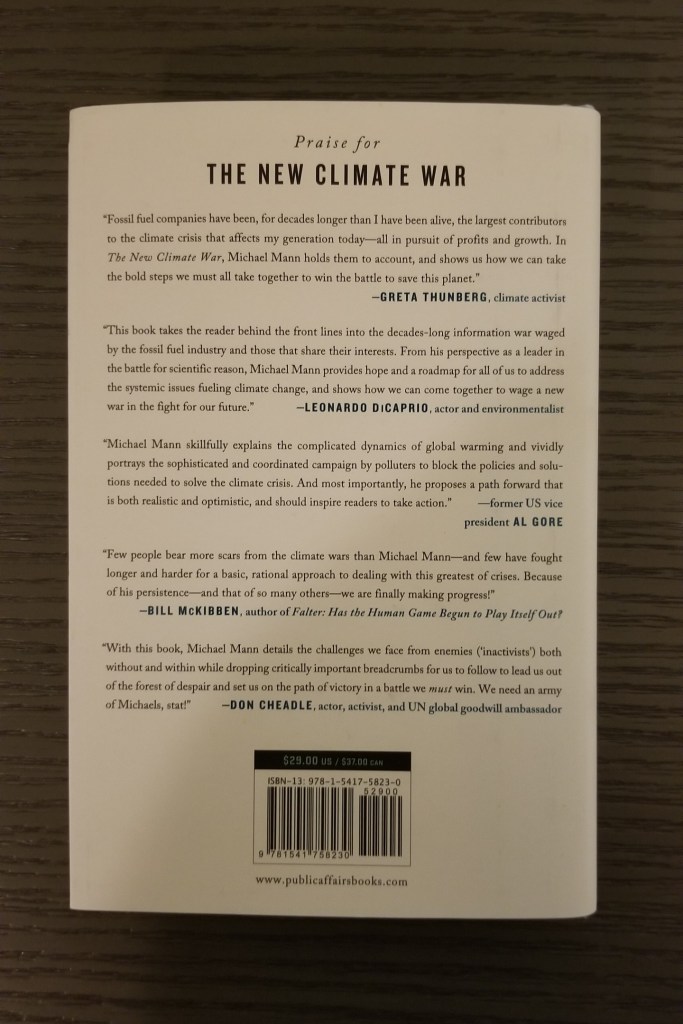
Back cover of the book “The New Climate War” by Dr. Michael Mann.
This blog is focused on Leonbergers but every now and then I post about something else, typically a book I want to promote. This post is different. I have many hobbies and one of them is volunteering for a climate change organization called Citizens Climate Lobby
CCL, 200,000 supporters in the US, 10,000 supporters in Texas, non-partisan and non-profit. CCL supports all energy options that can be used to reduce emissions, renewables, nuclear, natural gas replacing coal, carbon capture.
This post is about my journey towards becoming an advocate for a livable planet for future generations as well as the climate journey of my friend Larry Howe, who is a lifelong Texas Republican who became a climate activist (and he is still a Republican). Larry’s three-part article is focused mostly on solutions, and my post is focused mostly on how I got here. We both started out as “skeptical” of global warming and we both support the same solutions, so the two posts complement each other. CCL talks to both sides of the political spectrum, and we try to foster good relations with everyone. Below is a photo of us with Senator Ted Cruz.
Peter Bryn the leader of the conservatives’ action team is presenting our carbon fee and dividend proposal to Senator Ted Cruz in 2017. The CCL Texas delegation is standing in the background.
Citizens Climate Lobby is a volunteer driven non-partisan organization focused on educating the public and lobbying/talking to politicians, industries and organizations. We are not professional lobbyists. We don’t bring a billion dollars to political offices, in fact not even one dollar. We just bring ourselves as voters and constituents, and a friendly and positive attitude. We present well researched proposals for solutions and ideas. We require that the proposals are effective in reducing emissions, good for the economy, market oriented, non-partisan and acceptable to both Democrats and Republicans. In addition, we listen to the concerns of the lawmakers. One of my volunteer positions within CCL is to be the CCL liaison to Senator Ted Cruz office. Climate Change may not be Senator Ted Cruz’ cup of tea, but he voted for one climate bill that we supported, the Growing Climate Solutions Act.
Senator Ted Cruz TXJR with Citizens Climate Lobby in 2017. The senator is standing immediately to the right of the American flag, and I am standing immediately to the left of the American flag.
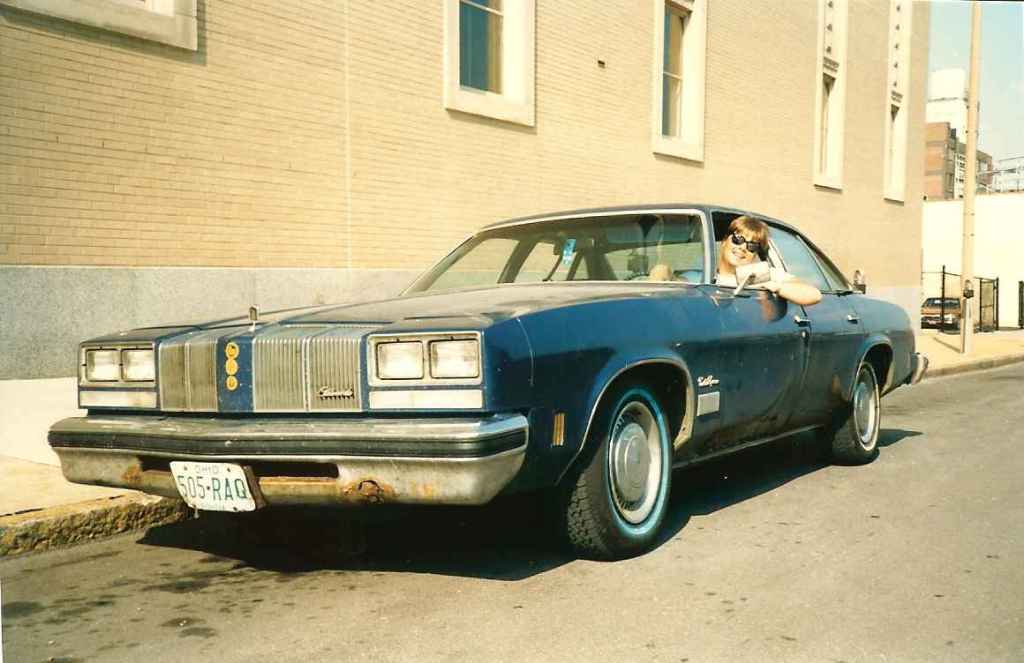
In June of 1988 I embarked on a journey with a friend and with my brother around the United States in an old Oldsmobile Cutlass Supreme 1976. I had just earned a master’s degree in electrical engineering and applied Physics from Case Western Reserve University, Cleveland, Ohio, as well as a degree in engineering physics from the University of Uppsala in Sweden (well they were really the same degree). It was an unusually hot summer. June 23, 1988 was the first time I heard the word “global warming”. I was watching some of Dr. James Hansen’s testimony before the United States Senate Committee on Energy and Natural Resources. I thought it made sense what he said. After all, I knew that greenhouse gases would increase the temperature of the atmosphere. It is hundreds of years old simple basic science and I had certainly not slept through my physics classes. It is why Venus is the hottest planet in the solar system and not Mercury.
Me in my Oldsmobile Cutlass Supreme 1976 in 1988. I bought it for $250.
As time went by (about 10-15 years ago), I became increasingly skeptical and doubtful of global warming or climate change as it was more commonly called later on. The reason was that I almost exclusively read and watched rightwing news media such as world-net-daily (tended to push conspiracy theories), Newsmax and Fox News. I believed in the concept of global warming, it is basic science after all, but I thought that it was exaggerated and that it was promoted and distorted by left-wing agendas, and I incorrectly believed that there was no scientific consensus on the issue. I also bought into the false narrative that this was about environmentalist ideology, politics, or even a sort of environmentalist religion, and not a real and serious problem. My disdain for environmentalists, my ideology, and my gut feelings certainly aided the propaganda in misleading me. In addition, I read a lot by Björn Lomborg and Patrick J. Michaels and I believed them. To clarify, I did not know it at the time, but I was wrong, very wrong. Below is a video from NASA showing the annual shrinkage of the arctic sea ice.
To see the NASA web page from where the YouTube video of the shrinking arctic ice is taken click here.
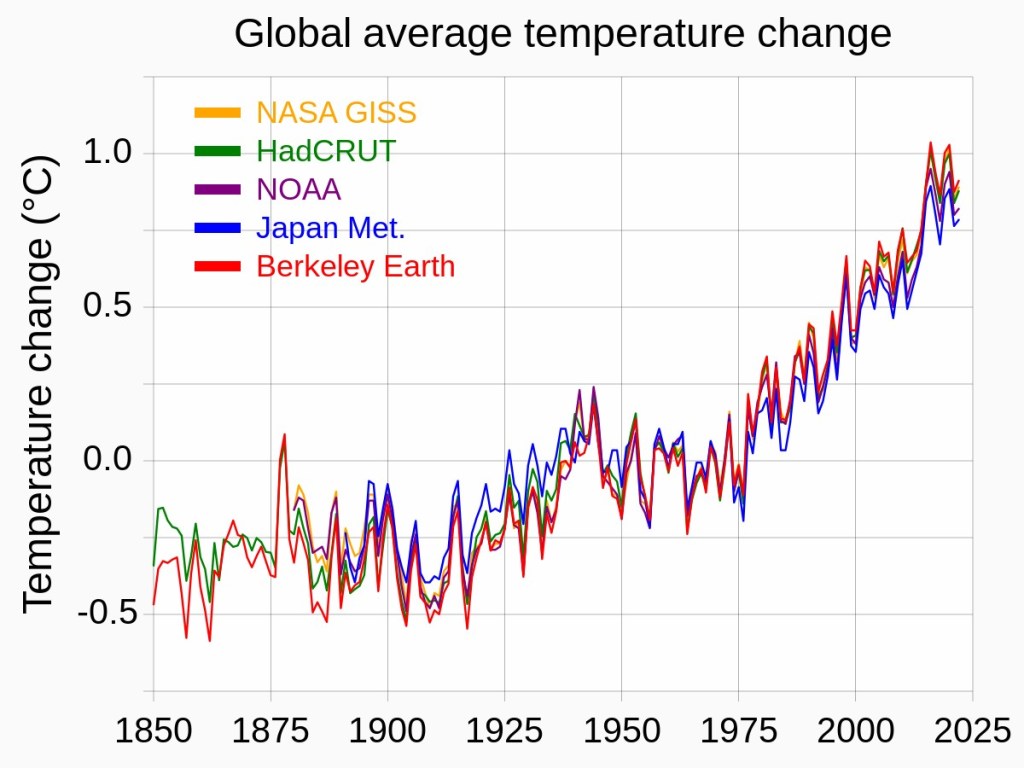
I should say that I had some lingering doubts about my own “climate skepticism”. During my travels to national parks, the great barrier reef, and other places, I encountered guides who were scientists, as well as others, and they told me about coral bleaching, ocean acidification, receding and disappearing glaciers, the pine beetle problem, white pine blister rust, the destruction of forests due to global warming, and I could see some of the effects with my own eyes in northern Sweden, which is close to the arctic and therefore the effects of global warming are more visible.
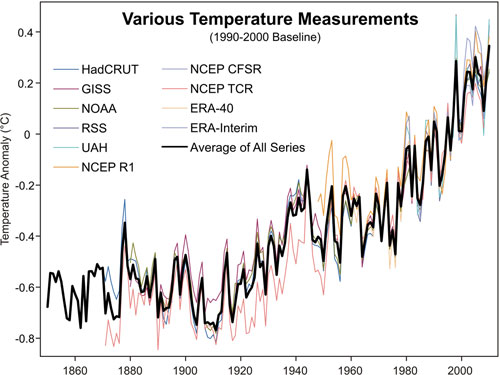
Temperature anomaly graphs from NASA, Hedley Center, Japan Meteorological Agency, NOAA, and Berkley.
It also bothered me that my physics hero Stephen Hawking was a global warming alarmist and that other leading physicists and astrophysicists whom I admired, such as Michio Kaku, promoted and warned us about human caused global warming. Add that popular science magazines I subscribed to, such as Discover and Scientific American frequently wrote about global warming. I should say that I tended to skip those articles and I believed those magazines had a left leaning bias.
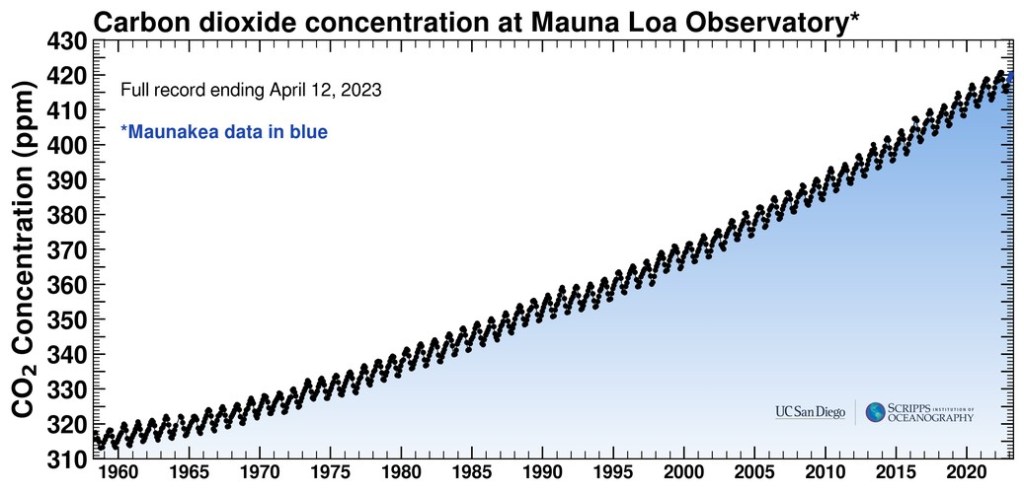
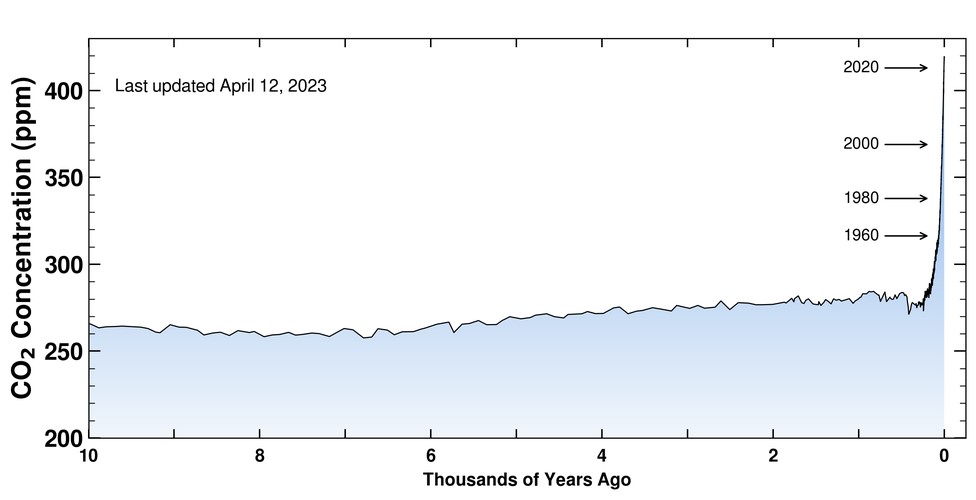
The carbon dioxide concentration measurements began in 1958 at the Mauna Loa Observatory on the island of Hawaii. Since then, several other ways of measuring carbon dioxide concentration have been added.
However, there were too many red flags regarding my “climate skepticism”. It seemed like a lot of people knew and understood something I didn’t. This prompted me to take a deep dive into the matter. I had a decent scientific background. I had a master’s degree in engineering physics and a PhD in electrical engineering / computer science/ robotics and I was used to reading and writing research papers, and I had been on both sides of the peer review process, and I love mathematics. Electrical engineering and robotics is certainly not atmospheric physics but I wasn’t going to judge or review papers, I just wanted to know what scientists in the field actually were saying, and due to my background I was able to understand the papers.
Another temperature anomaly map, this time ten different organizations.
I read peer-reviewed research articles on the topic, I read several dozens of books on the topic, including climate skeptic books, I subscribed to Nature, a very respected science journal publishing peer reviewed articles, I conversed with or listened to climate scientists online. I found out that my cousin Per Wikman-Svahn was a physicist who worked as an expert on the ethics surrounding climate change, and I extracted information from him.
Global temperature going back twenty thousand years, a hockey stick graph. Notice the stable temperature during the last 10,000 years, coinciding with the development of human civilization, and then a sudden sharp increase at the end.
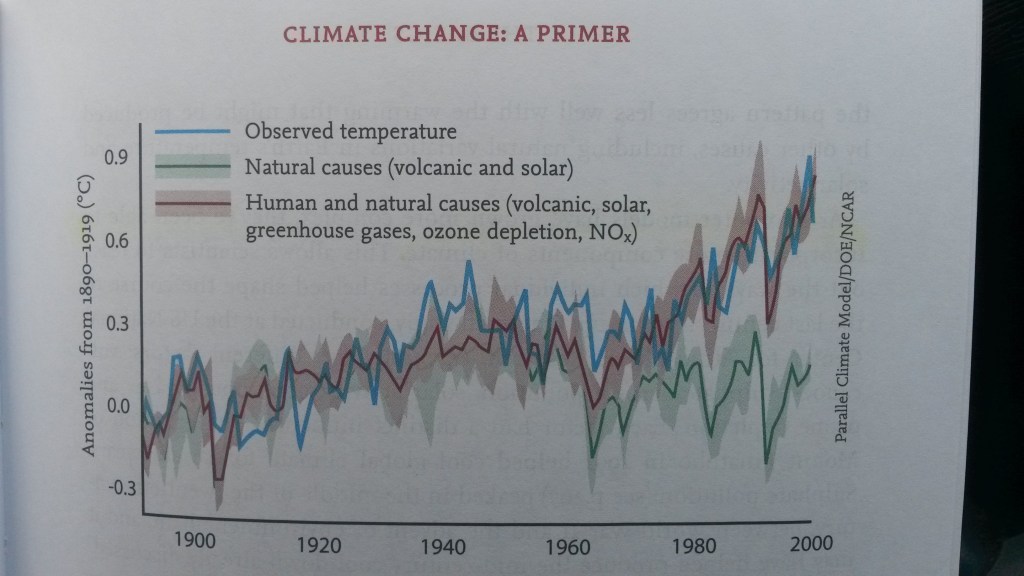
I learned that the evidence that climate change is happening is undeniable and overwhelming including these few examples. I learned that the current global warming is mainly caused by our greenhouse gas emissions. I learned that global warming is not caused by natural cycles, something the experts on natural climate cycles repeatedly stressed. It is not the sun, or volcanoes and as you can see in the hockey stick graph above, it isn’t a normal cycle, and the recent increase in temperature is disturbingly quick.
Natural causes for global warming / climate change would have cooled the planet, not warm it.
I also learned that warming caused by greenhouse gas emissions have a certain fingerprint; the arctic will warm faster, nights will warm faster, the tropopause would be pushing up the boundary with the stratosphere, the mesosphere would be cooling and contracting (think the troposphere as being a blanket). All of that has been observed. It was greenhouse gases, not something else. I learned that scientists had used spectral analysis to verify that most of the warming came from increasing amounts of CO2 in the atmosphere, and they had even used carbon isotopes (C-12, C-13, C-14) in corals and the atmosphere to verify that the new CO2 added to the atmosphere and oceans come from hundreds of millions of years old underground carbon.
I learned that satellite measurements agree with surface thermometers, contrary to what the rightwing media I had read claimed. I learned that nearly all actively publishing climate scientists say humans are causing climate change (~99%). I learned that no national or international scientific body in the world rejects the findings of human-induced effects on climate change. I learned that Rachel Carson was not a fraud and that she had not killed 500 million people. I learned that Dr. Michael Mann was not a fraud and that he was right about his hockey stick curve. I learned that the so-called climate gate scandal was manufactured.
Hockey stick curve last 1,000 years, blue-Michael Mann’s original curve (proxy measurements such as tree rings), green-dots 30-year average, red temperature measurements.
I would later learn that among tens of thousands of climate change related papers only 38 are skeptical of the consensus and they all contain errors that if corrected for they ended up agreeing with consensus. I learned that the vast majority of climate skeptic papers originated with rightwing think tanks. I had foolheartedly donated to one of these organizations, the Heartland Institute. I realized that rightwing media engaged in defamation, harassment and attacks on climate scientists.
From Scripps institute. Keep two things in mind. First the warming from CO2 is delayed and may result in positive feedback that can manifest decades and centuries later. Secondly, human civilization developed during a period of stable climate. That CO2 levels and temperatures were higher millions of years ago is not much comfort.
Above all I learned that I had been bamboozled and misled and that I had believed maybe hundreds of false claims. I learned that there is a very powerful industry consisting of fossil fuel advocates and rightwing think tanks that are trying to confuse and mislead the public, attack and harass scientists, and that if you want the truth you need to trust the scientific evidence and the data, not arguments based on ideology and second guessing the motives of climate scientists is just nonsense.
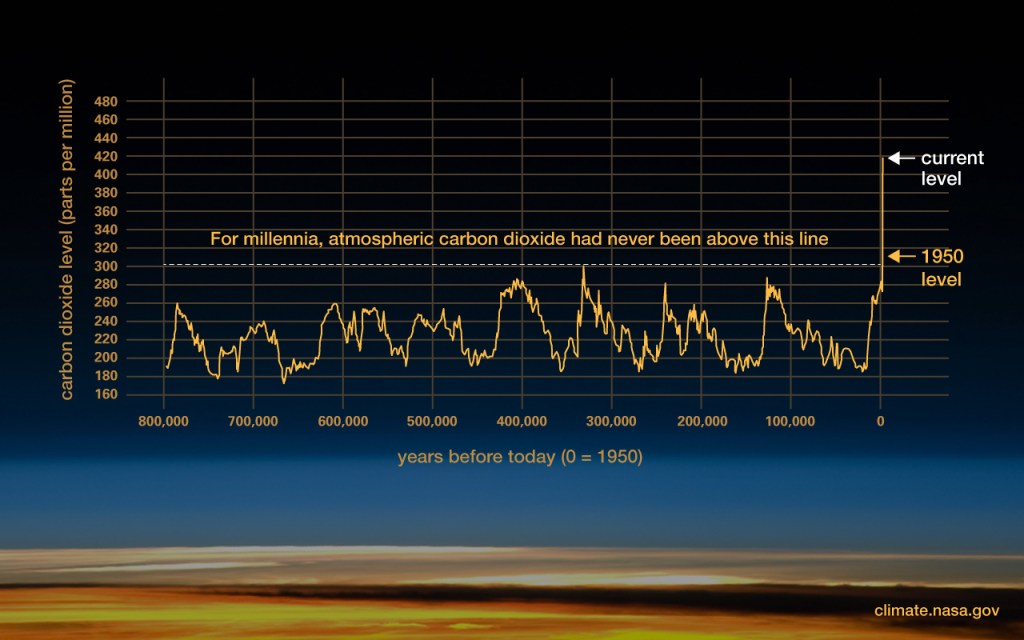
Going back 800,000 years. From Scripps institute.
Long story short, we know with certainty that global warming / climate change is real and that we are causing it, chiefly with our greenhouse emissions, and we have known this for several decades. The scientific debate is over, but the public is still confused due to propaganda. Again, I had been bamboozled by rightwing think tanks, like so many others, so I understand.
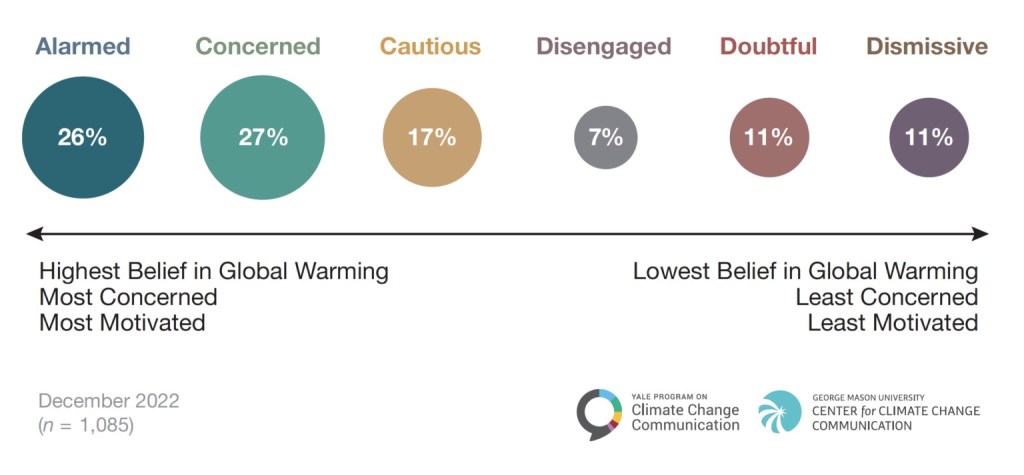
Instead of using somewhat disparaging popular labels such as “believers” or “climate change deniers” Yale University classify people into six groups. For example, climate change deniers are referred to as dismissive.
I do not think I was a “dismissive” but I was “doubtful” due to all the misinformation I had allowed myself to be fed. Again, we know with certainty that global warming / climate change is real and that we are causing it, chiefly with our greenhouse gas emissions, and we have known this for several decades. If you pay attention, there is no good reason to be doubtful, and certainly not dismissive. After reading a book by James Hansen (Storms of My Grandchildren: The Truth About the Coming Climate Catastrophe and Our Last Chance to Save Humanity) in 2013 I decided it was time for me to get involved.
American attitudes over the last 10 years. From the Yale Program on Climate Communication.
At first, I tried to argue with those who were dismissive, either by inserting myself into a discussion or after they approached me, typically because of something I said either on-line or personally. This was a surreal experience. I remember trying to explain to an acquaintance who claimed to be an expert in science (he wasn’t) about the measurements made on the age of the added carbon using isotopes. He resolutely stated that isotopes did not exist, all atoms of the same element are identical, and the peer reviewed research article I provided was fake. He claimed to be an expert on science based on reading biased media (he had no degree) and he had not even heard of isotopes, neutrons, and radiometric dating. I sent him a link to Wikipedia explaining isotopes, just as a help, but that was a mistake. He thought that since Wikipedia is sometimes wrong it proved that I was making up the entire concept of isotopes.
What NASA Knows from Decades of Earth System Observations. To see the original page, click here.
I came across so many dismissive people who thought they understood climate change much better than the scientists themselves or believed that most or all climate scientists in every country on earth were liars. I came across a lot of conspiracy theories and many very strange arguments focusing on speculative assessments of the character of climate scientists or activists rather than focusing on the data and evidence. Many invoked Al Gore, as if it was him, who invented climate science, or the UN. It is nuttier to believe that Al Gore invented climate science than that he invented the internet. However, the worst part was the insults, the mockery, the rage, and the trolls. It became clear to me that dismissives tended not to be reasonable people and that they are louder than most. Considering that they tended to be older angry guys who were unable to convince anyone, especially not the younger and educated, I came to realize that arguing with them was a waste of time. You could not have good-faith arguments with them, and after all they did not matter. There are more productive ways to engage.
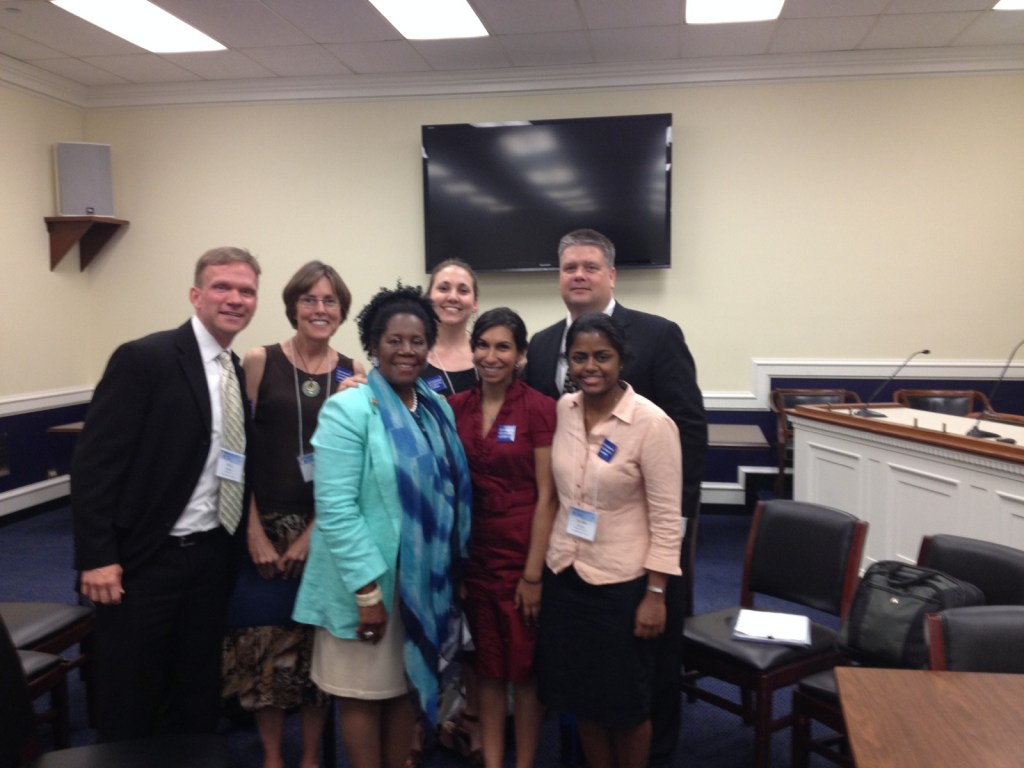
CCL meeting with Democratic Congress Woman Sheila Jackson Lee (front). She took us on an impromptu two-hour tour of congress. I am the big guy back-right.
I felt I needed to do something for future generations, especially since I had been on the “wrong side” of the issue and also considering that I understood something many people did not, that climate change was a real and serious issue that we could do something about. In James Hansen’s book Storms of My Grandchildren, I had learned about solutions that seemed effective and doable, one of them being the carbon fee and dividend. I googled carbon fee and dividend and I stumbled upon Citizens Climate Lobby. I decided to join them and as it turns out so did James Hansen, as a board member. My first CCL volunteer position was as the CCL liaison to Congressman Pete Sessions office. He is one of the most conservative congressmen from Texas. In a meeting with the congressman, we asked him whom he trusted the most on the issue, and he answered Trammel Crow (the younger), one of the six children in the Trammel Crow Dallas real estate businesses (billionaires) who was also his biggest donor. Well, after talking to Trammel Crow we got the endorsement from Trammell Crow Company, which we handed to Pete Sessions.
In the photo we are meeting with Pete Sessions legislative director Ryan Ethington who was very supportive of us and loved to talk to us about climate solutions. Ryan was a football player and very tall. The three people on the right are me, my wife and our daughter.
Next is the climate journey of my friend Larry Howe, a lifelong Texas Republican and native Texan, and climate activist. We, 90 Texas CCL members to be specific, recently came back from Austin, Texas, where we lobbied (talked to) 67 Texas lawmakers for the first time in history. This was Larry Howe’s brainchild and doing. Larry is very active and a great leader. His post (in three parts) is more focused on solutions, whereas mine was about the how and why regarding my turn around on the issue.
Click on the picture to visit the three-part climate journey of Larry Howe.

























 Leonberger Life