Adventures In the Alps

This is a submission for Kevin’s No Theme Thursday
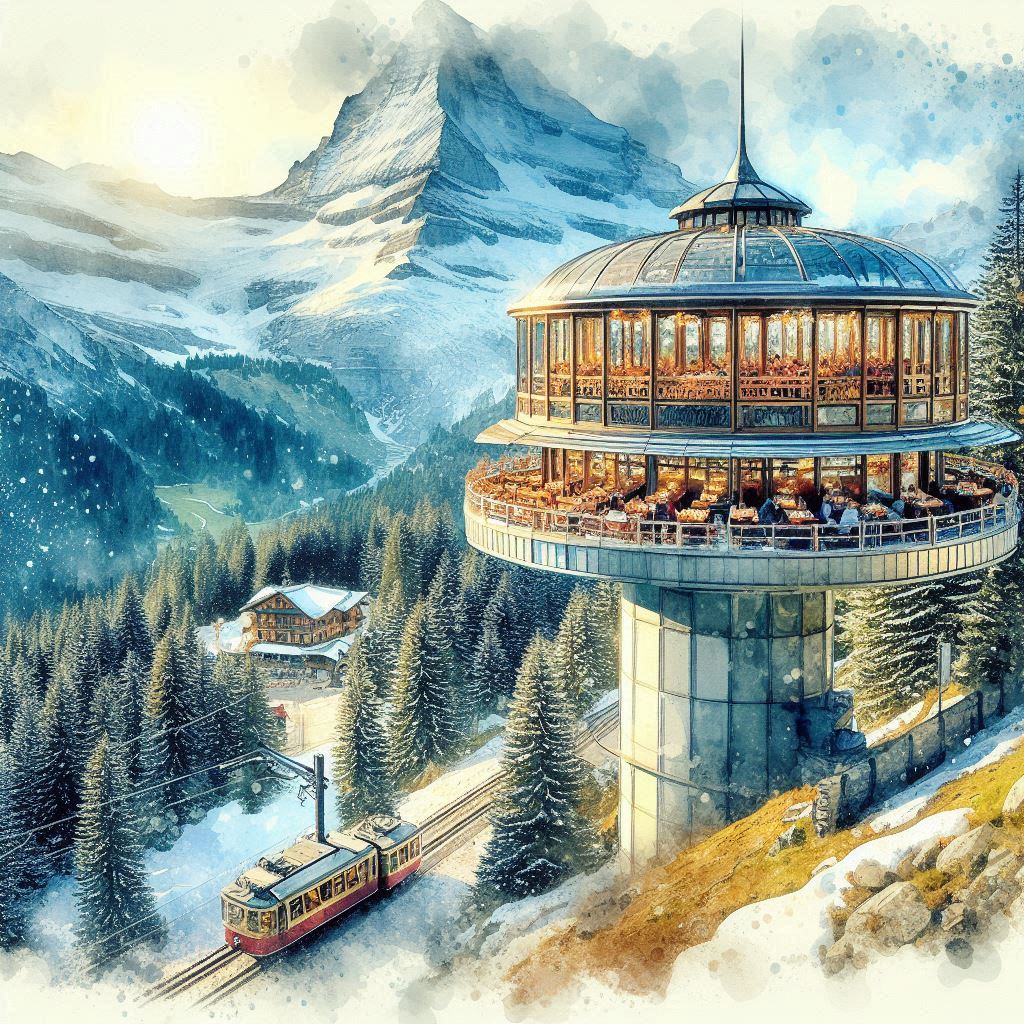
Image by Kevin from The Beginning at Last

Skiing on Glaciers

Kevin’s two images reminded me of ski resorts, and I love skiing. I’ve skied in my native country Sweden, in the Alps, as well as the Rocky Mountains. The mountain in one of Kevin’s images above remind of Matterhorn, a mountain in Switzerland, and part of the Alps. Therefore, I decided to write about a couple of adventures that I had in the Alps.

When I was young me and my brother and a friend bought Interrail passes, and we travelled around Europe. I should say that since we lived in Sweden that’s where we started. We visited several countries including Austria (not to be confused with Australia). We stopped in Zell Am Zee to ski on the kitzsteinhorn glacier. It was the end of June, which is a perfect time for glacier skiing. It is warm but you still have snow. We skied in our shorts and t-shirts, and some women skied in their bikinis. The snow was a bit wet, but it was still good skiing.

In the slope we met a Swedish actor and his girlfriend. The Swedish actor was a celebrity in Sweden so to us that was very exciting. We ended up spending the entire day together.

Garmisch-Partenkirchen

My next adventure was more of a misadventure. I was with a group of friends who travelled from Sweden to Garmisch-Partenkirchen in southern Germany for a ski vacation. First of all, we had booked a rather strange youth hostel for our stay and second of all I had a ski accident resulting in amnesia. Having amnesia was a strange experience.

Garmisch-Partenkirchen is a beautiful Bavarian town, and it is one of the most famous German ski resorts. Zugspitze Germany’s highest mountain is nearby Garmisch-Partenkirchen providing for an impressive scenery. I was there with a large group of Swedish friends, and we stayed at a youth hostel. As is typical for a youth hostel men and women were separated. What was a bit unusual were all the loudspeakers.
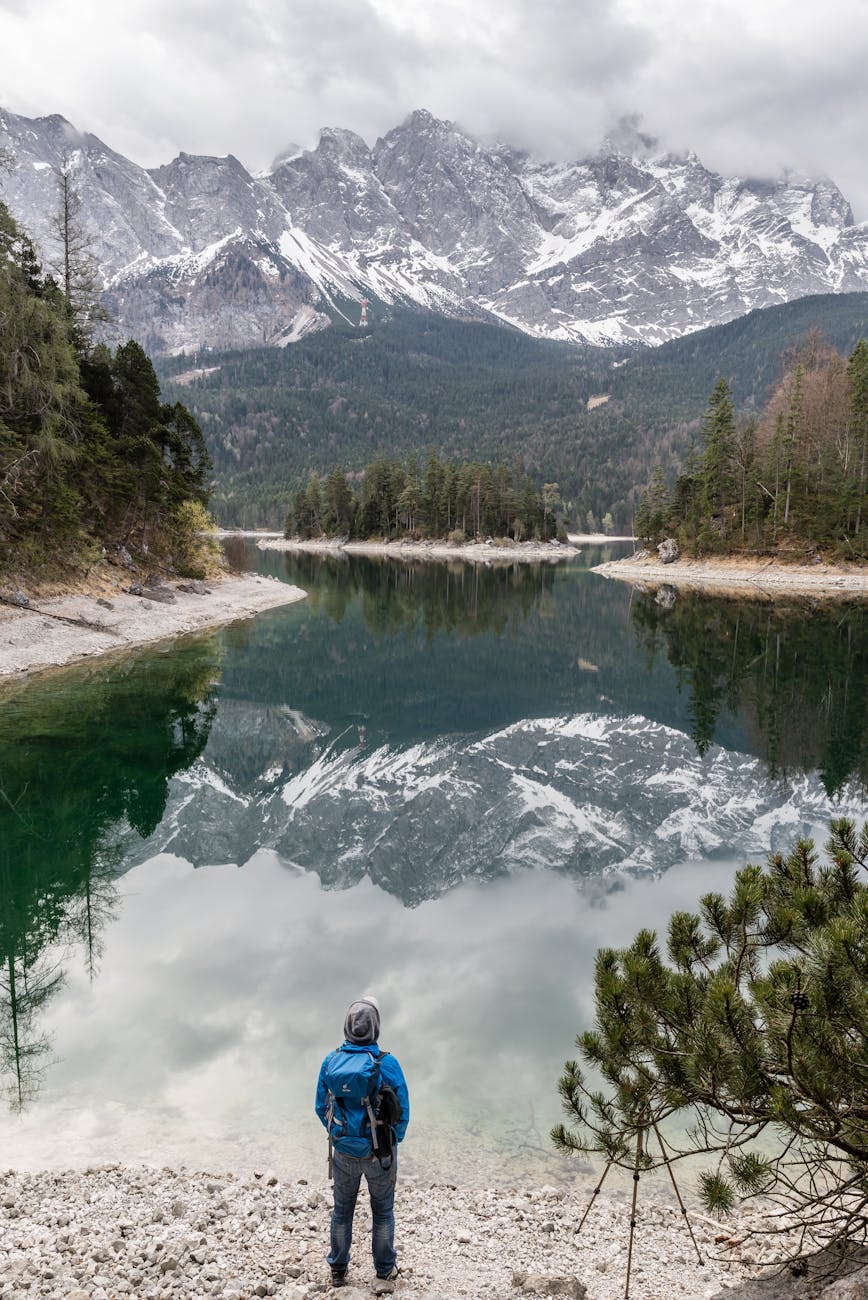
Photo by Gabriela Palai on Pexels.com

Achtung! Achtung. Sei jetzt ruhig.

At 10:00PM on our first evening at the youth hostel the loudspeakers came on and someone started shouting “Achtung! Achtung. Sei jetzt ruhig. Alle Gäste müssen gehen und sich die Zähne putzen. Musik ist verboten. Die Lichter beginnen zu dimmen.” We had to be quiet and go brush our teeth. The lights started dimming and women and men had to go to their quarters. The loudspeaker came on every now and then barking orders at us in German and all windows and doors were locked electronically. Being from Sweden we followed orders, but we were laughing about it. Suddenly new voices started shouting in the loudspeaker. It was younger sounding voices. It was still in German but this time we were told to rebel against the hotel management, we were told to refuse to go to bed, and they started singing fighting songs in German. Then, suddenly the loudspeakers went quiet. The hotel management was back. We all had to go to bed. Well, it was budget lodging after all.

The town of Garmisch-Partenkirchen. Photo by op23 on Pexels.com

The Ski Accident

What happened the next day I do not remember myself, but this is what I have been told. I decided to go down an icy double black diamond slope despite the sign saying that the conditions were dangerous. I fell badly, hit my head (I had no helmet), and I got a severe shoulder displacement. My arm was hanging on my back. I went looking for my skis and tried to put them back on, but some Germans came down to stop me. They were screaming at me and calling me crazy. An ambulance was called, and they sent snowmobiles to pick me up. However, the snowmobiles were unable to get there so they got a pist-machine to get me instead. I had no pain, but I was confused, and I discovered and rediscovered my severe shoulder displacement about 10 times before I got to the hospital. I had no short-term memory, and I had forgotten my friends and most other things.

My memories come back

I remember my friends coming into my room asking me questions such as “what’s my name?”, “do you remember where we are?”. I kind of liked all the attention I got but I understood that something was not right. No one knew whether I would ever get my memory back and going through immigration and customs might be an issue when you don’t remember much. The leader and organizer of the trip was very upset. However, a few days later my memories came back very quickly within just a few hours. It sorts of clicked. I should add  that the 2-3 days that followed the accident are still gone. I have to admit I was happier when I couldn’t remember anything. The world is so much better when you don’t remember how bad it is.
The Origins of the Leonberger Dog

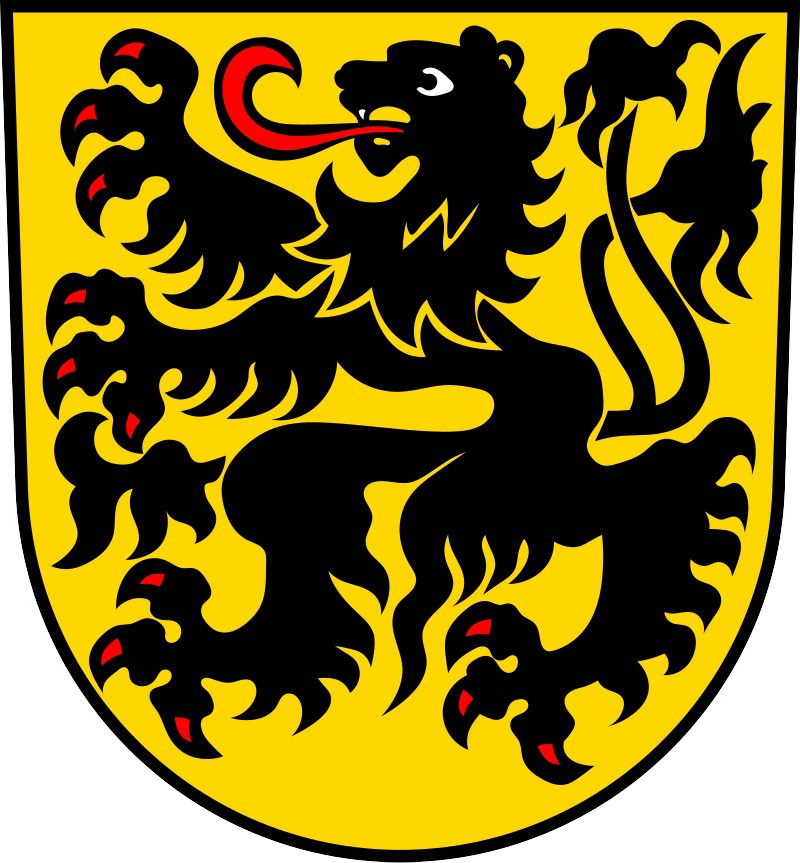
coat of arms of the town of Leonberg. A black lion like figure on a yellow background
The coat of arms of the town of Leonberg, Germany, was allegedly the inspiration for the first breeder of the Leonberger, Heinrich Essig.

The Leonberger breed was originally created by Heinrich Essig (1808–87) in the German town of Leonberg, in what was then the kingdom of Württemberg. According to legend, Essig bred the dog to resemble the lion in the town’s coat of arms. Indeed, as you can see in the image above, the lion in the coat of arms doesn’t look like a real lion, so you could say that the Leonberger looks the way it does because Germans were bad at drawing lions back then. All joking aside, though, Leonbergers do bear some resemblance to lions and maybe even bears. In any case, they are beautiful dogs.

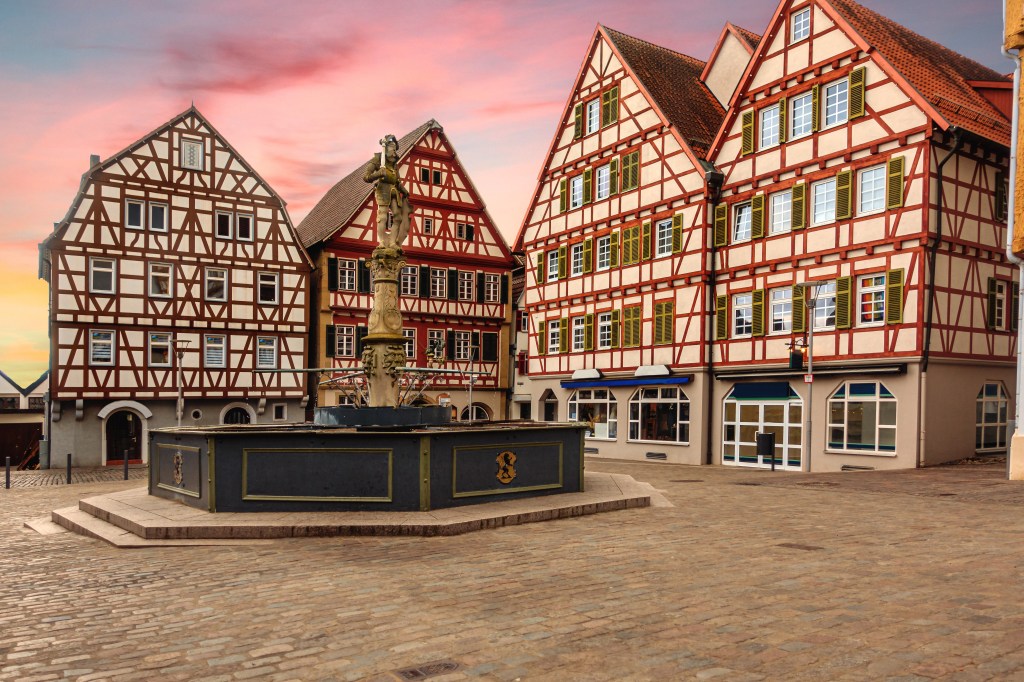
A town square surrounded by buildings. There is a statue in the middle.
The town square in the city of Leonberg. Shutter Stock Photo ID: 1689829297 by Martin Dutkiewicz.

When people would stop me and ask me questions about the kind of dog Bronco was, I would say he was a Leonberger, a cross between a Saint Bernard, a Newfoundland, and a Great Pyrenees and that the breed was created by the mayor of the German town of Leonberg. But, as the economist Tyler Cowen said, “Be suspicious of simple stories.” As it turns out, the story I kept telling was a simplification and not entirely true. History is more complicated. I was unintentionally spreading misinformation about Leonbergers.

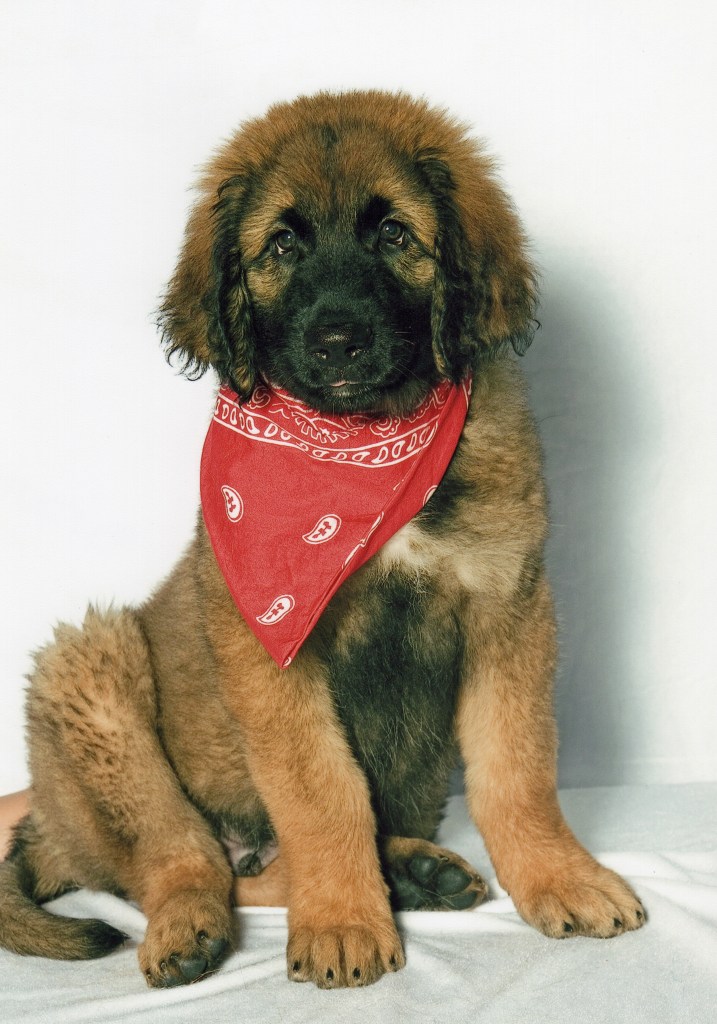
A Leonberger puppy wearing a red silk scarf.
Our Leonberger Le Bronco von der Löwenhöhle at 3 months old.

Simple and interesting stories are easy to remember, easy to believe, and easy to propagate. But first, Heinrich Essig was never the mayor of Leonberg. He was a prominent citizen of the town, and he was a successful businessman, farmer, innkeeper, horse and dog trader, large dog enthusiast, dog breeder, and town councilman, but he was never the mayor.

A big Leonberger splayed across a big wide red leather sofa.
Our Leonberger Bronco sleeping on our big red leather sofa.

Essig claimed to have created the Leonberger in the 1830s by crossing a female Landseer Newfoundland with a male long-haired Saint Bernard from the Great Saint Bernard Hospice, a monastery in Switzerland. He continued crossing the Landseer Newfoundland and the Saint Bernard over four generations, then he crossed his Newfoundland Saint Bernard mix with a Pyrenean wolfhound not, as is often asserted, with a Great Pyrenees (called a Pyrenean Mountain dog in Europe). He then crossed that dog with the Saint Bernard again. In 1846, he was finally ready to announce and register his “lion of a dog.” A few years later, Leonbergers were officially introduced to the public at the Munich Oktoberfest.

Our Leonberger is standing on the large red leather sofa giving me a kiss.
Me and our Leonberger Bronco when he was young.

However, the story is more complicated than that. There’s no specific breed named Pyrenean wolfhound today, so Essig could have used a Great Pyrenees or a Pyrenean mastiff . In addition, later in the nineteenth century, Leonbergers were used to breed the long-haired Saint Bernard dog, and this likely saved the Saint Bernard dog from extinction. At one point, too, Leonbergers were deliberately mixed with Newfoundland dogs to strengthen the Newfoundland breed. In other words, breeding happened in both directions, and the characteristics of the large breeds were in constant flux. The dogs, including Leonbergers and Saint Bernards didn’t look like they do today, either. Essig’s Leonbergers were multicolored, mostly white, and lacked the black mask that is so important to the breed now. What has not changed is the essence of what Essig was aiming for: a large but moderately proportioned dog that is friendly and loving and a great companion.

Saint Bernard Dog wearing a cognac barrel. The Alps in the background.
A modern Saint Bernard Dog. Shutter Stock Photo ID: 1713912484 by fred12.

Ultimately, the origins of the Leonberger, as well as the Saint Bernard and the other large breeds from this region, are complex and shrouded in mystery. In addition, some of Essig’s claims have been disputed. Breed standards wouldn’t be codified until the end of the nineteenth century. It should also be noted that it was Essig’s niece Marie who to a large extent bred and cared for the dogs.

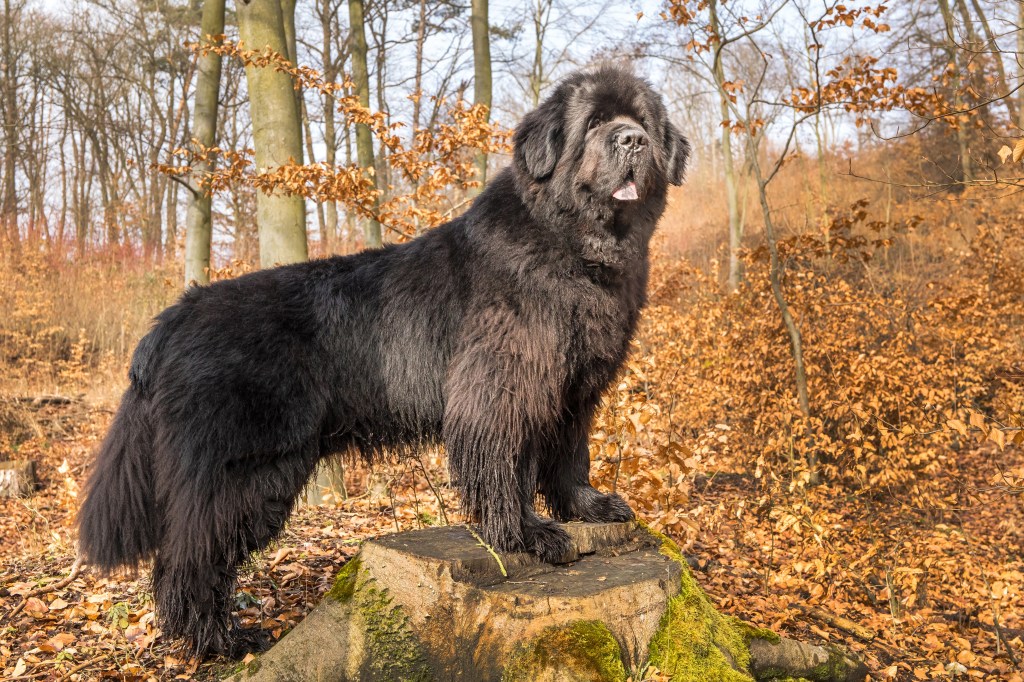
Black or dark brown New Foundland Dog with a colorful autumn forest in the background.
Modern New Foundland Dog. Shutter Stock Photo ID: 1925281937 by Marsan.

Essig was selling his Leonberger dogs as luxury items to the wealthy. He was also a marketing genius and was able to get the attention of European nobility and royalty. The czar of Russia, Emperor Napoleon II, Otto von Bismarck, the king of Belgium, Empress Elisabeth of Austria, Emperor Maximilian I, the Prince of Wales, King Umberto of Italy, Giuseppe Garibaldi, and the mikado of Japan were among those who owned Leonbergers. Not everyone was happy about this. Some people viewed the Leonberger as a fashionable knockoff of the Saint Bernard that could hinder that breed’s development.

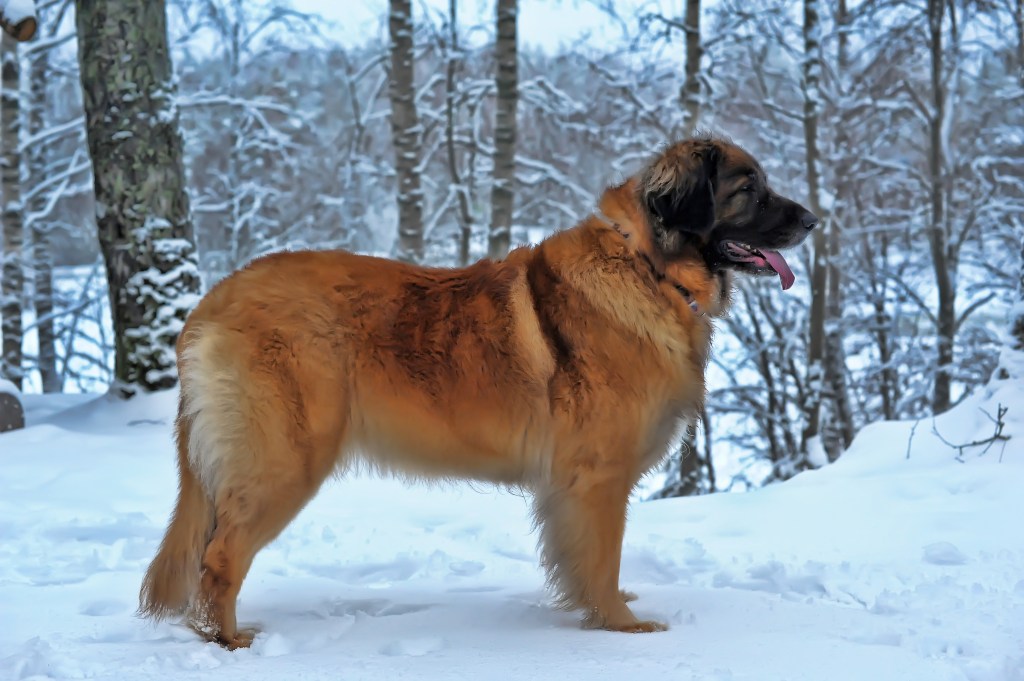
Photo of a Leonberger standing in the snow. There is a wintry forest in the background.
Modern Leonberger. Shutter Stock Photo ID:705193912 by Anna Krivitskaya.

Toward the end of the nineteenth century, the discipline of cynology, or the scientific study of dogs, emerged. Cynologists pushed for breed classification and systematic breeding practices, and breed standards were created. But Essig and others viewed dog breeding as an art rather than a science, and this led to a conflict with the cynologists. Heinrich Schumacher, for example, was a breeder who strove to create a clearly identifiable Saint Bernard type. He was upheld by the cynologists as a paragon, in contrast to Heinrich Essig to the detriment of the Leonberger.

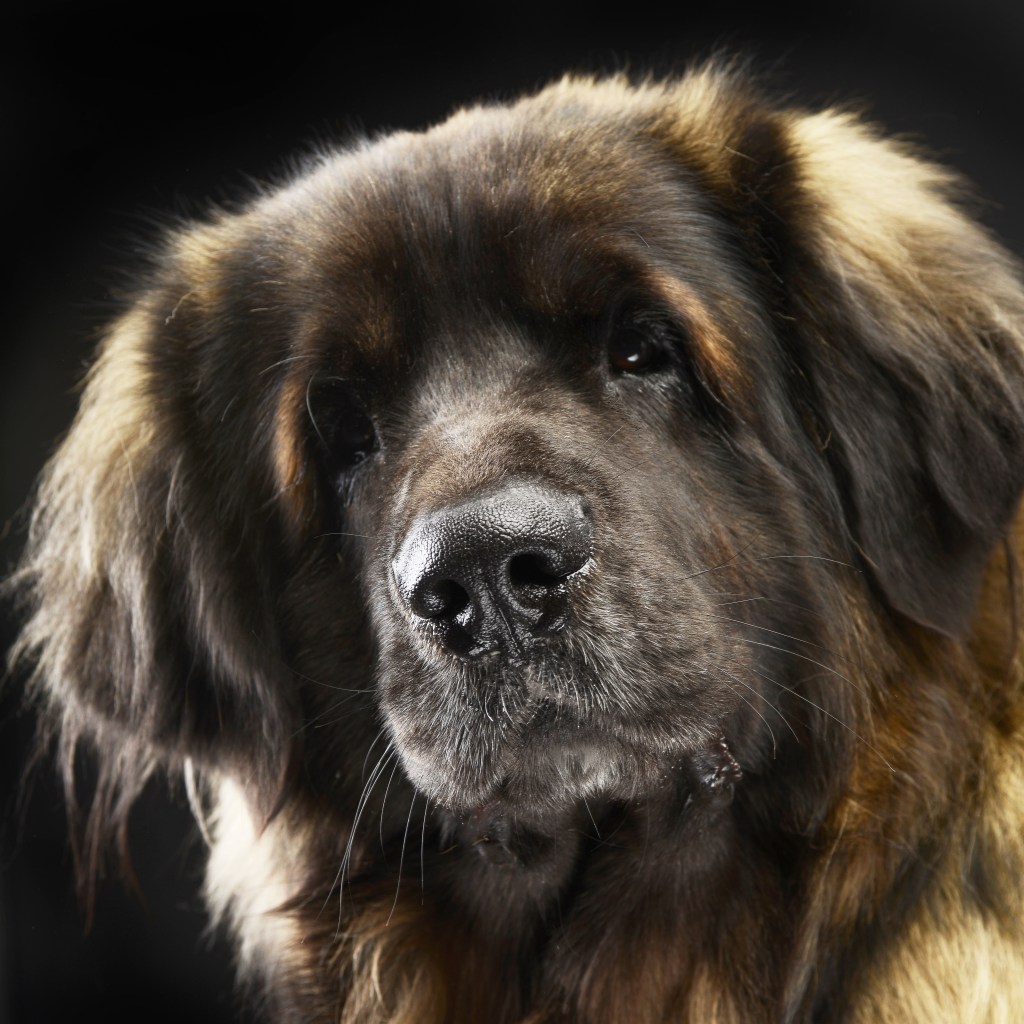
Face of a Leonberger looking into the camera.
Face of modern Leonberger. Shutter Stock Photo ID: 193024763 by Csanad Kiss.

After Essig’s death, in 1887, other people more willing to please the cynologists continued breeding Leonbergers. By that time, the dogs looked for the most part like Leonbergers do today. Then, in 1895, Albert Kull created the Leonberger’s first breed standard. It would go through several revisions in 1901, 1926, 1938, 1951, 1955, and 1972—until finally, in 1996, the FCI approved version was established. The Kennel Club in the UK and the American Kennel Club also have their own breed standards. However, most of them are similar to Albert Kull’s 1895 version. The first Leonberger club was formed 1891 in Berlin: two more were created in 1895, then two more were formed in 1901. The most prominent was the Internationaler Klub für Leonberger Hunde, of which Albert Kull was the first president.

For additional information see :

The Life and Times of Le Bronco von der Löwenhöhle: Stories and Tips from Thirteen Years with a Leonberger by Thomas Wikman.

Madeline Lusby, Leonberger: A Comprehensive Owner’s Guide (Allenhurst, NJ: Kennel Club Books, 2005).

Caroline Bliss-Isberg, Leonberger: A Comprehensive Guide to the Lion King of Breeds (Sea Cliff , NY: Revodana Publishing, 2017), 23, 41, 45, 48–49.

Amnesia in Garmisch-Partenkirchen and Statistical Mechanics

I read today that Elon Musk said that “memory loss is a thing of the past”. It was an advert for a drug. True or not, in the past I’ve had severe memory loss. At the age of 22 I had Amnesia as a result of a ski accident in Garmisch-Partenkirchen in Bavaria in Germany. But I remember it as if it was yesterday. So, in my case you can say that “memory loss is a thing of the past”.

Image showing a disintegrating brain
I had what is called post traumatic amnesia, which fortunately is temporary. Shutterstock ID: 1685660680 by MattL_Images

Garmisch-Partenkirchen is a beautiful Bavarian town, and it is one of the most famous German ski resorts. Zugspitze Germany’s highest mountain is nearby Garmisch-Partenkirchen providing for an impressive scenery. I was there with a large group of Swedish friends, and we stayed at a youth hostel. As is typical for a youth hostel men and women were separated. What was a bit unusual were all the loudspeakers.

Photo of Zugspitze
Zugspitze Germany’s highest mountain. Photo by op23 on Pexels.com

Achtung! Achtung. Sei jetzt ruhig.

At 10:00PM on our first evening at the youth hostel the loudspeakers came on and someone started shouting “Achtung! Achtung. Sei jetzt ruhig. Alle Gäste müssen gehen und sich die Zähne putzen. Musik ist verboten. Die Lichter beginnen zu dimmen.” We had to be quiet and go brush our teeth. The lights started dimming and women and men had to go to their quarters. The loudspeaker came on every now and then barking orders at us in German and all windows and doors were locked electronically. Being from Sweden we followed orders, but we were laughing about it. Suddenly new voices started shouting in the loudspeaker. It was younger sounding voices. It was still in German but this time we were told to rebel against the hotel management, we were told to refuse to go to bed, and they started singing fighting songs in German. Then, suddenly the loudspeakers went quiet. The hotel management was back. We all had to go to bed. Well, it was budget lodging after all.

The town of Garmisch-Partenkirchen. Photo by op23 on Pexels.com

The Ski Accident

What happened the next day I do not remember myself, but this is what I have been told. I decided to go down an icy double black diamond slope despite the sign saying that the conditions were dangerous. I fell badly, hit my head (I had no helmet), and I got a severe shoulder displacement. My arm was hanging on my back. I went looking for my skis and tried to put them back on, but some Germans came down to stop me. They were screaming at me and calling me crazy. An ambulance was called, and they sent snowmobiles to pick me up. However, the snowmobiles were unable to get there so they got a pist-machine to get me instead. I had no pain, but I was confused, and I discovered my severe shoulder displacement about 10 times before I got to the hospital. I was equally shocked every time I noticed the condition of my arm. I had no short-term memory, and I had forgotten my friends and most other things.

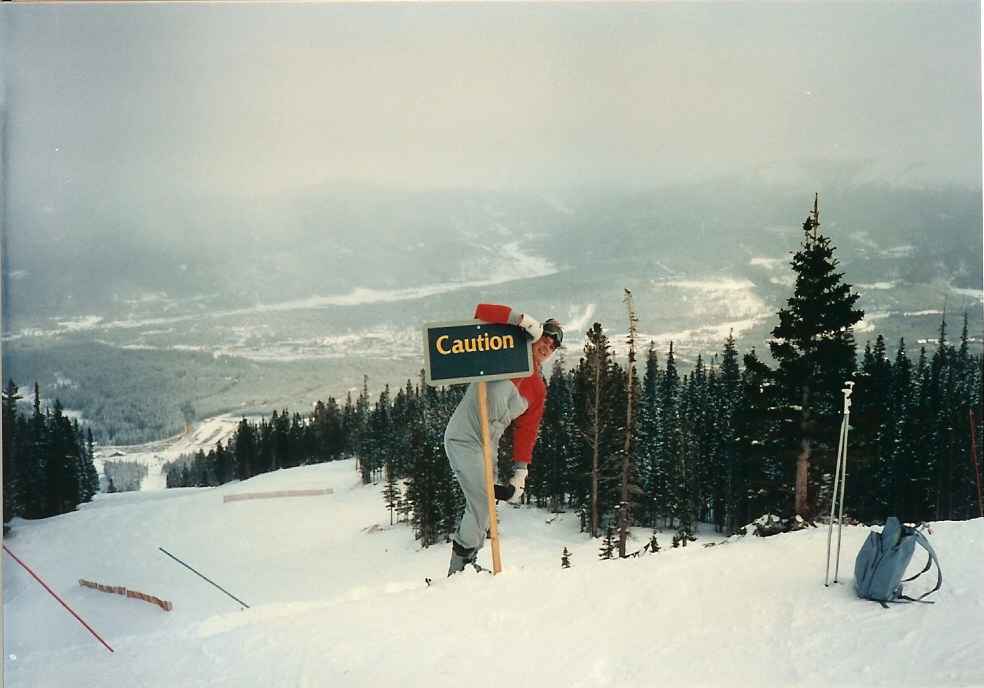
Me standing in the ski slope in Breckenridge leaning on a sign that says “Caution”
This is me in the ski slope when I was young. This is not Garmisch-Partenkirchen, it is Breckenridge, Colorado, but I don’t have any photos of Garmisch-Partenkirchen.

My memories come back

The next 2-3 days after the accident are essentially gone. However, I remember my friends coming into my room asking me questions such as “what’s my name?”, “do you remember where we are?”. I kind of liked all the attention I got but I understood that something was not right. No one knew whether I would ever get my memory back and going though immigration and customs might be an issue when you are, well out of it. The leader and organizer of the trip was very upset. However, my memories came back very quickly within just a few hours on the second or third day of amnesia. I have to admit I was happier when I couldn’t remember anything. I can add that my left arm was in a cast.

Photo of a brain, a lightbulb, on purple background
My memories and my brain came back to normal. Photo by KATRIN BOLOVTSOVA on Pexels.com

A shocking discovery of what’s under my bed

Under my bed I found a thick book on Statistical Mechanics. At first, I did not know what it was, but then I unfortunately remembered. I had a final exam in Statistical Mechanics after our vacation. Statistical mechanics is a mathematical framework that applies statistical methods and probability theory to large assemblies of microscopic entities. More specifically, you do statistical calculations over large sets of atoms and molecules to figure out the macro condition of the corresponding gas or material. For example, temperature corresponds to the average kinetic energy of atoms, entropy is the natural logarithm of the number of real microstates corresponding to the gas’s macrostate, often loosely referred to as the disorder of the system.

Picture showing molecules of various sizes moving fast
In 1905 Albert Einstein proved the existence of molecules and atoms using statistics and an observed phenomenon called Brownian motion. Shutterstock ID: 2334052703

Statistical Mechanics includes classical Statistical Mechanics as well as its Quantum Mechanical counterpart, which is a lot more abstract and complicated. The class I was taking covered both. Some important scientists in the field are James Clerk Maxwell, Ludwig Boltzmann, Paul Ehrenfest, Albert Einstein, and Satyendra Nath Bose. If you love statistics and complicated mathematics, then Statistical Mechanics might be for you but more likely it will just kill your enthusiasm.

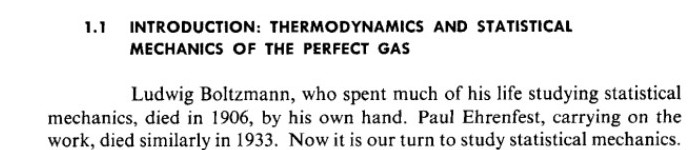
Ludwig Boltzmann, who spent much of his life studying statistical mechanics, died in 1906, by his own hand. Paul Ehrenfest, carrying on the work, died similarly in 1933. Now it is our turn to study statistical mechanics.
The epic opening of the first paragraph in David L. Goodstein’s States of Matter, a textbook on Statistical Mechanics.

My Exam

Once I was back in Sweden, I went to see my professor, and I explained the situation to him: “hello professor, I had a ski accident, hit my head, and I lost my memory. My amnesia made me forget statistical mechanics.”. He could also see that my left arm was in a cast. I said, “could I take the exam a little later?” He asked me “are you right-handed or left-handed?” I said, “I am right-handed”. The professor answered, “well then you take the exam on time like everybody else”. It wasn’t what I wanted to hear but I took it and I passed but not with flying colors.

Have you had Amnesia?

If you were a teacher, would you accept amnesia as an excuse for postponing an exam?