Rainbow Bridge Day and the Dogs We Lost

I almost missed that today is Rainbow Bridge Day or more correctly Rainbow Bridge Remembrance Day. Rainbow Bridge Remembrance Day is a day of reflection and gratitude that takes place every year on August 28th to honor pets who have passed away. We lost several pets through the years, hamsters, snakes, rabbits and dogs. In this post I will focus on the dogs we lost including Daisy our Pug, Bronco our Leonberger, Ryu our Japanese Chin, Baby our German Shepherd and Baylor or Labrador, or rather Yellow Lab mix. I will start with the dog we lost last, our Pug Daisy and end with the dog we lost first, our Labrador Baylor. I should say that my wife had dogs before we met each other, but Baylor was my first dog. I did not grow up with dogs. We miss them all very much. They left a hole in our hearts.

Our Pug Daisy was a sweet and easy dog who lived a long life. On April 5th this year she died peacefully in our arms at the age of 15 ½ years old. This was just a few months ago, and it still feels strangely empty without her. Our dog Rollo, a mini–Australian Shepherd has been alone ever since.

A puppy in the arms of our son wearing a red shirt.
Daisy came to us a little pug puppy almost 16 years ago. Our son David, eleven years old at the time, was holding her. A few months ago, I held her for the last time.
Daisy is wearing a pink party hat. She is sitting in front of a cake and my wife is giving her cake.
Daisy’s 15th birthday. This is one of the last photos of Daisy.
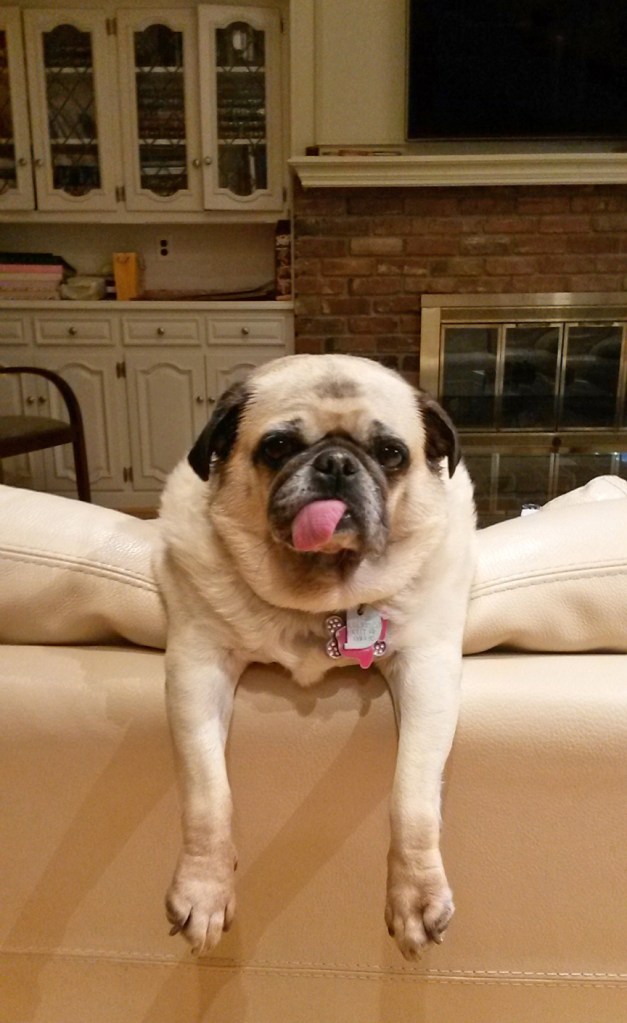
Our pug Daisy on top of the sofa. Her legs are dangling over the sofa and her tongue is out.
Daisy on the sofa after an exhausting day of doing nothing.
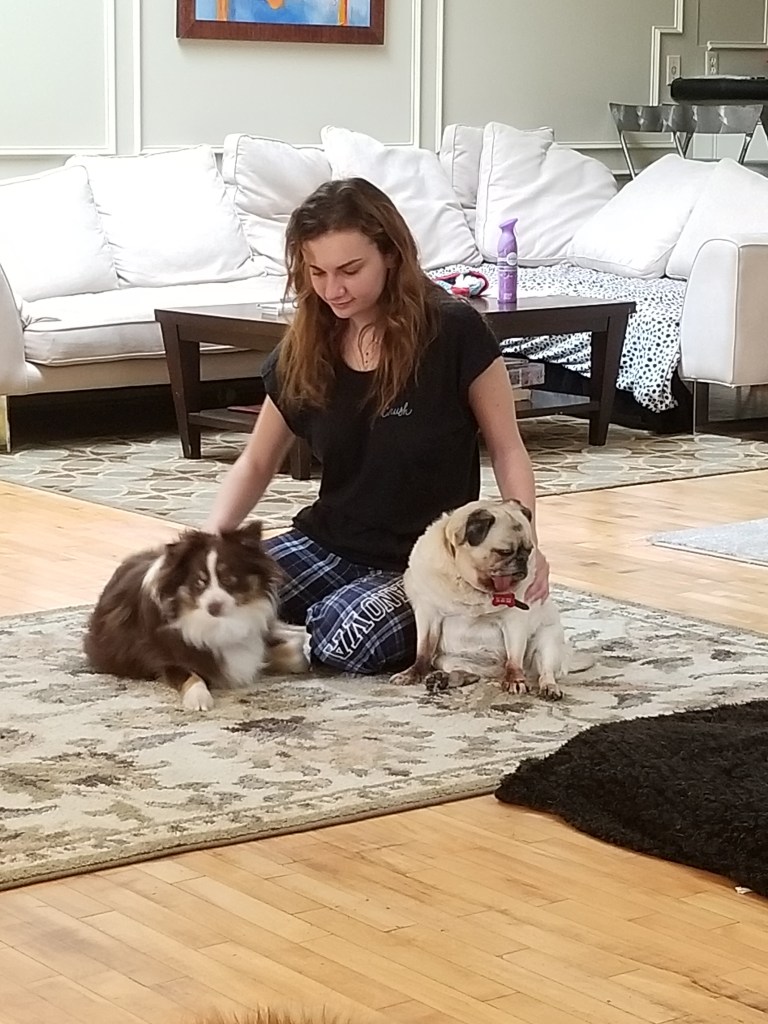
Our daughter is sitting on her knees on the floor.  Our mini-Australian Shepherd Rollo sits on her left and our Pug Daisy sits on her right.
Our daughter is petting Rollo and Daisy. Our mini-Australian Shepherd Rollo is still with us. He is six years old.
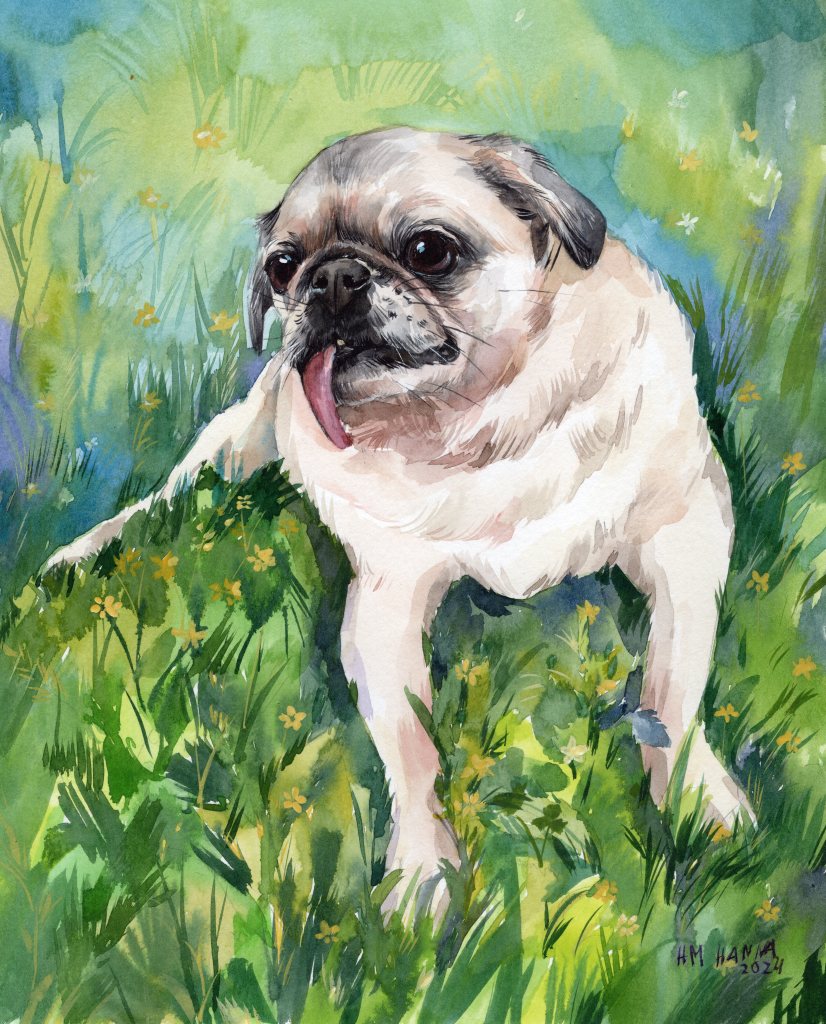
Daisy our beige pug is laying in the grass and there are some flowers.
A painting of our late pug Daisy who passed away in April. It is based on one of our photos and created by Etsy. I believe by the same woman who made Bronco’s portrait (see below).

The dog we lost before Daisy was our Leonberger dog Bronco. The Leonberger dog is a very large dog related to St. Bernards, Newfound land dogs, and Great Pyrenees, He died on June 16, 2020, just a couple of weeks before his 13th birthday. He lived a long life for a Leonberger. He was s sweetheart who protected our smaller dogs. He likely saved the life of our other dogs a couple of times, he found run-away hamsters, and he saved our neighborhood from a nightly intruder harassing the women in the neighborhood. He was also incredibly funny. I wrote a book about him and the Leonberger breed. Look to the right if you are using a laptop and at the bottom of the screen if you are using a mobile phone.
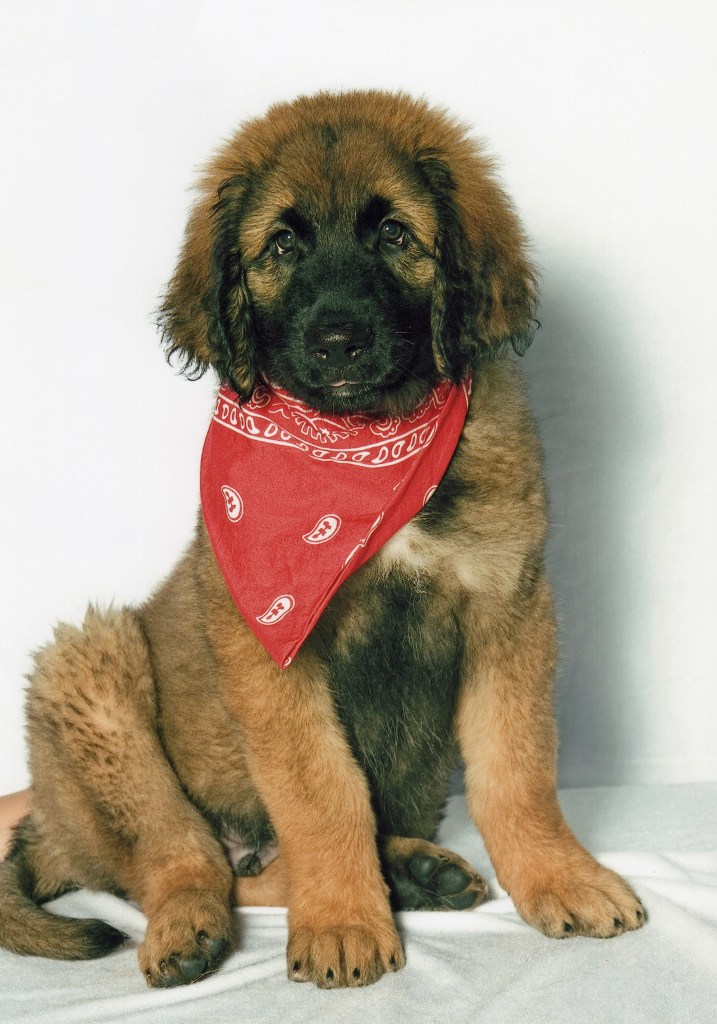
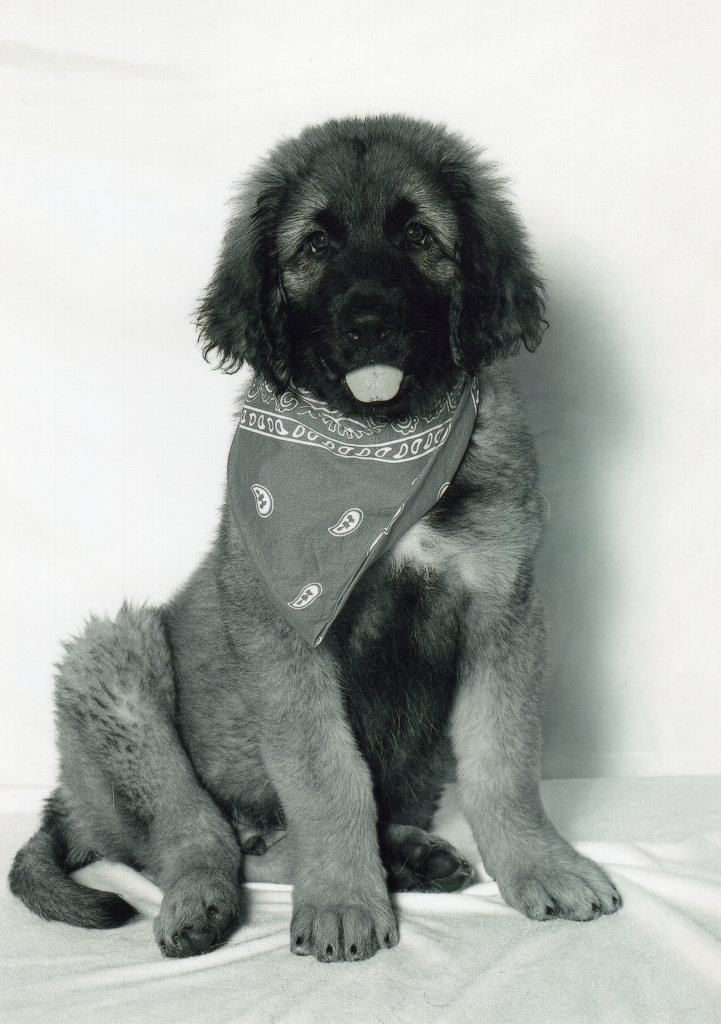
Color photo of Leonberger puppy. He is wearing a scarf.
Bronco our Leonberger three months old.
Our old Leonberger lying in the grass. He is approaching 13 years old.
Today’s walk with Bronco and rest stop : April 18 2020, Bronco is 12 years 9 1/2 months.
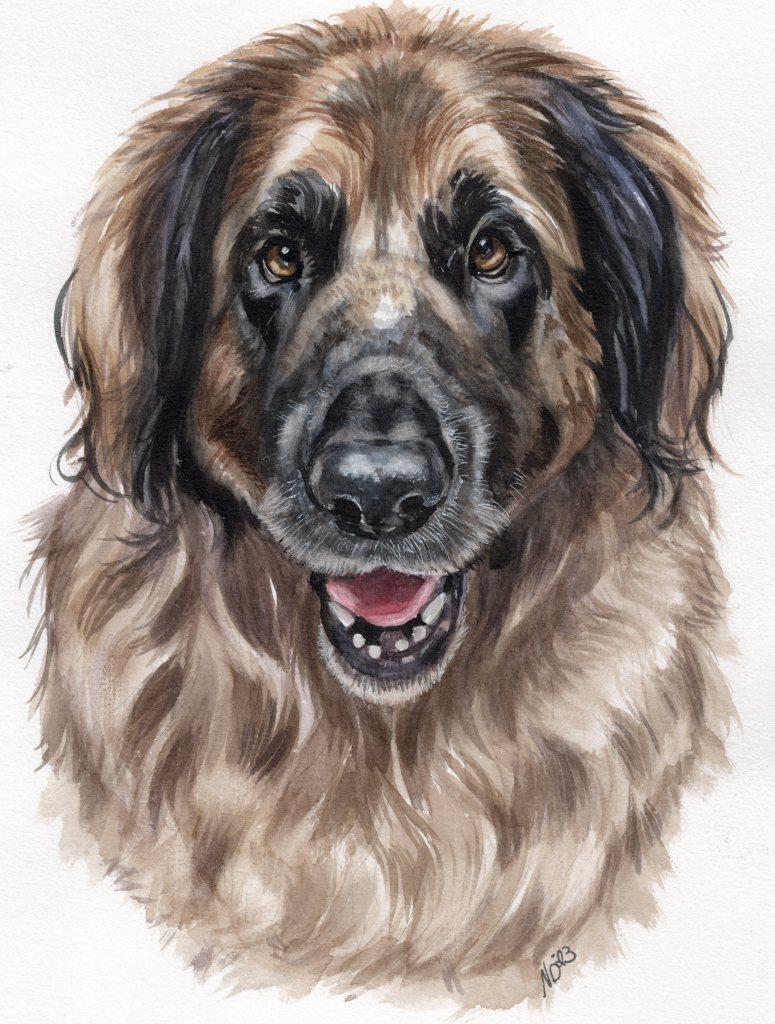
Painting showing our Leonberger Bronco’s face. Like all Leonbergers he has a black mask and fluffy hair.
The portrait was drawn by Veniceme at Etsy (Natasha Dall’Ara) and it is based on one of our photos.
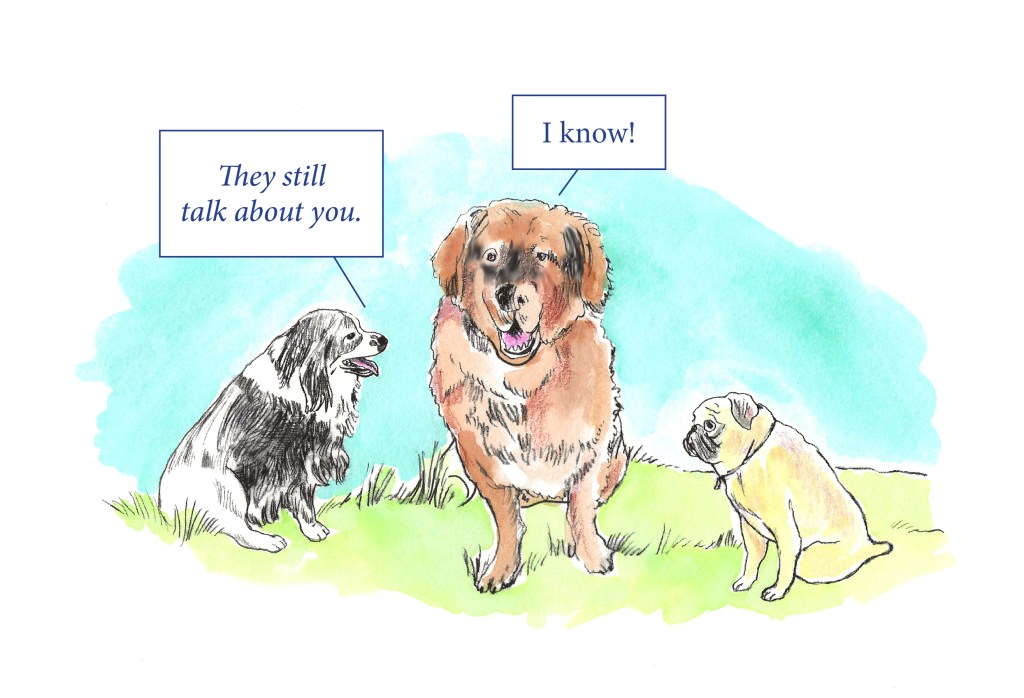
Illustration showing Rollo our mini-Australian Shepherd, Bronco our Leonberger, and Daisy our Pug. Bronco lived a very long life for a Leonberger. Giant breeds don’t live long. The Leonberger Health Foundation International is trying to fix that. Bronco’s longevity is an inspiration for all Leonbergers and giant breeds around the world. Hopefully his DNA sample will be of some help.
Bronco lived a very long life for a Leonberger. Giant breeds don’t live long. The Leonberger Health Foundation International is trying to fix that. Bronco’s longevity is an inspiration for all Leonbergers and giant breeds around the world. Hopefully his DNA sample will be of some help.

In February of 2018 we lost Bronco’s little friend our little Japanese Chin Ryu. We bought him from Petland not knowing that they got their dogs from Puppy Mills. One time when we went to Petland to buy dog food we brought Ryu with us. As we approached the store he started shaking out of fear. That was a wakeup call for us. He loved howling and it sounded like he was singing an opera. Perhaps he loved howling for the attention he got when he did. Everyone turned around and clapped when he howled. He was a happy fella who died a bit prematurely at the age of 10 from cancer. I was working 16-hour days in Oklahoma when he passed so I could not be with him when he died, which is something I will forever regret.

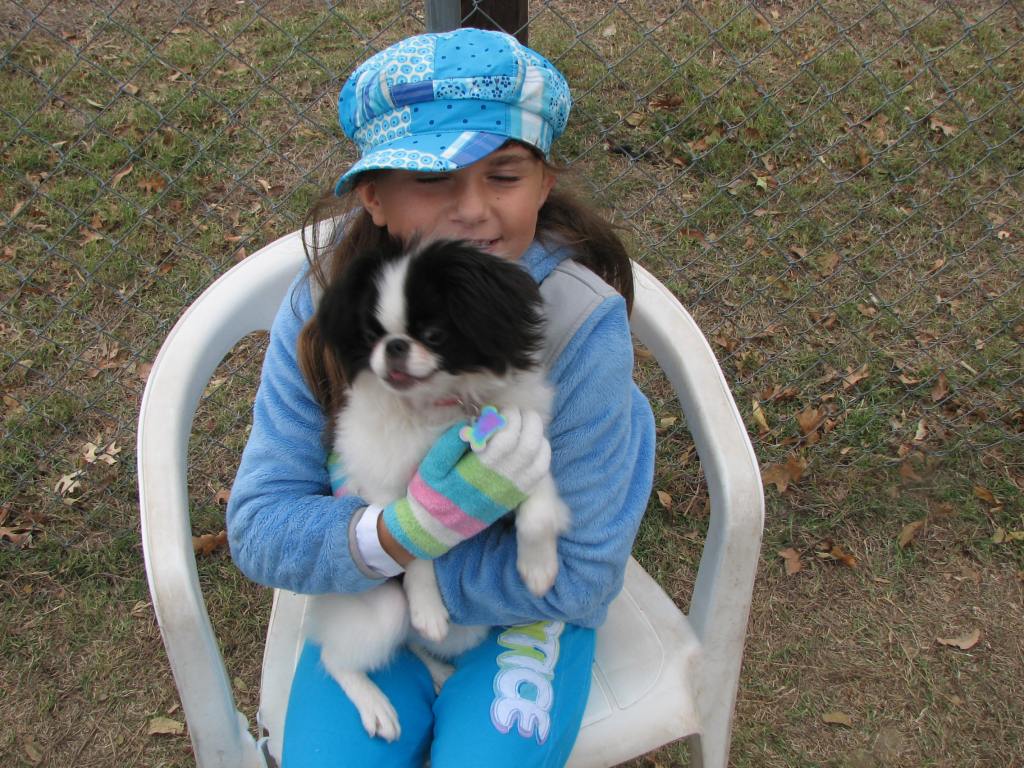
Photo of Ryu standing with Rachel. Ruy loved dancing and singing and Bronco partially visible on the left was his big brother and protector.
Ryu loved dancing and singing and Bronco partially visible on the left was his big brother and protector.
Photo of our daughter Rachel with Ryu her Japanese Chin. They are sitting on a chair at the dogpark.
Rachel and Ryu, the Japanese Shin at the dogpark.
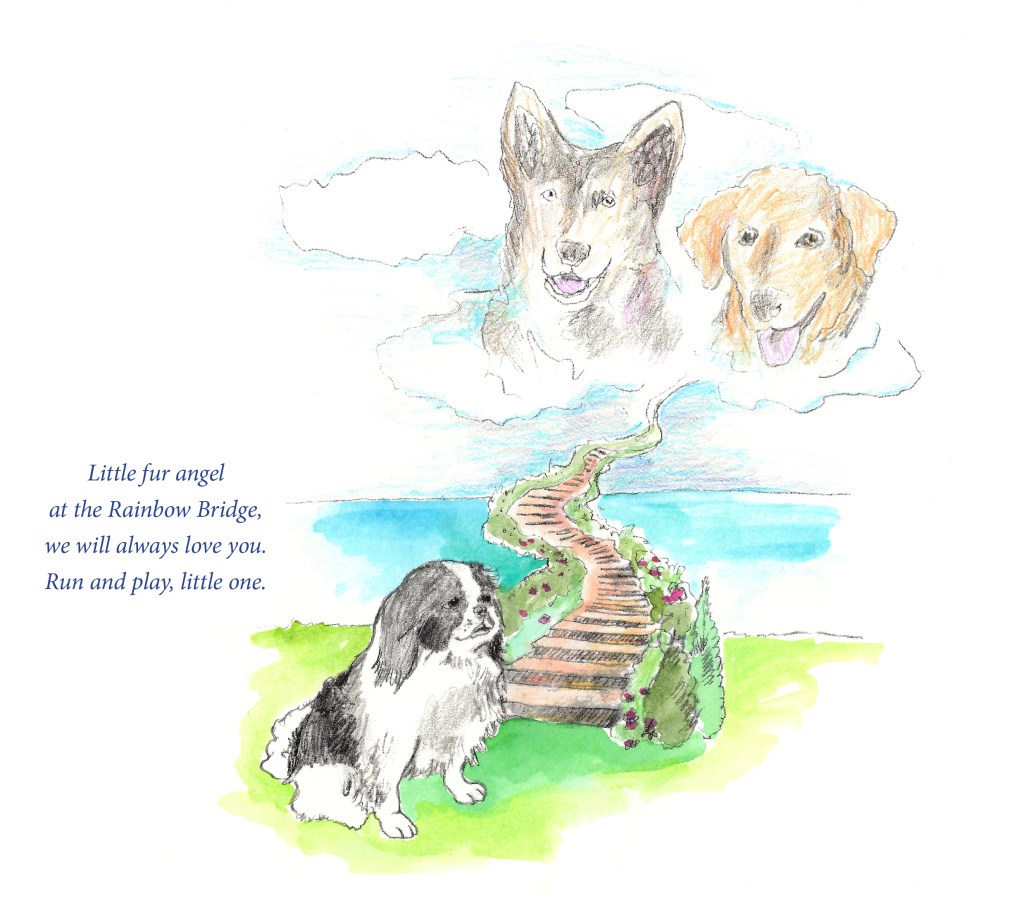
Drawing of Ryu our smart little Japanese Chin. Our smart little angel was unlucky with cancer, and I was not there for him.
Our smart little angel was unlucky with cancer, and I was not there for him. That is Baby and Baylor waiting at the end of the rainbow bridge.

Baby was a female German Shepherd. One of Claudia’s sisters had rescued her. We were told she had been abused by her first owners and she was a very anxious dog. We frequently took the dogs to the dog park, but she was never comfortable there and kept to herself. She was very protective of our Leonberger Bronco when he was a puppy. She played with him and protected him fiercely as if she was his mother. She died from cancer at home on her mattress. It would have been better for her to get an injection at the veterinary, but we did not react quick enough. Another thing we regret.
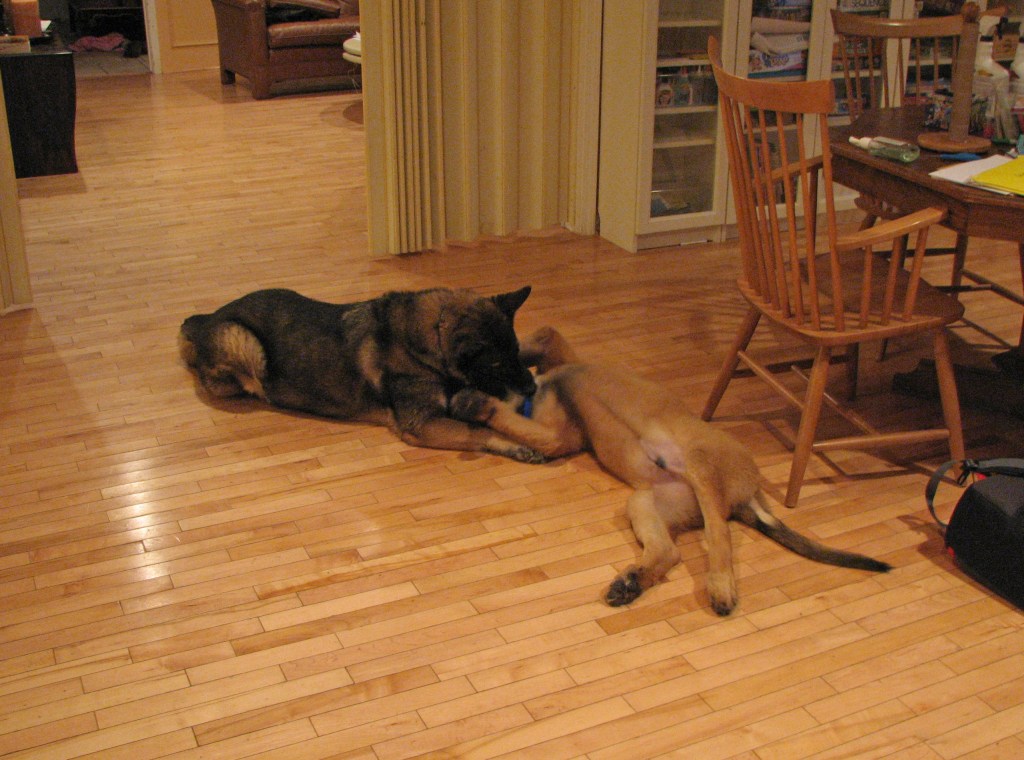
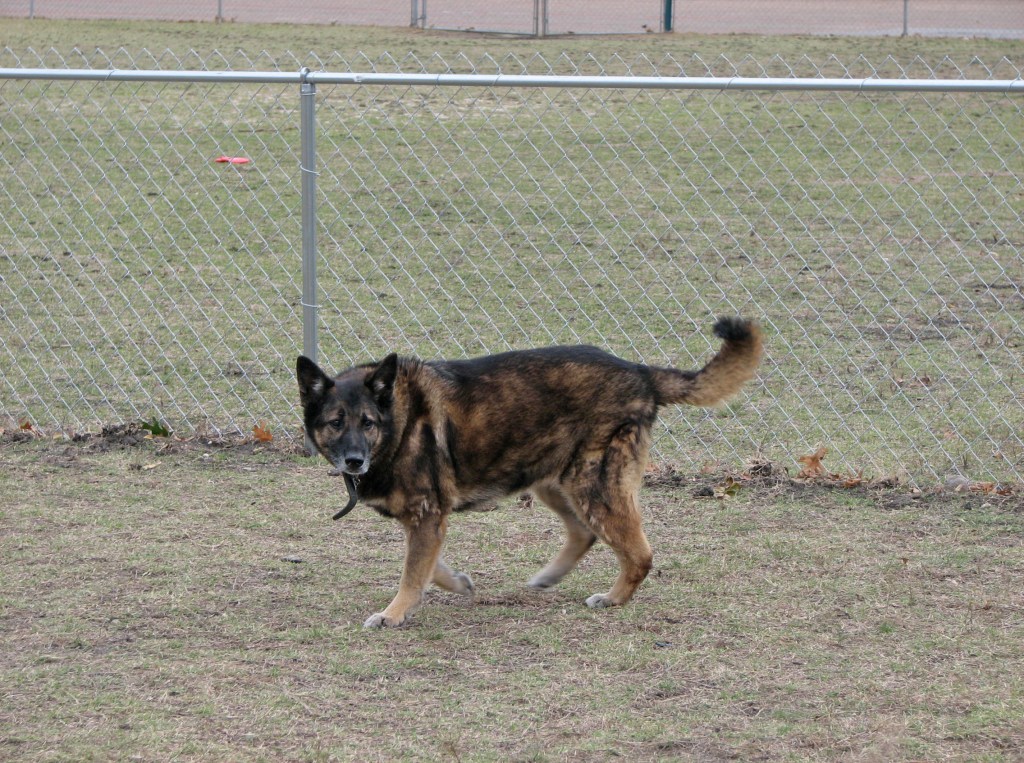
Photo of our German Shepherd playing with our Leonberger puppy Bronco.
Bronco, at the age of four or five months, would soon outgrow his playmate Baby.
Photo of our German Shepherd Baby at the dog park.
Baby was always a little wary at the dog park.
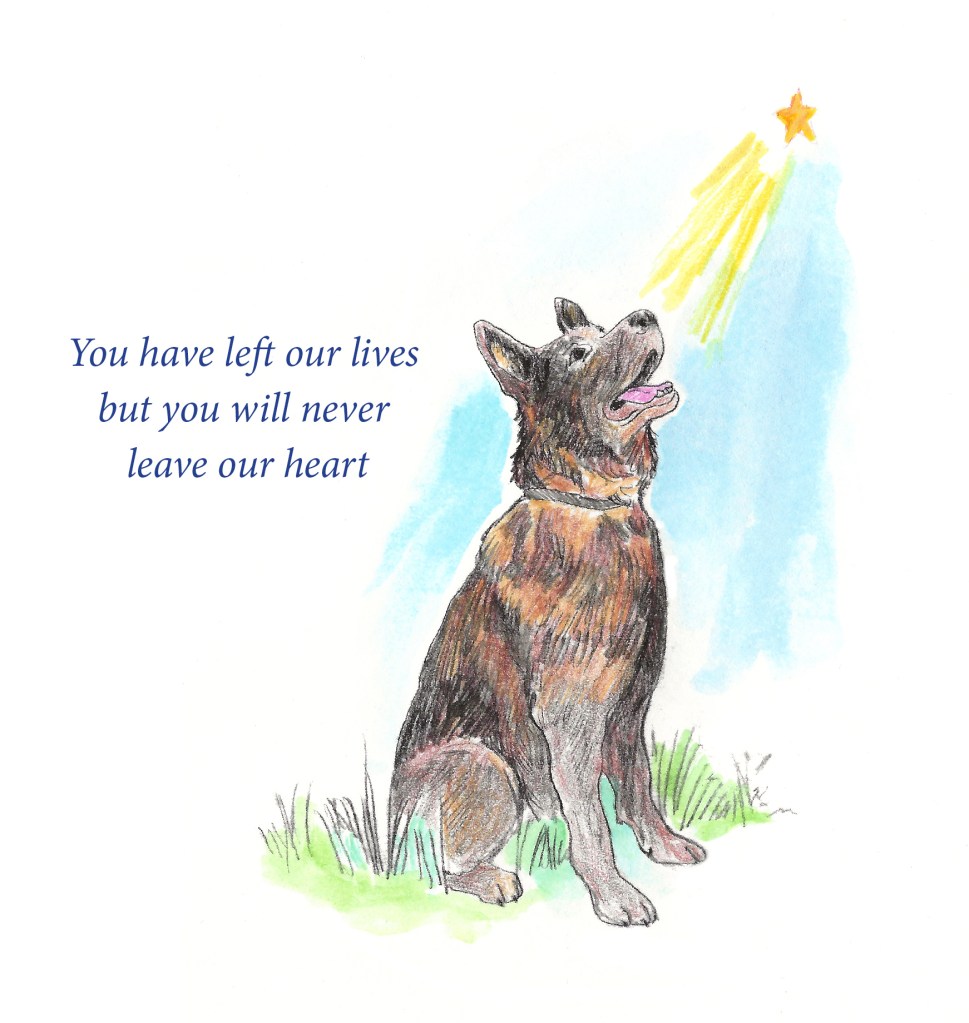
Illustration by Naomi Rosenblatt showing our late German Shepherd Baby under a star.
Sometimes not thinking things through is cruel. Watch your emotions. We could have done better for our brave German Shepherd Baby.

Baylor was a ¾ Yellow Lab and ¼ Ridgeback. He was a happy and brave dog who fought bravely when attacked by other dogs. He was also food crazy and stole a lot of food. As he got older, he developed diabetes and cataracts. His passing was the saddest and most shocking. We had left our dogs with a dog sitter during a ski vacation when she called us and told us she could not stay at our house because she had several other dogs to take care of. Something she had not told us. We were forced to allow her to take our dogs to her house. The next phone call was much worse. She had put Baylor out in her backyard because he was barking at night, and he had escaped. It was a cold night. He was found dead the next morning halfway between her house and our house. Hit by a driver who just left him there. Apparently, he had tried to get back to our house. It was quite a shock, and the kids were bawling their eyes out. That was the last time we hired a dog sitter.
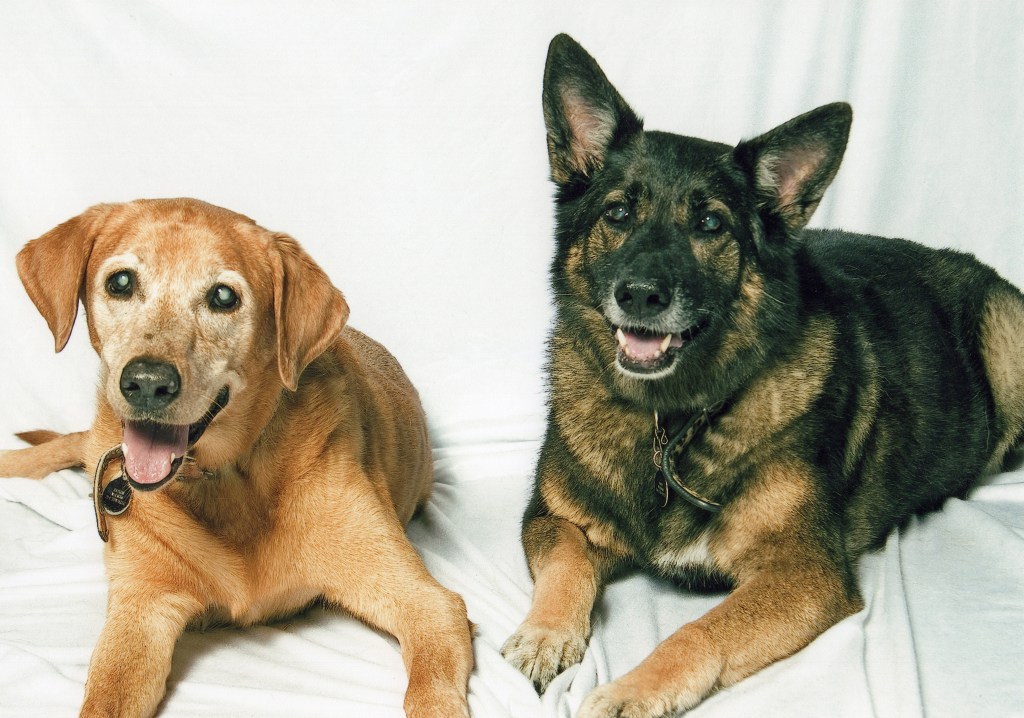
Photo of Baylor and Baby
Baylor and Baby
Photo of our Labrador Baylor. He is looking into the camera.
Photo of our Labrador Baylor
Illustration by Naomi Rosenblatt showing our Labrador Baylor crossing the rainbow bridge.
Our Labrador left us tragically and unexpectantly. Evidence that we humans our cruel.
Illustration by Naomi Rosenblatt showing a paw print in the sky.
The paw prints that dogs leave in your heart are eternal.

All illustrations are by Naomi Rosenblatt
Ten Leonberger Myths and the Truth

In this post I am stating and correcting ten Leonberger myths that I’ve seen on various websites and in various Leonberger books. Websites featuring incorrect information include Wikipedia. It is always good to remember that googling is not research and that a lot of information on the internet is wrong. In the list below I avoid stating the myth and then correcting it. Instead, I am trying to implicate the myth as a myth from the start or begin the sentence with the truth. The reason for doing this is psychological. Research has shown that if you state something false and then correct it, people tend to remember the first thing they saw, which was the myth, instead of the truth.

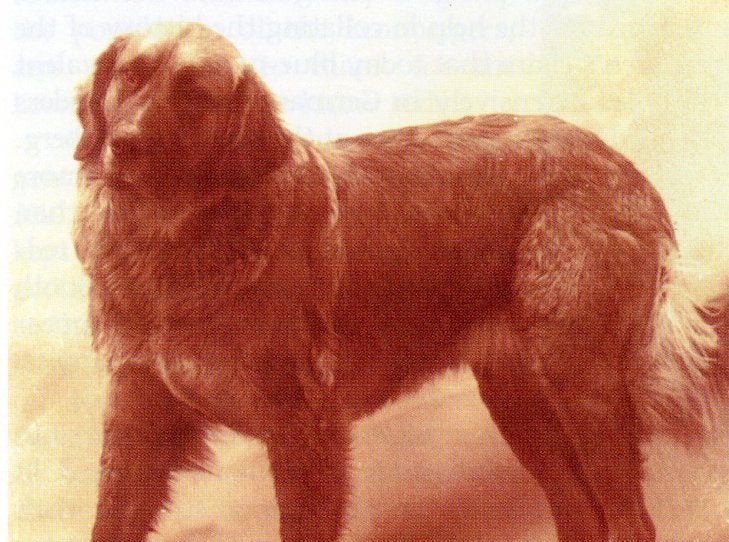
This embedded old historic photo of a Leonberger is from the AKC website.

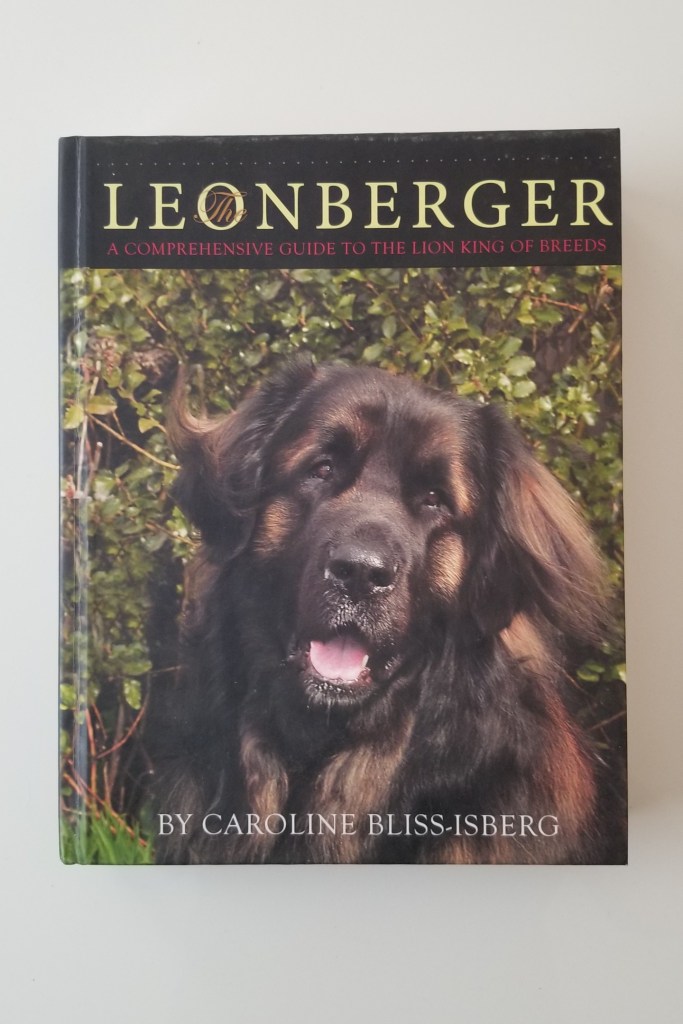
To correct many of the myths regarding Leonberger history I am referring to the book Leonberger by Caroline Bliss-Isberg. If I am not specifically stating the source in a listed item it is from her book. Caroline Bliss-Isberg is a recipient of the Heinrich Essig Award and the Leo Heart Award and a very prominent leader in the Leonberger community. With the help of other prominent leaders of the Leonberger community as well as expert researchers she attained documents, illustrations and photos never before published and from it she created the most extensive (several hundred pages) and accurate account of Leonberger history.

Photo of the book Leonberger, by Caroline Bliss-Isberg. Click on the image to go to my review of Leonberger.
Leonberger, by Caroline Bliss-Isberg. Click on the image to go to my review of Leonberger.
  • If you want to spay or neuter your Leonberger it is best to wait two years, so do NOT spay or neuter a Leonberger at six months as some erroneously state. The neuter at six months claim is not very common, so it is perhaps not a real myth in that sense. However, I’ve seen it in some books and there are some organizations that insist on spaying./neutering even giant breeds. To learn about the reasons and the research behind the two years wait for Leonbergers click here.
  • Heinrich Essig was NOT the mayor of the city of Leonberg. Heinrich Essig was a prominent citizen of the town, and he was a successful businessman, farmer, innkeeper, horse and dog trader, large-dog enthusiast, dog breeder, and town councilman, but he was never the mayor of Leonberg. About half the Leonberger websites and books that I’ve come across get this wrong and the other ones get it right. However, it is the research by Caroline Bliss-Isberg that sets this straight as can be seen on page 20 of her book.
  • More than two dogs were used for creating the Leonberger. It was not just a St. Bernard and a Newfoundland dog as a few Leonberger books I’ve come across erroneously claim. See next list item for more information.
  • It is not entirely true that the following three dogs were used to create the Leonberger; the St. Bernard, the Newfoundland dog and the Great Pyrenée dog. This is a common claim based on the Essig’s claim that he bred the Leonberger from long haired St. Bernards, the Newfoundland dog and the grey-yellow wolfhound from the Spanish Pyrenees. However, the Pyrenean wolfhound is not likely to be what we call a Great Pyrenée dog. Moreover, these dogs did not look like they do today and there was a lot of breeding back and forth going on and Essig did not keep records. Therefore, the story is likely to be a lot more complicated. The bigger story is explained on the pages 23, 41, 45, 48-49 Caroline Bliss-Isberg’s book but it is also more briefly explained in my Leonberger History page on this website.
  • There were definitely more than five Leonbergers alive after World War One despite several Leonberger books and websites erroneously claiming only five survived. I should say that many of the more reliable websites get this right. It is true that World War I was tough on the breed. It didn’t help that Leonbergers were used to pull ammunition carts and cannons. However, more than five Leonbergers survived the war. After the war, Karl Stadelmann and Otto Josenhans, worked hard to save the breed, and they were able to find twenty-five Leonbergers whose owners were willing to cooperate in reestablishing the breed. Of these, only five were suitable for breeding. That is still a pretty significant genetic bottleneck.
  • There is a common erroneous claim associated with World War II as well, stating that only eight Leonbergers survived World War II. There was indeed a “genetic bottleneck” of Leonbergers in the 1940s. This was largely because people repeatedly bred the dogs they thought were the best specimens in a misguided attempt to improve the breed. Scientific pedigree analyses demonstrate that the Leonberger has twenty-two founder animals, or animal ancestors unrelated to one another (ten males and twelve females). Again, that is a little bit different from “only 8 survived”.
  • Another World War II myth is that Leonbergers were used for pulling ammunition carts in World War II just as in World War I but there is no proof of that.
  • Another incorrect claim that I’ve seen on websites and some books is that the Leonberger dog first appeared in North America in the 1970’s. As Caroline Bliss-Isberg describes in her book in several places, Leonbergers were introduced in the United States and Canada on several occasions during the 19th century and at the beginning of the the 20th century. However, it was typically just a few Leonbergers and the population was not maintained. It was not until the 1970’s that Leonbergers a permanent population was established in North America.
  • The lifespan of a Leonberger is on average 8-10 years not 6-8 years or 7 years, which is old data still reported by some websites. The Leonberg Health Foundation International have been successful in eradication several detrimental genes in the Leonberger breed. I should say the reliable websites typically have this information correct.
  • I’ve come across a few Leonberger books which grossly understate the size and weight of Leonbergers, for example, claiming that a male Leonberger weigh between 45 and 60 pounds. The weight of a male Leonberger is 120 to 170 pounds. Luckily the vast majority of books and websites get this information correct.

When Should You Neuter or Spay Your Leonberger

This is a contentious question that can easily lead to heated arguments, which is why I never brought up this issue in my book. I don’t like one-star reviews. A blog post though is a different matter. I can easily delete angry comments as well as the blog post itself.

It is very common for veterinarians and others to recommend that dogs be neutered or spayed between the ages 4-6 months. However, not all dogs are the same and this seems to be bad advice for many giant breeds, especially Leonbergers.

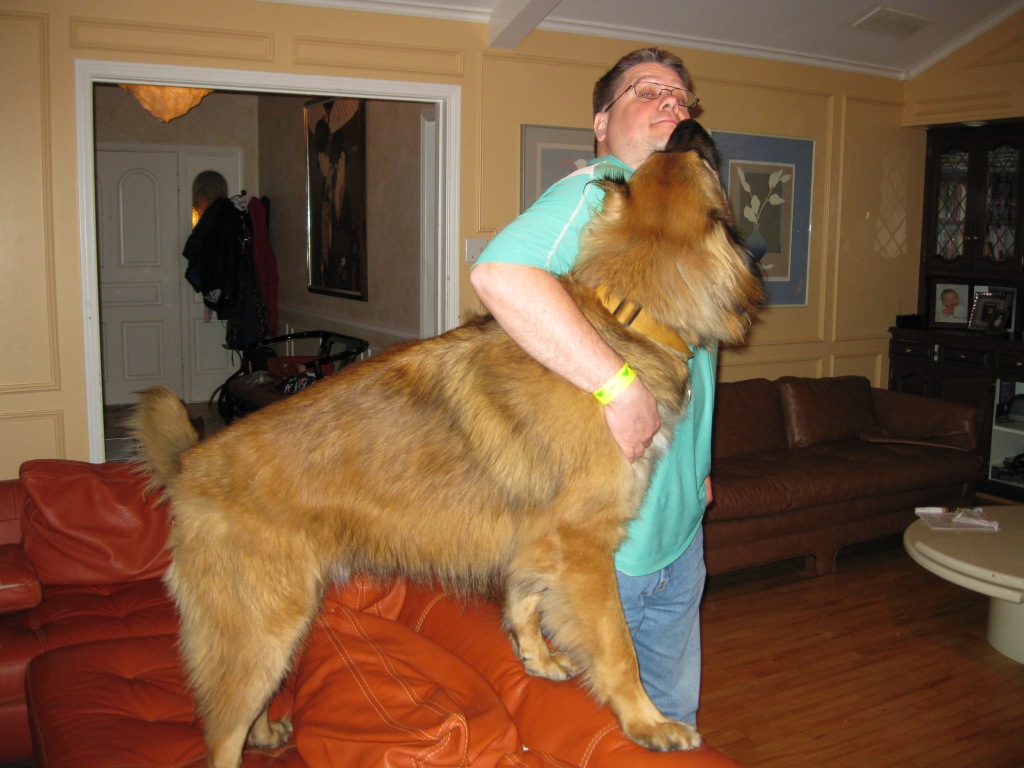
Photo of me with our Leonberger Bronco standing on the sofa.
Is he ready to be neutered? I mean the dog.

With this post I am presenting advice and statements from various sources that I consider to be reliable such as AKC/club certified breeders of the specific breed in question, the corresponding breed organization/club, such as the Leonberger Club of America, and scientists in the specific field. In my experience veterinarians who care for all kinds of dogs and pets typically do not have knowledge that is breed specific enough on this issue.

When we got our late Leonberger Bronco (Le Bronco von der Löwenhöhle) 15 years ago our breeder Julie Schaffert told us to wait with neutering him until he was two years old if possible. Julie Schaffert has been an LCA (Leonberger Club of America) certified breeder since 1992 and is arguably the most prominent Leonberger breeder in North America. A few days ago, I sent her this question:

Hello Julie, I hope all is well with you and your Leonbergers. I am currently reading a Leonberger book by Vanessa Ritchie. I’ve read dozens of Leonberger books. It is a very good Leonberger book. However, in the middle of page 30 she is saying something that concerned me. She is saying to neuter/spay your Leonberger at 6 months old. I remember you telling us to wait with ours and we waited until significantly passed one years old. Assuming that is correct, this mistake needs to be pointed out and perhaps corrected. Before saying anything, I wanted to make sure that is correct, that spaying/neutering at 6 months old is indeed too early for a Leonberger.

Thank you for any help

Happy New Years

Thomas Wikman

This was her answer

Happy new year. Yes, it’s now recommended that giant dogs not be neutered or spayed until after 2 years. In the old days it was recommend earlier any time after 6 months. All the new data says wait.

Julie.

Black and white photo of our Leonberger Bronco
The Leonberger puppy Julie sold us

A few months ago I participated in an online discussion (Leonberger Facebook group) on this issue and I mentioned that we neutered our Leonberger passed one years old, close to 18 months, but we did not wait two years. There were people who did not like this saying we needed to wait longer. Some people said that 12-18 months was good enough, but they were in general rebutted. The consensus was that you needed to wait two years or not neuter the dog at all if that was practical. Opinions were strong, and I got the feeling that some people felt neutering before the age of two was animal abuse. Whatever you do, don’t discuss this with Leonberger enthusiasts at the Thanksgiving dinner table.

The reasons we did not wait two years was that our veterinarian at the time wanted to do it sooner and Bronco was moving furniture around because of his excess energy. He was strong, energetic and a bit restless. He dragged sofas, chairs and tables around. He was very friendly and harmless, but he had a lot of energy. Perhaps he should have been a home decorator instead of a dog.

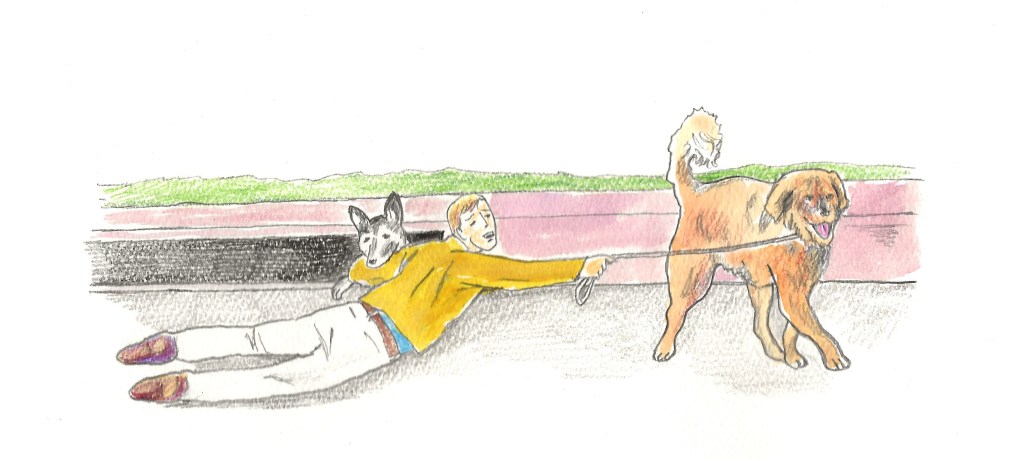
Illustration showing that Bronco had pushed our German Shepherd into a storm drain. I am trying to drag/lift the German Shepherd out of the storm drain while holding onto a misbehaving Bronco.
A rambunctious Bronco

So that’s where I was coming from”. In addition to that I searched on-line today to see what people with expertise in the area are saying. I should say that I know enough about internet search not to trust whatever comes up at the top. You need to first consider credentials and expertise.

This one year old article (click here) from the AKC states that a larger or giant breed may need to wait until they are near or over 12-18 months of age before neutering or spaying. The article also provides the following interesting information.

Research conducted by the University of California – Davis reveals that for some dog breeds, neutering and spaying may be associated with the increased risks of certain health conditions such as joint disorders including hip or elbow dysplasia, cranial cruciate rupture or tear, and some cancers, such as lymphoma, mast cell tumor, hemangiosarcoma, and osteosarcoma. The research conclusions are not surprising. Sex hormones are important in the development of any animal.  We know they affect psychological development as well as the musculoskeletal, cardiovascular, and the immune system.

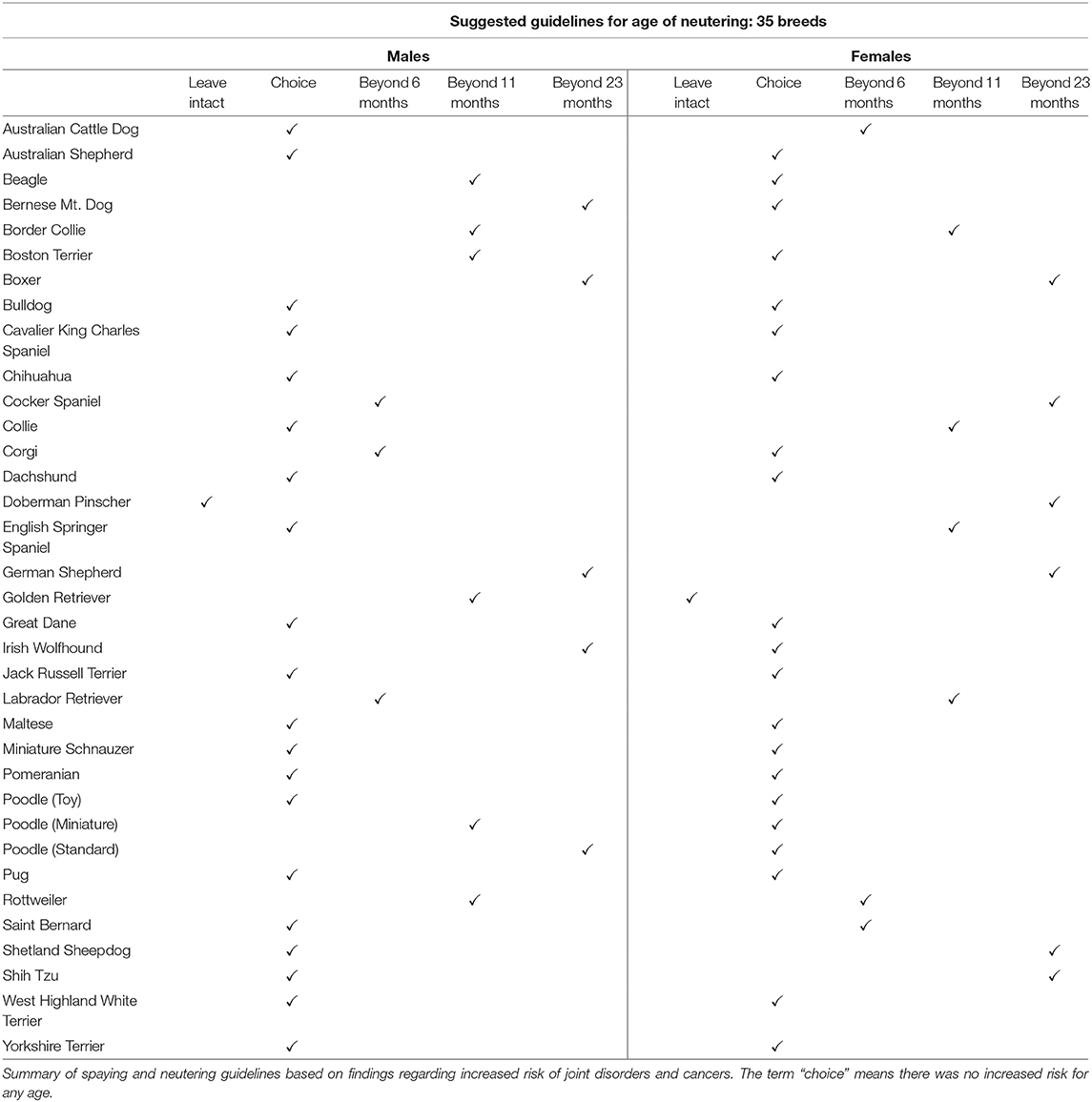
I believe this is the University of California – Davis article in question (click here). It is from 2020. Notice that the suggested guidelines for age of neutering is beyond 23 months for several of the giant breeds in the table of 35 breeds (click here). Also notice that the table does not include Leonbergers.

Hillhaven Leonbergers (click here) in Ireland recommend not neutering until at least 2 years of age. They warn against doing it at 6 months old, despite what some veterinarians may recommend.

I did not find an on-line Leonberger Club of America recommendation but this old 2011 article (click here) from the Leonberger Club of America states: Because the Leonberger is a slow maturing breed in general, most breeders will ask puppy owners to wait a year or so before altering their puppies, to allow bones to develop more fully.

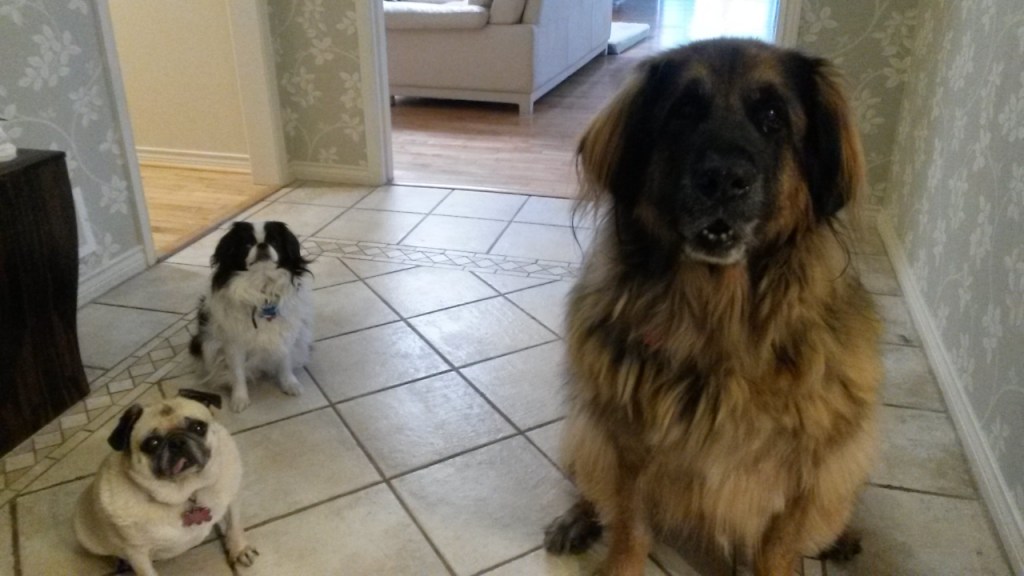
Photo of (left to right) Daisy (Pug), Ryu (Japanese Chin) and Bronco (Leonberger)
Daisy (Pug), Ryu (Japanese Chin) and Bronco (Leonberger)

I did find an article from the Saint Bernard Club of America (click here). The Saint Bernard is genetically similar to the Leonberger. This article states: Above all, no giant breed puppy should be altered before the growth plates in the bones have matured and closed, usually between 15 and 24 months of age.

This Newfoundland dog magazine (click here) states : Currently, the recommended age that a Newfoundland dog should be neutered is 18 to 24 months due to the possible health problems that can arise from altering before that age. The Newfoundland is another dog that is genetically similar to the Leonberger.

So in conclusion, even though the expert advice regarding neutering and spaying is not crystal clear and varies, doing it at six months old is too early and can harm the Leonberger’s health.