This blog feature amusing and heartwarming stories about our late Leonberger dog Bronco, as well as other Leonbergers. It also has a lot of information about the Leonberger breed, the history, care, training, Leonberger organizations, etc. I also wrote a Leonberger book, which I am featuring in the sidebar.
Last Friday I got a few phone calls from NBC Universal. NBC Universal is a large media company that is a merger between NBC news and Universal Studios. I did not expect a phone call from them and since I am getting a lot of spam calls, I assumed it was bogus, so I ignored them. However, unlike most spammers they eventually left a message, which I listened to during the weekend. They said that they had been reading my Leonberger blog and were interested in a post that I had made about the tornado that ripped through Dallas on October 20, 2019. They wanted to interview me and asked for permission to use a few of my photos. I can add it was not my latest tornado post but a previous one.
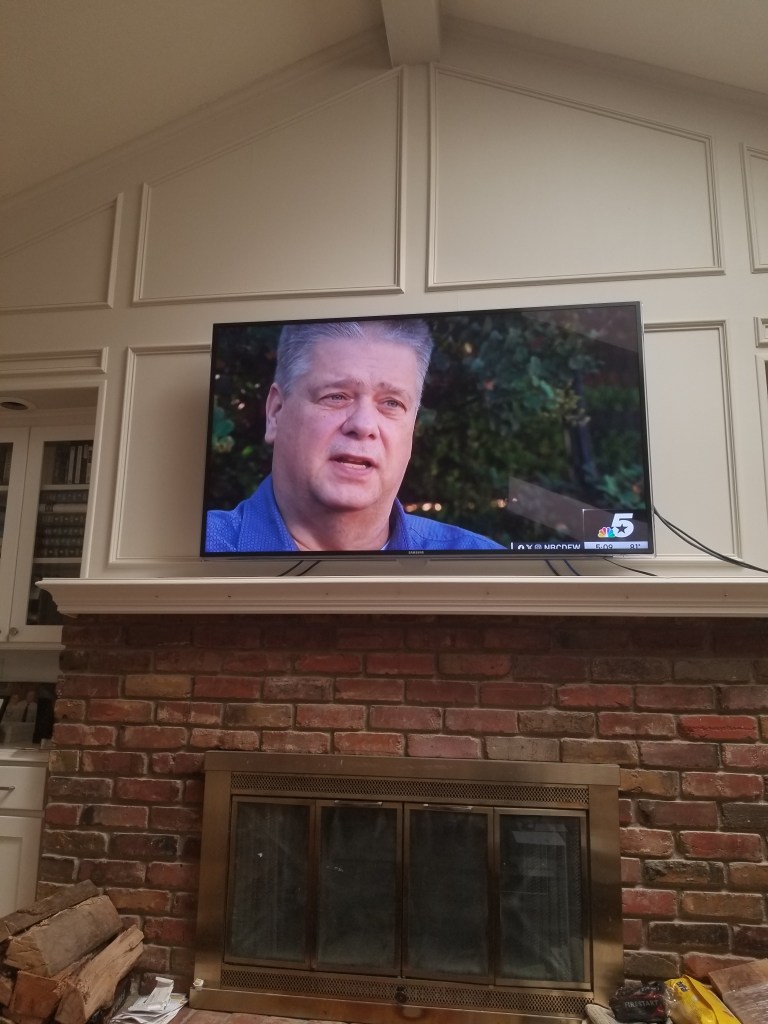
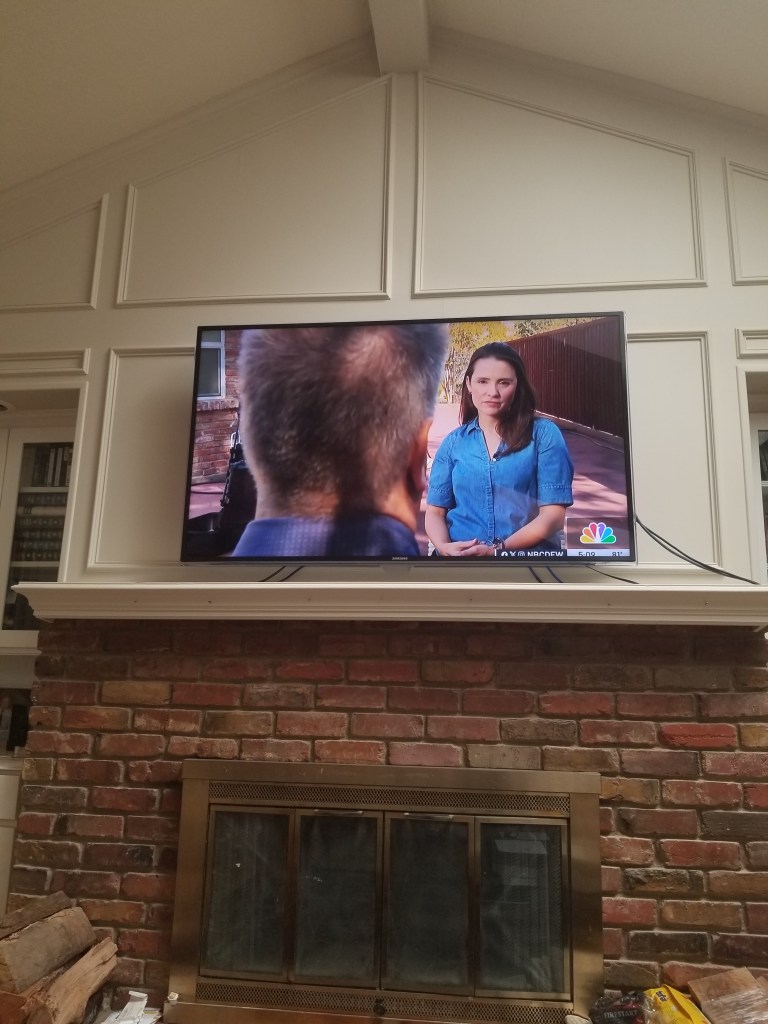
Seeing myself on the TV was a bit surreal. Click on the image to see the interview. My interview starts at 1 minute and 11 seconds.Here I am with NBC journalist Katie Blake. Click on the image to see the interview. My interview starts at 1 minute and 11 seconds.
I would like to stress that there are thousands of people whom they could have interviewed. Thousands of people who probably would have been better candidates. What made all the difference was the post I made on my blog. Therefore, fellow bloggers, perhaps this is an example of the fact that blogs bring attention. By the way, the photos below were taken with my old Samsung Galaxy S8+ phone.
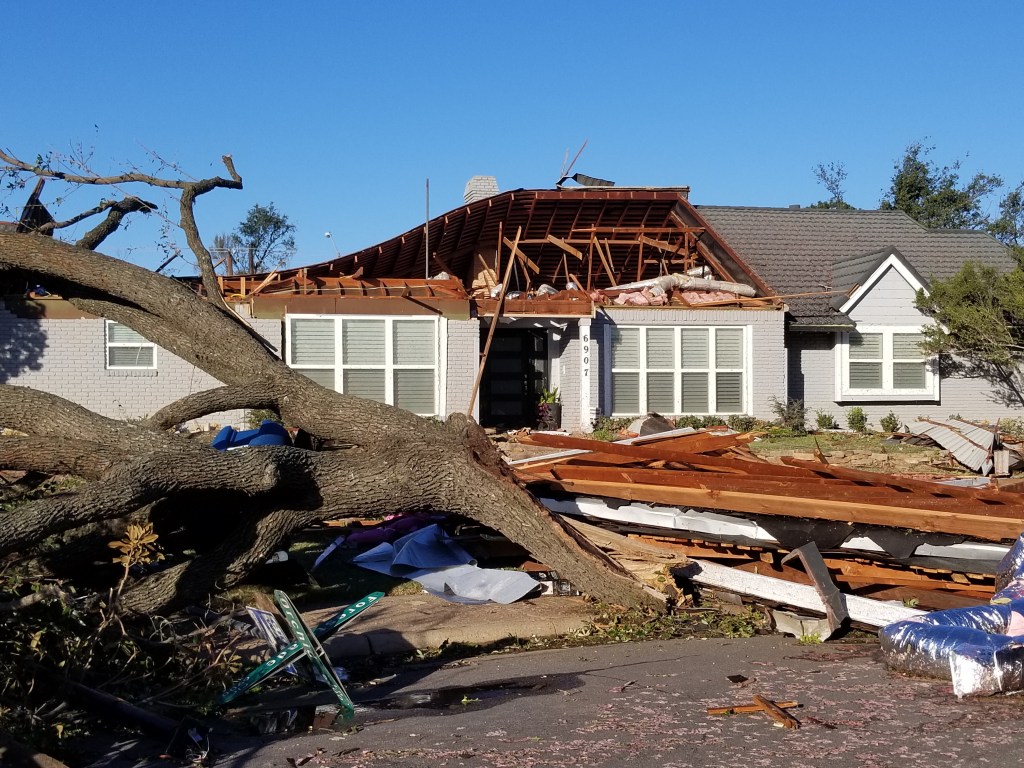
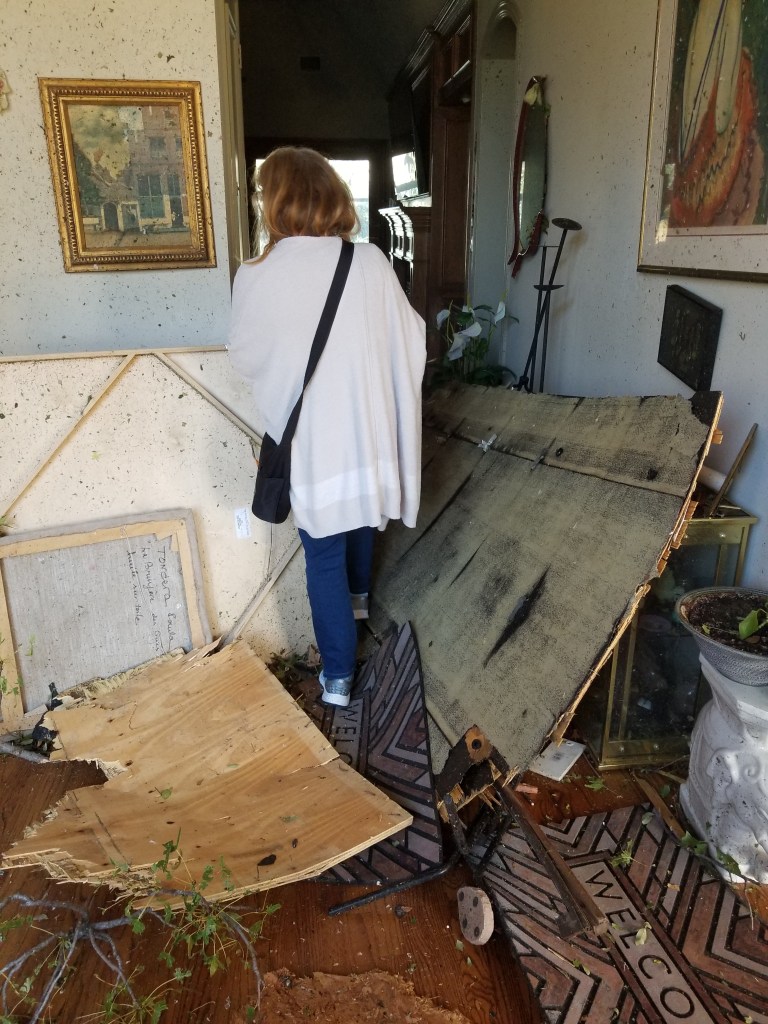
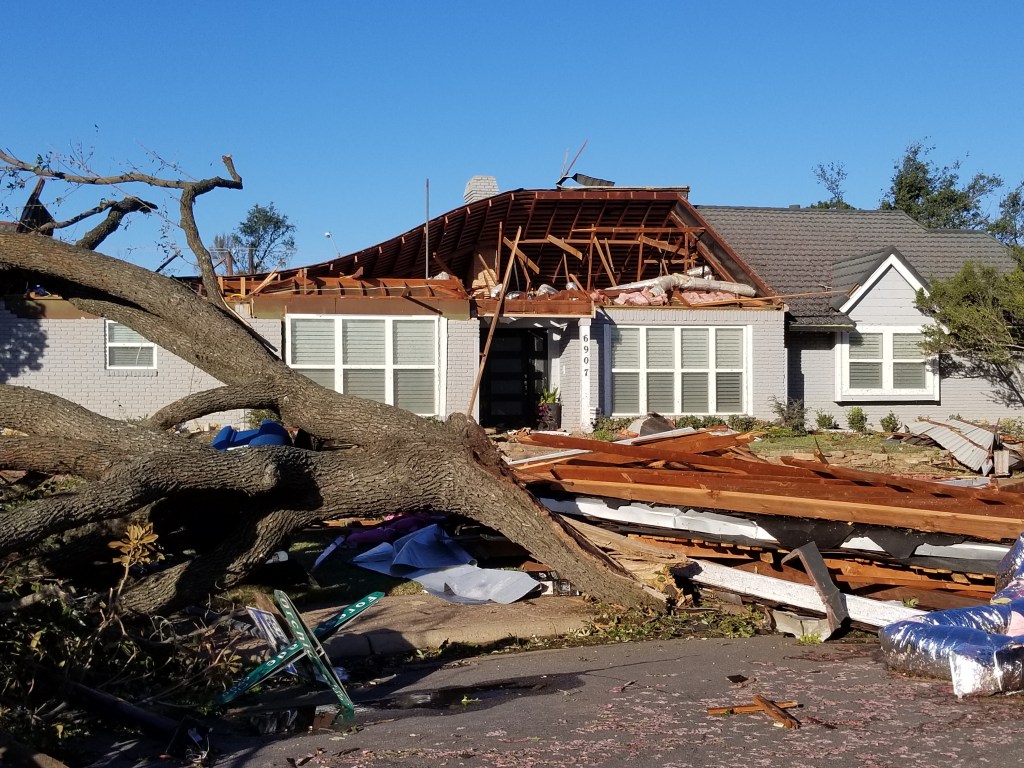
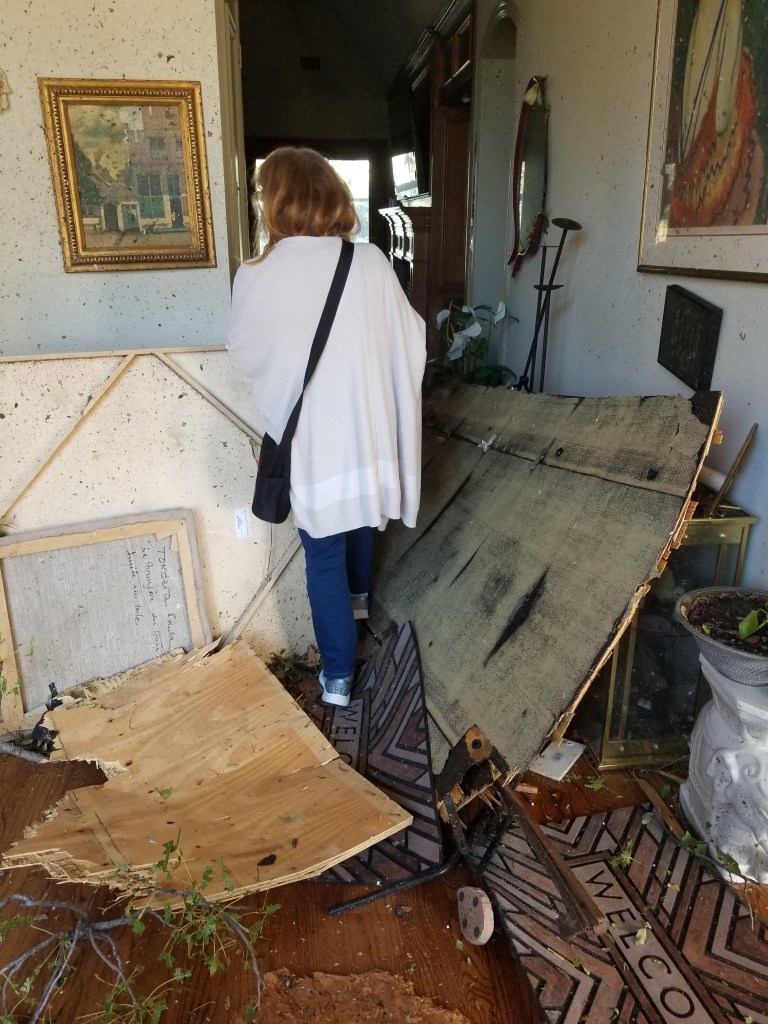
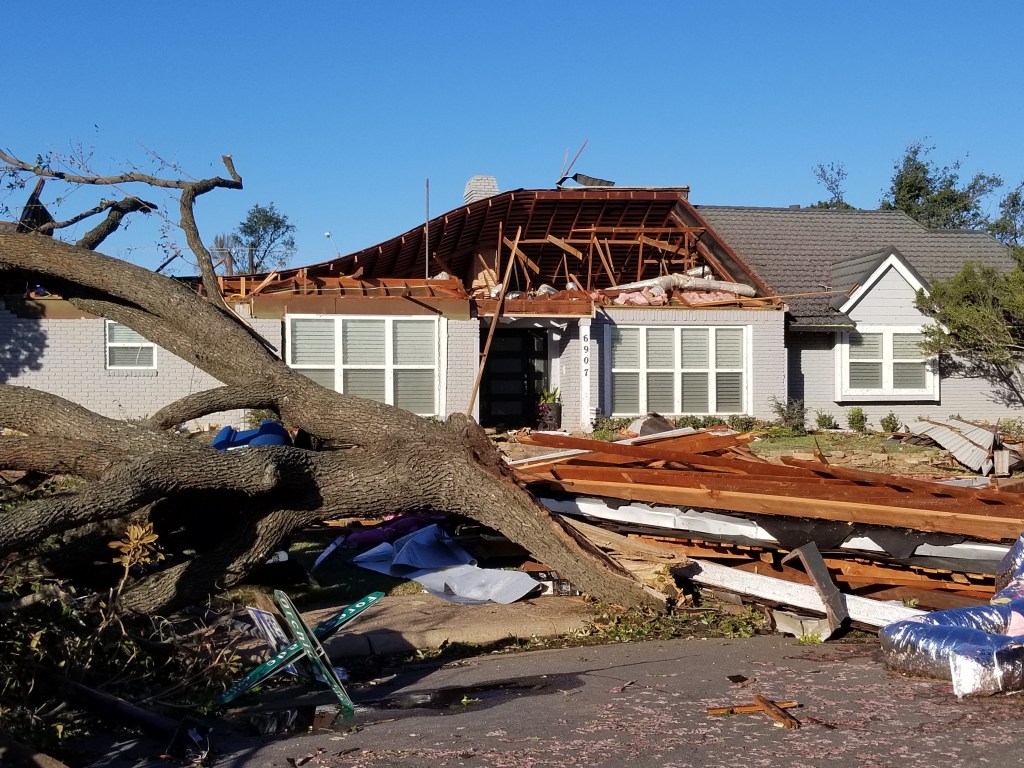
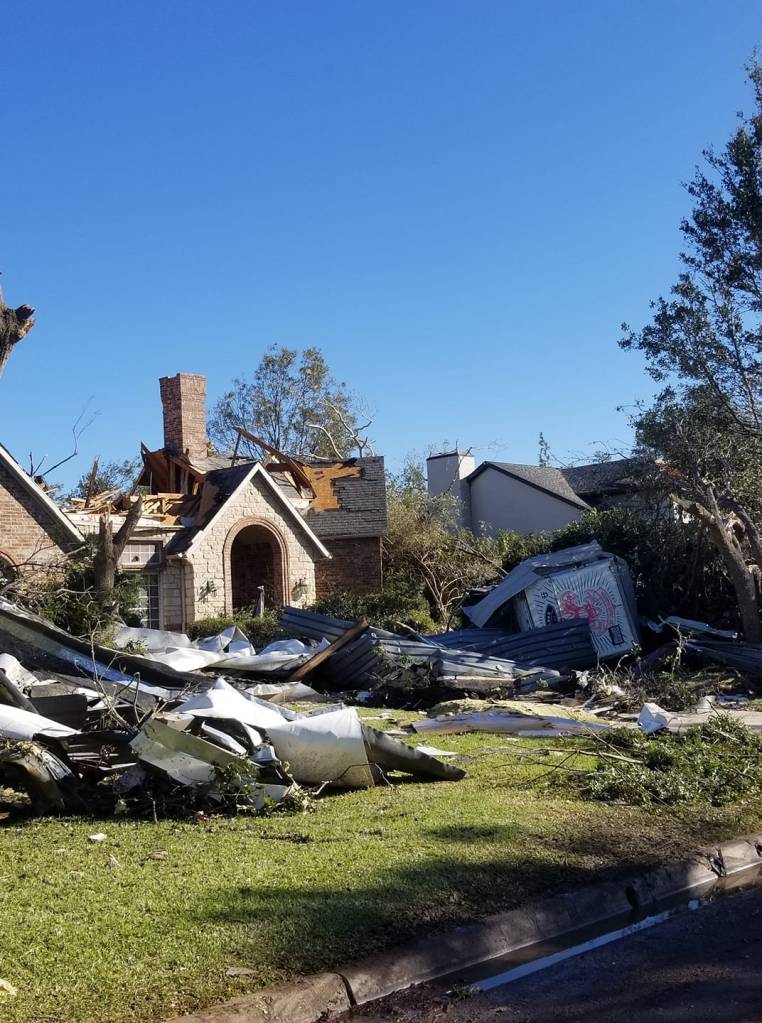
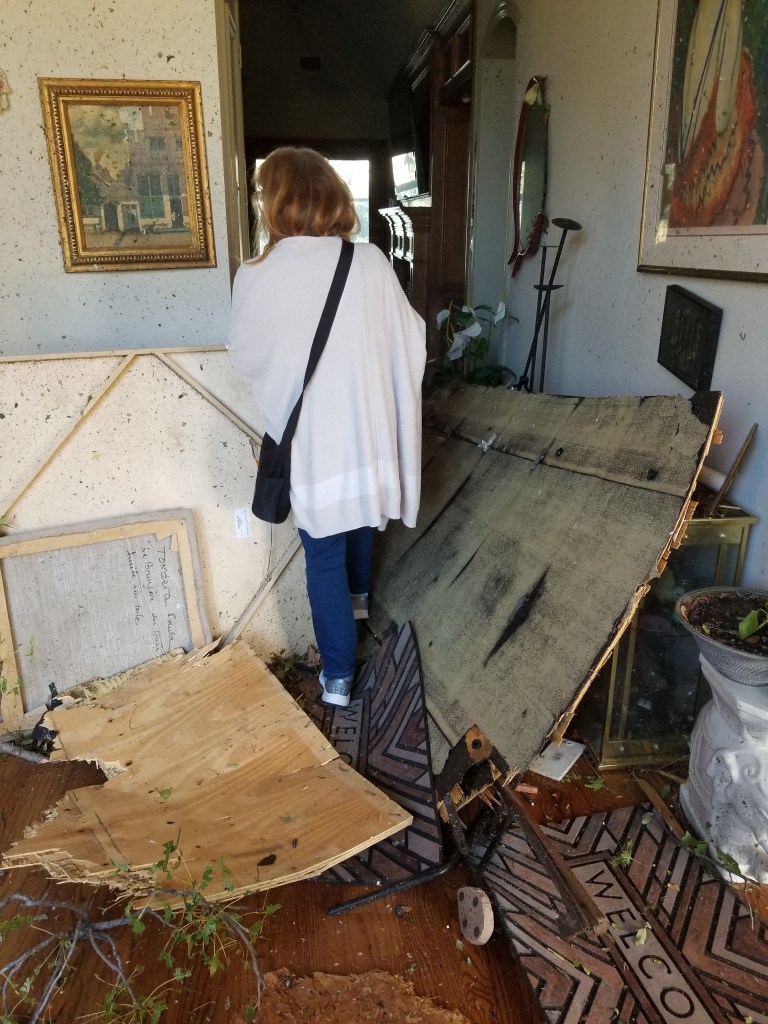
NBC used this photo. A neighbor’s house the morning of October 21st, 2019. Again, click on the image to see the interview.NBC used this photo as well. Inside Claudia’s (my wife) parents’ house. This was the morning after. In the photo we are walking into their house to check on them (that’s my wife). Again, click on the image to see the interview.
Today, October 20, 2024, is the 5-year anniversary of the EF3 Tornado that ravaged our neighborhood. Our chimney was smashed by a piece of concrete flying off a neighbor’s house, our roof was damaged and needed to be replaced, our garage door was destroyed, and the wiring and pipes in the attic were destroyed. In addition, our fence was damaged, and my grill flew across the yard. The cost of the repairs was $50,000.00. However, we were lucky compared to many of our neighbors whose houses were destroyed.
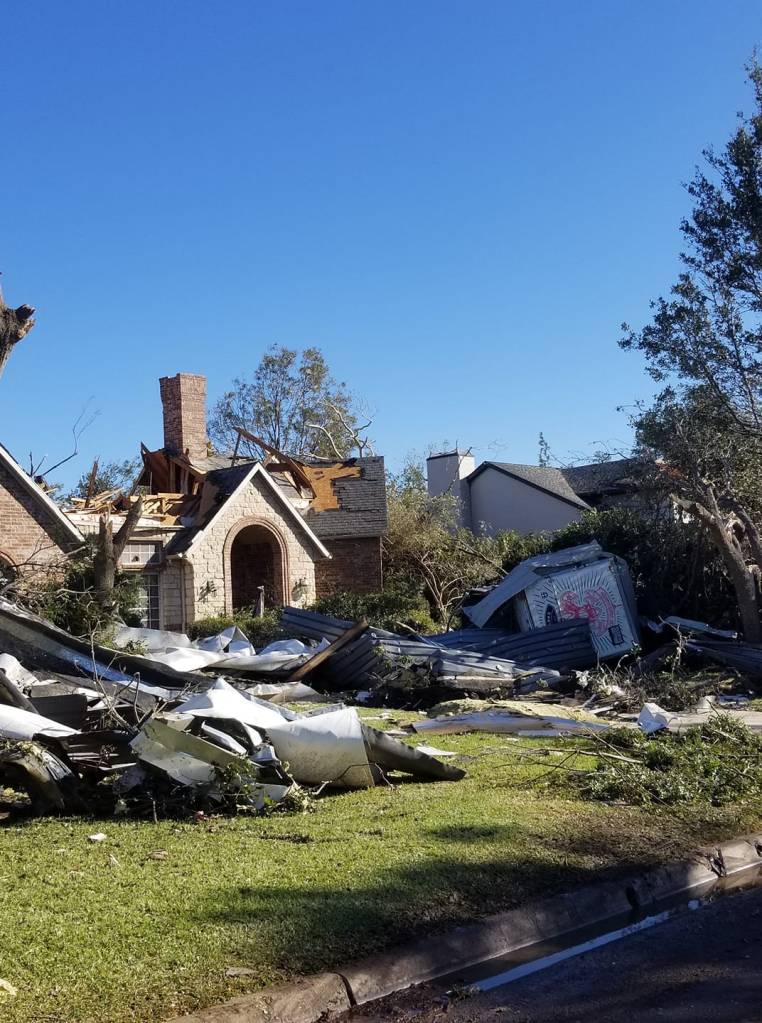
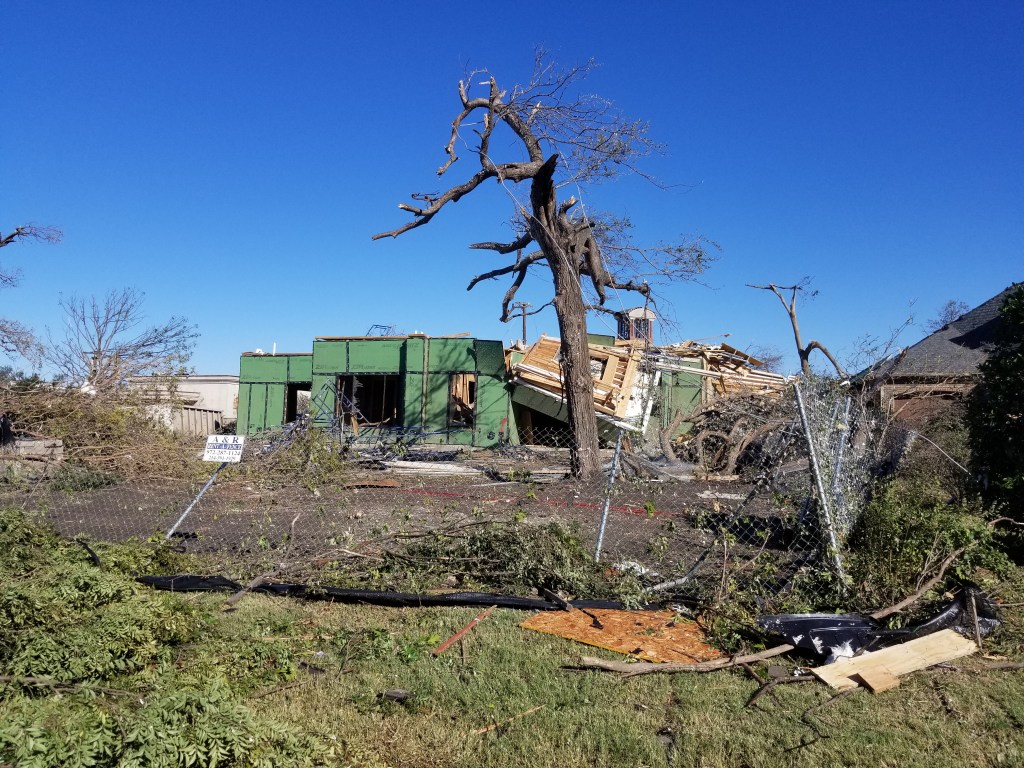
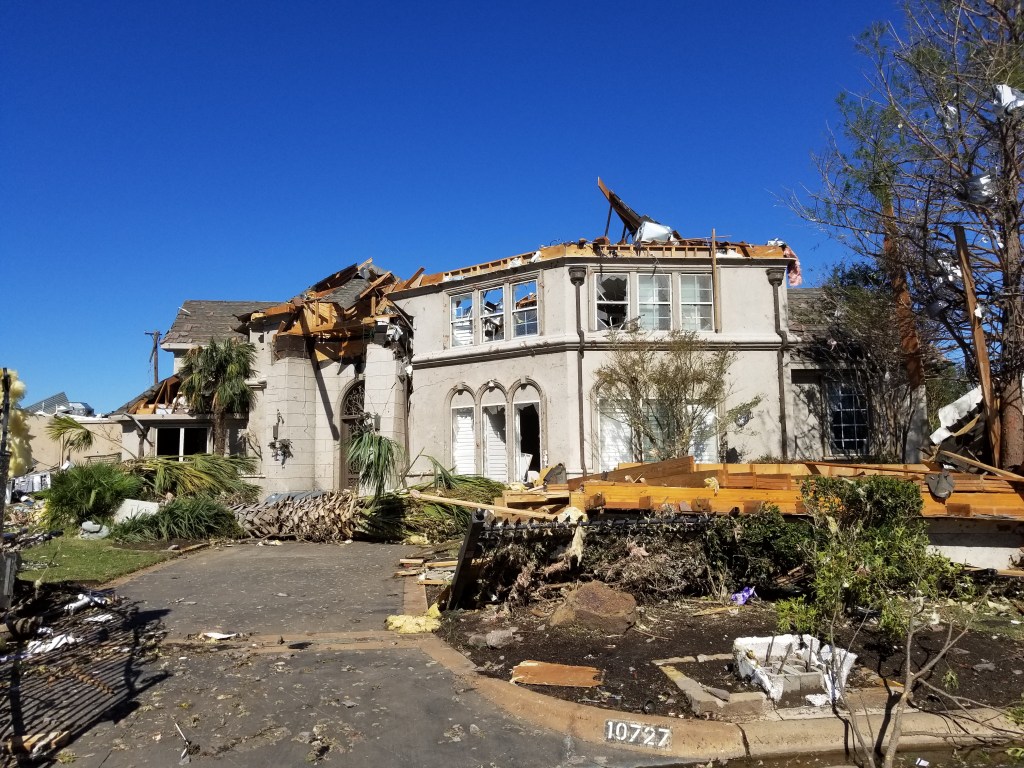
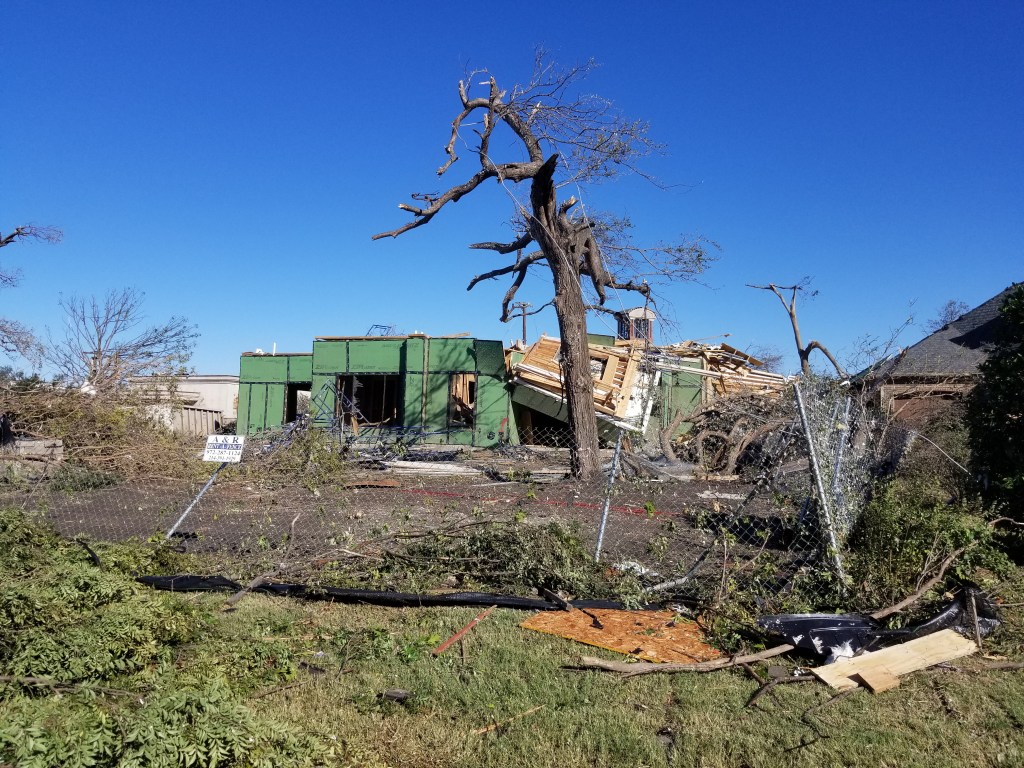
A neighbor’s house the morning of October 21st, 2019.Another neighbor’s house. This house was about 100 yards from our house. It took a direct hit from the tornado.
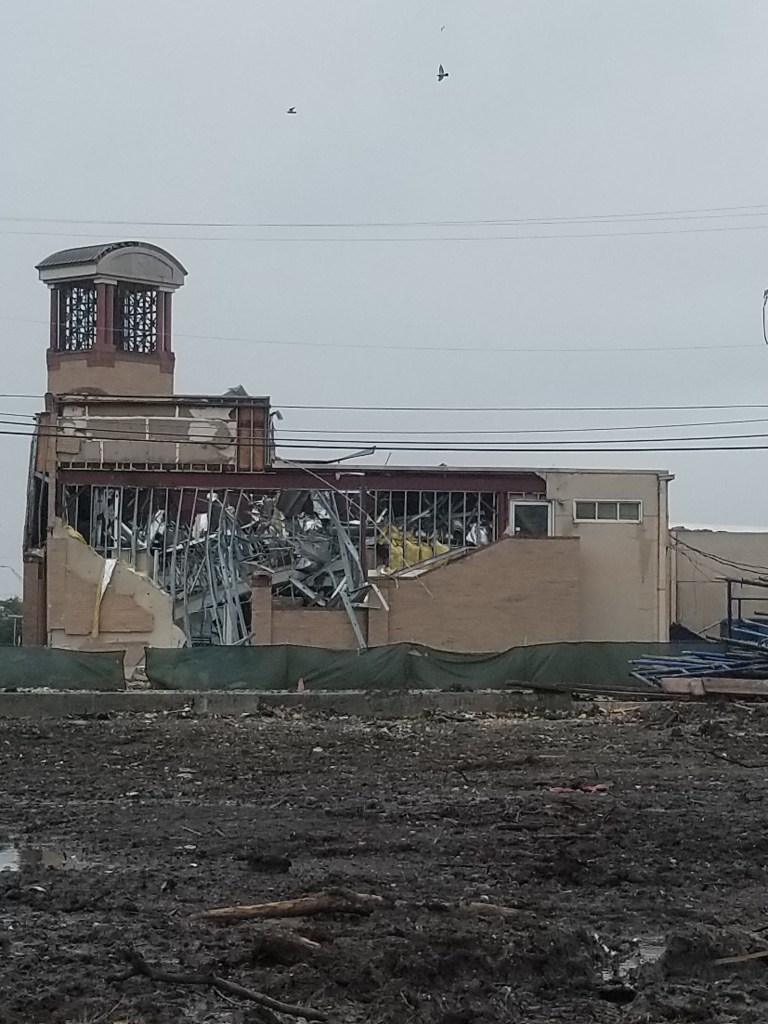
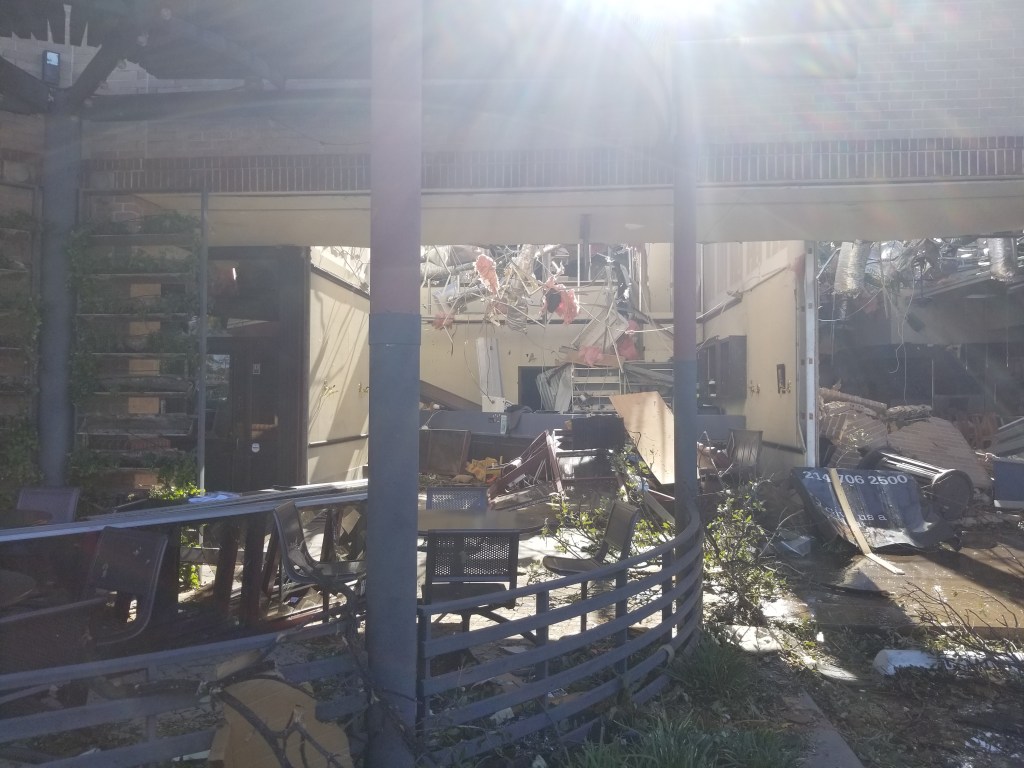
The house of my wife’s parents was more severely damaged than our house. The wind from the Tornado lifted my 89-year-old father-in-law up in the air and he was hit by a broken marble table that injured his back. He had a sore that was about one foot long. He did not go to the hospital. The school where our boys used to go, St. Marks School of Texas, was badly damaged and the walls of the gymnasium blew away. The neighborhood looked terrible afterwards.
Inside Claudia’s parents’ house. This was the morning after. We are walking into their house to check on them (that’s my wife).
It was also a tough time for our Leonberger dog Bronco. He was more than 12 years old, which is old for a Leonberger, and he had various age-related illnesses. Earlier in October he had amputated a toe due to a type of cancer called squamous cell carcinoma. One week after that we discovered a large deep ulcerous sore on the same paw a few inches above the surgical scar. Fortunately, it was not cancerous, as we first thought, but we would have to treat this sore in addition to nursing him back from his amputation. In addition, he also had the first signs of geriatric-onset laryngeal paralysis polyneuropathy (or GOLPP).
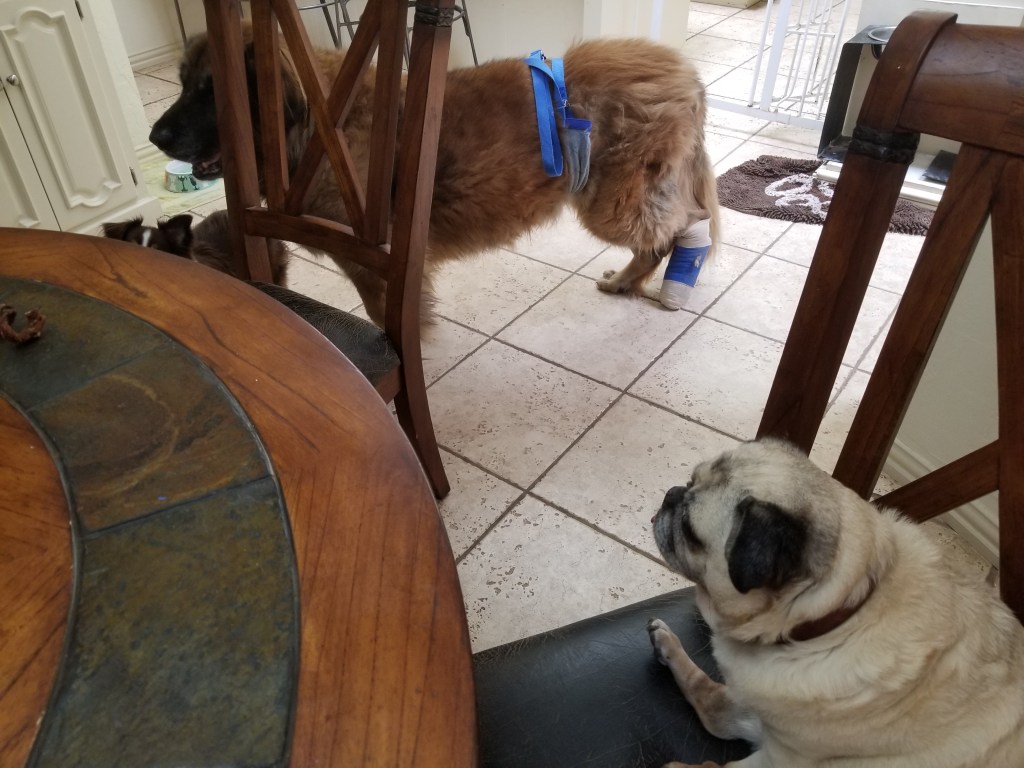
Bronco our Leonberger and Daisy our Pug the evening before the big storm. None of us suspected what was about to happen.
We lost power for four days due to the tornado and about one week after the tornado Bronco had a congestive heart failure. He eventually recovered but October 2019 was a very difficult month for him.
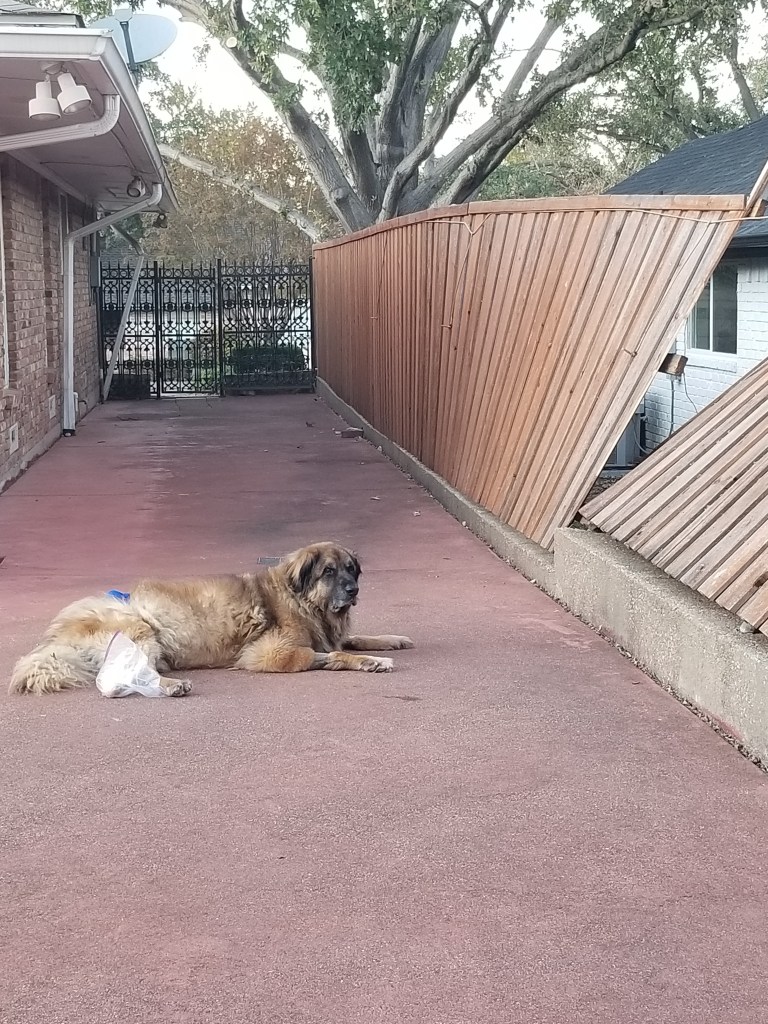
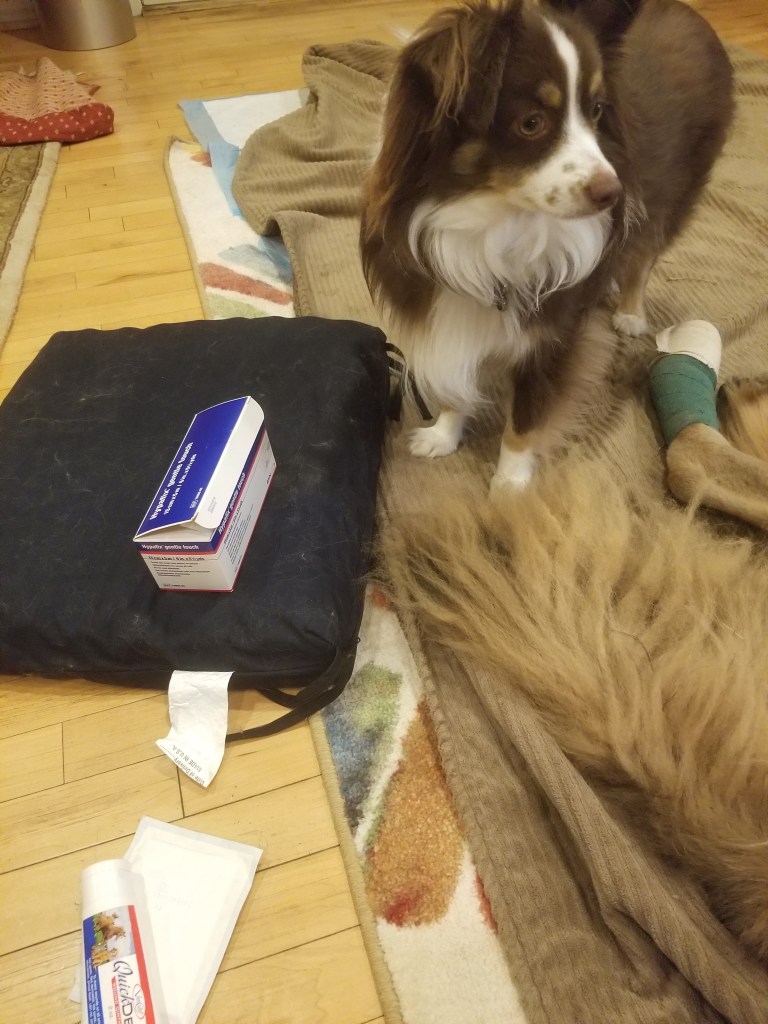
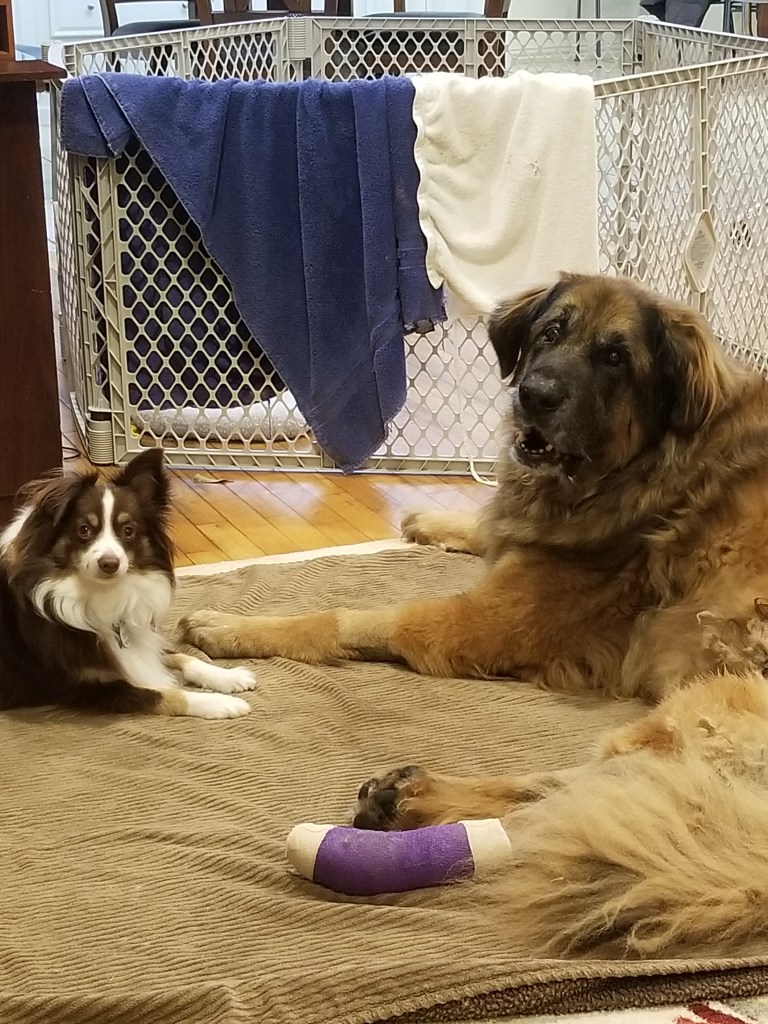
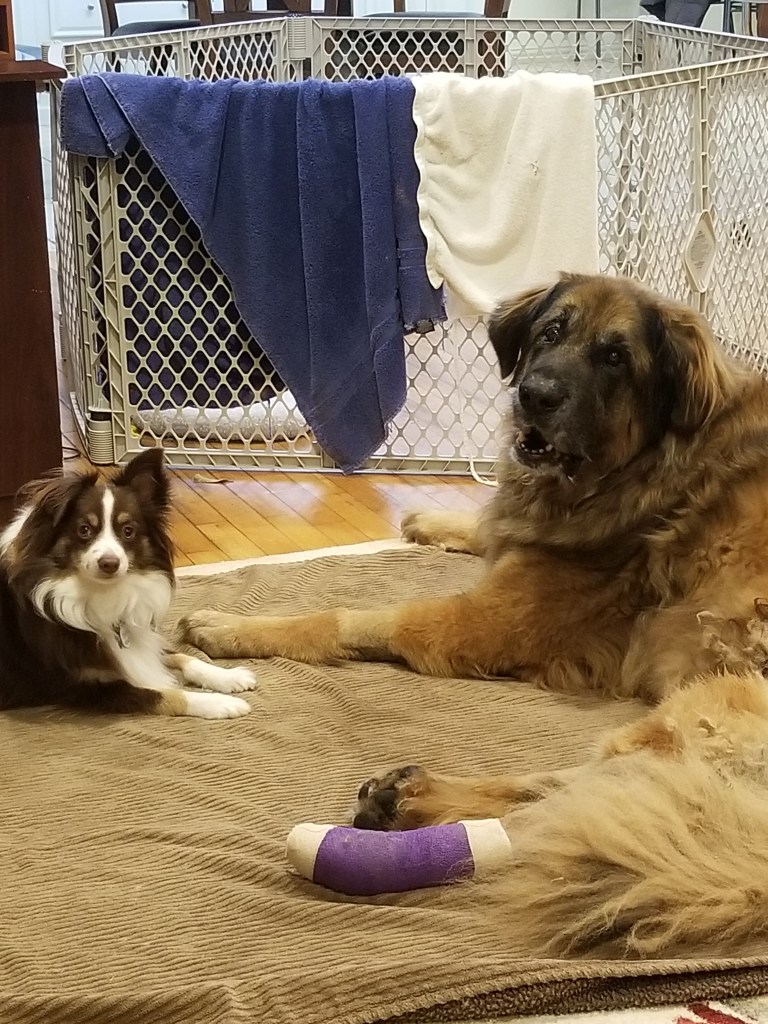
Bronco had just had a toe amputation. He did not blow down our fence.We had to change Bronco’s bandages every now and then but Rollo, our mini–Australian Shepherd made sure we did it right.Bronco and Rollo a few days after the Tornado.
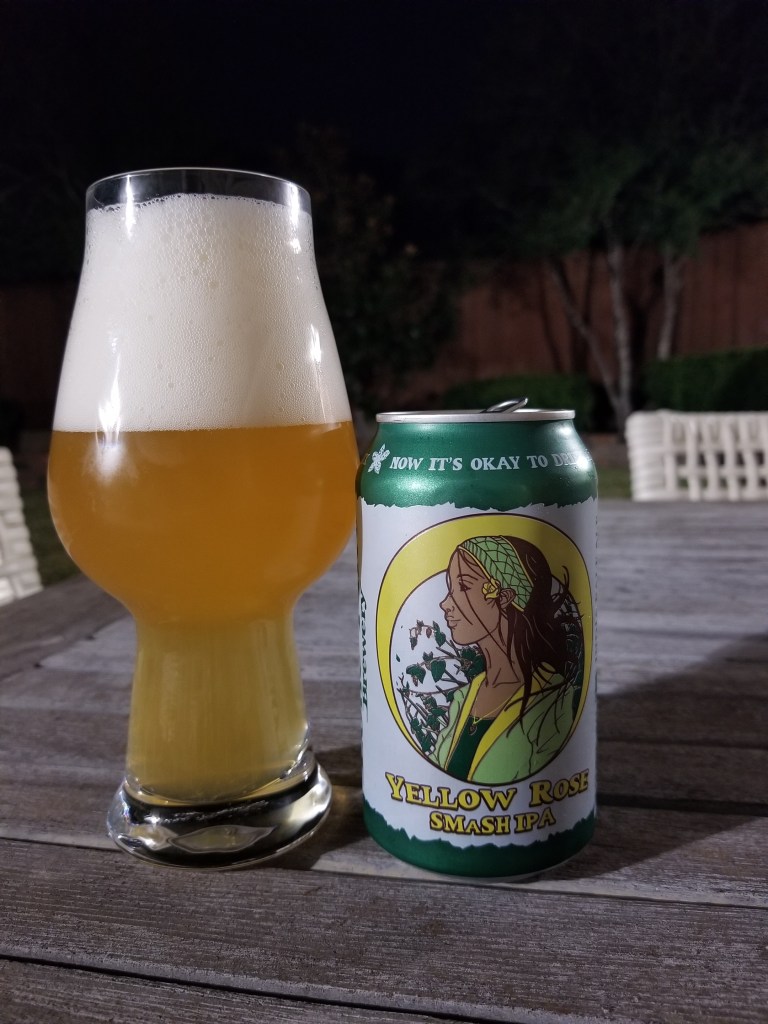
I remember October 20, 2019, as if it was yesterday. I was sitting outside in my backyard drinking my favorite SMASH IPA, Yellow Rose, from Lone Pint, Texas, ABV 6.8%. IPA stands for India Pale Ale, a type of beer that contains a lot of hops. SMASH IPA is an IPA brewed with one type of Malts and one type of Hops (Single Malt, Single Hop). The single hop in this case is Mosaic. My phone started making a loud sound. It was an alarm announcing a tornado warning and, in the distance, I could hear a faint tornado siren. At first, I thought it was nothing but when I saw the lightning approaching, I decided to go inside. Two minutes later a hailstorm made things very loud, the wind was strong, and the house shook, and then we heard a loud explosion. That was a concrete block that had smashed our chimney.
I was sitting in my backyard drinking Yellow Rose my favorite SMASH IPA, not knowing that a tornado was advancing down the street nearby.
After the wind had died down a bit, I opened the door to the backyard, and what I saw shocked me. My gas grill had flown across the patio. There were bricks and pieces of concrete all over the patio and the lawn. There was a big sheet of metal lying on the patio. Big tree branches covered the lawn. There was debris everywhere. We had also lost power. It turns out that the EF3 tornado had gone through our neighborhood and passed within fifty to one hundred yards of our house.
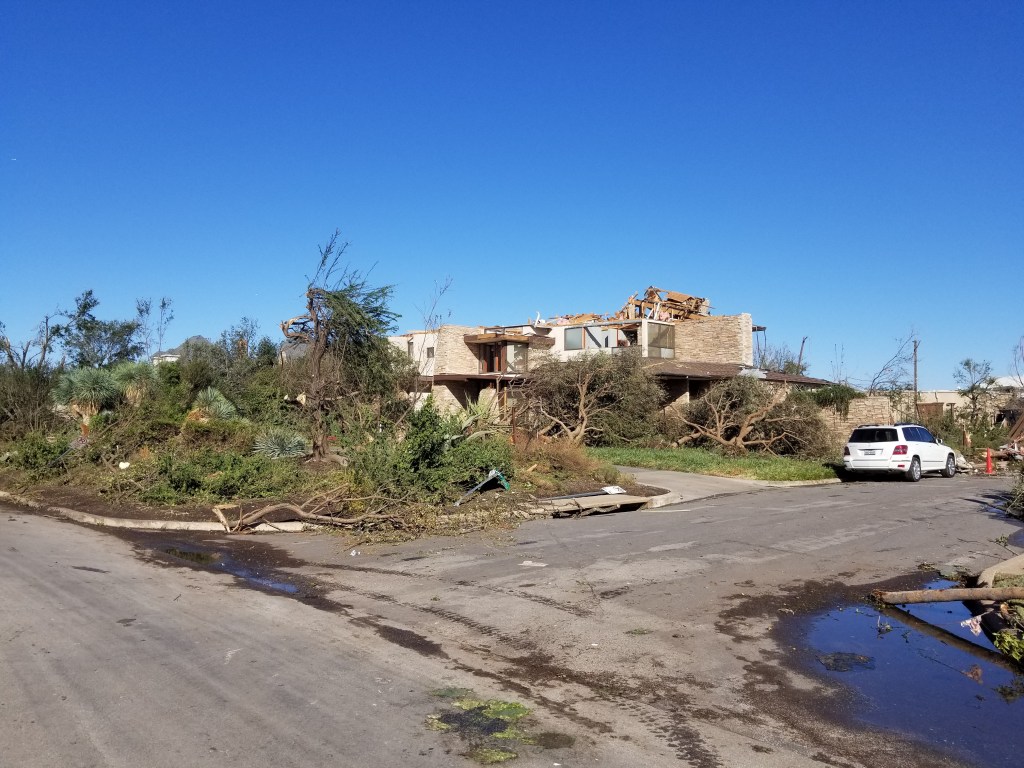
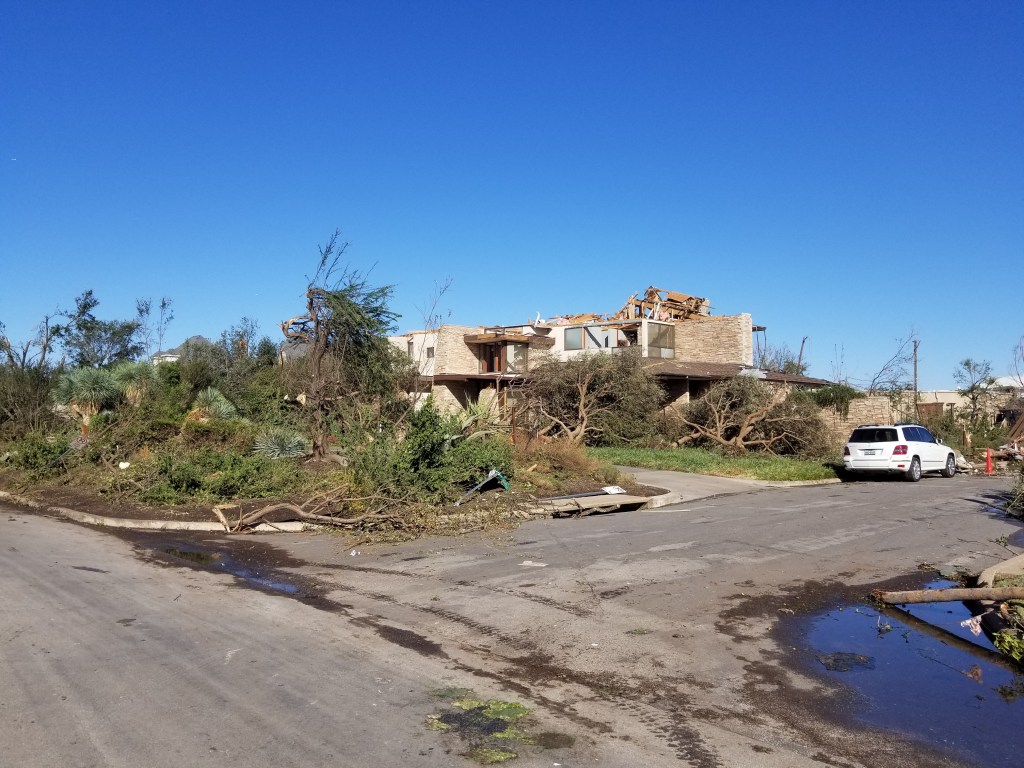
Another neighbor’s house (a bit further away from us).
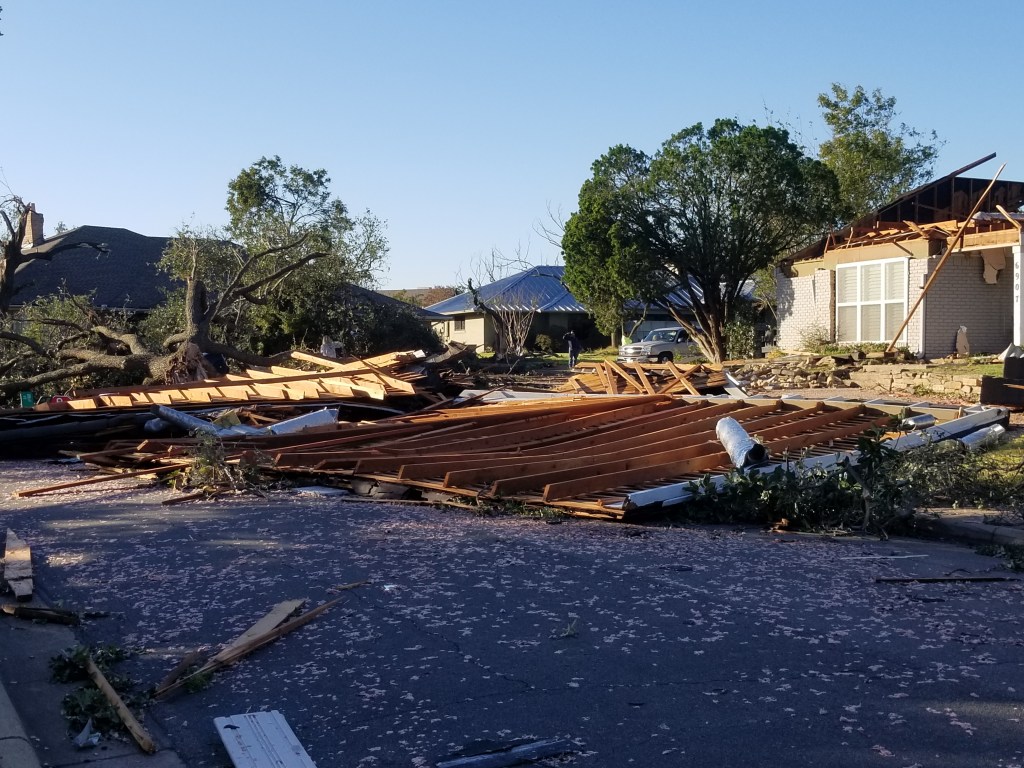
My wife Claudia asked me to go check on her parents. I drove about 50-100 yards when a neighbor’s roof lying across the road stopped me. I turned around but this time I was stopped by a large pile of trees lying across the street. So, I started walking, but this time I was stopped by a group of firemen telling me that it was too dangerous to be outside. They told me to go back home, and I did.
This is the next-door neighbor of Claudia’s (my wife) parents.
I can add that we got some unexpected help from our congressman at the time, Colin Allred, congressional district 32. My wife left the neighborhood in her car, but the police would not let anyone back in. This made it difficult to, for example, go shopping. I complained about this on Colin Allred’s Facebook page and within hours I received an email from Colin Allred’s legislative director (Judith). They had contacted city hall and the police and now the police would allow residents back in the neighborhood as long as they could show ID. Colin Allred’s office had my email from a previous communication. I did not leave that with my Facebook comment. My wife was happy since she now could go shopping.
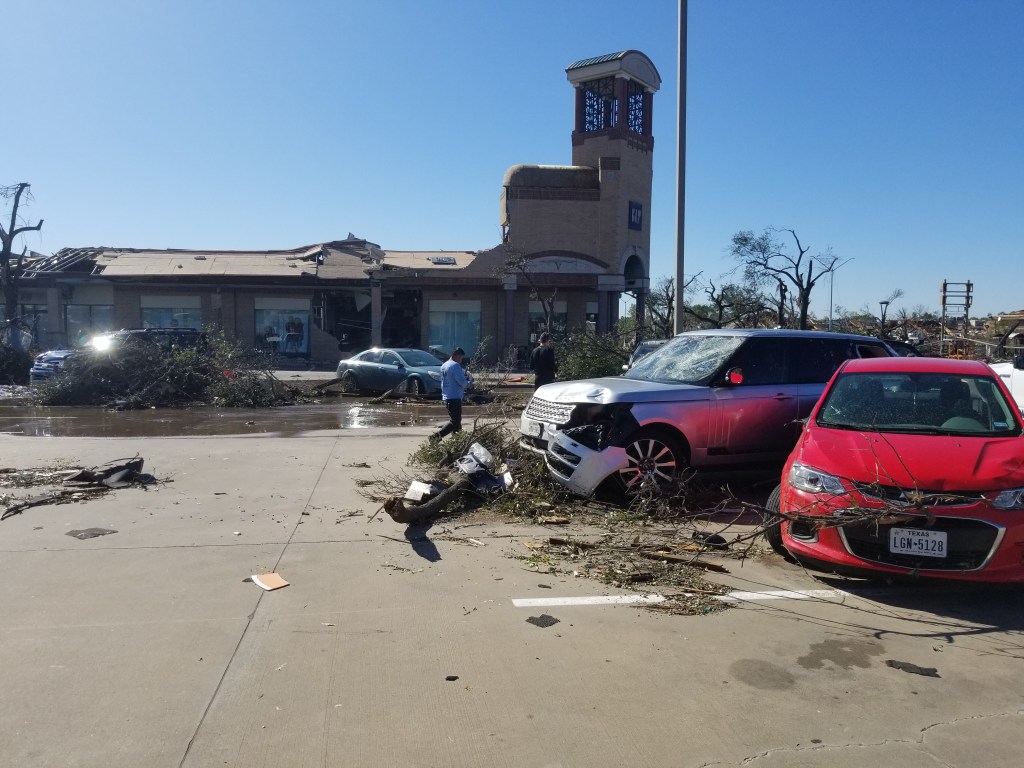
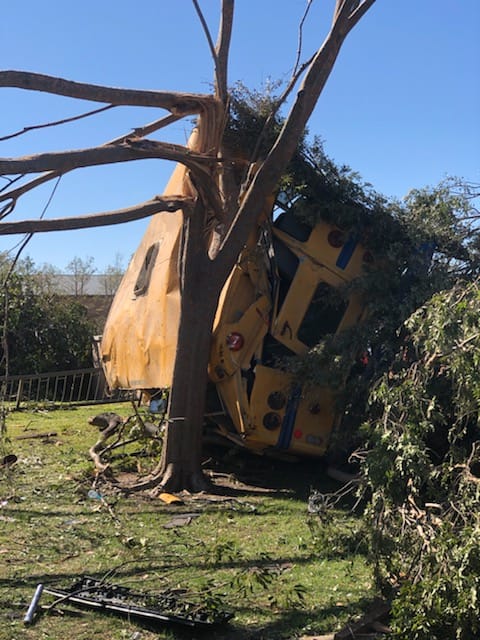
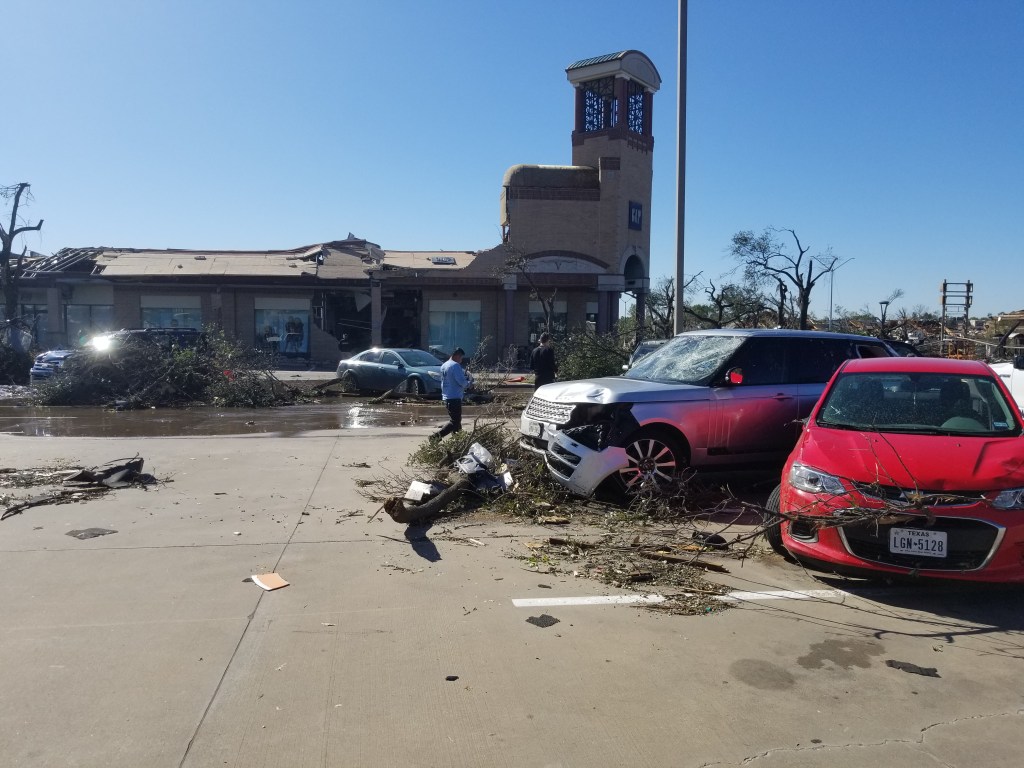
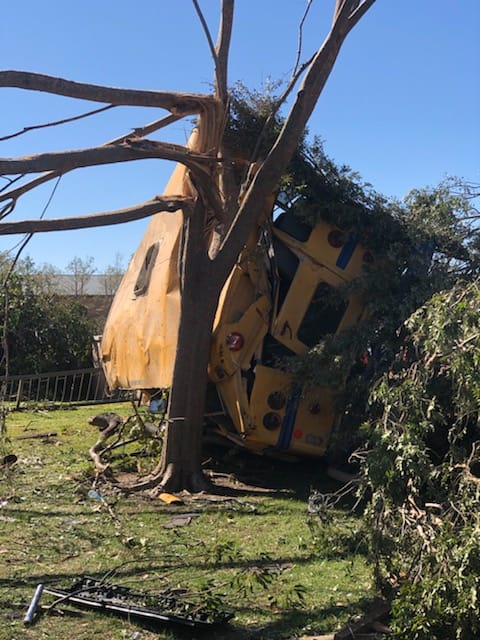
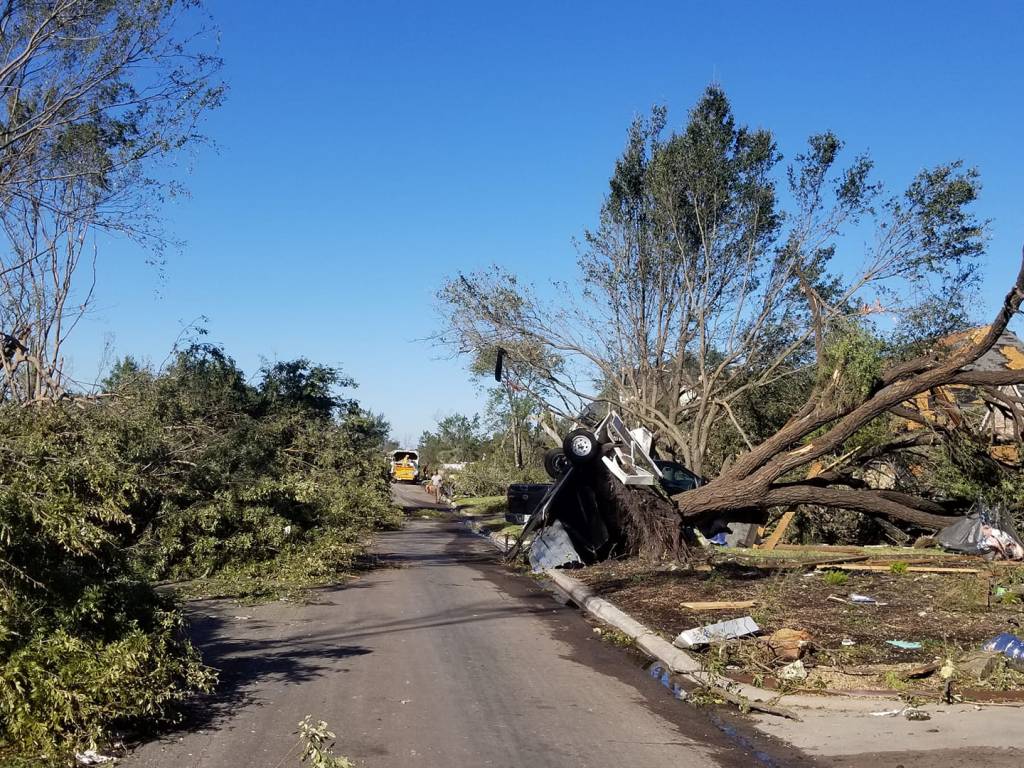
Below are some additional photos that I took, showing the carnage in the neighborhood.
The remains of the Gap, a store at a nearby shopping center.Destroyed house in the neighborhood.View of the shopping center in our neighborhood.This was a school bus belonging to the school where my boys went.Streetview from the neighborhood.Another house in the neighborhood.The remains of the veterinary clinic where we used to take our dogs. Luckily there were no animals staying overnight at this time.Our street, just two/three houses down from us.
Today, or rather yesterday, since it is past midnight, was a wild day here in Dallas. We had severe thunderstorms with strong winds ripping up trees around the neighborhood as well as our patio parasol and one of our small trees. There were large hails, lightning and thunder, flash floods, as well as a tornado. Luckily the tornado was not anywhere near us, but we lost power during a significant part of the day, just like more than 650,000 people here in Dallas. Oncor said it will take 8 days to restore power to everyone. Our mini-Australian Shepherd Rollo is very afraid of bad weather, so he had a bad day. I am sure many other dogs had a bad day too.
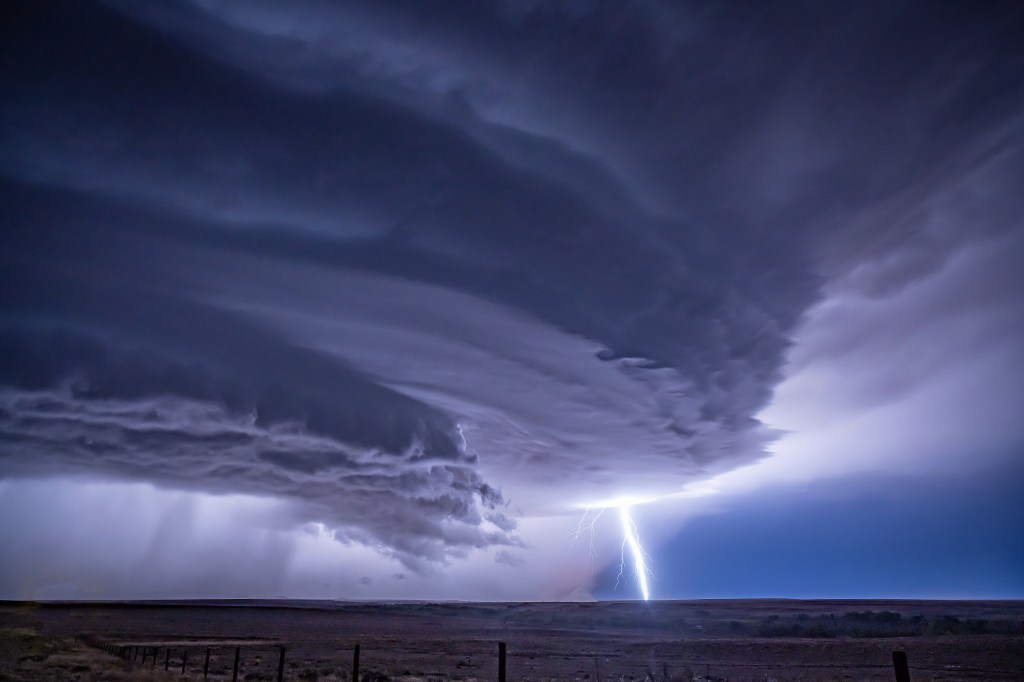
A so called supercell but without a tornado. Stock Photo ID: 1768468151 by Laura Hedien.
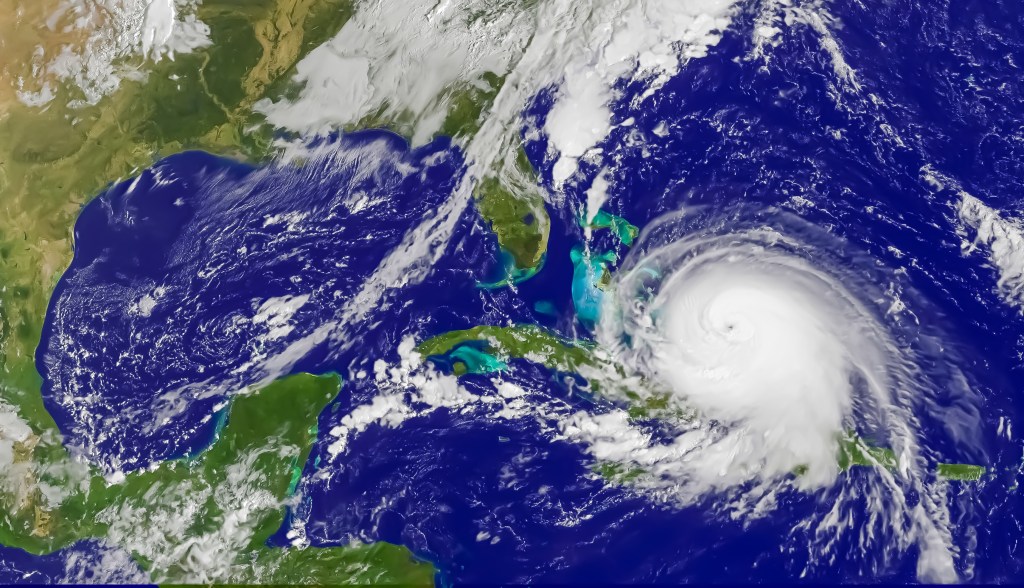
When I talked about the weather with friends and family, I realized that many people do not know the difference between a tornado and a hurricane, so I thought I would explain. A hurricane is a big rotating storm system originating in the ocean that sometimes makes landfall and devastates our coasts. Hurricanes are big, thousands of square miles and even a million square miles. A hurricane has wind speeds of 74 miles per hour (mph) or higher. That’s 119 kilometers per hour or 33 meters per second. They are called hurricanes in the Atlantic and the northeast Pacific, and Typhoons in the northwest Pacific, and otherwise just cyclones.
Satellite photo of hurricane approaching Cuba and Florida. Stock Photo ID: 2202605185 by Emre Akkoyun.
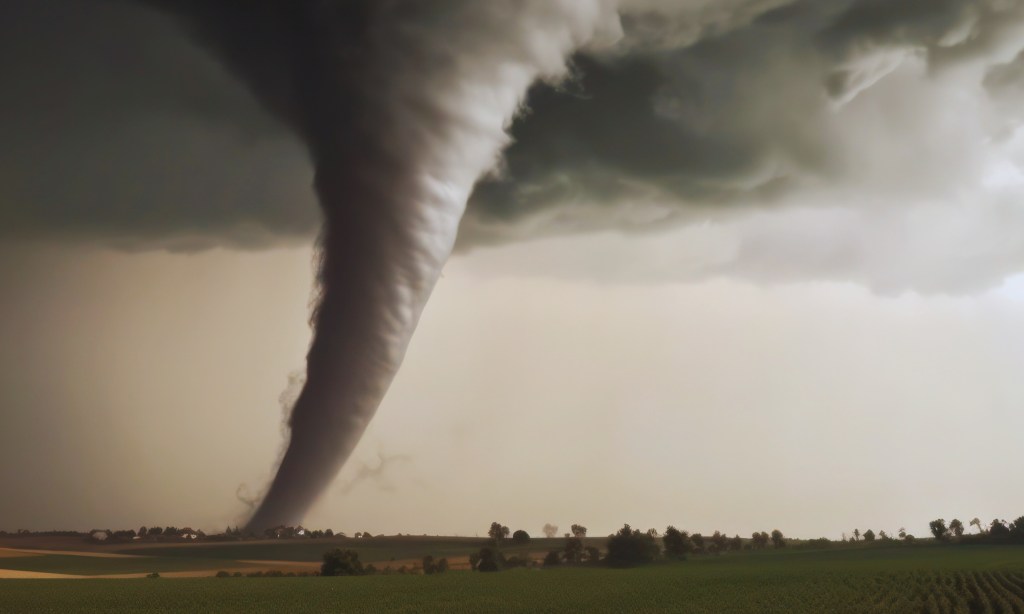
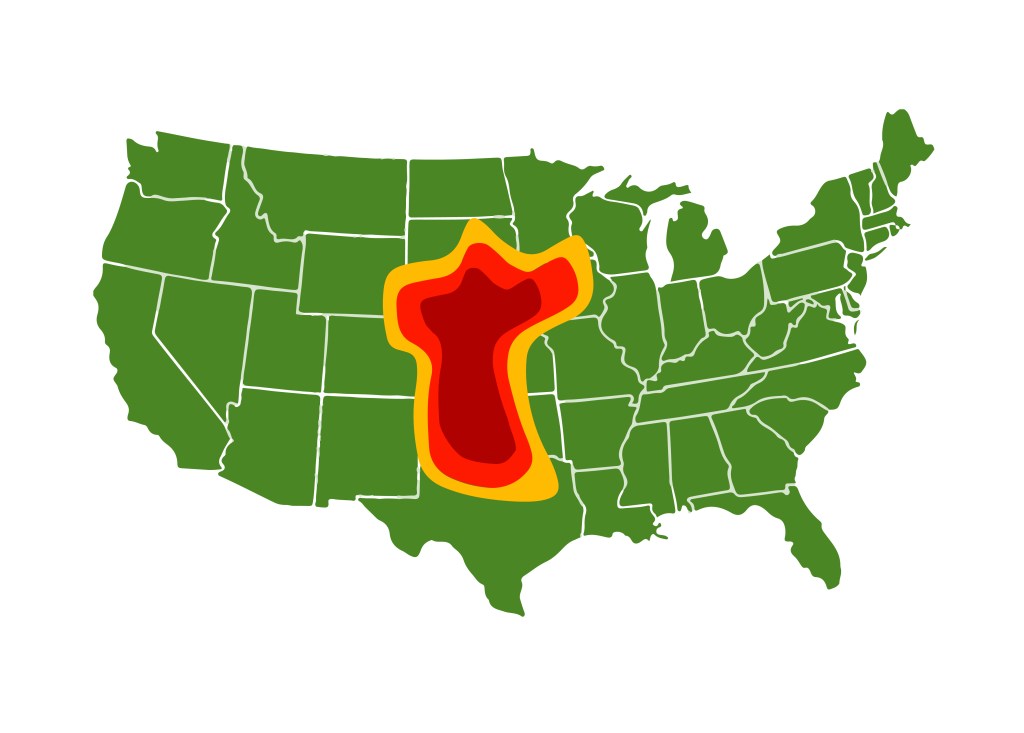
A tornado is a violently rotating column of air that is in contact with both the surface of the Earth and a cloud. They originate with thunderstorms, especially supercells, and are more of an inland phenomenon even though hurricanes can sometimes generate tornadoes. They are much smaller than hurricanes in area, almost always much smaller than a square mile, or just 10 or 30 meters across. The reason they can be as deadly as hurricanes is that they tend to have stronger winds and they appear and disappear quicker thus taking people by surprise. Tornadoes can happen anywhere, but they are more common in North America and especially in tornado-alley. Despite tornado alley’s small size, a quarter of all significant tornadoes in the world occurred there according to a study (1921 – 1995).
A tornado. Stock Photo ID: 2369175167 by g images.com.
Below is a list of how hurricanes (Saffir-Simpson Hurricane Wind Scale) and tornadoes (original Fujita scale) are classified. The unit is miles per hour (mph). Also note that as the wind speed doubles the force quadruples, so an F5/261 mph Tornado has a force that is 2.8 times stronger than category five/155 mph hurricane.
Hurricane category one: Winds 74 to 95 mph. Tornado F1 : 73 to 112 mph
Hurricane category two: Winds 96 to 110 mph. Tornado F2 : 113 to 157 mph
Hurricane category three: Winds 111 to 130 mph. Tornado F3: 158 to 206 mph
Hurricane category four: Winds 131 to 155 mph. Tornado F4 : 207 to 260 mph
Hurricane category five: Winds greater than 155 mph. Tornado F5 : 261 to 318 mph
Map showing Tornado Alley. It includes north Texas / Dallas. Stock Vector ID: 1719764089 by Adansijav Official.
The weather today reminded me about what happened on October 20, 2019. An EF3 Tornado ravaged our neighborhood, and it came close to our house, about 100 yards, and it damaged our house. Our chimney was smashed by a piece of concrete flying off a neighbor’s house, and our roof was damaged and needed to be replaced. In addition, our garage door was destroyed, and the wiring and pipes in the attic were destroyed, our fence was damaged, and my grill flew across the yard. The cost of the repairs was $50,000.00.
Bronco had just had a toe amputation. He did not blow down our fence.
However, we were lucky. Several of our neighbors’ houses were totally destroyed and my wife’s parents house was a lot more damaged than our house was. The wind from the Tornado lifted my 89-year-old father-in-law up in the air and he was hit by a broken marble table that injured his back. The school where our boys used to go, St. Marks School of Texas, was badly damaged and the walls of the gymnasium blew away.
A neighbor’s house the morning of October 21st, 2019.
I was sitting outside drinking a beer, a Yellow Rose, when my phone started making a loud sound. It was an alarm announcing a tornado warning and, in the distance, I could hear a faint tornado siren. At first, I thought it was nothing but when I saw the lightning approaching, I decided to go inside. Two minutes later a hailstorm made things very loud, the wind was strong, and the house shook, and then we heard a loud explosion. That was our chimney being smashed.
Another neighbor’s house. This house was about 100 yards from our house. It took a direct hit from the tornado.
After the wind had died down a bit, I opened the door to the backyard, and what I saw shocked me. My gas grill had flown across the patio. There were bricks and pieces of concrete all over the patio and the lawn. There was a big sheet of metal lying on the patio. Big tree branches covered the lawn. There was debris everywhere. We had also lost power. It turns out that the EF3 tornado had gone through our neighborhood and passed within one hundred yards of our house.
Another neighbor’s house (a bit further away from us).
My wife Claudia asked me to go check on her parents. I drove about 50-100 yards when a neighbor’s roof lying across the road stopped me. I turned around but this time I was stopped by a large pile of trees lying across the street. So, I started walking, but this time I was stopped by a group of firemen telling me that it was too dangerous to be outside. They told me to go back home, and I did.
Inside Claudia’s parents’ house. This was the morning after. We are walking into their house to check on them (that’s my wife).
I can add that October of 2019 was a very difficult month for our Leonberger Bronco. He was getting old. He was twelve years old, and he had the first signs of geriatric-onset laryngeal paralysis polyneuropathy (or GOLPP), which made his breathing a bit labored and affected his gait. In addition, he had developed another case of squamous cell carcinoma, a toe-nail cancer, and this time on his right rear paw. We amputated his toe on October 3—the day he turned twelve years and three months old.
We had to change Bronco’s bandages every now and then but Rollo, our mini–Australian Shepherd made sure we did it right.
The surgery went well, but after around ten days it was discovered that he had a large deep ulcerous sore on the same paw a few inches above the surgical scar. Fortunately, it was not cancerous, as we first thought, but we would have to treat this sore in addition to nursing him back from his amputation. Then on October 20 we were visited by the tornado. One week after the tornado Bronco had his first heart failure. So, something bad happened every week in October 2019. It was a dark time for Bronco. However, he took it very well, he kept his brave and positive outlook on life, and he was able to recover.
Below are a few more photos from that day.
Bronco and Daisy the evening before the big storm. None of us suspected what was about to happen.This is the next-door neighbor of Claudia’s (my wife) parents.Destroyed house in the neighborhood.View of the shopping center in our neighborhood.A store at a nearby shopping centerThis was a school bus belonging to the school where my boys went.Streetview from the neighborhood.Bronco and Rollo a few days after the Tornado.
I’ve mentioned in other posts that I am a volunteer for a non-partisan organization called Citizen Climate Lobby, CCL for short. The name is maybe misleading insofar as we are not “normal” lobbyists, just volunteers, without money, who are trying to get politicians interested in climate change related legislation. We do many things, but one thing we do is meeting with congressmen, house representatives as well as senators, state legislators, including state representatives and state senators, and mayors and city council members, as well as corporations, organizations, and grass roots, that’s regular folks. Naturally we discuss different things with a US senator compared to a city council member. We discuss national legislation with a US Senator and local pollution issues with a city council member.
CO2 emissions dial. Shutter stock Photo ID: 1928699927 by NicoElNino
CCL has been successful
Overall, I think CCL has been quite successful. We are well known in congress, we have a good reputation, and people tend to want to meet with us. We have been instrumental in passing legislation and in 2016 a Climate Solutions Caucus was created in the house by one Republican congressman and one Democrat congressman. It was CCL that was behind this and who brought the two congressmen together. The first two years the caucus had an equal number of Democrats and Republicans. Before the election in 2018 there were 40 Democrats and 40 Republicans on the caucus. After the election many of the typically moderate Republicans in the climate caucus lost and the numbers are no longer equal. I can add that I am the CCL liaison for Senator Ted Cruz office.
Senator Ted Cruz TXJR with Citizens Climate Lobby in 2017. The senator is standing immediately to the right of the American flag, and I am standing immediately to the left of the American flag. My wife and daughter are also there.
Be Organized and Polite
I think the reason that CCL has been successful is that the CCL volunteers are trained to be polite, to listen and ask questions. Politicians and their staff are flooded by angry, rude and toxic messages from opiniated people on both sides of an issue, and they have delete-buttons and trashcans for that. Protesting, screaming, insulting, threatening, showing your feelings, is not as effective as some people think. When you push people, they will push back or ignore you. You need to win people over, not alienate them.
We’ve had a few accidents when some volunteers lost their temper but otherwise, when someone acts dismissive or hostile to your message you still try to find common ground, or you can ask if you can get back to them with research articles or other information from reliable sources. You don’t argue and you definitely do not get angry. In addition, you need to listen, ask them why they believe what they believe, and write it down for future purposes. You also need to be well informed. If you don’t know something, promise to get back them, research it, and then give them the information by email once you have it. Keep all communication to the point and easy to understand. Don’t ramble. Respect their time. You have one issue. They have a hundred and one.
This photo is from the CCL meeting with Ted Cruz office June 2023. I set up the meeting, but I was not there because my son was getting married at the same time.
How to Set Up a Meeting
To set up meetings with congress, call/write to the scheduler the first time around about 2-4 weeks ahead of when you want to meet with them. If you already have the emails or phone numbers of a staff member then use that. Don’t just walk in and don’t try to schedule too far ahead. Keep the request simple, short and humble but clear, and don’t expect an immediate response. Suggest a time but be open to other times. Don’t start spamming them if they don’t reply. Give it a few days and then email them again or call them. Refer to / include your previous email to remind them that you have already tried to request a meeting. It is a little easier to get a meeting with a council member than a US senator.
The most common is that you will meet with one or more staff members. Don’t expect to meet the congressman, not the first time. If you are meeting with a state representative or a city council member you have a better chance of getting to speak to your representative. Don’t bring too few and not too many people. Five or six people is a recommended group size. Try to have at least one constituent in the group. A constituent is someone who lives in the congressman’s district or the city council member’s district. Ask how much time you have. At a congressional office you typically have half an hour. Respect that time. It is best to ask for two things. First, what you really want. That’s the “primary ask”. Then an easier version of the “primary ask” or an alternative. That’s called the “secondary ask”. The reason is that psychology has shown that if they are against the “primary ask” and have to say no, they’ll try to please you by saying yes to the secondary ask. Thank them for meeting with you before and after the meeting.
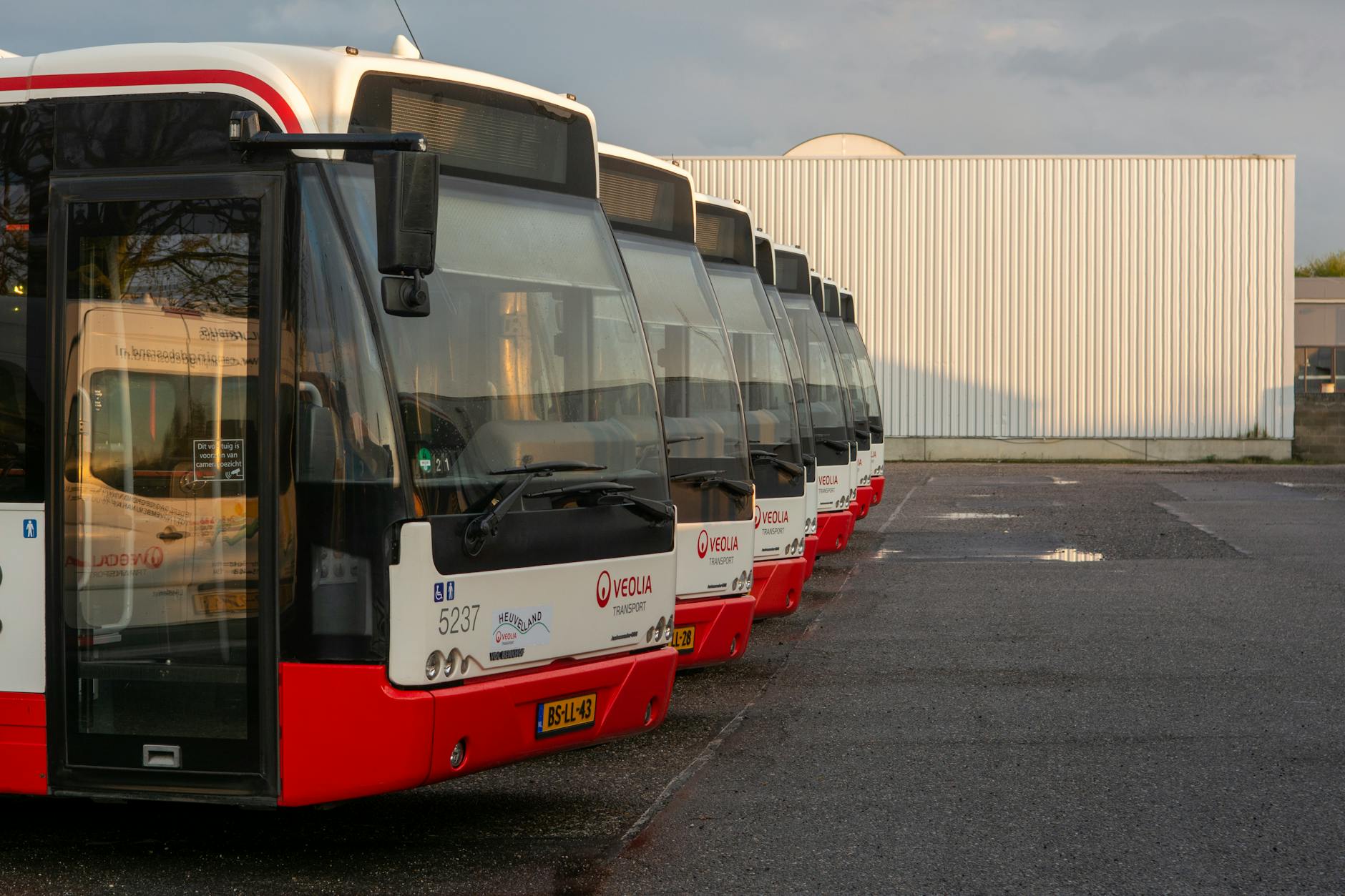
Be aware that requests that require the politician to spend money or raise taxes are more difficult for them to accept. The climate legislation that Senator Ted Cruz voted yes on, the Growing Climate Solutions Act, which was about supporting farmers and forest landowners doing things sustainably, required very little government assistance. Once when I sent an email to my Dallas city council member (a libertarian), whom I already knew, I asked him to replace diesel buses with EV buses. It was a Sunday. His immediate reply (within 5 minutes) to me was along the lines: Hi Thomas. The EV buses cost money and since I promised not to raise taxes, I’ve got to cut something else. I am at city hall right now working on the budget. Could you please come down to city hall and help me find which item to cut. I am having a really hard time with this. I thought that once you find the item to cut for me maybe you could volunteer to take the blame for cutting it.
A bit snarky maybe, but I got his sarcastic tone, and I dropped the subject. I told him “Never mind”. I should mention that he voted yes on another issue that we had asked of him, despite him at first telling us no. However, that issue required no tax money. I can also add that a few years later Dallas got EV buses.











 Leonberger Life