


The focus of this blog is Leonberger dogs but sometimes I write about other things, for example, about myself. This time I am responding to the daily Writing prompt “Which languages do you speak and how did that impact your life?”.
Swedish or Norrlandish
My native language is Swedish because that is where I was born and grew up. Since I lived in northern Sweden, I speak Swedish in a dialect referred to as Norrlandish. I was told by a Dutch linguist that Norrlandish is different enough from main Swedish that Norrlandish could be considered its own language, especially in the region where I grew up where the Norrlandish dialects are especially distinct. He was very familiar with the local variants of my dialect, which I found to be amazing. I was also amazed by the fact that he spoke so many languages. If I don’t remember incorrectly this linguist claimed that he spoke 30 languages.
Anyway, languages evolve, including Swedish. Things like Television, local travel, etc., tend to dilute and evolve dialects. However, I’ve been in the US for a few decades, and I’ve lived in Texas for 25+ years, which means that the way I speak Norrlandish has not evolved much, which has led to some interesting situations.
For example, once when I was shopping at a local grocery store in northern Sweden the cashier told me, “It is so nice to hear someone who still speaks the old way”. She was curious about how I had managed to keep the old dialect, and she asked me where I was living. Maybe she expected me to live in a cabin deep in the forest without a TV or radio. It was obvious from her reaction that she did not expect “I live in Dallas, Texas”.
Now I speak American or as some call it English

One of the languages I studied back in school was English. The other was German. My parents did not speak any English, well, at first. However, my dad took English classes as an adult and was able to get by. My guess is that when I was done with school, I spoke English at the B1 level, possibly B2 level, according to the Common European Framework of Reference for Languages, which rates your language skills in any language from A1 to C2 (A1 is beginner, then comes, A2, B1, B2, C1, C2, C2 is like a native speaker).
B1 means that you can participate in a conversation with some difficulty, understand a newspaper article that does not have difficult language, write a short essay on any unexpected topic using multiple tenses, and understand a radio newscast that is not too fast.
In 1987 I was sent to Case Western Reserve University by my University, Uppsala University, Sweden, as a university level exchange student for one year. I was studying electrical engineering and physics. During that year I met my wife and after living in both the US and Sweden we ended up staying in the US. I had some difficulties with my English at first but with respect to learning a different language nothing beats being embedded in the language and I soon spoke and understood English I think pretty well. The type of English that we had studied in Swedish school was British English, but now the English that I absorbed was American English. Thereof the tongue in cheek of the title of this section.
I view being fluent in the main language of the country you live in to be of high importance. I have no problem understanding, speaking, reading or writing in English. However, it is very difficult to lose your accent when you have learned a new language as an adult. Just think of Arnold Schwarzenegger. Children can do it more easily. They say that the cut-off age is 12 years old. It is quite uncommon for people who are not fluent in at least two or more different languages to grasp this. On several occasions people have expressed their surprise over the fact that I still have an accent. Sorry the accent stays, and it is not my choice. You can read a related post “Accents are very difficult to lose” over at my second blog.
Another second language fact that you will find in that post is that Spanish has 74 million non-native speakers in the world, making it number eight with respect to the number of non-native speakers (second language). Oh, you thought it was the most popular second language in the world after English? Well, that is a common misconception here in the US due to the closeness to Latin America. I have often come across people who do not consider me bilingual just because I don’t speak Spanish. There are thousands, actually millions, of ways of being bilingual.
Now I am learning French
My wife has a sister in France and her parents speak French. When she decided to improve her French by taking French lessons for adults, I joined in with her. I don’t know if it is because of age, or because I am not putting in enough time into it, but it is going slow. However, I did pass the French B1 exam, which means I can participate in a conversation with some difficulty, understand a radio broadcast if they don’t speak fast, read a newspaper, and write short essays in French. However, I don’t think I can become fluent in French unless I somehow stay in France, or another French speaking country for some time.
So far, my experience in French has not been of very high importance to me. However, it is a hobby, it is something interesting that my wife and I can do together, and French speakers cannot speak behind my back without me knowing.
Speaking Dog
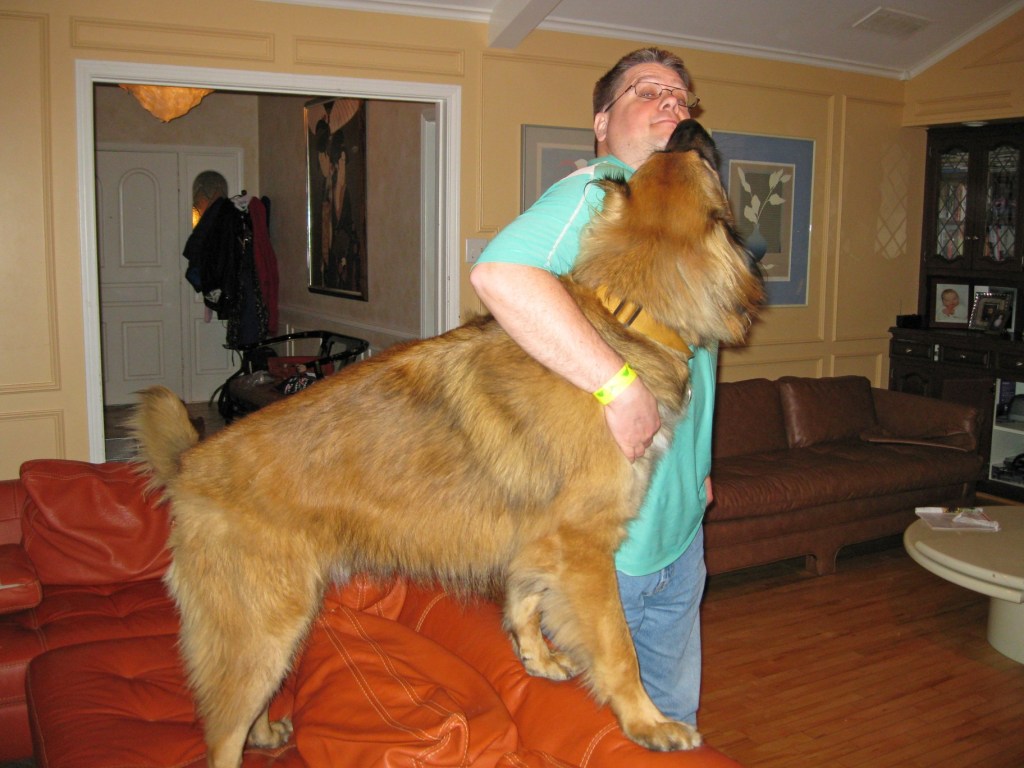

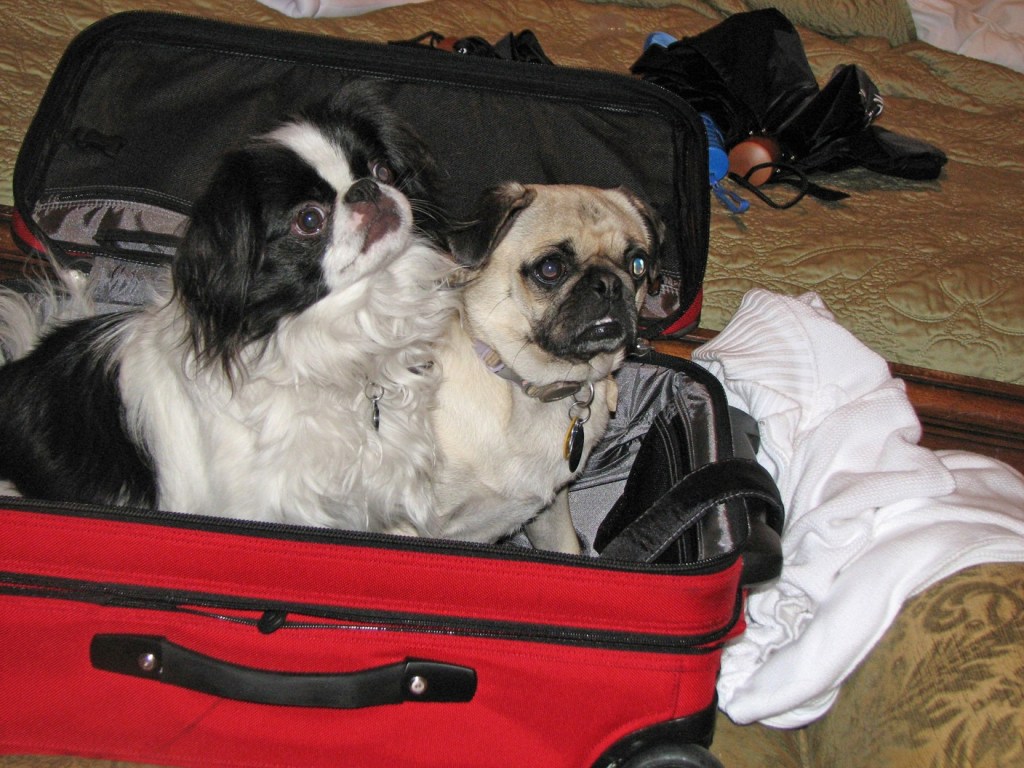

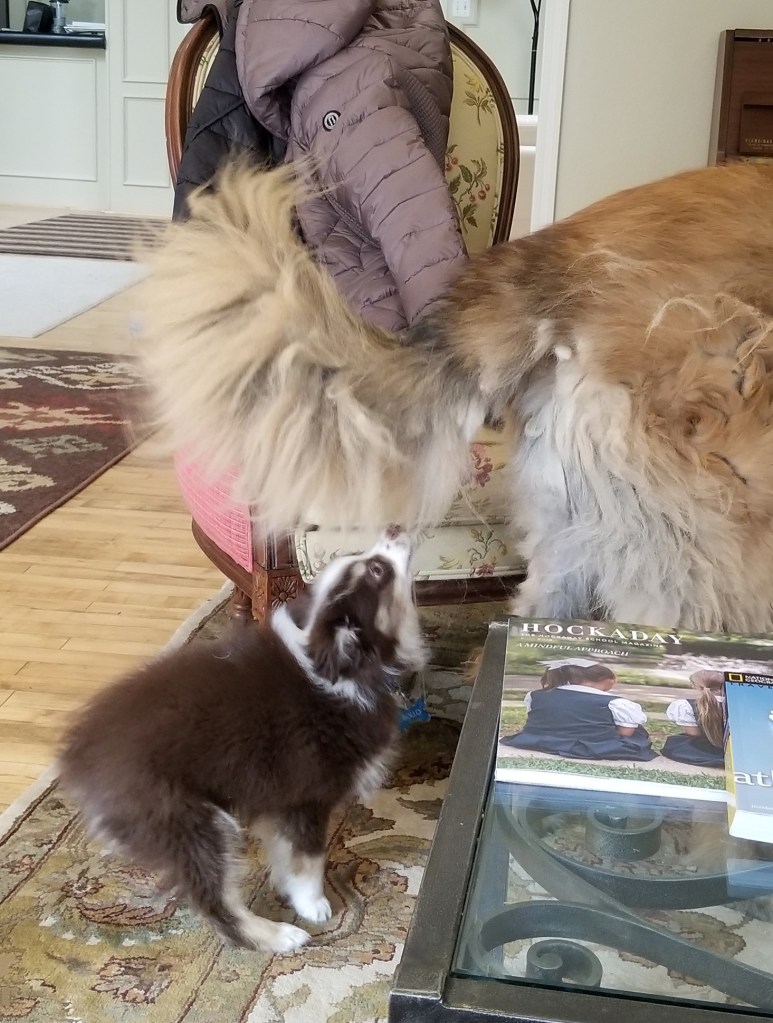
Dogs don’t speak human languages, but they can understand many words and react to them. Some dogs such as our mini-Australian Shepherd Rollo understand several hundreds of words. If you tell him, “Rollo go look out the window”, he goes and looks out the window. If you tell him, “We are going to Jack and Etty”, he starts screaming happily and running around in circles, because he knows he will get snacks there. If you say “bribe” he comes running expecting a handout, just like a politician. I could go on.
Dogs don’t speak with words, but they express themselves through body language and different kinds of barks, and if you pay attention, they can tell you a lot. For example, when Rollo lays down on his side and lets out one loud bark, he wants a belly rub. When it is 4PM and he starts staring at me, he wants dinner. When I am sitting in the sofa and he scratches my leg with his paw, it means, “move over so I can sit in the sofa”. So, you could say I also speak Dog. Sometimes people call me the dog whisperer, which I like to hear. Well, except for the sarcastic tone.

