
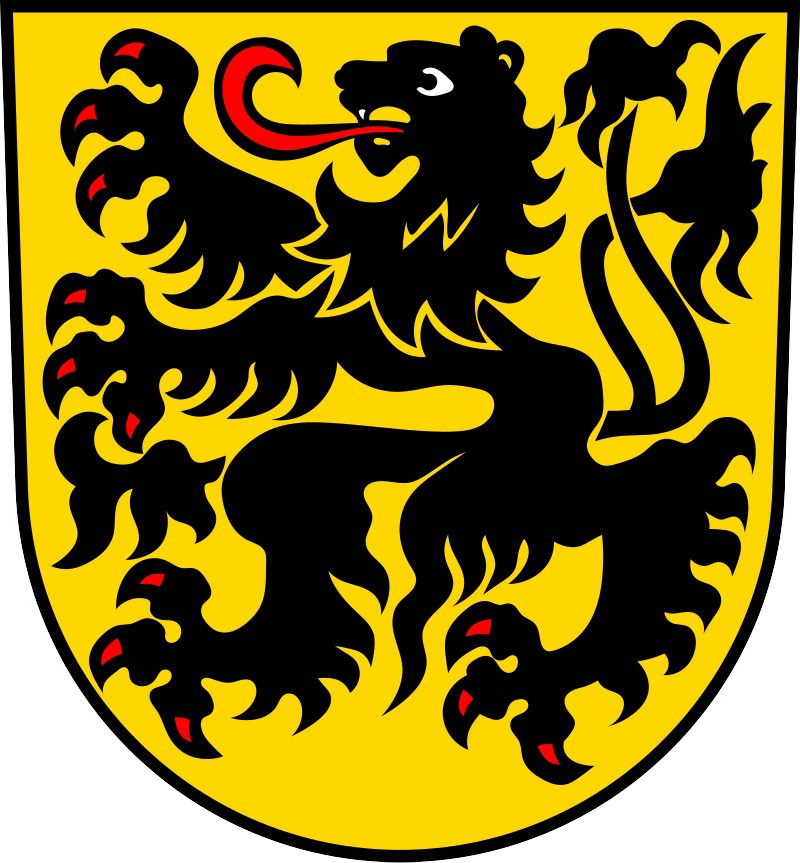
The Leonberger breed was originally created by Heinrich Essig (1808–87) in the German town of Leonberg, in what was then the kingdom of Württemberg. According to legend, Essig bred the dog to resemble the lion in the town’s coat of arms. Indeed, as you can see in the image above, the lion in the coat of arms doesn’t look like a real lion, so you could say that the Leonberger looks the way it does because Germans were bad at drawing lions back then. All joking aside, though, Leonbergers do bear some resemblance to lions and maybe even bears. In any case, they are beautiful dogs.
When people would stop me and ask me questions about the kind of dog Bronco was, I would say he was a Leonberger, a cross between a Saint Bernard, a Newfoundland, and a Great Pyrenees and that the breed was created by the mayor of the German town of Leonberg. But, as the economist Tyler Cowen said, “Be suspicious of simple stories.” As it turns out, the story I kept telling was a simplification and not entirely true. History is more complicated. I was unintentionally spreading misinformation about Leonbergers.
Simple and interesting stories are easy to remember, easy to believe, and easy to propagate. But first, Heinrich Essig was never the mayor of Leonberg. He was a prominent citizen of the town, and he was a successful businessman, farmer, innkeeper, horse and dog trader, large dog enthusiast, dog breeder, and town councilman, but he was never the mayor.
Essig claimed to have created the Leonberger in the 1830s by crossing a female Landseer Newfoundland with a male long-haired Saint Bernard from the Great Saint Bernard Hospice, a monastery in Switzerland. He continued crossing the Landseer Newfoundland and the Saint Bernard over four generations, then he crossed his Newfoundland Saint Bernard mix with a Pyrenean wolfhound not, as is often asserted, with a Great Pyrenees (called a Pyrenean Mountain dog in Europe). He then crossed that dog with the Saint Bernard again. In 1846, he was finally ready to announce and register his “lion of a dog.” A few years later, Leonbergers were officially introduced to the public at the Munich Oktoberfest.

However, the story is more complicated than that. There’s no specific breed named Pyrenean wolfhound today, so Essig could have used a Great Pyrenees or a Pyrenean mastiff . In addition, later in the nineteenth century, Leonbergers were used to breed the long-haired Saint Bernard dog, and this likely saved the Saint Bernard dog from extinction. At one point, too, Leonbergers were deliberately mixed with Newfoundland dogs to strengthen the Newfoundland breed. In other words, breeding happened in both directions, and the characteristics of the large breeds were in constant flux. The dogs, including Leonbergers and Saint Bernards didn’t look like they do today, either. Essig’s Leonbergers were multicolored, mostly white, and lacked the black mask that is so important to the breed now. What has not changed is the essence of what Essig was aiming for: a large but moderately proportioned dog that is friendly and loving and a great companion.

Ultimately, the origins of the Leonberger, as well as the Saint Bernard and the other large breeds from this region, are complex and shrouded in mystery. In addition, some of Essig’s claims have been disputed. Breed standards wouldn’t be codified until the end of the nineteenth century. It should also be noted that it was Essig’s niece Marie who to a large extent bred and cared for the dogs.
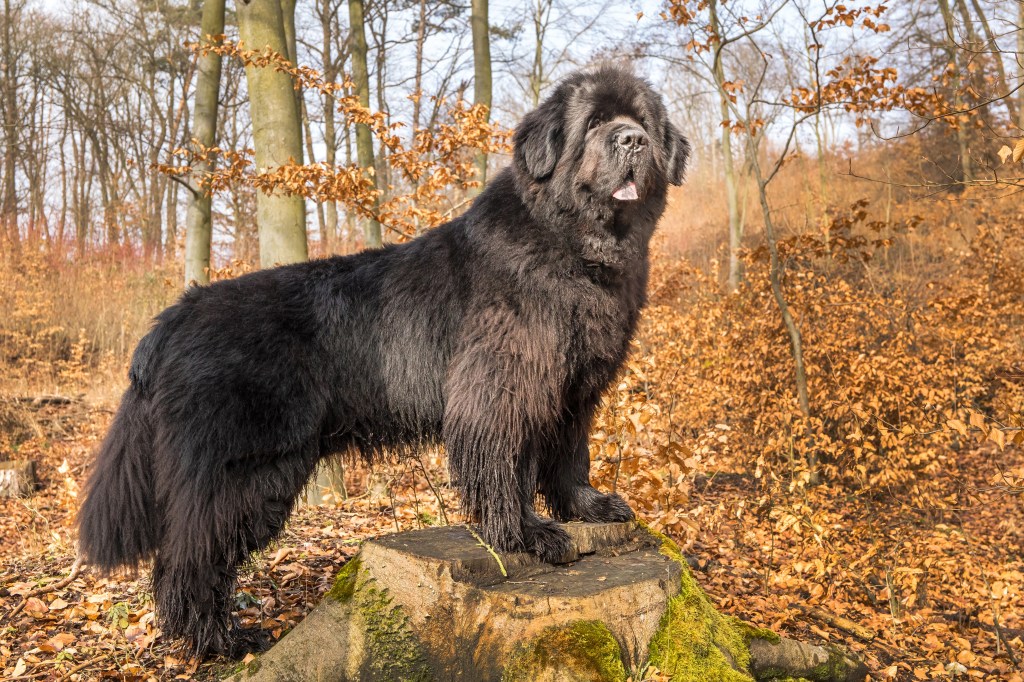
Essig was selling his Leonberger dogs as luxury items to the wealthy. He was also a marketing genius and was able to get the attention of European nobility and royalty. The czar of Russia, Emperor Napoleon II, Otto von Bismarck, the king of Belgium, Empress Elisabeth of Austria, Emperor Maximilian I, the Prince of Wales, King Umberto of Italy, Giuseppe Garibaldi, and the mikado of Japan were among those who owned Leonbergers. Not everyone was happy about this. Some people viewed the Leonberger as a fashionable knockoff of the Saint Bernard that could hinder that breed’s development.
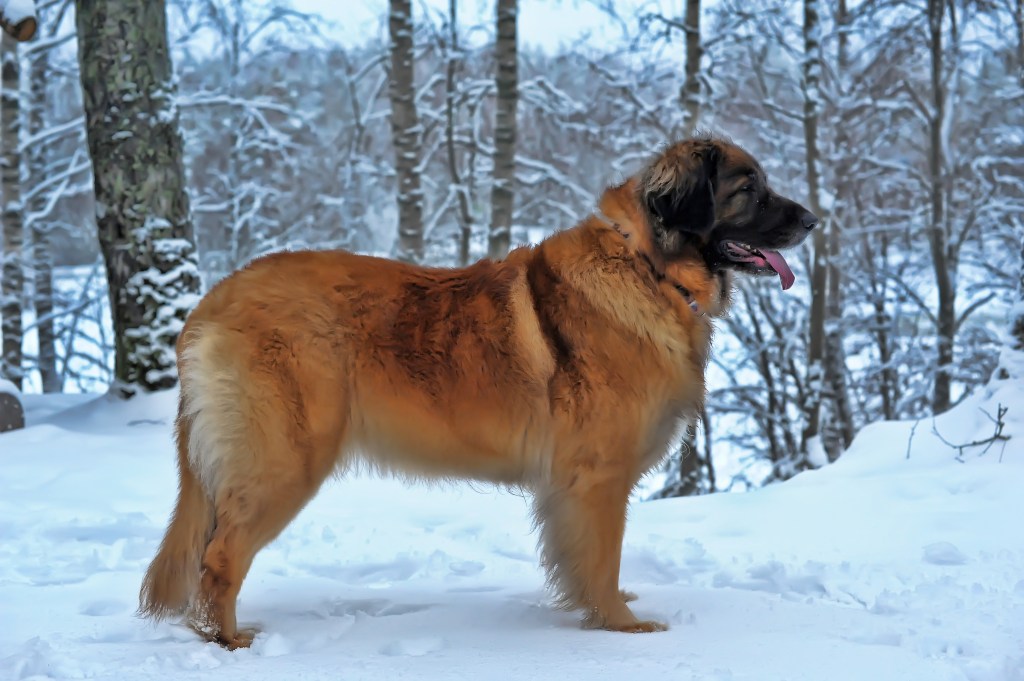
Toward the end of the nineteenth century, the discipline of cynology, or the scientific study of dogs, emerged. Cynologists pushed for breed classification and systematic breeding practices, and breed standards were created. But Essig and others viewed dog breeding as an art rather than a science, and this led to a conflict with the cynologists. Heinrich Schumacher, for example, was a breeder who strove to create a clearly identifiable Saint Bernard type. He was upheld by the cynologists as a paragon, in contrast to Heinrich Essig to the detriment of the Leonberger.
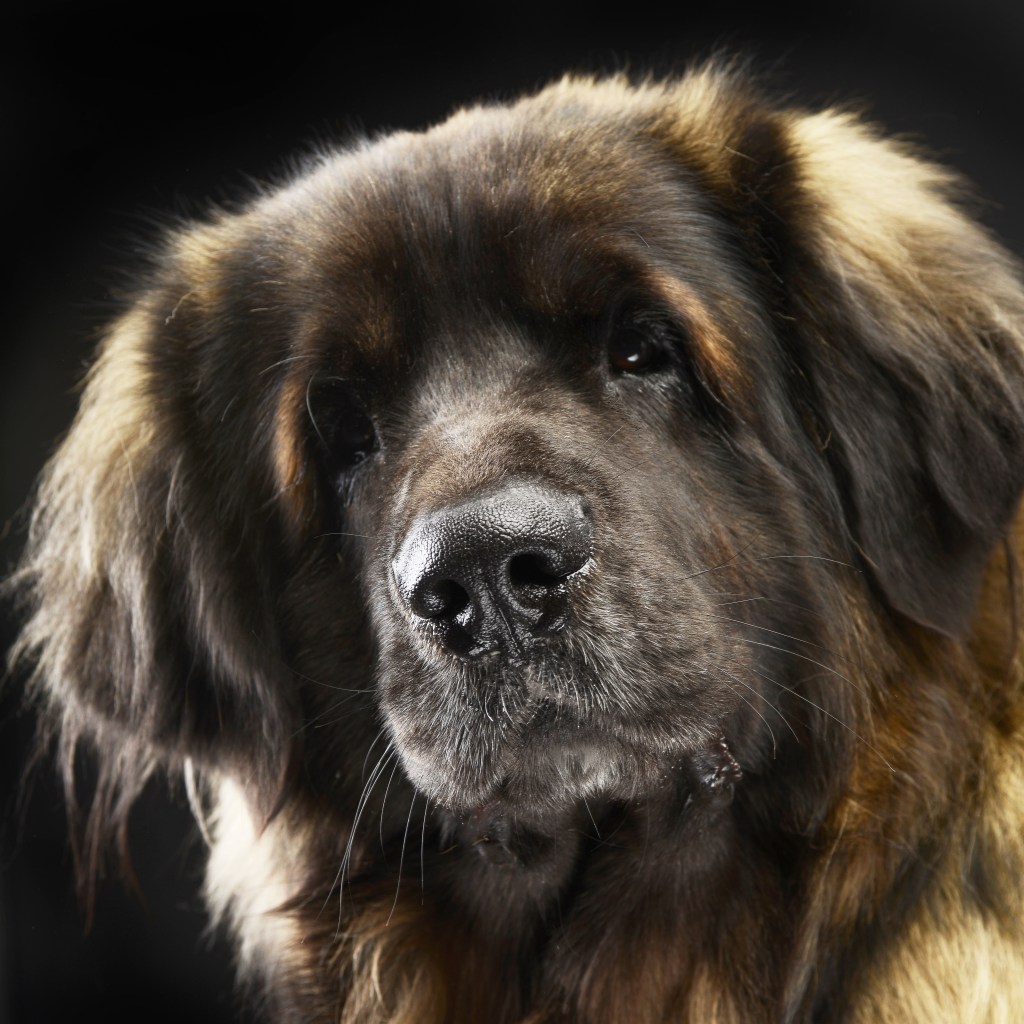
After Essig’s death, in 1887, other people more willing to please the cynologists continued breeding Leonbergers. By that time, the dogs looked for the most part like Leonbergers do today. Then, in 1895, Albert Kull created the Leonberger’s first breed standard. It would go through several revisions in 1901, 1926, 1938, 1951, 1955, and 1972—until finally, in 1996, the FCI approved version was established. The Kennel Club in the UK and the American Kennel Club also have their own breed standards. However, most of them are similar to Albert Kull’s 1895 version. The first Leonberger club was formed 1891 in Berlin: two more were created in 1895, then two more were formed in 1901. The most prominent was the Internationaler Klub für Leonberger Hunde, of which Albert Kull was the first president.
For additional information see :
The Life and Times of Le Bronco von der Löwenhöhle: Stories and Tips from Thirteen Years with a Leonberger by Thomas Wikman.
Madeline Lusby, Leonberger: A Comprehensive Owner’s Guide (Allenhurst, NJ: Kennel Club Books, 2005).
Caroline Bliss-Isberg, Leonberger: A Comprehensive Guide to the Lion King of Breeds (Sea Cliff , NY: Revodana Publishing, 2017), 23, 41, 45, 48–49.

 Leonberger Life
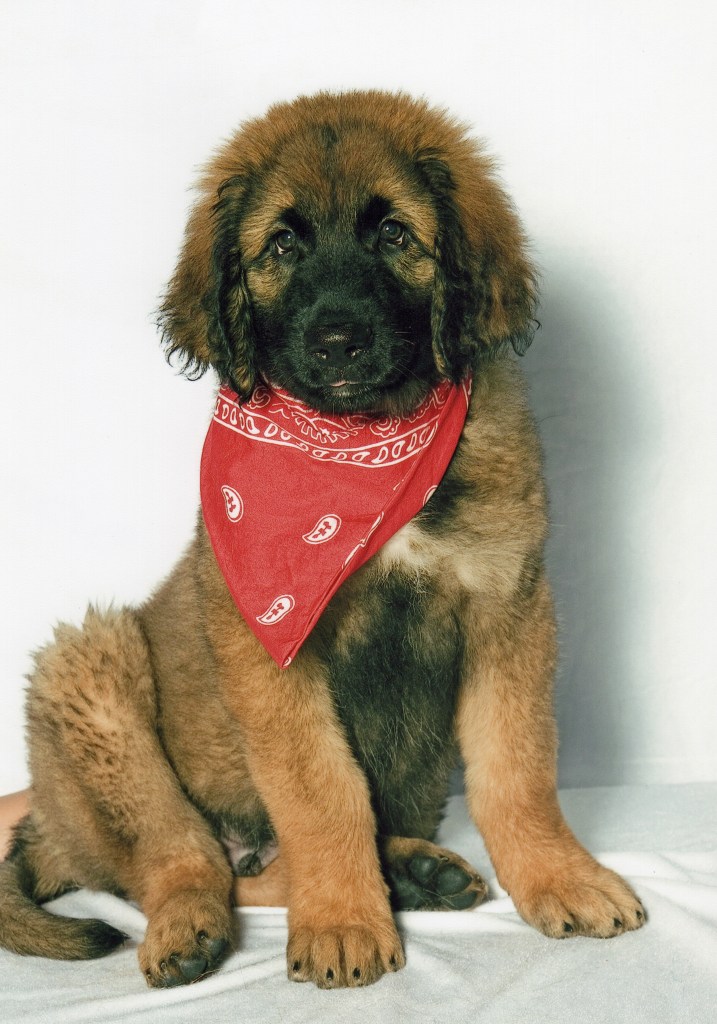
Bronco was so cute! I enjoy seeing his pictures, especially his super-young puppy one.
LikeLiked by 1 person
Thank you so much Alex. We regret not taking more photos of him as a puppy or even a young adult when his fur still looked nice. The vast majority of the photos is of him as a senior.
LikeLiked by 1 person
How interesting!!! I love how you listed the breeds that were used to create the Leonberger breed. It certainly explains a lot about its appearance. Great post, dear friend!!
LikeLiked by 1 person
Isn’t it funny how legends tend to take over real history? Interesting post, Thomas!
LikeLiked by 2 people
Yes you are right Priscilla. People like to simplify and you often end up hearing the simplistic version and just believing it instead of looking it up. Well, at least I have done that mistake many times.
LikeLiked by 1 person
Thank you so much Laura. Some people have questioned Heinrich Essig’s account. It is a bit of a mystery. It appears there is German Farmdog (later German Shepherd) in there too. Maybe DNA analysis can help.
LikeLiked by 1 person
So interesting! I sincerely enjoyed your great article ❤️🐾❤️
LikeLiked by 1 person
Thank you so much Luisa
LikeLiked by 1 person
You’re most welcome ❣️
LikeLiked by 1 person
Thank you for this detailed account regarding the origins of the Leonberger dogs. I enjoyed this and all the photos, too.
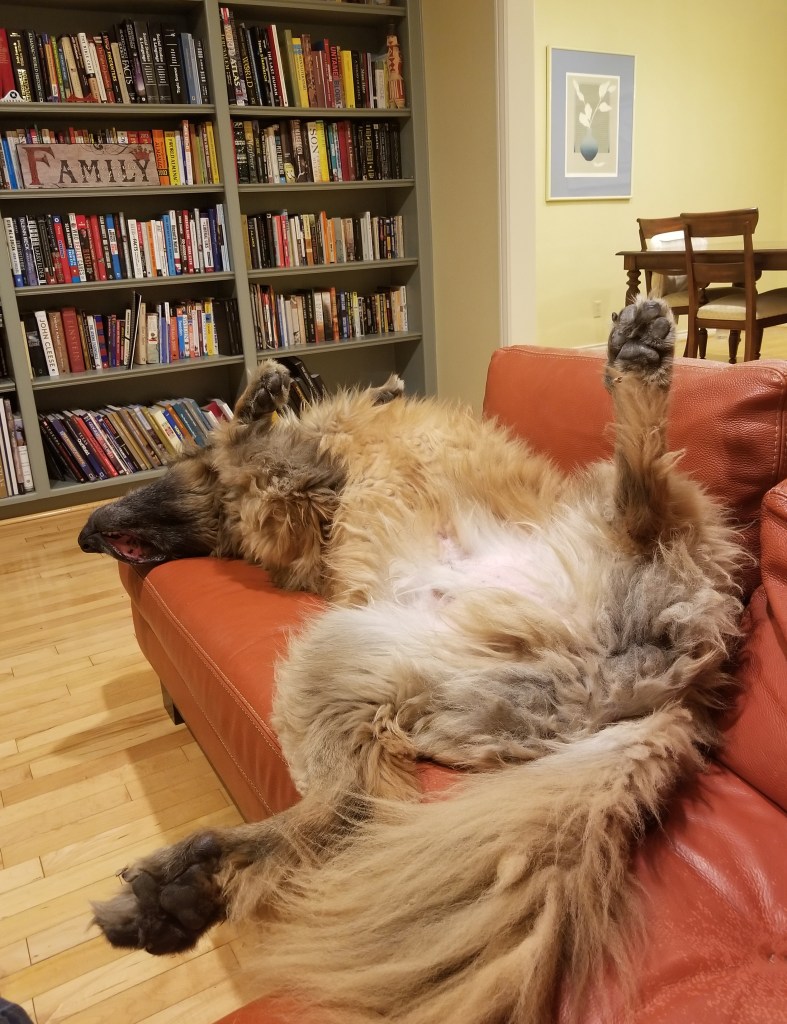
Even at just 3 months, Bronco had an “old soul” look about him. Such intelligence in those eyes. I love how he slept sprawled out like that on your couch, too. LOL Such a darling.
LikeLiked by 1 person
Thank you so much Kymber. His personality was something special. He was so willing to please, unafraid and protective. He loved the family and he loved people and the dog park.
LikeLiked by 1 person
It was great learning more about Leonbergers and the origin of their breed of dogs. I always find it so fascinating to learn where animals originated from.
LikeLiked by 1 person
Thank you so much Pooja. I find it fascinating too. One thing that amazed me when I started researching this was how late in history cynology and dog breed standards came into existence. Before that there weren’t really any specific dog breeds. Breeding was unspecific and more of an art. Now a day some people question whether it really was good to define specific dog breeds since there is a problem with inbreeding. We’ll see where that debate goes.
LikeLiked by 1 person
Yeah, I’ve heard about that debate. The inbreeding causes health problems and can sometimes decrease the life of the dog.
LikeLike
Yes mutts tend to live longer. The dogs with the shortest lives are giant breeds that are pure bred, Saint Bernards, Great Danes, New Foundland, Leonbergers, and especially Bernese dogs. Bernese dogs only have an average lifepan of 7 years. Leonbergers are 8-10 years, maybe a bit longer recently. The typical inbreeding coefficient for Leonbergers is around 29%. This increases the risk for inherited diseases, something the Leonberger Health Foundation International has been working hard to solve, and they have been successful. However, to go further, to improve the breed health even further and get them to live as a long as small breeds some people are suggesting to introduce a completely different breed into the gene pool, without changing the look too much. But this is a hot potato subject I should stay away from.
LikeLiked by 1 person
What a stunning coat of arms! And Leonbergers are undoubtedly beautiful dogs, even if they don’t resemble the original image all that much. Bronco certainly has a long and distinguished history!
LikeLiked by 1 person
Thank you Damyanti. Yes in fact , there is Leonberger data base which feature most Leonbergers in history back to the beginning of the 20th century and even the end of the 19th century. I was able to trace Bronco’s heritage back to 1904. 20+ generations.
LikeLike
It is such a fascinating history how the breeds came about. I’m a fan of the Leonbergers 🙂
LikeLiked by 1 person
Thank you so much Denise. It is kind of fascinating. Add to that the Worldwide Leonberger Data base going back to the end of the 19th century. I was able to trace Bronco’s ancestry back to 1904.
LikeLiked by 1 person
Look at these dogs! They are so noble–so happy to do what must be done. The Shutterstock photo is perfect.
LikeLiked by 1 person
Thank you Jacqui. Just like Ump is noble. I joined shutterstock and have 10 images to download per month. You have to download them or you lose them. I realized it was the last day for the next batch so I downloaded a few Leonberger / dog pictures and black holes and Quasars. I figure out a way to use the black holes / Quasars.
LikeLiked by 1 person
This is a fascinating post, Thomas. Thank you for showing us the breeds that created the Leonberger breed. Such a gentle, intelligent dog. I love the photos of Bronco. 😊
LikeLiked by 1 person
Thank you so much Gwen. You are right. Leonbergers are gentle and intelligent and so family friendly. Our Rollo, the mini-Australian Shepherd was terrible to him. He walked on him, sat on him, bit his tail, dangled in his tail but the only time Bronco lashed out at Rollo was when Rollo stole his toy right out of his mouth.
LikeLiked by 1 person
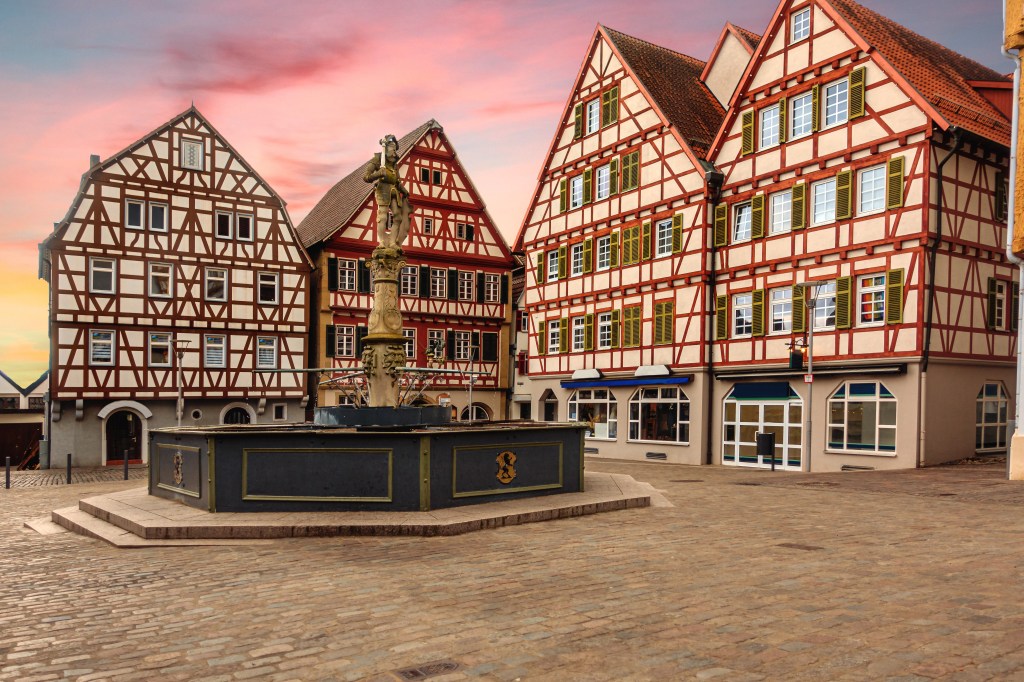
Loved reading about the History Thomas.. and wow to that Town.. Lovely buildings in Leonberg. . But then so many German Towns are so well preserved.. I have visited a few over the years to Christmas markers, but do not ask me their names lol.. They were near the Rhine..
Those photos, just gorgeous.. Thank you Thomas… This post was an education in itself x
LikeLiked by 1 person
Thank you so much Sue for your kind words. I’ve visited Germany a few times, and I’ve worked in southern Germany close to Switzerland, but I have never visited the town of Leonberg. All that was before we got our Bronco. I would like to visit Leonberg one day.
LikeLike
Thanks for sharing the history of the Leonberger, Thomas. That was fascinating and it looks like there are threads that could make fascinating details for someone writing historical fiction as well!
LikeLiked by 1 person
Thank you David. That seems like an interesting thought. Perhaps you could write a historical fiction book with dog history. I would read it.
LikeLiked by 1 person
Such an interesting history!
LikeLiked by 1 person
Thank you so much Dawn.
LikeLike
HI Thomas, the information about the breeding background to Leonbergers is fascinating. It is a strange idea to me to ‘create’ a breed of dog.
LikeLiked by 1 person
Yes you are right, but in the 19th century a lot of breeds were created and then narrowly defined via breed standards by the cynologists at the end of the 19th century.
LikeLike
It’s quite amazing 💗
LikeLiked by 1 person
That’s an interesting mix of breeds within the Leonberger! I’ve never encountered one, nor a St. Bernard in person, but used to look after a Newf and a Great Pyrenees. They were gentle giants, just like Bronco. 🙂 Leonberg looks similar to my birthplace of Soest, in Nordrhein-Westfalen. Those lovely old houses are everywhere!
LikeLiked by 1 person
Thank you Debbie. I worked in Konstanz in southern Germany for a summer and I’ve skied in Garmisch-Partenkirchen but I have not seen much else of Germany. I certainly would like to visit Leonberg. They are all great dogs. I am surprised you have not met a Saint Bernard. They are not that uncommon. Leonbergers are less common though.
LikeLiked by 1 person