This blog feature amusing and heartwarming stories about our late Leonberger dog Bronco, as well as other Leonbergers. It also has a lot of information about the Leonberger breed, the history, care, training, Leonberger organizations, etc. I also wrote a Leonberger book, which I am featuring in the sidebar.
For American Father’s Day (yesterday) I got a number of presents and cards including a portrait of our late pug Daisy. She passed April 5th. For my birthday in March, I got a portrait of our late Leonberger Bronco. With this post I just wanted to show these portraits. They are made by a company called Etsy and the portraits are based on our photos.
A painting of our late pug Daisy who passed two months ago. It is based on one of our photos and created by Etsy. I believe by the same woman who made Bronco’s portrait (have to verify this).The portrait was drawn by Veniceme at Etsy (Natasha Dall’Ara) and it is based on one of our photos.
I have not posted in a while, and I have not read blog posts either because I’ve been focused on the annual Citizens Climate Lobby (CCL) conference and lobby days in Washington DC. Part of this event was about 1,000 CCL volunteers having meetings with more than 400 congressmen and senators. I organized and participated in a meeting with senator Ted Cruz’ office (Texas) and I participated in a meeting with Senator Wicker’s office (Mississippi). I also had a small one-man (just me) meeting with the office of another Texas congressman and a delivery to my own congresswoman Beth Van Duyne (Texas district 24).
CO2 emissions dial. Shutter stock Photo ID: 1928699927 by NicoElNino
Some technical background. The United States congress consist of two houses, the house of representatives with 435 congressmen, and the Senate with 100 Senators, two from each state. Each proposed law or bill/act has a number in the house of representatives on the form H.R.xxxx and S.xxxx in the Senate. To become a law, a bill/act must be approved by the house of representatives with a vote of at least 50% as well as approved by the Senate with a vote of at least 60% (filibuster rule) or 50% if you can make it part of a budget bill (so called budget reconciliation). I can add that the president can also veto a bill that has passed both houses.
How it looked like when I arrived at the Capitol building in Washington DC the early morning of Tuesday June 11, 2024.
The majority of the house of representatives is Republican and the majority of the Senate is Democratic, but the split is very even. Unfortunately, the current congress is also very partisan, and pretty much war like, making passing any laws nearly impossible. Most bills are introduced to impress respective side’s partisan base and for grandstanding, not with the intention of it becoming law. I’ve read that the current congress is the most dysfunctional in United States history. Into this mess CCL is proposing or supporting climate related legislation that is bipartisan, or introduced jointly by Democratic and Republican congressmen, and therefore has a chance of passing. CCL is a bipartisan organization and has good relations with both Democrats and Republicans.
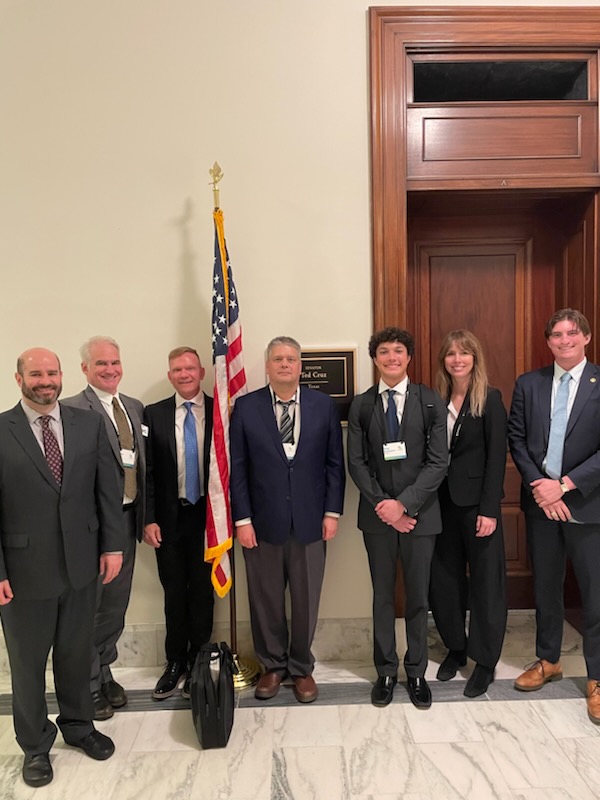
The CCL group meeting with Senator Ted Cruz’ office. The staff member, Jackson Tate, is standing the furthest to the right. I am standing in the middle, immediately to the right of the flag.
Our favorite piece of legislation is the carbon fee and dividend, but we did not discuss it for reasons I will soon explain. The carbon fee and dividend policy consist of three parts. First, a price/fee/tax is placed on carbon emissions. This makes sense because ruining the atmosphere for everyone on earth should not be free of charge. Second, the proceeds are returned to people/consumers on an equal basis, as a dividend, a check or a direct deposit. Most people will receive more money than they lose from paying higher prices, while the incentive to buy less carbon intensive products will remain. You are rewarded for polluting less than the average. Thirdly, a carbon border adjustment, or a fee at the border, will be enacted on imported carbon intensive products that are produced with higher carbon emissions than the average for the United States. A subsidy is applied to exported products created using less carbon emissions. According to economists, a carbon fee and dividend is a very effective policy in reducing emissions. In fact, an optimal way of reducing carbon emissions. At the same time, it does not harm the economy. This is why CCL loves it.
Unfortunately, it is currently not politically viable. In Canada something similar has been implemented and even though 80% of Canadians come out ahead financially from this policy, almost no one believes it because doing the accounting is not easy. It is also incorrectly blamed for inflation. Add the fact that the Republican party has turned against it, thus making it a partisan policy (no longer bipartisan). Therefore, we have to wait.
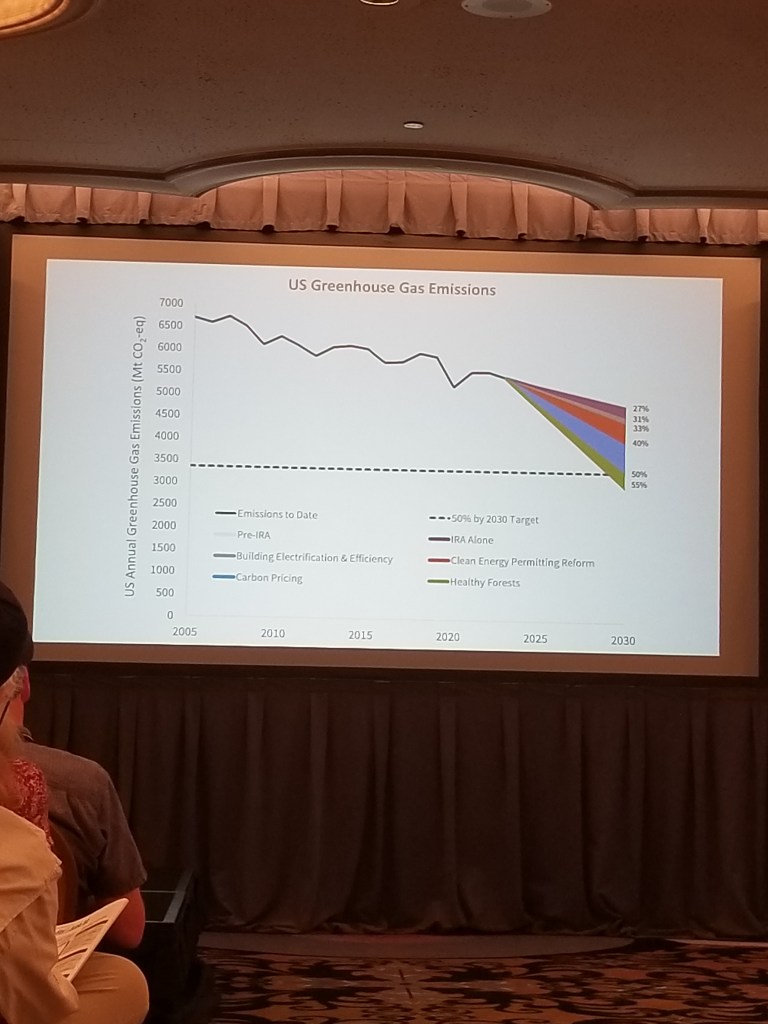
This graph is showing US annual carbon emissions. The black line is the actual US emissions up to the end of 2023. The multicolored graphs are estimated emissions reductions resulting from different policies. The blue triangle corresponds to a specific quite reasonable form of carbon fee and dividend, but we can’t use it right now. The second largest triangle, the dark red triangle, correspond to clean energy permitting reform, a policy area that is very bipartisan and viable.
For this year we had four “Asks”. Four policy proposals or areas for which we are asking support from congress.
Prove It Act S.1863
Energy Permitting Reform
Seedlings for Sustainable Habitat Restoration Act of 2023 S.1164 / H.R.5015
Increased TSP Access Act of 2023 S.1400 / H.R.3036
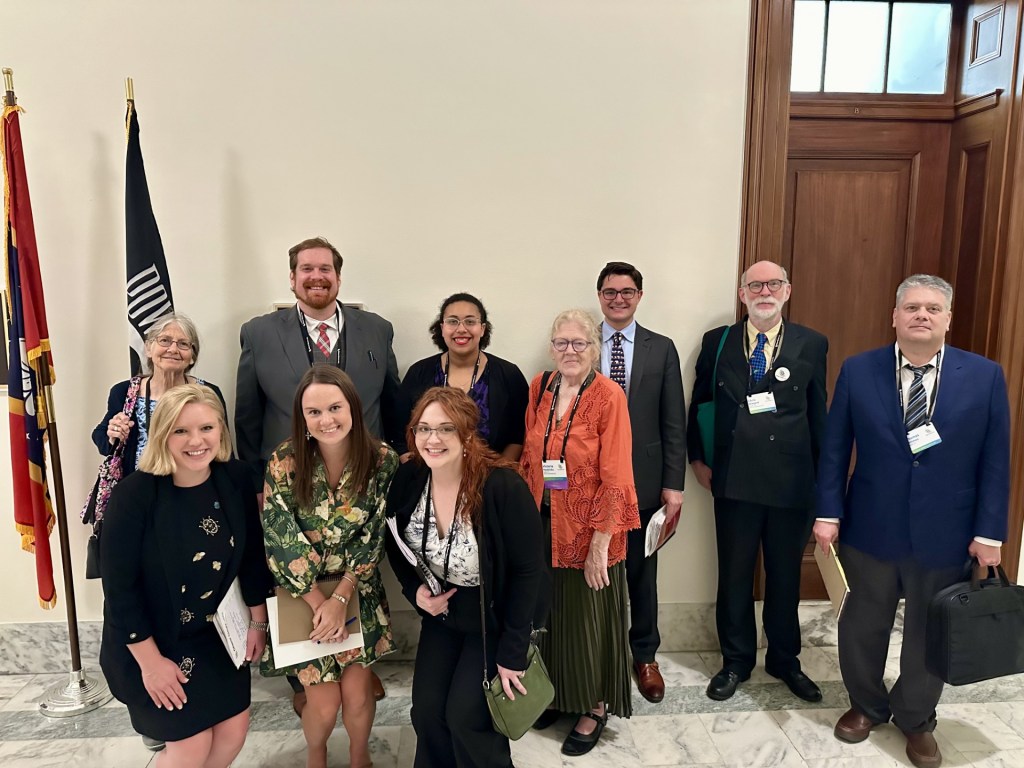
The CCL group meeting with Senator Wicker’s office. The staff members were Julia Wood, Flannery Egner, and Wade Roberts. Julia and Flannery are standing front left and Wade middle back. I am standing on the far right.
Below are the summaries of our four asks. Below each short summary I have included the full text from our flyers. I don’t expect anyone to read the full text, but naturally you can if you are really interested.
Prove It Act S.1863
This bipartisan act introduced by Senators Chris Coons (D-DE) and Kevin Cramer (R-ND) would require the Department of Energy to study the emissions density of certain emissions intense products, cement, aluminum, steel, fossil fuels, etc., in the United States and in other countries. US products are much cleaner than the same products from many other countries such as China and India. Having the data will help us capitalize on this advantage, for example, in trade negotiations and attracting foreign buyers of these products. It is good business for the United States.
Full CCL text of Prove It Act S.1863
The bipartisan Providing Reliable, Objective, Verifiable, Emissions Intensity and Transparency Act of 2023 (S.1863), or PROVE IT Act, introduced by Sens. Chris Coons (D-DE) and Kevin Cramer (R-ND), would require the Department of Energy (DOE) to study the greenhouse gas emissions intensity of certain products — including aluminum, cement, crude oil, fertilizer, iron, steel, plastic, and others — that are produced in the United States and in certain covered countries. The PROVE IT Act is not a carbon tax or carbon border tariff.
The PROVE IT Act was approved by the Senate EPW Committee in a large bipartisan vote (14-5) in January and is expected to be introduced in the House by Reps. John Curtis (R-UT-03) and Scott Peters (D-CA-50) in the coming weeks.
Greenhouse gas emissions are a global issue, and trade and the power of the American market are some of the best tools we have to reduce global emissions. Since many U.S. industries are among the least carbon intensive in the world, producing products here is good for the U.S. economy and good for the climate. In addition, U.S. industries have had to unfairly compete with industries from higher-polluting foreign countries with lax labor and environmental standards. As Sens. Coons and Cramer have said, “The PROVE IT Act would put high-quality, verifiable data behind these practices and bolster transparency around global emissions intensity data to hold countries with dirtier production accountable.”
The PROVE IT Act is endorsed by the American Petroleum Institute, American Conservation Coalition Action, Bipartisan Policy Center Action, American Iron and Steel Institute, Center for Climate and Energy Solutions, Citizens’ Climate Lobby, Climate Leadership Council, Citizens for Responsible Energy Solutions, Environmental Defense Fund, Information Technology and Innovation Foundation, Third Way, Progressive Policy Institute, Independent Petroleum Association of America, Steel Manufacturers Association, and the United States Chamber of Commerce.
The PROVE IT Act is an important bipartisan step to protect American industry and drive down global carbon pollution. Citizens’ Climate Lobby urges all members of Congress to cosponsor the PROVE IT Act and take action to pass the bill this Congress.
Energy Permitting Reform
The biggest obstacle to expanding the utilization of clean energy isn’t building clean energy but building the power lines needed to bring the power from the clean energy sources to households. It takes 10-20 years to get a powerline approved while building a wind power facility takes months. There are also energy technology specific hurdles for building, for example, nuclear power stations and renewables including endless judicial reviews and several layers of bureaucratic approval processes. We can’t wait decades for yes or no. It is important to speed up the process for building America’s clean energy infra structure. Some has been done but more needs to be done. This is an area that will make a big difference that both Democrats and Republicans seem to agree on.
Full CCL text of Energy Permitting Reform
Citizens’ Climate Lobby believes it is critical to speed up the process for building America’s clean energy infrastructure. Changes to the current process for permitting energy projects must be made so America can lower greenhouse gas emissions and ensure American households have access to affordable clean energy. CCL appreciates that the Fiscal Responsibility Act of 2023 included some provisions that will help streamline clean energy permitting and several new agency and FERC rules intended to speed the energy permitting process have been finalized. However, more comprehensive permitting reform is still needed and should be done in a way that protects communities, preserves their ability to provide input, and maintains environmental standards. We also know that further changes to our permitting process will need to have bipartisan support.
In each of the past three years, at least 84% of the new energy capacity built in the United States was clean energy. More than 95% of new energy projects currently awaiting permits are solar, wind, and battery storage. Building a new electrical transmission line, on average, takes over a decade and solar, wind, and transmission projects are litigated at higher rates than other infrastructure projects. If construction of energy infrastructure continues at this pace, we will not be able to lower our emissions at the speed and scale necessary and ensure Americans have affordable and reliable energy in the 21st century.
We still need key reforms to our energy permitting process, such as but not limited to:
Allow transmission lines to be permitted and built much faster: We must permit, site, and build interregional transmission and require that regions be able to transfer significant power between regions.
Reasonable timelines for judicial review: There are new time limits for NEPA reviews, but litigation still has the potential to delay needed energy projects almost indefinitely. We need a reasonable statute of limitations that allows impacted communities to have a voice and stop bad projects but does not allow for infinite delays.
Ensuring robust and early community engagement: Any permitting reform must still provide a thorough, accessible process for community engagement and input.
Technology-specific permitting: There is also a critical need to modernize permitting for specific technologies like nuclear, hydropower, and geothermal power.
We urge Congress to work in a bipartisan manner to enact needed changes to our energy infrastructure permitting process. We believe both parties must come to an agreement on reforms that can pass both the House and Senate and be signed into law.
Seedlings for Sustainable Habitat Restoration Act of 2023 S.1164 / H.R.5015
The Seedlings for Sustainable Habitat Restoration Act was introduced by Texas Senator John Cornyn (R), and a couple of Democrats jumped on board as well. It will authorize the secretary of agriculture to carry out eco system restoration activities particularly the development of seedling nurseries, which will significantly aid forest recovery from wildfires. It is part of CCL’s Healthy Forest initiative.
Full CCL text of Seedlings for Sustainable Habitat Restoration Act of 2023 S.1164 / H.R.5015
The Seedlings for Sustainable Habitat Restoration Act was introduced in the Senate by Sen. Ben Ray Lujan (D-NM), Sen. John Cornyn (R-TX) and Sen. Martin Heinrich (D-NM) and in the House by Rep. Leger Fernandez (D-NM-03). The legislation ensures that funding from the Bipartisan Infrastructure Law of 2021 is available to support the development of seedling nurseries to improve and expand reforestation efforts.
Specifically, the bill would:
Authorize the Secretary of Agriculture, acting through the Chief of the Forest Service, to enter into contracts, grants and agreements to carry out certain ecosystem restoration activities.
Clarify that funding from the Bipartisan Infrastructure Law is available for the development of seedling nurseries at state forestry agencies, local or non-profit entities and institutions of higher education.
The Seedlings for Sustainable Habitat Restoration Act has the potential to significantly aid in forest recovery from wildfires. From 2001 to 2021, the nation lost 11.1 million hectares of tree cover from wildfires and 33.1 million hectares from all other loss. Although the Bipartisan Infrastructure Law provides funding for replanting programs, it does not address the need for expanded nurseries. The Seedlings for Sustainable Habitat Restoration Act rectifies this omission by providing funding for crucial seedling nurseries to further our nation’s progress toward resilient forestry. The bill complements another one of CCL’s secondary asks, the Save our Sequoias Act, through aiding its regeneration efforts.
On April 16, 2024, the House version of the Seedlings for Sustainable Habitat Restoration Act was voted out of the Committee on Natural Resources by unanimous consent. It now awaits action by the full House. The Senate companion was referred to the Committee on Agriculture, Nutrition, and Forestry on March 3, 2023, where it awaits review.
Increased TSP Access Act of 2023 S.1400 / H.R.3036
There is a current Technical Service Providers Shortage that needs to be addressed. Farmers and ranchers need help with resilient and climate smart practices, and this bill streamlines and improves the certification process. It was introduced by Senators Mike Braun (R-IN) and Michael Bennet (D-CO) in the Senate and Representatives James Baird (R-IN-04) and Abigail Spanberger (D-VA-07) in the House. It is a small step forward but easy and inexpensive to do.
Full CCL Text of Increased TSP Access Act of 2023 S.1400 / H.R.3036
The bipartisan Increased TSP Access Act of 2023 has been introduced by Sens. Mike Braun (R-IN) and Michael Bennet (D-CO) in the Senate and Reps. James Baird (R-IN-04) and Abigail Spanberger (D-VA-07) in the House. The bill would address the current Technical Service Providers (TSPs) shortage, which is impacting the ability of agricultural producers to fully utilize current conservation and climate programs.
As extreme weather events increase in frequency and strength, we are seeing increasingly devastating effects throughout our agricultural and food systems. Farmers, ranchers and forest-owners are on the front lines of climate change and can also mitigate its effects through resilient and climate-smart practices.
TSPs help producers to access USDA conservation programs through one-on-one assistance. For example, TSPs can help producers to develop grazing management plans, nutrient management plans and sustainable forestry plans. TSPs will be key to leveraging the recent $20 billion investment in agricultural conservation programs and conservation technical assistance.
USDA’s current TSP program has failed to adequately train and certify TSPs, even though the 2018 Farm Bill included language (Section 2502) that would allow USDA to approve non-Federal entities to certify TSPs. The Increased TSP Access Act would address the TSP shortage by expanding on the framework first envisioned in the 2018 Farm Bill.
Non-Federal Certifying Entities: The bill directs USDA to establish a process to approve non-Federal certifying entities within 180 days of enactment. The bill ensures that USDA’s process will allow agricultural retailers, conservation organizations, cooperatives, professional societies and service providers to become certifying entities. It also puts clear deadlines on USDA to ensure that the agency is responsive in administering the program.
Streamlined Certification: The bill directs USDA to establish a streamlined certification process for TSPs who hold appropriate specialty certifications (including certified crop advisors) within 180 days of enactment. This guarantees that applicants with other certifications aren’t burdened with duplicative training, but are still trained in the competencies needed to serve as a TSP.
Parity in Compensation: The bill ensures that TSPs—who are often paid using conservation program dollars—are paid the fair market rate for their services.
The Increased TSP Access Act was referred to the House Agriculture Committee, Subcommittee on Conservation, Research and Biotechnology, and to the Senate Committee on Agriculture, Nutrition, and Forestry on May 2, 2023, where it awaits consideration.
But wait a minute! That’s not what the bill says.
I should mention that the full CCL texts of the aforementioned bills above are still summaries of the real bills that are even longer. This makes the Senators and the Representatives job difficult, which is why they have their staff read and summarize the bills for them. The staff is often young kids making this a little bit risky.
One of the Senators that we (including me) met with had voted no on one of the bills above in committee. The bill had still passed out of committee to be voted on in the Senate later, but we wanted to know why he voted no. The reason given made no sense. He had misunderstood the bill. This was a great opportunity for us to correct the misunderstanding. Hopefully, he will vote differently in the Senate.
Would you be willing to visit your representatives regarding matters you would like to address?
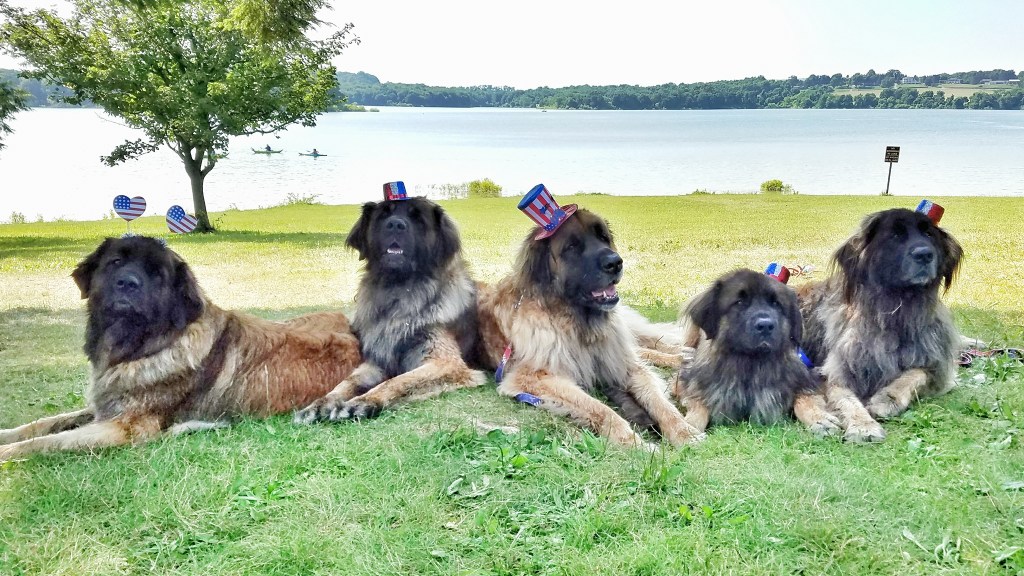
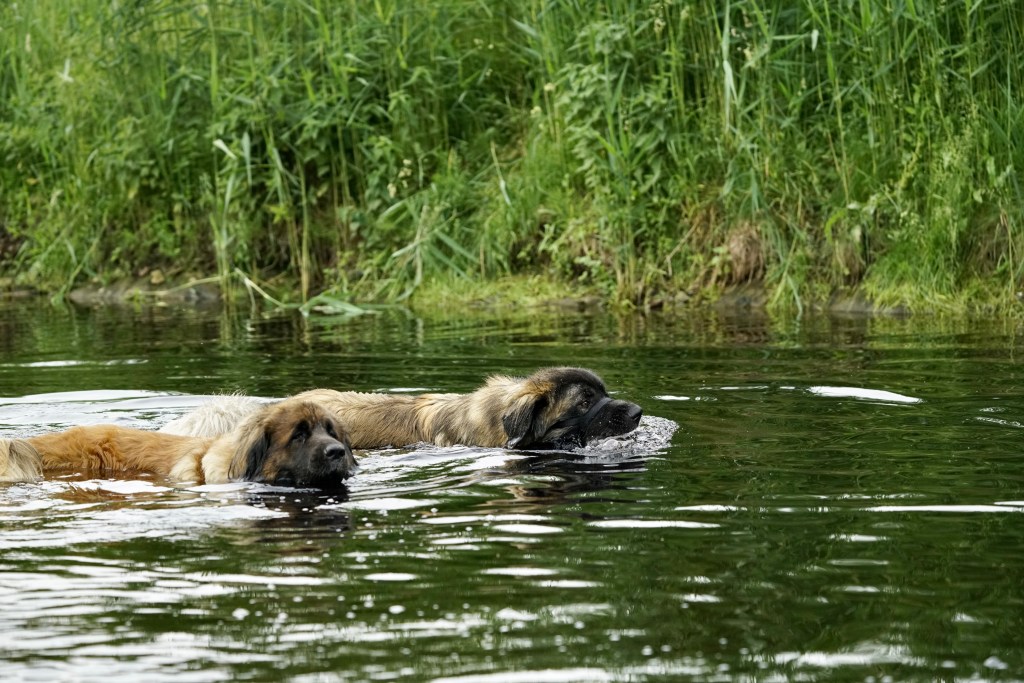
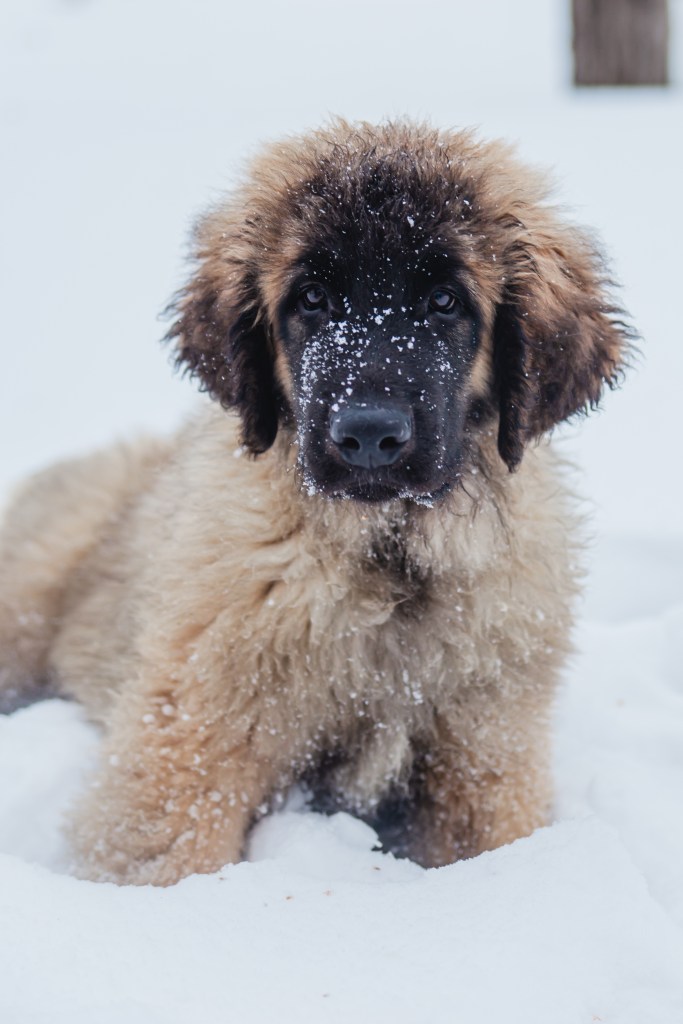
In the past I’ve made a few posts featuring 25 photos of Leonbergers around a certain theme. This is one more of those posts. This time it is photos of Leonbergers in nature, whether it is in a park, in our yard, on top of a mountain, swimming in a lake, a forest, etc. The first half of the photos are of our Leonberger Bronco or Leonberger photos by a friend. The second half of the of the photos are shutter stock photos. Below are the previous 25 photos of Leonbergers posts.
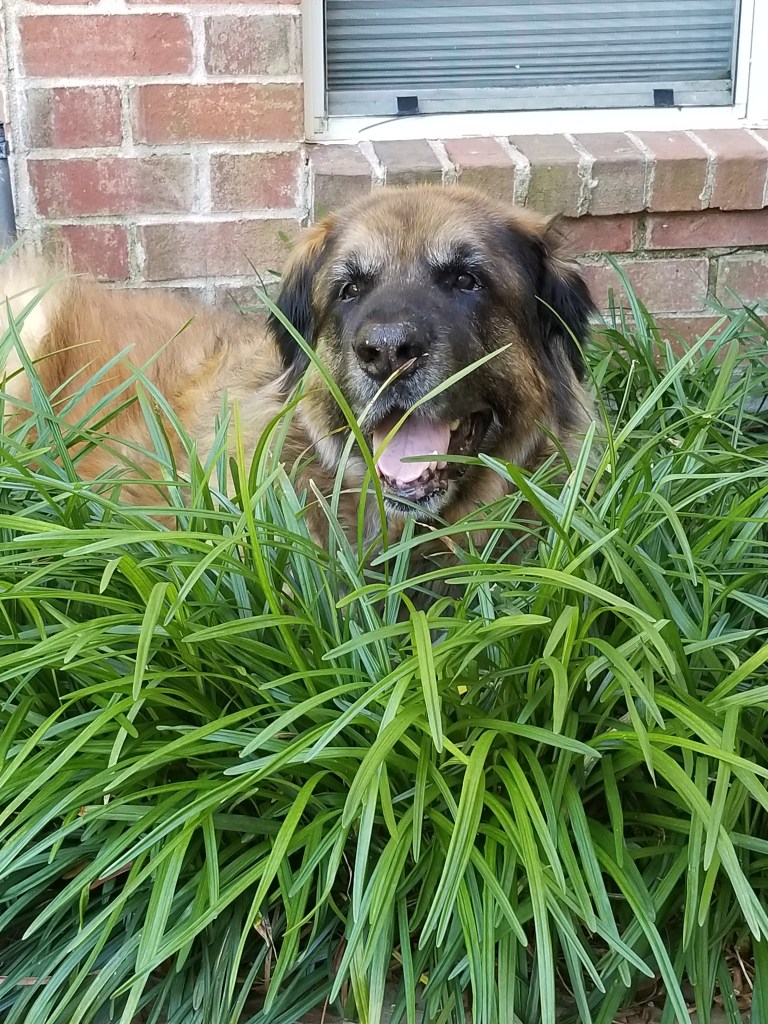
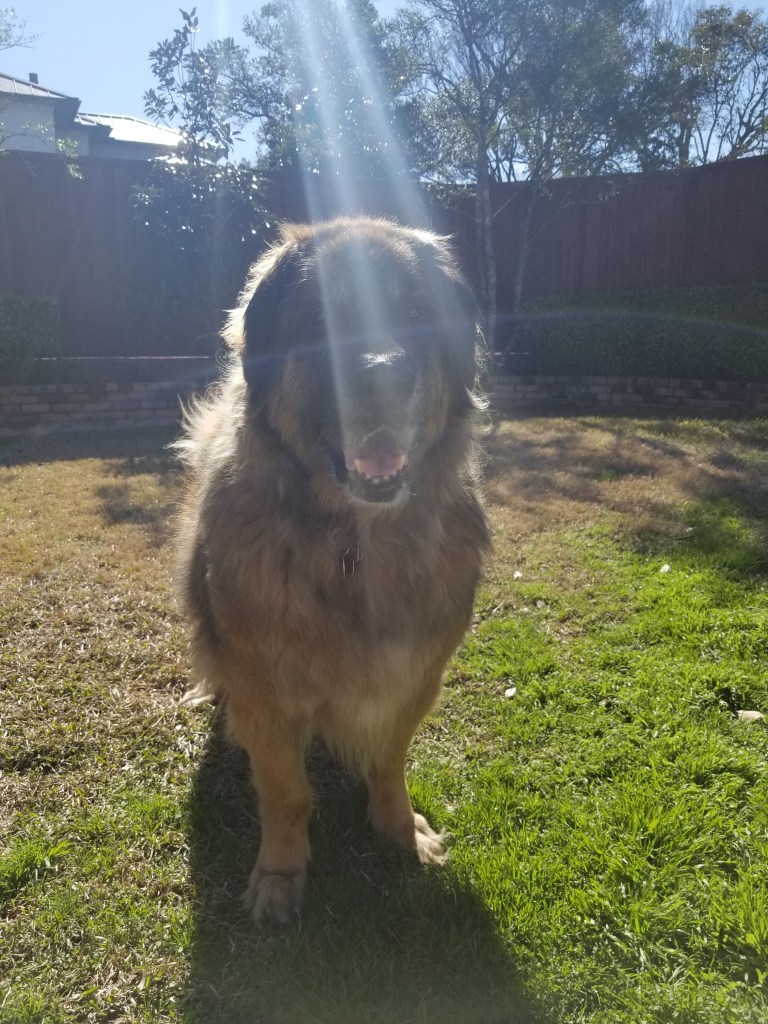
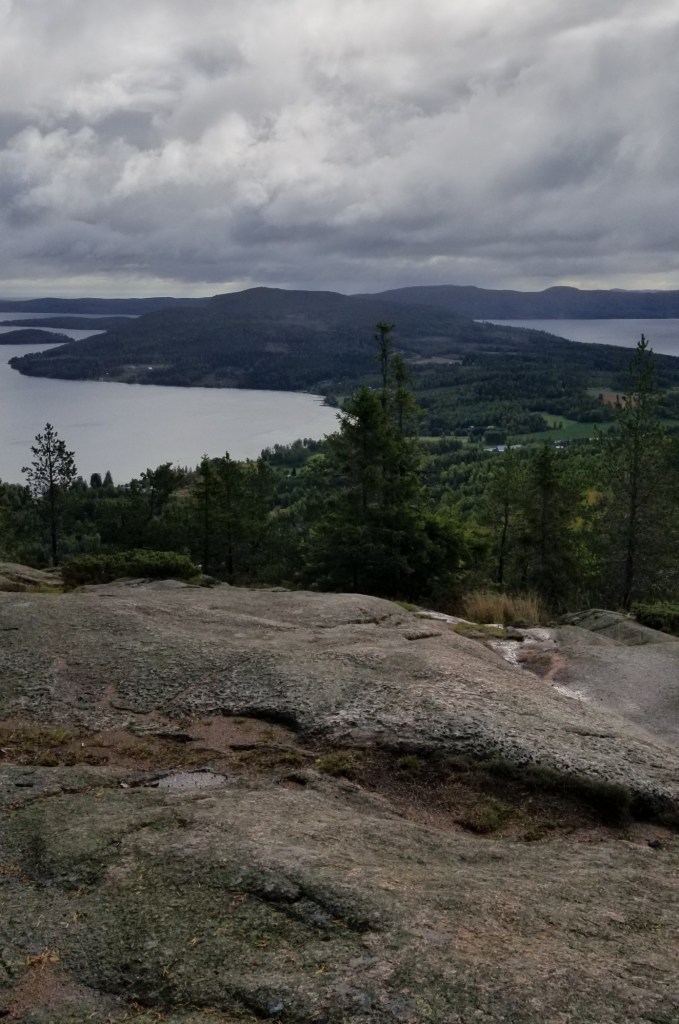
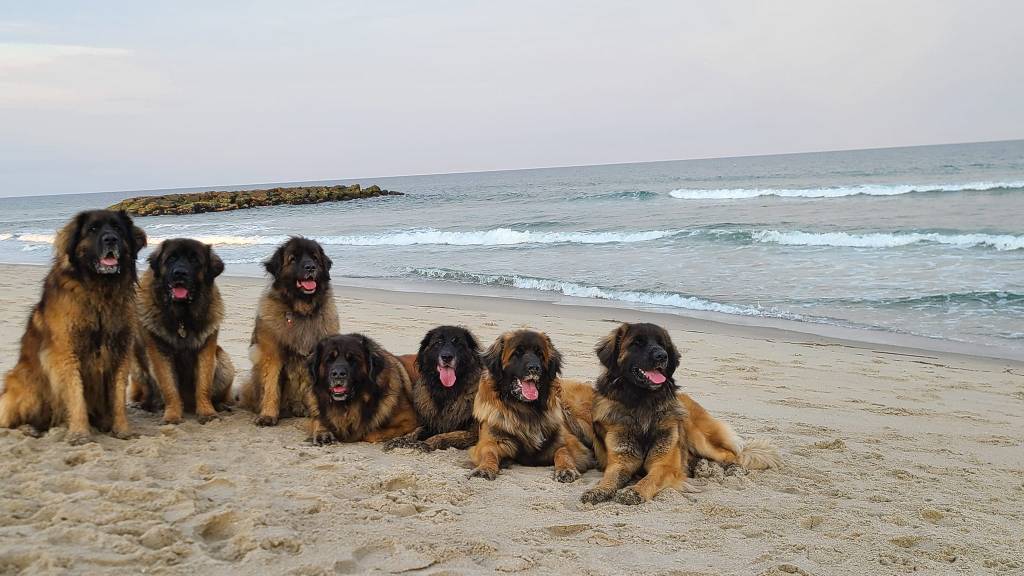
Our Leonberger Bronco at a park close to our house. On his right front leg there is missing hair from a surgery he had (toe amputation).Our Leonberger Bronco on our front lawn.Our Leonberger Bronco in the bushes.Our Leonberger Bronco is swimming in White Rock Lake nearby Dallas, Texas.Our Leonberger Bronco is standing in White Rock Lake nearby Dallas, Texas.Our Leonberger Bronco in the backyard. He was a saint.Amie, a female Swedish Leonberger on top of Skuleberget (Skull Mountain) in northern Sweden.Amie, a female Swedish Leonberger on top of Skuleberget in northern Sweden (Norrland).Amie and her owner had climbed the mountain.The view that we and Amie had from the top of Skuleberget in northern Sweden. The area is referred to as the High Coast.The Leonberger Digory with friends at the beach some years ago. Photo Jen O’Keefe.This photo was provided by Jen O’Keefe, Urgent Animal Care of Arlington. From left to right; Obi, Delfi, Aslan, Gryphon, Digory.Caspian (Obi’s nephew), Austin (Obi’s son), Delfi (our 10 yr old, living with lung cancer), Obi (now 7 and a veteran), Digory, and Rilian (Obi’s son). They all wish everyone a Very Happy New Year!! Photo by Velvy TheLion.Shutterstock-ID: 959582 by Ingvald Kaldhussater.Leonberger standing in snow. Shutterstock-ID: 705193912 by Eric Isselee.Leonberger puppy. My guess is that he is around two months old. Shutterstock-ID: 629624396 by TOM KAROLA.A majestic Leonberger. Shutterstock-ID: 731020957 by Peter Josto.Leonberger on the beach. Stock Photo ID: 1110805445 by Lolostock.Two Leonbergers swimming. Stock Photo ID: 1989806678 by Taibomaus.Sitting Leonberger. Shutterstock-ID:1333669760 by Britta Paasch.Sitting Leonberger. Shutterstock-ID:1333669760 by Britta Paasch.Leonberger and pug running in the snow. Shutterstock- ID:1659034960 by AnetaZabranska.A Leonberger puppy running in the snow. Shutterstock Stock Photo ID: 2056502327 by Nikky de Graaf.Two light colored Leonberger puppies playing. My guess is that they are three months old. Shutterstock-ID: 2141564415 by AnetaZabranska.A Leonberger puppy standing in the snow. Shutterstock Stock Photo ID: 2390810457 by VeronArt16.Leonberger standing in river. Photo by Stephanie Lucero on Unsplash.
Note, I am going to a CCL conference this weekend and the beginning of next week, so I will not be posting or do anything related to blogs for a while.
Today, or rather yesterday, since it is past midnight, was a wild day here in Dallas. We had severe thunderstorms with strong winds ripping up trees around the neighborhood as well as our patio parasol and one of our small trees. There were large hails, lightning and thunder, flash floods, as well as a tornado. Luckily the tornado was not anywhere near us, but we lost power during a significant part of the day, just like more than 650,000 people here in Dallas. Oncor said it will take 8 days to restore power to everyone. Our mini-Australian Shepherd Rollo is very afraid of bad weather, so he had a bad day. I am sure many other dogs had a bad day too.
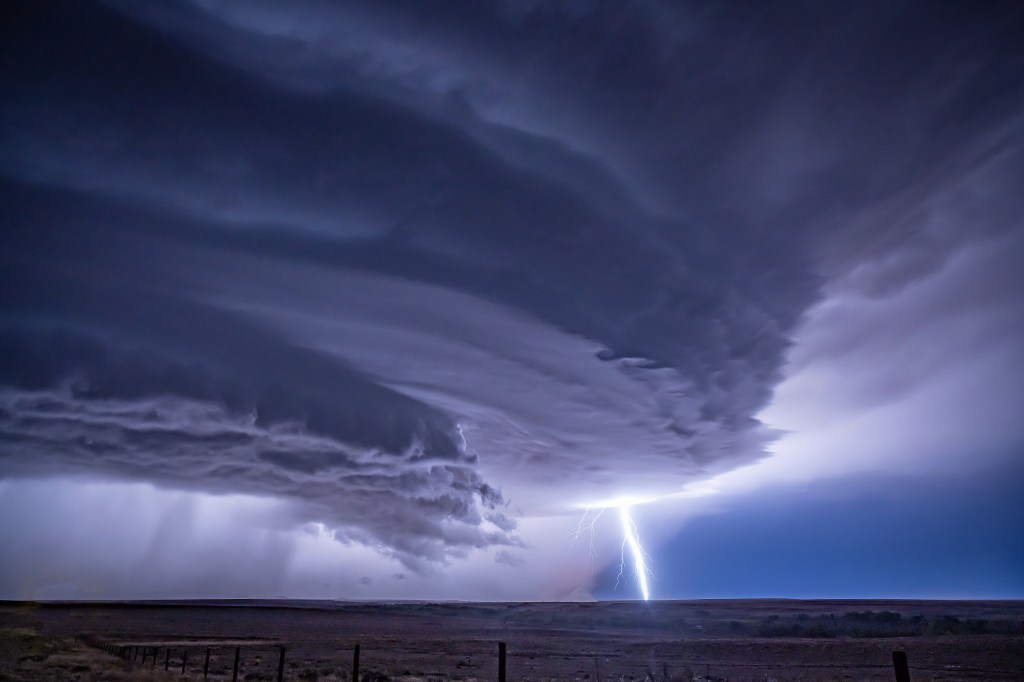
A so called supercell but without a tornado. Stock Photo ID: 1768468151 by Laura Hedien.
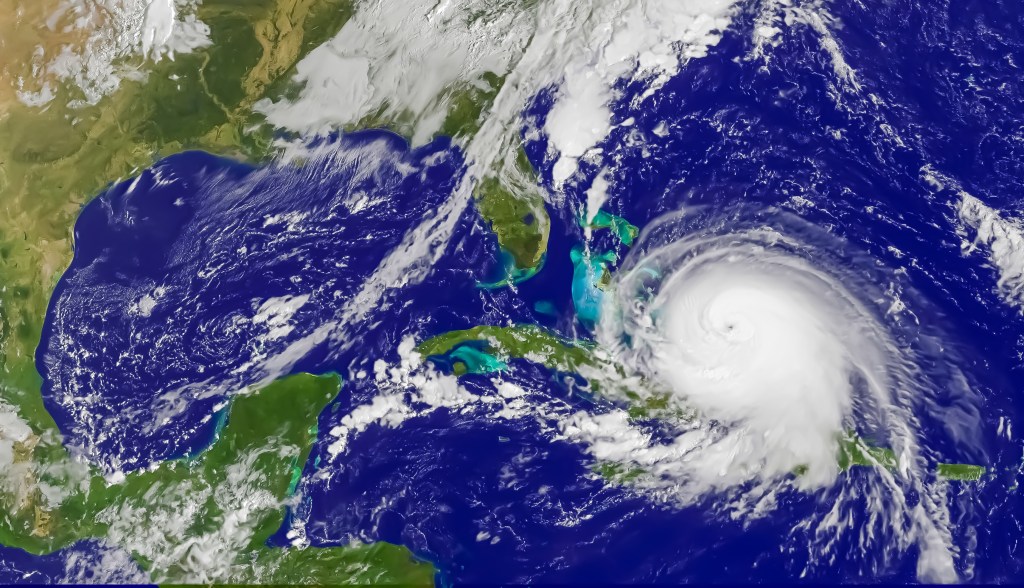
When I talked about the weather with friends and family, I realized that many people do not know the difference between a tornado and a hurricane, so I thought I would explain. A hurricane is a big rotating storm system originating in the ocean that sometimes makes landfall and devastates our coasts. Hurricanes are big, thousands of square miles and even a million square miles. A hurricane has wind speeds of 74 miles per hour (mph) or higher. That’s 119 kilometers per hour or 33 meters per second. They are called hurricanes in the Atlantic and the northeast Pacific, and Typhoons in the northwest Pacific, and otherwise just cyclones.
Satellite photo of hurricane approaching Cuba and Florida. Stock Photo ID: 2202605185 by Emre Akkoyun.
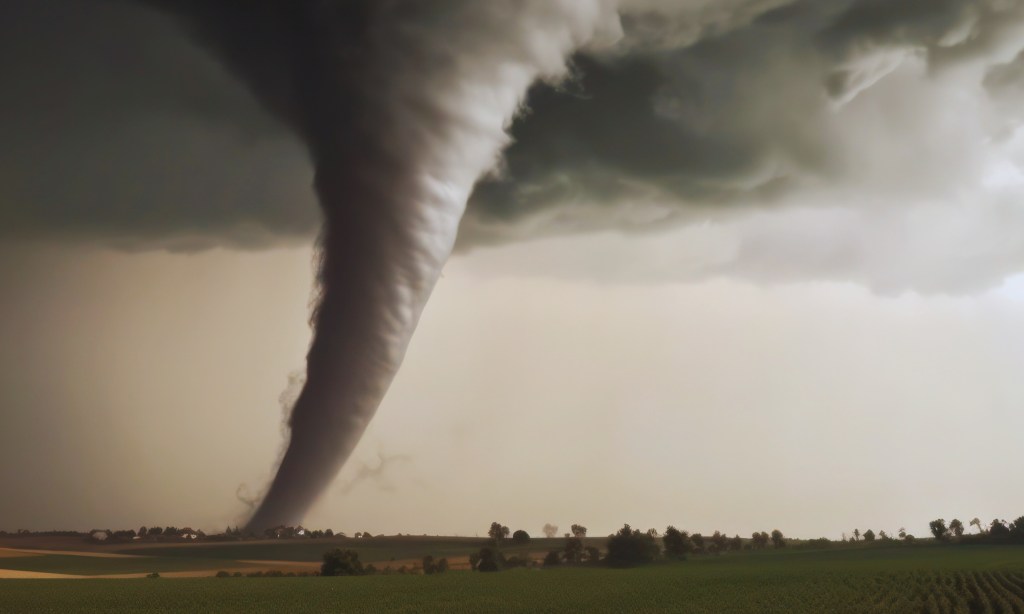
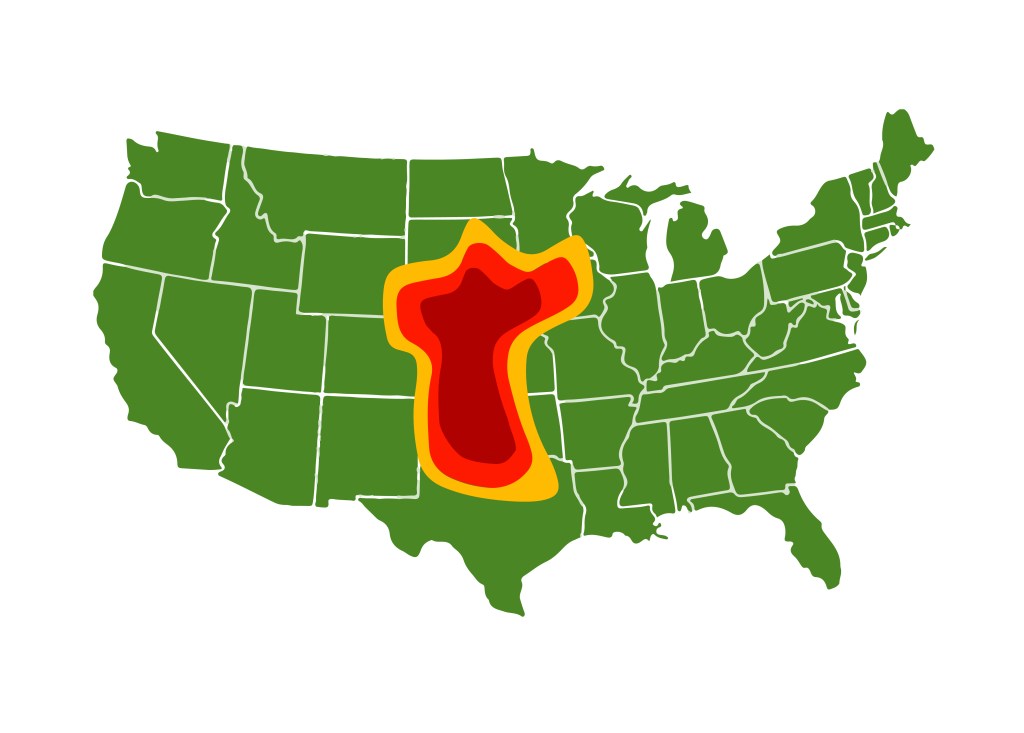
A tornado is a violently rotating column of air that is in contact with both the surface of the Earth and a cloud. They originate with thunderstorms, especially supercells, and are more of an inland phenomenon even though hurricanes can sometimes generate tornadoes. They are much smaller than hurricanes in area, almost always much smaller than a square mile, or just 10 or 30 meters across. The reason they can be as deadly as hurricanes is that they tend to have stronger winds and they appear and disappear quicker thus taking people by surprise. Tornadoes can happen anywhere, but they are more common in North America and especially in tornado-alley. Despite tornado alley’s small size, a quarter of all significant tornadoes in the world occurred there according to a study (1921 – 1995).
A tornado. Stock Photo ID: 2369175167 by g images.com.
Below is a list of how hurricanes (Saffir-Simpson Hurricane Wind Scale) and tornadoes (original Fujita scale) are classified. The unit is miles per hour (mph). Also note that as the wind speed doubles the force quadruples, so an F5/261 mph Tornado has a force that is 2.8 times stronger than category five/155 mph hurricane.
Hurricane category one: Winds 74 to 95 mph. Tornado F1 : 73 to 112 mph
Hurricane category two: Winds 96 to 110 mph. Tornado F2 : 113 to 157 mph
Hurricane category three: Winds 111 to 130 mph. Tornado F3: 158 to 206 mph
Hurricane category four: Winds 131 to 155 mph. Tornado F4 : 207 to 260 mph
Hurricane category five: Winds greater than 155 mph. Tornado F5 : 261 to 318 mph
Map showing Tornado Alley. It includes north Texas / Dallas. Stock Vector ID: 1719764089 by Adansijav Official.
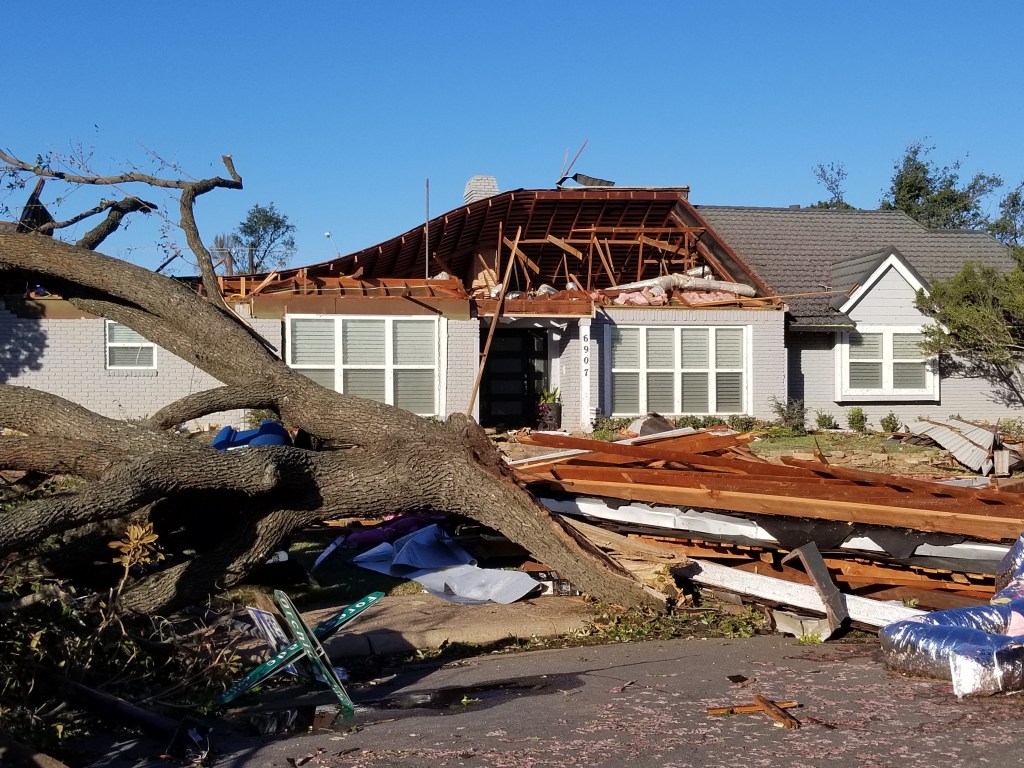
The weather today reminded me about what happened on October 20, 2019. An EF3 Tornado ravaged our neighborhood, and it came close to our house, about 100 yards, and it damaged our house. Our chimney was smashed by a piece of concrete flying off a neighbor’s house, and our roof was damaged and needed to be replaced. In addition, our garage door was destroyed, and the wiring and pipes in the attic were destroyed, our fence was damaged, and my grill flew across the yard. The cost of the repairs was $50,000.00.
Bronco had just had a toe amputation. He did not blow down our fence.
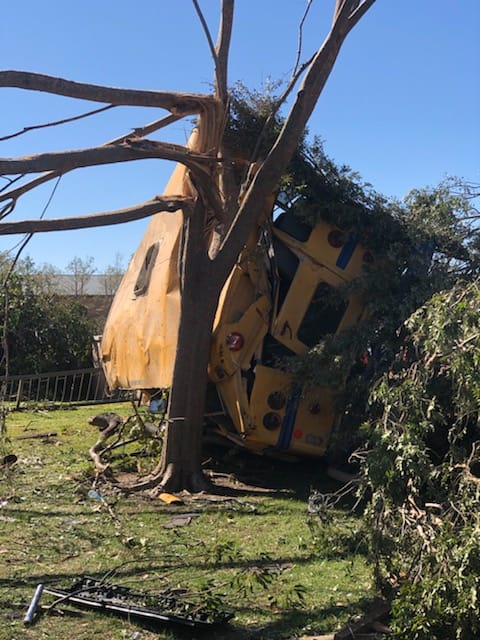
However, we were lucky. Several of our neighbors’ houses were totally destroyed and my wife’s parents house was a lot more damaged than our house was. The wind from the Tornado lifted my 89-year-old father-in-law up in the air and he was hit by a broken marble table that injured his back. The school where our boys used to go, St. Marks School of Texas, was badly damaged and the walls of the gymnasium blew away.
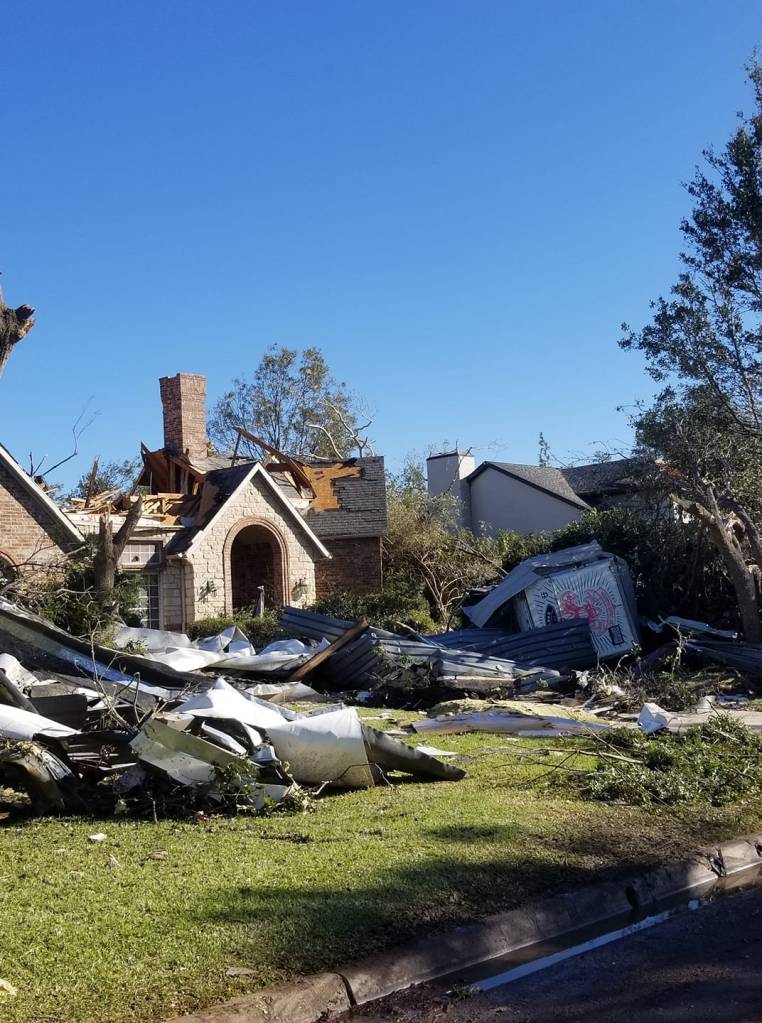
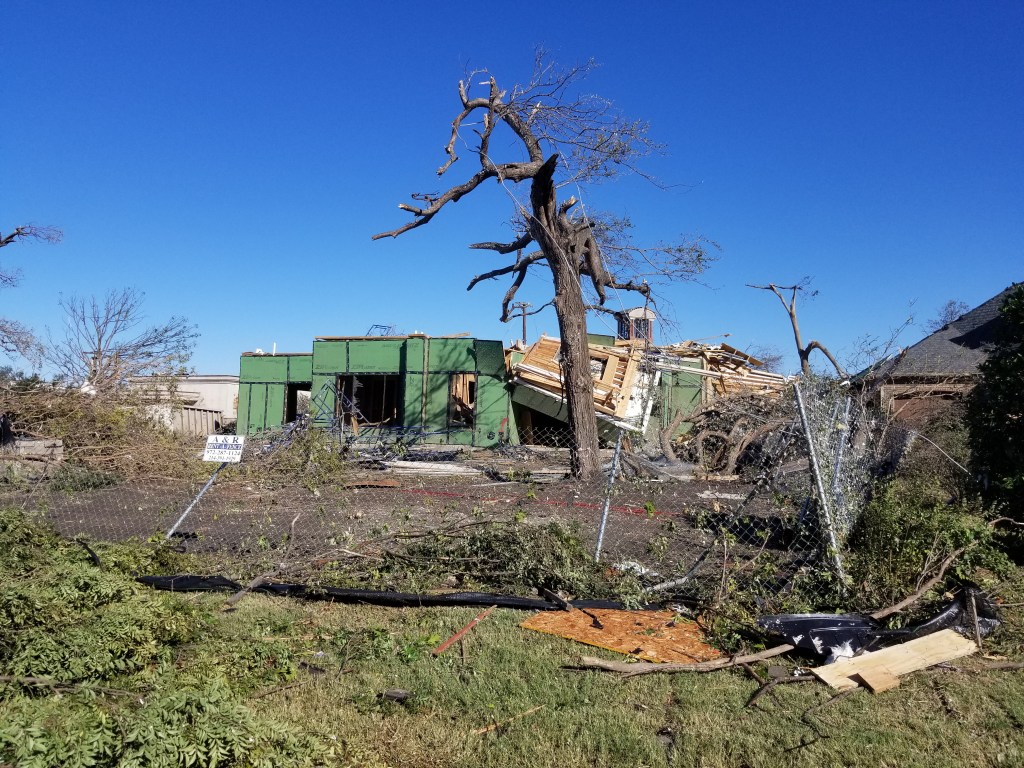
A neighbor’s house the morning of October 21st, 2019.
I was sitting outside drinking a beer, a Yellow Rose, when my phone started making a loud sound. It was an alarm announcing a tornado warning and, in the distance, I could hear a faint tornado siren. At first, I thought it was nothing but when I saw the lightning approaching, I decided to go inside. Two minutes later a hailstorm made things very loud, the wind was strong, and the house shook, and then we heard a loud explosion. That was our chimney being smashed.
Another neighbor’s house. This house was about 100 yards from our house. It took a direct hit from the tornado.
After the wind had died down a bit, I opened the door to the backyard, and what I saw shocked me. My gas grill had flown across the patio. There were bricks and pieces of concrete all over the patio and the lawn. There was a big sheet of metal lying on the patio. Big tree branches covered the lawn. There was debris everywhere. We had also lost power. It turns out that the EF3 tornado had gone through our neighborhood and passed within one hundred yards of our house.
Another neighbor’s house (a bit further away from us).
My wife Claudia asked me to go check on her parents. I drove about 50-100 yards when a neighbor’s roof lying across the road stopped me. I turned around but this time I was stopped by a large pile of trees lying across the street. So, I started walking, but this time I was stopped by a group of firemen telling me that it was too dangerous to be outside. They told me to go back home, and I did.
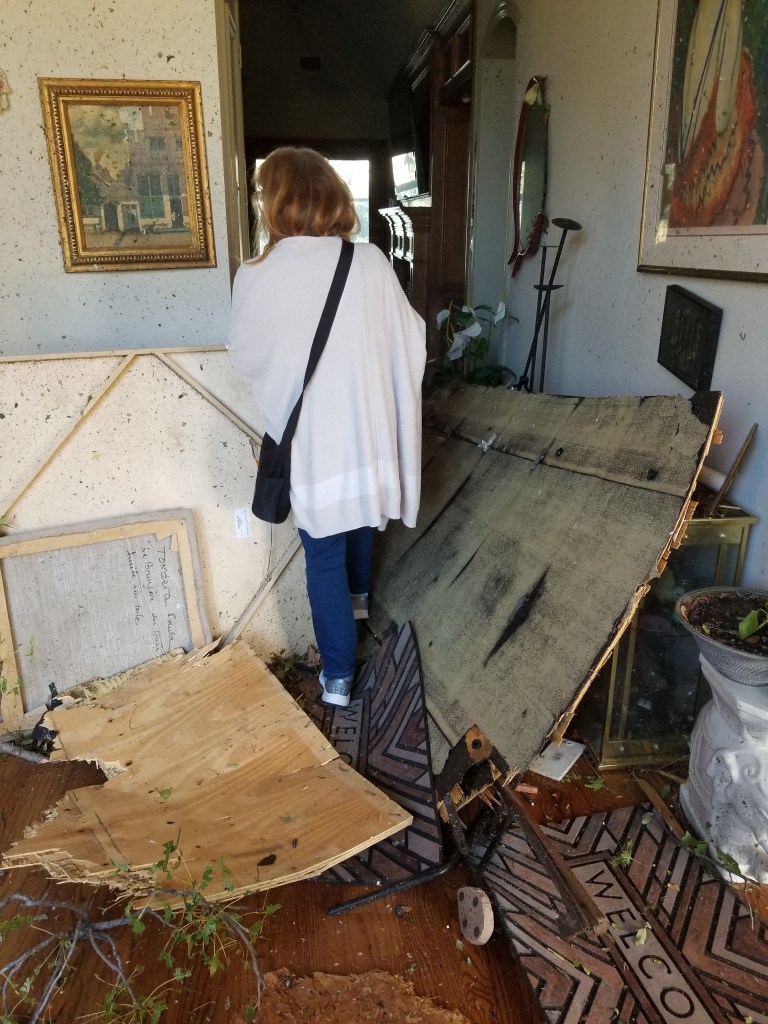
Inside Claudia’s parents’ house. This was the morning after. We are walking into their house to check on them (that’s my wife).
I can add that October of 2019 was a very difficult month for our Leonberger Bronco. He was getting old. He was twelve years old, and he had the first signs of geriatric-onset laryngeal paralysis polyneuropathy (or GOLPP), which made his breathing a bit labored and affected his gait. In addition, he had developed another case of squamous cell carcinoma, a toe-nail cancer, and this time on his right rear paw. We amputated his toe on October 3—the day he turned twelve years and three months old.
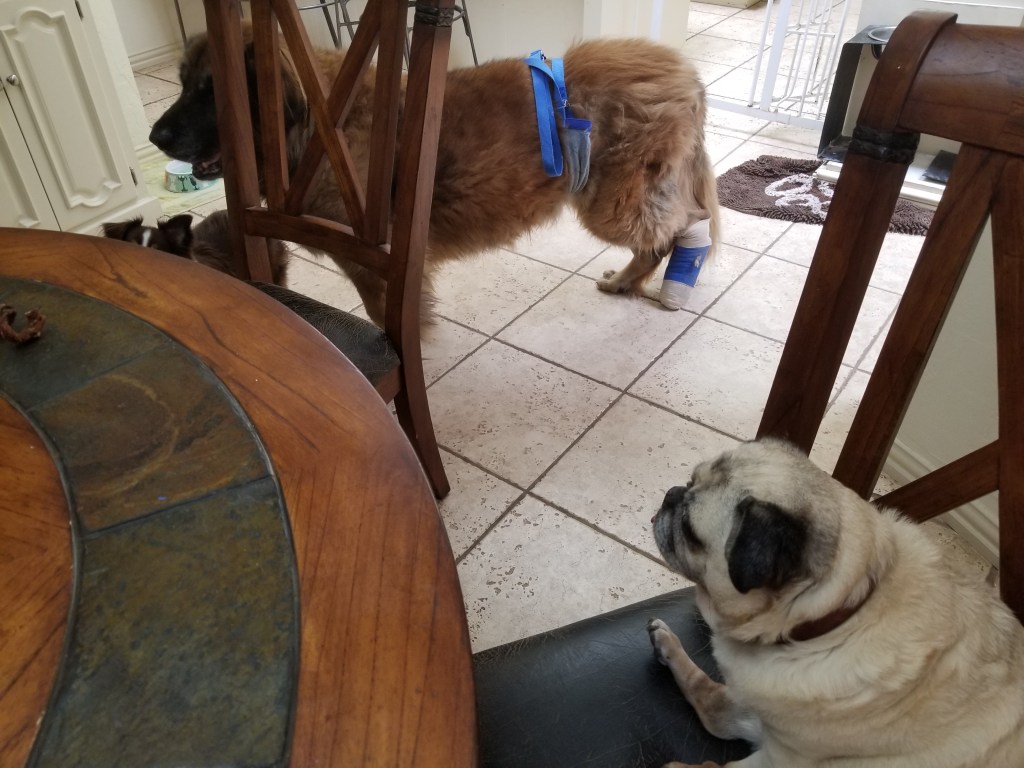
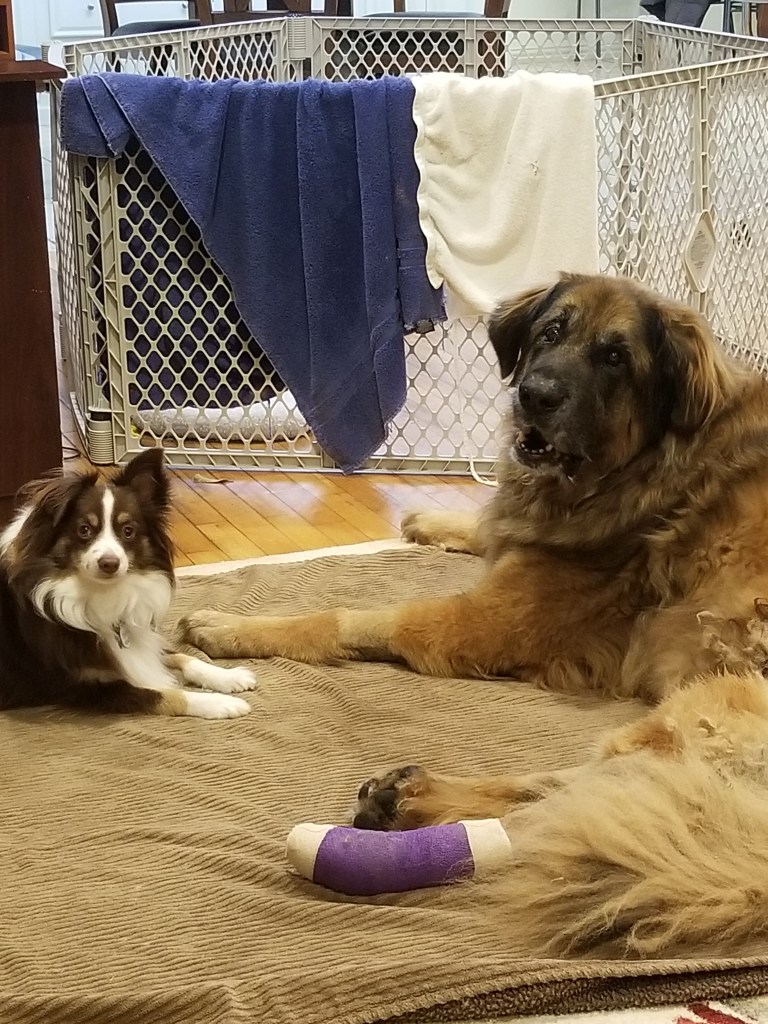
We had to change Bronco’s bandages every now and then but Rollo, our mini–Australian Shepherd made sure we did it right.
The surgery went well, but after around ten days it was discovered that he had a large deep ulcerous sore on the same paw a few inches above the surgical scar. Fortunately, it was not cancerous, as we first thought, but we would have to treat this sore in addition to nursing him back from his amputation. Then on October 20 we were visited by the tornado. One week after the tornado Bronco had his first heart failure. So, something bad happened every week in October 2019. It was a dark time for Bronco. However, he took it very well, he kept his brave and positive outlook on life, and he was able to recover.
Below are a few more photos from that day.
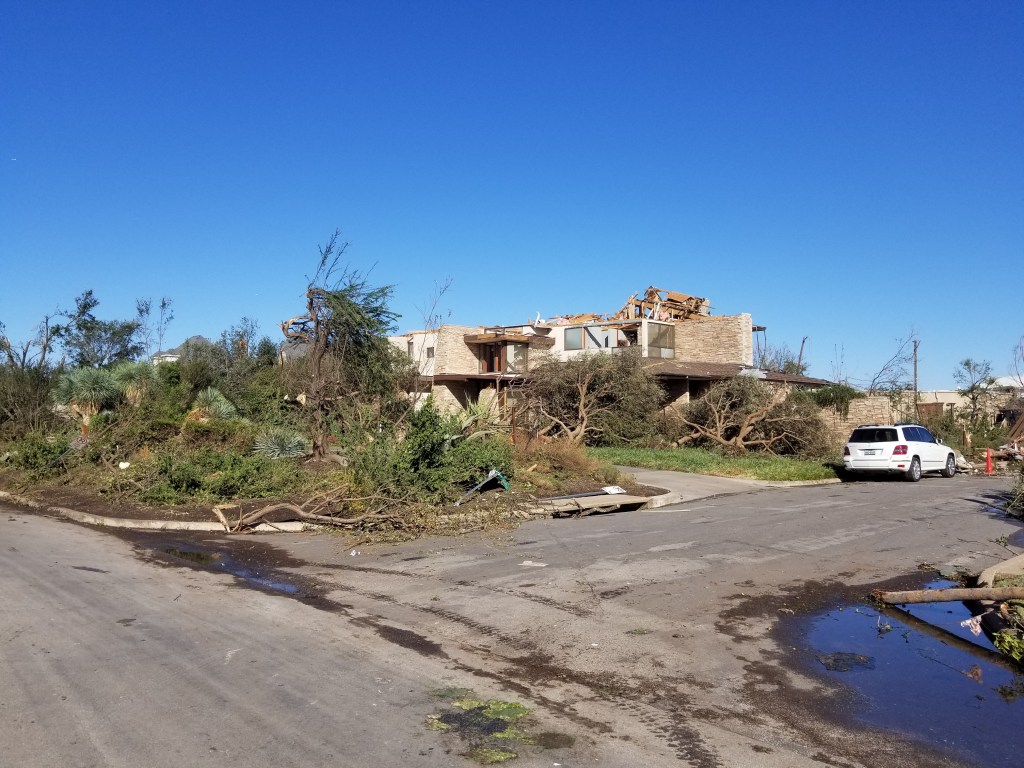
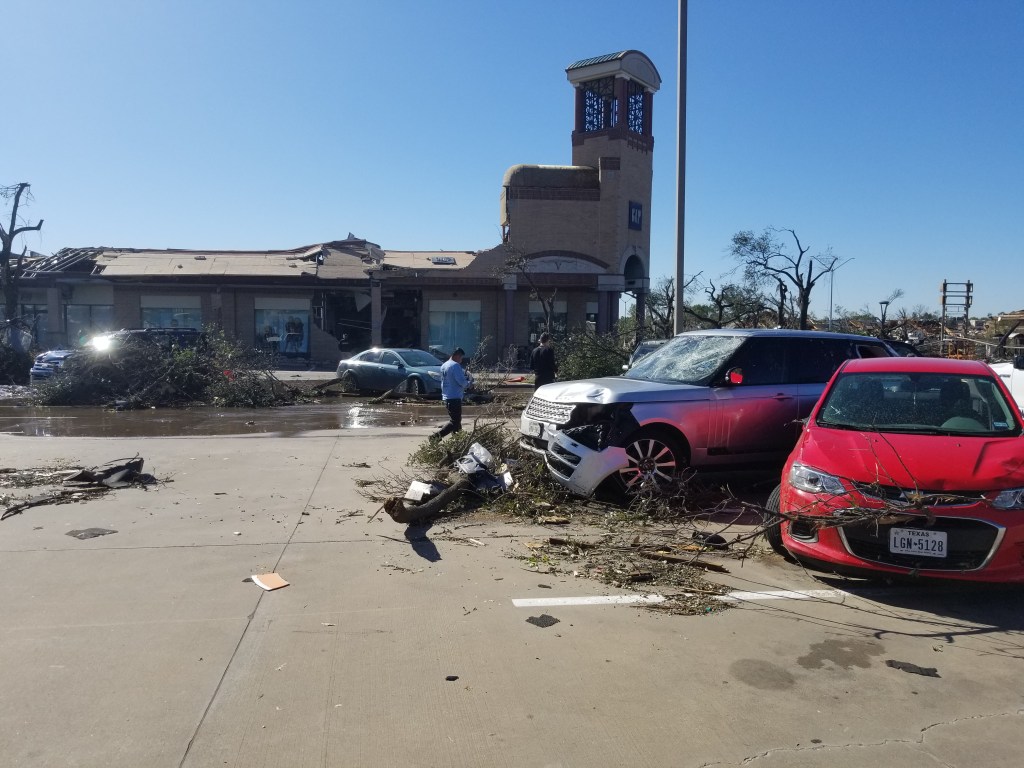
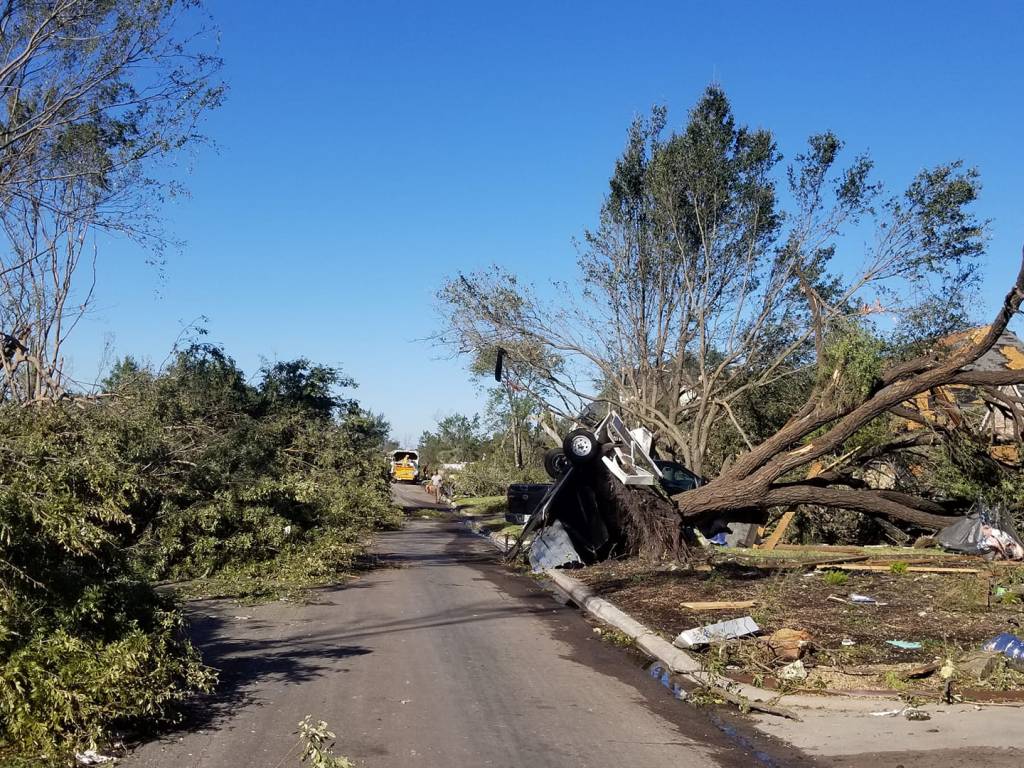
Bronco and Daisy the evening before the big storm. None of us suspected what was about to happen.This is the next-door neighbor of Claudia’s (my wife) parents.Destroyed house in the neighborhood.View of the shopping center in our neighborhood.A store at a nearby shopping centerThis was a school bus belonging to the school where my boys went.Streetview from the neighborhood.Bronco and Rollo a few days after the Tornado.
This is a Leonberger blog, but sometimes I also post reviews for books that are not about Leonbergers and when I do it is books that I love and that I want others to read. Today I am posting a review for a book that I loved, “A Brief History of Time: And Other Essays” Hardcover – September 1, 1998, updated in 2017. It was written by Stephen Hawking. A long time ago I read the original “A Brief History of Time” but now I read this updated version. It is still the original but the adjustments/corrections for more recent discoveries are described in the appendix. Contrary to what Amazon claims I don’t think this is a book “Told in language we all can understand”. In my opinion you need a little bit of a physics background or at least a serious interest in the subject. Otherwise, it will be too much abstract information at once. I should add that I bought the Hardcover.
Hardcover – Publisher : Bantam; Anniversary edition (September 1, 1998), updated 2017, ISBN-10 : 0553109537, ISBN-13 : 978-0553109535, 240 pages, Item Weight : 2.31 pounds, dimensions : 6.18 x 0.83 x 9.29 inches, it cost $16.14 on US Amazon. Click here to order it from Amazon.com.
Paperback – Publisher : RANDOM HOUSE UK; First Edition (January 1, 1990), ISBN-10 : 0553176986, ISBN-13 : 978-0553176988, 211 pages, Item Weight : 2.31 pounds, dimensions : 4.33 x 0.71 x 7.05 inches, it cost $20.85 on US Amazon. Click here to order it from Amazon.com.
Kindle – Publisher : Bantam; 10th edition (May 4, 2011), ASIN : B004WY3D0O, 242 pages. It is currently $9.99 on Amazon.com. Click here to order it from Amazon.com.
Audiobook – Publisher : Phoenix Books, Inc., Release date : January 06, 2022, ASIN : B09NLFY54Z, Listening length 5hrs 49 minutes. Click here to order it from Amazon.com.
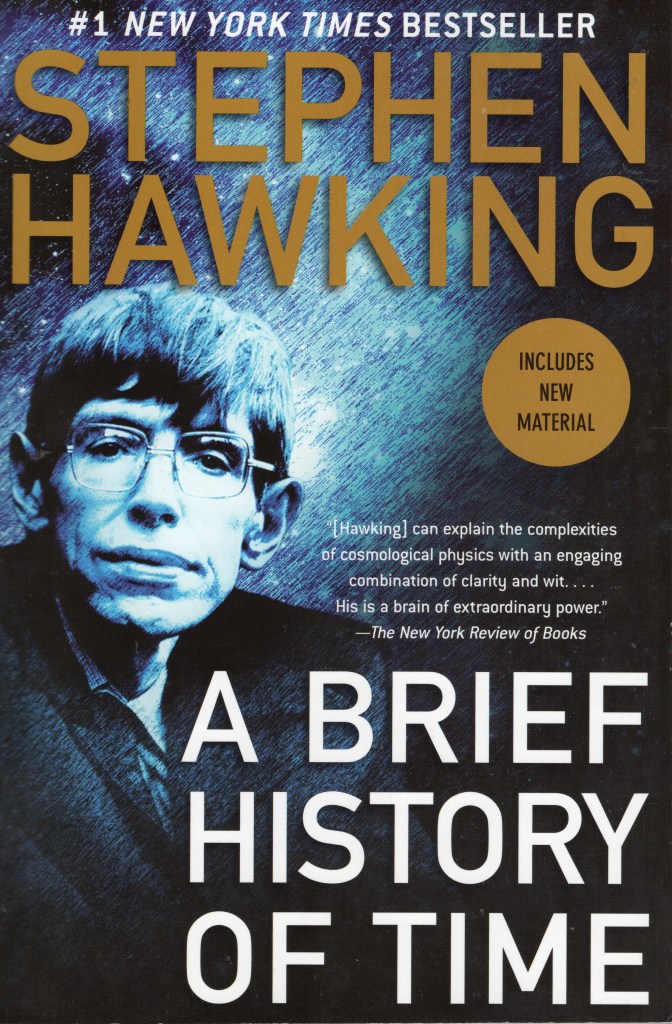
Front cover of A Brief History of Time: And Other Essays Hardcover by Stephen Hawking. Click here or the picture to visit the Amazon.com page for the Hardcover version of the book.
Amazon’s description of the book
Published more than two decades ago to great critical acclaim and commercial success, A Brief History of Time has become a landmark volume in science writing. Stephen Hawking, one of the great minds of our time, explores such profound questions as: How did the universe begin—and what made its start possible? Does time always flow forward? Is the universe unending—or are there boundaries? Are there other dimensions in space? What will happen when it all ends?
Told in language we all can understand, A Brief History of Time plunges into the exotic realms of black holes and quarks, of antimatter and “arrows of time,” of the big bang and a bigger God—where the possibilities are wondrous and unexpected. With exciting images and profound imagination, Stephen Hawking brings us closer to the ultimate secrets at the very heart of creation.
Relativity, Quantum Mechanics, Black Holes, and Cosmology in just 200 Pages.
First, I should mention that even though I bought the hardcopy version of the book released in 1998, I received the updated version released in 2017. The same will probably happen to you if you buy it. I certainly did not mind. The 2017 version is identical to the 1998 version, but it contains additional material including corrections that are featured in an appendix at the end of the book. For example, in 1998 it was discovered that the expansion of the universe is accelerating, making the Friedmann models he discussed in chapter 3 almost obsolete. In addition, since 1998 Hawking’s no-boundary condition has become more certain, as well as the existence of multiverses. Therefore, it is important not to skip the appendix, and perhaps it is best to read the appendix first, so you know what to ignore in the original text of “A Brief History of Time”. I should mention that I read the original book from 1990, a very long time ago.
The book covers a lot of material. He describe past models of the universe, space and time and special and general relativity, light cones, cosmology, the expanding universe, quantum physics, Heisenberg’s uncertainty principle, the two slit experiment, the wave particle duality, anti-particles, Feynman’s sum over histories, elementary particles, particle spin, fundamental forces, entropy, black holes, event horizons, space-time singularities, the cosmic censorship hypothesis, virtual particles, the big bang, the inflationary model and the new inflationary model, the anthropic principle, imaginary time, quantum gravitational effects, the no-boundary condition, three arrows of time, Gödels incompleteness theorem, Einstein-Rosen bridges, or so called wormholes, supergravity, string theory, the unification of physics, renormalization, eternal inflation and the multiverse, etc. In summary, he covers a lot in less than 200 pages.
I have a degree in physics (I became an engineer) and I have an interest in these kind of topics, and therefore I understood most of the content in this book, at least at some level. However, I can see how people without a background in physics would have a hard time with this book. Hawking is for the most part doing a great job explaining these topics, but many of the topics are very abstract and the book covers a lot of them. I think it might be too much for some people, but I don’t see that as necessarily a fault of the book. It is just an acknowledgement that this is not an easy subject. If you want to understand what we know about the universe you have a lot of work ahead of you, no matter how great your teachers or authors are.
One potentially controversial item is the implications of the no-boundary condition derived from the combination of general relativity and quantum mechanics (quantum gravity). It is natural to think that the universe has either existed for an infinite time or that it had a beginning. The no-boundary condition offers up a third option. Space-time is finite and yet there is no singularity. In addition, the universe is self-contained meaning it does not have a beginning or an end. Just like in a universe that has existed for an infinite time there is no moment of creation.
In chapter 10 he discusses wormholes and time travel. Kurt Gödel, the guy with the incompleteness theorem, showed that under certain circumstances General Relativity allowed for time travel. Also, when you travel faster than the speed of light you are traveling backwards in time, something most science fiction authors depicting spaceships traveling faster than the speed of light conveniently ignore. However, the conclusion of the discussion that followed was basically, in practice you can probably not time travel. Just imagine that you could travel back in time and kill your mother. That way you would never be born so now you could not travel back in time and kill your mother, and poff, now you exist again, but now you can travel back in time and kill your mother. Time travel comes with various logical problems. By the way where are all the time travelers from the future?
One thing I disagree with was that he on page 156 says that intelligent beings can only exist in the expanding phase of the universe. His explanation for this statement is not convincing and I don’t believe it. However, since we now know that the universe is likely to expand forever it is a moot point. He also keeps calling entropy “disorder”. This is very common, but “disorder” in common vernacular is a vague term that does not exactly correspond to the mathematical definition of entropy, and this should at least be pointed out. These are very minor and unimportant complaints, but I wanted to mention them. The Amazon description states: “Told in language we all can understand”, which as I mentioned is not really true. But that is the Amazon description of the book, not a problem with the book.
In summary, I think this is a very interesting and informative book and I think it is well written and well organized. The fact that it is difficult reading for many people is because of the subject matter and is not the fault of the author. I highly recommend the book to anyone with a background in physics and anyone else who is really interested in the subject and doesn’t mind looking up concepts a bit more in depth. I give it five stars.
Back cover of A Brief History of Time: And Other Essays Hardcover by Stephen Hawking. Click here or the picture to visit the Amazon.com page for the Hardcover version of the book.
About the Author
Stephen Hawking’s ability to make science understandable and compelling to a lay audience was established with the publication of his first book, A Brief History of Time, which has sold nearly 10 million copies in 40 languages.
Hawking has authored or participated in the creation of numerous other popular science books, including The Universe in a Nutshell, A Briefer History of Time, On the Shoulders of Giants, The Illustrated On the Shoulders of Giants, and George’s Secret Key to the Universe.
I can add that I also read The Grand Design by Stephen Hawking, which I also recommend but with the same caution as for this book. It’s a bit abstract.
This is a Leonberger blog, and every now and then I post reviews for Leonberger books. Some Leonberger books I love and some I don’t think are as good. Sometimes I also post reviews for other kinds of books but when I do it is books that I love and that I want others to read. Today I am posting a review for a book that I loved and that I think you should read, “They Call Me Mom: Making a Difference as an Elementary School Teacher” – by Pete Springer. This is a teacher’s memoir featuring a lot of great stories but also important insights and information valuable to both teachers as well as parents.
Paperback – Publisher : Outskirts Press (July 16, 2018), ISBN-10 : 1977200052, ISBN-13 : 978-1977200051, 178 pages, Item Weight : 8.6 ounces, dimensions : 6 x 0.38 x 9 inches, it cost $12.42 on US Amazon. Click here to order it from Amazon.com.
Kindle – Publisher : Outskirts Press, Inc. (September 23, 2019), ASIN : B07YBL8DPY, 169 pages. It is currently $2.99 on Amazon.com. Click here to order it from Amazon.com.
Front cover of They Call Me Mom. Click here or the picture to visit the Amazon.com page for the paperback version of the book.
Amazon’s description of the book
Who Will You Inspire Today? Teachers face this challenge and responsibility each day, but in the process, the author discovers that his students can also have a profound influence on him. Pete Springer takes you on his memorable thirty-one-year journey in education as an elementary school teacher and offers the many valuable life and teaching lessons he learned along the way. Get ready to laugh out loud at some of the humorous and memorable experiences that all teachers face, feel inspired by the inherent goodness of children, and appreciate the importance of developing a sense of teamwork among the staff. Learn valuable tips for working with children, parents, fellow staff members, and administrators.
This book is ideal for young teachers, but also a reminder to all educators of the importance and responsibility of being a role model. This book is a must-read for all new teachers and those teachers that need a reminder they are human! Mr. Springer educates others in his easy-to-read, story-like, first-hand manuscript. You will laugh, cry, and get motivated to be the best educator you can. After reading this, I have a better outlook on relationships with my colleagues and am reminded to savor every moment. -Tami Beall (Principal, Pine Hill School).
The Beauty and Challenges of an Underappreciated Profession
There is a joke. There are three reasons to become a teacher, June, July, and August. I used to think that was funny until my wife became a teacher. She was a teacher for about 5-6 years. During this time I learned that teachers don’t have the entire summer off, that they work long hours, often 60hrs a week, and that they have to handle a lot of very difficult situations and circumstances, all while getting a salary that is significantly less than other professionals with a similar level of education. I also learned from her experiences as a teacher as well as a parent of three children that teachers are invaluable and very appreciated by the children as well as by many parents but unfortunately underappreciated by some people and perhaps by society.
In this book the author describes his journey to become a teacher and his journey as a teacher. He recounts issues with setting up the classroom, working with students, some coming from very difficult home environments, helpful and unhelpful parents, colleagues and administrators, and handling discipline. Therefore, I believe this book is invaluable to new teachers as a practical problem-solving guide. However, I believe the book is also very valuable to parents. A lot of parents don’t understand that they need to be involved in their children’s education as helpful partners to the school and as positive role models. This book offers insights into why and how.
Teachers sometimes encounter some quite tricky situations. For example, two boys get into an altercation because one boy tells the second boy that he is going to hell because his family is not going to church. My instinct would be to tell the first boy that is an absurd belief and a terrible thing to say. However, that would be contradicting the belief system of the parents of that boy. So, you have to deal with it differently. An enraged parent makes a scene at the school because her kid told her that you said something at school that she disagrees with, but you never said this. How do you handle it? What about a father handing over divorce papers to his wife during a parent-teacher conference? What about parents getting arrested by the police in front of their kid? The author handles these tricky situations brilliantly and professionally. He dealt with challenges and provocations with wisdom and restraint. I don’t think I would have been able to handle these situations as well. I believe the solutions he had for the various examples he gives might be very helpful to other teachers.
Pete Springer was clearly a very competent and thoughtful teacher who loved his job despite all the difficulties, and I think we can all learn from what he has written in this book. He recounts a lot of anecdotes, which he narrates with humor and intelligence. The book is interesting and very well written. It is a real page turner. It also has an important message for all of us. The education of our children is essential for the future of our nation. Unfortunately, it is often held hostage by political fads and bureaucrats with little understanding of the realities facing the educators. Teachers typically stay 7 years in their profession and fewer young people are becoming teachers because they see that the teaching profession is underappreciated and underpaid. We need to listen to the teachers more. In summary, this is a delightful, interesting as well as important read that I highly recommend to both new teachers and parents of school children.
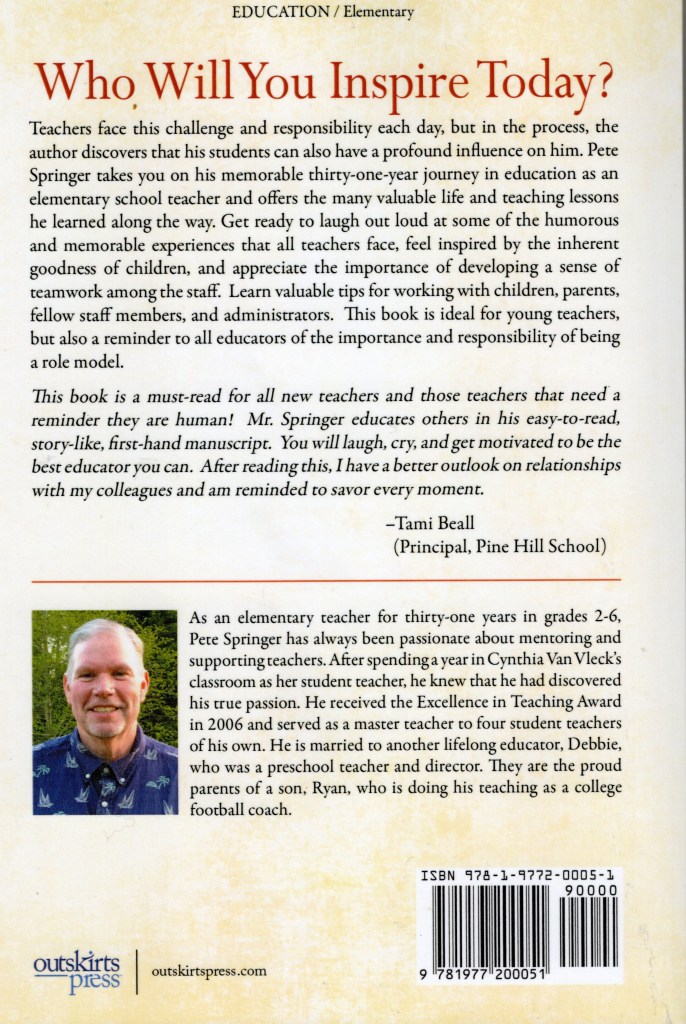
Back cover of They Call Me Mom. Click here or the picture to visit the Amazon.com page for the kindle version of the book.
About the Author
I’m a retired elementary teacher (31 years) who will always be a strong advocate for children, education, and teachers. My favorite thing to do as a teacher was to read to my students, and now I’m following my heart and writing children’s books for middle grades.
As I mentioned in a previous blog post I’ve been thinking about launching a second blog. The topic would be facts, or insights that are widely disputed or misunderstood amongst the public, yet important and known to be true. However, I am also thinking about adding another aspect to the blog and that is facts, or insights that are highly surprising to people, yet important and known to be true. Curious or strange facts if you will. Not strange trivia but important stuff. People wouldn’t necessarily dispute these facts, well they might, but they may appear unintuitive to a lot of people. So, the true facts that people are disputing would be “cluster-A” and the facts that just would seem strange, ponderous, or counter intuitive would be “cluster-B”. I will post about both.
This particular blog post gives an example of a cluster B fact. To express myself a little bit simplistic, science does not know everything (otherwise it would stop), but it knows a lot. By studying the light from a distant star, we can determine what elements it is composed of. The star may be composed of 71% hydrogen, 27% helium, 1% Lithium, and 1% other elements, and we can know that just from its light. We can determine the distance to the star, how it is moving compared to us, its temperature, roughly its age and longevity, and more. 150 years ago, we could not have dreamed of this capability.
We can know so much about a star from its light. Shutter Stock Illustration ID: 566774353 by Nostalgia for Infinity.
Yet we know that there are things we can never know, no matter how advanced science becomes. Infinite experimentation, super intelligence, a quintillion super genius, infinite time, cannot breach some knowledge. The universe itself forbids some knowledge. It also means that the statement “nothing is impossible” is false. My natural reaction to such a claim is, “come on you can’t say that with certainty”, and I expect many others will feel the same. However, the reason some knowledge will never be attainable is that physical laws as well as mathematics and logic forbid some knowledge. Some things are not meant to be known. I will explain in the four sections below: the event horizon, the Heisenberg uncertainty principle, beyond the observable Universe, and Gödels incompleteness theorem.
I should say in my future blog I will explore each of the four examples below more in depth, and put them in their own blog posts, and I might add or remove examples as I learn more.
The Event Horizon of a Black Hole
A black hole is a region of spacetime where gravity is so strong that nothing, including light, can escape it. The boundary of no escape is called the event horizon. If you pass the event horizon you cannot come back out no matter how much energy, you expand. Nothing can escape, no matter, no radiation, not light or other electromagnetic radiation, and no information. Nothing at all can escape. The curvature of time and space itself forbids it. I should add that right at the event horizon, there is so called Hawking radiation, but without complicating things it is not the same thing as escaping a black hole.
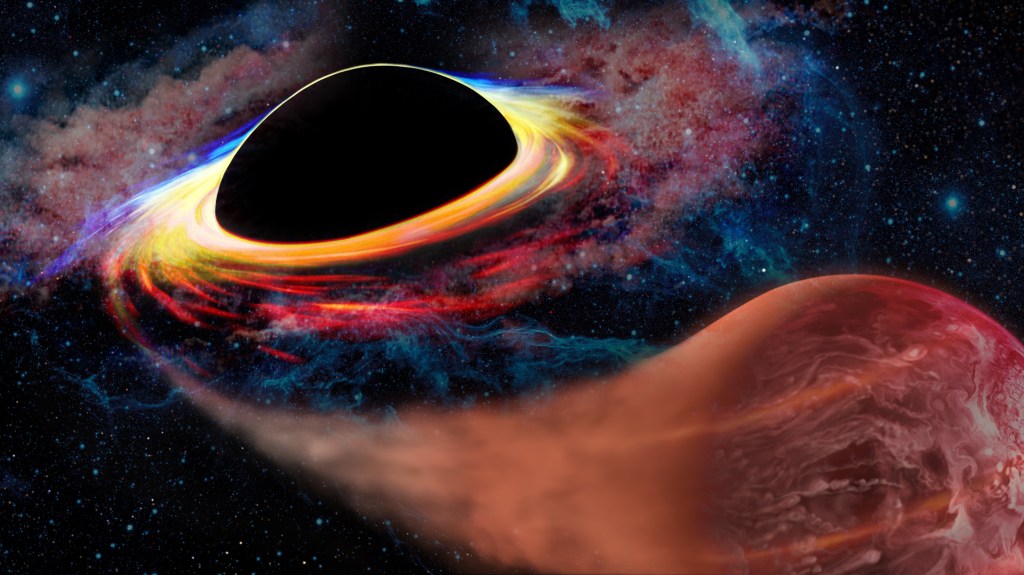
Black Hole Stock Photo ID: 2024419973 by Elena11
Some black holes are formed when large stars die and collapse. These black holes are estimated to have a mass of five to several tens of solar masses. However, there are also super massive black holes that reside in the center of galaxies. The super massive black hole at the center of our galaxy, the Milky Way, is called Sagittarius A* and is estimated to have a mass of four million times the mass of our sun. The largest known supermassive black hole TON 618 is 66 billion times more massive than our sun. There are an estimated 100 million black holes in our own galaxy, the Milky Way. One interesting fact is that celestial objects can orbit a black hole, just like planets orbit the sun, but as you get too close you will rush, at the speed of light, into the depths of the black hole You are “poff and gone”.
The fact that nothing, including information, can escape a black hole means that we can never observe what is on the inside. You can venture inside and be lost. You can extrapolate from physical laws what might be inside, but you can never observe and report what is inside to planet Earth.
The Heisenberg uncertainty principle
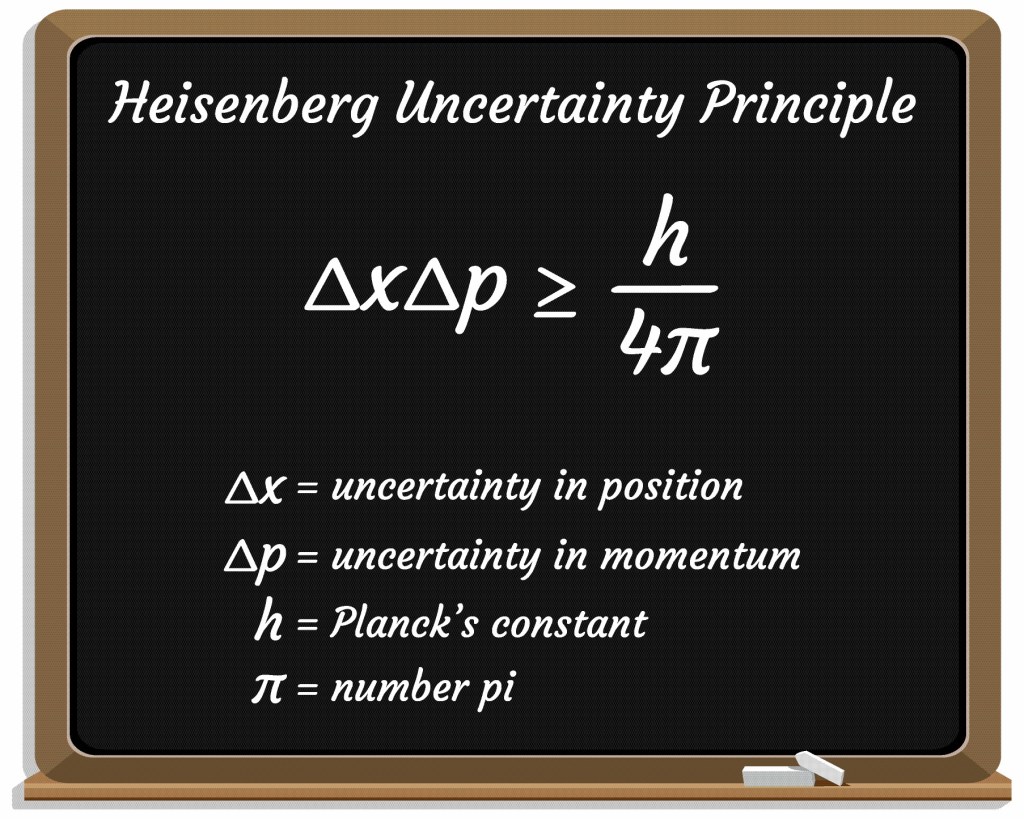
The Heisenberg uncertainty principle states that it’s not possible to know the position and momentum of an object with perfect accuracy at the same time. Another way of saying that is that we cannot know both the position and speed of a particle, such as a photon or electron, with perfect accuracy. The formula is: dX * dP >= h/4pi , uncertainty in position (dX) times uncertainty in momentum (dP) is larger than half of Planck’s constant, which is very small. There is also an energy and time precision : dT * dE >= h/4pi. It basically means that there are no perfectly exact measurements or knowledge. Everything is a bit fuzzy. Planck’s constant is very small, so Heisenberg uncertainty principle does not matter for everyday objects, but it matters when sizes are very small (positions, energies, etc.) Note, Heisenberg uncertainty principle is not regarding a limitation of our equipment, but a limit set by a law of physics. It is a limitation set by the Universe.
Heisenberg uncertainty principle Shutter Stock Vector ID: 2380436193 by Sasha701
Beyond the observable Universe
The observable universe is a ball-shaped region of the universe consisting of all matter that currently can be observed from Earth or its space-based telescopes. The radius of the observable universe is 46.6 billion light-years. The size of the observable universe is growing. Unfortunately, at those distances, space itself is stretching/expanding faster than the speed of light. Since no signal or information can travel faster than the speed of light we are losing, not gaining, celestial objects from the observable universe. Further, in the past we’ve lost many galaxies this way. I can add that the universe may be infinite. Since the expansion is accelerating, we will keep losing more galaxies beyond the boundary of the universe and some galaxies were always lost (with respect to observation).
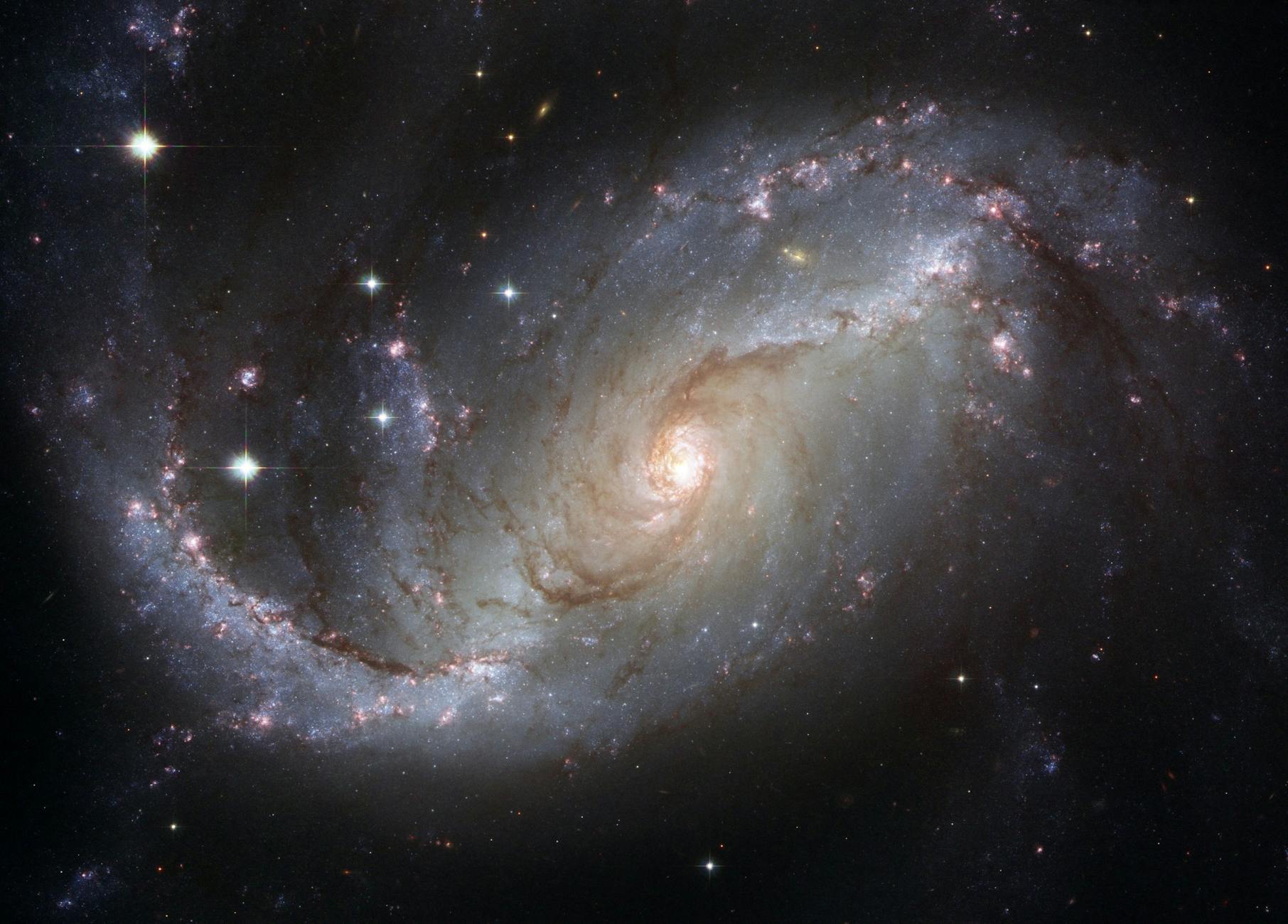
A view of a galaxy full of stars. Photo by Pixabay on Pexels.com
If we are wrong about the fact that the expansion of the universe is accelerating, then perhaps we can observe more galaxies in the future. But if not, then there are galaxies that we have never observed, galaxies that we can never observe, and there are galaxies that will become unobservable in the future. Depending on the size of the universe we may never be able to observe more than an infinitesimally small portion of the universe. Again, the universe is stopping us from knowing something.
Gödels incompleteness theorem(s)
The theorem states that in any reasonable mathematical system there will always be true statements that cannot be proved. In other words, to find a complete and consistent set of axioms for all mathematics is impossible. There are forever hidden truths in mathematics. For the case of natural numbers this means that there will always be statements about natural numbers that are true, but that are unprovable. I can add that there is also a second incompleteness theorem that states that a formal system cannot prove that the system itself is consistent. Basically, there are limits to mathematics set by logic.
There are forever hidden truths in mathematics in the form of unprovable truths. Photo by Andrea Piacquadio on Pexels.com
I have a book on Gödels incompleteness theorem, which I have not read, but I will read it before I make a post about it.
Some other topics for strange yet important facts
Light speed in vacuum is a Universal Constant.
Time is relative (deeper explanation).
Non-simultaneity and simultaneity are relative.
The strange double slit experiment.
Quantum Tunneling.
Quantum entanglement.
The Monty-game-door trick, 3-doors.
The butterfly effect.
Mandela effect.
What do you think about mixing in some very strange but important facts in my future blog about facts people dispute even though they are known to be true?
I once apologized to our neighbor Sam because our Leonberger Bronco had been barking. To my surprise Sam told me not to worry, let him bark he said, it scares the bad guys away, and is good for the entire neighborhood. I think the story below, which is an excerpt from my book might explain his thinking.
Our Leonberger dog Le Bronco von der Löwenhöhle when he was young. He is giving me a hug.
A quiet and spooky evening alone
It was a quiet evening, and I was home alone. My wife, Claudia, was visiting her parents a few blocks away with Rachel, our daughter. Our son Jacob was meeting with his debate team; our other son, David, was visiting a friend.
I was making myself a ham sandwich in the kitchen when I suddenly felt a hand on my right shoulder. I startled and turned my head to face what I feared was an intruder, and there he stood on his hind legs—our Leonberger, Bronco. His big paw on my shoulder felt for a moment exactly like a human hand.
Bronco looked at me with his kind, wise eyes, then he looked at the sandwich. Then he turned his head toward me again and held my gaze. At that moment I understood what he wanted. I cut the sandwich in two and gave him his half.
The night stalker
I should explain that we had a problem with a trespasser at that time, which was the reason I was startled. This trespasser would sit outside our bedroom window at night and make threats and shout obscene comments at Claudia when I was not present. At first, though, we didn’t know where the threats and comments were coming from. I doubted Claudia’s accounts of these incidents, especially because she thought the voice might be coming from within our bedroom, perhaps via an electronic speaker. I thought she was just having nightmares.
Then one night I heard it myself—a voice screaming, “I am going to burn your house down!” Just as Claudia had said, it sounded like it came from within our bedroom, almost as if it were right next to me.
After Claudia and I went through our “Oh, so now you believe me” routine, I started looking under our bed and inside the heating and air-conditioning vents for hidden speakers and/or microphones. It was hard to believe that someone had planted these things in our bedroom, but that seemed to be the case. Then it finally dawned on me. Next to the headboard of our bed, on Claudia’s side, just inches from her pillow, is a window. At night, when the blinds are lowered and the slats are partially open, you can see in, even if we have just a few lights on in the house. But of course under these conditions, you can’t see anything that might be outside.
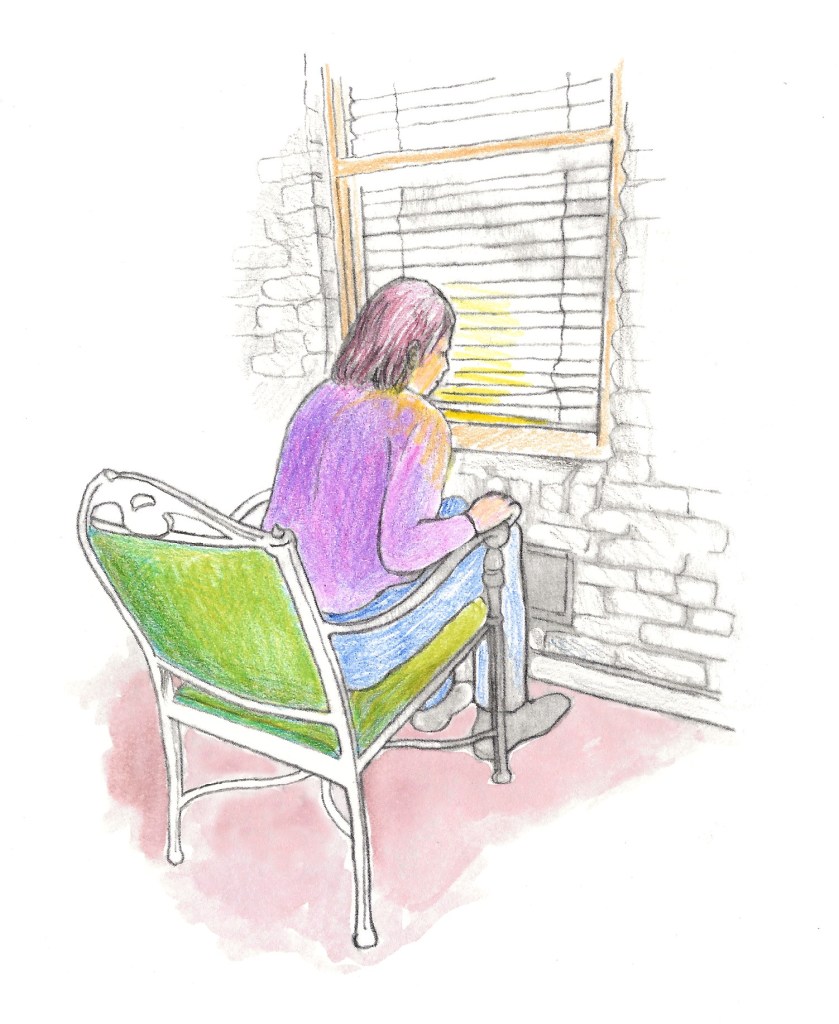
The nightly stalker or voyeur looking through our bedroom window. Illustration by Naomi Roseblatt.
I ran out the front door and around the back of the house, and there, right in front of our bedroom window, was one of our lawn chairs. The trespasser had climbed our fence, taken the chair, sat down in front of the window, and spied on us. Whenever I left the room, he would shout obscenities and threats at Claudia. When his face was planted in front of our window, he was just two or three feet away. This was why the voice felt so close. This had been going on for two weeks. We were happy to have finally figured it out, but we realized we had a problem.
We talked to our neighbors about the situation, and they told us that the trespasser had terrorized them as well. He had been quite busy looking through bedroom windows at night. People in the neighborhood were scared. I called the police, who told us they could do nothing unless the man was caught in the act or he committed a crime other than trespassing.
The detectives
Therefore, I decided to hire private investigators. I found them in the phone book. Phone books still existed back then.
The investigators told me that they typically spy on people suspected of cheating on their spouses, so this would be a more interesting job for them. The plan was for them to hide behind the bushes in our backyard and in a dark car parked on our street. When the man appeared, they would record him on video. They had a lot of fancy equipment and instruments, including big microphones, cameras, and metal detectors. They reminded us of Ghostbusters with all their technology and enthusiasm. They clearly loved their job. Unfortunately, though, the trespasser didn’t show up, so after a couple of days I decided to let the investigators go.
However, I soon figured out who the trespasser was. I started paying attention to what was going on in the neighborhood, and one evening, I noticed a strange-looking but relatively young man, apparently homeless, who seemed to be stealthily roaming our neighborhood. I did not confront him, because I had no proof.
Bronco saves the neighborhood.
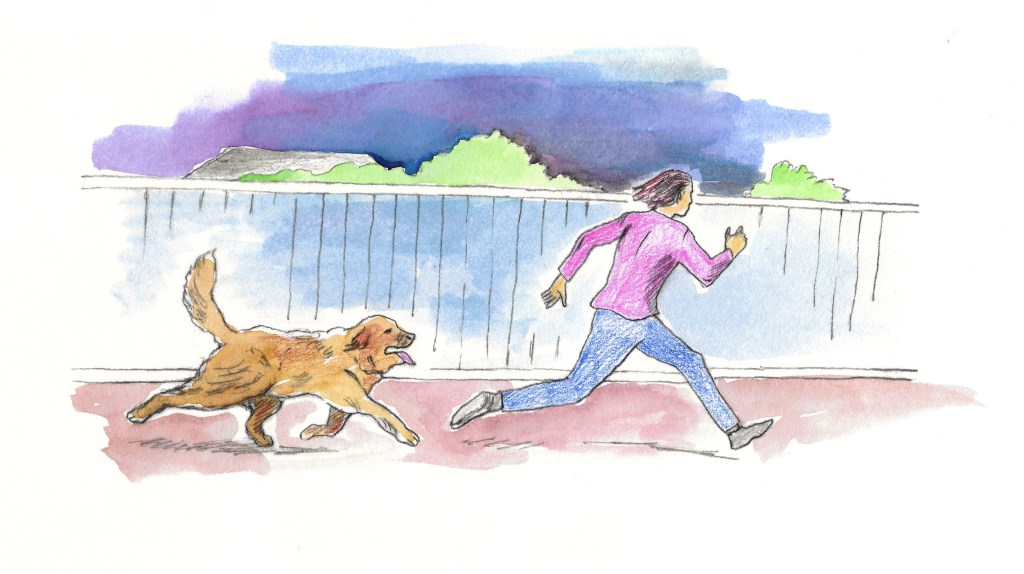
But a few days later, I heard shuffling noises outside our bedroom window. The trespasser was finally back. This time I sent Bronco out to chase him, and he did. Like the detectives, Bronco was enthusiastic but didn’t catch him. Still, he chased the man off. Having a big bearlike dog rushing toward you at night is probably a bit unnerving, even if the dog just wants to lick you. We never experienced or heard about the problem after this event, so Bronco may have helped the entire neighborhood.
Bronco chasing off the intruder who would not return. Illustration by Naomi Rosenblatt.
A couple of weeks later, while walking Bronco on a neighboring block, I saw the homeless man across the street, at a bit of a distance. He stared at us in fright. Bronco just calmly looked at him without barking. The man was clearly terrified of Bronco, and he ran away. But despite the nightmare the homeless man had inflicted on us, I felt sorry for him. My guess is that he was suffering from mental illness and that he had had a very tough and lonely life.
I’ve been thinking about launching a second blog for quite a while. The topic would be facts, or insights that are widely disputed or misunderstood amongst the public, yet important and known to be true. I believe I have identified hundreds of such facts so far. These facts and insights are not seriously disputed amongst the experts and scientists in the relevant fields and the evidence for their veracity is overwhelming. Therefore, verifying the accuracy of these facts and insights should not be difficult, just ask the respective expert community. However, finding the best way to express and explain these facts, determining whether they are important, and verifying that they are widely disbelieved may be more difficult.
One example of such a fact is that the Earth is a lot older than a few thousand years old (6,000 or 10,000 years old). Despite the fact that the scientific community states that Earth is 4.5 billion years old and that humans evolved over millions of years a 2019 Gallup poll, showed that 40% of US adults believe that God created humans in their current form within the last 10,000 years. The evidence from a large variety of scientific fields, biology, geology, paleontology, physics, astronomy, astrophysics, cosmology, etc., contradicts young earth creationism whilst the attempts to discredit the old earth narrative have fallen short.
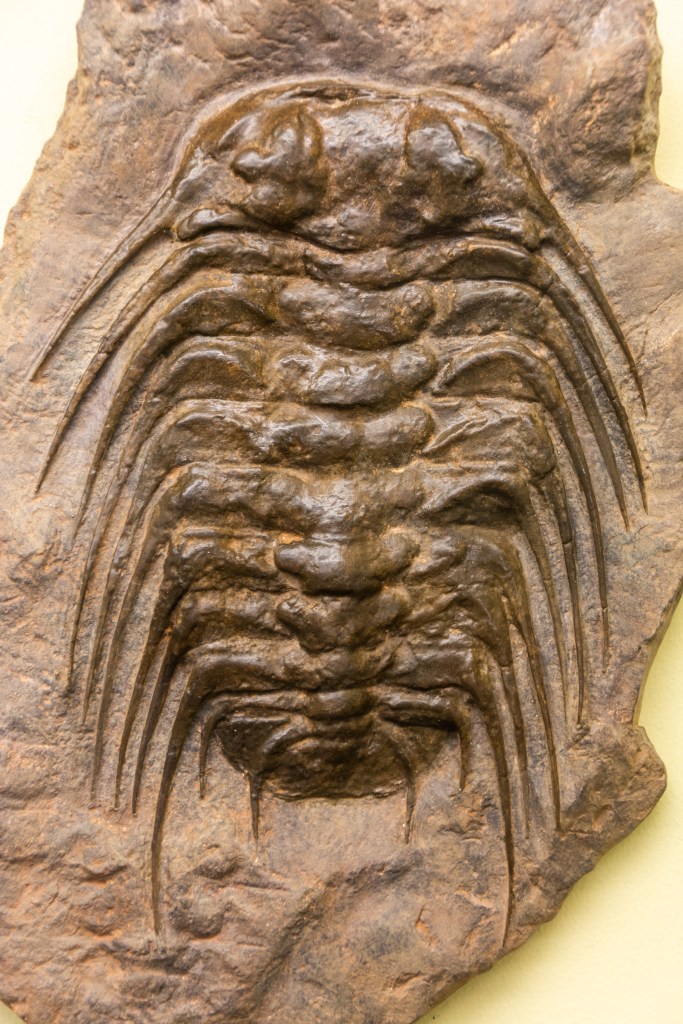
Trilobite fossil Shutter Stock Photo ID: 1323000239 by Alizada Studios
The reason for wanting to do this is not to prove anyone wrong, but because it is interesting, and it provides a growth opportunity for everyone including myself. In the past I believed false facts and I probably still do. Discovering these and learning about why you most likely are wrong could sometimes be unpleasant at the same time as it is an opportunity for growth and an opportunity to better understand the world. I am hoping to make the site interactive. Readers can suggest such facts, politely dispute my assessments, and add evidence. However, I should say I would like to avoid politics.
When I was a teenager, I believed that Earth and the Universe was 6,000 years old, and that evolution was a hoax. I read young earth books that appeared scientific, and which presented a long list of objections to the established scientific narrative. My religious background had something to do with it, but I also thought that I had the scientific facts on my side. I was interested in science, and I got accepted to “Naturvetenskaplig linje”, a Swedish high school program for students with good grades and who showed aptitude for science. This program was like taking lots of AP classes in math/calculus, physics, biology, and chemistry, and it prepared me well for my university level studies in engineering physics and electrical engineering.
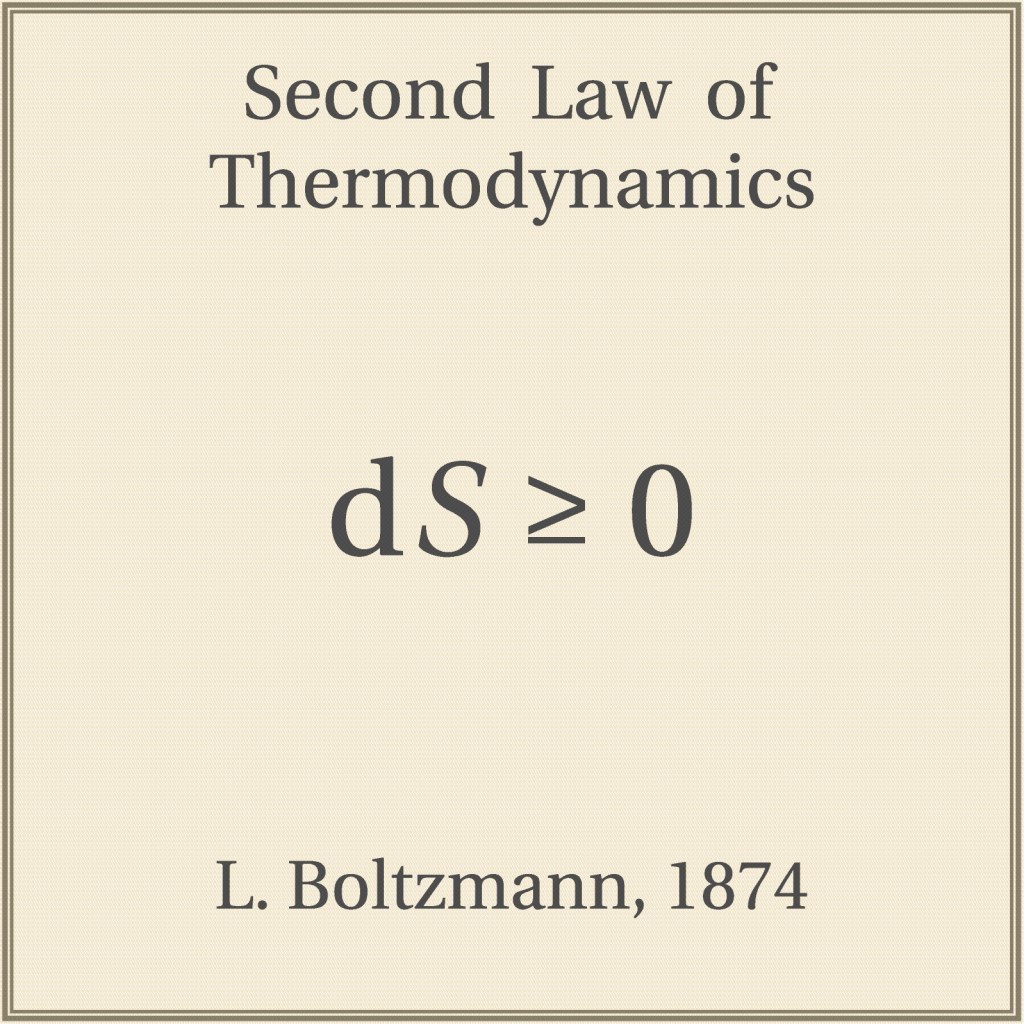
In physics I learned about radiometric dating. Sure, that topic had been mentioned in the young creationist books as well, but they had insisted that radiometric dating was unreliable, and they had suggested that radioactive decay rates might have changed. Now I learned why radiometric dating was very reliable, why radioactive decay rates remained constant, about the physical laws involved, not to mention the facts that highly sped up radioactive decay rates would have resulted in not just a very radioactive world, it would have forced changes to physical laws that would have broken the world. In thermodynamics I learned that the claim that the second law of thermodynamics contradicted evolution was based on a very simple, in fact silly, misunderstanding of the second law of thermodynamics.
Second law of thermodynamics Shutter Stock Vector ID: 2342031619 by Sasha701
From astronomy and astrophysics, I learned that it takes 100,000 years for light to travel from the inside of the sun to its surface. I learned that distances between stars and galaxies were thousands, millions, and even billions of lightyears, yet we could see them. How can we see a galaxy whose light has been traveling for 10 billion years if the Universe is only 10,000 years old? The young earth answer to that was that light might have travelled at a much faster speed in vacuum in the past, neglecting the fact that the speed of light in vacuum is a universal constant that is part of a lot of formulas E= mc2 (energy content of mass), the ratio of the electric and magnetic force, time and space formulas, the size of black holes, Einstein’s gravitational constant (strength of gravity). 10 billion years versus 10,000 years means that the speed of light must have been a million times faster, gravity a trillion trillion (septillion) times weaker, and according to E = mc2 99.99999999% of the Universe’s energy must have vanished.
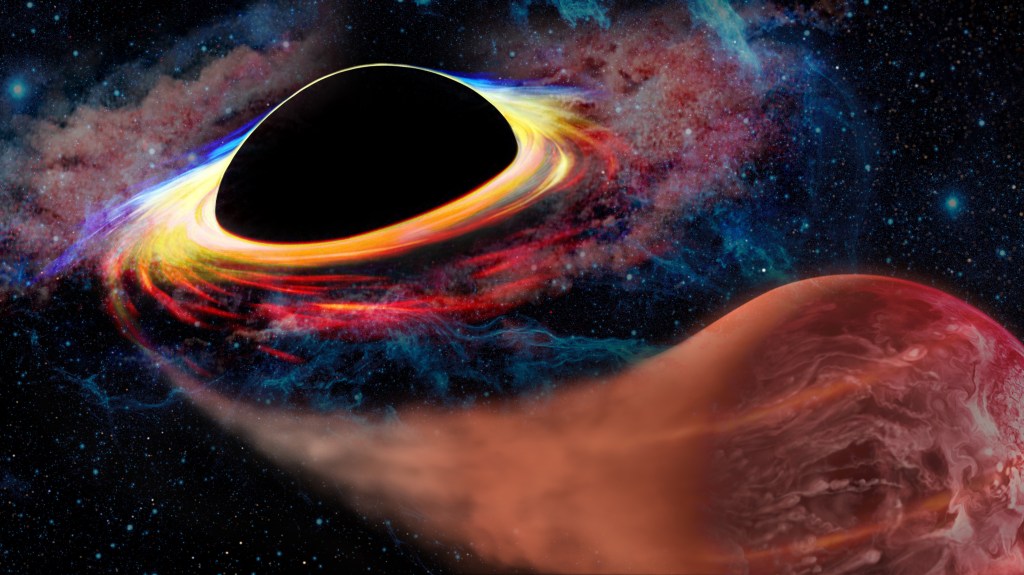
Black Hole Stock Photo ID: 2024419973 by Elena11
As time went on every single claim that the young earth creationist had made fell apart. In other words, knowing some science made the young earth narrative not only untenable but silly. To be honest with myself I had to give up the young earth belief system. Naturally, the universe could have been created yesterday, our memories could be implanted, and we could all be dreaming like in the Matrix. Science isn’t 100% certain, but some beliefs are much more plausible than others.
Young earth creationism wasn’t the only time I had been bamboozled. I think because I have a fairly strong science background combined with the facts that I have been bamboozled and I have accepted that reality, and the fact that my interests are so wide makes me a good candidate for launching this type of blog. I would like to present the fact and instead of arguing just give the reader a basic and understandable overview of the evidence with links to reliable sources. The reader can then sort it out for themselves. Again, I am hoping to get some help with suggestions and growing it to eventually thousands of examples/posts. Then I want to select, let’s say, the 100 best ones. Below are some examples of what I am interested in.
We know that the world is a lot older than 10,000 years old and yet many dispute that.
Evidence for evolution is strong, evidence against it is lacking, something many don’t know or deny.
We know that economic externalities are real (market failures), yet market fundamentalists are unaware of this.
Someone creating a duplicate account of you on Facebook does not mean you were hacked, yet many make that assumption.
Wind power is not a major cause of bird death. Fossil fuels and cats are a lot worse (hundreds of times).
We know that homeopathy does not work, yet it is widely used.
Global warming is real and is known to be caused by us, yet many deny this.
Plastic is not a big environmental problem for the US.
Poverty, violence, child mortality has been sharply reduced worldwide to the surprise of many.
My question now is what should I call the blog? Super Facts, Deep Insights, Eye Openers, Transformative Facts, Bamboozle Medicine, Big Memos, ….
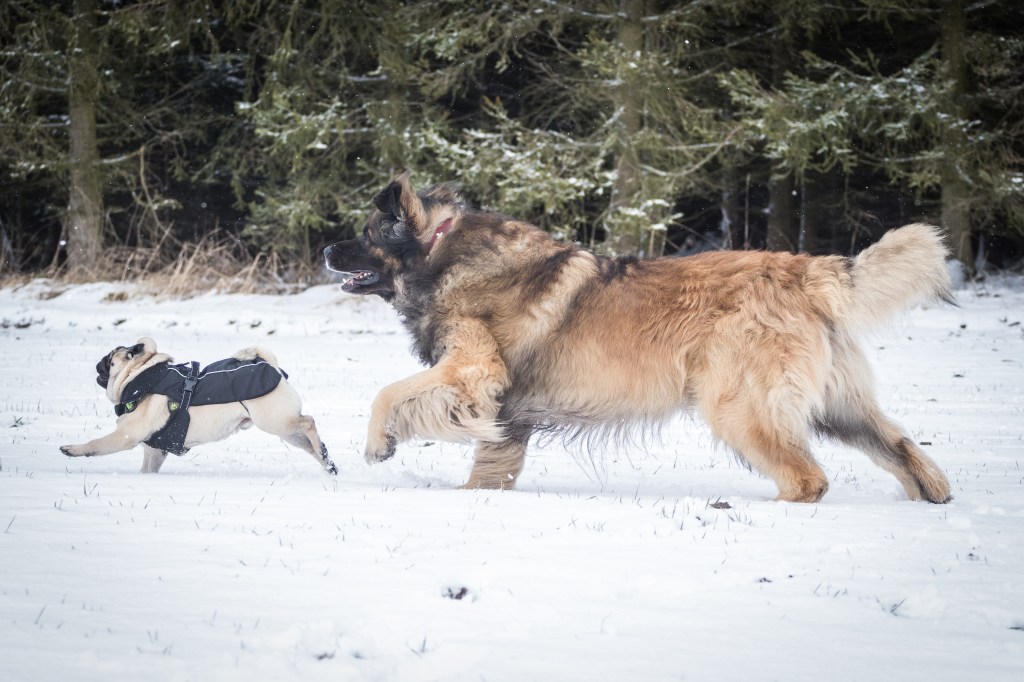
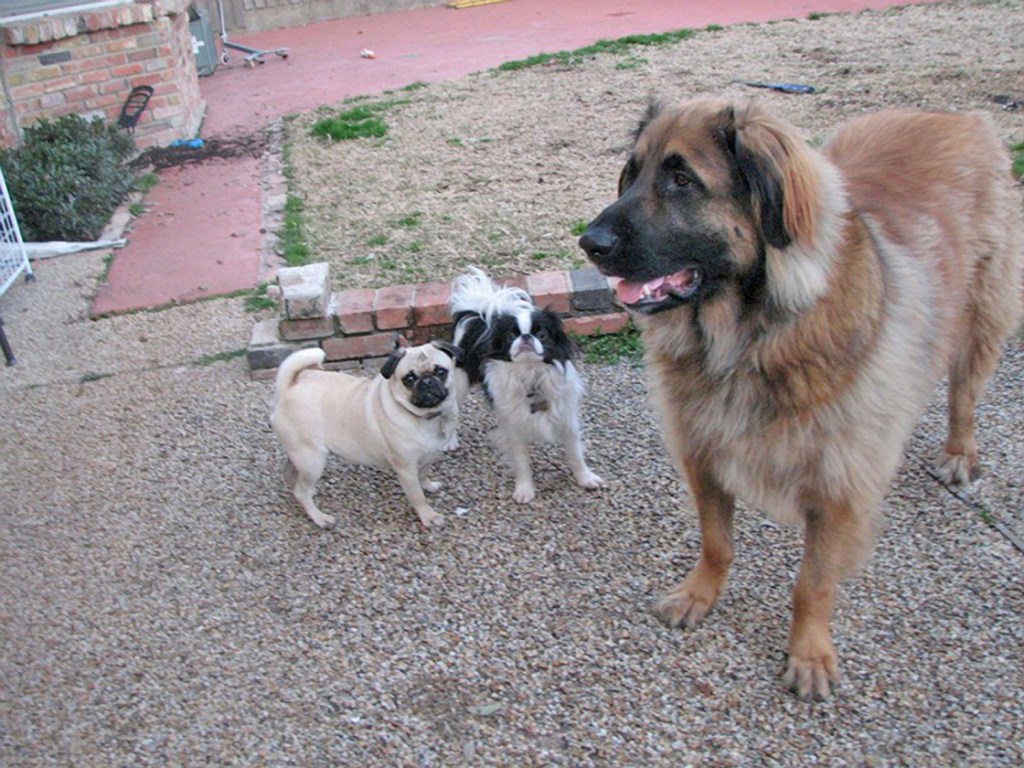
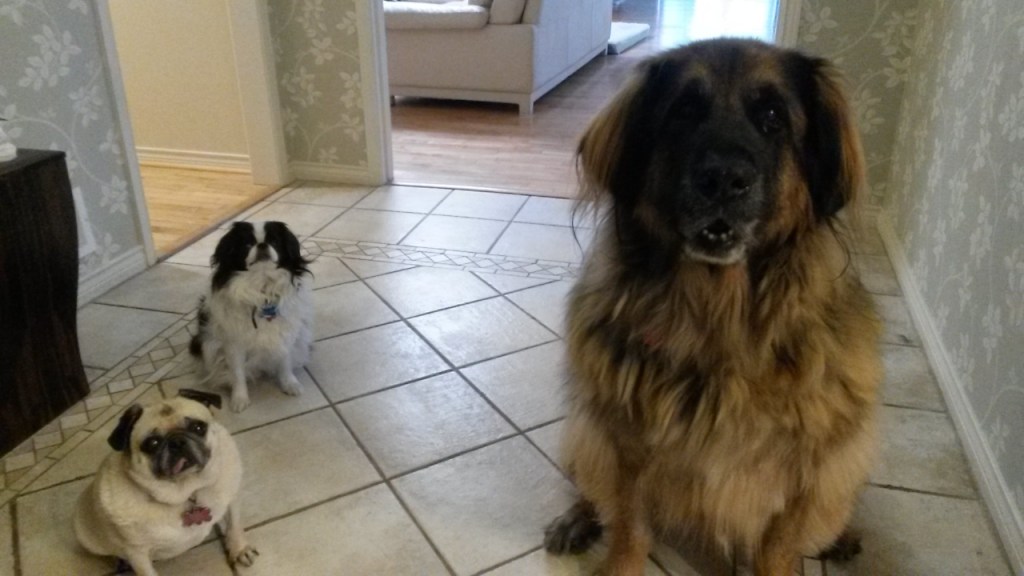
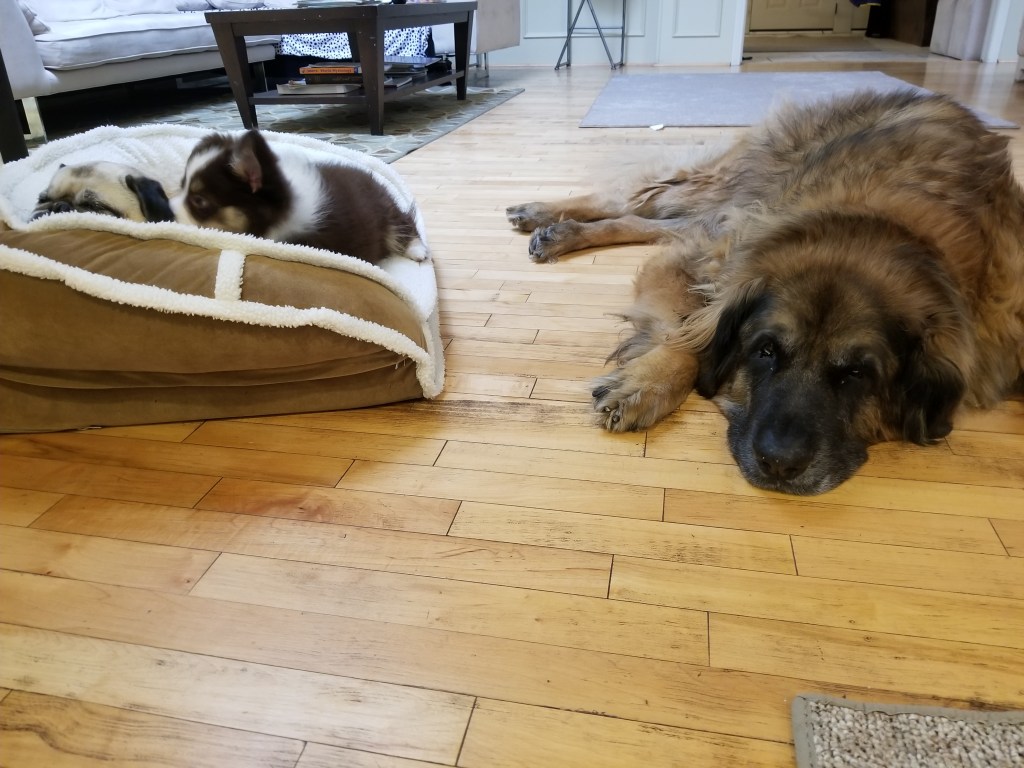
This is another post featuring 25 photos. This time it is photos of Leonbergers in the company of other dogs. Most of the photos are of our late Leonberger Bronco and the dogs he grew up with (our Labrador Baylor, German Shepherd Baby, Japanese Chin Ryu, Pug Daisy, and mini-Australian Shepherd Rollo). However, I have also included photos of other Leonbergers. A few photos from friends and two stock photos. I hope you will like them.
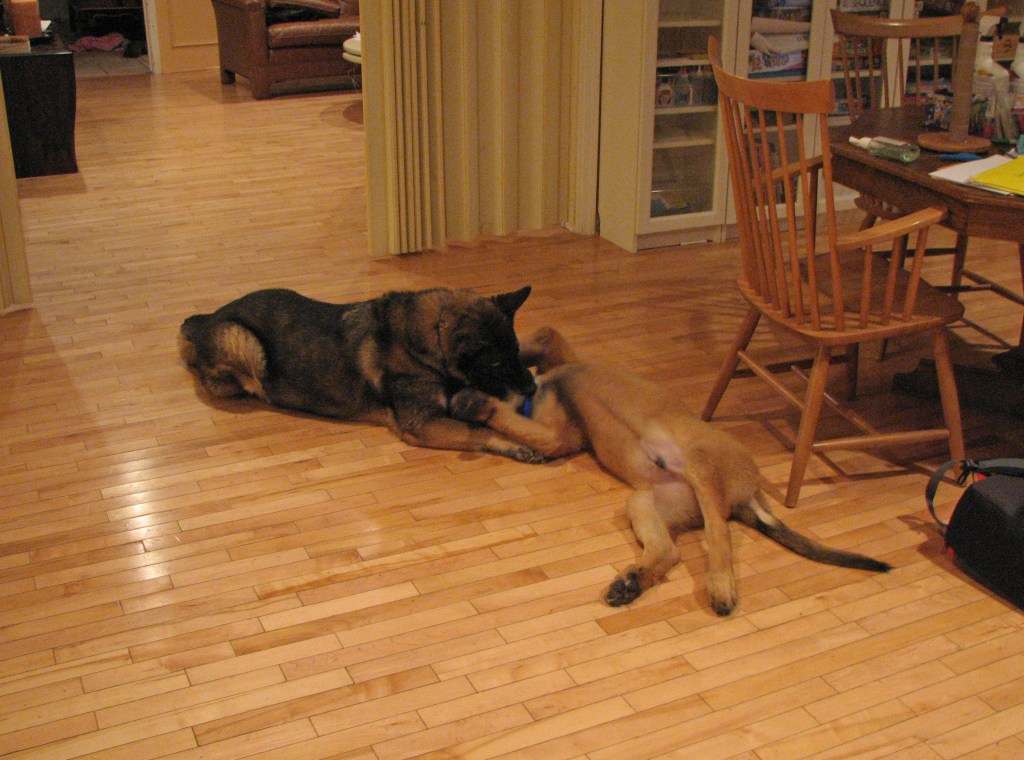
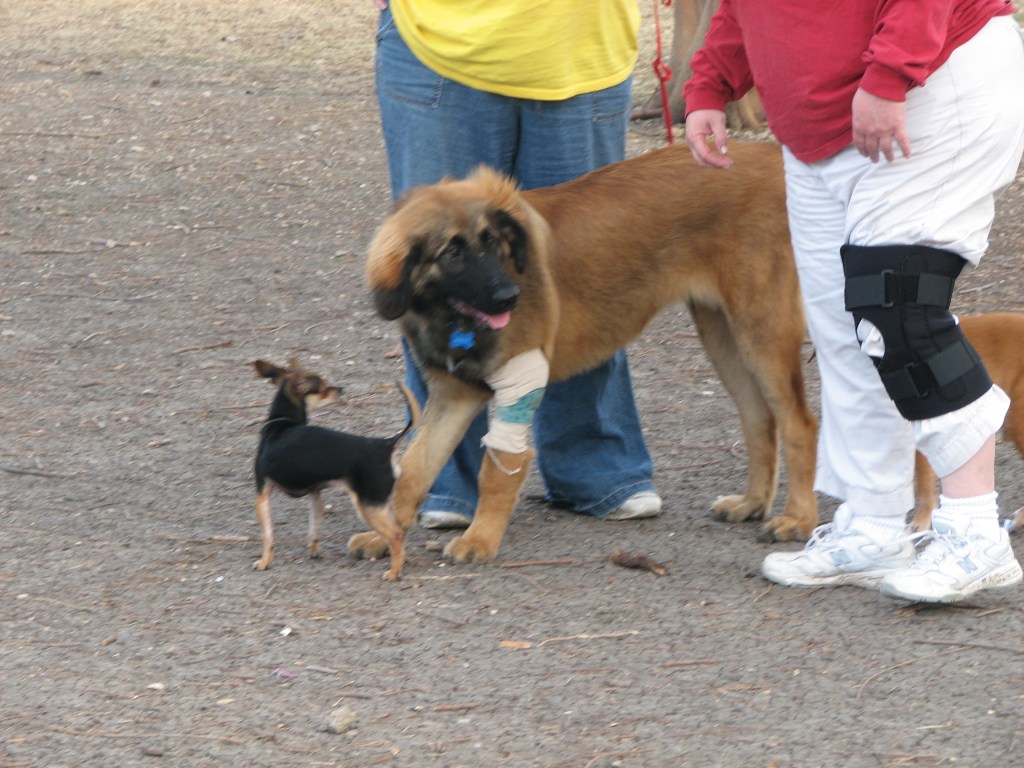
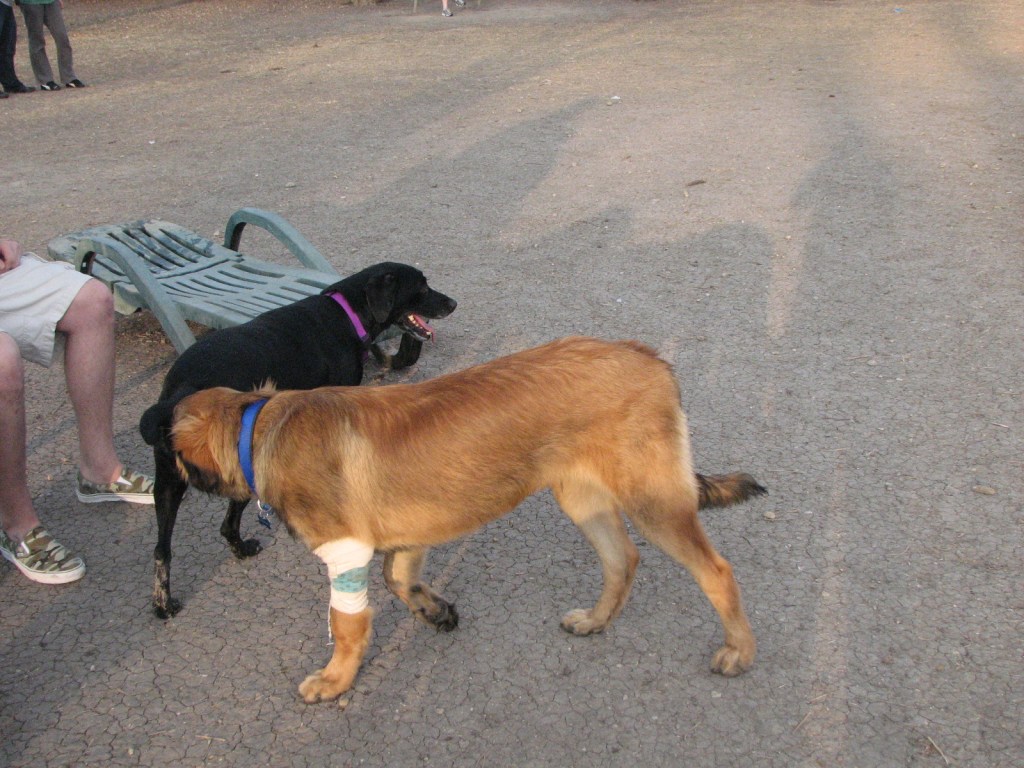
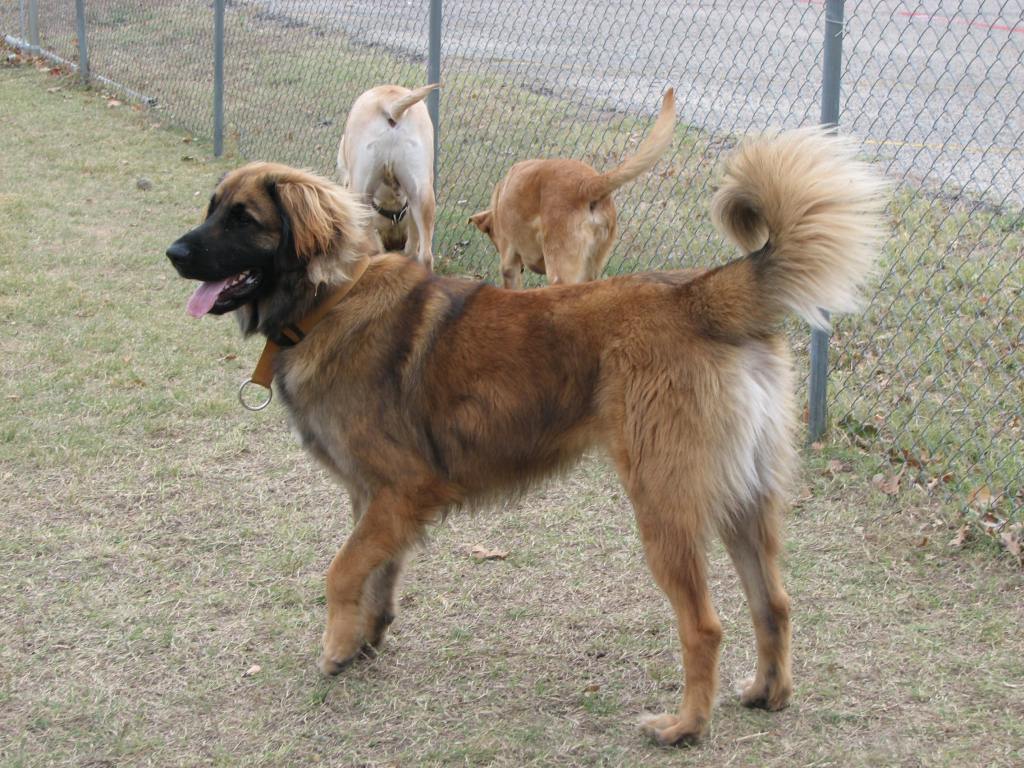
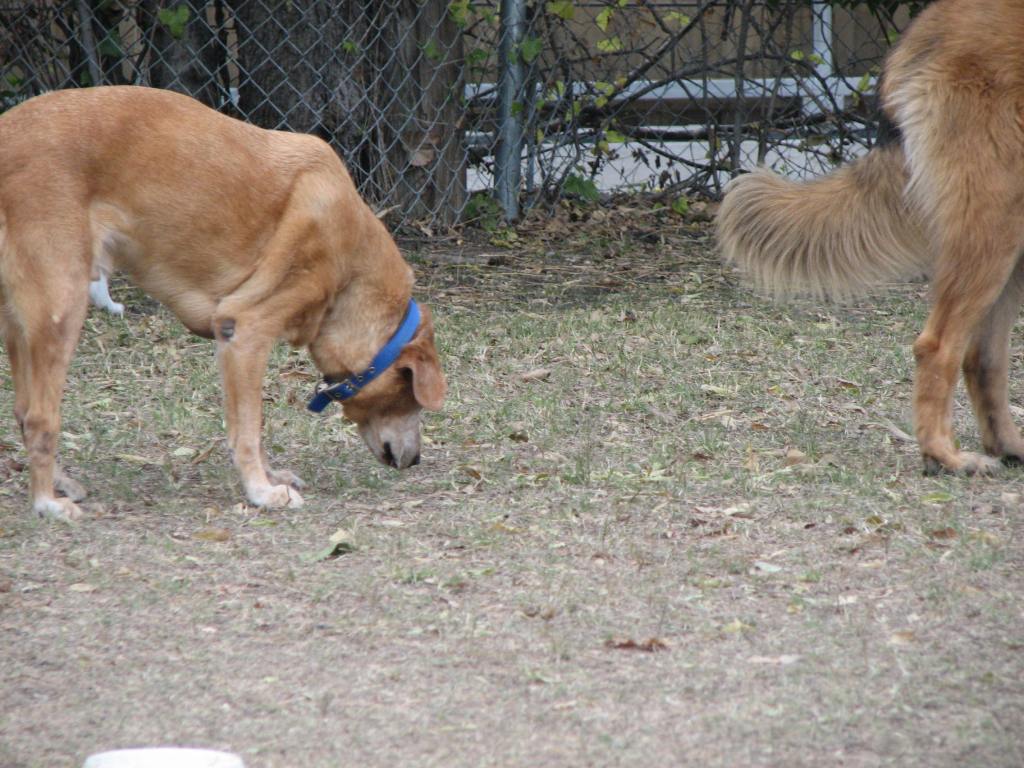
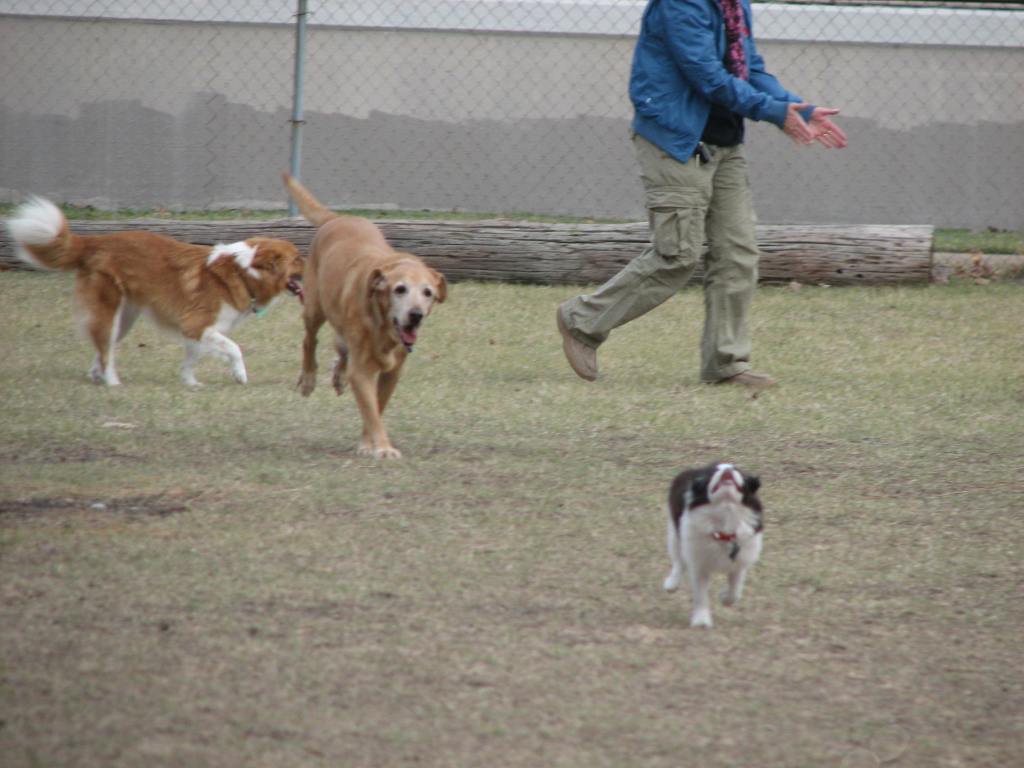
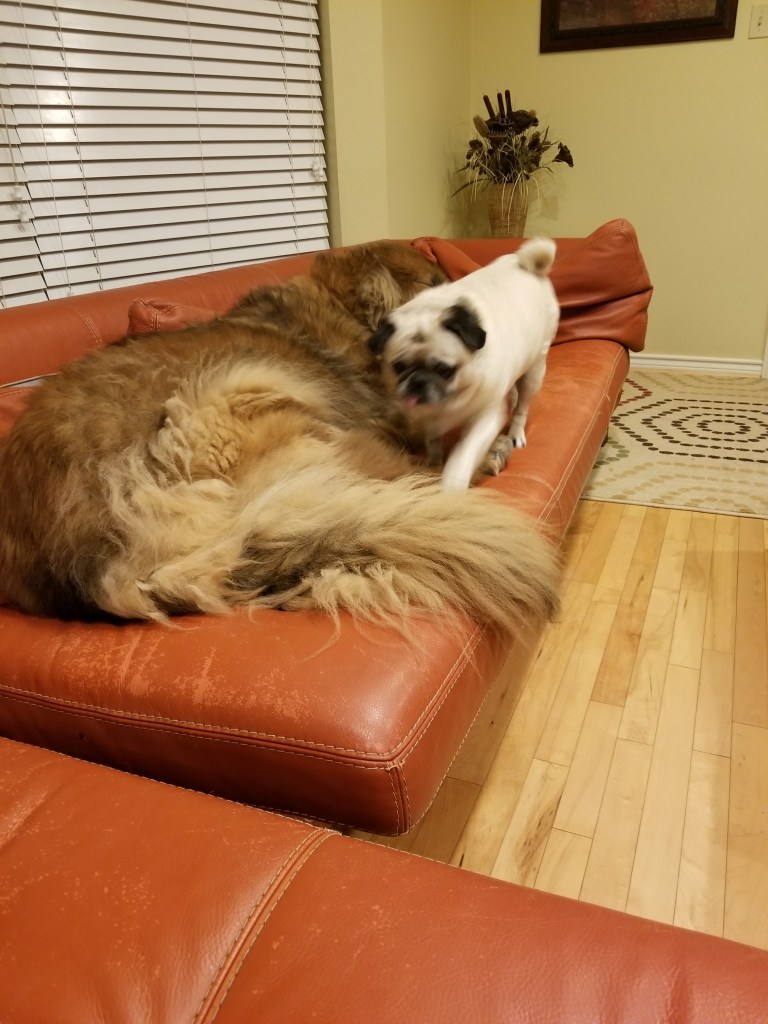
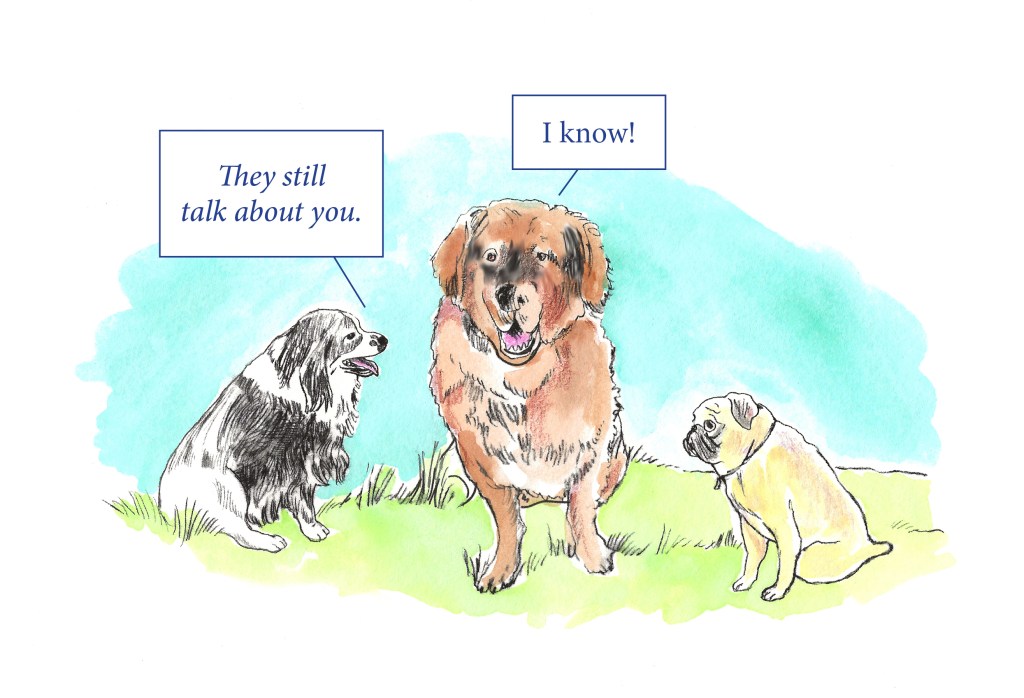
Baby (German Shepherd) is playing with our four months old Leonberger Bronco.Our Leonberger Bronco at the dog park at five/six months old. He is wearing a bandage on his knee because he got a condition from growing too fast. The two ladies are the owners of the little dog.Our five/six months old Leonberger is sniffing a dog at the dog park.Our not yet one year old Leonberger Bronco at the dog park. Bronco has not yet finished growing, he has not yet filled out and he is gangly. Not quite the Leonberger look yet. Our beige-brown Labrador Baylor can be seen in the background.Again our not yet one year old Leonberger Bronco at the dog park. Baylor in the background.Our not yet one year old Leonberger Bronco at the dog park with our German Shepherd Baby.Our Labrador Baylor behind our Leonberger Bronco at a dog park.Our old Labrador Baylor running behind our Japanese Chin Ryu at a dog park. Bronco is not in this photo, but he was there.Bronco our Leonberger once sniffed out an oncoming insulin shock in Baylor and alerted us. Bronco was a hero.Once when Bronco was not so well behaved. He pushed our German Shepherd into a storm drain and I had to get her out while holding onto an agitated Bronco. Illustration by Naomi Rosenblatt.Ten Leonberger puppies. My guess is that they are about two months old. Shutterstock-ID:561107710 by Akbudak Rimma.A Leonberger and a Pug running through the snow. Shutterstock-ID:1659034960 AnetaZabranska.Digory and Obi, two Leonbergers. Photo by Jen O’Keefe.Digory and Obi, two Leonbergers. Photo by Jen O’Keefe.Six Leonbergers from left to right: Caspian (Obi’s nephew), Austin (Obi’s son), Delfi, Obi, Digory, and Rilian (Obi’s son). Photo by Velvy TheLion.Our Leonberger Bronco with our Japanese Chin Ryu and our pug Daisy.Our Leonberger Bronco stole and smashed a gingerbread house. He shared some with his little pug sister Daisy.Our Leonberger Bronco with our Japanese Chin Ryu and our pug Daisy.Our Leonberger Bronco with our Japanese Chin Ryu and our pug Daisy.Our pug Daisy and our mini-Australian Shepherd puppy Rollo in the little bed and Bronco our Leonberger is lying on the floor.Our pug Daisy and our Leonberger Bronco is sharing the big red leather sofa, but Daisy decided Bronco took up too much room.Bronco and our mini-Australian Shepherd puppy Rollo.Bronco and our mini-Australian Shepherd Rollo.Our mini-Australian Shepherd puppy Rollo is playing with Bronco’s tail. Bronco did not like it but tolerated it. Well, when Rollo was swinging in the tail it was a bit much.One day Bronco left us, leaving Rollo and Daisy behind. Illustration by Naomi Rosenblatt.










































 Leonberger Life