This blog feature amusing and heartwarming stories about our late Leonberger dog Bronco, as well as other Leonbergers. It also has a lot of information about the Leonberger breed, the history, care, training, Leonberger organizations, etc. I also wrote a Leonberger book, which I am featuring in the sidebar.
The next few days are going to be interesting. I am participating in an Indy-Author Day tomorrow at a local library, I might be interviewed by a local magazine, and there might be other events coming up related to my book. Because the next few days or weeks are going to be special, I am temporarily lowering the price of the Kindle version of my book to $4.99.
For your information the ASIN number for the e-book edition: B0B5NN32SR and the ISBN number for printed edition: 978-0998084954
I am not lowering the price of the paperback version because it is printed in color and the printing cost make that difficult. All Royalties are donated to the Leonberger Health Foundation International (LHFI). 30% of the $4.99 is Amazon’s cut and 70% is royalty ($3.49). That Royalty is donated to the Leonberger Health Foundation International. $3.49 is less than the $6.29, which was the royalty when the price was $8.99. However, if you wish to donate more to LHFI you are welcome to. Below I am showing an Ad for the Leonberger magazine, the front and back cover of the book, and a few selected pages as they would look like on a kindle with color or as the pdf version of the book. Note: the book snapshots below may be too small to read, but if you can read them, I don’t mind.
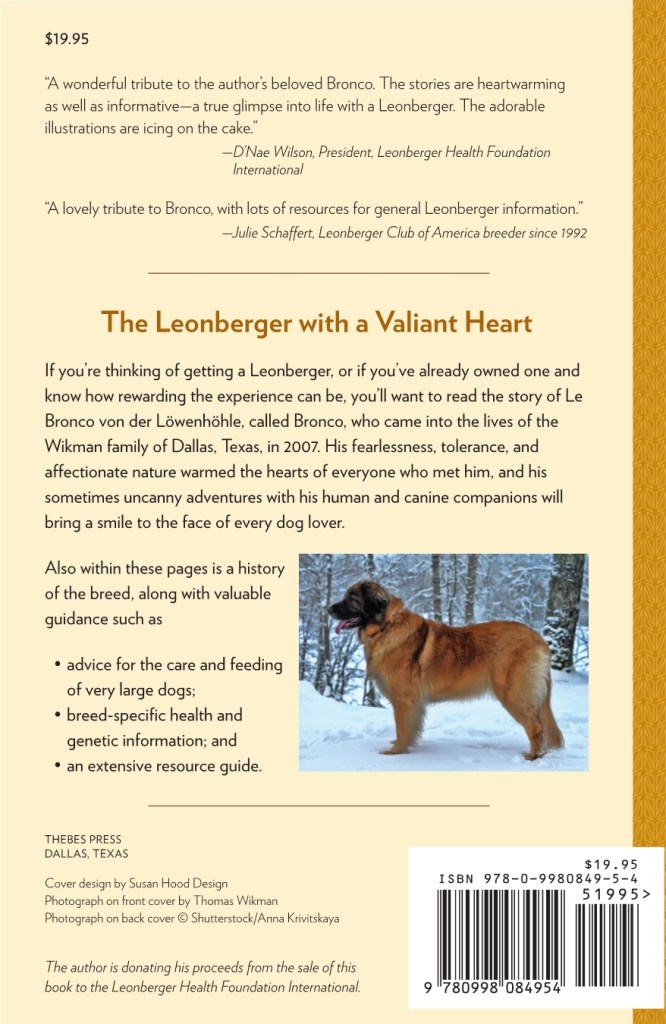
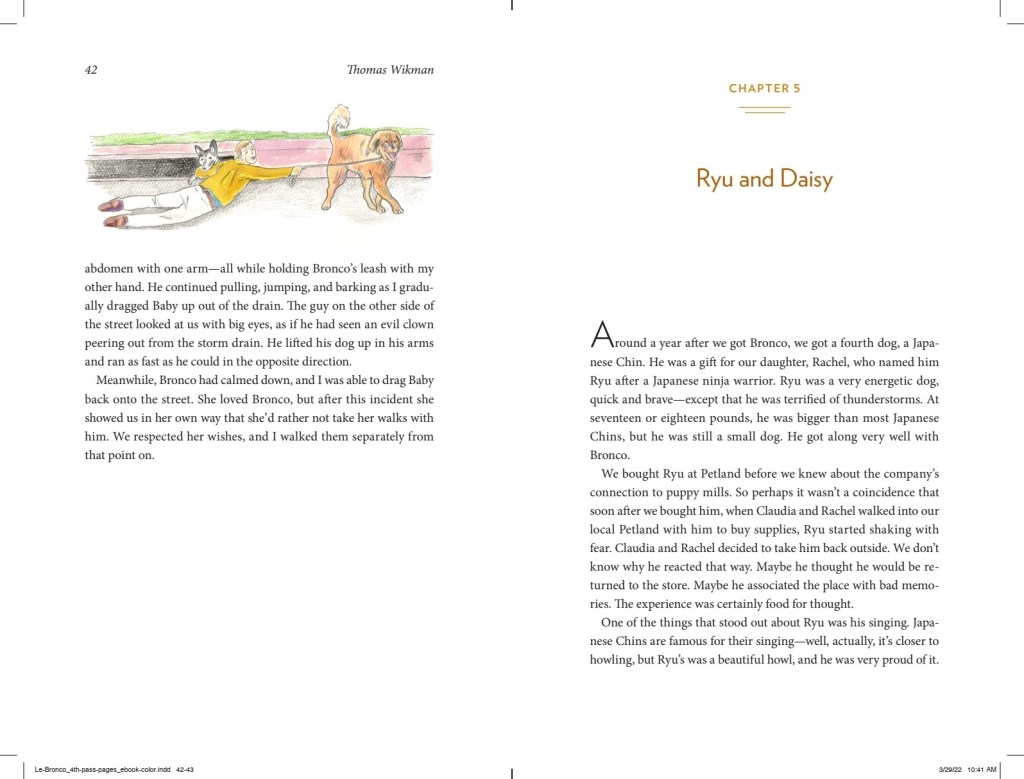
Ad for the Leonberger magazine. Click on the image to go to the Amazon.com Kindle location for the book. $4.99 for a limited time.This is the front cover of the book “The Life and Times of Le Bronco von der Löwenhöhle: Stories and Tips from Thirteen Years with a Leonberger”. Click on the image to go to the Amazon.com Kindle location for the book.This is the back cover of the book “The Life and Times of Le Bronco von der Löwenhöhle”. Click on the image to go to the Amazon.com paperback location for the book.Page 2-3 in the bookPage 24-25 in the bookPage 42-43 in the bookPage 92-93 in the bookPage 122-123 in the bookPage 132-133 in the bookPage 194-195 in the book
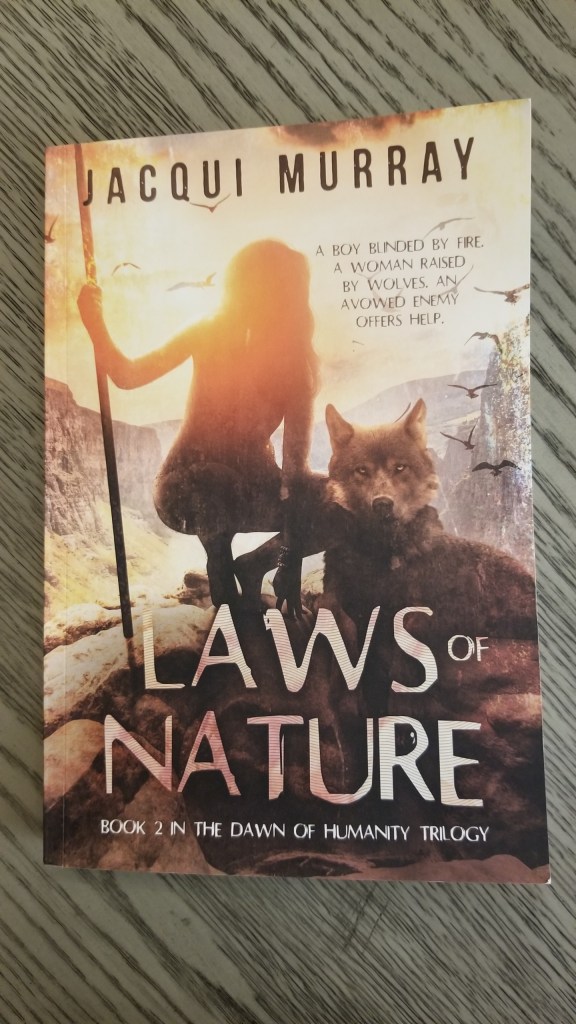
This blog is primarily about Leonbergers and our late Leonberger Bronco as well as the book I wrote about him and his dog friends. However, sometimes I review other Leonberger books and other great books. This time I am reviewing Laws of Nature, the second book in the Dawn of Humanity series – July 3rd, 2021, by Jacqui Murray. This paperback is 307 pages, 978-1942101604, item weight 14.6 ounces pounds, dimensions 6 x 0.7 x 9 inches. You can buy it from, for example, Amazon or Barnes and Noble, as a paperback or e-Book. The paperback version is currently $15.99 on Amazon.
Not only is this book great Historical Fiction but it was released July 3rd on my best friend’s birthday. I am talking about Bronco, or Le Bronco von der Löwenhöhle, our late Leonberger. The pre-historic canine in this book, Ump reminds me of Bronco. I feel there is a special connection. Reading this book was a great joy. I wrote a review on Amazon, which can be found here (Lucy, Ump and their motley crew survive in brutal pre-historic times), as well as on my social media. Here I am presenting a reworked version of the same review. From now on I will be focusing on her next book “Natural Selection” in her Dawn of Humanity series. I recommend that you read all three books. Who knows what will come next?
Front cover of the book Laws of Nature by Jacqui Murray. Click on the image to go to the Amazon page for the book.
Lucy, Ump and their motley crew survive in brutal pre-historic times
The story follows Lucy, a Homo Habilis woman who lived 1.8 million years ago, her tribe, and her canine companion Ump. Lucy’s tribe is attacked by a tribe of Homo Erectus, and we follow them as they migrate across Africa. They have to fight for their survival in various ways, finding food, finding shelter, fighting off saber tooth tigers, other dangerous animals as well as hostile tribes. Fortunately, Lucy is a special kind of pre-historic woman, a healer, a hunter, clever and wise.
I know a little bit about human pre-history, but I am not an expert. However, I find the author’s depictions of life in the early Quaternary quite believable and fascinating. Like Jean M Auel before her, Jaqui Murray has done her research. At the beginning of the book, she is explaining the background, the groups, what the various animals are, etc. This helps readers understand what is going on. It is especially helpful to readers who did not read the first book, Born in a Treacherous Time. I also highly recommend this book.
I was especially intrigued by Ump. Ump is a large pre-historic canine who became one of Lucy’s companions. Ump is friendly, he is brave, and he is very loving and protective of Lucy and her group. Ump is able to communicate with the hominids using body language in a manner that reminds me of how dogs do that today. It is amazing how much you can say using body language and how this translates across species boundaries. I see this with my dogs today. If you pay attention there’s so much a dog can tell you.
Ump reminded me of our late Leonberger Bronco. Like Ump Bronco was friendly, brave, protective and he loved his family. Like Ump he saved the lives of fellow family members a few times, and he chased off threating people. Like Ump he was a good communicator using body language, growls, grunts and barks, and like Ump he was in tune with the feelings of his family. Reading about Ump and other canines in this book was a joy.
Another thing I think the book makes clear is that even though diversity makes communication more challenging it makes for a stronger group. A group that is homogenous might be great for defense temporarily, but to venture out, to seek new pastures, to survive the unfamiliar you need diversity; and thus, we have Lucy’s and Ump’s diverse group. Ump’s canine skills, Boah’s special skills with traveling through the canopy, and the skills of the different hominid races and their experiences, all within Lucy’s small group allow them to survive challenges beyond what you can expect to be bearable.
This book is full of action-packed adventure. The stories are not only thrilling but imaginative, captivating, and full of surprises. This book feature some quite unexpected and surprising but credible plot twists towards the end. I love it when story lines are coming together in surprising but logical ways that you do not expect. The book also introduces some new characters, one of them “Wild”, which was, well quite wild to say the least. I highly recommend this book, but now I will focus on her next book “Natural Selection”.
Does dog humor exist? Well, this article featuring Leonbergers claim that it likely does. Dogs think it is funny to be a bit mischievous and they special sounds while doing it. You can call it dog laughter. Well, if that is the case, then our Leonberger Bronco laughed on several occasions, for example the time he escaped the leash and had me chasing him around the neighborhood (see story below).
Regarding dog laughter, I am also wondering about Rollo, our mini-Australian Shepherd. He loves lying on his back and getting a belly rub. While you are doing it, he is kicking all four of his legs while turning his head back and forth with his mouth open. It looks like he is laughing, like a giggling baby getting tickled.
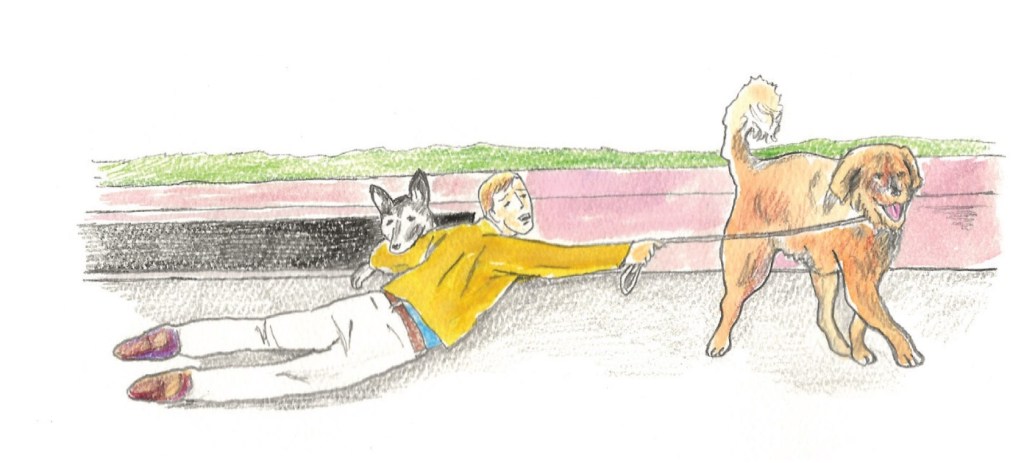
A couple of times, Bronco took advantage of the fact that the snap hook on his leash would come loose and detach from his collar. One day this became a big problem. Bronco ran off, and I chased him—across the street, across people’s lawns, across the street again, and back over neighboring lawns. When he ran in circles, I ran in circles right behind him, yelling at him. He would stop and wait for me, and then as soon as I got close, he would start running again. I even jumped to catch him a few times. But he dashed off both times, and I just landed flat on my belly.
Bronco had a lot of fun doing this. I imagined him laughing at me, and I got angry. Dogs can’t laugh, of course, but his tail was wagging in excitement, and it was obviously a game to him—a dangerous game.
Bronco as a teenager young and gangly.
So, I asked him, “Do you want to be lost? Bad things happen to dogs who get lost.” I don’t know how much of that he understood, but I had to tell him the truth. Then I turned around and started walking home. I figured I’d never catch him, so it was better for me to go back and get help. (It was 2008, and I didn’t have a cell phone.) Naturally, I worried that Bronco would get hit by a car. I was also worried about the damage an energetic 130-pound adolescent dog could do to the neighborhood.
As I stomped off, I turned around to look at Bronco. He stood still, around a hundred yards away, staring back at me. He seemed confused. I continued walking. After a while, I heard the soft slapping of big paws on the road behind me, accompanied by some distinctly noisy breathing. Then I saw Bronco walking next to me, so I carefully snapped the leash back onto his collar. He let me do it without protest. He was finished playing games. We walked home calmly, and the next day I bought a new and better leash.
This blog is primarily about Leonbergers and our late Leonberger Bronco as well as the book I wrote about him and his dog friends. However, sometimes I review other Leonberger books. This time I am reviewing The Dogfather: Dog wisdom & Life lessons: Leonberger book ~ Leonberger gifts Paperback – May 12, 2020 by Alex Luther. This paperback is 285 pages, black and white, ISBN 979-8645268923, item weight 13.4 ounces, dimensions 6.34 x 0.65 x 6.34 inches, so fairly small. You can buy it from Amazon but exist only in paperback format. It is currently $18.99 on Amazon.
The Dogfather Leonberger book by Alex Luther.
We’ve owned many dogs, all wonderful dogs, but our Leonberger was the most amazing creature I’ve come across. He passed away one year ago. Originally bred to be large companion dogs they are in tune with your feelings, and for the same reason they make great therapy dogs. They are double coated and have webbed large paws, making them excellent swimmers, they are sometimes used for water rescue. They are smart, very strong, they have an excellent sense of smell, they are big, about the same size as a St. Bernhard, and they are excellent guard dogs as well. Our Leonberger became the protector of our smaller dogs. He saved our pug’s life once. He also found and brought back our hamsters when they escaped their cage. He noticed (smelled) that our Labrador, who had diabetes, was about to have an insulin shock and alerted us to it. One time he chased away an intruder that frequently trespassed on our property and threatened us as well as our neighbors. No, he didn’t try to eat him. He probably just wanted to say hello, but the intruder didn’t know that. After that the intruder never came back. Above all he was very loving, very sociable, and sensitive to our feelings.
I thought the book looked interesting and might be worth reading at the same time as I expected a lot of sayings I’ve heard before and maybe silly jokes, but as I read on, I found the book to be better than I had expected. It is a very touching collection of sayings that were all new to me and the poetic wisdom words captured the personality of a Leonberger very well. Initially this made me believe that the author must own or had owned and loved a Leonberger like us. A few examples: “I think Leonbergers are the most amazing creature; they give unconditional love. For me, they are the role model for being alive.” “One reason a Gentle Lion can be such a comfort when you’re feeling blue is that he doesn’t try to find out why.” “The reason a Gentle Lion has so many friends is that he wags his tail instead of his tongue” and my favorite “Sometimes I think I like Leonbergers more than I like humans. The only time a Gentle Lion has ever betrayed me…was by dying.” However, upon rereading the book I realized that it is possible that the sayings could apply to any kind of dog breed. Furthermore, I also realized that the author has written 160 nearly identical books called “The Dogfather <insert dog breed> or “The Dogmother <insert dog breed>”. So, I had just fooled myself. Most likely the author has never seen a Leonberger.
However, the sayings in the book are touching and the word Leonberger is used throughout the book. Not as good as I thought, but close. In the middle of the book there are two pages of advertisement and a web link for buying stuff. So, this book is partially advertising. That’s OK. The book is mostly for a younger audience but also sentimental adults. I gave the book four stars on Amazon.
As I mentioned before, our Leonberger Le Bronco von der Löwenhöhle, or as we called him, Bronco, was an unusually long lived Leonberger. Leonbergers live on average 8-9 years, but our Bronco almost made it 13 (by two weeks).
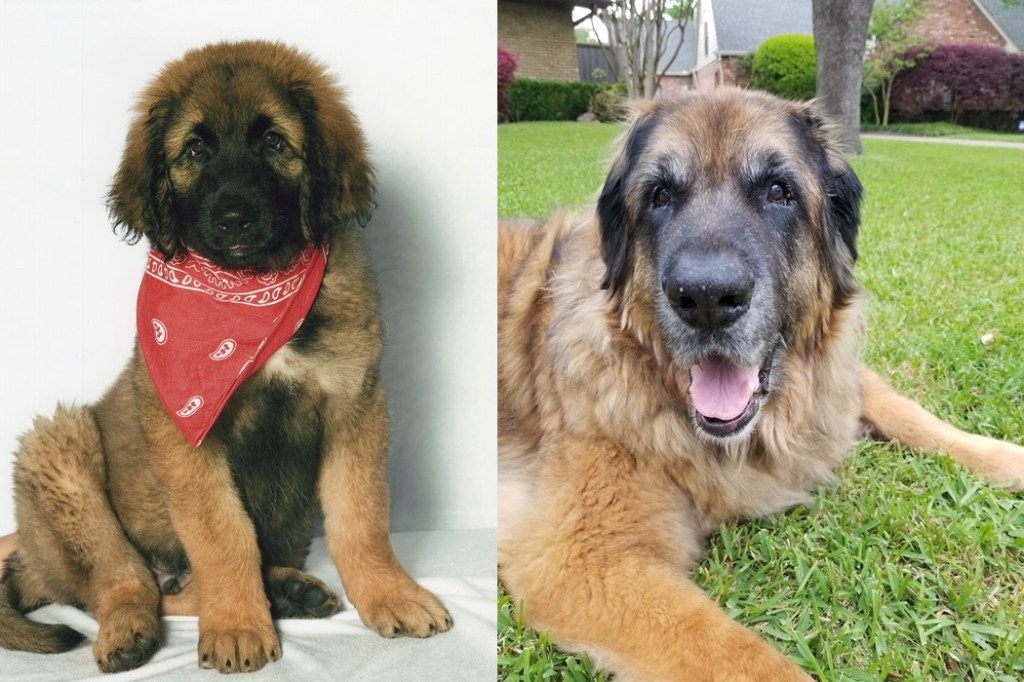
Our Old Leonberger Bronco going on 13. He loved walking into his old age but needed breaks.You can look up the average life span of hundreds of dog breeds by clicking on the image. As you see, smaller dogs live longer, the giant breeds have the shortest life spans.
Scientific veterinary research has shown that large dogs have a much shorter life span than small dogs. This is not controversial, yet so many people are surprised by it. For example, one day after Bronco had just visited the veterinarian and I was walking him around the shopping center, a woman came up to me and asked about him. I told her he was twelve—old for a Leonberger. She said, “Twelve isn’t very old; my Chihuahua lived to be sixteen.” I explained to her that big dogs, especially really big dogs such as Leonbergers and Saint Bernards, don’t live as long as small dogs do, so for a Leonberger, Bronco was indeed really old. The look on her face told me she didn’t believe me; excuses, excuses, excuses. So this fact is far from intuitive to people, especially considering that big animals tend to live longer than small animals in the wild.
The cliché that one human year corresponds to seven dog years is a myth. For example, the average life span of a Great Dane is eight to ten years. For a Chihuahua, it is twelve to twenty years. Dachshunds and Pomeranians live between twelve and sixteen years, and pugs live between twelve and fifteen years. The average life span of a Leonberger, by contrast, is eight to nine years (some sources say seven years*). You can look up your dog’s particulars online: the product-review website Goody Pet features a life-expectancy calculator for hundreds of dog breeds.
Knowing the expected life span of your dog has value. When a dog reaches three-quarters of it, for example, he is considered a senior and needs to be treated differently.‡ You should get dog food that’s especially made for senior dogs and visit the veterinarian more often—ideally, twice a year.
To take Bronco’s temperature, we used a thermometer that we could insert into his ear canal. However, you can also do it the old-fashioned way: coat a thermometer with petroleum jelly or baby oil and gently insert it about one inch into your dog’s anus. Wait sixty seconds, then remove the thermometer. It should be noted, however, that the old-fashioned approach may lead to protests.
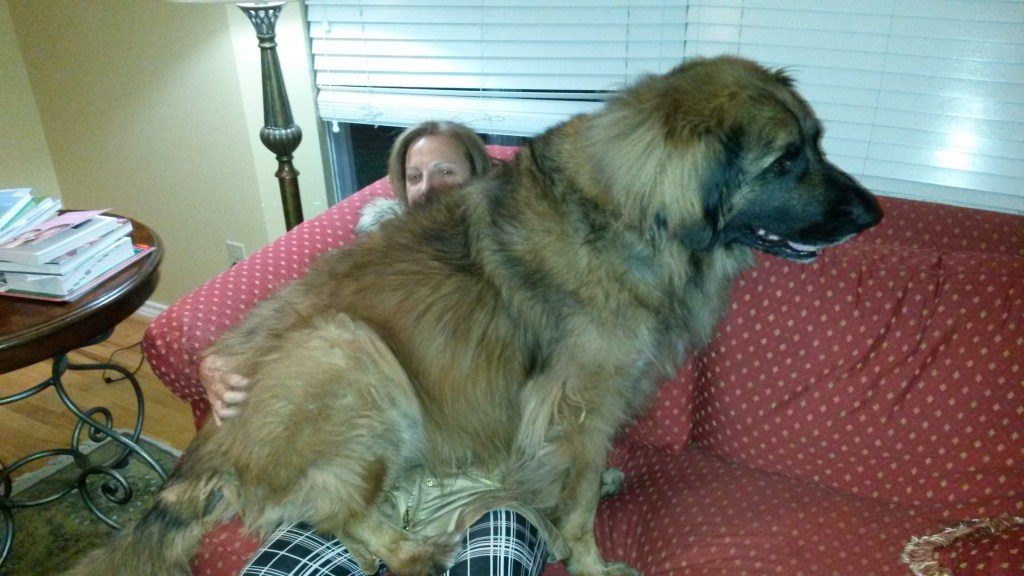
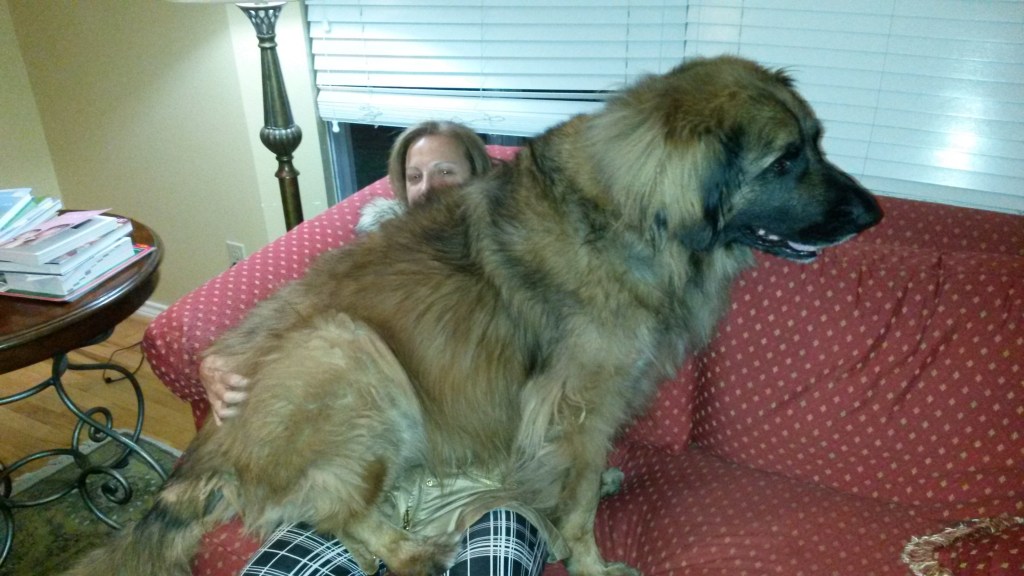
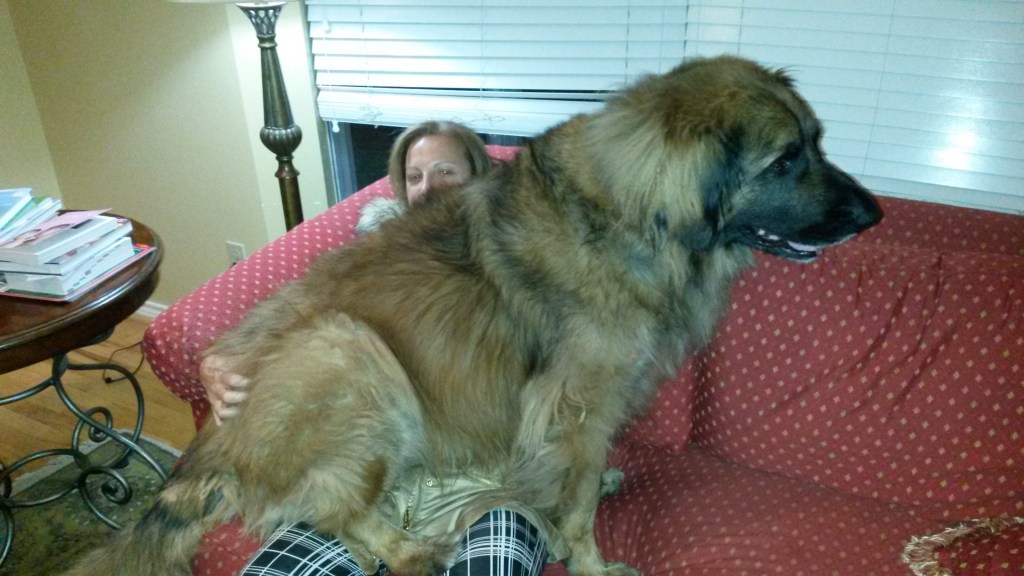
It’s also important to keep careful track of your Leonberger’s weight. Obesity in dogs is a growing problem: according to the Association for Pet Obesity Prevention, in 2018, 56 percent of American dogs were obese. Obesity, by definition, is a condition in which a person—or an animal—weighs at least 30 percent more than his ideal weight. In the photo below, in which Bronco is sitting on Claudia’s lap, he weighed 167 pounds—thirty-two pounds above his ideal weight of 135 pounds. Soon after that photograph was taken, we put him on a diet. Obesity can cause a lot of health problems, including diabetes, heart disease, early-onset arthritis, and joint pain. It can also put a strain on the body’s vital organs.
Bronco was a loving dog but 167 pounds in your lap might be a tad much.
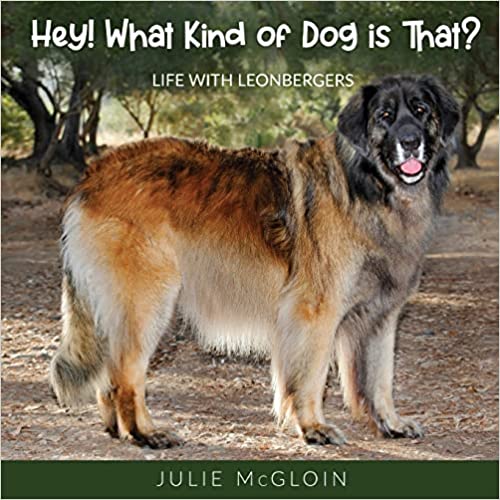
This is the third Leonberger book review on my blog. I am reviewing and recommending Leonberger books that I loved. This time I am reviewing Hey! What Kind of Dog is That?: Life With Leonbergers, by Julie McGloin, ISBN 978-1662913679. You can buy it from Amazon and Barnes & Noble. It is currently $13.88 on Amazon and $30.00 on Barnes and Noble. It is 104 pages, in a medium sized format (8.5 x 0.28 x 8.5 inches, 9.3 ounces) and it is in color.
Hey! What Kind of Dog is That?: Life With Leonbergers, by Julie McGloin. Click on the photo to go to the Amazon page for the book.
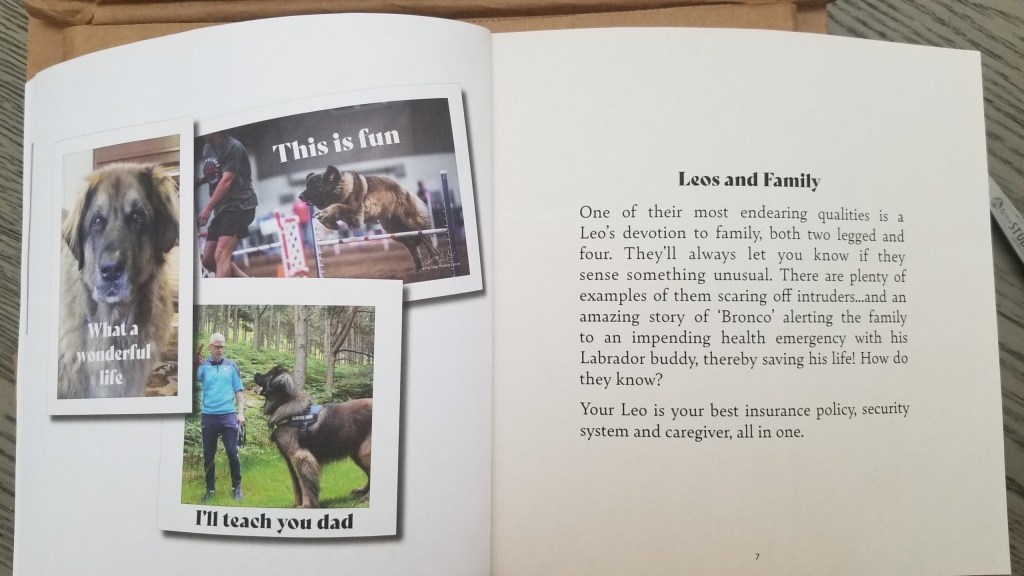
This book is a photographic tribute to a remarkable dog breed, the Leonberger. It is a fairly new book. It was launched early March 2022 and uploaded to Amazon at the end of February 2022. The author did not only include photos of her own Leonbergers but included photos from many other Leonberger owners as well. The book feature 100’s of beautiful color photos from around the world as well as interesting and useful information about Leonbergers. Our Leonberger Bronco is featured on page 6-7, which is something we are grateful for.
Page 6 & 7 spread in Hey! What Kind of Dog is That?: Life With Leonbergers, featuring our late Leonberger Bronco. Click on the photo to go to the Barnes and Noble page for the book.
I loved reading about all the other Leonbergers and learning a little bit more about the Leonberger breed. The information and the photos are presented in a charming and fun way, and it is easy reading. Leonbergers are beautiful and majestic, they love swimming, they love winter and snow, they love to eat, they are friendly and intelligent, and they are way too cute as puppies. All of this is reflected in the gorgeous photographs throughout the book. The book is for all ages and a great tabletop book. Below is the spread for page 64 & 65.
Page 64 & 65 spread in Hey! What Kind of Dog is That?: Life With Leonbergers, featuring Leonbergers in water.
Another important thing to mention is that a portion of the sale proceeds from this book is donated to the Leonberger Health Foundation International. I guess this book started a trend. Hopefully all Leonberger book authors will donate to the Leonberger Health Foundation International from now on. I highly recommend this book to all dog lovers and anyone thinking about getting a Leonberger.
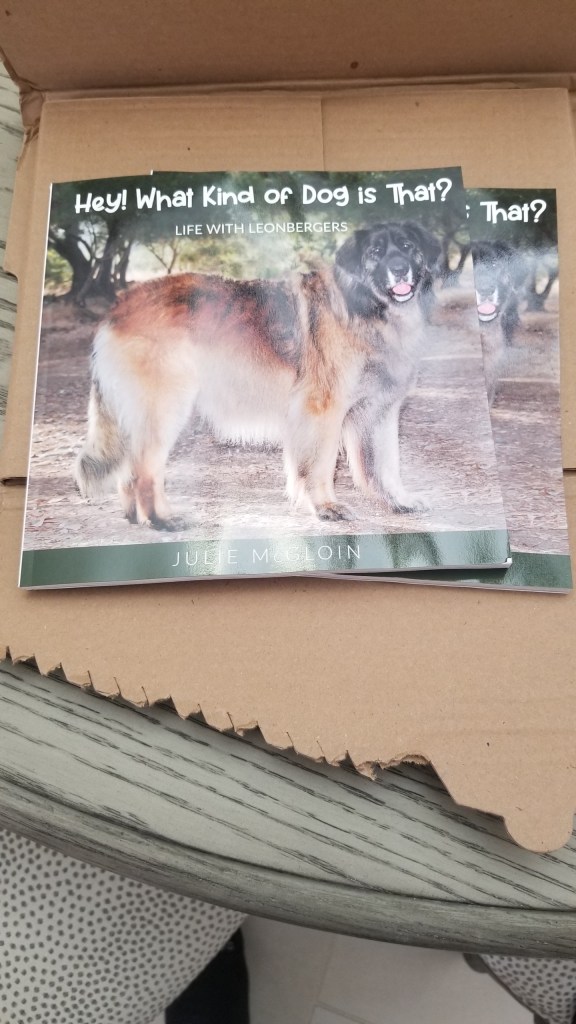
Two copies of “Hey! What Kind of Dog is That?: Life With Leonbergers” arriving at my house.
This is the front cover of the book The Life and Times of the Le Bronco von der Löwenhöhle, Stories and Tips from Thirteen Years with a Leonberger. The feature crazy and amusing stories about our late Leonberger as well as information about Leonbergers. The book will be available on Amazon and many other bookstores on July 3rd 2022. July 3rd 2022 would have been Bronco’s 15th birthday.
This post features a list of the five most commented blog posts out of the 26 posts I’ve made. Click on the photo to see the blog post. Check and see if you missed one or maybe more of them, and feel free to add more comments. I love comments.
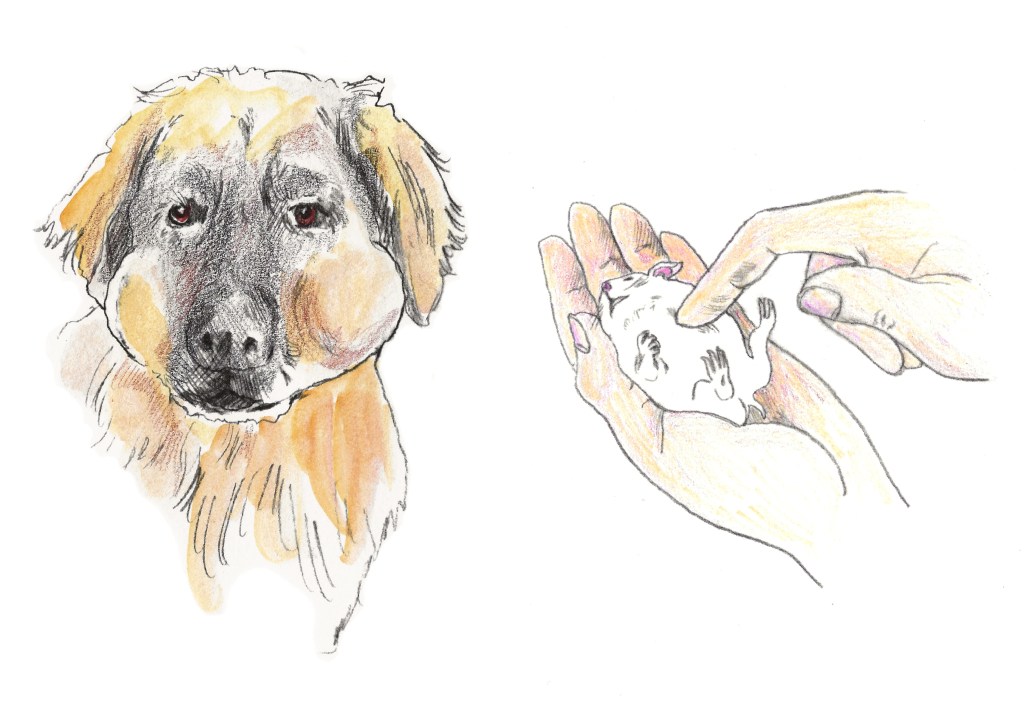
Our Leonberger Bronco was good at searching and finding run away Hamsters. His puffy cheeks are due to hamsters in his mouth and on the right a hamster is receiving CPR (it was successful). Click to read the story. Drawing by Naomi Rosenblatt.
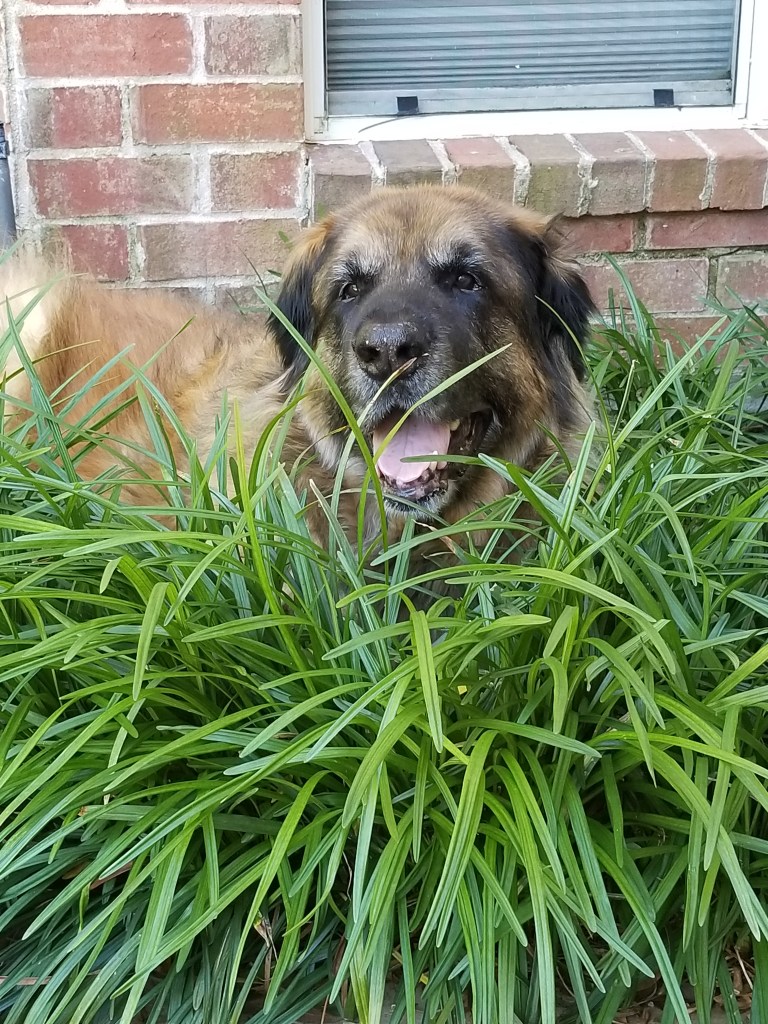
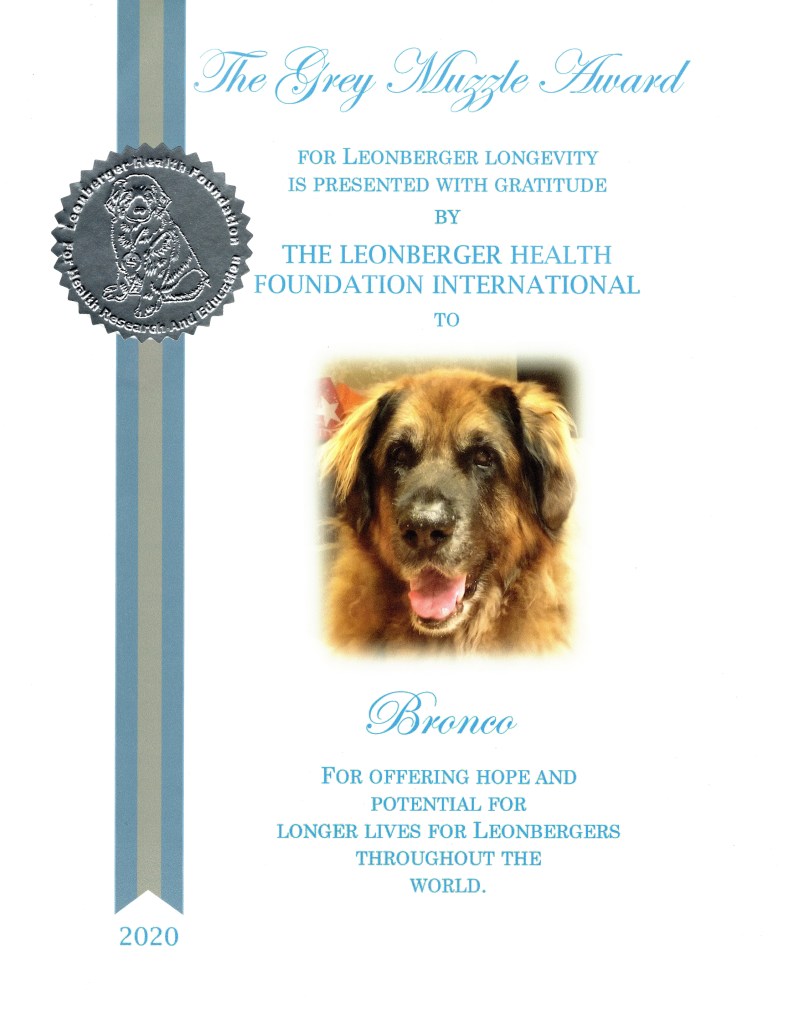
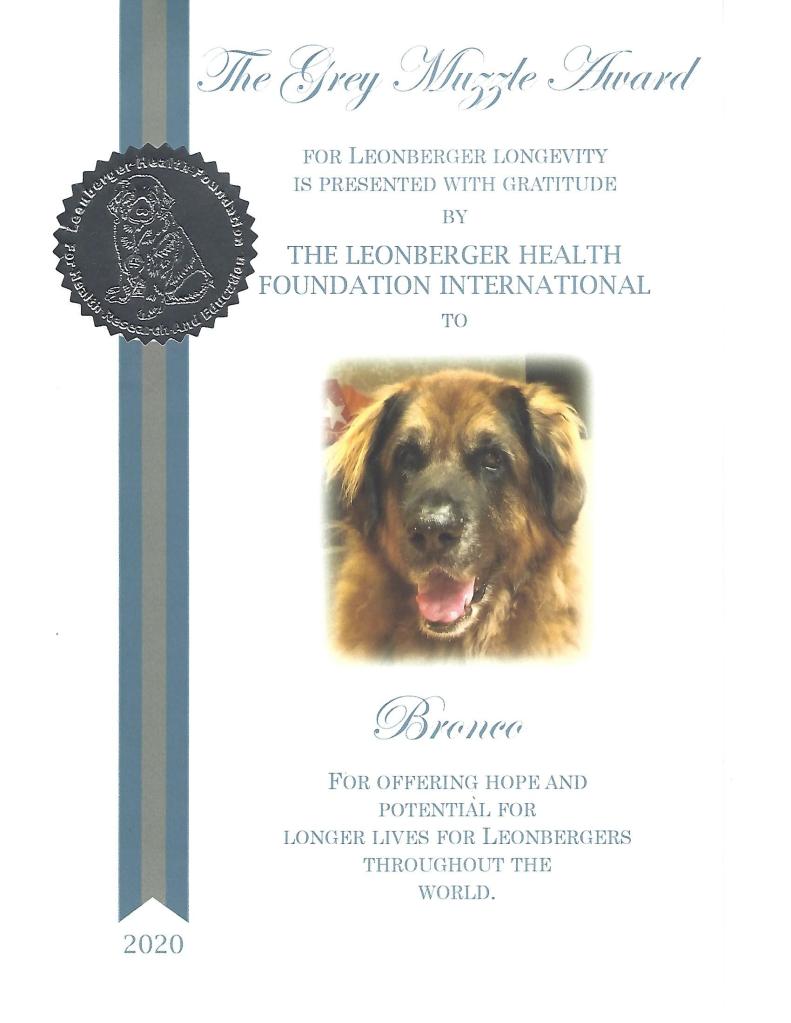
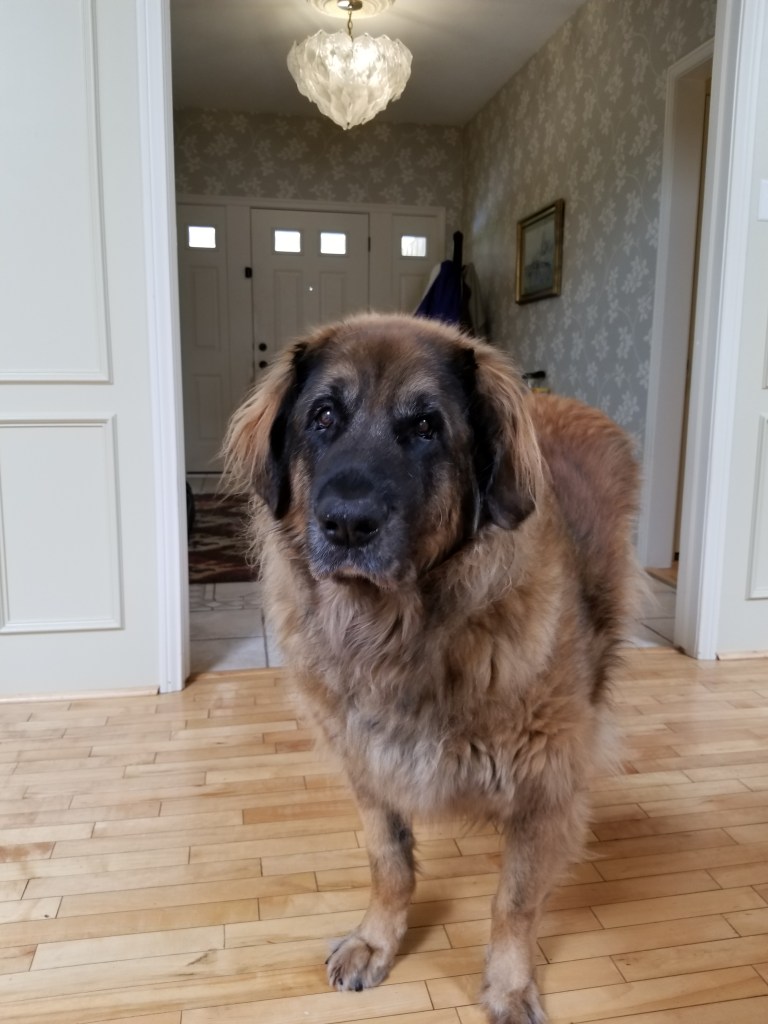
Our Leoberger Bronco received the Grey Muzzle Award from the Leonberger Health Foundation International when he turned 12. Leonbergers, like all giant breeds, don’t live very long, on average eight years. The Leonberger Health Foundation International is trying to extend the life span of Leonbergers and in the extension all giant breeds.
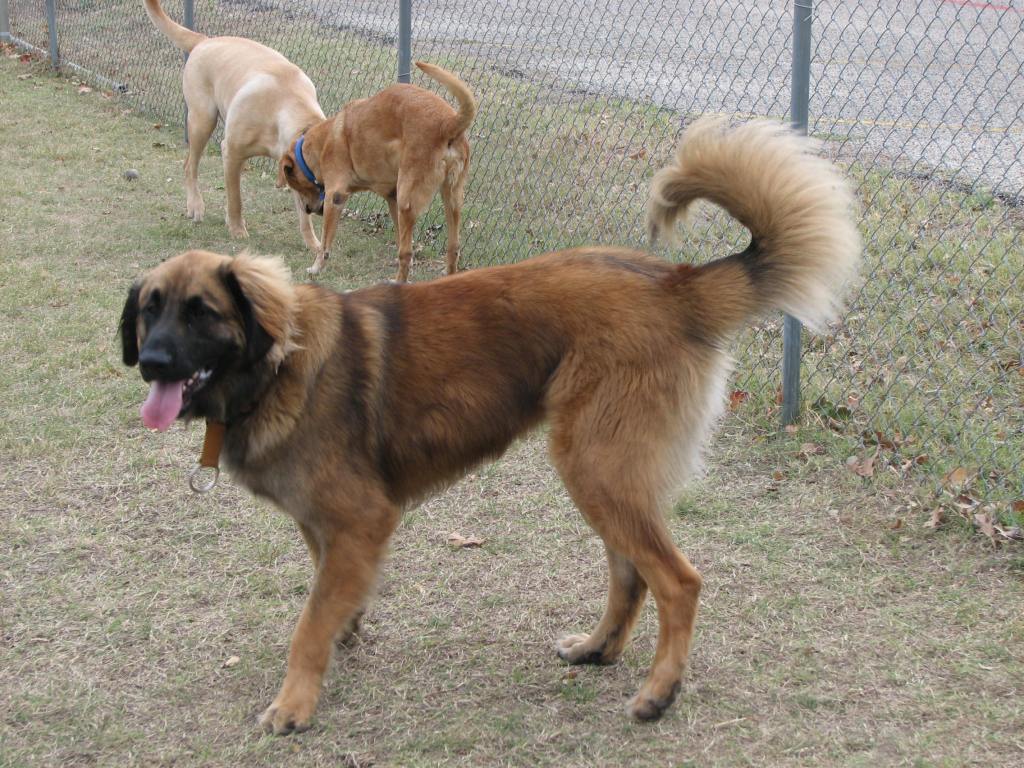
A young, gangly, not yet filled out Leonberger Bronco. However, despite his youth he was still entirely unafraid of thunder and lightning, it was not very frightening to him.
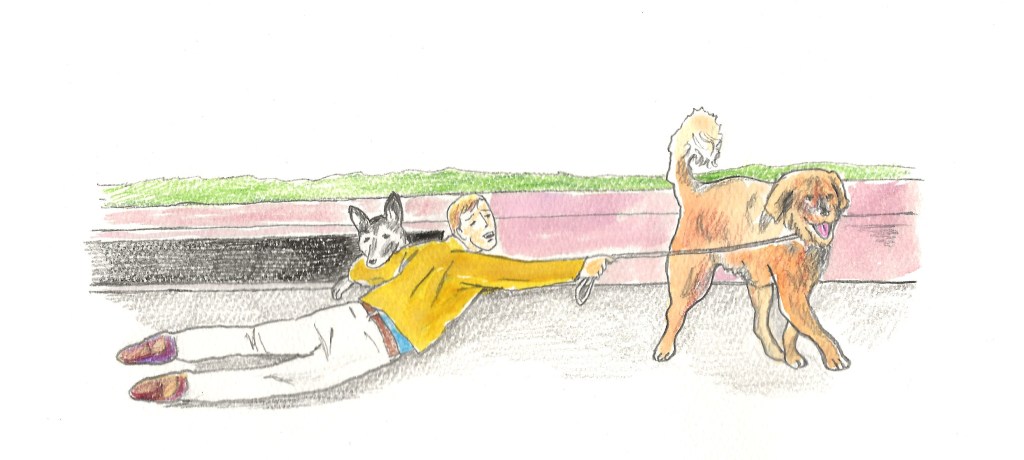
Me rescuing our German Shepherd Baby from a storm drain while holding onto an agitated Bronco our young Leonberger. To read about this crazy adventure click on the image. Drawing by Naomi Rosenblatt.
Our Leonberger Bronco was very big indeed and he had powerful jaws. The only person he ever bit was, and was in my derriere. To read about this misadventure click on the photo.
This is post number 20 for my Leonberger/Bronco blog. I decided to make it a list of posts. Not all posts were equally popular and maybe you missed the posts you would have liked the most. You can click on the link or the picture to see a post, then click back or “Home” (at the top) go back. If you read a post I certainly would love to get a “like” or maybe a comment.
Leonberger’s live on average 8-9 years. However, the Leonberger Health Foundation International is working hard to extend the lifespan of Leonbergers. They give an award to all Leonbergers who have survived passed their 12th birthday. The award is called the Grey Muzzle Award.
Bronco, who was not at his best in this picture, rests next to our tornado damaged fence. We put a plastic bag around his bandage when he went outside.
The Leonberger breed was originally created by Heinrich Essig (1808–87) in the German town of Leonberg, in what was then the kingdom of Württemberg. According to legend, Essig bred the dog to resemble the lion in the town’s coat of arms. It was bred to be a large companion dog. He registered the new breed in 1846. The Leonberger is often said to be a cross between a Saint Bernard, a Newfoundland, and a Great Pyrenees. However, in reality the story is more complicated. More on that later. One thing is for certain, the history around the interactions between the Leonberger breed and the St. Bernard is quite interesting. Also, more on that in another post. Another interesting fact is that Leonbergers were used in World War I to pull ammunition carts and cannons. Both World War I and World War II was tough on the breed and few survived.
Very few Leonbergers existed in North America until the 1980’s, when a breeding program was established. Saturday, November 2, 1985, the few families owning Leonbergers, the so called, Denver eight, got together to form the Leonberger Club of America. The Leonberger was recognized by the American Kennel Club in 2010 as its 167th breed (in the Working group). Today there are more than 2,300 Leonbergers in the United States and a 1,000 in Canada. There are about 30,000+ Leonbergers in the world. Since there are not millions of them you can still consider the Leonberger a rare breed.
Leonbergers are confident and brave gentle giants. They are great with children, very social and good companions and guard dogs. Leonbergers are double-coated, and they have webbed paws, so they’re natural swimmers. They are sometimes used in water rescue operations. But be careful, they are big, full of energy, and can be rambunctious when they’re young.
According to the original purpose of the Leonberger, and the breed standards, the Leonberger is a large, strong, muscular, elegant dog. He is distinguished by his balanced build and confident calmness, yet he has quite a lively temperament. Males, in particular, are powerful and strong. As a family dog, the Leonberger is an agreeable partner for present-day homes and living conditions who can be taken anywhere without difficulty and is distinguished by his marked friendliness toward children. He is neither shy, nor aggressive. As a companion, he is agreeable, obedient, and fearless in all situations of life.
The following are particular requirements of a steady temperament:
• Self-assurance and superior composure
• Medium temperament (including playfulness)
• Willingness to be submissive
• Good capacity for learning and remembering
• Insensitivity to noise
Leonbergers are large and muscular dogs. The height of an adult male is between 28 and 31.5 inches (72 to 80 centimeters) at the withers. The height of an adult female is between 25 and 29.5 inches (65 to 75 centimeters) at the withers. (The withers is the ridge located between the shoulder blades of an animal, on the back right below the neck.) Reputable breeders try to maintain these characteristics.
Leonbergers are sexually dimorphic—that is, there are noticeable differences between males and females. This is not always the case in dogs. Female Leonbergers are usually smaller and look more feminine. Males typically weigh between 120 and 170 pounds, and females usually weigh between 100 and 135 pounds. For comparison’s sake, below are the standard heights and weights for male dogs of other breeds.
• An Irish wolfhound, the world’s tallest dog (when standing on two feet), is 32 inches tall at the withers and weighs between 120 and 155 pounds.
• A Great Dane stands between 31 and 35 inches at the withers and weighs between 110 and 180 pounds.
• A Saint Bernard is between 28 and 35 inches tall at the withers and weighs between 140 and 180 pounds.
• A German shepherd stands between 24 and 26 inches at the withers and weighs between 66 and 86 pounds.
In other words, the Leonberger is right there among the largest breeds in the world.
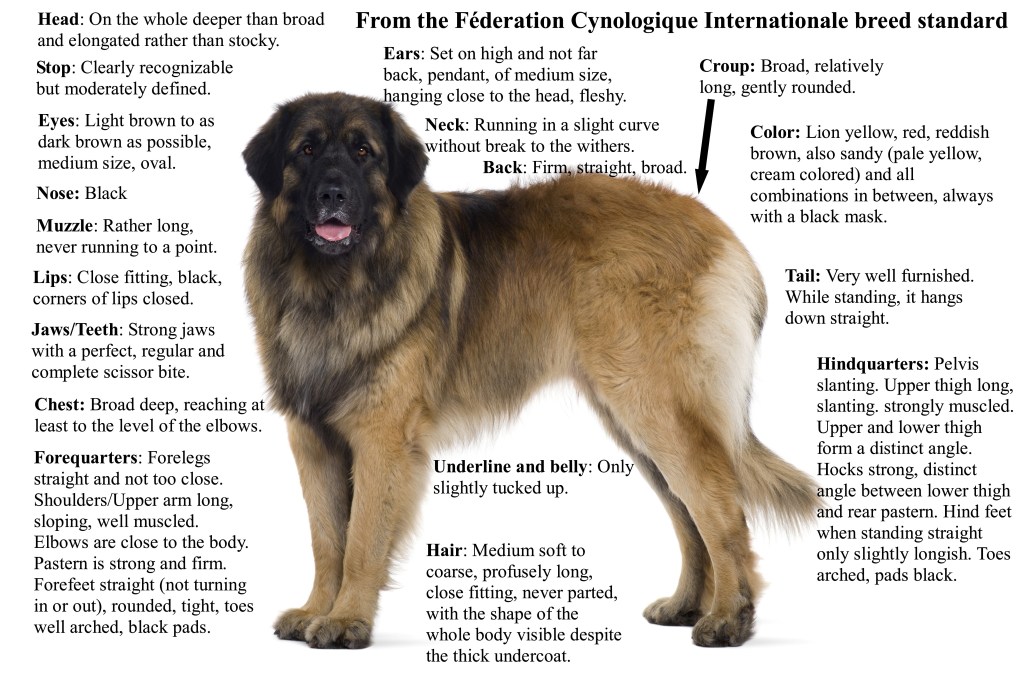
In the picture below is an overview of the FCI breed standard for Leonberger dogs. I will post the full breed standard in another post.




















 Leonberger Life