This blog feature amusing and heartwarming stories about our late Leonberger dog Bronco, as well as other Leonbergers. It also has a lot of information about the Leonberger breed, the history, care, training, Leonberger organizations, etc. I also wrote a Leonberger book, which I am featuring in the sidebar.
Category: Non-Leonberger Topics
Other topics not necessarily related to Bronco, Leonbergers or dogs.
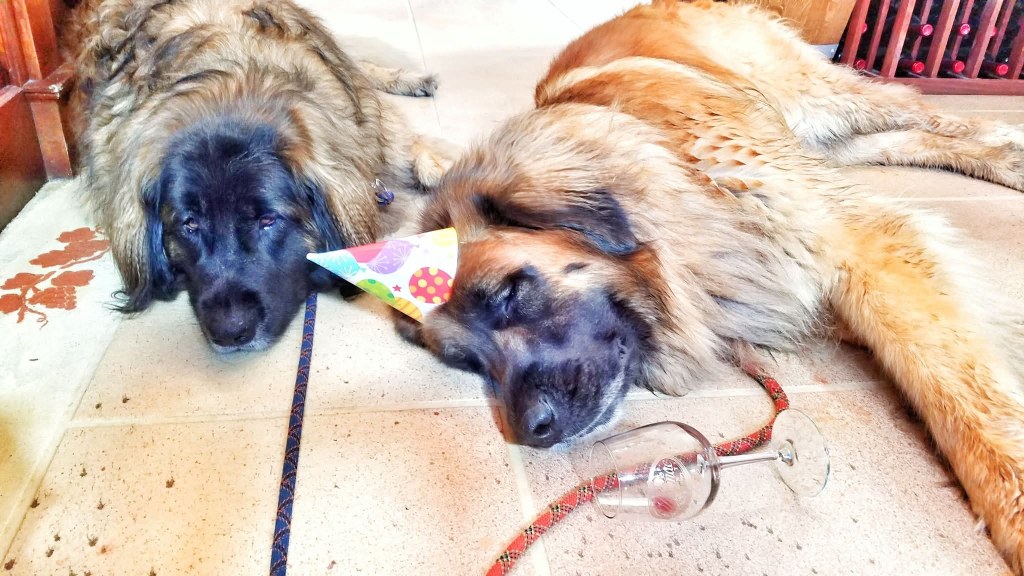
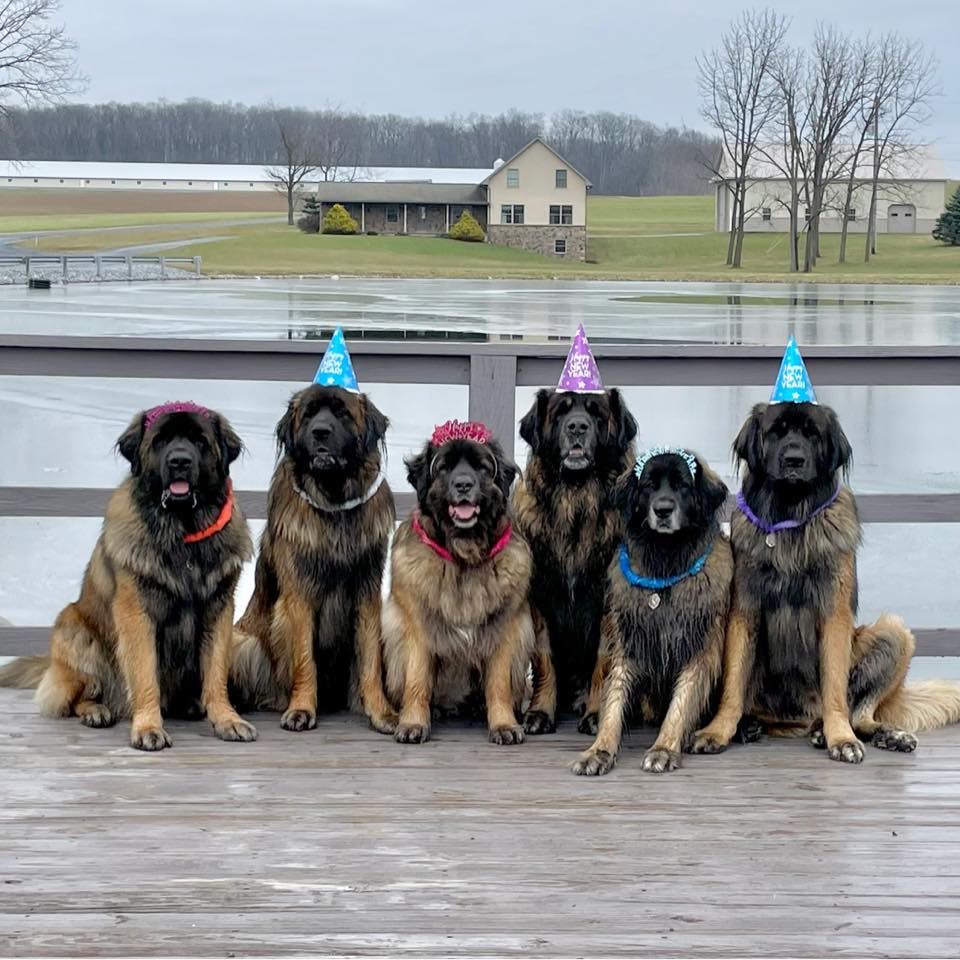
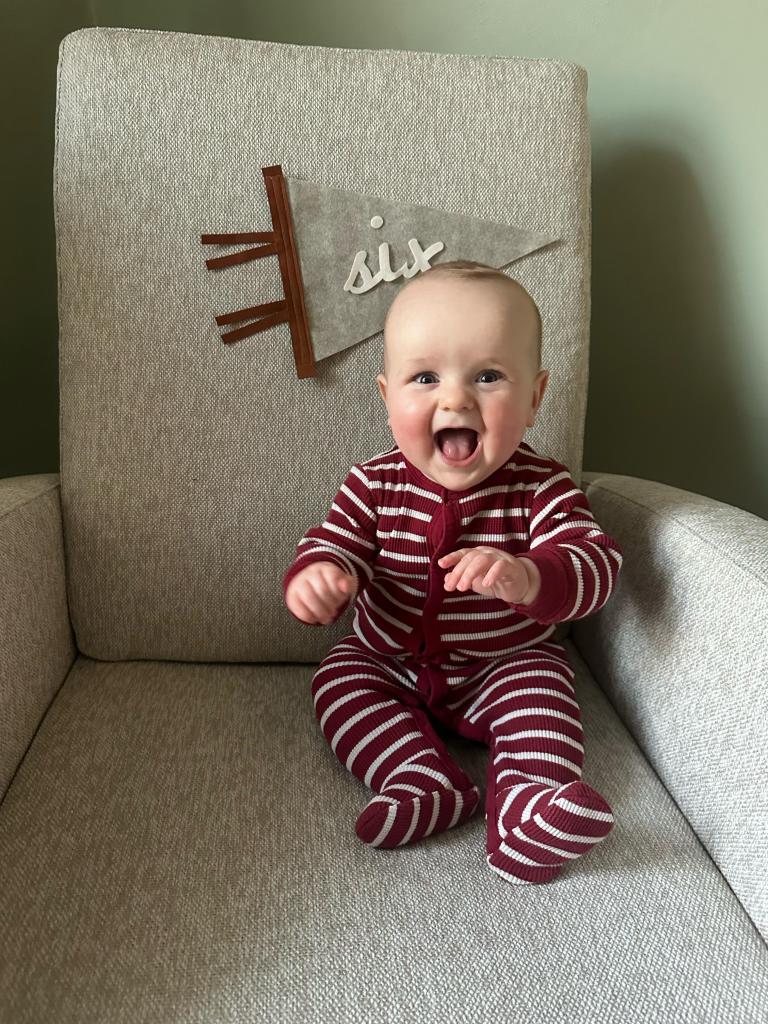
Today is my birthday and we are spending it in Baltimore (don’t worry we have people watching house and dog etc.). Our son, his wife and their son Jack (our first grandchild) lives in Baltimore. Jack just turned six months. That is why I have not been very active in the blogosphere lately. Below are a few Leonberger Happy birthday photos.
This is a Leonberger Happy Birthday photo that Jen O’Keefe sent me. I am using it with her permission. On the left is Digory and on the right is Aslan.Debbie Ireland, a Leonberger community friend send me this picture today and gave me permission to use it.Leonbergers are celebrating. Caspian (Obi’s nephew), Austin (Obi’s son), Delfi, Obi (now 7 and a veteran), Digory, and Rilian (Obi’s son). Photo by Jen O’Keefe and Ira Van Order, prominent members of the Leonberger Club of America who allowed me to use this photo.
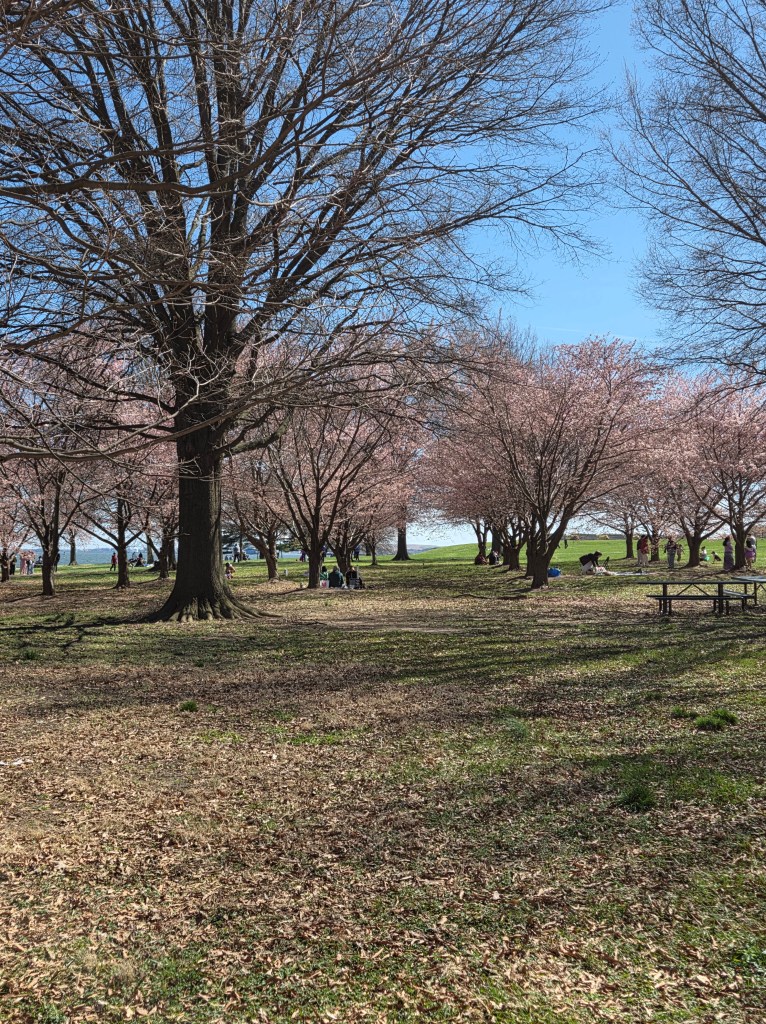
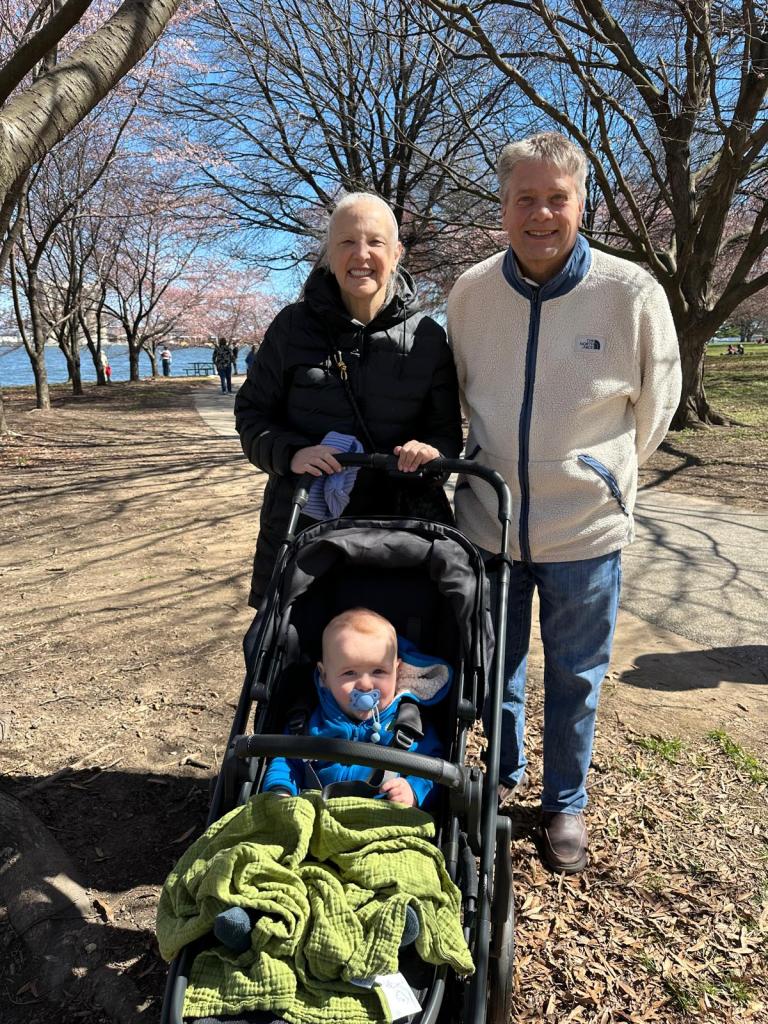
Today we visited the Cherry Blossom at Fort McHenry National Monument. Fun fact: “The Star-Spangled Banner” was born as a poem written by Francis Scott Key on September 14, 1814, after witnessing the British bombardment of Fort McHenry in Baltimore, Maryland. Below are some Baltimore photos.
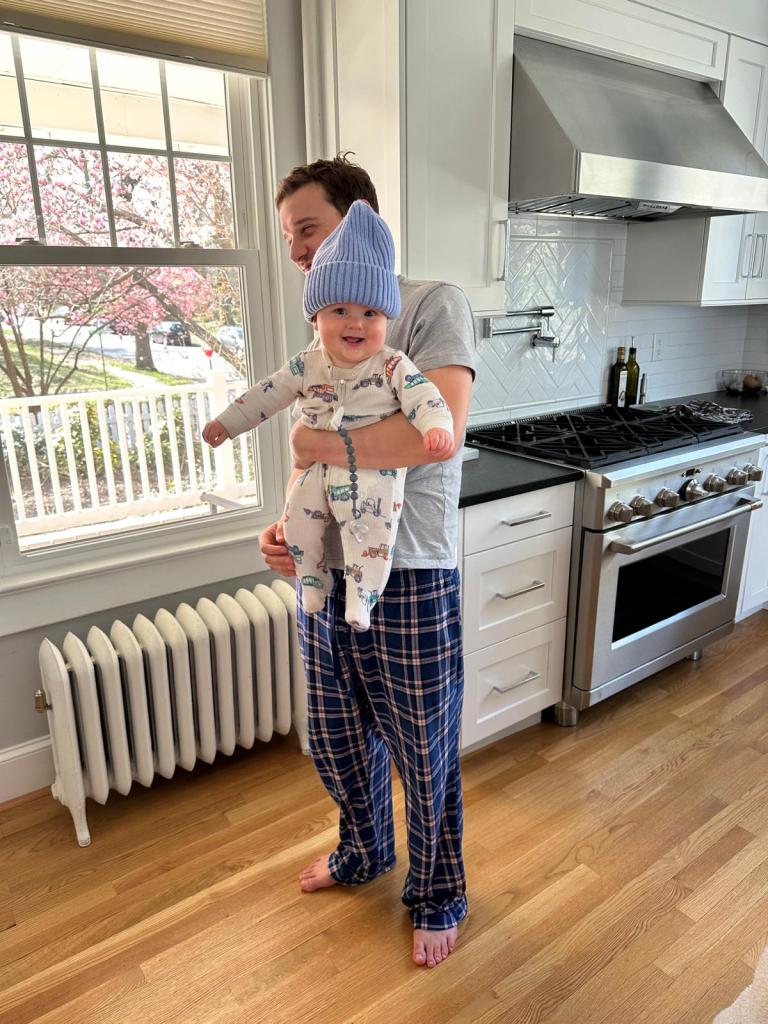
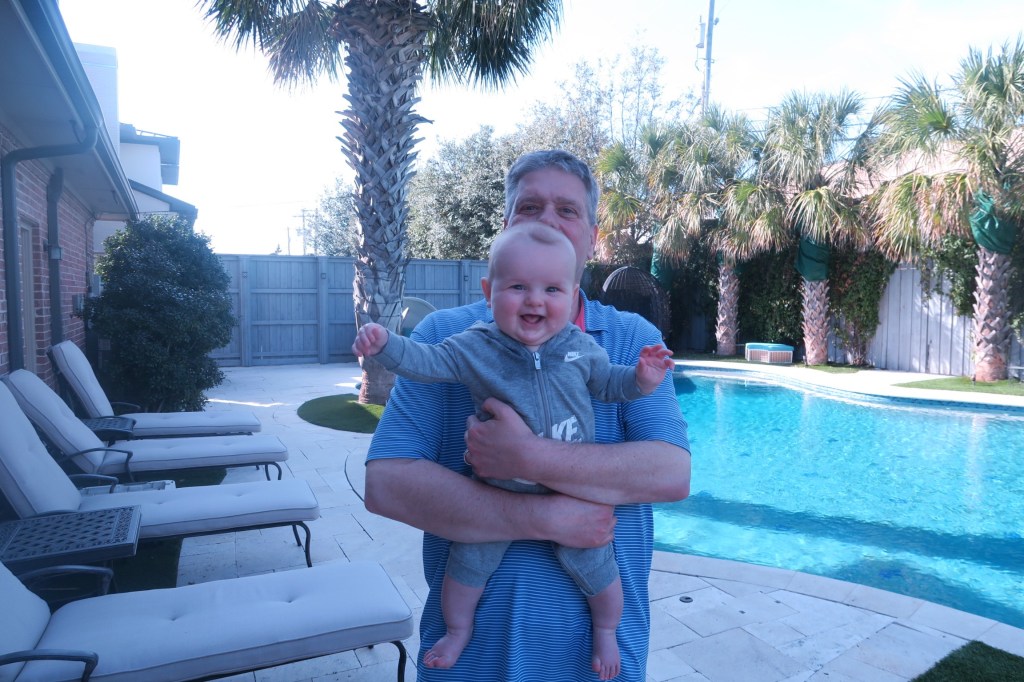
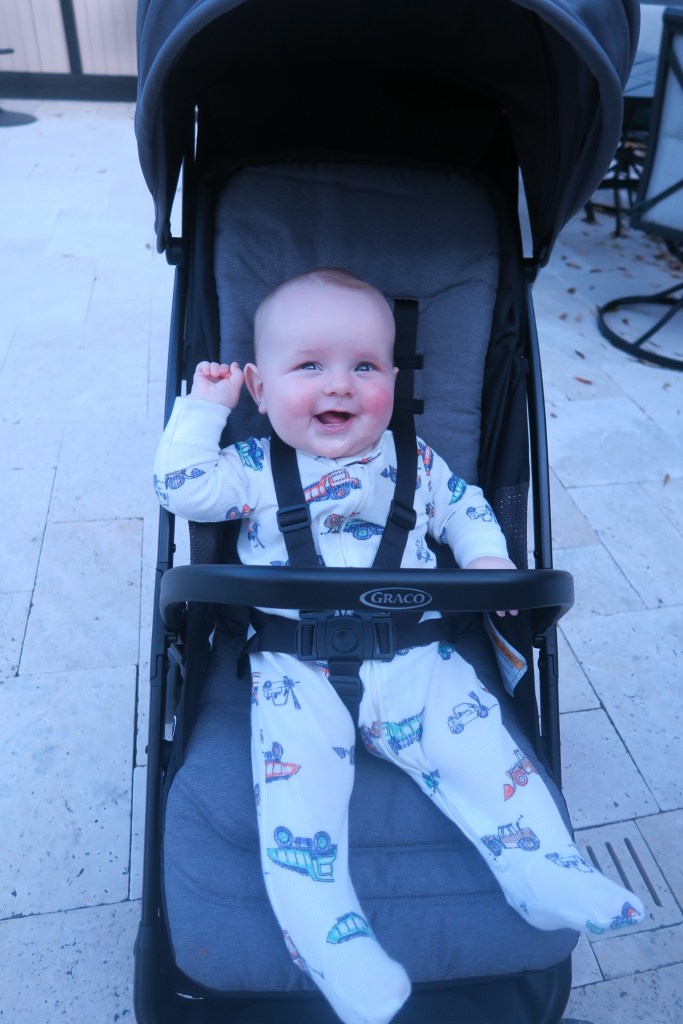
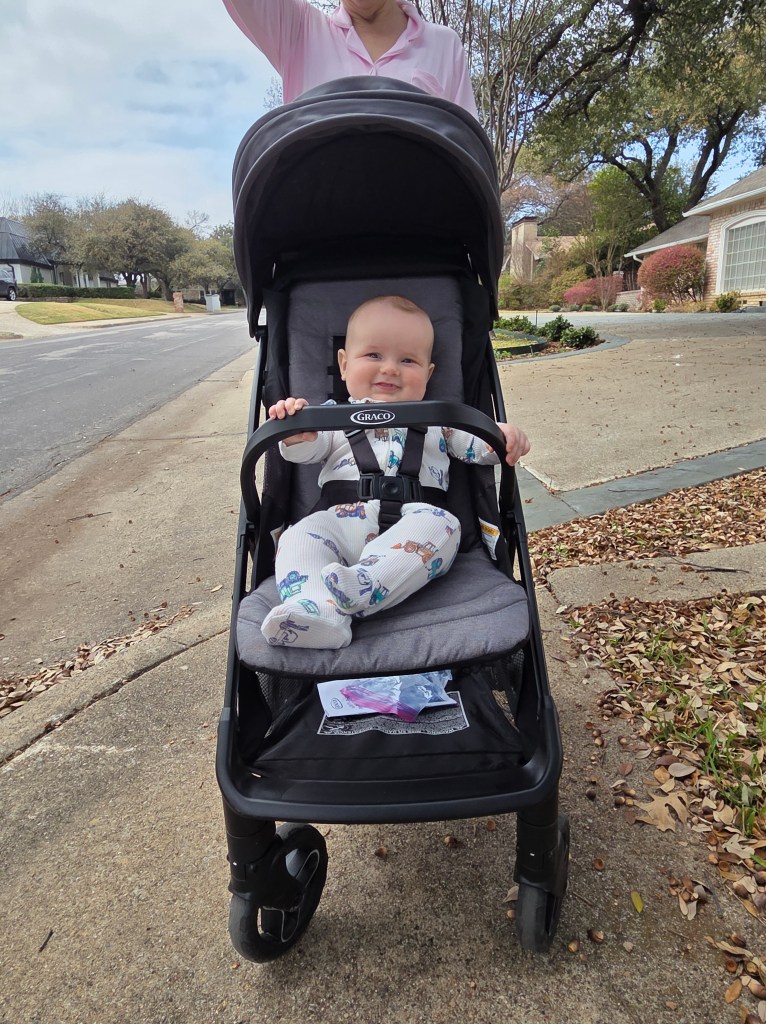
Cherry trees blossoming.Cherry trees blossoming.Cherry trees blossoming up close.Baby Jack is now six months old.Jack is sitting in his new highchair. He is no longer a baby.Baby Jack in the stroller.Baby Jack with us (my wife and I).My son with his son, baby Jack, six months old.
Voodoo shaman, african wizard man conjure, 3D illustration. Shutterstock Asset id: 2048753030 by artshock
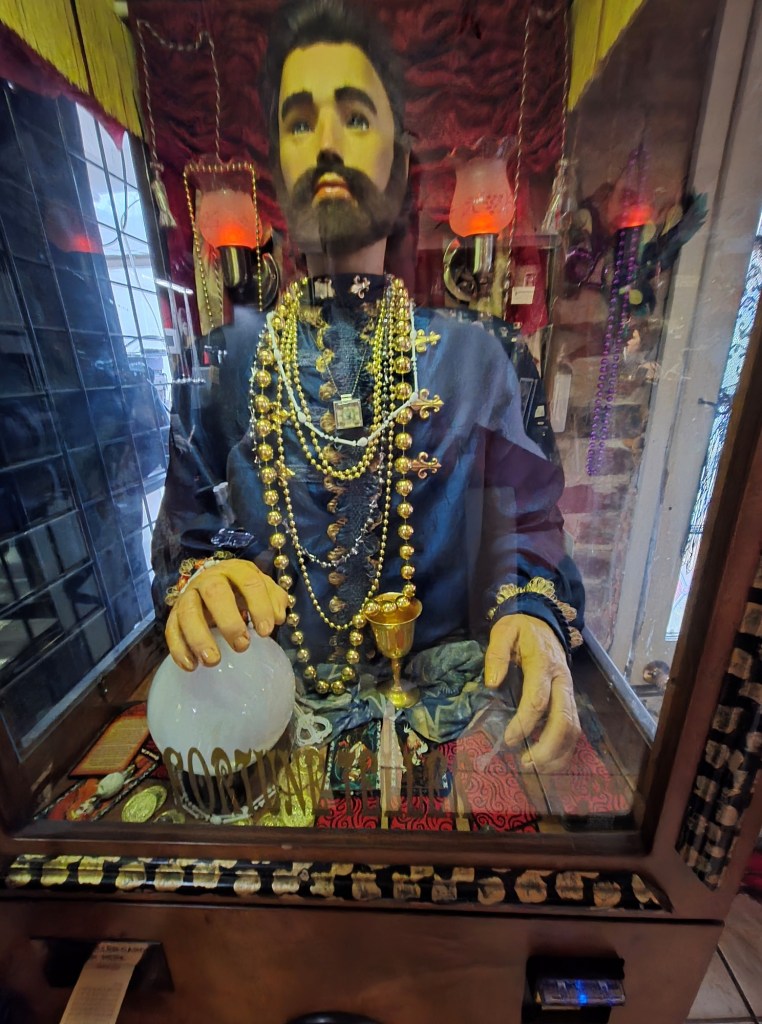
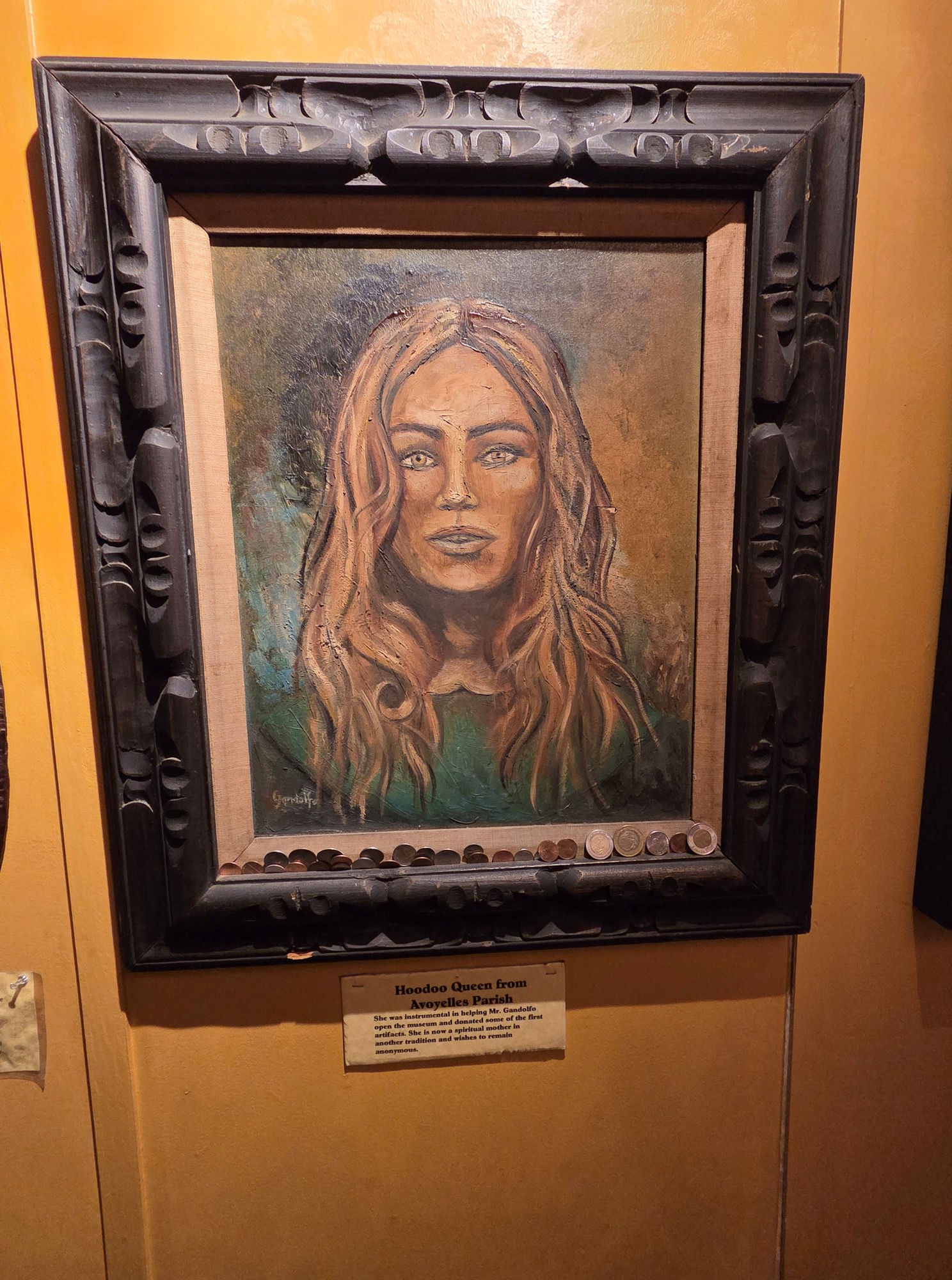
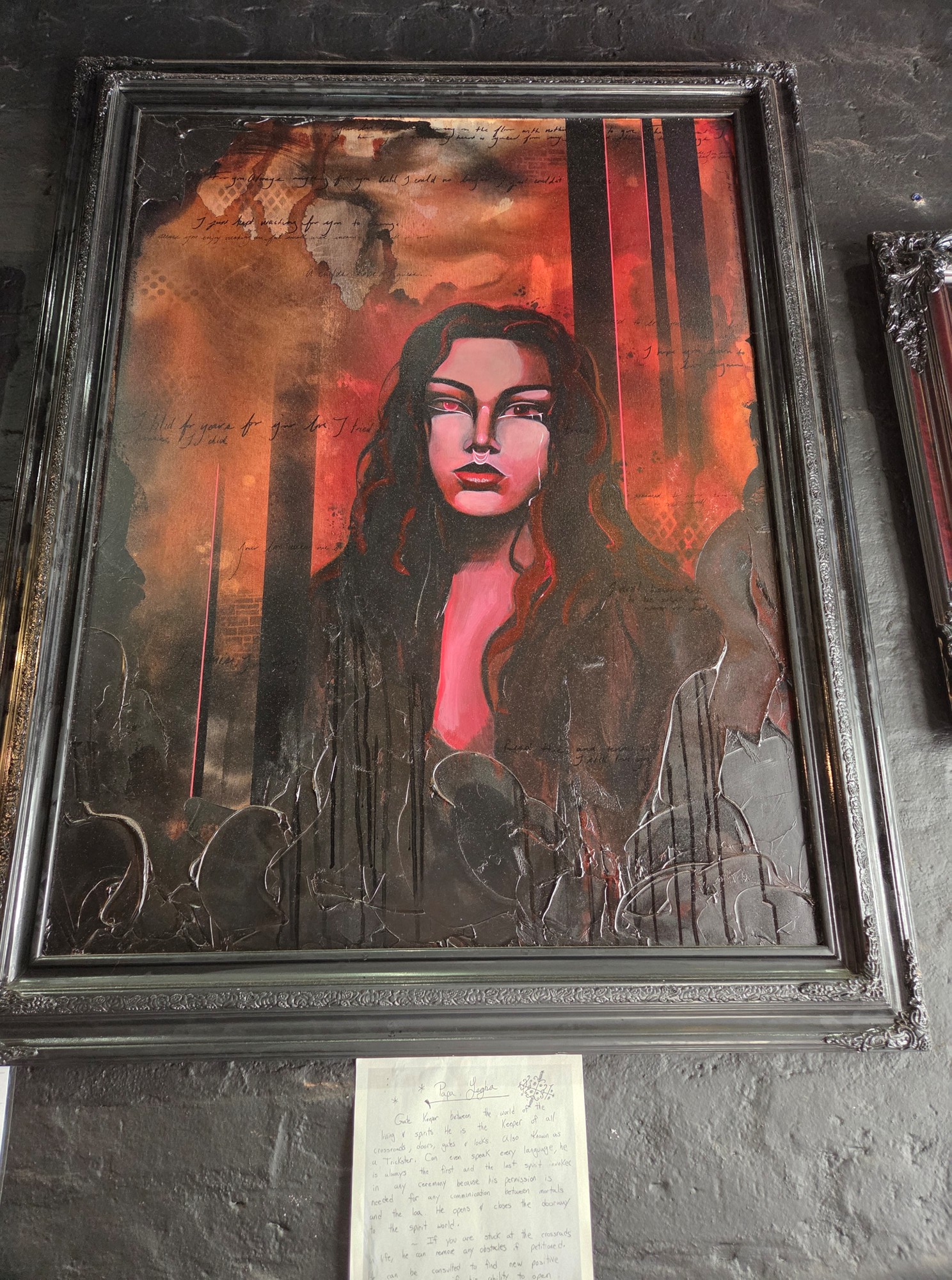
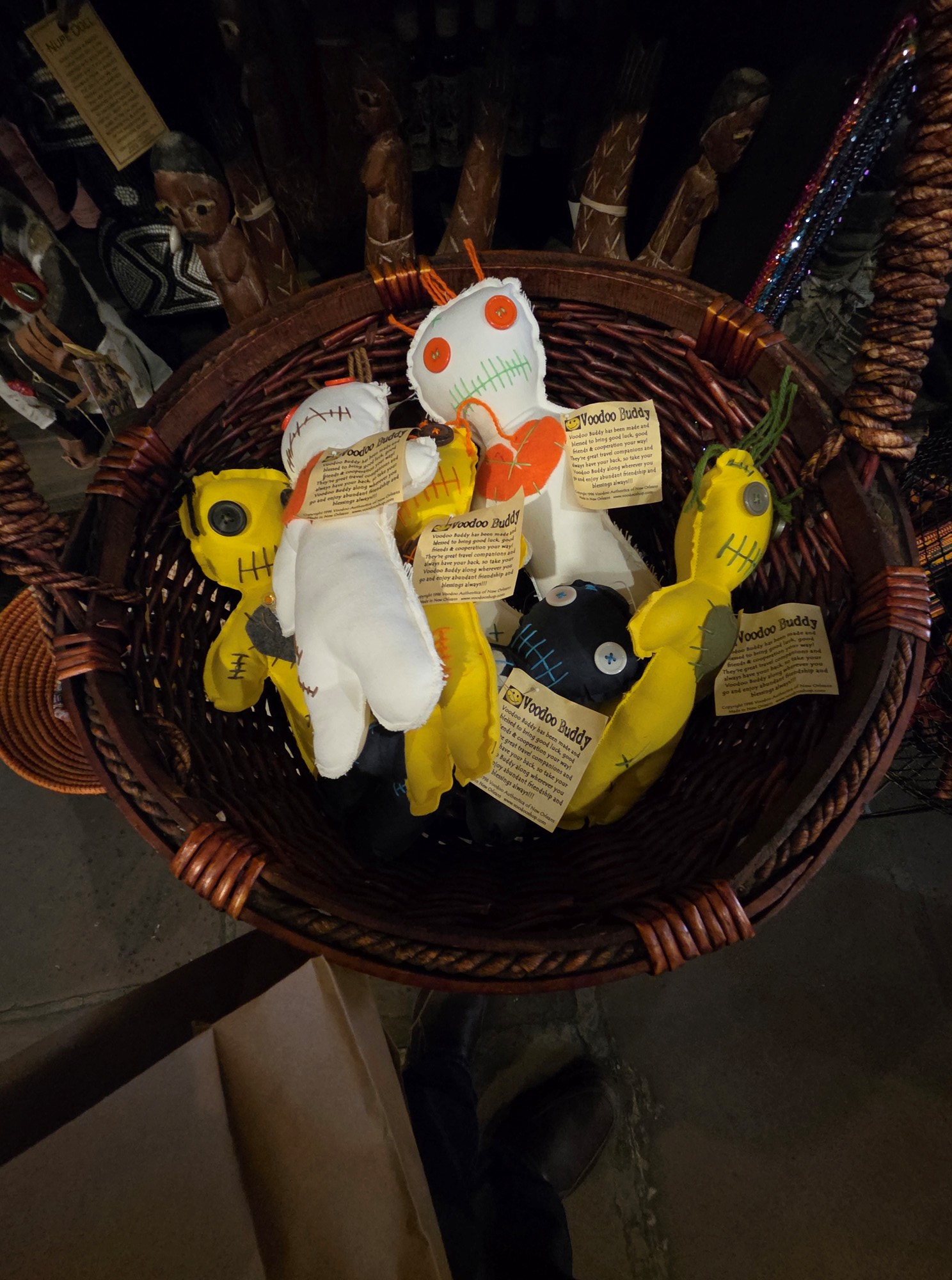
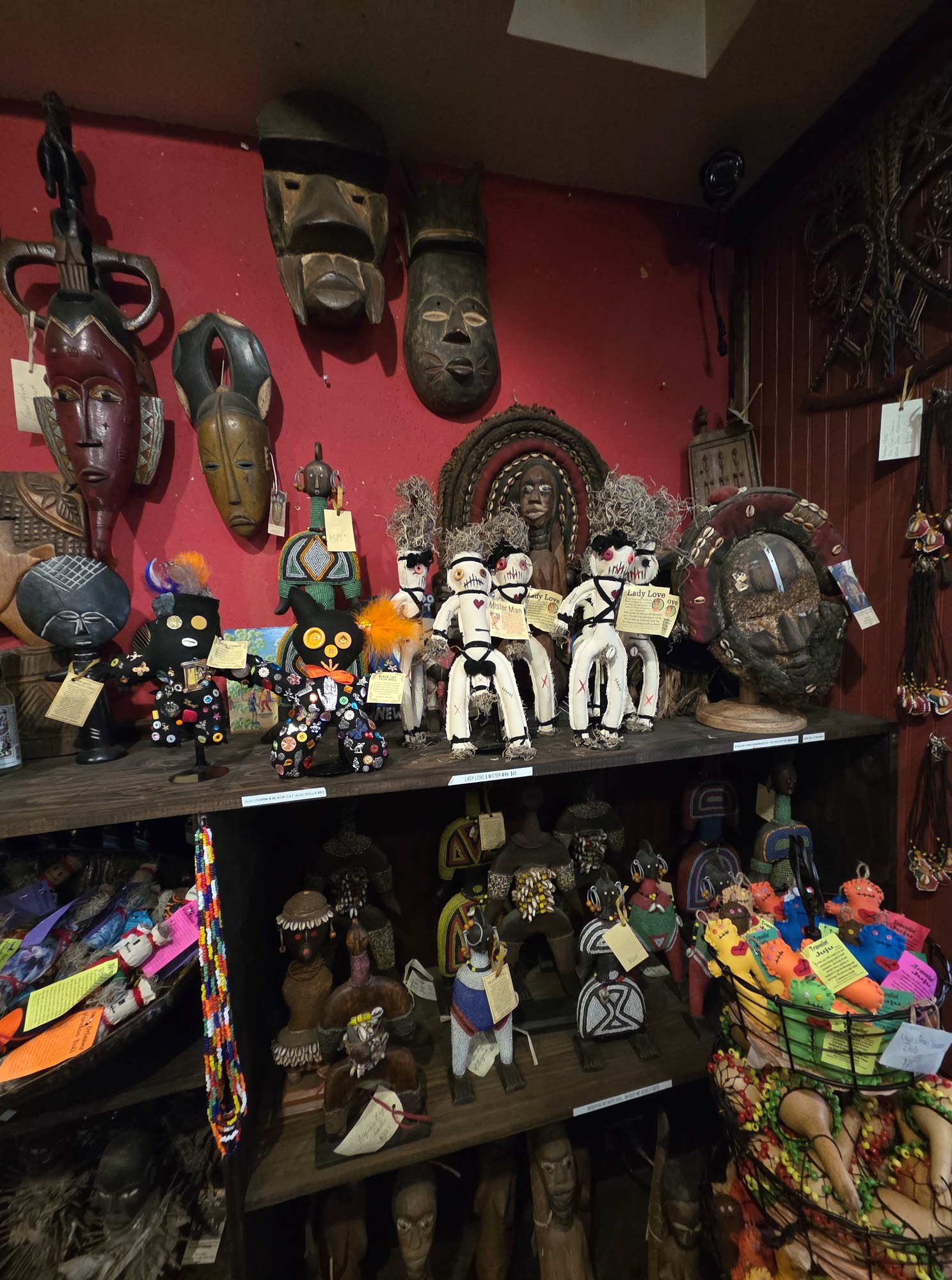
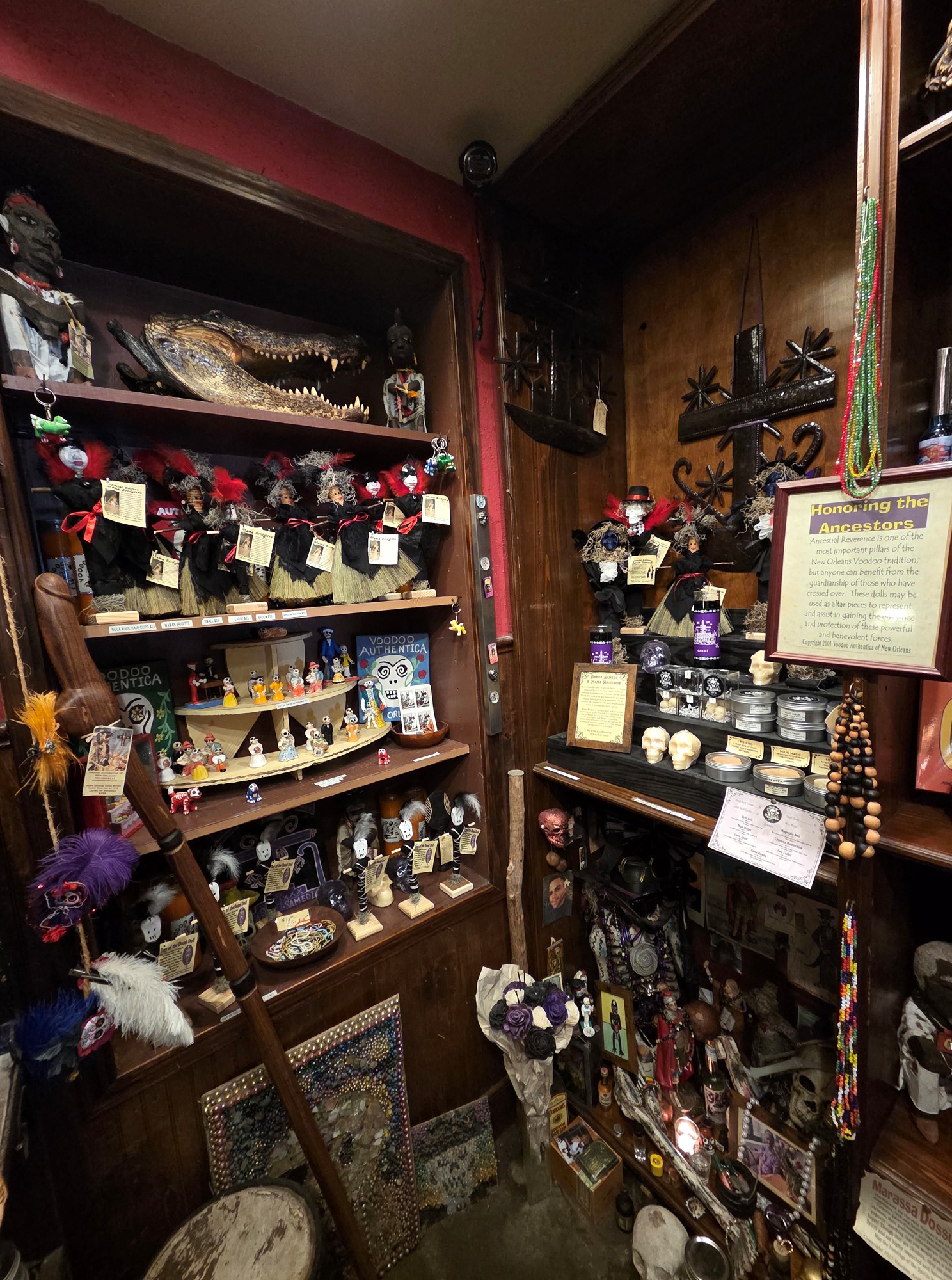
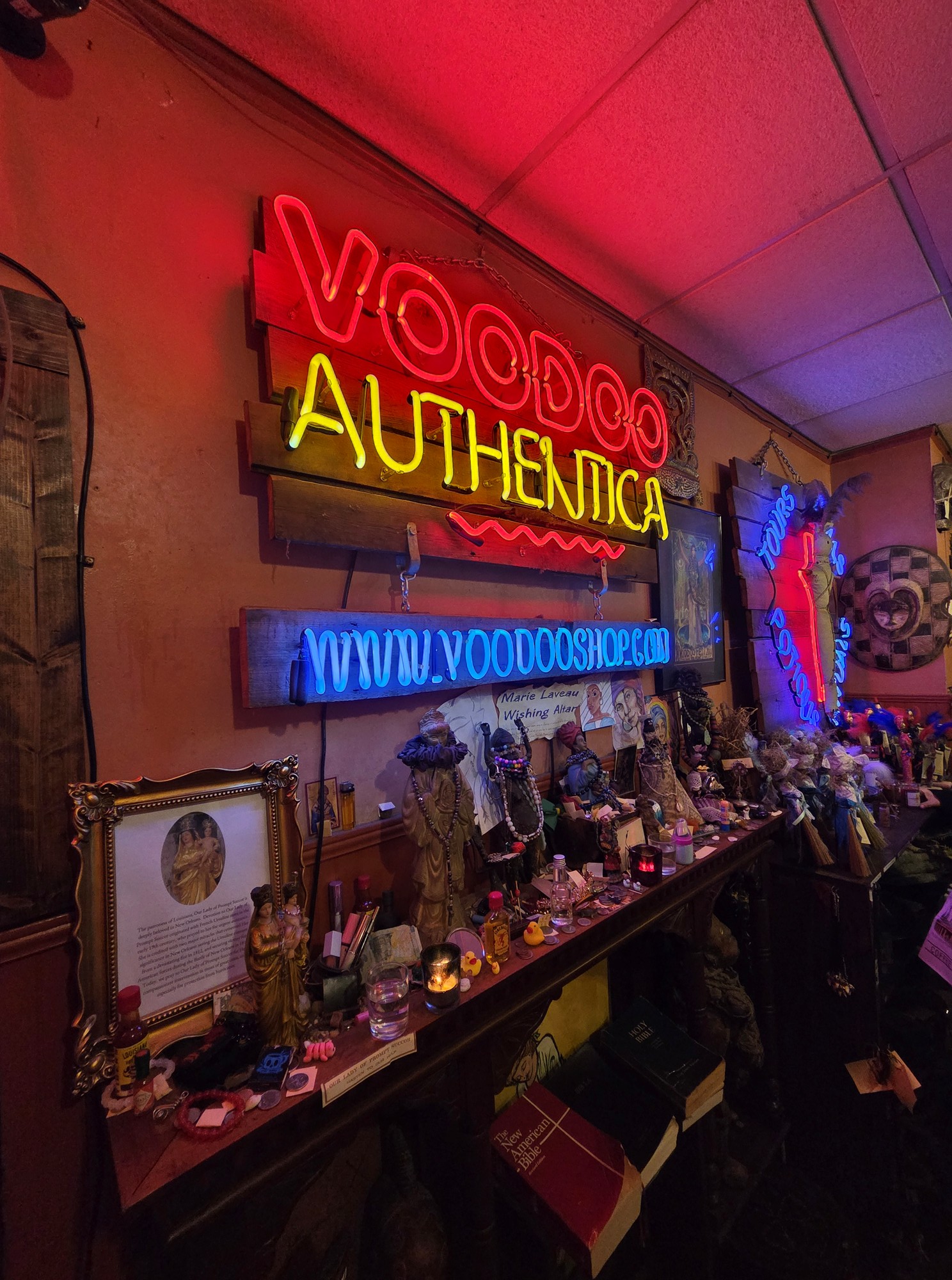
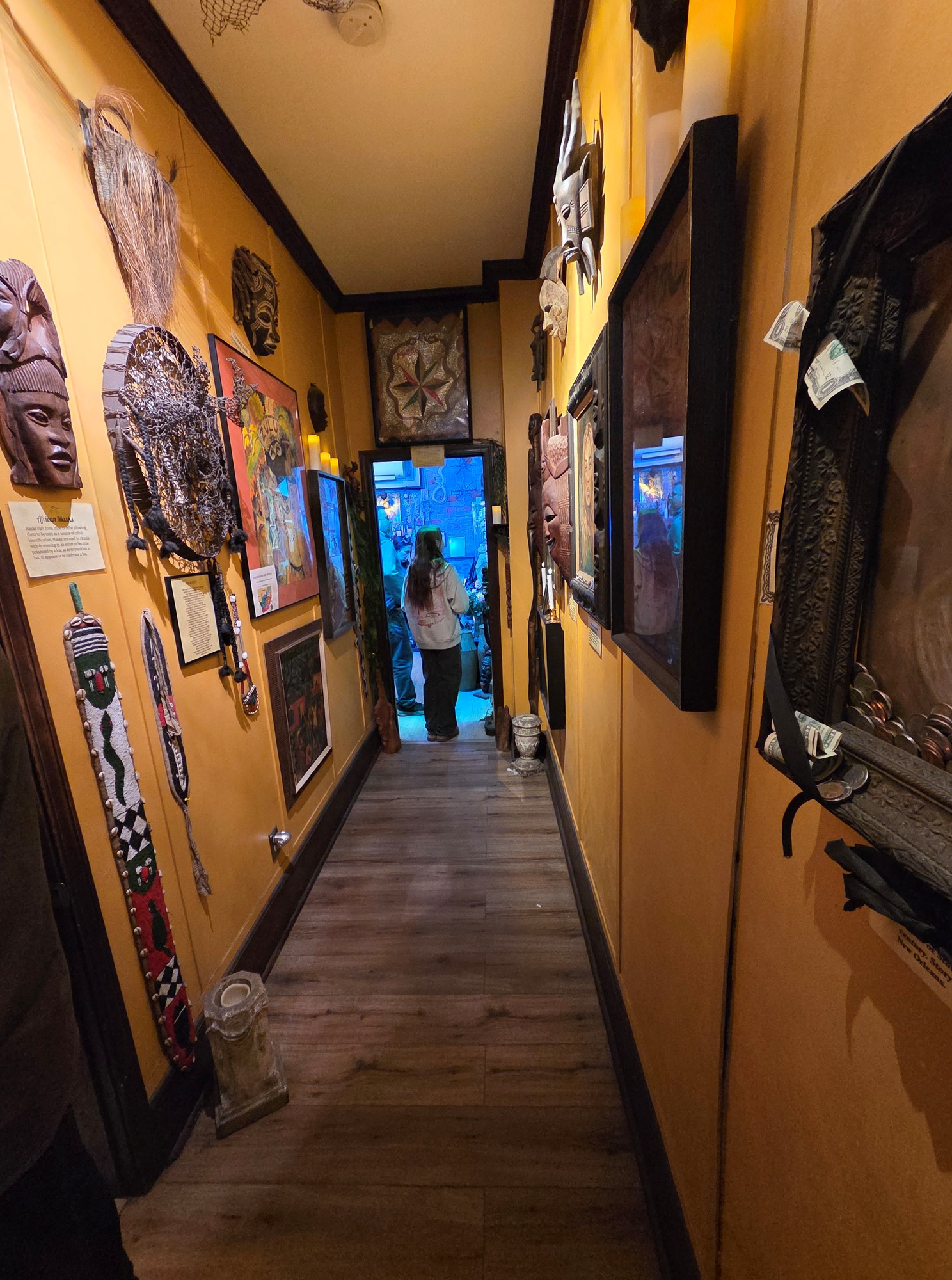
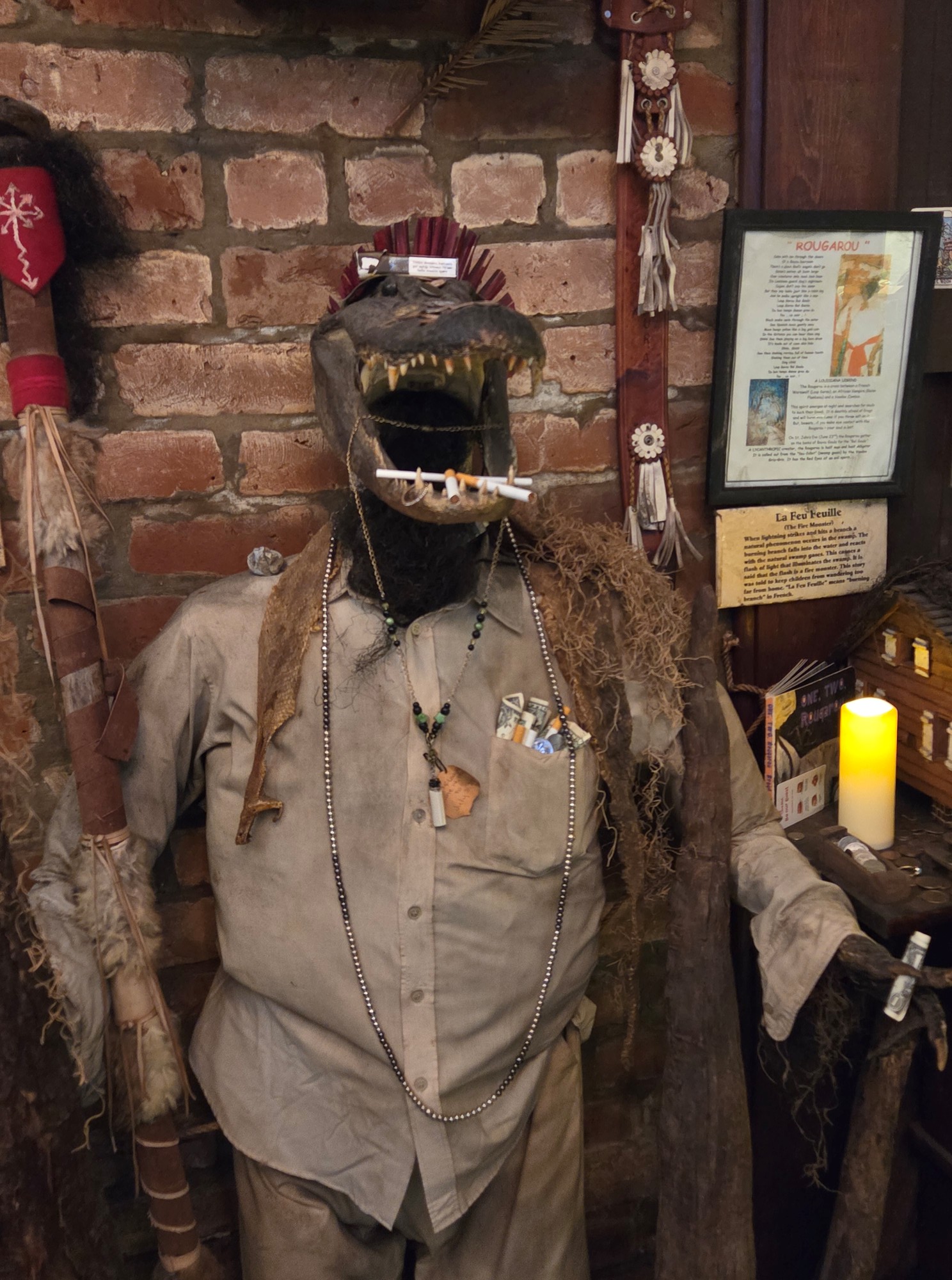
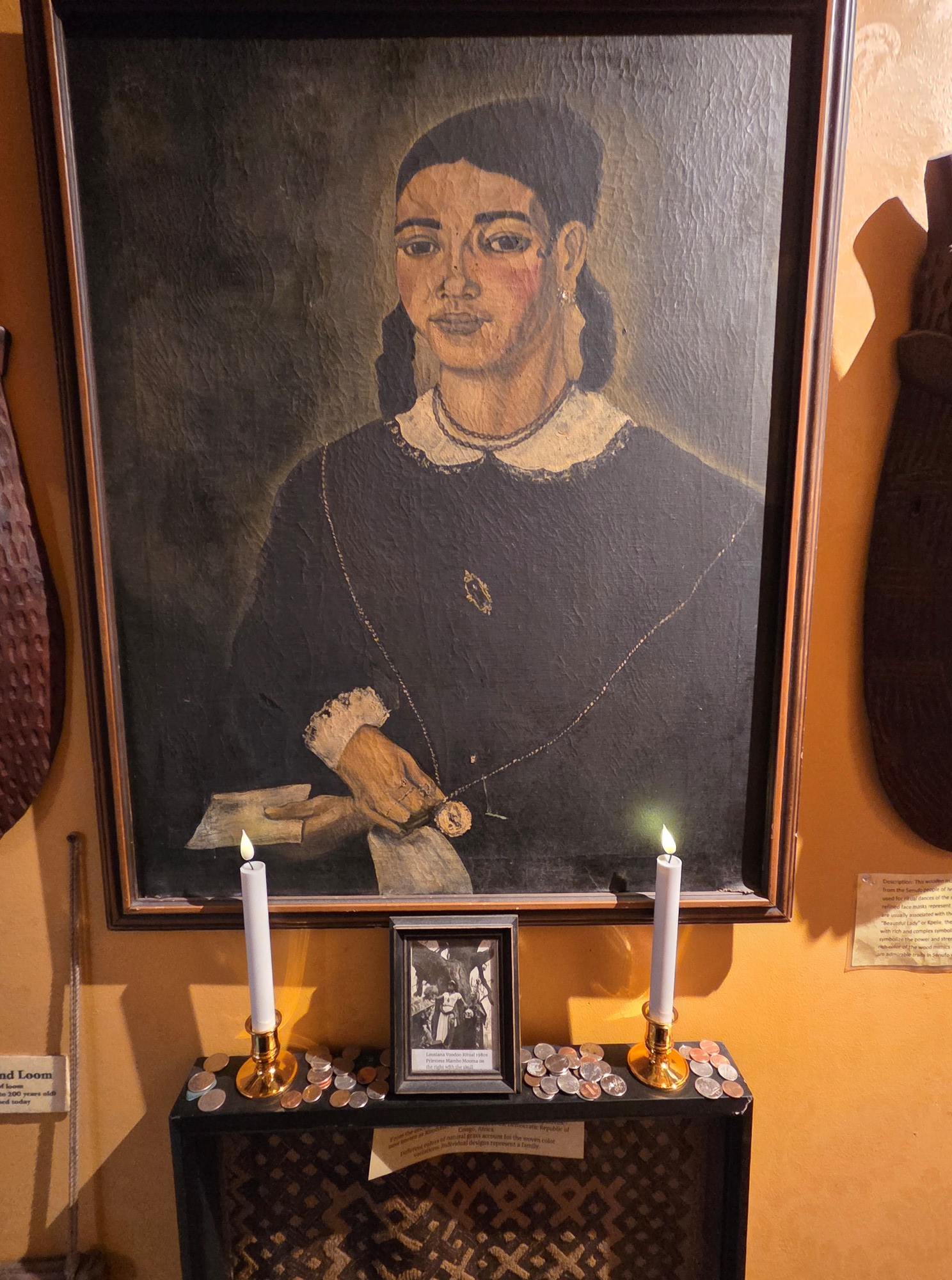
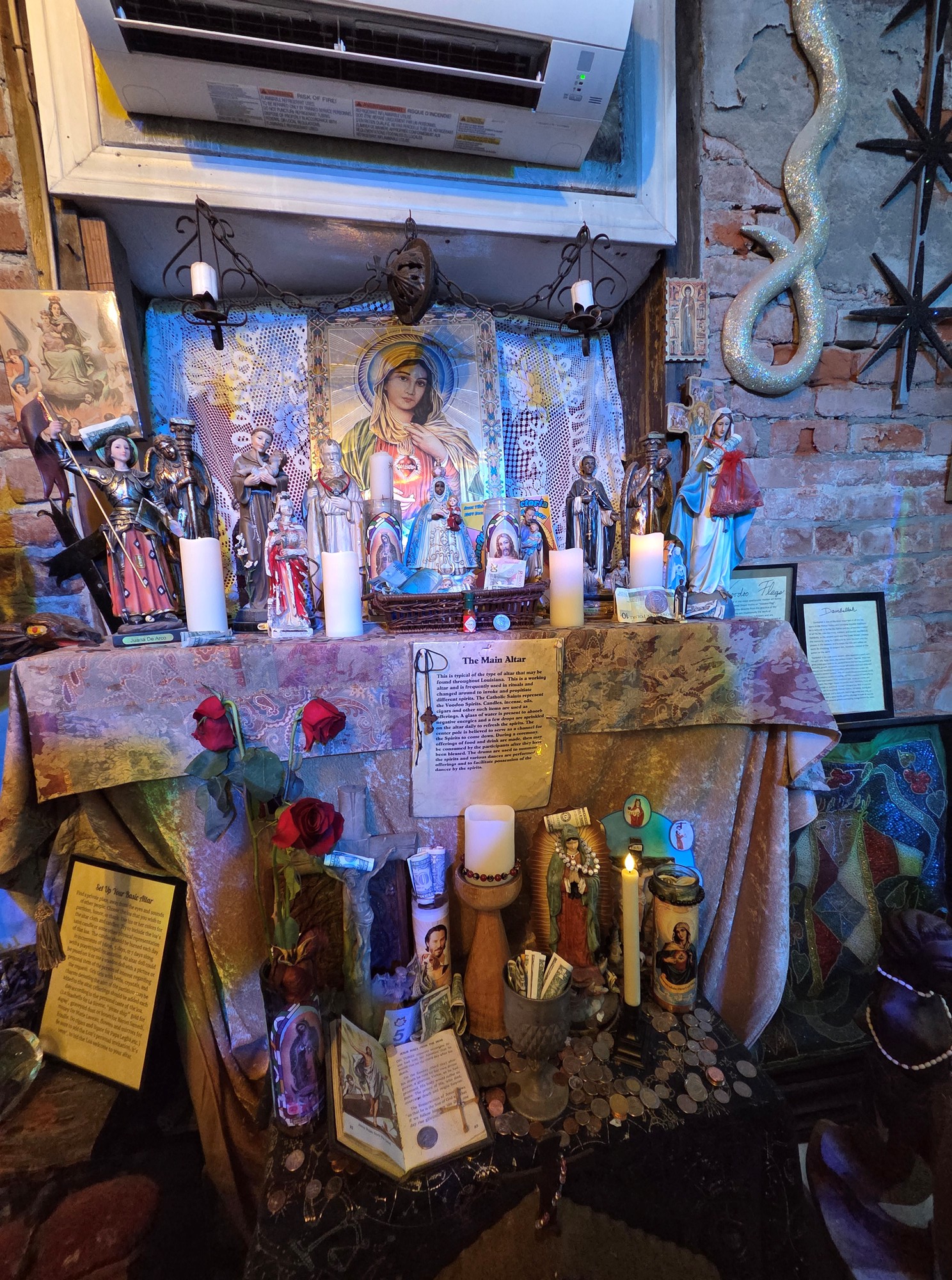
We just came home from a trip to New Orleans, which is truly a magical city. New Orleans is not very far from Dallas, where we live, and we’ve been to New Orleans several times. However, it was a fun family trip with a theme. The theme we chose for our trip was Magic, including Vampires, Voodoo/Hoodoo, ghosts, pirates and St. Patrick’s Day. We also went on a ghost tour. Below are some photos from the Voodoo Museum, and miscellaneous voodoo, witches, vampire and pirate stores.
From the Voodoo Museum.I used an automated fortune teller who told me to watch out for stepping on people’s toes. That is kind of strange since we hardly ever go dancing.
Photo Tile with photos from the Voodoo Museum, a Hoodoo Queen, vampire art, pirate, and witch store.
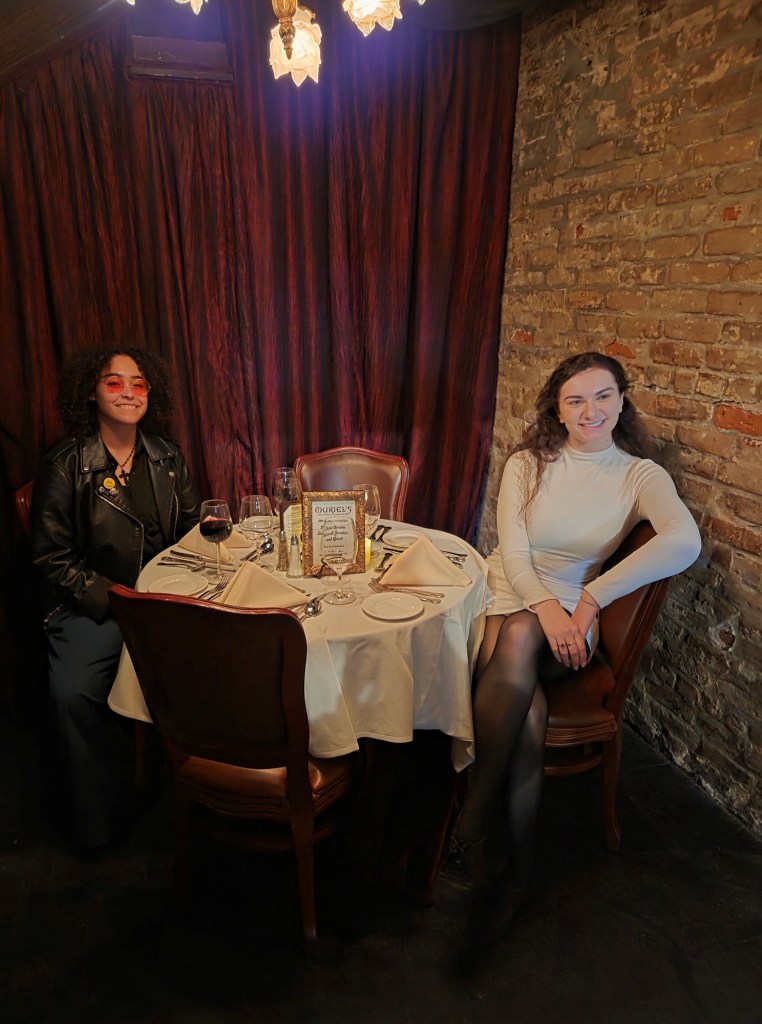
We also ate at a restaurant that has a ghost. The Muriel’s Jackson Square restaurant is allegedly haunted by a ghost that sits in the chair. The ghost is a former owner by name of Pierre Antoine Lepardi Jourdan.
The ghost is sitting between my daughter (right) and my son’s girlfriend (left).
What is Voodoo ?
Voodoo is a religion blending African traditions with Catholicism. It is originating from enslaved people in Haiti and Louisiana. It focuses on serving spirits and honoring ancestors and connecting with nature. It is not black magic. However, I admit I’ve made fun of the so called voodoo dolls. Marie Catherine Laveau was one the most prominent practitioners of voodoo. She was born a free woman of color in New Orleans’s French Quarter, Louisiana, on September 10, 1801. We saw her house. Below are photos from the Voodoo Museum.
Photo Tile from the Voodoo Museum
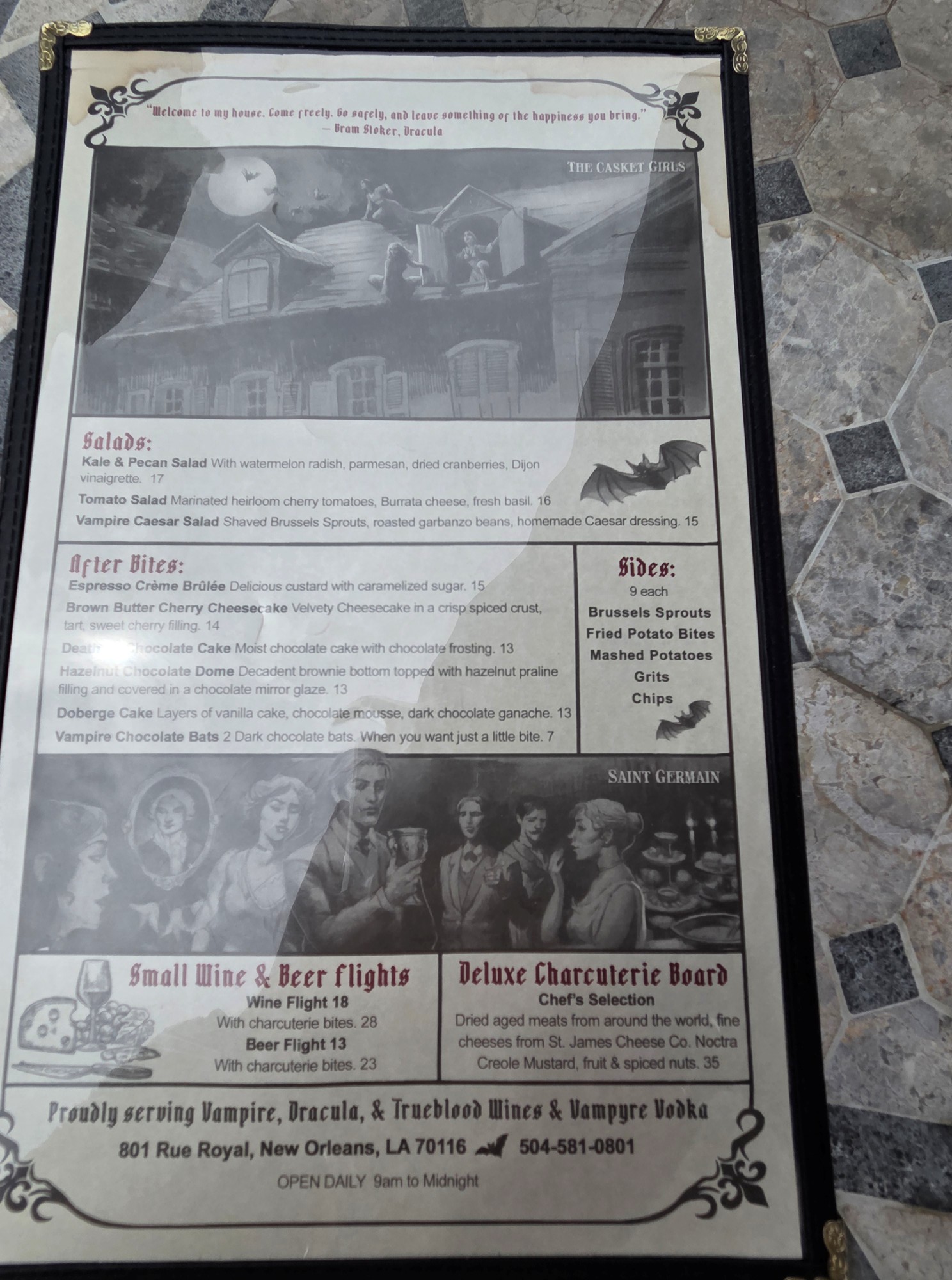
Vampire Café
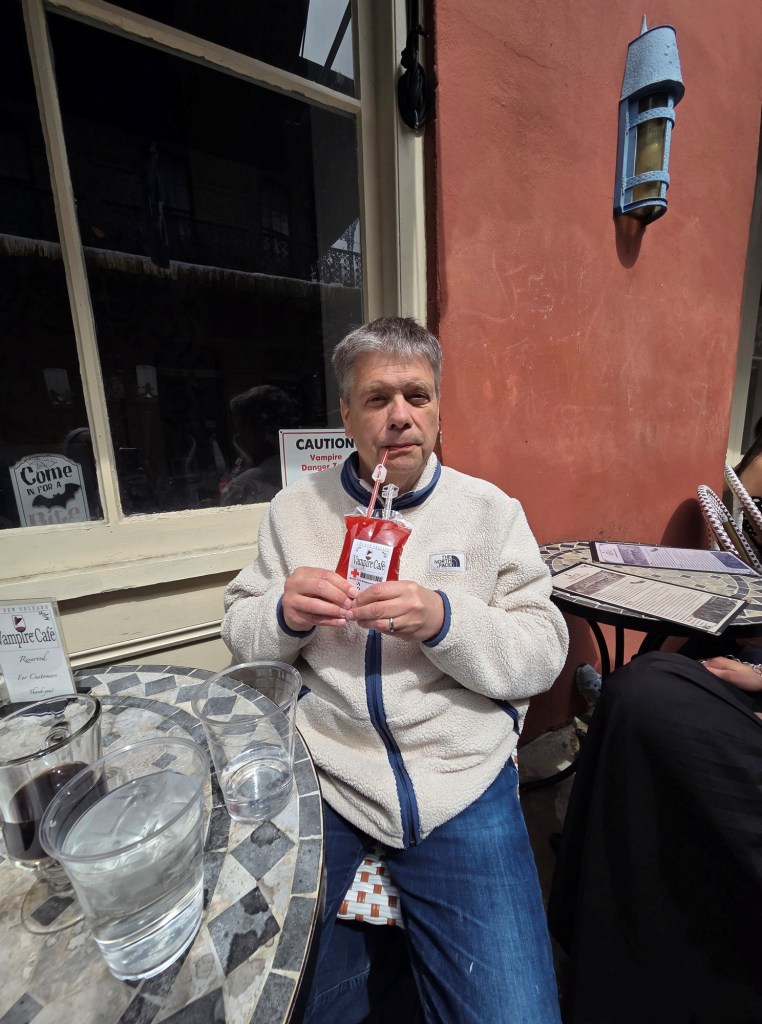
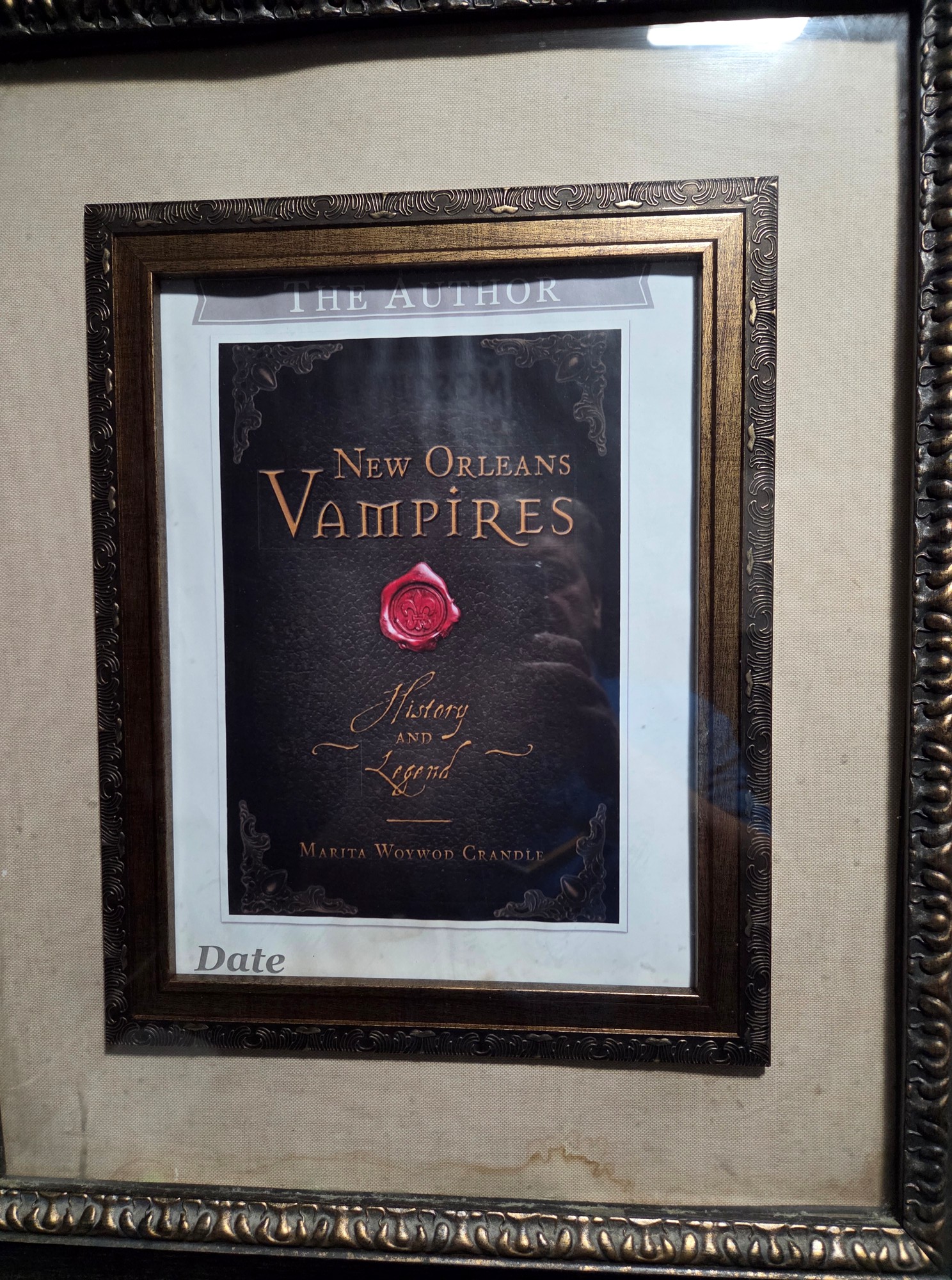
We also did some vampire related things. New Orleans is often called the Transylvania of America. Author’s such as Anne Rice have brought attention to New Orleans and its vampire legends. I read a book with 40 short stories about vampires while we visited New Orleans. The book was Vermillion Highways by David Lee Summers and Lee Clark Zumpe. I will make a post about that book in a couple of days. We visited vampire stores and the famous Vampire Café. See the photos below.
Vampire CaféMe drinking (pretend blood) from a blood bag at the Vampire Café.Me drinking a glass of Pinot Noir. The name of the wine is Vampire, and it says so on the glass.
Photo Tile from Vampire Café.
I should say that we did other things as well. We visited the aquarium, rainforest, and insectarium, which is quite impressive. We celebrated Saint Patrick’s Day, and we made a couple of visits to the famous Pat O’Brien’s Pub. We all had a good time.
War on Amazon.com. Hydrogen bomb test by Alones Shutterstock Asset id: 2194195335.
Today is the second time I participate in Linda Hill’s streams of consciousness. To read about the rules and participate click here. Today’s prompt for Stream of Consciousness Saturday is “review.” The first thing that came to my mind was the review wars on Amazon.
2019-2020 SoCS Badge by Shelley!
I’ve written several hundred reviews on Amazon, for software, computers, electronics, consumer products, movies and books. I was an Amazon Vine Voice for many years. Amazon Vine Voice is a program where Amazon reviewers receive free products from vendors in exchange for unbiased reviews. You must be invited by Amazon. However, as I was offered fewer expensive items, I got annoyed and I quit. My thinking was basically, if I don’t get a free TV or computer, I am not writing any reviews. I kind of regret that now. Free products are still free products.
There were and still are a lot of shady reviews and shady reviewer behavior on Amazon. This sometimes led to fights. I remember one prominent reviewer, Harriet Klausner. She was the #1 ranked reviewer on Amazon.com for many years and she held the #1 spot in the Amazon reviewer hall of fame at the time of her death. If you spent any significant time on Amazon as a reviewer, you know who Harriet Klausner is. I did a quick search for her as I was writing this, and I found the Wikipedia link for Harriet Klausner.
Harriet Klausner wrote 30,000+ book reviews in a relatively short time. I counted 20,000 reviews in just a few years. She loved every book and every book was intriguing to her. Almost every book was five stars. Then some people started accusing her of not really reading that many books, or for being biased. I admit I also had my doubts that someone could read thousands of books per year. Some people came to her defense while others claimed she was a fake. We may never know the truth, but the negativity spread.
People started accusing each other of faking reviews and fights broke out. Reviewer gangs were formed. They went around clicking the unhelpful button on other people’s reviews. One reviewer could get 3 helpful clicks the day after he published a review and then get 1,000 unhelpful clicks the day after. This affected the reviewer’s standing in the ranks. People were trying to improve their rankings, which back then were published next to the reviewers name, and fights broke out over the ranks. Amazon mostly put a stop to this by changing how the rank was calculated, hiding the reviewer rank well, and eventually removing the unhelpful button, as it was so widely misused.
I happened to have a few exploding nuclear bomb pictures handy. I think that illustrates what was happening on Amazon. Shutterstock, asset id: 2188083835 by CI Photos.
Reviewer rank was a major cause for the Review Wars but the actions that Amazon took greatly improved the situation. However, there is still some really shady stuff happening on Amazon. For example, people writing negative reviews for books they have not read. In this case it is not reviewer rank that is the cause. People slam books they have not read because they don’t like the author, or they don’t like the topic. Sometimes, inauthentic reviewers can slam a book just because it is written by an independent author.
Topics like evolution, climate science, vaccines, religion and politics, offend some people and attract dishonest reviewers. Even a simple fact that is widely accepted by experts/scientists in the field can enrage some people. For that reason, books on these topics can get a lot of negative reviews from people who never bought the book, or if they did, they never gave the book a chance. This is often obvious to those among us who actually read the book.
Another related phenomenon are commentors who attack or argue with reviewers who have left a positive review for a book. This happened to me. I wrote a five star review for a climate science book I really liked, and this guy started leaving comments on my review in which he attacked the book and the author. He did not attack me, not directly, but he said disparaging things about the author. What was behind all this was that the author had sued a couple of people for one million dollars for defamation and people associated with the defendants attacked the author and the people who wrote positive reviews for the book (using fake names of course). Reading a bit about what was going on I found out that it was possible that I was arguing with one of the defendants, a Fox News host by the name of Mark Steyn.
Note: The author of the book in question won the one million dollar lawsuit in 2024 but the amount was reduced by a judge in 2025. I can add I ended up sitting next to Mark Steyn on a flight from Marseille to London. I was going to ask him if he had paid the one million dollars, but I said nothing. I moved next to my wife (empty seat) and another Fox News anchor took my seat.
Amazon is still being bombed by hostile fake reviews and argumentative people. This is an illustration of the Tsar Bomba explosion by mbafai Shutterstock Asset id: 2208486661.
Naturträne a Dark Punk-Opera Life Review
Speaking about reviews, a piece of music that popped up in my head as I was writing this post is Naturträne (Nature’s Tear) a German PunkOpera song by Nina Hagen. Naturträne describes a woman who appears to be distraught over natural degradation (rattling exhaust pipes / Auspuffrohre knattern) and a lost love and her crushed soul. My high school German is rusty. You can say it is a very poetic but dark review of her life. For those who don’t know who Nina Hagen is, she is a former East German Opera singer, actress and musical artist who sings in the Punk-Opera genre and is known for her theatrical style.
She was able to make it to West Germany, and the song below was performed at Rock Palats in 1978. If you don’t know who Nina Hagen is (Europeans will know who it is) you are in for a shock. She depicts a distraught and crazy woman very well. However, it is bizarre but authentic.
Do you like Punk-Opera?
Sorry, that’s the question that popped up in my head right now.
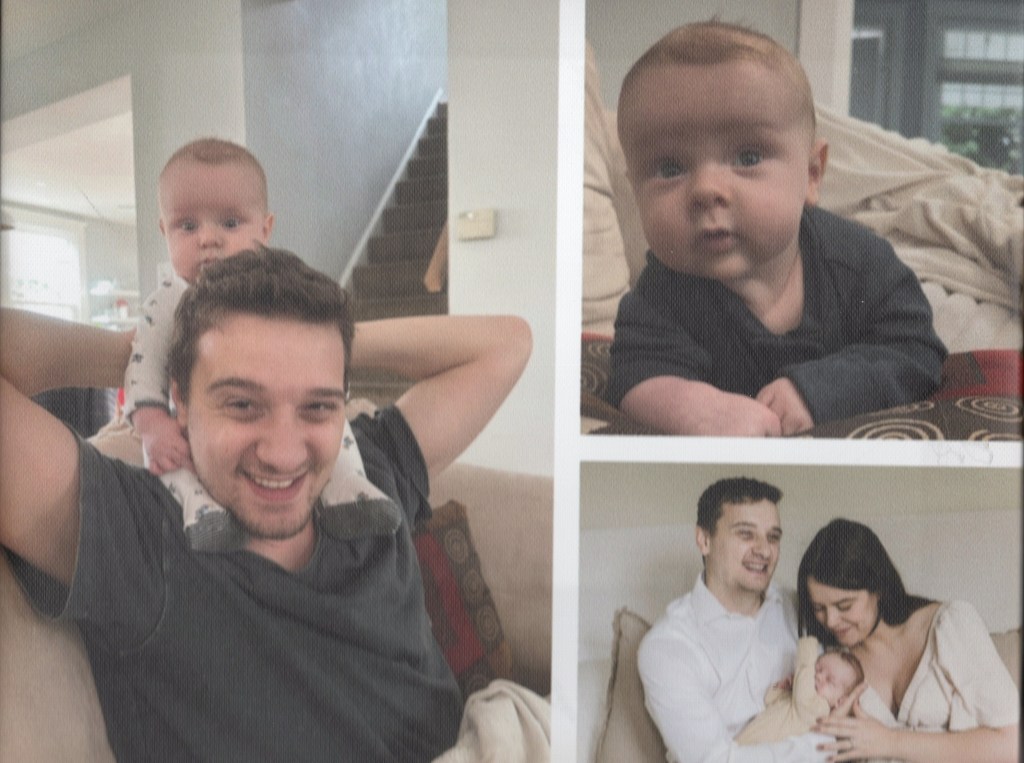
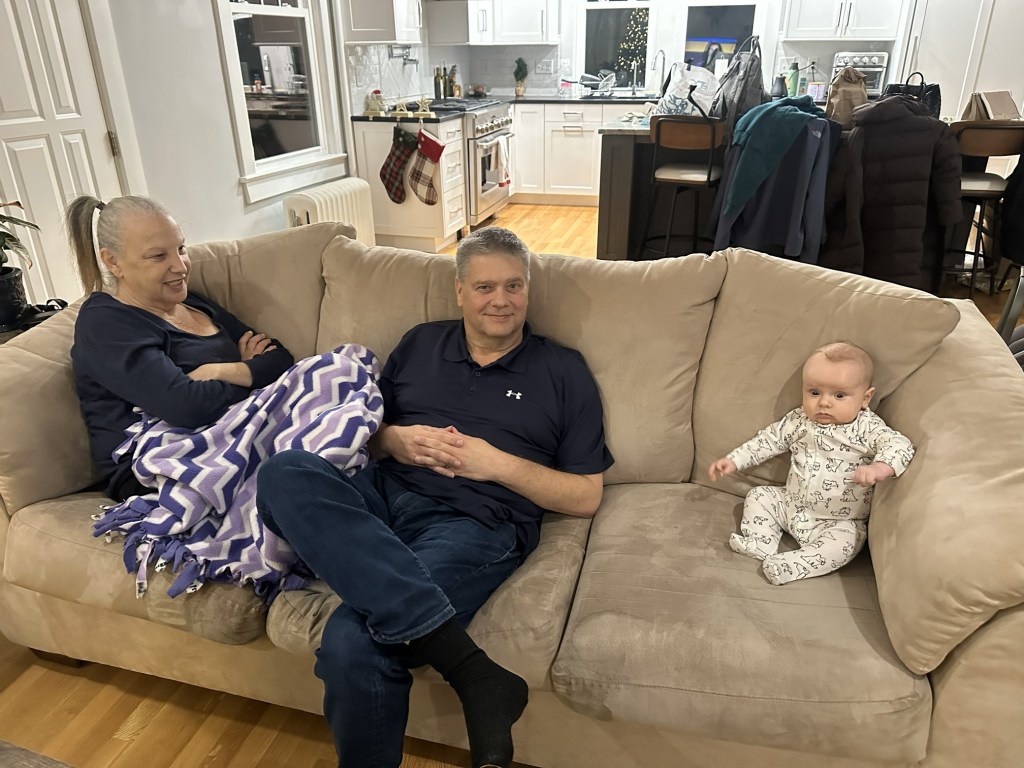
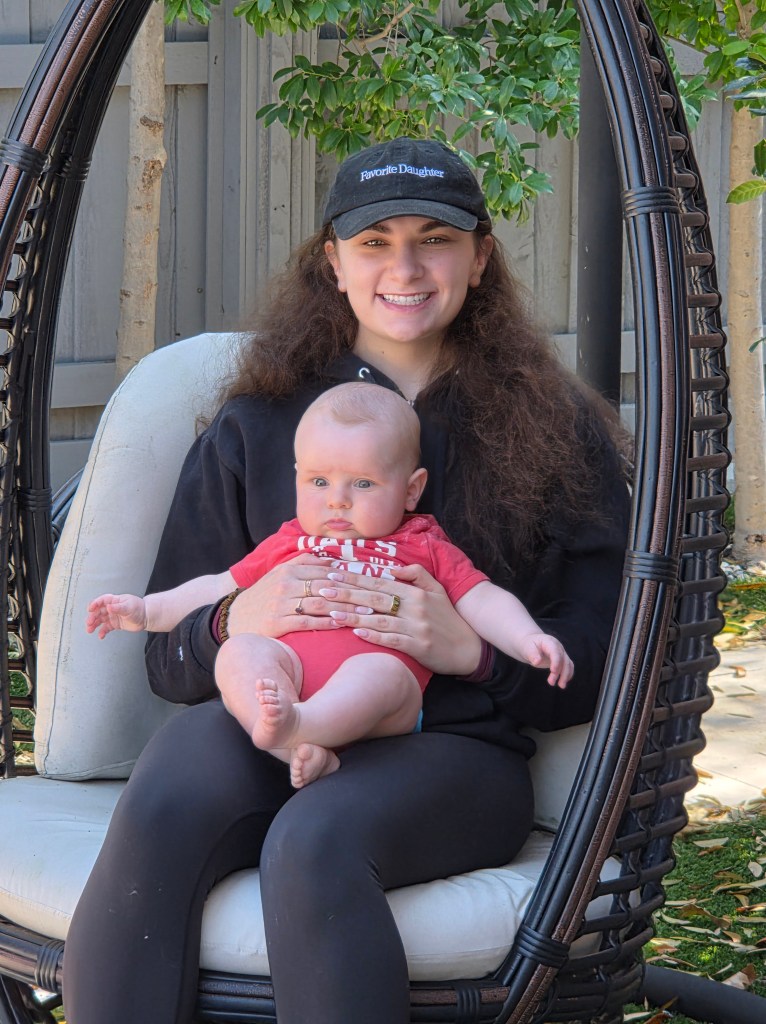
I am sorry that I have not been very active in the blogosphere lately. We had a special visit from our five months old grandson Jack. Our son Jacob, his wife Ashley and baby Jack came to visit us last Thursday and they left Monday night and during that time I mostly ignored the blogosphere but now I am back. With this post I thought I would display a few baby photos. First there are a few photos from our visit to Baltimore to see baby Jacka couple of months ago and then the rest of the photos were taken during their visit to us here in Dallas, which took place during the last few days.
Our son Jacob, his wife Ashley and our grandson at about 3 months old. In the bottom right photo, he is newborn.Jack in the sofa. Three months old.My wife Claudia is on the left, I am in the middle and Jack is on the right.First photo from the last few days. Our daughter with baby Jack at five months old. This photo is from the past weekend when they visited us. That’s here in Dallas, Texas.
A Challenge for Dr. Pooper
It was a challenging few days for our mini-Australian Shepherd Rollo. Dogs being jealous of a baby is a very real thing. I’ve read that dogs don’t see us the same as a pack of dogs but something better than a pack, care takers and family. They typically prefer their human family over a pack of dogs. They understand the difference between dogs and people. Rollo does not really try to be a pack leader, but he cherishes his position as the baby in the family, and suddenly here comes a human baby out of nowhere.
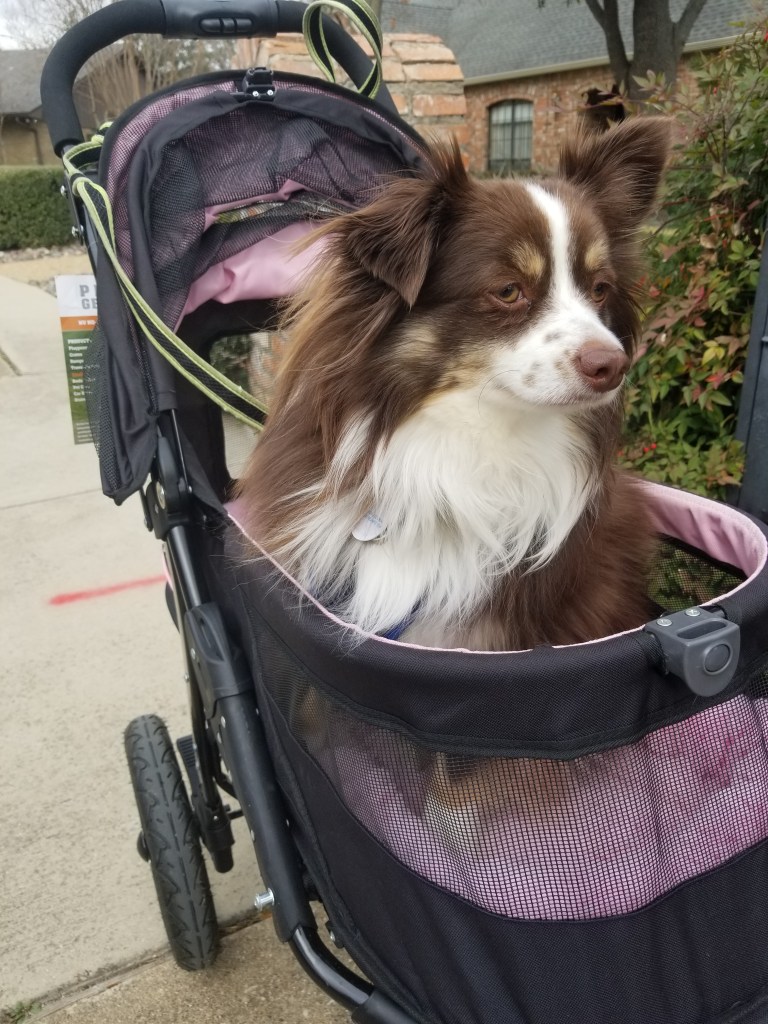
The human baby gets lots of attention, he sits in a stroller just like Rollo sometimes did in the past, people use a baby voice when they talk to the human baby, like they do with him, and on top of it I called baby Jack, Rollo, instead of Jack several times. I can add that I recently also mixed up the cats Charlee and Chaplin on another blog. Rollo felt that things were taken from him and he growled at the baby a couple of times.
Sometimes there are scary sounds and Rollo wanted to sit in the stroller we bought for our Pug Daisy. We have not been using that stroller since Daisy passed.
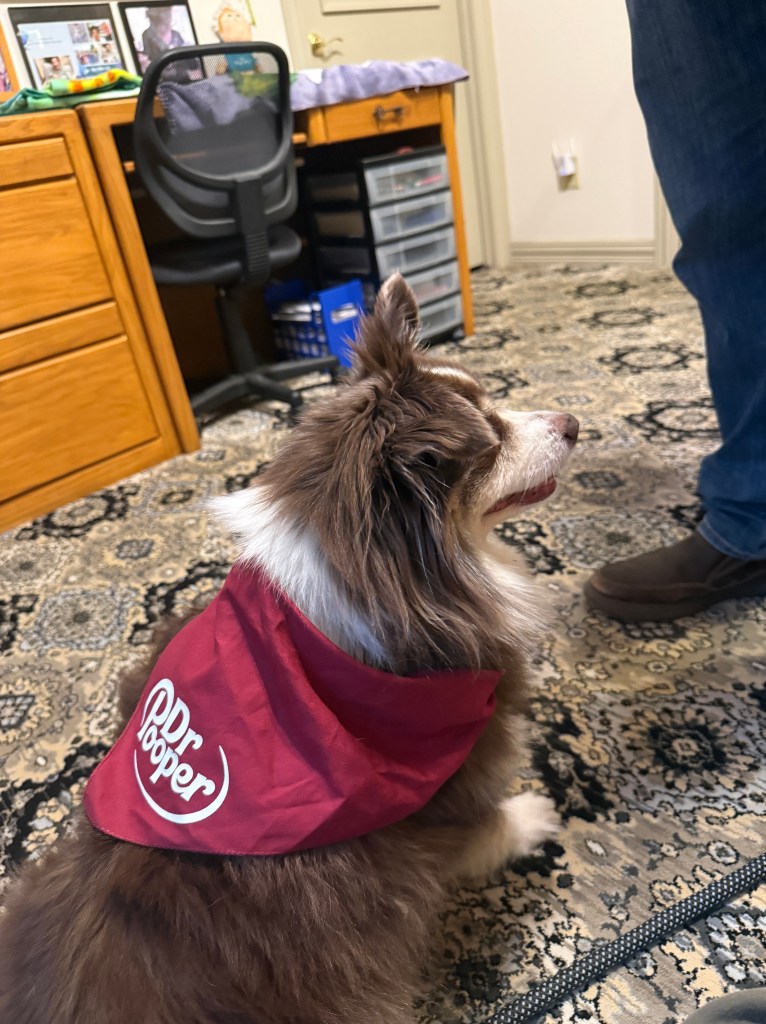
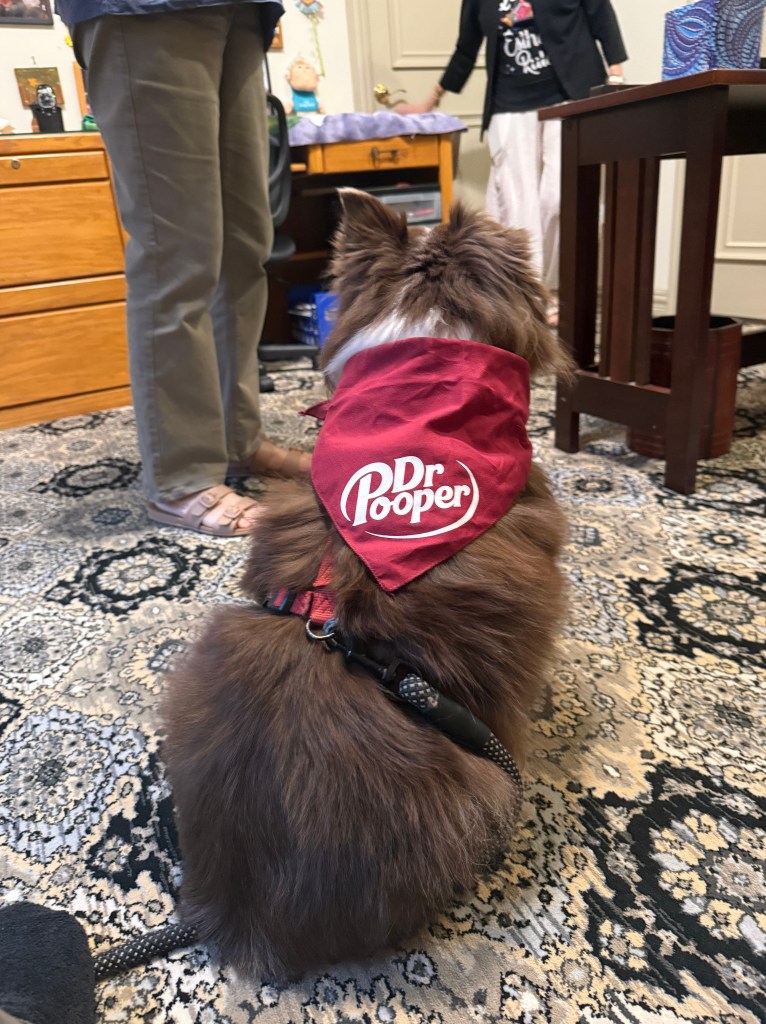
So, what we did was to pay a lot of attention to Rollo, making sure we did not exclude him, and we gave him treats every time he was in the same room as the baby. It turned out that this worked very well. This was something our daughter had looked up. Well, now when Jack has gone back to Baltimore, Rollo is back to being the supreme baby of the family, or the King of Texas if you will. Below are a couple of photos of Rollo in his new cap or coat, Dr. Pooper, a sort of advertisement for a Texas soda called Dr. Pepper. It was just for fun and he did not mind.
Rollo in his Dr. Pooper cap.Rollo in his Dr. Pooper cap.
Baby Jack Photos
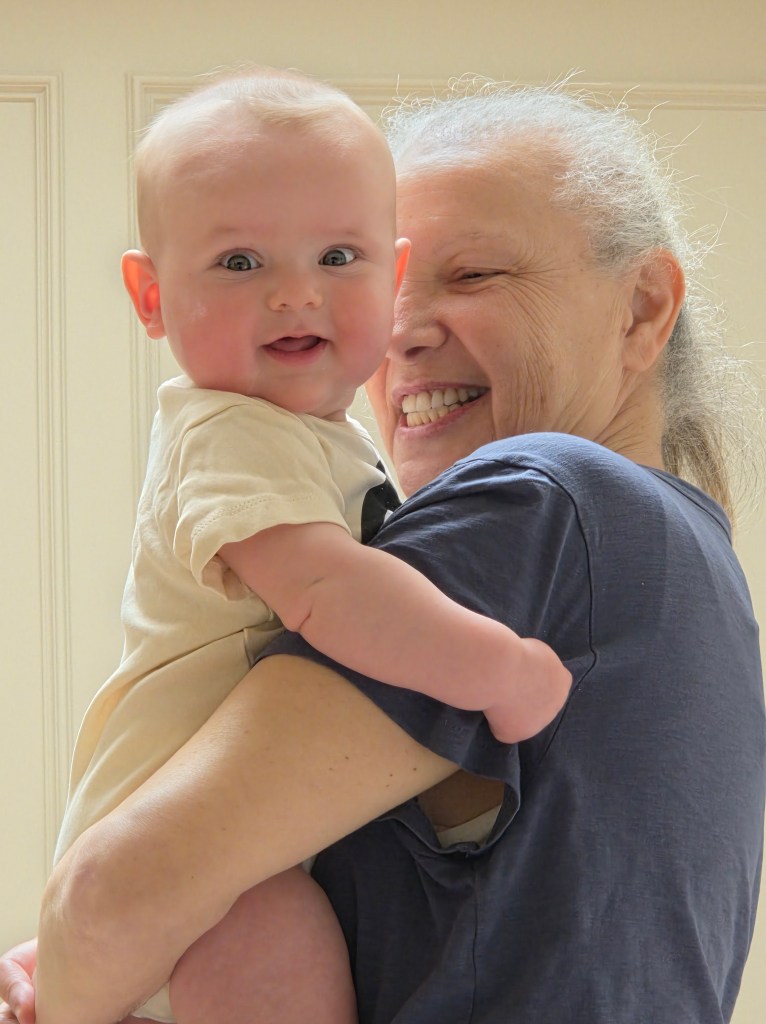
Our son with his son, baby Jack.My wife Claudia and baby Jack.Me and baby Jack.Our daughter and baby Jack.Baby Jack in a stroller.Baby Jack in a stroller.Baby Jack in a stroller.
With this post I just wanted to highlight my other blog superfactful. The purpose of that blog is to find facts that are important and true with very high certainty and yet disputed by many amongst the public (but not scientists/experts), surprising to many, and perhaps shocking. Imagine telling a medieval peasant who believes that Earth is flat like a pancake that it is closely spherical. That Earth is not flat like a pancake is true with a very high certainty (BTW nothing outside of logic and math is absolutely 100%), it is kind of important, and would probably be surprising to him. Maybe he’ll call it BS, but that is the point.
I call these kinds of facts SUPER FACTS, and I am the super fact hunter. I am trying to make the blog fun and educational. I use reputable sources to back up my claims that I hope will shock many without resorting to clickbait. It is not an academic blog, but I am linking to thousands of academic sources. Below I am listing my five last super facts. To see the full post, you have to click on the links.
Wind Energy is Indeed Clean Energy
Superfact 87: Wind energy is a clean, renewable, and sustainable power source that produces no atmospheric emissions or water pollution during operation. Manufacturing and installation have a small carbon footprint that is much smaller than the carbon footprint of the fossil fuels they potentially replace.
Early Homo Sapiens lived at the same time as many other human species
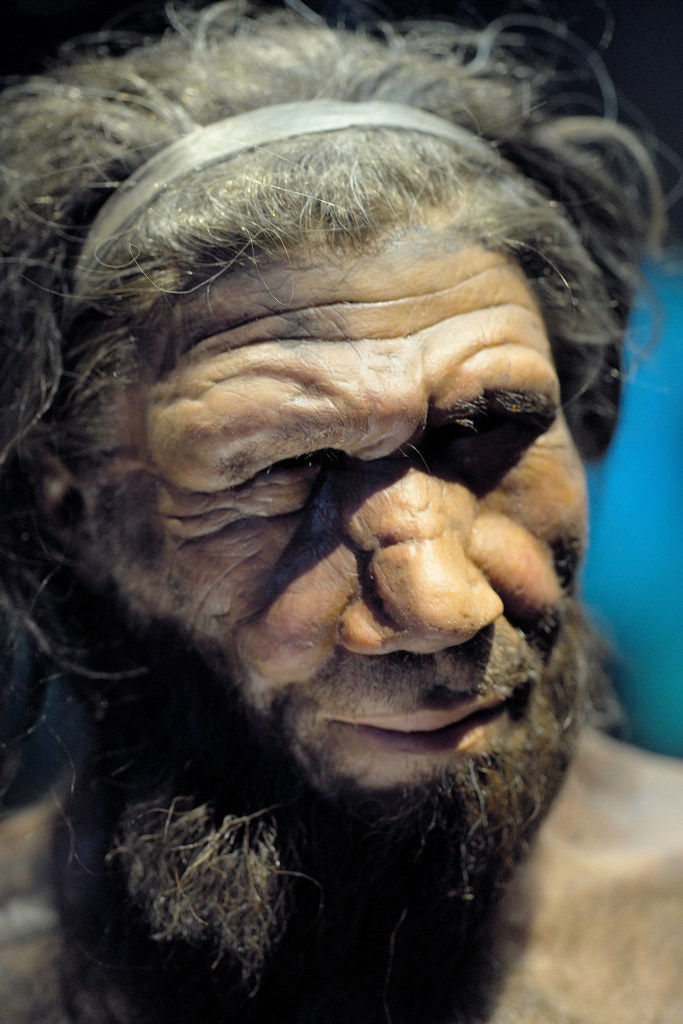
Super fact 86 : Early humans, early homo sapiens, lived at the same time as many other human species including Neanderthals, Denisovans, Homo floresiensis, Homo naledi, Homo luzonensis. Homo heidelbergensis, Homo erectus, and maybe other species as well.
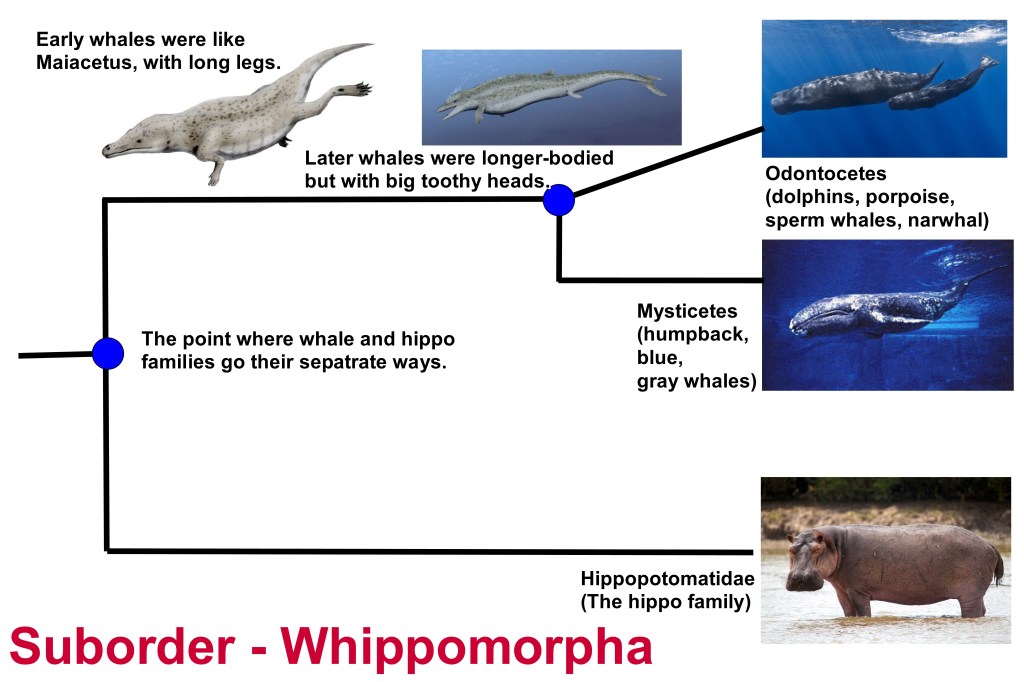
Super fact 85 : Scientists recognized that whales descended from land animals already in the 19th century. However, it was not until the 1980’s that intermediate fossils for whale evolution were found. In addition, molecular and genetic / DNA studies showed that Hippopotamus and whales were closely related. Until then the evolution of whales was a bit of a mystery and creationists frequently mocked the lack of intermediate fossils for whale evolution.
All living cetaceans including whales, dolphins, porpoises, sperm whales and hippopotamids / hippopotamus belong to a suborder of artiodactyls called whippomorpha. Just like humans and chimpanzees have a common ancestor hippopotamus and whales have a common ancestor.
Super fact 84 : Modern birds are classified as part of the clade Dinosauria. They are direct descendants of small, feathered maniraptoran dinosaurs that survived the Cretaceous-Paleogene extinction event 66 million years ago. Maniraptoran dinosaurs in turn are a major subgroup of coelurosaurian theropod dinosaurs. In other words, birds are avian dinosaurs.
Velociraptor with feathers (well a little bit). Shutterstock Asset id: 2636534673 by Shutterstock AI Generator
Super fact 83 : Everyone experiences false memories. They are a normal part of how human memory works and are very common. There are also false memories that are shared among large groups of people and that are often socially reinforced. This is called the Mandela effect.
Shutterstock Asset id: 717504940 by durantelallera
Zodiak signs. Shutterstock Asset id: 2643593485 by Cinemanikor
Today is the first time I participate in Linda Hill’s streams of consciousness. To read about the rules and participate click here.
Today’s prompt for Stream of Consciousness Saturday is “starts with ‘pre’.” Find a word that starts with “pre” and use it any way you’d like. The word I chose is “Prediction” and this post is about failed predictions. The first rule is: there should be minimal planning and no editing except typos. The picture above was what showed up in the middle when I searched “Astrology Prediction” on Shutterstock (I have an account). I picked it without looking too carefully at any other picture. As for the writing I am just letting it flow as MS Word corrects my typos for me. I already read one other person’s blog who has linked back their post, and I posted the SoCS Badge below. I hope I am getting it right.
2019-2020 SoCS Badge by Shelley!
My Lucky Day from Hell
These events took place in northern Sweden when I was about 14-15 years old. My dad was building a summer cabin, or rather a summer house at the time. My brother and I was helping him. Summer cabins, or summer houses, are very common in Sweden. Almost everyone has one, by a lake, a river, by the sea, or up in the mountains. He had asked me to put up a wall, and he had given me instructions for how to do it. I was determined to do a good job.
The magazines I used to read at the time had horoscopes in them and the horoscope for this day predicted that it would be my lucky day. This made me excited. I was certain I would do a great job. After all my horoscope predicted it would be my lucky day. What could go wrong on my lucky day?
I should say that I was a bit skeptical of horoscopes. They were vague and did not seem to be able to predict anything, and they certainly seemed to get my personality wrong. However, the lucky day prediction was a pretty specific prediction, so I took it to heart.
To build the wall I needed to predict how many planks to put up, and calculate the best distance between them, so building the wall involved some predictions, not the astrology kind, but the mathematical kind. I proceeded to build the wall. I predicted it would take a couple of hours. Unfortunately, it turned out my predictions / calculations were wrong. I started over but I made another mistake with my predictions and had to start over. My predictions were going wrong and I started to become frustrated. I continued to build and tear down the wall several times but on the seventh time I exploded in anger.
I randomly grabbed an axe that was lying on the ground, and I shook it and swung it around as I was running around in the yard screaming in rage. I don’t know if any of the neighbors saw me. Maybe they did and hid in a cellar or a basement. I hit the axe in a random place in the yard and to my surprise the earth swallowed up almost the entire axe. I guess I was strong.
Almost immediately water started gushing up from the ground. I had accidentally cut the waterpipe to the summer house. The waterpipe was buried in the yard and I had no idea. Water quickly filled up the yard until it looked like a shallow swimming pool. That’s when my dad came home. The wall was not finished, planks were laying everywhere, there was water gushing up in the middle of the yard, and the yard was inundated with water. He said something along the lines of “My God what happened here?”. He was angry and disappointed, and he had to call people to come and help us with the mess. It was sort of an emergency.
So much for my mathematical predictions, calculations, and so much for my Horoscope predicting about my lucky day.
I can add that I remember this incident because I recently left a comment about this unfortunate occurrence on someone’s blog. It is the first time I do this so please tell me if I got something wrong. Now it is Saturday here, so I am posting.
What about you? Have you had a lucky day from Hell?
I had what is called post traumatic amnesia, which fortunately is temporary. Shutterstock ID: 1685660680 by MattL_Images
I have false memories, memories of things I know never happened. Not too long ago I made a post on my other blog about false memories and collective false memories, referred to as the Mandela Effect. You can read about that here. In addition to false memories I have memories that are strange, but that I know happened. I also have gaps, or holes in my memory. Memories that are lost to amnesia.
It all goes back to a ski accident that I had at the age of 22. We were a group of youngsters who rented a bus and drove from Sweden to Garmisch-Partenkirchen in Bavaria in Germany. Garmisch-Partenkirchen is a beautiful Bavarian town, and it is one of the most famous German ski resorts. Zugspitze, Germany’s highest mountain is nearby Garmisch-Partenkirchen providing for an impressive scenery.
The town of Garmisch-Partenkirchen. Photo by op23 on Pexels.com
I love skiing and I challenged myself by skiing fast and selecting difficult slopes but on one of the days I made a very bad decision. I have no memories of what follows in this paragraph. It is what I have been told. There was a steep double black diamond slope with a sign stating that the conditions were dangerous and not to go down this slope. I did it anyway, and I fell badly, hit my head (I had no helmet), and I got a severe shoulder displacement. My arm was hanging on my back. I went looking for my skis and I tried to put them back on to continue skiing, but some Germans came down to stop me.
An ambulance was called, and they sent snowmobiles to pick me up. However, the snowmobiles were unable to get there, so they used a pist-machine to pick me up instead. On the way down I discovered my shoulder displacement several times. I was equally shocked every time. That’s how they knew that my short term memory was gone. I also had no pain sensation.
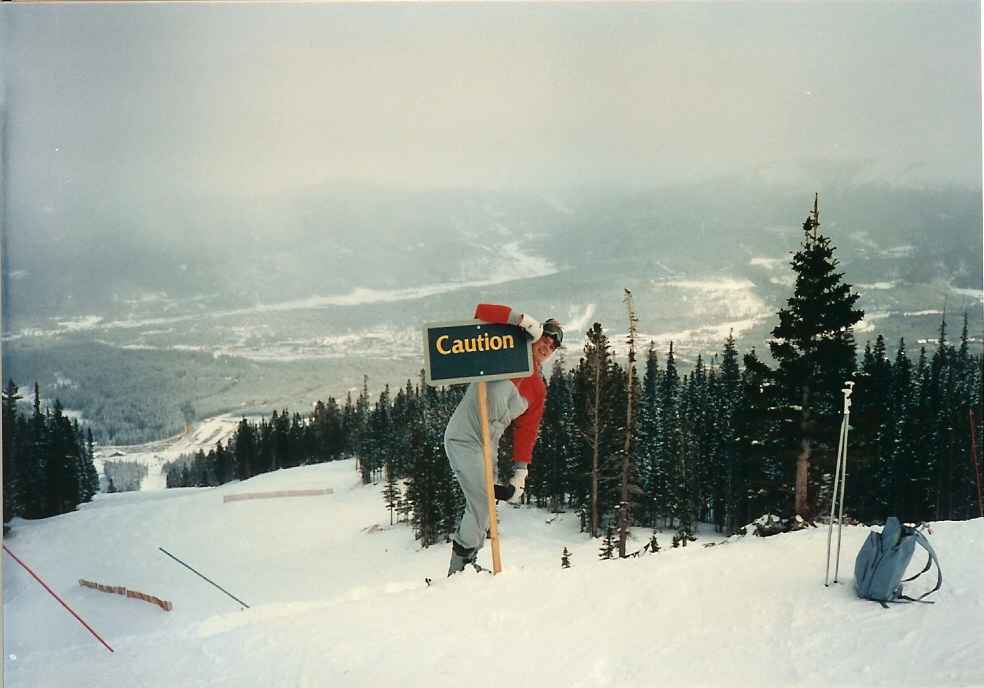
Zugspitze Germany’s highest mountain. Photo by Oskar Gross on Pexels.comThis is me in the ski slope when I was young. This is not Garmisch-Partenkirchen, it is Breckenridge, Colorado, but I don’t have any photos of Garmisch-Partenkirchen.
Amnesia
The next few days after the accident I suffered from amnesia. I did not remember where I was or my friends. I should say I still remembered my name. The first 2-3 days after the accident are essentially gone. However, I remember my friends coming into my room asking me questions such as “what’s my name?”, “do you remember me?”, “do you know where we are?”. The leader of the trip was devastated, and she was allegedly crying all day. You can say that I ruined the trip for everyone.
False Memories
On the way down to Germany, at the German border we changed out our studded tires because studded tires are not allowed on the autobahn. As my memories started to return on the third day after the accident my friends asked me what happened at the German border. I told them that we had studded tires (that part was correct) and that we all took pliers and removed the studs (that part was false). The funny thing is, to this day I remember us walking around the bus with pliers and removing studs. However, I know this never happened. How did that false memory get implanted in my head?
Strange Memories
I also have some strange memories from that trip that according to my friends happened. We stayed at a youth hostel. It was nice but it had a strange feature. There were loudspeakers in all the hallways. At 10:00PM on our first evening at the youth hostel the loudspeakers came on and someone started shouting in German “Achtung! Achtung! All guests must now wash their faces and brush their teeth and the lights started dimming and women and men had to go to their quarters. Music is forbidden. The loudspeaker came on every now and then barking orders at us in German and all windows and doors were locked electronically. Being from Sweden we followed orders, but we were laughing about it.
Suddenly new voices started shouting in the loudspeaker. It was younger sounding voices. It was still in German but this time we were told to rebel against the hotel management, we were told to refuse to go to bed, and they started singing fighting songs in German. Then, suddenly the loudspeakers went quiet. The hotel management was back. We all had to go to bed. It sounds like a false memory, but this one is real. Well, it was budget lodging after all.
Unpleasant Memories of Statistical Mechanics
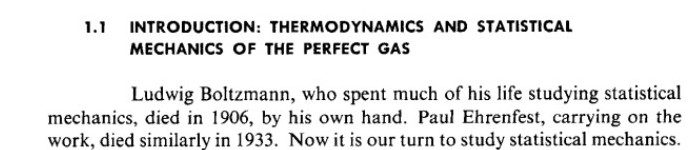
The epic opening of the first paragraph in David L. Goodstein’s States of Matter, a textbook on Statistical Mechanics.
The epic opening above from the textbook says : Ludwig Boltzmann, who spent much of his life studying statistical mechanics, died in 1906, by his own hand. Paul Ehrenfest, carrying on the work, died similarly in 1933. Now it is our turn to study statistical mechanics.
One day I found a book on Statistical Mechanics under my bed, and some very unpleasant memories came back to me. I had a final exam in Statistical Mechanics after our vacation. Statistical mechanics is a mathematical framework that applies statistical methods and probability theory to large assemblies of microscopic entities.
More specifically, you do statistical calculations over large sets of atoms and molecules to figure out the macro condition of the corresponding gas or material. For example, temperature corresponds to the average kinetic energy of atoms, and entropy refers to the logarithm of the number of microstates compatible with the system’s measurable macroscopic state, often loosely referred to as the disorder of the system. Statistical Mechanics includes classical Statistical Mechanics as well as its Quantum Mechanical counterpart, which is a lot more abstract and complicated.
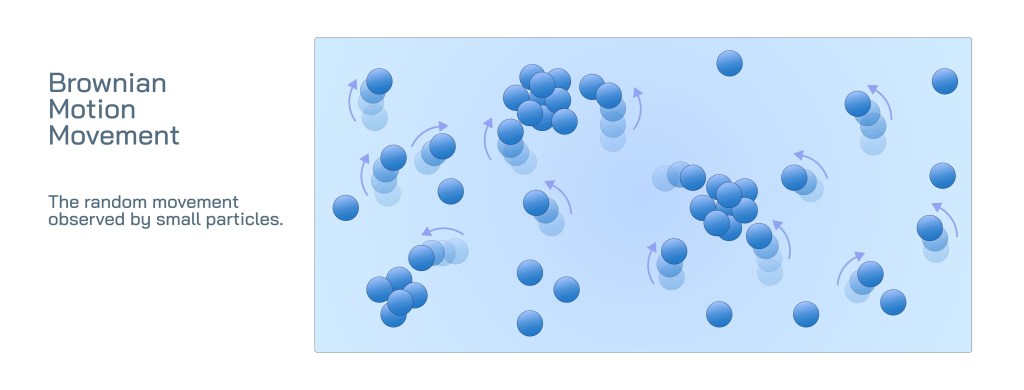
In 1905 Albert Einstein proved the existence of molecules and atoms using statistics and an observed phenomenon called Brownian motion. Shutterstock ID: 2334052703
Once I was back in Sweden, I went to see my professor, and I explained the situation to him: “hello professor, I had a ski accident, hit my head, and I lost my memory. My amnesia made me forget statistical mechanics.”. He could also see that my left arm was in a cast. I said, “could I take the exam a little later?” He asked me “are you right-handed or left-handed?” I said, “I am right-handed”. The professor answered, “well then you take the exam on time like everybody else”. It wasn’t what I wanted to hear but I took it, and I passed but not with flying colors.
It may seem like my professor was a bit harsh. However, I was later thinking that maybe he had a lot of students coming into his office claiming head injuries with amnesia. It was after all a final exam in statistical mechanics.
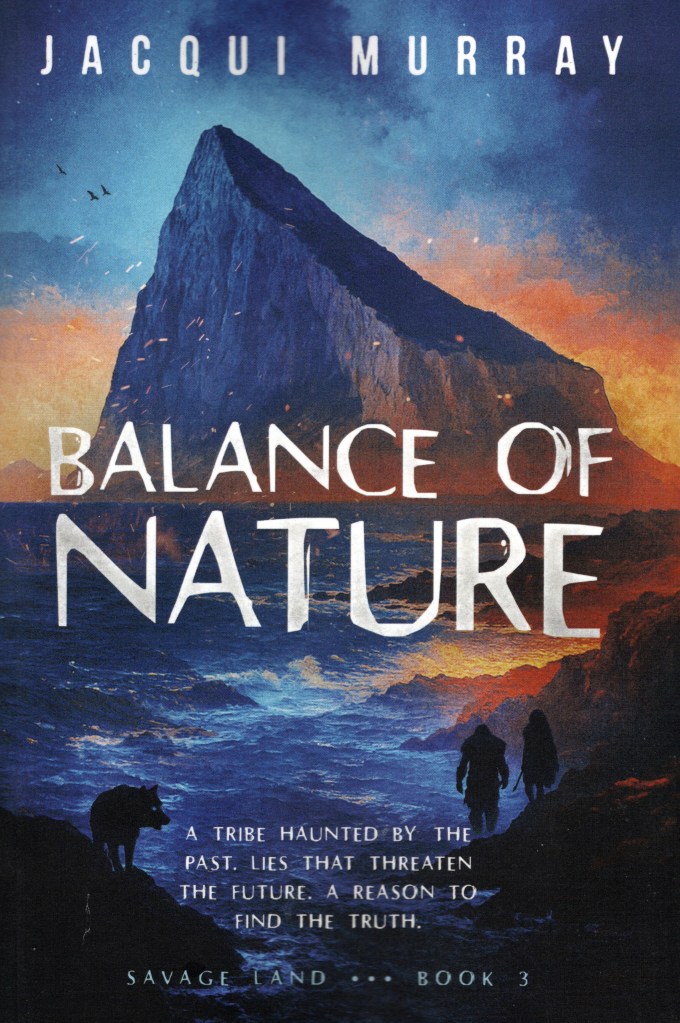
Today, I am delighted to welcome the very talented author, Jacqui Murray, with her latest novel in the Savage Land Book series, Balance of Nature.
When I was a teenager, I read a few of Jean M. Auels novels about pre-historic humans. I loved them and I saw the movie. Now I am reading Jacqui Murray’s novels about pre-historic humans. Jacqui Murray’s books are even more fascinating and very realistic and well researched. This post is part of a Book Launch series for Balance of Nature held February 2-13, 2026. There is more information here.
Summary
A tribe haunted by the past. Lies that threaten the future. A reason to find the truth.
Savage Land is the third trilogy about prehistoric man in the series, Man. Vs. Nature. Savage Land explores how two bands of humans survived one of the worst natural disasters in Earth’s history, when volcanic eruptions darkened the sky, massive tsunamis crossed the ocean in crushing waves, and raging fires burned the land. Viral tribes of Neanderthals and early man considered themselves apex predators, but that crown belonged to Nature and she was intent on washing the two-legged blight from her lands.
In Balance of Nature, Book Three of the trilogy, Yu’ung’s Neanderthal tribe hopes to settle at Gibraltar but instead find unexpected threats and lethal challenges.
Follow the courageous Yu’ung, the determined Kazeb, the mystical Shanadar, and the pawed-and-clawed Canis as they navigate a perilous world of tribal conflict, unexplained visions, and shifting loyalties. Their journey is a testament to the resilience and strength of true leadership in a sweeping saga that ultimately leads to who we are today.
Book information:
Genre: Prehistoric fiction
Editor: Anneli Purchase
To purchase the kindle version of the book, click here
To purchase the paperback version of the book, click here
Front cover of Balance of Nature by Jacqui Murray. Click here, or click on the picture to visit the Amazon page for the paperback version of the book.
Balance of Nature trailer
Excerpt: Chapter 1
75,000 years ago
The area we now call Gibraltar
Shouts woke the brothers from their sleep.
“A boat—on the Endless Sea! Headed toward us!”
At night? How is that possible? But Kazeb didn’t ask because it didn’t matter. What mattered was that it was there.
He and Turk had waited long for this news, Kazeb with excitement, Turk with dread. Without discussion, they raced across the grassland, leapt over crevices, the width familiar even in the dark, and then scrambled up Big Rock’s knobby flank, grabbing tiny ledges with their fingers and toes with a speed mountain goats would envy. The behemoth’s height dwarfed all hills on the peninsula save the distant, towering range that separated it from others.
The brothers summited the crest and crouched behind a thick patch of scrub at the cliff’s edge. The brisk breeze atop the promontory whipped Kazeb’s hair around. He clenched his fists, gritted his teeth so tightly he should have broken a tooth, and waited for the vague elongated shadow on the water’s inky surface to reveal its intentions.
Is it them? He glanced at his brother’s square face. Turk thinks it is.
Sun’s steady arrival slowly erased the dark, made the sea shimmer in shades of blue as waves crashed against the coastline. Just below the surface, under the foam, were sharp shoals. Any boat must tediously avoid these, better yet, continue down the shore where there was no risk, unless they knew of the sole safe mooring used by natives and those they shared the location with, like they did with the Tall Ones from long ago.
Turk hissed, “It’s them, Liis.”
The Clan called him Liis, but he preferred “Kazeb,” the name awarded him when he agreed to guide the Tall One Fierce to the sea’s end. That was far beyond anywhere he had ever traveled, but Fierce claimed Kazeb’s knowledge of the area was invaluable.
“We can’t tell who is onboard, Turk,” he said, though who else knew of the hidden cove?
Kazeb rose and scanned a full circle, hoping whoever came on that craft wasn’t looking up here.
“What are you doing, Liis?”
“I need to see if they’re alone, or do more come from other directions.”
Flat grassland bordered one flank of the promontory, water the rest. Sun’s earliest rays colored the sky in pinks and blues. Birds plummeted into the crystalline water. Fish with no desire to be food dove. Farther away, pigs rooted through the stubble and a herd of deer feasted on ever-abundant fresh young shoots, protected by the range of mountains from unexpected predators.
When we finish, that’s where we will go.
He turned back to the shoreless sea. Visible on clear days, a faint brown outline shadowed the horizon, what the Tall One Fierce had called home.
Turk said, “They knew enough to stay in the calm waterswhen darkness arrived, to avoid the underwater shoals.”
Sun broke above the horizon, telling the boat it was safe to continue. The craft nimbly skirted the shoals, aiming for the spot a similar vessel had beached long ago. Kazeb gripped his spear tighter. Fierce had promised to return once his exploration was completed. Kazeb trusted his word, but the more time passed, the more he wondered if he had been lied to.
“Liis!” Turk interrupted his reverie. “There is another boat, behind the first!”
Now Kazeb saw it. Both prows plowed through the water, their shapes clear in the sunlight. Shivers ran through Kazeb.
These aren’t like Fierce’s craft … but we have seen no one from that direction either by sea or foot.
Kazeb studied the gaggle of Uprights, their bold stripes, the confident stance of the slender male in the bow of the front boat. All fit his recollections of the Tall One band. His gaze drifted to the back boat, a shorter stockier figure at the prow.
Is he Fierce’s guide? My replacement? But why would he be behind Fierce?
Legs wide for balance, sunlight glinting off flame-red hair, the sturdy figure scanned the Big Rock. To Kazeb’s surprise, his gaze paused at the clump of brush where the brothers hid. He couldn’t see them, of course. Both had mudded their skin and squinted to keep Sun’s glare off their eyes. Still, the figure shouted to One-who-might-be-Fierce and pointed.
Turk gurgled, “Are they looking for us? But why come back here, considering what they did?”
“We don’t know for sure—”
“Who else would it be?” Turk’s voice a strangled yelp.
They argued this question often. The Clan Healer originally thought the deadly illness had been caused by insects or a toxin in the air, but before he died, he admitted an individual could have poisoned the members’ food and water. Who could say?
Kazeb didn’t bother to reply, busy admiring the vessel’s sleek profile, so unlike the Clan’s flatter, smaller ones. The sailors effortlessly beached it at the base of the monstrous rock where the brothers hid.
Voice fiery, Turk hissed, “Our destiny has arrived, why we survive and the rest died.”
Author Bio
Jacqui Murray is the author of the popular prehistoric fiction saga, Man vs. Nature which explores seminal events in man’s evolution one trilogy at a time. She is also author of the Rowe-Delamagente thrillers and Building a Midshipman , the story of her daughter’s journey from high school to United States Naval Academy. Her non-fiction includes 100+ books on tech into education, and a freelance journalist on tech ed topics.
Author’s Social Media Contacts
Click on the links below to visit the author’s media
This is a bonus section about AI provided by Jacqui Murray
In 2024, readers crave more than just a passive experience. Interactive storytelling has become a significant trend, allowing readers to actively participate in shaping the narrative. With the use of augmented reality (AR) and virtual reality (VR), stories are no longer confined to the pages of a book. Authors are experimenting with immersive experiences, creating narratives that respond to reader choices, making each journey through the story a unique adventure. Here are a few quick guidelines:
Use AI as an assistant, not as a replacement
Check everything AI does. It’s not perfect. Don’t expect it to be something it isn’t.
Be legal and ethical in your AI use. Confess to its use (like in your Kindle publications) when necessary. Don’t try to hide it.
Protect your privacy–don’t share personal information.
Assume AI-generated images can now be reverse-searched and tied back to you in some cases.
Voice cloning only needs 5–30 seconds of audio—don’t post long clear voice notes publicly if you’re worried about impersonation.
Robbie Cheadle posted the second part of my guest post on Scandinavian Folklore on LatinosUSA. LatinosUSA is a wonderful online magazine/blog featuring poetry, stories and all kinds of interesting content from around the world. She also included a great review of my Leonberger book Le Life and Times of Le Bronco von der Löwenhöhle, and I am very grateful for that.
This is a guest post written by Sara M. from Sanitair LLC. She emailed me asking me if she could publish this post regarding opening a Indoor air quality for pets. I said yes. See her post below.
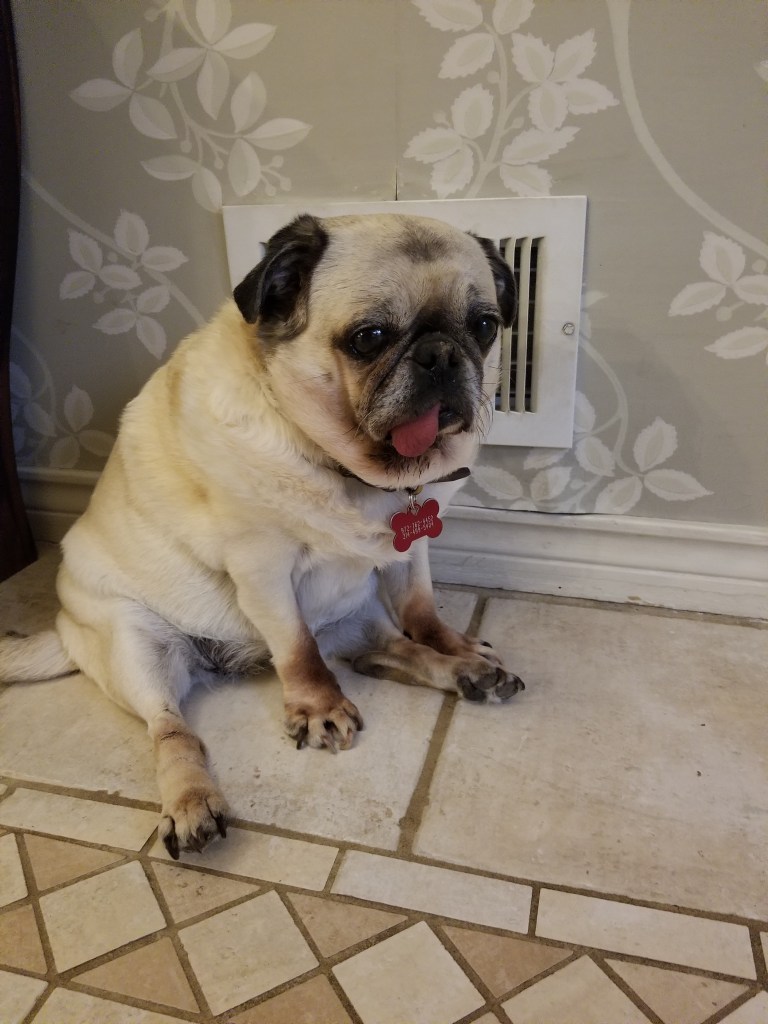
Daisy our Pug loved sitting in front of vents because of the heat in winter and the cool air in summer. Hopefully, the air was healthy.
I can add that we had our ducts cleaned a couple of months ago. It is good thing to do for yourself and for your pets.
The Ultimate Pet Owner’s Guide to Indoor Air Quality
Introduction
As a pet owner, you know the joy and companionship that furry friends bring into your life. Their playful antics, affectionate nuzzles, and loyal presence make every day brighter. However, pets also bring certain responsibilities that extend beyond feeding, grooming, and playtime. One critical aspect of pet care that is often overlooked is indoor air quality. The environment your pet lives in can significantly impact their health, comfort, and overall wellbeing.
Poor air quality can exacerbate allergies, trigger respiratory problems, and even contribute to long-term health issues for both pets and humans. With pets spending most of their time indoors, maintaining clean, fresh air is essential to support pet health and create a safe living environment. In this guide, we will explore how indoor air quality affects your pets, practical steps to improve it, and strategies to prevent airborne irritants in your home.
1. How Indoor Air Quality Impacts Pet Health
Indoor air can contain pollutants that affect pets in ways similar to humans. Common indoor pollutants include dust, pet dander, pollen, mold spores, smoke, and volatile organic compounds (VOCs) from household cleaners or furniture. Pets are often closer to the ground, which means they inhale particles that settle on floors and carpets, making them particularly vulnerable to airborne irritants.
Respiratory issues are among the most common consequences of poor air quality in pets. Cats, dogs, and small mammals may develop coughing, sneezing, nasal discharge, or labored breathing if exposed to irritants over time. Pets with pre-existing conditions, such as asthma in cats or brachycephalic dog breeds, are even more sensitive.
In addition to respiratory effects, pollutants can trigger skin irritation and exacerbate allergies. Fluffy coats can trap dust and dander, which not only irritates pets’ skin but can also circulate allergens throughout your home. Long-term exposure to poor air quality may even weaken the immune system, making pets more susceptible to infections.
By understanding how indoor air quality influences pet health, you can take proactive steps to minimize risks and promote a safer, cleaner environment for your furry companions.
2. Sources of Indoor Air Pollution in Homes With Pets
To improve air quality, it is important to first identify potential sources of indoor pollutants in pet-friendly households. Common contributors include:
Pet Dander and Hair: Pet hair alone is not harmful, but it often carries dander, a common allergen. Dander is tiny, lightweight, and easily airborne, allowing it to circulate throughout your home.
Dust and Dirt: Pets can bring in dust, pollen, and other particles from outside on their paws and fur. Over time, this accumulates and becomes a source of indoor pollution.
Mold and Mildew: Pets can create moist areas, especially around water bowls, litter boxes, or damp bedding. Mold spores thrive in these conditions and contribute to poor air quality.
Cleaning Products and Fragrances: Many pet owners use chemical cleaners, air fresheners, or scented candles to maintain hygiene. These products release VOCs, which can irritate the respiratory system of both pets and humans.
Smoking Indoors: Secondhand smoke is a serious hazard for pets. Studies have linked tobacco smoke exposure to respiratory illnesses, cancer, and a higher risk of certain diseases in animals.
HVAC Systems: Dust and debris can accumulate in ducts and filters, which may circulate pollutants throughout the home if not properly maintained. Regular maintenance and occasional duct cleaning can help reduce this risk.
Identifying these sources is the first step toward reducing indoor pollutants and improving air quality for your pets.
3. Practical Strategies to Improve Indoor Air Quality
Once you know the sources of pollutants, implementing strategies to maintain clean air becomes more effective. Here are some practical approaches:
Regular Grooming and Cleaning: Frequent brushing removes loose hair and dander, reducing airborne particles. Bathing pets occasionally also helps, but avoid over-bathing, as it can dry out the skin. Vacuuming carpets, rugs, and upholstery using a vacuum with a HEPA filter is essential for trapping fine particles.
Air Filtration Systems: High-efficiency particulate air (HEPA) filters are highly effective at capturing pet dander, dust, pollen, and other airborne pollutants. Air purifiers can be placed in rooms where pets spend the most time to ensure constant filtration.
Proper Ventilation: Good airflow helps prevent pollutants from accumulating indoors. Open windows when weather permits, or use exhaust fans in bathrooms and kitchens to reduce humidity and mold growth.
Humidity Control: Maintaining indoor humidity between 30 to 50 percent can help reduce allergens and prevent mold. Dehumidifiers or humidifiers can be used depending on your climate to maintain an optimal balance.
Non-Toxic Cleaning Solutions: Choose pet-safe, fragrance-free cleaners to minimize VOCs. Avoid aerosol sprays or air fresheners that can irritate your pet’s lungs.
Designated Pet Areas: Establish specific areas for feeding, sleeping, and playing. Wash bedding regularly and clean litter boxes daily to prevent odors and bacteria from affecting air quality.
Implementing these strategies consistently will not only improve air quality but also contribute to a healthier, happier home for both pets and humans.
4. Monitoring and Maintaining Air Quality
Maintaining optimal air quality is an ongoing effort. Monitoring your indoor environment helps you identify potential problems before they affect your pets’ health.
Air Quality Monitors: Consider using digital monitors to track particulate matter, humidity, and VOC levels in your home. Some devices provide alerts if pollutants rise above safe levels, allowing you to act quickly.
Regular Cleaning Schedule: Establish a routine for vacuuming, dusting, and washing pet bedding. Clean or replace HVAC filters as recommended by the manufacturer, and schedule duct cleaning occasionally to remove trapped debris.
Pet-Safe Plants: Certain indoor plants can help filter toxins naturally, but be sure to choose species that are non-toxic to pets. Some popular options include spider plants, Boston ferns, and bamboo palms.
Professional Advice: If your pet shows signs of respiratory issues, allergies, or skin irritation, consult a veterinarian. They can provide guidance on environmental adjustments and recommend interventions to protect your pet’s pet health.
By actively monitoring and maintaining your home’s air quality, you can prevent long-term health issues and create a comfortable environment where your pets can thrive.
Conclusion
Indoor air quality is a crucial but often overlooked aspect of pet care. From reducing allergens and irritants to ensuring proper ventilation and using air purifiers, every step counts toward improving your pet’s living environment. Maintaining clean, fresh air supports pet health, reduces respiratory and skin issues, and contributes to a happier, healthier home.
Start with small, consistent changes such as regular grooming, vacuuming, and using HEPA filters, and gradually incorporate more advanced strategies like monitoring devices and humidity control. Remember, a home with clean air benefits not only your pets but everyone living in it.













































 Leonberger Life