This blog feature amusing and heartwarming stories about our late Leonberger dog Bronco, as well as other Leonbergers. It also has a lot of information about the Leonberger breed, the history, care, training, Leonberger organizations, etc. I also wrote a Leonberger book, which I am featuring in the sidebar.
The focus of this blog is Leonbergers but sometimes I post about books that are not about Leonbergers but that I want to promote. Here is another book I would like to promote, Ariel’s Song : Published Poems, 1987 – 2023 by Dawn Pisturino. This is a wonderful book featuring beautiful poetry growing out of personal experiences and written over a time span of more than 3 decades. I bought the paperback version from an online bookstore called Lulu.com but I wrote a review for it on Amazon. The information below is for Amazon.
Paperback – Publisher : Horse Mesa Press (March 12, 2024), ASIN : B0CZT68B2J, ISBN-13: ISBN-13 : 979-8218387860, 132 pages, Item Weight : 6.6 ounces, Dimensions : 6 x 0.28 x 9 inches, it cost $13.99 on US Amazon. Click here to order it from Amazon.com.
Kindle – Publisher : Horse Mesa Press; 1st edition (March 5, 2024), ASIN : B0CWP2MLPZ, it costs $8.99 on US Amazon. Click here to order it from Amazon.com.
Front cover of Ariel’s Song : Published Poems, 1987 – 2023 by Dawn Pisturino. Click on the image to go to the Amazon page for the paperback.
Amazon’s description of the book
Ariel’s Song is a collection of intensely personal poems written between 1987 and 2023 that features various styles and themes, from twisted limericks that make you laugh to traditional sonnets that make you think and feel the world around you. There is something for everyone to enjoy: dark poems, love poems, nature poems, funny poems, poems about death and grief, poems about abuse and heartache, children’s poems, and experimental poems.
I bought the paperback version of this recently published book from a different store. It is a collection of selected poems written over three decades. Most of the poems have been published on poetry websites or literary magazines. There are limericks, poems with rhymes, poems without rhymes, short poems, long poems, dark poems, love poems, nature poems, funny poems, and poems that make you think, etc. But all of them are beautiful and deeply personal. They are often emotional. There are 65 poems and a few that really spoke to me were Ariel’s Song, Legacy, The Sleeping Beauty, Psychology, First Snow, and Baudelaire.
Some of my favorite poems were beautiful, rhythmic, dreamy, moving, and delightful. Other poems were dark but poignant, soulful, and touching. The poems expressed different sides of life, happiness, and sadness, which makes for a multifaceted beautiful reading experience. Reading this book was a wonderful experience and you will reread the poems several times because of their beauty. I highly recommend this book of poems.
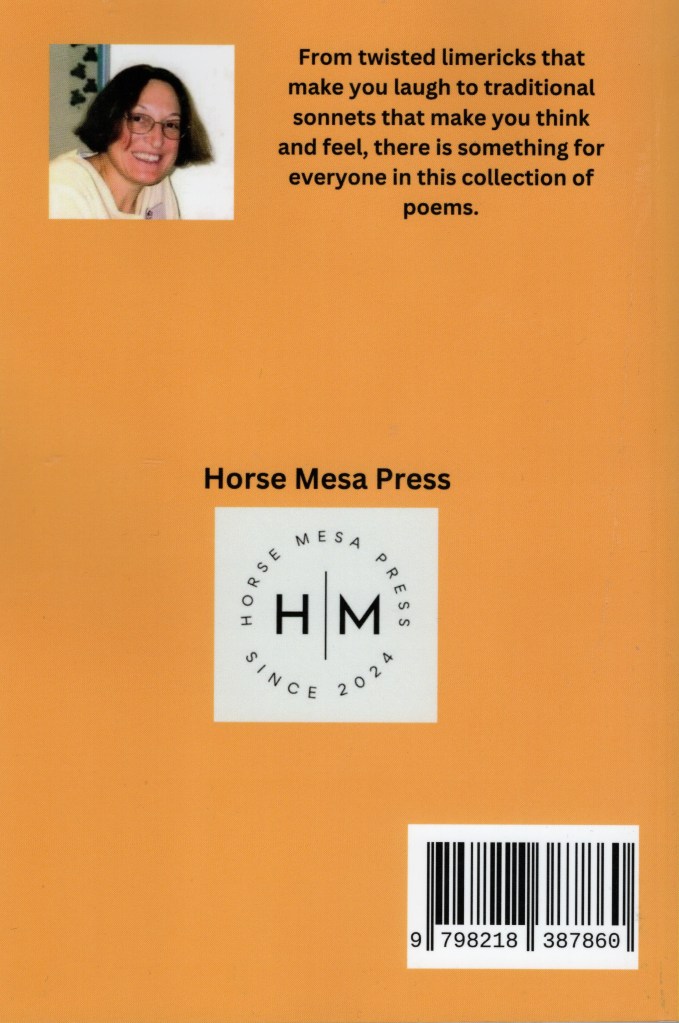
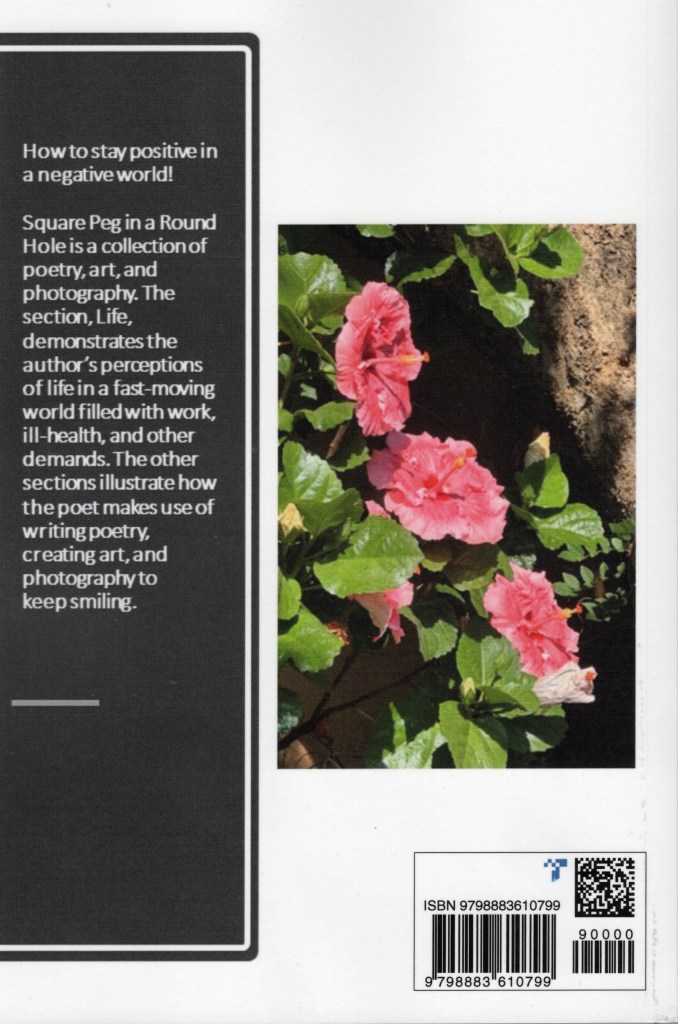
Back cover of Ariel’s Song : Published Poems, 1987 – 2023 by Dawn Pisturino. Click on the image to go to the Amazon page for the Kindle version.
About the Author
Dawn Pisturino is a retired nurse in Arizona whose international publishing credits include poems, short stories, and articles. Her poetry has appeared in several anthologies, most recently in Hidden in Childhood: A Poetry Anthology, Wounds I Healed: The Poetry of Strong Women, and the 2023 Arizona Literary Magazine.
She is a Mystery Writers of America, Arizona Authors Association, and PEN America member. Her first poetry book, Ariel’s Song: Published Poems, 1987 – 2023, debuted to positive reviews.
I am a volunteer for an organization called Citizen Climate Lobby, CCL for short. CCL is a grassroots bipartisan organization consisting of 200,000 volunteers from the entire political spectrum, from conservative, libertarian, independent, and liberal / left. Considering that we are volunteers and just regular people the part of our name that says “Lobby” may seem out of place. However, it refers to the fact we visit congressional offices and talk to politicians. We don’t bring any gifts, like real lobbyists, not millions of dollars, not even donuts. What we bring is useful information, our voices, community leaders, our votes, and gratitude and respect for our representatives, whether we agree with them or not.
Citizens Climate Lobby, or CCL, is volunteer organization seeking to create political will for climate solutions. Photo by Mikhail Nilov on Pexels.com
I am the liaison for Senator Ted Cruz office. Despite him not being a “climate champion” he voted Yes on one of the resolutions we supported, the Growing Climate Solutions Act (Senate bill S.1251, house bill HR.2820). They typically meet with us 3 or 4 times a year and they have never turned down a meeting request. We have a good relationship with the vast majority of congressional offices despite the partisanship that’s ripping congress apart. I remember having a really good meeting in one office then having another great meeting with a congress woman who told us about how evil the guy we had just met was. It felt funny getting along well with two people who seemed to hate each other (or maybe that’s just how they talk). So, in addition to the climate question, I think we are helping to heal some of the divisions in congress as well.
A note about the bill numbers. Any law/resolution must pass both houses and they have different numbers in each house even though they are essentially identical. For the senate it is S.####, and for the house HR.####. Even though a bill passes both houses there are things like the filibuster in the senate and Presidential vetoes, so passing a bill is not easy.
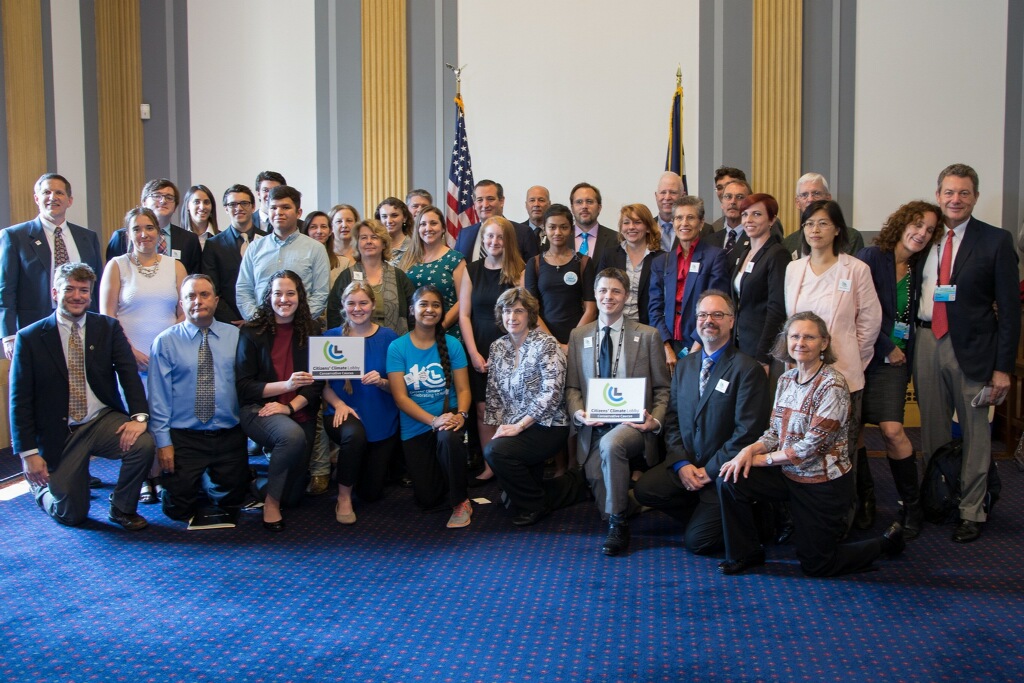
Senator Ted Cruz TXJR with Citizens Climate Lobby in 2017. The senator is standing immediately to the right of the American flag, and I am standing immediately to the left of the American flag. My wife and daughter are also there.
I should say that I used to be quite “skeptical” of “global warming”. I knew, of course, that greenhouse gases cause a warming effect (like a blanket), that’s just hundreds of years old basic science, like we breathe oxygen or that the pressure in an enclosed gas container will increase when heated. However, I thought that the issue was politicized, and that there were natural explanations for the warming such as the sun, orbital cycles, cosmic radiation, volcanoes, etc. I was misinformed because at the time I almost exclusively read rightwing media and literature.
The sharp uptick at the end is not natural, for example, because the distribution of the warming vertically, geographically and temporally (the fingerprint) matches exactly the greenhouse gases we’ve released and contradicts natural causes.
After studying scientific literature and keeping an open mind I came to realize that I was wrong. It had been known for decades that Global Warming, or Climate Change, as it would be called later on, was mostly caused by carbon emissions from fossil fuels, and scientists knew that it was a serious problem. Not necessarily a “we are all going to die” issue, but a serious problem that we should not hand over to our children and grandchildren without trying to mitigate. After reading the book “The Storms of my Grand Children” by the physicist Dr. James Hansen I decided to volunteer. I wanted a non-political organization, if possible, so I chose the Citizens Climate Lobby. You can read more about my Climate Journey here.
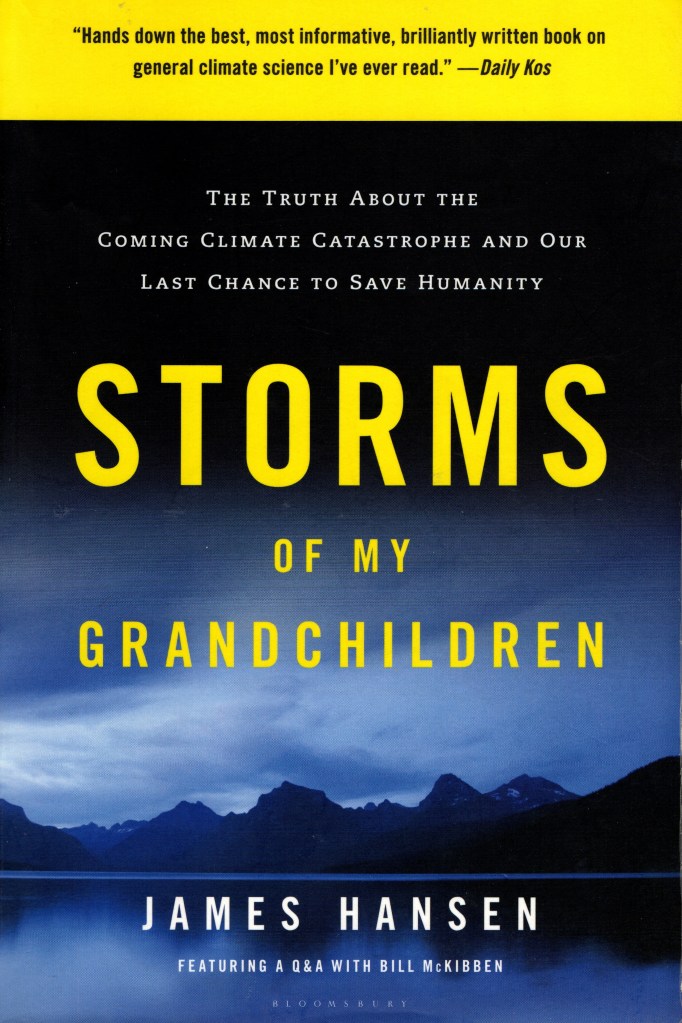
Front cover of the Storms Of My Grandchildren by Dr. James Hansen.
CCL is focused on four areas.
Carbon Pricing
CCL’s favorite carbon price policy is what is called a carbon fee and dividend. There is currently a resolution in the house, the Energy Innovation Act, HR.5744 which implements this policy. A senate version S.#### has not yet been introduced.
Carbon Fee: This policy puts a fee on fuels like coal, oil and gas. It starts low and grows over time.
Carbon Dividend: The money collected from the carbon fee is allocated in equal shares every month to the American people to spend as they see fit. The carbon fee would raise the prices on carbon intensive products but since the money is returned to households the dividend would more than make up for the shortfall. This would financially benefit low-income families, specifically the lower 2/3 of income.
Border Carbon Adjustment: To protect U.S. manufacturers and jobs, imported good will pay a border carbon adjustment, and goods exported from the United States will receive a refund under this policy. This also allows American businesses to reap the rewards of their carbon advantage over other countries.
America’s natural resources — forests, grasslands, wetlands and oceans — act as natural climate solutions by pulling carbon out of the air. We can manage these natural resources to maximize their climate change-fighting impacts. CCL has supported a number of forest or agriculture related bills in congress.
By upgrading our homes and buildings to be electric and making them more energy efficient, we can save money and eliminate a major source of carbon pollution.
Building electrical powerlines is very complicated in the United States. Building a wind power station takes months, getting approval for a powerline can take decades. The bureaucracy is daunting. This is a big problem as we try to expand the use of renewables, but it is also a threat to our energy supply regardless of energy source. America’s transmission shortfall is contributing to grid outages across the country and inflating energy prices for American families and businesses.
Permitting reform will make it possible to unlock the clean energy infrastructure that’s waiting to be built, and by getting that clean energy to American households and businesses. About half of the potential emissions reductions delivered by Inflation Reduction Act (IRA) in 2030 are lost if transmission expansion is constrained to 1% per year, and roughly one quarter are lost if growth is limited to 1.5% per year. There are bills in congress which address this, such as the the BIG WIRES Act (Senate version of the bill is S.2827, and house version is HR.5551). Note, CCL did not come out in support of IRA because it was a partisan bill, but many of us liked it.
The Conversation
More than 70% of Americans are worried about climate change. But most of us still avoid discussing it because we feel like it’s too political, too doom and gloom, or too overwhelming. But we can’t solve a problem if we don’t talk about it. Therefore, for the month of April CCL have requested that we volunteers initiate 25,000 climate conversations. So that is what I am doing here. Preaching is not conversation and therefore I invite you all to agree or disagree with me, and to consider the following questions.
Are you worried about climate change ?
Would you consider joining a climate organization ?
What’s your impression of CCL ?
What do you think about the four policy areas ? Would you like to add some ? Remove a policy area ?
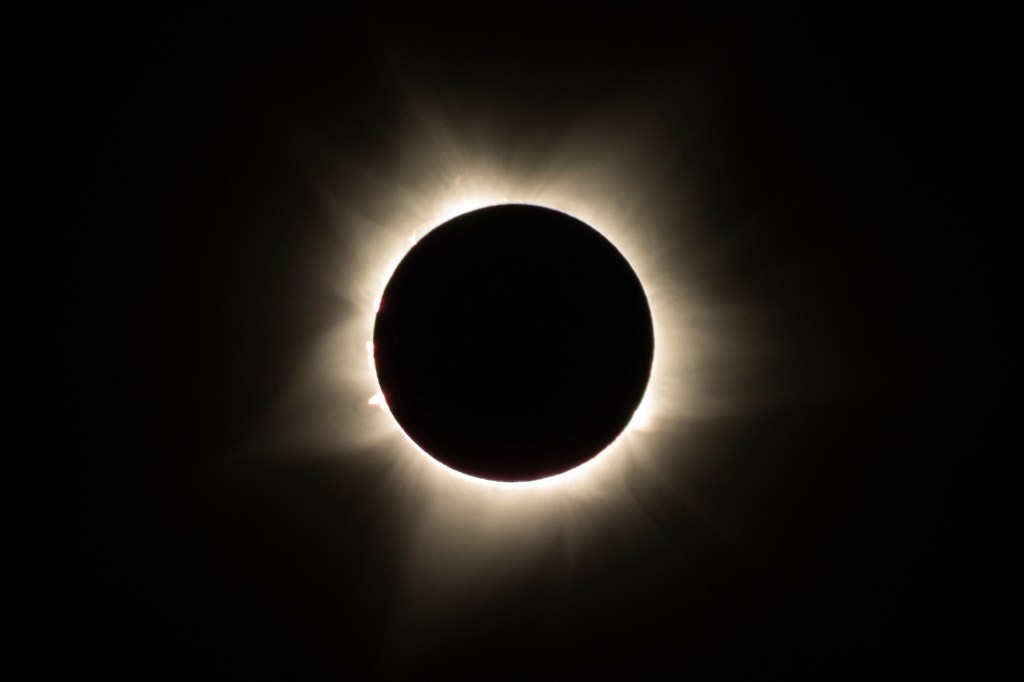
What we saw today. Solar Eclipse Stock Photo ID: 2344355767 by aeonWAVE
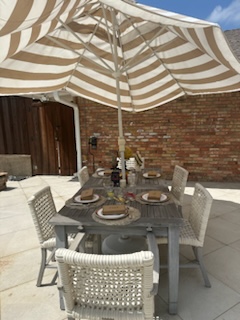
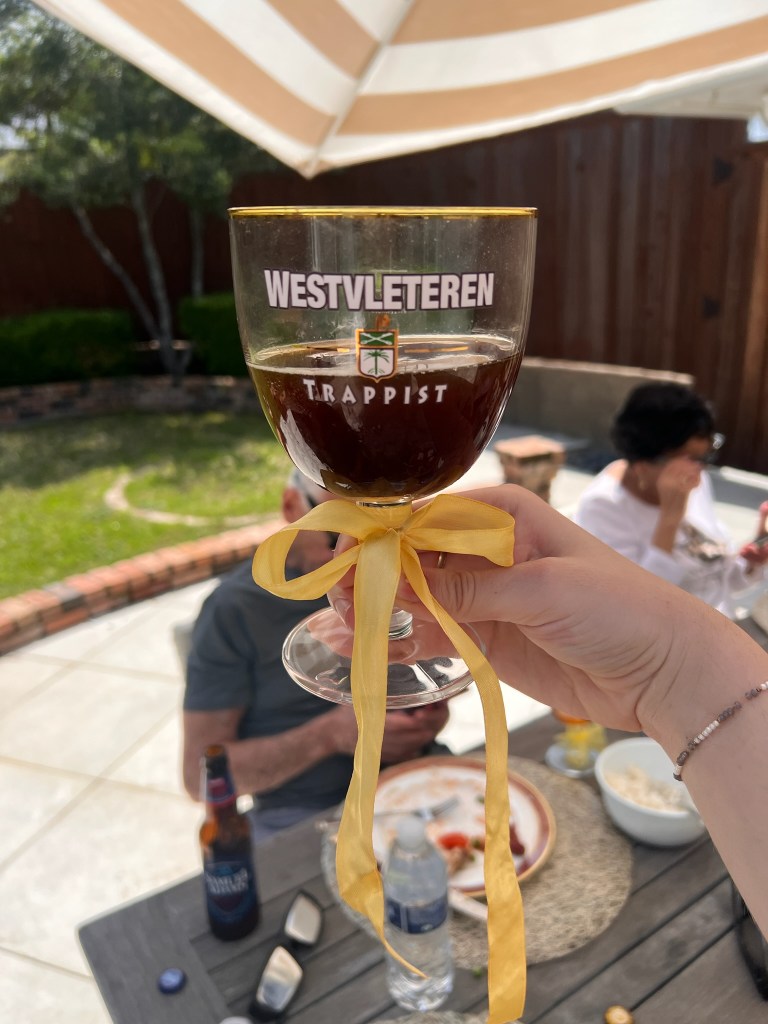
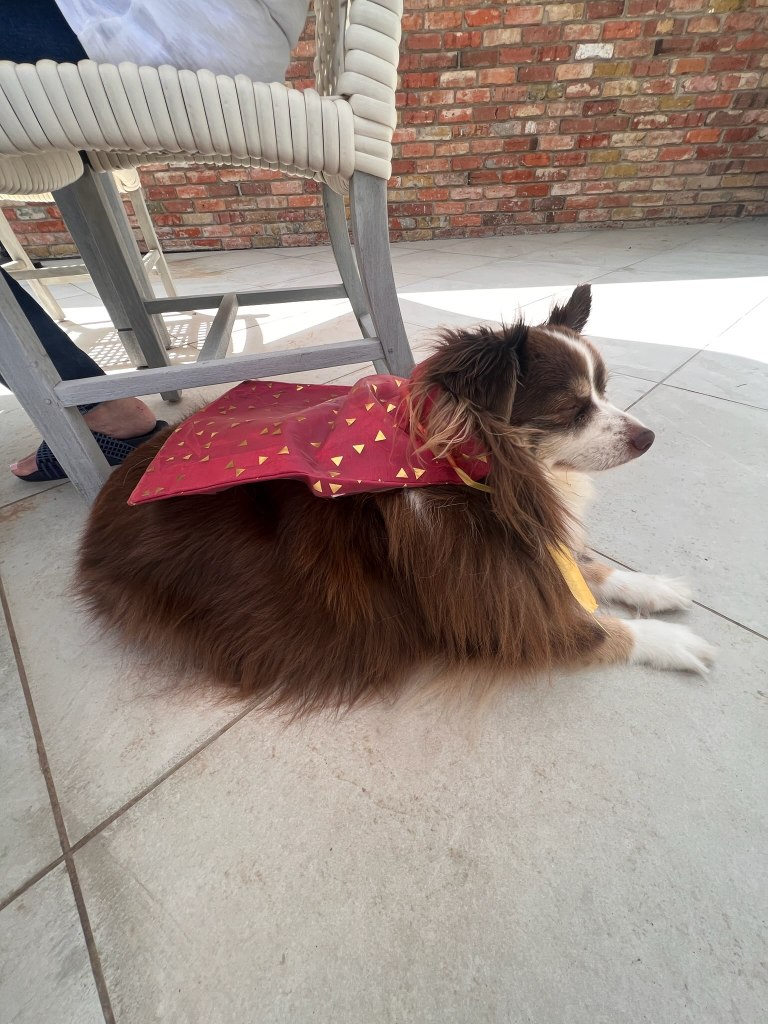
When I made my blog post Dallas On April 8 2024 I promised to follow up with what happened. We had a small solar eclipse barbeque. It was just me and my wife, our daughter, grandpa and grandma and our dog Rollo. Our daughter dressed up Rollo in a vampire dog cap and put bows on the beer glasses, my wife prepared the food, and I grilled chicken and hot dogs. Then we enjoyed the show. It was a great show, and we were lucky with the weather.
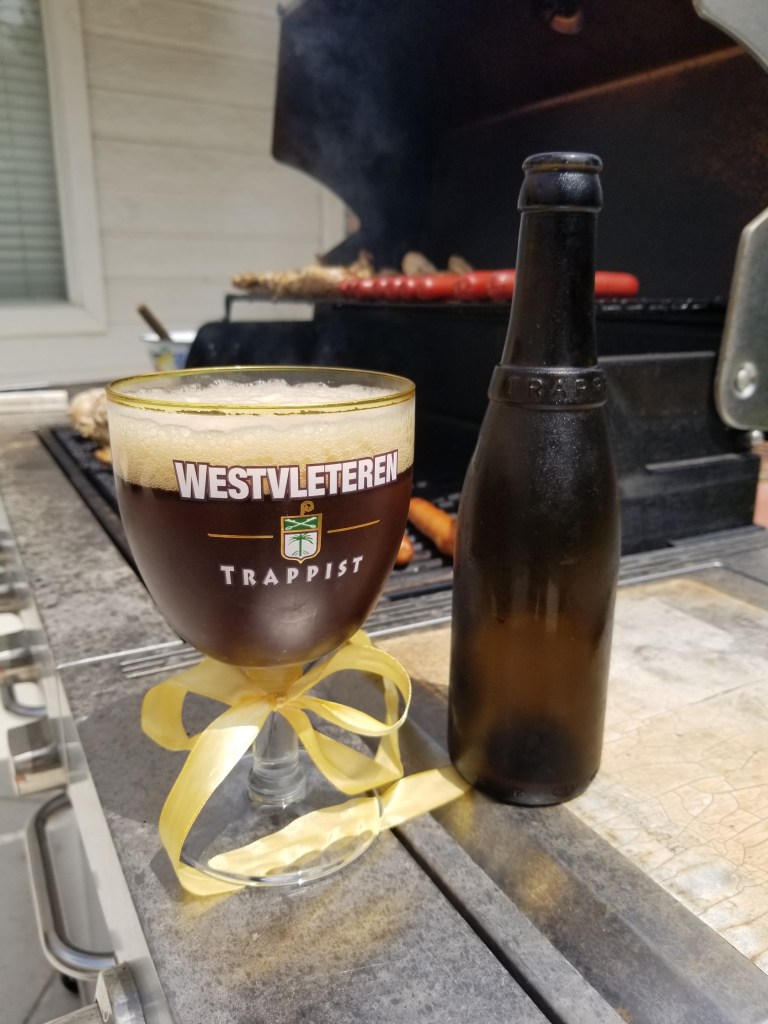
Grilling and drinking a Westvleteren 12 a Belgian Ale Quadrupel from Brouwerij de Sint-Sixtusabdij van Westvleteren in Belgium, ABV 10.2%.Our patio table. The little brown packages contain AAS / ISO certified solar eclipse glasses.Our daughter holding a Westvleteren 12 glass with a bow. Grandpa and grandma in the background.Rollo our mini-Australian Shepherd on the patio.
The Partial Eclipse
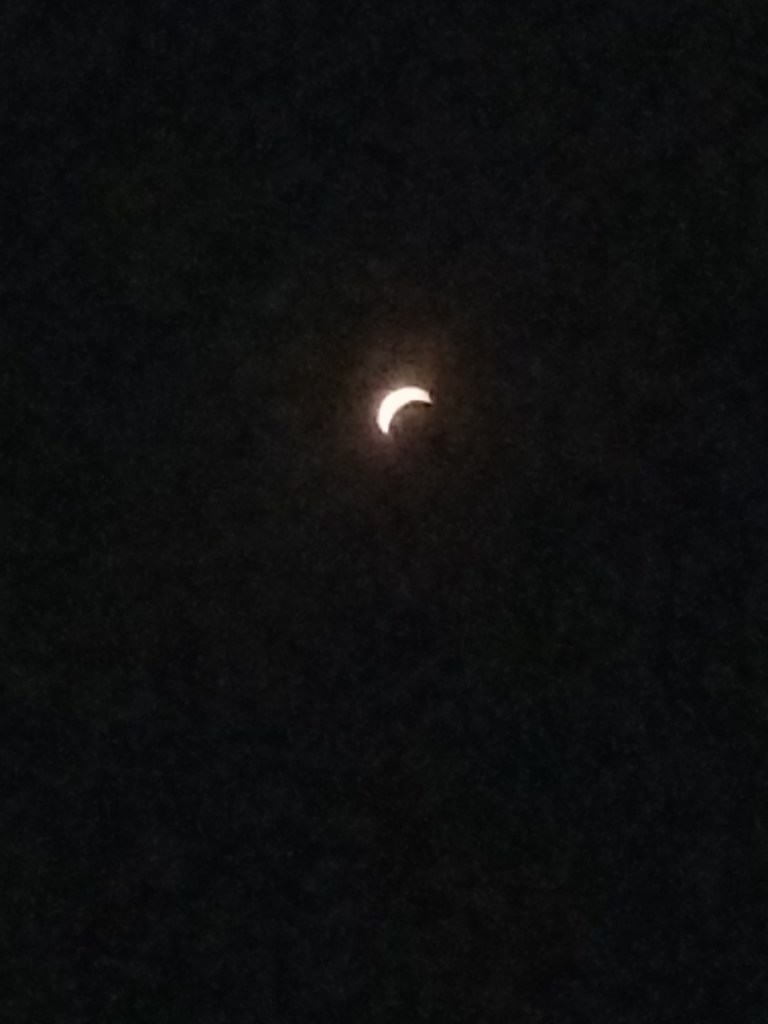
It was partially cloudy during the partial eclipse, but we were able to get a good look at the eclipse as it progressed. To see the partial eclipse, you have to use good solar eclipse glasses. It is primarily for safety reasons, but it is also pointless to look at the sun during a partial eclipse. You won’t see the eclipse because the powerful light from the sun overwhelms your view. I had a little filter that was placed in front of my phone camera as I took a few pictures. Admittedly they were pretty bad. I have an old Samsung Galaxy S8+ but even using newer phones it is difficult to get decent photos of something like this. This is why I need to invest in a real camera.
Partial eclipse photo taken with my old Samsung Galaxy phone and a filter.
The Total Eclipse
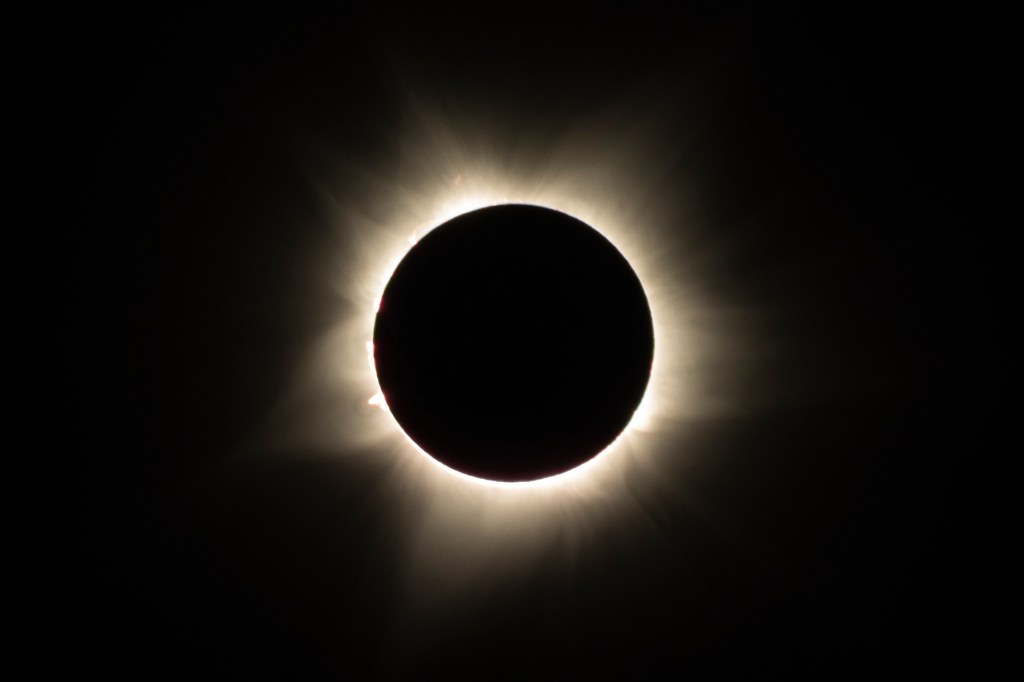
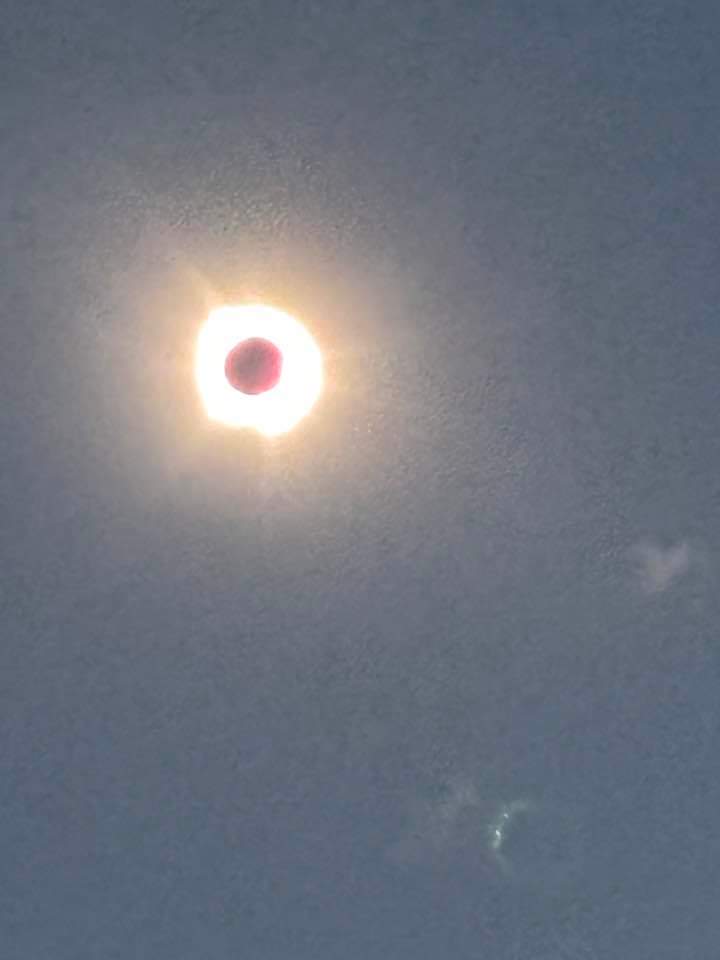
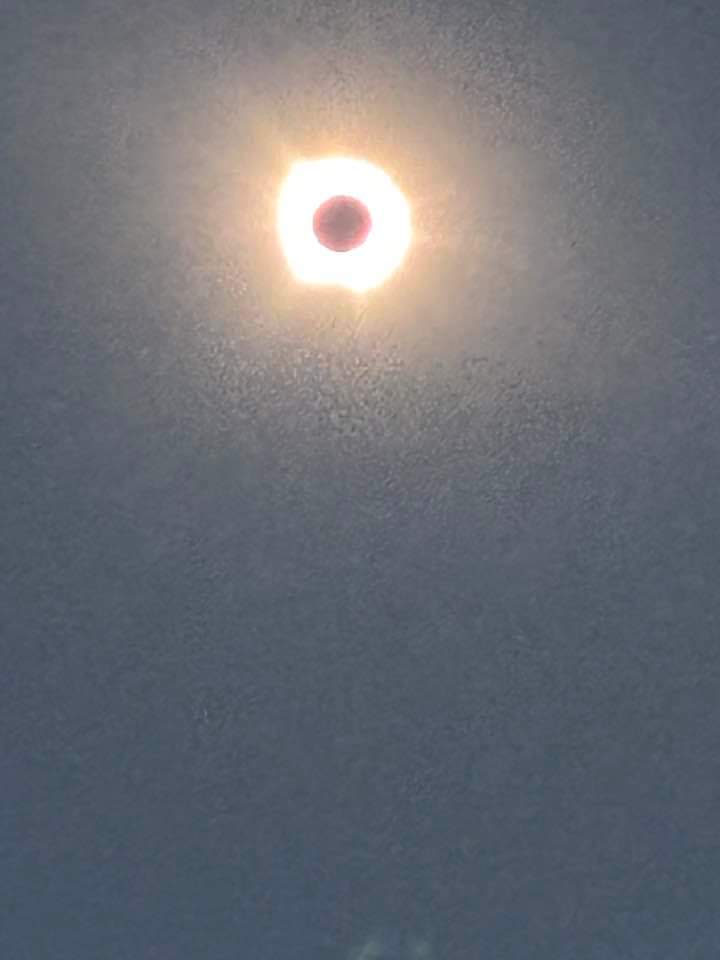
1:40PM Dallas time the total solar eclipse happened and luckily it was not covered by clouds. At this point it suddenly got dark and it was safe to look straight at the sun without using the eclipse glasses. The total eclipse lasted four minutes. I have included a shutter stock photo below which closely represents what we actually saw. We saw a black circle and around the black circle was a wispy white fog like light. This was the sun’s corona and it shone with about the same power as the full moon. It kind of looked like a black hole. Our phone cameras distorted what we saw quite a bit, especially mine. The corona was blown up to 3 times its actually size and it looked messy, perhaps because it got dark. One thing this photo does not show is that the stars came out, which provided us with a little surprise.
What we saw today. Solar Eclipse Stock Photo ID: 2344355767 by aeonWAVE
The Venus Surprise
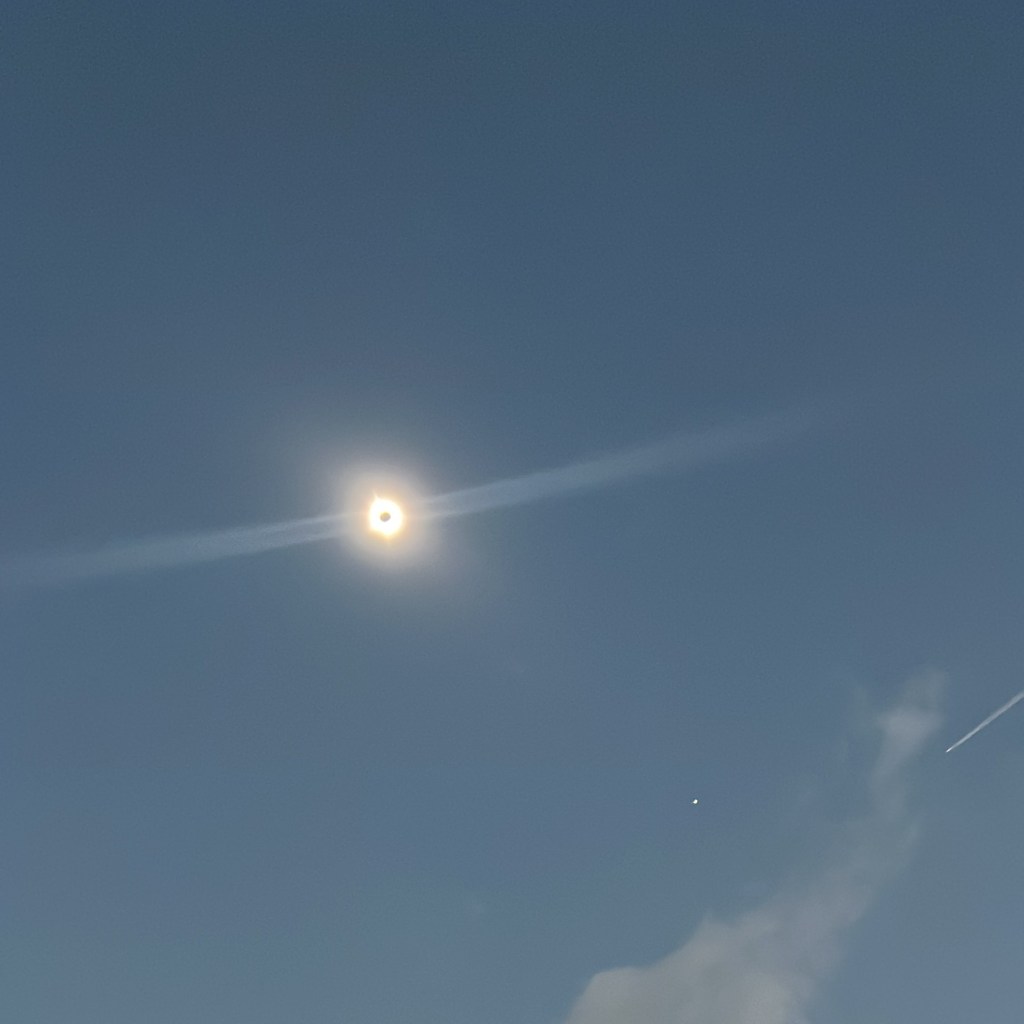
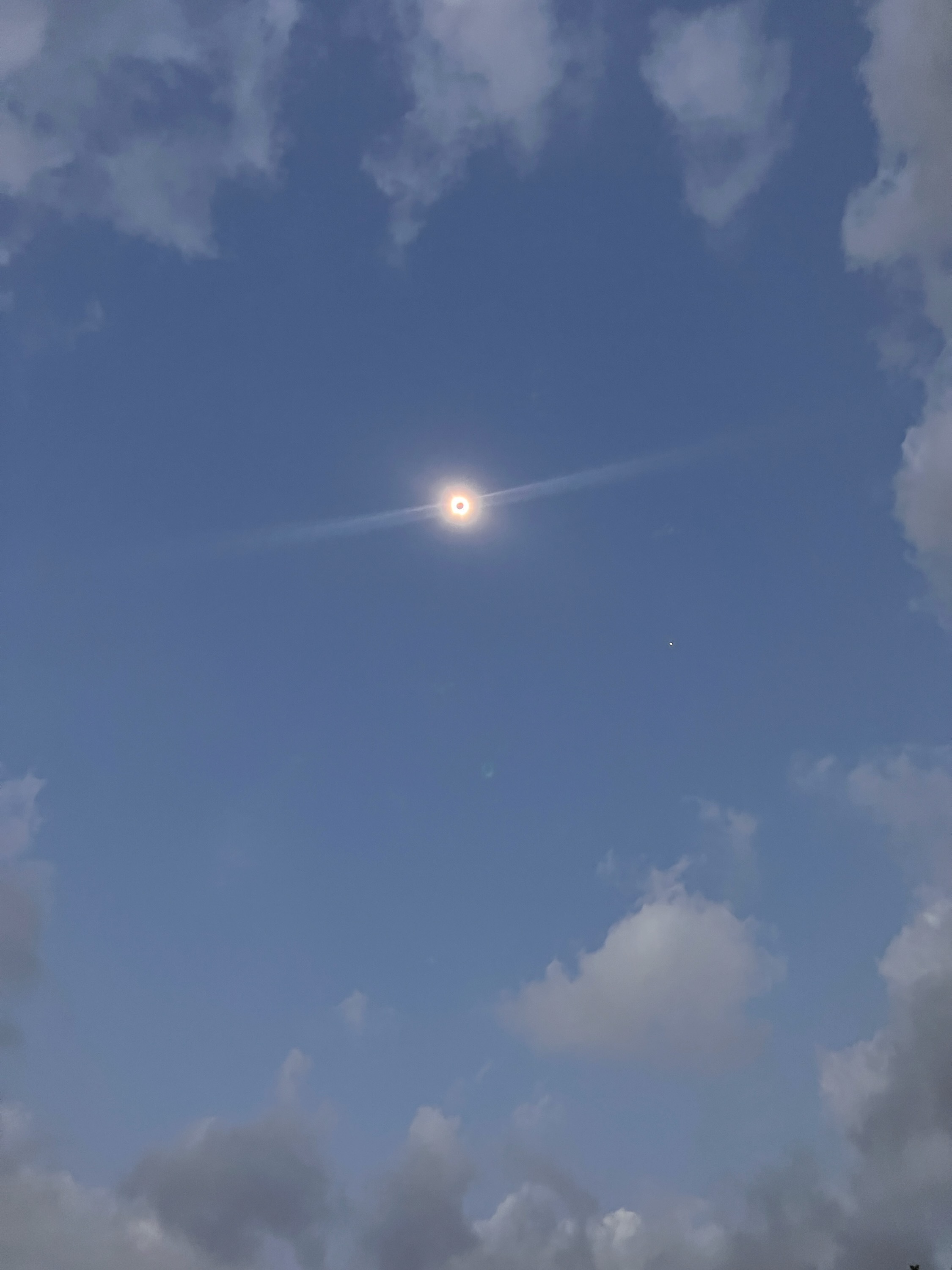
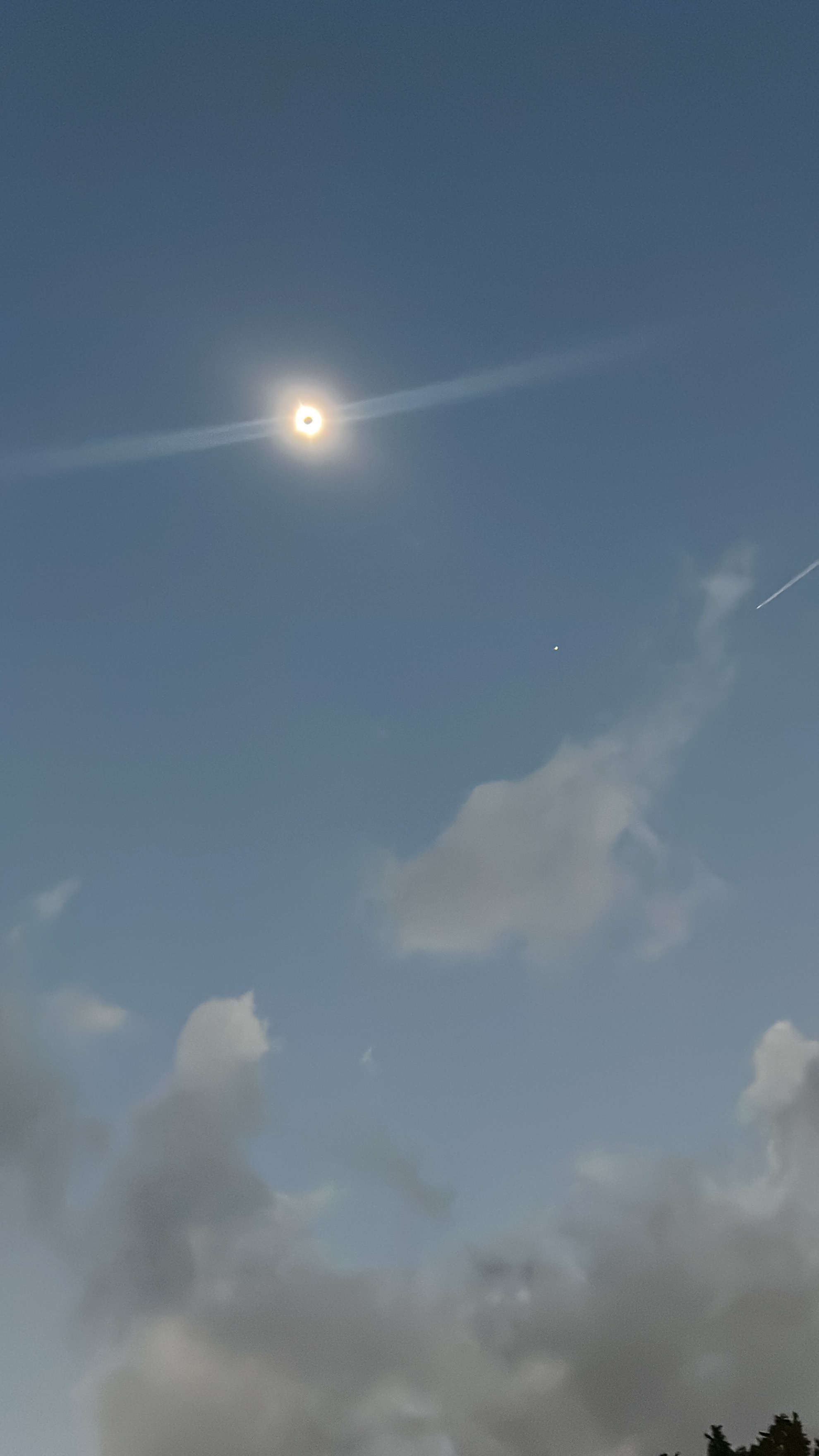
Below is a photo my daughter took with her phone. The sun looks tiny (it wasn’t) and the corona is overblown and does look like it actually did. However, you can see a star looking object down on the right above and on the left of the cloud and left of the airplane contrail. I used the Google Sky Map App to find out what star it was, but it wasn’t a star. It was the planet, Venus. It was located straight south high in the sky three quarters to zenith. I have certainly never seen Venus in that position in the sky before, and it was unusually luminous as well. I’ve seen Venus many times low in sky in the west soon after sundown (then called the evening star) and I’ve seen Venus many times low in sky in the east in the morning (then called the morning star), but never like this. The total solar eclipse provided an unexpected Venus show.
Total solar eclipse photo that my daughter took. Can you find Venus?
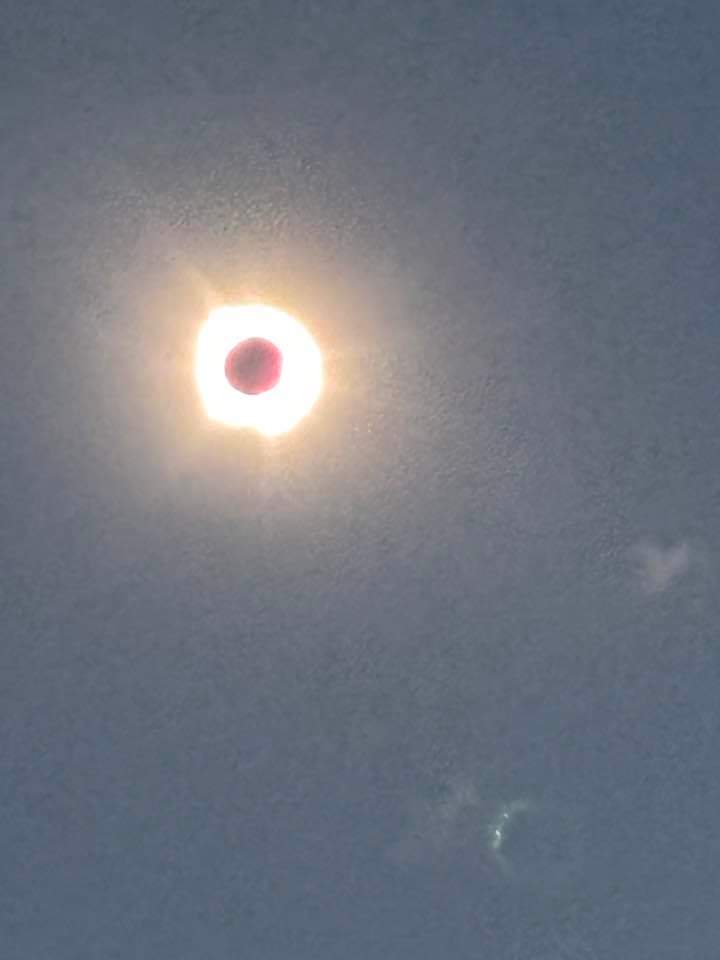
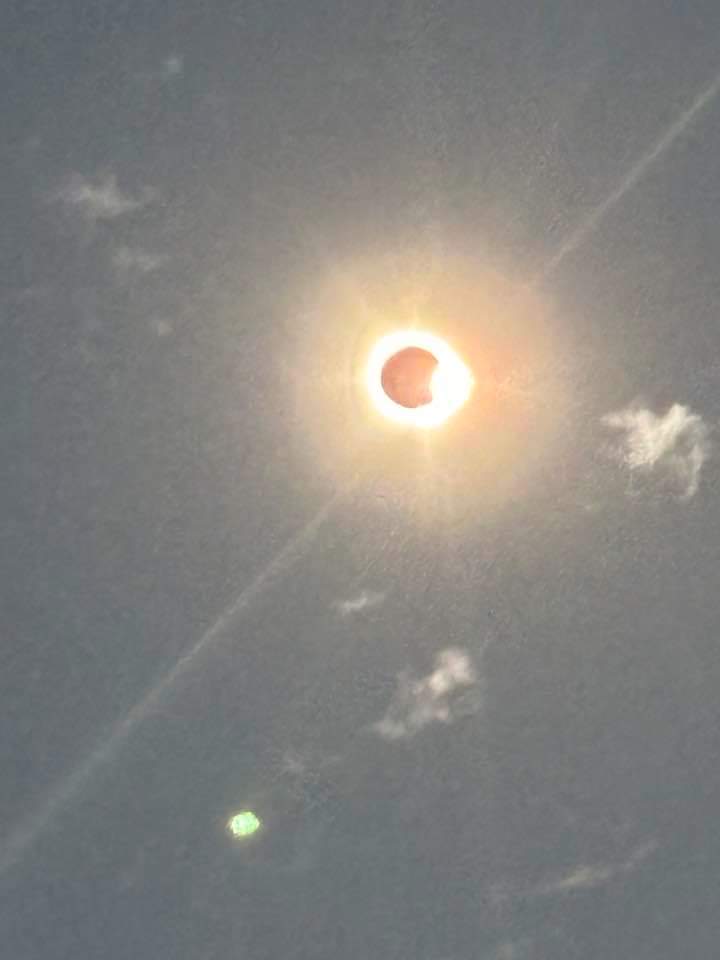
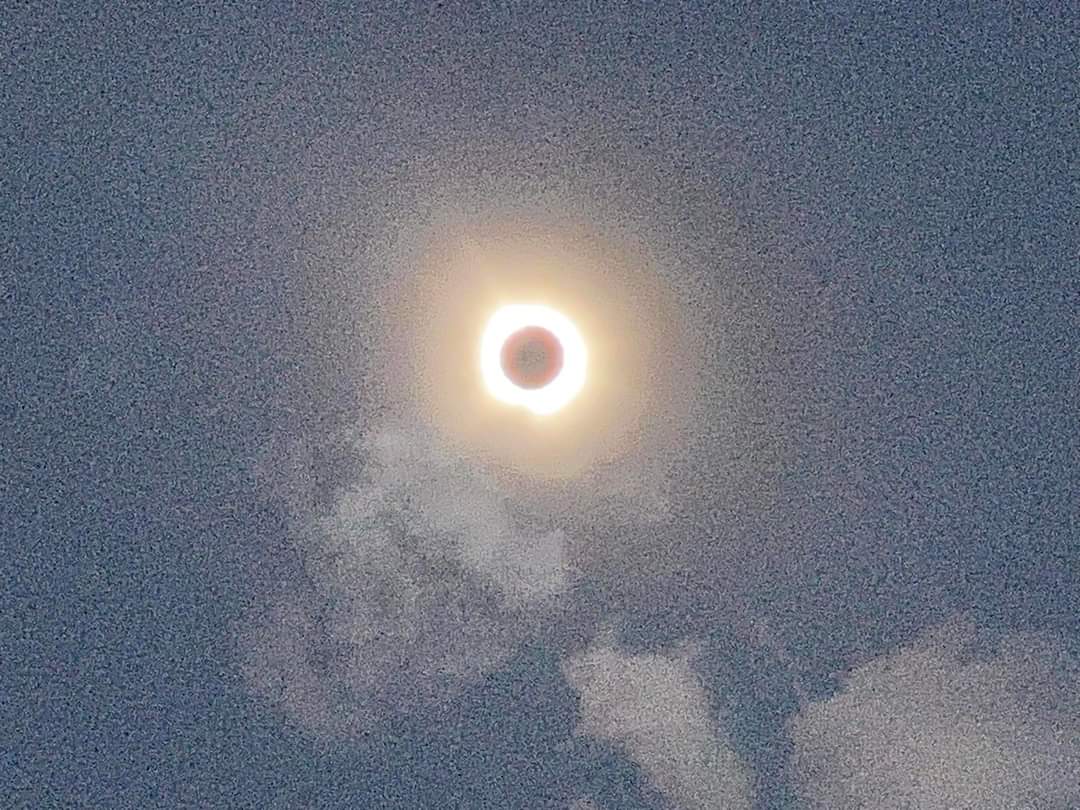
Total Eclipse Photos
These eight pictures above were taken with cell phones by my daughter Rachel, Denise Mosier-Wanken, and Margaret Weiss Bloebaum.
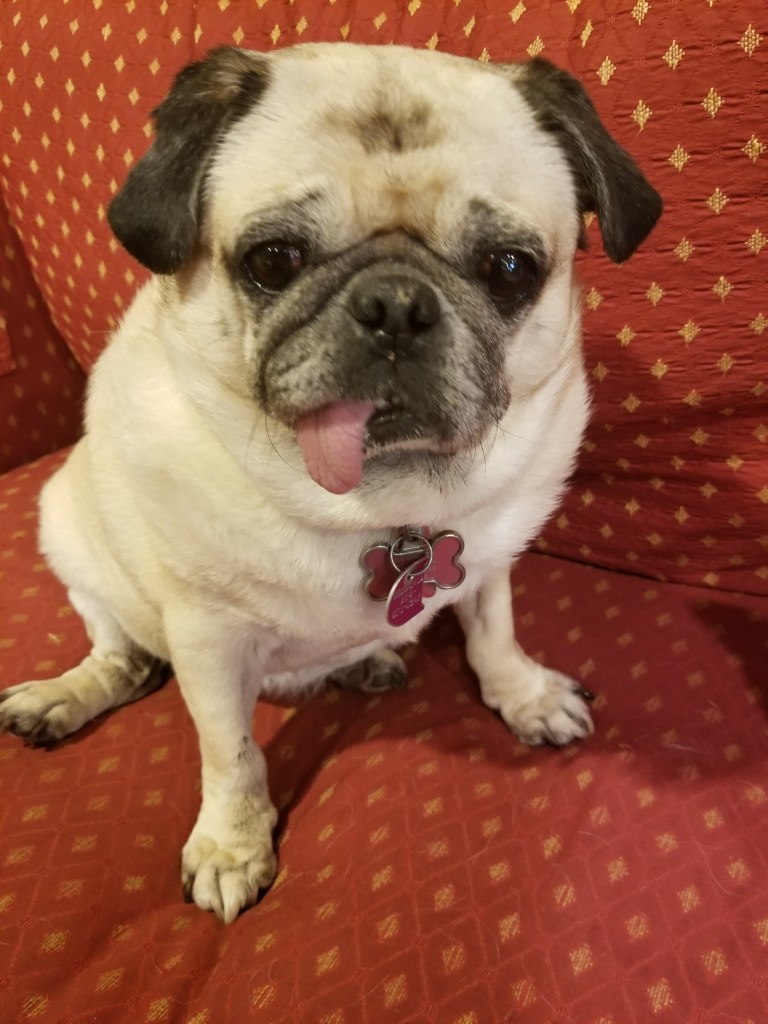
This morning at 10:20AM our pug Daisy died. She was 15 ½ years old. She had an enlarged heart, her back legs were giving out, and she had breathing problems. She took lots of different medications. Yet, the breathing crisis she had this morning came unexpectedly. Our veterinary told us it was time. We did not want her to suffer. I was holding her in my arms and my wife, daughter and doctor Sara Thomas petted her. Then when we were ready Dr. Thomas gave her the injections.
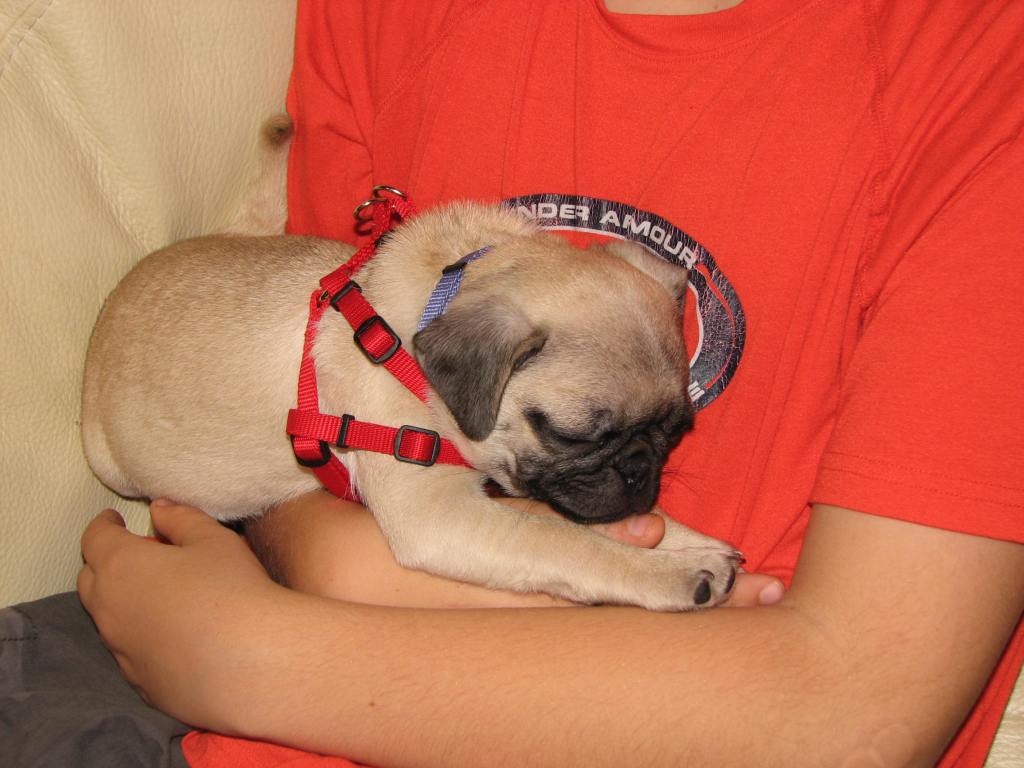
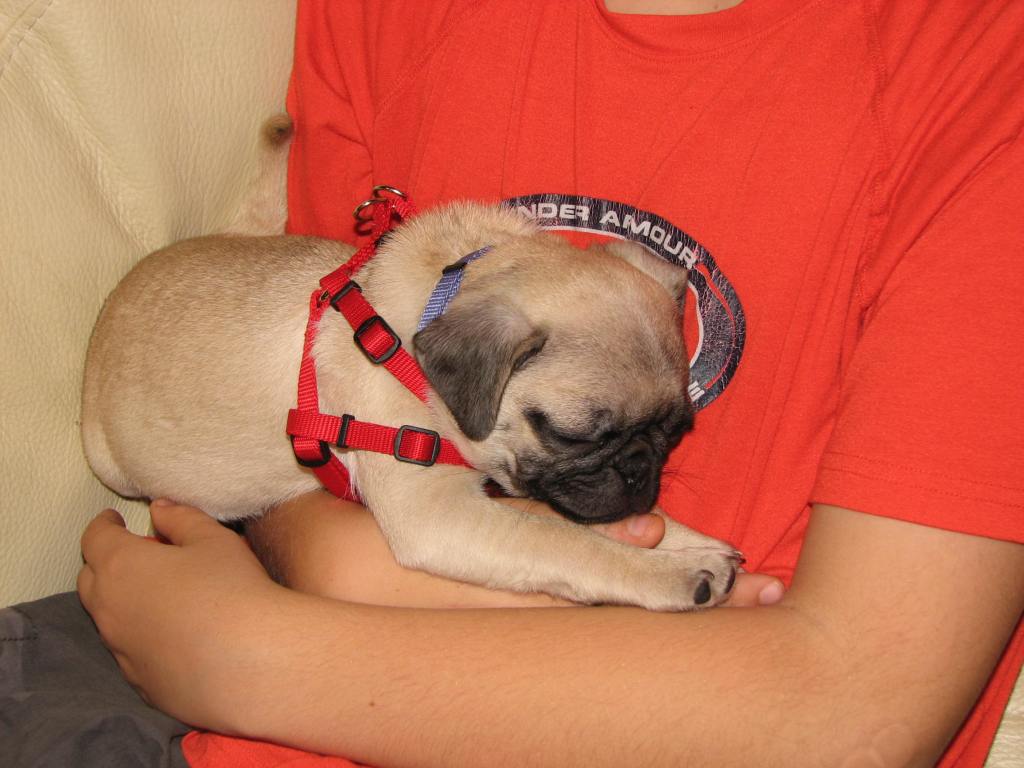
Daisy came to us a little pug puppy 15 ½ years ago. Our son David, eleven years old at the time, was holding her. Today I held her for the last time.
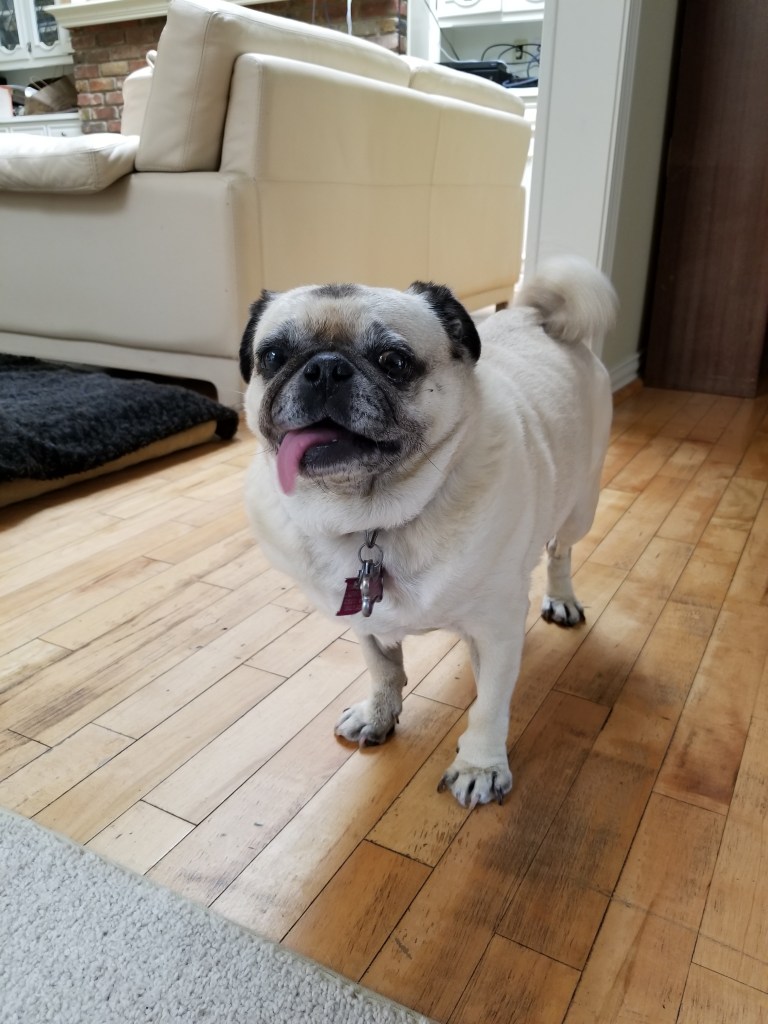
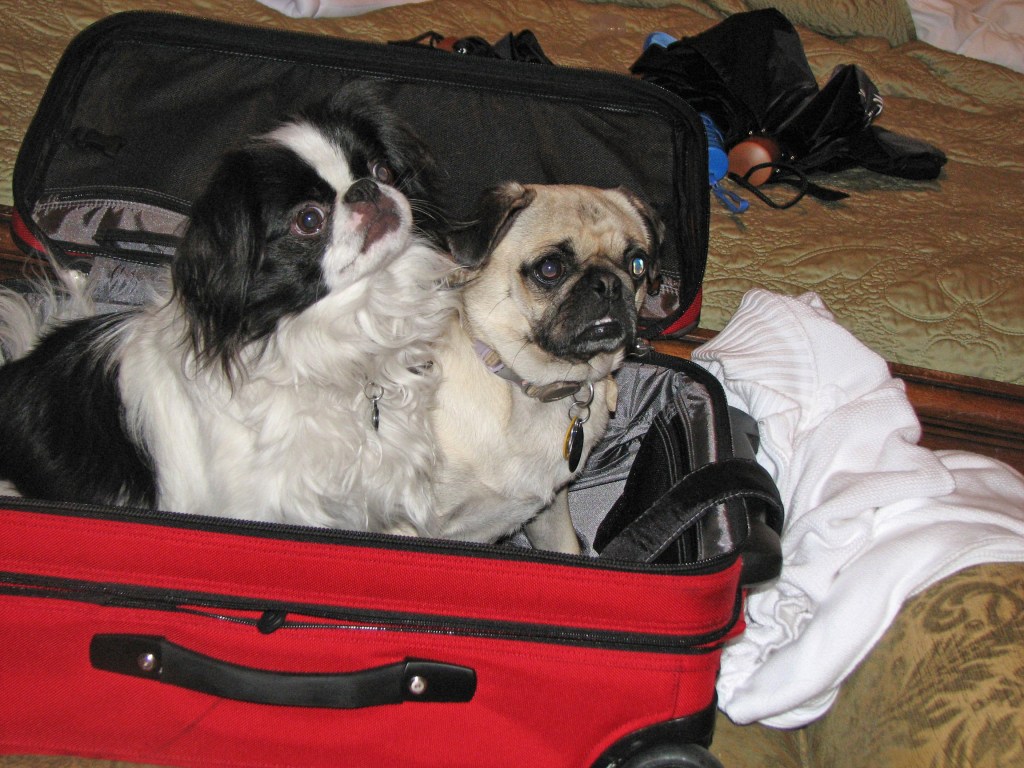
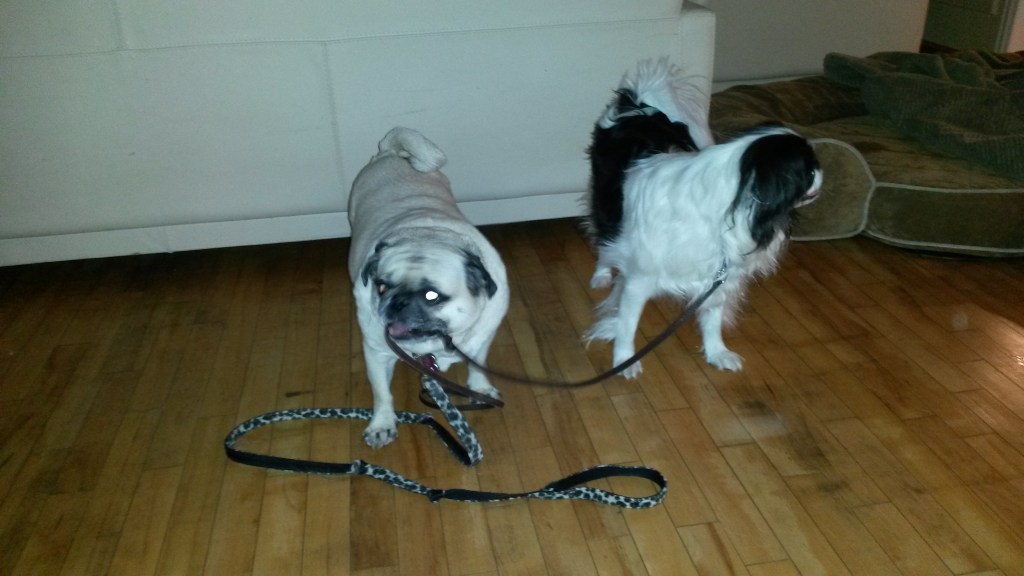
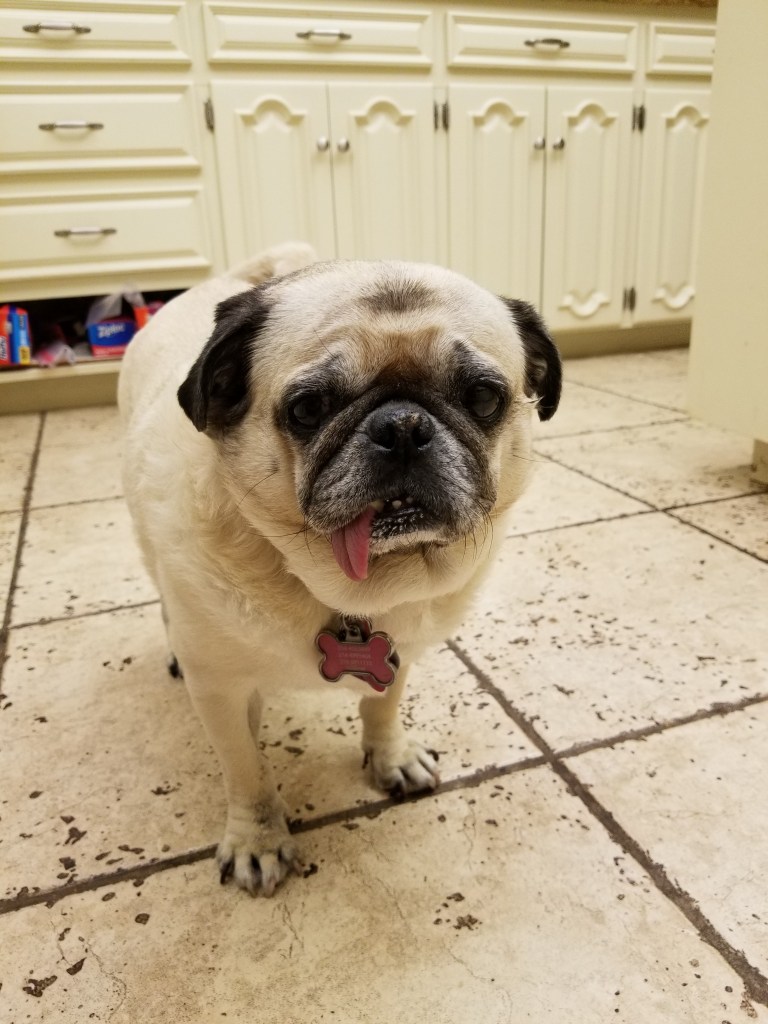
Daisy was a sweet, friendly and funny pug who loved cuddling, eating and sitting on the sofa. She also loved sunbathing as well as sitting in front of the vent when it was cold. All our dogs loved her, and our Leonberger Bronco saved her life once. He protected her from an attacking young German Shepherd. Our Labrador Baylor and our German Shepherd Baby loved her. Our Japanese Shin loved her more than anything. They were always together. They made mischief together, they escaped together, and they went for walks together and at the dog park Ryu wouldn’t let any other dog be too friendly with Daisy. Later, our mini-Australian Shepherd Rollo loved her too. Unfortunately, Rollo is now alone. He is confused and sad like we are.
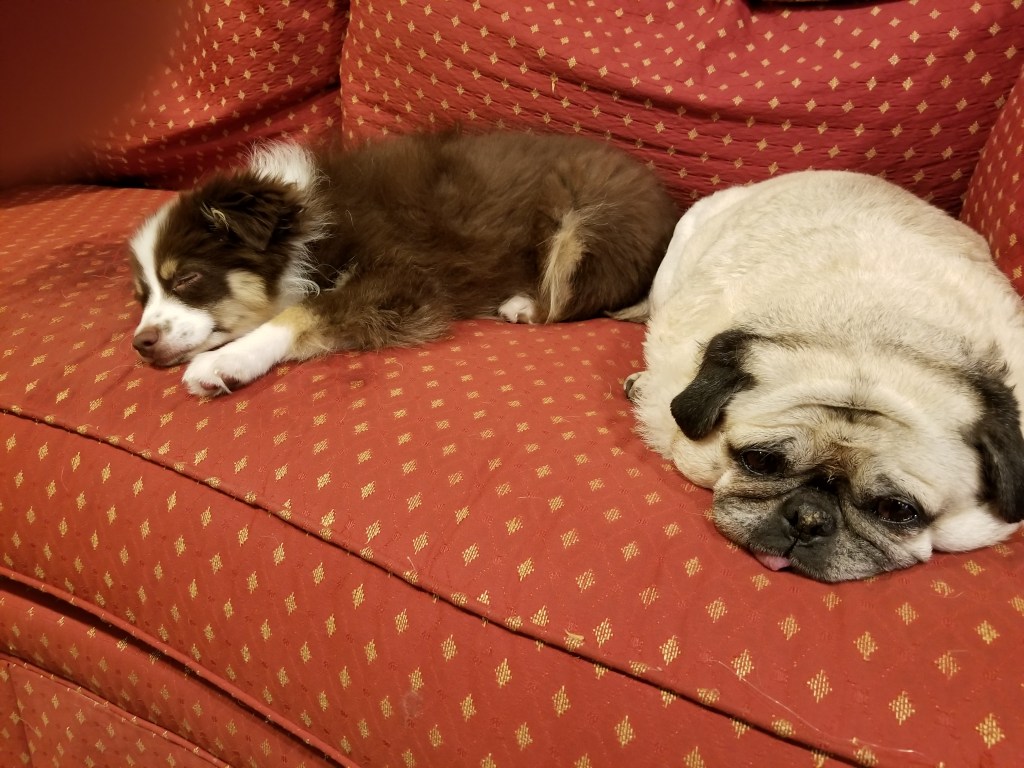
Rollo and Daisy in our red sofa. Rollo was one year old, and Daisy was 11 years old.
I wrote a poem in French, a language I am learning. I am not a poet. I think it is my first poem as an adult in any language. I chose French because everything sounds so much better in French. It rhymes/ I apologize for any errors.
Ce soir, il pleure dans mon coeur. (tonight, tear falls in my heart, pleure & coeur rhyme with fur)
Notre belle carline Daisy est mort (Our beautiful pug Daisy is dead)
Il est temps, dit notre docteur (It is time said our doctor)
Tu es parti dans un coup du sort (You are gone in a twist of fate)
Nous nous souviendrons toujours (we will always remember)
Ta gentillesse. Tes yeux aimants (Your kindness. Your loving eyes)
Tu auras pour toujours notre amour (You will forever have our love)
pour nous tu étais comme un enfant (to us you were like a child)
Below are two YouTube songs that express how I feel. The first one is in French “Je suis malade..” / I am sick without you, I am ugly without you, …. Warning this one is very sad. The second one is your love….to feel your love again… to feel you close once more… (no lyrics in song) by Ennio Morricone.
Je suis malade / I am sick … without you
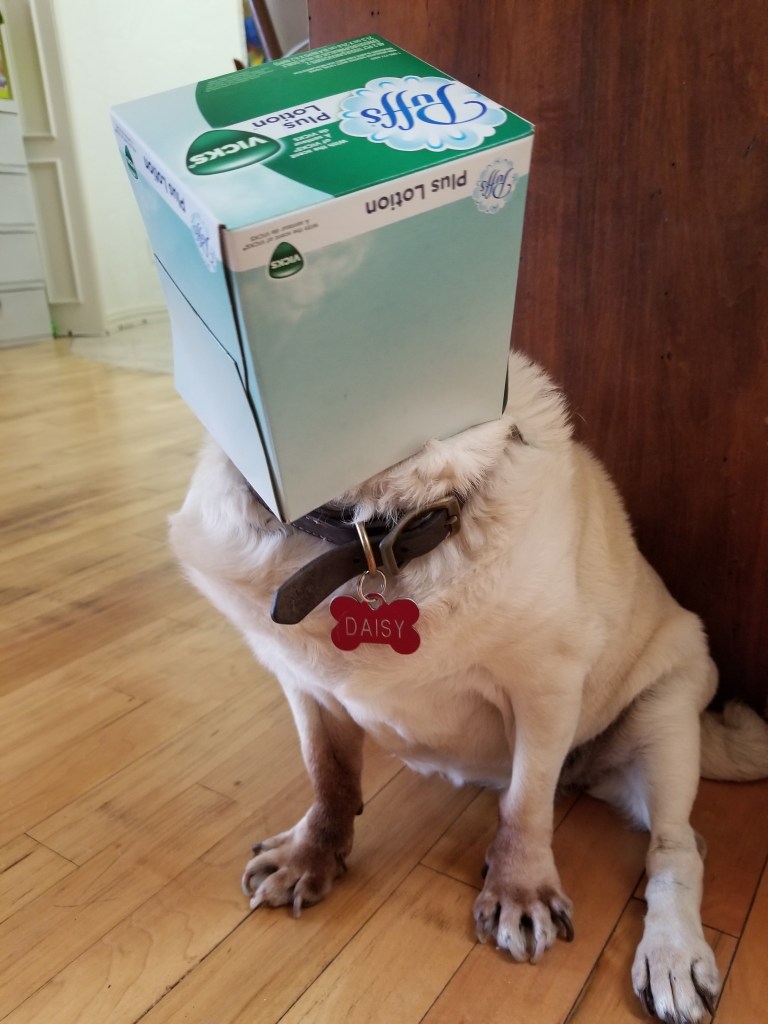
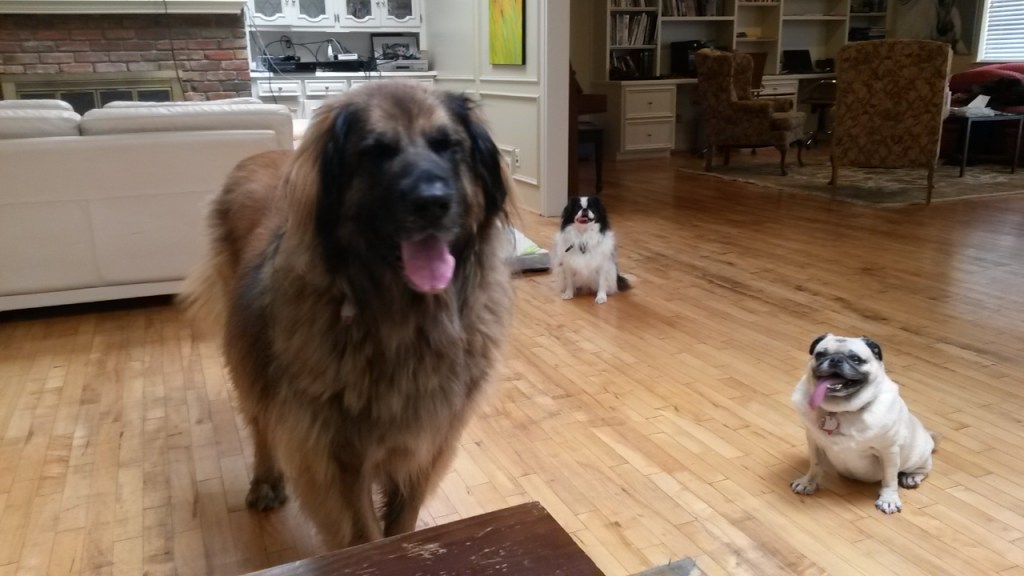
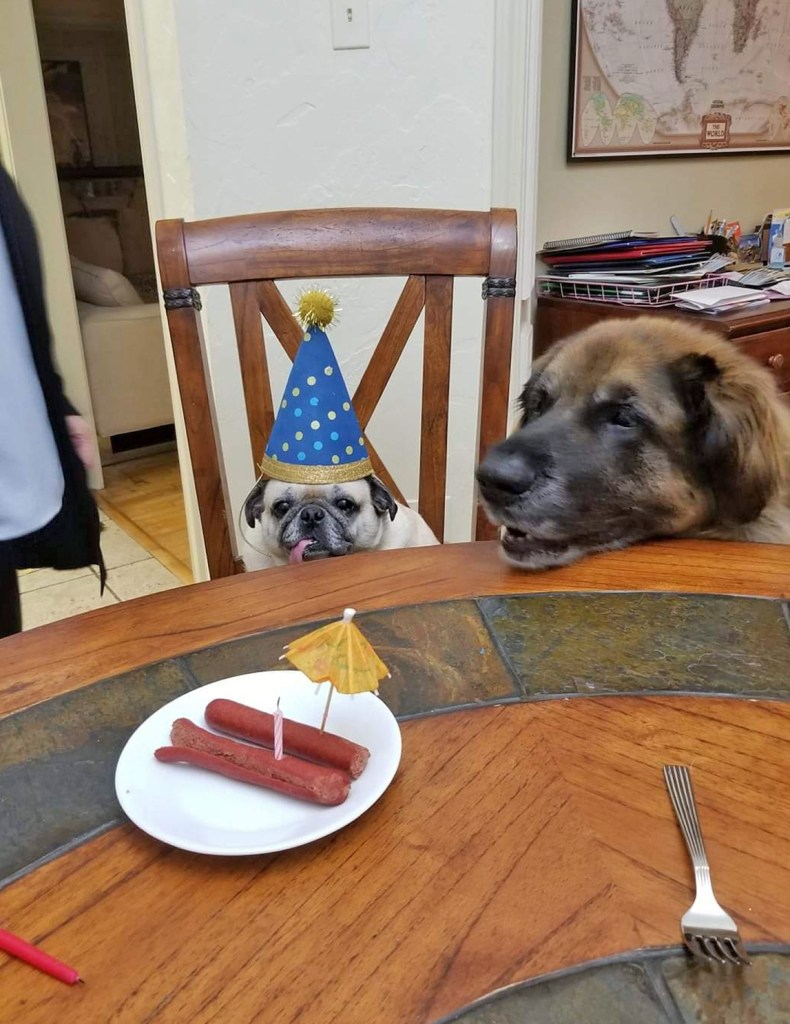
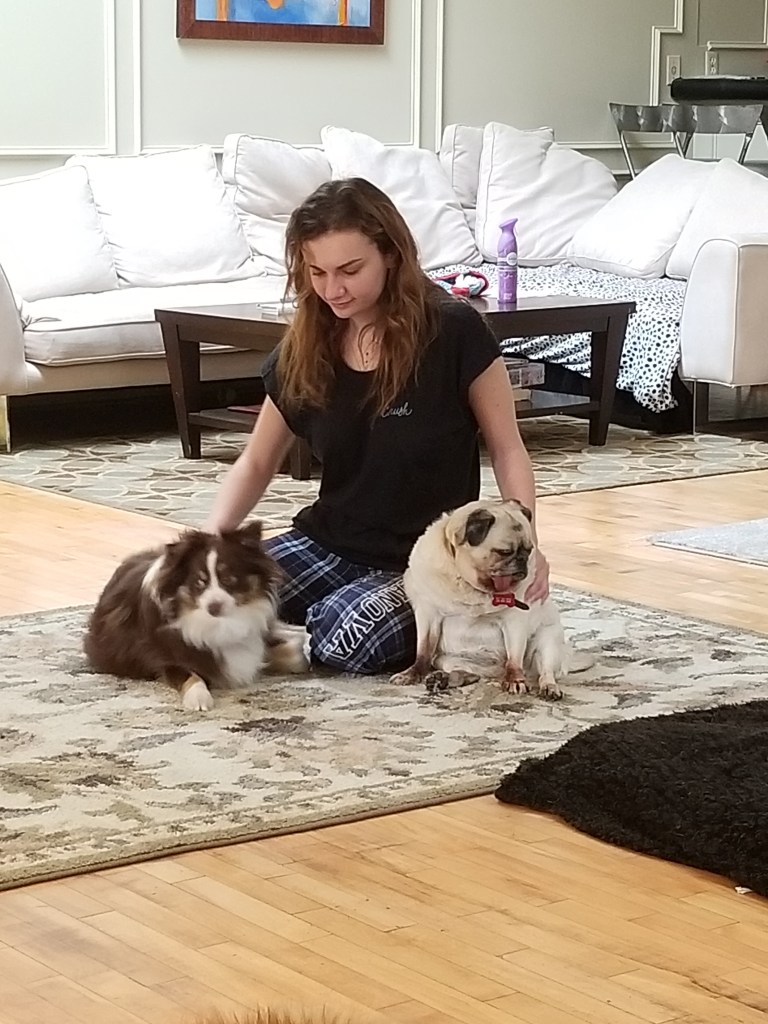
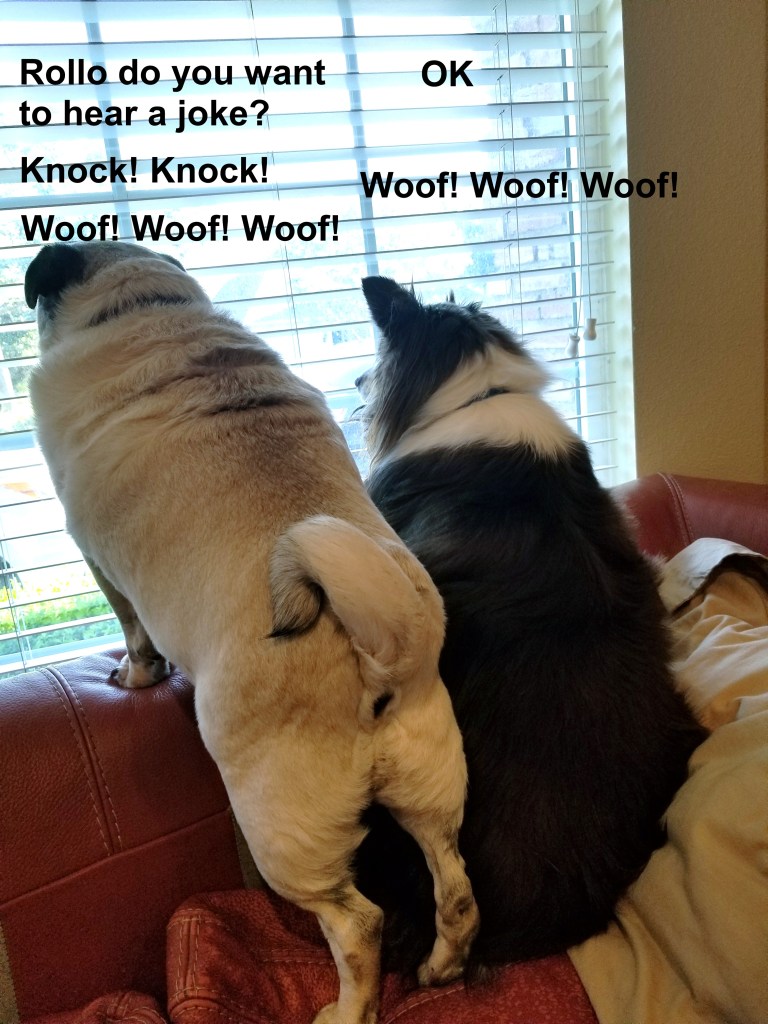
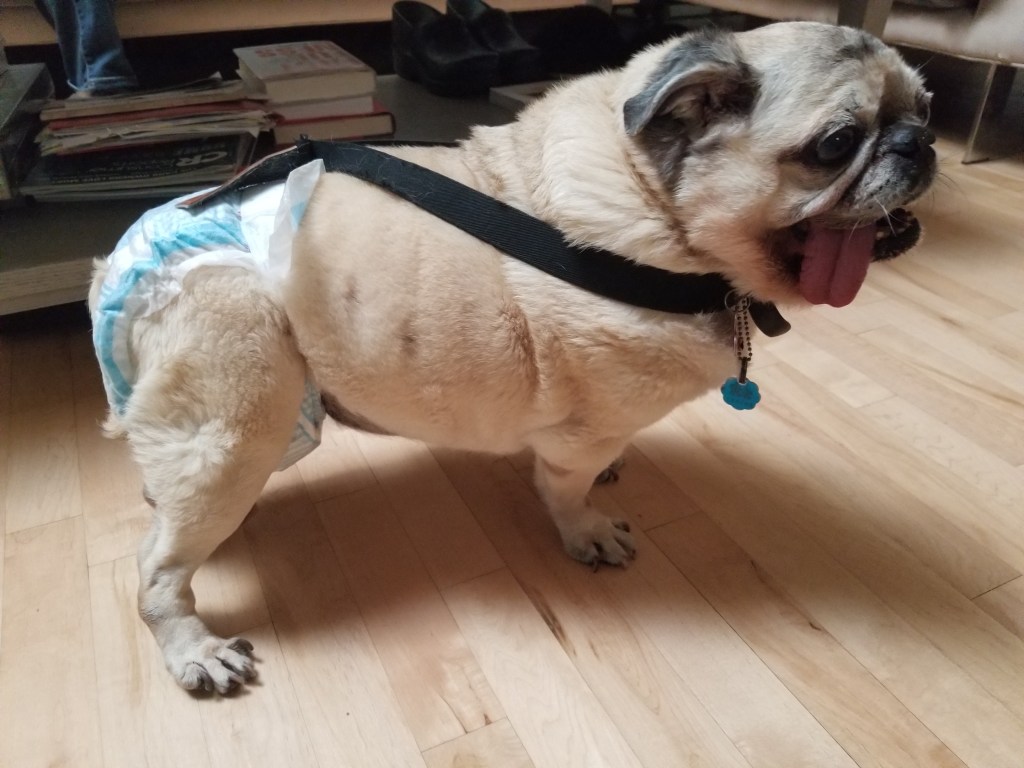
to feel your love againDaisy on the sofa after an exhausting day of doing nothing.Our pug Daisy when she was young.Daisy our new pug puppy with our son David.Daisy liked to sit in front of the vent when it was cold or alternatively too hot.Daisy loved sunbathing.Daisy in sunglasses.Ryu and Daisy jumped into our suitcase to protest that we were leaving for a trip.Daisy is taking Ryu for a walk.Daisy sunbathing on our patio in the backyard.Daisy standing on our kitchen floor.Daisy on the red sofa.Once when we came home Daisy met us in the doorway with a tissue box over her head. She had gotten her head stuck in a tissue box.Daisy decided to leave because Bronco our Leonberger was taking up too much room.Daisy resting her head on Claudia’s knee.Bronco our Leonberger, Ryu our Japanese Shin, and then Daisy our Pug.Daisy’s 11th birthday.Daisy is sitting on our bed.Daisy and Rollo in the sofa.Our daughter is petting Rollo and Daisy.Daisy and Rollo barking at the mailman + a joke.Daisy’s 15th birthday.Towards the end of her life Daisy had to wear diapers with suspenders.Towards the end of her life Daisy had a hard time walking so she sat in a stroller during our walks.
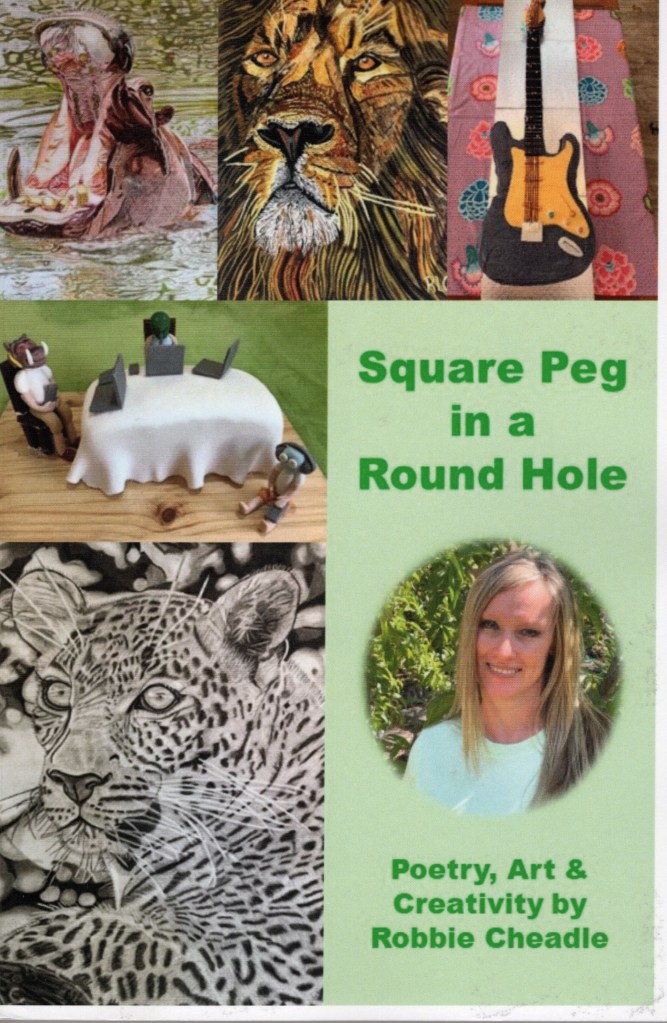
The focus of this blog is Leonbergers but sometimes I post about books that are not about Leonbergers but that I want to promote. This is another one of those. April 3rd is independent artist day, so today is a perfect day to present Square Peg in a Round Hole: Poetry, Art & Creativity by Robbie Cheadle and Michael Cheadle. This is a wonderful book featuring poetry, paintings, photography, fond art, and more. It exists in two formats on Amazon. I bought the paperback version.
Paperback – Published March 22, 2024, ASIN : B0CXMDKV8H, ISBN-13: ISBN-13 : 979-8883610799, 173 pages, Item Weight : 11.7 ounces, Dimensions : 6 x 0.41 x 9 inches, it cost $30.61on US Amazon. Click here to order it from Amazon.com.
Kindle – Published March 22, 2024, ASIN : B0CW1H3SQV, 157 pages, it costs $4.99 on US Amazon, it is free with Kindle unlimited. Click here to order it from Amazon.com.
Front cover of Square Peg in a Round Hole: Poetry, Art & Creativity by Robbie Cheadle & Michael Cheadle. Click on the image to go to the Amazon page for the paperback.
Amazon’s description of the book
How to stay positive in a negative world!
Square Peg in a Round Hole is a collection of poetry, art, and photography. The section, Life, demonstrates the author’s perceptions of life in a fast-moving world filled with work, ill-health, and other demands. The other sections illustrate how the poet makes use of writing poetry, creating art, and photography to keep smiling.
Poetry, Art, Photos and Stories about Nature and Life
Square Peg in a Round Hole is a collection of poems, short stories, paintings, nature photographs, artistic photographs, and links to YouTube videos and web sites. The photographs were taken by Robbie Cheadle and the photographer Wayne Barnes. The poems, short stories and illustrations in the first 90% of the book were created by Robbie Cheadle and the poems and short stories in the last 10% of the book were authored by her son Michael Cheadle, a young man with an immense talent. The poems are in the form of haiku, shadorma, tanka, 99-syllable-double-ennead, and freestyle.
The book is divided into sections. The first section, Fauna, feature poems, paintings and photographs of rhinos, lions, hippos, birds and other animals. Next comes Flora, then the Ocean, then Life, featuring darker but poignant poems and images about the anguish and the hardships of life. After that comes War, Death, Power, Sun & Fire, followed by stories and poems about nature, especially birds, and finally Michael’s poetry and short stories.
Robbie is a naturalist with a great insight into African wildlife and nature. In her poems and her art, she showcases her understanding and love for the natural world. This makes her poetry especially beautiful and engaging. I learned a lot about the African wildlife and natural history by reading the poems and by looking at the photos and the art. I think my favorite nature poems were “The story of the desperate salesman” and “Nest Selection”, which beautifully depicted nest building and a male bird’s attempt to attract a mate. I could easily imagine the feelings of the animals depicted in the poems. I think my favorite poetic short story was “The Edge” about a little girl’s dangerous quest for a beautiful flower. And finally, Michael’s dark but poignant poetry is both thought provoking and emotional.
This book has a lot to offer. There’s poetry, photos, art, videos, short stories, information, and facts, and there’s a lot of beauty and wisdom in this book. Reading it was a pleasure. I highly recommend this book.
Square Peg in a Round Hole: Poetry, Art & Creativity by Robbie Cheadle & Michael Cheadle.
About the Author
Award-winning bestselling author, Robbie Cheadle, has published fourteen children’s books and two poetry books. Her work has also appeared in poetry and short story anthologies.
Robbie also has two novels published under the name of Roberta Eaton Cheadle and has horror, paranormal, and fantasy short stories featured in several anthologies under this name.
The eleven Sir Chocolate children’s picture books, co-authored by Robbie and Michael Cheadle, are written in sweet, short rhymes which are easy for young children to follow and are illustrated with pictures of delicious cakes and cake decorations. Each book also includes simple recipes or biscuit art directions which children can make under adult supervision.
With this reblog I just wanted to remind everyone that in Texas dogs can drive. If your dog does not have a driving license, please contact DMV and get him one.
When Bronco was almost eight years old, we discovered a case of squamous cell carcinoma in one of his toes—or, rather, in one of his toenails. It was on his right rear paw.
Our Leonberger Bronco, or Le Bronco von der Löwenhöhle.
Squamous cell carcinoma is a type of skin cancer that certain large-breed dogs, including Leonbergers, are susceptible to. It often grows out from the skin around the nail and can affect the bone and tissue around it. It is typically not very aggressive, but it can spread, and it is painful. It manifests itself as a swollen toe, or you may be able to see a large red papule that looks like a pimple. Sometimes the toenail falls off. The dog is likely to limp and lick the toe and may become reluctant to go for walks, although that was never the case with Bronco.
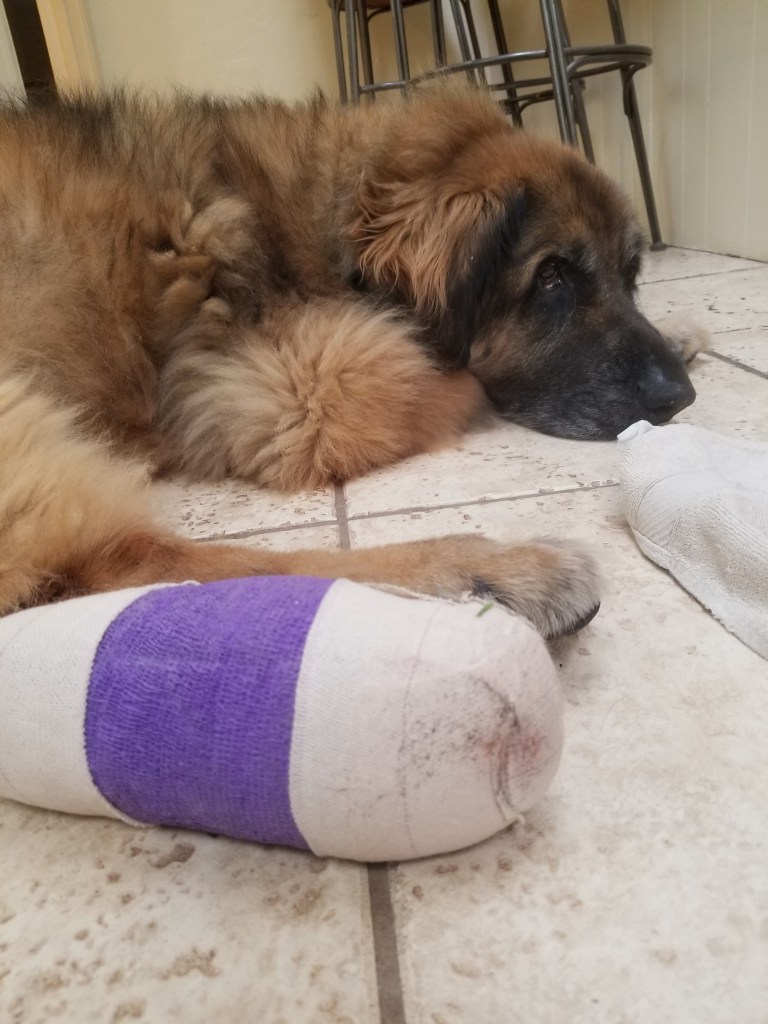
Bandage on Bronco’s paw after a toe amputation.
Primarily because of the pain, but also because of the small risk of metastasis, it is usually recommended that the affected toe be amputated. So we went through with the procedure. When we picked Bronco up the day after the surgery, his paw was in a bandage. But he got some treats, and he was in a good mood. We went back to the veterinary surgical center for a bandage change a few times, and then he was done.
An agitated Bronco stands guard at the back door. Note the missing toe on his left front paw.
Unfortunately, though, we discovered another lesion a year later. This time it was on a large toe on his left front leg. We asked the doctors if the cancer had spread to this toe. We were told no—Bronco was just prone to getting this type of cancer. But the cause could also have been something in the environment. In Texas, the ultraviolet radiation from the sun is significant. We really don’t know why this happened to him, but we were assured that it was not because the cancer had spread.
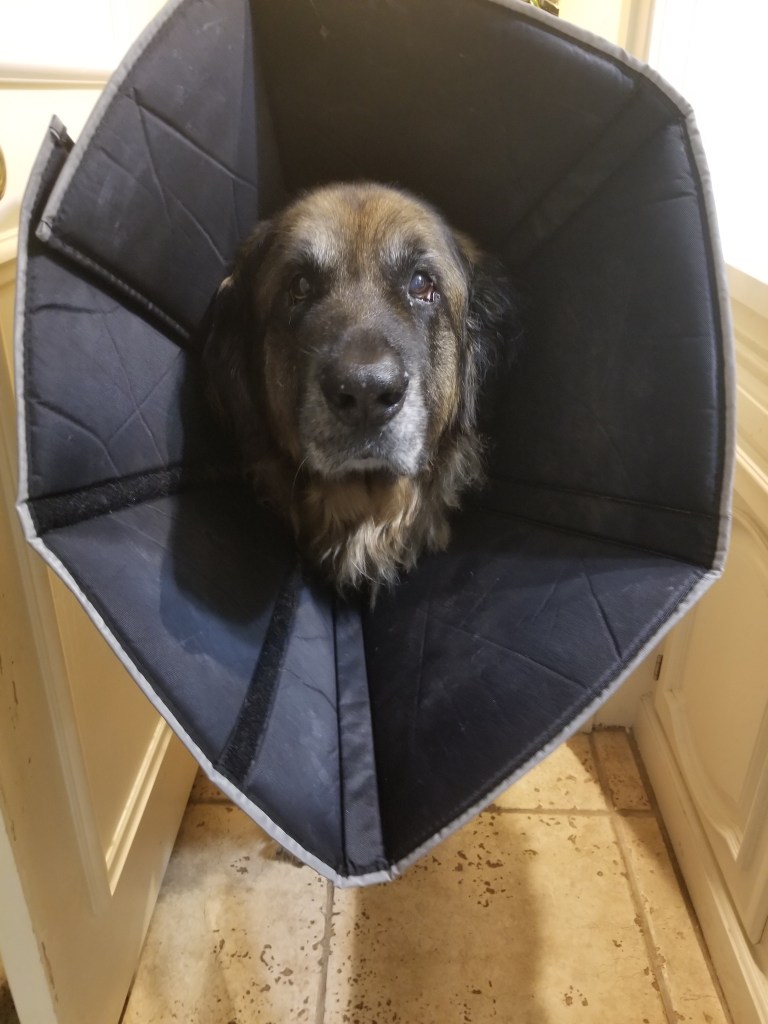
A cone of shame or as in this case a soft cone typically accompanied a bandage or a cast.
This time around, Bronco’s entire leg was put in a cast, to be replaced by a bandage after ten days. We were instructed to keep him inside during those ten days and keep him as still as possible. We were to make sure he wouldn’t bump the cast. This was, of course, almost impossible to do, but we were going to try.
However, Bronco really wanted to go out, which he showed us in various ways, such as scratching at the front door. After a week or so, Claudia suggested that we take him outside a little bit, just in our driveway. I agreed. When I handed her the leash, she said, “He can barely walk; do you think he’s going to run off without it?” We laughed, and I agreed that it didn’t seem like we needed it this time. So Claudia walked out with Bronco slowly limping beside her.
Bronco could barely walk with his full leg cast, but when motivated enough he could run. Illustration by Naomi Rosenblatt.
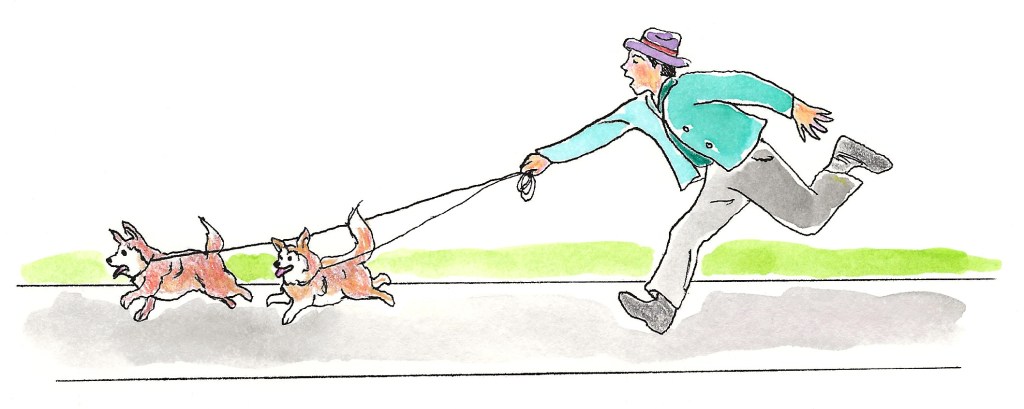
Less than a minute had passed when I heard shouting outside. I opened the door and looked outside to see what was going on. First I saw our neighbor and his two corgis running down the street as fast as they could. Our neighbor was screaming at he top of his lungs, “Get him off me! Get him off me!” Behind him, Bronco was running with his cast going kabonk-kabonk-kabonk as it hit the sidewalk. Behind Bronco ran Claudia, who was also screaming at the top of her lungs. Bronco! Sit! Stay! Stop!” Finally, Bronco stopped, and Claudia grabbed him. Holding his collar, she led him back in.
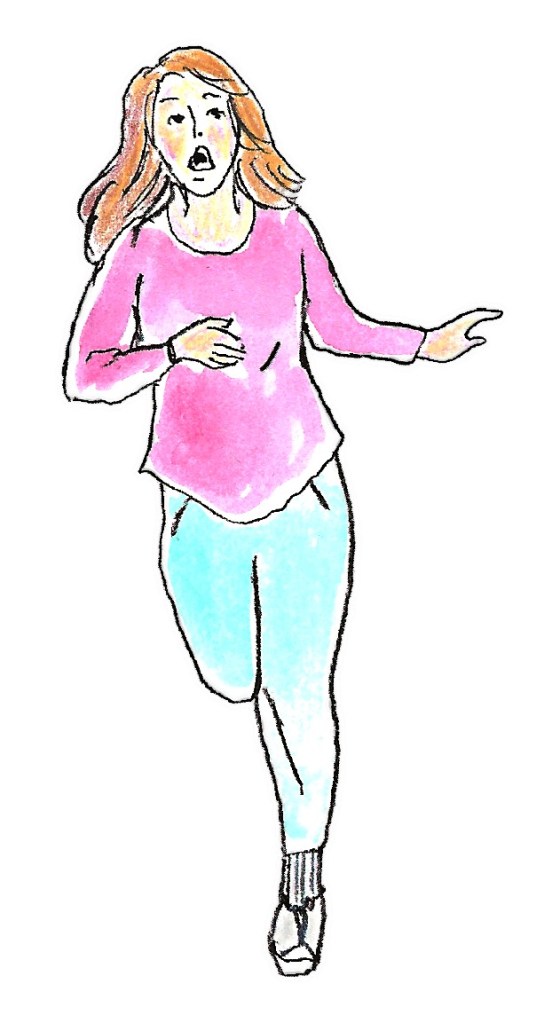
Claudia running after Bronco. Illustration by Naomi Rosenblatt.
Our red-faced and sweaty neighbor was very nice about it and forgave us. He even forgave Bronco, though Bronco was chasing the corgis, not our neighbor. But still, if I had been chased by a big dog wearing a cast, I would not have gotten over it that easily. Our neighbor is clearly a better man than I am.
Our neighbor and his corgis running from Bronco. Illustration by Naomi Rosenblatt.
This was an embarrassing event for all of us, but at the same time it was one of the most surreal and amazing things I’ve ever seen. It was so unexpected, so bizarre, and so funny. I really wish I had had a video camera handy. Talk about a potentially viral video.
When we went back to the veterinary surgical center to have Bronco’s cast removed, we decided not to say anything about the incident to the doctors. We sat in the waiting room and wondered if the episode had caused any permanent damage to Bronco’s paw or leg. But when the veterinary technicians came back with Bronco in a bandage instead of a cast, they told us that everything looked good. Great job, everyone!
We thought they might not have checked his sore carefully enough, so we asked them again: Are you sure everything looks good? The sore, the stitches—did you really look at them thoroughly? They insisted that yes, they looked good. So Bronco got his treats, he looked happy, and we went home.
Today is National Puppy Day. Therefore, I am posting 25 puppy photos. It is mostly Leonberger puppies but there are also puppy photos of some of our other dogs. Most of the photos in this post are mine but I am including a few Leonberger puppy photos from shutterstock. If you want to check out the Leonberger book I wrote click here, or look to the right if you are on a desktop or at the bottom if you are on a mobile.
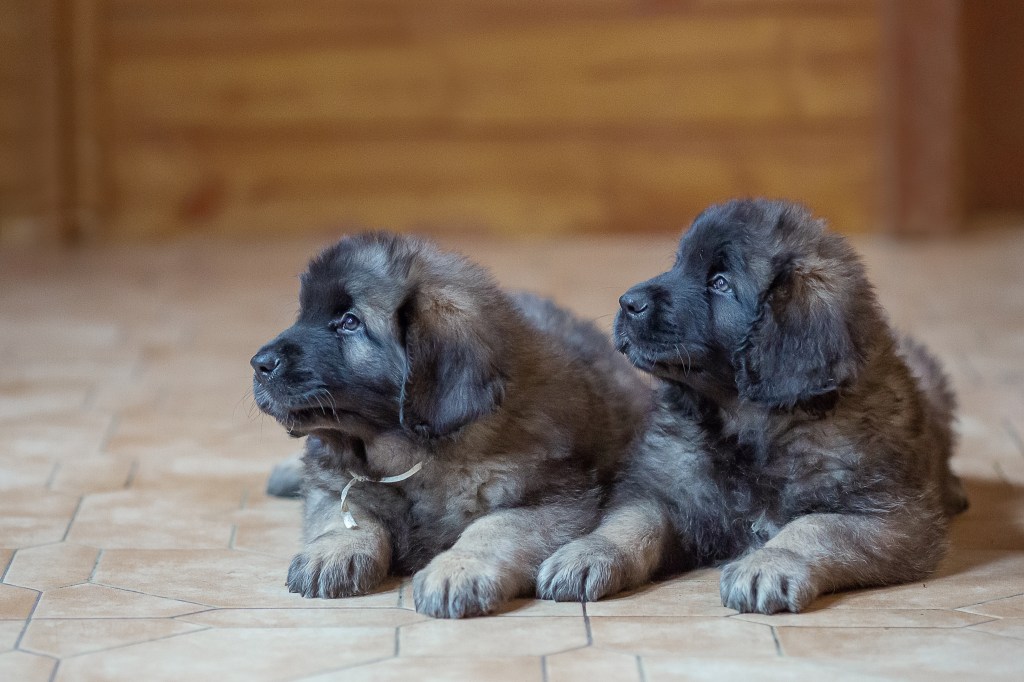
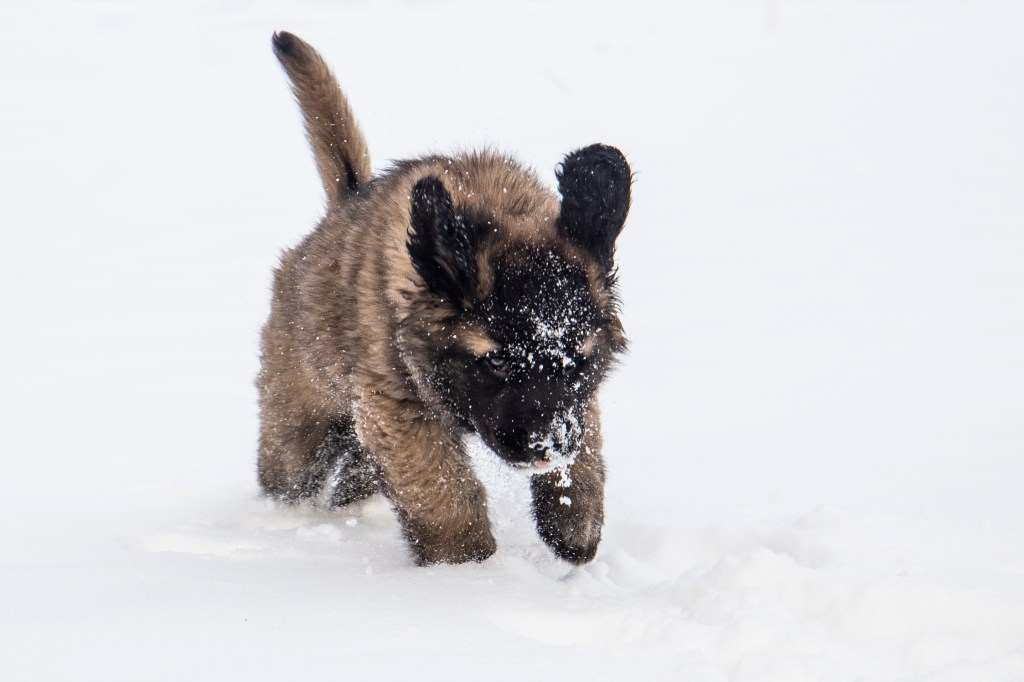
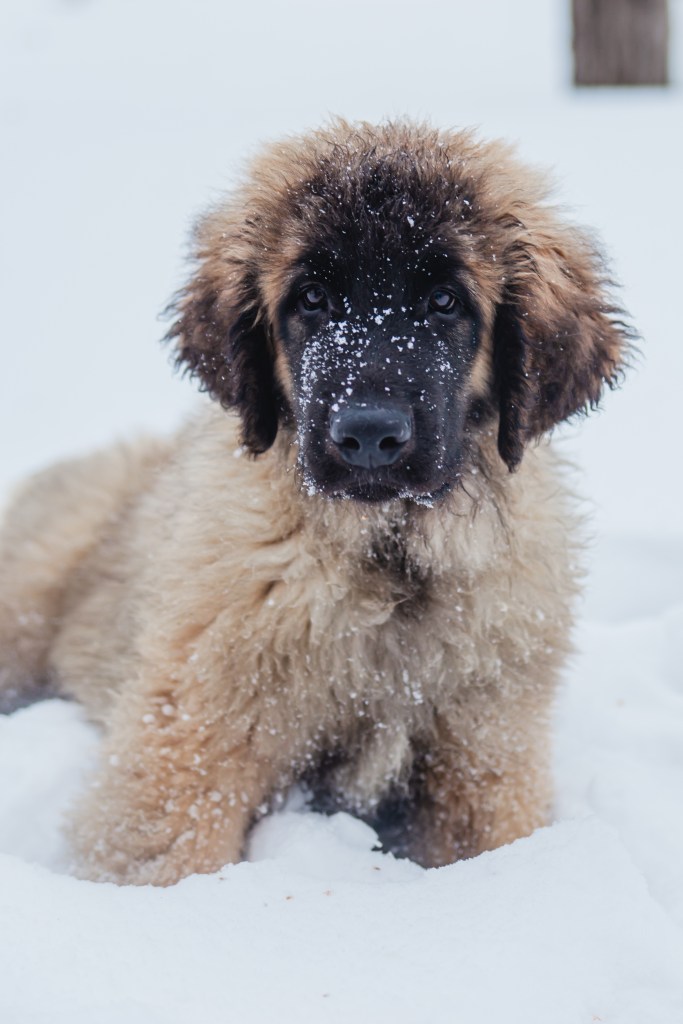
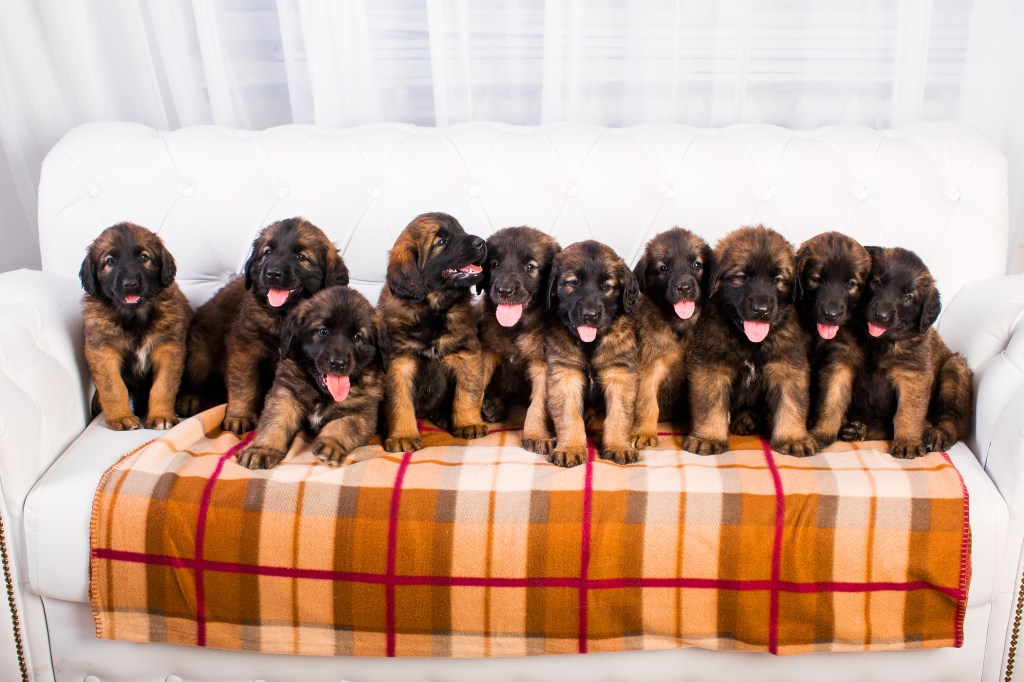
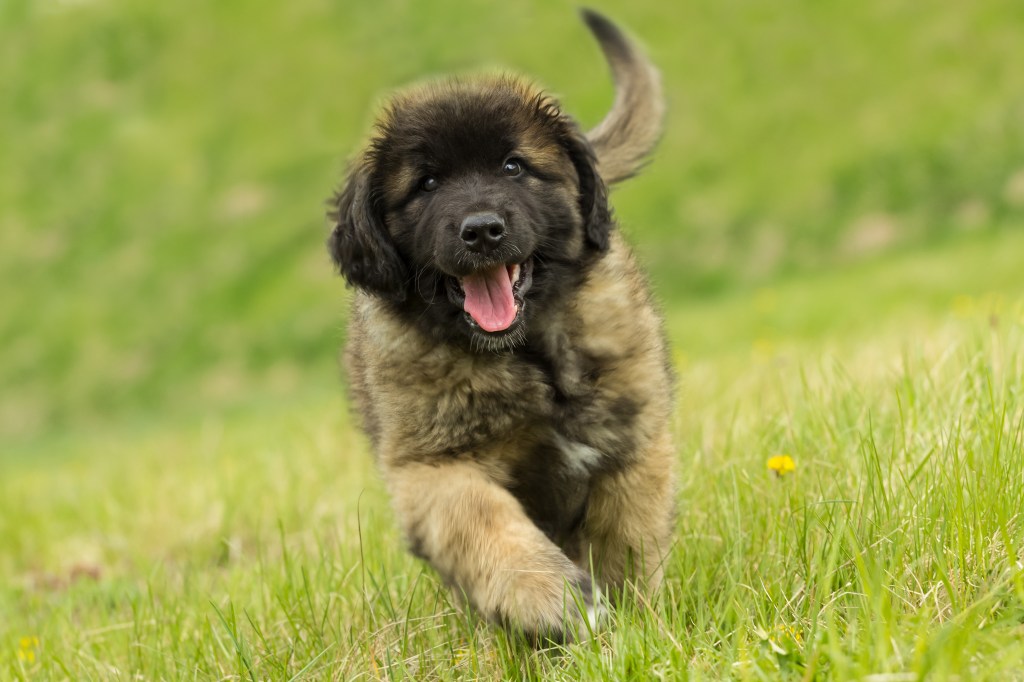
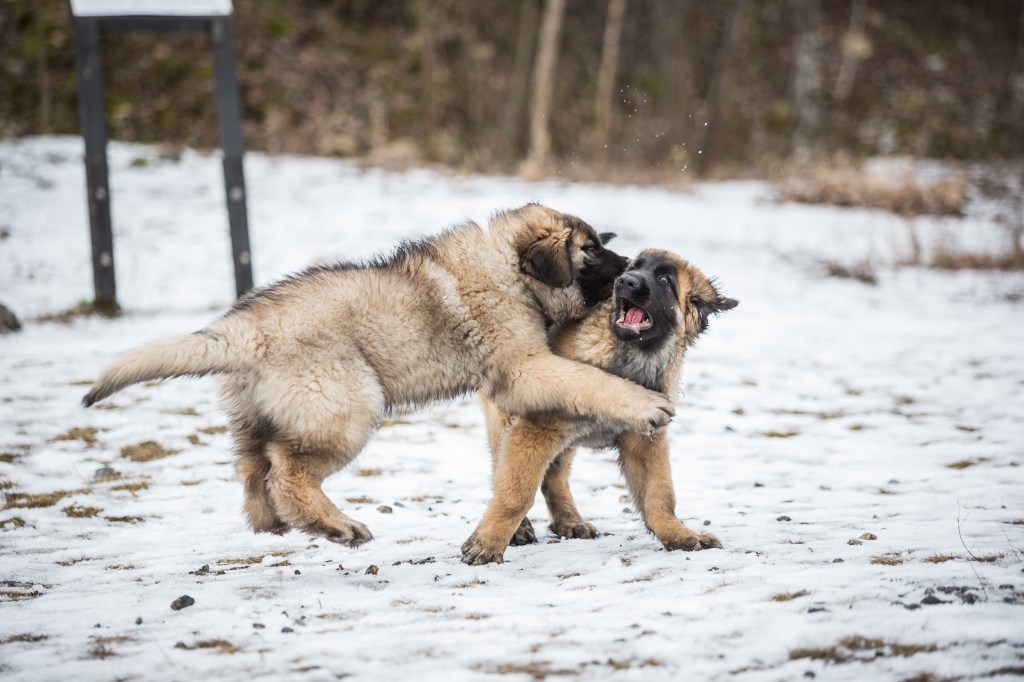
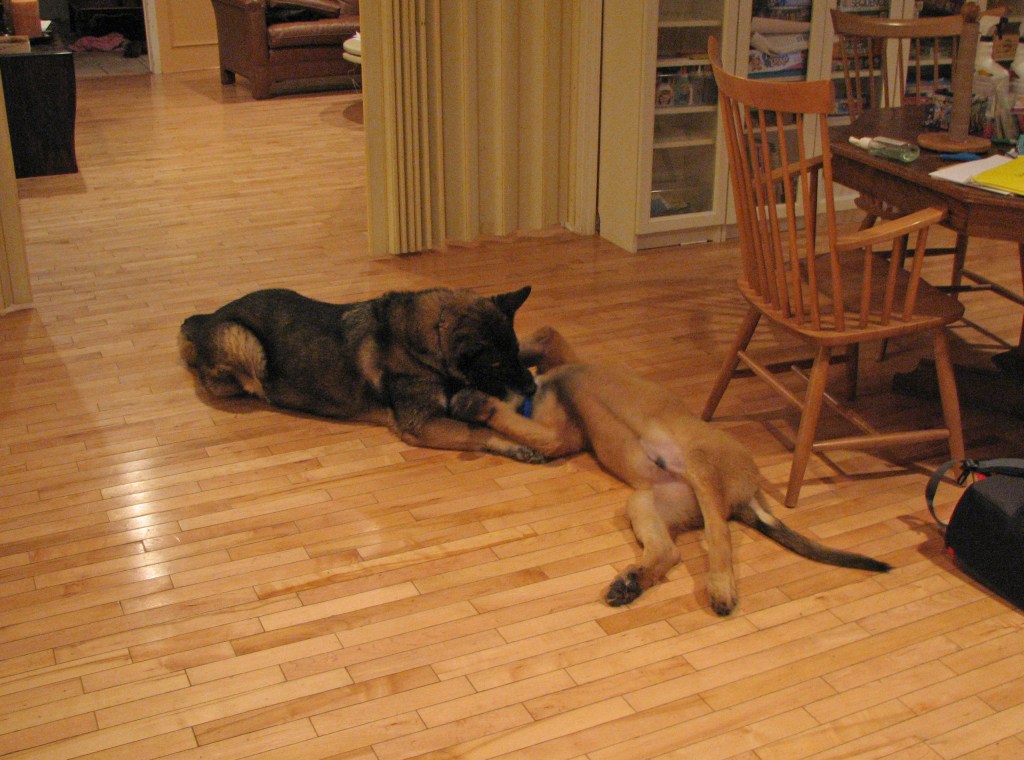
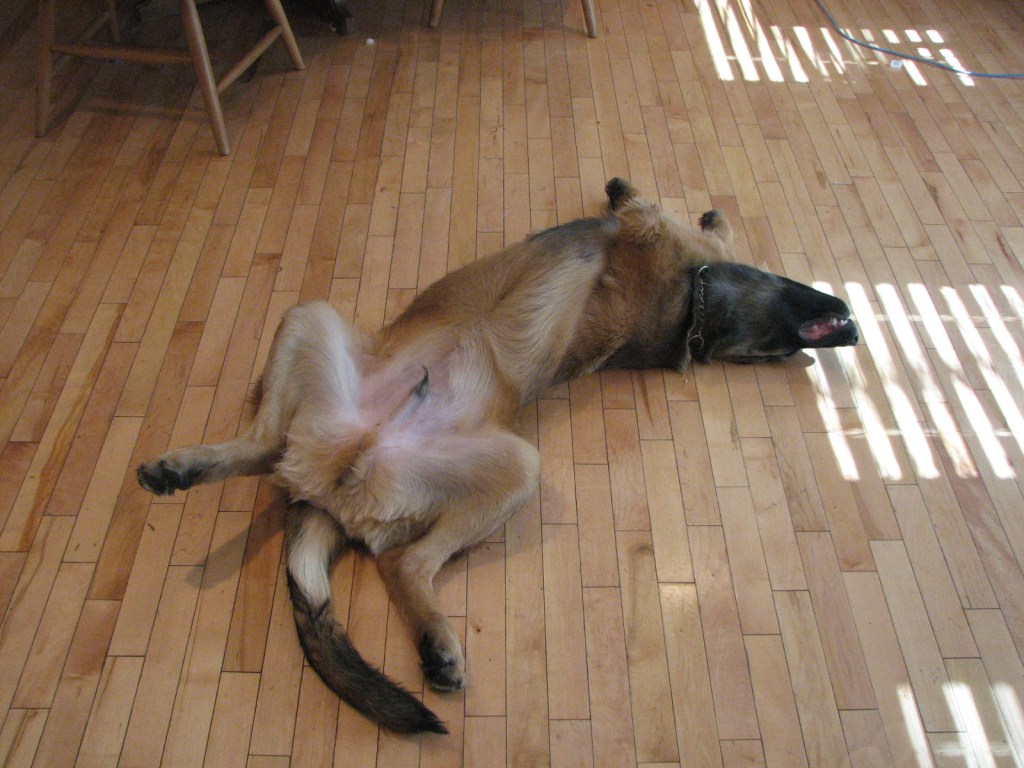
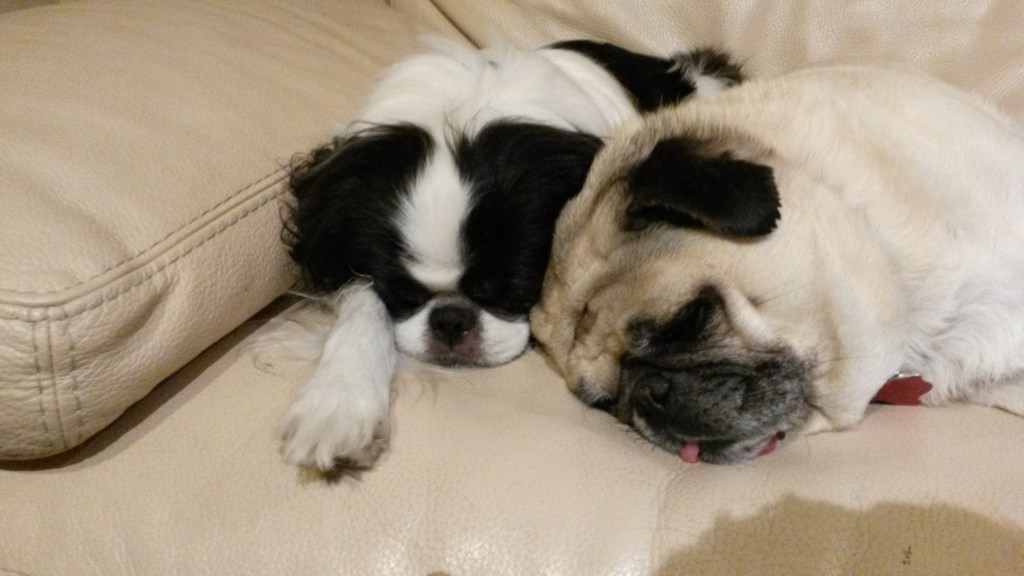
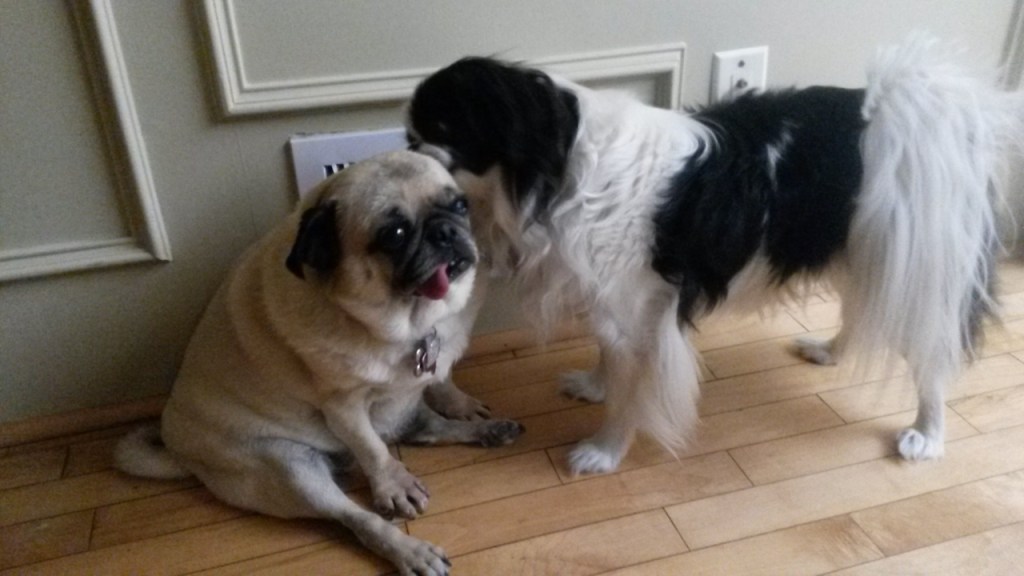
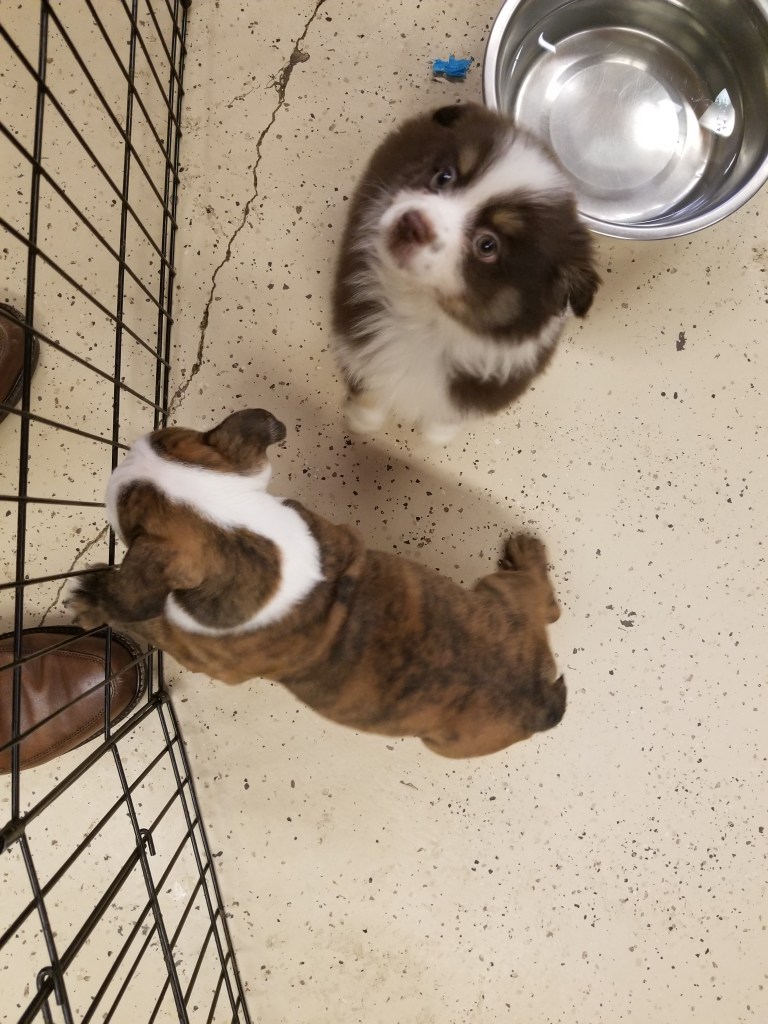
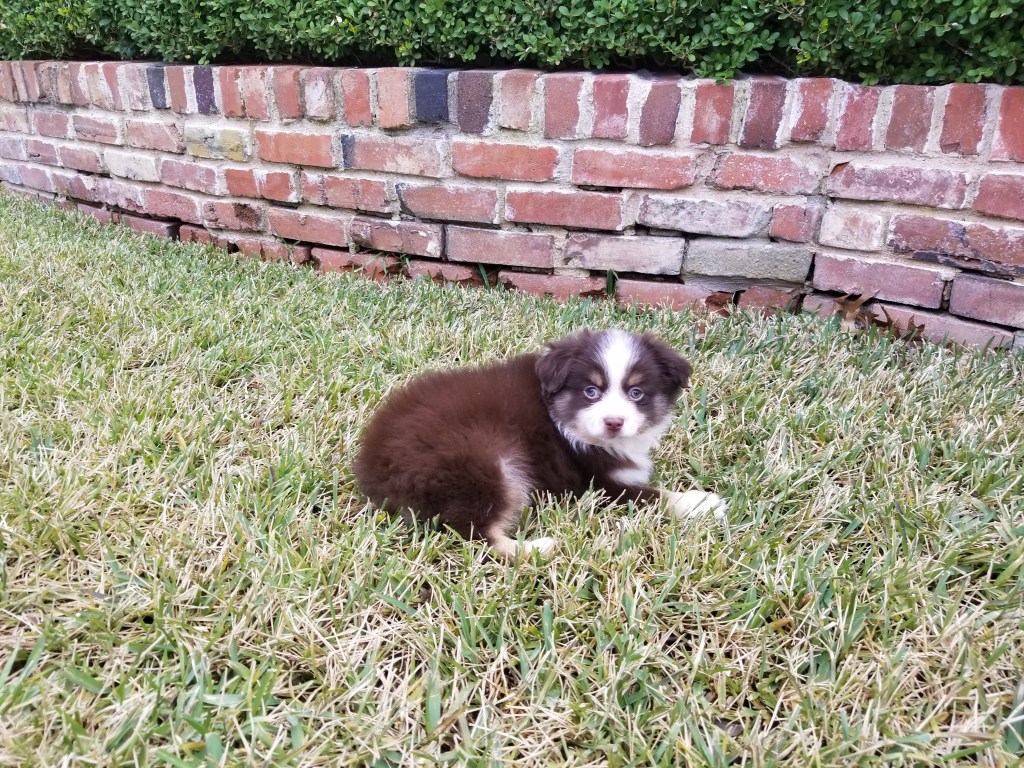
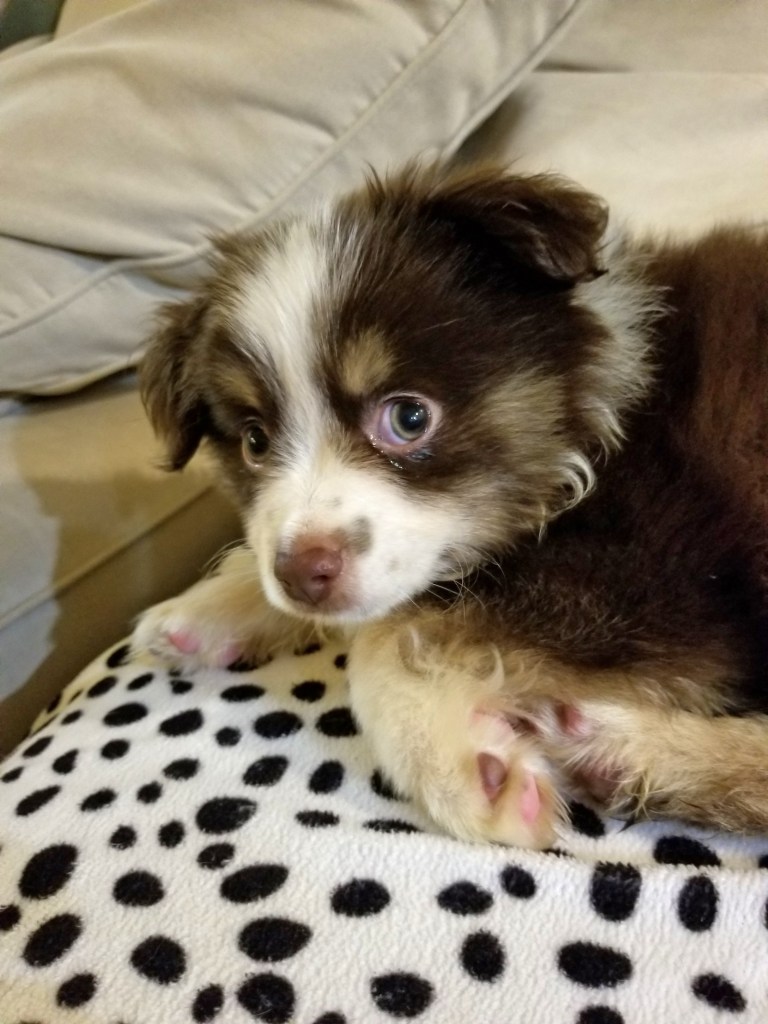
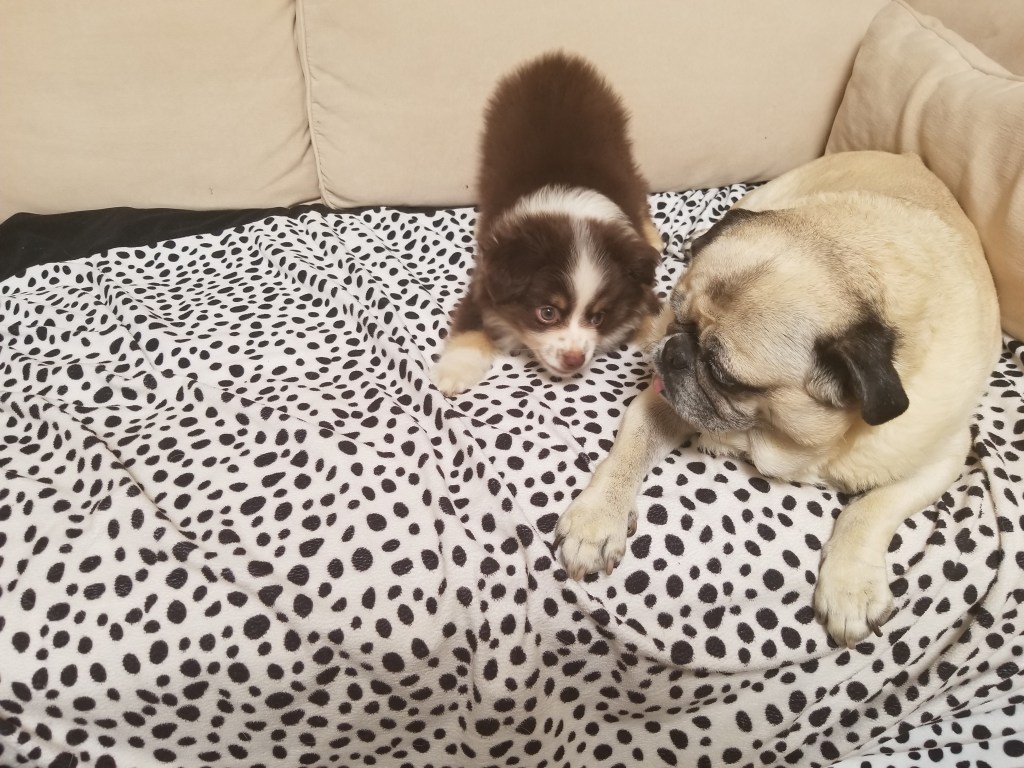
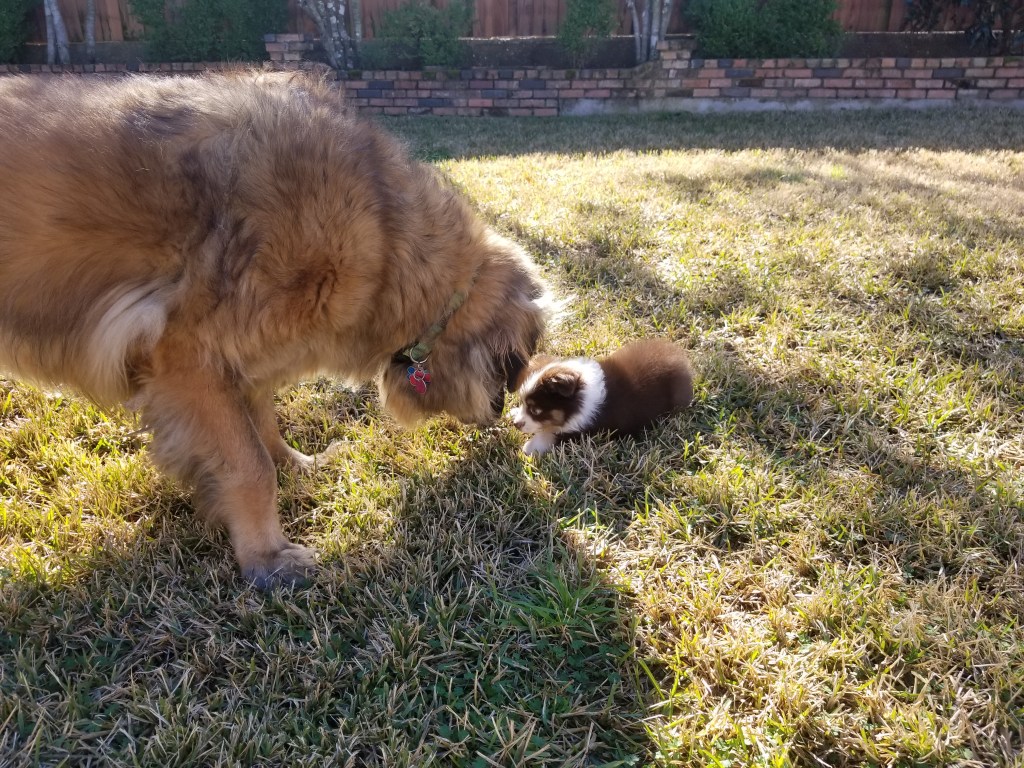
Our Leonberger Bronco at three months old.Our Leonberger Bronco at three months old.Our Japanese Shin Ryu when he was young.Our son David with our pug Daisy when she was a puppy.Our son David is holding our pug Daisy when she was still a puppy (now she is 15 ½ years old).Two Leonberger puppies. Shutter stock Photo ID: 2294202331 by Olga Shusters.A Leonberger puppy running in the snow. Shutterstock Stock Photo ID: 2056502327 by Nikky de Graaf.A Leonberger puppy standing in the snow. Shutterstock Stock Photo ID: 2390810457 by VeronArt16.Another Leonberger puppy. Stock Photo ID: 561111403 by Akbudak Rimma.Ten Leonberger puppies. My guess is that they are about two months old. Shutterstock-ID:561107710 by Akbudak Rimma.Leonberger puppy. My guess is that he is around two months old. Shutterstock-ID: 629624396 by TOM KAROLA.Two light colored Leonberger puppies playing. My guess is that they are three months old. Shutterstock-ID: 2141564415 by AnetaZabranska.Our German Shepherd Baby playing with our 4 months old Leonberger Bronco.Our Leonberger Bronco about 9 months old is lying on his back on the floor.Bronco our Leonberger at the dog park. He is about one year old. He is maybe not a puppy but far from an adult. He is an adolescent, which is why he looks so thin and gangly. Our Labrador Baylor is in the background.Our Japanese Shin Ryu sleeping next to our pug Daisy.Our Japanese Shin Ryu licking our pug Daisy’s ear.The day we picked up our mini-Australian Shepherd Rollo. He was nine weeks old. The other puppy is an English bulldog puppy.Our mini-Australian Shepherd puppy Rollo.Our mini-Australian Shepherd puppy Rollo.Our pug Daisy and our mini-Australian Shepherd puppy Rollo.Bronco and our mini-Australian Shepherd puppy Rollo.Bronco and our mini-Australian Shepherd puppy Rollo.Our mini-Australian Shepherd puppy Rollo playing with an orange ball.Our mini-Australian Shepherd Rollo is playing with our Leonberger Bronco’s tail. Once he even dangled in it like a swing.
Since it is St. Patrick’s Day today, I thought I’d make a post about beer.
Me drinking Irish Goodbye an Irish Red Ale from Peticolas Brewery Dallas, Texas, ABV 6.5%. Photo taken today.
Bland pale mass produced lagers often made with low quality ingredients are very common now a day. Examples are Corona, Bud Light, Heineken, Miller Light, etc. However, there are many other beer styles. For example, there are:
Lagers:
Pale Lager that is not mass produced and not containing low quality ingredients
Dark Lager including Schwarzbier (essentially black)
Red/Amber Lager
Pilsner
Adjunct Lager
Rice Lager
Vienna Lager
India Pale Lager
Ales:
Stouts
Porter
Pale Ale
IPA / India Pale Ale (the second most popular beer style)
Hefeweizen
Kristallweizen
Witbier
Irish Red Ale (what I am drinking above)
Saison
Wild Ale
Lambic
Geueze
Gose
Smoked beer
Belgian Blonde Ale
Steam Beer
Kvass
Gruit
And much more
The beer advocate counts 120 beer styles of which I’ve had 107 so far. Beer advocate features around 250,000 different beers.
The BOMB! From Prairie Artisan Ales, Tulsa, Oklahoma, ABV 13%. It is a so-called Imperial Stout, an extra strong stout and extra flavorful stout.
Generally speaking, beers are classified into two main types of beers, lagers and ales, or perhaps lagers and ales plus other beers. Steam beers are hard to classify and Lambics you don’t refer to as ales even though they technically are ales. Stouts, porters, hefeweizen, pale ales, IPAs, Wild Ales, Lambics are all ales. In the short list above, everything below Vienna Lager are ales.
Atrial Rubicite is a world class Wild Ale from Jester King Brewery, Texas, my favorite Texas brewery. Wild Ales are fermented using wild yeast, which often gives them a fruity flavor. In this case they also added raspberries. It is considered the best raspberry Wild Ale in the world. I was once waiting for hours in a long line just to buy two bottles (the maximum allowed).
Lager beer is a relatively recent invention that originated in Bavaria. Lager beers use a special kind of yeast for the fermentation process, it is typically bottom fermented, and fermented and conditioned in cool temperatures, unlike other beer styles. Lager beers can be of many colors, pale, amber, dark, even black such as Schwarzbier. The Pale Lager originated in Pilsen in Bohemia (Western Czech Republic) in the mid-19th century. The pale lager has become the world’s most common beer style and bland tasting mass-produced pale lager beers dominate the market. In countries that are not traditional beer countries such as France, Italy, China, Japan and South America, the bland pale lager is very dominant. I’ve come across many people who think that the more tasteless the pale lager is, the better beer it is (people who love Corona).
An American style mass produced Adjunct Lager from India. Adjunct lager means that they used ingredients such as corn and rice, which is not typical for higher quality lager beers. It wasn’t great, it was watery, but good with very spicy food. But then, water is probably best with very spicy food.
Stout is a dark, top-fermented beer / Ale style. Sub styles include dry stout, oatmeal stout, milk stout and imperial stout. It is derived from the Porter, which originated in London, England in the early 1720s. Stout is basically a stronger and more flavorful porter. However, there is no clear distinction between porter and stout. I am sure you have heard of Guinness Stout, a very Irish beer. Imperial stouts are extra strong, full bodied and flavorful stouts. Below is an imperial stout, which interestingly enough is not dark brown or black but golden/amber.
El Cuerro is a so-called White Stout from Lone Pint Brewery, Texas, ABV 7.8%. The flavor is roasted malts, coffee and chocolate. I think it is pretty good.
IPAs, India Pale Ales is an extremely popular Ale that is typically flavorful and quite bitter. It is in a sense an anti-Lager. It is the beer style that I drink the most. The IPA is a type of Ale (fermented at warm temperatures, unlike, for example, lagers). It is typically a Pale Ale (exceptions are black IPAs). It was invented in England in the early 1800’s and became popular for exportation to India. It is characterized by its higher content of hops and the level of alcohol is often higher as well. More hops and more alcohol made it easier to preserve the beer for the trip to India.
This is an India Pale Ale that I brewed at home. I call it “It’s Fine. I’m Fine. Everything is Fine.” An artist friend of mine, Breanna, made the labels.
As I mentioned there are a lot of beer styles. One of the lesser-known ones is smoked beers. Smoked beer, or Rauchbier, is a type of beer with a distinctive smoke flavor imparted by using malted barley dried over an open flame. It goes great with barbecue. Below is an example of the style that I’ve had quite often.
Aecht Schlenkerla Rauchbier Märzen from Braurei Heller Bamberg, ABV 5.1%. It is a so called Rauchbier. The barley malts have been kilned over a fire of beech wood logs, giving it a smokey flavor. The flavor is smokey, very smokey malts or toasted bread, maybe smoked ham. I think it is delicious.
If you are paying attention to beer, you may have heard about “Trappist beers”. This is very special category that is not referring to a beer style, but by who makes it. Trappist beer is brewed by Trappist monks. There are tens of thousands of breweries in the world but there are only 13 Trappist breweries in the world. Trappist beers are considered to be very special. The most highly praised of the Trappist beers is Westvleteren 12 from Brouwerij Westvleteren founded in 1838 at the Trappist Abbey of Saint Sixtus in Vleteren, Belgium. Westvleteren 12 is a so called Quadrupel Belgian Ale. It is often said that Quadrupel means that it has been re-fermented four times, but it is often not true. However, quadruple means that it is a stronger, darker and more flavorful. Westvleteren 12 is extremely difficult to buy but I have been able to get my hands on several.
Westvleteten 12 is a Belgian Ale Quadrupel ABV 10.2% (Trappist). I think the taste is like raisin bread, dark fruits, plum, raisin, and some yeast and dark bread bitterness. There is a very small hint from the alcohol that adds nicely to the overall flavor. I love this beer.
I think my favorite type of lagers are Märzen and my favorite Ales are IPAs.
Do you have a favorite Lager? Do you have a favorite Ale?





























 Leonberger Life