This blog feature amusing and heartwarming stories about our late Leonberger dog Bronco, as well as other Leonbergers. It also has a lot of information about the Leonberger breed, the history, care, training, Leonberger organizations, etc. I also wrote a Leonberger book, which I am featuring in the sidebar.
Before humans die, they write their last Will & Testament, give their home & all they have, to those they leave behind. If, with my paws, I could do the same, this is what I’d ask…
To a poor and lonely stray, I’d give:
My happy home.
My bowl & cozy bed, soft pillows and all my toys.
The lap, which I loved so much.
The hand that stroked my fur & the sweet voice which spoke my name
I’d Will to the sad, scared shelter dog, the place I had in my human’s loving heart, of which there seemed no bounds.
So, when I die, please do not say, “I will never have a pet again, for the loss and pain is more than I can stand”.
Instead, go find an unloved dog, one whose life has held no joy or hope and give MY place to HIM.
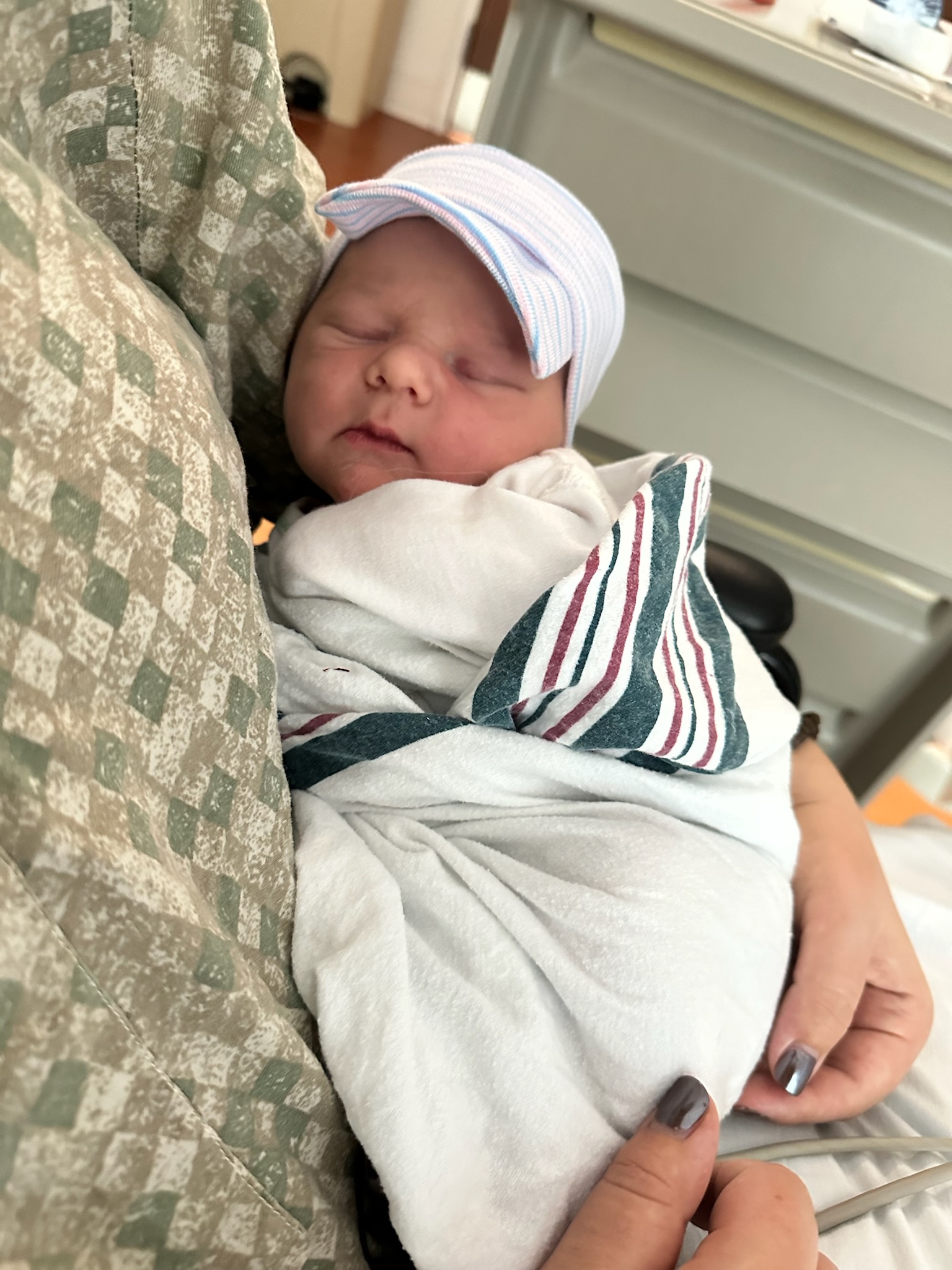
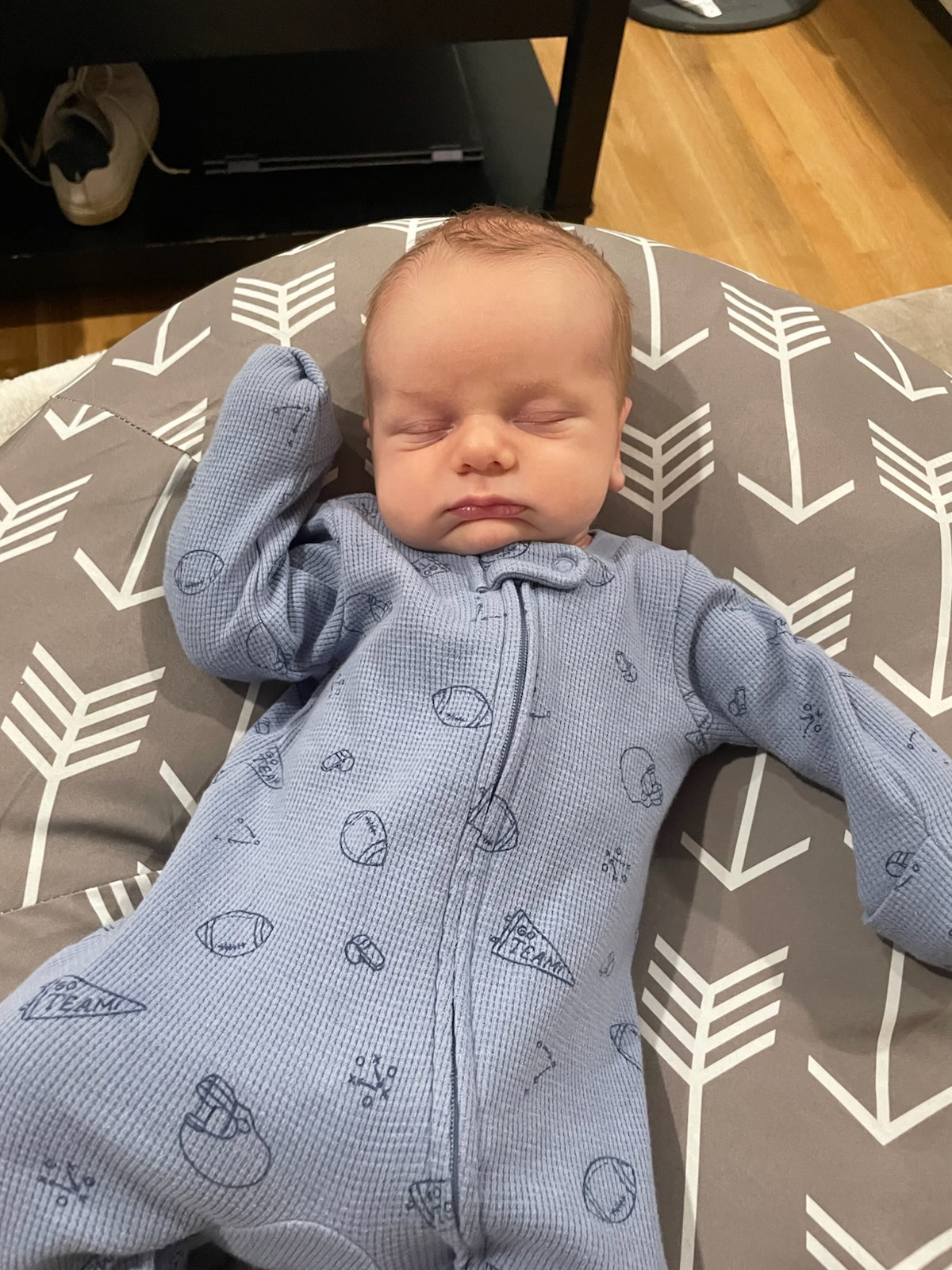
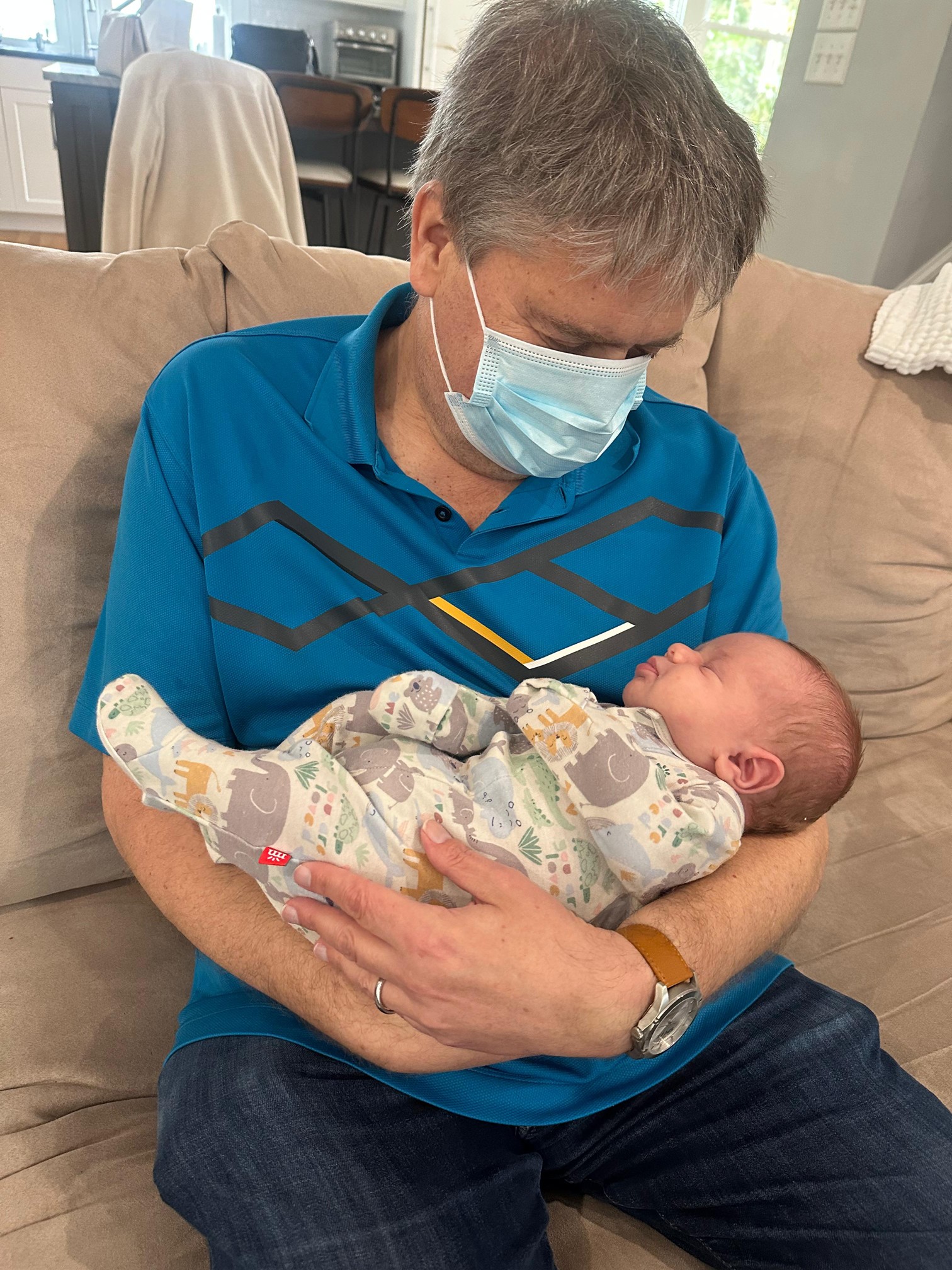
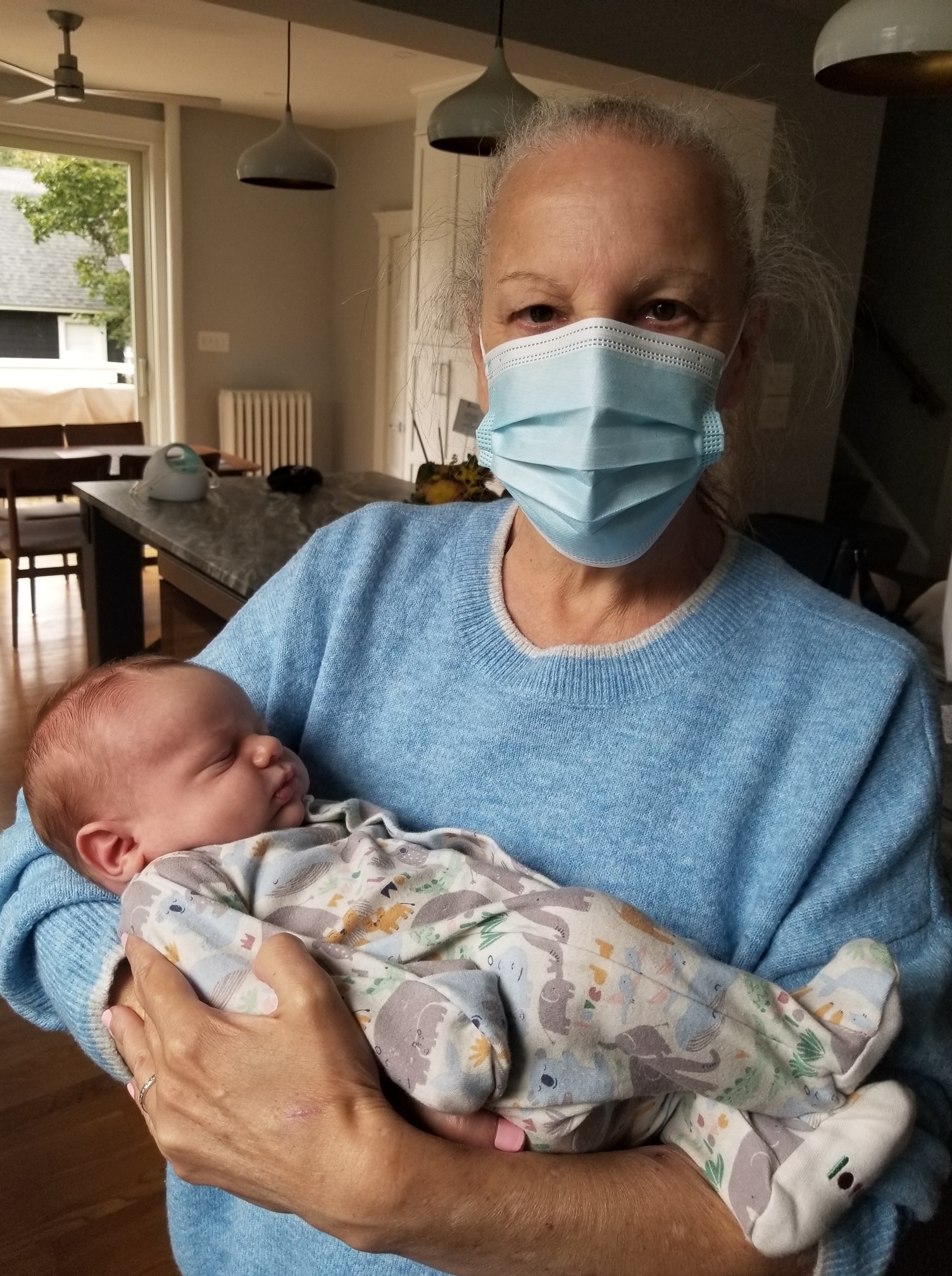
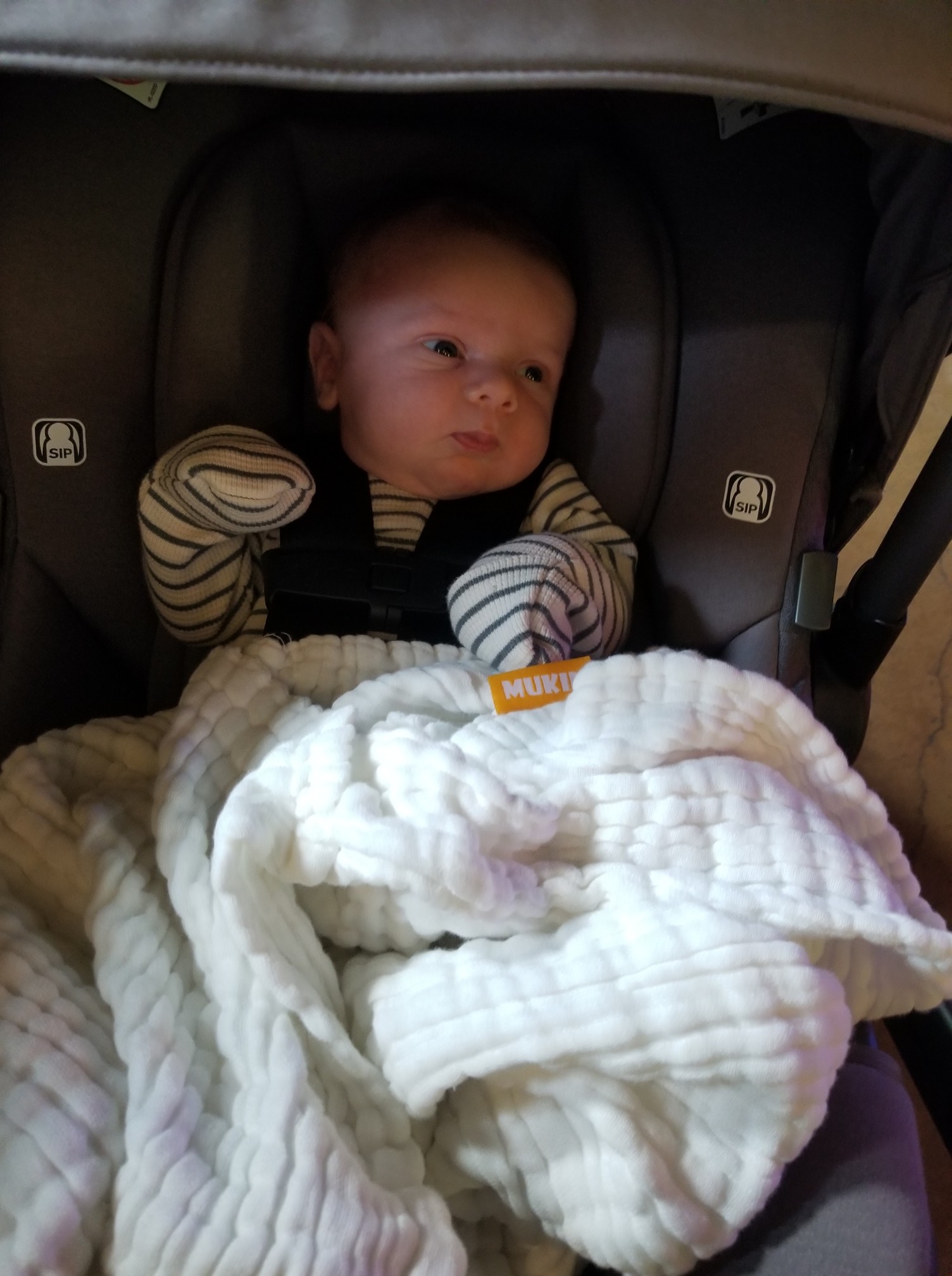
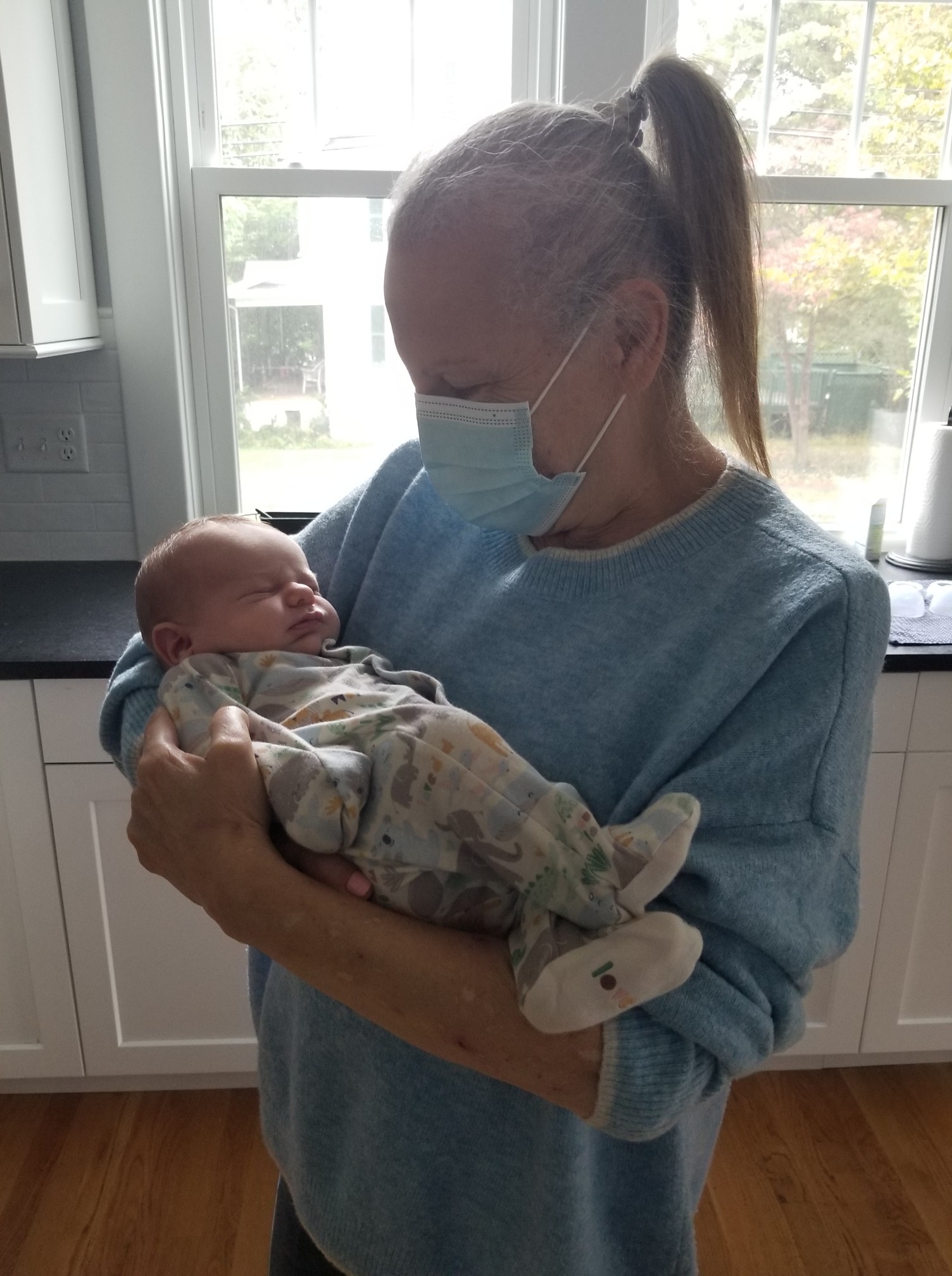
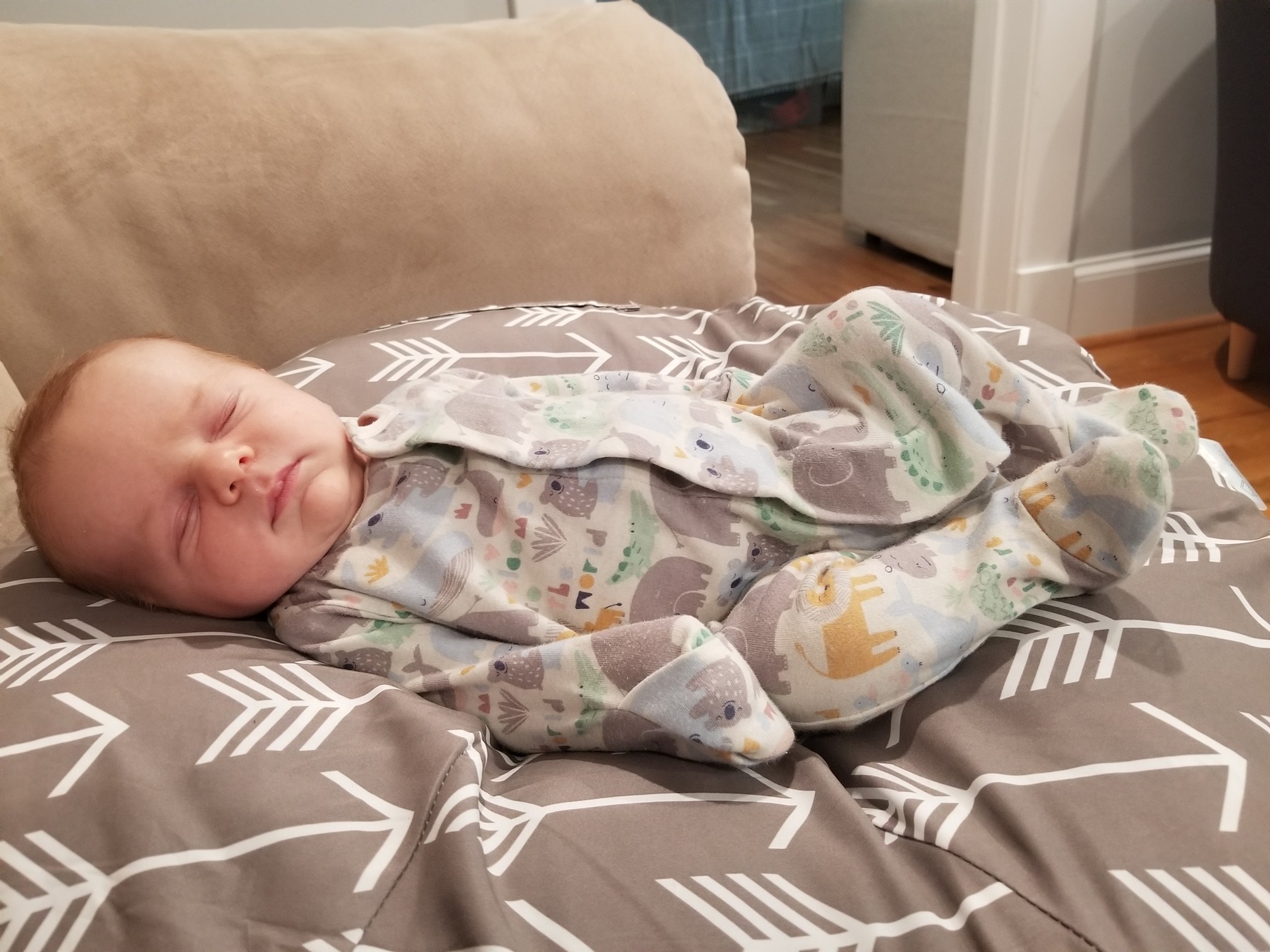
My wife and I recently became grandparents to newborn Baby Jack. We visited my son, his wife and their baby the past week. That is why I have not been as active with blogs lately. It was wonderful to see them and meet the baby. He is a very healthy baby.
The Wikman family in Baltimore. Jack is the little guy in the middle.
Below is photo collage featuring baby Jack. My wife and I are in the photos too.
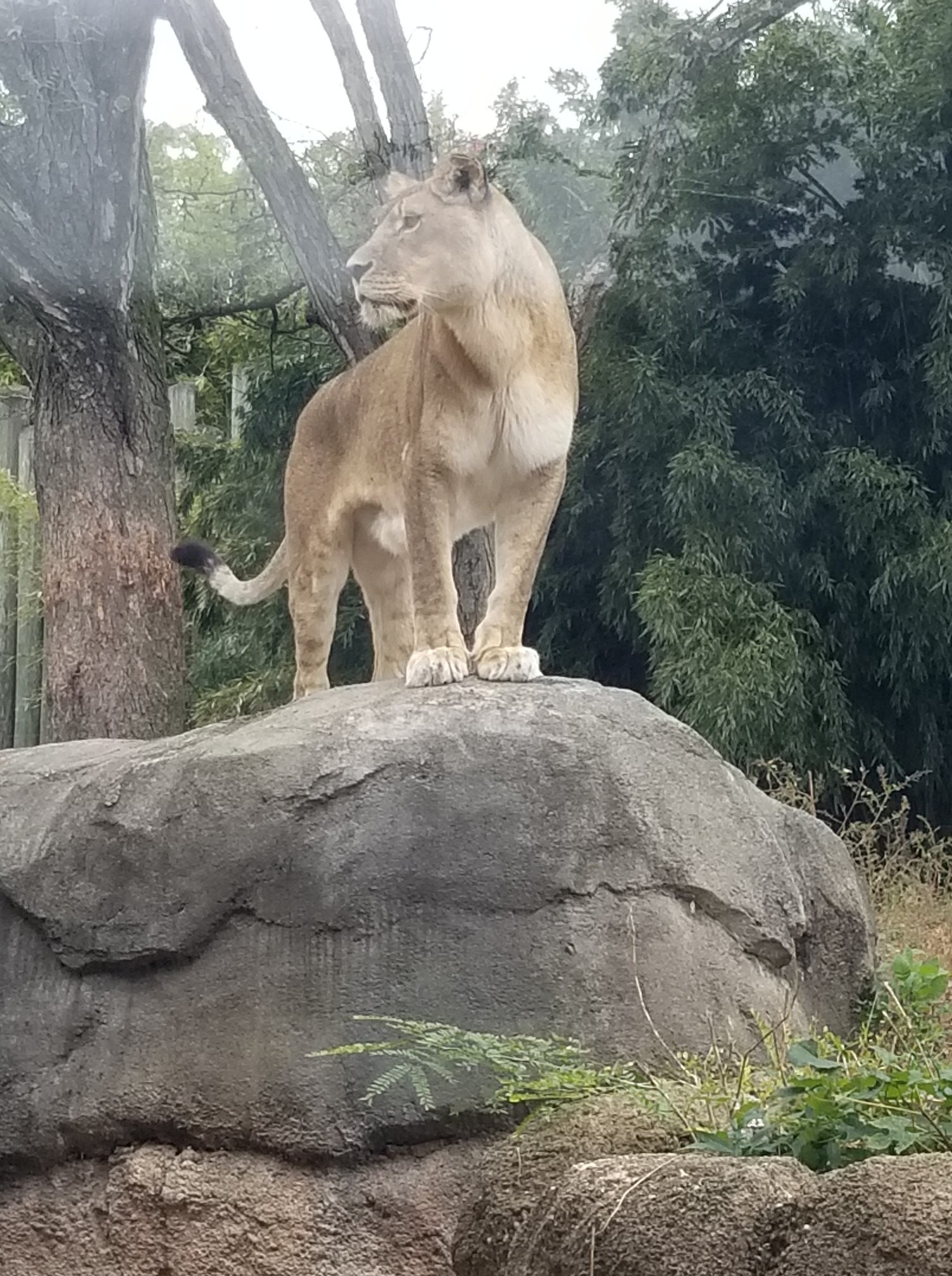
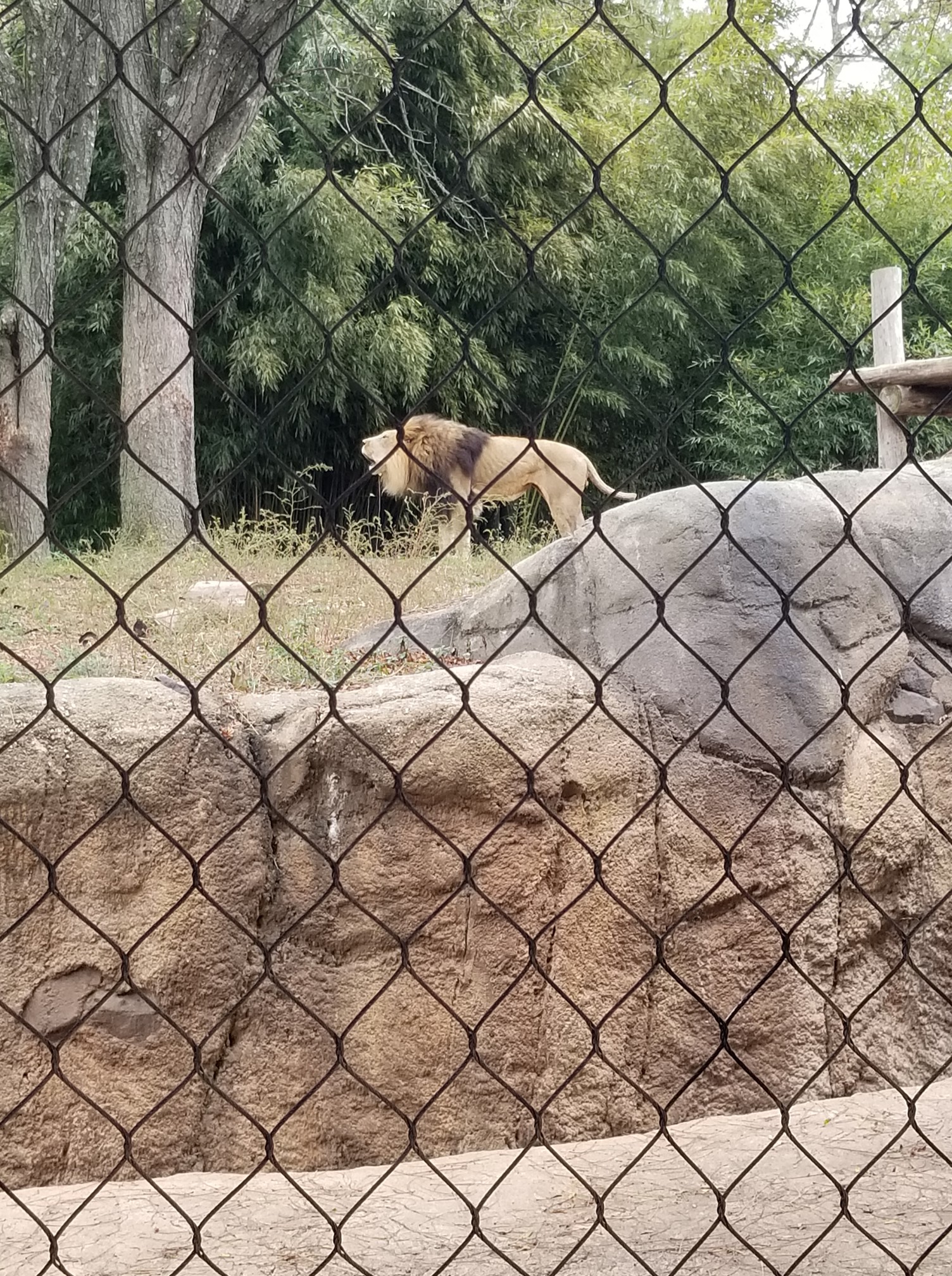
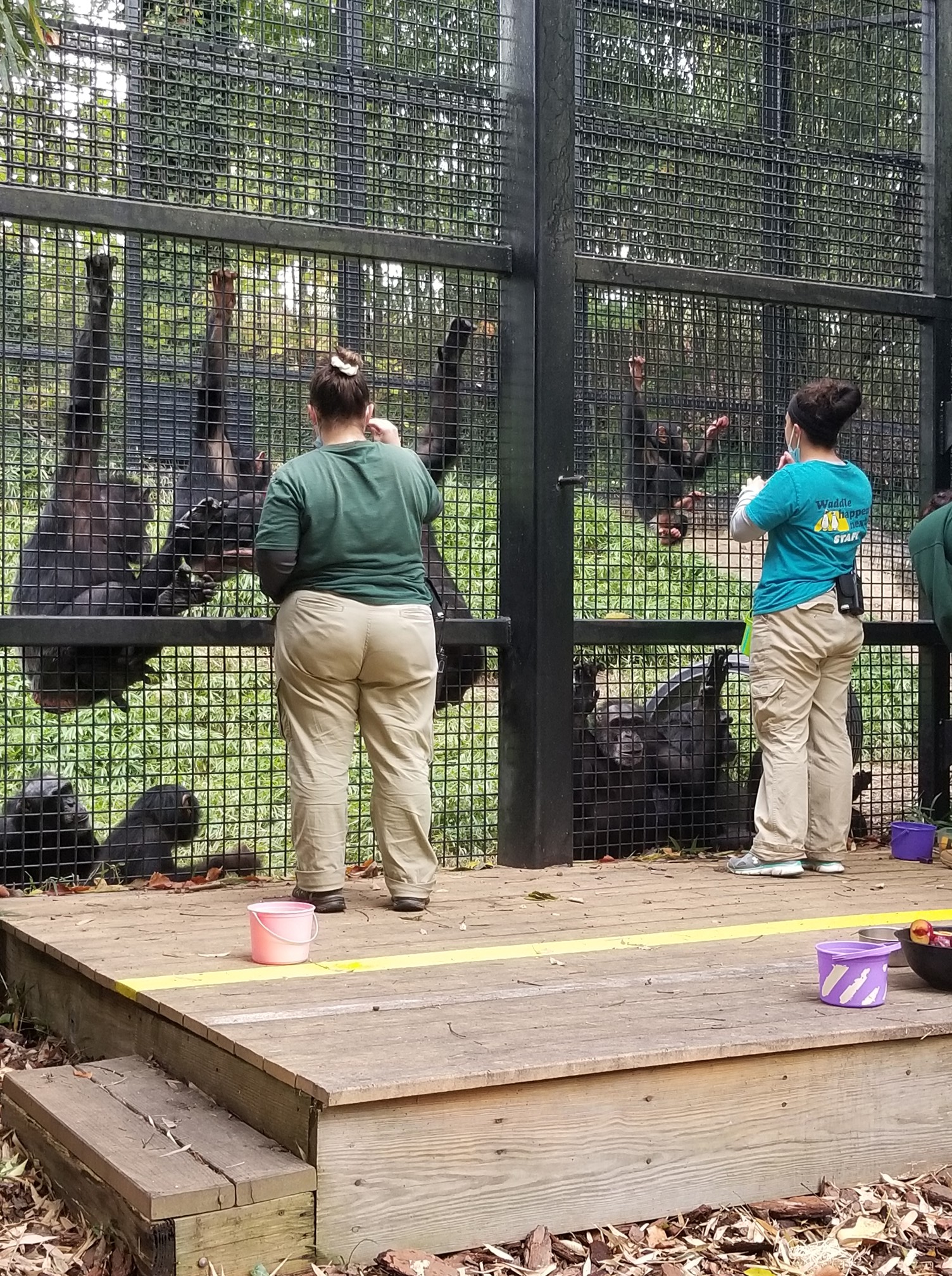
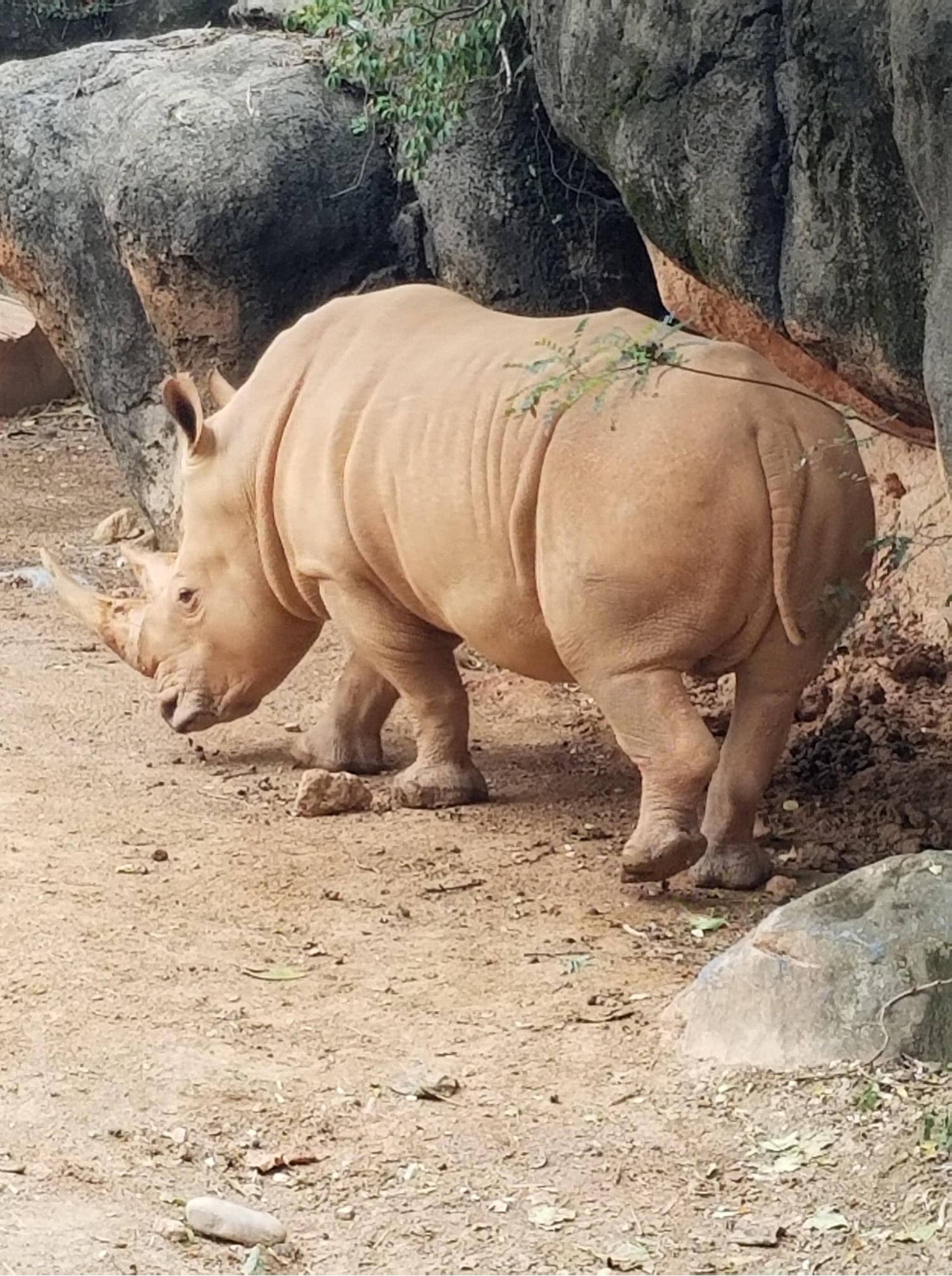
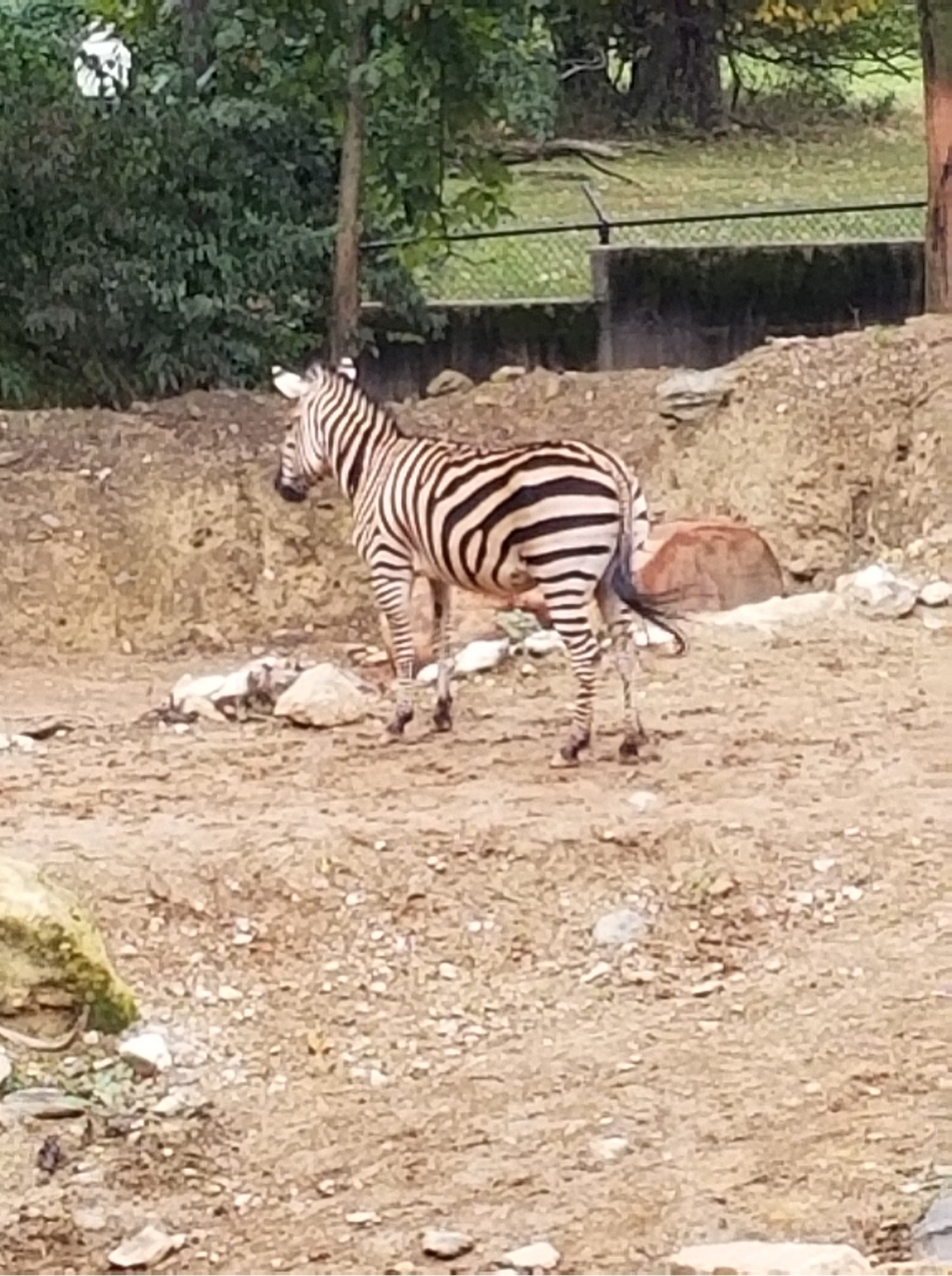
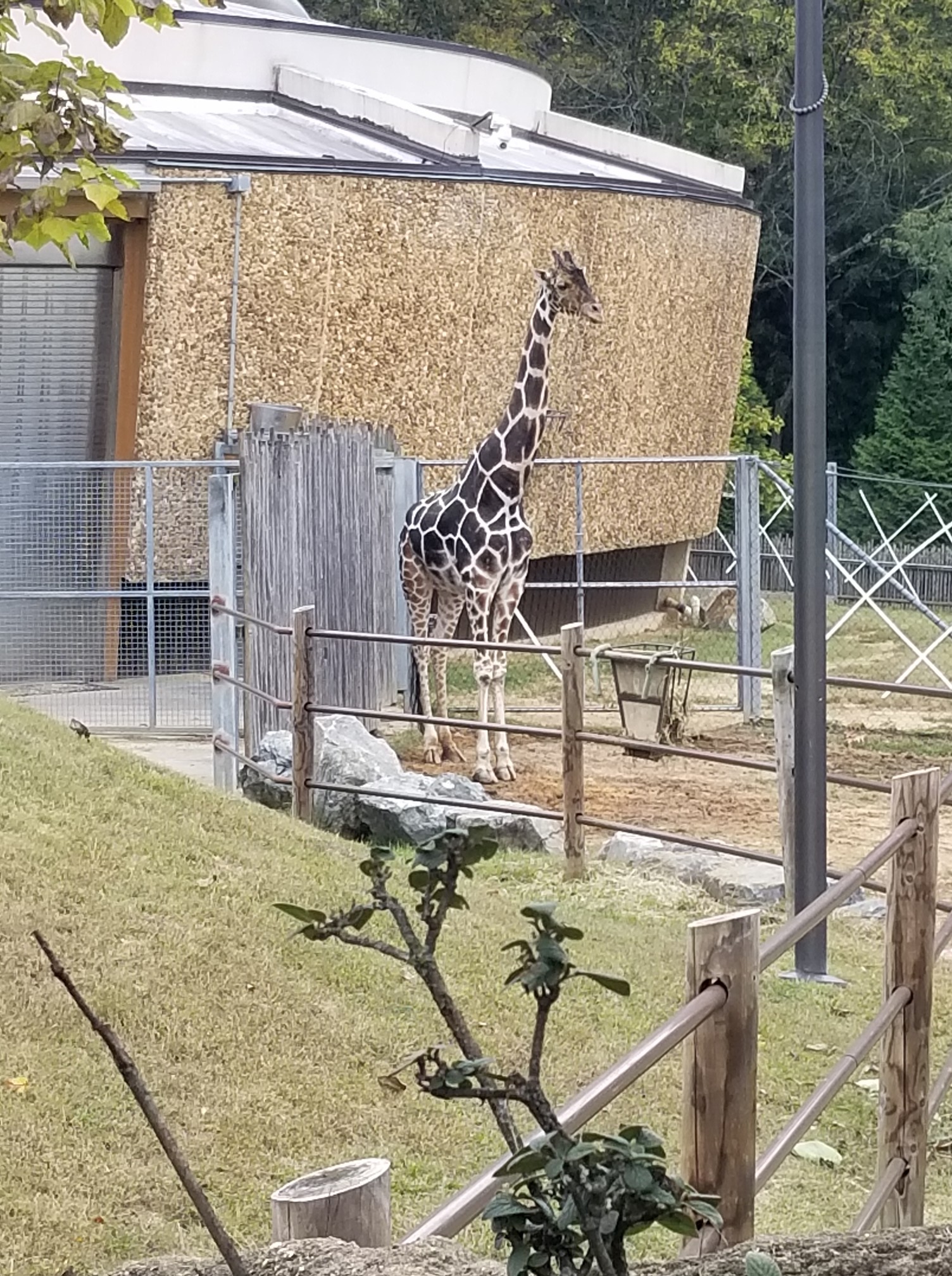
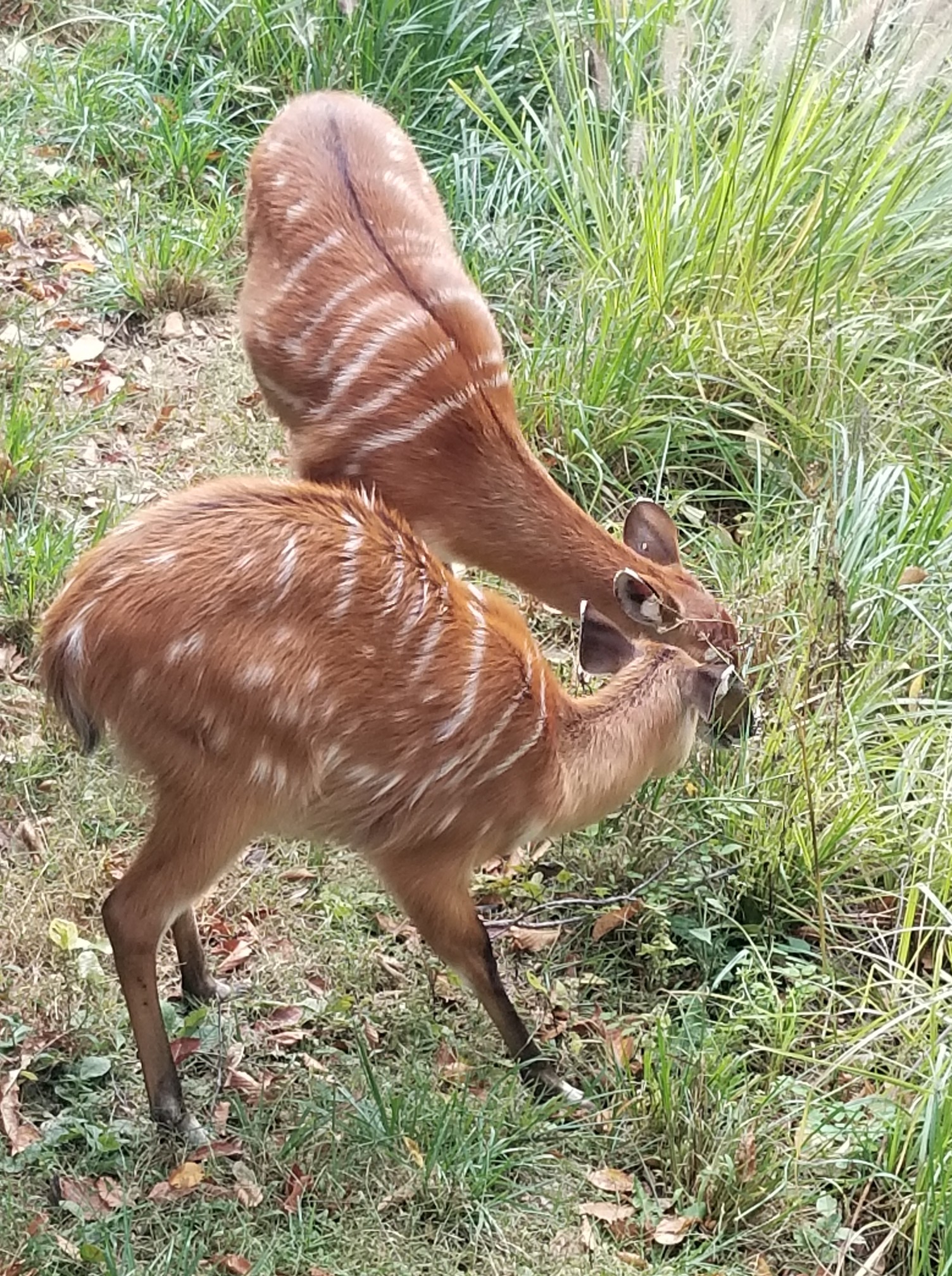
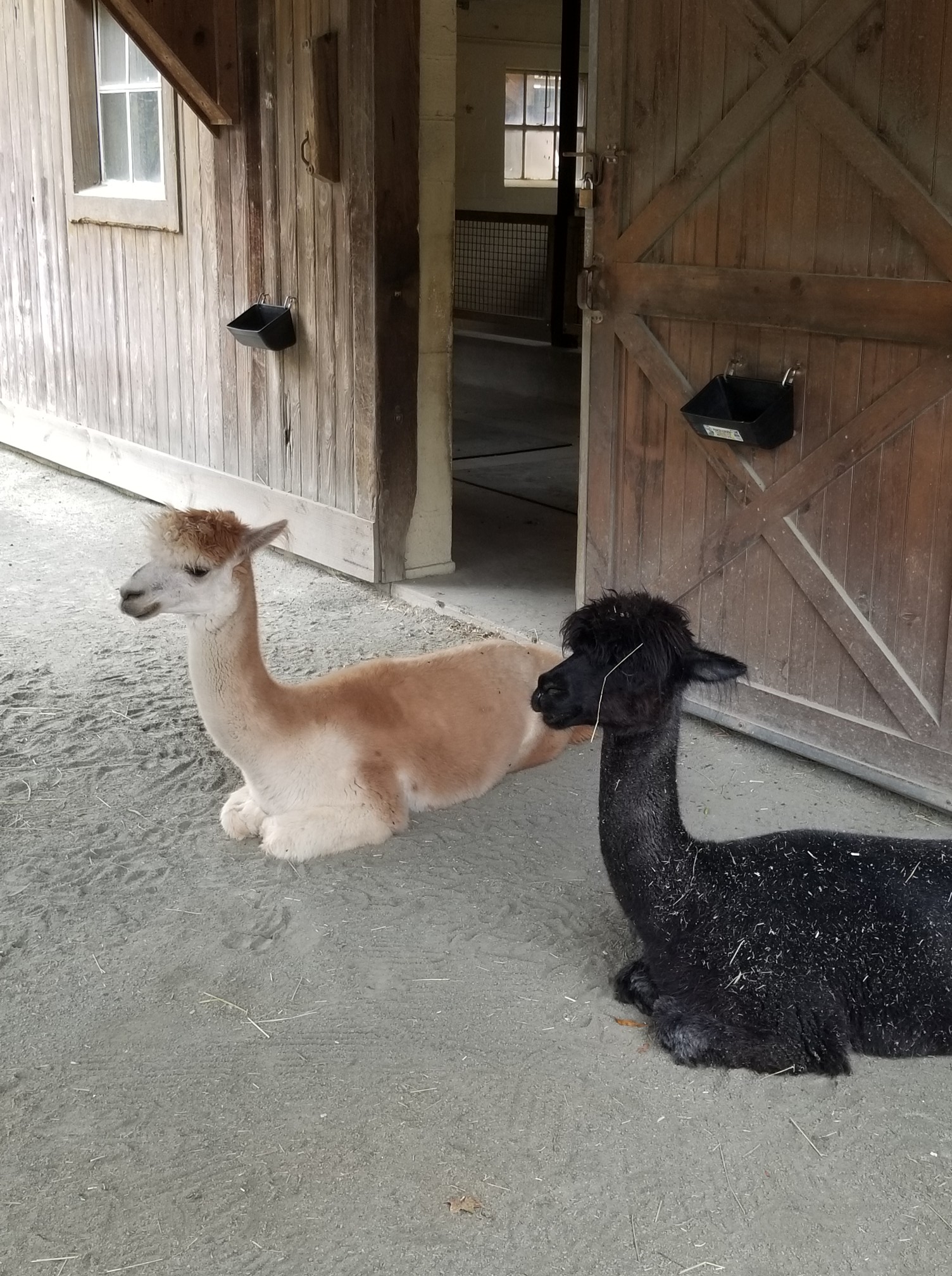
On Tuesday we visited Maryland Zoo. I have also included some animal photos.
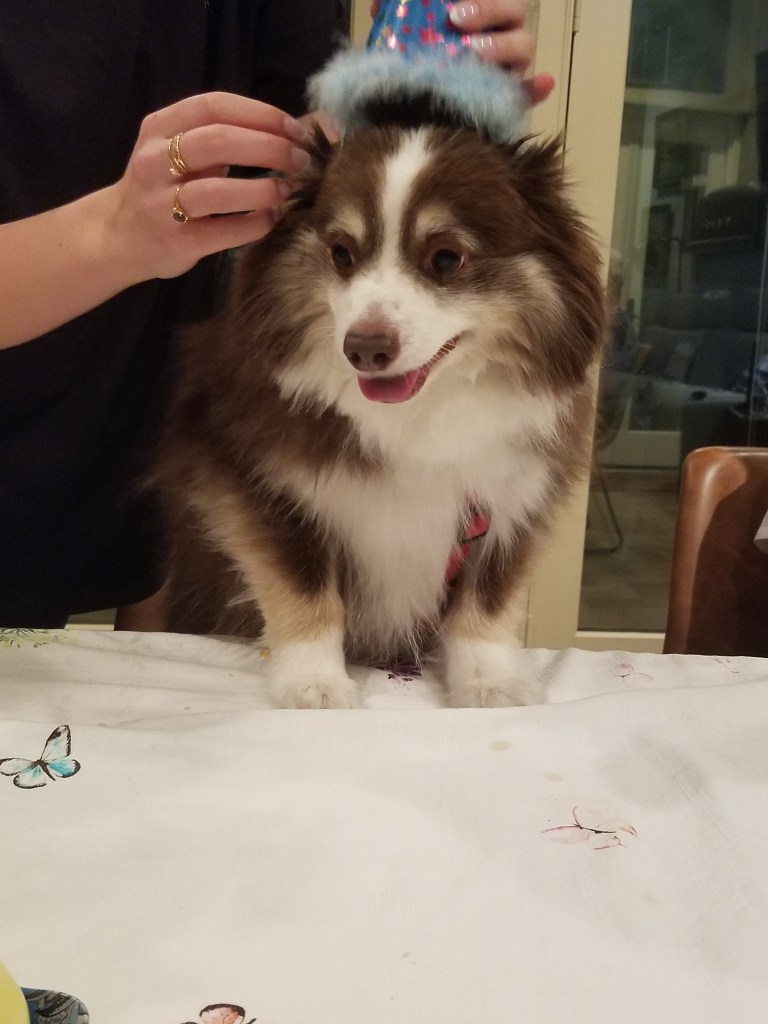
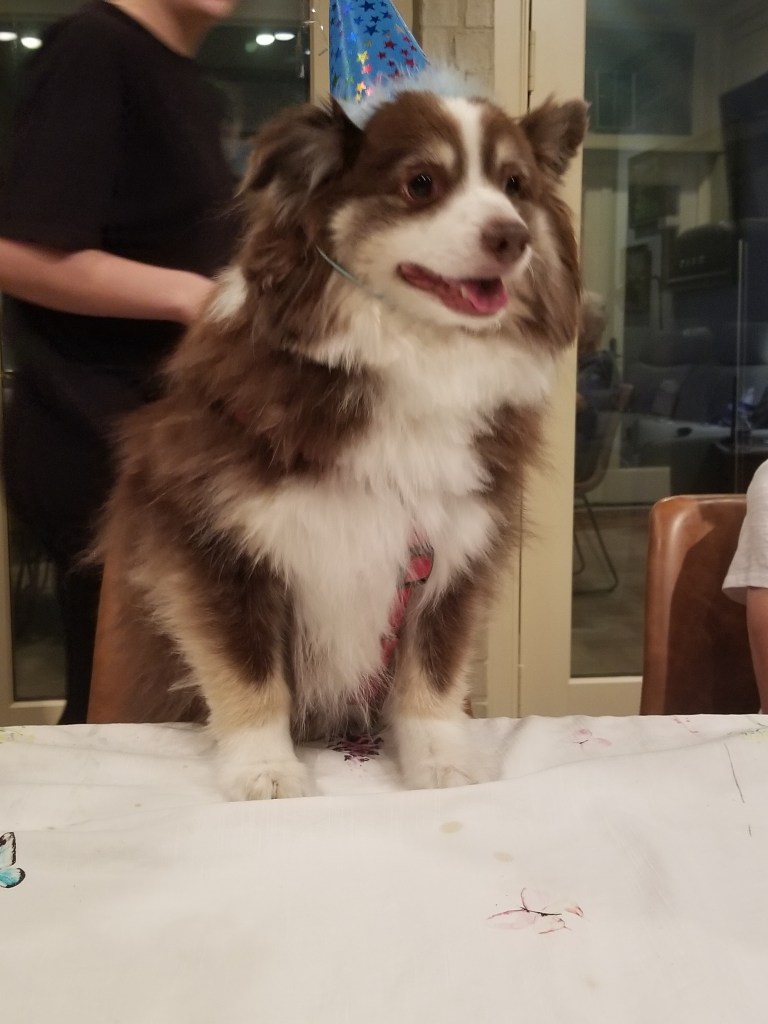
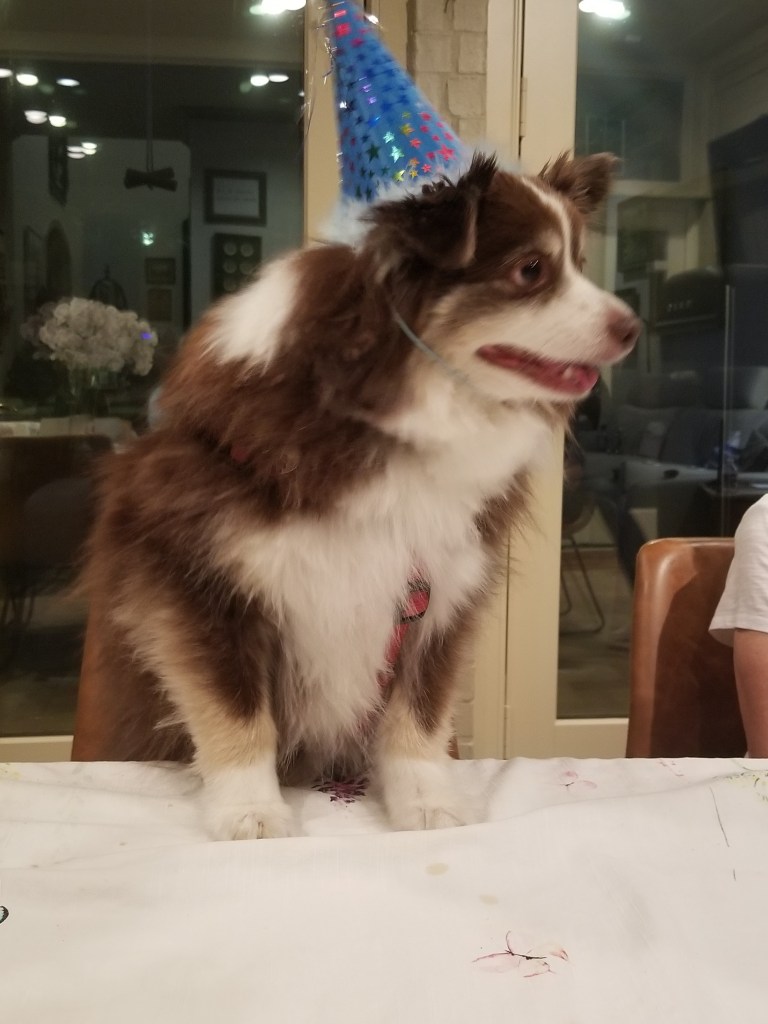
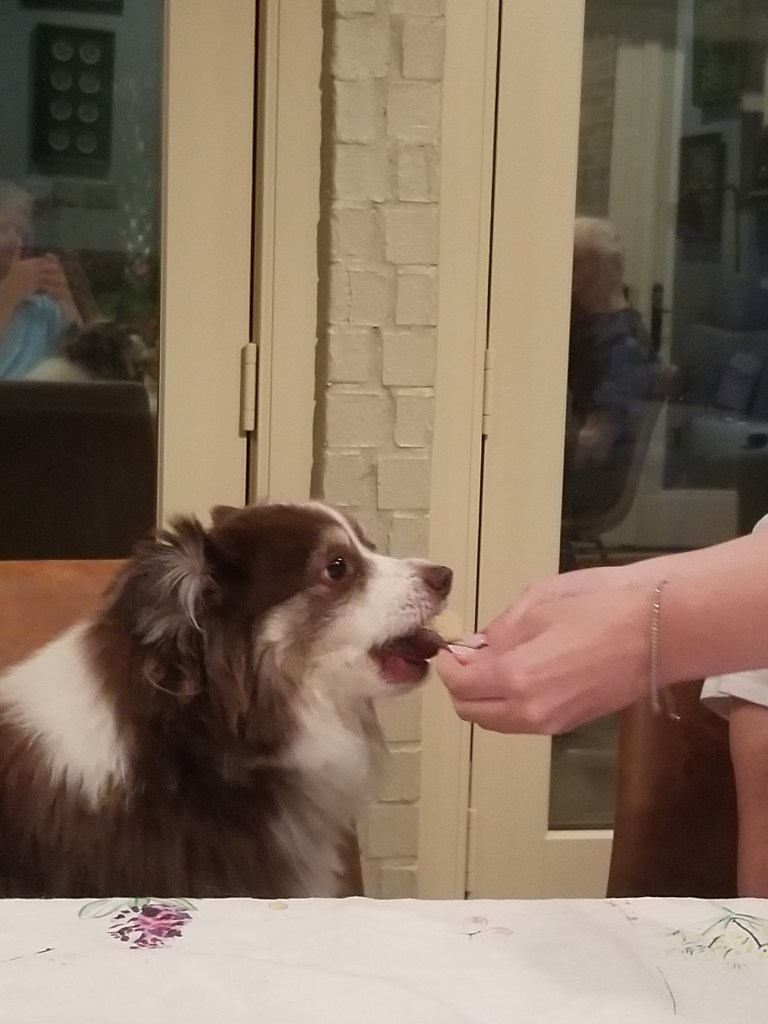
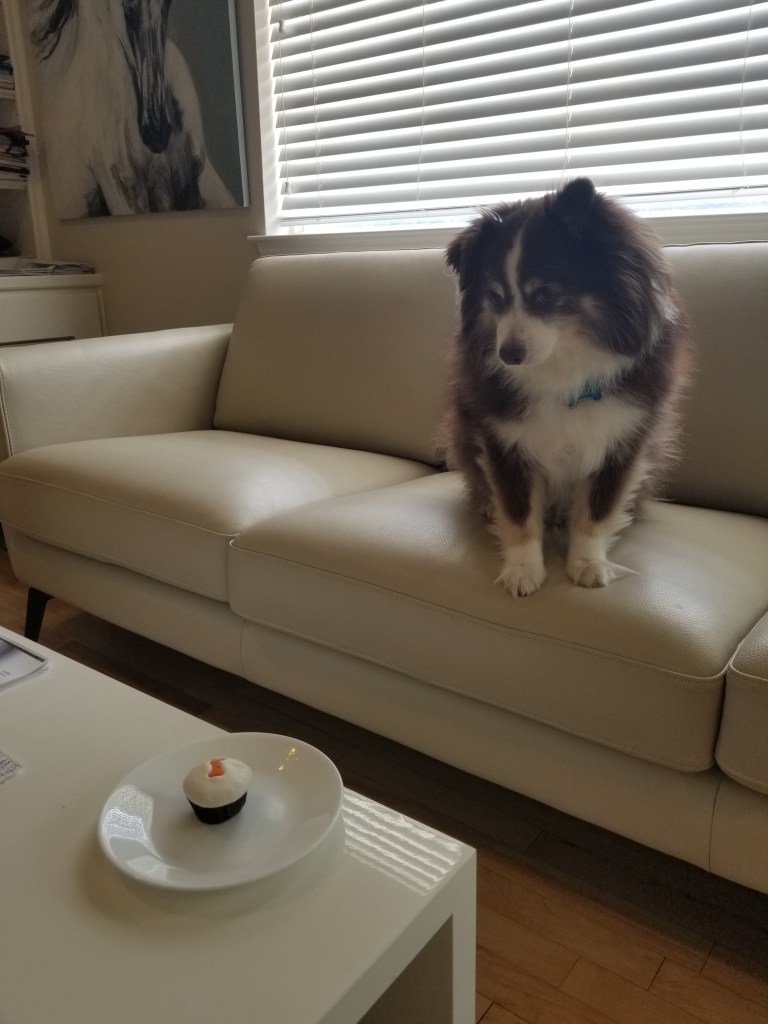
Rollo our mini-Australian Shepherd is turning seven years old today (October 12, 2025). This evening, we sang to him, in English, Swedish and French, and he got a pupcake (cupcake specifically for dogs) and piece of filet mignon. Later today (October 12) he will get celebrated again and have more pupcakes.
To celebrate Rollo’s birthday, I am posting 20 photos I took of Rollo today, or rather earlier this evening (October 11), as well as photos from the recent past, and also photos that are a year or older. Some of the older photos are with our late Leonberger Bronco. The first six photos I took today. If you’ve been following my blog for some time, you may have seen some of the older photos already.
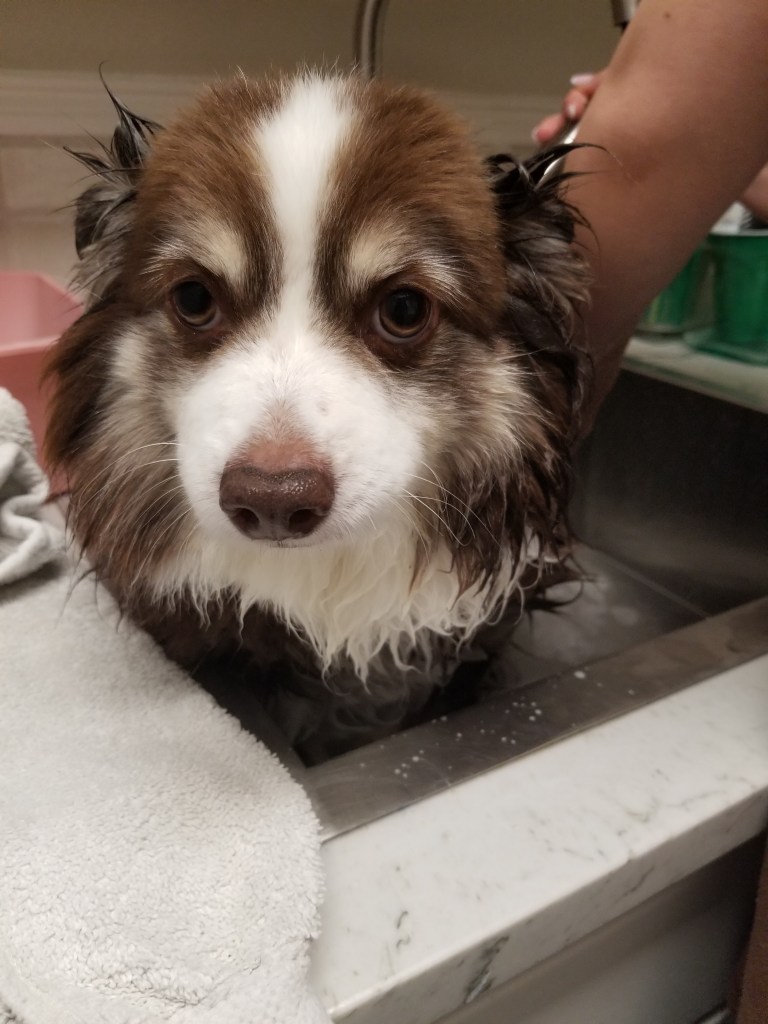
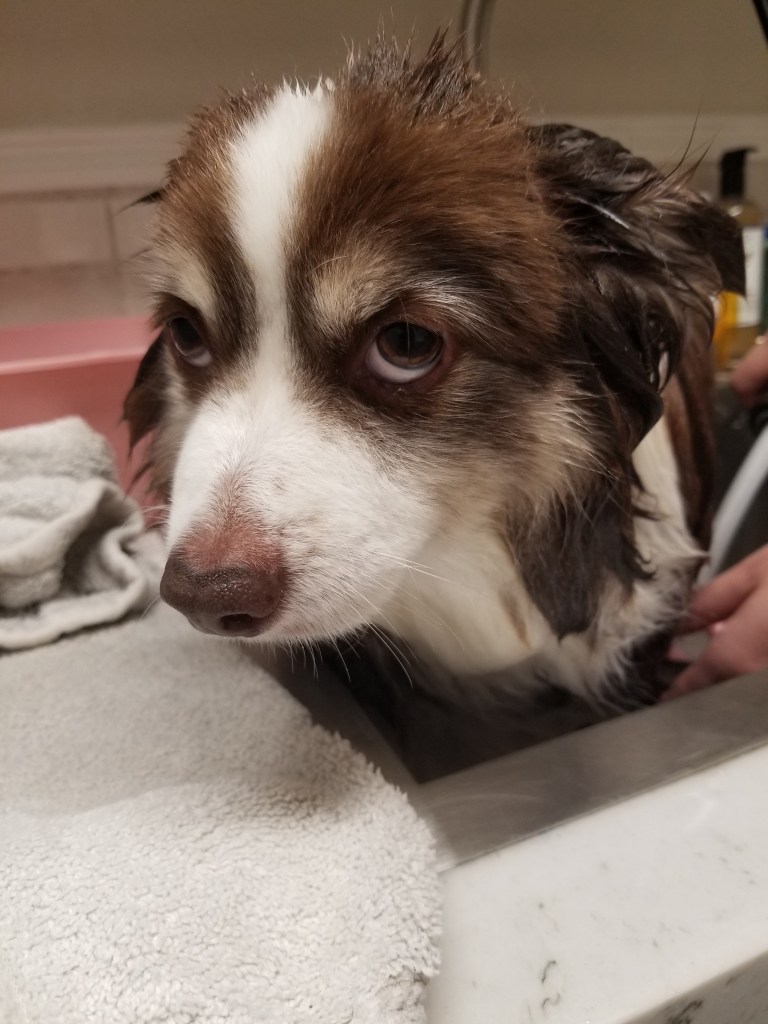
Washing Rollo
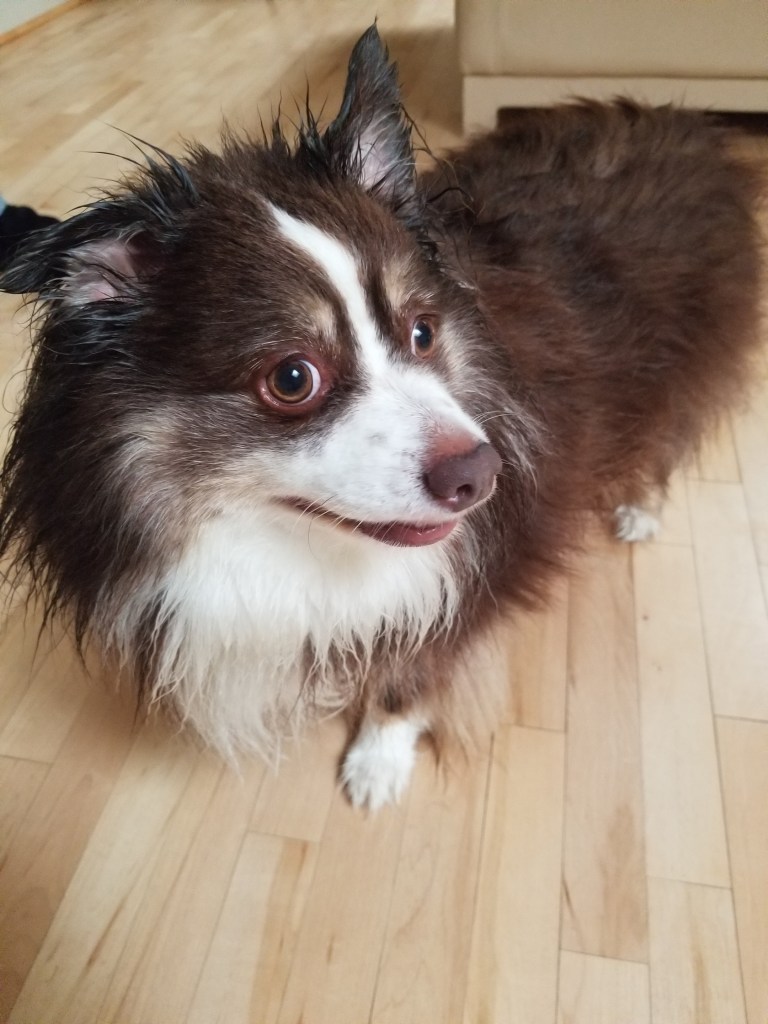
Before the festivities Rollo needed a bath. He is getting washed in the sink. He was not happy.When are you going to be done with this washing stuff?
Birthday Photos of Rollo
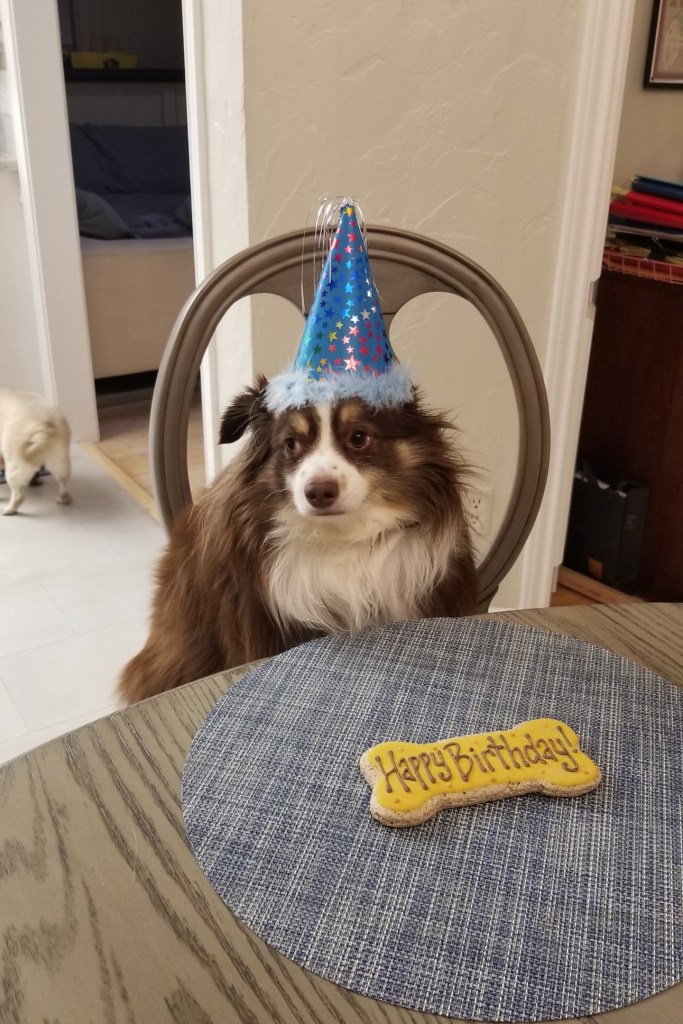
The birthday hat is coming on. He does not like the hat, so it did not stay on long.We are getting the pup-cake ready, and we are going to sing Happy birthday in several languages. Rollo very much appreciates us singing to him in multiple languages, but mostly he appreciates the pupcake. A pupcake is a cupcake made especially for dogs. We humans had cupcakes.Rollo is ready.Finally Rollo gets his pupcake
Recent Photos of Rollo
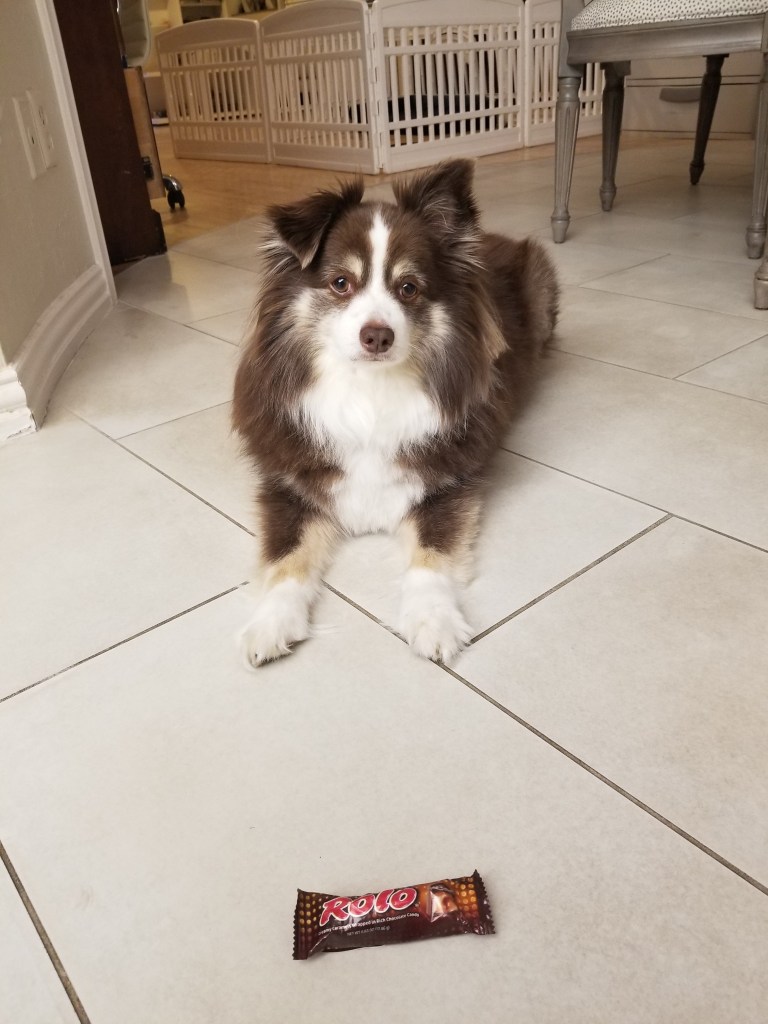
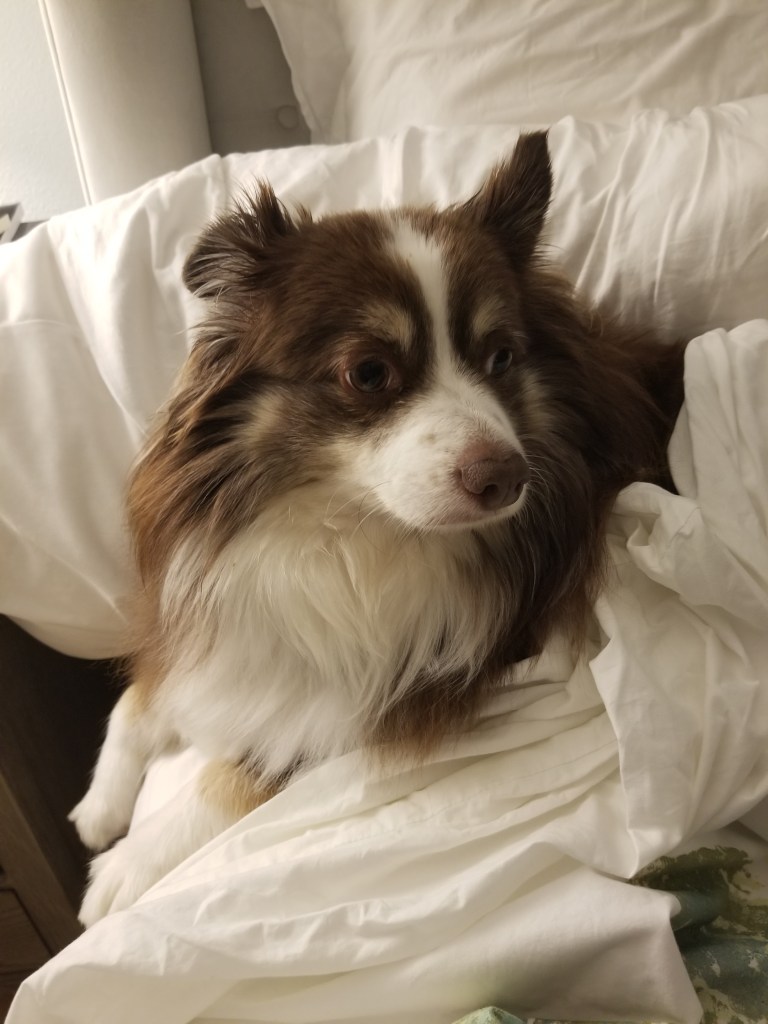
Rollo and a pupcake on a table.Rollo and a Rolo candy. Rollo was not named after the candy bar Rolo as often incorrectly assumed. Rollo was named after the Viking king who sacked Paris. You can say he was on a roll.Rollo likes to sleep in our bedsRollo is wet, not from being washed today but from rain on another occasion.
Older Photos of Rollo
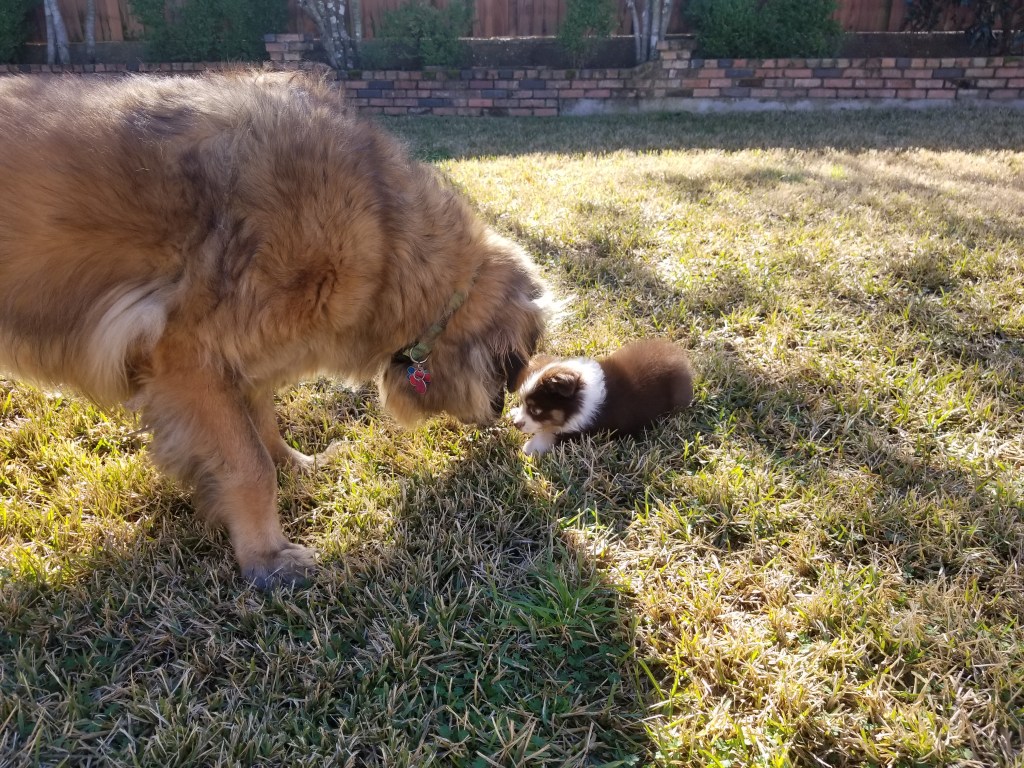
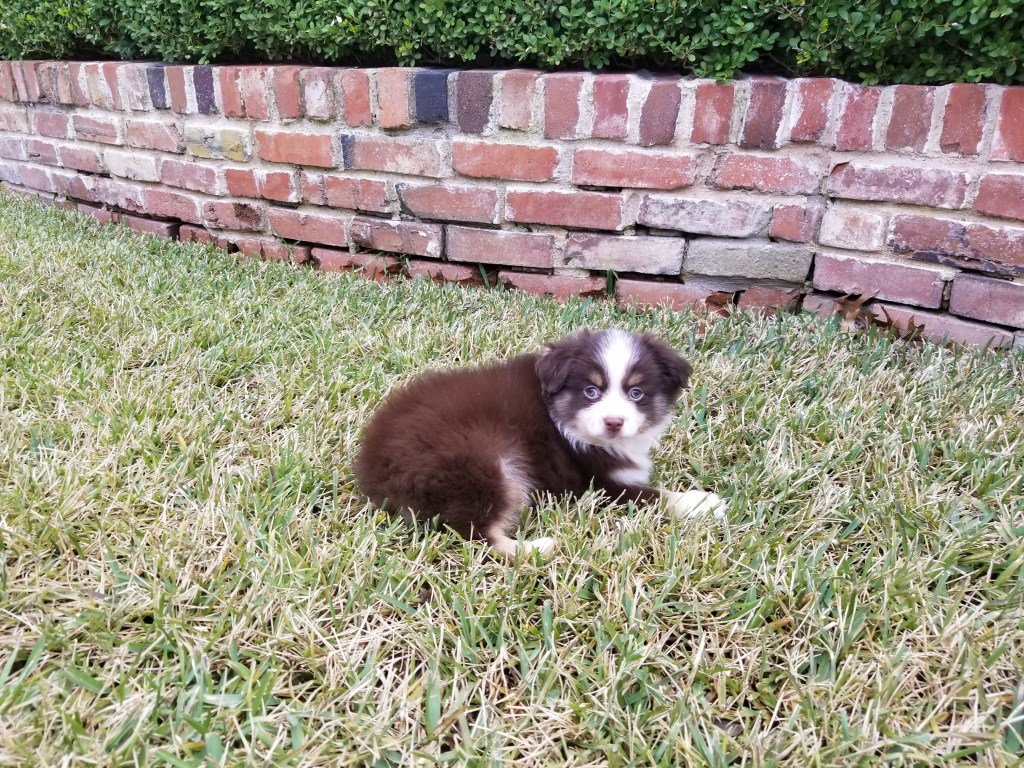
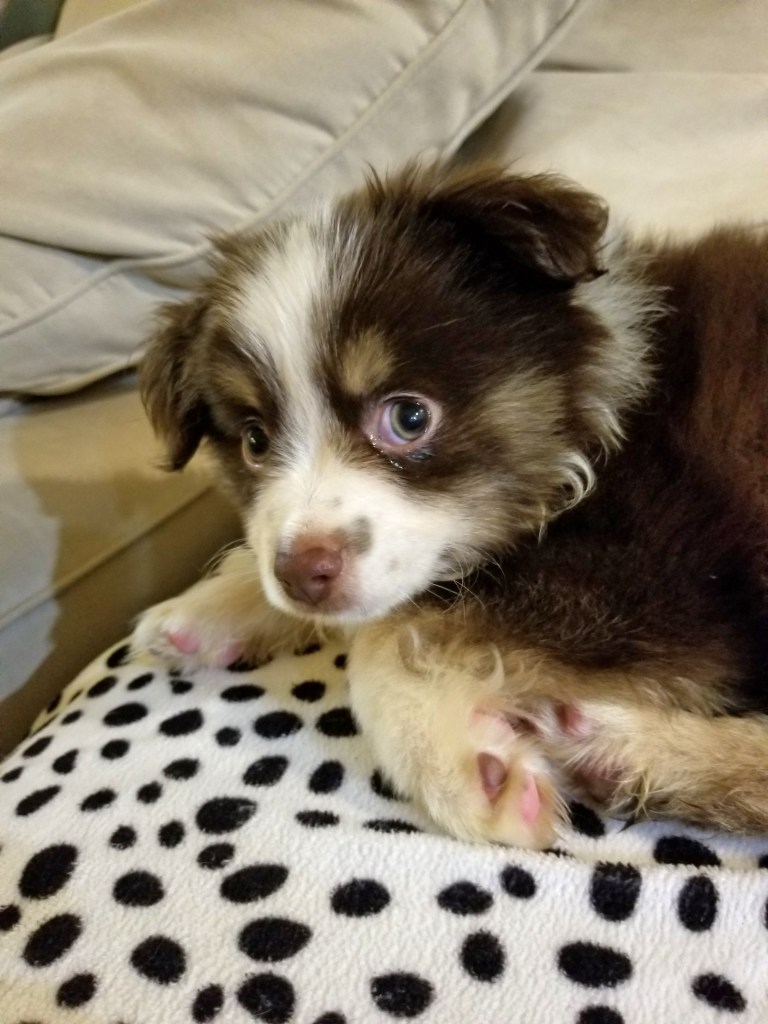
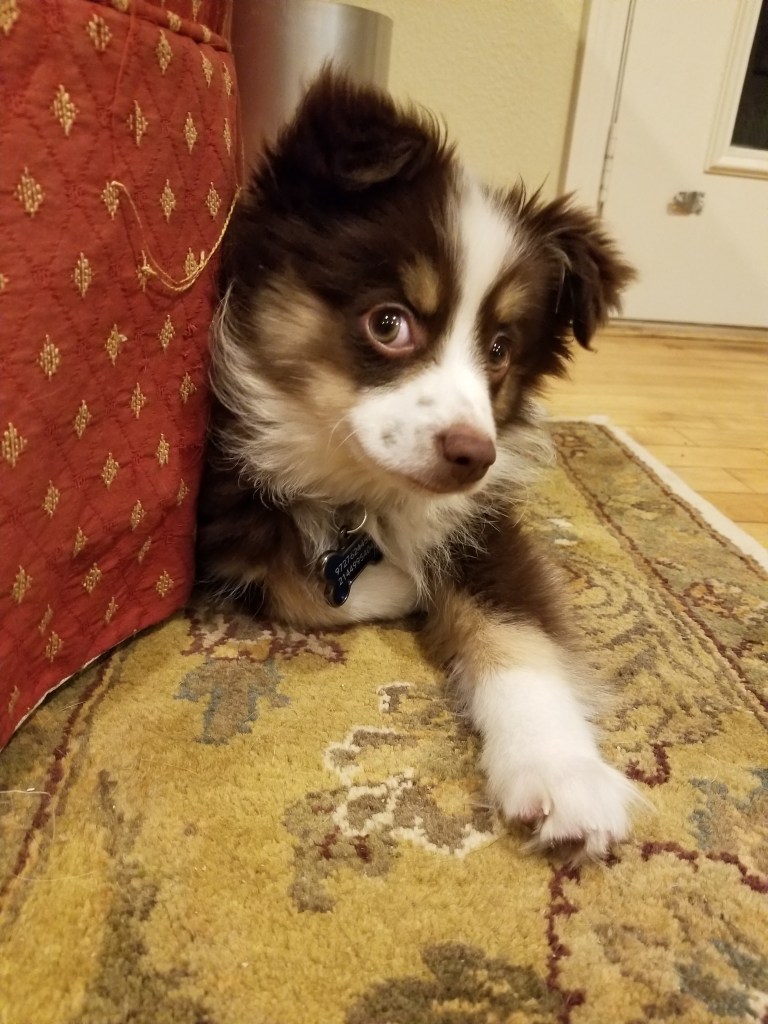
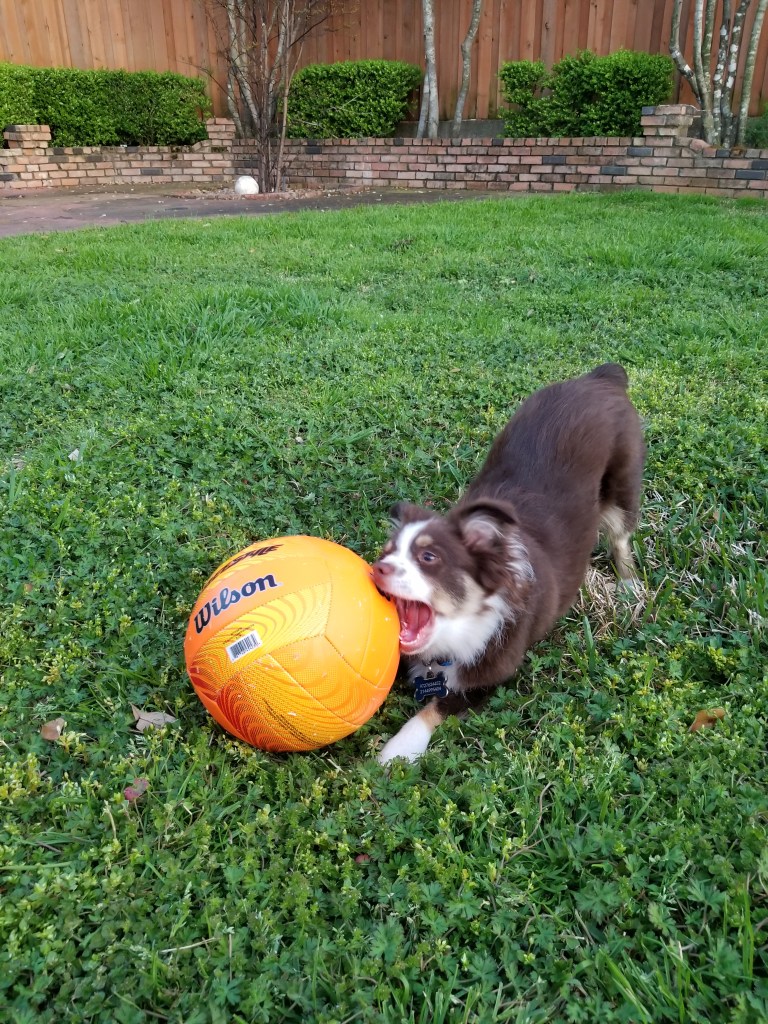
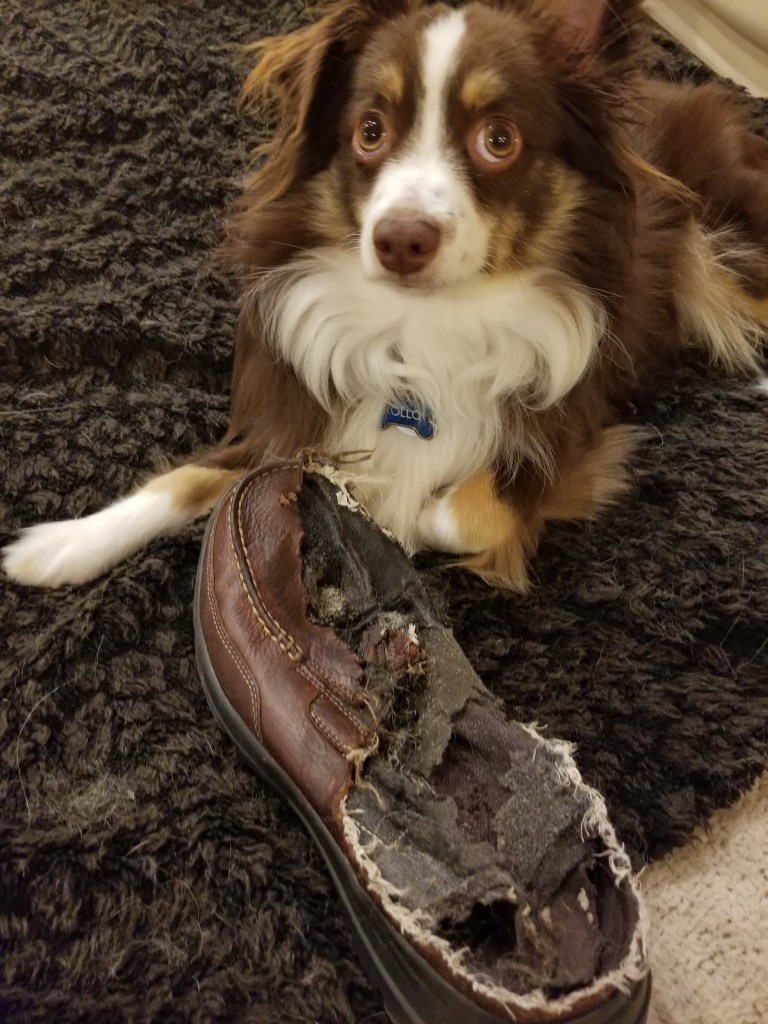
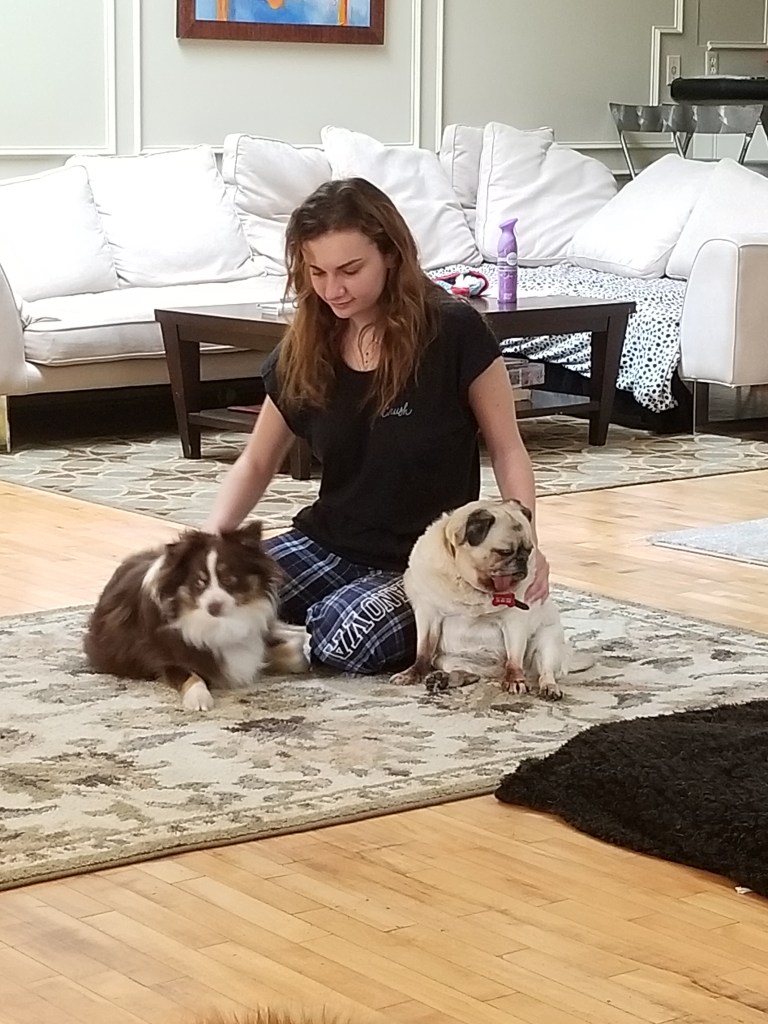
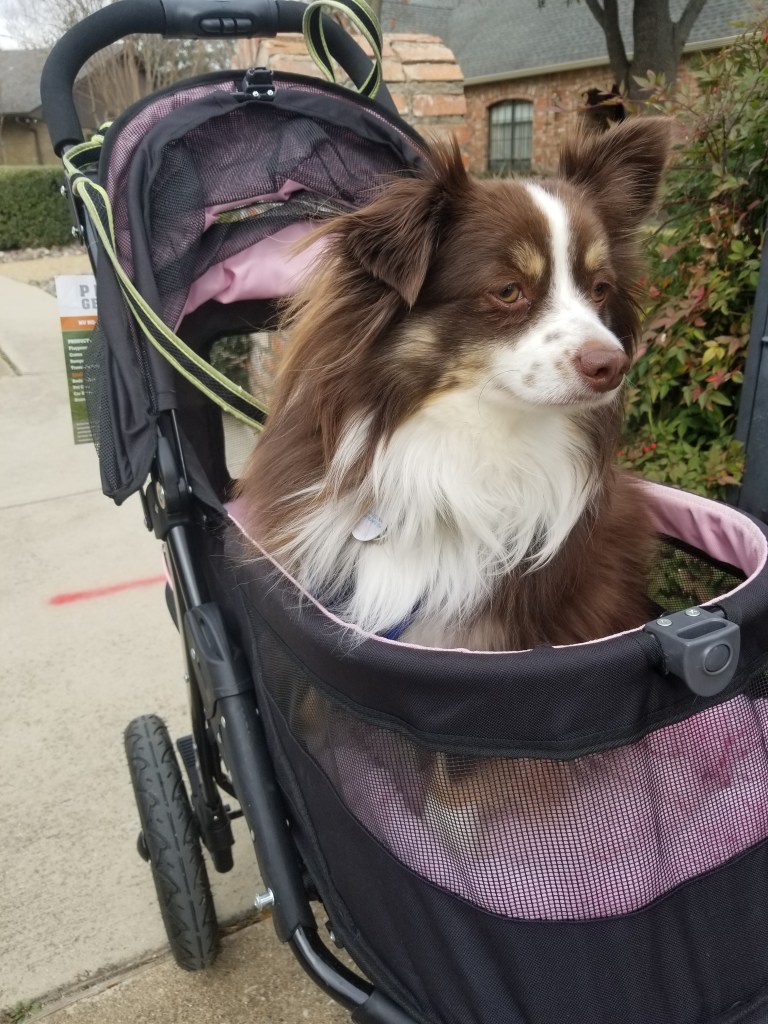
This is an old photo from his fourth birthday. He is unhappy with the hat.Rollo almost six years ago. He had just arrived at our house. Our Leonberger Bronco is welcoming Rollo.Rollo our mini-Australian Shepherd puppy.Close up of Rollo as a puppy.Rollo peeking out behind the sofa.Rollo playing with a volleyball.Rollo frequently bit our Leonberger Bronco’s tail, and he even swung in it like a swing. He climbed all over Bronco. Bronco was very patient with him.When Rollo was young, he loved chewing shoes. Here the artist is posing with his art.Our daughter with our mini-Australian Shepherd Rollo and Pug Daisy.Sometimes there are scary sounds and Rollo wanted to sit in the stroller we bought for our Pug Daisy. We have not been using that stroller since Daisy passed.
To see the blog post from Rollo’s sixth birthday click here and Rollo’s fifth birthday click here.
A professional content writer specializing in animal healthcare and veterinary topics by the name Emma Johnson contacted me about publishing veterinary information on my Leonberger blog, which I am certainly happy to assist with. Check out her article below.
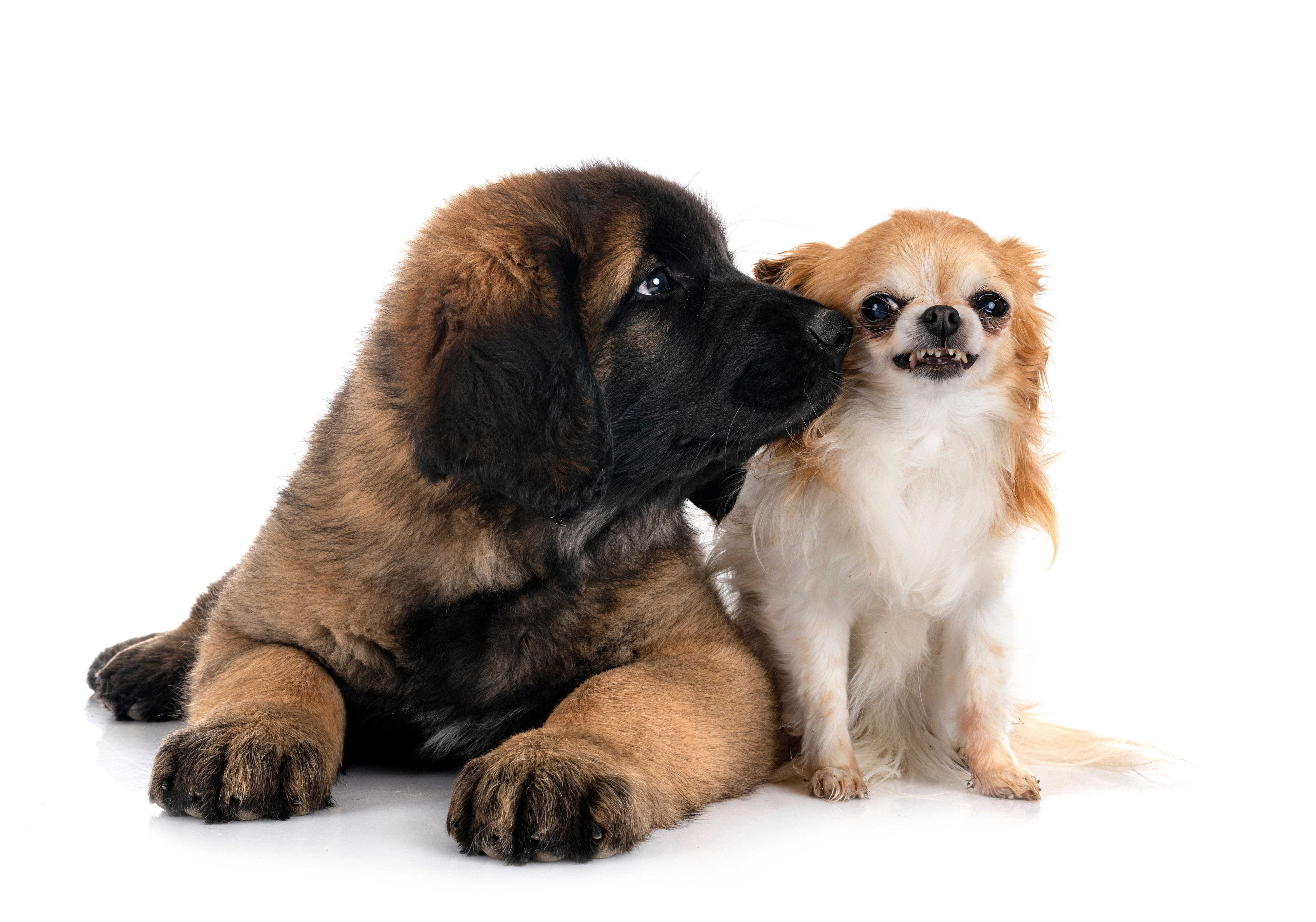
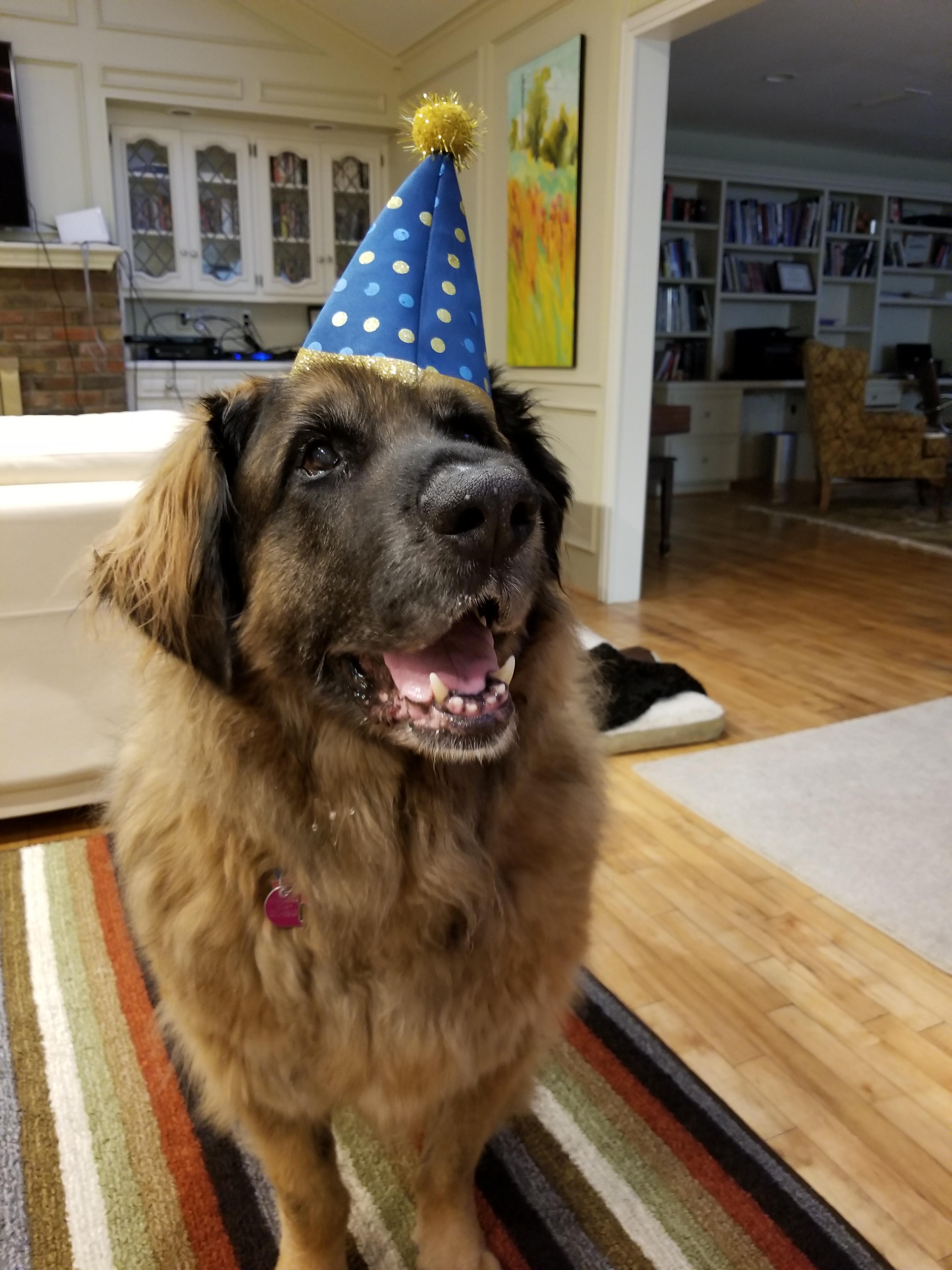
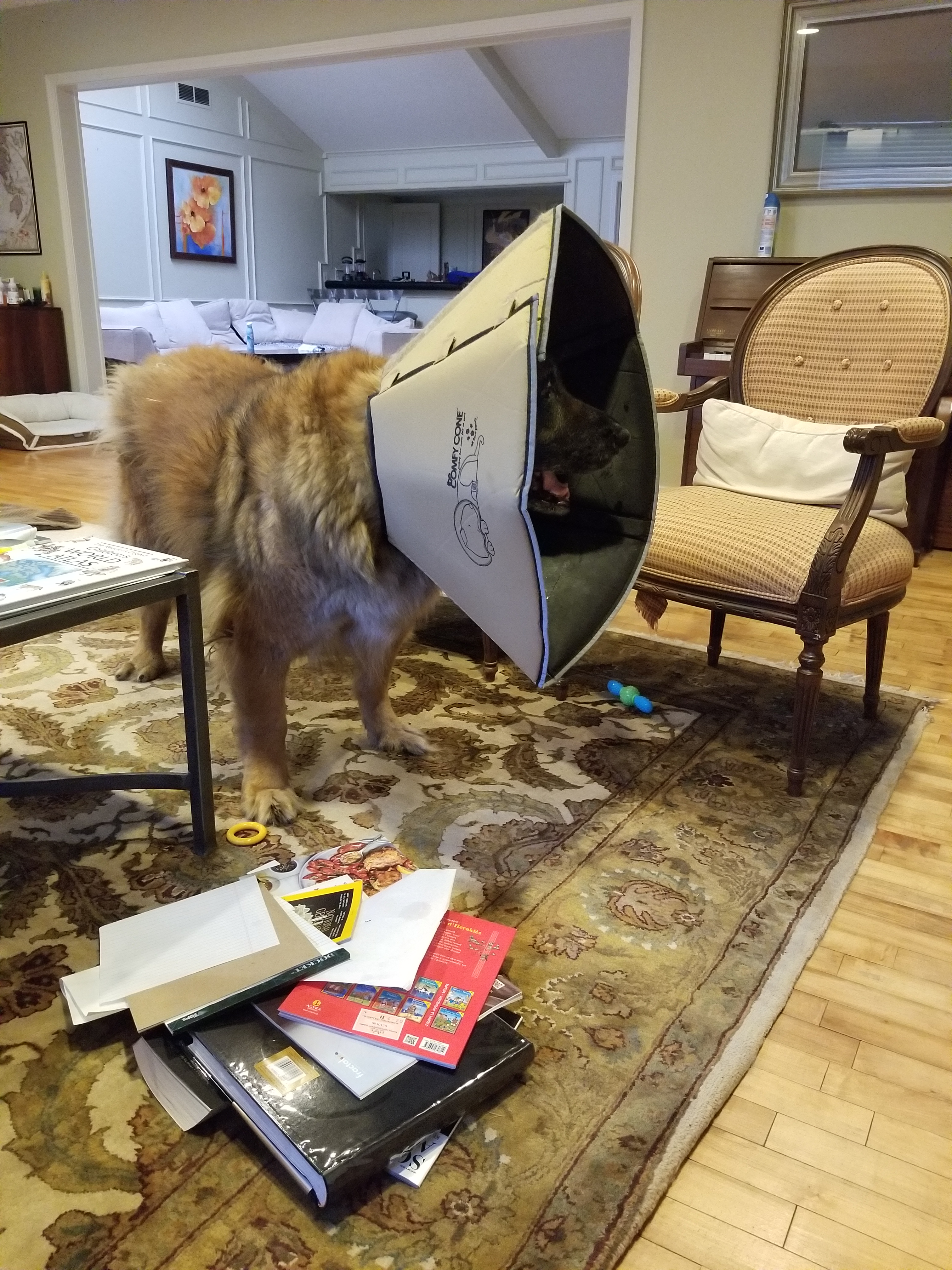
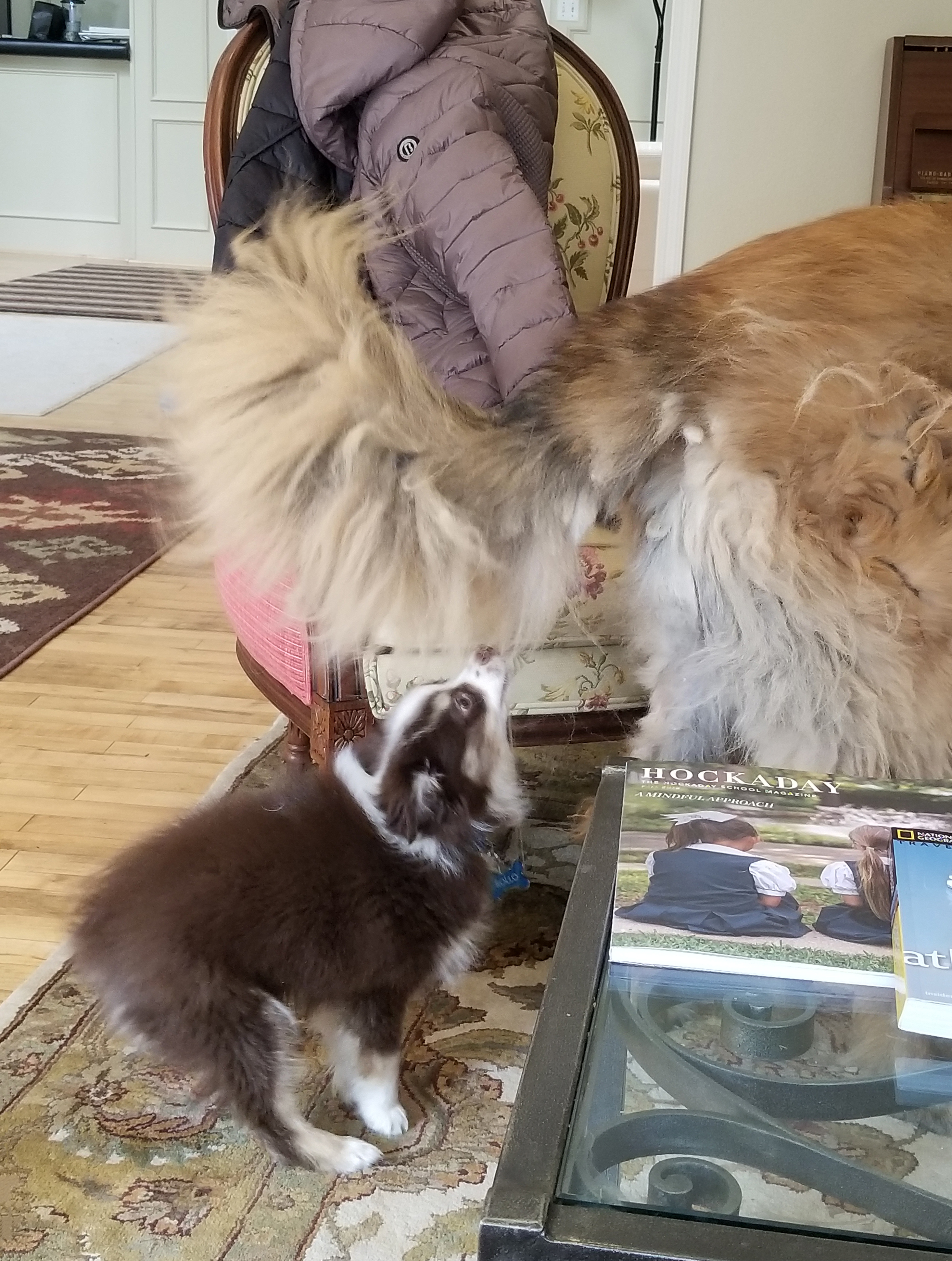
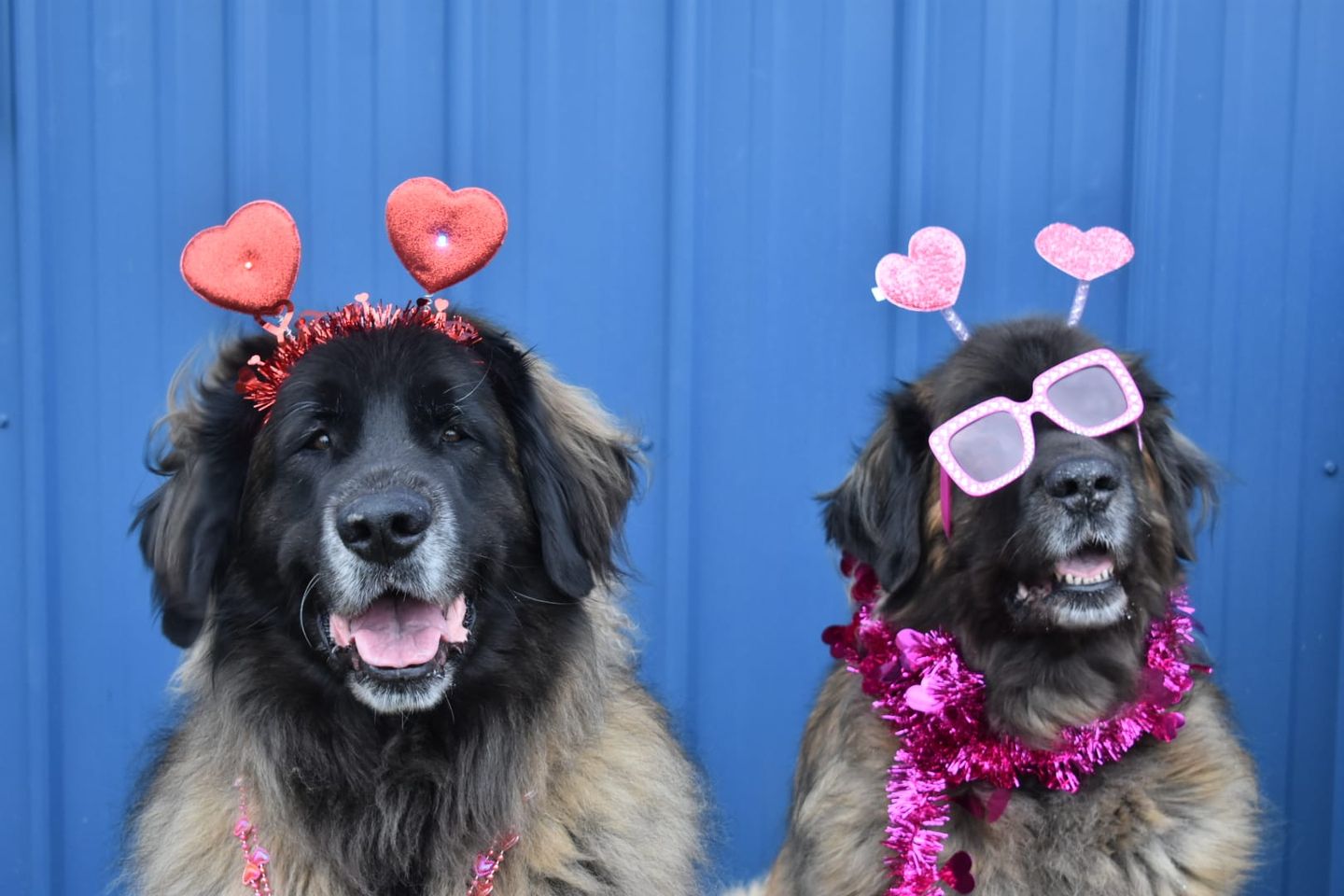
This photo tile includes a photo of our Leonberger Bronco wearing a birthday hat on his 11th birthday, our mini-Australian Shepherd biting our Leonbergers tail, our Leonberger Bronco wearing a cone and accidentally clearing the table of its content, a friends funny photo of Leonbergers Digory and Obi (by Jen O’Keefe) and a shutter stock photo of two light colored Leonberger puppies playing. Shutterstock-ID: 2141564415 by AnetaZabranska.
Article by Emma Johnson
The Leonberger is a friendly giant known for its kind temperament and large size. These beautiful dogs are wonderful companions, but their size can affect their health to some extent. Leonberger health challenges must be well understood by owners and veterinary professionals so that the lives of the big dogs are as healthy and happy as possible.
This article tackles the biggest problems and lays out preventive care options to protect these dogs. It is simpler to know what to anticipate and how to avoid these issues. Let us begin by finding out about some of the most common diseases that occur to Leonbergers.
Understanding Common Leonberger Diseases
Leonbergers suffer from many diseases. They can be joint issues, heart issues, hip dysplasia, eye issues, and skin allergies. These issues arise over time; therefore, prevention and detection at an early age are crucial.
In such situations, periodic examinations are advised by veterinarians, and collaboration with the dog’s owners is recommended. Prevention is all about good food, exercise, and periodic check-ups from the veterinarian.
We will learn how genetic problems in Leonbergers are addressed and how actively they can be dealt with.
Genetic Issues in Leonbergers and How to Deal with Them
Breed history and size are the main causes for genetic issues in Leonbergers. These are directly affecting Leonberger’s lifespan and general health. Prevention is achieved through education and proper care.
Genetic risks and prevention include:
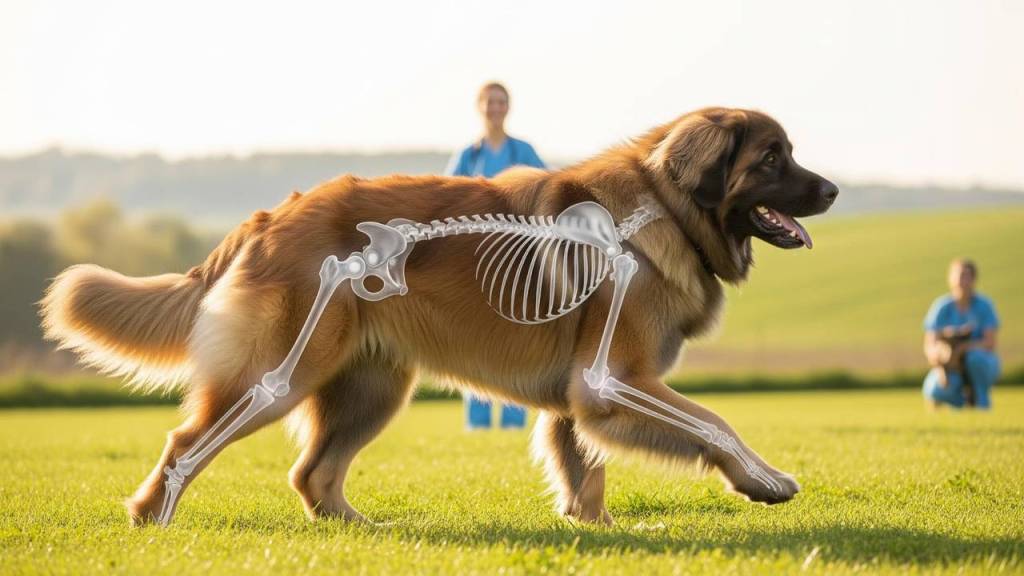
Hip dysplasia: Select sound breeders who screen for hip wellness. Keep your dog at a healthy weight and encourage low-impact play.
Elbow dysplasia: Refrain from overexercising and ensure proper nutrition.
Heart issues: Have regular cardiac check-ups and watch for activity levels.
Eye issues: Have regular eye exams and maintain eye cleanliness.
Pre-treatment of genetics, through both breeding selection and preventive maintenance, lowers the risk of major issues. Let’s discuss the big picture now: Leonberger lifespan and health.
Leonberger Lifespan and Health
The average lifespan of a Leonberger is 8 to 10 years. Big dogs tend to have a shorter lifespan, but with proper preventive care, it can be extended.
Suggestions from experts are:
Balanced meal plan that is rich in nutrients
Weight management to minimize joint stress
Low-impact exercise
Routine visits to the veterinarian for the detection of diseases in early stages
Pro Tip: In case of emergencies and accidents, effective veterinary bandaging skills are priceless. They prevent infection, protect wounds, and promote faster healing. Thus, both pet owners and vets must improve their veterinary bandaging skills.
A regular schedule of preventive care and practical first aid skills is the key to maintaining a Leonberger’s health and longevity. This includes treatment of Leonberger joint problems, the most common health problem of the breed.
Preventing Leonberger Joint Problems:
Leonberger joint problems, including arthritis, hip dysplasia, and elbow dysplasia, are among the most common health issues this breed will encounter. Prevention starts with proper weight. Excess pounds put extra pressure on joints and worsen conditions.
Early focus on joint maintenance makes prevention easy. That inevitably centers on the role of exercise and diet.
Exercise and Nutrition
Low-impact activity, such as controlled walking or swimming, provides joint mobility without overloading. A balanced diet with proper nutritional intake is also a must. In consultation with a veterinarian, supplements such as glucosamine and chondroitin may also be employed to maintain joint health.
These lifestyle modifications fortify the joints but are optimally used when complemented by regular veterinary visits.
Regular Checkups
Orthopedic examinations should be conducted regularly to identify problems before they cause damage. Regularity in these preventive check-ups can keep your Leonberger comfortable and active for life.
With joint maintenance underway, attention now must turn to another essential area of health: the heart.
Prevention of Leonberger Heart Problems:
Leonberger heart problems, particularly dilated cardiomyopathy, can advance with no apparent symptoms, and thus, prevention is important.
Diet and Lifestyle
Daily check-ups, a healthy diet, and regular exercise maintain the heart in good health. Avoid stress and overexertion.
Preventive measures at home are required. Periodic veterinary check-ups should be organized, nevertheless.
Early Detection Of Symptoms
Be vigilant for signs of exhaustion, cough, or respiratory deviation. Seek the advice of a veterinarian if there are any concerning signs in the pet. Early diagnosis significantly enhances the prospects of success.
Strong hips also contribute to overall heart health. Therefore, the same care and attention should be given to prevent hip dysplasia.
Prevention of Leonberger Hip Dysplasia:
Leonberger hip dysplasia is an abnormal development of the hip joints that leads to pain and loss of mobility. Prevention is early.
Breeding and Early Life Care
Seek out breeders who conduct hip soundness testing. Keeping your Leonberger lean and limiting high-impact exercise will help to build and develop joints. High-quality breeding, proper early care, and frequent veterinary check-ups are key to a long, healthy life for your Leonberger.
Early Veterinary Care
Prompt discovery can make a huge difference in comfort and mobility. Be mindful of the signs of discomfort in your pet. If the dog shows hesitation in movement, exercise, or play, it’s a sign of concern.
Moreover, watch out for signs of exhaustion after minor physical activity. Symptoms such as limping and whining while walking shouldn’t be ignored. A physical examination should be scheduled immediately to pinpoint the exact cause of pain and discomfort.
After the hips are healthy, vision care is the next priority of preventative care. We’ll cover that in the next section.
Preventing Leonberger Eye Problems:
Vision care is a cornerstone of your Leonberger’s overall health, making them comfortable and independent in their golden years. Healthy eyes enable them to be confident and active on a daily basis. Preventive care today can save a lot of stress and treatment down the road.
Common Eye Issues
Leonbergers can be susceptible to vision and comfort-degrading issues like cataracts and entropion. Cloudiness or tearing must be noticed early on. Regular veterinary eye examinations ensure early detection is probable and help maintain their quality of life in balance.
By being attentive to common vision issues and regular hygiene, you can protect your Leonberger’s eyesight and health.
Hygiene and Care
Eye cleaning prevents infection and irritation. Easy grooming, such as wiping off discharge and watching for redness, can be a big help. A quick response when there is any sign of irritation prevents problems from getting out of control.
Finally, let’s discuss how genetic testing can help with coping with Leonberger health problems.
Breeding Considerations
Genetic testing is the key to avoiding inherited eye conditions. Selecting breeders who prioritize vision preserves generations to come. Healthy vision is as crucial to mobility as it is to overall well-being.
Caring for vision maintains independence, but caring for healthy skin maintains comfort and well-being. Preventing skin allergies is covered in the next section.
Preventing Leonberger Skin Allergies:
Skin health is a part of overall well-being in your Leonberger. Healthy skin not only avoids pain but also prevents infection and irritation. Preventive care involves frequent grooming, attention to hygiene, and vigilance.
Causes of Skin Allergies
Environmental factors, food allergy, or parasites are the causative agents of Leonbergers’ skin allergies. Early diagnosis of causes prevents long-term complications.
It is through preventive measures that you need to take steps to make your dog stress-free and comfortable.
Skin Care Routine
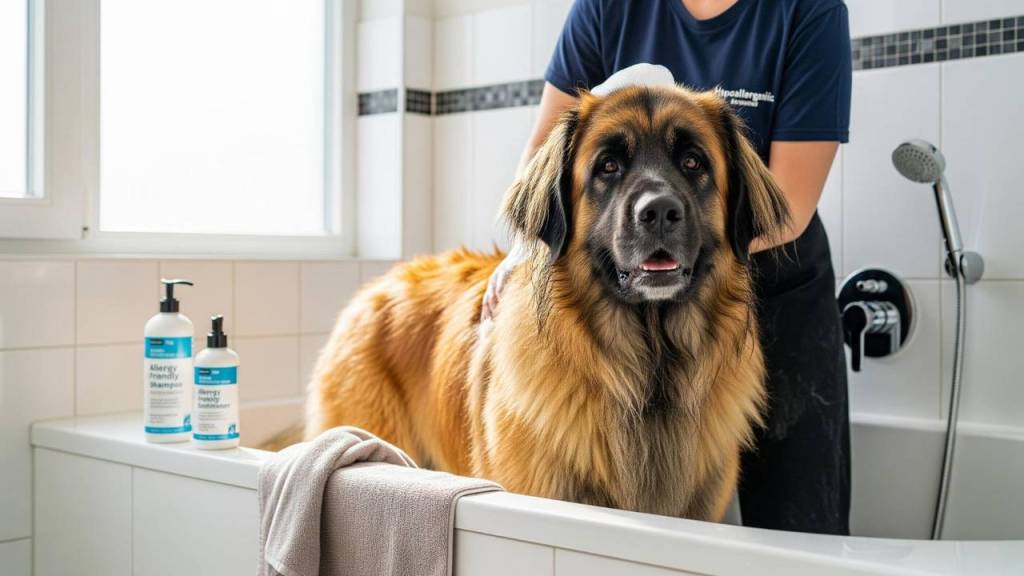
Daily brushing and grooming eliminate dirt, allergens, and loose hair that irritate the skin. Hypoallergenic shampoos and conditioners soothe the skin and avoid flare-ups. A balanced diet containing omega fatty acids also maintains a healthy coat and skin.
Early Care
Skin problems must never be overlooked, as they can quickly become long-term problems. Coordination with your vet for regular checkups ensures that issues are addressed on time.
Preventive skin care is an important element of preventive health. Coordination of these practices ensures your Leonberger has a long, happy, and healthy life.
Preventive Care Checklist for Leonbergers, as suggested by the veterinarian
Here is a brief preventive care checklist for Leonbergers:
Work towards maintaining your dog’s healthy weight to keep them overall healthy.
Encourage your dog to perform low-impact exercises.
Turn outdoor play into a regular activity.
Undergo genetic tests to identify hereditary risks before breeding.
Check for dental and skin health to avoid infections and discomfort.
Get regular vaccinations and parasite control for complete preventive care.
Utilize a veterinary AI scribe to document, monitor, and maintain patient information efficiently.
Regular wellness visits detect health problems in Leonbergers. Regular checkups screen for inherited disorders, evaluate weight and exercise requirements, and examine the condition of joints, hips, eyes, heart, and skin. Personalized care plans maintain your dog in good health, averting significant problems.
With all said regarding the Leonberger health problems and how to prevent them, let us now summarize with the closing thoughts.
Final Thoughts
Preventive care is the key to a happy and healthy Leonberger. Regular wellness visits, individualized care plans, and gentle treatment of injuries all combine to provide a long, active life. Prevention is always preferable to the cure. It’s preferable to be proactive about the typical health issues in Leonbergers in order to be able to stop them.
A proactive care approach keeps your Leonberger healthy, comfortable, and active.
FAQs:
What are the most common Leonberger health problems?
The most common Leonberger health problems include joint issues, heart conditions, eye problems, and skin allergies. They affect mobility, comfort, and general well-being. Preventative care and routine veterinary check-ups help keep these dangers at bay efficiently.
How can I prevent Leonberger joint problems?
Prevention of Leonberger joint problems starts with proper weight maintenance, nutrition, and regular low-impact exercise. Routine early orthopedic checks help detect problems before they progress. Preventive breeding matters too.
How often should Leonberger’s eyes be examined?
Every Leonberger checkup should include a regular eye examination. Owners should also watch for redness, cloudiness, or watery discharge. Early detection of Leonberger eye problems prevents catastrophic vision loss.
What is the average Leonberger lifespan and health expectancy?
The average Leonberger lifespan and health is 8–10 years, but preventive care can improve the quality of life. Proper living routines and regular veterinary visits are the key. Identifying health issues early on ensures healthier and longer years.
Author Bio:
Emma Johnson is a professional content writer specializing in animal healthcare and veterinary topics. Her work provides pet owners and veterinarians with insightful, well-researched information to improve animal care.
This is a Leonberger blog, but I also post about other topics including book reviews for books that I love and want to promote. With this post I would like to promote Comings and Goings – The Art of Being Seen: A Jim Garraty Story (The Reunion Duology) by Alex Diaz-Granados.
Below is an overview of the two formats of Comings and Goings
Paperback – Independently published (July 1, 2025), ASIN : B0FFBJG5KQ, ISBN-13 : 979-8289407344, 51 pages, Item Weight : 4.6 ounces, dimensions : 6 x 0.13 x 9 inches, it cost $9.99 on US Amazon. Click here to order it from Amazon.com.
Kindle – Publisher : ADG Books via Kindle Direct Publishing (June 22, 2025), ASIN : B0FF5FLL87, 53 pages. It is currently $2.99 on Amazon.com but free with Kindle unlimited. Click here to order it from Amazon.com.
Front cover of Comings and Goings – The Art of Being Seen by Alex Diaz-Granados. Click on the image to go to the Amazon page for the paperback version of the book.
Amazon’s Description of Comings and Goings by Alex Diaz-Granados
Boston, 1984. A party Jim Garraty never wanted to attend. A girl who didn’t look away. A night stitched together by mixtapes, quiet courage, and the ache of choosing to stay.
Jim isn’t chasing romance—he’s just trying to outrun the noise. But when Kelly Moore enters the room with her drink, her Rachmaninoff references, and her uncanny ability to see without pressing, everything shifts. Over cassette tapes and Heineken beer, conversations deepen, touch becomes language, and for the first time, intimacy feels less like performance and more like breath.
Comings and Goings – The Art of Being Seen is a quietly luminous companion to the Reunion Duology, capturing one night’s transformation from awkward beginnings to the kind of closeness that rewrites your inner dialogue. It’s about music, memory, and the rare kindness of someone meeting you where you are—with patience, humor, and unexpected grace.
This isn’t a story about first love.
It’s a story about the first time you didn’t have to explain yourself.
I think this novelette is best read as a companion to the author’s larger masterpiece Reunion: Coda. Alternatively, it serves as an introduction to the author’s writing style and storytelling prowess. The author has an exceptional skill in crafting and delivering compelling narratives that engage audiences, and this short novelette could be one of the many chapters in the life of the protagonist Jim Garraty, a man who will become a celebrated professor at Columbia University.
In this book Jim Garraty is a first year student at Harvard and he is attending a party where he does not know anyone except for a fellow student who is quite busy elsewhere and leaving him on his own. He feels lonely, awkward and out of place until a girl, Kelly Moore, takes interest in him and his miserable night turns into quite an adventure. What stands out about this book is the realistic description of emotions, inner thoughts, and the realistic dialogue. It serves as a prelude to what to expect from his other books. I highly recommend this short novelette.
Back cover of Comings and Goings – The Art of Being Seen by Alex Diaz-Granados. Click on the image to go to the Amazon page for the Kindle version of the book.
About the Author of Comings and Goings
Alex Diaz-Granados (born 1963) has spent decades weaving words into stories, critiques, and screenplays, always with an eye for nuance and emotional depth. His journey began in the early 1980s as a staff writer and Entertainment Editor for his high school newspaper, later serving as Diversions Editor for Miami-Dade Community College’s South Campus student publication.
Fueled by a passion for cinema, he has been sharing his thoughts on film—raving about masterpieces and ranting about misfires—since 2003, contributing reviews to platforms like Amazon, Ciao, and Epinions.
Beyond criticism, Alex has collaborated with actor-director Juan Carlos Hernandez on several screenplays, including A Simple Ad, Clown 345, Ronnie and the Pursuit of the Elusive Bliss, and Sunny in the Village of the Crickets, all of which can be seen on YouTube. His writing extends to blogging, with general-interest articles once featured on Yahoo! Voices (formerly Associated Content).
As an author, Alex is best known for the Reunion Duology—the novella Reunion: A Story and its sequel Reunion: Coda. These works explore themes of nostalgia, regret, and the enduring bonds of friendship, set against the atmospheric backdrop of Miami and New York City. With cinematic storytelling and emotionally authentic characters, his work resonates with readers seeking a blend of memory and new beginnings.
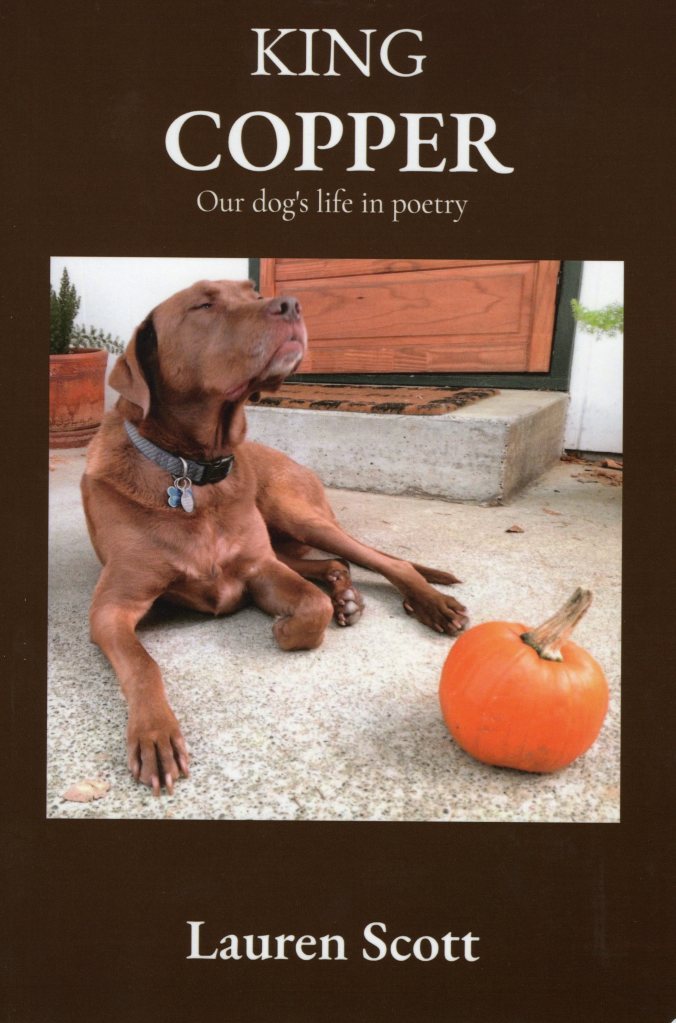
Naturally I would also like to mention my review of Lauren’s wonderful book King Copper: Our dog’s life in poetry. Click here to see it
Front cover of King Copper: Our dog’s life in poetry by Lauren Scott. Click here, or on the image to go to the Amazon page for the paperback version of the book.
Just a few minutes before I saw Esther Chilton’s writing prompt “club” I received my annual invoice for our family membership in the Leonberger Club of America. What a great reminder to pay my bill and create a post about the Leonberger Club of America. We haven’t had a Leonberger since the summer of 2020 when our Leonberger Bronco, or Le Bronco von der Löwenhöhle passed away. However, we’ve kept our membership because I love their LeoLetter magazine, I know some people, I have this blog, and I wrote a book about our Leonberger and the Leonberger breed after the passing of Bronco (see the side bar on the right or click here for more information).
The Leonberger Club of America
I can add that the Leonberger Club of America, LCA for short, is the official national parent club for the Leonberger breed in the United States (and Canada). It was founded in 1985. Its mission is to preserve and promote the health, temperament, and original type of the Leonberger through education, events, performance programs, and social engagement. The American Kennel Club (AKC) recognizes the LCA as the official Leonberger breed club in the United States.
The Leonberger Club of America make sure that the Leonberger dogs are protected. You are about as likely to find a Leonberger at Petland/Puppy-Mill as you are finding an Elephant for sale there. You typically buy/get a Leonberger dog from an LCA certified Leonberger breeder or from the Leonberger Rescue Pals, and if you don’t that might be a problem. Leonberger breeders interview prospective Leonberger owners and make sure they are a good fit. If you are found to have mistreated a dog in the past, turned one into a shelter, or sold one on an auction, you cannot buy a Leonberger. The breeders are also required to take back the dog if it does not work out. To see the transcript from our Leonberger interview, click here.
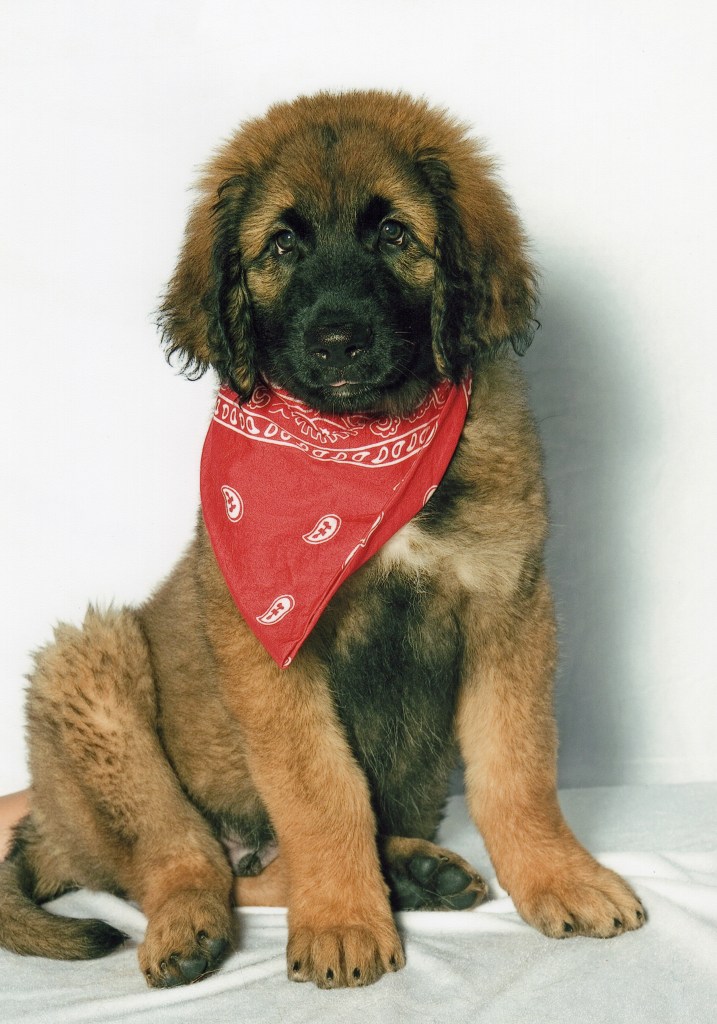
We bought our Leonberger Bronco (Le Bronco von der Löwenhöhle) in 2007 from Julie Schaffert, a certified LCA breeder since 1992. This is a photo of him at three months old.
There are only about 3,000 Leonbergers in North America and about 2,000 Leonbergers in the United States but the Leonberger Club of America has more than 1,000 members. They publish the Leo-Letter, a quarterly Leonberger magazine. So, the Leonberger Club of America has a very prominent place among Leonberger owners. Click here to see a summary of the Leonberger Breed Standard.
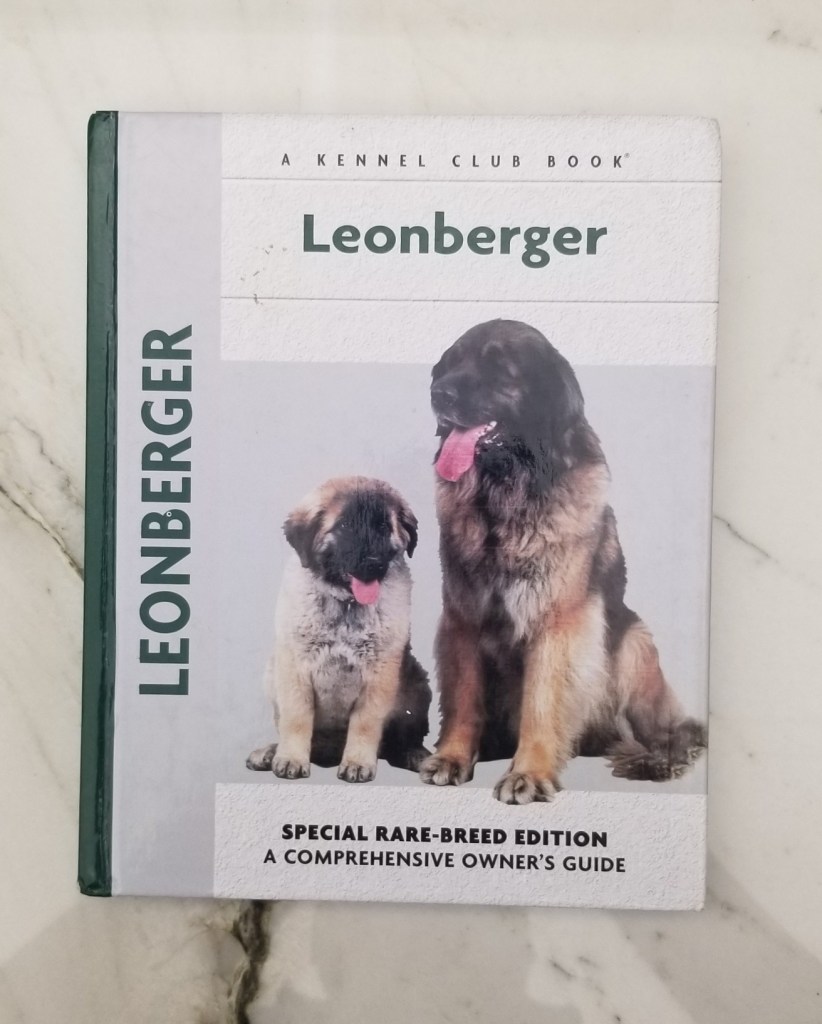
Leonbergers have a long history in North America and the United States—despite the fact that until 1985, there were only seventeen Leonbergers known to be living in the United States. See: Lusby, Leonberger, page 15.
Leonberger, Special Rare-Breed Edition, A Comprehensive Owners Guide, Madeline Lusby
In the 1870s, Leonbergers were brought to Newfoundland to invigorate the stock of Newfoundland dogs. Around the same time, two Leonbergers named Caesar and Sultan were purchased from Heinrich Essig’s kennel (founder of the Leonberger breed) and transported across the ocean to join the Wellesley-Sterling theater company in the United States as the stars of their productions. Then in 1879, Caesar and Sultan visited President Ulysses S. Grant, who called them the largest and most magnificent dogs he had ever seen and presented them with gold medals. During the years between World War I and World War II, a New Jersey family, the Wolfs, opened their home as a temporary refuge for Jews fleeing Germany: they also imported Leonbergers. Unfortunately, this introduction of the breed into the United States did not last, and it would be another fifty years before the Leonberger appeared in America again.
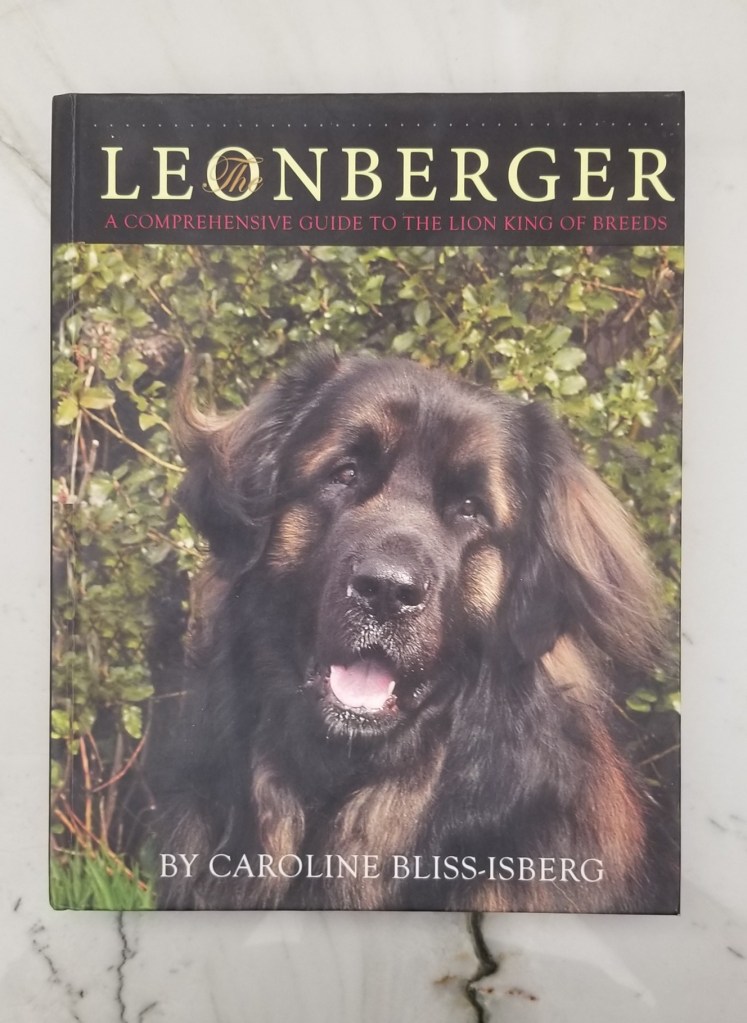
Leonberger, A comprehensive guide to the lion king of breeds, Caroline Bliss-Isberg
During the late 1970s and the 1980s, a few families—Waltraut and Klaus Zieher, Brian Peters, Manfred and Sylvia Kaufmann, Keri Campbell and Melanie Brown, and Mary and Reiner Decher brought Leonbergers to the United States. The Dechers had started a breeding program and were looking for a mate for their first dam, Viona. By chance their neighbor discovered through a newsletter that there was another Leonberger in the United States, and that led to the families’ finding and connecting with one another. I should add that the Dechers were careful to conform to the German breeding regulations and performed hip X-rays that they then submitted to the Orthopedic Foundation for Animals (OFA). Viona became the first OFA-certified Leonberger in America.
See: Bliss-Isberg, Leonberger, page 152.
On Saturday, November 2, 1985, eight of these Leonberger enthusiasts met at a hotel in Denver, Colorado, to found the Leonberger Club of America (LCA). This group of founders, which has since been dubbed the Denver Eight, appointed a registrar, formulated a breeding acceptability checklist, and instituted various policies, including the requirement that OFA certification is mandatory for breeding. LCA membership grew: it held social gatherings, began publishing LeoLetter, and imported an increasing number of dogs. Now the LCA has thousands of members across the country, and Leonbergers receive high ratings on health tests relative to other large breeds. For example, in 2000, the OFA reported that only 14.6 percent of Leonbergers tested positive for hip dysplasia, compared to 47 percent of Saint Bernards.
Founding of the Leonberger Health Foundation International
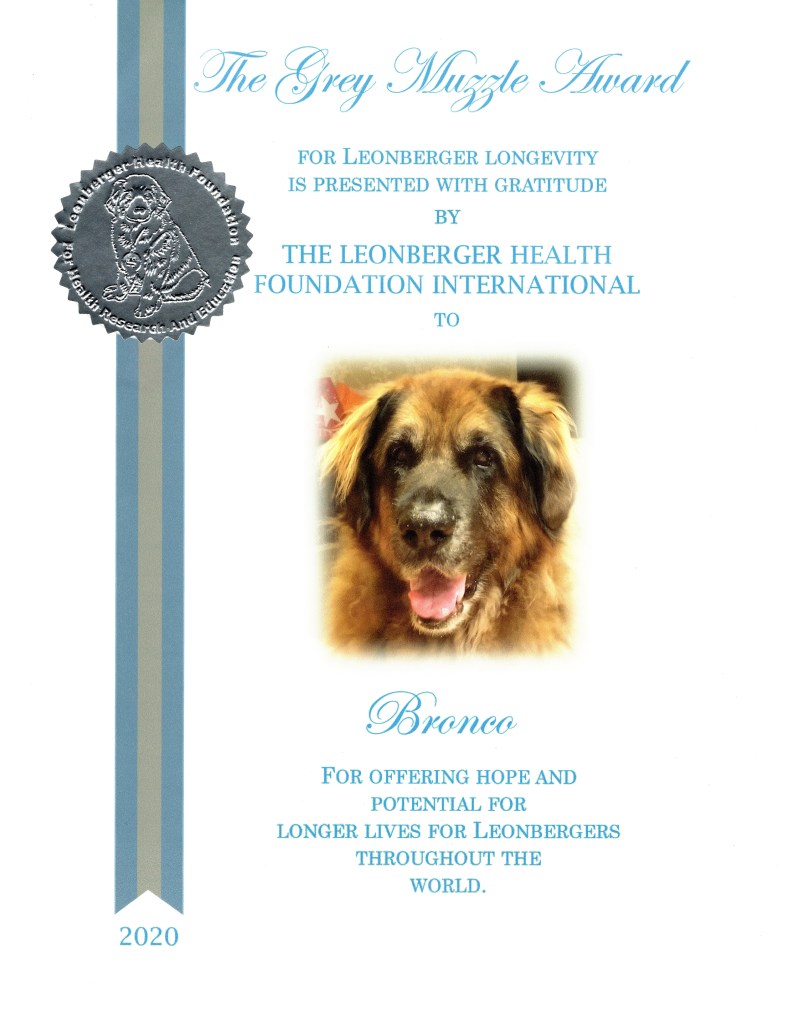
Another important historical event was the founding of the Leonberger Health Foundation International (LHFI), in 2000 (it was just called the Leonberger Health Foundation back then). According to its website, the organization was founded by Waltraut Zieher and other memers of the LCA’s health, education, and research committee to “facilitate the solicitation and distribution of donations given to support health related breed-specific research.” The LHFI also administers a program that collects DNA samples from Leonbergers to share with universities and research institutions, and of course it administers the Grey Muzzle Award (long living Leonbergers). Our Leonberger Bronco was a recipient of the Grey Muzzle Award, and we provided them with his DNA.
Bronco’s Grey Muzzle Award, which he received for being an unusually long lived Leonberger.
LHFI’s global biobank contains DNA samples from more than nine thousand Leonbergers. Among the organization’s notable achievements are the eradication of Addison’s disease among Leonbergers and the raising of nearly half a million dollars for research into conditions that affect canine health, including osteosarcoma, hemangiosarcoma, glaucoma, cardiac diseases, thyroid diseases, and neurological disorders. Its research also supports healthful longevity and aging as well as population diversity. Another success is the fact that since 2011, no Leonbergers with two copies of the LPN1 gene mutation (which causes Leonberger polyneuropathy) have been recorded in LHFI’s biobank. LHFI is one of my favorite charities.
The Dog Wars of America
The end of the twentieth century marked not only the end of the Cold War but also the beginning of what I call the Dog Wars of America. In 1985, the American Kennel Club (AKC) registry comprised one-third of the world’s known dog breeds. But the AKC had recognized only a few new breeds since 1887—a period of ninety-eight years. So, the organization decided to change that policy, but this did not always go smoothly. The members of rare-breed clubs often did not want to be part of the AKC. For example, the Australian Shepherd Club of America (ASCA) was very reluctant to join, so a relatively small splinter group, the United States Australian Shepherd Association, was formed and designated the official member club of the AKC, which was not welcome news to the ASCA. The border collie is another example. Charles Krauthammer, the late political columnist, called the AKC the politburo of American dog breeding.
See: Bliss-Isberg, Leonberger, page 159.
Similarly, in 2003, a new Leonberger club was formed—the Leonberger Club of the United States—with the goal of becoming the Leonberger member club of the AKC. This essentially forced the LCA’s hand, so they applied for membership in the AKC, a process that took years to complete. But ultimately the AKC approved the LCA as members in 2010: Leonbergers would officially become part of the Working Group. Fortunately, 90 percent of LCA breeders agreed to continue following LCA regulations regardless of whether the club would remain independent or become part of the AKC. Also fortunately, AKC membership afforded more opportunities for Leonbergers to participate in dog shows, which is important to many owners.
See: Bliss-Isberg, Leonberger, page 187
For more information on the history of the Leonberger starting in 1830’s click here.
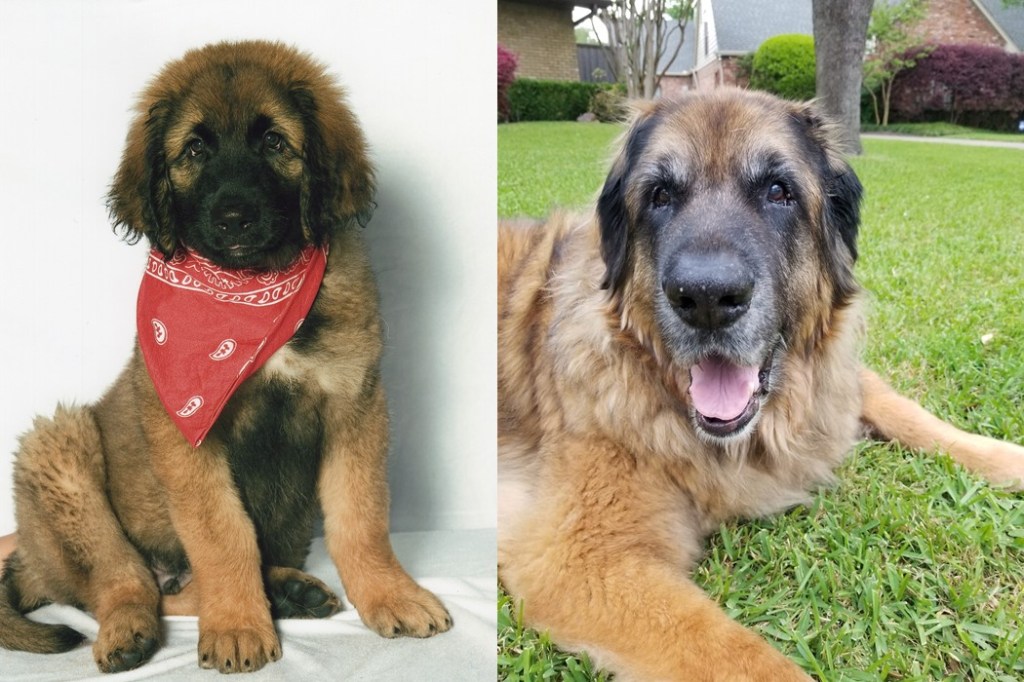
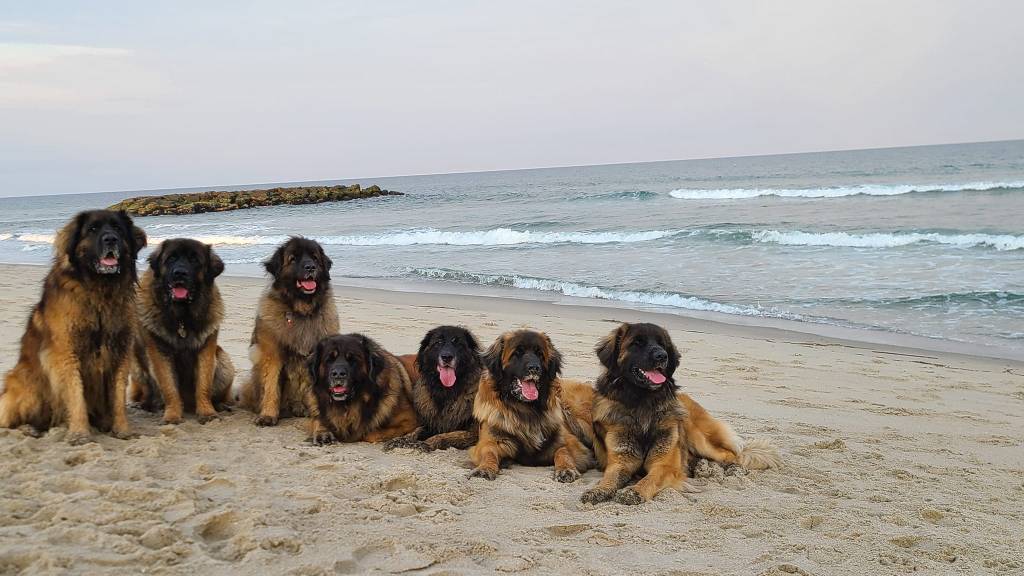
On the left our Leonberger Bronco at three months old. On the right Bronco as an unusually old Leonberger at almost 13.Bronco our Leonberger is giving me a kiss. He is about one year old and not yet fully grown.Seven Leonbergers by the beach. Photo by Jen O’Keefe.
This is going to be a short blog post. First, I would like to make an announcement. My wife and I became grandparents for the first time a little bit less than a week ago. The baby’s name is Jack.
This post is about a dog’s prayer, which I with permission is borrowing from fellow blogger pensitivity101. This post is also related to one of my previous posts : Promises To My Dog.
A dog’s prayer – anonymous author
A Dog’s Prayer
I am typing out the prayer in case it is hard to read the text in the picture.
Before humans die, they write their last Will & Testament, give their home & all they have, to those they leave behind. If, with my paws, I could do the same, this is what I’d ask…
To a poor and lonely stray I’d give:
My happy home
My bowl & cozy bed, soft pillows and all my toys
The lap, which I loved so much
The hand that stroked my fur & the sweet voice which spoke my name
I’d Will to the sad, scared shelter dog, the place I had in my human’s loving heart, of which there seemed no bounds.
So, when I die, please do not say, “I will never have a pet again, for the loss and pain is more than I can stand”.
Instead, go find an unloved dog, one whose life has held no joy or hope and give MY place to HIM.
This is a Leonberger blog, but I also post about other topics including book reviews of books that I love and want to promote. With this post I would like to promote a beautiful poetry book full of wisdom, Celebrating Poetry by Cindy Georgakas.
Below is an overview of the two formats of Celebrating Poetry by Cindy Georgakas
Paperback – Publisher : Literary Revelations LLC (November 16, 2024), ASIN : B0DNCRS8W8, ISBN-13 : 979-8991332538, 183 pages, Item Weight : 11.8 ounces, dimensions : 6 x 0.42 x 9 inches, it cost $6.99 on US Amazon. Click here to order it from Amazon.com.
Kindle – Publisher : Literary Revelations LLC (November 15, 2024), ASIN : B0DNBPC4GP, ISBN-13 : 979-8991332521, 183 pages. It is currently $0.99 on Amazon.com. Click here to order it from Amazon.com.
Front cover of Celebrating Poetry by Cindy Georgakas. Click on the image to go to the Amazon page for the paperback version of the book.
Amazon’s Description of Celebrating Poetry by Cindy Georgakas
Cindy Georgakas is not just a wellness therapist; she is a beacon of hope and creativity through her exceptional poetry. Celebrating the profound impact of her written words, we find that her beautiful verses resonate deeply with those who seek to overcome obstacles in their lives. Each poem serves as a reminder that it’s possible to celebrate success, regain trust in yourself, and ultimately embrace love and happiness. The spirituality of the book is of a religious quality.
In a world where many feel lost or disconnected, Cindy Georgakas offers not only words but also a chance for readers to reconnect with their inner selves and rediscover joy amidst adversity. Embrace the opportunity to explore her work; you may find that within each line lies the key to your own healing journey.
This book is best read as a companion guide to another book by the author; Re-Create and Celebrate. However, as I understand this collection of conversational poems can easily be read stand-alone, which is what I did (the paperback). The book is a collection of motivational poems grouped into 4 steps; Trusting your path, From darkness to light, Ignite insight, and Celebrate. Each step features an introduction of words of wisdom related to life and explaining the purpose of the section.
The poems express thoughts, reflections, wisdom, personal experiences, love, and life lessons. The poems are beautiful and offer hope, comfort, encouragement and deeper meaning. They celebrate nature and the beauty of life. The book is also well organized and offers a flowing and delightful reading experience. The book features thousands of pearls but I would like to mention a couple.
On page 123: I place my shells on my bedside with the ashes and small bones of my grandmother and remember her crooked teeth, her one blue eye and one brown, her wrinkles and I smile, remembering it never mattered how she looked but how she made me feel.
On page 169: I guess we’ll all have to take that chance and see because no matter how much I care and love you, I just must be me and so do you.
Back cover of Celebrating Poetry by Cindy Georgakas. Click on the image to go to the Amazon page for the Kindle version of the book.
About the Author of Celebrating Poetry
Cindy is a San Francisco native and currently lives nestled in the trees in a small community with her husband. She is a health and wellness professional, a certified life coach, personal trainer, yoga/meditation teacher, and bodyworker. She draws inspiration from her clients, friends, four children, 4 legged furry kids and nature.
Her new book Celebrating Poetry is a #1 New Top Release on Amazon. It is a companion guide to her book, Re-Create & Celebrate: 7 Steps to Live the Life of Your Dreams, has over 41 5 Star Reviews. She was voted Author of the Month on Spillwords Press in April 2023 and Publication of the Month on Spillwords in October 2022.
She is a co-author of #1 Amazon Bestseller, Wounds I Healed: The Poetry of Strong Women, #1 Best Seller of Hidden In Childhood: A Poetry Anthology and is also a Treasured Contributor to MastecadoresUsa.
You can read more of Cindy’s work at Unique Times by Cindy Georgakas
















 Leonberger Life