Rainbow Bridge Day and the Dogs We Lost

I almost missed that today is Rainbow Bridge Day or more correctly Rainbow Bridge Remembrance Day. Rainbow Bridge Remembrance Day is a day of reflection and gratitude that takes place every year on August 28th to honor pets who have passed away. We lost several pets through the years, hamsters, snakes, rabbits and dogs. In this post I will focus on the dogs we lost including Daisy our Pug, Bronco our Leonberger, Ryu our Japanese Chin, Baby our German Shepherd and Baylor or Labrador, or rather Yellow Lab mix. I will start with the dog we lost last, our Pug Daisy and end with the dog we lost first, our Labrador Baylor. I should say that my wife had dogs before we met each other, but Baylor was my first dog. I did not grow up with dogs. We miss them all very much. They left a hole in our hearts.

Our Pug Daisy was a sweet and easy dog who lived a long life. On April 5th this year she died peacefully in our arms at the age of 15 ½ years old. This was just a few months ago, and it still feels strangely empty without her. Our dog Rollo, a mini–Australian Shepherd has been alone ever since.

A puppy in the arms of our son wearing a red shirt.
Daisy came to us a little pug puppy almost 16 years ago. Our son David, eleven years old at the time, was holding her. A few months ago, I held her for the last time.
Daisy is wearing a pink party hat. She is sitting in front of a cake and my wife is giving her cake.
Daisy’s 15th birthday. This is one of the last photos of Daisy.
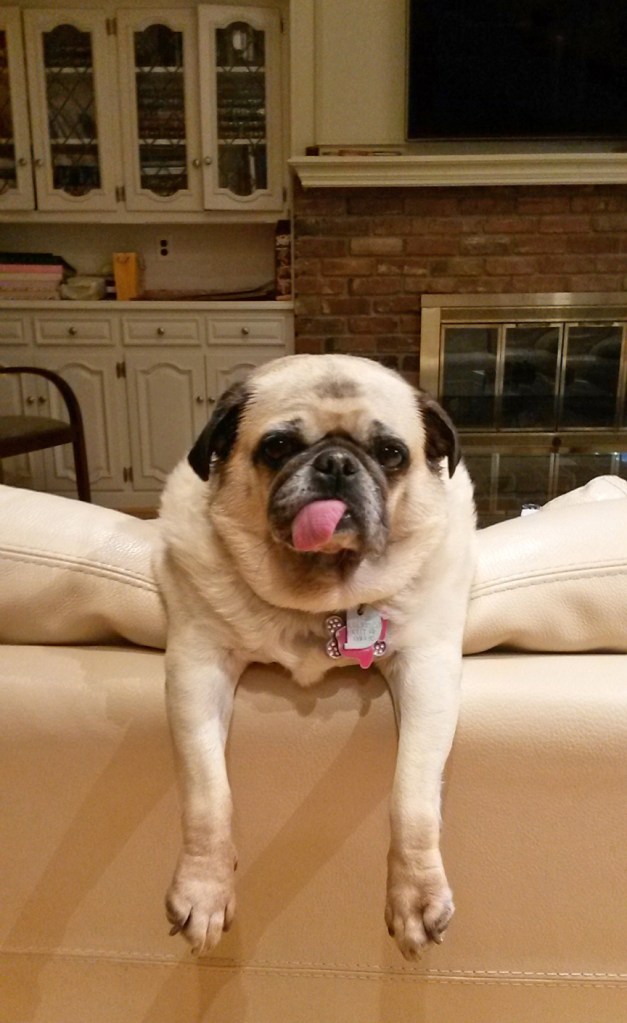
Our pug Daisy on top of the sofa. Her legs are dangling over the sofa and her tongue is out.
Daisy on the sofa after an exhausting day of doing nothing.
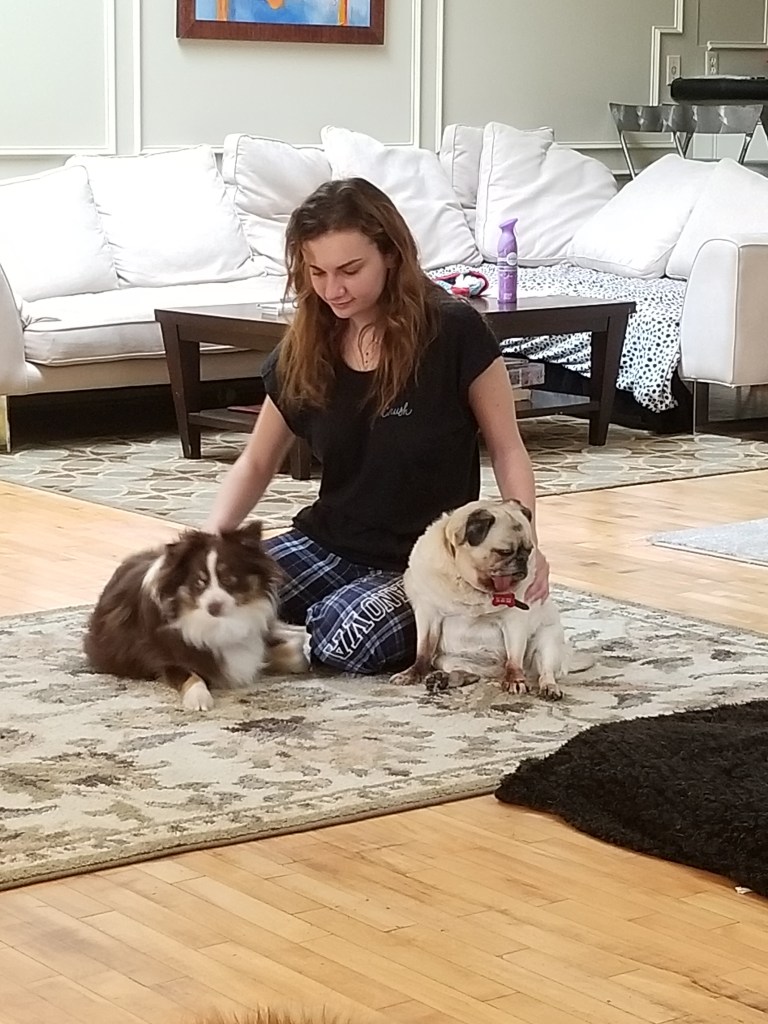
Our daughter is sitting on her knees on the floor.  Our mini-Australian Shepherd Rollo sits on her left and our Pug Daisy sits on her right.
Our daughter is petting Rollo and Daisy. Our mini-Australian Shepherd Rollo is still with us. He is six years old.
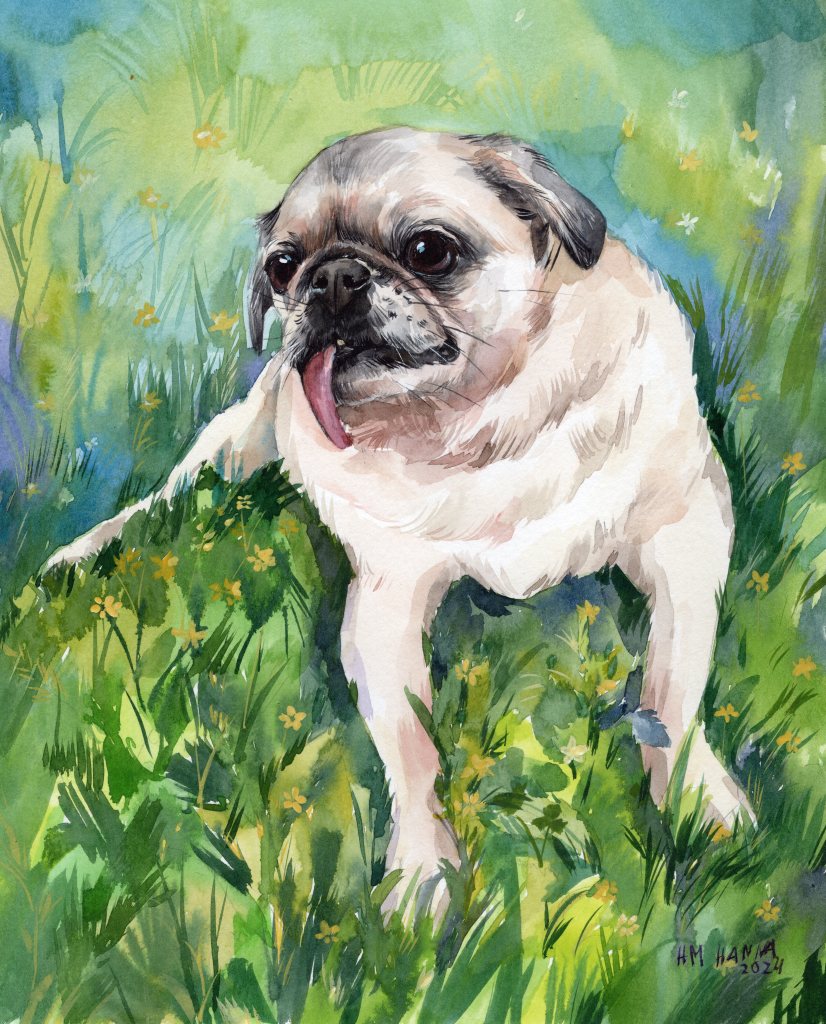
Daisy our beige pug is laying in the grass and there are some flowers.
A painting of our late pug Daisy who passed away in April. It is based on one of our photos and created by Etsy. I believe by the same woman who made Bronco’s portrait (see below).

The dog we lost before Daisy was our Leonberger dog Bronco. The Leonberger dog is a very large dog related to St. Bernards, Newfound land dogs, and Great Pyrenees, He died on June 16, 2020, just a couple of weeks before his 13th birthday. He lived a long life for a Leonberger. He was s sweetheart who protected our smaller dogs. He likely saved the life of our other dogs a couple of times, he found run-away hamsters, and he saved our neighborhood from a nightly intruder harassing the women in the neighborhood. He was also incredibly funny. I wrote a book about him and the Leonberger breed. Look to the right if you are using a laptop and at the bottom of the screen if you are using a mobile phone.
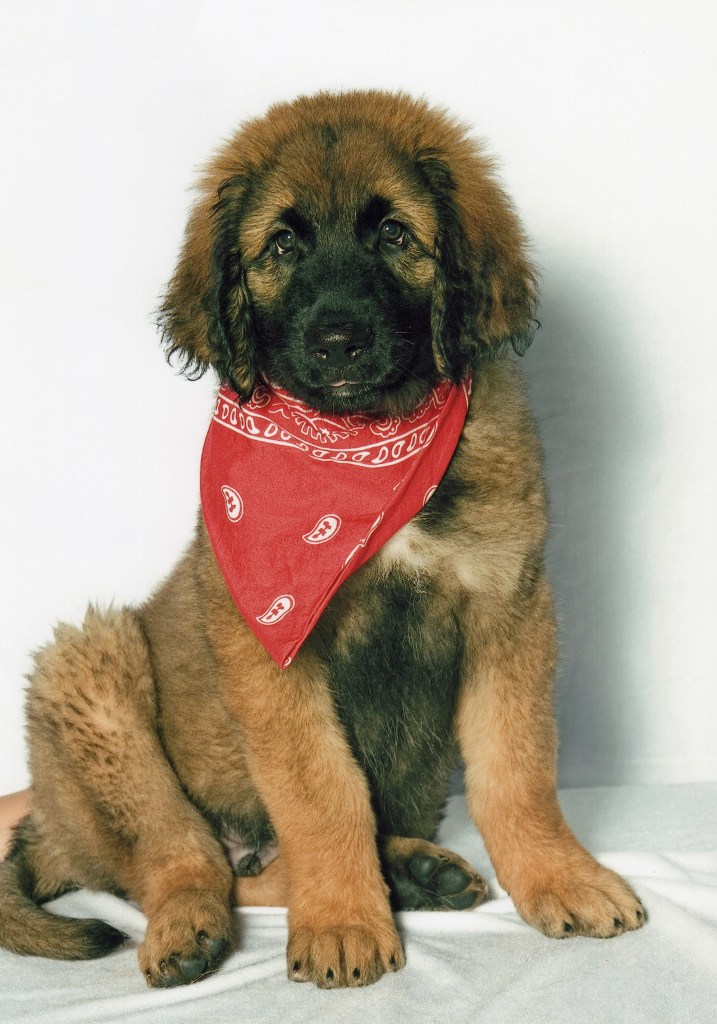
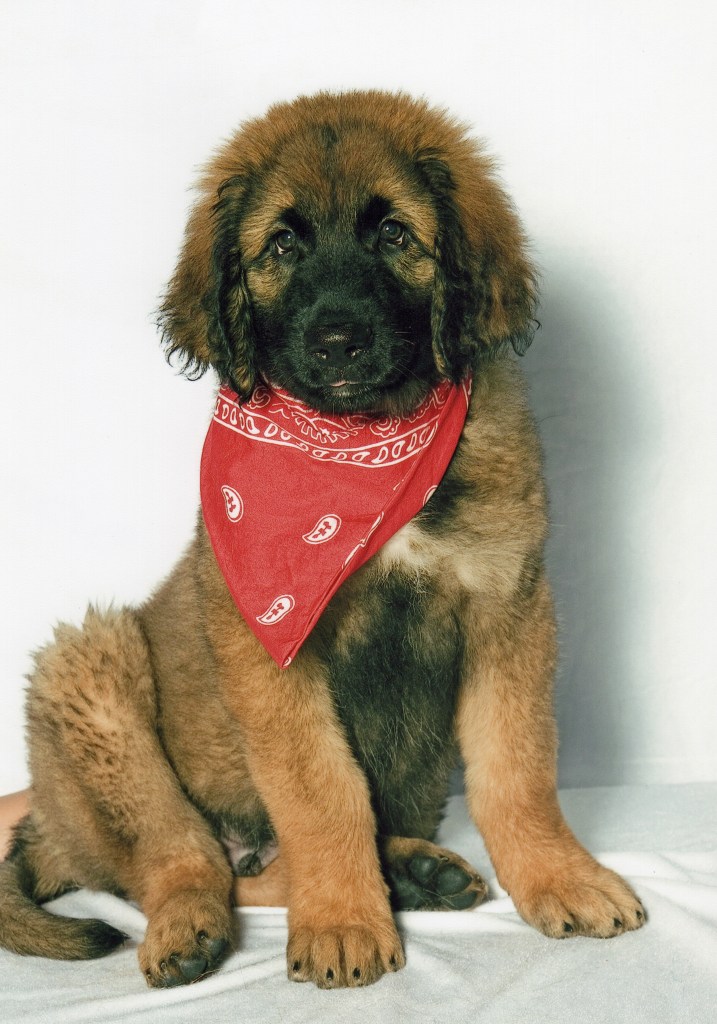
Color photo of Leonberger puppy. He is wearing a scarf.
Bronco our Leonberger three months old.
Our old Leonberger lying in the grass. He is approaching 13 years old.
Today’s walk with Bronco and rest stop : April 18 2020, Bronco is 12 years 9 1/2 months.
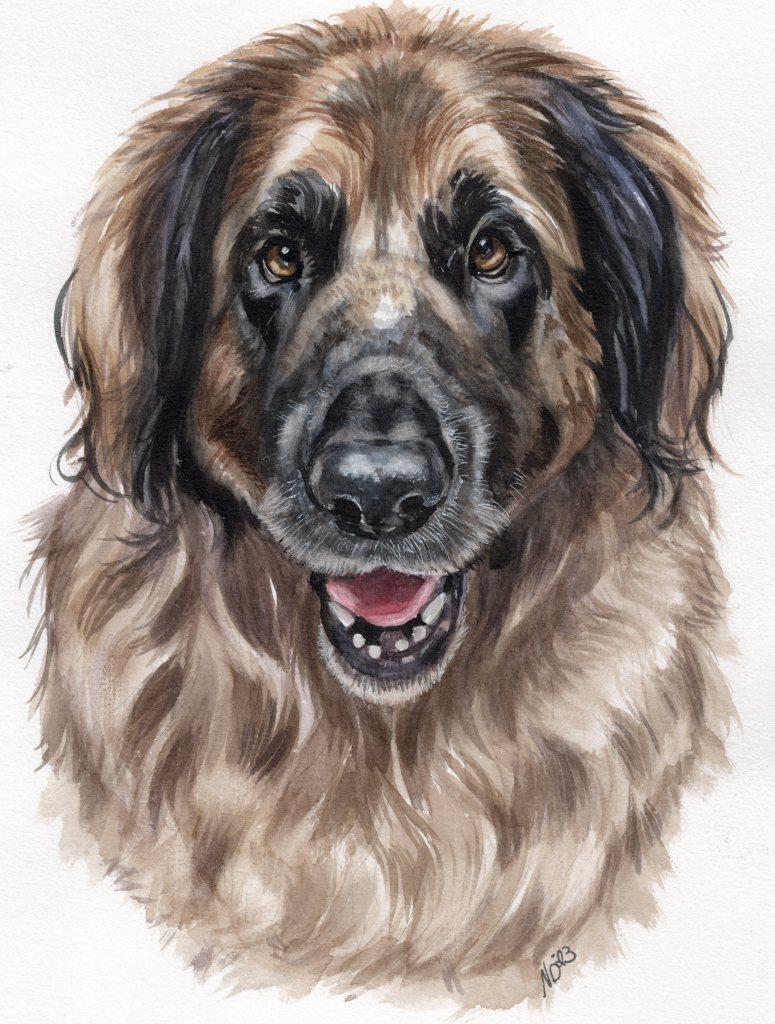
Painting showing our Leonberger Bronco’s face. Like all Leonbergers he has a black mask and fluffy hair.
The portrait was drawn by Veniceme at Etsy (Natasha Dall’Ara) and it is based on one of our photos.
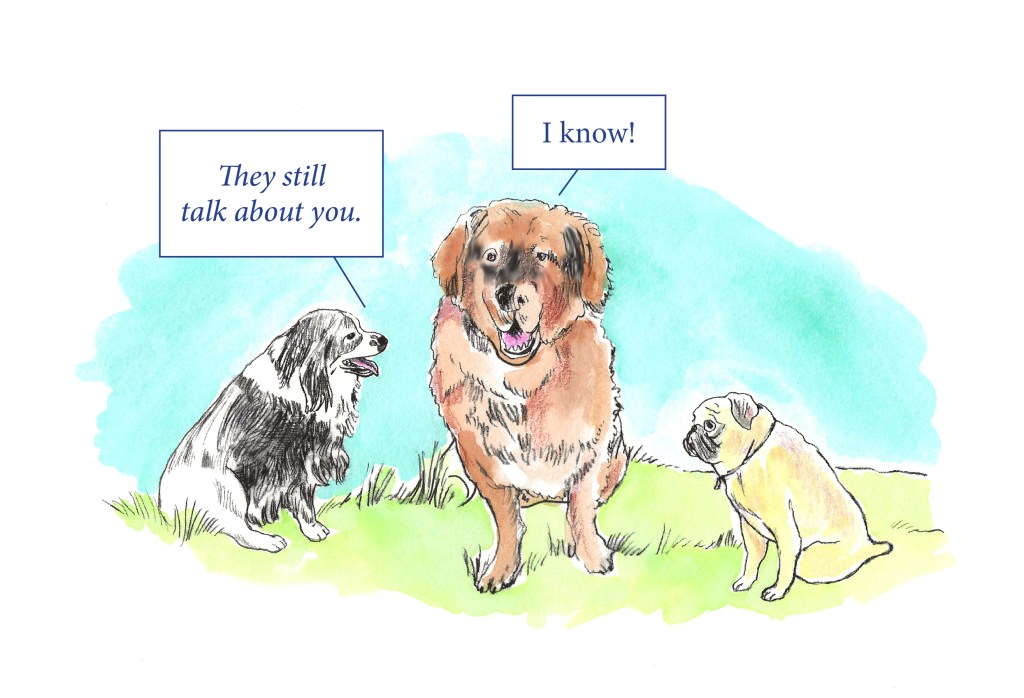
Illustration showing Rollo our mini-Australian Shepherd, Bronco our Leonberger, and Daisy our Pug. Bronco lived a very long life for a Leonberger. Giant breeds don’t live long. The Leonberger Health Foundation International is trying to fix that. Bronco’s longevity is an inspiration for all Leonbergers and giant breeds around the world. Hopefully his DNA sample will be of some help.
Bronco lived a very long life for a Leonberger. Giant breeds don’t live long. The Leonberger Health Foundation International is trying to fix that. Bronco’s longevity is an inspiration for all Leonbergers and giant breeds around the world. Hopefully his DNA sample will be of some help.

In February of 2018 we lost Bronco’s little friend our little Japanese Chin Ryu. We bought him from Petland not knowing that they got their dogs from Puppy Mills. One time when we went to Petland to buy dog food we brought Ryu with us. As we approached the store he started shaking out of fear. That was a wakeup call for us. He loved howling and it sounded like he was singing an opera. Perhaps he loved howling for the attention he got when he did. Everyone turned around and clapped when he howled. He was a happy fella who died a bit prematurely at the age of 10 from cancer. I was working 16-hour days in Oklahoma when he passed so I could not be with him when he died, which is something I will forever regret.

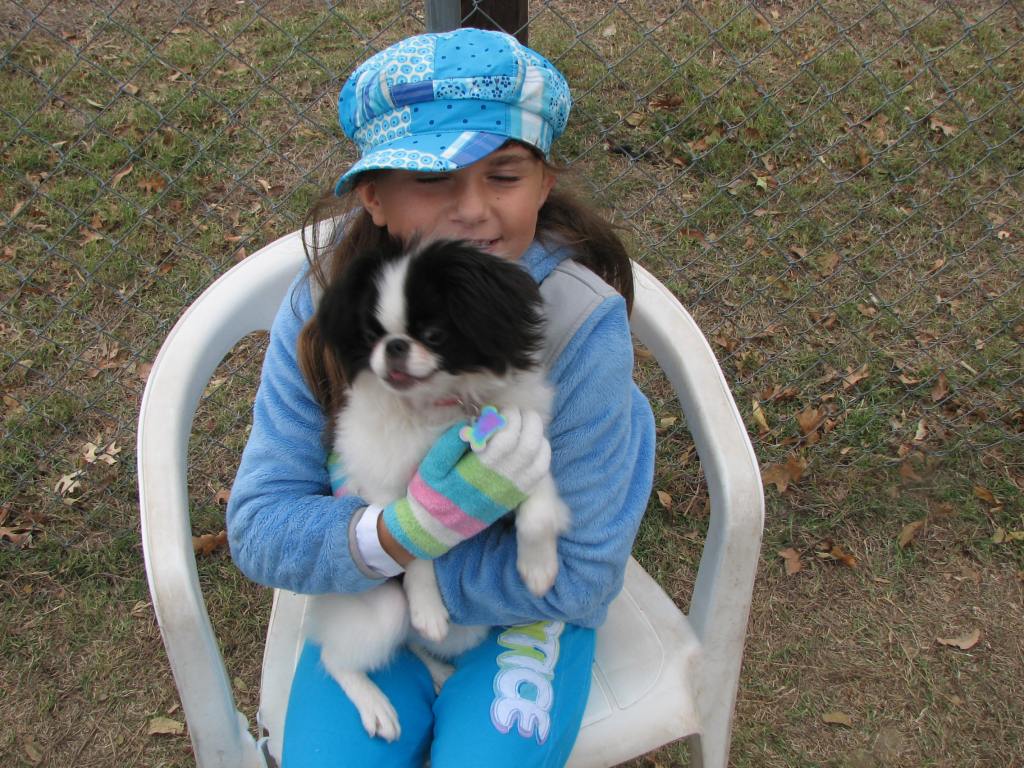
Photo of Ryu standing with Rachel. Ruy loved dancing and singing and Bronco partially visible on the left was his big brother and protector.
Ryu loved dancing and singing and Bronco partially visible on the left was his big brother and protector.
Photo of our daughter Rachel with Ryu her Japanese Chin. They are sitting on a chair at the dogpark.
Rachel and Ryu, the Japanese Shin at the dogpark.
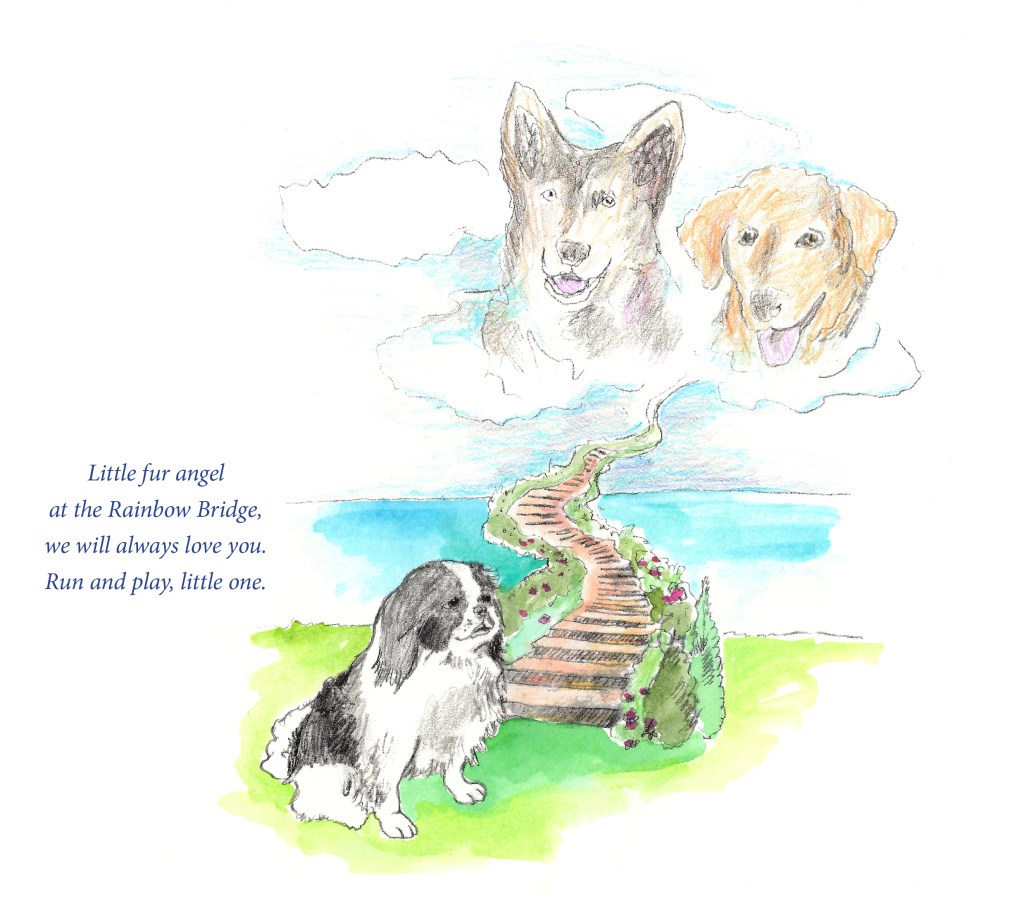
Drawing of Ryu our smart little Japanese Chin. Our smart little angel was unlucky with cancer, and I was not there for him.
Our smart little angel was unlucky with cancer, and I was not there for him. That is Baby and Baylor waiting at the end of the rainbow bridge.

Baby was a female German Shepherd. One of Claudia’s sisters had rescued her. We were told she had been abused by her first owners and she was a very anxious dog. We frequently took the dogs to the dog park, but she was never comfortable there and kept to herself. She was very protective of our Leonberger Bronco when he was a puppy. She played with him and protected him fiercely as if she was his mother. She died from cancer at home on her mattress. It would have been better for her to get an injection at the veterinary, but we did not react quick enough. Another thing we regret.
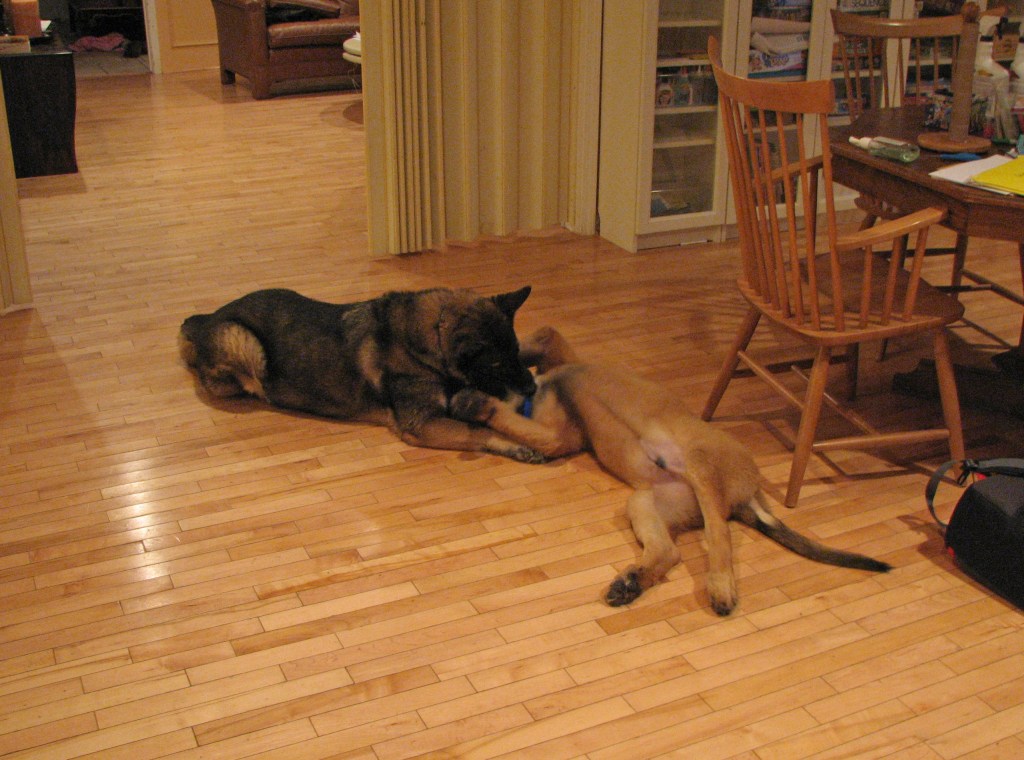
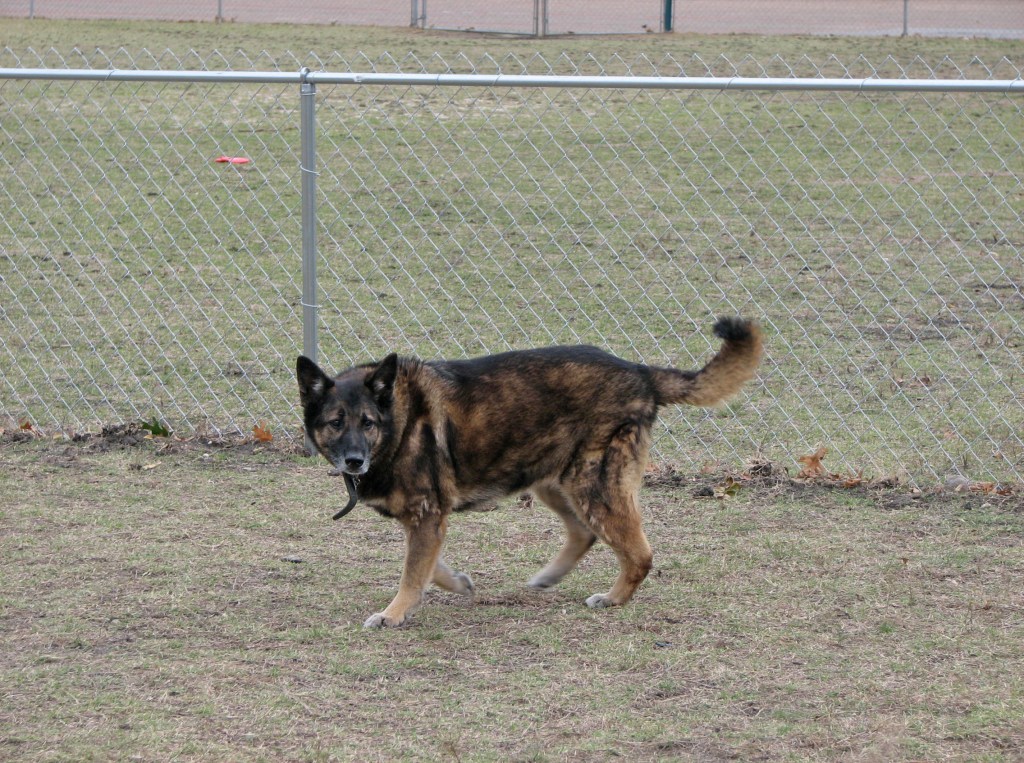
Photo of our German Shepherd playing with our Leonberger puppy Bronco.
Bronco, at the age of four or five months, would soon outgrow his playmate Baby.
Photo of our German Shepherd Baby at the dog park.
Baby was always a little wary at the dog park.
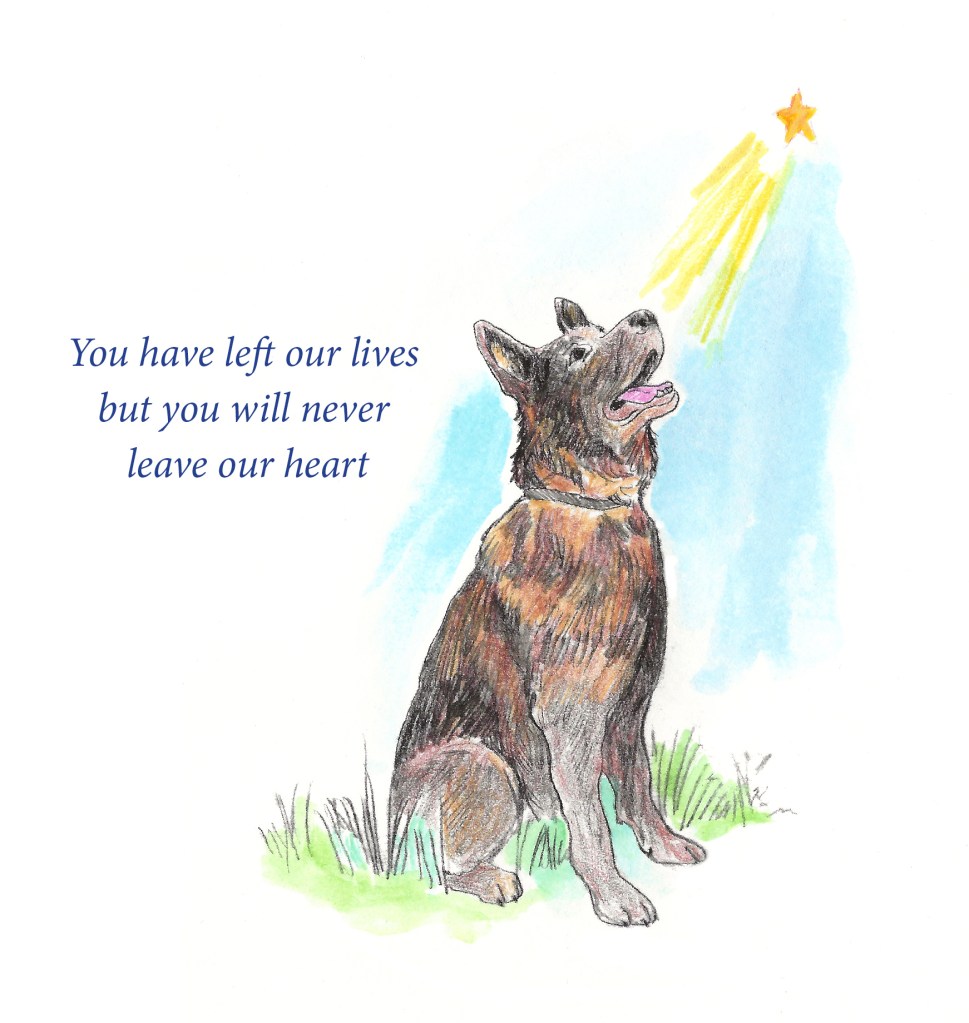
Illustration by Naomi Rosenblatt showing our late German Shepherd Baby under a star.
Sometimes not thinking things through is cruel. Watch your emotions. We could have done better for our brave German Shepherd Baby.

Baylor was a ¾ Yellow Lab and ¼ Ridgeback. He was a happy and brave dog who fought bravely when attacked by other dogs. He was also food crazy and stole a lot of food. As he got older, he developed diabetes and cataracts. His passing was the saddest and most shocking. We had left our dogs with a dog sitter during a ski vacation when she called us and told us she could not stay at our house because she had several other dogs to take care of. Something she had not told us. We were forced to allow her to take our dogs to her house. The next phone call was much worse. She had put Baylor out in her backyard because he was barking at night, and he had escaped. It was a cold night. He was found dead the next morning halfway between her house and our house. Hit by a driver who just left him there. Apparently, he had tried to get back to our house. It was quite a shock, and the kids were bawling their eyes out. That was the last time we hired a dog sitter.
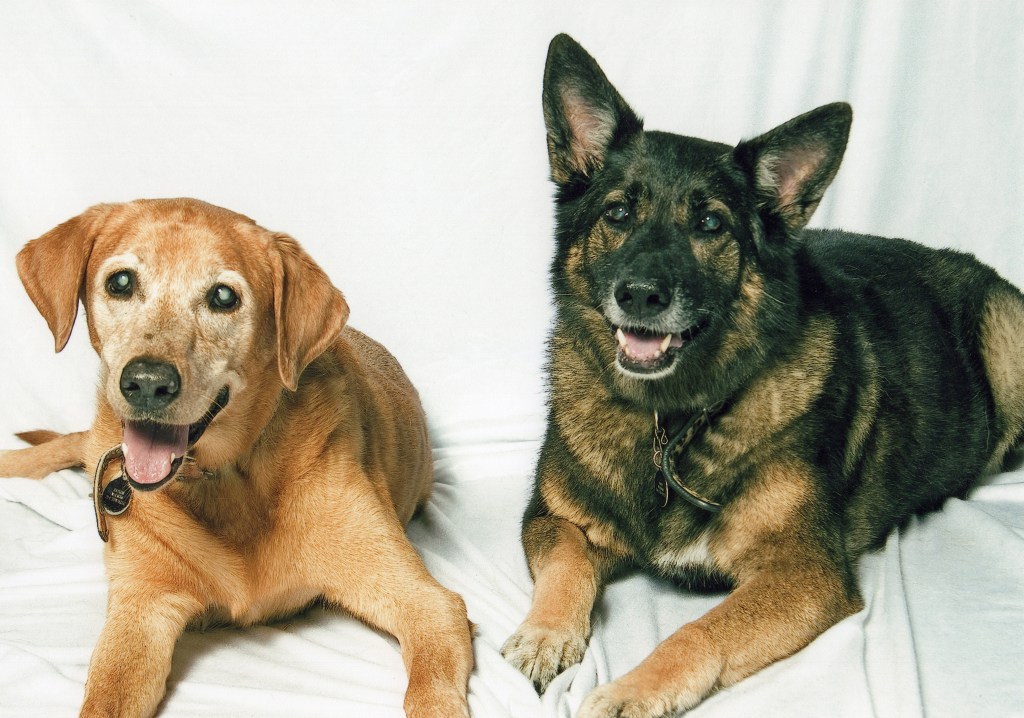
Photo of Baylor and Baby
Baylor and Baby
Photo of our Labrador Baylor. He is looking into the camera.
Photo of our Labrador Baylor
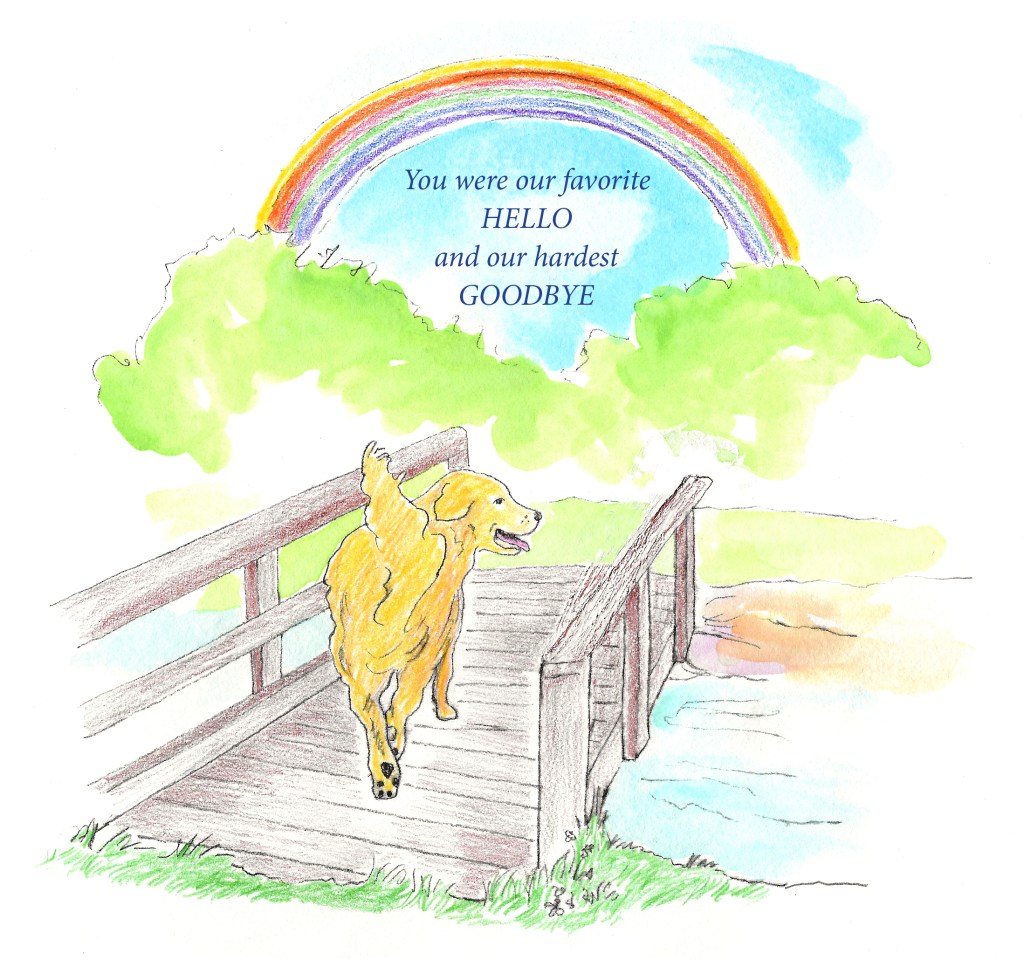
Illustration by Naomi Rosenblatt showing our Labrador Baylor crossing the rainbow bridge.
Our Labrador left us tragically and unexpectantly. Evidence that we humans our cruel.
Illustration by Naomi Rosenblatt showing a paw print in the sky.
The paw prints that dogs leave in your heart are eternal.

All illustrations are by Naomi Rosenblatt
The Origins of the Leonberger Dog

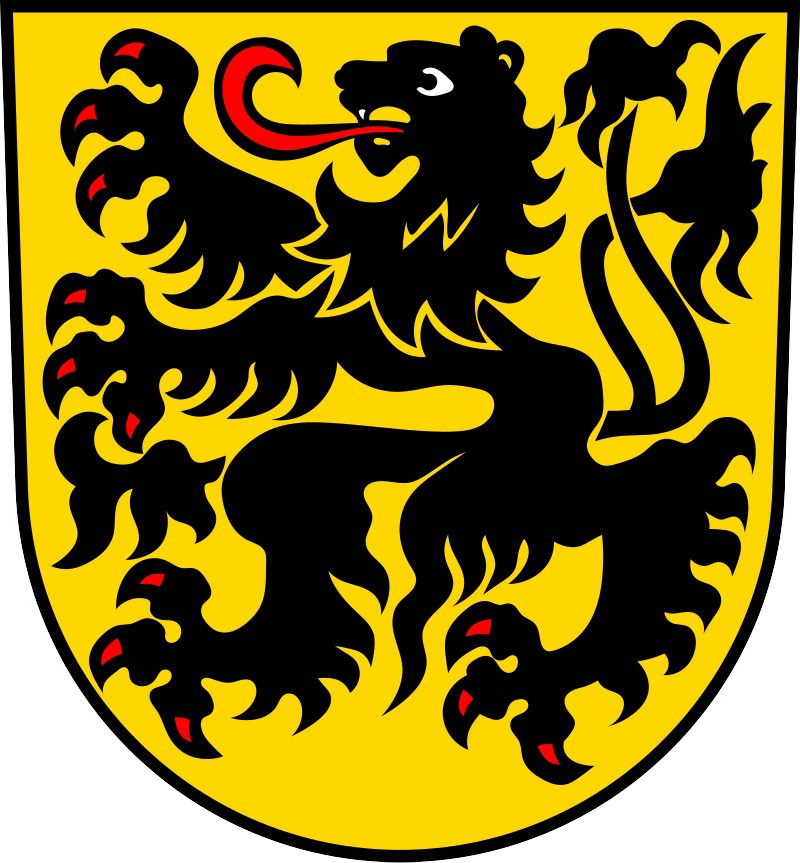
coat of arms of the town of Leonberg. A black lion like figure on a yellow background
The coat of arms of the town of Leonberg, Germany, was allegedly the inspiration for the first breeder of the Leonberger, Heinrich Essig.

The Leonberger breed was originally created by Heinrich Essig (1808–87) in the German town of Leonberg, in what was then the kingdom of Württemberg. According to legend, Essig bred the dog to resemble the lion in the town’s coat of arms. Indeed, as you can see in the image above, the lion in the coat of arms doesn’t look like a real lion, so you could say that the Leonberger looks the way it does because Germans were bad at drawing lions back then. All joking aside, though, Leonbergers do bear some resemblance to lions and maybe even bears. In any case, they are beautiful dogs.

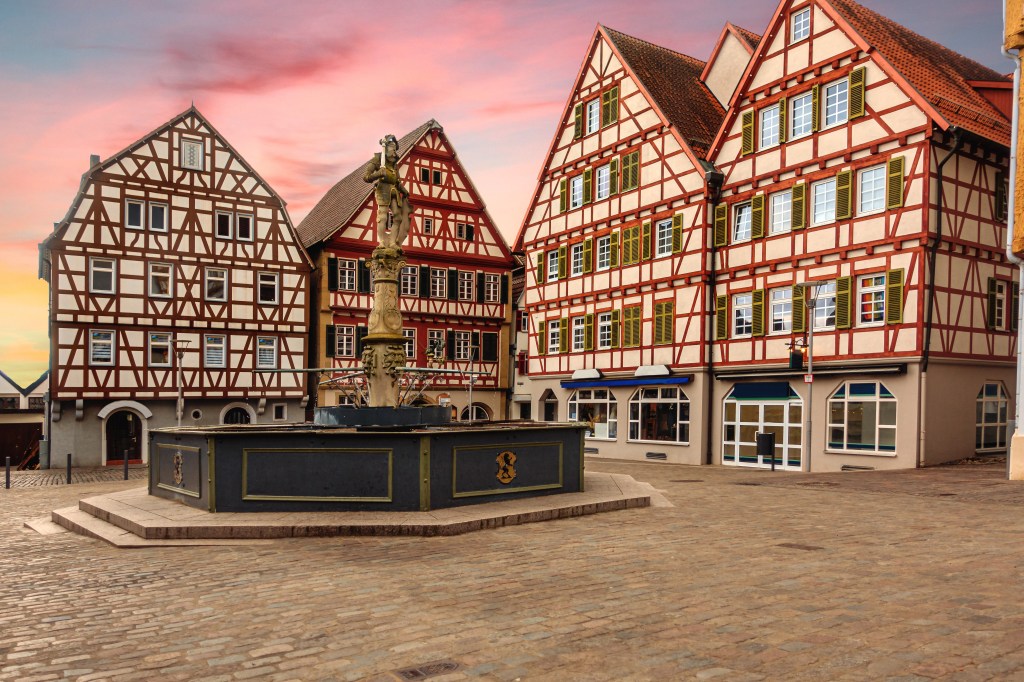
A town square surrounded by buildings. There is a statue in the middle.
The town square in the city of Leonberg. Shutter Stock Photo ID: 1689829297 by Martin Dutkiewicz.

When people would stop me and ask me questions about the kind of dog Bronco was, I would say he was a Leonberger, a cross between a Saint Bernard, a Newfoundland, and a Great Pyrenees and that the breed was created by the mayor of the German town of Leonberg. But, as the economist Tyler Cowen said, “Be suspicious of simple stories.” As it turns out, the story I kept telling was a simplification and not entirely true. History is more complicated. I was unintentionally spreading misinformation about Leonbergers.

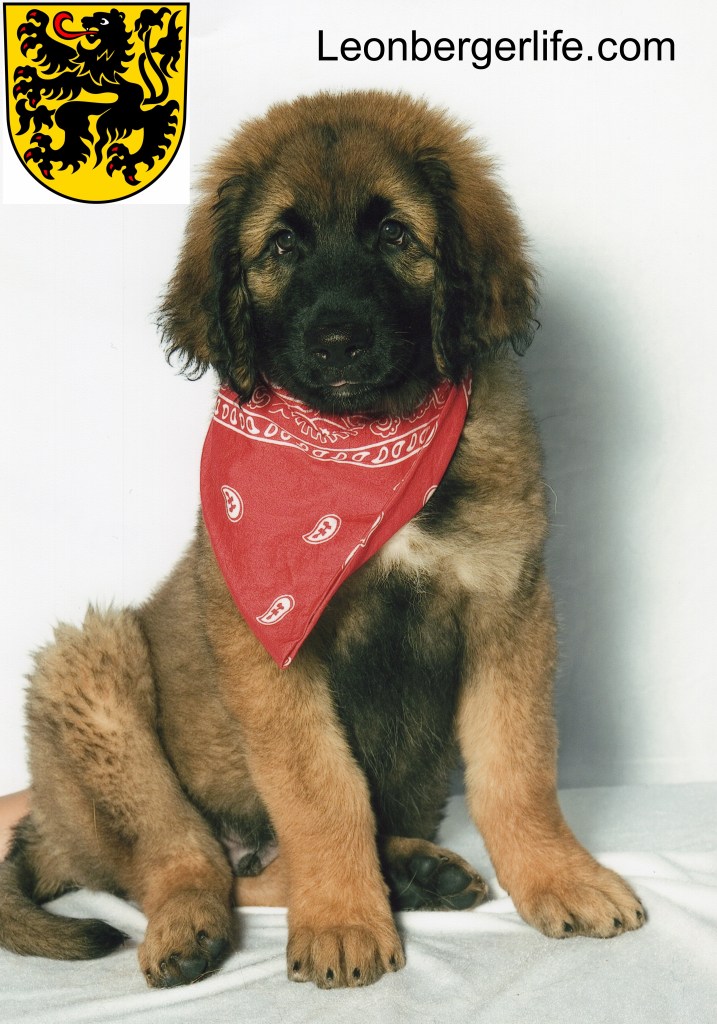
A Leonberger puppy wearing a red silk scarf.
Our Leonberger Le Bronco von der Löwenhöhle at 3 months old.

Simple and interesting stories are easy to remember, easy to believe, and easy to propagate. But first, Heinrich Essig was never the mayor of Leonberg. He was a prominent citizen of the town, and he was a successful businessman, farmer, innkeeper, horse and dog trader, large dog enthusiast, dog breeder, and town councilman, but he was never the mayor.

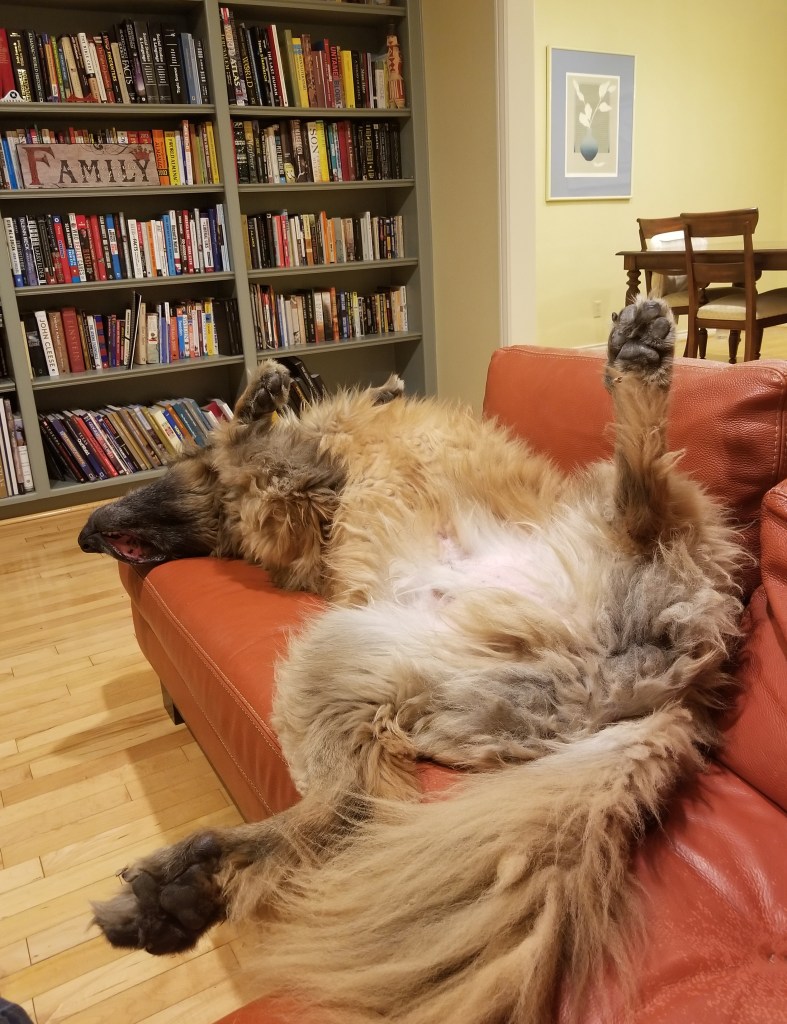
A big Leonberger splayed across a big wide red leather sofa.
Our Leonberger Bronco sleeping on our big red leather sofa.

Essig claimed to have created the Leonberger in the 1830s by crossing a female Landseer Newfoundland with a male long-haired Saint Bernard from the Great Saint Bernard Hospice, a monastery in Switzerland. He continued crossing the Landseer Newfoundland and the Saint Bernard over four generations, then he crossed his Newfoundland Saint Bernard mix with a Pyrenean wolfhound not, as is often asserted, with a Great Pyrenees (called a Pyrenean Mountain dog in Europe). He then crossed that dog with the Saint Bernard again. In 1846, he was finally ready to announce and register his “lion of a dog.” A few years later, Leonbergers were officially introduced to the public at the Munich Oktoberfest.

Our Leonberger is standing on the large red leather sofa giving me a kiss.
Me and our Leonberger Bronco when he was young.

However, the story is more complicated than that. There’s no specific breed named Pyrenean wolfhound today, so Essig could have used a Great Pyrenees or a Pyrenean mastiff . In addition, later in the nineteenth century, Leonbergers were used to breed the long-haired Saint Bernard dog, and this likely saved the Saint Bernard dog from extinction. At one point, too, Leonbergers were deliberately mixed with Newfoundland dogs to strengthen the Newfoundland breed. In other words, breeding happened in both directions, and the characteristics of the large breeds were in constant flux. The dogs, including Leonbergers and Saint Bernards didn’t look like they do today, either. Essig’s Leonbergers were multicolored, mostly white, and lacked the black mask that is so important to the breed now. What has not changed is the essence of what Essig was aiming for: a large but moderately proportioned dog that is friendly and loving and a great companion.

Saint Bernard Dog wearing a cognac barrel. The Alps in the background.
A modern Saint Bernard Dog. Shutter Stock Photo ID: 1713912484 by fred12.

Ultimately, the origins of the Leonberger, as well as the Saint Bernard and the other large breeds from this region, are complex and shrouded in mystery. In addition, some of Essig’s claims have been disputed. Breed standards wouldn’t be codified until the end of the nineteenth century. It should also be noted that it was Essig’s niece Marie who to a large extent bred and cared for the dogs.

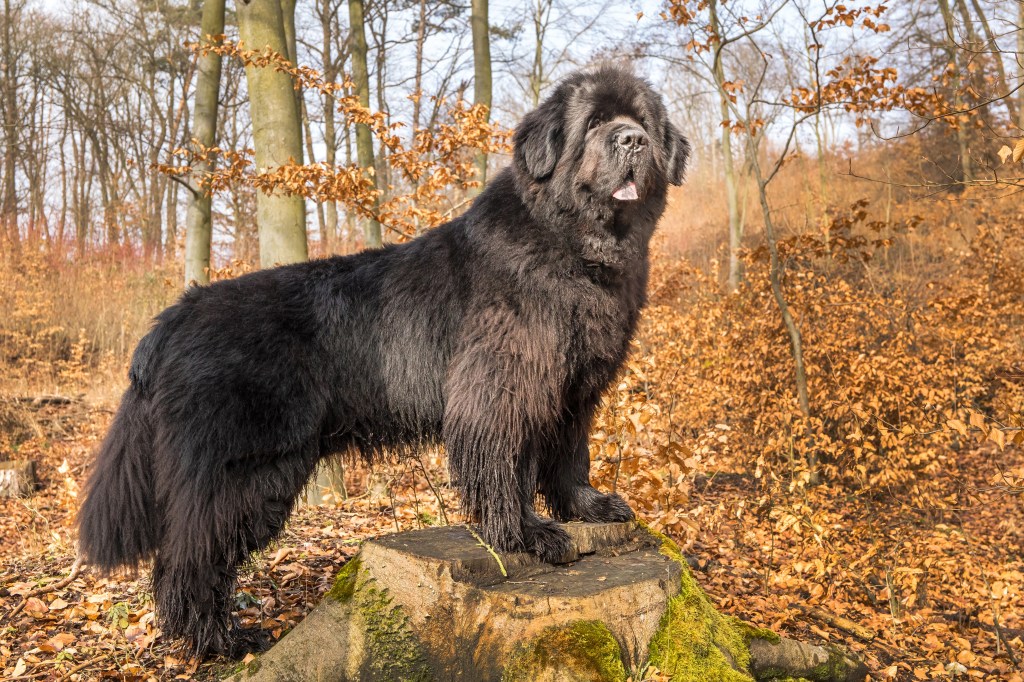
Black or dark brown New Foundland Dog with a colorful autumn forest in the background.
Modern New Foundland Dog. Shutter Stock Photo ID: 1925281937 by Marsan.

Essig was selling his Leonberger dogs as luxury items to the wealthy. He was also a marketing genius and was able to get the attention of European nobility and royalty. The czar of Russia, Emperor Napoleon II, Otto von Bismarck, the king of Belgium, Empress Elisabeth of Austria, Emperor Maximilian I, the Prince of Wales, King Umberto of Italy, Giuseppe Garibaldi, and the mikado of Japan were among those who owned Leonbergers. Not everyone was happy about this. Some people viewed the Leonberger as a fashionable knockoff of the Saint Bernard that could hinder that breed’s development.

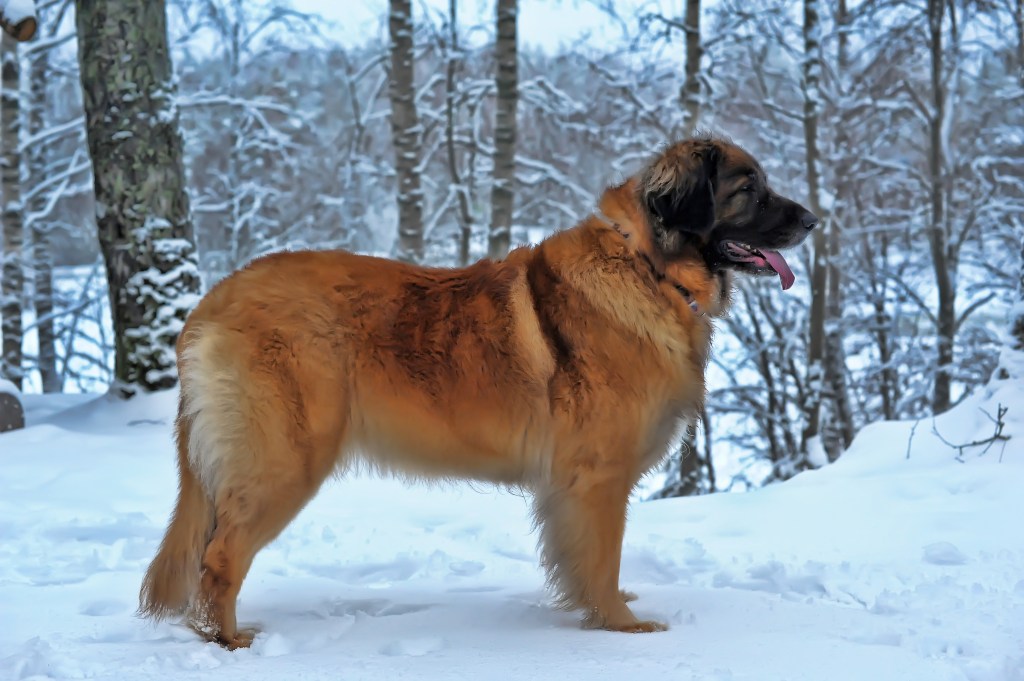
Photo of a Leonberger standing in the snow. There is a wintry forest in the background.
Modern Leonberger. Shutter Stock Photo ID:705193912 by Anna Krivitskaya.

Toward the end of the nineteenth century, the discipline of cynology, or the scientific study of dogs, emerged. Cynologists pushed for breed classification and systematic breeding practices, and breed standards were created. But Essig and others viewed dog breeding as an art rather than a science, and this led to a conflict with the cynologists. Heinrich Schumacher, for example, was a breeder who strove to create a clearly identifiable Saint Bernard type. He was upheld by the cynologists as a paragon, in contrast to Heinrich Essig to the detriment of the Leonberger.

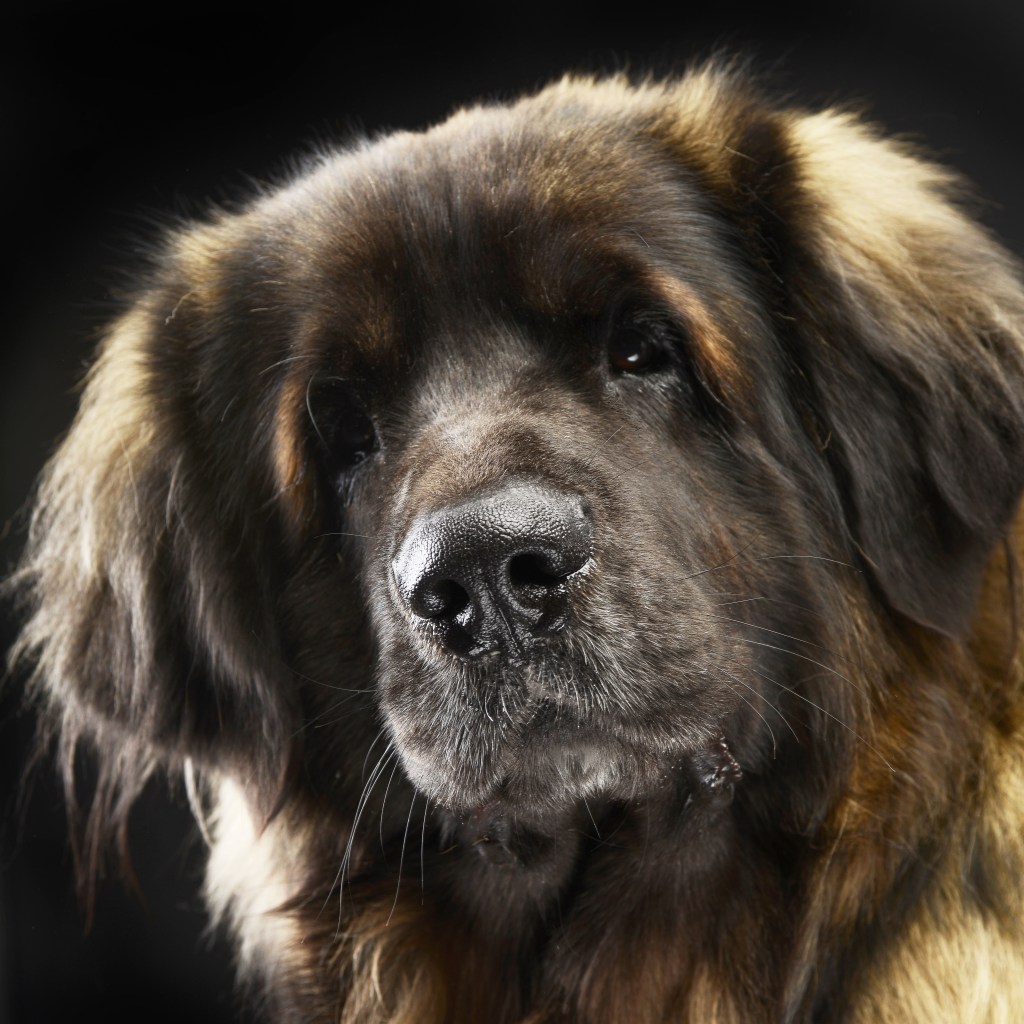
Face of a Leonberger looking into the camera.
Face of modern Leonberger. Shutter Stock Photo ID: 193024763 by Csanad Kiss.

After Essig’s death, in 1887, other people more willing to please the cynologists continued breeding Leonbergers. By that time, the dogs looked for the most part like Leonbergers do today. Then, in 1895, Albert Kull created the Leonberger’s first breed standard. It would go through several revisions in 1901, 1926, 1938, 1951, 1955, and 1972—until finally, in 1996, the FCI approved version was established. The Kennel Club in the UK and the American Kennel Club also have their own breed standards. However, most of them are similar to Albert Kull’s 1895 version. The first Leonberger club was formed 1891 in Berlin: two more were created in 1895, then two more were formed in 1901. The most prominent was the Internationaler Klub für Leonberger Hunde, of which Albert Kull was the first president.

For additional information see :

The Life and Times of Le Bronco von der Löwenhöhle: Stories and Tips from Thirteen Years with a Leonberger by Thomas Wikman.

Madeline Lusby, Leonberger: A Comprehensive Owner’s Guide (Allenhurst, NJ: Kennel Club Books, 2005).

Caroline Bliss-Isberg, Leonberger: A Comprehensive Guide to the Lion King of Breeds (Sea Cliff , NY: Revodana Publishing, 2017), 23, 41, 45, 48–49.

History of the Leonberger

Bronco at three months old. You can trace his ancestry back 120 years. A lot of interesting Leonberger history happened in that time.

This post is a sample from my new Leonberger History page. The Leonberger History page is somewhat long (almost 3,000 words), too long for a post, but it is interesting.  This post only covers up to the end of the 1800’s and I’ve also removed all the references. To see the full history click here:

The Leonberger breed was originally created by Heinrich Essig (1808–87) in the German town of Leonberg, in what was then the kingdom of Württemberg. According to legend, Essig bred the dog to resemble the lion in the town’s coat of arms. Indeed, as you can see in the image on page 132, the lion in the coat of arms doesn’t look like a real lion, so you could say that the Leonberger looks the way it does because Germans were bad at drawing lions back then. All joking aside, though, Leonbergers do bear some resemblance to lions and maybe even bears. In any case, they are beautiful dogs.

When people would stop me and ask me questions about the kind of dog Bronco was, I would say he was a Leonberger—a cross between a Saint Bernard, a Newfoundland, and a Great Pyrenees—and that the breed was created by the mayor of the German town of Leonberg. But, as the economist Tyler Cowen said, “Be suspicious of simple stories.” As it turns out, the story I kept telling was a simplification and not entirely true. History is more complicated, and that’s another reason I’m writing this: I was unintentionally spreading misinformation about Leonbergers, and want to try to correct some of it.

Simple and interesting stories are easy to remember, easy to believe, and easy to propagate. But first, Heinrich Essig was never the mayor of Leonberg. He was a prominent citizen of the town, and he was a successful businessman, farmer, innkeeper, horse and dog trader, large-dog enthusiast, dog breeder, and town councilman, but he was never the mayor.

Essig claimed to have created the Leonberger in the 1830s by crossing a female Landseer Newfoundland with a male long-haired Saint Bernard from the Great Saint Bernard Hospice, a monastery in Switzerland. He continued crossing the Landseer Newfoundland and the Saint Bernard over four generations, then he crossed his Newfoundland–Saint Bernard mix with a Pyrenean wolfhound not, as is often asserted, with a Great Pyrenees (called a Pyrenean mountain dog in Europe). He then crossed that dog with the Saint Bernard again. In 1846, he was finally ready to announce and register his “lion of a dog.” A few years later, Leonbergers were officially introduced to the public at the Munich Oktoberfest.

However, the story is more complicated than that. There’s no specific breed named Pyrenean wolfhound today, so Essig could have used a Great Pyrenees or a Pyrenean mastiff . In addition, later in the nineteenth century, Leonbergers were used to breed the long-haired Saint Bernard dog, and this likely saved the Saint Bernard dog from extinction. At one point, too, Leonbergers were deliberately mixed with Newfoundland dogs to strengthen the Newfoundland breed. In other words, breeding happened in both directions, and the characteristics of the large breeds were in constant fl ux. Th e dogs—including Leonbergers and Saint Bernards—didn’t look like they do today, either. Essig’s Leonbergers were multicolored, mostly white, and lacked the black mask that is so important to the breed now. What has not changed is the essence of what Essig was aiming for: a large but moderately proportioned dog that is friendly and loving and a great companion.

Ultimately, the origins of the Leonberger, as well as the Saint Bernard and the other large breeds from this region, are complex and shrouded in mystery. In addition, some of Essig’s claims have been disputed. Breed standards wouldn’t be codified until the end of the nineteenth century. It should also be noted that it was Essig’s niece Marie who to a large extent bred and cared for the dogs.

Essig was selling his Leonberger dogs as luxury items to the wealthy. He was also a marketing genius and was able to get the attention of European nobility and royalty. The czar of Russia, Emperor Napoleon II, Otto von Bismarck, the king of Belgium, Empress Elisabeth of Austria, Emperor Maximilian I, the Prince of Wales, King Umberto of Italy, Giuseppe Garibaldi, and the mikado of Japan were among those who owned Leonbergers. Not everyone was happy about this. Some people viewed the Leonberger as a fashionable knockoff of the Saint Bernard that could hinder that breed’s development.

Toward the end of the nineteenth century, the discipline of cynology, or the scientific study of dogs, emerged. Cynologists pushed for breed classification and systematic breeding practices, and breed standards were created. But Essig and others viewed dog breeding as an art rather than a science, and this led to a conflict with the cynologists. Heinrich Schumacher, for example, was a breeder who strove to create a clearly identifiable Saint Bernard type. He was upheld by the cynologists as a paragon, in contrast to Heinrich Essig—to the detriment of the Leonberger.

After Essig’s death, in 1887, other people more willing to please the cynologists continued breeding Leonbergers. By that time, the dogs looked for the most part like Leonbergers do today. Then, in 1895, Albert Kull created the Leonberger’s first breed standard. It would go through several revisions in 1901, 1926, 1938, 1951, 1955, and 1972 until finally, in 1996, the FCI-approved version was established. The Fédération Cynologique Internationale, or FCI, serves as a kind of worldwide kennel club for all breeds. It was created on May 22, 1911, with the goal of promoting and protecting cynology and purebred dogs. The Kennel Club in the UK and the American Kennel Club also have their own breed standards. However, most of them are similar to Albert Kull’s 1895 version. The first Leonberger club was formed 1891 in Berlin: two more were created in 1895, then two more were formed in 1901. The most prominent was the Internationaler Klub für Leonberger Hunde, of which Albert Kull was the first president.

See the federation’s website at http://www.fci.be/en/