This blog feature amusing and heartwarming stories about our late Leonberger dog Bronco, as well as other Leonbergers. It also has a lot of information about the Leonberger breed, the history, care, training, Leonberger organizations, etc. I also wrote a Leonberger book, which I am featuring in the sidebar.
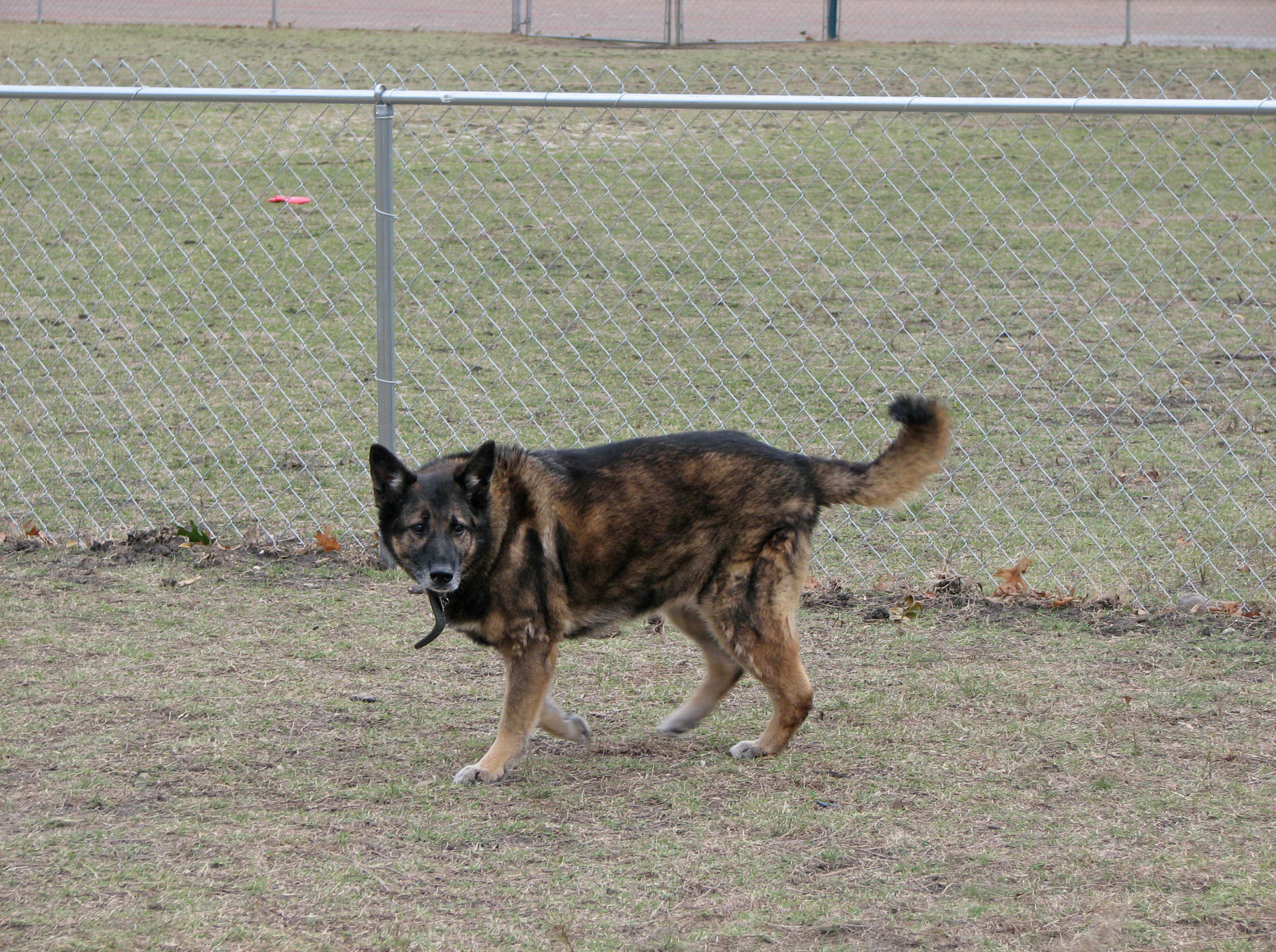
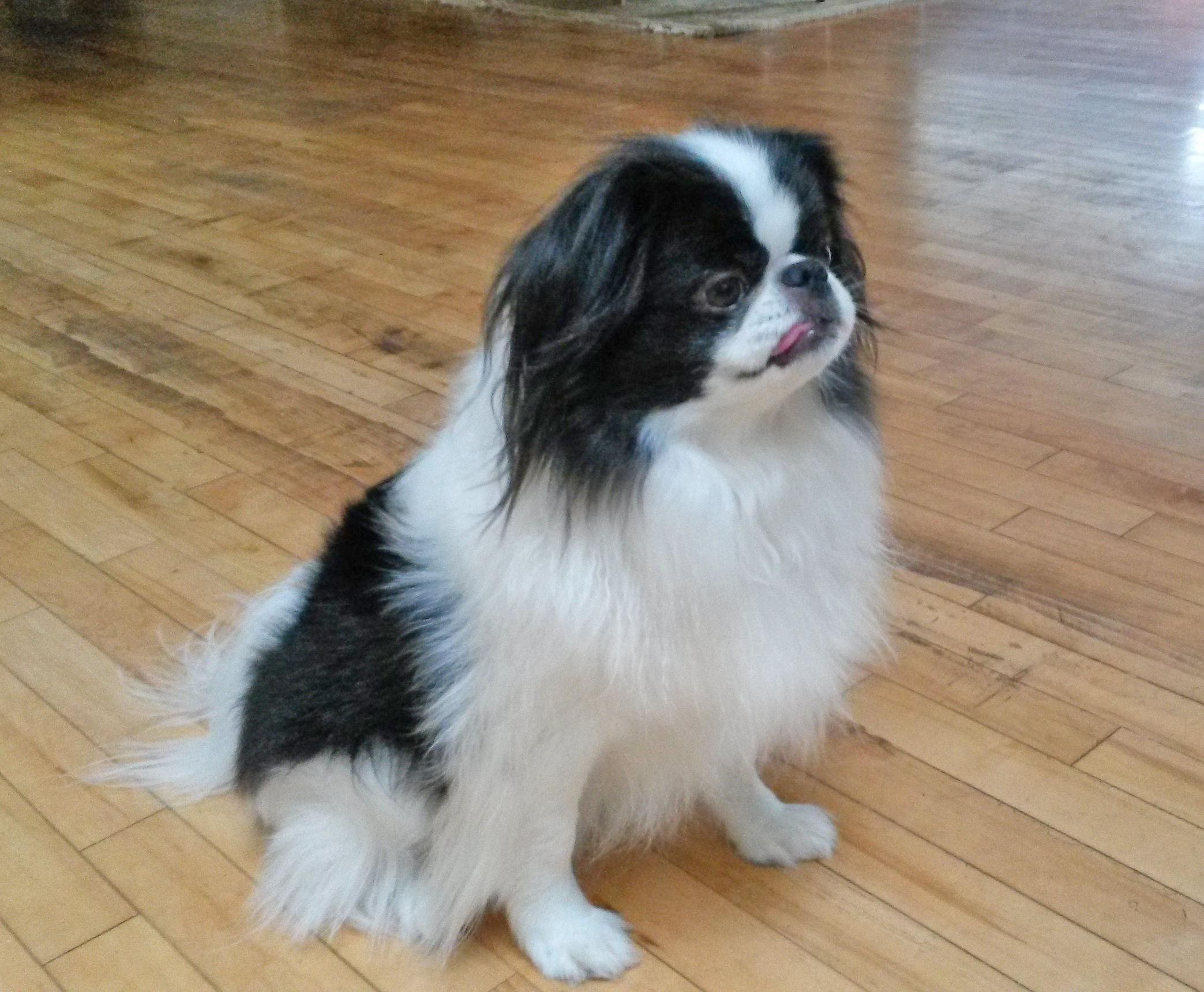
With this post I just wanted to wish everyone a Happy New Year and remind everyone that Fireworks is not appreciated by many dogs. Our Leonberger Bronco did not mind fireworks. Our Labrador Baylor did not mind fireworks and our Pug Daisy does not seem to mind either. However, our Japanese Shin Ryu was terrified of fireworks and so was our German Shepherd Baby. Our mini–Australian Shepherd Rollo is more than terrified of fireworks, and he was traumatized by a rouge bottle rocket that was launched in the middle of the neighborhood against the rules. Kids having fun can do a lot of damage to a puppy.
Fireworks are beautiful but not appreciated by all dogs. Photo by Rakicevic Nenad on Pexels.com
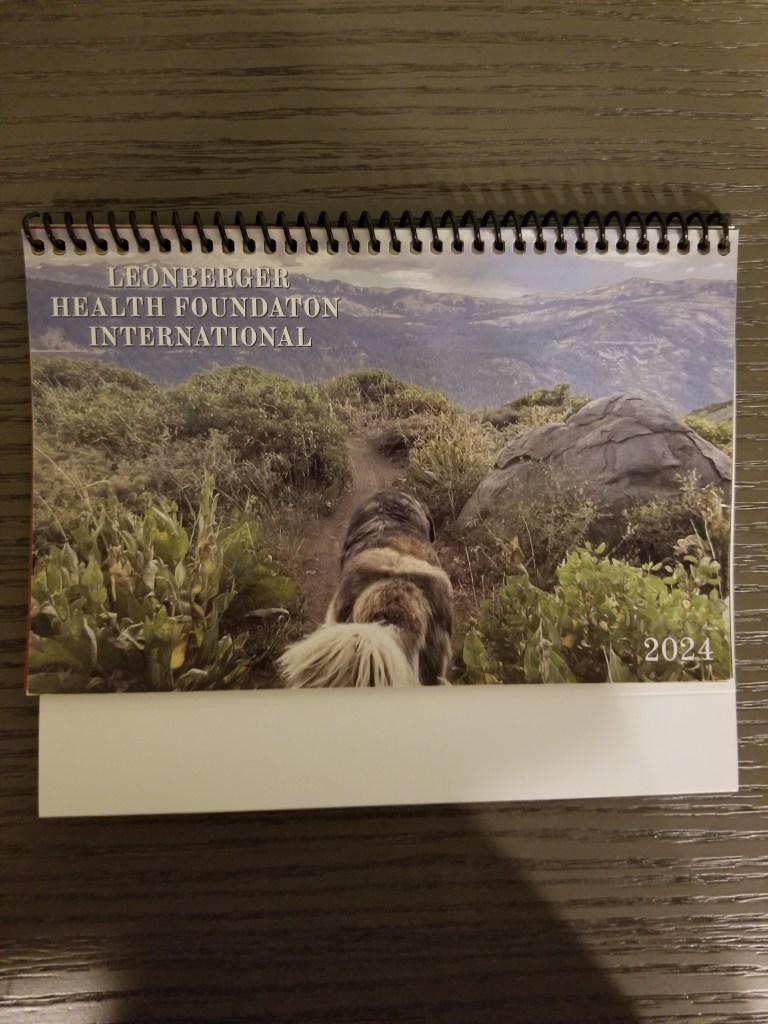
Today I received the Leonberger Health Foundation International (LHFI) Calendar for 2024 and I was reminded of this wonderful organization. LHFI supports medical research that improves the health and lives of Leonbergers as well as other large dog breeds, potentially even humans. They have raised nearly half a million dollars for research into conditions that affect canine health, including osteosarcoma, hemangiosarcoma, glaucoma, cardiac diseases, thyroid diseases, and neurological disorders. Its research also supports healthful longevity and aging as well as population diversity. They have had several successes, for example the eradication of Addision’s disease among Leonbergers.
Front page of the Leonberger Health Foundation International 2024 Calendar
The Leonberger Health Foundation International (LHFI) was founded in 2000 by Waltraut Zieher and other members of the LCA’s health, education, and research committee to “facilitate the solicitation and distribution of donations given to support health related breed-specific research.” The LHFI also administers a program that collects DNA samples from Leonbergers to share with universities and research institutions.
January page of the Leonberger Health Foundation International 2024 Calendar
All purebred dogs are more or less inbred, which comes with inherent health risks. That is especially true for large breeds. However, Leonbergers, especially those bred in North America, are fortunate compared to other large breeds. The Leonberger breed standard does not call for traits that can be detrimental to health. The precise and restrictive breeding regulations of the Leonberger Club of America (LCA) and other Leonberger clubs, and the work of the Leonberger Health Foundation International or LHFI, have resulted in Leonbergers being relatively free of inherited illnesses compared to other large dog breeds in America. For more information see Humane Society Veterinary Medical Association, “Guide to Congenital and Heritable Disorders in Dogs,”
June page of the the Leonberger Health Foundation International 2024 Calendar
One happy event for our family was when Bronco received his Grey Muzzle Award, which is an award given for longevity by LHFI. LHFI bestows the award on any Leonberger who has reached the age of twelve. These Leonbergers are the canine equivalents of centenarians, humans who are at least one hundred years old. The Grey Muzzle Award is also given to breeders, because they are partially responsible for the dogs’ longevity. The Grey Muzzle Award was certainly a happy event in Wikman family. If you have a twelve-year-old Leonberger, simply fill out a form on the LHFI website or send an email to lhfgreymuzzle@gmail.com.
The Grey Muzzle Award from the Leonberger Health Foundation International
The foundation will ask for some information, including the registered name and call name of the dog; the breeder’s name, kennel name, address, and email; the dam’s registered name; the sire’s registered name; the owner’s name, address, and email; the birth date of the dog; and whether the dog is alive or dead. If the latter, they will want to know the cause of death. In addition, they would like you to write a one-paragraph tribute to the dog and send two (preferably high-resolution) photos—one head shot and one favorite photo. To find out more about the Grey Muzzle Award click here. To see the 2019–2020 awardees video featuring Bronco click here.
Grey Muzzle Award certificate from the Leonberger Health Foundation International
I can add that when Bronco passed away, we sent his DNA to the University of Minnesota to be used in research. This was facilitated by the LHFI.
Familiar faces. Time marches on.
The 2019-2020 Grey Muzzle Awardees. Bronco is on the second row from the top and second from left. Click on the picture to visit the YouTube video.
Video showing 33 2019 & 2020 Grey Muzzle Awardees (Leonbergers)
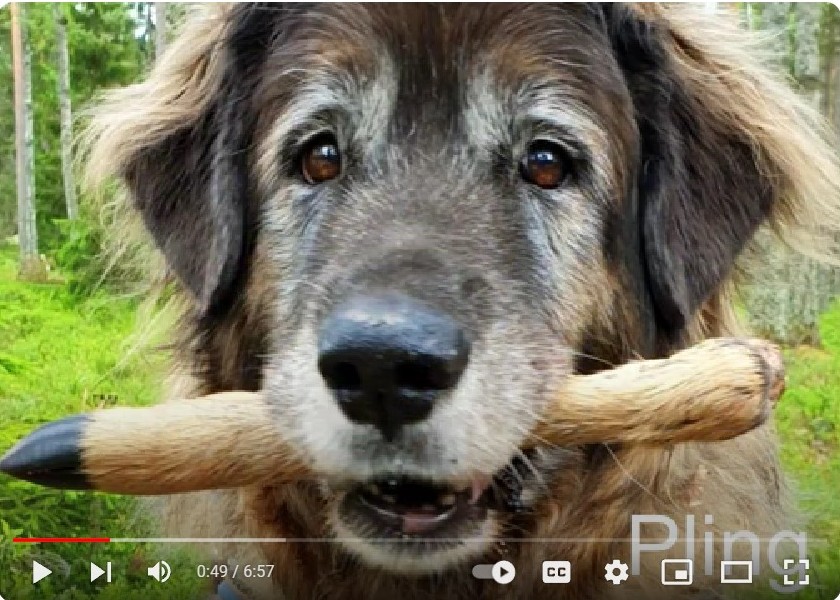
Many of the owners of very old Leonbergers joined the Double Digit Leonberger group on Facebook (Leonberger 10+ years old) and the owners of the extremely old Leonbergers (around 12 or older) started talking to each other a lot. It was a small group from around the world. This is why I said “Familiar faces” above. I knew many of them, including Pling, a Leonberger in Sweden. I and Pling’s owner talked a lot to each other in Swedish. Bronco and Pling reached about the same age and passed not too far from each other in time.
Our Leonberger Bronco from the LHFI Grey Muzzle Awardee Video 2019-2020.Our Leonberger Bronco from the LHFI Grey Muzzle Awardee Video 2019-2020.Pling a Leonberger from Sweden from the LHFI Grey Muzzle Awardee Video 2019-2020.
Note, all royalty earnings from my book (see right) go to the Leonberger Health Foundation International.
I’ve been, or am, a member of several Facebook dog groups. I’ve found that most of them are awful. Take for example the Pug groups. I’ve joined a few Pug groups so that can post about Daisy. What I’ve found is that almost all of the Pug groups have preapproval turned on for all posts. Most other groups (Leonberger groups, beer groups, discussion group, etc..) do not. It would not be a bad thing if it wasn’t for the fact that the administrators/moderators of several of the Pug groups take weeks before they approve a post, all while shamelessly doing constant self-promotion, promoting products, and spamming the group they are supposed to moderate. I am a moderator or administrator in several groups, and I certainly don’t behave that way.
Another thing that annoys me is that they copy the photos that members post and then repost them in multiple places and multiple groups without attribution. Look at my photo from Daisy’s birthday below. That photo was copied (not shared) without attribution in lots of groups, multiple times, receiving several thousand reactions and thousands of comments, which is something I only found out about by accident. Who knows how far and wide the photo was spread. Unless someone explained it to you, you would think that it was their pug and that it was they who took the photo. I assume they do this because they want to get attention and be social network influencers. I’ve never complained, that probably would get me banned from the groups in question. However, I don’t think that is the way to run a group. I have not yet found a decent Pug group.
Photo from Daisy’s 15th birthday on October 22. This photo has been spread all over Facebook without attribution.
This brings me to the seven Leonberger groups that I am a member of (there are many more). I’ve listed them below. Only one group does post pre-approval and they typically approve posts within a few hours. None of moderators/administrators of these groups spam their groups, try to push products, or copy members photos/posts without attribution. People have friendly informative discussions, and they get to know each other. The Leonberger community is smaller, and the owners/administrators/moderators of the groups are more mature and responsible. I think it makes a difference that Pug groups tend to be run by attention seeking youngsters. I wish I could find a Pug group that was more like a Leonberger group.
Leonberger’s All Colors Worldwide
LEONBERGER
Leonberger Double Digit Double Club
Leonberger Forum
Global Leonberger Lovers
Leonberger Lovers
Frontier Leonberger Club of the Southwest
I think my favorite Leonberger group is the Leonberger Double Digit Club. It is a group for Leonberger owners with Leonbergers who ten years are old or older. Leonbergers tend not to live very long so that is why this is an exclusive club. It was one of the former administrators (and founder) of this group who suggested to me that I write a book about our Leonberger Bronco.
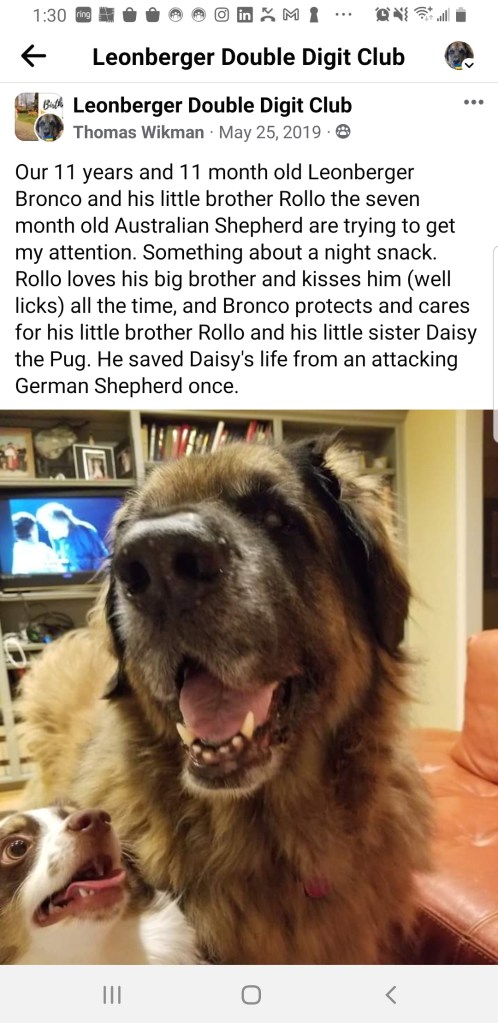
Below I am posting a few screenshots of my posts from the Leonberger Double Digit Club.
Jacqui pointed out to me in a comment below that you can take action when people are using your stuff without attribution. A photo that took me a second to take may not be a big deal, even though it is bit rude to use it as if it is yours. However, when people copy artwork, as had happened to a few commentors below we have a more serious situation. So anyway, here is the link that Jacqui posted in her comment. (You can also visit the comment).
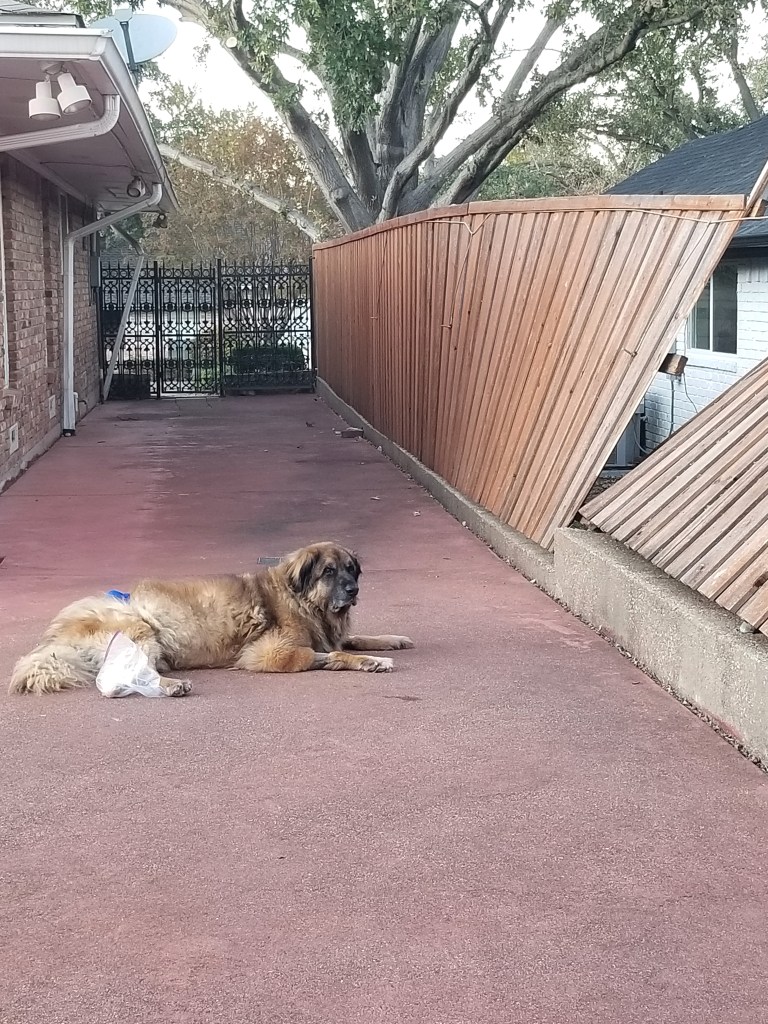
October 2019 was a tough month for us and especially for our Leonberger Bronco. He had a toe amputation due to a cancer growth on his toe, mysteries sores on his paw that wouldn’t heal for a long time, a tornado destroyed our neighborhood and damaged our house (cost $50,000.00), and then Bronco had a heart failure. All in one month.
Bronco lying in front of our fence, which was damaged by the tornado. His paw is in a bandage and there’s a plastic bag around it. I can add that we only put the plastic bag on while he was outside. If you keep it on longer than 15 minutes you may have problems with condensation.
Our veterinarian’s office had been destroyed by the tornado, so we took Bronco to the veterinary surgical center (where he had his toe amputated) for bandage changes (amputated toe and mysterious sores). After a few visits, the technicians suggested that we do it at home to save time and money. More important, it would be easier on Bronco. So, they gave us instructions, and we started doing it at home.
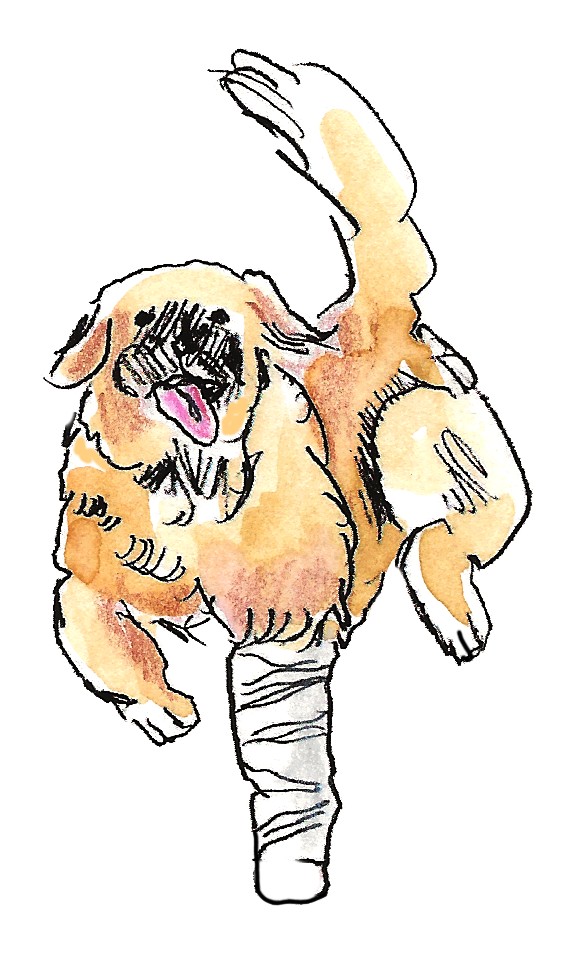
Illustration by Naomi Rosenblatt of Bronco running with a cast.
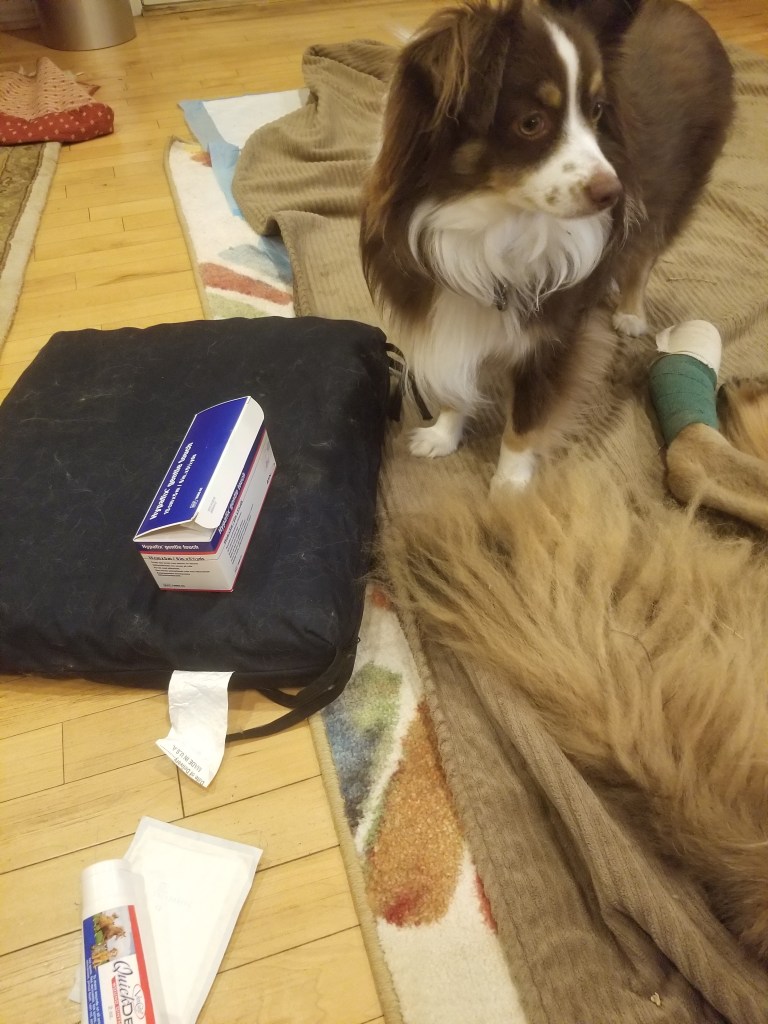
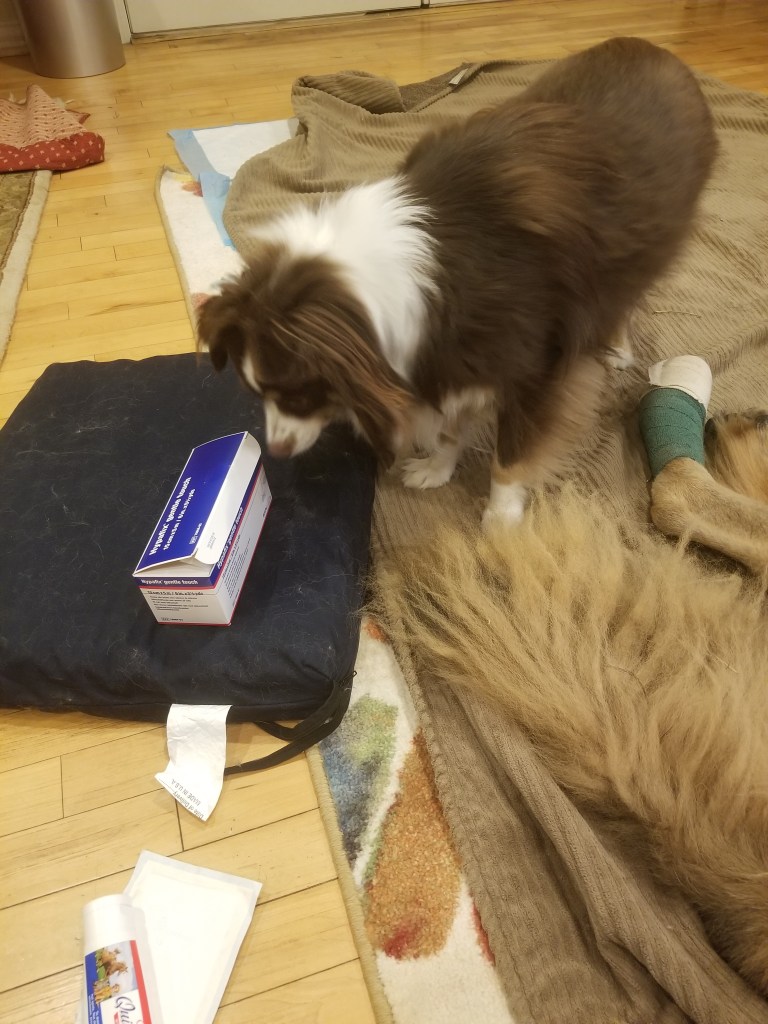
But changing Bronco’s bandages wasn’t as easy as just rolling out some gauze and tape. First, we had to clean the sores with chlorhexidine, an antiseptic solution. Then we had to apply a healing ointment, such as manuka honey or QuickDerm. This involved spreading it on an Adaptic pad (breathable and nonstick), then wrapping the pad with a Telfa pad (or gauze pad). After that came the soft bandage, then the outer bandage, then something sticky to hold it all together. The latter was necessary because bandages easily slip off dog hair.
Rollo our mini-Australian Shepherd on the left. Le Bronco our Leonberger on the right. The outer bandage is purple in this picture but we also used green.
I did most of the bandage changes, but my wife Claudia and the children helped, and even Rollo, our mini-Australian Shepherd helped. He was very curious: he stood by and watched everything I did as if he were checking to see that I didn’t forget anything. He loved Bronco’s bandage changes and seemed to think that they were very interesting. He followed every move I made with my hands and it seemed like he wanted to help. It was never a problem—except for the time he drank the chlorhexidine.
Rollo carefully inspecting the bandage change.Rollo making sure I don’t forget anything.Rollo thinks the Hypafix tape, chlorhexidine and manuka honey is very interesting.
Therefore, I think that Rollo was a little bit like a dog nurse.
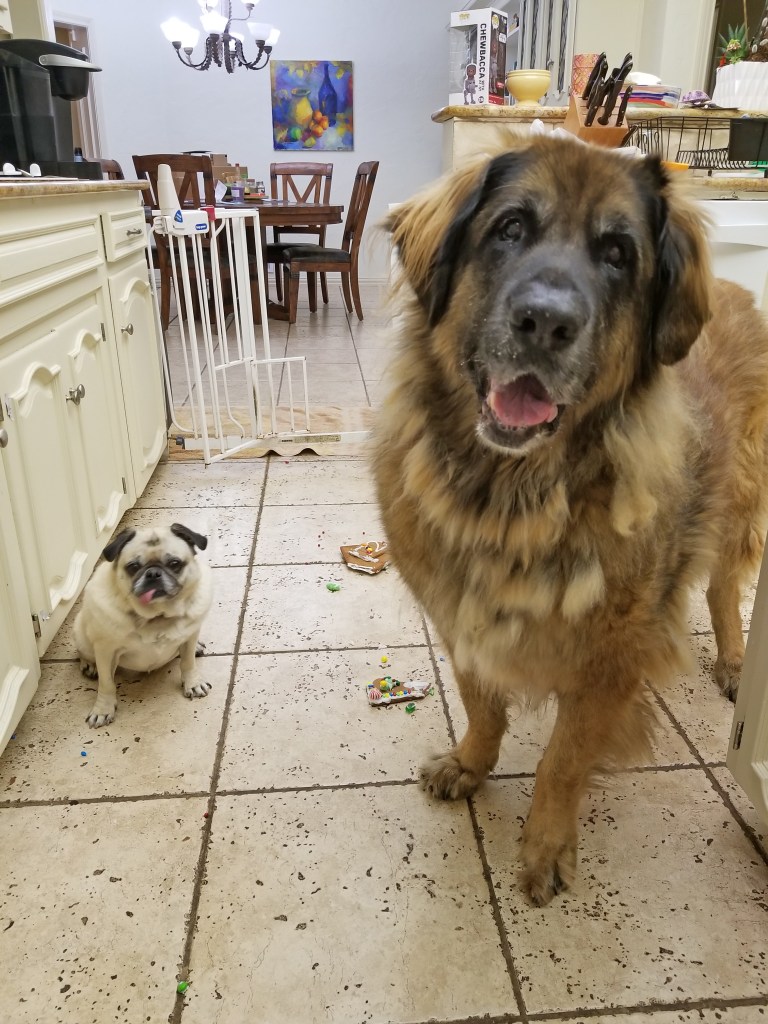
Large dogs are sometimes expert counter surfers. Our Leonberger Bronco sometimes stole food, and he could certainly eat a lot. Once he sneaked into the kitchen during the night and ate a 2lbs bag of dog treats, a box of pastries, bread, a grilled chicken, a container of mash, a key-lime pie, and whatever was on that empty plate. He still wanted breakfast. I should mention that he was on a diet, and that’s when stuff like this happens.
A screenshot from my FacebookBronco and our Pug Daisy are sharing a gingerbread house. Bronco opened the gate to the kitchen using his paws and nose.
But how about Thanksgiving and large dogs?
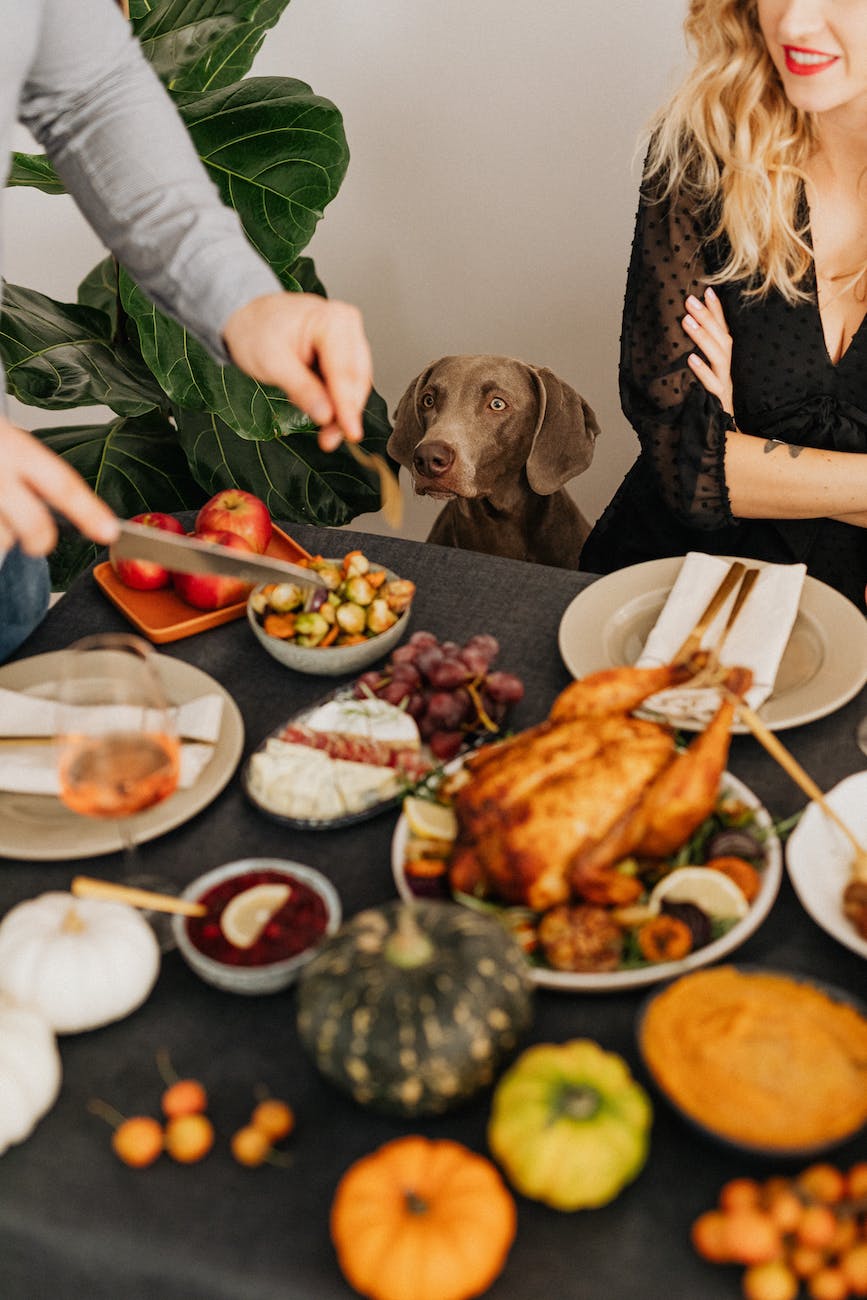
Thanksgiving is a day of thanks, and a day of temptation for large dogs. Photo by Karolina Grabowska on Pexels.com
Our Labrador Baylor could not eat as much as Bronco, but he was an extremely skilled food thief. Combining speed, patience, stealth, and the element of surprise, he could steal almost any food. Once he made off with the Thanksgiving Turkey. As soon as I realized what had happened, I went looking for him in our backyard. I chased him around and was able to get the Turkey from him. I cleaned it off and asked my wife what the best way would be to serve it after what happened. She told me to forget about serving the remaining Turkey.
A close up of our Labrador Baylor
Would you have served a Turkey half eaten by a dog?
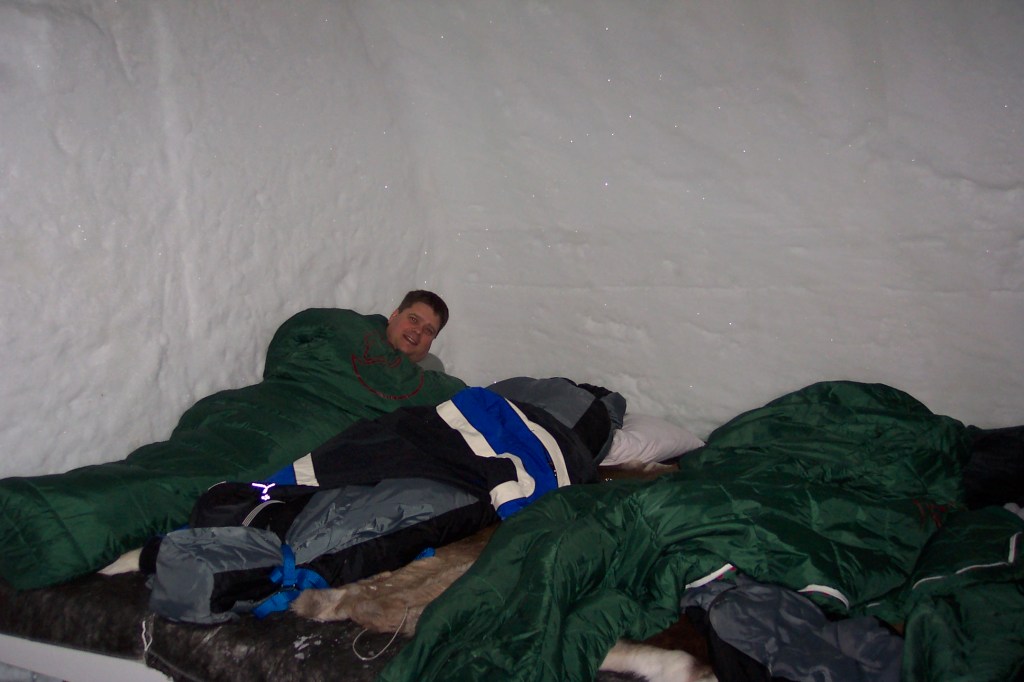
Someone reminded me that today is the day of writing, so I decided to make a blog post even though I made one yesterday. This post is not about Leonbergers or dogs but about our visit to the ice hotel in Jukkasjärvi in northern Sweden. It was 2005 and the kids were still small. It was the first ice hotel in the world and is the biggest one.
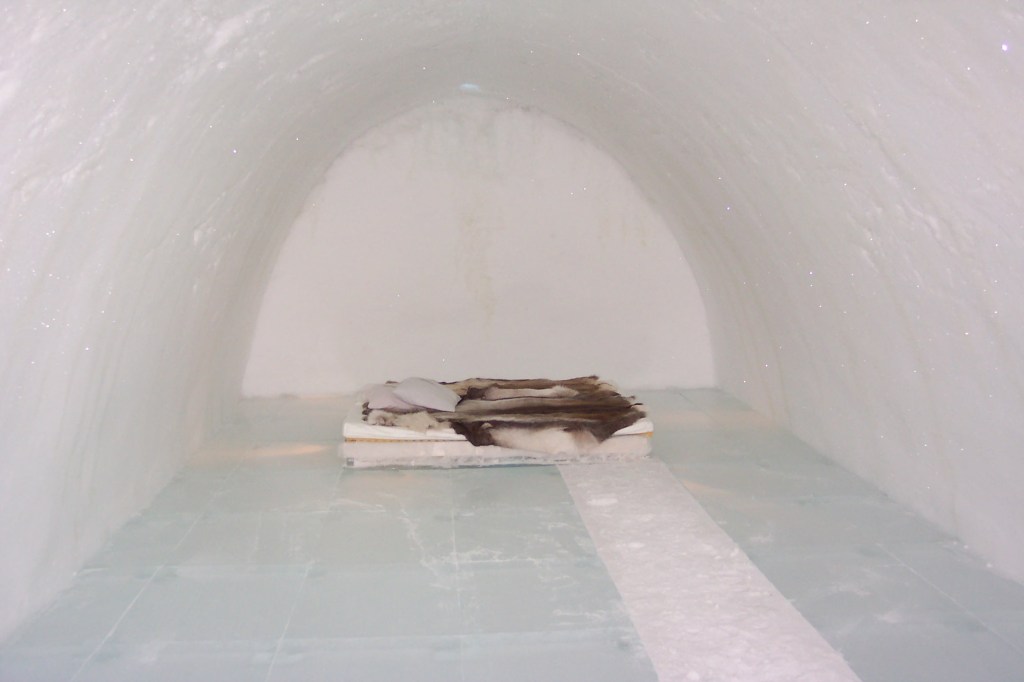
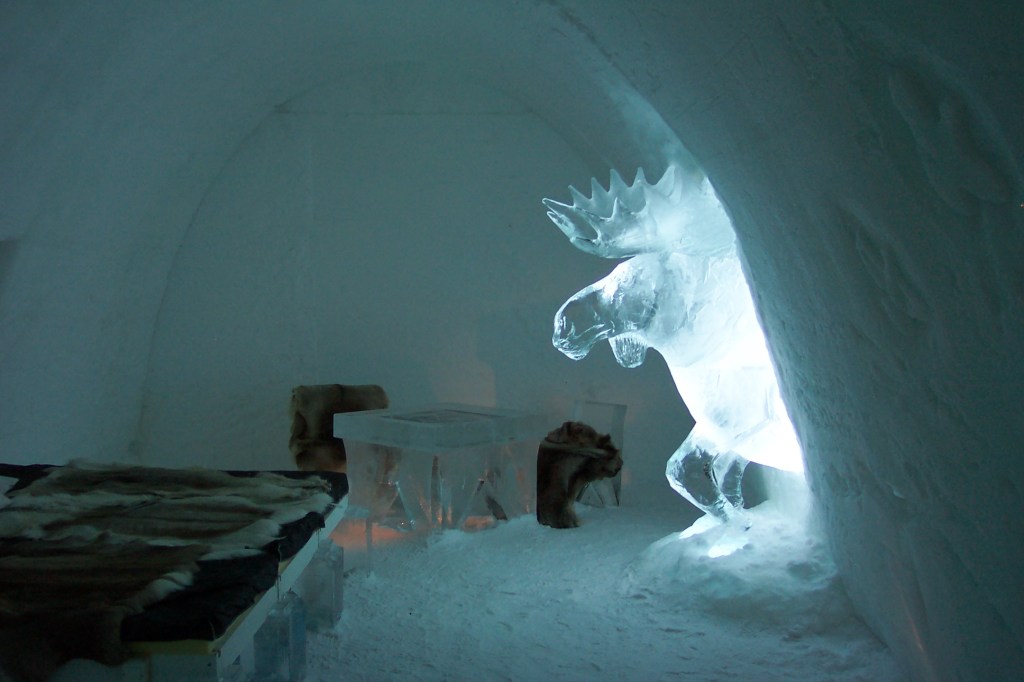
I should say that Jukkasjärvi is located north of the arctic circle and is typically very cold in winter. The ice hotel itself does not have any bathroom, but they have an adjacent wood building with bathrooms, showers, and rooms for anyone who can’t stand the cold for too long. If you are OK with being a bit cold, you sleep in sleeping bags on top of blocks covered by reindeer hides. Below are some selected photos that I took.
This is the ice theater. It was located next to the ice hotel (not in the picture).
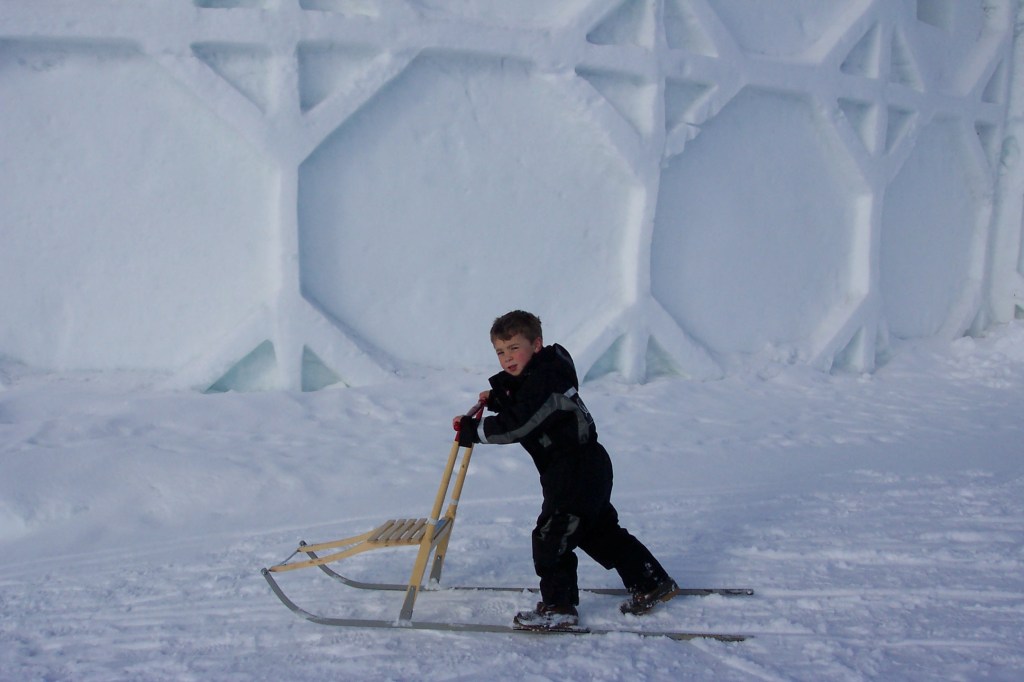
The ice hotel had put out lots of kick sleds, referred to as “spark” for people to use as a mode of transportation on the snow and ice, or just to sit on. As my dad, Stig, was sitting on one of them, our son came up to him and told him “Stig the hotel put out these sleds for children to play with. It is not for adults to sit on.” My dad was so surprised that he just handed him the sled.
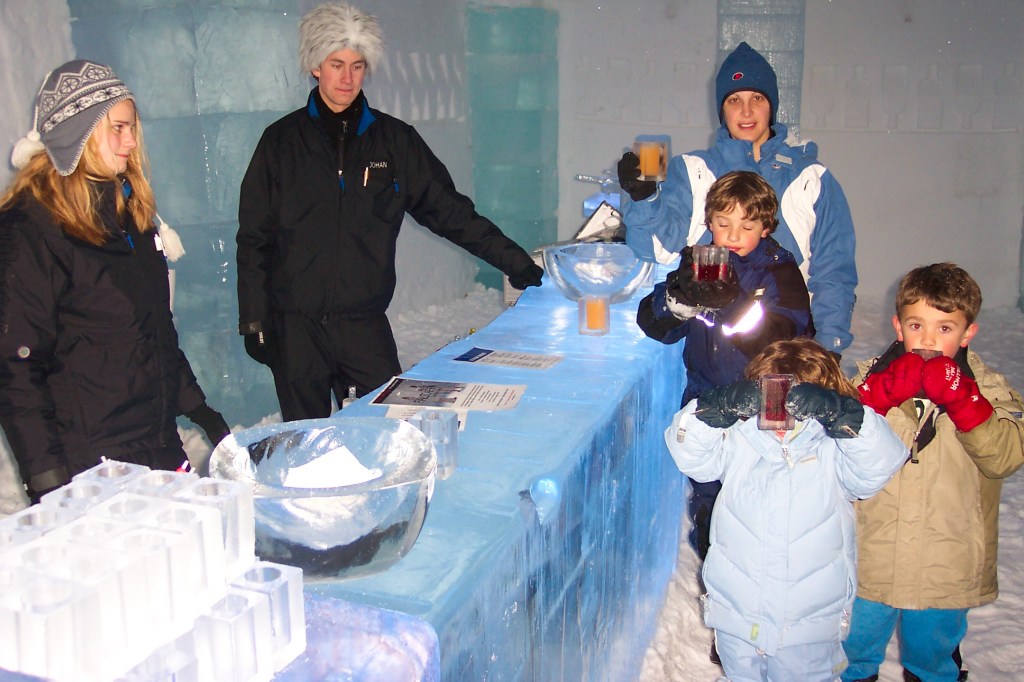
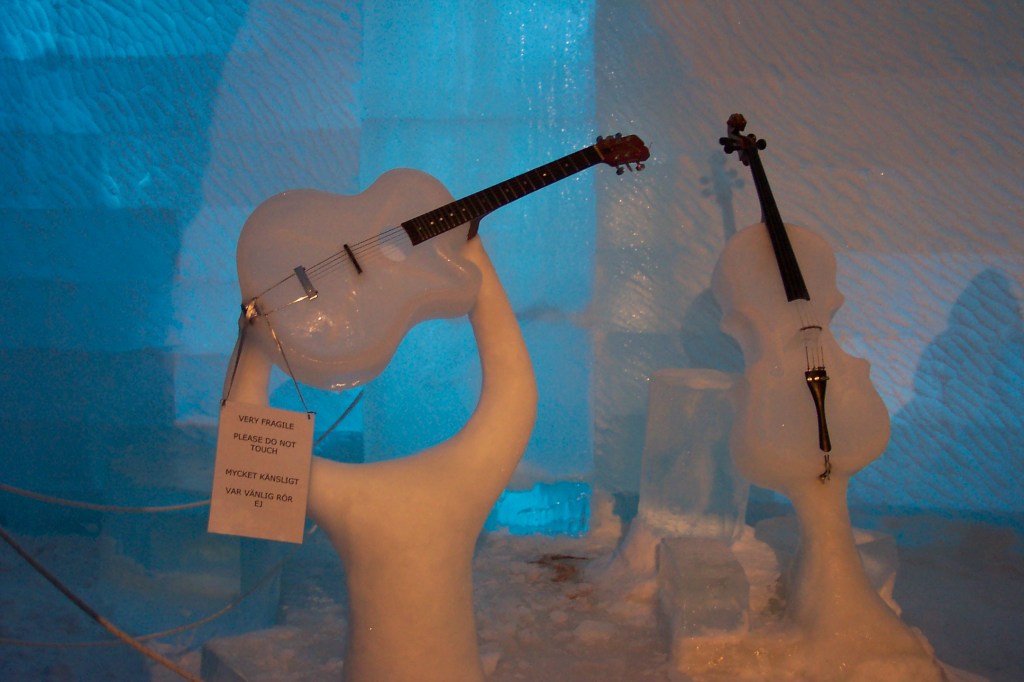
Our son David with one of the kick sleds called “spark”.The lobby of the ice hotel. Our kids are sitting around a table of ice. A chandelier of ice is hanging above the table. The light is from fiber optics, so the ice won’t melt.Another photo of the lobby at the ice hotel. My son David is barely visible behind one of the ice pillars.My oldest son sitting at an ice table in the lobby.They got the ice blocks for the structure and for the art from nearby Torneå river.We started the evening with a visit to the ice restaurant and bar. Everything in the ice restaurant was made of ice, the tables, the chairs, the counter, the glasses, the plates, and the art.This is a photo of the ice instruments standing on the ice stage.A close up of an ice cello and an ice guitar.My dad Stig and his girlfriend Ulla came with us on the trip.We are going to bed in our room. I think it was my wife Claudia who took the photo.
The day after I took some photos of the other rooms.
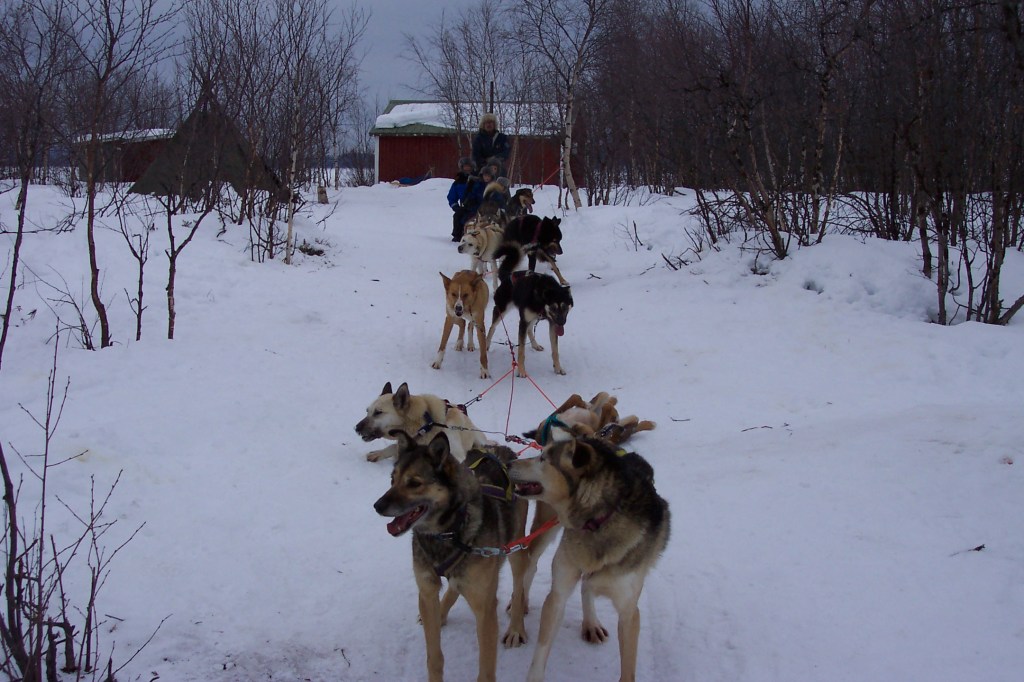
This was the hallway where our room was located.We are going on a dogsled tour. The ice theater is in the background, and you can see part of the ice hotel on the right.The kids had a lot of fun during the dogsled tour.
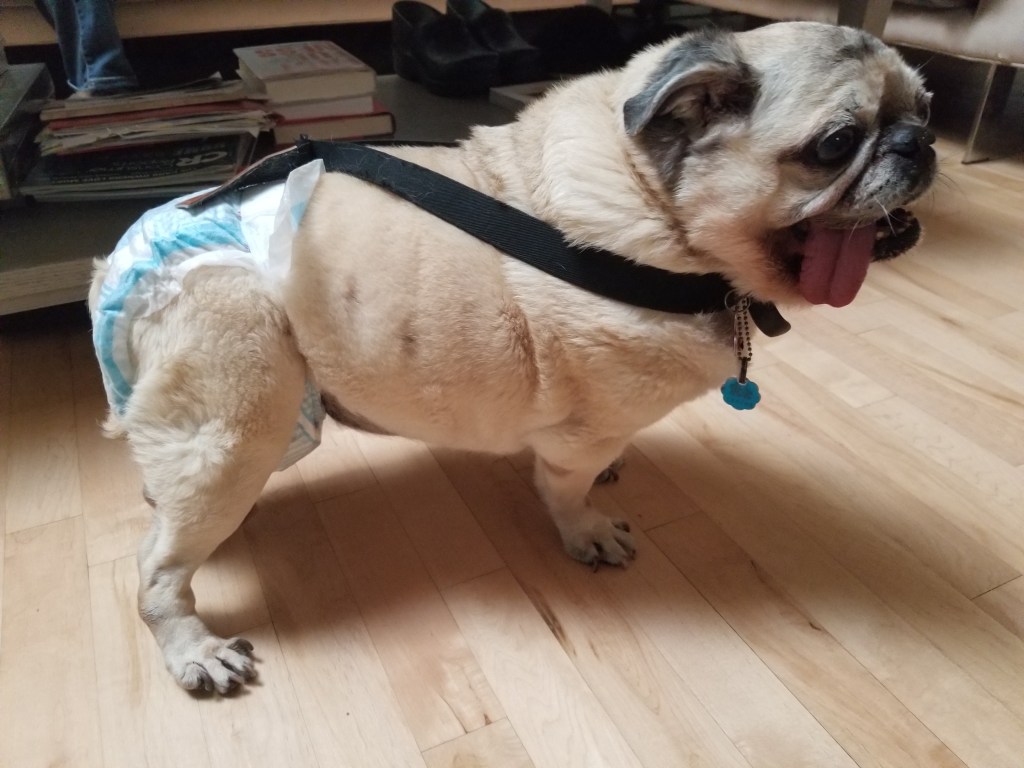
Walking our Pug Daisy and our mini-Australian Shepherd Rollo is often an adventure and so was today’s promenade. Daisy, who is fifteen years old and has arthritis walks very slowly and cannot walk far. Therefore, I let her sit in a pet stroller on our walks. However, I let her walk a little bit, go to the bathroom, well the grass, and sniff around a bit. She also has incontinence problems and wears a dog diaper inside the house. I take it off for our walks.
Daisy in her pet stroller
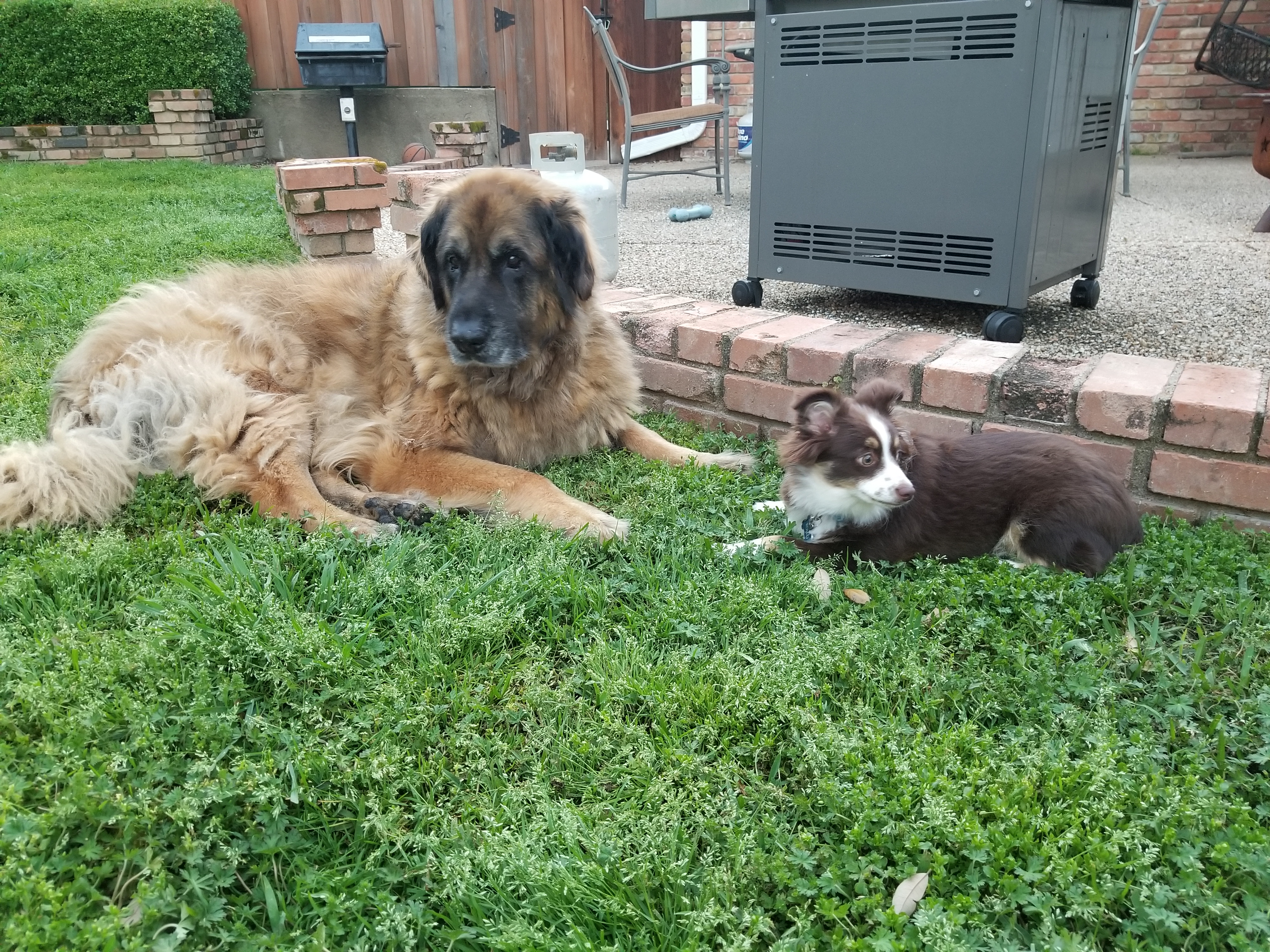
Rollo our mini–Australian Shepherd, on the other hand, is very energetic and fast, and unfortunately very misbehaved. He is the worst behaved dog that we’ve ever had, and he growls and barks aggressively at every dog we meet. Yes, I know that is our fault and we need to fix this problem, but it requires some time and discipline. He also does not seem to understand that he is too small to take on large dogs like Bernese Mountain Dogs. Perhaps, he acquired that belief because our Leonberger Bronco was so patient with him.
Rollo pulling Bronco’s tail. Once he even bit it and swung in it like a swing. Bronco’s patience with him was great.
So, what happened today?
During our walk I stopped to let Rollo go to the bathroom and I also let Daisy down, who also went. Right at that moment a woman with her two Bernese dogs approached us and Rollo went crazy. He barked loudly and the Bernese dogs barked loudly back. As Rollo ran towards them Rollo’s leash got stuck around the stroller wheel and he tipped the stroller over. As I tried to fix it, I made it worse, and the stroller tipped upside down. Luckily, when the woman saw this, she turned and went a different way.
Our neighbor Dave, who is a nice guy, had watched the commotion from his window and came out to help. As he ran towards me, he shouted, “Thomas are you OK?”, “are you OK?”. I thanked him and I was able to turn the stroller over and I put Daisy back in the stroller. As I did this Daisy peed all over me, but other than being wet and in need of a shower, I was back in business. I was annoyed with Rollo, but I did not say anything. I wonder what will happen on tomorrow’s walk.
Finally, a few words about Daisy’s pet diaper. It is a diaper with a hole for the tail. I think it is a great idea. Dogs eventually get old, and they may have bathroom problems. You cannot get angry with the dog when they pee on the floor or the carpet, they already feel bad about it. A diaper will solve the problem and make them feel better about it. They will quickly understand how it works. However, one problem with the diapers is that they easily slip off and to solve that we got suspenders with Velcro holding the diaper. You can buy this stuff from online pet stores, Amazon and many other places.
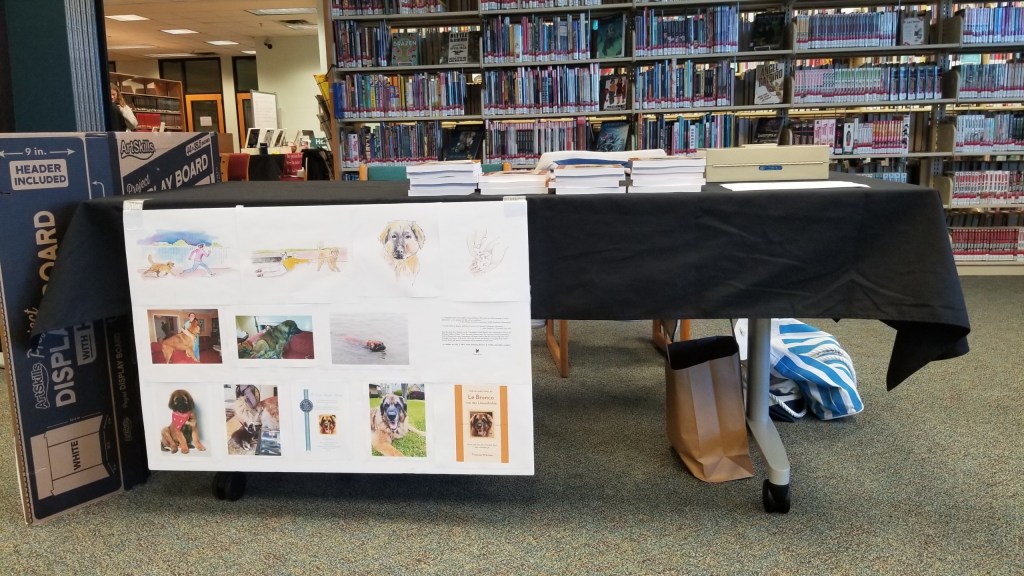
On Saturday November 4th Watauga public library hosted an indy author day to which I was invited, and I gladly joined. Wautauga is a small city located between Dallas and Fort Worth. It is closer to Fort Worth. They also hosted an indy author day last year, which I also partook in. We all had a booth where we sold and signed our books. I did not sell a whole lot, half a dozen, but that’s OK. It is a great way to interact with and get to know other authors, and it is fun.
We also read a short passage from our respective books in front of an audience. My reading went very well. I read one of the shorter funny Bronco stories from my book and people laughed a lot. Well, I had practiced, and I was animating the story a bit. I felt like a comedian. I am including the story I read at the end of this post. If you are an indy author and you live in the Dallas Fort Worth area I suggest you participate next year, just for the fun of it.
Me presenting and reading from my book, The Life and Times of Le Bronco von der Löwenhöhle: Stories and Tips from Thirteen Years with a Leonberger.Author group photo. One author had to leave before the photo.Author group photo from last year 2022 (me on the right/blue). As you can see it to a large degree the same people.I did not take a photo of my booth this year, but it looked the same. This is the photo of my booth from last year.
The story I read during reading time (3 minutes)
Bronco’s Hamster Search and Rescue
Back when Bronco was young, the kids had pet hamsters—Moldova and Montenegro. The hamsters escaped from their cages sometimes, but Bronco usually helped us find them whenever they did. Claudia (my wife) would tell him, “Bronco, find the hamsters,” and he would go around the house sniffing until he found them. One time he found them in the linen closet; another time he found them on a shelf in the living room.
On one occasion, a friend of David (our son) trusted us with his two hamsters while he and his family went on vacation. A couple of days later, Claudia noticed that the two hamsters were missing from their cage. The next thing she noticed was that Bronco’s cheeks looked puffy, so she said, “Bronco, drop it!” Out came the two hamsters, both unconscious.
Cheeks full of hamsters (illustration by Naomi Rosenblatt)
In a panic, Claudia started performing CPR on the unconscious hamsters. She put one hamster at a time in her hand and gently compressed each tiny chest using the finger of the other hand. Fortunately, one hamster revived right away. The CPR didn’t seem to be working on the other hamster, but Claudia put both of them back in their cage, and soon the second hamster also woke up. We decided to keep the incident to ourselves. Hamsters don’t squeal.
Hamster CPR (illustration by Naomi Rosenblatt)
The question is, Did Bronco try to eat the hamsters? Or did he simply find them and pick them up, intending to alert us to their presence? I’ve asked several people this question, including some who know Leonbergers well. The answer they give is that he tried to save them from whatever danger he thought they might have been in. If he wanted to eat them, they say, he would have tried chewing them. But clearly, he didn’t.
Note: Unless they bought my book, they probably still don’t know what happened
Tomorrow I will do book signing at Wautega Public Library here in Texas. I will read a short story from my book and present myself. I will also mention that all royalties from book sales go to the Leonberger Health Foundation International, or LHFI, a charitable organization working towards healthier Leonbergers and healthier dogs in general. Below is my is my 20 seconds video pitch.
Hi, I’m Thomas Wikman, author of the Life and Times of Le Bronco von der Löwenhöhle, a book featuring funny and informative stories about our Leonberger. It is a great book for all dog lovers. All royalties from book sales are donated to the Leonberger Health Foundation International. Their work gives us healthier dogs.
My 20 second video pitch.That’s me a few days ago.The Leonberger Health Foundation International. Click on the image to visit the LHFI’s website.
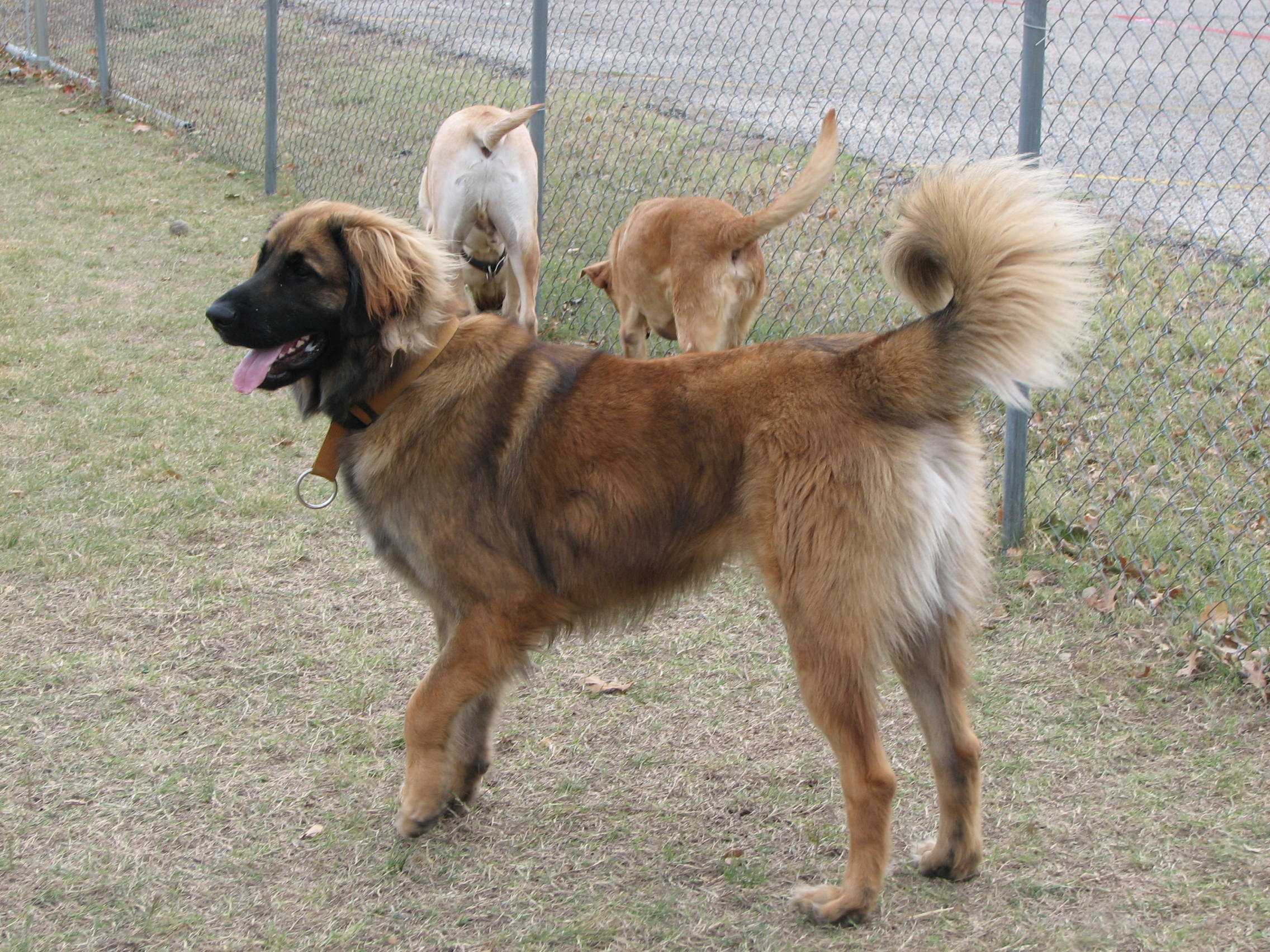
The Leonberger is an unusual and fascinating dog breed that is known for its size, affectionate nature, and intelligence. I know a lot about Leonbergers because my family was lucky enough to live with one for thirteen years. His name was Le Bronco von der Löwenhöhle—but we called him “Bronco” for short.
Bronco wasn’t our only dog, but our world wouldn’t have been the same without him. For instance, he once saved the life of our pug by fending off an attack from another dog. He probably saved our Labrador’s life, too, by sniffing out an impending insulin shock before it happened. Then there was the time he scared off a trespasser who’d been terrorizing my wife and other women in the neighborhood.
This is me with our late Leonberger Bronco when he was still young, not even one years old.
Bronco is no longer with us, but even in his passing he was distinctive. Leonbergers tend to live less than nine years—but Bronco came very close to reaching his thirteenth birthday. In fact, he received an award for longevity called the “Grey Muzzle Award.” We already knew he was a special dog, but we sent his DNA to two labs for research anyway.
The Grey Muzzle Award is given to Leonbergers who reach the age of 12 years or older.
YouTube video featuring Grey Muzzle Awardees including Bronco, entry nr 10 out of 34 at 2 minutes. This is an emotional video for me, not only because of Bronco, but I was very familiar with many of the other dogs. Time marches on.Bronco’s Grey Muzzle Award

































 Leonberger Life