This blog feature amusing and heartwarming stories about our late Leonberger dog Bronco, as well as other Leonbergers. It also has a lot of information about the Leonberger breed, the history, care, training, Leonberger organizations, etc. I also wrote a Leonberger book, which I am featuring in the sidebar.
Today, Tuesday, February 20, 2024, is National Love Your Pet Day. So, I thought I would show some photos of our current dogs and dogs from the past, naturally including our late Leonberger Bronco. I think the photos I am displaying show some of our love for them.
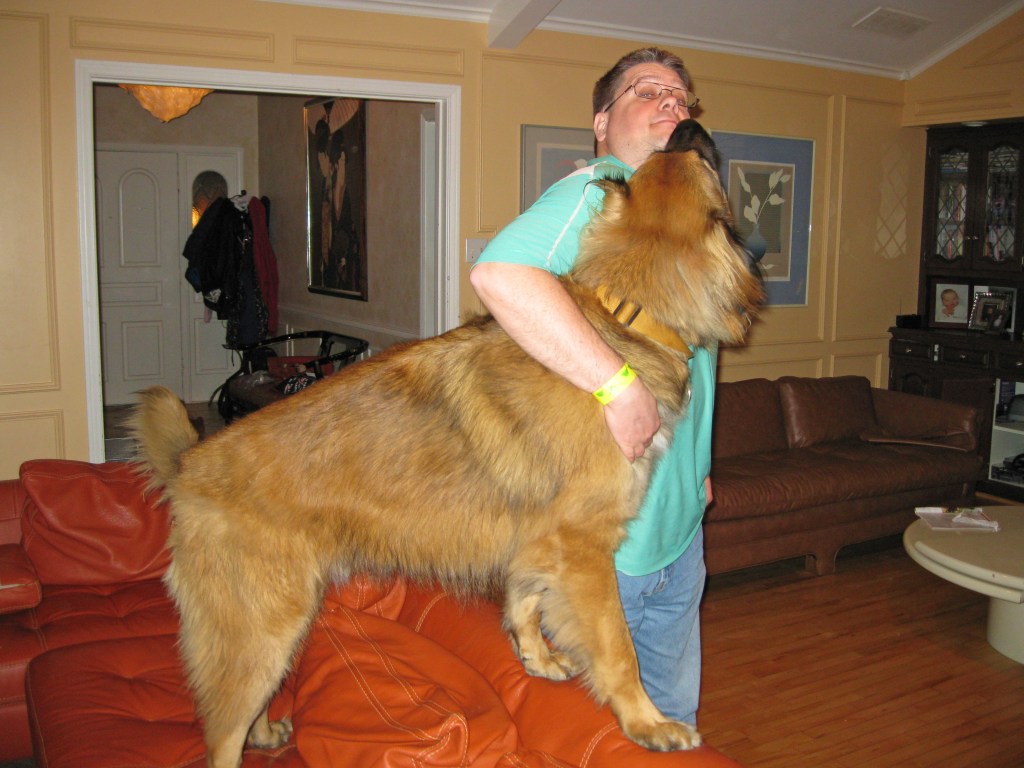
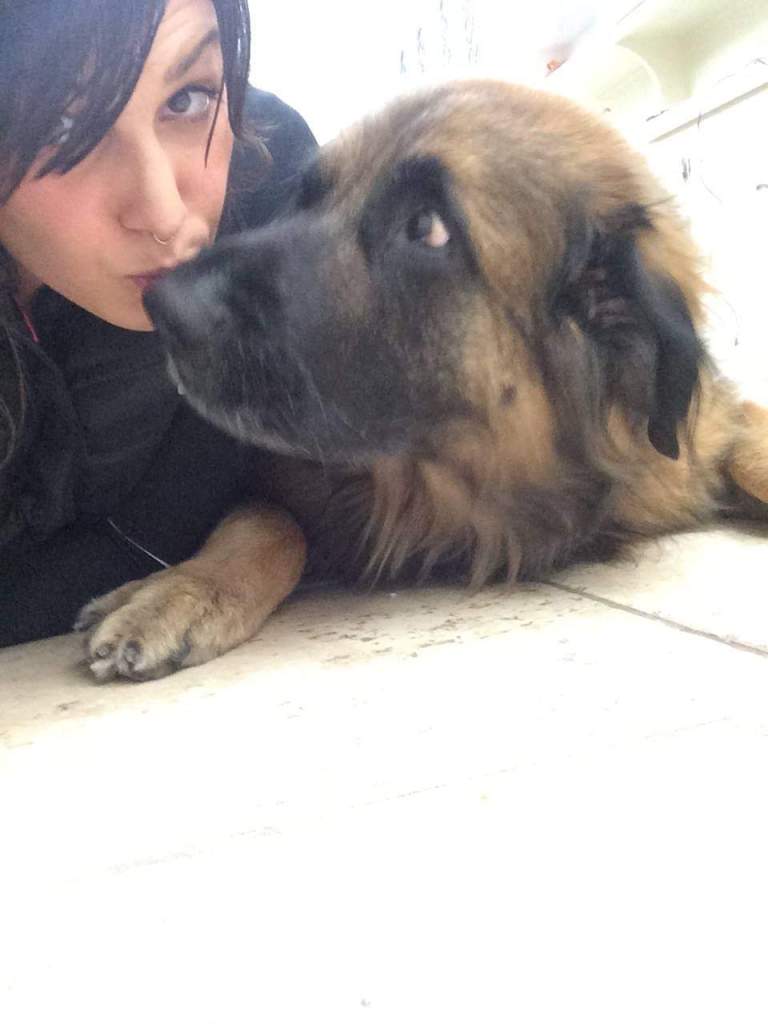
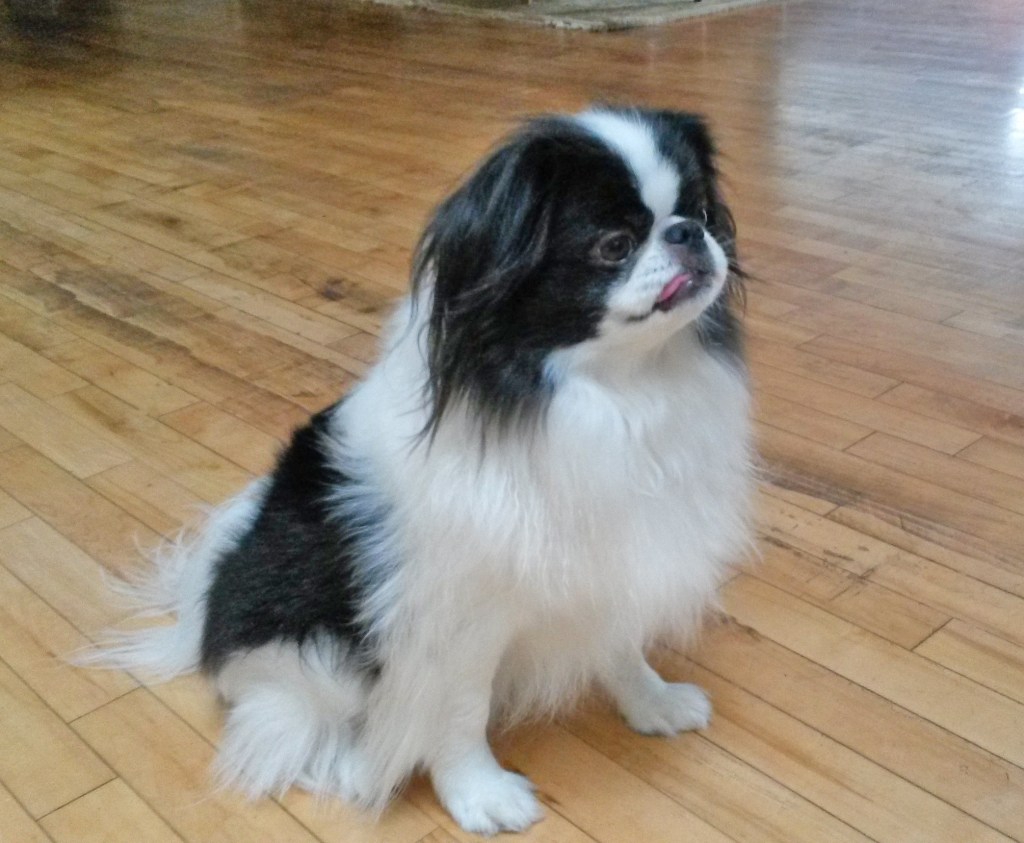
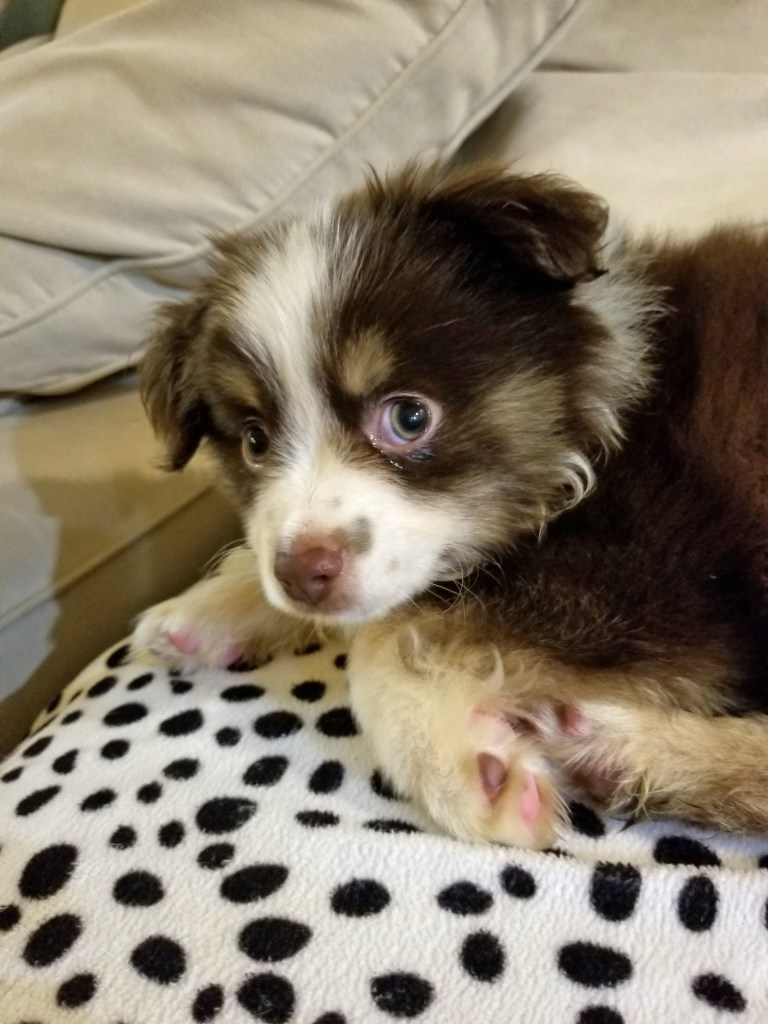
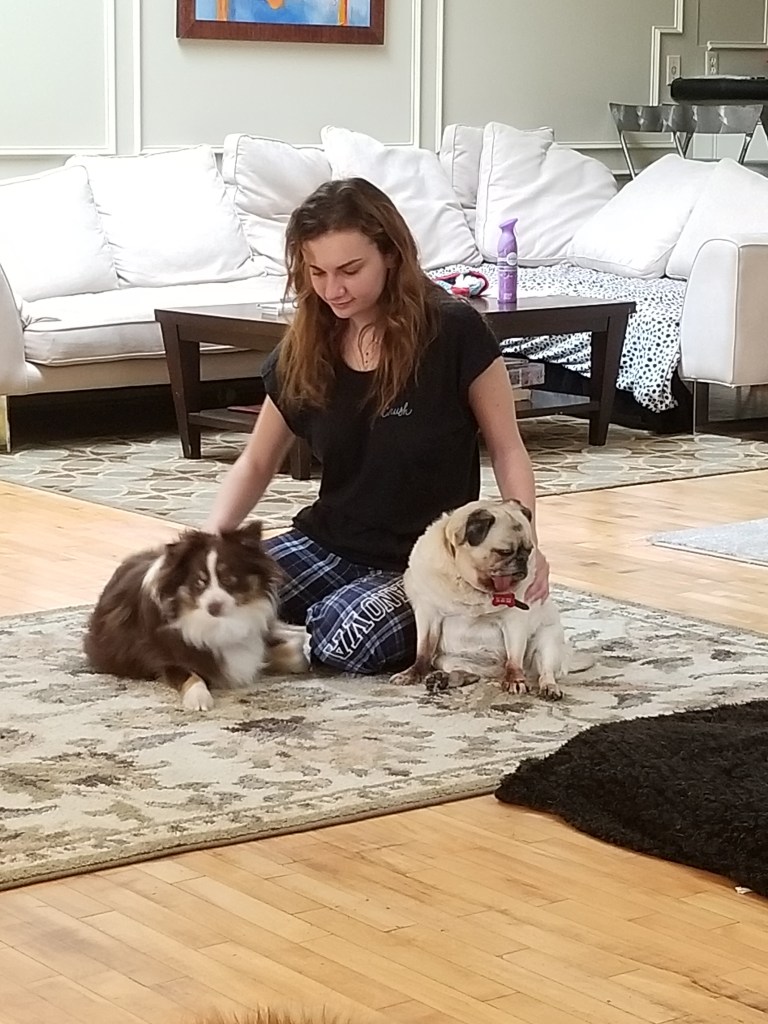
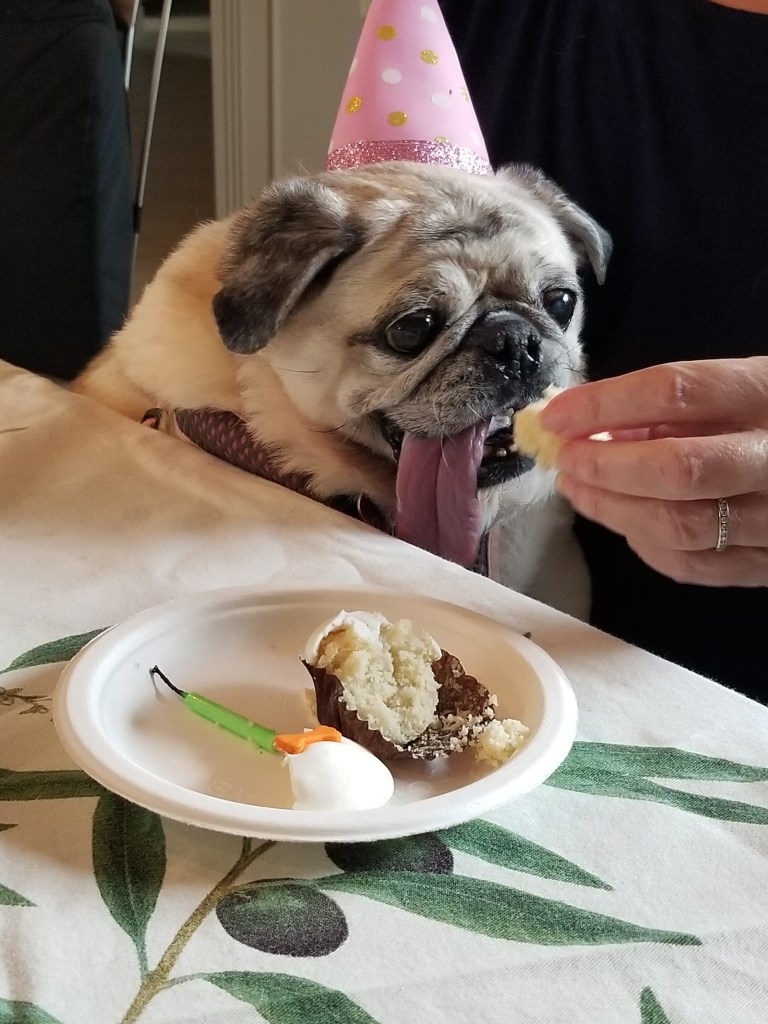
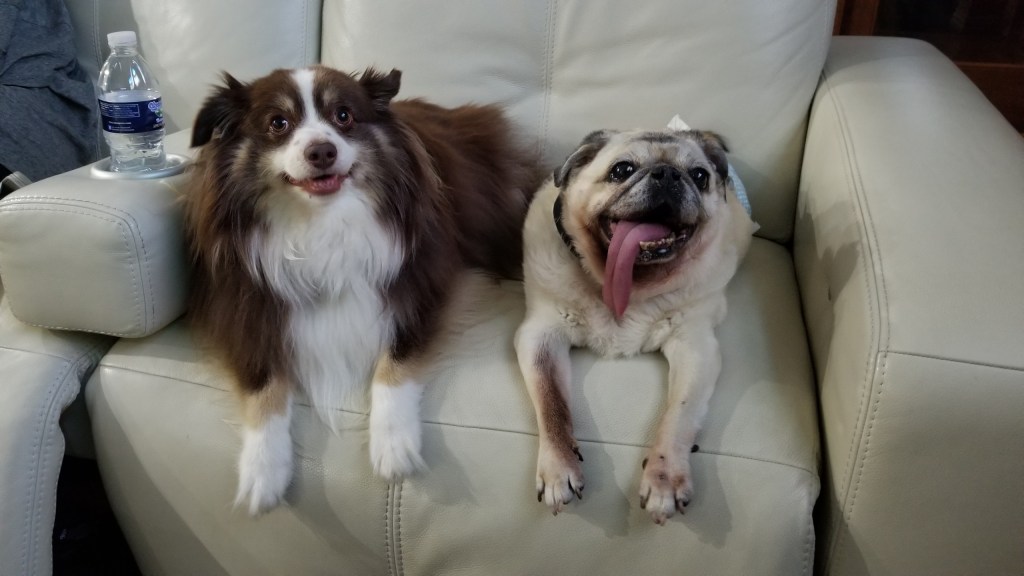
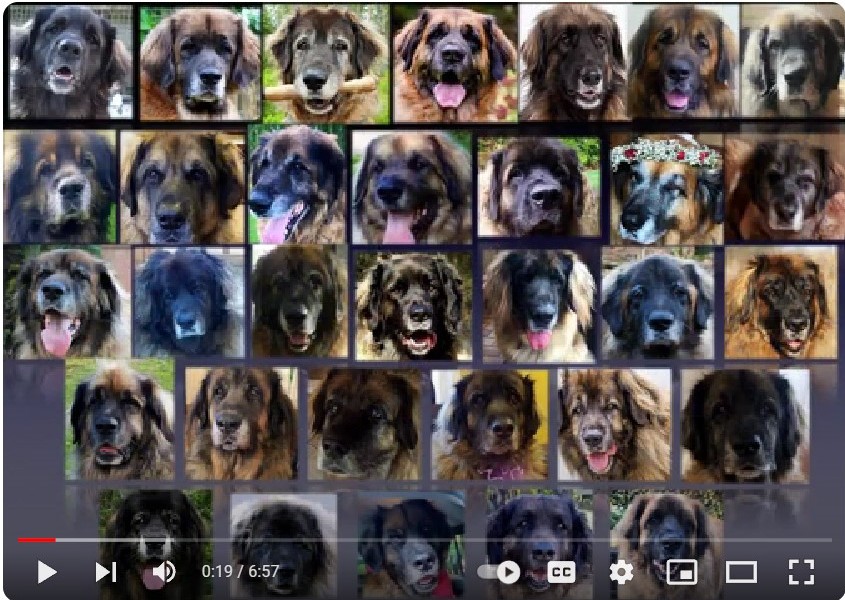
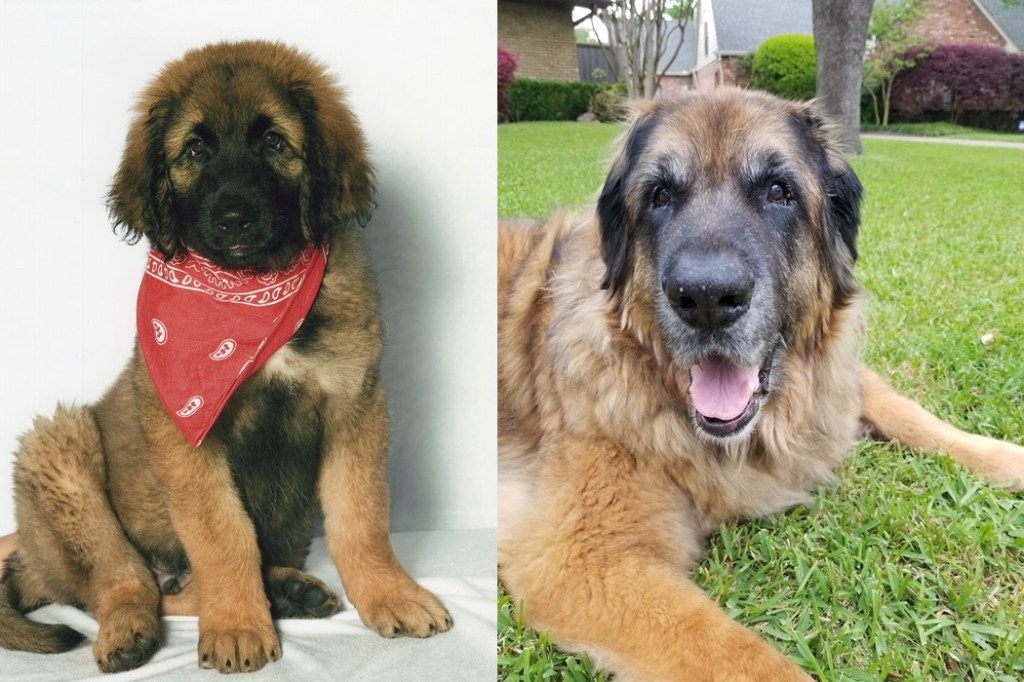
Our Leonberger Bronco when he was a three-month-old puppy.On the left our Labrador Baylor and on the right our German Shepherd Baby. Baby took care of and protected Bronco when he was a pup, just like a good mother.Our young Leonberger Bronco is giving me a hug.Our niece Jessica giving Bronco a kissOur Leonberger Bronco sitting in my wife Claudia’s lap. He was the perfect lap dog.Our Japanese Shin RyuOur mini-Australian Shepherd Rollo as a puppy.Our daughter petting Rollo and our pug DaisyOur pug Daisy’s 15th birthday.Rollo and Daisy own the best furniture.The 2019-2020 Grey Muzzle Awardees. Bronco is on the second row from the top and second from left. Click on the picture to visit the YouTube video. Bronco is at two minutes.
Video showing 32 2019 & 2020 Grey Muzzle Awardees (Leonbergers). Bronco at two minutes in.
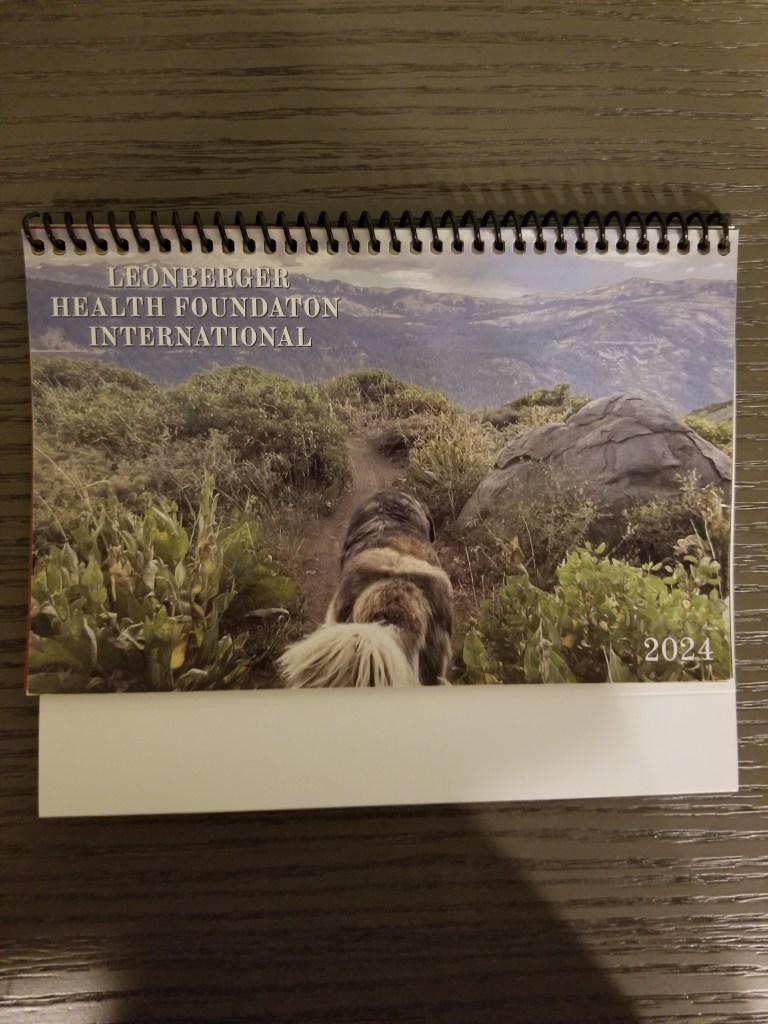
Today I received the Leonberger Health Foundation International (LHFI) Calendar for 2024 and I was reminded of this wonderful organization. LHFI supports medical research that improves the health and lives of Leonbergers as well as other large dog breeds, potentially even humans. They have raised nearly half a million dollars for research into conditions that affect canine health, including osteosarcoma, hemangiosarcoma, glaucoma, cardiac diseases, thyroid diseases, and neurological disorders. Its research also supports healthful longevity and aging as well as population diversity. They have had several successes, for example the eradication of Addision’s disease among Leonbergers.
Front page of the Leonberger Health Foundation International 2024 Calendar
The Leonberger Health Foundation International (LHFI) was founded in 2000 by Waltraut Zieher and other members of the LCA’s health, education, and research committee to “facilitate the solicitation and distribution of donations given to support health related breed-specific research.” The LHFI also administers a program that collects DNA samples from Leonbergers to share with universities and research institutions.
January page of the Leonberger Health Foundation International 2024 Calendar
All purebred dogs are more or less inbred, which comes with inherent health risks. That is especially true for large breeds. However, Leonbergers, especially those bred in North America, are fortunate compared to other large breeds. The Leonberger breed standard does not call for traits that can be detrimental to health. The precise and restrictive breeding regulations of the Leonberger Club of America (LCA) and other Leonberger clubs, and the work of the Leonberger Health Foundation International or LHFI, have resulted in Leonbergers being relatively free of inherited illnesses compared to other large dog breeds in America. For more information see Humane Society Veterinary Medical Association, “Guide to Congenital and Heritable Disorders in Dogs,”
June page of the the Leonberger Health Foundation International 2024 Calendar
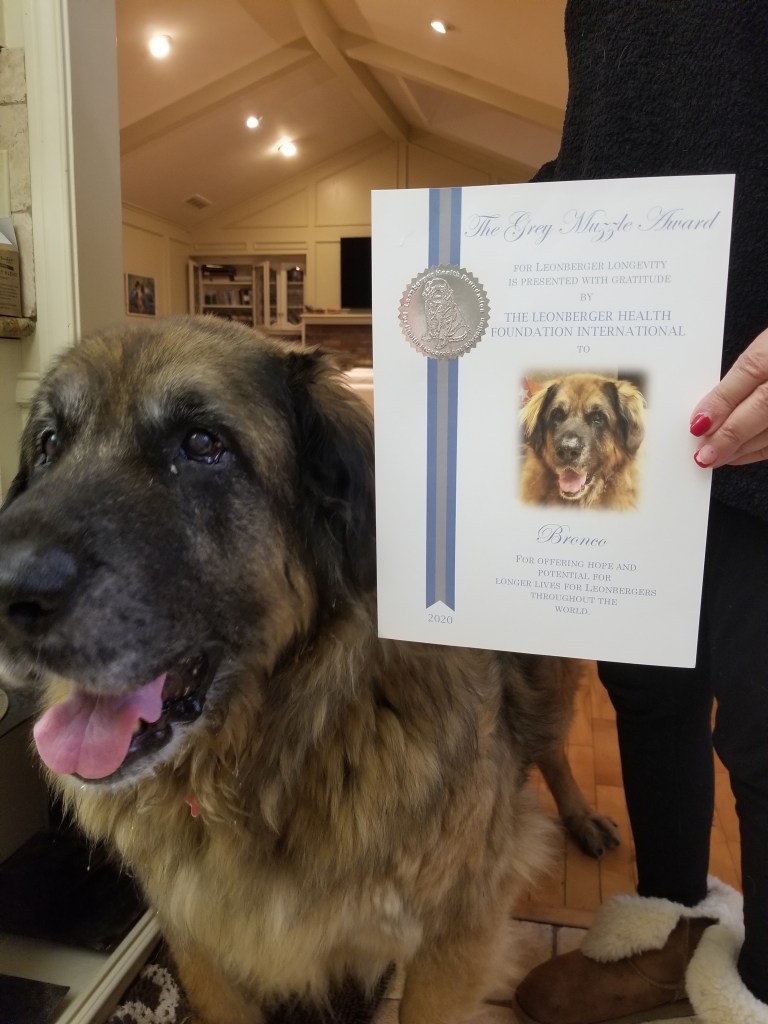
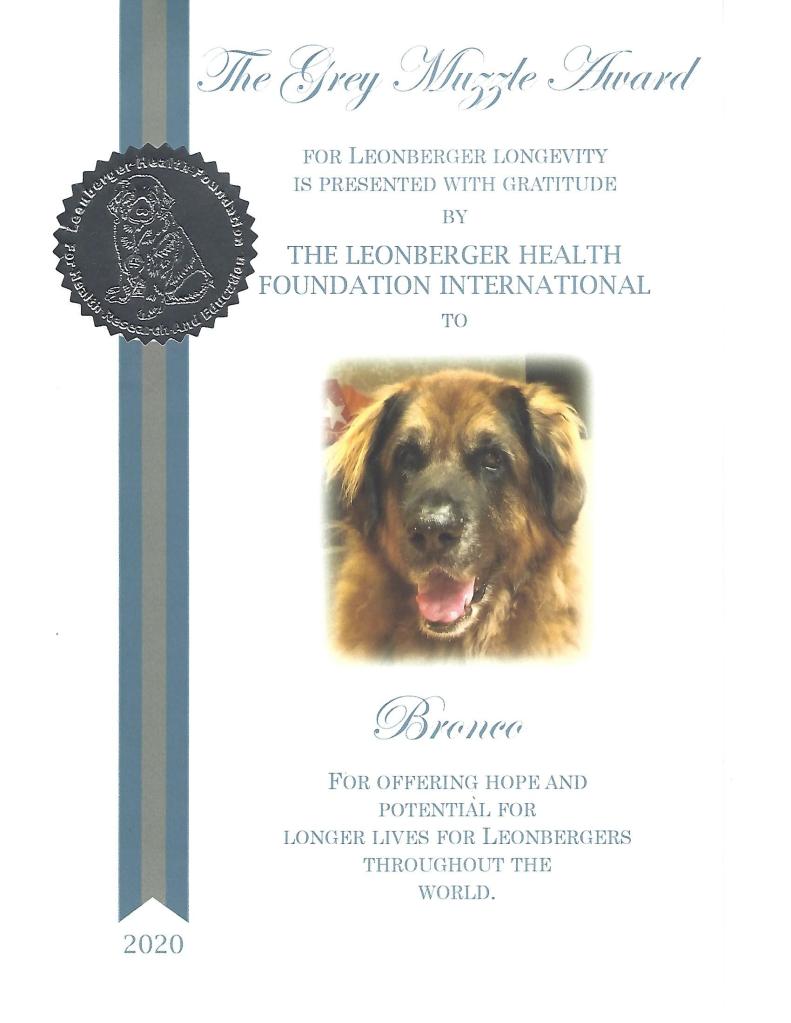
One happy event for our family was when Bronco received his Grey Muzzle Award, which is an award given for longevity by LHFI. LHFI bestows the award on any Leonberger who has reached the age of twelve. These Leonbergers are the canine equivalents of centenarians, humans who are at least one hundred years old. The Grey Muzzle Award is also given to breeders, because they are partially responsible for the dogs’ longevity. The Grey Muzzle Award was certainly a happy event in Wikman family. If you have a twelve-year-old Leonberger, simply fill out a form on the LHFI website or send an email to lhfgreymuzzle@gmail.com.
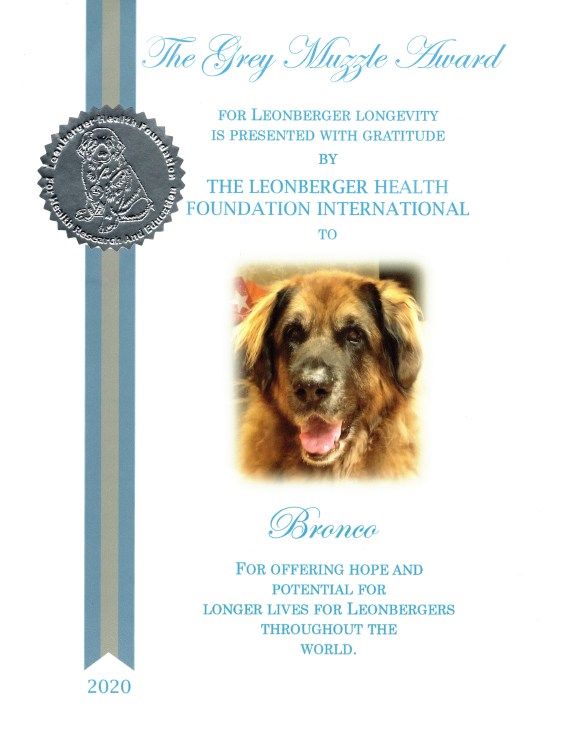
The Grey Muzzle Award from the Leonberger Health Foundation International
The foundation will ask for some information, including the registered name and call name of the dog; the breeder’s name, kennel name, address, and email; the dam’s registered name; the sire’s registered name; the owner’s name, address, and email; the birth date of the dog; and whether the dog is alive or dead. If the latter, they will want to know the cause of death. In addition, they would like you to write a one-paragraph tribute to the dog and send two (preferably high-resolution) photos—one head shot and one favorite photo. To find out more about the Grey Muzzle Award click here. To see the 2019–2020 awardees video featuring Bronco click here.
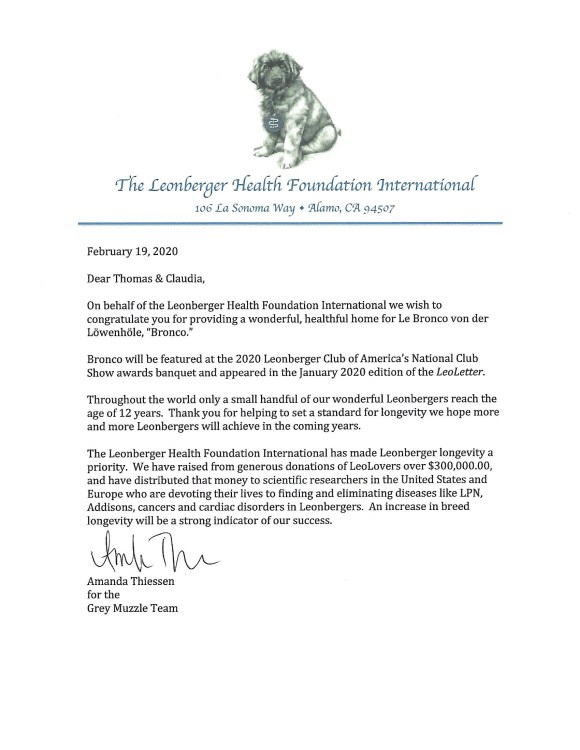
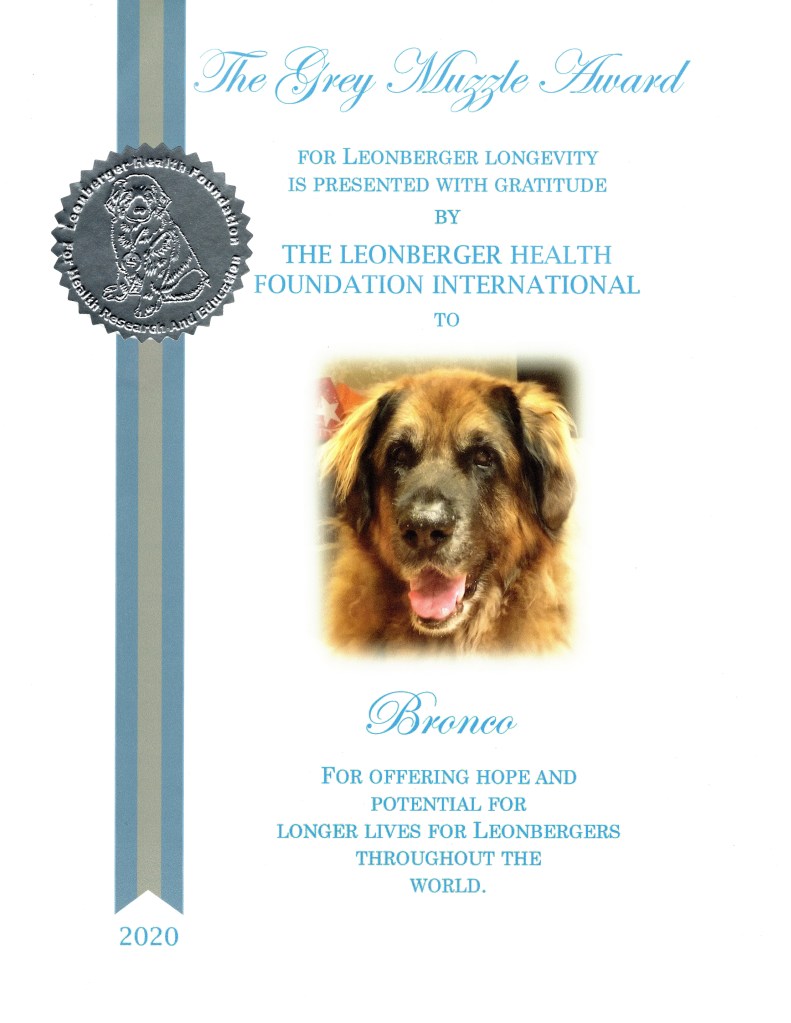
Grey Muzzle Award certificate from the Leonberger Health Foundation International
I can add that when Bronco passed away, we sent his DNA to the University of Minnesota to be used in research. This was facilitated by the LHFI.
Familiar faces. Time marches on.
The 2019-2020 Grey Muzzle Awardees. Bronco is on the second row from the top and second from left. Click on the picture to visit the YouTube video.
Video showing 33 2019 & 2020 Grey Muzzle Awardees (Leonbergers)
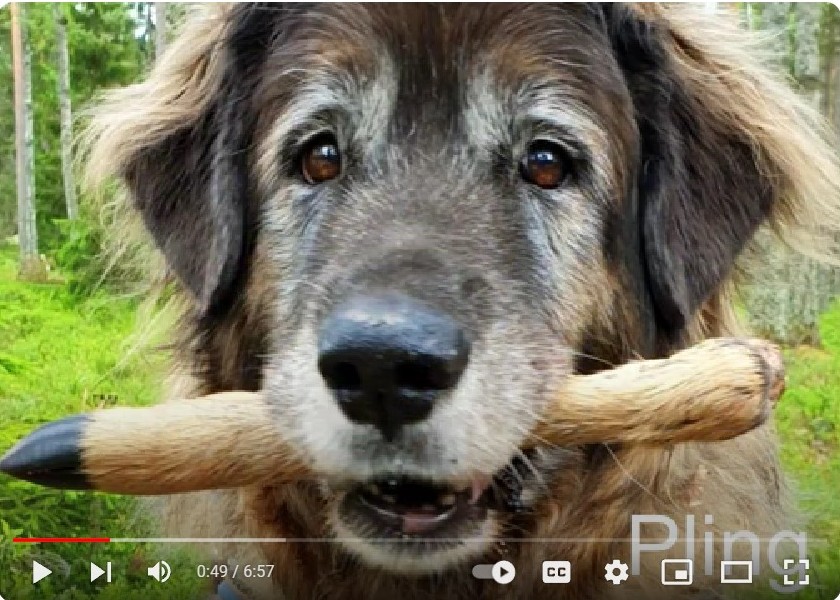
Many of the owners of very old Leonbergers joined the Double Digit Leonberger group on Facebook (Leonberger 10+ years old) and the owners of the extremely old Leonbergers (around 12 or older) started talking to each other a lot. It was a small group from around the world. This is why I said “Familiar faces” above. I knew many of them, including Pling, a Leonberger in Sweden. I and Pling’s owner talked a lot to each other in Swedish. Bronco and Pling reached about the same age and passed not too far from each other in time.
Our Leonberger Bronco from the LHFI Grey Muzzle Awardee Video 2019-2020.Our Leonberger Bronco from the LHFI Grey Muzzle Awardee Video 2019-2020.Pling a Leonberger from Sweden from the LHFI Grey Muzzle Awardee Video 2019-2020.
Note, all royalty earnings from my book (see right) go to the Leonberger Health Foundation International.
Tomorrow I will do book signing at Wautega Public Library here in Texas. I will read a short story from my book and present myself. I will also mention that all royalties from book sales go to the Leonberger Health Foundation International, or LHFI, a charitable organization working towards healthier Leonbergers and healthier dogs in general. Below is my is my 20 seconds video pitch.
Hi, I’m Thomas Wikman, author of the Life and Times of Le Bronco von der Löwenhöhle, a book featuring funny and informative stories about our Leonberger. It is a great book for all dog lovers. All royalties from book sales are donated to the Leonberger Health Foundation International. Their work gives us healthier dogs.
My 20 second video pitch.That’s me a few days ago.The Leonberger Health Foundation International. Click on the image to visit the LHFI’s website.
The Leonberger is an unusual and fascinating dog breed that is known for its size, affectionate nature, and intelligence. I know a lot about Leonbergers because my family was lucky enough to live with one for thirteen years. His name was Le Bronco von der Löwenhöhle—but we called him “Bronco” for short.
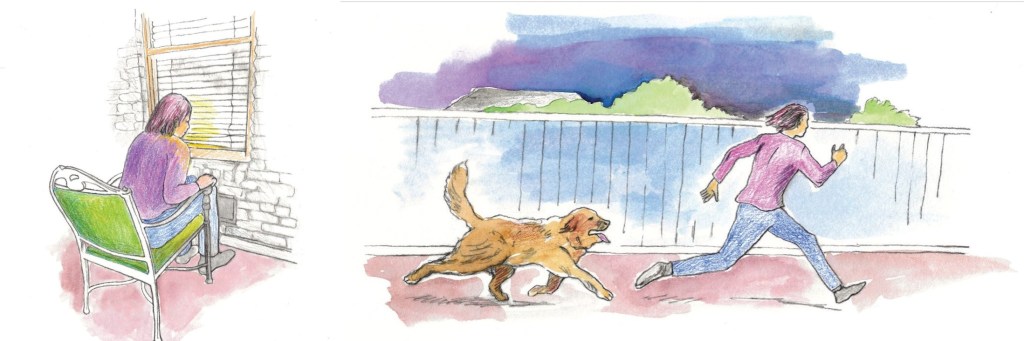
Bronco wasn’t our only dog, but our world wouldn’t have been the same without him. For instance, he once saved the life of our pug by fending off an attack from another dog. He probably saved our Labrador’s life, too, by sniffing out an impending insulin shock before it happened. Then there was the time he scared off a trespasser who’d been terrorizing my wife and other women in the neighborhood.
This is me with our late Leonberger Bronco when he was still young, not even one years old.
Bronco is no longer with us, but even in his passing he was distinctive. Leonbergers tend to live less than nine years—but Bronco came very close to reaching his thirteenth birthday. In fact, he received an award for longevity called the “Grey Muzzle Award.” We already knew he was a special dog, but we sent his DNA to two labs for research anyway.
The Grey Muzzle Award is given to Leonbergers who reach the age of 12 years or older.
YouTube video featuring Grey Muzzle Awardees including Bronco, entry nr 10 out of 34 at 2 minutes. This is an emotional video for me, not only because of Bronco, but I was very familiar with many of the other dogs. Time marches on.Bronco’s Grey Muzzle Award
With this post I just wanted to say a few words about the book I wrote “The Life and Times of Le Bronco von der Löwenhöhle”. This book features several dozens of funny or astonishing dog stories centered on our late Leonberger Bronco, as well as information about Leonbergers and an extensive Leonberger resource guide. The book contains a lot of color photographs and colorful illustrations depicting Bronco’s adventures. The book is intended for all dog lovers of all ages or anyone who loves to read fun dog stories. It is also intended for those who are looking for information on Leonbergers.
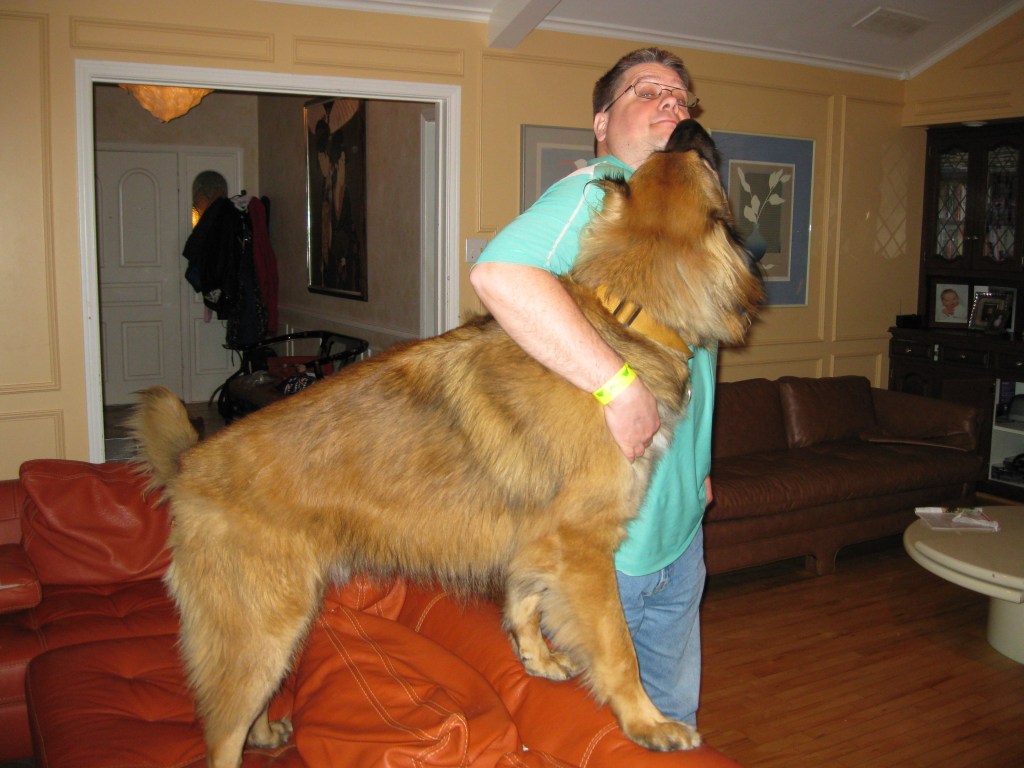
Bronco our Leonberger was an extremely affectionate dog.
Bronco wasn’t our only dog, but our world wouldn’t have been the same without him. For instance, he once saved the life of our pug by fending off an attack from another dog. He probably saved our Labrador’s life, too, by sniffing out an impending insulin shock before it happened. Bronco’s hamster search and rescue operations gave us some great stories to tell, and it kept our hamsters safe. Then there was the time he chased off a nightly stalker, well a peeping Tom who’d been terrorizing my wife and other women in the neighborhood. The private detectives I had hired could not catch him but Bronco did.
Bronco is no longer with us, but even in his passing he was distinctive. Leonbergers tend to live less than nine years—but Bronco came very close to reaching his thirteenth birthday. In fact, he received an award for longevity called the “Grey Muzzle Award.” We already knew he was a special dog, but we sent his DNA to two labs for research anyway.
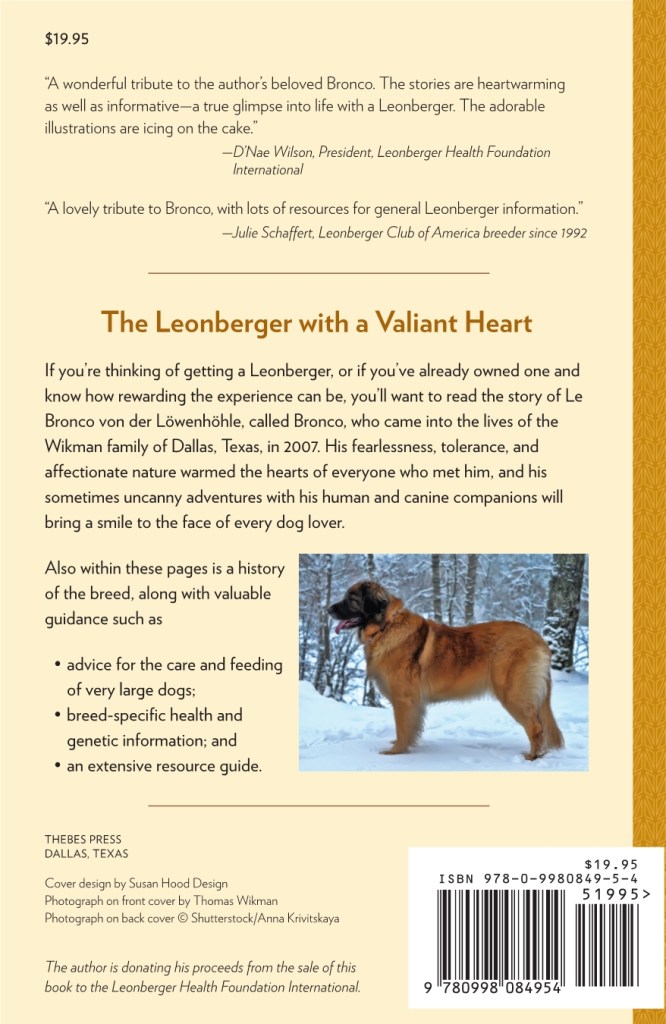
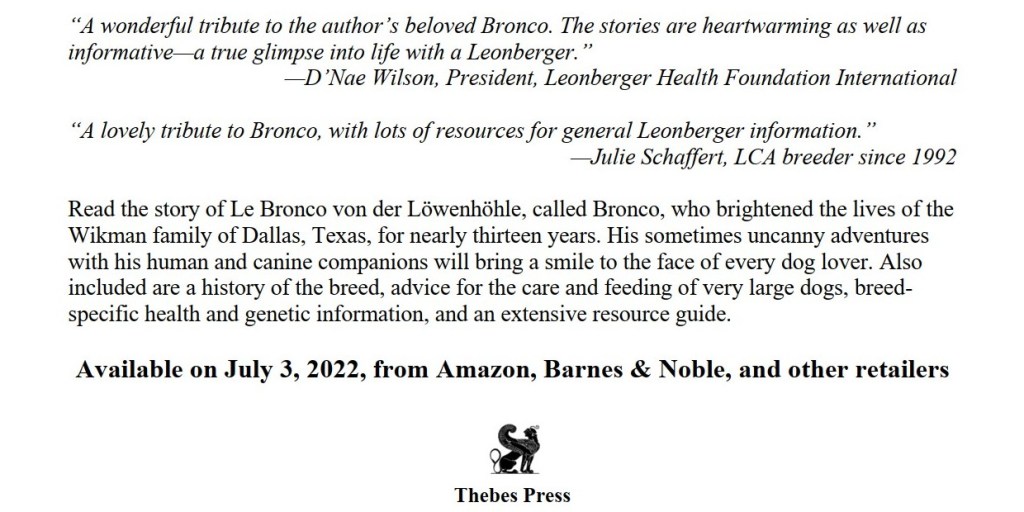
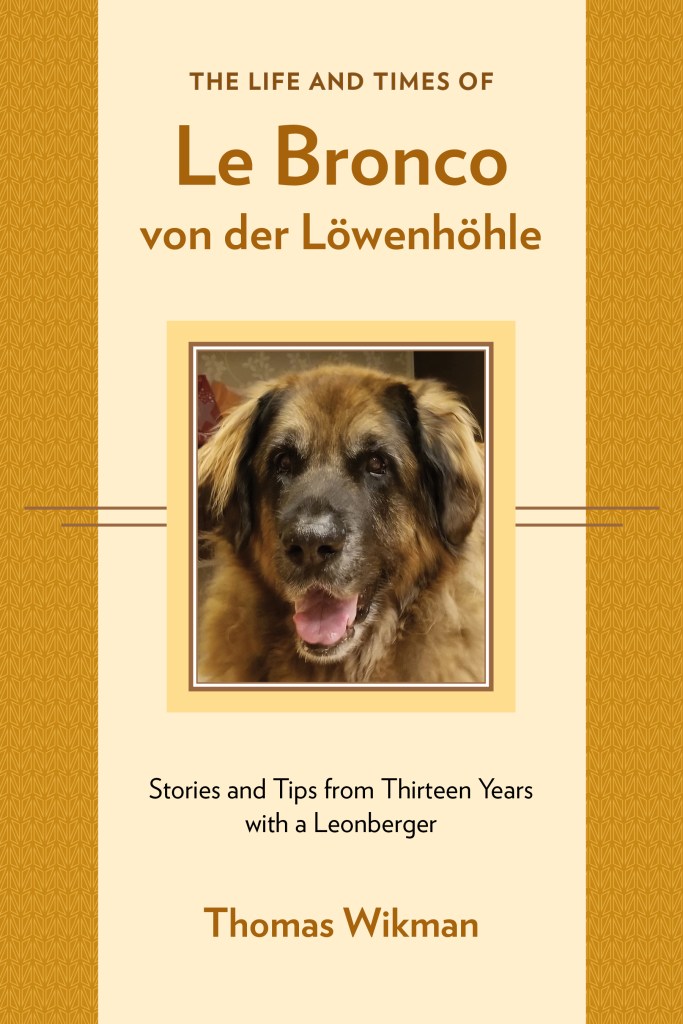
The front cover of my book “The Life and Times of Le Bronco von der Löwenhöhle”. Click on the image to go to the Amazon.com location for the book.The back cover of my book “The Life and Times of Le Bronco von der Löwenhöhle”. Click on the image to go to the Amazon.com kindle location for the book.These are the endorsements for the book. Click on the image to go to the Barnes and Noble location for the book.
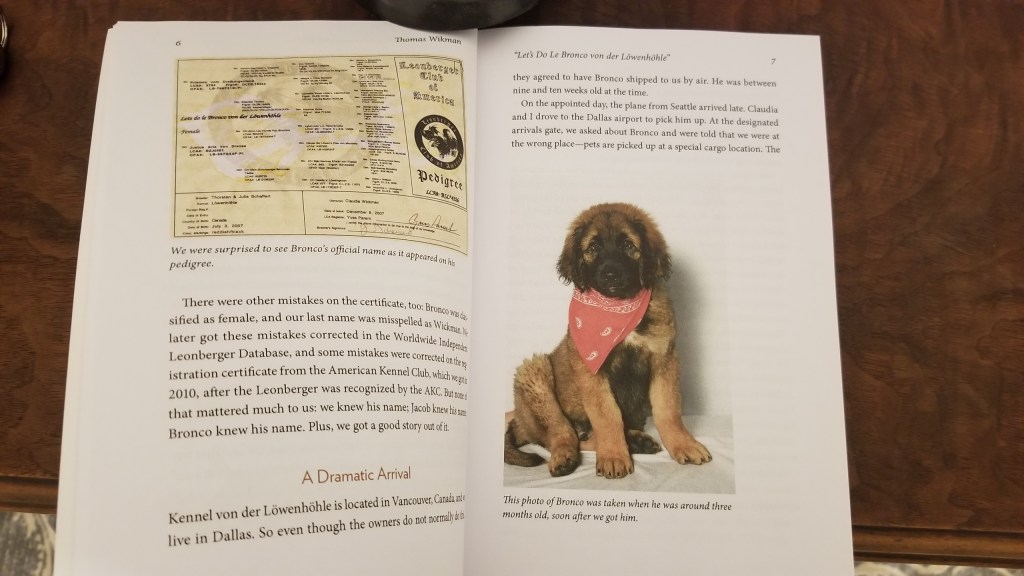
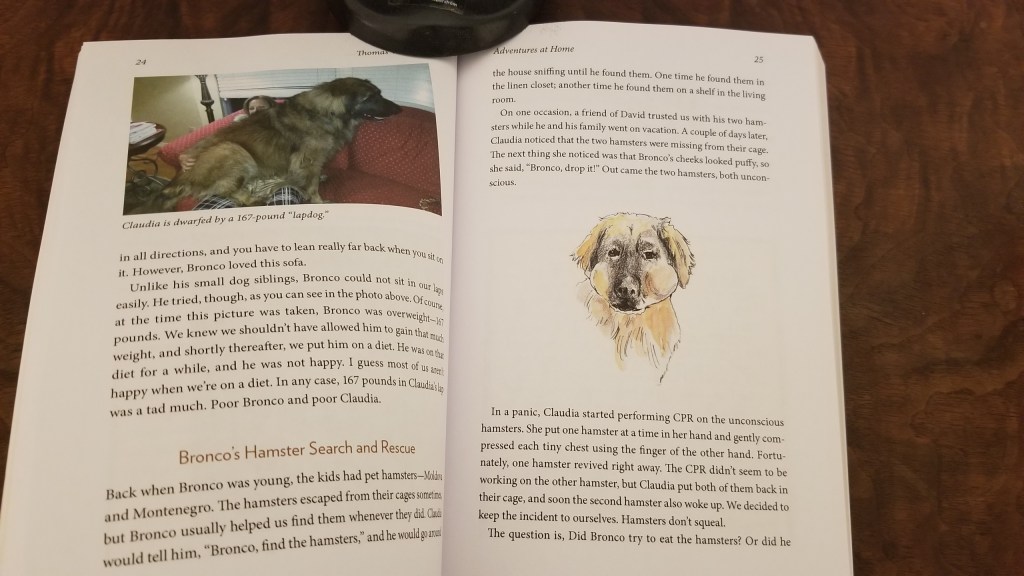
Below are four selected book spreads.
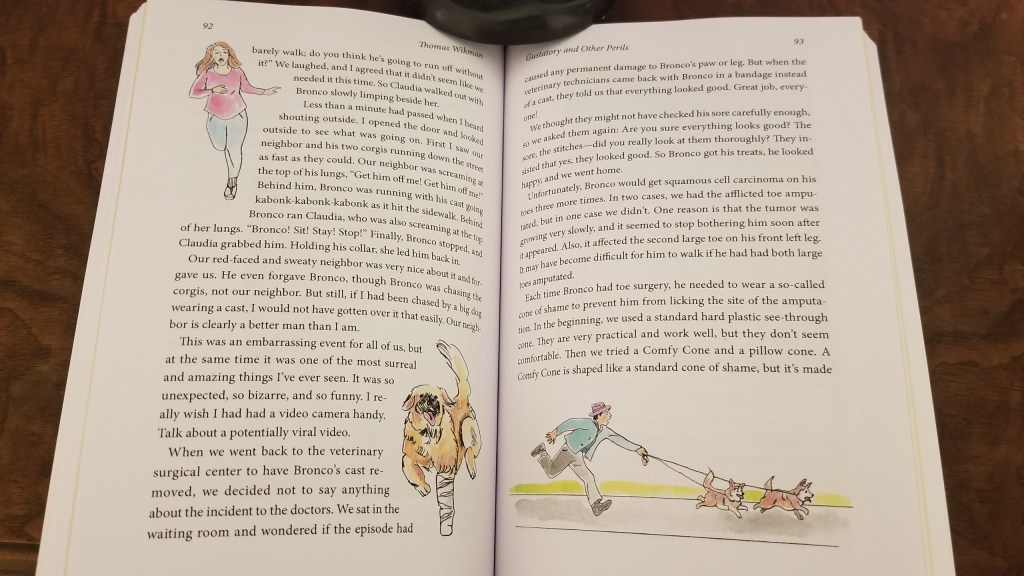
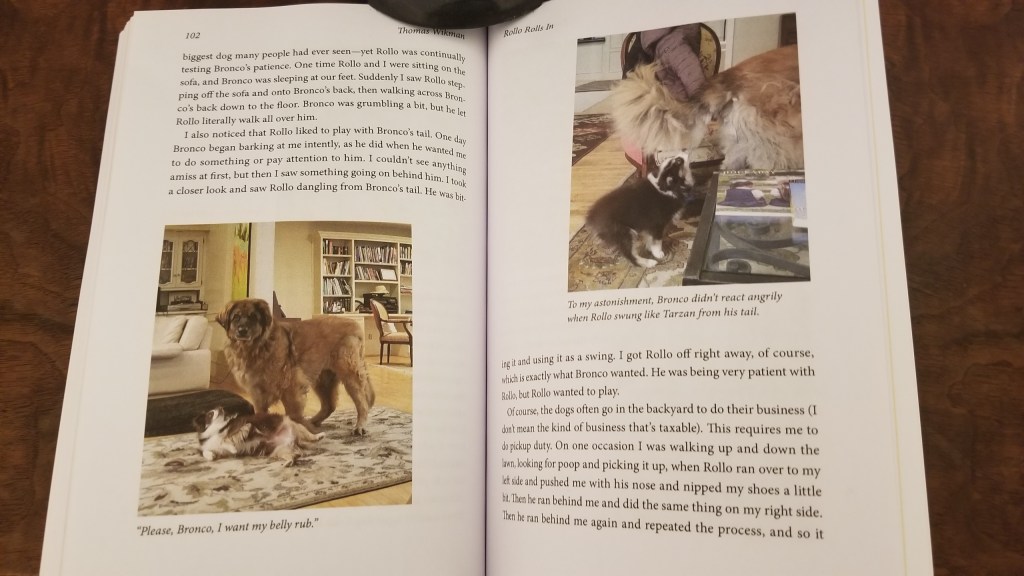
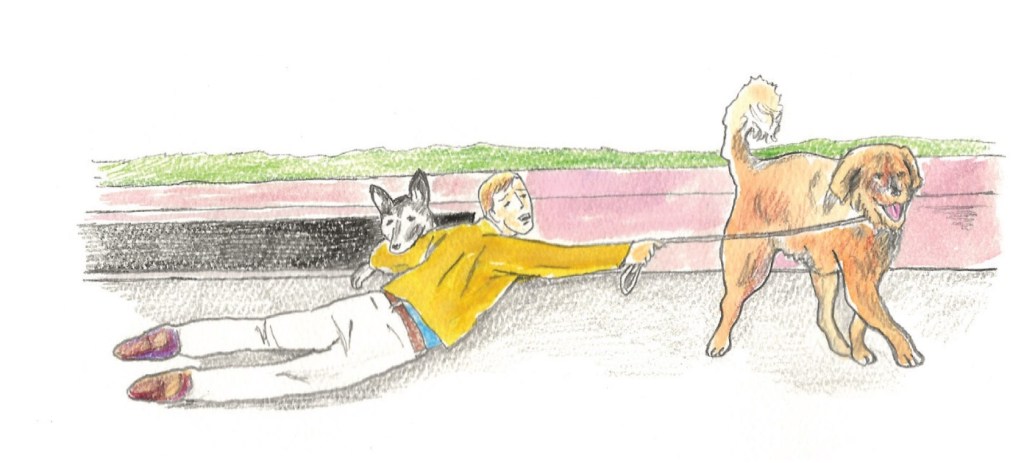
Page six and seven from the book The Life and Times of Le Bronco von der Löwenhöhle. His initial birth certificate was faulty stating his name as “Lets Do Le Bronco von der Löwenhöhle.” This came about when we were told that his first name “Bronco” could not start with a ‘B’, it had to start with an “L” and my wife said “Let’s do…”. You can figure out the rest.Page twenty-four and twenty-seven from the book The Life and Times of Le Bronco von der Löwenhöhle. That’s my wife Claudia behind Bronco. The second picture feature Bronco carrying two hamsters in his mouth (they were fine but somewhat frightened).Page ninety-two and ninety-three from the book The Life and Times of Le Bronco von der Löwenhöhle. In this spread Bronco was wearing a full leg cast he was not supposed to bump. Let’s just say he was bumping it all over the neighborhood.Page one hundred and two and one hundred and three from the book The Life and Times of Le Bronco von der Löwenhöhle. Rollo our mini-Australian Shepherd frequently tested old Bronco’s patients, climbing on his, and even dangling in his tail once, as if it was a swing.
If you would like to learn more about my book and find out where to buy it, click here or here. You can also click on the cover images above to buy it from Amazon. All royalties are donated to the Leonberger Health Foundation International. I can add that all illustrations were done by Naomi Rosenblatt.
Facebook recently reminded me of our late Leonberger Bronco’s Grey Muzzle Award. He got it three years ago. He was 12 years and 8 months old at the time. The Grey Muzzle Award is an award given by the Leonberger Health Foundation International (LHFI) for longevity. Leonbergers, and other giant breeds, don’t live very long. LHFI bestow the award on any Leonberger who has reached the age of twelve. The Grey Muzzle Award is also given to breeders, because they are partially responsible for the dogs’ longevity. This is a special award and it made us very happy that Bronco got it.
The day we received Bronco’s Grey Muzzle Award. It is a beautiful memory. He was 12 years and 8 months old at the time.
We got the award a little bit late because we applied for it a little bit late, but when we got it we were very happy. When Bronco passed away from a heart failure four months later, we submitted his DNA to LHFI for research.
The grey muzzle award diplomaBronco’s Grey Muzzle Award
The Leonbergers receiving the Grey Muzzle Award are the canine equivalents of centenarians—humans who are at least one hundred years old. You don’t have to have your Leonberger registered with the LCA or AKC to apply for the award—it’s open to all purebred Leonbergers around the world. You can also apply if your dog is deceased, as long as he lived past the age of twelve. If you have a twelve-year-old Leonberger, simply fill out a form on the LHFI website or send an email to lhfgreymuzzle@gmail.com.
LHFI will ask for some information, including the registered name and call name of the dog; the breeder’s name, kennel name, address, and email; the dam’s registered name; the sire’s registered name; the owner’s name, address, and email; the birth date of the dog; and whether the dog is alive or dead. If the latter, they will want to know the cause of death. In addition, they would like you to write a one-paragraph tribute to the dog and send two (preferably high-resolution) photos—one head shot and one favorite photo.
In this post I am just posting one video “THE GIANT LEONBERGER – DANGEROUS LION DOG?” from Animal Watch. I think it is a great video. It is 15 minutes long, which is I admit a bit long. However, all you need to do is watch one minute of it, at a random place to get an idea of how Leonbergers look like and how they interact. I did not take any videos of our Leonberger Bronco (that will change with the next Leonberger we get) so for videos I have to rely on the work of others, and I think this video is great (I’ve got plenty of photos though).
I think this video is bypassing the usual myths about Leonbergers and it is being more honest about the history of Leonbergers than most books and websites I’ve come across, so I like it. Yes, even Wikipedia is getting Leonberger history wrong. First, the creator of the Leonbergers breed, Heinrich Essig, was a politician, a councilman of the town of Leonberg, but never the mayor, as claimed by the majority of Leonberger books and Leonberger websites. This is confirmed by this video. The legend says that Heinrich Essig created the Leonberger to resemble to lion in the town of Leonberg’s coat of arms, which essentially means that Germans were pretty bad at drawing lions back then. Maybe Germans know how to draw lions now a day.
A lot of books state that the average lifespan of Leonbergers is 6-8 years, I stated 8-10 years in my book because their health had improved due to research by the (Leonberger Health Foundation International). A few other books also state 8-10 years, like mine. This video stated 10-12 years. It is the first time I hear that number, but it is believable because LHFI is doing their job. I should say that all royalties from my book goes to the Leonberger Health Foundation International. I can also add that work of the Leonberger Health Foundation International benefit not only Leonbergers but also other giant breeds as well as humans who are at risk for cancers that are very rare in humans but common in giant breed dogs such as, Hemangiosarcoma. However, it makes me wonder what will happen to the Grey Muzzle Award in the future. So if you buy my book you help Leonbergers, giant dog breeds, and people unlucky enough to get certain rare cancers common in some dogs.
The video stated that 22 breeding Leonbergers survived World War II and with respect to World War II I said that “that the Leonberger has twenty-two founder animals, or animal ancestors unrelated to one another (ten males and twelve females).” Both this video and my book thus disputed the very common claim that only 8 Leonbergers survived World War II (~80-90% of the books). So the agreement between the video and my book was very high despite the larger lifespan claim in this video.
Another item is that Heinrich Essig claimed to have used St. Bernards, Newfoundland dogs and Pyrenees dogs to create the breed. This is typically translated into, Heinrich Essig used St. Bernards and Newfoundland dogs to create the breed, or Heinrich Essig used St. Bernards, Newfoundland dogs and Great Pyrenees dogs to create the breed. I pointed out that Pyrenees dogs were probably not Great Pyrenees dogs but another breed called Pyrenee Mastiffs, that no longer exists. I also pointed out that Heinrich Essig did not keep a record and therefore we don’t know if what he said was even true. This video brings to out attention that Essig (without stating so) might have used the local farm dogs in his breeding, dogs which would have been the ancestors of the German Shepherd. That later part was news to me, and something that was never suggested in any of the 20+ Leonberger books that I’ve read. However, it makes sense. Leonbergers have some German Shepherd traits and our German Shepherd, we called her Baby, thought our Leonberger Bronco was her puppy, and raised him, and protected him with her life.
Purebred large dog breeds tend to have shorter life spans compared to most other dogs and they have more health issues. However, Leonbergers are fortunate compared to other large breeds, especially those bred in North America, primarily for three reasons:
The Leonberger breed standard does not call for traits that can be detrimental to health.
The precise and restrictive breeding regulations of the Leonberger Club of America (LCA) and other Leonberger clubs.
The work of the Leonberger Health Foundation International or LHFI, have resulted in Leonbergers being relatively free of inherited illnesses compared to other large dog breeds in America.
Today I received my first payment for the sale of my book from Amazon (for the month of July) and I donated all proceeds to the Leonberger Health Foundation International like I said I would. Regardless of whether you get my book or not you can donate to LHFI. It is one of my favorite charities. LHFI “facilitate the solicitation and distribution of donations given to support health related breed-specific research.” The LHFI also administers a program that collects DNA samples from Leonbergers to share with universities and research institutions.
Among the organization’s achievements are the eradication of Addison’s disease among Leonbergers, the raising of nearly half a million dollars for research into conditions that affect canine health, including osteosarcoma, hemangiosarcoma, glaucoma, cardiac diseases, thyroid diseases, and neurological disorders. Another notable achievement is the fact that since 2011, no Leonbergers with two copies of the LPN1 gene mutation, which causes Leonberger polyneuropathy, have been recorded in LHFI’s biobank (featuring 9,000 Leonbergers). Its research also supports healthful longevity and aging as well as population diversity.
One happy event for our family was when Bronco received his Grey Muzzle Award, which is an award given for longevity by LHFI. LHFI bestows the award on any Leonberger who has reached the age of twelve. To find out more about the Grey Muzzle Award click here. To see the 2019–2020 awardees video featuring Bronco click here.
Bronco receiving his grey muzzle award.Grey Muzzle Award certificate from the Leonberger Health Foundation International.The Grey Muzzle Award from the Leonberger Health Foundation International.
I can add that when Bronco passed away, we sent his DNA to the University of Minnesota to be used in research. This was facilitated by the LHFI.
All purebred dogs are more or less inbred, which comes with inherent health risks. That is especially true for large breeds. However, Leonbergers, especially those bred in North America, are fortunate compared to other large breeds. The Leonberger breed standard does not call for traits that can be detrimental to health. The precise and restrictive breeding regulations of the Leonberger Club of America (LCA) and other Leonberger clubs, and the work of the Leonberger Health Foundation International or LHFI, have resulted in Leonbergers being relatively free of inherited illnesses compared to other large dog breeds in America. For more information see Humane Society Veterinary Medical Association, “Guide to Congenital and Heritable Disorders in Dogs,” rev. 2011
The Leonberger Health Foundation International (LHFI) was founded in 2000 by Waltraut Zieher and other members of the LCA’s health, education, and research committee to “facilitate the solicitation and distribution of donations given to support health related breed-specific research.” The LHFI also administers a program that collects DNA samples from Leonbergers to share with universities and research institutions.
LHFI’s global biobank contains DNA samples from more than nine thousand Leonbergers. Among the organization’s notable achievements are the eradication of Addison’s disease among Leonbergers and the raising of nearly half a million dollars for research into conditions that affect canine health, including osteosarcoma, hemangiosarcoma, glaucoma, cardiac diseases, thyroid diseases, and neurological disorders. Its research also supports healthful longevity and aging as well as population diversity. Another success is the fact that since 2011, no Leonbergers with two copies of the LPN1 gene mutation (which causes Leonberger polyneuropathy) have been recorded in LHFI’s biobank.
One happy event for our family was when Bronco received his Grey Muzzle Award, which is an award given for longevity by LHFI. LHFI bestows the award on any Leonberger who has reached the age of twelve. These Leonbergers are the canine equivalents of centenarians, humans who are at least one hundred years old. The Grey Muzzle Award is also given to breeders, because they are partially responsible for the dogs’ longevity. The Grey Muzzle Award was certainly a happy event in Wikman family. If you have a twelve-year-old Leonberger, simply fill out a form on the LHFI website or send an email to lhfgreymuzzle@gmail.com.
The foundation will ask for some information, including the registered name and call name of the dog; the breeder’s name, kennel name, address, and email; the dam’s registered name; the sire’s registered name; the owner’s name, address, and email; the birth date of the dog; and whether the dog is alive or dead. If the latter, they will want to know the cause of death. In addition, they would like you to write a one-paragraph tribute to the dog and send two (preferably high-resolution) photos—one head shot and one favorite photo. To find out more about the Grey Muzzle Award click here. To see the 2019–2020 awardees video featuring Bronco click here.
Grey Muzzle Award certificate from the Leonberger Health Foundation InternationalThe Grey Muzzle Award from the Leonberger Health Foundation International
I can add that when Bronco passed away, we sent his DNA to the University of Minnesota to be used in research. This was facilitated by the LHFI.
LHFI is one of my favorite charities and all proceeds from this book will be donated to the Leonberger Health Foundation International.
This is post number 20 for my Leonberger/Bronco blog. I decided to make it a list of posts. Not all posts were equally popular and maybe you missed the posts you would have liked the most. You can click on the link or the picture to see a post, then click back or “Home” (at the top) go back. If you read a post I certainly would love to get a “like” or maybe a comment.
Leonberger’s live on average 8-9 years. However, the Leonberger Health Foundation International is working hard to extend the lifespan of Leonbergers. They give an award to all Leonbergers who have survived passed their 12th birthday. The award is called the Grey Muzzle Award.
Bronco, who was not at his best in this picture, rests next to our tornado damaged fence. We put a plastic bag around his bandage when he went outside.















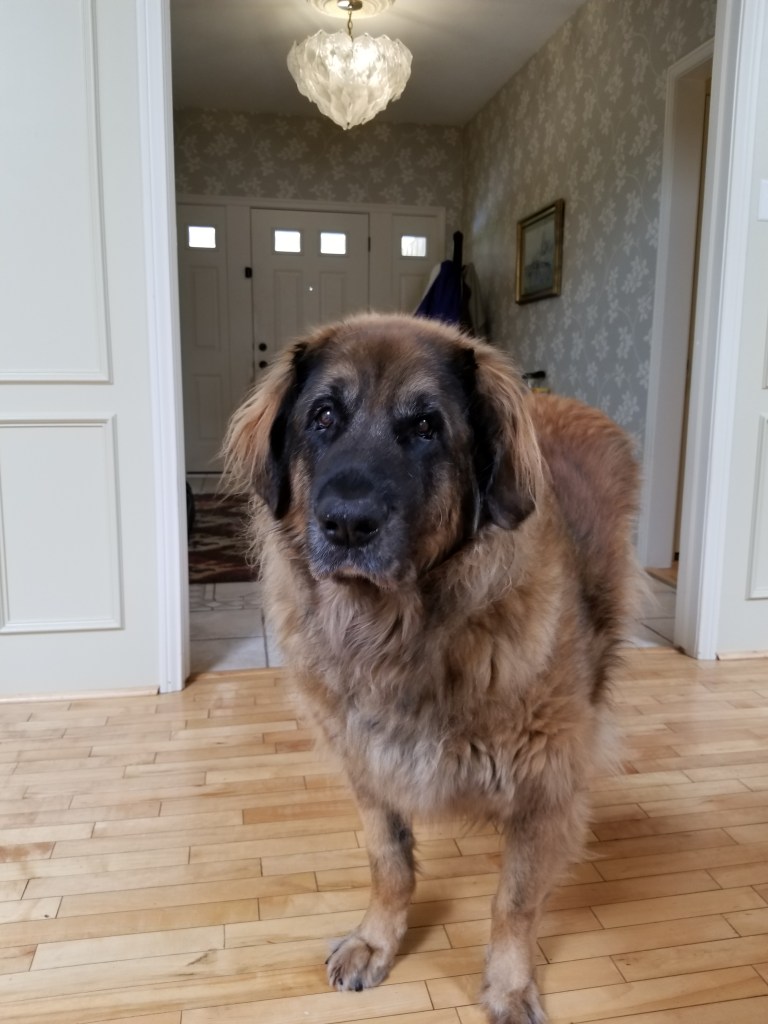


 Leonberger Life