The Day Bronco Wearing a Leg Cast Chased Our Neighbor

An excerpt from my book : The Life and Times of Le Bronco von der Löwenhöhle

When Bronco was almost eight years old, we discovered a case of squamous cell carcinoma in one of his toes—or, rather, in one of his toenails. It was on his right rear paw.

Photo of a big fluffy Leonberger lying in the grass.
Our Leonberger Bronco, or Le Bronco von der Löwenhöhle.

Squamous cell carcinoma is a type of skin cancer that certain large-breed dogs, including Leonbergers, are susceptible to. It often grows out from the skin around the nail and can affect the bone and tissue around it. It is typically not very aggressive, but it can spread, and it is painful. It manifests itself as a swollen toe, or you may be able to see a large red papule that looks like a pimple. Sometimes the toenail falls off. The dog is likely to limp and lick the toe and may become reluctant to go for walks, although that was never the case with Bronco.
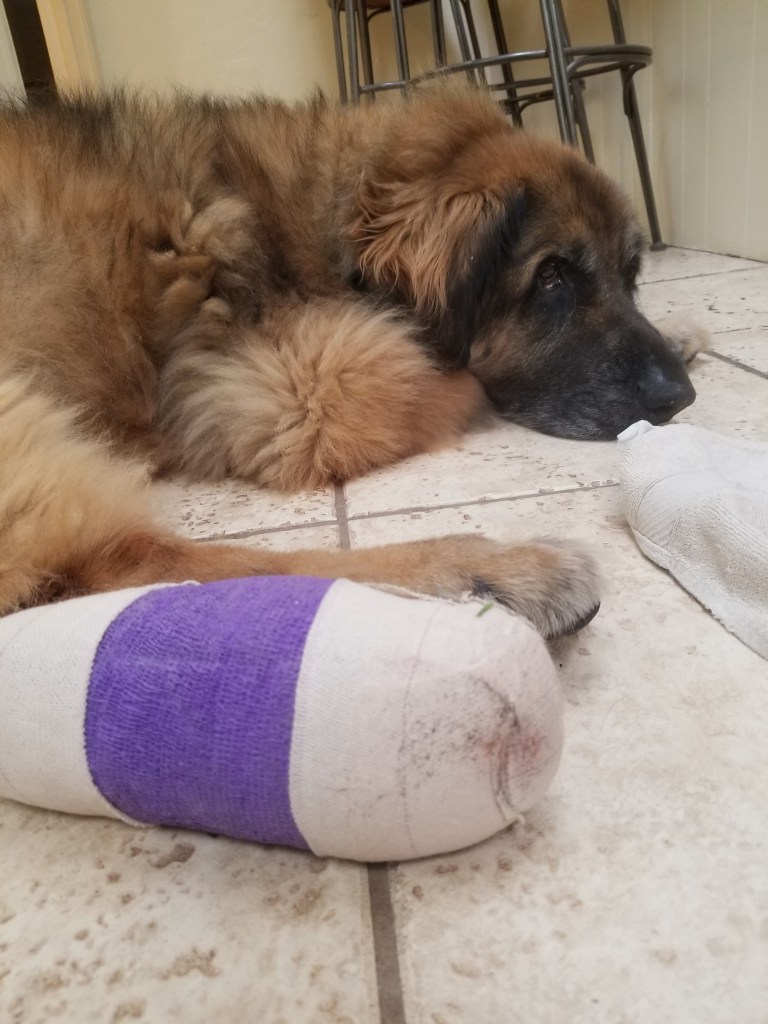
Close up of a bandage on one of Bronco’s paws with Bronco in the background.
Bandage on Bronco’s paw after a toe amputation.

Primarily because of the pain, but also because of the small risk of metastasis, it is usually recommended that the affected toe be amputated. So we went through with the procedure. When we picked Bronco up the day after the surgery, his paw was in a bandage. But he got some treats, and he was in a good mood. We went back to the veterinary surgical center for a bandage change a few times, and then he was done.

A big barking Leonberger standing in a doorway. Upon close inspection you see a missing toe.
An agitated Bronco stands guard at the back door. Note the missing toe on his left front paw.

Unfortunately, though, we discovered another lesion a year later. This time it was on a large toe on his left front leg. We asked the doctors if the cancer had spread to this toe. We were told no—Bronco was just prone to getting this type of cancer. But the cause could also have been something in the environment. In Texas, the ultraviolet radiation from the sun is significant. We really don’t know why this happened to him, but we were assured that it was not because the cancer had spread.
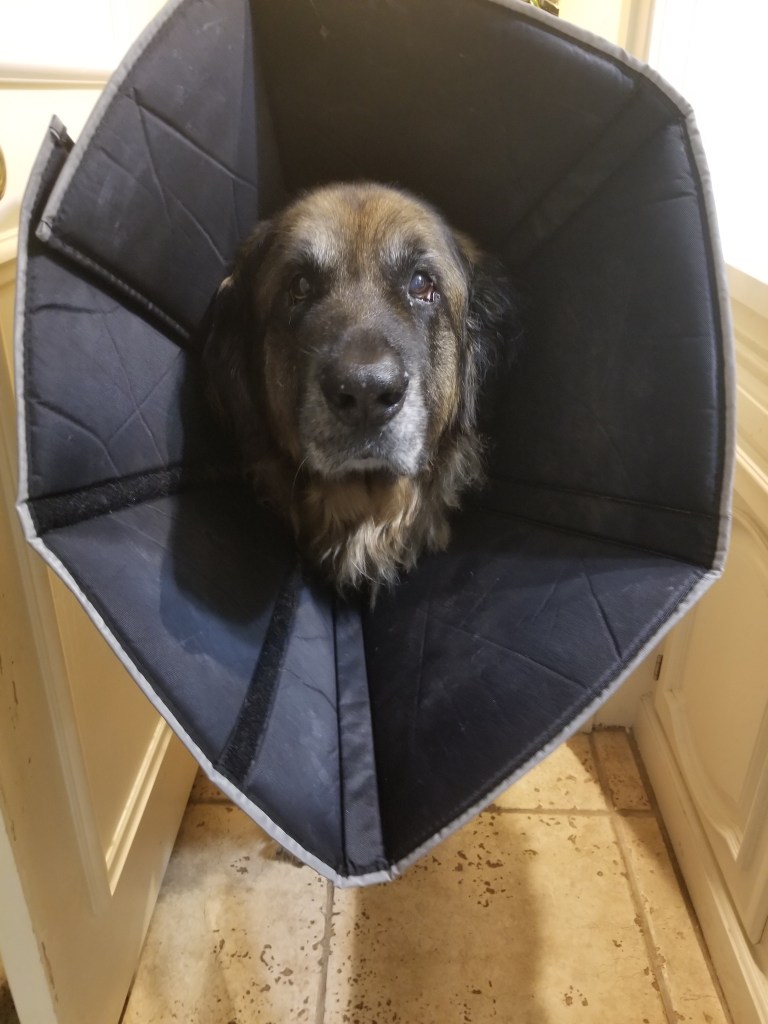
Bronco our Leonberger Bronco wearing a large soft cone. It barely fit through the doorway.
A cone of shame or as in this case a soft cone typically accompanied a bandage or a cast.

This time around, Bronco’s entire leg was put in a cast, to be replaced by a bandage after ten days. We were instructed to keep him inside during those ten days and keep him as still as possible. We were to make sure he wouldn’t bump the cast. This was, of course, almost impossible to do, but we were going to try.

However, Bronco really wanted to go out, which he showed us in various ways, such as scratching at the front door. After a week or so, Claudia suggested that we take him outside a little bit, just in our driveway. I agreed. When I handed her the leash, she said, “He can barely walk; do you think he’s going to run off without it?” We laughed, and I agreed that it didn’t seem like we needed it this time. So Claudia walked out with Bronco slowly limping beside her.

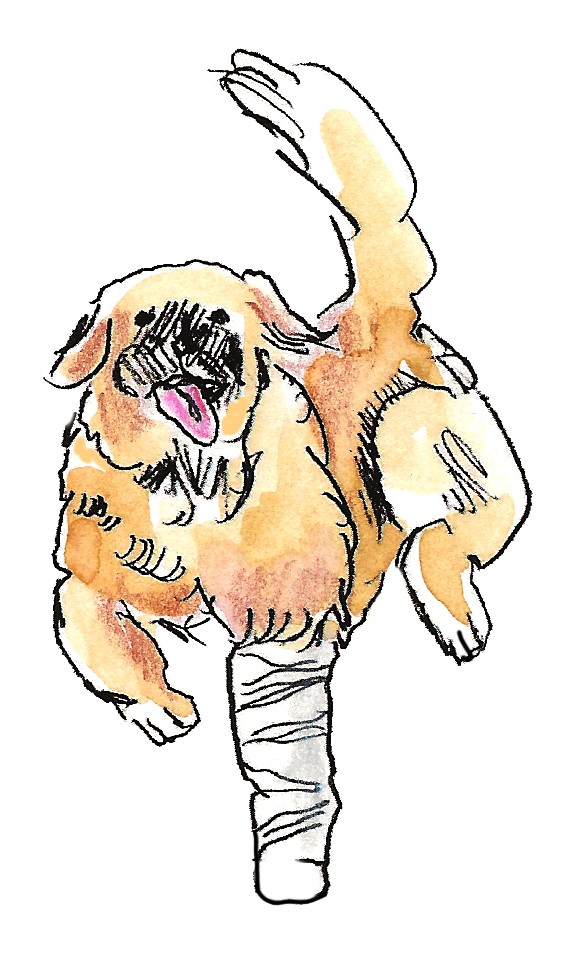
Illustration of an excited Leonberger towards us. He is wearing a cast on his left front leg (right from our perspective).
Bronco could barely walk with his full leg cast, but when motivated enough he could run. Illustration by Naomi Rosenblatt.

Less than a minute had passed when I heard shouting outside. I opened the door and looked outside to see what was going on. First I saw our neighbor and his two corgis running down the street as fast as they could. Our neighbor was screaming at he top of his lungs, “Get him off me! Get him off me!” Behind him, Bronco was running with his cast going kabonk-kabonk-kabonk as it hit the sidewalk. Behind Bronco ran Claudia, who was also screaming at the top of her lungs. Bronco! Sit! Stay! Stop!” Finally, Bronco stopped, and Claudia grabbed him. Holding his collar, she led him back in.
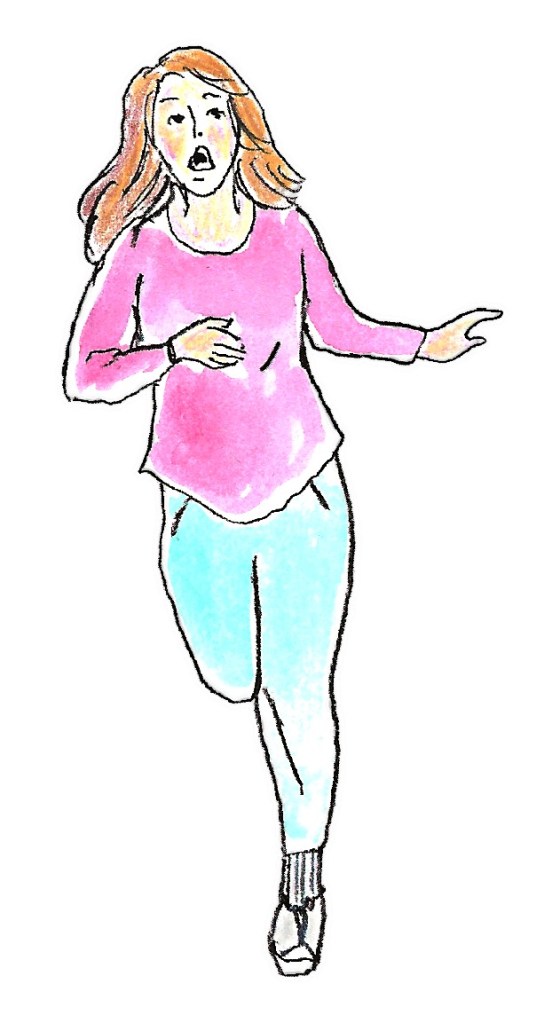
Illustration of woman dressed in blue pants and pink shirt running.
Claudia running after Bronco. Illustration by Naomi Rosenblatt.

Our red-faced and sweaty neighbor was very nice about it and forgave us. He even forgave Bronco, though Bronco was chasing the corgis, not our neighbor. But still, if I had been chased by a big dog wearing a cast, I would not have gotten over it that easily. Our neighbor is clearly a better man than I am.
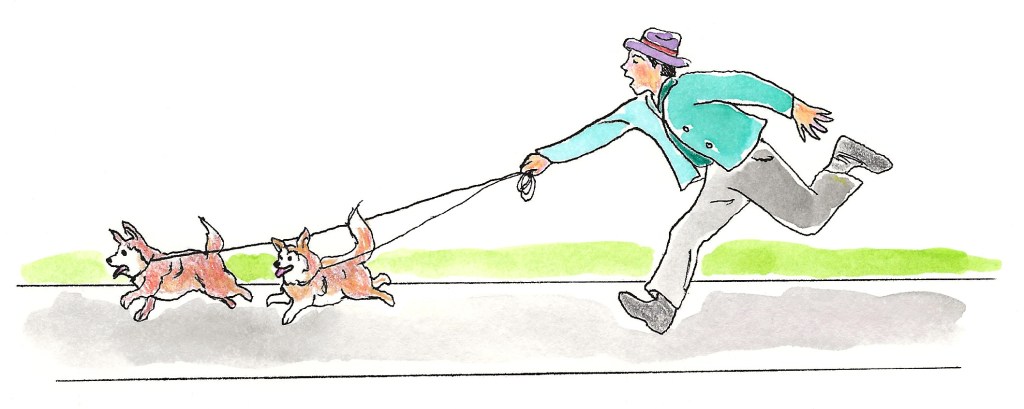
Illustration of man with a hat running holding two leashes, each with a corgi at the end.
Our neighbor and his corgis running from Bronco. Illustration by Naomi Rosenblatt.

This was an embarrassing event for all of us, but at the same time it was one of the most surreal and amazing things I’ve ever seen. It was so unexpected, so bizarre, and so funny. I really wish I had had a video camera handy. Talk about a potentially viral video.

When we went back to the veterinary surgical center to have Bronco’s cast removed, we decided not to say anything about the incident to the doctors. We sat in the waiting room and wondered if the episode had caused any permanent damage to Bronco’s paw or leg. But when the veterinary technicians came back with Bronco in a bandage instead of a cast, they told us that everything looked good. Great job, everyone!

We thought they might not have checked his sore carefully enough, so we asked them again: Are you sure everything looks good? The sore, the stitches—did you really look at them thoroughly? They insisted that yes, they looked good. So Bronco got his treats, he looked happy, and we went home.
The Great Dallas Tornado of October 20 2019

Today, October 20, 2023, is the 4-year anniversary of the EF3 Tornado that ravaged our neighborhood. Our house was damaged. Our chimney was smashed by a piece of concrete flying off a neighbor’s house, and our roof was damaged and needed to be replaced. In addition, our garage door was destroyed, and the wiring and pipes in the attic were destroyed, our fence was damaged, and my grill flew across the yard. The cost of the repairs was $50,000.00.

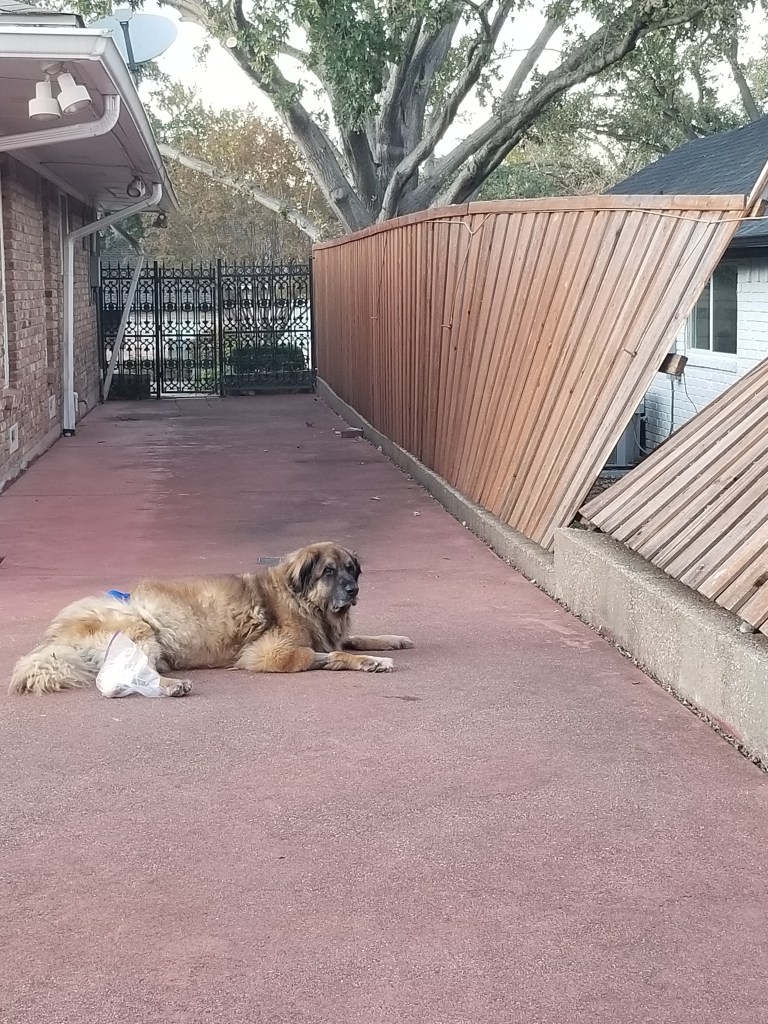
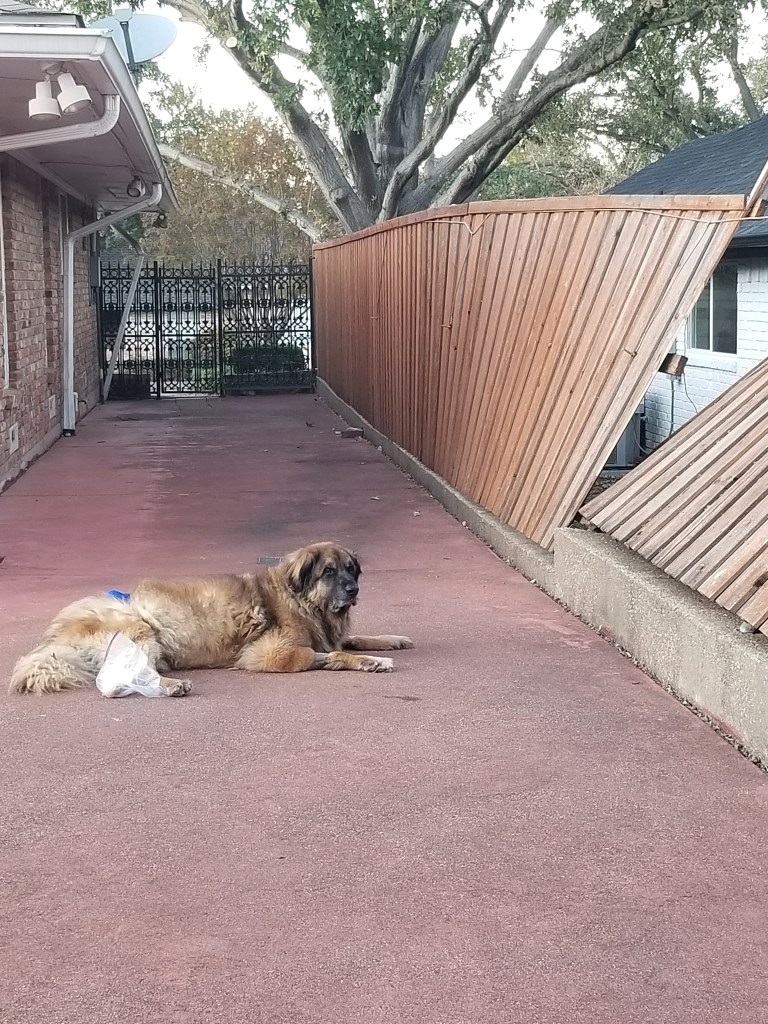
The photo shows our old Leonberger Bronco in front of a broken fence. His leg is in a bandage and around it is a plastic bag.
Bronco had just had a toe amputation. He did not blow down our fence.

However, we were lucky. Several of our neighbors’ houses were demolished and my wife’s parents house was a lot more damaged than our house was. The wind from the Tornado lifted my 89-year-old father-in-law up in the air and he was hit by a broken marble table that injured his back. The school where our boys used to go, St. Marks School of Texas, was badly damaged and the walls of the gymnasium blew away.

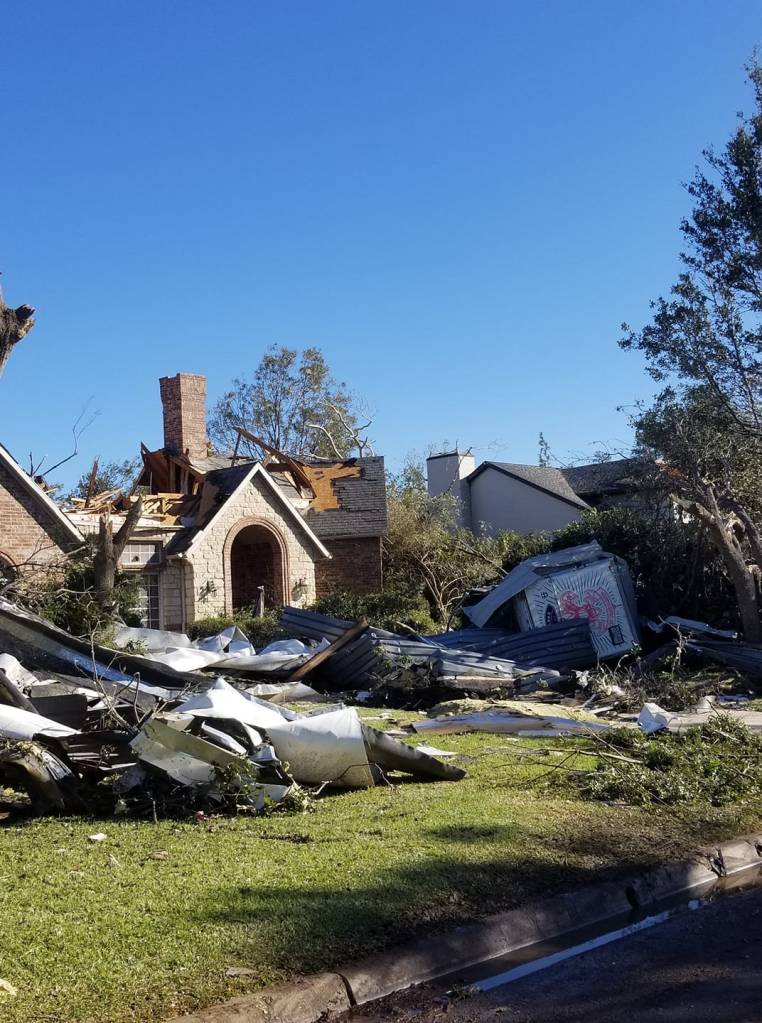
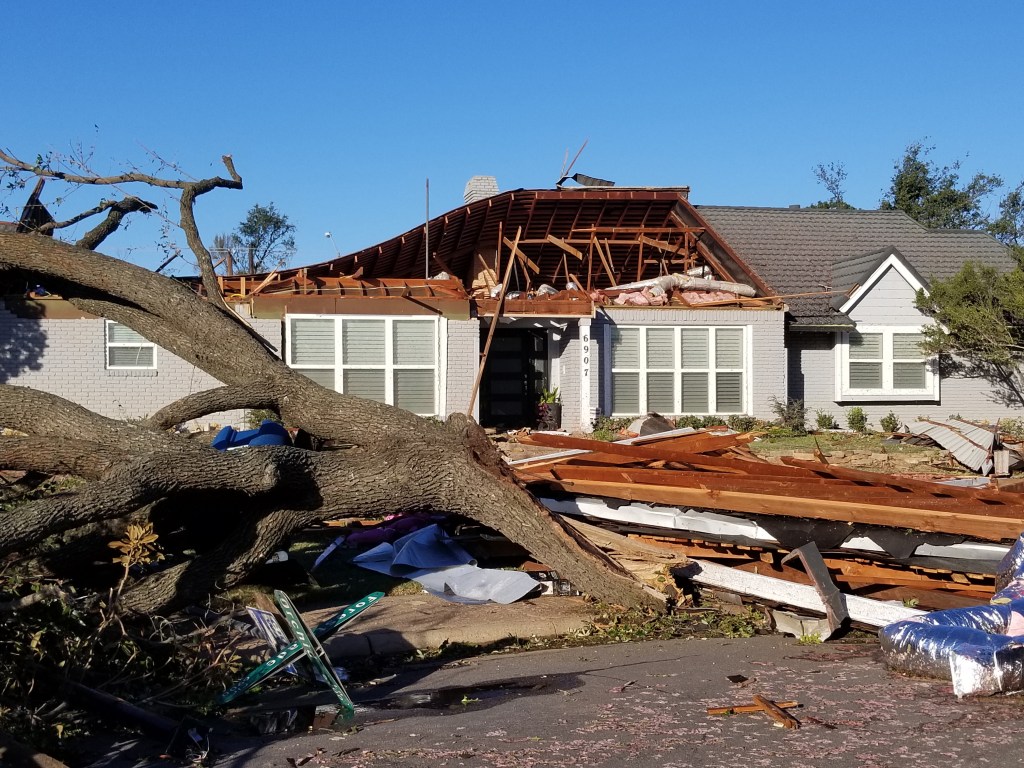
A blue-grey house severly damaged with half the roog gone. A tree in the middle of the street.
A neighbor’s house the morning of October 21st, 2019.

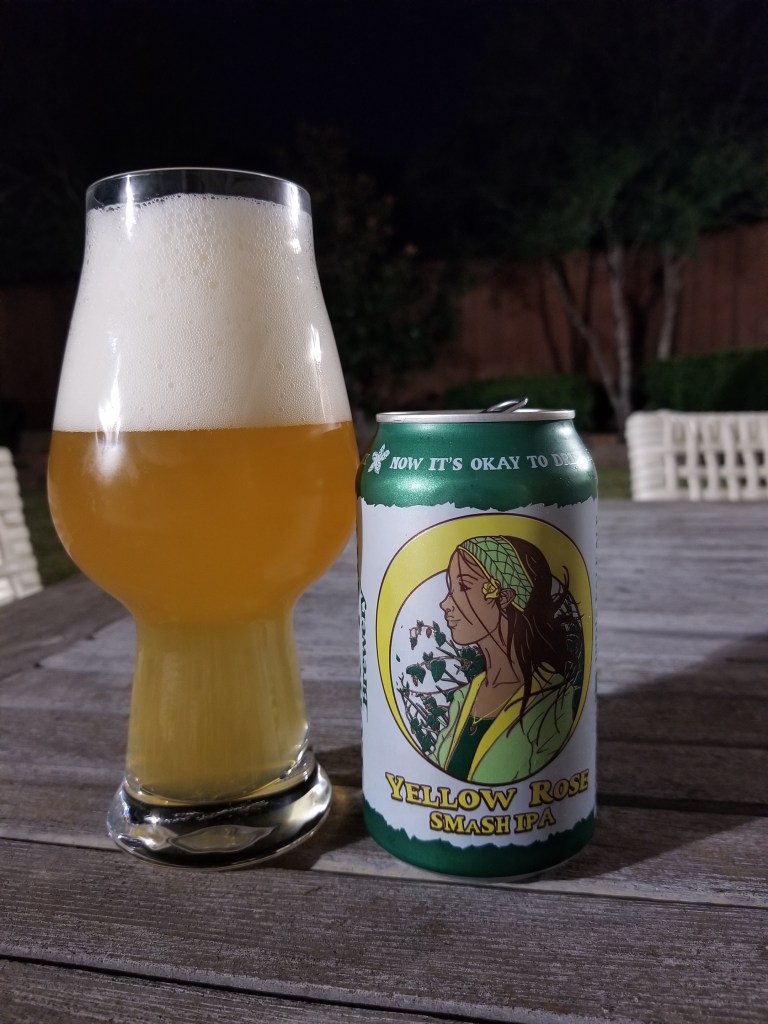
I remember this fateful day as if it was yesterday. I was sitting outside in my backyard drinking my favorite SMASH IPA, Yellow Rose, from Lone Pint, Texas, ABV 6.8%. IPA stands for India Pale Ale, a type of beer that contains a lot of hops. SMASH IPA is an IPA brewed with one type of Malts and one type of Hops (Single Malt, Single Hop). The single hop in this case is Mosaic.

The photo is of a beer glass with beer and a can of Yellow Rose IPA
On October 20 2019, four years ago today, I was sitting in my backyard drinking my favorite SMASH IPA, Yellow Rose from Lone Pint Brewery, Texas, ABV 6.8%, IBU 62, as an EF3 Tornado was ravaging our neighborhood. I walked in right before it got crazy. The flavor is mango, pineapple, orange, blueberry and then there is a grapefruit rind and a pine resin like bitterness at the end. It is my favorite bad weather beer.

Anyway, my phone started making a loud sound. It was an alarm announcing a tornado warning and, in the distance, I could hear a faint tornado siren. At first, I thought it was nothing but when I saw the lightning approaching, I decided to go inside. Two minutes later a hailstorm made things very loud, the wind was strong, and the house shook, and then we heard a loud explosion. That was our chimney being smashed.

Photo of a house that is totally destroyed with lots if debris in the road.
Another neighbor’s house. This house was about 100 yards from our house. It took a direct hit from the tornado.

After the wind had died down a bit, I opened the door to the backyard, and what I saw shocked me. My gas grill had flown across the patio. There were bricks and pieces of concrete all over the patio and the lawn. There was a big sheet of metal lying on the patio. Big tree branches covered the lawn. There was debris everywhere. We had also lost power. It turns out that the EF3 tornado had gone through our neighborhood and passed within fifty to one hundred yards of our house.

Another photo of a house that is totally detsroyed
Another neighbor’s house.

My wife Claudia asked me to go check on her parents. I drove about 50-100 yards when a neighbor’s roof lying across the road stopped me. I turned around but this time I was stopped by a large pile of trees lying across the street. So, I started walking, but this time I was stopped by a group of firemen telling me that it was too dangerous to be outside. They told me to go back home, and I did.

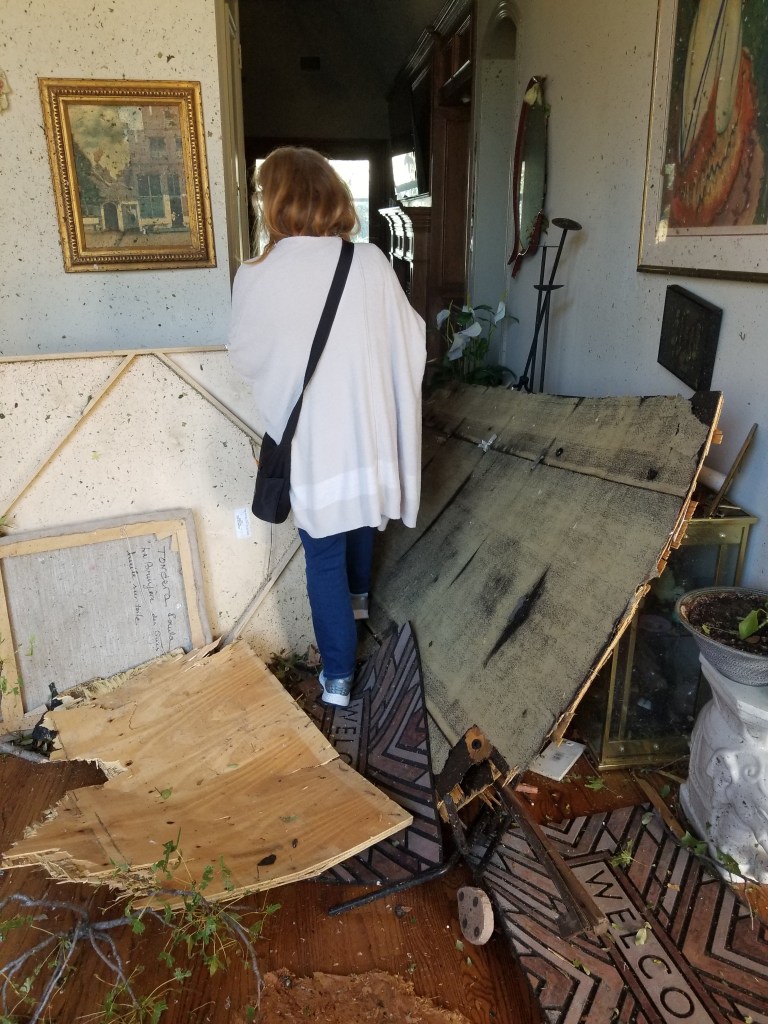
My wife Claudia is walking through a hallway full of debris.
Inside Claudia’s parents’ house. This was the morning after. We are walking into their house to check on them (that’s my wife).

October of 2019 was a very difficult month for our Leonberger Bronco. He was getting old. He was twelve years old, and he had the first signs of geriatric-onset laryngeal paralysis polyneuropathy (or GOLPP), which made his breathing a bit labored and affected his gait. In addition, he had developed another case of squamous cell carcinoma, a toe-nail cancer, and this time on his right rear paw. We amputated his toe on October 3—the day he turned twelve years and three months old.

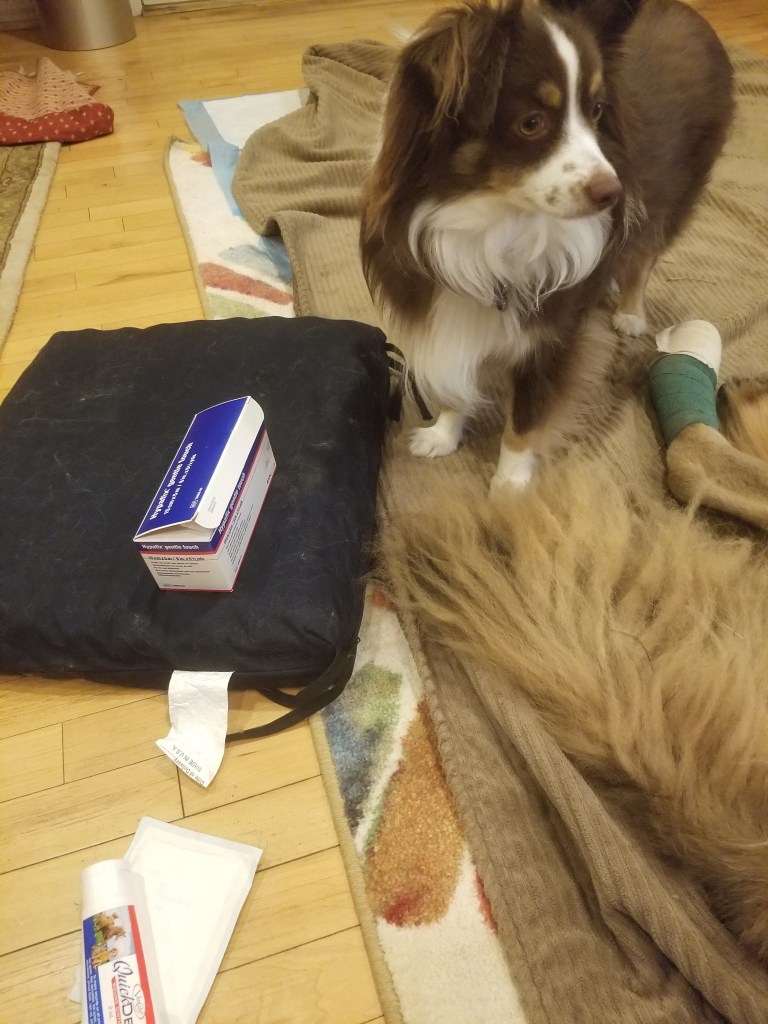
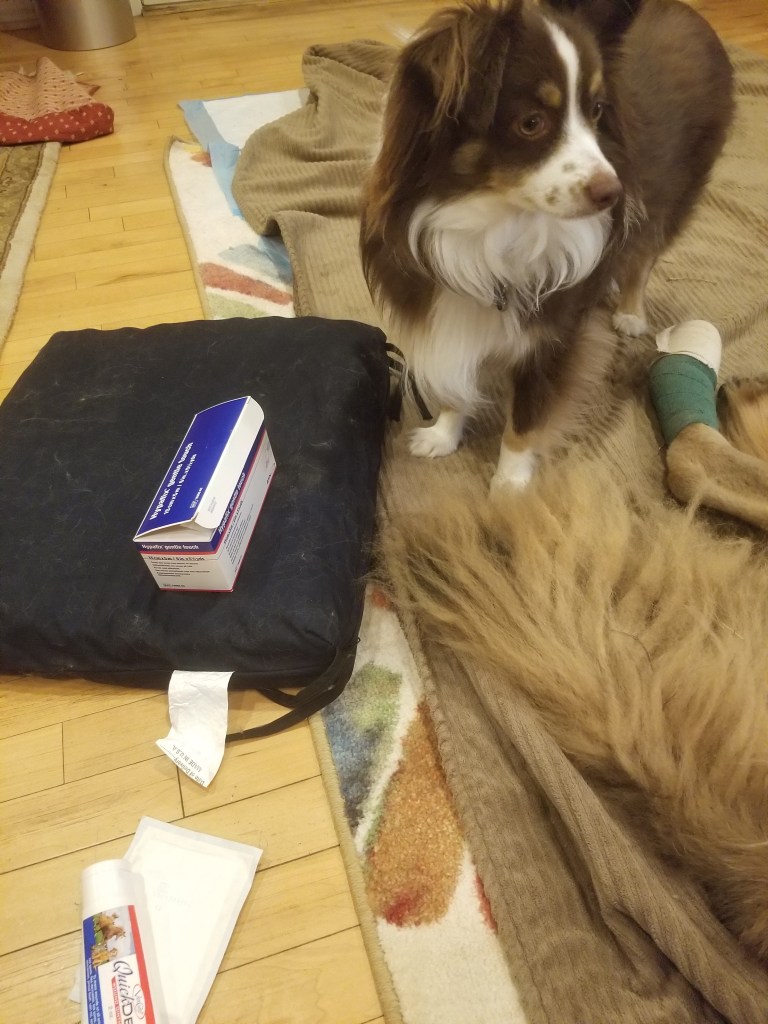
Our mini-Australian Shepherd is standing in the middle of the room. On the right is our Leonberger Bronco's paw with a bandage.
We had to change Bronco’s bandages every now and then but Rollo, our mini–Australian Shepherd made sure we did it right.
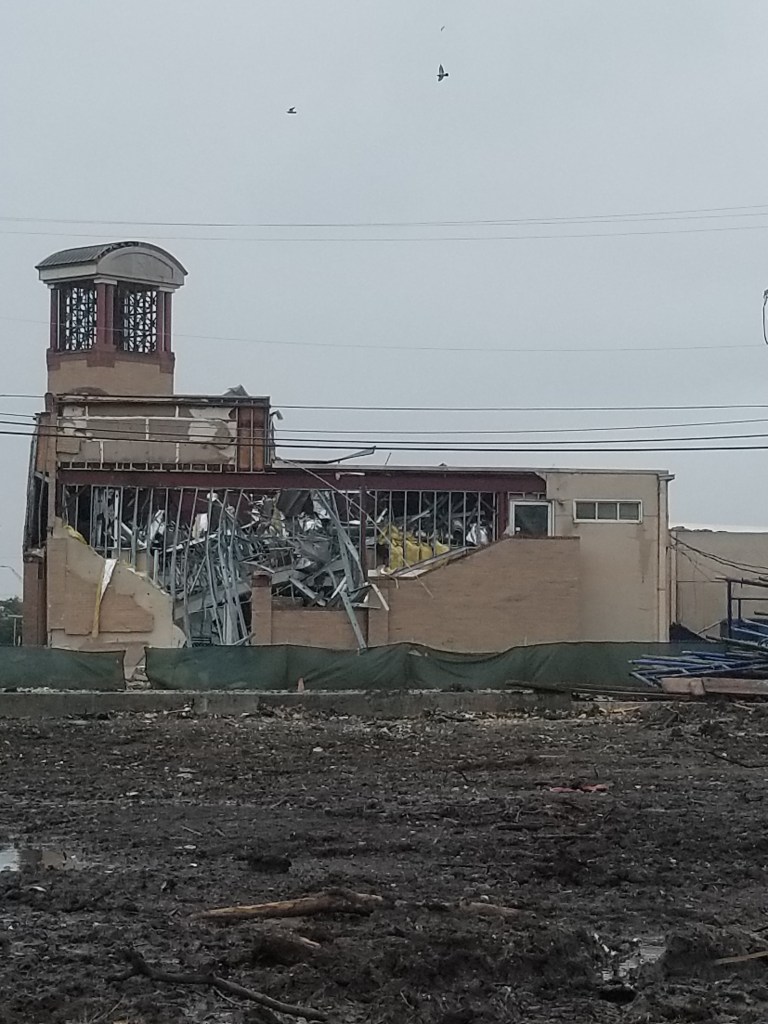
A photo of the Gap store nearby where we live. One of the walls is gone.
A store at a nearby shopping center (it’s the GAP).

Photos of a Leonberger and His Friend a Mini Australian Shepherd

This post is mostly photos of our late Leonberger Bronco and our mini-Australian Shepherd Rollo. As you may know Bronco was a remarkable and brave Leonberger who saved the lives of our other dogs on two occasions, rescued run away hamsters, and liberated my wife and the women in our neighborhood from a nightly peeping Tom. Well, he also did a lot of less desirable but funny things. Bronco lived a long life for a Leonberger and was therefore awarded the Grey Muzzle Award and the Leonberger Health Foundation International wanted his DNA.

We got Rollo four years ago. Our little Rollo and Bronco were best buddies. Rollo climbed all over Bronco, bit his tail and even dangled in it like a swing one time. Rollo wanted to play with Bronco all the time and Bronco was very accepting of his rambunctiousness. Unfortunately, Rollo lost his buddy when Bronco passed away. Things have not been the same since then, but Rollo is still thriving. Below are some photos of them two.

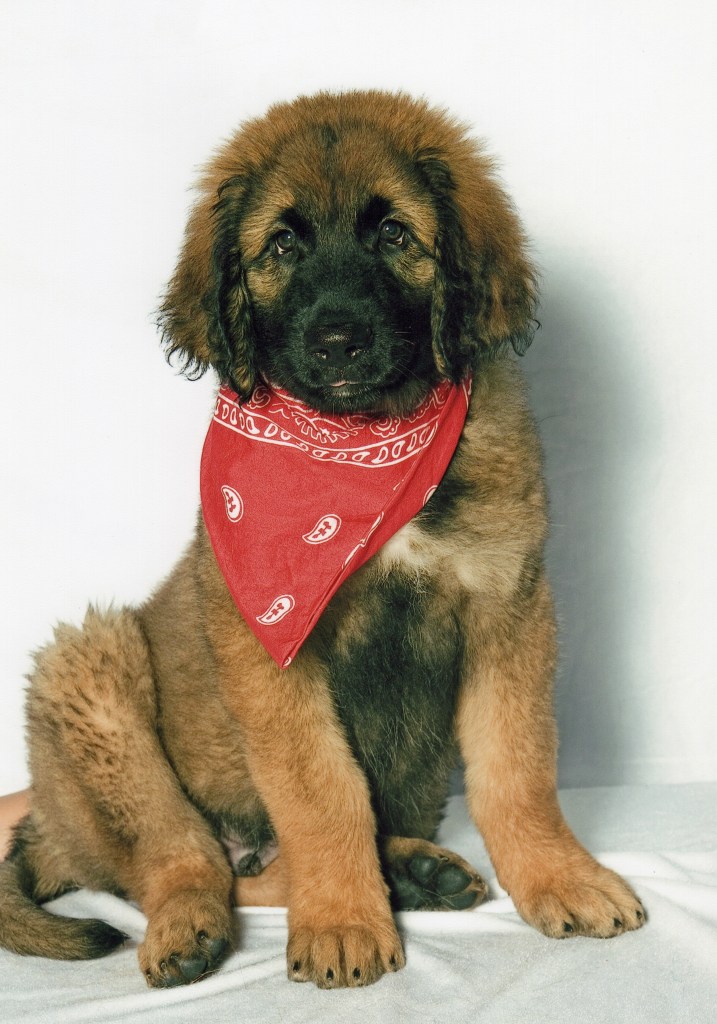
Photo of our Leonberger Bronco (Le Bronco von der Löwenhöhle) at the age of three months.
Our Leonberger Bronco (Le Bronco von der Löwenhöhle) at the age of three months.
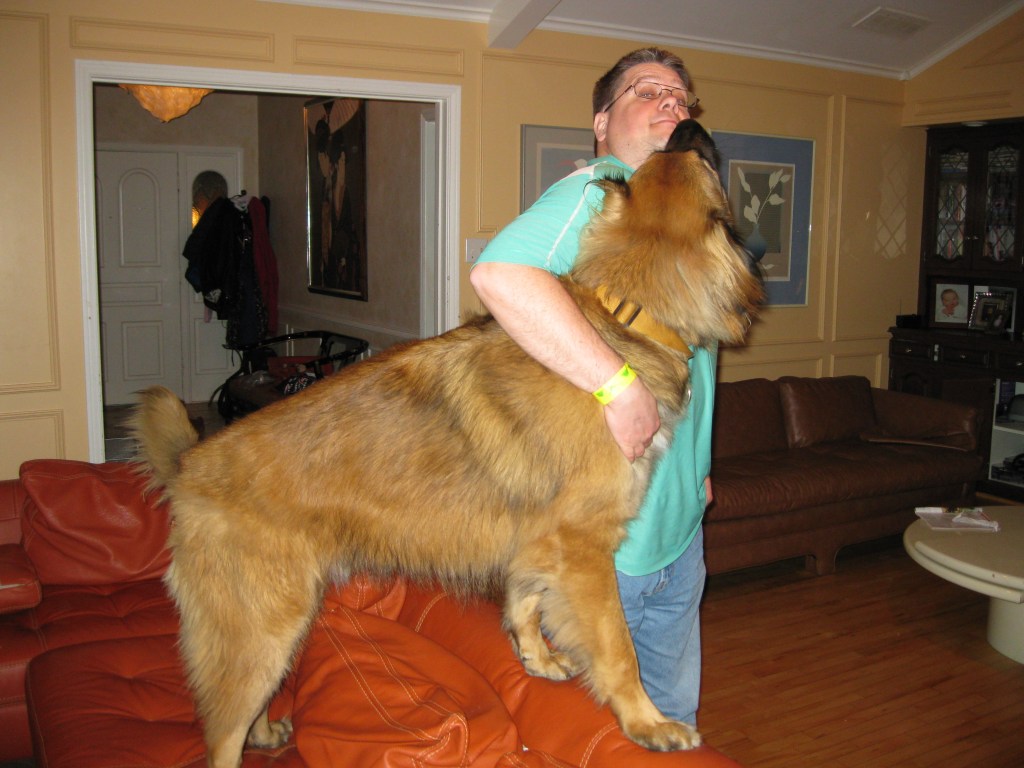
Photo of our Leonberger Bronco at a young age, jumping up to give me a hug.
Our Leonberger Bronco at a young age, jumping up to give me a hug.
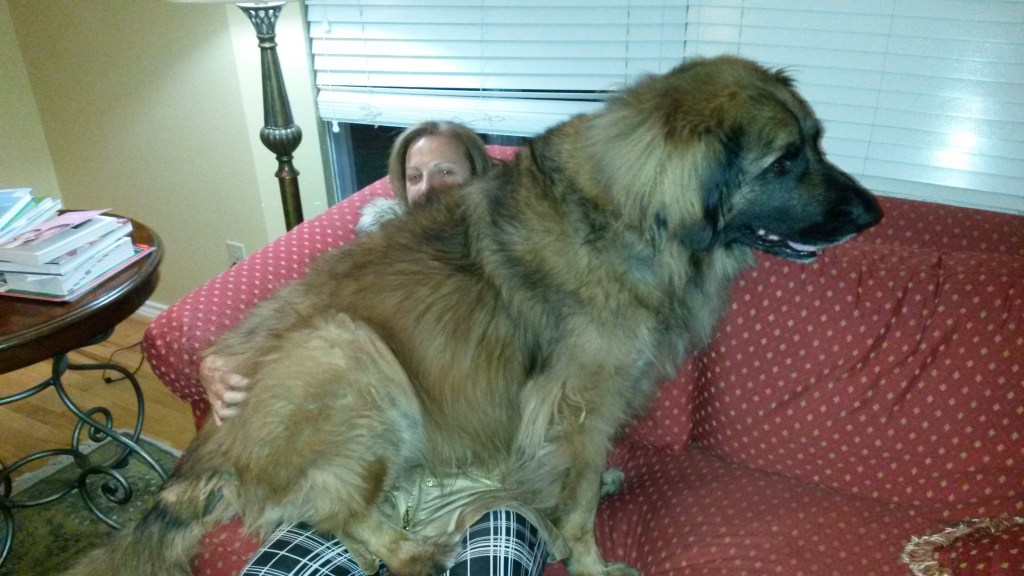
Photo of our Leonberger Bronco sitting in Claudia’s lap.
Bronco is all grown up and sitting in my wife Claudia’s lap.
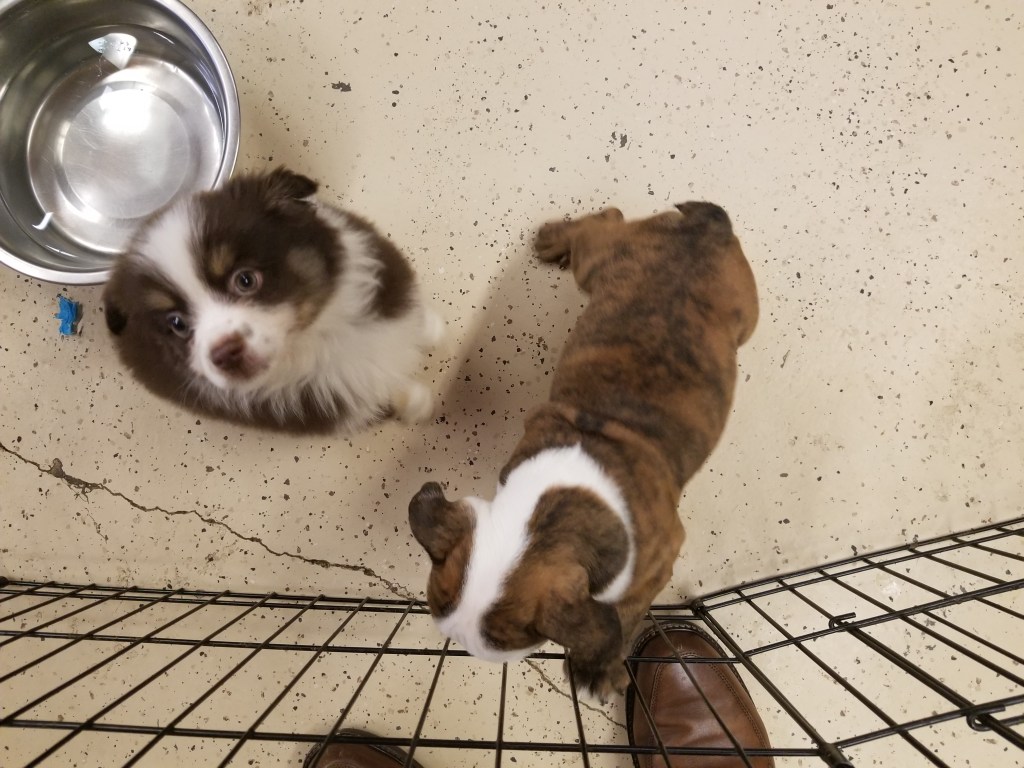
Photo of our mini-Australian Shepherd Rollo when we picked him up at the breeder when he was just a little puppy 8 weeks old. We were picking him up. The other puppy is an English Bulldog.
Our mini-Australian Shepherd Rollo when we picked him up at the breeder. 8 weeks old. The other puppy is an English Bulldog.
Photo of our mini-Australian Shepherd Rollo on our lawn, minutes after he arrived home. Still a bit afraid.
Rollo is finally home, still a bit scared.
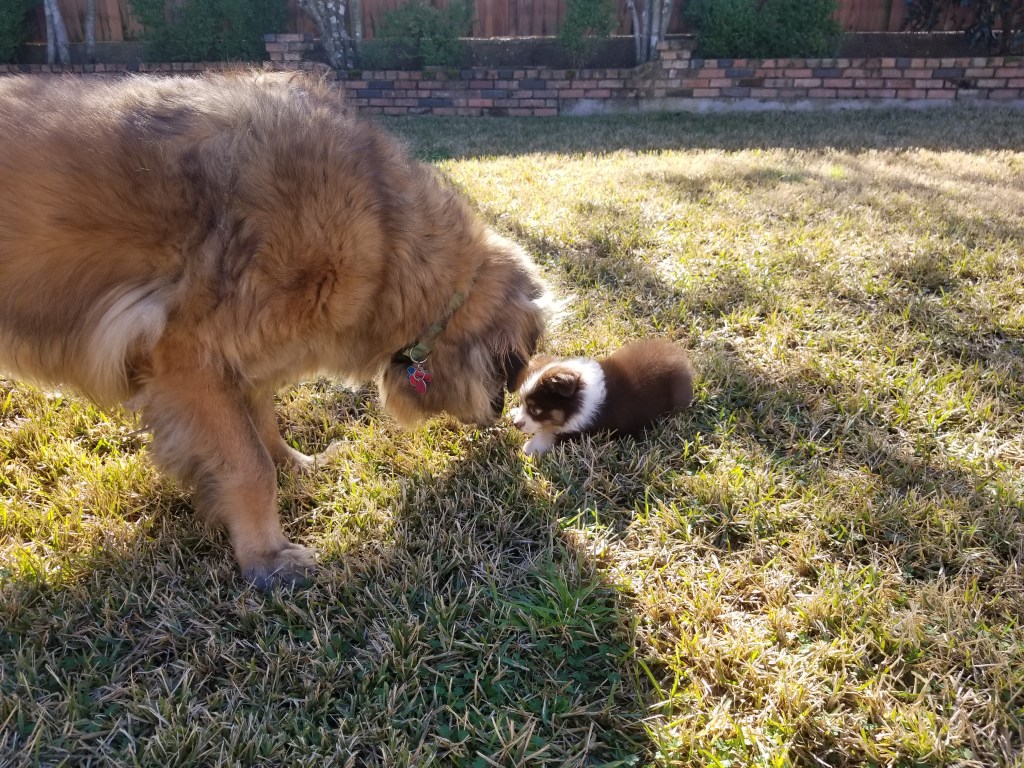
Photo of our Leonberger Bronco welcoming our mini-Australian Shepherd Rollo home. They are both in our backyard on our lawn.
Bronco welcoming the new puppy.
Photo of our Leonberger Bronco and our mini-Australian Shepherd puppy Rollo. They are in the kitchen.
Bronco and Rollo in the kitchen.
Photo of our mini-Australian Shepherd puppy Rollo.
Rollo
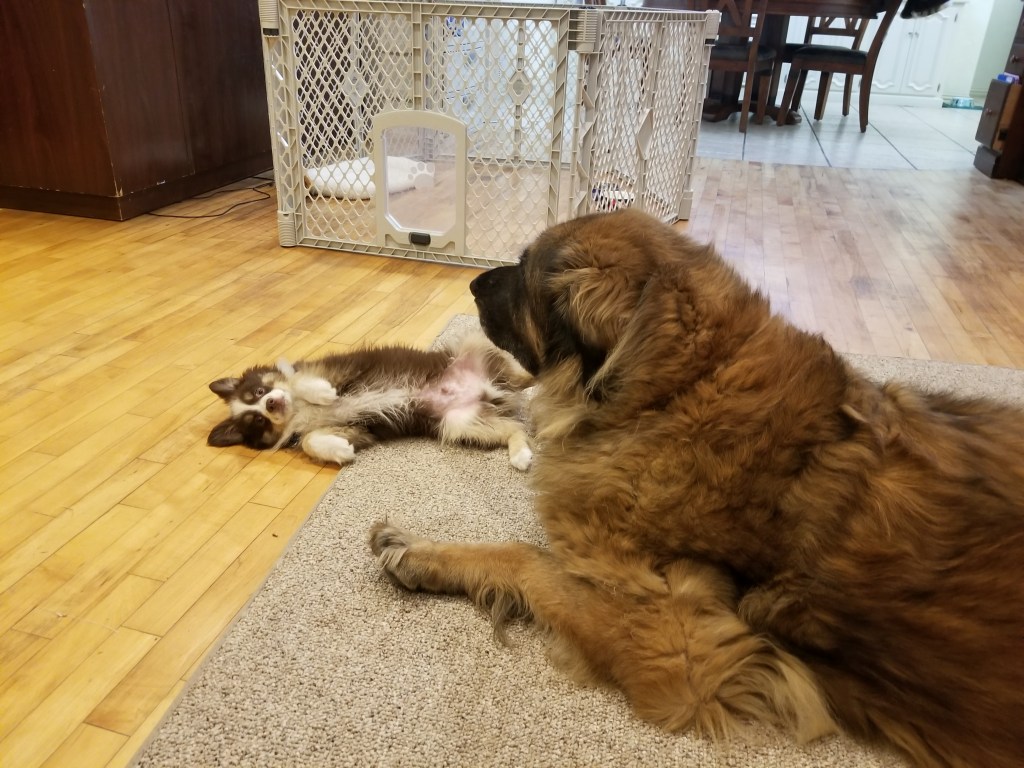
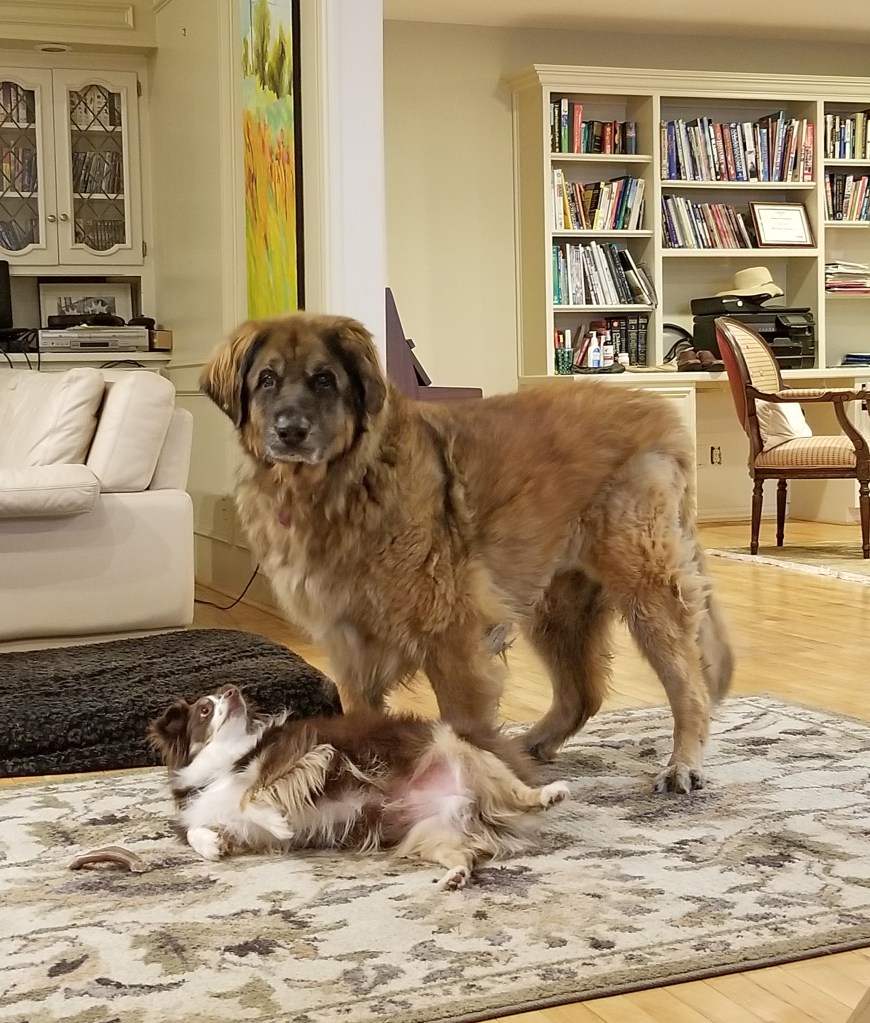
Photo of our mini-Australian Shepherd Rollo lying sideways in front of our Leonberger Bronco. He wants to play.
Rollo wants to play with Bronco.
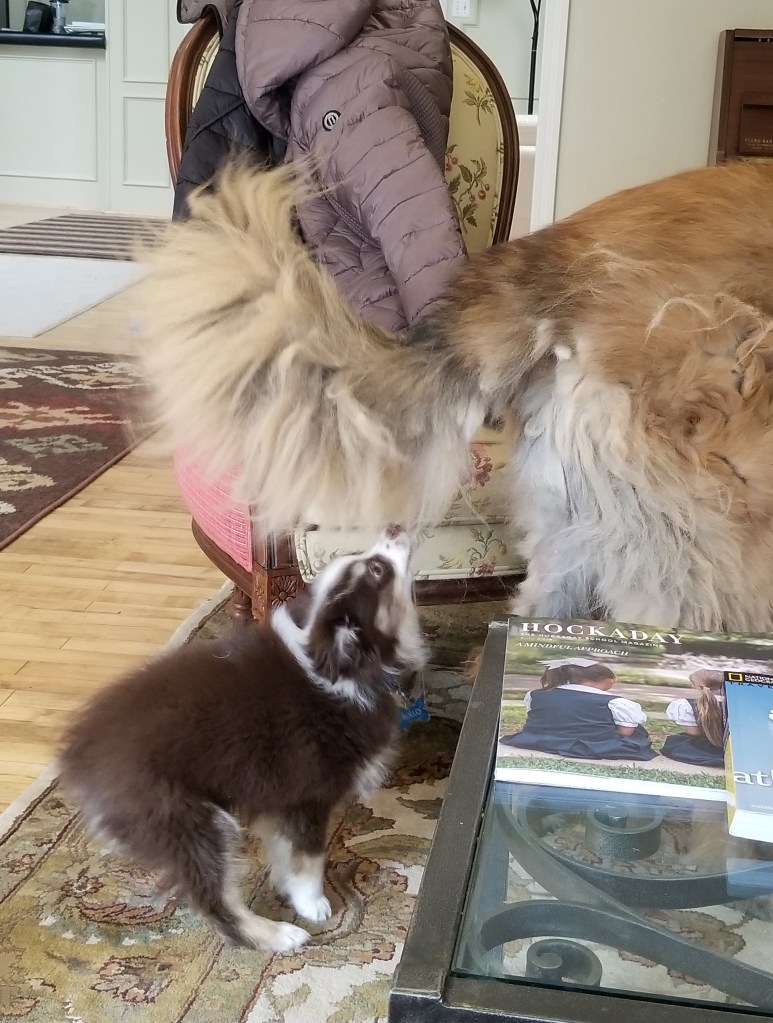
Photo of our mini-Australian Shepherd Rollo jumping up and biting the tail of our Leonberger Bronco.
Rollo jumping up and biting Bronco’s tail. Once he even dangled in it like a swing. Luckily Bronco was tolerant.
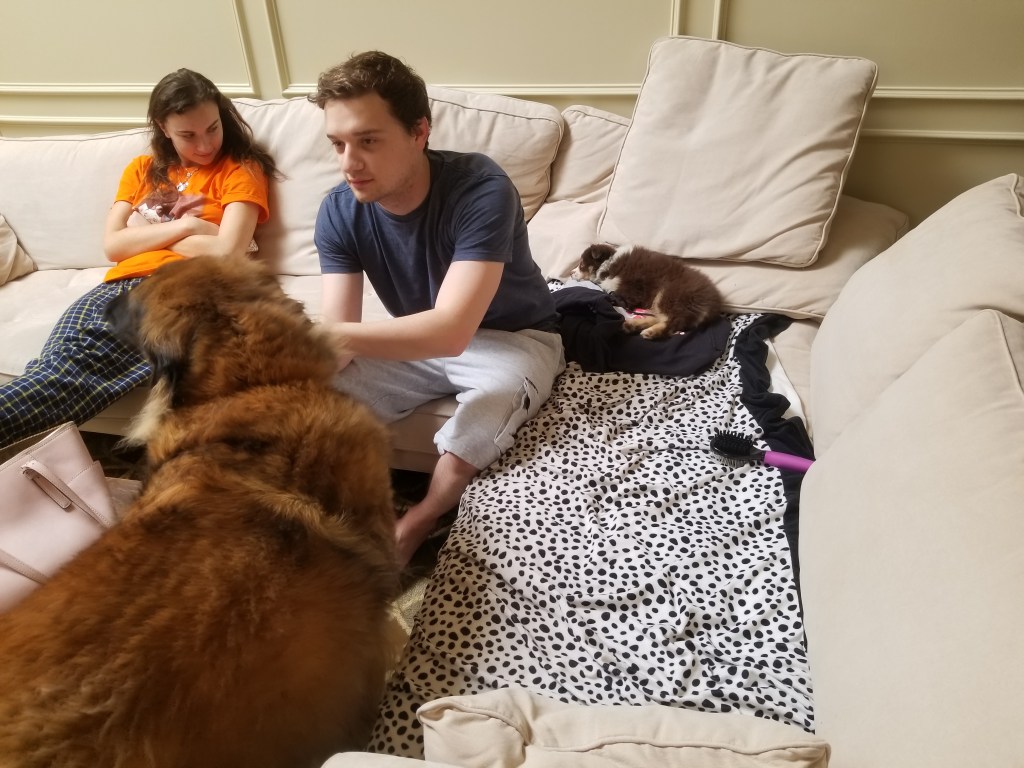
Photo of our Leonberger Bronco and our mini-Australian Shepherd Rollo as well as two of our children in the sofa.
Two of our kids and two of our dogs.
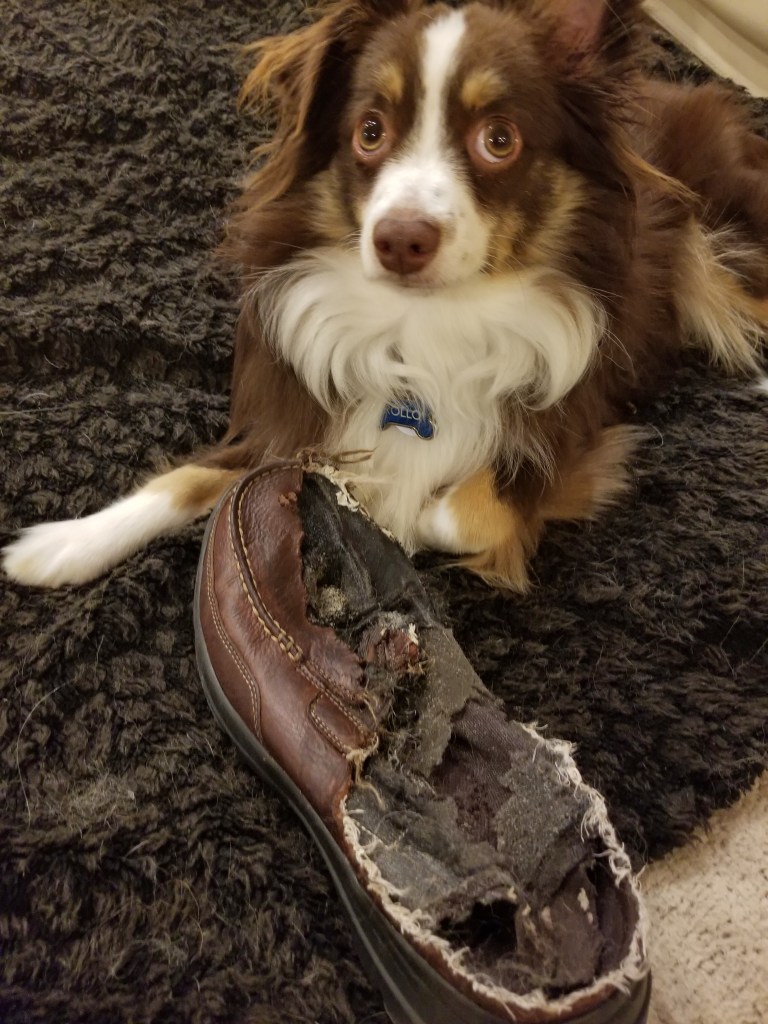
Photo of our mini-Australian Shepherd Rollo and my shoe, which he chewed up.
The Artist and his Art. Those were my nice shoes.
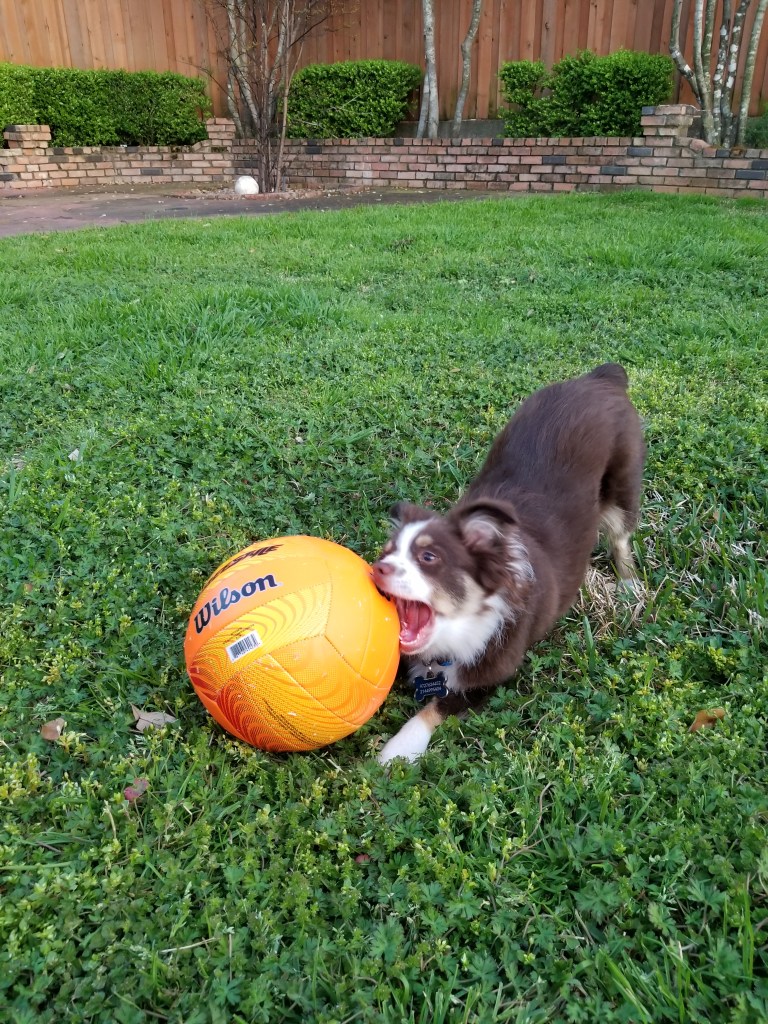
Photo of our mini-Australian Shepherd Rollo playing with an orange volleyball.
Rollo with a volleyball.
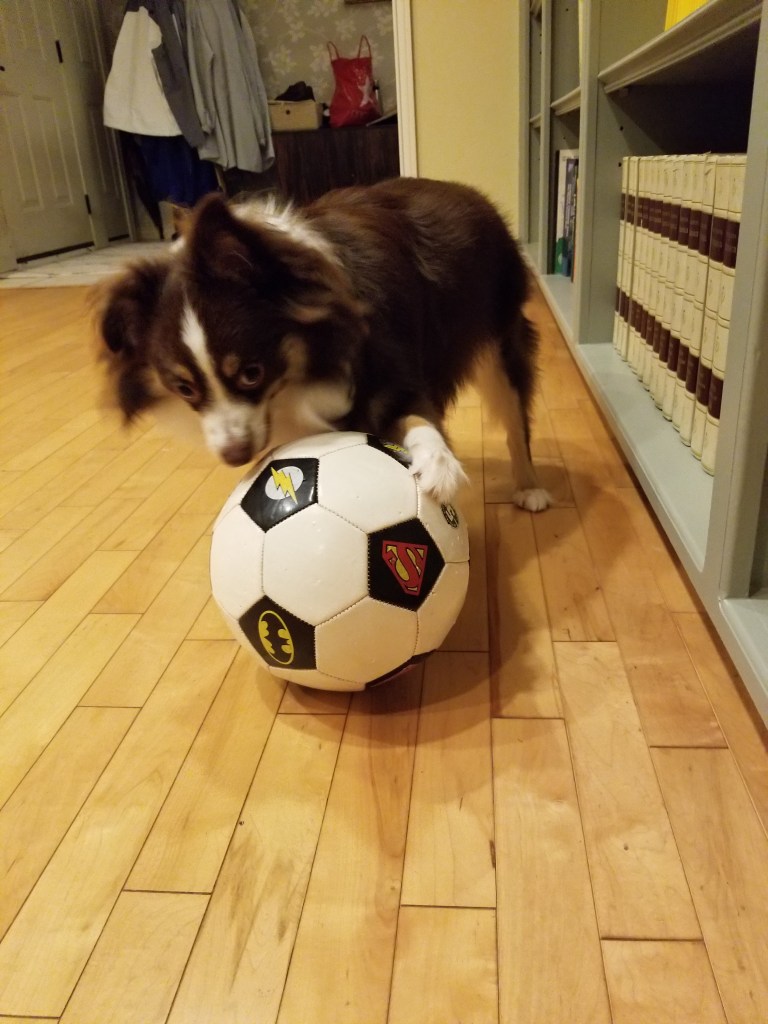
Photo of our mini-Australian Shepherd Rollo playing with a soccer ball.
Rollo with a soccer ball. Rollo rolls things.
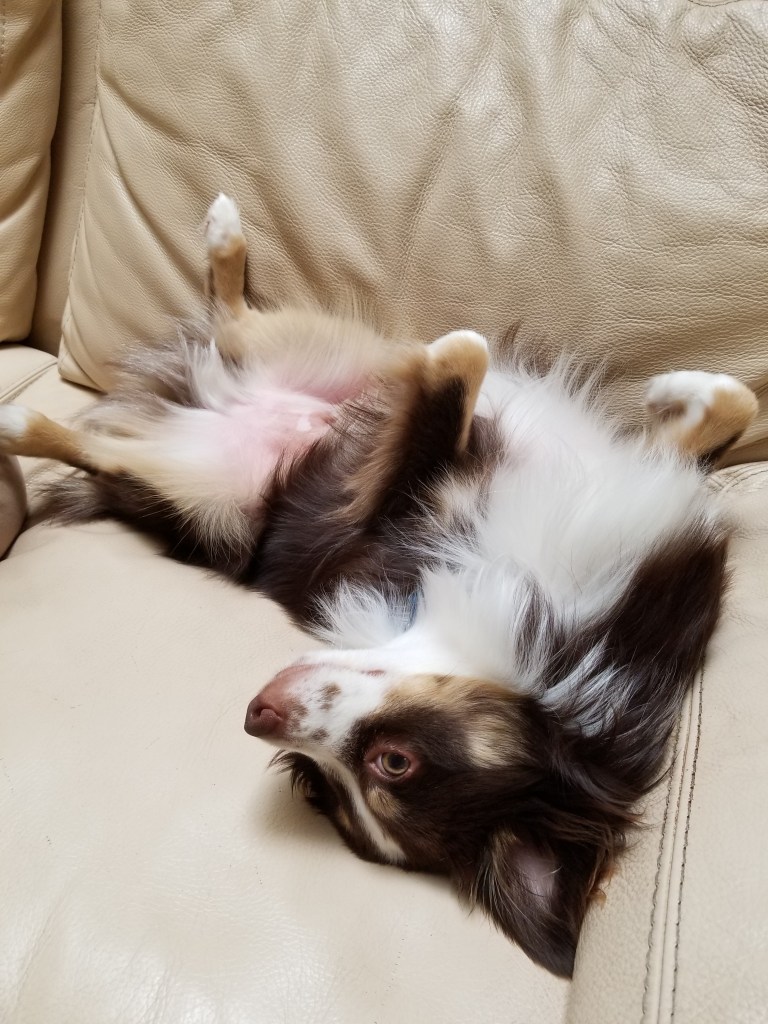
Photo of our mini-Australian Shepherd Rollo lying on his back in the sofa wanting a belly rub.
Rollo wants a belly rub.
Photo of our mini-Australian Shepherd Rollo wanting to play with our Leonberger Bronco.
Rollo (grown up) wants to play with Bronco.
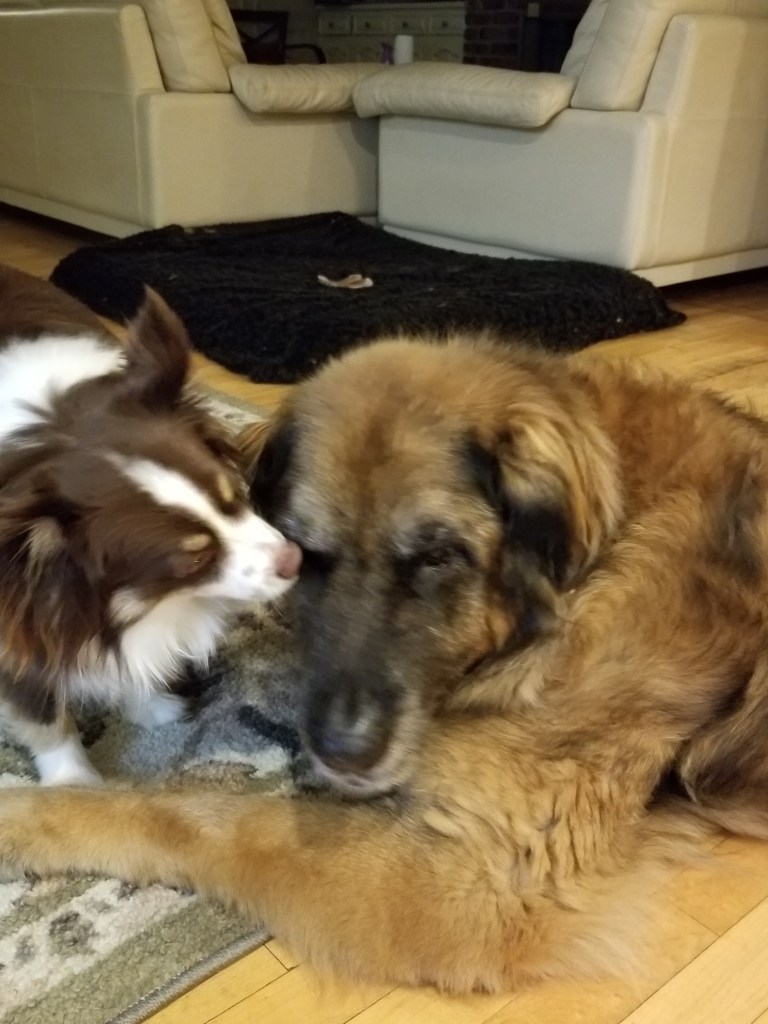
Photo of our mini-Australian Shepherd Rollo kissing our Leonberger Bronco.
Rollo gives Bronco a kiss.
Another photo of our mini-Australian Shepherd Rollo kissing our Leonberger Bronco.
Rollo gives Bronco a kiss.
A third photo of our mini-Australian Shepherd Rollo kissing our Leonberger Bronco. This time Rollo covers Bronco’s face for the camera.
Rollo gives Bronco a kiss.
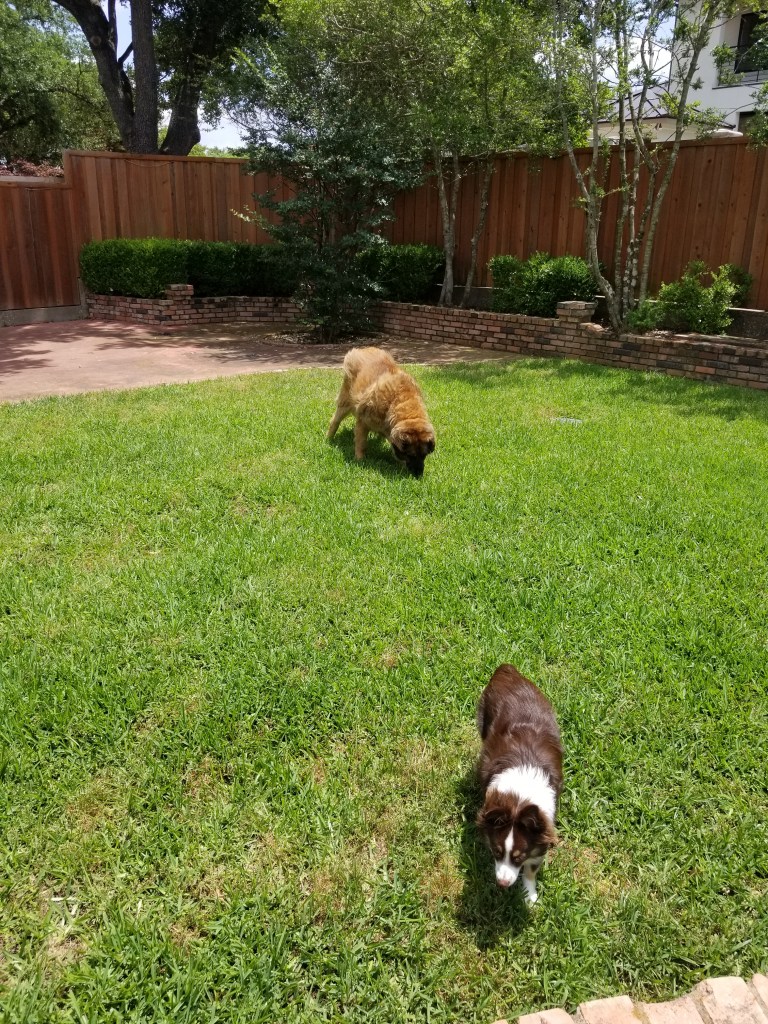
Photo of our mini-Australian Shepherd Rollo and our Leonberger Bronco in our backyard, both of them walking on the green grass.
Rollo and Bronco in our backyard.
Photo of our mini-Australian Shepherd Rollo and our Leonberger Bronco lying on the green grass next to each other in our backyard.
Rollo and Bronco in our backyard. That’s my grill to fly off in a tornado a few months after this photo.
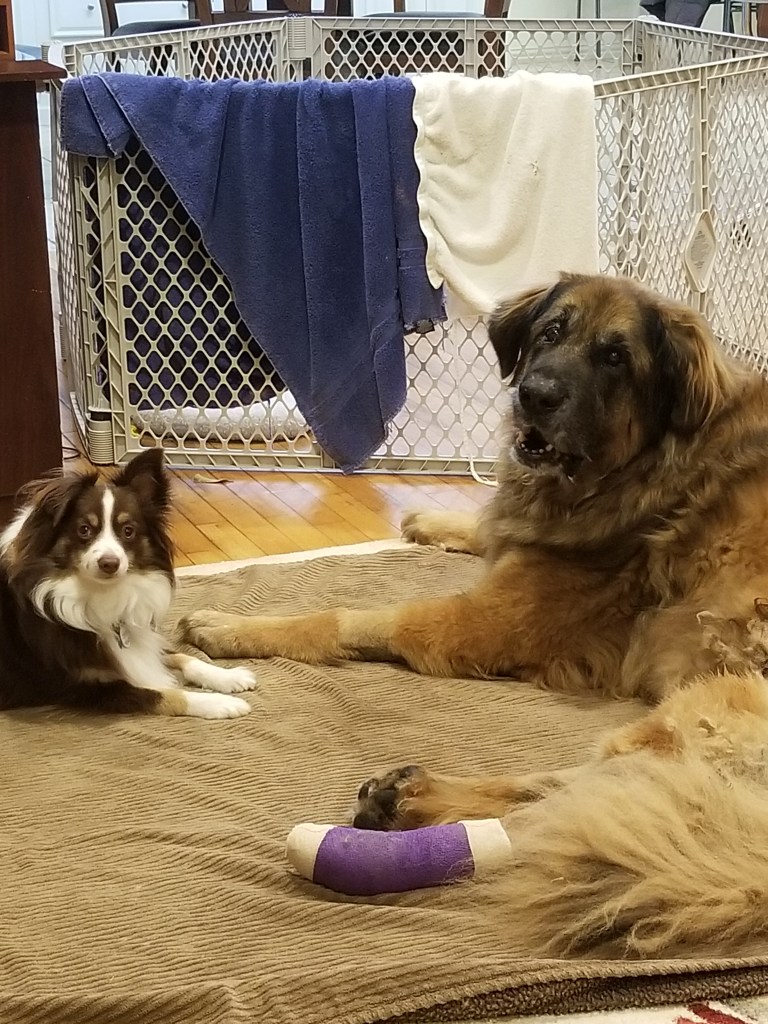
Photo of our mini-Australian Shepherd Rollo and our Leonberger Bronco lying on the floor in our house. Bronco has a bandage on his foot because he just had a toe amputation because of Squamous Cell Carcinoma.
Rollo and Bronco lying on the floor in our house. Bronco has a bandage on his foot because he just had a toe amputation because of Squamous Cell Carcinoma.
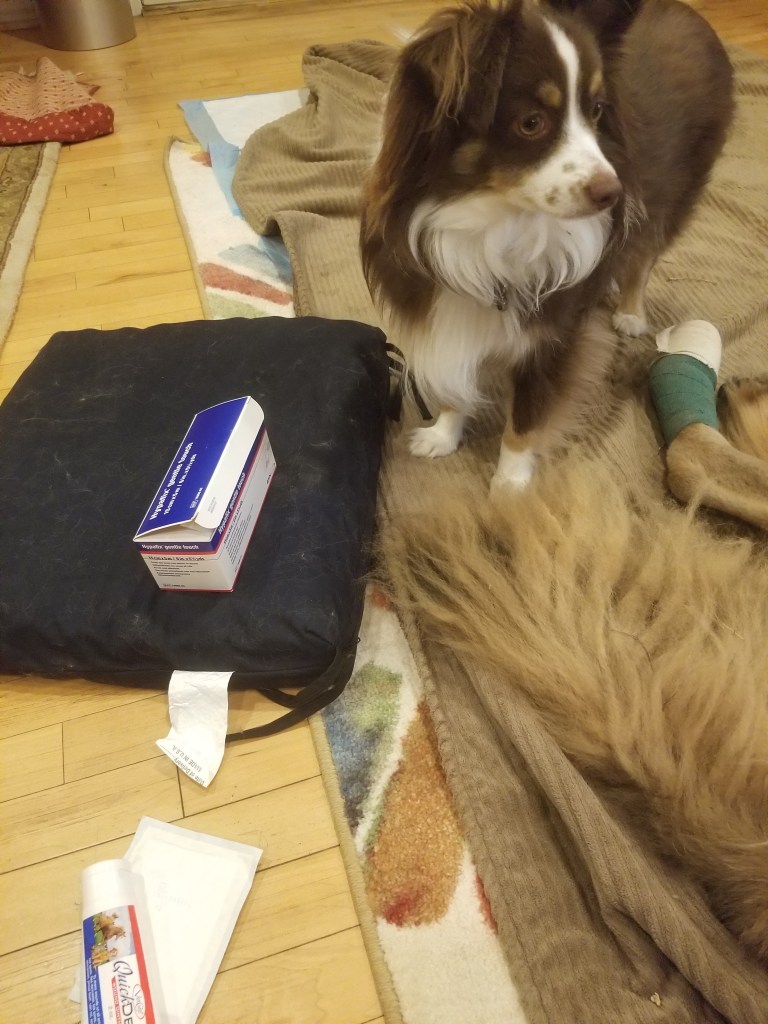
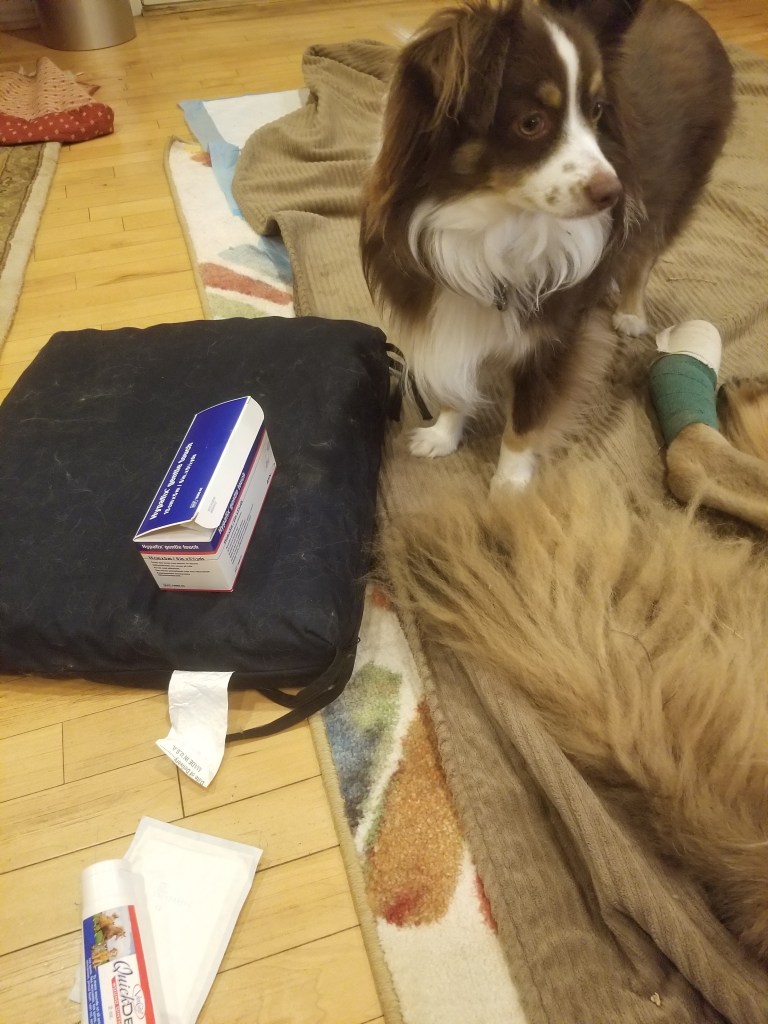
Our Leonberger Bronco is having a bandage change. He had a toe amputation because of Squamous Cell Carcinoma. Rollo our mini-Australian Shepherd and canine nurse is overseeing the process.
Rollo is overseeing Bronco’s bandage change. Rollo was extremely interested in everything that happened during the bandage change.
Rollo our mini-Australian Shepherd on the sofa.
Rollo on the sofa.
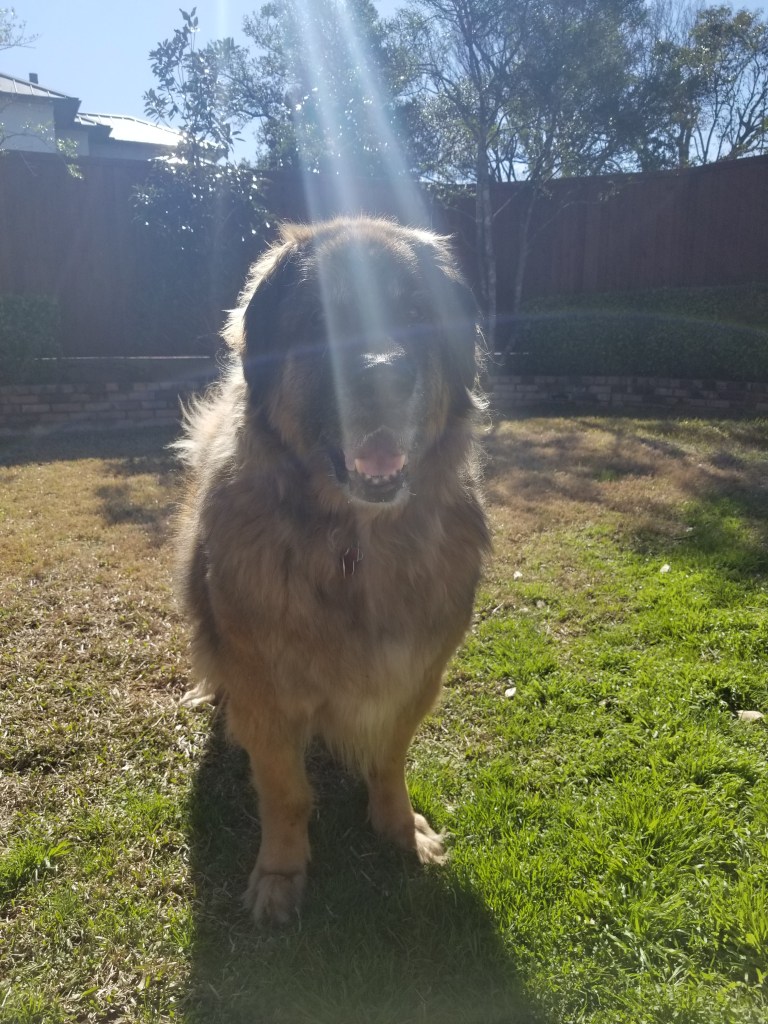
Bronco, or Le Bronco von der Löwenhöhle is standing in our backyard with a sunray shining down on him. He is St. Bronco because he rescued our runaway hamsters, saved our pug Daisy’s life, sniffed out an oncoming insulin shock in our Labrador Baylor, and saved the women in the neighborhood from a peeping Tom.
St. Bronco in our backyard. He is St. Bronco because he rescued our runaway hamsters, saved our pug Daisy’s life, sniffed out an oncoming insulin shock in our Labrador Baylor, and saved the women in the neighborhood, including my wife, from a nightly peeping Tom.

Good News Regarding Cancer for Leonbergers and Other Dogs

Cancer is the most common killer of purebred dogs: in fact, nearly half of them die from some form of cancer. Overall, the most common form is skin cancer. In Leonbergers, bone cancer and hemangiosarcoma are the most common forms. As in humans, early detection can save or extend the life of your dog. Warning signs of cancer include:

  • weight loss,
  • bleeding or discharge from a body cavity,
  • bumps or lumps that keep growing,
  • persistent stiffness or lameness,
  • breathing difficulties,
  • bad breath or bodily odors,
  • difficulty with defecation or urination,
  • difficulty with eating or swallowing,
  • lesions that won’t heal,
  • sores that recur or won’t heal, and
  • loss of appetite

Naturally, not every one of these signs and symptoms is applicable to all types of cancer. The only sign of Bronco’s squamous cell carcinoma was a lesion that wouldn’t heal.

Hemangiosarcoma (HSA) is an aggressive cancer of the blood vessels. It often appears as a mass in the spleen, liver, or heart but can also be found elsewhere. It is challenging to diagnose and equally difficult to treat. It is most common in golden retrievers, German shepherds, and Labrador retrievers but can occur in Leonbergers as well. In addition to genetic factors, certain toxins are associated with this cancer. Fortunately, there is a promising blood test (called the Shine On Study, or SOS) that identifies features of rare cells linked to this cancer and a novel drug therapy called eBAT (EGF bispecific ligand targeted angiotoxin). Both SOS and eBAT are still in the clinical-study phase at the time of this writing, but they offer hope for early detection and treatment.

Illustration showing Bronco our Leonberger running with a full leg cast. He just had a toe amputation.
Bronco’s cancer problem was Squamous cell carcinoma which luckily is not an aggressive cancer, but he needed toe amputations. He got this cancer once a year starting at the age of eight.
Photo of Rollo our mini-Australian Shepherd helping us change our Leonberger Bronco’s bandage after he had a toe amputation.
Rollo our mini-Australian Shepherd is helping us change Bronco’s bandage after he had a toe amputation.

Below is another piece of good news regarding cancer in dogs that a friend of ours alerted us to. I don’t know if it is related to the SOS study mentioned above. You can watch the video by clicking here.

The Day Leonberger Squamous Cell Carcinoma caused Hullabaloo in the Neighborhood

Squamous Cell Carcinoma (SCC) is a tumor of skin cells that usually appear as a single, solitary lesion in one location. It is common in large dark coated dogs and typically appear in the nailbed, but it can appear in other places. Our Leonberger Bronco was plagued by Squamous Cell Carcinoma in the toe nailbeds. In fact, he got it five times starting when he was eight years old and after that it occurred about once a year. It did not spread, and his second and third tumor, etc., were not metastatic growths. He got this type of cancer five times, each time independent of the other times.

Our veterinarian was at loss as to why he got it so many times. Remember, there was no spread of the cancer. SCC is caused by exposure to ultraviolet rays/sunlight and the exposure to papilloma-like viruses, but as with many cancers the cause is a bit of a mystery. Our veterinarian suggested it could be genetic, but recently we discovered that our pest control guy was using roundup for our lawn where Bronco walked and ran a lot, and he had been doing that for decades. We asked him to stop but we have no idea whether it had anything to do with Bronco’s SCC.

Luckily handling a case of Squamous Cell Carcinoma in the toe is quite straightforward. This type of cancer is not aggressive, even though it can spread (and is therefore called cancer), so if you don’t take too long to amputate the toe you should be fine. In fact, Bronco seemed to enjoy the annual toe amputation. He got to go to the Dallas Veterinary Surgical Center, he was pampered, everyone felt sorry for him, he got treats, he had a bandage for a few weeks and then the pain in his toe was gone. He was always very cooperative. Perhaps he understood that we were helping him.

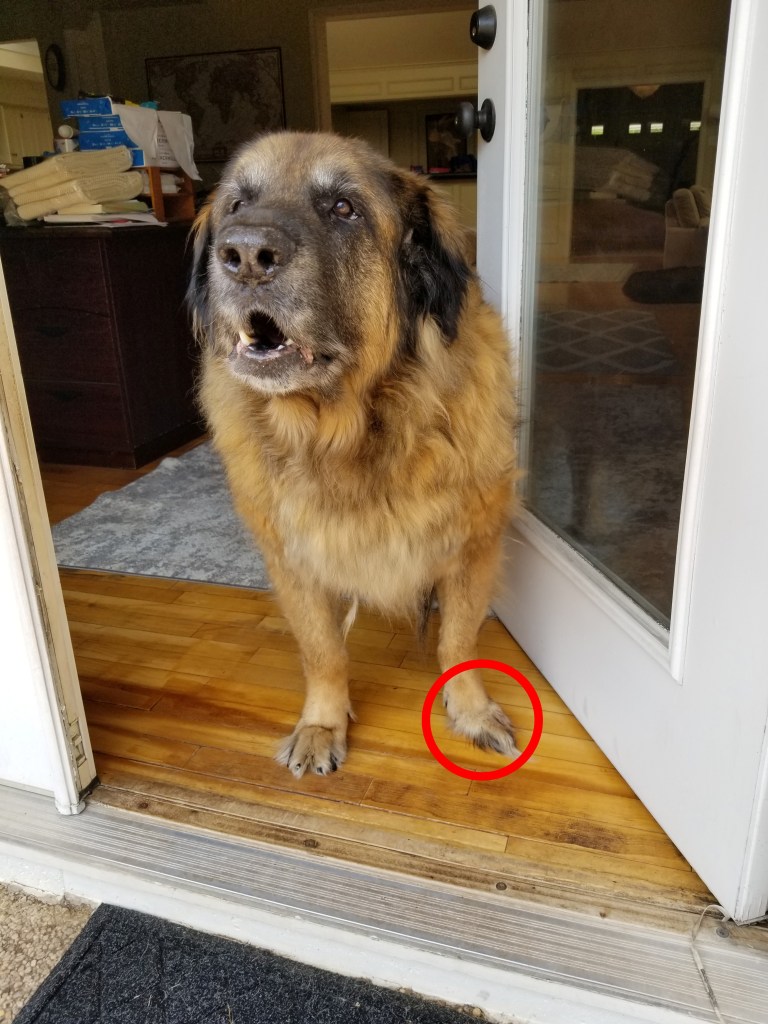
Photo of an agitated Bronco standing guard at the back door. Note the missing toe on his left (your right) front paw. It is enclosed by a red circle.
An agitated Bronco stands guard at the back door. Note the missing toe on his left (your right) front paw. It is enclosed by a red circle.

Below is an excerpt from the book regarding Bronco’s Squamous Cell Carcinoma. One day his toe amputation led to hullabaloo in the neighborhood, and we ended up having to apologize to some neighbors.

When Bronco was almost eight years old, we discovered a case of squamous cell carcinoma in one of his toes—or, rather, in one of his toenails. It was on his right rear paw.

Squamous cell carcinoma is a type of skin cancer that certain large-breed dogs, including Leonbergers, are susceptible to. It often grows out from the skin around the nail and can affect the bone and tissue around it. It is typically not very aggressive, but it can spread, and it is painful. It manifests itself as a swollen toe, or you may be able to see a large red papule that looks like a pimple. Sometimes the toenail falls off. The dog is likely to limp and lick the toe and may become reluctant to go for walks, although that was never the case with Bronco.

Primarily because of the pain, but also because of the small risk of metastasis, it is usually recommended that the affected toe be amputated. So we went through with the procedure.

When we picked Bronco up the day after the surgery, his paw was in a bandage. But he got some treats, and he was in a good mood. We went back to the veterinary surgical center for a bandage change a few times, and then he was done.

Unfortunately, though, we discovered another lesion a year later. This time it was on a large toe on his left front leg. We asked the doctors if the cancer had spread to this toe. We were told no—Bronco was just prone to getting this type of cancer. But the cause could also have been something in the environment. In Texas, the ultraviolet radiation from the sun is significant. We really don’t know why this happened to him, but we were assured that it was not because the cancer had spread.

This time around, Bronco’s entire leg was put in a cast, to be replaced by a bandage after ten days. We were instructed to keep him inside during those ten days and keep him as still as possible. We were to make sure he wouldn’t bump the cast. This was, of course, almost impossible to do, but we were going to try.

However, Bronco really wanted to go out, which he showed us in various ways, such as scratching at the front door. After a week or so, Claudia suggested that we take him outside a little bit, just in our driveway. I agreed. When I handed her the leash, she said, “He can barely walk; do you think he’s going to run off without it?” We laughed, and I agreed that it didn’t seem like we needed it this time. So Claudia walked out with Bronco slowly limping beside her.

Less than a minute had passed when I heard shouting outside. I opened the door and looked outside to see what was going on……….let’s just say that what I saw was a sight for sore eyes. If I had thought of videotaping it, it would have become a viral video. The crazy thing that happened was also an embarrassment to us and we had to apologize to neighbors. That’s all I am saying. The story is too good to reveal in this post. The rest of the story you have to read in my book. I give you a hint with the illustration below.

Illustration by Naomi Rosenblatt showing a Leonberger running wearing full leg cast.
OMG what is happening? Illustration by Naomi Rosenblatt.

Black October and a Leonberger’s Miraculous Recovery

October 2019 was a dark time for us and especially for our Leonberger Bronco. At the beginning of October, he had to amputate a toe due to a type of cancer called squamous cell carcinoma, then he developed large ulcerous sores that would not heal, perhaps related to the surgery. Then on October 20 an EF3 Tornado ravaged our neighborhood. Our chimney was smashed, our roof was damaged, and we needed a new roof, a new fence, garage door, wiring in the attic and a new grill and outdoor furniture. However, compared to many of our neighbors we were lucky. As you can see below our neighbor was not as lucky.

Photo of our neighbor's house. The damage to my neighbor’s house after the tornado of October 2019 was devastating. Her roof lay across the street.
The damage to my neighbor’s house after the tornado of October 2019 was devastating. Her roof lay across the street.

We had no power for almost a week and due to the rubble it was very difficult to leave the house. We had no internet, no air conditioning, and it was hot. Perhaps because of this situation Bronco had a heart failure a week after the tornado, and it was bad. We thought that was the end of our 12-year-old Leonberger. However, as you will see in the extract below from my book, Bronco recovered miraculously. He still had eight more wonderful months to give us.

Photo of our Leonberger Bronco in front of our broken fence. Bronco, who was not at his best in this picture, rests next to our tornado damaged fence. We put a plastic bag around his bandage when he went outside.
Bronco, who was not at his best in this picture, rests next to our tornado damaged fence. We put a plastic bag around his bandage when he went outside.

We don’t know if the heat had anything to do with it, but about a week after the tornado, Bronco developed congestive heart failure.

As a result, he could no longer walk. The veterinary cardiologist at the surgical center told us that Bronco was not in good shape, but we all agreed that we should give him a chance to recover.

We bought Help ’Em Up harnesses for him, but more often we used a smaller sling to help him stand up. We also treated his heart with various medications. Since our veterinarian’s office had been destroyed by the tornado, we took him to the veterinary surgical center (where he had his toe amputated) for bandage changes. After a few visits, the technicians suggested that we do it at home to save time and money. More important, it would be easier on Bronco. So they gave us instructions, and we started doing it at home.
But changing Bronco’s bandages wasn’t as easy as just rolling out some gauze and tape. First we had to clean the sores with chlorhexidine, an antiseptic solution. Then we had to apply a healing ointment, such as manuka honey or QuickDerm. This involved spreading it on an Adaptic pad (breathable and nonstick), then wrapping the pad with a Telfa pad (or gauze pad). After that came the soft bandage, then the outer bandage, then something sticky to hold it all together. The latter was necessary because bandages easily slip off dog hair.

I did most of the bandage changes, but Claudia and the children helped, and even Rollo, (our Australian Shepherd), helped. He was very curious: he stood by and watched everything I did as if he were checking to see that I didn’t forget anything. He loved Bronco’s bandage changes and seemed to think that they were very interesting. It was never a problem—except for the time he drank the chlorhexidine.

Photo of our Australian Shepherd Rollo and our Leonberger Bronco getting a bandage change. It seems like Rollo is helping changing the bandage. He was just very curious.
Rollo helps change one of Bronco’s bandages.

We called our veterinarian’s office, and the technicians told us that the chlorhexidine was probably not harmful to Rollo. Chlorhexidine is a type of salt, and unless it’s ingested in large quantities, it’s nontoxic—unlike peroxide.

During this period, we gave Bronco a lot of attention. We slept next to him at night and petted him a lot. He needed help to get up, and we were ready to do that at any time. Sometimes he just wanted to walk around. Sometimes he wanted water, and sometimes he wanted to go out in the backyard to pee or just lie in the grass.
In the beginning it was Claudia who did most of the caretaking. But I took early retirement in November, and I started taking over the night duty. Bronco came to expect constant company, which was okay with us, even though at times it was very tiring. For example, if I was petting him and stopped doing so, he would whine or bark and essentially order me to continue.
At the same time, taking care of him was an amazing experience for me. Bronco usually slept on his dog bed next to the sofa, and I slept on the sofa next to him. When he wanted something, he sat up and looked at me. He did not make a sound. I would wake up, probably because I could feel him staring at me. I would open my eyes, and there would be Bronco’s big beautiful face looking down at me, his gentle expression asking for help. I would get up and help him with whatever he needed.
Bronco was able to communicate what he wanted just by looking at me. It felt like I could understand what he was thinking and feeling even though he couldn’t speak. It almost felt as if he were becoming an extension of me, or maybe the other way around, I was becoming an extension of him. We were two very close buddies who understood each other. They say that a dog is man’s best friend, but for us it was not just a cute cliché. We were best friends.

The veterinarians advised us not to take Bronco out for walks until he was in better condition. But one day he lay at the front door, scratching it and whining. I could clearly see that he wanted to go out. So I took him on a very slow walk. We walked, then he rested; he sniffed his surroundings, and I brought water for him to drink. Along the way we met a woman who looked him and said, “What a beautiful dog.” You can see in the photo below, taken during that walk, that he was old and tired, but he was still beautiful.

Photo of our old Leonberger Bronco (12 years old) out for a walk in the neighborhood for the first time since his heart failure.
You can see how happy Bronco was to be outside, even as his health was not the best.

This warmed my heart. The woman asked what kind of dog he was, and she appeared to be really interested and impressed. It was the first time Bronco had been out walking in perhaps a month, and after all we’d been through, I have to admit I needed the experience, and Bronco did, too. After that, we started taking short walks every now and then, and when we were finished, Claudia would pick us up in the car.

After a while, Bronco was able to get around on his own and even go to the bathroom on his own, and his sore got closer to healing. In fact, he recovered almost miraculously. We were extremely happy about this, and it made everyone’s lives easier.

We had been planning a big family vacation for several months, which Claudia and I had considered canceling. It was a one-week cruise along the Mississippi River, and it was scheduled for December of 2019. Because of Bronco’s improvement, we decided to go. But we had learned our lesson: while we were gone, a friend of ours lived in our house and watched our dogs. We showed her how to change Bronco’s bandage, and that arrangement worked out well.

Bronco had a tough October followed by a difficult but successful recovery. Taking into account his other health scares, including heatstroke and the freak accident with the metal rod when he was young, our veterinarian told us that Bronco must have nine lives, like a cat.