This blog feature amusing and heartwarming stories about our late Leonberger dog Bronco, as well as other Leonbergers. It also has a lot of information about the Leonberger breed, the history, care, training, Leonberger organizations, etc. I also wrote a Leonberger book, which I am featuring in the sidebar.
I was alerted to the existence of National Love Your Pet Day by this post. Because I was busy all day I did not get a chance to post anything until now. However, it is still National Love Your Pet Day here where I live.
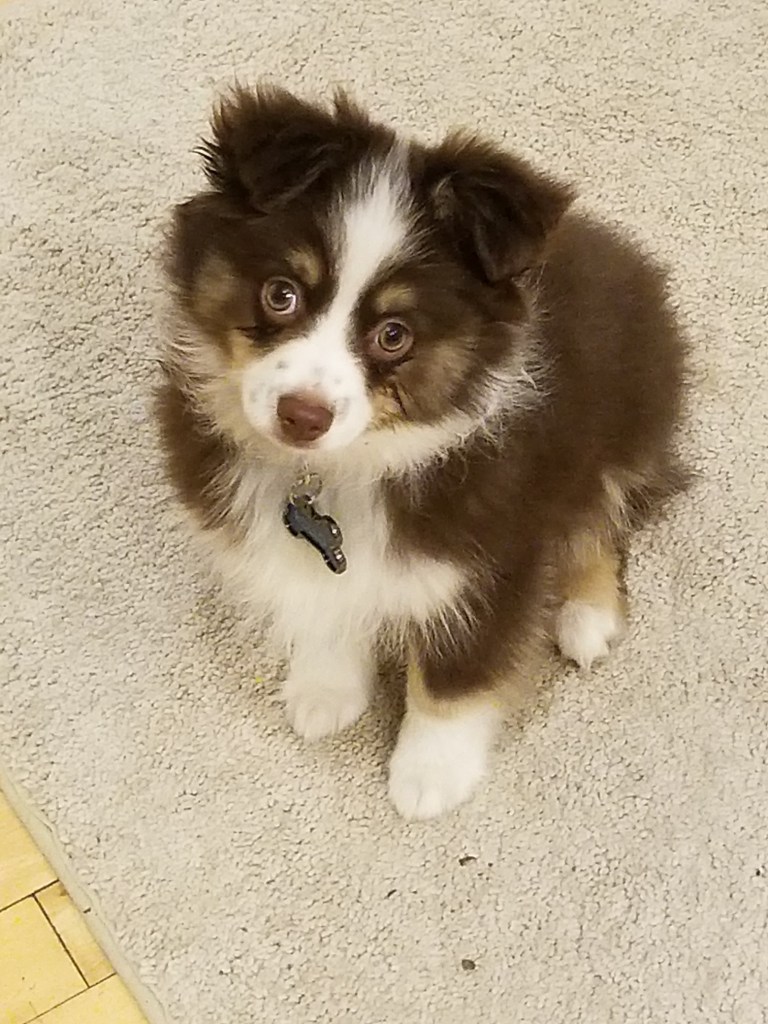
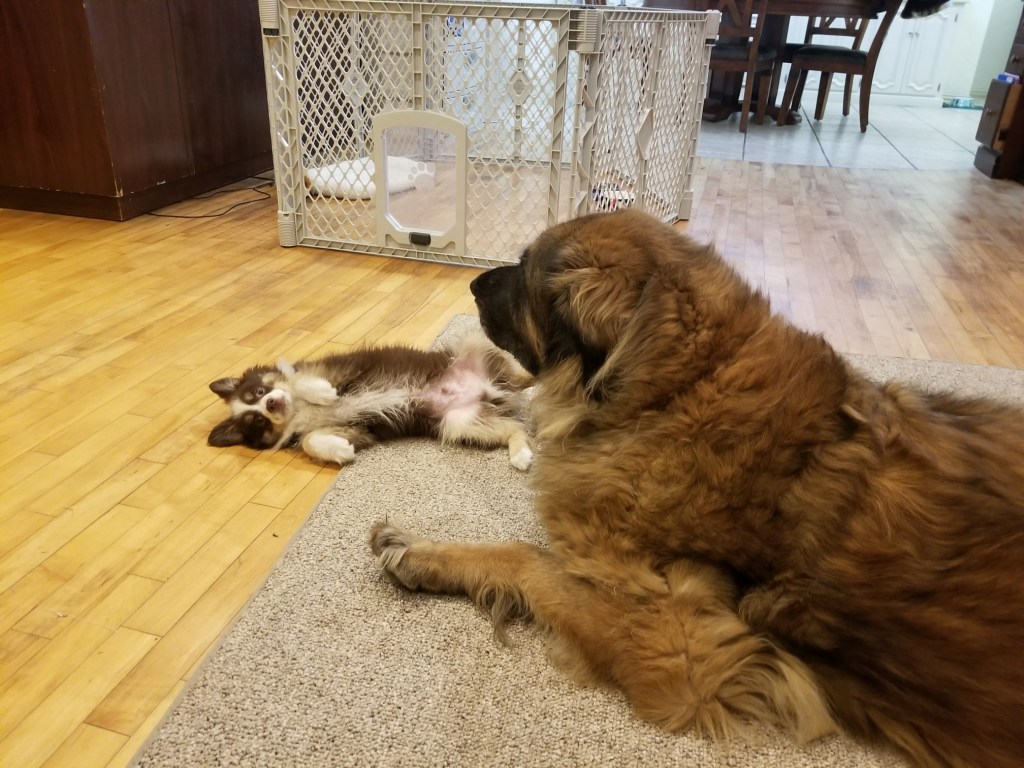
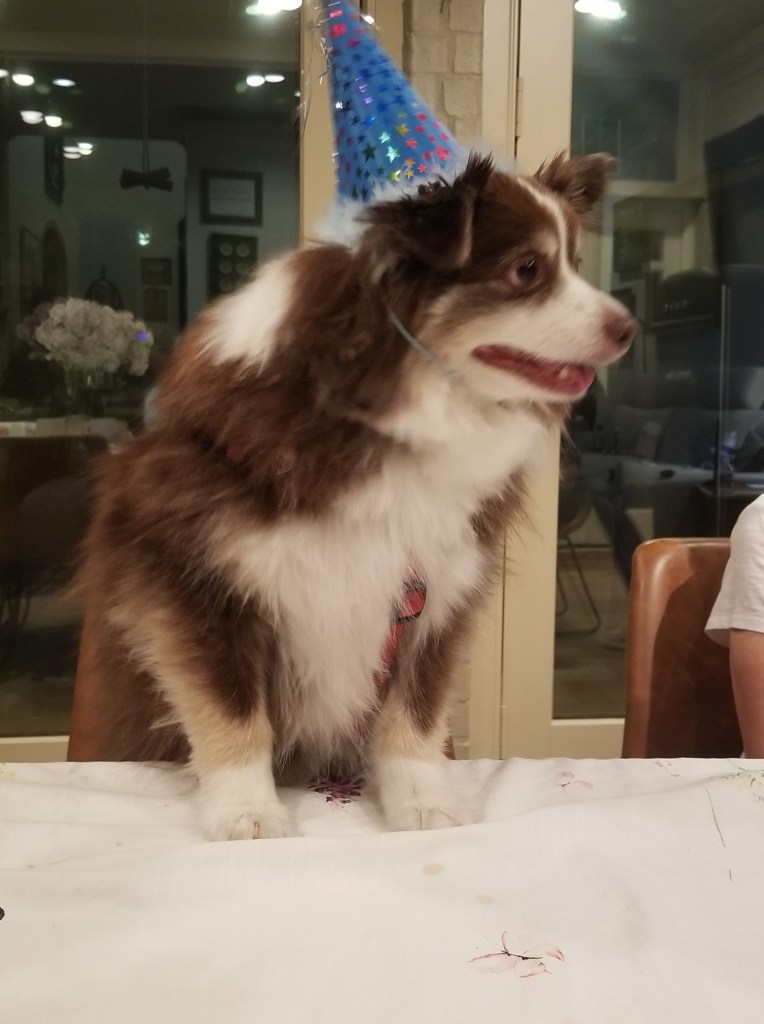
National Love Your Pet Day is an annual observance dedicated to celebrating animals. With this post I just wanted to show some photos of our current dog the mini-Australian Shepherd Rollo and our past dogs the Labrador Baylor (mix ¼ Rhodesian Ridgeback), the German Shepherd Baby, our big Leonberger Bronco, or Le Bronco von der Löwenhöhle, our Japanese Chin Ryu and our Pug Daisy. We love(d) them all and will forever be in our hearts.
Photos of our Dogs
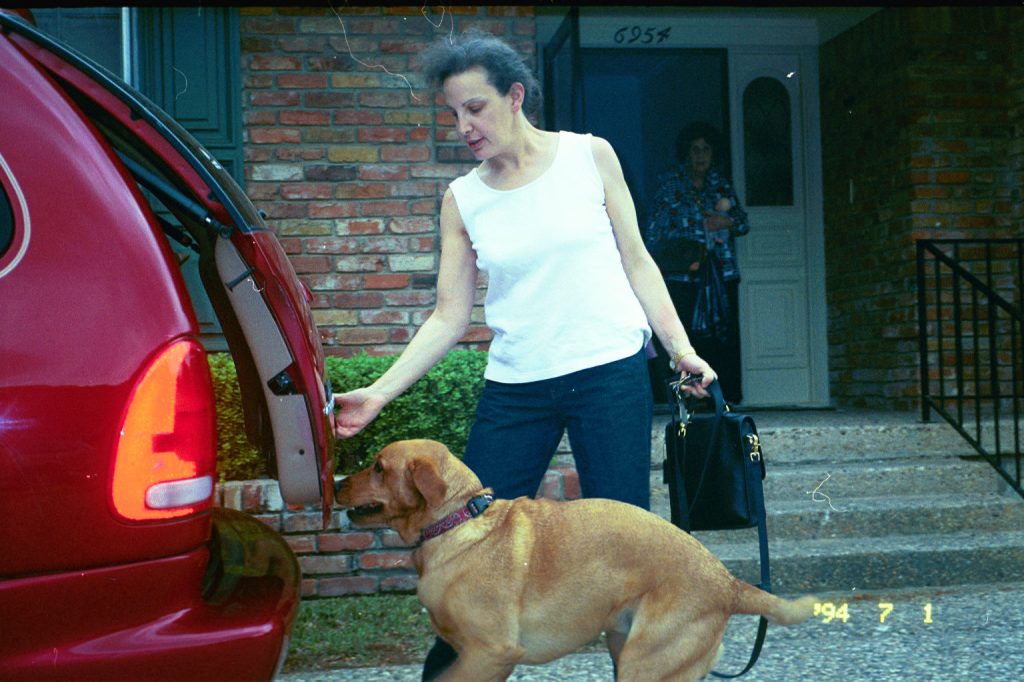
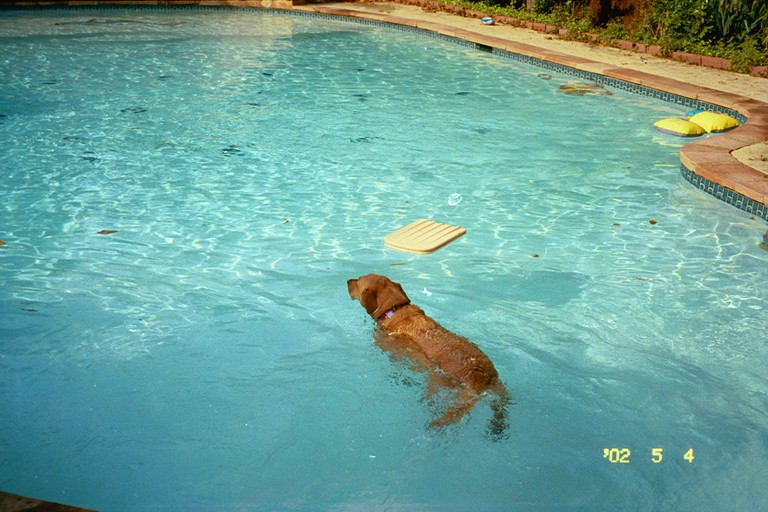
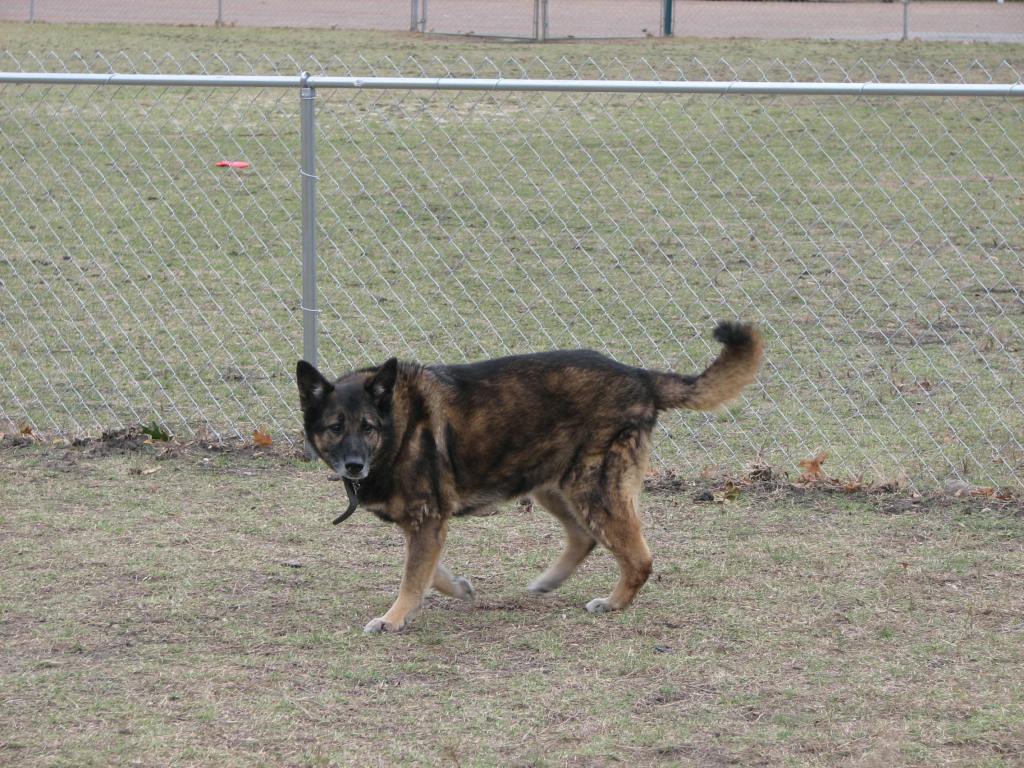
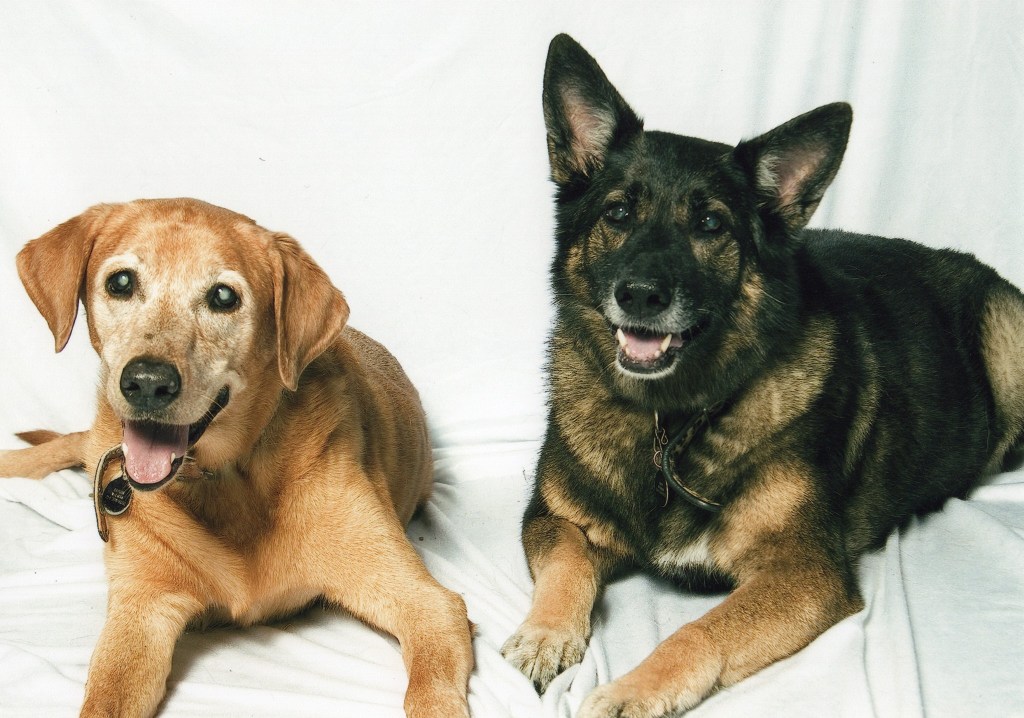
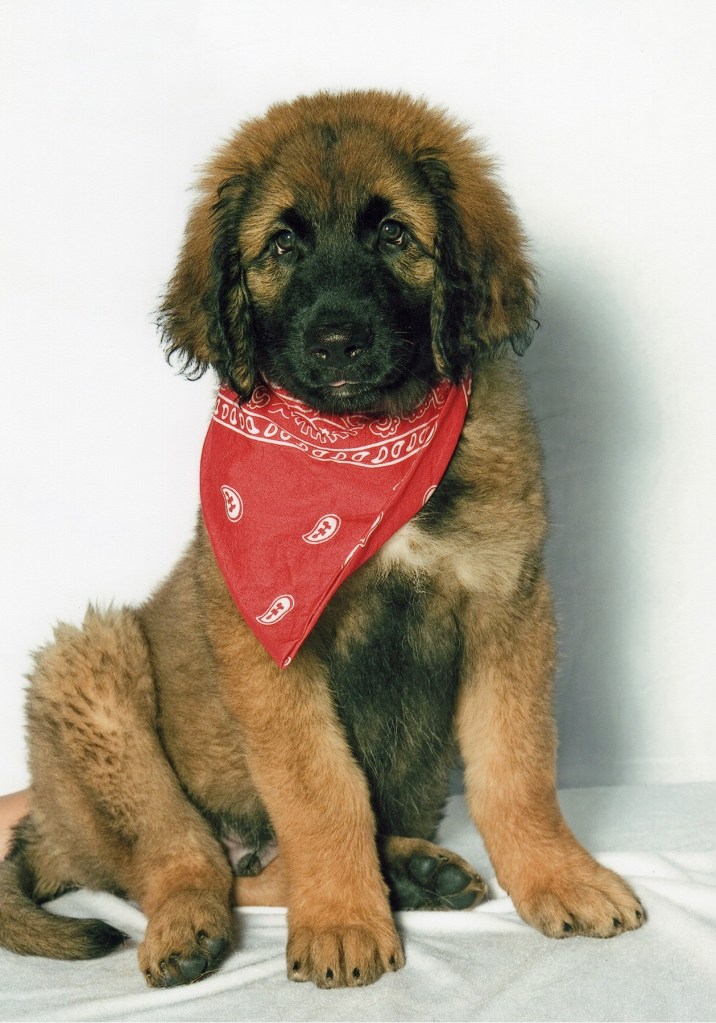
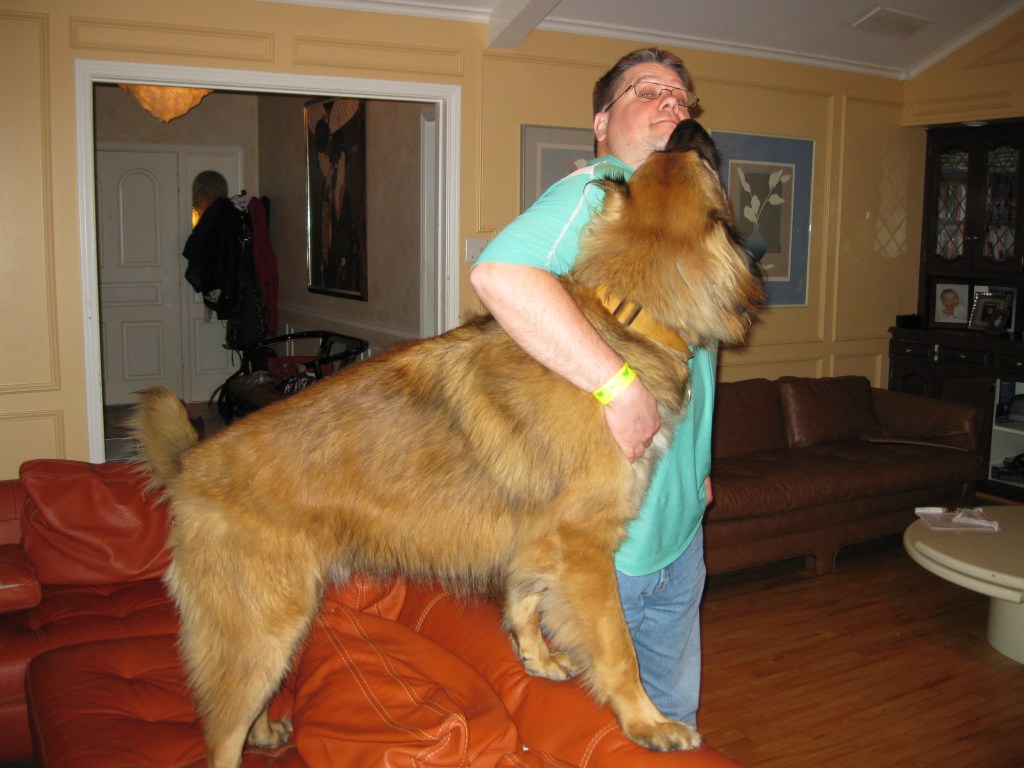
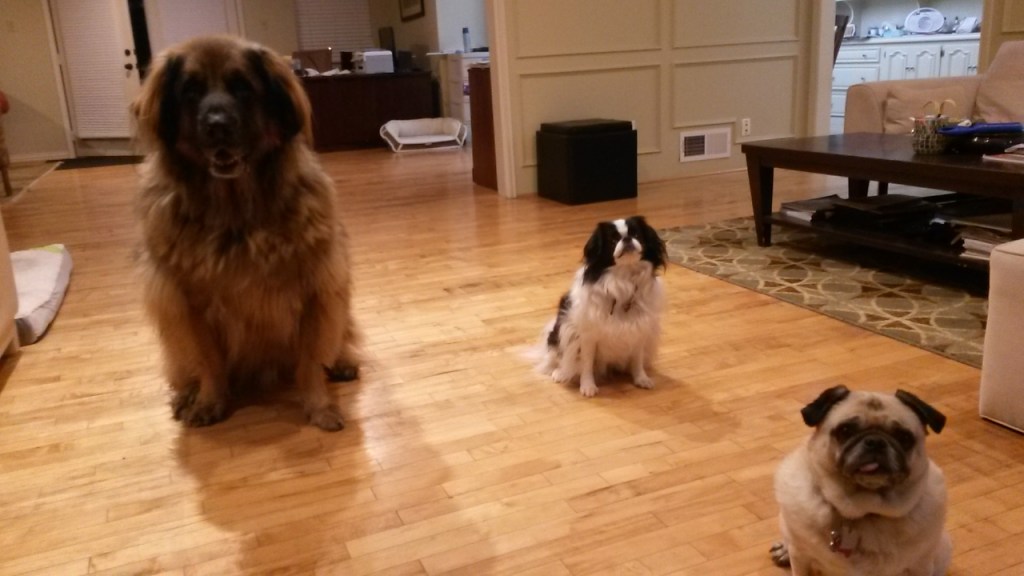
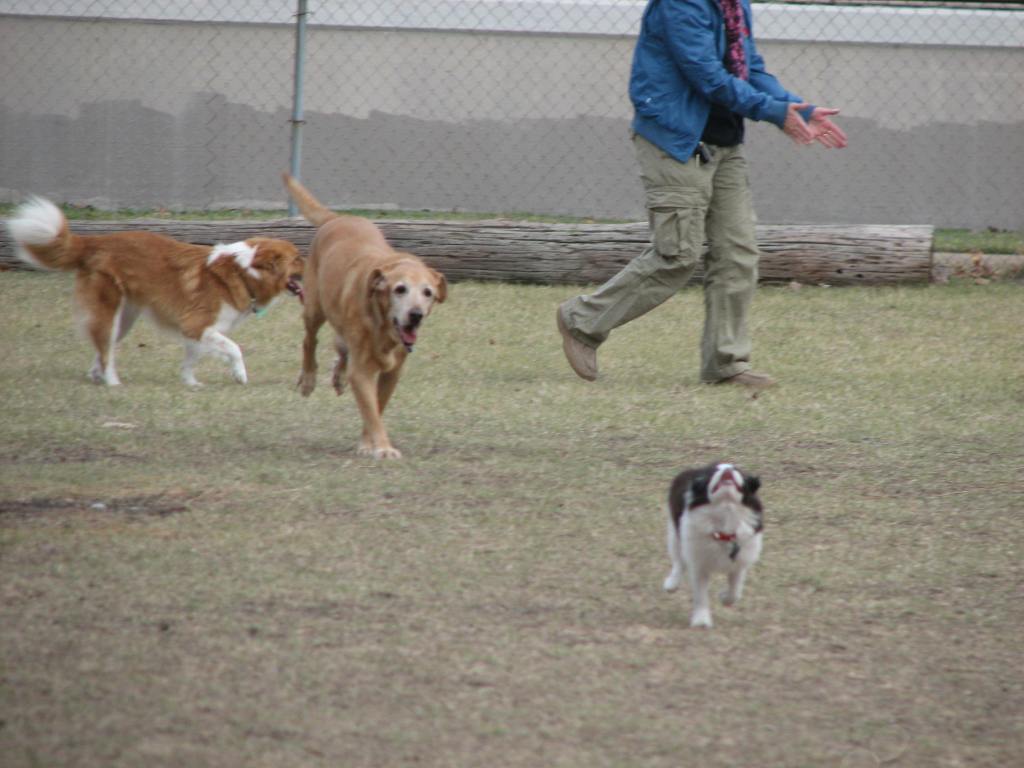
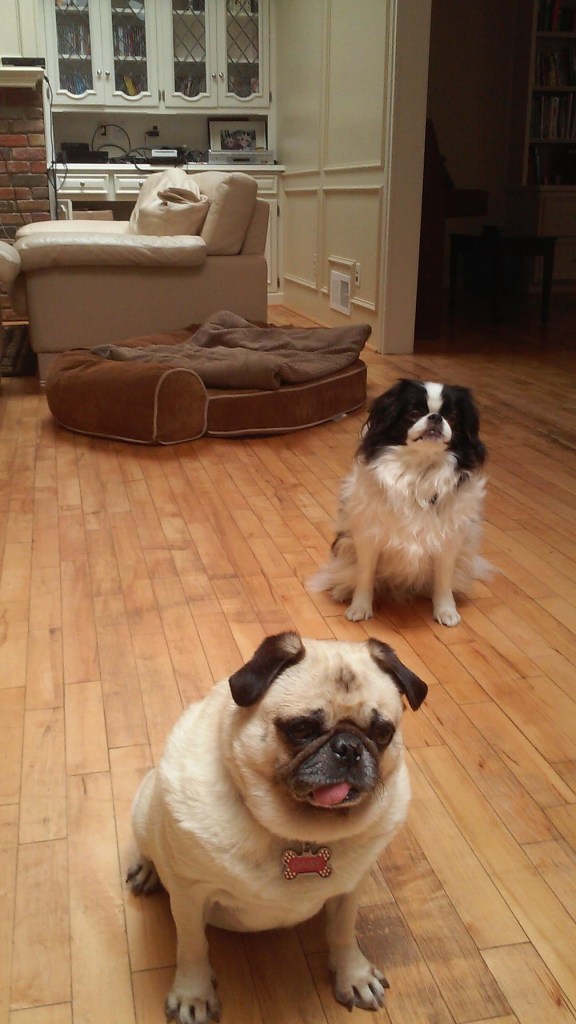
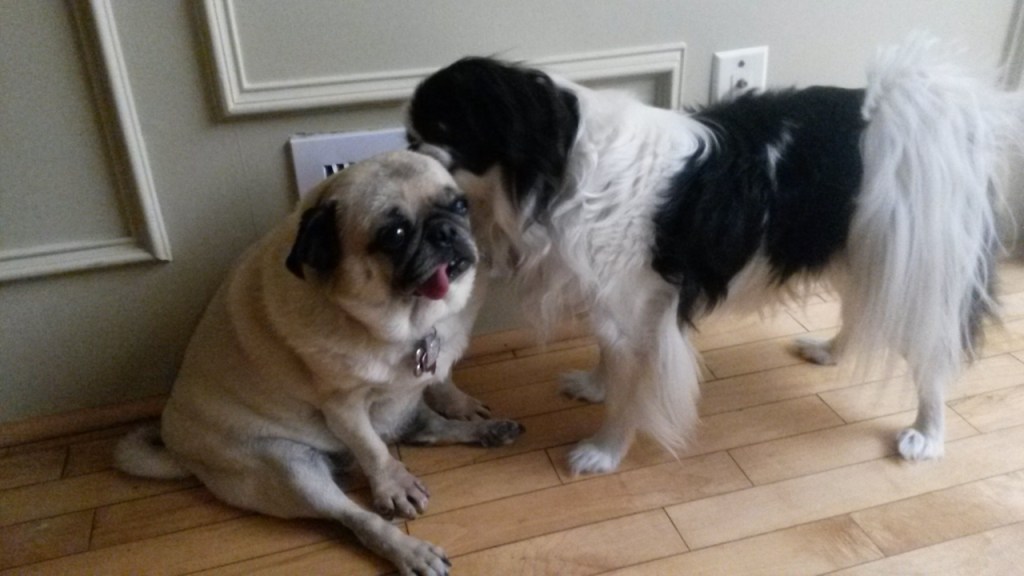
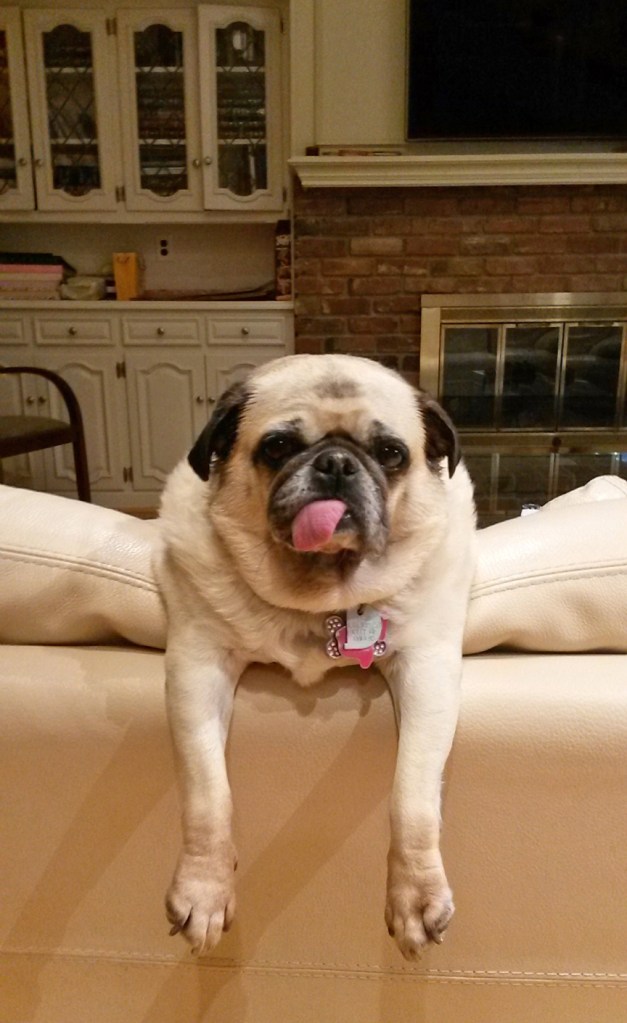
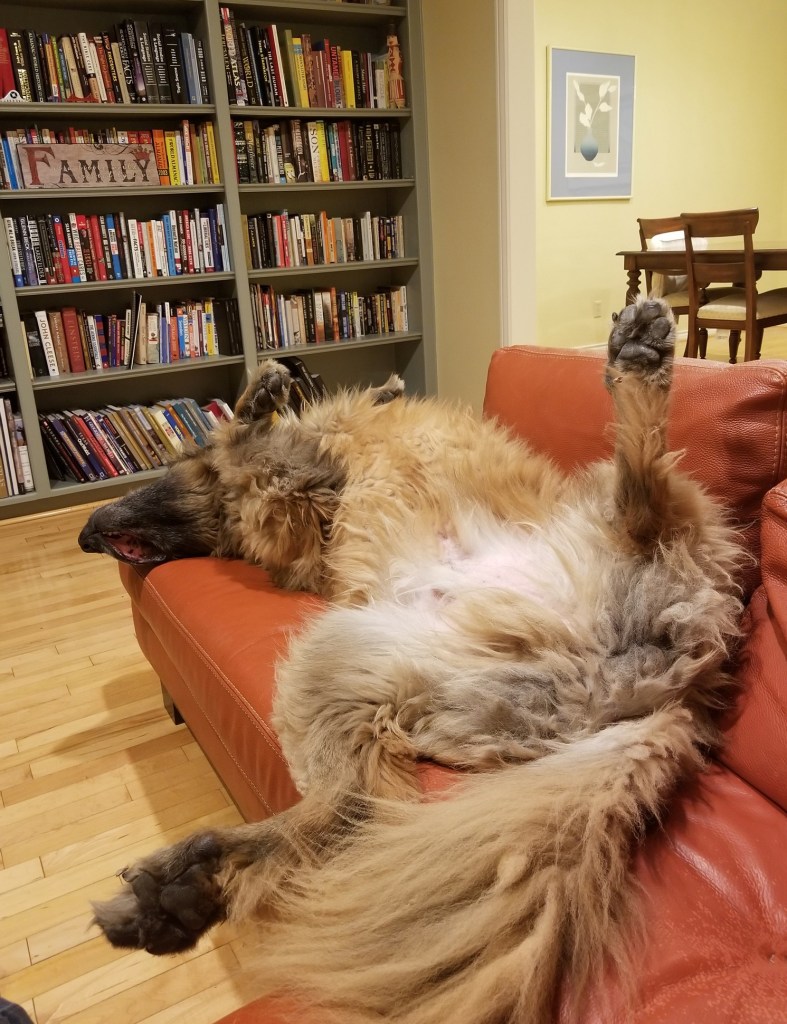
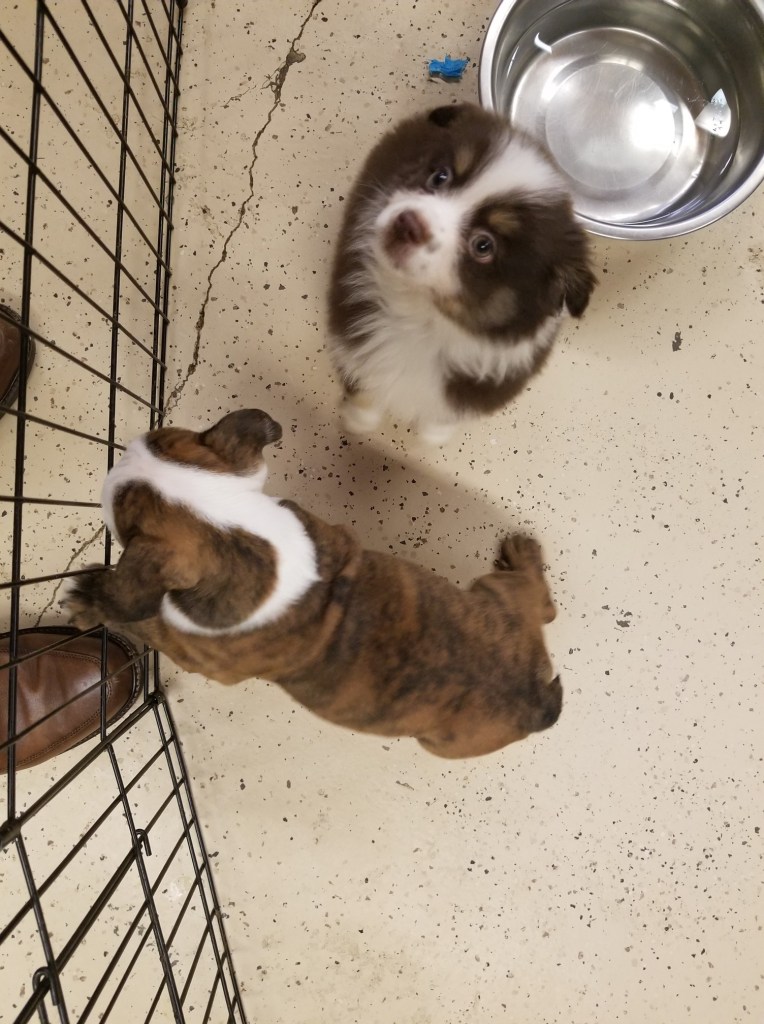
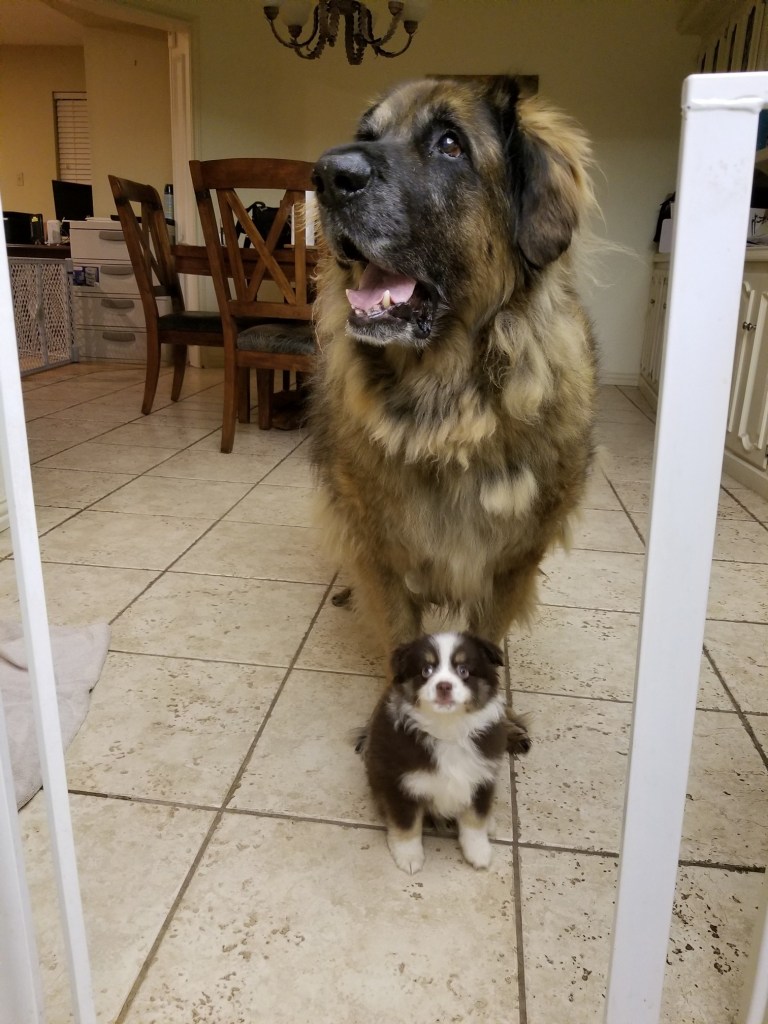
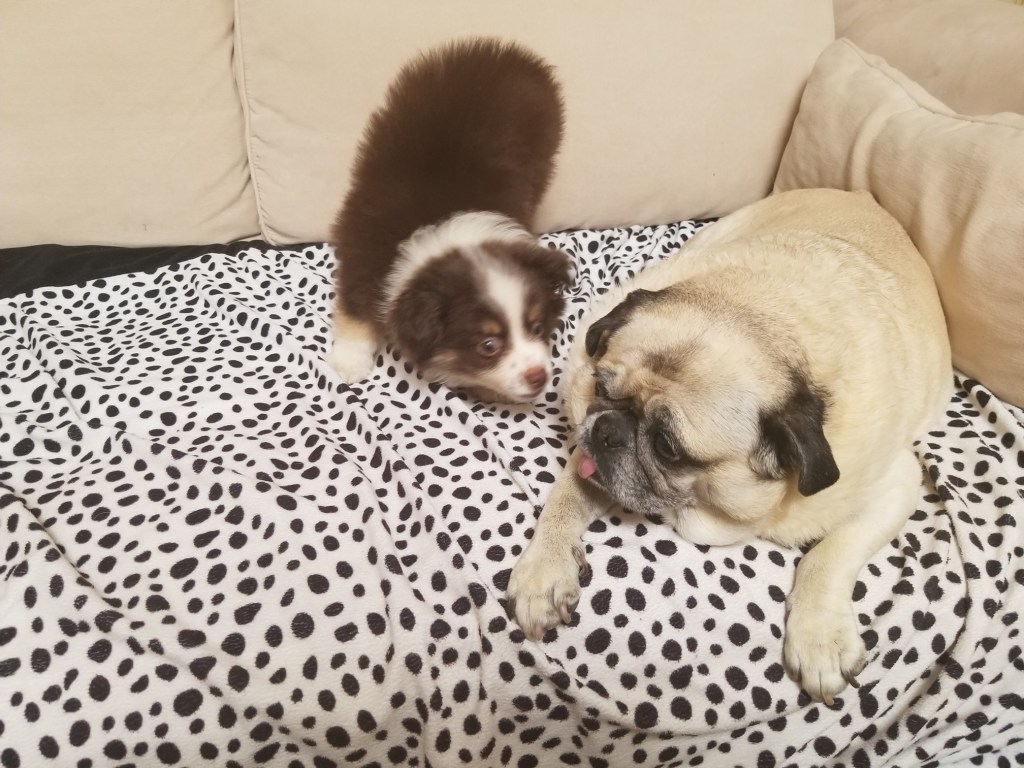
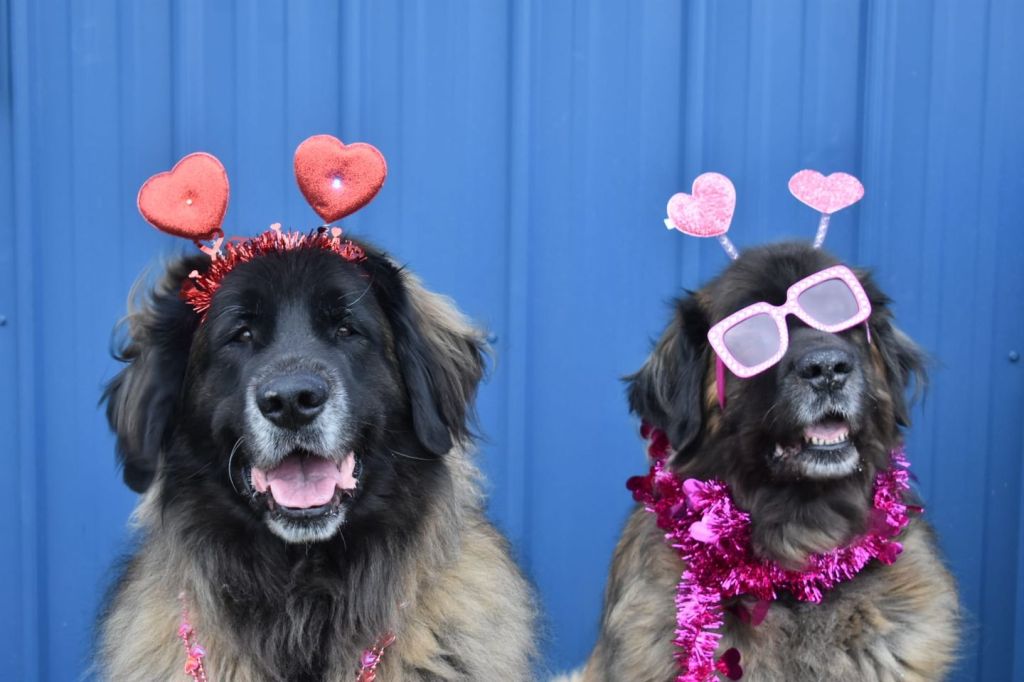
My wife Claudia and our first family dog the Labrador Baylor. This was back in the day. Our niece gave us Baylor because she was going to college. In turn she had gotten him from a shelter. He was a mix, one quarter Rhodesian Ridgeback and three quarters Yellow Labrador. He was able to jump up into the trunk of our van. Baylor was my first dog (not my wife’s first dog), and he taught me a lot about being a dog parent.Our Labrador Baylor is swimming in Claudia’s parents pool. He loved swimming, and he loved that pool and swam in it a lot.Our German Shepherd Baby at the dog park.Our Labrador Baylor and our German Shepherd Baby. Baylor was older in this picture. We had just gotten our Leonberger Bronco.This is our Leonberger Bronco (Le Bronco von der Löwenhöhle) at three months old.Bronco our Leonberger dog was a very affectionate dog.Our Leonberger Bronco (Le Bronco von der Löwenhöhle), our Japanese Chin Ryu, and our Pug Daisy in the front right.At the White Rock Lake dog park. Baylor our Labrador in the middle. He was old in this photo. Our Japanese Chin Ryu on the right.Our Pug Daisy and our Japanese Chin Ryu.Our Pug Daisy often sat in front of vents when she was cold. Daisy and our Japanese Chin Ryu were very close, like a couple. Daisy was obviously grieving when Ryu died, from cancer a bit early at only ten years old. Bronco was grieving as well.Daisy is exhausted after doing nothing for a whole day.Our Leonberger Bronco sleeping on our big red leather sofa.Our old Leonberger dog Bronco is coming up to me. Maybe it is dinner time.In December of 2018 we picked up our mini-Australian Shepherd Rollo. His friend was an English Bulldog.Our Leonberger Bronco is welcoming Rollo.Our pug Daisy and Rollo are saying hello.Our mini-Australian Shepherd puppy Rollo at 3 months old.Our mini-Australian Shepherd puppy Rollo and our Leonberger Bronco.Our mini-Australian Shepherd Rollo at the table on his seventh birthday. This is a more recent picture, from October of this year.Digory and Obi two old sweetheart Leonbergers sending all of your pets their love and sending all of you their love as well. Photo by Jen O’Keefe a friend.
Love Your Pets Every Day
Feel free to add links to your posts about pets in the comments. There is a maximum of two links per comment (how it is set up) so if you want to post many links you need to spread it out over many comments. I am late so don’t worry your comment being late. Any day is fine.
I had what is called post traumatic amnesia, which fortunately is temporary. Shutterstock ID: 1685660680 by MattL_Images
I have false memories, memories of things I know never happened. Not too long ago I made a post on my other blog about false memories and collective false memories, referred to as the Mandela Effect. You can read about that here. In addition to false memories I have memories that are strange, but that I know happened. I also have gaps, or holes in my memory. Memories that are lost to amnesia.
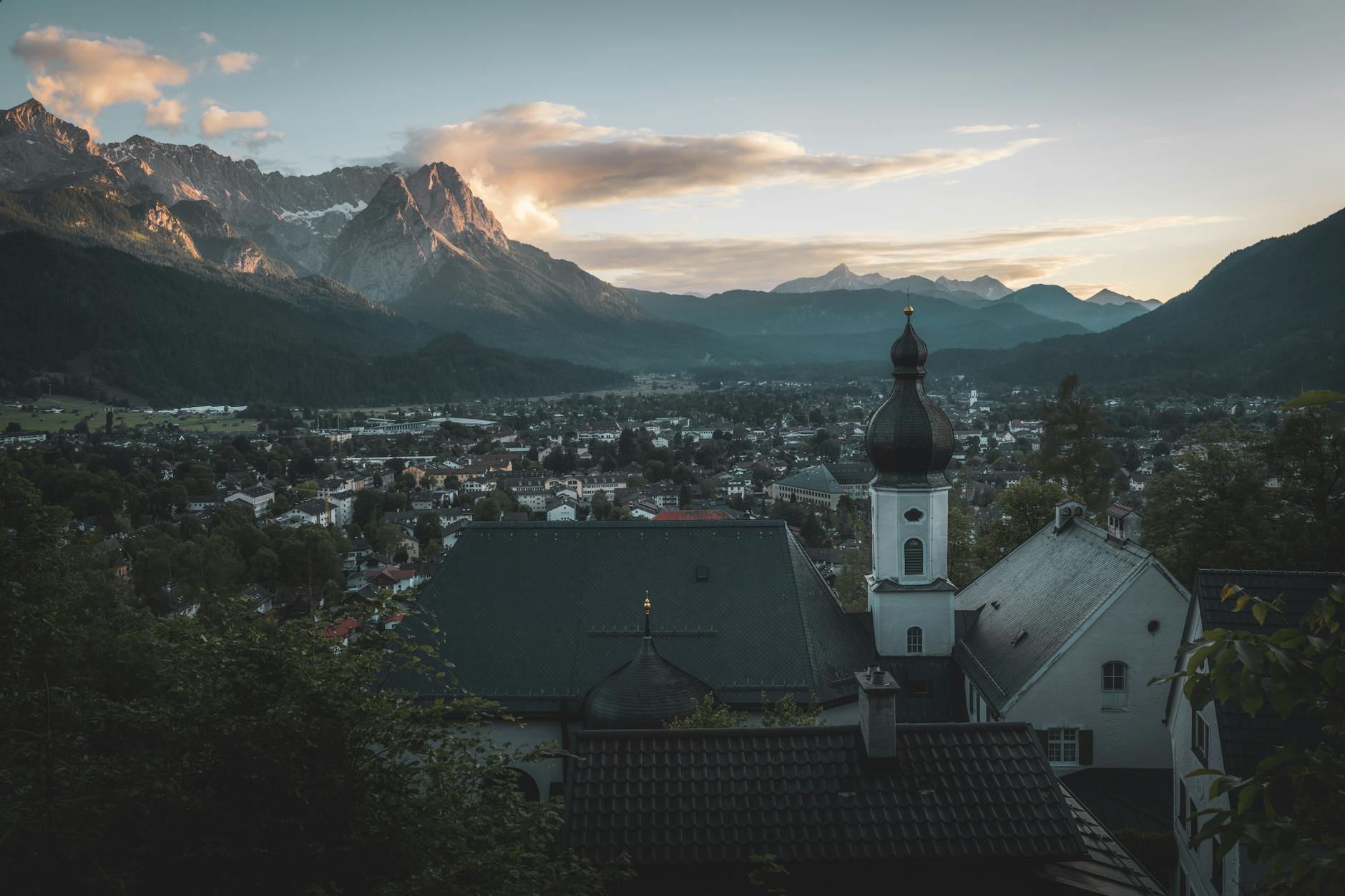
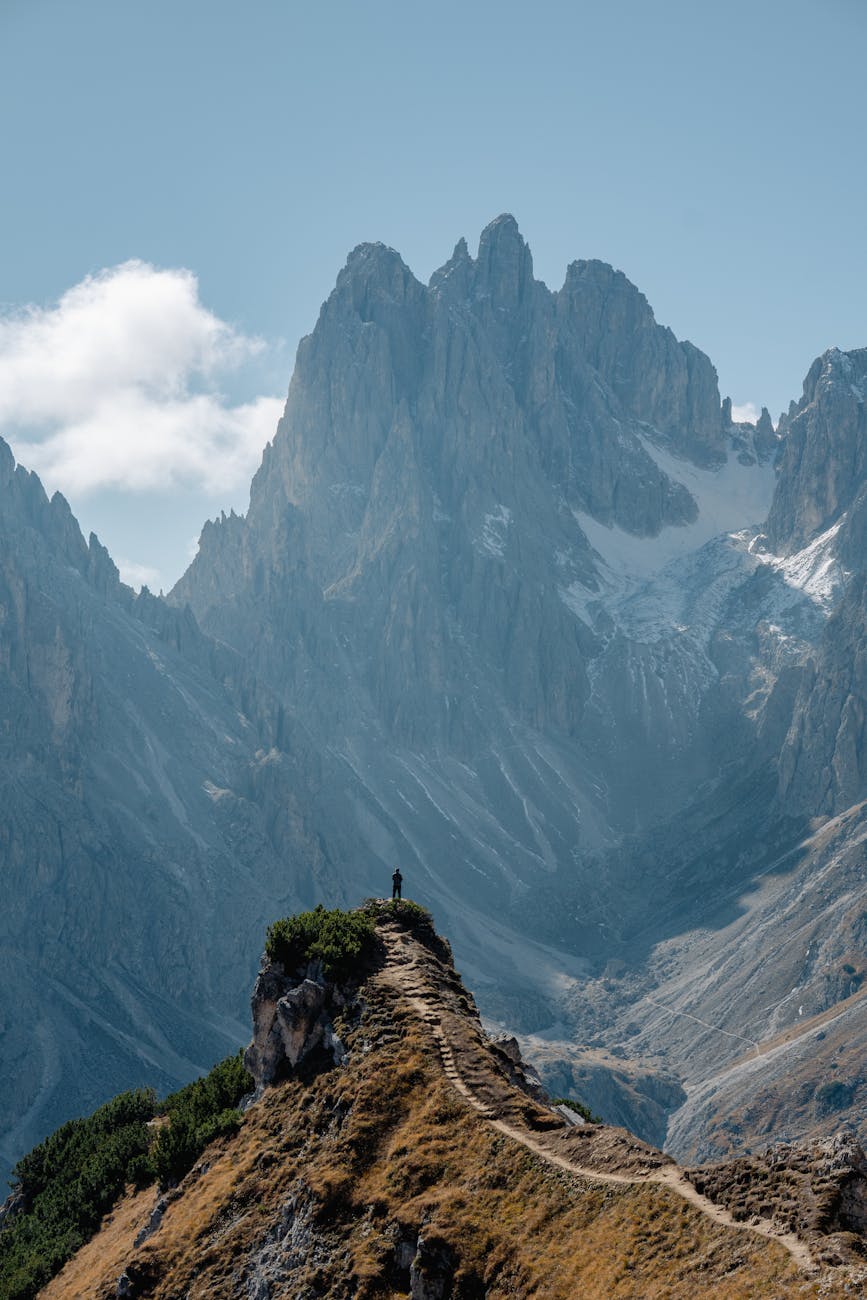
It all goes back to a ski accident that I had at the age of 22. We were a group of youngsters who rented a bus and drove from Sweden to Garmisch-Partenkirchen in Bavaria in Germany. Garmisch-Partenkirchen is a beautiful Bavarian town, and it is one of the most famous German ski resorts. Zugspitze, Germany’s highest mountain is nearby Garmisch-Partenkirchen providing for an impressive scenery.
The town of Garmisch-Partenkirchen. Photo by op23 on Pexels.com
I love skiing and I challenged myself by skiing fast and selecting difficult slopes but on one of the days I made a very bad decision. I have no memories of what follows in this paragraph. It is what I have been told. There was a steep double black diamond slope with a sign stating that the conditions were dangerous and not to go down this slope. I did it anyway, and I fell badly, hit my head (I had no helmet), and I got a severe shoulder displacement. My arm was hanging on my back. I went looking for my skis and I tried to put them back on to continue skiing, but some Germans came down to stop me.
An ambulance was called, and they sent snowmobiles to pick me up. However, the snowmobiles were unable to get there, so they used a pist-machine to pick me up instead. On the way down I discovered my shoulder displacement several times. I was equally shocked every time. That’s how they knew that my short term memory was gone. I also had no pain sensation.
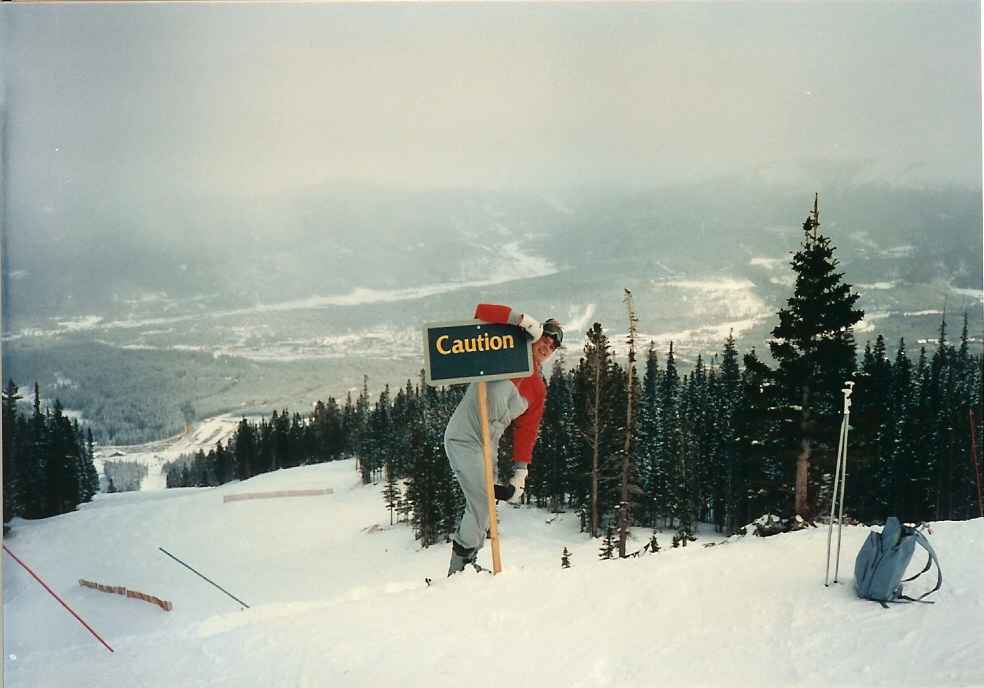
Zugspitze Germany’s highest mountain. Photo by Oskar Gross on Pexels.comThis is me in the ski slope when I was young. This is not Garmisch-Partenkirchen, it is Breckenridge, Colorado, but I don’t have any photos of Garmisch-Partenkirchen.
Amnesia
The next few days after the accident I suffered from amnesia. I did not remember where I was or my friends. I should say I still remembered my name. The first 2-3 days after the accident are essentially gone. However, I remember my friends coming into my room asking me questions such as “what’s my name?”, “do you remember me?”, “do you know where we are?”. The leader of the trip was devastated, and she was allegedly crying all day. You can say that I ruined the trip for everyone.
False Memories
On the way down to Germany, at the German border we changed out our studded tires because studded tires are not allowed on the autobahn. As my memories started to return on the third day after the accident my friends asked me what happened at the German border. I told them that we had studded tires (that part was correct) and that we all took pliers and removed the studs (that part was false). The funny thing is, to this day I remember us walking around the bus with pliers and removing studs. However, I know this never happened. How did that false memory get implanted in my head?
Strange Memories
I also have some strange memories from that trip that according to my friends happened. We stayed at a youth hostel. It was nice but it had a strange feature. There were loudspeakers in all the hallways. At 10:00PM on our first evening at the youth hostel the loudspeakers came on and someone started shouting in German “Achtung! Achtung! All guests must now wash their faces and brush their teeth and the lights started dimming and women and men had to go to their quarters. Music is forbidden. The loudspeaker came on every now and then barking orders at us in German and all windows and doors were locked electronically. Being from Sweden we followed orders, but we were laughing about it.
Suddenly new voices started shouting in the loudspeaker. It was younger sounding voices. It was still in German but this time we were told to rebel against the hotel management, we were told to refuse to go to bed, and they started singing fighting songs in German. Then, suddenly the loudspeakers went quiet. The hotel management was back. We all had to go to bed. It sounds like a false memory, but this one is real. Well, it was budget lodging after all.
Unpleasant Memories of Statistical Mechanics
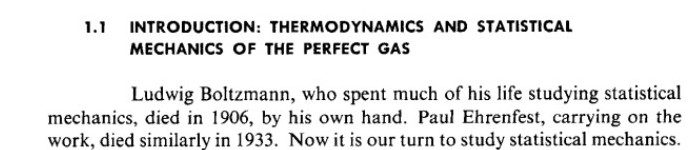
The epic opening of the first paragraph in David L. Goodstein’s States of Matter, a textbook on Statistical Mechanics.
The epic opening above from the textbook says : Ludwig Boltzmann, who spent much of his life studying statistical mechanics, died in 1906, by his own hand. Paul Ehrenfest, carrying on the work, died similarly in 1933. Now it is our turn to study statistical mechanics.
One day I found a book on Statistical Mechanics under my bed, and some very unpleasant memories came back to me. I had a final exam in Statistical Mechanics after our vacation. Statistical mechanics is a mathematical framework that applies statistical methods and probability theory to large assemblies of microscopic entities.
More specifically, you do statistical calculations over large sets of atoms and molecules to figure out the macro condition of the corresponding gas or material. For example, temperature corresponds to the average kinetic energy of atoms, and entropy refers to the logarithm of the number of microstates compatible with the system’s measurable macroscopic state, often loosely referred to as the disorder of the system. Statistical Mechanics includes classical Statistical Mechanics as well as its Quantum Mechanical counterpart, which is a lot more abstract and complicated.
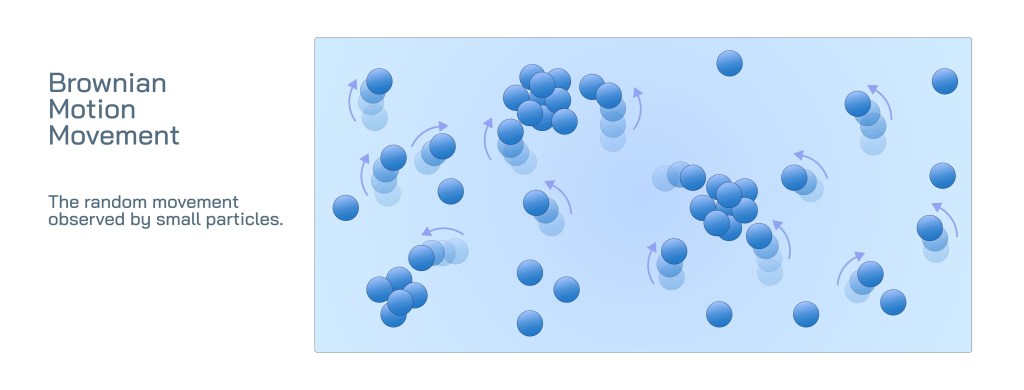
In 1905 Albert Einstein proved the existence of molecules and atoms using statistics and an observed phenomenon called Brownian motion. Shutterstock ID: 2334052703
Once I was back in Sweden, I went to see my professor, and I explained the situation to him: “hello professor, I had a ski accident, hit my head, and I lost my memory. My amnesia made me forget statistical mechanics.”. He could also see that my left arm was in a cast. I said, “could I take the exam a little later?” He asked me “are you right-handed or left-handed?” I said, “I am right-handed”. The professor answered, “well then you take the exam on time like everybody else”. It wasn’t what I wanted to hear but I took it, and I passed but not with flying colors.
It may seem like my professor was a bit harsh. However, I was later thinking that maybe he had a lot of students coming into his office claiming head injuries with amnesia. It was after all a final exam in statistical mechanics.
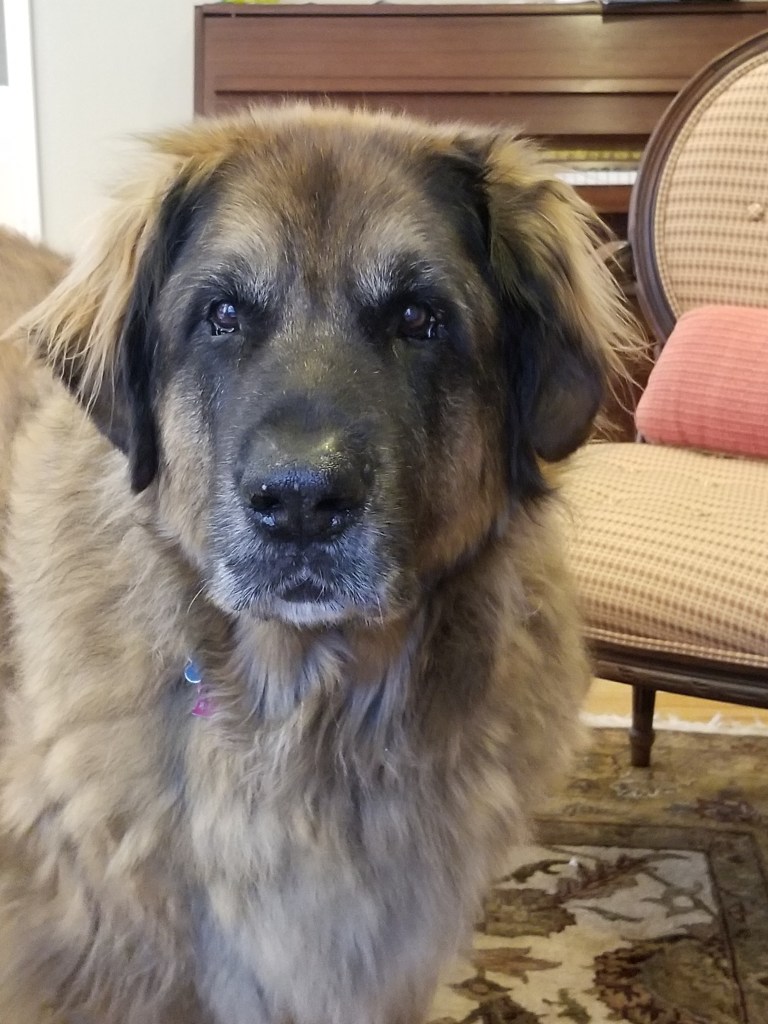
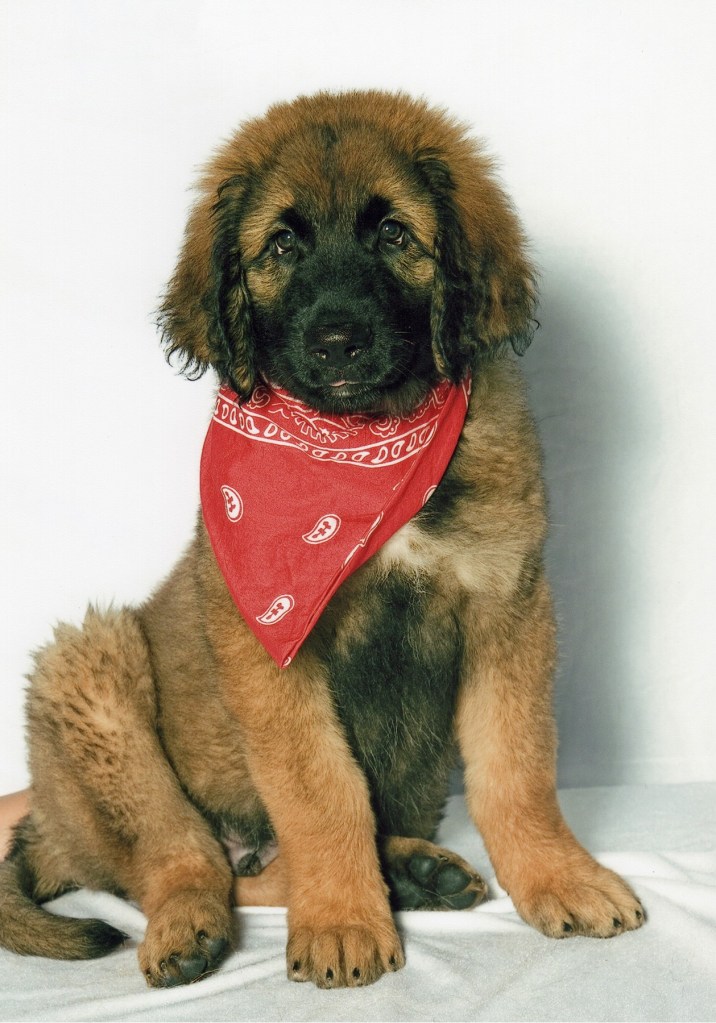
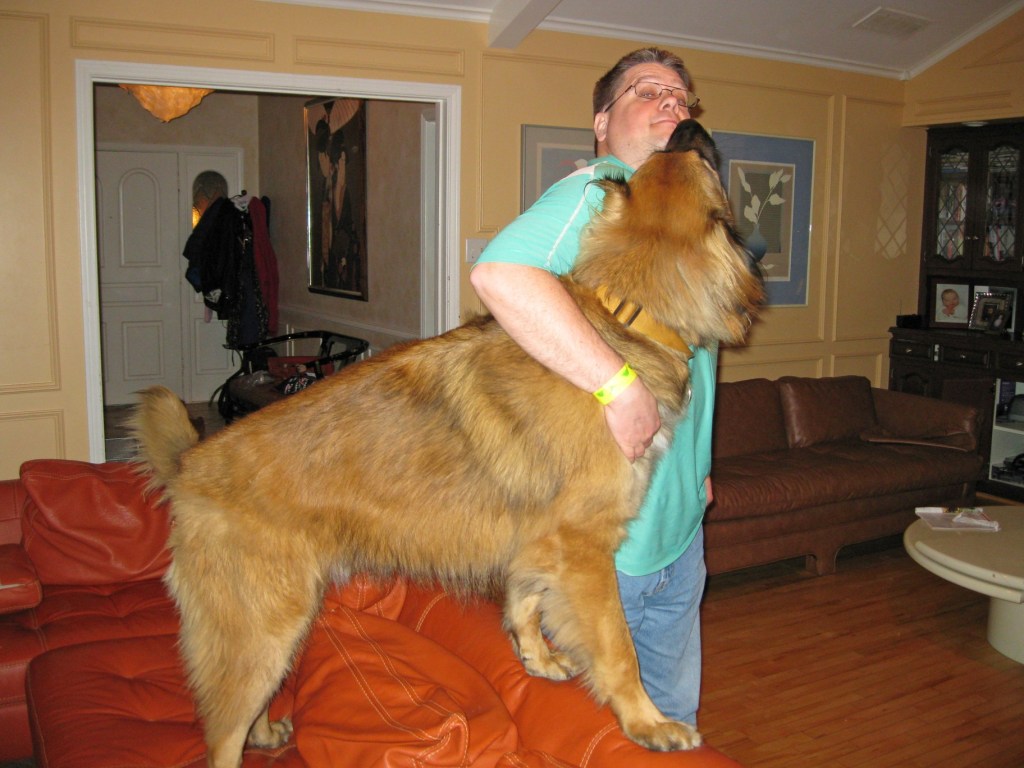
Our Leonberger Le Bronco von der Löwenhöhle (Bronco for short) at the age of three months.Me Thomas Wikman with our Leonberger Bronco when he was about one years old.Our Leonberger Bronco soon to be 13 years old. Leonbergers are large dogs and don’t live as long as small dogs. The typically live 8 to 10 years. However, our Bronco reached the age of 13. He was loving, protective, and brave. The small dogs loved him.
This is a guest post written by Ryan Goodchild. He emailed me asking me if he could publish this post regarding becoming a first time Leonberger Owner . I said yes. See his post below.
Becoming a First-Time Leonberger Owner: What You Need to Know
Owning a Leonberger isn’t just about bringing home a dog—it’s about welcoming a gentle, giant-hearted companion whose loyalty and calm strength will shape your days for years to come. These majestic dogs, known for their intelligence and deep affection, can be both a joy and a challenge for first-time pet owners. This guide will help you understand what to expect and how to set yourself—and your Leonberger—up for success.
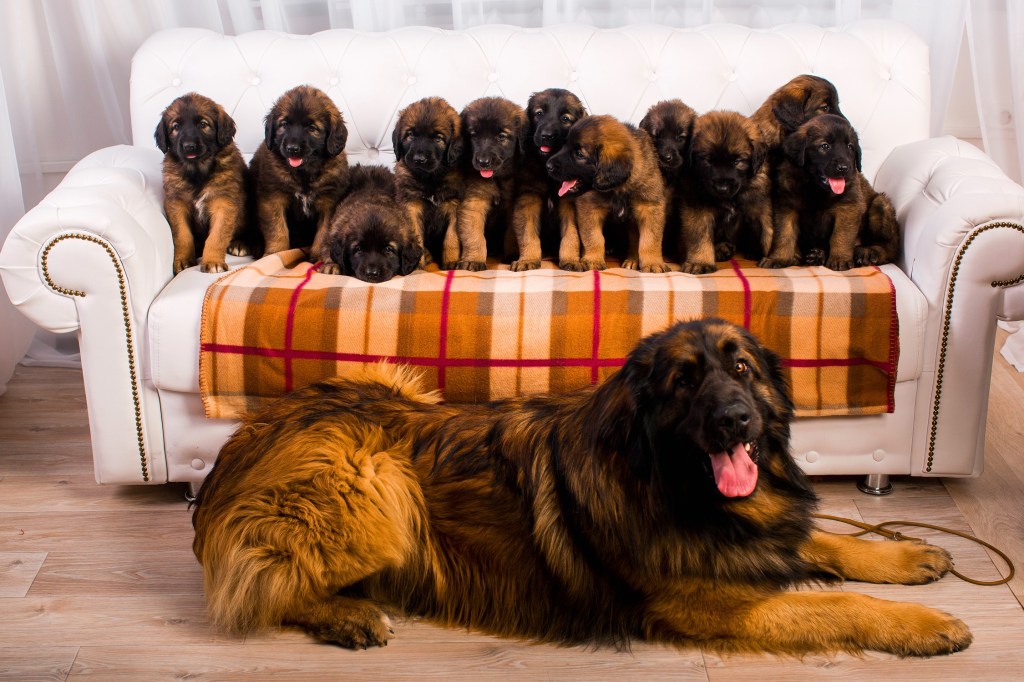
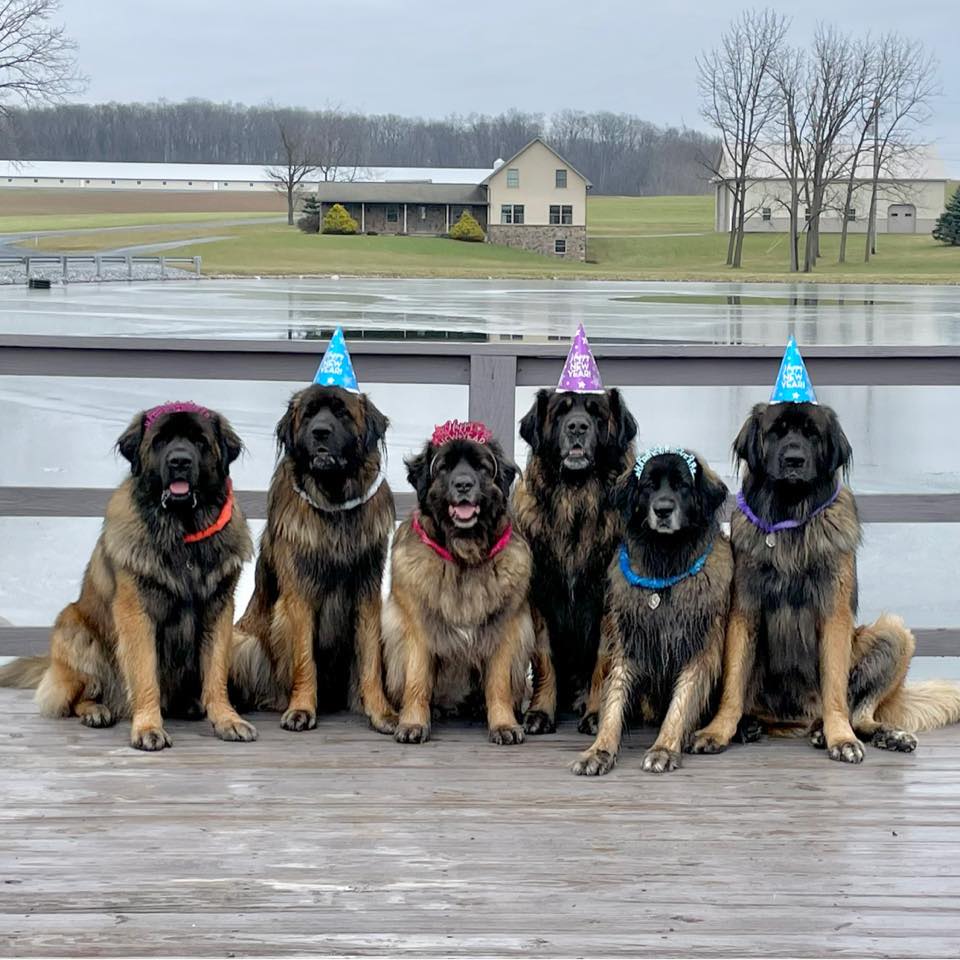
Ten Leonberger puppies with mama. Shutterstock-ID: 561107650 by Akbudak Rimma.Six Leonbergers celebrating a birthday celebration. Photo by Jen O’Keefe.
Quick Essentials This Article Looks At
Leonbergers are massive—males can exceed 170 pounds; space and structure are non-negotiable.
Early socialization and consistent training are critical to keep their size from becoming a liability.
Expect heavy shedding, especially during seasonal “blowouts.”
They thrive on human interaction and suffer if left alone for long periods.
Regular vet care, high-quality food, and joint supplements can prevent costly long-term health issues.
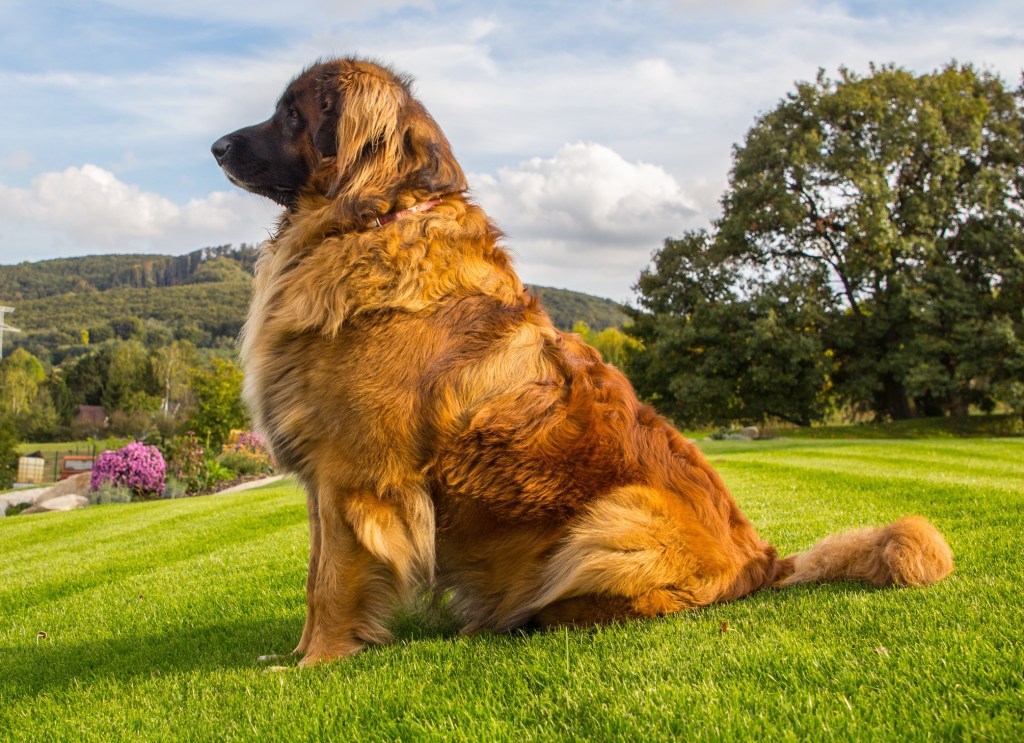
Mature big Leonberger Stock Photo ID:731020957 by Peter Josto.
Understanding the Leonberger Temperament
Leonbergers are affectionate, patient, and famously good with children. Originally bred as family and working companions, they balance strength with serenity. However, their intelligence means they need mental stimulation and clear boundaries; without it, boredom can lead to destructive behavior.
A Few Core Traits to Remember:
Gentle yet strong: They rarely display aggression but need confident leadership.
Social by nature: Isolation leads to stress and behavioral issues.
Sensitive to tone: Harsh correction will break trust—positive reinforcement works best.
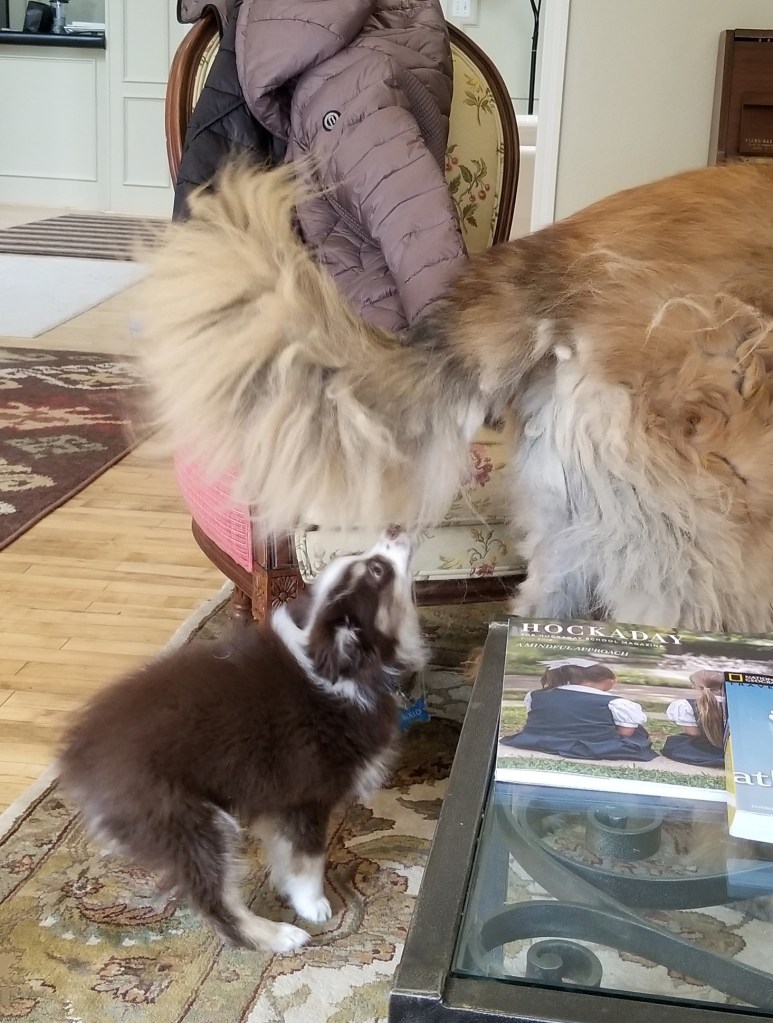
Our rambunctious Rollo mini-Australian Shepherd is biting Bronco’s tail. One time Rollo swung in his tail as if it was a swing. Bronco was very patient.
Health and Nutrition at a Glance
Leonbergers grow rapidly and live, on average, 8–9 years. Their size makes them prone to joint, heart, and bone issues, so proactive care is crucial.
Here’s a snapshot of what to focus on:
Concern
What to Watch
Preventive Actions
Hip & Elbow Dysplasia
Limping, stiffness
Keep weight balanced, feed joint-support diets
Bloat (Gastric Torsion)
Restlessness, distended belly
Feed smaller meals, avoid heavy exercise after eating
A healthy Leonberger. Shutter Stock Photo ID:705193912 by Anna Krivitskaya.
Creating a Home That Fits a Leonberger
A small apartment won’t do—Leonbergers need space to stretch, play, and move freely. A secure, fenced yard is ideal. Indoors, they’ll happily curl up near you, but their size means you’ll need to Leonberger-proof your space.
How to Prepare Your Home:
Create a soft resting area to protect joints.
Secure gates and doors—they can easily push through flimsy barriers.
Keep breakables out of tail range.
Use large, non-slip bowls for food and water.
Our Leonberger Bronco sleeping on our big red leather sofa.
Grooming and Maintenance: Managing the “Fur-nado”
Leonbergers have a double coat that requires regular maintenance. Weekly brushing helps, but during shedding season, daily sessions are best. Baths every 6–8 weeks will keep their coat clean and odor-free.
Grooming Checklist
Before shedding season hits, stock up on these essentials:
Undercoat rake and slicker brush
High-velocity dryer (optional but effective)
Gentle dog shampoo and conditioner
Nail clippers and ear-cleaning solution
Keeping up with grooming not only reduces hair around the house but also strengthens your bond with your dog.
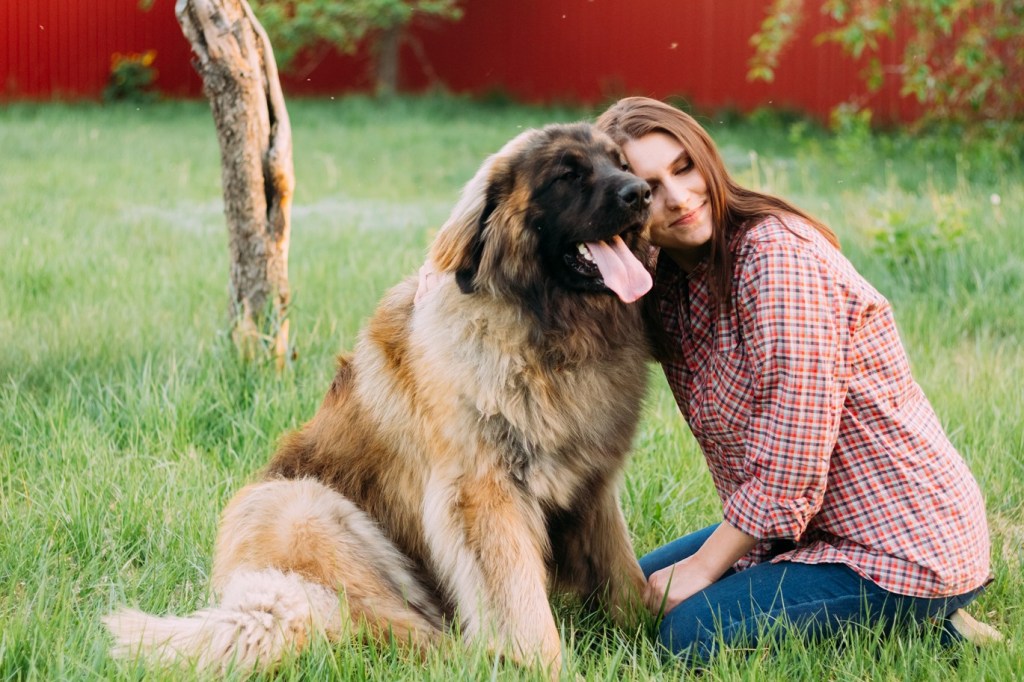
A woman and her Leonberger dog. Asset id: 1741753382 by Elena Podrezenko
How to Keep Your Pet Records Organized
First-time owners often underestimate the amount of documentation involved—vaccination records, microchip details, adoption papers, and vet receipts. To make things easier, convert documents to PDF and store them digitally.
Using a reliable online tool lets you organize every file in one place, ensuring quick access during vet visits or emergencies.
Creating a labeled folder for your Leonberger’s records—medical, training, and nutrition—will save time and prevent misplaced paperwork later.
Training Your Leonberger: Building a Confident Giant
Leonbergers are highly trainable but easily bored by repetition. Their size makes obedience a must—start early, keep sessions short, and make them engaging. Reward-based methods build trust faster than dominance-based tactics.
Quick Training Guide:
Start with basics: Sit, stay, come, down.
Socialize early: Introduce new sights, people, and other pets gradually.
Teach calm leash behavior: Their strength can easily overwhelm a novice handler.
Practice recall: A reliable recall can prevent accidents.
Leonbergers are eager to please and thrive when training feels like teamwork rather than command and control.
The First-Year Readiness Checklist
Owning a Leonberger for the first time is as rewarding as it is demanding. Before bringing one home, make sure you can check most of these boxes:
How-To Checklist: Your First-Year Essentials
Register with a trusted veterinarian
Choose a large-breed-specific diet and feeding schedule
Keep vaccination and health records digitally organized
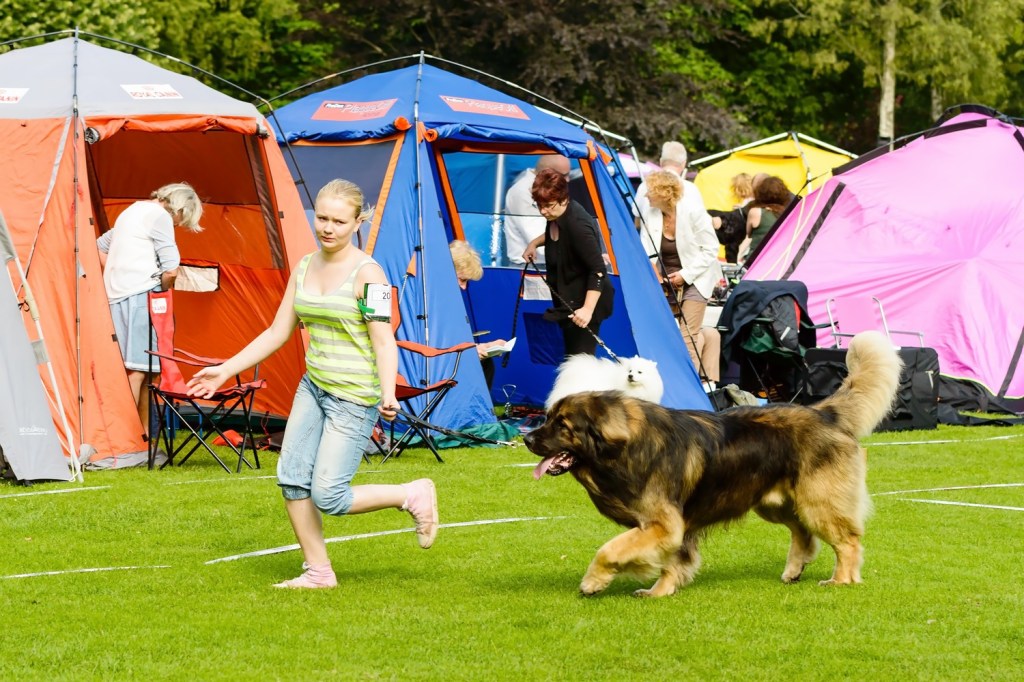
RONNEBY, SWEDEN – JULY 05, 2014: Blekinge Kennelklubb international dog show. A Leonberger dog and a female handler running in a show ring. Asset id: 204221011 by Imfoto
“Big-Paw” Questions: FAQ for Future Leonberger Owners
Here are some of the most common concerns new owners have—answered clearly and concisely.
The New Owner’s FAQ: “From Puppy to Gentle Giant”
1. How much exercise does a Leonberger need? At least an hour a day of moderate activity is ideal. Puppies should avoid high-impact exercise until growth plates close (around 18 months) to protect joints.
2. Are Leonbergers good with other pets? Yes. They’re naturally tolerant, but early introductions and supervised interactions are important, especially with smaller animals they could accidentally knock over.
3. How expensive are they to maintain? Expect higher costs than smaller breeds. Quality food, grooming, and vet care can average $2,000–$3,000 annually—not including emergencies or travel crates.
4. Do they drool? Some do, especially after drinking water. Keep absorbent towels handy near their bowls or favorite resting spots.
5. What should I look for in a breeder or adoption center? Choose one that conducts health testing for hips, eyes, and heart, and offers transparency about lineage. Ethical breeders prioritize temperament and health over appearance.
6. Can Leonbergers live in warm climates? Yes, but with precautions—limit outdoor activity in high heat, provide ample shade and water, and avoid midday walks.
Building a Lifelong Bond
Becoming a Leonberger owner means embracing responsibility and reward in equal measure. These dogs will fill your home with love, hair, and joy—often in that order. Plan carefully, train consistently, and nurture their gentle nature with patience and respect. The more you invest in understanding your Leonberger, the more they’ll return in loyalty and affection that few breeds can match.
Whether this is your first pet or your first giant breed, remember: structure and affection go hand-in-hand. With preparation and heart, your Leonberger won’t just live with you—they’ll thrive because of you.
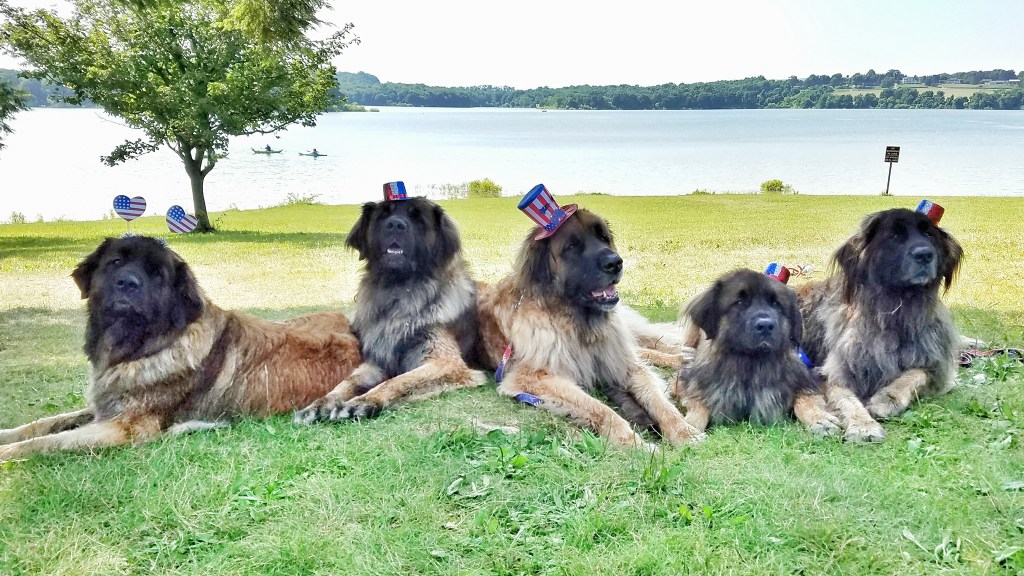
This photo was provided by Jen O’Keefe, Urgent Animal Care of Arlington. From left to right; Obi, Delfi, Aslan, Gryphon, Digory.
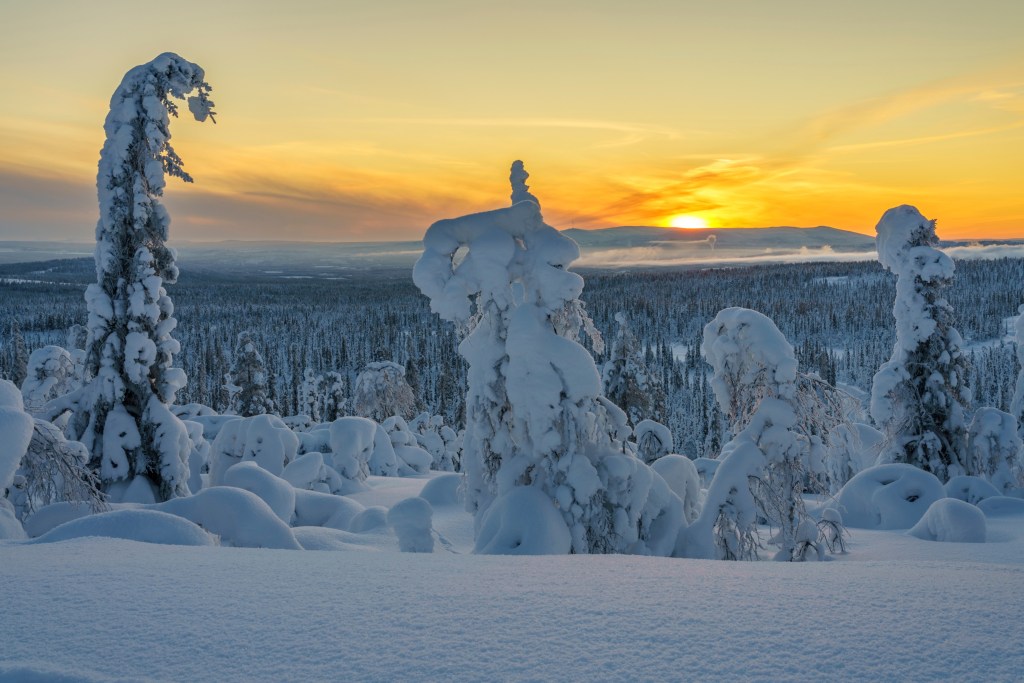
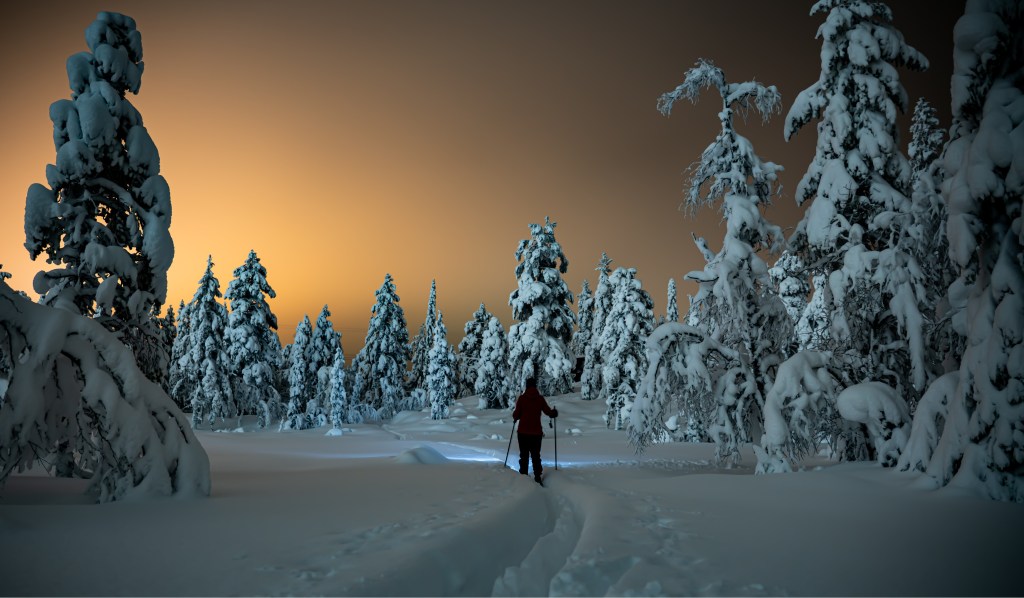
I grew up in northern Sweden (Norrland), which means that I saw a lot of snow. I loved playing in the snow, building snow castles, snow tunnels, throwing snowballs, building snowmen, going sledding and going cross country skiing. I don’t remember being cold. I had warm clothes on, and I often stayed out very late playing in the snow. Now I live in Texas where snow is very rare.
Snow on the trees, Gällivare county, Swedish Lapland, Sweden Shutterstock Asset id: 2035482680 by Mats LindbergCross country skiing in Sweden Shutterstock Asset id: 1888204651 by Henrik A. Jonsson
Later in life, maybe at the age of 12-13 I also started doing downhill skiing / slalom. We had four ski resorts close to my hometown Örnköldsvik. I can add that the snow packed northern forests can be very beautiful. Northern Sweden is also a very dark place in winter, being close to or above the arctic circle. Therefore, I also watched some spectacular night skies and auroras from my snow castles. The Milky Way and even the Andromeda Galaxy were visible. One time as I was sitting in the snow, I saw a very large meteor moving across the sky. It had a tail of fire and was not moving too fast. I believe I could see the piece of rock, but I am not sure. In any case, it put up a show.
Milky way sky on dark background, and a lot of stars. Spectacular night sky in the polar winter. Asset id: 2524020369 by MR.PRAWET THADTHIAMAurora Borealis are often spectacular in the polar regions, especially during the polar night. Asset id: 2499746583 by HappyVibeArt
Unfortunately, according to my brother, this winter my hometown Örnsköldsvik did not have snow for Christmas. According to Science Daily the data from weather stations in northern Sweden indicates that the snow season has decreased by over two months in a 30-year span and according to the National Library of Medicine the cold season in northern Finland (next doors) has gotten warmer with reduced snow cover. This is quite noticeable and the reindeer are suffering as a result.
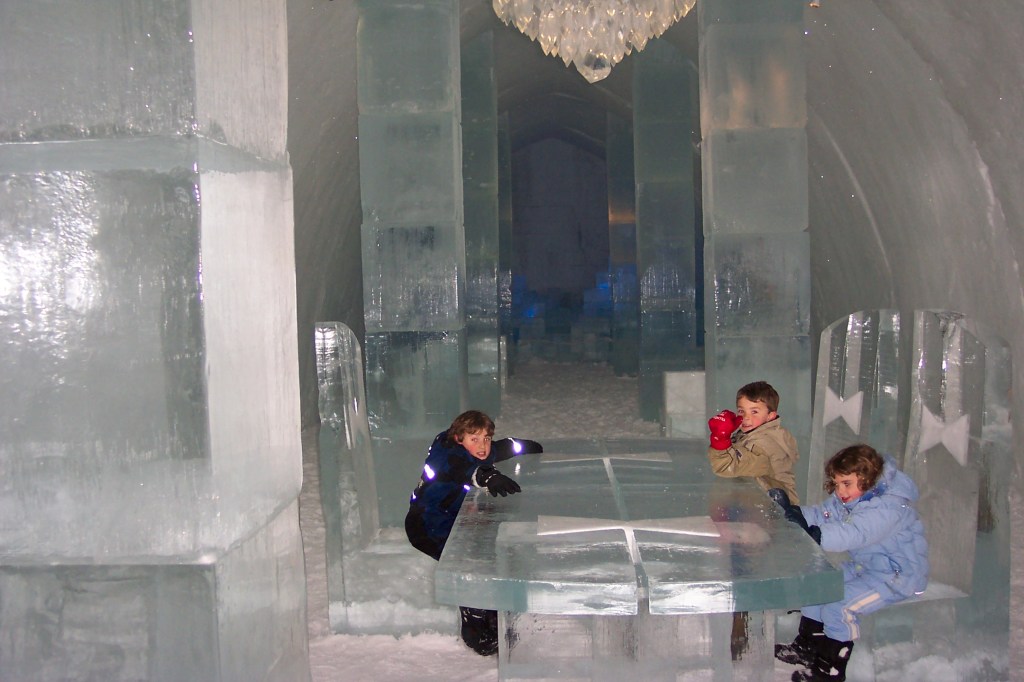
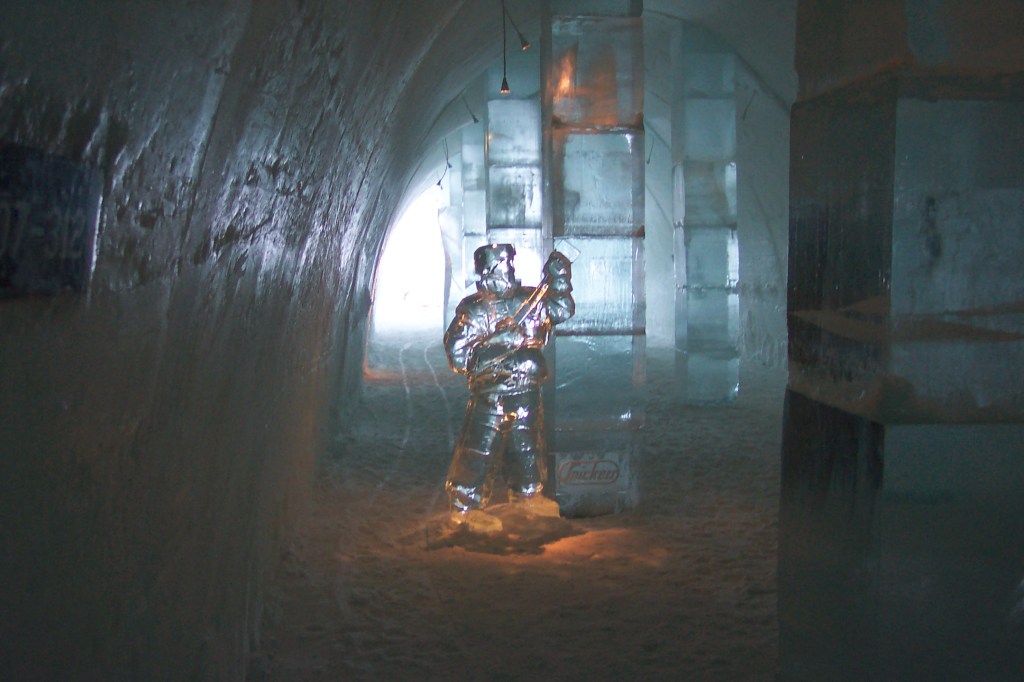
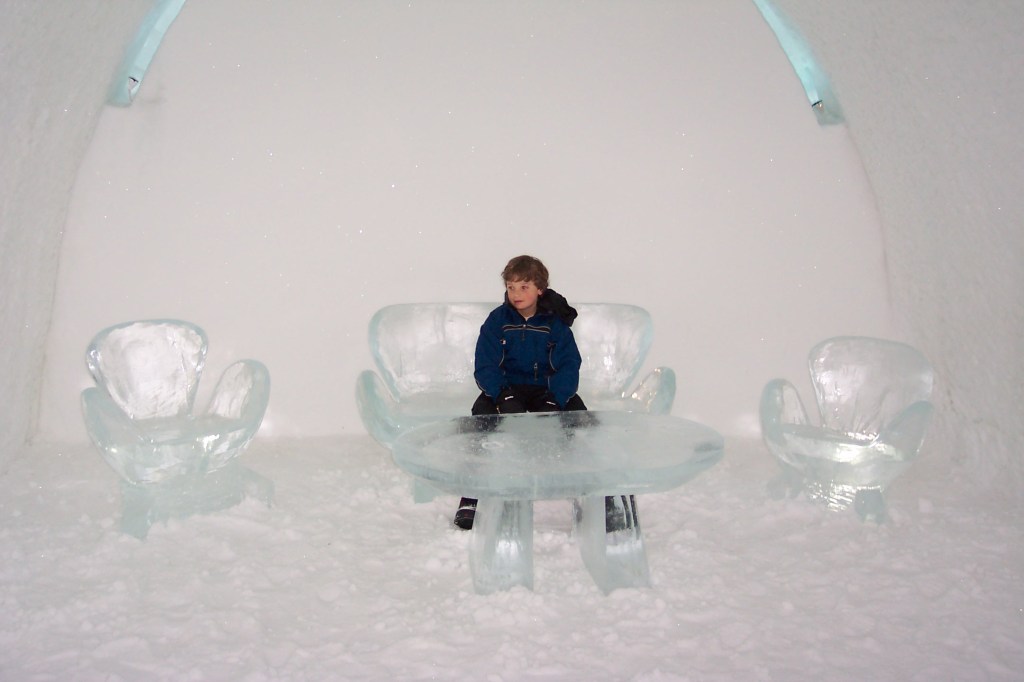
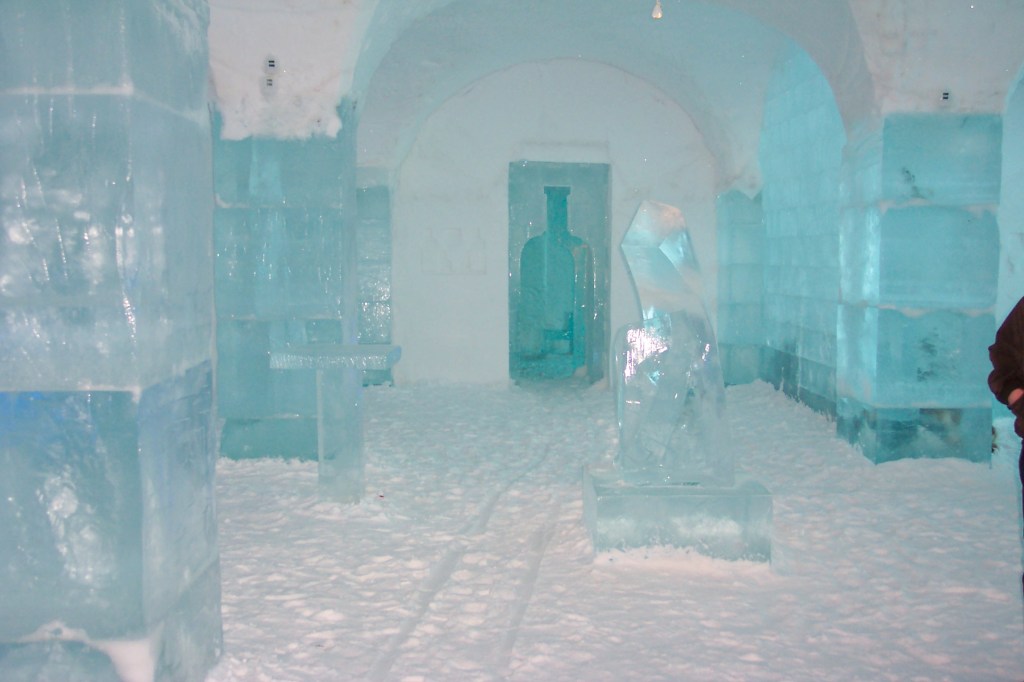
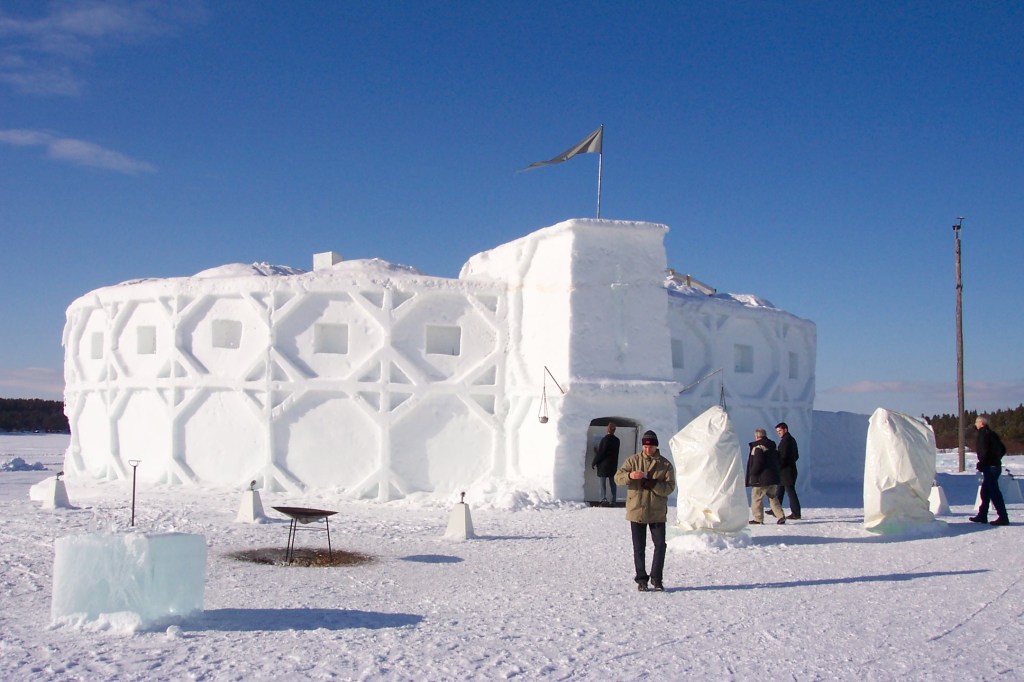
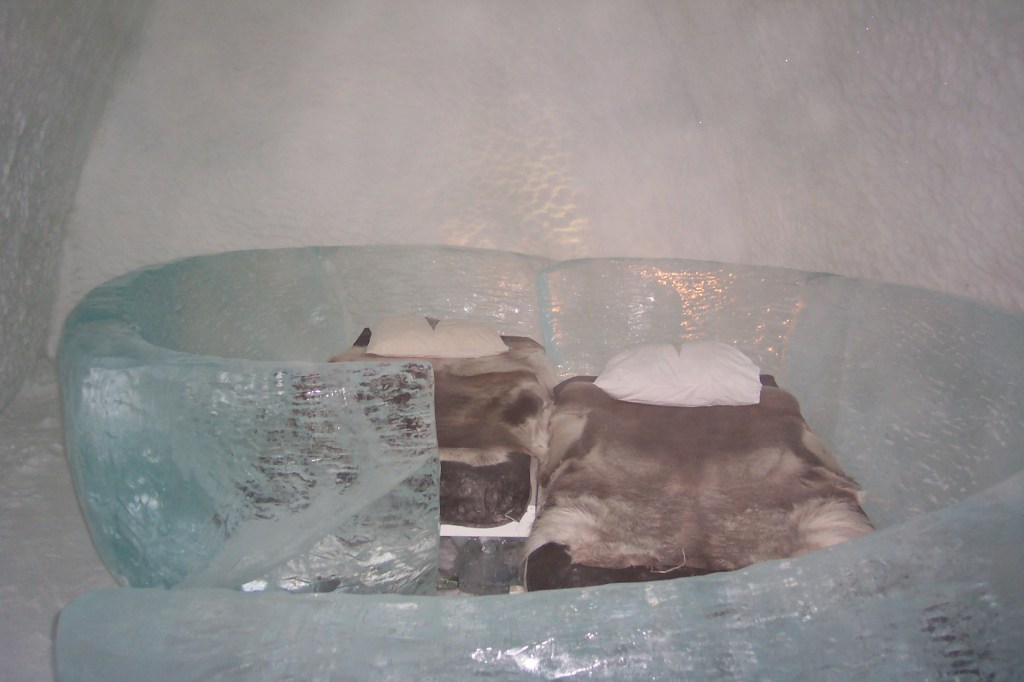
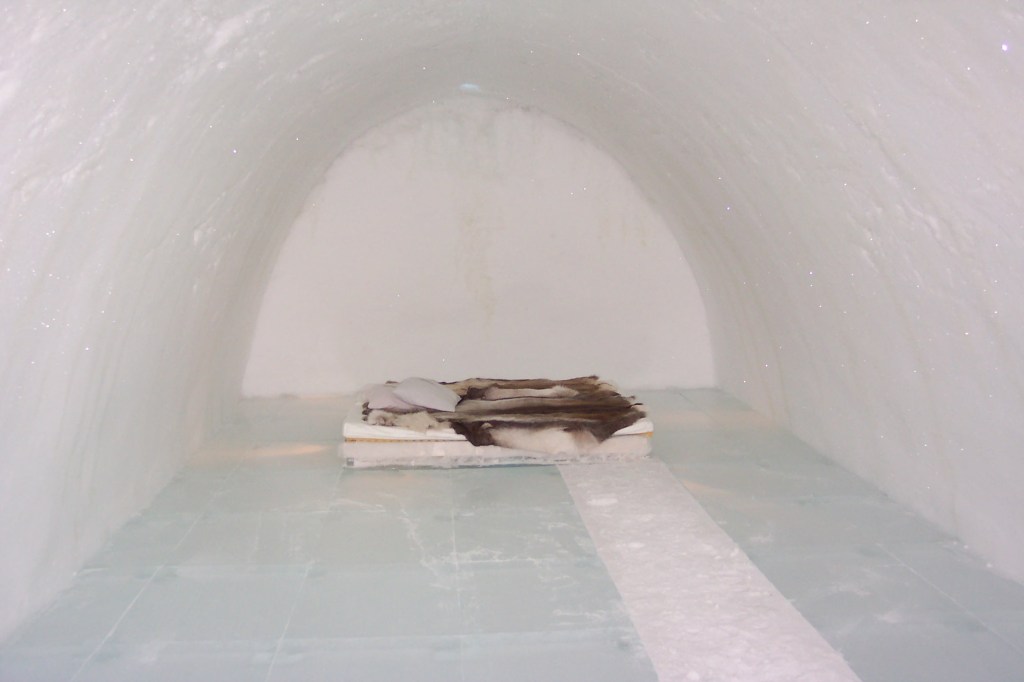
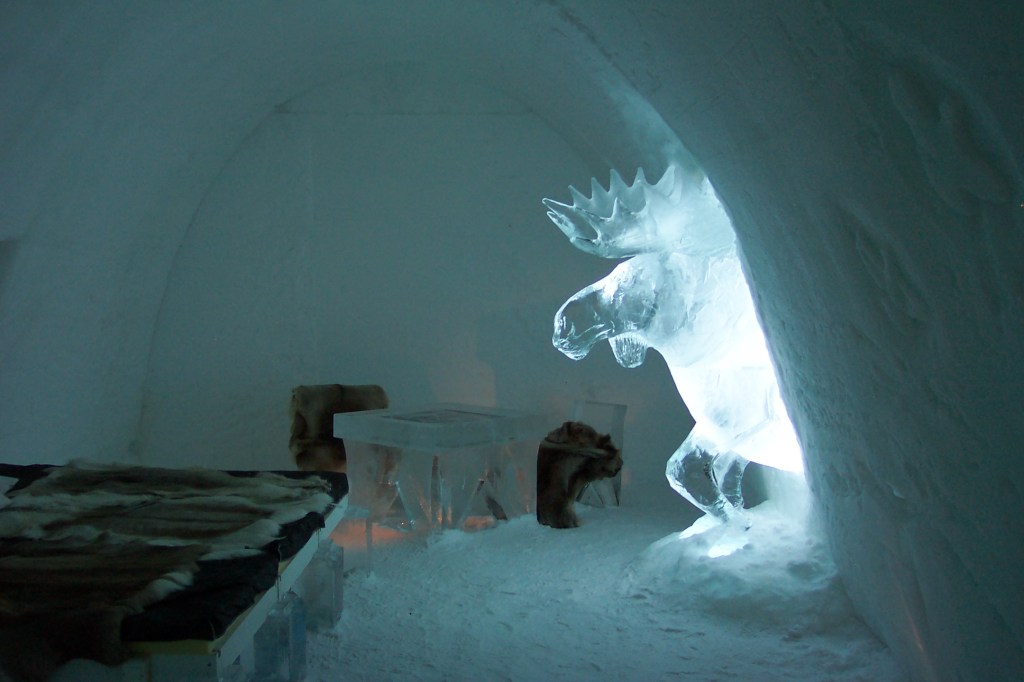
I should say that Jukkasjärvi is located north of the arctic circle and is typically very cold in winter. However, you sleep in very warm sleeping bags on top of ice blocks covered by reindeer hides. The ice hotel itself does not have any bathroom, but they have an adjacent wood building with bathrooms and showers. They also have rooms for people who don’t want to sleep in a cold ice room. We visited the ice hotel in Jukkasjärvi as a family in 2004 and I took a lot of photos.
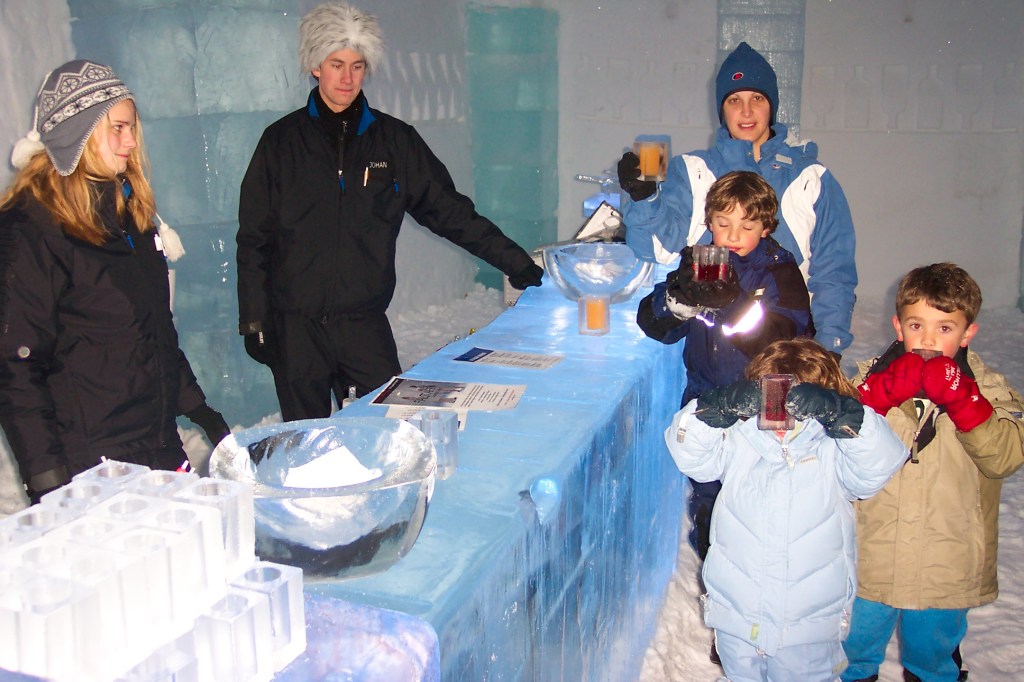
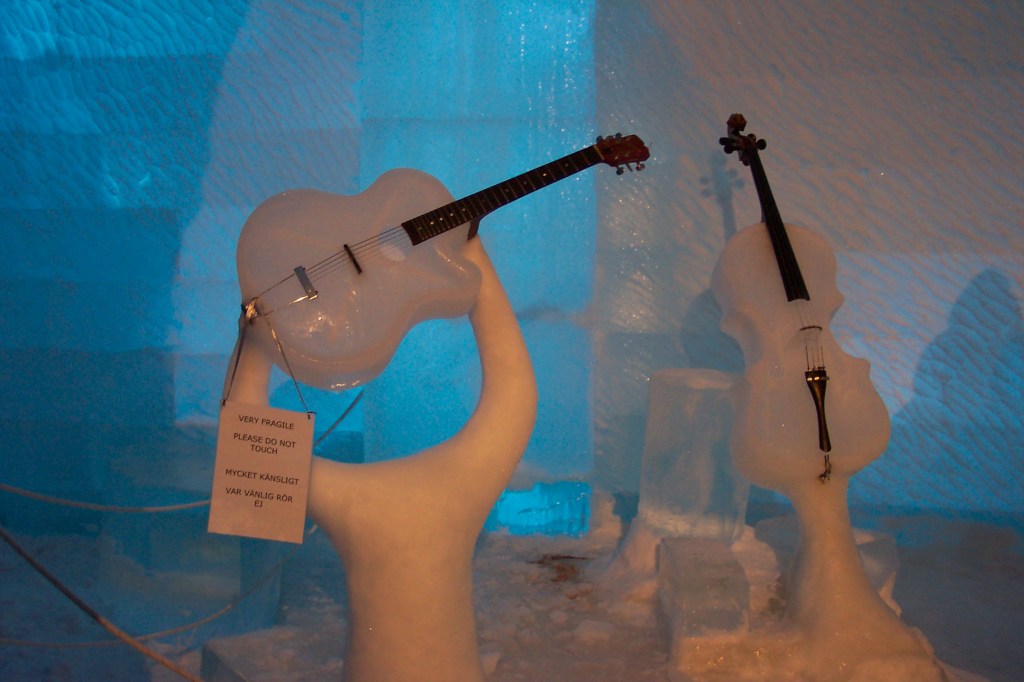
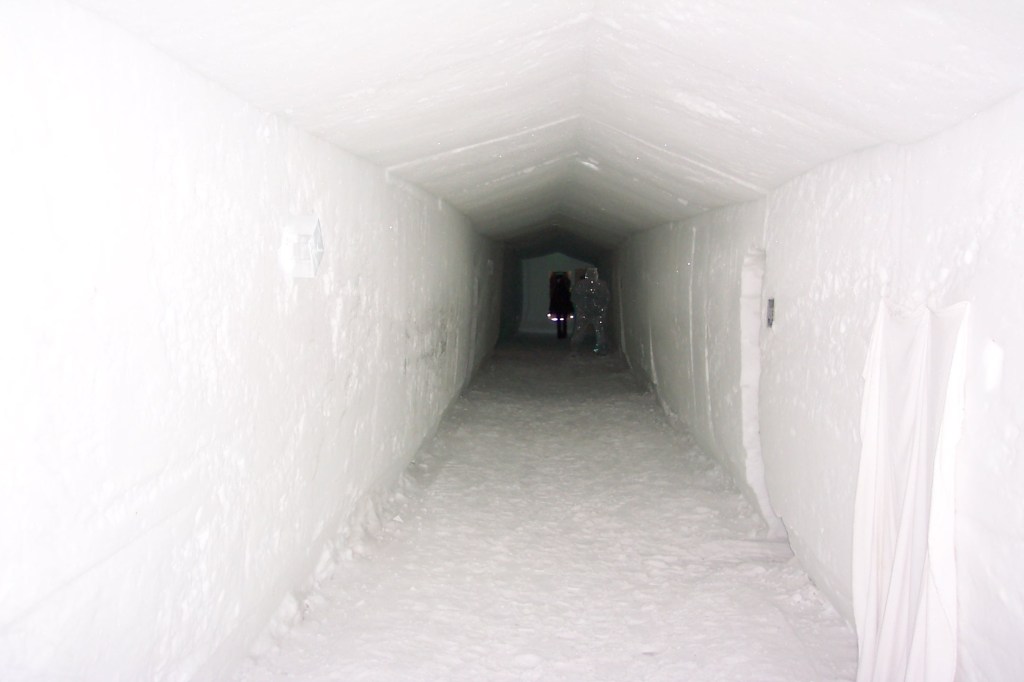
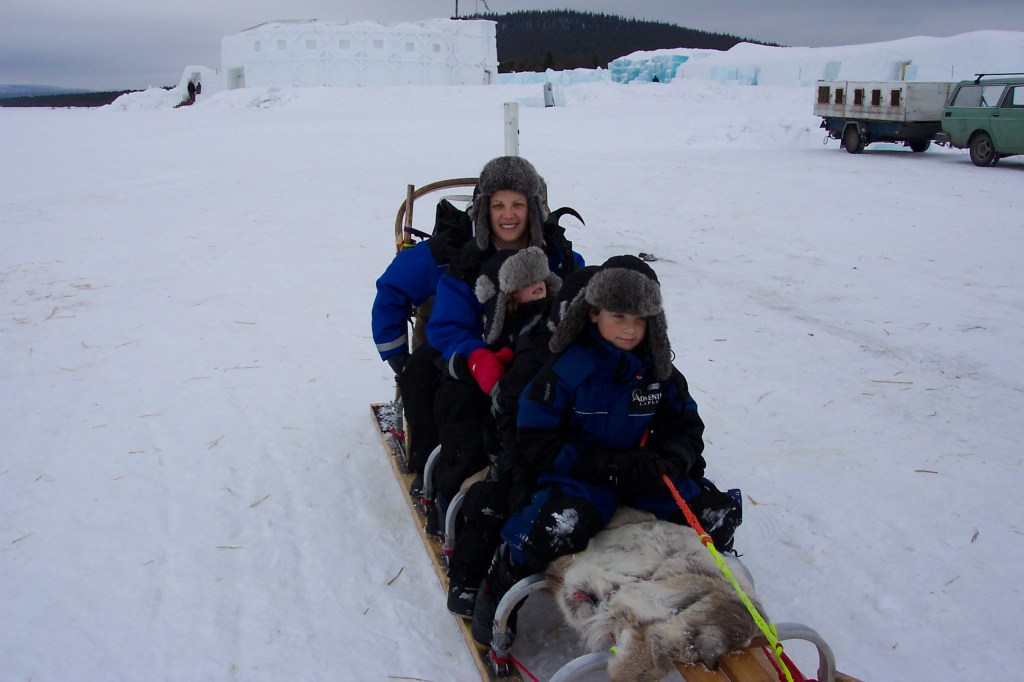
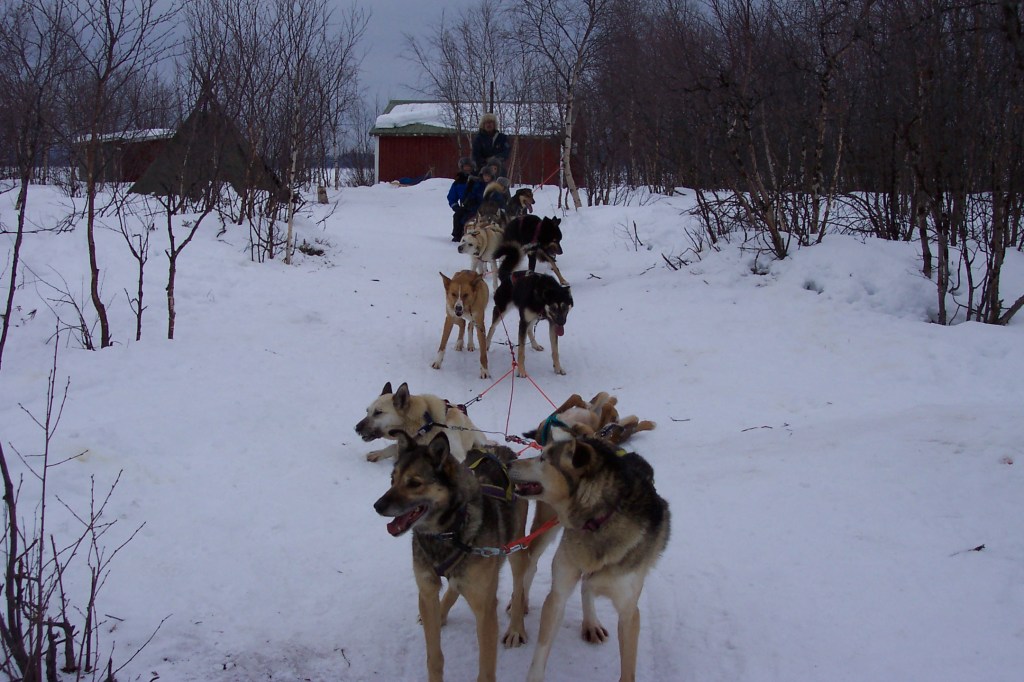
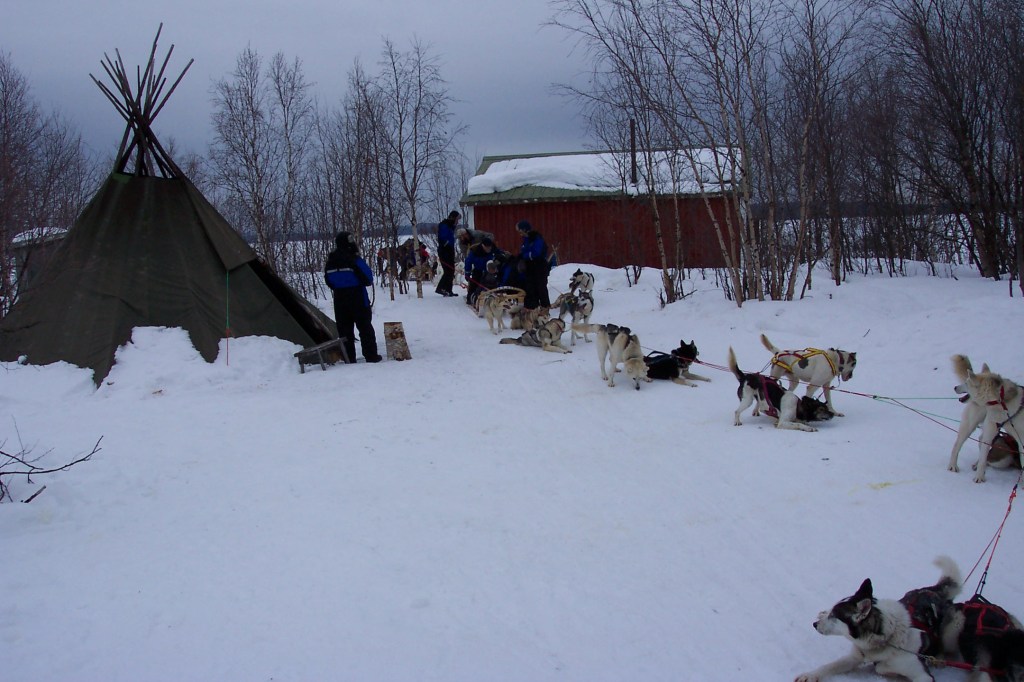
The lobby of the ice hotel. Our kids are sitting around a table of ice. A chandelier of ice is hanging above the table. The light is from fiber optics, so the ice won’t melt.Another photo of the lobby at the ice hotel. My son David is barely visible behind one of the ice pillars.One of the beautiful hallways in the Ice Hotel.My oldest son sitting at an ice table in the lobby.Entrance to the ice bar where you could food and drink and sit on ice chairs by ice tables.We started the evening with a visit to the ice restaurant and bar. Everything in the ice restaurant was made of ice, the tables, the chairs, the counter, the glasses, the plates, and the art.Close up of ice glasses on the ice counter in the ice bar.This is a photo of the ice instruments standing on the ice stage.A close up of an ice cello and an ice guitar.This is a portion of an ice organ in the ice bar.My dad Stig and his girlfriend Ulla came with us on the trip.We are going to bed in our room. I think it was my wife Claudia who took the photo.This was the hallway where our room was located.We are going on a dogsled tour. The ice theater is in the background, and you can see part of the ice hotel on the right.The kids had a lot of fun during the dogsled tourOn the left is a kåta, a movable Sami structure (indigenous arctic Scandinavian people).This is the ice theater. It was located next to the ice hotel (not in the picture).
The ice hotel had put out lots of kick sleds, referred to as “spark” for people to use as a mode of transportation on the snow and ice, or just to sit on. As my dad, Stig, was sitting on one of them, our son came up to him and told him “Stig the hotel put out these sleds for children to play with. It is not for adults to sit on.” My dad was so surprised that he just handed him the sled.
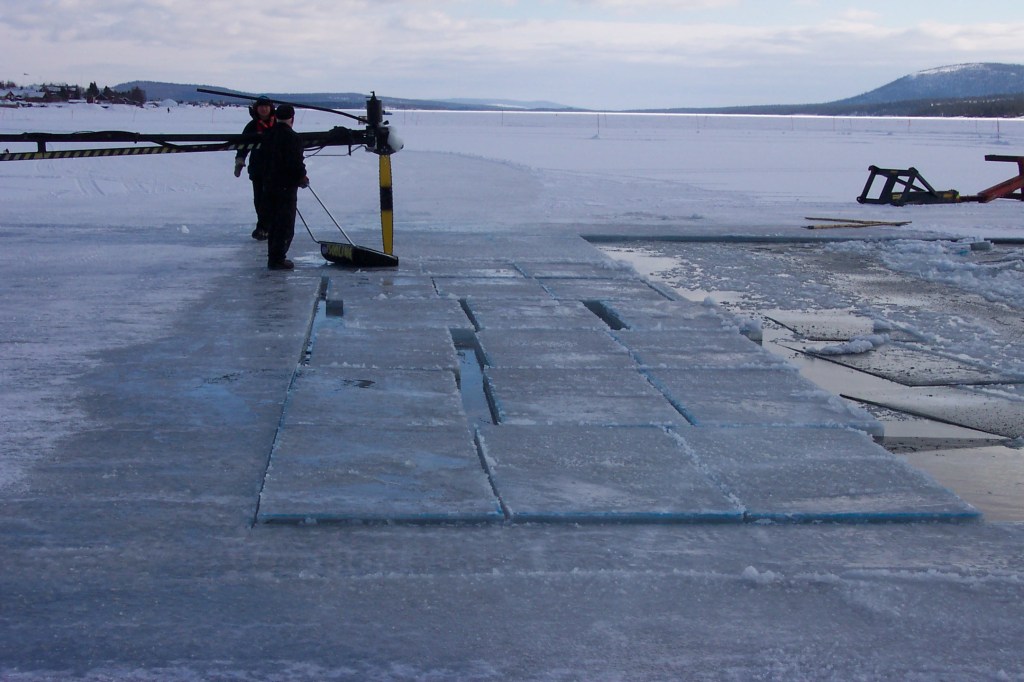
Our son David with one of the kick sleds called “spark”.They got the ice blocks for the structure and for the art from nearby Torneå river.
The next day I took photos of some other rooms
Another room with a snowy wall decoration.Some of the rooms were really beautiful.Some of the rooms had beautiful ice art.You had to pay more for a big room. You paid the price of Hilton and got the comfort of camping in winter.More ice art.














 Leonberger Life