This blog feature amusing and heartwarming stories about our late Leonberger dog Bronco, as well as other Leonbergers. It also has a lot of information about the Leonberger breed, the history, care, training, Leonberger organizations, etc. I also wrote a Leonberger book, which I am featuring in the sidebar.
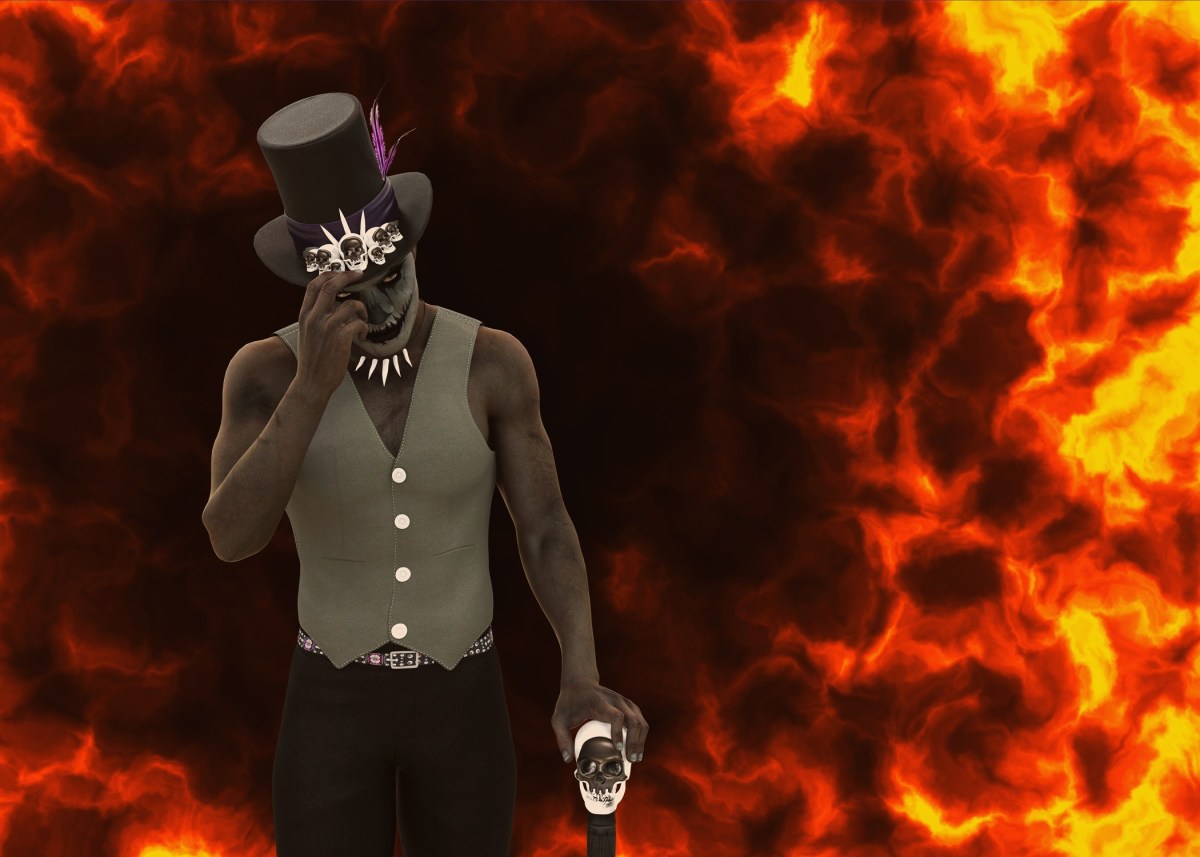
Voodoo shaman, african wizard man conjure, 3D illustration. Shutterstock Asset id: 2048753030 by artshock
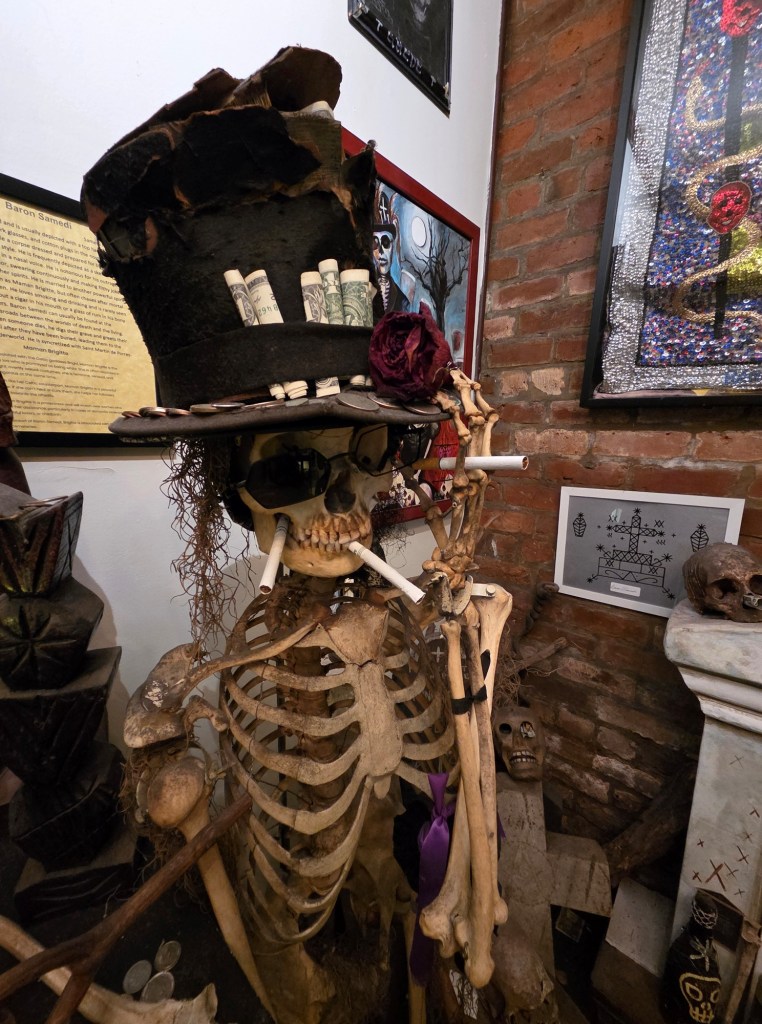
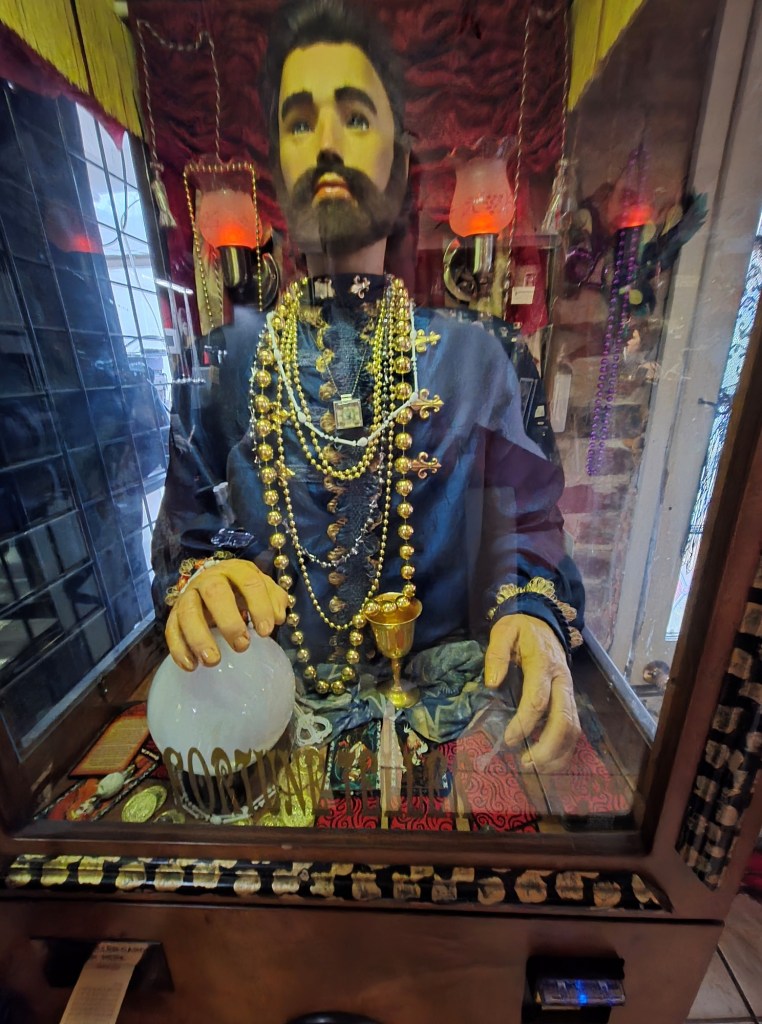
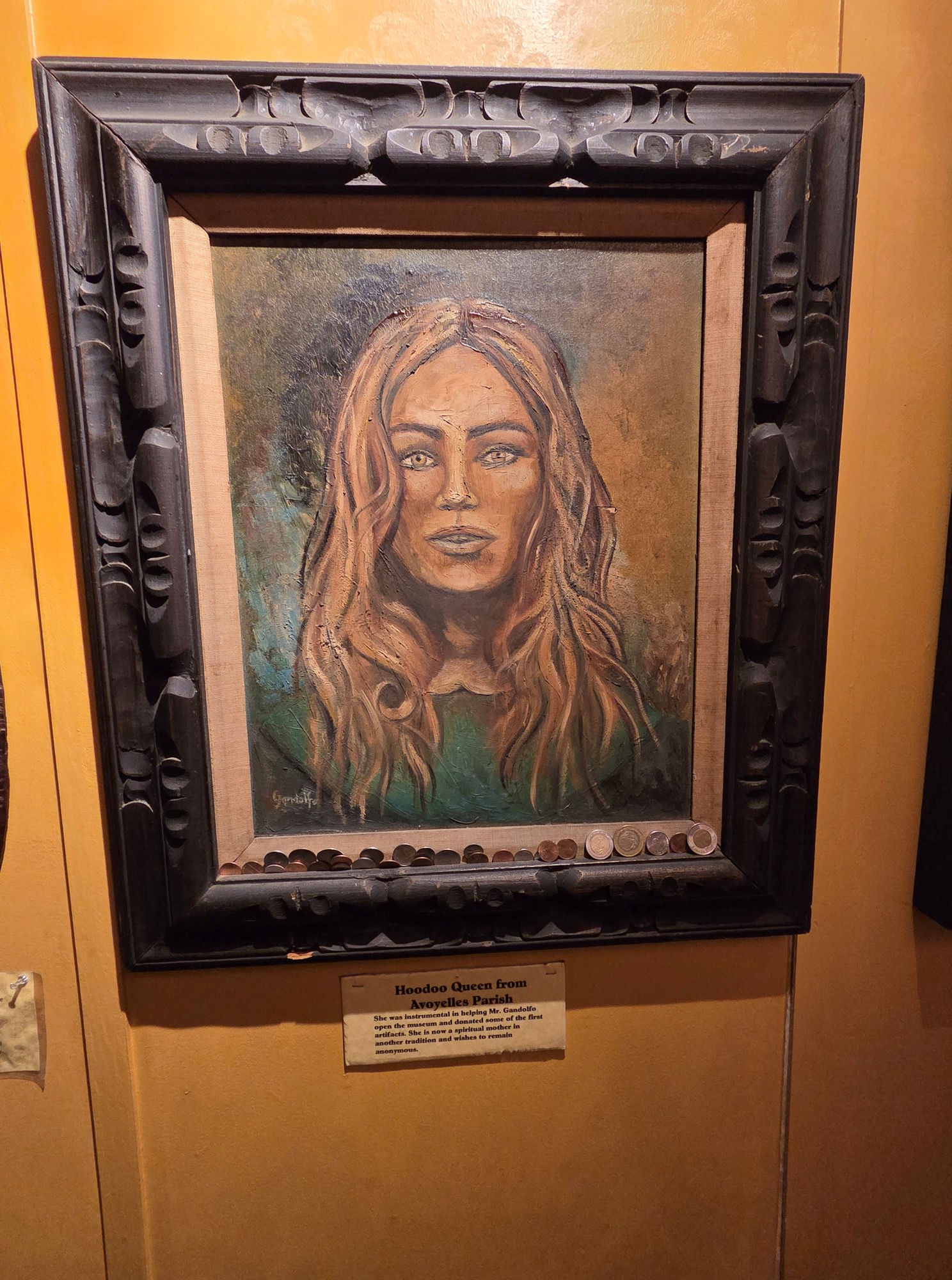
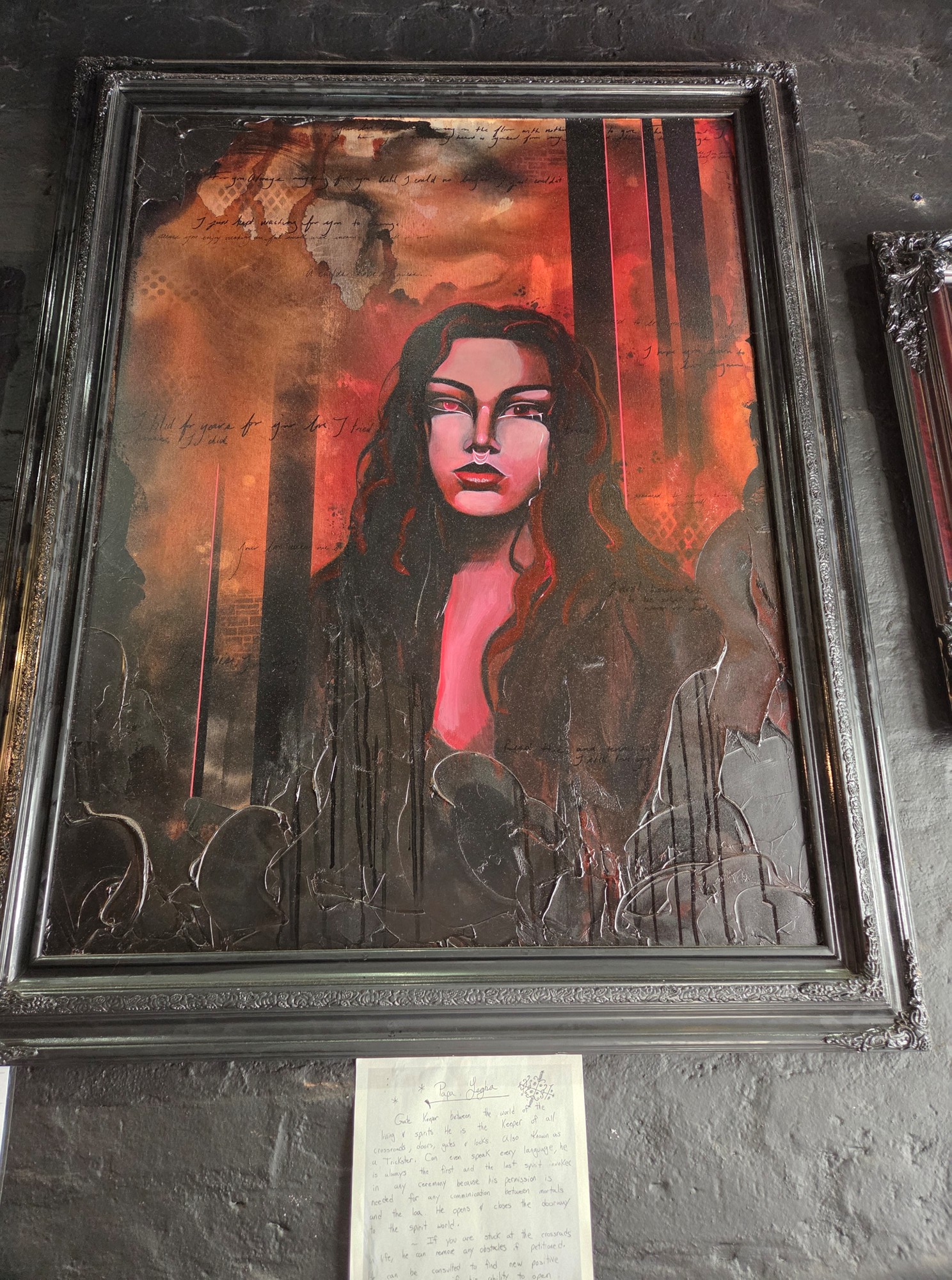
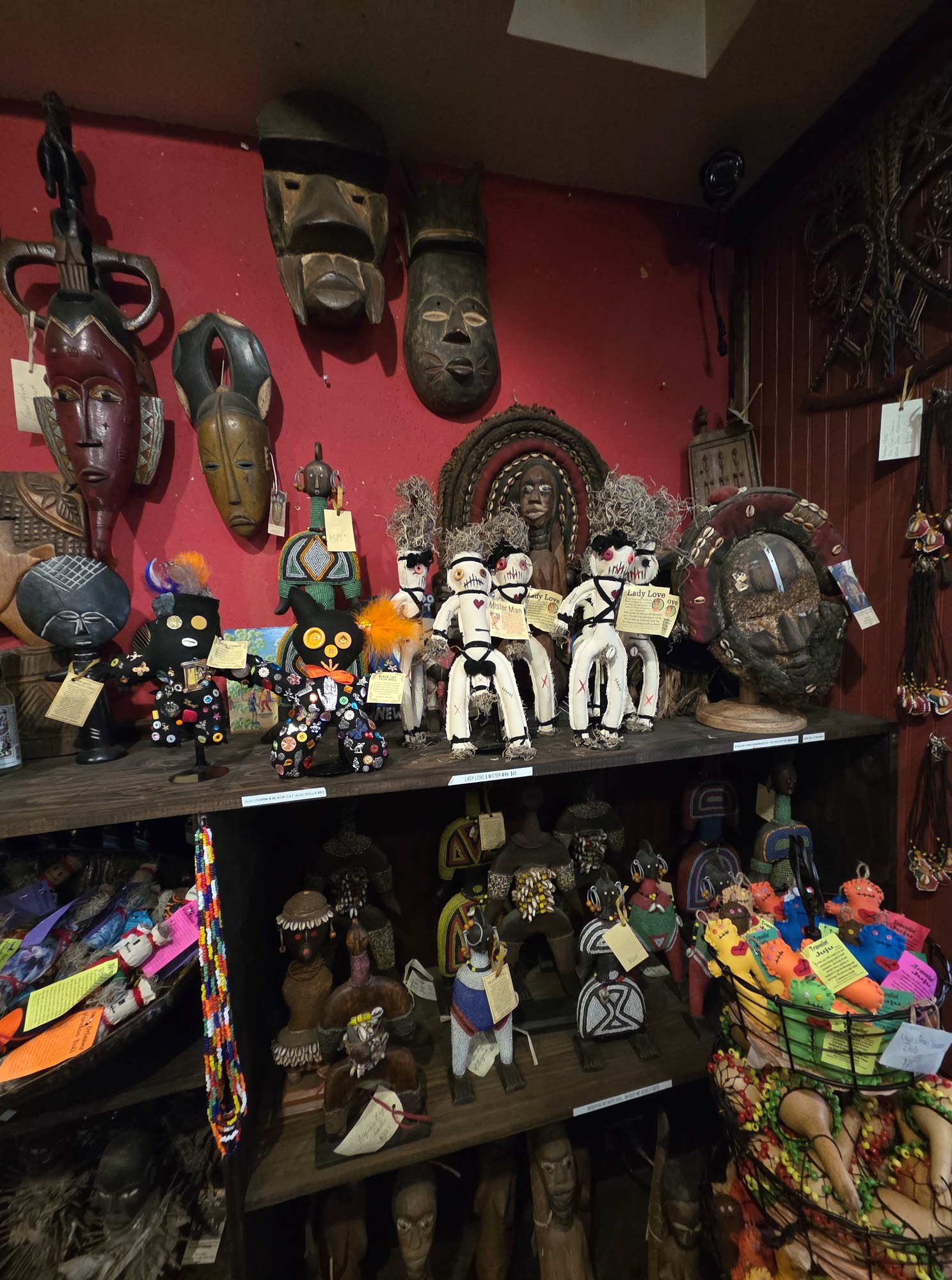
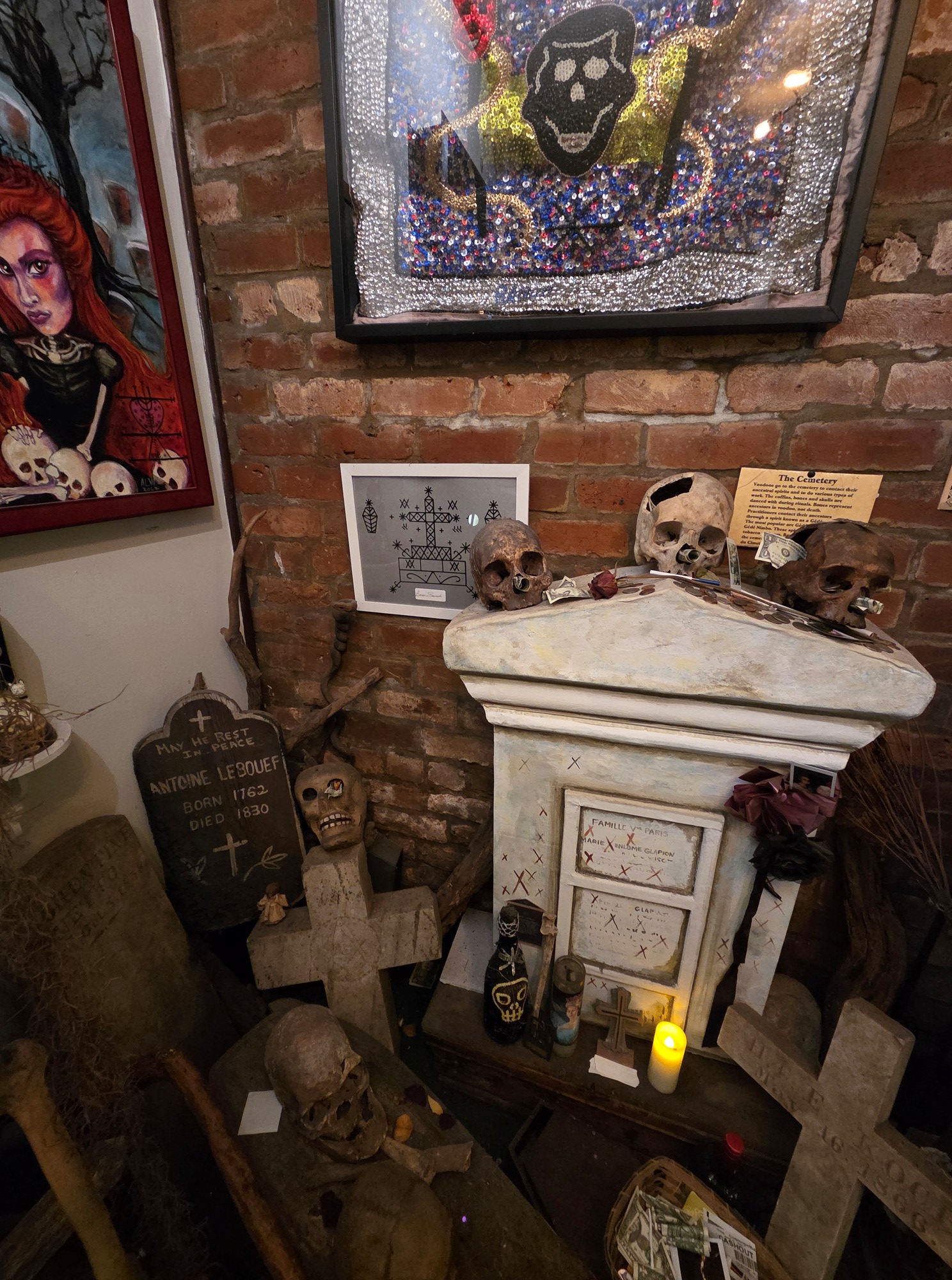
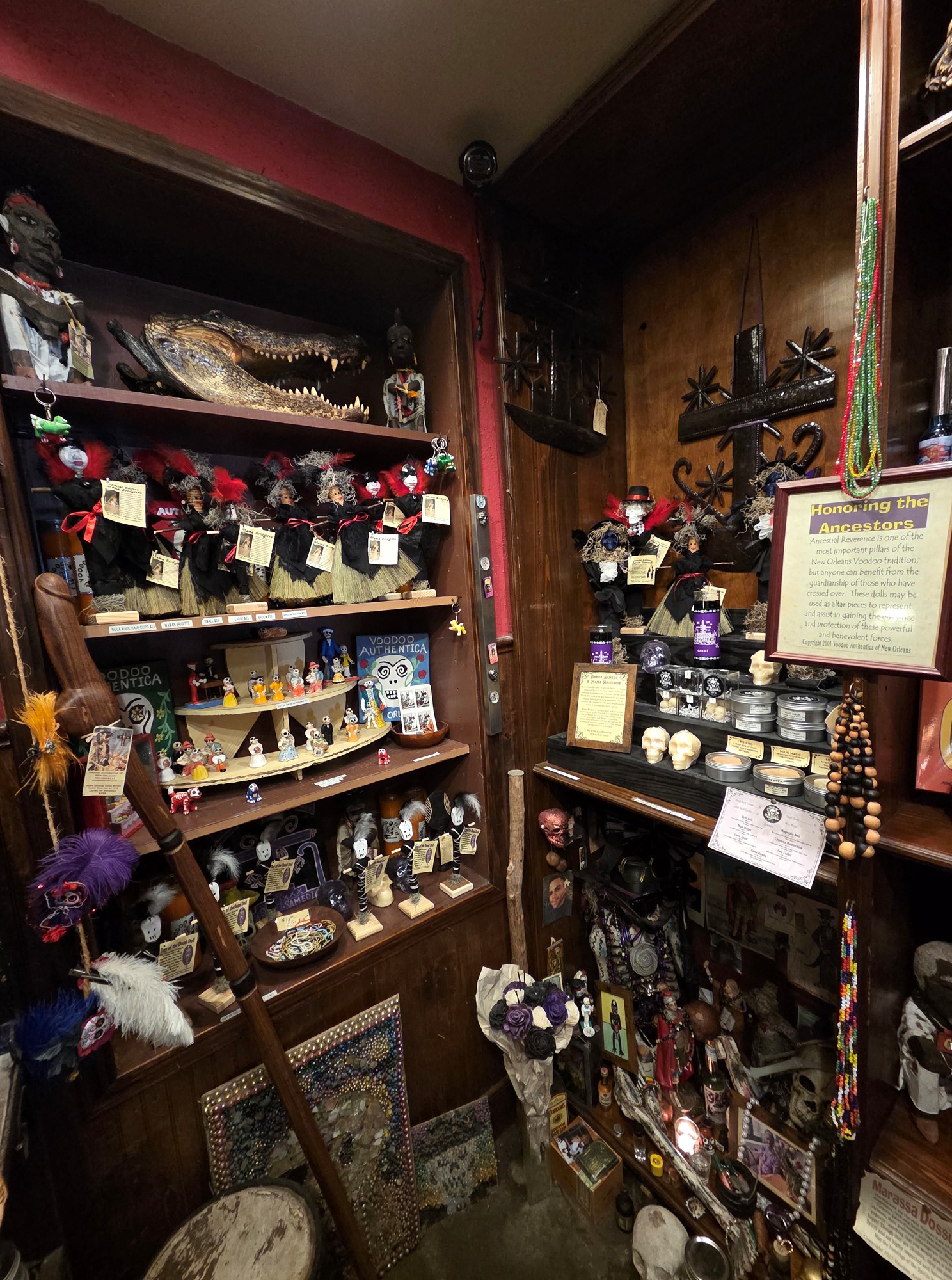
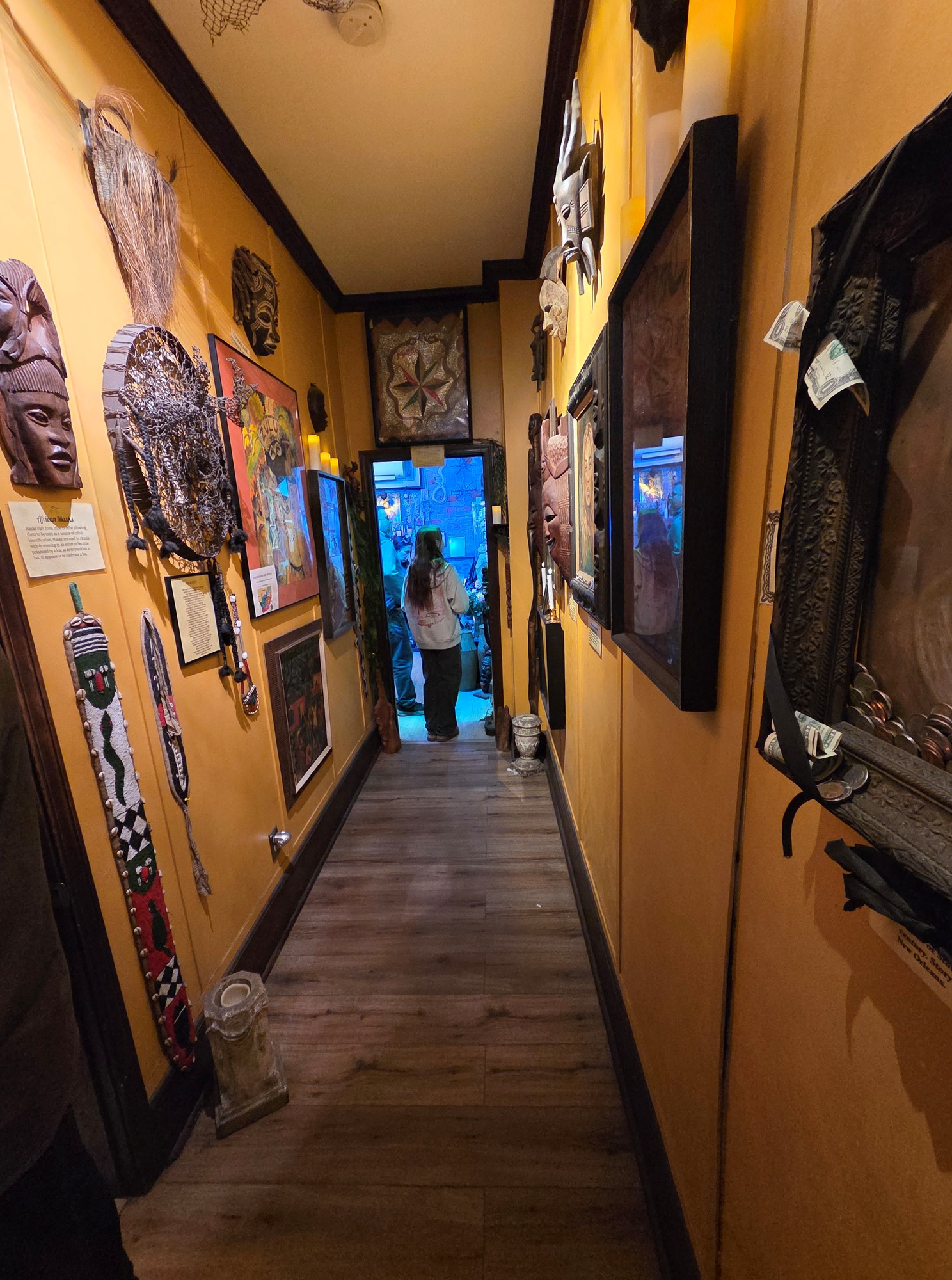
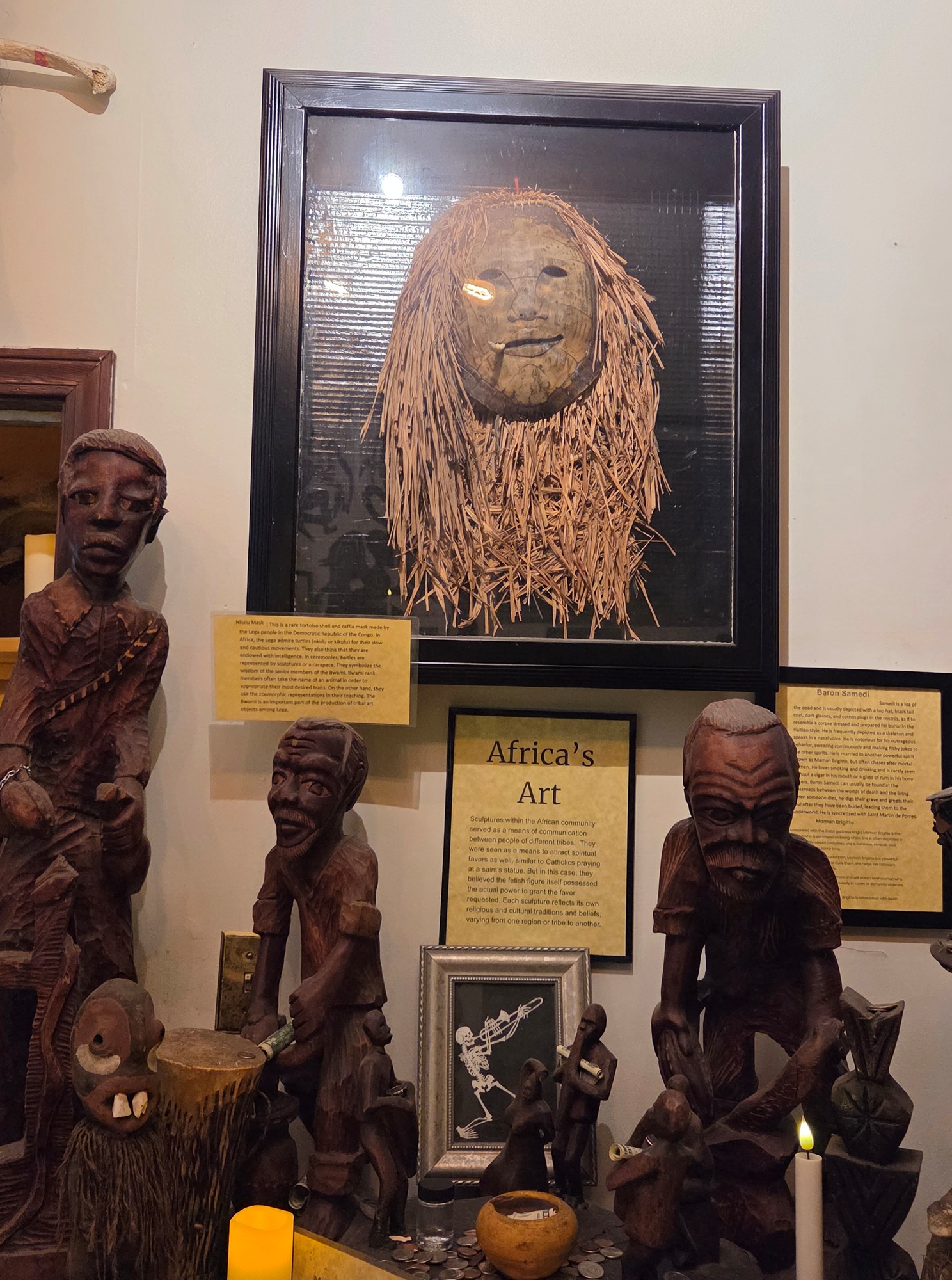
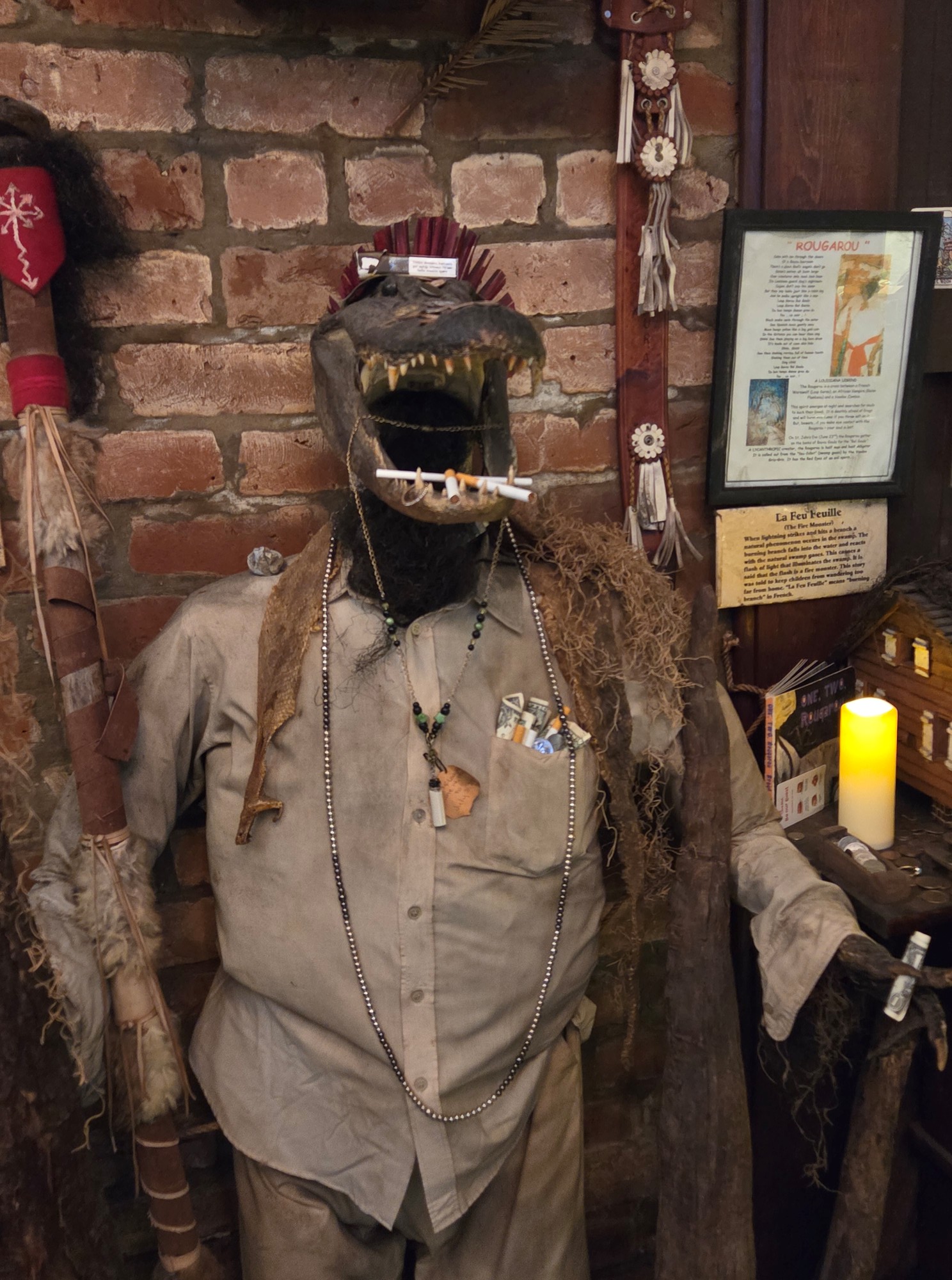
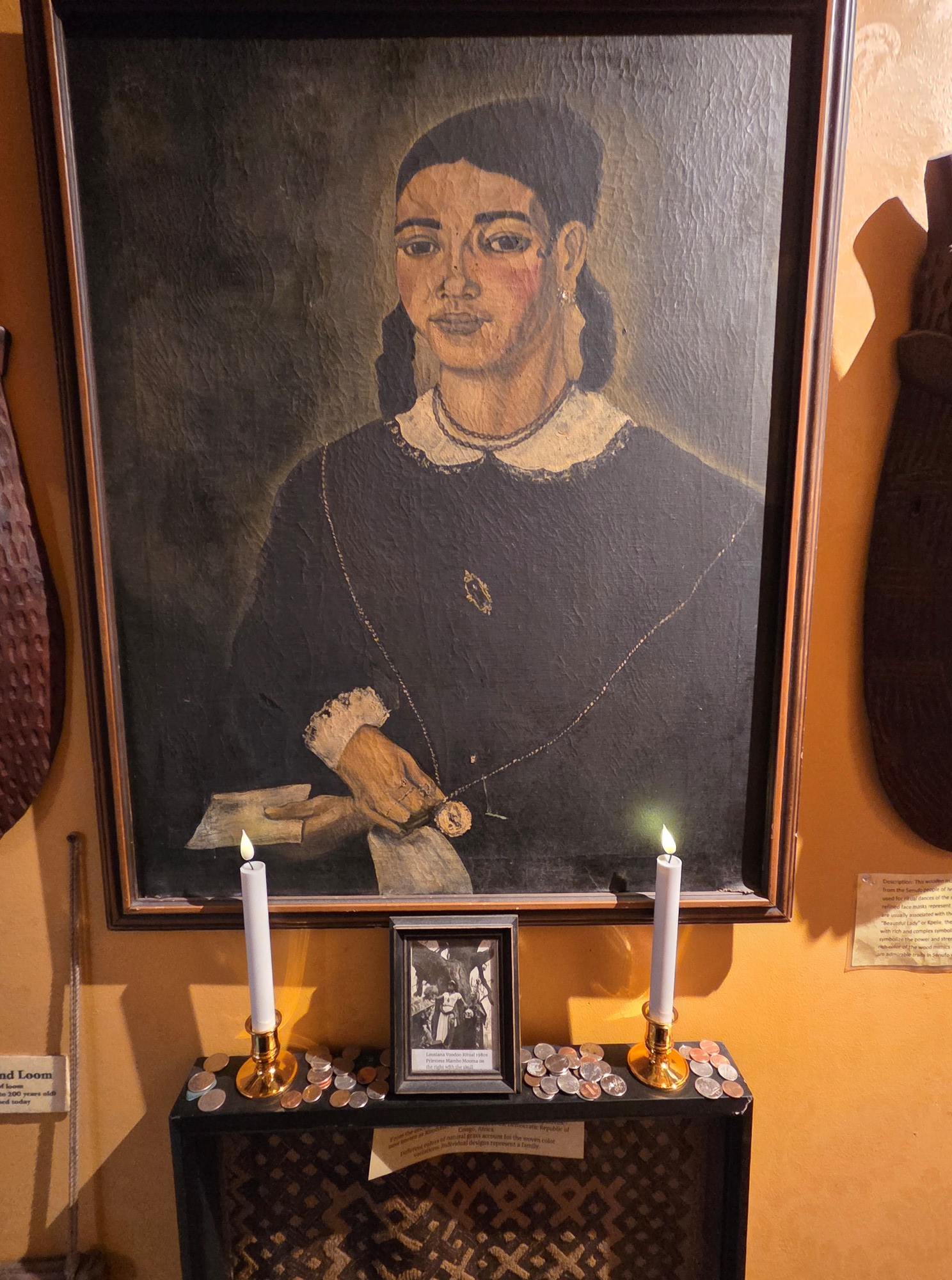
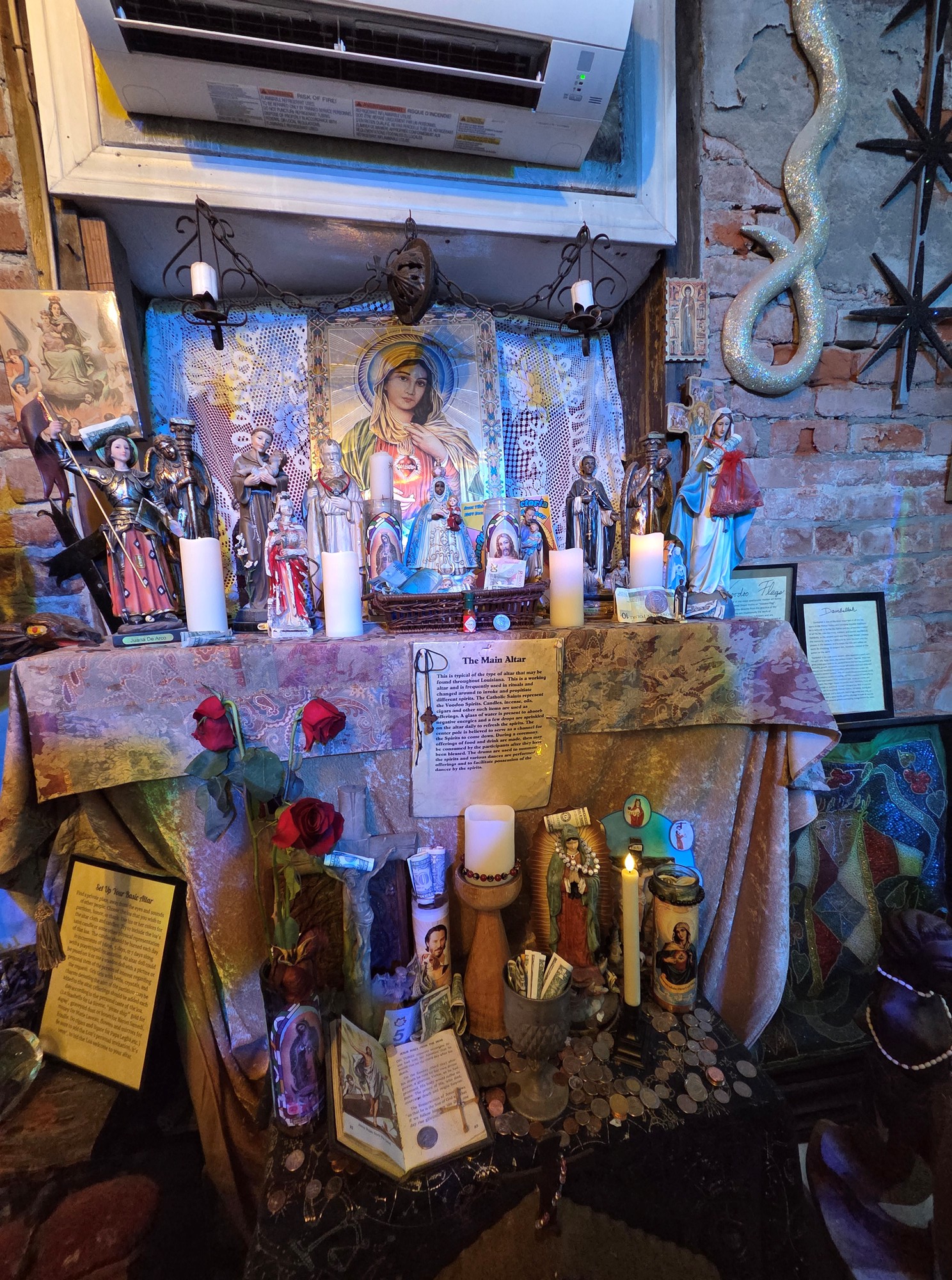
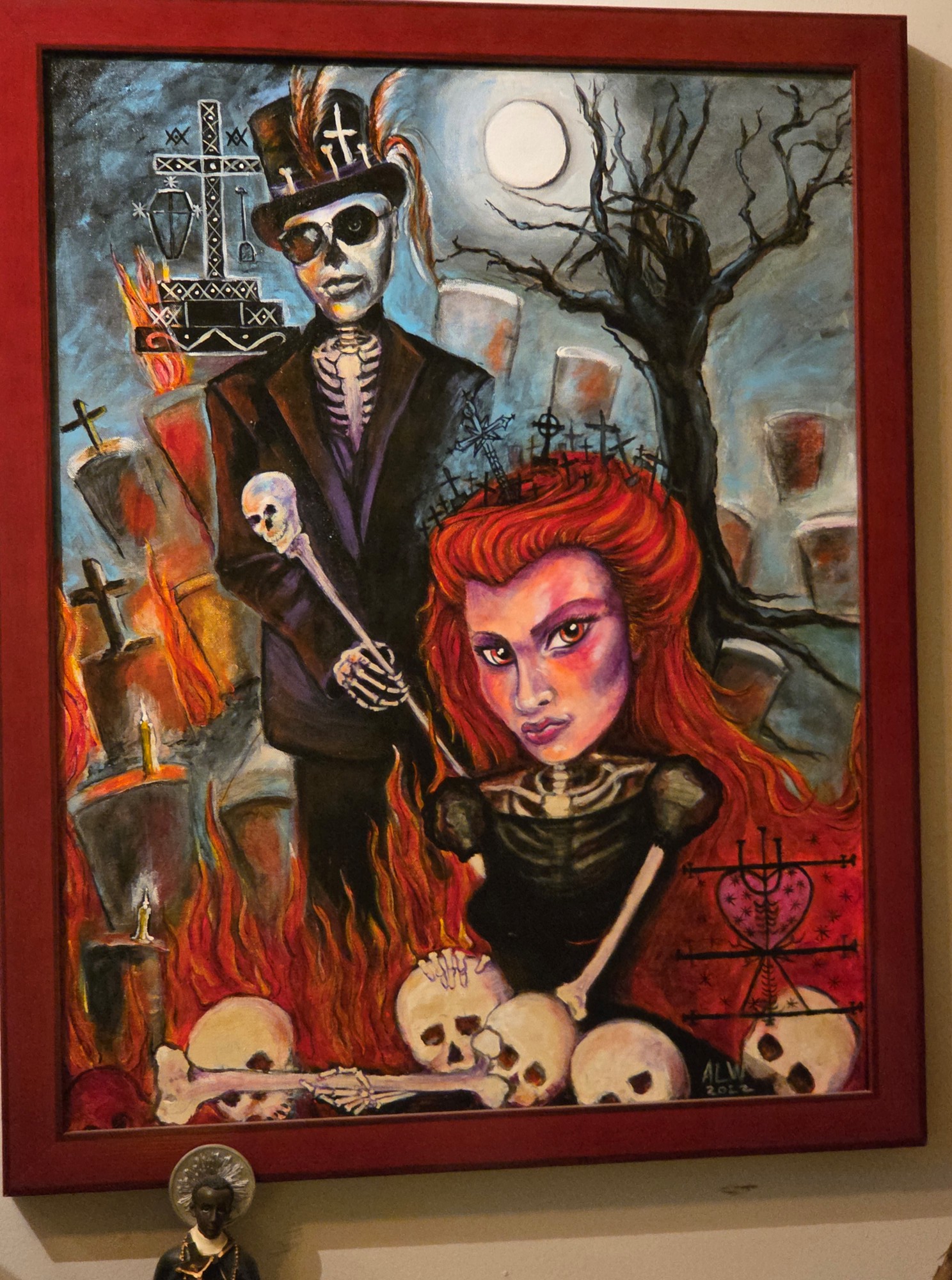
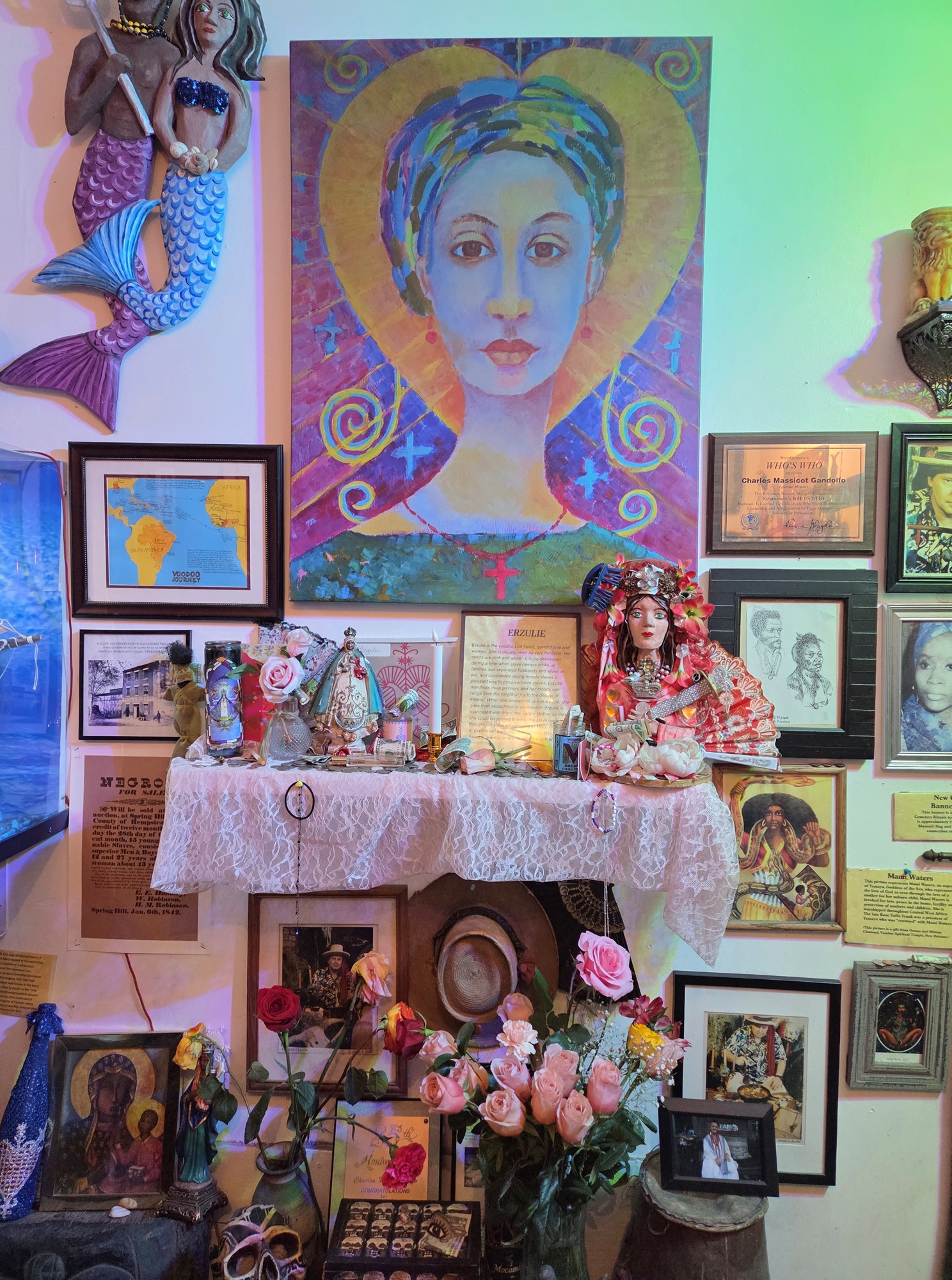
We just came home from a trip to New Orleans, which is truly a magical city. New Orleans is not very far from Dallas, where we live, and we’ve been to New Orleans several times. However, it was a fun family trip with a theme. The theme we chose for our trip was Magic, including Vampires, Voodoo/Hoodoo, ghosts, pirates and St. Patrick’s Day. We also went on a ghost tour. Below are some photos from the Voodoo Museum, and miscellaneous voodoo, witches, vampire and pirate stores.
From the Voodoo Museum.I used an automated fortune teller who told me to watch out for stepping on people’s toes. That is kind of strange since we hardly ever go dancing.
Photo Tile with photos from the Voodoo Museum, a Hoodoo Queen, vampire art, pirate, and witch store.
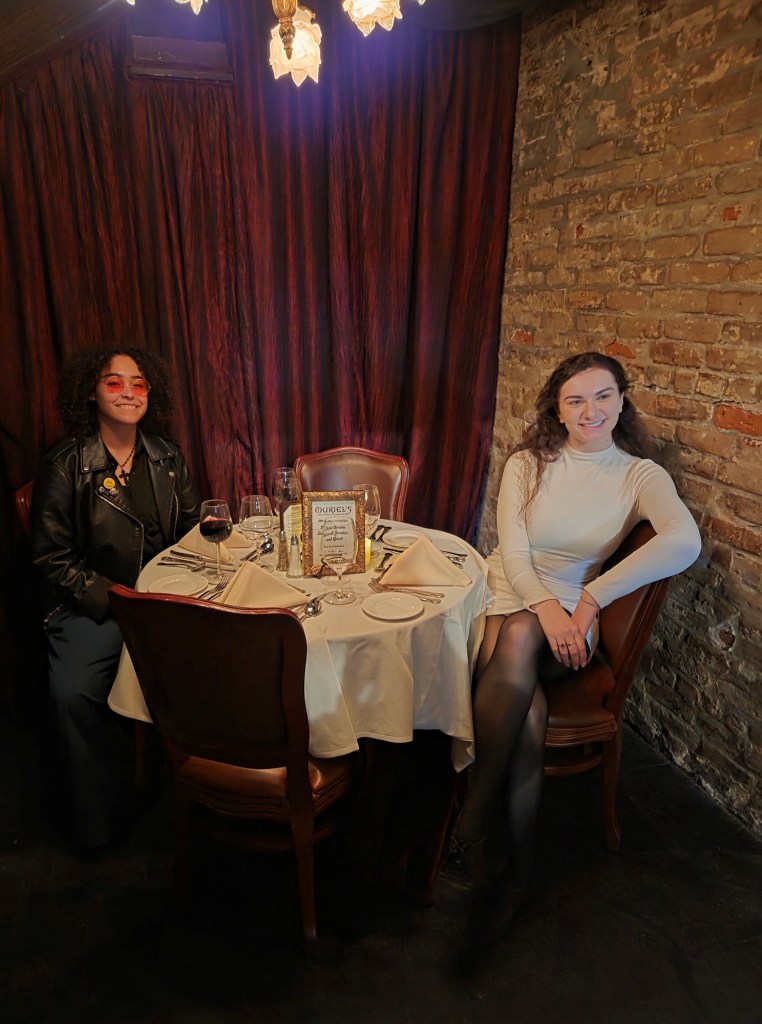
We also ate at a restaurant that has a ghost. The Muriel’s Jackson Square restaurant is allegedly haunted by a ghost that sits in the chair. The ghost is a former owner by name of Pierre Antoine Lepardi Jourdan.
The ghost is sitting between my daughter (right) and my son’s girlfriend (left).
What is Voodoo ?
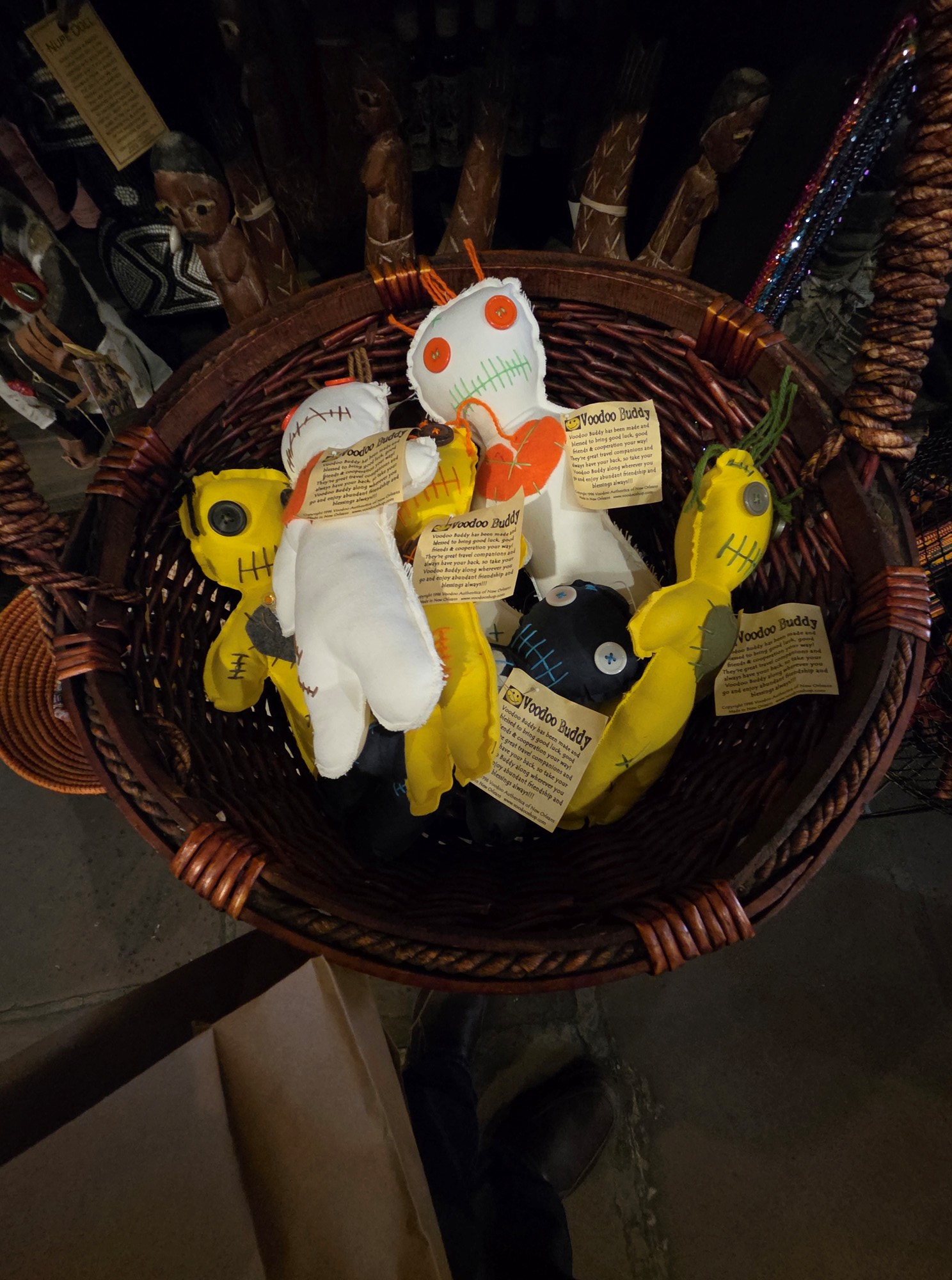
Voodoo is a religion blending African traditions with Catholicism. It is originating from enslaved people in Haiti and Louisiana. It focuses on serving spirits and honoring ancestors and connecting with nature. It is not black magic. However, I admit I’ve made fun of the so called voodoo dolls. Marie Catherine Laveau was one the most prominent practitioners of voodoo. She was born a free woman of color in New Orleans’s French Quarter, Louisiana, on September 10, 1801. We saw her house. Below are photos from the Voodoo Museum.
Photo Tile from the Voodoo Museum
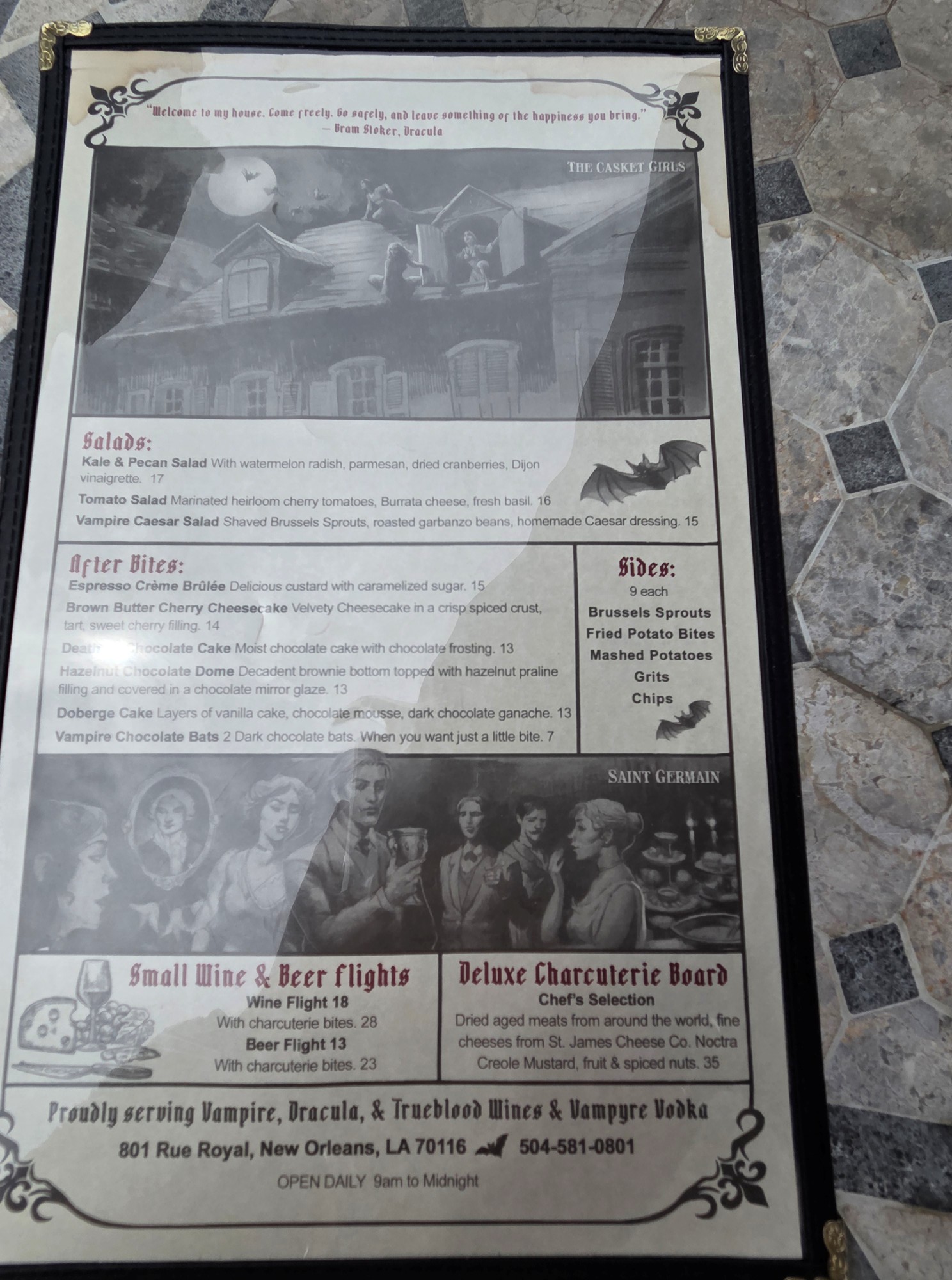
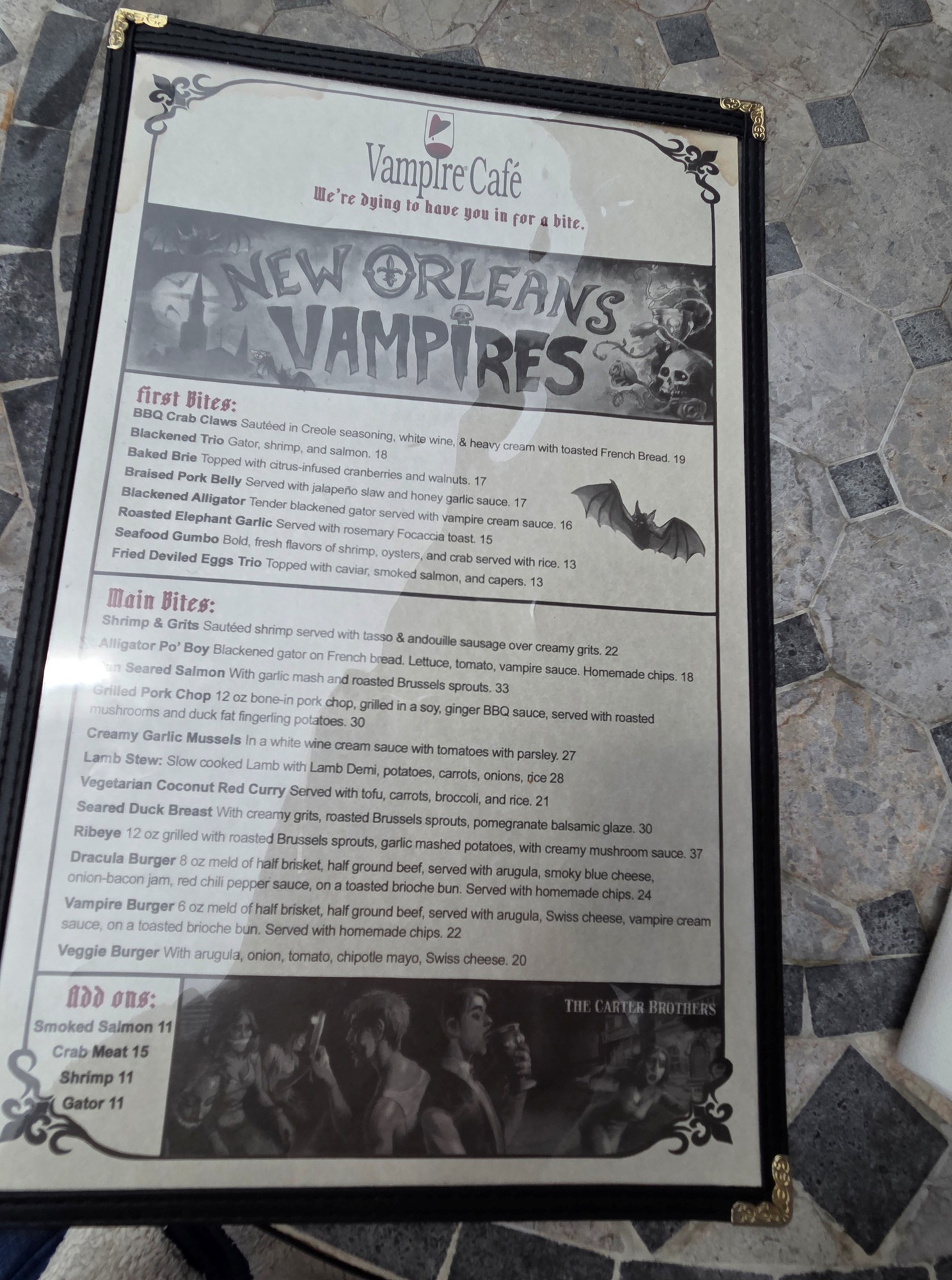
Vampire Café
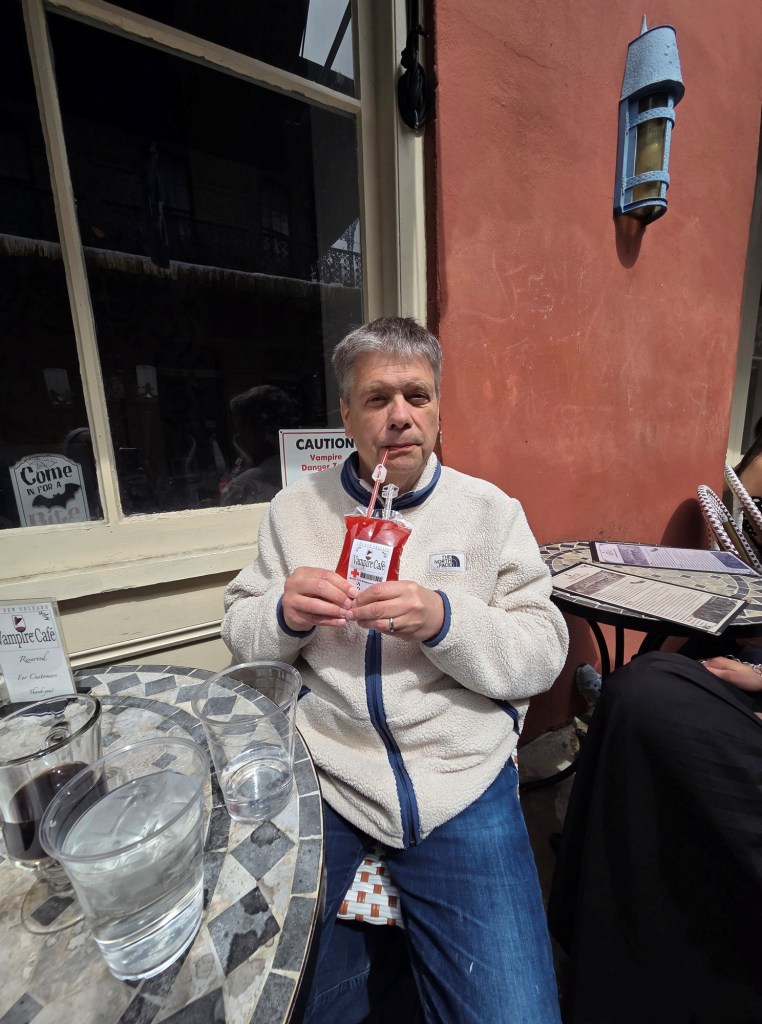
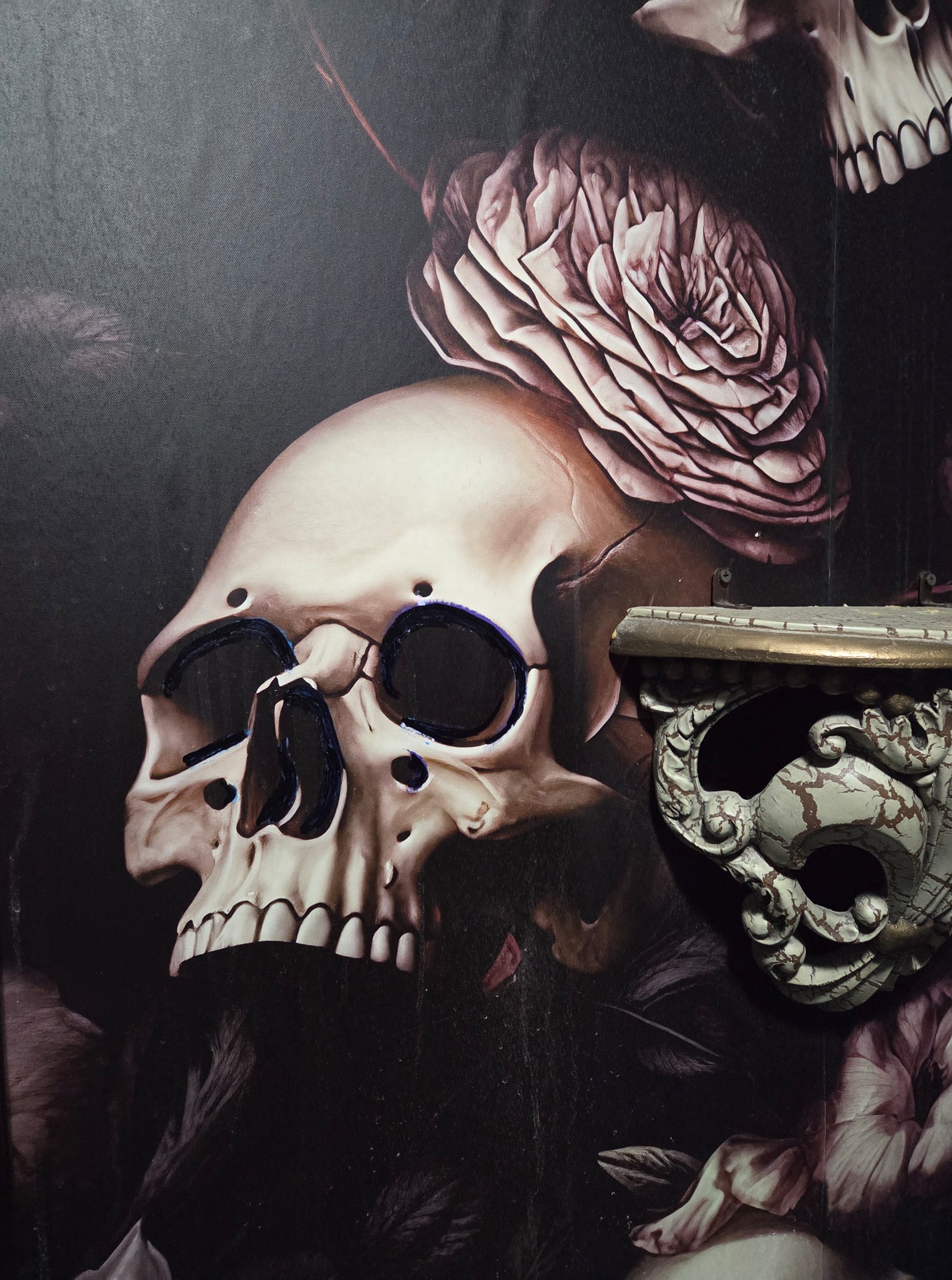
We also did some vampire related things. New Orleans is often called the Transylvania of America. Author’s such as Anne Rice have brought attention to New Orleans and its vampire legends. I read a book with 40 short stories about vampires while we visited New Orleans. The book was Vermillion Highways by David Lee Summers and Lee Clark Zumpe. I will make a post about that book in a couple of days. We visited vampire stores and the famous Vampire Café. See the photos below.
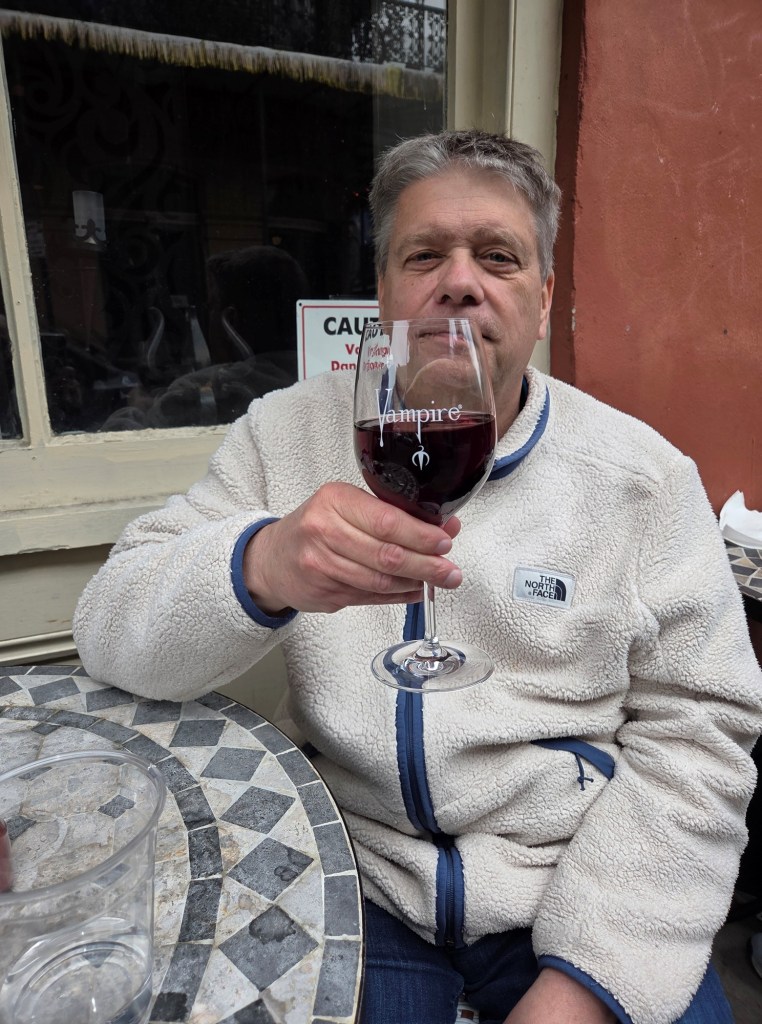
Vampire CaféMe drinking (pretend blood) from a blood bag at the Vampire Café.Me drinking a glass of Pinot Noir. The name of the wine is Vampire, and it says so on the glass.
Photo Tile from Vampire Café.
I should say that we did other things as well. We visited the aquarium, rainforest, and insectarium, which is quite impressive. We celebrated Saint Patrick’s Day, and we made a couple of visits to the famous Pat O’Brien’s Pub. We all had a good time.
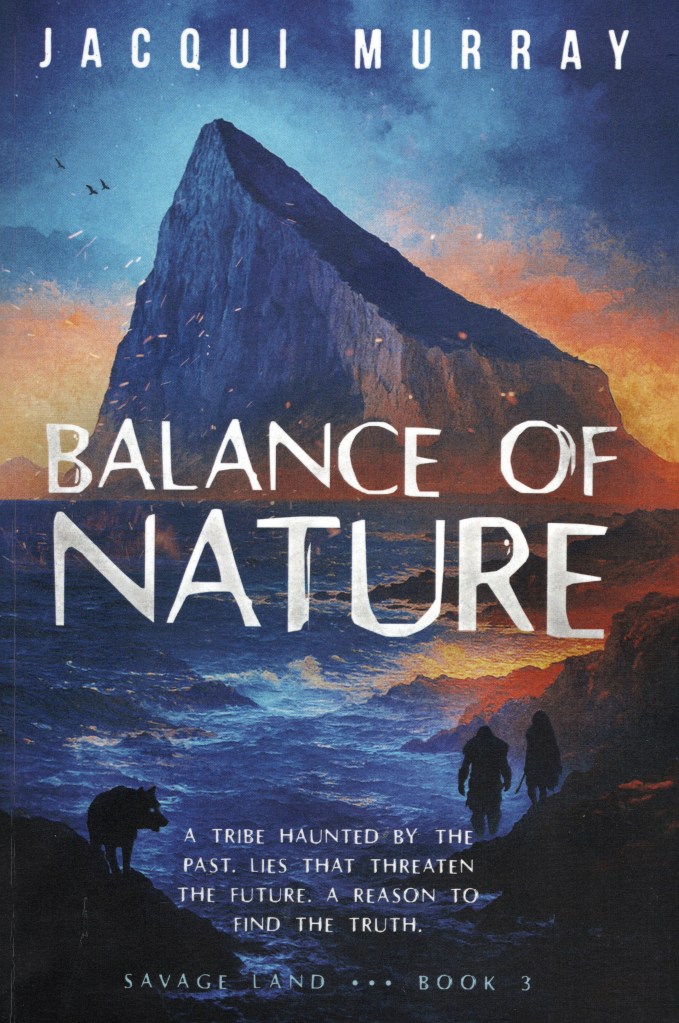
This is a Leonberger blog, but I sometimes post about books that are not about Leonbergers but books that I love and want to promote. With this post I would like to promote a truly great novel featuring Neanderthals and early Homo Sapiens. The book is called Balance of Nature by Jacqui Murray. It is the third book in a series called Savage Land.
Below is an overview of the three formats of Balance of Nature:
Paperback – Structured Learning LLC (February 2, 2026), ISBN-10 : 1942101686, ISBN-13 : 978-1942101680, 305 pages, Item Weight : 14.6 ounces, dimensions : 6 x 0.69 x 9 inches, it cost $15.99 on US Amazon. Click here to order it from Amazon.com.
Kindle – Structured Learning LLC (February 2, 2026), ASIN : B0G45MFBWW, ISBN-13 978-1942101697, 307 pages. It is currently $4.99 on Amazon.com and free with Kindle unlimited. Click here to order it from Amazon.com.
Audiobook – Structured Learning LLC (March 8, 2026), ASIN : B0GRG8XG1T, It is currently $14.99 on Amazon.com. Click here to order it from Amazon.com.
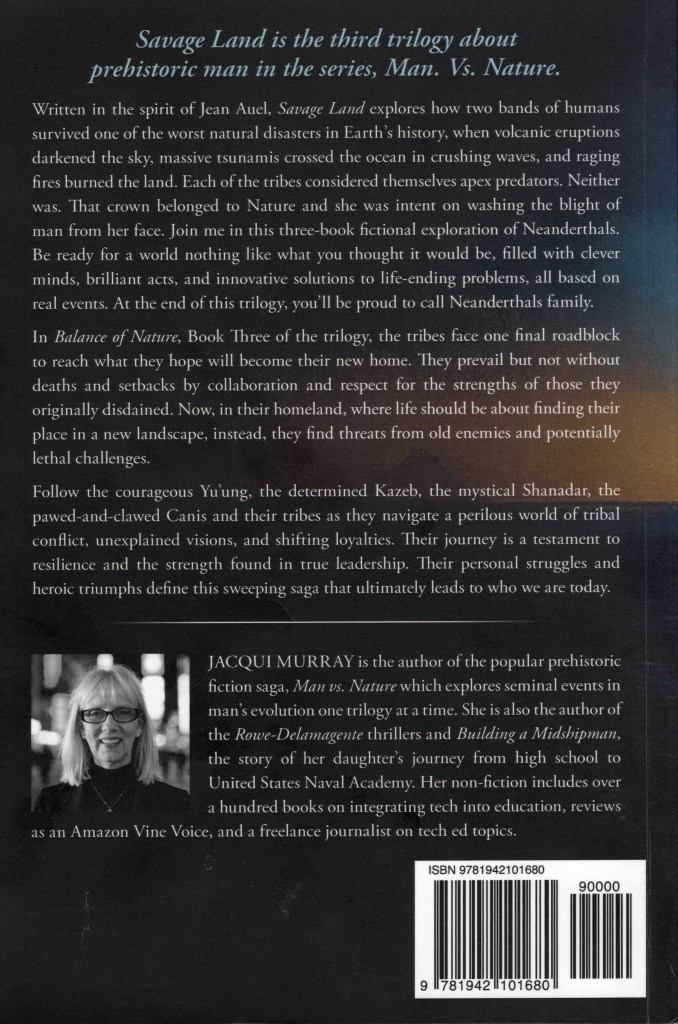
Front cover of Balance of nature. Click on the image to go to the Amazon page for the paperback version of the book.
Amazon Description of Balance of Nature
A tribe haunted by the past. Lies that threaten the future. A reason to find the truth.
Savage Land is the third trilogy about prehistoric man in the series, Man. Vs. Nature.Written in the spirit of Jean Auel, Savage Land explores how two bands of humans survived one of the worst natural disasters in Earth’s history, when volcanic eruptions darkened the sky, massive tsunamis crossed the ocean in crushing waves, and raging fires burned the land. Each of the tribes considered themselves apex predators. Neither was. That crown belonged to Nature and she was intent on washing the blight of man from her face. Join me in this three-book fictional exploration of Neanderthals. Be ready for a world nothing like what you thought it would be, filled with clever minds, brilliant acts, and innovative solutions to life-ending problems, all based on real events. At the end of this trilogy, you’ll be proud to call Neanderthals family.
In Balance of Nature, Book Three of the trilogy, the tribes face one final roadblock to reach what they hope will become their new home. They prevail but not without deaths and setbacks by collaboration and respect for the strengths of those they originally disdained. Now, in their homeland, where life should be about finding their place in a new landscape, instead, they find threats from old enemies and potentially lethal challenges.
Follow the courageous Yu’ung, the determined Kazeb, the mystical Shanadar, the pawed-and-clawed Canis and their tribes as they navigate a perilous world of tribal conflict, unexplained visions, and shifting loyalties. Their journey is a testament to resilience and the strength found in true leadership. Their personal struggles and heroic triumphs define this sweeping saga that ultimately leads to who we are today.
The Adventures of Neanderthals and Homo Sapiens by the Shoreless Sea
When I was young, I read Jean M. Auels’ novels set in prehistoric Europe and I loved them. Jacqui Murray’s books have a lot in common with Jean M. Auels’ books, but they are set at an earlier time. This series, Savage Land, takes place about 75,000 years ago (this is the third book in the series). In addition, we know more about prehistoric man now than we did back then and Jacqui Murray has certainly done her research. I loved Jean M. Auels’ books, and I love all of Jacqui Murray’s books. This book is a continuation of the previous book Badlands and is yet another thrilling prehistoric adventure involving both Neanderthals (the people and the clan) and Homo Sapiens (tall ones). Neanderthals and Homo Sapiens work together to reach a new homeland but there are some who have dark motives. There are hidden agendas, betrayal, and mysteries.
One aspect of this book and the previous books in this series and the previous series’ as well, are the Canis. Domesticated dogs probably did not exist 75,000 years ago, but they may have still interacted with humans, and the way the author uses them in the plots adds something to the stories that I really love. If you are a dog lover you will love Ump, Blaze, Ocha, Spirit, Ragged Ear, White Streak, and their loyalty, amazing abilities, and courage. There is a reference in the book to a previous book where Ump rescued Blaze and it brought back great memories of past adventures.
The book focuses a lot on Yu’ung who a female Neanderthal and a healer and she is also a leader of her tribe. There is also Fierce, the leader of a tribe of Homo Sapiens, Kazeb and Turk, the leaders of another Neanderthal tribe, and Shanadar a Shaman and mystic who lives at the outskirts of his Neanderthal tribe. There are many other characters both good and evil, of both species (Homo Sapiens / Neanderthals). The many characters added to the richness of the stories at the same time as the there is a risk for confusion. However, the author provided a list of the characters, their tribe belonging and role at the beginning of the book. I found this list to be very helpful. Whenever I was wondering “who is that dude again?” I looked at the list and there was no problem.
Another special feature I enjoyed was the “Questions You Ask” section at the end, where the author is listing answers to potential questions about Prehistory, Neanderthals, and the book. For example, you learn about Neanderthal genetics, how they lived, their use of fire, could they talk (yes), did they care for their sick (yes), the eruption of the super volcano Mt. Toba, and much more. There is also a bibliography.
Like all Jacqui Murray’s novels this novel is full of adventure, and it is captivating and realistic. You connect with the characters and their struggle for survival. The importance of cooperation and belonging for survival becomes clear and you will understand the advantage of everyone having a role and a purpose in the tribe. The book makes you wonder about all those millions of pre-historic humans who came before us so long ago. Our modern civilization has existed for a very short time, and it is easy to forget how privileged we are. I highly recommend this book to anyone who is interested in adventure, especially if you are curious about prehistoric man.
Back cover of Balance of Nature. Click on the image to go to the Amazon page for the Kindle version of the book.
About the Author of Balance of Nature
Jacqui Murray is the author of the popular prehistoric fiction saga, Man vs. Nature which explores seminal events in man’s evolution one trilogy at a time. She is also the author of the Rowe-Delamagente thrillers and Building a Midshipman, the story of her daughter’s journey from high school to United States Naval Academy. When not writing, she is grad schoolteacher, author of over a hundred tech ed resources including K-12 technology curricula, and an Amazon Vine Voice.
You can find her resources at her publisher, Structured Learning LLC. She lives in So. California with her husband of forty years, Labrador Casey, and lots of contact with her adult children, one a Cdr in the Navy, the other a SFC in the Army. Feel free to reach out to Jacqui at her blog, WordDreams, or her social media platforms.
These are some of her other books on prehistoric humans
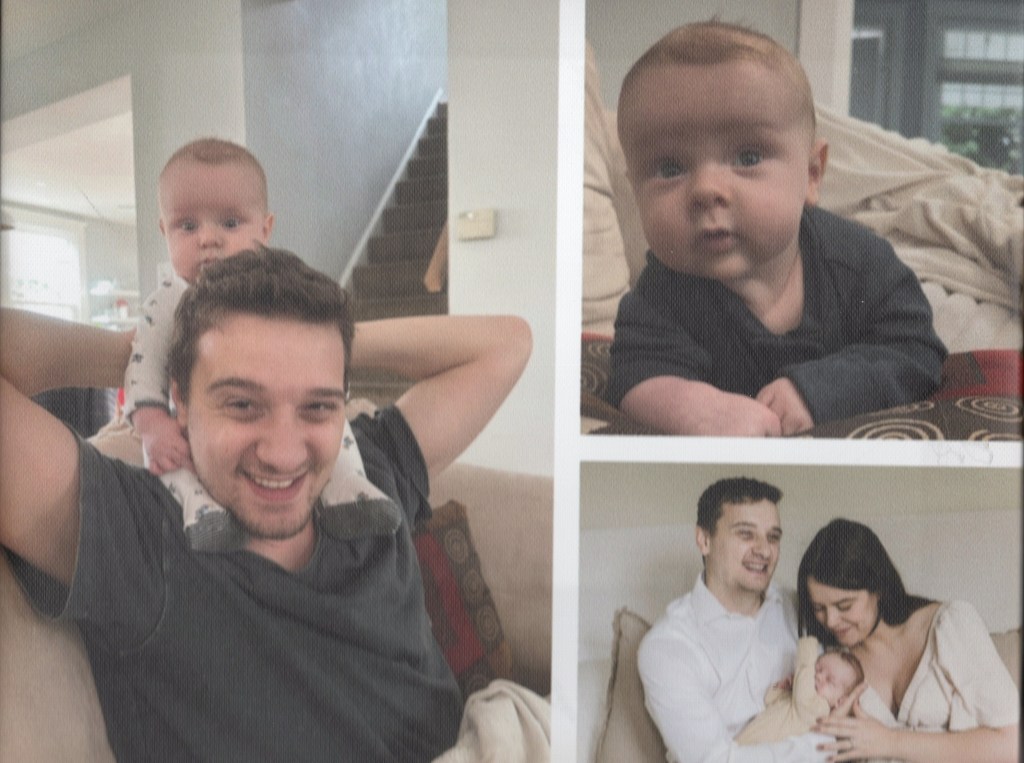
I am sorry that I have not been very active in the blogosphere lately. We had a special visit from our five months old grandson Jack. Our son Jacob, his wife Ashley and baby Jack came to visit us last Thursday and they left Monday night and during that time I mostly ignored the blogosphere but now I am back. With this post I thought I would display a few baby photos. First there are a few photos from our visit to Baltimore to see baby Jacka couple of months ago and then the rest of the photos were taken during their visit to us here in Dallas, which took place during the last few days.
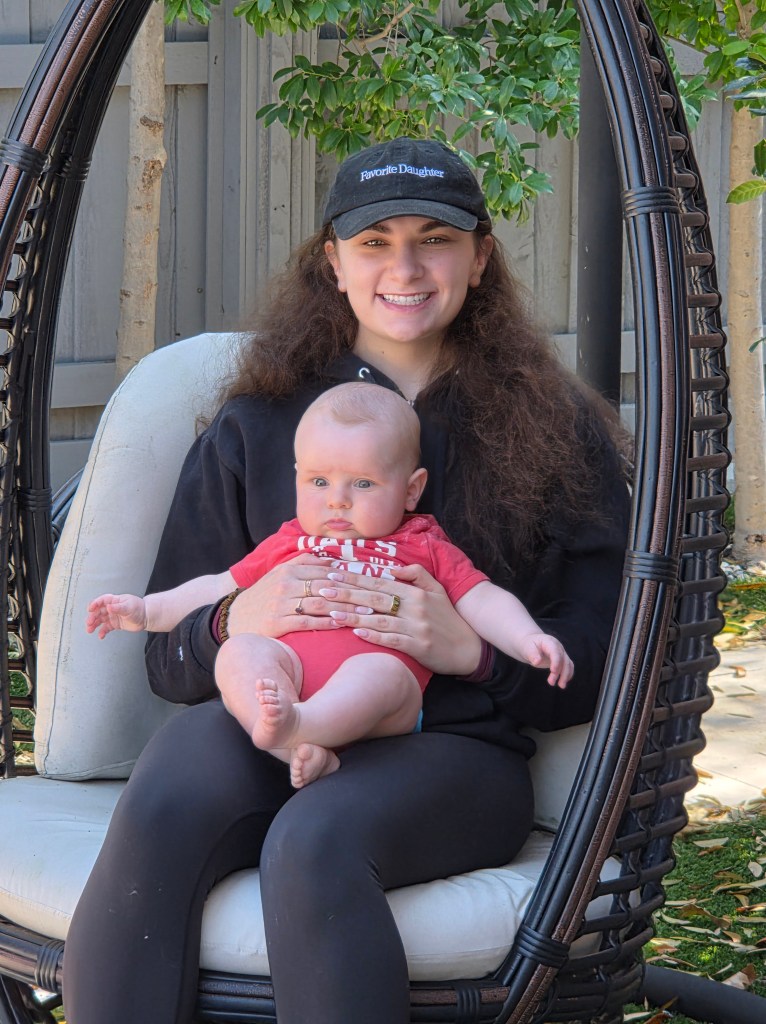
Our son Jacob, his wife Ashley and our grandson at about 3 months old. In the bottom right photo, he is newborn.Jack in the sofa. Three months old.My wife Claudia is on the left, I am in the middle and Jack is on the right.First photo from the last few days. Our daughter with baby Jack at five months old. This photo is from the past weekend when they visited us. That’s here in Dallas, Texas.
A Challenge for Dr. Pooper
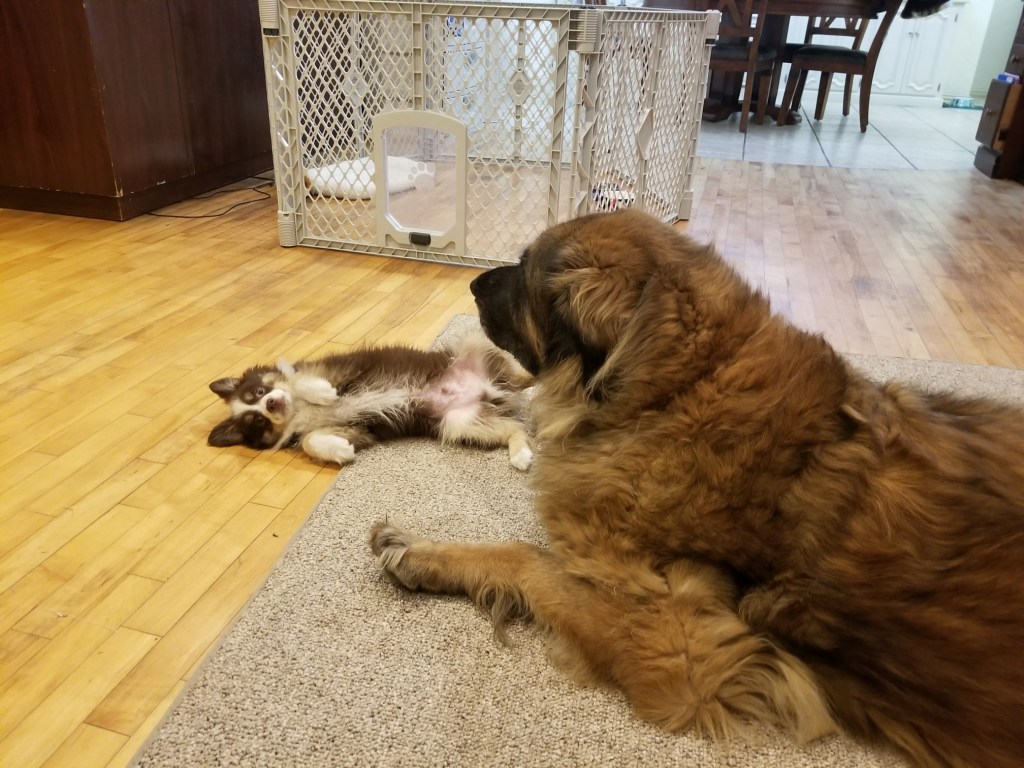
It was a challenging few days for our mini-Australian Shepherd Rollo. Dogs being jealous of a baby is a very real thing. I’ve read that dogs don’t see us the same as a pack of dogs but something better than a pack, care takers and family. They typically prefer their human family over a pack of dogs. They understand the difference between dogs and people. Rollo does not really try to be a pack leader, but he cherishes his position as the baby in the family, and suddenly here comes a human baby out of nowhere.
The human baby gets lots of attention, he sits in a stroller just like Rollo sometimes did in the past, people use a baby voice when they talk to the human baby, like they do with him, and on top of it I called baby Jack, Rollo, instead of Jack several times. I can add that I recently also mixed up the cats Charlee and Chaplin on another blog. Rollo felt that things were taken from him and he growled at the baby a couple of times.
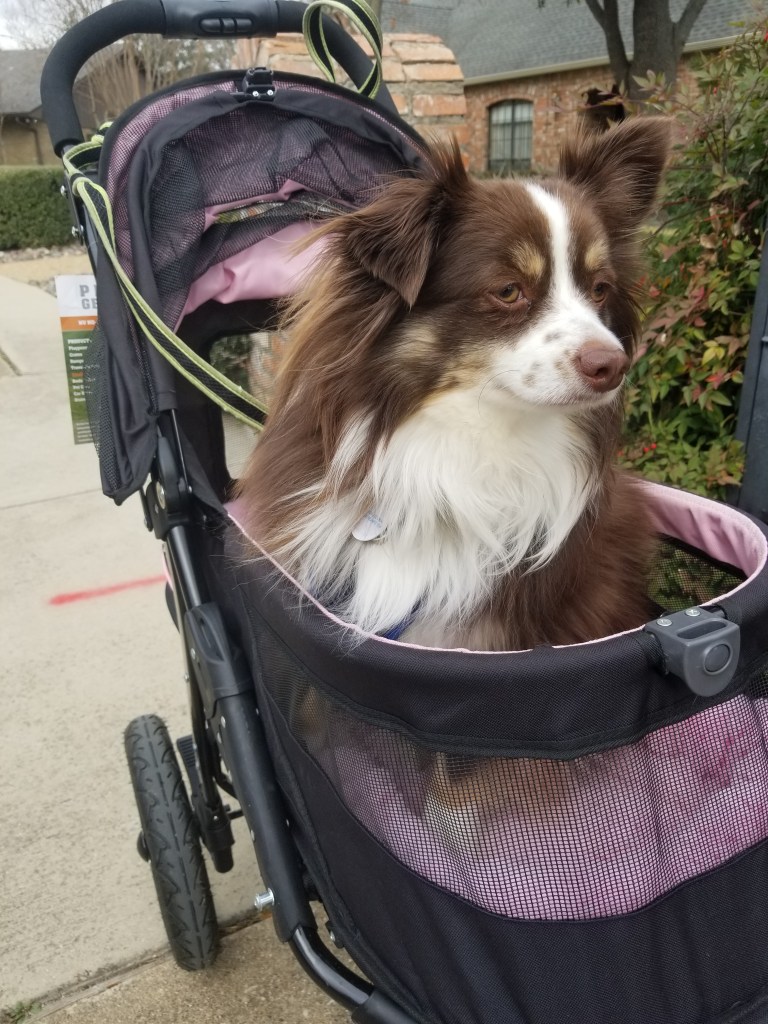
Sometimes there are scary sounds and Rollo wanted to sit in the stroller we bought for our Pug Daisy. We have not been using that stroller since Daisy passed.
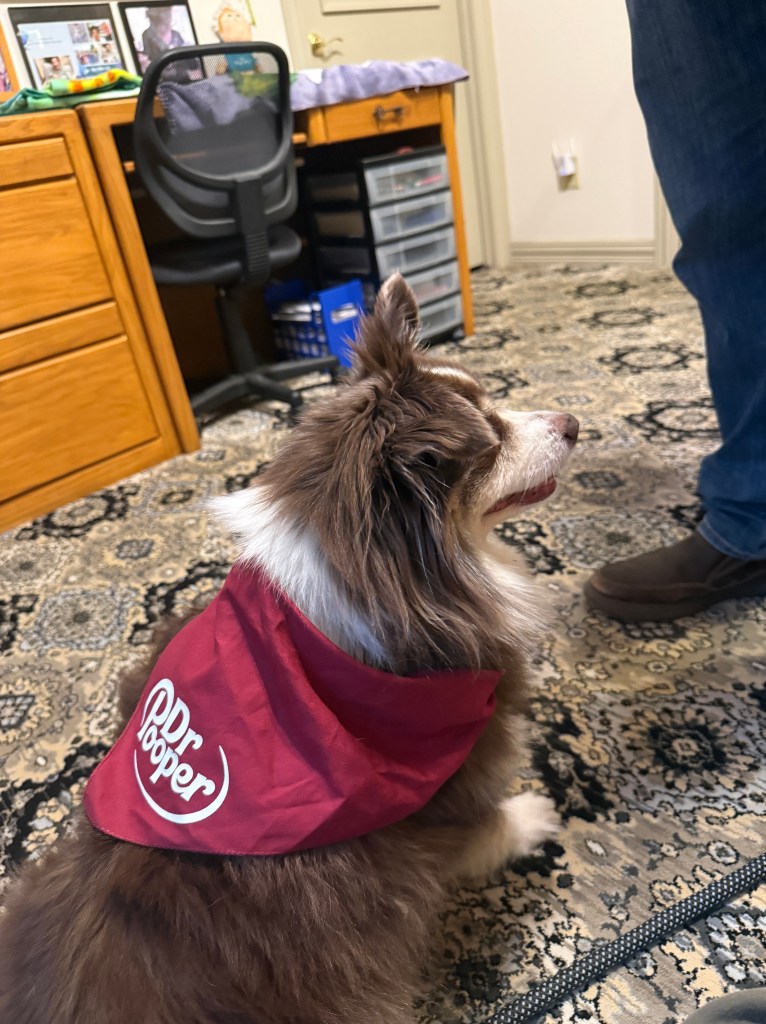
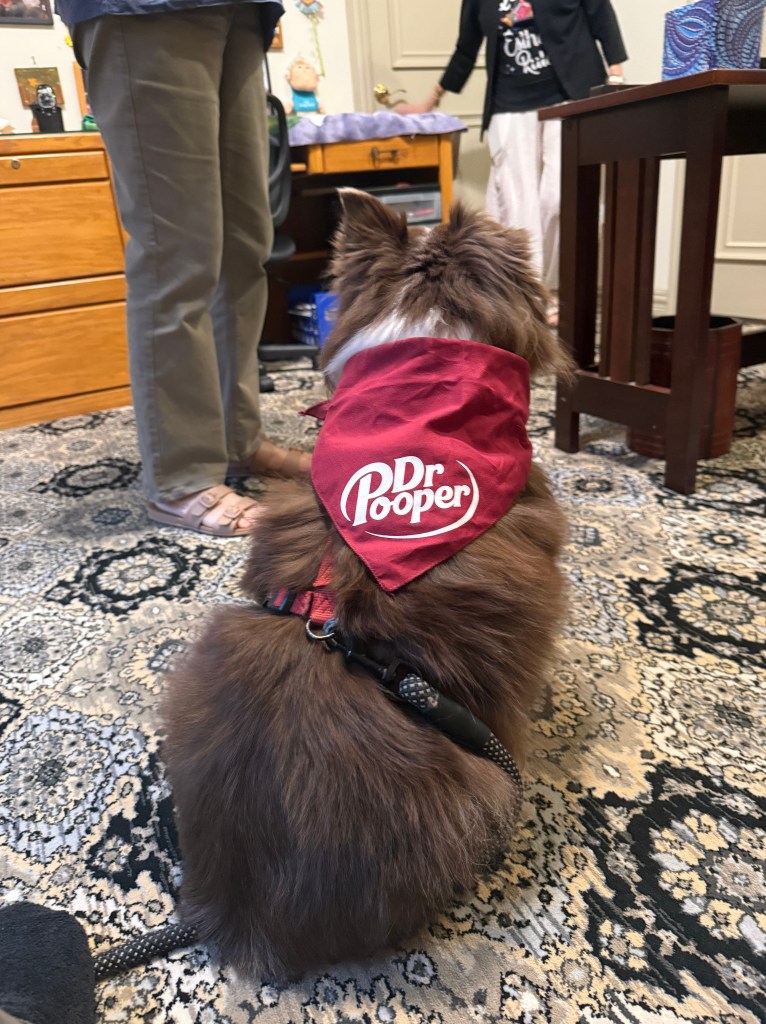
So, what we did was to pay a lot of attention to Rollo, making sure we did not exclude him, and we gave him treats every time he was in the same room as the baby. It turned out that this worked very well. This was something our daughter had looked up. Well, now when Jack has gone back to Baltimore, Rollo is back to being the supreme baby of the family, or the King of Texas if you will. Below are a couple of photos of Rollo in his new cap or coat, Dr. Pooper, a sort of advertisement for a Texas soda called Dr. Pepper. It was just for fun and he did not mind.
Rollo in his Dr. Pooper cap.Rollo in his Dr. Pooper cap.
Baby Jack Photos
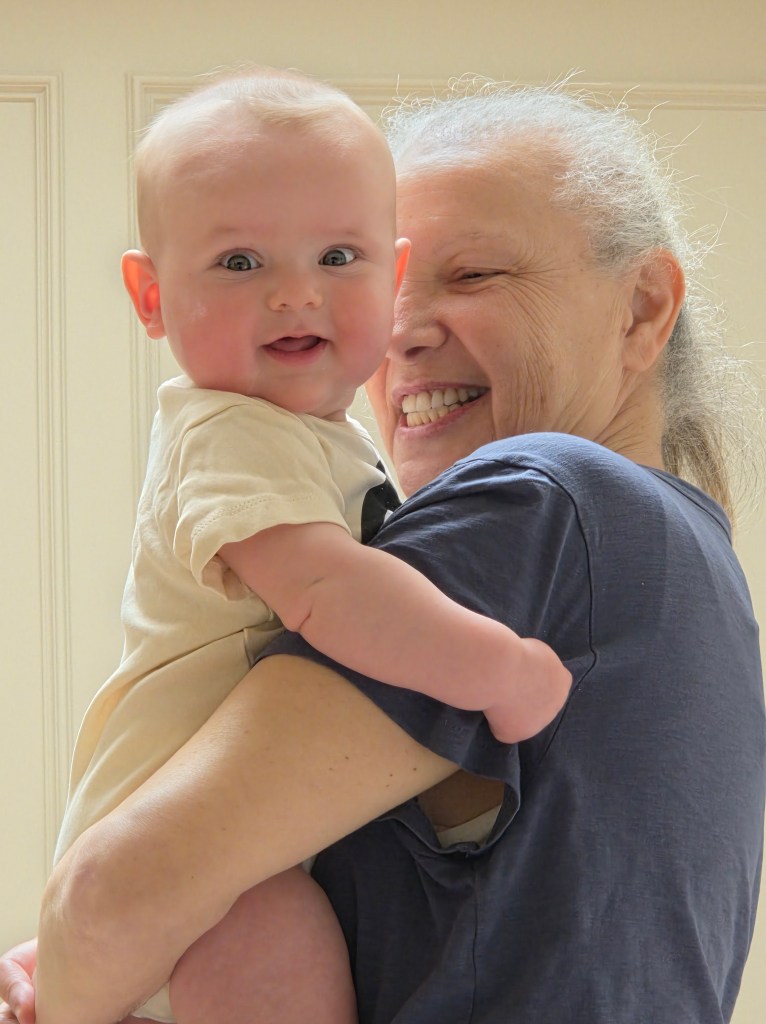
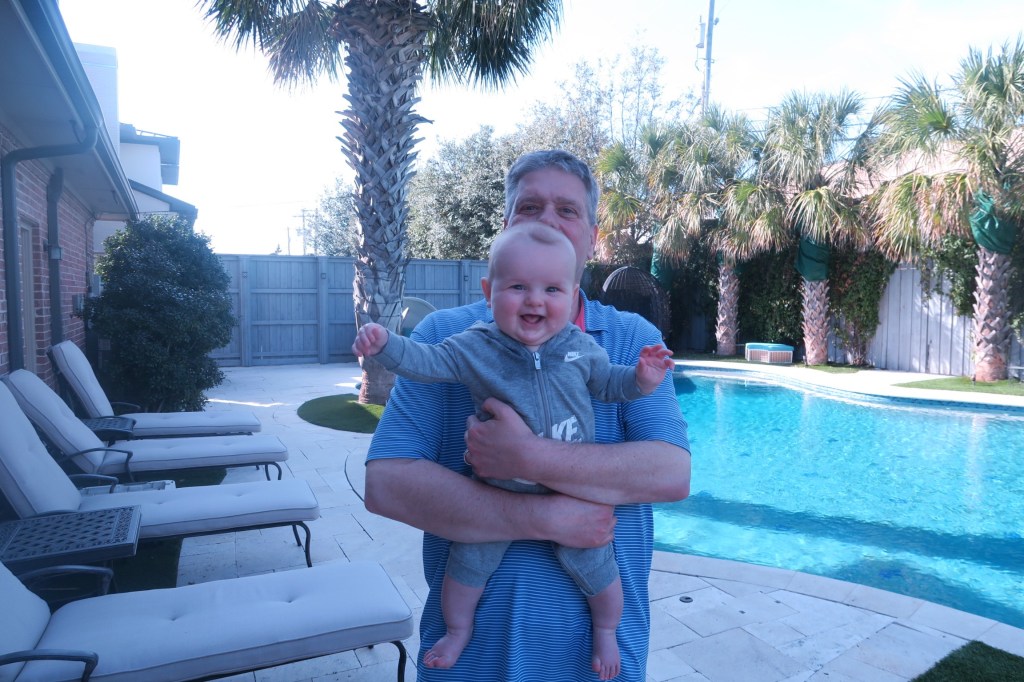
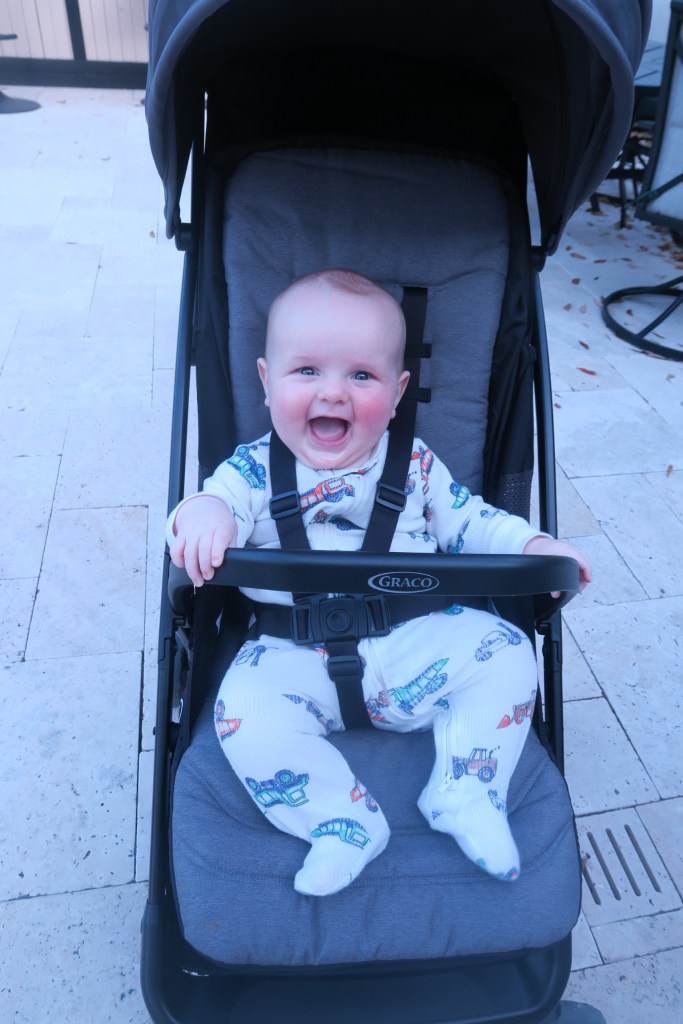
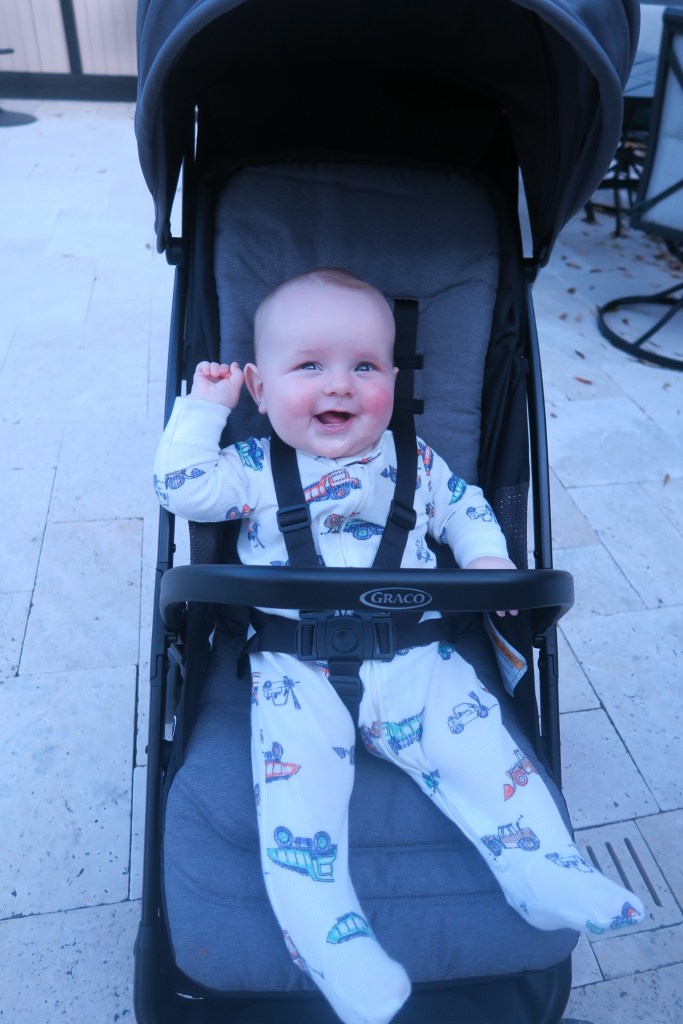
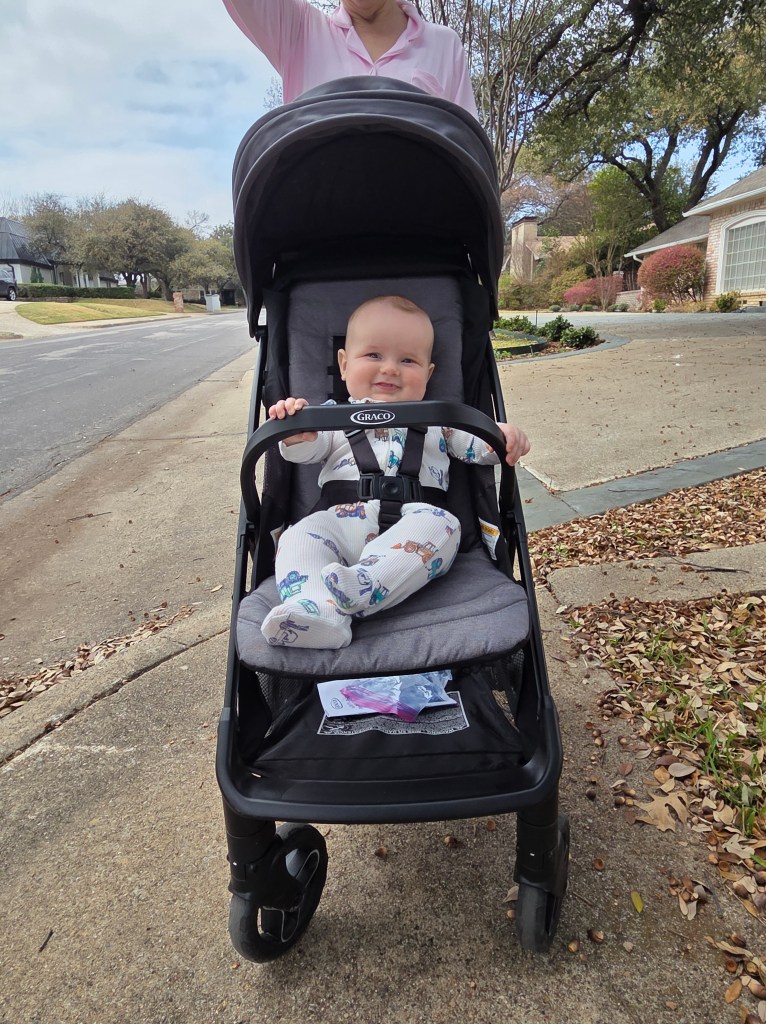
Our son with his son, baby Jack.My wife Claudia and baby Jack.Me and baby Jack.Our daughter and baby Jack.Baby Jack in a stroller.Baby Jack in a stroller.Baby Jack in a stroller.
I was alerted to the existence of National Love Your Pet Day by this post. Because I was busy all day I did not get a chance to post anything until now. However, it is still National Love Your Pet Day here where I live.
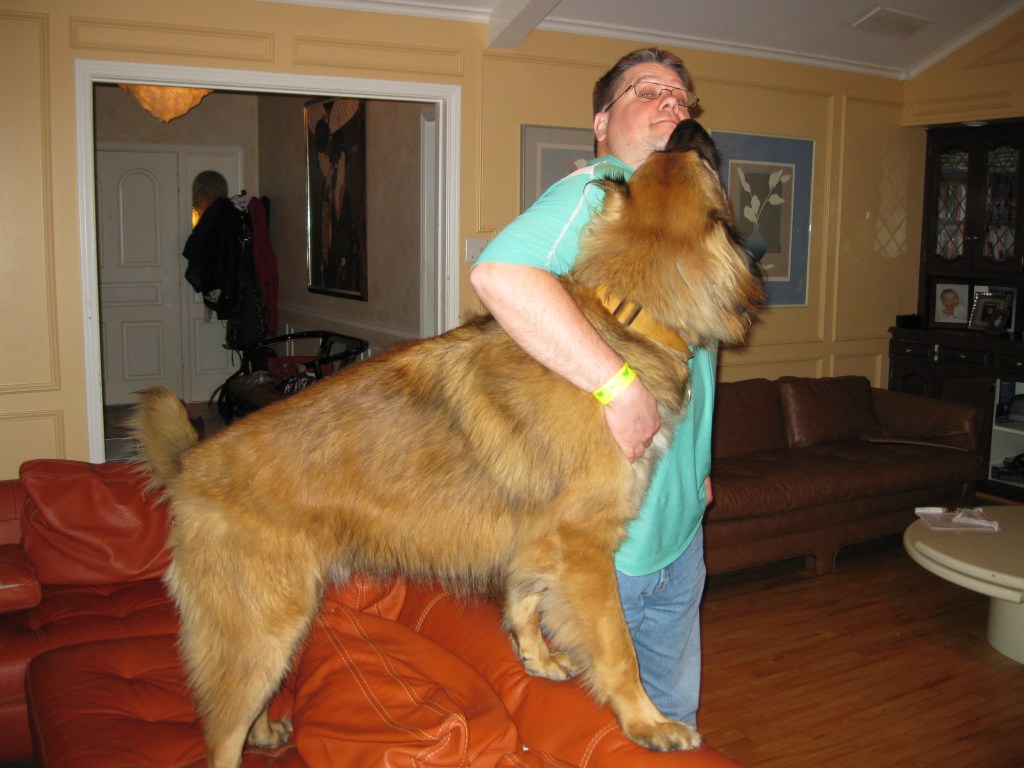
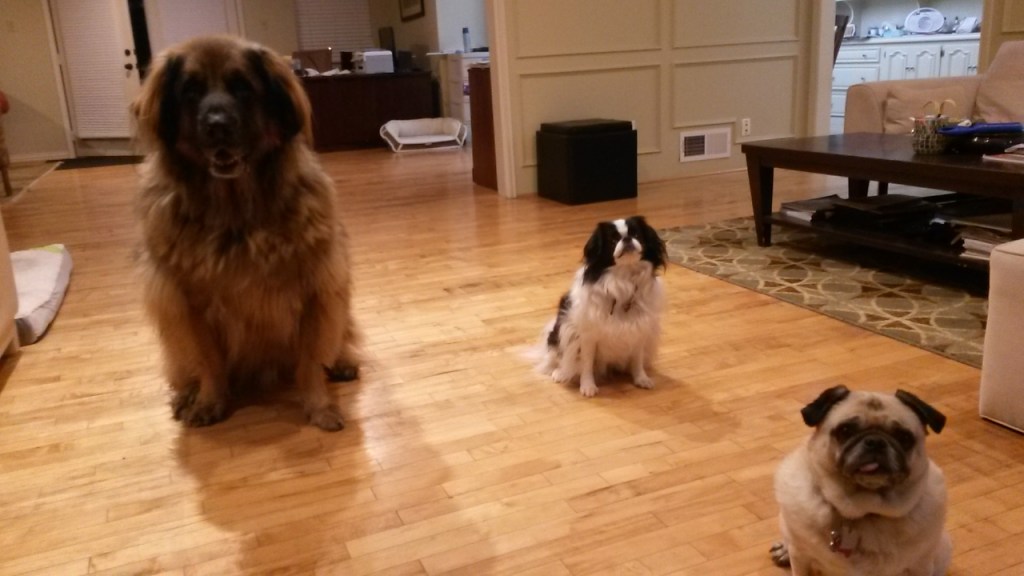
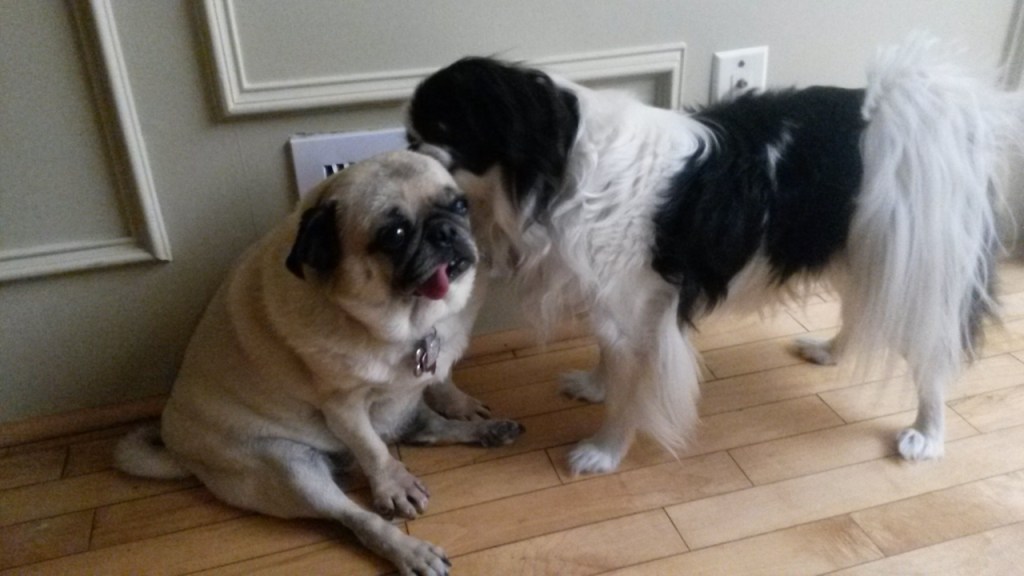
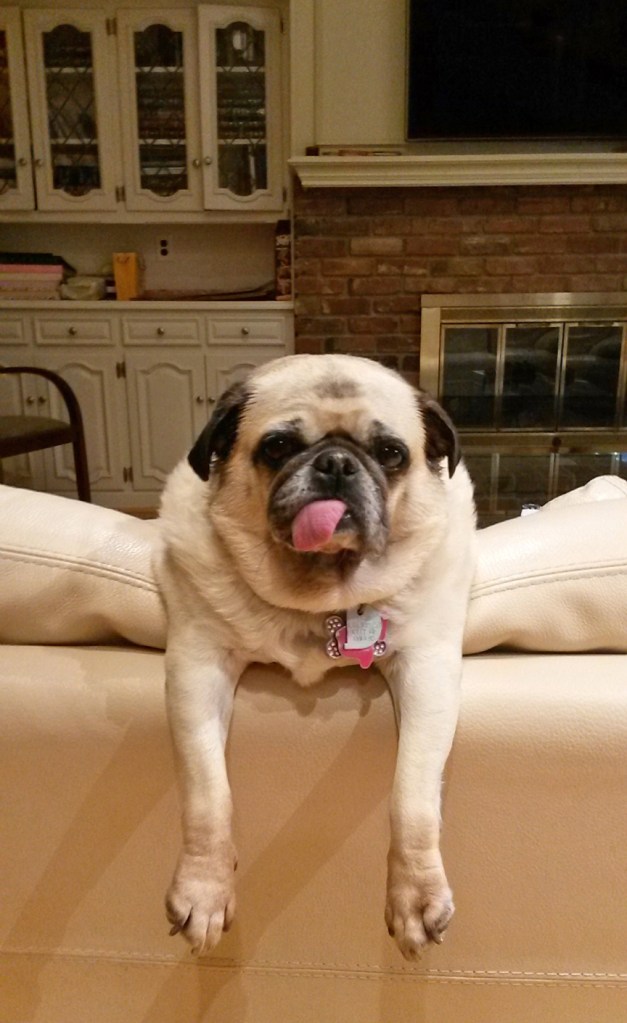
National Love Your Pet Day is an annual observance dedicated to celebrating animals. With this post I just wanted to show some photos of our current dog the mini-Australian Shepherd Rollo and our past dogs the Labrador Baylor (mix ¼ Rhodesian Ridgeback), the German Shepherd Baby, our big Leonberger Bronco, or Le Bronco von der Löwenhöhle, our Japanese Chin Ryu and our Pug Daisy. We love(d) them all and will forever be in our hearts.
Photos of our Dogs
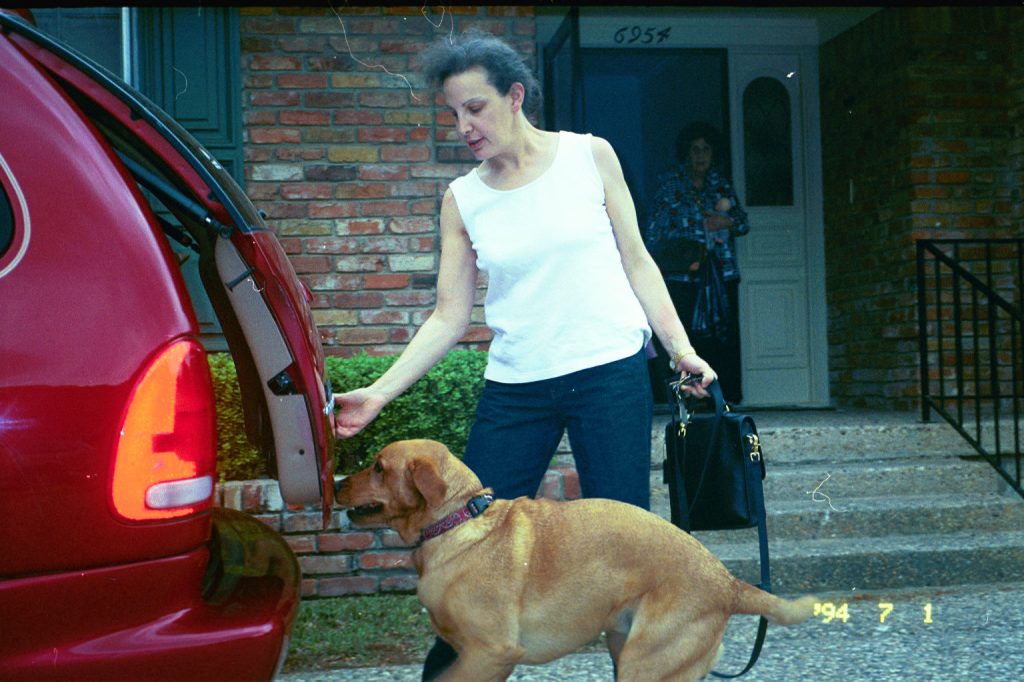
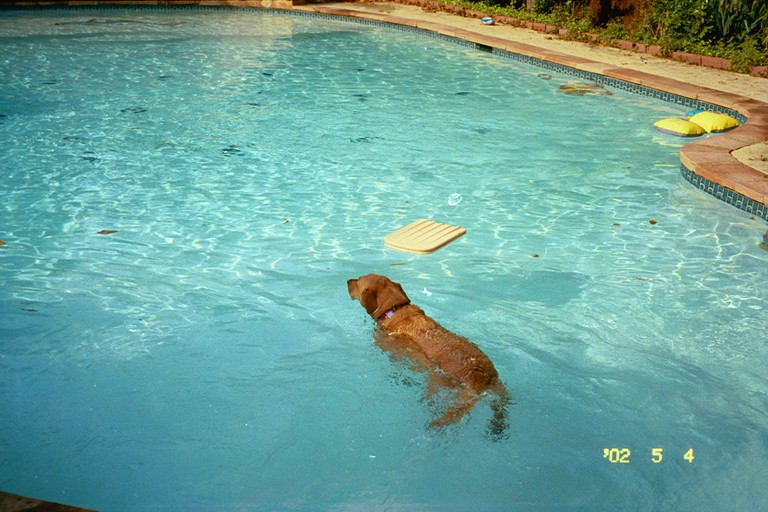
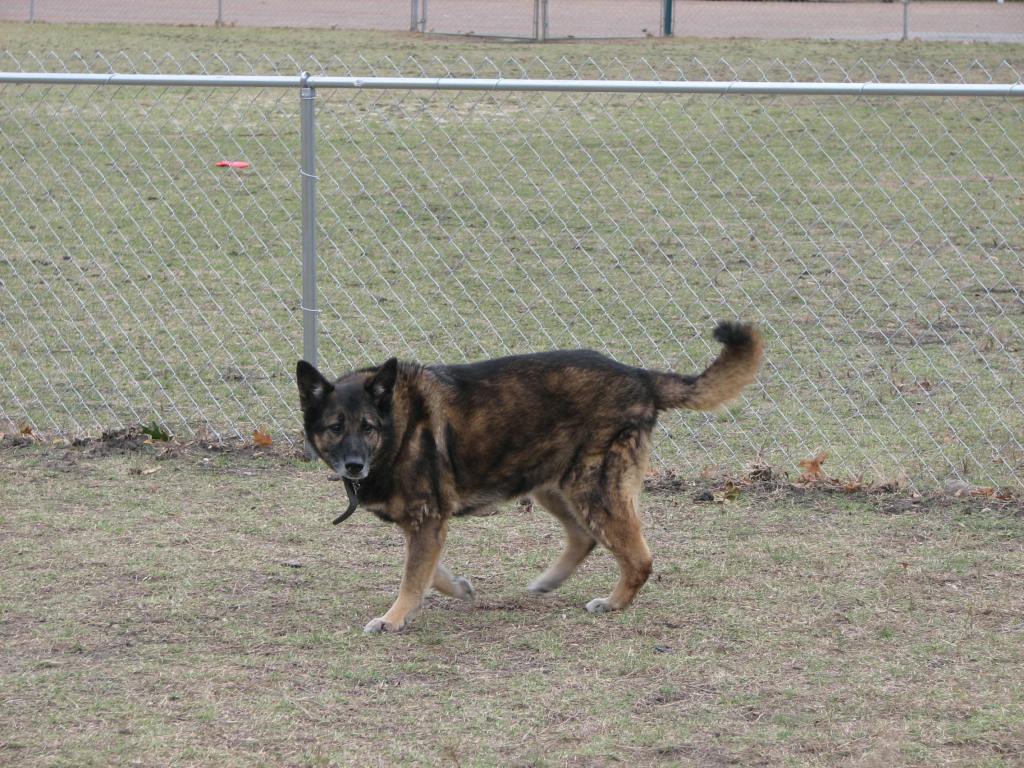
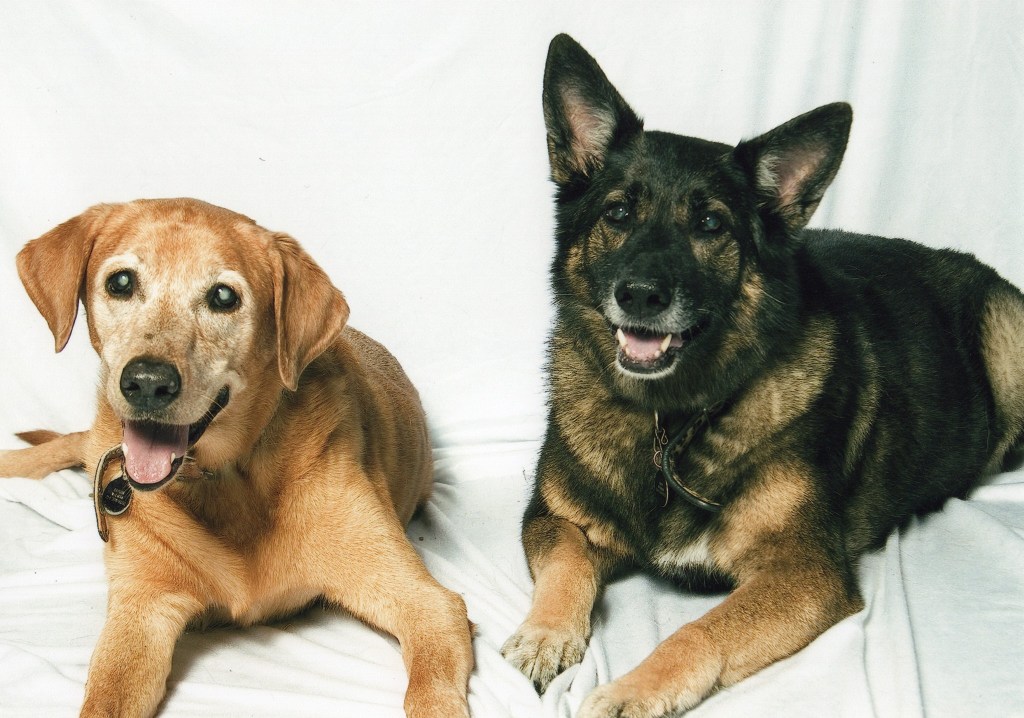
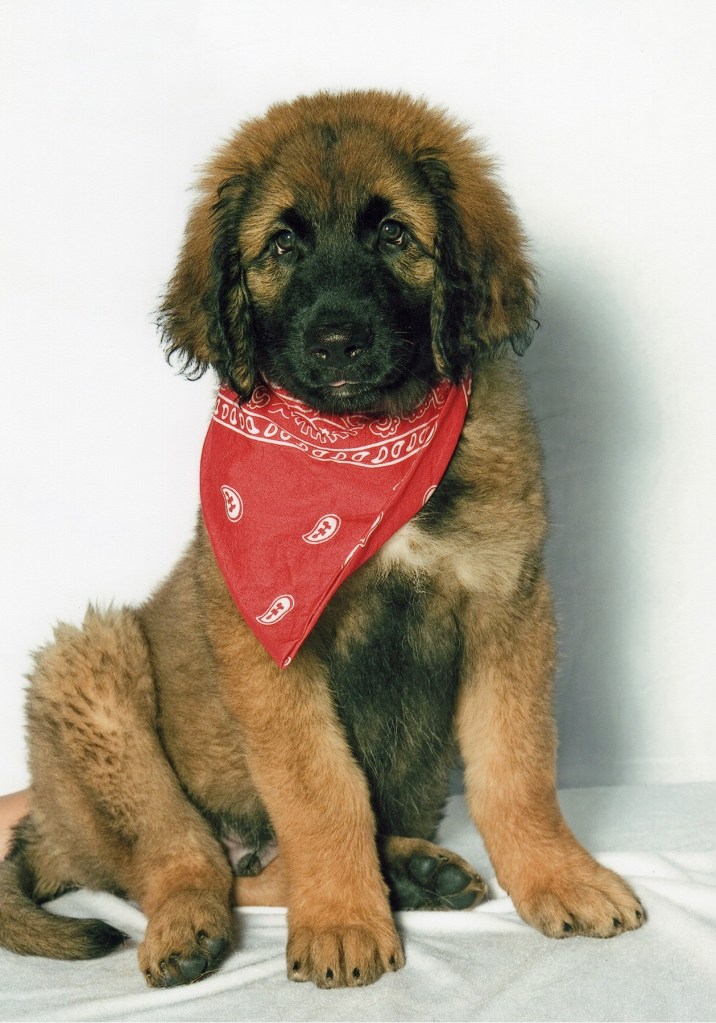
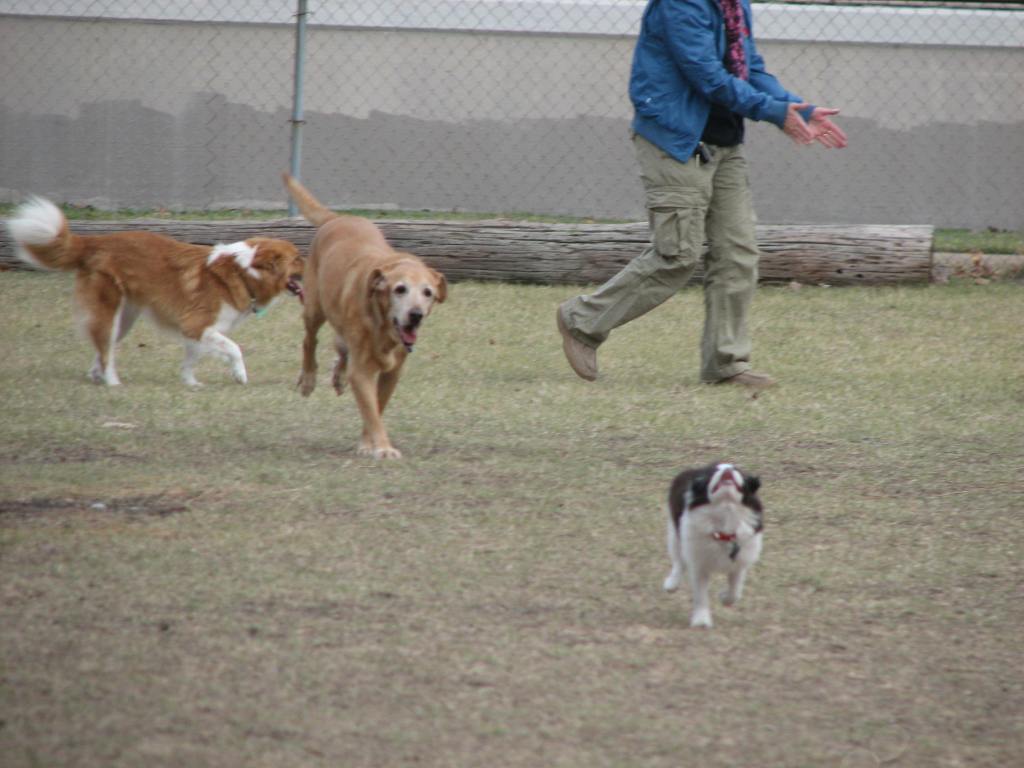
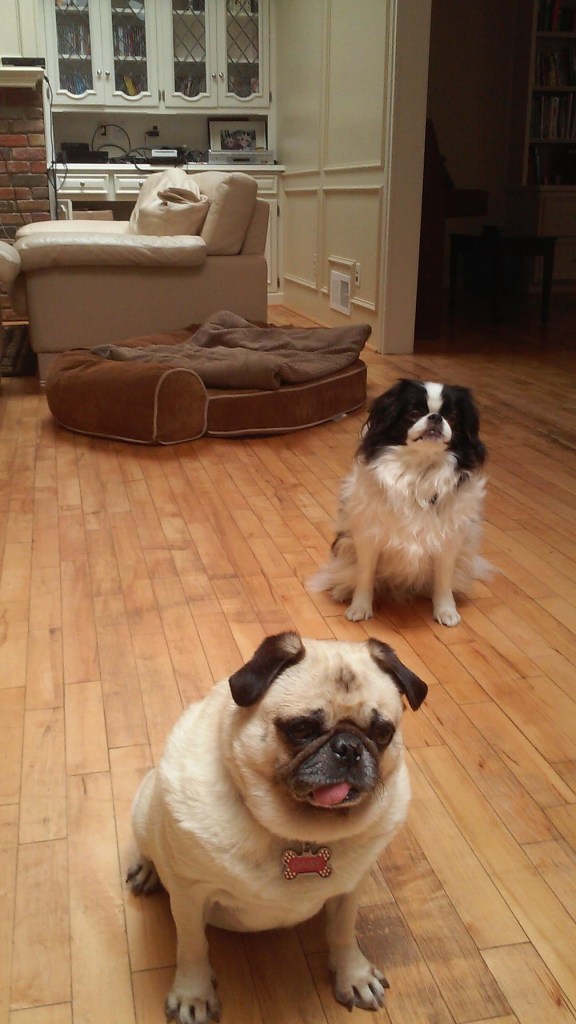
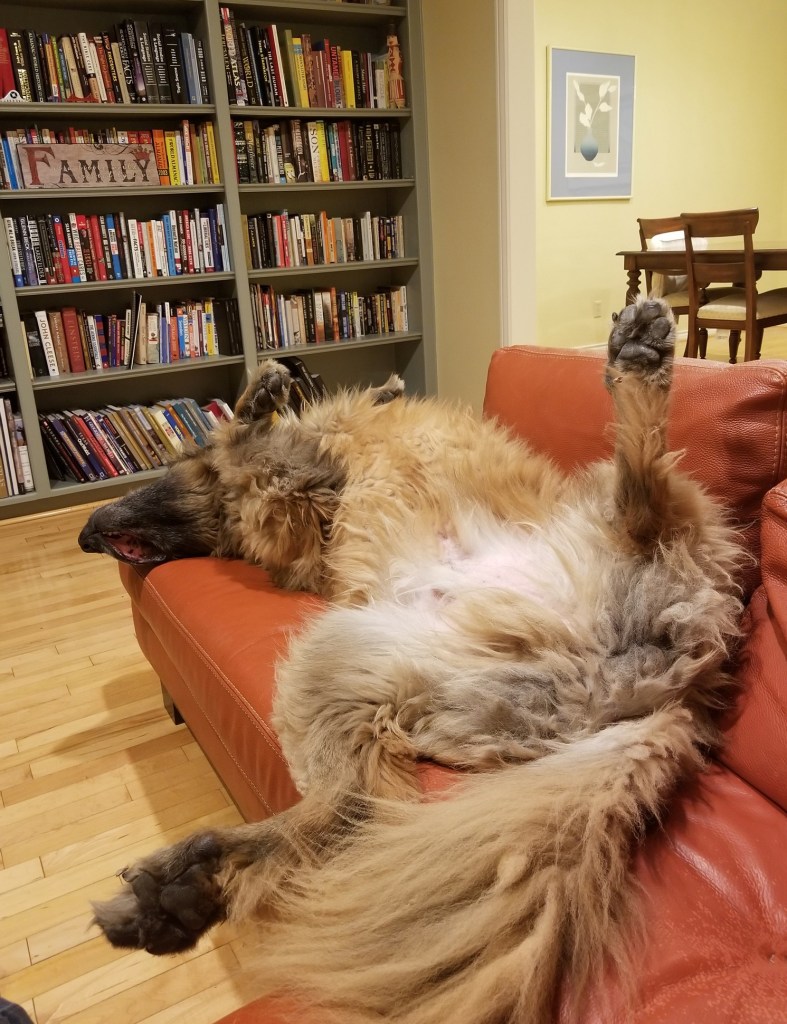
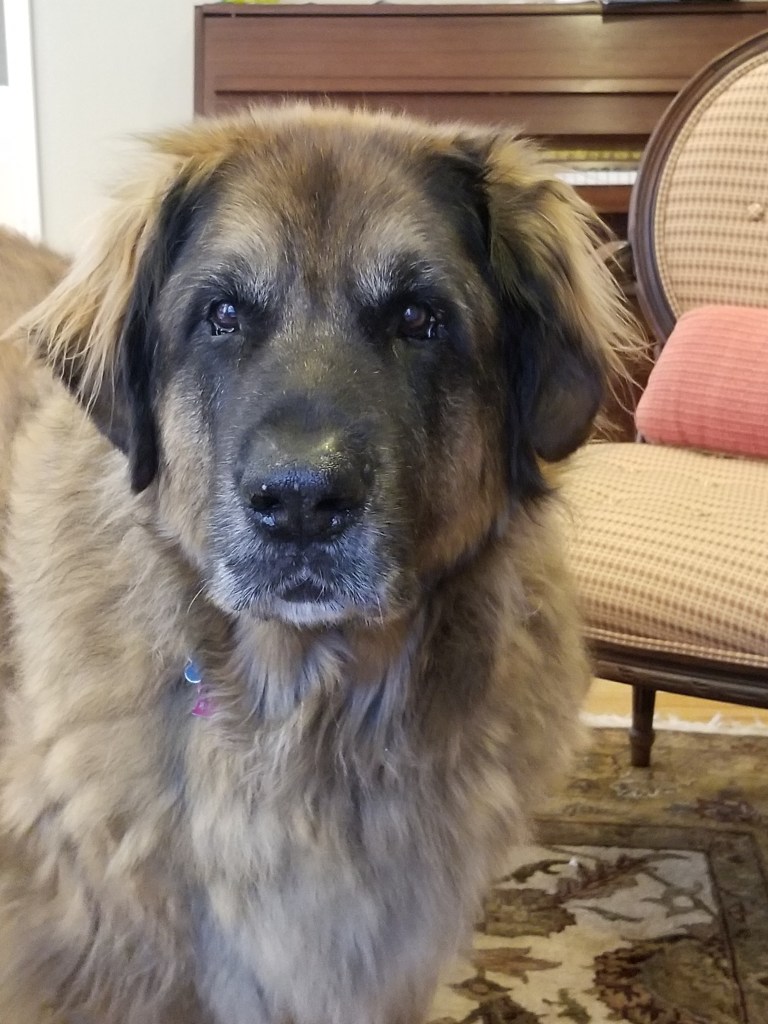
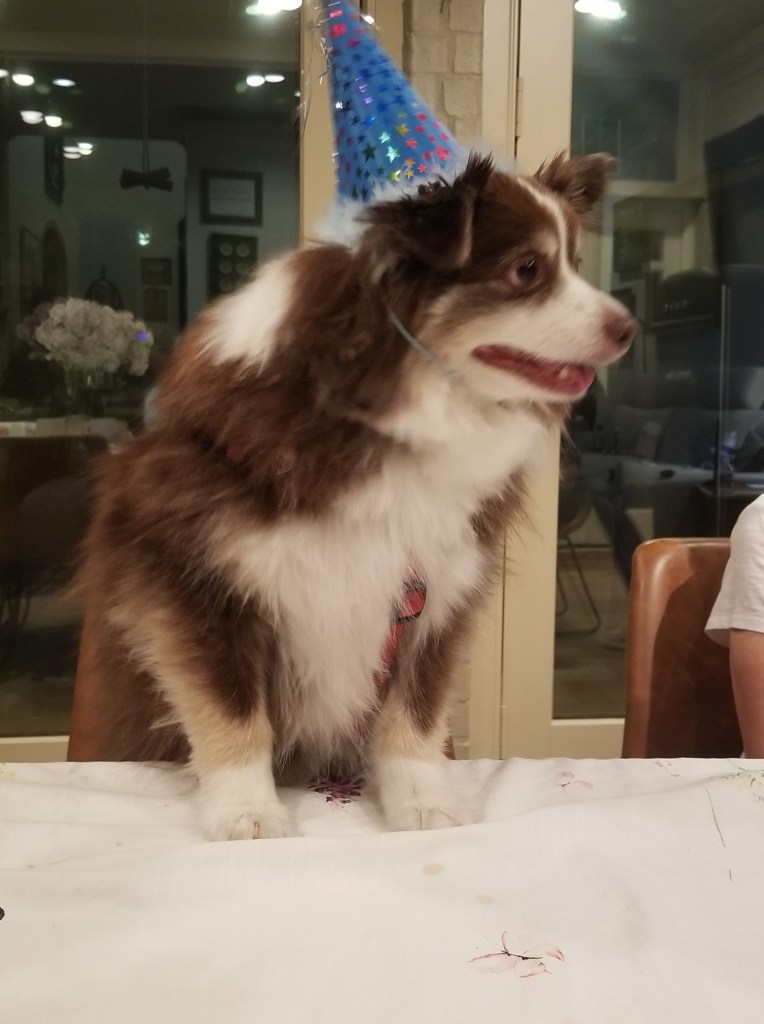
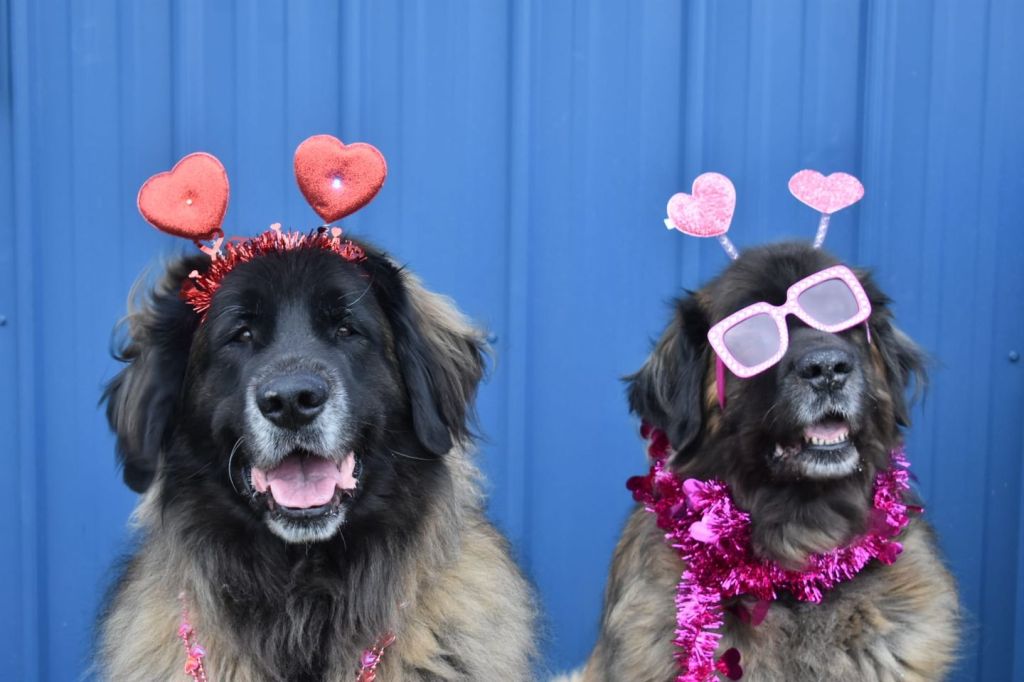
My wife Claudia and our first family dog the Labrador Baylor. This was back in the day. Our niece gave us Baylor because she was going to college. In turn she had gotten him from a shelter. He was a mix, one quarter Rhodesian Ridgeback and three quarters Yellow Labrador. He was able to jump up into the trunk of our van. Baylor was my first dog (not my wife’s first dog), and he taught me a lot about being a dog parent.Our Labrador Baylor is swimming in Claudia’s parents pool. He loved swimming, and he loved that pool and swam in it a lot.Our German Shepherd Baby at the dog park.Our Labrador Baylor and our German Shepherd Baby. Baylor was older in this picture. We had just gotten our Leonberger Bronco.This is our Leonberger Bronco (Le Bronco von der Löwenhöhle) at three months old.Bronco our Leonberger dog was a very affectionate dog.Our Leonberger Bronco (Le Bronco von der Löwenhöhle), our Japanese Chin Ryu, and our Pug Daisy in the front right.At the White Rock Lake dog park. Baylor our Labrador in the middle. He was old in this photo. Our Japanese Chin Ryu on the right.Our Pug Daisy and our Japanese Chin Ryu.Our Pug Daisy often sat in front of vents when she was cold. Daisy and our Japanese Chin Ryu were very close, like a couple. Daisy was obviously grieving when Ryu died, from cancer a bit early at only ten years old. Bronco was grieving as well.Daisy is exhausted after doing nothing for a whole day.Our Leonberger Bronco sleeping on our big red leather sofa.Our old Leonberger dog Bronco is coming up to me. Maybe it is dinner time.In December of 2018 we picked up our mini-Australian Shepherd Rollo. His friend was an English Bulldog.Our Leonberger Bronco is welcoming Rollo.Our pug Daisy and Rollo are saying hello.Our mini-Australian Shepherd puppy Rollo at 3 months old.Our mini-Australian Shepherd puppy Rollo and our Leonberger Bronco.Our mini-Australian Shepherd Rollo at the table on his seventh birthday. This is a more recent picture, from October of this year.Digory and Obi two old sweetheart Leonbergers sending all of your pets their love and sending all of you their love as well. Photo by Jen O’Keefe a friend.
Love Your Pets Every Day
Feel free to add links to your posts about pets in the comments. There is a maximum of two links per comment (how it is set up) so if you want to post many links you need to spread it out over many comments. I am late so don’t worry your comment being late. Any day is fine.
I had what is called post traumatic amnesia, which fortunately is temporary. Shutterstock ID: 1685660680 by MattL_Images
I have false memories, memories of things I know never happened. Not too long ago I made a post on my other blog about false memories and collective false memories, referred to as the Mandela Effect. You can read about that here. In addition to false memories I have memories that are strange, but that I know happened. I also have gaps, or holes in my memory. Memories that are lost to amnesia.
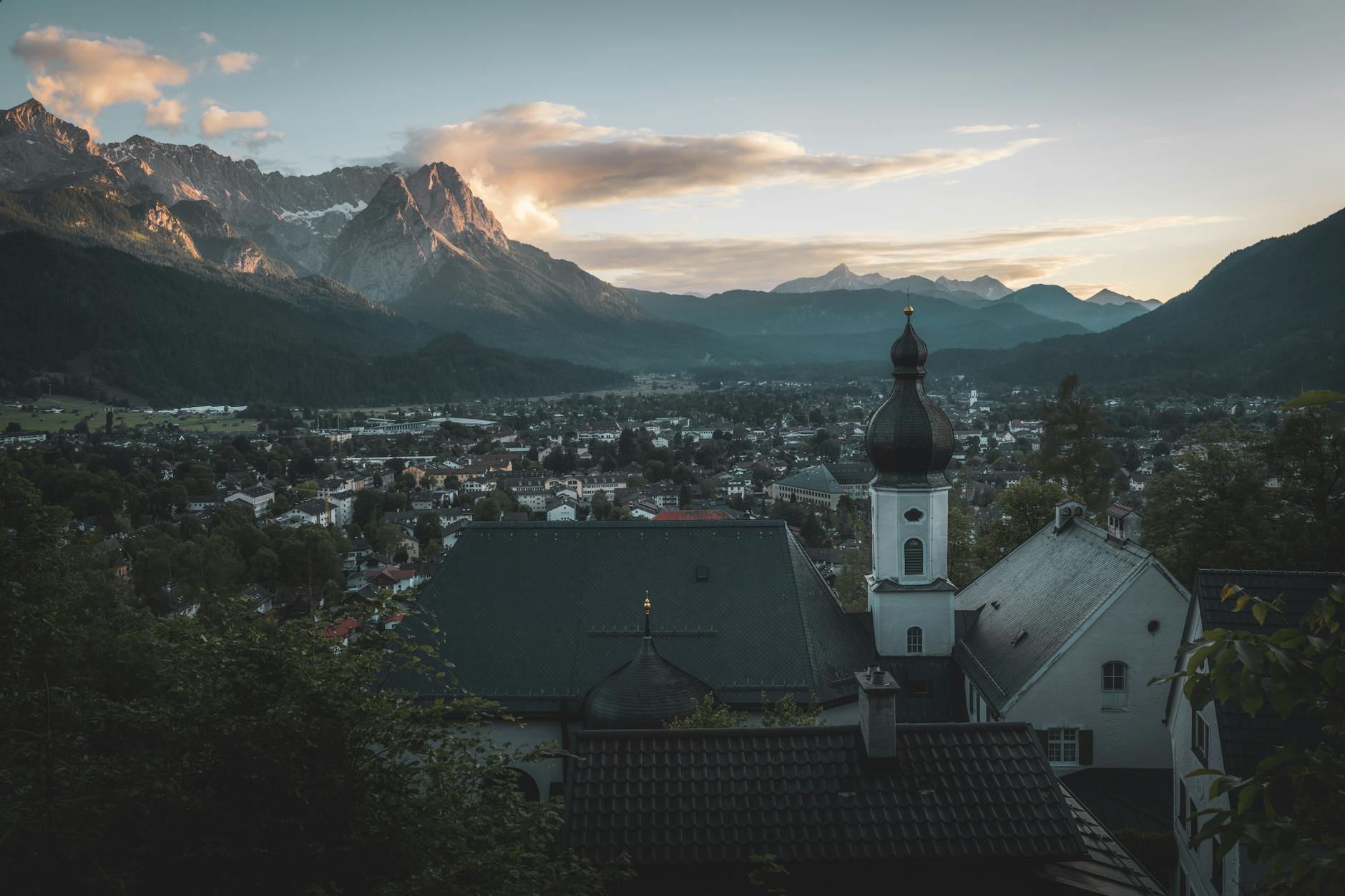
It all goes back to a ski accident that I had at the age of 22. We were a group of youngsters who rented a bus and drove from Sweden to Garmisch-Partenkirchen in Bavaria in Germany. Garmisch-Partenkirchen is a beautiful Bavarian town, and it is one of the most famous German ski resorts. Zugspitze, Germany’s highest mountain is nearby Garmisch-Partenkirchen providing for an impressive scenery.
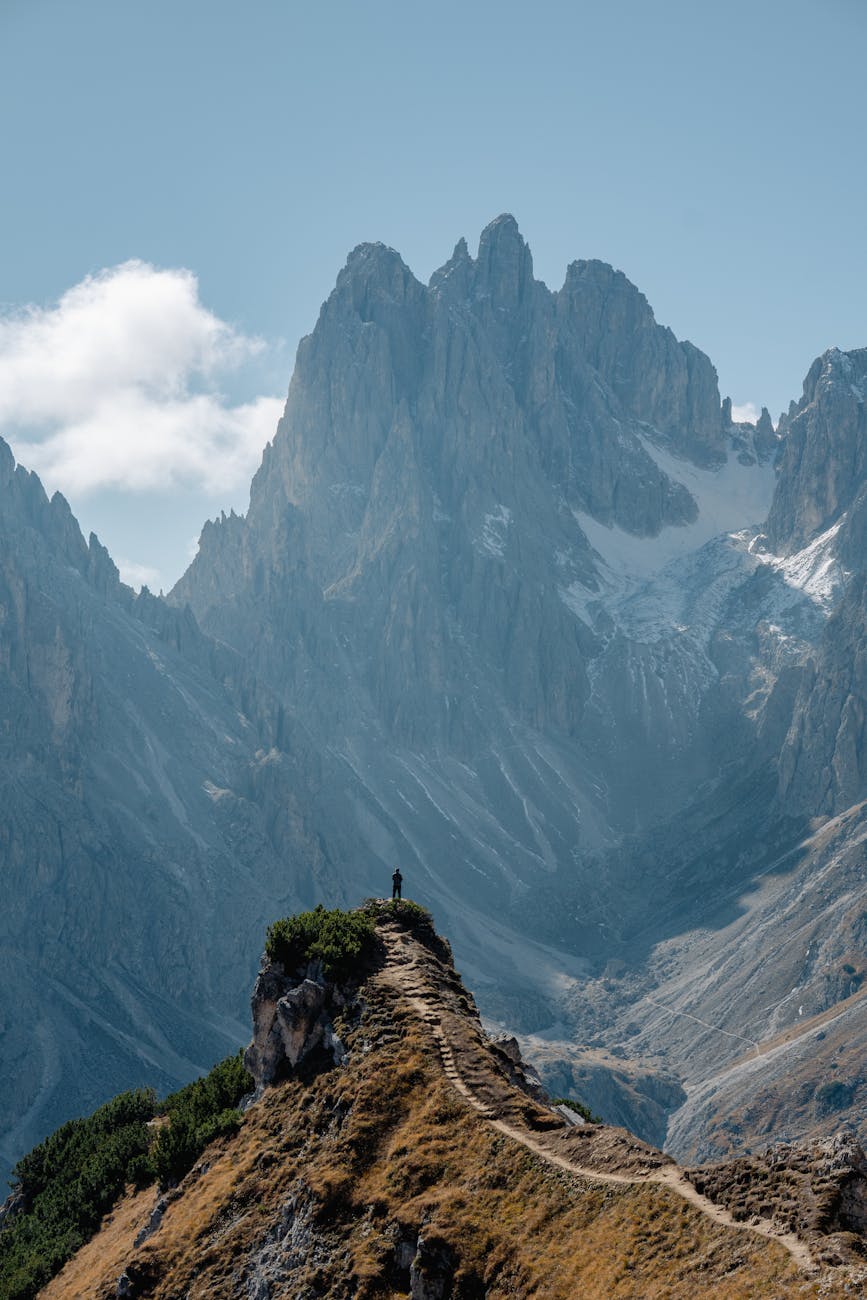
The town of Garmisch-Partenkirchen. Photo by op23 on Pexels.com
I love skiing and I challenged myself by skiing fast and selecting difficult slopes but on one of the days I made a very bad decision. I have no memories of what follows in this paragraph. It is what I have been told. There was a steep double black diamond slope with a sign stating that the conditions were dangerous and not to go down this slope. I did it anyway, and I fell badly, hit my head (I had no helmet), and I got a severe shoulder displacement. My arm was hanging on my back. I went looking for my skis and I tried to put them back on to continue skiing, but some Germans came down to stop me.
An ambulance was called, and they sent snowmobiles to pick me up. However, the snowmobiles were unable to get there, so they used a pist-machine to pick me up instead. On the way down I discovered my shoulder displacement several times. I was equally shocked every time. That’s how they knew that my short term memory was gone. I also had no pain sensation.
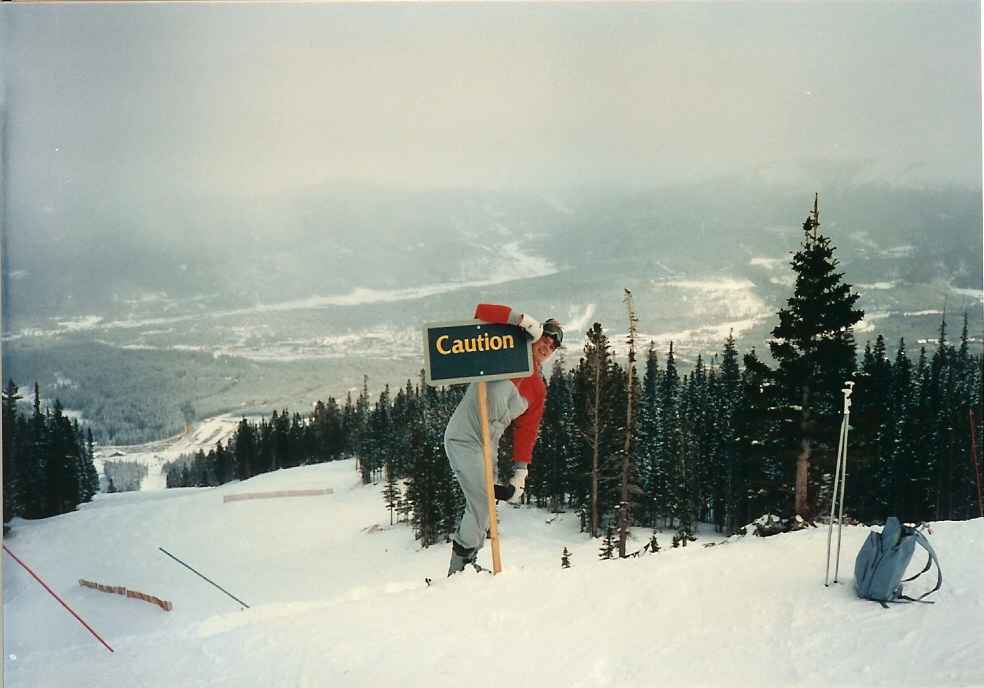
Zugspitze Germany’s highest mountain. Photo by Oskar Gross on Pexels.comThis is me in the ski slope when I was young. This is not Garmisch-Partenkirchen, it is Breckenridge, Colorado, but I don’t have any photos of Garmisch-Partenkirchen.
Amnesia
The next few days after the accident I suffered from amnesia. I did not remember where I was or my friends. I should say I still remembered my name. The first 2-3 days after the accident are essentially gone. However, I remember my friends coming into my room asking me questions such as “what’s my name?”, “do you remember me?”, “do you know where we are?”. The leader of the trip was devastated, and she was allegedly crying all day. You can say that I ruined the trip for everyone.
False Memories
On the way down to Germany, at the German border we changed out our studded tires because studded tires are not allowed on the autobahn. As my memories started to return on the third day after the accident my friends asked me what happened at the German border. I told them that we had studded tires (that part was correct) and that we all took pliers and removed the studs (that part was false). The funny thing is, to this day I remember us walking around the bus with pliers and removing studs. However, I know this never happened. How did that false memory get implanted in my head?
Strange Memories
I also have some strange memories from that trip that according to my friends happened. We stayed at a youth hostel. It was nice but it had a strange feature. There were loudspeakers in all the hallways. At 10:00PM on our first evening at the youth hostel the loudspeakers came on and someone started shouting in German “Achtung! Achtung! All guests must now wash their faces and brush their teeth and the lights started dimming and women and men had to go to their quarters. Music is forbidden. The loudspeaker came on every now and then barking orders at us in German and all windows and doors were locked electronically. Being from Sweden we followed orders, but we were laughing about it.
Suddenly new voices started shouting in the loudspeaker. It was younger sounding voices. It was still in German but this time we were told to rebel against the hotel management, we were told to refuse to go to bed, and they started singing fighting songs in German. Then, suddenly the loudspeakers went quiet. The hotel management was back. We all had to go to bed. It sounds like a false memory, but this one is real. Well, it was budget lodging after all.
Unpleasant Memories of Statistical Mechanics
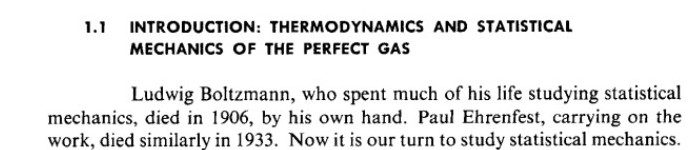
The epic opening of the first paragraph in David L. Goodstein’s States of Matter, a textbook on Statistical Mechanics.
The epic opening above from the textbook says : Ludwig Boltzmann, who spent much of his life studying statistical mechanics, died in 1906, by his own hand. Paul Ehrenfest, carrying on the work, died similarly in 1933. Now it is our turn to study statistical mechanics.
One day I found a book on Statistical Mechanics under my bed, and some very unpleasant memories came back to me. I had a final exam in Statistical Mechanics after our vacation. Statistical mechanics is a mathematical framework that applies statistical methods and probability theory to large assemblies of microscopic entities.
More specifically, you do statistical calculations over large sets of atoms and molecules to figure out the macro condition of the corresponding gas or material. For example, temperature corresponds to the average kinetic energy of atoms, and entropy refers to the logarithm of the number of microstates compatible with the system’s measurable macroscopic state, often loosely referred to as the disorder of the system. Statistical Mechanics includes classical Statistical Mechanics as well as its Quantum Mechanical counterpart, which is a lot more abstract and complicated.
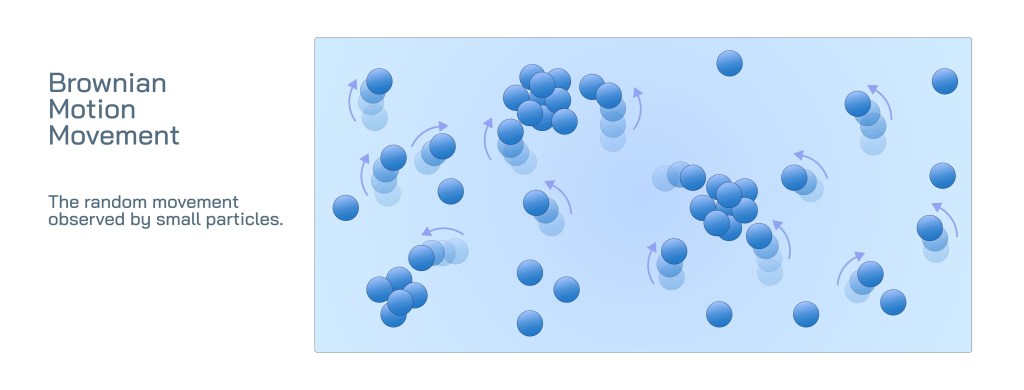
In 1905 Albert Einstein proved the existence of molecules and atoms using statistics and an observed phenomenon called Brownian motion. Shutterstock ID: 2334052703
Once I was back in Sweden, I went to see my professor, and I explained the situation to him: “hello professor, I had a ski accident, hit my head, and I lost my memory. My amnesia made me forget statistical mechanics.”. He could also see that my left arm was in a cast. I said, “could I take the exam a little later?” He asked me “are you right-handed or left-handed?” I said, “I am right-handed”. The professor answered, “well then you take the exam on time like everybody else”. It wasn’t what I wanted to hear but I took it, and I passed but not with flying colors.
It may seem like my professor was a bit harsh. However, I was later thinking that maybe he had a lot of students coming into his office claiming head injuries with amnesia. It was after all a final exam in statistical mechanics.
This is a Leonberger blog but sometimes I post about books that are not about Leonbergers but that are books that I love and want to promote. This is another one of those. I recently read “How Beautiful We Were” by Imbolo Mbue an author from Cameroon. It is a novel about Africans who had their land taken away by a dictatorial regime and given to a petroleum company called Pexton. They are being poisoned and oppressed and then massacred when they protest. It is a dark but hopeful tale. I read the hardcover version of the book.
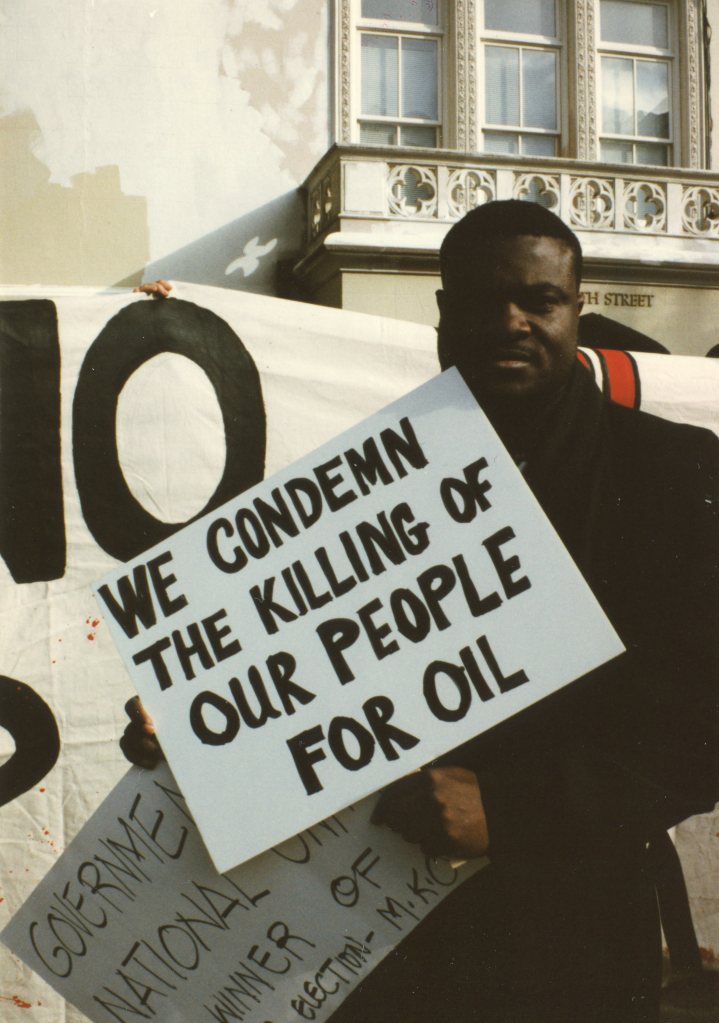
It is fiction; however, the story is inspired by the author’s own experiences. The story is especially influenced by the struggle of the Ogoni people in Nigeria who had their land impacted and exploited for oil by Shell and the Nigerian government. They protested peacefully but were met with violence. I did not mention this information in my Amazon review. Based on my experience I am pretty sure Amazon would not have accepted a review for a novel that mentioned names of real corporations and people. However, I can say it here.
Protest in Washington, D.C. against the killing of Saro-Wiwa and others, November 1995. Elvert Barnes from Silver Spring MD, USA, CC BY-SA 2.0 <https://creativecommons.org/licenses/by-sa/2.0>, via Wikimedia Commons.
Hardcover– Publisher : Random House (March 9, 2021), ISBN-10 : 0593132424, ISBN-13 : 978-0593132425, 384 pages, Item Weight : 1.3 pounds, dimensions 6.3x 1.2 x 9.5 inches, it cost $11.95 on US Amazon. Click here to order it from Amazon.com.
Paperback – Publisher : Random House Trade Paperbacks (February 1, 2022), ISBN-10 : 0593132440, ISBN-13 : 978-0593132449, 384 pages, Item Weight : 2.31 pounds, dimensions 5.1 x 0.82 x 7.98 inches, it cost $10.10 on US Amazon. Click here to order it from Amazon.com.
Kindle – Publisher : Random House (March 9, 2021), ASIN : B07XN8W4BC, ISBN-13 : 978-0593132432, 364 pages. It is currently 8.99 on Amazon.com. Click here to order it from Amazon.com.
Audibook – Publisher : Random House (March 9, 2021), ASIN : B081K5518W, Listening Length : 14 hours and 7 minutes. It is currently 0.99 on Amazon.com with membership. Click here to order it from Amazon.com.
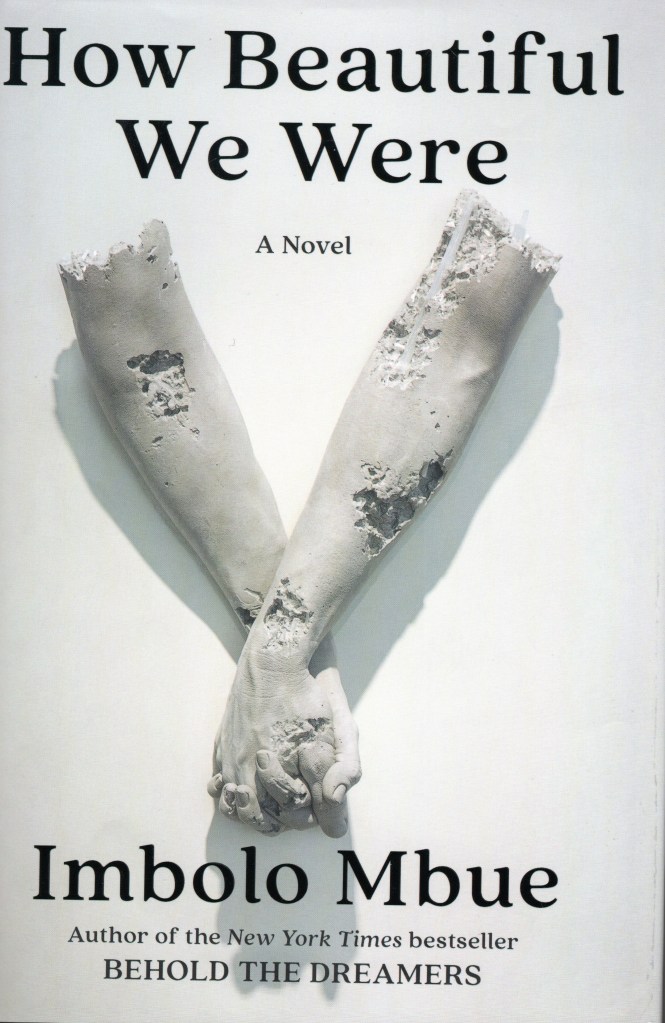
Front cover of How Beautiful We Were by Imbolo Mbue. Click here or the picture to visit the Amazon.com page for the hardcover version of the book.
Amazon’s description of the book
A fearless young woman from a small African village starts a revolution against an American oil company in this sweeping, inspiring novel from the New York Times bestselling author of Behold the Dreamers.
ONE OF THE TEN BEST BOOKS OF THE YEAR: The New York Times, People • ONE OF THE BEST BOOKS OF THE YEAR: The New York Times Book Review, The Washington Post, Esquire, Good Housekeeping, The Christian Science Monitor, Marie Claire, Ms. magazine, BookPage, Kirkus Reviews
“Mbue reaches for the moon and, by the novel’s end, has it firmly held in her hand.”—NPR
We should have known the end was near. So begins Imbolo Mbue’s powerful second novel, How Beautiful We Were. Set in the fictional African village of Kosawa, it tells of a people living in fear amid environmental degradation wrought by an American oil company. Pipeline spills have rendered farmlands infertile. Children are dying from drinking toxic water. Promises of cleanup and financial reparations to the villagers are made—and ignored. The country’s government, led by a brazen dictator, exists to serve its own interests. Left with few choices, the people of Kosawa decide to fight back. Their struggle will last for decades and come at a steep price.
Told from the perspective of a generation of children and the family of a girl named Thula who grows up to become a revolutionary, How Beautiful We Were is a masterful exploration of what happens when the reckless drive for profit, coupled with the ghost of colonialism, comes up against one community’s determination to hold on to its ancestral land and a young woman’s willingness to sacrifice everything for the sake of her people’s freedom.
This book is the story of the traditional animists people of Kosawa a fictional village in Africa. Their land has been given to an American oil company called Pexton by His Excellency, the cruel dictator of the unnamed country where they live. They continue living on their land, but oil spills, chemical spills, and accidents ruin the soil, kill their crops, and kills their children. They suffer terribly but at first, they just try to plead with Pexton but as things get worse, they begin protesting and eventually they take more forceful action. His Excellencies soldiers respond with extreme cruelty and massacres. News reports in western media about the situation are called fake news by His Excellency and his government. Their situation seems hopeless but Thula the daughter of Sahel who is an educated woman organize an uprising.
Over 2-3 generations we follow the lives of the villagers of whom several act as narrators for the story including Bongo, Sahel, Thula, Yaya, Juba and the children. We see the events through their eyes. There are also letters from some of them which carry the narrative. You really get to know the main characters well and you empathize and care for them. I felt like I knew them, their good sides and their weaknesses. In other words, the character development was excellent. The villagers were often superstitious. However, not only did that element add authenticity, there are a lot of superstitions here in the west that’s widely accepted, such as astrology and homeopathy.
Imbolo Imbue is a great author and she is a great storyteller who writes beautiful lyrical prose filled with emotion. Even though this is a fictional story it is inspired by real events that the author witnessed in her native country. It became obvious to me that much of what she was writing about was experienced. The book was sad, many people died, often cruel deaths, and there were torture, rapes, and children dying. On the other hand, the book was also hopeful, and the action was fast paced and suspenseful. It was a mesmerizing and perhaps a shocking story.
In summary, this book is captivating, emotive and beautifully written. It tells a gripping and authentic story despite being fiction. It feels real and it opens your eyes to the struggles of victims of oil exploitation. I loved this book and I highly recommend it.
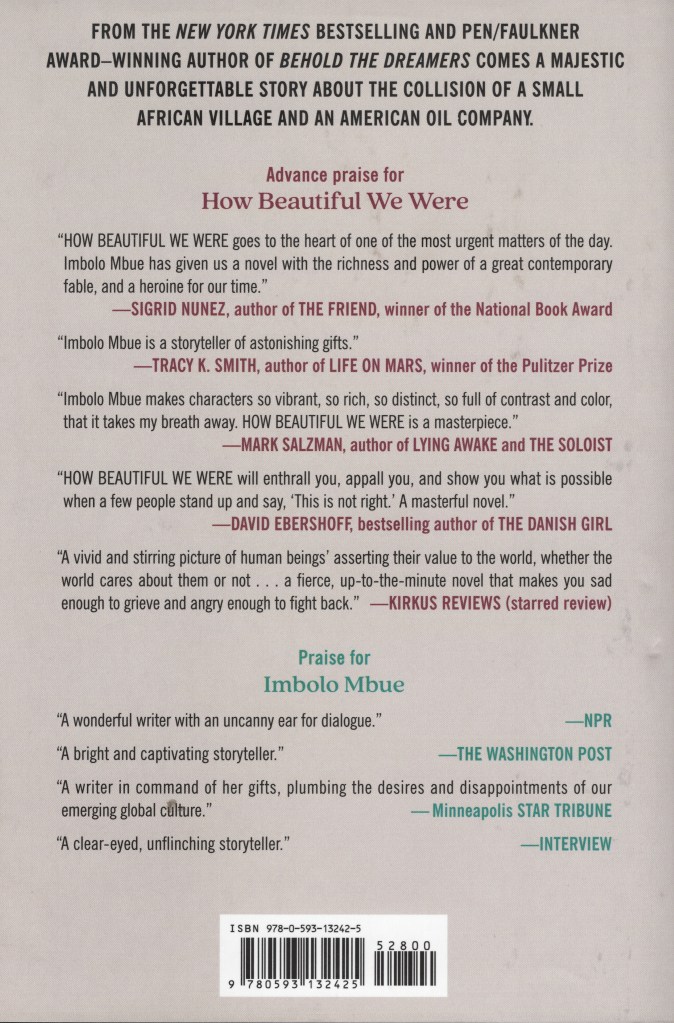
Back cover of How Beautiful We Were by Imbolo Mbue. Click here or the picture to visit the Amazon.com page for the paperback version of the book.
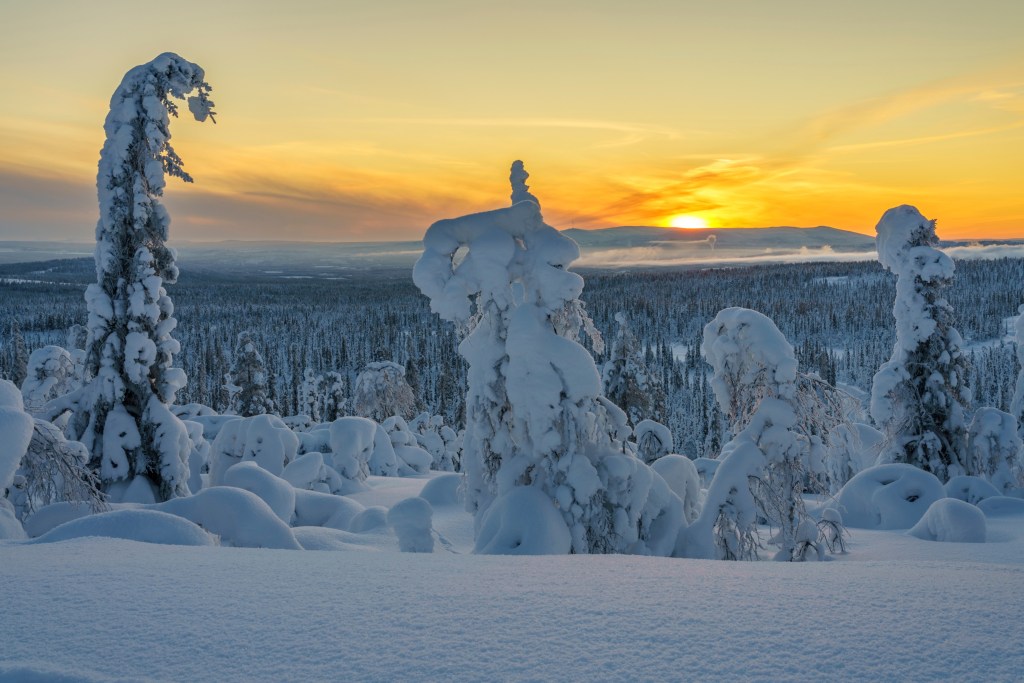
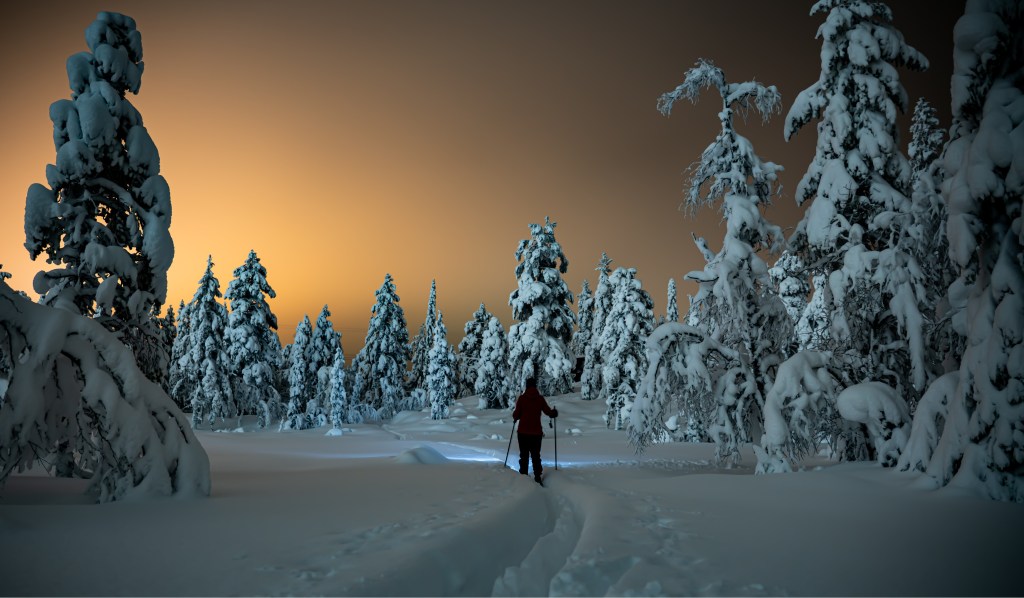
I grew up in northern Sweden (Norrland), which means that I saw a lot of snow. I loved playing in the snow, building snow castles, snow tunnels, throwing snowballs, building snowmen, going sledding and going cross country skiing. I don’t remember being cold. I had warm clothes on, and I often stayed out very late playing in the snow. Now I live in Texas where snow is very rare.
Snow on the trees, Gällivare county, Swedish Lapland, Sweden Shutterstock Asset id: 2035482680 by Mats LindbergCross country skiing in Sweden Shutterstock Asset id: 1888204651 by Henrik A. Jonsson
Later in life, maybe at the age of 12-13 I also started doing downhill skiing / slalom. We had four ski resorts close to my hometown Örnköldsvik. I can add that the snow packed northern forests can be very beautiful. Northern Sweden is also a very dark place in winter, being close to or above the arctic circle. Therefore, I also watched some spectacular night skies and auroras from my snow castles. The Milky Way and even the Andromeda Galaxy were visible. One time as I was sitting in the snow, I saw a very large meteor moving across the sky. It had a tail of fire and was not moving too fast. I believe I could see the piece of rock, but I am not sure. In any case, it put up a show.
Milky way sky on dark background, and a lot of stars. Spectacular night sky in the polar winter. Asset id: 2524020369 by MR.PRAWET THADTHIAMAurora Borealis are often spectacular in the polar regions, especially during the polar night. Asset id: 2499746583 by HappyVibeArt
Unfortunately, according to my brother, this winter my hometown Örnsköldsvik did not have snow for Christmas. According to Science Daily the data from weather stations in northern Sweden indicates that the snow season has decreased by over two months in a 30-year span and according to the National Library of Medicine the cold season in northern Finland (next doors) has gotten warmer with reduced snow cover. This is quite noticeable and the reindeer are suffering as a result.
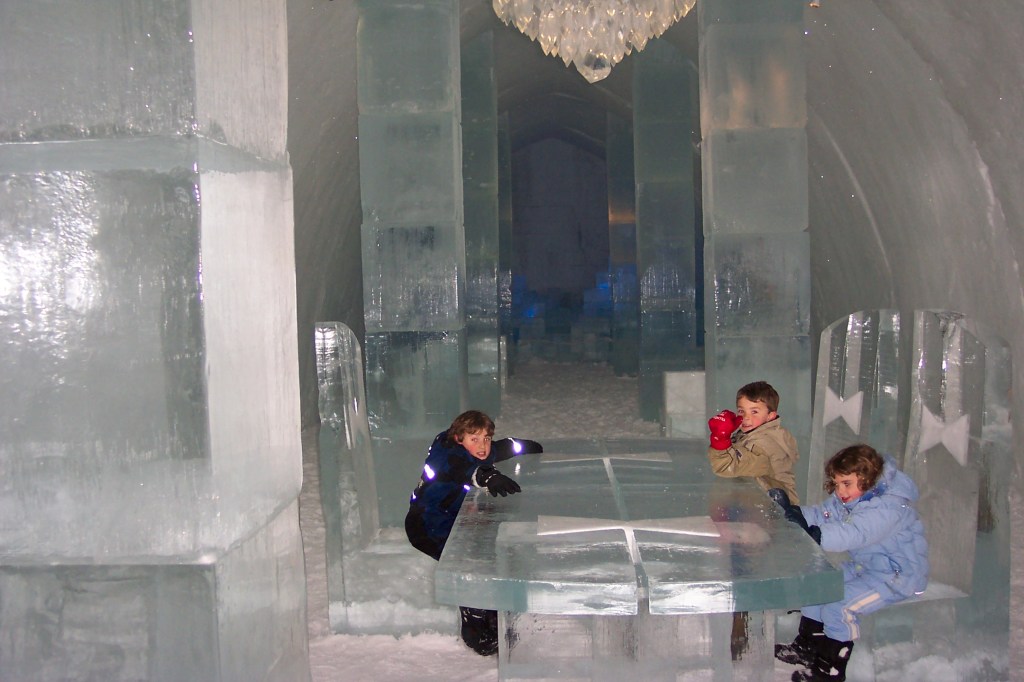
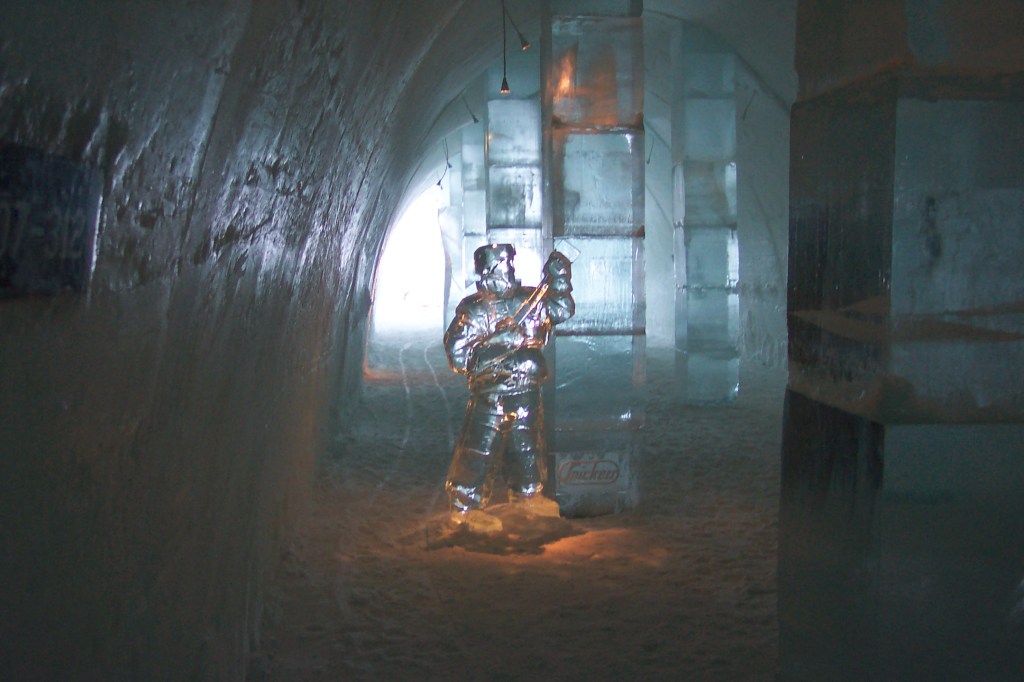
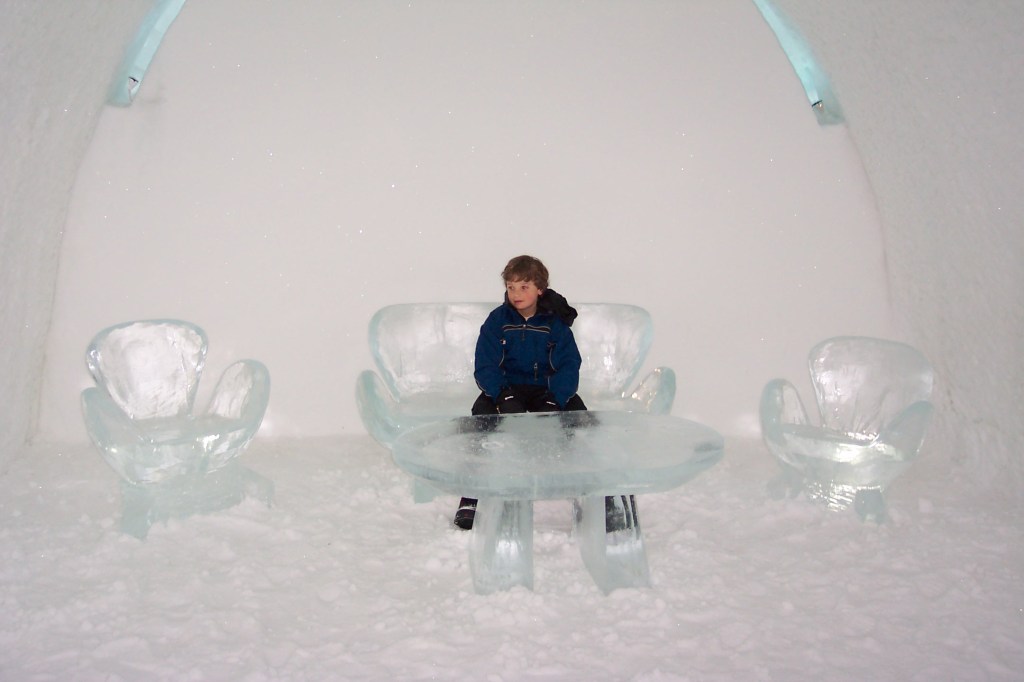
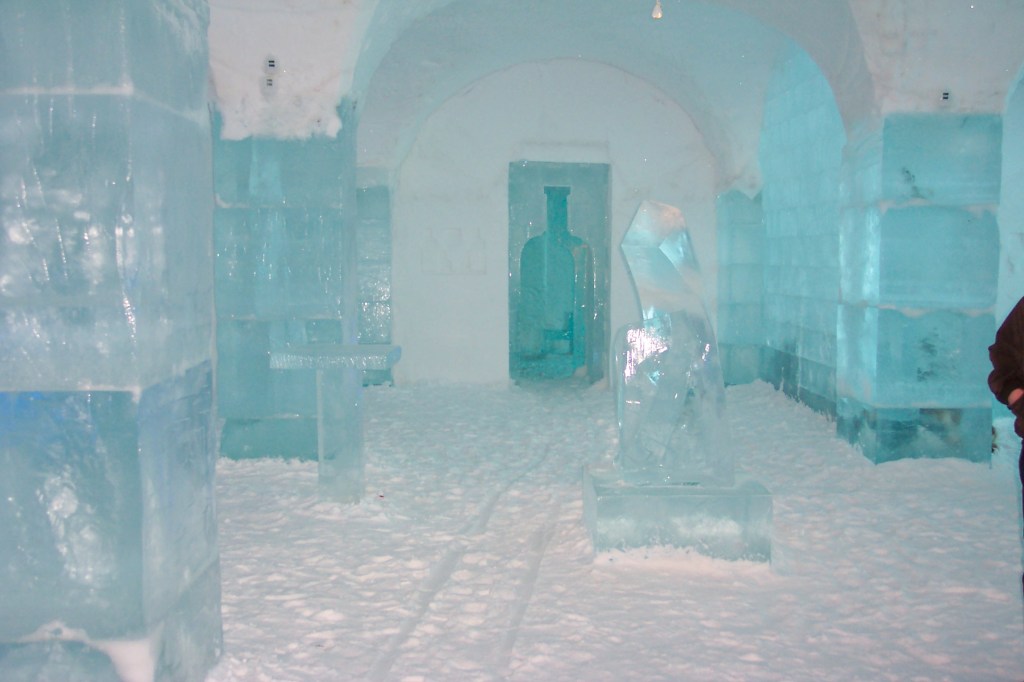
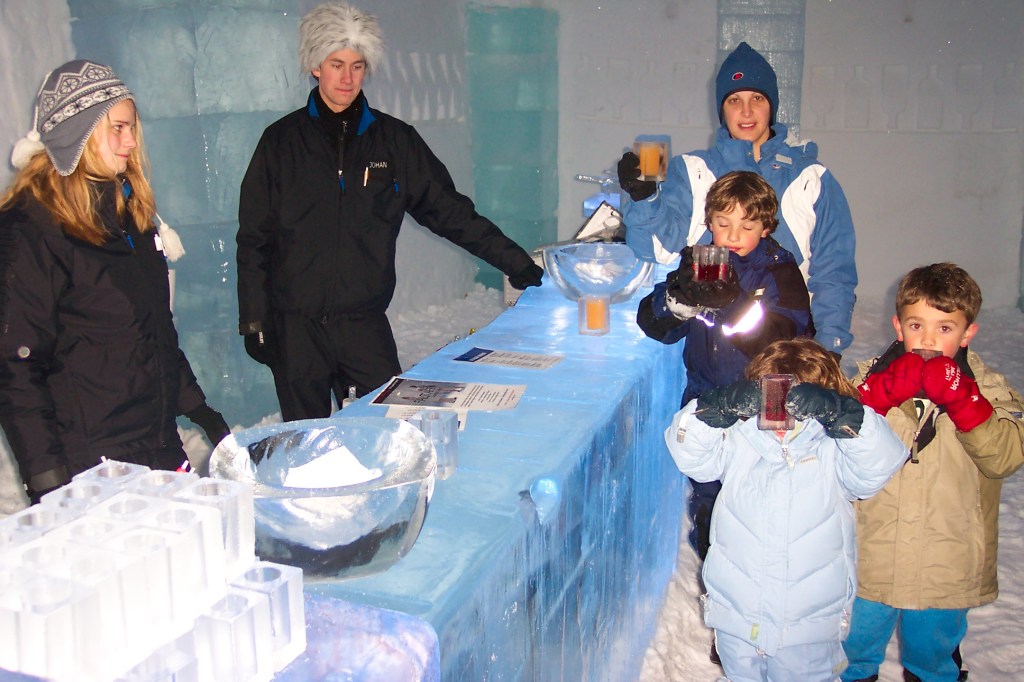
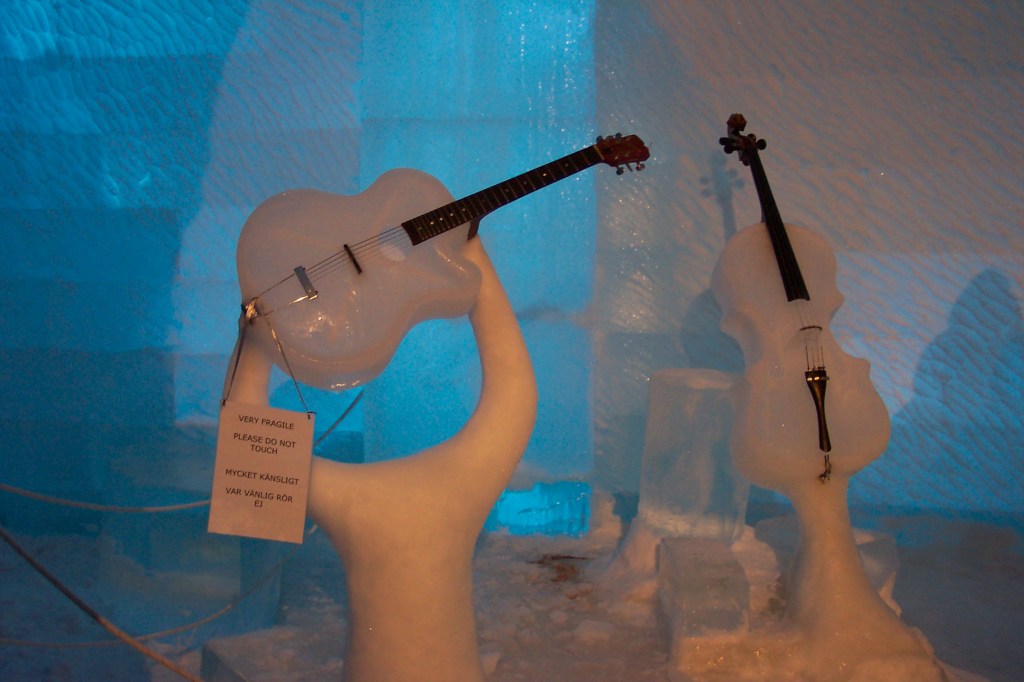
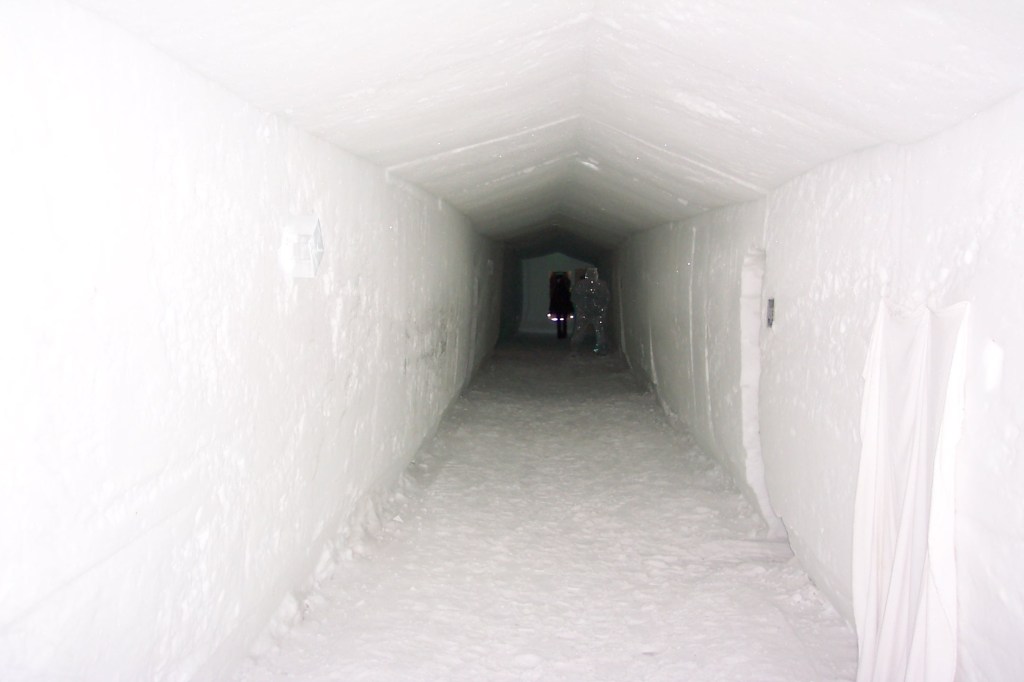
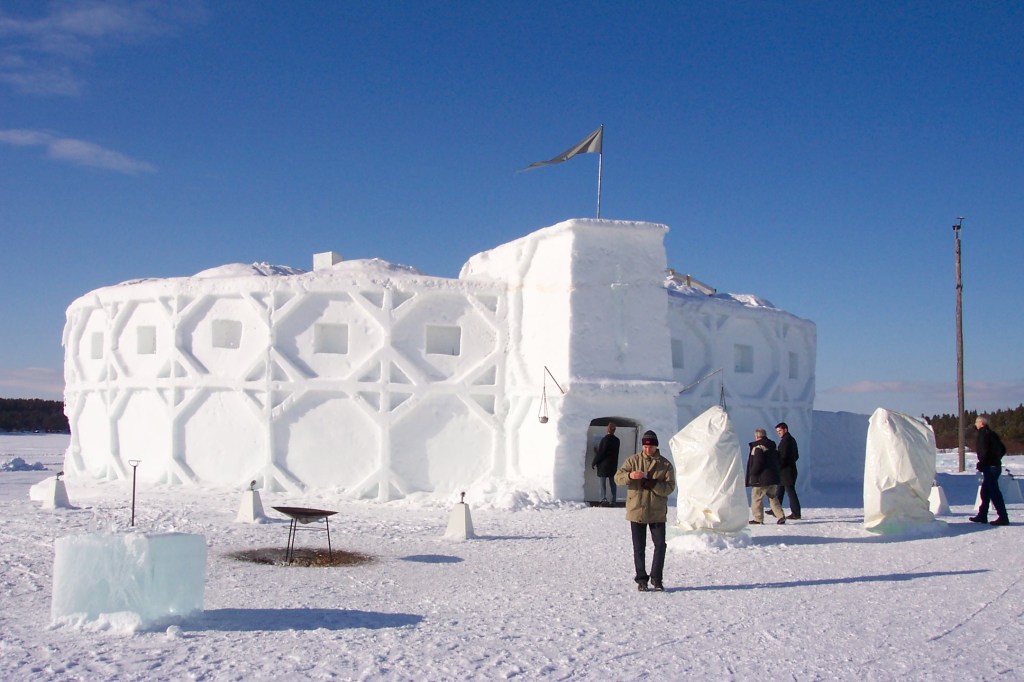
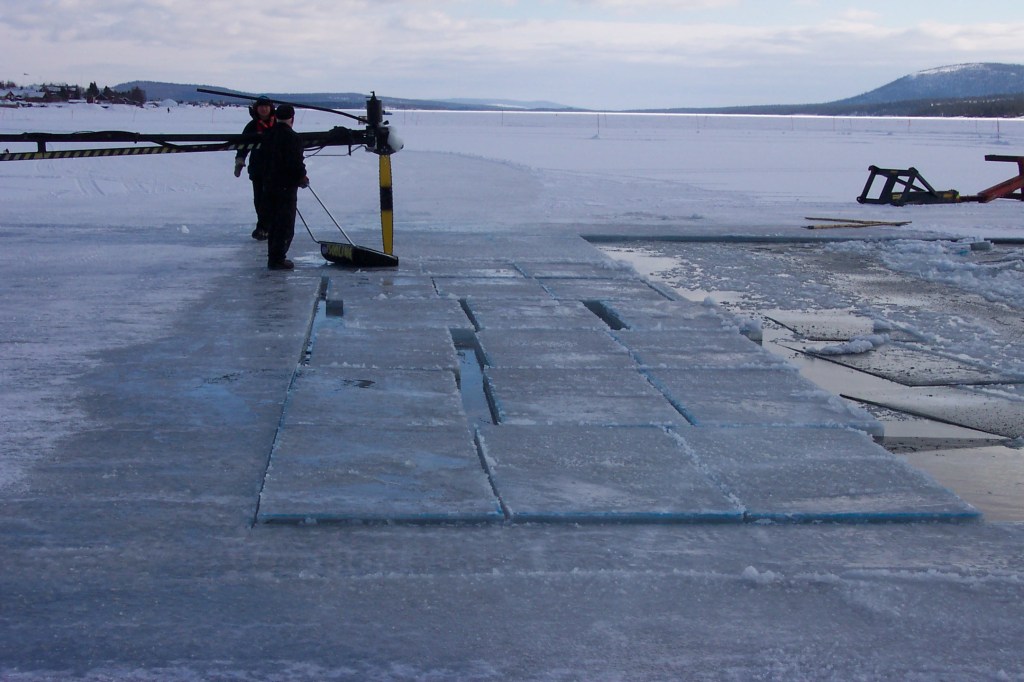
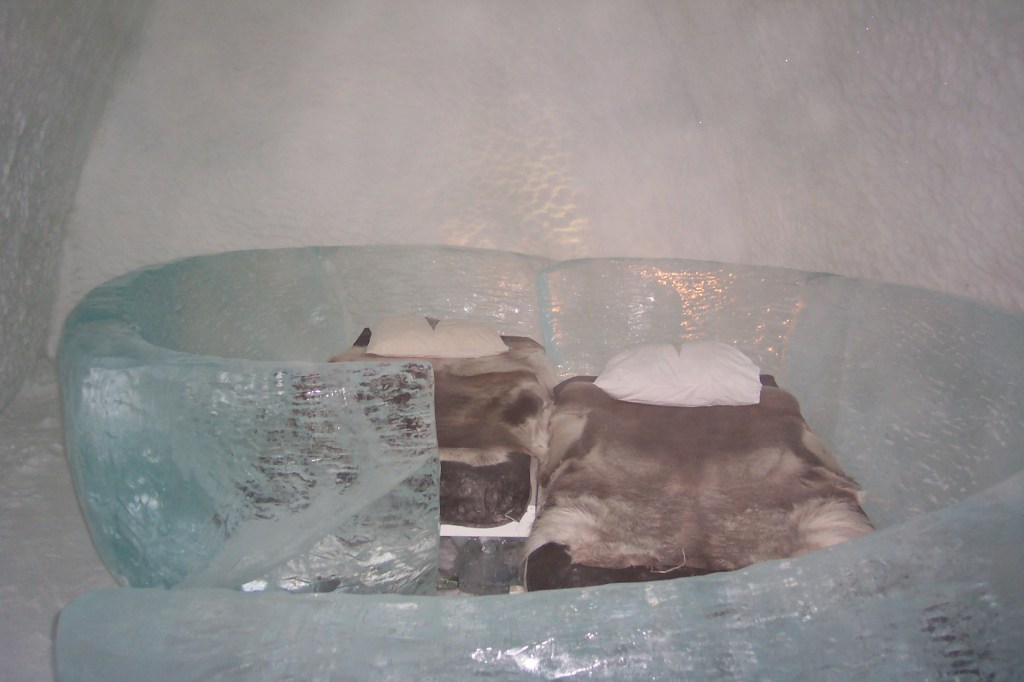
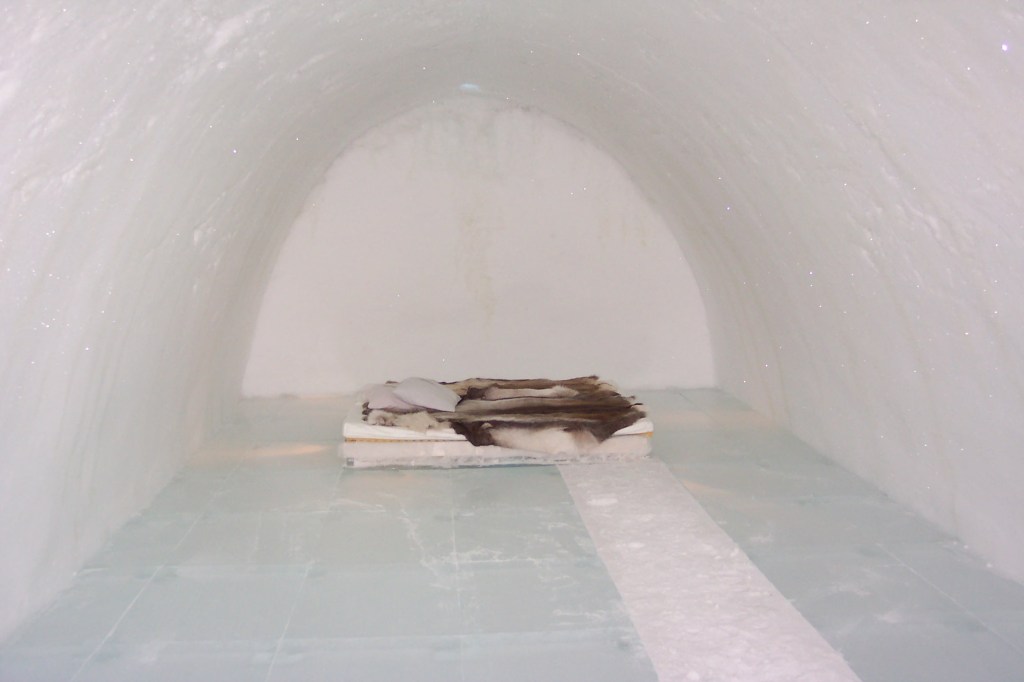
I should say that Jukkasjärvi is located north of the arctic circle and is typically very cold in winter. However, you sleep in very warm sleeping bags on top of ice blocks covered by reindeer hides. The ice hotel itself does not have any bathroom, but they have an adjacent wood building with bathrooms and showers. They also have rooms for people who don’t want to sleep in a cold ice room. We visited the ice hotel in Jukkasjärvi as a family in 2004 and I took a lot of photos.
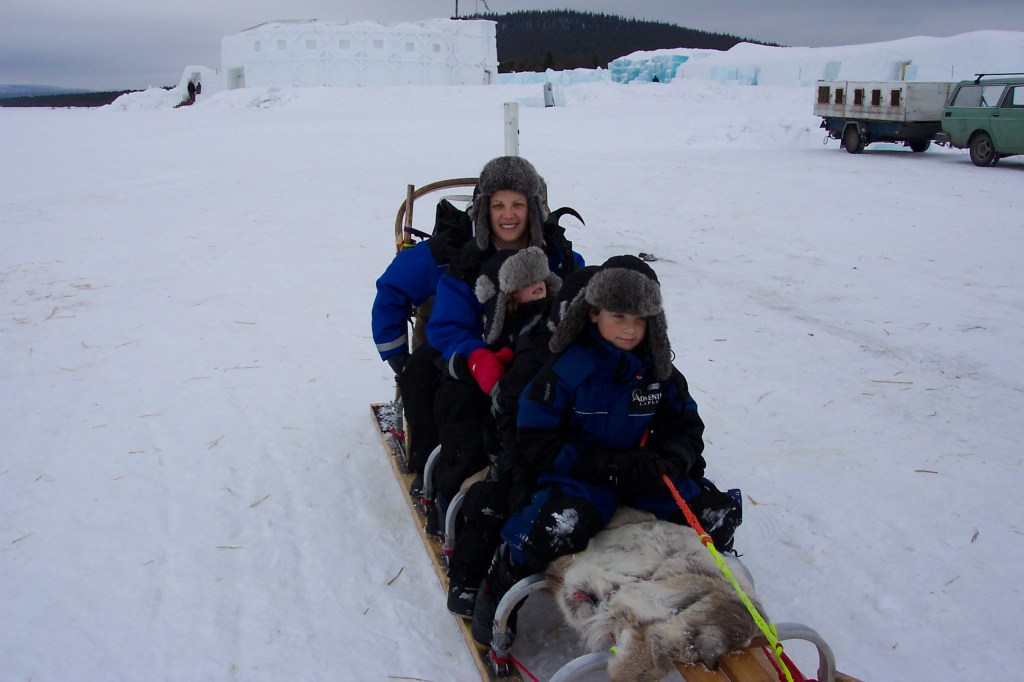
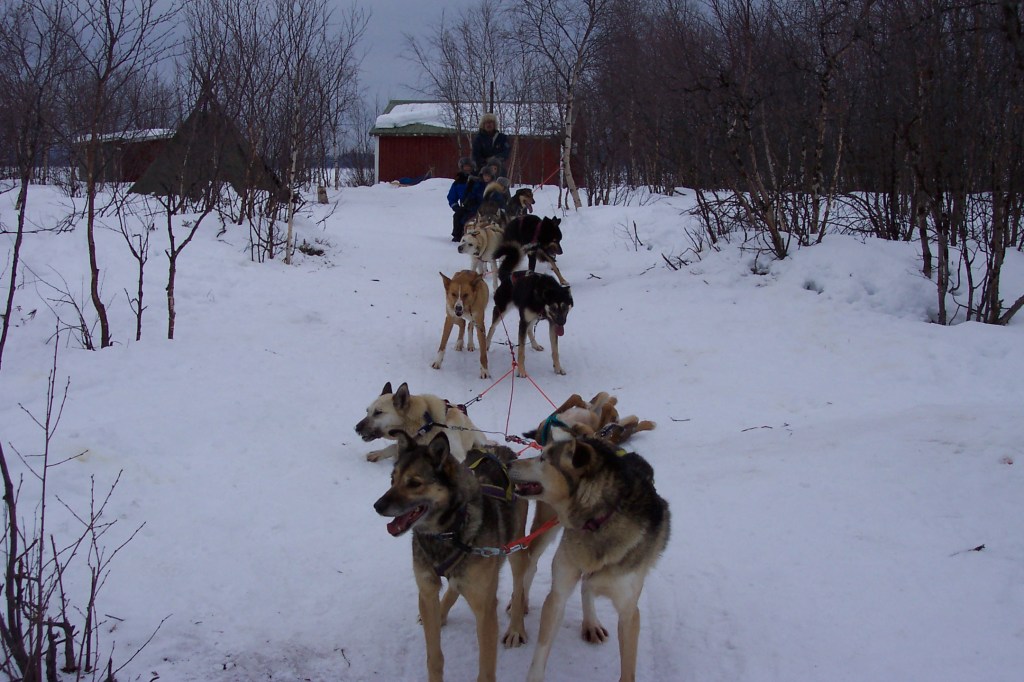
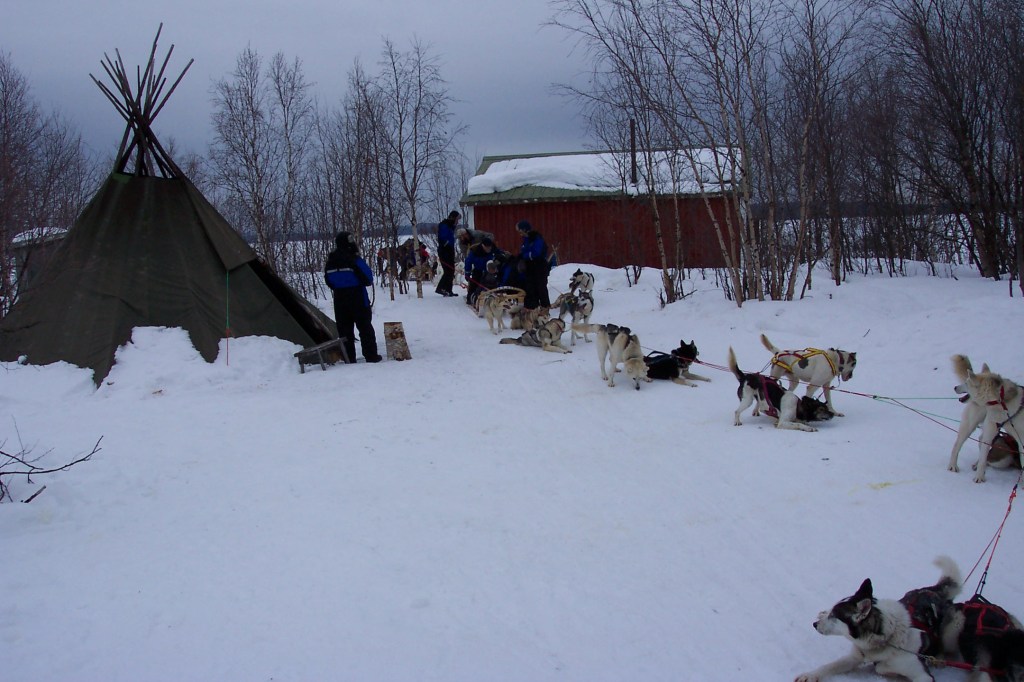
The lobby of the ice hotel. Our kids are sitting around a table of ice. A chandelier of ice is hanging above the table. The light is from fiber optics, so the ice won’t melt.Another photo of the lobby at the ice hotel. My son David is barely visible behind one of the ice pillars.One of the beautiful hallways in the Ice Hotel.My oldest son sitting at an ice table in the lobby.Entrance to the ice bar where you could food and drink and sit on ice chairs by ice tables.We started the evening with a visit to the ice restaurant and bar. Everything in the ice restaurant was made of ice, the tables, the chairs, the counter, the glasses, the plates, and the art.Close up of ice glasses on the ice counter in the ice bar.This is a photo of the ice instruments standing on the ice stage.A close up of an ice cello and an ice guitar.This is a portion of an ice organ in the ice bar.My dad Stig and his girlfriend Ulla came with us on the trip.We are going to bed in our room. I think it was my wife Claudia who took the photo.This was the hallway where our room was located.We are going on a dogsled tour. The ice theater is in the background, and you can see part of the ice hotel on the right.The kids had a lot of fun during the dogsled tourOn the left is a kåta, a movable Sami structure (indigenous arctic Scandinavian people).This is the ice theater. It was located next to the ice hotel (not in the picture).
The ice hotel had put out lots of kick sleds, referred to as “spark” for people to use as a mode of transportation on the snow and ice, or just to sit on. As my dad, Stig, was sitting on one of them, our son came up to him and told him “Stig the hotel put out these sleds for children to play with. It is not for adults to sit on.” My dad was so surprised that he just handed him the sled.
Our son David with one of the kick sleds called “spark”.They got the ice blocks for the structure and for the art from nearby Torneå river.
The next day I took photos of some other rooms
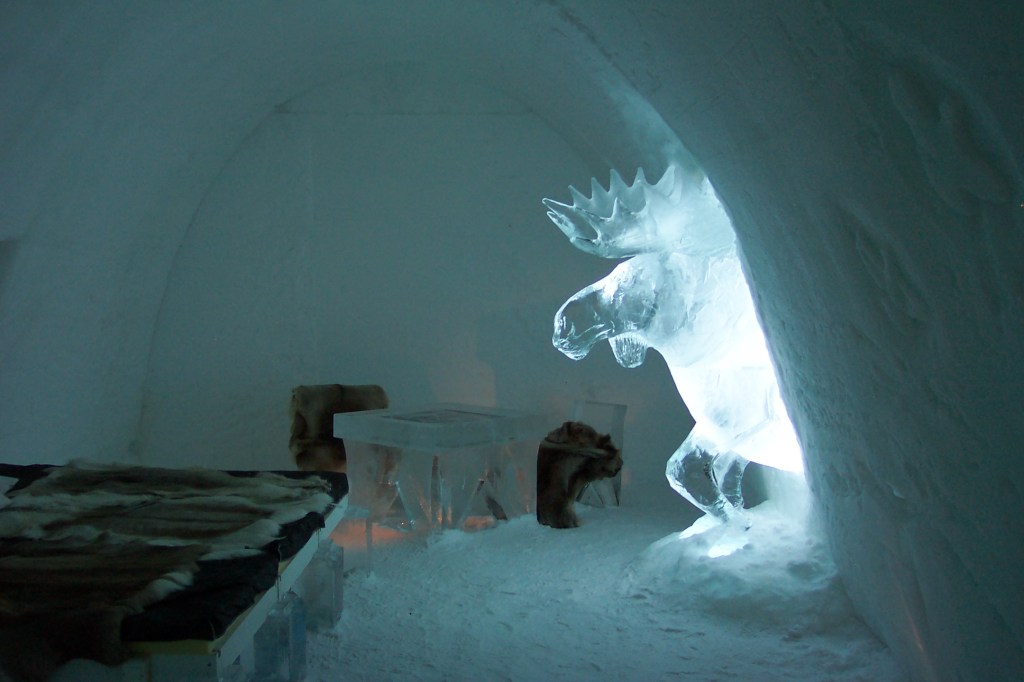
Another room with a snowy wall decoration.Some of the rooms were really beautiful.Some of the rooms had beautiful ice art.You had to pay more for a big room. You paid the price of Hilton and got the comfort of camping in winter.More ice art.
This is a guest post written by Ryan Goodchild. He emailed me asking me if he could publish his post regarding moving with dogs on my blog . I said yes. See below.
Moving and travelling can be a challenge to dogs.
Ryan Goodchild’s Post on Moving with Your Dog to a New State: A Real-World Guide for a Calm Transition
Moving is a big deal, and if you have a dog, it’s a whole new level of logistics and emotion. Dogs don’t understand the concept of relocation. They just know something’s changing. Your goal is to make that change feel safe, predictable, and full of the familiar.
What You’ll Learn
How to prepare your dog before, during, and after a move
What records and updates you’ll need
How to digitize your dog’s important documents
Ways to reduce stress, for both of you
A quick, clear checklist to keep everything on track
Prepare Your Dog for Change
Start weeks before moving day. Dogs pick up on routine changes quickly — packing, new smells, boxes everywhere. Keep walks and meals on schedule, even as your home shifts around them.
Schedule a vet visit about a month before the move. Request updated vaccination records, refill any medications, and ask for a general health certificate if you’ll be crossing state lines. This document isn’t always mandatory, but it can be helpful for emergencies or travel checks.
Keep Your Dog’s Records Safe and Organized
When you relocate, having instant access to your dog’s medical and identification records can save a lot of stress. Scan everything, like vaccination forms, microchip details, prescriptions, and your vet’s contact information, so you have them in one place.
Save the files as PDFs; they’re reliable, portable, and open on almost any device. For convenience, you can merge multiple records into one clean file with this tool. Keeping these essentials organized means you’re always ready for a vet visit, emergency, or boarding request in your new area.
Travel Day: Stay Calm, Stay Simple
Moving days are hectic, and dogs sense your energy. Your best strategy is calm consistency.
Pack a “dog go-bag” with:
Food and collapsible bowls
Waste bags and cleaning wipes
Favorite toy or blanket
Leash, collar, and updated ID tags
Any medications and first-aid essentials
Keep familiar scents around. Let your dog travel with a favorite blanket or worn T-shirt of yours, it’s grounding. If you’re driving, stop regularly for short walks and hydration. If you’re flying, check your airline’s pet policy early, as rules and kennel sizes vary widely.
The Essential Dog-Move Checklist
Before leaving your old home, run through this list:
Health Check: Vet visit completed and records in hand.
Once you arrive, recreate normalcy fast. Set up your dog’s bed and feeding area before unpacking your own boxes. Use familiar commands, toys, and walking times to reestablish their rhythm. Dogs rely on patterns to feel secure; the more you replicate their old schedule, the quicker they’ll adapt.
Take short exploratory walks so your dog can get used to local scents and sounds. If they seem hesitant, don’t rush it. Let them lead the pace; confidence builds gradually through repetition.
Dog Transition Timeline at a Glance
Stage
Focus
Goal
3–4 weeks before move
Vet visit, ID updates
Health & paperwork ready
1–2 weeks before move
Packing acclimation
Reduce anxiety around change
Moving day
Calm, consistent energy
Safe and comfortable travel
Arrival
Establish feeding/sleeping areas
Create familiarity fast
First week
Daily walks, local vet visit
Build new routine & comfort
Support Your Dog’s Emotional Adjustment
Some dogs sail through moves; others struggle. Signs of stress can include pacing, panting, whining, or hiding. Keep things calm and predictable. Set up a quiet area where they can retreat when the new space feels overwhelming.
Just as important: manage your own stress. Dogs take emotional cues from you — if you’re tense, they will be too. A calm tone, gentle reassurance, and unhurried movements go a long way. When you’re relaxed and consistent, your dog begins to trust that the new home is safe.
If your pet is struggling, spend extra time together doing things they love — a walk, gentle grooming, or simply sitting nearby. These small rituals of connection reinforce safety and stability more powerfully than any special training tool ever could.
FAQs
Q: How long does it take a dog to adjust after a move? Typically one to three weeks. The key is routine — same feeding times, same walking windows, same tone of reassurance.
Q: Should my dog stay with me during the move? If possible, yes, but if the environment will be chaotic, arrange for them to stay with a trusted friend until moving day is over.
Q: What should I do if my dog stops eating after the move? Offer familiar food and limit new treats until they settle. Keep mealtimes quiet and predictable.
Moving with your dog isn’t about perfection, it’s about patience. Dogs care less about where they live than who they live with. By maintaining structure, reassurance, and calm energy, you’ll help them feel safe no matter the ZIP code.
Eventually, the boxes will be unpacked, the walks will feel routine again, and your dog will nap in a new sunbeam, proof that home isn’t a destination. It’s a feeling you build together.
Dogs give gifts and do nice things for people and other dogs. In this post I am describing three occasions when our late Leonberger Bronco gave our Pug Daisy gifts.
Leonberger Shares a Gingerbread House
Our Leonberger dog Bronco (his full name was Le Bronco von der Löwenhöhle) was an expert counter surfer, which is why we installed a pet gate to the entrance of our kitchen. Bronco knew how to open gates if they were not locked, so you had to make sure that you did not just close the gate but lock it. However, one December day I forgot to lock the gate. That was the day our daughter had made a gingerbread house and left it on the kitchen counter. Guess who ate half the gingerbread house? Guess who ate some of the other half? Bronco shared some with Daisy. He was always very generous. The photo below is what I saw when I got home that day.
The open gate behind Daisy and Bronco permitted their gingerbread-house raid.
Leonberger Shares a Baked Potato
I believe dogs have empathy, and sometimes they want to share—at least Bronco did. There was a time when we were in our home eating take-out food and Bronco stole one of our dinners, including meat, vegetables, and a baked potato. He started eating the meat, then he glanced at Daisy, who was sitting in the middle of the floor looking sad. Immediately he took the baked potato in his mouth and carried it over to her and dropped it right at her feet. I was going to get mad at him for stealing, but when I saw his kindhearted and unselfish act, I let it be.
Daisy our Pug was sitting there looking sad, but she got a baked potato with bacon and butter. I should say that the photo is from another occasion when she sat in front of the vent because she was cold. But it is close enough.
Leonberger Saves our Pug Daisy’s Life
On another occasion, Bronco did something else amazing for Daisy. Despite having issues with his paws—this was around the time he was being treated for squamous cell carcinoma—he saved Daisy from an attacking German shepherd who was running loose.
We were at my wife Claudia’s parents’ house, just leaving, standing on their driveway, when one of their neighbors came out to drop some garbage in the trash can at the end of her driveway. With her was a young, probably adolescent, German shepherd, and he was not on a leash. As we were standing on the porch, I suddenly saw the shepherd flying through the bushes, his teeth bared. He quickly charged us—viciously.
First, he went for Daisy, but Bronco got between them to protect her. Essentially, Bronco saved her life. The shepherd bit his leg in return. Bronco was almost twelve when this happened, and he was not as strong as he used to be. A German shepherd would have been an easy opponent for Bronco just a few years earlier, but at that point he was old, and he did not need the extra stress.
I kicked the German shepherd in the stomach, and he ran off. Bronco’s legs were weak—he had recently had a toe operation, and his walking was unsteady—so seeing the shepherd going for the leg on which he had had his operation was very upsetting. The shepherd could have bitten me, of course, and I could have been severely injured, but I didn’t care. I was defending my dogs—who were all on a leash, by the way. If the shepherd had bitten me, the owner could have been criminally charged, and there could have been a lawsuit
The owner of the shepherd came over to apologize, but I cursed at her. Maybe I shouldn’t have, but she had a vicious and dangerous dog, and she intentionally let him run loose. In the end, though, there were no major injuries. Bronco’s leg was slightly hurt, but overall, he was fine. These days, whenever we talk about this incident, I jokingly refer to the neighbor dog as Cujo. I should say that we’ve had a German Shepherd who was a sweetheart, so this is story is in no way an attempt to disparage German Shepherds. They are typically wonderful dogs as well.
In conclusion, this third example was an example of Bronco giving up his safety and potential health to protect our Pug Daisy.
This is a Leonberger blog but sometimes I post about other things, especially if it concerns me personally. Today November 1st is National Author Day so I thought that since I am originally from Sweden that I would post a poem by a celebrated Swedish 19th century author and poet by the name Viktor Rydberg. The poem is “Tomten” (the Tomte) published in 1881.
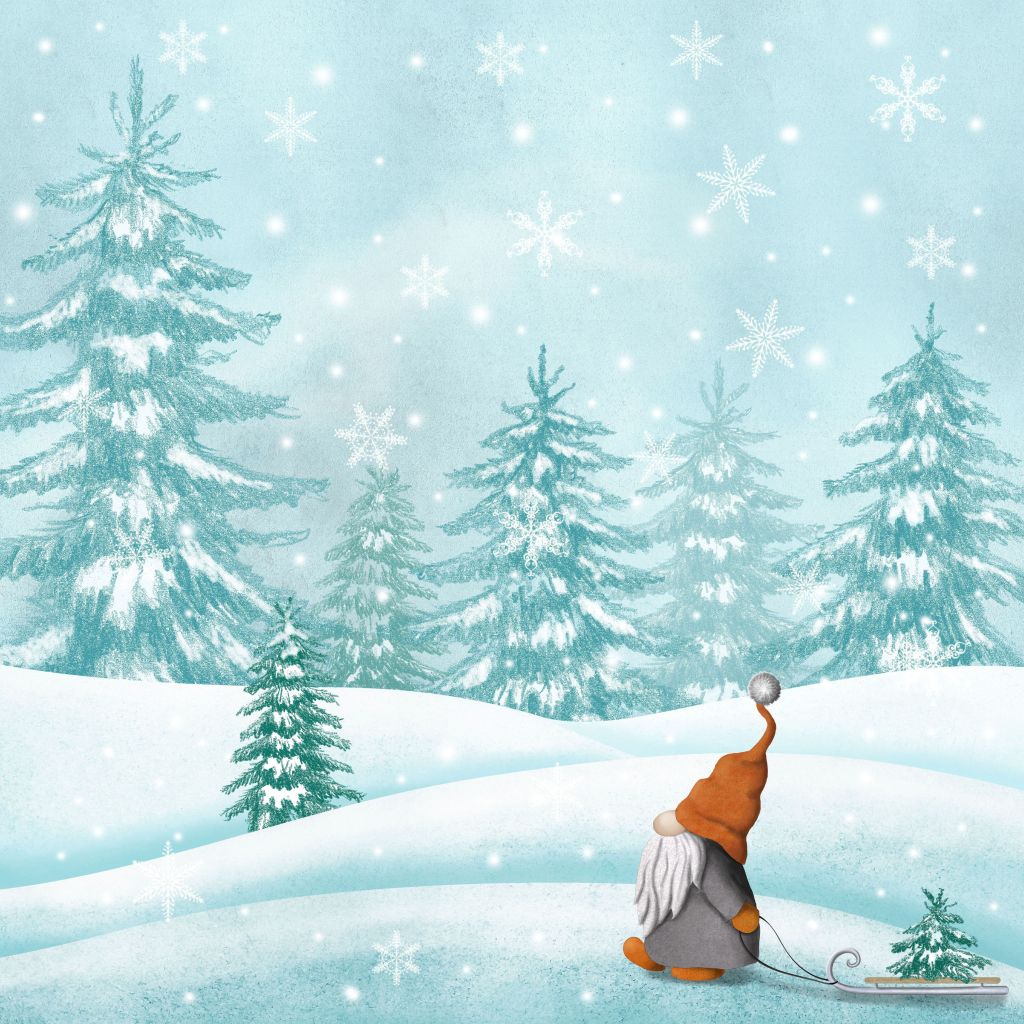
A Tomte is a type of small magical people, or gnomes, related to Vitter folk. There are many Tomtar (Tomte in plural), and traditionally each farmhouse had a Tomte who might secretly help the farmers with their tasks, warn them of danger, and protect the animals. They are friendly and is the inspiration behind the Swedish version of Santa Claus, which is therefore a bit different from the Disney version of Santa Claus that has become so popular.
For one thing, the Disney version of Santa Claus flies around on a reindeer sled and delivers all the presents to all the good kids around the world. Therefore, he needs to move faster than the speed of light, which a Tomte does not need to do. The Tomte may bring you gifts for Christmas if you in return put out food for them, such as porridge.
An illustration of a Tomte. Shutterstock ID: 2060057882 by PLIMPLUM.
Tomten is a beautiful long poem and every line is rhymed, which is impressive. At first, I took the Swedish poem, and I just dropped it into Google Translate hoping it would translate into English. This was a disaster. Poems are notoriously difficult to translate. First of all, you lose the rhymes, and for this poem the rhymes add a lot to the atmosphere and feeling of the poem.
Secondly, you may lose some of the beautiful language and the special choices of words that create the right atmosphere. For example, Google Translated Tomte to Santa, which is not quite right. Normally, when you think about Santa you think about the Walt Disney version of Santa and this poem was written 20 years before Walt Disney was born, and the Tomte as depicted is very different from Santa Claus. Add to that the fact that a lot of the words were just plainly mistranslated and wrong. Part of the reason for that was that the poem is written in old fashioned Swedish, which Google Translate cannot handle (but I can). Thirdly, due to the different sentence structure, syntax, and grammar of different languages you lose some of the rhythm. In summary, Google Translate butchered the poem and turned it into nonsense.
However, I translated the poem into English myself, with some help from Google Translate. Unlike Google Translate, I know what the author is saying, and I can read old Swedish without problems. Naturally, all the rhymes are gone, but I think I succeeded in preserving some of the beauty of the descriptions of the Tomte and the environment. Another thing that was preserved was the philosophical context of the poem. This poem raises some existential dimensions. Tomten is an immortal creature, and he is deeply puzzled by the fact that people come into existence as babies, they live, get old and then they disappear again. Generations come, generations go, one after another, but the Tomte lives on, and he cannot figure out this mysterious puzzle no matter how long he thinks about it. Obviously, he cares about the people who come and go. He wants to know.
Anyway, below is my translation of the poem. The poem should be read slowly and with thoughtful emphasis. Not all the sentences are proper English because I wanted to preserve some of the poetic nature of the stanzas. Again, in the Swedish original all the lines rhyme. For example, the word “hard” is “hård”, and “house” is “gård”, the word “roofs” is “taken”, and “awake” is “vaken”.
My Translation of Tomten
The cold of the midwinter night is hard, the stars sparkle and twinkle. Everyone sleeps in their house deep in the midnight hour. The moon wanders its silent course, the snow shines white on pine and fir, the snow shines white on the roofs. Only the Tomte is awake.
Standing there so gray by the barn door, gray against the white drift, watching, like many winters before, up against the disk of the moon, looking towards the forest, where spruce and fir draws its dark wall around the yard, pondering, although without success, over a strange riddle.
He runs his hand through beard and hair, shakes head and hood “no, this riddle is too difficult, no, I cannot guess this” he banishes the thought, as he usually does, so he can attend to his tasks, and go about his business.
He goes to the storage and the tool house, he feels all the locks the cows dream by the light of the moon summer dreams in the booth; forgetful of harness and whip and empty Pålle (a horse) in the stable also has a dream: the manger he leans over filled with fragrant clover;
He goes to the fence for the lambs and sheep, see how they sleep in there; goes to the hens, where the rooster stands proud of his highest stick; Karo in the dog bed with straw feels good, wakes up and wags its tail slightly, Karo his elf knows, they are good friends.
The Tomte tiptoes at last to see the family he holds so dear, for long and well he has known that they hold his diligence in honor; he tiptoes to the children’s chamber and approach to see the sweet little ones, let no one doubt it: they are his greatest happiness.
Thus, he has seen them, father and son, through so many generations in deep sleep as children; but from where did they come down here? Generation soon followed generation, they flourished, aged, and then went — but where? The insolvable riddle to his mind has thus returned!
The Tomte walks to the loft of the barn: there he has a home and stronghold high up in the scent of the hay, near the swallow’s nest; now the swallow’s nest is empty, but when spring comes with leaves and flowers she will probably be back followed by her close mate.
Then she always has something to chirp about of her many travel memories, nothing, however, about the riddle, which moves in the Tomte’s mind. Through a gap in the barn wall the moon shines on the Tomte’s beard, the streak on the beard shines, The Tomte broods and ponder.
Quiet is the forest and all the heath, life out there is frozen, only from a distance of the falls of the rapids can be heard very slowly the noise. The Tomte listens and, half in a dream, seems to hear the flow of time, wondering where it will go, wondering, where the source must be.
The cold of the midwinter night is hard, the stars sparkle and twinkle. Everyone sleeps in their house well into the morning hours. The moon lowers its silent course, the snow shines white on pine and fir, the snow shines white on the roofs. Only Santa is awake.
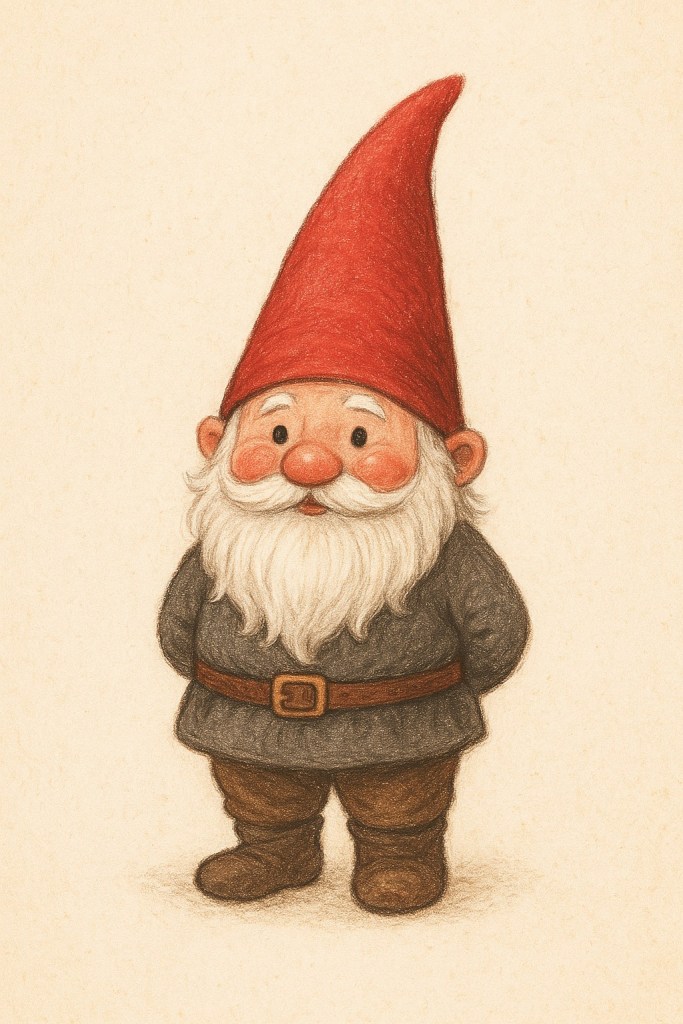
Tomte I generated with the help of ChatGPT
The Original Poem Tomten
Midvinternattens köld är hård, stjärnorna gnistra och glimma. Alla sova i enslig gård djupt under midnattstimma. Månen vandrar sin tysta ban, snön lyser vit på fur och gran, snön lyser vit på taken. Endast tomten är vaken.
Står där så grå vid ladgårdsdörr, grå mot den vita driva, tittar, som många vintrar förr, upp emot månens skiva, tittar mot skogen, där gran och fur drar kring gården sin dunkla mur, grubblar, fast ej det lär båta, över en underlig gåta.
För sin hand genom skägg och hår, skakar huvud och hätta — »nej, den gåtan är alltför svår, nej, jag gissar ej detta» — slår, som han plägar, inom kort slika spörjande tankar bort, går att ordna och pyssla, går att sköta sin syssla.
Går till visthus och redskapshus, känner på alla låsen — korna drömma vid månens ljus sommardrömmar i båsen; glömsk av sele och pisk och töm Pålle i stallet har ock en dröm: krubban han lutar över fylls av doftande klöver; —
Går till stängslet för lamm och får, ser, hur de sova där inne; går till hönsen, där tuppen står stolt på sin högsta pinne; Karo i hundbots halm mår gott, vaknar och viftar svansen smått, Karo sin tomte känner, de äro gode vänner.
Tomten smyger sig sist att se husbondfolket det kära, länge och väl han märkt, att de hålla hans flit i ära; barnens kammar han sen på tå nalkas att se de söta små, ingen må det förtycka: det är hans största lycka.
Så har han sett dem, far och son, ren genom många leder slumra som barn; men varifrån kommo de väl hit neder? Släkte följde på släkte snart, blomstrade, åldrades, gick — men vart? Gåtan, som icke låter gissa sig, kom så åter!
Tomten vandrar till ladans loft: där har han bo och fäste högt på skullen i höets doft, nära vid svalans näste; nu är väl svalans boning tom, men till våren med blad och blom kommer hon nog tillbaka, följd av sin näpna maka.
Då har hon alltid att kvittra om månget ett färdeminne, intet likväl om gåtan, som rör sig i tomtens sinne. Genom en springa i ladans vägg lyser månen på gubbens skägg, strimman på skägget blänker, tomten grubblar och tänker.
Tyst är skogen och nejden all, livet där ute är fruset, blott från fjärran av forsens fall höres helt sakta bruset. Tomten lyssnar och, halvt i dröm, tycker sig höra tidens ström, undrar, varthän den skall fara, undrar, var källan må vara.
Midvinternattens köld är hård, stjärnorna gnistra och glimma. Alla sova i enslig gård gott intill morgontimma. Månen sänker sin tysta ban, snön lyser vit på fur och gran, snön lyser vit på taken. Endast tomten är vaken.
The cold of the midwinter night is hard, the stars sparkle and twinkle. Everyone sleeps in their house well into the morning hours. The moon lowers its silent course, the snow shines white on pine and fir, the snow shines white on the roofs. Only Santa is awake.



























 Leonberger Life