This blog feature amusing and heartwarming stories about our late Leonberger dog Bronco, as well as other Leonbergers. It also has a lot of information about the Leonberger breed, the history, care, training, Leonberger organizations, etc. I also wrote a Leonberger book, which I am featuring in the sidebar.
The focus of this blog is Leonbergers but sometimes I post about books that are not about Leonbergers but that are books that I want to promote. I recently read a gripping book about life in England during World War II called “While the Bombs Fell” by Robbie Cheadle and Elsie Hancy Eaton. It is a book that is easy to read and appropriate for older children, young adults and adults alike. I bought the book on Amazon, I loved the book and I wrote a review for it.
As far as I know it exists only as a paperback on Amazon. Publisher : TSL Publications (August 3, 2018), ISBN-10 : 1912416433, ISBN-13 : 978-1912416431, 100 pages, Item Weight : 4.5 ounces, Dimensions : 5.83 x 0.23 x 8.27 inches, it cost $16.14 on US Amazon. Click here to order it from Amazon.com.
Front cover of While the Bombs Fell by Robbie Cheadle and Elsie Hancy Eaton. Click on the image to go to the Amazon page for the paperback version of the book.
Amazon’s Description of While the Bombs Fell
What was it like for children growing up in rural Suffolk during World War 2? Elsie and her family live in a small double-storey cottage in Bungay, Suffolk. Every night she lies awake listening anxiously for the sound of the German bomber planes. Often they come and the air raid siren sounds signalling that the family must leave their beds and venture out to the air raid shelter in the garden. Despite the war raging across the English channel, daily life continues with its highlights, such as Christmas and the traditional Boxing Day fox hunt, and its wary moments when Elsie learns the stories of Jack Frost and the ghostly and terrifying Black Shuck that haunts the coastline and countryside of East Anglia. Includes some authentic World War 2 recipes.
This is my five star review of the book “While the Bombs Fell” by Robbie Cheadle and Elsie Hancy Eaton.
It is a short, gripping, beautifully written and easy to read book about the experiences of a little girl growing up in England during World War II.
The Life of little Elsie during World War II
This book tells the story of little Elise who lives with her family on a small farm in Bungay, Suffolk, England during World War II. Food and other products are rationed, there are shortages, lack of heating and electricity, and people struggle economically. At the same time the bombs are falling and there’s always the fear that you will be hit. The book tells us about the fear, about family life, the human connections, the animals, the daily life and various holiday celebrations, all from the perspective of a child. The book reads more like memoir than a novel, but it feels very real.
I grew up in Sweden, live in the US, and that is what I know. Therefore, I did not know much about the culture and how people live, or rather used to live, in WWII England. Therefore, by reading this book, I learned a lot about England, or the England of the past. It is obvious that the author is intimately familiar with past English culture and how it was living in England during this time. Elsie’s world was very different from what I know, and the times were very difficult, and you saw it all through Elsie’s eyes. Therefore, the book is very engaging. It is a reminder that life was very challenging for a lot of people during World War II.
I also really enjoyed reading about what they ate, the recipes, and the rose hips, the rosehip jam, and there were recipes at the end of the book. In Sweden rosehip and rosehip soup was a healthy staple food so I definitely recognized that. I remember rosehip soup with fondness. This book brings you into another world, it is very engaging, interesting, and eye opening, as well as an easy read. I highly recommend this beautiful little book.
Back cover of While the Bombs Fell Robbie Cheadle and Elsie Hancy Eaton.
About Robbie Cheadle
I don’t have any information about Elsie Hancy Eaton. However, below is the information about Robbie Cheadle.
South African author, photographer, and artist, Robbie Cheadle, has written and illustrated seventeen children’s books, illustrated a further three children’s books, and written and illustrated four poetry books. Her work has also appeared in poetry and short story anthologies.
Robbie also has two novels and a collection of short stories published under the name of Roberta Eaton Cheadle and has horror, paranormal, and fantasy short stories featured in several anthologies under this name.
Robbie’s blog includes recipes, fondant and cake artwork, poetry, and book reviews.
Today is my birthday and we are spending it in Baltimore (don’t worry we have people watching house and dog etc.). Our son, his wife and their son Jack (our first grandchild) lives in Baltimore. Jack just turned six months. That is why I have not been very active in the blogosphere lately. Below are a few Leonberger Happy birthday photos.
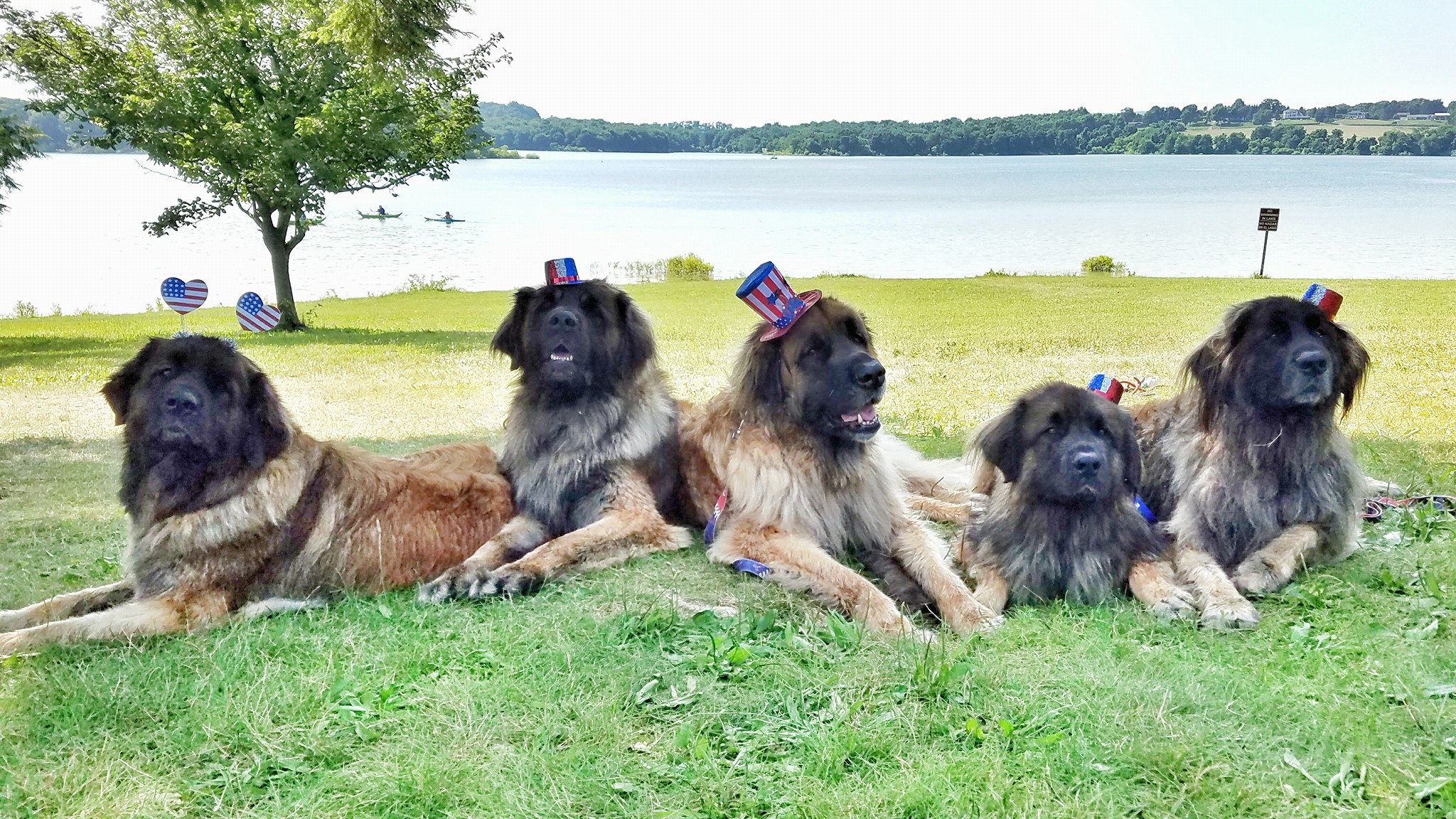
This is a Leonberger Happy Birthday photo that Jen O’Keefe sent me. I am using it with her permission. On the left is Digory and on the right is Aslan.Debbie Ireland, a Leonberger community friend send me this picture today and gave me permission to use it.Leonbergers are celebrating. Caspian (Obi’s nephew), Austin (Obi’s son), Delfi, Obi (now 7 and a veteran), Digory, and Rilian (Obi’s son). Photo by Jen O’Keefe and Ira Van Order, prominent members of the Leonberger Club of America who allowed me to use this photo.
Today we visited the Cherry Blossom at Fort McHenry National Monument. Fun fact: “The Star-Spangled Banner” was born as a poem written by Francis Scott Key on September 14, 1814, after witnessing the British bombardment of Fort McHenry in Baltimore, Maryland. Below are some Baltimore photos.
Cherry trees blossoming.Cherry trees blossoming.Cherry trees blossoming up close.Baby Jack is now six months old.Jack is sitting in his new highchair. He is no longer a baby.Baby Jack in the stroller.Baby Jack with us (my wife and I).My son with his son, baby Jack, six months old.
A professional content writer by the name of Ryan Goodchild contacted me about publishing a Leonberger related post on my Leonberger blog, which I am certainly happy to assist with. The title is “Helping Your Leonberger Thrive Through Life’s Big Changes”. See the article article below. While Ryan did all the writing, I added photos of our Leonberger as well as a few Leonberger stock photos.
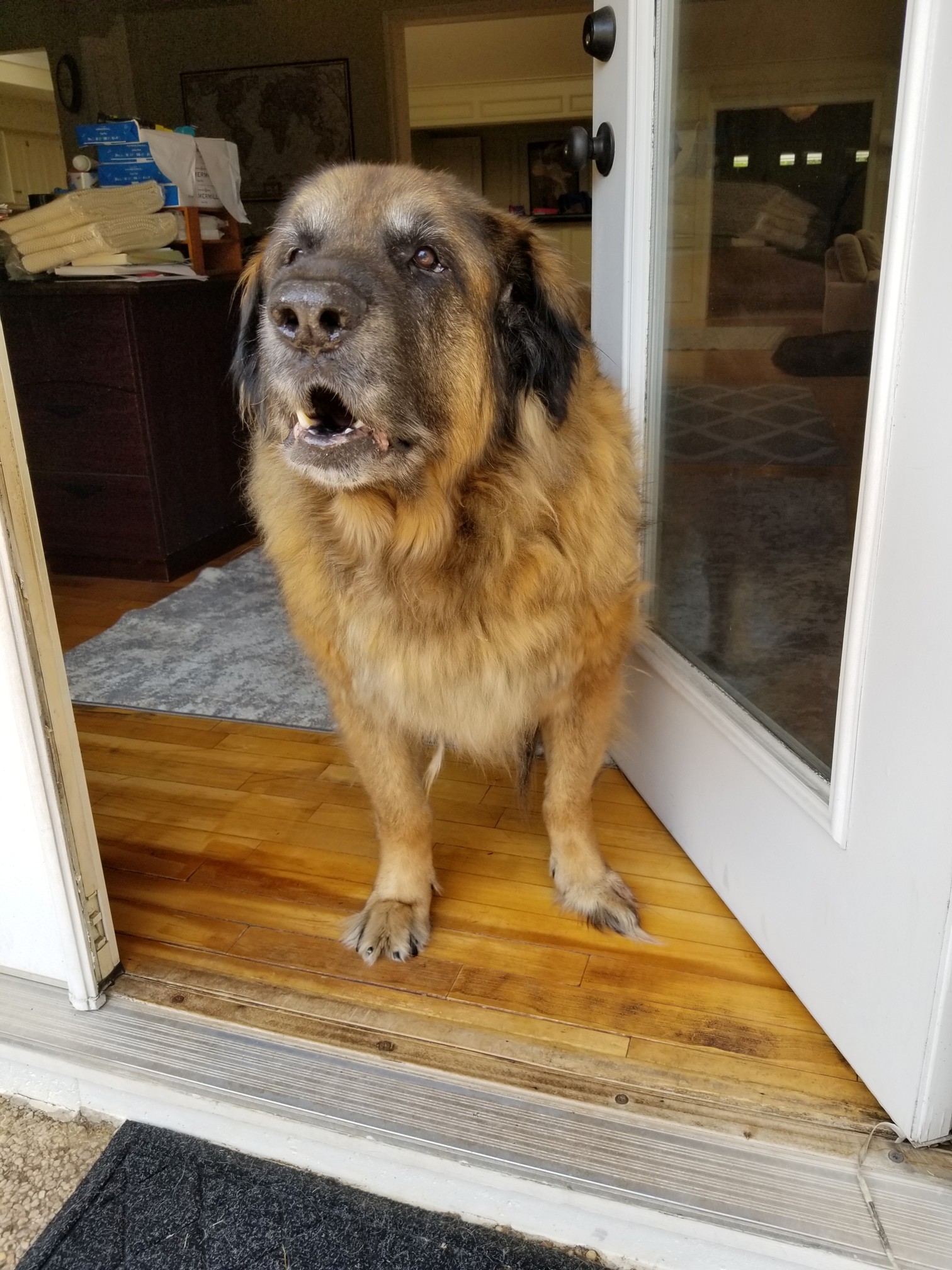
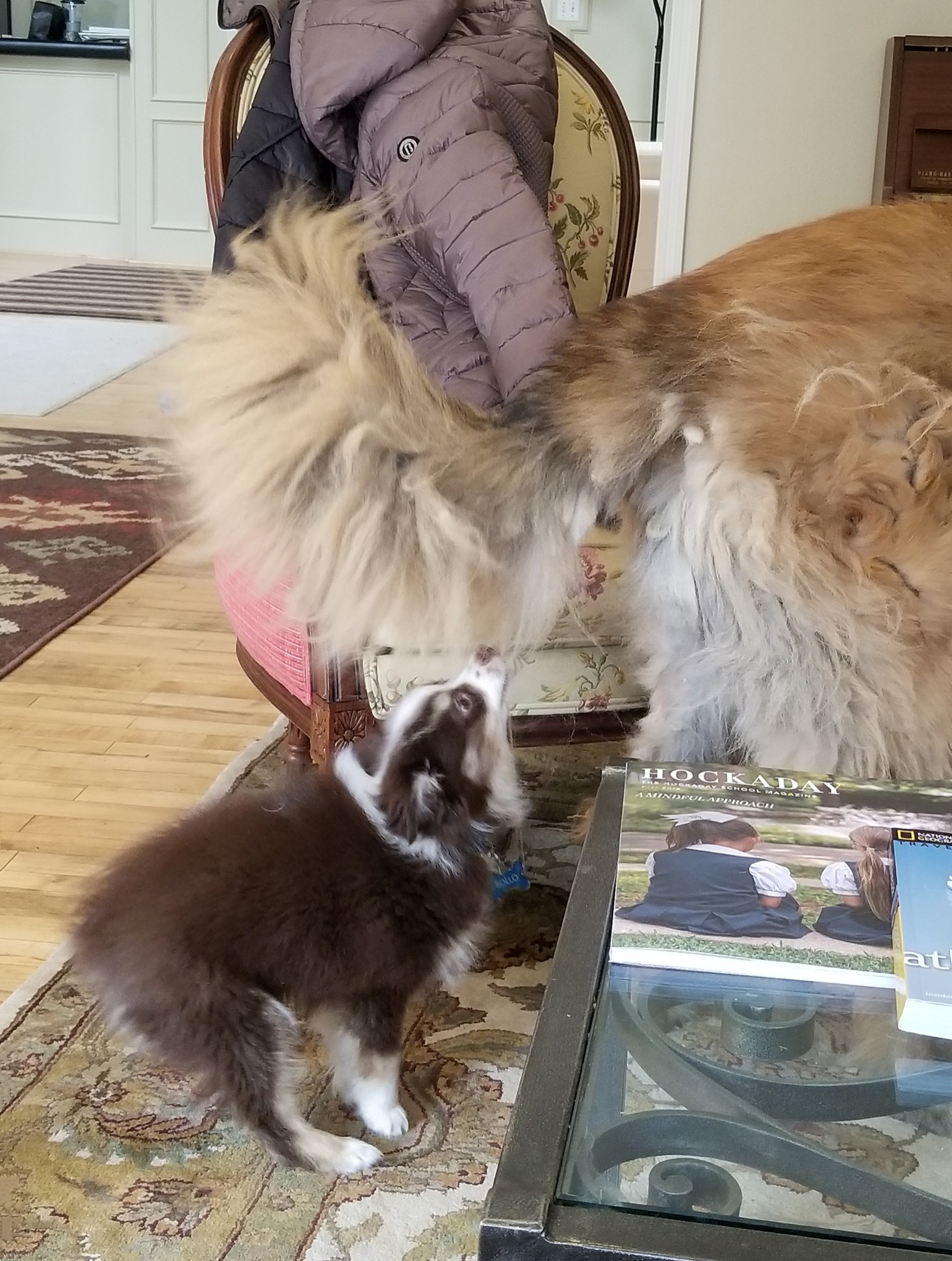
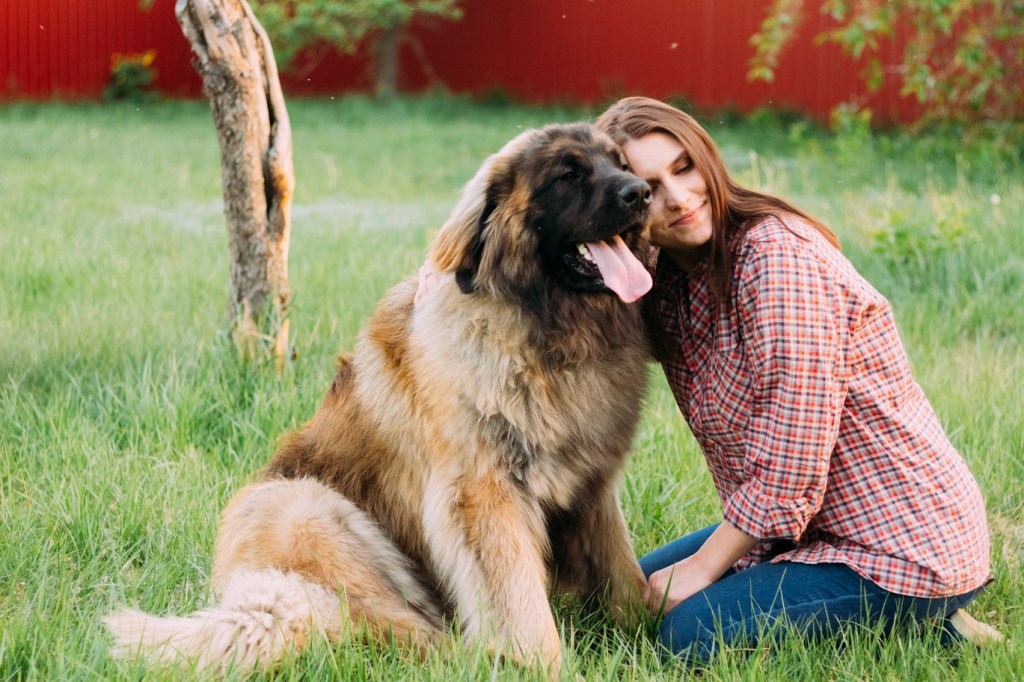
The photo tile above includes four photos of our Leonberger Bronco. One photo is from when he was three months old, in another photo he is about one year old and giving me a hug, and in one photo our mini-Australian Shepherd is biting his tail, and one photo of Bronco shows him standing in an open door. He is a bit agitated in that photo. There is also a photo of five Leonbergers celebrating fourth of July. That photo was taken by a friend Jen O’Keefe. Finally, there is a shutter stock photos ID:731020957 by Peter Josto.
Helping Your Leonberger Thrive Through Life’s Big Changes
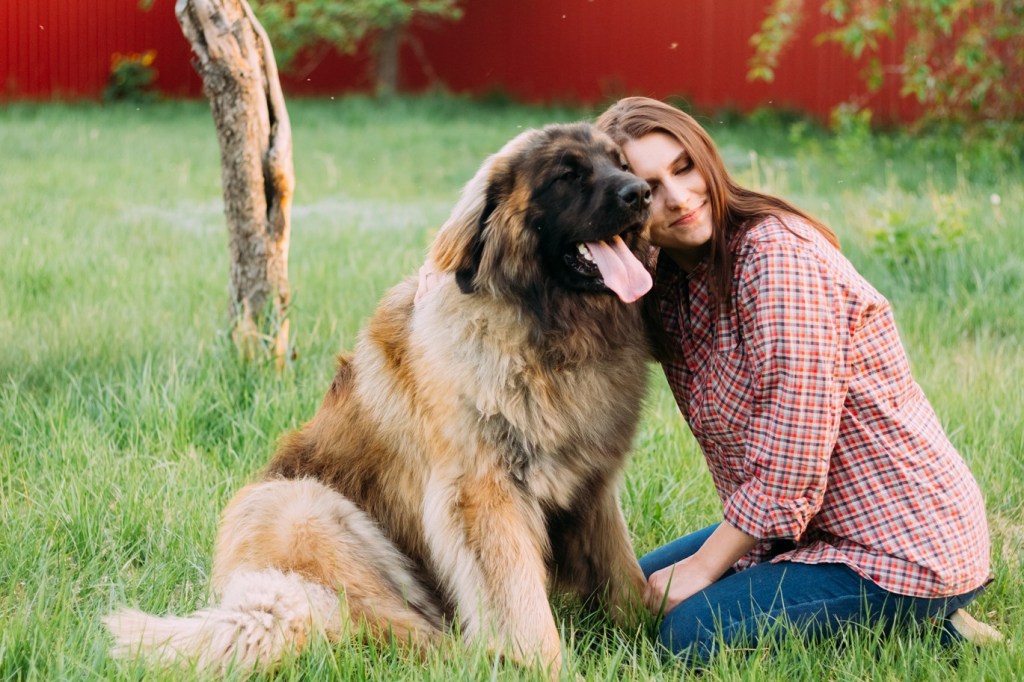
A woman and her Leonberger dog. Asset id: 1741753382 by Elena Podrezenko
Leonberger dog owners often notice that the hardest moments aren’t the big grooming days or the seasonal shedding, they’re the household transitions that quietly unsettle a steady dog. Moves, schedule shifts, new babies or roommates, travel, renovations, and changes in who handles care can disrupt pet routines that once felt automatic. When the rhythm changes, a Leonberger’s emotional well-being in dogs can wobble, showing up as clinginess, restlessness, or unexpected behavior that feels out of character. A clear plan helps keep life changes affecting pets from turning into long weeks of confusion.
How Life Changes Create Stress Signals
Life changes can flip on a Leonberger’s stress response, even when nothing “bad” is happening. Since pet anxiety is real, the first clues are often small behavior shifts like pacing, shadowing you, or sudden sensitivity to noise.
Temperament matters, but it is not the whole story. Research suggests breed contributions were relatively small, so environment and routine changes can affect even the most steady Leo. Reading the stress signals early helps you respond with care instead of guessing.
Picture a week of packing, rearranged furniture, and fewer walks. Your Leonberger may skip meals, guard doorways, or get extra mouthy during brushing because their “normal” cues disappeared.
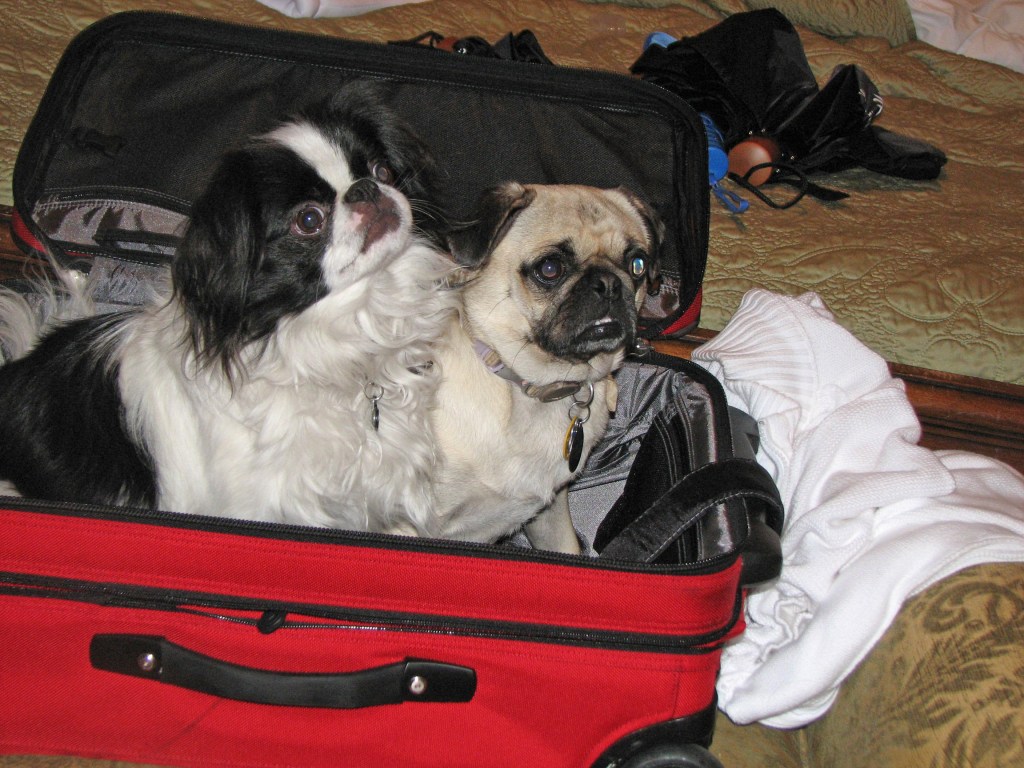
Our Japanese Chin Ryu and our Pug Daisy are protesting that we are leaving for a trip. It is an example of dog stress when they see packing. Our Leonberger Bronco was also stressed out but he was calmer. I can that we had someone watching them, but they still hated it when we left.
Use 7 Transition Strategies to Keep Your Leo Steady
Big changes can flip on stress signals fast, clinginess, pacing, sudden barking, or “selective hearing.” These seven Leonberger-friendly strategies give your dog predictable anchors while you build confidence and calm.
Lock in a “same time, same order” core routine: Pick three daily anchors you can keep consistent even on chaotic days: potty break, meals, and a short decompression walk. An easy starting point is to establish a new daily routine and then protect those times on your calendar.
Build a predictable “safe station” (and pay it well): Choose one spot, crate, bed, or a gated corner, then make it the most rewarding place in the house. Feed stuffed food toys there, drop calm treats for quiet settling, and keep it off-limits to kids and visitors for the first 2–3 weeks of the transition. This gives your Leonberger a clear off-switch when their stress signals start creeping in.
Reinforce the behaviors you want, not the feelings you’re seeing: When your Leo is worried, focus on marking calm choices, looking at you, sitting, stepping onto the mat, rather than trying to “stop” anxious behavior with corrections. Use a simple pattern: ask for one easy cue (“sit”), reward, then give a short, clear next step (“go to bed”). Over time, your dog learns a predictable script for what to do when the environment feels different.
Use “micro-exposures” to new sights/sounds with an exit plan: If your change involves new people, a new neighborhood, or a remodel, introduce it in 1–3 minute slices. Pair the new thing with small treats, then leave before your Leonberger ramps up to barking or spinning. Short wins beat long sessions, especially for a giant breed that can go from “fine” to overwhelmed quickly.
Add environmental enrichment that matches Leonberger bodies: Lean on scent games (scatter feeding in grass, “find it” treats), slow feeders, and short puzzle sessions to burn mental energy without pounding joints. Even small enrichment shifts can support calmer physiology; research on time-domain HRV suggests enrichment can improve stress-related measures. Aim for two 10-minute enrichment blocks daily during the first month of a big change.
Adjust exercise for steadiness, not exhaustion: During transitions, swap one long, intense outing for two calmer walks plus 5–10 minutes of training. Watch for stress flags you learned earlier, panting at rest, sudden scanning, or inability to settle, and treat those as “we did enough” signals. A steadier nervous system usually beats a tired body when routines are in flux.
Keep grooming and handling “predictable and brief”: Leonbergers often feel safest when body care is consistent, especially during shedding seasons. Do 3–5 minutes of brushing daily in the same location, then stop while it’s still going well and reward generously. This prevents grooming from becoming another stressor and helps you spot skin, ear, or coat changes that sometimes pop up during anxious periods.
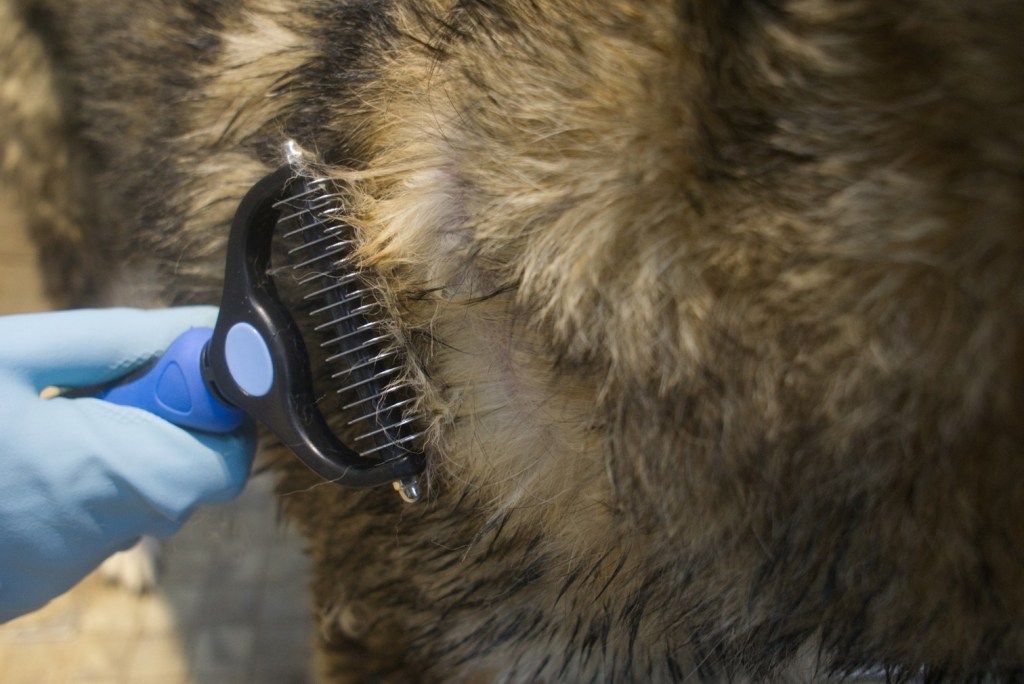
Keep grooming predictable and brief. Brushing a double-coated dog close-up. Shutterstock Asset id: 2441132455 by Gayleen Froese
When you combine routine anchors, calm reinforcement, and purposeful enrichment, you’re not just managing behaviors, you’re giving your Leo a clear plan for coping. These habits also make it simpler to troubleshoot tough moments like barking, regression in manners, or restlessness on your busiest days.
Common Questions About Leonbergers and Big Transitions
Q: How do major life changes like moving to a new home or welcoming a baby typically affect a Leonberger’s behavior and stress levels? A: Many Leonbergers become more vigilant when their “normal” shifts, showing clinginess, restlessness, noise sensitivity, or a temporary drop in manners. Stress can also look like appetite changes or trouble settling, especially in a new layout with unfamiliar sounds. Keep expectations gentle for a few weeks and reward calm, quiet choices.
Q: What practical strategies can I use to maintain my Leonberger’s routine and comfort when my household schedule suddenly changes? A: Protect a small, non negotiable trio: sleep, meals, and movement at roughly the same times daily. Prioritize enough exercise through steadier walks and low impact sniffing games rather than trying to “wear them out.” Add one consistent quiet spot where your Leo can decompress undisturbed.
Q: How can I recognize signs of emotional distress or anxiety in my Leonberger during periods of household transition? A: Watch for patterns like pacing, panting when the room is cool, trembling, hiding, or shadowing you from room to room. You may also see more barking at small noises, accidents, or compulsive licking. If the signs persist beyond a couple of weeks or escalate, your veterinarian or a qualified behavior professional can help you rule out pain and build a plan.
Q: If I’m feeling overwhelmed by these life changes affecting my pet’s care, what resources or approaches can help me regain balance and clarity to support my Leonberger effectively? A: Shrink the goal to a simple management plan you can repeat: protected sleep, a daily walk, and a reliable quiet space. Use a weekly “must do, nice to do” list so essentials happen even on chaotic days, and ask your vet for a realistic exercise and weight target for a giant breed. If you are juggling work and a major transition, consider an online healthcare degree as a flexible accredited education path that fits your schedule so life feels more stable overall.
Our Leonberger dog Bronco wants comfort (and food). He is coming up to me. He wants my attention.
Life-Change Support Checklist for Your Leonberger
This checklist turns good intentions into simple actions you can repeat on busy days. Use it to protect your Leonberger’s health, coat care, and emotional steadiness while your household shifts.
✔ Set fixed meals and potty times for the next 14 days.
✔ Create one quiet “do not disturb” rest zone with water nearby.
✔ Schedule two calm movement sessions daily, prioritizing sniffing and slow walking.
✔ Track appetite, stools, sleep, and new stress behaviors in a quick daily note.
✔ Keep grooming brief: brush hotspots, check ears, trim nails as tolerated.
✔ Confirm vet plan for weight, joints, and any new anxiety or pain signs.
Small steps, repeated daily, build confidence for both of you.
Creating Calm, Confident Transitions for Your Leonberger’s Well-Being
Big household shifts can leave even a steady Leonberger feeling uncertain, and that stress can spill into behavior and bonding. The way through is a calm, consistent mindset: prioritize emotional health support for pets with predictable rhythms, gentle observation, and patient reassurance. Over time, that steady care builds resilience and brings positive outcomes of care, more relaxation, easier transitions, and long-term pet well-being. Consistency is the kindest way to help a Leonberger feel safe through change. Pick one strategy from the checklist to start today, and lean on community support for dog owners when questions or worries pop up. That steady support doesn’t just solve today’s stress, it strengthens confidence and connection for every new chapter ahead.
Our Leonberger Bronco is in the front yard after a stressful experience. He had to spend a few days at the hospital for a toe amputation due to toe cancer.
The focus of this blog is Leonbergers but sometimes I post about books that are not about Leonbergers but that are books that I want to promote. This past week we were on a family vacation in New Orleans. We’ve been to New Orleans many times before but this time we focused on the supernatural, magic if you will, ghosts, vampires, voodoo, and pirates. In the evenings I read a fairly new book about vampires, Vermillion Highways by David Lee Summers and Lee Clark Zumpe. I bought the book on Amazon, I loved the book and I wrote a review for it.
As far as I know it exists only as a paperback on Amazon. Publisher : Hiraethsff (January 14, 2026), ASIN : B0GHDTMVZ3, ISBN-13 : 979-8295554971, 116 pages, Item Weight : 5.7 ounces, Dimensions : 6 x 0.24 x 9 inches, it cost $13.95 on US Amazon. Click here to order it from Amazon.com.
Front cover of Vermillion Highways. Click on the image to go to the Amazon page for the paperback version of the book.
Amazon’s Description of Vermillion Highways
Two of the finest minds in the genres have combined their resources and imaginations to come up with some of the gothiest (and, sometimes, ) goofiest vampire short fiction this side of Transylvania. David Lee Summers, of Tales of the Talisman and Scarlet Order fame, and Lee Clark Zumpe, mild-mannered reporter for a daily metro-Floridian newspaper and author of the Lovecraftian anthology Whispers from the Intoxicating Abyss, take you on a journey through tales that fit everywhere between Type O positive and Type AB negative. Vermillion Highways is a must-read even if you don’t care for the suckers.
We just returned from a family trip to New Orleans. To make the trip extra interesting we had a theme for our trip, vampires and voodoo. Naturally we visited vampire themed places, and we drank blood (pretend blood). In addition, in the evenings I read this book.
Vermillion Highways is a short collection (114 pages) of 40 short stories about vampires written by two great authors with humor and vivid imaginations. Each author contributed 20 stories. Some stories are around 10 pages long, and some stories are not even half a page. The stories are sometimes scary but for the most part they are just entertaining, imaginative, fun and comical. They are good stories with surprises and odd twists. At first, I was questioning whether you can really write good stories that are that short, but you can. If done right the very-short story format, or the flash fiction format, works.
I appreciated the flexible and more realistic take on vampires in this book. If you don’t strictly adhere to the orthodox depiction of vampires, you can write better stories. In this book vampires can sustain themselves by drinking blood from blood bags, or from people without necessarily turning them into vampires. It is the desperate or mean vampires that attack and kill people. The sun is not good for vampires, but it does not make them burst into flames, and they don’t sparkle in the sunlight either. A little bit of sunlight is manageable, like for albinos. They also don’t turn into bats, they can’t fly, they are not purely evil, and crosses are not as effective against vampires as you may think. However, they can live for thousands of years, and they have some special magical powers, such as mind compulsion and great physical strength. I prefer it when vampires are depicted this way.
In summary, this vampire book may not be very scary, but it is an entertaining and fun read. I highly recommend this lighthearted, modern and easy to read vampire book.
Back cover of Vermillion Highways.
About David Lee Summer
I don’t have the author information for Lee Clark Zumpe but I do for David Lee Summers.
David Lee Summers is an author, editor and astronomer living somewhere between the western and final frontiers in Southern New Mexico. He is the author of twelve novels. His short stories and poems have appeared in numerous magazines including Cemetery Dance, Realms of Fantasy, Star*Line, and The Santa Clara Review.
David also edited Tales of the Talisman Magazine for ten years. When he’s not writing, he operates telescopes at Kitt Peak National Observatory.
Voodoo shaman, african wizard man conjure, 3D illustration. Shutterstock Asset id: 2048753030 by artshock
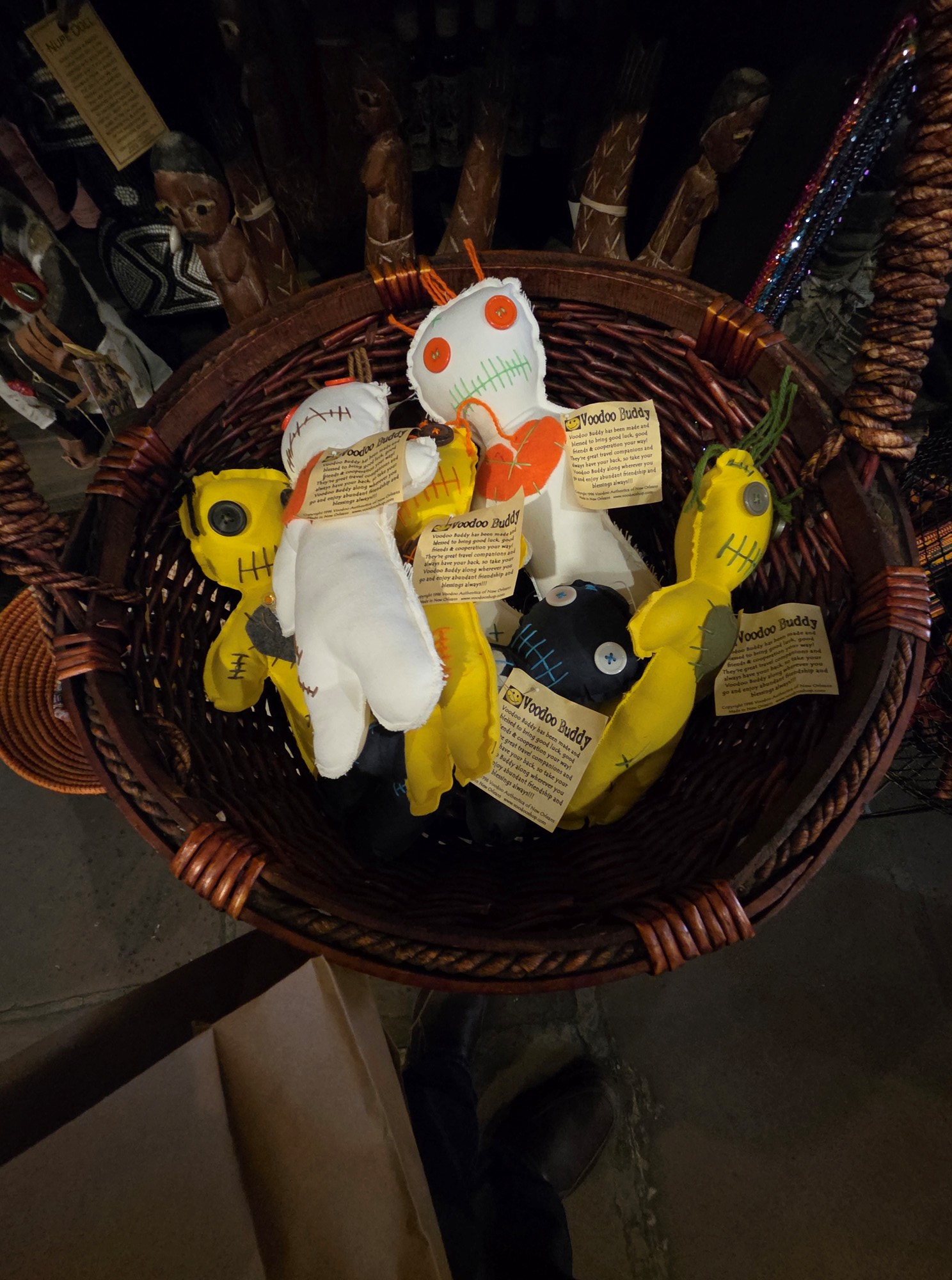
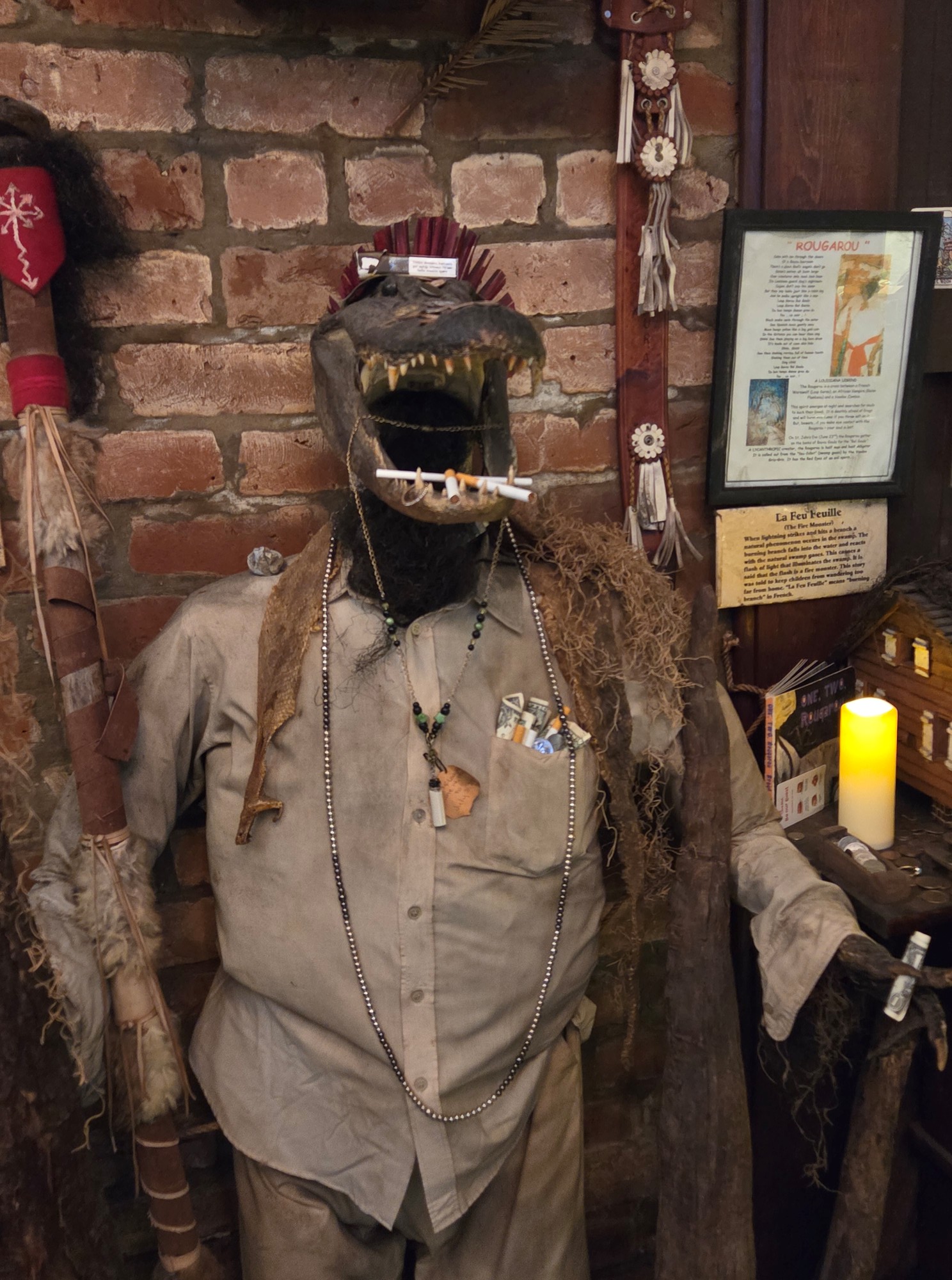
We just came home from a trip to New Orleans, which is truly a magical city. New Orleans is not very far from Dallas, where we live, and we’ve been to New Orleans several times. However, it was a fun family trip with a theme. The theme we chose for our trip was Magic, including Vampires, Voodoo/Hoodoo, ghosts, pirates and St. Patrick’s Day. We also went on a ghost tour. Below are some photos from the Voodoo Museum, and miscellaneous voodoo, witches, vampire and pirate stores.
From the Voodoo Museum.I used an automated fortune teller who told me to watch out for stepping on people’s toes. That is kind of strange since we hardly ever go dancing.
Photo Tile with photos from the Voodoo Museum, a Hoodoo Queen, vampire art, pirate, and witch store.
We also ate at a restaurant that has a ghost. The Muriel’s Jackson Square restaurant is allegedly haunted by a ghost that sits in the chair. The ghost is a former owner by name of Pierre Antoine Lepardi Jourdan.
The ghost is sitting between my daughter (right) and my son’s girlfriend (left).
What is Voodoo ?
Voodoo is a religion blending African traditions with Catholicism. It is originating from enslaved people in Haiti and Louisiana. It focuses on serving spirits and honoring ancestors and connecting with nature. It is not black magic. However, I admit I’ve made fun of the so called voodoo dolls. Marie Catherine Laveau was one the most prominent practitioners of voodoo. She was born a free woman of color in New Orleans’s French Quarter, Louisiana, on September 10, 1801. We saw her house. Below are photos from the Voodoo Museum.
Photo Tile from the Voodoo Museum
Vampire Café
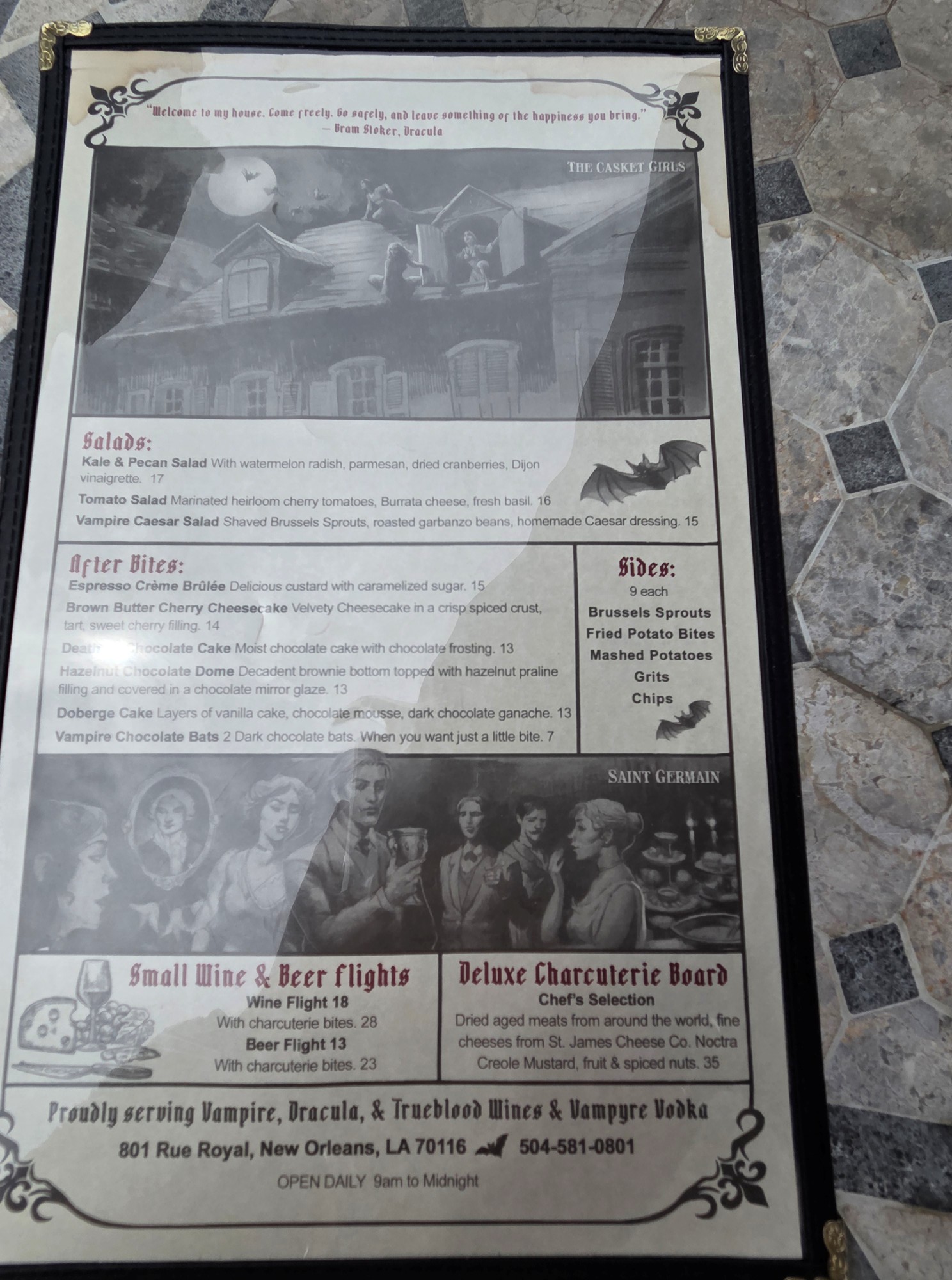
We also did some vampire related things. New Orleans is often called the Transylvania of America. Author’s such as Anne Rice have brought attention to New Orleans and its vampire legends. I read a book with 40 short stories about vampires while we visited New Orleans. The book was Vermillion Highways by David Lee Summers and Lee Clark Zumpe. I will make a post about that book in a couple of days. We visited vampire stores and the famous Vampire Café. See the photos below.
Vampire CaféMe drinking (pretend blood) from a blood bag at the Vampire Café.Me drinking a glass of Pinot Noir. The name of the wine is Vampire, and it says so on the glass.
Photo Tile from Vampire Café.
I should say that we did other things as well. We visited the aquarium, rainforest, and insectarium, which is quite impressive. We celebrated Saint Patrick’s Day, and we made a couple of visits to the famous Pat O’Brien’s Pub. We all had a good time.
War on Amazon.com. Hydrogen bomb test by Alones Shutterstock Asset id: 2194195335.
Today is the second time I participate in Linda Hill’s streams of consciousness. To read about the rules and participate click here. Today’s prompt for Stream of Consciousness Saturday is “review.” The first thing that came to my mind was the review wars on Amazon.
2019-2020 SoCS Badge by Shelley!
I’ve written several hundred reviews on Amazon, for software, computers, electronics, consumer products, movies and books. I was an Amazon Vine Voice for many years. Amazon Vine Voice is a program where Amazon reviewers receive free products from vendors in exchange for unbiased reviews. You must be invited by Amazon. However, as I was offered fewer expensive items, I got annoyed and I quit. My thinking was basically, if I don’t get a free TV or computer, I am not writing any reviews. I kind of regret that now. Free products are still free products.
There were and still are a lot of shady reviews and shady reviewer behavior on Amazon. This sometimes led to fights. I remember one prominent reviewer, Harriet Klausner. She was the #1 ranked reviewer on Amazon.com for many years and she held the #1 spot in the Amazon reviewer hall of fame at the time of her death. If you spent any significant time on Amazon as a reviewer, you know who Harriet Klausner is. I did a quick search for her as I was writing this, and I found the Wikipedia link for Harriet Klausner.
Harriet Klausner wrote 30,000+ book reviews in a relatively short time. I counted 20,000 reviews in just a few years. She loved every book and every book was intriguing to her. Almost every book was five stars. Then some people started accusing her of not really reading that many books, or for being biased. I admit I also had my doubts that someone could read thousands of books per year. Some people came to her defense while others claimed she was a fake. We may never know the truth, but the negativity spread.
People started accusing each other of faking reviews and fights broke out. Reviewer gangs were formed. They went around clicking the unhelpful button on other people’s reviews. One reviewer could get 3 helpful clicks the day after he published a review and then get 1,000 unhelpful clicks the day after. This affected the reviewer’s standing in the ranks. People were trying to improve their rankings, which back then were published next to the reviewers name, and fights broke out over the ranks. Amazon mostly put a stop to this by changing how the rank was calculated, hiding the reviewer rank well, and eventually removing the unhelpful button, as it was so widely misused.
I happened to have a few exploding nuclear bomb pictures handy. I think that illustrates what was happening on Amazon. Shutterstock, asset id: 2188083835 by CI Photos.
Reviewer rank was a major cause for the Review Wars but the actions that Amazon took greatly improved the situation. However, there is still some really shady stuff happening on Amazon. For example, people writing negative reviews for books they have not read. In this case it is not reviewer rank that is the cause. People slam books they have not read because they don’t like the author, or they don’t like the topic. Sometimes, inauthentic reviewers can slam a book just because it is written by an independent author.
Topics like evolution, climate science, vaccines, religion and politics, offend some people and attract dishonest reviewers. Even a simple fact that is widely accepted by experts/scientists in the field can enrage some people. For that reason, books on these topics can get a lot of negative reviews from people who never bought the book, or if they did, they never gave the book a chance. This is often obvious to those among us who actually read the book.
Another related phenomenon are commentors who attack or argue with reviewers who have left a positive review for a book. This happened to me. I wrote a five star review for a climate science book I really liked, and this guy started leaving comments on my review in which he attacked the book and the author. He did not attack me, not directly, but he said disparaging things about the author. What was behind all this was that the author had sued a couple of people for one million dollars for defamation and people associated with the defendants attacked the author and the people who wrote positive reviews for the book (using fake names of course). Reading a bit about what was going on I found out that it was possible that I was arguing with one of the defendants, a Fox News host by the name of Mark Steyn.
Note: The author of the book in question won the one million dollar lawsuit in 2024 but the amount was reduced by a judge in 2025. I can add I ended up sitting next to Mark Steyn on a flight from Marseille to London. I was going to ask him if he had paid the one million dollars, but I said nothing. I moved next to my wife (empty seat) and another Fox News anchor took my seat.
Amazon is still being bombed by hostile fake reviews and argumentative people. This is an illustration of the Tsar Bomba explosion by mbafai Shutterstock Asset id: 2208486661.
Naturträne a Dark Punk-Opera Life Review
Speaking about reviews, a piece of music that popped up in my head as I was writing this post is Naturträne (Nature’s Tear) a German PunkOpera song by Nina Hagen. Naturträne describes a woman who appears to be distraught over natural degradation (rattling exhaust pipes / Auspuffrohre knattern) and a lost love and her crushed soul. My high school German is rusty. You can say it is a very poetic but dark review of her life. For those who don’t know who Nina Hagen is, she is a former East German Opera singer, actress and musical artist who sings in the Punk-Opera genre and is known for her theatrical style.
She was able to make it to West Germany, and the song below was performed at Rock Palats in 1978. If you don’t know who Nina Hagen is (Europeans will know who it is) you are in for a shock. She depicts a distraught and crazy woman very well. However, it is bizarre but authentic.
Do you like Punk-Opera?
Sorry, that’s the question that popped up in my head right now.
A professional content writer specializing in animal healthcare and veterinary topics by the name of Emma Johnson contacted me about publishing veterinary information on my Leonberger blog, which I am certainly happy to assist with. Check out her article below. The article is focused on grooming and how to control shedding. Emma did all the writing I added pictures of our Leonberger, and photos provided by friends as well as a few Leonberger stock photos.
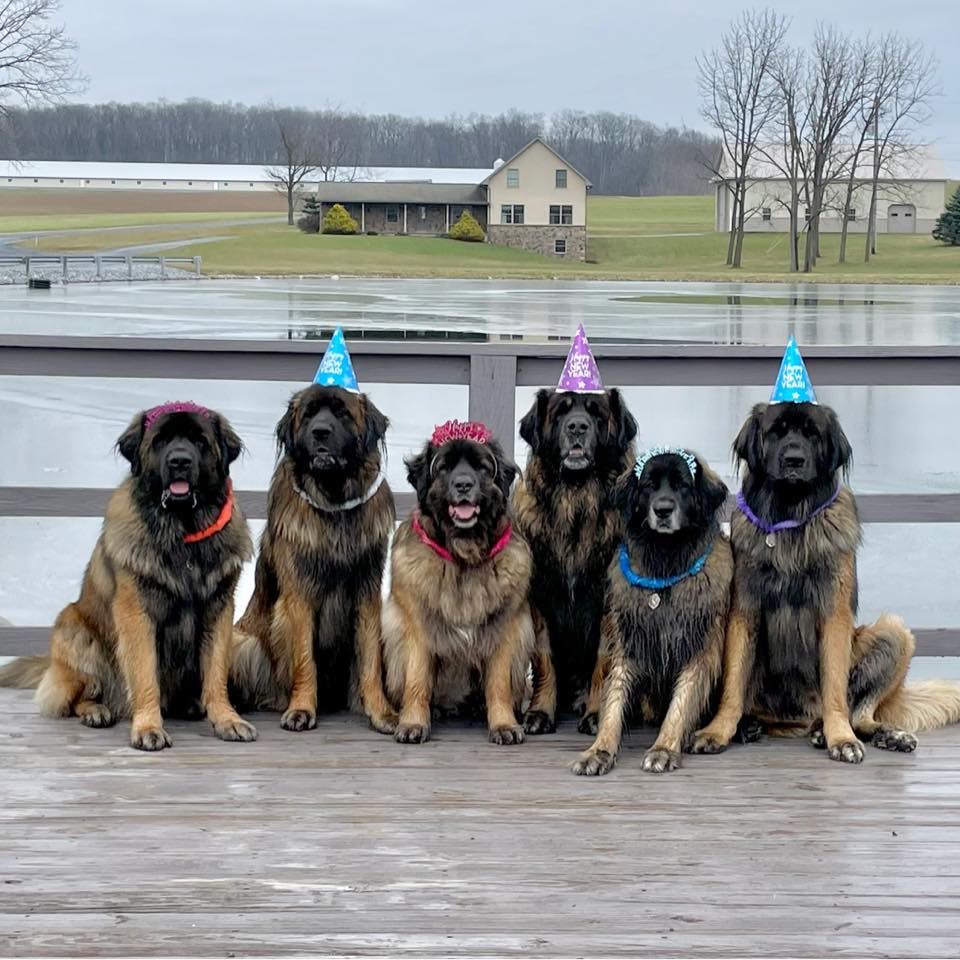
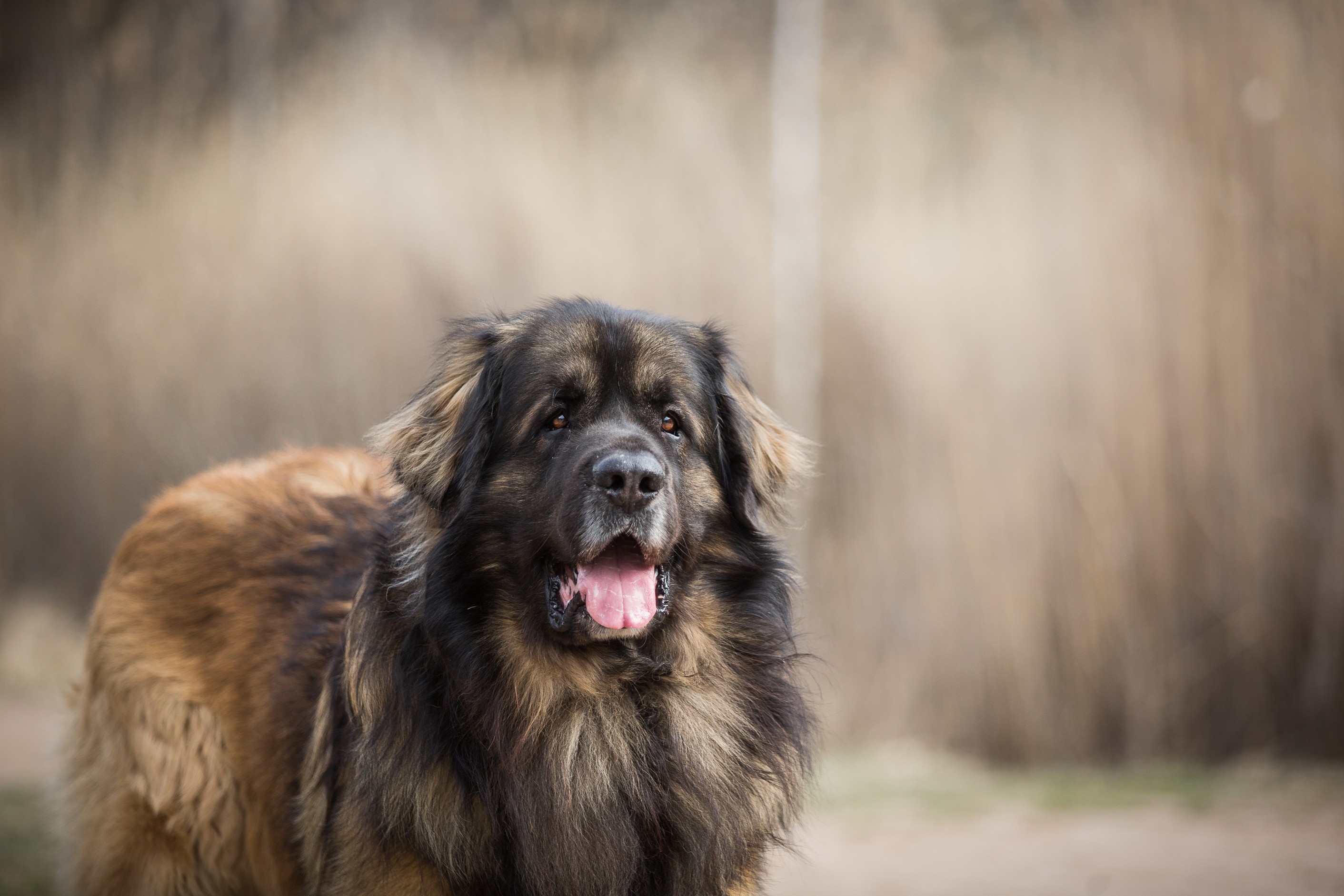
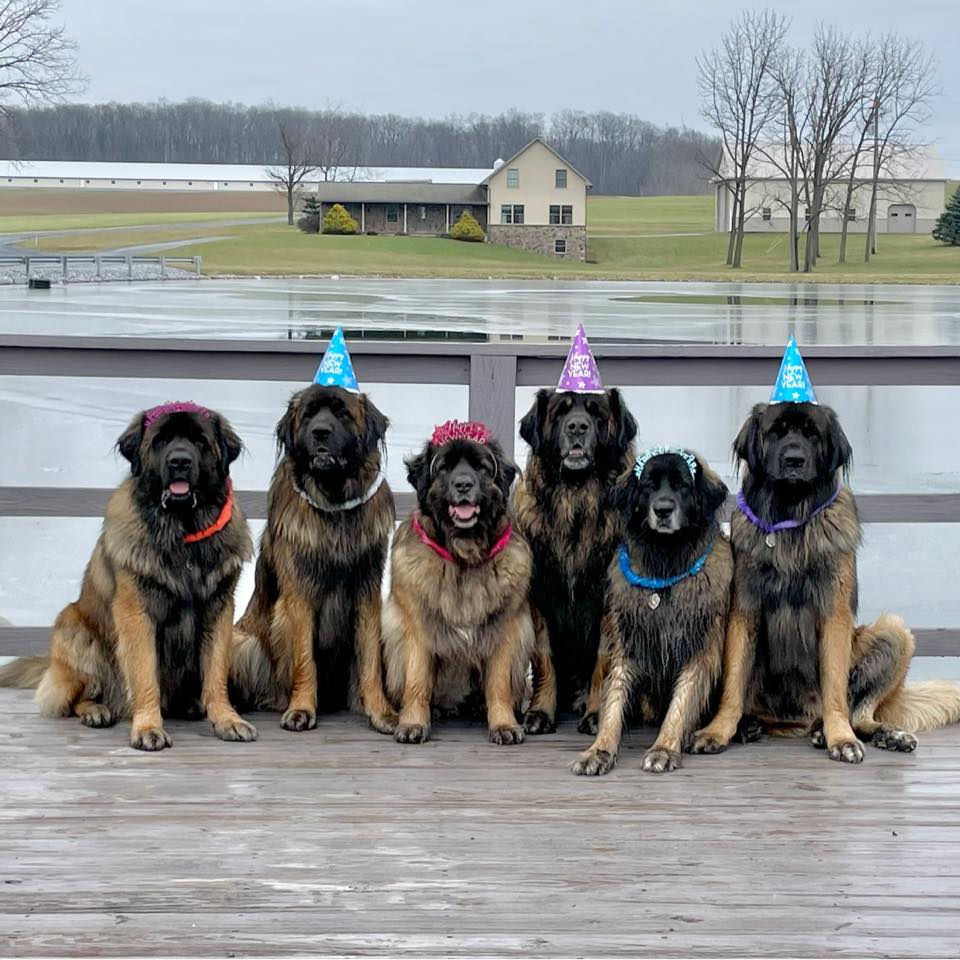
This photo tile includes three photos of our Leonberger Bronco. In one photo he is sitting in my wife’s lap, another photo is of our Pug Daisy and our Leonberger Bronco, and finally a photo of Bronco’s face. There is also a photo of six Leonbergers celebrating a birthday. That photo was taken by a friend Jen O’Keefe. Finally, there are two shutter stock photos ID:731020957 by Peter Josto and ID: 1957113277 by AnetaZabranska.
With these photos I wanted to illustrate that Leonbergers are big and furry.
Article by Emma Johnson
This photo was provided by Jen O’Keefe, Urgent Animal Care of Arlington. From left to right; Obi, Delfi, Aslan, Gryphon, Digory.
How to Control Leonberger Shedding: Grooming Tips That Actually Work
Living with a Leonberger means living with fur. It ends up on the couch, in the car, and sometimes floating through the house like tumbleweed. Many owners brush occasionally and hope the shedding slows down, but it rarely works that way. Leonbergers have one of the densest double coats in the dog world, and without the right grooming approach, loose fur quickly gets out of control.
The good news is that Leonberger shedding can be managed. With the right brushing tools, a consistent grooming routine, proper bathing habits, and good nutrition, you can dramatically reduce the amount of hair around your home.
Why Leonbergers Shed So Much?
Leonbergers were originally bred as working dogs in the mountains of Europe. Their coat had to protect them from cold weather, snow, rain, and harsh terrain. That protective coat is still part of the breed today.
Leonberger ID:705193912 by Anna Krivitskaya
Because of this history, Leonbergers grow a thick double coat designed for insulation. The outer layer protects against moisture and dirt, while the inner coat traps warmth. When temperatures change, that undercoat naturally sheds to adjust to the environment.
This means shedding is not a problem you can eliminate. The goal is to manage it effectively so loose fur doesn’t build up in the coat or around the house.
The Double Coat
Leonbergers are not the only dogs with protective double coats. Other large working breeds such as the Newfoundland, Saint Bernard, and Great Pyrenees were also developed for cold climates and demanding outdoor work. These breeds rely on dense insulating undercoats that protect them from harsh weather.
This is an example of a Newfoundland dog (picture provided by Emma Johnson)Saint Bernard dog Stock Photo ID: 1713912484 by fred12
However, not all working breeds have coats this heavy. Dogs like the Belgian Malinois also have a double coat, but it is much shorter and lighter. Because of that difference, Malinois owners typically deal with far less grooming and undercoat buildup compared with Leonberger owners.
Seasonal Shedding Cycles in Leonbergers
Leonbergers shed year-round, but the most intense shedding happens during seasonal transitions.
Most Leonbergers experience two major shedding periods:
Spring coat blow: The thick winter undercoat sheds to prepare for warmer temperatures.
Fall coat change: The dog grows a thicker coat again for colder weather.
During these periods, owners often notice large clumps of fur coming out during brushing. This is completely normal and is often referred to as coat blow season.
These cycles can last three to six weeks, depending on climate and individual genetics.
How Often Should You Groom a Leonberger?
Many owners underestimate how often this breed needs grooming.
For most Leonbergers:
Brushing: 3–4 times per week
Heavy shedding seasons: Daily brushing
Bathing: Every 6–8 weeks
Full coat maintenance: Weekly
Regular grooming prevents loose fur from collecting in the undercoat and spreading through your home.
Consistency is more important than long grooming sessions. Ten minutes of brushing several times a week is often more effective than one long session once a month.
The Best Brushes and Grooming Tools for Leonberger Shedding
The right grooming tools make a major difference. Leonbergers have dense coats, and basic brushes often cannot reach the undercoat.
The most useful grooming tools include:
Slicker brushes
Undercoat rakes
Deshedding tools
Wide-tooth combs
Each tool serves a specific purpose in removing loose fur while protecting the coat structure.
Using the wrong tools can break guard hairs or irritate the skin.
Slicker Brushes vs. Undercoat Rakes
Both tools are essential, but they serve different roles.
Slicker Brushes
Slicker brushes have fine wire bristles that remove surface tangles and loose hair from the outer coat. However, slicker brushes alone cannot reach the deeper undercoat.
High angle view of pet slicker brush. Shutterstock Asset id: 2404454953 by takepicsforfun
Undercoat Rakes
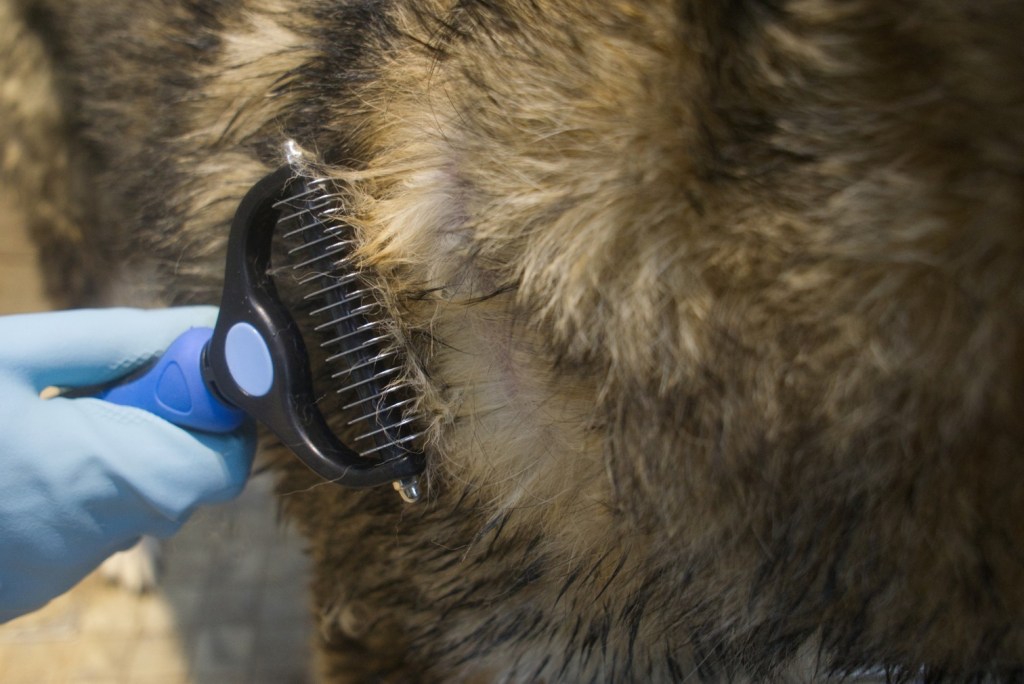
Undercoat rakes are designed with longer teeth that penetrate through the outer coat. Using both tools together creates a balanced grooming routine.
Brushing a double-coated dog close-up. Shutterstock Asset id: 2441132455 by Gayleen Froese
Deshedding Tools That Work Best
Deshedding tools are especially useful during coat blow season.
These tools are designed to gently remove loose undercoat without cutting or damaging the outer coat.
When used correctly, deshedding tools can remove large amounts of loose fur in a single session.
However, they should not be overused. Excessive use can thin the coat too much and affect its natural insulation.
Most owners find that using a deshedding tool once per week during heavy shedding periods works well.
Step-by-Step Brushing Routine to Reduce Excess Fur
A structured brushing routine helps remove fur efficiently without stressing the dog.
Step 1: Work through the coat slowly, focusing on areas where undercoat builds up, such as behind the ears, chest, and hind legs.
Step 2: After loosening undercoat hair, switch to a slicker brush to remove remaining loose fur.
Step 3: Leonbergers commonly develop tangles around the neck, tail base, and legs.
Step 4: A wide-tooth comb helps confirm the coat is fully detangled.
This routine typically takes 15–25 minutes depending on coat condition.
Bathing Your Leonberger the Right Way to Control Shedding
Bathing plays a bigger role in shedding control than many owners realize.
Warm water and shampoo help loosen dead undercoat fur, making it easier to remove during brushing.
However, bathing too often can strip natural oils and cause dry skin.
How Often Should You Bathe Them?
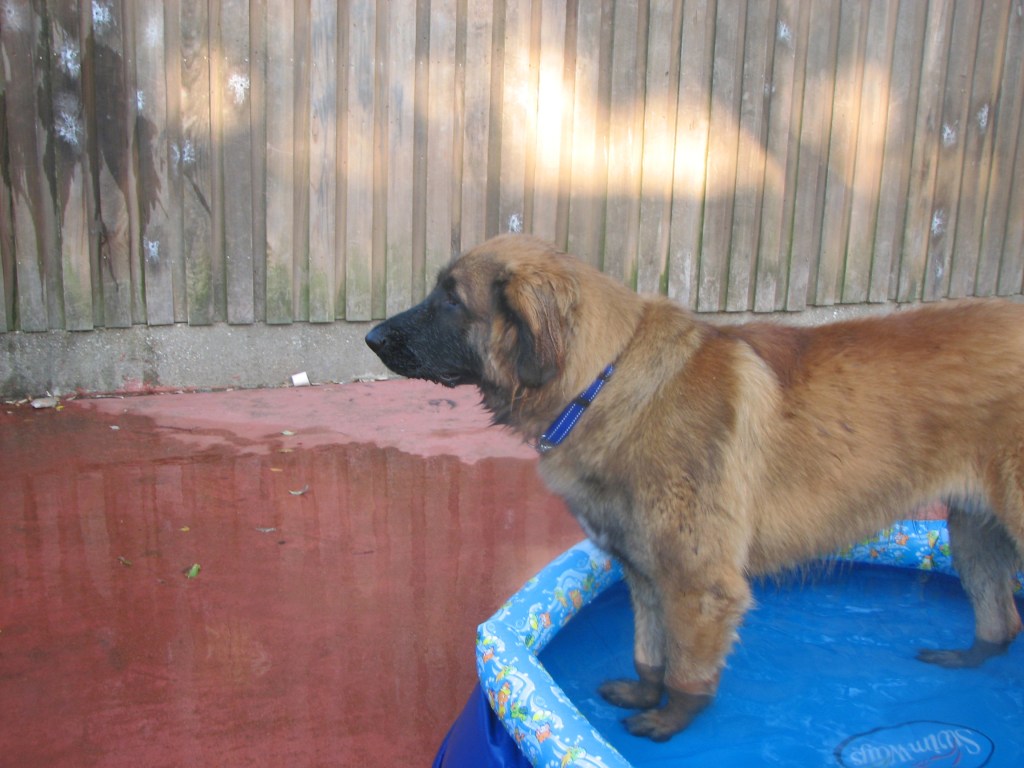
Our Leonberger Bronco is standing in a kiddie pool. He is young and not yet fully grown in this photo. He does not have too much fur yet. I can add that it was not possible to give Bronco a bath in the bathtub, so we always gave him baths outside in the kiddie pool.
Most Leonbergers do well with a bath every 6 to 8 weeks.
More frequent bathing may be needed if the dog spends a lot of time outdoors or swimming.
This is a photo of our Leonberger Bronco swimming in White Rock Lake. He loved swimming and chasing ducks.
After bathing, always dry the coat thoroughly and brush again. Wet undercoat can trap loose hair and lead to matting if left unmanaged.
Nutrition’s Role in Reducing Shedding
Coat health begins with nutrition.
Dogs that lack essential nutrients often develop dry skin, brittle fur, and excessive shedding.
A high-quality diet rich in protein and healthy fats supports stronger hair growth and healthier skin.
Ingredients that help maintain coat quality include:
Omega-3 fatty acids
Omega-6 fatty acids
Zinc
Biotin
For older dogs, switching to a specialized diet such as senior dog food can also support coat condition as metabolism changes with age.
Veterinary research presented at events like veterinary conferences 2026 has increasingly emphasized how diet influences skin and coat health in large working breeds.
Extra Grooming Steps During Heavy Shedding
During peak shedding periods, increase grooming frequency.
Helpful strategies include:
Daily brushing sessions
Weekly deshedding treatments
Bathing followed by thorough brushing
Using high-velocity dryers to loosen undercoat
Many professional groomers use forced-air dryers to blow out loose undercoats after a bath. This method can remove large volumes of fur quickly.
When to Seek Help From a Professional Groomer
Some Leonberger coats become too dense or matted for home grooming alone.
Professional groomers have specialized tools and equipment designed for heavy-coated breeds.
A professional grooming session may include:
Undercoat removal
Deep coat brushing
Coat blowout drying
Sanitary trimming
Many owners schedule professional grooming every 3 to 4 months to keep the coat manageable.
If brushing becomes difficult or mats begin forming regularly, it may be time to involve a groomer.
Final Thoughts
Leonberger shedding is intense, but it does not have to overwhelm your home.With the right grooming tools, a consistent brushing routine, proper bathing habits, and strong nutrition, you can keep loose fur under control and maintain a healthy coat.
The key is consistency. When grooming becomes part of your weekly routine, shedding becomes far more manageable.
Leonbergers will always shed. But with the right care, that shedding becomes something you can handle without constantly battling fur around the house.
A woman and her Leonberger dog. Asset id: 1741753382 by Elena Podrezenko
Another article by Emma Johnson is Leonberger Health Issues – A Veterinarian’s Guide to Preventive Medicine.
This is a Leonberger blog, but I sometimes post about books that are not about Leonbergers but books that I love and want to promote. With this post I would like to promote a truly great novel featuring Neanderthals and early Homo Sapiens. The book is called Balance of Nature by Jacqui Murray. It is the third book in a series called Savage Land.
Below is an overview of the three formats of Balance of Nature:
Paperback – Structured Learning LLC (February 2, 2026), ISBN-10 : 1942101686, ISBN-13 : 978-1942101680, 305 pages, Item Weight : 14.6 ounces, dimensions : 6 x 0.69 x 9 inches, it cost $15.99 on US Amazon. Click here to order it from Amazon.com.
Kindle – Structured Learning LLC (February 2, 2026), ASIN : B0G45MFBWW, ISBN-13 978-1942101697, 307 pages. It is currently $4.99 on Amazon.com and free with Kindle unlimited. Click here to order it from Amazon.com.
Audiobook – Structured Learning LLC (March 8, 2026), ASIN : B0GRG8XG1T, It is currently $14.99 on Amazon.com. Click here to order it from Amazon.com.
Front cover of Balance of nature. Click on the image to go to the Amazon page for the paperback version of the book.
Amazon Description of Balance of Nature
A tribe haunted by the past. Lies that threaten the future. A reason to find the truth.
Savage Land is the third trilogy about prehistoric man in the series, Man. Vs. Nature.Written in the spirit of Jean Auel, Savage Land explores how two bands of humans survived one of the worst natural disasters in Earth’s history, when volcanic eruptions darkened the sky, massive tsunamis crossed the ocean in crushing waves, and raging fires burned the land. Each of the tribes considered themselves apex predators. Neither was. That crown belonged to Nature and she was intent on washing the blight of man from her face. Join me in this three-book fictional exploration of Neanderthals. Be ready for a world nothing like what you thought it would be, filled with clever minds, brilliant acts, and innovative solutions to life-ending problems, all based on real events. At the end of this trilogy, you’ll be proud to call Neanderthals family.
In Balance of Nature, Book Three of the trilogy, the tribes face one final roadblock to reach what they hope will become their new home. They prevail but not without deaths and setbacks by collaboration and respect for the strengths of those they originally disdained. Now, in their homeland, where life should be about finding their place in a new landscape, instead, they find threats from old enemies and potentially lethal challenges.
Follow the courageous Yu’ung, the determined Kazeb, the mystical Shanadar, the pawed-and-clawed Canis and their tribes as they navigate a perilous world of tribal conflict, unexplained visions, and shifting loyalties. Their journey is a testament to resilience and the strength found in true leadership. Their personal struggles and heroic triumphs define this sweeping saga that ultimately leads to who we are today.
The Adventures of Neanderthals and Homo Sapiens by the Shoreless Sea
When I was young, I read Jean M. Auels’ novels set in prehistoric Europe and I loved them. Jacqui Murray’s books have a lot in common with Jean M. Auels’ books, but they are set at an earlier time. This series, Savage Land, takes place about 75,000 years ago (this is the third book in the series). In addition, we know more about prehistoric man now than we did back then and Jacqui Murray has certainly done her research. I loved Jean M. Auels’ books, and I love all of Jacqui Murray’s books. This book is a continuation of the previous book Badlands and is yet another thrilling prehistoric adventure involving both Neanderthals (the people and the clan) and Homo Sapiens (tall ones). Neanderthals and Homo Sapiens work together to reach a new homeland but there are some who have dark motives. There are hidden agendas, betrayal, and mysteries.
One aspect of this book and the previous books in this series and the previous series’ as well, are the Canis. Domesticated dogs probably did not exist 75,000 years ago, but they may have still interacted with humans, and the way the author uses them in the plots adds something to the stories that I really love. If you are a dog lover you will love Ump, Blaze, Ocha, Spirit, Ragged Ear, White Streak, and their loyalty, amazing abilities, and courage. There is a reference in the book to a previous book where Ump rescued Blaze and it brought back great memories of past adventures.
The book focuses a lot on Yu’ung who a female Neanderthal and a healer and she is also a leader of her tribe. There is also Fierce, the leader of a tribe of Homo Sapiens, Kazeb and Turk, the leaders of another Neanderthal tribe, and Shanadar a Shaman and mystic who lives at the outskirts of his Neanderthal tribe. There are many other characters both good and evil, of both species (Homo Sapiens / Neanderthals). The many characters added to the richness of the stories at the same time as the there is a risk for confusion. However, the author provided a list of the characters, their tribe belonging and role at the beginning of the book. I found this list to be very helpful. Whenever I was wondering “who is that dude again?” I looked at the list and there was no problem.
Another special feature I enjoyed was the “Questions You Ask” section at the end, where the author is listing answers to potential questions about Prehistory, Neanderthals, and the book. For example, you learn about Neanderthal genetics, how they lived, their use of fire, could they talk (yes), did they care for their sick (yes), the eruption of the super volcano Mt. Toba, and much more. There is also a bibliography.
Like all Jacqui Murray’s novels this novel is full of adventure, and it is captivating and realistic. You connect with the characters and their struggle for survival. The importance of cooperation and belonging for survival becomes clear and you will understand the advantage of everyone having a role and a purpose in the tribe. The book makes you wonder about all those millions of pre-historic humans who came before us so long ago. Our modern civilization has existed for a very short time, and it is easy to forget how privileged we are. I highly recommend this book to anyone who is interested in adventure, especially if you are curious about prehistoric man.
Back cover of Balance of Nature. Click on the image to go to the Amazon page for the Kindle version of the book.
About the Author of Balance of Nature
Jacqui Murray is the author of the popular prehistoric fiction saga, Man vs. Nature which explores seminal events in man’s evolution one trilogy at a time. She is also the author of the Rowe-Delamagente thrillers and Building a Midshipman, the story of her daughter’s journey from high school to United States Naval Academy. When not writing, she is grad schoolteacher, author of over a hundred tech ed resources including K-12 technology curricula, and an Amazon Vine Voice.
You can find her resources at her publisher, Structured Learning LLC. She lives in So. California with her husband of forty years, Labrador Casey, and lots of contact with her adult children, one a Cdr in the Navy, the other a SFC in the Army. Feel free to reach out to Jacqui at her blog, WordDreams, or her social media platforms.
These are some of her other books on prehistoric humans
I am sorry that I have not been very active in the blogosphere lately. We had a special visit from our five months old grandson Jack. Our son Jacob, his wife Ashley and baby Jack came to visit us last Thursday and they left Monday night and during that time I mostly ignored the blogosphere but now I am back. With this post I thought I would display a few baby photos. First there are a few photos from our visit to Baltimore to see baby Jacka couple of months ago and then the rest of the photos were taken during their visit to us here in Dallas, which took place during the last few days.
Our son Jacob, his wife Ashley and our grandson at about 3 months old. In the bottom right photo, he is newborn.Jack in the sofa. Three months old.My wife Claudia is on the left, I am in the middle and Jack is on the right.First photo from the last few days. Our daughter with baby Jack at five months old. This photo is from the past weekend when they visited us. That’s here in Dallas, Texas.
A Challenge for Dr. Pooper
It was a challenging few days for our mini-Australian Shepherd Rollo. Dogs being jealous of a baby is a very real thing. I’ve read that dogs don’t see us the same as a pack of dogs but something better than a pack, care takers and family. They typically prefer their human family over a pack of dogs. They understand the difference between dogs and people. Rollo does not really try to be a pack leader, but he cherishes his position as the baby in the family, and suddenly here comes a human baby out of nowhere.
The human baby gets lots of attention, he sits in a stroller just like Rollo sometimes did in the past, people use a baby voice when they talk to the human baby, like they do with him, and on top of it I called baby Jack, Rollo, instead of Jack several times. I can add that I recently also mixed up the cats Charlee and Chaplin on another blog. Rollo felt that things were taken from him and he growled at the baby a couple of times.
Sometimes there are scary sounds and Rollo wanted to sit in the stroller we bought for our Pug Daisy. We have not been using that stroller since Daisy passed.
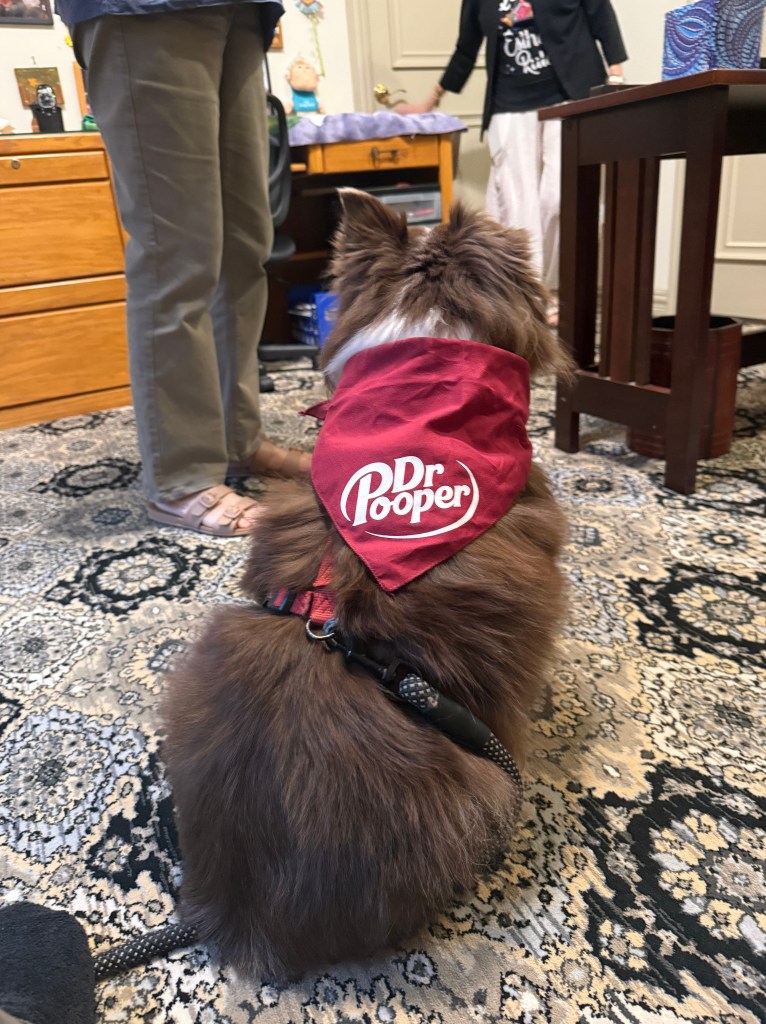
So, what we did was to pay a lot of attention to Rollo, making sure we did not exclude him, and we gave him treats every time he was in the same room as the baby. It turned out that this worked very well. This was something our daughter had looked up. Well, now when Jack has gone back to Baltimore, Rollo is back to being the supreme baby of the family, or the King of Texas if you will. Below are a couple of photos of Rollo in his new cap or coat, Dr. Pooper, a sort of advertisement for a Texas soda called Dr. Pepper. It was just for fun and he did not mind.
Rollo in his Dr. Pooper cap.Rollo in his Dr. Pooper cap.
Baby Jack Photos
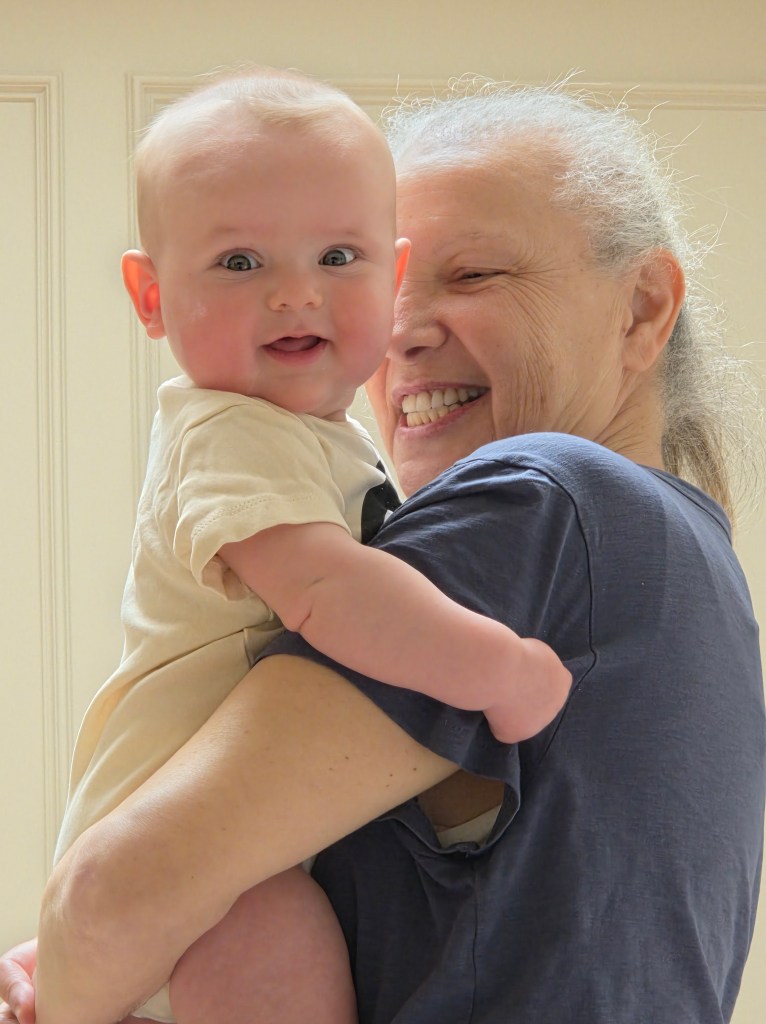
Our son with his son, baby Jack.My wife Claudia and baby Jack.Me and baby Jack.Our daughter and baby Jack.Baby Jack in a stroller.Baby Jack in a stroller.Baby Jack in a stroller.










































































 Leonberger Life