This blog feature amusing and heartwarming stories about our late Leonberger dog Bronco, as well as other Leonbergers. It also has a lot of information about the Leonberger breed, the history, care, training, Leonberger organizations, etc. I also wrote a Leonberger book, which I am featuring in the sidebar.
Dogs give gifts and do nice things for people and other dogs. In this post I am describing three occasions when our late Leonberger Bronco gave our Pug Daisy gifts.
Leonberger Shares a Gingerbread House
Our Leonberger dog Bronco (his full name was Le Bronco von der Löwenhöhle) was an expert counter surfer, which is why we installed a pet gate to the entrance of our kitchen. Bronco knew how to open gates if they were not locked, so you had to make sure that you did not just close the gate but lock it. However, one December day I forgot to lock the gate. That was the day our daughter had made a gingerbread house and left it on the kitchen counter. Guess who ate half the gingerbread house? Guess who ate some of the other half? Bronco shared some with Daisy. He was always very generous. The photo below is what I saw when I got home that day.
The open gate behind Daisy and Bronco permitted their gingerbread-house raid.
Leonberger Shares a Baked Potato
I believe dogs have empathy, and sometimes they want to share—at least Bronco did. There was a time when we were in our home eating take-out food and Bronco stole one of our dinners, including meat, vegetables, and a baked potato. He started eating the meat, then he glanced at Daisy, who was sitting in the middle of the floor looking sad. Immediately he took the baked potato in his mouth and carried it over to her and dropped it right at her feet. I was going to get mad at him for stealing, but when I saw his kindhearted and unselfish act, I let it be.
Daisy our Pug was sitting there looking sad, but she got a baked potato with bacon and butter. I should say that the photo is from another occasion when she sat in front of the vent because she was cold. But it is close enough.
Leonberger Saves our Pug Daisy’s Life
On another occasion, Bronco did something else amazing for Daisy. Despite having issues with his paws—this was around the time he was being treated for squamous cell carcinoma—he saved Daisy from an attacking German shepherd who was running loose.
We were at my wife Claudia’s parents’ house, just leaving, standing on their driveway, when one of their neighbors came out to drop some garbage in the trash can at the end of her driveway. With her was a young, probably adolescent, German shepherd, and he was not on a leash. As we were standing on the porch, I suddenly saw the shepherd flying through the bushes, his teeth bared. He quickly charged us—viciously.
First, he went for Daisy, but Bronco got between them to protect her. Essentially, Bronco saved her life. The shepherd bit his leg in return. Bronco was almost twelve when this happened, and he was not as strong as he used to be. A German shepherd would have been an easy opponent for Bronco just a few years earlier, but at that point he was old, and he did not need the extra stress.
I kicked the German shepherd in the stomach, and he ran off. Bronco’s legs were weak—he had recently had a toe operation, and his walking was unsteady—so seeing the shepherd going for the leg on which he had had his operation was very upsetting. The shepherd could have bitten me, of course, and I could have been severely injured, but I didn’t care. I was defending my dogs—who were all on a leash, by the way. If the shepherd had bitten me, the owner could have been criminally charged, and there could have been a lawsuit
The owner of the shepherd came over to apologize, but I cursed at her. Maybe I shouldn’t have, but she had a vicious and dangerous dog, and she intentionally let him run loose. In the end, though, there were no major injuries. Bronco’s leg was slightly hurt, but overall, he was fine. These days, whenever we talk about this incident, I jokingly refer to the neighbor dog as Cujo. I should say that we’ve had a German Shepherd who was a sweetheart, so this is story is in no way an attempt to disparage German Shepherds. They are typically wonderful dogs as well.
In conclusion, this third example was an example of Bronco giving up his safety and potential health to protect our Pug Daisy.
Dogs are living conscious beings, and they should not be mistreated, hurt or treated disrespectfully. For example, don’t allow kids to play rough with dogs or take their food. Do not hit them. Do not push their face towards the feces when they have an accident inside the house. There is a widespread false misconception that you should. Again, respect your dog.
Do not keep them outside for a long time in the heat or cold. Do not abandon them, especially not to the wild where they will not survive. When your dog gets old, slow and boring, take care of it. You can get a new puppy but do not ever replace an old dog with a puppy. Doing so is cruel and immoral. Dogs deserve your respect.
This may be self-evident to most dog owners. However, I have seen people do these things to dogs and worse, so it bears repeating.
Do not let kids or Puppies Pull a Dog’s Tail
Playing with a dog is, of course, fine. They love running after balls and other toys and having fun in the backyard, playing with kids and other dogs. However, having their tail pulled is not their version of fun and it can cause a dog to bite. I am guilty of this myself. When I was a kid, I pulled the tail of my uncle’s dog and I almost got bitten. When our mini-Australian Shepherd Rollo was still a puppy he sometimes pestered our Leonberger Bronco by pulling his tail and even dangling in it like a swing. We did not allow this, but accidents happened. Luckily Bronco was very patient with Rollo, and he let us know when there was tail biting mischief under way so that we could remove Rollo.
Rollo, our mini-Australian Shepherd, frequently bit our Leonberger Bronco’s tail, and he even swung in it like a swing. He climbed all over Bronco. Bronco was very patient with him. Naturally, we did not allow this, but accidents happened.
Do not let kids ride big dogs
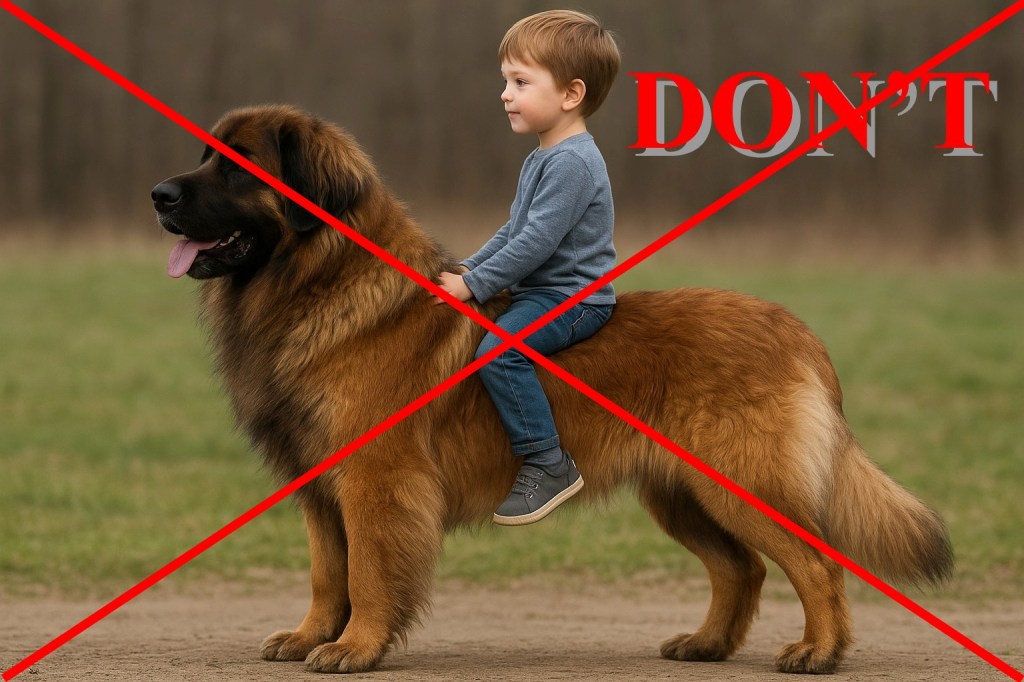
Do not allow children to ride big dogs like a horse. This could cause severe spinal injuries to the dog because their backs aren’t built for weight. The dog may also bite the kid to defend itself.
Don’t allow. This is very dangerous to the dog as well as the kid as the dog may bite. The dog in the picture is a Leonberger. This image was generated with the help of AI/ChatGPT.
Dogs Get Lonely
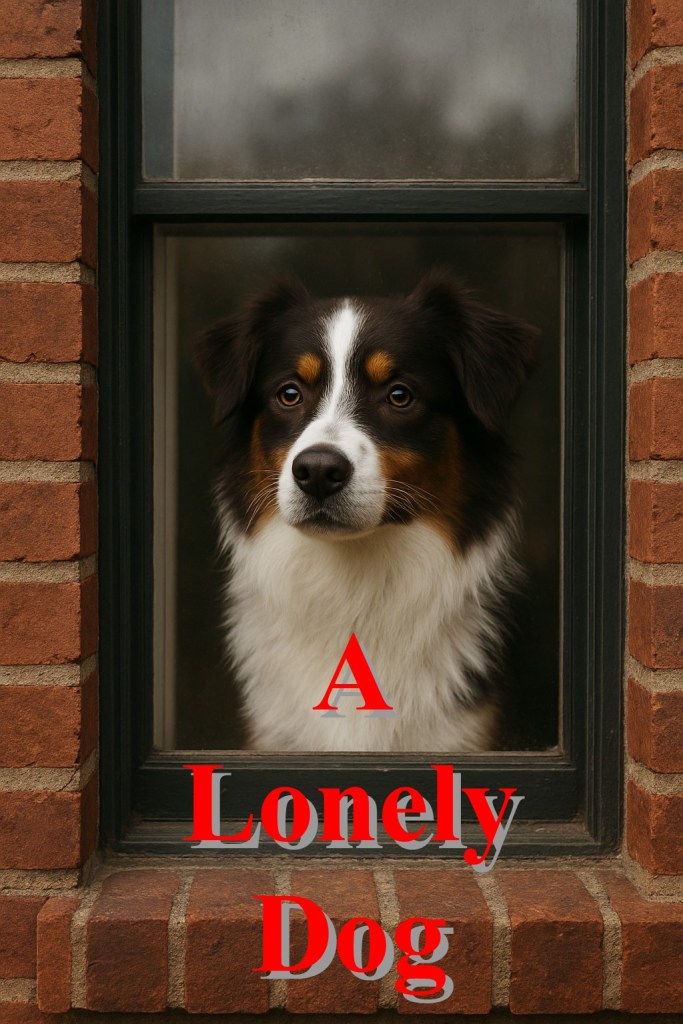
Don’t leave dogs alone for extended periods of time. Dogs need to potty, they need interaction, they get lonely and anxious. It is typically fine to leave an adult dog at home for a couple of hours but much longer than that could be a problem. If the dog goes potty on the floor when home alone for a long time, well that is not the dog’s fault. You clean it up and apologize to the dog.
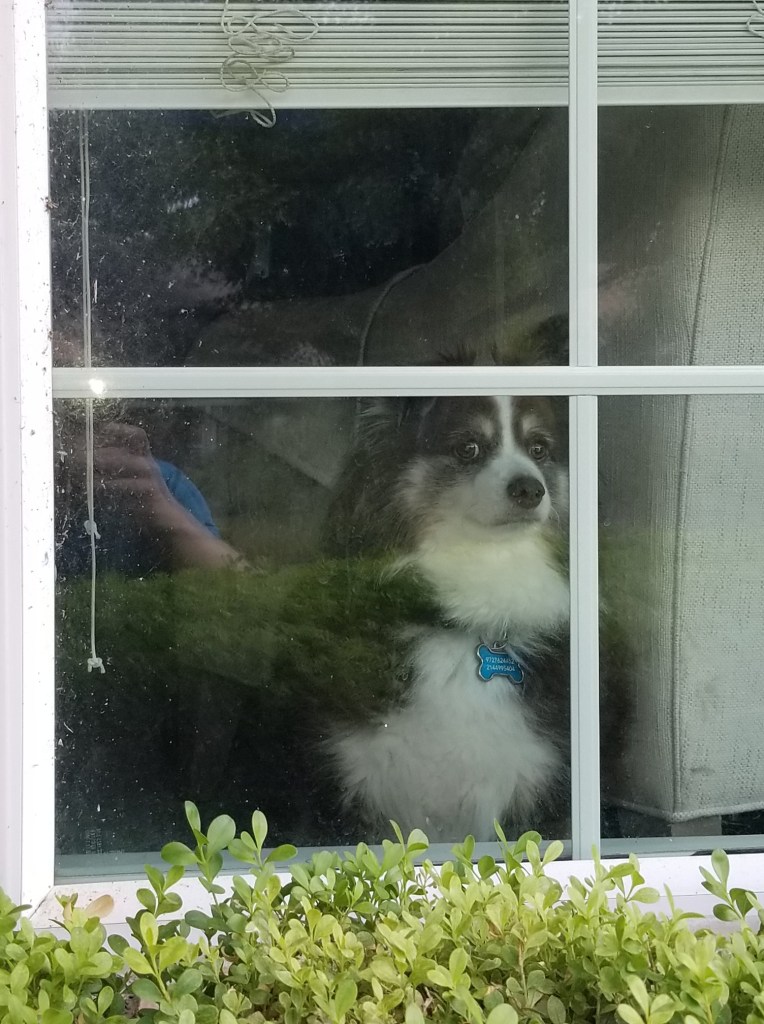
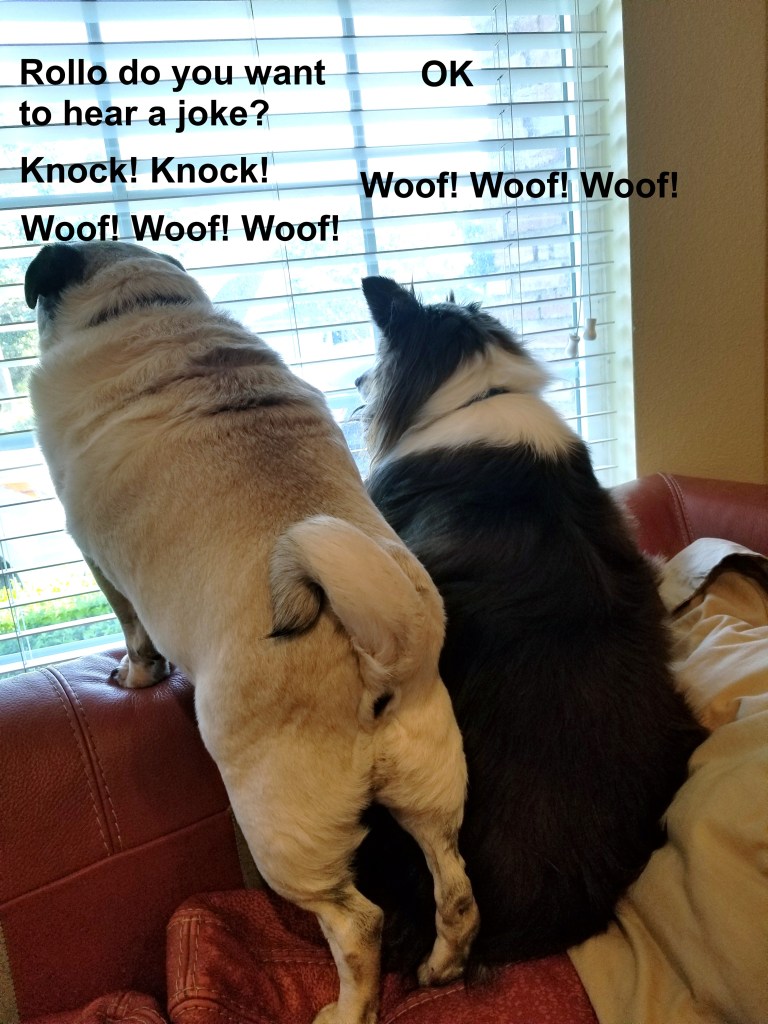
A lonely Australian Shepherd looking out the window. This image was generated with the help of AI/ChatGPT.Rollo is looking out the window. We don’t leave him for very long but when we do he sits and looks out the window. You can see the reflection of me taking the photo and of the neighborhood in the window.
It is a little bit better when dogs have the company of each other.
Daisy’s and Rollo’s knock knock joke.
Hugs May not be Welcome
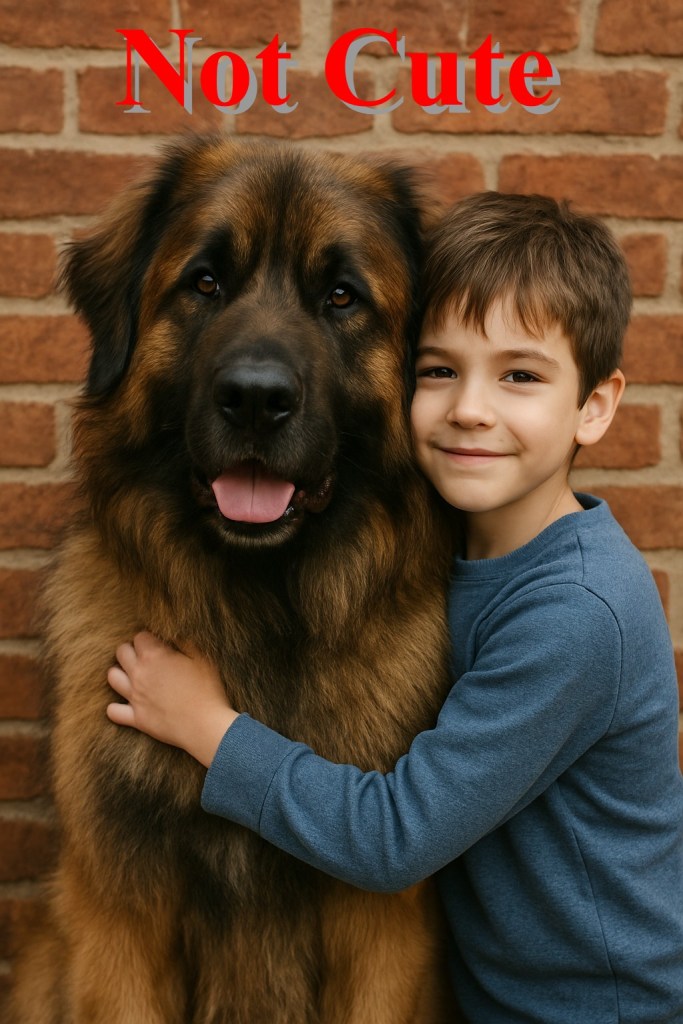
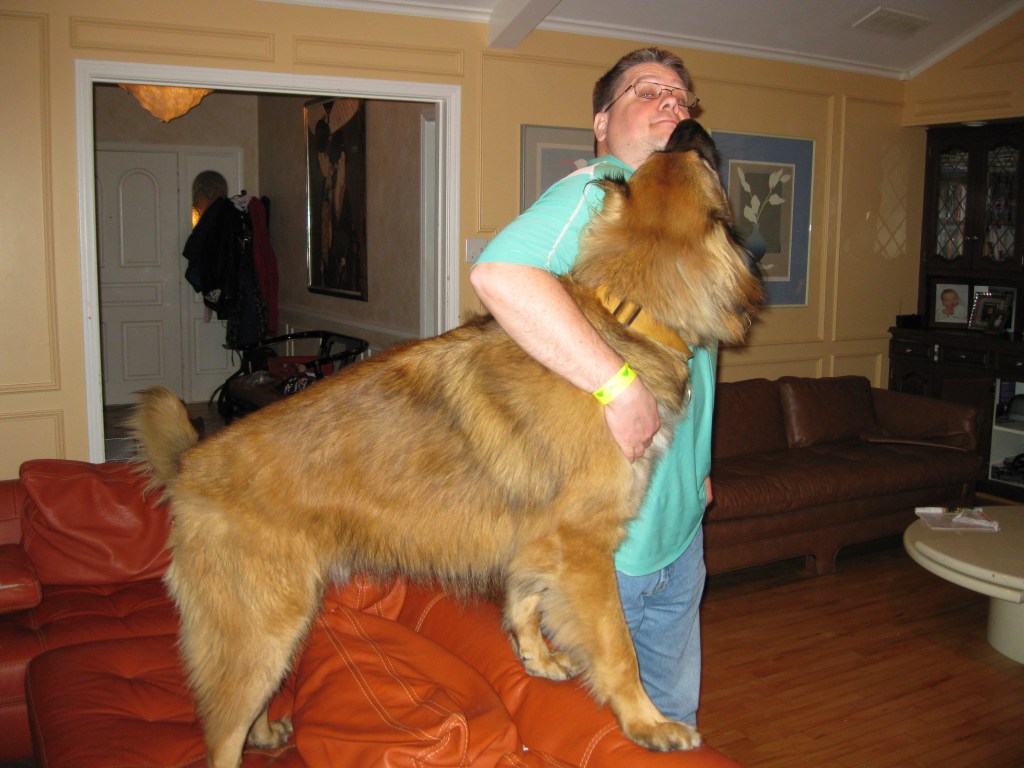
Perhaps surprisingly most dogs find hugs uncomfortable and stressful because they restrict their natural “flight” instinct and make them feel threatened, even though humans see it as affection. Our Leonberger gave us Leonberger hugs, meaning he leaned on us, or pressed his body against us, but like most dogs he probably did not like human arms around his body. If you put your arms around a dog they may start licking their lips, yawning, or even trying to get away. These are stress signals. If they lick your face in this situation, it is not likely to be a kiss, but attempted appeasement. Essentially, the dog wants to please you, but he is wondering why you are mean by giving him a hug without his consent.
Hugs may not be welcome. Watch for lip licking and other stress signals when kids do this. Perhaps ask the kid not to squeeze the dog with his arms. This image was generated with the help of AI/ChatGPT.
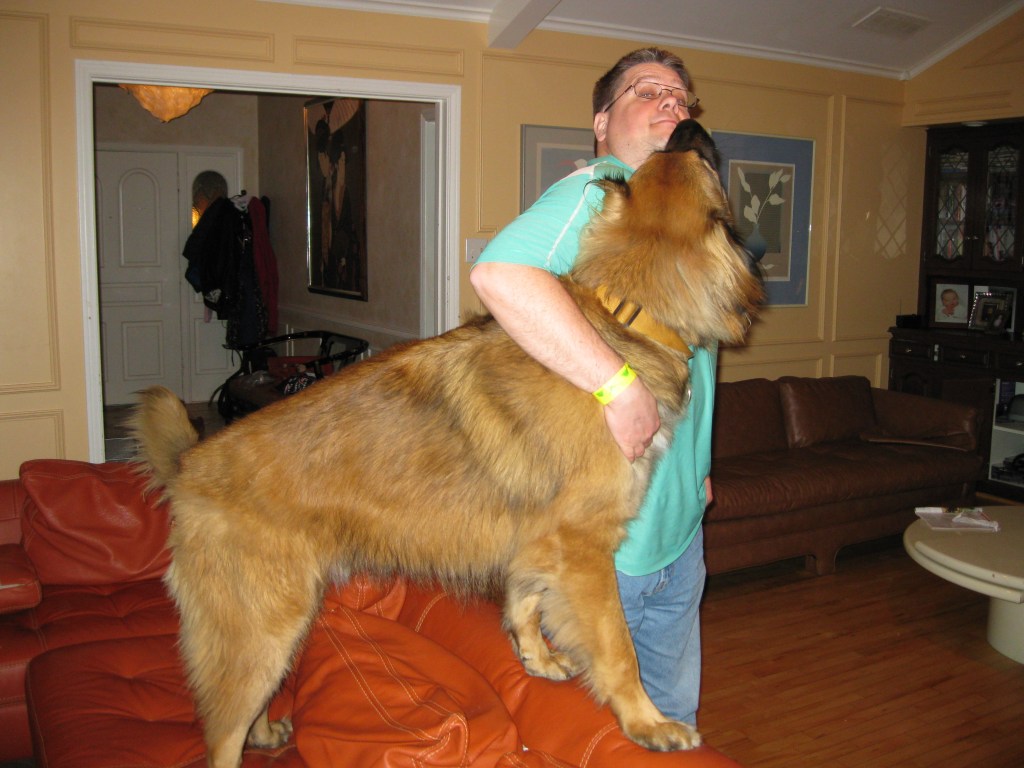
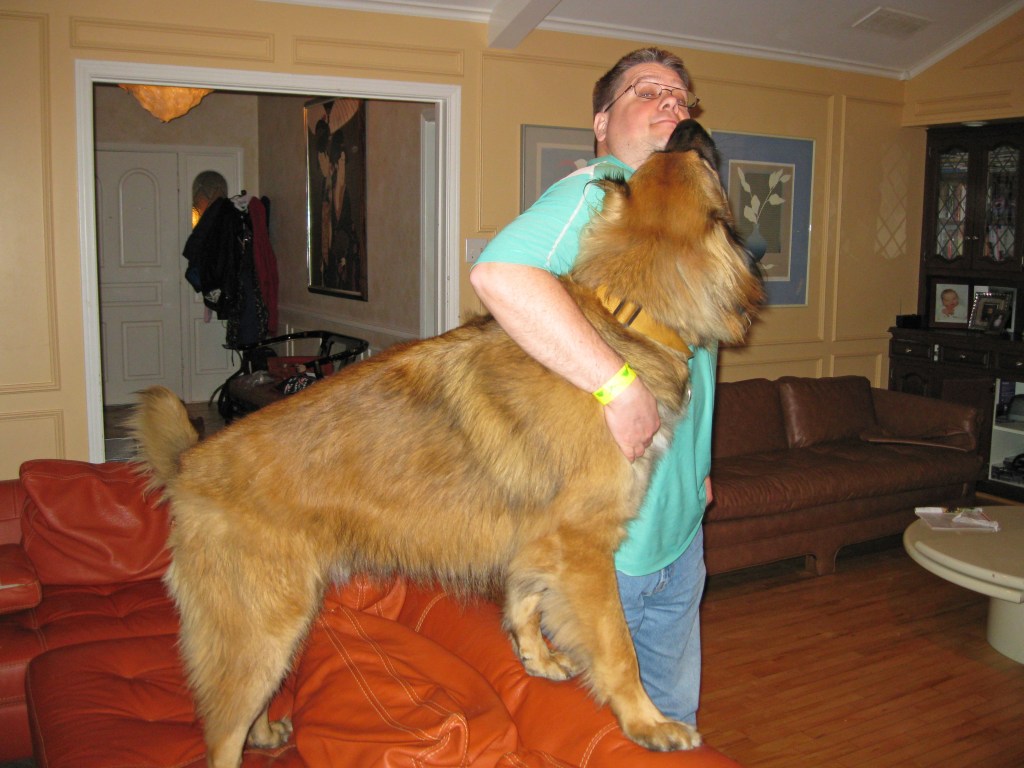
In the picture below our Leonberger Bronco is reaching out to me to give me a hug, as I entered the room, but maybe I should not have put my arm around him. I should say Bronco was a very tolerant dog.
Bronco our Leonberger is giving me a kiss, or is it? He is about one year old and not yet fully grown.
To learn more about the complex question of dog hugs you can watch the 8 minute video below.
In summary, Respect Your Dog
To visit a related post, Promises To My Dog, click here.
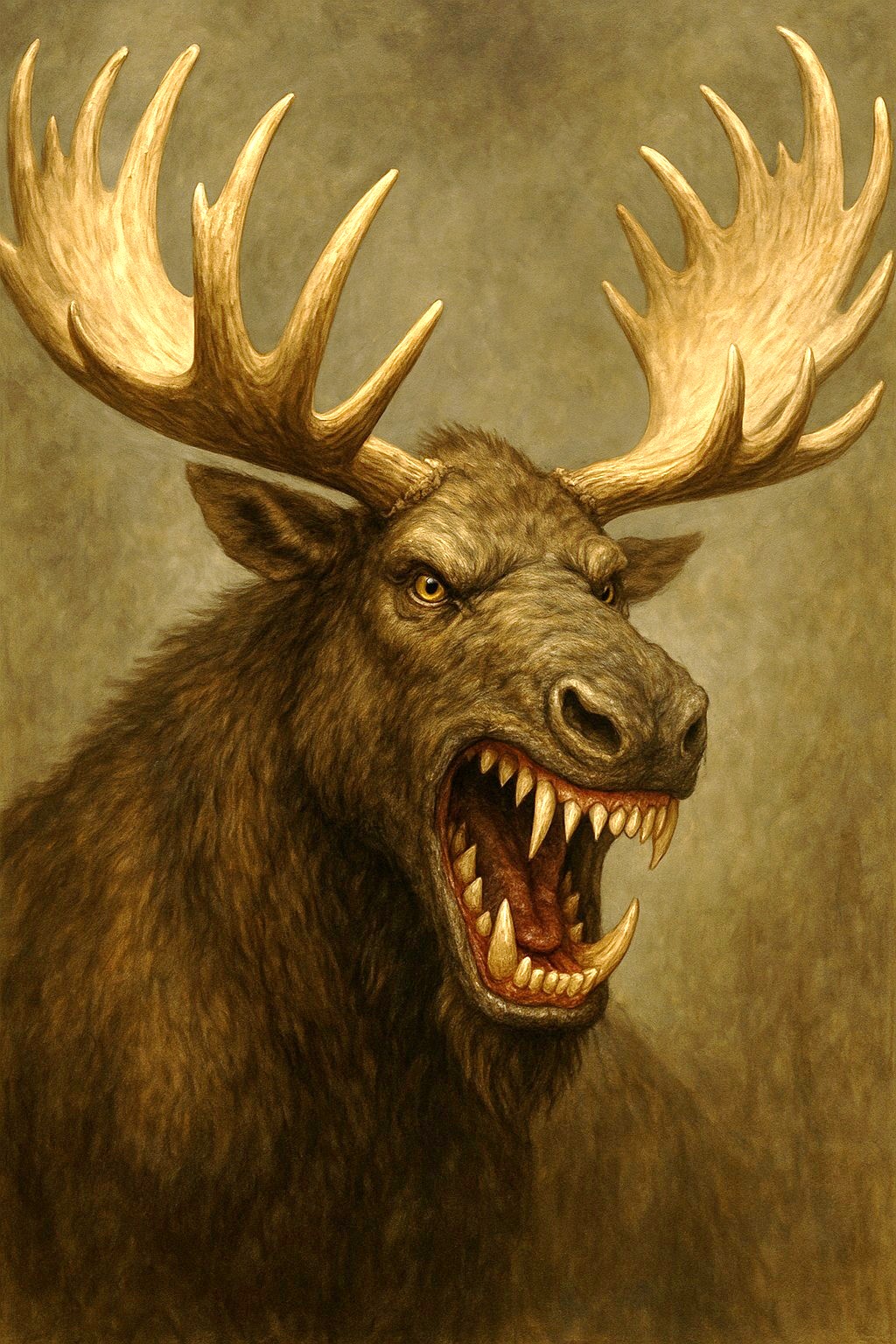
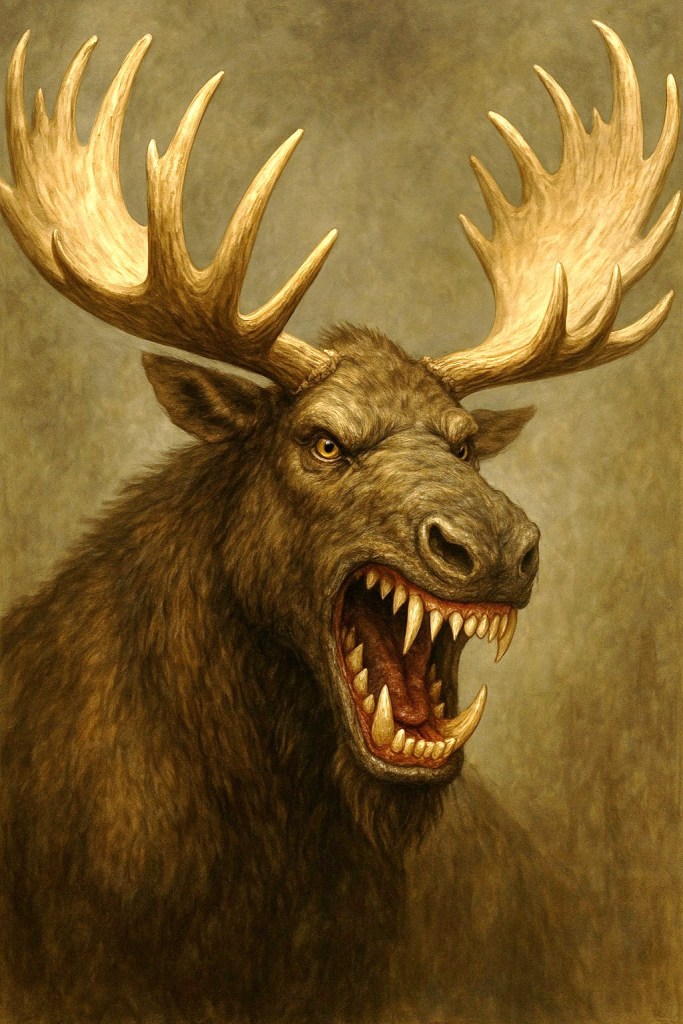
When I was in second grade, I liked horror stories, and my favorite animal was the Murder Moose. The Murder Moose was a big Moose with big teeth, and it went around killing people in my village in northern Sweden where I lived. In school I wrote my first story about the Murder Moose, and I made a drawing. My story and my drawing are unfortunately lost but with the help of ChatGPT I made another drawing based on my memories from my childhood’s Murder Moose. I should say that at the time I knew nothing about Dinosaurs yet, otherwise my favorite animal might have been Dinosaurs.
The murder moose in my second grade story. The picture was generated by ChatGPT.
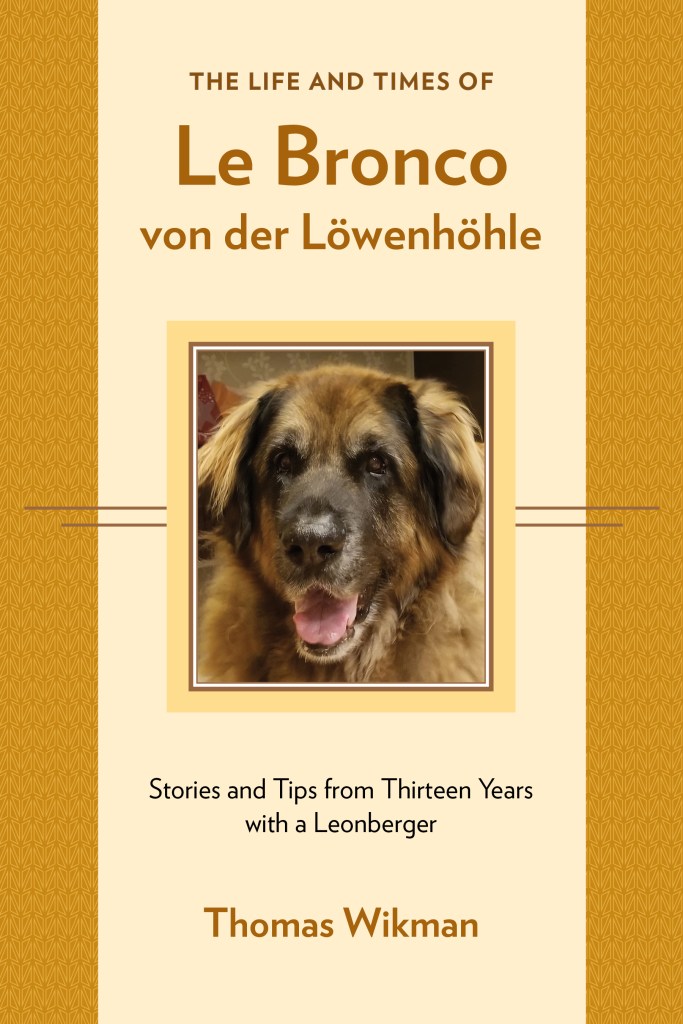
As an adult my perspective has changed. Now I love dogs. I have a dog, Rollo, and have owned many dogs, something that I never had a chance to do as a kid. I love dogs very much and I am especially fond of Leonberger dogs. I wrote a book about Leonbergers and our late Leonberger dog Bronco, or Le Bronco von der Löwenhöhle to be precise. The title of the book is “The Life and Times of Le Bronco von der Löwenhöhle, Stories and Tips from Thirteen Years with a Leonberger”.
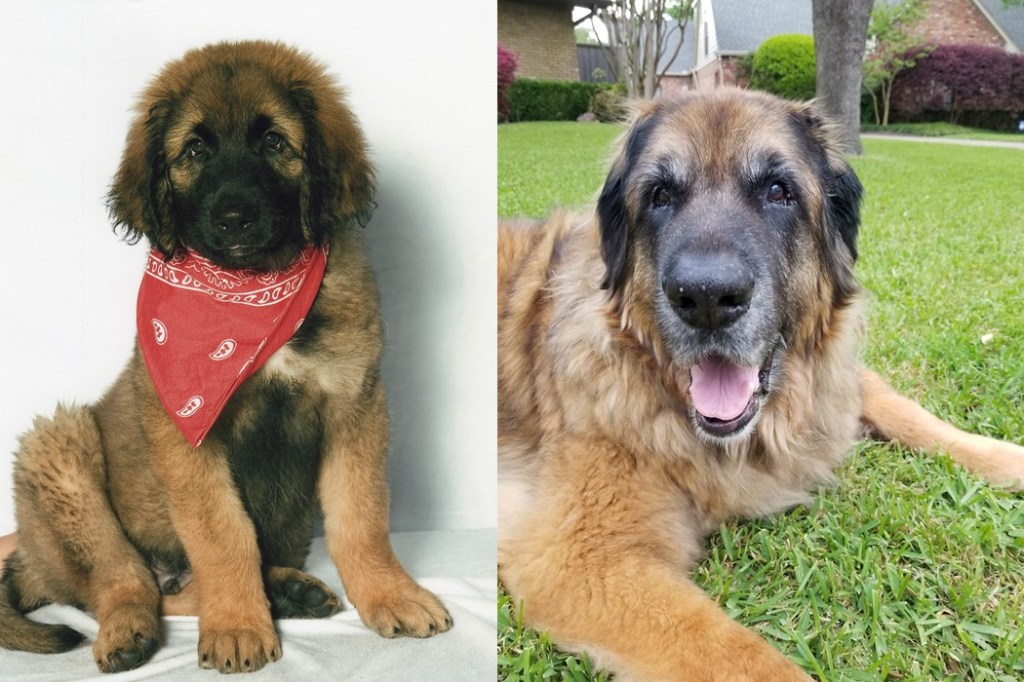
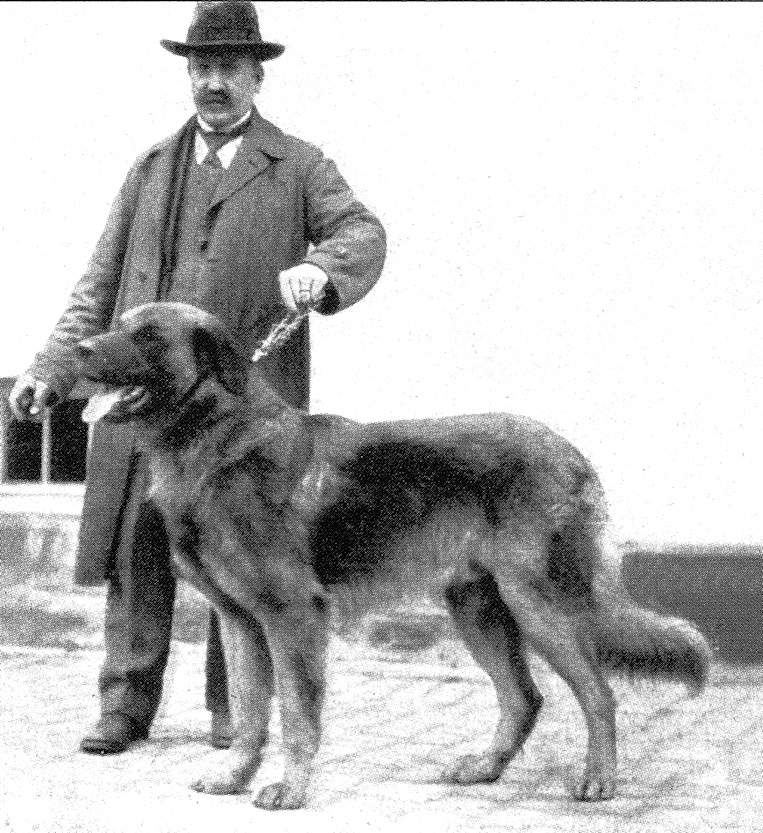
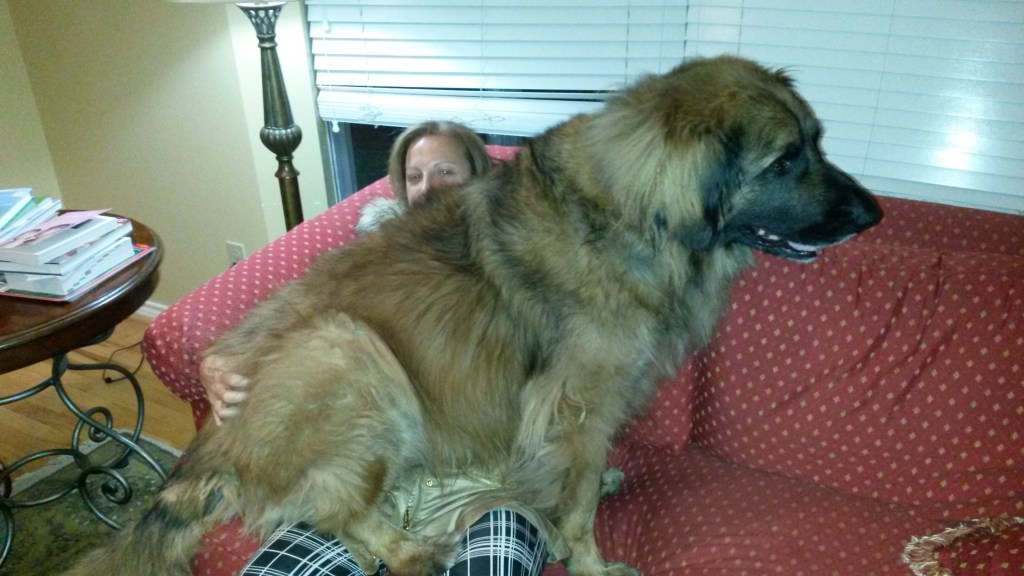
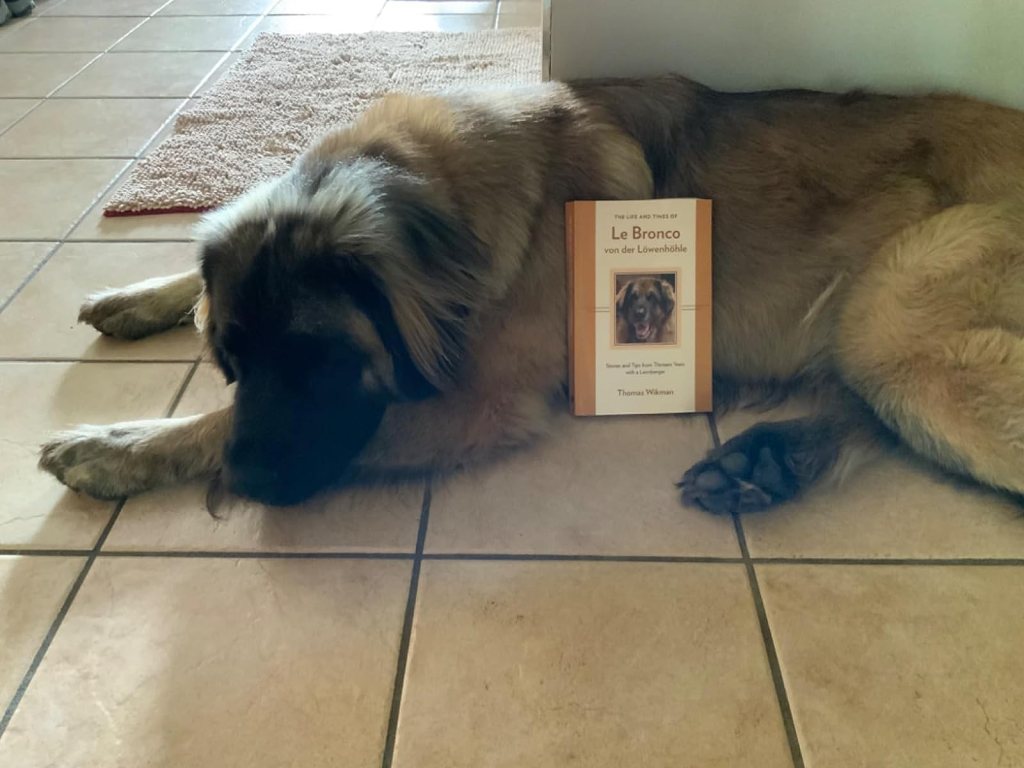
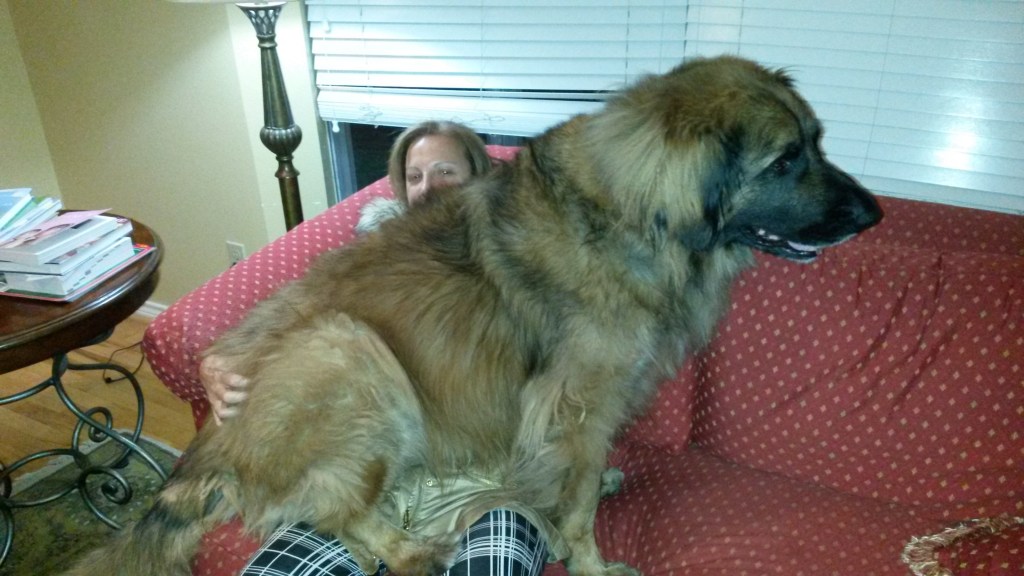
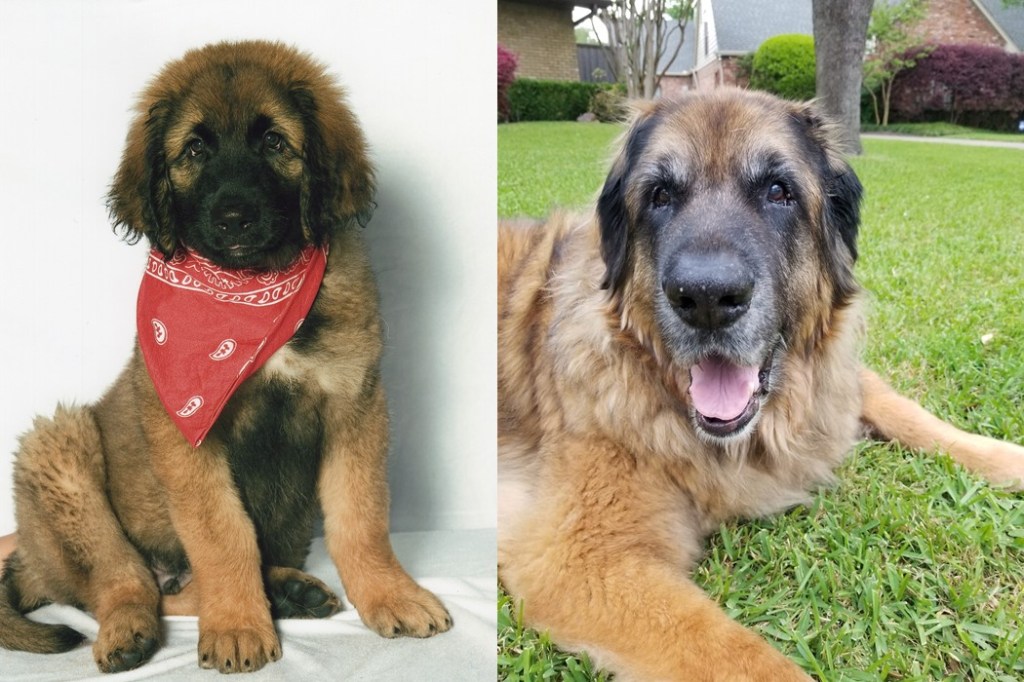
On the left our Leonberger Bronco is three months old. On the right Bronco as an unusually old Leonberger at almost 13.Bronco our Leonberger is giving me a kiss. He is about one year old and not yet fully grown.Bronco’s direct ancestor on the male side Leo von der Sagmuhle in Germany about 100 years ago (18 generations). The Worldwide Independent Leonberger Database keeps track of all registered Leonbergers, making ancestry research for Leonberger dogs easy.Our Leonberger Bronco sitting in my wife’s lap. He was 167 pounds at the time.Hachi a one-year-old Canadian Leonberger with my Leonberger book. The owner and photographer are Brenda Saito and her husband.
However, the first dogs we had as a family was our Labrador Baylor and German Shepherd Baby. I should say that Baylor was not a purebred Labrador, he was one quarter Rhodesian Ridgeback.
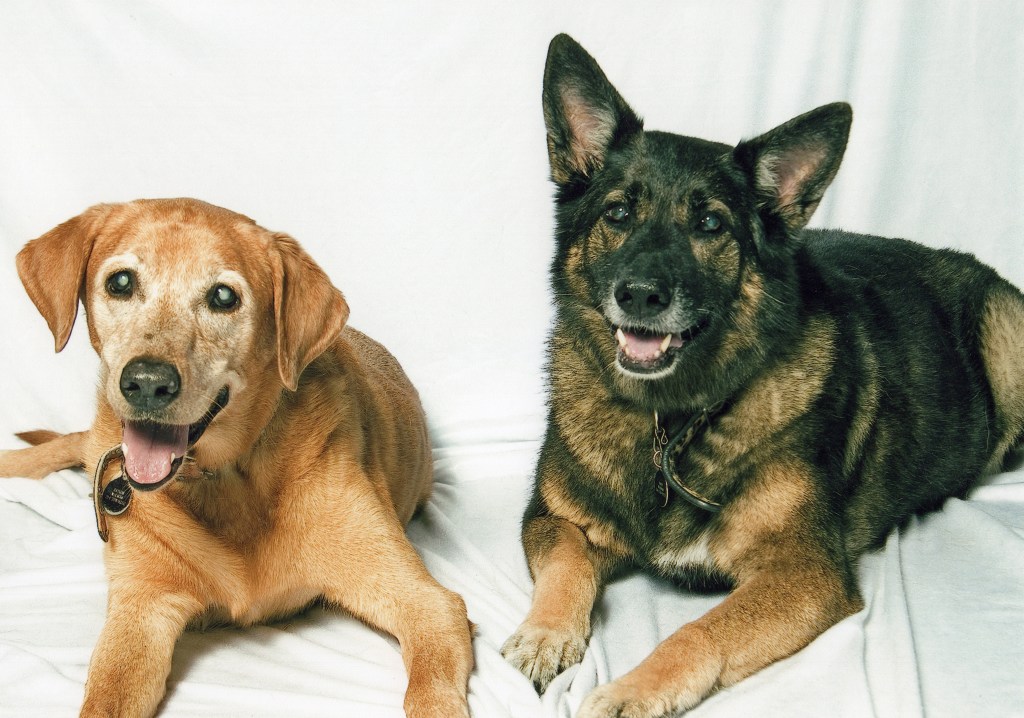
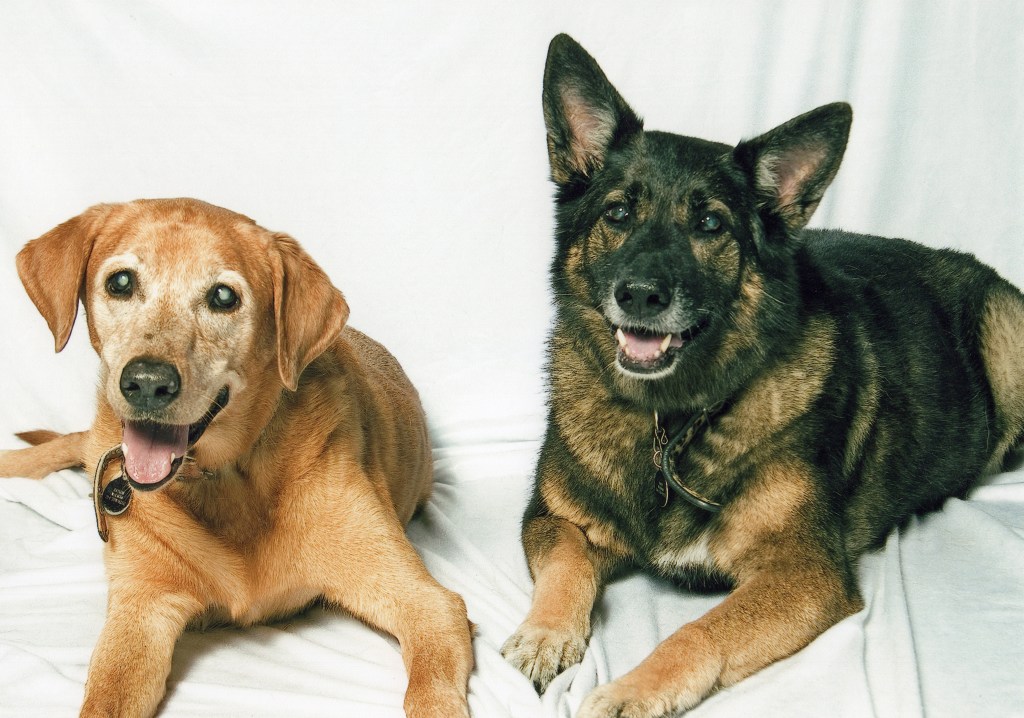
Our Labrador Baylor and German Shepherd Baby. They were both rescues.
One of the reasons I love dogs is that they are very social and often quite intelligent. They provide companionship, they are loving, loyal, fun, innocent, playful and they can also provide protection whether it is physically or just because of their barking, which alerts us to the presence of strangers. Add to that the fact that you need to take them for daily walks, which will keep you healthy as well.
Bronco, Baylor, and Baby were not our only dogs. Below are various photos of our dogs.
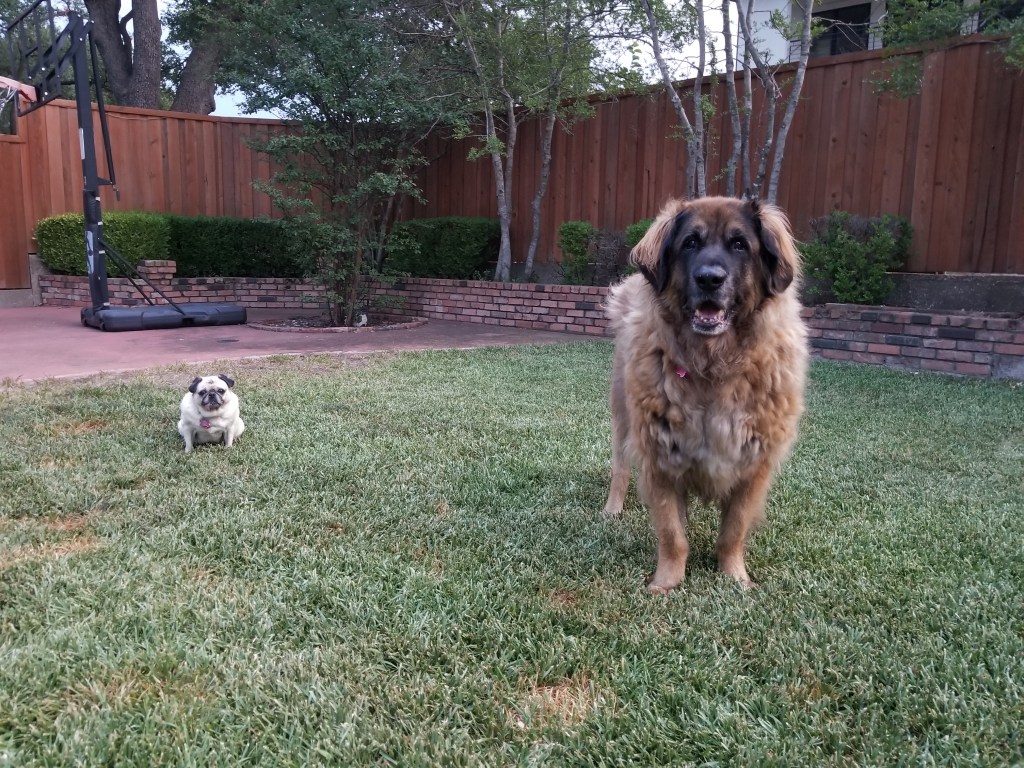
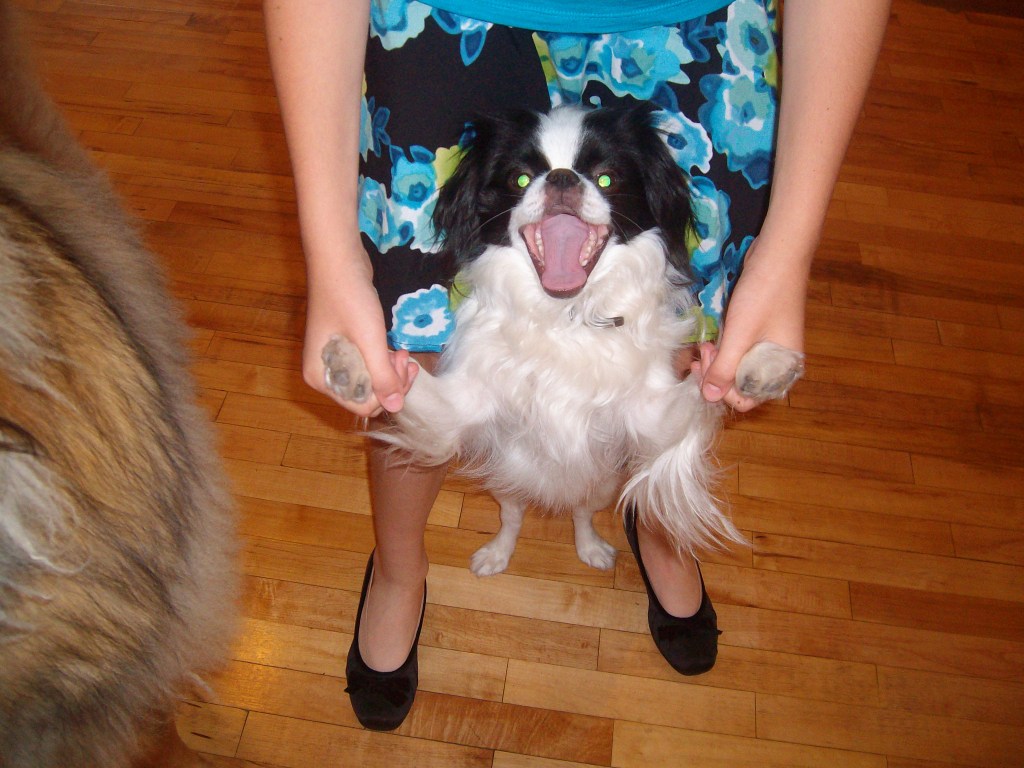
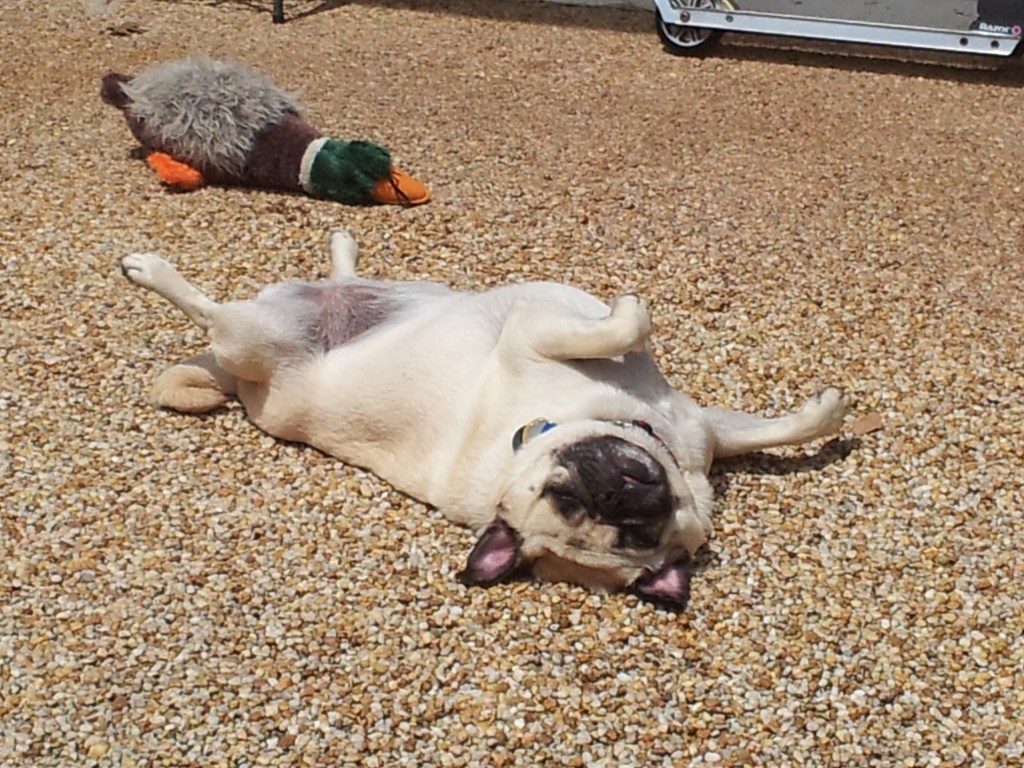
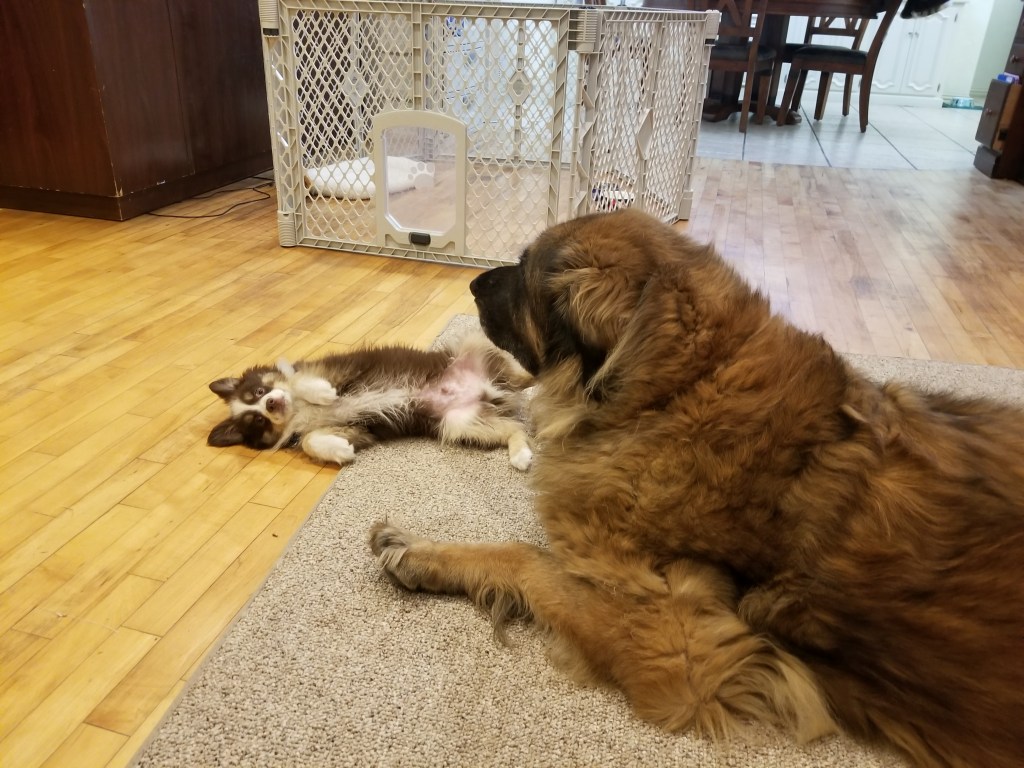
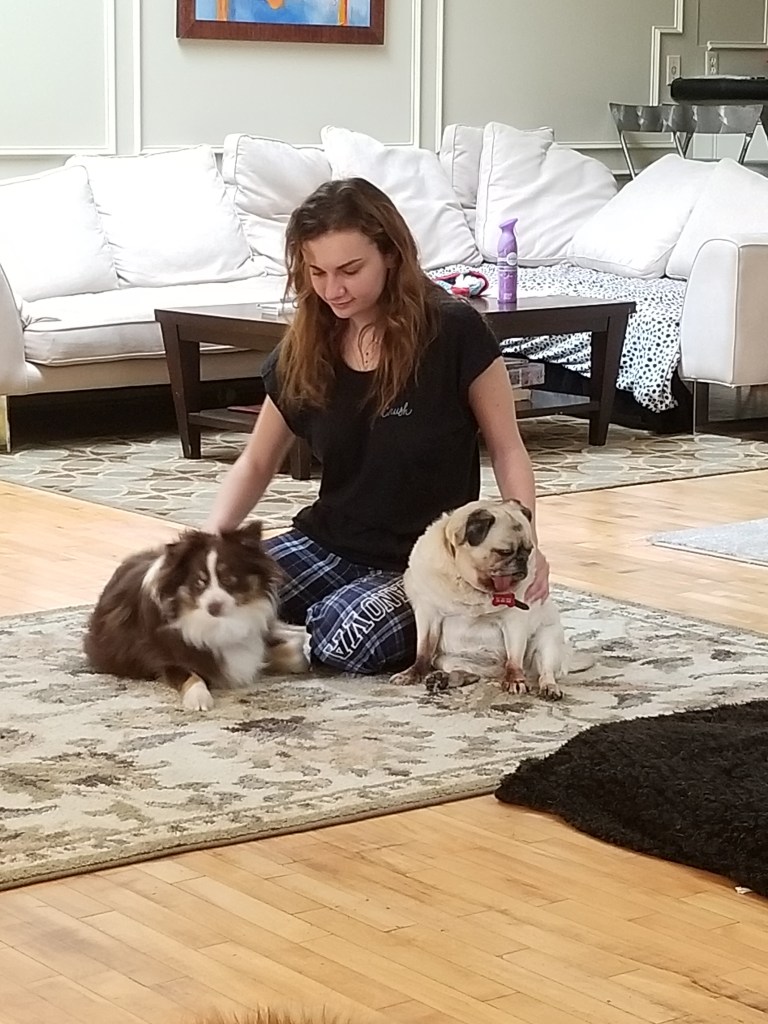
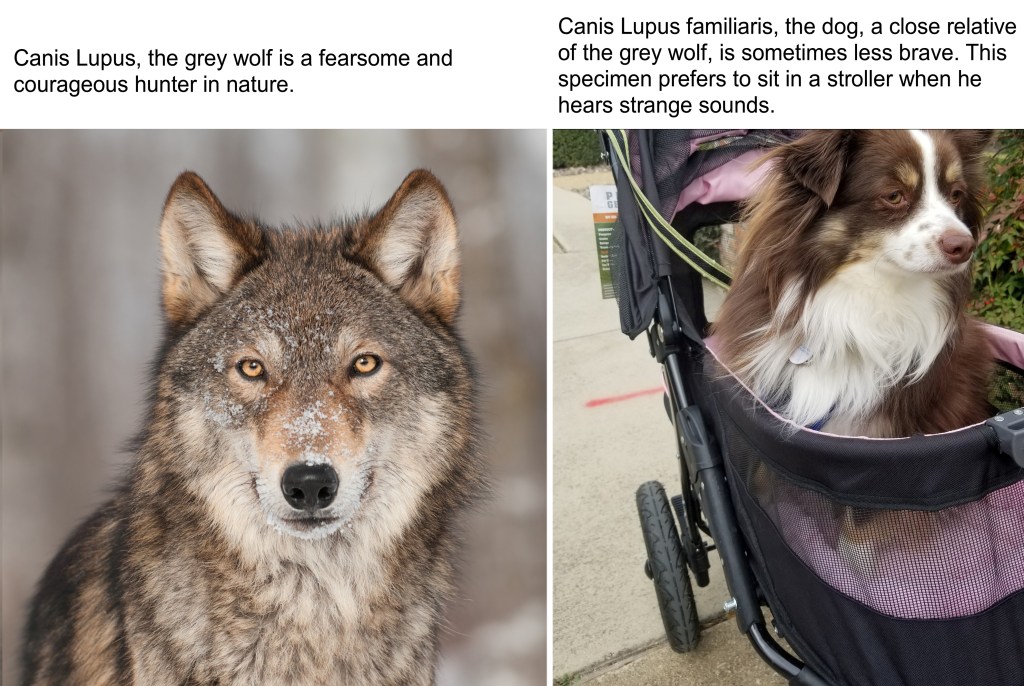
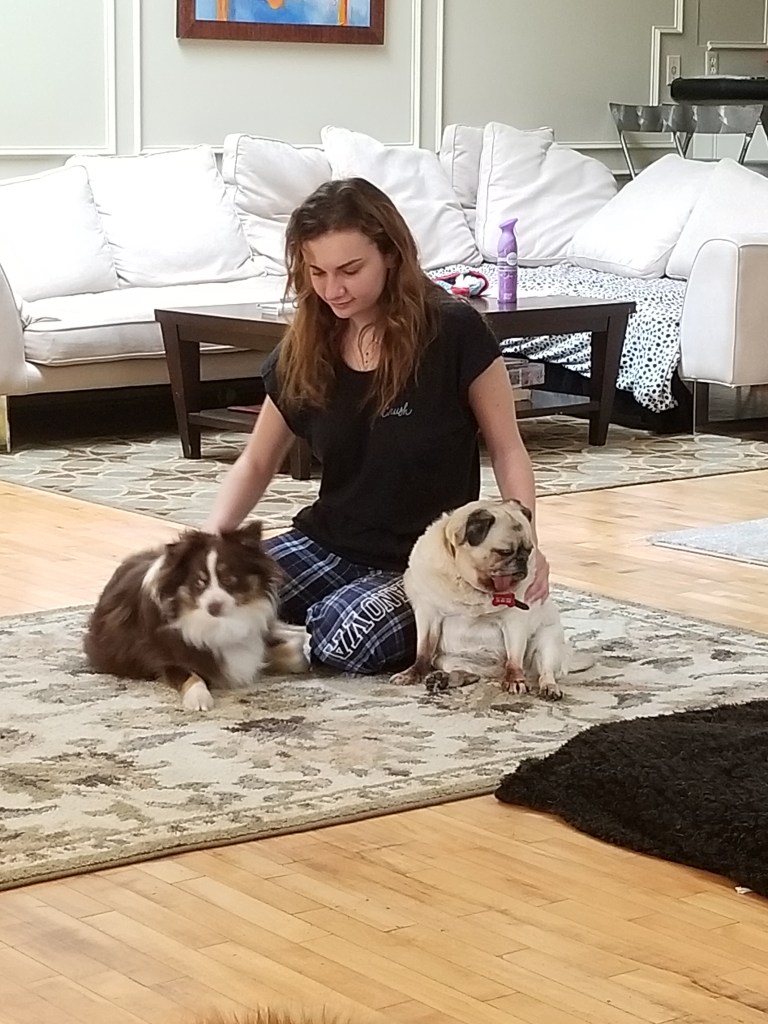
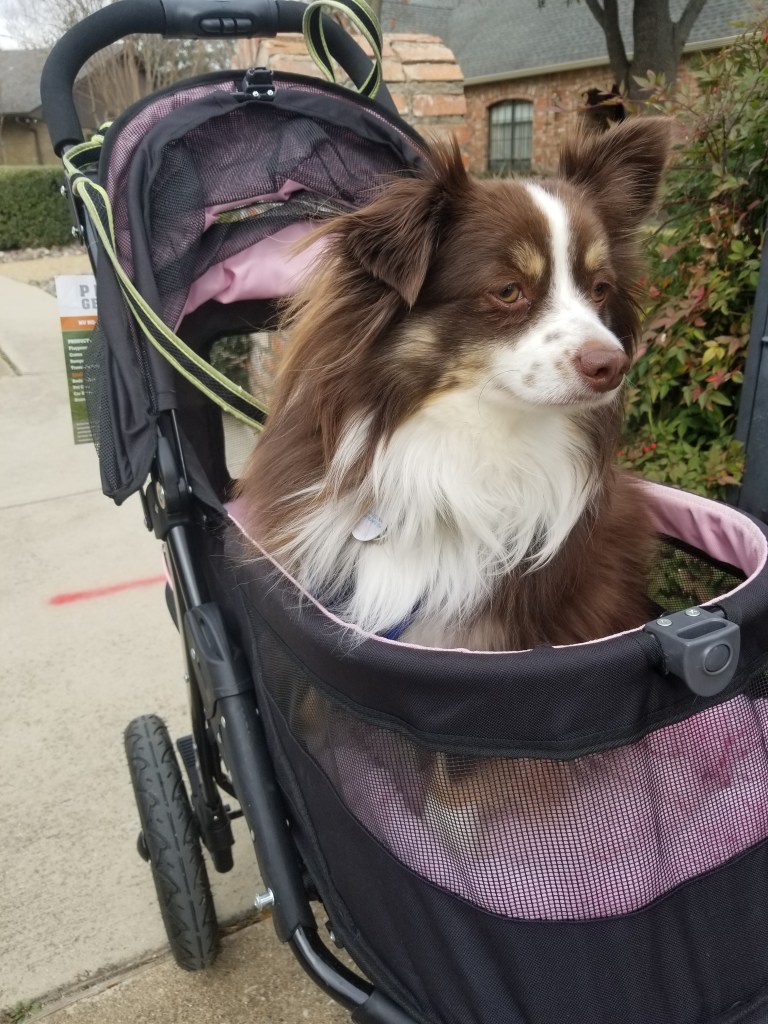
Our Leonberger Bronco and our Pug DaisyOur Japanese Chin Ryu with our daughter who was 9 years old at the time.Our Japanese Chin Ryu.Our pug Daisy loved to sunbath even when it was hot. Here she is catching some rays while lying on our old backyard porch, which had gravel.Our Leonberger Bronco and our mini-Australian Shepherd Rollo. Our daughter with our pug Daisy and our mini-Australian Shepherd Rollo.A gray wolf on the left. Our mini-Australian Shepherd Rollo sitting in a stroller on the right. Whenever there was a sound that scared him, such as quacking ducks, or someone banging on something, he wanted to sit in Daisy’s stroller.
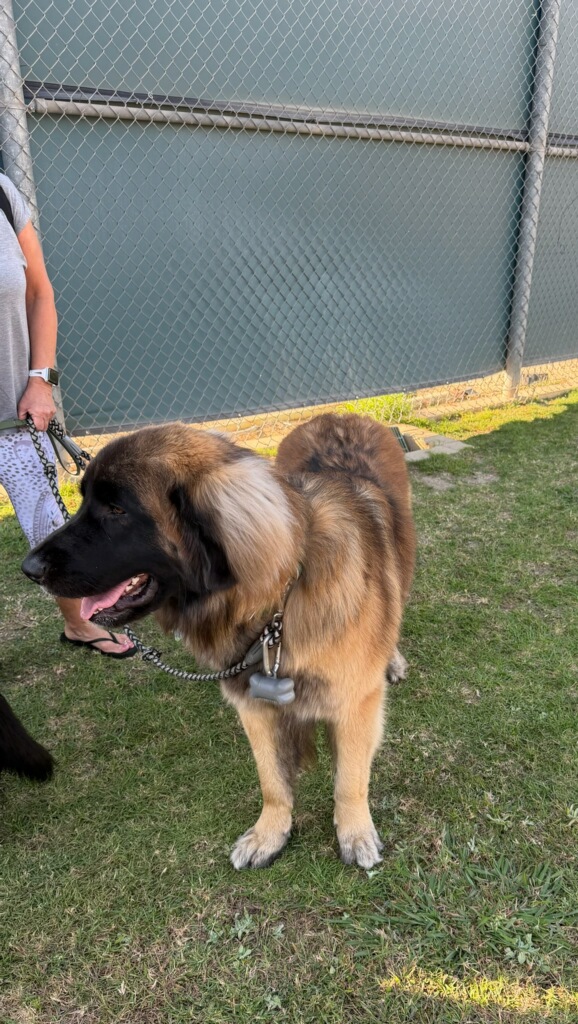
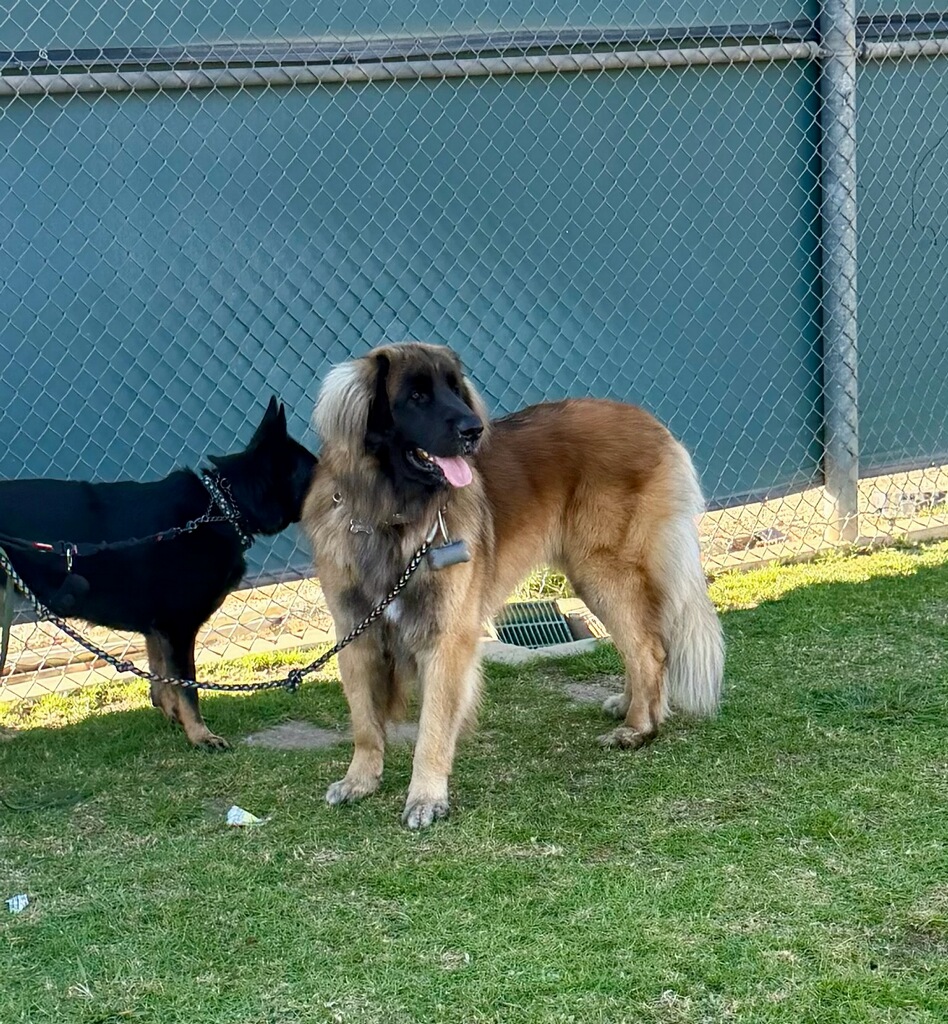
I just received a couple of photos from our niece Jessica and her husband Eric. They live in Minnesota. They had encountered a Leonberger dog named Oliver, and they took a couple of photos. For those who do not know, Leonbergers are large family friendly dogs related to Saint Bernards. It is a rare breed, so you don’t see them very often. If you want to read more about this amazing breed, see the list of all my blog posts.
A friendly Leonberger named Oliver. Photo by Jessica Sardas.A friendly Leonberger named Oliver. Photo by Jessica Sardas.
Other Leonberger Chance Encounters
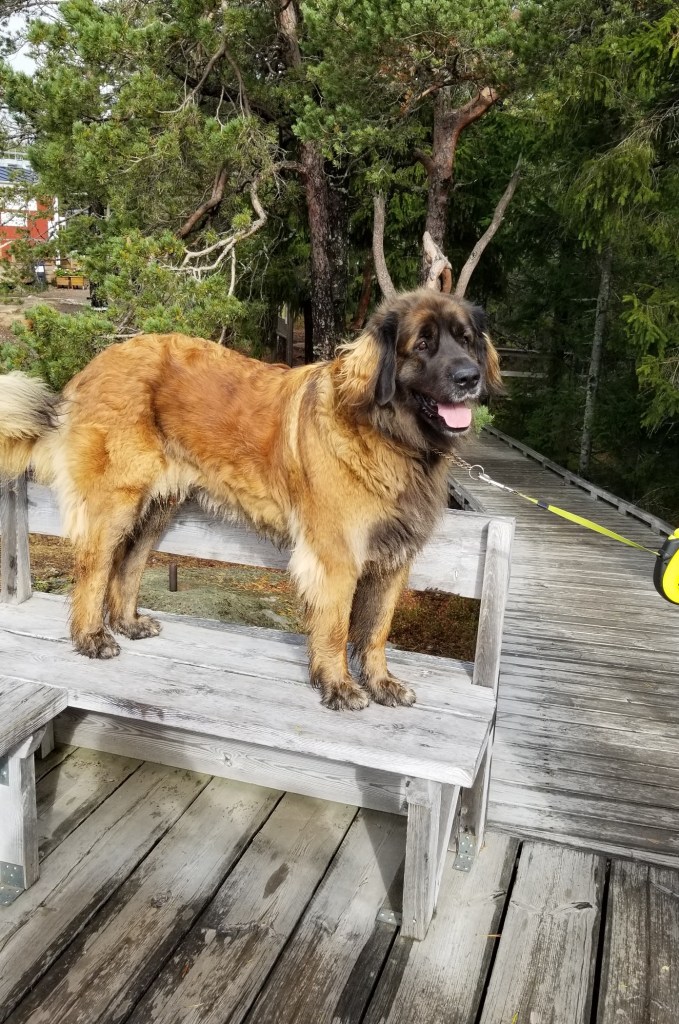
Another amazing Leonberger chance encounter happened when we visited my native country Sweden. We had hiked up a mountain in the high coast region (that’s where I grew up) called the Skule Berget, or Skull Mountain in English. The elevation of the hike was nearly 1,000 feet. Guess what we found at the summit besides the red cabin restaurant selling waffles to the brave souls who managed to finish the hike? A Leonberger named Amie. We took some photos of Amie. I hope she got some waffles too. You can read more about our adventure here.
Amie at the top of Skule Berget.Amie was playful but very well behaved.
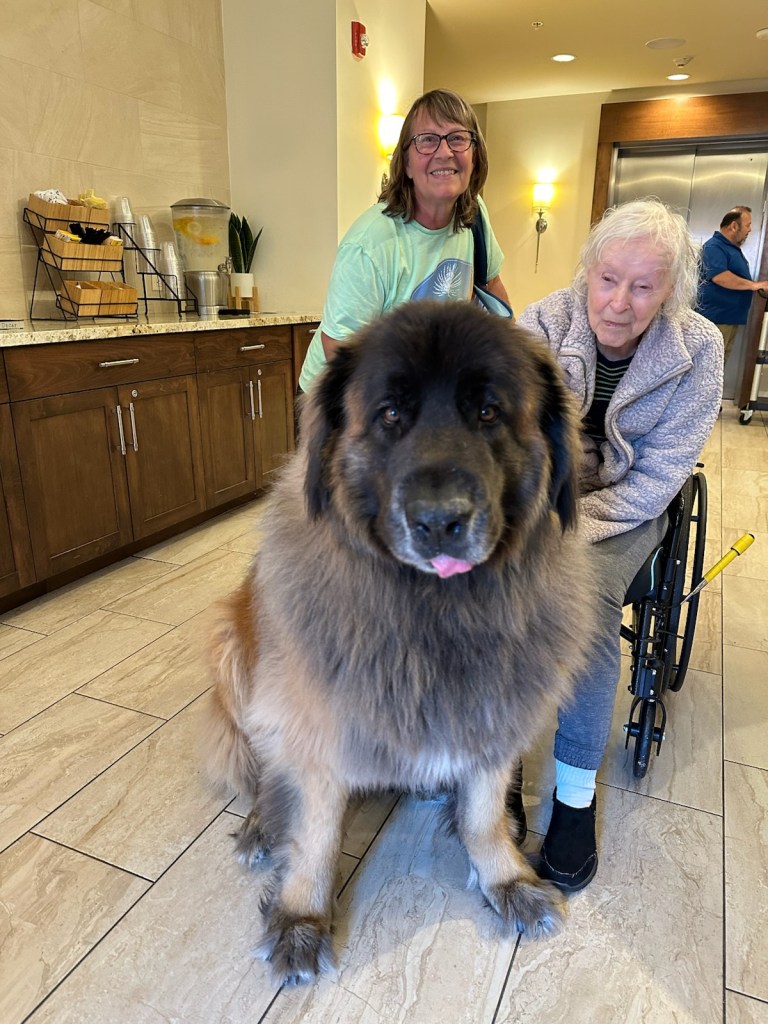
Another chance encounter was when our daughter-in-law’s mother had a chance encounter with a Leonberger at her mother’s nursing home. Leonberger dogs are big but friendly, trusting, calm, confident, and very trainable, making them perfect therapy dogs. They are therefore often used as therapy dogs at hospitals, nursing homes and mental institutions. You can read more about this encounter here.
Our daughter-in-law’s mother is on the left and her mother is on the right. She gave me permission to use this photo. The Leonberger is in the middle front.
A Therapy Leonberger Called Scout
Speaking about therapy dogs. Below is a video about a Leonberger called Scout by CBC news in Canada. This Leonberger is helping residents at Hamilton mental health hospital. He was bred by Concorde Ridge Leonbergers. They have a website and a blog which I follow. You can visit my post about Scout here. The 1-minute video is shown on the website below.
About the book The Life and Times of Le Bronco von der Löwenhöhle
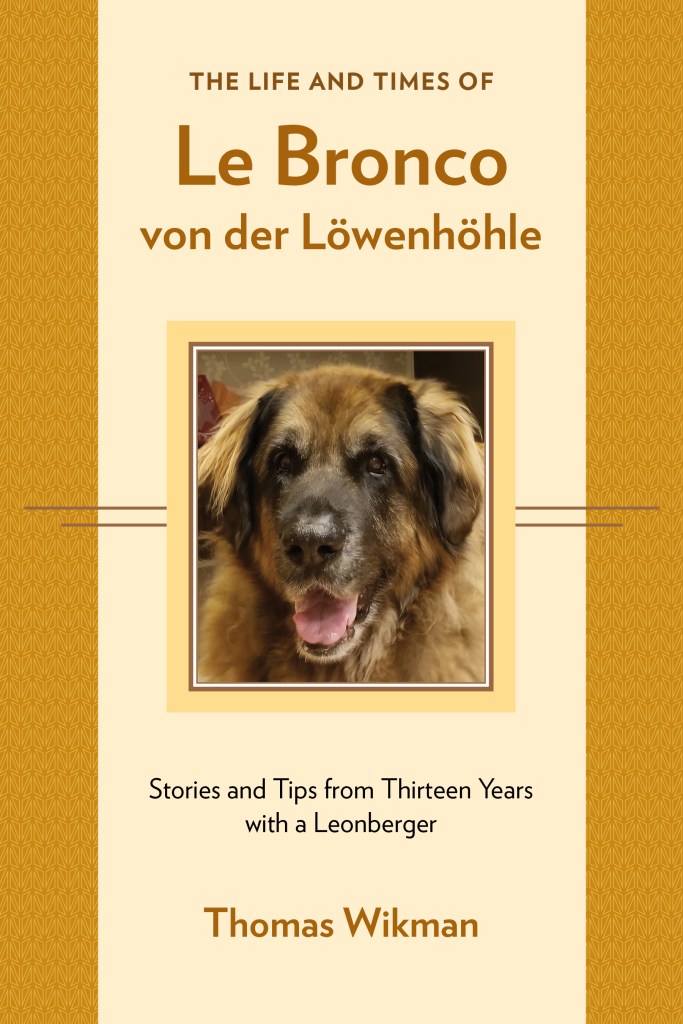
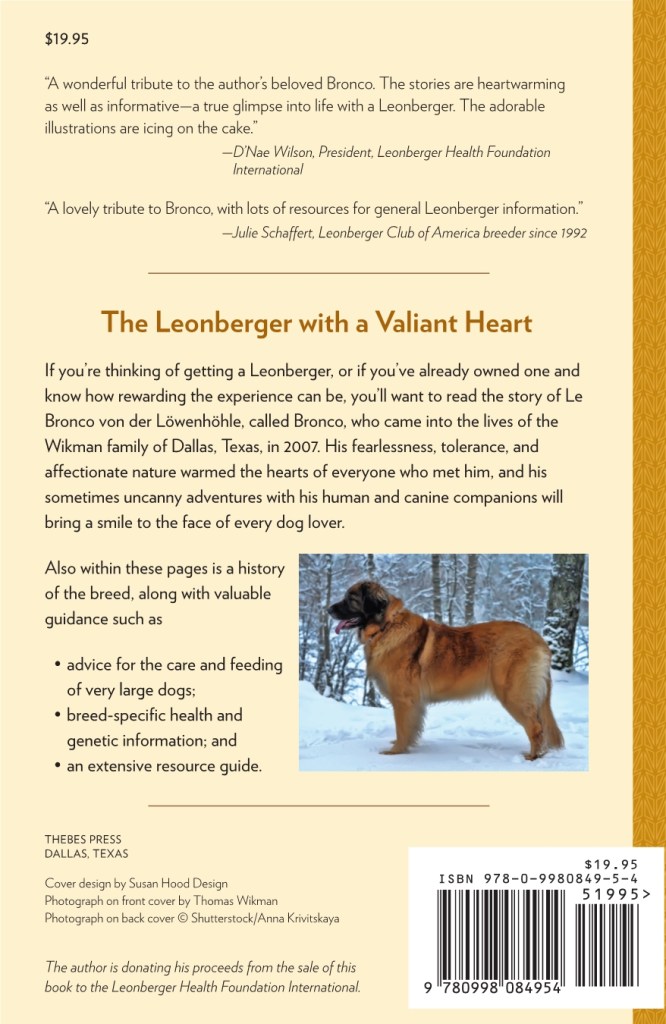
Finally, I would like to mention that I wrote a book about our late Leonberger Bronco, or Le Bronco von der Löwenhöhle. The title of the book is “The Life and Times of Le Bronco von der Löwenhöhle, Stories and Tips from Thirteen Years with a Leonberger”. The book features the amusing adventures of our Leonberger Bronco and his dog friends, as well as information on how to train and care for Leonbergers and other large breeds, their breed history, breed standard, Leonberger organizations, and an extensive resource guide at the end. I can add that all photos and illustrations are in color. The price of the paperback version is 17.95 (normal prize is $19.95) and the price of the Kindle version is $4.95 All proceeds go to the Leonberger Health Foundation International, an organization that works to improve the health and longevity of Leonbergers and other large dog breeds.
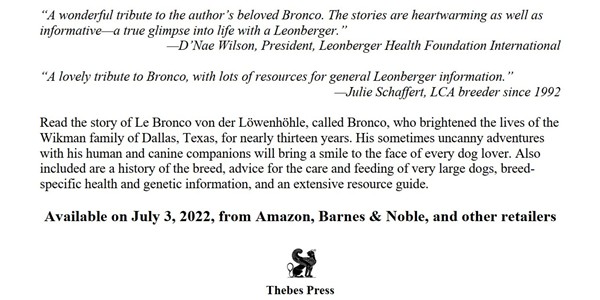
This is the front cover of the book “The Life and Times of Le Bronco von der Löwenhöhle”. Click here or on the image to go to the United States Amazon location for the paperback version of the book.This is the back cover of the book “The Life and Times of Le Bronco von der Löwenhöhle”. Click here or on the image to go to the Amazon.com location for the kindle version of the book.Again, these are the endorsements for the book by some very prominent members of the Leonberger community. Click here or on the image to go to the location for the book Amazon in Canada.
Today’s writing prompt is “What is good about having a pet?”. I can easily think of many good and wonderful things about having a pet but let’s not forget that it also comes with responsibility. Having a pet is a lifelong commitment, well their lifetime at least, and you need to treat them like family. If you cannot handle the pet when it gets old, and you are not going to treat it like family, then don’t get it.
Our Pets
We’ve owned many pets in our life, fish in aquariums, bearded dragons and other lizards, snakes, rabbits, and hamsters. We’ve owned many dogs, and we’ve had a cat for a short time. Unfortunately, we found out that I was allergic to cats and my allergy was bad. Luckily, we found a good home for the cat. My wife and I were very sad that we had to part ways with the cat, but I just got too sick, so sick that it was dangerous. I should say I am not allergic to dogs.
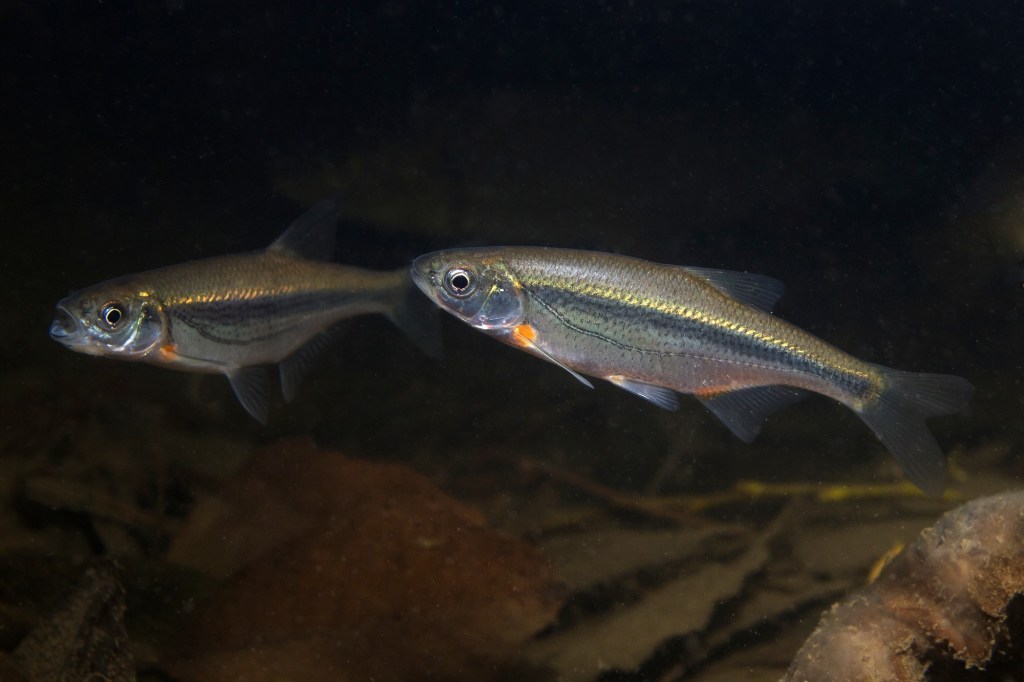
We were not always good pet owners. Mistakes were made. For example, our five year old daughter brought home a dozen minnows that we put in an aquarium. They were basically fish that did not end up as bait. We did a lot of fishing for a while. We placed the minnows in a clean aquarium and fed them what we were told to give them. Our daughter named them Sally one, Sally two, Sally three, Sally four, Sally five, Sally six, Sally seven, Sally eight, Sally nine, Sally ten, Sally eleven, and Sally twelve.
Sally four on the left and Sally five on the right. Minnows Asset id: 1182854671 by Rostislav Stefanek
As I mentioned, we were not always good pet parents. Our five year old daughter thought that the minnows needed a more interesting environment, so she poured cranberry juice in the aquarium. We were able to clean it out and save the minnows that time. But when she poured red paint in the aquarium, we were not successful in doing so. Our son also had a snake that needed to be fed subdued but live mice. We discovered that if you walk into a pet store and tell them you want to buy mice to feed your snake, they won’t sell the pet mice to you. Long story short we struggled with feeding the snake and eventually he died. We felt awful, but we realized that keeping a snake as a pet is not a good idea unless you really know what you are doing.
Our Dogs
The dogs we own and have owned have a very special place in our hearts. They’ve given us so much unconditional love, special moments, entertainment, and not to mention hilarious moments that we are still laughing about years after they happened. We used to have a Labrador called Baylor. Well, more correctly, he was one quarter Rhodesian Ridgeback but mostly a yellow Labrador. He was a funny and loving dog and the most skilled surfer counter I’ve ever witnessed. We also had a German Shepherd named Baby. She was also a rescue. She was a great guard dog and a loving stepmother to our Leonberger puppy Bronco. She fiercely protected him.
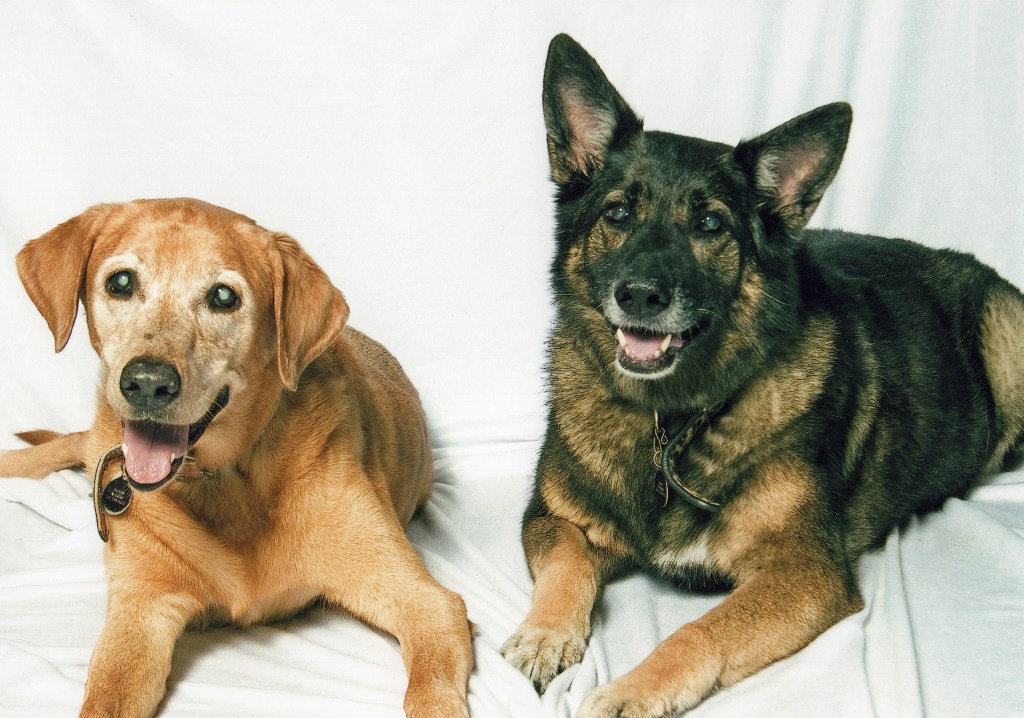
Baylor our Labrador Rhodesian Ridgeback mix on the left and our German Shepherd Baby on the right. They were both old in this photo.
Bronco, or Le Bronco von der Löwenhöhle, was our Leonberger dog. This is a big dog and a rare breed related to Saint Bernards. We got him as a puppy from a Canadian breeder who likely is North America’s most prominent Leonberger breeder. Before we were allowed to buy him, we had to go through an interview to make sure we would be good dog parents. Bronco was a friendly, confident, loving, and funny dog. He was also very protective of our other dogs as well as our hamsters. He rescued run away hamsters on several occasions. He even put them in his mouth once and carried them to safety. He had a great sense of smell and one time he alerted us to Baylor having an oncoming insulin shock and on another occasion he saved our Pug Daisy’s life.
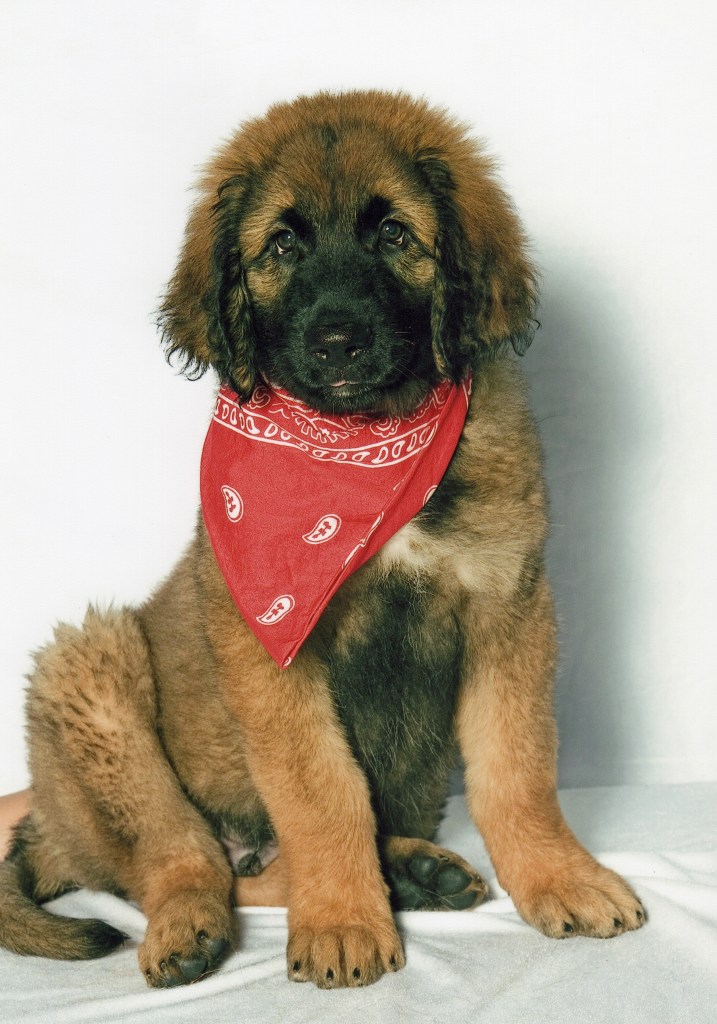
Bronco our Leonberger at three months old.Our Leonberger dog Le Bronco von der Löwenhöhle when he was young. He is giving me a hug.Our Leonberger Bronco sitting in my wife’s lap. He was 167 pounds at the time.
In addition to Baylor, Baby and Bronco we’ve had small dogs including our Japanese Chin Ryu, our Pug Daisy and our mini-Australian Shepherd Rollo who is still with us. Ryu and Daisy were funny and easy dogs and Rollo is very energetic, curious, intelligent and funny, but admittedly a bit of work.
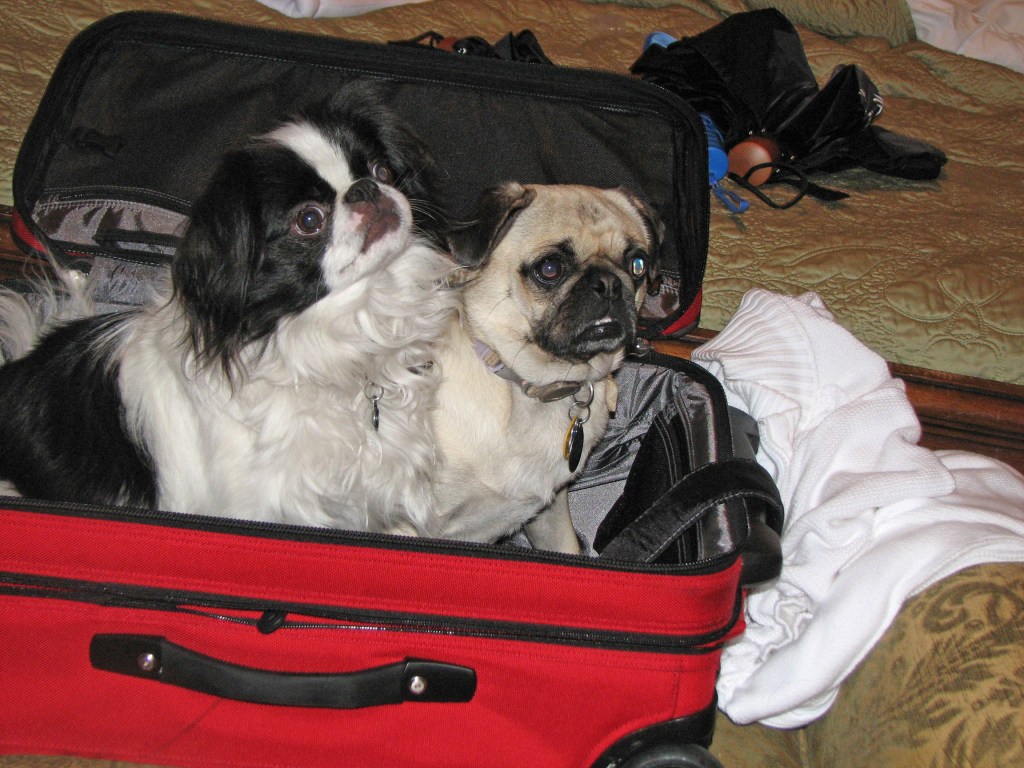
Ryu and Daisy are protesting that we are leaving for a trip. We had someone watching them, but they still hated it when we left.Rollo peeking out behind the sofa.Rollo frequently bit our Leonberger Bronco’s tail, and he even swung in it like a swing. He climbed all over Bronco. Bronco was very patient with him.
What is good about having a pet?
Pets bring a lot of entertainment and joy and they add life to a home. They keep you busy and keep your mind off problems, conflicts and doom scrolling. Intelligent mammals, such as dogs, will also give you cuddles, unconditional love, and they can comfort you. For example, a few weeks ago I was watching a movie that was touching and bit sad and I got a bit emotional That’s when I noticed our dog Rollo staring at me with loving eyes as he tilted his head. Then he came over to me and gave me a dog hug (pressing his body towards mine).
Another advantage of owning a dog is that they need a walk every day. Walking your dog a couple of miles per day will keep you healthy as well. Studies show that dog owners live longer than other people. In addition, dogs can provide practical services such as alerting you when strangers approach your house, they can be guard dogs, sniff out diseases and seizures, in our case without any training.
Your Responsibilities as Pet Owner
You need to feed your pet, provide clean water at all times, wash those food and water bowls daily with soap and hot water, care for your pet, keep it healthy, wash it and clean it, pay for veterinary bills, play with it and provide opportunity for exercise. If your pet is a mammal or a more advanced animal, such as a dog, you need to love it, train it, and it needs to be part of the family. If you are going to keep it on a chain in the backyard, leave it to be lonely most of the time, or uncomfortable, or let it take its own walks without supervision, or return it to a shelter when it gets old and sick, then don’t get a pet, especially not a dog.
The Life and Times of Le Bronco von der Löwenhöhle
Finally, I would like to mention that I wrote a book about Bronco and Leonbergers. About 60% of the book is about Bronco’s daring and often hilarious adventures and 40% of the book is information on Leonbergers, breed history, breed standard, training, care, health, how to get one, and there is an extensive resource guide towards the end of the book.
This is the front cover of the book “The Life and Times of Le Bronco von der Löwenhöhle”. Click on the image to go to the Amazon.com location for the book
Rollo our mini-Australian Shepherd is turning seven years old today (October 12, 2025). This evening, we sang to him, in English, Swedish and French, and he got a pupcake (cupcake specifically for dogs) and piece of filet mignon. Later today (October 12) he will get celebrated again and have more pupcakes.
To celebrate Rollo’s birthday, I am posting 20 photos I took of Rollo today, or rather earlier this evening (October 11), as well as photos from the recent past, and also photos that are a year or older. Some of the older photos are with our late Leonberger Bronco. The first six photos I took today. If you’ve been following my blog for some time, you may have seen some of the older photos already.
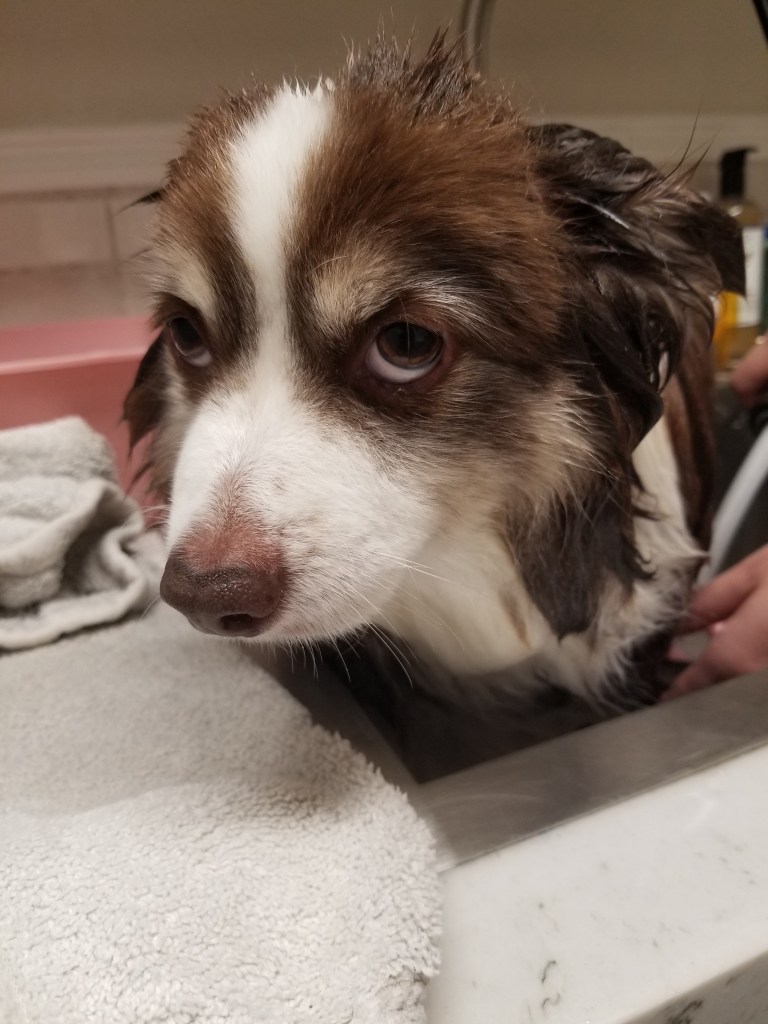
Washing Rollo
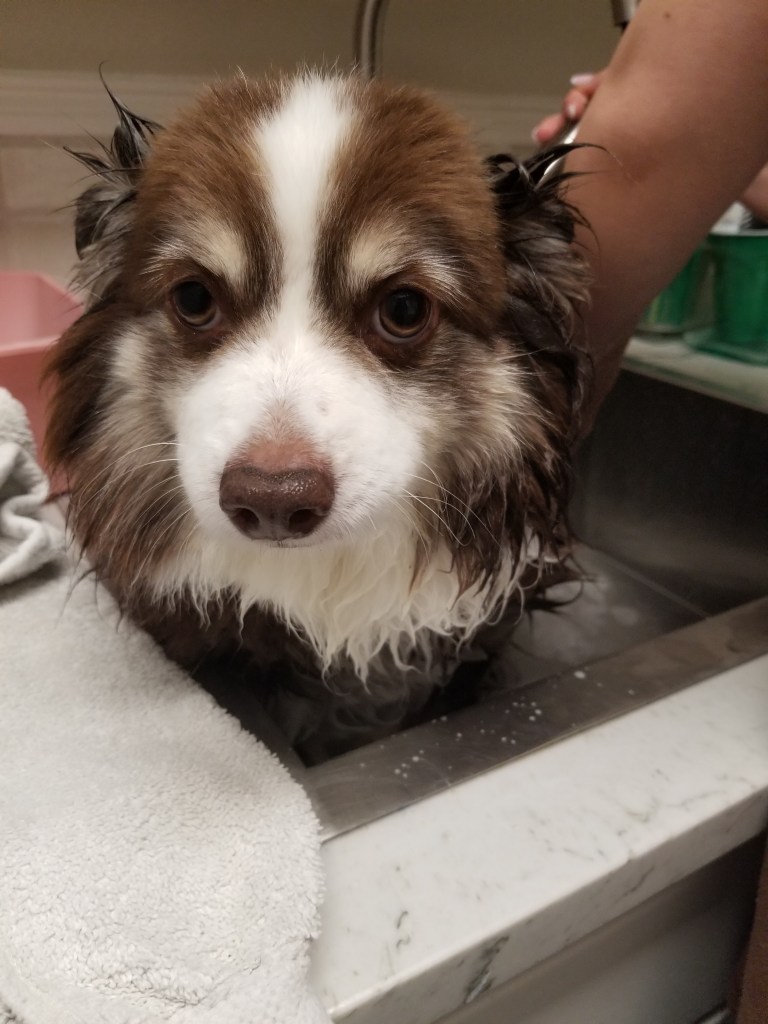
Before the festivities Rollo needed a bath. He is getting washed in the sink. He was not happy.When are you going to be done with this washing stuff?
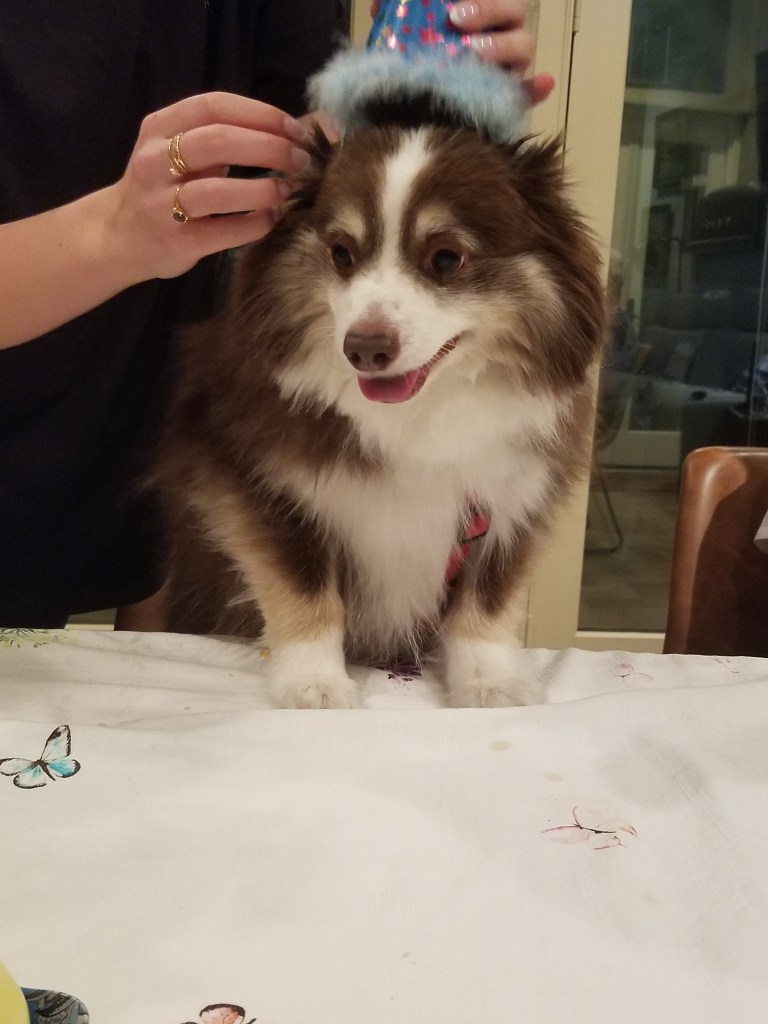
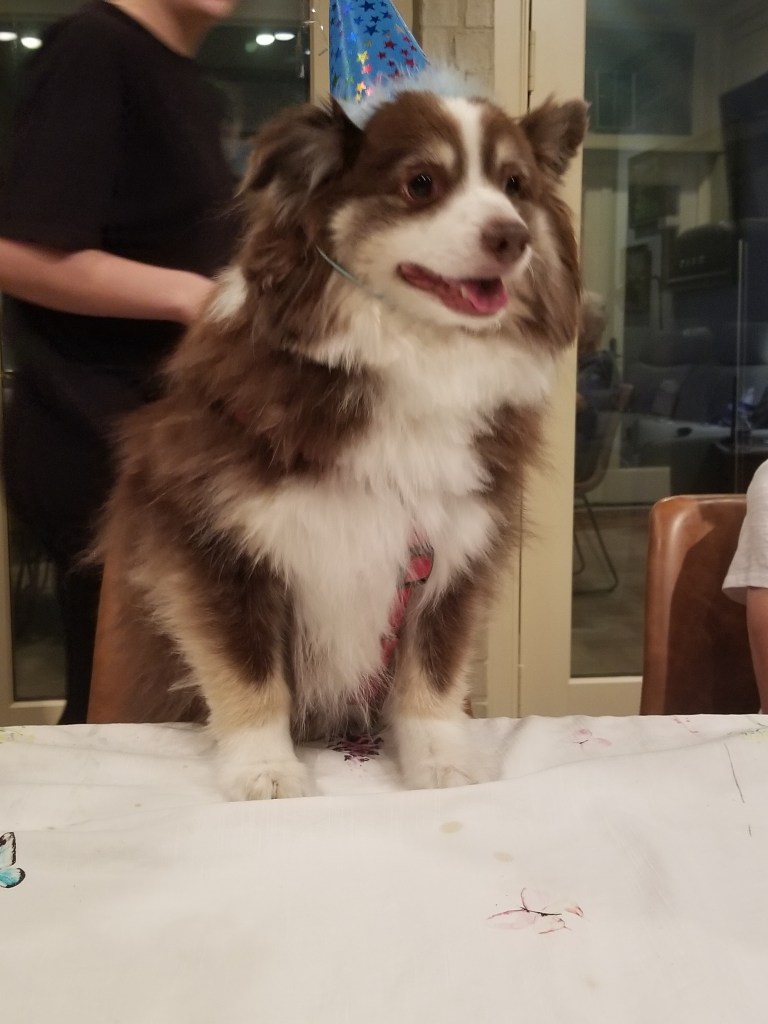
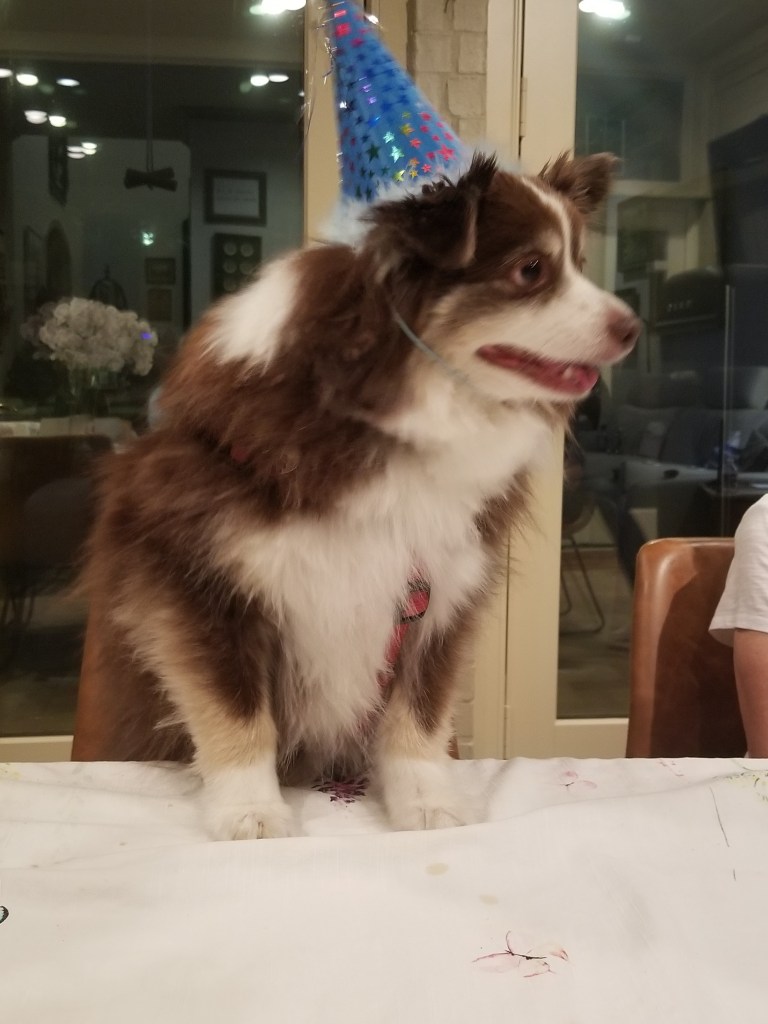
Birthday Photos of Rollo
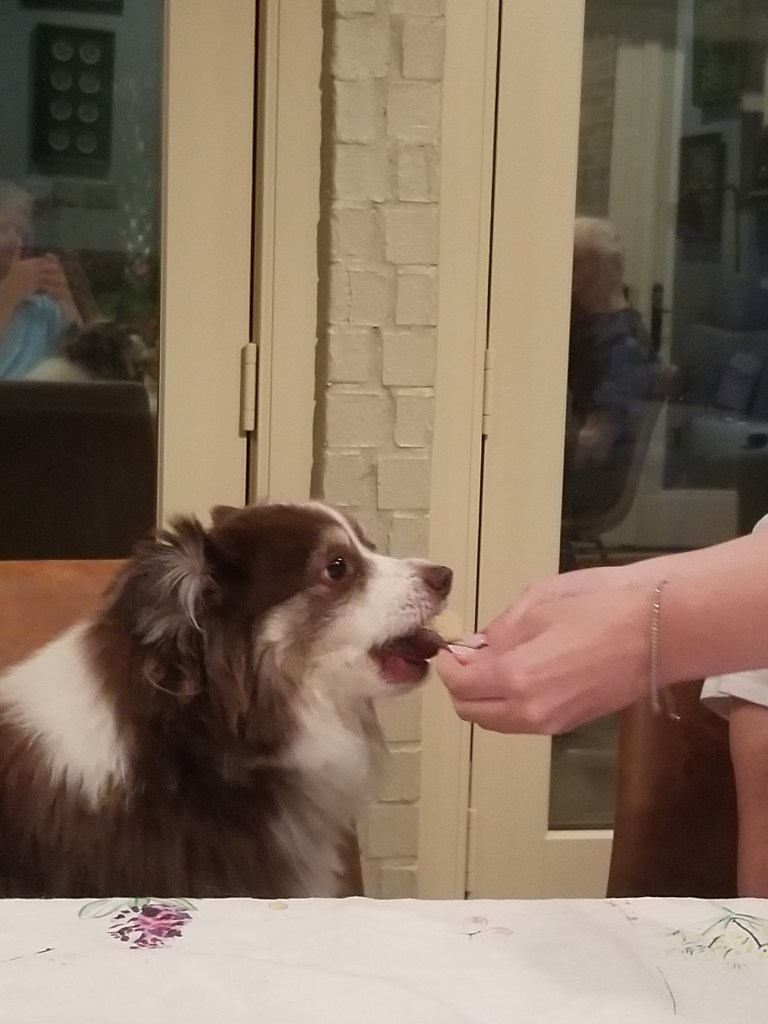
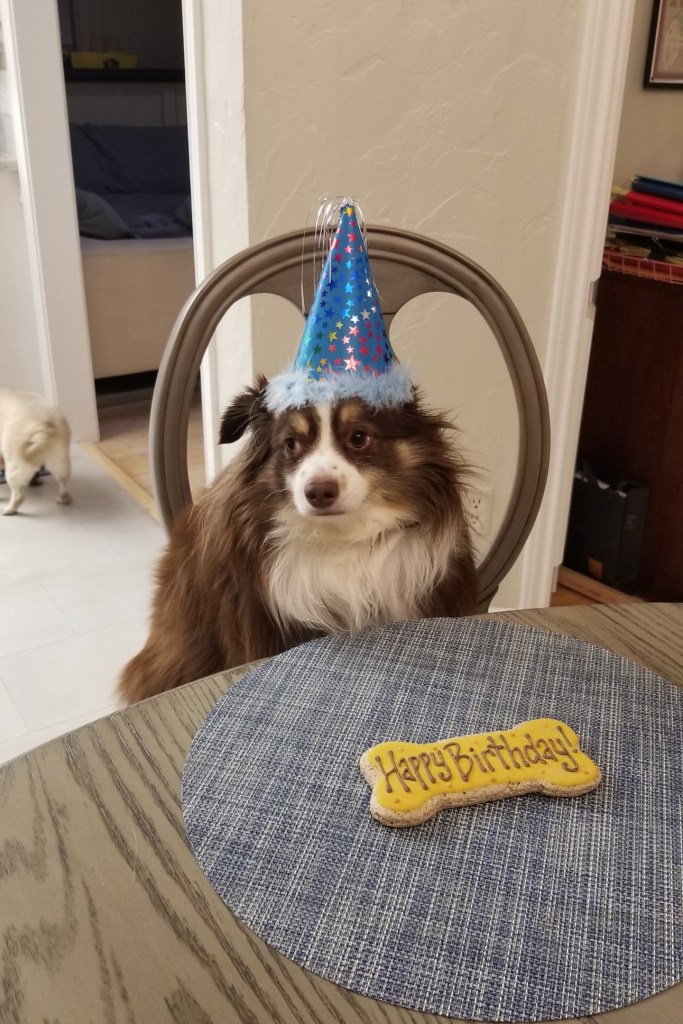
The birthday hat is coming on. He does not like the hat, so it did not stay on long.We are getting the pup-cake ready, and we are going to sing Happy birthday in several languages. Rollo very much appreciates us singing to him in multiple languages, but mostly he appreciates the pupcake. A pupcake is a cupcake made especially for dogs. We humans had cupcakes.Rollo is ready.Finally Rollo gets his pupcake
Recent Photos of Rollo
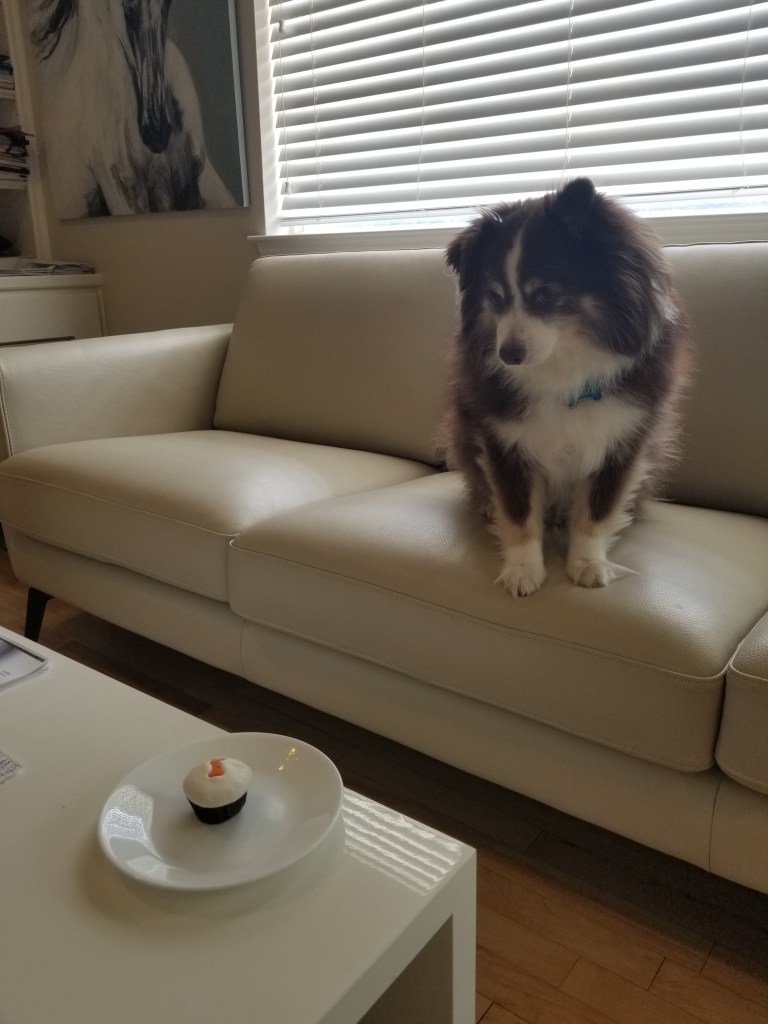
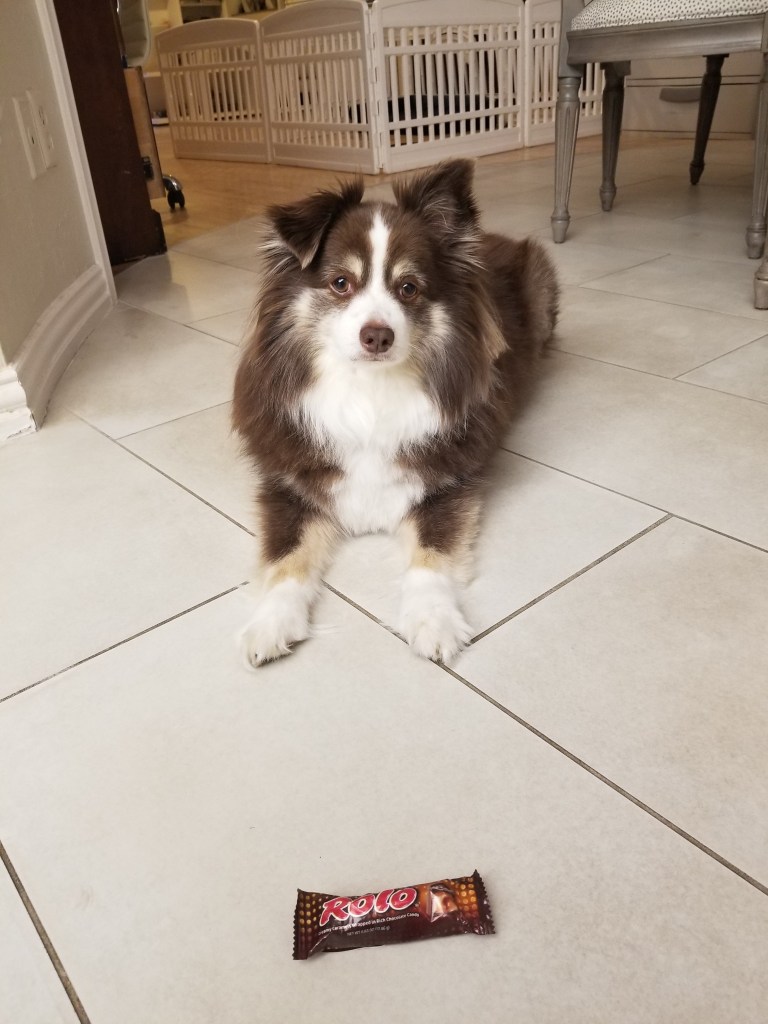
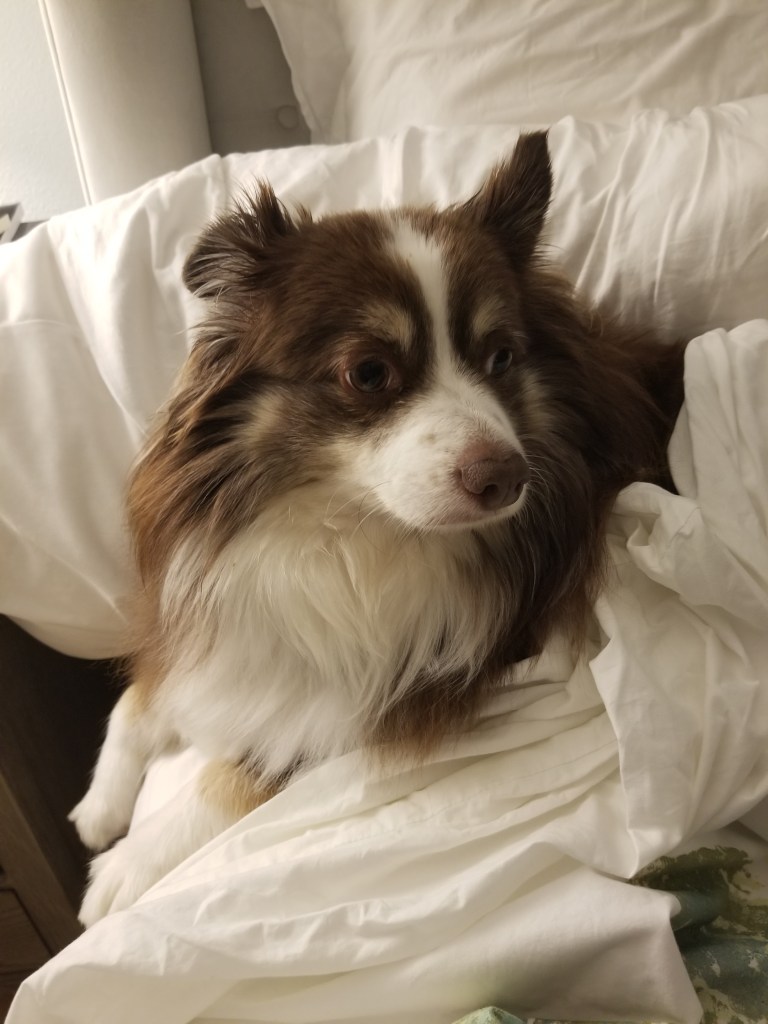
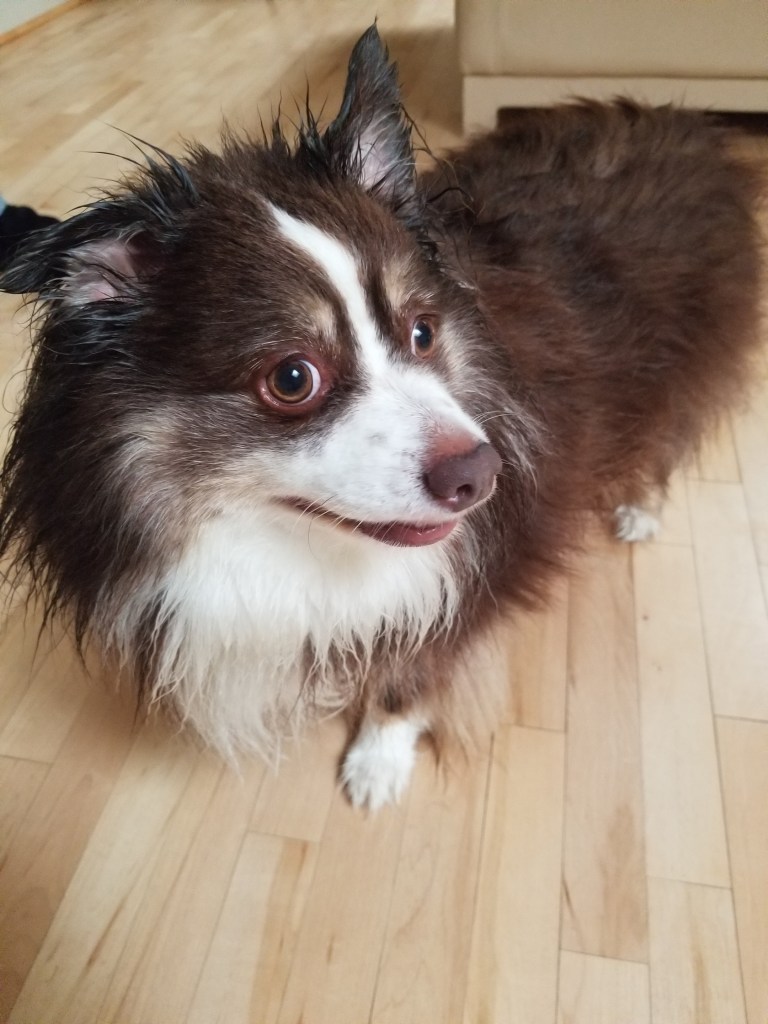
Rollo and a pupcake on a table.Rollo and a Rolo candy. Rollo was not named after the candy bar Rolo as often incorrectly assumed. Rollo was named after the Viking king who sacked Paris. You can say he was on a roll.Rollo likes to sleep in our bedsRollo is wet, not from being washed today but from rain on another occasion.
Older Photos of Rollo
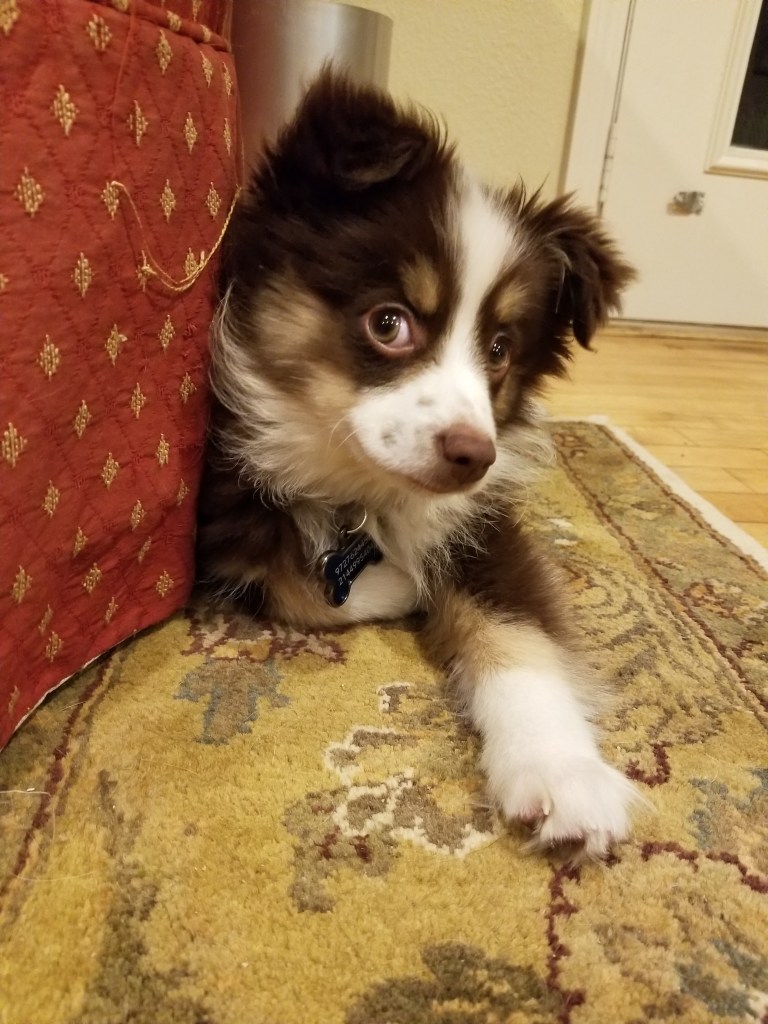
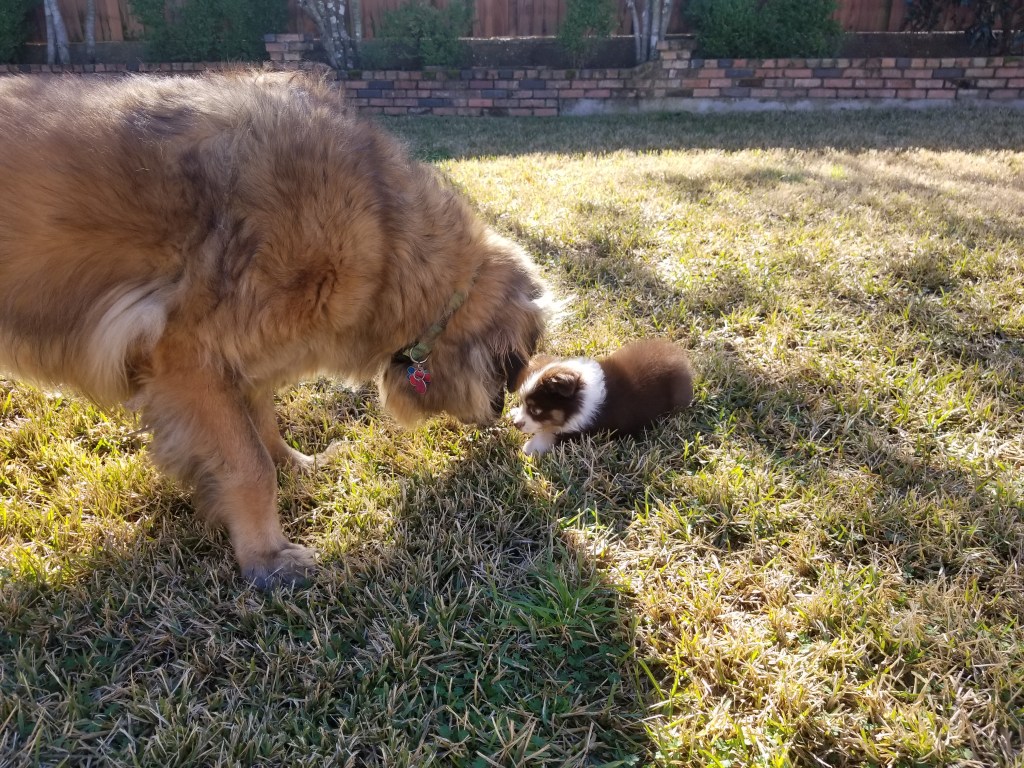
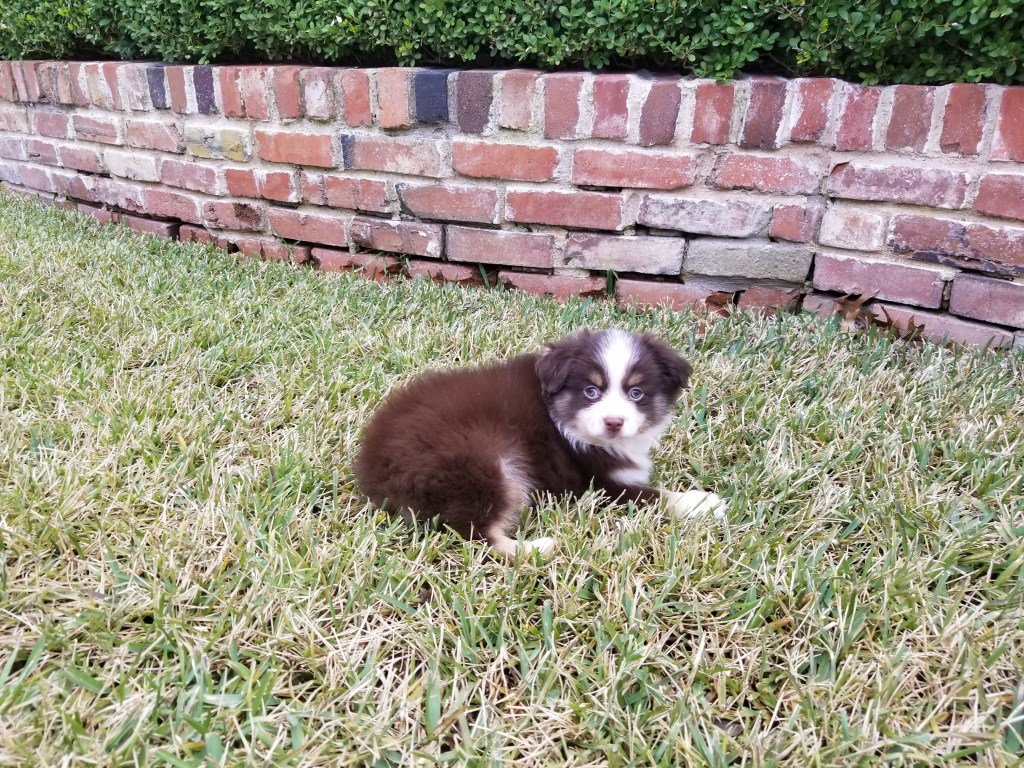
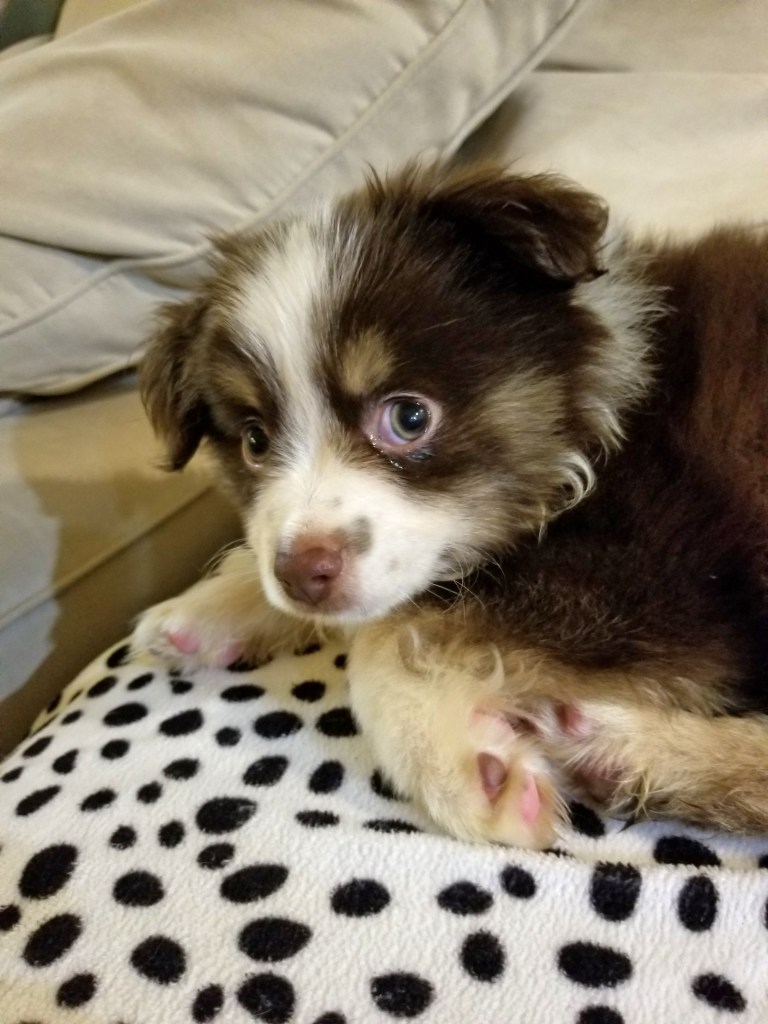
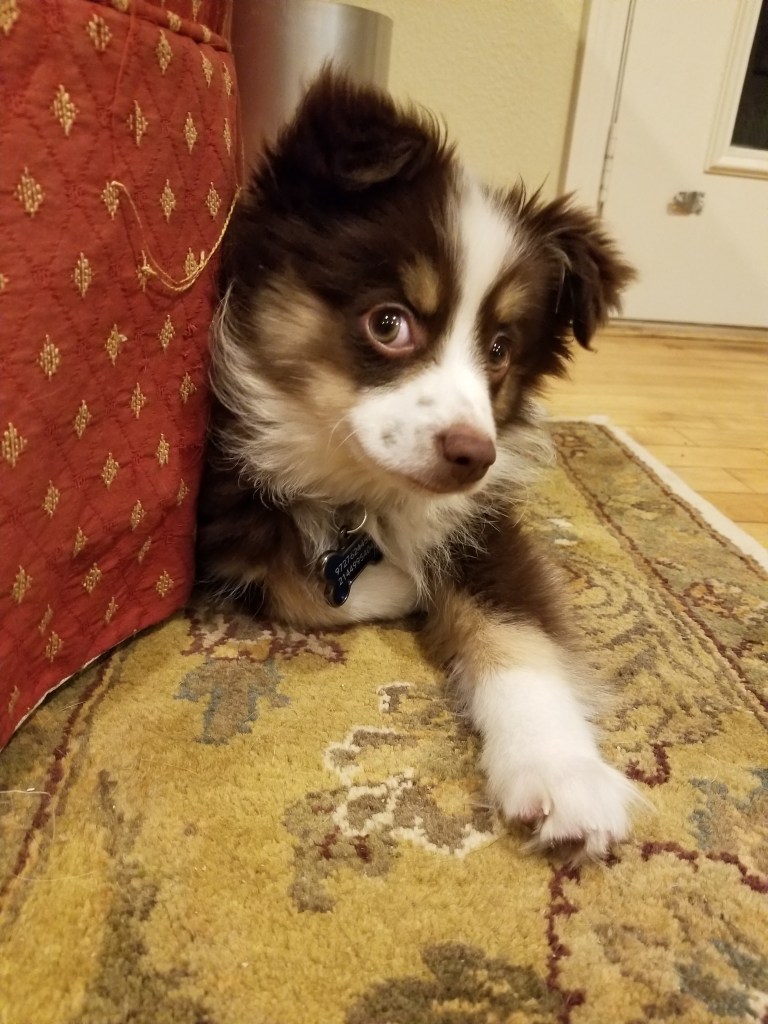
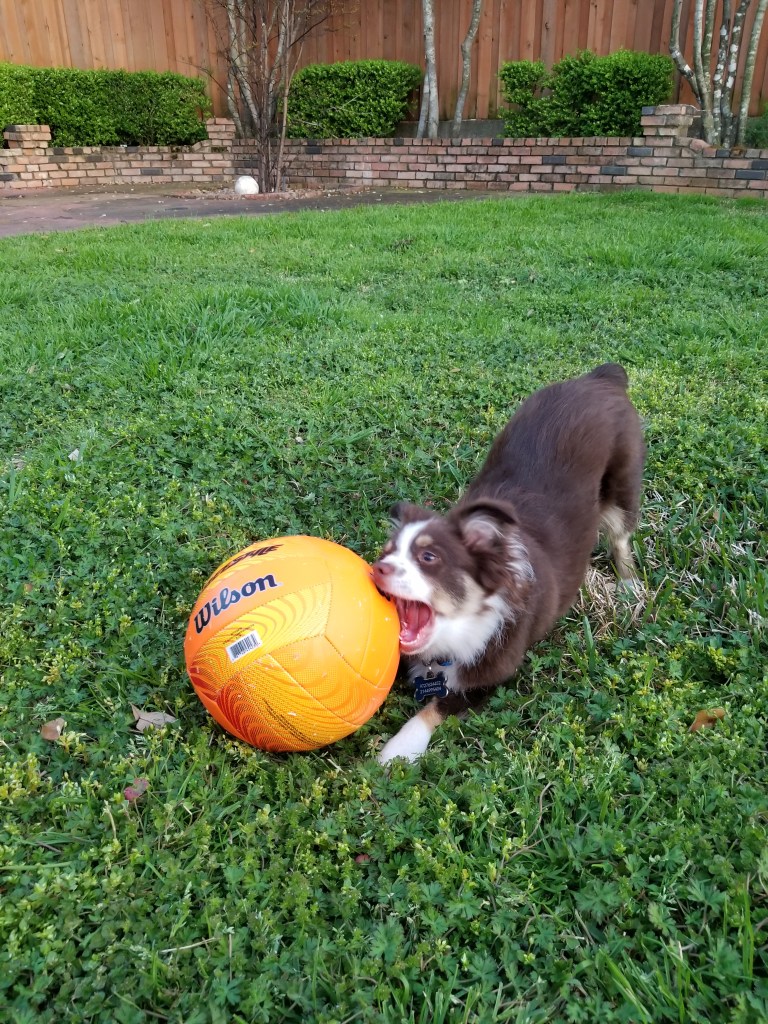
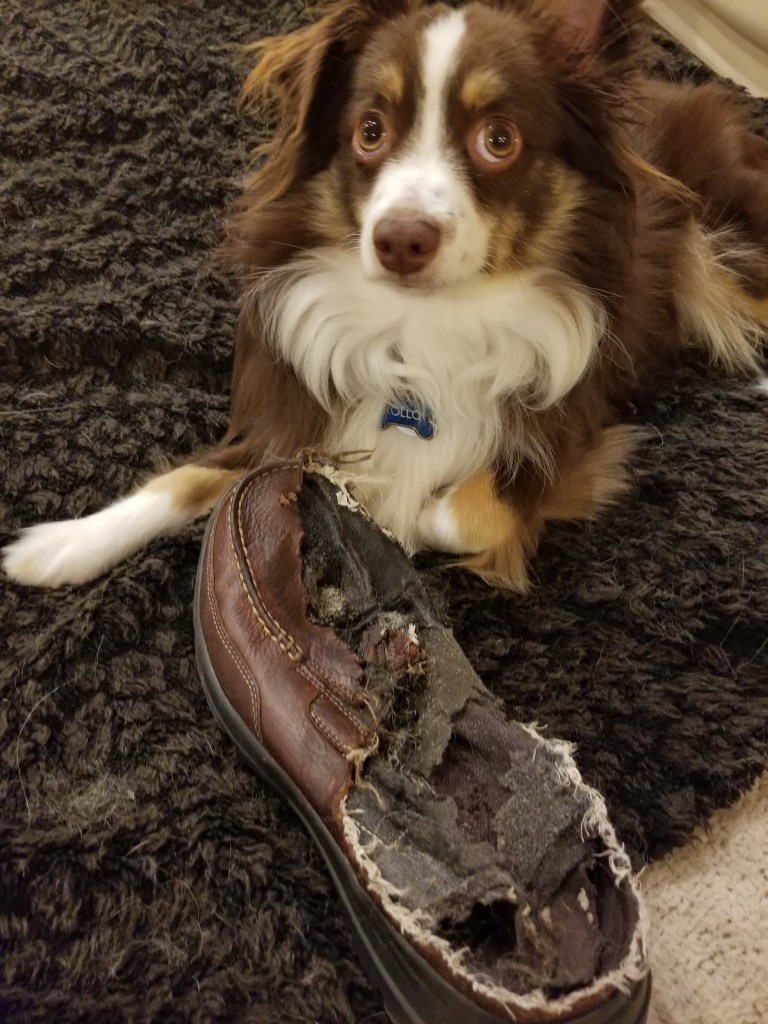
This is an old photo from his fourth birthday. He is unhappy with the hat.Rollo almost six years ago. He had just arrived at our house. Our Leonberger Bronco is welcoming Rollo.Rollo our mini-Australian Shepherd puppy.Close up of Rollo as a puppy.Rollo peeking out behind the sofa.Rollo playing with a volleyball.Rollo frequently bit our Leonberger Bronco’s tail, and he even swung in it like a swing. He climbed all over Bronco. Bronco was very patient with him.When Rollo was young, he loved chewing shoes. Here the artist is posing with his art.Our daughter with our mini-Australian Shepherd Rollo and Pug Daisy.Sometimes there are scary sounds and Rollo wanted to sit in the stroller we bought for our Pug Daisy. We have not been using that stroller since Daisy passed.
To see the blog post from Rollo’s sixth birthday click here and Rollo’s fifth birthday click here.
A professional content writer specializing in animal healthcare and veterinary topics by the name Emma Johnson contacted me about publishing veterinary information on my Leonberger blog, which I am certainly happy to assist with. Check out her article below.
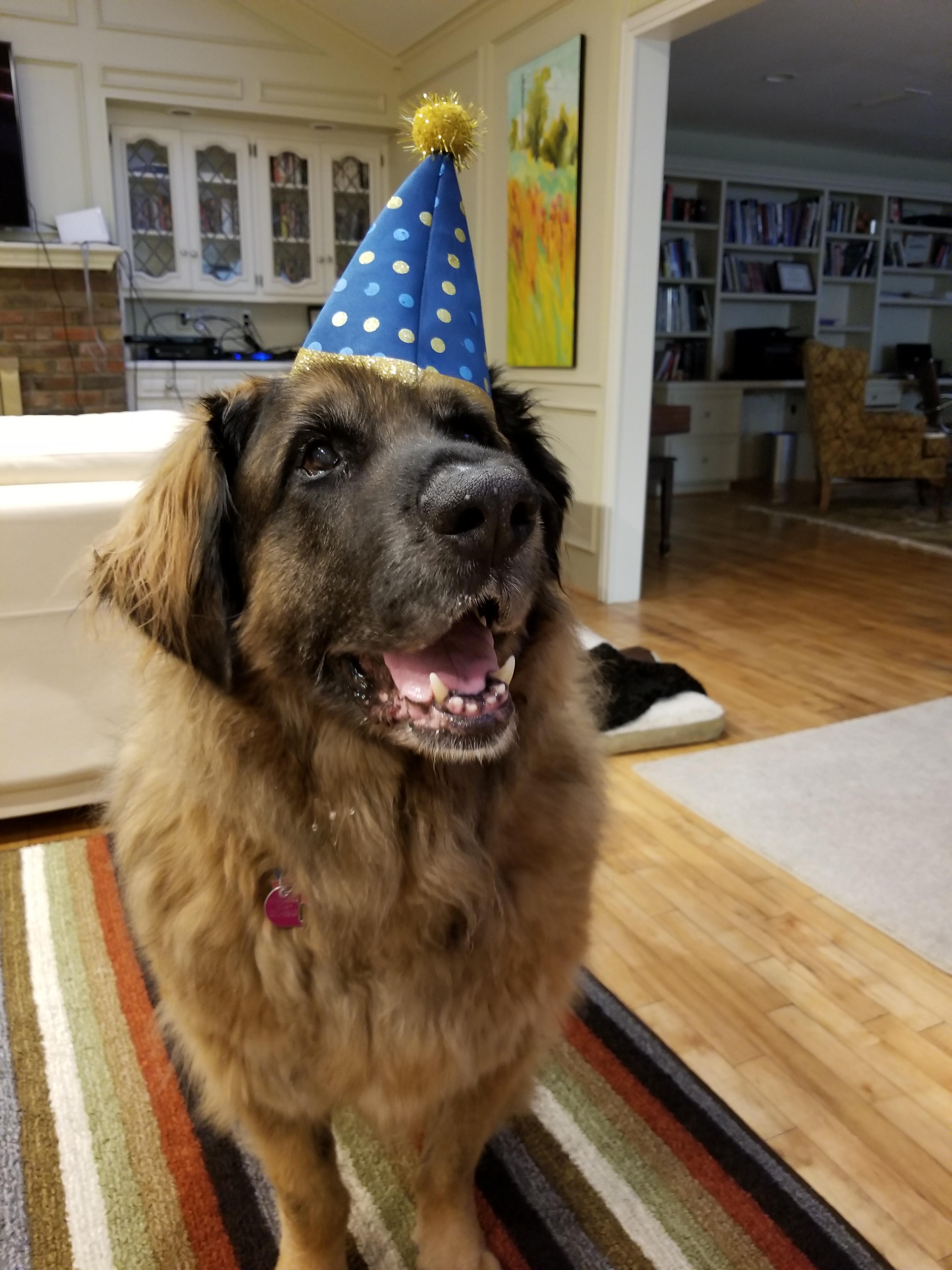
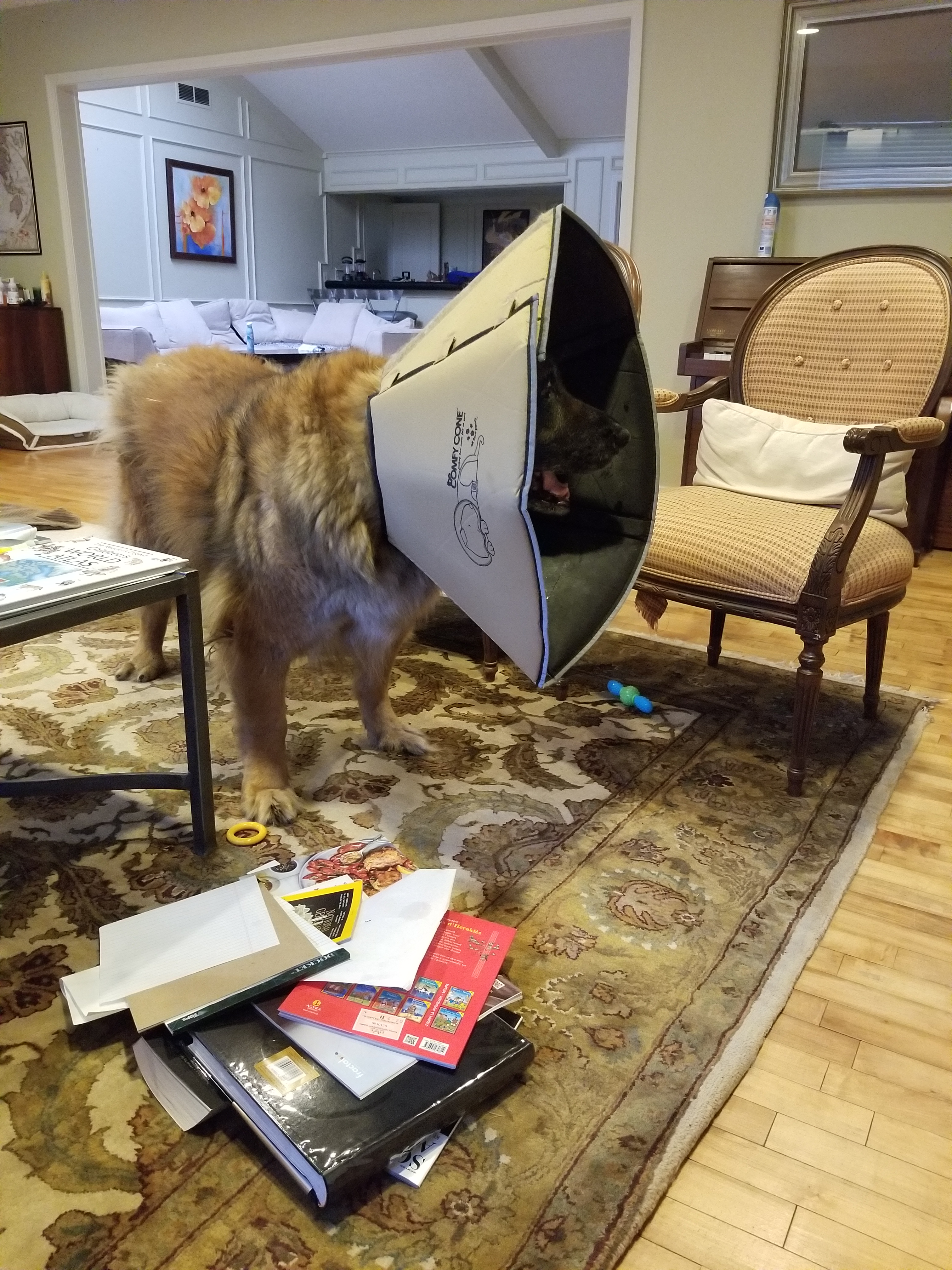
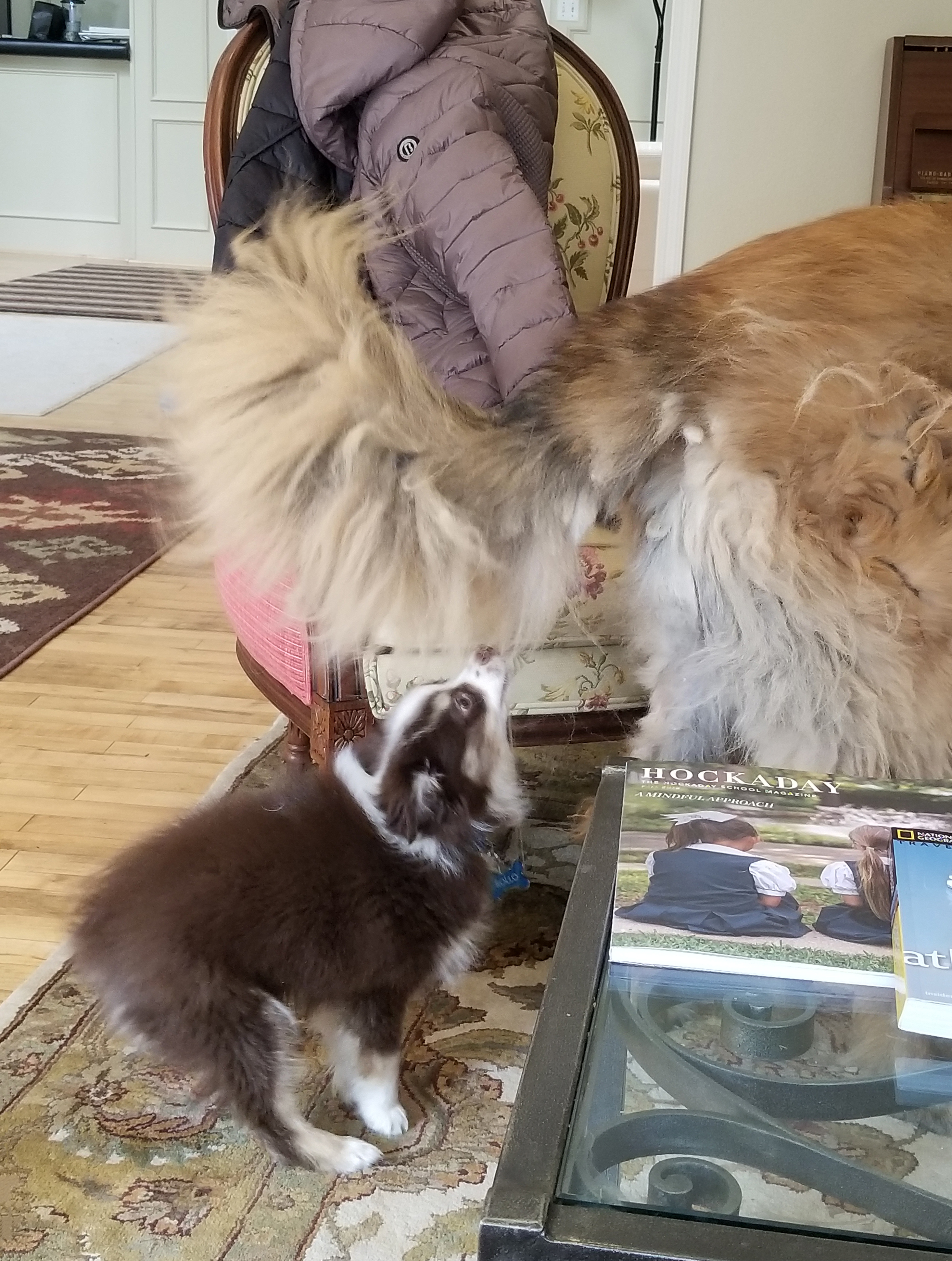
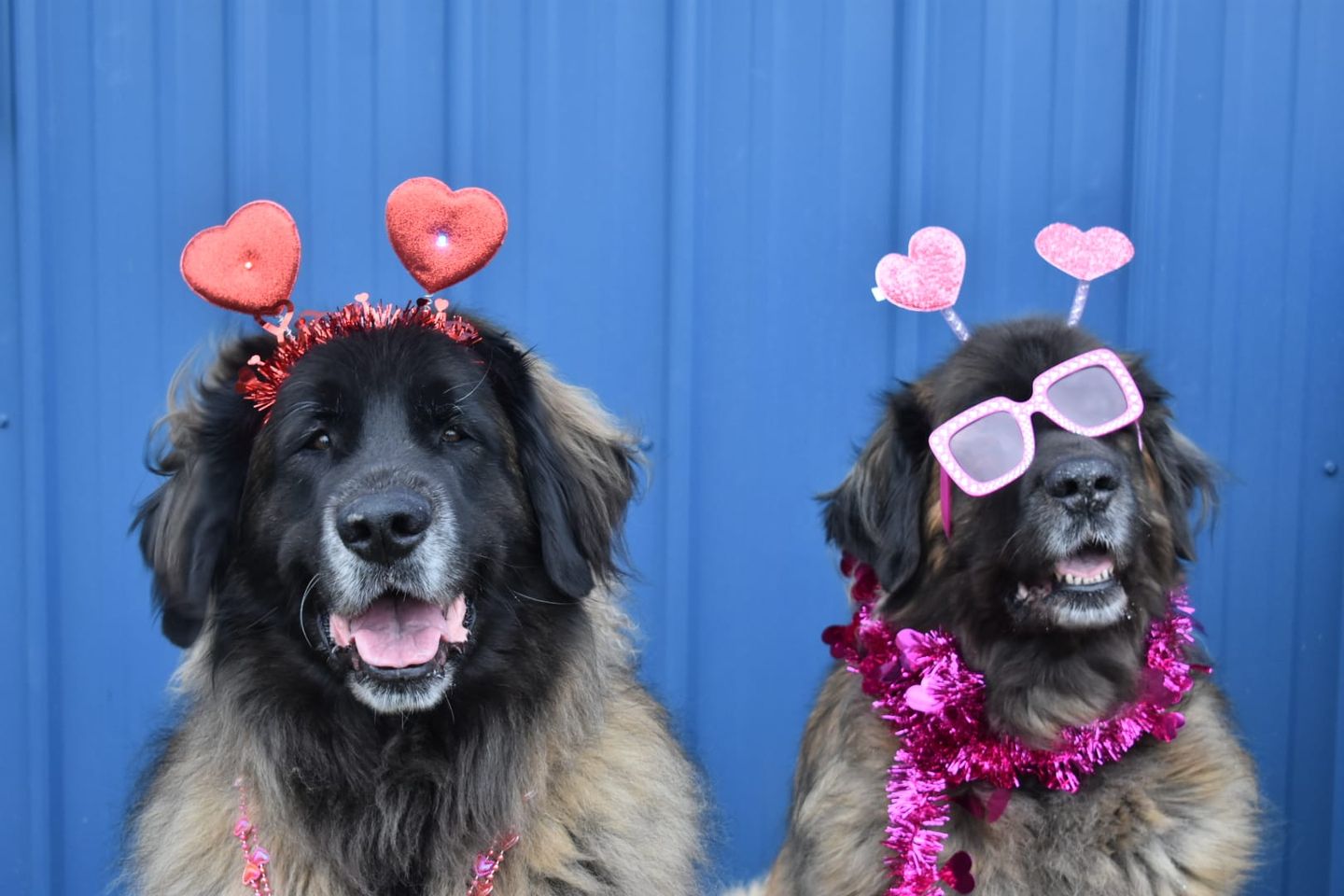
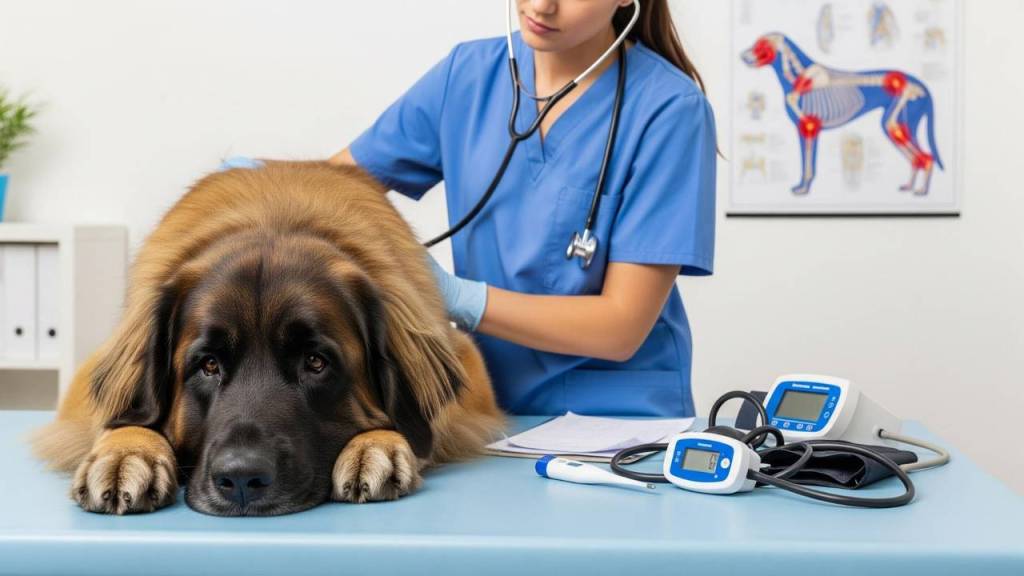
This photo tile includes a photo of our Leonberger Bronco wearing a birthday hat on his 11th birthday, our mini-Australian Shepherd biting our Leonbergers tail, our Leonberger Bronco wearing a cone and accidentally clearing the table of its content, a friends funny photo of Leonbergers Digory and Obi (by Jen O’Keefe) and a shutter stock photo of two light colored Leonberger puppies playing. Shutterstock-ID: 2141564415 by AnetaZabranska.
Article by Emma Johnson
The Leonberger is a friendly giant known for its kind temperament and large size. These beautiful dogs are wonderful companions, but their size can affect their health to some extent. Leonberger health challenges must be well understood by owners and veterinary professionals so that the lives of the big dogs are as healthy and happy as possible.
This article tackles the biggest problems and lays out preventive care options to protect these dogs. It is simpler to know what to anticipate and how to avoid these issues. Let us begin by finding out about some of the most common diseases that occur to Leonbergers.
Understanding Common Leonberger Diseases
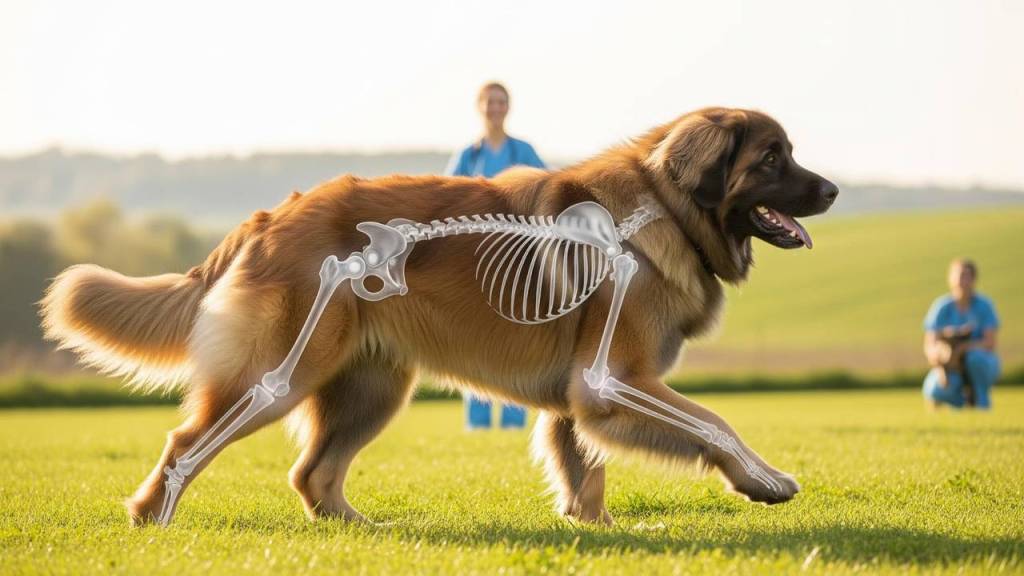
Leonbergers suffer from many diseases. They can be joint issues, heart issues, hip dysplasia, eye issues, and skin allergies. These issues arise over time; therefore, prevention and detection at an early age are crucial.
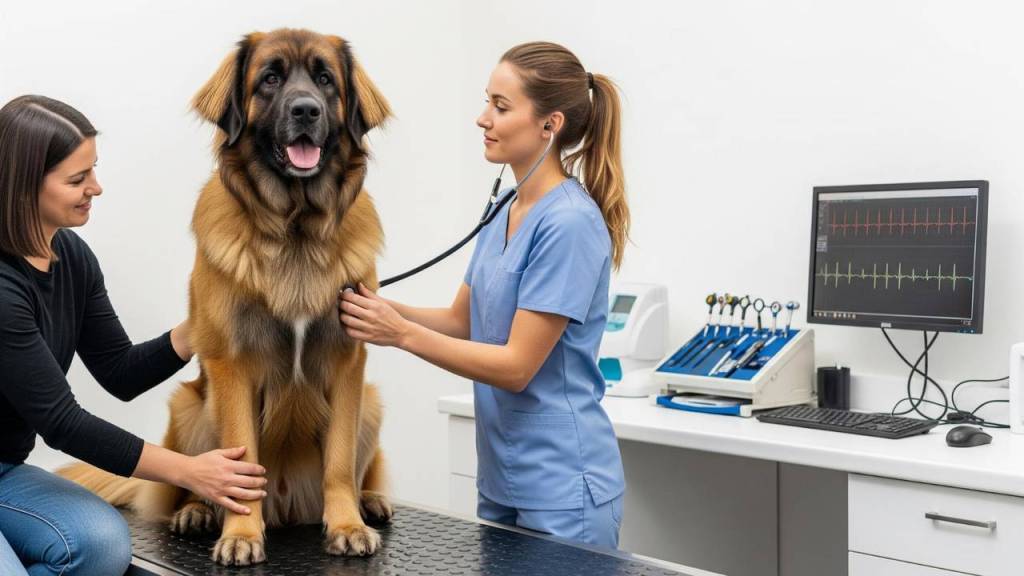
In such situations, periodic examinations are advised by veterinarians, and collaboration with the dog’s owners is recommended. Prevention is all about good food, exercise, and periodic check-ups from the veterinarian.
We will learn how genetic problems in Leonbergers are addressed and how actively they can be dealt with.
Genetic Issues in Leonbergers and How to Deal with Them
Breed history and size are the main causes for genetic issues in Leonbergers. These are directly affecting Leonberger’s lifespan and general health. Prevention is achieved through education and proper care.
Genetic risks and prevention include:
Hip dysplasia: Select sound breeders who screen for hip wellness. Keep your dog at a healthy weight and encourage low-impact play.
Elbow dysplasia: Refrain from overexercising and ensure proper nutrition.
Heart issues: Have regular cardiac check-ups and watch for activity levels.
Eye issues: Have regular eye exams and maintain eye cleanliness.
Pre-treatment of genetics, through both breeding selection and preventive maintenance, lowers the risk of major issues. Let’s discuss the big picture now: Leonberger lifespan and health.
Leonberger Lifespan and Health
The average lifespan of a Leonberger is 8 to 10 years. Big dogs tend to have a shorter lifespan, but with proper preventive care, it can be extended.
Suggestions from experts are:
Balanced meal plan that is rich in nutrients
Weight management to minimize joint stress
Low-impact exercise
Routine visits to the veterinarian for the detection of diseases in early stages
Pro Tip: In case of emergencies and accidents, effective veterinary bandaging skills are priceless. They prevent infection, protect wounds, and promote faster healing. Thus, both pet owners and vets must improve their veterinary bandaging skills.
A regular schedule of preventive care and practical first aid skills is the key to maintaining a Leonberger’s health and longevity. This includes treatment of Leonberger joint problems, the most common health problem of the breed.
Preventing Leonberger Joint Problems:
Leonberger joint problems, including arthritis, hip dysplasia, and elbow dysplasia, are among the most common health issues this breed will encounter. Prevention starts with proper weight. Excess pounds put extra pressure on joints and worsen conditions.
Early focus on joint maintenance makes prevention easy. That inevitably centers on the role of exercise and diet.
Exercise and Nutrition
Low-impact activity, such as controlled walking or swimming, provides joint mobility without overloading. A balanced diet with proper nutritional intake is also a must. In consultation with a veterinarian, supplements such as glucosamine and chondroitin may also be employed to maintain joint health.
These lifestyle modifications fortify the joints but are optimally used when complemented by regular veterinary visits.
Regular Checkups
Orthopedic examinations should be conducted regularly to identify problems before they cause damage. Regularity in these preventive check-ups can keep your Leonberger comfortable and active for life.
With joint maintenance underway, attention now must turn to another essential area of health: the heart.
Prevention of Leonberger Heart Problems:
Leonberger heart problems, particularly dilated cardiomyopathy, can advance with no apparent symptoms, and thus, prevention is important.
Diet and Lifestyle
Daily check-ups, a healthy diet, and regular exercise maintain the heart in good health. Avoid stress and overexertion.
Preventive measures at home are required. Periodic veterinary check-ups should be organized, nevertheless.
Early Detection Of Symptoms
Be vigilant for signs of exhaustion, cough, or respiratory deviation. Seek the advice of a veterinarian if there are any concerning signs in the pet. Early diagnosis significantly enhances the prospects of success.
Strong hips also contribute to overall heart health. Therefore, the same care and attention should be given to prevent hip dysplasia.
Prevention of Leonberger Hip Dysplasia:
Leonberger hip dysplasia is an abnormal development of the hip joints that leads to pain and loss of mobility. Prevention is early.
Breeding and Early Life Care
Seek out breeders who conduct hip soundness testing. Keeping your Leonberger lean and limiting high-impact exercise will help to build and develop joints. High-quality breeding, proper early care, and frequent veterinary check-ups are key to a long, healthy life for your Leonberger.
Early Veterinary Care
Prompt discovery can make a huge difference in comfort and mobility. Be mindful of the signs of discomfort in your pet. If the dog shows hesitation in movement, exercise, or play, it’s a sign of concern.
Moreover, watch out for signs of exhaustion after minor physical activity. Symptoms such as limping and whining while walking shouldn’t be ignored. A physical examination should be scheduled immediately to pinpoint the exact cause of pain and discomfort.
After the hips are healthy, vision care is the next priority of preventative care. We’ll cover that in the next section.
Preventing Leonberger Eye Problems:
Vision care is a cornerstone of your Leonberger’s overall health, making them comfortable and independent in their golden years. Healthy eyes enable them to be confident and active on a daily basis. Preventive care today can save a lot of stress and treatment down the road.
Common Eye Issues
Leonbergers can be susceptible to vision and comfort-degrading issues like cataracts and entropion. Cloudiness or tearing must be noticed early on. Regular veterinary eye examinations ensure early detection is probable and help maintain their quality of life in balance.
By being attentive to common vision issues and regular hygiene, you can protect your Leonberger’s eyesight and health.
Hygiene and Care
Eye cleaning prevents infection and irritation. Easy grooming, such as wiping off discharge and watching for redness, can be a big help. A quick response when there is any sign of irritation prevents problems from getting out of control.
Finally, let’s discuss how genetic testing can help with coping with Leonberger health problems.
Breeding Considerations
Genetic testing is the key to avoiding inherited eye conditions. Selecting breeders who prioritize vision preserves generations to come. Healthy vision is as crucial to mobility as it is to overall well-being.
Caring for vision maintains independence, but caring for healthy skin maintains comfort and well-being. Preventing skin allergies is covered in the next section.
Preventing Leonberger Skin Allergies:
Skin health is a part of overall well-being in your Leonberger. Healthy skin not only avoids pain but also prevents infection and irritation. Preventive care involves frequent grooming, attention to hygiene, and vigilance.
Causes of Skin Allergies
Environmental factors, food allergy, or parasites are the causative agents of Leonbergers’ skin allergies. Early diagnosis of causes prevents long-term complications.
It is through preventive measures that you need to take steps to make your dog stress-free and comfortable.
Skin Care Routine
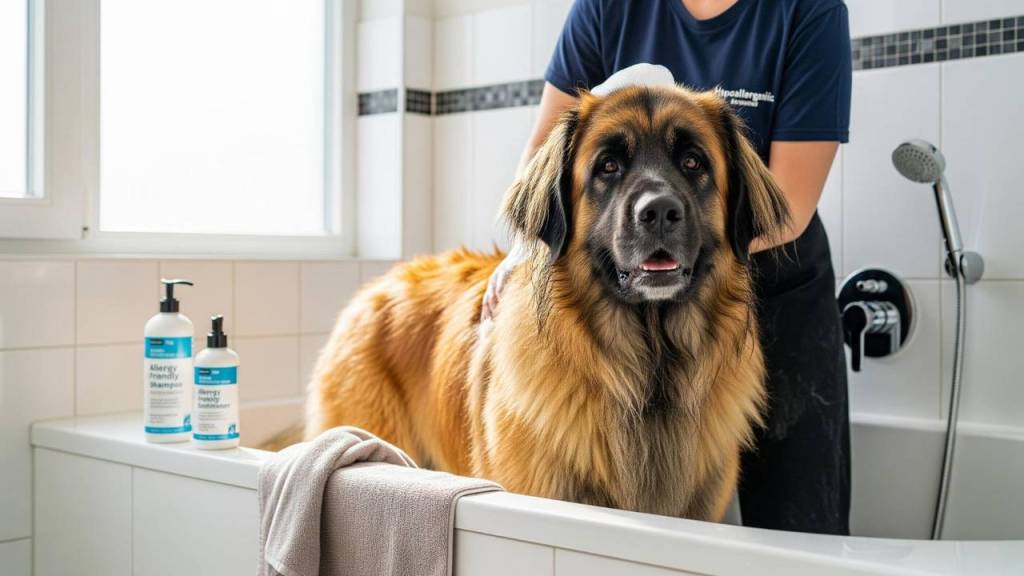
Daily brushing and grooming eliminate dirt, allergens, and loose hair that irritate the skin. Hypoallergenic shampoos and conditioners soothe the skin and avoid flare-ups. A balanced diet containing omega fatty acids also maintains a healthy coat and skin.
Early Care
Skin problems must never be overlooked, as they can quickly become long-term problems. Coordination with your vet for regular checkups ensures that issues are addressed on time.
Preventive skin care is an important element of preventive health. Coordination of these practices ensures your Leonberger has a long, happy, and healthy life.
Preventive Care Checklist for Leonbergers, as suggested by the veterinarian
Here is a brief preventive care checklist for Leonbergers:
Work towards maintaining your dog’s healthy weight to keep them overall healthy.
Encourage your dog to perform low-impact exercises.
Turn outdoor play into a regular activity.
Undergo genetic tests to identify hereditary risks before breeding.
Check for dental and skin health to avoid infections and discomfort.
Get regular vaccinations and parasite control for complete preventive care.
Utilize a veterinary AI scribe to document, monitor, and maintain patient information efficiently.
Regular wellness visits detect health problems in Leonbergers. Regular checkups screen for inherited disorders, evaluate weight and exercise requirements, and examine the condition of joints, hips, eyes, heart, and skin. Personalized care plans maintain your dog in good health, averting significant problems.
With all said regarding the Leonberger health problems and how to prevent them, let us now summarize with the closing thoughts.
Final Thoughts
Preventive care is the key to a happy and healthy Leonberger. Regular wellness visits, individualized care plans, and gentle treatment of injuries all combine to provide a long, active life. Prevention is always preferable to the cure. It’s preferable to be proactive about the typical health issues in Leonbergers in order to be able to stop them.
A proactive care approach keeps your Leonberger healthy, comfortable, and active.
FAQs:
What are the most common Leonberger health problems?
The most common Leonberger health problems include joint issues, heart conditions, eye problems, and skin allergies. They affect mobility, comfort, and general well-being. Preventative care and routine veterinary check-ups help keep these dangers at bay efficiently.
How can I prevent Leonberger joint problems?
Prevention of Leonberger joint problems starts with proper weight maintenance, nutrition, and regular low-impact exercise. Routine early orthopedic checks help detect problems before they progress. Preventive breeding matters too.
How often should Leonberger’s eyes be examined?
Every Leonberger checkup should include a regular eye examination. Owners should also watch for redness, cloudiness, or watery discharge. Early detection of Leonberger eye problems prevents catastrophic vision loss.
What is the average Leonberger lifespan and health expectancy?
The average Leonberger lifespan and health is 8–10 years, but preventive care can improve the quality of life. Proper living routines and regular veterinary visits are the key. Identifying health issues early on ensures healthier and longer years.
Author Bio:
Emma Johnson is a professional content writer specializing in animal healthcare and veterinary topics. Her work provides pet owners and veterinarians with insightful, well-researched information to improve animal care.
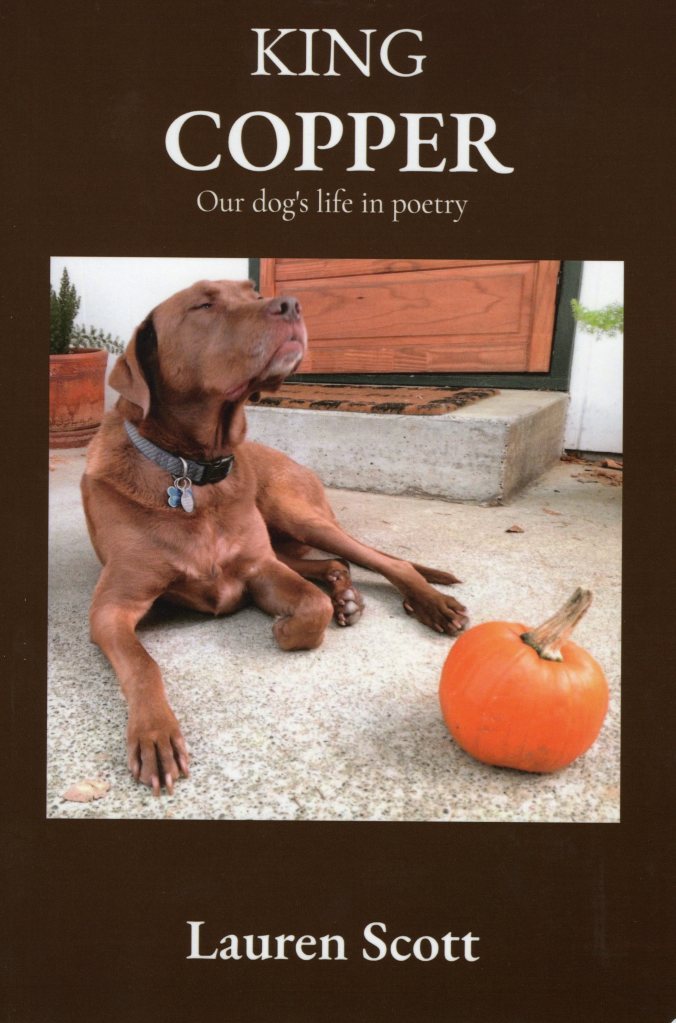
Naturally I would also like to mention my review of Lauren’s wonderful book King Copper: Our dog’s life in poetry. Click here to see it
Front cover of King Copper: Our dog’s life in poetry by Lauren Scott. Click here, or on the image to go to the Amazon page for the paperback version of the book.
Just a few minutes before I saw Esther Chilton’s writing prompt “club” I received my annual invoice for our family membership in the Leonberger Club of America. What a great reminder to pay my bill and create a post about the Leonberger Club of America. We haven’t had a Leonberger since the summer of 2020 when our Leonberger Bronco, or Le Bronco von der Löwenhöhle passed away. However, we’ve kept our membership because I love their LeoLetter magazine, I know some people, I have this blog, and I wrote a book about our Leonberger and the Leonberger breed after the passing of Bronco (see the side bar on the right or click here for more information).
The Leonberger Club of America
I can add that the Leonberger Club of America, LCA for short, is the official national parent club for the Leonberger breed in the United States (and Canada). It was founded in 1985. Its mission is to preserve and promote the health, temperament, and original type of the Leonberger through education, events, performance programs, and social engagement. The American Kennel Club (AKC) recognizes the LCA as the official Leonberger breed club in the United States.
The Leonberger Club of America make sure that the Leonberger dogs are protected. You are about as likely to find a Leonberger at Petland/Puppy-Mill as you are finding an Elephant for sale there. You typically buy/get a Leonberger dog from an LCA certified Leonberger breeder or from the Leonberger Rescue Pals, and if you don’t that might be a problem. Leonberger breeders interview prospective Leonberger owners and make sure they are a good fit. If you are found to have mistreated a dog in the past, turned one into a shelter, or sold one on an auction, you cannot buy a Leonberger. The breeders are also required to take back the dog if it does not work out. To see the transcript from our Leonberger interview, click here.
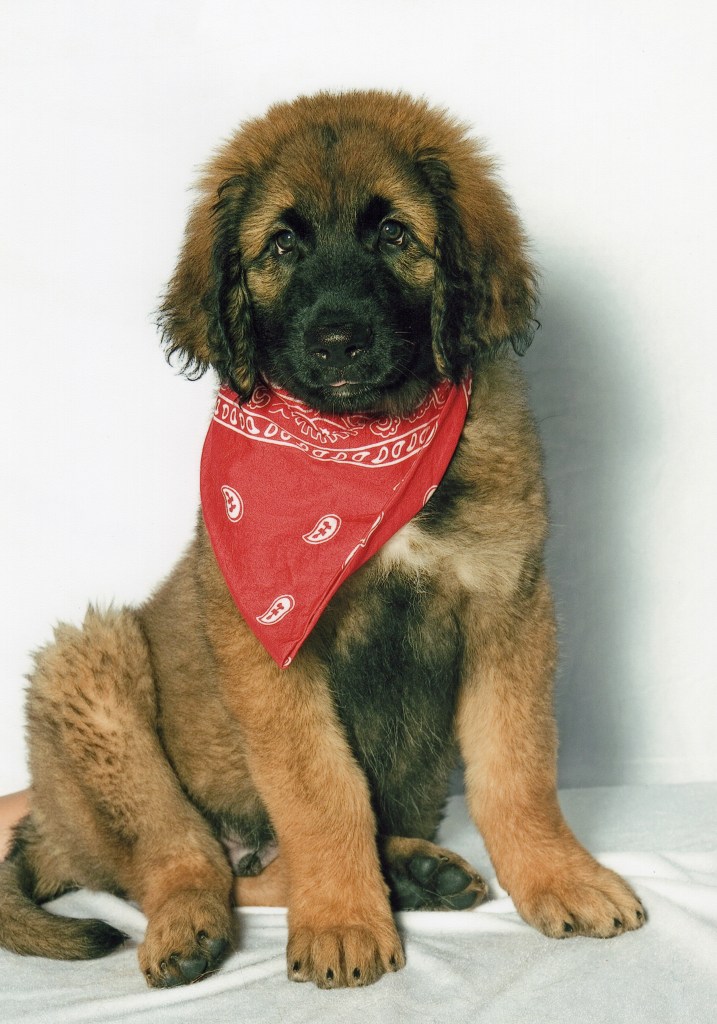
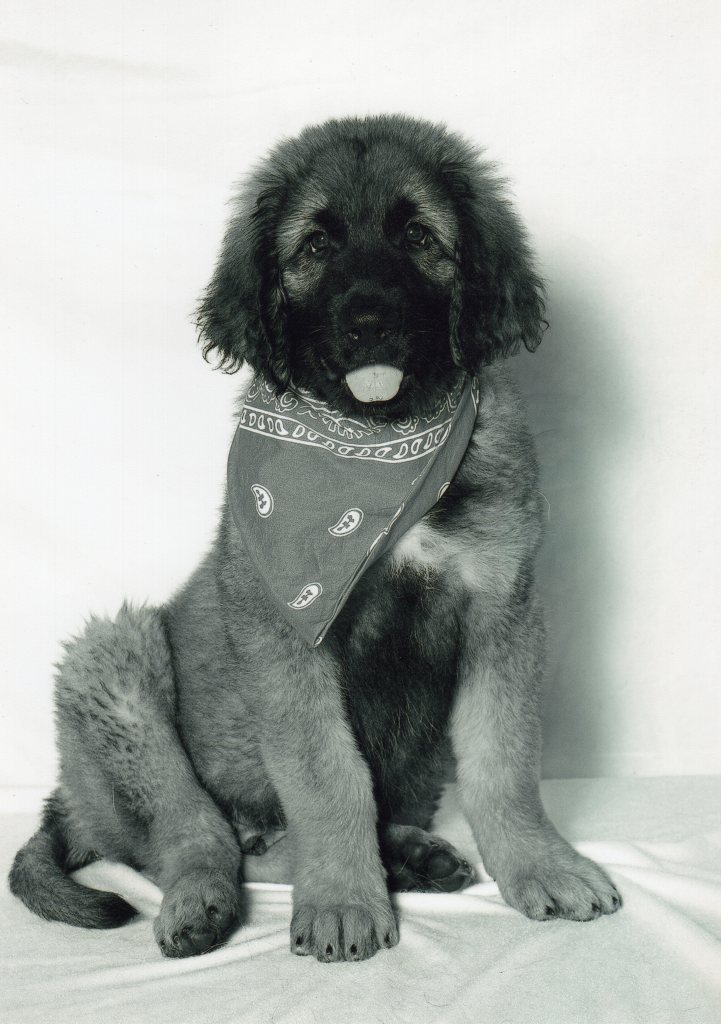
We bought our Leonberger Bronco (Le Bronco von der Löwenhöhle) in 2007 from Julie Schaffert, a certified LCA breeder since 1992. This is a photo of him at three months old.
There are only about 3,000 Leonbergers in North America and about 2,000 Leonbergers in the United States but the Leonberger Club of America has more than 1,000 members. They publish the Leo-Letter, a quarterly Leonberger magazine. So, the Leonberger Club of America has a very prominent place among Leonberger owners. Click here to see a summary of the Leonberger Breed Standard.
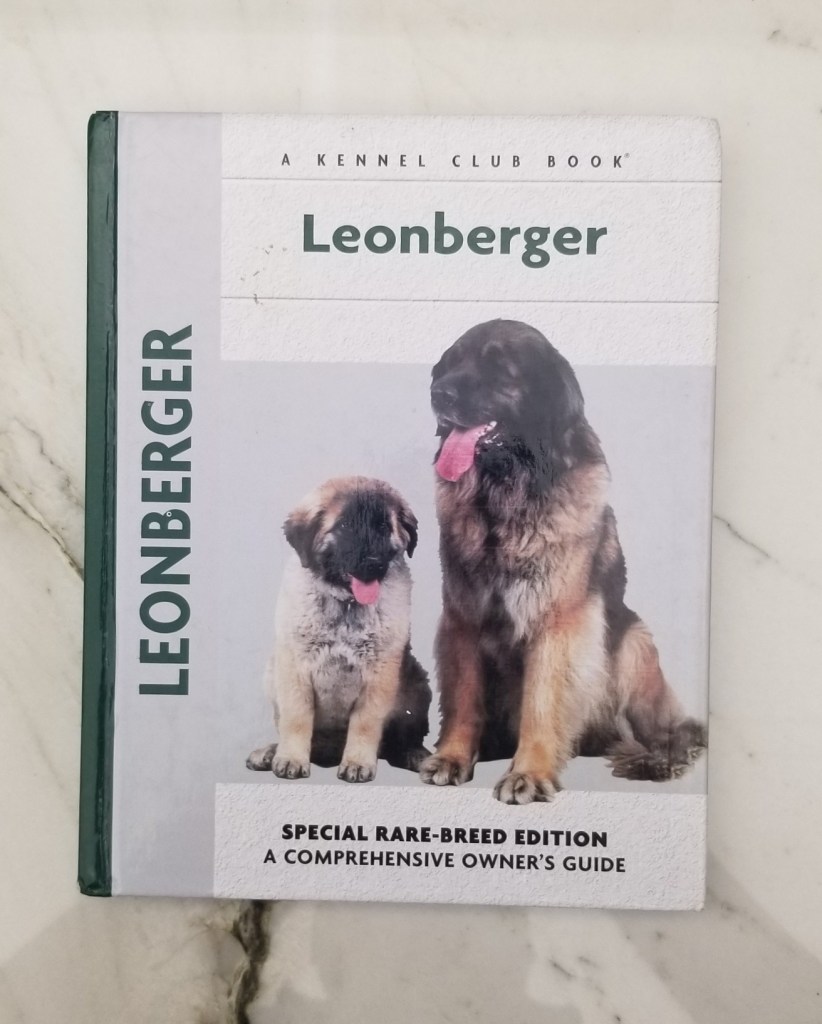
Leonbergers have a long history in North America and the United States—despite the fact that until 1985, there were only seventeen Leonbergers known to be living in the United States. See: Lusby, Leonberger, page 15.
Leonberger, Special Rare-Breed Edition, A Comprehensive Owners Guide, Madeline Lusby
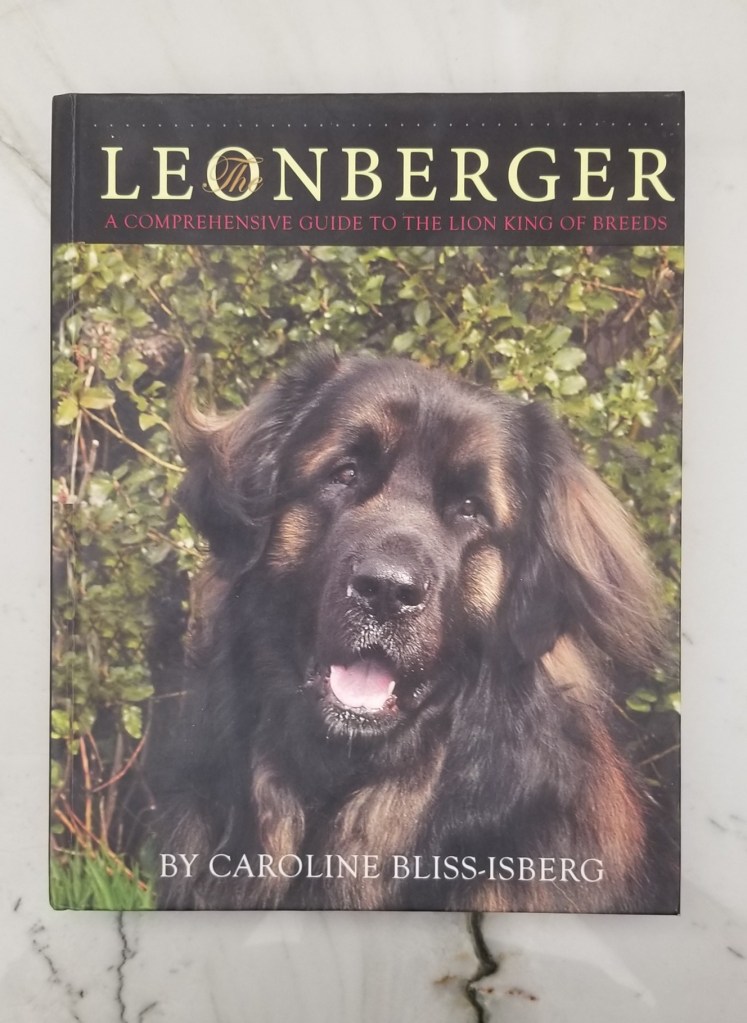
In the 1870s, Leonbergers were brought to Newfoundland to invigorate the stock of Newfoundland dogs. Around the same time, two Leonbergers named Caesar and Sultan were purchased from Heinrich Essig’s kennel (founder of the Leonberger breed) and transported across the ocean to join the Wellesley-Sterling theater company in the United States as the stars of their productions. Then in 1879, Caesar and Sultan visited President Ulysses S. Grant, who called them the largest and most magnificent dogs he had ever seen and presented them with gold medals. During the years between World War I and World War II, a New Jersey family, the Wolfs, opened their home as a temporary refuge for Jews fleeing Germany: they also imported Leonbergers. Unfortunately, this introduction of the breed into the United States did not last, and it would be another fifty years before the Leonberger appeared in America again.
Leonberger, A comprehensive guide to the lion king of breeds, Caroline Bliss-Isberg
During the late 1970s and the 1980s, a few families—Waltraut and Klaus Zieher, Brian Peters, Manfred and Sylvia Kaufmann, Keri Campbell and Melanie Brown, and Mary and Reiner Decher brought Leonbergers to the United States. The Dechers had started a breeding program and were looking for a mate for their first dam, Viona. By chance their neighbor discovered through a newsletter that there was another Leonberger in the United States, and that led to the families’ finding and connecting with one another. I should add that the Dechers were careful to conform to the German breeding regulations and performed hip X-rays that they then submitted to the Orthopedic Foundation for Animals (OFA). Viona became the first OFA-certified Leonberger in America.
See: Bliss-Isberg, Leonberger, page 152.
On Saturday, November 2, 1985, eight of these Leonberger enthusiasts met at a hotel in Denver, Colorado, to found the Leonberger Club of America (LCA). This group of founders, which has since been dubbed the Denver Eight, appointed a registrar, formulated a breeding acceptability checklist, and instituted various policies, including the requirement that OFA certification is mandatory for breeding. LCA membership grew: it held social gatherings, began publishing LeoLetter, and imported an increasing number of dogs. Now the LCA has thousands of members across the country, and Leonbergers receive high ratings on health tests relative to other large breeds. For example, in 2000, the OFA reported that only 14.6 percent of Leonbergers tested positive for hip dysplasia, compared to 47 percent of Saint Bernards.
Founding of the Leonberger Health Foundation International
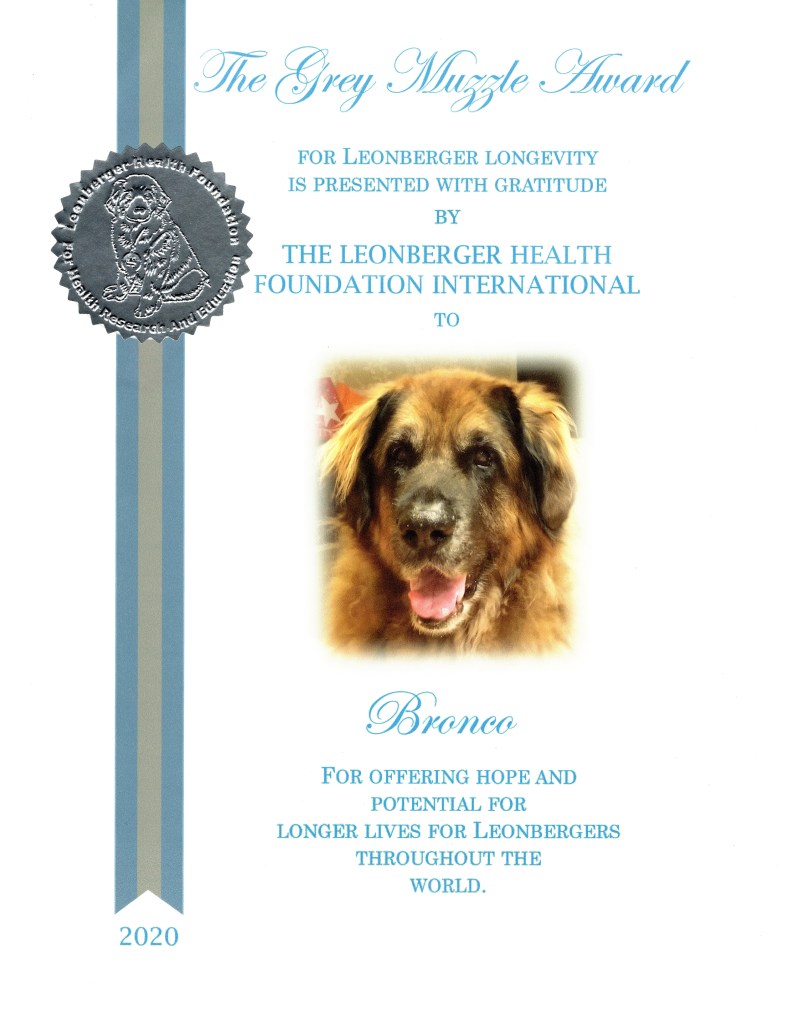
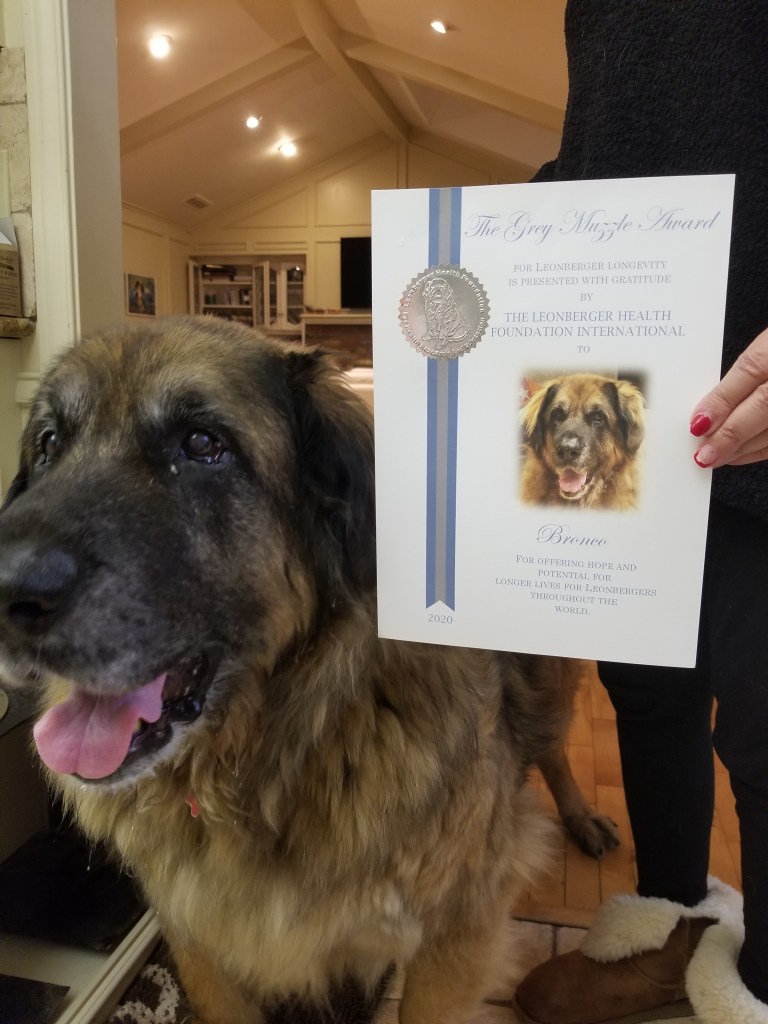
Another important historical event was the founding of the Leonberger Health Foundation International (LHFI), in 2000 (it was just called the Leonberger Health Foundation back then). According to its website, the organization was founded by Waltraut Zieher and other memers of the LCA’s health, education, and research committee to “facilitate the solicitation and distribution of donations given to support health related breed-specific research.” The LHFI also administers a program that collects DNA samples from Leonbergers to share with universities and research institutions, and of course it administers the Grey Muzzle Award (long living Leonbergers). Our Leonberger Bronco was a recipient of the Grey Muzzle Award, and we provided them with his DNA.
Bronco’s Grey Muzzle Award, which he received for being an unusually long lived Leonberger.
LHFI’s global biobank contains DNA samples from more than nine thousand Leonbergers. Among the organization’s notable achievements are the eradication of Addison’s disease among Leonbergers and the raising of nearly half a million dollars for research into conditions that affect canine health, including osteosarcoma, hemangiosarcoma, glaucoma, cardiac diseases, thyroid diseases, and neurological disorders. Its research also supports healthful longevity and aging as well as population diversity. Another success is the fact that since 2011, no Leonbergers with two copies of the LPN1 gene mutation (which causes Leonberger polyneuropathy) have been recorded in LHFI’s biobank. LHFI is one of my favorite charities.
The Dog Wars of America
The end of the twentieth century marked not only the end of the Cold War but also the beginning of what I call the Dog Wars of America. In 1985, the American Kennel Club (AKC) registry comprised one-third of the world’s known dog breeds. But the AKC had recognized only a few new breeds since 1887—a period of ninety-eight years. So, the organization decided to change that policy, but this did not always go smoothly. The members of rare-breed clubs often did not want to be part of the AKC. For example, the Australian Shepherd Club of America (ASCA) was very reluctant to join, so a relatively small splinter group, the United States Australian Shepherd Association, was formed and designated the official member club of the AKC, which was not welcome news to the ASCA. The border collie is another example. Charles Krauthammer, the late political columnist, called the AKC the politburo of American dog breeding.
See: Bliss-Isberg, Leonberger, page 159.
Similarly, in 2003, a new Leonberger club was formed—the Leonberger Club of the United States—with the goal of becoming the Leonberger member club of the AKC. This essentially forced the LCA’s hand, so they applied for membership in the AKC, a process that took years to complete. But ultimately the AKC approved the LCA as members in 2010: Leonbergers would officially become part of the Working Group. Fortunately, 90 percent of LCA breeders agreed to continue following LCA regulations regardless of whether the club would remain independent or become part of the AKC. Also fortunately, AKC membership afforded more opportunities for Leonbergers to participate in dog shows, which is important to many owners.
See: Bliss-Isberg, Leonberger, page 187
For more information on the history of the Leonberger starting in 1830’s click here.
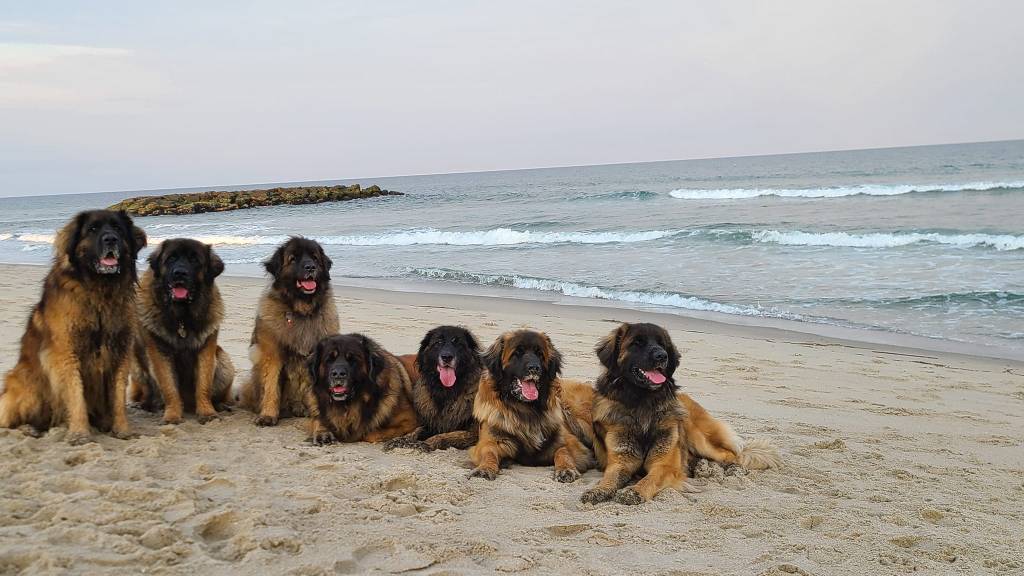
On the left our Leonberger Bronco at three months old. On the right Bronco as an unusually old Leonberger at almost 13.Bronco our Leonberger is giving me a kiss. He is about one year old and not yet fully grown.Seven Leonbergers by the beach. Photo by Jen O’Keefe.
Dogs are domesticated wolves. To survive in our human society, they need to be taken care of. We often get them as puppies and all they know is how to live with people. When you get a dog, this is a lifetime commitment. Despite this fact a lot of people buying puppies bring them to shelters and many irresponsible breeders bring unsold puppies to shelters. In addition, 7% to 20% of dogs adopted from shelters are returned to the shelters, mostly due to behavioral issues or owners’ unrealistic expectations. Dogs who were returned for behavioral issues were also more likely to be euthanized.
Some dog owners don’t even bother to turn their dog into a shelter, they just abandon them. In the U.S., approximately 3.1 million dogs enter shelters each year. Many of these are abandoned, the offspring of abandoned dogs, or lost pets. In the U.S., about 60% of dogs entering shelters are strays. As a side note, abandoning a dog is illegal in almost every US state, including Texas where I live. We dog owners need to do better. We have responsibilities towards our dogs, to feed them, raise them, train them, exercise them, take care of them, and continue to shelter them when they get old and sick.
The Leonberger community has taken significant steps towards protecting Leonberger dogs from abuse and abandonment. First, the Leonberger Club of America certifies responsible breeders and work to prevent dogs from ending up with backyard breeders and puppy mills. Breeders are required to take back and care for a dog if it does not work out. All prospective Leonberger owners are interviewed and must sign a contract dictating how they should treat the dog. If they find out that you have mistreated a dog or failed to take care of a dog you cannot buy a Leonberger. To see the transcript for our Leonberger interview click here.
12 Promises to my Dog
Dear fur angel, I promise to feed you properly.
Dear fur angel, I promise to protect you from toxic foods such as raisins, grapes, chocolate, xylitol, birch sugar, onion and garlic.
Dear fur angel, I promise to protect you from toxic plants, dangerous household items and animals.
Dear fur angel, I promise to keep one or more water bowls always filled with fresh and clean water for you.
Dear fur angel, I promise to comfortably shelter you.
Dear fur angel, I promise to train you and care for your physical and emotional needs.
Dear fur angel, I promise to walk you every day (on days when this is possible).
Dear fur angel, I promise to take care of all your veterinary needs.
Dear fur angel, I promise to play with you, pet you, and throw balls.
Dear fur angel, I promise to never abandon you.
Dear fur angel, I promise to be there for you when you cross the rainbow bridge.
Dear fur angel, I promise to love you forever.
Puppy Versus Old Dog Photos
Below are some photos of our dogs. Except for the first photo, which is a photo of our Labrador Baylor and German Shepherd Baby at an advanced age, the photos are arranged so that the first is photo of the dog as a puppy followed by a photo of the same dog at an advanced age. I should say that we got Baylor and Baby when they already were adults and we don’t have puppy photos of them. What happened was that family members of ours had got them from a shelter and when those family members later needed to move, we offered to take care of them.
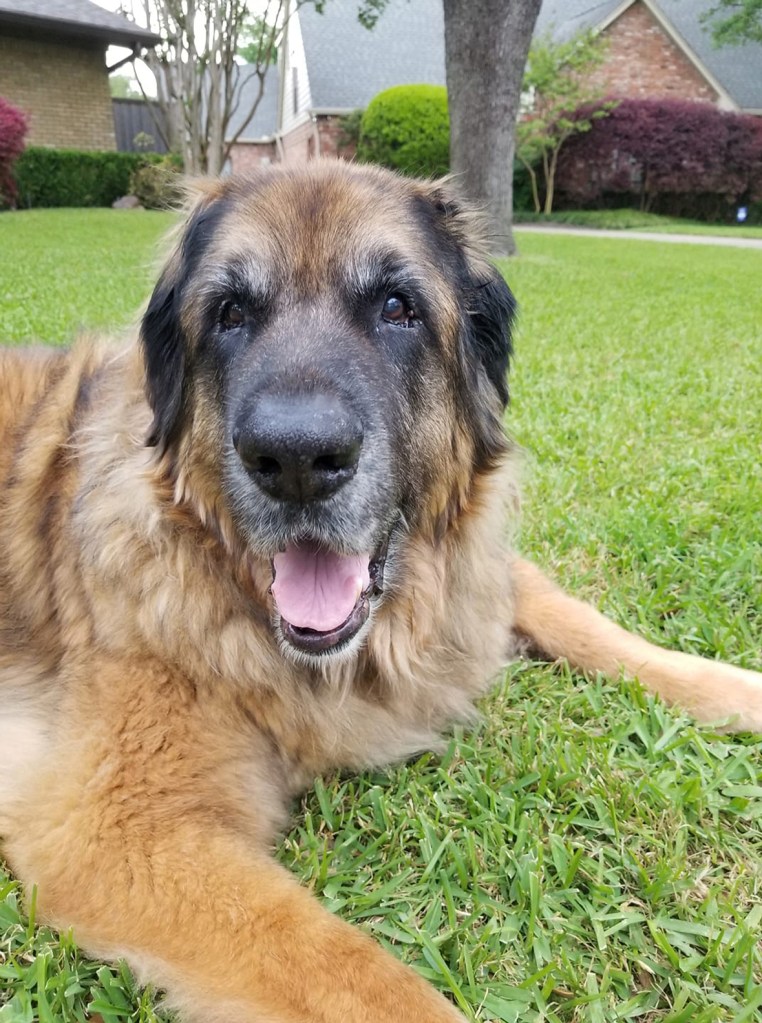
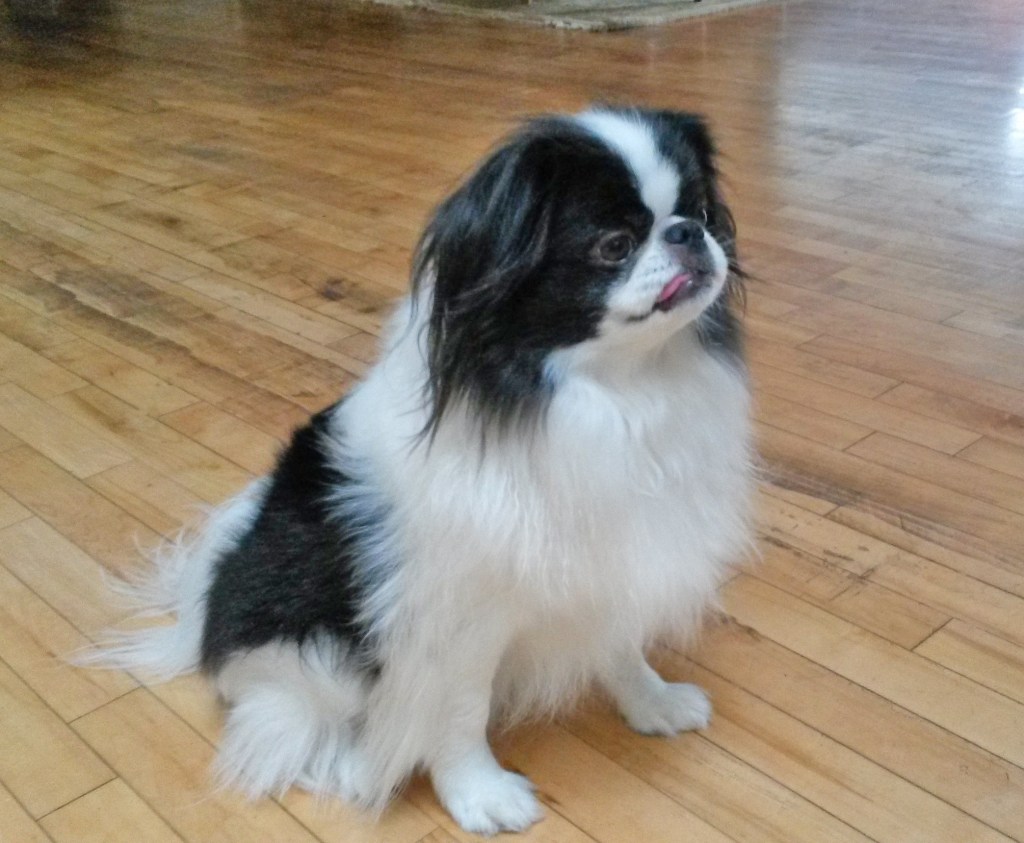
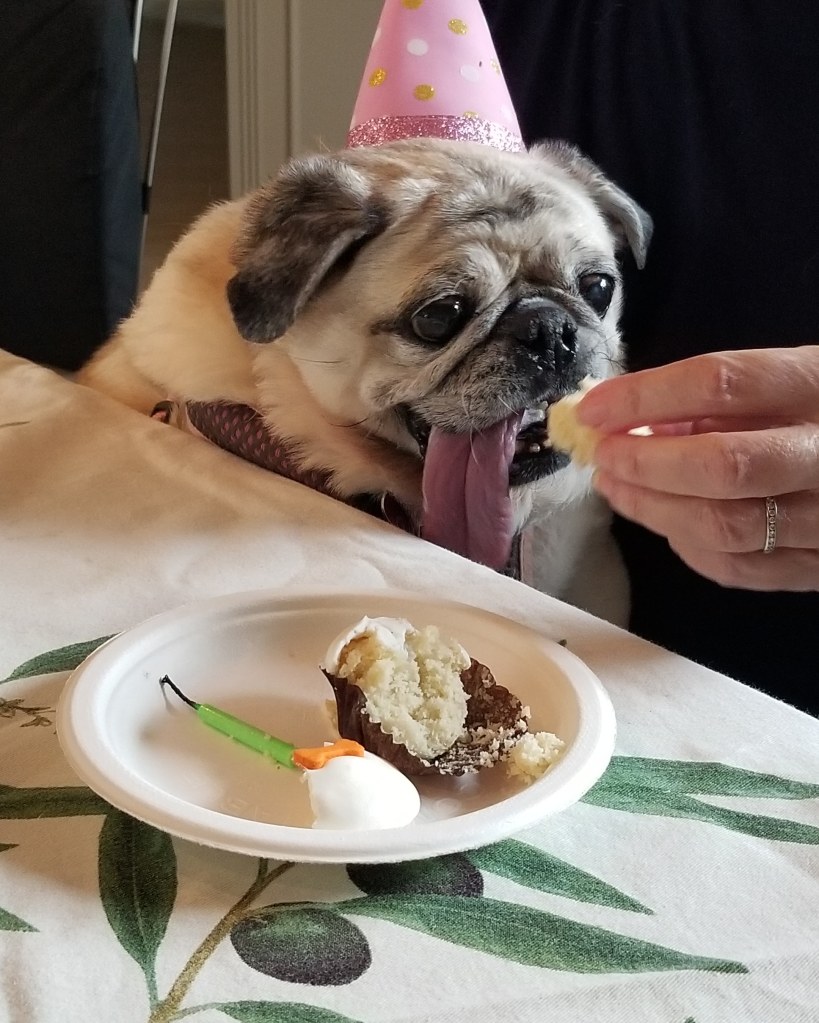
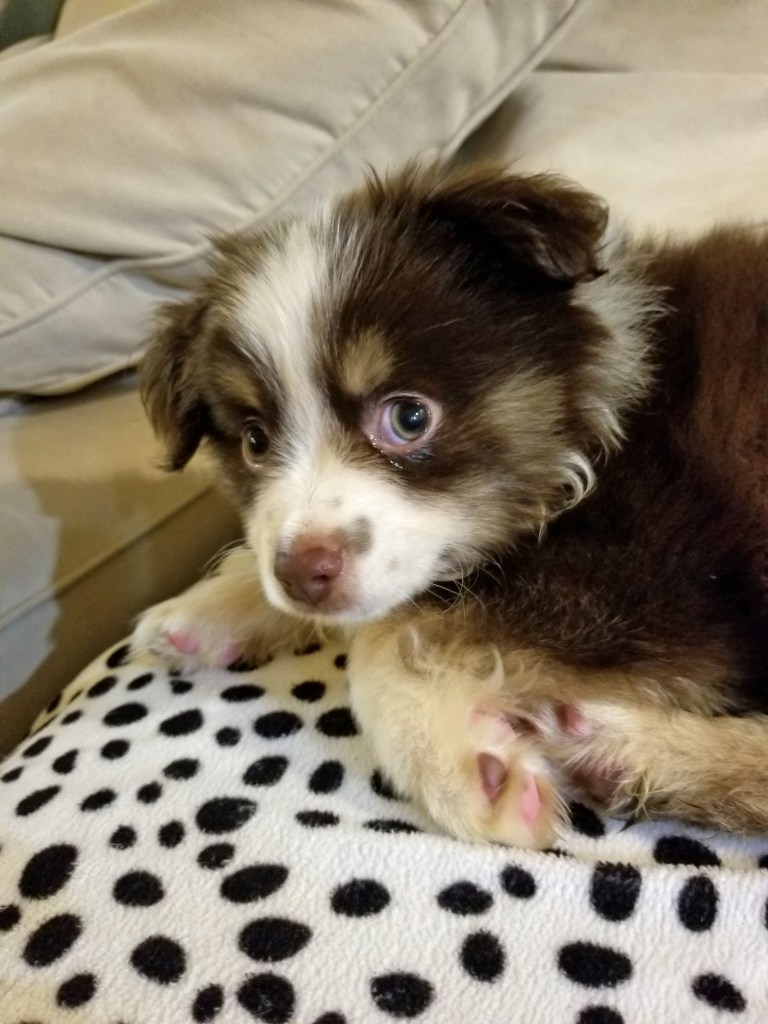
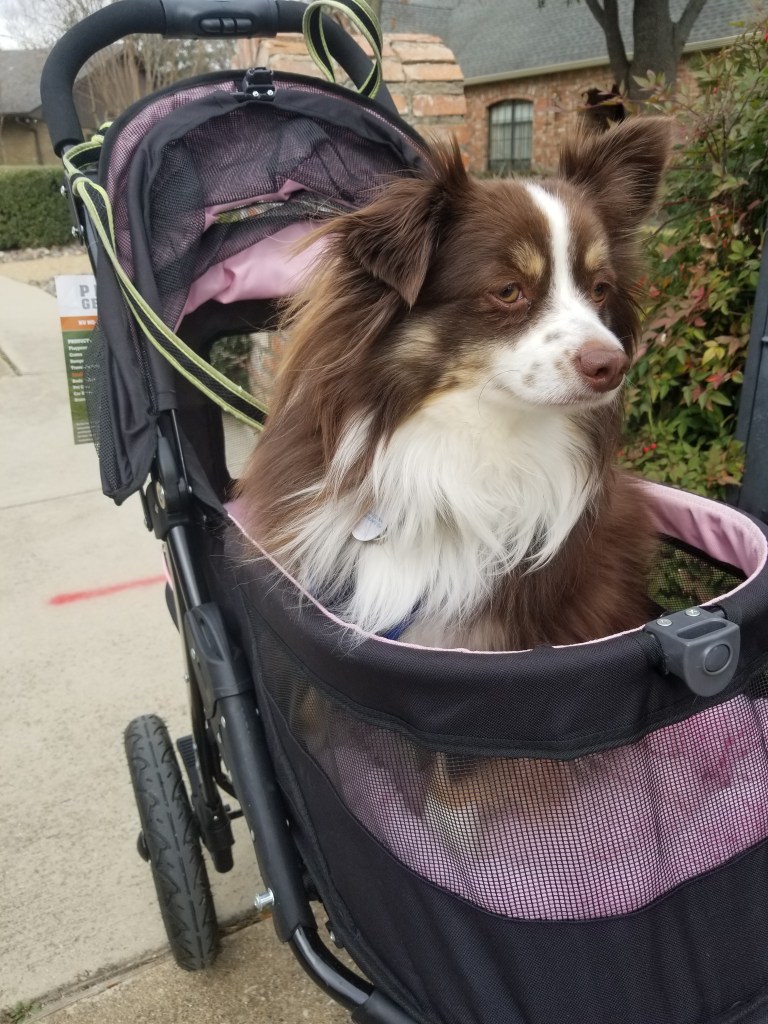
Our Labrador Baylor, left, and our German Shepherd Baby, right. Both dogs are at an advanced age. I should add that Baylor was partially a mix. He was three quarters Labrador and one quarter Rhodesian Ridgeback.Our Leonberger Le Bronco von der Löwenhöhle at three months old.Our Leonberger Bronco at three months old.Our Leonberger Bronco received the Grey Muzzle Award for longevity at age 12. Leonbergers typically live 8-10 years. It was the Leonberger Health foundation International that gave him the award. My wife is holding the Grey Muzzle Award diploma.Our soon 13 year old Leonberger Bronco.Our Japanese Chin puppy Ryu loved to sing and dance when. Well, howl and dance.Ryu is old in this picture. He has an illness, and he is more serious.Our pug Daisy in our younger son’s arms. She is a puppy in this picture. People typically assumed that Ryu was the female and Daisy the male, but it was the other way around.Daisy’s 15th birthday. She is getting old. She is having a Pup Cake.Our mini-Australian Shepherd Rollo as a puppy.Our mini-Australian Shepherd Rollo is grown up but not yet old. Here he is sitting in Daisy’s stroller. Strange noises such as ducks quacking used to scare him and then he wanted to sit in her stroller.
















 Leonberger Life