This blog feature amusing and heartwarming stories about our late Leonberger dog Bronco, as well as other Leonbergers. It also has a lot of information about the Leonberger breed, the history, care, training, Leonberger organizations, etc. I also wrote a Leonberger book, which I am featuring in the sidebar.
I was alerted to the existence of National Love Your Pet Day by this post. Because I was busy all day I did not get a chance to post anything until now. However, it is still National Love Your Pet Day here where I live.
National Love Your Pet Day is an annual observance dedicated to celebrating animals. With this post I just wanted to show some photos of our current dog the mini-Australian Shepherd Rollo and our past dogs the Labrador Baylor (mix ¼ Rhodesian Ridgeback), the German Shepherd Baby, our big Leonberger Bronco, or Le Bronco von der Löwenhöhle, our Japanese Chin Ryu and our Pug Daisy. We love(d) them all and will forever be in our hearts.
Photos of our Dogs
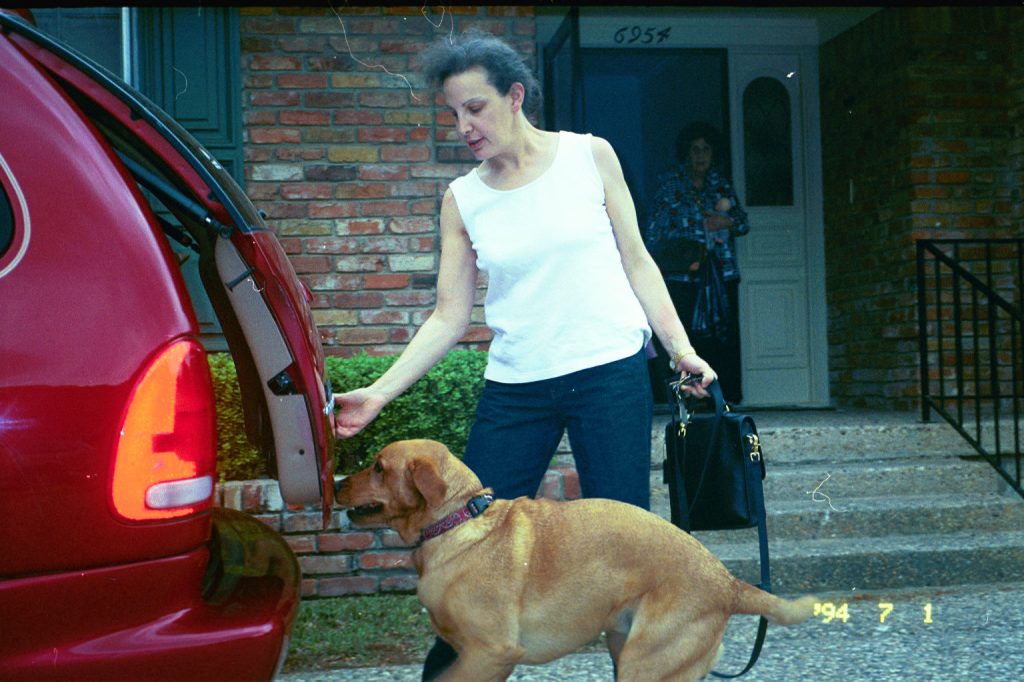
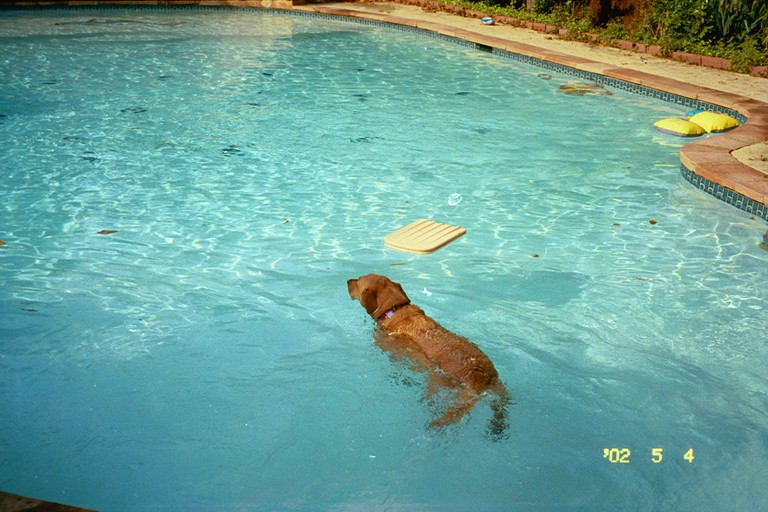
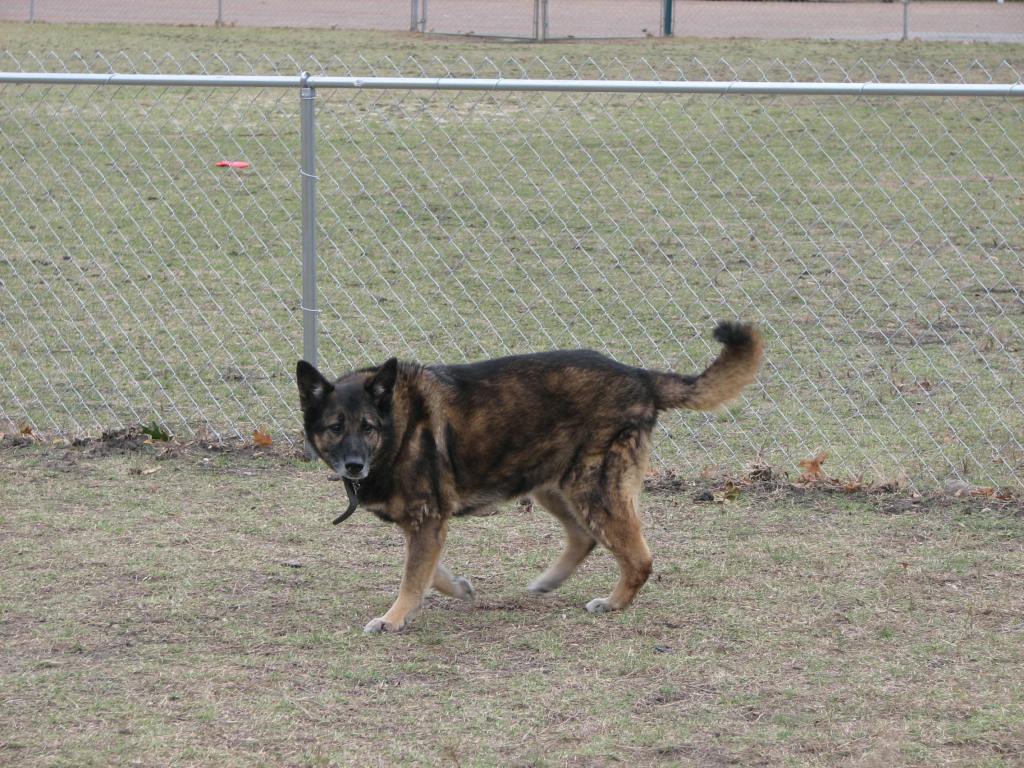
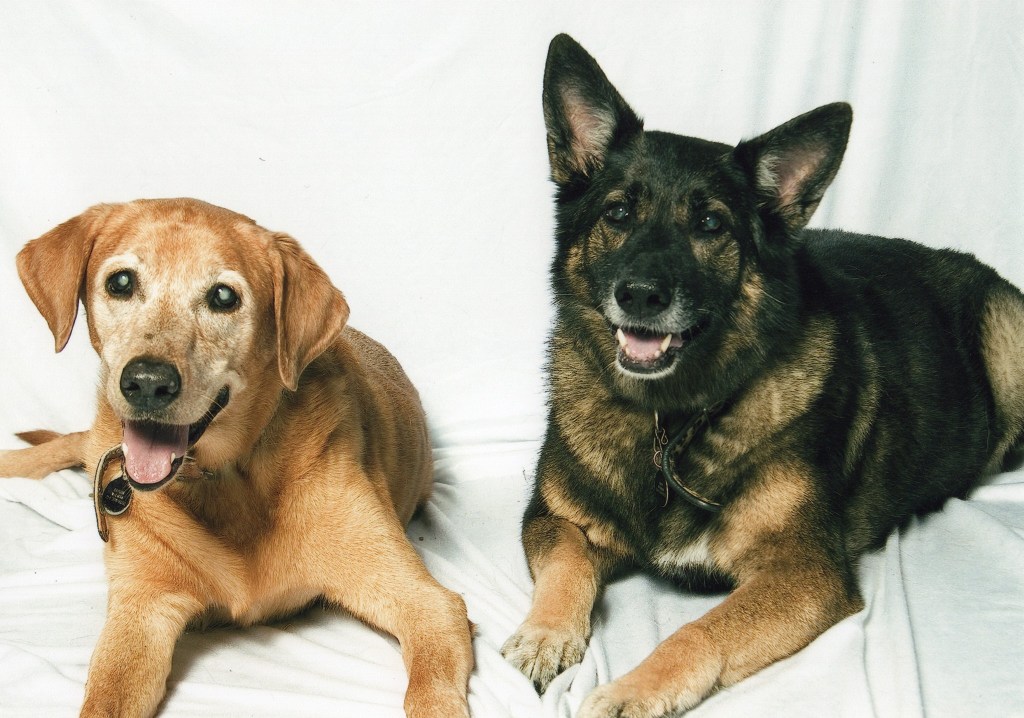
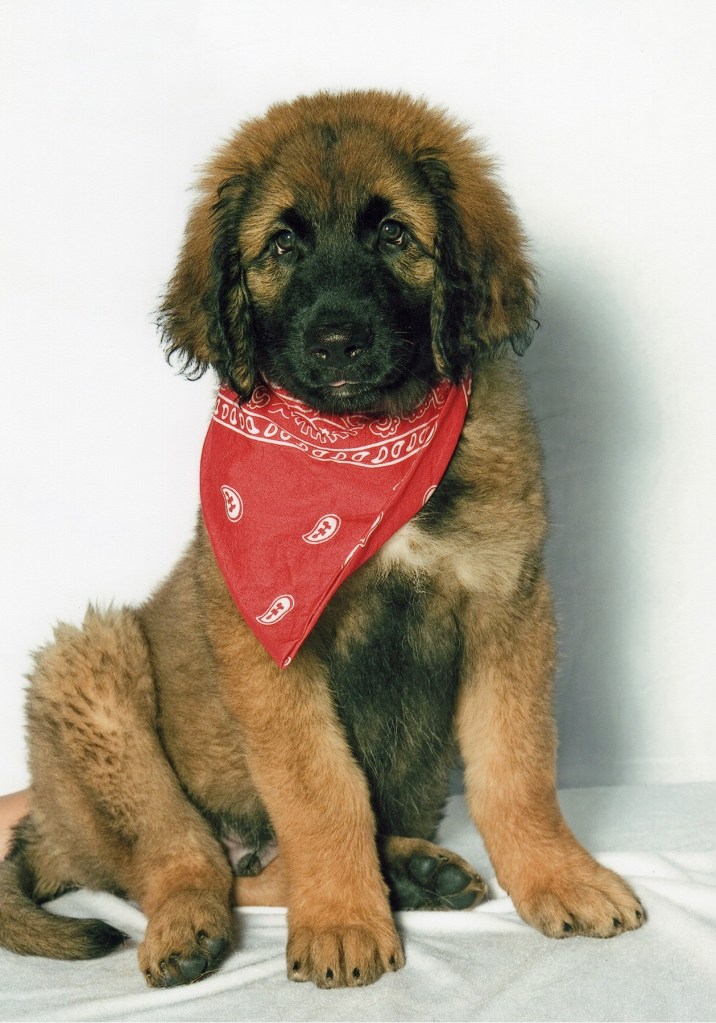
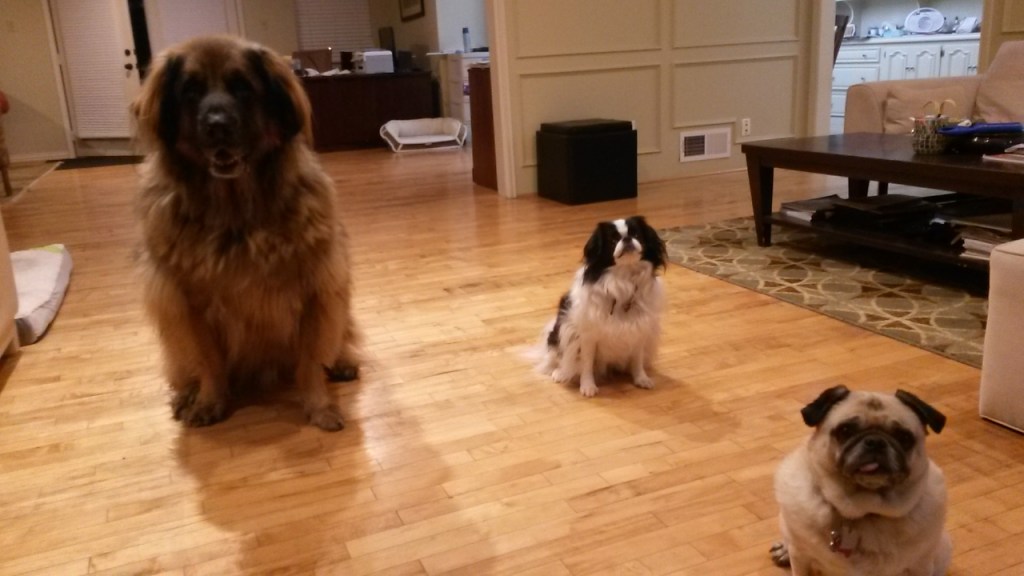
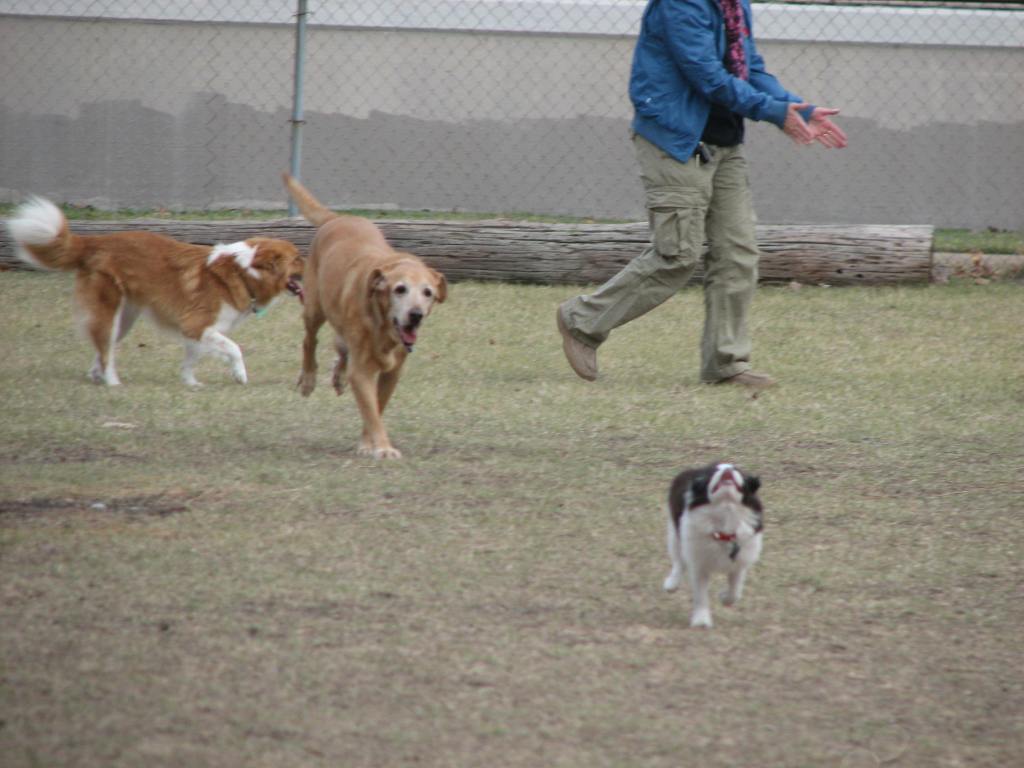
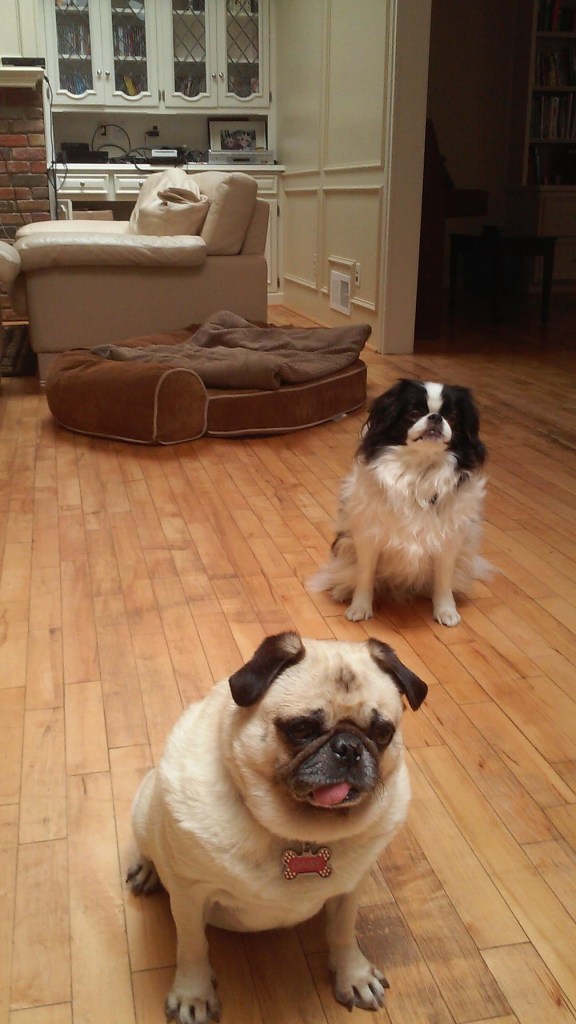
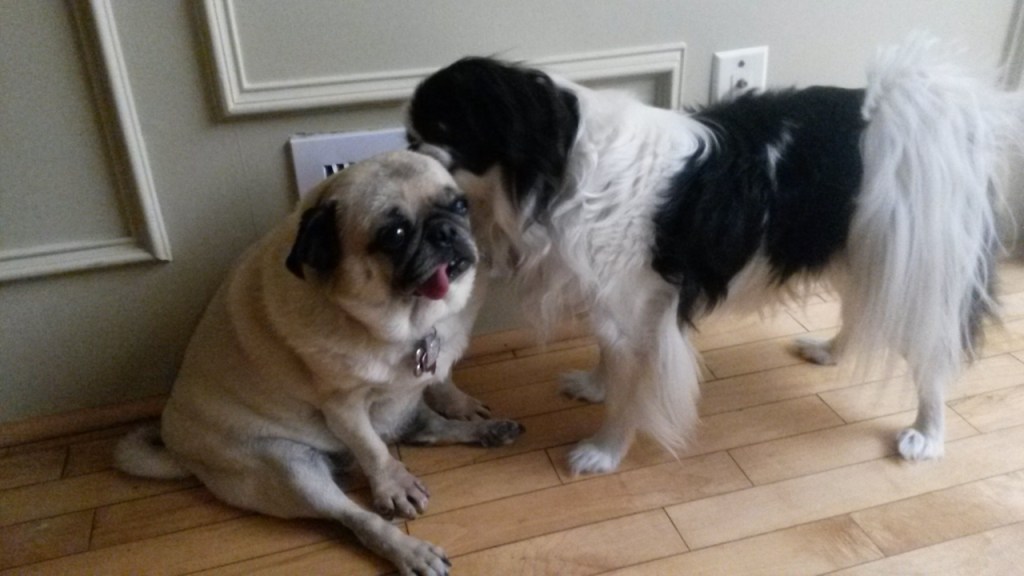
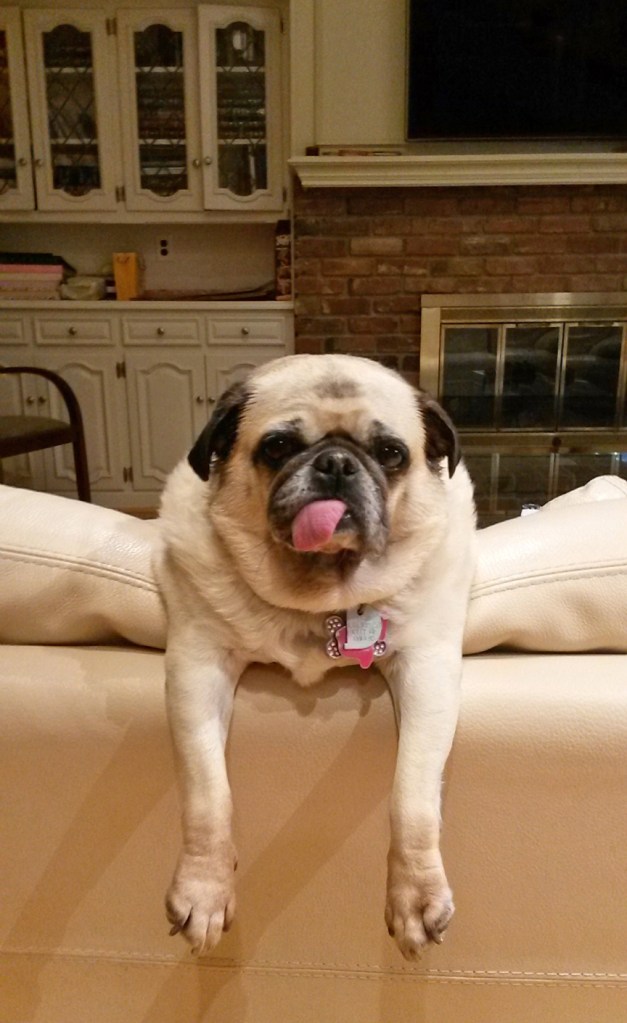
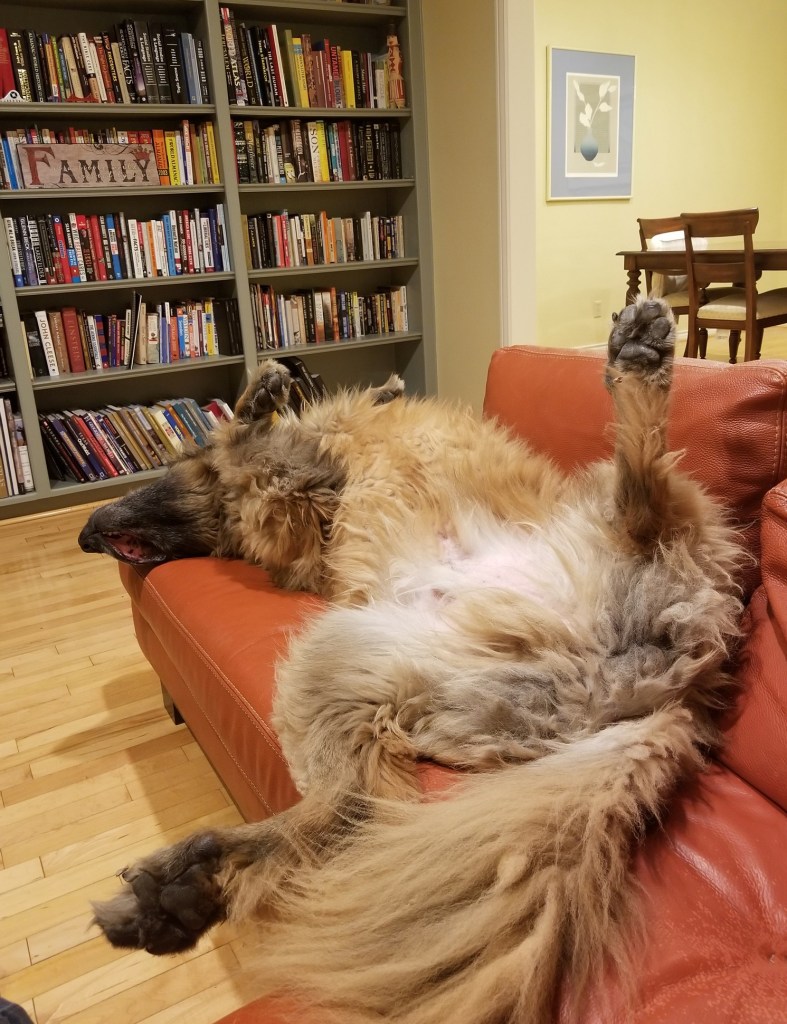
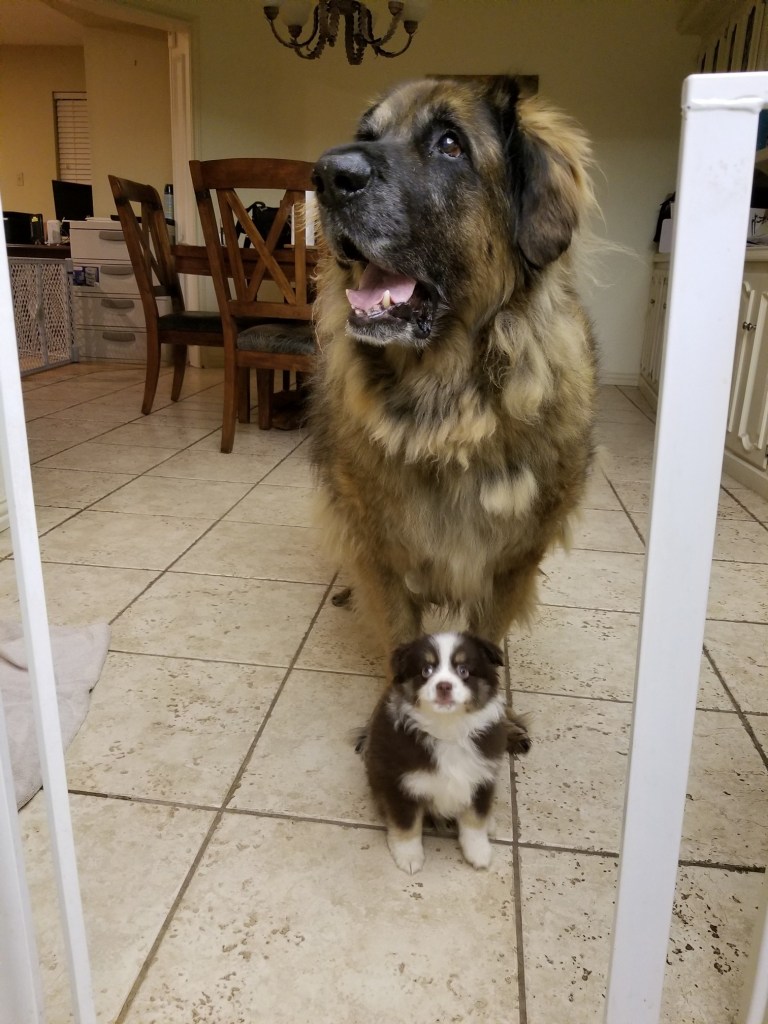
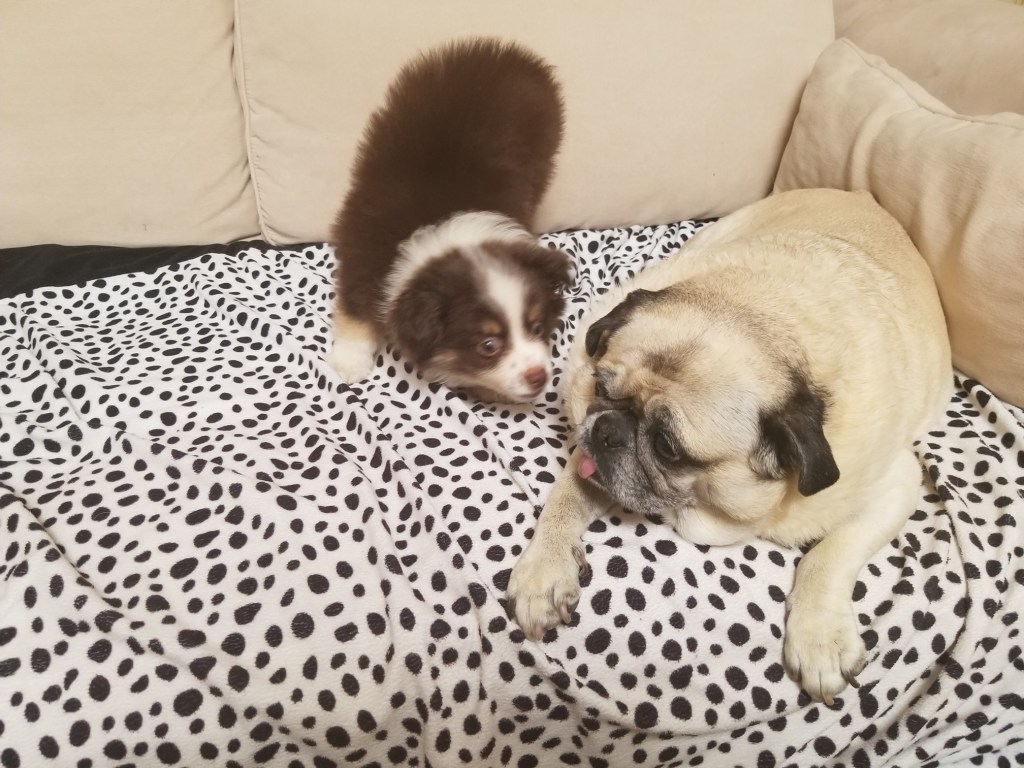
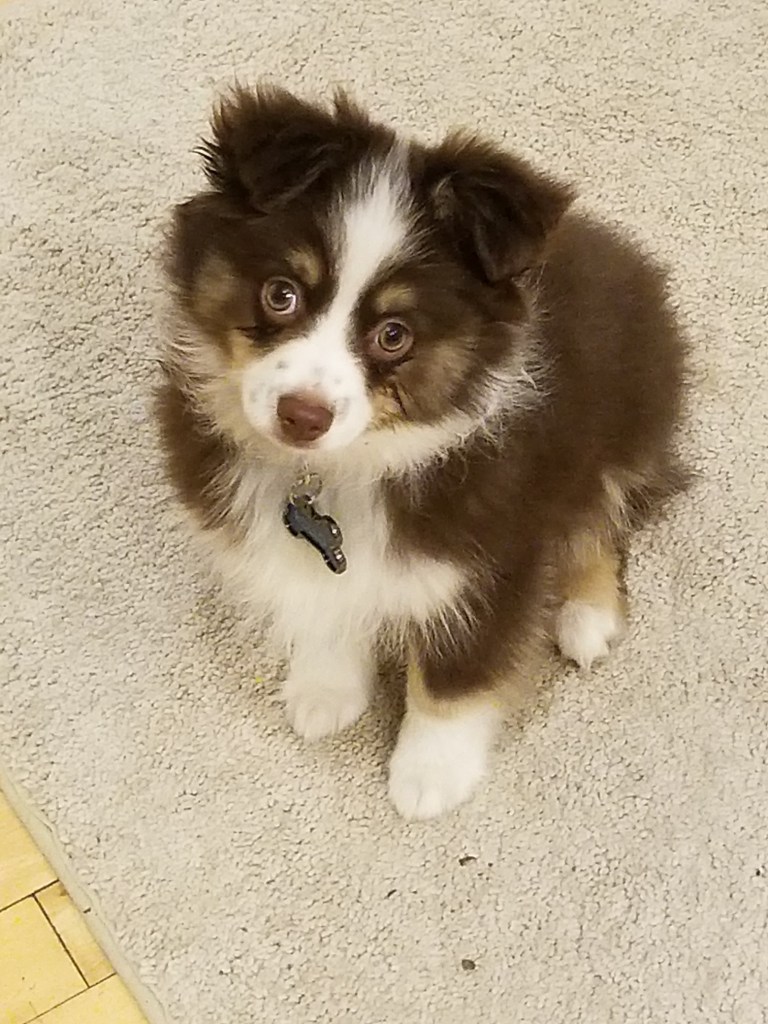
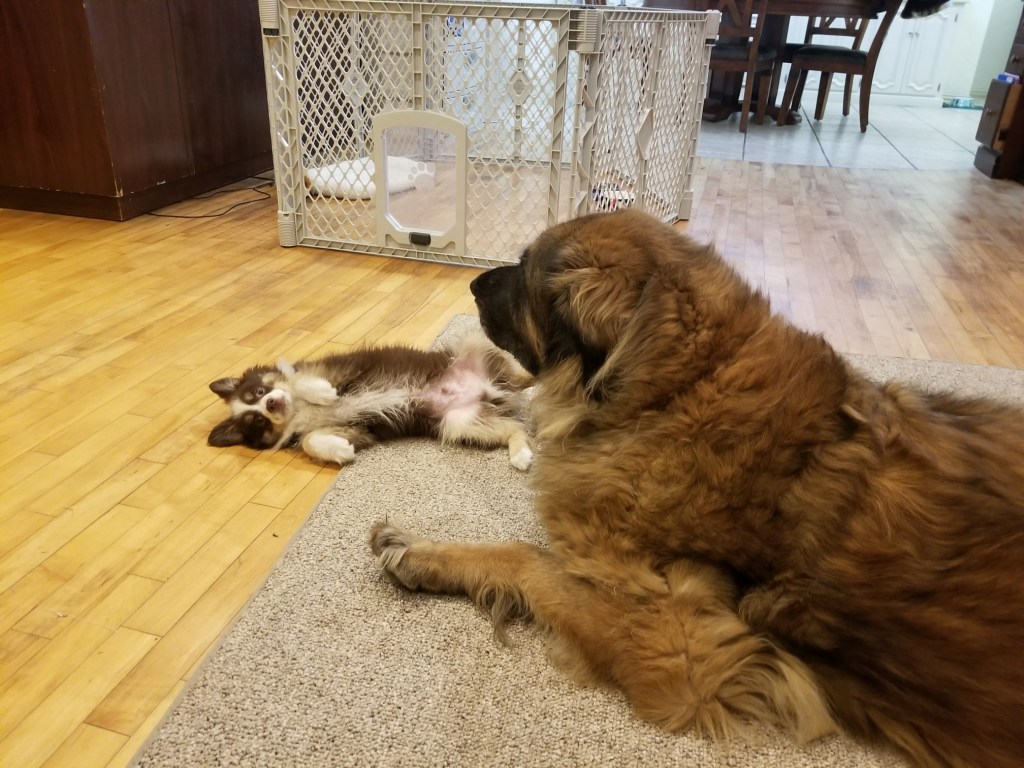
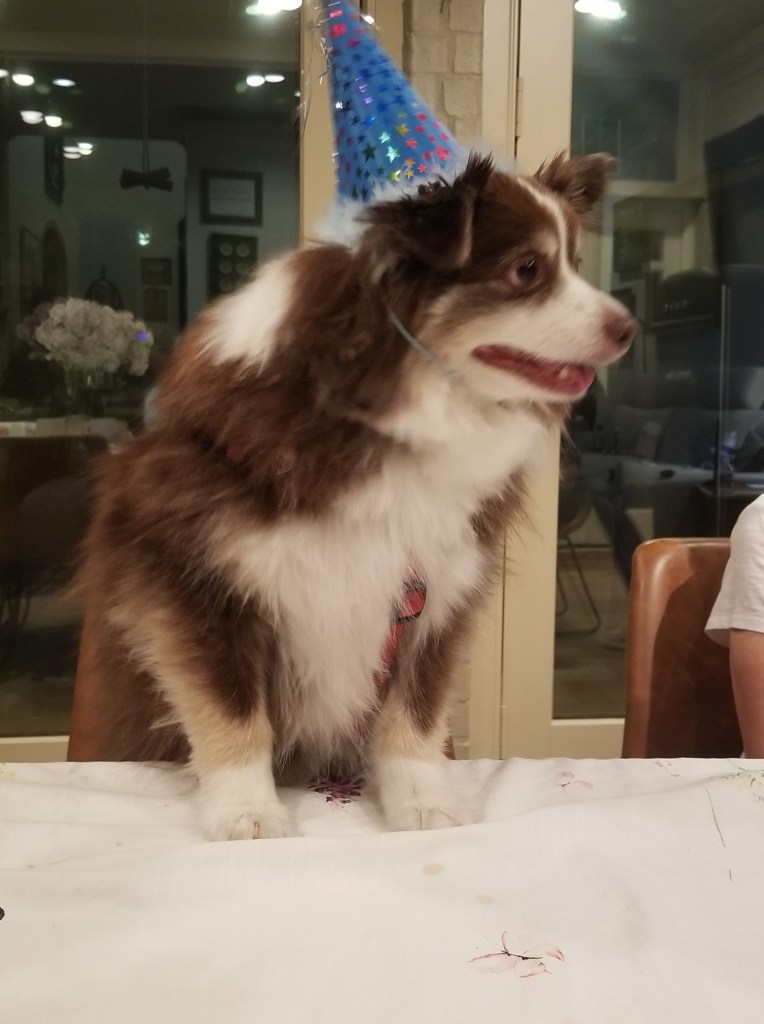
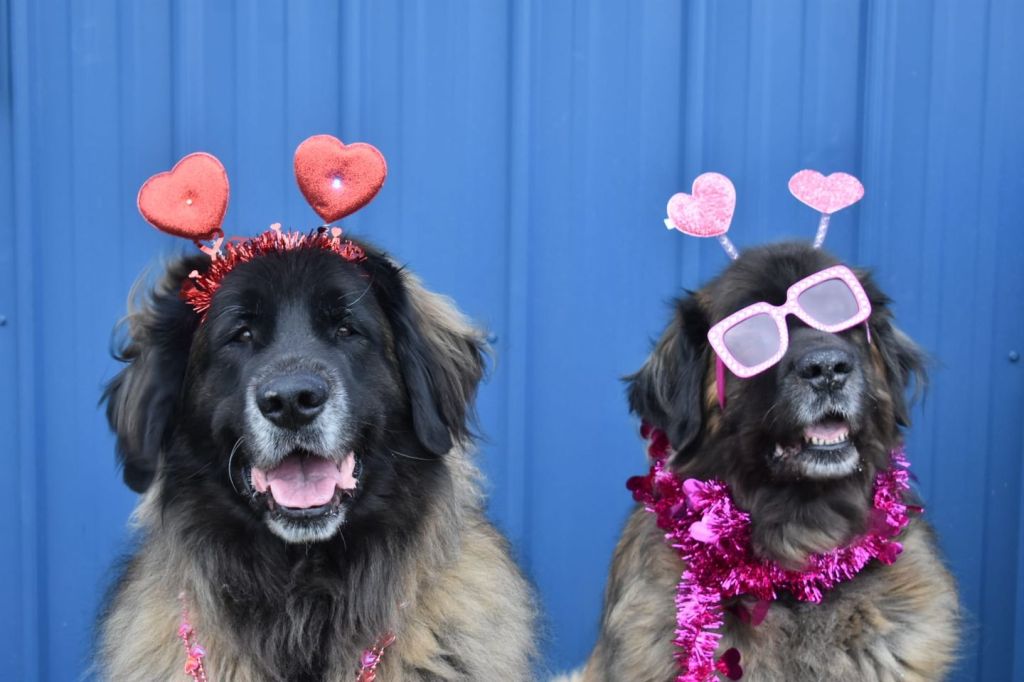
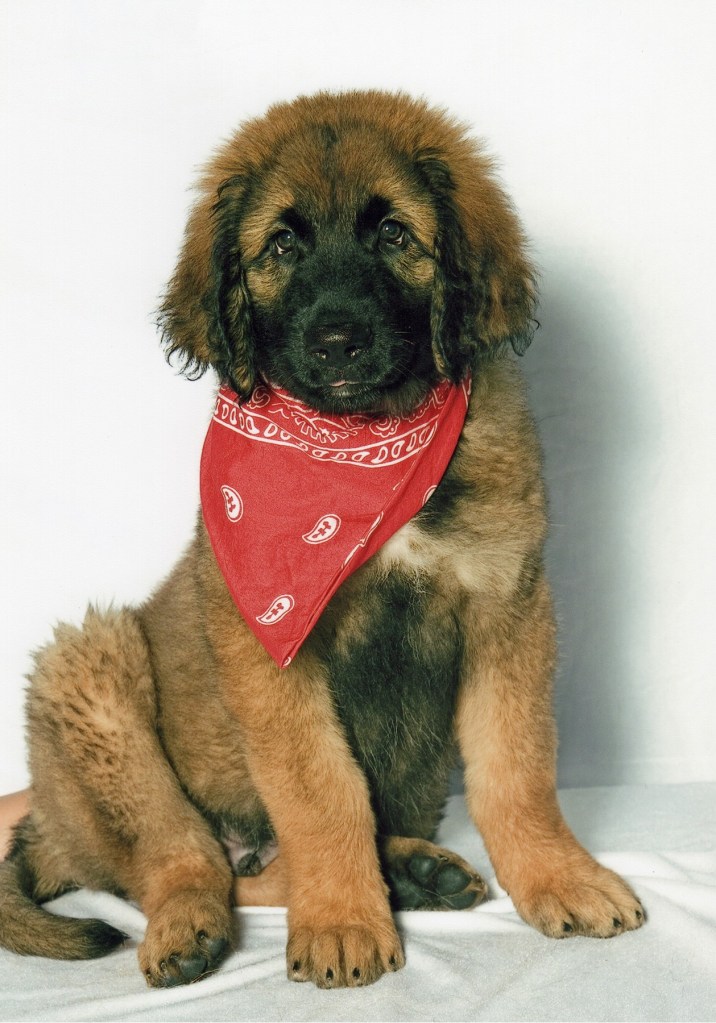
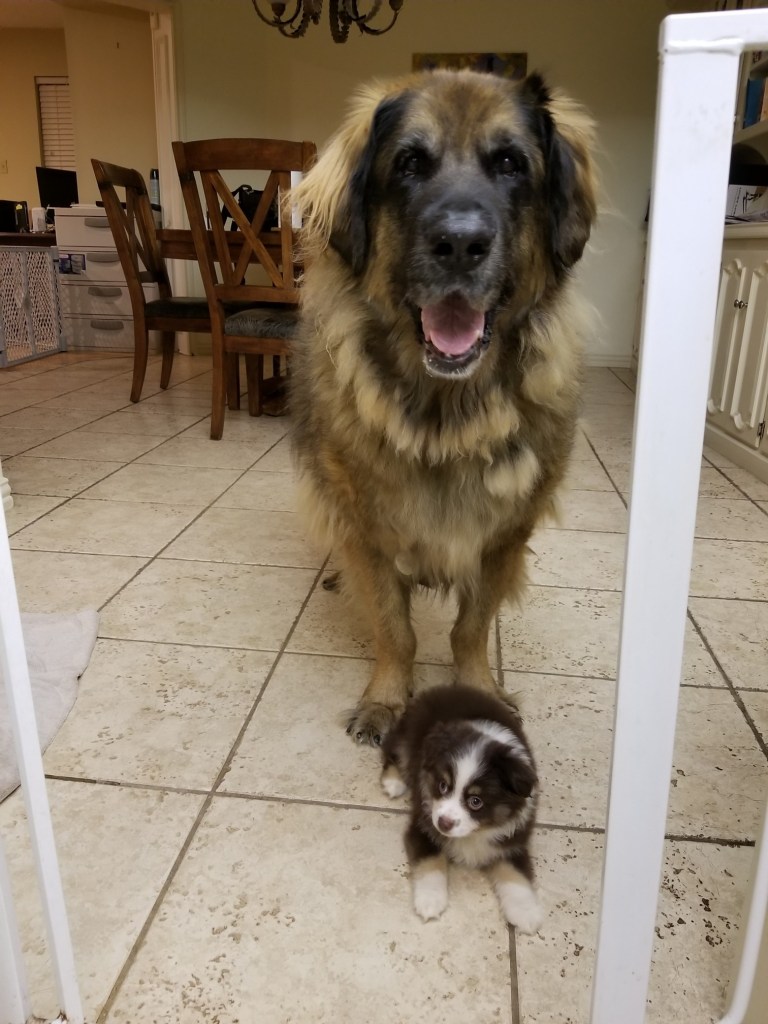
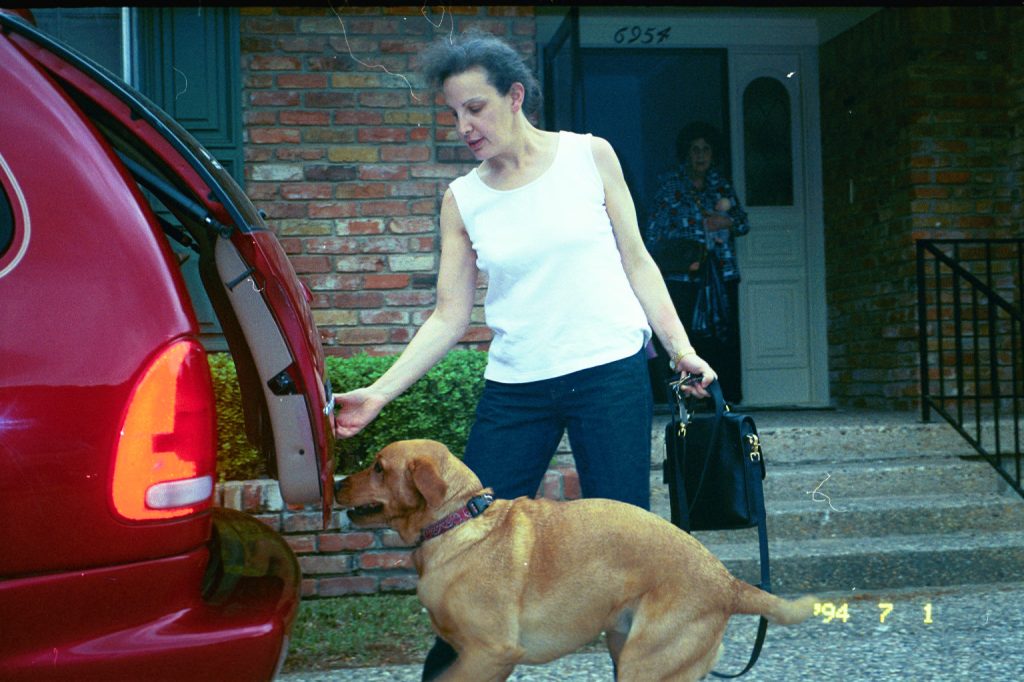
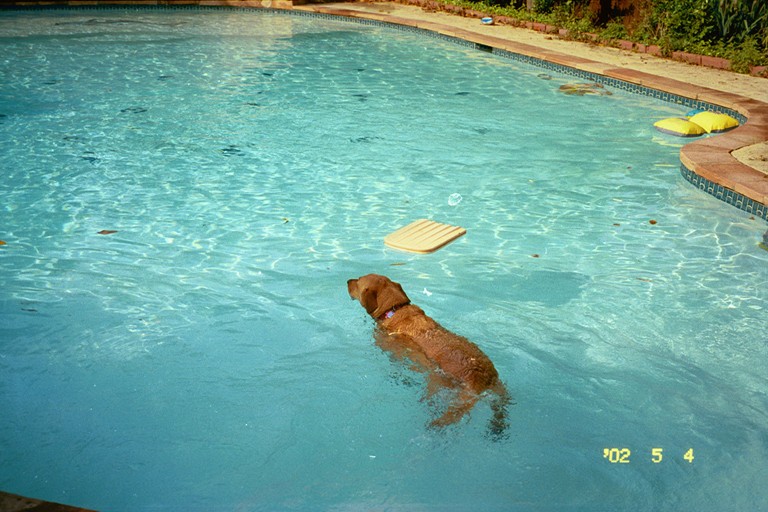
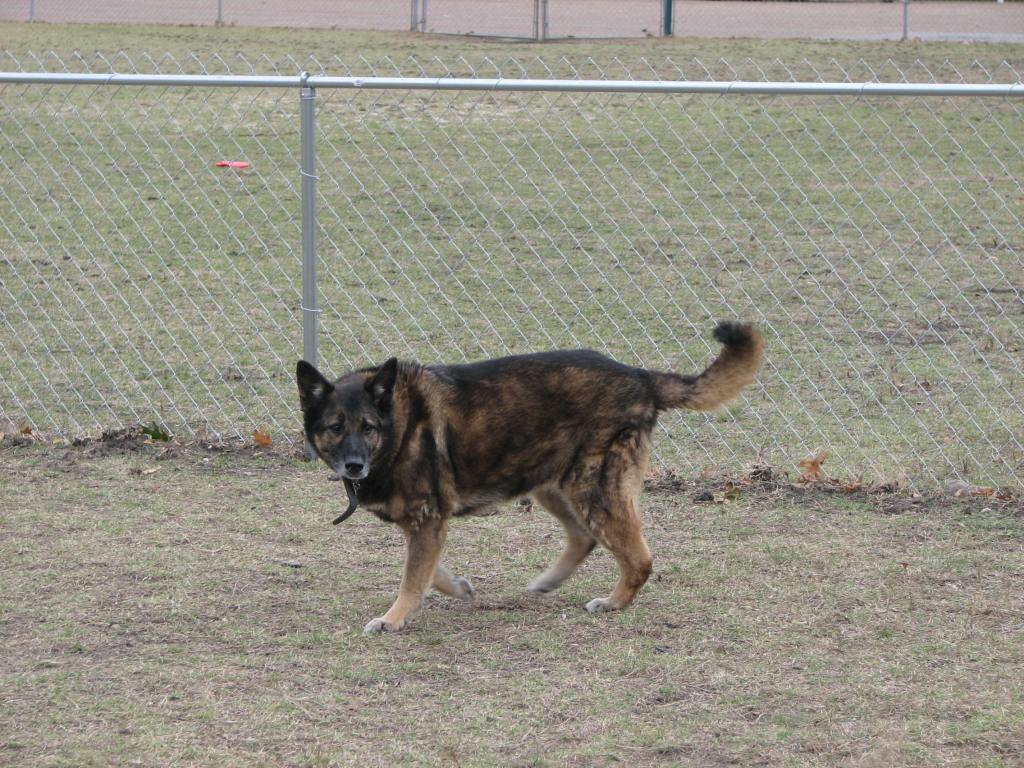
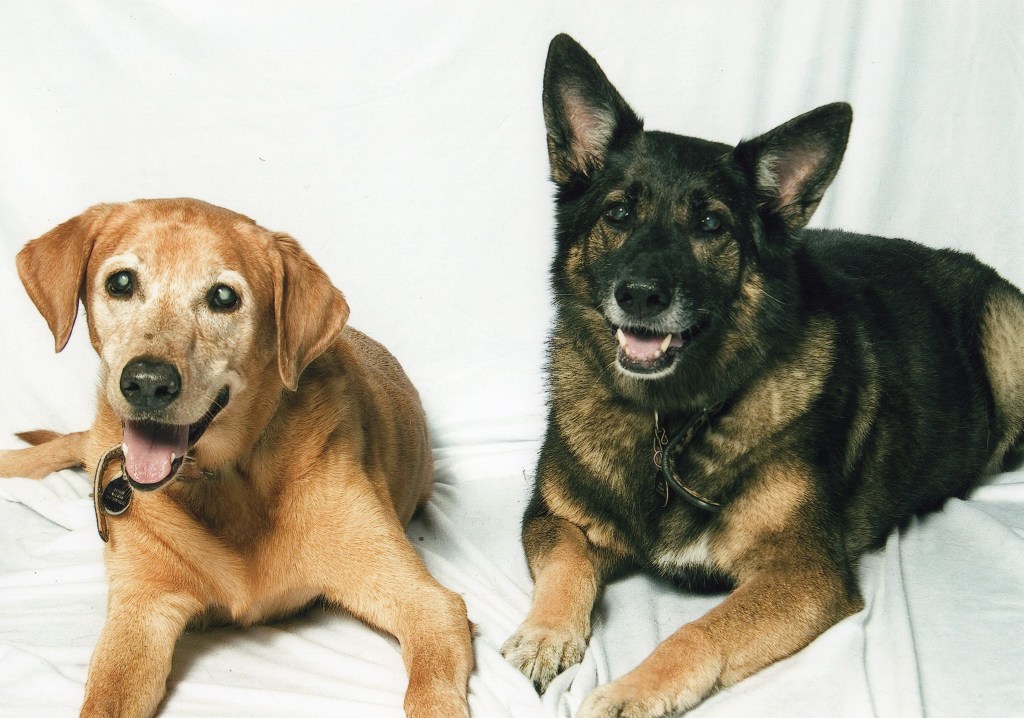
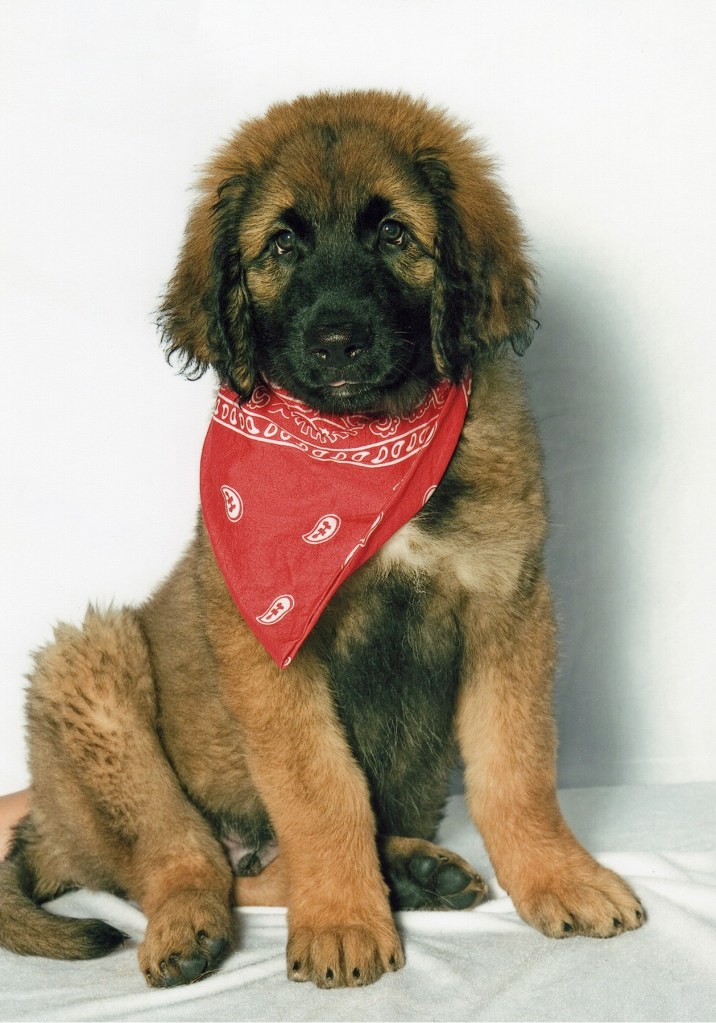
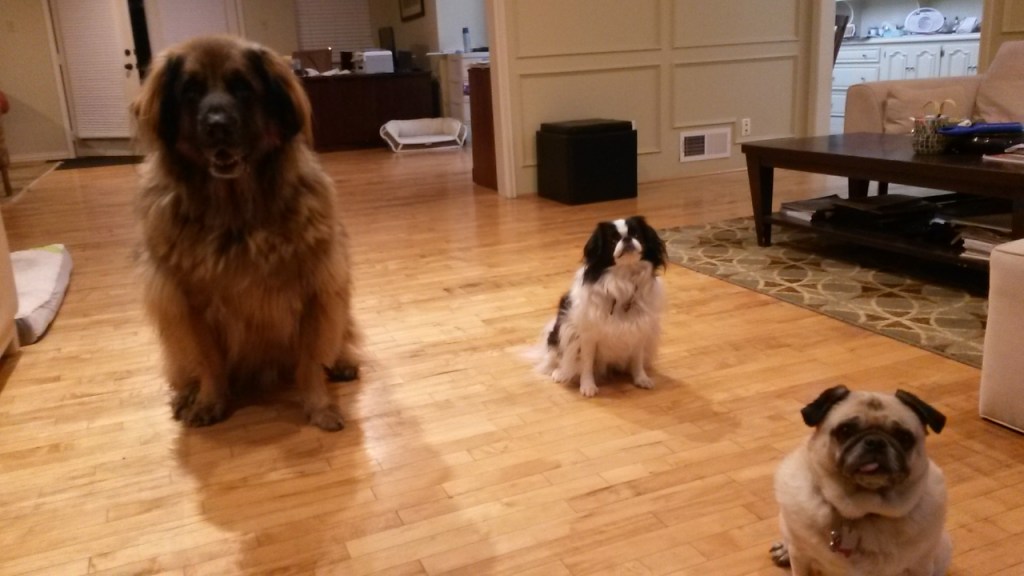
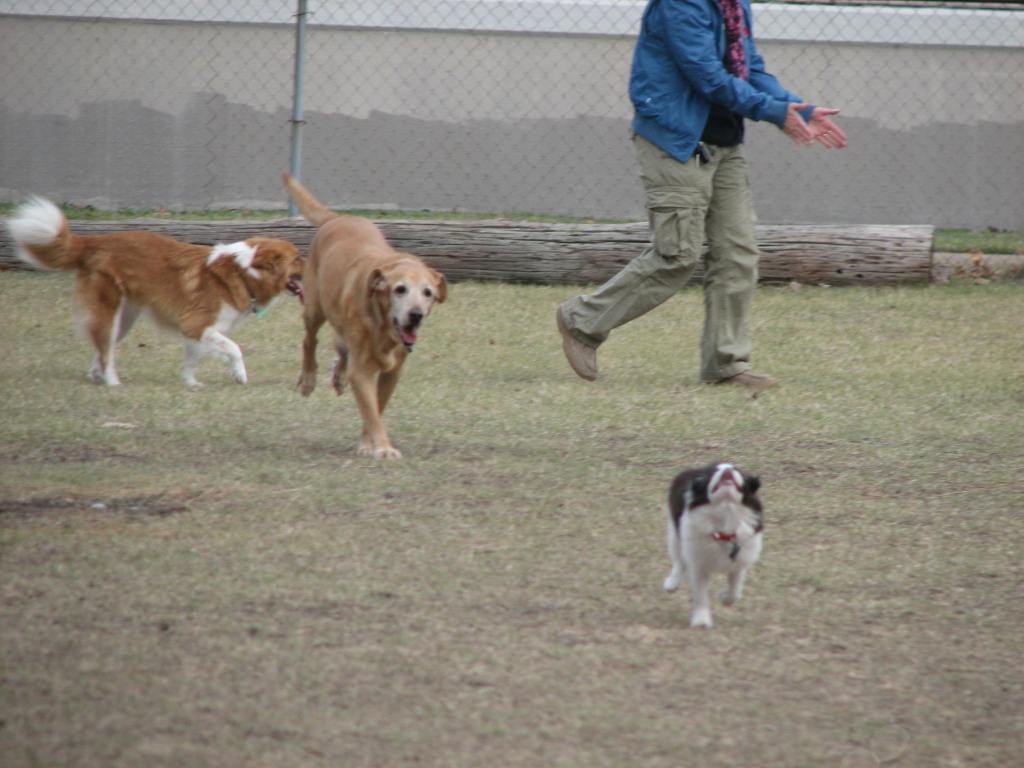
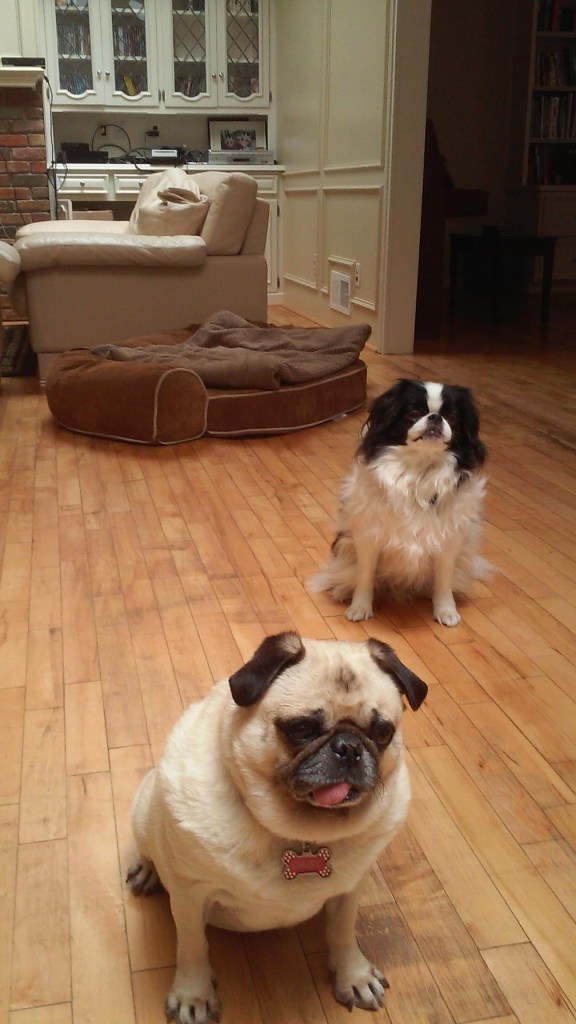
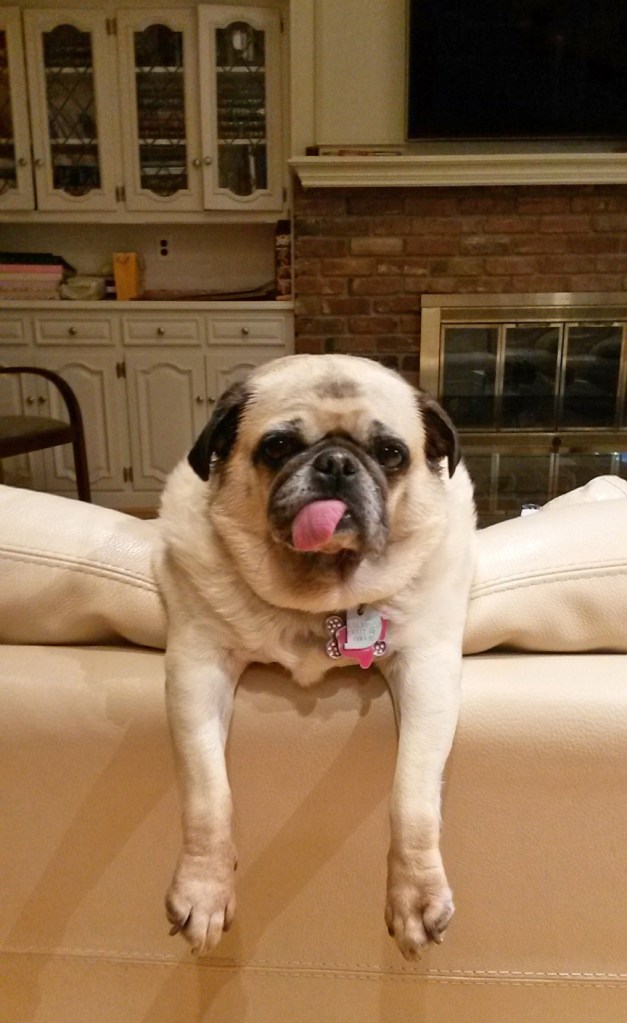
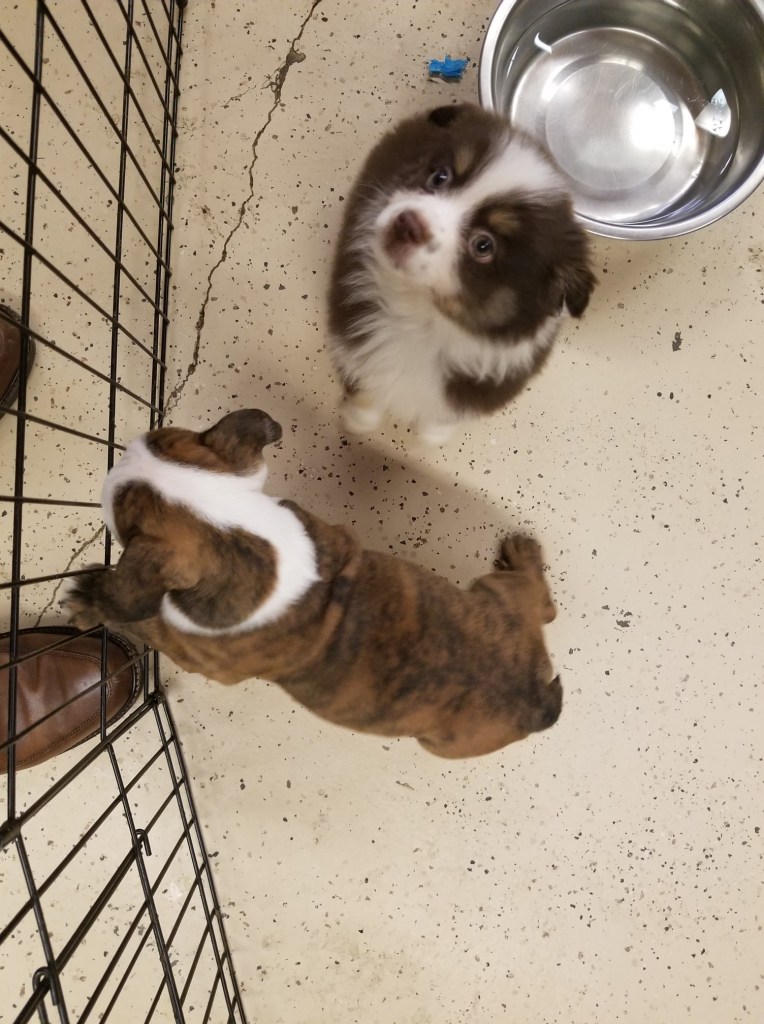
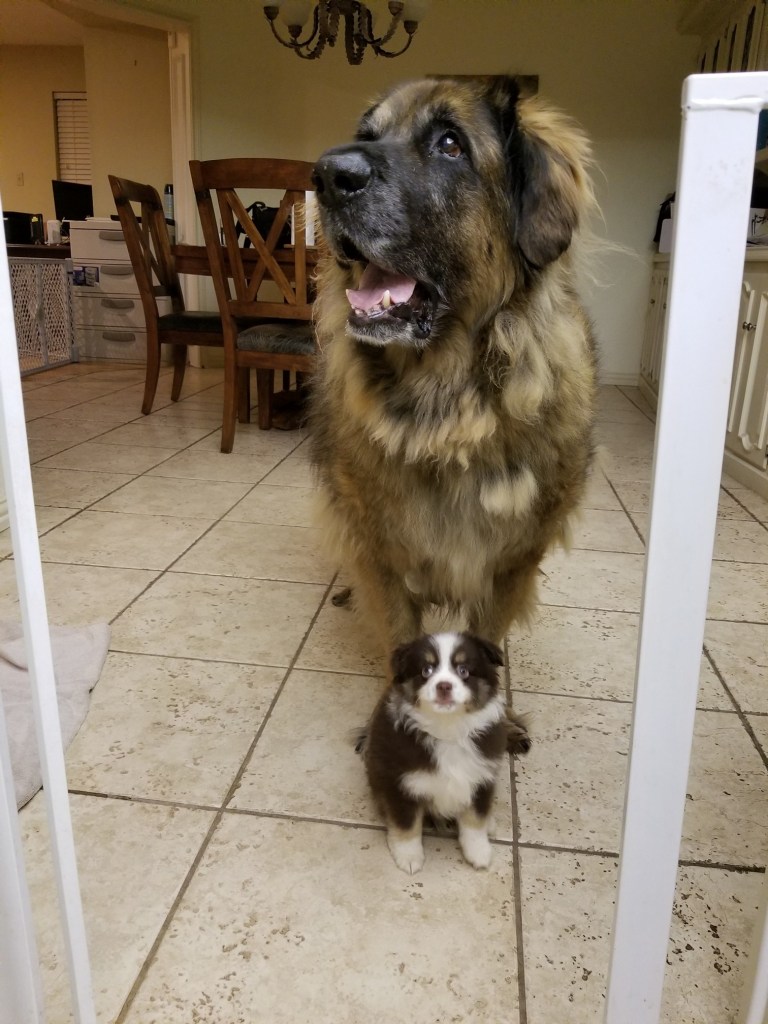
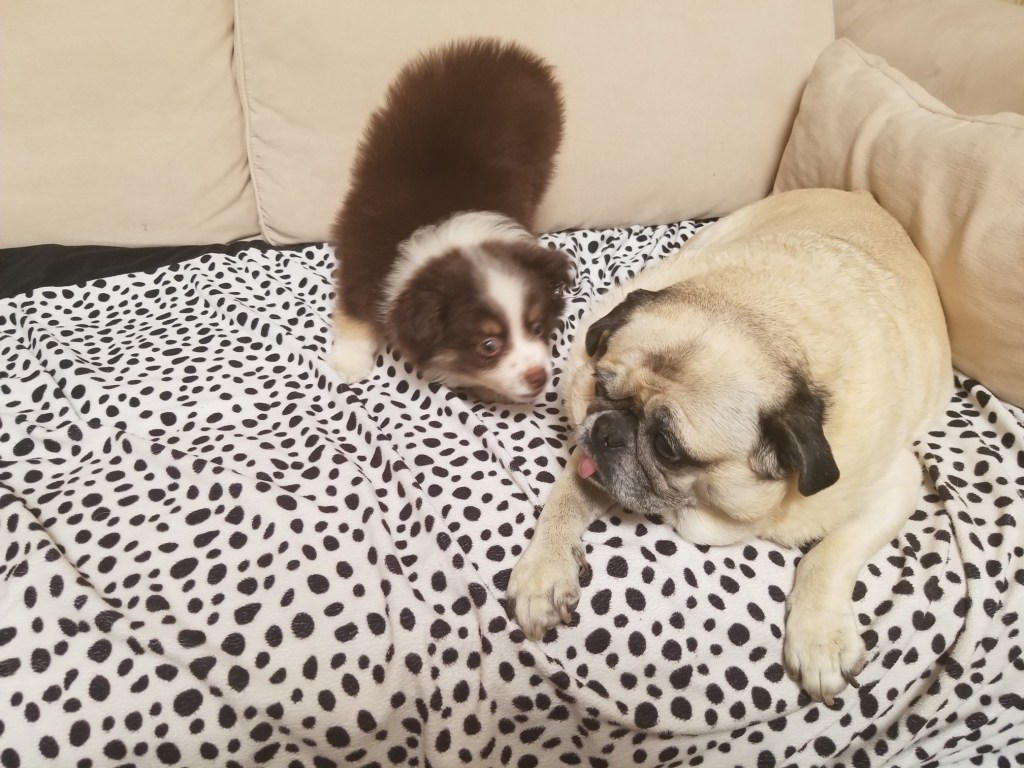
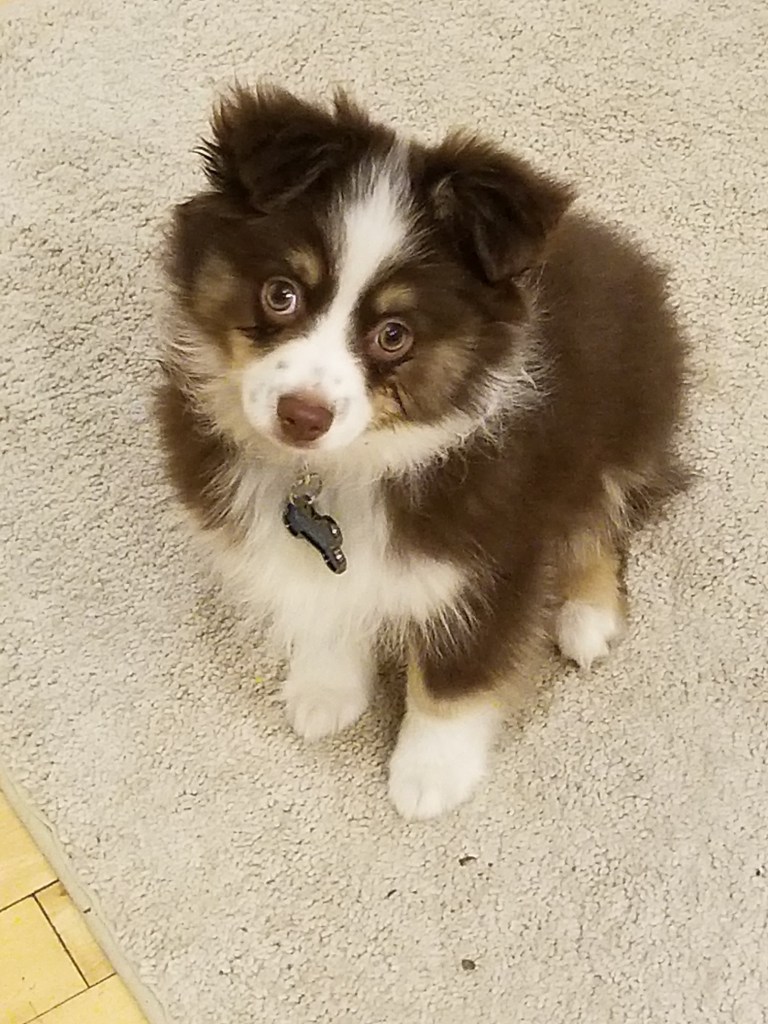
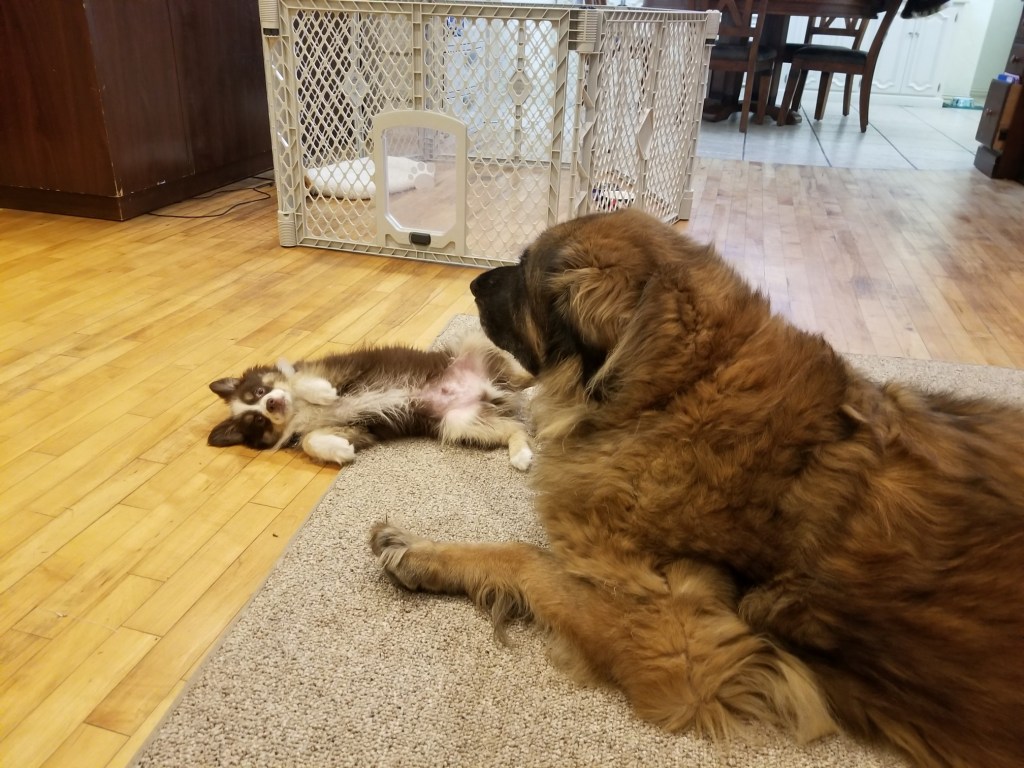
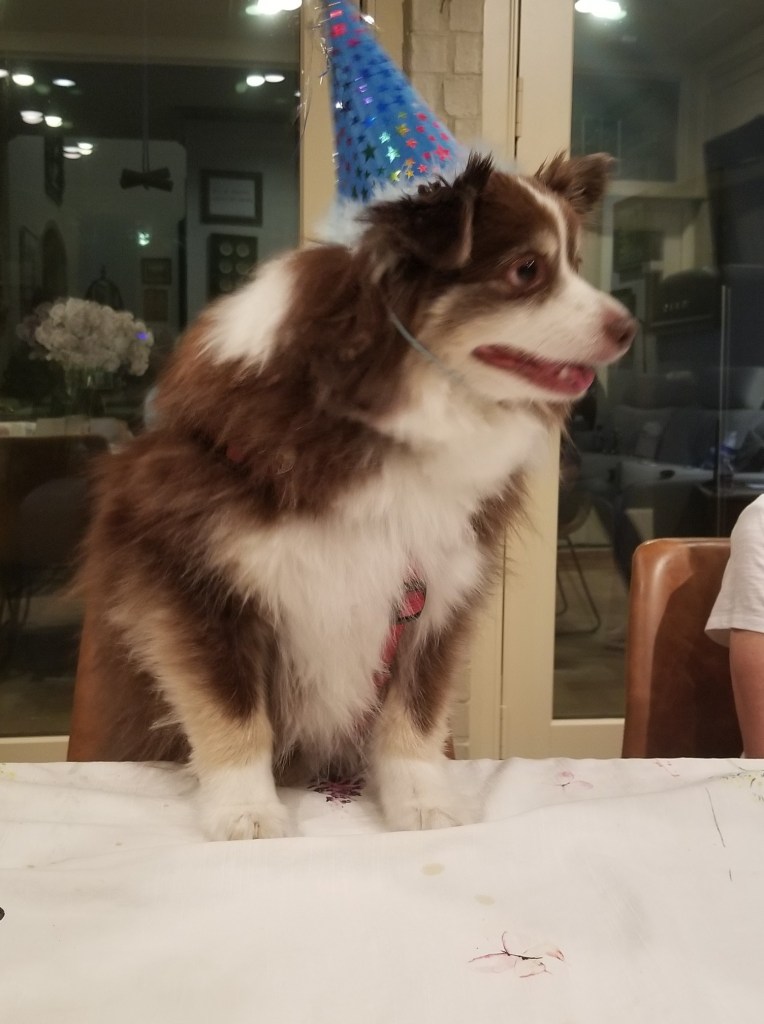
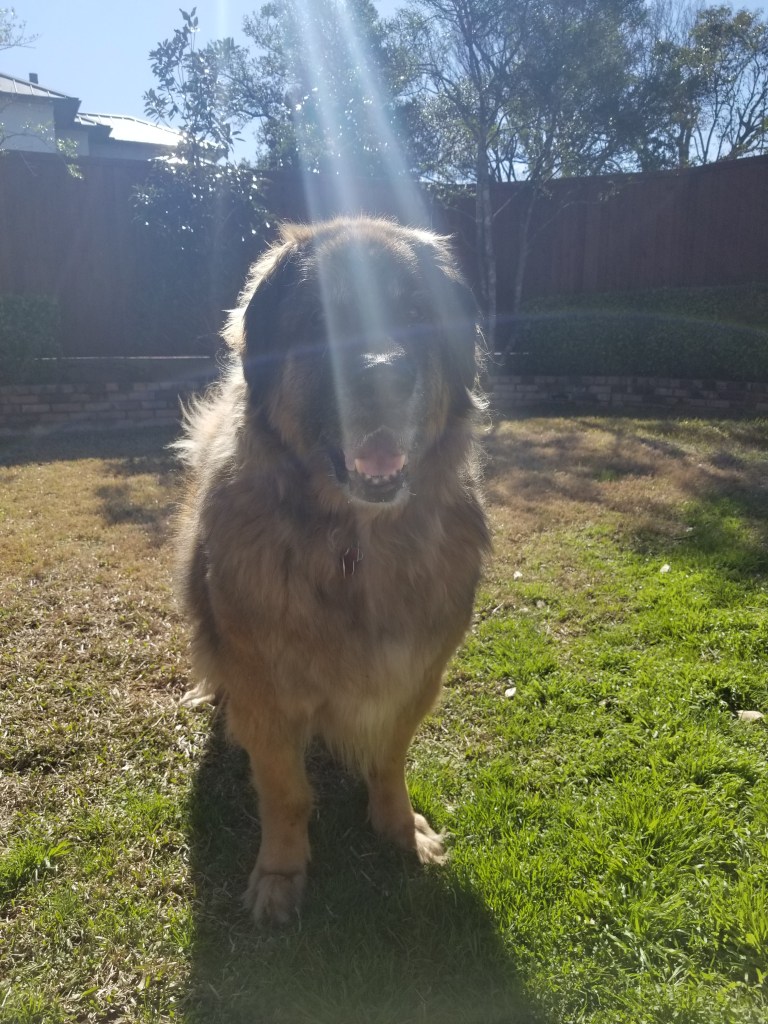
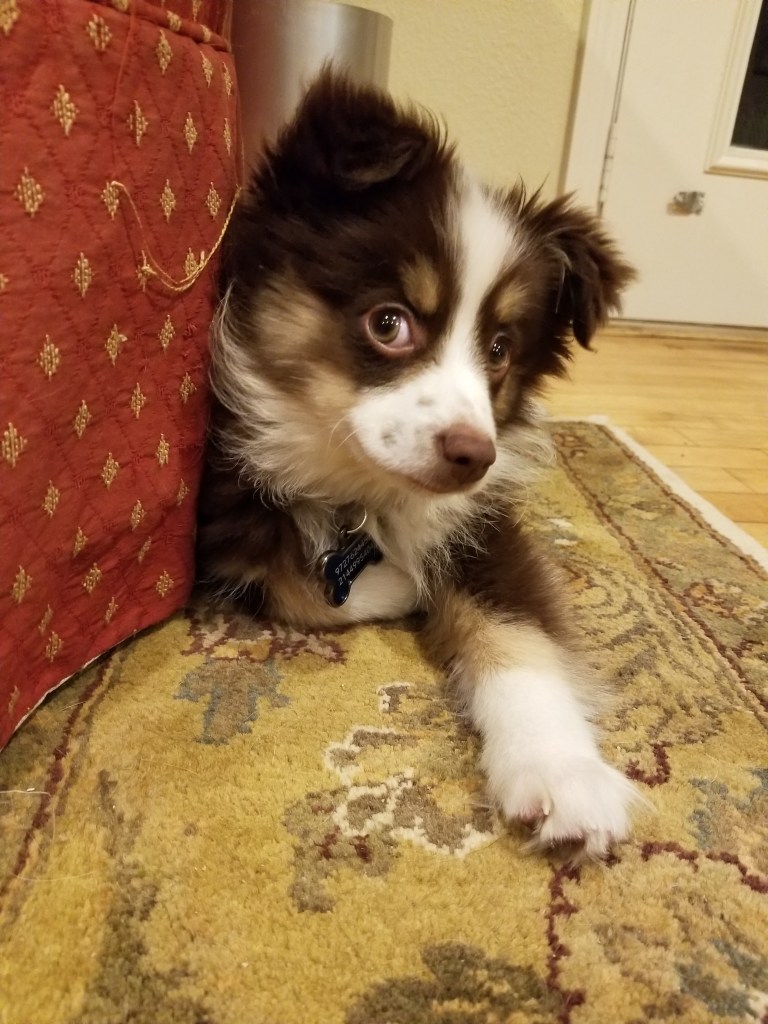
My wife Claudia and our first family dog the Labrador Baylor. This was back in the day. Our niece gave us Baylor because she was going to college. In turn she had gotten him from a shelter. He was a mix, one quarter Rhodesian Ridgeback and three quarters Yellow Labrador. He was able to jump up into the trunk of our van. Baylor was my first dog (not my wife’s first dog), and he taught me a lot about being a dog parent.Our Labrador Baylor is swimming in Claudia’s parents pool. He loved swimming, and he loved that pool and swam in it a lot.Our German Shepherd Baby at the dog park.Our Labrador Baylor and our German Shepherd Baby. Baylor was older in this picture. We had just gotten our Leonberger Bronco.This is our Leonberger Bronco (Le Bronco von der Löwenhöhle) at three months old.Bronco our Leonberger dog was a very affectionate dog.Our Leonberger Bronco (Le Bronco von der Löwenhöhle), our Japanese Chin Ryu, and our Pug Daisy in the front right.At the White Rock Lake dog park. Baylor our Labrador in the middle. He was old in this photo. Our Japanese Chin Ryu on the right.Our Pug Daisy and our Japanese Chin Ryu.Our Pug Daisy often sat in front of vents when she was cold. Daisy and our Japanese Chin Ryu were very close, like a couple. Daisy was obviously grieving when Ryu died, from cancer a bit early at only ten years old. Bronco was grieving as well.Daisy is exhausted after doing nothing for a whole day.Our Leonberger Bronco sleeping on our big red leather sofa.Our old Leonberger dog Bronco is coming up to me. Maybe it is dinner time.In December of 2018 we picked up our mini-Australian Shepherd Rollo. His friend was an English Bulldog.Our Leonberger Bronco is welcoming Rollo.Our pug Daisy and Rollo are saying hello.Our mini-Australian Shepherd puppy Rollo at 3 months old.Our mini-Australian Shepherd puppy Rollo and our Leonberger Bronco.Our mini-Australian Shepherd Rollo at the table on his seventh birthday. This is a more recent picture, from October of this year.Digory and Obi two old sweetheart Leonbergers sending all of your pets their love and sending all of you their love as well. Photo by Jen O’Keefe a friend.
Love Your Pets Every Day
Feel free to add links to your posts about pets in the comments. There is a maximum of two links per comment (how it is set up) so if you want to post many links you need to spread it out over many comments. I am late so don’t worry your comment being late. Any day is fine.
This is a photo of our Leonberger Bronco when he was three months old.Bronco our Leonberger dog was a very affectionate dog.Our Labrador Baylor and our German Shepherd Baby. Photo taken at the same time as the top photo above. However, we couldn’t get Bronco to sit still between Baylor and Baby.In this photo our Leonberger dog Bronco is eleven and a half years old, and we had acquired a new puppy, a mini-Australian Shepherd by the name Rollo.
One thing all our dogs loved was going for a car ride. The big dogs loved sticking their heads out the window and feeling the wind in their faces. The little dogs loved going places. And they all loved looking at the passing scenery. Oh, the things you can see when you’re “ridin’ in the car, car,” as the Woody Guthrie song goes!
There were some sights that got the dogs especially excited. They would bark if they saw people working on roofs or riding bicycles, for example. They would become even more animated if we got close to a dog park or a McDonald’s drive-through window. (That might have been because sometimes we bought them snacks at the McDonald’s drive-through.)
One time when I was taking Bronco, Baylor, and Baby to the dog park, a car passing me slowed down and started driving right next to me. I looked over, slightly annoyed, and saw that the people in the car were pointing at us and laughing. I was thinking, “What is their problem?” Then I glanced back at the dogs and realized that we did look funny. Bronco was sitting in the front passenger seat with his head close to the roof, looking majestic. Baylor and Baby were sitting in their own seats in the back. They probably looked like human passengers from a distance, but as the people in the car got closer, they realized that the heads weren’t human heads but dogs’ heads and burst out laughing.
I can add that most of the time we put the dogs in the back of our van or SUV but since they preferred to sit on a seat like humans do, we started letting them sit on the seats. If you let them sit on the seats you need to attach them to the car seat latch using dog safety restraint (dog seat belt). Sometimes, the dogs wanted to drive but it is difficult to get a driver license for a dog in Texas. In the picture below Rollo did not really drive the car. I used that photo for an April 1st joke.
Our mini-Australian Shepherd Rollo is driving a car. He is coming back from a visit to grandma and grandpa.
From Pete Springer (see comments) I got this YouTube video featuring 13 funny and cute Subaru commericals showing dogs driving cars.
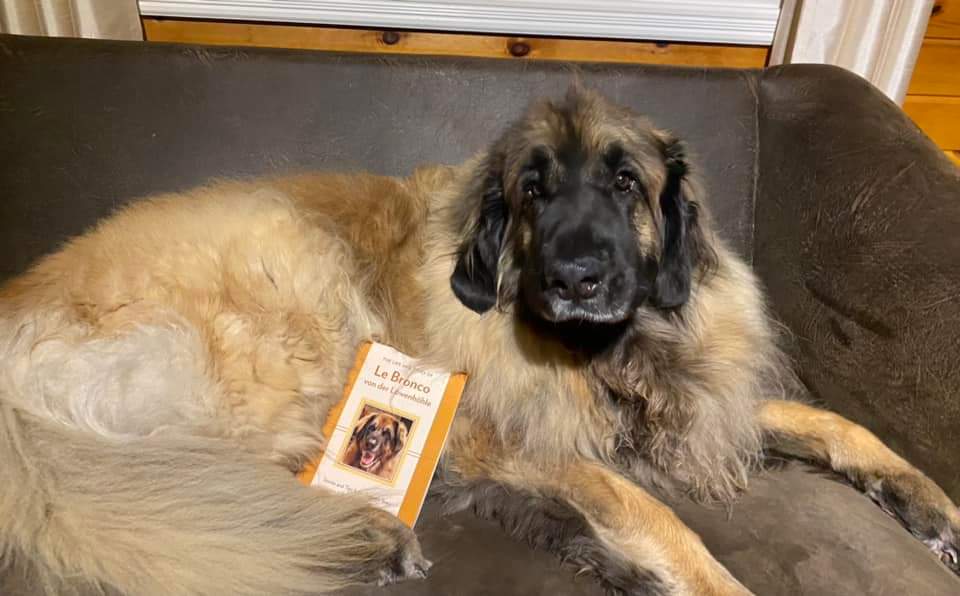
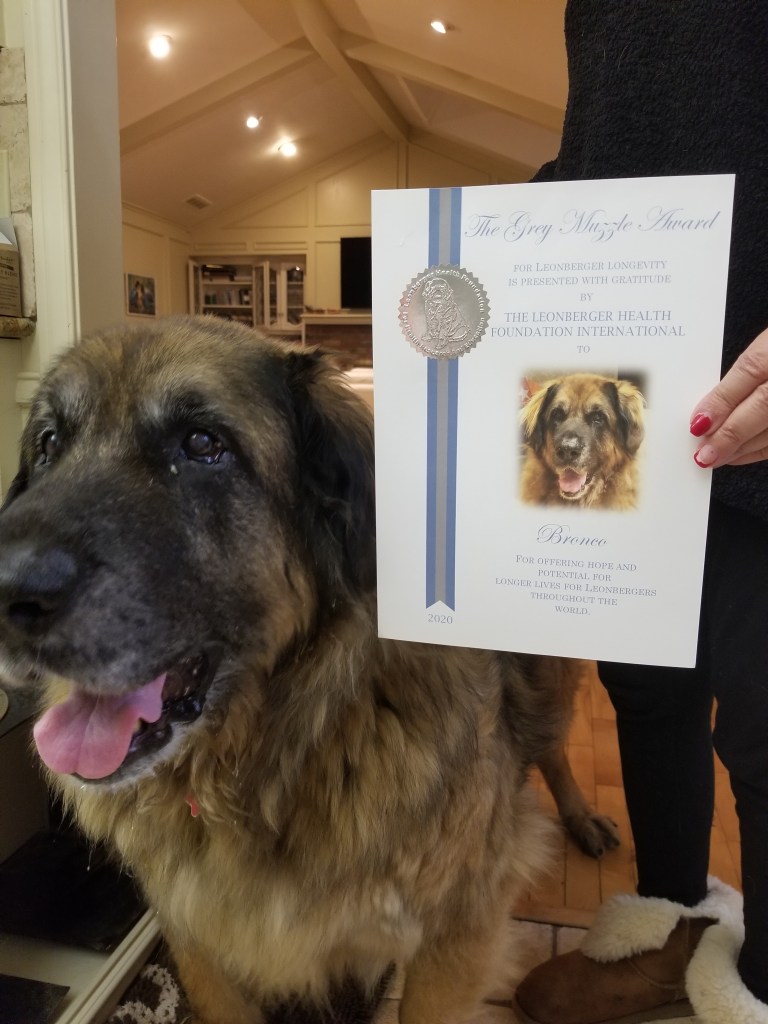
An old Canadian Leonberger called Mak with my book The Life and Times of Le Bronco von der Löwenhöhle. Photo by Debbie Ireland.Like most very large dogs Leonbergers don’t live very long. Our Leonberger Bronco got his Grey-Muzzle award from the Leonberger Health Foundation International for reaching the age of 12 years old and thus giving hope for a longer life to all Leonbergers.
This is a guest post written by Ryan Goodchild. He emailed me asking me if he could publish this post regarding caring for aging Leonberger. I said yes. I am very grateful to Ryan for his contribution. I added the photos. See his post below.
Caring for Aging Leonbergers: Gentle Stewardship for a Noble Breed
Leonbergers are among the most majestic of dogs, gentle giants with deep eyes and a noble temperament. Yet as they age, their impressive size can make the journey into senior years more complex. Providing attentive, structured care can extend both their lifespan and their sense of ease.
Key Takeways
Large breeds like Leonbergers face an earlier onset of joint and heart issues; early detection matters.
Routine, low-impact exercise sustains mobility without strain.
Dietary adjustments can prevent unnecessary weight gain and inflammation.
Organized health tracking improves coordination with veterinarians.
Emotional stability and routine help aging Leonbergers thrive.
Bronco our Leonberger dog is taking a rest during a walk. He is twelve and a half years old.
Movement, Moderation, and Mindful Play
As Leonbergers age, mobility becomes one of the first visible signs of change. These dogs are stoic by nature, and they’ll often mask discomfort until it’s advanced. Structured daily activity, rather than long or sporadic walks, helps maintain joint lubrication and muscle tone. Before implementing the list below, remember: consistency outperforms intensity in senior dogs.
Short, frequent walks instead of long treks
Gentle swimming or hydrotherapy to maintain strength
Orthopedic support beds to reduce pressure on hips
Warm-ups and cool-downs before and after activity
Avoid stairs and slippery floors
Our Leonberger Bronco taking a resting in the grass in our backyard.
The Nutrition Shift: Balancing Strength and Weight
Proper nutrition is the most controllable lever for supporting your Leonberger’s aging body. Senior diets should favor lean protein, omega fatty acids, and joint-supportive ingredients like glucosamine and chondroitin. Maintaining a stable weight relieves stress on the joints and heart, critical in large breeds prone to orthopedic and cardiac issues.
Before introducing supplements or new foods, ask your vet for metabolic screening. Senior metabolism slows down, and caloric needs can drop by 20–30%.
Our old Leonberger dog Bronco is coming up to me. Maybe it is dinner time.
Organized Health Tracking for Long-Term Comfort
Keeping your Leonberger’s medical and health information in one place transforms how you coordinate care, especially across multiple veterinarians or specialists. When you can easily review past test results, medication schedules, or dietary shifts, you reduce oversight risks and improve continuity of care. Centralized documentation also helps detect subtle changes over time, like gradual increases in kidney markers or weight fluctuations.
For this reason, an online PDF platform like this is worth a look.It offers practical tools to manage your pet’s documents in PDF form, and you can even convert, compress, edit, rotate, or reorder files. Keeping your records as PDFs ensures they’re universally accessible and easily shareable with any vet clinic.
Old Leonberger. Notice the gray muzzle. Stock Photo ID: 1844035084 by Daniel Lesk.
Create a Home Environment That Supports Aging
Leonbergers are emotional creatures, they notice routine disruptions and physical discomforts more than we realize. Making environmental adjustments will enhance both safety and serenity. Here’s a simple how-to checklist to start with:
➢ Schedule consistent feeding, exercise, and sleep times.
➢ Install nonslip rugs or mats along walking paths.
➢ Keep water bowls elevated to reduce neck strain.
➢ Adjust room temperatures; older dogs chill more easily.
➢Use gentle lighting to help those with fading vision.
➢ Offer mental enrichment through scent games or puzzle toys.
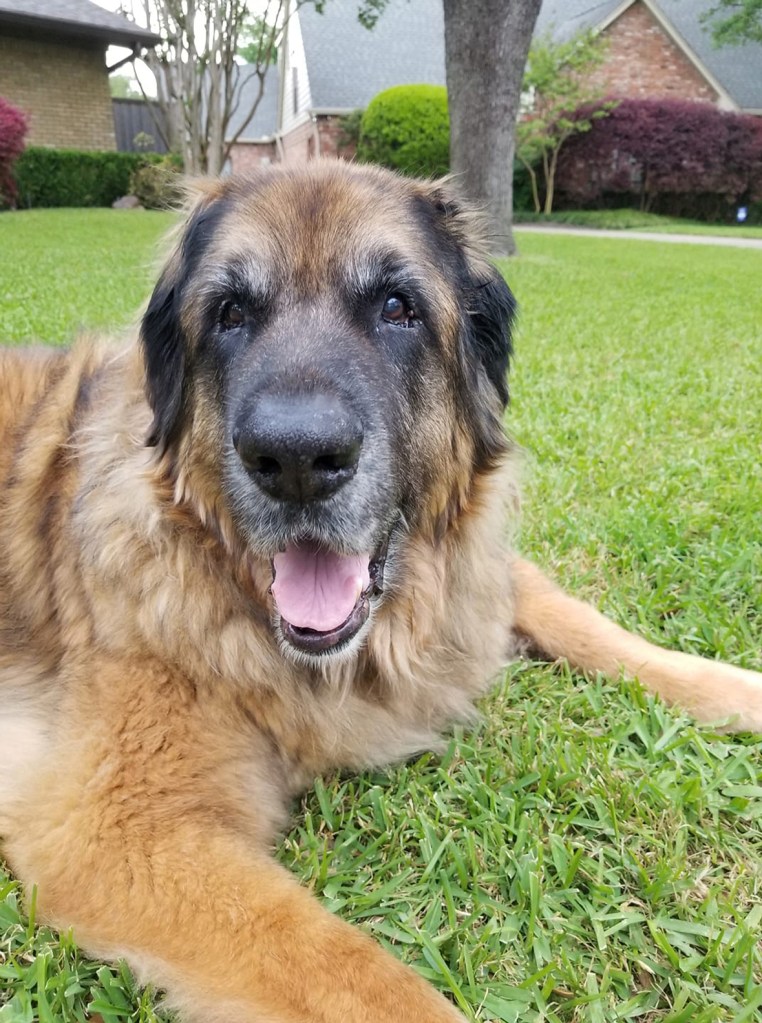
Digory and Obi two aging Leonbergers. Notice the grey muzzles. Photo by Jen O’Keefe.
Early Detection Through Routine Screening
Veterinary visits every six months (instead of annually) are invaluable in the senior stage. They allow for the timely detection of thyroid imbalances, early arthritis, and cardiomyopathy, all common in Leonbergers. Blood pressure checks, urinalysis, and cardiac ultrasounds should be part of your preventive plan. Here’s a quick comparison of recommended tests for senior Leonbergers:
Test Type
Frequency
Purpose
Bloodwork & Urinalysis
Every 6 months
Detect organ stress or metabolic changes
Orthopedic Exam
Yearly
Identify joint deterioration early
Echocardiogram
Every 12–18 months
Screen for dilated cardiomyopathy
Dental Cleaning
Every 6–9 months
Prevent systemic inflammation
Weight & Body Condition
Monthly at home
Track obesity risk
Our Leonberger Bronco taking a break during a walk. He is old for a Leonberger. He is 12 years old and 10 months.
Emotional Presence: The Subtle Form of Care
Leonbergers thrive on companionship. As they age, separation anxiety or confusion can intensify, especially if cognitive decline begins. Maintain a calm household rhythm, avoid sudden relocations, and keep them close to family life. The reassurance of your presence often does more for their comfort than any supplement or therapy.
FAQ
How often should I adjust my Leonberger’s diet as they age? Most dogs benefit from a nutritional review every 6–9 months, as caloric and protein needs change. Work with your vet to adjust based on body condition and lab values. Small, incremental changes prevent digestive upset and weight swings.
What’s the right exercise level for an elderly Leonberger? Aim for multiple 10–15 minute walks daily and low-impact play. Overexertion accelerates joint wear, while too little activity causes stiffness and muscle loss. Observe recovery time after walks as your guide.
Can joint supplements really help? Yes, glucosamine, MSM, and omega-3 fatty acids can reduce inflammation and pain when used consistently. Results may take 4–8 weeks, so track improvements patiently. Always choose vet-approved formulations designed for large breeds.
How do I recognize signs of cognitive decline? Look for pacing, confusion, or nighttime restlessness. These signs can mimic anxiety but often stem from age-related cognitive dysfunction. Specialized diets and enrichment can help slow progression.
Is it okay to groom my senior Leonberger as before? Grooming is still essential, but adjust for comfort. Shorter sessions with frequent breaks reduce fatigue and stress. Keep nails trimmed to prevent balance issues and discomfort.
When is it time to consider palliative or hospice care? When daily mobility, appetite, and emotional engagement decline significantly despite treatment, it may be time to focus on comfort. A quality-of-life assessment from your vet can guide compassionate decisions. The goal shifts from curing to easing.
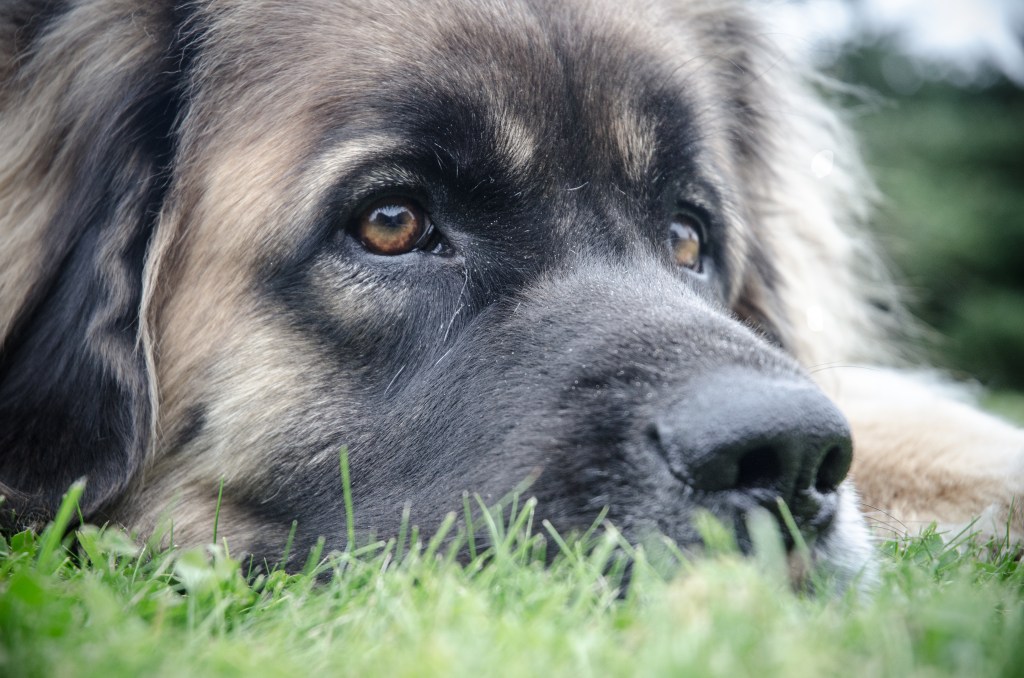
Closeup of old Leonberger Stock Photo ID: 1942925251 by Wirestock Creators.
Conclusion
Caring for an aging Leonberger is both an art and an act of devotion. It’s about more than prolonging life, it’s about enriching every moment your dog still wants to share. With consistent monitoring, gentle activity, and a serene home rhythm, your Leonberger can continue to live with grace, dignity, and the steady comfort of your presence.
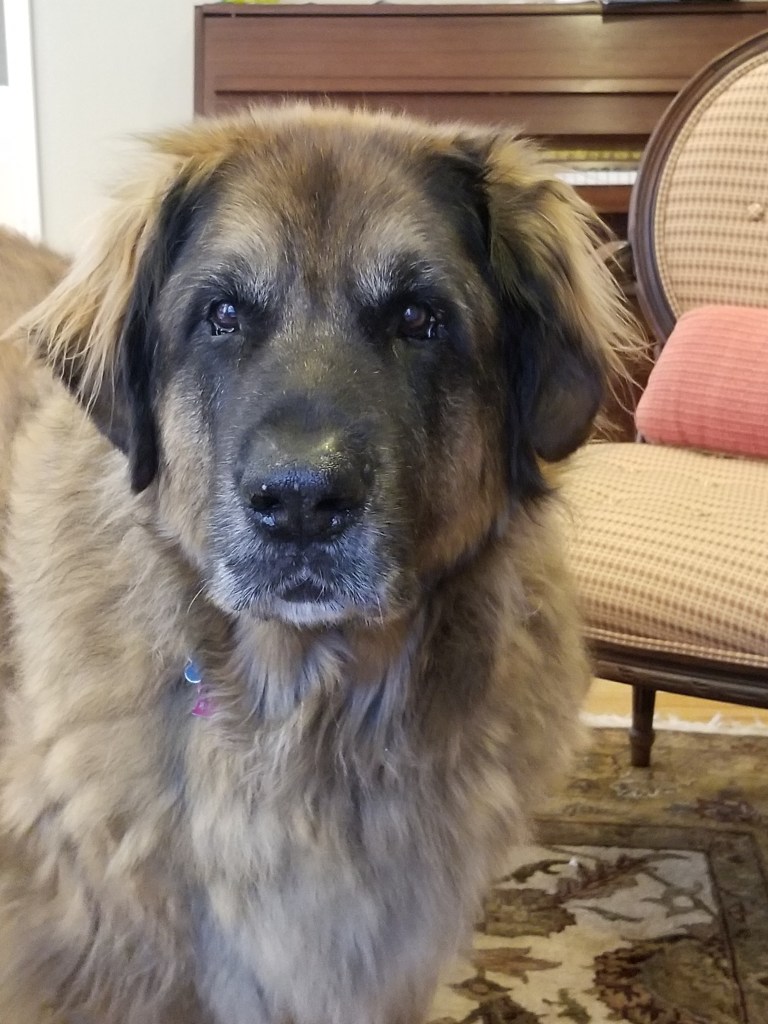
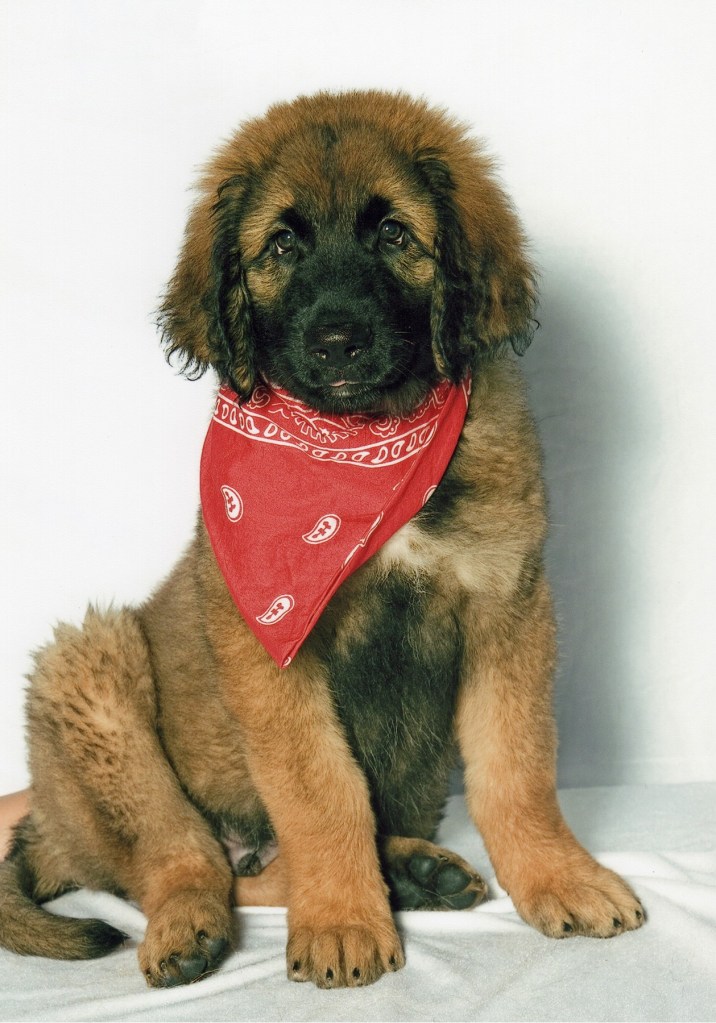
Our Leonberger Le Bronco von der Löwenhöhle (Bronco for short) at the age of three months.Me Thomas Wikman with our Leonberger Bronco when he was about one years old.Our Leonberger Bronco soon to be 13 years old. Leonbergers are large dogs and don’t live as long as small dogs. The typically live 8 to 10 years. However, our Bronco reached the age of 13. He was loving, protective, and brave. The small dogs loved him.
This is a guest post written by Ryan Goodchild. He emailed me asking me if he could publish this post regarding becoming a first time Leonberger Owner . I said yes. See his post below.
Becoming a First-Time Leonberger Owner: What You Need to Know
Owning a Leonberger isn’t just about bringing home a dog—it’s about welcoming a gentle, giant-hearted companion whose loyalty and calm strength will shape your days for years to come. These majestic dogs, known for their intelligence and deep affection, can be both a joy and a challenge for first-time pet owners. This guide will help you understand what to expect and how to set yourself—and your Leonberger—up for success.
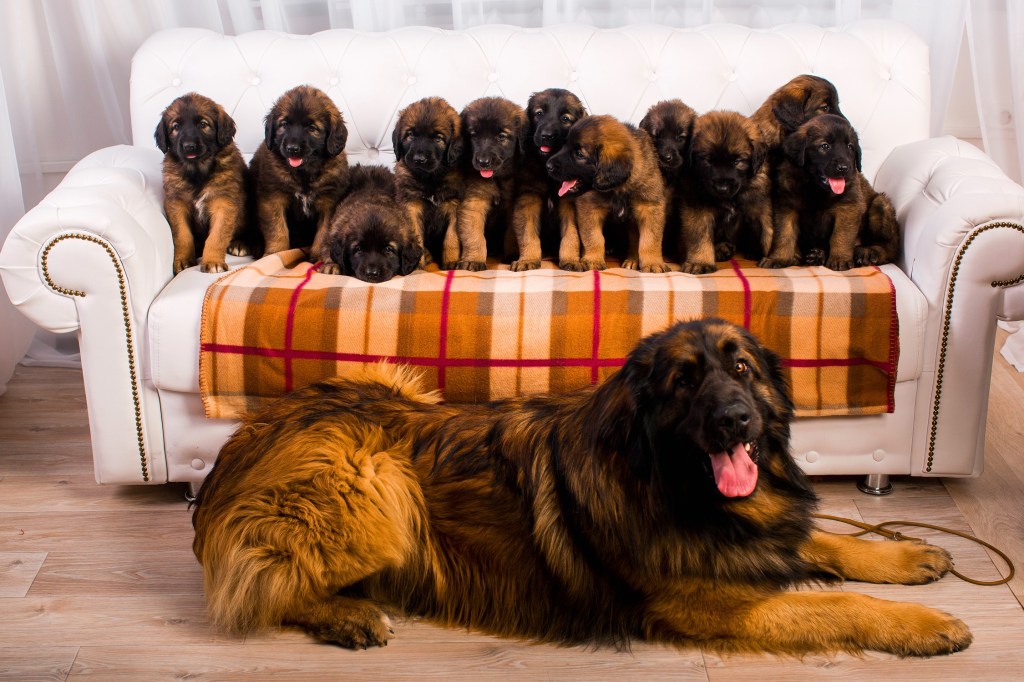
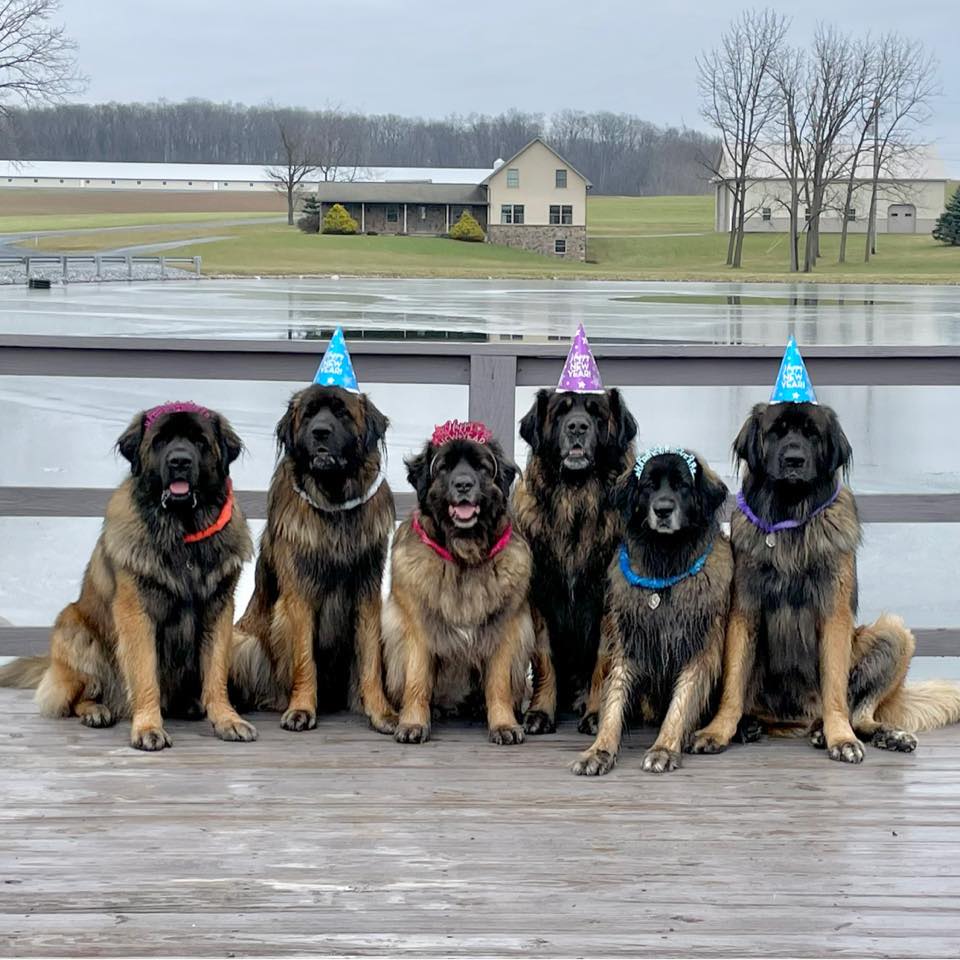
Ten Leonberger puppies with mama. Shutterstock-ID: 561107650 by Akbudak Rimma.Six Leonbergers celebrating a birthday celebration. Photo by Jen O’Keefe.
Quick Essentials This Article Looks At
Leonbergers are massive—males can exceed 170 pounds; space and structure are non-negotiable.
Early socialization and consistent training are critical to keep their size from becoming a liability.
Expect heavy shedding, especially during seasonal “blowouts.”
They thrive on human interaction and suffer if left alone for long periods.
Regular vet care, high-quality food, and joint supplements can prevent costly long-term health issues.
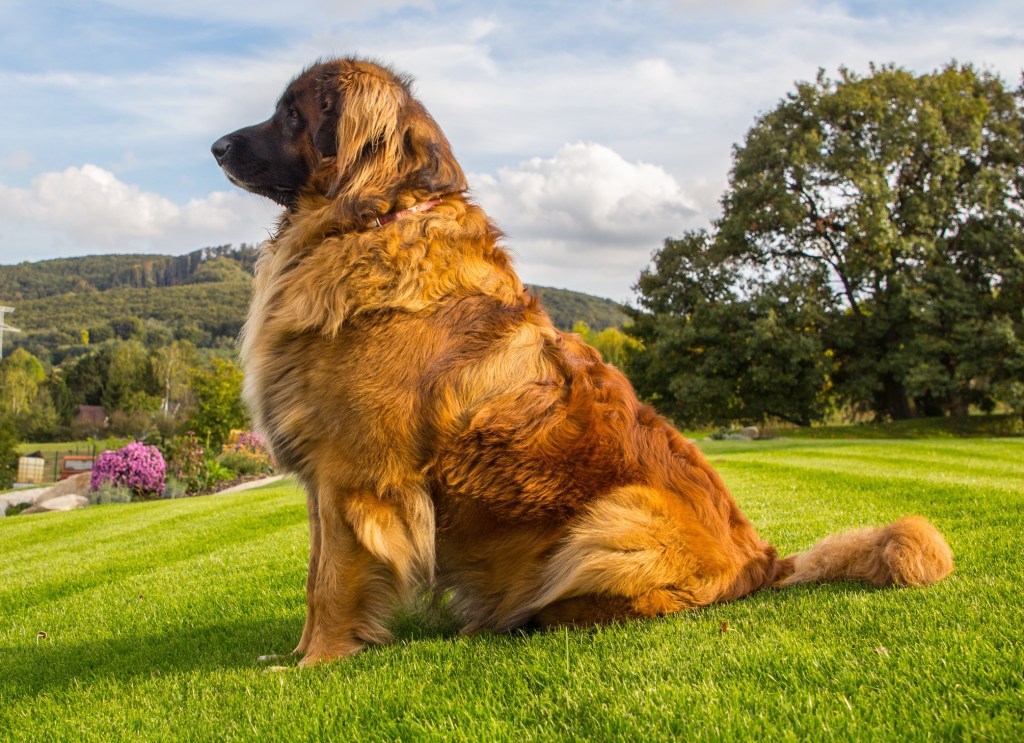
Mature big Leonberger Stock Photo ID:731020957 by Peter Josto.
Understanding the Leonberger Temperament
Leonbergers are affectionate, patient, and famously good with children. Originally bred as family and working companions, they balance strength with serenity. However, their intelligence means they need mental stimulation and clear boundaries; without it, boredom can lead to destructive behavior.
A Few Core Traits to Remember:
Gentle yet strong: They rarely display aggression but need confident leadership.
Social by nature: Isolation leads to stress and behavioral issues.
Sensitive to tone: Harsh correction will break trust—positive reinforcement works best.
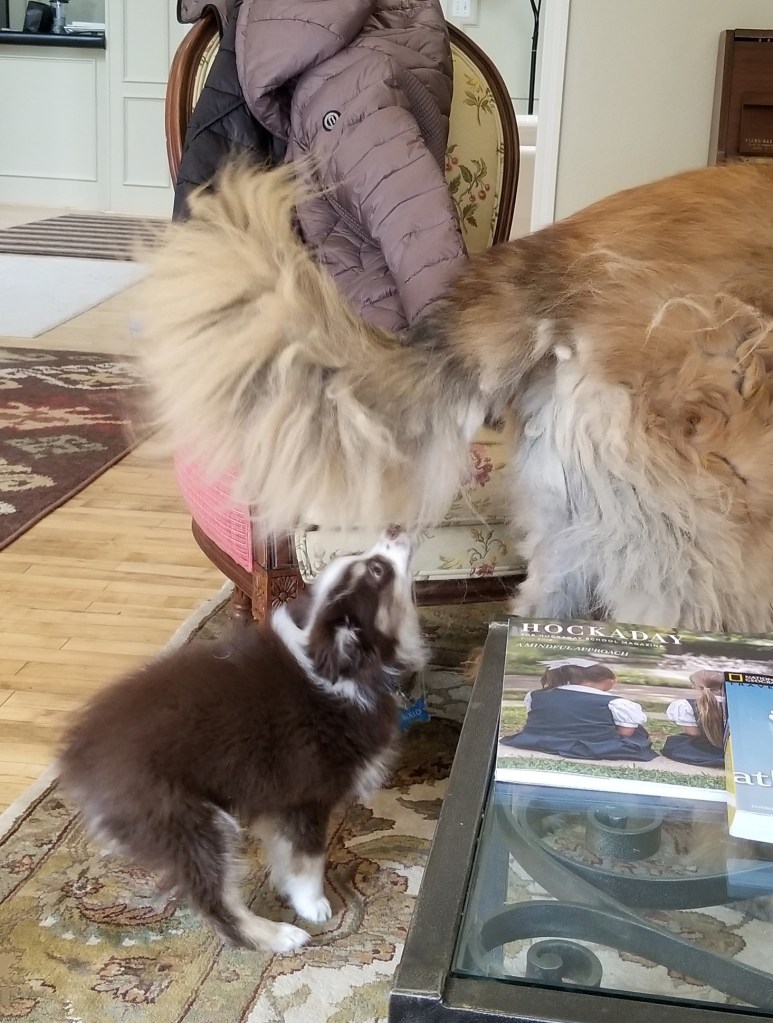
Our rambunctious Rollo mini-Australian Shepherd is biting Bronco’s tail. One time Rollo swung in his tail as if it was a swing. Bronco was very patient.
Health and Nutrition at a Glance
Leonbergers grow rapidly and live, on average, 8–9 years. Their size makes them prone to joint, heart, and bone issues, so proactive care is crucial.
Here’s a snapshot of what to focus on:
Concern
What to Watch
Preventive Actions
Hip & Elbow Dysplasia
Limping, stiffness
Keep weight balanced, feed joint-support diets
Bloat (Gastric Torsion)
Restlessness, distended belly
Feed smaller meals, avoid heavy exercise after eating
A healthy Leonberger. Shutter Stock Photo ID:705193912 by Anna Krivitskaya.
Creating a Home That Fits a Leonberger
A small apartment won’t do—Leonbergers need space to stretch, play, and move freely. A secure, fenced yard is ideal. Indoors, they’ll happily curl up near you, but their size means you’ll need to Leonberger-proof your space.
How to Prepare Your Home:
Create a soft resting area to protect joints.
Secure gates and doors—they can easily push through flimsy barriers.
Keep breakables out of tail range.
Use large, non-slip bowls for food and water.
Our Leonberger Bronco sleeping on our big red leather sofa.
Grooming and Maintenance: Managing the “Fur-nado”
Leonbergers have a double coat that requires regular maintenance. Weekly brushing helps, but during shedding season, daily sessions are best. Baths every 6–8 weeks will keep their coat clean and odor-free.
Grooming Checklist
Before shedding season hits, stock up on these essentials:
Undercoat rake and slicker brush
High-velocity dryer (optional but effective)
Gentle dog shampoo and conditioner
Nail clippers and ear-cleaning solution
Keeping up with grooming not only reduces hair around the house but also strengthens your bond with your dog.
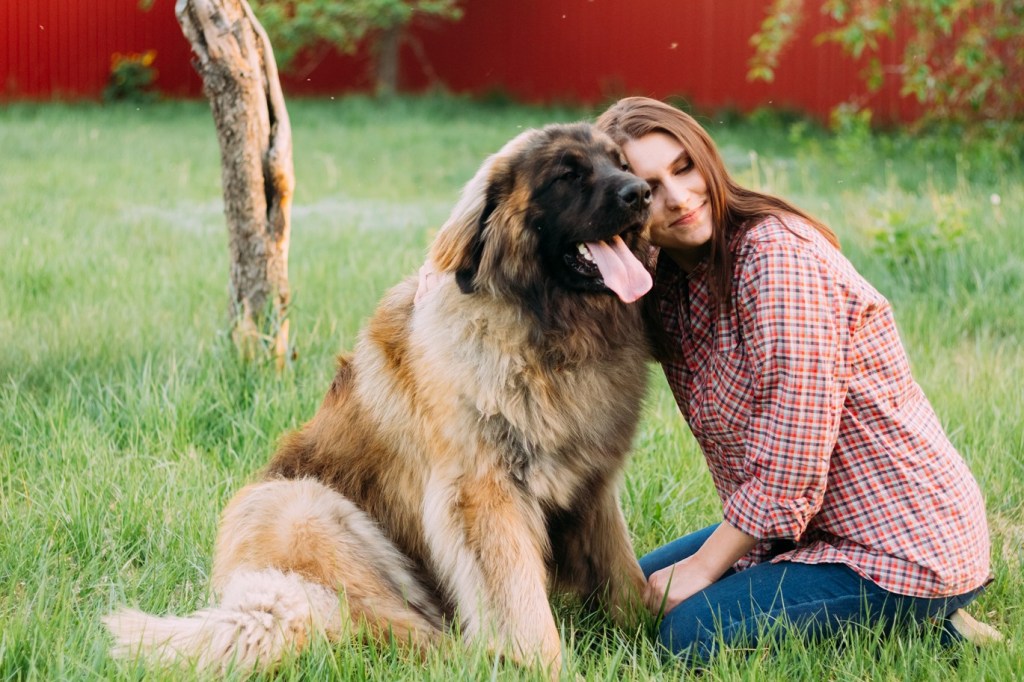
A woman and her Leonberger dog. Asset id: 1741753382 by Elena Podrezenko
How to Keep Your Pet Records Organized
First-time owners often underestimate the amount of documentation involved—vaccination records, microchip details, adoption papers, and vet receipts. To make things easier, convert documents to PDF and store them digitally.
Using a reliable online tool lets you organize every file in one place, ensuring quick access during vet visits or emergencies.
Creating a labeled folder for your Leonberger’s records—medical, training, and nutrition—will save time and prevent misplaced paperwork later.
Training Your Leonberger: Building a Confident Giant
Leonbergers are highly trainable but easily bored by repetition. Their size makes obedience a must—start early, keep sessions short, and make them engaging. Reward-based methods build trust faster than dominance-based tactics.
Quick Training Guide:
Start with basics: Sit, stay, come, down.
Socialize early: Introduce new sights, people, and other pets gradually.
Teach calm leash behavior: Their strength can easily overwhelm a novice handler.
Practice recall: A reliable recall can prevent accidents.
Leonbergers are eager to please and thrive when training feels like teamwork rather than command and control.
The First-Year Readiness Checklist
Owning a Leonberger for the first time is as rewarding as it is demanding. Before bringing one home, make sure you can check most of these boxes:
How-To Checklist: Your First-Year Essentials
Register with a trusted veterinarian
Choose a large-breed-specific diet and feeding schedule
Keep vaccination and health records digitally organized
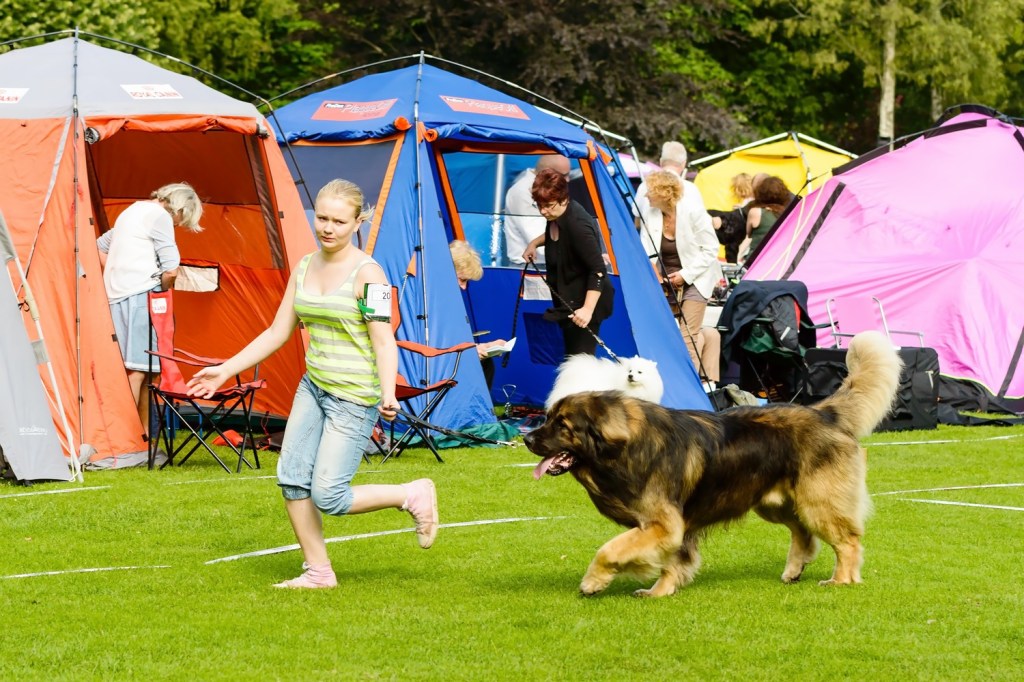
RONNEBY, SWEDEN – JULY 05, 2014: Blekinge Kennelklubb international dog show. A Leonberger dog and a female handler running in a show ring. Asset id: 204221011 by Imfoto
“Big-Paw” Questions: FAQ for Future Leonberger Owners
Here are some of the most common concerns new owners have—answered clearly and concisely.
The New Owner’s FAQ: “From Puppy to Gentle Giant”
1. How much exercise does a Leonberger need? At least an hour a day of moderate activity is ideal. Puppies should avoid high-impact exercise until growth plates close (around 18 months) to protect joints.
2. Are Leonbergers good with other pets? Yes. They’re naturally tolerant, but early introductions and supervised interactions are important, especially with smaller animals they could accidentally knock over.
3. How expensive are they to maintain? Expect higher costs than smaller breeds. Quality food, grooming, and vet care can average $2,000–$3,000 annually—not including emergencies or travel crates.
4. Do they drool? Some do, especially after drinking water. Keep absorbent towels handy near their bowls or favorite resting spots.
5. What should I look for in a breeder or adoption center? Choose one that conducts health testing for hips, eyes, and heart, and offers transparency about lineage. Ethical breeders prioritize temperament and health over appearance.
6. Can Leonbergers live in warm climates? Yes, but with precautions—limit outdoor activity in high heat, provide ample shade and water, and avoid midday walks.
Building a Lifelong Bond
Becoming a Leonberger owner means embracing responsibility and reward in equal measure. These dogs will fill your home with love, hair, and joy—often in that order. Plan carefully, train consistently, and nurture their gentle nature with patience and respect. The more you invest in understanding your Leonberger, the more they’ll return in loyalty and affection that few breeds can match.
Whether this is your first pet or your first giant breed, remember: structure and affection go hand-in-hand. With preparation and heart, your Leonberger won’t just live with you—they’ll thrive because of you.
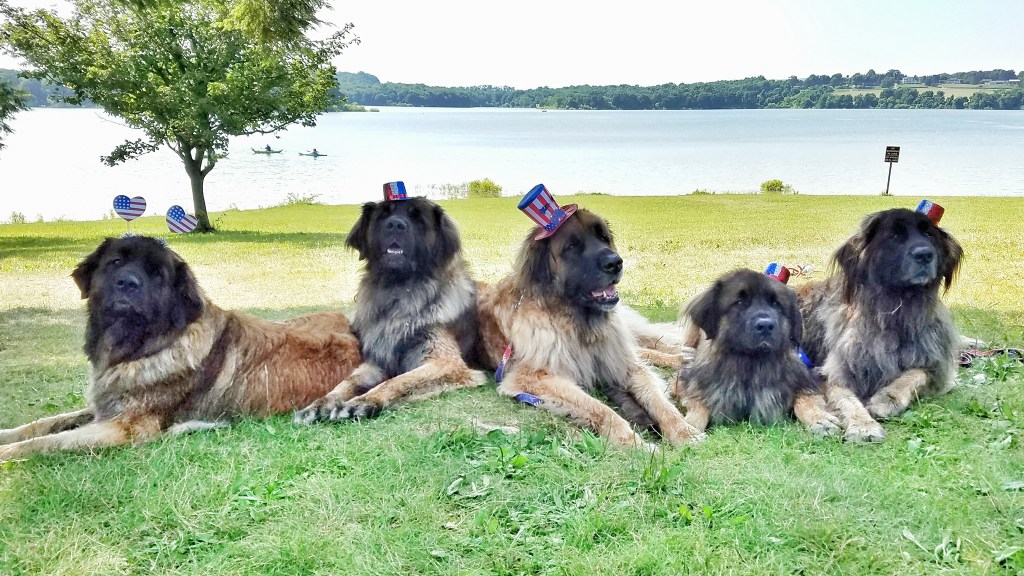
This photo was provided by Jen O’Keefe, Urgent Animal Care of Arlington. From left to right; Obi, Delfi, Aslan, Gryphon, Digory.
With this post I wanted to remind everyone that dogs are family, and we should not forget that during the holidays, you should give them extra cuddles and some presents and let them participate in the festivities if possible.
Our Latest Trip to Baltimore
First, I wanted to say a few words about the latest addition to our family, our first grandson Jack. Our oldest son Jacob and his wife Ashley live in Baltimore, Maryland, and their son Jack is three months old. We’ve visited him a few times since his birth and these pictures are from our latest visit about a week ago. Jack is a healthy and happy baby who does a lot of cooing. See the photos below and the short video.
Jack in the sofa. Three months old.My wife Claudia is on the left, I am in the middle and Jack is on the right.
Our Dogs Are Family
I did not grow up with dogs, and I was not even particularly fond of them, and then when we got our first family dog, the yellow Labrador Baylor, I really got to know and love dogs, and it changed my life. Now, I think I love dogs more than people. Well, at least I have learned that dogs are wonderful people. They always come with us to gatherings whenever possible and they got along very well. Our latest dog Rollo loved his sister Daisy and his big brother Bronco but he has a hard time tolerating any other dogs.
My wife Claudia and our first family dog the Labrador Baylor. This was back in the day. Our niece gave us Baylor because she was going to college. In turn she had gotten him from a shelter. He was a mix, one quarter Rhodesian Ridgeback and three quarters Yellow Labrador. He was able to jump up into the trunk of our van. Baylor was my first dog (not my wife’s first dog), and he taught me a lot about being a dog parent.Our Labrador Baylor is swimming in Claudia’s parents pool. He loved swimming, and he loved that pool and swam in it a lot.Our German Shepherd Baby at the dog park.Our Labrador Baylor and our German Shepherd Baby. Baylor was older in this picture. We had just gotten our Leonberger Bronco.This is our Leonberger Bronco (Le Bronco von der Löwenhöhle) at three months old.Our Leonberger Bronco (Le Bronco von der Löwenhöhle), our Japanese Chin Ryu, and our Pug Daisy in the front right.At the White Rock Lake dog park. Baylor our Labrador in the middle. He was old in this photo. Our Japanese Chin Ryu on the right.Our Pug Daisy and our Japanese Chin Ryu.Our Pug Daisy often sat in front of vents when she was cold. Daisy and our Japanese Chin Ryu were very close, like a couple. Daisy was obviously grieving when Ryu died, from cancer a bit early at only ten years old. Bronco was grieving as well.Daisy is exhausted after doing nothing for a whole day.In December of 2018 we picked up our mini-Australian Shepherd Rollo. His friend was an English Bulldog.Our Leonberger Bronco is welcoming Rollo.Our pug Daisy and Rollo are saying hello.Our mini-Australian Shepherd puppy Rollo at 3 months old.Our mini-Australian Shepherd puppy Rollo and our Leonberger Bronco.Our mini-Australian Shepherd Rollo at the table on his seventh birthday. This is a more recent picture, from October of this year.
Dogs give gifts and do nice things for people and other dogs. In this post I am describing three occasions when our late Leonberger Bronco gave our Pug Daisy gifts.
Leonberger Shares a Gingerbread House
Our Leonberger dog Bronco (his full name was Le Bronco von der Löwenhöhle) was an expert counter surfer, which is why we installed a pet gate to the entrance of our kitchen. Bronco knew how to open gates if they were not locked, so you had to make sure that you did not just close the gate but lock it. However, one December day I forgot to lock the gate. That was the day our daughter had made a gingerbread house and left it on the kitchen counter. Guess who ate half the gingerbread house? Guess who ate some of the other half? Bronco shared some with Daisy. He was always very generous. The photo below is what I saw when I got home that day.
The open gate behind Daisy and Bronco permitted their gingerbread-house raid.
Leonberger Shares a Baked Potato
I believe dogs have empathy, and sometimes they want to share—at least Bronco did. There was a time when we were in our home eating take-out food and Bronco stole one of our dinners, including meat, vegetables, and a baked potato. He started eating the meat, then he glanced at Daisy, who was sitting in the middle of the floor looking sad. Immediately he took the baked potato in his mouth and carried it over to her and dropped it right at her feet. I was going to get mad at him for stealing, but when I saw his kindhearted and unselfish act, I let it be.
Daisy our Pug was sitting there looking sad, but she got a baked potato with bacon and butter. I should say that the photo is from another occasion when she sat in front of the vent because she was cold. But it is close enough.
Leonberger Saves our Pug Daisy’s Life
On another occasion, Bronco did something else amazing for Daisy. Despite having issues with his paws—this was around the time he was being treated for squamous cell carcinoma—he saved Daisy from an attacking German shepherd who was running loose.
We were at my wife Claudia’s parents’ house, just leaving, standing on their driveway, when one of their neighbors came out to drop some garbage in the trash can at the end of her driveway. With her was a young, probably adolescent, German shepherd, and he was not on a leash. As we were standing on the porch, I suddenly saw the shepherd flying through the bushes, his teeth bared. He quickly charged us—viciously.
First, he went for Daisy, but Bronco got between them to protect her. Essentially, Bronco saved her life. The shepherd bit his leg in return. Bronco was almost twelve when this happened, and he was not as strong as he used to be. A German shepherd would have been an easy opponent for Bronco just a few years earlier, but at that point he was old, and he did not need the extra stress.
I kicked the German shepherd in the stomach, and he ran off. Bronco’s legs were weak—he had recently had a toe operation, and his walking was unsteady—so seeing the shepherd going for the leg on which he had had his operation was very upsetting. The shepherd could have bitten me, of course, and I could have been severely injured, but I didn’t care. I was defending my dogs—who were all on a leash, by the way. If the shepherd had bitten me, the owner could have been criminally charged, and there could have been a lawsuit
The owner of the shepherd came over to apologize, but I cursed at her. Maybe I shouldn’t have, but she had a vicious and dangerous dog, and she intentionally let him run loose. In the end, though, there were no major injuries. Bronco’s leg was slightly hurt, but overall, he was fine. These days, whenever we talk about this incident, I jokingly refer to the neighbor dog as Cujo. I should say that we’ve had a German Shepherd who was a sweetheart, so this is story is in no way an attempt to disparage German Shepherds. They are typically wonderful dogs as well.
In conclusion, this third example was an example of Bronco giving up his safety and potential health to protect our Pug Daisy.
Dogs are living conscious beings, and they should not be mistreated, hurt or treated disrespectfully. For example, don’t allow kids to play rough with dogs or take their food. Do not hit them. Do not push their face towards the feces when they have an accident inside the house. There is a widespread false misconception that you should. Again, respect your dog.
Do not keep them outside for a long time in the heat or cold. Do not abandon them, especially not to the wild where they will not survive. When your dog gets old, slow and boring, take care of it. You can get a new puppy but do not ever replace an old dog with a puppy. Doing so is cruel and immoral. Dogs deserve your respect.
This may be self-evident to most dog owners. However, I have seen people do these things to dogs and worse, so it bears repeating.
Do not let kids or Puppies Pull a Dog’s Tail
Playing with a dog is, of course, fine. They love running after balls and other toys and having fun in the backyard, playing with kids and other dogs. However, having their tail pulled is not their version of fun and it can cause a dog to bite. I am guilty of this myself. When I was a kid, I pulled the tail of my uncle’s dog and I almost got bitten. When our mini-Australian Shepherd Rollo was still a puppy he sometimes pestered our Leonberger Bronco by pulling his tail and even dangling in it like a swing. We did not allow this, but accidents happened. Luckily Bronco was very patient with Rollo, and he let us know when there was tail biting mischief under way so that we could remove Rollo.
Rollo, our mini-Australian Shepherd, frequently bit our Leonberger Bronco’s tail, and he even swung in it like a swing. He climbed all over Bronco. Bronco was very patient with him. Naturally, we did not allow this, but accidents happened.
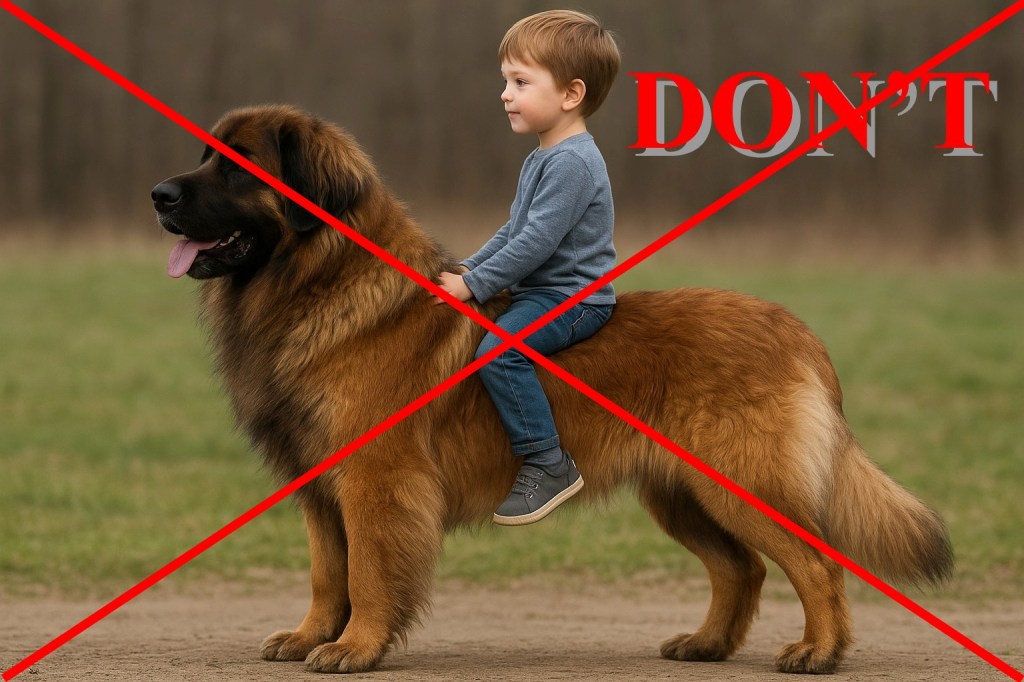
Do not let kids ride big dogs
Do not allow children to ride big dogs like a horse. This could cause severe spinal injuries to the dog because their backs aren’t built for weight. The dog may also bite the kid to defend itself.
Don’t allow. This is very dangerous to the dog as well as the kid as the dog may bite. The dog in the picture is a Leonberger. This image was generated with the help of AI/ChatGPT.
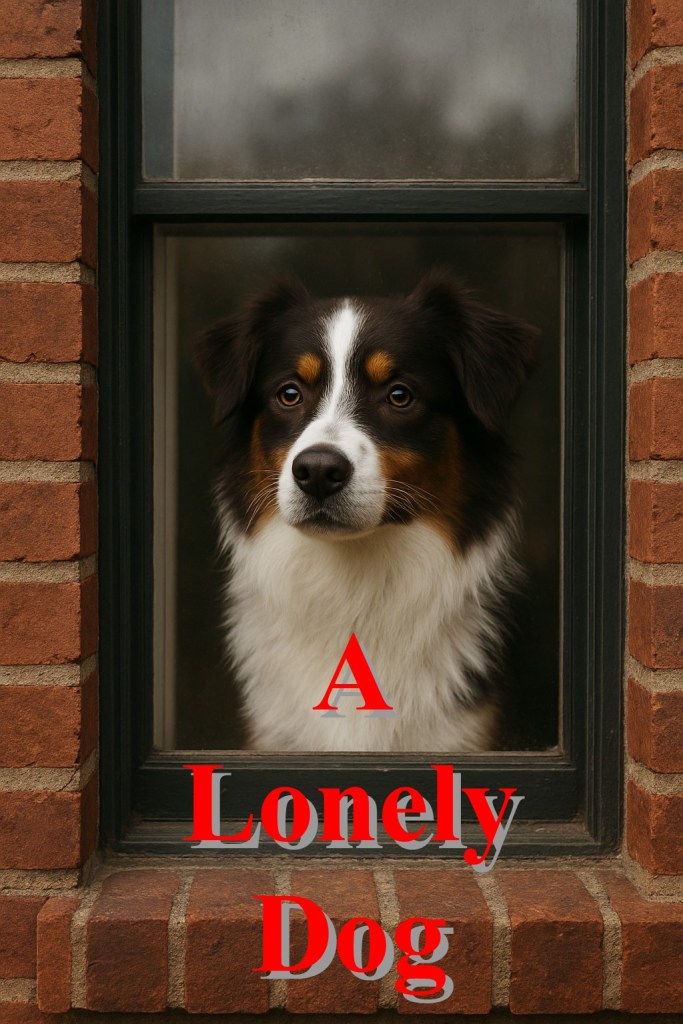
Dogs Get Lonely
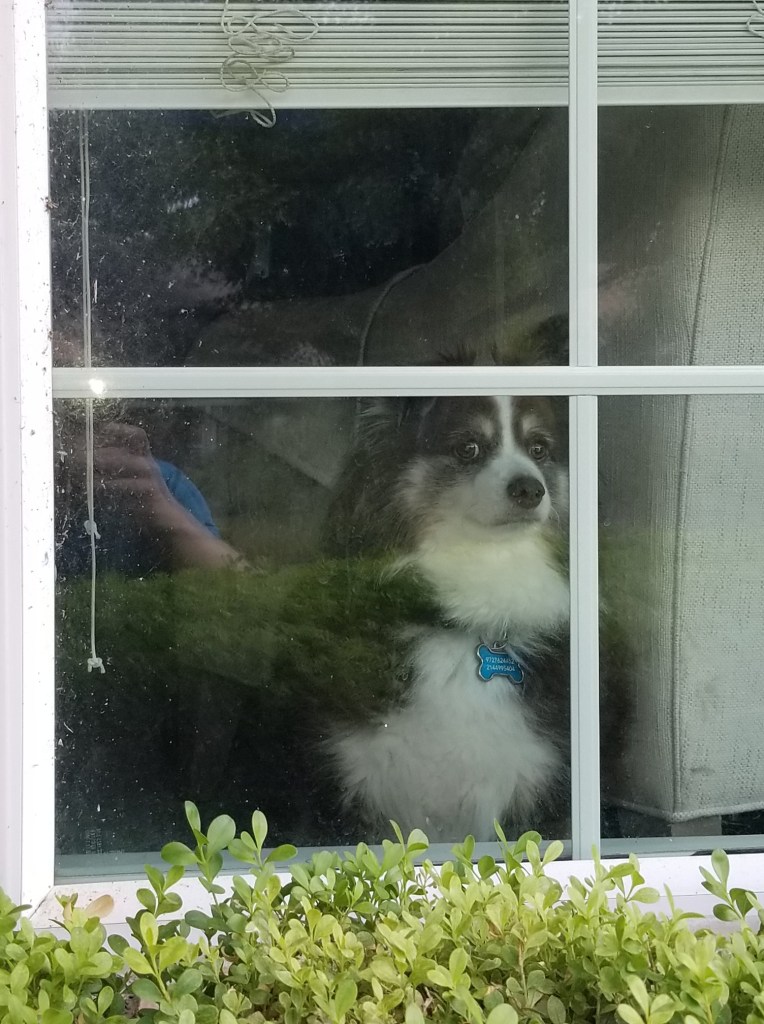
Don’t leave dogs alone for extended periods of time. Dogs need to potty, they need interaction, they get lonely and anxious. It is typically fine to leave an adult dog at home for a couple of hours but much longer than that could be a problem. If the dog goes potty on the floor when home alone for a long time, well that is not the dog’s fault. You clean it up and apologize to the dog.
A lonely Australian Shepherd looking out the window. This image was generated with the help of AI/ChatGPT.Rollo is looking out the window. We don’t leave him for very long but when we do he sits and looks out the window. You can see the reflection of me taking the photo and of the neighborhood in the window.
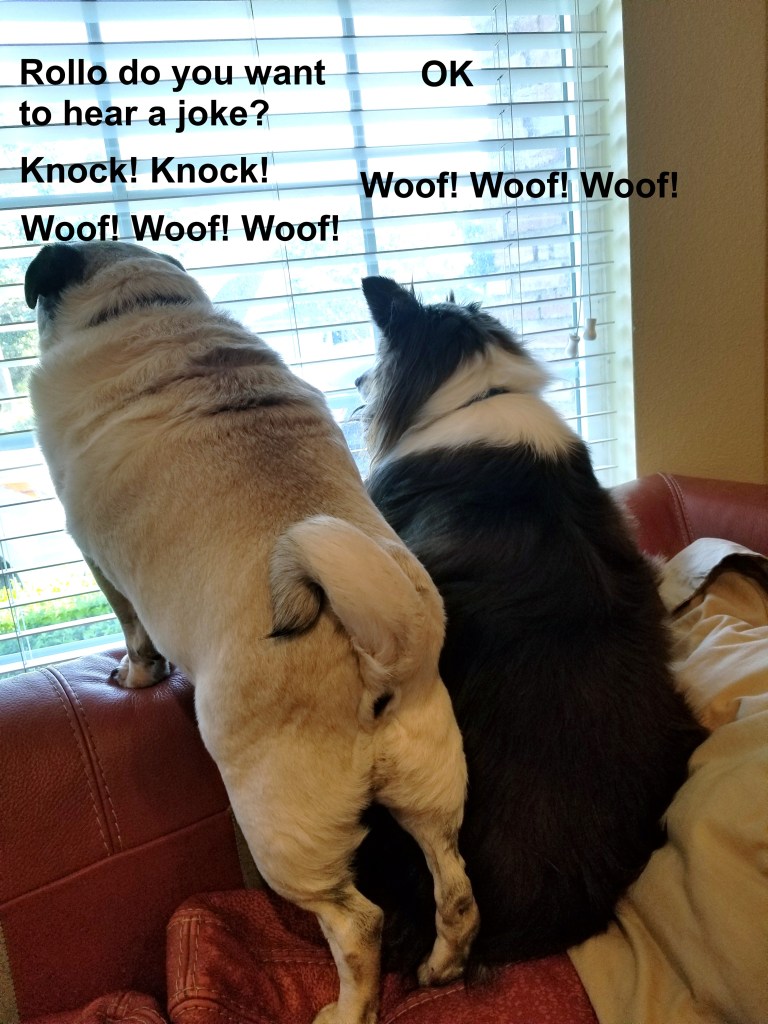
It is a little bit better when dogs have the company of each other.
Daisy’s and Rollo’s knock knock joke.
Hugs May not be Welcome
Perhaps surprisingly most dogs find hugs uncomfortable and stressful because they restrict their natural “flight” instinct and make them feel threatened, even though humans see it as affection. Our Leonberger gave us Leonberger hugs, meaning he leaned on us, or pressed his body against us, but like most dogs he probably did not like human arms around his body. If you put your arms around a dog they may start licking their lips, yawning, or even trying to get away. These are stress signals. If they lick your face in this situation, it is not likely to be a kiss, but attempted appeasement. Essentially, the dog wants to please you, but he is wondering why you are mean by giving him a hug without his consent.
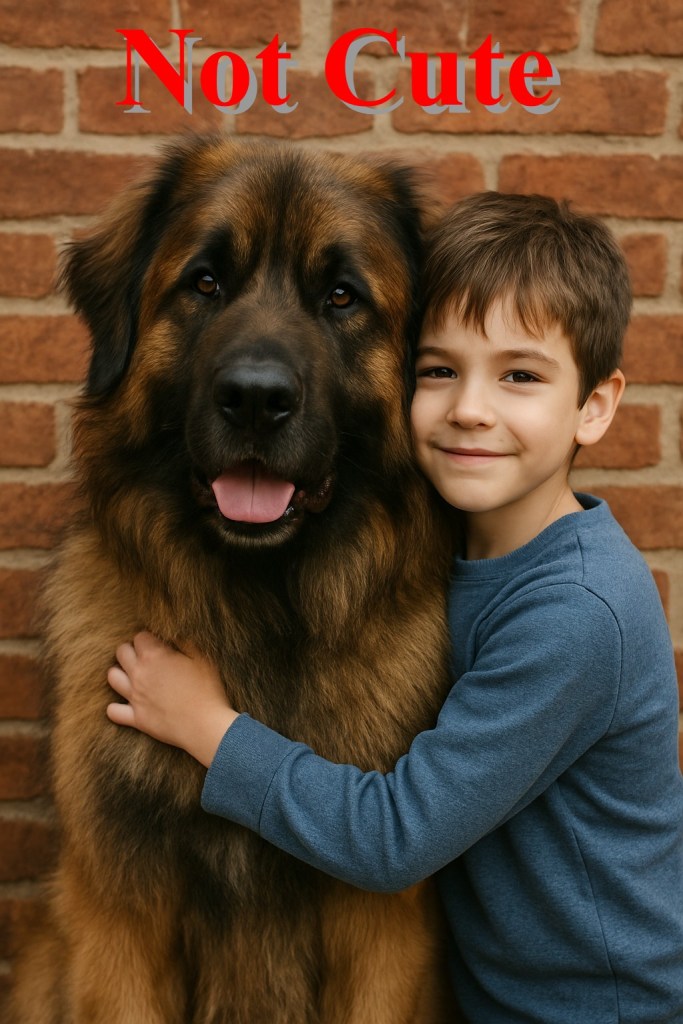
Hugs may not be welcome. Watch for lip licking and other stress signals when kids do this. Perhaps ask the kid not to squeeze the dog with his arms. This image was generated with the help of AI/ChatGPT.
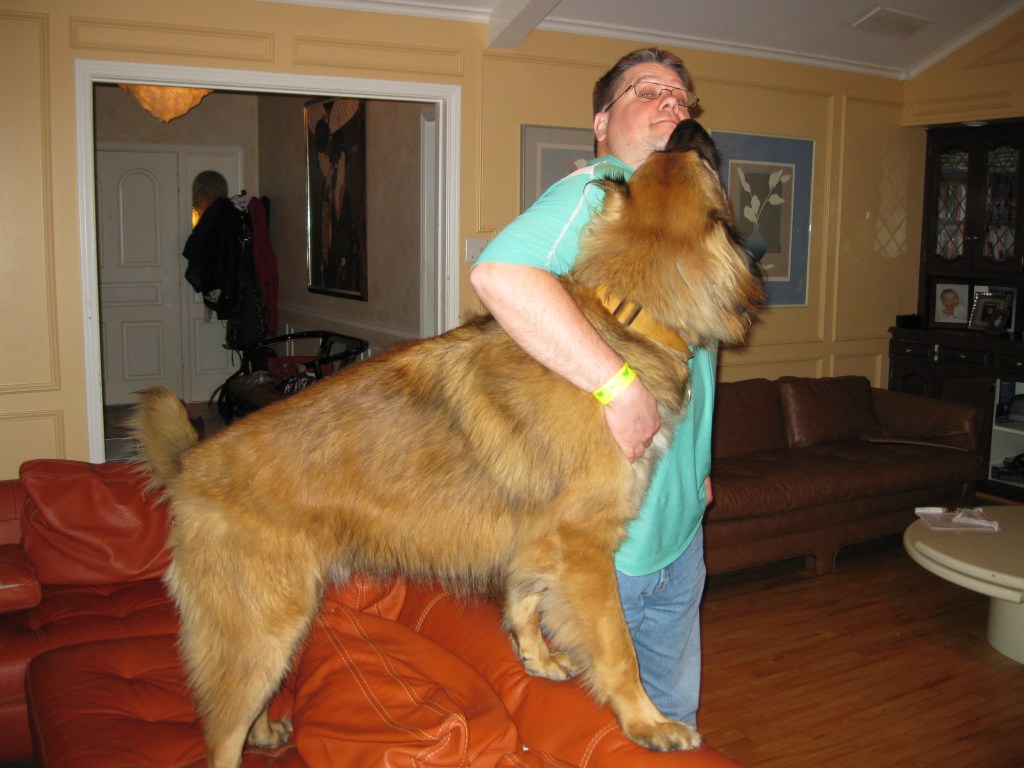
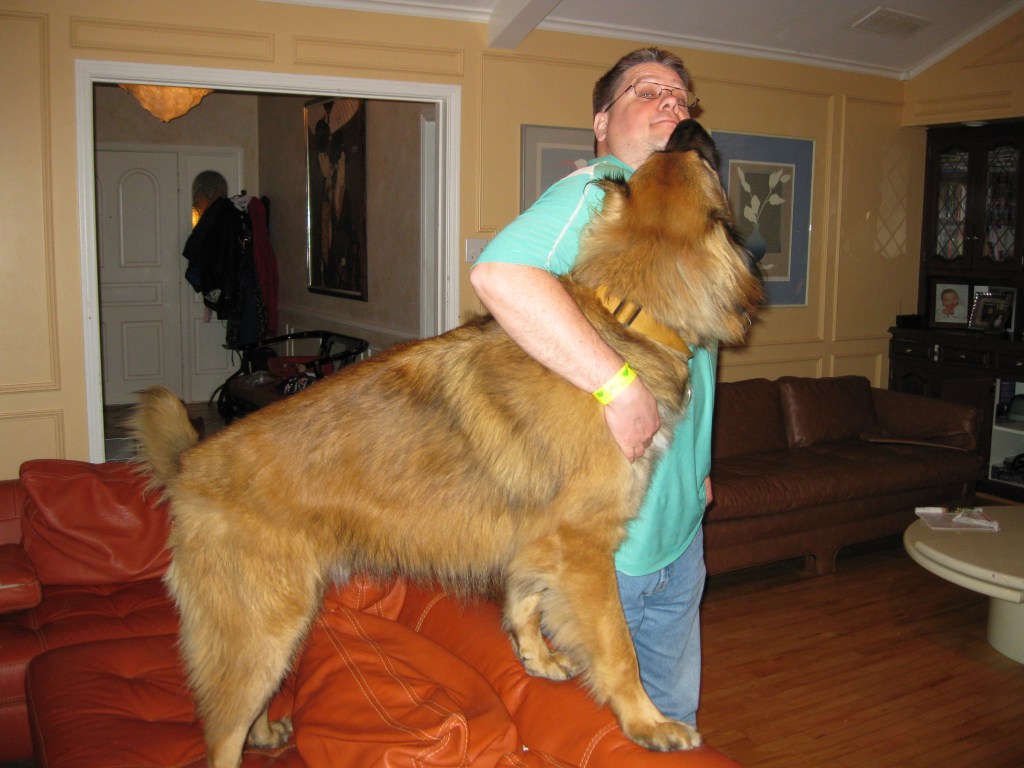
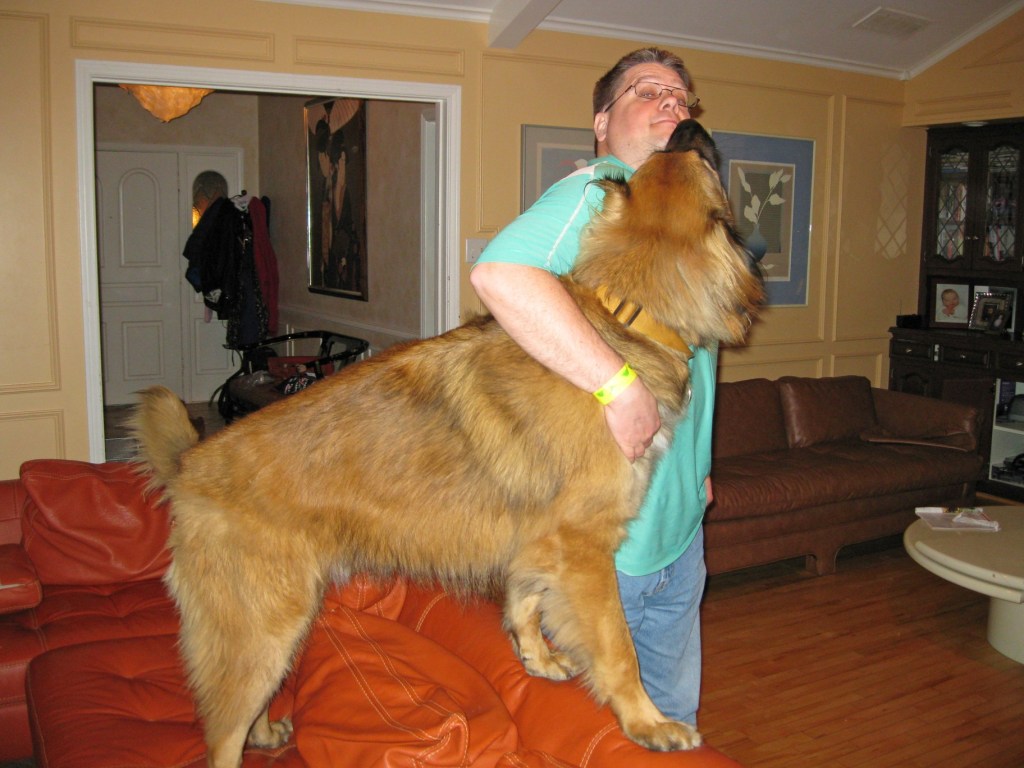
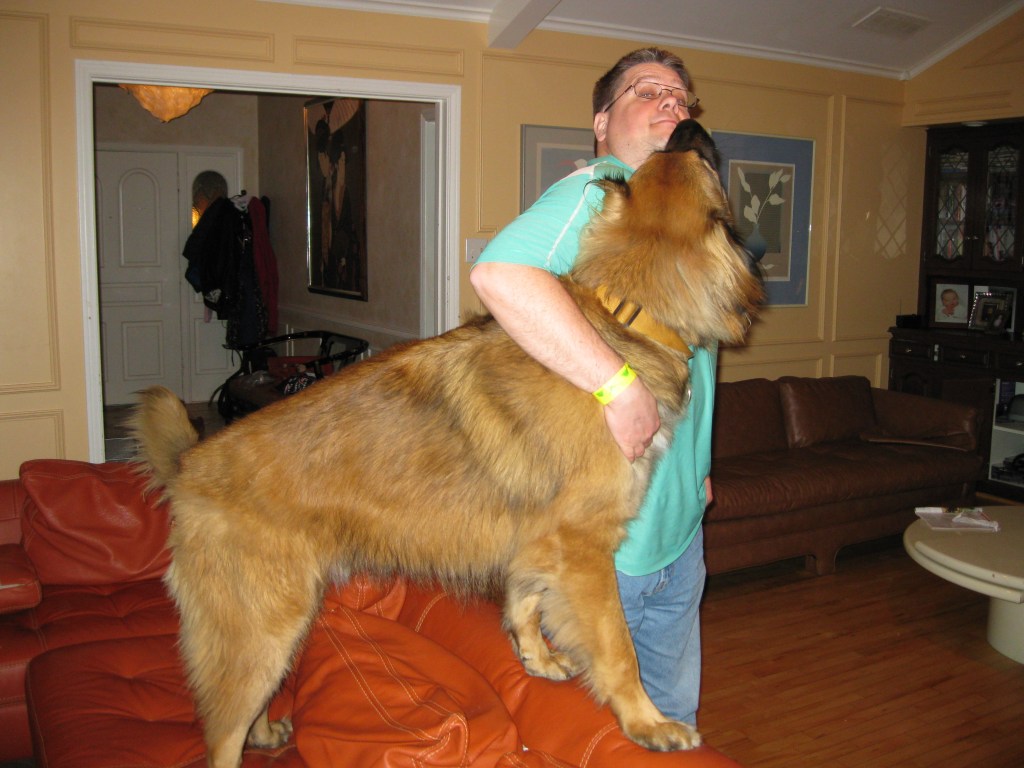
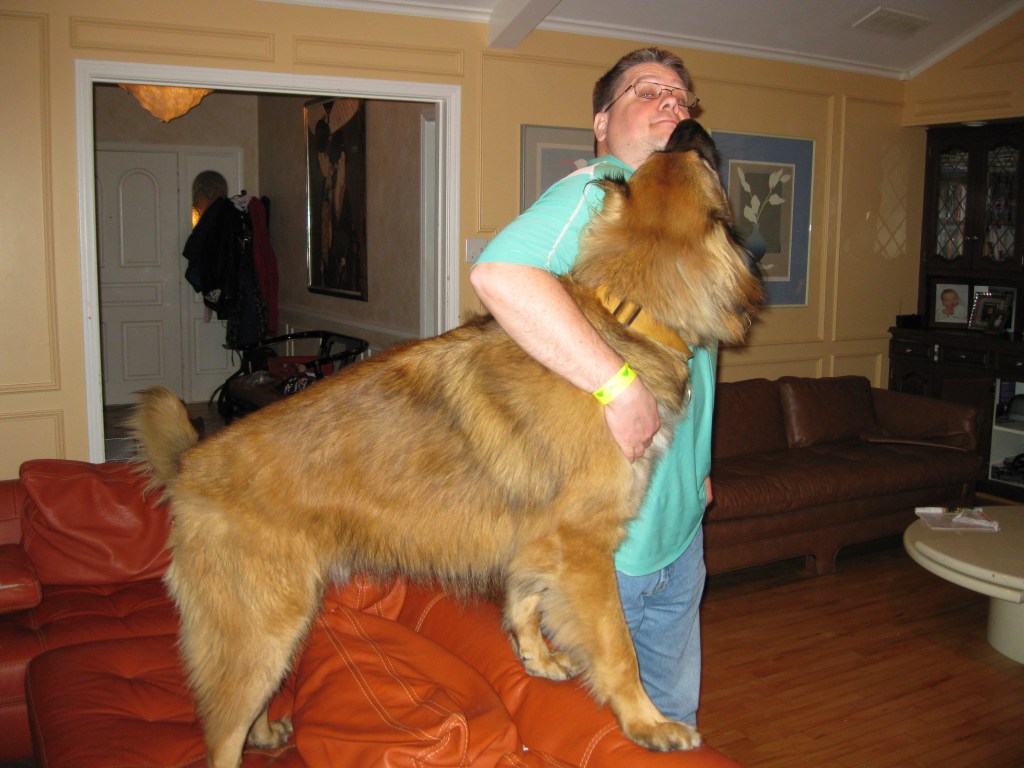
In the picture below our Leonberger Bronco is reaching out to me to give me a hug, as I entered the room, but maybe I should not have put my arm around him. I should say Bronco was a very tolerant dog.
Bronco our Leonberger is giving me a kiss, or is it? He is about one year old and not yet fully grown.
To learn more about the complex question of dog hugs you can watch the 8 minute video below.
In summary, Respect Your Dog
To visit a related post, Promises To My Dog, click here.
I just received a couple of photos from our niece Jessica and her husband Eric. They live in Minnesota. They had encountered a Leonberger dog named Oliver, and they took a couple of photos. For those who do not know, Leonbergers are large family friendly dogs related to Saint Bernards. It is a rare breed, so you don’t see them very often. If you want to read more about this amazing breed, see the list of all my blog posts.
A friendly Leonberger named Oliver. Photo by Jessica Sardas.A friendly Leonberger named Oliver. Photo by Jessica Sardas.
Other Leonberger Chance Encounters
Another amazing Leonberger chance encounter happened when we visited my native country Sweden. We had hiked up a mountain in the high coast region (that’s where I grew up) called the Skule Berget, or Skull Mountain in English. The elevation of the hike was nearly 1,000 feet. Guess what we found at the summit besides the red cabin restaurant selling waffles to the brave souls who managed to finish the hike? A Leonberger named Amie. We took some photos of Amie. I hope she got some waffles too. You can read more about our adventure here.
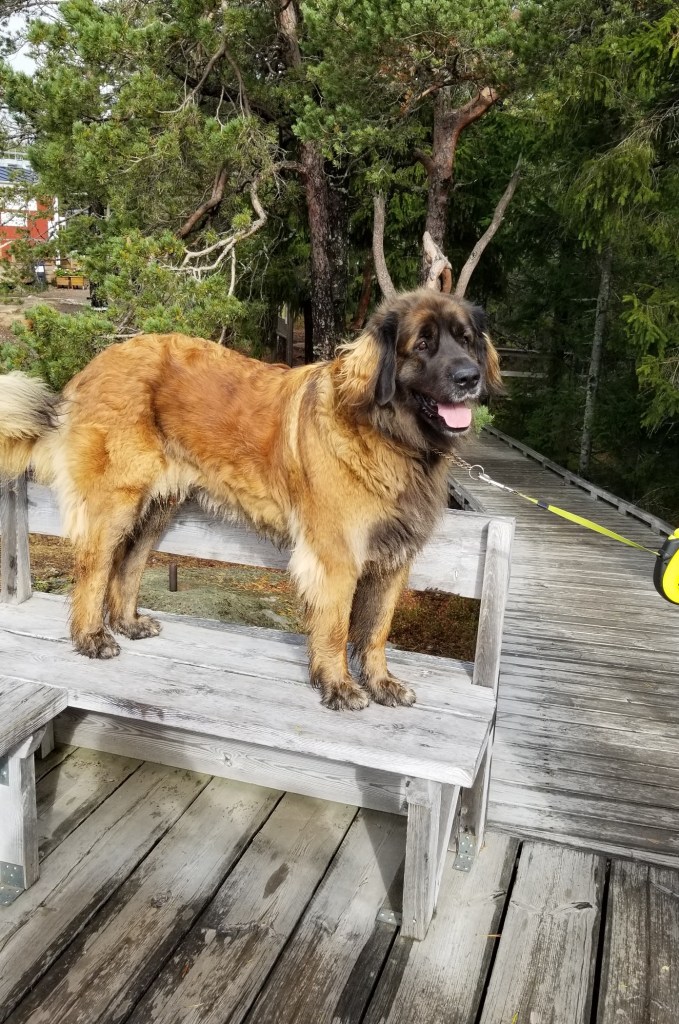
Amie at the top of Skule Berget.Amie was playful but very well behaved.
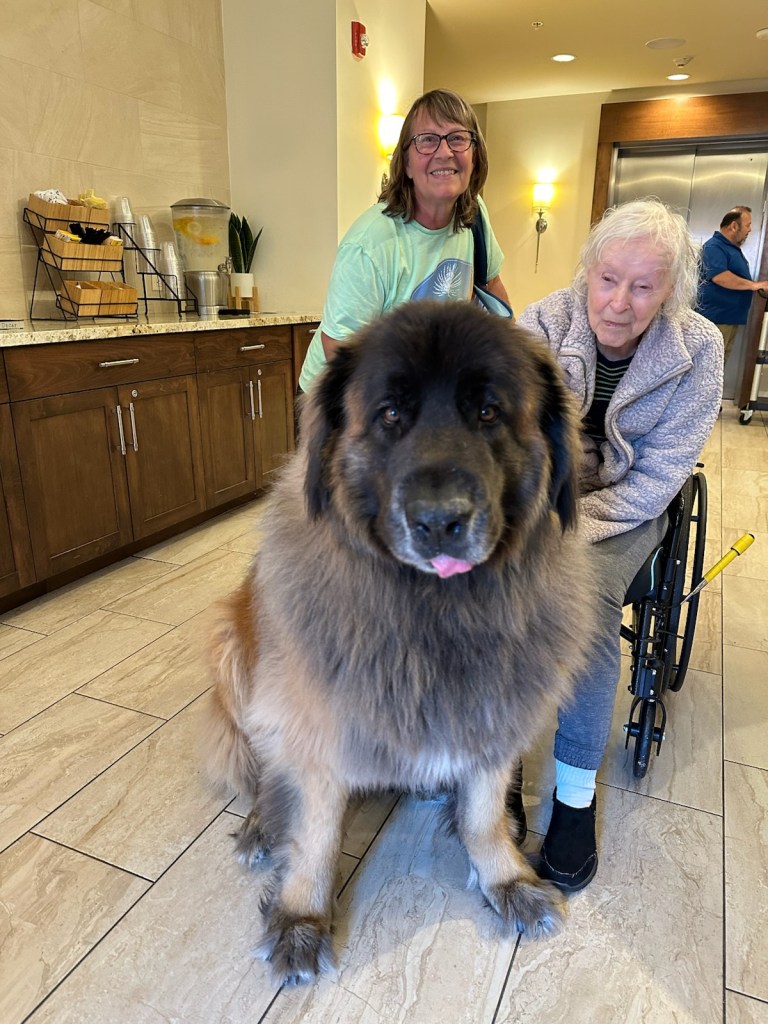
Another chance encounter was when our daughter-in-law’s mother had a chance encounter with a Leonberger at her mother’s nursing home. Leonberger dogs are big but friendly, trusting, calm, confident, and very trainable, making them perfect therapy dogs. They are therefore often used as therapy dogs at hospitals, nursing homes and mental institutions. You can read more about this encounter here.
Our daughter-in-law’s mother is on the left and her mother is on the right. She gave me permission to use this photo. The Leonberger is in the middle front.
A Therapy Leonberger Called Scout
Speaking about therapy dogs. Below is a video about a Leonberger called Scout by CBC news in Canada. This Leonberger is helping residents at Hamilton mental health hospital. He was bred by Concorde Ridge Leonbergers. They have a website and a blog which I follow. You can visit my post about Scout here. The 1-minute video is shown on the website below.
About the book The Life and Times of Le Bronco von der Löwenhöhle
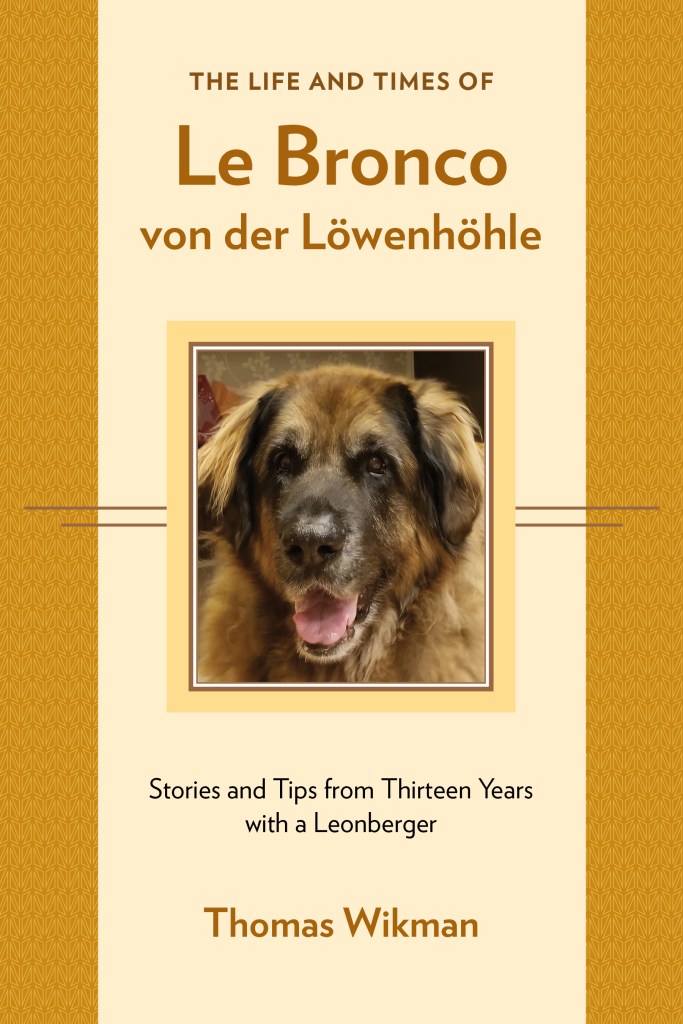
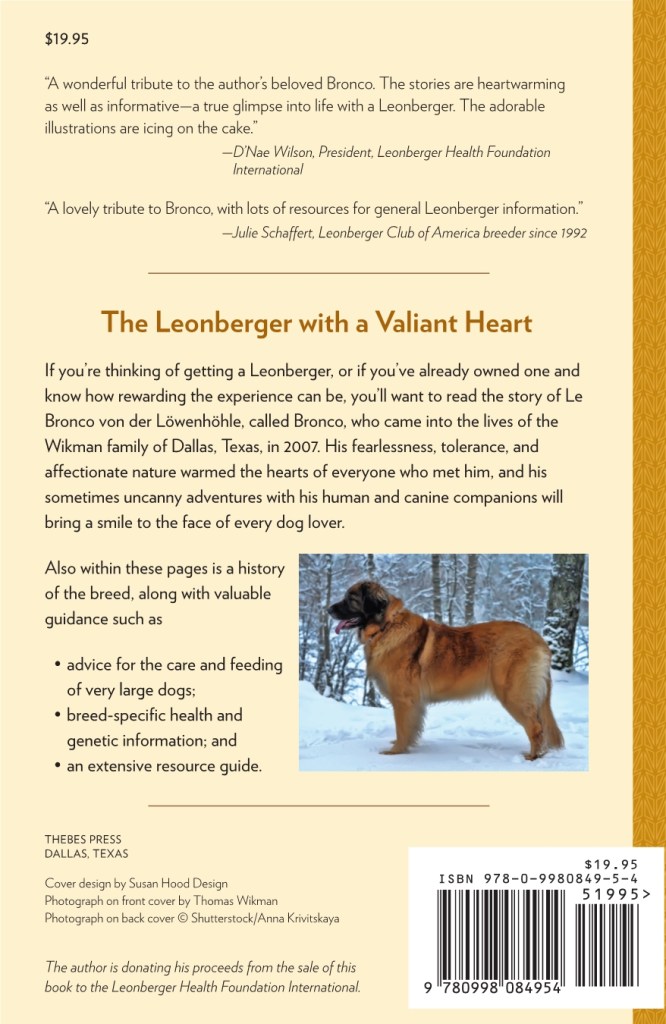
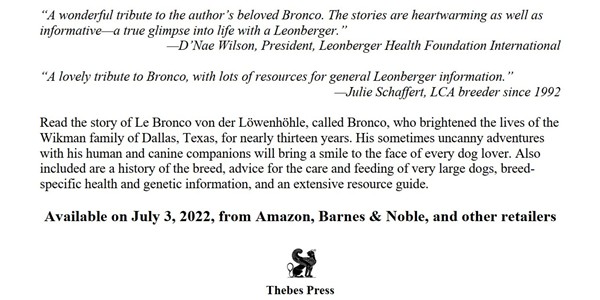
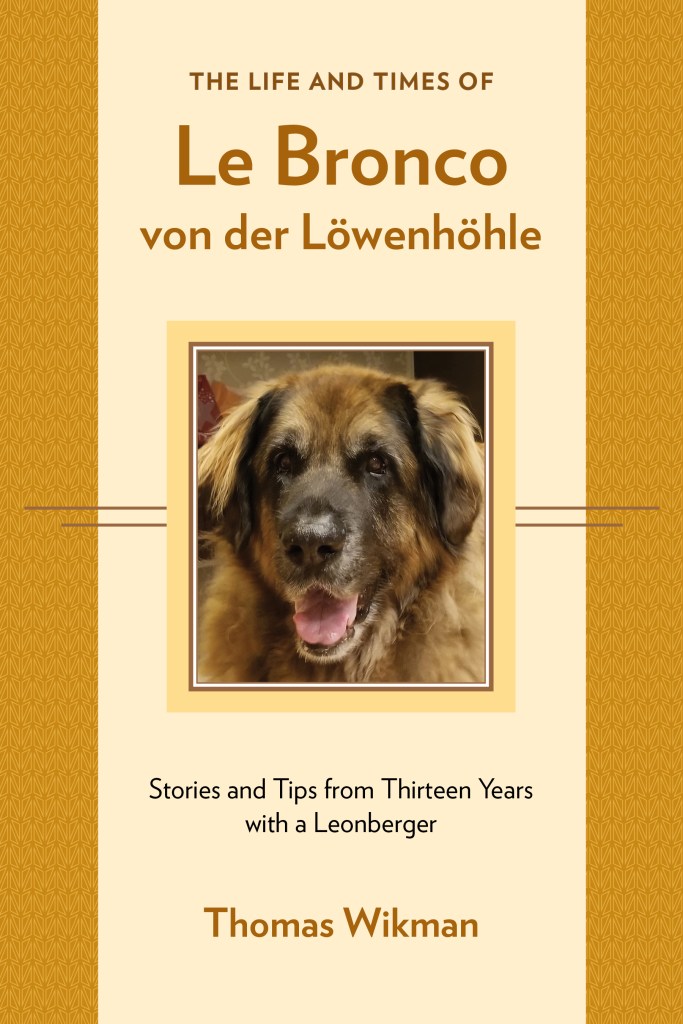
Finally, I would like to mention that I wrote a book about our late Leonberger Bronco, or Le Bronco von der Löwenhöhle. The title of the book is “The Life and Times of Le Bronco von der Löwenhöhle, Stories and Tips from Thirteen Years with a Leonberger”. The book features the amusing adventures of our Leonberger Bronco and his dog friends, as well as information on how to train and care for Leonbergers and other large breeds, their breed history, breed standard, Leonberger organizations, and an extensive resource guide at the end. I can add that all photos and illustrations are in color. The price of the paperback version is 17.95 (normal prize is $19.95) and the price of the Kindle version is $4.95 All proceeds go to the Leonberger Health Foundation International, an organization that works to improve the health and longevity of Leonbergers and other large dog breeds.
This is the front cover of the book “The Life and Times of Le Bronco von der Löwenhöhle”. Click here or on the image to go to the United States Amazon location for the paperback version of the book.This is the back cover of the book “The Life and Times of Le Bronco von der Löwenhöhle”. Click here or on the image to go to the Amazon.com location for the kindle version of the book.Again, these are the endorsements for the book by some very prominent members of the Leonberger community. Click here or on the image to go to the location for the book Amazon in Canada.
Today’s writing prompt is “What is good about having a pet?”. I can easily think of many good and wonderful things about having a pet but let’s not forget that it also comes with responsibility. Having a pet is a lifelong commitment, well their lifetime at least, and you need to treat them like family. If you cannot handle the pet when it gets old, and you are not going to treat it like family, then don’t get it.
Our Pets
We’ve owned many pets in our life, fish in aquariums, bearded dragons and other lizards, snakes, rabbits, and hamsters. We’ve owned many dogs, and we’ve had a cat for a short time. Unfortunately, we found out that I was allergic to cats and my allergy was bad. Luckily, we found a good home for the cat. My wife and I were very sad that we had to part ways with the cat, but I just got too sick, so sick that it was dangerous. I should say I am not allergic to dogs.
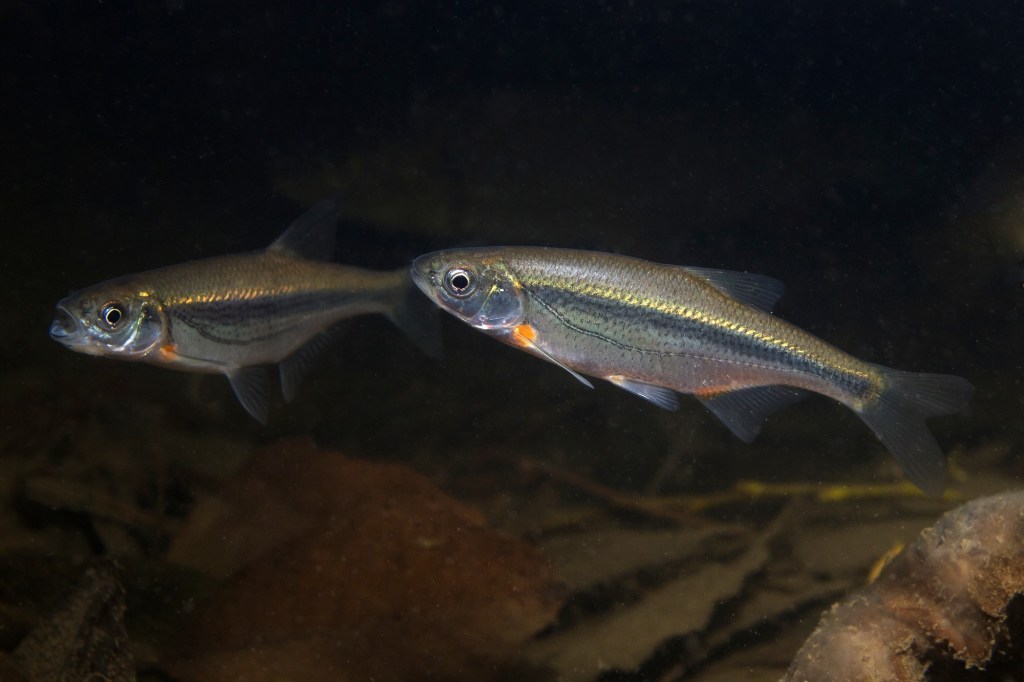
We were not always good pet owners. Mistakes were made. For example, our five year old daughter brought home a dozen minnows that we put in an aquarium. They were basically fish that did not end up as bait. We did a lot of fishing for a while. We placed the minnows in a clean aquarium and fed them what we were told to give them. Our daughter named them Sally one, Sally two, Sally three, Sally four, Sally five, Sally six, Sally seven, Sally eight, Sally nine, Sally ten, Sally eleven, and Sally twelve.
Sally four on the left and Sally five on the right. Minnows Asset id: 1182854671 by Rostislav Stefanek
As I mentioned, we were not always good pet parents. Our five year old daughter thought that the minnows needed a more interesting environment, so she poured cranberry juice in the aquarium. We were able to clean it out and save the minnows that time. But when she poured red paint in the aquarium, we were not successful in doing so. Our son also had a snake that needed to be fed subdued but live mice. We discovered that if you walk into a pet store and tell them you want to buy mice to feed your snake, they won’t sell the pet mice to you. Long story short we struggled with feeding the snake and eventually he died. We felt awful, but we realized that keeping a snake as a pet is not a good idea unless you really know what you are doing.
Our Dogs
The dogs we own and have owned have a very special place in our hearts. They’ve given us so much unconditional love, special moments, entertainment, and not to mention hilarious moments that we are still laughing about years after they happened. We used to have a Labrador called Baylor. Well, more correctly, he was one quarter Rhodesian Ridgeback but mostly a yellow Labrador. He was a funny and loving dog and the most skilled surfer counter I’ve ever witnessed. We also had a German Shepherd named Baby. She was also a rescue. She was a great guard dog and a loving stepmother to our Leonberger puppy Bronco. She fiercely protected him.
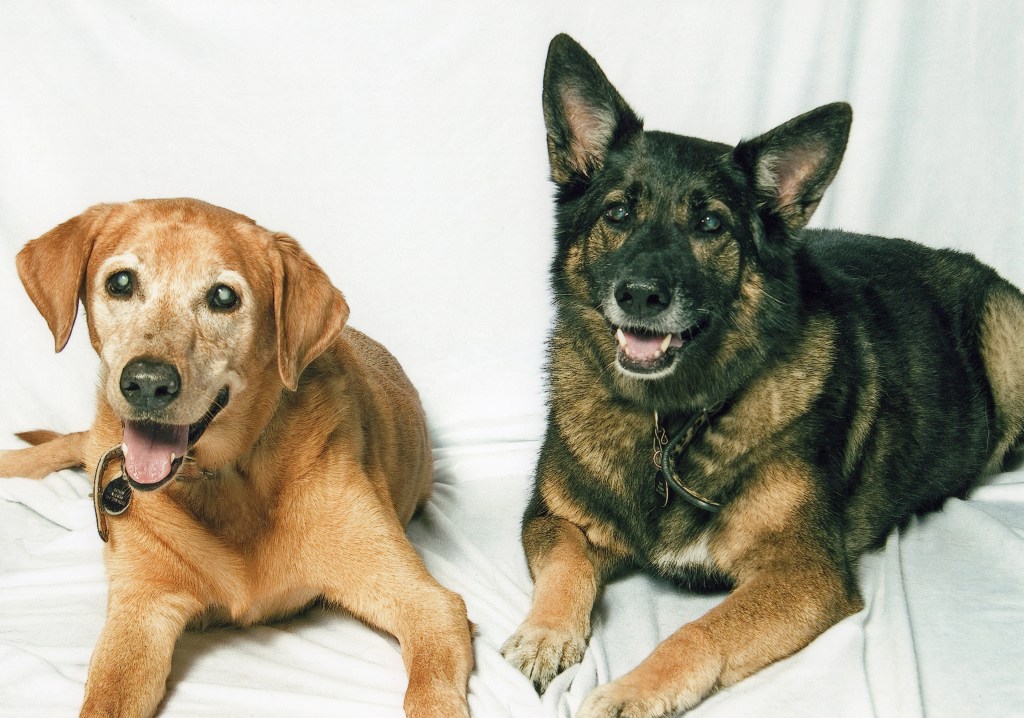
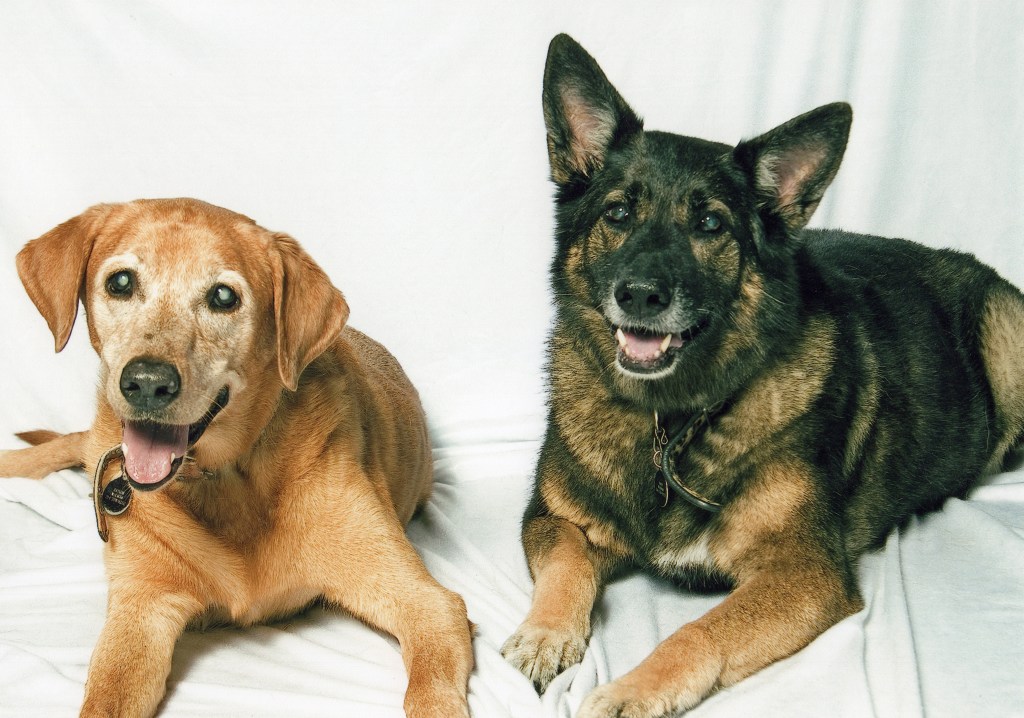
Baylor our Labrador Rhodesian Ridgeback mix on the left and our German Shepherd Baby on the right. They were both old in this photo.
Bronco, or Le Bronco von der Löwenhöhle, was our Leonberger dog. This is a big dog and a rare breed related to Saint Bernards. We got him as a puppy from a Canadian breeder who likely is North America’s most prominent Leonberger breeder. Before we were allowed to buy him, we had to go through an interview to make sure we would be good dog parents. Bronco was a friendly, confident, loving, and funny dog. He was also very protective of our other dogs as well as our hamsters. He rescued run away hamsters on several occasions. He even put them in his mouth once and carried them to safety. He had a great sense of smell and one time he alerted us to Baylor having an oncoming insulin shock and on another occasion he saved our Pug Daisy’s life.
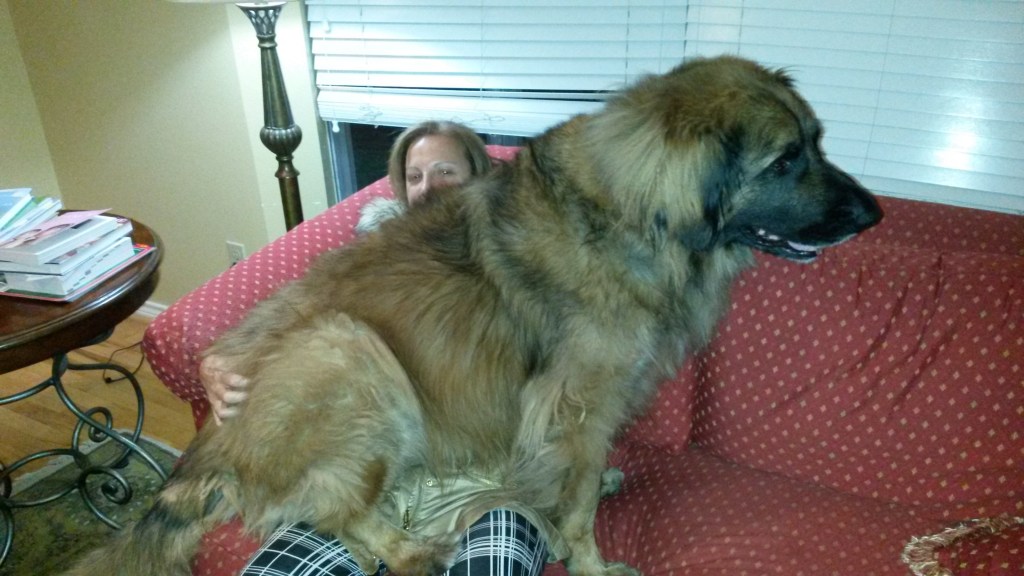
Bronco our Leonberger at three months old.Our Leonberger dog Le Bronco von der Löwenhöhle when he was young. He is giving me a hug.Our Leonberger Bronco sitting in my wife’s lap. He was 167 pounds at the time.
In addition to Baylor, Baby and Bronco we’ve had small dogs including our Japanese Chin Ryu, our Pug Daisy and our mini-Australian Shepherd Rollo who is still with us. Ryu and Daisy were funny and easy dogs and Rollo is very energetic, curious, intelligent and funny, but admittedly a bit of work.
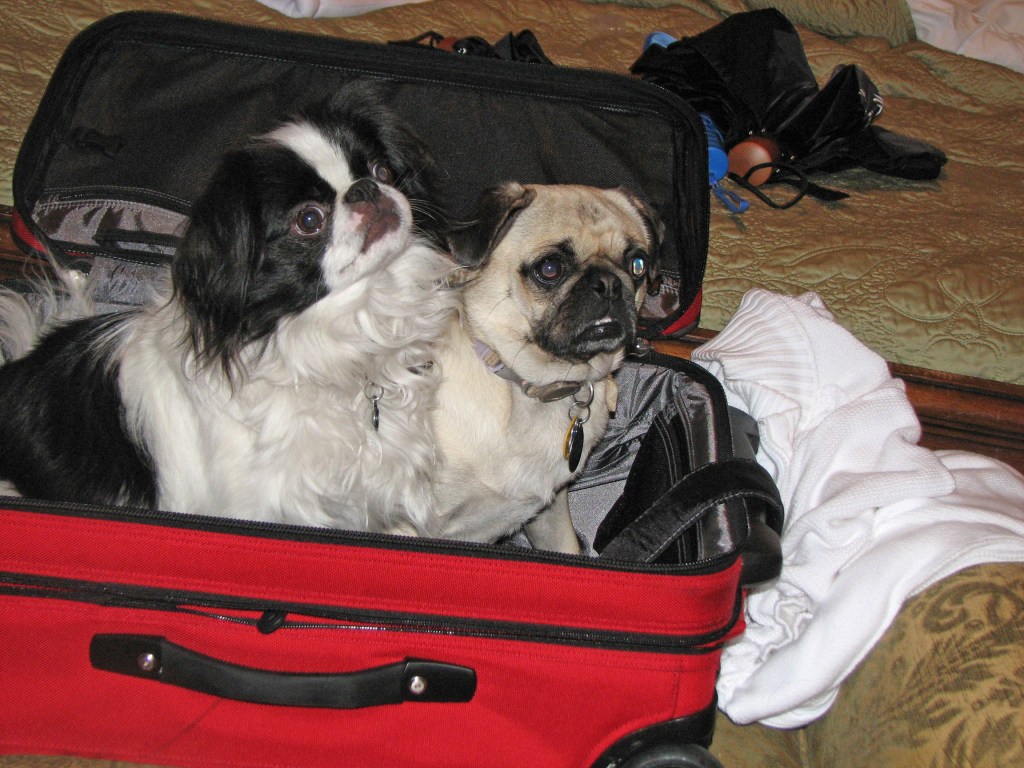
Ryu and Daisy are protesting that we are leaving for a trip. We had someone watching them, but they still hated it when we left.Rollo peeking out behind the sofa.Rollo frequently bit our Leonberger Bronco’s tail, and he even swung in it like a swing. He climbed all over Bronco. Bronco was very patient with him.
What is good about having a pet?
Pets bring a lot of entertainment and joy and they add life to a home. They keep you busy and keep your mind off problems, conflicts and doom scrolling. Intelligent mammals, such as dogs, will also give you cuddles, unconditional love, and they can comfort you. For example, a few weeks ago I was watching a movie that was touching and bit sad and I got a bit emotional That’s when I noticed our dog Rollo staring at me with loving eyes as he tilted his head. Then he came over to me and gave me a dog hug (pressing his body towards mine).
Another advantage of owning a dog is that they need a walk every day. Walking your dog a couple of miles per day will keep you healthy as well. Studies show that dog owners live longer than other people. In addition, dogs can provide practical services such as alerting you when strangers approach your house, they can be guard dogs, sniff out diseases and seizures, in our case without any training.
Your Responsibilities as Pet Owner
You need to feed your pet, provide clean water at all times, wash those food and water bowls daily with soap and hot water, care for your pet, keep it healthy, wash it and clean it, pay for veterinary bills, play with it and provide opportunity for exercise. If your pet is a mammal or a more advanced animal, such as a dog, you need to love it, train it, and it needs to be part of the family. If you are going to keep it on a chain in the backyard, leave it to be lonely most of the time, or uncomfortable, or let it take its own walks without supervision, or return it to a shelter when it gets old and sick, then don’t get a pet, especially not a dog.
The Life and Times of Le Bronco von der Löwenhöhle
Finally, I would like to mention that I wrote a book about Bronco and Leonbergers. About 60% of the book is about Bronco’s daring and often hilarious adventures and 40% of the book is information on Leonbergers, breed history, breed standard, training, care, health, how to get one, and there is an extensive resource guide towards the end of the book.
This is the front cover of the book “The Life and Times of Le Bronco von der Löwenhöhle”. Click on the image to go to the Amazon.com location for the book
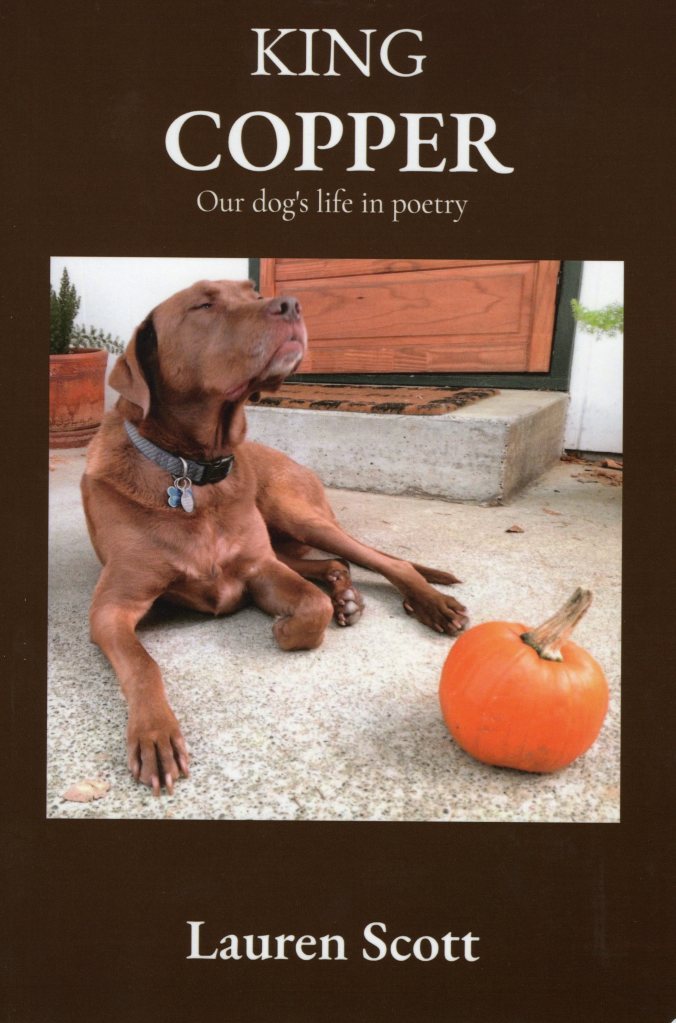
Naturally I would also like to mention my review of Lauren’s wonderful book King Copper: Our dog’s life in poetry. Click here to see it
Front cover of King Copper: Our dog’s life in poetry by Lauren Scott. Click here, or on the image to go to the Amazon page for the paperback version of the book.














 Leonberger Life