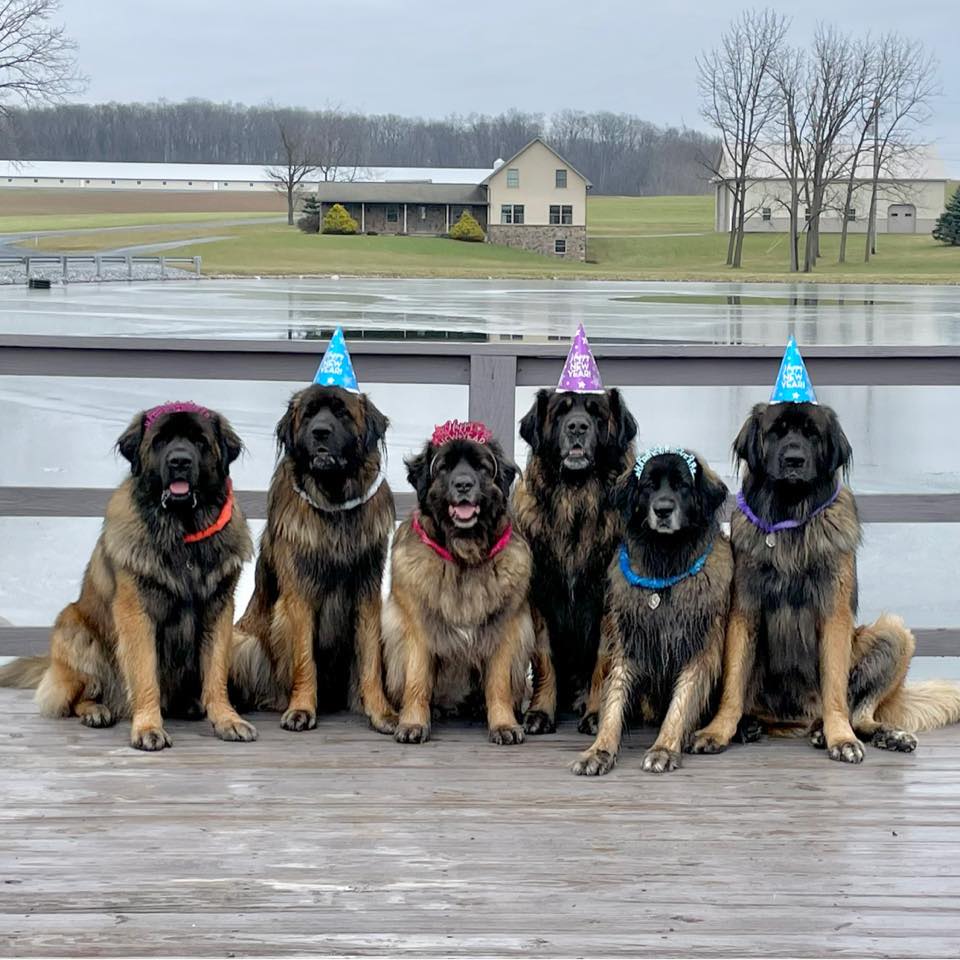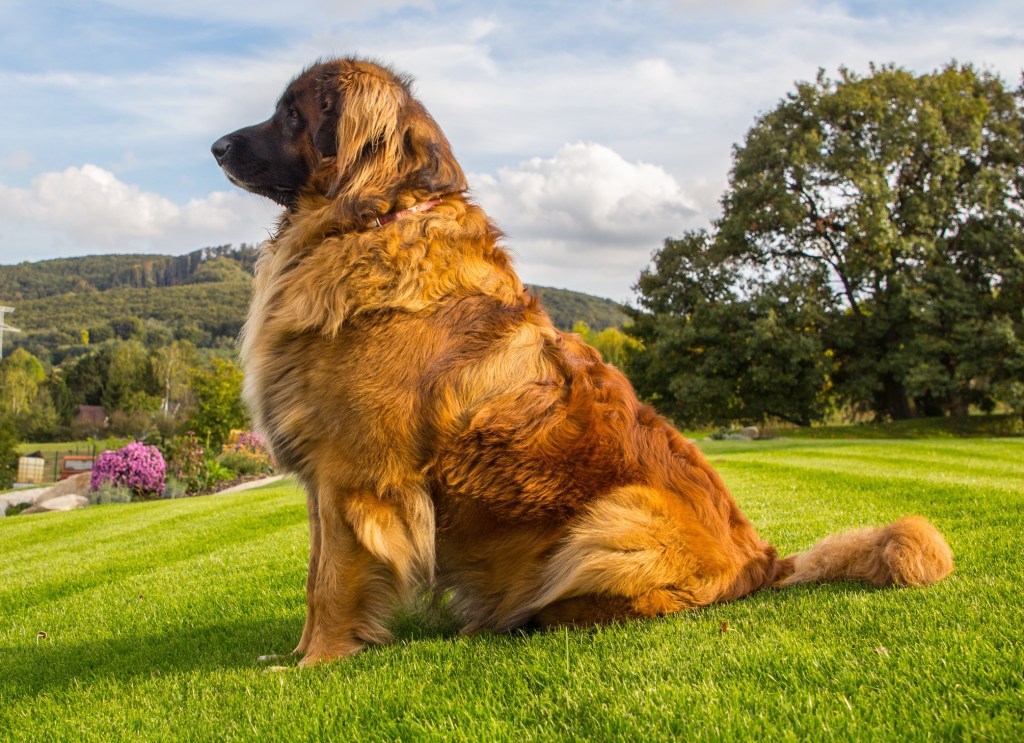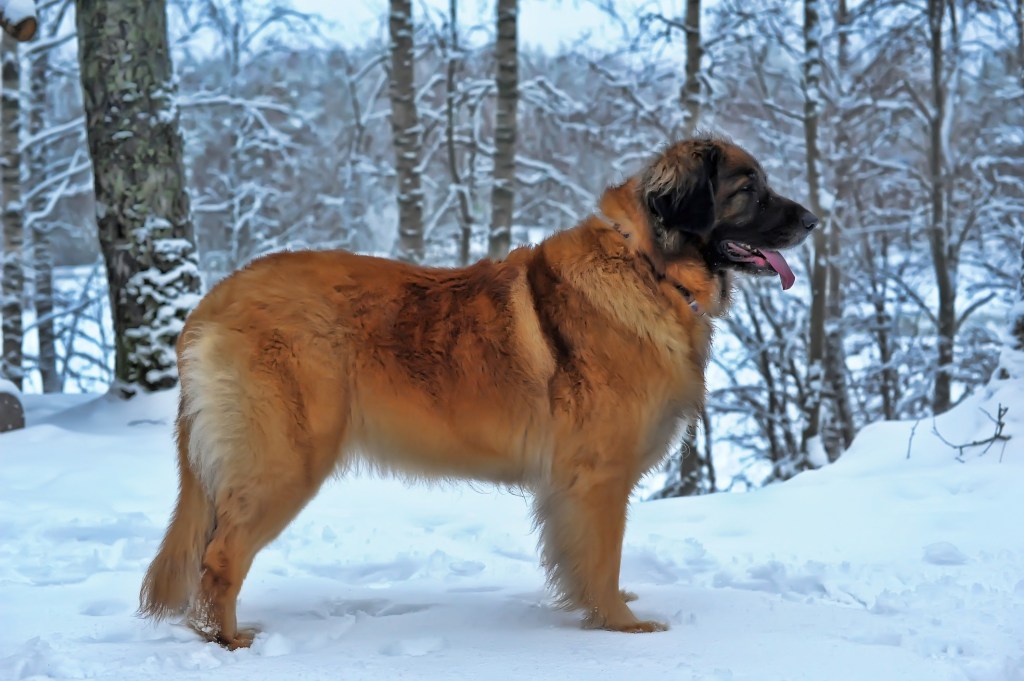
Leonberger Club of America

Esther’s writing prompt: October 1st : Club

Click here or here  to join in.

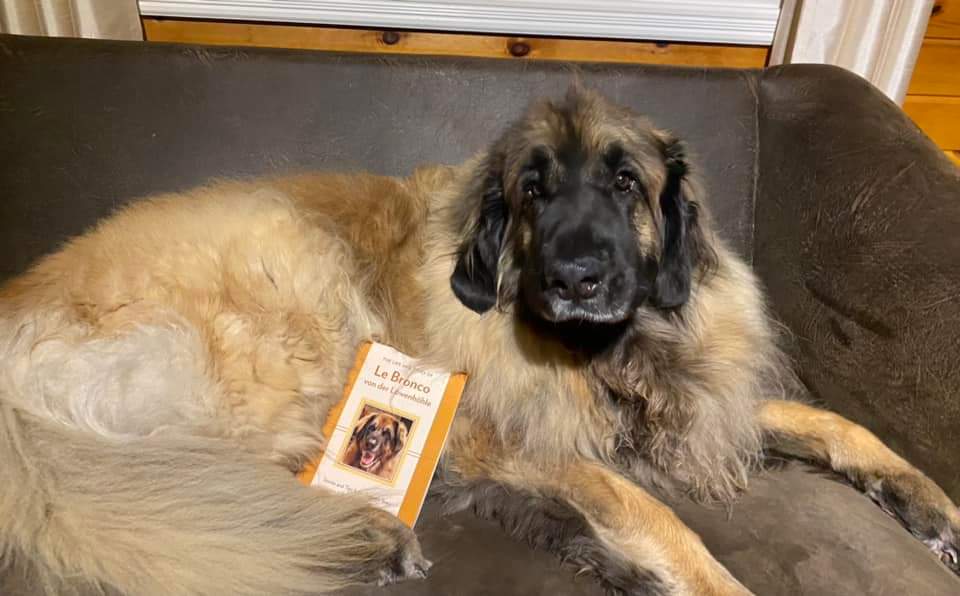
Just a few minutes before I saw Esther Chilton’s writing prompt “club” I received my annual invoice for our family membership in the Leonberger Club of America. What a great reminder to pay my bill and create a post about the Leonberger Club of America. We haven’t had a Leonberger since the summer of 2020 when our Leonberger Bronco, or Le Bronco von der Löwenhöhle passed away. However, we’ve kept our membership because I love their LeoLetter magazine, I know some people, I have this blog, and I wrote a book about our Leonberger and the Leonberger breed after the passing of Bronco (see the side bar on the right or click here for more information).

The Leonberger Club of America

I can add that the Leonberger Club of America, LCA for short, is the official national parent club for the Leonberger breed in the United States (and Canada). It was founded in 1985. Its mission is to preserve and promote the health, temperament, and original type of the Leonberger through education, events, performance programs, and social engagement. The American Kennel Club (AKC) recognizes the LCA as the official Leonberger breed club in the United States.

The Leonberger Club of America make sure that the Leonberger dogs are protected. You are about as likely to find a Leonberger at Petland/Puppy-Mill as you are finding an Elephant for sale there. You typically buy/get a Leonberger dog from an LCA certified Leonberger breeder or from the Leonberger Rescue Pals, and if you don’t that might be a problem. Leonberger breeders interview prospective Leonberger owners and make sure they are a good fit. If you are found to have mistreated a dog in the past, turned one into a shelter, or sold one on an auction, you cannot buy a Leonberger. The breeders are also required to take back the dog if it does not work out. To see the transcript from our Leonberger interview, click here.

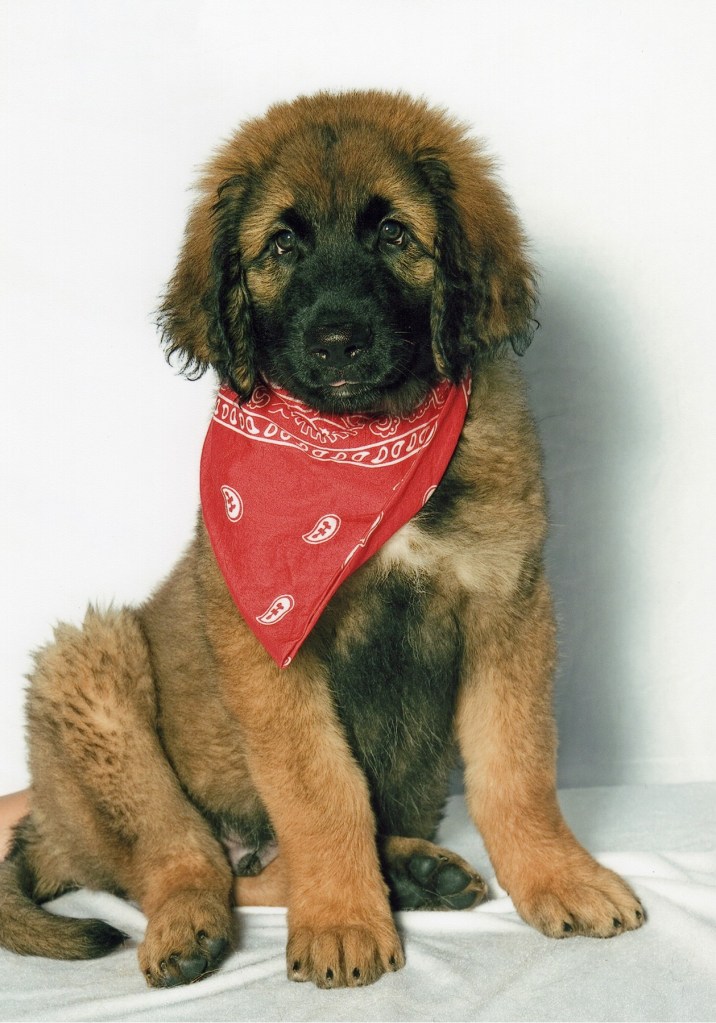
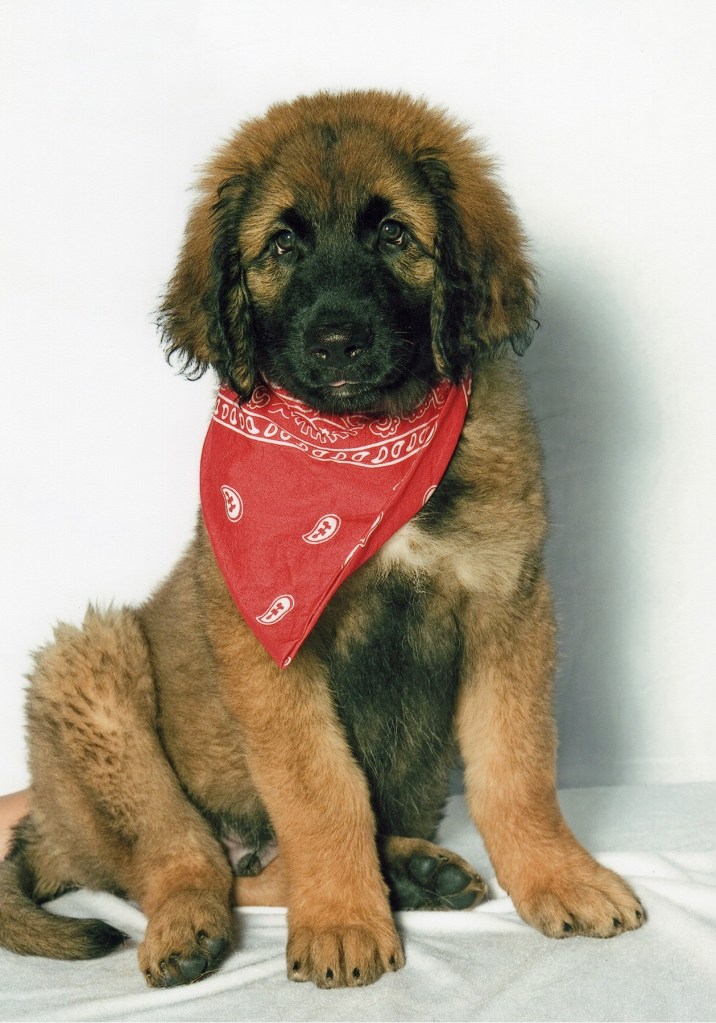
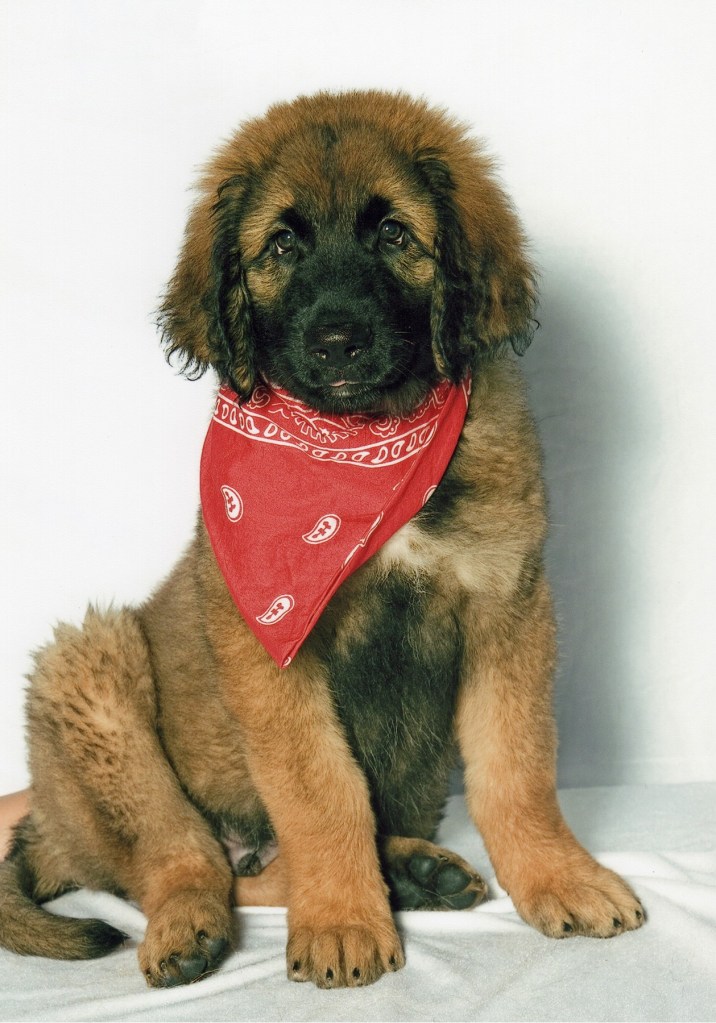
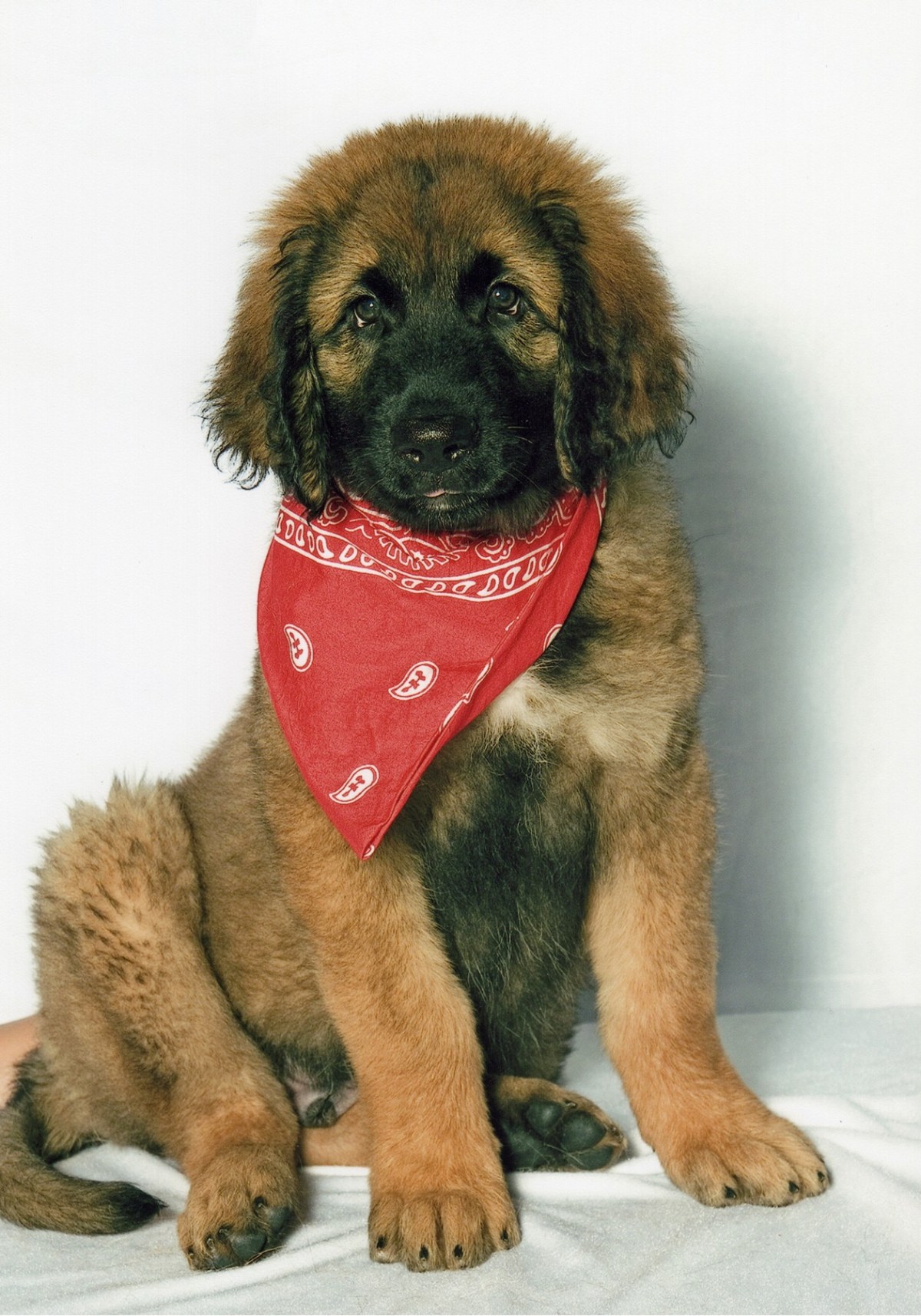
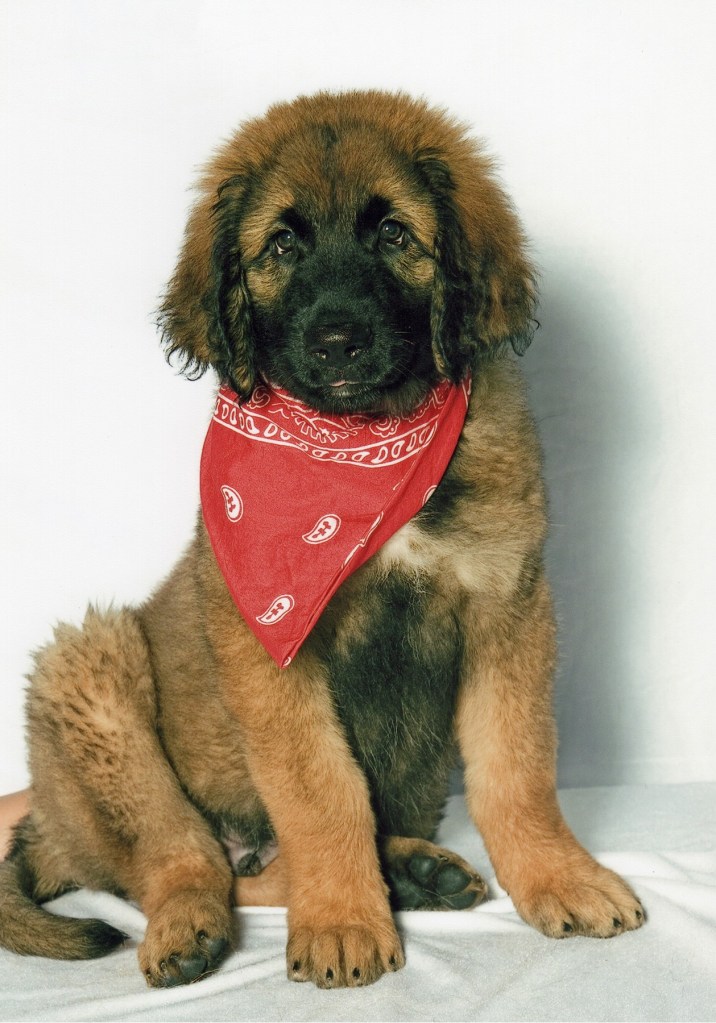
Our three months old Leonberger Bronco wearing a red scarf. He is looking straight into the camera.
We bought our Leonberger Bronco (Le Bronco von der Löwenhöhle) in 2007 from Julie Schaffert, a certified LCA breeder since 1992. This is a photo of him at three months old.

There are only about 3,000 Leonbergers in North America and about 2,000 Leonbergers in the United States but the Leonberger Club of America has more than 1,000 members. They publish the Leo-Letter, a quarterly Leonberger magazine. So, the Leonberger Club of America has a very prominent place among Leonberger owners. Click here to see a summary of the Leonberger Breed Standard.

A majestic Leonberger in standing on a podium and receiving an award. There are two people in picture, judge and handler.
Photo of a Leonberger from the LCA website

Other clubs associated with the Leonberger Club of America are New Jersey Leonberger Club, Great Lakes Leonberger Club, Greater Bluegrass Leonberger Club, Mid-Atlantic Leonberger Club Of Virginia, Tarheel Leonberger Club, AKC Licensed Specialty Club, The Frontier Leonberger Club Of The Southwest, Leonberger Club Of The Northwest, Northern California Leonberger Club, and the Surf And Sand Leonberger Club Of Southern California. I am a member of The Frontier Leonberger Club Of The Southwest. Other Leonberger clubs are the Leonberger University, Leonberger Health Foundation International, and the Worldwide Independent Leonberger Database. You can learn more about the Worldwide Independent Leonberger Database by clicking here.

The History of the Leonberger Club of America

Leonbergers have a long history in North America and the United States—despite the fact that until 1985, there were only seventeen Leonbergers known to be living in the United States. See: Lusby, Leonberger, page 15.

Front cover of the book Leonberger, Special Rare-Breed Edition, A Comprehensive Owners Guide, Madeline Lusby. It features a photo of an adult Leonberger and a puppy Leonberger.
Leonberger, Special Rare-Breed Edition, A Comprehensive Owners Guide, Madeline Lusby

In the 1870s, Leonbergers were brought to Newfoundland to invigorate the stock of Newfoundland dogs. Around the same time, two Leonbergers named Caesar and Sultan were purchased from Heinrich Essig’s kennel (founder of the Leonberger breed) and transported across the ocean to join the Wellesley-Sterling theater company in the United States as the stars of their productions. Then in 1879, Caesar and Sultan visited President Ulysses S. Grant, who called them the largest and most magnificent dogs he had ever seen and presented them with gold medals. During the years between World War I and World War II, a New Jersey family, the Wolfs, opened their home as a temporary refuge for Jews fleeing Germany: they also imported Leonbergers. Unfortunately, this introduction of the breed into the United States did not last, and it would be another fifty years before the Leonberger appeared in America again.

See: Bliss-Isberg, Leonberger, page 60, page 64, page 101

Front cover of the book Leonberger, A comprehensive guide to the lion king of breeds, by Caroline Bliss-Isberg. It features the face of a large Leonberger.
Leonberger, A comprehensive guide to the lion king of breeds, Caroline Bliss-Isberg

During the late 1970s and the 1980s, a few families—Waltraut and Klaus Zieher, Brian Peters, Manfred and Sylvia Kaufmann, Keri Campbell and Melanie Brown, and Mary and Reiner Decher brought Leonbergers to the United States. The Dechers had started a breeding program and were looking for a mate for their first dam, Viona. By chance their neighbor discovered through a newsletter that there was another Leonberger in the United States, and that led to the families’ finding and connecting with one another. I should add that the Dechers were careful to conform to the German breeding regulations and performed hip X-rays that they then submitted to the Orthopedic Foundation for Animals (OFA). Viona became the first OFA-certified Leonberger in America.

See: Bliss-Isberg, Leonberger, page 152.

On Saturday, November 2, 1985, eight of these Leonberger enthusiasts met at a hotel in Denver, Colorado, to found the Leonberger Club of America (LCA). This group of founders, which has since been dubbed the Denver Eight, appointed a registrar, formulated a breeding acceptability checklist, and instituted various policies, including the requirement that OFA certification is mandatory for breeding. LCA membership grew: it held social gatherings, began publishing LeoLetter, and imported an increasing number of dogs. Now the LCA has thousands of members across the country, and Leonbergers receive high ratings on health tests relative to other large breeds. For example, in 2000, the OFA reported that only 14.6 percent of Leonbergers tested positive for hip dysplasia, compared to 47 percent of Saint Bernards.

See: Bliss-Isberg, Leonberger, page 154, page 176.

Founding of the Leonberger Health Foundation International

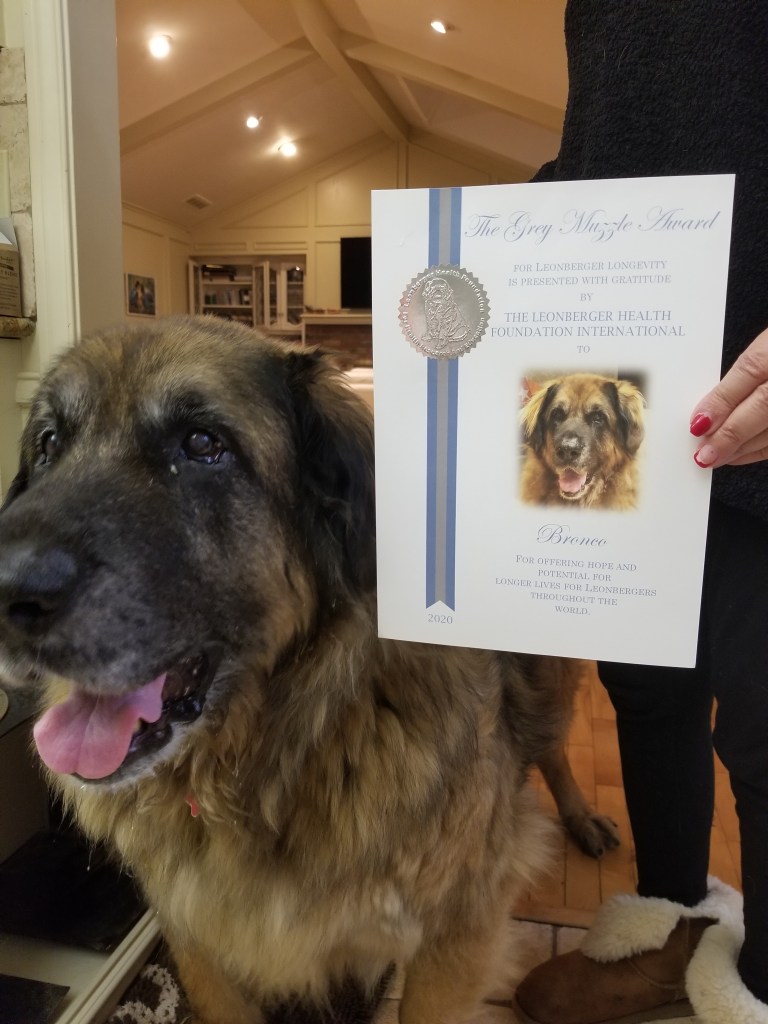
Another important historical event was the founding of the Leonberger Health Foundation International (LHFI), in 2000 (it was just called the Leonberger Health Foundation back then). According to its website, the organization was founded by Waltraut Zieher and other memers of the LCA’s health, education, and research committee to “facilitate the solicitation and distribution of donations given to support health related breed-specific research.” The LHFI also administers a program that collects DNA samples from Leonbergers to share with universities and research institutions, and of course it administers the Grey Muzzle Award (long living Leonbergers). Our Leonberger Bronco was a recipient of the Grey Muzzle Award, and we provided them with his DNA.

The Grey Muzzle Award diploma features a photo of Bronco and contains the text “The Grey Muzzle Award. For Leonberger Longevity is Presented with Gratitude By The Leonberger Health Foundation International To Bronco, for offering hope and longer lives for Leonbergers throughout the World.”
Bronco’s Grey Muzzle Award, which he received for being an unusually long lived Leonberger.

LHFI’s global biobank contains DNA samples from more than nine thousand Leonbergers. Among the organization’s notable achievements are the eradication of Addison’s disease among Leonbergers and the raising of nearly half a million dollars for research into conditions that affect canine health, including osteosarcoma, hemangiosarcoma, glaucoma, cardiac diseases, thyroid diseases, and neurological disorders. Its research also supports healthful longevity and aging as well as population diversity. Another success is the fact that since 2011, no Leonbergers with two copies of the LPN1 gene mutation (which causes Leonberger polyneuropathy) have been recorded in LHFI’s biobank. LHFI is one of my favorite charities.

The Dog Wars of America

The end of the twentieth century marked not only the end of the Cold War but also the beginning of what I call the Dog Wars of America. In 1985, the American Kennel Club (AKC) registry comprised one-third of the world’s known dog breeds. But the AKC had recognized only a few new breeds since 1887—a period of ninety-eight years. So, the organization decided to change that policy, but this did not always go smoothly. The members of rare-breed clubs often did not want to be part of the AKC. For example, the Australian Shepherd Club of America (ASCA) was very reluctant to join, so a relatively small splinter group, the United States Australian Shepherd Association, was formed and designated the official member club of the AKC, which was not welcome news to the ASCA. The border collie is another example. Charles Krauthammer, the late political columnist, called the AKC the politburo of American dog breeding.

See: Bliss-Isberg, Leonberger, page 159.

Similarly, in 2003, a new Leonberger club was formed—the Leonberger Club of the United States—with the goal of becoming the Leonberger member club of the AKC. This essentially forced the LCA’s hand, so they applied for membership in the AKC, a process that took years to complete. But ultimately the AKC approved the LCA as members in 2010: Leonbergers would officially become part of the Working Group. Fortunately, 90 percent of LCA breeders agreed to continue following LCA regulations regardless of whether the club would remain independent or become part of the AKC. Also fortunately, AKC membership afforded more opportunities for Leonbergers to participate in dog shows, which is important to many owners.

See: Bliss-Isberg, Leonberger, page 187

For more information on the history of the Leonberger starting in 1830’s click here.

On the left there is a color photo of our Leonberger as a puppy. He is wearing a scarf. On the right he is big, old and gray and lying in the grass looking into the camera.
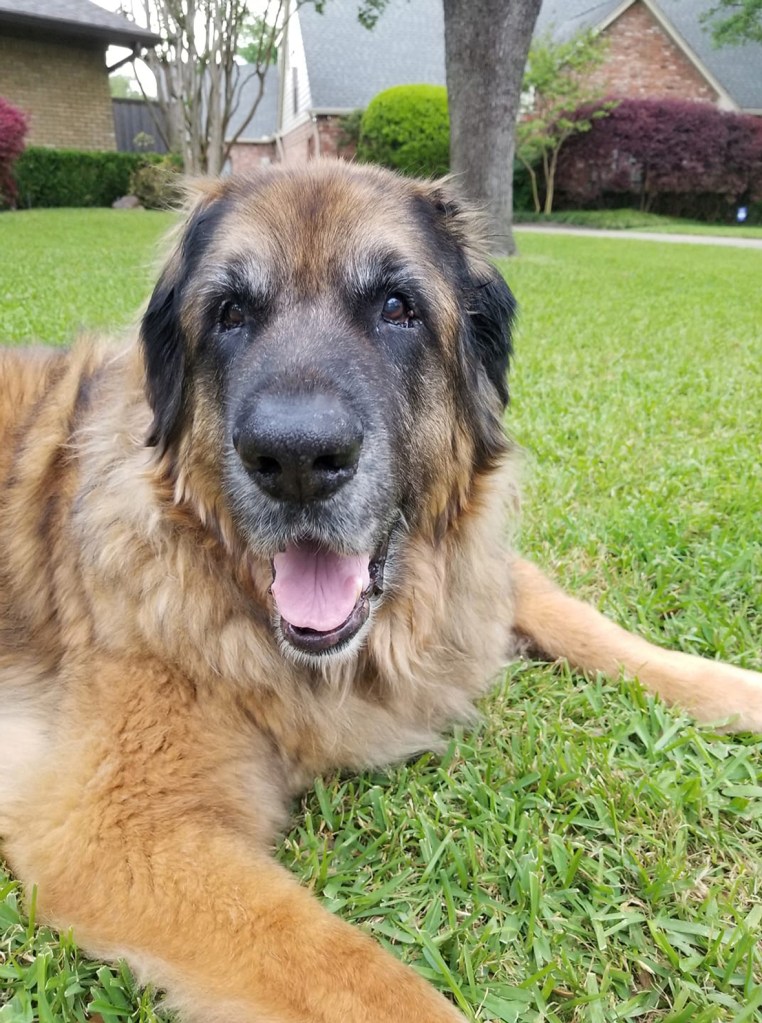
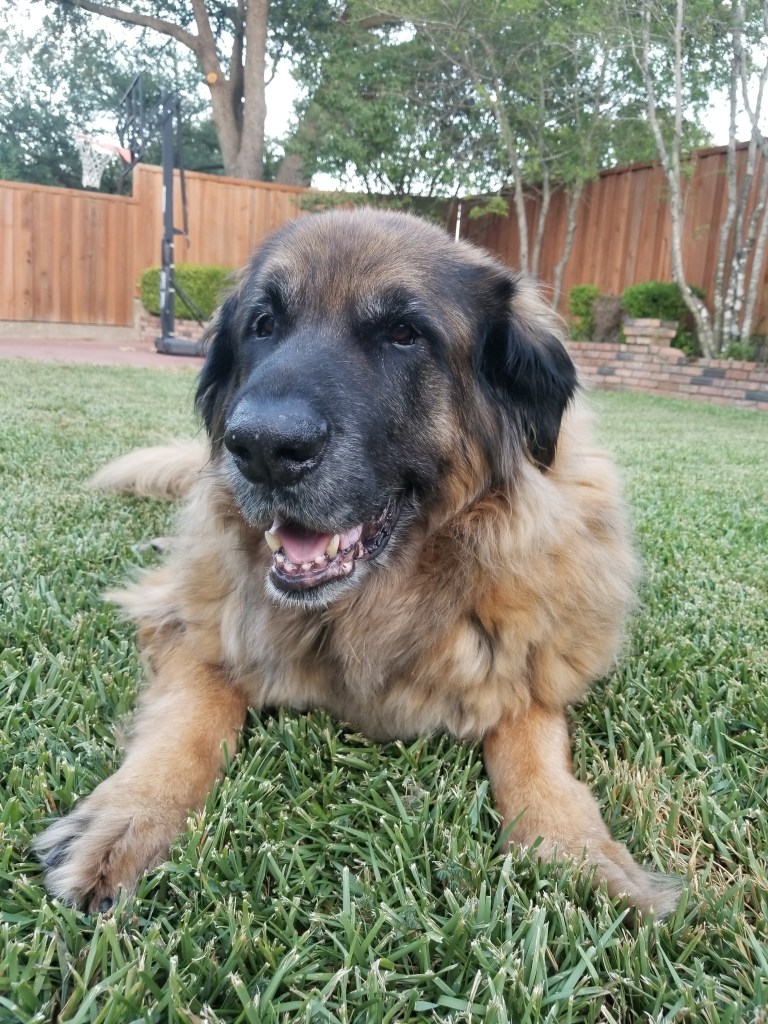
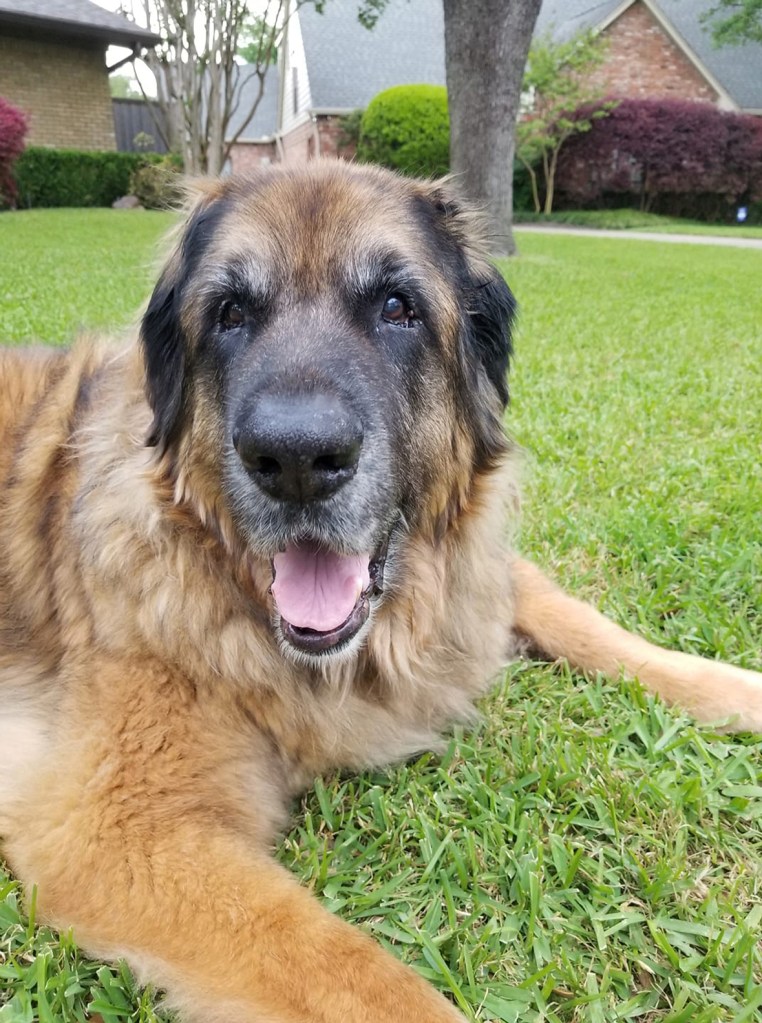
On the left our Leonberger Bronco at three months old. On the right Bronco as an unusually old Leonberger at almost 13.
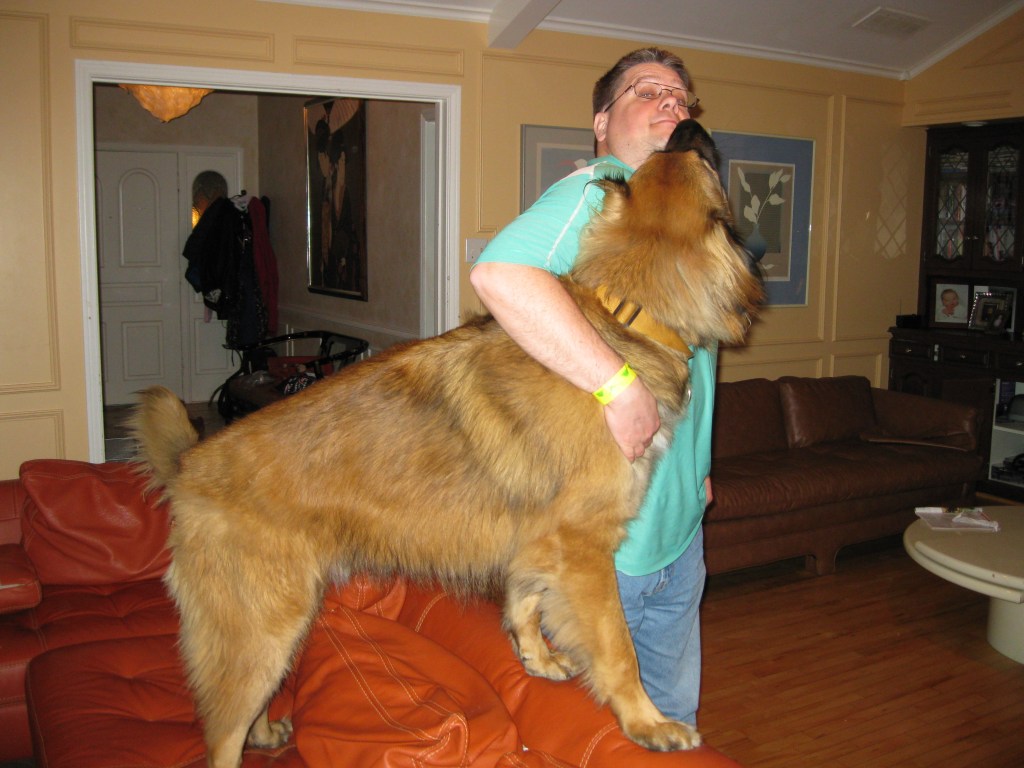
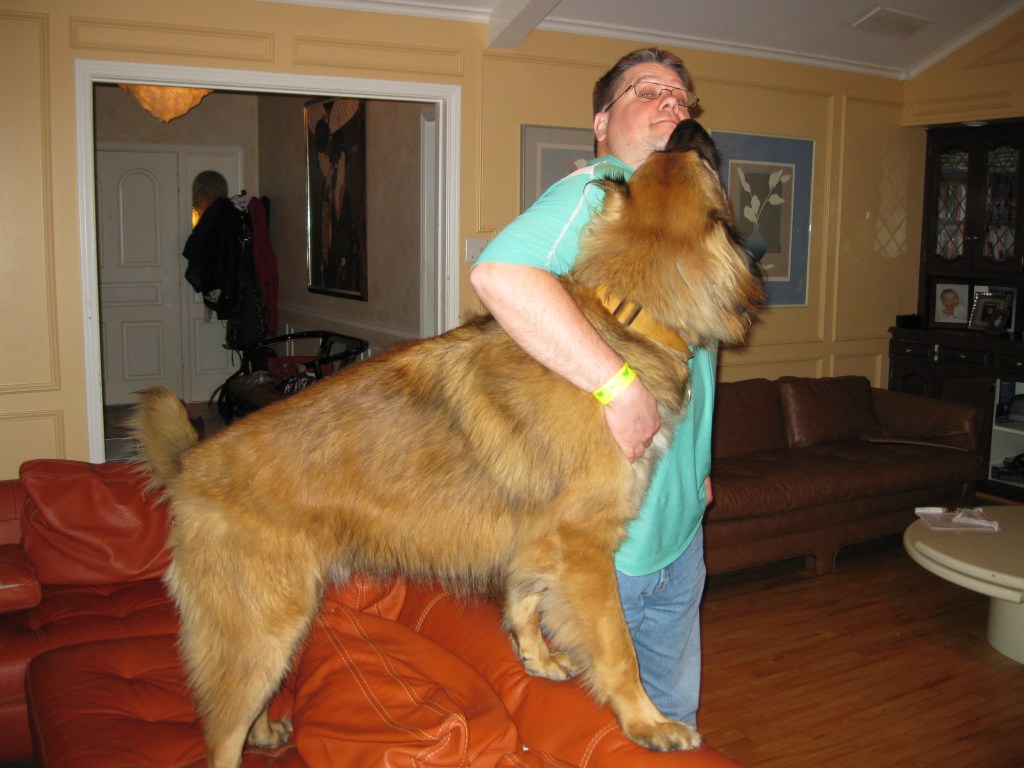
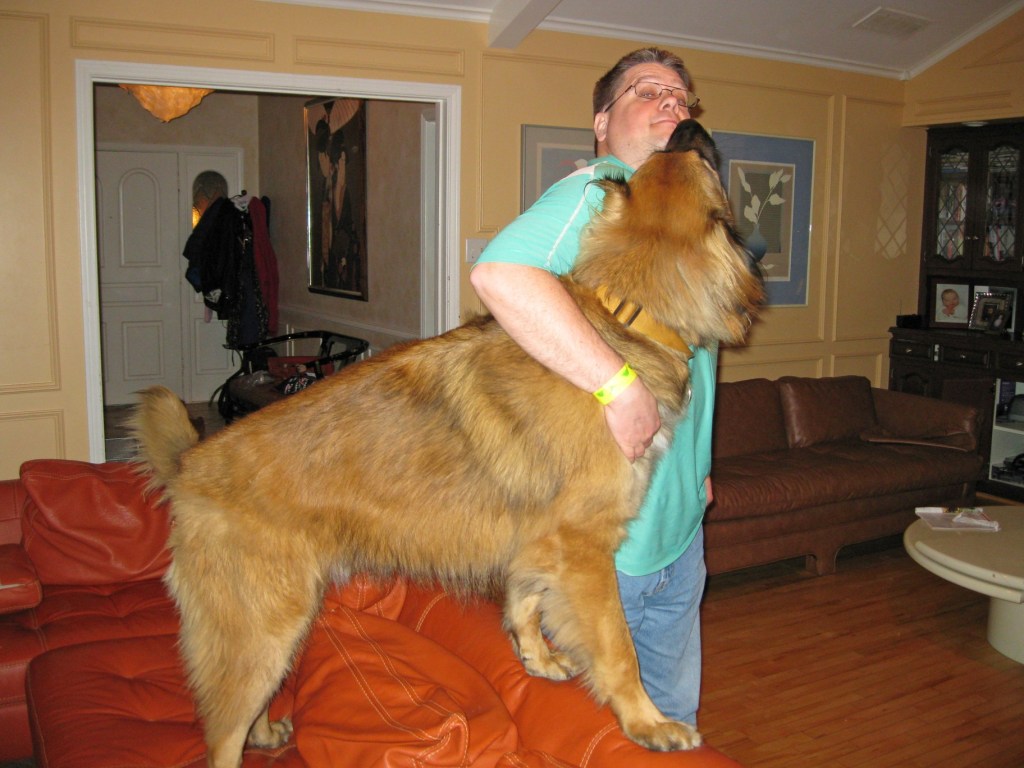
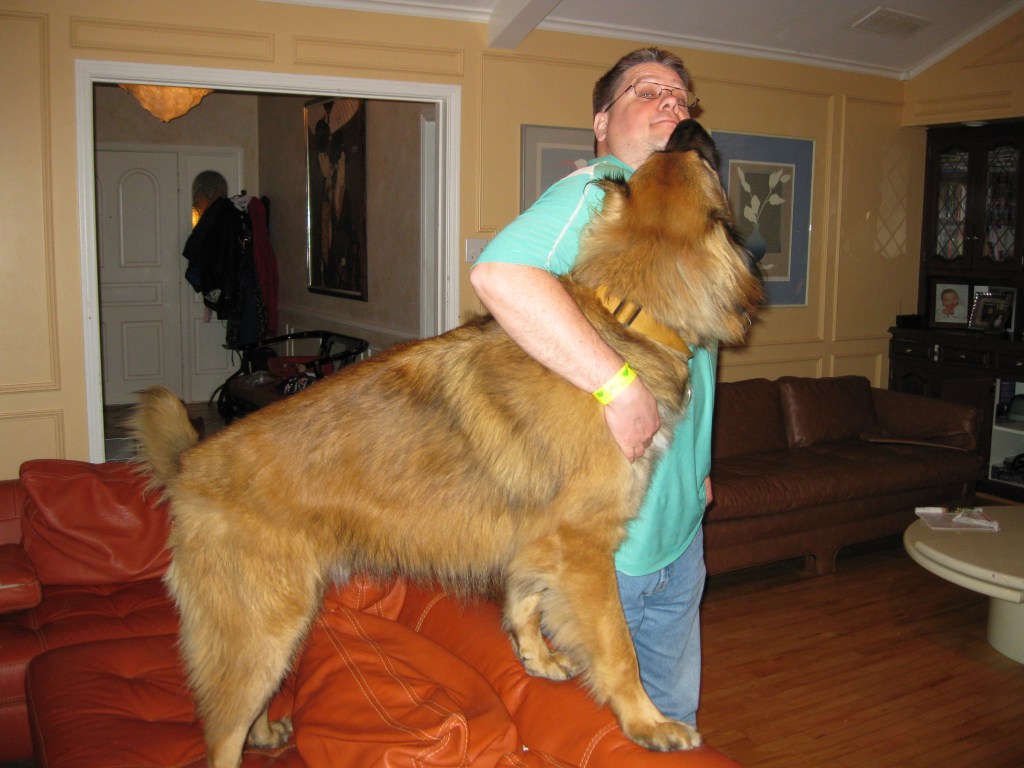
Bronco is standing on our red leather sofa giving me hug and a kiss.
Bronco our Leonberger is giving me a kiss. He is about one year old and not yet fully grown.
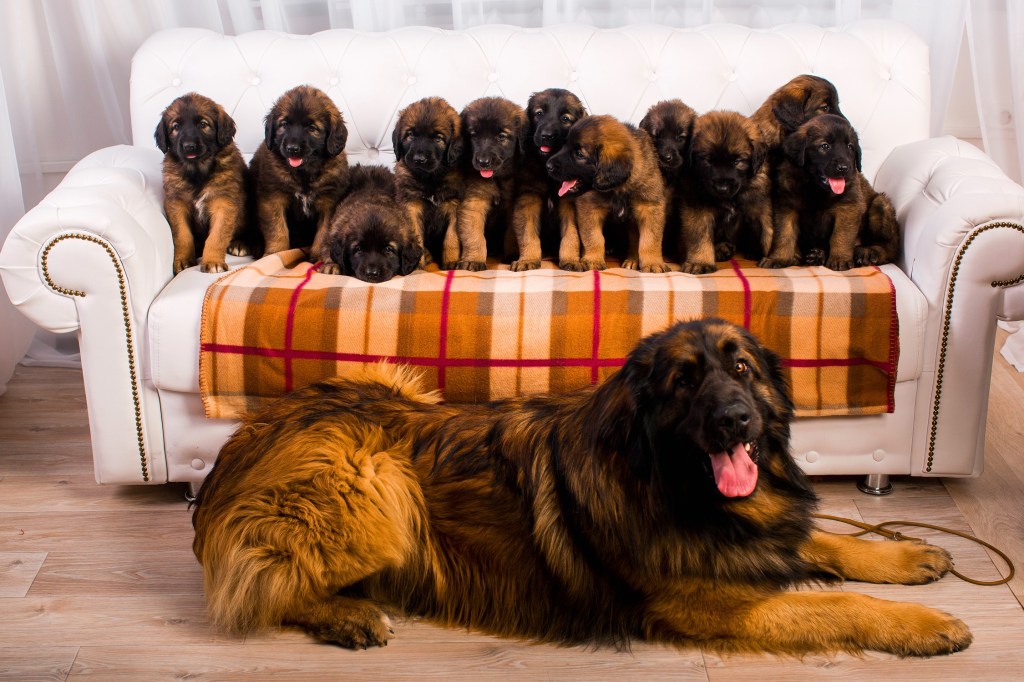
Seven Leonbergers lying or sitting on the sand on a beach.
Seven Leonbergers by the beach. Photo by Jen O’Keefe.

A Dogs Prayer

This is going to be a short blog post. First, I would like to make an announcement. My wife and I became grandparents for the first time a little bit less than a week ago. The baby’s name is Jack.

This post is about a dog’s prayer, which I with permission is borrowing from fellow blogger pensitivity101. This post is also related to one of my previous posts : Promises To My Dog.

The picture features a dog’s prayer on black and the head of a sleeping Labrador. The full dog’s prayer is shown below.
A dog’s prayer – anonymous author

A Dog’s Prayer

I am typing out the prayer in case it is hard to read the text in the picture.

Before humans die, they write their last Will & Testament, give their home & all they have, to those they leave behind. If, with my paws, I could do the same, this is what I’d ask…
To a poor and lonely stray I’d give:

  • My happy home
  • My bowl & cozy bed, soft pillows and all my toys
  • The lap, which I loved so much
  • The hand that stroked my fur & the sweet voice which spoke my name

I’d Will to the sad, scared shelter dog, the place I had in my human’s loving heart, of which there seemed no bounds.

So, when I die, please do not say, “I will never have a pet again, for the loss and pain is more than I can stand”.

Instead, go find an unloved dog, one whose life has held no joy or hope and give MY place to HIM.

This is the only thing I can give…

The love I left behind

Author Unknown

Poetry Wisdom Love and Happiness

This is a Leonberger blog, but I also post about other topics including book reviews of books that I love and want to promote. With this post I would like to promote a beautiful poetry book full of wisdom, Celebrating Poetry by Cindy Georgakas.

Below is an overview of the two formats of Celebrating Poetry by Cindy Georgakas

  • Paperback –  Publisher : Literary Revelations LLC (November 16, 2024), ASIN : B0DNCRS8W8, ISBN-13 : 979-8991332538, 183 pages, Item Weight : 11.8 ounces, dimensions ‏ : ‎ 6 x 0.42 x 9 inches, it cost $6.99 on US Amazon. Click here to order it from Amazon.com.
  • Kindle – Publisher : Literary Revelations LLC (November 15, 2024), ASIN : B0DNBPC4GP, ISBN-13 : 979-8991332521, 183 pages. It is currently $0.99 on Amazon.com. Click here to order it from Amazon.com.
A colorful beach with grass, blue water and a stone wall. The front page also includes the title, “Celebrating Poetry”, the author’s name, and the text “A companion guide to recreate and celebrate.”
Front cover of Celebrating Poetry by Cindy Georgakas. Click on the image to go to the Amazon page for the paperback version of the book.

Amazon’s Description of Celebrating Poetry by Cindy Georgakas

Cindy Georgakas is not just a wellness therapist; she is a beacon of hope and creativity through her exceptional poetry. Celebrating the profound impact of her written words, we find that her beautiful verses resonate deeply with those who seek to overcome obstacles in their lives. Each poem serves as a reminder that it’s possible to celebrate success, regain trust in yourself, and ultimately embrace love and happiness. The spirituality of the book is of a religious quality.

In a world where many feel lost or disconnected, Cindy Georgakas offers not only words but also a chance for readers to reconnect with their inner selves and rediscover joy amidst adversity. Embrace the opportunity to explore her work; you may find that within each line lies the key to your own healing journey.

This book is a must read.

This is my Amazon five-star Amazon review of Celebrating Poetry

The Poetic Book of Wisdom

This book is best read as a companion guide to another book by the author; Re-Create and Celebrate. However, as I understand this collection of conversational poems can easily be read stand-alone, which is what I did (the paperback). The book is a collection of motivational poems grouped into 4 steps; Trusting your path, From darkness to light, Ignite insight, and Celebrate. Each step features an introduction of words of wisdom related to life and explaining the purpose of the section.

The poems express thoughts, reflections, wisdom, personal experiences, love, and life lessons. The poems are beautiful and offer hope, comfort, encouragement and deeper meaning. They celebrate nature and the beauty of life. The book is also well organized and offers a flowing and delightful reading experience. The book features thousands of pearls but I would like to mention a couple.

On page 123: I place my shells on my bedside with the ashes and small bones of my grandmother and remember her crooked teeth, her one blue eye and one brown, her wrinkles and I smile, remembering it never mattered how she looked but how she made me feel.

On page 169: I guess we’ll all have to take that chance and see because no matter how much I care and love you, I just must be me and so do you.

An overview of the book, a photo of the author and an introduction to the author.
Back cover of Celebrating Poetry by Cindy Georgakas. Click on the image to go to the Amazon page for the Kindle version of the book.

About the Author of Celebrating Poetry

Cindy is a San Francisco native and currently lives nestled in the trees in a small community with her husband. She is a health and wellness professional, a certified life coach, personal trainer, yoga/meditation teacher, and bodyworker. She draws inspiration from her clients, friends, four children, 4 legged furry kids and nature.
Her new book Celebrating Poetry is a #1 New Top Release on Amazon. It is a companion guide to her book, Re-Create & Celebrate: 7 Steps to Live the Life of Your Dreams, has over 41 5 Star Reviews. She was voted Author of the Month on Spillwords Press in April 2023 and Publication of the Month on Spillwords in October 2022.

She is a co-author of #1 Amazon Bestseller, Wounds I Healed: The Poetry of Strong Women, #1 Best Seller of Hidden In Childhood: A Poetry Anthology and is also a Treasured Contributor to MastecadoresUsa.

You can read more of Cindy’s work at Unique Times by Cindy Georgakas

Click here to visit Unique Times

Promises To My Dog

Esther’s writing prompt: 17th September : Promises

Click here or here to join in.

Dogs are domesticated wolves. To survive in our human society, they need to be taken care of. We often get them as puppies and all they know is how to live with people. When you get a dog, this is a lifetime commitment. Despite this fact a lot of people buying puppies bring them to shelters and many irresponsible breeders bring unsold puppies to shelters. In addition, 7% to 20% of dogs adopted from shelters are returned to the shelters, mostly due to behavioral issues or owners’ unrealistic expectations. Dogs who were returned for behavioral issues were also more likely to be euthanized.
Some dog owners don’t even bother to turn their dog into a shelter, they just abandon them. In the U.S., approximately 3.1 million dogs enter shelters each year. Many of these are abandoned, the offspring of abandoned dogs, or lost pets. In the U.S., about 60% of dogs entering shelters are strays. As a side note, abandoning a dog is illegal in almost every US state, including Texas where I live. We dog owners need to do better. We have responsibilities towards our dogs, to feed them, raise them, train them, exercise them, take care of them, and continue to shelter them when they get old and sick.
The Leonberger community has taken significant steps towards protecting Leonberger dogs from abuse and abandonment. First, the Leonberger Club of America certifies responsible breeders and work to prevent dogs from ending up with backyard breeders and puppy mills. Breeders are required to take back and care for a dog if it does not work out. All prospective Leonberger owners are interviewed and must sign a contract dictating how they should treat the dog. If they find out that you have mistreated a dog or failed to take care of a dog you cannot buy a Leonberger. To see the transcript for our Leonberger interview click here.

12 Promises to my Dog

  • Dear fur angel, I promise to feed you properly.
  • Dear fur angel, I promise to protect you from toxic foods such as raisins, grapes, chocolate, xylitol, birch sugar, onion and garlic.
  • Dear fur angel, I promise to protect you from toxic plants, dangerous household items and animals.
  • Dear fur angel, I promise to keep one or more water bowls always filled with fresh and clean water for you.
  • Dear fur angel, I promise to comfortably shelter you.
  • Dear fur angel, I promise to train you and care for your physical and emotional needs.
  • Dear fur angel, I promise to walk you every day (on days when this is possible).
  • Dear fur angel, I promise to take care of all your veterinary needs.
  • Dear fur angel, I promise to play with you, pet you, and throw balls.
  • Dear fur angel, I promise to never abandon you.
  • Dear fur angel, I promise to be there for you when you cross the rainbow bridge.
  • Dear fur angel, I promise to love you forever.

Puppy Versus Old Dog Photos

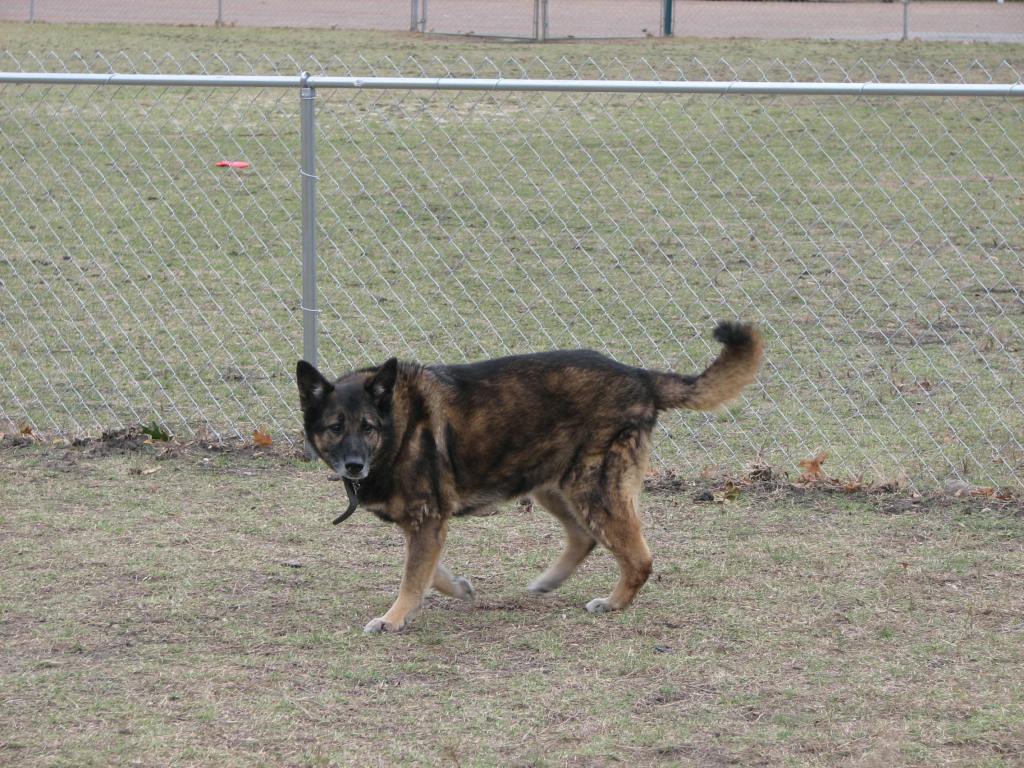
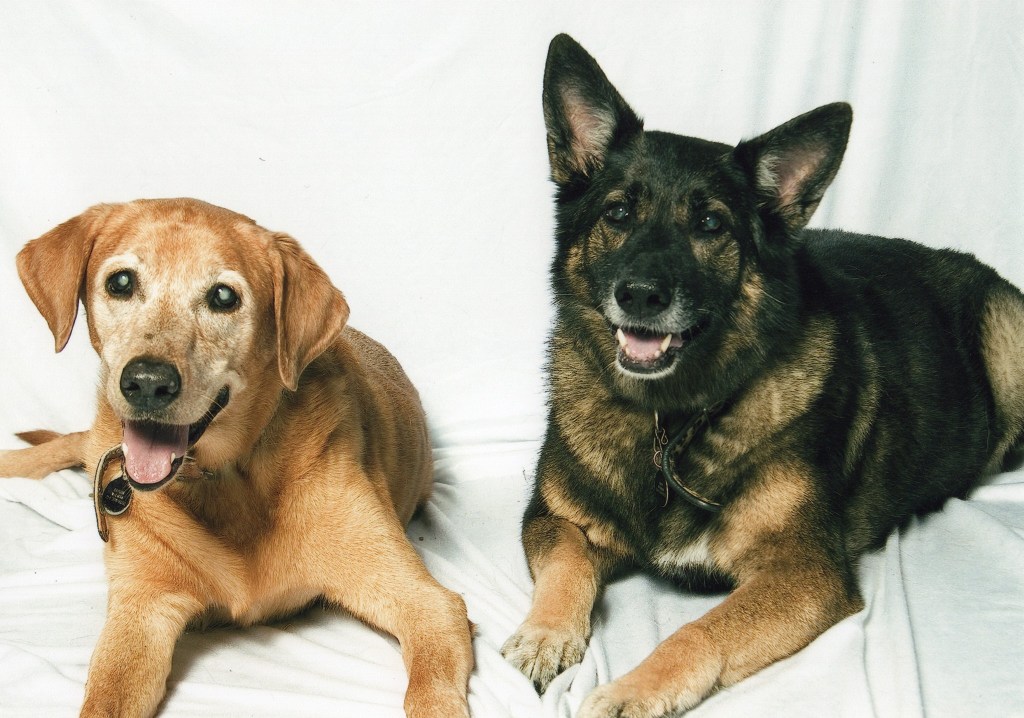
Below are some photos of our dogs. Except for the first photo, which is a photo of our Labrador Baylor and German Shepherd Baby at an advanced age, the photos are arranged so that the first is photo of the dog as a puppy followed by a photo of the same dog at an advanced age. I should say that we got Baylor and Baby when they already were adults and we don’t have puppy photos of them. What happened was that family members of ours had got them from a shelter and when those family members later needed to move, we offered to take care of them.

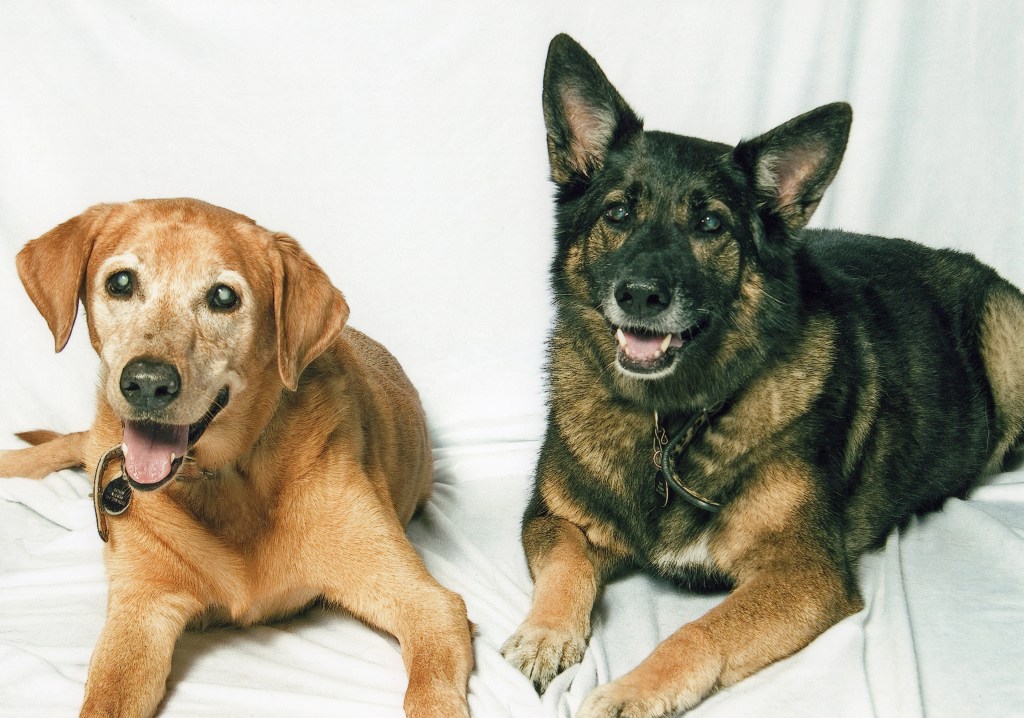
Both dogs are laying on their stomach. Baylor, a yellow Labrador, is on the left and Baby a brown and black German Shepherd is on the right.
Our Labrador Baylor, left, and our German Shepherd Baby, right. Both dogs are at an advanced age. I should add that Baylor was partially a mix. He was three quarters Labrador and one quarter Rhodesian Ridgeback.
Our Leonberger Bronco Puppy is sitting looking into the camera and wearing a red scarf.
Our Leonberger Le Bronco von der Löwenhöhle at three months old.
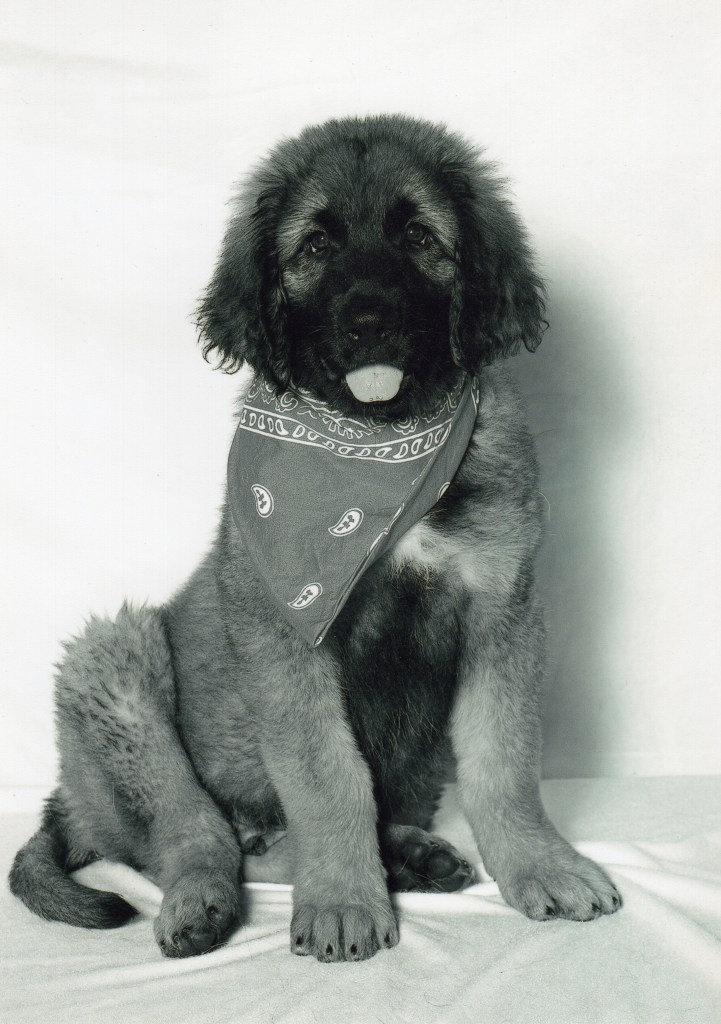
Our Leonberger Puppy is sitting looking into the camera and wearing a scarf. It is a black and white picture.
Our Leonberger Bronco at three months old.
Our Leonberger is standing on the left. My wife is standing on the right and holding the Grey Muzzle Award diploma.
Our Leonberger Bronco received the Grey Muzzle Award for longevity at age 12. Leonbergers typically live 8-10 years. It was the Leonberger Health foundation International that gave him the award. My wife is holding the Grey Muzzle Award diploma.
Our soon 13 year old Leonberger Bronco is lying on the lawn in front of our house. He is looking into the camera.
Our soon 13 year old Leonberger Bronco.
Ryu our Japanese Chin is dancing with our daughter. He is looking into the camera. It looks like he is laughing.
Our Japanese Chin puppy Ryu loved to sing and dance when. Well, howl and dance.
Ryu our Japanese Chin is sitting and looking serious.
Ryu is old in this picture. He has an illness, and he is more serious.
Daisy, our pug, is in our son’s arms. He is wearing a red shirt.
Our pug Daisy in our younger son’s arms. She is a puppy in this picture. People typically assumed that Ryu was the female and Daisy the male, but it was the other way around.
Our pug Daisy, is wearing a pink party hat and she is eating a Pup Cake.
Daisy’s 15th birthday. She is getting old. She is having a Pup Cake.
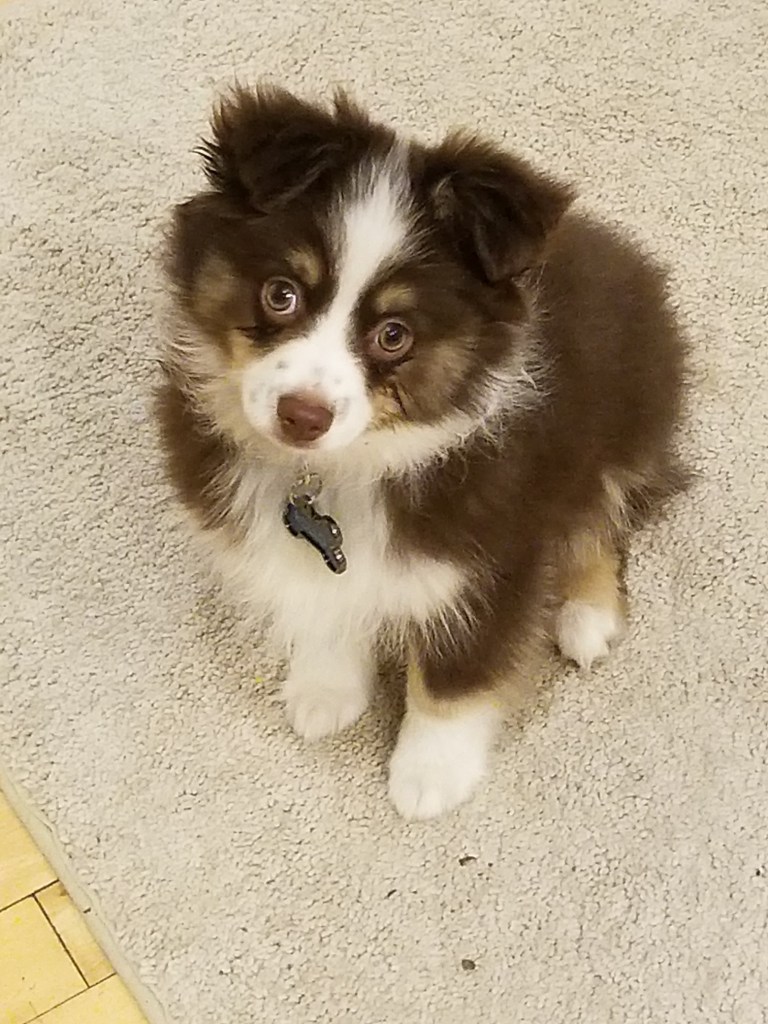
Our mini-Australian Shepherd Rollo puppy is looking into the camera. He is white and dark brown.
Our mini-Australian Shepherd Rollo as a puppy.
Our mini-Australian Shepherd Rollo is sitting in a black and pink pet stroller.
Our mini-Australian Shepherd Rollo is grown up but not yet old. Here he is sitting in Daisy’s stroller. Strange noises such as ducks quacking used to scare him and then he wanted to sit in her stroller.

Rollo Comforted Me

Something amazing happened this evening. I was watching a movie, Lion, about an Indian boy, Saroo who gets lost far away from home. He and his brother were riding trains, and they got separated. He is unable to get back home and ends up in an orphanage and is eventually adopted by a loving Australian family. However, once he becomes a successful adult in Australia, he sets out to find his biological family in India, a sort of mission impossible. I know it is not something parents of adopted children are thrilled about, but he has their blessing to go and try to find them anyway. It is a beautiful movie based on a true story and it is one of the most emotive and touching movies I’ve ever seen. I’ve seen the movie before, but it is difficult, even for me, not to get a bit emotional towards the end of the movie. I highly recommend the movie if you have not seen it. But you may need a tissue box.

I am sitting in the sofa, being a bit emotional, but I don’t think I was very emotional. I don’t think it was obvious. Rollo, our mini-Australian Shepherd is sitting in the same sofa, a few feet away. I look over at him and I see his big round sad eyes staring at me as he is tilting his head. I can see the love and concern in his eyes. He slowly comes over to me, lays his paw on my leg for a bit while looking into my eyes. Then he lays down next to me and pushes his body towards my leg as if to comfort me. It just felt exactly as if that was what he was doing. He was trying to comfort me. I wasn’t really sad, but the movie was touching my heart. So, I guess my feeling was pretty close to sadness.

Rollo our dark brown and white mini-Australian Shepherd is standing in the kitchen looking sad
This is Rollo. I don’t have a photo of him from today’s experience. This photo is from a different occasion when Rollo did not look happy because we told him we are leaving.

Can dogs sense when we are sad?

It is not just Rollo. Our Leonberger Bronco, our pug Daisy and our other dogs showed on several occasions that they could sense our feelings. When one of us was sad they tried to comfort. Especially Bronco was very sensitive to people’s feelings, and he tried to comfort. When our Japanese Chin Ryu died, we were sad, and Bronco and Daisy were sad, and I believe they could sense our sadness. The whole house was in mourning, including the dogs.

I can add that Leonbergers are known to be loving dogs and are especially in tune with people’s feelings. That is why they are very often used as therapy dogs. Dogs can even use their amazing sense of smell to detect emotions in people. “Can Dogs Sense Human Emotions?” is is an excellent article from “the Vets” on the topic. Check out the section under “Can dogs sense when we are sad? ”. I think you can recognize what just happened with Rollo. This is another interesting article from VCA Animal Hospitals. This post features a video about a therapy Leonberger called Scout.

Our Leonberger is standing on the large red leather sofa giving me a kiss.
Me and our Leonberger Bronco when he was young. He is giving me a hug.

Dogs can sense and detect a lot of things, our emotions, mood, fear, whether you are pregnant or not, illness, cancer, diabetes, whether you are a negative person, whether you are about to have a seizure, the weather, and they have an amazing sense of smell. You can read more about that here.

Recently Rollo impressed me with his amazing sense of smell. You can read about that here. Guess who had a truly amazing sense of smell? That was Bronco our Leonberger. You can read about that in the same post.

Corneal Ulcers in Pets

The veterinary Amelia Baker sent me another blog post she wanted me to publish. So, this is a second guest blog. This time the topic is not geared towards only Leonberger dogs but dogs and pets in general. The topic is Corneal Ulcers in Pets (Symptoms, Causes & Care). I should say that we have been lucky. None of our dogs have had corneal ulcers. Check out her article below.

Article by Amelia Baker

Learn the signs of corneal ulcers in dogs, cats, and horses. Spot early symptoms, discover causes, and explore treatment options to protect pet vision.

Corneal Ulcers in Pets (Symptoms, Causes & Care)

What if that cute little wink your dog gives isn’t really a wink? What if your cat’s sudden sensitivity to sunlight is more than just moodiness? These small changes could be the beginning of a painful corneal ulcer in pets. Every day you wait makes it worse.

The tricky part is that the pets can’t tell that their eyes hurt. At times, a small scratch can turn into a corneal ulcer emergency for dogs. Similarly, a slight tear in the cornea can leave cats with corneal ulcers hiding in plain sight. Horses can also suffer from this medical condition.

That’s why understanding corneal symptoms in dogs or spotting a corneal ulcer in cats can make all the difference.

As a pet owner or a veterinarian, you might have wondered how to tell if it’s just a scratch or something more serious. In this article, we will discover how to recognize, treat, and prevent corneal ulcers in pets of various species. By the end, you’ll feel more confident in protecting your canine, feline, or even equine vision.

Before we get into treatment, let’s first understand what a corneal ulcer really is.

What Exactly Is a Corneal Ulcer?

The cornea is the transparent, protective layer at the front of the eye. When it gets damaged from trauma, infection, or any disease, the wound is known as a corneal ulcer.

In dogs, you’ll often hear terms like dog eye corneal ulcer or canine corneal ulcer. It is a common occurrence in dogs to suffer from this condition. They mostly occur as a result of trauma or injury. However, in cats, viral causes and infections lead to corneal ulcers.

As for horses, especially for performance breeds, corneal ulcers are a common issue due to their outdoor lifestyle and their exposure to dust.

While the condition varies among the species, the basic problem is consistent. A break in the corneal surface can become more serious if it is not treated in time.

Now that you know what it is, the next step is identifying the symptoms in pets.

Recognizing Symptoms Before It’s Too Late

So, how can you spot a corneal ulcer? The signs are often clear if you know what to look out for.

  • Constant blinking or squinting
  • Red or watery eyes
  • Pawning or rubbing at their faces
  • Cloudiness in the cornea
  • Sudden sensitivity to light

A dog with a corneal ulcer might not want to play fetch. A cat with a corneal ulcer may avoid sunny and bright windows. Horses could leave one eye half-closed and act strangely during training. These subtle signs may indicate that the body needs help.

Spotting symptoms is just the start. What really matters is how quickly you act. If left untreated, corneal ulcers can lead to serious complications, including permanent blindness.

So, what causes the corneal ulcer in the first place?

Common Causes of Corneal Ulcers in Pets

The triggers are varied and are sometimes preventable.

  • Physical trauma, such as scratches from claws, grass seeds, or foreign objects, can cause issues.
  • Infections can also be a factor, including bacterial, viral, or fungal ones.
  • Certain breeds are more likely to develop problems, especially flat-faced breeds that tend to get dry eyes.
  • Underlying eye diseases like entropion or keratoconjunctivitis sicca.

For cats, viral infections like feline herpesvirus are common causes. In dogs, especially brachycephalic breeds, the shape of the eye and incomplete eyelid closure play a role. Horses, on the other hand, face daily exposure to dust and outdoor particles.

Knowing the cause helps guide treatment. It also highlights why education is important. Veterinarians can stay ahead by watching a Veterinary Ophthalmology webinar, which explores diagnosis and treatment techniques in detail.

This leads us to the next question every pet owner asks: What happens if my pet is diagnosed with a corneal ulcer?

Treatment and Care Options

Thankfully, most ulcers can be treated if they are caught early. Treatment often depends on the severity of the condition.

  • Mild ulcers: antibiotic drops, artificial tears, pain relief.
  • Complicated ulcers: surgical intervention, such as conjunctival grafts.
  • Supportive care: Elizabethan collars to prevent rubbing.

In equine and canine patients, timely intervention is important to prevent progression into a melting ulcer. It is possible with the right veterinary knowledge and care.

For veterinarians, staying informed through free webinars on veterinary continuing education helps them keep up with the latest surgical techniques and medications. For pet owners, the message is clear: never delay a vet visit if your pet shows signs of eye discomfort.

But beyond treatment, prevention and awareness are equally important.

Prevention: Protecting Vision Before It’s Lost

Prevention often relies on being watchful and taking steps to care for your adorable pet. Regular eye checks, safe spaces without sharp objects, and quick vet visits at the first sight of discomfort can lower all risks.

To elevate your knowledge, consider joining a pet eye health webinar or reading preventive tips. At the same time, veterinarians who attend online vet CE sessions and pet webinars on corneal ulcers can learn to manage cases with the confidence that comes from updated knowledge.

After all, protecting an eye is easier than trying to restore sight once it’s lost.

Final Thoughts

Your pet’s eyes aren’t just organs. They are windows into how they see, play, and connect with you. When a dog with a corneal ulcer avoids his favorite game, or when a cat with a corneal ulcer retreats into darkness, it becomes more than a medical issue. It also affects their quality of life.

The good news is that with awareness, quick action, and the proper care, most pets recover. Free sponsored webinars on corneal ulcers in pets can improve your veterinary knowledge by offering the latest techniques and insights to manage complex cases.

So, the next time you see watery eyes, constant blinking, or strange behavior, don’t ignore them. They can point to something bigger: a corneal ulcer. Acting today can save your pet’s sight in the future.

When it comes to the eye health of pets, staying alert is not optional. It’s a commitment we make to the animals who rely on us.

FAQs

Q: What is the 3-2-1 rule for corneal ulcers?

The 3-2-1 rule helps determine when urgent care is necessary. If an ulcer doesn’t improve within 3 days, hasn’t healed in 2 weeks, or gets worse after just one day, it’s a warning sign. This straightforward rule helps determine both owners and vets that seeking help early is essential for protecting a pet’s vision.

Q: Can corneal ulcers heal on their own in pets?

No, corneal ulcers never heal properly without treatment. Even small ulcers can deepen and get infected over time. This can lead to vision loss. Pets need veterinary care to prevent the problem from becoming severe.

Q: What would cause an ulcer in a pet’s eye?

Several factors can cause an ulcer in your pet’s eyes. The trauma caused to the eyes, debris and dirt, and several diseases can lead to an ulcer. Moreover, breed-related problems such as dry eye or entropion also increase the risk.

Q: What is the best treatment for corneal ulcers?

Treatment depends on the severity and species. Mild ulcers usually respond to antibiotic drops, lubricants, and pain relief. In more advanced cases, surgery may be the only possible solution. Collaborating with a veterinarian helps create the right care plan to protect the vision of your pet.


To visit Amanda Baker’s previous post Vet Approved Leonberger Diet Tips for Health click here

The Sense of Smell in Dogs

This evening around 7:45PM my daughter came to me and said that my wife, Claudia, and her, wanted to take Rollo for a walk. I said that I had told Claudia that I would go with her and Rollo for a walk at 8:00PM, and that I was in the middle of something right now. We had an argument, which ended with my daughter and my wife taking Rollo for a walk at around 7:50PM, and I stayed home to finish what I was doing. The reason we are walking him late in the evening is because here in north Texas it is pretty hot, so you need to wait until twilight.

They left, but at 8:00PM I decided to join them, so I went after them. However, I could not find them. When I reached an intersection, I called my wife on her phone to find out which way they went. She did not answer because she had left her phone at home. The same was true for my daughter. But then I thought I heard Rollo barking, so I went that way. It turned out it was another dog. I turned around and started walking home. I had about a mile back home.

Soon after I had rounded a corner in an intersection, I heard a bark. I turned around and there was Rollo running towards me with my daughter running behind him holding the leash. She explained that Rollo had picked up a scent about half a mile back and had started running. She thought he had smelled another dog and along the way they passed a dog. However, he just ran passed the dog without acknowledging the dog. He was obviously after something else. She was wondering what he was running after, and she found the answer as they rounded the corner and saw me.

He had smelled my scent and had started running to find me from half a mile away. It wasn’t like I stank to high heaven. I took a shower today. How could he smell me, just from walking around the neighborhood? The sense of smell of dogs is amazing. Clearly Rollo’s sense of smell was better than my hearing. According to this article (and this) a dog’s sense of smell is 10,000 to 100,000 times more acute than that of a human. You can read more about Rollo here and here and here. Below are a few photos of Rollo.

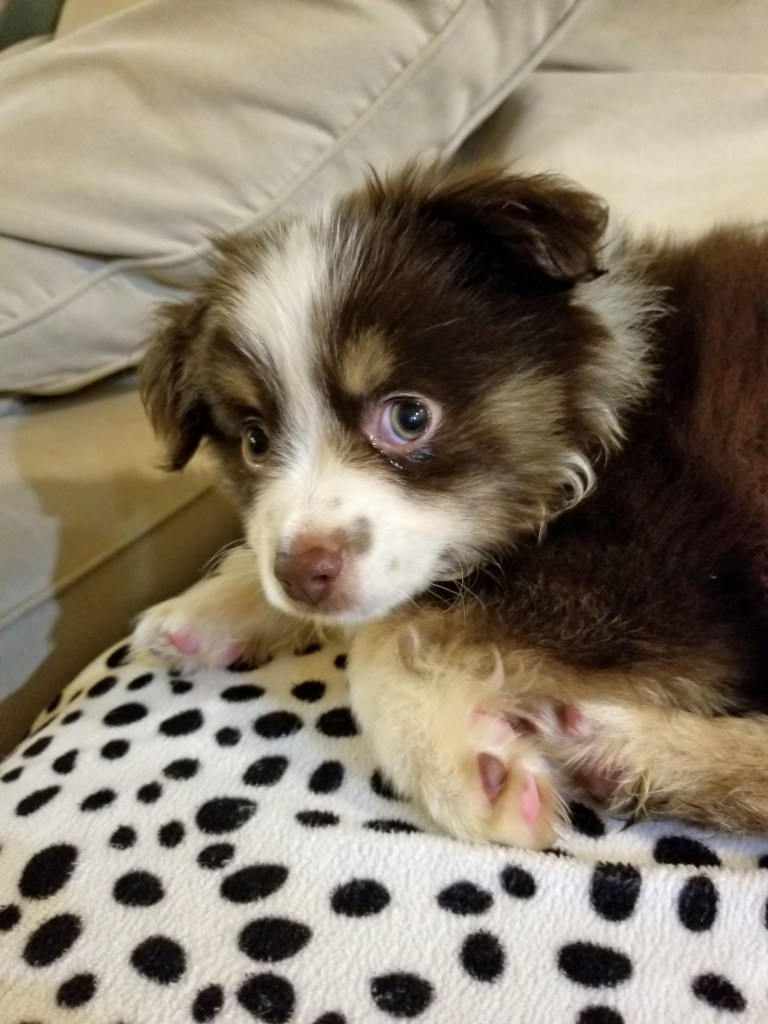
A mini-Australian Shepherd puppy lying on a blanket and looking into the camera.
Close up of Rollo as a puppy.
The photo shows a mini-Australian Shepherd puppy biting an orange volleyball.
Rollo playing with a volleyball.
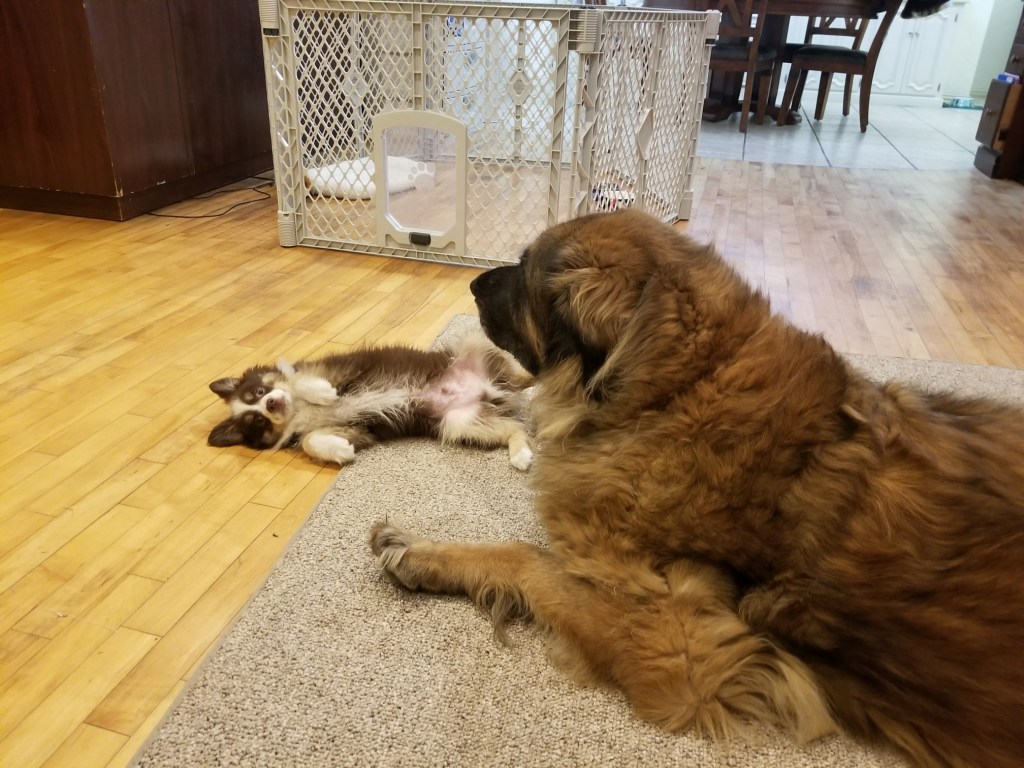
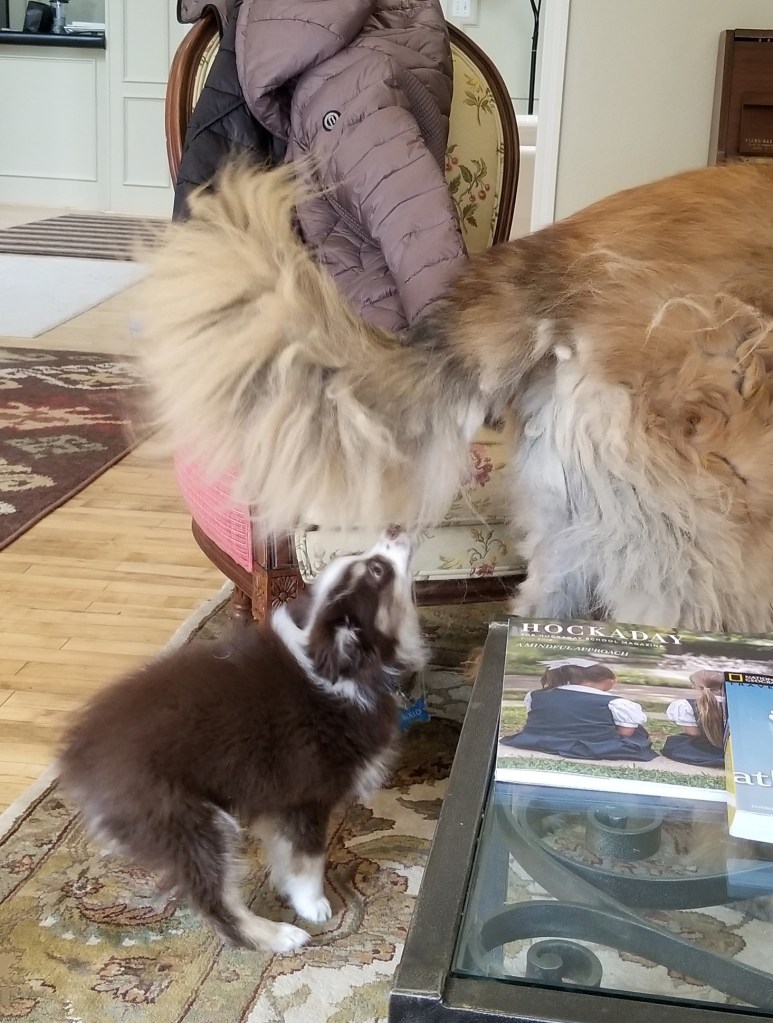
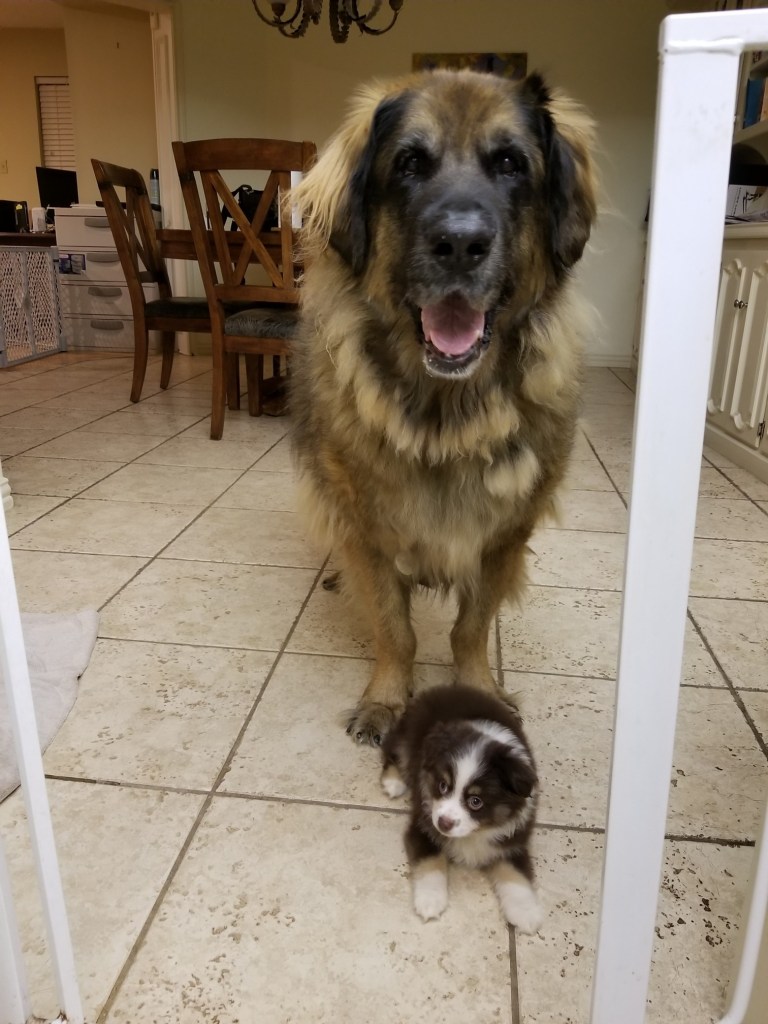
The photo shows a mini-Australian Shepherd biting a Leonberger’s tail.
Rollo frequently bit our Leonberger Bronco’s tail, and he even swung in it like a swing. He climbed all over Bronco. Bronco was very patient with him.

The Day Our Leonberger Bronco Sniffed out an Insulin Shock

According to the article that I mentioned above “Dogs’ powerful noses are being used in medicine to detect diseases, sniffing them out in a less invasive manner than the currently available diagnostic tests”. For example, dogs have been able to accurately detect cancer, predict seizures and identify people with low blood sugar just by using their noses. This is exactly what I am going to describe below.

We used to have a Labrador called Baylor who had diabetes. Well, more exactly he was ¾ Labrador and ¼ Rhodesian Ridgeback. I used to give him insulin shots after every meal. We also had a Leonberger called Bronco. This was a large dog. Leonberger are related to Saint Bernards and about the same size.

One day as we had just gone to bed our Leonberger Bronco started barking while looking intently at Baylor, then he looked at us, then he turned his head toward Baylor and started barking again. He did this a few times—not aggressively, but to get our attention. It became clear to us that Bronco wanted us to look at Baylor. I examined Baylor but saw nothing wrong at first. Then I looked again. This time I saw that his back legs were shaking slightly. It quickly got worse. His gait became wobbly, then within perhaps fifteen seconds he fainted. He had gone into insulin shock. “Insulin shock” is another name for severe hypoglycemia, a condition where blood sugar (glucose) is dangerously low. Exactly, what dogs can smell out according to the article above. We rushed him to the emergency clinic, where fortunately the doctors were able to revive him.

Bronco detected a problem with Baylor before we could see anything wrong. His warnings gave us that little bit of extra time we needed to save Baylor’s life. Imagine if we had gone to bed, fallen asleep and not noticed the problem. I can add that Leonbergers have a very keen sense of smell. We had never taught Bronco to detect insulin shock or any other condition. It was entirely his own instinct. This was one of the amazing superpowers Bronco had. I should say that we didn’t know this at the time, but giving a dog sugar, or something sweet, can bring him out of insulin shock. To read more about this incident click here or here. Below are some photos of Bronco and Baylor.

Close up photo of Baylor our Labrador Rhodesian Ridgeback mix. He is looking into the camera.
Baylor is young in this photo. The photo is from around 2005 or 2006. Baylor had a smile that would warm the coldest hearts.
Our Leonberger is standing on the large red leather sofa giving me a kiss.
Me and our Leonberger Bronco when he was young.
Bronco our Leonberger is standing in front of me and he is looking into the camera.
Our Leonberger Bronco is ready for dinner

What Does Rollo See Out His Window

Esther’s writing prompt: 20th August : Window

Click here or here  to join in.

Our mini-Australian Shepherd Rollo loves going out, whether it is for a walk, a car ride, or visiting grandma and grandpa. But we can’t take him everywhere. Sometimes we have to leave him at home and when this happens, we tell him “Rollo go and look out the window”, and he runs to the window, and he looks out. You may wonder, what does Rollo see when he looks out his window?

He sees the blue sky and the clouds; he sees birds flying and he sees the black crows walking on our lawn. He doesn’t like the black crows walking on our lawn, so he goes woof, woof, woof, woof.

He sees the green grass, the houses, he sees the jagged edges of the roofs and the chimneys, and he sees workers repairing shingles on roof tops, which look scary, so he goes woof, woof, woof, woof.

He sees rabbits running, cats hiding, children playing and laughing, and he sees squirrels running up the trees so he goes woof, woof, woof, woof.

He sees people walking by our house. Do they see him? Maybe not. But there, someone sees him, and he goes woof, woof, woof, woof.

He sees people with dogs walking by our house and that makes him mad, so he goes woof, woof, woof, woof.

Rollo looks out the window and he sees the world, and he knows that the world was made for him, but he has to stay inside, so he goes woof, woof, woof, woof.

We left him alone in his despair for nearly two hours but now he sees us coming home and he runs to the door, and he goes woof, woof, woof, woof.

We ask him, Rollo, what did you see out your window today? And he goes woof, woof, woof, woof.

Photos of Rollo Looking Out the Window

Rollo our dark brown and white mini-Australian Shepherd is standing in the kitchen looking sad.
This is Rollo. Rollo does not look happy because we told him we are leaving. Next, we are telling him to go look out the window.
Rollo our dark brown and white mini-Australian Shepherd is standing in front of the window looking out. You can see the reflection of me and the rest of the neighborhood in the window, obscuring Rollo a bit.
Rollo is looking out the window. Unfortunately, there are reflections in the window.
Rollo our dark brown and white mini-Australian Shepherd is standing in front of the window looking out. You can see the reflection of me and the rest of the neighborhood in the window, obscuring Rollo a bit.
Rollo is looking out the window. You can see the reflection of me taking the photo and of the neighborhood in the window.

Daisy and Rollo Looking Out the Window

Rollo grew up with two dogs, our big fluffy Leonberger dog Bronco and Daisy our Pug. Bronco sometimes stood and looked out the window, but Rollo and Daisy loved doing that together. They stood on the sofa and barked at everything they saw outside.

A pug and a mini-Australian Shepherd are standing on the sofa looking out the window. The joke goes: Daisy says : Rollo do you want to hear a joke? Rollo says OK. Daisy says Knock! Knock! They both start barking like crazy.
Daisy’s and Rollo’s knock knock joke.
Rollo standing in front of a Rolo candy.
Finally, I just wanted to point out that Rollo is named after the Viking king who tried to sack Paris, not the Rolo candy.

Leonberger Chance Encounters

We just came back from a trip to Baltimore. Our oldest son and his wife are having a baby, a son, due in September. He will be our first grandchild.  On Saturday they held a baby shower. That is Saturday yesterday or two days ago depending on your time zone. Our son and his wife had organized a barbeque for about forty people. It was what they called a Baby-Q. They have a smoker and had smoked brisket throughout Friday-Saturday night.

I was talking to our daughter-in-law’s mother when she mentioned a recent chance encounter with a Leonberger. It was at her mother’s nursing home. I can add that Leonbergers are great therapy dogs because of their calm temper, friendly disposition, intelligence and trainability. They are therefore frequently found at hospitals, nursing homes, and similar places.

Two women behind a large Leonberger. The woman on the left is an elderly woman sitting in a wheelchair.
Our daughter-in-law’s mother is on the left and her mother is on the right. She gave me permission to use this photo. The Leonberger is in the middle front.

A Therapy Leonberger Called Scout

As I mentioned, Leonbergers are great therapy dogs and are often used in hospitals. Below is a video about a Leonberger called Scout by CBC news in Canada. This Leonberger is helping residents at Hamilton mental health hospital. He was bred by Concorde Ridge Leonbergers. They have a website and a blog which I follow. You visit my post about Scout here. The 8-minute video is shown on the website below.

https://www.cbc.ca/player/play/video/1.6835161

The Leonberger at the top of Skull Mountain

Speaking about Leonberger chance encounters, one very unexpected Leonberger encounter happened to us at the top of a mountain in northern Sweden. My wife, my daughter, my brother and his wife and children were hiking/climbing up to the top of a mountain in the high coast region of northern Sweden. This is a coastal region of Sweden that is quite mountainous and feature fjords, like in Norway. This is the region where I was born and where I grew up. The name of the mountain was Skule Berget, or Skull Mountain. We did it for the adventure, the views, and to visit a famous cave. Below is the view from the top of Skull Mountain in the High Coast.

The photo shows cliffs at the bottom of the photo and in the distance, you can see mountains surrounding a fjord.
View from the top of Skule Berget.

At the top of the mountain, we met a man who had brought his dog, and it was not just any kind of dog, it was a female Leonberger Named Amie. The owner told us that Amie was nine years old, which is old for a Leonberger. It was quite a hike to the top of the mountain so the dog must have been in good shape despite her age. Well, the man we too were in good shape too. You can read about our Skull Mountain adventure here.

As soon as we them, we shouted, “look a Leonberger”, and Amie started wagging her tail and running towards us. She obviously loved attention. Her owner let us pet her and take a few photos of her. Amie was very playful; she rolled around and wanted to be petted. She was very friendly. She reminded us of our late Leonberger Bronco, but being a female, she was a little bit smaller and more feminine looking. Below, are a couple of photos of Amie.

A photo of the Leonberger Amie standing on top of a wooden bench on top of the mountain.
Amie at the top of Skule Berget.
A photo of the Leonberger Amie standing on top of a wooden bench on top of the mountain.
Amie was playful but very well behaved.

About the book The Life and Times of Le Bronco von der Löwenhöhle

Finally, I would like to mention that I am currently is running a promotion for my book “The Life and Times of Le Bronco von der Löwenhöhle, Stories and Tips from Thirteen Years with a Leonberger”. It is to celebrate Bronco’s birthday and his memory. I should say the book features the amusing adventures of our Leonberger Bronco and his dog friends, and information on how to train and care for Leonbergers and other large breeds, as well as breed history, breed standard, Leonberger organizations, and a resource guide. I can add that all photos and illustrations are in color.

The price of the Kindle version of my book is now only $2.99 and the price of the paperback version is 17.95 (normal prize is $19.95). You can read more about the promotion here. I will keep the promotion going for a few more days.

This is the front cover of the book “The Life and Times of Le Bronco von der Löwenhöhle”. Click here or on the image to go to the United States Amazon location for the paperback version of the book.
The back cover in gold and beige features a photo of a Leonberger in a snowy forest and an introduction to the book.
This is the back cover of the book “The Life and Times of Le Bronco von der Löwenhöhle”. Click here or on the image to go to the Amazon.com location for the kindle version of the book.
The endorsements say “A wonderful tribute to the author's beloved Bronco. The stories are heartwarming as well as informative - a true glimpse into life with a Leonberger. D'Nae Wilson, President, Leonberger Health Foundation International.” and “A lovely tribute to Bronco, with lots of resources for general Leonberger information. Julie Schaffert, LCA breeder since 1992.”
Again, these are the endorsements for the book by some very prominent members of the Leonberger community. Click here or on the image to go to the location for the book Amazon in Canada.

The Life of Jim Garraty

This is a Leonberger blog, but I also post about other topics including book reviews of books that I love and want to promote. With this post I would like to promote a delightful book called Reunion: Coda: Book 2 of the Reunion Duology by Alex Diaz-Granados.

Below is an overview of the three formats of Reunion: Coda

  • Hardcover –  Publisher : Independently published (April 5, 2025), ASIN : B0F3VRRW3R, ISBN-13 : 979-8316859467, 471 pages, Item Weight : 2.85 pounds, dimensions ‏ : 8.25 x 1.25 x 11 inches, it cost $30.00 on US Amazon. Click here to order it from Amazon.com.
  • Paperback –  Publisher : Independently published (April 5, 2025), ASIN : B0F3VWJGDD, ISBN-13 : 979-8316867066, 529 pages, Item Weight : 2.29 pounds, dimensions ‏ : ‎ 8 x 1.2 x 10 inches, it cost $ 26.00 on US Amazon. Click here to order it from Amazon.com.
  • Kindle – Publisher : ADG Books via Kindle Create (April 4, 2025), ASIN : B0F3V5HK2R, 473 pages. It is currently $5.99 on Amazon.com and free with Kindle unlimited. Click here to order it from Amazon.com.
The front cover features a colorful nighttime photo of Manhattan from above.
Front cover of Reunion: Coda: Book 2 of the Reunion Duology by Alex Diaz-Granados. Click on the image to go to the Amazon page for the hardcover version of the book.

Amazon’s Description of Reunion Coda

In Reunion: Coda, Jim Garraty’s journey continues as he navigates the intricate dance between past regrets and present hopes. Now a successful history professor, Jim’s life is a tapestry of unspoken love, haunting memories, and the pursuit of emotional closure.

As Jim reflects on his high school years and the profound impact of his relationships, he grapples with the lessons learned from missed opportunities and the unpredictable nature of life. Through introspective moments and heartfelt letters, Jim uncovers the strength to confront his deepest fears and embrace new beginnings.

Reunion: Coda delves into the complexities of love, loss, and the enduring power of memory. It also explores the significance of friendship and the unpredictable turns that shape our lives. This poignant novel is a heartfelt exploration of the choices that define us, the connections that sustain us, and the hope that guides us on the journey of self-discovery.

This is my Amazon review of Reunion: Coda

The Mystery of Life and Love

This is a love story complicated by life. Jim Garraty is a successful History Professor who has tragically lost love and found love again. The story follows two timelines. One is focused on Jim’s high school days and his secret love Martina Reynaud, as well as everything that goes on in high school. The second timeline is focused on Jim’s life as a professor at Columbia University, memories of love lost and a divorce, as well as a newfound love, Maddy. The switch between the two timelines is obvious and clearly stated and yet seamless. The two timelines are built upon each other in a way that creates a captivating story and the fascinating world of Jim Garraty and his lovers and friends. I should mention that there are surprising connections between the two timelines, serendipity if you will.

The story is touching and romantic but also real and thought-provoking. I found the many subplots fascinating and insightful. For example, the story about one of his students becoming ensnared and bamboozled by far-right propaganda and acting upon it. That story was a good story on its own, but it also added to the overall narrative. Life is complicated and difficult, people will disappoint you, and mishaps in your professional life as well as traffic effects your romantic life as well. There were many other sub plots. The book enlightens us on subjects like lost love, courage, disappointments, tragedy, integrity and forgiveness. Life can be good but never perfect. We recognize ourselves in the stories and it helps us feel and grow.

The character development is astounding, and the prose is beautiful and lyrical. The writing is of a very high quality and the story telling is epic. I read the hardcover version of this book, which featured a lot of black and white illustrations. It is far from a graphic novel, but I appreciated the appealing and interesting illustrations. I highly recommend this book.

An overview of the book and a photo of the author when he was young.
Back cover of Reunion: Coda: Book 2 of the Reunion Duology by Alex Diaz-Granados. Click on the image to go to the Amazon page for the paperback version of the book.

About the Author of Reunion Coda

Alex Diaz-Granados (born 1963) has spent decades weaving words into stories, critiques, and screenplays, always with an eye for nuance and emotional depth. His journey began in the early 1980s as a staff writer and Entertainment Editor for his high school newspaper, later serving as Diversions Editor for Miami-Dade Community College’s South Campus student publication.

Fueled by a passion for cinema, he has been sharing his thoughts on film—raving about masterpieces and ranting about misfires—since 2003, contributing reviews to platforms like Amazon, Ciao, and Epinions.

Beyond criticism, Alex has collaborated with actor-director Juan Carlos Hernandez on several screenplays, including A Simple Ad, Clown 345, Ronnie and the Pursuit of the Elusive Bliss, and Sunny in the Village of the Crickets, all of which can be seen on YouTube. His writing extends to blogging, with general-interest articles once featured on Yahoo! Voices (formerly Associated Content).

As an author, Alex is best known for the Reunion Duology—the novella Reunion: A Story and its sequel Reunion: Coda. These works explore themes of nostalgia, regret, and the enduring bonds of friendship, set against the atmospheric backdrop of Miami and New York City. With cinematic storytelling and emotionally authentic characters, his work resonates with readers seeking a blend of memory and new beginnings.

Click here to visit the author’s website