Rollo Comforted Me

Something amazing happened this evening. I was watching a movie, Lion, about an Indian boy, Saroo who gets lost far away from home. He and his brother were riding trains, and they got separated. He is unable to get back home and ends up in an orphanage and is eventually adopted by a loving Australian family. However, once he becomes a successful adult in Australia, he sets out to find his biological family in India, a sort of mission impossible. I know it is not something parents of adopted children are thrilled about, but he has their blessing to go and try to find them anyway. It is a beautiful movie based on a true story and it is one of the most emotive and touching movies I’ve ever seen. I’ve seen the movie before, but it is difficult, even for me, not to get a bit emotional towards the end of the movie. I highly recommend the movie if you have not seen it. But you may need a tissue box.

I am sitting in the sofa, being a bit emotional, but I don’t think I was very emotional. I don’t think it was obvious. Rollo, our mini-Australian Shepherd is sitting in the same sofa, a few feet away. I look over at him and I see his big round sad eyes staring at me as he is tilting his head. I can see the love and concern in his eyes. He slowly comes over to me, lays his paw on my leg for a bit while looking into my eyes. Then he lays down next to me and pushes his body towards my leg as if to comfort me. It just felt exactly as if that was what he was doing. He was trying to comfort me. I wasn’t really sad, but the movie was touching my heart. So, I guess my feeling was pretty close to sadness.

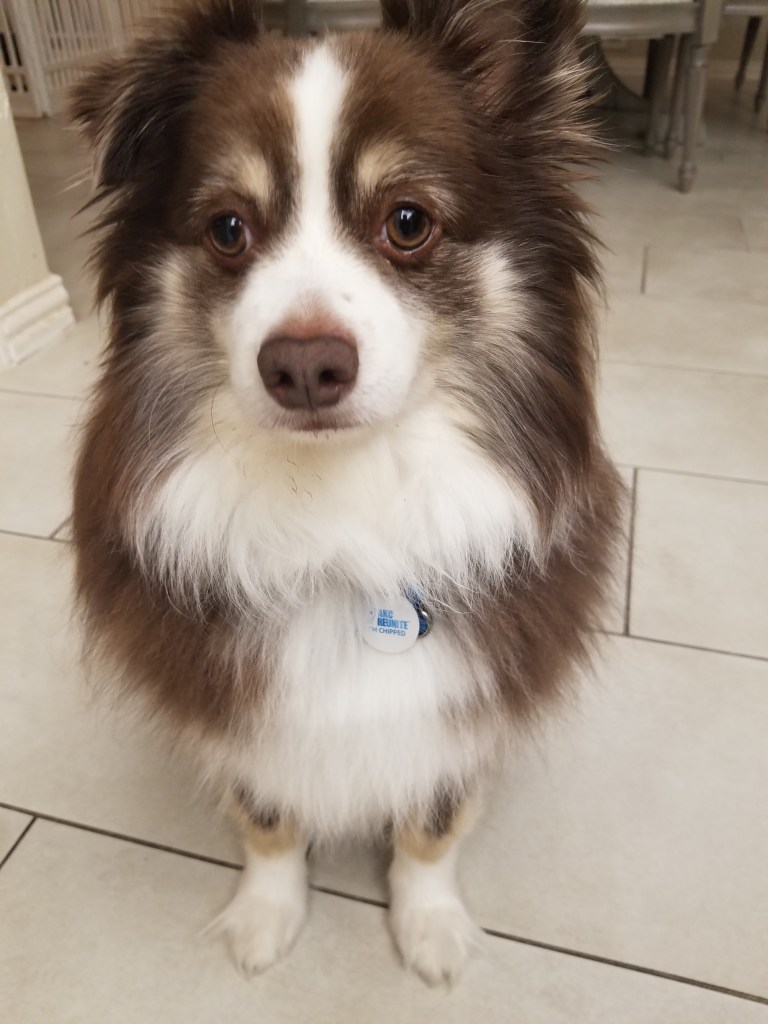
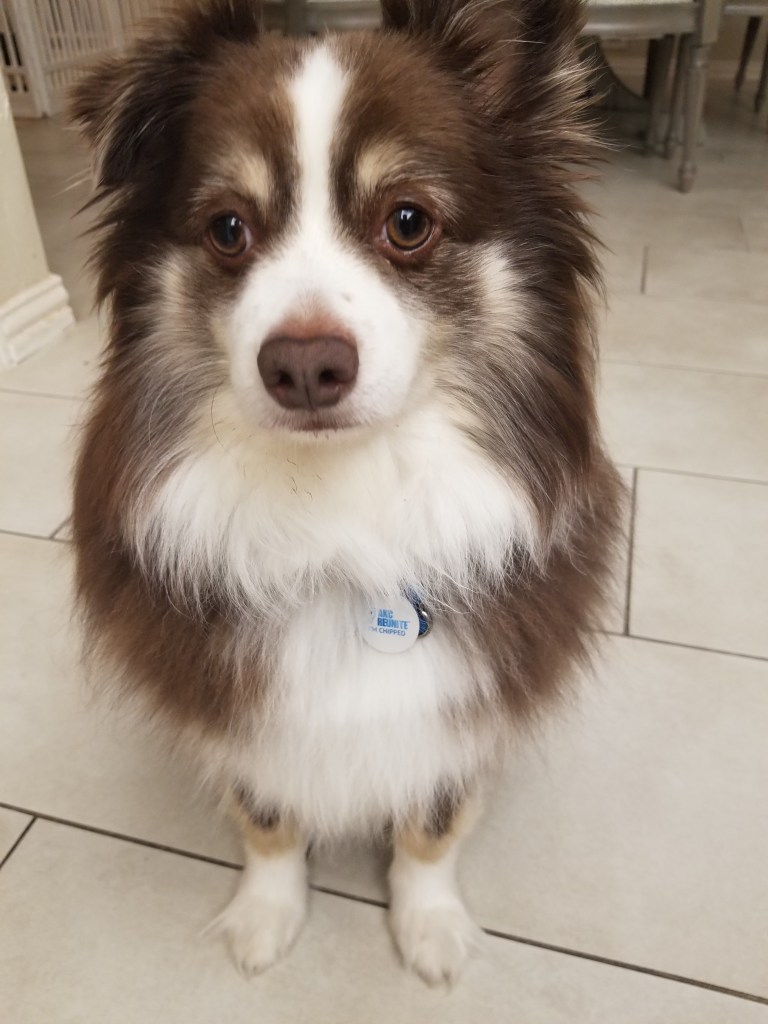
Rollo our dark brown and white mini-Australian Shepherd is standing in the kitchen looking sad
This is Rollo. I don’t have a photo of him from today’s experience. This photo is from a different occasion when Rollo did not look happy because we told him we are leaving.

Can dogs sense when we are sad?

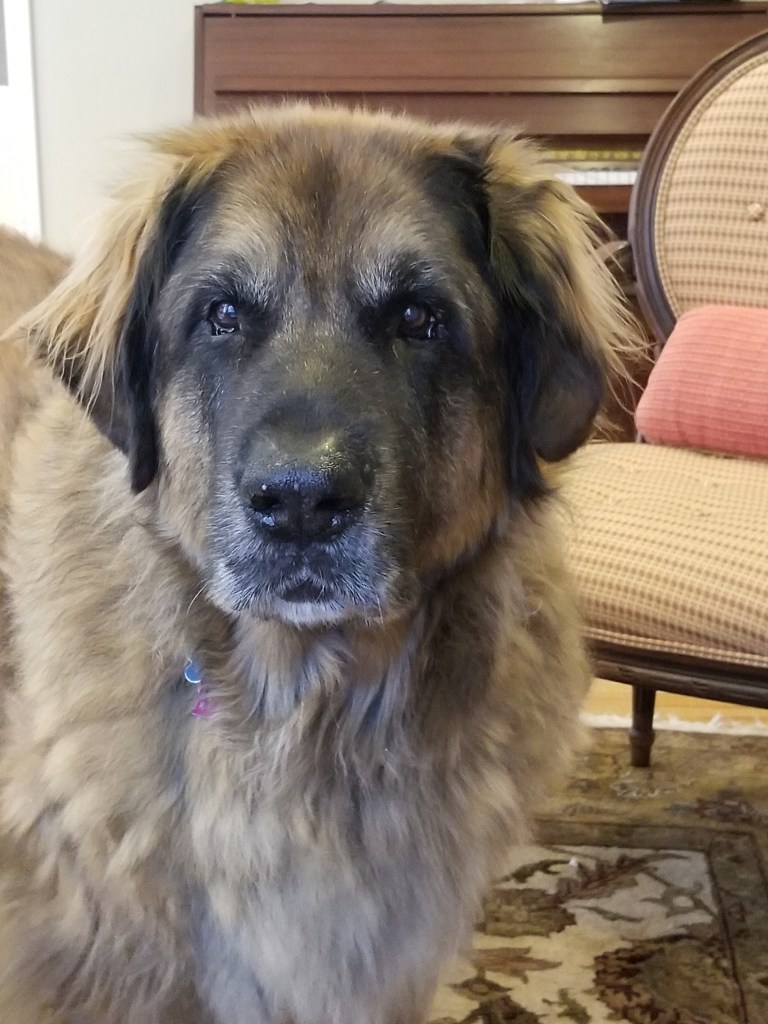
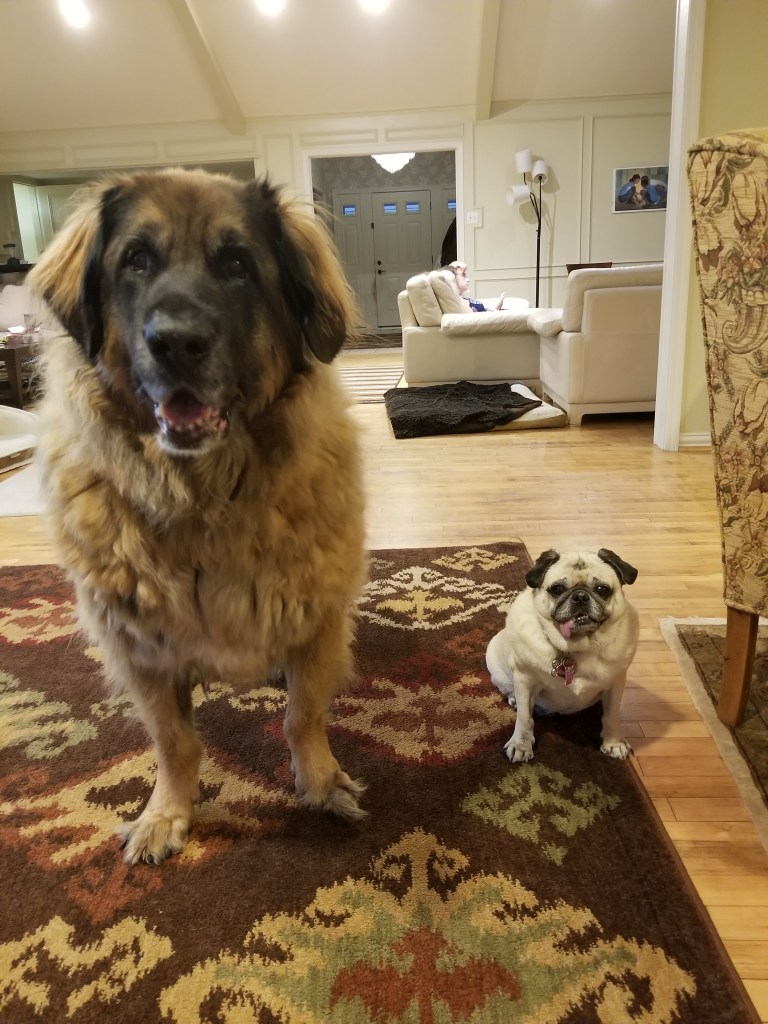
It is not just Rollo. Our Leonberger Bronco, our pug Daisy and our other dogs showed on several occasions that they could sense our feelings. When one of us was sad they tried to comfort. Especially Bronco was very sensitive to people’s feelings, and he tried to comfort. When our Japanese Chin Ryu died, we were sad, and Bronco and Daisy were sad, and I believe they could sense our sadness. The whole house was in mourning, including the dogs.

I can add that Leonbergers are known to be loving dogs and are especially in tune with people’s feelings. That is why they are very often used as therapy dogs. Dogs can even use their amazing sense of smell to detect emotions in people. “Can Dogs Sense Human Emotions?” is is an excellent article from “the Vets” on the topic. Check out the section under “Can dogs sense when we are sad? ”. I think you can recognize what just happened with Rollo. This is another interesting article from VCA Animal Hospitals. This post features a video about a therapy Leonberger called Scout.

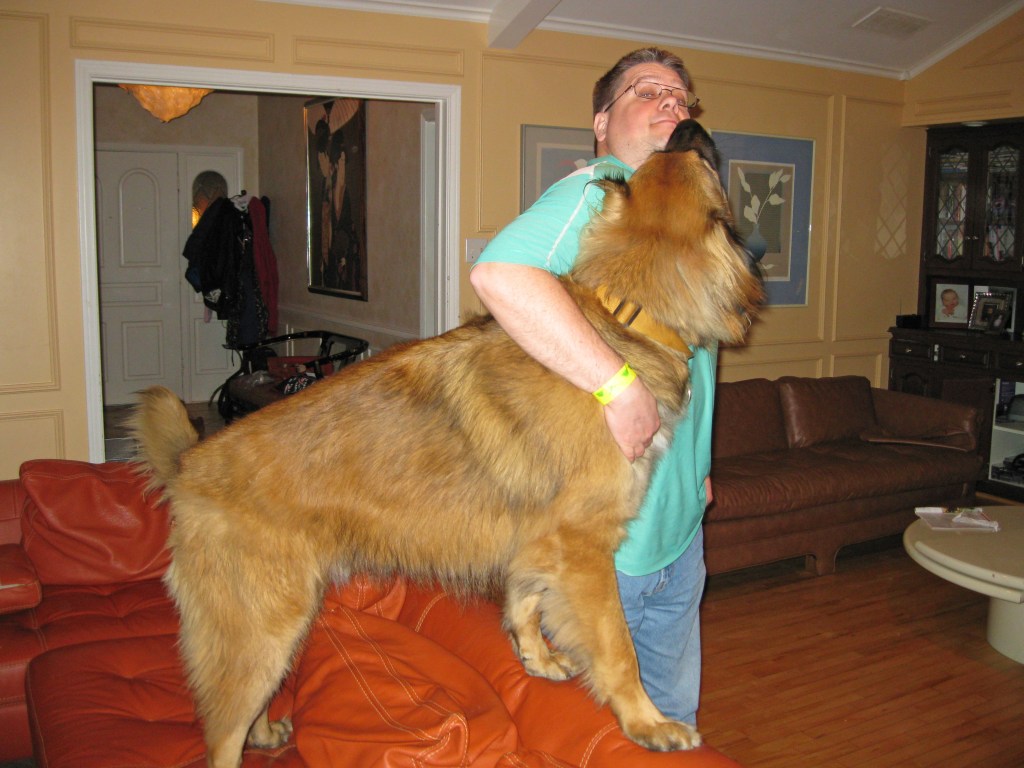
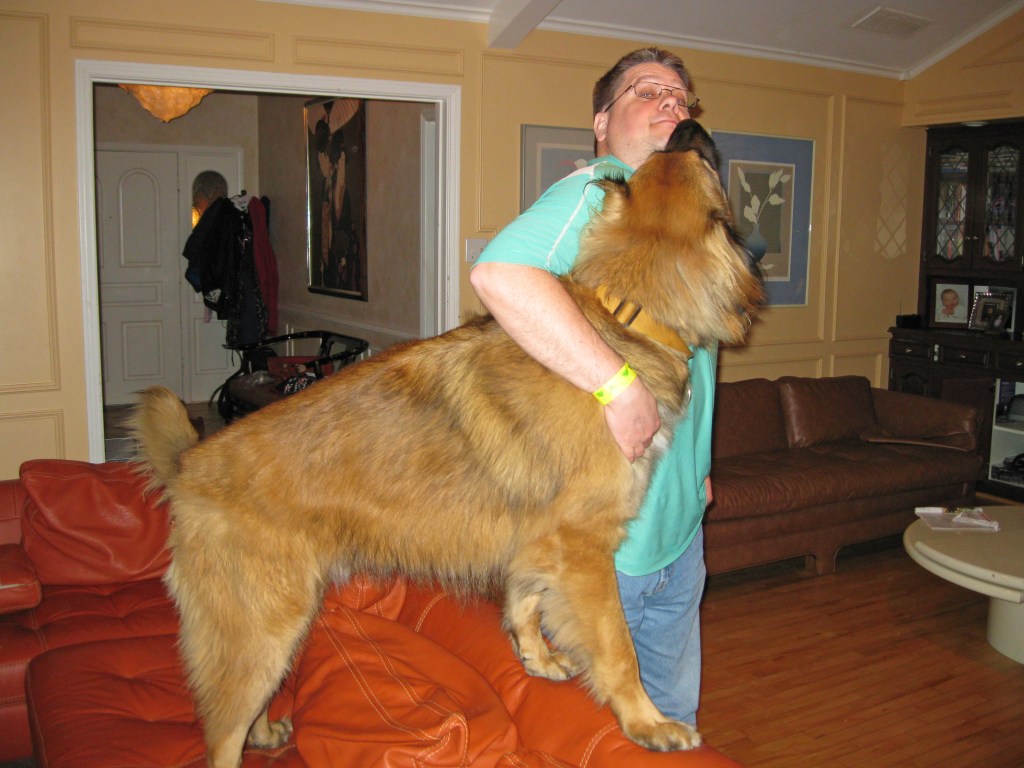
Our Leonberger is standing on the large red leather sofa giving me a kiss.
Me and our Leonberger Bronco when he was young. He is giving me a hug.

Dogs can sense and detect a lot of things, our emotions, mood, fear, whether you are pregnant or not, illness, cancer, diabetes, whether you are a negative person, whether you are about to have a seizure, the weather, and they have an amazing sense of smell. You can read more about that here.

Recently Rollo impressed me with his amazing sense of smell. You can read about that here. Guess who had a truly amazing sense of smell? That was Bronco our Leonberger. You can read about that in the same post.

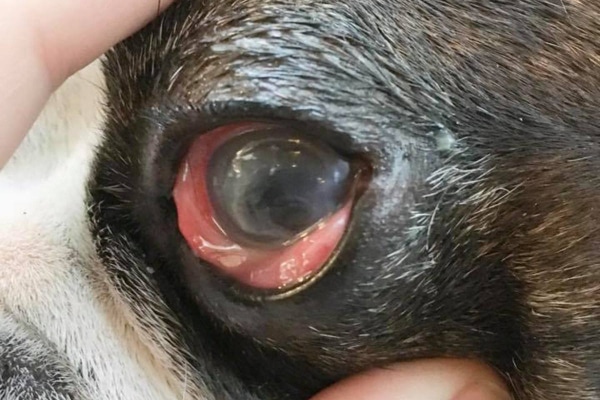
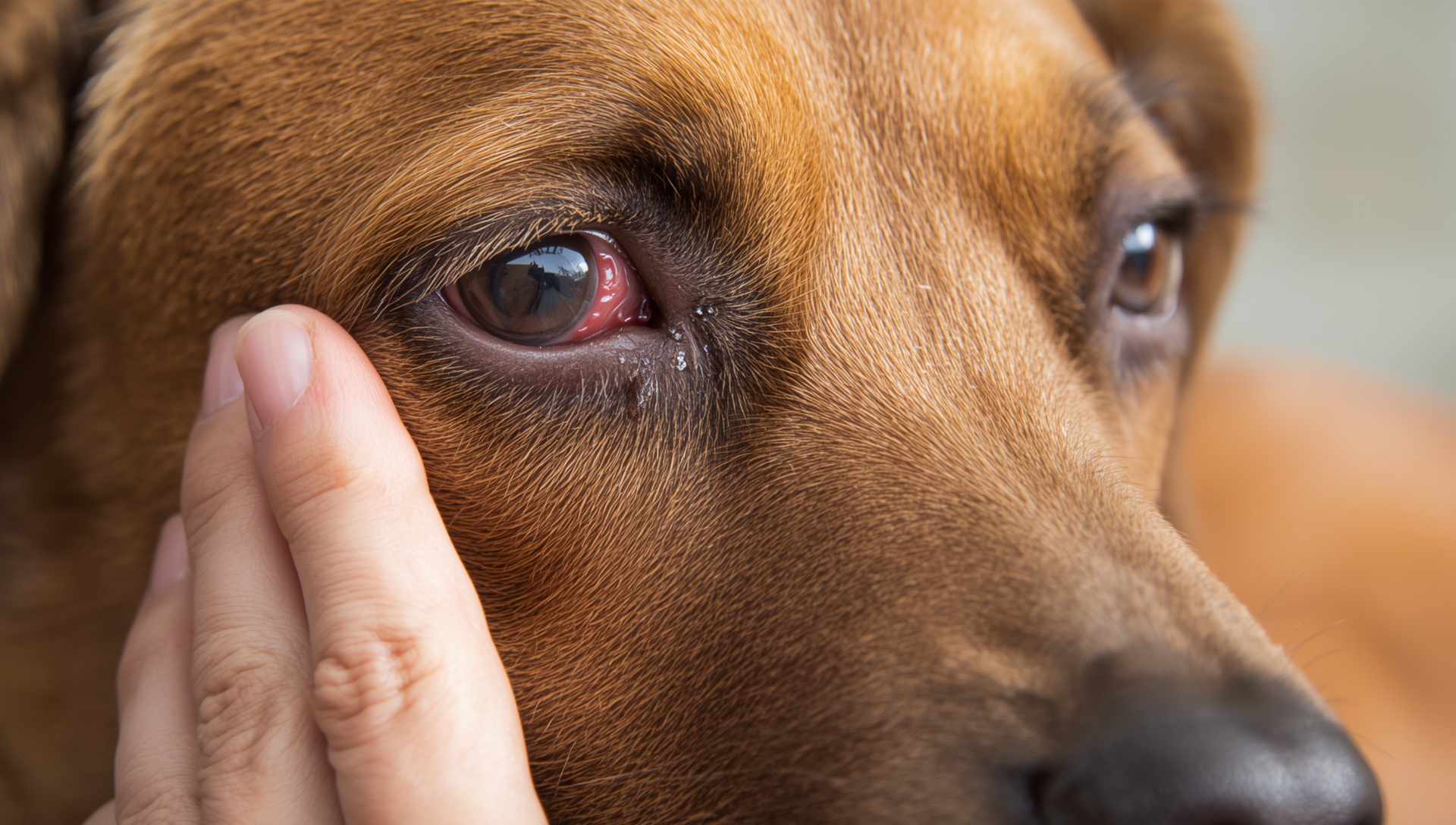
Corneal Ulcers in Pets

The veterinary Amelia Baker sent me another blog post she wanted me to publish. So, this is a second guest blog. This time the topic is not geared towards only Leonberger dogs but dogs and pets in general. The topic is Corneal Ulcers in Pets (Symptoms, Causes & Care). I should say that we have been lucky. None of our dogs have had corneal ulcers. Check out her article below.

Article by Amelia Baker

Learn the signs of corneal ulcers in dogs, cats, and horses. Spot early symptoms, discover causes, and explore treatment options to protect pet vision.

Corneal Ulcers in Pets (Symptoms, Causes & Care)

What if that cute little wink your dog gives isn’t really a wink? What if your cat’s sudden sensitivity to sunlight is more than just moodiness? These small changes could be the beginning of a painful corneal ulcer in pets. Every day you wait makes it worse.

The tricky part is that the pets can’t tell that their eyes hurt. At times, a small scratch can turn into a corneal ulcer emergency for dogs. Similarly, a slight tear in the cornea can leave cats with corneal ulcers hiding in plain sight. Horses can also suffer from this medical condition.

That’s why understanding corneal symptoms in dogs or spotting a corneal ulcer in cats can make all the difference.

As a pet owner or a veterinarian, you might have wondered how to tell if it’s just a scratch or something more serious. In this article, we will discover how to recognize, treat, and prevent corneal ulcers in pets of various species. By the end, you’ll feel more confident in protecting your canine, feline, or even equine vision.

Before we get into treatment, let’s first understand what a corneal ulcer really is.

What Exactly Is a Corneal Ulcer?

The cornea is the transparent, protective layer at the front of the eye. When it gets damaged from trauma, infection, or any disease, the wound is known as a corneal ulcer.

In dogs, you’ll often hear terms like dog eye corneal ulcer or canine corneal ulcer. It is a common occurrence in dogs to suffer from this condition. They mostly occur as a result of trauma or injury. However, in cats, viral causes and infections lead to corneal ulcers.

As for horses, especially for performance breeds, corneal ulcers are a common issue due to their outdoor lifestyle and their exposure to dust.

While the condition varies among the species, the basic problem is consistent. A break in the corneal surface can become more serious if it is not treated in time.

Now that you know what it is, the next step is identifying the symptoms in pets.

Recognizing Symptoms Before It’s Too Late

So, how can you spot a corneal ulcer? The signs are often clear if you know what to look out for.

  • Constant blinking or squinting
  • Red or watery eyes
  • Pawning or rubbing at their faces
  • Cloudiness in the cornea
  • Sudden sensitivity to light

A dog with a corneal ulcer might not want to play fetch. A cat with a corneal ulcer may avoid sunny and bright windows. Horses could leave one eye half-closed and act strangely during training. These subtle signs may indicate that the body needs help.

Spotting symptoms is just the start. What really matters is how quickly you act. If left untreated, corneal ulcers can lead to serious complications, including permanent blindness.

So, what causes the corneal ulcer in the first place?

Common Causes of Corneal Ulcers in Pets

The triggers are varied and are sometimes preventable.

  • Physical trauma, such as scratches from claws, grass seeds, or foreign objects, can cause issues.
  • Infections can also be a factor, including bacterial, viral, or fungal ones.
  • Certain breeds are more likely to develop problems, especially flat-faced breeds that tend to get dry eyes.
  • Underlying eye diseases like entropion or keratoconjunctivitis sicca.

For cats, viral infections like feline herpesvirus are common causes. In dogs, especially brachycephalic breeds, the shape of the eye and incomplete eyelid closure play a role. Horses, on the other hand, face daily exposure to dust and outdoor particles.

Knowing the cause helps guide treatment. It also highlights why education is important. Veterinarians can stay ahead by watching a Veterinary Ophthalmology webinar, which explores diagnosis and treatment techniques in detail.

This leads us to the next question every pet owner asks: What happens if my pet is diagnosed with a corneal ulcer?

Treatment and Care Options

Thankfully, most ulcers can be treated if they are caught early. Treatment often depends on the severity of the condition.

  • Mild ulcers: antibiotic drops, artificial tears, pain relief.
  • Complicated ulcers: surgical intervention, such as conjunctival grafts.
  • Supportive care: Elizabethan collars to prevent rubbing.

In equine and canine patients, timely intervention is important to prevent progression into a melting ulcer. It is possible with the right veterinary knowledge and care.

For veterinarians, staying informed through free webinars on veterinary continuing education helps them keep up with the latest surgical techniques and medications. For pet owners, the message is clear: never delay a vet visit if your pet shows signs of eye discomfort.

But beyond treatment, prevention and awareness are equally important.

Prevention: Protecting Vision Before It’s Lost

Prevention often relies on being watchful and taking steps to care for your adorable pet. Regular eye checks, safe spaces without sharp objects, and quick vet visits at the first sight of discomfort can lower all risks.

To elevate your knowledge, consider joining a pet eye health webinar or reading preventive tips. At the same time, veterinarians who attend online vet CE sessions and pet webinars on corneal ulcers can learn to manage cases with the confidence that comes from updated knowledge.

After all, protecting an eye is easier than trying to restore sight once it’s lost.

Final Thoughts

Your pet’s eyes aren’t just organs. They are windows into how they see, play, and connect with you. When a dog with a corneal ulcer avoids his favorite game, or when a cat with a corneal ulcer retreats into darkness, it becomes more than a medical issue. It also affects their quality of life.

The good news is that with awareness, quick action, and the proper care, most pets recover. Free sponsored webinars on corneal ulcers in pets can improve your veterinary knowledge by offering the latest techniques and insights to manage complex cases.

So, the next time you see watery eyes, constant blinking, or strange behavior, don’t ignore them. They can point to something bigger: a corneal ulcer. Acting today can save your pet’s sight in the future.

When it comes to the eye health of pets, staying alert is not optional. It’s a commitment we make to the animals who rely on us.

FAQs

Q: What is the 3-2-1 rule for corneal ulcers?

The 3-2-1 rule helps determine when urgent care is necessary. If an ulcer doesn’t improve within 3 days, hasn’t healed in 2 weeks, or gets worse after just one day, it’s a warning sign. This straightforward rule helps determine both owners and vets that seeking help early is essential for protecting a pet’s vision.

Q: Can corneal ulcers heal on their own in pets?

No, corneal ulcers never heal properly without treatment. Even small ulcers can deepen and get infected over time. This can lead to vision loss. Pets need veterinary care to prevent the problem from becoming severe.

Q: What would cause an ulcer in a pet’s eye?

Several factors can cause an ulcer in your pet’s eyes. The trauma caused to the eyes, debris and dirt, and several diseases can lead to an ulcer. Moreover, breed-related problems such as dry eye or entropion also increase the risk.

Q: What is the best treatment for corneal ulcers?

Treatment depends on the severity and species. Mild ulcers usually respond to antibiotic drops, lubricants, and pain relief. In more advanced cases, surgery may be the only possible solution. Collaborating with a veterinarian helps create the right care plan to protect the vision of your pet.


To visit Amanda Baker’s previous post Vet Approved Leonberger Diet Tips for Health click here

Vet Approved Leonberger Diet Tips for Health

A veterinary by the name Amelia Baker contacted me about publishing diet tips for Leonbergers on my Leonberger blog, and I said yes. So, this is a guest blog. She is not selling anything. It is just her way of trying to improve the diet of Leonbergers. As some of you know, Leonbergers are big, but we succeeded in overfeeding him anyway at one point. Our Leonberger Bronco was 167lbs and we needed to get him back down to 140lbs, his idea weight, and that was not easy. Check out her article below.

This photo tile includes a photo of our Leonberger Bronco when he was three months old, a friend’s funny Leonberger photo (by Jen O’Keefe) and a shutter stock photo of ten Leonberger puppies with mama Shutterstock-ID: 561107650 by Akbudak Rimma.

Article by Amelia Baker

Vet-Approved Leonberger Diet Tips for Puppies, Adults & Seniors

Get essential Leonberger diet advice from vets. Find out what to feed Leonberger puppies, adults, and seniors to support strong joints and a healthy weight.

In this article, we’ll discuss Leonberger diet tips for puppies, adults, and seniors, address common health concerns, and offer practical feeding strategies. There is a gracious reserve to the Leonberger, the sort of dog that will not beg for attention but will not be denied it.

With their monumental height, sensitive eyes, and calmness, they bring comfort to families and respect to any clinic that understands how to treat them. But size, as we are used to, has its drawbacks.

For Leonbergers, much of that baggage manifests in joints, stomachs, and pounds. Their dietary needs are not just special; they’re critical. As a veterinarian, it is our duty to create nutrition not just for their size but also for the Leonberger’s life stage, health risks, and individual metabolic quirks.

So, let’s explore a few veterinarian-recommended Leonberger diet tips one by one.

Feeding Leonberger Puppies

A Leonberger puppy may look like a bear cub in a dog suit, but inside that fluff is a musculoskeletal system working overtime to keep up with its own growth. Veterinarians can see it happen too often: pet parents overfeed because they think a big dog means more food.

But with Leonbergers, slow feeding is always a good option. Undoubtedly, fast feeding to a Leonberger is a one-way ticket to early-onset hip dysplasia and elbow instability.

Leonberger Diet Tips And Guidelines

  • Stick to large-breed puppy food only. It will maintain calcium and phosphorus levels to avoid uneven bone growth.
  • Watch calories closely. Plan for consistent, not rapid, growth.
  • Include DHA and omega-3 fatty acids to promote early brain development.
  • Take 3 to 4 small meals daily for six months and taper off to twice a day by 12 months.
  • Skip supplements unless advised by a doctor. Too much calcium is as bad as too little.

The Leonberger diet for the puppy stage must sound more prescriptive than advisory. Don’t simply suggest a product; discuss why each ingredient is important, from joint maintenance to digestive protection.

Keep Up Feeding Adult Leonbergers Without Excess

By 18 to 24 months, most Leonbergers reach their adult size, and that’s when the feeding approach needs to shift from build to maintain. But diet balance isn’t as simple as it sounds, especially when you’re dealing with a breed that’s prone to weight gain, bloat, and early joint degeneration.

What to Focus On in Adult Leonbergers

Moderate fat and high-quality protein. Use lean meats like turkey and fish. Steer clear of fatty food items.

  • Select joint-friendly foods that contain glucosamine, chondroitin, and omega-3s.
  • Monitor portion sizes. Consider feeding guides by ideal weight, not actual weight.
  • Don’t free-feed. Feed two times daily to reduce potential bloat.
  • Supplement with digestive enzymes or probiotics if needed to improve digestion.

By this stage, Leonberger meals should have functional components, and thus, food now starts to act as a tool to avert aging-induced degeneration. Older Leonbergers may continue to have the temperament of a puppy but not the speed.

Rigidness in joints, loss of appetite, or the development of cognitive decline make nutrition the key to ensuring quality of life.

Diet Changes for Senior Leonberger

  • Choose senior canine foods with low fat but high fiber.
  • Add antioxidants (vitamins C and E) for immunity and neurological function.
  • Add fish oil for inflammation purposes.
  • Reduce the digestive load with soaked kibble or lightly cooked meals.
  • Manage monthly and monitor accordingly.

For seniors, in particular, Leonberger dietary tips extend beyond food; they are about comfort, longevity, and not placing undue stress on aging systems.

Should You Suggest a Leonberger Raw Food Diet?

You’ve probably had clients ask about it. Raw feeding continues to gain popularity, particularly among owners of large-breed dogs. While there are some anecdotal benefits, the Leonberger raw food diet  is only safe when meticulously balanced and well-planned.

Pros of Raw Diet for Leonberger
  • Better coat condition
  • Fewer processed ingredients
  • Improved appetite in picky eaters
Cons and Cautions
  • Nutritional imbalances without veterinary formulation
  • Higher risk of bacterial contamination
  • Inconsistent results in dogs with sensitive digestion

When your clients insist on a raw diet, refer them to commercially formulated, AAFCO-formulated (Association of American Feed Control Officials) raw foods or advise a veterinary nutritionist. Never let a giant breed test diet on its own.

Controlling the Risks Leonbergers Encounter

The proper diet not only nourishes a Leonberger, but it also guards them. These three conditions are the most diet-sensitive in the breed:

1. Joint Issues (Hip/Elbow Dysplasia)
  • Start a joint-sensitive diet from the start (puppy stage).
  • Achieve and sustain an ideal weight to reduce hip and elbow pressure.
  • Recommend diets rich in glucosamine, MSM, and omega-3 fatty acids.
2. Gastric Dilatation-Volvulus (Bloat)
  • Prevent single large meals.
  • Use slow-feeding bowls or puzzle feeders, if needed.
  • Do not feed before and after extreme exercise.
  • Select kibbles with less fat content and no fermentation ingredients.
3. Obesity
  • Preventing caloric overfeeding, even 10 additional pounds is a joint risk factor.
  • Recommend calorie-restricted, high-protein/low-fat formulas.
  • Add healthy, low-calorie treats such as carrots or green beans.

As a veterinarian, you’re Leonberger’s nutritional gatekeeper. Don’t just recommend a food bag; design a plan that aligns with Leonberger’s medical history, risk profile, and lifestyle. For veterinarians specializing in canine nutrition or offering breed-specific dietary consultations, being aware of market trends and vet-industry opportunities is crucial.

Platforms such as VetRep Finder assist professionals by uniting them with changing veterinary sales representative opportunities and enabling them to remain active with the tools and products that define veterinary care nationwide.

Whether therapeutic diets or supplements, remaining current works in the best interests of both your practice and your patients.

Conclusion

In practice, prescribing a Leonberger-specific diet is more than handing out a standard feeding sheet for the average dog. These gentle giants need expert, proactive nutritional planning from puppyhood to the golden age.

As a veterinarian, you can take direct control of longevity by influencing longevity, joint health, and digestive stability, all through diet.

If you’re enthusiastic about maintaining contact with veterinary sales careers or assisting in veterinary learning resources that influence clients and colleagues alike, VetRep Finder provides important avenues for professional development.

FAQs

How frequently should a Leonberger be fed?

Adults and senior dogs should be fed twice a day. Puppies might require 3 to 4 meals a day to avoid energy crashes and digestive stress.

What is the safest protein for Leonbergers with sensitivities?

Fish and turkey are quite well-digested and provide anti-inflammatory advantages. Steer clear of beef or lamb if you suffer from a history of gastrointestinal disease or skin allergy.

Are grain-free diets a good fit for Leonbergers?

Only when there is a medical symptom present are some grain-free diets associated with DCM, so always examine the whole nutrient picture and consult with a veterinary nutritionist.

Rainbow Bridge Remembrance Day

Today is Rainbow Bridge Day or Rainbow Bridge Remembrance Day. We remember the dogs, or the pets that we’ve owned that passed over the rainbow bridge. I made a Rainbow Bridge post exactly one year ago today and since we have not lost any dogs since last year, I’ve decided to just reblog last year’s post.  I am also adding illustrations of our lost pets.


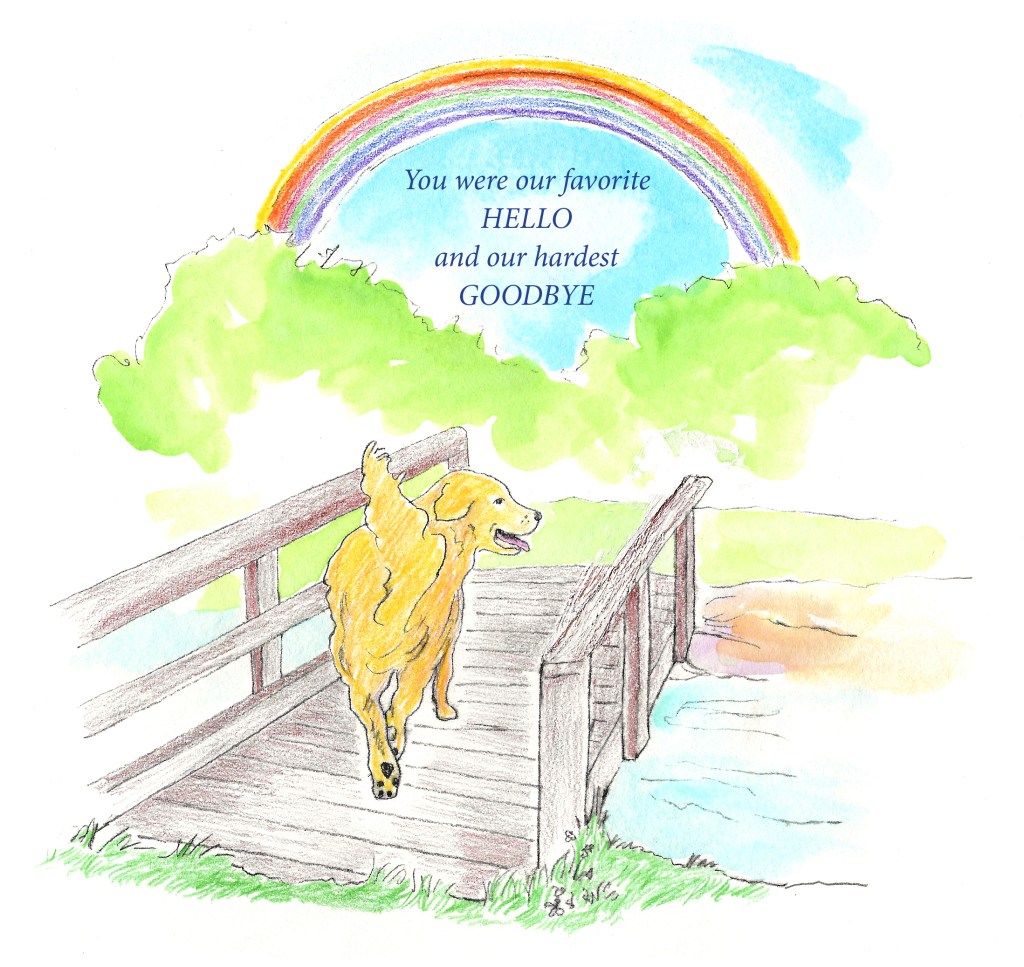
The illustration shows a Labrador crossing a wooden bridge that has a rainbow over it. He is looking back a little bit. The text says “You were our favorite HELLO and our hardest GOODBYE”.
We lost our wonderful and brave Labrador-Rhodesian-Ridgeback mix under very tragic and unexpected circumstances. His untimely and cruel death has left us with a sorrow and regret that we will never overcome. Illustration by Naomi Rosenblatt.
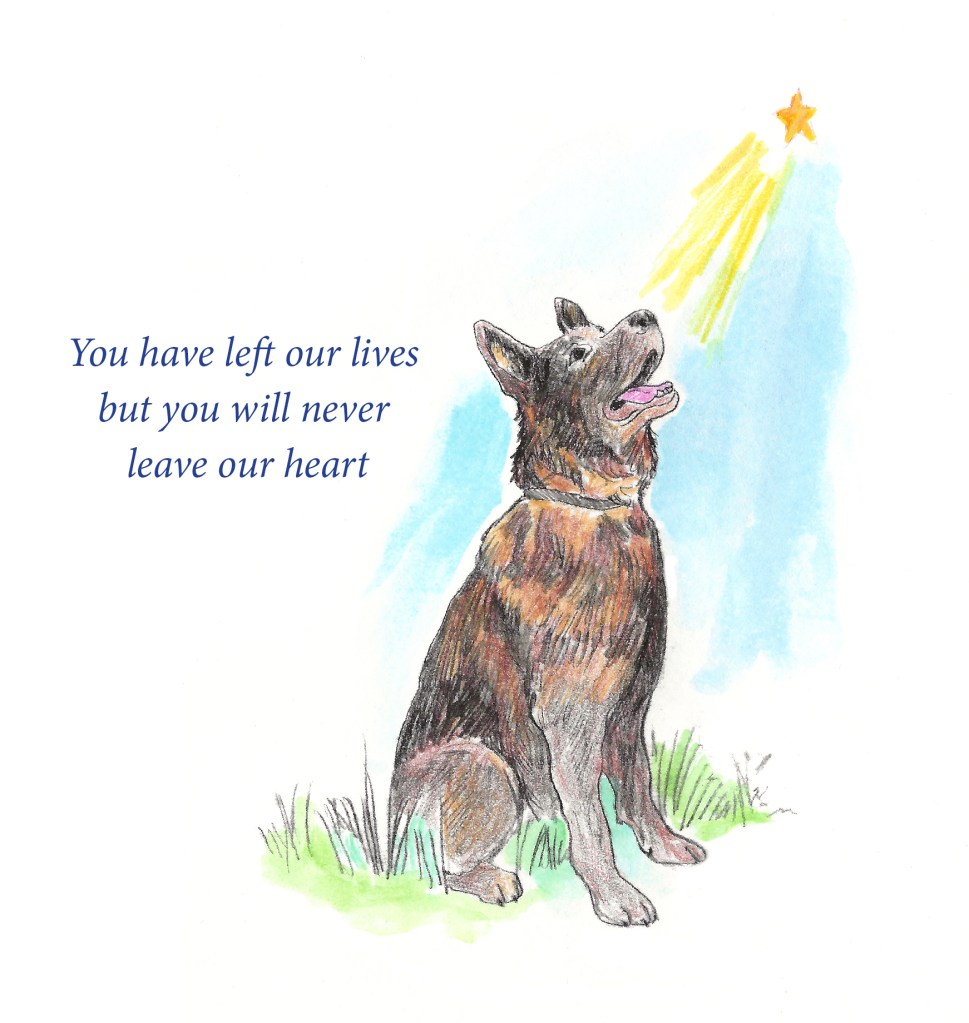
The picture shows a brown-black German Shepherd looking up at a star. The text says, “You have left our lives, but you will never leave our heart.”.
Our German Shepherd Baby was like a mother to our Leonberger Bronco. She played with him, protected him fiercely, and care for him. She passed in 2009.
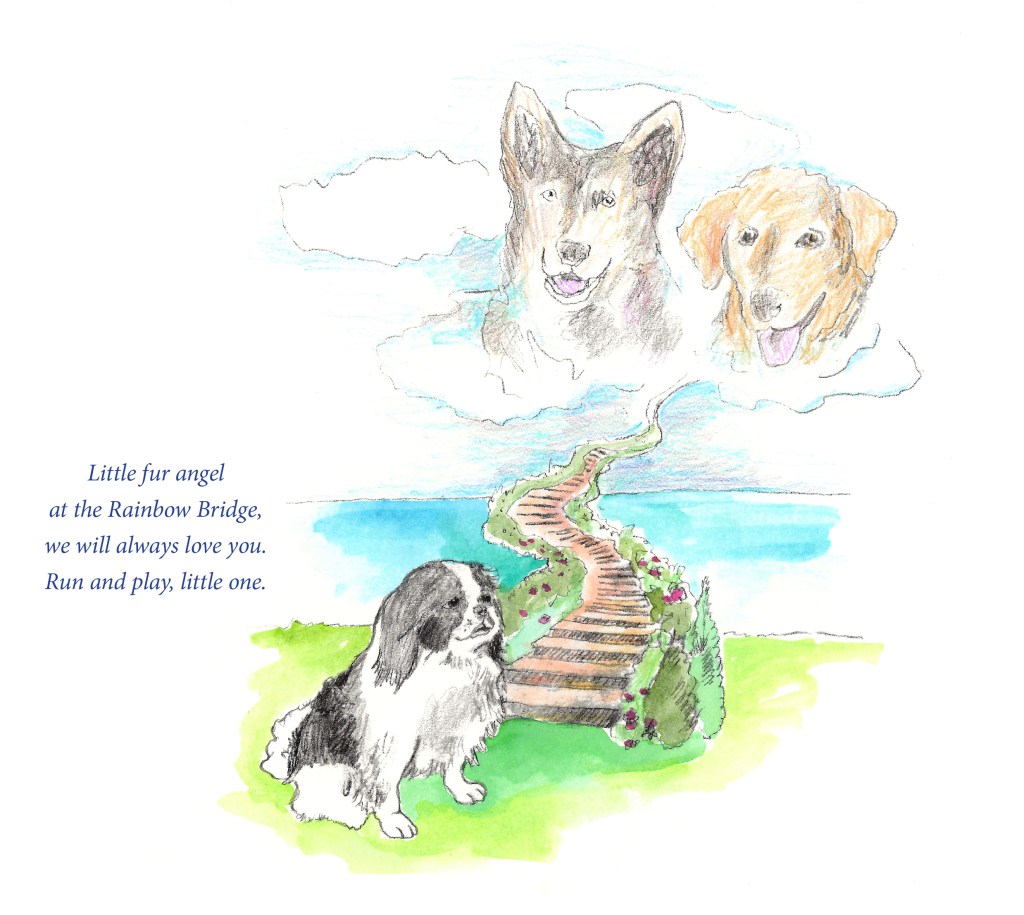
A black and white Japanese Chin is sitting at the bottom of stairways going up into the clouds where Baylor and Baby us waiting for him. The text says “Little fur angel at the Rainbow Bridge, we will always love you. Run and play little one.”
Our happy, lively and energetic Japanese Chin Ryu was a great singer/howler. He left us in February 2018. Illustration by Naomi Rosenblatt.
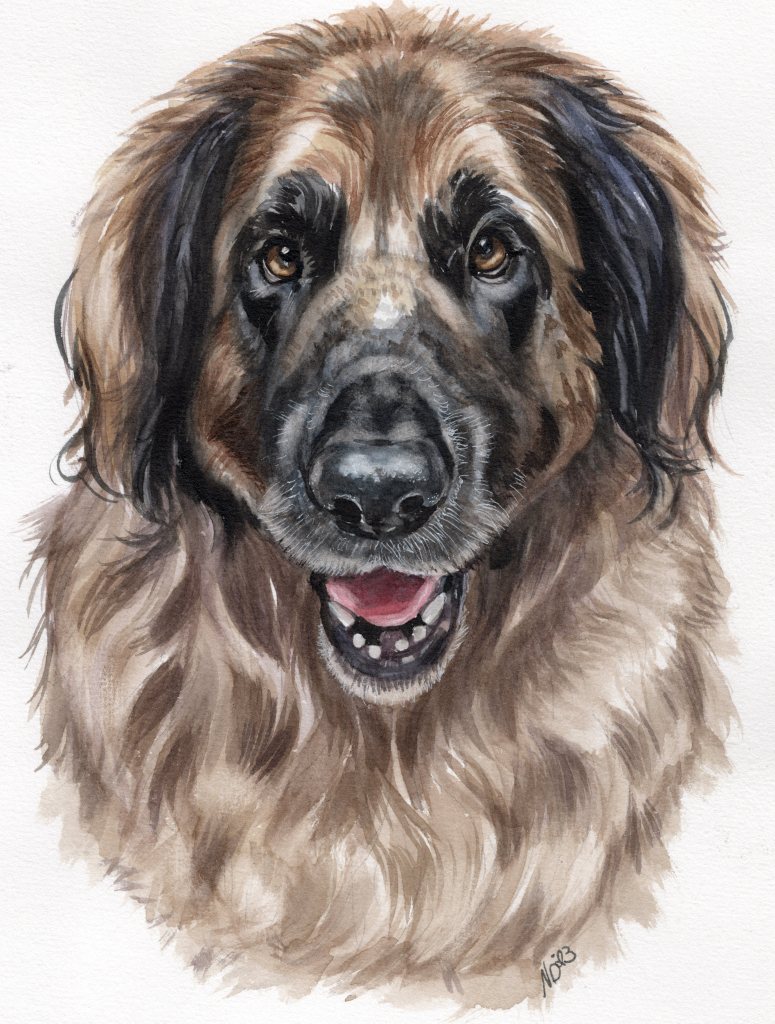
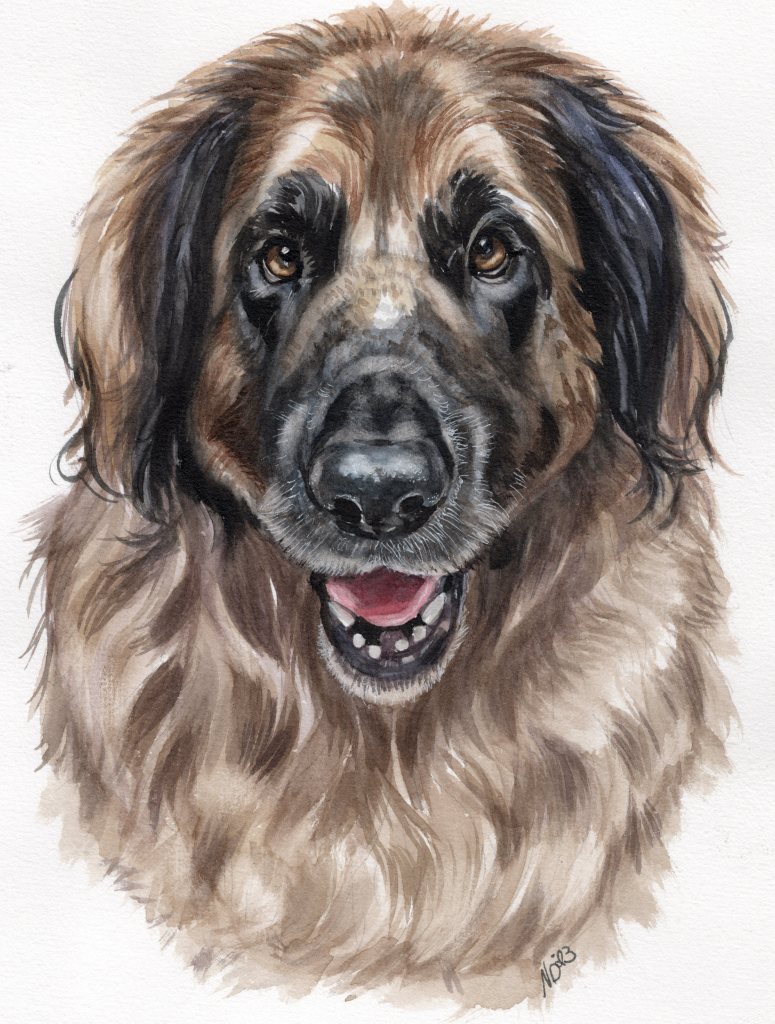
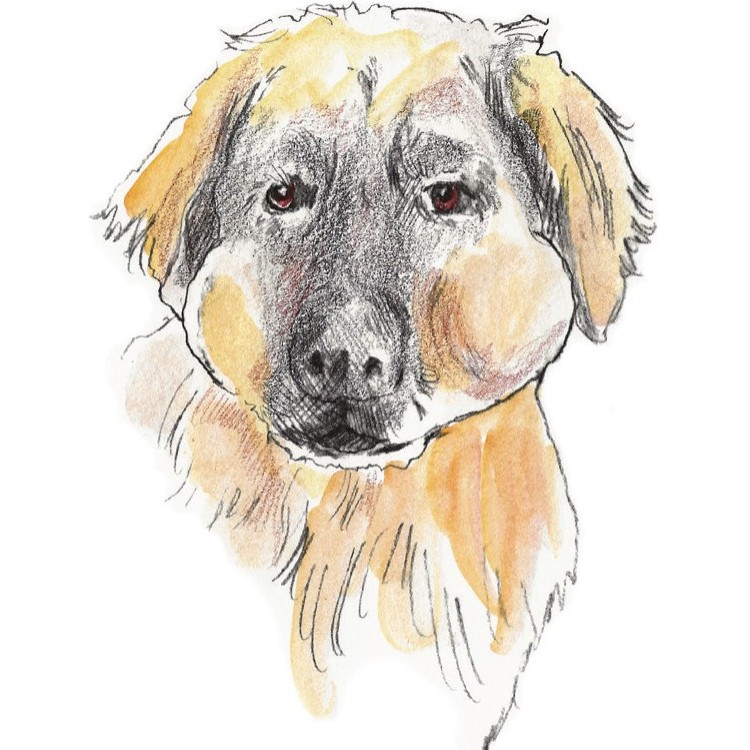
Painting showing our Leonberger Bronco’s face. Like all Leonbergers he has a black mask and fluffy hair.
This is a portrait of our Leonberger Bronco who passed on June 16 2020. The portrait was drawn by Veniceme at Etsy (Natasha Dall’Ara) and it is based on one of our photos.
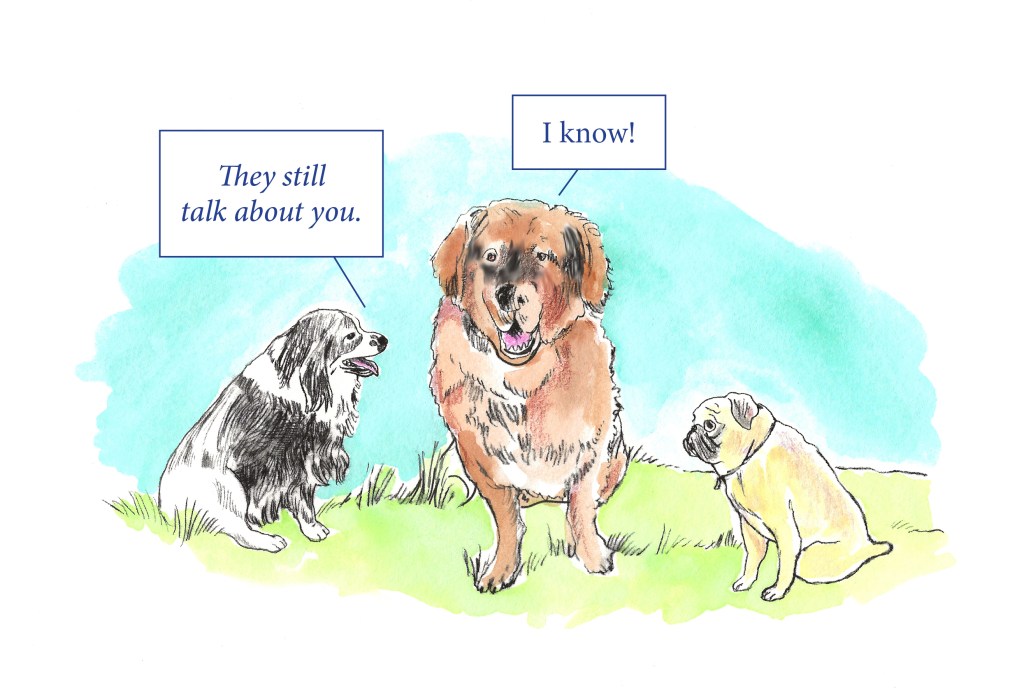
Our Leonberger Bronco is sitting in the middle of the illustration. To his left is Ryu and to his right is Daisy. Ryu says, “they are still talking about you”. Bronco responds, “I know”.
Our Leonberger Bronco lived a long life for a Leonberger, almost 13 years. He was a kind, brave, and friendly dog who loved and protected our other dogs. This blog and the book I write was started as a tribute to Bronco. Illustration by Naomi Rosenblatt.
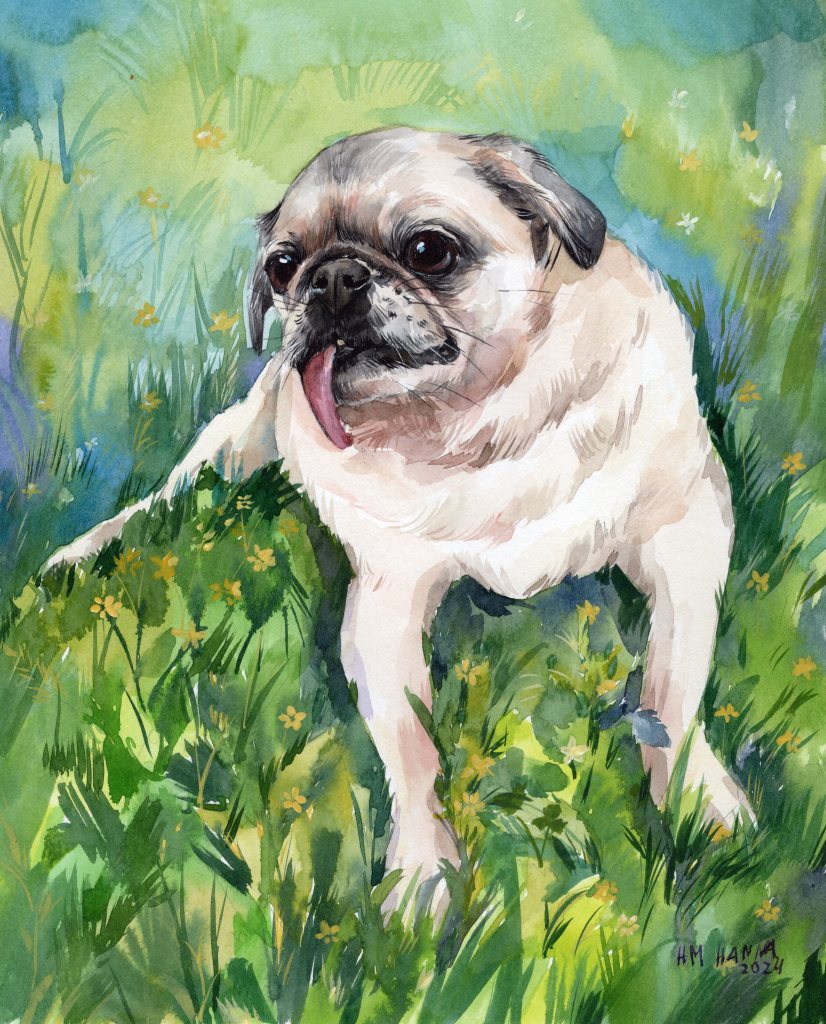
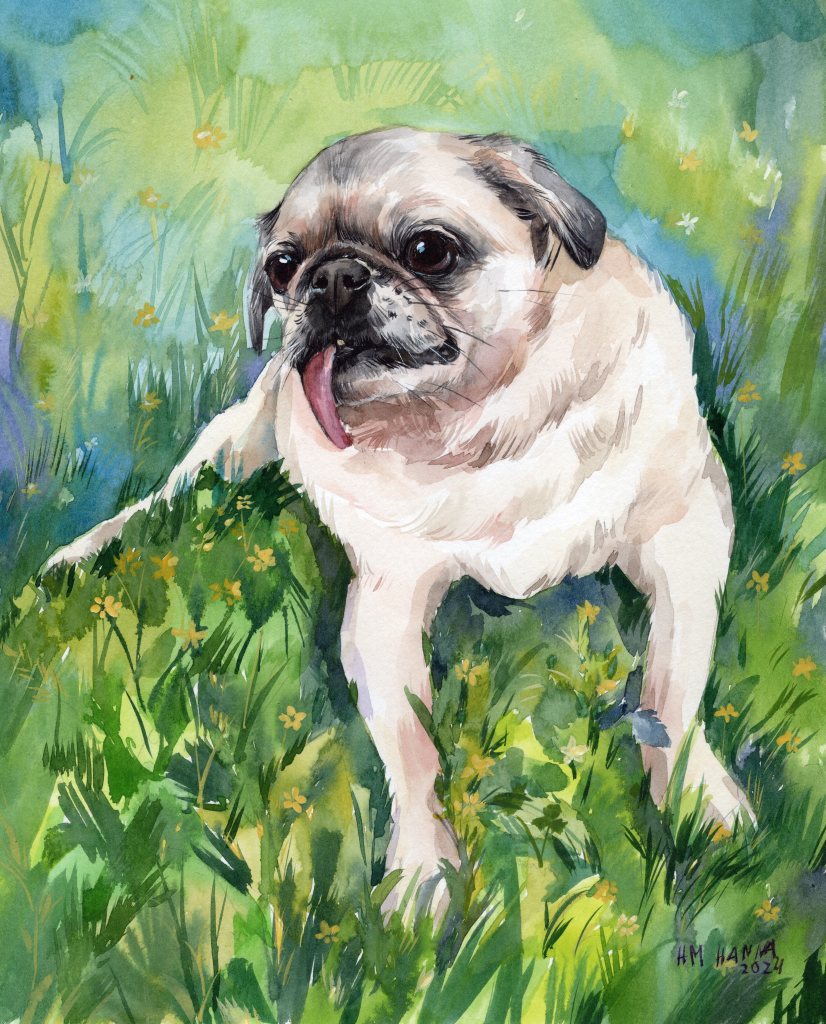
Daisy our beige pug is laying in the grass and there are some flowers.
A painting of our late pug Daisy who passed away last April. It is based on one of our photos and created by Etsy. I believe by the same woman who made Bronco’s portrait (see above).


The Rainbow Bridge

According to an article in the Washington Post, the Rainbow Bridge is “a mythical overpass said to connect heaven and earth—and, more to the point, a spot where grieving pet owners reunite for good with their departed furry friends.” According to the article, it’s also a poem of unknown origin that spawned a pet-bereavement movement and even a worldwide Pet Remembrance Day, August 28. However, the part about unknown origin may not be entirely correct. Here is an article that tells us about the origin of the poem . The poem in its entirety follows.


Just this side of heaven is a place called Rainbow Bridge. When an animal dies that has been especially close to someone here, that pet goes to Rainbow Bridge. There are meadows and hills for all of our special friends so they can run and play together. There is plenty of food, water, and sunshine, and our friends are warm and comfortable.

All the animals who had been ill and old are restored to health and vigor. Those who were hurt or maimed are made whole and strong again, just as we remember them in our dreams of days and times gone by. The animals are happy and content, except for one small thing: they each miss someone very special to them who had to be left behind.

They all run and play together, but the day comes when one suddenly stops and looks into the distance. His bright eyes are intent. His eager body quivers. Suddenly he begins to run from the group, flying over the green grass, his legs carrying him faster and faster.

You have been spotted, and when you and your special friend finally meet, you cling together in joyous reunion, never to be parted again. The happy kisses rain upon your face; your hands again caress the beloved head, and you look once more into the trusting eyes of your pet, so long gone from your life but never absent from your heart.

Then you cross Rainbow Bridge together

National Dog Day

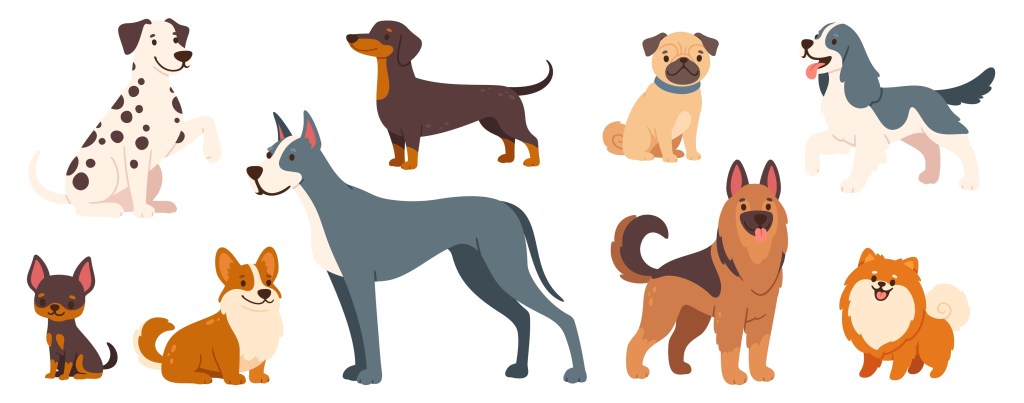
This illustration, cartoon feature nine dogs in two rows. In the top row is a Dalmatian, Dachshund, Pug, and Jack Russel.  The next row features a Chihuahua, Corgi, Great Dane, German Shepherd and a Pomeranian.
Cartoon dog pets with happy muzzles. Shutterstock Asset id: 2497974643 by Foxy Fox.

Today is National Dog Day. According to this website “Every year on August 26, National Dog Day celebrates the bond between humans and dogs while spotlighting the many dogs still in need of a loving home.”. It was Jacqui Murray who alerted me to the existence of National Dog Day. As a family we’ve owned six dogs including two rescues. They were:

  • Baylor our funny and brave Labrador Rhodesian Ridgeback mix.
  • Baby our nurturing and motherly German Shepherd.
  • Bronco our funny and loving Leonberger. He is the focus of this blog.
  • Ryu our Japanese Chin and energetic little opera singer (howling).
  • Daisy our calm and easy pug.
  • Rollo our rambunctious but loving mini-Australian Shepherd.

I should say we’ve been around many other dogs and owned other dogs further back in time. To celebrate National Dog Day, I decided to show photos of our dogs as well as dogs owned by friends and a few stock photos of dogs. A lot of the dog photos are of Leonbergers since this is a Leonberger blog. However, I would like to point out that we are celebrating all dogs, pure bred, as well as mixed breeds.

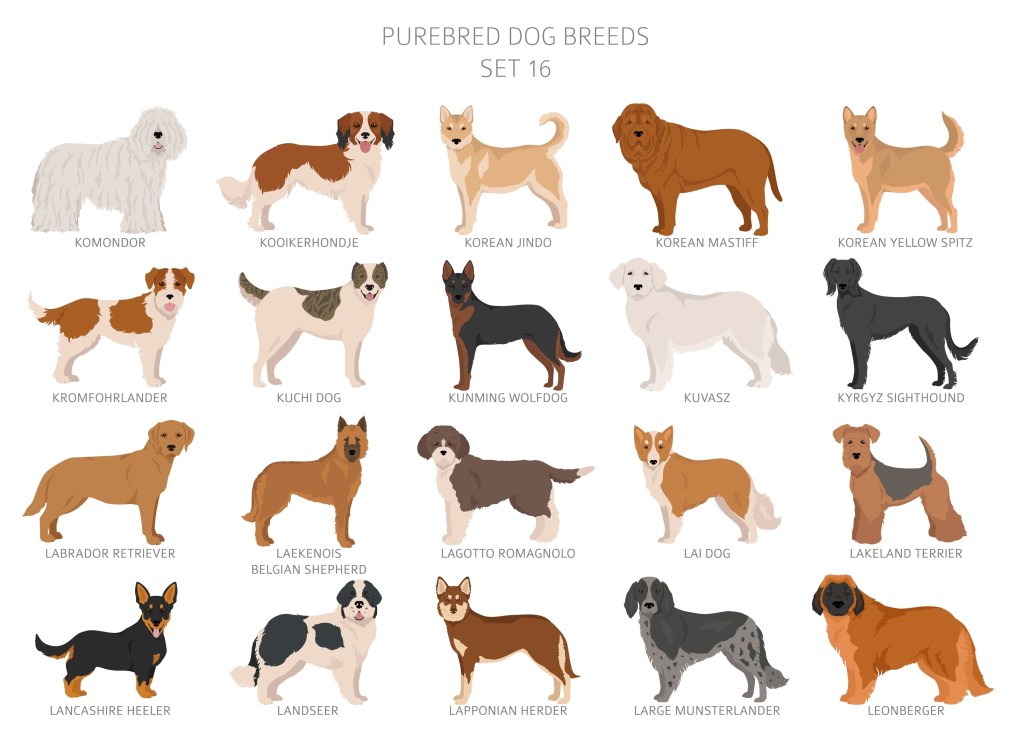
The illustration features four rows with five dogs each. Top Row: Komondor, Kooikerhondje, Korean Jondo, Korean Mastiff, and Korean Yellow Spitz. Second Row : Kromfohrlander, Kuchi Dog, Kunming Wolfdog, Kuvasz, and Kyrgyz Sighthound. Third Row: Labrador Retriever, Laekenois Belgian Shepherd, Lagotto Romagnolo, Lai Dog, and Lakeland Terrier. Bottom Row: Lancashire Heeler, Landseer, Lapponian Herder, Large Munsterlander, and finally the Leonberger.
Cartoon illustration of 20 dog breeds including the Leonberger. Shutterstock Asset id:  2658034883 by A7880S

Below are some of my previous Leonberger photo posts:

Miscellaneous Dog Photos

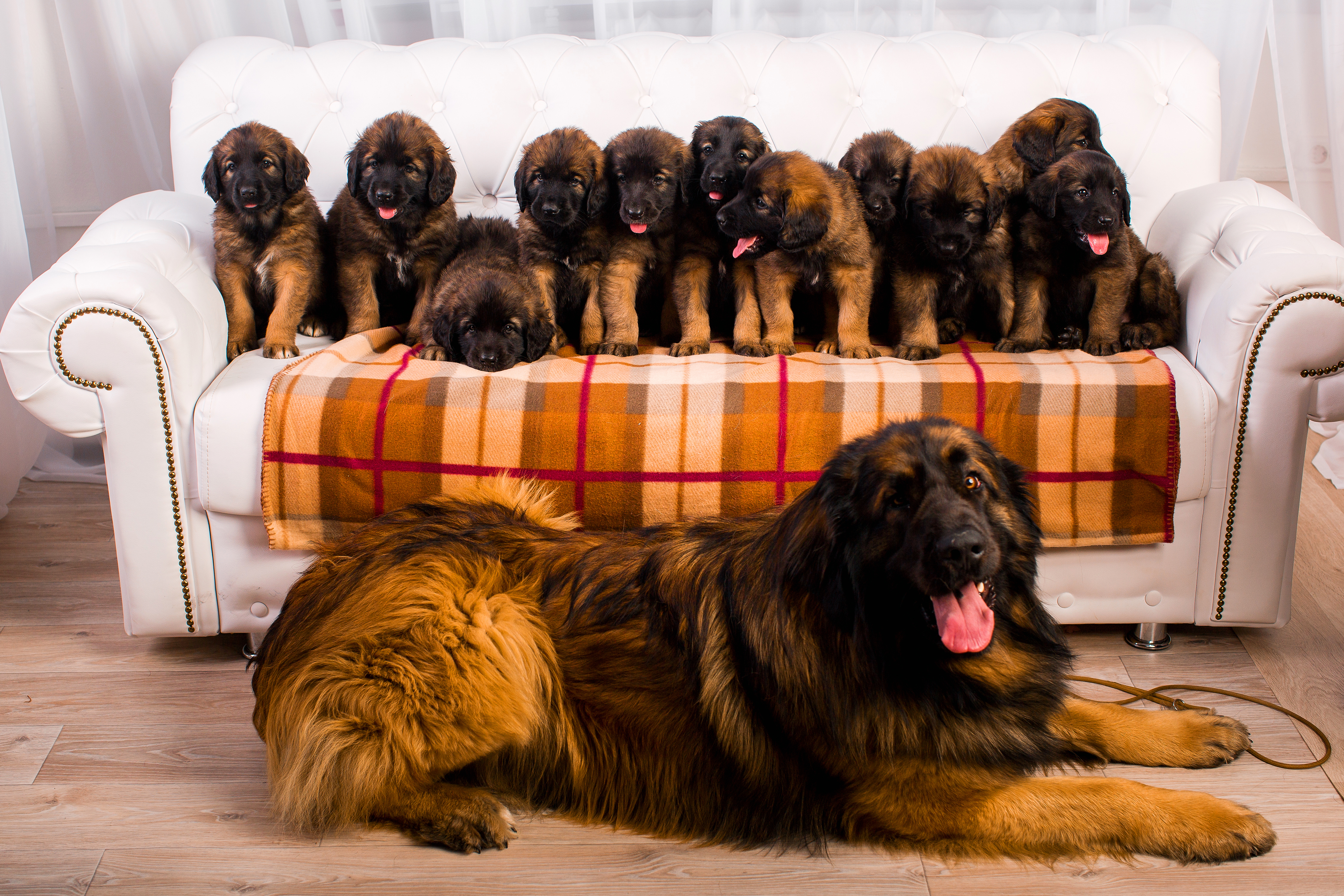
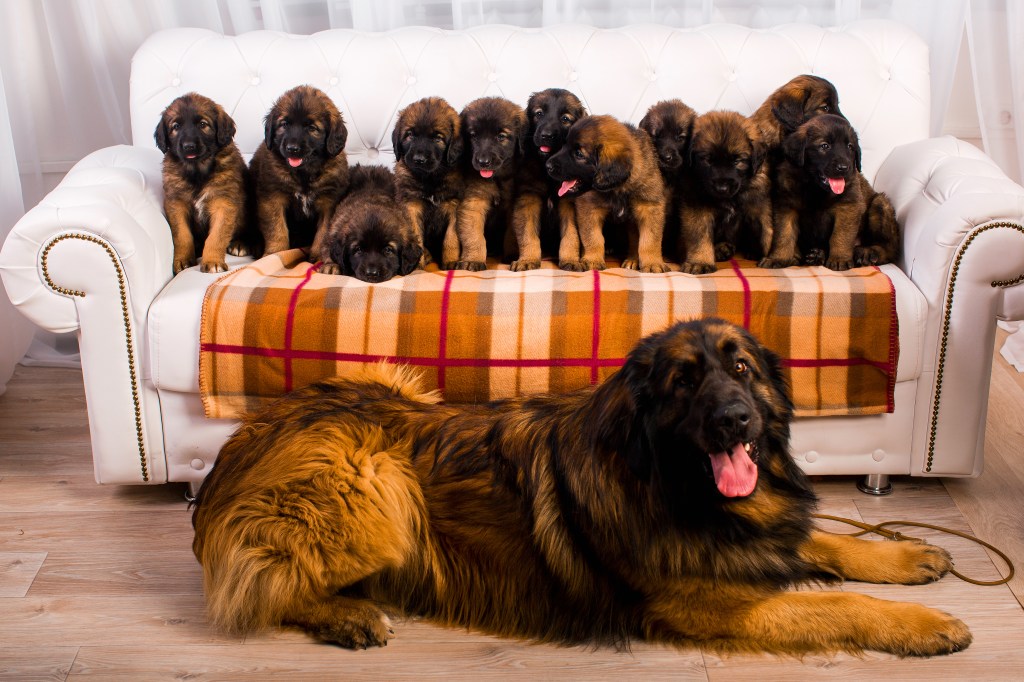
Ten Leonberger puppies sitting on a sofa. They are brown with black face masks. An adult Leonberger is lying in front of them.
Ten Leonberger puppies with mama. Shutterstock-ID: 561107650 by Akbudak Rimma.
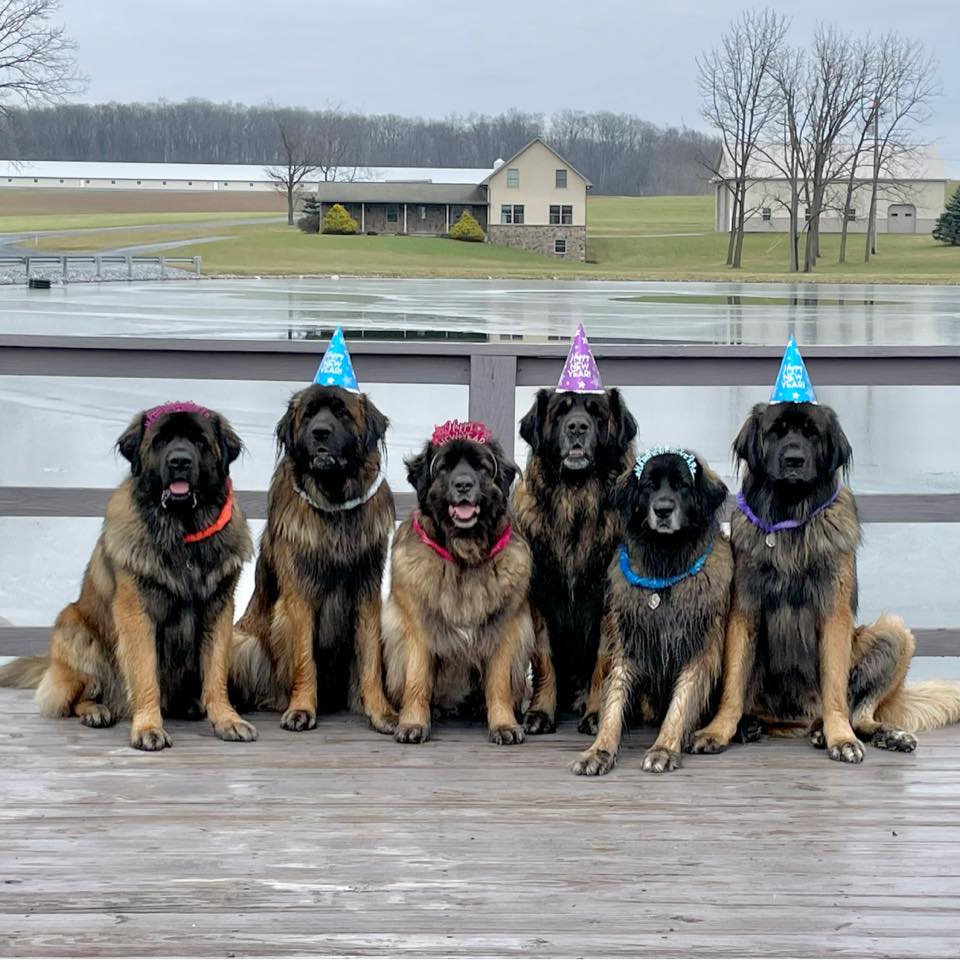
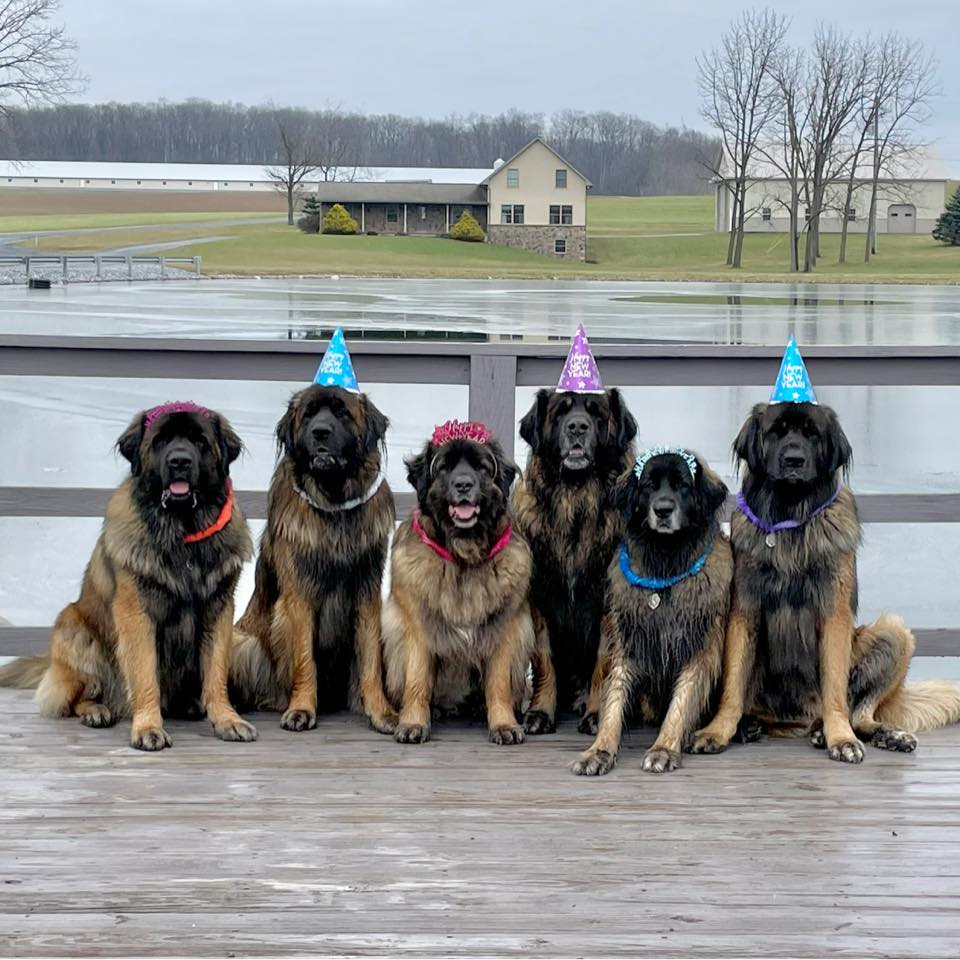
Six Leonbergers with celebration hats are looking straight into the camera.
Six Leonbergers celebrating a birthday celebration. Photo by Jen O’Keefe.
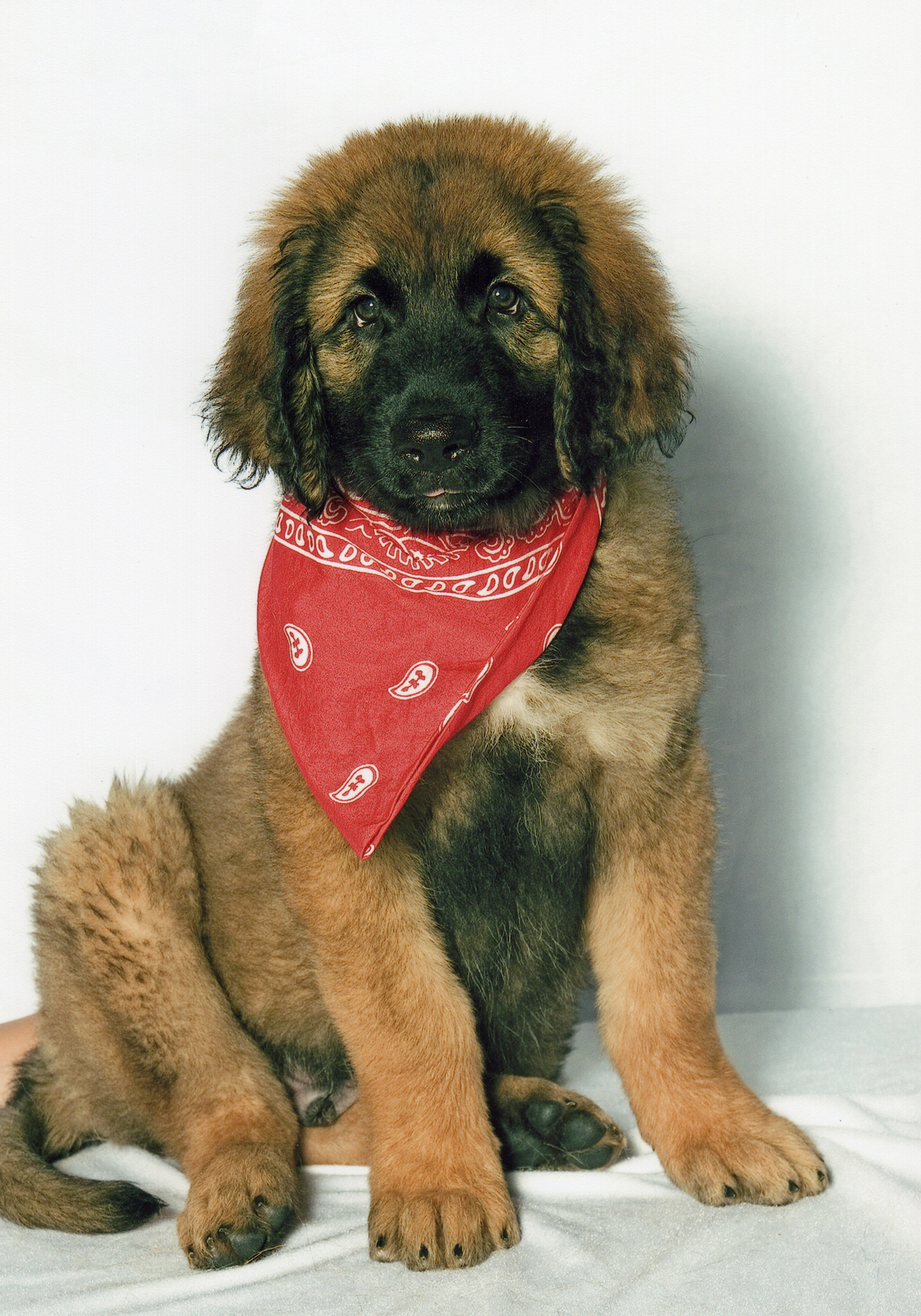
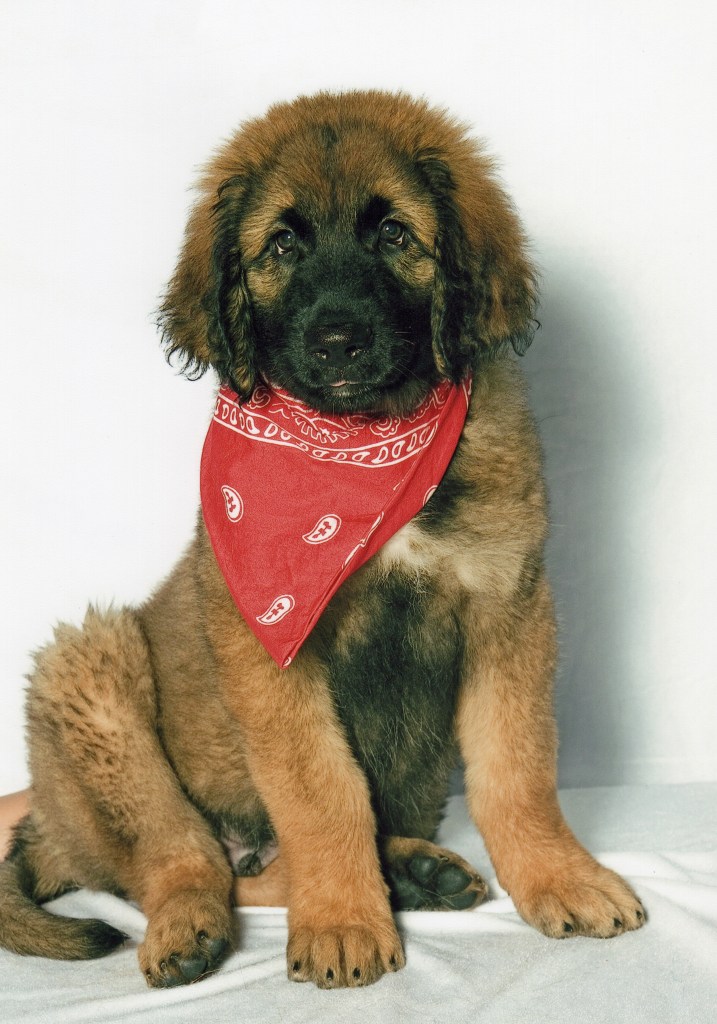
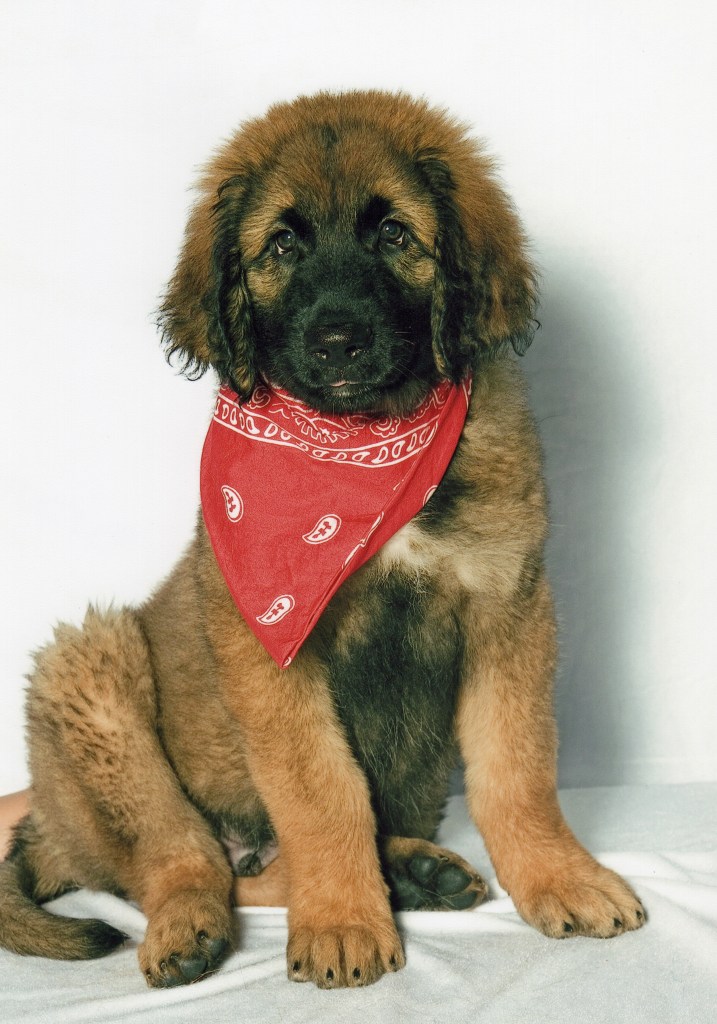
A photo of a Leonberger puppy wearing a red scarf.
This is a photo of our Leonberger Bronco when he was three months old.
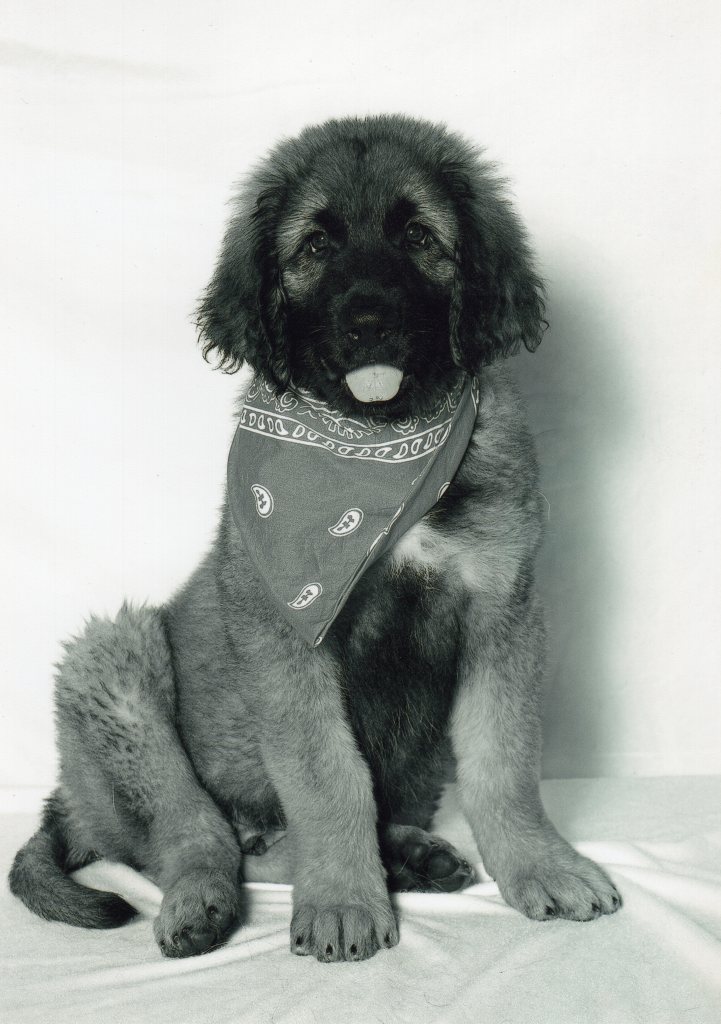
A photo of a Leonberger puppy wearing a scarf. He has his tongue out.
This is a black and white photo of our Leonberger Bronco when he was three months old.
Our Leonberger dog Bronco is standing in front of me and looking straight into the camera. I am sitting in the sofa.
Our Leonberger dog Bronco as an adult. He is coming up to me. He wants my attention.
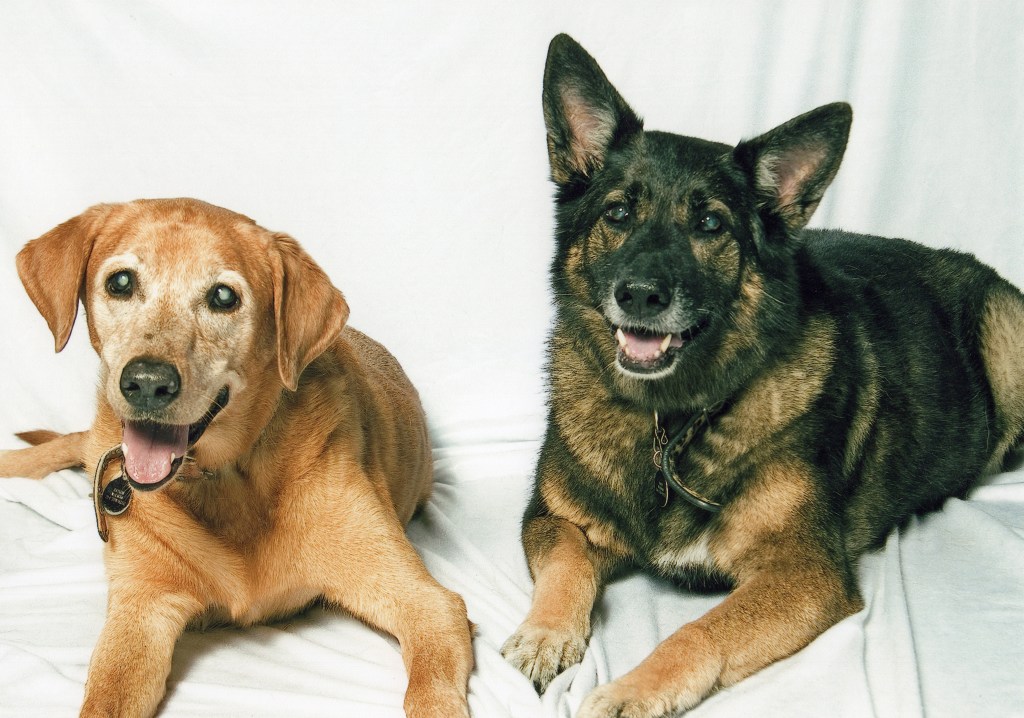
Our Labrador mix Baylor is lying down looking into the camera. He is on the left. Our German Shepherd Baby is lying down and looking into the camera. She is on the right.
Baylor our Labrador Rhodesian Ridgeback mix on the left and our German Shepherd Baby on the right. They were both old in this photo.
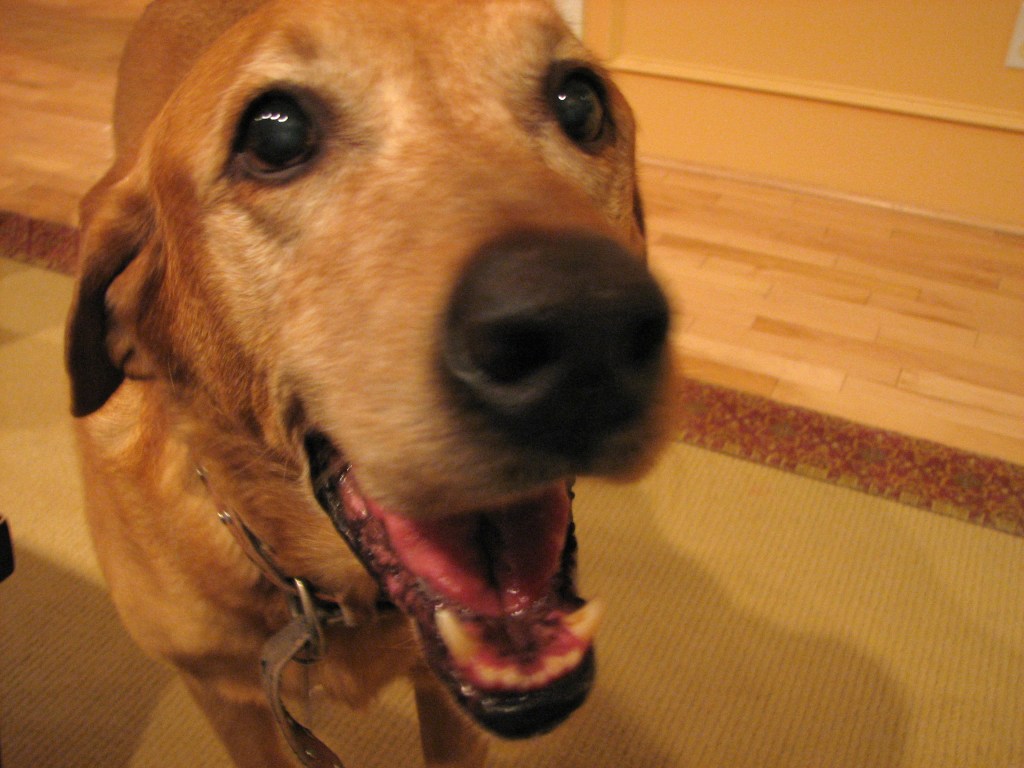
Close up photo of Baylor our Labrador Rhodesian Ridgeback mix. He is looking into the camera.
Baylor is younger in this photo. The photo is from around 2005 or 2006. Baylor had a smile that would warm the coldest hearts.
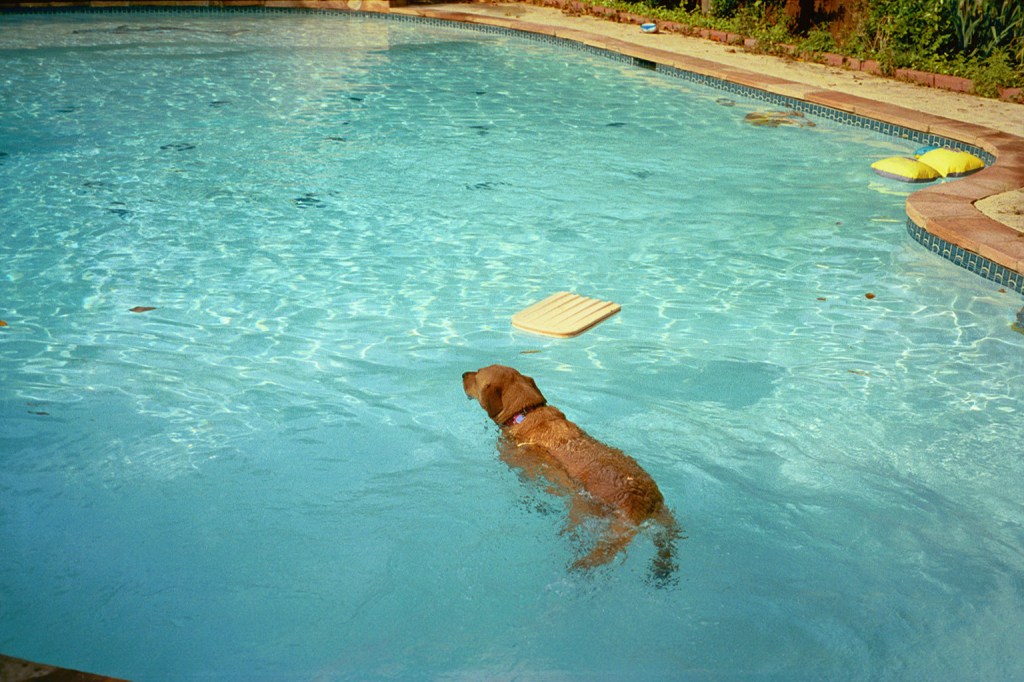
Baylor our Labrador mix is seen swimming in big pool with clear water.
Baylor loved to swim in Claudia’s parents’ pool. Claudia is my wife.
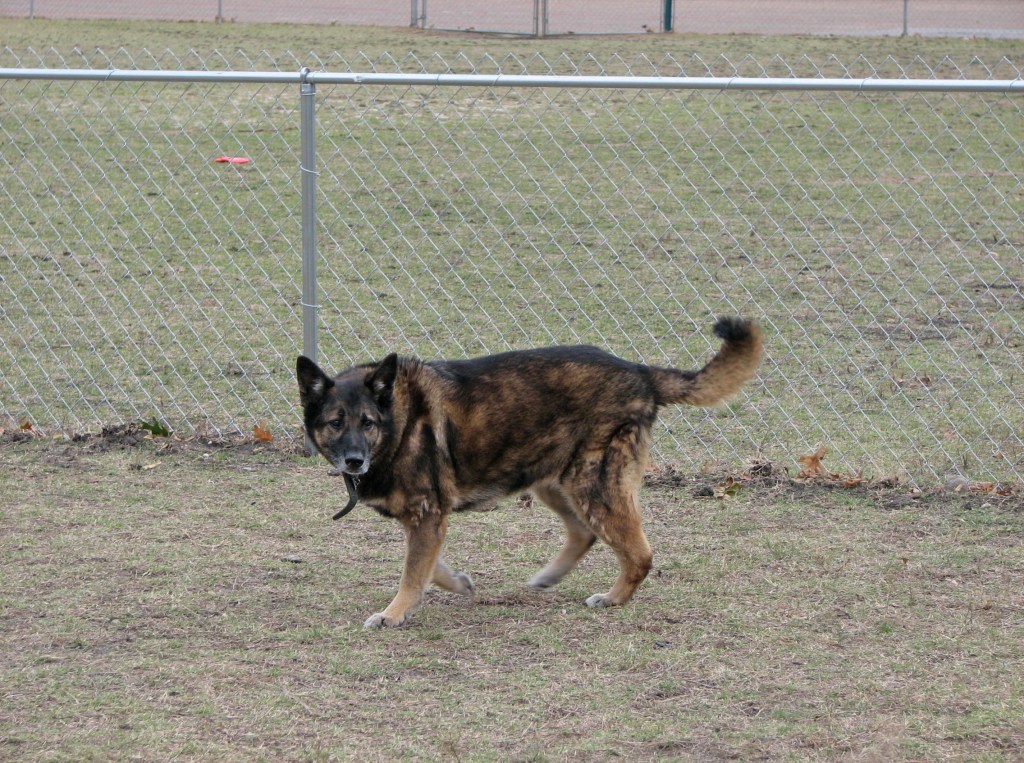
Photo of our German Shepherd Baby at the dog park.
Our German Shepherd Baby was always a little wary at the dog park.
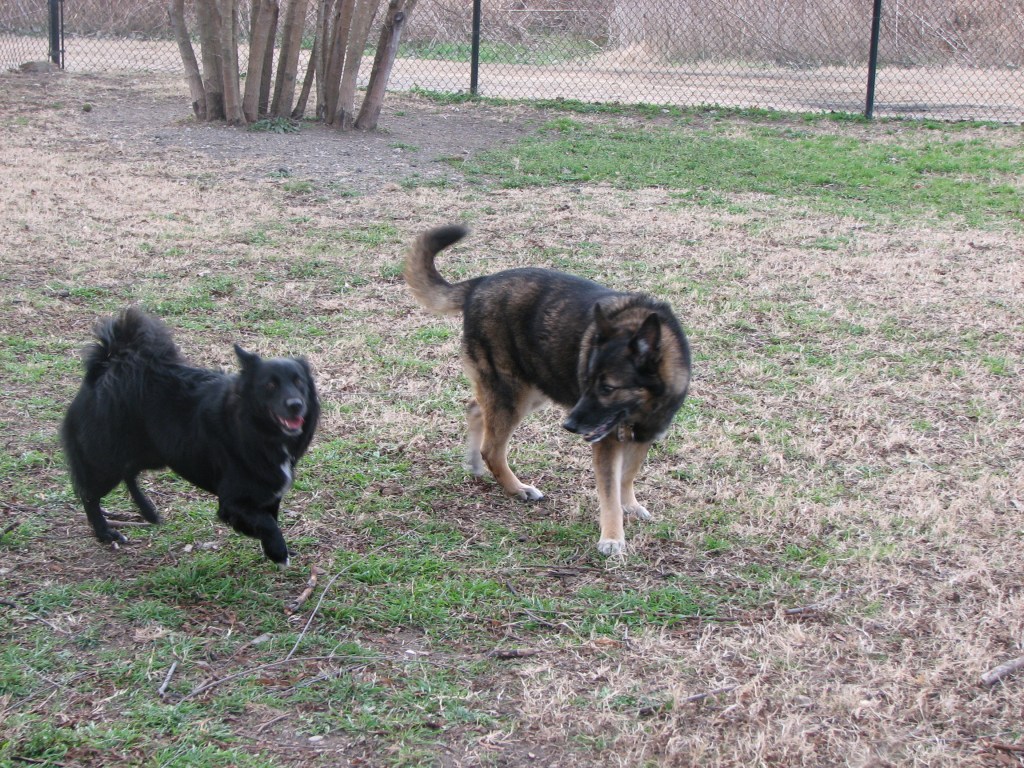
The photo shows a black dog on the left and our brown-black German Shepherd Baby on the right.
Our German Shepherd Baby is reluctantly playing with another dog at White Rock Lake dog park near Dallas, Texas.
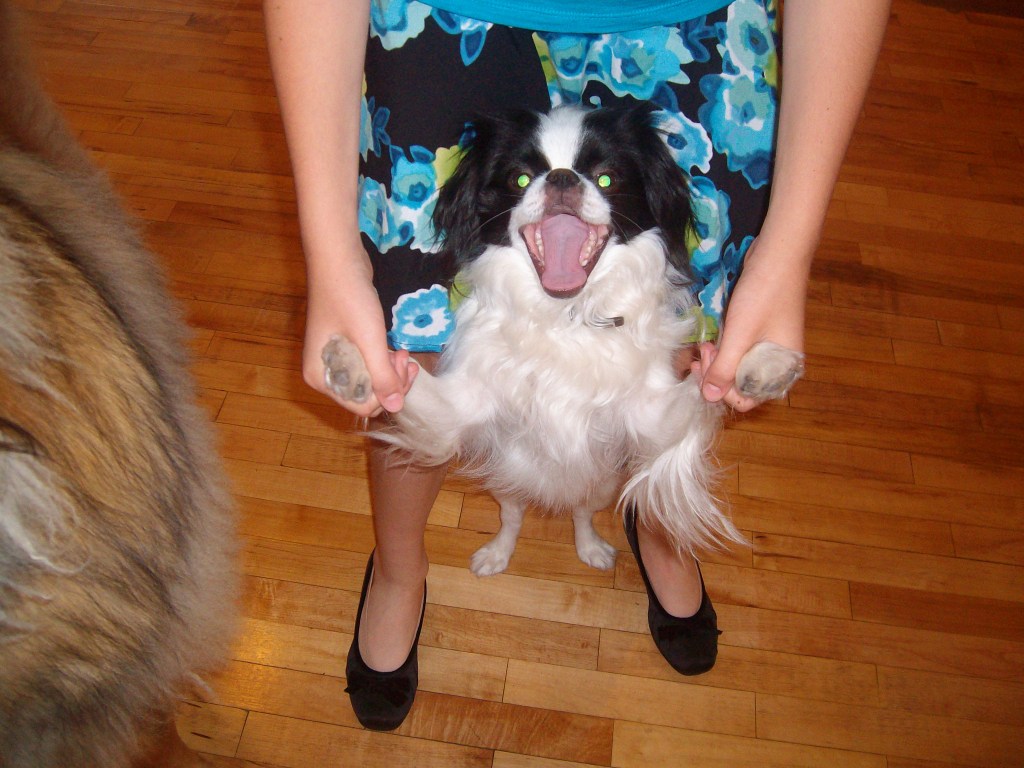
Our daughter 9 years old is holding the paws of our Japanese Chin Ryu. Ryu is standing on his back legs, and it looks like he is laughing.
Our Japanese Chin Ryu with our daughter who was 9 years old at the time.
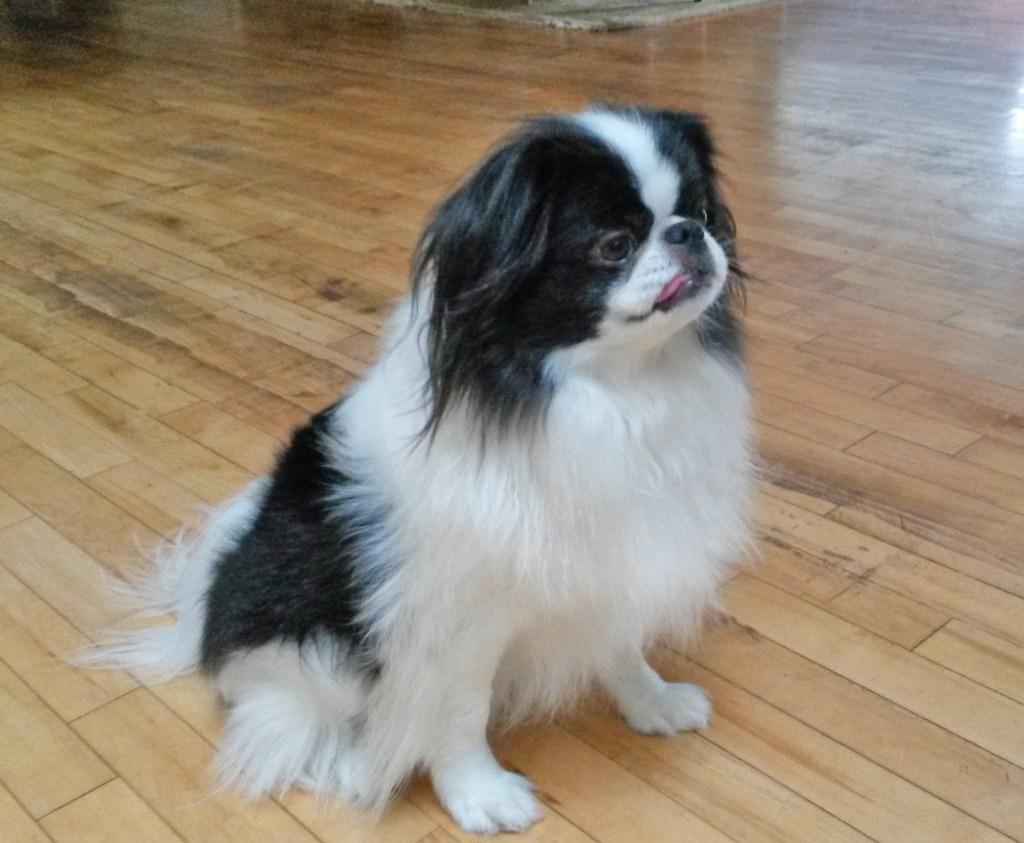
Our Japanese Chin Ryu is sitting on the wood floor.
Our Japanese Chin Ryu.
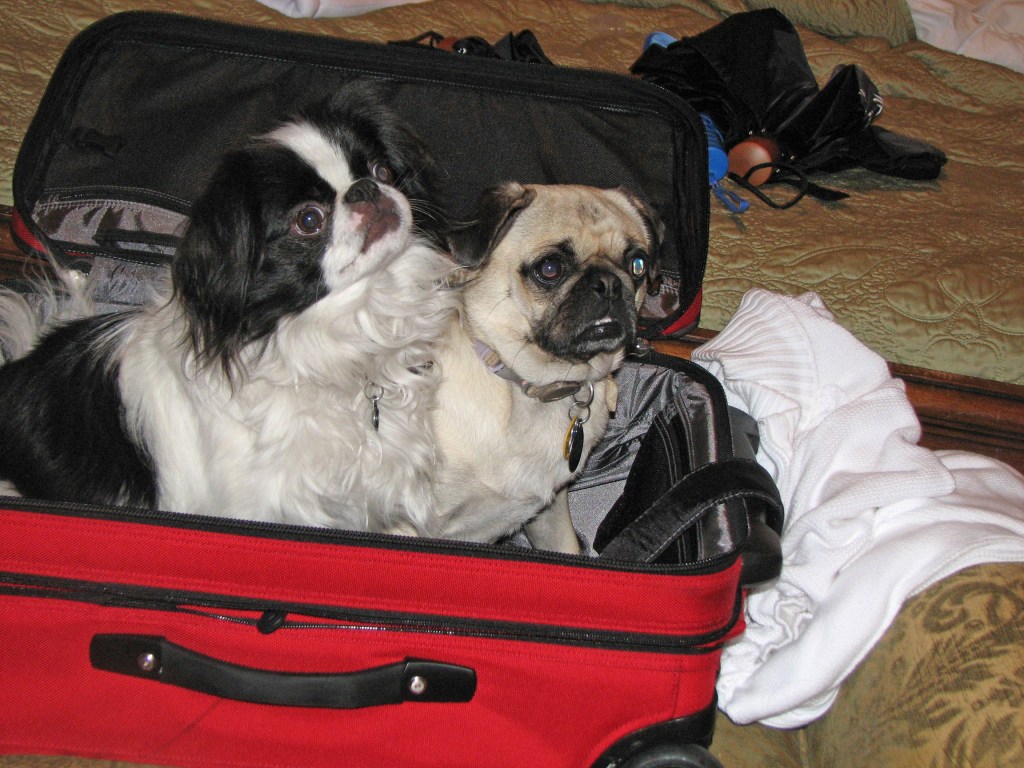
Our Japanese Chin is sitting on the left in suitcase and our pug on the right.
Our Japanese Chin Ryu and our Pug Daisy are protesting our travel by sitting in our suitcase. They want to come with us.
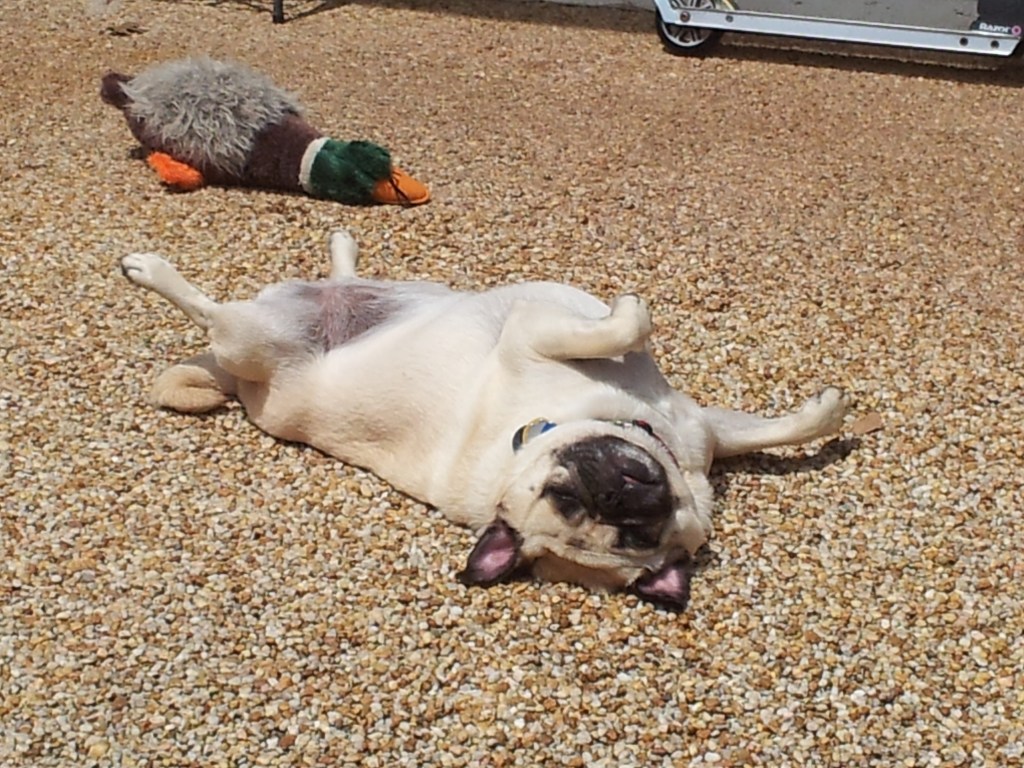
Our pug Daisy is lying on her back on the gravel. There is also a toy duck.
Our pug Daisy loved to sunbath even when it was hot. Here she is catching some rays while lying on our old backyard porch, which had gravel.
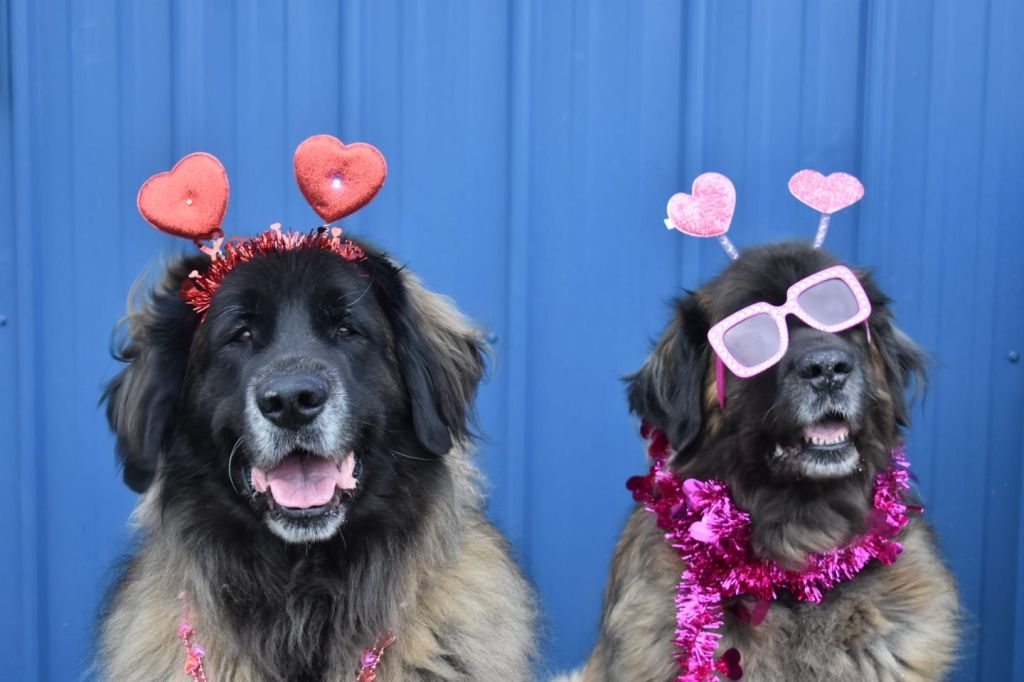
Two Leonbergers standing next to each other and wearing party headwear typical for a carnival.
Digory and Obi are two Leonbergers. Digory was a very brave Leonberger who fought cancer. He was featured in the Leo-Letter a Leonberger Magazine  Photo by Jen O’Keefe. Jen is a friend in the Leonberger community.
Photo of seven Leonbergers on the sand on a beach.
Digory with Leonbergers friends on the beach. Photo by Jen O’Keefe.
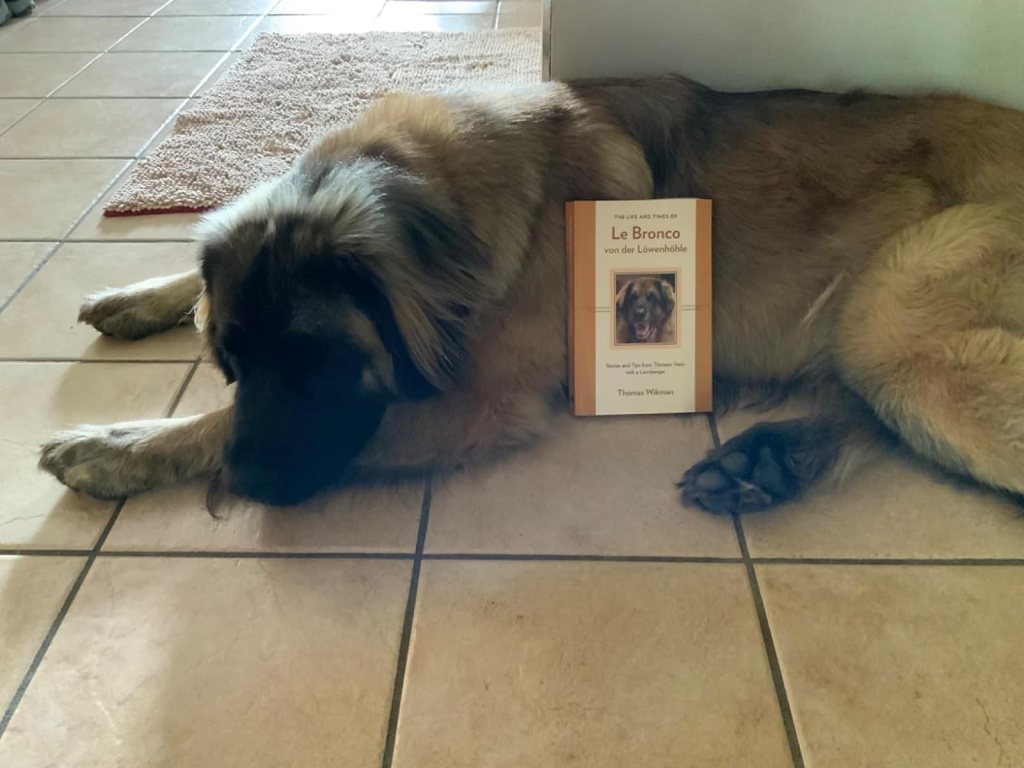
A Leonberger is lying on the floor, and my book is leaning against the dog.
Hachi is a Canadian Leonberger. Here he is featured with my book. The owner and photographers are Brenda Saito and her husband.
Photo of a Leonberger lying on a leather sofa with my book leaning towards his chest.
A Canadian Leonberger called Mak with my book. Photo by Debbie Ireland.
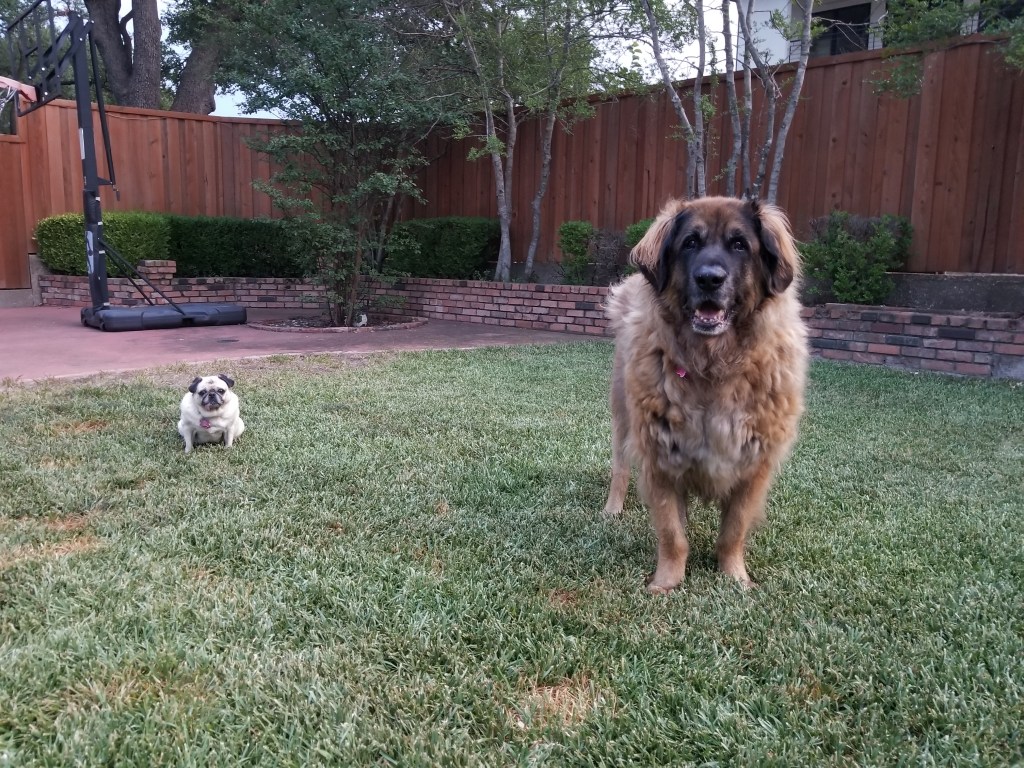
Our pug Daisy is on the lawn on the left. Our Leonberger Bronco is standing on the right.
Our Leonberger Bronco and our Pug Daisy
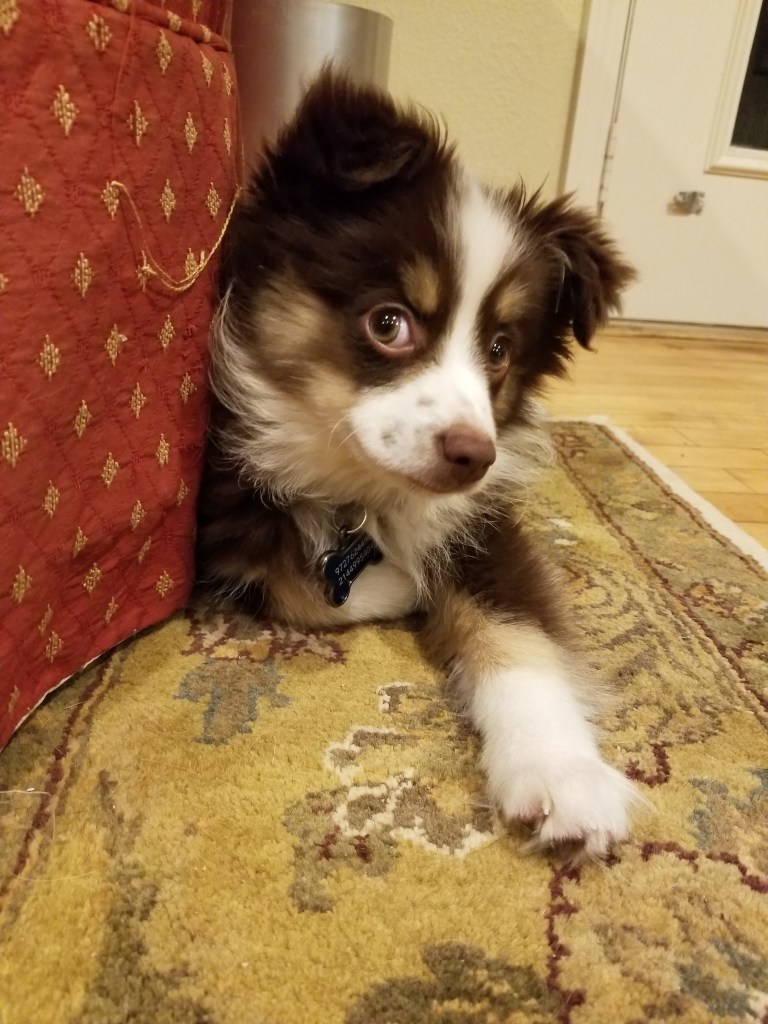
Rollo as a puppy peering out from behind a sofa chair.
Who is peeking out behind the sofa? The answer is Rollo our mini-Australian Shepherd.
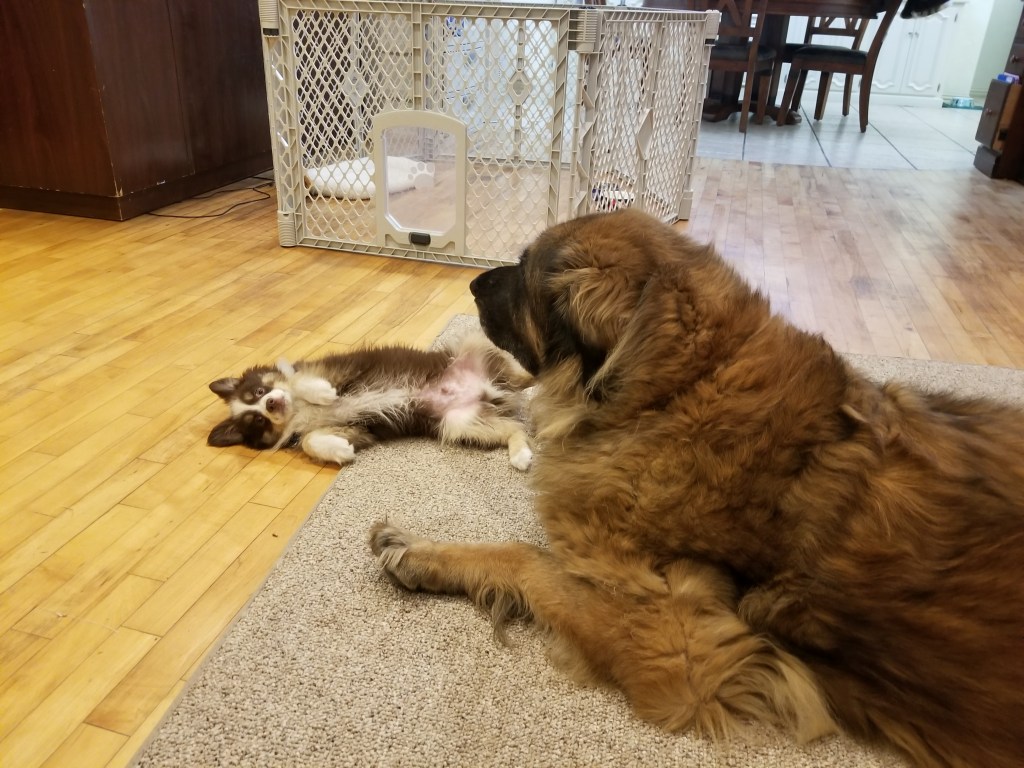
Our Leonberger Bronco is lying on the floor. Our mini-Australian Shepherd Rollo  is lying on his side wanting to be petted.
Our Leonberger Bronco and our mini-Australian Shepherd Rollo.
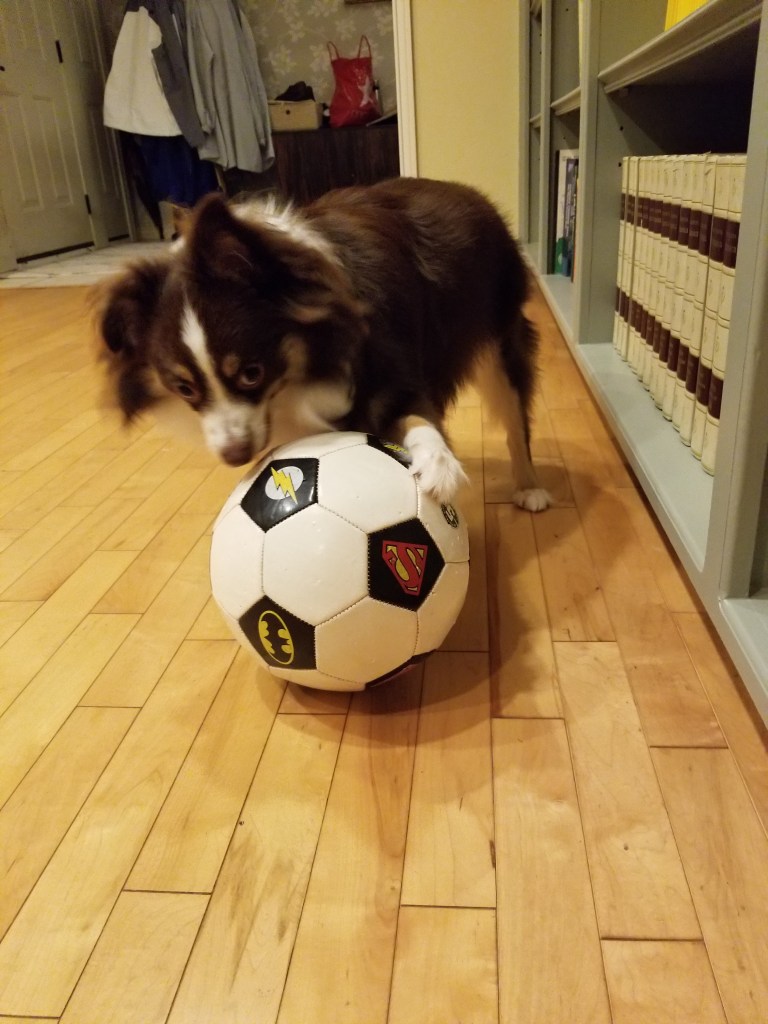
Rollo holding a soccer ball with his paw.
Rollo loves rolling and chasing balls.
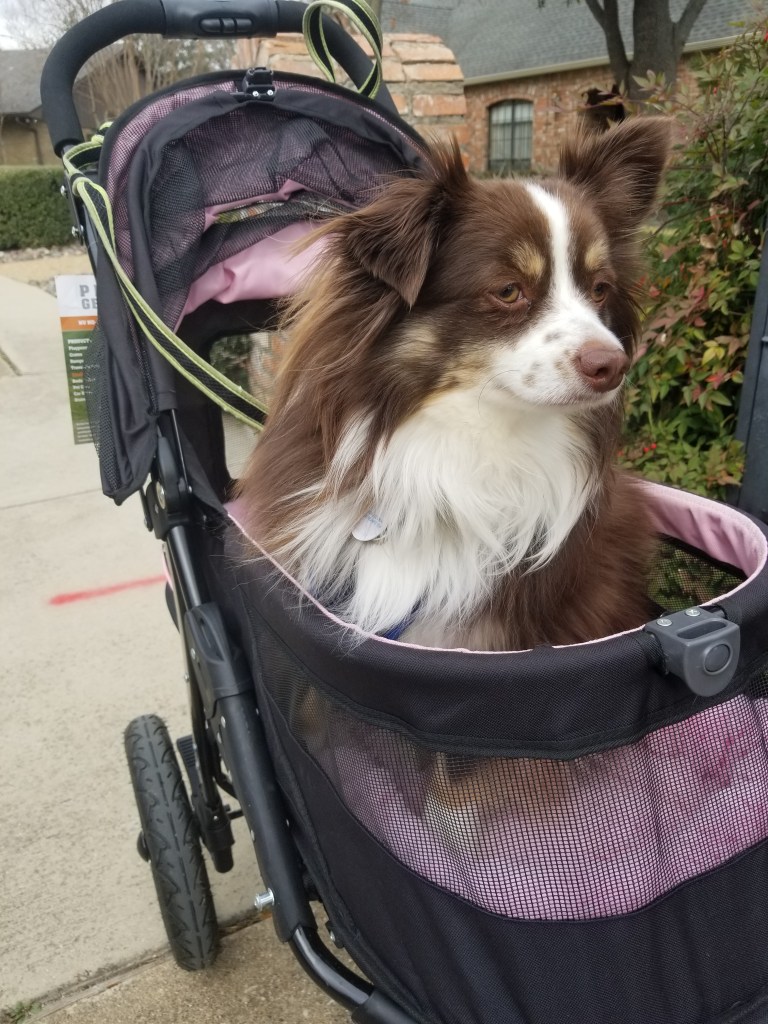
Rollo our mini-Australian Shepherd is sitting in a pink stroller.
Rollo is anxious and easily frightened. Daisy’s stroller is a good thing to sit in for such occasions.
Bronco is lying in green grass. Our house and brick wall are in the background.
Our Leonberger Bronco is in the front yard.
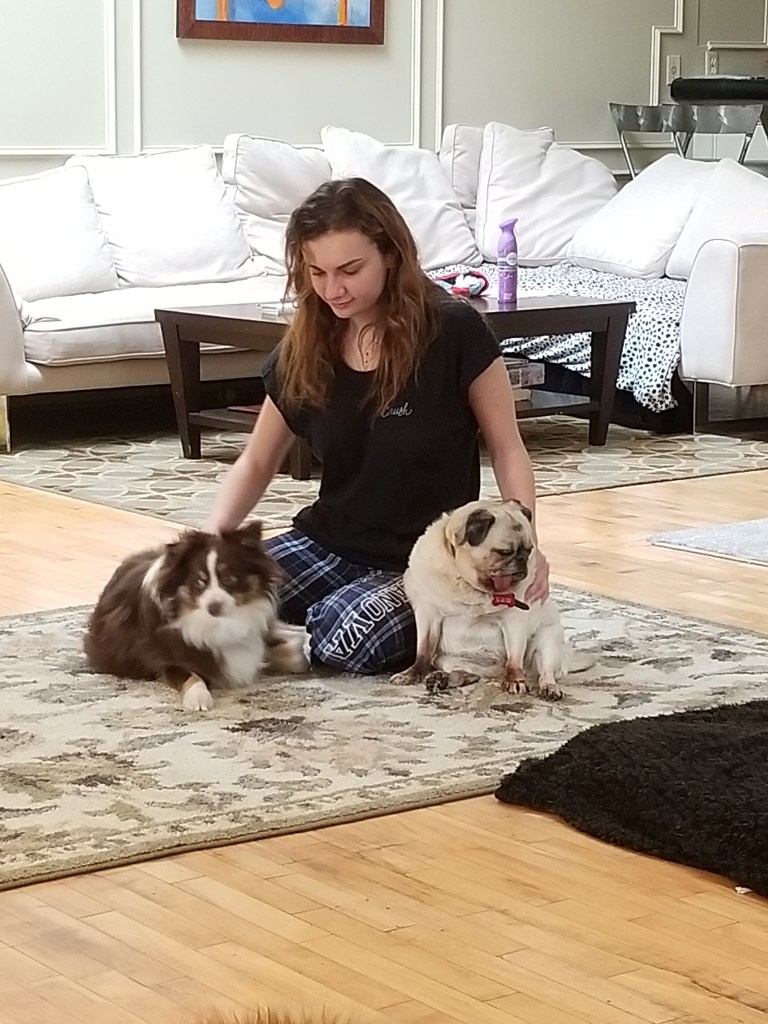
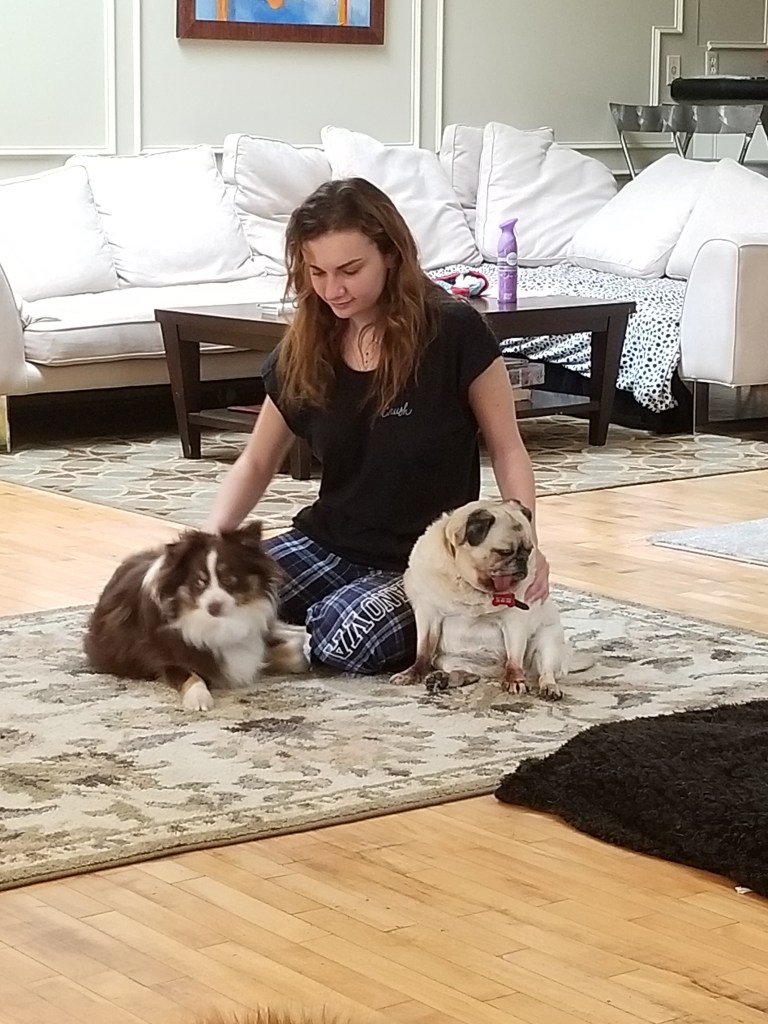
Rachel kneeling on the floor and petting our mini-Australian Shepherd Rollo  who is on the left as well as our pug Daisy who is on the right.
Our daughter with our pug Daisy and our mini-Australian Shepherd Rollo.
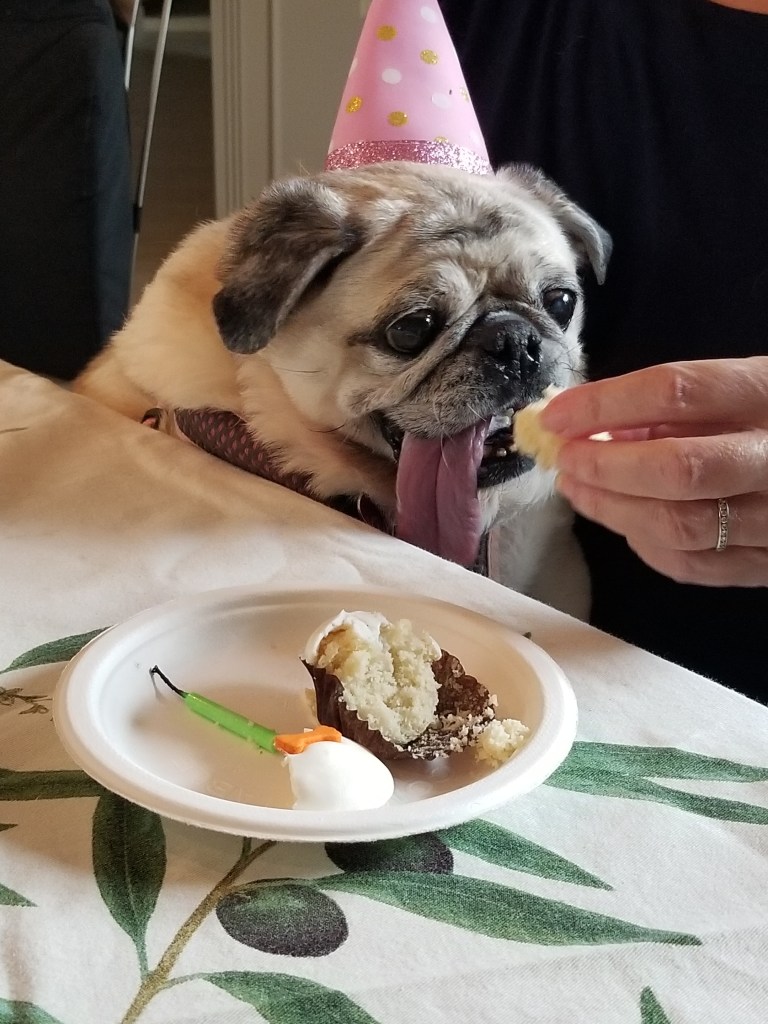
Our Pug Daisy has a pink party hat on. My wife is feeding her a piece of cake.
This is a photo I took. It was Daisy’s 15th birthday. I can add that this photo was stolen by the administrators of several Pug groups on Facebook and posted as if it was their own photo. Sometimes her name was Daisy but sometimes they made up new names for her including male names. They also used the approval feature to prevent you from complaining. This was very common. I was unable to find an honest Pug group on Facebook. Posting dog photos on a blog is much more rewarding.
Daisy our beige pug is laying in the grass and there are some flowers.
A painting of our late pug Daisy who passed away last April. It is based on one of our photos and created by Etsy. I believe by the same woman who made Bronco’s portrait (see below).
Painting showing our Leonberger Bronco’s face. Like all Leonbergers he has a black mask and fluffy hair.
The portrait was drawn by Veniceme at Etsy (Natasha Dall’Ara) and it is based on one of our photos.

Dog Books to Check Out

I wrote a book about our amazing and funny Leonberger . The book also features tips for care and training of Leonbergers and other large dogs, as well as a resource guide. The title of the book is The Life and Times of Le Bronco von der Löwenhöhle: Stories and Tips from Thirteen Years with a Leonberger. You can buy the paperback version here or the Kindle version here. You can buy it on Canadian Amazon here. To find out more about the book and where else to buy it click here.

I would also like to recommend a great dog book, Sam: A Shaggy Dog Story by Sally Cronin. To read my review for the book click here.

Another recommendation I have is The Good Dog: A Novella by Laura Stamps. To read my review for the book click here.

I am also looking forward to receiving a new promising poetry dog book, King Copper: Our dog’s life in poetry by Lauren Scott.

The Sense of Smell in Dogs

This evening around 7:45PM my daughter came to me and said that my wife, Claudia, and her, wanted to take Rollo for a walk. I said that I had told Claudia that I would go with her and Rollo for a walk at 8:00PM, and that I was in the middle of something right now. We had an argument, which ended with my daughter and my wife taking Rollo for a walk at around 7:50PM, and I stayed home to finish what I was doing. The reason we are walking him late in the evening is because here in north Texas it is pretty hot, so you need to wait until twilight.

They left, but at 8:00PM I decided to join them, so I went after them. However, I could not find them. When I reached an intersection, I called my wife on her phone to find out which way they went. She did not answer because she had left her phone at home. The same was true for my daughter. But then I thought I heard Rollo barking, so I went that way. It turned out it was another dog. I turned around and started walking home. I had about a mile back home.

Soon after I had rounded a corner in an intersection, I heard a bark. I turned around and there was Rollo running towards me with my daughter running behind him holding the leash. She explained that Rollo had picked up a scent about half a mile back and had started running. She thought he had smelled another dog and along the way they passed a dog. However, he just ran passed the dog without acknowledging the dog. He was obviously after something else. She was wondering what he was running after, and she found the answer as they rounded the corner and saw me.

He had smelled my scent and had started running to find me from half a mile away. It wasn’t like I stank to high heaven. I took a shower today. How could he smell me, just from walking around the neighborhood? The sense of smell of dogs is amazing. Clearly Rollo’s sense of smell was better than my hearing. According to this article (and this) a dog’s sense of smell is 10,000 to 100,000 times more acute than that of a human. You can read more about Rollo here and here and here. Below are a few photos of Rollo.

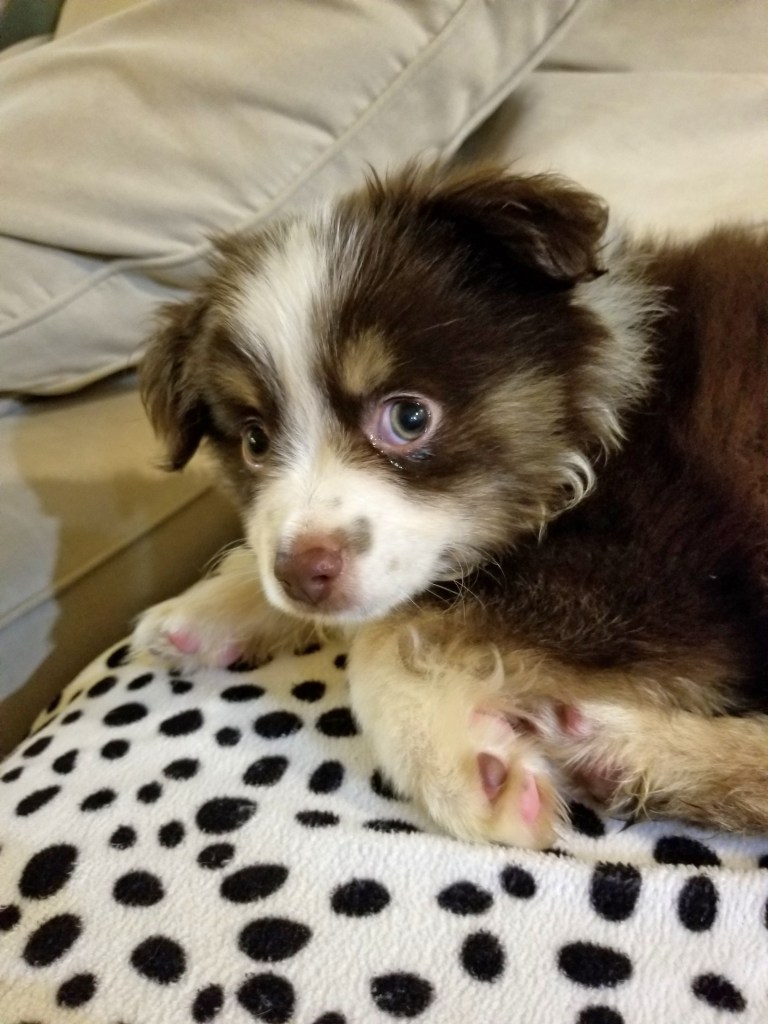
A mini-Australian Shepherd puppy lying on a blanket and looking into the camera.
Close up of Rollo as a puppy.
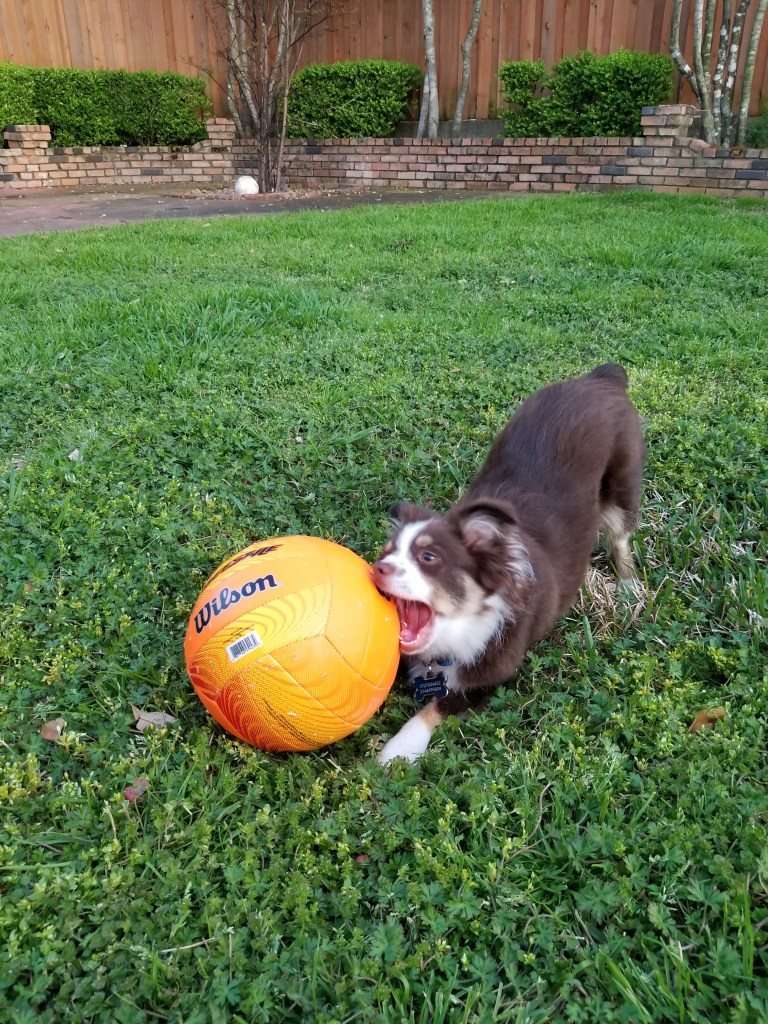
The photo shows a mini-Australian Shepherd puppy biting an orange volleyball.
Rollo playing with a volleyball.
The photo shows a mini-Australian Shepherd biting a Leonberger’s tail.
Rollo frequently bit our Leonberger Bronco’s tail, and he even swung in it like a swing. He climbed all over Bronco. Bronco was very patient with him.

The Day Our Leonberger Bronco Sniffed out an Insulin Shock

According to the article that I mentioned above “Dogs’ powerful noses are being used in medicine to detect diseases, sniffing them out in a less invasive manner than the currently available diagnostic tests”. For example, dogs have been able to accurately detect cancer, predict seizures and identify people with low blood sugar just by using their noses. This is exactly what I am going to describe below.

We used to have a Labrador called Baylor who had diabetes. Well, more exactly he was ¾ Labrador and ¼ Rhodesian Ridgeback. I used to give him insulin shots after every meal. We also had a Leonberger called Bronco. This was a large dog. Leonberger are related to Saint Bernards and about the same size.

One day as we had just gone to bed our Leonberger Bronco started barking while looking intently at Baylor, then he looked at us, then he turned his head toward Baylor and started barking again. He did this a few times—not aggressively, but to get our attention. It became clear to us that Bronco wanted us to look at Baylor. I examined Baylor but saw nothing wrong at first. Then I looked again. This time I saw that his back legs were shaking slightly. It quickly got worse. His gait became wobbly, then within perhaps fifteen seconds he fainted. He had gone into insulin shock. “Insulin shock” is another name for severe hypoglycemia, a condition where blood sugar (glucose) is dangerously low. Exactly, what dogs can smell out according to the article above. We rushed him to the emergency clinic, where fortunately the doctors were able to revive him.

Bronco detected a problem with Baylor before we could see anything wrong. His warnings gave us that little bit of extra time we needed to save Baylor’s life. Imagine if we had gone to bed, fallen asleep and not noticed the problem. I can add that Leonbergers have a very keen sense of smell. We had never taught Bronco to detect insulin shock or any other condition. It was entirely his own instinct. This was one of the amazing superpowers Bronco had. I should say that we didn’t know this at the time, but giving a dog sugar, or something sweet, can bring him out of insulin shock. To read more about this incident click here or here. Below are some photos of Bronco and Baylor.
Close up photo of Baylor our Labrador Rhodesian Ridgeback mix. He is looking into the camera.
Baylor is young in this photo. The photo is from around 2005 or 2006. Baylor had a smile that would warm the coldest hearts.
Our Leonberger is standing on the large red leather sofa giving me a kiss.
Me and our Leonberger Bronco when he was young.
Bronco our Leonberger is standing in front of me and he is looking into the camera.
Our Leonberger Bronco is ready for dinner

What Does Rollo See Out His Window

Esther’s writing prompt: 20th August : Window

Click here or here  to join in.
Our mini-Australian Shepherd Rollo loves going out, whether it is for a walk, a car ride, or visiting grandma and grandpa. But we can’t take him everywhere. Sometimes we have to leave him at home and when this happens, we tell him “Rollo go and look out the window”, and he runs to the window, and he looks out. You may wonder, what does Rollo see when he looks out his window?

He sees the blue sky and the clouds; he sees birds flying and he sees the black crows walking on our lawn. He doesn’t like the black crows walking on our lawn, so he goes woof, woof, woof, woof.

He sees the green grass, the houses, he sees the jagged edges of the roofs and the chimneys, and he sees workers repairing shingles on roof tops, which look scary, so he goes woof, woof, woof, woof.

He sees rabbits running, cats hiding, children playing and laughing, and he sees squirrels running up the trees so he goes woof, woof, woof, woof.

He sees people walking by our house. Do they see him? Maybe not. But there, someone sees him, and he goes woof, woof, woof, woof.

He sees people with dogs walking by our house and that makes him mad, so he goes woof, woof, woof, woof.

Rollo looks out the window and he sees the world, and he knows that the world was made for him, but he has to stay inside, so he goes woof, woof, woof, woof.

We left him alone in his despair for nearly two hours but now he sees us coming home and he runs to the door, and he goes woof, woof, woof, woof.

We ask him, Rollo, what did you see out your window today? And he goes woof, woof, woof, woof.

Photos of Rollo Looking Out the Window

Rollo our dark brown and white mini-Australian Shepherd is standing in the kitchen looking sad.
This is Rollo. Rollo does not look happy because we told him we are leaving. Next, we are telling him to go look out the window.
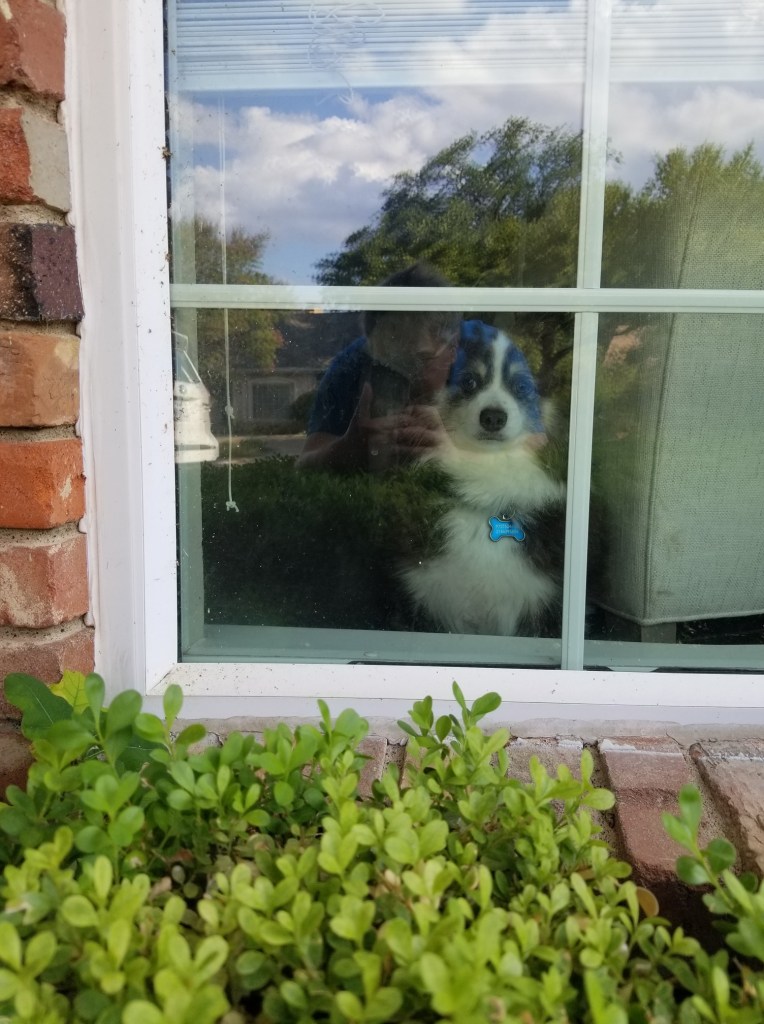
Rollo our dark brown and white mini-Australian Shepherd is standing in front of the window looking out. You can see the reflection of me and the rest of the neighborhood in the window, obscuring Rollo a bit.
Rollo is looking out the window. Unfortunately, there are reflections in the window.
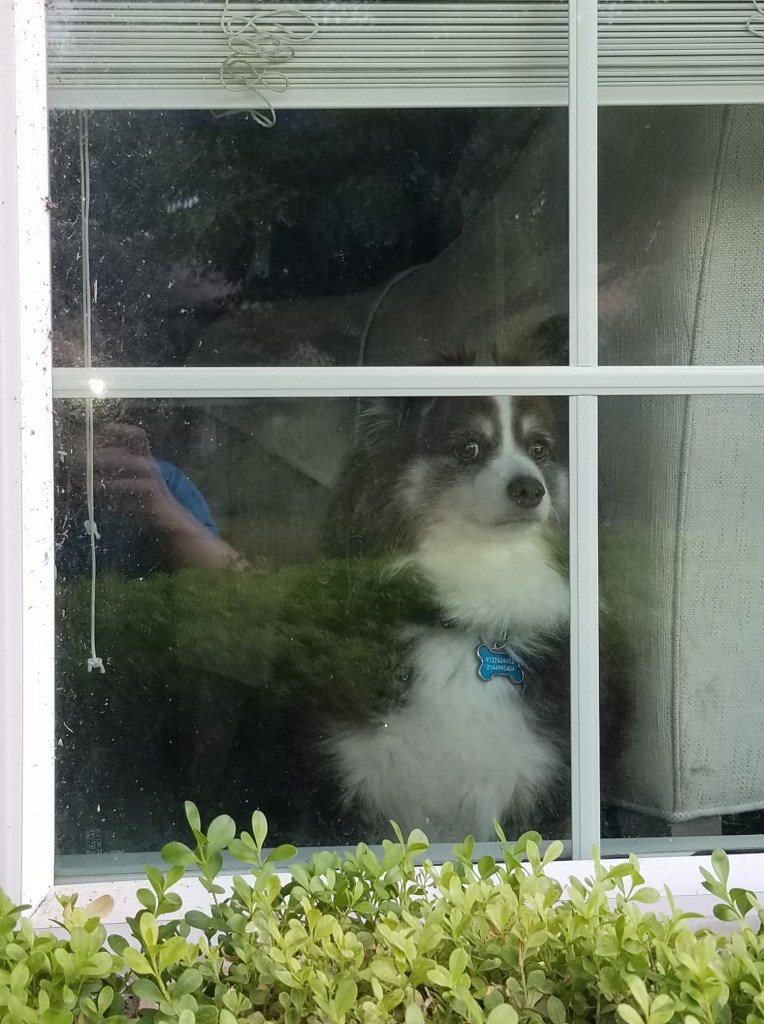
Rollo our dark brown and white mini-Australian Shepherd is standing in front of the window looking out. You can see the reflection of me and the rest of the neighborhood in the window, obscuring Rollo a bit.
Rollo is looking out the window. You can see the reflection of me taking the photo and of the neighborhood in the window.

Daisy and Rollo Looking Out the Window

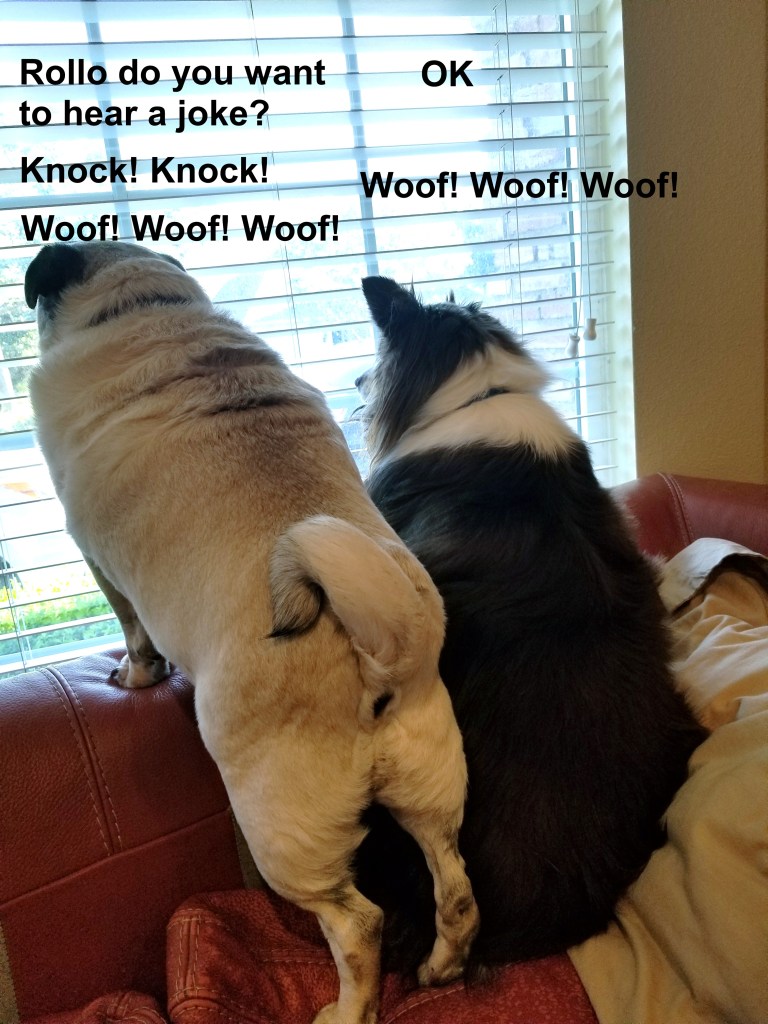
Rollo grew up with two dogs, our big fluffy Leonberger dog Bronco and Daisy our Pug. Bronco sometimes stood and looked out the window, but Rollo and Daisy loved doing that together. They stood on the sofa and barked at everything they saw outside.

A pug and a mini-Australian Shepherd are standing on the sofa looking out the window. The joke goes: Daisy says : Rollo do you want to hear a joke? Rollo says OK. Daisy says Knock! Knock! They both start barking like crazy.
Daisy’s and Rollo’s knock knock joke.
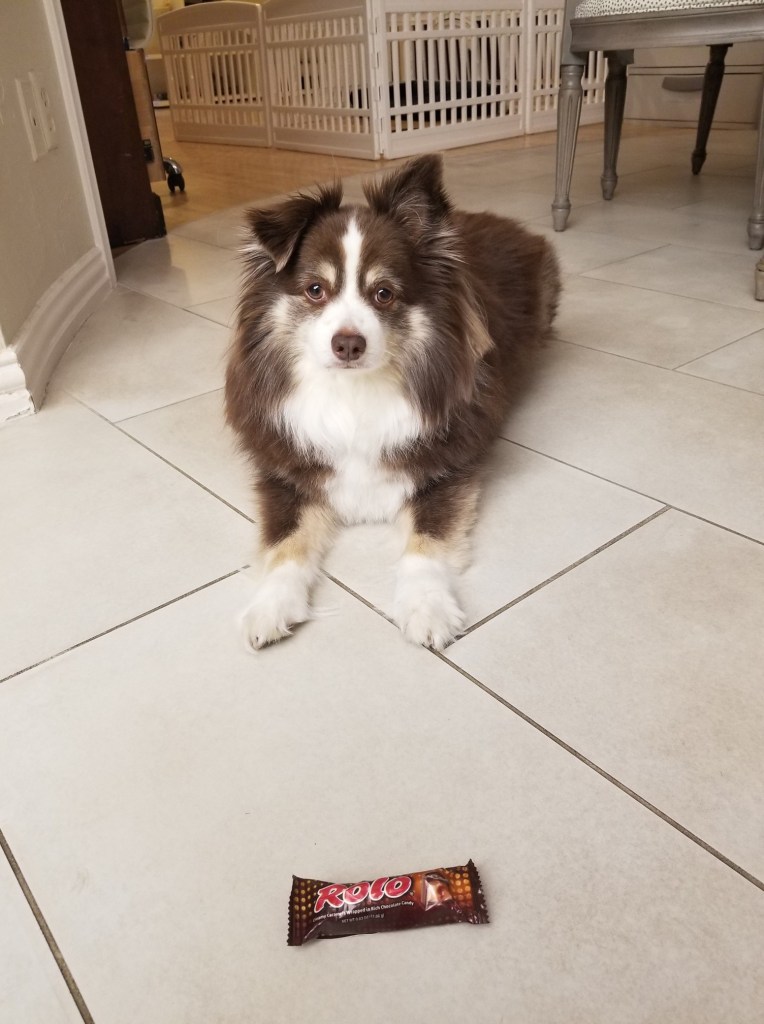
Rollo standing in front of a Rolo candy.
Finally, I just wanted to point out that Rollo is named after the Viking king who tried to sack Paris, not the Rolo candy.

Leonbergers Are Kind Dogs

Esther’s writing prompt: 13th August : Kind

Click here or here  to join in.
Leonbergers Are Kind

What kind of dog is a Leonberger? Well, a Leonberger is a kind dog. If you don’t know what a Leonberger is; it is a big fluffy, fun and friendly family dog originating in Germany. It was registered as a new breed in 1846 in the town of Leonberg by a prominent businessman named Heinrich Essig. Allegedly Essig used Saint Bernards but also Newfoundland Dogs, and allegedly Great Pyrenees (or Pyrenean mastiffs) to create a breed that was big, muscular, and looked like a lion. However, what he strived for the most was to create a friendly, confident and predictable family dog. These characteristics make the Leonberger a perfect therapy dog, and his majestic and fluffy appearance does not hurt. Leonbergers also have a great sense of smell, they are great at pulling heavy carts, and they have webbed feet (from the Newfoundland dogs) and they are great swimmers. You can read about the history of the Leonberger here.

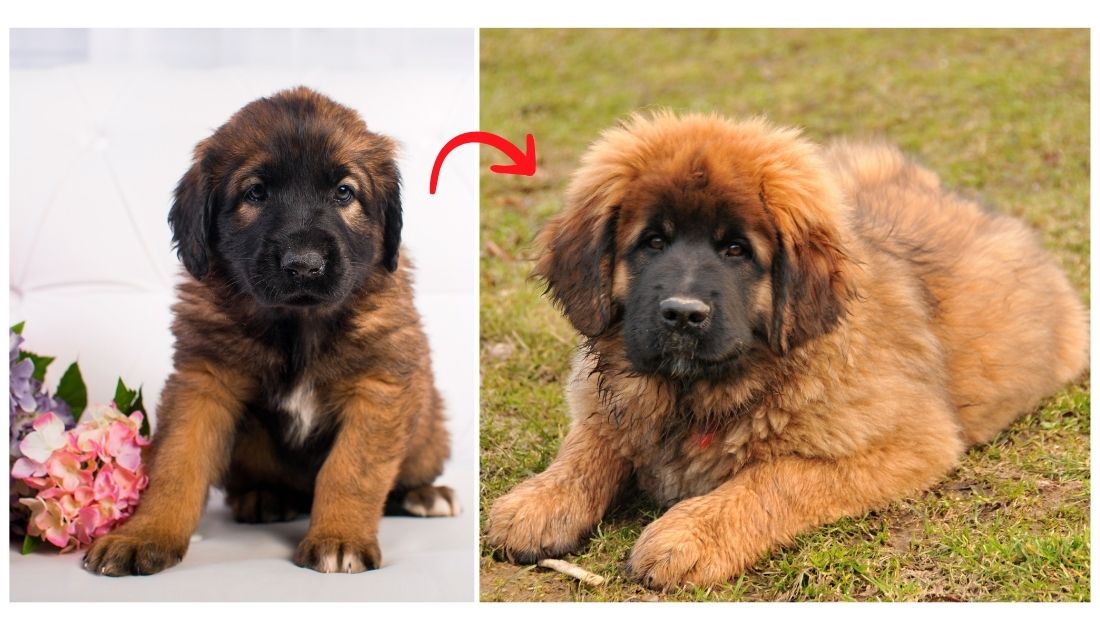
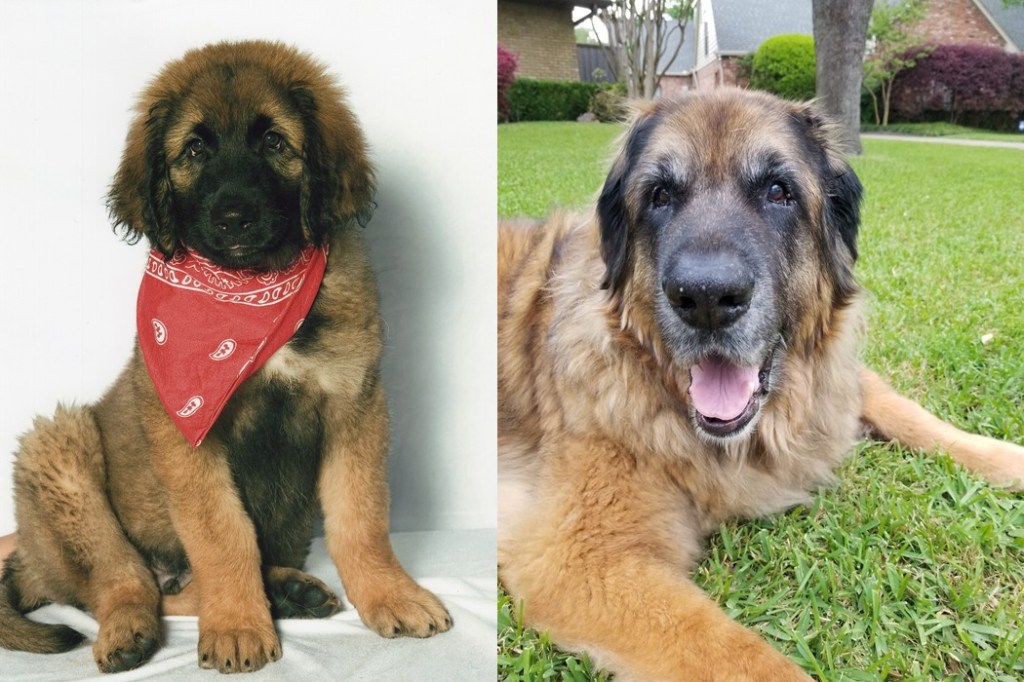
On the left is bear cub looking Leonberger puppy wearing a red scarf/ On the right is a tired old Leonberger lying in the grass. He is looking straight into the camera
On the left our Leonberger Bronco is three months old. On the right is our Leonberger Bronco when he was old almost 13 years old.
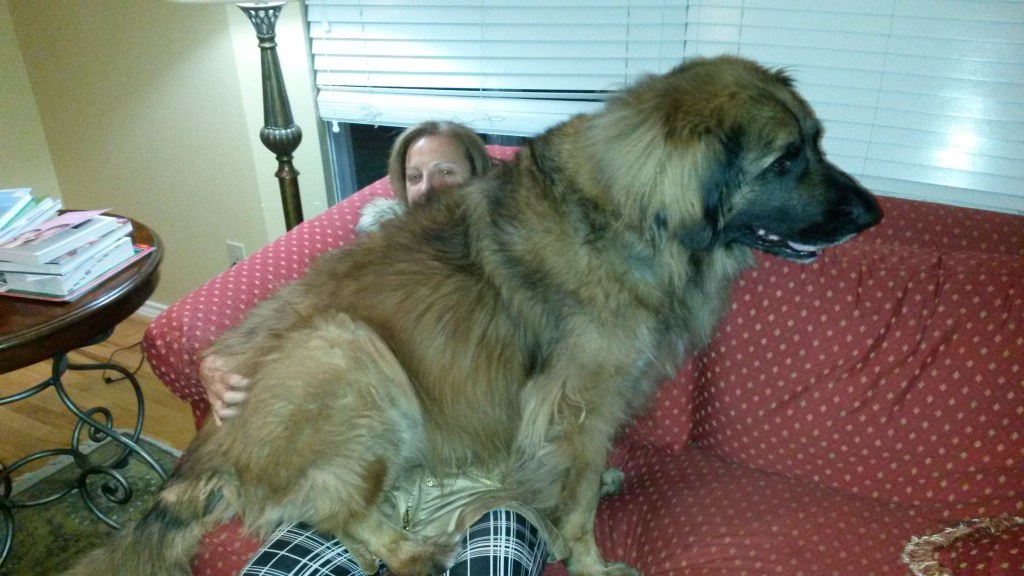
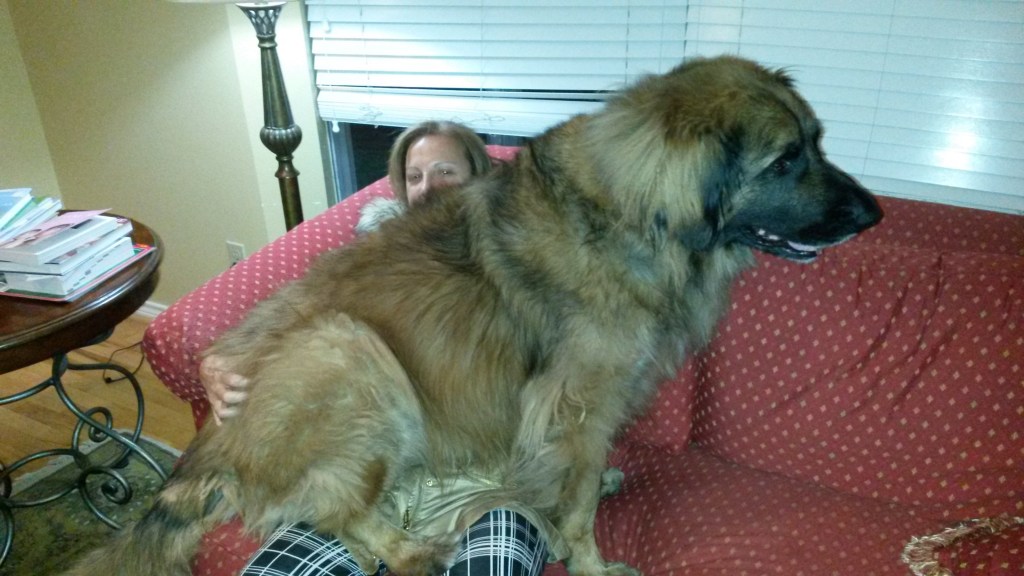
Our Leonberger Bronco is bigger than my wife and she is barely visible behind him.
Our Leonberger Bronco is sitting in my wife Claudia’s lap. He was slightly overweight in this picture, 167 pounds, or 76 kilograms. His ideal weight is 140 pounds.

Bronco Our Leonberger Shares a Baked Potato

I believe dogs have empathy, and sometimes they want to share—at least Bronco did. There was a time when we were in our home eating take-out food and Bronco stole one of our dinners, including meat, vegetables, and a baked potato. He started eating the meat, then he glanced at our Pug Daisy, who was sitting in the middle of the floor looking sad. Immediately he took the baked potato in his mouth and carried it over to her and dropped it right at her feet. I was going to get mad at him for stealing, but when I saw his kindhearted and unselfish act, I let it be.

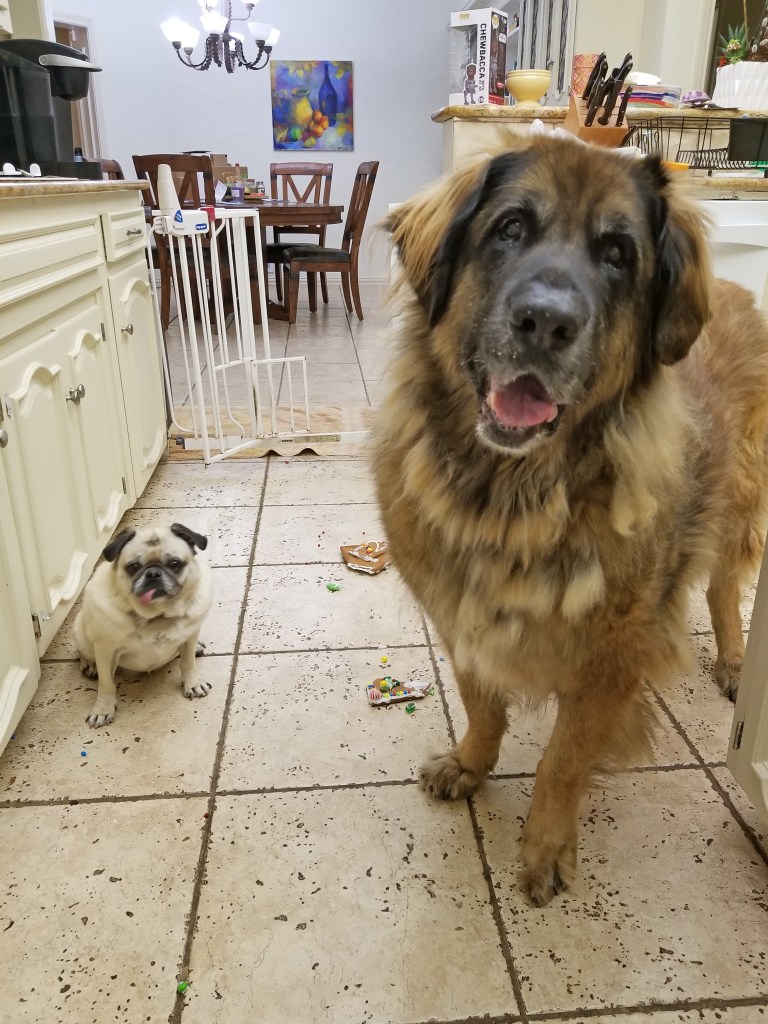
Our Leonberger Bronco is standing in the kitchen. There’s a broken gingerbread house on the floor. Our Pug Daisy is setting next to Bronco and the broken gingerbread house.
On another occasion Bronco stole our gingerbread house. As you can see in the picture, he shared that with Daisy as well.

Bronco Alerts Us to an Insulin Shock

We had a Labrador called Baylor who had diabetes. One late evening Bronco started barking while looking at Baylor, then he intently looked at us, then he turned his head toward Baylor and started barking again. He did this a few times—not aggressively, but to get our attention. It became clear that Bronco wanted us to look at Baylor. I examined Baylor but saw nothing wrong at first. Then I looked again. This time I saw that his back legs were shaking slightly. It quickly got worse. His gait became wobbly, then within perhaps fifteen seconds he fainted. He had gone into insulin shock. We rushed him to the emergency clinic, where fortunately the doctors were able to revive him.

Bronco detected a problem with Baylor before we could see anything wrong. His warnings gave us that little bit of extra time we needed to save Baylor’s life. I still wonder what it was that Bronco noticed. You can read more about this incident here.

Bronco’s Hamster Rescue Operation

We used to have hamsters. On several occasions the hamsters escaped their cage but luckily our Leonberger Bronco found the hamsters for us. As I mentioned Leonbergers have good sense of smell. One day my wife found Bronco walking around with puffy cheeks. There were hamsters in his mouth. Long story short, he was not trying to eat them, he was saving them, and the hamsters were fine. You can read more about this incident here.

Our Leonberger Bronco with puffy cheeks
Hamsters in Bronco’s cheeks. Illustration by Naomi Rosenblatt.

Bronco Saves Daisy’s Life

On another occasion, Bronco did something else amazing for our Pug Daisy. Despite having issues with his paws—this was around the time he was being treated for squamous cell carcinoma—he saved Daisy from an attacking German shepherd who was running loose.

We were at Claudia’s parents’ house, just leaving, when one of their neighbors came out to drop some garbage in the trash can at the end of her driveway. With her was a young, probably adolescent, German shepherd, and he was not on a leash. As we were standing on the porch, I suddenly saw the shepherd flying through the bushes, his teeth bared. He quickly charged us—viciously.

The owner of the shepherd came over to apologize, but I cursed at her. Maybe I shouldn’t have, but she had a vicious and dangerous dog, and she intentionally let him run loose. In the end, though, there were no major injuries. Bronco’s leg was slightly hurt, but overall, he was fine. These days, whenever we talk about this incident, I jokingly refer to the neighbor dog as Cujo.

Rachel is sitting down on her knees while petting our black and white mini-Australian Shepherd Rollo and our Pug Daisy.
Just as our daughter Rachel protects Rollo and Daisy, Bronco protected the smaller dogs, sometimes at his own peril.

A Therapy Leonberger Called Scout

As I mentioned, Leonbergers are great therapy dogs and are often used in hospitals. Below is a video about a Leonberger called Scout by CBC news in Canada. This Leonberger is helping residents at Hamilton mental health hospital. He was bred by Concorde Ridge Leonbergers. They have a website and a blog which I follow. You visit my post about Scout here. The 8-minute video is shown on the website below.


https://www.cbc.ca/player/play/video/1.6835161

Solar Sail Spacecraft to Saturn

This is a Leonberger blog, but I also post about other topics including book reviews of books that I love and want to promote. With this post I would like to promote an exciting and imaginative science fiction book called The Solar Sea by David Lee Summers.

Strange new particles are detected that seem to be coming from Titan the largest moon of the planet Saturn. Whales change their songs in curious ways. As a result, a major space expedition to Saturn is launched. At the center of this book is a spaceship called Aristarchus named after an ancient Greek astronomer named Aristarchus who presented the first known model that placed the Sun at the center of the known universe with the Earth revolving around it.

I can add that the fact that Earth orbited the sun did not become common knowledge until much later because of Copernicus and Galileo Galilei. However, they were not the first to suggest it. On the other hand, the fact that earth was roundish or near spherical has been common knowledge for thousands of years, at least among educated people. About 2,300 years ago, Eratosthenes a Greek philosopher calculated the circumference of Earth and got very close. This history is explored in this blog post.

Below is an overview of the two formats of The Solar Sea

I should mention that even though this book (second edition) was released on Amazon in 2018 the story was completed by the author in 2004.

  • Paperback –  Hadrosaur Press (March 16, 2018), ISBN-10 : 1885093845, ISBN-13 : 978-1885093844, 206 pages, Item Weight : 9.6 ounces, dimensions ‏ : ‎ 5.5 x 0.52 x 8.5 inches, it cost $12.95 on US Amazon. Click here to order it from Amazon.com.
  • Kindle – Publisher : Hadrosaur Production (March 21, 2018), ASIN : B07BHFS2WV, 208 pages. It is currently $3.99 on Amazon.com. Click here to order it from Amazon.com.
The front cover features Saturn with its rings, a man in a space suit and humpback whales.
Front cover of The Solar Sea by David Lee Summers. Click on the image to go to the Amazon page for the paperback version of the book.

Amazon’s Description of The Solar Sea

Whales around the world changed their songs the day scientists announced the discovery of powerful new particles around Saturn’s largest moon which could solve Earth’s energy needs. The Quinn Corporation rushes to build a solar sail space craft to unlock the secrets of these strange new particles. They gather the best and brightest to pilot the ship: Jonathan Jefferson, an aging astronaut known as the last man on Mars; Natalie Freeman, a distinguished Navy captain; Myra Lee, a biologist who believes the whales are communicating with Saturn; and John O’Connell, the technician who first discovered the particles. Charting the course is the mysterious Pilot who seems determined to keep secrets from the rest of the crew. Together they make a grand tour of the solar system and discover not only wonders but dangers beyond their imagination.

This is my Amazon review of The Solar Sea

Fun and Easy Hard Science Fiction

Solar Sea is a fast paced and imaginative hard science fiction story. Strange things are happening. Whale songs are changing into what seems to be binary code. Something strange is going on nearby Saturn’s moon Titan, and weird particles are discovered. Earth is facing an energy crisis that might be solved by the discovery of the new particles. A manned flight using a solar wind powered spaceship called Aristarchus is launched toward Saturn. The spaceship was named after Aristarchus an ancient Greek astronomer who presented the first known model that placed the Sun at the center of the known universe with the Earth revolving around it.

The author, an astronomer, clearly liked to keep the story both imaginative and scientifically plausible. He included drawings of the spaceship and explained how it worked. Despite being hard science fiction, the book is easy and lighthearted reading. Above all it is filled with adventure, mystery, and it is fast paced and captivating. Several plot elements and perhaps plot twists reminded me of my favorite film Interstellar, but this book was written in 2004 a decade before Interstellar. However, the story itself is quite different from Interstellar, and it features some quite surprising but fun plot twists.

The character development is well done but not overdone, and the sometimes-tense interactions between the characters are realistic and interesting. Some of the characters have some big secrets that they are hiding and seeing how this develops adds to the mysteries. I also loved the good feeling of the ending. This is a fun, creative and unique science fiction story that I highly recommend.

An overview of the book as well as a recommendation for the book, both written on a blue background.
Back cover of The Solar Sea by David Lee Summers. Click on the image to go to the Amazon page for the Kindle version of the book.

About the Author of The Solar Sea

David Lee Summers is an author, editor and astronomer living somewhere between the western and final frontiers in Southern New Mexico. He is the author of twelve novels. His short stories and poems have appeared in numerous magazines including Cemetery Dance, Realms of Fantasy, Star*Line, and The Santa Clara Review.

David also edited Tales of the Talisman Magazine for ten years. When he’s not writing, he operates telescopes at Kitt Peak National Observatory.

Click here to visit the author’s website
Click here to visit his blog
Click here to visit my blog post review for another book by David Lee Summers

Leonberger Guiness World Record

With this post I just wanted to highlight a fun Leonberger YouTube video regarding a Leonberger who succeeded in creating a new Guiness World Record on the Britain Got Talent show. If you don’t know what a Leonberger is; it is a big fluffy, fun and friendly family dog originating in Germany. It was registered as a new breed in 1846 in the town of Leonberger by a prominent businessman named Heinrich Essig. Leonbergers are related to Saint Bernards, Newfoundland Dogs, and allegedly Great Pyrenees (or Pyrenean mastiffs). You can read about the history of the Leonberger here. I am sorry I realized now that the page is full of typos. I have to fix that at some point.

At the end of this page, I put a fun YouTube video of Leonberger named Hagrid who created a new Guiness World Record. Since I created my Leonberger history page when I had just launched this blog in 2022 and had very few followers many people may have missed the Hagrid movie, so here it is. I can add that I have also added some photos of our late Leonberger Bronco at the end of this post.

Leonberger Hagrid


Photos of Le Bronco von der Löwenhöhle

A Leonberger puppy wearing a red scarf.
Bronco our Leonberger at three months old.
My wife is sitting on a red sofa. Our Leonberger Bronco is sitting in her lap and she practically disappearing behind him.
Bronco the lapdog. He is sitting in my wife’s lap, all 167 pounds of him.
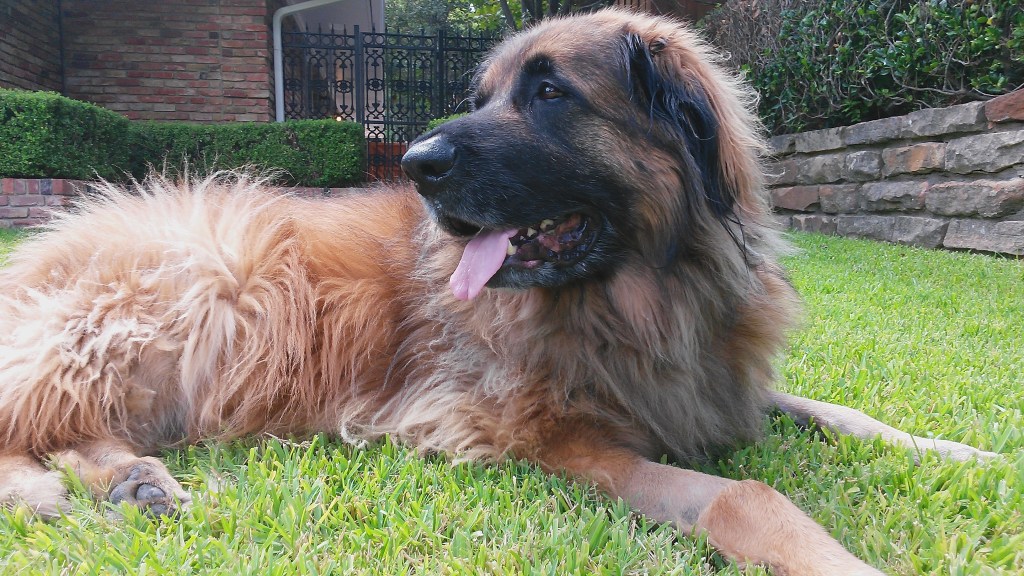
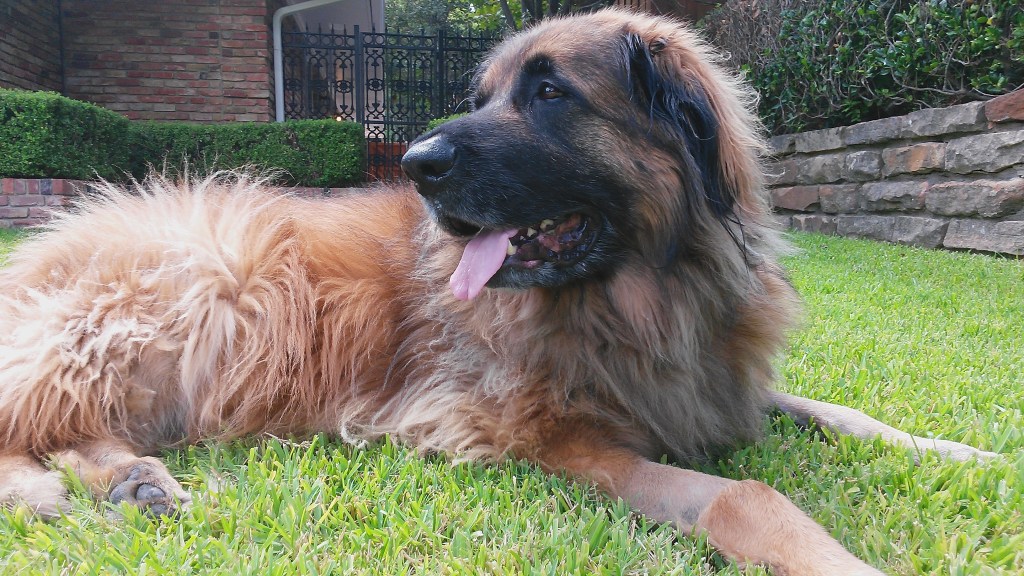
A big fluffy brown dog lying in the grass
Le Bronco von der Löwenhöhle or Bronco as we called him.
On the left our Leonberger Bronco. On the right our Pug Daisy. Both are looking into the camera.
Our late Leonberger Bronco and his sister, the pug Daisy.
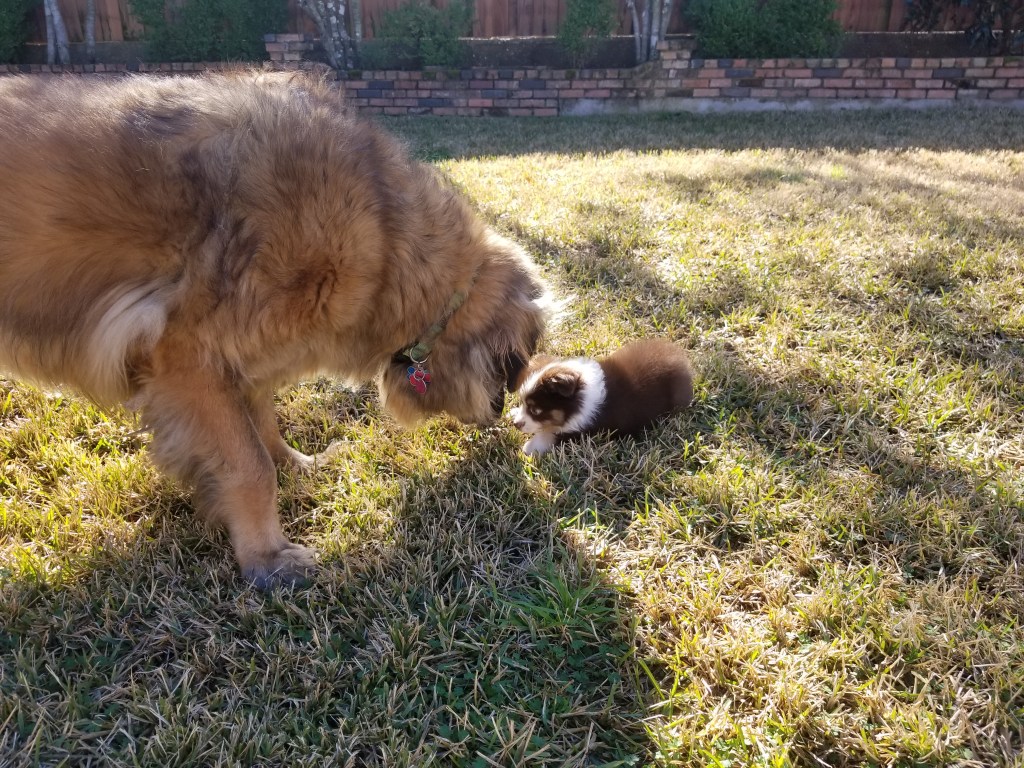
On the left a large Leonberger sniffing a small mini-Australian puppy on the right.
A new puppy arrives, Rollo, a mini-Australian Shepherd. Hello Rollo!
On the left is a black and white mini-Australian Shepherd biting the tail of a Leonberger who is on the right.
As Rollo got older, he liked to tease Bronco. He pulled and even swung in Bronco’s tail. He also walked over him and sat on him. Bronco was very patient.