This blog feature amusing and heartwarming stories about our late Leonberger dog Bronco, as well as other Leonbergers. It also has a lot of information about the Leonberger breed, the history, care, training, Leonberger organizations, etc. I also wrote a Leonberger book, which I am featuring in the sidebar.
I’ve stopped making New Year Resolutions. According to Psychology Today 80-90% of New Year Resolutions fail. However, I still have goals and wishes for the new year. Instead of making promises I try to make changes at my own pace. One of them is that I’ve started using the Peloton bike that we bought for my wife. Another is trying to adapt to my new role as a grandfather. Our first grandchild Jack was born at the end of September 2024. Yet another new beginning is that I want to focus slightly more on my relatively new blog superfactful that I started in August of 2024. In 2024 I posted 25 super facts and in 2025 I posted 53. I also made 64 other kinds of posts on this blog. I am hoping to one day to have collected 200 super facts. My hope is that I will post 80 super facts in 2026. Let’s see how far I get.
New Beginnings the Peloton Bike
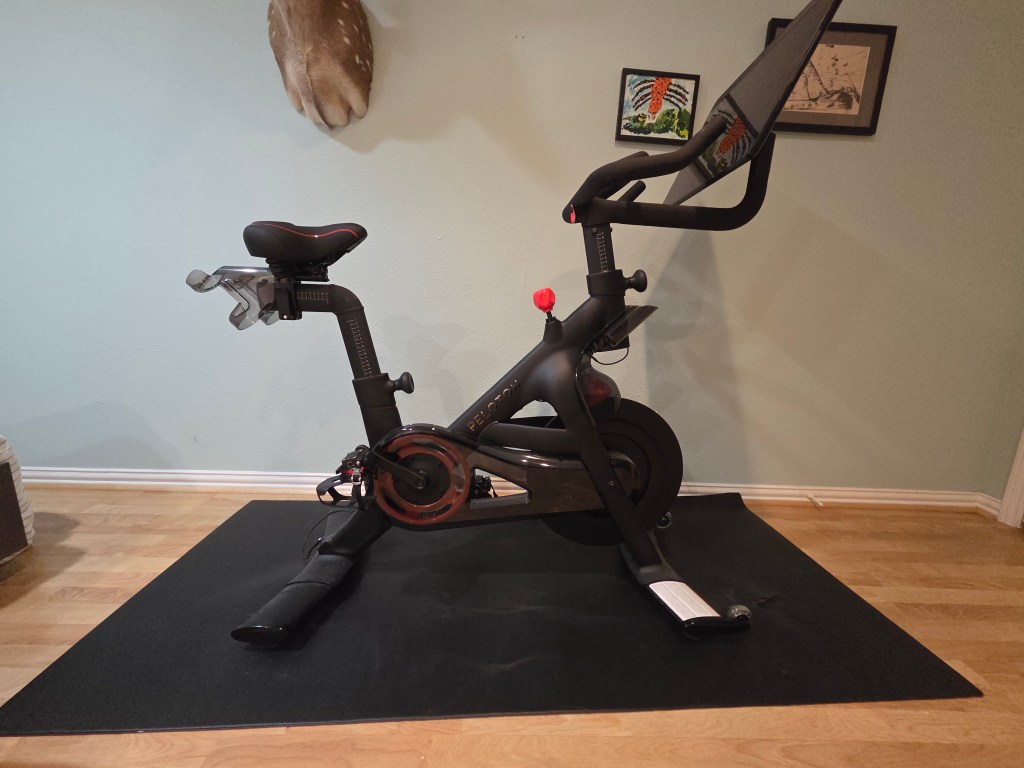
My wife and I bought a Peloton bike a couple of months ago. It was my wife who was the most interested in it but lately I’ve been trying it out as well. I found that this is an excellent way of getting some exercise. A Peloton bike is an internet-connected stationary exercise bike featuring a large touchscreen that streams live fitness classes led by instructors. You select your level, time and your instructor and press start.
Our Peloton bike. The large touch screen is on the right in the photo compared to the rest of the bike.
I usually pick the same class as my wife does. It is the beginners class with Emma. You follow her instructions and you increase/decrease the speed and resistance. Emma does the same thing as you do, you follow her, she is encouraging and she plays great music for you as you do the exercises. It is almost like having your personal trainer. I know these are prerecorded classes but yesterday when my speed / cadence dropped below the goal, Emma told me, “Let’s try to keep the cadence above 80”. This happened twice giving me the feeling that the class was live. It is an entertaining way of exercising that I hope I will continue doing throughout 2026. Perhaps not every day, but I want to do it often. It is a new beginning for me, a new exercise beginning.
Emma is looking out from the touch screen, telling you what to do.
New Beginnings Our First Grandchild
Our oldest son Jacob and his wife Ashley live in Baltimore, Maryland, and their son Jack is three months old. We’ve visited a few times, and we are soon going back there, and they (Jacob, Ashley and Jack) are coming to visit us in February. Being a grandfather is a new role for me that I am going to have to learn. It is a New Beginning for me. You can read more about our latest trip to Baltimore here.
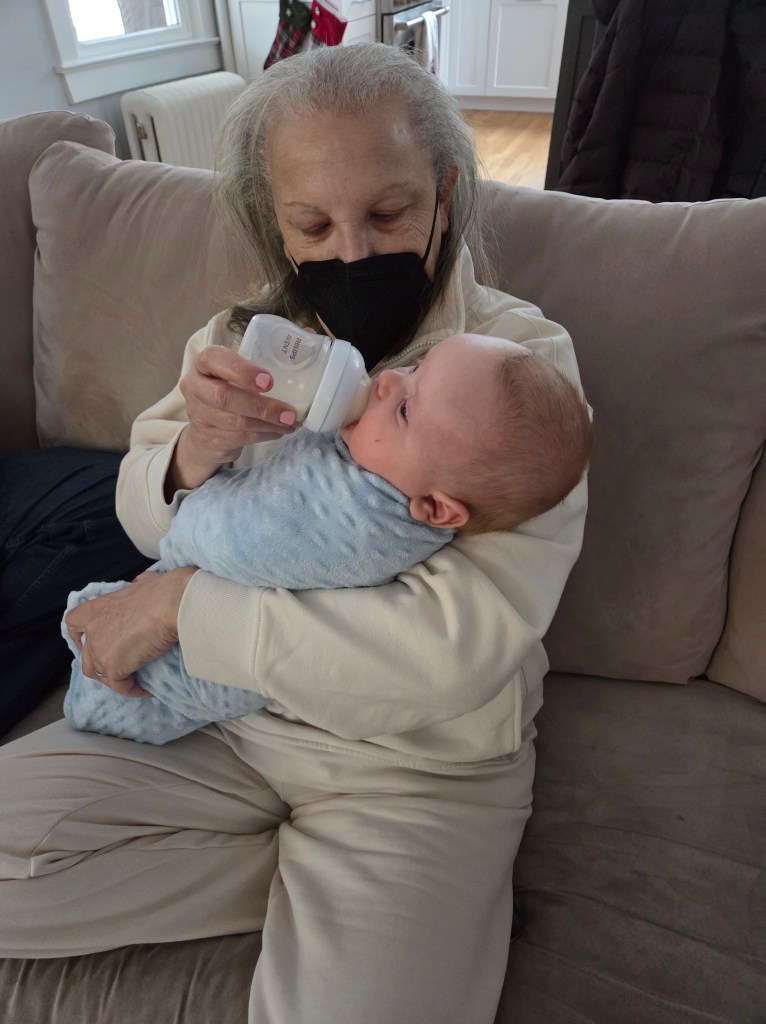
Jack with his mother AshleyMy wife Claudia is feeding JackMy wife Claudia is on the left; I am in the middle and Jack is on the right.
New Beginnings for Super Facts
In August of 2024 I started a second blog, superfactful. The goal of this blog is to create a list of facts that are important, not trivia, and that are known to be true and yet surprising, mind-blowing, shocking or disputed by large segments of the public. I am avoiding click bait and focusing on facts that will challenge the reader as well myself in a way that provides growth. Below are a few examples.
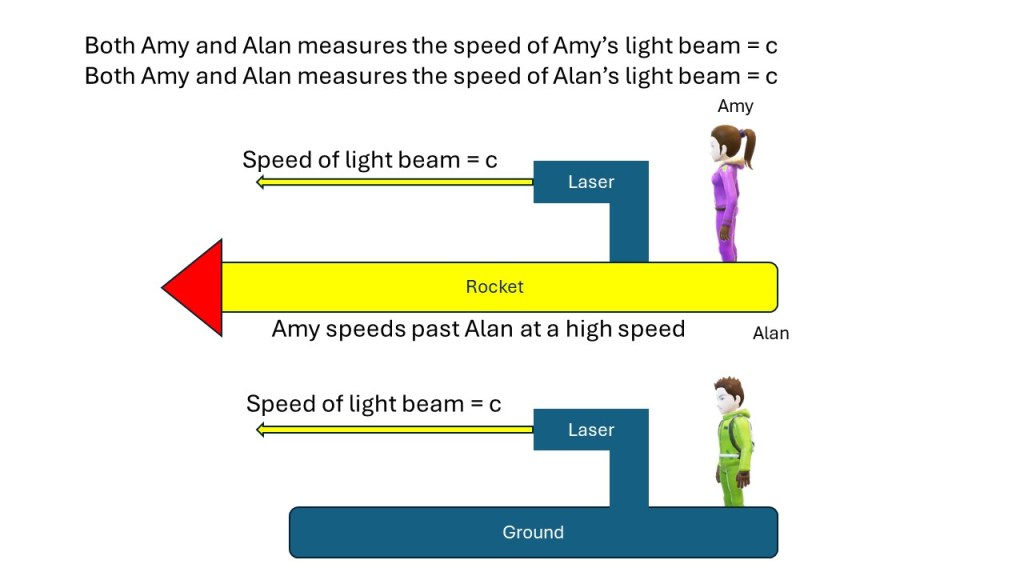
The speed of light in vacuum is the same for all observers regardless of their speed and the direction in which they are going. It is always c = 299,792,458 meters per second. If you try to catch up to a light beam and travel close to the speed of light the speed of the light beam will still be c = 299,792,458 meters per second compared to you. This is possible because time and space don’t behave like we expect.
In this picture Amy is traveling past Alan in a rocket. Both have a laser. Both measure the speed of both laser beams to be c = 299,792,458 meters per second.
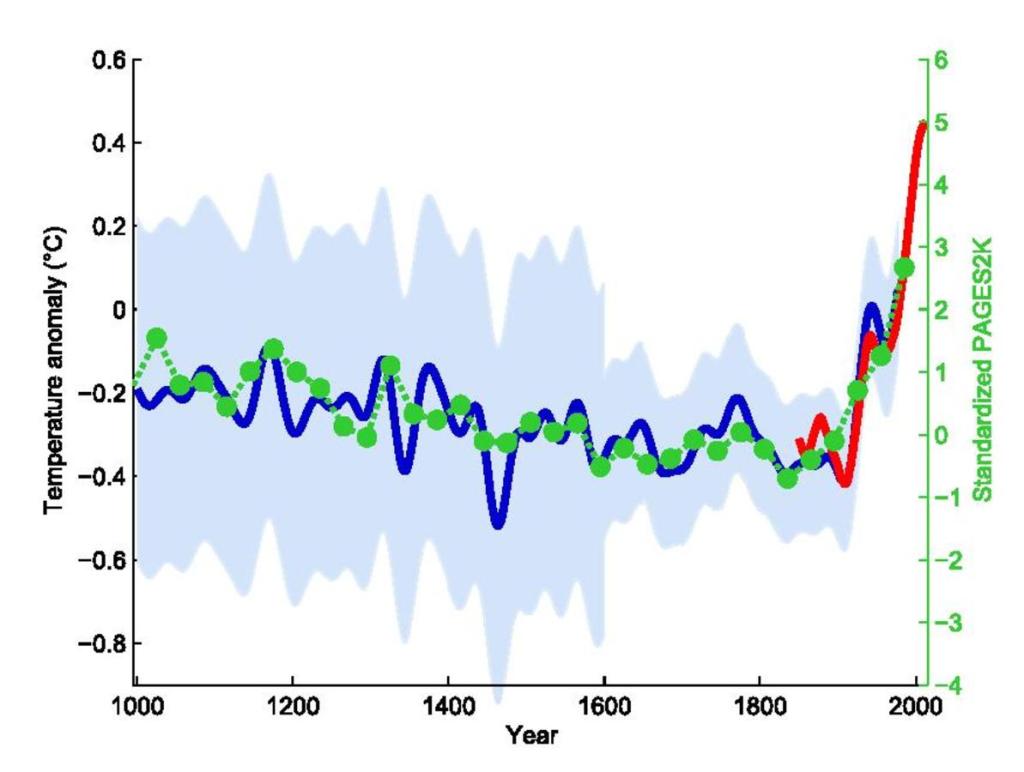
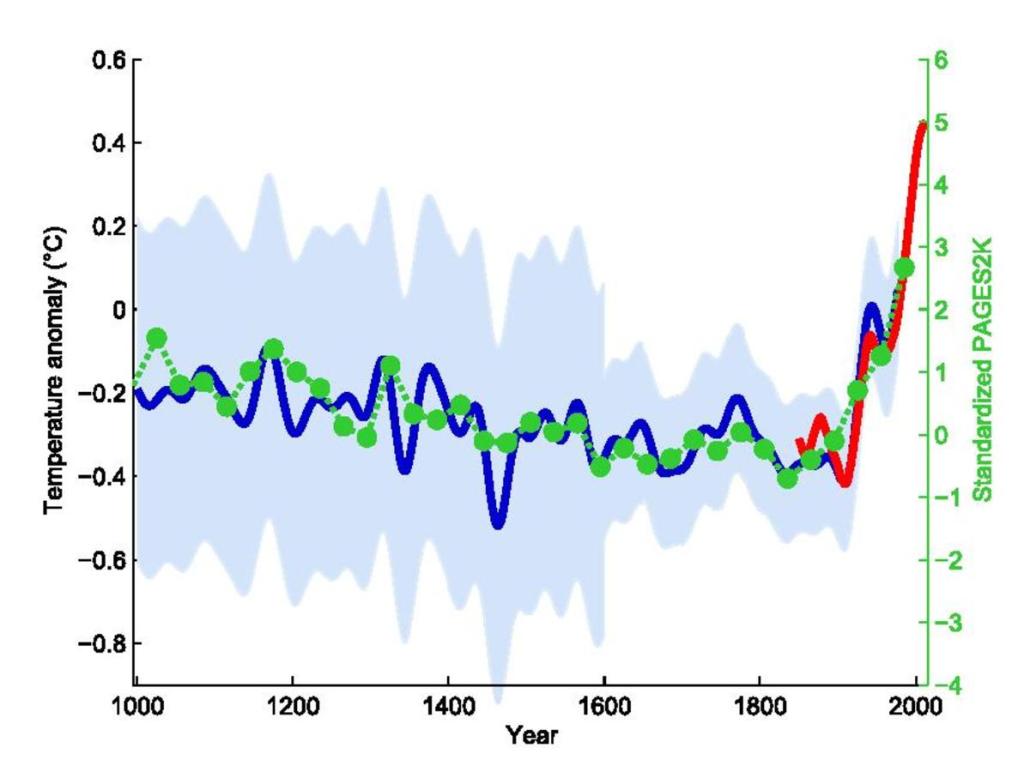
Superfact 25: Global warming or if you call it Climate Change or Climate Disruption is happening, and it is happening very fast, and we also know that it is caused by us primarily as a result of our burning of fossil fuels. There is a long-standing scientific consensus on these two facts because the evidence is conclusive. Check the evidence below.
The so-called hockey stick curve depicting the last 1,000 years. The blue line is the first hockey stick curve ever created (by Michael Mann). He used proxy measurements such as tree rings, green-dots 30-year average, red temperature measurements. This graph is taken from this page.
Super fact 67 : Infinities come in different sizes. Some infinities are larger than others. In fact, it is possible to create an infinite number of different-sized infinities. Some infinities are countable and others are uncountable.
Infinity Asset id: 2118543950 by Sahara Prince
There are 78 super facts so far. I am hoping that my increased focus on this blog will lead to another 80 this year. It will be a New Beginning. To see a list of the 78 super facts and the next 72 I’ve planned click here.
At about 8:00AM Central Standard Time my Leonberger blog surpassed 100,000 views. At the moment of this writing, I have 55,000+ visitors, 10,600+ comments, 16,800+ likes, and 326 posts. I am very grateful for all of your visits, likes and comments. Thank you so much!
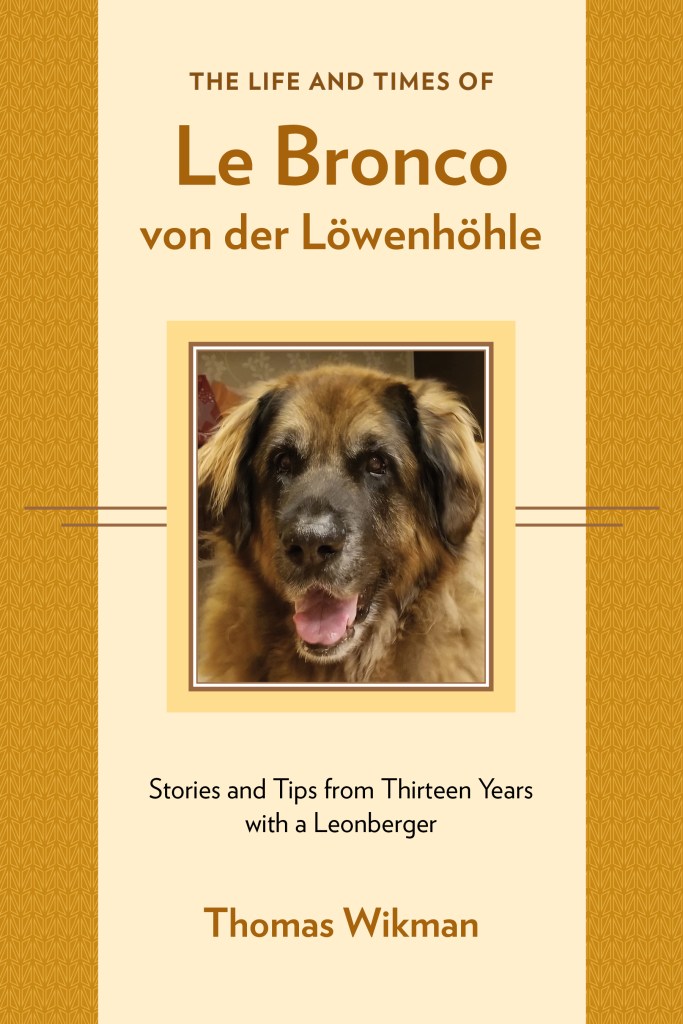
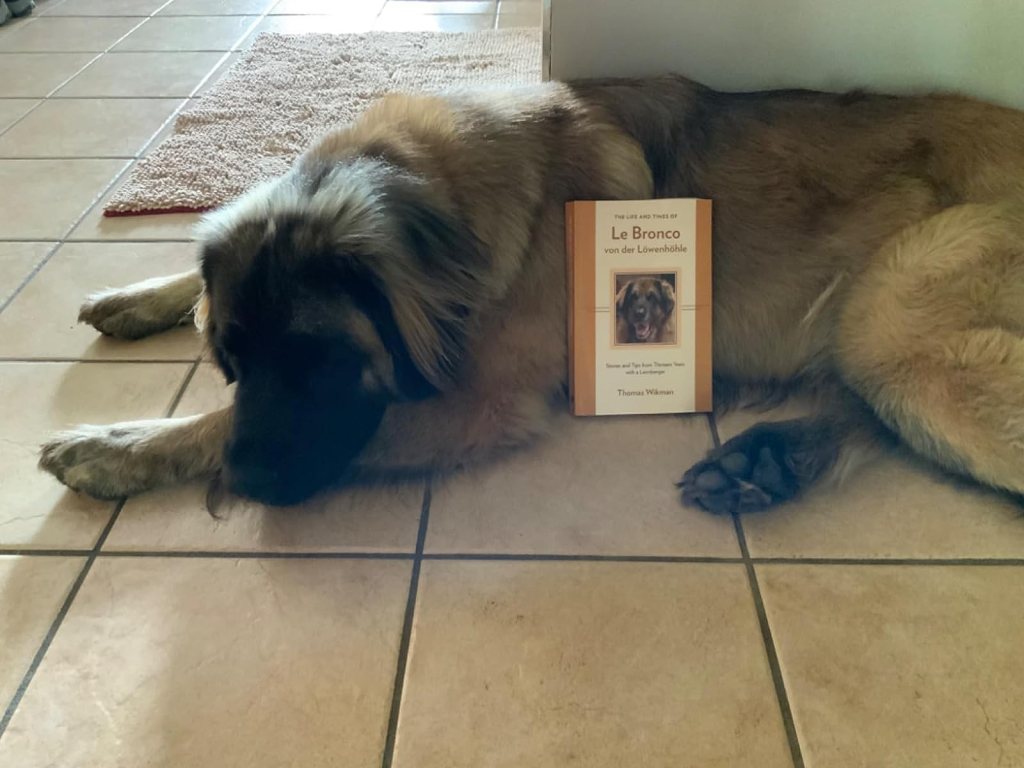
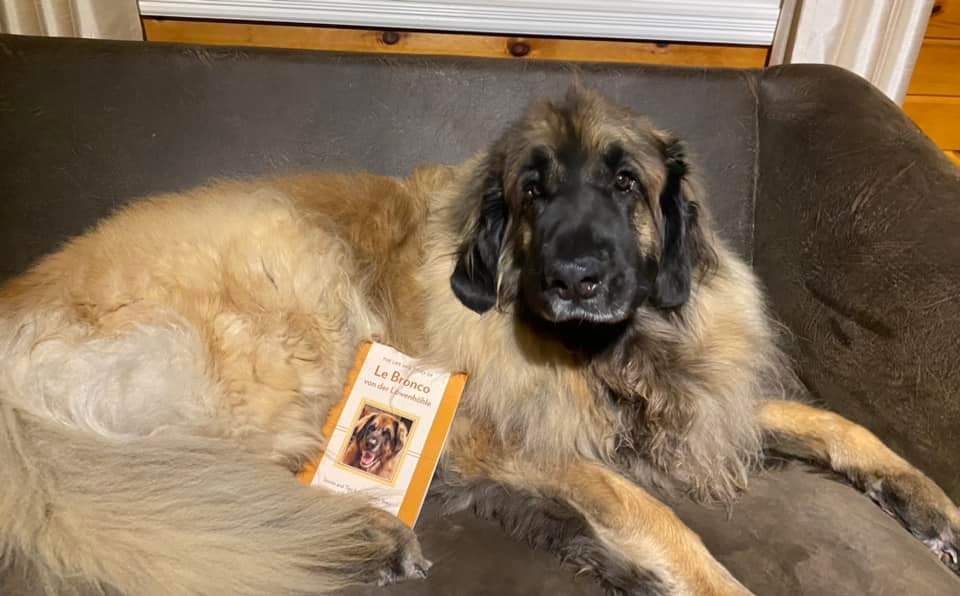
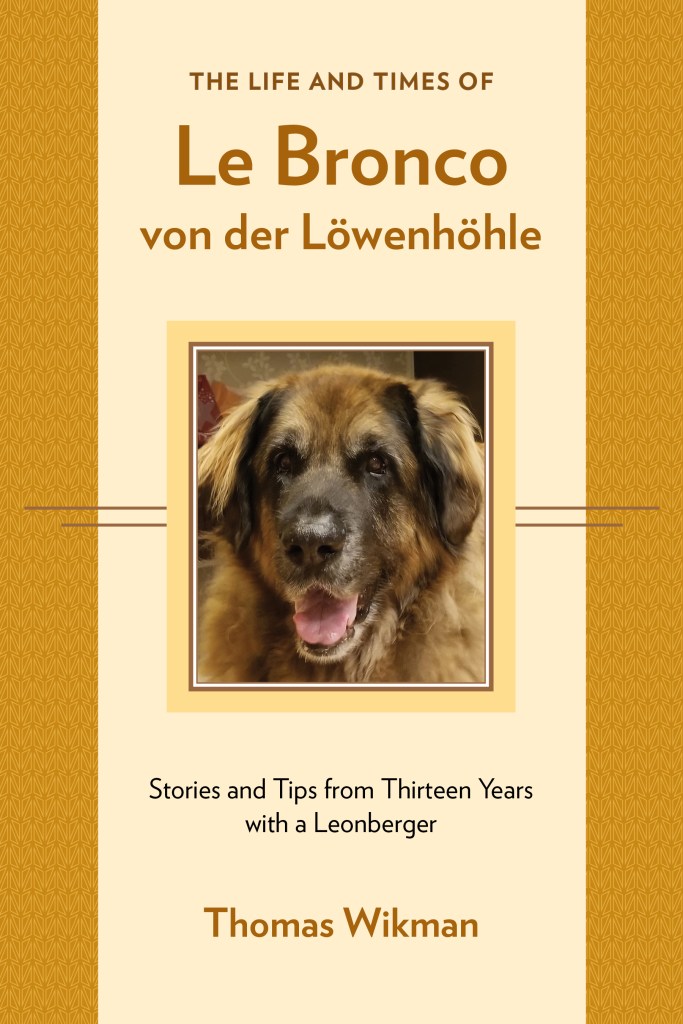
I started this blog to promote my Leonberger book “The Life and Times of Le Bronco von der Löwenhöhle, Stories and Tips from Thirteen Years with a Leonberger” (see picture below). That was a bit more than three years ago. I can add that the three-year anniversary of the release of my book is coming up in July. Click here to read more about my book.
Since the launch of my blog, my blogging has evolved and in addition to Leonbergers my blog has become a personal blog featuring book reviews, travel stories, and other topics. In other words, I am using my blog for my personal entertainment, in addition to on occasion promoting my Leonberger book.
The Life and Times of Le Bronco von der Lowenhohle
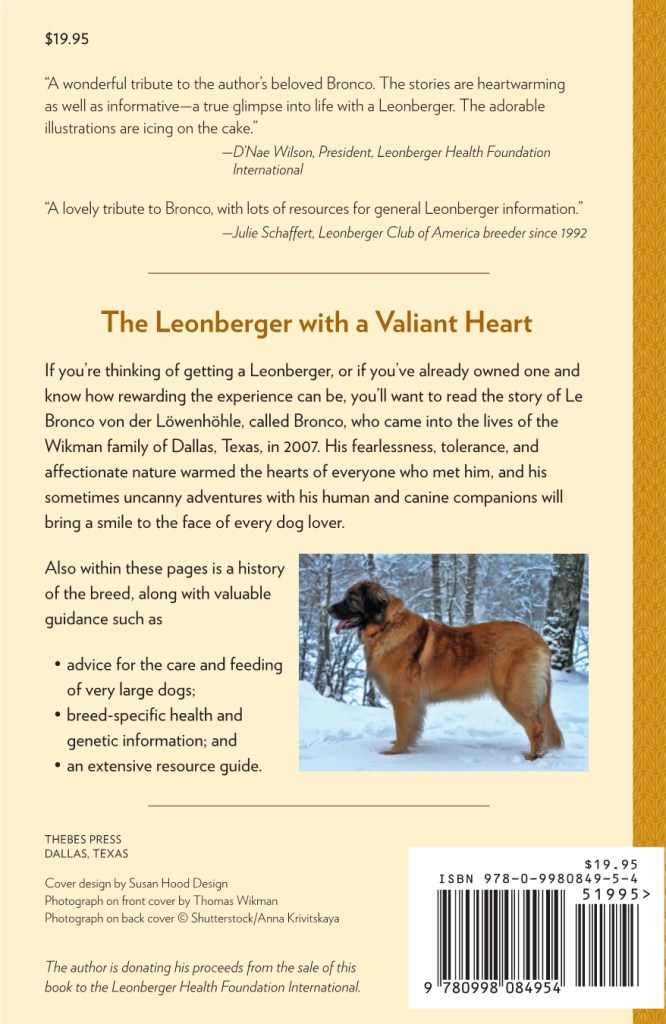
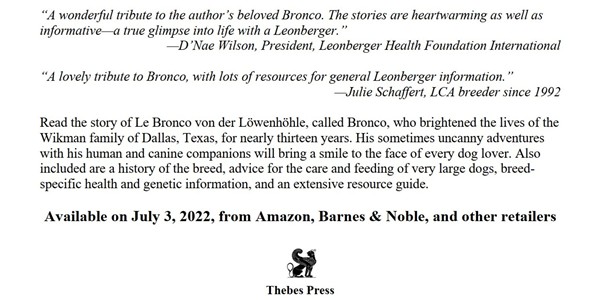
This is the front cover of the book “The Life and Times of Le Bronco von der Löwenhöhle”. It is the original reason for launching my blog. Click here or on the image to go to the United States Amazon location for the paperback version of the book.This is the back cover of the book “The Life and Times of Le Bronco von der Löwenhöhle”. Click here or on the image to go to the Amazon.com location for the kindle version of the book.These are the endorsements for the book. Click here or on the image to go to the Barnes and Noble location for the book.
Three Leonberger Photos
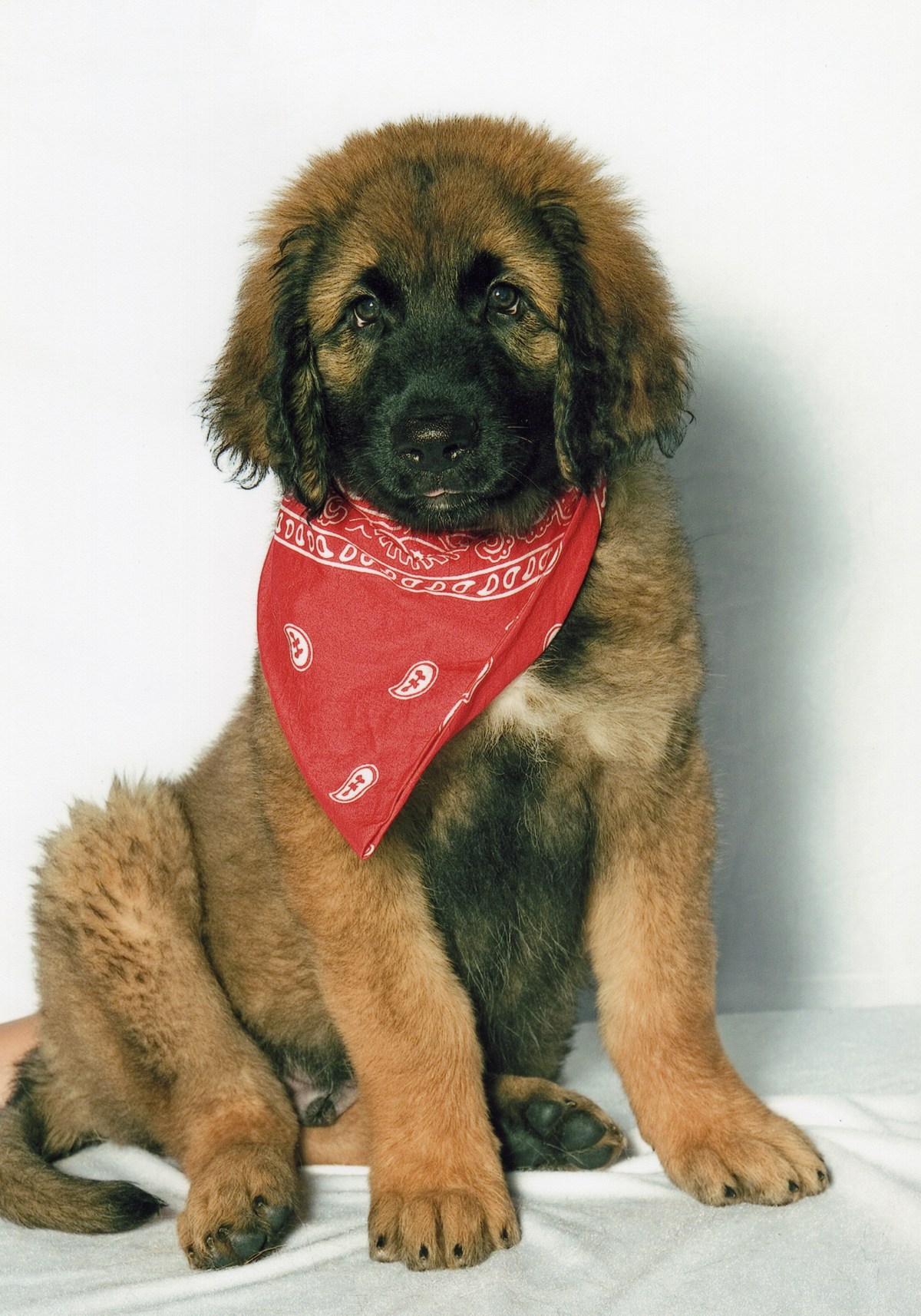
This is a photo of our Leonberger Bronco when he was three months old. It is the photo I’ve used the most throughout this blog. Click here to visit the blog which organizes and lists all of my 300+ posts.Hachi a Canadian Leonberger featured with my book. He was one year old when this photo was taken by Brenda Saito and her husband. Click here or on the photo to visit the paperback version for the book on Canadian Amazon.A Canadian Leonberger called Mak with my book. Photo by Debbie Ireland. Click here or on the photo to visit the page for the book on Chapters Indigo.
I’ve been missing in action for a bit more than a week because of a family trip to Paris, France. We visited my wife’s eldest sister and her family, and we celebrated our nephew’s 40th birthday, my wife’s sister’s husband’s birthday, and we got too meet our nephew’s and his wife’s 16-month-old daughter for the first time. We also spent time with an ex-pat friend of my wife and our niece and a friend of hers. She lives in Berlin, but she came to Paris to see us. Naturally we also visited several tourist attractions including several museums, Notre Dame, Montmartre, Sacré Coeur, the Eiffel Tower, and we took a river cruise with dinner and a few of Paris’ 44,000 restaurants. We also went to an opera.
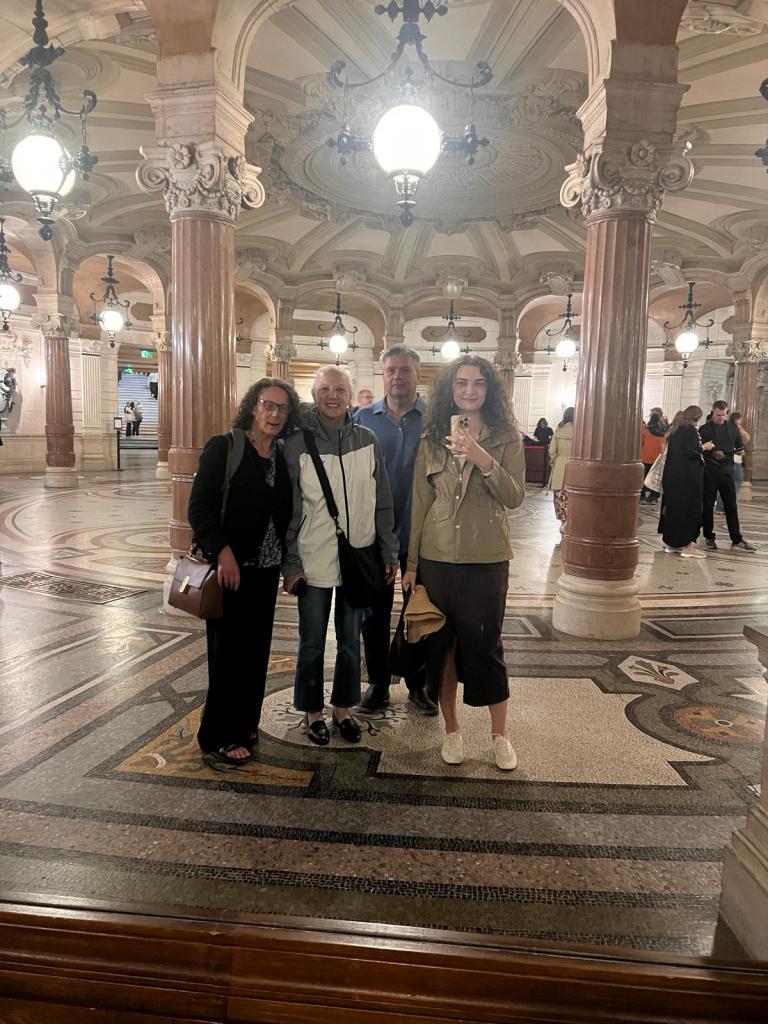
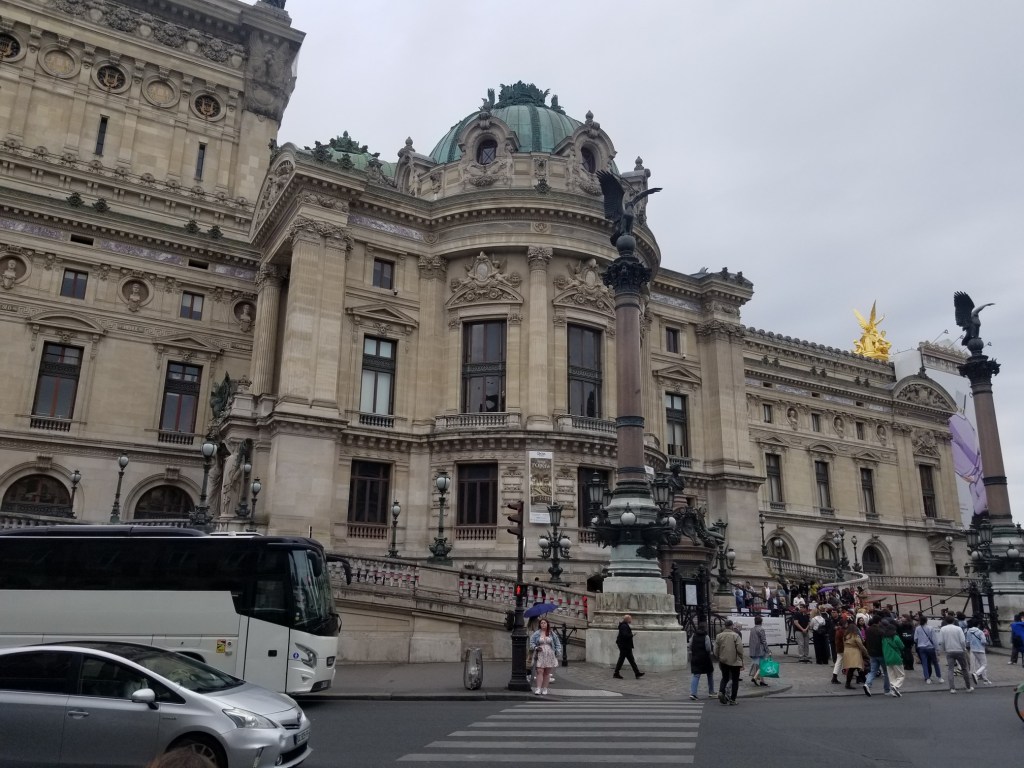
From left to right, my wife’s sister, my wife, me (in the back), and my daughter. This photo was taken in an opera house called Palais Opéra Garnier. I should mention that this was not opera where we saw a performance.
Paris is a fascinating city with so much to offer and so much life. Paris proper/inner-city is 40+ square miles featuring large several hundred years old beautiful buildings, gorgeous esplanades and narrow streets, thousands of restaurants, cafés, bakeries, pastry shops, small stores, thousands of statues, and hundreds of museums, monuments, tourist attractions and parks. Paris is the city in the world with the most restaurants, and the food is great. Italy has been voted to have the best food in the world. I must disagree; it is France. There is culture everywhere and the streets are filled with people long after midnight, and the restaurants are open long after midnight. Paris never sleeps.
The city of Paris (Paris proper) only has 2 million people, but you must add the millions of people working there but living in the suburbs. Paris metropolitan has 13 million people, and the region of Paris called Île-de-France has 12 million people. The city I live in, Dallas, Texas, also has 2 million people (8 million people in the metro) but it has almost nothing to offer in comparison. Dallas has some tourist attractions and offers some culture, it is not bad at all, but Paris has about a hundred times more of that. In Dallas almost all restaurants close before 10PM, which is when Paris really wakes up. That is not to put down Dallas, but to point out that Paris is indeed one of the greatest cities in the world to visit.
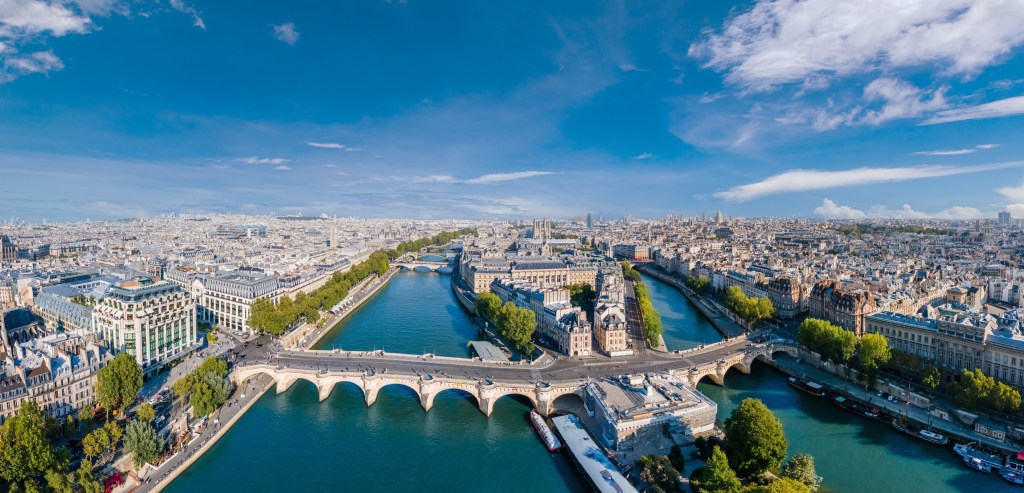
Aerial view of the Seine River in Paris. The island Île de la Cité is in the center of the picture and Notre Dame can be seen in the back.
I’ve been to Paris several times before, in 1986 after my Swedish army service, then in 2003 and in 2018. This time was different because I could converse in French with waiters and taxi drivers, read signs and instructions, and newspapers. However, unlike in 1986 and 2003 a lot of French now speak English, at least the younger generation, and they want to speak English. In 1986 even the French who knew how to speak English were kind of offended when you could not speak French. Now they want to practice speaking English, and I want to practice speaking French. The problem I had in 1986 has been reversed. I was so happy when I started talking to a taxi driver in English and he said “Je suis désolé, je ne parle pas anglais. Anglais non. Anglais non.”
I heard a lot of different languages spoken, in addition to French, English, German, Italian, Dutch, Chinese, Japanese, Arabic, Spanish, Swedish, Danish and many other languages, and it was all welcome. When I visited Italy in 1986 someone angrily shouted at us that this is Italy and we speak Italian, not English. In 1986 the same thing almost happened in Paris, but I don’t think that is likely to happen in Paris now. The current US government is not popular for understandable reasons. However, there were signs reminding people that the US government is different from US visitors, and I felt that people treated us in a friendly manner.
Anyway, below is an overview of what we did this time with the focus on my photos. In the past we’ve visited Moulin Rouge, Versailles and Le Louvre, which is the world’s largest museum. I highly recommend those attractions but since we have seen them a few times already we did not visit them on this trip.
The Eiffel Tower
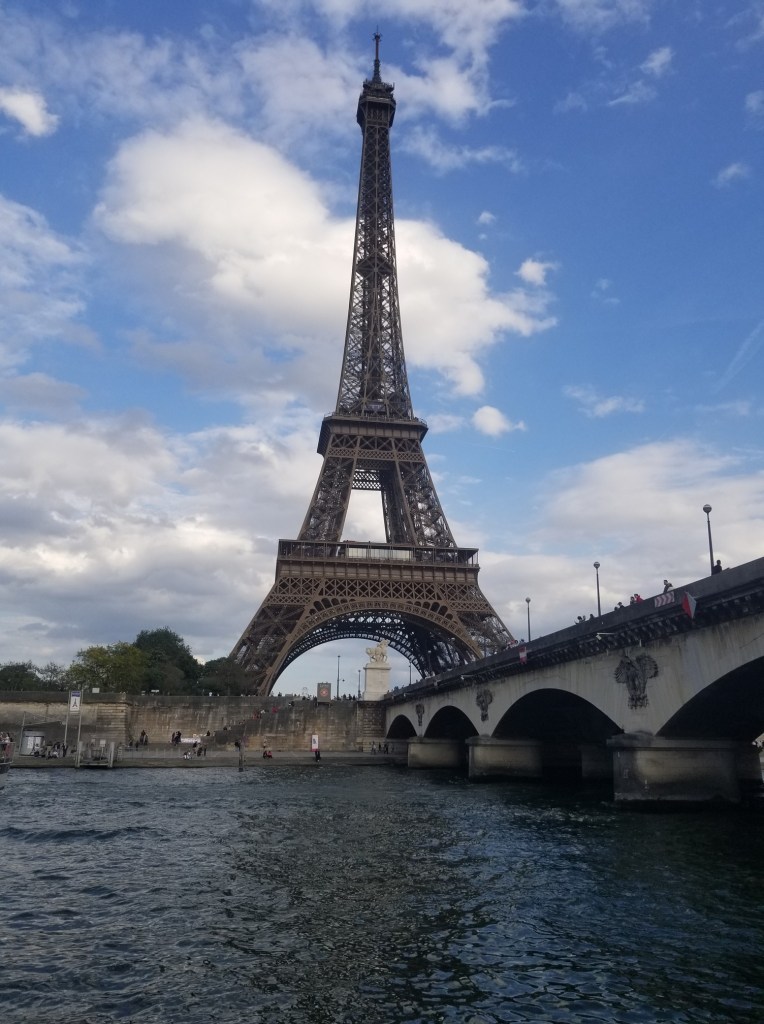
The Eiffel tower is one of the main attractions in Paris. We’ve visited the Eiffel tower before. We’ve eaten at the restaurant on the first floor, and we’ve visited the second floor (halfway up), but I’ve been to the third floor (the top) only once before, in 1986. Unfortunately, it has become difficult to visit the Eiffel Tower top. You must buy the tickets beforehand in good time. My wife’s sister was able to get us all tickets from Paris City Vision (guided tours).
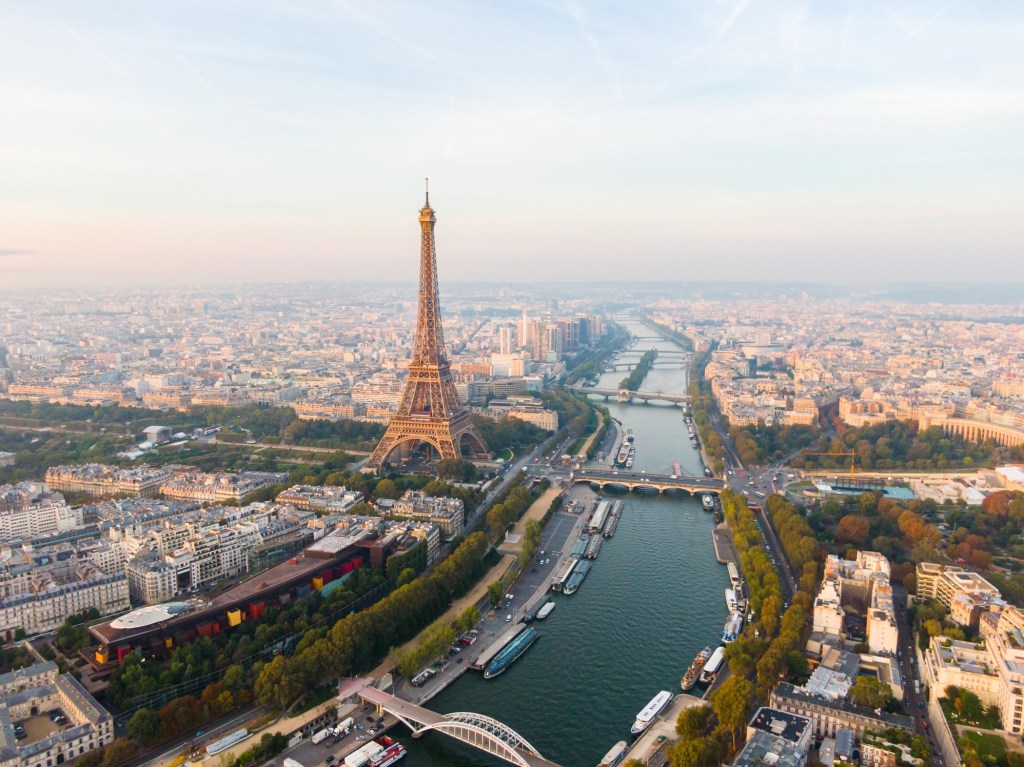
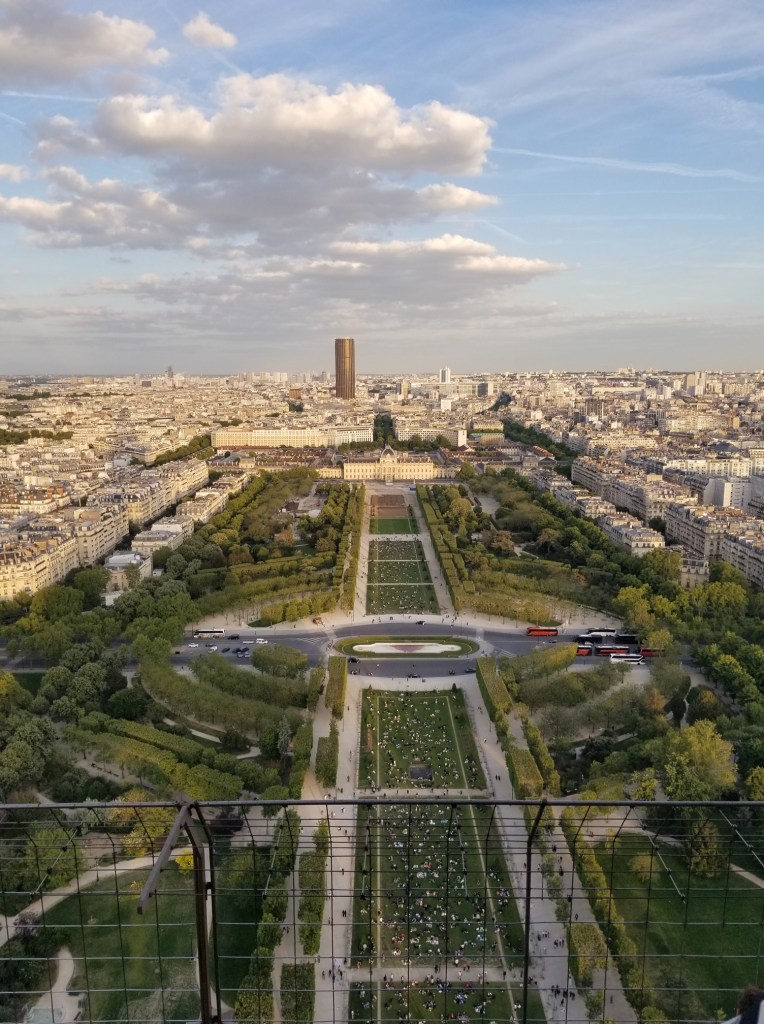
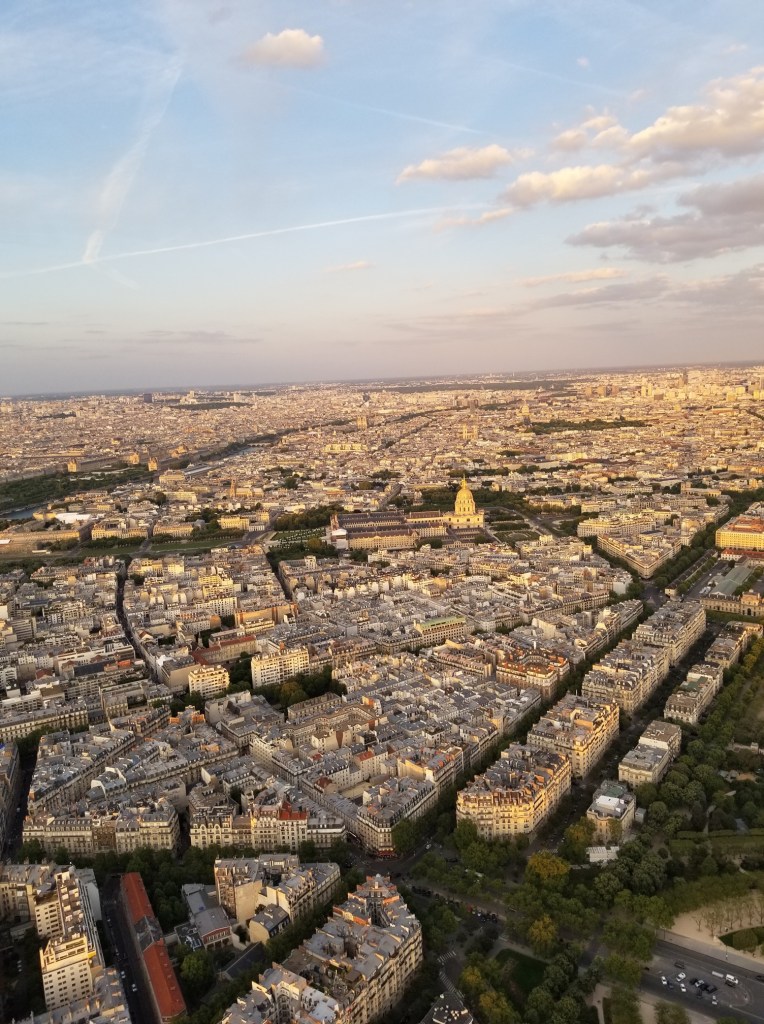
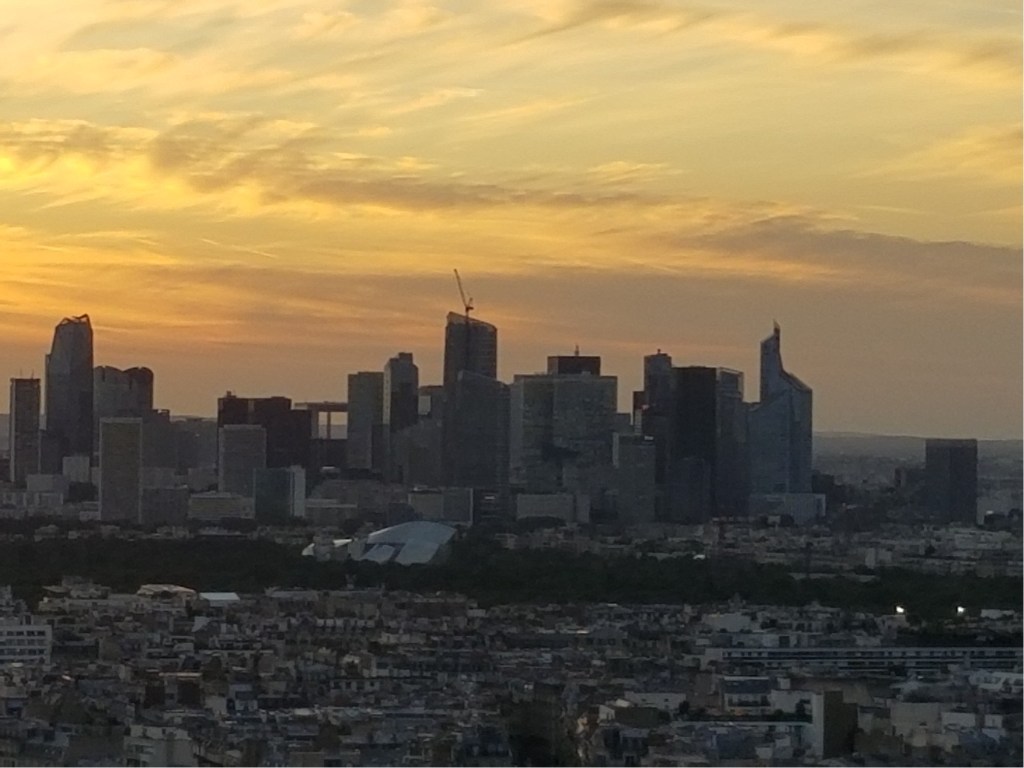
Eiffel Tower from the other side of Seine (my photo)Aerial view of Paris featuring the Eiffel Tower and the Seine River. Stock photo (not my photos). Asset id: 2281050257 by Open Films.Scenery from the second floor of the Eiffel Tower. The garden you see is called Champ de Mars and there’s a dog park.This is a view from the third floor (the top) of the Eiffel Tower. If I were to take a photo of every view angle I would end up with dozens of photos, which is too much. If I were to take a panorama photo you would not be able to see any details. If you look carefully, you can see Notre Dame about 60% up and slightly to the left. The impressive buildings and garden in the middle is the Jardin Du Luxembourg.This is another view from the third floor (the top) of the Eiffel Tower. In the distance (zoomed in) you can see some skyscrapers. That is NOT “downtown” Paris. It is La Défense de Paris, a business area in a suburb of Paris and it is not considered a tourist attraction. However, the first time I visited Paris in 1986 we visited La Défense de Paris because being from the north Swedish countryside we had never seen a skyscraper before.
Notre Dame
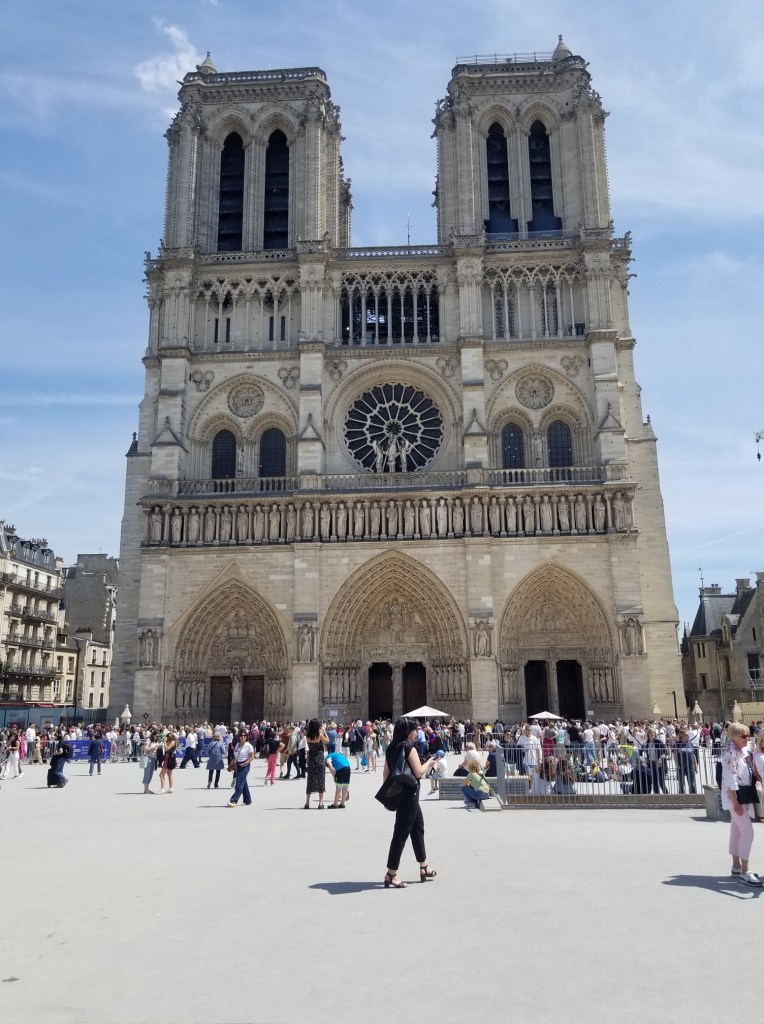
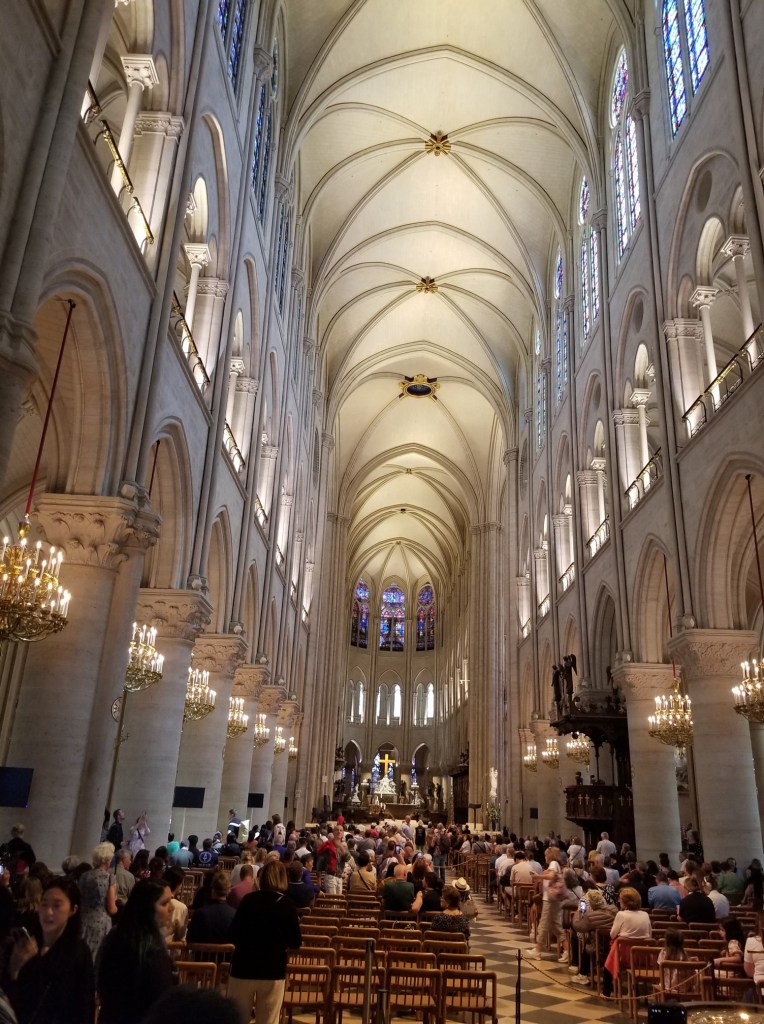
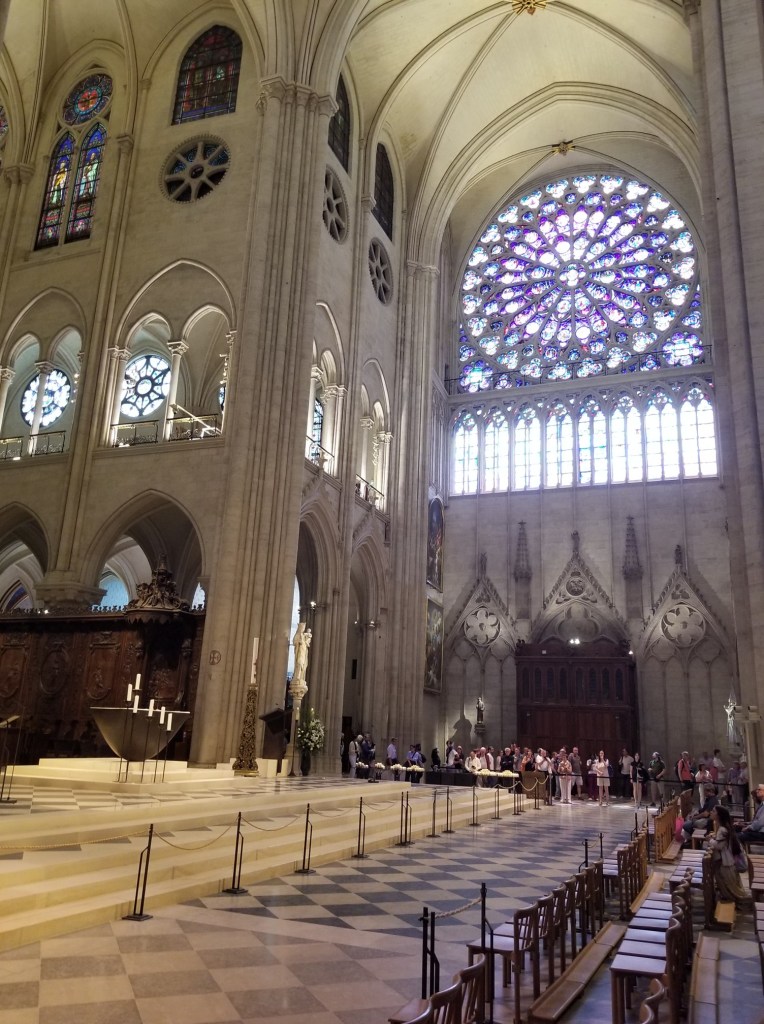
Notre Dame is a very large cathedral located on the island Île de la Cité. The construction of it began in 1163 and it was completed in 1260, 865 years ago. It was severely damaged by a fire in 2019. We’ve visited Notre Dame many times before, but this was the first time we visited Notre Dame since the fire. It looked the same except the big, beautiful pipe organs were missing, and Notre Dame was still being renovated on the outside. We bought tickets beforehand, but you can buy tickets there, but the line is long.
Photo I took of Notre Dame before entering.Inside the Notre Dame cathedral, on the left side.Inside the Notre Dame cathedral, the perpendicular view.
River Cruise on the Seine
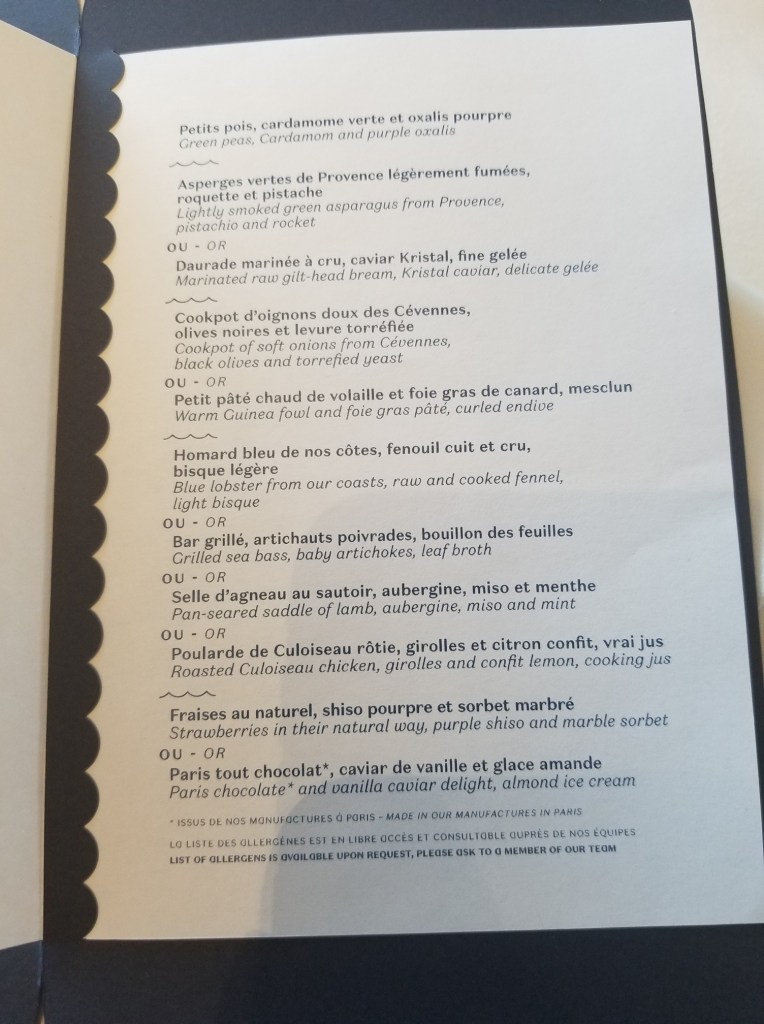
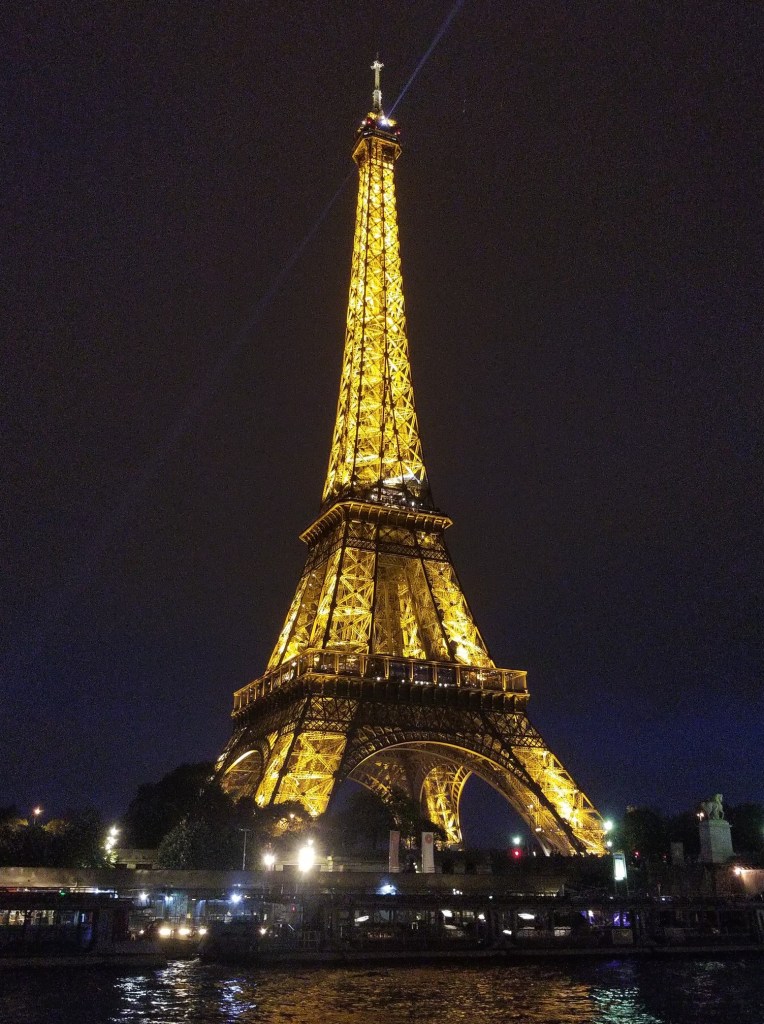
We also took a dinner cruise on the Seine. The boat / cruise was called La Seine Ducasse. I started right across from the Eiffel Tower and went a few miles up, passing by the island Île de la Cité and Notre Dame and then turning around. The cruise was a couple of hours long and the sun set during the cruise. The food was amazing (see the menu below). Unfortunately, the beer options weren’t that great, so I had wine.
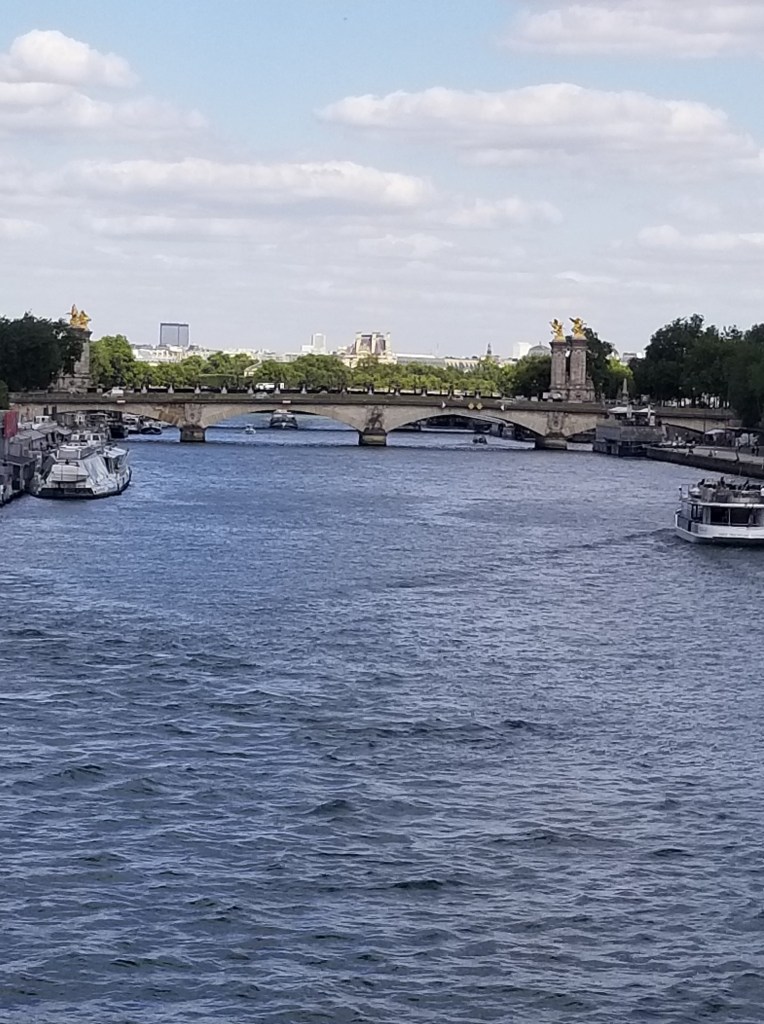
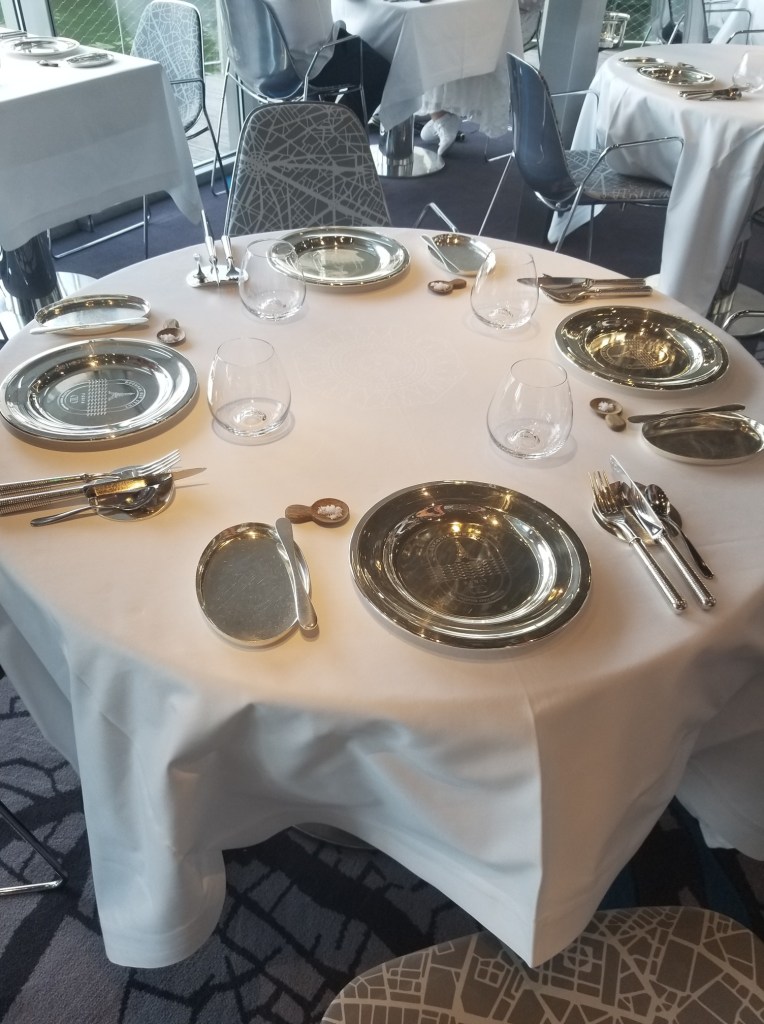
A photo of the river Seine.The menu at La Seine Ducasse. I had Marinated raw gilt-head bream, Kristal caviar, and delicate gelée. I also had Warm Guinea fowl and foie gras paté and curled endive. After that I had Roasted Culoiseau chicken, girolles and confit lemon, cooking jus. For dessert I had Strawberries in their natural way, purple shiso and marble sorbet.Our table as when we arrived.The Eiffel Tower as seen from the cruise boat at night.
Opera Rigoletto
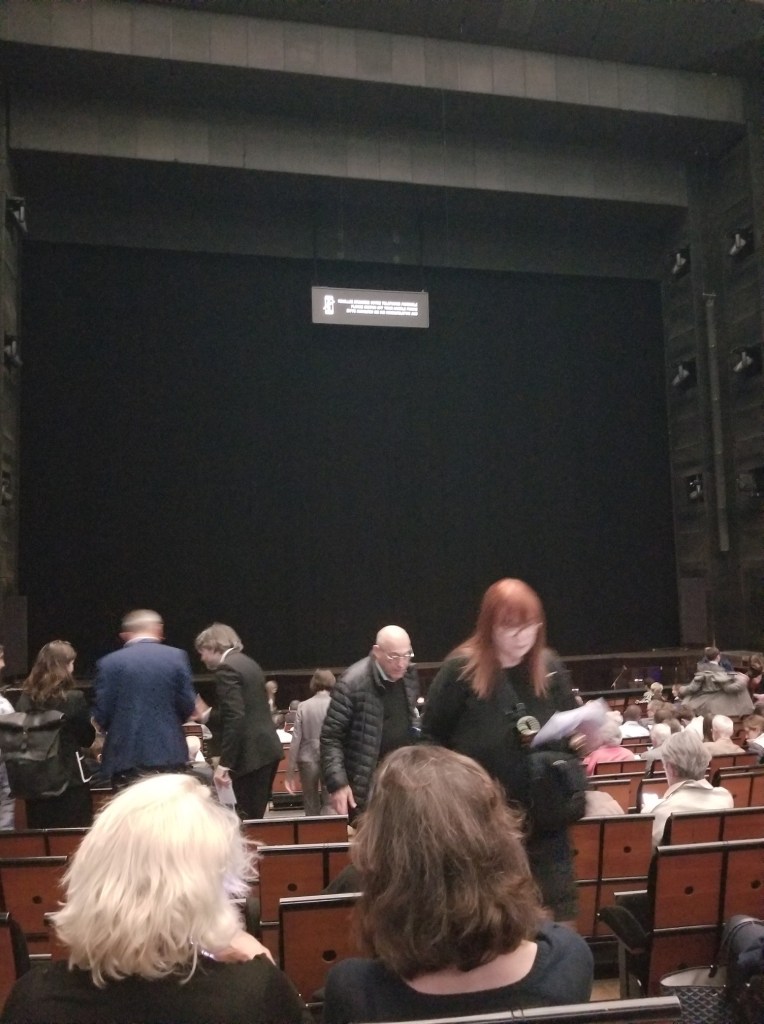
One evening we went to see an Opera at Opera National de Paris located nearby the Bastille. The opera was Rigoletto by Cristiano Grimaldi. It was sung in Italian but above the scene there were subtitles in French and English.
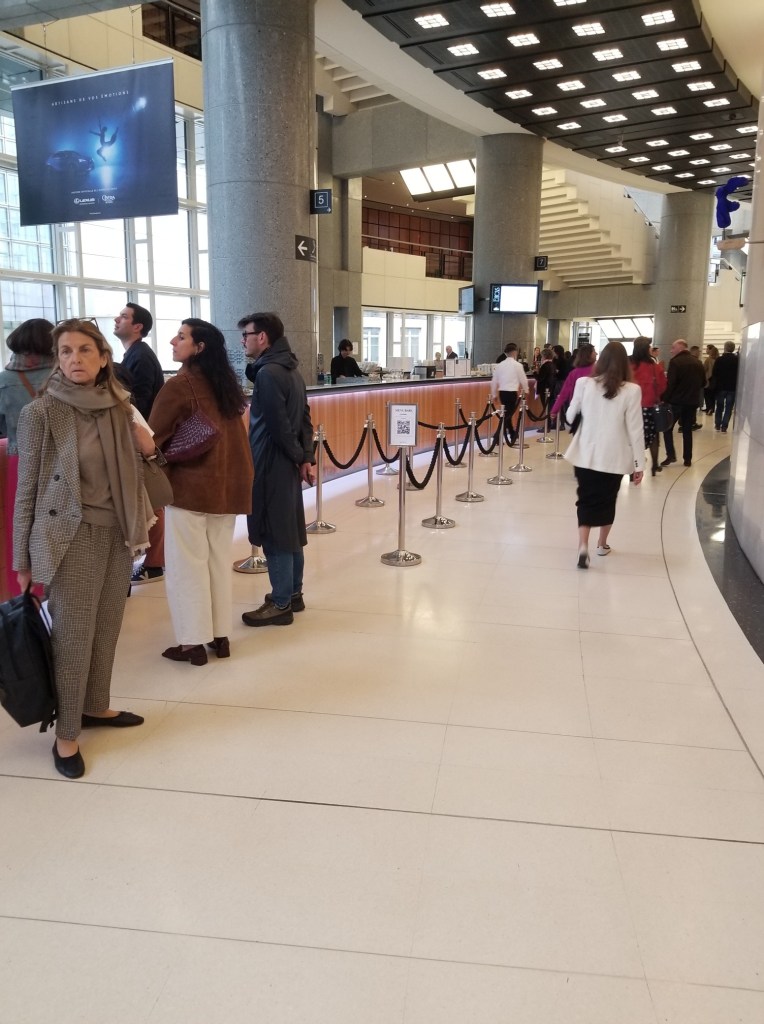
You were not allowed to take pictures, but I snapped this quick photo before of the scene, before the performance started.Hallway outside the theater where you bought snacks and drinks.
This is two minute and 50 second video of La Donna È Mobile sung by Luciano Pavarotti. La Donna È Mobile is a song in Rigoletto. You may recognize it. I should add, it was not Pavarotti who sang it in our performance (he is no longer alive).
Montmartre and Sacré Coeur
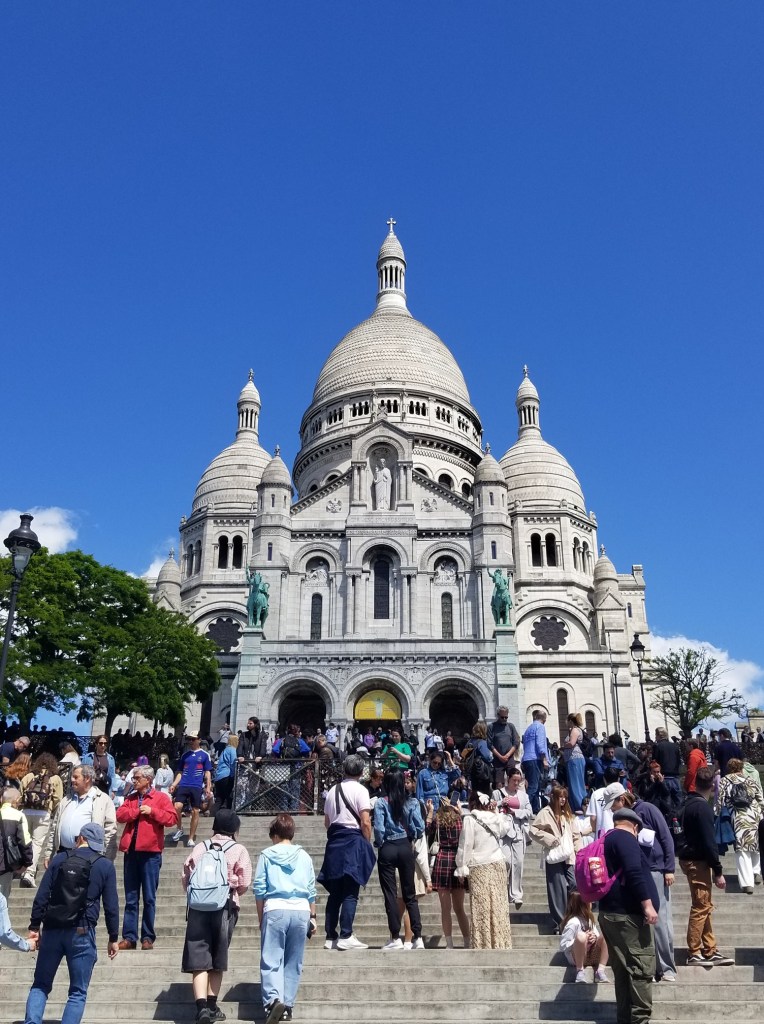
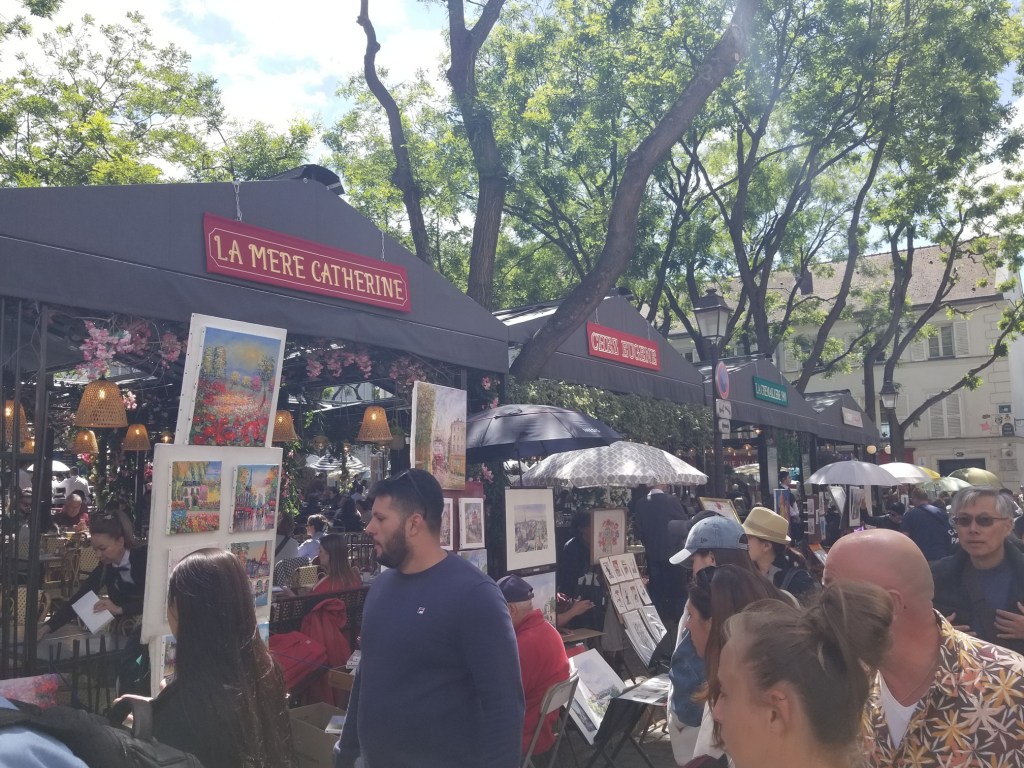
Montmartre is a neighborhood, and a hill located in Paris. It is known for its old picturesque buildings, the plaza, the small stores, cafes and restaurants, and the art. At the top of the hills sits one of Paris most famous cathedrals Basilique du Sacré-Cœur de Montmartre. It is open to visitors, but you may have to stand in line to go inside. The view from the top of the hill is spectacular.
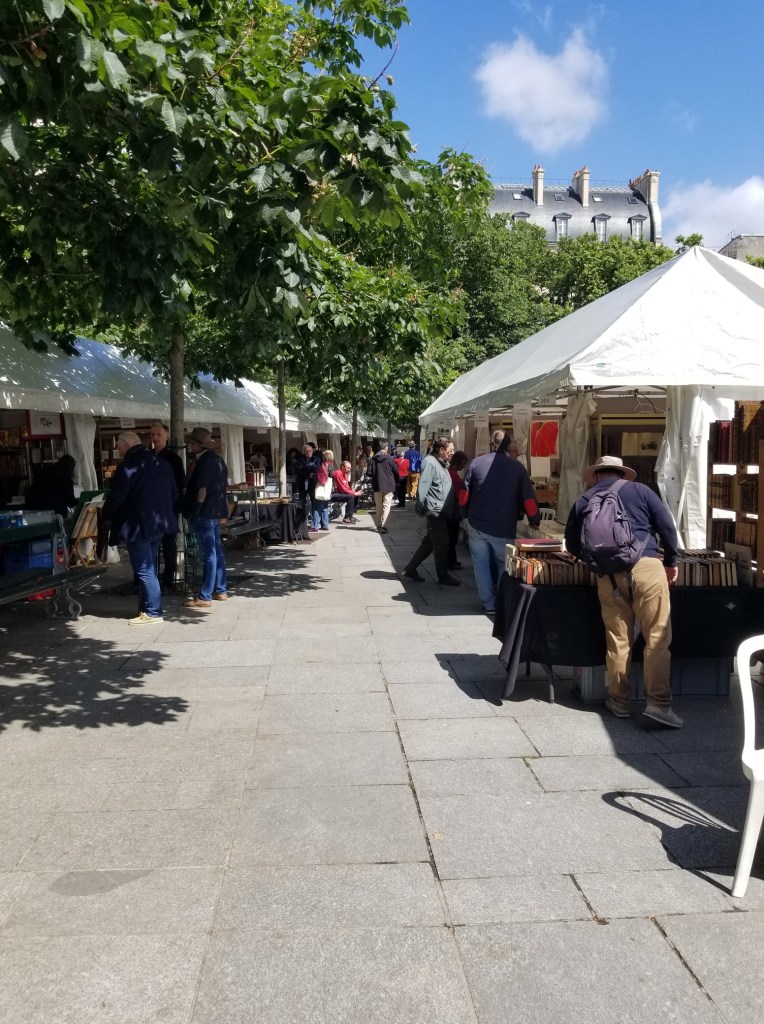
This is the front view of Basilique du Sacré-Cœur de Montmartre. It is one of the most beautiful cathedrals that I have ever seen.This market in Montmartre is located nearby Sacré-Cœur.This market in Montmartre is located nearby Sacré-Cœur.
Sights and Shopping in Paris
Nobody walks in LA but in Paris everyone walks. There is so much to see everywhere, everything is close, and there are several restaurants and shops in every block. So, why not walk a few miles every day. It is healthy too. Below are a lot of photos that I took of things we visited as we walked around Paris.
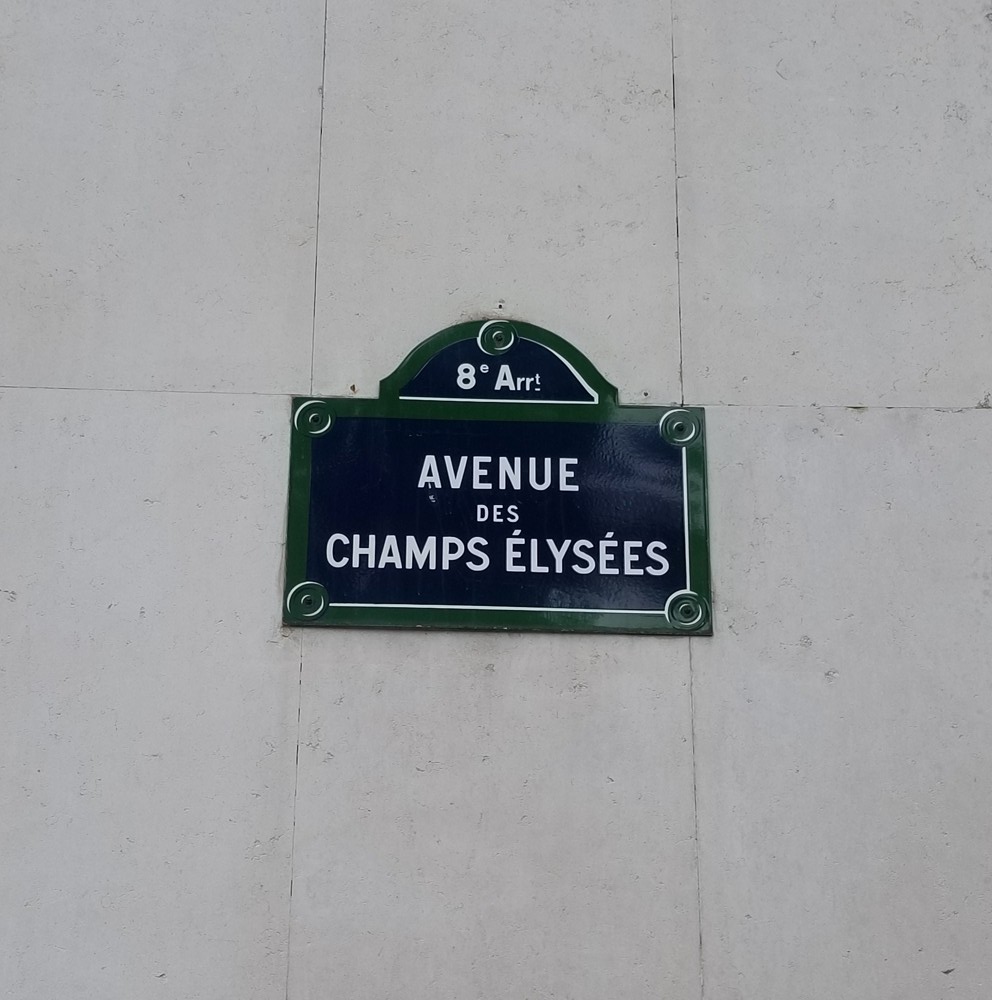
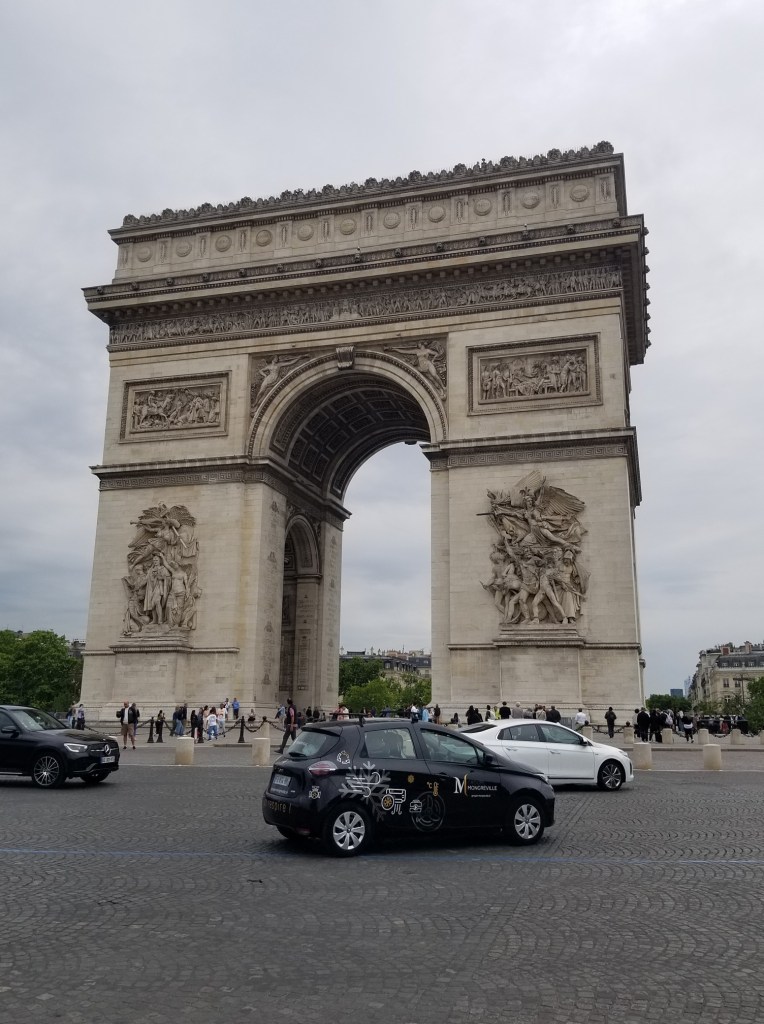
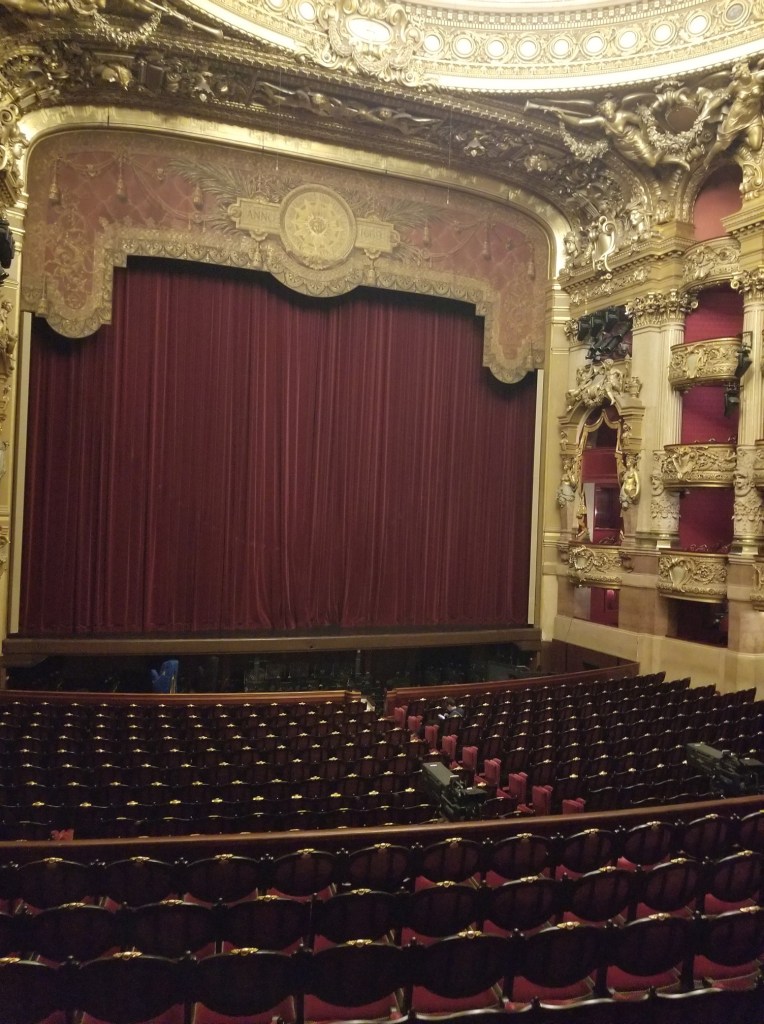
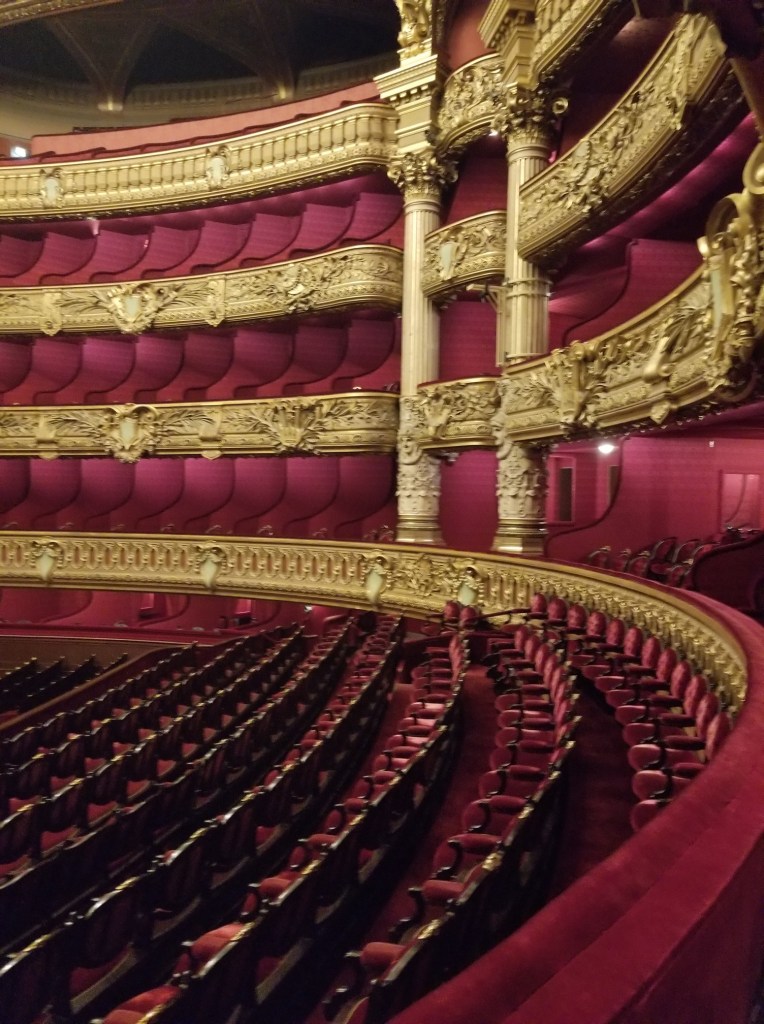
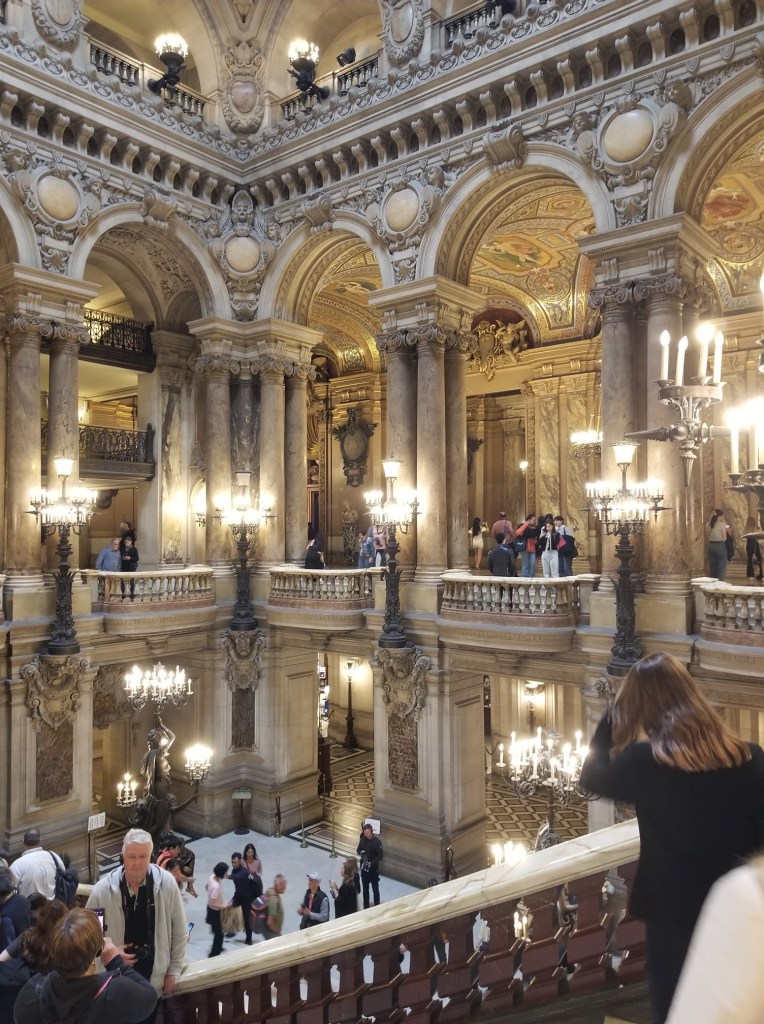
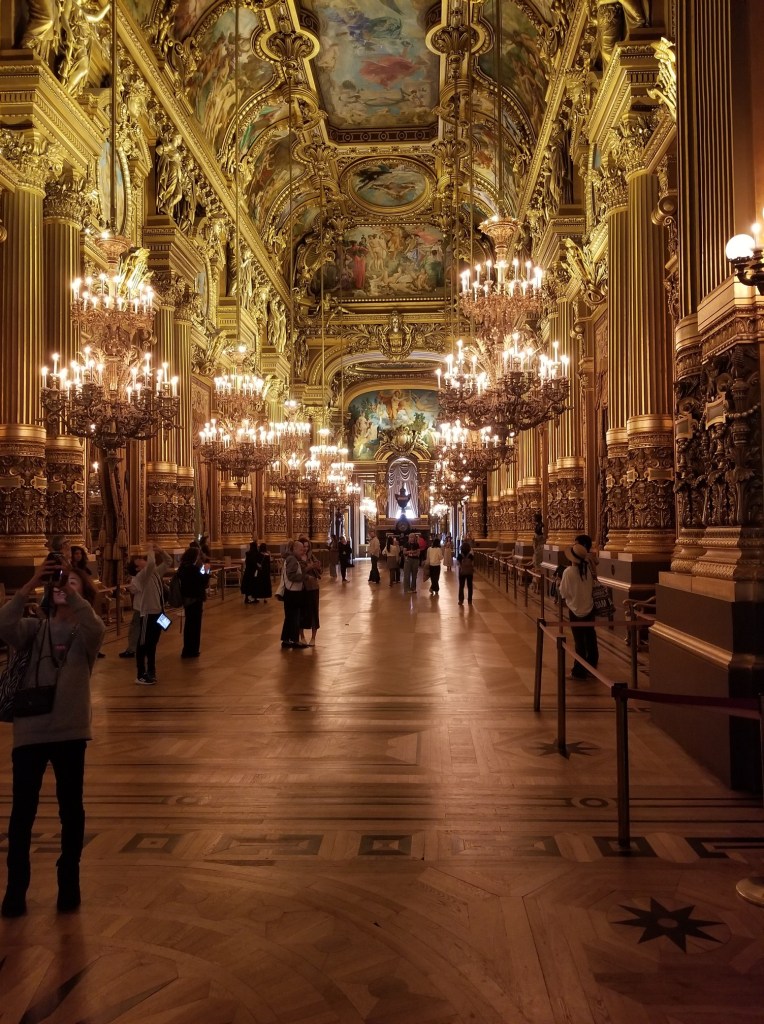
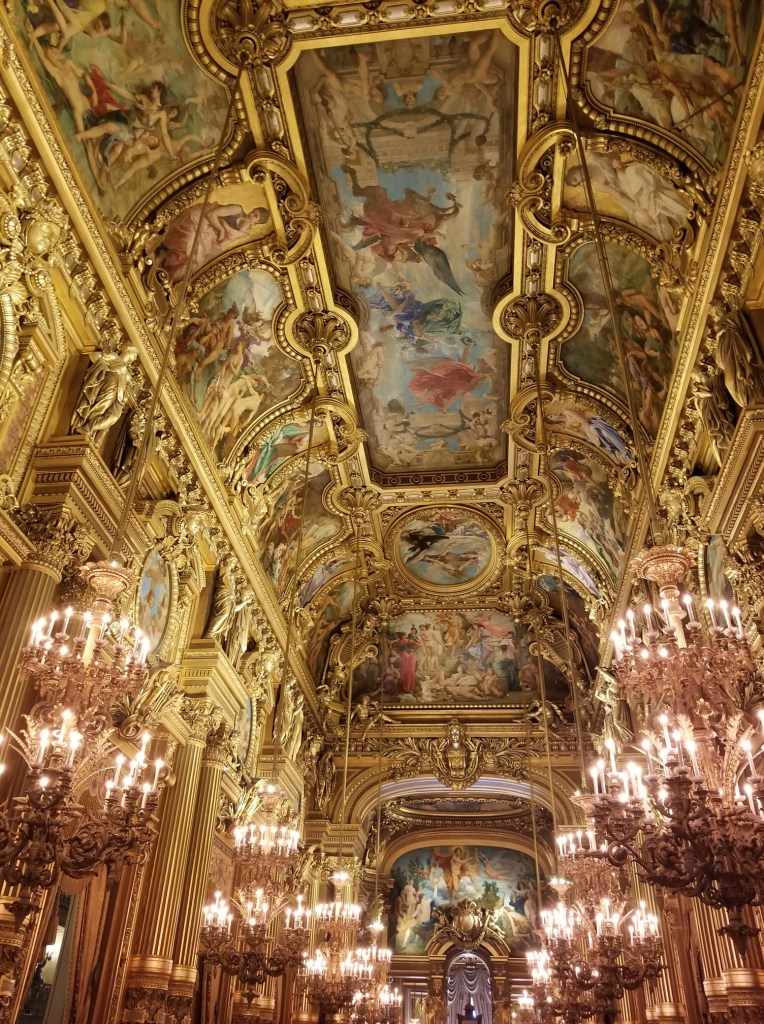
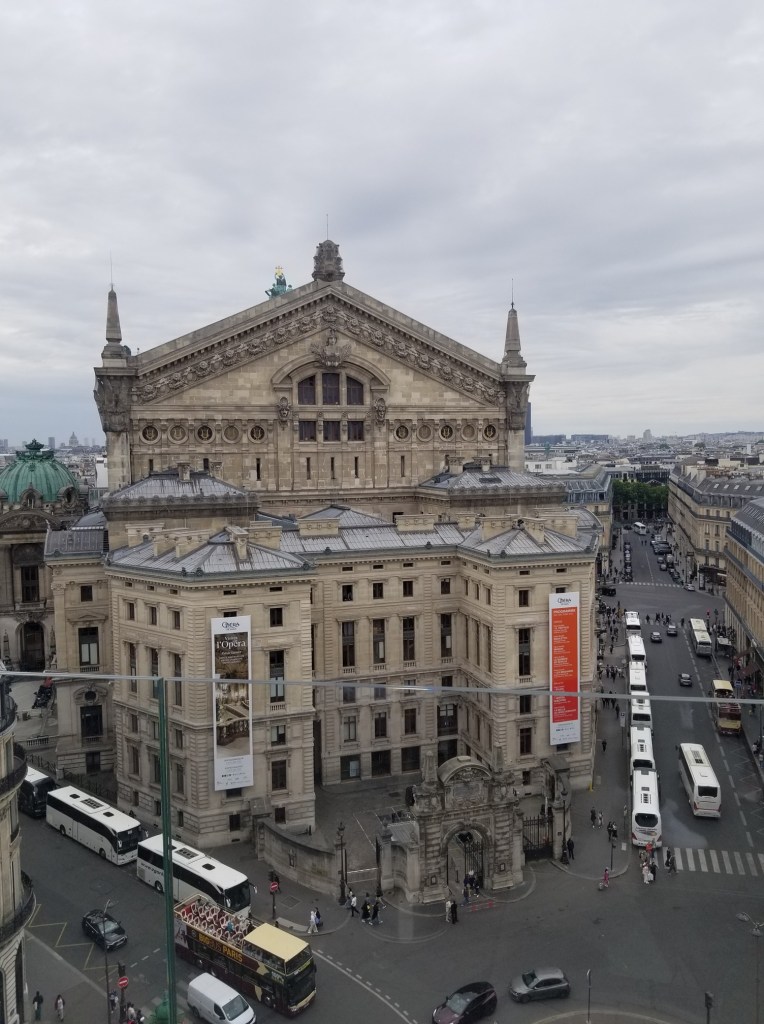
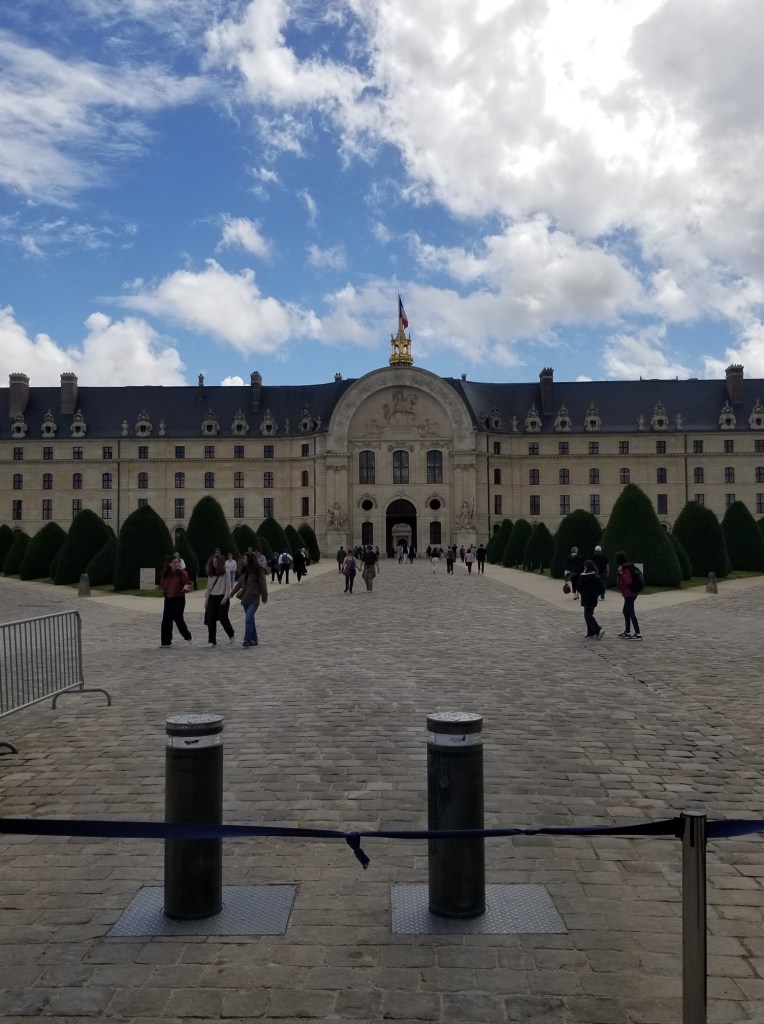
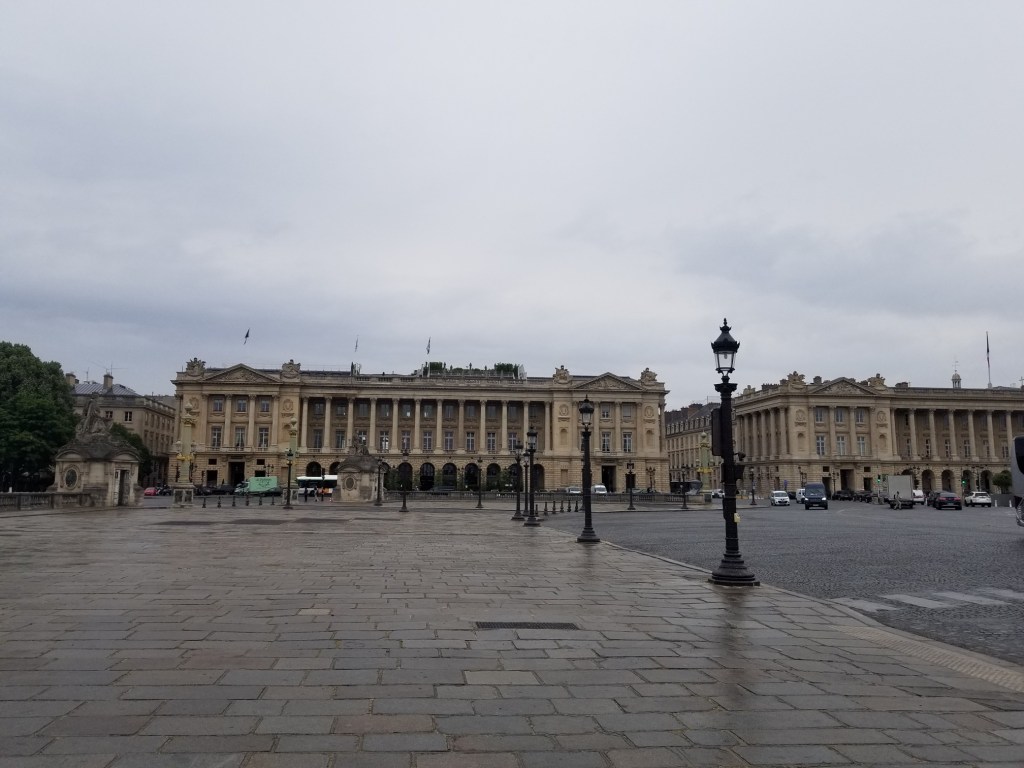
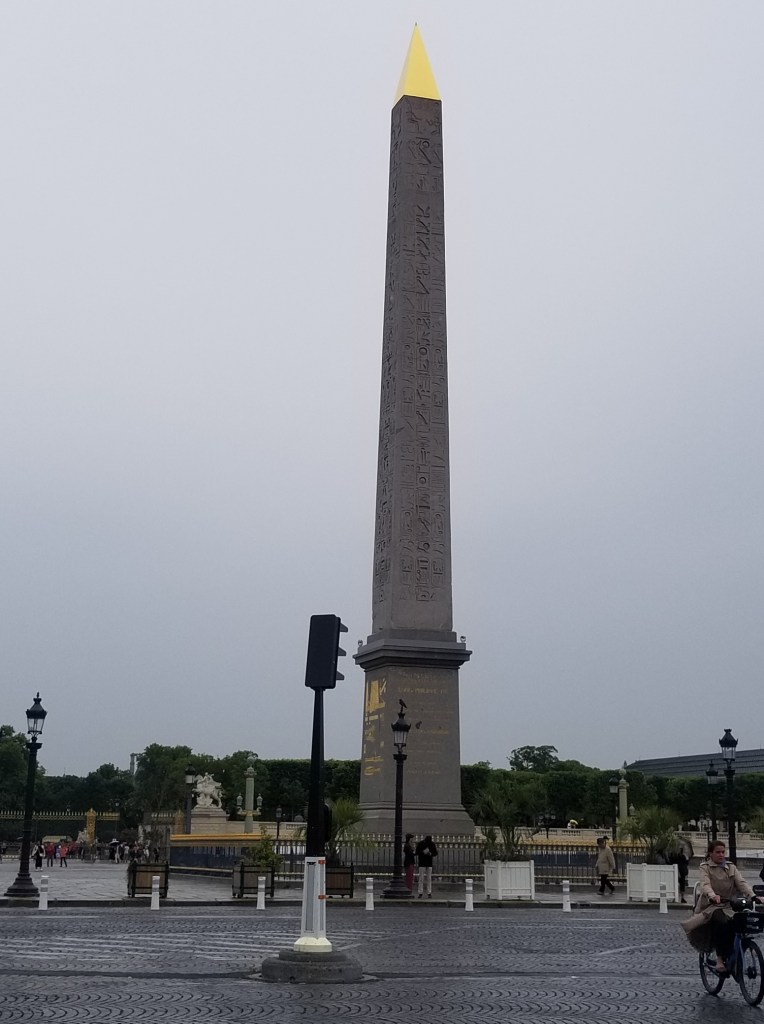
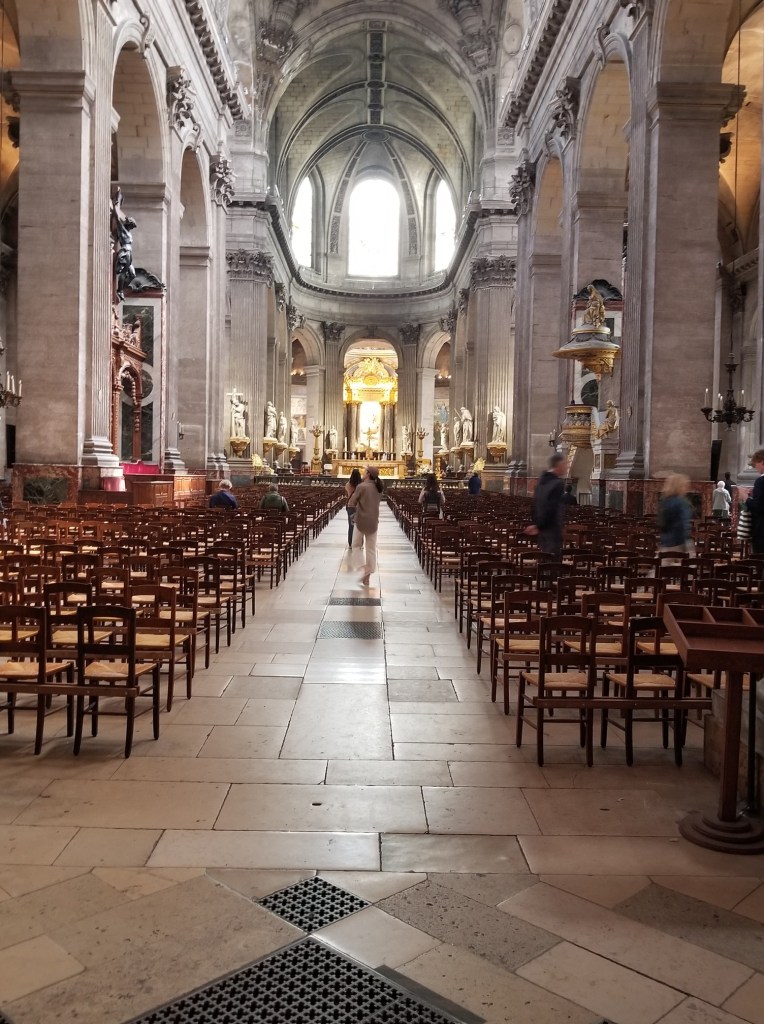
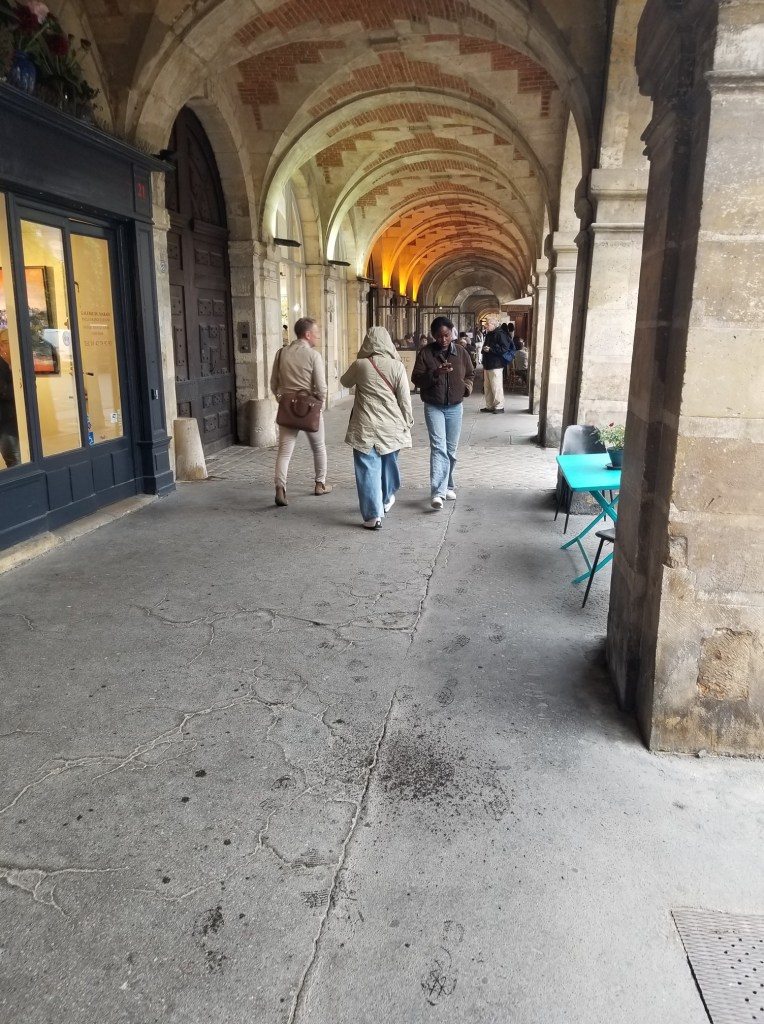
Avenue des Champs Élysées is a long wide street with lots of stores and things to see.My wife found this purse store called Louis Vuitton. I took the photo as I walked into the store. Husbands sat in comfortable sofa chairs and where served coffee, tea and juice while their wives were shopping. When someone made a purchase, they served you champagne and cocktails. My wife did not buy a purse, but my daughter bought one later. The purses were expensive but cheaper than in the states according to my wife.Arc de Triomphe is located on Avenue des Champs Élysées. You can walk up to the top. We did not do that this time.Palais Opéra Garnier was an opera that we toured. However, it was not the opera where we saw Rigoletto, that was Opera National de Paris. However, Palais Opéra Garnier was without doubt a very impressive building.The auditorium of the Palais Opéra Garnier.Another view of the auditorium of Palais Opéra Garnier.One of the large rooms in Palais Opéra Garnier.An artistically decorated hallway in Palais Opéra Garnier.The ceiling of the hallway in Palais Opéra Garnier.I took this photo from the terrace of an eight-story shopping mall called Gallery Lafayette located nearby Palais Opéra Garnier. The photo shows the back of Palais Opéra Garnier. My wife and daughter spend a lot of time shopping here.Photo of Hôtel des Invalides / Les Invalides, where Napoleons tomb is located. Hôtel des Invalides is very large, and this photo only shows a small portion of it.One of the corners of place de la Concorde.The obelix at Place de la Concorde.Inside a church / cathedral called Saint Sulpice.A sidewalk in Paris
Museums and Gardens in Paris
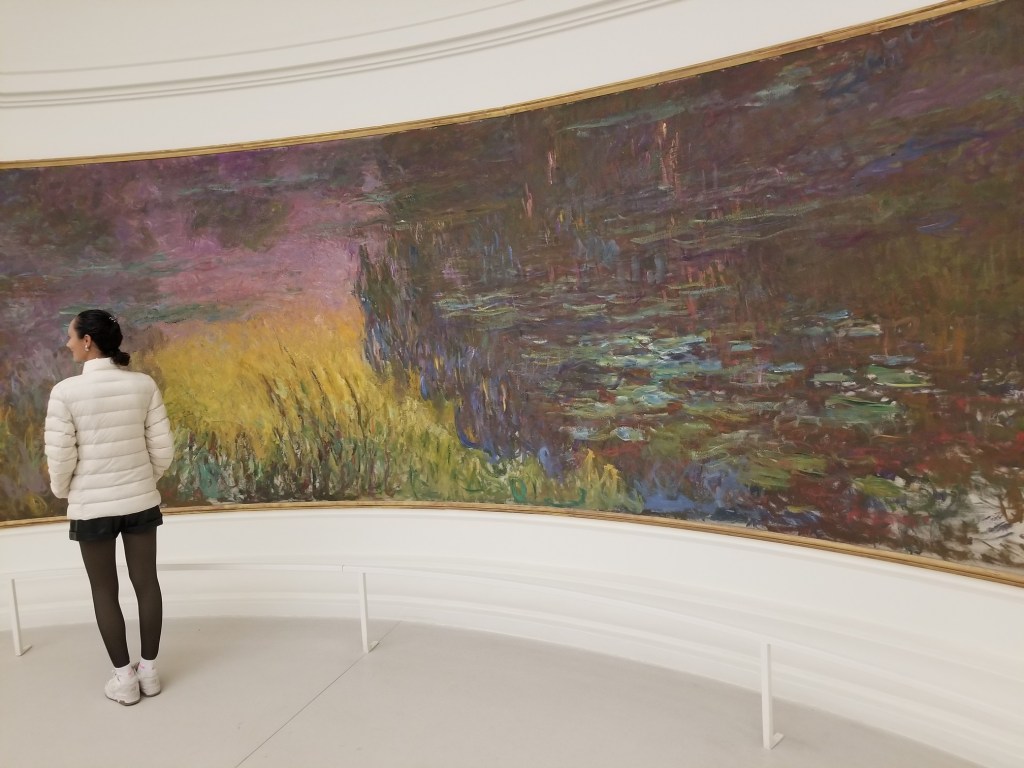
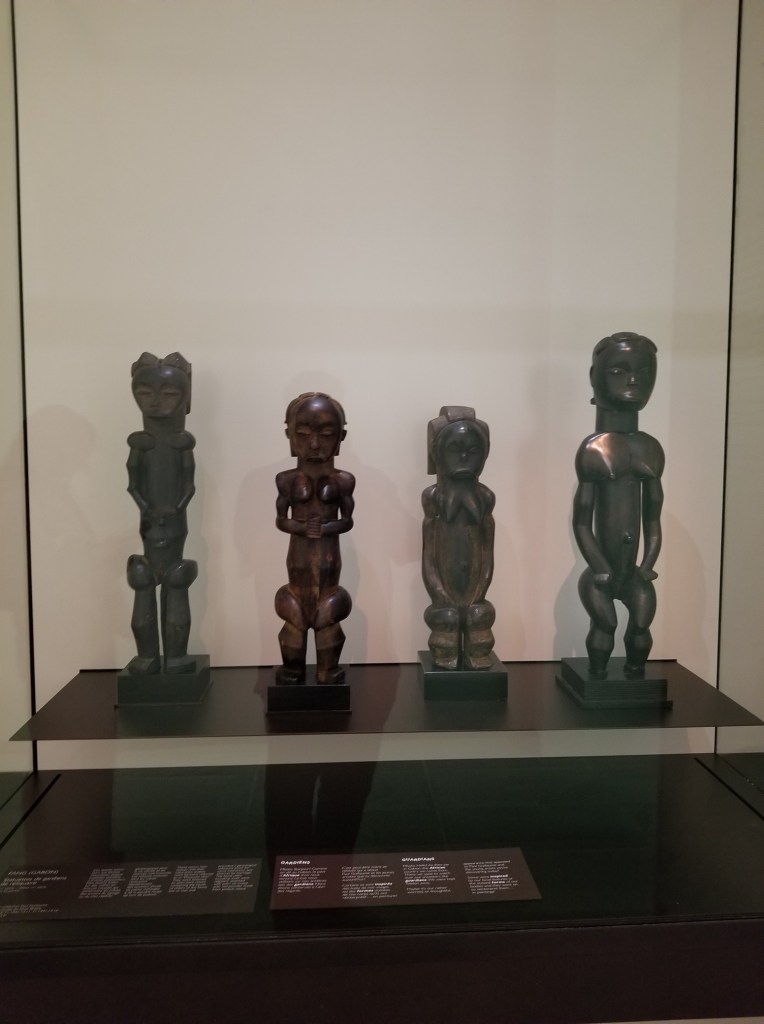
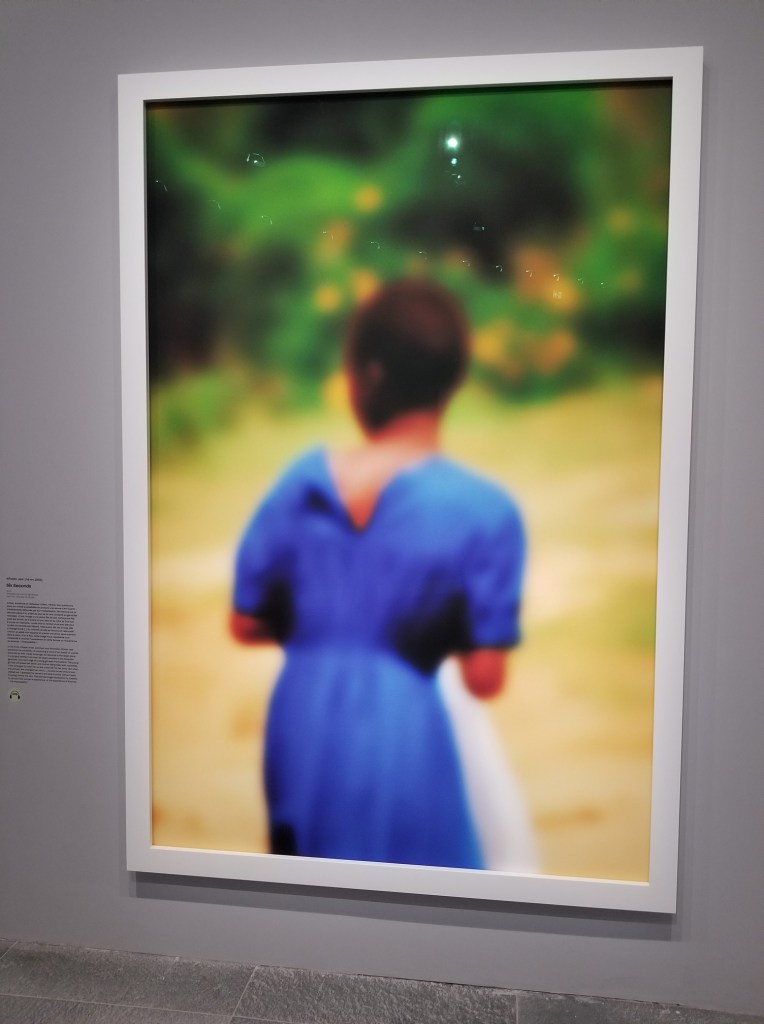
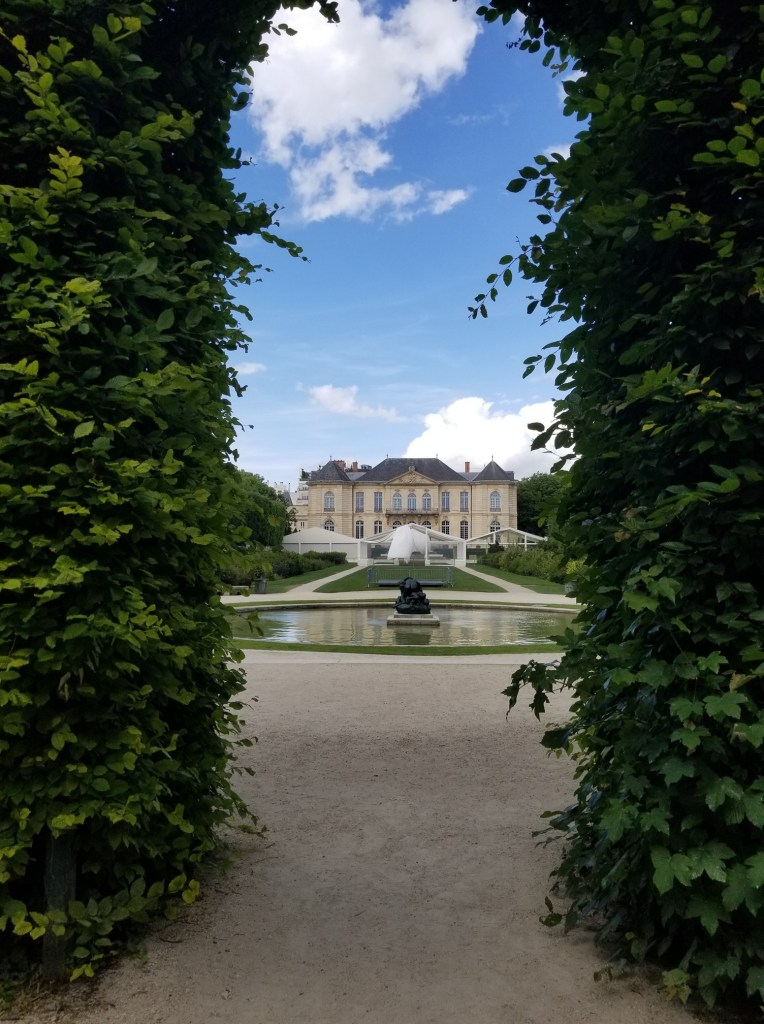
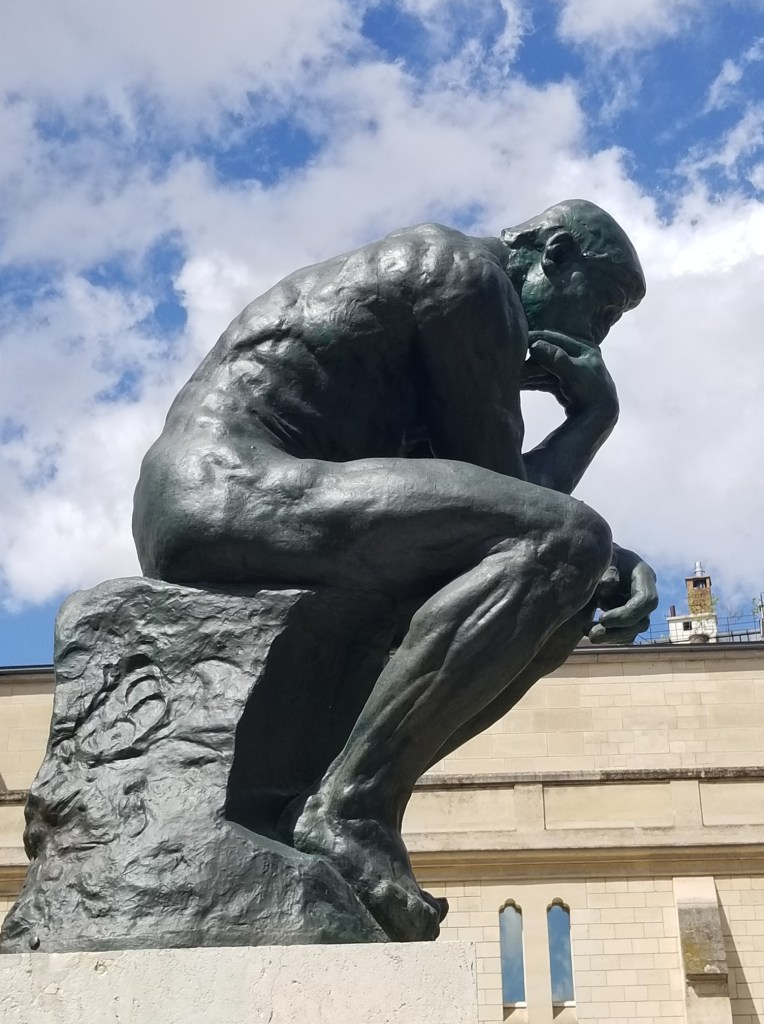
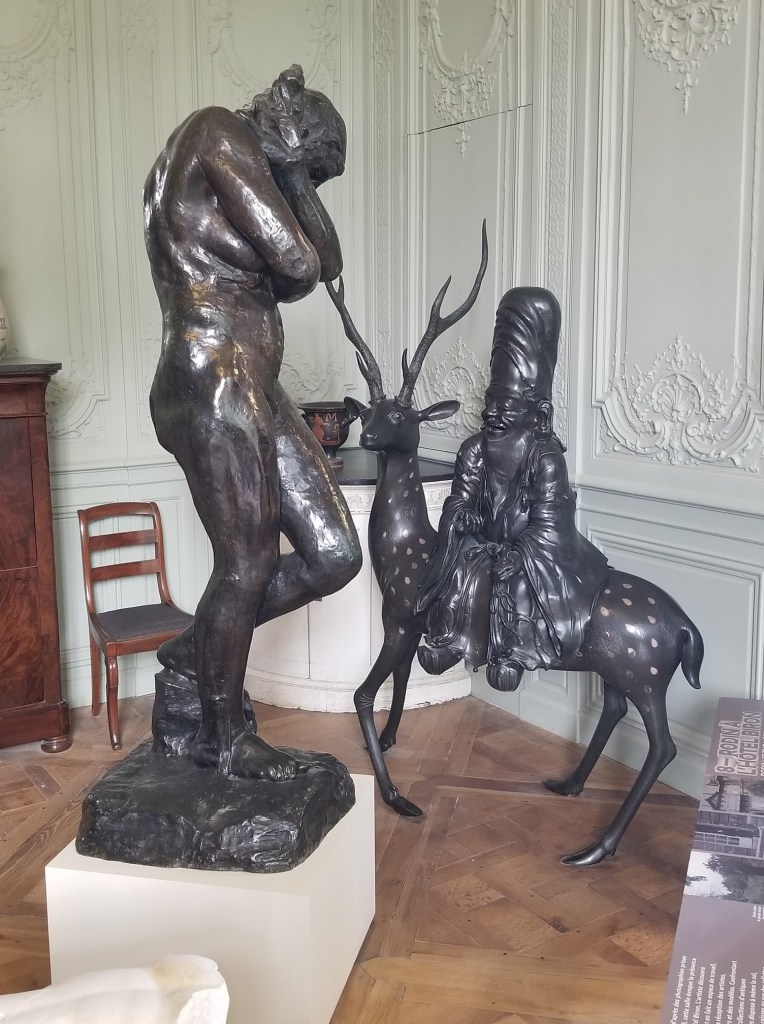
We visited several museums and gardens in Paris. One of the museums we visited was Musée de l’Orangerie which exhibit all kinds of art from ancient times to modern times but especially paintings including several famous painters such as, Pablo Picasso, Claude Monet, Henri Matisse, Henri Rousseau, Walter-Guillaume, Amedeo Modigliano, Marie Laurencine, Maurice Utrillo, Eva Nielsen. Some special exhibits were Monet’s gigantic water lily paintings and “flou” art, intentionally blurry paintings and art because life is blurry. We also visited the Auguste Rodin Museum. The museum had hundreds of Rodin sculptures in the museum building as well as in the surrounding gardens. There were also paintings by Vincent Van Gogh and Claude Monet.
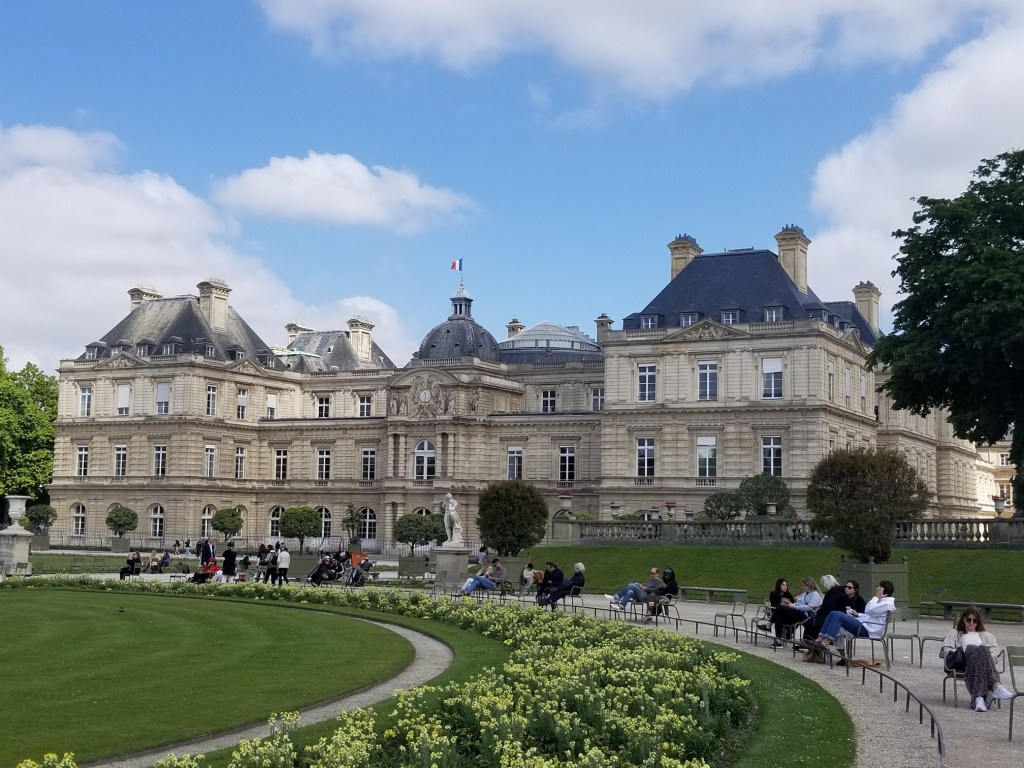
Jardin Du Luxembourg feature several buildings including this one. The garden is huge and difficult to show in a photo, but you can get an idea by looking at the fourth photo (aerial view from the Eiffel Tower) in the Eiffel Tower section above.Musée de l’Orangerie featured many large paintings of water lilies by Claude Monte.Ancient African statues in the Musée de l’Orangerie.An intentionally blurry painting. As mentioned above, this style is referred to as Flou. The paintings are blurry because life is blurry.The Auguste Rodin Museum featured one relatively small museum buildings surrounded by a huge garden. Both the garden and the building contained hundreds of statues, mostly by Auguste Rodin as well as paintings by Vincent Van Gogh and Claude Monet.The famous Rodin bronze statue the thinker, located in the garden.Two of the statues inside the building.
Dessert Places in Paris
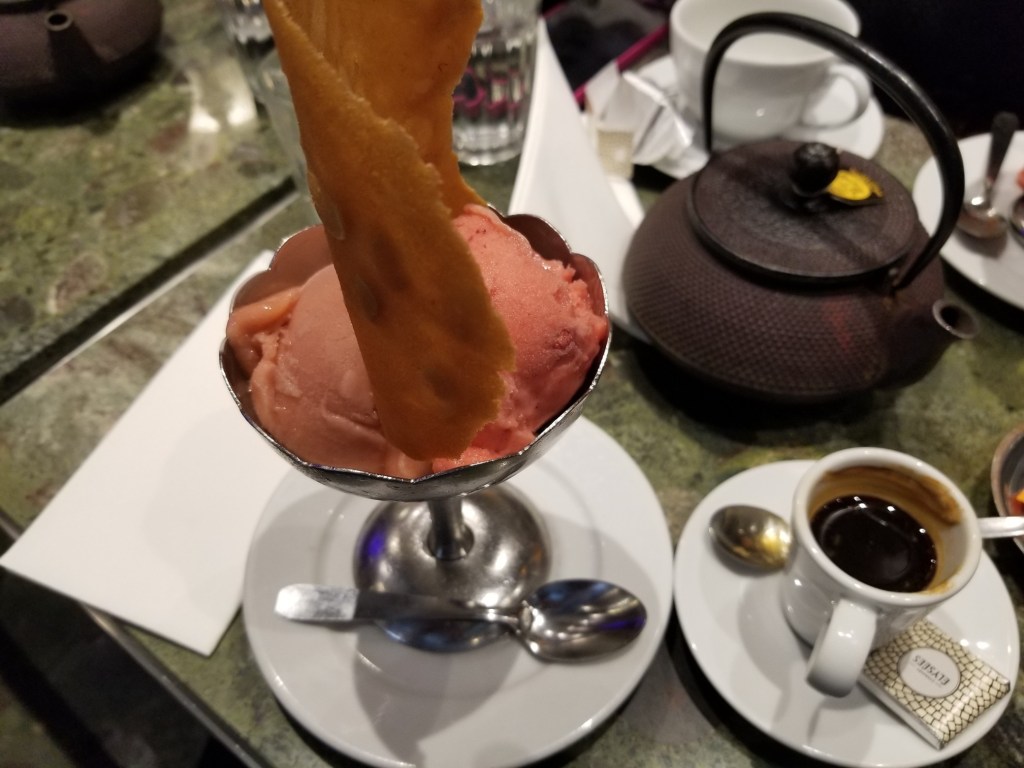
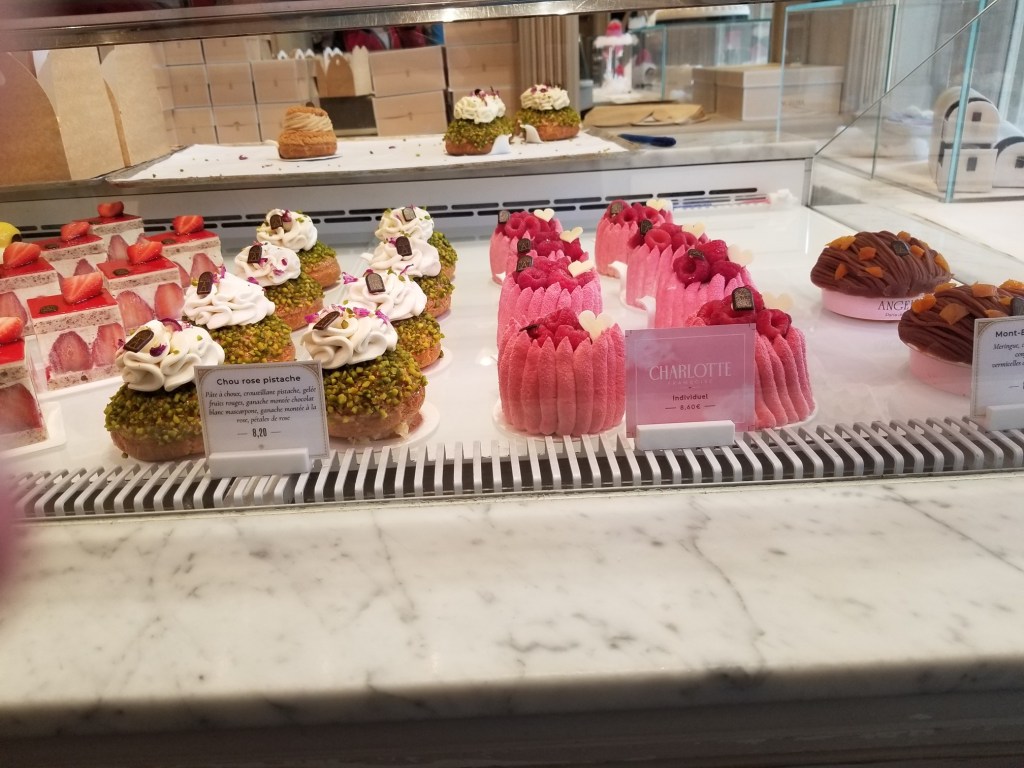
There are thousands of Cafes, bakeries and pastry shops in Paris and the cakes, pastries, desserts, tarts and other baked goods are probably the best in the world. We visited a number of these stores and creperies and we had desserts at various restaurants. You can find wonderful baked goods in Italy and in the Scandinavian countries, but I have to say that France, and Paris, takes the cake (pun intended). At Angelina’s I had delicious coffee and I had some of their thick and creamy hot chocolate with whipped cream as well as two incredible cakes. At Berthilon I had amazing rhubarb and wild strawberry ice cream.
Rhubarb and wild strawberry ice cream with a wafer at Berthilon.Small section of the to go counter at Angelina (a sit-down pastry shop).
Violin d’Ingres Michelin Star Restaurant
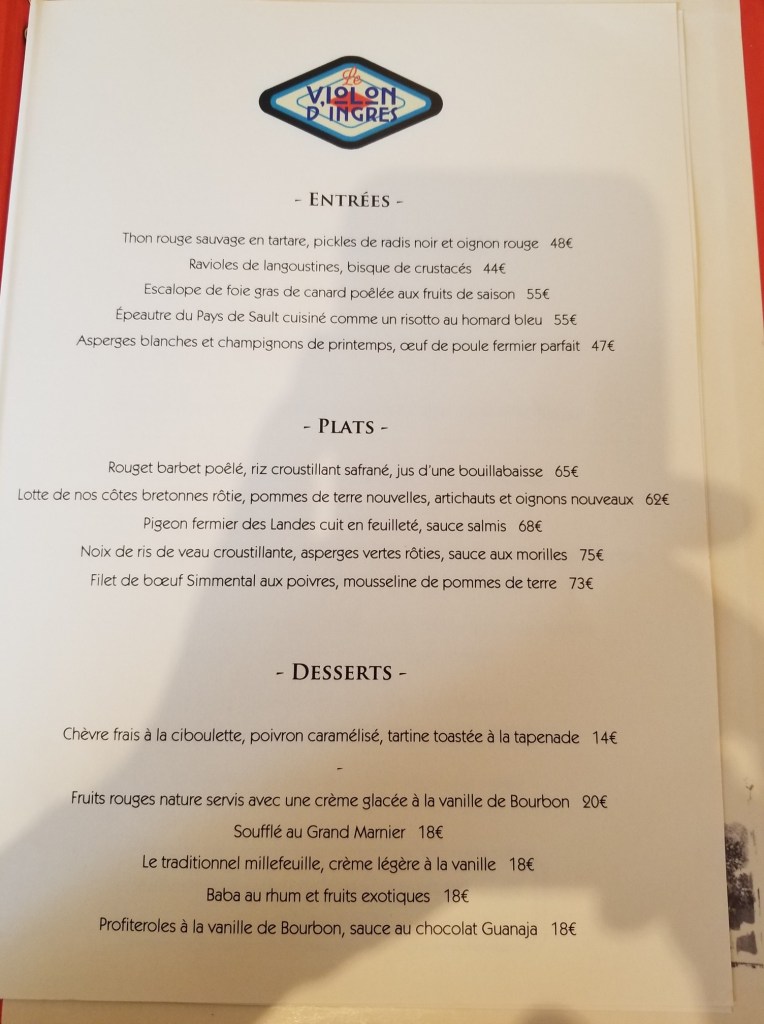
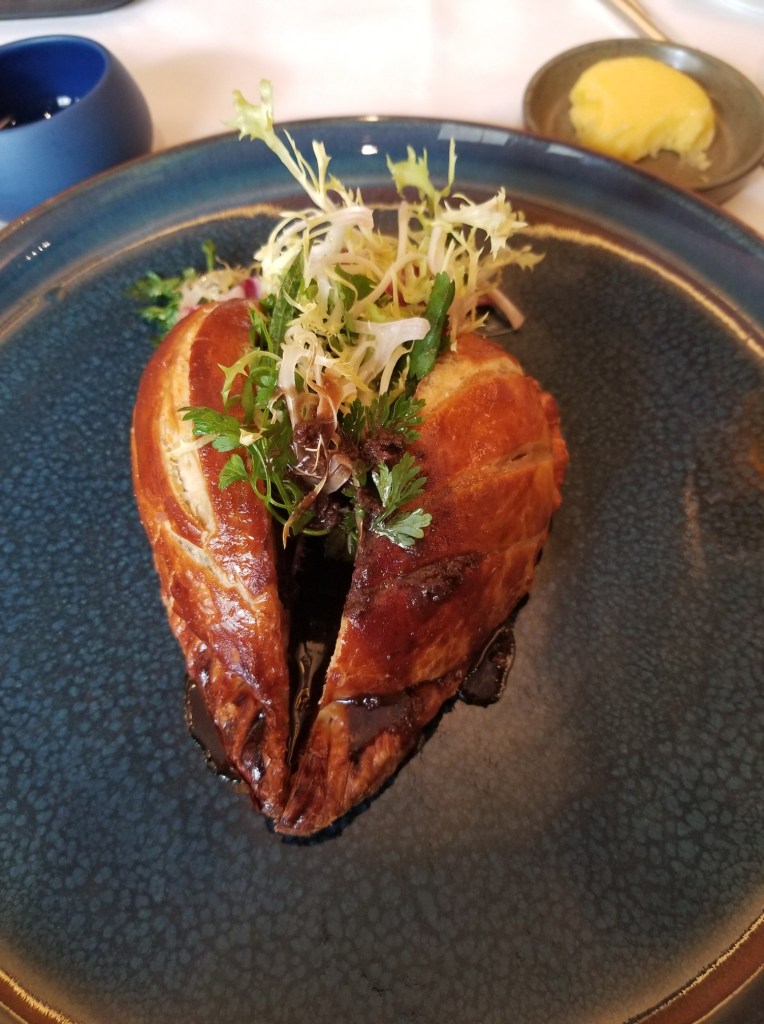
We celebrated a couple of birthdays at a Michelin star restaurant called Violin d’Ingres. In terms of eating that was probably the highlight of the trip. Out of Paris’ 44,000 restaurants only 123 are Michelin star restaurants (10 three-star restaurants, 17 two-star restaurants, and 96 one-star restaurants). I ordered Pigeon, something I’ve never had before. It does not sound appetizing. I joked that you had to go out in the street and kill the Pigeon yourself. However, it was probably the best meal I’ve had so far this year. It was truly delicious.
The menu at Violin d’Ingres. Notice that Entrées means starters or appetizers, just like the word implies. Somehow this got mistranslated into the English language to mean main course.This is my main course, Pigeon in lightly fried bread. It was delicious.
Traffic in Paris
Traffic in Paris is horrendous. Paris has successfully promoted the use of bicycles, mopeds, motorcycles, buses and the metro. As a result, the air is much cleaner than it used to be, but the traffic is still bad. One of the reasons is that it has become quite popular to disturb the traffic in various sorts of protests. When we were there the taxi drivers were on strike. You may think that you could just take an Uber instead, but the taxi drivers were blocking other traffic as well, including blocking the entrance to train stations. We were afraid they might block the entrance to the airport on our return day. I have a hard time understanding this since this kind of behavior is obstruction and is illegal in the United States as well as in Sweden.
However, the striking tax drivers were not the only problem. One day when I was accompanying my wife and daughter shopping, I got bored and decided to walk back to the hotel. It was two miles, and it took me one hour. Since the sidewalks are of such high quality and there is so much to see along the way and so many opportunities to stop if you need, this is easy to do.
Along the way I saw two large demonstrations. One was “dépénaliser cannabis” and there were hundreds of people, many with green hair and weird clothes, carrying flags with green leaves on them, marching down the street and playing music. There were also hundreds of police and the entire street, Rue Voltaire, which is a major street, was blocked. Then came the bicycle demonstration. Hundreds of bicycles blocking traffic and lots of police. Well at least it was not a boring walk. Oh, what I saw on Rue Voltaire!
Today’s post is a highlight of Good News from my super fact blog, which I call Superfactful. I am listing eight posts, seven of which are what I call super facts. A super fact is a fact that is important, not trivia, and that is known to be true and yet are either disputed by large segments of the public or highly surprising or misunderstood by many. The super facts included with this post are what you can call Good News. Surprising news, perhaps shocking news, but still good news.
Peace Is Boring News
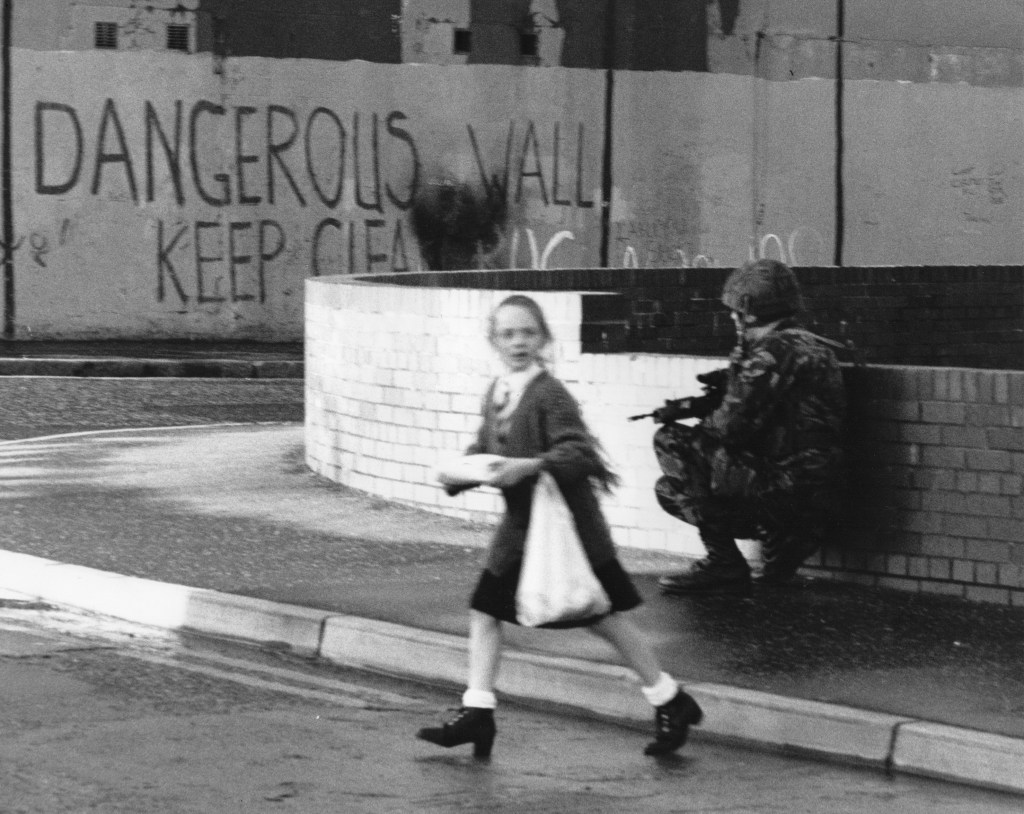
The first and my most recent post is not a super fact but my musings on the fact that good news tends to be boring news and therefore forgotten.
West Belfast, Northern Ireland,UK; February, 1994; Girl running with plate of chips past wall where two IRA Volunteers were killed by British soldiers Shutterstock Asset id: 1951602385, Editorial credit: RORY NUGENT.com
Emissions of ozone-depleting gases have fallen by 99 Percent
Super fact 41 : Largely thanks to the Montreal Protocol in 1987 the emissions of ozone-depleting gases have fallen by more than 99%, 99.7% to be exact, according to Our World in Data. This has resulted in halting the expansion of the ozone holes and the reduction in emissions of ozone-depleting gases is saving millions of lives every year.
To visit the page for Emissions of ozone-depleting gases have fallen by 99 Percent click here.
The phase out of six ozone depleting gases. Data source UN Environment Program (2023).
Natural Disasters Kill Less People Now Than 100 Years Ago
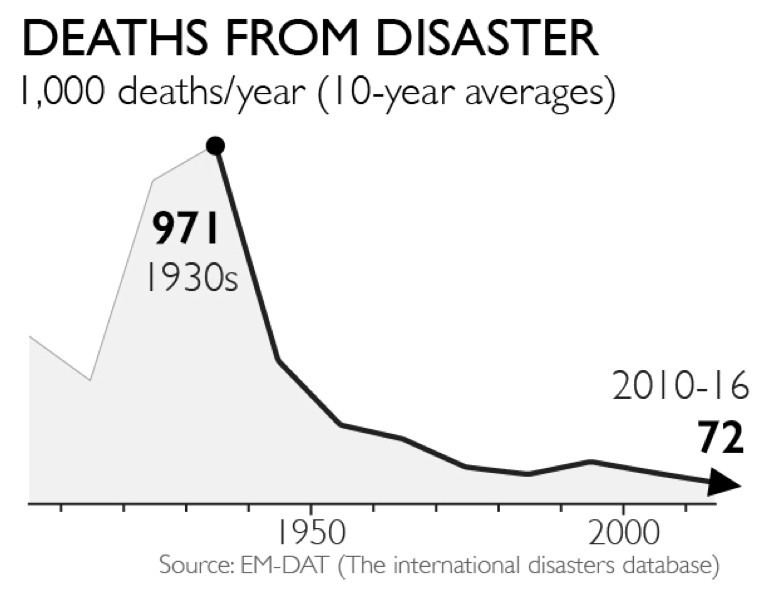
Super fact 35: Natural disasters kill a lot less people now compared to 100 years ago. That is despite a larger population and despite the fact that climate change has increased the frequency and intensity of many types of natural disasters.
The explanation for this is that we have become much better at warning people, preventing deaths and rescue people.
To visit the page for Natural Disasters, Kill Less People Now Than 100 Years Ago click here
This graph from the Gap Minder article shows the annual deaths from natural disasters in ten-year intervals starting with 1930. The trend is down.
EV Cars Indeed Emit Less Carbon Pollution
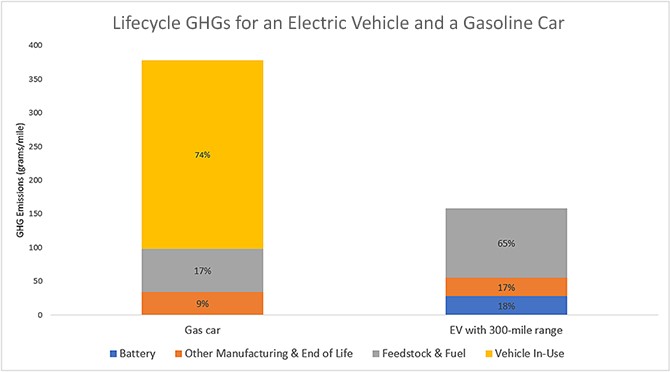
Super fact 29: EV Cars emit less pollution than Internal Combustion Engine, even considering manufacturing, disposal and EV Cars being charged by dirty grids.
To visit the page for EV Cars Indeed Emit Less Carbon Pollution click here
Lifecycle greenhouse gas emissions comparison of average gasoline car and 300-mile range EV.
Smallpox Killed 300 million People in the Last Century Before Eradication
Superfact 24: Smallpox killed 300 million people in the 20th century. However, there have been no naturally occurring cases of smallpox since 1977, and the world was declared free of smallpox on May 8, 1980, by the 33rd World Health Assembly.
To visit the page for Smallpox Killed 300 million People in the Last Century Before Eradication click here
This world map shows when smallpox was eradicated from different countries. The source is Our World in Data , originally Fenner et al. at CDC.
We are living in relatively peaceful times
Superfact 9 : Despite all the wars going on, the world was filled with a lot more war and violence in the past. Despite the grim news reports we are living in relatively peaceful times.
To visit the page for We are living in relatively peaceful times click here
Death rate from wars since 1946. The uptick in 2022 is largely due to the Ethiopian Tigray war with 162,000–600,000 killed and the invasion of Ukraine, which US and BBC estimates at more than 200,000 deaths (but estimates from most other sources are less).
US Violent Crime Nearly Cut in Half Since 1990
Superfact 8 : Despite all the news reports about rampant crime, the US violent crime rate has fallen to half of what it was in the early 1990’s.
To visit the page for US Violent Crime Nearly Cut in Half Since 1990 click here
The four graphs show that both violent crime and property crime have declined since 1990. Visit the post to see the Pew Research article it is taken from.
Poverty and child mortality has been sharply reduced worldwide
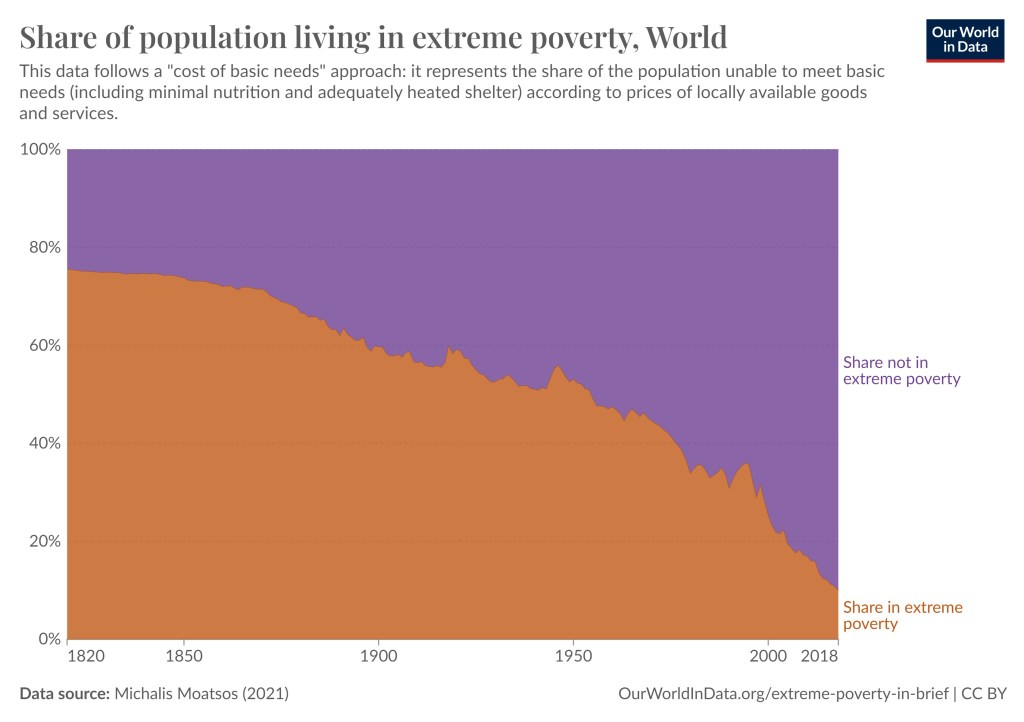
Superfact 7 : Extreme poverty as well as child mortality has been sharply reduced the world over. The countries that are the worst-off today are still better off than the countries that were doing the best at the beginning of the 19th century. Over the last 50 years extreme poverty and child mortality has continued to decline sharply.
To visit the page for Poverty and child mortality has been sharply reduced worldwide click here
This graph from Our World In Data shows a steep decline in extreme poverty over time. Click on the picture to visit the original article.
If you have not subscribed to my super fact blog you are certainly welcome to.
I’ve been nominated for the Sunshine Blogger Award by Laura, from Black Moon Lilith Thank you for the nomination, Laura! It was a nice birthday gift.
Sunshine Blogger Award
Check out her blog for lots of great posts which feature poetry, short stories, very cool pictures, and other interesting things!
Without further ado, here are the rules which I’ve copied from Lauras’s blog:
Display the award’s official logo somewhere on your blog.
Thank the person who nominated you.
Provide a link to your nominator’s blog.
Answer your nominators’ questions.
Nominate up to 11 bloggers.
Ask your nominees 11 questions.
Notify your nominees by commenting on at least one of their blog posts.
Eleven Questions for Me
Below are my answers to Lauras’s eleven questions. I have not yet learned how to create the kind of pictures that Laura creates. That’s for another time.
Question 1 : What’s your favorite brand of coffee? If you don’t drink coffee, what do you like to drink? (Tea, etc)
I drink Green Mountain Nantucked the most, but I really like Gevalia the best.
Question 2 : What’s the most creative lie you’ve ever told?
I never lie. Well, that’s my most creative lie.
Question 3 : What’s the last dream you had (that you feel comfortable sharing)? If you’re in the “don’t dream” camp, what would you like to dream about?
I dream about traveling a lot. My last very memorable dream was about traveling on a big boat. On the boat I met several people from my youth in Sweden. Then I needed to go to the bathroom, but I could not find it. Every boat should have well-advertised good bathrooms but the boat in my dream didn’t.
Question 4 : What was the most favorite job you’ve held in your lifetime?
I think that was when I was a robotics research assistant at Sandia National Laboratory the summer of 1993. I was new to the United States, I had just received a green card, and I was working at a well-regarded national laboratory located inside a major US Airforce base. Everything was secret. The lab next to us received a Soviet satellite carrying a small nuclear power reactor that summer. The US did not know how to build a mini nuclear reactor at the time so reverse engineering this reactor was a big deal. I would like to point out that I was not part of that. I only heard about it. Another fun job was when I designed the portion of the electronics for a Swedish fighter jet called JAS Gripen.
Mechanized industry robot and robotic arms for assembly in factory production. Shutterstock Asset id: 2459375613 by Summit Art Creations.
Question 5 : What motivated you to start blogging?
I wanted to start a blog to advertise my upcoming dog book “The Life and Times of Le Bronco von der Löwenhöhle”. I asked my friend Alex Diaz-Granados for advice, and he helped me get started on WordPress.com. Later on, I continued blogging mostly because it became a hobby and I started a second blog superfactful, which has nothing to do with my book. The goal of this blog is to create a long list of facts that are important, not trivia, and that are known to be true yet are either disputed by large segments of the public or highly surprising or misunderstood by many.
This is the front cover of the book “The Life and Times of Le Bronco von der Löwenhöhle”. Click here or on the image to go to the United States Amazon location for the paperback version of the book.
Question 6 : What are you grateful for?
I am grateful for my wife and kids, my whole family, my dog(s) current and past, and what they gave me. I am grateful that I am alive and that I can experience our beautiful nature, the night sky, and everything there is to know and understand.
Question 7 : What’s something nice you did for yourself recently?
We went on a great ski trip to Breckenridge, Colorado. I skied the Imperial Bowl, which is served by the highest ski lift in the western hemisphere. The Imperial Bowl is big and wide and mostly empty and there was a lot of powder snow. We had a very good time together as a family.
Question 8 : If you could partake in any new endeavor, experience, or hobby, regardless of time constraints or money, what would it be?
I would like to get a degree in Astro Physics as a retirement project, but not for a future career. That would be a huge time commitment and probably expensive and maybe weird too, considering my goal is not a career in the field. However, I like to know things about how the world works and I like to know things about the Universe.
Question 9 : What do you like to do to keep your brain active?
When I was still working as a software engineer / robotics engineer I kept my brain active because of my work. Since I took my early retirement, I need to keep my brain busy in other ways. I read a lot of books, I wrote a book, I blog, I am learning French, I am a volunteer for an organization called Citizens Climate Lobby, which focuses a lot on specific legislation that I need to study, I brew beer, and well OK drinking beer may not be keeping my brain active but it is a hobby as well.
Question 10 : What do you like to do to keep your body active?
I jog and I like to swim in my in-law’s pool. My wife and I used to go bicycling a lot. We have not done that for a while, but I think we’ll soon pick that back up again.
Question 11 : What is your favorite thing about spending time out in nature?
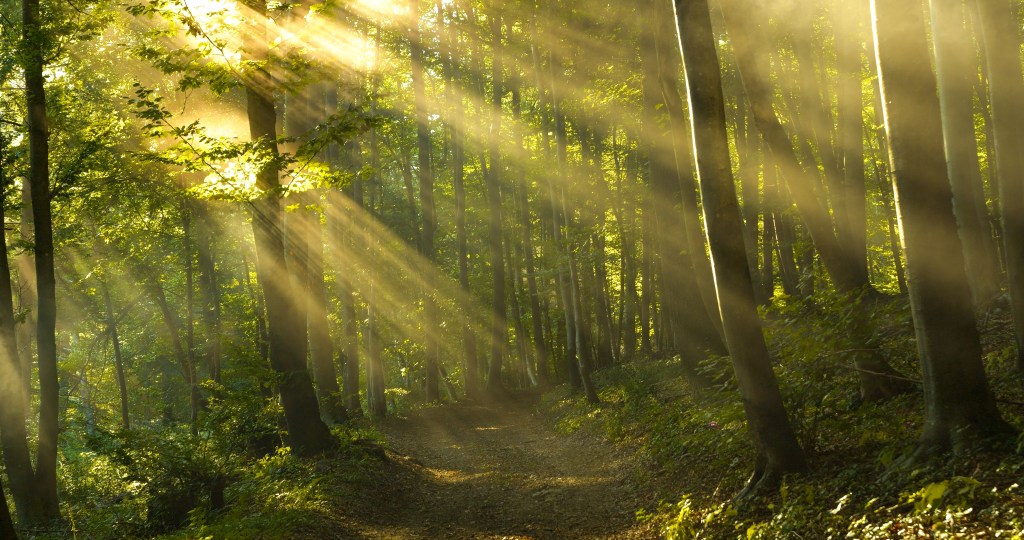
I love a lot of things about nature. I cannot pick one specific thing. I love the forest. The quiet, the solitude, the tranquility, the berries, the birds singing, the beautiful trees and the vegetation, the smell, the hills, the scenery, and seeing some animals too. I just don’t like to encounter a bear.
Forest in the mist. Shutterstock Asset id: 2525988579 by Flystock
Here are my questions for my nominees:
Question 1 : What’s your favorite movie(s)?
Question 2 : What is something you’ve done or experienced that is unusual?
Question 3 : What’s one thing you’ve always wanted to try but haven’t yet?
When I was a teenager, I read a few of Jean M. Auels novels about pre-historic humans. I loved them and I saw the movie. Now I am reading Jacqui Murray’s novels about pre-historic humans. Jacqui Murray’s books are even more fascinating and very realistic and well researched. The latest Jacqui Murray book I’ve read is Endangered Species, the first book in her new series Savage Lands. This book is set to take place 75,000 years ago among Neanderthals and ancient Homo sapiens. I love all her books, but especially Endangered Species. You can read my Amazon review for Endangered Species by clicking here. I was also happy that she included canines as heroes in the book (Ump, White Streak, etc.) I am a dog lover after all.
Today I’m very pleased to host Jacqui Murray to help launch her new series.
Surprise! Neanderthals Never Lived in Africa
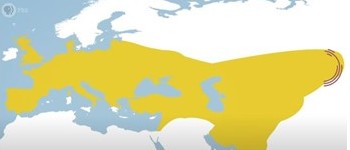
Neanderthals were widespread despite numbering only about 100,000 at a time. Their remains have been found in many areas of Eurasia, including:
Krapina, Croatia
Weasel Cave, Russia
La Ferassie, France
Denisova Cave in the Altai Mountains, Russia
Sha Cave, Iraq
Kebara Cave, Israel
La Chapelle aux Saintes. France
Feldhofer Cave, Germany, the Neander Valley of Germany
Ortvale Klde, Georgia
Here’s a good map of their spread:
Yellow indicates where the Neanderthals lived.
Though their tribes covered a vast swath of geography, where you won’t find them is Africa. Yes, you will find their genetics, but this likely comes from African natives mating with Neanderthals in Eurasia and returning to Africa.
Summary
Savage Land is the third prehistoric man trilogy in the series, Man. Vs. Nature. Written in the spirit of Jean Auel, Savage Land explores how two bands of humans survived one of the worst natural disasters in Earth’s history, when volcanic eruptions darkened the sky, massive tsunamis crossed the ocean in crushing waves, and raging fires burned the land. Each tribe starring in the story considered themselves apex predators. Neither was. That crown belonged to Nature and she was intent on washing the blight of man from her face.
Endangered Species
In Endangered Species, Book One of the trilogy, Yu’ung’s Neanderthal tribe must join with Fierce’s Tall Ones—a Homo sapiens tribe–on a cross-continent journey that starts in the Siberian Mountains. The goal: a new homeland far from the devastation caused by the worst volcanic eruption ever experienced by Man. How they collaborate despite their instinctive distrust could end the journey before it starts or forge new relationships that will serve both well in the future.
Badlands
In Badlands, Book Two, the tribes must split up, each independently crossing what Nature has turned into a wasteland. They struggle against starvation, thirst, and desperate enemies more feral than human. If they quit or worse, lose, they will never reunite with their groups or escape the most deadly natural disaster ever faced by our kind.
Join me in this three-book fictional exploration of Neanderthals. Be ready for a world nothing like what you thought it would be, filled with clever minds, brilliant acts, and innovative solutions to potentially life-ending problems, all based on real events. At the end of this trilogy, you’ll be proud to call Neanderthals family.
Trailer for Endangered Species
Book Information Endangered Species
Paperback – Publisher : Structured Learning LLC (January 2, 2025), ISBN-10 : 1942101643, ISBN-13 : 978-1942101642, 301 pages, Item Weight : 1.15 pounds, Dimensions : 6 x 0.68 x 9 inches, it currently cost $ 15.99 on US Amazon. Click here to order it from Amazon.com.
Kindle – Publisher : Structured Learning LLC (January 2, 2025), ASIN : B0DJ9Y7PQ8, 323 pages, it costs $4.99 on US Amazon but is free with Kindle Unlimited. Click here to order it from Amazon.com.
Audio – ASIN : B0CY6YQL83, Narrator : Virtual Voice, Listening Length : 8 hours 1 minutes, it costs $1.99 on US Amazon. Click here to order it from Amazon.com.
Book Information Badlands
At the moment the only the Kindle version of Badlands is available for preorder. Again, the publisher is Structured Learning LLC and the release is scheduled for April 15, 2025. It cost $4.99 on US Amazon. Click here to pre-order it from Amazon.com.
Excerpt: Chapter 1 of Endangered Species
75,000 years ago,
What we call Germany today
Jun was lost. Again. He gripped his thick-shafted spear in one hand, throwing stones in the other, and brushed aside the prickle of fear that flooded his body.
It wasn’t being alone that worried him. This was his first time hunting with the clan. He’d wanted to do well.
Initially, Jun had kept pace with the hunters, his strides long and easy, eyes firmly locked on the back of the male in front of him, but—as too often happened—he became distracted by a bird’s call and wandered off to find it, maybe talk to it. Someone shouted his name, far away and so muted, he barely heard it. He didn’t respond, of course. Upright voices would frighten the bird if it hadn’t already fled. He hunkered into the underbrush, reduced his breathing, and squatted there long … longer … but the bird fell silent.
I’ll look for it next time I’m out here.
He stood. Feet spread, ears perked, he twisted around, and to his horror, didn’t recognize where he was. Nor did he hear the sounds of his fellow hunters moving along Deer’s trail.
I wandered farther than I intended, and hurried away, through the leaves and dirt, hoping to find Deer’s trace or his clan’s prints, but found neither so he shouted. The sound echoed harshly through the trees.
No response.
They can’t be far. By now, they must know I’m not with them.
He hugged his arms around his chest, suddenly cold, and tilted his head up. Sun had moved, a lot. Instead of worrying him, it comforted him.
I’ll stay here until they return.
He crouched, picked at the forest’s hearty overgrowth, ate a few worms, and waited. No one came. He called several times, but all he heard were insects, a snake slithering, and squirrels chattering.
I’ll go where Deer is.
He knew where the herd headed because he’d followed it several times to where it ate the fresh young grasses, safe, it thought, from prying eyes. He trotted down what he hoped would end up their trail, searching for trace, listening for the rustle of hide-covered bodies passing through dense brush carrying carcasses. Finally, later than expected, he found Deer’s path, but they didn’t stop in their usual place. They must have known they were being stalked—the hunters were noisy—and trotted into a scree pile as though knowing that would conceal prints, which it did. Jun could either keep wandering until he re-located the clan’s path or make his way back to the camp.
He checked Sun, but it was now hidden by clouds.
He crouched, comfortable in his waiting. No one would be surprised. He often returned late with tales of an excursion rather than armloads of meat to feed the clan. The group would have ejected him, forcing him to make his way alone, but his mother was the clan healer and wouldn’t allow it. She was training him to take over when her stiff joints and failing eyesight meant she could no longer fulfill her duties. He had no interest in illnesses, but understood he must fulfill some duty or lose the tribe’s protection. As a result, he assisted her if he couldn’t avoid it and learned enough about herbs and mulches and poultices to be tolerated.
None of which helped him now.
I can’t wait, and scrambled up a hillock, found a landmark he knew, and headed toward it along a debris-laden forest floor, head up, eyes shut to concentrate on a panoply of delightful odors. He heard the hiss but as background noise to his meandering daydreams. By the time it stiffened his hackles and his eyes popped open, it was too late.
Snake!
Jun stabbed with his spear, to frighten not kill, but missed. Snake didn’t. A blur of movement and pain seared through Jun’s body. He collapsed with a thud and Snake slithered away. Jun attempted to stand and crumpled.
I’ll crawl along the path. The hunters will see me on their way back. Sweat broke out across his forehead. As will predators.
He scuttled into the dirt-clotted root ball of a towering tree, sharing the cozy space with worms, slugs, and spiders.
I’ll call out if I hear someone.
He tamped down the pain and dug through his shoulder sack. No surprise, he forgot to restock his treatments. He tried to blink the dust from his eyes and then rubbed, using the cleanest part of a grubby finger. He mulled over what to do as his ankle swelled bigger than his calf and heat flushed through his body. Everything around him spun and his eyes drooped. The more he strained to think, the more his head throbbed. He tucked his legs against his chest and imagined Snake’s poison infecting his insides.
How do I stop it before it stops me?
He solved it by passing out.
The scrape of a foot awoke Jun. Every part of his body hurt, but he managed to crack one eye. An Upright female not his kind strode toward him, a spear in one hand and a blistering frown on her face. He should say something, but his mouth was too dry.
She acts like she knows me.
He tried to rise, but no part of his body cooperated so he stared at her, worried and somewhat disturbed by the dark fury she directed at him.
Why is she so angry? I’ve done nothing to her.
Seeing his swollen red ankle did nothing to soften her attitude. Disgust washed over her in waves and her fists clenched a rough-hewn lance so tightly, the whites of her knuckles gleamed.
There is something familiar about her….
She had the small skull, long limbs, and narrow torso of a Primitive, lacking the musculature common to Jun’s kind. And it hit him.
“Xhosa?”
She growled in response, a sound so like hatred, he would have pulled back if the tree trunk didn’t stop him.
The female Xhosa visited his dreams often and they got along well. They discussed topics no one shared his interest in—where the herds went during their migrations, why Spider’s thin silken strands were so strong, why Sun left if Moon arrived. Did one orb fear the other or had they arranged to share the sky in this way? These types of curious queries annoyed everyone in his tribe, but excited Xhosa.
“Why are you here? I only see you in dreams.” He squiggled, attempted to stand, and collapsed. “Am I dreaming?”
“No, Shanadar. You have forced me to come in person. Night is approaching. It is not safe to be out here alone. Return to your homebase. I have plans for you and being eaten by Cat isn’t one of them.”
Her lips didn’t move nor were her words the clan’s, but he understood what she said. He wanted to ask why she cared if the night stalkers ate him, but what he said was something else entirely.
“Snake poisoned me.”
Shock flashed through her eyes and she scowled. “I see. You won’t be leaving on schedule.”
His head spun, started to ask what schedule, but stopped himself. Whatever the answer no longer mattered.
“Xhosa. Snake killed me. Well, there are treatments for Snake’s venom, but I didn’t bring them. Mother has them, but I can’t get to her fast enough. And the hunters—I don’t know what happened to them. They should have come by now….”
His voice trailed off. Talking exhausted him. Still, he owed her one more explanation. “Whatever your plan, it can no longer include me.”
She dismissed him with a flip of her fingers. “You’re not going to die, Shanadar. Come. My kith can take care of you.”
“Shanadar,” he mumbled. “She keeps calling me Shanadar.” She didn’t explain why and he didn’t ask. Or mind.
But he did ask about kith as Xhosa yanked him to his feet—foot, the injured one dangling uselessly above the ground—encircled her arm around his waist and draped his around her shoulder before replying.
“You call your group a clan. Ours is kith. The Tall Ones are a band, the Canis Pack.”
Tall Ones? He tried to make sense of her answer, but the words got lost in his muddy thoughts.
I’ll ask later.
They slid through the forest, well beyond his clan’s area and Deer’s favorite eating spots, past a tree tall enough to touch Sun. He’d never seen it before. Did it just grow? Soon, they reached a gathering of Primitives the size of Jun’s clan crouched by an overhang. All had low foreheads, prominent brow ridges, and body shapes like a shorter version of the tall slender strangers who occasionally passed through the clan’s territory—
That’s who she called Tall Ones!
The kith members wore long wraps or capes like Xhosa’s, unsewn, as though they simply cut a hole in a pelt big enough for their head to push through. No capes or wraps, and foot coverings were fur or bark strapped to feet.
But the dark, deep eyes, fixed on the new arrival, shone with intelligence. They blinked a greeting before resuming their work.
“They expected us?”
“No. They have adjusted to strangers trailing in here with me.”
Jun’s eyes popped open. “Other Uprights?”
She chuckled, the first smile he’d seen from her since she showed up. “Usually pawed and tailed.”
He had no idea what to ask about that and didn’t bother trying. Ignoring the growing ache in his leg took all his energy. She has much to explain, but it will wait until I recover.
Xhosa pushed him gently toward a boulder. “Crouch there.”
He collapsed. His good leg was numb. Even if she hadn’t told him to rest, he couldn’t have gone farther. The relief to his pounding ankle was overwhelming. He stilled his entire body, his breathing shallow as another Primitive approached, holding supplies eerily similar to those Jun’s mother carried. Then, before he could blink, she cut across Snake’s puncture and squeezed. He started to scream, but stopped because he felt nothing. The poison dried up and Xhosa scrubbed the puncture. Once she deemed it clean, she applied moss to suck out new impurities, as his mother would. All Xhosa’s ministrations were like his mother’s except Xhosa’s didn’t hurt. Mother’s always did.
Xhosa rotated back on her heels with a grunt of either satisfaction or hopelessness. Jun was too hot, tired, and sick to care.
She stood. “I will deposit you where I found you. You will awake groggy, feeling unwell, but you will be fine.”
When I awake? What does she mean?
“I am—”
But Xhosa wasn’t listening.
Author Bio
Jacqui Murray is the author of the popular prehistoric fiction saga, Man vs. Nature which explores seminal events in man’s evolution one trilogy at a time. She is also author of the Rowe-Delamagente thrillers and Building a Midshipman , the story of her daughter’s journey from high school to United States Naval Academy. Her non-fiction includes 100+ books on tech into education, reviews as an Amazon Vine Voice and a freelance journalist on tech ed topics.
Author’s Social Media Contacts
Click on the links below to visit the author’s media
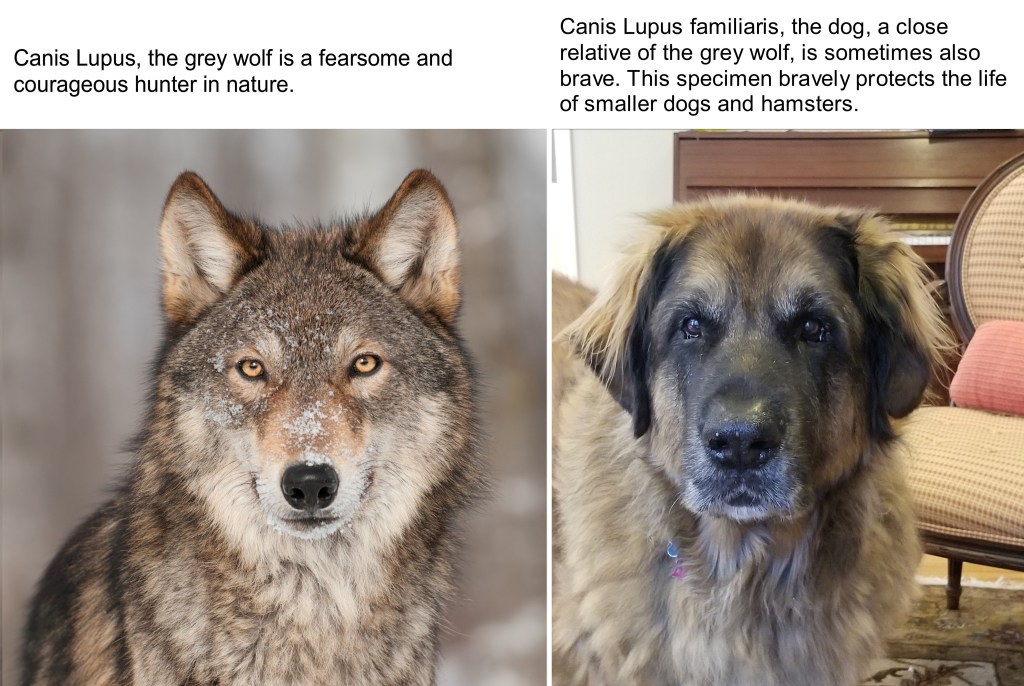
Canis Lupus Familiaris, the dog, is a close relative of the grey wolf. Dogs and wolves share a high percentage of DNA and are in fact the same species. They can mate and produce offspring referred to as wolf dogs. However, keeping wolves or wolf dogs as pets is not recommended. Our late Leonberger dog Bronco was in fact accused of being a wolf by a little boy and he was accused of being a bear by a neighbor. The boy was very close to being right.
Leonbergers are big dogs, and little boys may think they are wolves, but Leonbergers are very friendly.Mini Australian Shepherds like our dog Rollo may look like wolves but are rarely mistaken for wolves. A quacking duck can be very scary to little mini–Australian Shepherds.
Are Big Dogs Wolves ?
The short stories below are from my book “The Life and Times of Le Bronco von der Löwenhöhle, Stories and Tips from Thirteen Years with a Leonberger”. A Leonberger is a large type of dog, a so-called giant breed, closely related to Saint Bernards, and allegedly also Great Pyrenees dogs Newfoundland dogs. Bronco weighed 140 pounds when he was not overweight.
Bronco was a big dog. Once when I was walking Bronco around the neighborhood, a neighbor who always let his black Labs run loose saw us. He shouted to his wife, “Honey, get the dogs inside! Someone is walking a bear out here.” I guess letting your large dogs run loose isn’t a problem until someone walks a dog much bigger than yours.
On a number of occasions, we’ve met people who said to us that Bronco is the biggest dog they’ve ever seen. However, there are bigger dogs. We’ve met bigger English bullmastiffs and bigger Great Danes.
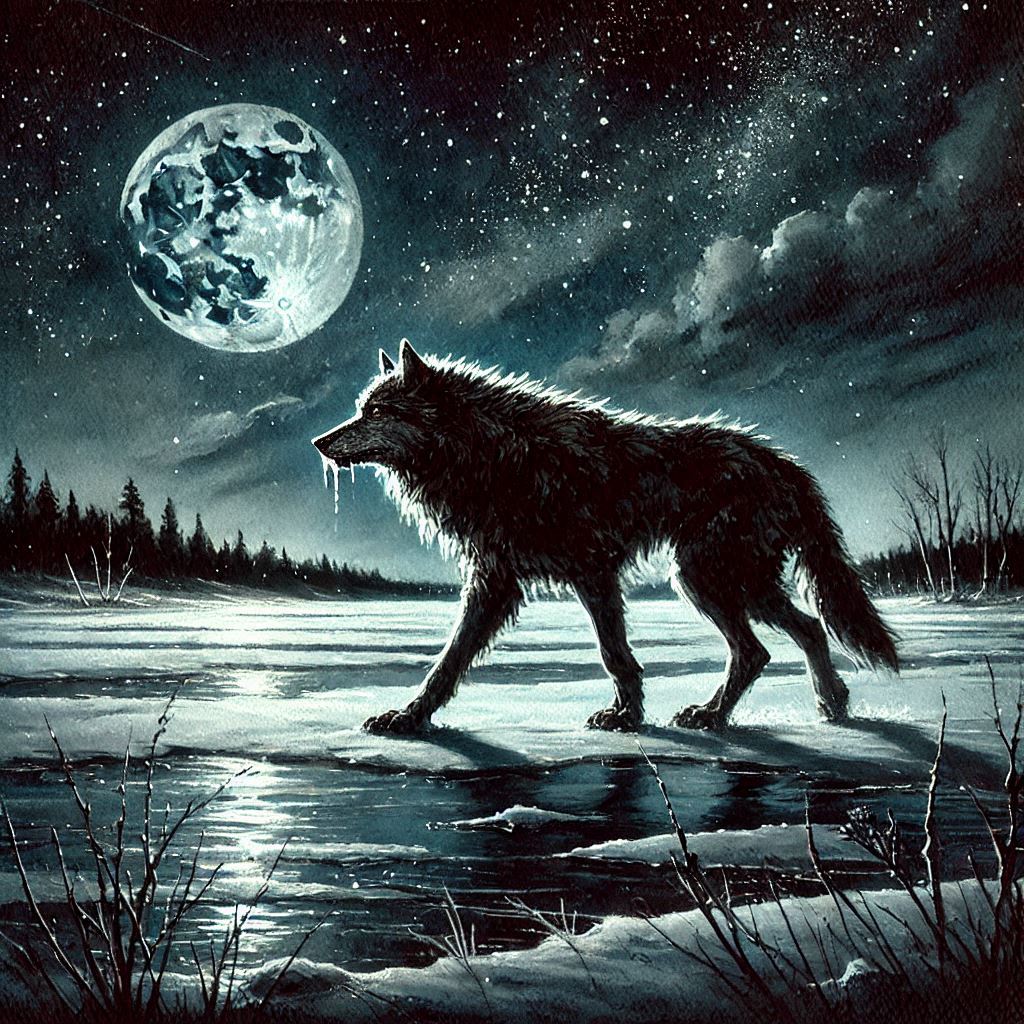
One day I took Bronco into PetSmart, and after I did my shopping, he and I were standing in the checkout line. Bronco was very quiet and well-behaved, but a boy ahead of us in line became quite alarmed when he saw us. He shouted, “Look! A wolf, a wolf, a wolf!” He pointed his finger at Bronco. His mom tried to calm the boy, but he would not stop shouting. He didn’t seem to be afraid of Bronco, but he was really concerned that there was a big wolf in the pet store. I tried to explain to the boy that Bronco was not a wolf. He was just a big dog.
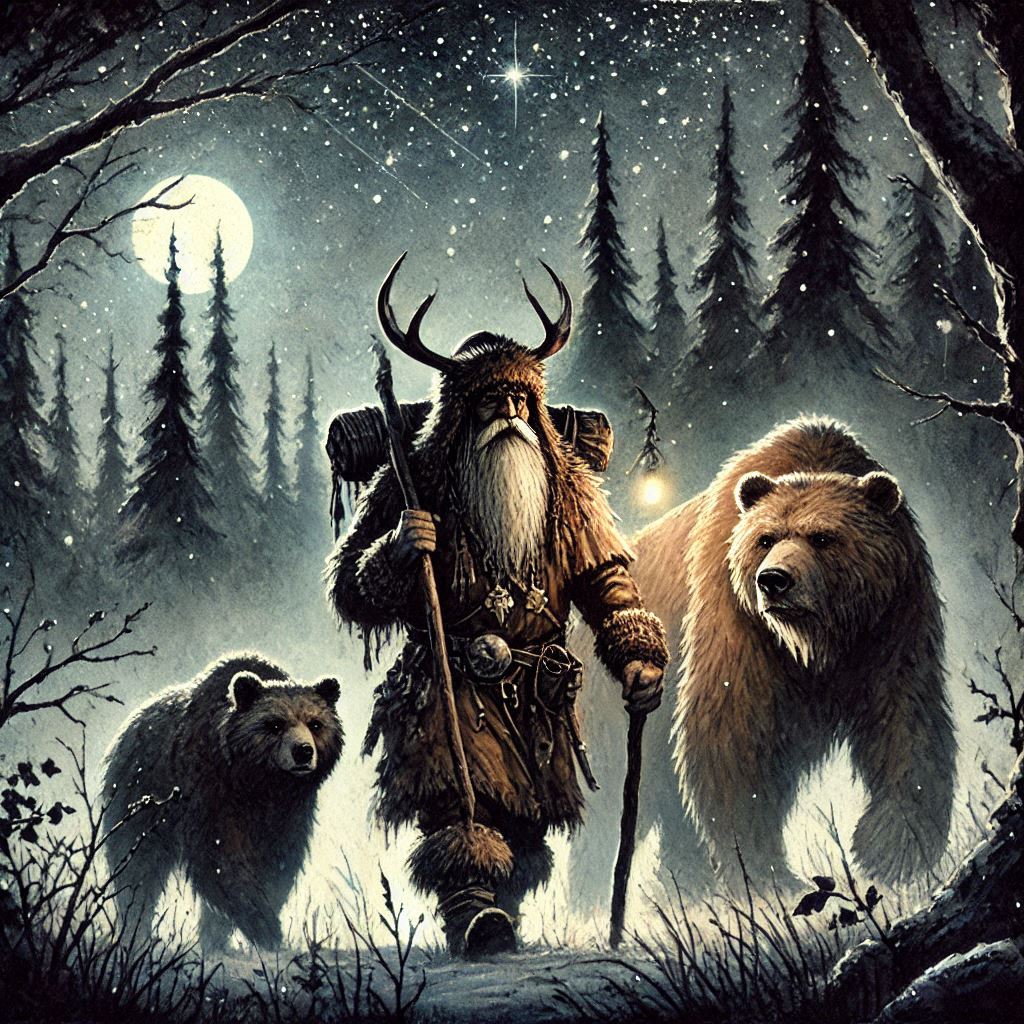
Since our neighbor called Bronco a bear, I am including a second image from Kevin’s post that I think illustrates what our neighbor saw as I walked passed his house. Well, I had only one Leonberger/Bear and I don’t have antlers or a beard, and our neighborhood does not have that many trees. Other than that, it is spot on.
Finally, a beautiful Nordic Lullaby sung by Jonna Jinton. Jonna Jinton is a Swedish singer who lives nearby Örnsköldsvik in northern Sweden, which is the town where I am originally from (now I live in Dallas, Texas). So, if you watch the video, the nature you see is from my old neighborhood.
The Lullaby is about a wolf who is hungry and cold, but he can’t have the singer’s baby for dinner. But she could offer a pig tail. What some may find remarkable about the Lullaby is that the mother being threatened by the wolf shows the wolf empathy. The existence of the stomach creates conflict between us creatures. To see the English translation turn on subtitles.
Some of you know that I have a second blog. The goal of this blog is to create a long list of facts that are important, not trivia, and that are known to be true yet are either disputed by large segments of the public or highly surprising or misunderstood by many. I’ve created a list of super facts, which I keep updating as I add new super facts. So far, I’ve been posting and updating this list on every super fact post. As the number of super facts increases, this becomes a lot of work and in addition it is not good for SEO to repeat a large number of the same links over and over.
Therefore, I’ve created a new page featuring the super fact list as well as a new menu item “super facts” that opens this page. Below every super fact post I am adding the text “To see the Super Facts Click the Super-Facts menu above”. I am curious whether this menu and the page are easy to find. Please visit the superfactful blog and see if you can find the “super facts” menu item and the page. I have pasted the current content of the page below.
Smashing our old beliefs with new surprising facts, super facts. Expand your mind and teach me some unexpected truths. Click on the image to visit the super facts blog. Shutterstock ID: 1685660680 by MattL_Images.
(1) We Know That the Earth is Billions of Years Old – click to visit
Above this post there are Menus “About Me”, “Home”, “History”, “All Posts”, “The Book”, “Contact”. Today I updated the content of the menu called “All Posts”. This page lists all my blog posts that I’ve ever done. I added headers to the nine categories as well as a banner style image to every category. Below I am illustrating the first category “The Adventures of Bronco and his Dog Friends”. Please check out the new page – click here. What do you think?
I would like to highlight today’s Superfactful post called “Global Warming is Happening and is Caused by us”. I think it is an interesting one that is quite educational. It features 10 conclusive pieces of evidence that it is happening and then 10 pieces of evidence that we (humans) is the cause.
Superfact 25: Global warming or if you call it Climate Change or Climate Disruption is happening, and it is happening very fast, and we also know that it is caused by us primarily as a result of our burning of fossil fuels. There is a long-standing scientific consensus on these two facts because the evidence is conclusive. Check the evidence below.
Click here to visit my superfactful post and if you haven’t subscribed yet feel free to do so.
The so-called hockey stick curve depicting the last 1,000 years. The blue line is the first hockey stick curve ever created (by Michael Mann). He used proxy measurements such as tree rings, green-dots 30-year average, red temperature measurements. Wikimedia commons <https://creativecommons.org/licenses/by-sa/4.0/deed.en>. This graph is taken from this page.























 Leonberger Life