
Please go and check it out. Thank you so much Sally.
Tag: Leonberger Health Foundation International
Caring for Aging Leonbergers

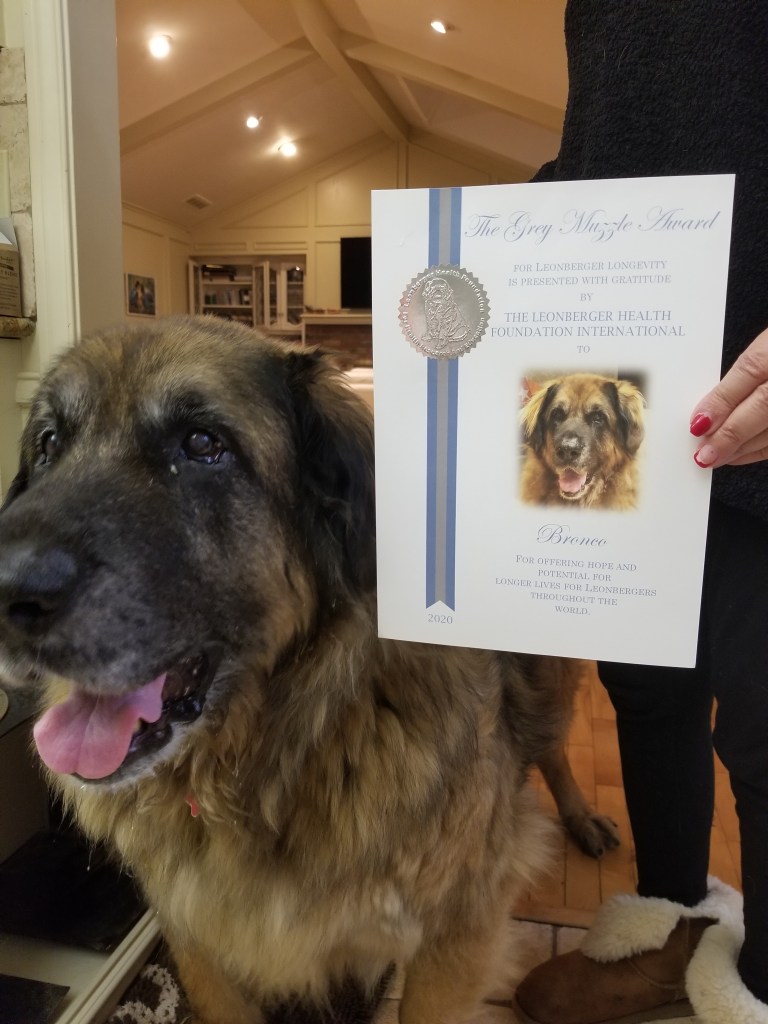
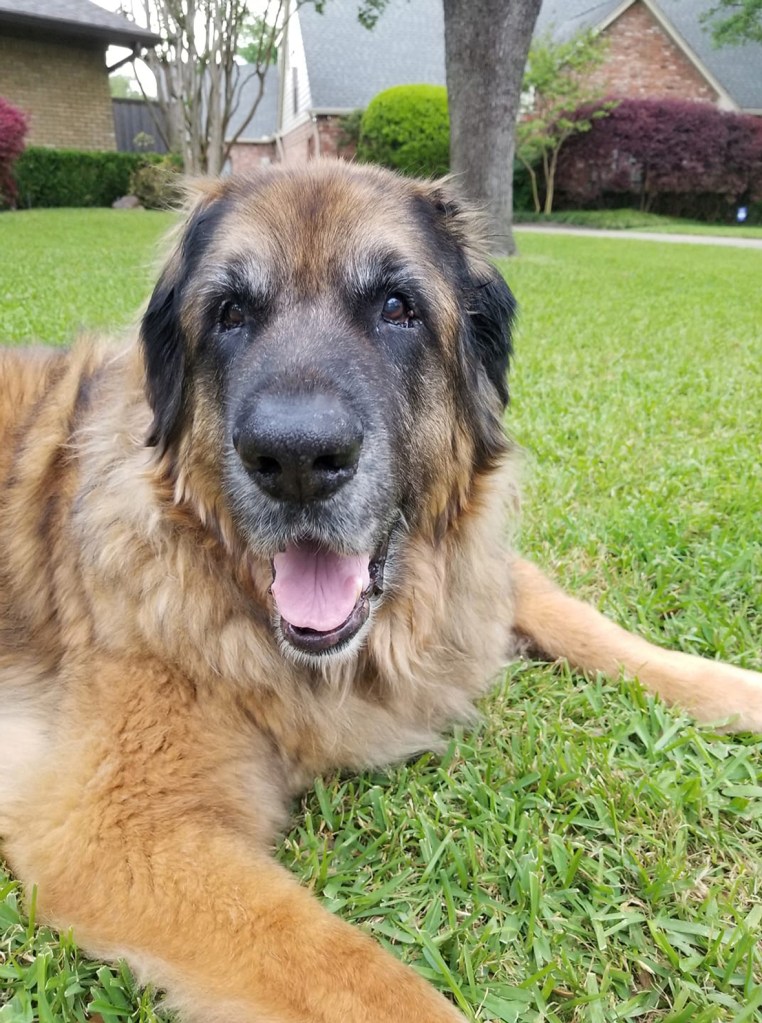
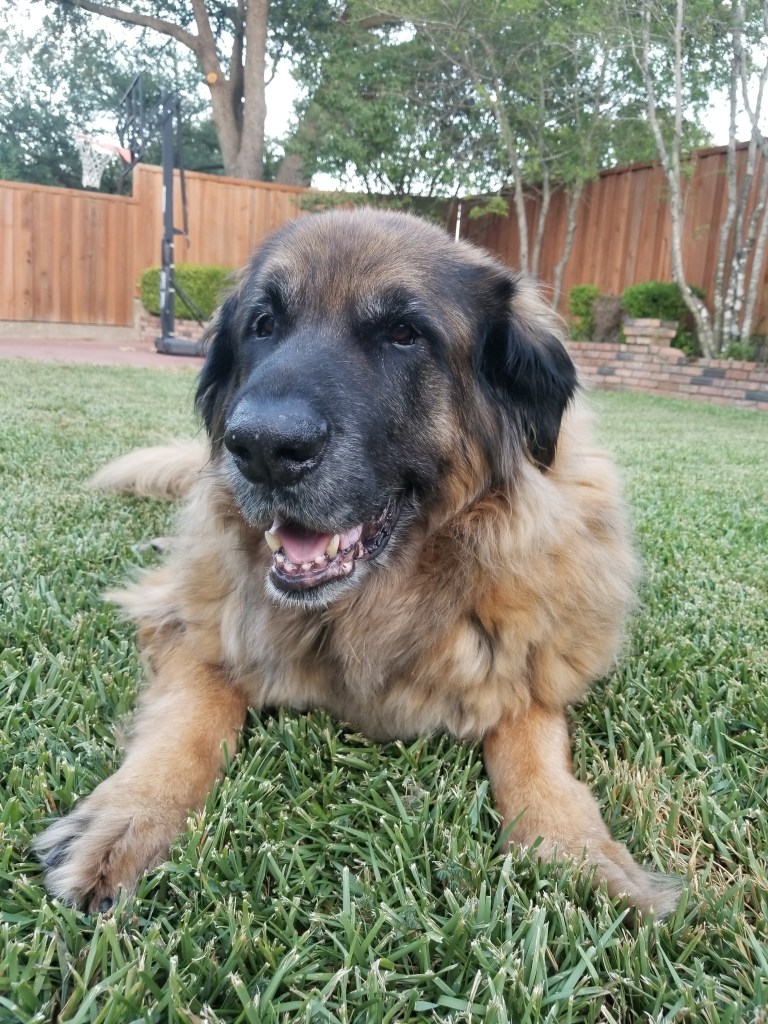
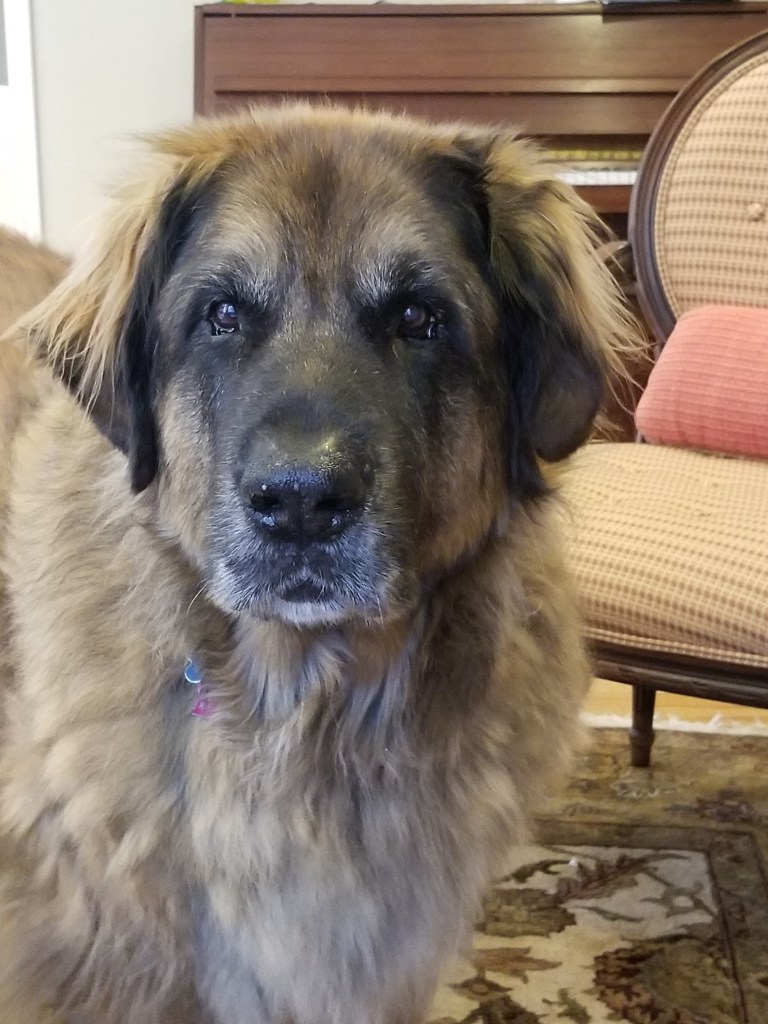
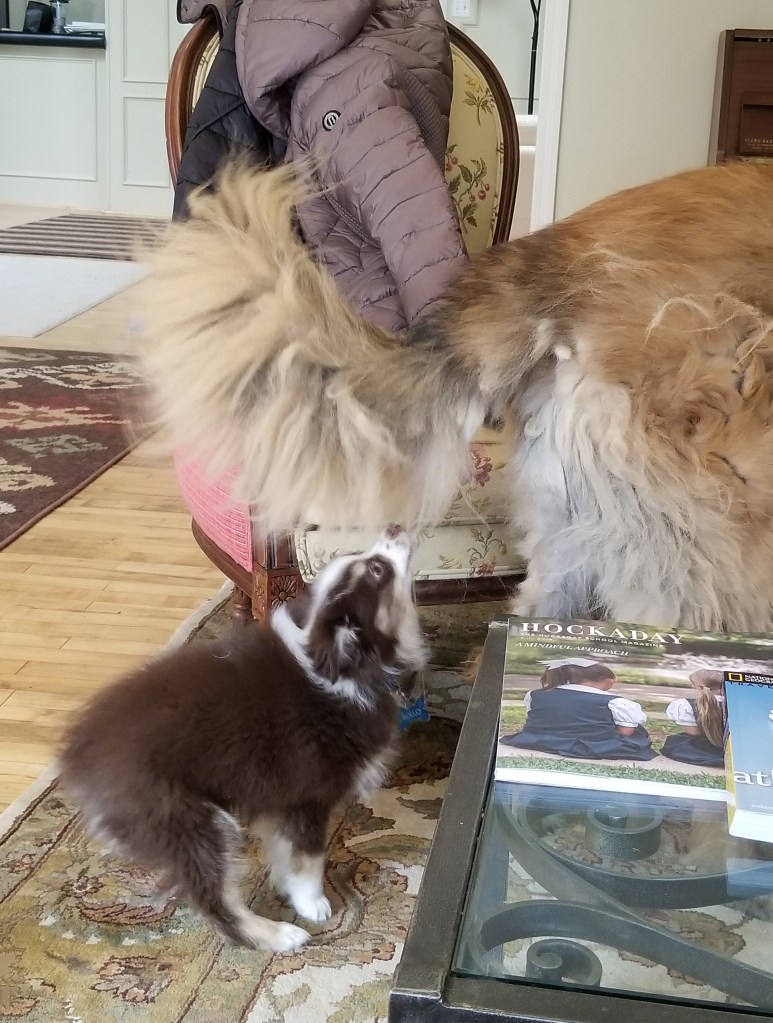
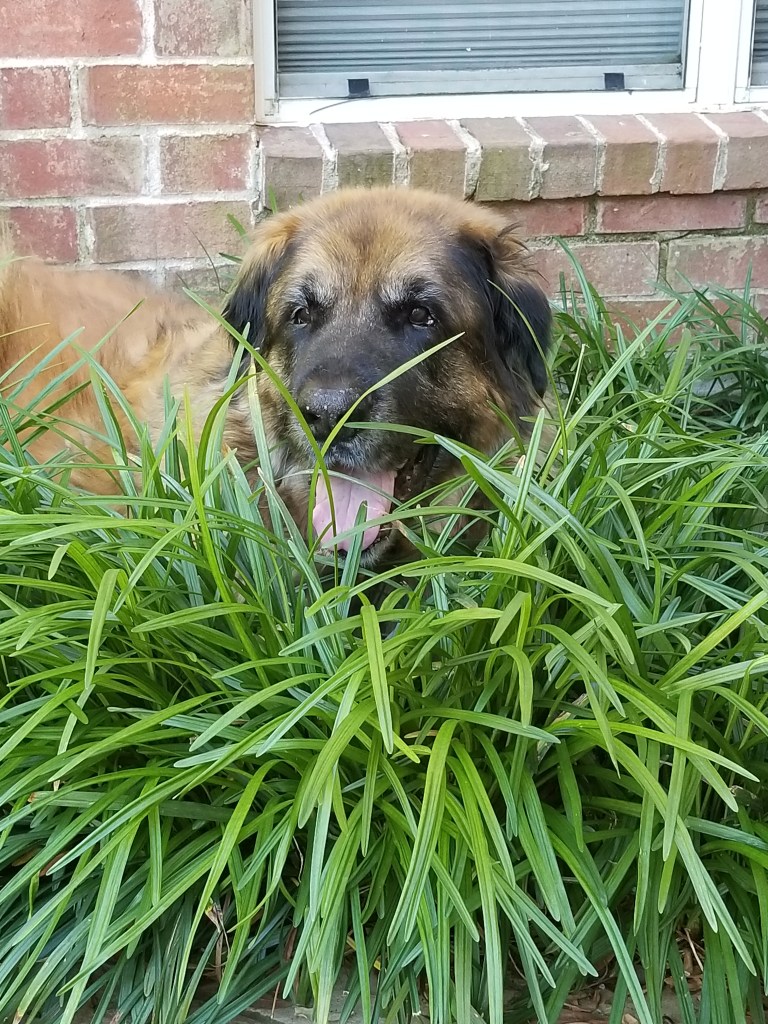
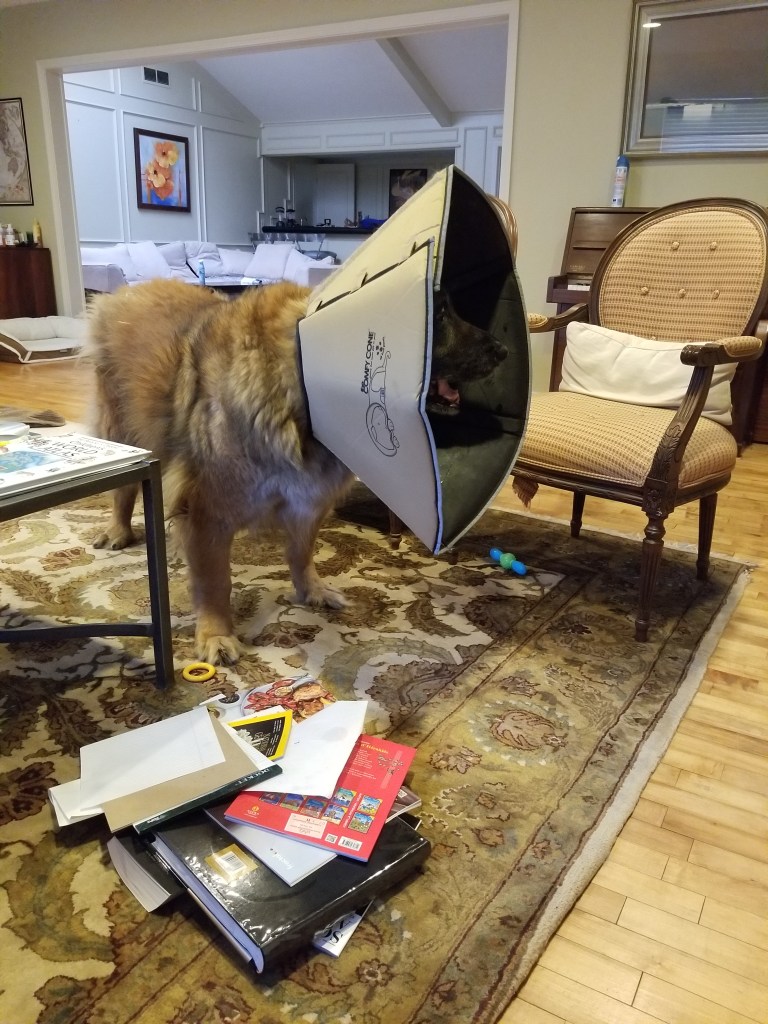
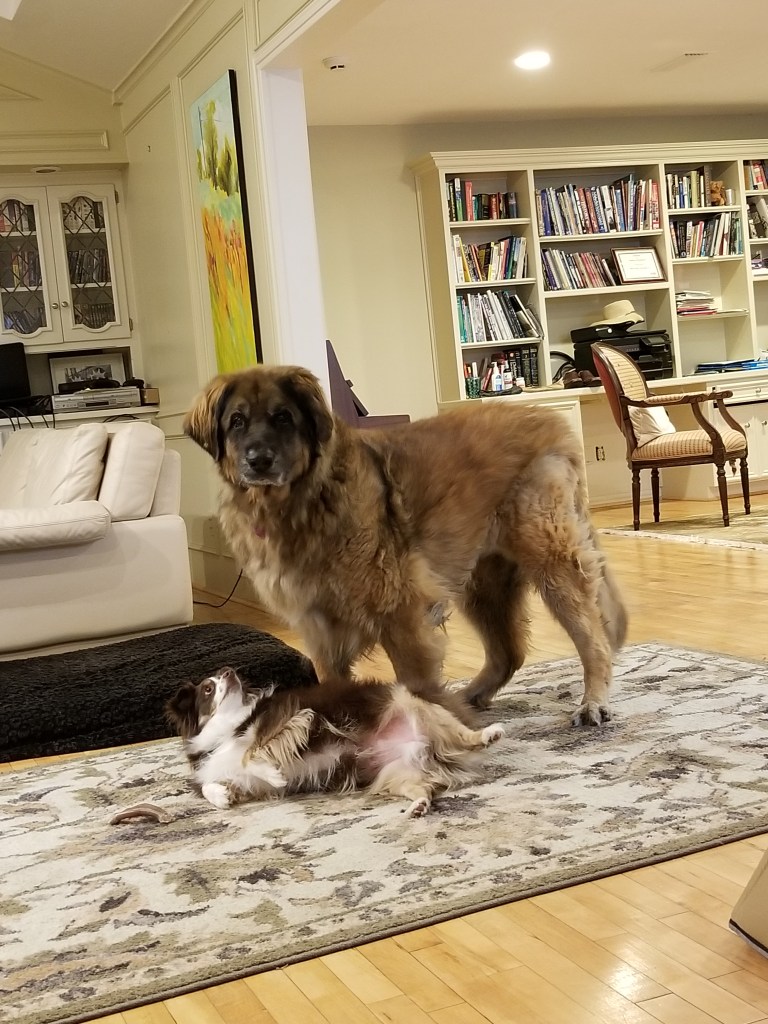
This is a guest post written by Ryan Goodchild. He emailed me asking me if he could publish this post regarding caring for aging Leonberger. I said yes. I am very grateful to Ryan for his contribution. I added the photos. See his post below.
Caring for Aging Leonbergers: Gentle Stewardship for a Noble Breed
Leonbergers are among the most majestic of dogs, gentle giants with deep eyes and a noble temperament. Yet as they age, their impressive size can make the journey into senior years more complex. Providing attentive, structured care can extend both their lifespan and their sense of ease.
Key Takeways
- Large breeds like Leonbergers face an earlier onset of joint and heart issues; early detection matters.
- Routine, low-impact exercise sustains mobility without strain.
- Dietary adjustments can prevent unnecessary weight gain and inflammation.
- Organized health tracking improves coordination with veterinarians.
- Emotional stability and routine help aging Leonbergers thrive.
Movement, Moderation, and Mindful Play
As Leonbergers age, mobility becomes one of the first visible signs of change. These dogs are stoic by nature, and they’ll often mask discomfort until it’s advanced. Structured daily activity, rather than long or sporadic walks, helps maintain joint lubrication and muscle tone. Before implementing the list below, remember: consistency outperforms intensity in senior dogs.
- Short, frequent walks instead of long treks
- Gentle swimming or hydrotherapy to maintain strength
- Orthopedic support beds to reduce pressure on hips
- Warm-ups and cool-downs before and after activity
- Avoid stairs and slippery floors
The Nutrition Shift: Balancing Strength and Weight
Proper nutrition is the most controllable lever for supporting your Leonberger’s aging body. Senior diets should favor lean protein, omega fatty acids, and joint-supportive ingredients like glucosamine and chondroitin. Maintaining a stable weight relieves stress on the joints and heart, critical in large breeds prone to orthopedic and cardiac issues.
Before introducing supplements or new foods, ask your vet for metabolic screening. Senior metabolism slows down, and caloric needs can drop by 20–30%.
Organized Health Tracking for Long-Term Comfort
Keeping your Leonberger’s medical and health information in one place transforms how you coordinate care, especially across multiple veterinarians or specialists. When you can easily review past test results, medication schedules, or dietary shifts, you reduce oversight risks and improve continuity of care. Centralized documentation also helps detect subtle changes over time, like gradual increases in kidney markers or weight fluctuations.
For this reason, an online PDF platform like this is worth a look.It offers practical tools to manage your pet’s documents in PDF form, and you can even convert, compress, edit, rotate, or reorder files. Keeping your records as PDFs ensures they’re universally accessible and easily shareable with any vet clinic.
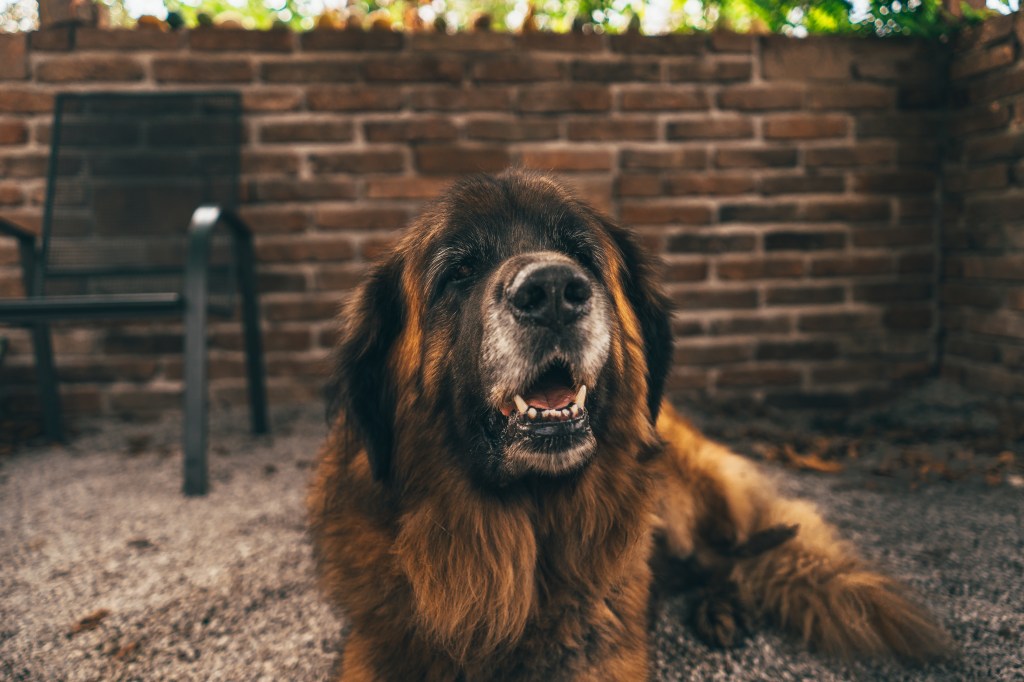
Create a Home Environment That Supports Aging
Leonbergers are emotional creatures, they notice routine disruptions and physical discomforts more than we realize. Making environmental adjustments will enhance both safety and serenity. Here’s a simple how-to checklist to start with:
➢ Schedule consistent feeding, exercise, and sleep times.
➢ Install nonslip rugs or mats along walking paths.
➢ Keep water bowls elevated to reduce neck strain.
➢ Adjust room temperatures; older dogs chill more easily.
➢Use gentle lighting to help those with fading vision.
➢ Offer mental enrichment through scent games or puzzle toys.

Early Detection Through Routine Screening
Veterinary visits every six months (instead of annually) are invaluable in the senior stage. They allow for the timely detection of thyroid imbalances, early arthritis, and cardiomyopathy, all common in Leonbergers. Blood pressure checks, urinalysis, and cardiac ultrasounds should be part of your preventive plan. Here’s a quick comparison of recommended tests for senior Leonbergers:
| Test Type | Frequency | Purpose |
| Bloodwork & Urinalysis | Every 6 months | Detect organ stress or metabolic changes |
| Orthopedic Exam | Yearly | Identify joint deterioration early |
| Echocardiogram | Every 12–18 months | Screen for dilated cardiomyopathy |
| Dental Cleaning | Every 6–9 months | Prevent systemic inflammation |
| Weight & Body Condition | Monthly at home | Track obesity risk |
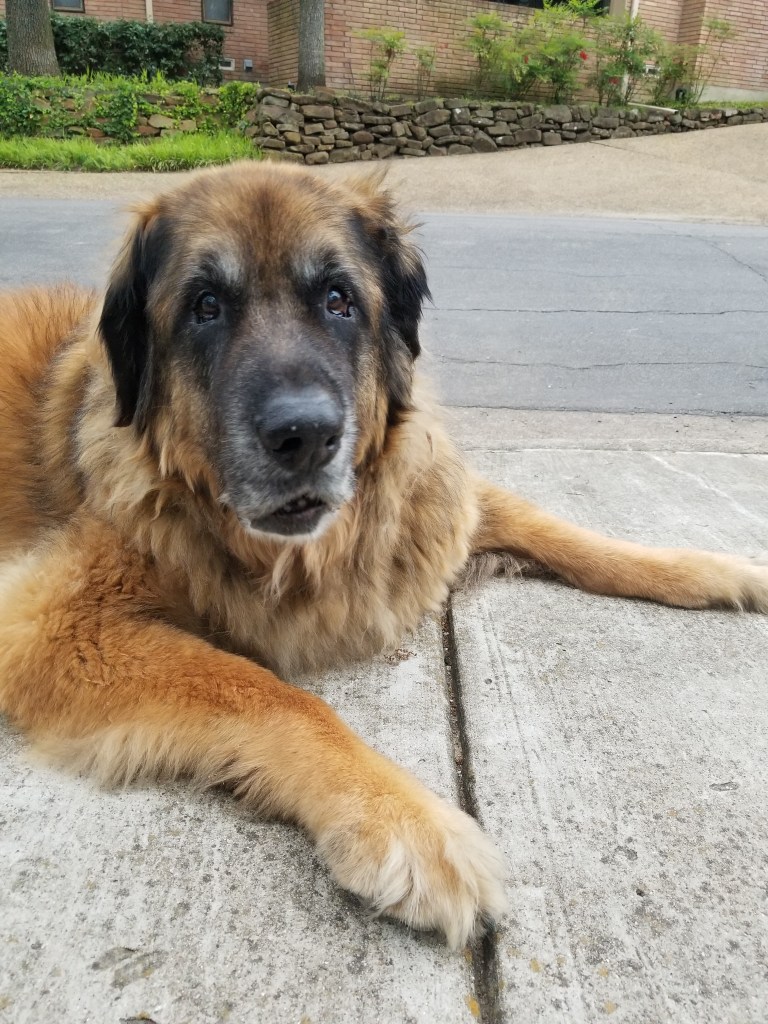
Emotional Presence: The Subtle Form of Care
Leonbergers thrive on companionship. As they age, separation anxiety or confusion can intensify, especially if cognitive decline begins. Maintain a calm household rhythm, avoid sudden relocations, and keep them close to family life. The reassurance of your presence often does more for their comfort than any supplement or therapy.
FAQ
- How often should I adjust my Leonberger’s diet as they age?
Most dogs benefit from a nutritional review every 6–9 months, as caloric and protein needs change. Work with your vet to adjust based on body condition and lab values. Small, incremental changes prevent digestive upset and weight swings. - What’s the right exercise level for an elderly Leonberger?
Aim for multiple 10–15 minute walks daily and low-impact play. Overexertion accelerates joint wear, while too little activity causes stiffness and muscle loss. Observe recovery time after walks as your guide. - Can joint supplements really help?
Yes, glucosamine, MSM, and omega-3 fatty acids can reduce inflammation and pain when used consistently. Results may take 4–8 weeks, so track improvements patiently. Always choose vet-approved formulations designed for large breeds. - How do I recognize signs of cognitive decline?
Look for pacing, confusion, or nighttime restlessness. These signs can mimic anxiety but often stem from age-related cognitive dysfunction. Specialized diets and enrichment can help slow progression. - Is it okay to groom my senior Leonberger as before?
Grooming is still essential, but adjust for comfort. Shorter sessions with frequent breaks reduce fatigue and stress. Keep nails trimmed to prevent balance issues and discomfort. - When is it time to consider palliative or hospice care?
When daily mobility, appetite, and emotional engagement decline significantly despite treatment, it may be time to focus on comfort. A quality-of-life assessment from your vet can guide compassionate decisions. The goal shifts from curing to easing.
Conclusion
Caring for an aging Leonberger is both an art and an act of devotion. It’s about more than prolonging life, it’s about enriching every moment your dog still wants to share. With consistent monitoring, gentle activity, and a serene home rhythm, your Leonberger can continue to live with grace, dignity, and the steady comfort of your presence.
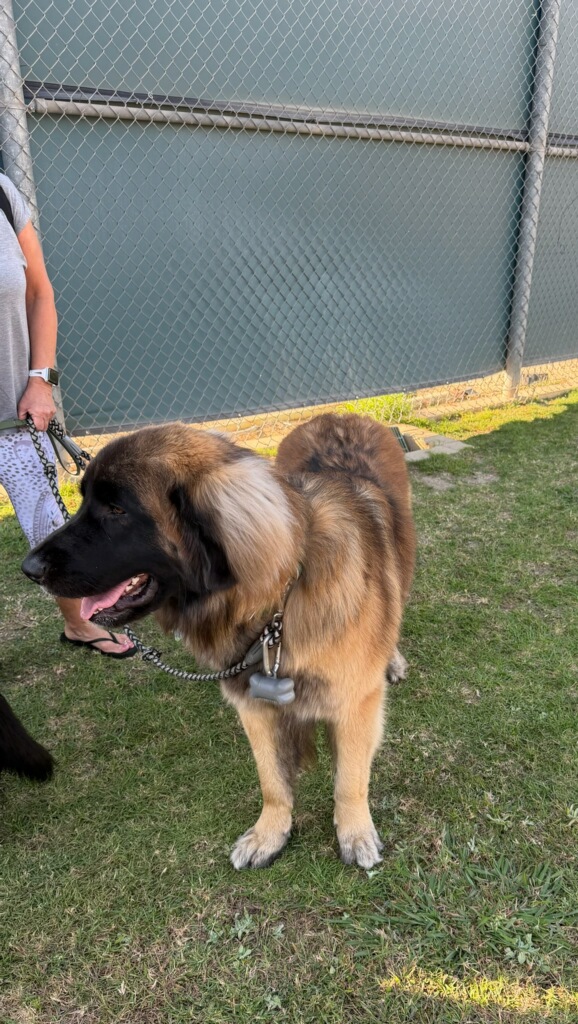
Another Leonberger Chance Encounter
I just received a couple of photos from our niece Jessica and her husband Eric. They live in Minnesota. They had encountered a Leonberger dog named Oliver, and they took a couple of photos. For those who do not know, Leonbergers are large family friendly dogs related to Saint Bernards. It is a rare breed, so you don’t see them very often. If you want to read more about this amazing breed, see the list of all my blog posts.
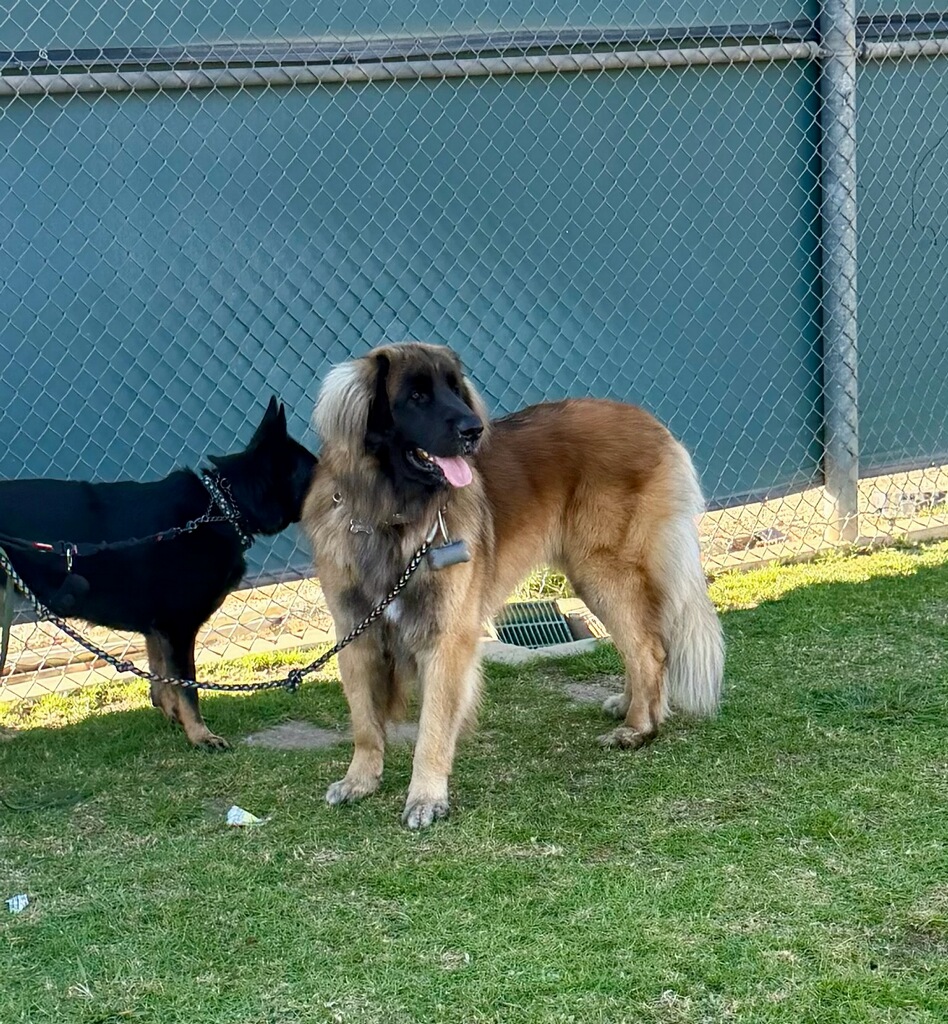
Other Leonberger Chance Encounters
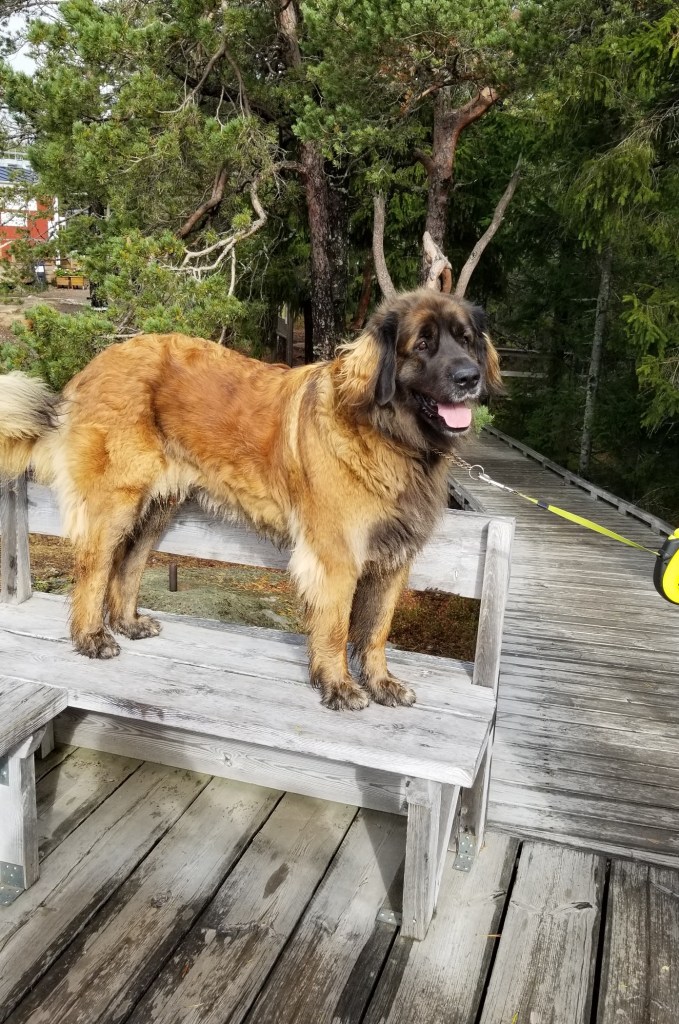
Another amazing Leonberger chance encounter happened when we visited my native country Sweden. We had hiked up a mountain in the high coast region (that’s where I grew up) called the Skule Berget, or Skull Mountain in English. The elevation of the hike was nearly 1,000 feet. Guess what we found at the summit besides the red cabin restaurant selling waffles to the brave souls who managed to finish the hike? A Leonberger named Amie. We took some photos of Amie. I hope she got some waffles too. You can read more about our adventure here.

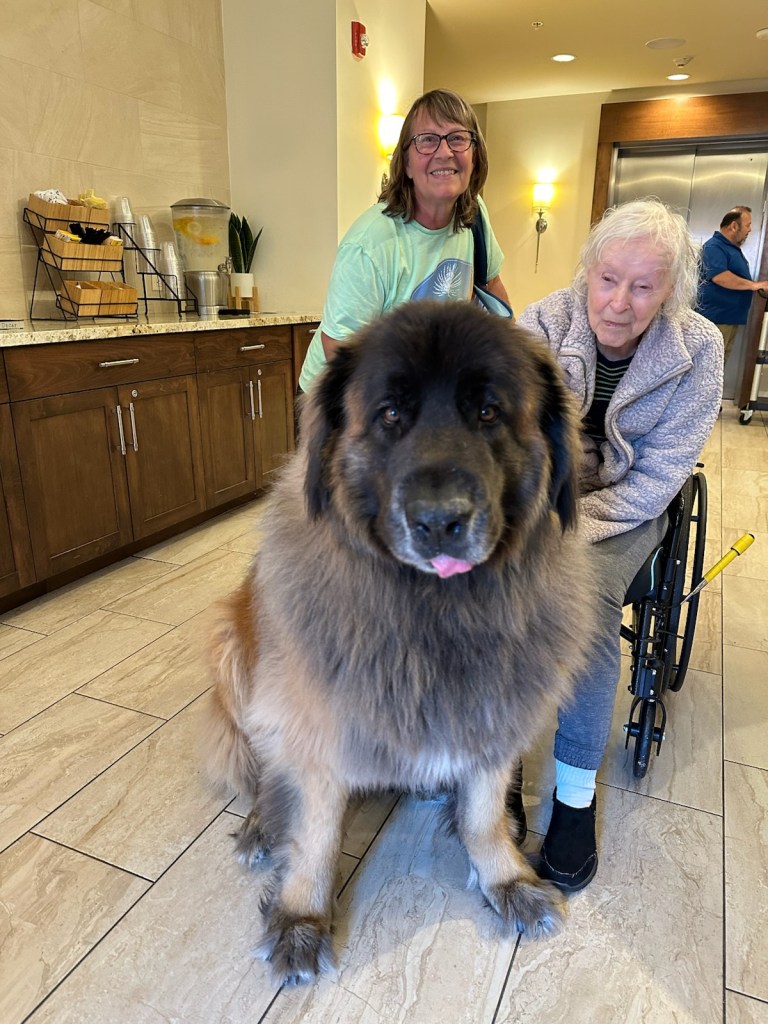
Another chance encounter was when our daughter-in-law’s mother had a chance encounter with a Leonberger at her mother’s nursing home. Leonberger dogs are big but friendly, trusting, calm, confident, and very trainable, making them perfect therapy dogs. They are therefore often used as therapy dogs at hospitals, nursing homes and mental institutions. You can read more about this encounter here.
A Therapy Leonberger Called Scout
Speaking about therapy dogs. Below is a video about a Leonberger called Scout by CBC news in Canada. This Leonberger is helping residents at Hamilton mental health hospital. He was bred by Concorde Ridge Leonbergers. They have a website and a blog which I follow. You can visit my post about Scout here. The 1-minute video is shown on the website below.
https://www.cbc.ca/player/play/video/1.6835161
About the book The Life and Times of Le Bronco von der Löwenhöhle
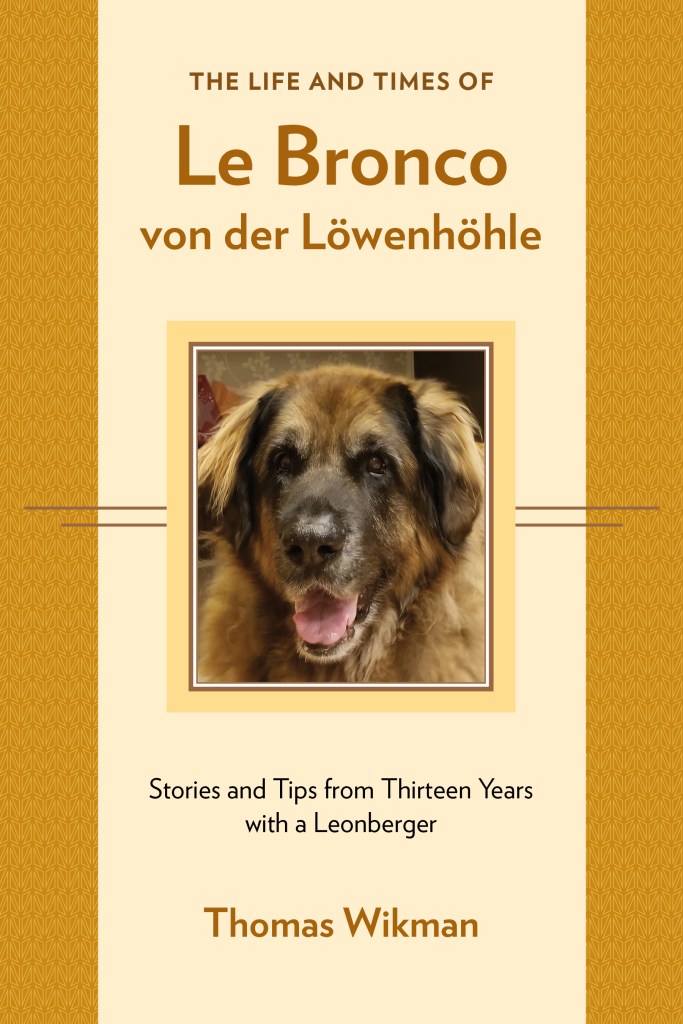
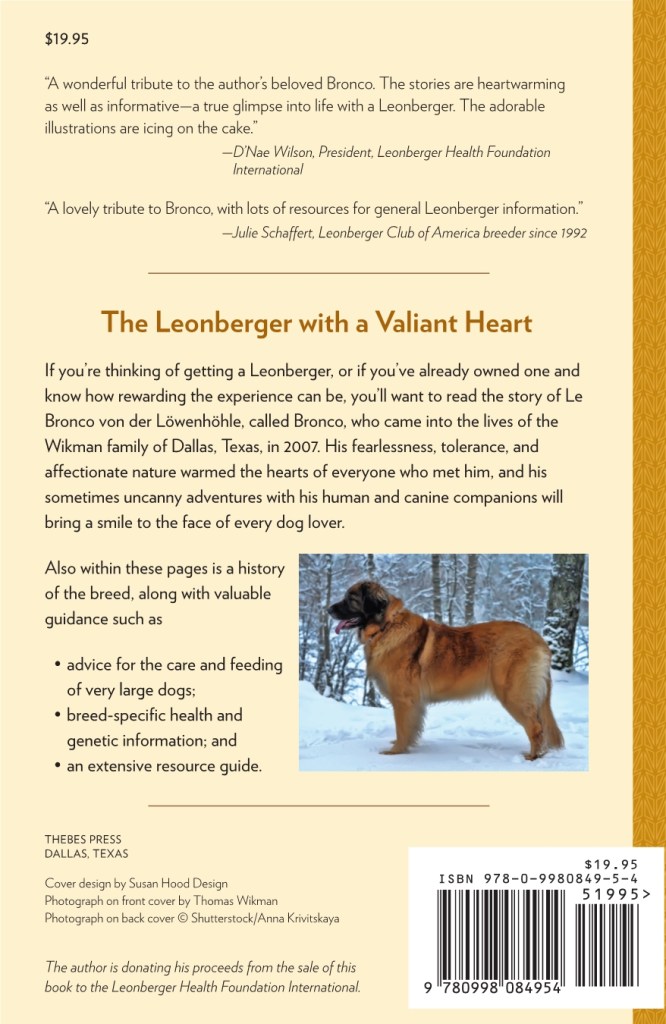
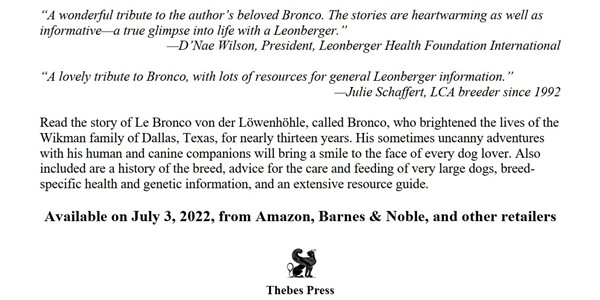
Finally, I would like to mention that I wrote a book about our late Leonberger Bronco, or Le Bronco von der Löwenhöhle. The title of the book is “The Life and Times of Le Bronco von der Löwenhöhle, Stories and Tips from Thirteen Years with a Leonberger”. The book features the amusing adventures of our Leonberger Bronco and his dog friends, as well as information on how to train and care for Leonbergers and other large breeds, their breed history, breed standard, Leonberger organizations, and an extensive resource guide at the end. I can add that all photos and illustrations are in color. The price of the paperback version is 17.95 (normal prize is $19.95) and the price of the Kindle version is $4.95 All proceeds go to the Leonberger Health Foundation International, an organization that works to improve the health and longevity of Leonbergers and other large dog breeds.
Leonberger Club of America
Esther’s writing prompt: October 1st : Club
Click here or here to join in.
Just a few minutes before I saw Esther Chilton’s writing prompt “club” I received my annual invoice for our family membership in the Leonberger Club of America. What a great reminder to pay my bill and create a post about the Leonberger Club of America. We haven’t had a Leonberger since the summer of 2020 when our Leonberger Bronco, or Le Bronco von der Löwenhöhle passed away. However, we’ve kept our membership because I love their LeoLetter magazine, I know some people, I have this blog, and I wrote a book about our Leonberger and the Leonberger breed after the passing of Bronco (see the side bar on the right or click here for more information).
The Leonberger Club of America
I can add that the Leonberger Club of America, LCA for short, is the official national parent club for the Leonberger breed in the United States (and Canada). It was founded in 1985. Its mission is to preserve and promote the health, temperament, and original type of the Leonberger through education, events, performance programs, and social engagement. The American Kennel Club (AKC) recognizes the LCA as the official Leonberger breed club in the United States.
The Leonberger Club of America make sure that the Leonberger dogs are protected. You are about as likely to find a Leonberger at Petland/Puppy-Mill as you are finding an Elephant for sale there. You typically buy/get a Leonberger dog from an LCA certified Leonberger breeder or from the Leonberger Rescue Pals, and if you don’t that might be a problem. Leonberger breeders interview prospective Leonberger owners and make sure they are a good fit. If you are found to have mistreated a dog in the past, turned one into a shelter, or sold one on an auction, you cannot buy a Leonberger. The breeders are also required to take back the dog if it does not work out. To see the transcript from our Leonberger interview, click here.
There are only about 3,000 Leonbergers in North America and about 2,000 Leonbergers in the United States but the Leonberger Club of America has more than 1,000 members. They publish the Leo-Letter, a quarterly Leonberger magazine. So, the Leonberger Club of America has a very prominent place among Leonberger owners. Click here to see a summary of the Leonberger Breed Standard.

Other clubs associated with the Leonberger Club of America are New Jersey Leonberger Club, Great Lakes Leonberger Club, Greater Bluegrass Leonberger Club, Mid-Atlantic Leonberger Club Of Virginia, Tarheel Leonberger Club, AKC Licensed Specialty Club, The Frontier Leonberger Club Of The Southwest, Leonberger Club Of The Northwest, Northern California Leonberger Club, and the Surf And Sand Leonberger Club Of Southern California. I am a member of The Frontier Leonberger Club Of The Southwest. Other Leonberger clubs are the Leonberger University, Leonberger Health Foundation International, and the Worldwide Independent Leonberger Database. You can learn more about the Worldwide Independent Leonberger Database by clicking here.
The History of the Leonberger Club of America
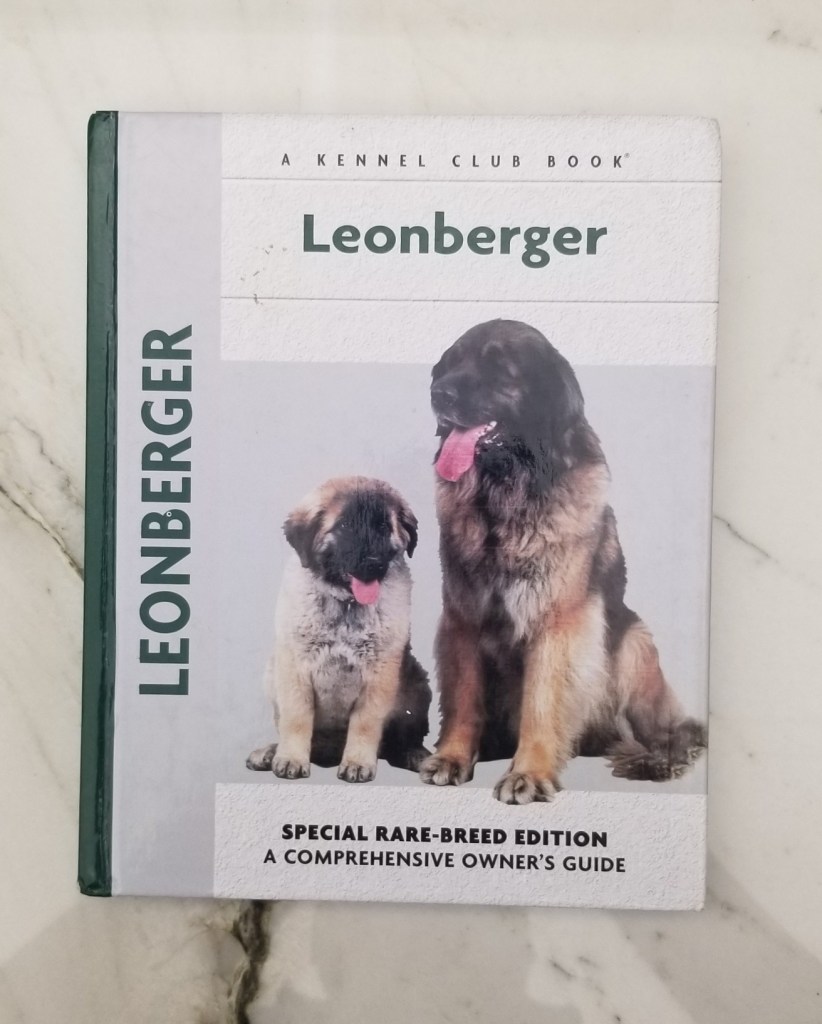
Leonbergers have a long history in North America and the United States—despite the fact that until 1985, there were only seventeen Leonbergers known to be living in the United States. See: Lusby, Leonberger, page 15.
In the 1870s, Leonbergers were brought to Newfoundland to invigorate the stock of Newfoundland dogs. Around the same time, two Leonbergers named Caesar and Sultan were purchased from Heinrich Essig’s kennel (founder of the Leonberger breed) and transported across the ocean to join the Wellesley-Sterling theater company in the United States as the stars of their productions. Then in 1879, Caesar and Sultan visited President Ulysses S. Grant, who called them the largest and most magnificent dogs he had ever seen and presented them with gold medals. During the years between World War I and World War II, a New Jersey family, the Wolfs, opened their home as a temporary refuge for Jews fleeing Germany: they also imported Leonbergers. Unfortunately, this introduction of the breed into the United States did not last, and it would be another fifty years before the Leonberger appeared in America again.
See: Bliss-Isberg, Leonberger, page 60, page 64, page 101
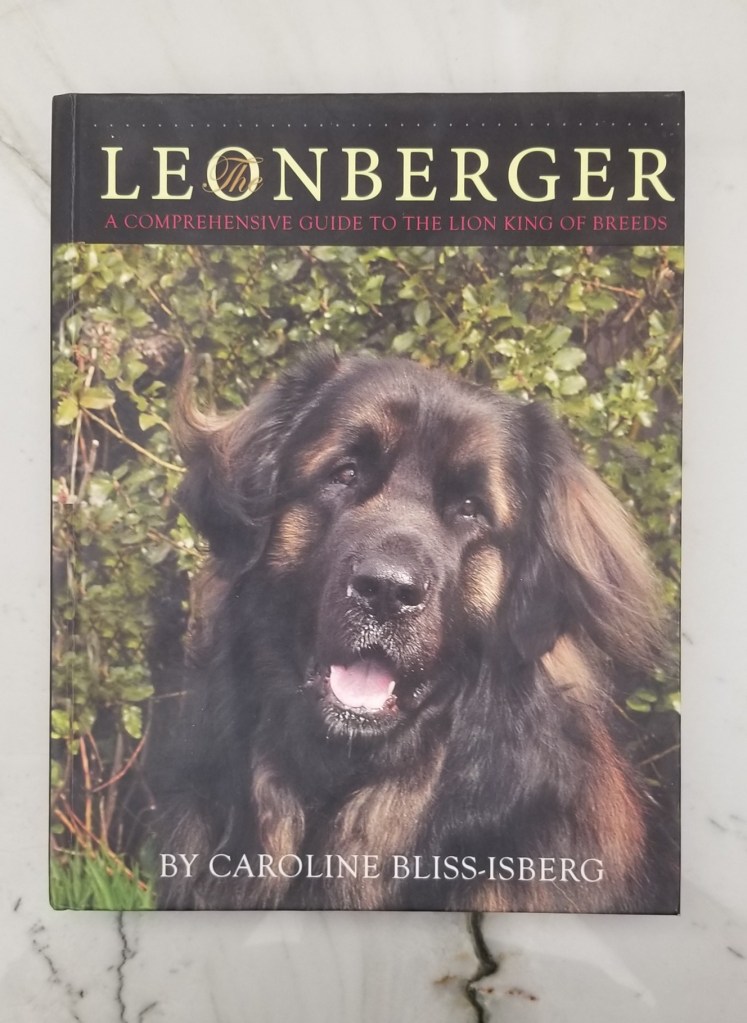
During the late 1970s and the 1980s, a few families—Waltraut and Klaus Zieher, Brian Peters, Manfred and Sylvia Kaufmann, Keri Campbell and Melanie Brown, and Mary and Reiner Decher brought Leonbergers to the United States. The Dechers had started a breeding program and were looking for a mate for their first dam, Viona. By chance their neighbor discovered through a newsletter that there was another Leonberger in the United States, and that led to the families’ finding and connecting with one another. I should add that the Dechers were careful to conform to the German breeding regulations and performed hip X-rays that they then submitted to the Orthopedic Foundation for Animals (OFA). Viona became the first OFA-certified Leonberger in America.
See: Bliss-Isberg, Leonberger, page 152.
On Saturday, November 2, 1985, eight of these Leonberger enthusiasts met at a hotel in Denver, Colorado, to found the Leonberger Club of America (LCA). This group of founders, which has since been dubbed the Denver Eight, appointed a registrar, formulated a breeding acceptability checklist, and instituted various policies, including the requirement that OFA certification is mandatory for breeding. LCA membership grew: it held social gatherings, began publishing LeoLetter, and imported an increasing number of dogs. Now the LCA has thousands of members across the country, and Leonbergers receive high ratings on health tests relative to other large breeds. For example, in 2000, the OFA reported that only 14.6 percent of Leonbergers tested positive for hip dysplasia, compared to 47 percent of Saint Bernards.
See: Bliss-Isberg, Leonberger, page 154, page 176.
Founding of the Leonberger Health Foundation International
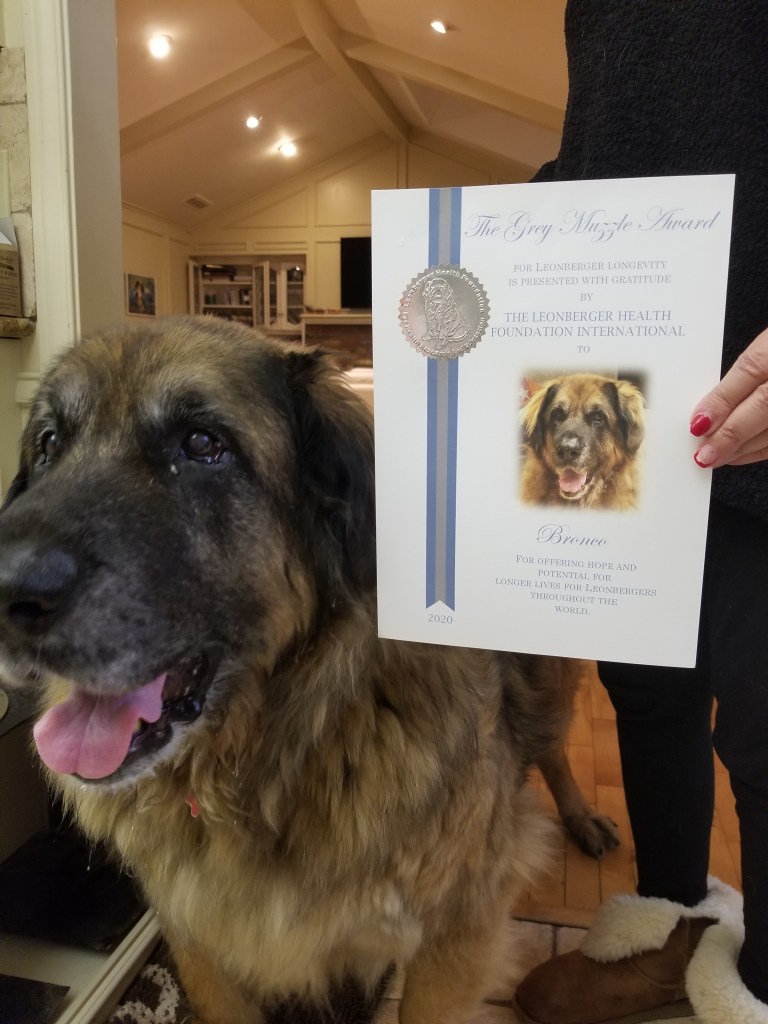
Another important historical event was the founding of the Leonberger Health Foundation International (LHFI), in 2000 (it was just called the Leonberger Health Foundation back then). According to its website, the organization was founded by Waltraut Zieher and other memers of the LCA’s health, education, and research committee to “facilitate the solicitation and distribution of donations given to support health related breed-specific research.” The LHFI also administers a program that collects DNA samples from Leonbergers to share with universities and research institutions, and of course it administers the Grey Muzzle Award (long living Leonbergers). Our Leonberger Bronco was a recipient of the Grey Muzzle Award, and we provided them with his DNA.
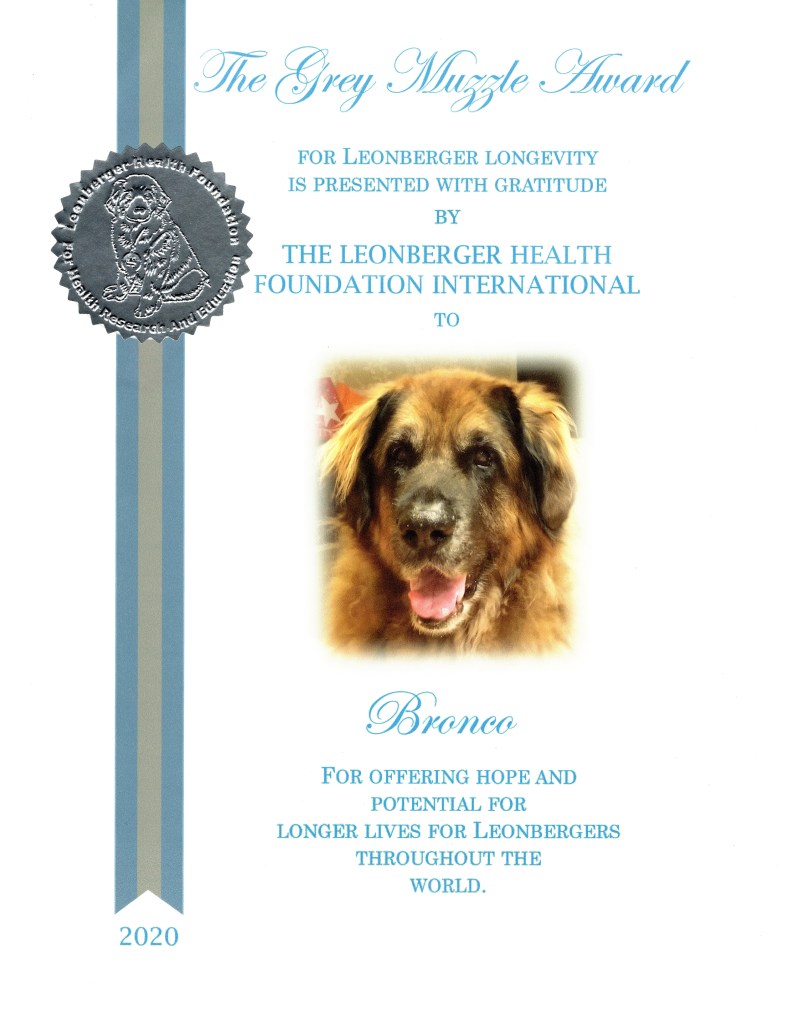
LHFI’s global biobank contains DNA samples from more than nine thousand Leonbergers. Among the organization’s notable achievements are the eradication of Addison’s disease among Leonbergers and the raising of nearly half a million dollars for research into conditions that affect canine health, including osteosarcoma, hemangiosarcoma, glaucoma, cardiac diseases, thyroid diseases, and neurological disorders. Its research also supports healthful longevity and aging as well as population diversity. Another success is the fact that since 2011, no Leonbergers with two copies of the LPN1 gene mutation (which causes Leonberger polyneuropathy) have been recorded in LHFI’s biobank. LHFI is one of my favorite charities.
The Dog Wars of America
The end of the twentieth century marked not only the end of the Cold War but also the beginning of what I call the Dog Wars of America. In 1985, the American Kennel Club (AKC) registry comprised one-third of the world’s known dog breeds. But the AKC had recognized only a few new breeds since 1887—a period of ninety-eight years. So, the organization decided to change that policy, but this did not always go smoothly. The members of rare-breed clubs often did not want to be part of the AKC. For example, the Australian Shepherd Club of America (ASCA) was very reluctant to join, so a relatively small splinter group, the United States Australian Shepherd Association, was formed and designated the official member club of the AKC, which was not welcome news to the ASCA. The border collie is another example. Charles Krauthammer, the late political columnist, called the AKC the politburo of American dog breeding.
See: Bliss-Isberg, Leonberger, page 159.
Similarly, in 2003, a new Leonberger club was formed—the Leonberger Club of the United States—with the goal of becoming the Leonberger member club of the AKC. This essentially forced the LCA’s hand, so they applied for membership in the AKC, a process that took years to complete. But ultimately the AKC approved the LCA as members in 2010: Leonbergers would officially become part of the Working Group. Fortunately, 90 percent of LCA breeders agreed to continue following LCA regulations regardless of whether the club would remain independent or become part of the AKC. Also fortunately, AKC membership afforded more opportunities for Leonbergers to participate in dog shows, which is important to many owners.
See: Bliss-Isberg, Leonberger, page 187
For more information on the history of the Leonberger starting in 1830’s click here.

Promises To My Dog
Esther’s writing prompt: 17th September : Promises
Click here or here to join in.
Dogs are domesticated wolves. To survive in our human society, they need to be taken care of. We often get them as puppies and all they know is how to live with people. When you get a dog, this is a lifetime commitment. Despite this fact a lot of people buying puppies bring them to shelters and many irresponsible breeders bring unsold puppies to shelters. In addition, 7% to 20% of dogs adopted from shelters are returned to the shelters, mostly due to behavioral issues or owners’ unrealistic expectations. Dogs who were returned for behavioral issues were also more likely to be euthanized.
Some dog owners don’t even bother to turn their dog into a shelter, they just abandon them. In the U.S., approximately 3.1 million dogs enter shelters each year. Many of these are abandoned, the offspring of abandoned dogs, or lost pets. In the U.S., about 60% of dogs entering shelters are strays. As a side note, abandoning a dog is illegal in almost every US state, including Texas where I live. We dog owners need to do better. We have responsibilities towards our dogs, to feed them, raise them, train them, exercise them, take care of them, and continue to shelter them when they get old and sick.
The Leonberger community has taken significant steps towards protecting Leonberger dogs from abuse and abandonment. First, the Leonberger Club of America certifies responsible breeders and work to prevent dogs from ending up with backyard breeders and puppy mills. Breeders are required to take back and care for a dog if it does not work out. All prospective Leonberger owners are interviewed and must sign a contract dictating how they should treat the dog. If they find out that you have mistreated a dog or failed to take care of a dog you cannot buy a Leonberger. To see the transcript for our Leonberger interview click here.
12 Promises to my Dog
- Dear fur angel, I promise to feed you properly.
- Dear fur angel, I promise to protect you from toxic foods such as raisins, grapes, chocolate, xylitol, birch sugar, onion and garlic.
- Dear fur angel, I promise to protect you from toxic plants, dangerous household items and animals.
- Dear fur angel, I promise to keep one or more water bowls always filled with fresh and clean water for you.
- Dear fur angel, I promise to comfortably shelter you.
- Dear fur angel, I promise to train you and care for your physical and emotional needs.
- Dear fur angel, I promise to walk you every day (on days when this is possible).
- Dear fur angel, I promise to take care of all your veterinary needs.
- Dear fur angel, I promise to play with you, pet you, and throw balls.
- Dear fur angel, I promise to never abandon you.
- Dear fur angel, I promise to be there for you when you cross the rainbow bridge.
- Dear fur angel, I promise to love you forever.
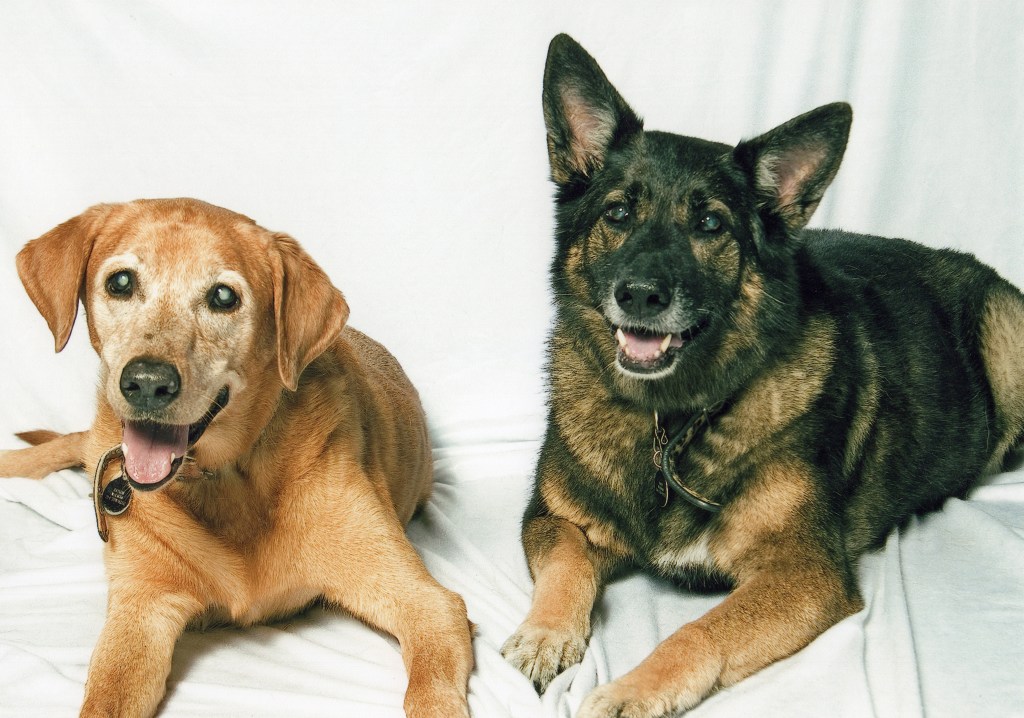
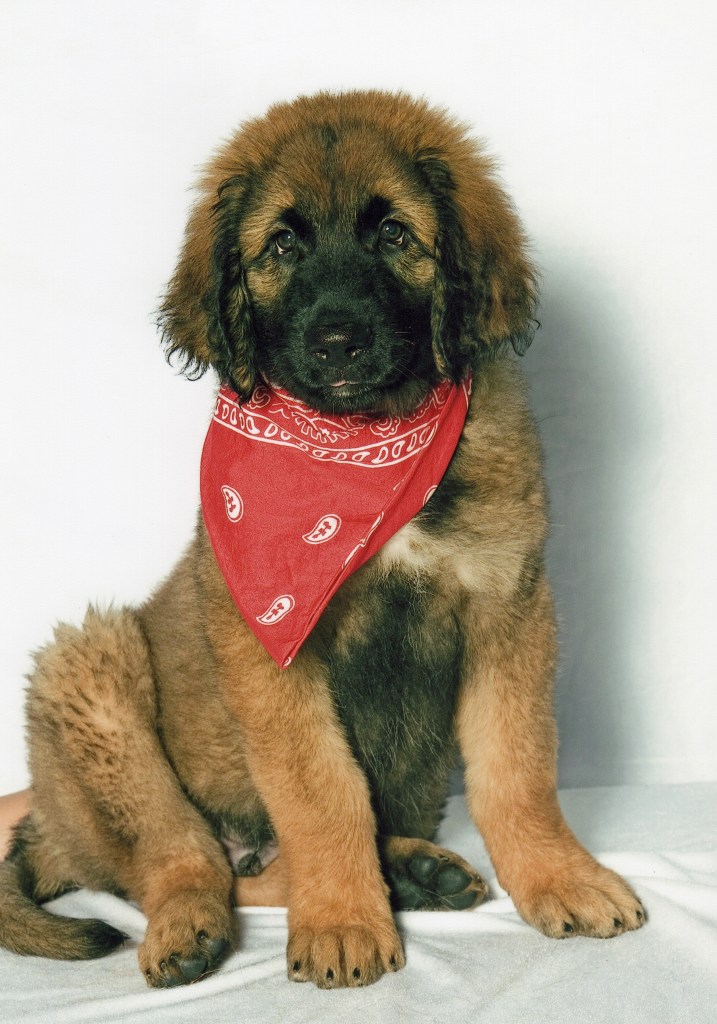
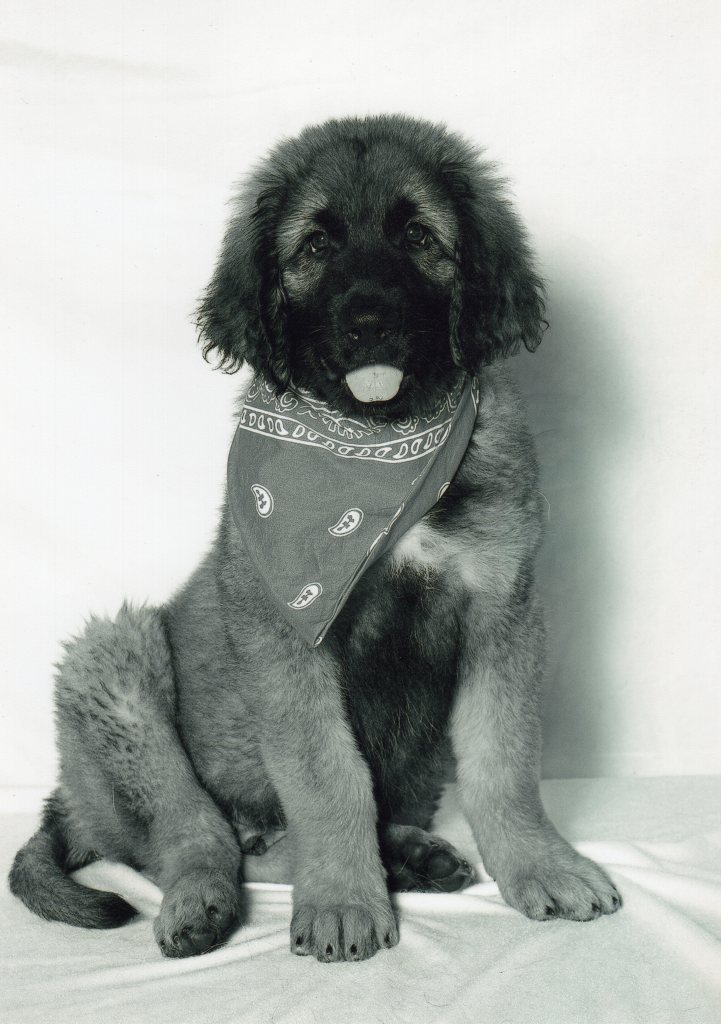
Puppy Versus Old Dog Photos
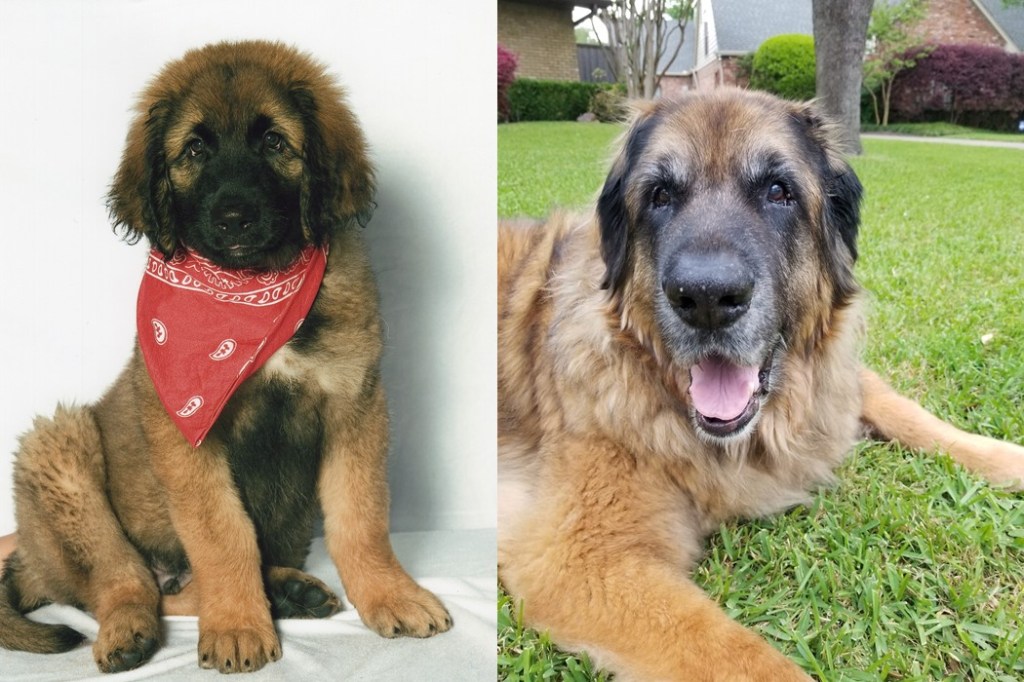
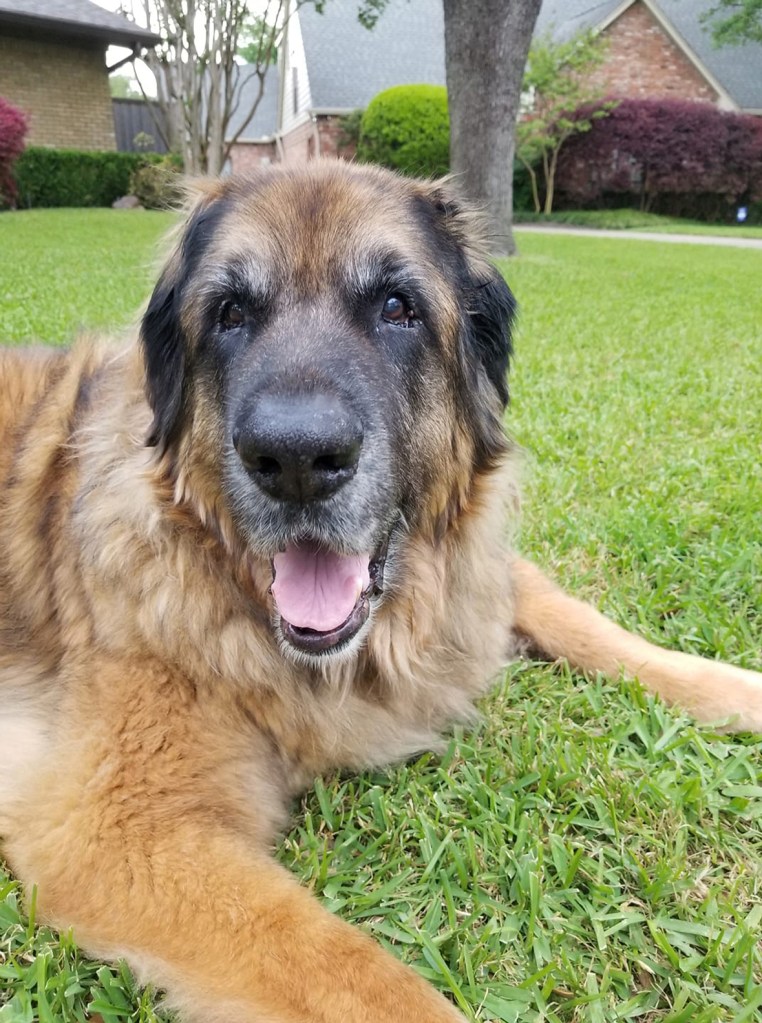
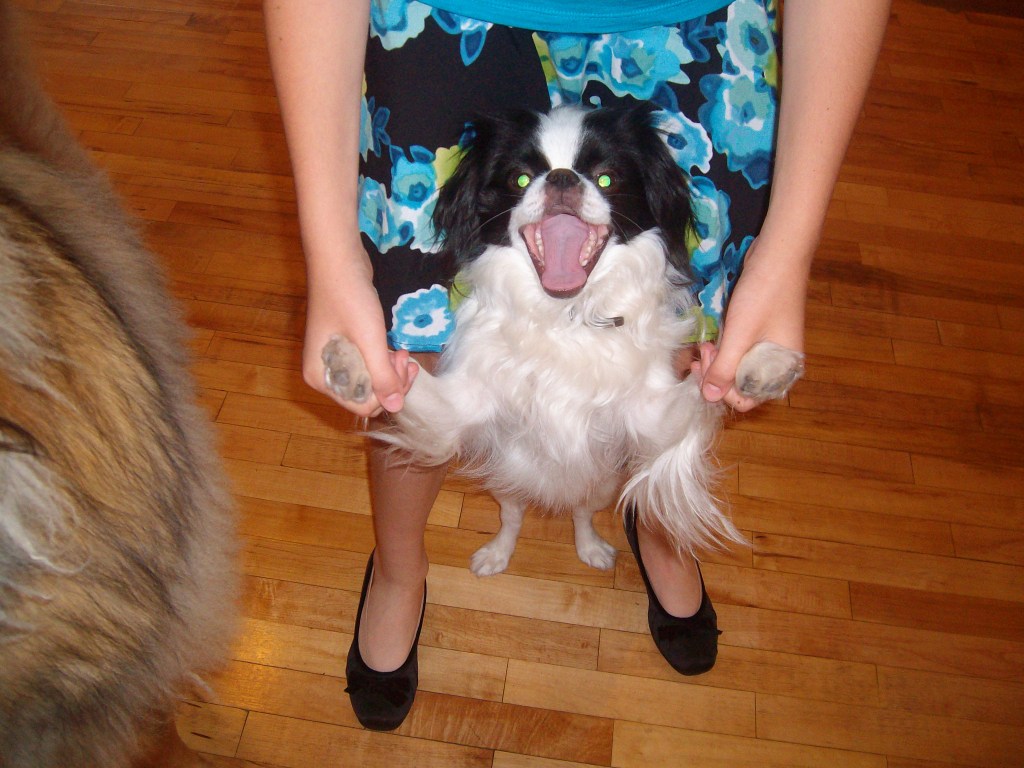
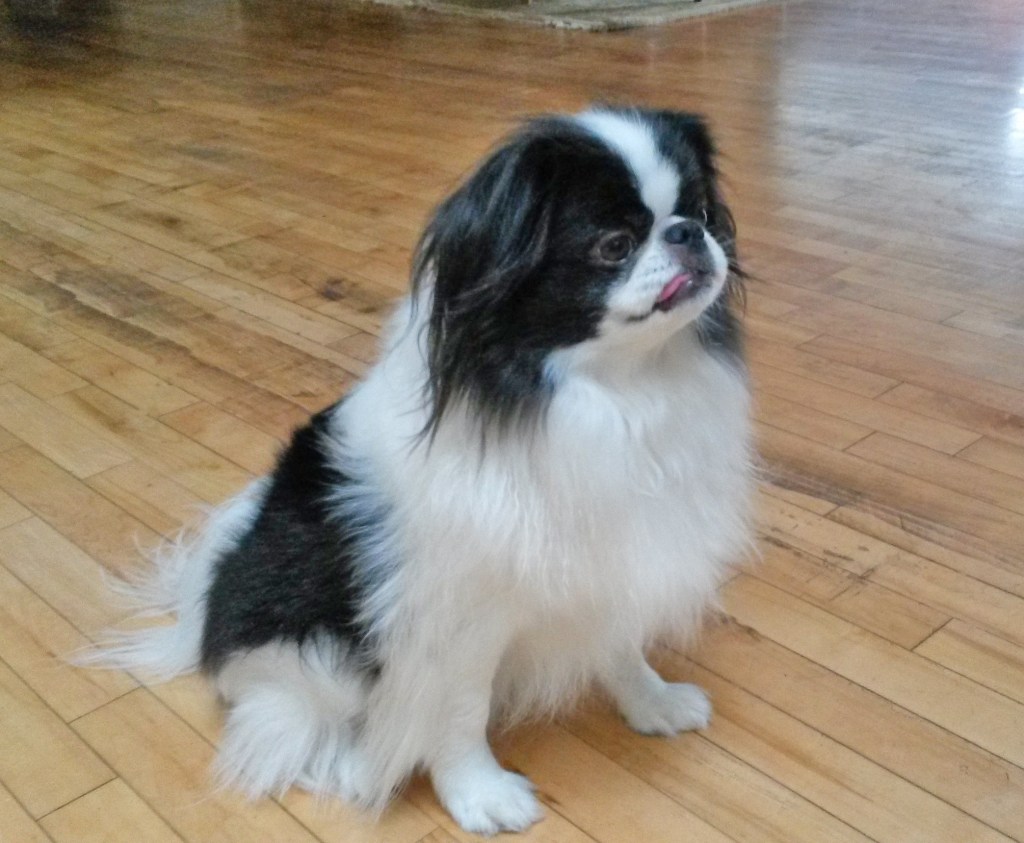
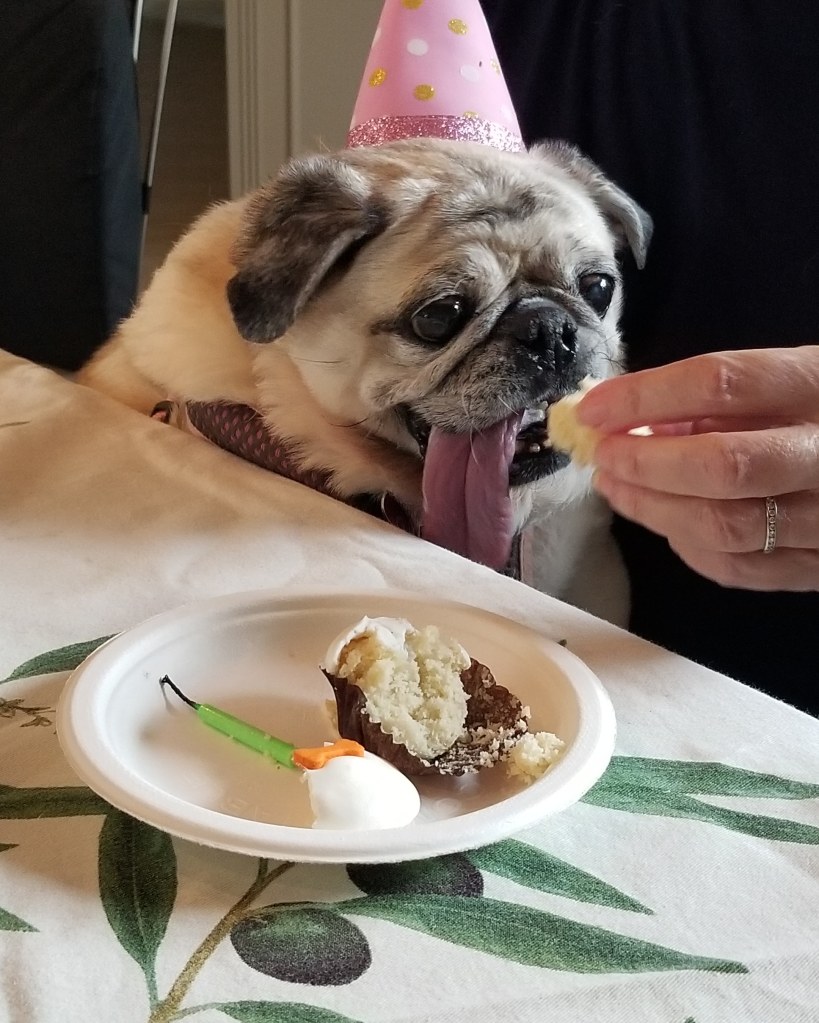
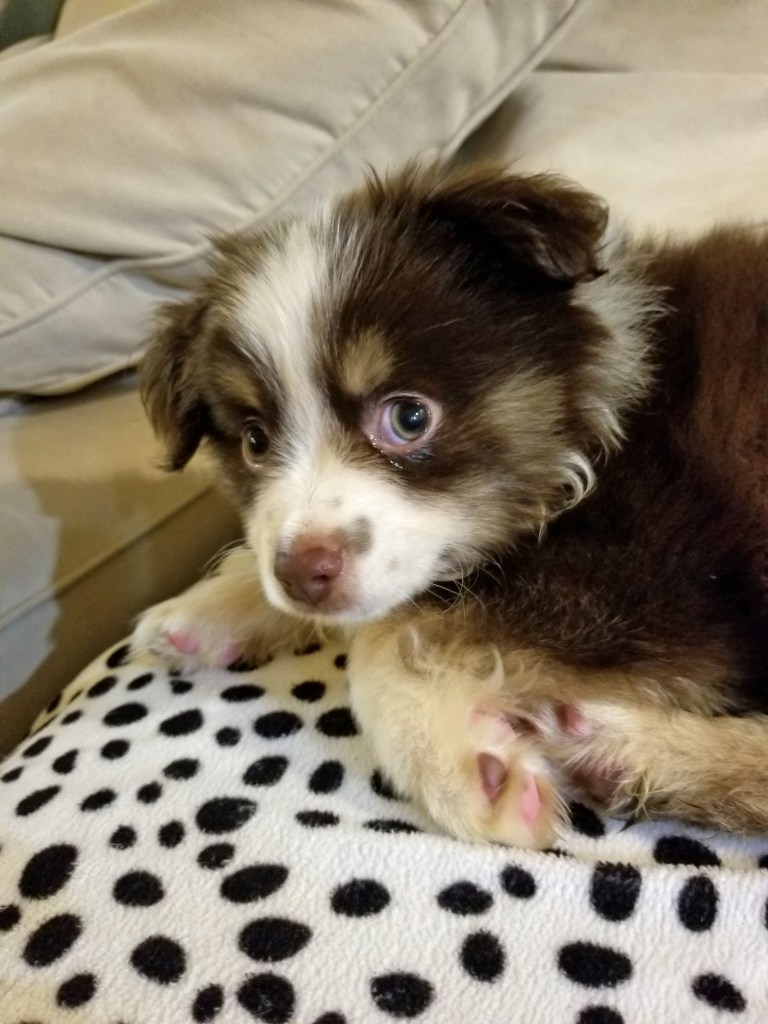
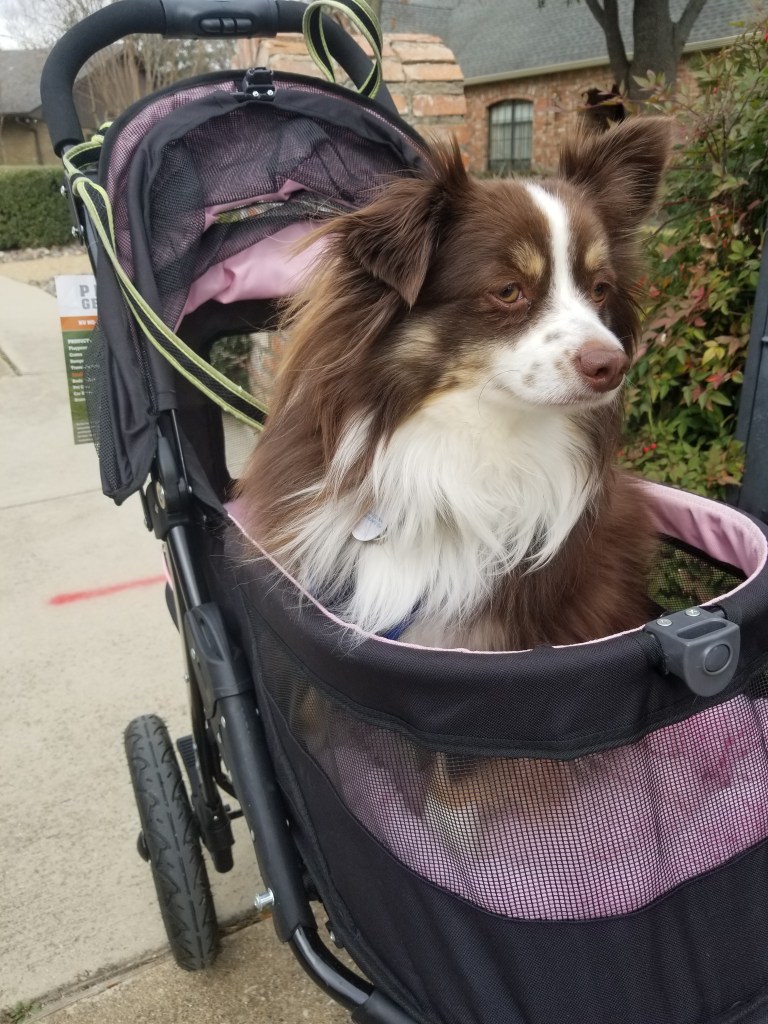
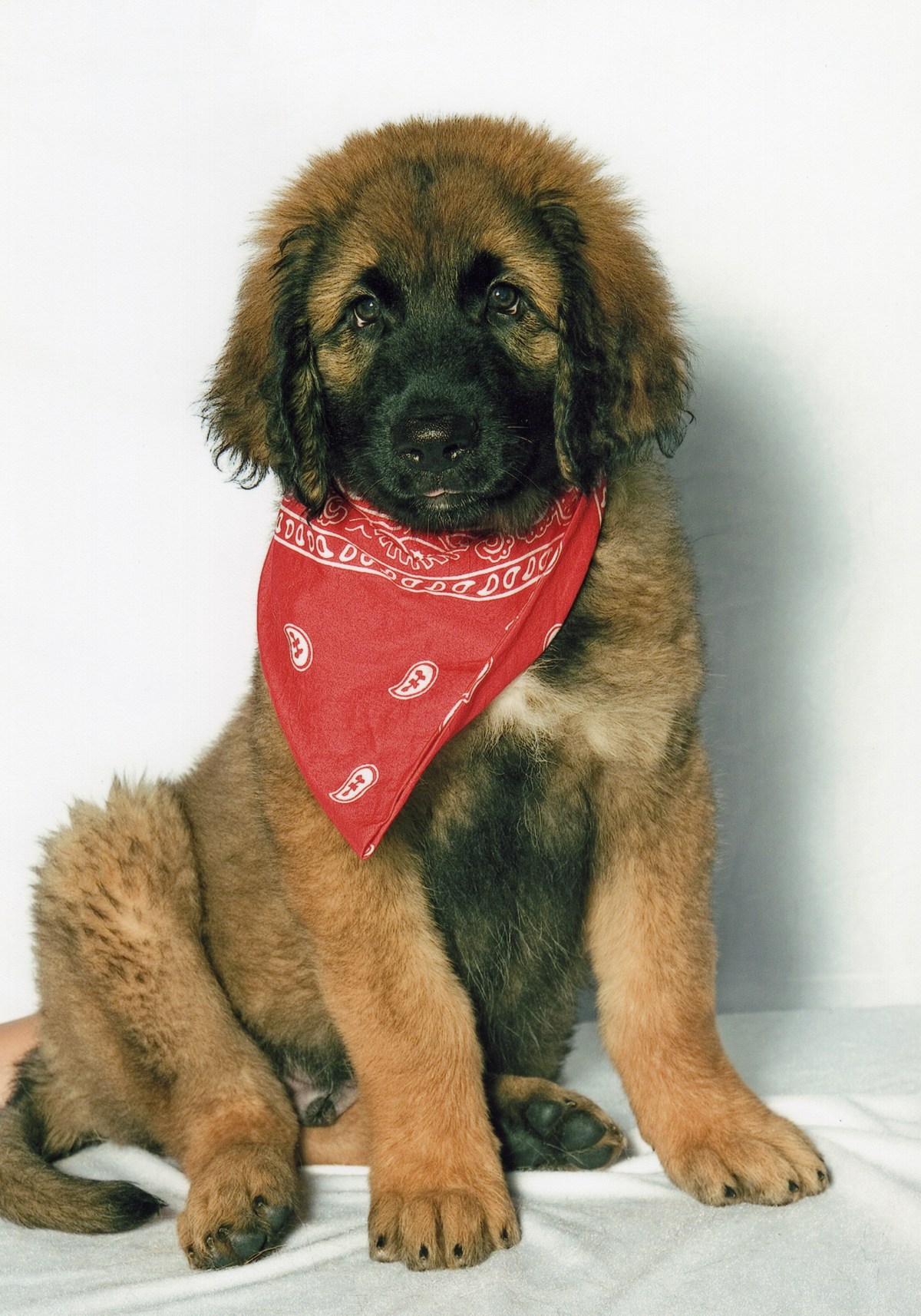
Below are some photos of our dogs. Except for the first photo, which is a photo of our Labrador Baylor and German Shepherd Baby at an advanced age, the photos are arranged so that the first is photo of the dog as a puppy followed by a photo of the same dog at an advanced age. I should say that we got Baylor and Baby when they already were adults and we don’t have puppy photos of them. What happened was that family members of ours had got them from a shelter and when those family members later needed to move, we offered to take care of them.

Promotion Of the Life and Times of Le Bronco Von Der Lowenhohle
BUY HERE
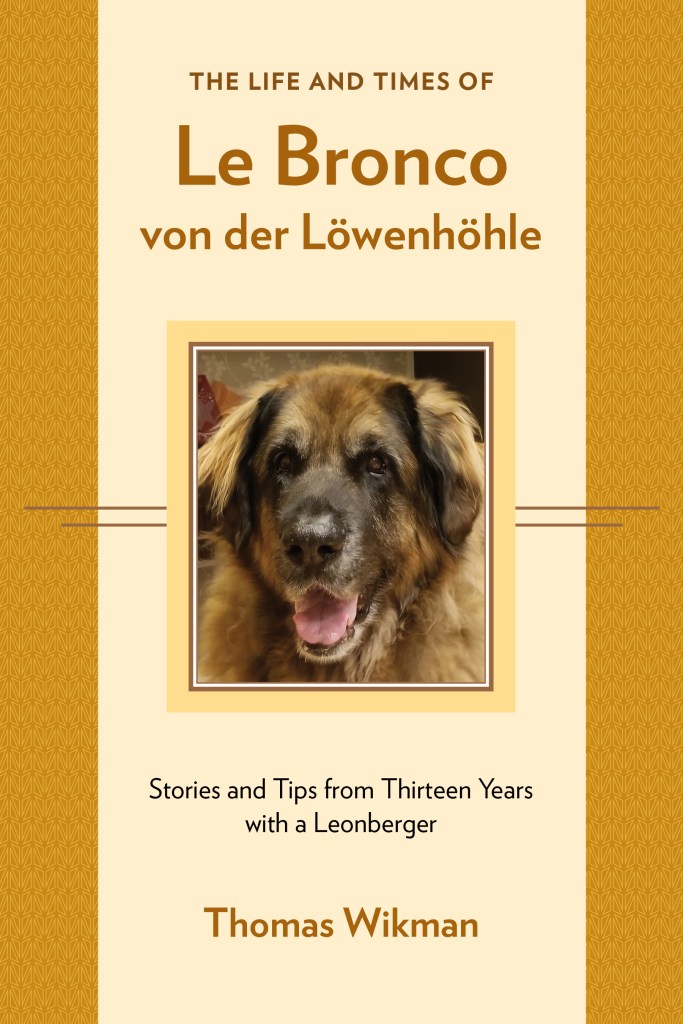
Our late Leonberger Bronco’s birthday was on July 3rd and therefore I am holding a promotion. The price of the Kindle version of my book “The Life and Times of Le Bronco von der Löwenhöhle” is now only $2.99 and the price of the paperback version is 17.95 (normal prize is $19.95). I will keep that price until Jul 31st. The prices in all other countries, Canada, the UK, Germany, France, the Netherlands, Italy, Spain, Australia, etc., are lowered by the same amount. Below is some information about my book as well as four reviews from four different countries.
Advance Praise for the book
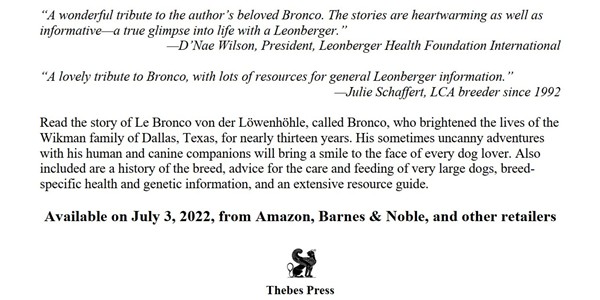
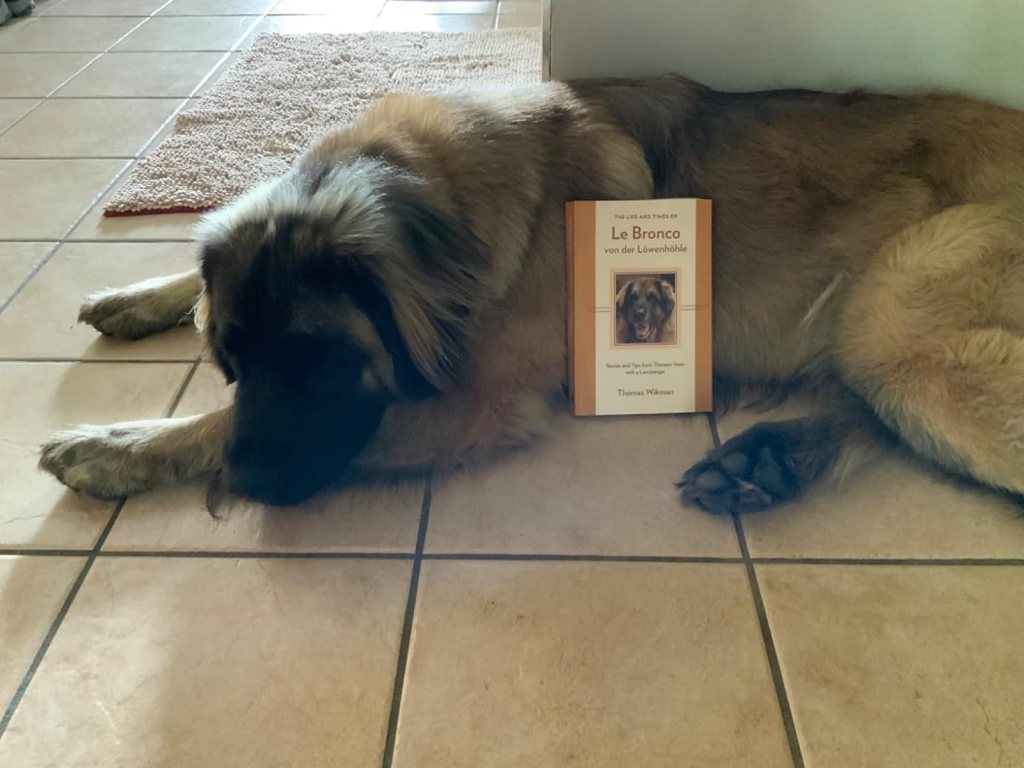
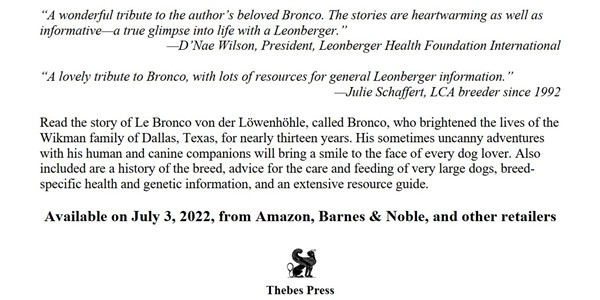
A wonderful tribute to the author’s beloved Bronco. The stories are heartwarming as well as informative—a true glimpse into life with a Leonberger. The adorable illustrations are icing on the cake.” —D’Nae Wilson, President, Leonberger Health Foundation International
“A lovely tribute to Bronco, with lots of resources for general Leonberger information.” —Julie Schaffert, Leonberger Club of America breeder since 1992
Amazon’s description of : The Life and Times of Le Bronco von der Löwenhöhle: Stories and Tips from Thirteen Years with a Leonberger by Thomas Wikman
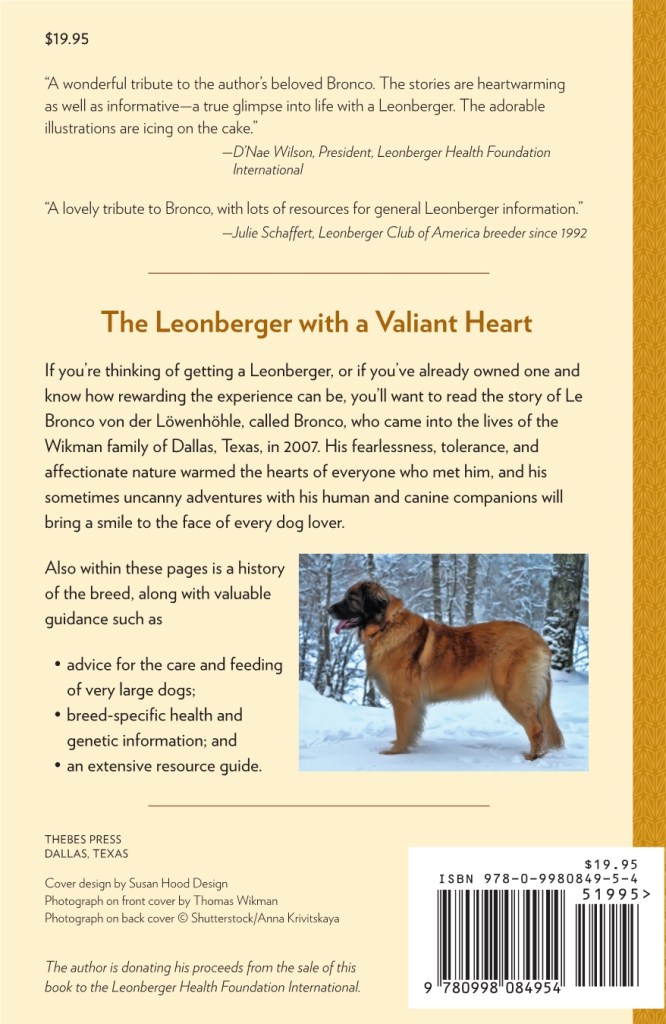
If you’re thinking of getting a Leonberger, or if you’ve already owned one and know how rewarding the experience can be, you’ll want to read the story of Le Bronco von der Löwenhöhle, called Bronco, who came into the lives of the Wikman family of Dallas, Texas, in 2007. Bronco, a recipient of the Leonberger Health Foundation International’s Grey Muzzle Award, lived an unusually long life for a Leonberger—almost thirteen years. His human family is convinced that what helped him exceed his breed’s normal life expectancy was his brave and loving heart.
Here you’ll read about some of Bronco’s amazing feats: the night he scared away a prowler; the day he performed a hamster search and rescue; the time he stumped the Geek Squad; and the late night he snuck into the kitchen and ate a two-pound bag of dog treats, a box of pastries, a loaf of bread, a grilled chicken, and a Key lime pie, all in one sitting. You’ll also read about his unflappable calm during a north Texas tornado and his stoicism as he endured health challenges in his later years.
In addition to entertaining stories, these pages contain a wealth of practical guidance, including
- a history of the Leonberger breed;
- advice for the care of very large dogs;
- breed-specific health and genetic information;
- training and feeding tips;
- suggestions for finding a breeder;
- the official breed standard; and
- an extensive resource guide.
Bronco’s fearlessness, tolerance, and affectionate nature warmed the hearts of everyone who met him, and his sometimes uncanny adventures with his human and canine companions will bring a smile to the face of every dog lover.
The author is donating the proceeds from the sale of this book to the Leonberger Health Foundation International
Thomas Wikman is a retired automation, robotics, and software engineer and inveterate dog lover who emigrated from Sweden to the United States, where he and his wife raised three children. Their cherished Leonberger, Bronco, crossed the Rainbow Bridge in 2020. The Wikmans live in Dallas, Texas, with their two dogs—a pug and a miniature Australian shepherd.
Review from Amazon.com by Pete Springer
The Story of One Family’s Love for Their Leonberger
Having been around big dogs my entire life, I was very much looking forward to reading about Bronco, a large breed of dog known as a Leonberger. Thomas Wikman has penned a wonderful memoir about his family’s 12+ year journey with Bronco. As I read this story, I realized this was no ordinary breed or dog. Bronco and the rest of the Wikmans’ dogs become like family members. The part of the story I enjoyed the most were the engaging and entertaining anecdotal stories. Wikman gives a very honest account and describes the wonderful parts and challenges of owning a Leoberger. It was fascinating how the smaller dogs quickly accepted Bronco into the fold and became pals.
In addition, the author includes lots of general information about Leonbergers including the extensive process involved adopting one of these dogs. I learned too much to describe here, but Wikman doesn’t miss anything from their history, diet, disposition, health challenges and quirks. It’s obvious how much research and energy went into writing this comprehensive book. I was thoroughly impressed and learned a great deal about these loving giants. I would recommend this book for anyone who loves dogs.
Review from Amazon in Canada by Brenda Saito
A must read for any Leonberger owner or anyone considering a Leonberger
We became Leonberger human parents in October 2022. We knew very little about the breed so I searched online. I found a reference to Thomas Wikman’s book and was instantly intrigued given that the book was a personal experience of life with a Leonberger. This book has proven to be the best book about Leonbergers that I have purchased and I have purchased quite a few.
The Life and Times of Le Bronco von der Lowenhohle is a heartwarming story of Bronco’s life with the Wikman family and their other canines. This book also contains a wealth of well researched and experienced information about Leonbergers, both good and bad. Also the bonus in this book is at the back where Thomas Wikman has included 2 Appendices which provided me with the Leonberger database and a Resources and References section.
This book has helped my family through the first amazing year with our male Leonberger, Hachi. We look forward to many more years with him and we keep Thomas Wikman’s book near by for any help we may need.
Review from Amazon in Sweden by Anders Pikas
Heartwarming story about a great dog and his family
It was a joy to follow the life of a Leonberger with a fascinating personality, and episodes with the other dogs and people in the same family.
Review from Amazon in the UK by Annika
Heartwarming & funny stories plus facts galore about Leonbergers! Excellent!
Maybe I should start this book review by clarifying that I’ve never owned a dog! I do like them and enjoy their presence when visiting family and friends. So why did I pick up this book about Bronco, a Leonberger, which is one of the world’s biggest dogs?
What I do love is stories and Thomas Wikman’s book is a terrific series of stories about one of the most affectionate, friendliest and gentle giant of personalities – Bronco. He just happens to be a massive dog, sometimes even mistaken for a bear!
The author is a natural storyteller and his fluid conversational writing style pulls the reader immediately into his family world and their dogs (yes, there are more than Bronco!) A family who care deeply for each other and their pets. It’s a book about character, perseverance, enjoying life to the full, of kindness and of giving. A book that encompasses love and warmth.
‘The Life and Times of Le Bronco von der Löwenhöhle’ is a terrific combination of storytelling of the life of Bronco along with factual expert information.
The book explores how Bronco came to the family (there is drama in that alone!), with hilarious and laugh-out-loud tales of his antics as well as some of his heroic deeds. Bronco was a superhero as he rescued two escaped hamsters — by putting them in the cheeks of his mouth! Luckily quick thinking Claudia, Thomas’s wife, performed CPR and they recovered. There were a few hilarious incidents when Bronco proved just too strong on the lead then on one occasion he successfully scared away a nighttime prowler as well as saving the life of another family dog. Bronco was a gifted escape artist and the scientist Thomas, not seeing any way this was possible, decided the dog had discovered ‘quantum tunnelling’.
The book is also a detailed and superlative reference and resource book for any owners or prospective owners of Leonbergers. The information includes the history of this rare and unusual breed, medical conditions etc in separate chapters as well as information panels regarding their care, diet, etc. Even as a non-dog owner, I found these all interesting and always enjoy learning something new. For example, Leonbergers were a favoured breed for many of the royal courts in Europe at one time and it was mind-boggling to read that after World War Two there were only eight Leonbergers left in the whole world. The medical conditions include many I recognise from human diseases and illness and not something I would associate with dogs. My learning curve was steep when reading these facts.
The numerous photos of Bronco (and some of the other dogs) are adorable and I was smitten with the captivating and beautiful illustrations which are interspersed throughout the book and these capture many of the humorous moments perfectly.
The addition of a small quiz was a welcome surprise and even this non-dog owner didn’t disgrace herself — although not quite acing it!
Just as Bronco becomes an integral part of the family he also became an important member of the local community. At one stage he proved too popular with the football players’ at the daughter’s local matches. Poor Bronco was asked to leave as the players attention was not on the game. The sense of community extended to the Leonberger groups around the globe and the Leonberger Health Foundation International awarded him the treasured Grey Muzzle Award, which is given to any Leonberger aged 12 by which time Bronco was a veritable canine centurion.
The chapters regarding Bronco’s failing health are particularly poignant and moving. By now the Bronco had won a place in my heart and I was tear-eyed as I read of these difficult times for him and the family.
‘The Life and Times of Le Bronco von der Löwenhöhle’ is a gem of a book which shines bright with humour, love and positive energy, the stories carrying the reader away with them while the expert facts are fascinating and informative. A book I highly recommend.
Finally, it should be noted that the author is donating his proceeds from book sales to the Leonberger Health Foundation International, an organisation that supports research aimed at improving the health of large dogs.
Getting My Book in Other Places
You can also get my book in many other places including Amazon in every country where Amazon exists, for example Canada, and other bookstores such as Chapters Indigo, Apple, etc. To see a list of the options visit my Book Page by clicking here.
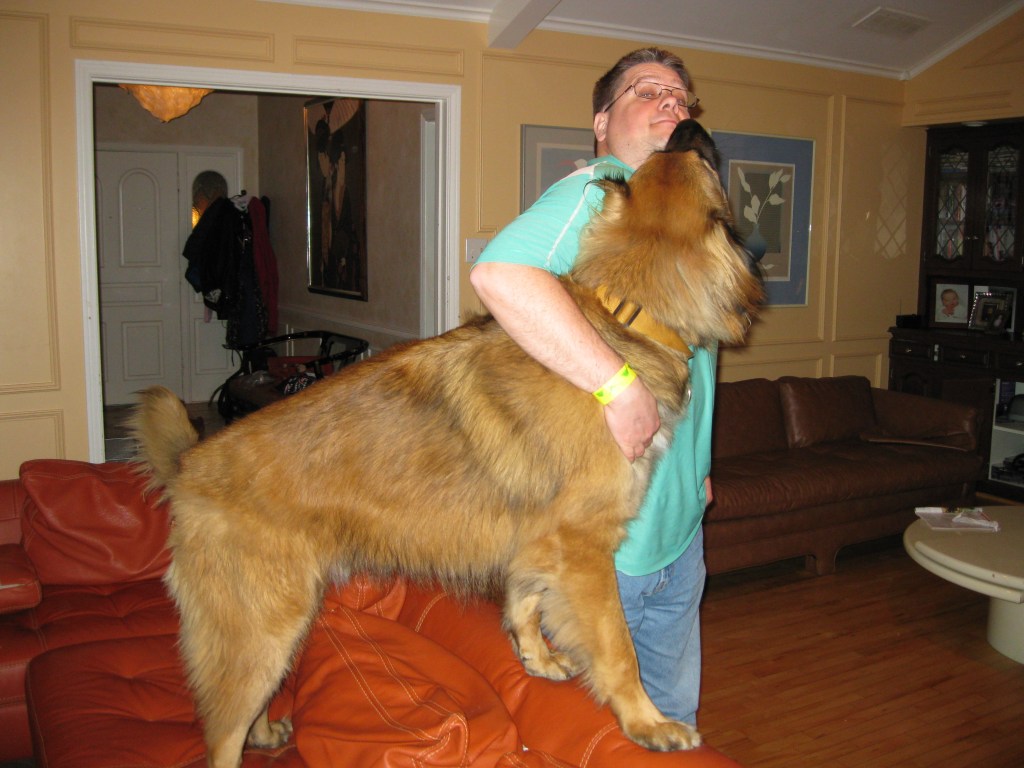
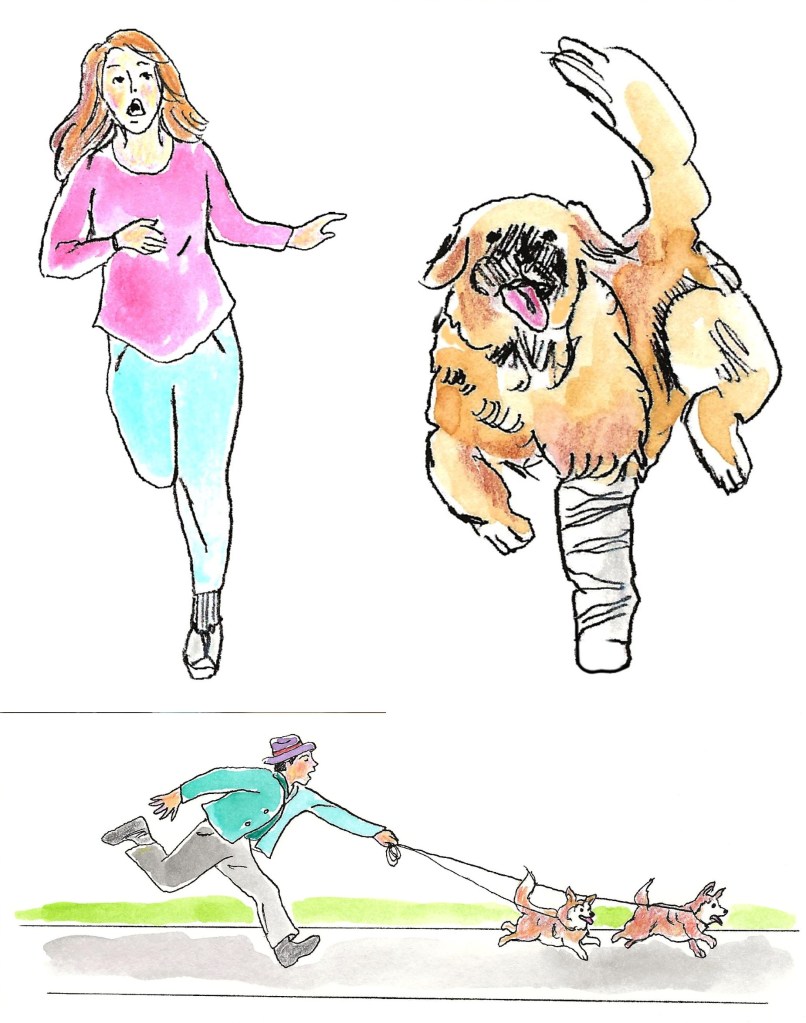
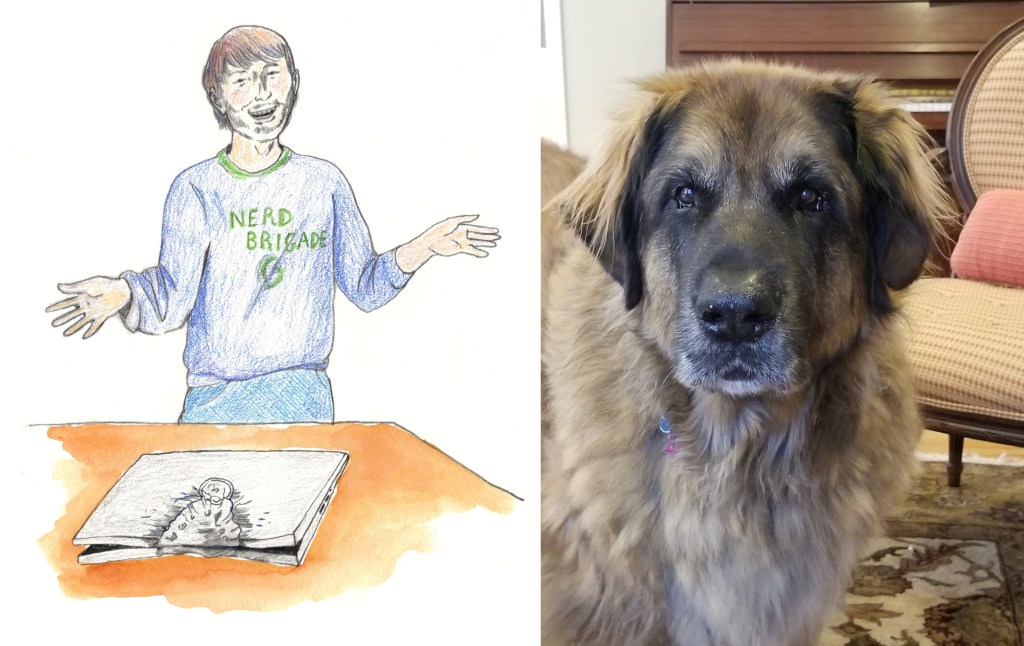
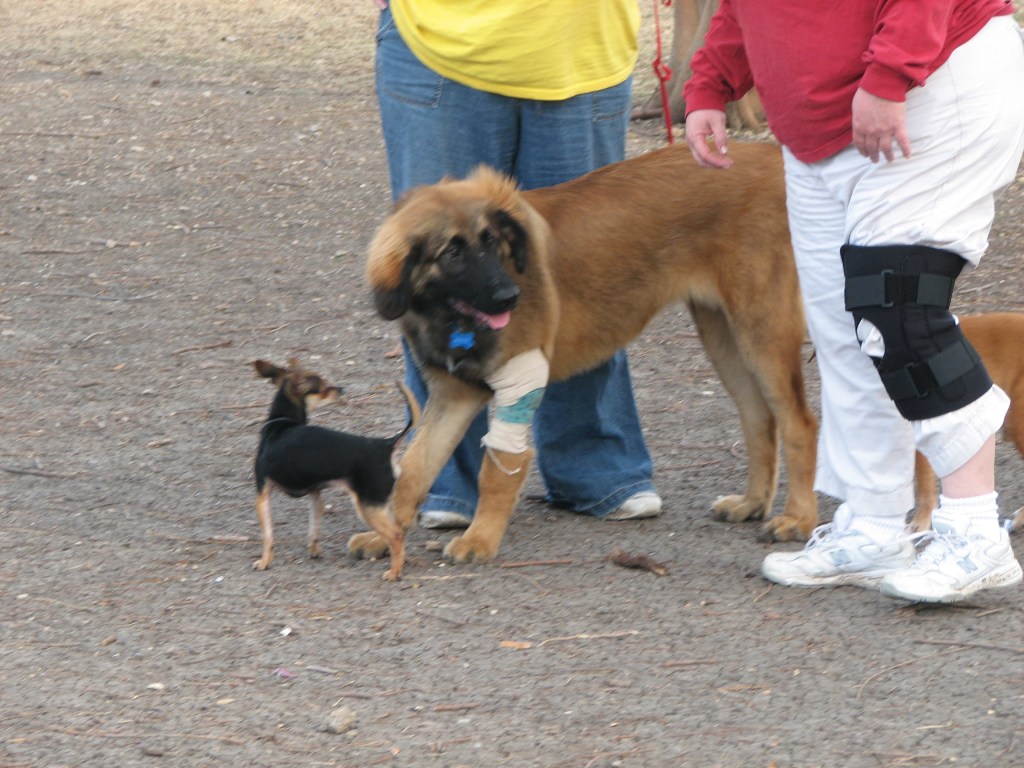
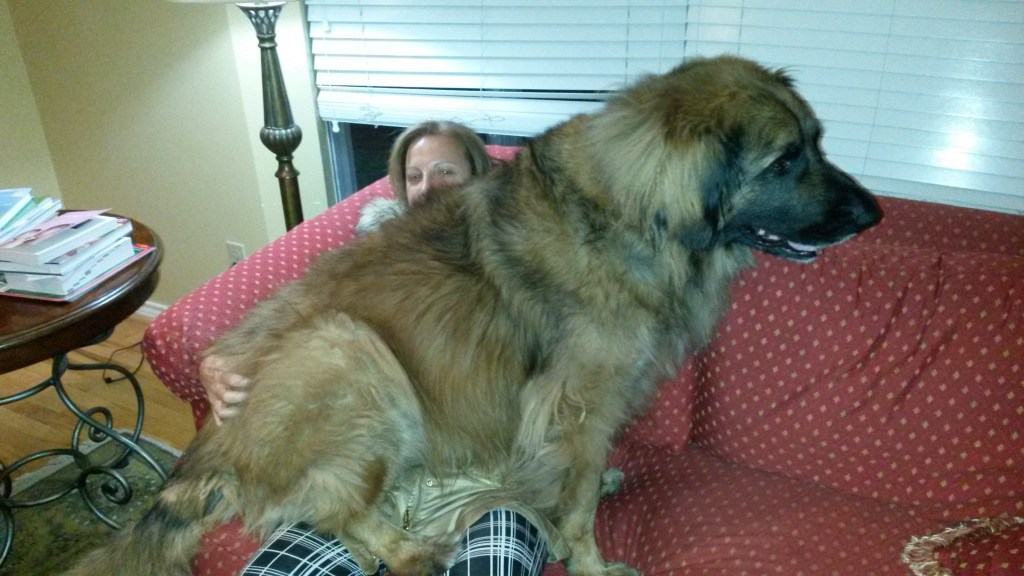
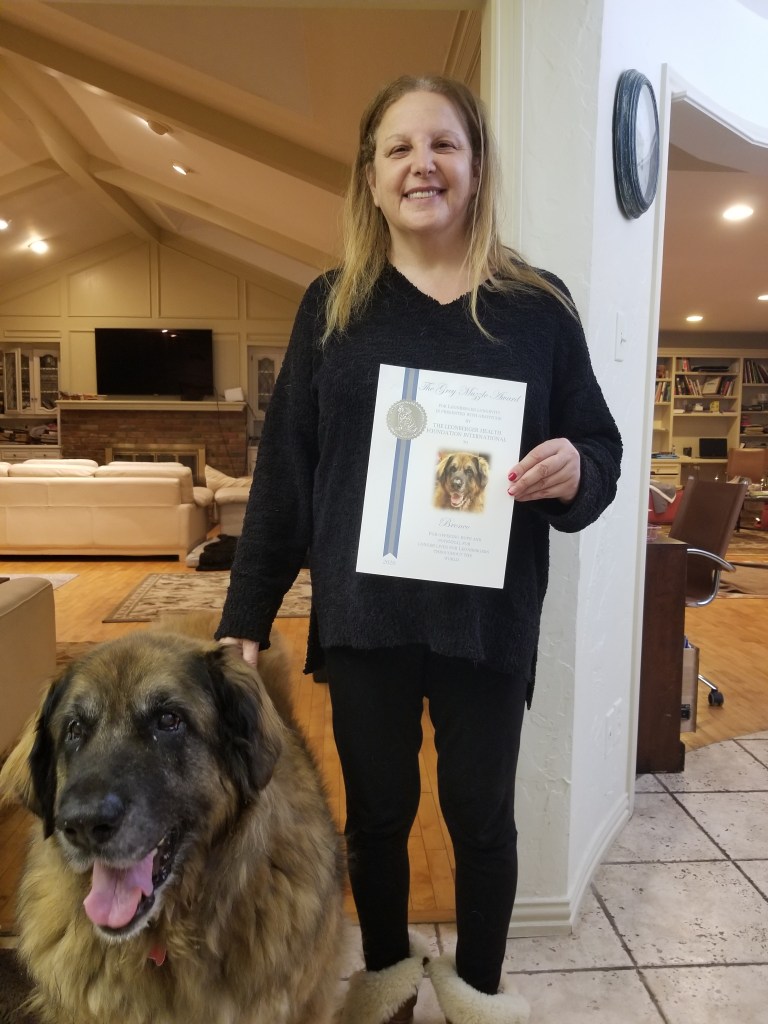
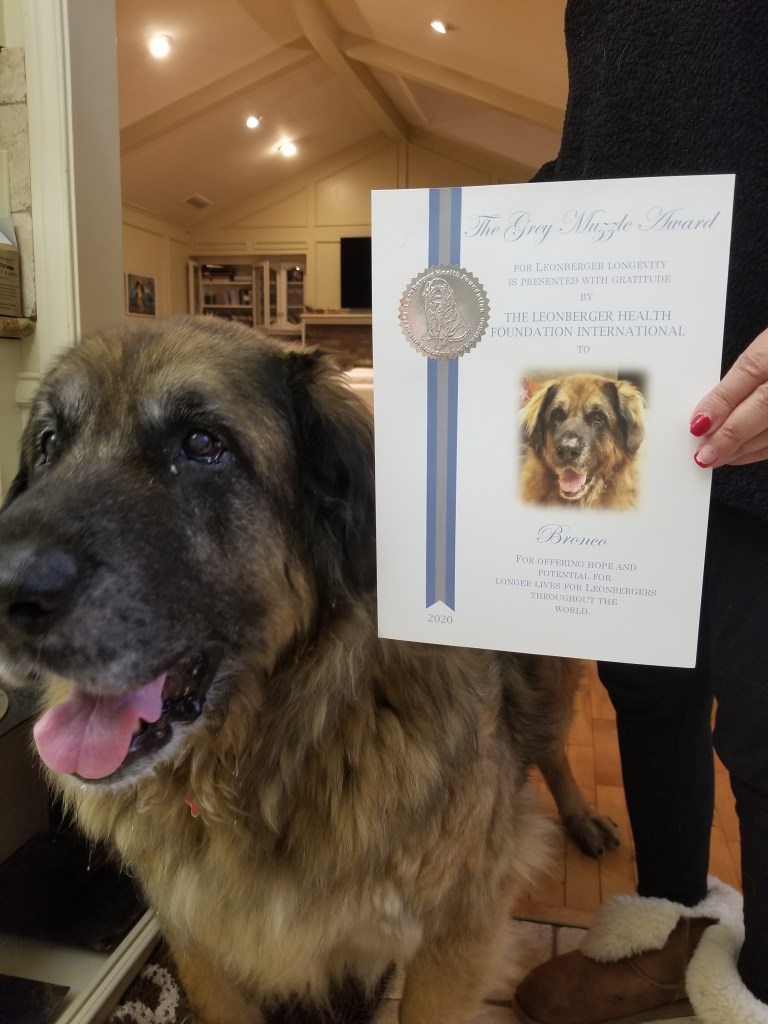
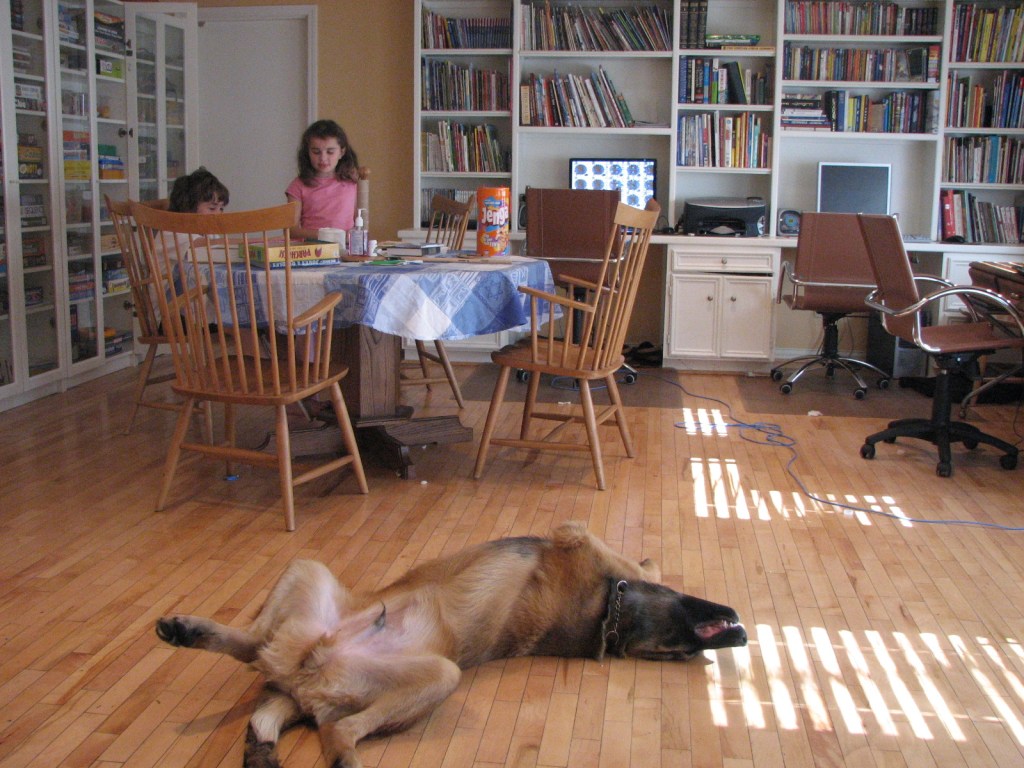
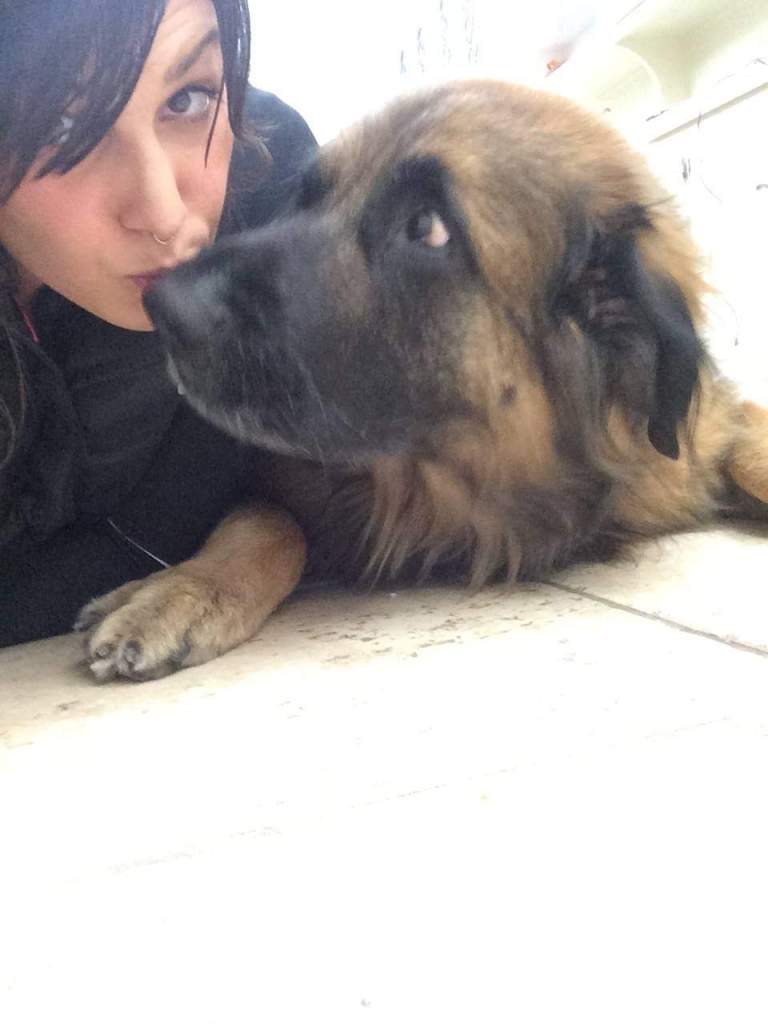
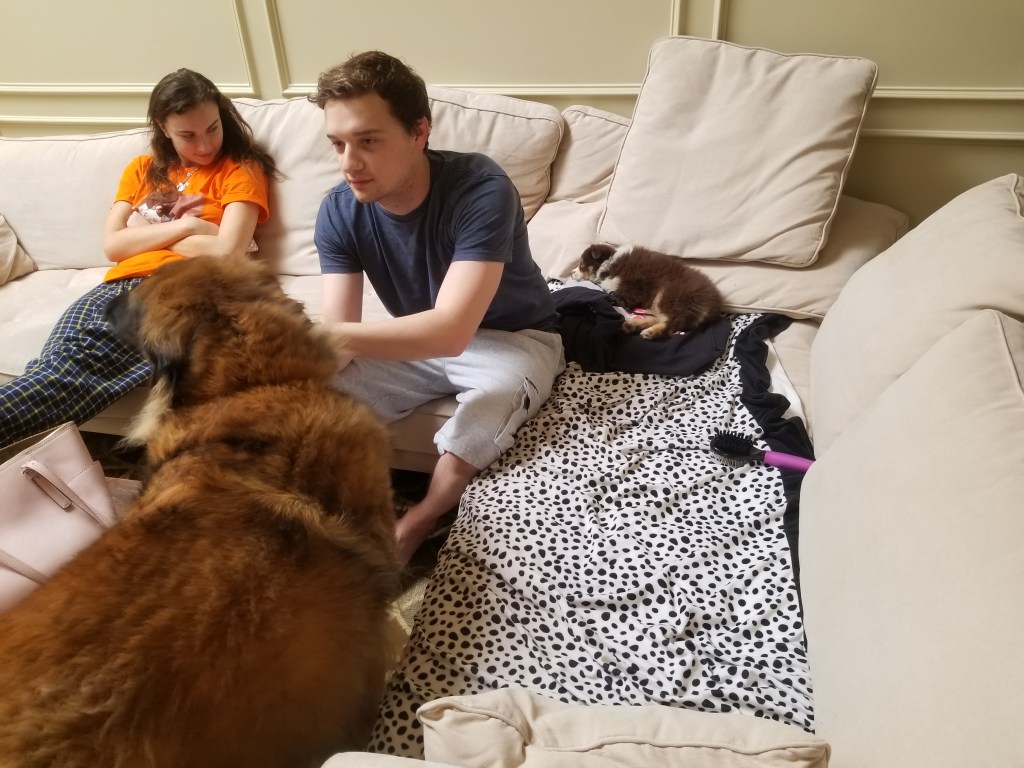
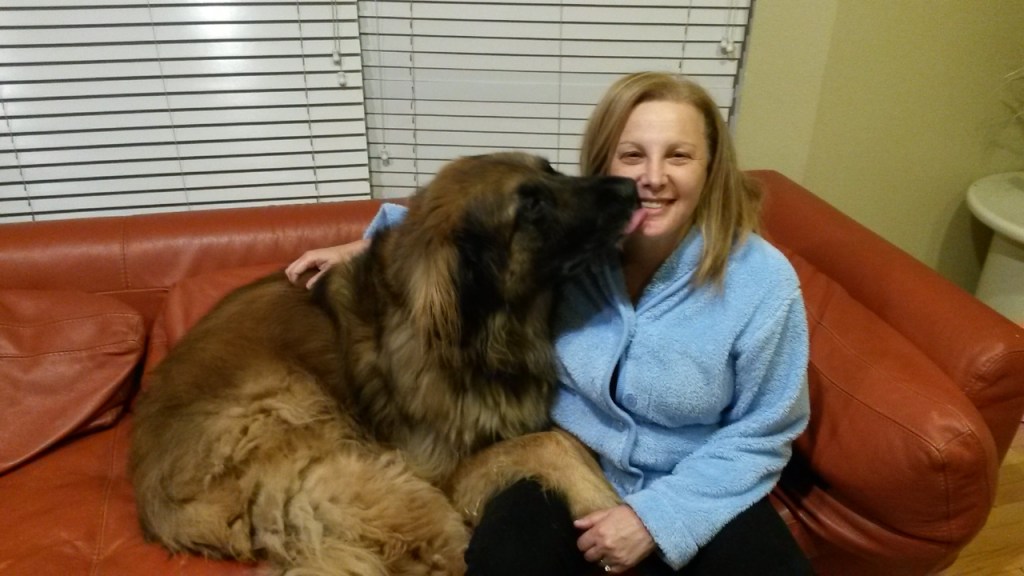
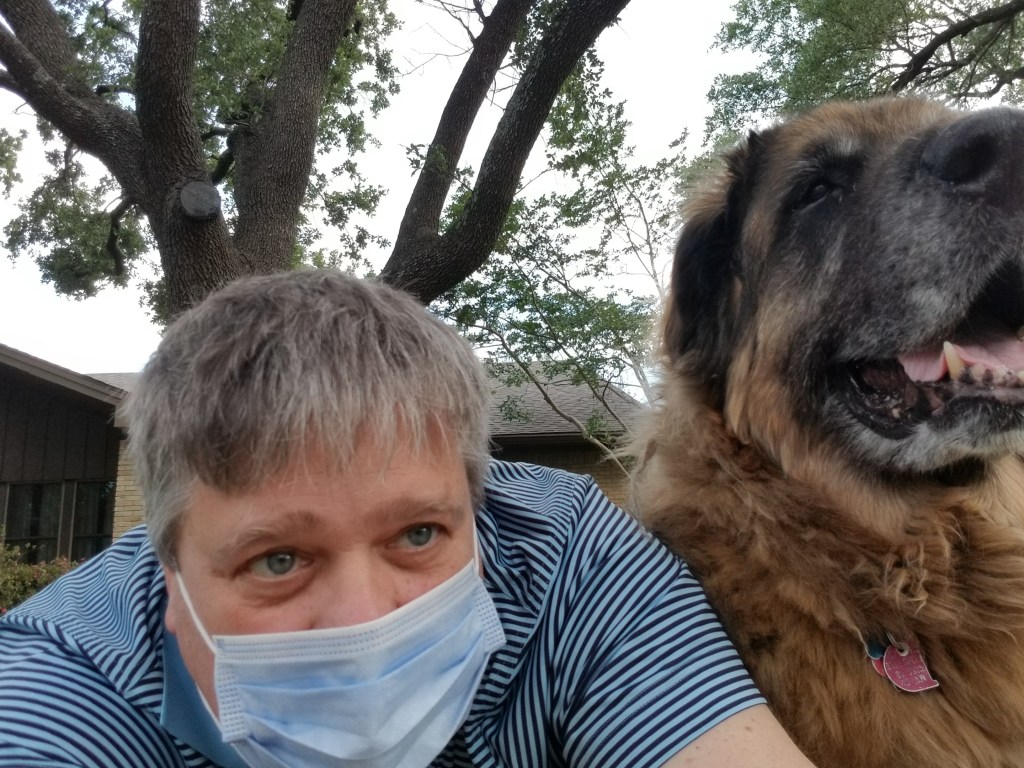
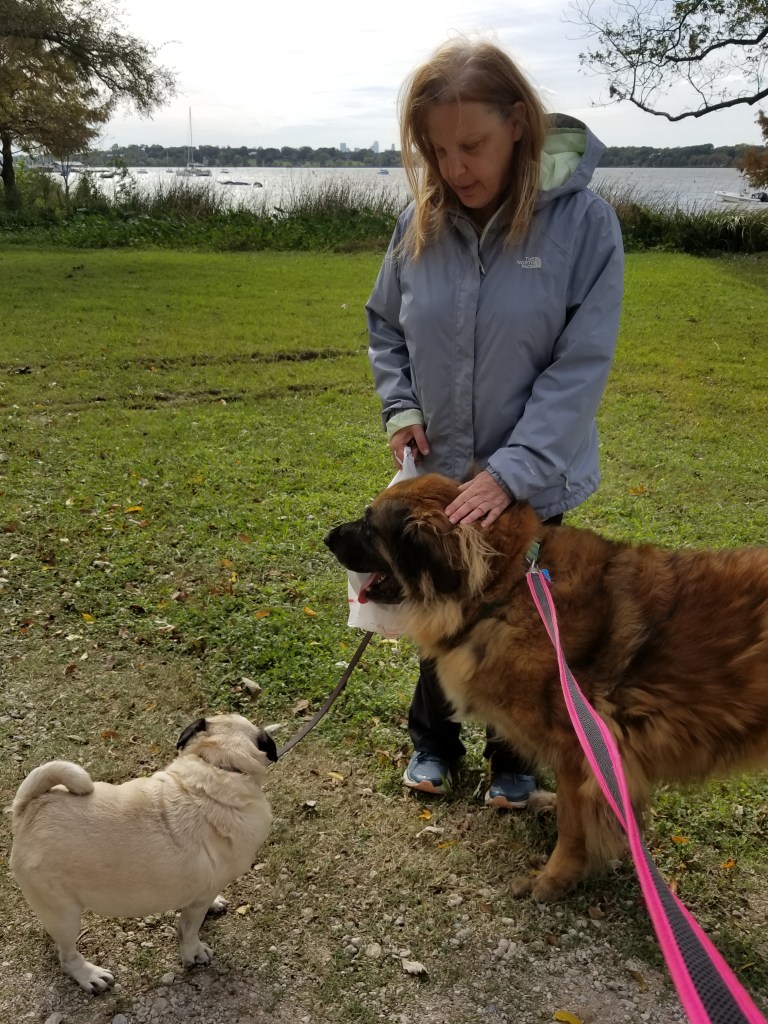
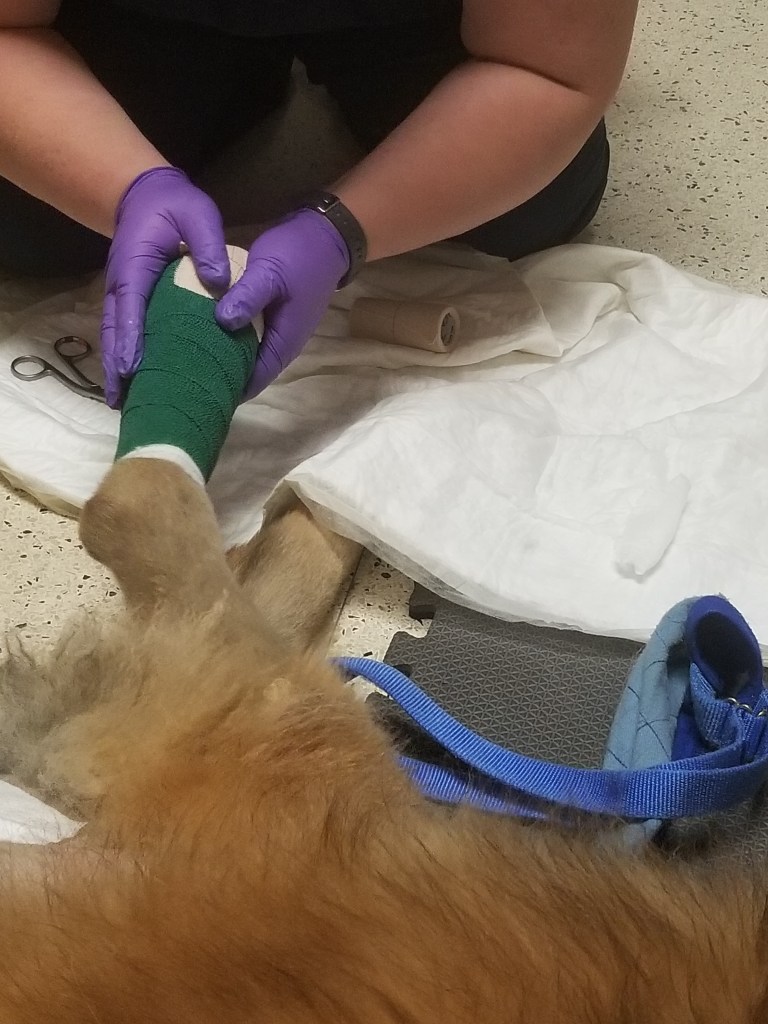
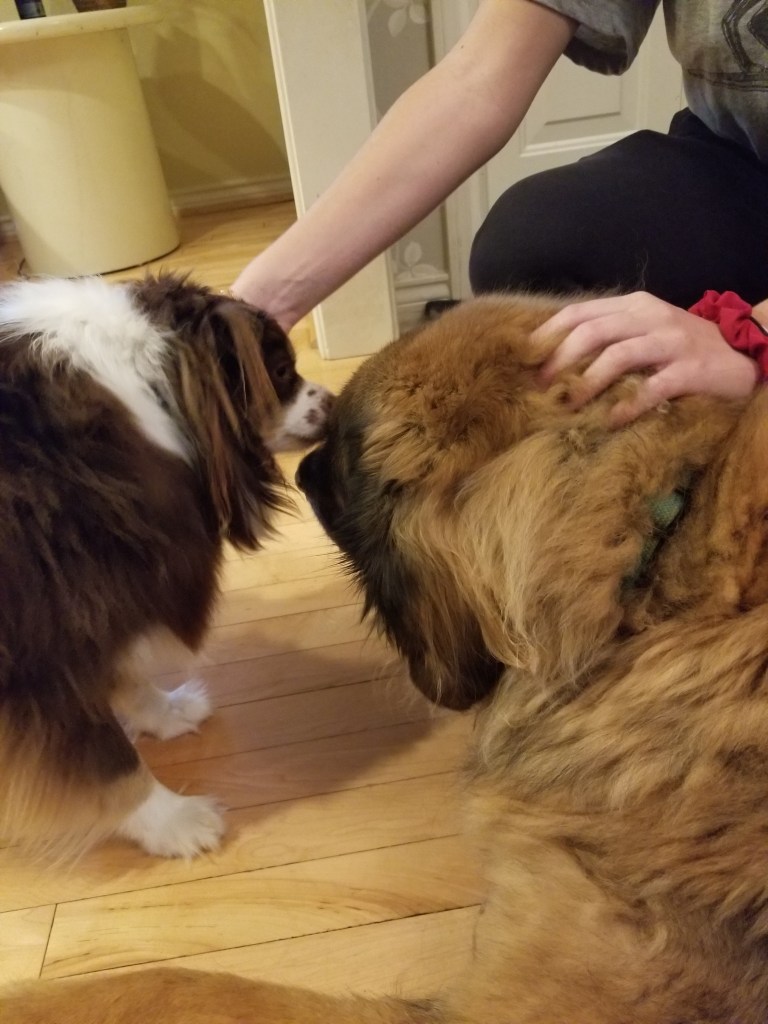
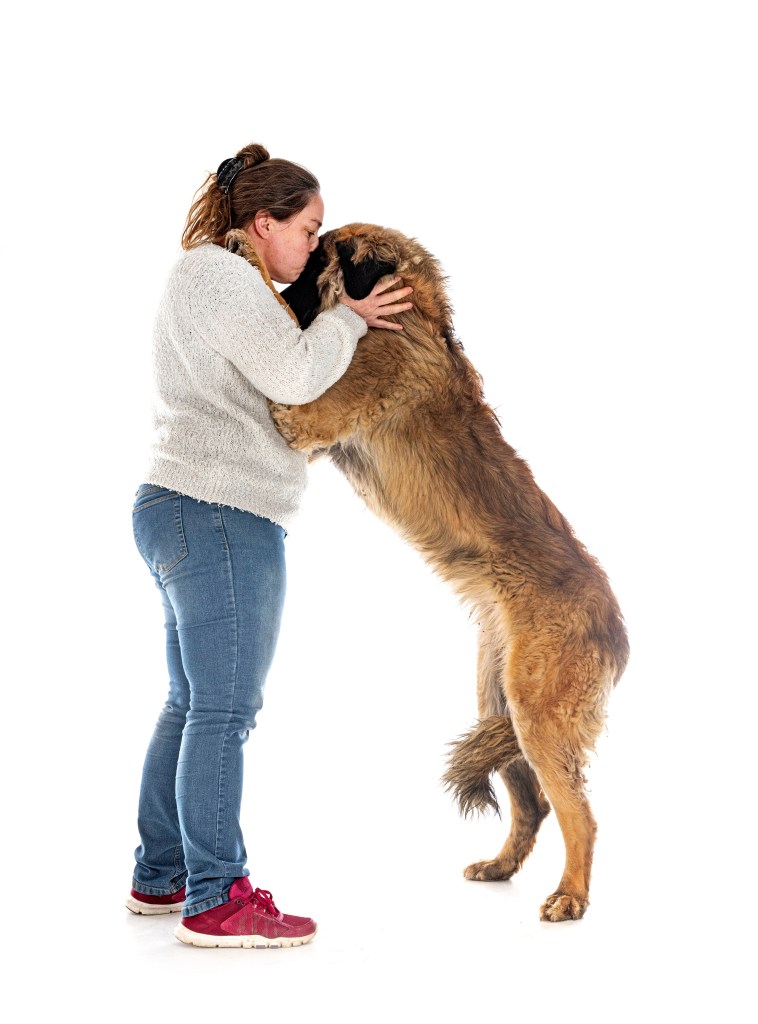
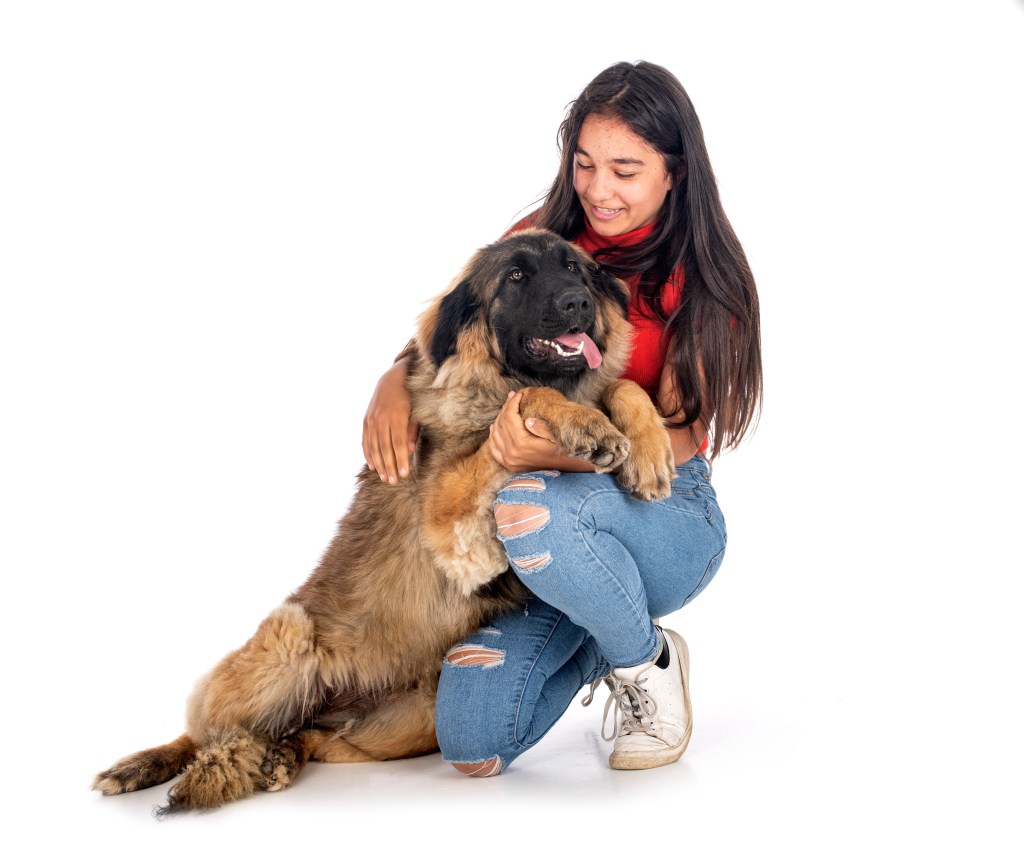
25 Leonberger Pictures with People
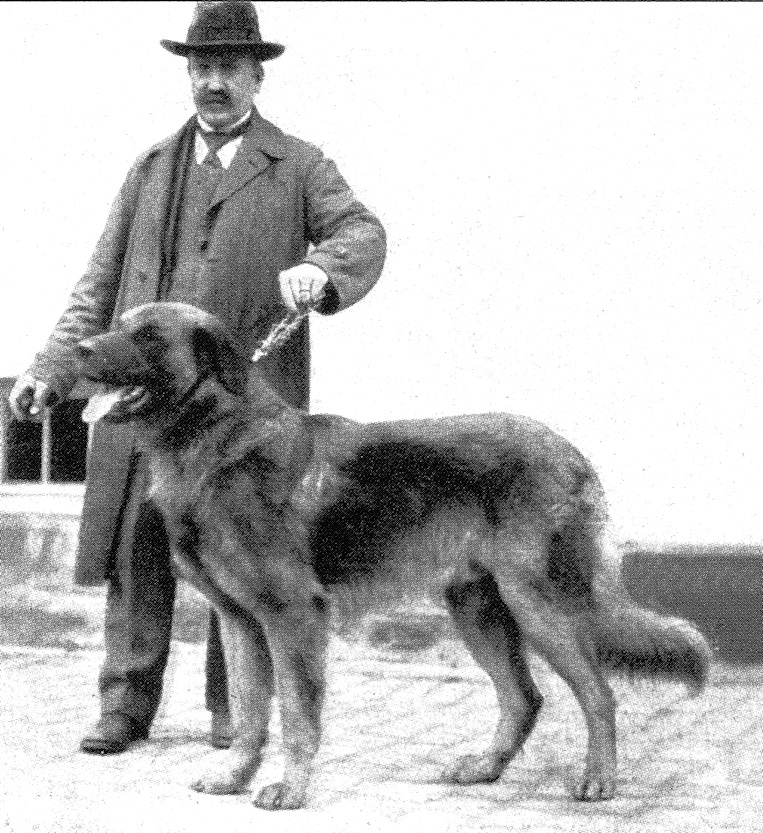
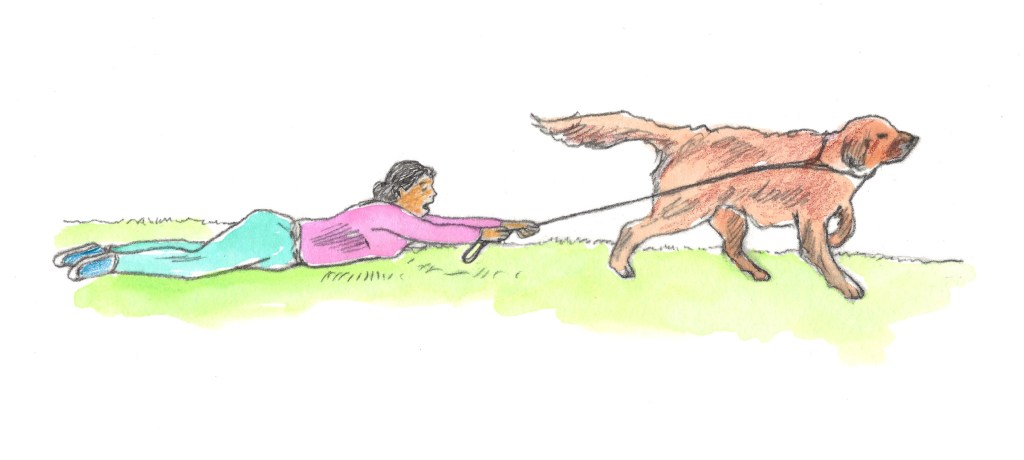
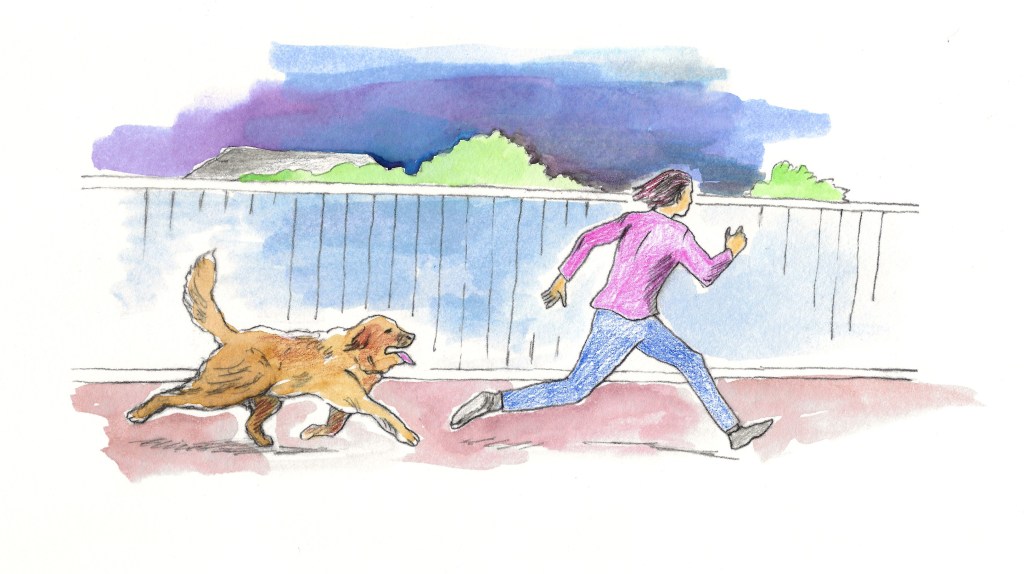
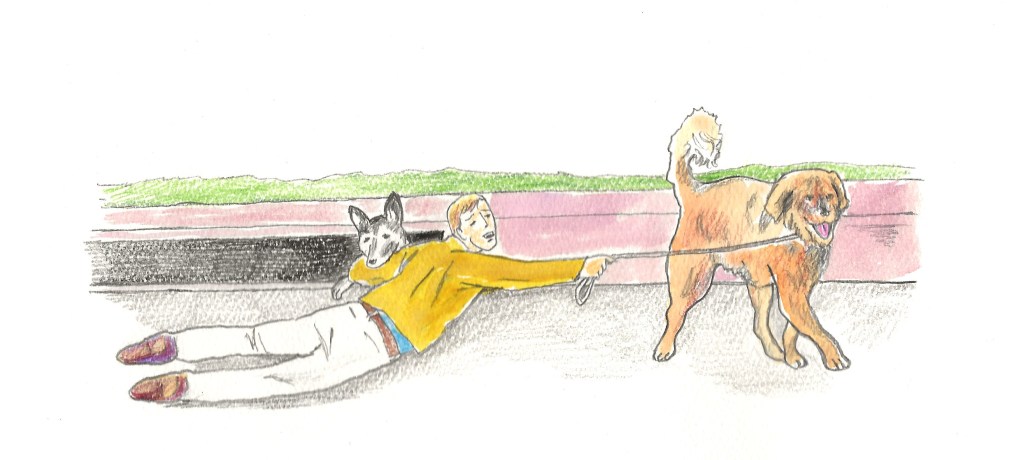
This is another post with the “25 Leonberger photos” theme. This time the theme is “25 Leonberger Pictures with People”. I’ve selected photos and illustrations of our late Leonberger Bronco that also feature people. A few of the photos are stock images from Shutterstock but most of the pictures are mine. Below is a list of the previous posts using the theme 25 Leonberger photos.
- 25 Leonberger Photos and Illustrations.
- Another 25 Leonberger Photos and Illustrations.
- 25 Waterberger Photos (Leonbergers in water or swimming).
- 25 Leonberger Puppies and Other Puppies for National Puppy Day.
- 25 Photos of Leonbergers with Other Dogs.
- 25 Photos of Leonbergers in Nature.
- 25 Photos of Young Leonbergers.
- 25 Photos of Old Leonbergers.
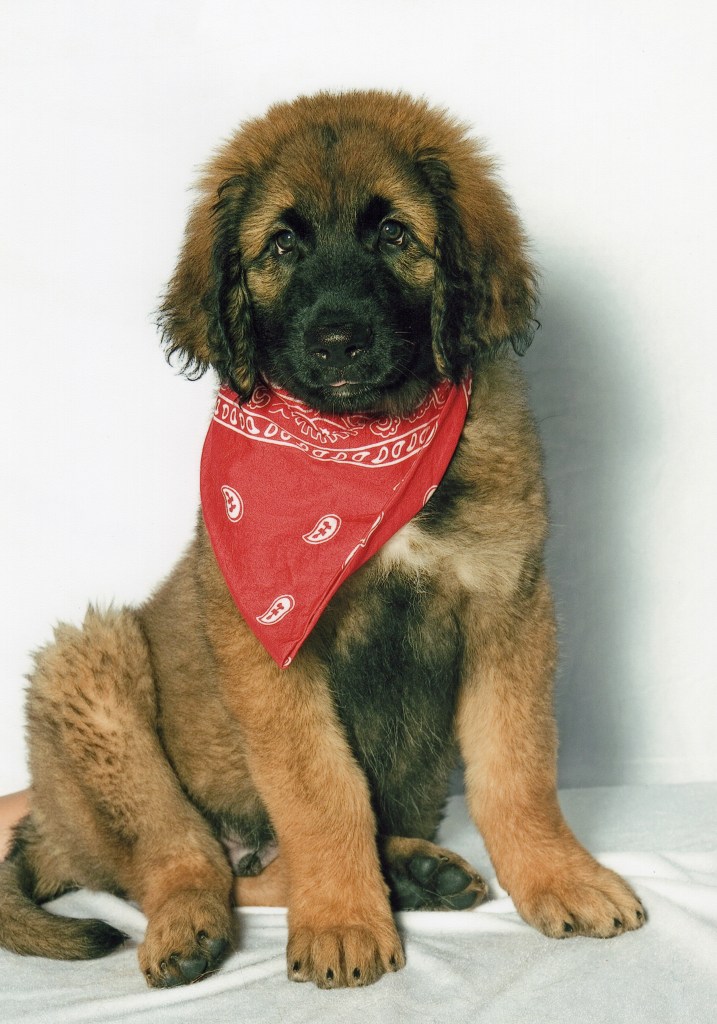
- 25 Leonberger Puppy Photos.
- 25 Leonberger Faces.
- 3 Years Anniversary with 25 Leonbergers.
- 25 Silly Leonbergers.
Also, if you have not checked out my superfactful blog yet feel free to do so.
25 Leonberger Pictures with People

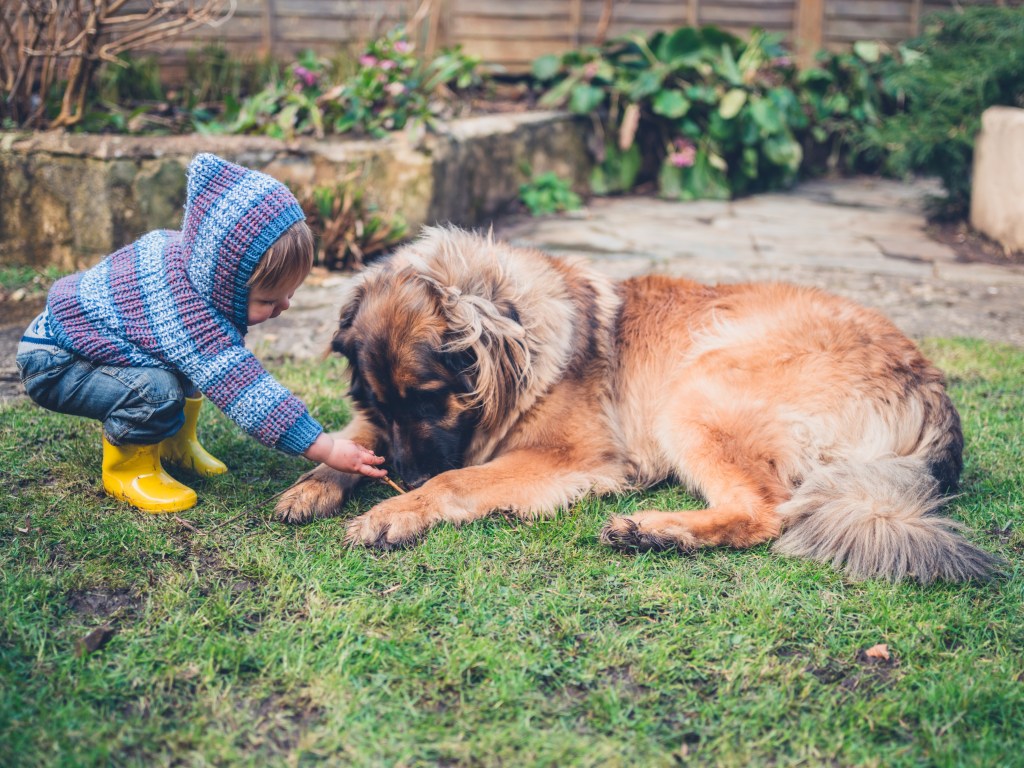
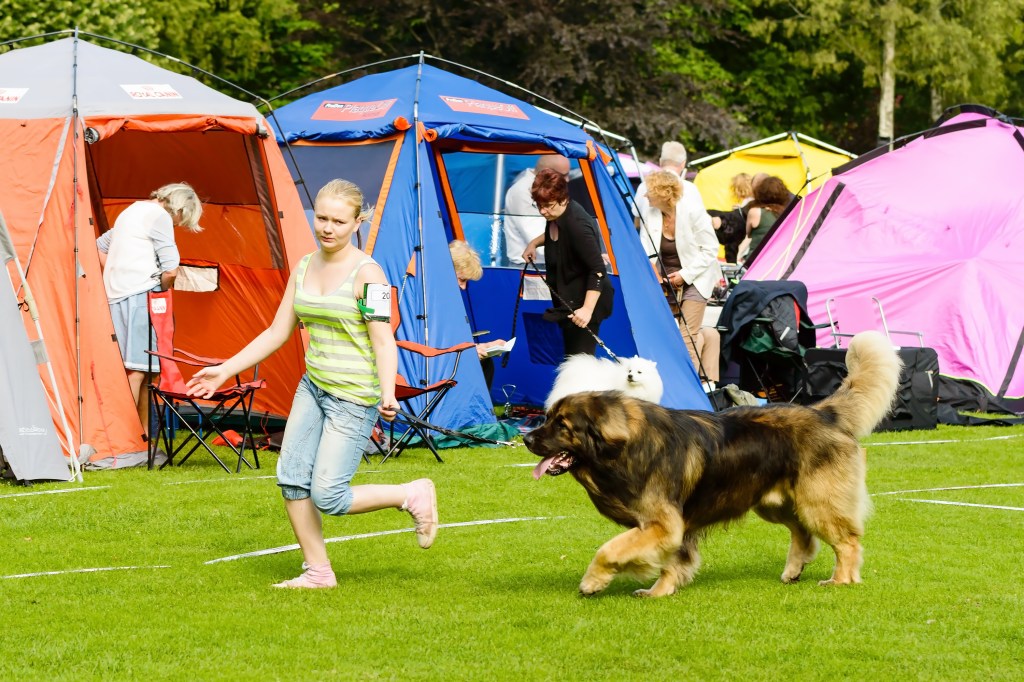
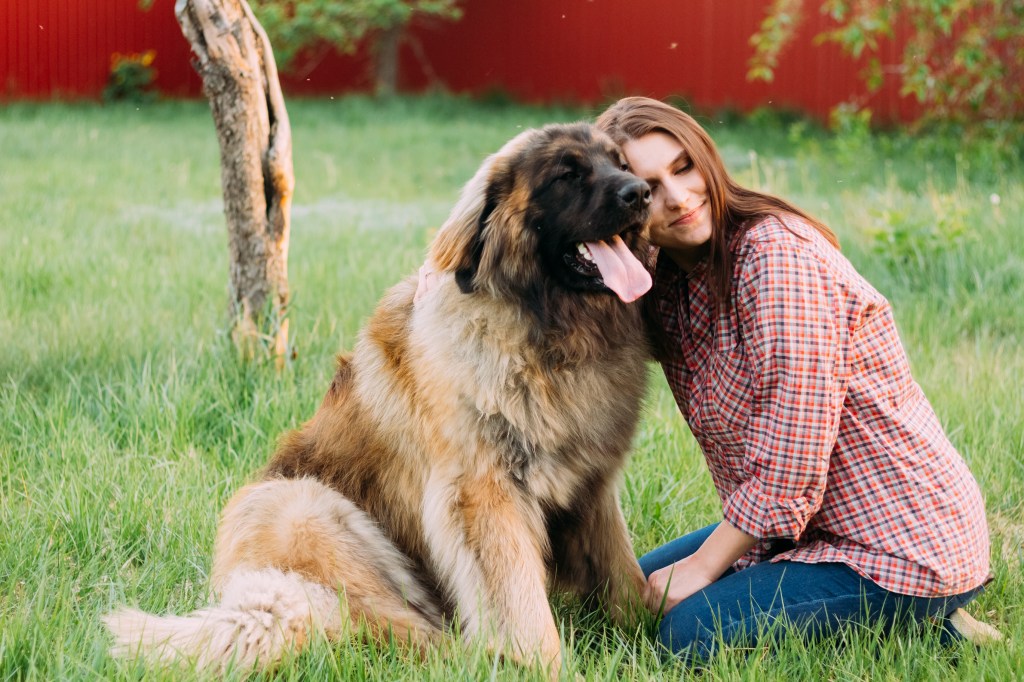
The Life and Times of Le Bronco Von Der Lowenhohle
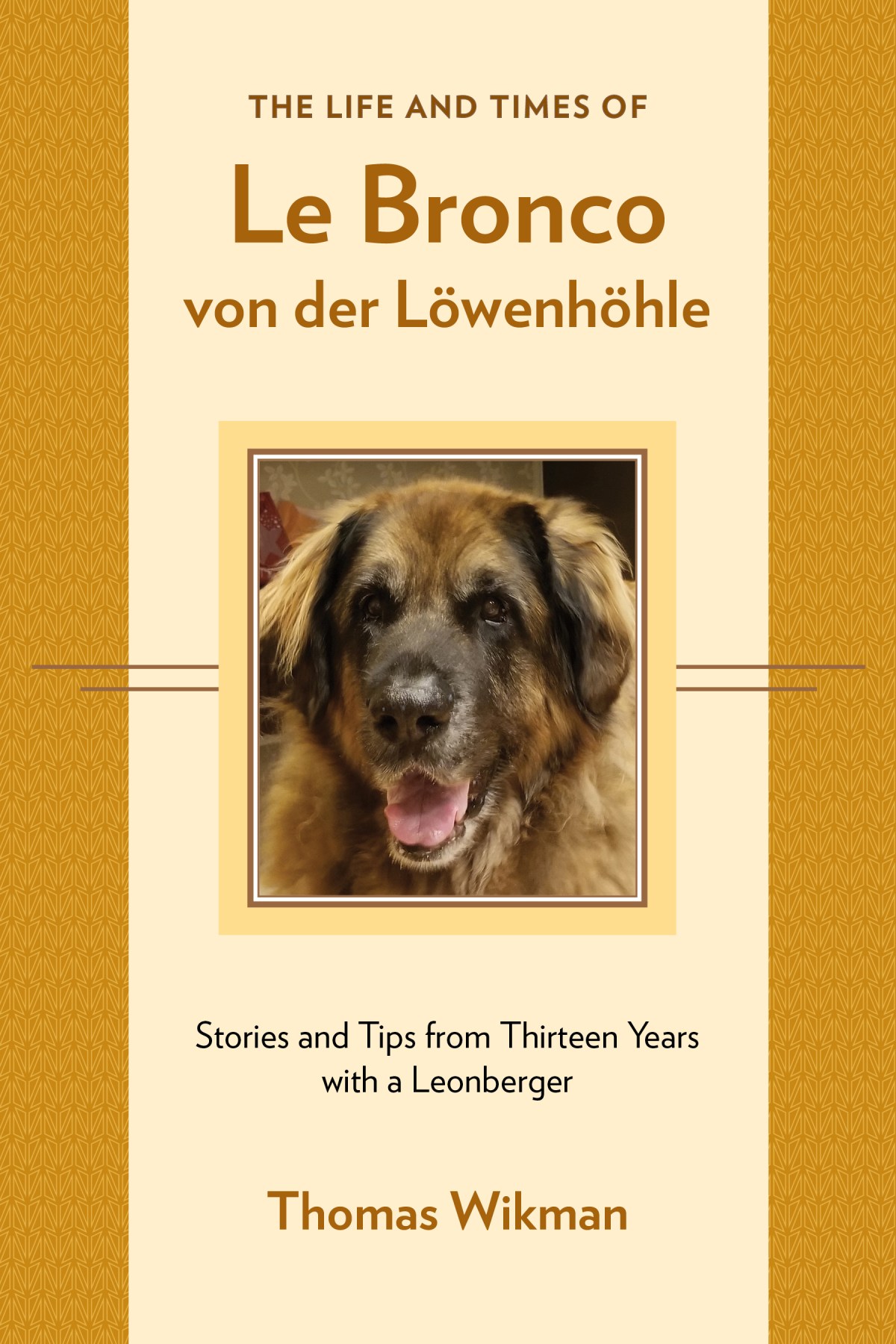
I started this blog three years ago to spread the word about my, at the time, upcoming book “The Life and Times of Le Bronco von der Löwenhöhle”. To celebrate the three-year anniversary of my blog I decided to have a little promotion for my book. The price for paperback version of the book is normally $19.95 but Amazon lowered the price to $17.95 several months ago and I cannot set it back. My guess is that some store somewhere is selling it for $17.95. They have a lowest price policy. Instead of complaining about that I decided to roll with it and to lower the price of the Kindle version as well, to only $2.99. I will keep that price until April 1st. The prices in all other countries, Canada, the UK, Germany, France, the Netherlands, Italy, Spain, Australia, etc., are lowered by the same amount.
Before I continue, I would like to highlight a few important facts about my book.
- The book is about our late Leonberger dog Bronco von der Löwenhöhle and his crazy and amusing adventures and his heroic deeds.
- Bronco saved the lives of other dogs and protected out neighborhood.
- In the book there is information about Leonberger dogs, the breed standard(s), history, Leonberger organizations, training and care, and health.
- The book has lots of photos, illustrations and it is in color.
- All proceeds are donated to the Leonberger Health Foundation International
- It is a book for all dog lovers not just Leonberger lovers. It is intended to be both fun and educational.
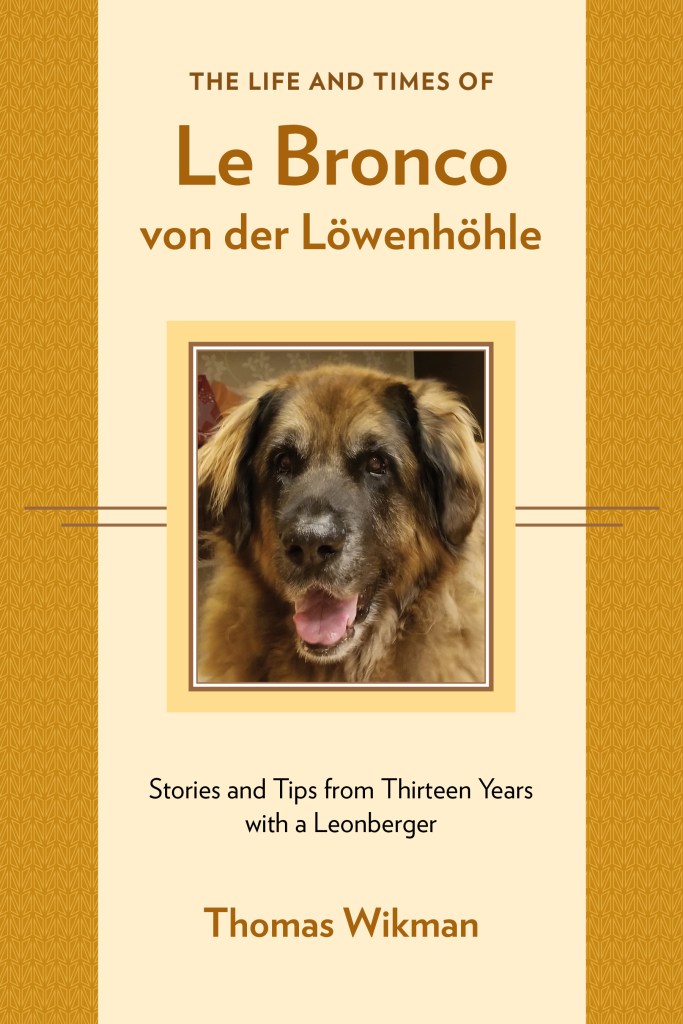
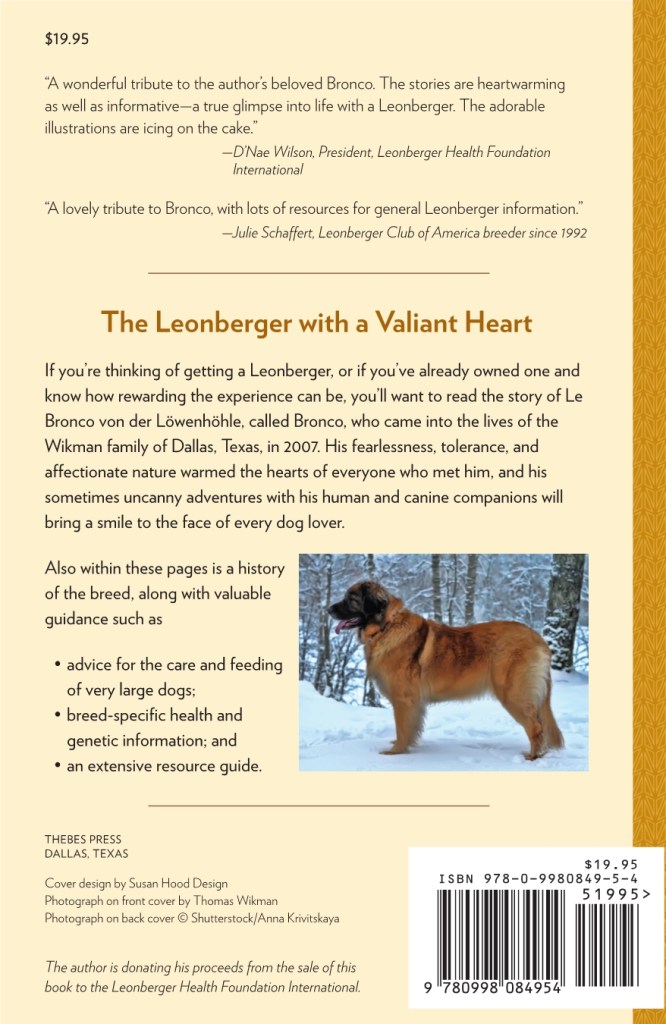
Canadian Leonbergers with my Book
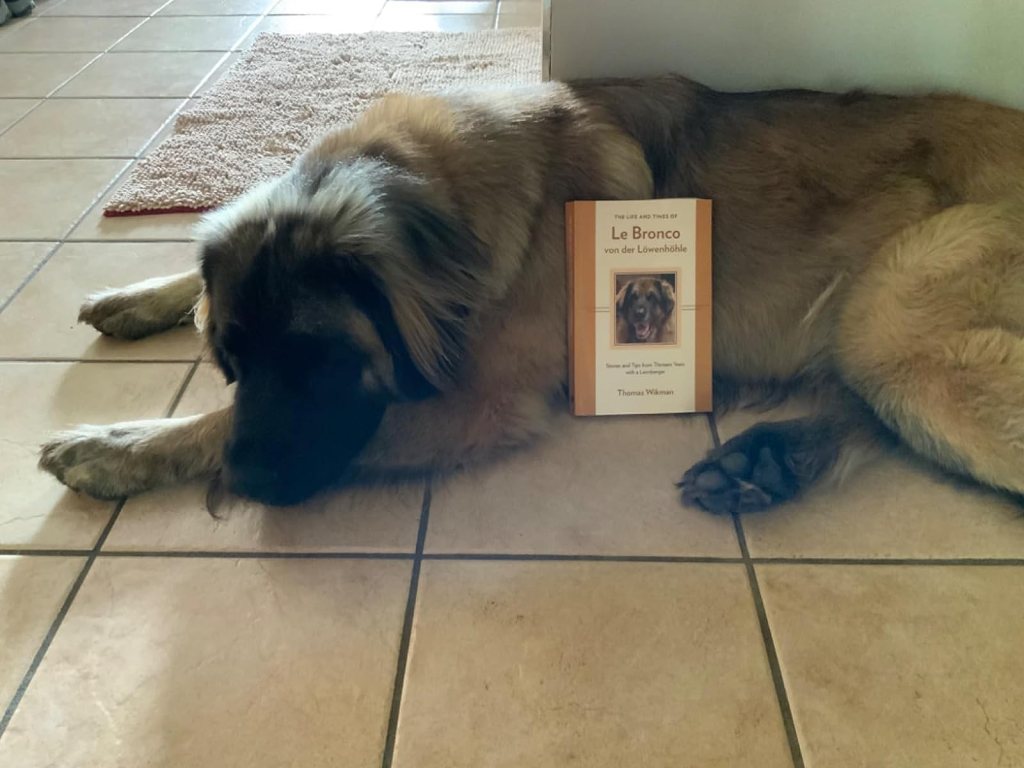

Getting My Book in Other Places
You can also get my book in many other places including Amazon in every country where Amazon exists, Chapters Indigo, Apple, etc. To see most of the options visit my Book Page by clicking here.
A Leonberger Story
The book features a lot of stories about Bronco as well as other dogs. Below is one short story.
Bronco’s Hamster Search and Rescue
Back when Bronco our Leonberger was young, the kids had pet hamsters—Moldova and Montenegro. The hamsters escaped from their cages sometimes, but Bronco usually helped us find them whenever they did. Claudia would tell him, “Bronco, find the hamsters,” and he would go around the house sniffing until he found them. One time he found them in the linen closet; another time he found them on a shelf in the living room.
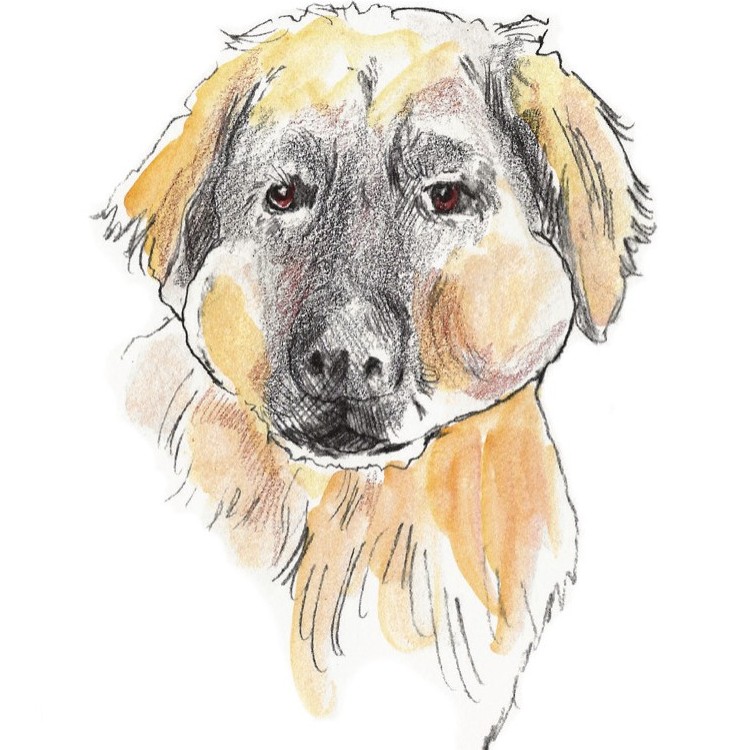
On one occasion, a friend of David trusted us with his two hamsters while he and his family went on vacation. A couple of days later, Claudia noticed that the two hamsters were missing from their cage. The next thing she noticed was that Bronco’s cheeks looked puffy, so she said, “Bronco, drop it!” Out came the two hamsters, both unconscious.
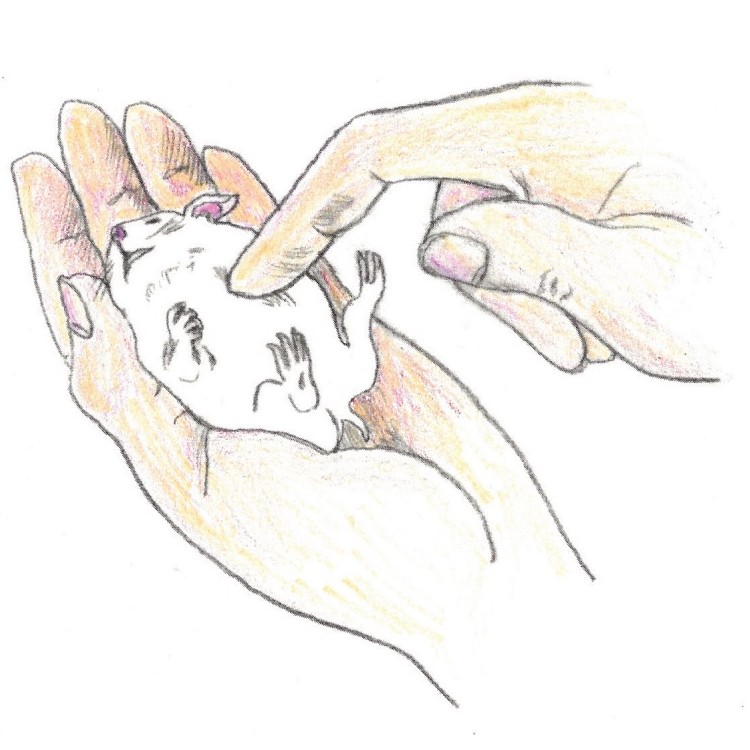
In a panic, Claudia started performing CPR on the unconscious hamsters. She put one hamster at a time in her hand and gently compressed each tiny chest using the finger of the other hand. Fortunately, one hamster revived right away. The CPR didn’t seem to be working on the other hamster, but Claudia put both of them back in their cage, and soon the second hamster also woke up. We decided to keep the incident to ourselves. Hamsters don’t squeal.
The question is, Did Bronco try to eat the hamsters? Or did he simply find them and pick them up, intending to alert us to their presence? I’ve asked several people this question, including some who know Leonbergers well. The answer they give is that he tried to save them from whatever danger he thought they might have been in. If he wanted to eat them, they say, he would have tried chewing them. But clearly, he didn’t.
The hamsters may have felt differently about the situation and may have fainted from the shock. Who knows? Bronco was a hero on many occasions, but this time, perhaps, he was a hamster superhero.
Eventually our own hamsters died, but that didn’t end Bronco’s interest in them. When the first hamster died, we held a funeral. We put the hamster in a shoe box, said goodbye, put some flowers in the box, and buried it in the backyard underneath some bushes. But when we turned our backs, Bronco was there, digging under the bushes. Perhaps he thought he could save the hamster. So, we called Bronco off and tried again: this time I dug a deeper hole and put a wide rock over the shoe box before covering it. Now Bronco couldn’t dig up the hamster. When the second hamster died, I had learned my lesson and did the same thing.
Important Note : I am going on a ski vacation early tomorrow morning and I will take a one-week break from blogging as well as a break from reading other people’s blogs. I will try to catch up when I get back.
Holiday Book Promotion and the Leonberger Health Foundation
The Price Has Been Reduced
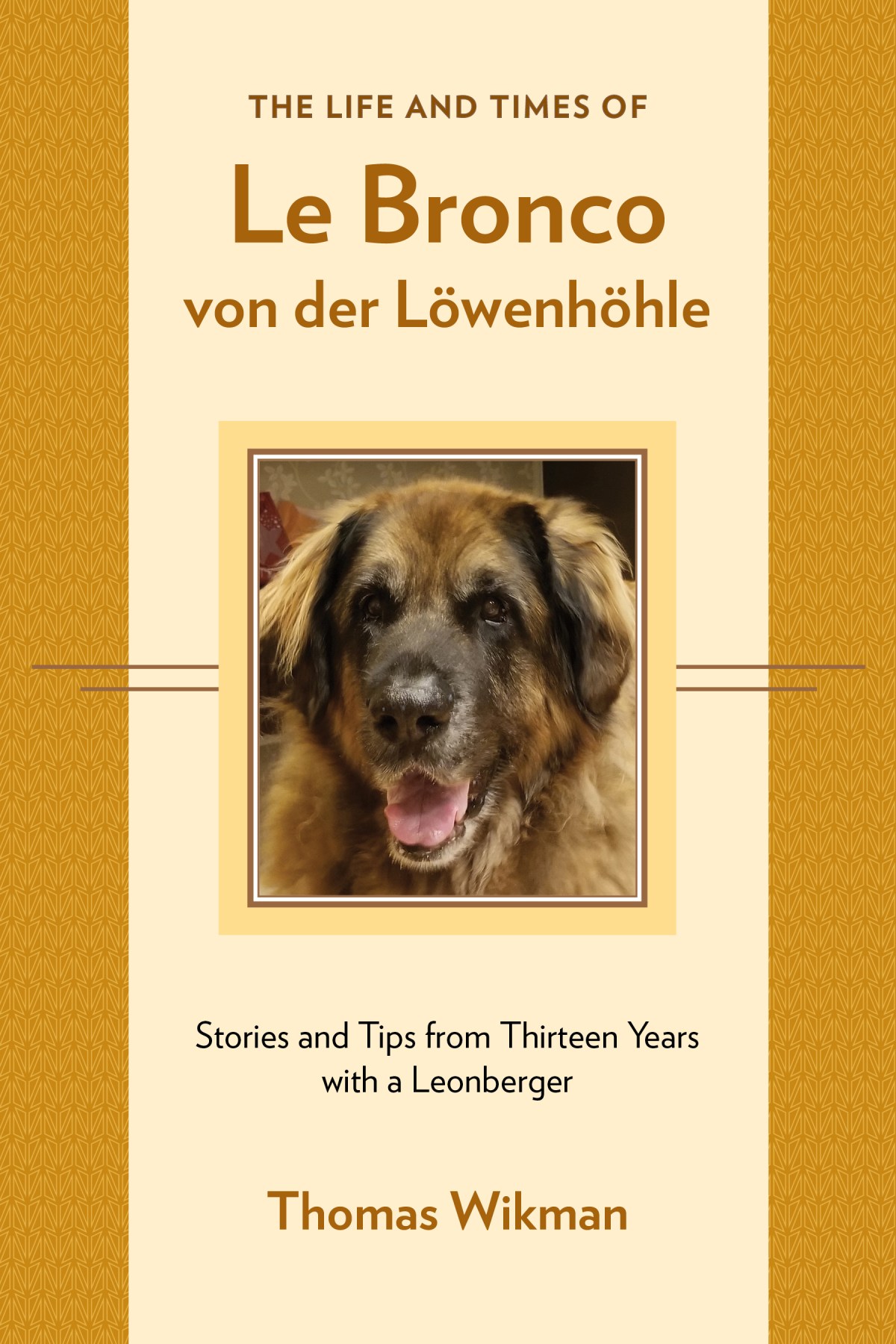
Amazon lowered the price of the paperback version of my book “The Life and Times of Le Bronco von der Löwenhöhle” from $19.95 to $17.95 some time ago and I cannot set it back to $19.95. I am guessing that it is because of Amazon’s lowest price policy and that another bookstore somewhere is selling it for $17.95. So, I am thinking, why not roll with it and have a holiday promotion. I also just lowered the price of the Kindle version from $4.95 to $2.99. The prices in all other countries, Canada, the UK, Germany, France, the Netherlands, Italy, Spain, Australia, etc., are likewise lowered by the same amount.
I would like to add that the reason I tried to set the price back to $19.95 is not because I want more money. I am donating all royalties to the Leonberger Health Foundation International, which is a great organization that supports health related breed-specific research. However, the research frequently improves the health of other dog breeds as well. You can read more about the Leonberger Health Foundation International below.
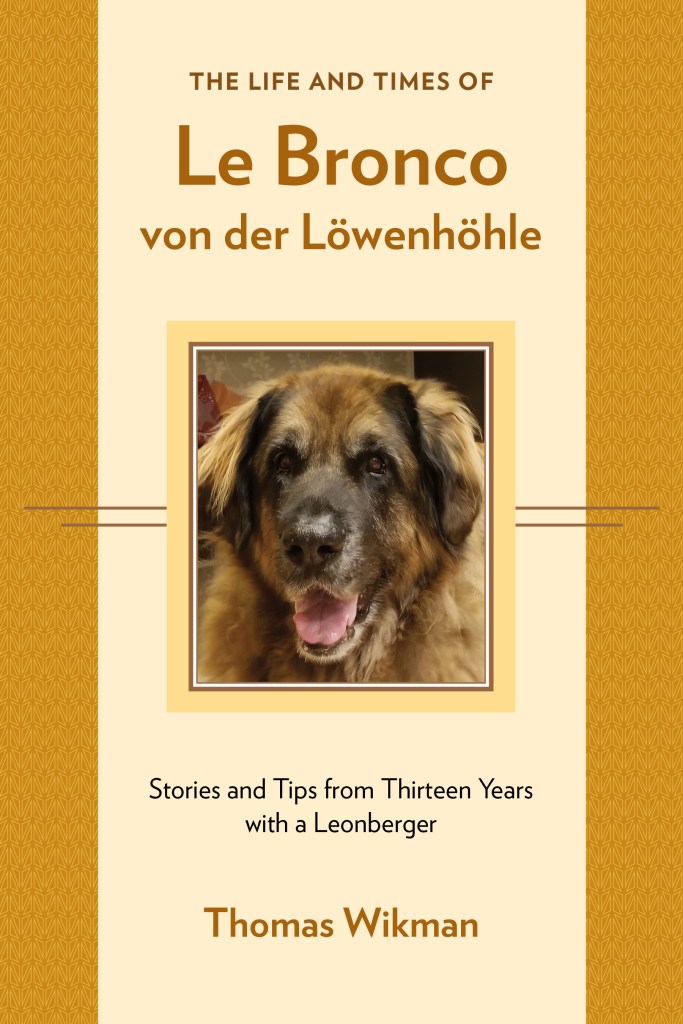
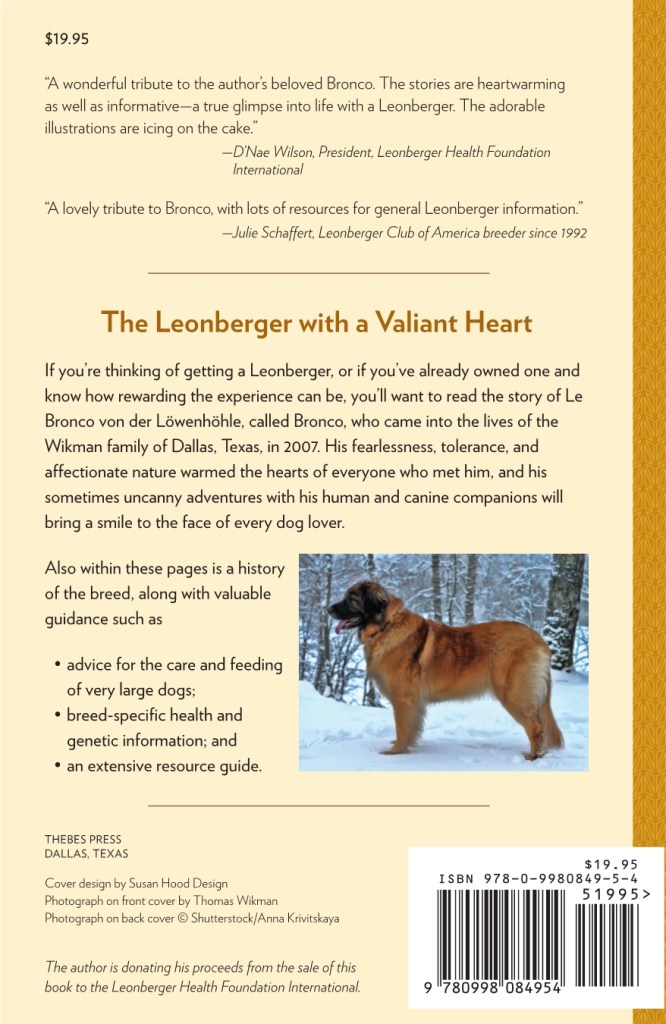
In this book you’ll read about some of Bronco’s amazing feats: the night he scared away a prowler; the day he performed a hamster search and rescue; the time he stumped the Geek Squad; and the late night he snuck into the kitchen and ate a two-pound bag of dog treats, a box of pastries, a loaf of bread, a grilled chicken, and a Key lime pie, all in one sitting. You’ll also read about his unflappable calm during a north Texas tornado and his stoicism as he endured health challenges in his later years.
In addition to entertaining stories, these pages contain a wealth of practical guidance, including:
- a history of the Leonberger breed;
- advice for the care of very large dogs;
- breed-specific health and genetic information;
- training and feeding tips;
- suggestions for finding a breeder;
- the official breed standard; and
- an extensive resource guide.
Below is a list of places where you can get my book.
- Paperback on US Amazon
- Kindle on US Amazon
- Paperback on Amazon Canada
- Paperback on Amazon Sweden
- Paperback on Amazon France
- Paperback on Amazon Germany
- Paperback on Amazon UK
- Paperback on Amazon Poland
- Paperback on Amazon Italy
- Paperback on Amazon Netherlands
- Paperback on Amazon Spain
- Paperback on Amazon Japan
- Paperback on Amazon Australia
- Paperback on Barnes & Noble
- Paperback on Chapters Indigo Canada
The Leonberger Health Foundation International
The Leonberger Health Foundation International is an organization that supports science and research impacting Leonberger health, longevity and breed preservation. Examples of research they’ve supported include research on Addison’s Disease, Inherited Leonberger Polyneuropathy (LPN), LEMP research, the Rabies Challenge Fund, Osteosarcoma, Hemangiosarcoma, genetic causes of male (dog) infertility, Cryptorchidism, study of cruciate ligament repair, Glaucoma, cardiac diseases, thyroid disease, neurological disorders, longevity & aging, population diversity, juvenile renal dysplasia, anal furunculosis, the EGFR Immunotherapy Project, and Leonberger inherited Arrythmia. As mentioned above, a lot of the progress applies to other dog breeds as well.
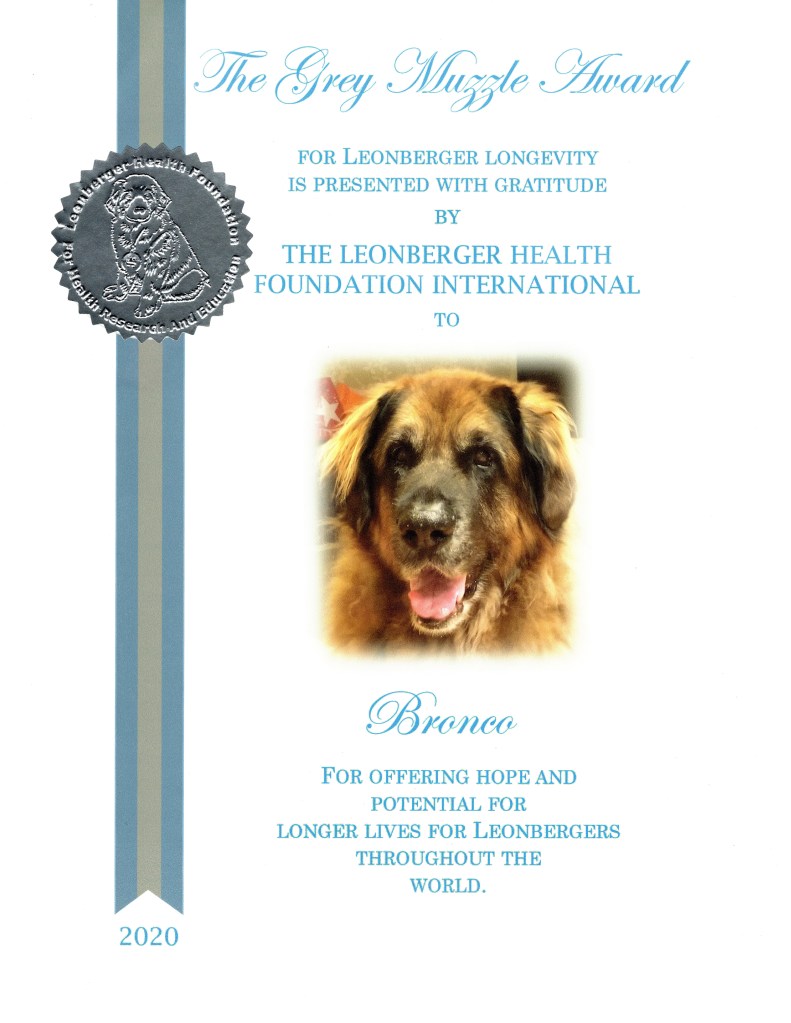
LHFI’s global biobank contains DNA samples from more than nine thousand Leonbergers. Among the organization’s notable achievements are the eradication of Addison’s disease among Leonbergers and the raising of more than $650,000 for research into conditions that affect canine health. Another success is the fact that since 2011, no Leonbergers with two copies of the LPN1 gene mutation (which causes Leonberger polyneuropathy) have been recorded in LHFI’s biobank. LHFI does other things as well. LHFI grants an award called the Grey Muzzle Award to Leonbergers who reach the impressive age of 12 years. Leonbergers and other giant breeds tend to live short lives, something LHFI is trying to solve and they have made progress. One of the recipients of the Grey Muzzle Award was our Leonberger Bronco.
Below is an 8-minute video explaining the ongoing research on sudden cardiac death in young Leonbergers.
25 Photos of Old Leonbergers
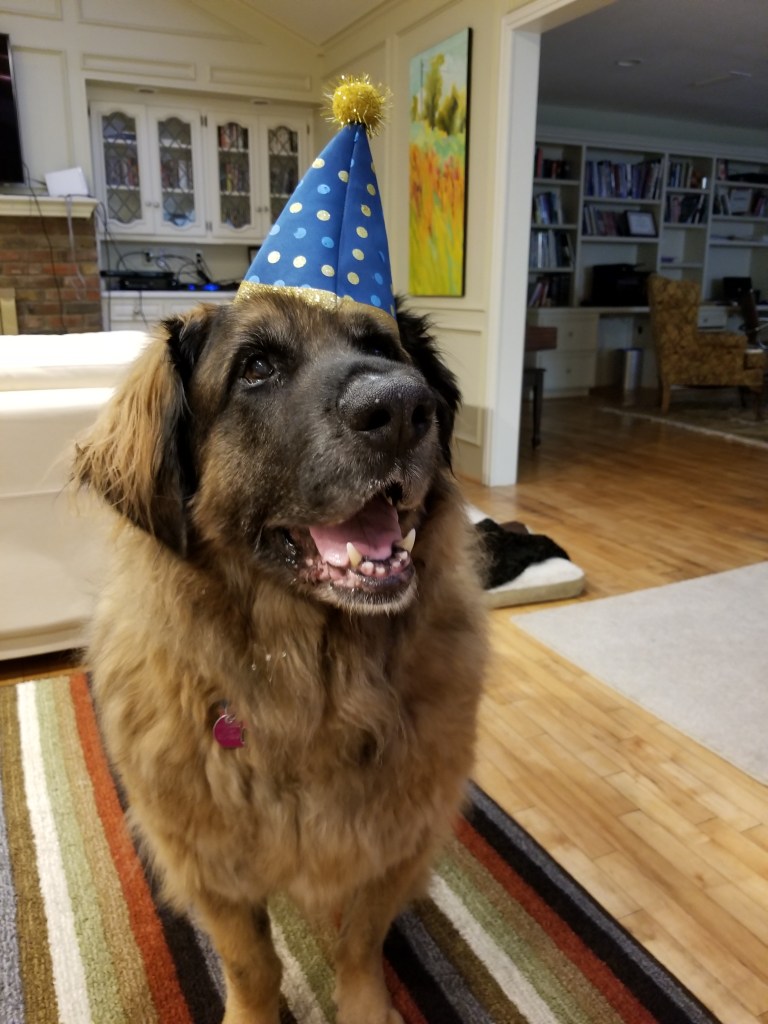
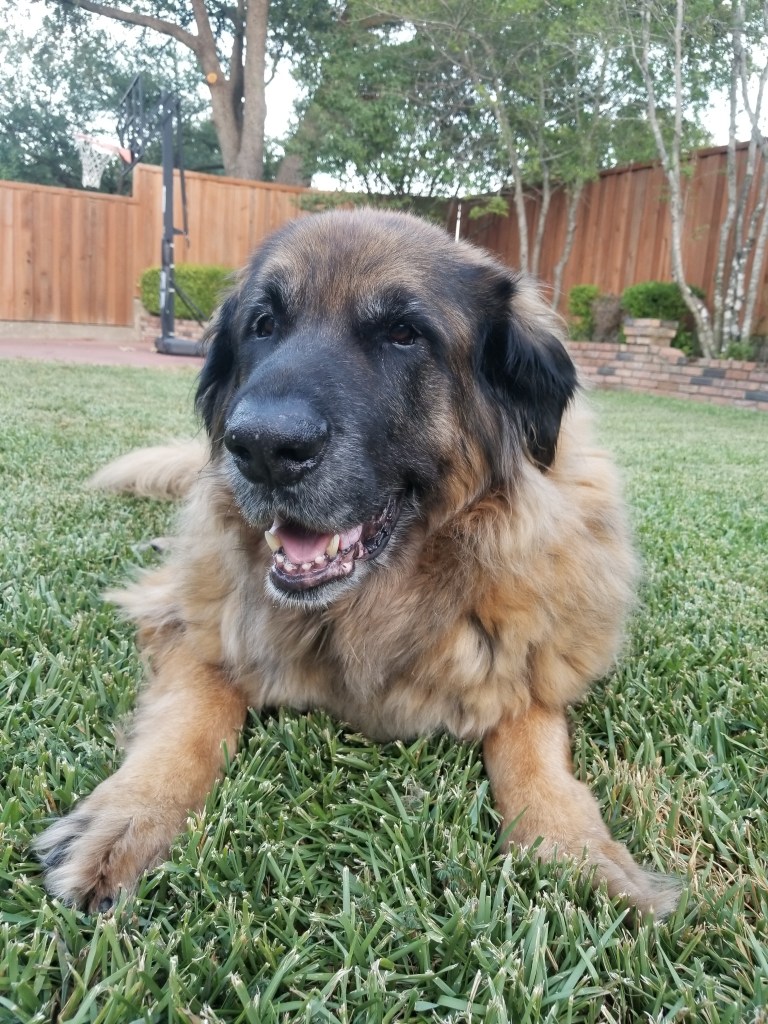
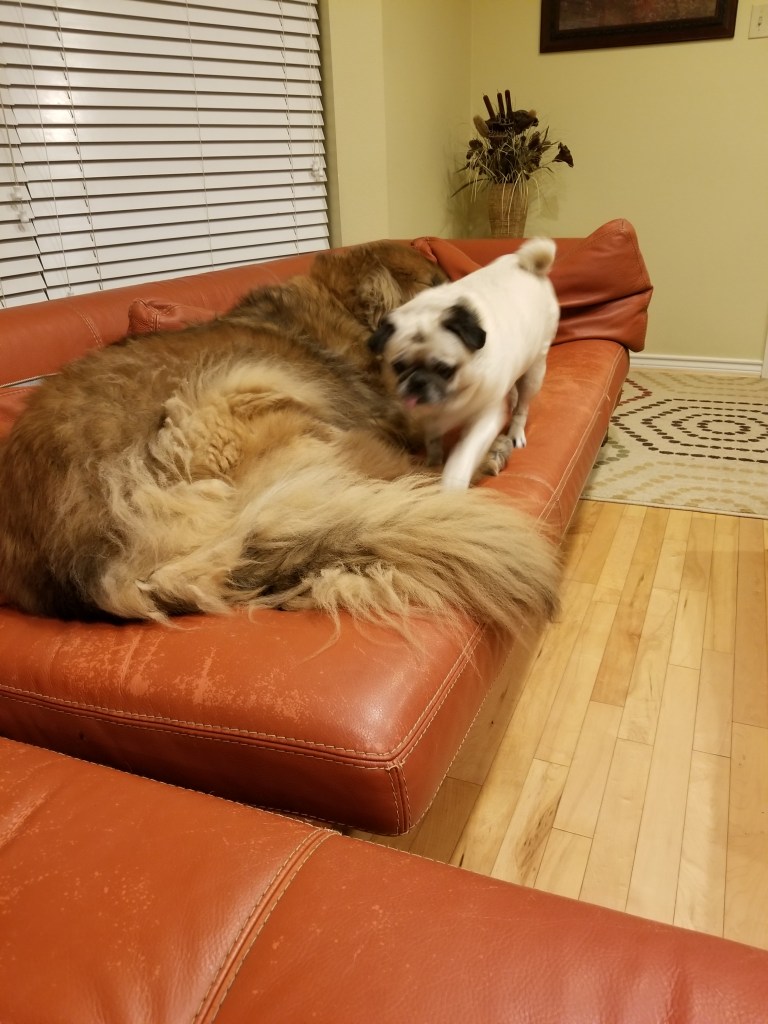
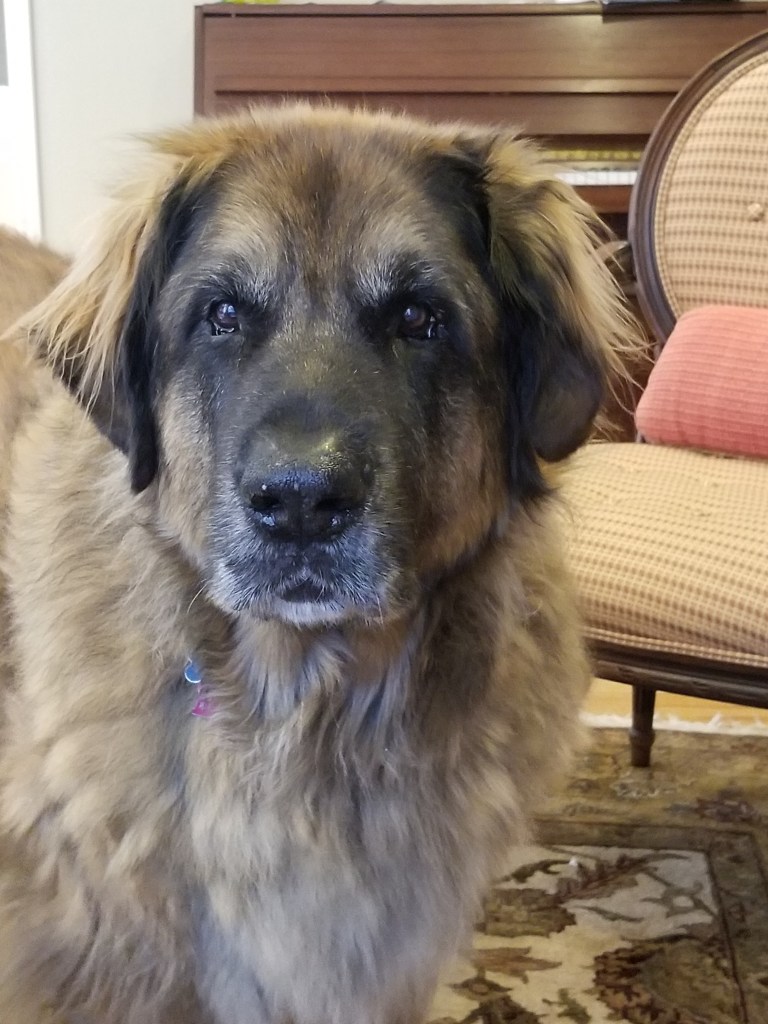
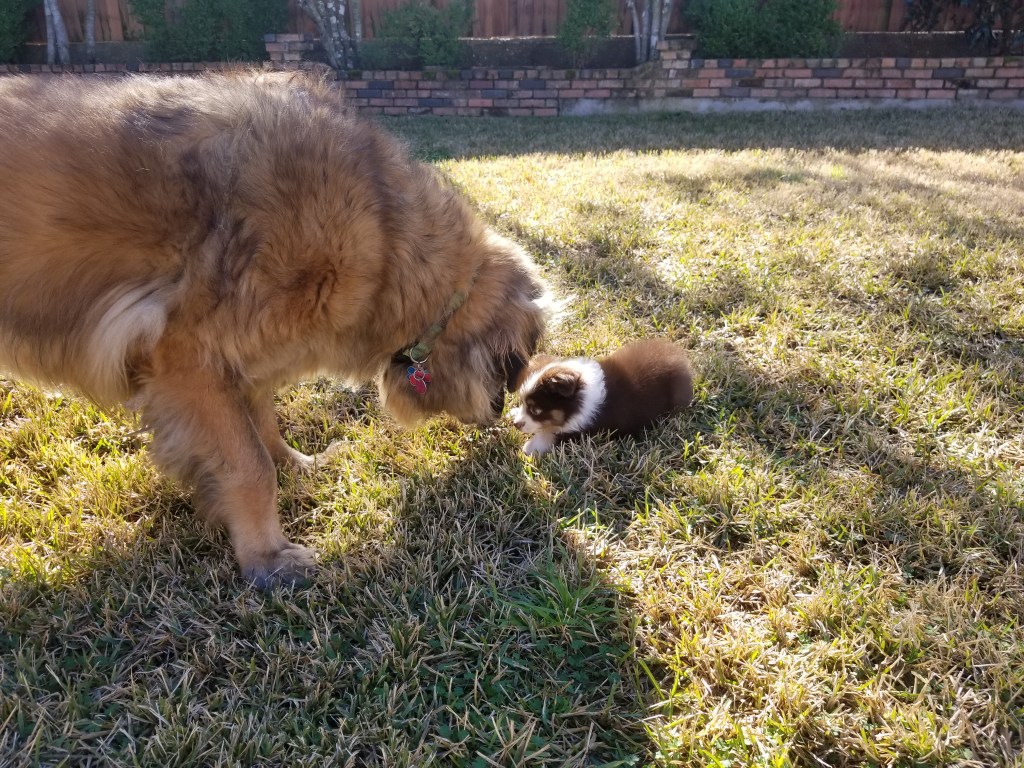
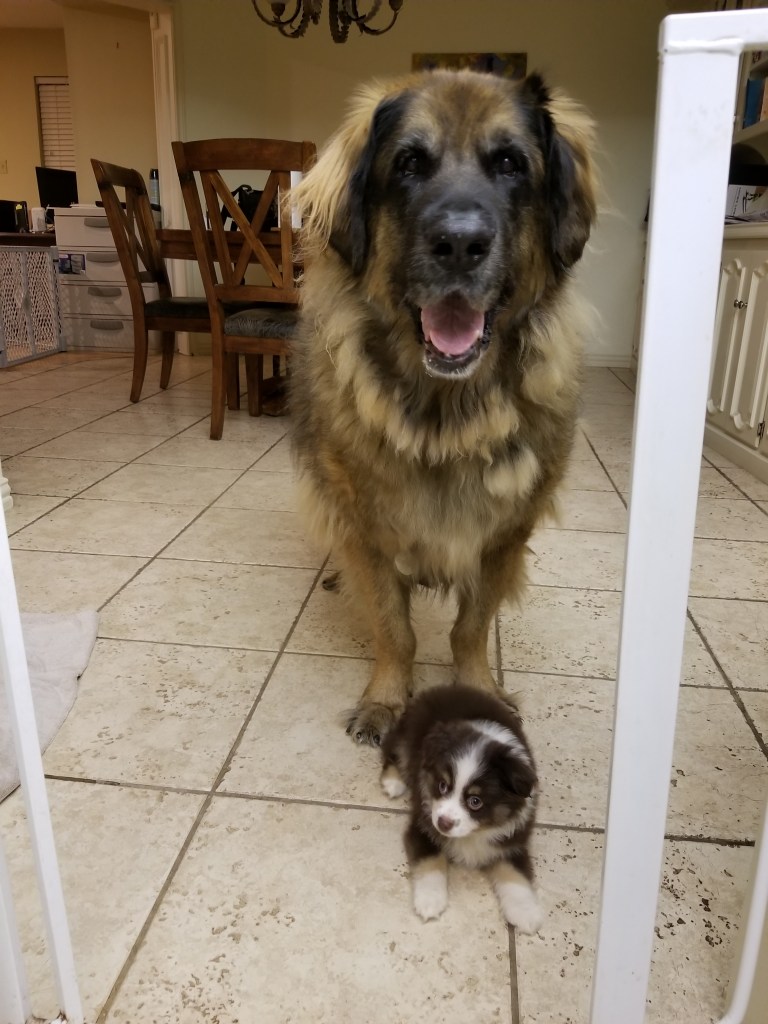
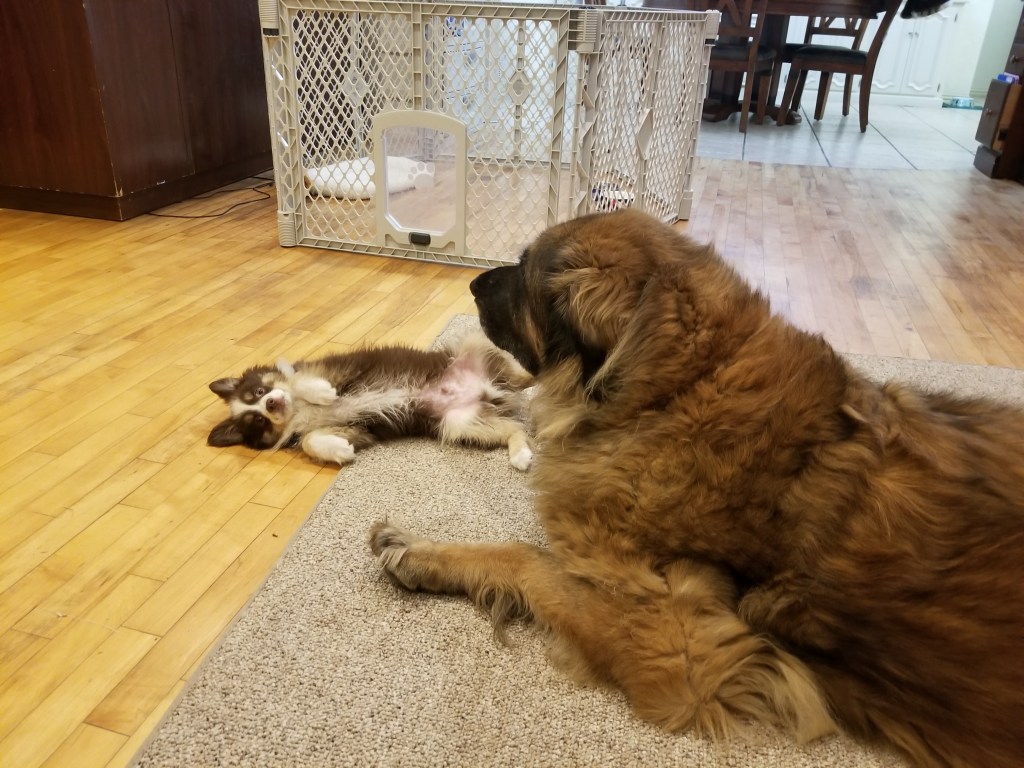
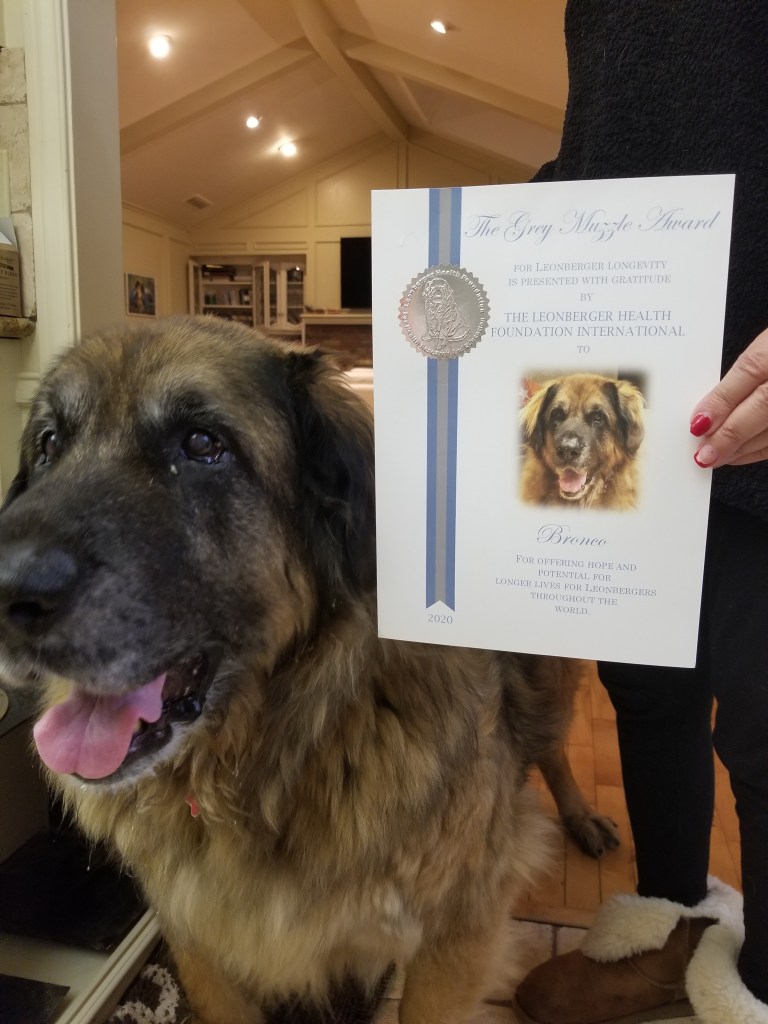
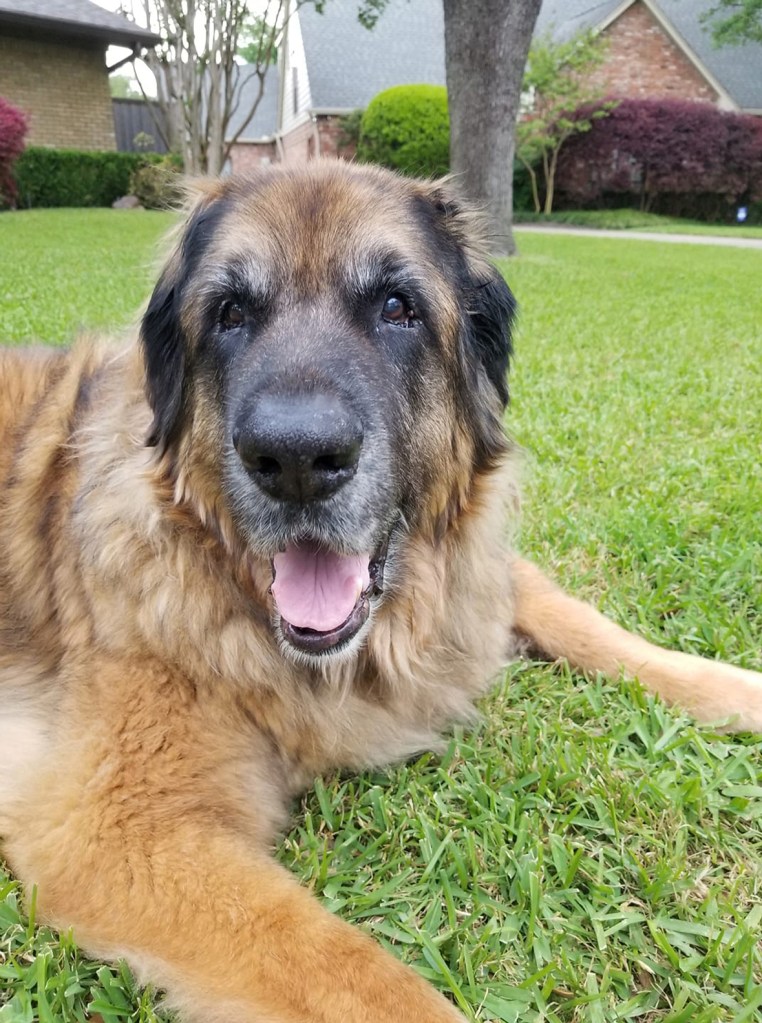
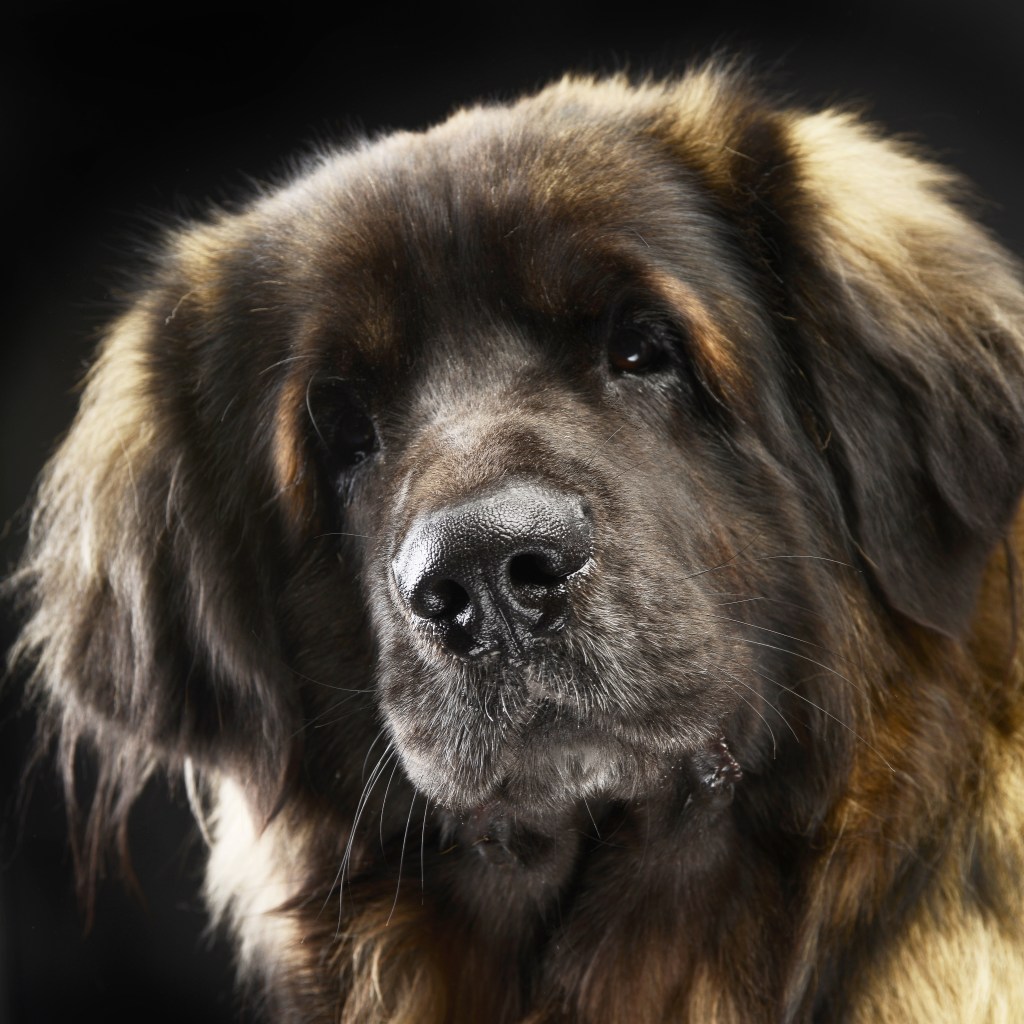
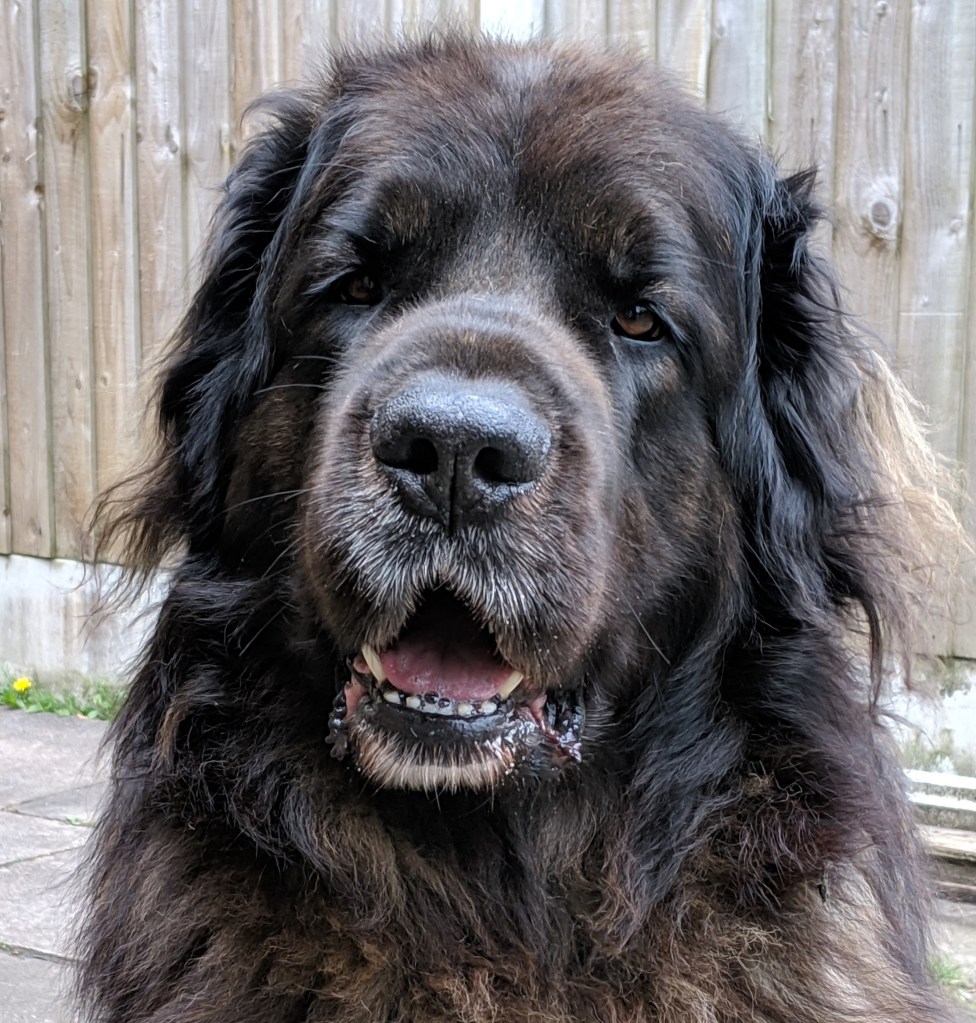
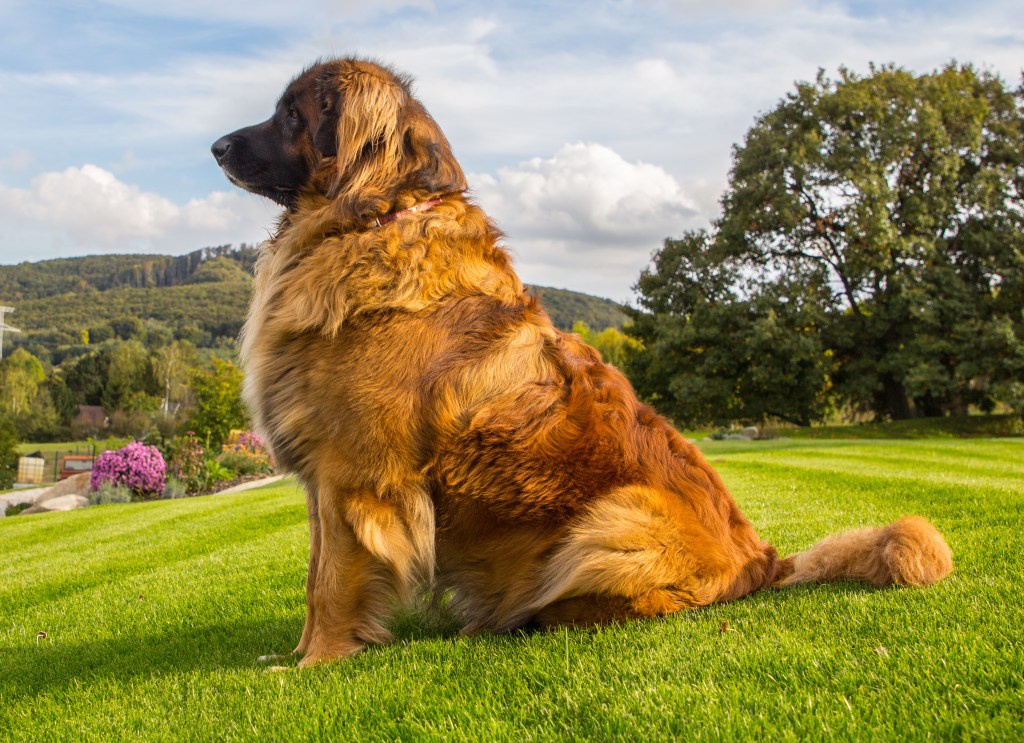
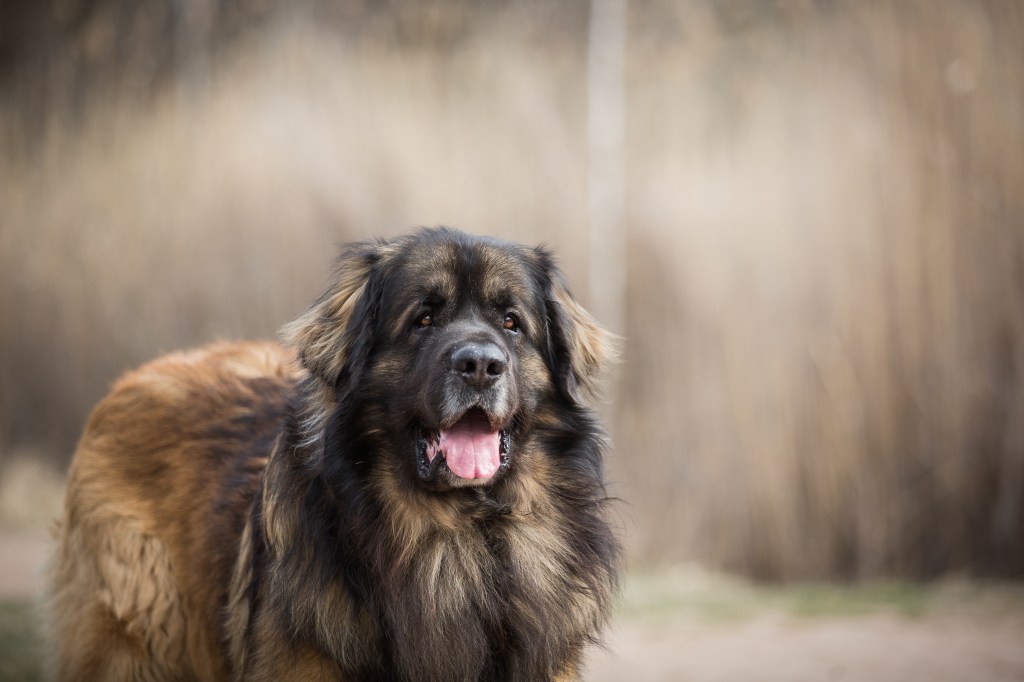
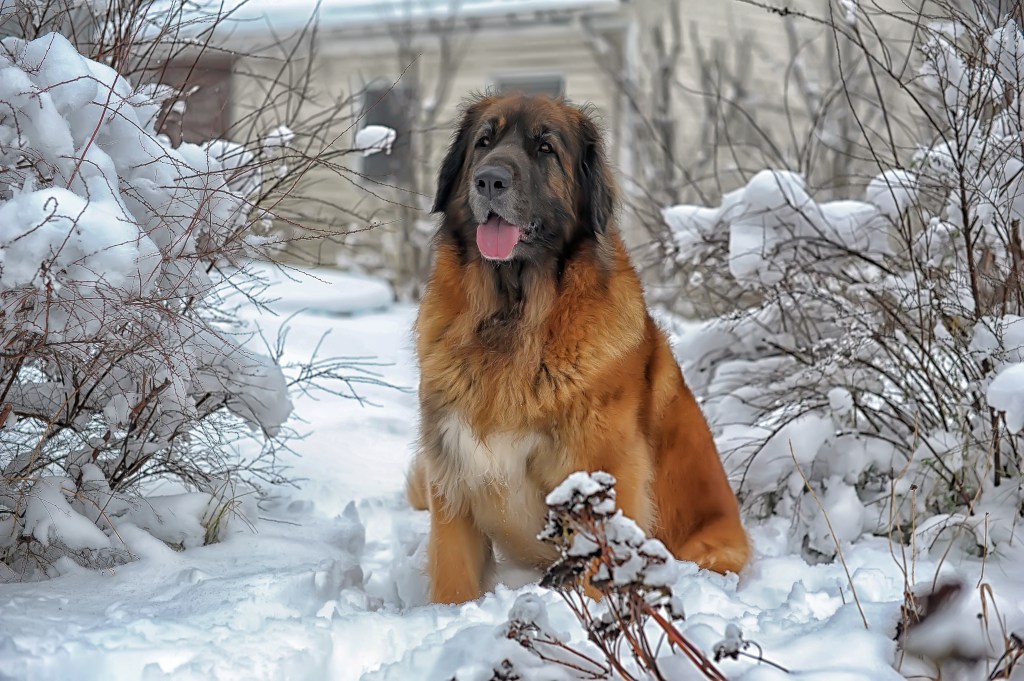
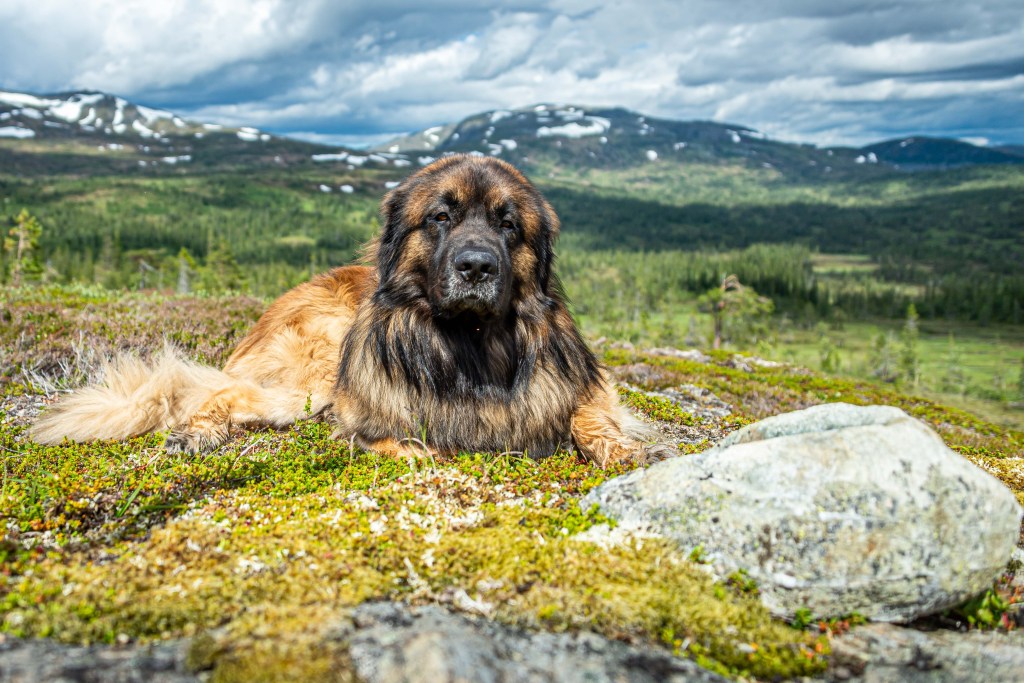
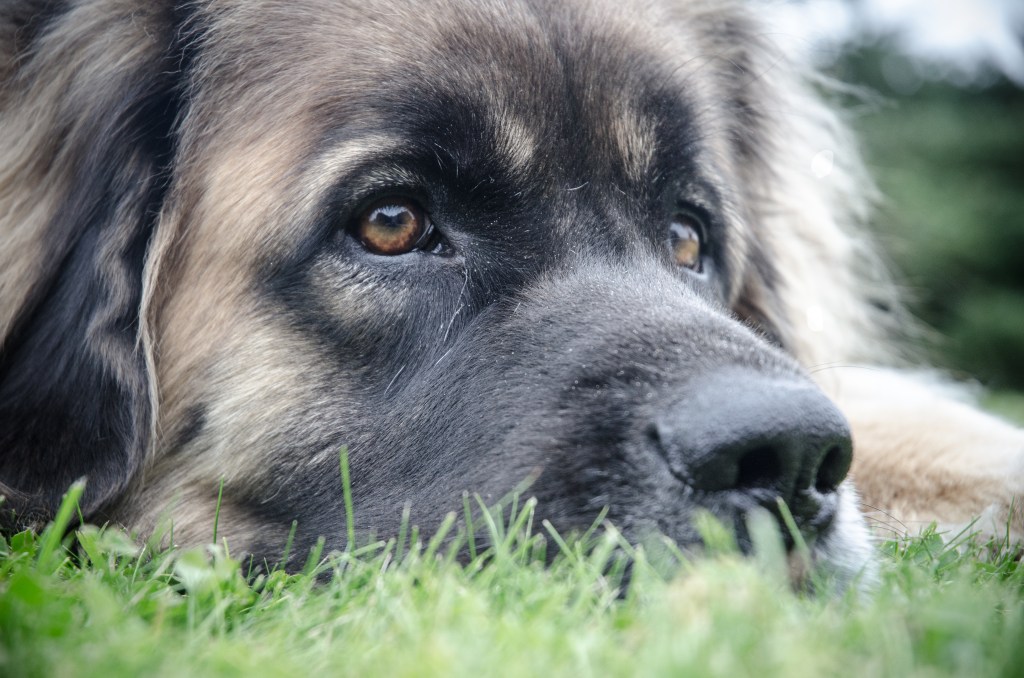
This is another of my 25 Leonberger photos posts. This time the theme is old Leonbergers. Most of the photos are of our late Leonberger Bronco from the age of 11 years old and up. Since Leonbergers typically live 8-10 years, eleven years old and up is indeed old for a Leonberger. One of the photos is a photo of Bronco with my wife standing next to him holding his Grey Muzzle Award. This is an award given to Leonbergers who have reached the age of 12 years or older.
The first two photos are photos of Leonbergers belonging to friends of mine, then there are 17 photos of Bronco and finally there are six Leonberger stock photos. If you’ve been following my blog, you may have seen many of these photos already but not all of them. Below is a list of the previous 25 Leonberger posts I’ve made.
- 25 Leonberger Photos and Illustrations.
- Another 25 Leonberger Photos and Illustrations.
- 25 Waterberger Photos (Leonbergers in water or swimming).
- 25 Leonberger Puppies and Other Puppies for National Puppy Day.
- 25 Photos of Leonbergers with Other Dogs.
- 25 Photos of Leonbergers in Nature.
- 25 Photos of Young Leonbergers.





Also don’t forget to check out my new blog if you haven’t done so.
 Leonberger Life