This is post number 20 for my Leonberger/Bronco blog. I decided to make it a list of posts. Not all posts were equally popular and maybe you missed the posts you would have liked the most. You can click on the link or the picture to see a post, then click back or “Home” (at the top) go back. If you read a post I certainly would love to get a “like” or maybe a comment.
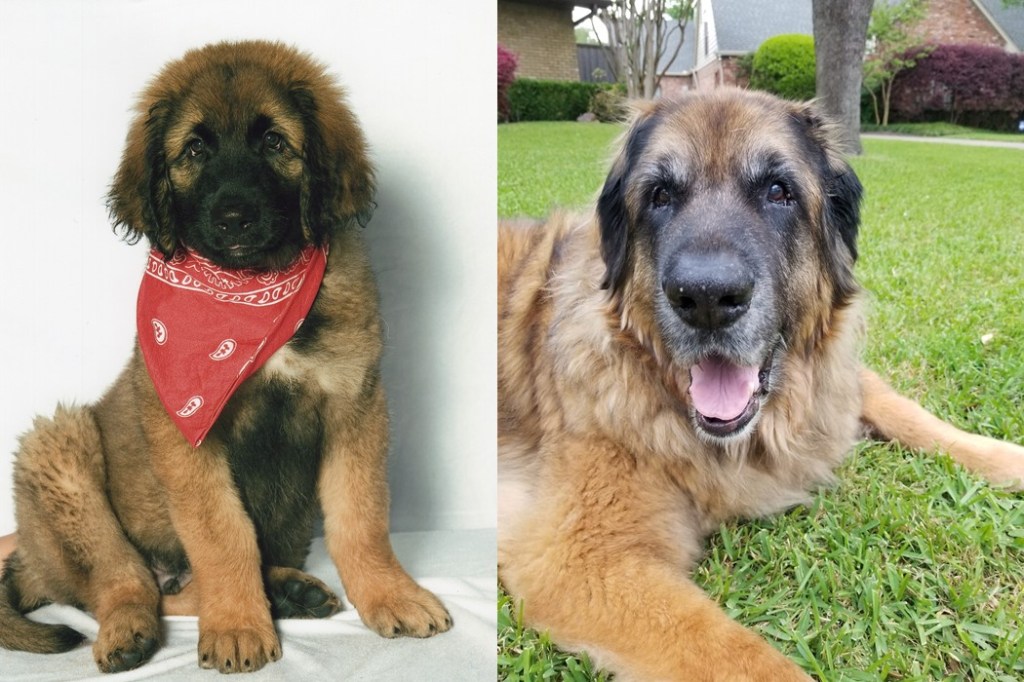
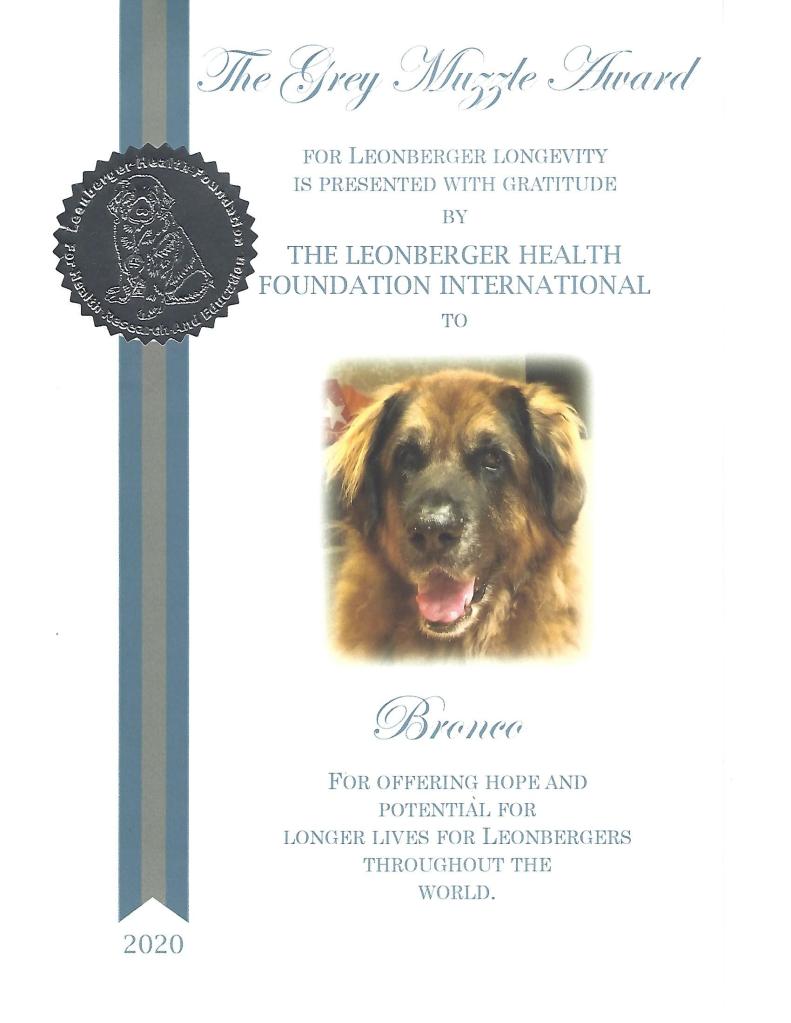
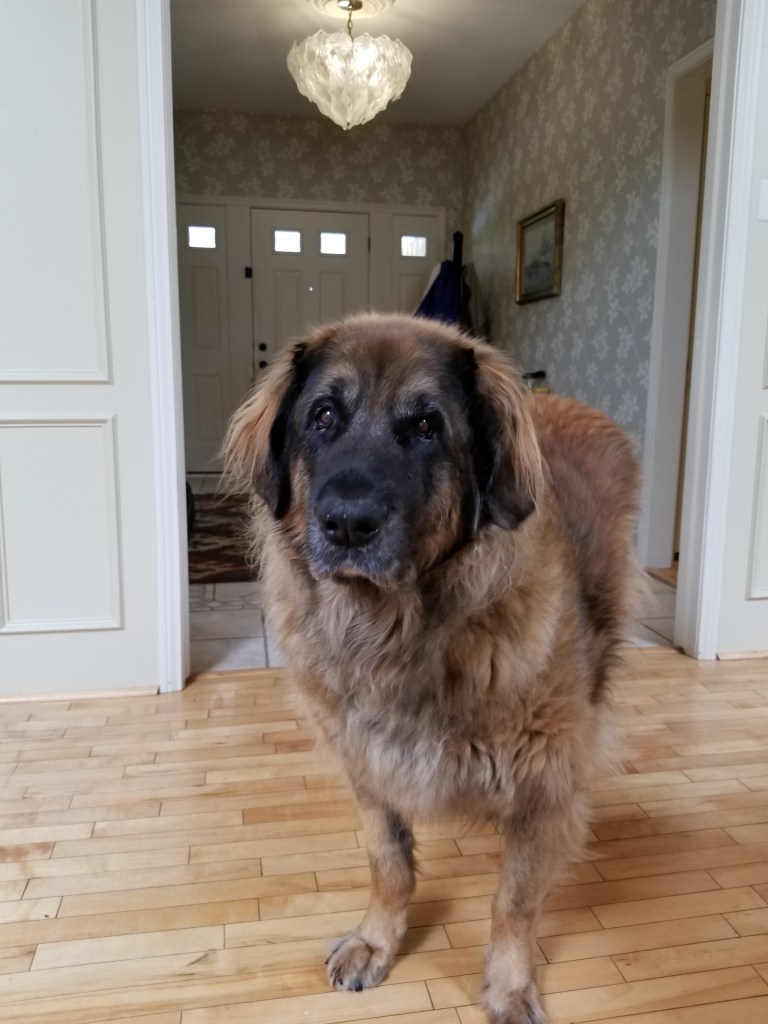
Leonberger’s live on average 8-9 years. However, the Leonberger Health Foundation International is working hard to extend the lifespan of Leonbergers. They give an award to all Leonbergers who have survived passed their 12th birthday. The award is called the Grey Muzzle Award.
Bronco, who was not at his best in this picture, rests next to our tornado damaged fence. We put a plastic bag around his bandage when he went outside.
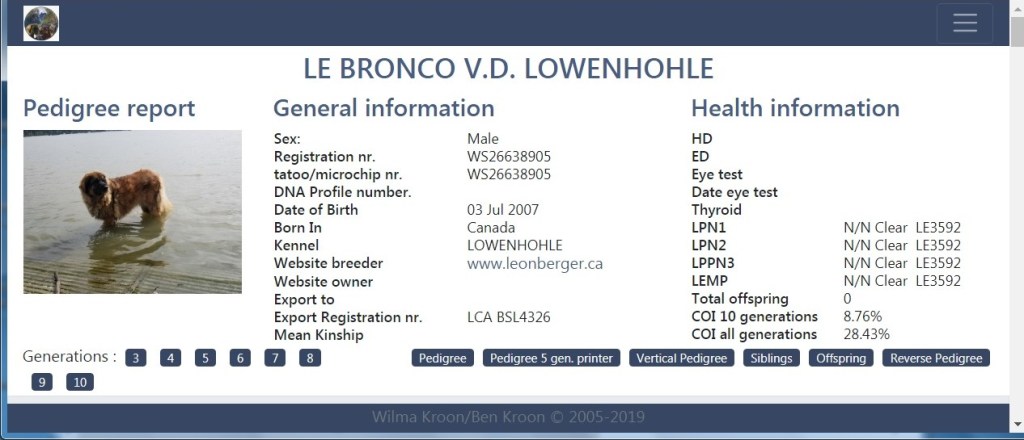
Le Bronco von der Löwenhöhle a Leonberger. Leonbergers are loving big goofballs and great guard dogs. This blog is mainly about his one hundred crazy adventures as well as information on Leonbergers and how to care for them and train them. Most posts will be a funny or amazing story. Some posts will be tips, advice, breed information, history or health.
At the beginning of 2020 Bronco our old Leonberger received an award for longevity: the Grey Muzzle Award, given by the Leonberger Health Foundation International, which bestows the award on any Leonberger who has reached the age of twelve. The Grey Muzzle Award is also given to breeders, because they are partially responsible for the dogs’ longevity. This is a special award and it made us very happy that Bronco got it.
For those who do not know, giant breeds such as Leonbergers tend to live much shorter lives than small dogs. This may seem backwards to some, after all elephants live longer than mice, but it is a fact. Leonbergers live on average 8-9 years, Bernese dogs live on average 7 years, Great Danes live 8 years, while Pugs live 12-15 years, and Chihuahua’s can live up to 20 years.
The Leonbergers receiving the Grey Muzzle Award are the canine equivalents of centenarians—humans who are at least one hundred years old. You don’t have to have your Leonberger registered with the LCA or AKC to apply for the award—it’s open to all purebred Leonbergers around the world. You can also apply if your dog is deceased, as long as he lived past the age of twelve. Incidentally, the oldest Leonberger on record is Su-Riya (formally Genette of Mutsugoro), who lived in Japan and died in 2017 at the ripe old age of sixteen years and three months.
If you have a twelve-year-old Leonberger, simply fill out a form on the LHFI website or send an email to lhfgreymuzzle@gmail.com.
The foundation will ask for some information, including the registered name and call name of the dog; the breeder’s name, kennel name, address, and email; the dam’s registered name; the sire’s registered name; the owner’s name, address, and email; the birth date of the dog; and whether the dog is alive or dead. If the latter, they will want to know the cause of death. In addition, they would like you to write a one-paragraph tribute to the dog and send two (preferably high-resolution) photos—one head shot and one favorite photo.
I found out about the Grey Muzzle award via a Facebook group called the Leonberger Double Digit Club. We applied for the award a little bit late, but we received it in February of 2020, when Bronco was twelve years and seven months old. At the time, he had recovered from a heart failure the previous October and was doing pretty well. He was subsequently mentioned at the LCA’s awards banquet and featured in a video about long-lived Leonbergers produced by the LHFI.
I would encourage anyone who owns a Leonberger who is at least ten years old to join the Facebook Leonberger Double Digit Club. There you can gather a tremendous amount of information and helpful tips. Its members share photos and stories and advice for dealing with old-age problems, food issues, and more.
LHFI (the Leonberger Health Foundation International) is an organization that exist to improve the health of the Leonberger breed. They facilitate the solicitation and distribution of donations given to support health related breed-specific research.” The LHFI also administers a program that collects DNA samples from Leonbergers to share with universities and research institutions, in addition to administering the Grey Muzzle Award. I can add that when Bronco passed away, we submitted his DNA for research.
LHFI’s global biobank contains DNA samples from more than nine thousand Leonbergers. Among the organization’s notable achievements are the eradication of Addison’s disease among Leonbergers and the raising of nearly half a million dollars for research into conditions that affect canine health, including osteosarcoma, hemangiosarcoma, glaucoma, cardiac diseases, thyroid diseases, and neurological disorders. Its research also supports healthful longevity and aging as well as population diversity. Another success is the fact that since 2011, no Leonbergers with two copies of the LPN1 gene mutation (which causes Leonberger polyneuropathy) have been recorded in LHFI’s biobank. LHFI is one of my favorite charities
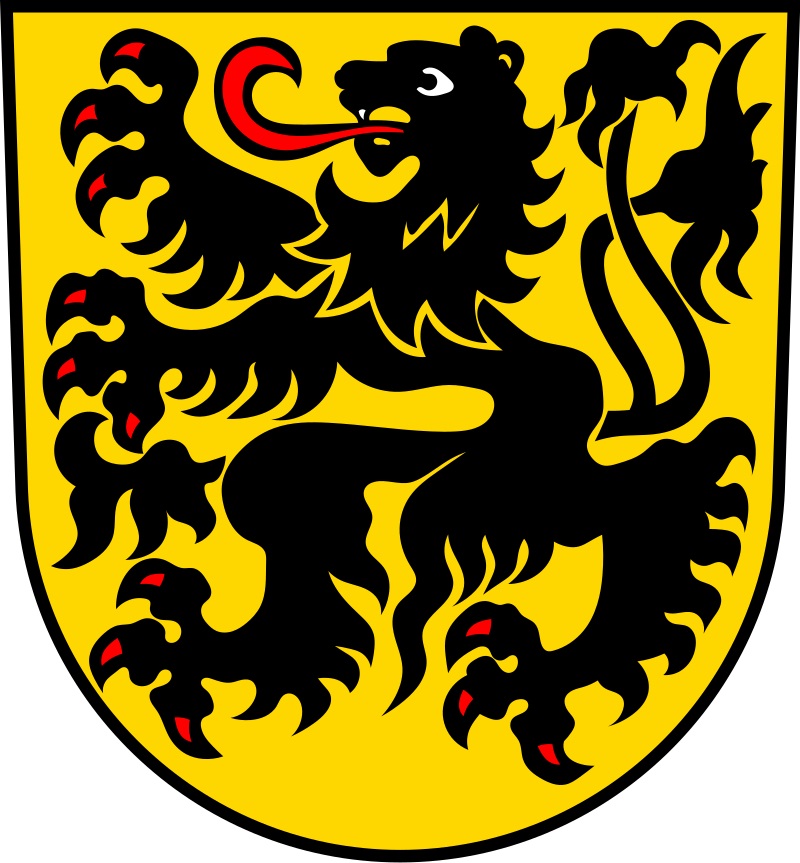
The Leonberger breed was originally created by Heinrich Essig (1808–87) in the German town of Leonberg, in what was then the kingdom of Württemberg. According to legend, Essig bred the dog to resemble the lion in the town’s coat of arms. It was bred to be a large companion dog. He registered the new breed in 1846. The Leonberger is often said to be a cross between a Saint Bernard, a Newfoundland, and a Great Pyrenees. However, in reality the story is more complicated. More on that later. One thing is for certain, the history around the interactions between the Leonberger breed and the St. Bernard is quite interesting. Also, more on that in another post. Another interesting fact is that Leonbergers were used in World War I to pull ammunition carts and cannons. Both World War I and World War II was tough on the breed and few survived.
Very few Leonbergers existed in North America until the 1980’s, when a breeding program was established. Saturday, November 2, 1985, the few families owning Leonbergers, the so called, Denver eight, got together to form the Leonberger Club of America. The Leonberger was recognized by the American Kennel Club in 2010 as its 167th breed (in the Working group). Today there are more than 2,300 Leonbergers in the United States and a 1,000 in Canada. There are about 30,000+ Leonbergers in the world. Since there are not millions of them you can still consider the Leonberger a rare breed.
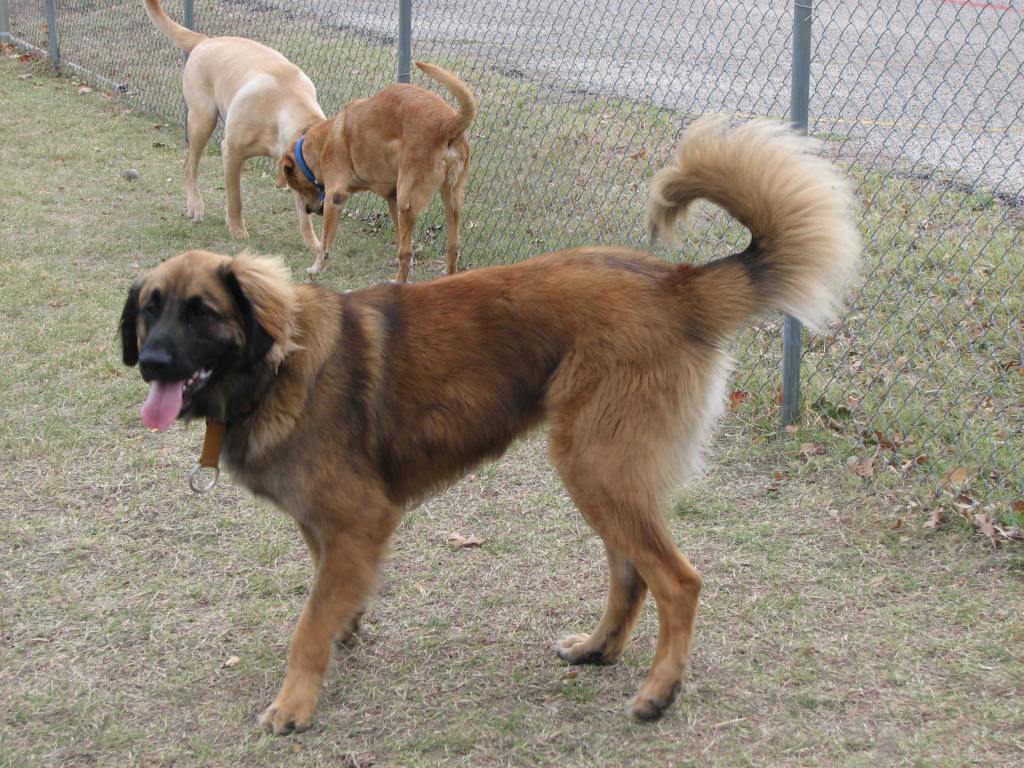
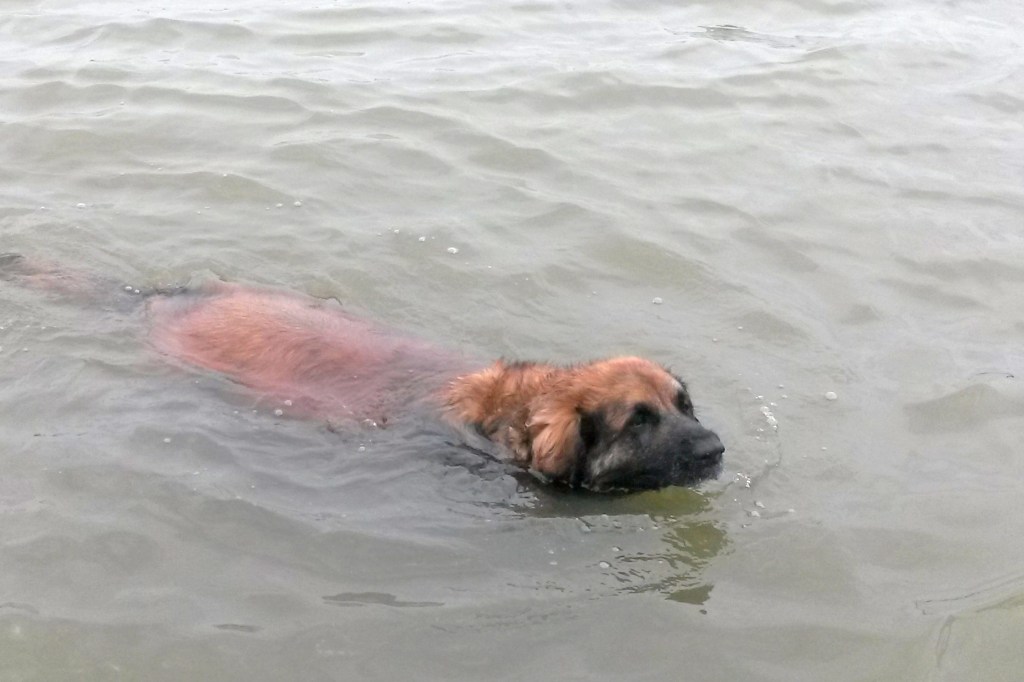
Leonbergers are confident and brave gentle giants. They are great with children, very social and good companions and guard dogs. Leonbergers are double-coated, and they have webbed paws, so they’re natural swimmers. They are sometimes used in water rescue operations. But be careful, they are big, full of energy, and can be rambunctious when they’re young.
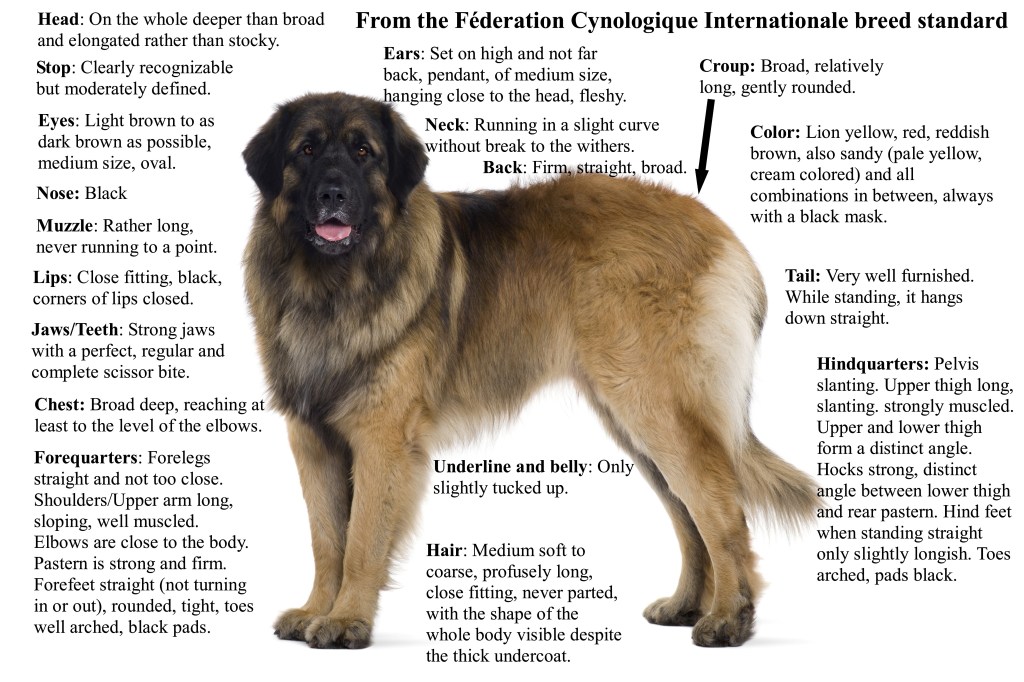
According to the original purpose of the Leonberger, and the breed standards, the Leonberger is a large, strong, muscular, elegant dog. He is distinguished by his balanced build and confident calmness, yet he has quite a lively temperament. Males, in particular, are powerful and strong. As a family dog, the Leonberger is an agreeable partner for present-day homes and living conditions who can be taken anywhere without difficulty and is distinguished by his marked friendliness toward children. He is neither shy, nor aggressive. As a companion, he is agreeable, obedient, and fearless in all situations of life.
The following are particular requirements of a steady temperament:
• Self-assurance and superior composure
• Medium temperament (including playfulness)
• Willingness to be submissive
• Good capacity for learning and remembering
• Insensitivity to noise
Leonbergers are large and muscular dogs. The height of an adult male is between 28 and 31.5 inches (72 to 80 centimeters) at the withers. The height of an adult female is between 25 and 29.5 inches (65 to 75 centimeters) at the withers. (The withers is the ridge located between the shoulder blades of an animal, on the back right below the neck.) Reputable breeders try to maintain these characteristics.
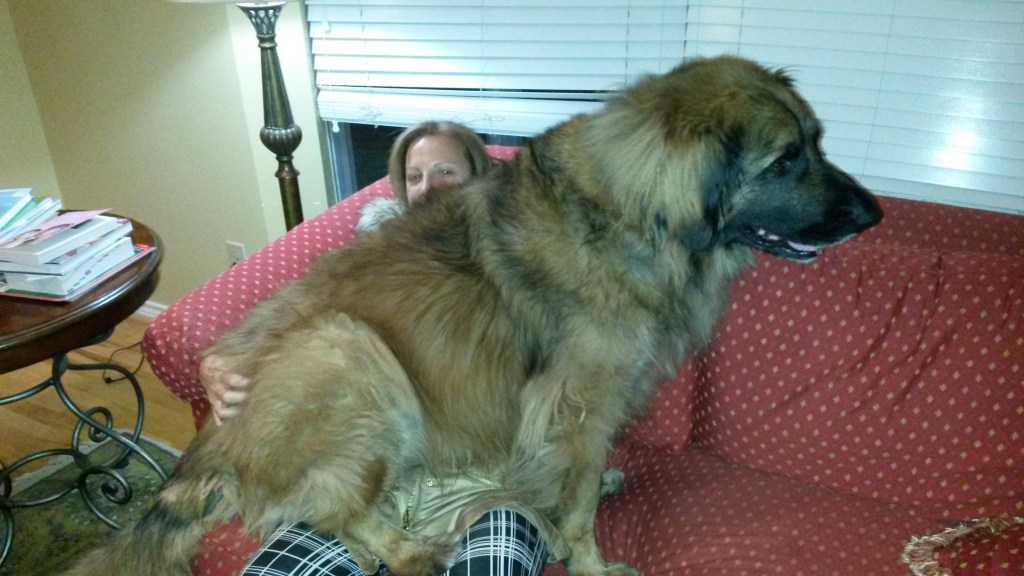
Leonbergers are sexually dimorphic—that is, there are noticeable differences between males and females. This is not always the case in dogs. Female Leonbergers are usually smaller and look more feminine. Males typically weigh between 120 and 170 pounds, and females usually weigh between 100 and 135 pounds. For comparison’s sake, below are the standard heights and weights for male dogs of other breeds.
• An Irish wolfhound, the world’s tallest dog (when standing on two feet), is 32 inches tall at the withers and weighs between 120 and 155 pounds.
• A Great Dane stands between 31 and 35 inches at the withers and weighs between 110 and 180 pounds.
• A Saint Bernard is between 28 and 35 inches tall at the withers and weighs between 140 and 180 pounds.
• A German shepherd stands between 24 and 26 inches at the withers and weighs between 66 and 86 pounds.
In other words, the Leonberger is right there among the largest breeds in the world.
In the picture below is an overview of the FCI breed standard for Leonberger dogs. I will post the full breed standard in another post.