Poems and Art on Independent Artist Day

The focus of this blog is Leonbergers but sometimes I post about books that are not about Leonbergers but that I want to promote. This is another one of those. April 3rd is independent artist day, so today is a perfect day to present Square Peg in a Round Hole: Poetry, Art & Creativity by Robbie Cheadle and Michael Cheadle. This is a wonderful book featuring poetry, paintings, photography, fond art, and more. It exists in two formats on Amazon. I bought the paperback version.

  • Paperback –  Published March 22, 2024, ASIN : B0CXMDKV8H, ISBN-13: ISBN-13 : 979-8883610799, 173 pages, Item Weight : 11.7 ounces, Dimensions : 6 x 0.41 x 9 inches, it cost  $30.61on US Amazon. Click here to order it from Amazon.com.
  • Kindle –  Published March 22, 2024, ASIN : B0CW1H3SQV, 157 pages, it costs $4.99 on US Amazon, it is free with Kindle unlimited. Click here to order it from Amazon.com.
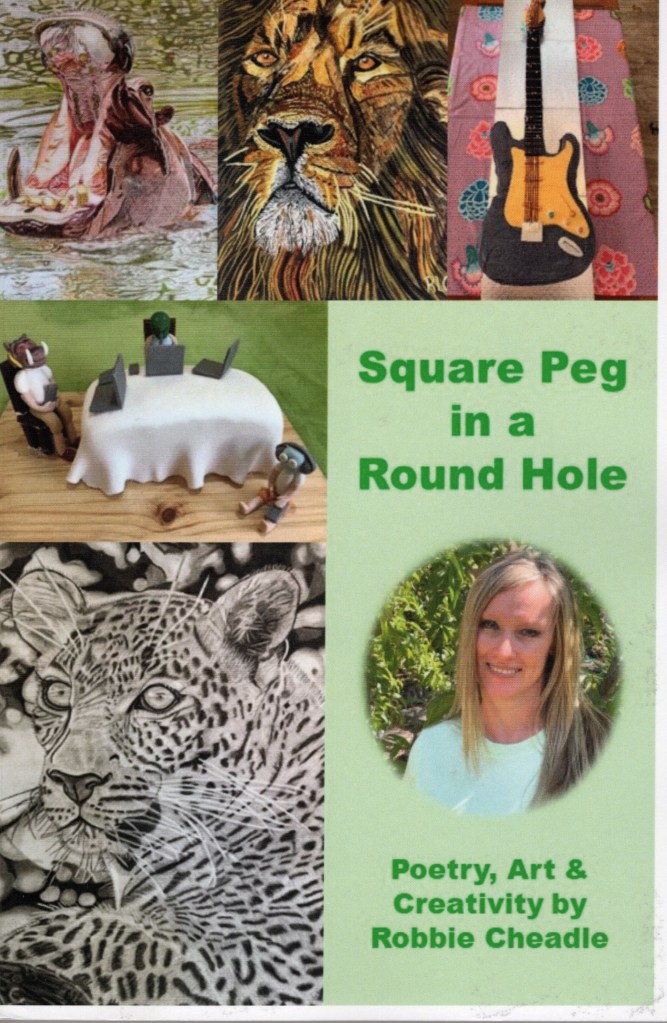
The front cover feature paintings of a hippo, a lion and a Jaguar. There is also cake art featuring an electric guitar and animals sitting around a table. A photo of Robbie Cheadle is shown on green background.
Front cover of Square Peg in a Round Hole: Poetry, Art & Creativity by Robbie Cheadle & Michael Cheadle. Click on the image to go to the Amazon page for the paperback.

Amazon’s description of the book

How to stay positive in a negative world!

Square Peg in a Round Hole is a collection of poetry, art, and photography. The section, Life, demonstrates the author’s perceptions of life in a fast-moving world filled with work, ill-health, and other demands. The other sections illustrate how the poet makes use of writing poetry, creating art, and photography to keep smiling.

Below is my Amazon review of Square Peg in a Round Hole. Click here to visit the Amazon review.

Poetry, Art, Photos and Stories about Nature and Life

Square Peg in a Round Hole is a collection of poems, short stories, paintings, nature photographs, artistic photographs, and links to YouTube videos and web sites. The photographs were taken by Robbie Cheadle and the photographer Wayne Barnes. The poems, short stories and illustrations in the first 90% of the book were created by Robbie Cheadle and the poems and short stories in the last 10% of the book were authored by her son Michael Cheadle, a young man with an immense talent. The poems are in the form of haiku, shadorma, tanka, 99-syllable-double-ennead, and freestyle.

The book is divided into sections. The first section, Fauna, feature poems, paintings and photographs of rhinos, lions, hippos, birds and other animals. Next comes Flora, then the Ocean, then Life, featuring darker but poignant poems and images about the anguish and the hardships of life. After that comes War, Death, Power, Sun & Fire, followed by stories and poems about nature, especially birds, and finally Michael’s poetry and short stories.

Robbie is a naturalist with a great insight into African wildlife and nature. In her poems and her art, she showcases her understanding and love for the natural world. This makes her poetry especially beautiful and engaging. I learned a lot about the African wildlife and natural history by reading the poems and by looking at the photos and the art. I think my favorite nature poems were “The story of the desperate salesman” and “Nest Selection”, which beautifully depicted nest building and a male bird’s attempt to attract a mate. I could easily imagine the feelings of the animals depicted in the poems. I think my favorite poetic short story was “The Edge” about a little girl’s dangerous quest for a beautiful flower. And finally, Michael’s dark but poignant poetry is both thought provoking and emotional.

This book has a lot to offer. There’s poetry, photos, art, videos, short stories, information, and facts, and there’s a lot of beauty and wisdom in this book. Reading it was a pleasure. I highly recommend this book.
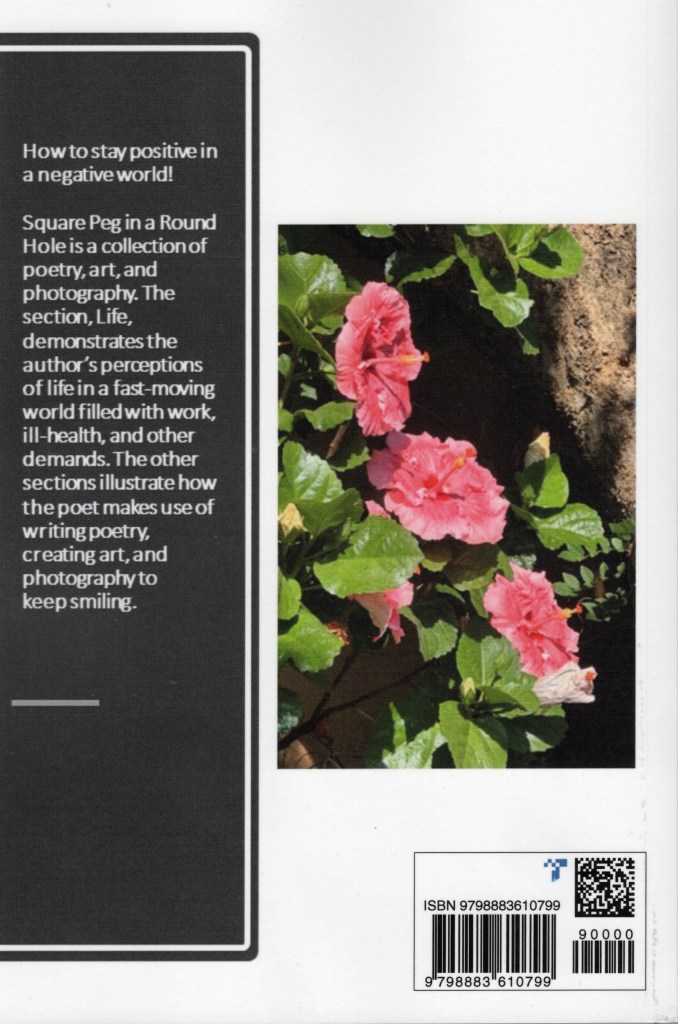
The back cover feature pink flowers and Amazon’s description.
Square Peg in a Round Hole: Poetry, Art & Creativity by Robbie Cheadle & Michael Cheadle.

About the Author

Photo of Robbie Cheadle one of the authors of Square Peg in a Round Hole.

Award-winning bestselling author, Robbie Cheadle, has published fourteen children’s books and two poetry books. Her work has also appeared in poetry and short story anthologies.

Robbie also has two novels published under the name of Roberta Eaton Cheadle and has horror, paranormal, and fantasy short stories featured in several anthologies under this name.

The eleven Sir Chocolate children’s picture books, co-authored by Robbie and Michael Cheadle, are written in sweet, short rhymes which are easy for young children to follow and are illustrated with pictures of delicious cakes and cake decorations. Each book also includes simple recipes or biscuit art directions which children can make under adult supervision.

Robbie’s blog includes recipes, fondant and cake artwork, poetry, and book reviews. https://robbiesinspiration.wordpress.com/

Click here to visit is her Goodreads page.

Click here to visit her TSL Publications Page.

Click here to visit is her Twitter account.

Click here to visit is her Facebook account.

These are her published books on Amazon.

The Day Bronco Wearing a Leg Cast Chased Our Neighbor

An excerpt from my book : The Life and Times of Le Bronco von der Löwenhöhle

When Bronco was almost eight years old, we discovered a case of squamous cell carcinoma in one of his toes—or, rather, in one of his toenails. It was on his right rear paw.

Photo of a big fluffy Leonberger lying in the grass.
Our Leonberger Bronco, or Le Bronco von der Löwenhöhle.

Squamous cell carcinoma is a type of skin cancer that certain large-breed dogs, including Leonbergers, are susceptible to. It often grows out from the skin around the nail and can affect the bone and tissue around it. It is typically not very aggressive, but it can spread, and it is painful. It manifests itself as a swollen toe, or you may be able to see a large red papule that looks like a pimple. Sometimes the toenail falls off. The dog is likely to limp and lick the toe and may become reluctant to go for walks, although that was never the case with Bronco.

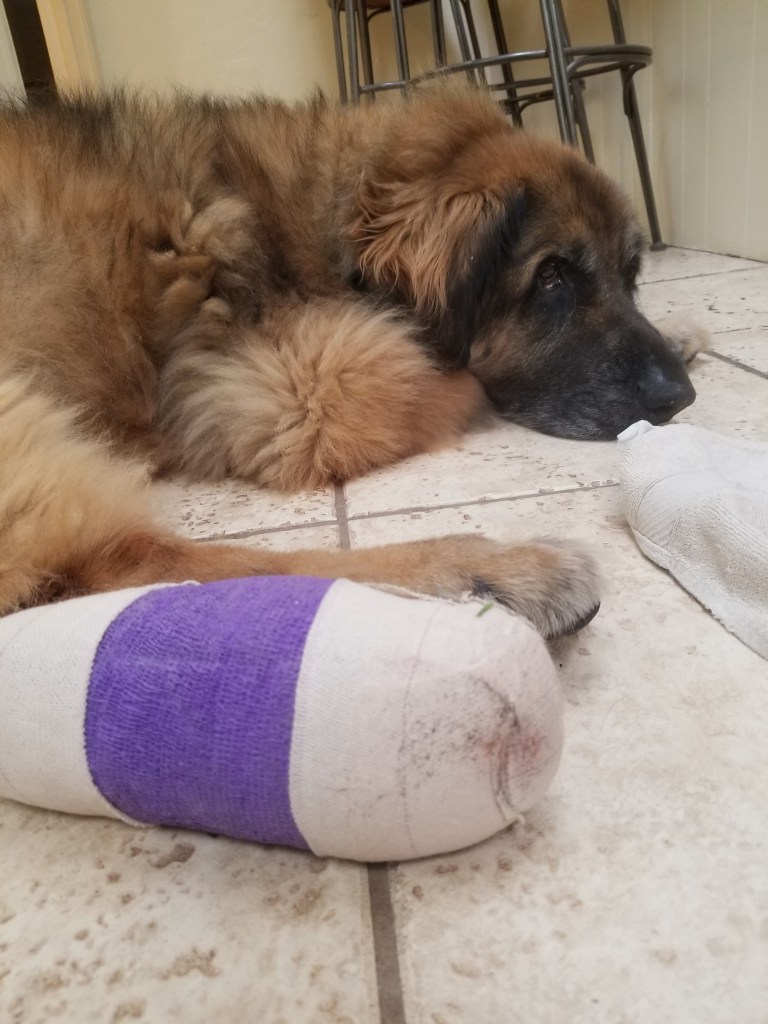
Close up of a bandage on one of Bronco’s paws with Bronco in the background.
Bandage on Bronco’s paw after a toe amputation.

Primarily because of the pain, but also because of the small risk of metastasis, it is usually recommended that the affected toe be amputated. So we went through with the procedure. When we picked Bronco up the day after the surgery, his paw was in a bandage. But he got some treats, and he was in a good mood. We went back to the veterinary surgical center for a bandage change a few times, and then he was done.

A big barking Leonberger standing in a doorway. Upon close inspection you see a missing toe.
An agitated Bronco stands guard at the back door. Note the missing toe on his left front paw.

Unfortunately, though, we discovered another lesion a year later. This time it was on a large toe on his left front leg. We asked the doctors if the cancer had spread to this toe. We were told no—Bronco was just prone to getting this type of cancer. But the cause could also have been something in the environment. In Texas, the ultraviolet radiation from the sun is significant. We really don’t know why this happened to him, but we were assured that it was not because the cancer had spread.

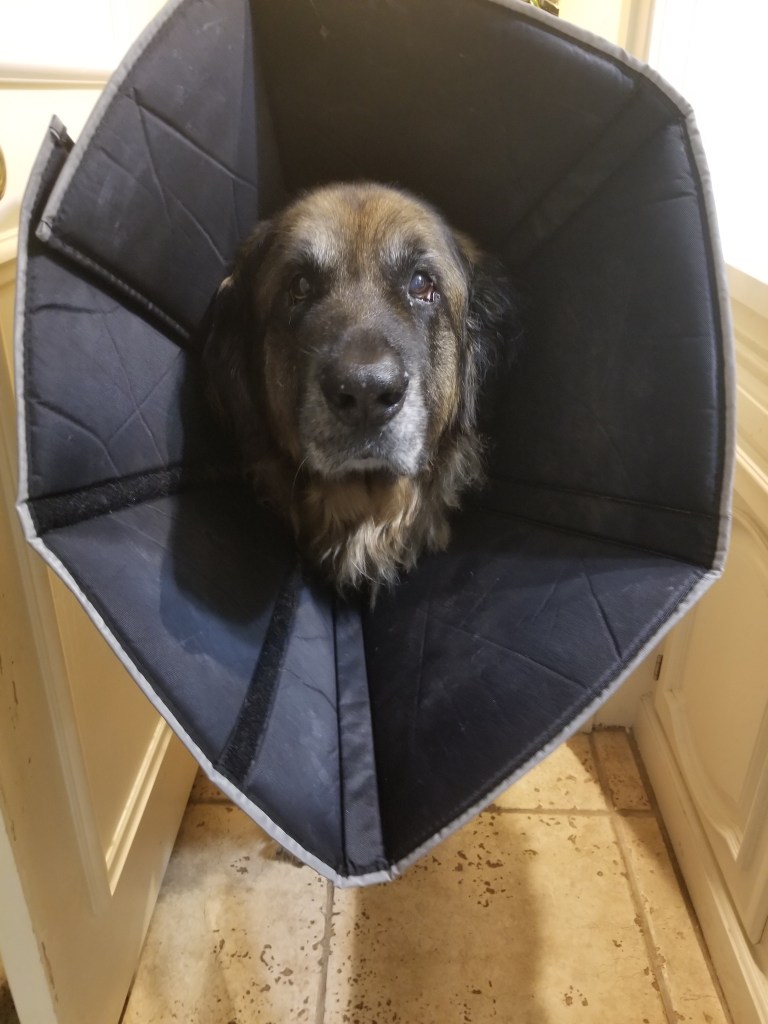
Bronco our Leonberger Bronco wearing a large soft cone. It barely fit through the doorway.
A cone of shame or as in this case a soft cone typically accompanied a bandage or a cast.

This time around, Bronco’s entire leg was put in a cast, to be replaced by a bandage after ten days. We were instructed to keep him inside during those ten days and keep him as still as possible. We were to make sure he wouldn’t bump the cast. This was, of course, almost impossible to do, but we were going to try.

However, Bronco really wanted to go out, which he showed us in various ways, such as scratching at the front door. After a week or so, Claudia suggested that we take him outside a little bit, just in our driveway. I agreed. When I handed her the leash, she said, “He can barely walk; do you think he’s going to run off without it?” We laughed, and I agreed that it didn’t seem like we needed it this time. So Claudia walked out with Bronco slowly limping beside her.

Illustration of an excited Leonberger towards us. He is wearing a cast on his left front leg (right from our perspective).
Bronco could barely walk with his full leg cast, but when motivated enough he could run. Illustration by Naomi Rosenblatt.

Less than a minute had passed when I heard shouting outside. I opened the door and looked outside to see what was going on. First I saw our neighbor and his two corgis running down the street as fast as they could. Our neighbor was screaming at he top of his lungs, “Get him off me! Get him off me!” Behind him, Bronco was running with his cast going kabonk-kabonk-kabonk as it hit the sidewalk. Behind Bronco ran Claudia, who was also screaming at the top of her lungs. Bronco! Sit! Stay! Stop!” Finally, Bronco stopped, and Claudia grabbed him. Holding his collar, she led him back in.

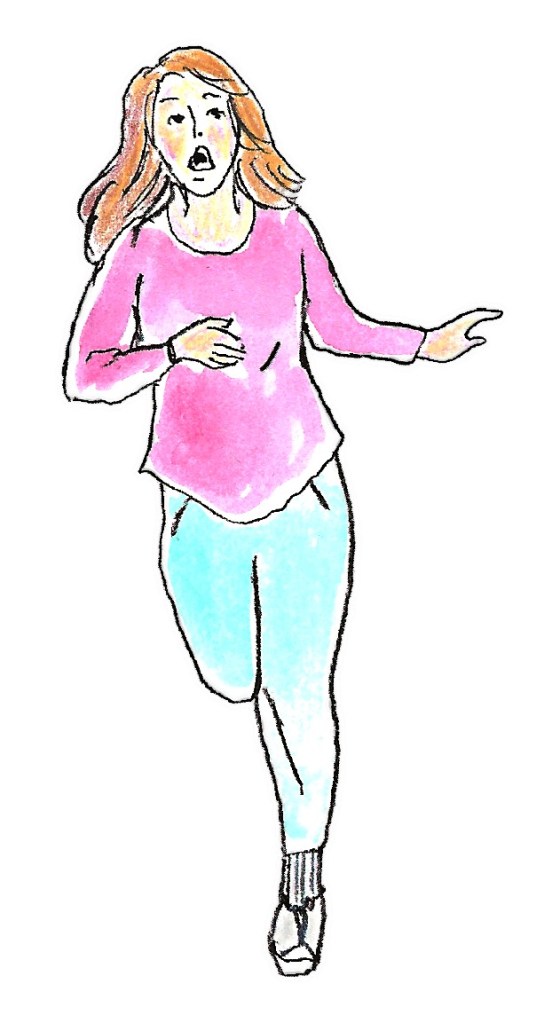
Illustration of woman dressed in blue pants and pink shirt running.
Claudia running after Bronco. Illustration by Naomi Rosenblatt.

Our red-faced and sweaty neighbor was very nice about it and forgave us. He even forgave Bronco, though Bronco was chasing the corgis, not our neighbor. But still, if I had been chased by a big dog wearing a cast, I would not have gotten over it that easily. Our neighbor is clearly a better man than I am.

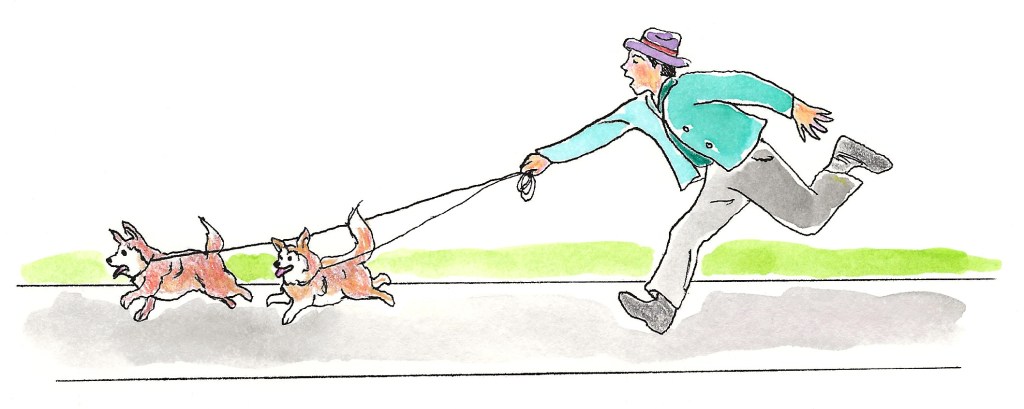
Illustration of man with a hat running holding two leashes, each with a corgi at the end.
Our neighbor and his corgis running from Bronco. Illustration by Naomi Rosenblatt.

This was an embarrassing event for all of us, but at the same time it was one of the most surreal and amazing things I’ve ever seen. It was so unexpected, so bizarre, and so funny. I really wish I had had a video camera handy. Talk about a potentially viral video.

When we went back to the veterinary surgical center to have Bronco’s cast removed, we decided not to say anything about the incident to the doctors. We sat in the waiting room and wondered if the episode had caused any permanent damage to Bronco’s paw or leg. But when the veterinary technicians came back with Bronco in a bandage instead of a cast, they told us that everything looked good. Great job, everyone!

We thought they might not have checked his sore carefully enough, so we asked them again: Are you sure everything looks good? The sore, the stitches—did you really look at them thoroughly? They insisted that yes, they looked good. So Bronco got his treats, he looked happy, and we went home.

25 Leonberger Puppies and Other Puppies for National Puppy Day

Today is National Puppy Day. Therefore, I am posting 25 puppy photos. It is mostly Leonberger puppies but there are also puppy photos of some of our other dogs. Most of the photos in this post are mine but I am including a few Leonberger puppy photos from shutterstock. If you want to check out the Leonberger book I wrote click here, or look to the right if you are on a desktop or at the bottom if you are on a mobile.

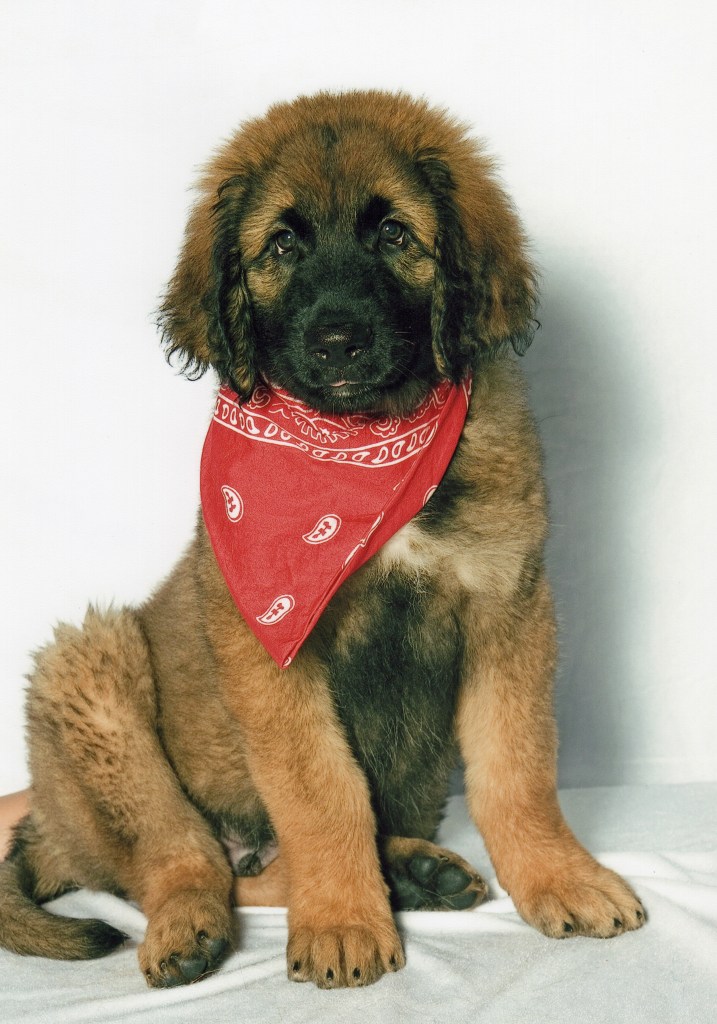
This is a black and white photo of our Leonberger puppy Bronco at three months old. He is sitting and staring at the camera. He is wearing a silk scarf.
Our Leonberger Bronco at three months old.
This is color photo of our Leonberger puppy Bronco at three months old. He is sitting and staring at the camera. He is wearing a silk scarf.
Our Leonberger Bronco at three months old.
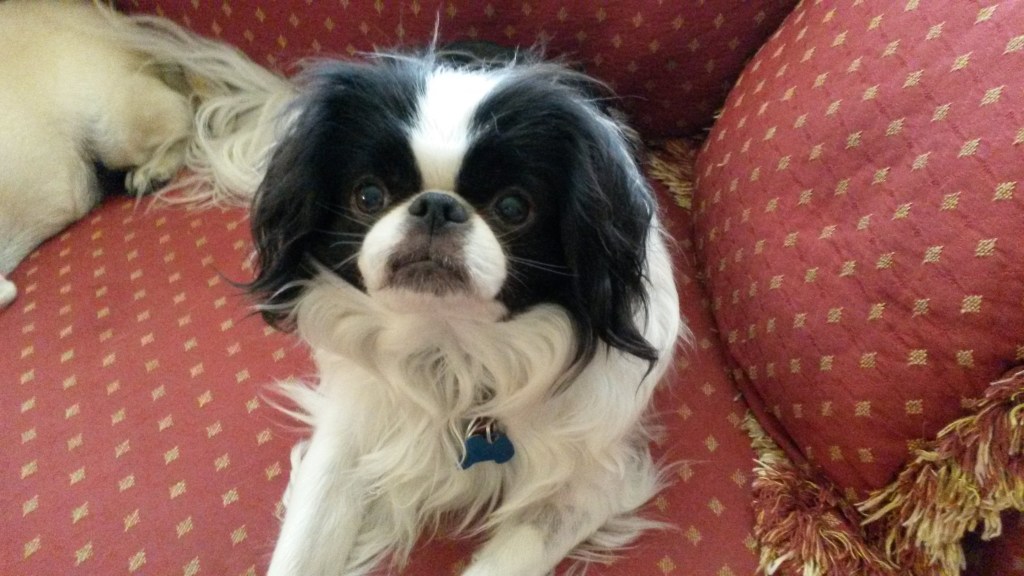
Our black and white Japanese Shin Ryu is on our red sofa. You can see our pug Daisy in the upper left corner.
Our Japanese Shin Ryu when he was young.
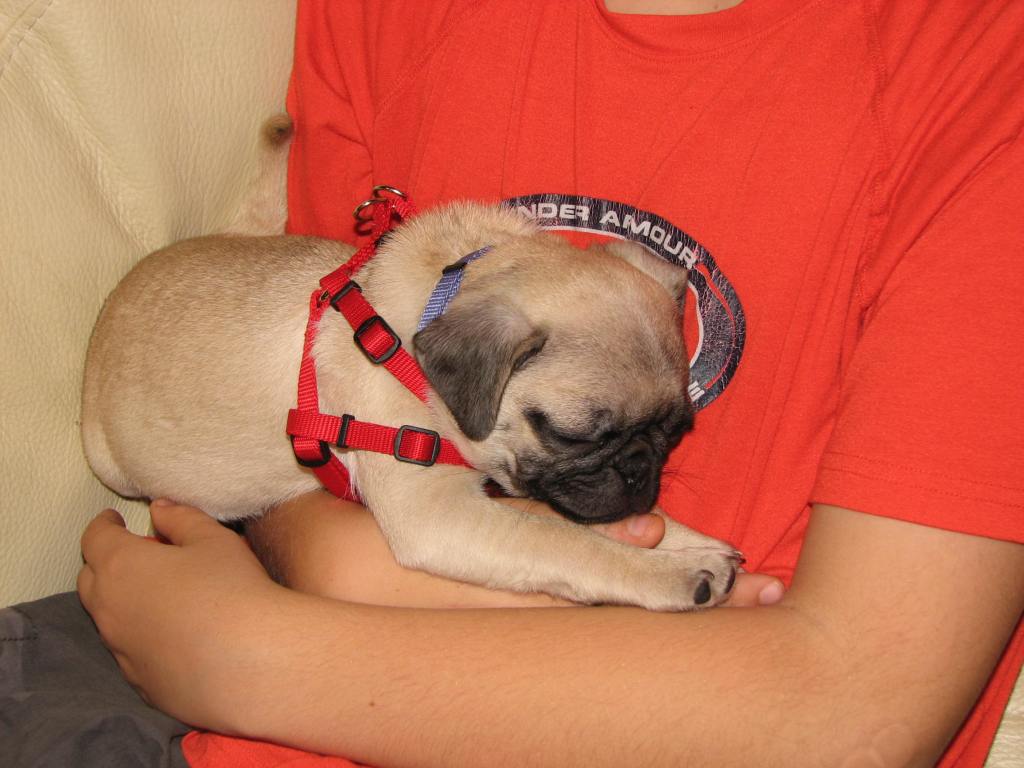
Photo of our son David on the sofa holding a little pug puppy in his arms.
Our son David with our pug Daisy when she was a puppy.
Photo of our son David on the sofa holding a little pug puppy in his arms.
Our son David is holding our pug Daisy when she was still a puppy (now she is 15 ½ years old).
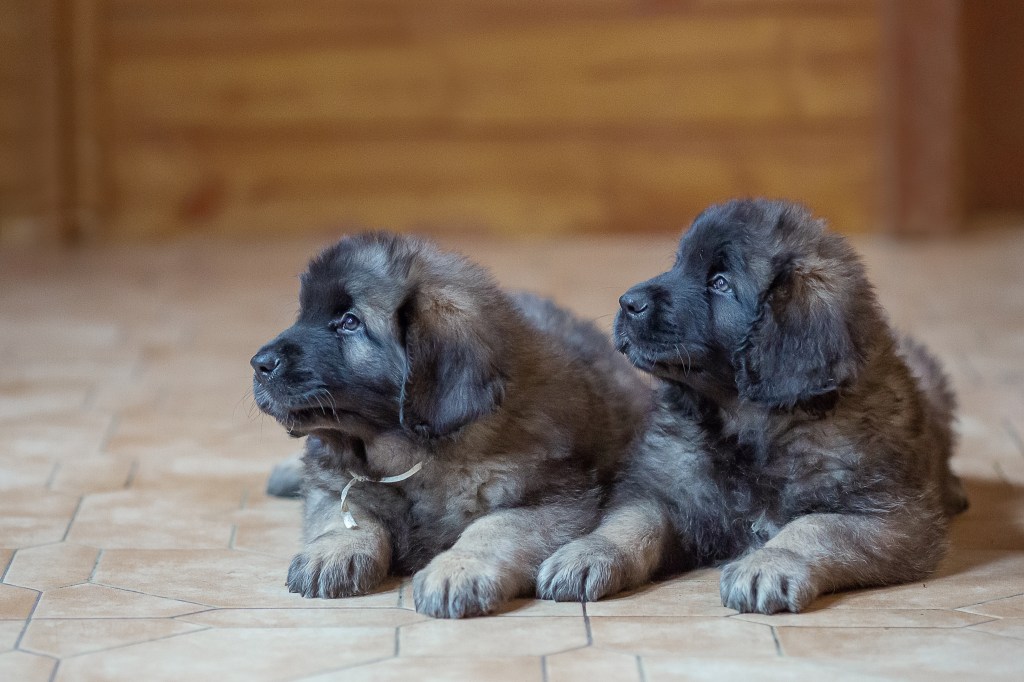
Two brown Leonberger puppies lying on a wood floor.
Two Leonberger puppies. Shutter stock Photo ID: 2294202331 by Olga Shusters.
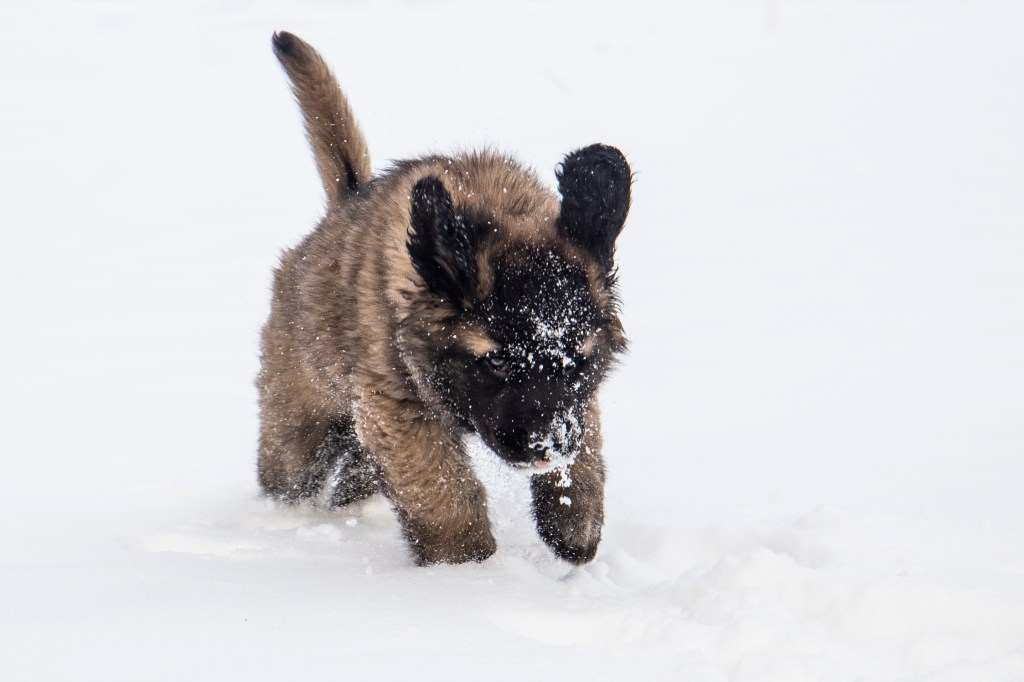
A Leonberger puppy running in the snow.
A Leonberger puppy running in the snow. Shutterstock Stock Photo ID: 2056502327 by Nikky de Graaf.
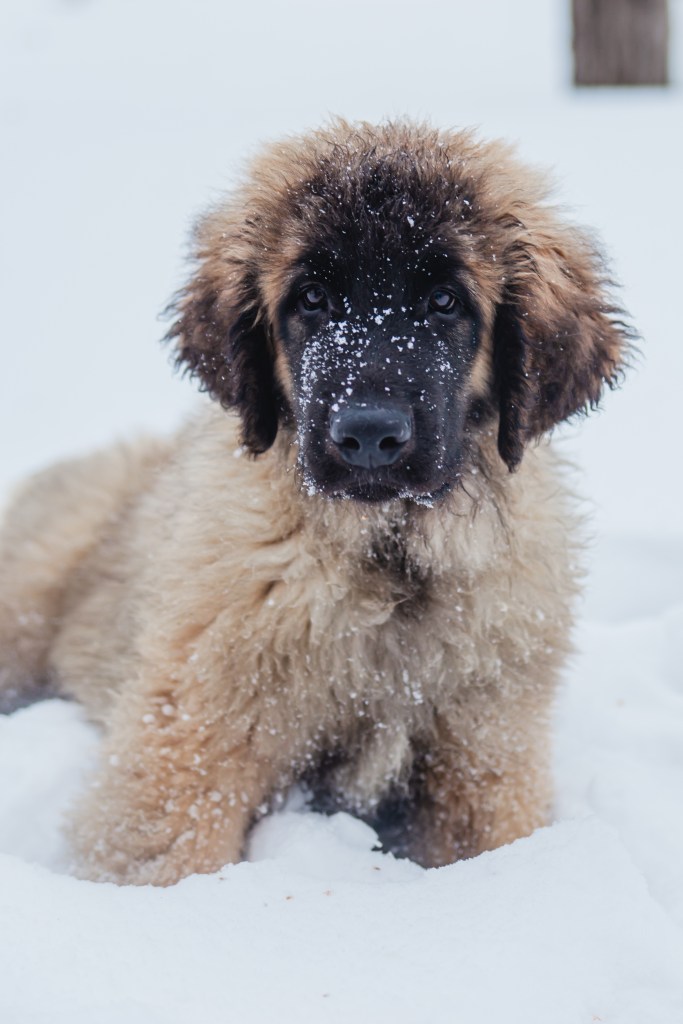
A Leonberger puppy standing in the snow.
A Leonberger puppy standing in the snow. Shutterstock Stock Photo ID: 2390810457 by VeronArt16.
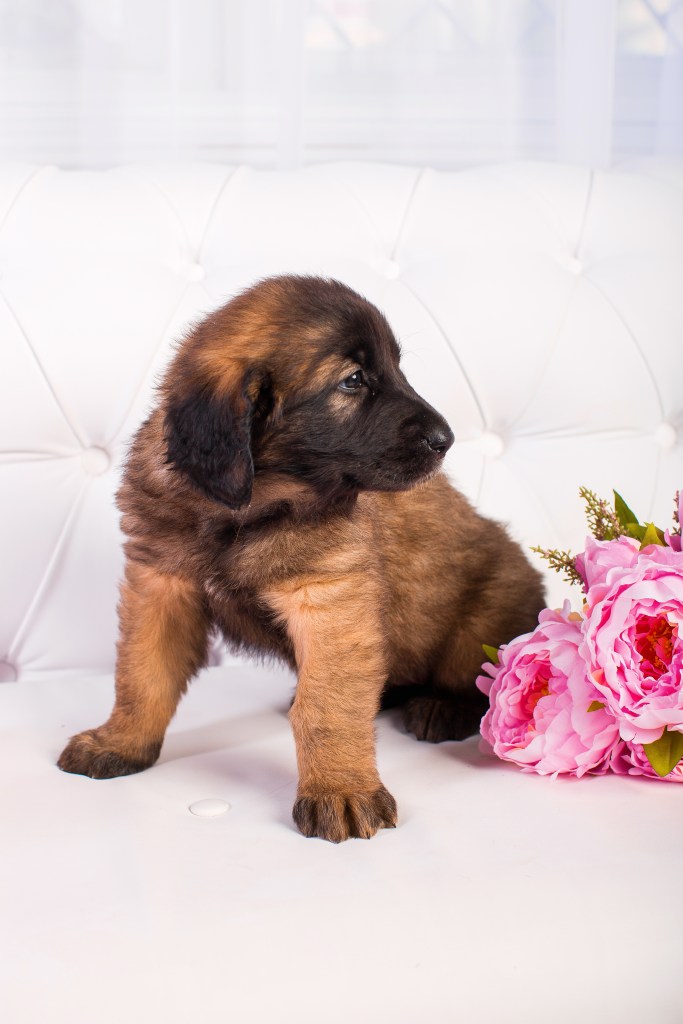
A Leonberger puppy sitting on a white floor next to pink flowers.
Another Leonberger puppy. Stock Photo ID: 561111403 by Akbudak Rimma.
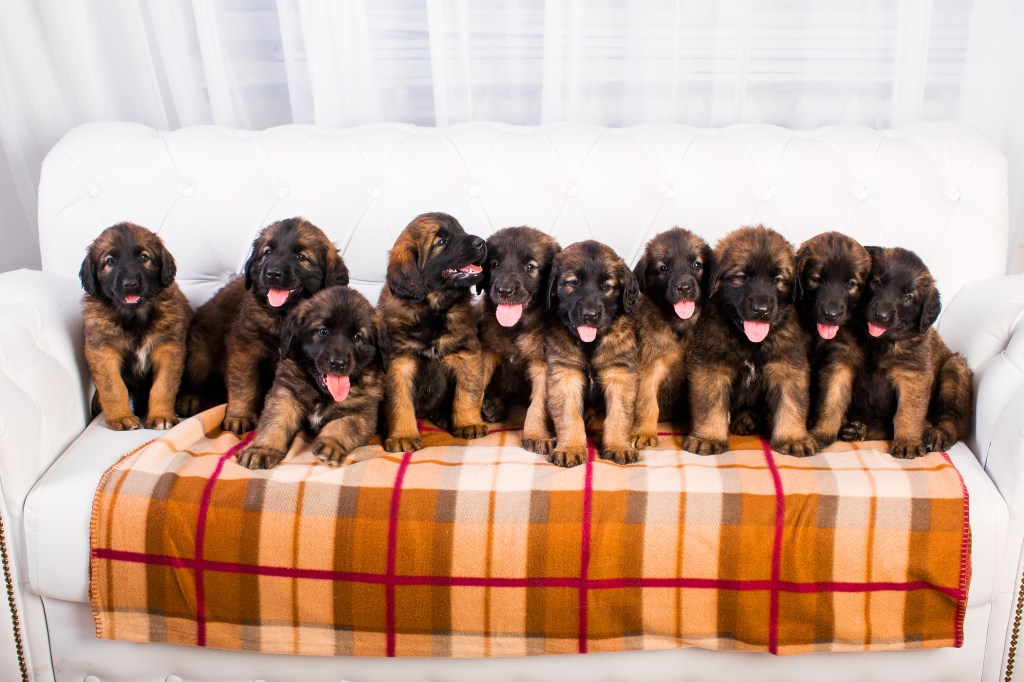
Ten Leonberger puppies sitting on a sofa. They are brown with black face masks.
Ten Leonberger puppies. My guess is that they are about two months old. Shutterstock-ID:561107710 by Akbudak Rimma.
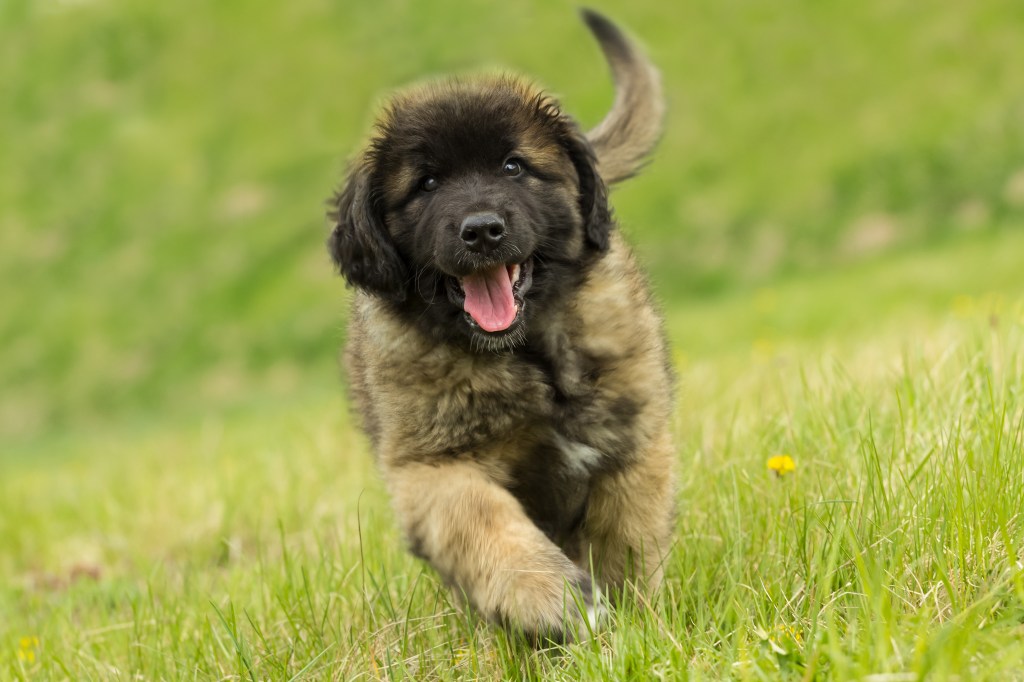
Leonberger puppy running through green grass. The puppy has its mouth open, and he is looking straight into the camera.
Leonberger puppy. My guess is that he is around two months old. Shutterstock-ID: 629624396 by TOM KAROLA.
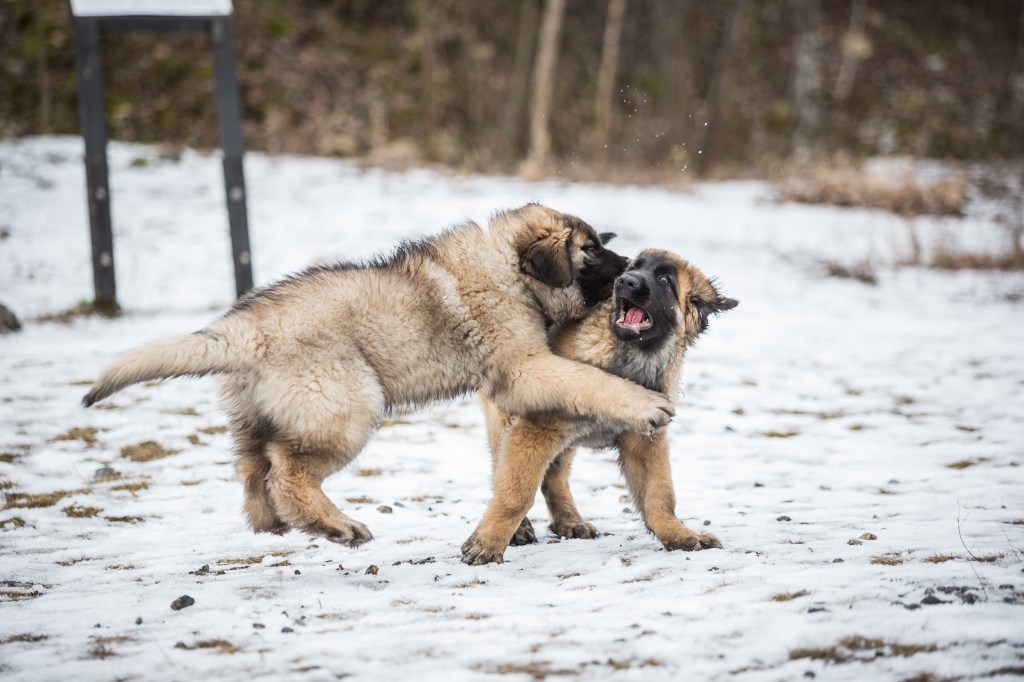
Two sand colored Leonberger puppies playing in the snow. The play seems to be a little bit rough. Like all Leonbergers they have a black facemask.
Two light colored Leonberger puppies playing. My guess is that they are three months old. Shutterstock-ID: 2141564415 by AnetaZabranska.
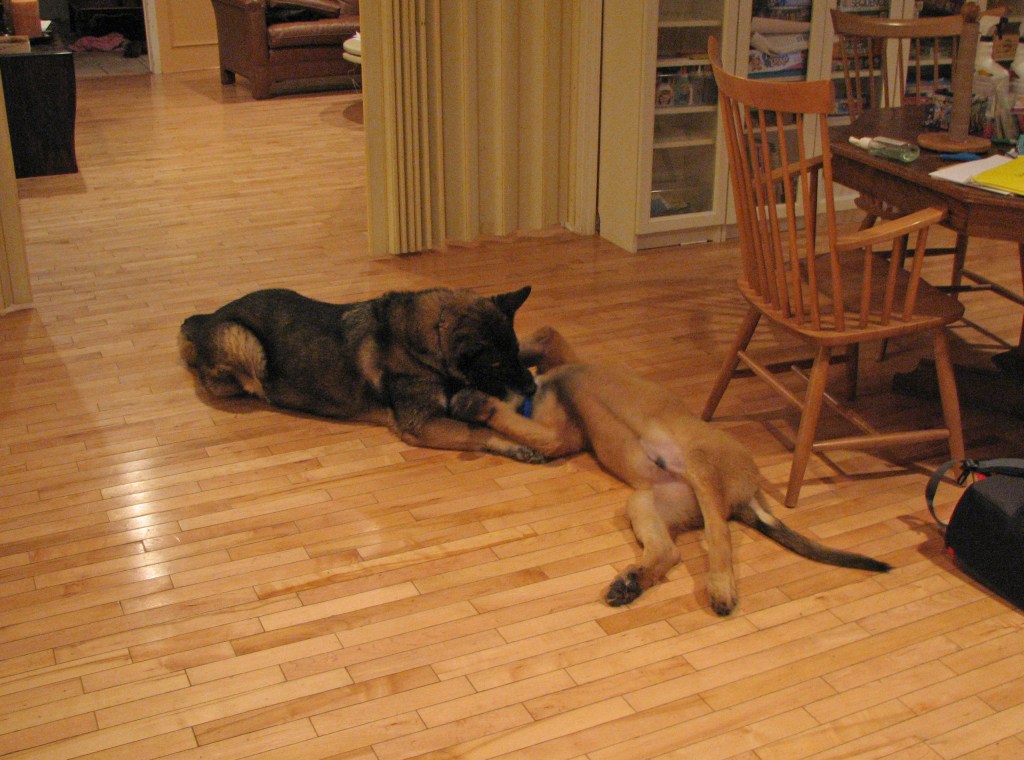
The German Shepherd is lying on the floor and the Leonberger puppy is on his back.
Our German Shepherd Baby playing with our 4 months old Leonberger Bronco.
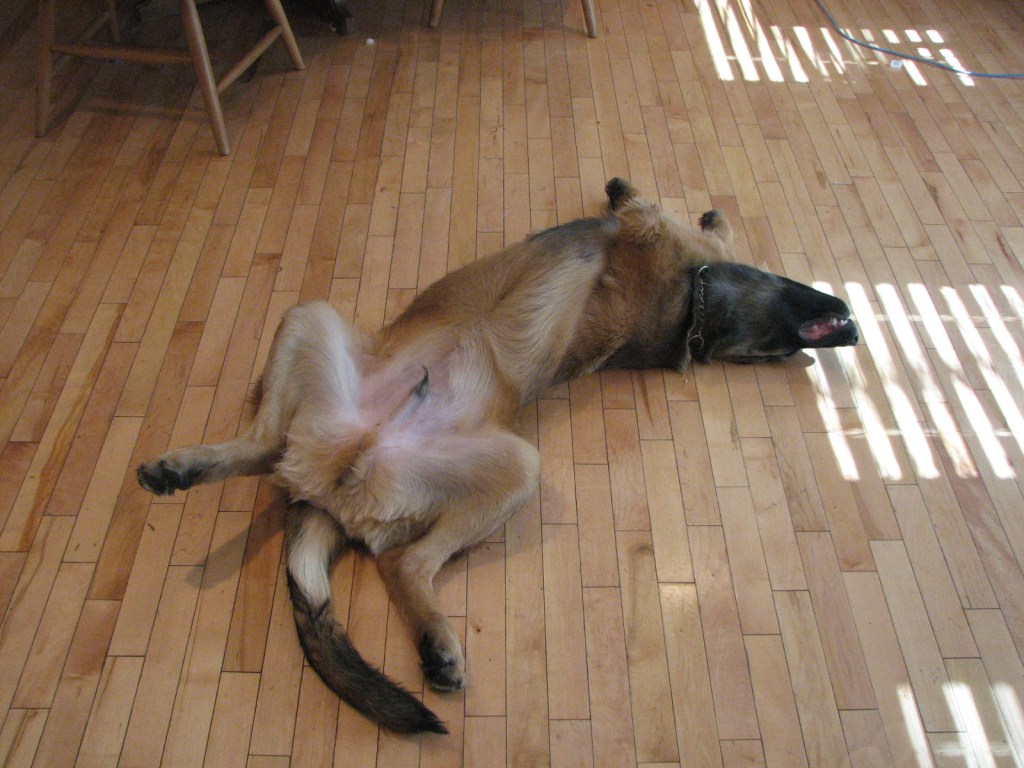
Our Leonberger Bronco about 9 months old is lying on his back on the floor.
Bronco our Leonberger at the dog park. He is about one year old. He is maybe not a puppy but far from an adult. He is an adolescent, which is why he looks so thin and gangly. Our Labrador Baylor is in the background.
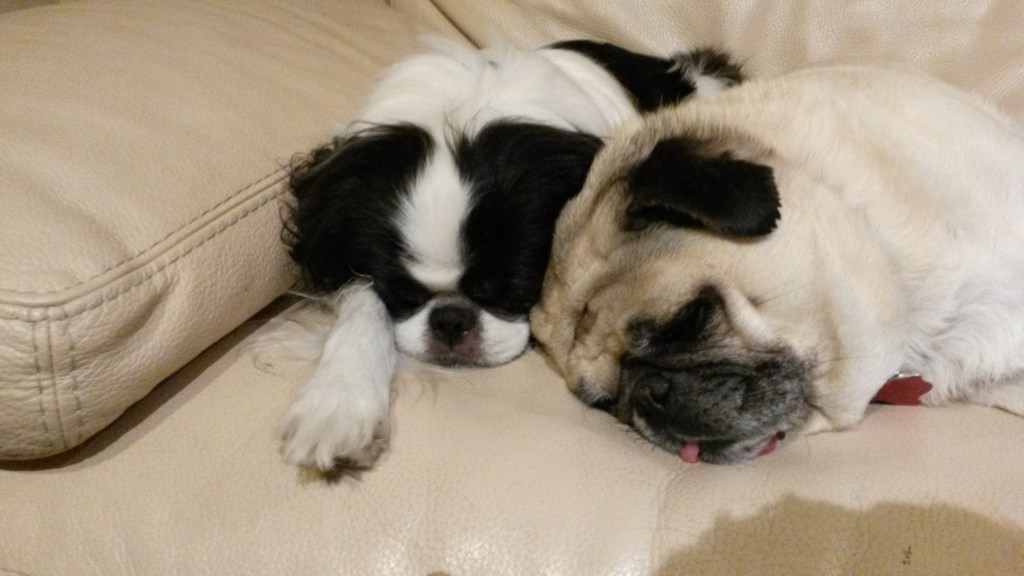
Our black and white Japanese Shin Ryu (left) sleeping next to our beige pug Daisy (right).
Our Japanese Shin Ryu sleeping next to our pug Daisy.
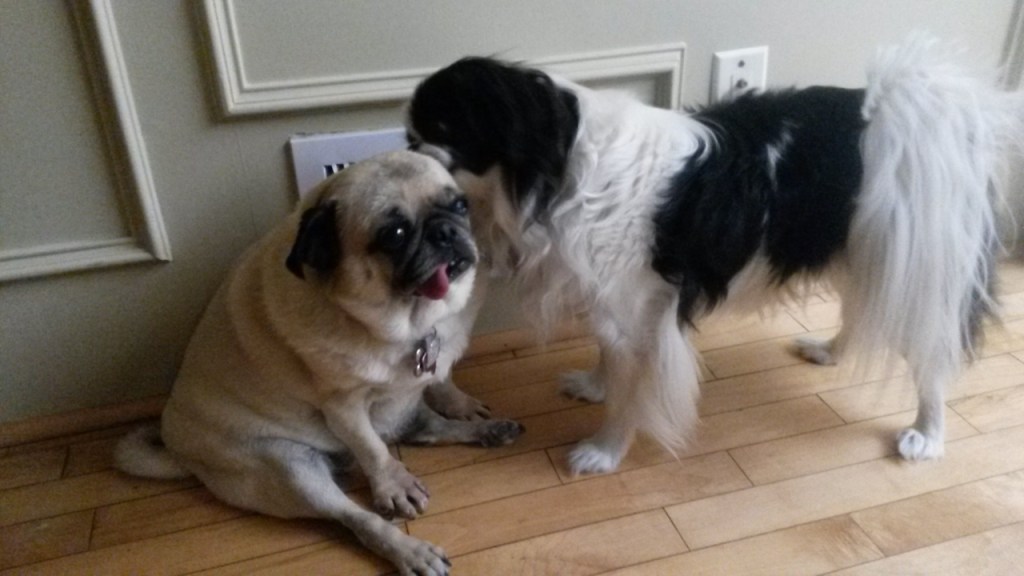
Our black and white Japanese Shin Ryu (right) licking our pug Daisy’s ear (left).
Our Japanese Shin Ryu licking our pug Daisy’s ear.
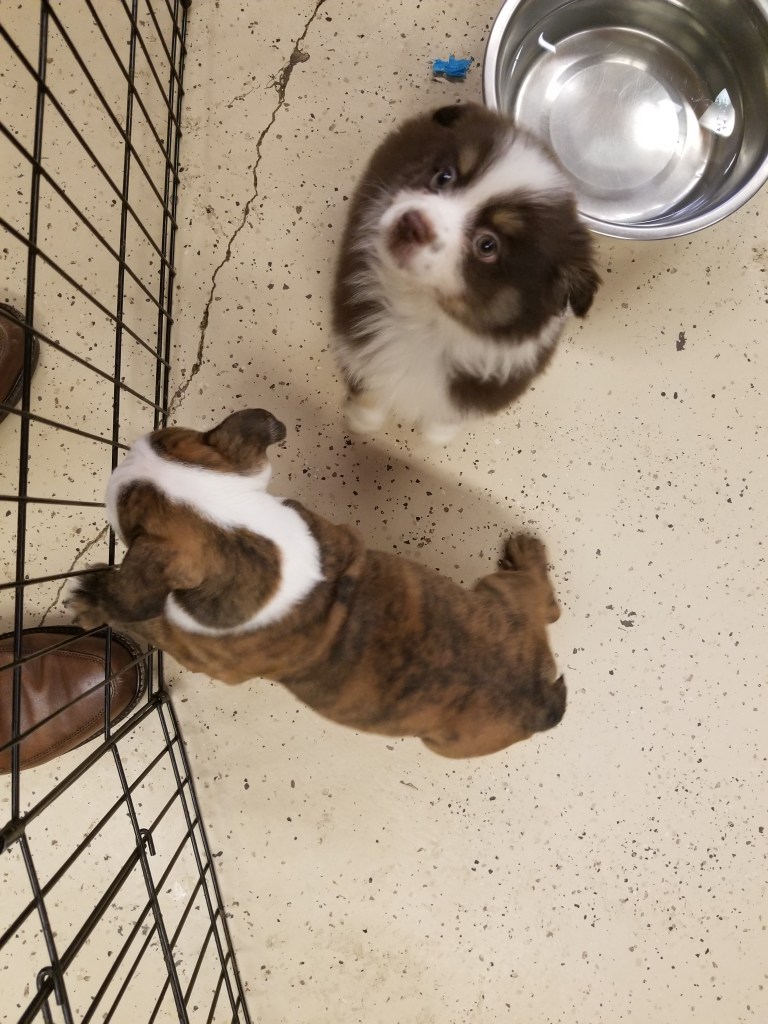
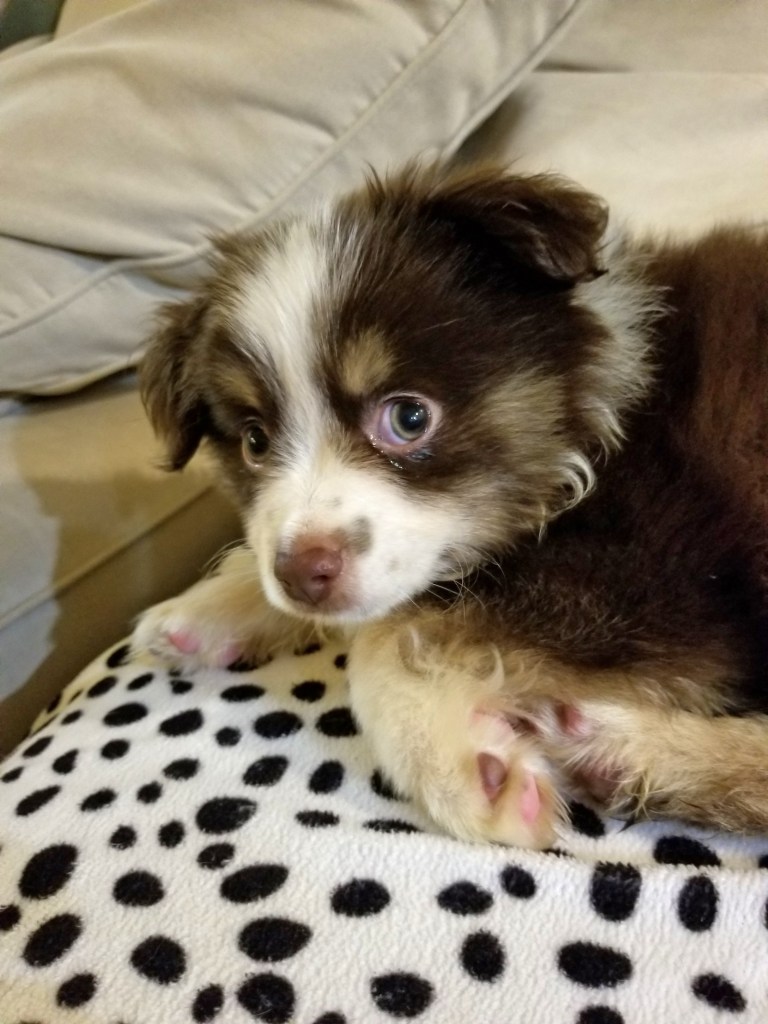
Photo shows a little mini-Australian Shepherd puppy on top. He is looking up at us. Right below him is an English Bulldog puppy.
The day we picked up our mini-Australian Shepherd Rollo. He was nine weeks old. The other puppy is an English bulldog puppy.
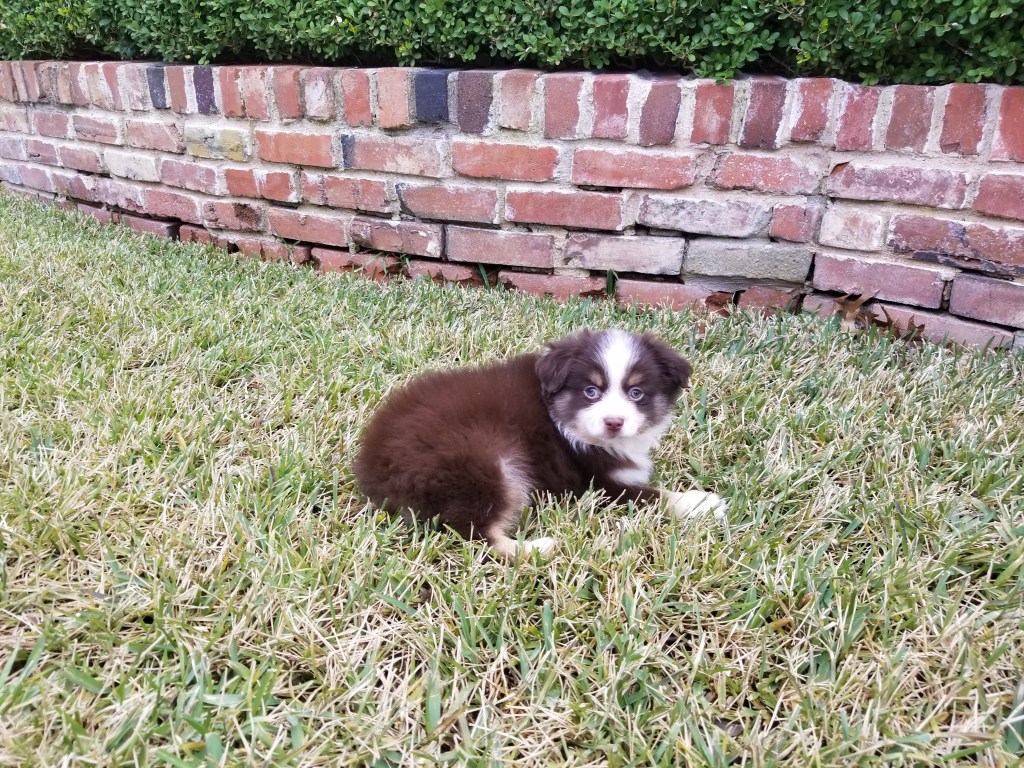
Our mini-Australian Shepherd puppy Rollo is lying on the grass.
Our mini-Australian Shepherd puppy Rollo.
Our mini-Australian Shepherd puppy Rollo is lying on a blanket.
Our mini-Australian Shepherd puppy Rollo.
The photo shows our pug Daisy on the right and our little mini-Australian Shepherd puppy Rollo on the left. They are on the sofa.
Our pug Daisy and our mini-Australian Shepherd puppy Rollo.
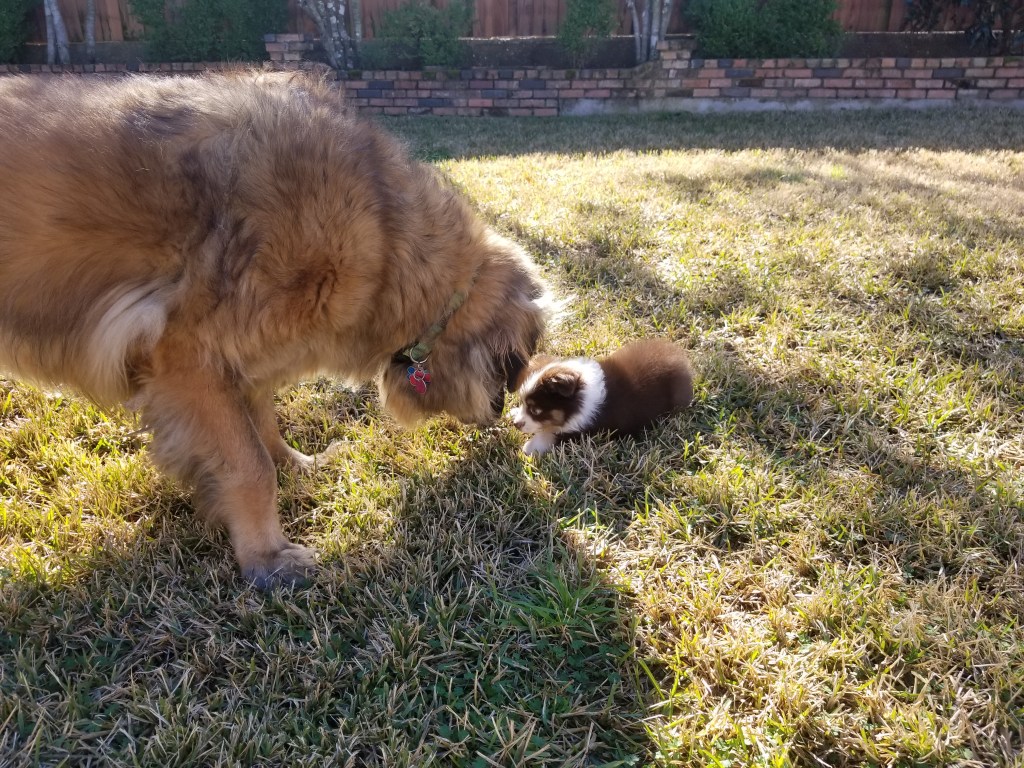
The photo shows our big Leonberger on the left and our little mini-Australian Shepherd puppy Rollo on the right. They are in the backyard.
Bronco and our mini-Australian Shepherd puppy Rollo.
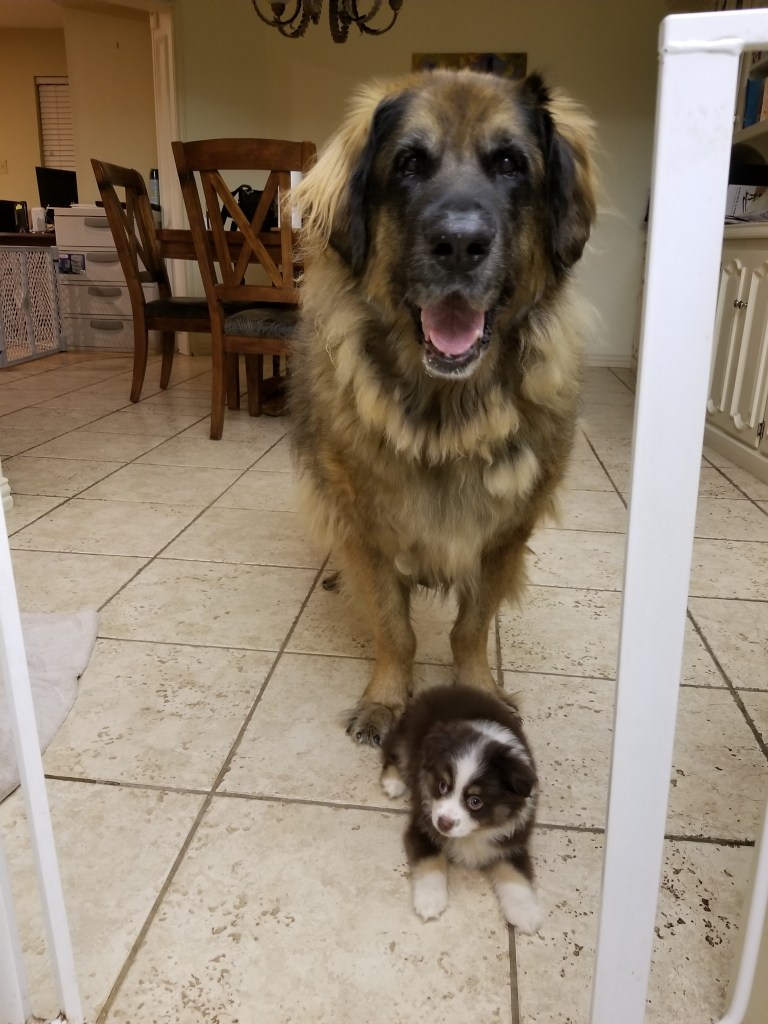
The photo shows our big Leonberger standing behind our little mini-Australian Shepherd puppy Rollo.
Bronco and our mini-Australian Shepherd puppy Rollo.
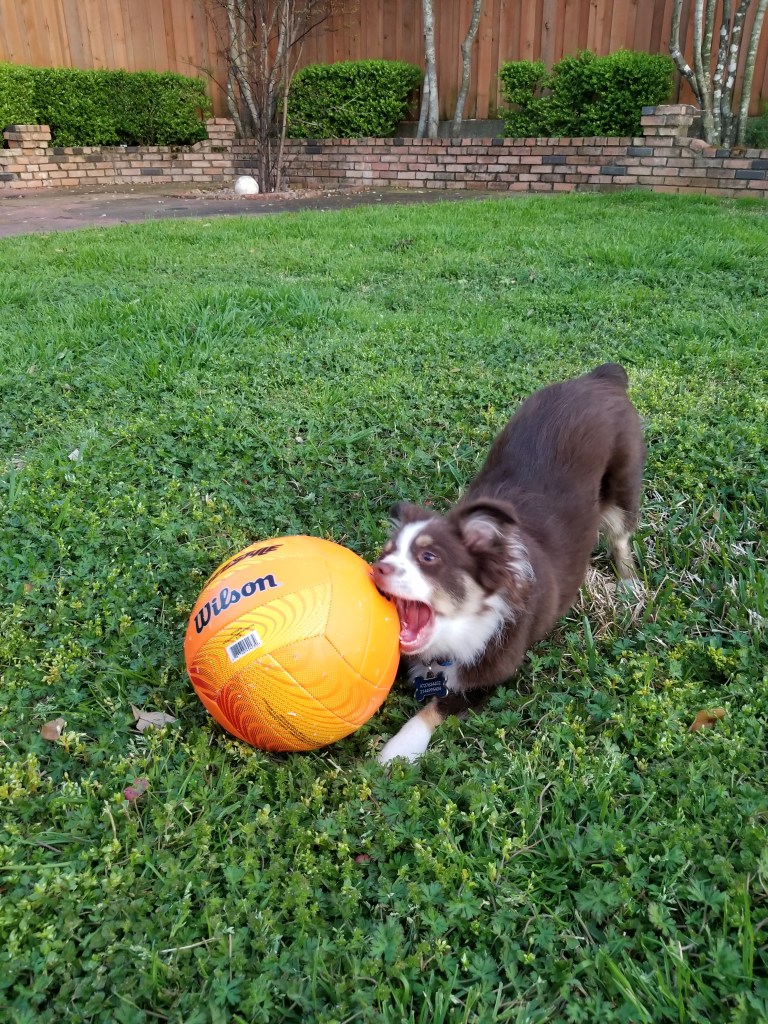
Our mini-Australian Shepherd puppy Rollo is playing with an orange volleyball on the green grass.
Our mini-Australian Shepherd puppy Rollo playing with an orange ball.
Our mini-Australian Shepherd Rollo (left) is biting Bronco’s tail and pulling on it.
Our mini-Australian Shepherd Rollo is playing with our Leonberger Bronco’s tail. Once he even dangled in it like a swing.

.

Happy National Puppy Day

There are so many beer styles

Since it is St. Patrick’s Day today, I thought I’d make a post about beer.

Me Thomas wearing a green hat, a green shirt and drinking from a large cup of beer.
Me drinking Irish Goodbye an Irish Red Ale from Peticolas Brewery Dallas, Texas, ABV 6.5%. Photo taken today.

Bland pale mass produced lagers often made with low quality ingredients are very common now a day. Examples are Corona, Bud Light, Heineken, Miller Light, etc. However, there are many other beer styles. For example, there are:

Lagers:

  • Pale Lager that is not mass produced and not containing low quality ingredients
  • Dark Lager including Schwarzbier (essentially black)
  • Red/Amber Lager
  • Pilsner
  • Adjunct Lager
  • Rice Lager
  • Vienna Lager
  • India Pale Lager

Ales:

  • Stouts
  • Porter
  • Pale Ale
  • IPA / India Pale Ale (the second most popular beer style)
  • Hefeweizen
  • Kristallweizen
  • Witbier
  • Irish Red Ale (what I am drinking above)
  • Saison
  • Wild Ale
  • Lambic
  • Geueze
  • Gose
  • Smoked beer
  • Belgian Blonde Ale
  • Steam Beer
  • Kvass
  • Gruit
  • And much more

The beer advocate counts 120 beer styles of which I’ve had 107 so far. Beer advocate features around 250,000 different beers.

Bottle of BOMB!  Prairie Artisan Ales on left, glass with the beer and on the right my beer garden gnome.
The BOMB! From Prairie Artisan Ales, Tulsa, Oklahoma, ABV 13%. It is a so-called Imperial Stout, an extra strong stout and extra flavorful stout.

Generally speaking, beers are classified into two main types of beers, lagers and ales, or perhaps lagers and ales plus other beers. Steam beers are hard to classify and Lambics you don’t refer to as ales even though they technically are ales. Stouts, porters, hefeweizen, pale ales, IPAs, Wild Ales, Lambics are all ales. In the short list above, everything below Vienna Lager are ales.

Bottle of Atrial Rubicite on left, glass with the beer and on the right my beer garden gnome.
Atrial Rubicite is a world class Wild Ale from Jester King Brewery, Texas, my favorite Texas brewery. Wild Ales are fermented using wild yeast, which often gives them a fruity flavor. In this case they also added raspberries. It is considered the best raspberry Wild Ale in the world. I was once waiting for hours in a long line just to buy two bottles (the maximum allowed).

Lager beer is a relatively recent invention that originated in Bavaria. Lager beers use a special kind of yeast for the fermentation process, it is typically bottom fermented, and fermented and conditioned in cool temperatures, unlike other beer styles. Lager beers can be of many colors, pale, amber, dark, even black such as Schwarzbier. The Pale Lager originated in Pilsen in Bohemia (Western Czech Republic) in the mid-19th century. The pale lager has become the world’s most common beer style and bland tasting mass-produced pale lager beers dominate the market. In countries that are not traditional beer countries such as France, Italy, China, Japan and South America, the bland pale lager is very dominant. I’ve come across many people who think that the more tasteless the pale lager is, the better beer it is (people who love Corona).

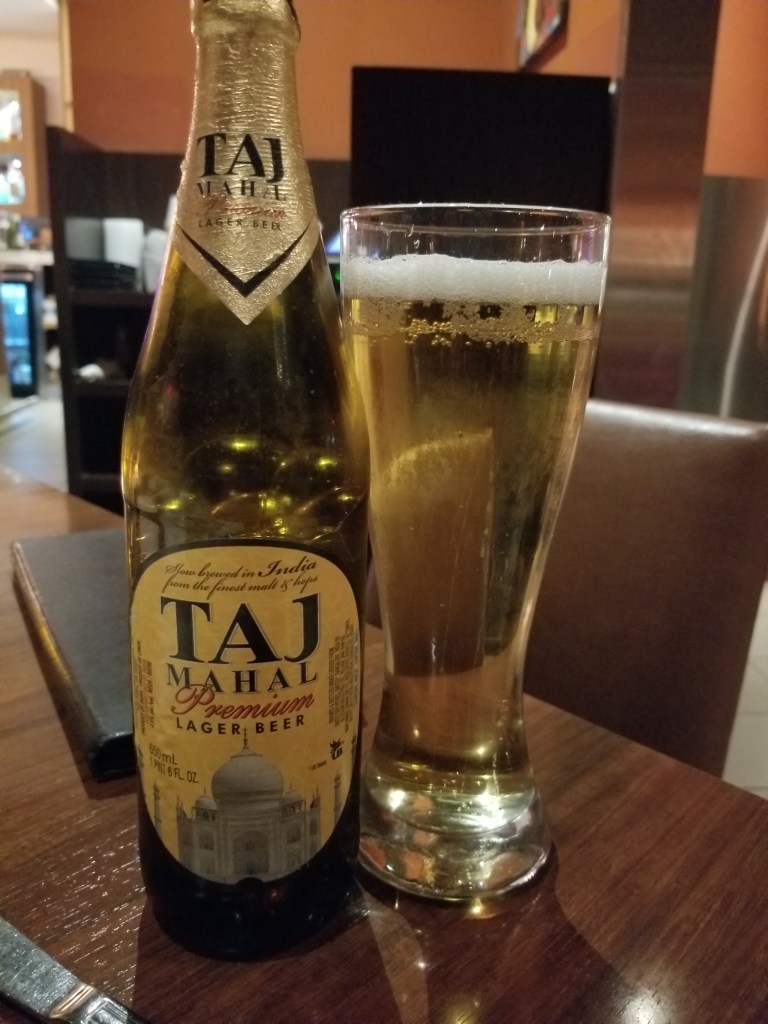
Bottle of Taja Mahal on left, glass with the beer on the right.
An American style mass produced Adjunct Lager from India. Adjunct lager means that they used ingredients such as corn and rice, which is not typical for higher quality lager beers. It wasn’t great, it was watery, but good with very spicy food. But then, water is probably best with very spicy food.

Stout is a dark, top-fermented beer / Ale style. Sub styles include dry stout, oatmeal stout, milk stout and imperial stout. It is derived from the Porter, which originated in London, England in the early 1720s. Stout is basically a stronger and more flavorful porter. However, there is no clear distinction between porter and stout. I am sure you have heard of Guinness Stout, a very Irish beer. Imperial stouts are extra strong, full bodied and flavorful stouts. Below is an imperial stout, which interestingly enough is not dark brown or black but golden/amber.

Glass with amber colored El Cuerro on left and can of El Cuerro on right.
El Cuerro is a so-called White Stout from Lone Pint Brewery, Texas, ABV 7.8%. The flavor is roasted malts, coffee and chocolate. I think it is pretty good.

IPAs, India Pale Ales is an extremely popular Ale that is typically flavorful and quite bitter. It is in a sense an anti-Lager. It is the beer style that I drink the most. The IPA is a type of Ale (fermented at warm temperatures, unlike, for example, lagers). It is typically a Pale Ale (exceptions are black IPAs). It was invented in England in the early 1800’s and became popular for exportation to India. It is characterized by its higher content of hops and the level of alcohol is often higher as well. More hops and more alcohol made it easier to preserve the beer for the trip to India.

A glass of my home brew on the left the bottle on the right
This is an India Pale Ale that I brewed at home. I call it “It’s Fine. I’m Fine. Everything is Fine.”  An artist friend of mine, Breanna, made the labels.

As I mentioned there are a lot of beer styles. One of the lesser-known ones is smoked beers. Smoked beer, or Rauchbier, is a type of beer with a distinctive smoke flavor imparted by using malted barley dried over an open flame. It goes great with barbecue. Below is an example of the style that I’ve had quite often.

Bottle of Aecht Schlenkerla on left, glass with the beer and then on the right my beer garden gnome.
Aecht Schlenkerla Rauchbier Märzen from Braurei Heller Bamberg, ABV 5.1%. It is a so called Rauchbier. The barley malts have been kilned over a fire of beech wood logs, giving it a smokey flavor. The flavor is smokey, very smokey malts or toasted bread, maybe smoked ham. I think it is delicious.

If you are paying attention to beer, you may have heard about “Trappist beers”. This is very special category that is not referring to a beer style, but by who makes it. Trappist beer is brewed by Trappist monks. There are tens of thousands of breweries in the world but there are only 13 Trappist breweries in the world. Trappist beers are considered to be very special. The most highly praised of the Trappist beers is Westvleteren 12 from Brouwerij Westvleteren founded in 1838 at the Trappist Abbey of Saint Sixtus in Vleteren, Belgium. Westvleteren 12 is a so called Quadrupel Belgian Ale. It is often said that Quadrupel means that it has been re-fermented four times, but it is often not true. However, quadruple means that it is a stronger, darker and more flavorful. Westvleteren 12 is extremely difficult to buy but I have been able to get my hands on several.

Big opener on the left, the glass with Westvleteren 12 in the middle and the Westvleteren 12 bottle on the right.
Westvleteten 12 is a Belgian Ale Quadrupel ABV 10.2% (Trappist). I think the taste is like raisin bread, dark fruits, plum, raisin, and some yeast and dark bread bitterness. There is a very small hint from the alcohol that adds nicely to the overall flavor. I love this beer.

I think my favorite type of lagers are Märzen and my favorite Ales are IPAs.

Do you have a favorite Lager? Do you have a favorite Ale?

New Portrait of our Leonberger

Today we got a portrait of our late Leonberger Bronco framed. We received the portrait a few days ago. We got it framed at Fast Frame here in Dallas today. We got the conservation glass so that the portrait will last a very long time. The portrait was drawn by Veniceme at Etsy (Natasha Dall’Ara) and it is based on one of our photos. Below is a photo of Bronco’s Grey Muzzle Award on the right and the portrait is on the left.

Left : Hand painted portrait of Bronco by Veniceme / Natasha Dall’Ara at Etsy. Right Bronco’s Grey-Muzzle Award from LHFI.

The Adventures of a Leonberger a Leonberger Guest Post

da-AL was gracious enough to host me via a guest post. It features the story of why I wrote my Leonberger book as well as the story about our Leonberger Bronco’s hamster rescue operation. I would like to direct all comments to her post. See da-AL’s post below.

25 Waterberger Photos

Today is the two-year anniversary of my blog and this is the 215th post.

Four Leonbergers running in water
Shutterstock-ID: 959582 by Ingvald Kaldhussater

My blog is primarily about Leonbergers, an unusual and fascinating dog breed that is known for its size, affectionate nature, and intelligence. We were lucky enough to live with one for thirteen years. His name was Le Bronco von der Löwenhöhle—but we called him “Bronco” for short. I also wrote a book about Leonbergers and about Bronco’s many adventures : The Life and Times of Le Bronco von der Löwenhöhle. If you are on a desktop computer you’ll see the book in the sidebar on the right, and if you are on a phone you have to scroll to the bottom of the page. If you still cannot see the book, you can click here.

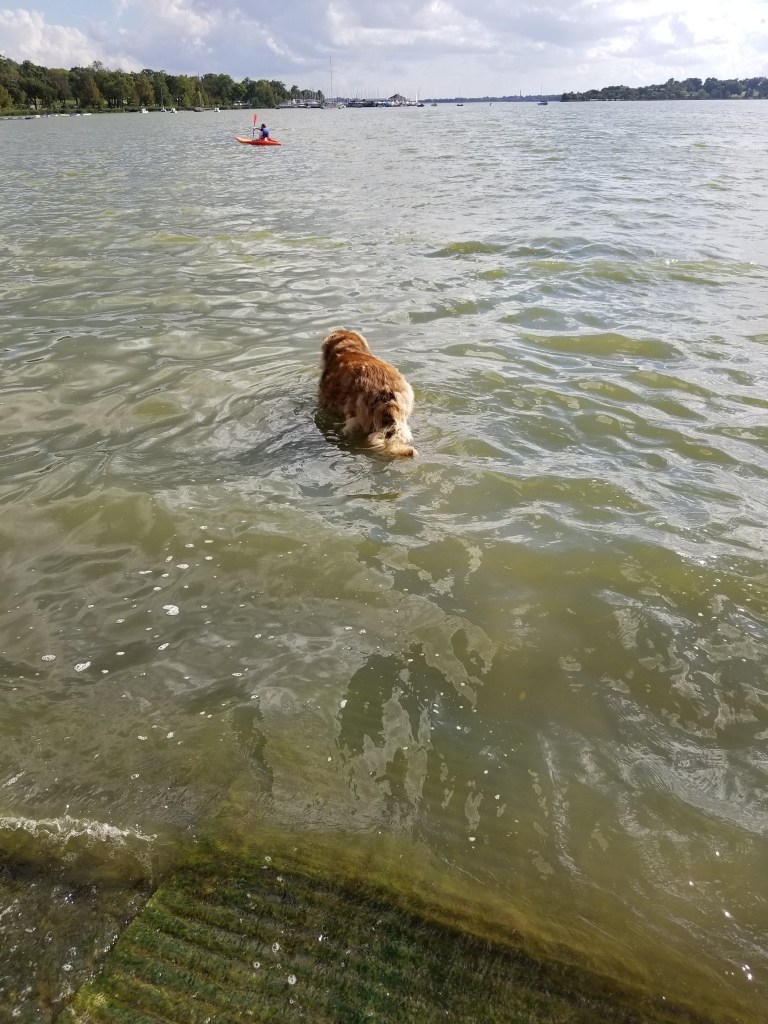
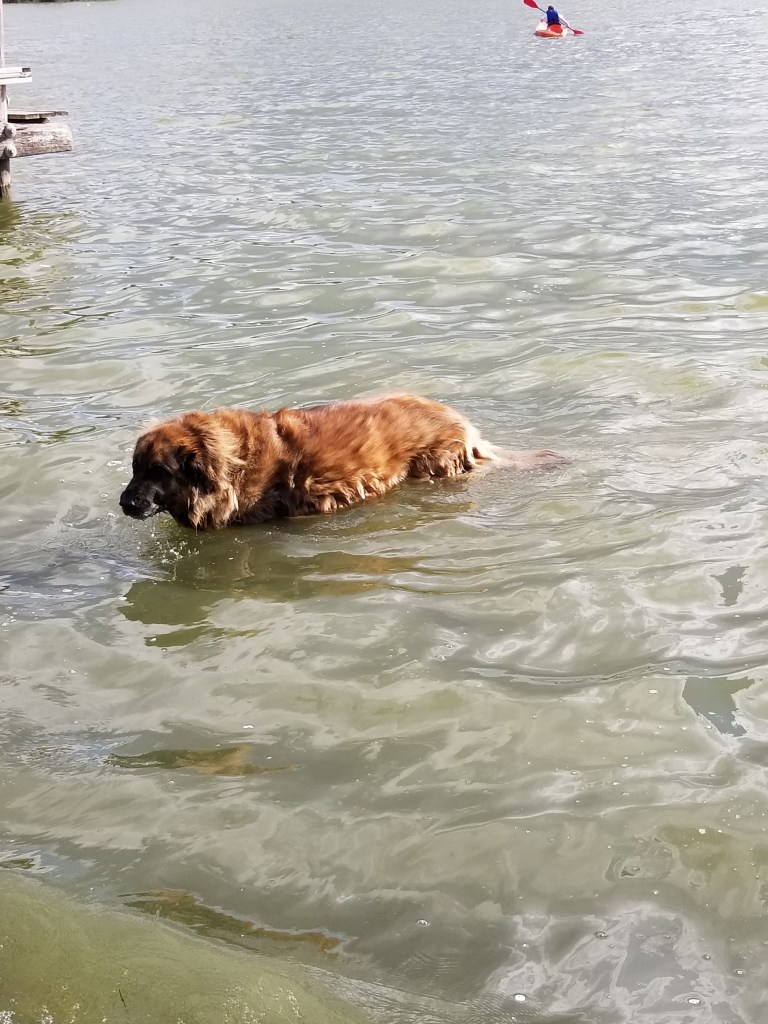
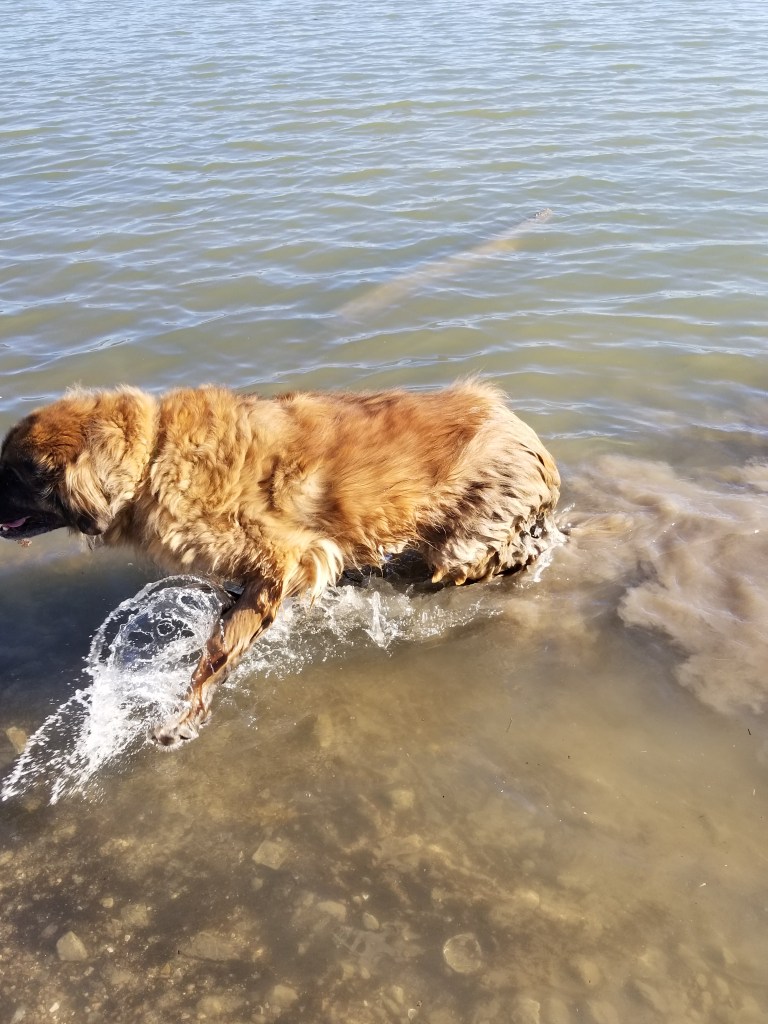
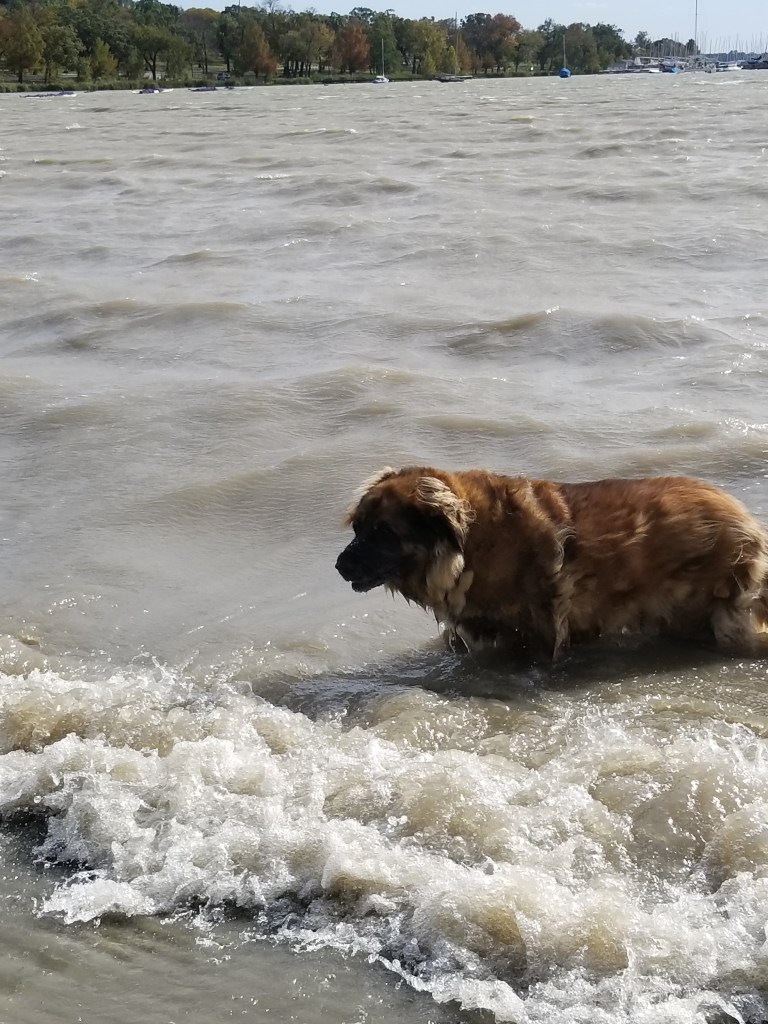
Leonbergers love to swim and so did our Bronco. This post features 25 photos of Leonbergers in the water, which is why the title of the post is 25 Waterberger photos. Most of the photos are of our Leonberger Bronco in White Rock Lake in Dallas. He loved to chase ducks and egrets, but catching is difficult. In the end he had no egrets. One of the photos is from a friend and there are a few stock photos. If you want to see Leonberger puppy photos click here, and if you want to see another set of 25 Leonbergers click here, and here is yet another set of 25 Leonbergers.

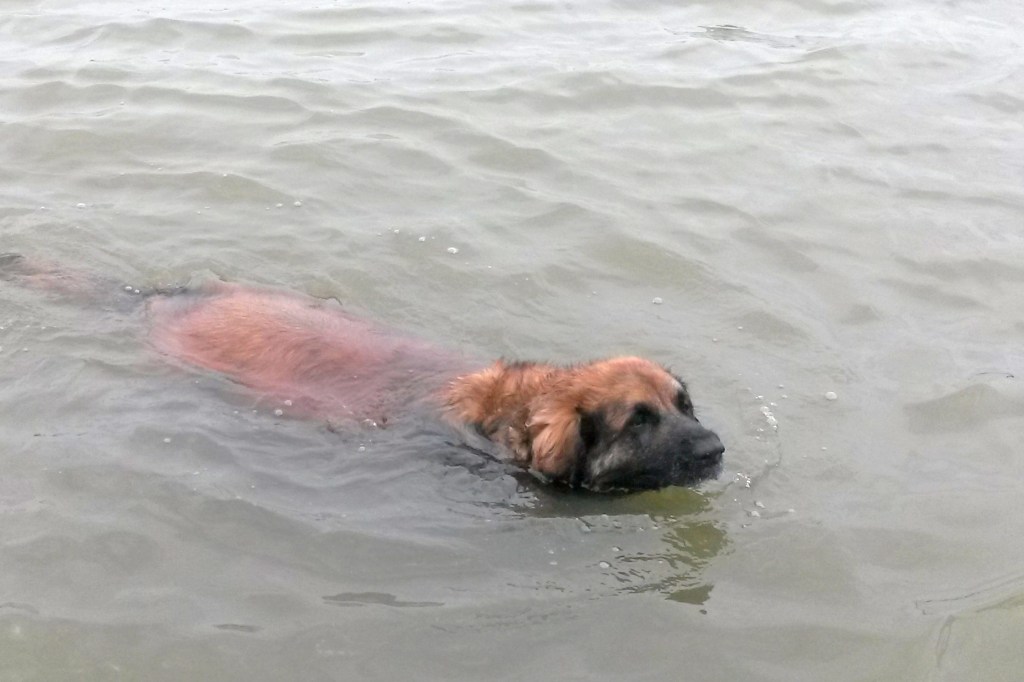
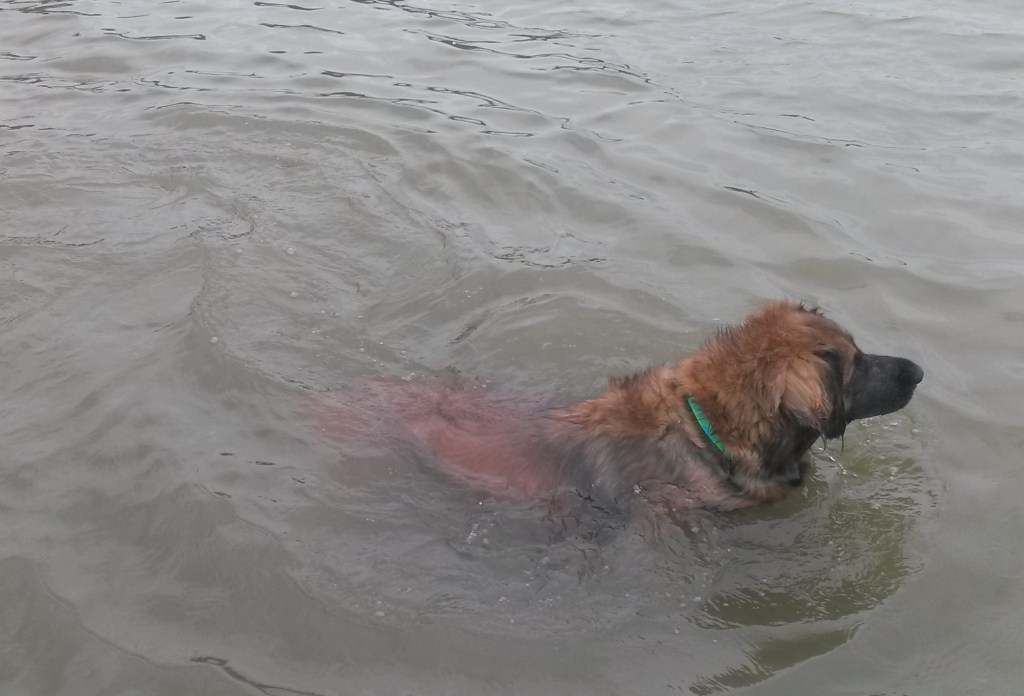
A Leonberger swimming in lake water
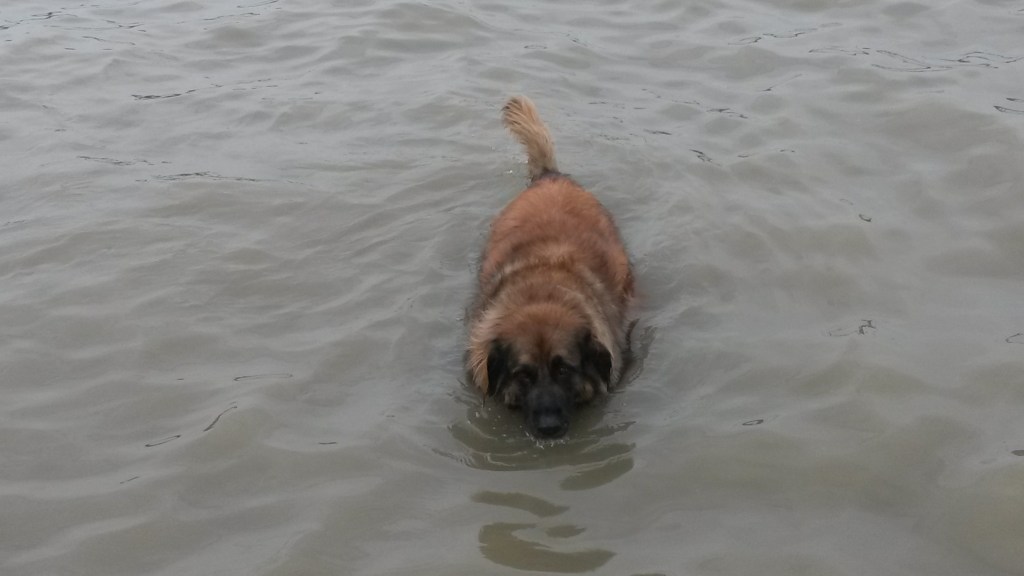
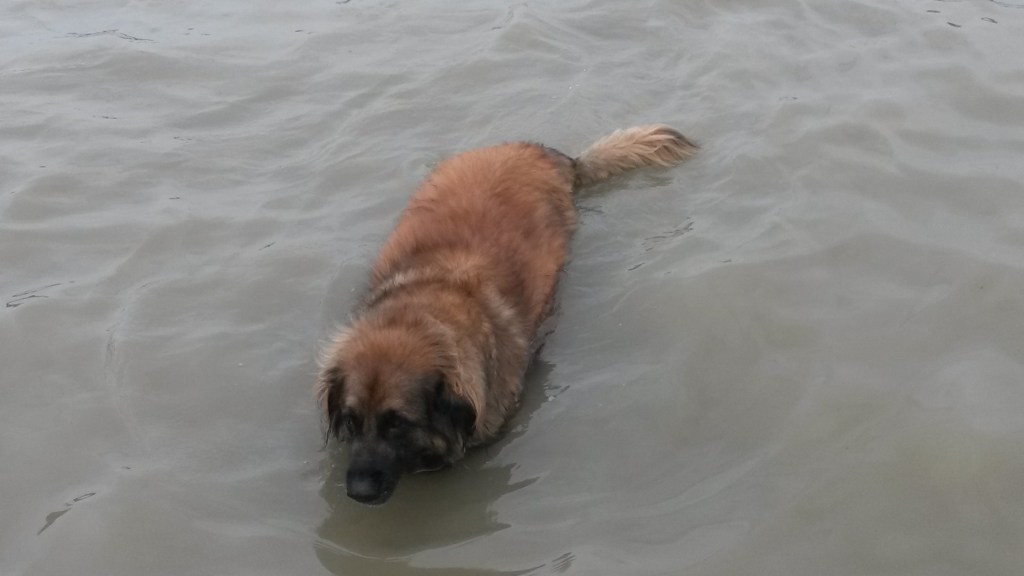
Our Leonberger Bronco swimming in White Rock Lake.
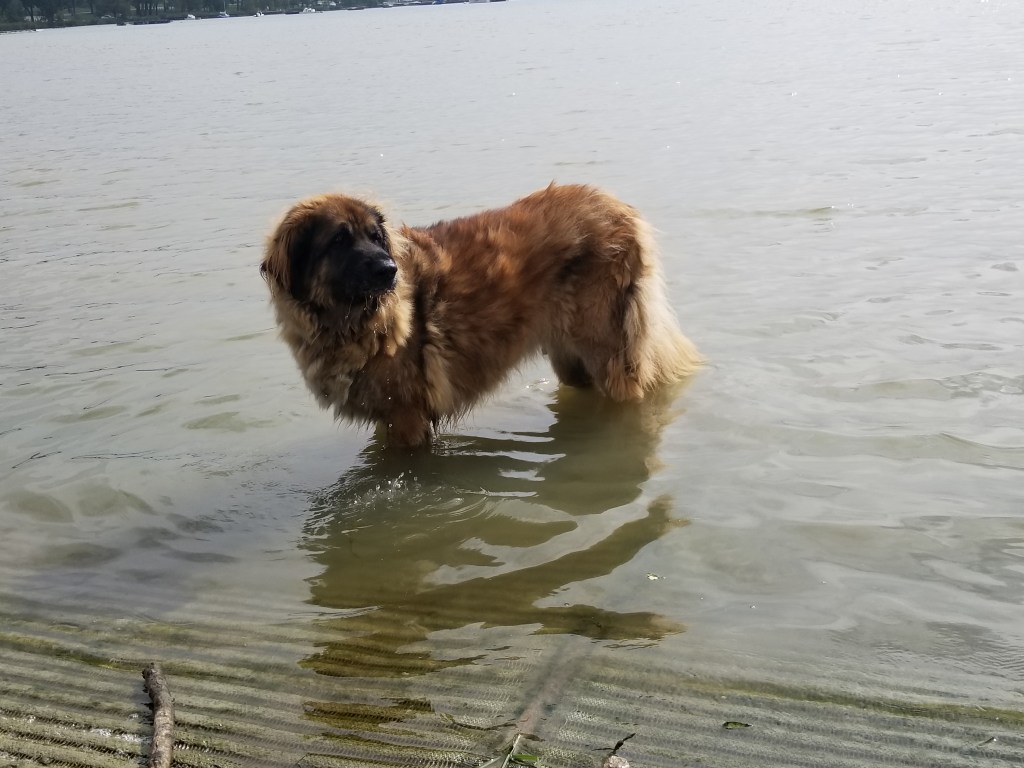
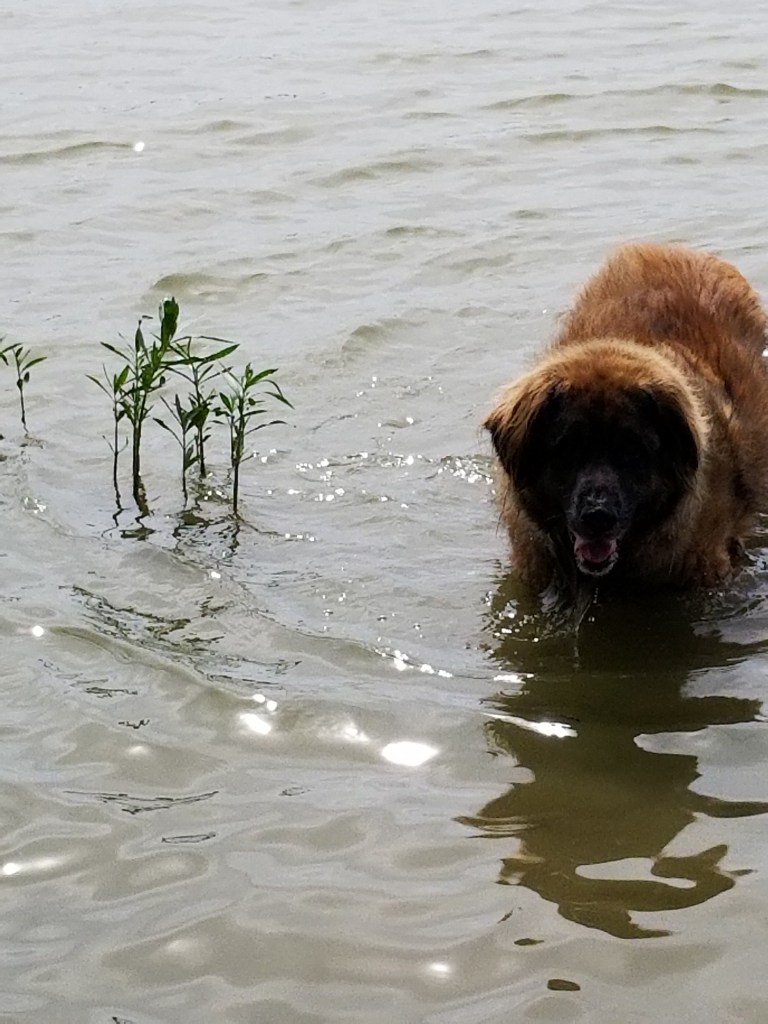
Bronco our Leonberger is standing in lake water
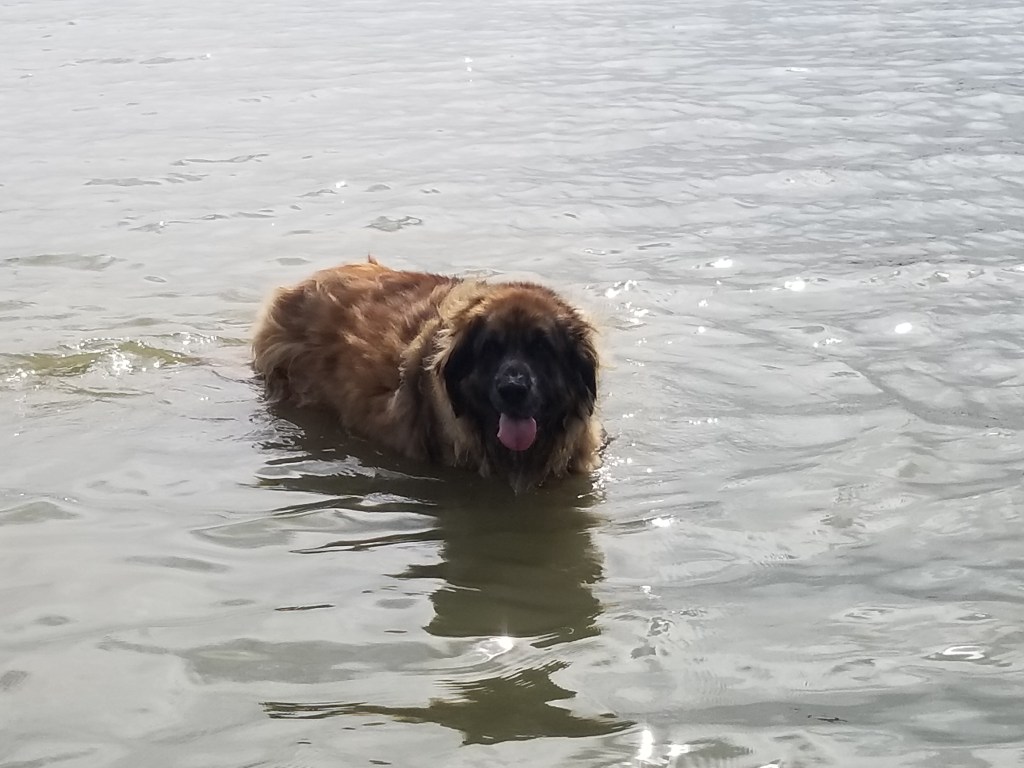
Bronco is standing in the water in White Rock Lake.
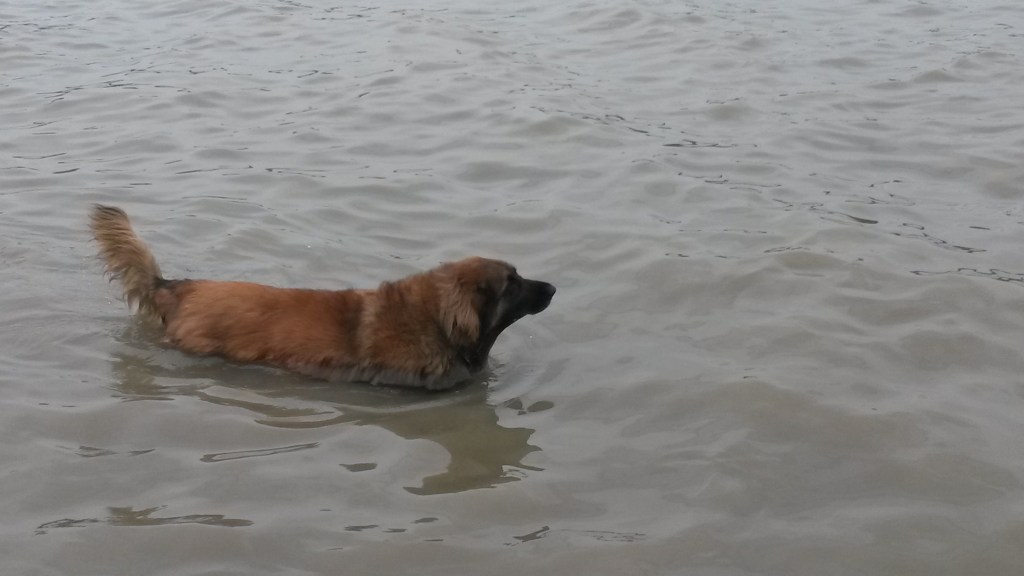
A Leonberger swimming in lake water
Our Leonberger Bronco swimming in White Rock Lake.
A Leonberger standing in lake water
Our Leonberger Bronco in shallow water. Still White Rock Lake.
A Leonberger standing in water
Digory a Leonberger in the water. Photo by Jen O’Keefe.
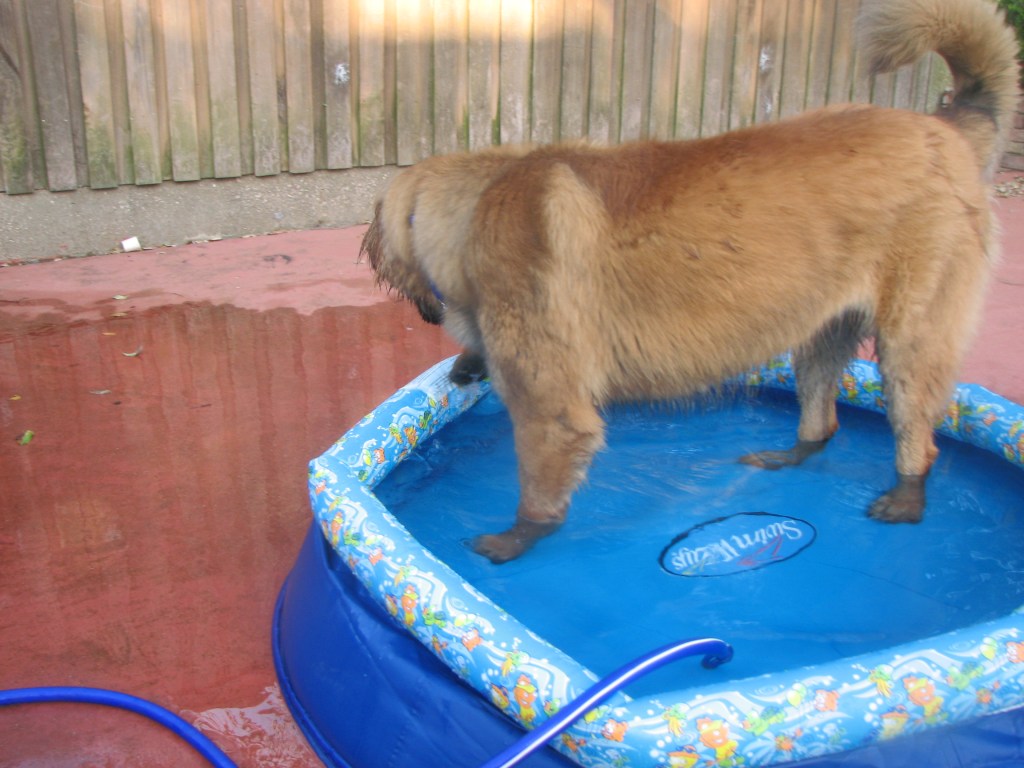
Leonberger standing in a blue kiddie pool
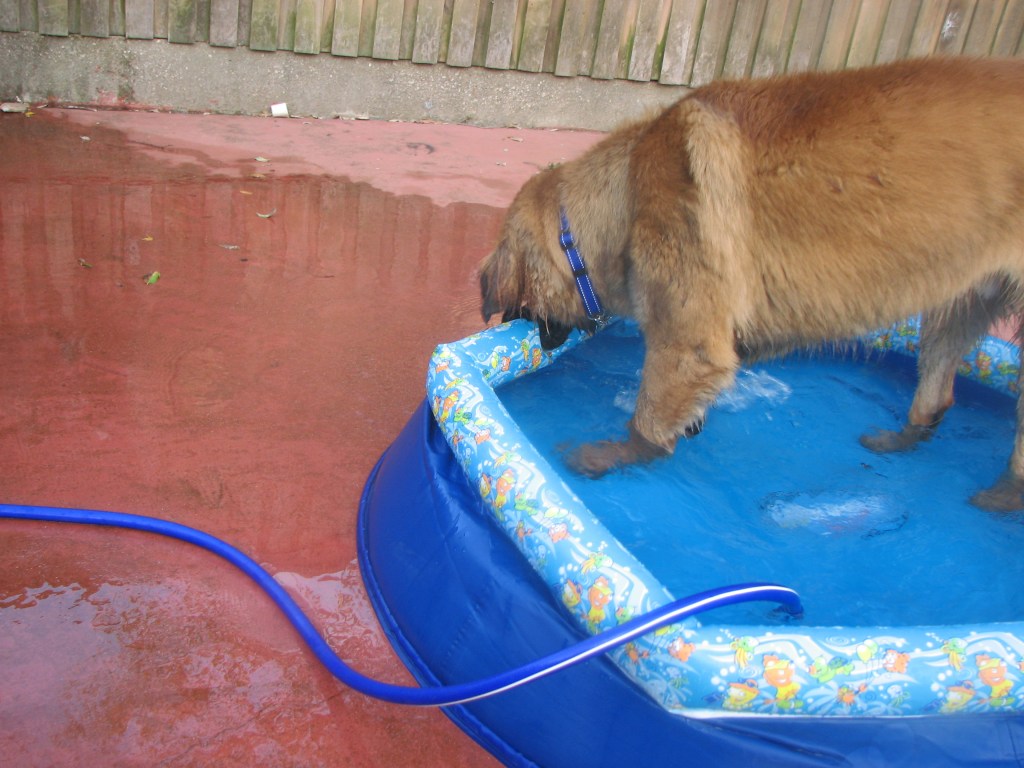
Young Bronco (maybe one years old) standing in a kiddie pool.
Leonberger standing in a blue kiddie pool
Young Bronco standing in a kiddie pool.
A Leonberger standing in lake water
Bronco standing in White Rock Lake.
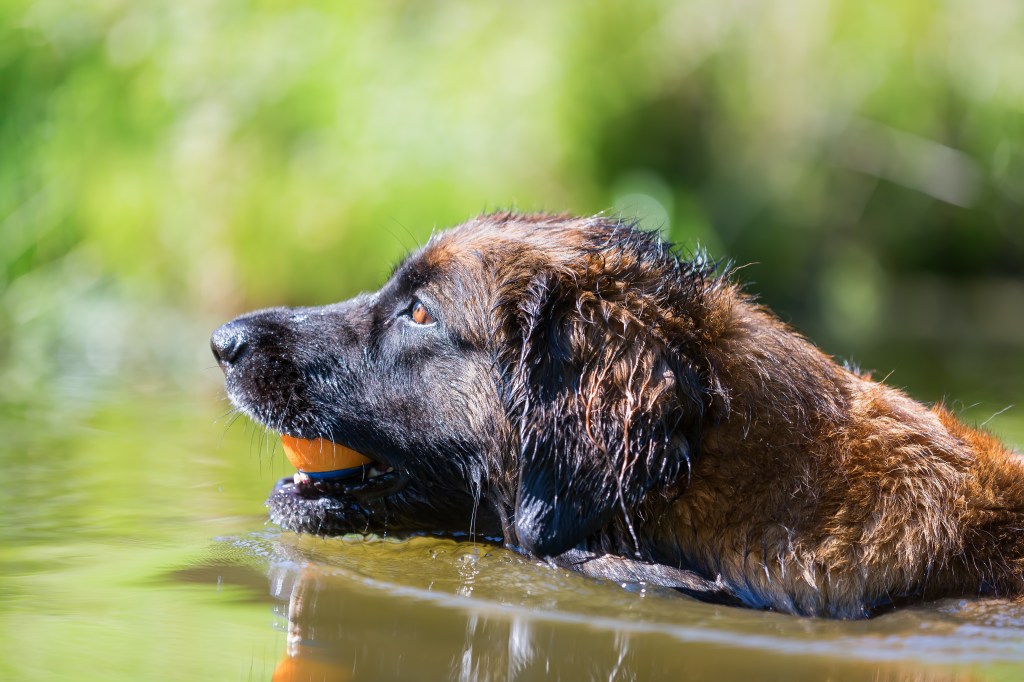
A Leonberger swimming with a ball in his mouth
Leonberger swimming with a ball. Stock Photo ID: 720242263 by Christian Mueller
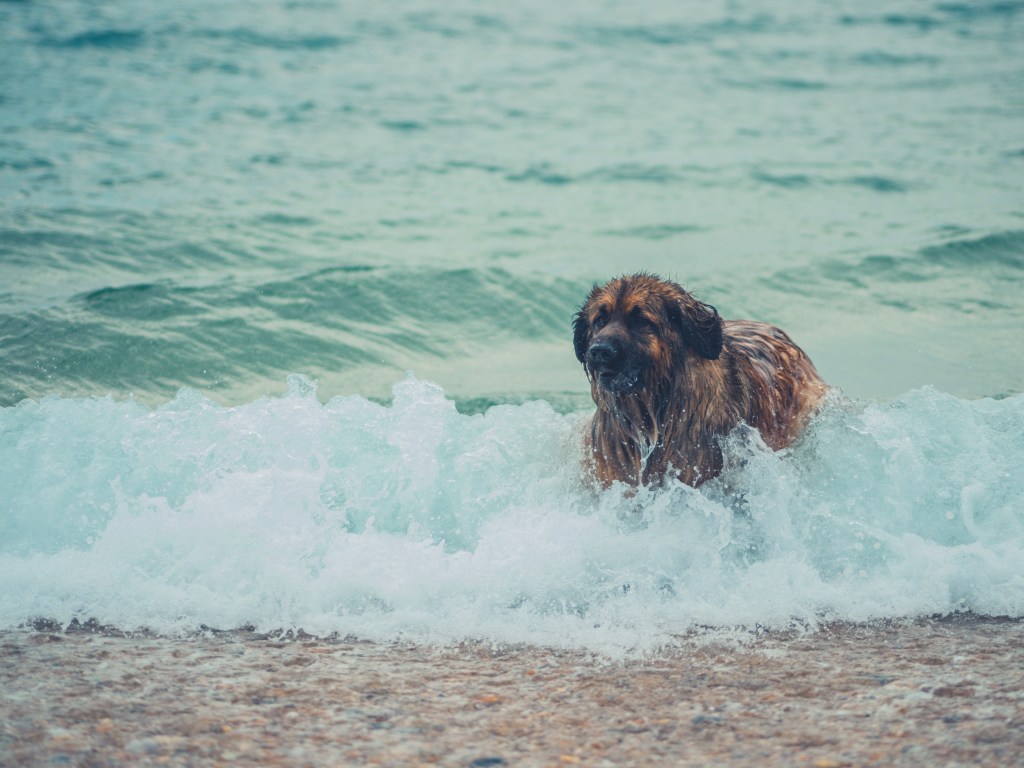
A Leonberger standing in beach waves
Leonberger on the beach. Stock Photo ID: 1110805445 by Lolostock
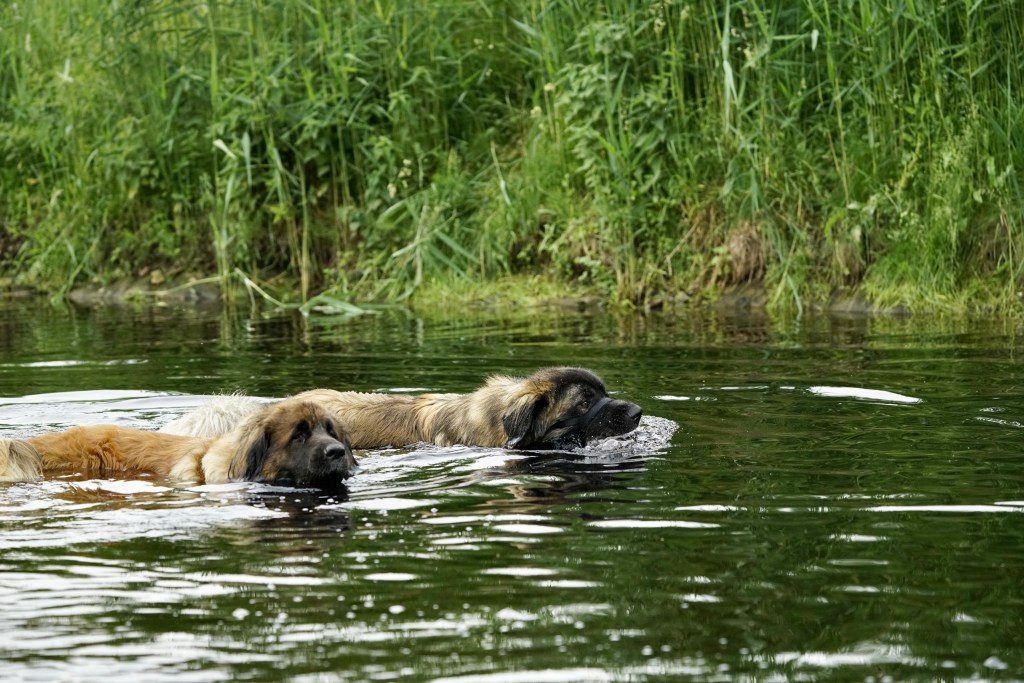
Two Leonbergers swimming next to each other
Two Leonbergers swimming. Stock Photo ID: 1989806678 by Taibomaus.
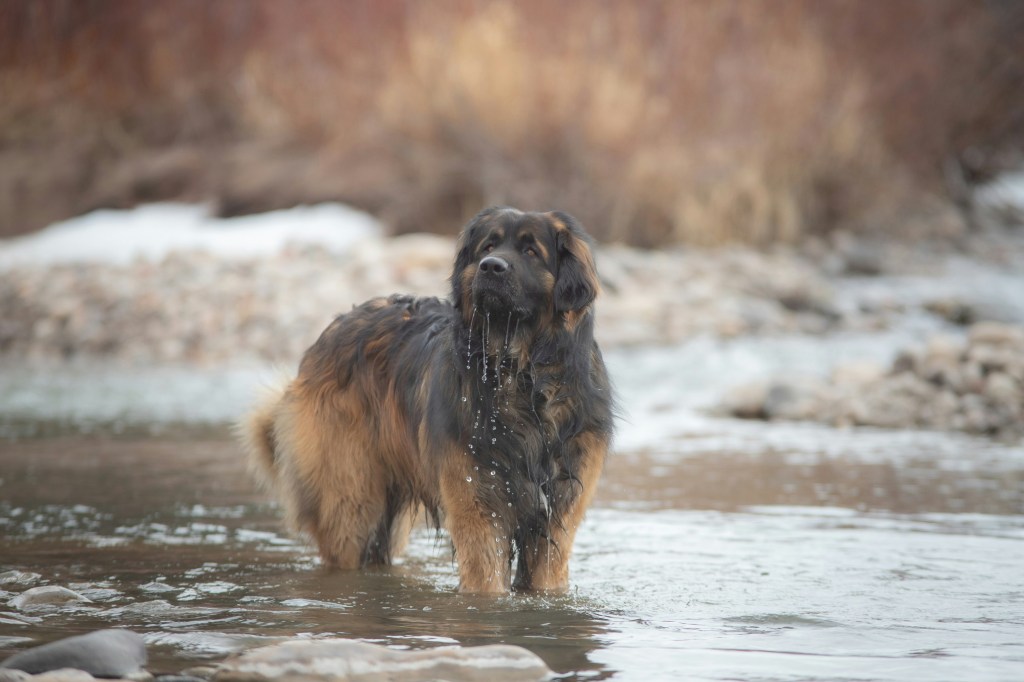
Leonberger standing in water
Leonberger standing in river. Photo by Stephanie Lucero on Unsplash.
Our Leonberger standing in a blue kiddie pool
Our Bronco in a kiddie pool.
Our Leonberger standing in a blue kiddie pool
Another photo of our Bronco in a kiddie pool
Leonberger dog swimming in a lake
Bronco swimming in White Rock Lake, Texas.
Leonberger dog swimming in a lake
Another photo of Bronco swimming in White Rock Lake, Texas.
Leonberger dog standing in a lake water
Bronco standing in White Rock Lake, nearby Dallas, Texas.
Leonberger dog in lake water
Bronco again
Leonberger dog walking out of a lake
Bronco coming out of White Rock Lake
Leonberger dog walking into water. There is a canoe in the background.
Bronco walking into White Rock Lake
Leonberger dog walking out of a lake. There is a canoe in the background.
Bronco coming back out of White Rock Lake
Leonberger dog walking out of a lake
Bronco coming out of White Rock Lake on a different day.
Leonberger dog walking out of a lake
Bronco coming out of White Rock Lake
Leonberger dog walking out of a lake
Bronco in White Rock Lake

Prehistoric Refugees

The focus of this blog is Leonbergers but sometimes I post about books that are not about Leonbergers but that I want to promote. This is another one of those. I read Survival of the Fittest (Book 1 of Crossroads trilogy) the Paperback version – March 2, 2019, by Jacqui Murray. It is another of Jacqui Murray’s wonderful prehistoric novels and I loved it. It exists in three formats on Amazon.
  • Paperback –  Publisher : Structured Learning LLC (March 2, 2019), ISBN-10: 194210135X, ISBN-13: 978-1942101352, 311 pages, Item Weight : 1.01 pounds, Dimensions : 6 x 0.78 x 9 inches, it cost $14.99 on US Amazon. Click here to order it from Amazon.com.
  • Hardback –  Publisher : Structured Learning LLC (February 28, 2021), ISBN-10: 1942101708, ISBN-13: 978-1942101703, 328 pages, Item Weight : 1.24 pounds, dimensions : 6 x 0.93 x 9 inches, it cost $24.99 on US Amazon. Click here to order it from Amazon.com.
  • Kindle –  Publisher : Structured Learning LLC (March 6, 2019), ASIN: B07NKM58GB, it costs $3.99 on US Amazon, it is free with Kindle unlimited. Click here to order it from Amazon.com.
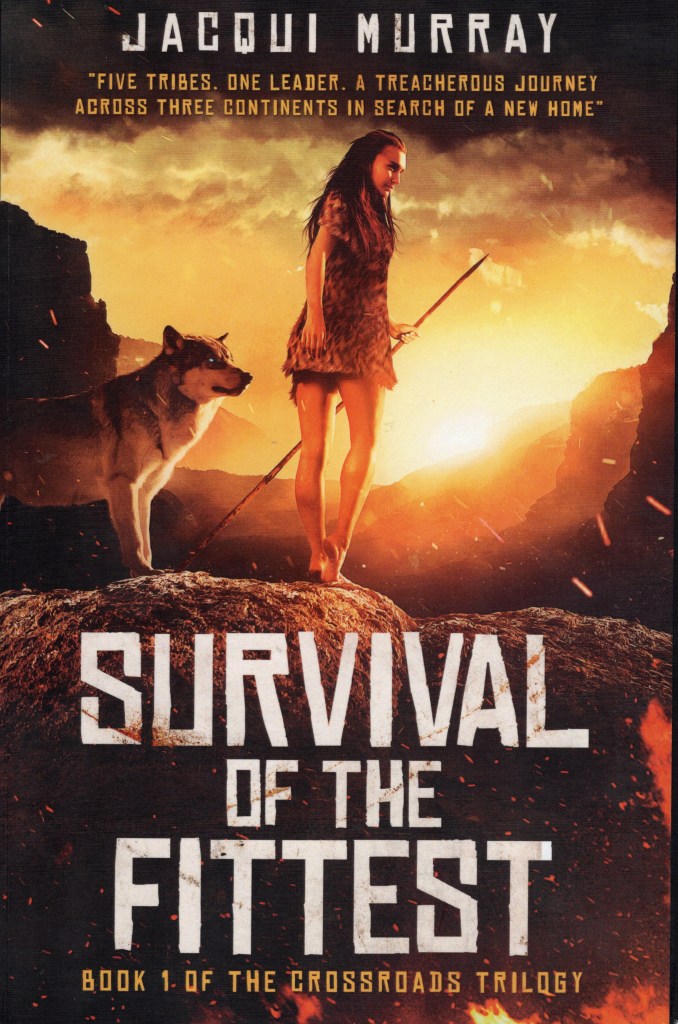
The front cover feature title and author name and a picture of a wolf and a tall prehistoric girl holding a spear.
Front cover of  Survival of the Fittest. Click here or on the picture to visit the Amazon.com page for the book. Picture is scanned from the book.

Amazon’s description of the book

Five tribes. One leader. A treacherous journey across three continents in search of a new home. Written in the spirit of Jean Auel, Survival of the Fittest is an unforgettable saga of hardship and determination, conflict and passion. Chased by a ruthless enemy, Xhosa leads her People on a grueling journey through unknown and dangerous lands following a path laid out decades before by her father, to be followed only as a last resort. She is joined by other fleeing tribes from Indonesia, China, South Africa, East Africa, and the Levant, all similarly forced by timeless events to find new lives. As they struggle to overcome treachery, lies, tragedy, secrets, and Nature itself, Xhosa is forced to face the reality that her enemy doesn’t want to ruin her People. It wants to ruin her. The story is set 850,000 years ago, a time in prehistory when man populated most of Eurasia, where ‘survival of the fittest’ was not a slogan. It was a destiny. Xhosa’s People were from a violent species, one fully capable of addressing the many hardships that threatened their lives except for one: future man, a smarter version of themselves, one destined to obliterate all those who came before.
This is my Amazon review of Survival of the Fittest by Jacqui Murray

The Survival Story of Prehistoric Refugees

What does survival of the fittest mean? The most fit are not necessarily the strongest or the fastest but the ones who are the most adaptable to change. The survival of prehistoric man was helped by so many aspects of skills, health, intelligence, making tools, the ability to cooperate and the willingness to change, as well as empathy. In this book we follow a few tribes of Homo Erectus who are forced to relocate due to the encroachment and attacks of the so called “Big Heads”.

Xhosa is a Homo Erectus woman who becomes the leader of her people as well as other tribes who join them on their trip through north Africa and into the Middle East. She is a powerful, resourceful, and ruthless warrior and hunter but at the same time she is kindhearted, intelligent, and open minded. Other important characters are Nightshade, Rainbow, Zvi, Seeker, Pan-Do, Lyta and the Hawk People. These tribes are pre-historic refugees if you will. This is the first book in a series of three about her and her tribe(s).

When I was young, I read the novels written by Jean M. Auel, and I was fascinated by the suspenseful stories and the topic of prehistoric man. I’ve read so many science fiction novels set in the future as well as novels set in the past but during historic times. However, there is not much out there that takes place during pre-historic times, perhaps because we don’t know much about it. Jean M. Auel changed literature history with her novels taking place during prehistoric times.

More recently Jacqui Murray changed literature history once again by continuing this path and by writing suspenseful epic sagas taking place at different time periods. This book and the next two in the series take place 850,000 years ago. Now we know a lot more about prehistoric man and Jacqui Murray has certainly done her research. I can add that the three first books I read by Jacqui Murray was about a homo habilis woman who lived 1.8 million years ago. Her name was Lucy and there are some references to Lucy in this book through Xhosa’s dreams.

It seems like Jacqui loves to incorporate dogs or friendly wolves in her books. There was Lucy with her big dog Ump in the Dawn of Humanity series (Homo Habilis) and in this book we have a tame blue-eyed wolf, Pup later called Spirit and his rescuer and handler Zvi. I love this aspect of these books. The front cover of the paperback (what I read) shows a prehistoric woman and a wolf. The wolf is obviously Spirit, but I am not sure if the woman is Zvi or Xhosa.

The adventures recounted in this book are intense and gritty and feature a lot of violence, suffering, and cruelty but that was the reality back then. There are cannibals, crocodiles eating people, various beasts attacking people, and attacks by other tribes. Prehistoric times were cruel and violent. You had to learn how to survive. This book is filled with action-packed adventures and interesting subplots. You never know what is going to happen next and you just must find out. It is a real page turner. Without giving anything else away I can say that the book ends on a happy note after a long arduous and dangerous journey. In summary, I loved this book. It is enjoyable, fun, and action packed. The stories are creative and fascinating, and the book is very well written. I highly recommend this book.

The back cover feature a photo of Jacqui Murray, an author description and the description of the book. The text is white and the background is black.
Back cover of  Survival of the Fittest (scanned from book).

About the Author

Jacqui Murray has been teaching K-18 technology for 30 years. She is the editor/author of over a hundred tech ed resources including a K-12 technology curriculum, K-8 keyboard curriculum, K-8 Digital Citizenship curriculum. She is an adjunct professor in tech ed, Master Teacher, webmaster for four blogs, an Amazon Vine Voice, CSTA presentation reviewer, and a contributor to NEA Today.

You can find her resources at Structured Learning. Read Jacqui’s tech thrillers, To Hunt a Sub and Twenty-four Days here on Amazon Kindle. Also, read her new series, Man vs. Nature, starting with Born in a Treacherous Time–also on Kindle.

Finally, links to the Dawn of Humanity series. Book on Amazon on the left, and my review on the right.