Another Leonberger Chance Encounter

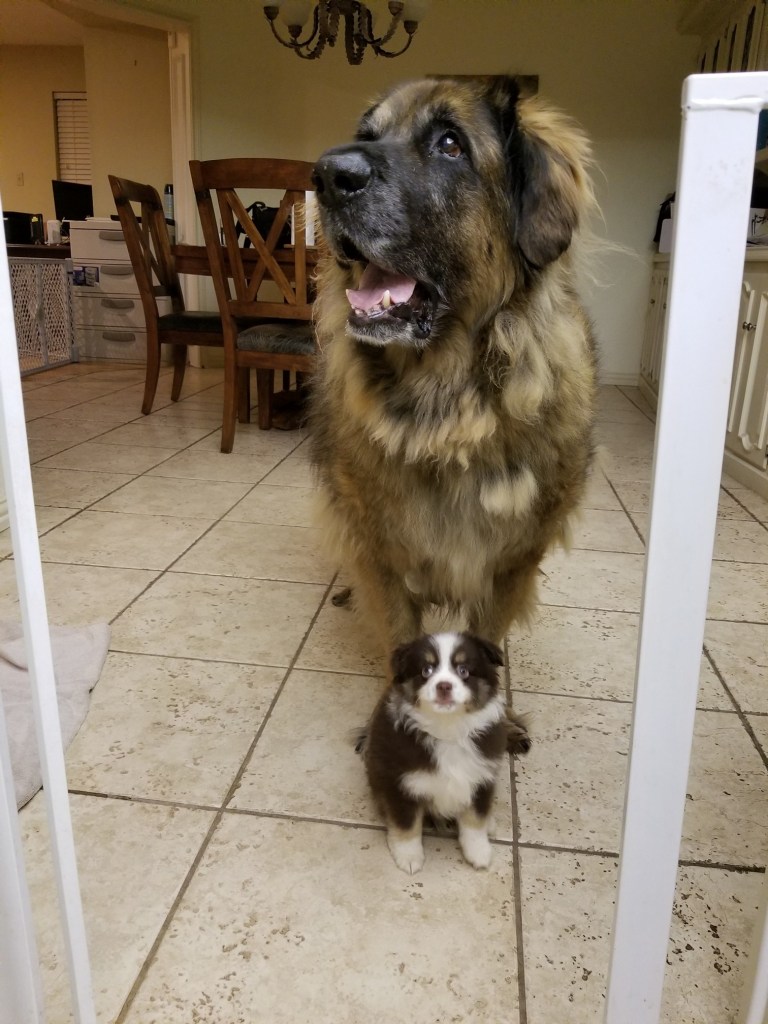
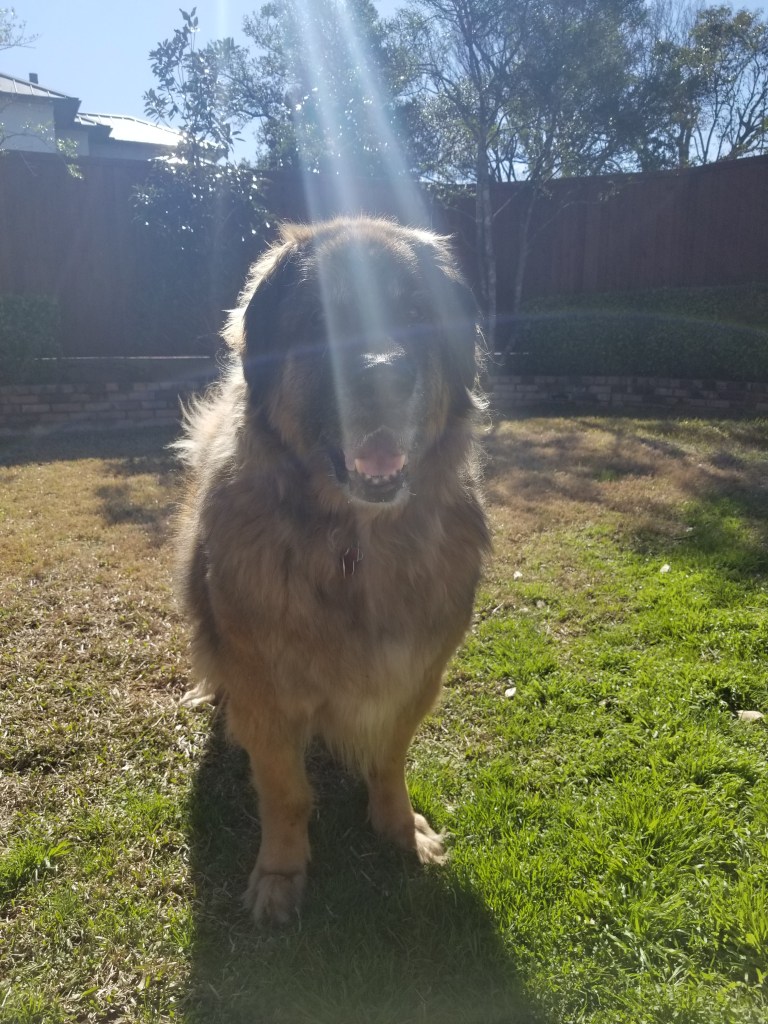
I just received a couple of photos from our niece Jessica and her husband Eric. They live in Minnesota. They had encountered a Leonberger dog named Oliver, and they took a couple of photos. For those who do not know, Leonbergers are large family friendly dogs related to Saint Bernards. It is a rare breed, so you don’t see them very often. If you want to read more about this amazing breed, see the list of all my blog posts.

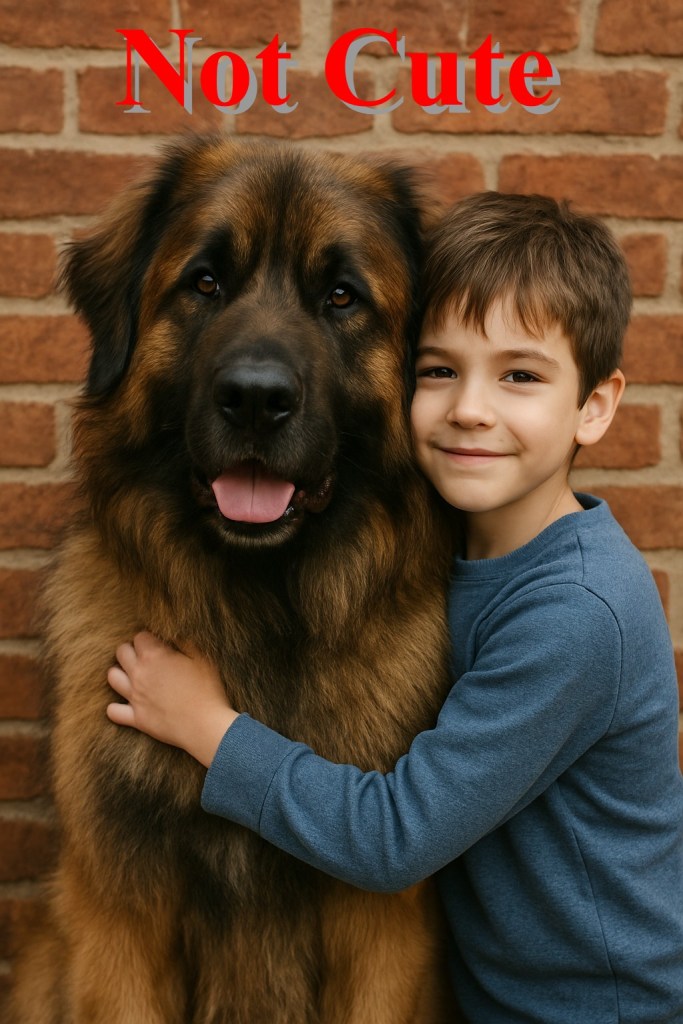
A Leonberger is standing in front of a wall with a fence in front of it.
A friendly Leonberger named Oliver. Photo by Jessica Sardas.
A Leonberger is standing in front of a wall with a fence in front of it. Next to him is another large black dog
A friendly Leonberger named Oliver. Photo by Jessica Sardas.

Other Leonberger Chance Encounters

Another amazing Leonberger chance encounter happened when we visited my native country Sweden. We had hiked up a mountain in the high coast region (that’s where I grew up) called the Skule Berget, or Skull Mountain in English. The elevation of the hike was nearly 1,000 feet. Guess what we found at the summit besides the red cabin restaurant selling waffles to the brave souls who managed to finish the hike? A Leonberger named Amie. We took some photos of Amie. I hope she got some waffles too. You can read more about our adventure here.

A photo of the Leonberger Amie standing on top of a wooden bench on top of the mountain.
Amie at the top of Skule Berget.
A photo of the Leonberger Amie standing on top of a wooden bench on top of the mountain.
Amie was playful but very well behaved.

Another chance encounter was when our daughter-in-law’s mother had a chance encounter with a Leonberger at her mother’s nursing home. Leonberger dogs are big but friendly, trusting, calm, confident, and very trainable, making them perfect therapy dogs. They are therefore often used as therapy dogs at hospitals, nursing homes and mental institutions. You can read more about this encounter here.

Two women behind a large Leonberger. The woman on the left is an elderly woman sitting in a wheelchair.
Our daughter-in-law’s mother is on the left and her mother is on the right. She gave me permission to use this photo. The Leonberger is in the middle front.

A Therapy Leonberger Called Scout

Speaking about therapy dogs. Below is a video about a Leonberger called Scout by CBC news in Canada. This Leonberger is helping residents at Hamilton mental health hospital. He was bred by Concorde Ridge Leonbergers. They have a website and a blog which I follow. You can visit my post about Scout here. The 1-minute video is shown on the website below.

https://www.cbc.ca/player/play/video/1.6835161

About the book The Life and Times of Le Bronco von der Löwenhöhle

Finally, I would like to mention that I wrote a book about our late Leonberger Bronco, or Le Bronco von der Löwenhöhle. The title of the book is “The Life and Times of Le Bronco von der Löwenhöhle, Stories and Tips from Thirteen Years with a Leonberger”. The book features the amusing adventures of our Leonberger Bronco and his dog friends, as well as information on how to train and care for Leonbergers and other large breeds, their breed history, breed standard, Leonberger organizations, and an extensive resource guide at the end. I can add that all photos and illustrations are in color. The price of the paperback version is 17.95 (normal prize is $19.95) and the price of the Kindle version is $4.95 All proceeds go to the Leonberger Health Foundation International, an organization that works to improve the health and longevity of Leonbergers and other large dog breeds.

The gold and beige book cover features the face of our Leonberger Bronco and the text "The Life and Times of Le Bronco von der Löwenhöhle. Stories and Tips from Thirteen Years with a Leonberger."
This is the front cover of the book “The Life and Times of Le Bronco von der Löwenhöhle”. Click here or on the image to go to the United States Amazon location for the paperback version of the book.
The back cover in gold and beige features a photo of a Leonberger in a snowy forest and an introduction to the book.
This is the back cover of the book “The Life and Times of Le Bronco von der Löwenhöhle”. Click here or on the image to go to the Amazon.com location for the kindle version of the book.
The endorsements say “A wonderful tribute to the author's beloved Bronco. The stories are heartwarming as well as informative - a true glimpse into life with a Leonberger. D'Nae Wilson, President, Leonberger Health Foundation International.” and “A lovely tribute to Bronco, with lots of resources for general Leonberger information. Julie Schaffert, LCA breeder since 1992.”
Again, these are the endorsements for the book by some very prominent members of the Leonberger community. Click here or on the image to go to the location for the book Amazon in Canada.

Daily Writing Prompt What is good about having a pet

Daily writing prompt
What is good about having a pet?

Today’s writing prompt is “What is good about having a pet?”. I can easily think of many good and wonderful things about having a pet but let’s not forget that it also comes with responsibility. Having a pet is a lifelong commitment, well their lifetime at least, and you need to treat them like family. If you cannot handle the pet when it gets old, and you are not going to treat it like family, then don’t get it.

Our Pets

We’ve owned many pets in our life, fish in aquariums, bearded dragons and other lizards, snakes, rabbits, and hamsters. We’ve owned many dogs, and we’ve had a cat for a short time. Unfortunately, we found out that I was allergic to cats and my allergy was bad. Luckily, we found a good home for the cat. My wife and I were very sad that we had to part ways with the cat, but I just got too sick, so sick that it was dangerous. I should say I am not allergic to dogs.

We were not always good pet owners. Mistakes were made. For example, our five year old daughter brought home a dozen minnows that we put in an aquarium. They were basically fish that did not end up as bait. We did a lot of fishing for a while. We placed the minnows in a clean aquarium and fed them what we were told to give them. Our daughter named them Sally one, Sally two, Sally three, Sally four, Sally five, Sally six, Sally seven, Sally eight, Sally nine, Sally ten, Sally eleven, and Sally twelve.

Freshwater fish Riffle minnow (Alburnoides bipunctatus) underwater photography. Minnow in clean water and nature habitat. Natural light. Lake and river habitat. Wild animal. Underwater photo of fish.
Sally four on the left and Sally five on the right. Minnows Asset id: 1182854671 by Rostislav Stefanek

As I mentioned, we were not always good pet parents. Our five year old daughter thought that the minnows needed a more interesting environment, so she poured cranberry juice in the aquarium. We were able to clean it out and save the minnows that time. But when she poured red paint in the aquarium, we were not successful in doing so. Our son also had a snake that needed to be fed subdued but live mice. We discovered that if you walk into a pet store and tell them you want to buy mice to feed your snake, they won’t sell the pet mice to you. Long story short we struggled with feeding the snake and eventually he died. We felt awful, but we realized that keeping a snake as a pet is not a good idea unless you really know what you are doing.

Our Dogs

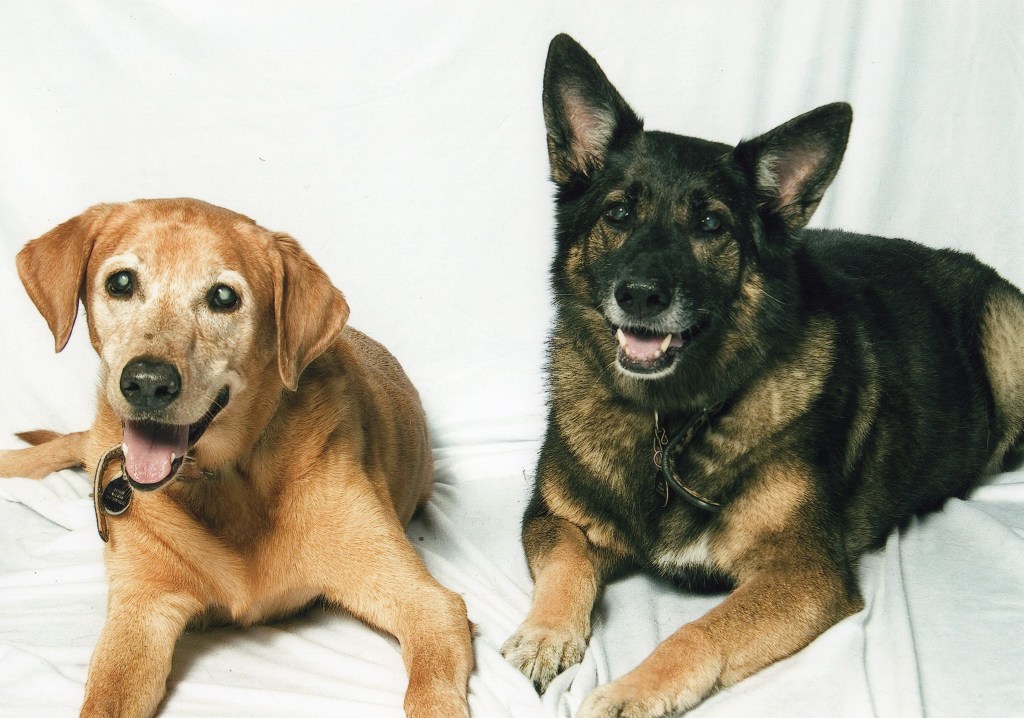
The dogs we own and have owned have a very special place in our hearts. They’ve given us so much unconditional love, special moments, entertainment, and not to mention hilarious moments that we are still laughing about years after they happened. We used to have a Labrador called Baylor. Well, more correctly, he was one quarter Rhodesian Ridgeback but mostly a yellow Labrador. He was a funny and loving dog and the most skilled surfer counter I’ve ever witnessed. We also had a German Shepherd named Baby. She was also a rescue. She was a great guard dog and a loving stepmother to our Leonberger puppy Bronco. She fiercely protected him.

Our Labrador mix Baylor is lying down looking into the camera. He is on the left. Our German Shepherd Baby is lying down and looking into the camera. She is on the right.
Baylor our Labrador Rhodesian Ridgeback mix on the left and our German Shepherd Baby on the right. They were both old in this photo.

Bronco, or Le Bronco von der Löwenhöhle, was our Leonberger dog. This is a big dog and a rare breed related to Saint Bernards. We got him as a puppy from a Canadian breeder who likely is North America’s most prominent Leonberger breeder. Before we were allowed to buy him, we had to go through an interview to make sure we would be good dog parents. Bronco was a friendly, confident, loving, and funny dog. He was also very protective of our other dogs as well as our hamsters. He rescued run away hamsters on several occasions. He even put them in his mouth once and carried them to safety. He had a great sense of smell and one time he alerted us to Baylor having an oncoming insulin shock and on another occasion he saved our Pug Daisy’s life.

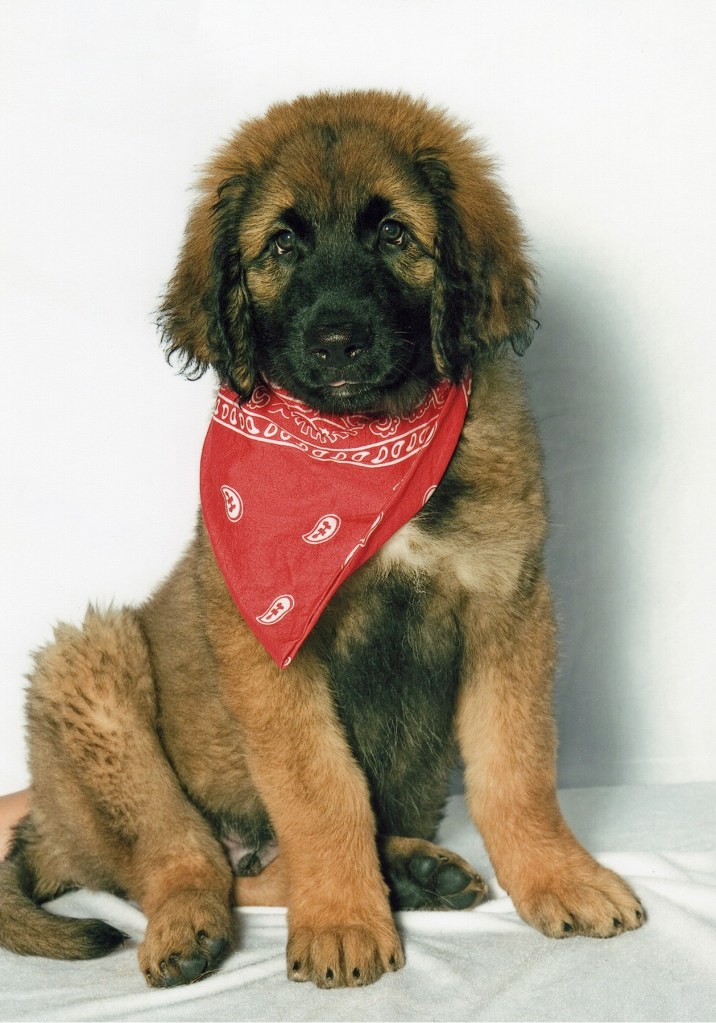
Color photo of Leonberger puppy. He is wearing a scarf.
Bronco our Leonberger at three months old.
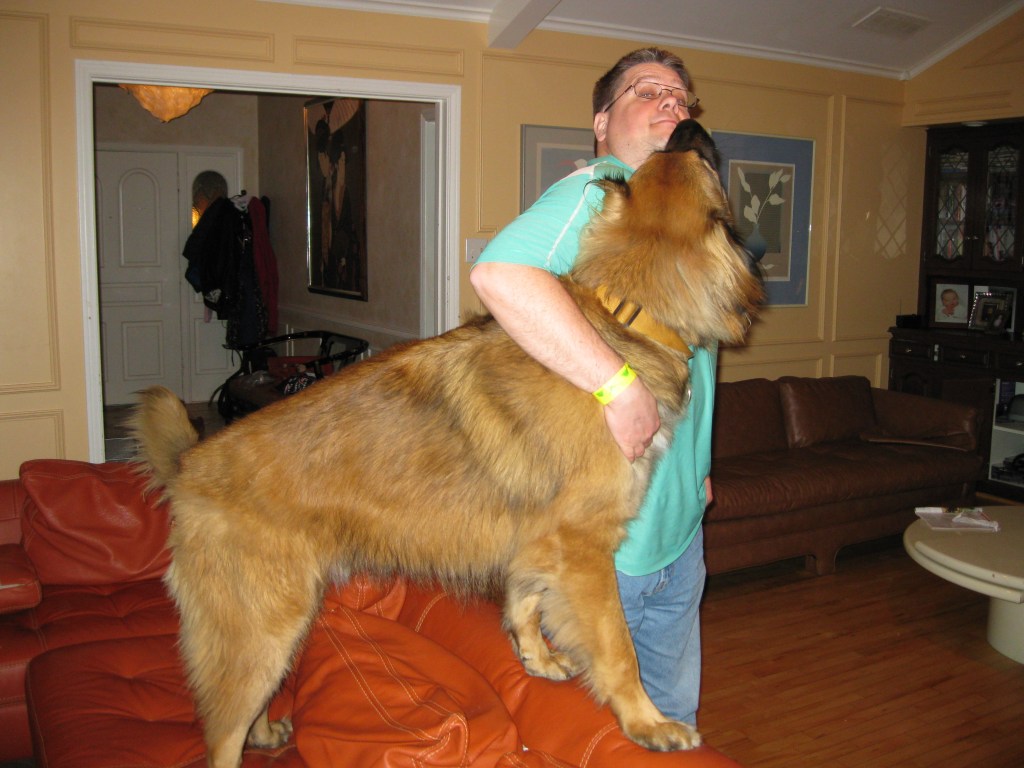
Bronco is standing on a red leather sofa. I am standing next to the sofa and Bronco is reaching over giving me a hug.
Our Leonberger dog Le Bronco von der Löwenhöhle when he was young. He is giving me a hug.
Claudia my wife sitting in a red sofa with our very big dog in her lap.
Our Leonberger Bronco sitting in my wife’s lap. He was 167 pounds at the time.

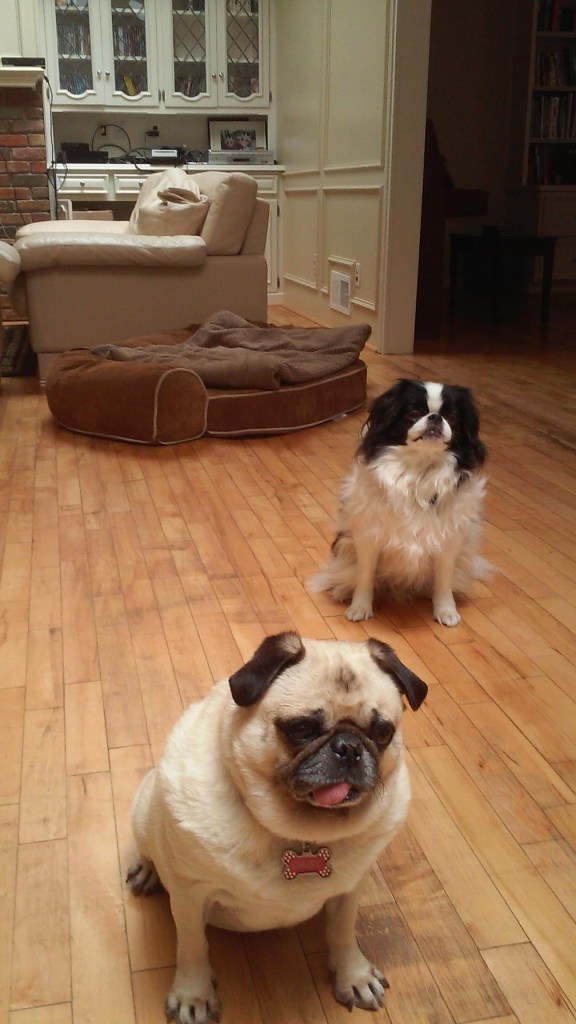
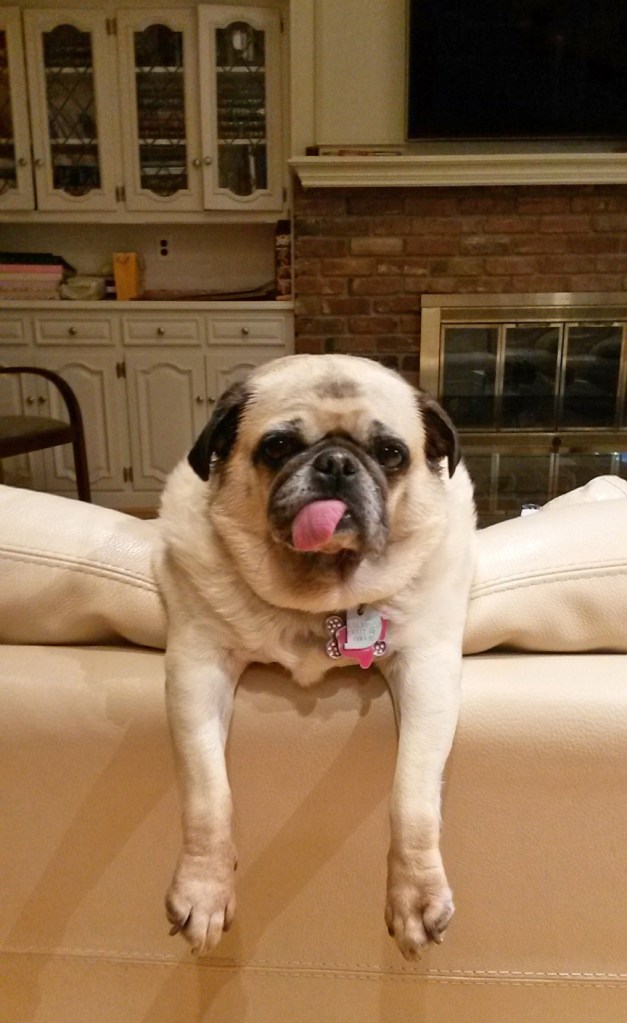
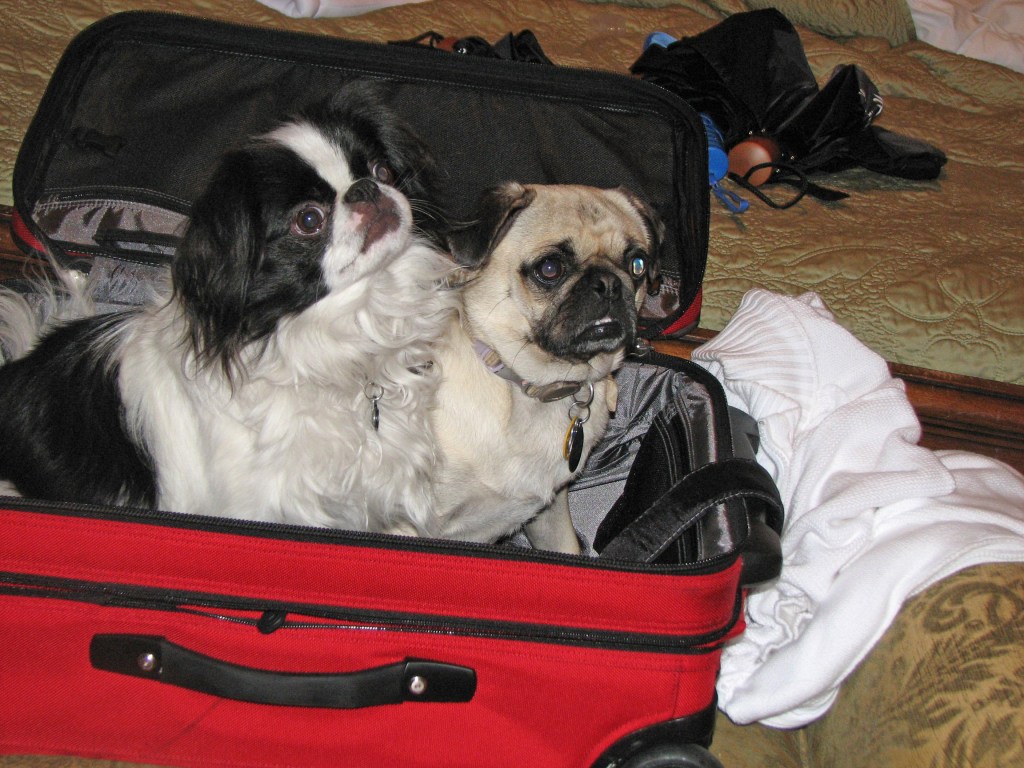
In addition to Baylor, Baby and Bronco we’ve had small dogs including our Japanese Chin Ryu, our Pug Daisy and our mini-Australian Shepherd Rollo who is still with us. Ryu and Daisy were funny and easy dogs and Rollo is very energetic, curious, intelligent and funny, but admittedly a bit of work.

A black and white Japanese Chin and a Pug are sitting inside a red suitcase that us on the floor.
Ryu and Daisy are protesting that we are leaving for a trip. We had someone watching them, but they still hated it when we left.
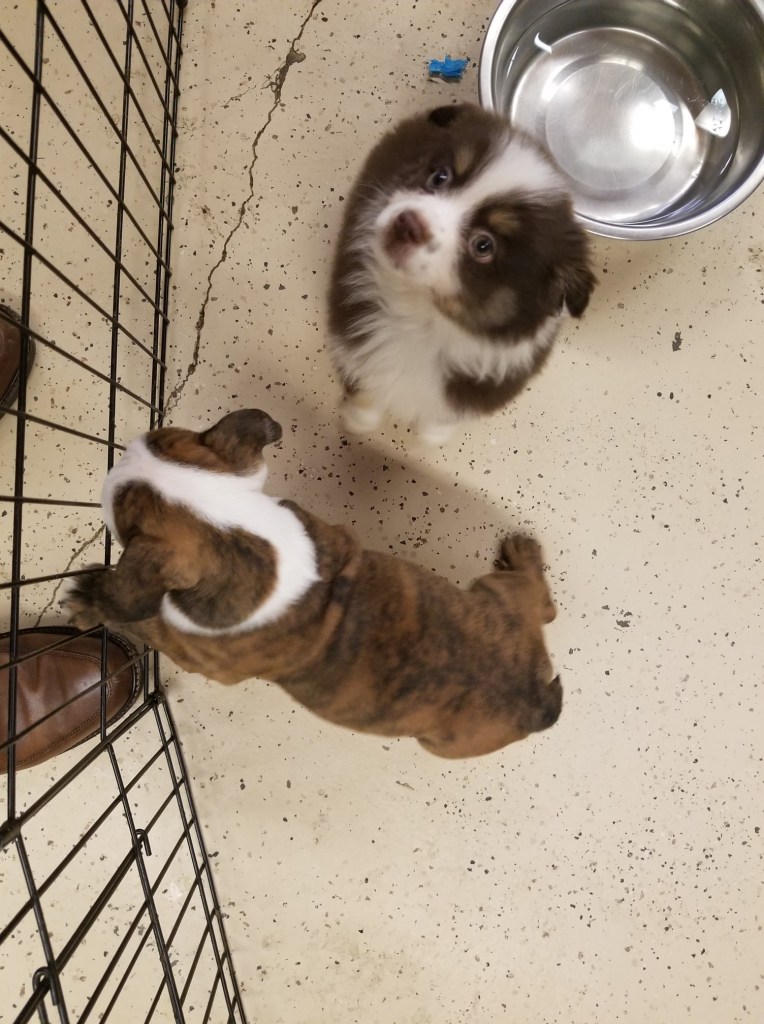
The photo shows a mini-Australian Shepherd puppy peeking out behind a red sofa and looking straight into the camera.
Rollo peeking out behind the sofa.
The photo shows a mini-Australian Shepherd biting a Leonberger’s tail.
Rollo frequently bit our Leonberger Bronco’s tail, and he even swung in it like a swing. He climbed all over Bronco. Bronco was very patient with him.

What is good about having a pet?

Pets bring a lot of entertainment and joy and they add life to a home. They keep you busy and keep your mind off problems, conflicts and doom scrolling. Intelligent mammals, such as dogs, will also give you cuddles, unconditional love, and they can comfort you. For example, a few weeks ago I was watching a movie that was touching and bit sad and I got a bit emotional That’s when I noticed our dog Rollo staring at me with loving eyes as he tilted his head. Then he came over to me and gave me a dog hug (pressing his body towards mine).

Another advantage of owning a dog is that they need a walk every day. Walking your dog a couple of miles per day will keep you healthy as well. Studies show that dog owners live longer than other people. In addition, dogs can provide practical services such as alerting you when strangers approach your house, they can be guard dogs, sniff out diseases and seizures, in our case without any training.

Your Responsibilities as Pet Owner

You need to feed your pet, provide clean water at all times, wash those food and water bowls daily with soap and hot water, care for your pet, keep it healthy, wash it and clean it, pay for veterinary bills, play with it and provide opportunity for exercise. If your pet is a mammal or a more advanced animal, such as a dog, you need to love it, train it, and it needs to be part of the family. If you are going to keep it on a chain in the backyard, leave it to be lonely most of the time, or uncomfortable, or let it take its own walks without supervision, or return it to a shelter when it gets old and sick, then don’t get a pet, especially not a dog.

The Life and Times of Le Bronco von der Löwenhöhle

Finally, I would like to mention that I wrote a book about Bronco and Leonbergers. About 60% of the book is about Bronco’s daring and often hilarious adventures and 40% of the book is information on Leonbergers, breed history, breed standard, training, care, health, how to get one, and there is an extensive resource guide towards the end of the book.

The face of an old Leonberger, title, and author name.
This is the front cover of the book “The Life and Times of Le Bronco von der Löwenhöhle”. Click on the image to go to the Amazon.com location for the book

The book is available in a lot of places including Amazon in the US, Kindle, Barnes & Noble, and many other places.

Author Day Viktor Rydberg

This is a Leonberger blog but sometimes I post about other things, especially if it concerns me personally. Today November 1st is National Author Day so I thought that since I am originally from Sweden that I would post a poem by a celebrated Swedish 19th century author and poet by the name Viktor Rydberg. The poem is “Tomten” (the Tomte) published in 1881.

A Tomte is a type of small magical people, or gnomes, related to Vitter folk. There are many Tomtar (Tomte in plural), and traditionally each farmhouse had a Tomte who might secretly help the farmers with their tasks, warn them of danger, and protect the animals. They are friendly and is the inspiration behind the Swedish version of Santa Claus, which is therefore a bit different from the Disney version of Santa Claus that has become so popular.

For one thing, the Disney version of Santa Claus flies around on a reindeer sled and delivers all the presents to all the good kids around the world. Therefore, he needs to move faster than the speed of light, which a Tomte does not need to do. The Tomte may bring you gifts for Christmas if you in return put out food for them, such as porridge.

A Tomte wearing a red hat in a snowy winter forest.
An illustration of a Tomte. Shutterstock ID: 2060057882 by PLIMPLUM.

Tomten is a beautiful long poem and every line is rhymed, which is impressive. At first, I took the Swedish poem, and I just dropped it into Google Translate hoping it would translate into English. This was a disaster. Poems are notoriously difficult to translate. First of all, you lose the rhymes, and for this poem the rhymes add a lot to the atmosphere and feeling of the poem.

Secondly, you may lose some of the beautiful language and the special choices of words that create the right atmosphere. For example, Google Translated Tomte to Santa, which is not quite right. Normally, when you think about Santa you think about the Walt Disney version of Santa and this poem was written 20 years before Walt Disney was born, and the Tomte as depicted is very different from Santa Claus. Add to that the fact that a lot of the words were just plainly mistranslated and wrong. Part of the reason for that was that the poem is written in old fashioned Swedish, which Google Translate cannot handle (but I can). Thirdly, due to the different sentence structure, syntax, and grammar of different languages you lose some of the rhythm. In summary, Google Translate butchered the poem and turned it into nonsense.

However, I translated the poem into English myself, with some help from Google Translate. Unlike Google Translate, I know what the author is saying, and I can read old Swedish without problems. Naturally, all the rhymes are gone, but I think I succeeded in preserving some of the beauty of the descriptions of the Tomte and the environment. Another thing that was preserved was the philosophical context of the poem. This poem raises some existential dimensions. Tomten is an immortal creature, and he is deeply puzzled by the fact that people come into existence as babies, they live, get old and then they disappear again. Generations come, generations go, one after another, but the Tomte lives on, and he cannot figure out this mysterious puzzle no matter how long he thinks about it. Obviously, he cares about the people who come and go. He wants to know.

Anyway, below is my translation of the poem. The poem should be read slowly and with thoughtful emphasis. Not all the sentences are proper English because I wanted to preserve some of the poetic nature of the stanzas. Again, in the Swedish original all the lines rhyme. For example, the word “hard” is “hård”, and “house” is “gård”, the word “roofs” is “taken”, and “awake” is “vaken”.

My Translation of Tomten

The cold of the midwinter night is hard,
the stars sparkle and twinkle.
Everyone sleeps in their house
deep in the midnight hour.
The moon wanders its silent course,
the snow shines white on pine and fir,
the snow shines white on the roofs.
Only the Tomte is awake.

Standing there so gray by the barn door,
gray against the white drift,
watching, like many winters before,
up against the disk of the moon,
looking towards the forest, where spruce and fir
draws its dark wall around the yard,
pondering, although without success,
over a strange riddle.

He runs his hand through beard and hair,
shakes head and hood
“no, this riddle is too difficult,
no, I cannot guess this”
he banishes the thought,
as he usually does,
so he can attend to his tasks,
and go about his business.

He goes to the storage and the tool house,
he feels all the locks
the cows dream by the light of the moon
summer dreams in the booth;
forgetful of harness and whip and empty
Pålle (a horse) in the stable also has a dream:
the manger he leans over
filled with fragrant clover;

He goes to the fence for the lambs and sheep,
see how they sleep in there;
goes to the hens, where the rooster stands
proud of his highest stick;
Karo in the dog bed with straw feels good,
wakes up and wags its tail slightly,
Karo his elf knows,
they are good friends.

The Tomte tiptoes at last to see
the family he holds so dear,
for long and well he has known that they
hold his diligence in honor;
he tiptoes to the children’s chamber
and approach to see the sweet little ones,
let no one doubt it:
they are his greatest happiness.

Thus, he has seen them, father and son,
through so many generations
in deep sleep as children; but from where
did they come down here?
Generation soon followed generation,
they flourished, aged, and then went — but where?
The insolvable riddle to his mind
has thus returned!

The Tomte walks to the loft of the barn:
there he has a home and stronghold
high up in the scent of the hay,
near the swallow’s nest;
now the swallow’s nest is empty,
but when spring comes with leaves and flowers
she will probably be back
followed by her close mate.

Then she always has something to chirp about
of her many travel memories,
nothing, however, about the riddle, which
moves in the Tomte’s mind.
Through a gap in the barn wall
the moon shines on the Tomte’s beard,
the streak on the beard shines,
The Tomte broods and ponder.

Quiet is the forest and all the heath,
life out there is frozen,
only from a distance of the falls of the rapids
can be heard very slowly the noise.
The Tomte listens and, half in a dream,
seems to hear the flow of time,
wondering where it will go,
wondering, where the source must be.

The cold of the midwinter night is hard,
the stars sparkle and twinkle.
Everyone sleeps in their house
well into the morning hours.
The moon lowers its silent course,
the snow shines white on pine and fir,
the snow shines white on the roofs.
Only Santa is awake.

Tomte with a beard wearing a red pointed hat
Tomte I generated with the help of ChatGPT

The Original Poem Tomten

Midvinternattens köld är hård,
stjärnorna gnistra och glimma.
Alla sova i enslig gård
djupt under midnattstimma.
Månen vandrar sin tysta ban,
snön lyser vit på fur och gran,
snön lyser vit på taken.
Endast tomten är vaken.

Står där så grå vid ladgårdsdörr,
grå mot den vita driva,
tittar, som många vintrar förr,
upp emot månens skiva,
tittar mot skogen, där gran och fur
drar kring gården sin dunkla mur,
grubblar, fast ej det lär båta,
över en underlig gåta.

För sin hand genom skägg och hår,
skakar huvud och hätta —
»nej, den gåtan är alltför svår,
nej, jag gissar ej detta» —
slår, som han plägar, inom kort
slika spörjande tankar bort,
går att ordna och pyssla,
går att sköta sin syssla.

Går till visthus och redskapshus,
känner på alla låsen —
korna drömma vid månens ljus
sommardrömmar i båsen;
glömsk av sele och pisk och töm
Pålle i stallet har ock en dröm:
krubban han lutar över
fylls av doftande klöver; —

Går till stängslet för lamm och får,
ser, hur de sova där inne;
går till hönsen, där tuppen står
stolt på sin högsta pinne;
Karo i hundbots halm mår gott,
vaknar och viftar svansen smått,
Karo sin tomte känner,
de äro gode vänner.

Tomten smyger sig sist att se
husbondfolket det kära,
länge och väl han märkt, att de
hålla hans flit i ära;
barnens kammar han sen på tå
nalkas att se de söta små,
ingen må det förtycka:
det är hans största lycka.

Så har han sett dem, far och son,
ren genom många leder
slumra som barn; men varifrån
kommo de väl hit neder?
Släkte följde på släkte snart,
blomstrade, åldrades, gick — men vart?
Gåtan, som icke låter
gissa sig, kom så åter!

Tomten vandrar till ladans loft:
där har han bo och fäste
högt på skullen i höets doft,
nära vid svalans näste;
nu är väl svalans boning tom,
men till våren med blad och blom
kommer hon nog tillbaka,
följd av sin näpna maka.

Då har hon alltid att kvittra om
månget ett färdeminne,
intet likväl om gåtan, som
rör sig i tomtens sinne.
Genom en springa i ladans vägg
lyser månen på gubbens skägg,
strimman på skägget blänker,
tomten grubblar och tänker.

Tyst är skogen och nejden all,
livet där ute är fruset,
blott från fjärran av forsens fall
höres helt sakta bruset.
Tomten lyssnar och, halvt i dröm,
tycker sig höra tidens ström,
undrar, varthän den skall fara,
undrar, var källan må vara.

Midvinternattens köld är hård,
stjärnorna gnistra och glimma.
Alla sova i enslig gård
gott intill morgontimma.
Månen sänker sin tysta ban,
snön lyser vit på fur och gran,
snön lyser vit på taken.
Endast tomten är vaken.

The cold of the midwinter night is hard,
the stars sparkle and twinkle.
Everyone sleeps in their house
well into the morning hours.
The moon lowers its silent course,
the snow shines white on pine and fir,
the snow shines white on the roofs.
Only Santa is awake.

Doggie Haiku

This is a Leonberger blog, but I also post about other topics including book reviews for books that I love and want to promote. With this post I would like to promote Doggie Haiku: A Novella in Haiku for Dog-Lovers by Laura Stamps.

Below is an overview of the two formats of Doggie Haiku
  • Paperback –  Publisher : Prolific Pulse Press LLC (November 15, 2024), ASIN : 1962374327, ISBN-13 :  978-1962374323, 39 pages, Item Weight : 2.72 ounces, dimensions ‏ : ‎ 5.83 x 0.1 x 8.27 inches, it cost $10.00 on US Amazon. Click here to order it from Amazon.com.
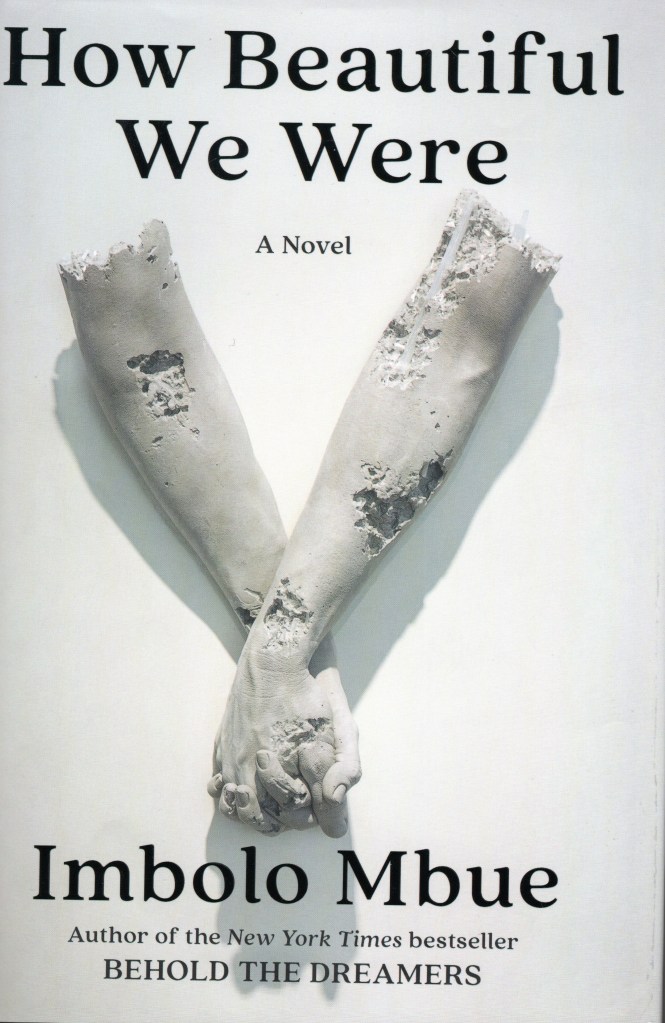
  • Kindle – Publisher : Prolific Pulse Press LLC (November 15, 2024), ASIN : B0DKYNN7MM, ISBN-13 :  978-1962374330, 44 pages. It is currently $4.99 on Amazon.com but free with Kindle unlimited. Click here to order it from Amazon.com.
The front cover features a beach with a woman in a chair and a chihuahua on the sand, as well as the title and name of author written.
Front cover of Doggie Haiku: A Novella in Haiku for Dog-Lovers by Laura Stamps. Click on the image to go to the Amazon page for the paperback version of the book.

Amazon’s Description of Doggie Haiku by Laura Stamps

Cindy is a shopaholic. She’s also the “Treat Lady.” There’s always a treat in her pocket for the neighborhood dogs. But what she really wants is a dog of her own. One day she sees Hazel at the local shelter. A tiny, frightened, senior Chihuahua. And she can’t resist. However, walking a dog in the snow is not her thing. So she applies for a transfer at her job. Soon Cindy and Hazel are on the road to the Florida office. To blue skies, sandy beaches, sunshine, and those Southern men. (Oh, my!) Let the adventures begin…!

What others say:

“In this charming novella, award-winning poet Laura Stamps gallops her way into our hearts one Haiku syllable and one cute doggie at a time. Her pace is fun and intentional. I read Doggie Haiku first thing this morning. It was a delightful way to start my day. Marvelous storytelling. Beautiful, fun, and very well done. You’ll laugh and smile!”

– Zaneta Johns, Author of Encore: A Collection of Poetry

“Absolutely LOVED it! This new novella by the super Laura Stamps is a delightful treat. Full of doggy fun and an owner’s adventures, it’s not to be missed. All the cute pictures will make you laugh out loud too. Don’t wait. Get it now!”

– Laura Besley, Author of 100neHundred

“This was such a fun read! If you want a dog (or to find true love), this charming and funny novel written in haiku is for you. You’ll smile through the adventures of Cindy (a certifiable shopaholic) and Hazel (her Chihuahua). Read it whenever your spirits need a lift!”

– Nolcha Fox, Author of Words into Elephants

This is my Amazon five-star Amazon review of Doggie Haiku

A Cute, Funny and Touching Adventure with a Dog

This poetry novelette takes the reader on an adventure with Cindy and her Chihuahua Hazel. Cindy loves dogs more than anything. One day she picks up a scared black and white chihuahua from the shelter. Poor Hazel had been abandoned. So, begin their adventure together. They move to Florida, where they meet people and dogs. Cindy goes on dates and takes Hazel with her, which ends in some accidents. Don’t worry, to Cindy dogs matter a lot more than men do.

It is a fun and lighthearted story full of humor and laughter, but also lots of doggy love. The story is told in the form of 123 Haiku poems, which adds to the fun. This short book is above all cute, funny and touching, and I highly recommend it to all dog lovers.

A picture of a beach and praise for the book.
Back cover of Doggie Haiku: A Novella in Haiku for Dog-Lovers by Laura Stamps. Click on the image to go to the Amazon page for the Kindle version of the book.

About the Author of Doggie Haiku

Laura Stamps is a poet and novelist who loves to create experimental forms for her poetry and fiction. Author of over 50 novels, novellas, and poetry books. Winner of the Muses Prize. Recipient of a Pulitzer Prize nomination and 7 Pushcart Prize nominations. Published in more than 2000 literary magazines and anthologies worldwide. Lover of Chihuahuas, Yorkies, and cats.

Click here to visit her website

Click here to visit the review for another one of her books :

Dogs Prayer and Silent Cries

I just wanted to reblog a post/site by a group who trying to help stray dogs

And once again post a dog’s prayer

Before humans die, they write their last Will & Testament, give their home & all they have, to those they leave behind. If, with my paws, I could do the same, this is what I’d ask…

To a poor and lonely stray, I’d give:

  • My happy home.
  • My bowl & cozy bed, soft pillows and all my toys.
  • The lap, which I loved so much.
  • The hand that stroked my fur & the sweet voice which spoke my name

I’d Will to the sad, scared shelter dog, the place I had in my human’s loving heart, of which there seemed no bounds.

So, when I die, please do not say, “I will never have a pet again, for the loss and pain is more than I can stand”.

Instead, go find an unloved dog, one whose life has held no joy or hope and give MY place to HIM.

This is the only thing I can give…

The love I left behind

Author Unknown

Visiting Grandson in Baltimore

My wife and I recently became grandparents to newborn Baby Jack. We visited my son, his wife and their baby the past week. That is why I have not been as active with blogs lately. It was wonderful to see them and meet the baby. He is a very healthy baby.

Three people sitting in a swing. Mother, father and the baby in the middle.
The Wikman family in Baltimore. Jack is the little guy in the middle.
Mother and father standing on in a room holding the baby

Below is photo collage featuring baby Jack. My wife and I are in the photos too.

On Tuesday we visited Maryland Zoo. I have also included some animal photos.

Rollo is Seven Years Old Today

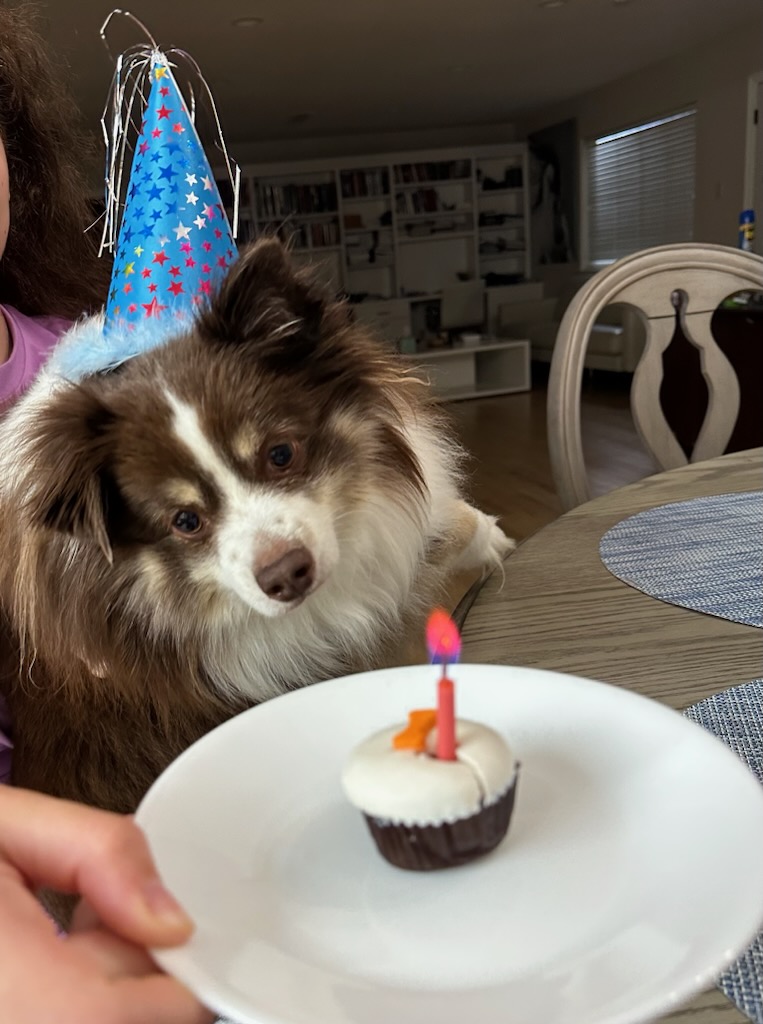
Rollo our mini-Australian Shepherd is turning seven years old today (October 12, 2025). This evening, we sang to him, in English, Swedish and French, and he got a pupcake (cupcake specifically for dogs) and piece of filet mignon. Later today (October 12) he will get celebrated again and have more pupcakes.

To celebrate Rollo’s birthday, I am posting 20 photos I took of Rollo today, or rather earlier this evening (October 11), as well as photos from the recent past, and also photos that are a year or older. Some of the older photos are with our late Leonberger Bronco. The first six photos I took today. If you’ve been following my blog for some time, you may have seen some of the older photos already.

Washing Rollo

Rollo our mini-Australian Shepherd is looking into the camera. He is wet.
Before the festivities Rollo needed a bath. He is getting washed in the sink. He was not happy.

Our mini-Australian Shepherd is looking into the camera as he is sitting in the sink getting washed. He is wet and not happy.
When are you going to be done with this washing stuff?

Birthday Photos of Rollo

Our daughter is putting a blue birthday hat on our mini-Australian Shepherd Rollo.
The birthday hat is coming on. He does not like the hat, so it did not stay on long.
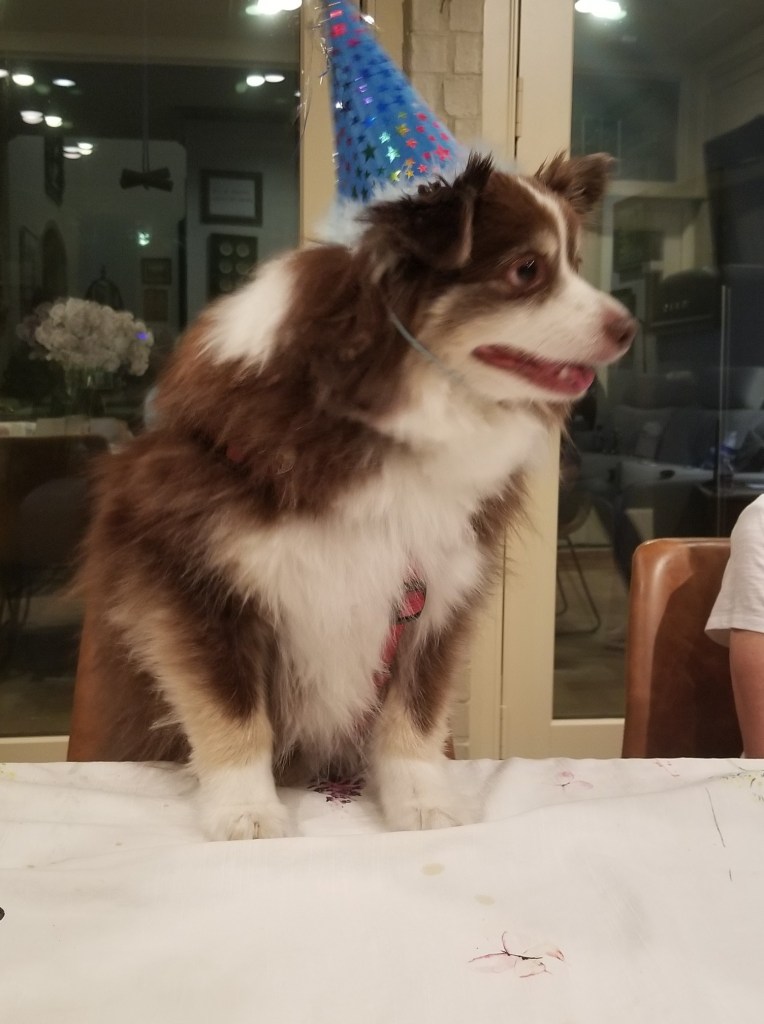
Rollo our mini-Australian Shepherd has his paws on the table and he is wearing a blue birthday hat.
We are getting the pup-cake ready, and we are going to sing Happy birthday in several languages. Rollo very much appreciates us singing to him in multiple languages, but mostly he appreciates the pupcake. A pupcake is a cupcake made especially for dogs. We humans had cupcakes.
Rollo our mini-Australian Shepherd is standing with his paws on the table, and he is looking to the right. He is wearing a blue birthday hat.
Rollo is ready.
Photo of our mini-Australian Shepherd being fed a pupcake.
Finally Rollo gets his pupcake

Recent Photos of Rollo

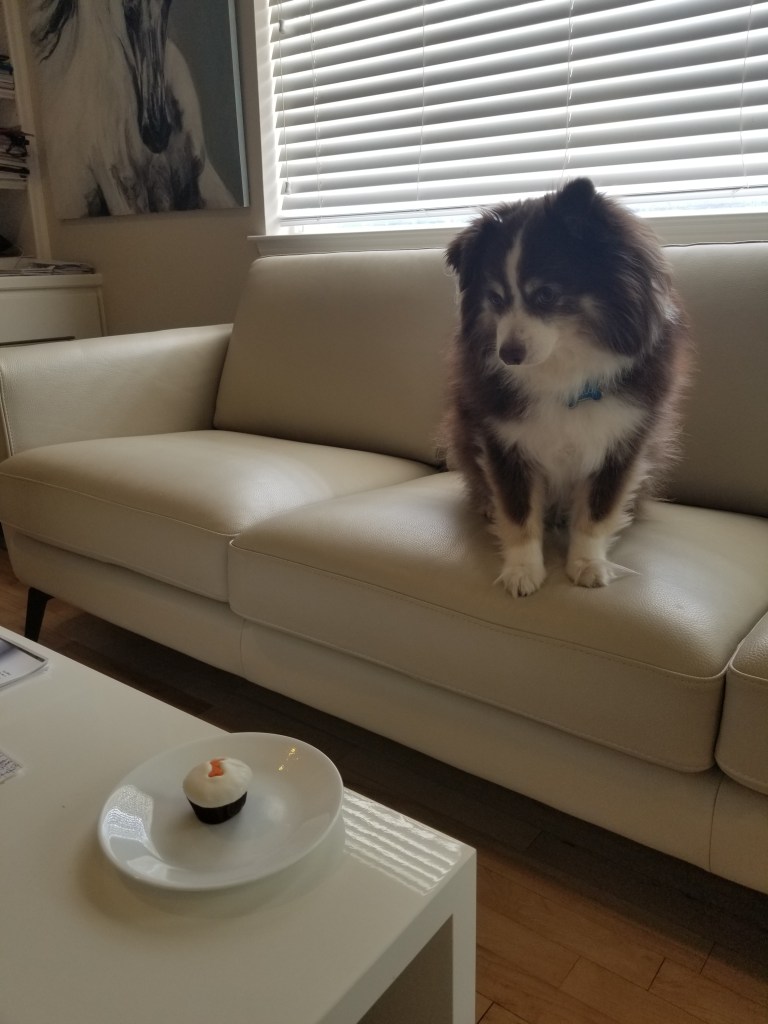
Photo of our mini-Australian Shepherd being sitting on a leather sofa and looking at a pupcake.
Rollo and a pupcake on a table.
Photo of our mini-Australian Shepherd sitting on the floor in front of a Rolo candy.
Rollo and a Rolo candy. Rollo was not named after the candy bar Rolo as often incorrectly assumed. Rollo was named after the Viking king who sacked Paris. You can say he was on a roll.
Photo of our mini-Australian Shepherd lying among the covers on our bed.
Rollo likes to sleep in our beds
Photo of our mini-Australian Shepherd being a bit wet
Rollo is wet, not from being washed today but from rain on another occasion.

Older Photos of Rollo

A mini-Australian Shepherd wearing a blue party hat. He is not looking happy.
This is an old photo from his fourth birthday. He is unhappy with the hat.
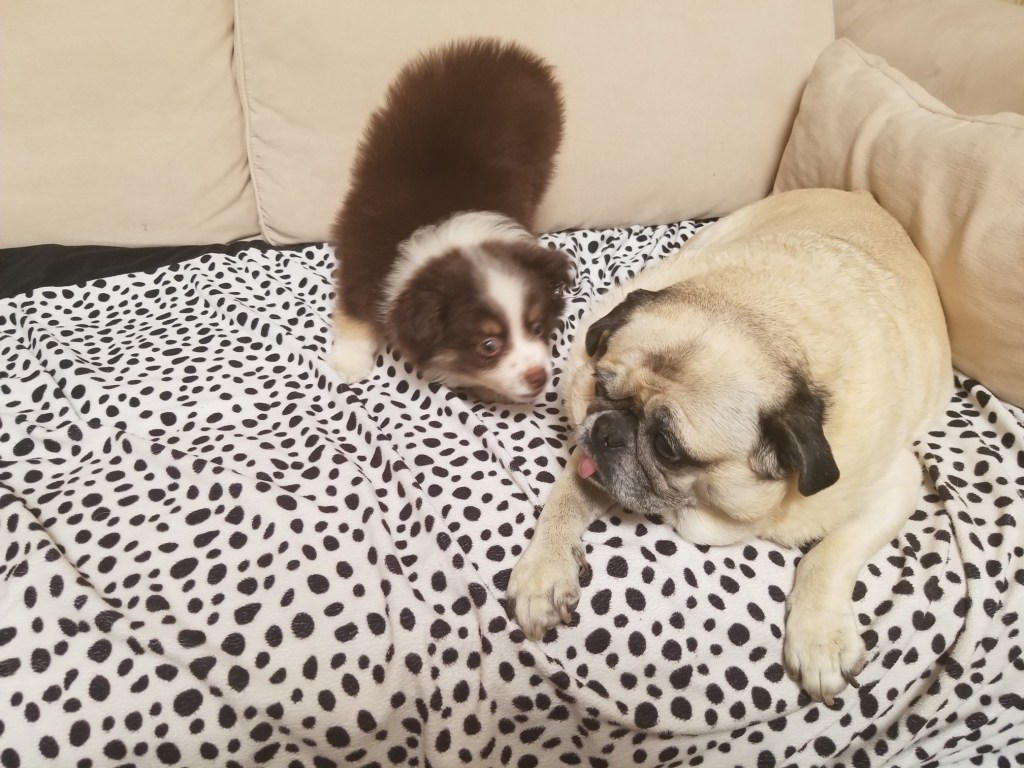
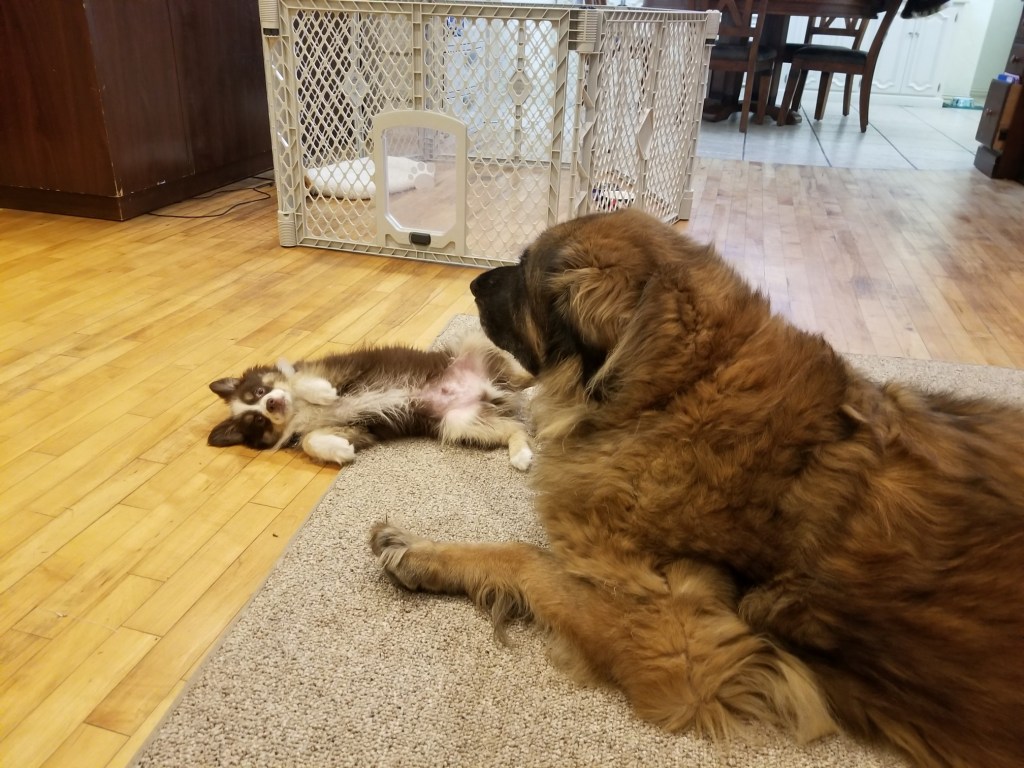
On the left there is a big Leonberger dog bending his head down to sniff a small mini-Australian Shepherd lying on the grass.
Rollo almost six years ago. He had just arrived at our house. Our Leonberger Bronco is welcoming Rollo.
Our mini-Australian Shepherd is lying on the grass and looking into the camera.
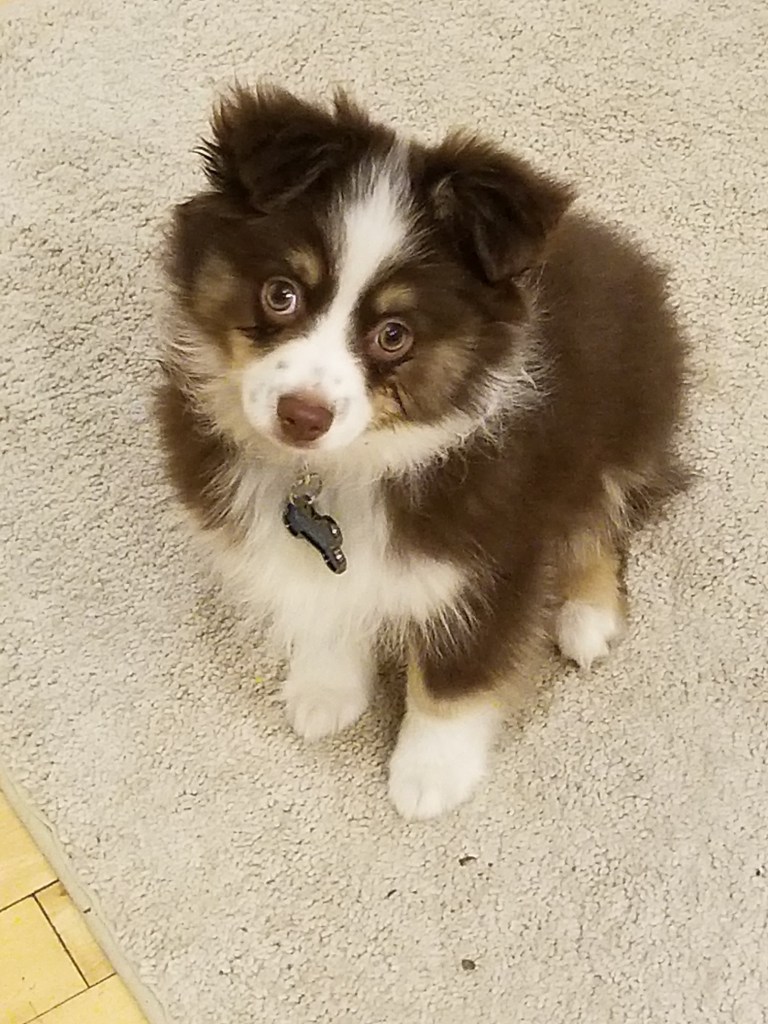
Rollo our mini-Australian Shepherd puppy.
A mini-Australian Shepherd puppy lying on a blanket and looking into the camera.
Close up of Rollo as a puppy.
The photo shows a mini-Australian Shepherd puppy peeking out behind a red sofa and looking straight into the camera.
Rollo peeking out behind the sofa.
The photo shows a mini-Australian Shepherd puppy biting an orange volleyball.
Rollo playing with a volleyball.
The photo shows a mini-Australian Shepherd biting a Leonberger’s tail
Rollo frequently bit our Leonberger Bronco’s tail, and he even swung in it like a swing. He climbed all over Bronco. Bronco was very patient with him.
The photo shows a mini-Australian Shepherd looking into the camera. He is next to a chewed-up shoe.
When Rollo was young, he loved chewing shoes. Here the artist is posing with his art.
The photo shows a mini-Australian Shepherd and a Pug and young woman in between them petting them both.
Our daughter with our mini-Australian Shepherd Rollo and Pug Daisy.
The photo shows a mini-Australian Shepherd sitting in a stroller.
Sometimes there are scary sounds and Rollo wanted to sit in the stroller we bought for our Pug Daisy. We have not been using that stroller since Daisy passed.

To see the blog post from Rollo’s sixth birthday click here and Rollo’s fifth birthday click here.

Leonberger Health Issues – A Veterinarian’s Guide to Preventive Medicine

A professional content writer specializing in animal healthcare and veterinary topics by the name Emma Johnson contacted me about publishing veterinary information on my Leonberger blog, which I am certainly happy to assist with. Check out her article below.

This photo tile includes a photo of our Leonberger Bronco wearing a birthday hat on his 11th birthday, our mini-Australian Shepherd biting our Leonbergers tail, our Leonberger Bronco wearing a cone and accidentally clearing the table of its content, a friends funny photo of Leonbergers Digory and Obi (by Jen O’Keefe) and a shutter stock photo of two light colored Leonberger puppies playing. Shutterstock-ID: 2141564415 by AnetaZabranska.

Article by Emma Johnson

A photo of a Leonberger lying on a veterinaries table. A veterinarian is taking the vitals using a stethoscope.
The Leonberger is a friendly giant known for its kind temperament and large size. These beautiful dogs are wonderful companions, but their size can affect their health to some extent. Leonberger health challenges must be well understood by owners and veterinary professionals so that the lives of the big dogs are as healthy and happy as possible.

This article tackles the biggest problems and lays out preventive care options to protect these dogs. It is simpler to know what to anticipate and how to avoid these issues. Let us begin by finding out about some of the most common diseases that occur to Leonbergers.

Understanding Common Leonberger Diseases

Leonbergers suffer from many diseases. They can be joint issues, heart issues, hip dysplasia, eye issues, and skin allergies. These issues arise over time; therefore, prevention and detection at an early age are crucial.

In such situations, periodic examinations are advised by veterinarians, and collaboration with the dog’s owners is recommended. Prevention is all about good food, exercise, and periodic check-ups from the veterinarian.

We will learn how genetic problems in Leonbergers are addressed and how actively they can be dealt with.

Genetic Issues in Leonbergers and How to Deal with Them

Breed history and size are the main causes for genetic issues in Leonbergers. These are directly affecting Leonberger’s lifespan and general health. Prevention is achieved through education and proper care.

Genetic risks and prevention include:

  • Hip dysplasia: Select sound breeders who screen for hip wellness. Keep your dog at a healthy weight and encourage low-impact play.
  • Elbow dysplasia: Refrain from overexercising and ensure proper nutrition.
  • Heart issues: Have regular cardiac check-ups and watch for activity levels.
  • Eye issues: Have regular eye exams and maintain eye cleanliness.

Pre-treatment of genetics, through both breeding selection and preventive maintenance, lowers the risk of major issues. Let’s discuss the big picture now: Leonberger lifespan and health.

Leonberger Lifespan and Health

The average lifespan of a Leonberger is 8 to 10  years. Big dogs tend to have a shorter lifespan, but with proper preventive care, it can be extended.

Suggestions from experts are:

  • Balanced meal plan that is rich in nutrients
  • Weight management to minimize joint stress
  • Low-impact exercise
  • Routine visits to the veterinarian for the detection of diseases in early stages

Pro Tip: In case of emergencies and accidents, effective veterinary bandaging skills are priceless. They prevent infection, protect wounds, and promote faster healing. Thus, both pet owners and vets must improve their veterinary bandaging skills.

A regular schedule of preventive care and practical first aid skills is the key to maintaining a Leonberger’s health and longevity. This includes treatment of Leonberger joint problems, the most common health problem of the breed.

Preventing Leonberger Joint Problems:

A Leonberger running on grass. His skeleton is shown as overlayed on his body.
Leonberger joint problems, including arthritis, hip dysplasia, and elbow dysplasia, are among the most common health issues this breed will encounter.  Prevention starts with proper weight. Excess pounds put extra pressure on joints and worsen conditions.

Early focus on joint maintenance makes prevention easy. That inevitably centers on the role of exercise and diet.

Exercise and Nutrition

Low-impact activity, such as controlled walking or swimming, provides joint mobility without overloading. A balanced diet with proper nutritional intake is also a must. In consultation with a veterinarian, supplements such as glucosamine and chondroitin may also be employed to maintain joint health.

These lifestyle modifications fortify the joints but are optimally used when complemented by regular veterinary visits.

Regular Checkups

Orthopedic examinations should be conducted regularly to identify problems before they cause damage. Regularity in these preventive check-ups can keep your Leonberger comfortable and active for life.

With joint maintenance underway, attention now must turn to another essential area of health: the heart.

Prevention of Leonberger Heart Problems:

The photo shows a Leonberger sitting on a veterinary table getting its heart checked by a veterinarian.
Leonberger heart problems, particularly dilated cardiomyopathy, can advance with no apparent symptoms, and thus, prevention is important.

Diet and Lifestyle

Daily check-ups, a healthy diet, and regular exercise maintain the heart in good health. Avoid stress and overexertion.

Preventive measures at home are required. Periodic veterinary check-ups should be organized, nevertheless.

Early Detection Of Symptoms

Be vigilant for signs of exhaustion, cough, or respiratory deviation. Seek the advice of a veterinarian if there are any concerning signs in the pet. Early diagnosis significantly enhances the prospects of success.

Strong hips also contribute to overall heart health. Therefore, the same care and attention should be given to prevent hip dysplasia.

Prevention of Leonberger Hip Dysplasia:

Leonberger hip dysplasia is an abnormal development of the hip joints that leads to pain and loss of mobility. Prevention is early.

Breeding and Early Life Care

Seek out breeders who conduct hip soundness testing. Keeping your Leonberger lean and limiting high-impact exercise will help to build and develop joints. High-quality breeding, proper early care, and frequent veterinary check-ups are key to a long, healthy life for your Leonberger.

Early Veterinary Care

Prompt discovery can make a huge difference in comfort and mobility. Be mindful of the signs of discomfort in your pet. If the dog shows hesitation in movement, exercise, or play, it’s a sign of concern.

Moreover, watch out for signs of exhaustion after minor physical activity. Symptoms such as limping and whining while walking shouldn’t be ignored. A physical examination should be scheduled immediately to pinpoint the exact cause of pain and discomfort.

After the hips are healthy, vision care is the next priority of preventative care. We’ll cover that in the next section.

Preventing Leonberger Eye Problems:

Vision care is a cornerstone of your Leonberger’s overall health, making them comfortable and independent in their golden years. Healthy eyes enable them to be confident and active on a daily basis. Preventive care today can save a lot of stress and treatment down the road.

Common Eye Issues

Leonbergers can be susceptible to vision and comfort-degrading issues like cataracts and entropion. Cloudiness or tearing must be noticed early on. Regular veterinary eye examinations ensure early detection is probable and help maintain their quality of life in balance.

By being attentive to common vision issues and regular hygiene, you can protect your Leonberger’s eyesight and health.

Hygiene and Care

Eye cleaning prevents infection and irritation. Easy grooming, such as wiping off discharge and watching for redness, can be a big help. A quick response when there is any sign of irritation prevents problems from getting out of control.

Finally, let’s discuss how genetic testing can help with coping with Leonberger health problems.

Breeding Considerations

Genetic testing is the key to avoiding inherited eye conditions. Selecting breeders who prioritize vision preserves generations to come. Healthy vision is as crucial to mobility as it is to overall well-being.

Caring for vision maintains independence, but caring for healthy skin maintains comfort and well-being. Preventing skin allergies is covered in the next section.

Preventing Leonberger Skin Allergies:

A Leonberger is standing in a bathtub. He is being washed.
Skin health is a part of overall well-being in your Leonberger. Healthy skin not only avoids pain but also prevents infection and irritation. Preventive care involves frequent grooming, attention to hygiene, and vigilance.

Causes of Skin Allergies

Environmental factors, food allergy, or parasites are the causative agents of Leonbergers’ skin allergies. Early diagnosis of causes prevents long-term complications.

It is through preventive measures that you need to take steps to make your dog stress-free and comfortable.

Skin Care Routine

Daily brushing and grooming eliminate dirt, allergens, and loose hair that irritate the skin. Hypoallergenic shampoos and conditioners soothe the skin and avoid flare-ups. A balanced diet containing omega fatty acids also maintains a healthy coat and skin.

Early Care

Skin problems must never be overlooked, as they can quickly become long-term problems. Coordination with your vet for regular checkups ensures that issues are addressed on time.

Preventive skin care is an important element of preventive health. Coordination of these practices ensures your Leonberger has a long, happy, and healthy life.

Preventive Care Checklist for Leonbergers, as suggested by the veterinarian

Here is a brief preventive care checklist for Leonbergers:

  • Work towards maintaining your dog’s healthy weight to keep them overall healthy.
  • Encourage your dog to perform low-impact exercises.
  • Turn outdoor play into a regular activity.
  • Undergo genetic tests to identify hereditary risks before breeding.
  • Check for dental and skin health to avoid infections and discomfort.
  • Get regular vaccinations and parasite control for complete preventive care.
  • Utilize a veterinary AI scribe to document, monitor, and maintain patient information efficiently.

Regular wellness visits detect health problems in Leonbergers. Regular checkups screen for inherited disorders, evaluate weight and exercise requirements, and examine the condition of joints, hips, eyes, heart, and skin. Personalized care plans maintain your dog in good health, averting significant problems.

With all said regarding the Leonberger health problems and how to prevent them, let us now summarize with the closing thoughts.

Final Thoughts

Preventive care is the key to a happy and healthy Leonberger. Regular wellness visits, individualized care plans, and gentle treatment of injuries all combine to provide a long, active life. Prevention is always preferable to the cure. It’s preferable to be proactive about the typical health issues in Leonbergers in order to be able to stop them.

A proactive care approach keeps your Leonberger healthy, comfortable, and active.

FAQs:

What are the most common Leonberger health problems?

The most common Leonberger health problems include joint issues, heart conditions, eye problems, and skin allergies. They affect mobility, comfort, and general well-being. Preventative care and routine veterinary check-ups help keep these dangers at bay efficiently.

How can I prevent Leonberger joint problems?

Prevention of Leonberger joint problems starts with proper weight maintenance, nutrition, and regular low-impact exercise. Routine early orthopedic checks help detect problems before they progress. Preventive breeding matters too.

How often should Leonberger’s eyes be examined?

Every Leonberger checkup should include a regular eye examination. Owners should also watch for redness, cloudiness, or watery discharge. Early detection of Leonberger eye problems prevents catastrophic vision loss.

What is the average Leonberger lifespan and health expectancy?

The average Leonberger lifespan and health is 8–10 years, but preventive care can improve the quality of life. Proper living routines and regular veterinary visits are the key. Identifying health issues early on ensures healthier and longer years.


Author Bio:

Emma Johnson is a professional content writer specializing in animal healthcare and veterinary topics. Her work provides pet owners and veterinarians with insightful, well-researched information to improve animal care.

One Evening in the Life of Jim Garraty

This is a Leonberger blog, but I also post about other topics including book reviews for books that I love and want to promote. With this post I would like to promote Comings and Goings – The Art of Being Seen: A Jim Garraty Story (The Reunion Duology) by Alex Diaz-Granados.

Below is an overview of the two formats of Comings and Goings

  • Paperback –  Independently published (July 1, 2025), ASIN : B0FFBJG5KQ, ISBN-13 : 979-8289407344, 51 pages, Item Weight : 4.6 ounces, dimensions ‏ : ‎ 6 x 0.13 x 9 inches, it cost $9.99 on US Amazon. Click here to order it from Amazon.com.
  • Kindle – Publisher : ADG Books via Kindle Direct Publishing (June 22, 2025), ASIN : B0FF5FLL87, 53 pages. It is currently $2.99 on Amazon.com but free with Kindle unlimited. Click here to order it from Amazon.com.
Title and name of author written slanted across the front cover. In the background there is furniture in a small room.
Front cover of Comings and Goings – The Art of Being Seen by Alex Diaz-Granados. Click on the image to go to the Amazon page for the paperback version of the book.

Amazon’s Description of Comings and Goings by Alex Diaz-Granados

Boston, 1984. A party Jim Garraty never wanted to attend. A girl who didn’t look away. A night stitched together by mixtapes, quiet courage, and the ache of choosing to stay.

Jim isn’t chasing romance—he’s just trying to outrun the noise. But when Kelly Moore enters the room with her drink, her Rachmaninoff references, and her uncanny ability to see without pressing, everything shifts. Over cassette tapes and Heineken beer, conversations deepen, touch becomes language, and for the first time, intimacy feels less like performance and more like breath.

Comings and Goings – The Art of Being Seen is a quietly luminous companion to the Reunion Duology, capturing one night’s transformation from awkward beginnings to the kind of closeness that rewrites your inner dialogue. It’s about music, memory, and the rare kindness of someone meeting you where you are—with patience, humor, and unexpected grace.

This isn’t a story about first love.

It’s a story about the first time you didn’t have to explain yourself.

This is my Amazon five-star Amazon review of Comings and Goings

From Awkward Misery to Adventure

I think this novelette is best read as a companion to the author’s larger masterpiece Reunion: Coda. Alternatively, it serves as an introduction to the author’s writing style and storytelling prowess. The author has an exceptional skill in crafting and delivering compelling narratives that engage audiences, and this short novelette could be one of the many chapters in the life of the protagonist Jim Garraty, a man who will become a celebrated professor at Columbia University.

In this book Jim Garraty is a first year student at Harvard and he is attending a party where he does not know anyone except for a fellow student who is quite busy elsewhere and leaving him on his own. He feels lonely, awkward and out of place until a girl, Kelly Moore, takes interest in him and his miserable night turns into quite an adventure. What stands out about this book is the realistic description of emotions, inner thoughts, and the realistic dialogue. It serves as a prelude to what to expect from his other books. I highly recommend this short novelette.

An overview of the book, a photo of the author and an introduction to the author.
Back cover of Comings and Goings – The Art of Being Seen by Alex Diaz-Granados. Click on the image to go to the Amazon page for the Kindle version of the book.

About the Author of Comings and Goings

Alex Diaz-Granados (born 1963) has spent decades weaving words into stories, critiques, and screenplays, always with an eye for nuance and emotional depth. His journey began in the early 1980s as a staff writer and Entertainment Editor for his high school newspaper, later serving as Diversions Editor for Miami-Dade Community College’s South Campus student publication.

Fueled by a passion for cinema, he has been sharing his thoughts on film—raving about masterpieces and ranting about misfires—since 2003, contributing reviews to platforms like Amazon, Ciao, and Epinions.

Beyond criticism, Alex has collaborated with actor-director Juan Carlos Hernandez on several screenplays, including A Simple Ad, Clown 345, Ronnie and the Pursuit of the Elusive Bliss, and Sunny in the Village of the Crickets, all of which can be seen on YouTube. His writing extends to blogging, with general-interest articles once featured on Yahoo! Voices (formerly Associated Content).

As an author, Alex is best known for the Reunion Duology—the novella Reunion: A Story and its sequel Reunion: Coda. These works explore themes of nostalgia, regret, and the enduring bonds of friendship, set against the atmospheric backdrop of Miami and New York City. With cinematic storytelling and emotionally authentic characters, his work resonates with readers seeking a blend of memory and new beginnings.

Click here to visit the author’s website