A Brief History of the Leonberger Club of America

Leonbergers have a long history in North America and the United States—despite the fact that until 1985, there were only seventeen Leonbergers known to be living in the United States.

See: Lusby, Leonberger, page 15.
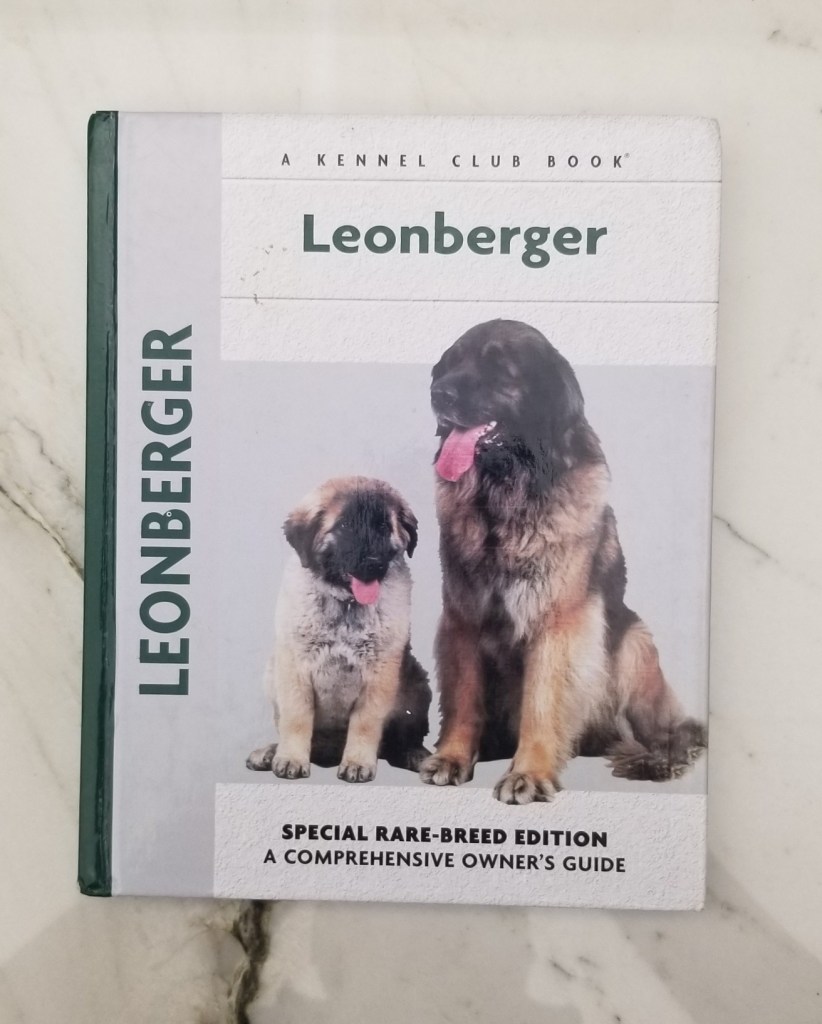
Photo of the book Leonberger, Special Rare-Breed Edition, A Comprehensive Owners Guide, by Madeline Lusby
Leonberger, Special Rare-Breed Edition, A Comprehensive Owners Guide, Madeline Lusby

In the 1870s, Leonbergers were brought to Newfoundland to invigorate the stock of Newfoundland dogs. Around the same time, two Leonbergers named Caesar and Sultan were purchased from Essig’s kennel and transported across the ocean to join the Wellesley-Sterling theater company in the United States as the stars of their productions. Then in 1879, Caesar and Sultan visited President Ulysses S. Grant, who called them the largest and most magnificent dogs he had ever seen and presented them with gold medals. During the years between World War I and World War II, a New Jersey family, the Wolfs, opened their home as a temporary refuge for Jews fleeing Germany: they also imported Leonbergers. Unfortunately, this introduction of the breed into the United States did not last, and it would be another fifty years before the Leonberger appeared in America again.

See: Bliss-Isberg, Leonberger, page 60.

See: Bliss-Isberg, Leonberger, page 64

See: Bliss-Isberg, Leonberger, page 101.
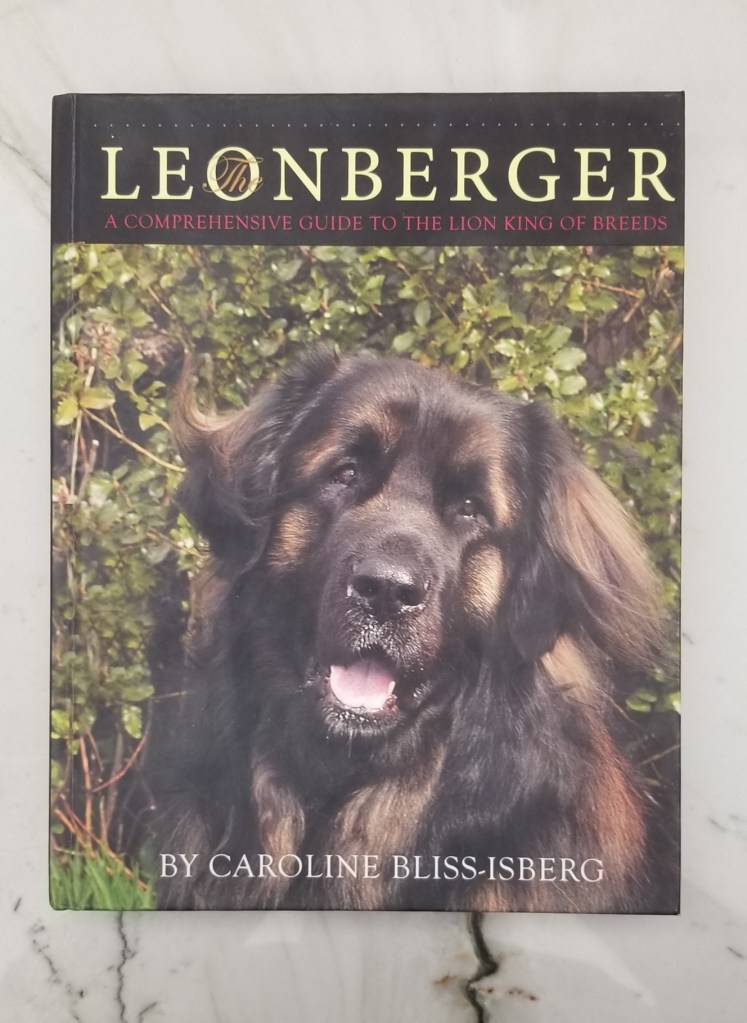
Photo of front cover of Leonberger, A comprehensive guide to the lion king of breeds, by Caroline Bliss-Isberg
Leonberger, A comprehensive guide to the lion king of breeds, Caroline Bliss-Isberg

During the late 1970s and the 1980s, a few families—Waltraut and Klaus Zieher, Brian Peters, Manfred and Sylvia Kaufmann, Keri Campbell and Melanie Brown, and Mary and Reiner Decher brought Leonbergers to the United States. The Dechers had started a breeding program and were looking for a mate for their first dam, Viona. By chance their neighbor discovered through a newsletter that there was another Leonberger in the United States, and that led to the families’ finding and connecting with one another. I should add that the Dechers were careful to conform to the German breeding regulations and performed hip X-rays that they then submitted to the Orthopedic Foundation for Animals (OFA). Viona became the first OFA-certified Leonberger in America.

See: Bliss-Isberg, Leonberger, page 152.

On Saturday, November 2, 1985, eight of these Leonberger enthusiasts met at a hotel in Denver, Colorado, to found the Leonberger Club of America (LCA). This group of founders, which has since been dubbed the Denver Eight, appointed a registrar, formulated a breeding acceptability checklist, and instituted various policies, including the requirement that OFA certification is mandatory for breeding. LCA membership grew: it held social gatherings, began publishing LeoLetter, and imported an increasing number of dogs. Now the LCA has thousands of members across the country, and Leonbergers receive high ratings on health tests relative to other large breeds. For example, in 2000, the OFA reported that only 14.6 percent of Leonbergers tested positive for hip dysplasia, compared to 47 percent of Saint Bernards.

See: Bliss-Isberg, Leonberger, page 154.

See: Bliss-Isberg, Leonberger, page 176.

Another important historical event was the founding of the Leonberger Health Foundation International (LHFI), in 2000 (it was just called the Leonberger Health Foundation back then). According to its website, the organization was founded by Waltraut Zieher and other memers of the LCA’s health, education, and research committee to “facilitate the solicitation and distribution of donations given to support health related breed-specific research.” The LHFI also administers a program that collects DNA samples from Leonbergers to share with universities and research institutions, and of course it administers the Grey Muzzle Award.

LHFI’s global biobank contains DNA samples from more than nine thousand Leonbergers. Among the organization’s notable achievements are the eradication of Addison’s disease among Leonbergers and the raising of nearly half a million dollars for research into conditions that affect canine health, including osteosarcoma, hemangiosarcoma, glaucoma, cardiac diseases, thyroid diseases, and neurological disorders. Its research also supports healthful longevity and aging as well as population diversity. Another success is the fact that since 2011, no Leonbergers with two copies of the LPN1 gene mutation (which causes Leonberger polyneuropathy) have been recorded in LHFI’s biobank. LHFI is one of my favorite charities.

The end of the twentieth century marked not only the end of the Cold War but also the beginning of what I call the Dog Wars of America. In 1985, the American Kennel Club (AKC) registry comprised one-third of the world’s known dog breeds. But the AKC had recognized only a few new breeds since 1887—a period of ninety-eight years. So the organization decided to change that policy, but this did not always go smoothly. The members of rare-breed clubs often did not want to be part of the AKC. For example, the Australian Shepherd Club of America (ASCA) was very reluctant to join, so a relatively small splinter group, the United States Australian Shepherd Association, was formed and designated the official member club of the AKC, which was not welcome news to the ASCA. The border collie is another example. Charles Krauthammer, the late political columnist, called the AKC the politburo of American dog breeding.

See: Bliss-Isberg, Leonberger, page 159.

Similarly, in 2003, a new Leonberger club was formed—the Leonberger Club of the United States—with the goal of becoming the Leonberger member club of the AKC. This essentially forced the LCA’s hand, so they applied for membership in the AKC, a process that took years to complete. But ultimately the AKC approved the LCA as members in 2010: Leonbergers would officially become part of the Working Group. Fortunately, 90 percent of LCA breeders agreed to continue following LCA regulations regardless of whether the club would remain independent or become part of the AKC. Also fortunately, AKC membership afforded more opportunities for Leonbergers to participate in dog shows, which is important to many owners.

See: Bliss-Isberg, Leonberger, page 187

For information on the history of the Leonberger starting in 1830’s see this link

Rollo Rolls In

Bronco grew up with several other dogs, a Labrador (Baylor), a German Shepherd (Baby), a Japanese Chin (Ryu), a Pug (Daisy), and finally a mini-Australian Shepherd Rollo. The book also describes some of the adventures of Bronco’s siblings and his interactions with them. This post is focused on Rollo and Bronco’s great patience with Rollo.

Picture of a mini-Australian Shepherd puppy on grass.
A frightened puppy at his new home.
Mini-Australian puppy on blanket.
None of us could resist Rollo when he was a young pup.
Bronco the Leonberger and his new little mini-Australian puppy.
Bronco and Rollo

Six months after the passing of our Japanese Shin Ryu, we decided to get another dog. Rachel really wanted a miniature Australian shepherd, so we got one from a breeder in East Texas. We named him Rollo, after the Viking who was the first ruler of Normandy. In 885–86 CE, Rollo led the Viking siege of Paris but was fended off by Odo, the count of Paris. Our Rollo may not have been quite as brave as the medieval Rollo (or Odo), but he was cute and full of energy.

Rollo was not a big puppy, and at the beginning he was afraid of everything and everyone. However, he quickly warmed up to both Daisy and Bronco, and he was potty trained quickly. Rachel was the one who did most of the training: she stayed with him at night and put a bell on the door to the backyard, which he rang whenever he wanted to go outside. Every time he went, he got a little treat and praise afterward. It made him happy and proud.

We also tried to take him for walks, but he did not understand the concept right away. He would lie down on his back or stand on his hind legs and stretch his paws up, wanting to be carried. So we held him in our arms as we walked him around the neighborhood with the other dogs. He was happy up there in our arms, and he contentedly chewed on his leash and harness.

But even after he started walking on his own four feet, he was still a bit anxious and easily frightened. If we saw a cat, we had to turn around and walk straight back home. If we heard a truck engine-braking on the main road a quarter mile away, we had to turn around and walk straight back home. If we saw a man with a little dog, we had to turn around and walk straight back home. If we heard a duck quacking, we had to run for our lives back home. Ducks make strange sounds that can be very scary to little puppies. Whenever we walked or ran back home, I was right behind him as he pulled the leash.

There was one thing Rollo was not afraid of, and that was Bronco. Bronco was the biggest dog Rollo had ever seen—not to mention the biggest dog many people had ever seen—yet Rollo was continually testing Bronco’s patience. One time Rollo and I were sitting on the sofa, and Bronco was sleeping at our feet. Suddenly I saw Rollo stepping off the sofa and onto Bronco’s back, then walking across Bronco’s back down to the floor. Bronco was grumbling a bit, but he let Rollo literally walk all over him.

Rollo our mini-Australian Shepherd loves belly rubs even from Bronco
“Please, Bronco, I want my belly rub.”

I also noticed that Rollo liked to play with Bronco’s tail. One day Bronco began barking at me intently, as he did when he wanted me to do something or pay attention to him. I couldn’t see anything amiss at first, but then I saw something going on behind him. I took a closer look and saw Rollo dangling from Bronco’s tail. He was biting it and using it as a swing. I got Rollo off right away, of course, which is exactly what Bronco wanted. He was being very patient with Rollo, but Rollo wanted to play.

Our mini-Australian Shepherd Rollo pulling our Leonberger Bronco's tail.
To my astonishment, Bronco didn’t react angrily when Rollo swung like Tarzan from his tail.

Of course, the dogs often go in the backyard to do their business (I don’t mean the kind of business that’s taxable). This requires me to do pickup duty. On one occasion I was walking up and down the lawn, looking for poop and picking it up, when Rollo ran over to my left side and pushed me with his nose and nipped my shoes a little bit. Then he ran behind me and did the same thing on my right side. Then he ran behind me again and repeated the process, and so it went—over and over and over. Then I realized that to him, I was a sheep, and he was having fun herding me. He herded me down the lawn and back up again until all the poop was picked up. We were a team: he the herding dog in charge and I the pooper-picker-upper sheep. We performed this ritual several times. Claudia and I thought about taking him to one of those farms where you can let your shepherd dog herd sheep just for fun, but we never got around to it.

Rollo soon found something else he seemed to enjoy even more, and that was playing with balls—chasing them, fetching them, chewing them, pushing them, rolling them, kicking them, jumping on them, and biting them. It is a truly amazing sight. There’s so much energy and joie de vivre involved. To this day, whenever a ball rolls under a sofa, Rollo gets upset and barks at the sofa. Then you have to bend down and get the ball out. You better do what he wants or he’ll wail like a toddler.

Our mini-Australian Shepherd playing with a volley ball.
Rollo plays with one of his favorite toys.
Our mini-Australian Shepherd Rollo with a soccer ball
Rollo with another ball.

Rollo also loved chewing on shoes when he was younger. Fortunately, he’s gotten over that behavior, but in the process we’ve lost a lot of shoes. One time I forgot that I had left my shoes under a table in our TV room. I was walking around the house when I met Rollo in a hallway holding one of my shoes in his mouth. He gave me a deer-in-the-headlights look, then he slowly turned around and tiptoed back into the TV room. He placed my shoe back under the table, right next to its mate, positioning it correctly so it was just the way I had left it. Then he tiptoed away as if pretending that nothing had happened.

Rollo could be quite an artist when it came to shoes. Maybe we should have framed his work instead of throwing it away. Maybe we should have established a little chewed-shoe museum so people could have paid admission to see it.

Our mini-Australian Shepherd with one of his creations, an artistically chewed up shoe.
The artist poses with one of his creations.

Rollo is also pretty good at finding weird things in the backyard and bringing them into the house—snails, lizards, strange-looking larvae and worms, caterpillars, and creatures that might have been space aliens. I’m not sure: I mean, I’ve seen Men in Black, and some of the stuff he brought in could have been small versions of the creatures from that movie. Our backyard looks like a typical backyard on the surface, but Rollo made us realize that it’s actually an amazing world full of amazing creatures.

One day as I was walking Daisy and Rollo, we saw a frog, or perhaps it was a toad. It was jumping ahead of us. Both Daisy and Rollo had been looking down, sniffing the asphalt and the grass. As the frog jumped in front of us, the dogs became very curious. They sniffed and looked closely at the frog, and then, for the first time, Rollo looked up at me, straight into my eyes, questioning. What is that? I got the strange feeling that he wanted me to explain.

I told Rollo, “It’s a frog.” Even though he doesn’t understand English—or at least I don’t think he does—it seemed like he wanted me to say more, give him some indication that this unfamiliar life form wasn’t dangerous. Then Rollo gently touched the frog with his paw and patted it a bit. He was enjoying himself, but the frog may have felt differently. The world is full of wonders when you’re a puppy.

It’s also full of things that can seem threatening. So even though we got a stroller for Daisy, the dog who I think uses it the most is Rollo—although not because he gets tired walking. On the contrary, he seems to have endless energy. But Rollo is a bit of an anxious dog, and he feels safe in the stroller.

Canis Lupus, the grey wolf is a fearsome and courageous hunter in nature.

Canis Lupus familiaris, the dog, a close relative of the grey wolf, is sometimes less brave. This specimen prefers to sit in a stroller when he hears strange sounds.

Proof version of the book

Here is the second proof version of the book. This one might be it!

This is the Proof version of the book The Life and Times of Le Bronco von der Löwenhöhle. Front and Back cover.
Proof version of the book The Life and Times of Le Bronco von der Löwenhöhle.

I received the second proof for my book The Life and Times of Le Bronco von der Löwenhöhle. All the content looks good, the front and back covers seem to be ready. This might be the final version. Even if we go (me and my editor) with this version, we have already decided that the book will be released on July 3rd, 2022, which would have been Bronco’s 15th birthday. The book will be available on Amazon, including many international Amazon websites, Barnes and Noble, as well as many other bookstores.

The ISBN number for the print edition is 978-0-9980849-5-4

The ISBN number for the e-book edition is 978-0-9980849-6-1

These are endorsements for the book The Life and Times of Le Bronco von der Löwenhöhle by Thomas Wikman. 

“A wonderful tribute to the author’s beloved Bronco. The stories are heartwarming as well as
informative—a true glimpse into life with a Leonberger.”
—D’Nae Wilson, President, Leonberger Health Foundation International

“A lovely tribute to Bronco, with lots of resources for general Leonberger information.”
—Julie Schaffert, LCA breeder since 1992
Endorsements for the book

I will add more detailed information about the book and the links to places to purchase the book at this location. Which is the same as clicking “The Book” menu item at the top.

Finally, seven selected book spreads

Page 6 and 7 from the book The Life and Times of Le Bronco von der Löwenhöhle by Thomas Wikman
Page 6 & 7
Page 24 and 25 from the book The Life and Times of Le Bronco von der Löwenhöhle by Thomas Wikman
Page 24 & 25
Page 92 and 93 from the book The Life and Times of Le Bronco von der Löwenhöhle by Thomas Wikman
Page 92 & 93
Page 102 and 103 from the book The Life and Times of Le Bronco von der Löwenhöhle by Thomas Wikman
Page 102 & 103
Page 108 and 109 from the book The Life and Times of Le Bronco von der Löwenhöhle by Thomas Wikman
Page 108 & 109
Page 148 and 149 from the book The Life and Times of Le Bronco von der Löwenhöhle by Thomas Wikman
Page 148 & 149
Page 174 and 175 from the book The Life and Times of Le Bronco von der Löwenhöhle by Thomas Wikman
Page 174 & 175

My First 20 Posts

This is post number 20 for my Leonberger/Bronco blog. I decided to make it a list of posts. Not all posts were equally popular and maybe you missed the posts you would have liked the most. You can click on the link or the picture to see a post, then click back or “Home” (at the top) go back. If you read a post I certainly would love to get a “like” or maybe a comment.
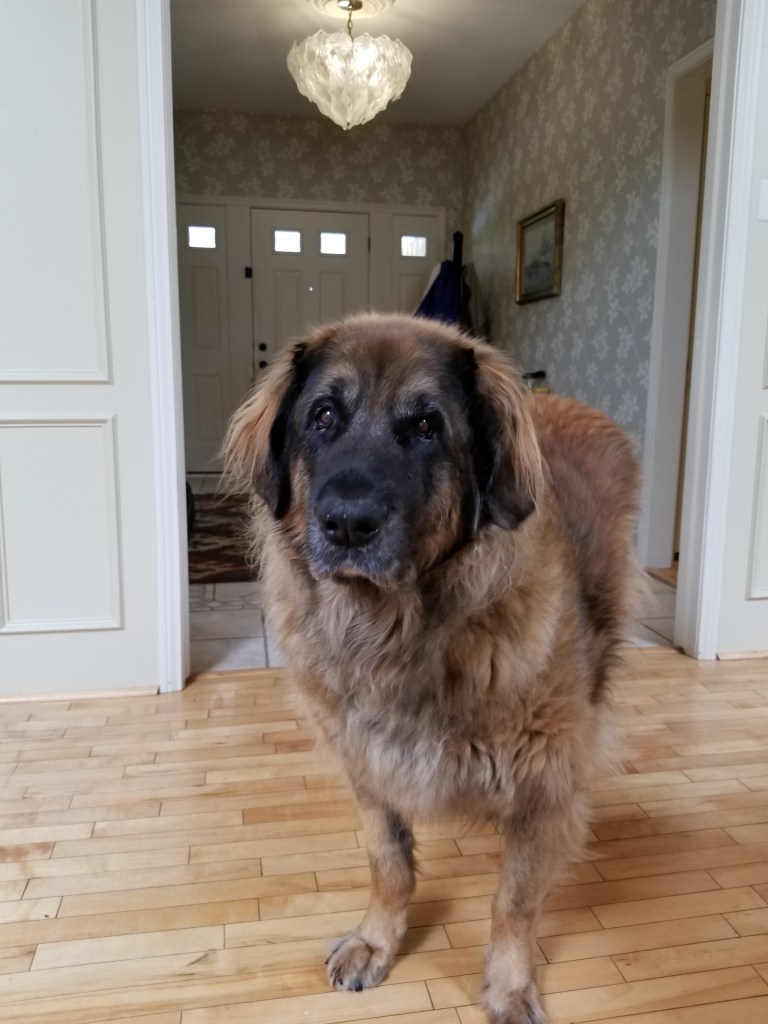
Post-1: What is a Leonberger?

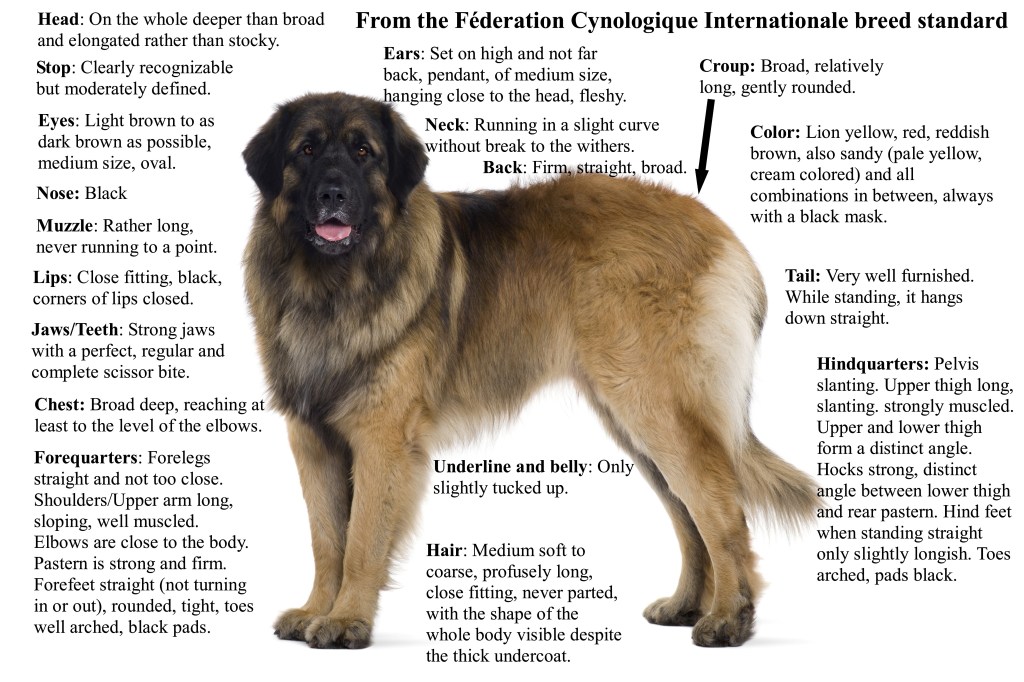
This image of a Leonberger summarizes the FCI Leonberger breed standard.
Summary of the FCI Leonberger breed standard (Photograph of Leonberger © Shutterstock/Eric Isselee)

Post-2: Our Leonberger Bronco

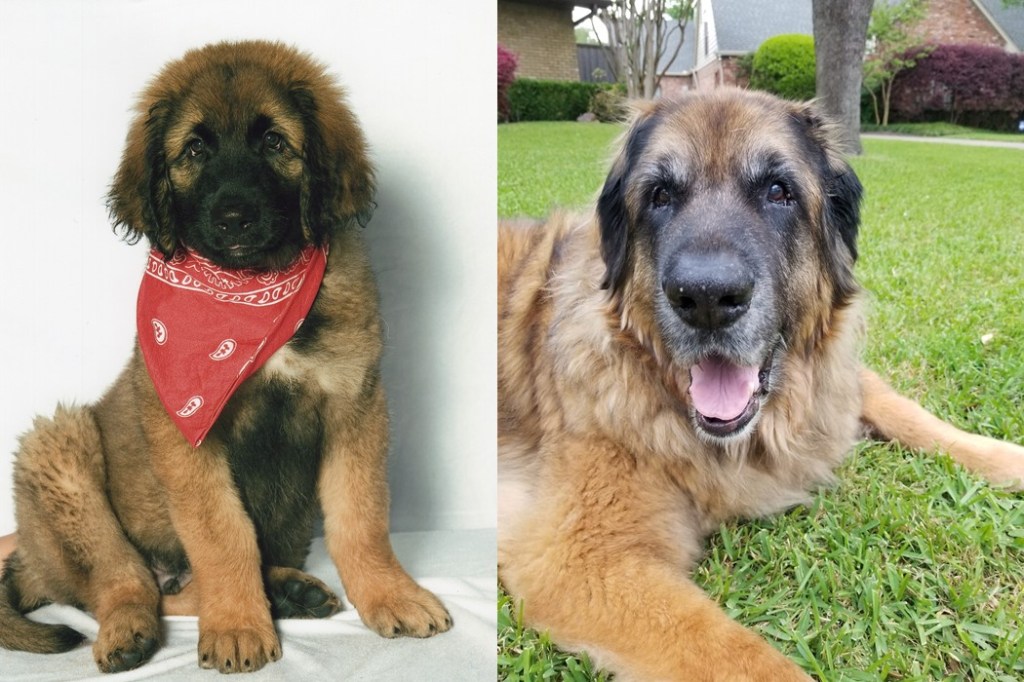
Photos of our Leonberger Bronco. Left: Bronco at 3 months old. Right Bronco at almost 13 years old.
Left: Bronco at 3 months old. Right Bronco at almost 13 years old.

Post-3: The Time Bronco Saved the Neighborhood

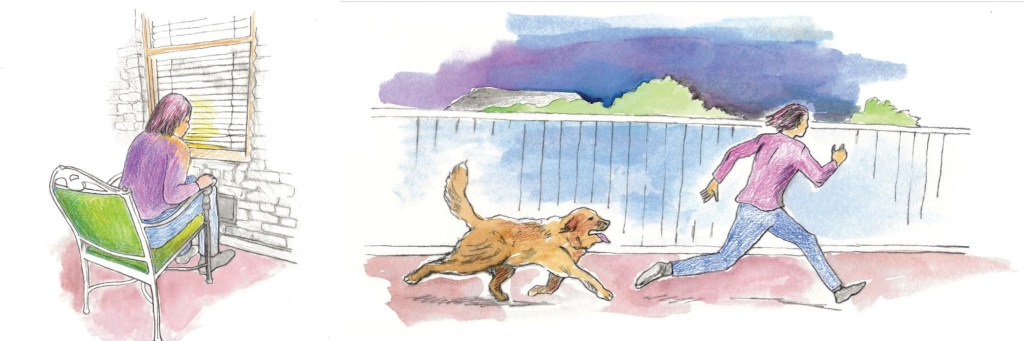
Two illustrations: Left: Trespasser at night spying on us through our bedroom window. Right: Bronco chasing off the trespasser (illustrations by Naomi Rosenblatt)
Left: Trespasser at night spying on us through our bedroom window. Right: Bronco chasing off trespasser (illustrations by Naomi Rosenblatt)

Post-4: Bronco’s Hamster Search and Rescue

Two illustrations. Left: Leonberger with puffy cheeks full of hamsters. Right: Hamster CPR (illustrations by Naomi Rosenblatt)
Left: Puffy cheeks full of hamsters. Right: Hamster CPR (illustrations by Naomi
Rosenblatt)

Post-5: The Grey Muzzle Award

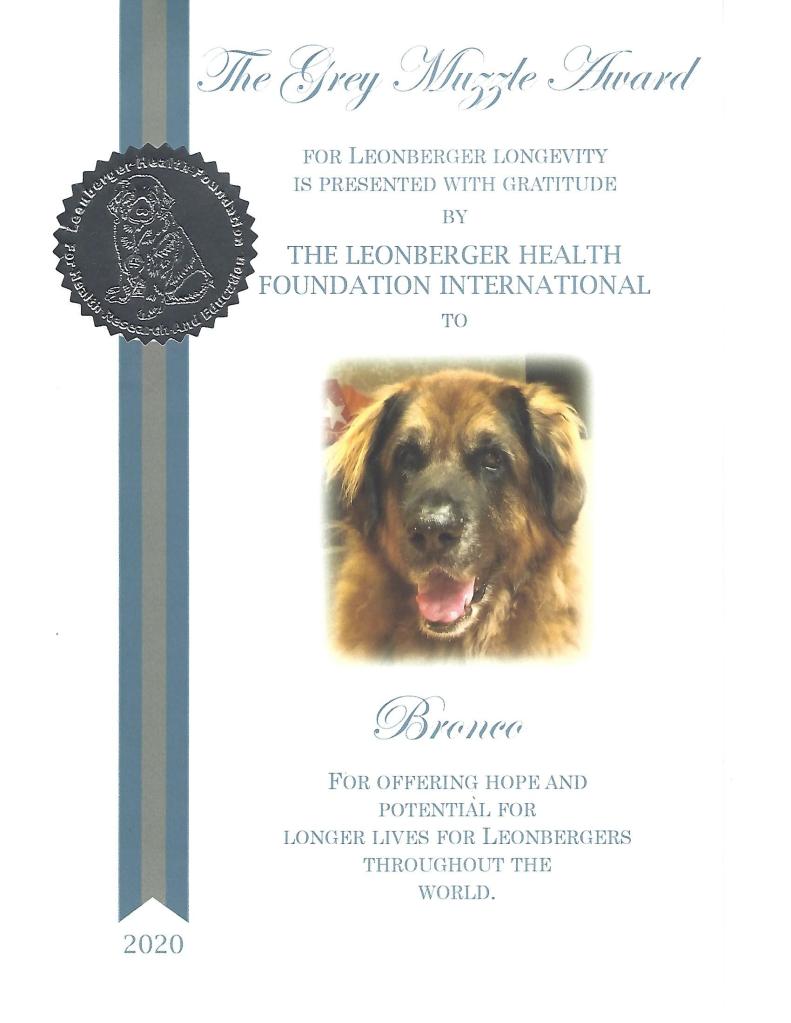
Leonberger's live on average 8-9 years. However, the Leonberger Health Foundation International is working hard to extend the lifespan of Leonbergers. They give an award to all Leonbergers who have survived passed their 12th birthday. The award is called the Grey Muzzle Award. Bronco's award reads: The Grey Muzzle Award, for Leonberger longevity is presented with gratitude  by the Leonberger Health Foundation International to Bronco for offering hope and potential for longer lives for Leonbergers throughout the world.
Leonberger’s live on average 8-9 years. However, the Leonberger Health Foundation International is working hard to extend the lifespan of Leonbergers. They give an award to all Leonbergers who have survived passed their 12th birthday. The award is called the Grey Muzzle Award.

Post-6: The time Bronco accidentally pushed Baby into a storm drain

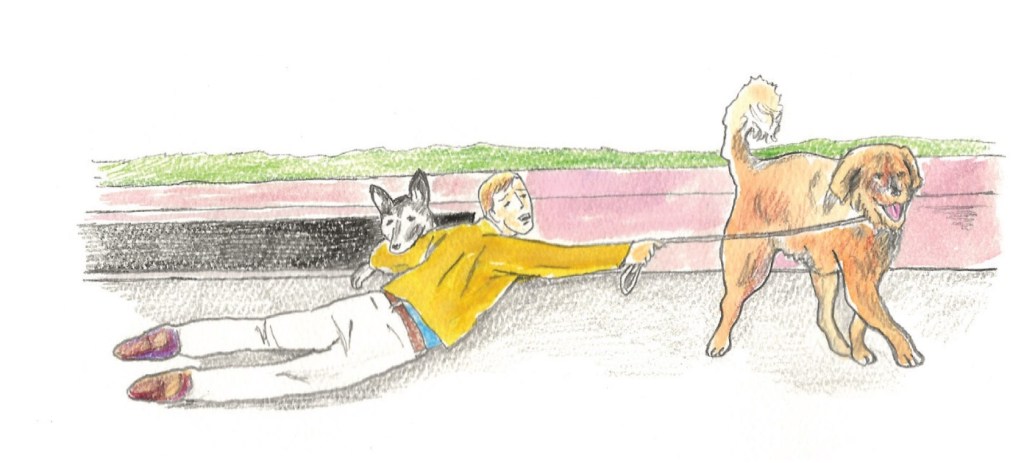
Our German Shepherd Baby in a storm drain. I am trying to pull her out while our Leonberger Bronco is pulling on the leash.
Me handling a difficult situation. Illustration by Naomi Rosenblatt.

Post-7: The Worldwide Independent Leonberger Database

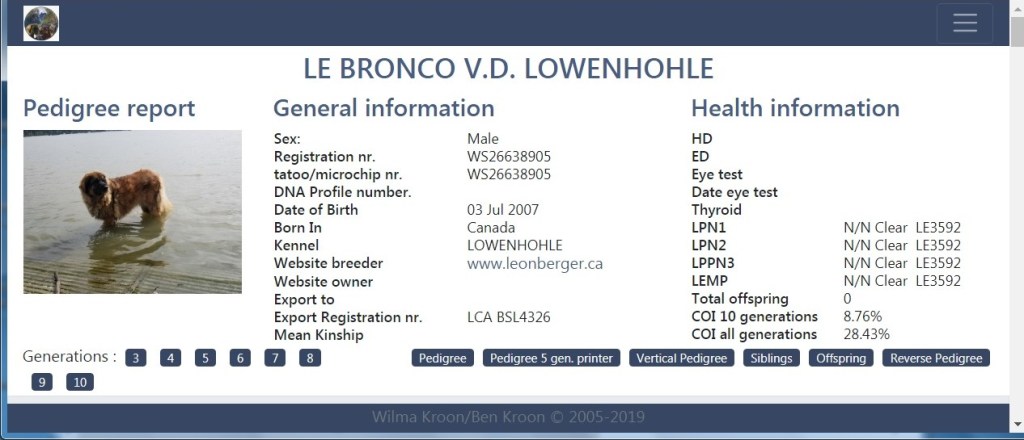
Screenshot from the Worldwide Independent Leonberger Database, showing all the information on Bronco. More than 160,000 Leonbergers are listed in this database. That is most Leonbergers who've ever lived.
This screen shot shows the information about Bronco that appears in the WILD database above his full pedigree.

Post-8: The Day Bronco Stumped the Geek Squad

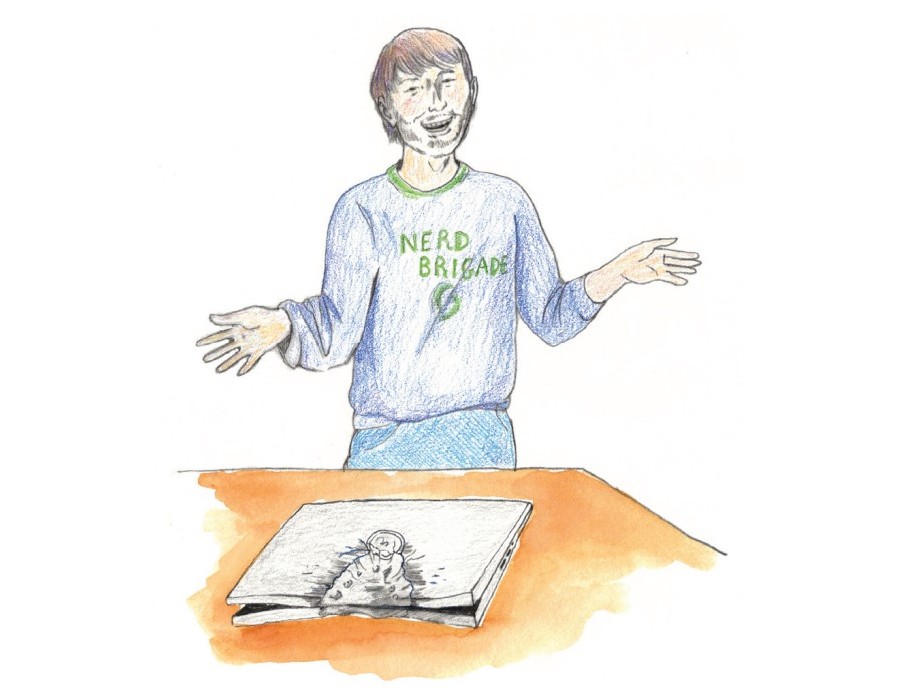
Illustration depicting a geek squad guy impressed by what the powerful bite by our Leonberger Bronco could do to a laptop.
Luckily the warranty covered both acts of God and acts of Dog (illustration Naomi Rosenblatt)

Post-9: Some Fun Leonberger Facts

The coat of arms of the town of Leonberg, Germany.
The coat of arms of the town of Leonberg, Germany, was allegedly the inspiration for the first breeder of the Leonberger, Heinrich Essig

Post-10: History of the Leonberger

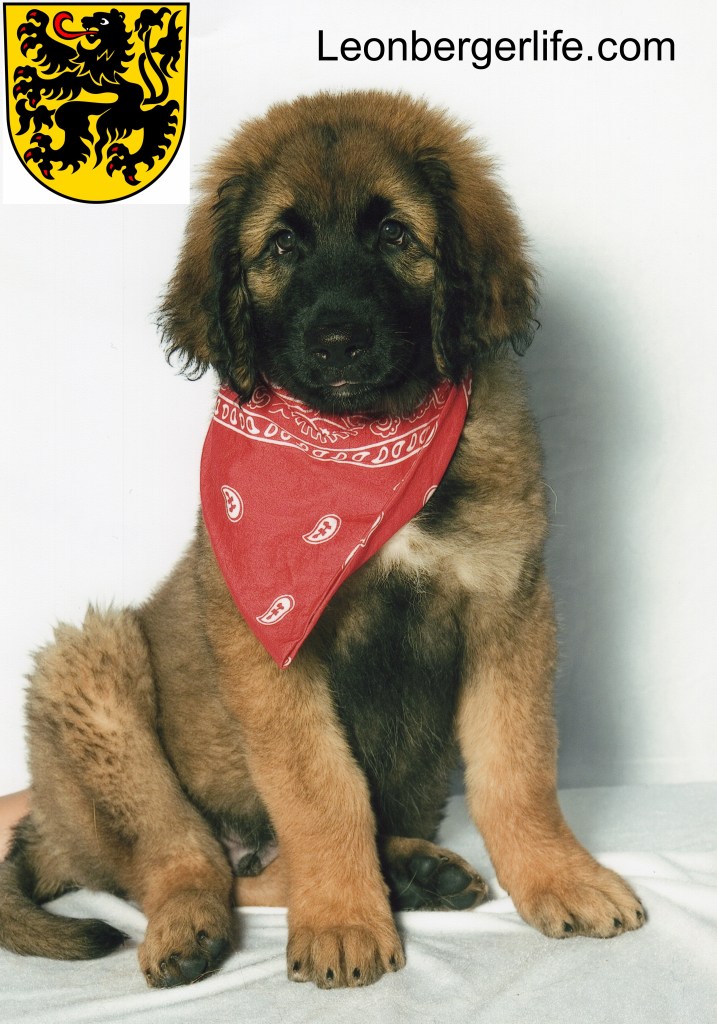
Photo of Bronco at three months old. You can trace his ancestry back 120 years. A lot of interesting Leonberger history happened in that time.
Bronco at three months old. You can trace his ancestry back 120 years. A lot of interesting Leonberger history happened in that time.

Post-11: The Day Bronco Sniffed Out an Oncoming Insulin Shock

Photo of our Labrador Baylor on the left and our Leonberger Bronco in a sun ray on the right. Bronco may have saved Baylor's life by sniffing out an incoming insulin shock.
Bronco’s nose predicted an oncoming insulin shock

Post-12: A Shocking Walk

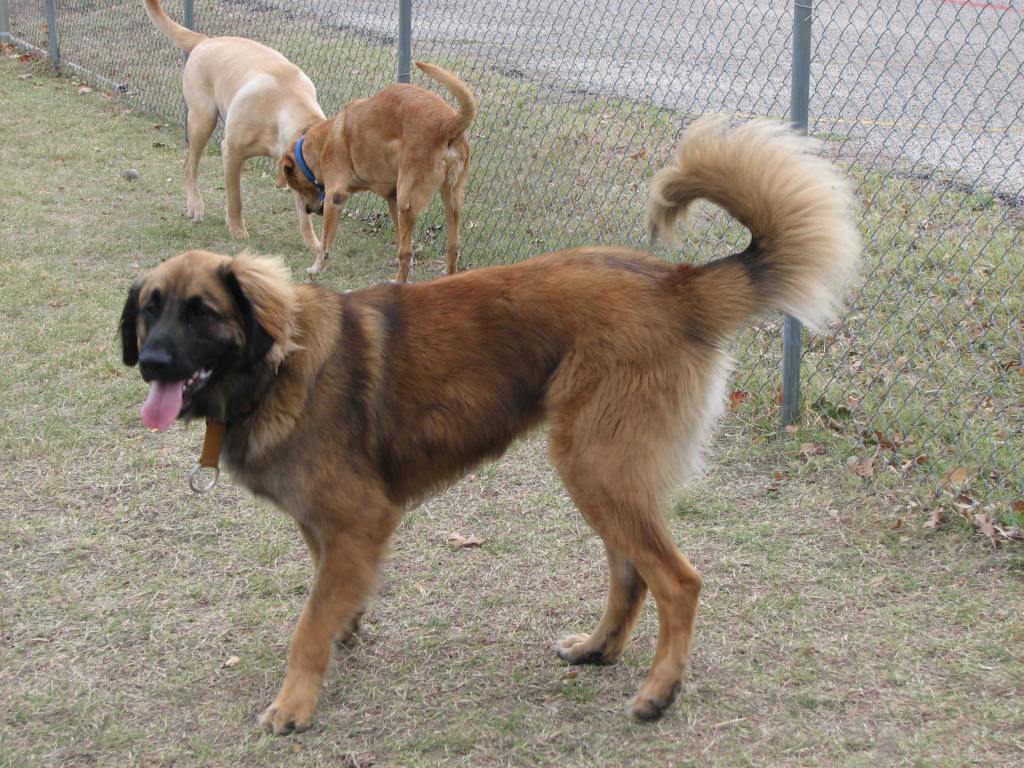
A photo of our Leonberger Bronco when he was young. Bronco was slim and a bit gangly when he was young. He would fill out later. He was full of energy, confident and not afraid of anything.
Bronco was slim and a bit gangly when he was young. He would fill out later. He was full of energy, confident and not afraid of anything.

Post-13: Bronco the Great Swimmer

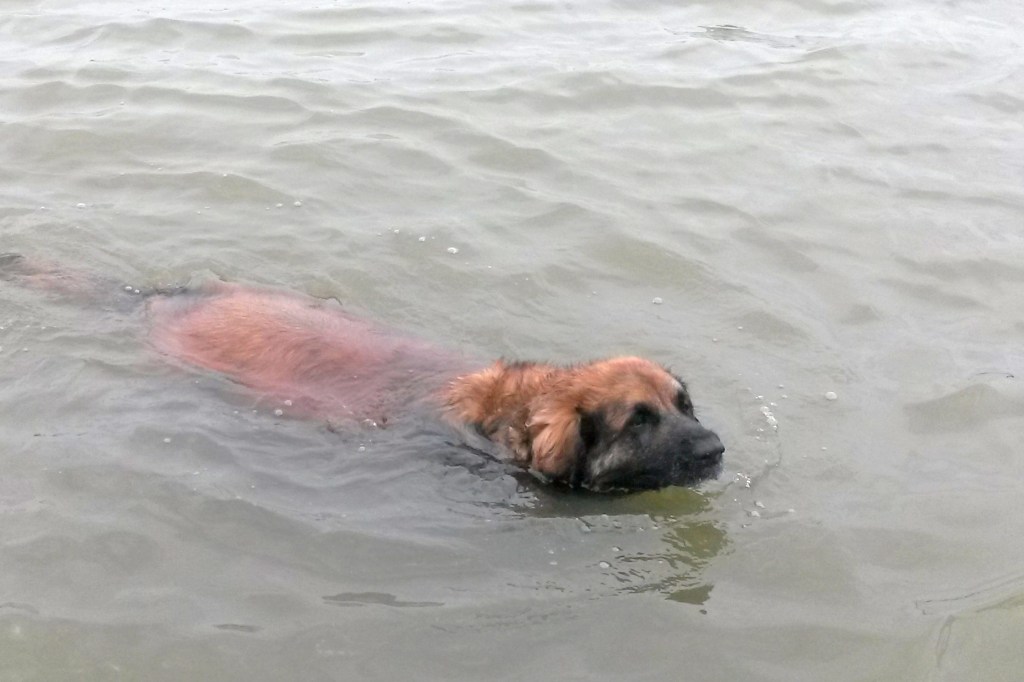
Photo of our Leonberger Bronco swimming in White Rock Lake. Leonbergers are excellent swimmers and are sometimes used in water rescue.
Leonbergers are excellent swimmers and are sometimes used in water rescue.

Post-14: The Eye Drop War

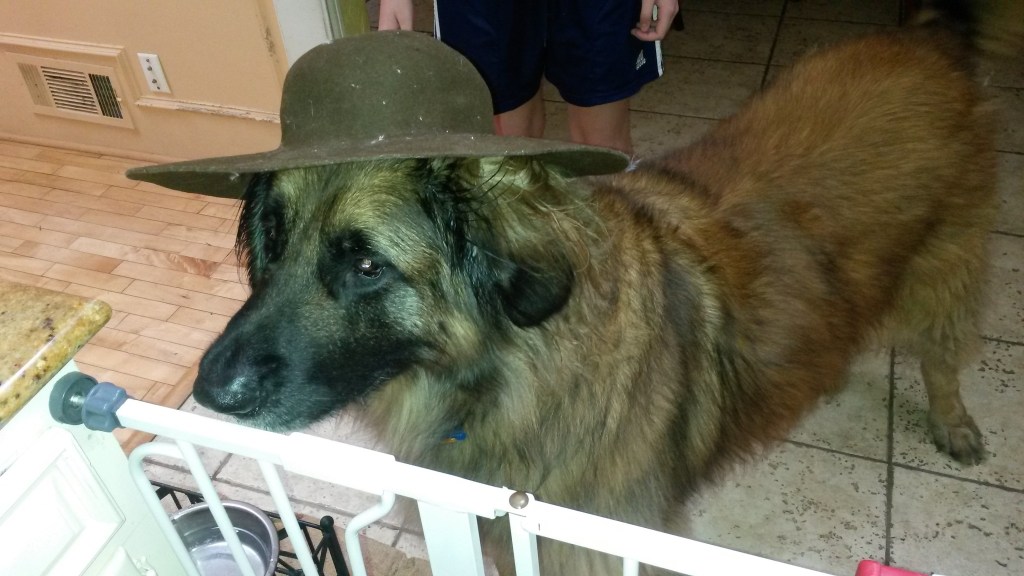
Our Leonberger Bronco standing in front of a pet gate. Leonbergers are big and tall and can reach almost anywhere a human can. so pet gates are a good idea.
Gates we had around the house to prevent Bronco from roaming where he shouldn’t

Post-15: The Day an EF3 Tornado Ravaged Our Neighborhood. It was a tough day for us and Bronco

Photo of our Leonberger Bronco in front of our fence that was damaged by a tornado. He had also just had a toe amputation. He has a  plastic bag around his bandage.
Bronco, who was not at his best in this picture, rests next to our tornado damaged fence. We put a plastic bag around his bandage when he went outside.

Post-16: Bronco the Very Big Dog Bites My Behind

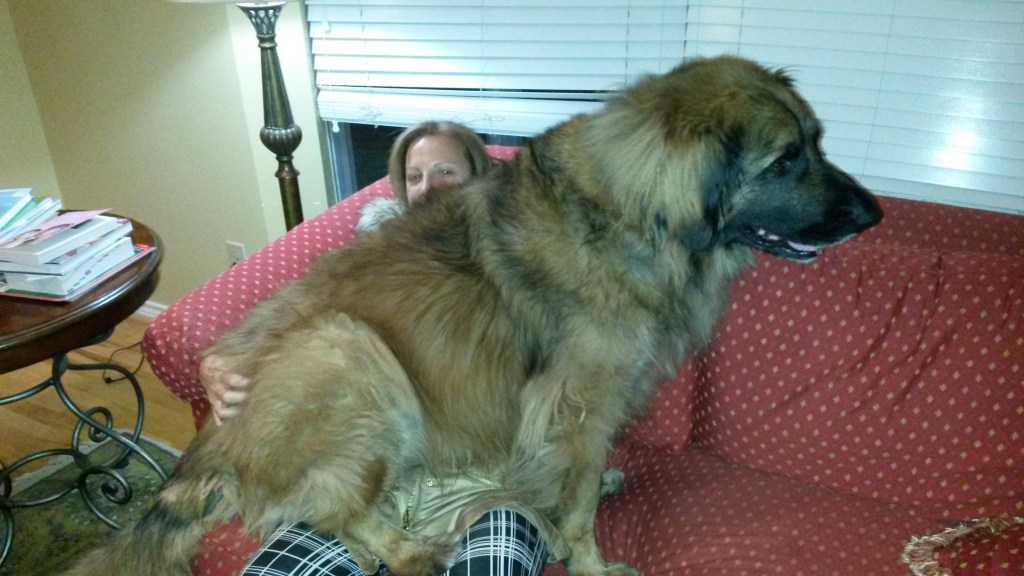
Our Leonberger Bronco was a very big dog with powerful jaws. Here he is sitting in Claudia’s lap/
Bronco was a very big dog. Here he is sitting in Claudia’s lap.

Post-17: When Bronco Swallowed our Neighbor’s Head and Teaching Dogs How to Greet People Properly

Our Leonberger Bronco standing in the hallway
Bronco in front of the hallway

Post-18: How to Publish a Dog Book on Amazon (and elsewhere)

This photo is a page example from The Life and Times of Le Bronco von der Löwenhöhle, Stories and Tips from Thirteen Years with a Leonberger. It will be released July 3rd 2022.
Page example from The Life and Times of Le Bronco von der Löwenhöhle, Stories and Tips from Thirteen Years with a Leonberger.

Post-19: Are Leonbergers like bears, lions or wolves? Ask the Boy Who Cried Wolf!

Photo of a Grey Wolf (Canis Lupus) to the left and our Leonberger to the right. The humoristic text says "Canis Lupus, the Grey Wolf, is a fearsome and courageous hunter in nature. Canis Lupus familiaris, the dog, a close relative of the grey wolf, is sometimes also brave. This specimen bravely protects the life of smaller dogs and hamsters."
Leonbergers are big dogs and little boys may think they are wolves, but Leonbergers are very friendly.

Post 20, well that’s this one. Please like this post or any other post if you do or leave a comment.

The time Bronco accidentally pushed Baby into a storm drain

I am rescuing our German Shepherd Baby from a storm drain while holding our Leonberger Bronco.
Me handling a difficult situation. Illustration by Naomi Rosenblatt.

Among the 100+ stories I have about Bronco, this is one of the shorter ones. However, it is an amusing one. At the time our Leonberger Bronco was still young and somewhat misbehaved. We also had a well-behaved older female German Shepherd, Baby, who loved Bronco very much.

On this occasion I was walking Bronco and Baby. We met a man and his dog walking on the other side of the street, heading toward us. Bronco started barking at the dog, and the other dog responded. Both dogs worked themselves up into a frenzy. Bronco began pulling on his leash and even jumping. Baby remained quiet. But with all his carrying on, Bronco accidentally bumped Baby into a storm drain, which we happened to be standing right in front of.

To save Baby, I lay on my stomach and grabbed her around her abdomen with one arm—all while holding Bronco’s leash with my other hand. He continued pulling, jumping, and barking as I gradually dragged Baby up out of the drain. The guy on the other side of the street looked at us with big eyes, as if he had seen an evil clown peering out from the storm drain. He lifted his dog up in his arms and ran as fast as he could in the opposite direction.

Meanwhile, Bronco had calmed down, and I was able to drag Baby back onto the street. She loved Bronco, but after this incident she showed us in her own way that she’d rather not take her walks with him. We respected her wishes, and I walked them separately from that point on.

The Grey Muzzle Award

Our Leonberger Le Bronco von der Löwenhöhle at different ages, left to right : Three months old, about 4-5 years old, almost thirteen years old.
Le Bronco von der Löwenhöhle a Leonberger. Leonbergers are loving big goofballs and great guard dogs. This blog is mainly about his one hundred crazy adventures as well as information on Leonbergers and how to care for them and train them. Most posts will be a funny or amazing story. Some posts will be tips, advice, breed information, history or health.

At the beginning of 2020 Bronco our old Leonberger received an award for longevity: the Grey Muzzle Award, given by the Leonberger Health Foundation International, which bestows the award on any Leonberger who has reached the age of twelve. The Grey Muzzle Award is also given to breeders, because they are partially responsible for the dogs’ longevity. This is a special award and it made us very happy that Bronco got it.

For those who do not know, giant breeds such as Leonbergers tend to live much shorter lives than small dogs. This may seem backwards to some, after all elephants live longer than mice, but it is a fact. Leonbergers live on average 8-9 years, Bernese dogs live on average 7 years, Great Danes live 8 years, while Pugs live 12-15 years, and Chihuahua’s can live up to 20 years.

The Leonbergers receiving the Grey Muzzle Award are the canine equivalents of centenarians—humans who are at least one hundred years old. You don’t have to have your Leonberger registered with the LCA or AKC to apply for the award—it’s open to all purebred Leonbergers around the world. You can also apply if your dog is deceased, as long as he lived past the age of twelve. Incidentally, the oldest Leonberger on record is Su-Riya (formally Genette of Mutsugoro), who lived in Japan and died in 2017 at the ripe old age of sixteen years and three months.

If you have a twelve-year-old Leonberger, simply fill out a form on the LHFI website or send an email to lhfgreymuzzle@gmail.com.

The foundation will ask for some information, including the registered name and call name of the dog; the breeder’s name, kennel name, address, and email; the dam’s registered name; the sire’s registered name; the owner’s name, address, and email; the birth date of the dog; and whether the dog is alive or dead. If the latter, they will want to know the cause of death. In addition, they would like you to write a one-paragraph tribute to the dog and send two (preferably high-resolution) photos—one head shot and one favorite photo.

I found out about the Grey Muzzle award via a Facebook group called the Leonberger Double Digit Club. We applied for the award a little bit late, but we received it in February of 2020, when Bronco was twelve years and seven months old. At the time, he had recovered from a heart failure the previous October and was doing pretty well. He was subsequently mentioned at the LCA’s awards banquet and featured in a video about long-lived Leonbergers produced by the LHFI.

I would encourage anyone who owns a Leonberger who is at least ten years old to join the Facebook Leonberger Double Digit Club. There you can gather a tremendous amount of information and helpful tips. Its members share photos and stories and advice for dealing with old-age problems, food issues, and more.

LHFI (the Leonberger Health Foundation International) is an organization that exist to improve the health of the Leonberger breed. They facilitate the solicitation and distribution of donations given to support health related breed-specific research.” The LHFI also administers a program that collects DNA samples from Leonbergers to share with universities and research institutions, in addition to administering the Grey Muzzle Award. I can add that when Bronco passed away, we submitted his DNA for research.

LHFI’s global biobank contains DNA samples from more than nine thousand Leonbergers. Among the organization’s notable achievements are the eradication of Addison’s disease among Leonbergers and the raising of nearly half a million dollars for research into conditions that affect canine health, including osteosarcoma, hemangiosarcoma, glaucoma, cardiac diseases, thyroid diseases, and neurological disorders. Its research also supports healthful longevity and aging as well as population diversity. Another success is the fact that since 2011, no Leonbergers with two copies of the LPN1 gene mutation (which causes Leonberger polyneuropathy) have been recorded in LHFI’s biobank. LHFI is one of my favorite charities

For more information, see http://www.lhfi.org/grey-muzzle-hall-of-honor.html; to see the 2019–2020 awardees, including Bronco, visit https://youtu.be/qS9w6Zk1Hz4.

The Grey Muzzle Award: For Leonberger longevity is presented with gratitude by the Leonberger Health Foundation International to Bronco, for offering hope and potential for longer lives for Leonbergers throughout the world.

Bronco’s Hamster Search and Rescue

The following story is an excerpt from an upcoming book about Leonbergers and especially our Leonberger Le Bronco von der Löwenhöhle and his many crazy adventures.

Back when Bronco our Leonberger was young, the kids had pet hamsters—Moldova and Montenegro. The hamsters escaped from their cages sometimes, but Bronco usually helped us find them whenever they did. Claudia would tell him, “Bronco, find the hamsters,” and he would go around the house sniffing until he found them. One time he found them in the linen closet; another time he found them on a shelf in the living room.

On one occasion, a friend of David trusted us with his two hamsters while he and his family went on vacation. A couple of days later, Claudia noticed that the two hamsters were missing from their cage. The next thing she noticed was that Bronco’s cheeks looked puffy, so she said, “Bronco, drop it!” Out came the two hamsters, both unconscious.

Our Leonberger Bronco with his cheeks full of hamsters (illustration by Naomi Rosenblatt)
Cheeks full of hamsters (illustration by Naomi Rosenblatt)

In a panic, Claudia started performing CPR on the unconscious hamsters. She put one hamster at a time in her hand and gently compressed each tiny chest using the finger of the other hand. Fortunately, one hamster revived right away. The CPR didn’t seem to be working on the other hamster, but Claudia put both of them back in their cage, and soon the second hamster also woke up. We decided to keep the incident to ourselves. Hamsters don’t squeal.

Claudia doing CPR on a Hamster (illustration by Naomi Rosenblatt)
Hamster CPR (illustration by Naomi Rosenblatt)

The question is, Did Bronco try to eat the hamsters? Or did he simply find them and pick them up, intending to alert us to their presence? I’ve asked several people this question, including some who know Leonbergers well. The answer they give is that he tried to save them from whatever danger he thought they might have been in. If he wanted to eat them, they say, he would have tried chewing them. But clearly, he didn’t.

The hamsters may have felt differently about the situation and may have fainted from the shock. Who knows? Bronco was a hero on many occasions, but this time, perhaps, he was a hamster superhero.

Eventually our own hamsters died, but that didn’t end Bronco’s interest in them. When the first hamster died, we held a funeral. We put the hamster in a shoe box, said goodbye, put some flowers in the box, and buried it in the backyard underneath some bushes. But when we turned our backs, Bronco was there, digging under the bushes. Perhaps he thought he could save the hamster. So, we called Bronco off and tried again: this time I dug a deeper hole and put a wide rock over the shoe box before covering it. Now Bronco couldn’t dig up the hamster. When the second hamster died, I had learned my lesson and did the same thing.

The Time Bronco Saved the Neighborhood

The following story is an excerpt from an upcoming book about Leonbergers and especially our Leonberger Le Bronco von der Löwenhöhle and his many crazy adventures.

It was a quiet evening, and I was home alone. My wife, Claudia, was visiting her parents a few blocks away with Rachel, our daughter. Our son Jacob was meeting with his debate team; our other son, David, was visiting a friend.

I was making myself a ham sandwich in the kitchen when I suddenly felt a hand on my right shoulder. I startled and turned my head to face what I feared was an intruder, and there he stood on his hind legs—our Leonberger, Bronco. His big paw on my shoulder felt for a moment exactly like a human hand.

Bronco looked at me with his kind, wise eyes, then he looked at the sandwich. Then he turned his head toward me again and held my gaze. At that moment I understood what he wanted. I cut the sandwich in two and gave him his half.

I should explain that we had a problem with a trespasser at that time, which was the reason I was startled. This trespasser would sit outside our bedroom window at night and make threats and shout obscene comments at Claudia when I was not present. At first, though, we didn’t know where the threats and comments were coming from. I doubted Claudia’s accounts of these incidents, especially because she thought the voice might be coming from within our bedroom, perhaps via an electronic speaker. I thought she was just having nightmares.

Then one night I heard it myself—a voice screaming, “I am going to burn your house down!” Just as Claudia had said, it sounded like it came from within our bedroom, almost as if it were right next to me.

After Claudia and I went through our “Oh, so now you believe me” routine, I started looking under our bed and inside the heating and air-conditioning vents for hidden speakers and/or microphones. It was hard to believe that someone had planted these things in our bedroom, but that seemed to be the case.

Then it finally dawned on me. Next to the headboard of our bed, on Claudia’s side, just inches from her pillow, is a window. At night, when the blinds are lowered and the slats are partially open, you can see in, even if we have just a few lights on in the house. But, of course, under these conditions, you can’t see anything that might be outside.

I ran out the front door and around the back of the house, and there, right in front of our bedroom window, was one of our lawn chairs. The trespasser had climbed our fence, taken the chair, sat down in front of the window, and spied on us. Whenever I left the room, he would shout obscenities and threats at Claudia. When his face was planted in front of our window, he was just two or three feet away. This was why the voice felt so close. This had been going on for two weeks. We were happy to have finally figured it out, but we realized we had a problem.

A trespasser looking in through our bedroom window at night (illustration by Naomi Rosenblatt). Our Leonberger Bronco saved us from this threat.
Trespasser at night spying on us through our bedroom window (illustration by Naomi Rosenblatt)

We talked to our neighbors about the situation, and they told us that the trespasser had terrorized them as well. He had been quite busy looking through bedroom windows at night. People in the neighborhood were scared. I called the police, who told us they could do nothing unless the man was caught in the act or he committed a crime other than trespassing.

Hiring Private Investigators

Therefore, I decided to hire private investigators. I found them in the phone book. Phone books still existed back then.

The investigators told me that they typically spy on people suspected of cheating on their spouses, so this would be a more interesting job for them. The plan was for them to hide behind the bushes in our backyard and in a dark car parked on our street. When the man appeared, they would record him on video. They had a lot of fancy equipment and instruments, including big microphones, cameras, and metal detectors. They reminded us of Ghostbusters with all their technology and enthusiasm. They clearly loved their job. Unfortunately, though, the trespasser didn’t show up, so after a couple of days I decided to let the investigators go.

However, I soon figured out who the trespasser was. I started paying attention to what was going on in the neighborhood, and one evening, I noticed a strange looking but relatively young man, apparently homeless, who seemed to be stealthily roaming our neighborhood. I did not confront him, because I had no proof.

The Tresspasser is Back

But a few days later, I heard shuffling noises outside our bedroom window. The trespasser was finally back. This time I sent Bronco out to chase him, and he did. Like the detectives, Bronco was enthusiastic but didn’t catch him. Still, he chased the man off. Having a big bearlike dog rushing toward you at night is probably a bit unnerving, even if the dog just wants to lick you. We never experienced or heard about the problem after this event, so Bronco may have helped the entire neighborhood.

A couple of weeks later, while walking Bronco on a neighboring block, I saw the homeless man across the street, at a bit of a distance. He stared at us in fright. Bronco just calmly looked at him without barking. The man was clearly terrified of Bronco, and he ran away.

But despite the nightmare the homeless man had inflicted on us, I felt sorry for him. My guess is that he was suffering from mental illness and that he had had a very tough and lonely life.

Bronco chasing off trespasser (illustration by Naomi Rosenblatt)

Our Leonberger Bronco

The following story is an excerpt from an upcoming book about Leonbergers and especially our Leonberger Le Bronco von der Löwenhöhle and his many crazy adventures.

The photos below is of our Leonberger Le Bronco von der Löwenhöhle. In the left photo he is three months old and in the right photo he is soon to be 13 years old. Due to a misunderstanding his name on the original pedigree certificate from the Leonberger Club of America was even more interesting: “Lets do le Bronco von der Löwenhöhle”—yes, without the apostrophe.

The Leonberger is a noble and relatively rare breed, and purebred Leonbergers typically have a long pedigree that can be traced back to the beginning of the twentieth century. This means that if you buy one, you and your dog will become part of a special community, and your dog’s name will reflect that. Bronco’s last name, von der Löwenhöhle, means that he originated from Kennel von der Löwenhöhle.

During an email exchange with the person writing up Bronco’s pedigree certificate, we were informed that because our dog was born in a litter identified by the letter L, his official name needed to begin with an L, too, even though at home we could call our dog whatever we liked. We knew we wanted to name him Bronco, which we thought was appropriate for a Leonberger, so later Claudia wrote, “Let’s do Le Bronco,” intending that the dog’s name would begin with the word “Le,” fulfilling the kennel’s requirement.

But when we received a copy of Bronco’s pedigree, we saw that our correspondent had misunderstood and included the words “Let’s do” as part of the name! Well, “Let’s do” starts with an L, too, so it fulfilled the pedigree requirement. And that’s how Bronco’s official full name came to be Lets do le Bronco von der Löwenhöhle. I should mention that we later got this corrected.

We got our Leonberger, whom we just called Bronco, from a breeder in Canada by the name Julie Schaffert. She is a responsible breeder and is recommended/endorsed by the Leonberger Club of America. She was among the first Leonberger breeders in North America. She got started in the 1990’s. I should add that it is important that you get your Leonberger from a responsible breeder for the sake of the breed and your dog’s health. The Leonberger Club of America maintains a list on their website where you can find LCA recommended breeders.

During his lifetime Bronco did a lot courageous and amazing things. He saved our Pug’s life, he sniffed out an oncoming insulin shock in our Labrador before it happened, he found our runaway hamsters, he chased off a guy who was trespassing and threatening my wife and other women in the neighborhood at night, thus protecting the entire neighborhood. He also did a lot less great but funny things. We have 100+ stories that I will be adding to this blog.

For a Leonberger Bronco lived a long life. He died two weeks short of 13 years old and the average life span for a Leonberger is 8-9 years. Because he reached an advanced age for a Leonberger he was awarded the Grey Muzzle Award, given by the Leonberger Health Foundation International, which bestows the award on any Leonberger who has reached the age of twelve. The Grey Muzzle Award is also given to breeders, because they are partially responsible for the dogs’ longevity.

Our Leonberger Bronco at the age of three months (left) and at the age of almost thirteen (right)
Our Leonberger Bronco at 3 months old and at almost 13 years old

What is a Leonberger?

The Leonberger breed was originally created by Heinrich Essig (1808–87) in the German town of Leonberg, in what was then the kingdom of Württemberg. According to legend, Essig bred the dog to resemble the lion in the town’s coat of arms. It was bred to be a large companion dog. He registered the new breed in 1846. The Leonberger is often said to be a cross between a Saint Bernard, a Newfoundland, and a Great Pyrenees. However, in reality the story is more complicated. More on that later. One thing is for certain, the history around the interactions between the Leonberger breed and the St. Bernard is quite interesting. Also, more on that in another post. Another interesting fact is that Leonbergers were used in World War I to pull ammunition carts and cannons. Both World War I and World War II was tough on the breed and few survived.

Very few Leonbergers existed in North America until the 1980’s, when a breeding program was established. Saturday, November 2, 1985, the few families owning Leonbergers, the so called, Denver eight, got together to form the Leonberger Club of America. The Leonberger was recognized by the American Kennel Club in 2010 as its 167th breed (in the Working group). Today there are more than 2,300 Leonbergers in the United States and a 1,000 in Canada. There are about 30,000+ Leonbergers in the world. Since there are not millions of them you can still consider the Leonberger a rare breed.

Leonbergers are confident and brave gentle giants. They are great with children, very social and good companions and guard dogs. Leonbergers are double-coated, and they have webbed paws, so they’re natural swimmers. They are sometimes used in water rescue operations. But be careful, they are big, full of energy, and can be rambunctious when they’re young.

According to the original purpose of the Leonberger, and the breed standards, the Leonberger is a large, strong, muscular, elegant dog. He is distinguished by his balanced build and confident calmness, yet he has quite a lively temperament. Males, in particular, are powerful and strong. As a family dog, the Leonberger is an agreeable partner for present-day homes and living conditions who can be taken anywhere without difficulty and is distinguished by his marked friendliness toward children. He is neither shy, nor aggressive. As a companion, he is agreeable, obedient, and fearless in all situations of life.

The following are particular requirements of a steady temperament:

•             Self-assurance and superior composure

•             Medium temperament (including playfulness)

•             Willingness to be submissive

•             Good capacity for learning and remembering

•             Insensitivity to noise

Leonbergers are large and muscular dogs. The height of an adult male is between 28 and 31.5 inches (72 to 80 centimeters) at the withers. The height of an adult female is between 25 and 29.5 inches (65 to 75 centimeters) at the withers. (The withers is the ridge located between the shoulder blades of an animal, on the back right below the neck.) Reputable breeders try to maintain these characteristics.

Leonbergers are sexually dimorphic—that is, there are noticeable differences between males and females. This is not always the case in dogs. Female Leonbergers are usually smaller and look more feminine. Males typically weigh between 120 and 170 pounds, and females usually weigh between 100 and 135 pounds. For comparison’s sake, below are the standard heights and weights for male dogs of other breeds.

• An Irish wolfhound, the world’s tallest dog (when standing on two feet), is 32 inches tall at the withers and weighs between 120 and 155 pounds.

• A Great Dane stands between 31 and 35 inches at the withers and weighs between 110 and 180 pounds.

• A Saint Bernard is between 28 and 35 inches tall at the withers and weighs between 140 and 180 pounds.

• A German shepherd stands between 24 and 26 inches at the withers and weighs between 66 and 86 pounds.

In other words, the Leonberger is right there among the largest breeds in the world.

In the picture below is an overview of the FCI breed standard for Leonberger dogs. I will post the full breed standard in another post.

This photo is a summary of the Leonberger breed standard
Summary of the FCI Leonberger breed standard (Photograph of Leonberger © Shutterstock/Eric Isselee)