A Good Fence Makes Good Dogs

Esther’s writing prompt: November 11, 2026: Fence

This is my response to Esther’s November 11th prompt Fence. Click here or here to join in.
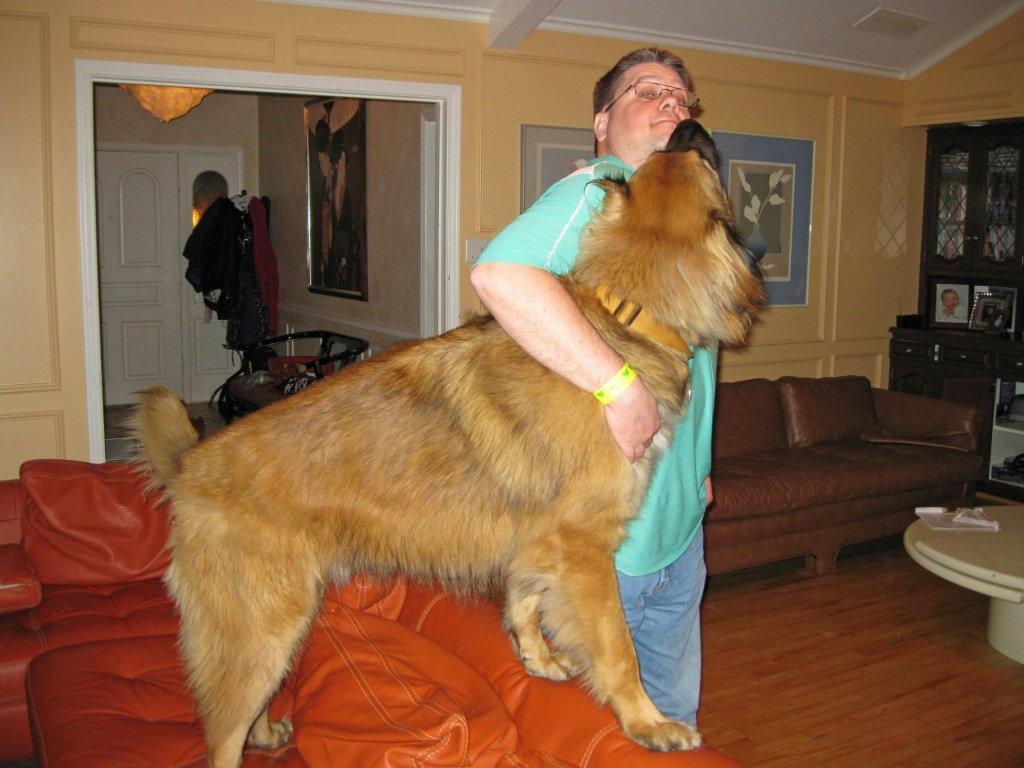
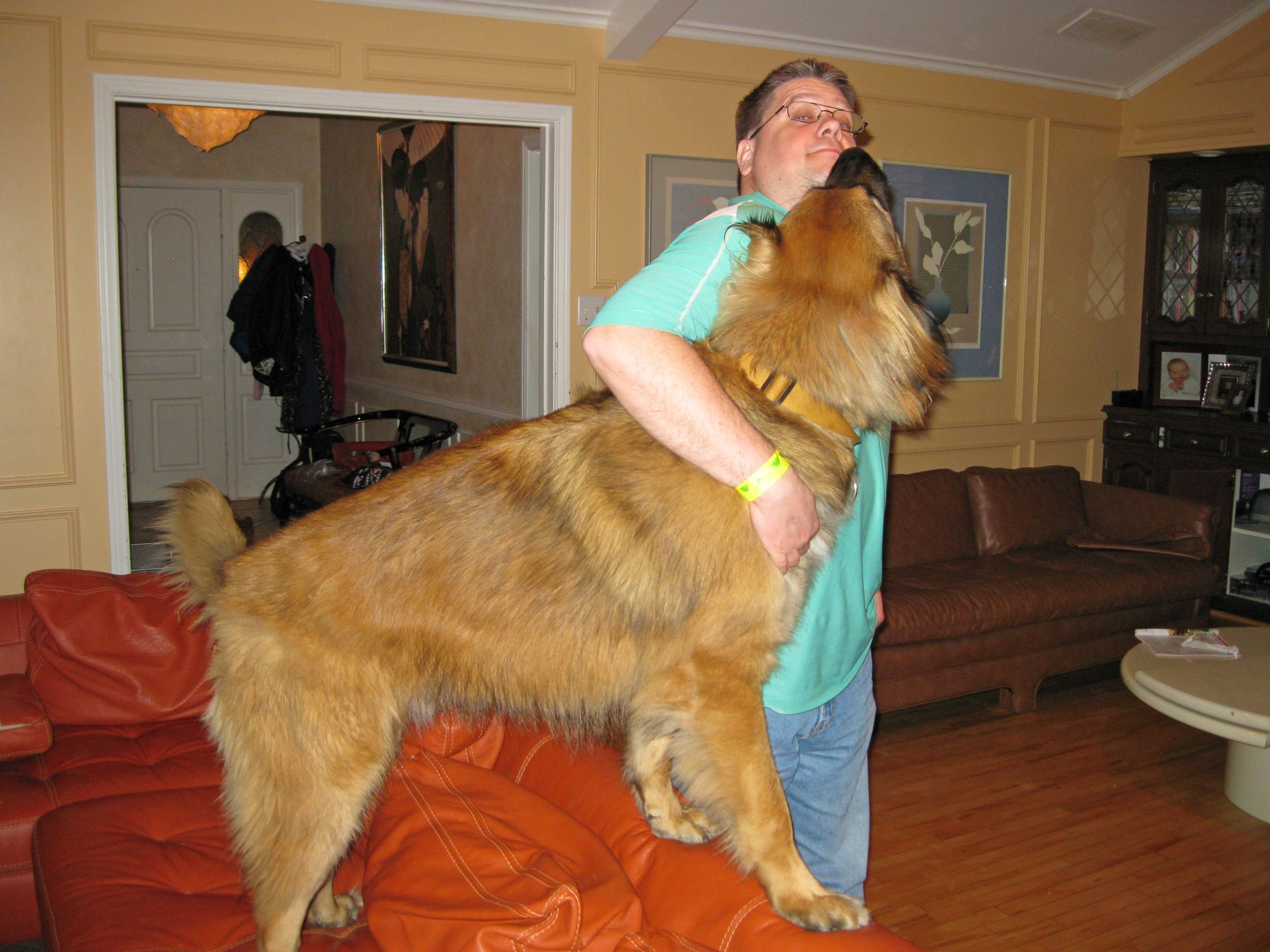
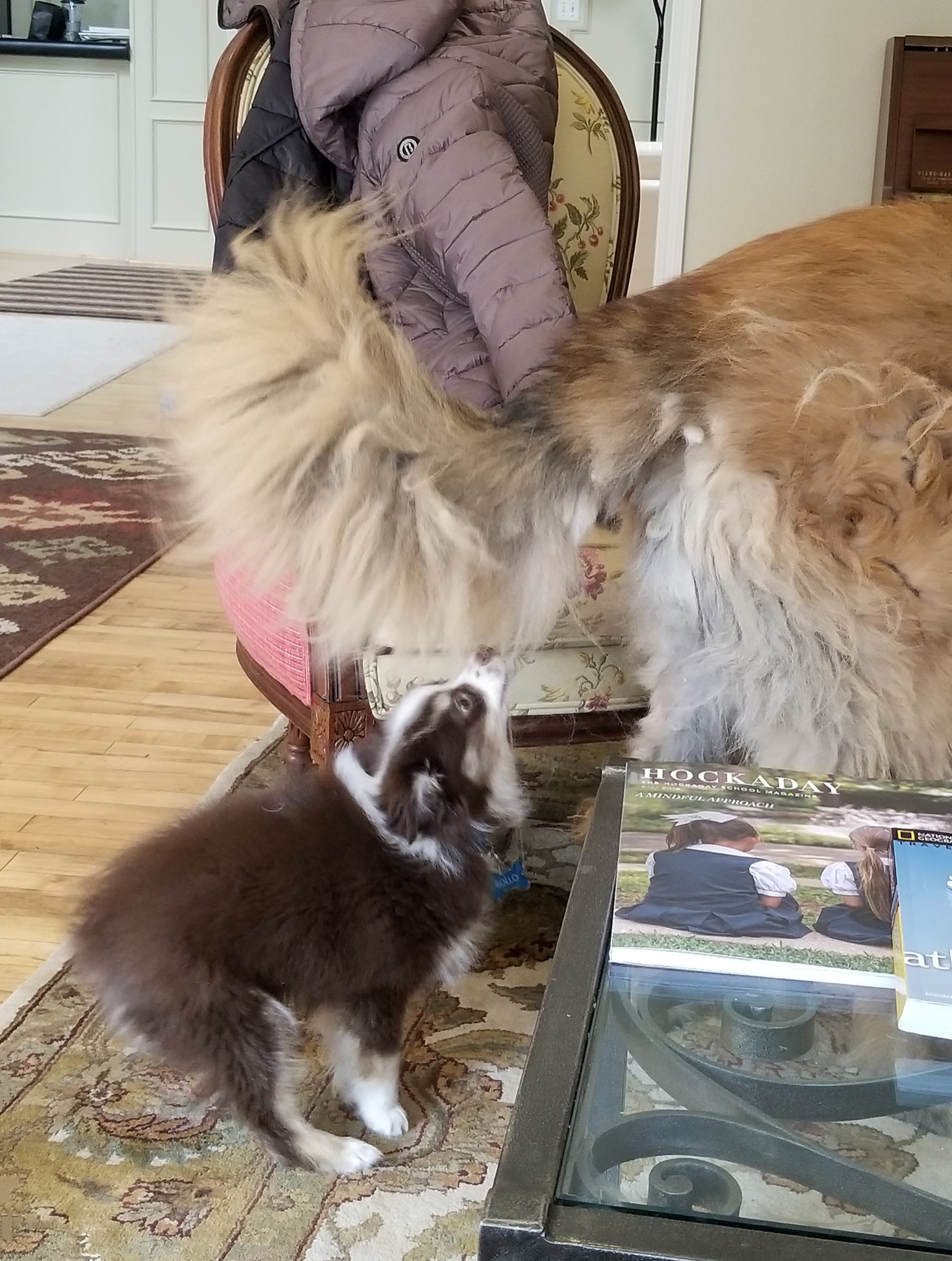
Our Leonberger dog is standing on a red sofa. He is stretching to give me a hug,
Young Bronco is giving me a hug.

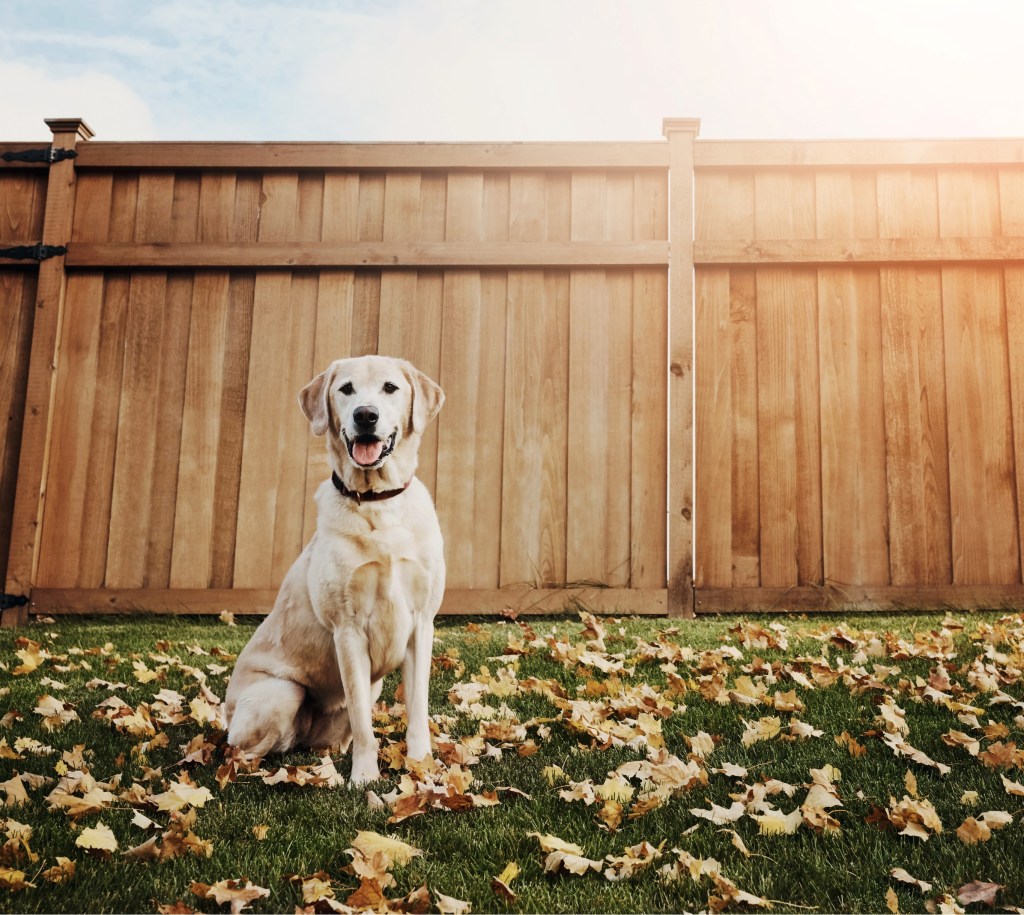
One thing that is abundantly clear to any dog owner who is letting their dog out in their backyard without supervision, which I think is very common, is that you need a good fence. Unless you have perfect control of your dog, they would like to roam the neighborhood unsupervised if given the chance, and you don’t want to give them that chance. That was especially true for a 140lbs Leonberger dog. A big dog can cause all kinds of damage to the neighborhood if unsupervised. Below is a picture of a good fence.
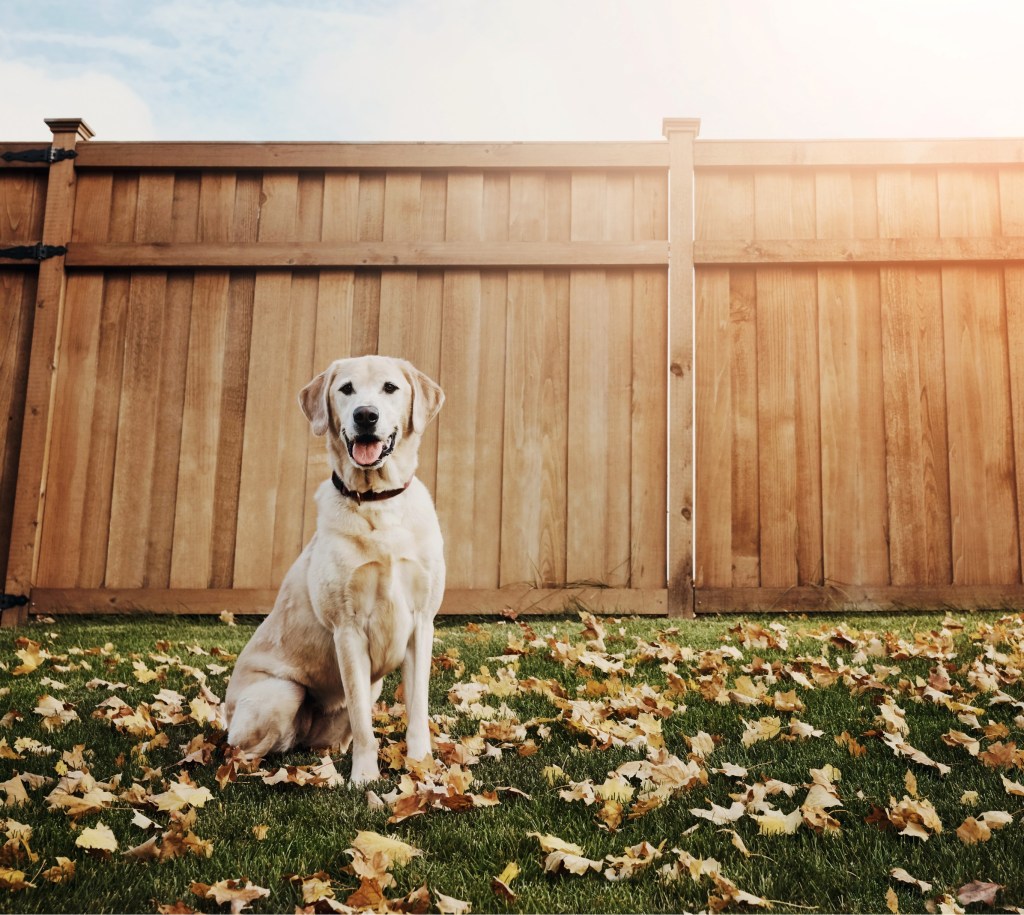
Backyard, relax and portrait of dog on grass for obedience, support and fun in leaves in sunshine. Nature, foliage and Labrador with tongue out in garden by fence.
Labrador in front of fence in the backyard. This is good fence but has a potential dig spot. Shutterstock asset id: 2485564001 by PeopleImages

Below are some real life stories from our life with dogs and the importance of good fences.

The Great Dog Escape

We used to have a Japanese Chin called Ryu and a Pug called Daisy. They were like a couple. Always together. Typically, it was the Pug Daisy who followed our Japanese Chin Ryu around everywhere, and Ryu could be quite adventurous.
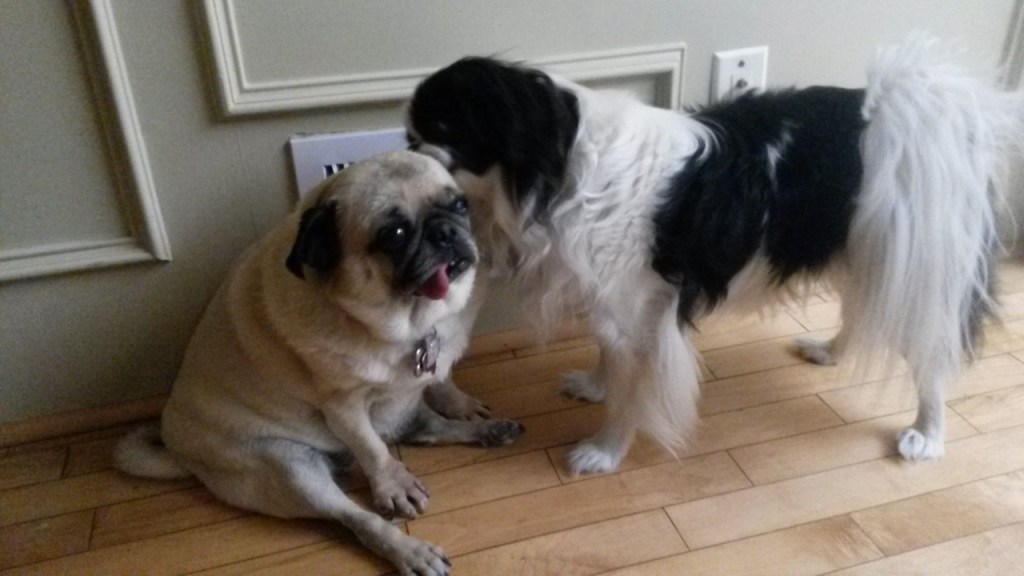
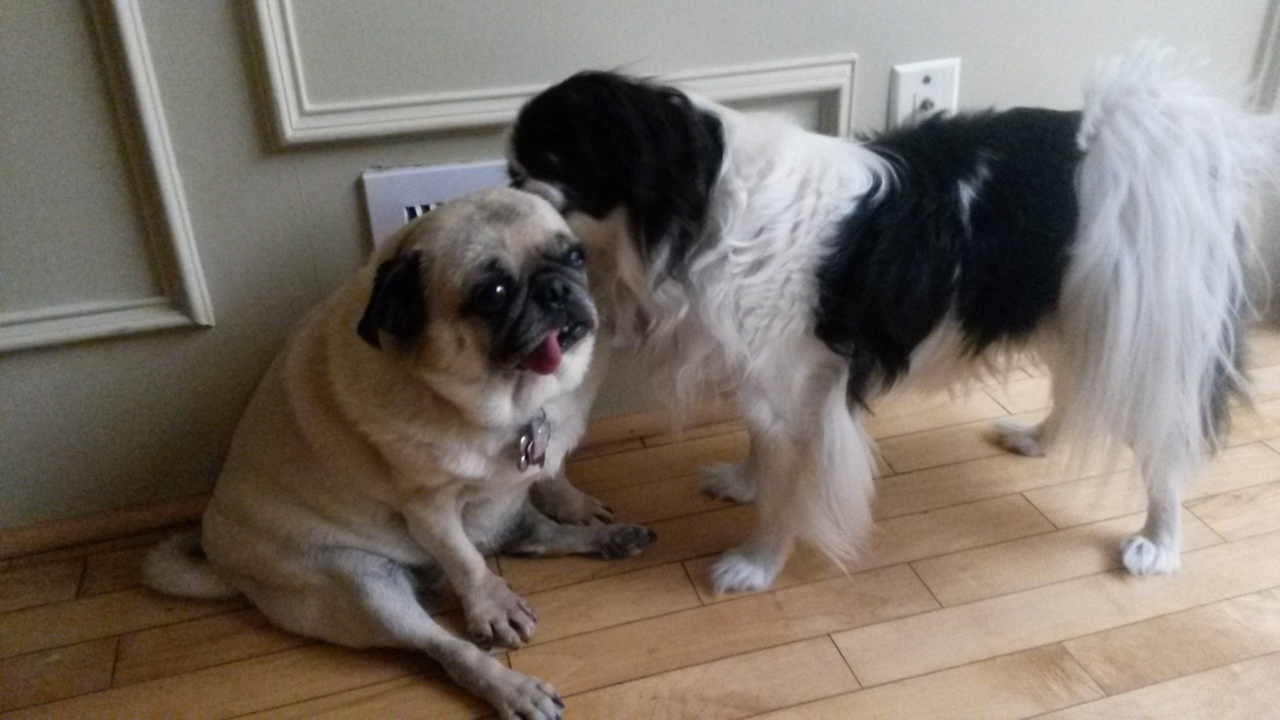
Our pug Daisy is sitting as our Japanese Chin Ryu is standing and licking her ear.
Our Japanese Chin Ryu and our Pug Daisy. Ryu is licking Daisy’s ear, the charming gentleman he was.

One afternoon, my wife Claudia got a phone call from a woman who had found a small black-and-white dog walking around the streets of North Dallas with a pug following close behind. She thought they looked hilarious, but she realized that this was hardly a good situation and decided to help. She rounded up the dogs, checked their tags, and called us, for which we were very grateful. It wasn’t the first time Ryu and Daisy had escaped, and it worried us. We couldn’t figure out how they managed to do it.

Then one day I caught them in the act. At the back of the area in our yard that we call the dog run, there is a concrete wall, and by the corner of that wall there used to be a hole in the fence, a bit above the wall. I had never noticed it before because it was hidden and pretty small. Ryu and Daisy would jump up on the wall at its lowest spot, then walk down the wall to the fence, then climb up a bit on the fence and slink through the hole. Of course, after seeing that, I fixed the hole. No more holes in our fence.
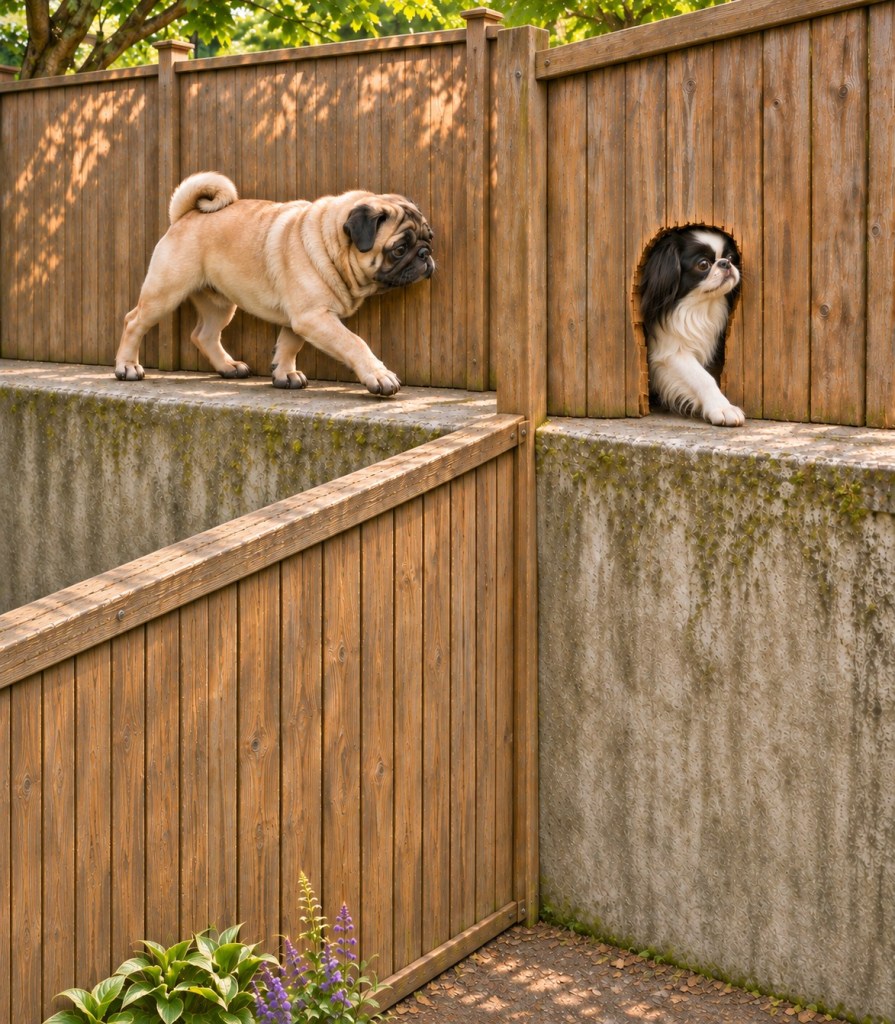
The picture shows our pug and Japanese Chin walking on a concrete wall and through a hole.
Our Japanese Chin Ryu is leading our Pug Daisy through a hole in our fence that I had not noticed. I created this picture with the help of ChatGPT.

Baby Jail or Private Puppy Residence?

Unfortunately, Ryu got cancer and passed away. We got another dog, a mini Australian Shepherd named Rollo. He grew up with out big Leonberger dog Bronco and our pug Daisy.


Rollo often pushed his luck with Bronco—climbing all over him, sitting on him, and stealing his possessions. Bronco was very patient and protective of little Rollo, but we were afraid he would lose patience with him one day when we were not present. Therefore, we put Rollo in a playpen whenever we left the house. The playpen was a like a fence protecting Rollo (from himself).
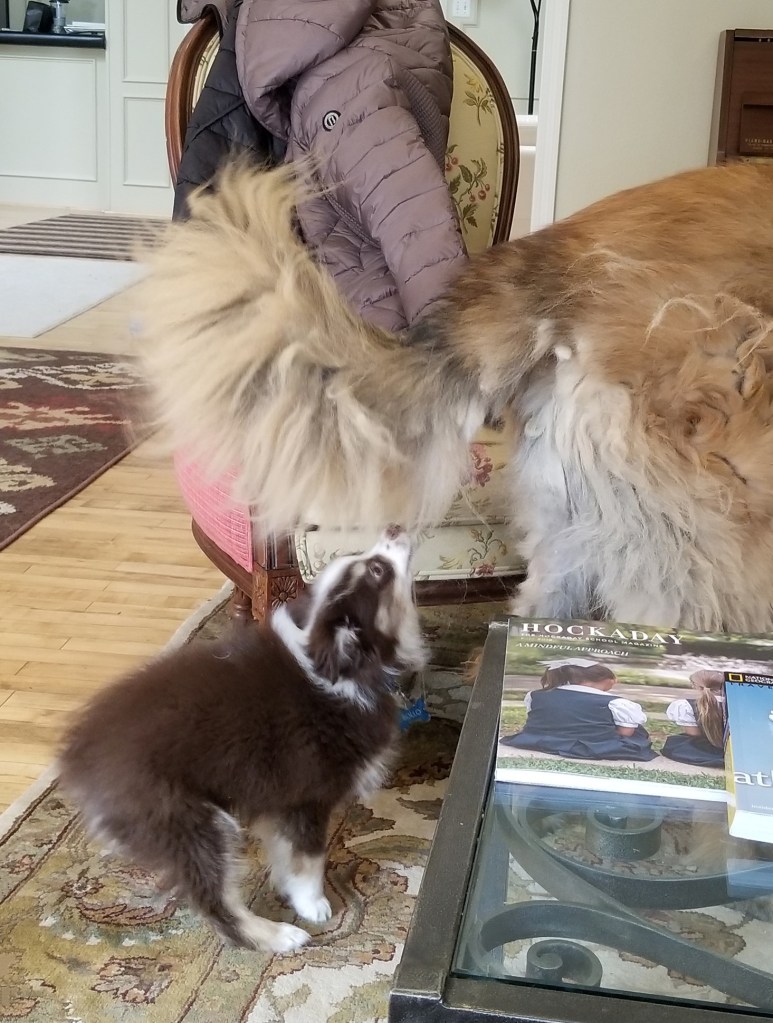
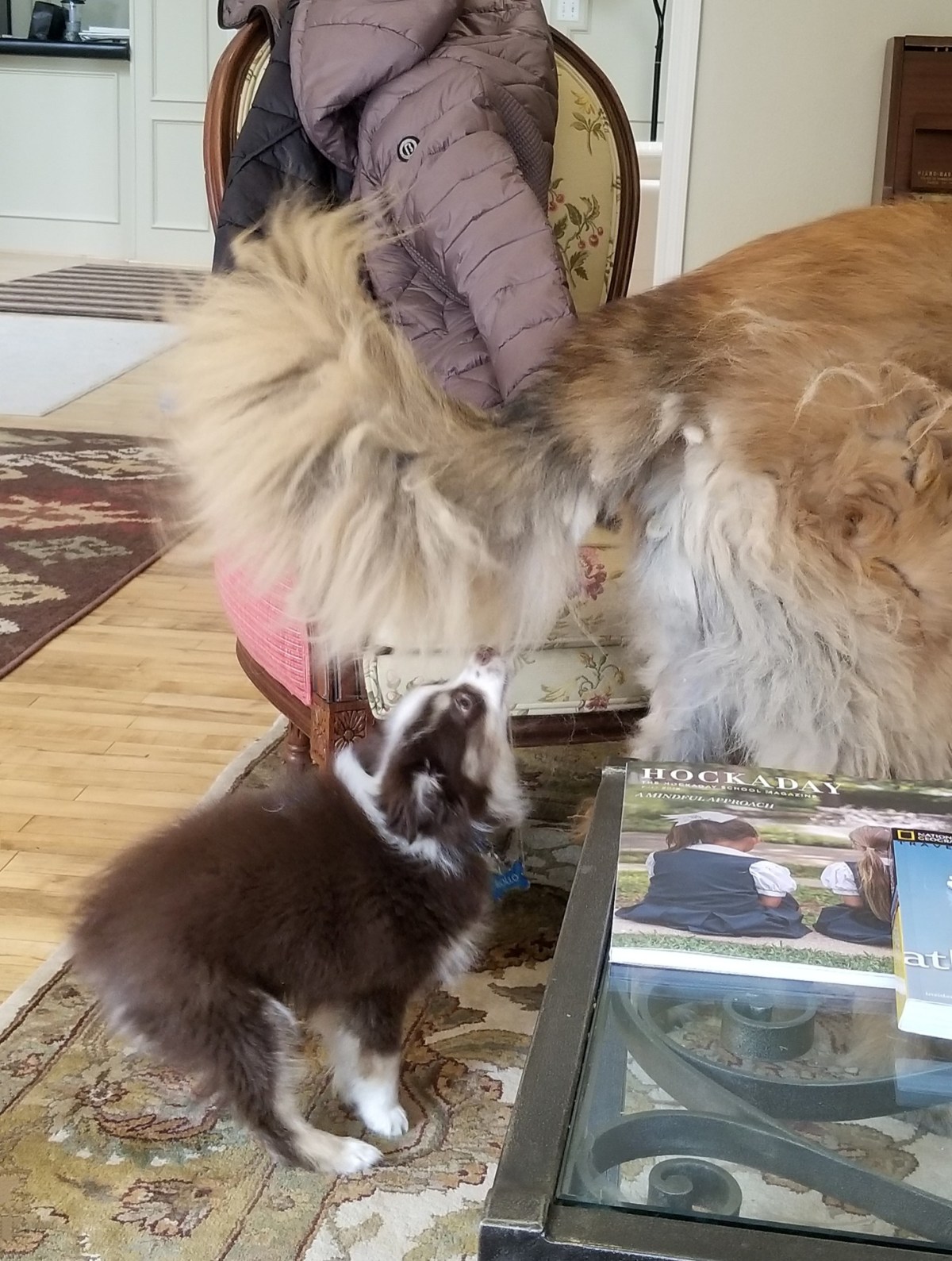
The photo shows our mini-Australian Shepherd Rollo biting and pulling on our Leonberger Bronco’s tail.
To my astonishment, Bronco didn’t react angrily when Rollo swung like Tarzan from his tail.

The playpen had a door that swung open and could be locked. Soon he learned to go through the door on his own when we asked him to. We would say, “Rollo, playpen,” and he would march right in. We made sure that the playpen contained water and toys and that the door was locked behind him. Of course, we didn’t leave him there for too long. Experts recommend a maximum of two hours when the puppy is two months old and a maximum of three hours when the puppy is three months old. Even when Rollo was older than that, we never left him in the playpen longer than four hours.

Rollo’s relationship with his playpen was interesting. When Daisy tried to walk in, Rollo would get angry. The playpen was Rollo’s, and no one else could enter. It was his little house within a house. Sometimes he would walk in even if we didn’t ask him to, and he would just sit there for a while, as if he needed some alone time.
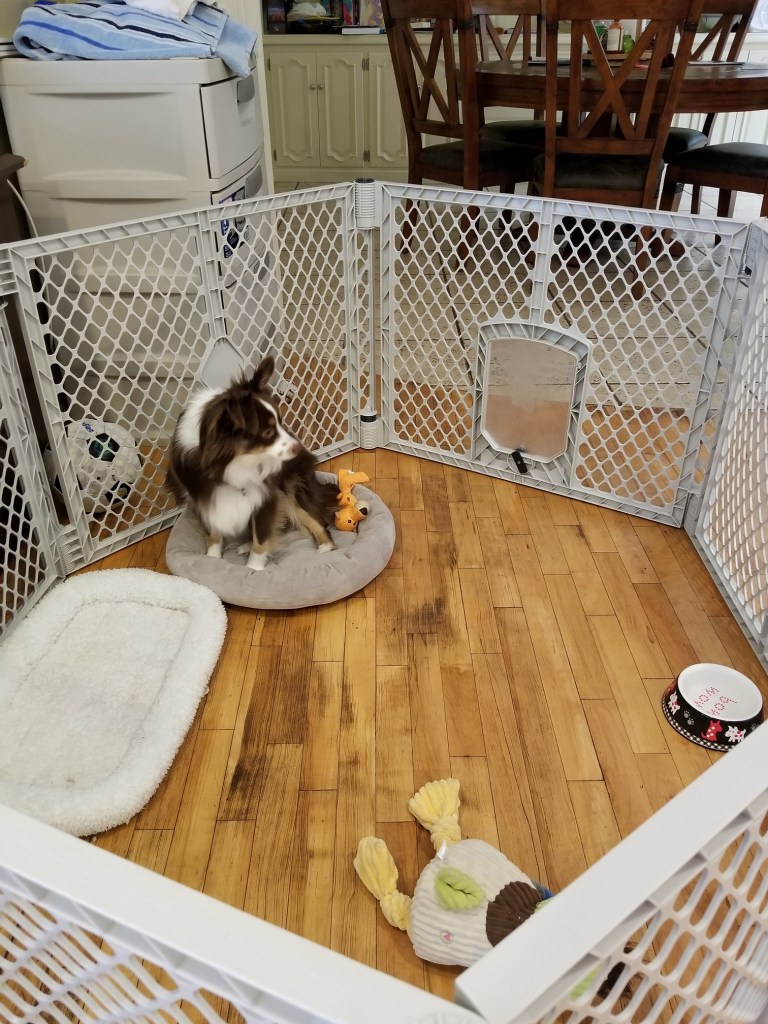
The picture shows our mini-Australian Shepherd with a toy inside his playpen. The playpen was about three by three meters.
When Rollo was in his playpen, we were sure he would be safe in case Bronco decided he had had enough of his younger sibling’s antics.

Our younger son’s girlfriend came up with a great name for Rollo’s playpen: baby jail. So that’s what we called it, and Rollo seemed to like it. When we told Rollo, “Rollo, baby jail,” he would march right in, just as he did when we called it a playpen. Even though he didn’t seem to mind it, he was always eager to come back out when we got home. He would stand on his hind legs, jump up and down, and bark. Then we would rush to greet him and lift him out of his baby jail. The baby jail was another example of the way a good fence makes good dog neighbors. Maybe we all need a baby jail?

The Tornado and our Fence
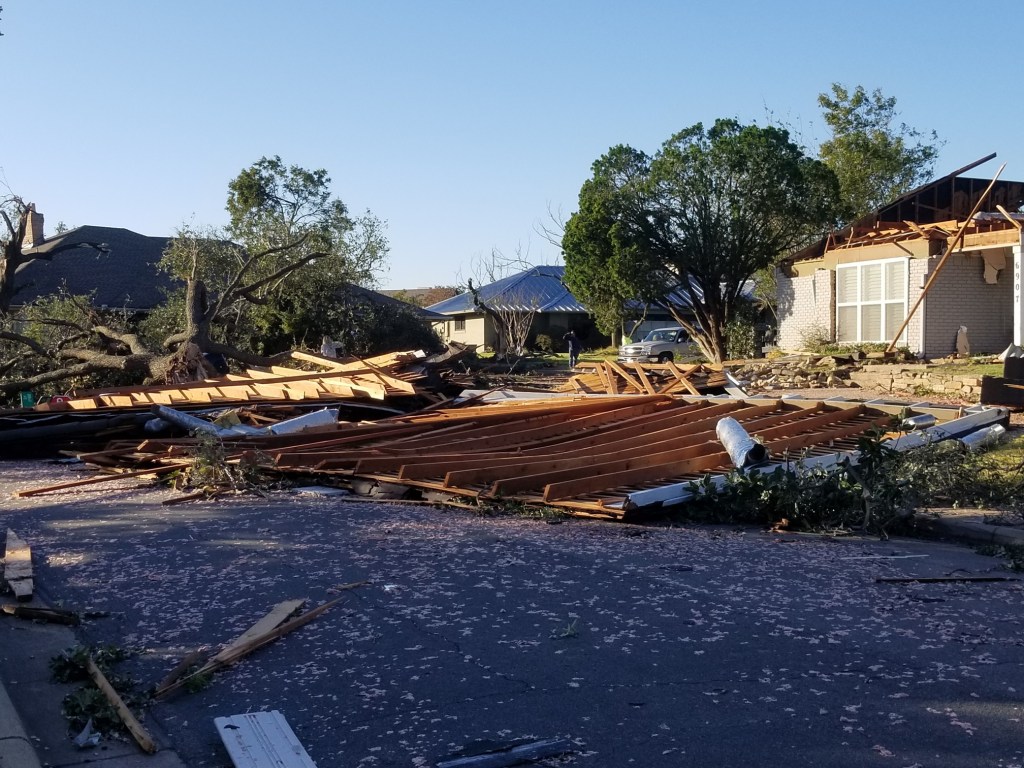
A photo of severely damaged house. The roof is lying in the street.
Our street, just a couple of houses down from us

On October 20, 2019, our neighborhood was destroyed by an F3 tornado. We were lucky compared to our neighbors. The houses of many of our neighbors were completely destroyed. Our house stood but it had some damage. Our chimney was smashed by flying debris from our neighbor’s roof, and our roof was damaged and needed to be replaced. The garage door was destroyed, the wiring in the attic needed to be replaced, the grill flew away and our fence was damaged. Because of our dogs repairing the fence was the first priority.

This happened right after our Leonberger dog Bronco had a toe amputation due to toe cancer. It was a very stressful time. You can read more about it here “Five Years After the Dallas Tornado of October 20, 2019”.
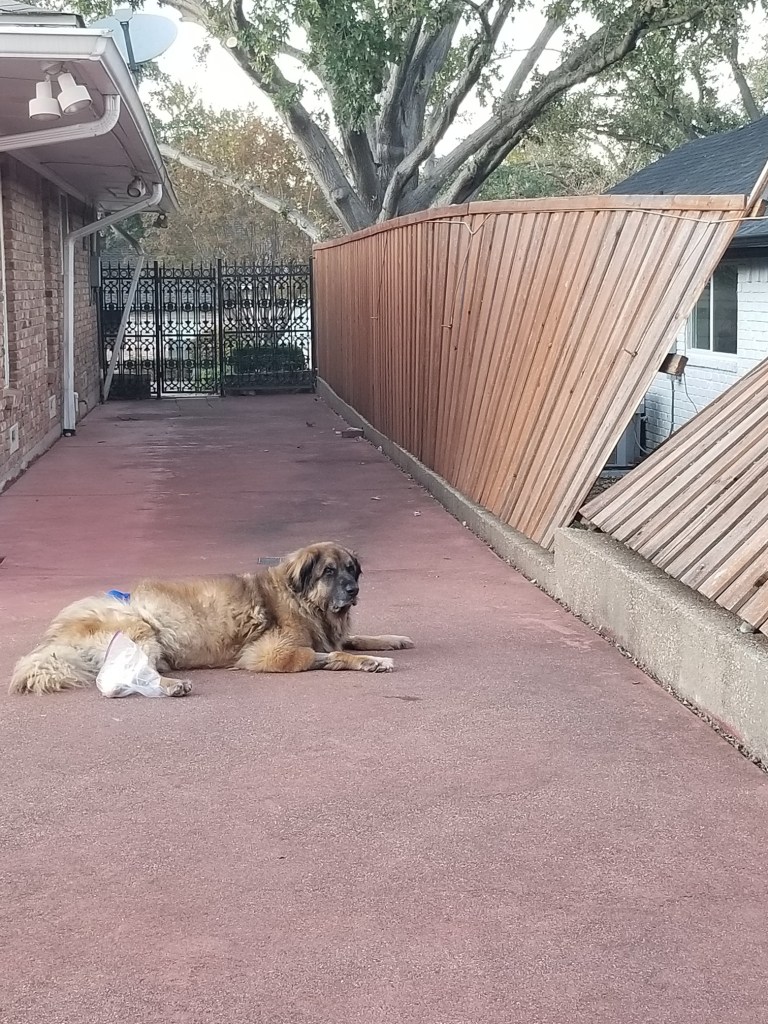
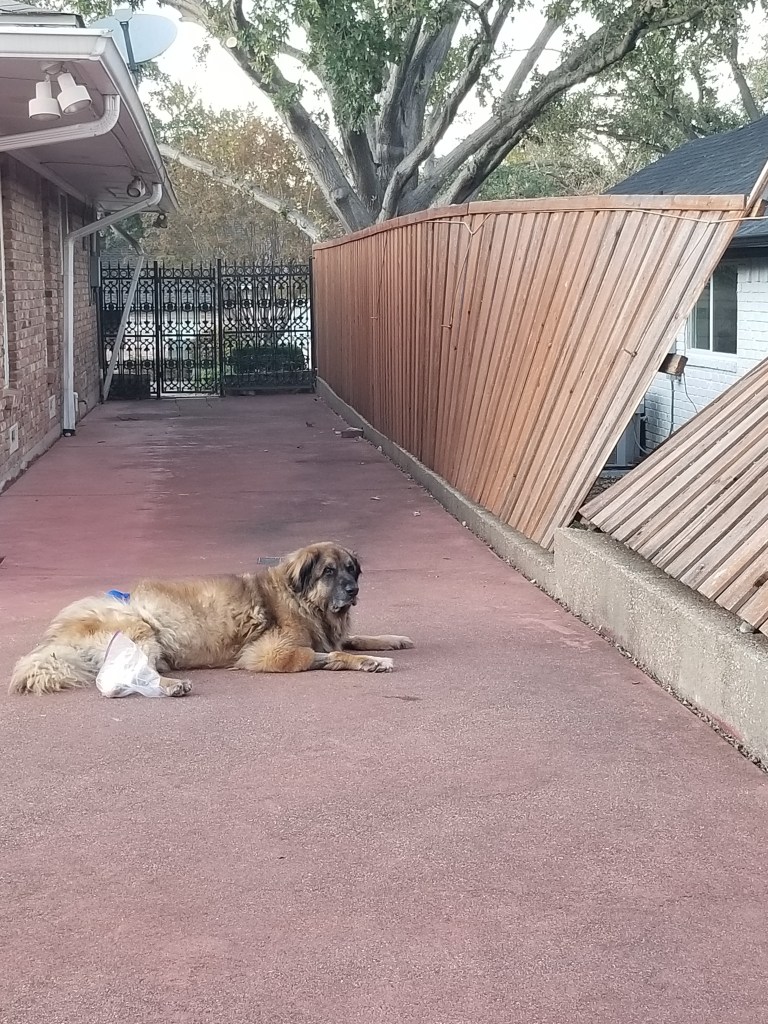
The picture shows a Leonberger lying down in front of a broken fence.
This photo is taken after a tornado went through our neighborhood. Our old Leonberger Bronco recently had a toe amputation in picture, and he has a plastic bag around the bandage.

I have many more stories about the importance of having a good fence in your backyard when you have dogs. Suffice it to say, a good fence makes good and safe dogs.

My Other Responses to Esther’s Prompts

Designing a Stylish and Durable Dog Friendly Home

A professional content writer by the name of Ryan Goodchild contacted me about me posting an  article he had written on designing a stylish and durable dog friendly home. The title of the article is “How to Design a Stylish and Durable Dog-Friendly Home That Lasts”  it is below. Ryan wrote the article and I provided pictures.

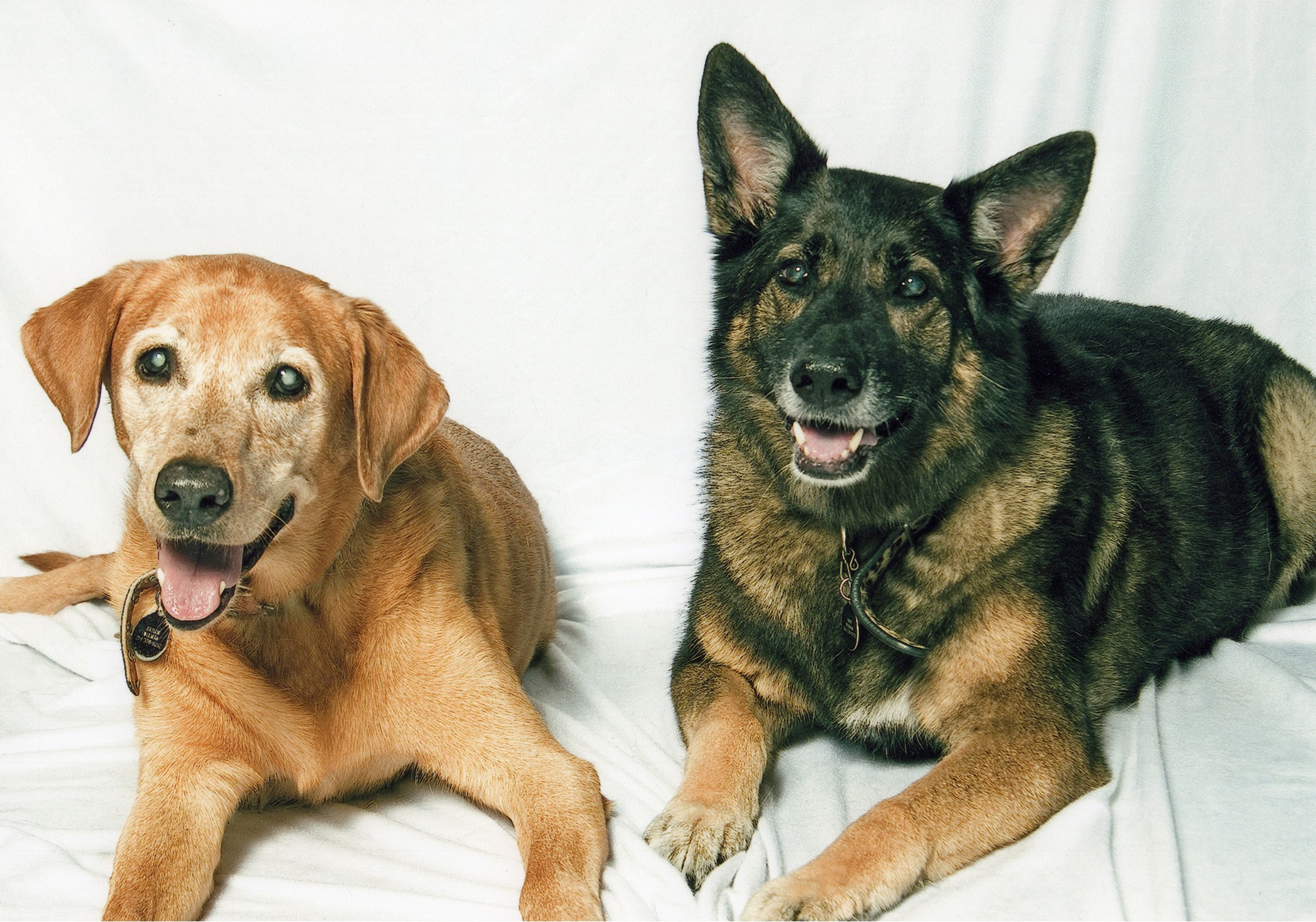
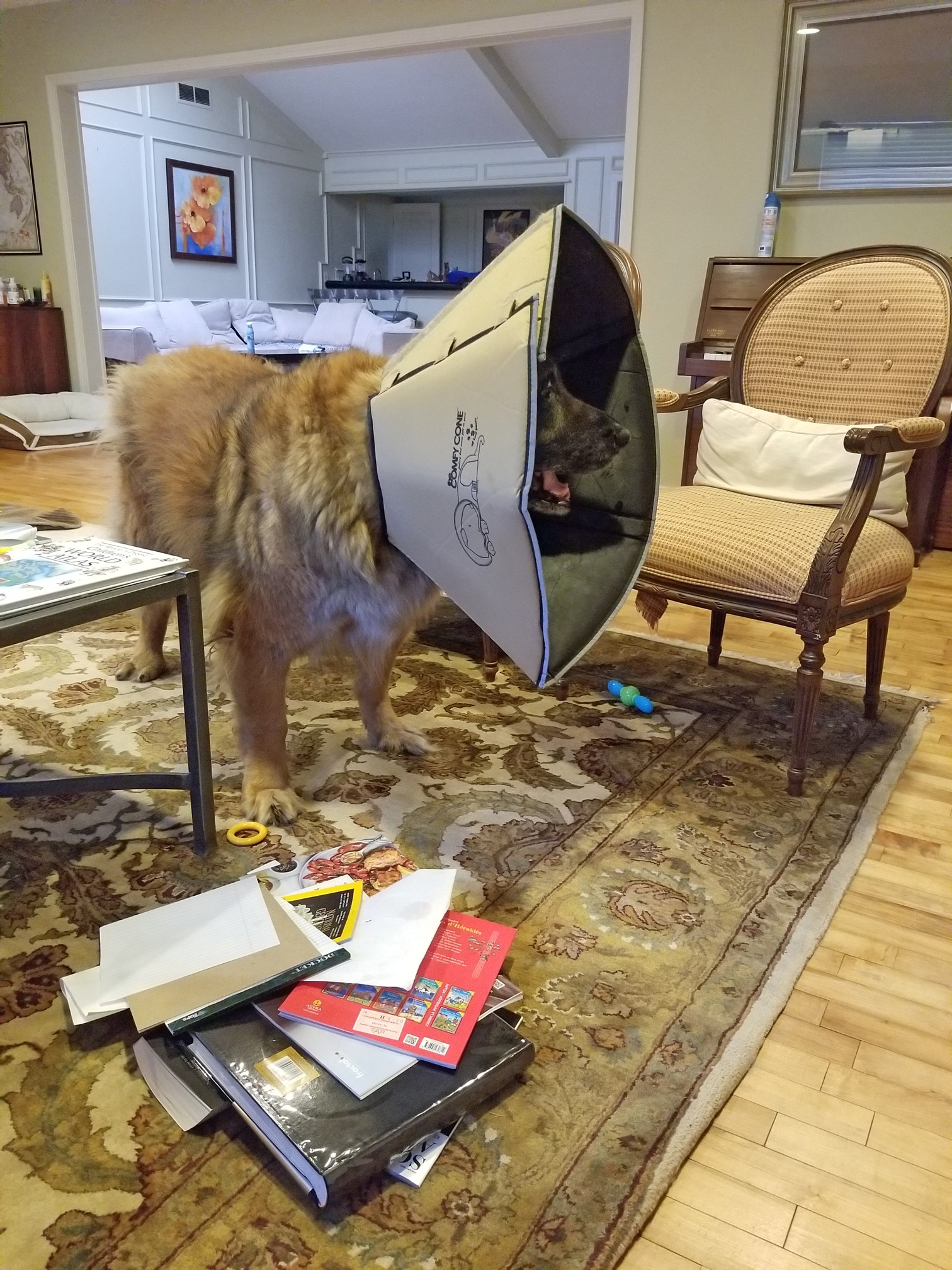
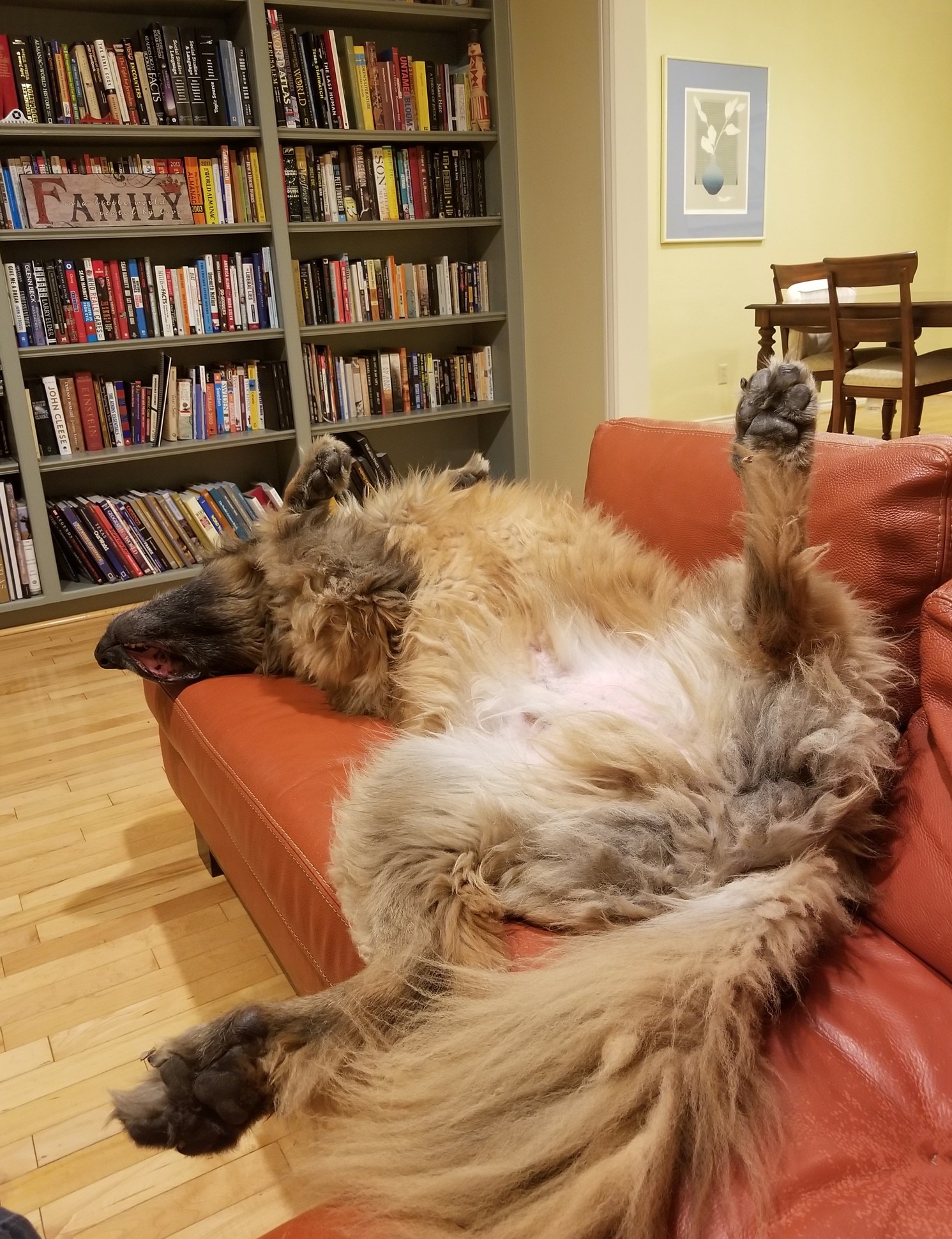
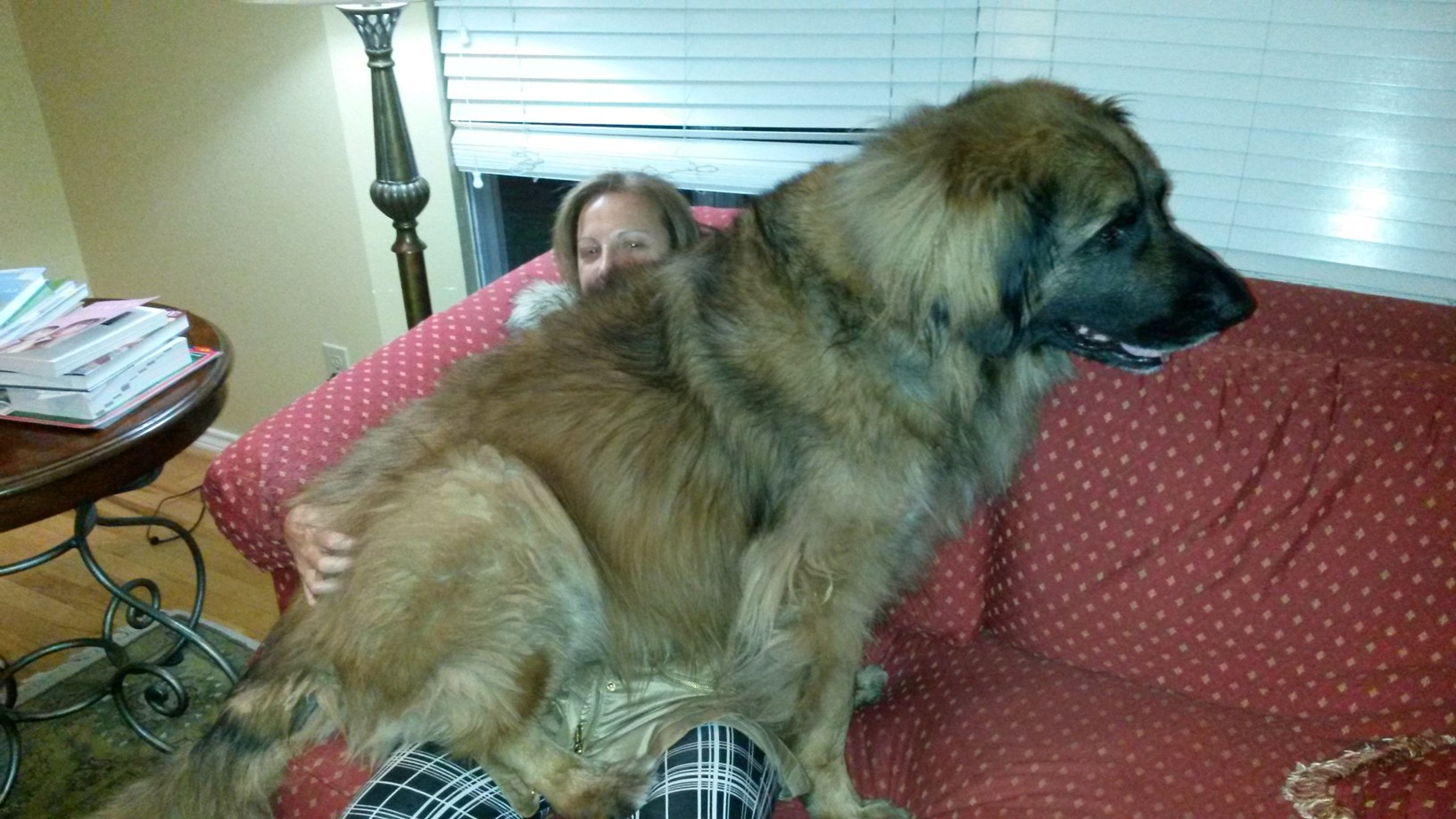
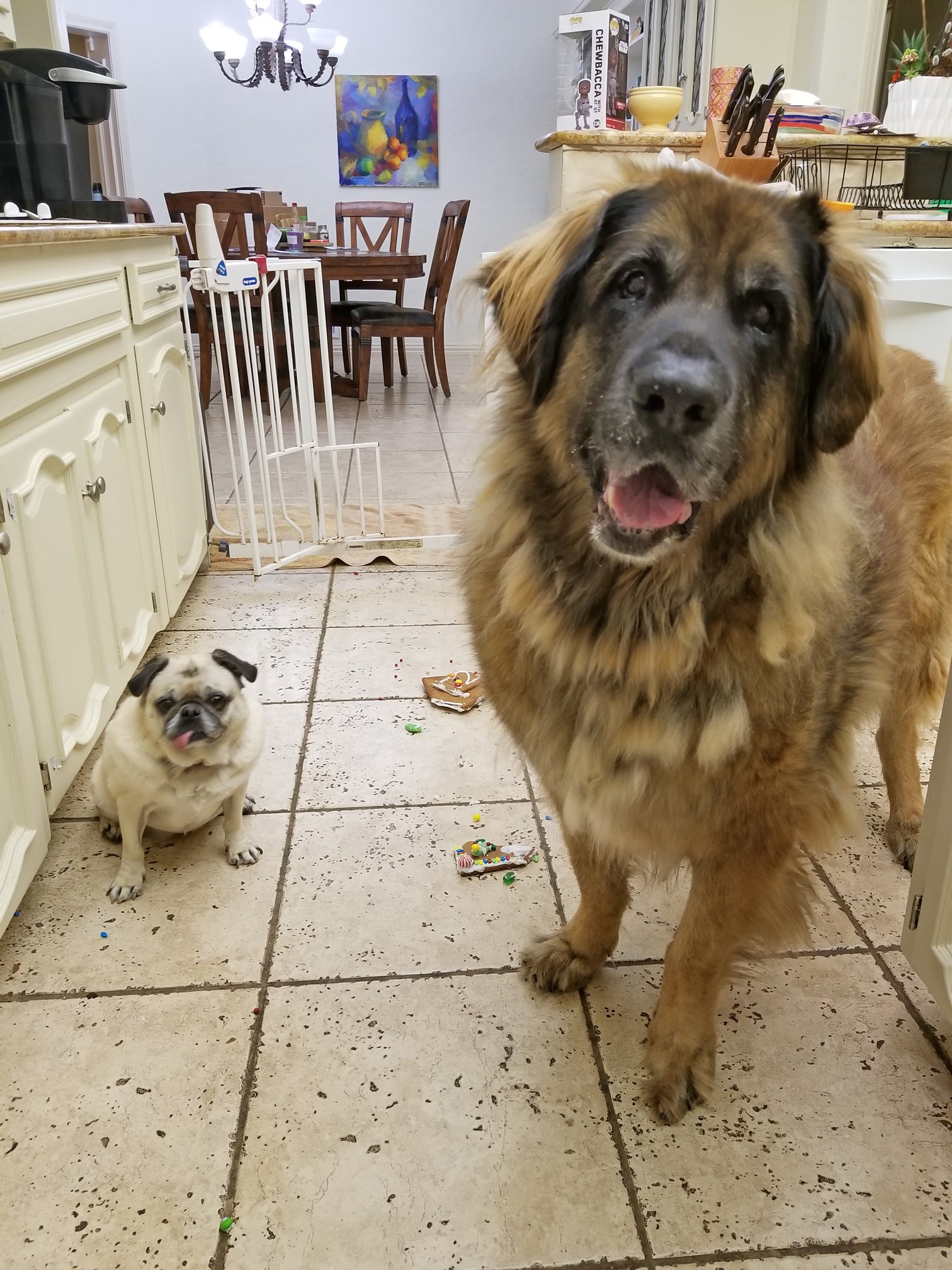
Our Labrador Baylor and German Shepherd Baby. Bronco wearing a soft cone and accidentally clearing a table. Our Leonberger dog Bronco sleeps on our big leather sofa. Young Bronco is giving me a hug. Our Japanese Chin Ryu is licking our Pug Daisy’s ear. Our Leonberger dog Bronco is sitting in my wife’s lap. Bronco and our Pug Daisy are eating a gingerbread house in the kitchen. Our mini-Australian Shepherd Rollo biting Bronco’s tail.

How to Design a Stylish and Durable Dog-Friendly Home That Lasts

For design-minded dog owners and busy households with pups underfoot, home should feel welcoming without looking worn down. The real challenge is balancing pet needs and aesthetics when muddy paws, shedding, scratching, and daily mess collide with a polished space. Dog-friendly home design isn’t about sacrificing style; it’s about choosing durable home materials and stylish pet accommodations that hold up to real life. With the right mindset, long-term home functionality becomes a design feature, not a compromise.

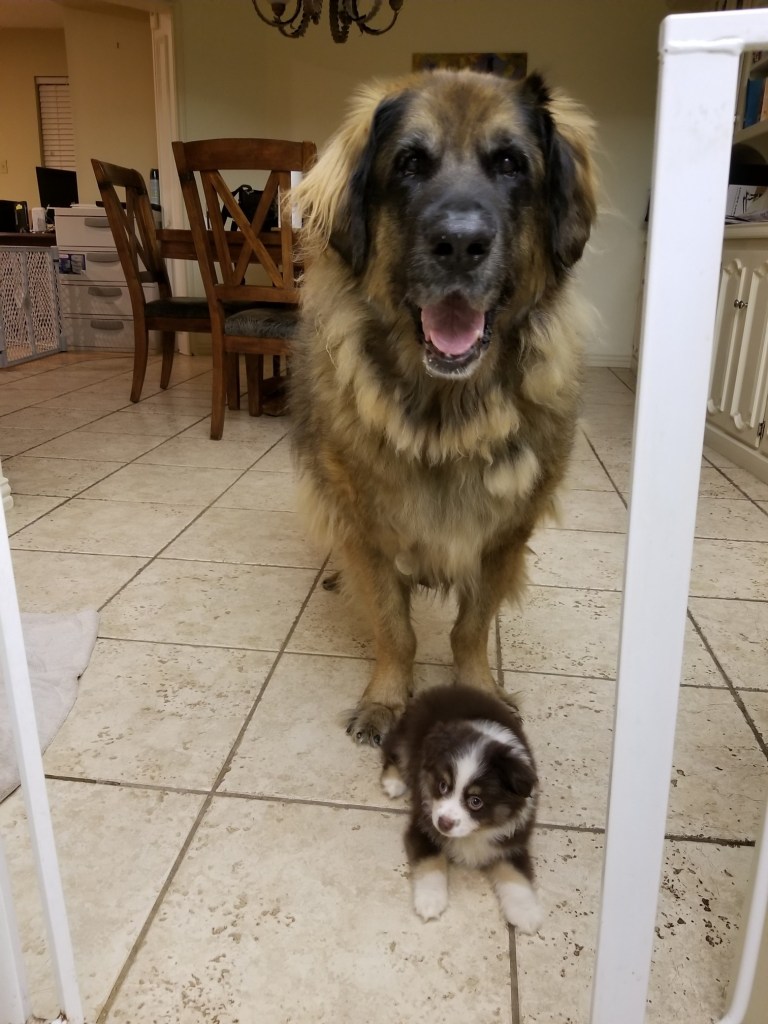
Bronco is standing by the entrance to the kitchen with little Rollo right in front of him.
Our Leonberger dog Bronco and our mini-Australian Shepherd Rollo when he was a puppy.

Upgrade Room by Room: 8 Dog-Proof, Design-Forward Ideas

A dog-friendly home doesn’t have to look like a kennel, or feel like you’re “settling.” Start with the rooms you use most, choose finishes that hide real life, and upgrade in layers so your style stays front-and-center.

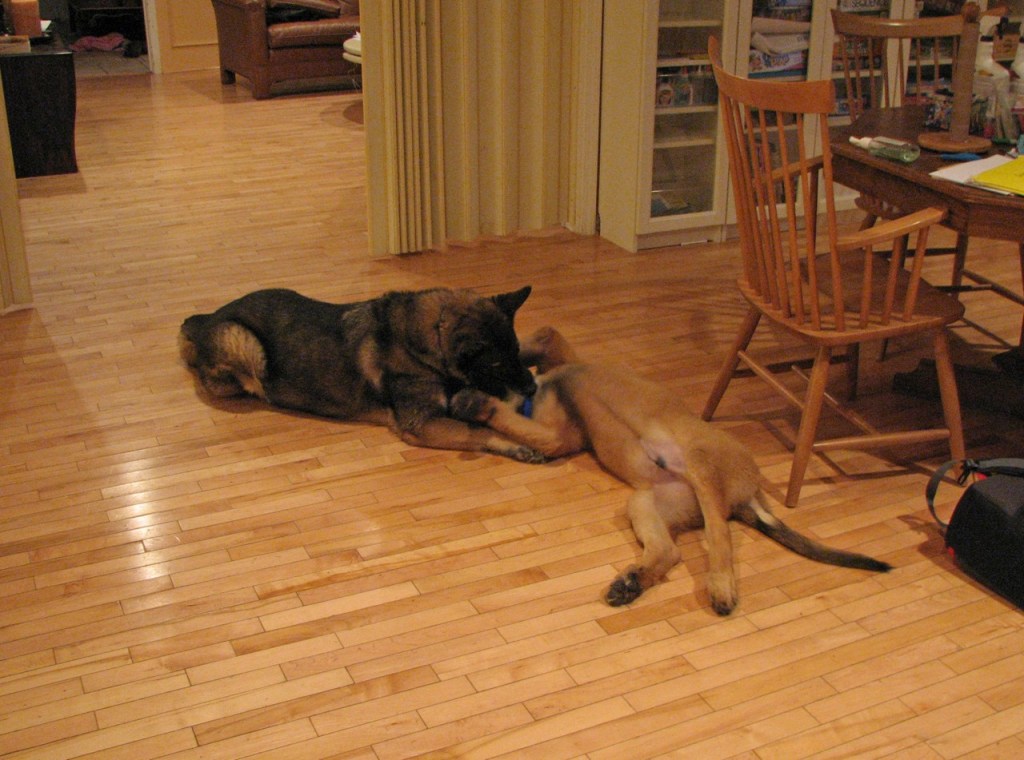
The German Shepherd is lying on the floor and the Leonberger puppy is on his back.
Our German Shepherd Baby playing with our 4 months old Leonberger Bronco.
  1. Start at the entry with a “dirt-control” landing zone: Put a washable runner (or indoor/outdoor-style rug) right inside the door and add wall hooks plus a closed bin for leashes, towels, and paw wipes. This keeps grit from traveling to your nicer surfaces and makes departures less chaotic. If you can, add a low bench so you can wipe paws without wrestling.
  2. Choose scratch-resistant flooring where claws hit hardest: In high-traffic paths, entry, hallway, kitchen, prioritize tough, easy-clean surfaces and keep area rugs for warmth and style. If replacing floors, ask for samples and do a real test: drag a key lightly, spill water, and see if it shows. If full replacement isn’t in the budget, a long runner in the “zoomie lane” protects what you already have.
  3. Upgrade to easy-clean fabrics (and make them work harder): For sofas and dining chairs, look for tightly woven performance fabrics or removable, washable covers in mid-tone colors that hide fur and smudges. The right pet-friendly upholstery fabric can cut daily maintenance and keep your room looking “done” longer. Add a throw you don’t baby to your dog’s favorite spot so you’re laundering one layer, not deep-cleaning cushions.
  4. Build a feeding station that’s neat by design: Convert a lower cabinet, nook, or mudroom corner into a built-in feeding station with a wipeable surface and a pull-out bin for food. Add a washable mat under bowls and mount a small hook for the scoop so it’s never on the counter. This keeps crumbs contained, reduces slipping bowls, and makes the area look intentional instead of temporary.
  5. Dog-proof storage with small hardware changes: Use lidded cans, add simple childproof latches to low cabinets, and keep tempting items behind closed doors. A few minutes spent removing personal items from reach prevents chewed shoes, shredded mail, and unsafe snacking. Aim for one “dog-safe” basket in each main room so clutter has a place without becoming a hazard.
  6. Create a durable “rest zone” that protects your layout: Give your dog a defined spot, bed, crate, or mat, near where you actually hang out, not tucked away. Place it on a washable rug or low-pile mat to protect flooring and help anchor the room’s arrangement. When your dog has a predictable place to settle, you’ll see less pacing, less furniture-hopping, and fewer dirty paw prints on upholstery.
  7. Make your yard a secure outdoor dog space, not a stress zone: Check fence gaps, latch reliability, and sightlines at gates, then add a double-latch or self-closing hinge if you’ve had close calls. Define one “dig/zoom” area with mulch or gravel and keep the rest landscaped for looks. A shaded water spot and a clear path back to the door reduce tracking mud through the house.
  8. Choose pet-safe landscaping that still looks polished: Skip plants known to be toxic to pets and avoid cocoa mulch; use sturdy groundcovers and hardscaping borders that won’t splinter or poke paws. Create a rinse-off station with a hose and spray nozzle near the door so muddy days don’t wreck your floors. These aesthetic home upgrades let the outdoors feel curated while staying practical.
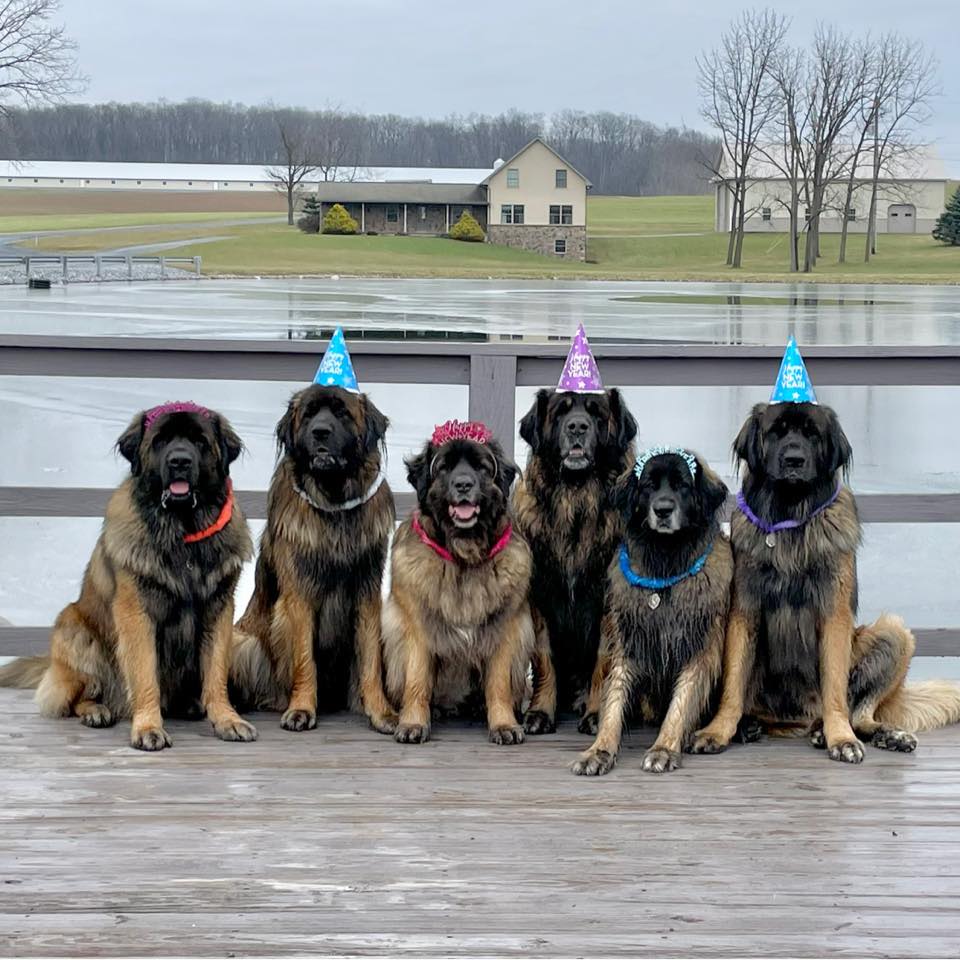
Six Leonbergers with celebration hats are looking straight into the camera.
Six Leonbergers and a birthday celebration. Photo by friend Jen O’Keefe.

If You’re Building New: Ask These Warranty Questions at Closing

After you’ve planned dog-tough finishes and built-ins, it’s worth protecting the structure those upgrades depend on. When you’re closing on a new build, ask your builder whether a structural warranty (or similar long-term protection) is included, and what it covers if defects show up after you move in. This kind of coverage can help safeguard the home’s integrity, which matters when you’ve invested in pet-friendly choices like durable flooring or built-in features that are meant to perform for years. Getting clarity up front on coverage expectations, and whether a third-party, insurance-backed option like a builder-backed warranty for new homes is part of the package, can add peace of mind as your dog settles in. Next, we’ll tackle the practical questions homeowners ask most about odors, stains, fences, and resale value.

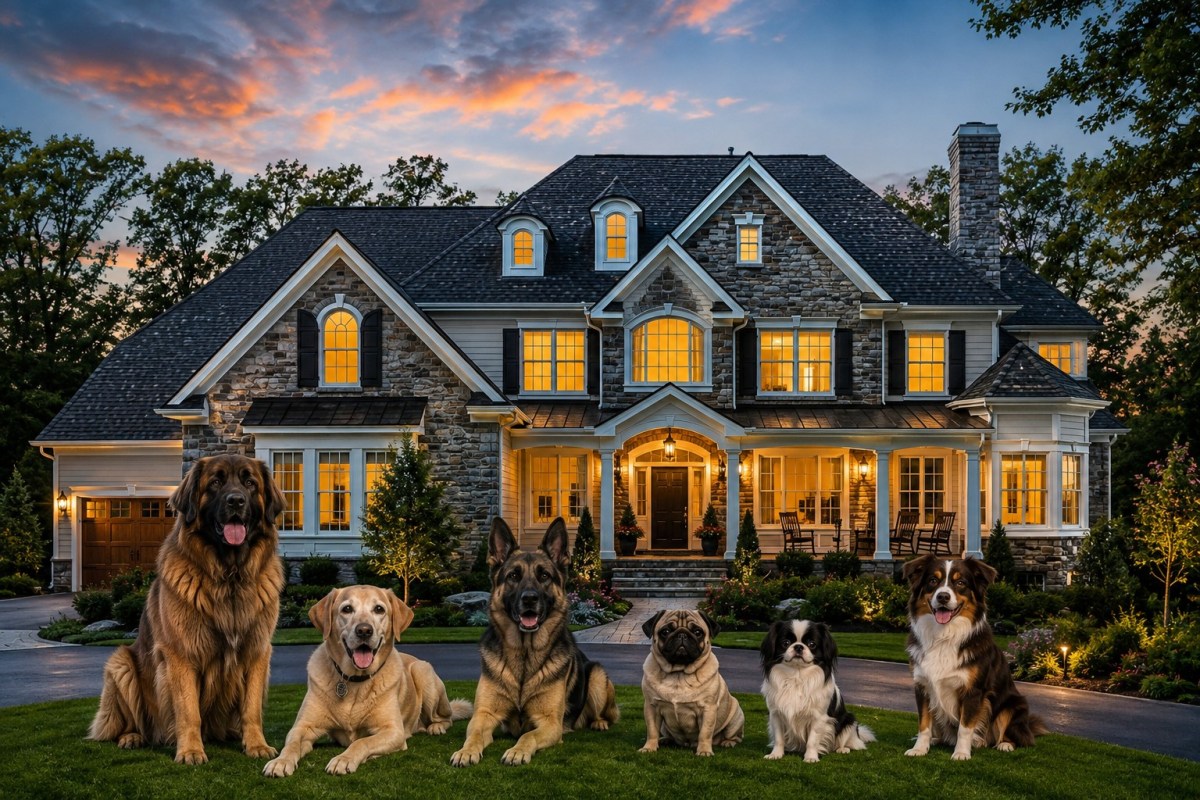
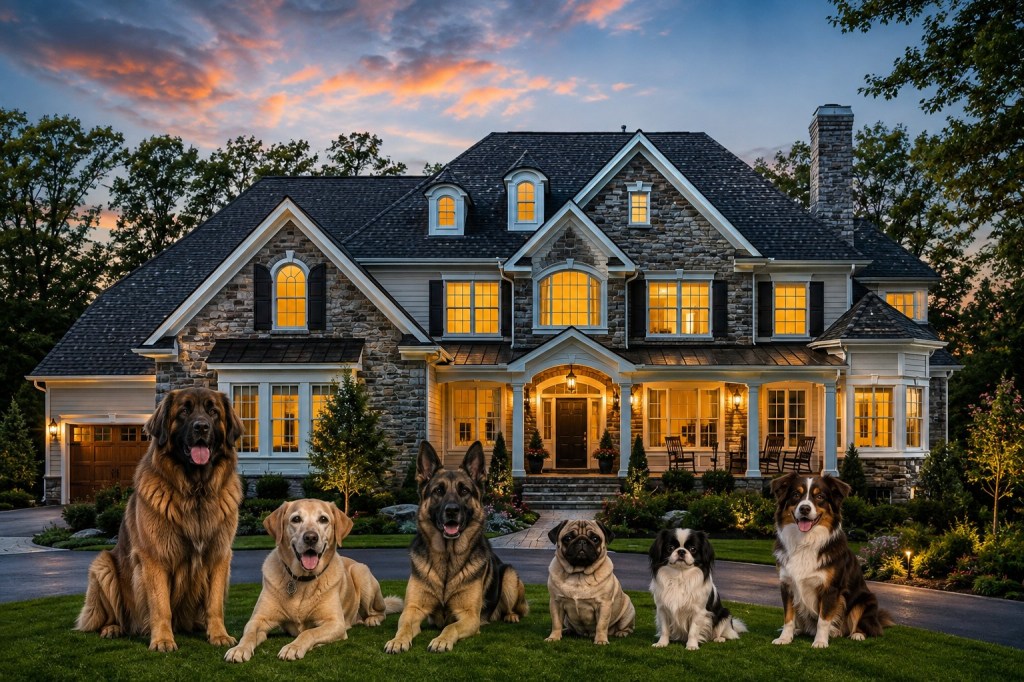
A two story house with six dogs in front. From the left to right, a Leonberger dog, a Labrador, a German Shepherd, a Pug, a Japanese Chin, and finally a mini-Australian Shepherd.
A dog friendly house. Generated with the help of ChatGPT.

Dog-Friendly Home Design: Common Questions Answered

Q: What actually keeps dog odor under control without making the house smell like chemicals?
A: Start with what holds odor: washable covers, low-pile rugs, and sealed floors that do not absorb. Use a HEPA vacuum weekly, launder soft goods often, and run a carbon air purifier in the main hangout zone. If odors persist, an enzyme cleaner beats masking sprays because it breaks down the source.

Q: How do I remove urine stains from floors or carpets without ruining the finish?
A: Blot first, then apply an enzyme-based cleaner and give it enough dwell time before rinsing or blotting again. Avoid steam cleaners on fresh urine since heat can set stains and odors. Test any product in a hidden spot, especially on hardwood sealants.

Q: What fence type and height works best for most dogs?
A: A solid, climb-resistant fence with minimal horizontal rails is a reliable choice for many homes. Many installers consider the ideal fence height 4 to 6 feet, with 6 feet as the industry standard for containment. Match the design to your dog’s jumping and digging habits, then add a buried edge or kick plate if needed.

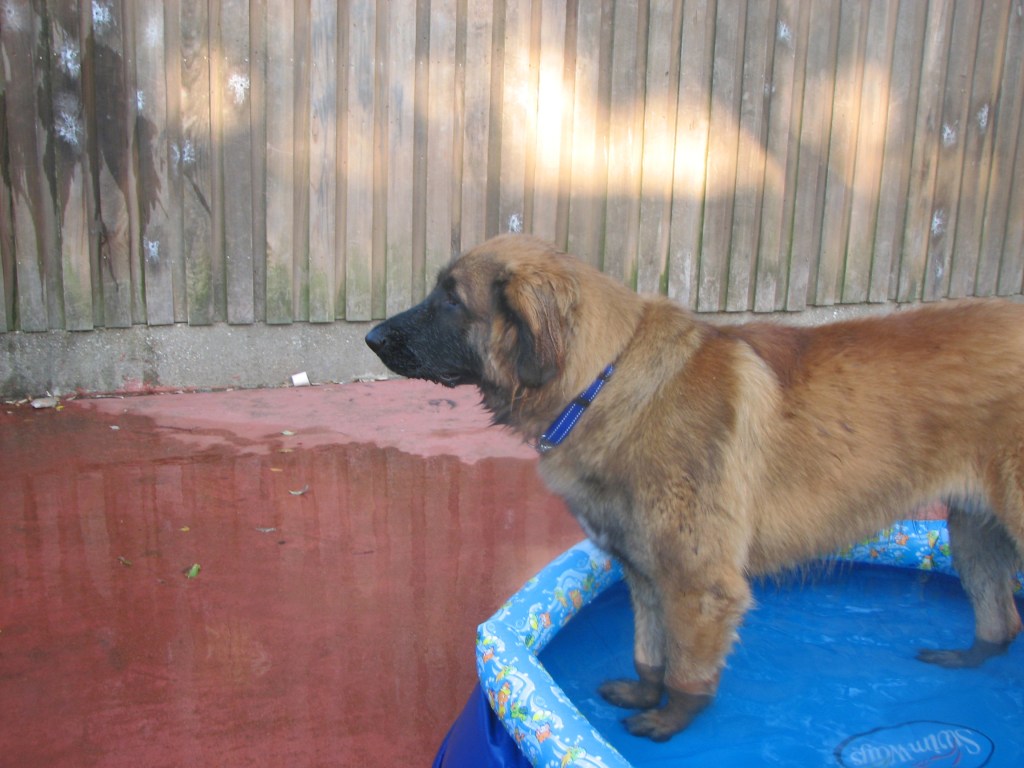
Bronco is standing in a blue kiddie pool. He is getting washed.
Our Leonberger dog Bronco and fence you cannot dig holes under. Leonbergers are expert diggers.

Q: Can I keep resale appeal if I choose dog-proof materials?
A: Yes, when choices read “durable and neutral,” not “pet-only.” Stick to classic colors, consistent hardware finishes, and quality flooring that any buyer would see as an upgrade. The best pet-friendly features look like smart maintenance, not a special-purpose remodel.

Q: How do I reduce everyday wear and tear from paws, nails, and outdoor mud?
A: Create a simple entry drop zone with a washable runner, hooks, and a closed bin for towels and wipes. Keep nails trimmed and place scratch-friendly surfaces like washable mats near doors and feeding stations. Outside, use hardy groundcover or gravel in the main run path to limit dead grass and tracked-in dirt.

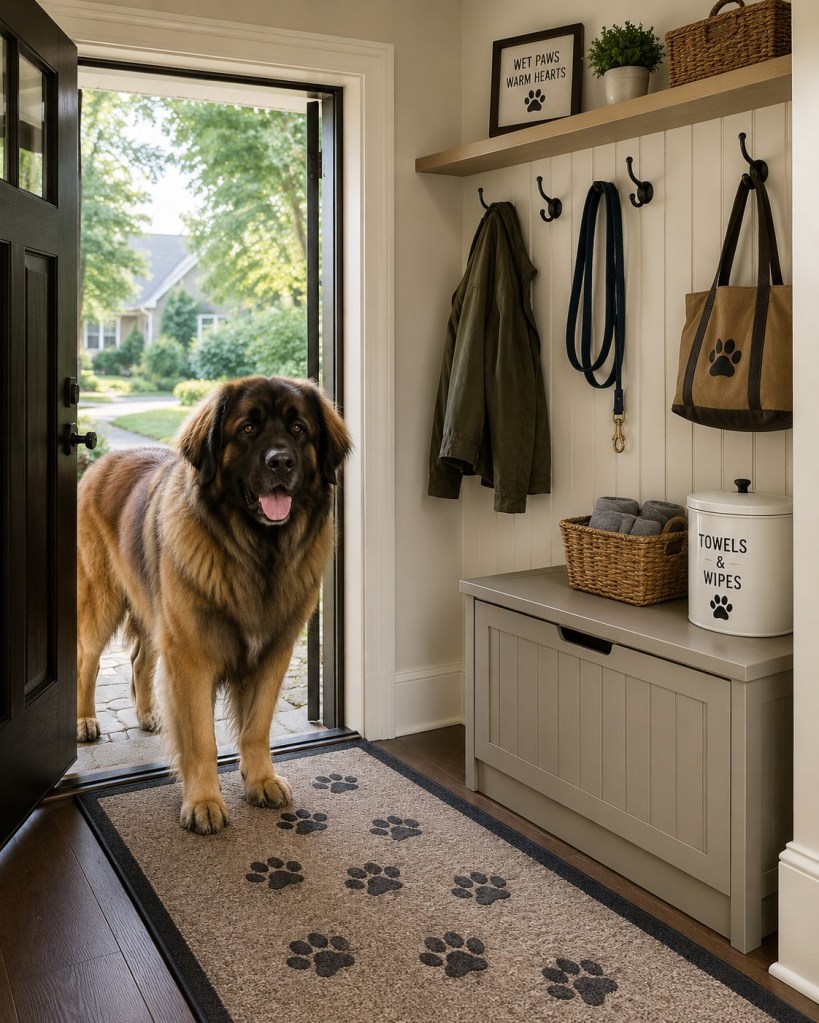
On the hooks there is a dog leash, a jacket and a bag.
Leonberger dog at the entrance of a house standing on a washable runner. There are hooks and a bin for towels. Generated with the help of ChatGPT.

Finish-Strong Dog-Friendly Home Checklist

This checklist turns good ideas into repeatable habits, so your home stays stylish while handling real life with dogs. Use it to decide what to upgrade now, what to schedule, and what to maintain each week.

✔ Choose sealed, non-absorbent floors for high-traffic zones

✔ Add washable slipcovers and throws to the main seating

✔ Place low-pile, easy-clean rugs where paws land most

✔ Run a HEPA vacuum on a weekly calendar reminder

✔ Keep an enzyme cleaner stocked for fast accident response

✔ Set an entry drop zone with towels, wipes, and a closed bin

✔ Inspect fencing for gaps, dig spots, and climb points monthly.
Check these off once, then protect them with routine.

Backyard, relax and portrait of dog on grass for obedience, support and fun in leaves in sunshine. Nature, foliage and Labrador with tongue out in garden by fence.
Labrador in front of fence in the backyard. This is good fence but has a potential dig spot. Shutterstock asset id: 2485564001 by PeopleImages
Bronco is laying on the ground facing the broken fence. He has a plastic bag around his bandage.
The fence needs to be fixed after a tornado went through the neighborhood. Bronco had just had a toe amputation.

Make Style Last With Dog-Ready Materials and Layouts

Living with dogs can feel like a constant trade-off between a home that looks pulled together and one that can take daily wear. The steadier path is designing for real life: choose materials supporting pet durability, use layouts for pet and people, and keep integrating pet features in ways that maintain home style with dogs. Design for the dog you have, and your style will last longer. Pick one high-impact change from the checklist this week, swap in a tougher surface, protect a high-traffic zone, or refine a room flow, then build from there. Long-lasting pet-friendly design protects comfort now and creates a calmer, more resilient home for everyone.