This post is about big events that happened to me or my family during 2024 and that I blogged about. I selected six events that stood out to me. They are sort of my 2024 blogging summary. Our pug Daisy died at the age of 15 ½ and we still miss her a lot. On April 8, 2024, we experienced the event of the year, the total solar eclipse. Dallas (where we live) was in the path of totality and the weather was clear. It was spectacular. Then the largest newspaper trade association in the United States the National Newspaper Association (NNA, 2,300 newspapers) awarded a Dallas magazine that had written a review for my book “Le Life and Times of Le Bronco von der Löwenhöhle” an honorable mention for best book review of the year. That was fourth place out of thousands of newspapers and magazines.
In August I launched a new blog, superfactful (please feel free to follow) and in September my oldest son and his wife and me traveled to Sweden and Norway where we saw a lot and encountered magical creatures. On October 21st, 2024, NBC news interviewed me about a tornado that ravaged our neighborhood five years ago.
We miss our Pug Daisy
On April 5th, 2024, our beloved pug Daisy took her last breath. She was 15 ½ years old. She had an enlarged heart, her back legs were giving out, and she had breathing problems. She took lots of different medications. Yet, the breathing crisis she had that morning came unexpectedly. Our veterinary told us it was time. It was a dark day for us, and we still miss her dearly. Our mini-Australian Shepherd Rollo also seems to miss her and now he is alone. To read the tribute post I made for her click here.
Daisy liked to sit in front of the vent when it was cold or alternatively too hot.
Total Solar Eclipse in Dallas
On April 8th, 2024, there was a total solar eclipse and Dallas, where we live, was in the path of totality, and we were lucky with the weather. A total solar eclipse is a totally different experience from a partial solar eclipse. Despite knowing this beforehand, and having seen a partial solar eclipse, I was amazed. As you approach totality you will have a partial solar eclipse, so you’ll experience both. The partial solar eclipse portion lasted for a few hours and totality lasted only four minutes, but during those four minutes the sun and the moon put on a spectacular show. For the event we had prepared a little party on our backyard patio.
A partial solar eclipse is interesting too. The shadows change during a partial solar eclipse. The shadows of the tree leaves look like moon crescents, but it is not dark, it is still daylight. The sun will look like a bright crescent if you are wearing solar eclipse glasses, but the light is too strong for you to see anything without glasses, and trying to look at the sun during a partial eclipse is dangerous.
When the total solar eclipse happened it suddenly got dark, but not midnight dark, more like late twilight. The stars came out, the birds and the crickets got quiet, Rollo hid under the table, it felt colder, and straight above us Venus came out bright and shining. You usually see Venus in the west soon after sunset or in the east before sun dawn, not above your head in the middle of the day. You could take off your solar eclipse glasses and look straight at the sun, because it was no longer very bright. What you saw was a big black circle surrounded by wispy foggy lights about as bright as the full moon, maybe a little brighter. That was the sun’s corona, which is only visible to the naked eye during a total solar eclipse. To read more about this event click here.
We took many pictures (see below) but this is a good stock photo. Solar Eclipse Stock Photo ID: 2344355767 by aeonWAVE
Preston Hollow People Magazine receives a National Award for a Book Review of my Leonberger Book
In September 2023 a Dallas journalist wrote a half page positive book review for my book “Le Life and Times of Le Bronco von der Löwenhöhle”. In 2024 her and the newspaper/magazine received an honorable mention for Best Book Review (that’s 4th place) at the annual National Newspaper Association Better Newspaper Contest organized by The National Newspaper Association (NNA). NNA has 2,300 members (newspapers and magazines). I can add that Preston Hollow is an area in north Dallas. To read more about this, click here.
This is a photo of the page of Preston Hollow People Magazine where the review appeared. If you click on the picture (or click here you can see the online version of the book review in Preston Hollow People Magazine.
Launch of the Super Facts Blog
On August 5, 2024, I launched my new blogsuperfactful url https://superfactful.com. The goal of this blog is to create a long list of facts that are important, not trivia, and that are known to be true and yet are either disputed by large segments of the public or highly surprising or misunderstood by many. These kinds of facts are special because they are important and at the same time there is a lot of confusion around them, or they are shocking. Therefore, I call these facts super facts. I should say that in addition to super fact posts I am also posting about other interesting and fun information. My first post “Bamboozlement Misunderstandings, Big Surprises and My Journey” was not a super fact post. To read more click here .
Smashing our old beliefs with new surprising facts, super facts. Expand your mind and teach me some unexpected truths. Shutterstock ID: 1685660680 by MattL_Images.
I can add that this site certainly needs more followers so feel free to subscribe. The subscribe button is on the right on a PC and at the bottom on a mobile device.
Scandinavian Adventure
In September 2024 I visited my native country Sweden and Norway with my oldest son and his new wife. We visited Stockholm, Uppsala, Oslo and Norwegian fjords. We saw palaces and castles, the old city in Stockholm (800 years old city on an island), we saw many museums including the Vasa Museum featuring an extremely well-preserved Swedish war ship that sank in 1628. We encountered a Huldra, a female magical creature, in the Norwegian mountains (OK this was a tourist ploy, but a fun one). To read more about our adventures click here, or here, or here.
From a cruise in Sognefjord, Norway. Left to right, me, my oldest son and his wife. Click on the image to visit my post titled : “Tourism in Scandinavia on World Tourism Day”.Imagining how a Huldra would look like. Stock AI-generated image ID: 2400845203 by Shutterstock AI Generator. Click on the image to visit my post titled : “Scandinavian Folklore”.An illustration of a Tomte another Scandinavian mythical creature. Shutterstock ID: 2060057882 by PLIMPLUM.
The NBC Interview with me about Dallas Tornado
October 19 and October 20, 2024, I got phone calls from NBC Universal. NBC Universal is a large media company that is a merger between NBC news and Universal Studios. I ignored the phone calls, because why would NBC call me. I thought it must be spam or a scam. Then I listened to the message they left, and I realized it was not spam. The NBC journalists had been reading my Leonberger blog, specifically a post I had made about the tornado that hit Dallas and ravaged our neighborhood on October 20, 2019. They wanted some of my photos and they wanted to interview me. You can read more here and you can listen and see the interview here. It is at one minute and ten seconds.
Seeing myself on the TV was a bit surreal. Click on the image to see the interview. My interview starts at 1 minute and 11 seconds.NBC used this photo. A neighbor’s house the morning of October 21st, 2019. Again, click on the image to see the interview.
Below are some additional photos in from these events in the form of a photo collage.
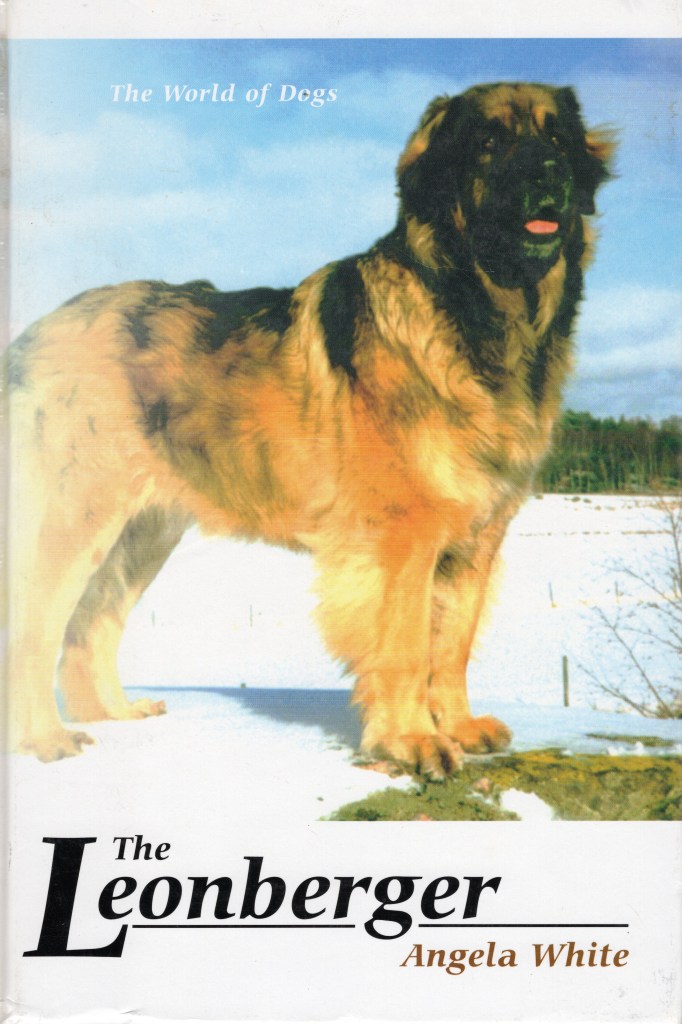
I recently finished reading “The Leonberger Hardcover version – April 1, 2000”, by Angela White. Currently it is only the hardback version that is available on Amazon, and it is 208 pages. I could not find it on Barnes and Noble or Chapters Indigo. The dimensions of this hardback are 7.25 x 0.75 x 10.5 inches, and the weight is 1.63 pounds, ISBN 978-1852790646, and on Amazon it currently costs between $4.95 and $91.85 depending on the quality of the book. It is currently out of print, so you have to buy a used copy. I bought mine for around $20.00 and except for a few scribbles on the inside cover it was in good condition.
Front cover of “The Leonberger” by Angela White (scanned). Click on the image to go to the Amazon location for the book.
In summary: Angela White is an experienced British author, an expert dog trainer and a Leonberger owner, well she was at the time. This book was great, much better than I expected. However, it is somewhat outdated and as I mentioned it is out of print. It does not have a great overall rating, but it seems like everyone who downrated it did so because it was out of print. I don’t downrate a book because it is out of print because that is a problem unrelated to the content of the book. Therefore, I gave it five stars.
Below is my review of The Leonberger by Angela White.
It’s Old but It Is the Most Professional Leonberger Book I’ve Come Across
I bought a used copy of the Leonberger by Angela White. Unfortunately, it is no longer in print. The author is a dog trainer and a Leonberger owner. As far as I can tell she is an expert dog trainer. In 208 pages the book covers, in detail, the origins and the history of the Leonberger breed, owning a Leonberger and the care of a Leonberger, showing your Leonberger, nutrition and health, breeding Leonbergers, and training Leonbergers. The author is British, so naturally the book is written from a British perspective. For example, she talks extensively about the (British) Kennel Club, but she does not mention the Leonberger Club of America.
The author is extremely knowledgeable, science oriented, and she knows and understands dogs, especially Leonbergers, exceptionally well. She is also a very good author and I think this book is very well written. It is jam packed with useful information, much of it I did not know. Therefore, I learned a lot from this book. It is well organized and there’s no repetition. I counted more than 180 colorful Leonberger photos that were all helpful and informative in their respective context, from whelping to old age.
I’ve read more than 30 Leonberger books, as well as other dog training books, and this book is hands down the best book on training a Leonberger that I’ve come across. The 80 pages on training Leonbergers is fabulously written with lots of helpful information. I think I can say with confidence that there is no better Leonberger book out there with respect to training. I was also impressed by the chapter on breeding Leonbergers. I am not very interested in this topic, but I’ve noticed that most Leonberger books that claim to cover breeding do not say much useful on the topic, if anything at all. This book gives a 32-page overview of the important aspects of breeding, how to do it, paperwork, etc., while referring to more in-depth sources for details.
The book was written a long time ago in 1998 (hardcover released 2000). Therefore, portions of it are outdated. This shows when the author writes about certain illnesses in Leonbergers. For example, Addison’s disease is no longer a considerable concern and some problems with Leonbergers are not mentioned. Perhaps most notable, the book states that Leonbergers should be neutered / spayed as soon as possible at the beginning of puberty. Since this book was written it has become clear that this will physically harm the dog and I see this as the major drawback of the book. Now a day it is recommended that you wait two years before neutering a Leonberger.
I am rating this book five stars despite it being outdated and despite the unfortunate advice on neutering / spaying, because the book shines in so many other aspects. I am not reducing my rating because the book is out of print since that is a problem unrelated to the content of the book.
Back cover of “The Leonberger” by Angela White (scanned).
This post is not about Leonbergers but about something entirely different; culture shock, which I think is an interesting topic. The Merriam-Webster dictionary defines culture shock as : “a sense of confusion and uncertainty sometimes with feelings of anxiety that may affect people exposed to an alien culture or environment without adequate preparation”.
In 1987 I was selected to be part of a university level exchange student program. The exchange program was between Uppsala University in Sweden and Case Western Reserve University in Cleveland, Ohio. In total we were six Swedes (two from Uppsala). I was studying Engineering Physics in Sweden but in the US, I would continue studying Electrical Engineering because the Swedish Engineering Physics program was very similar to the Electrical Engineering program at CWRU.
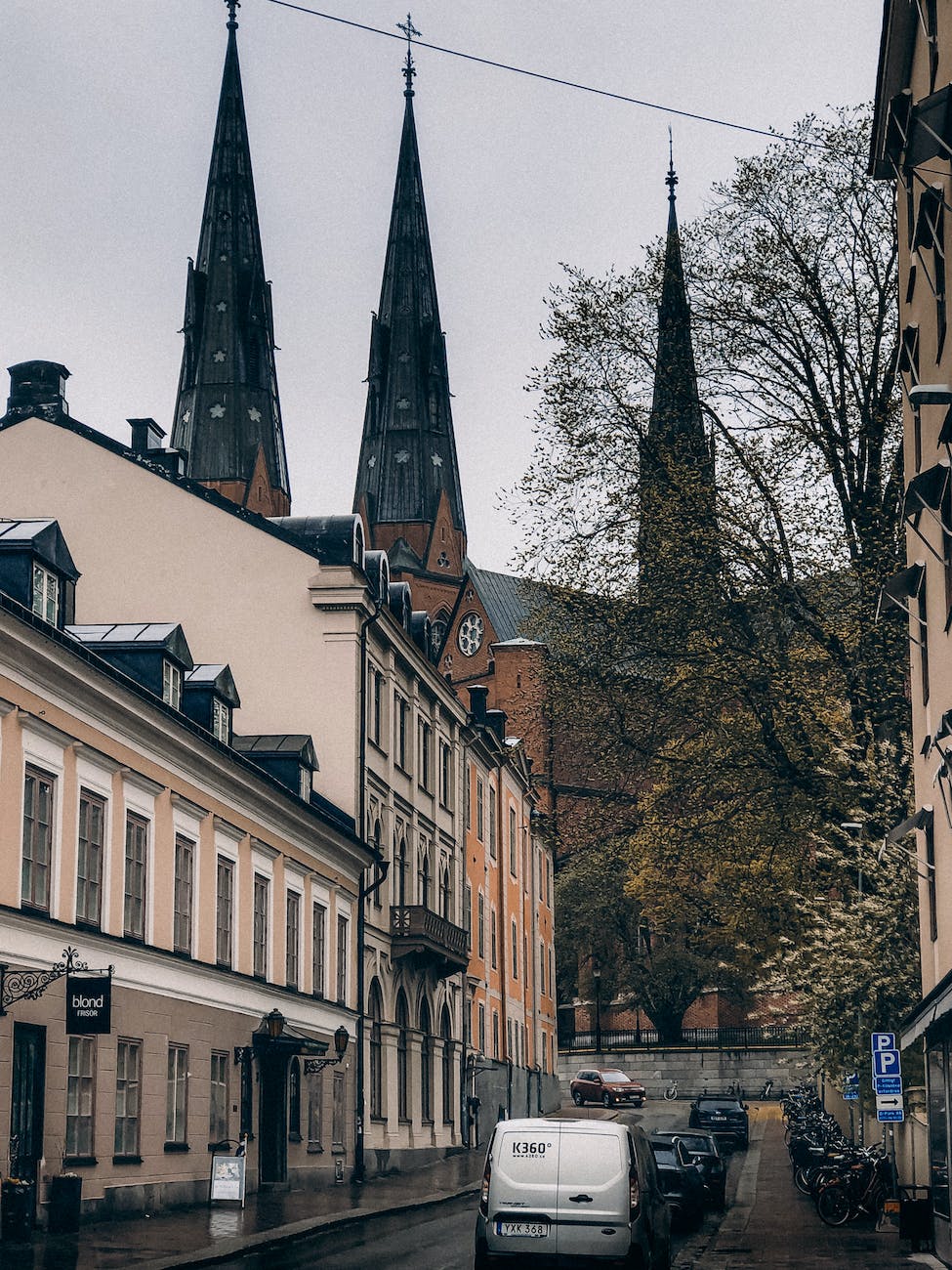
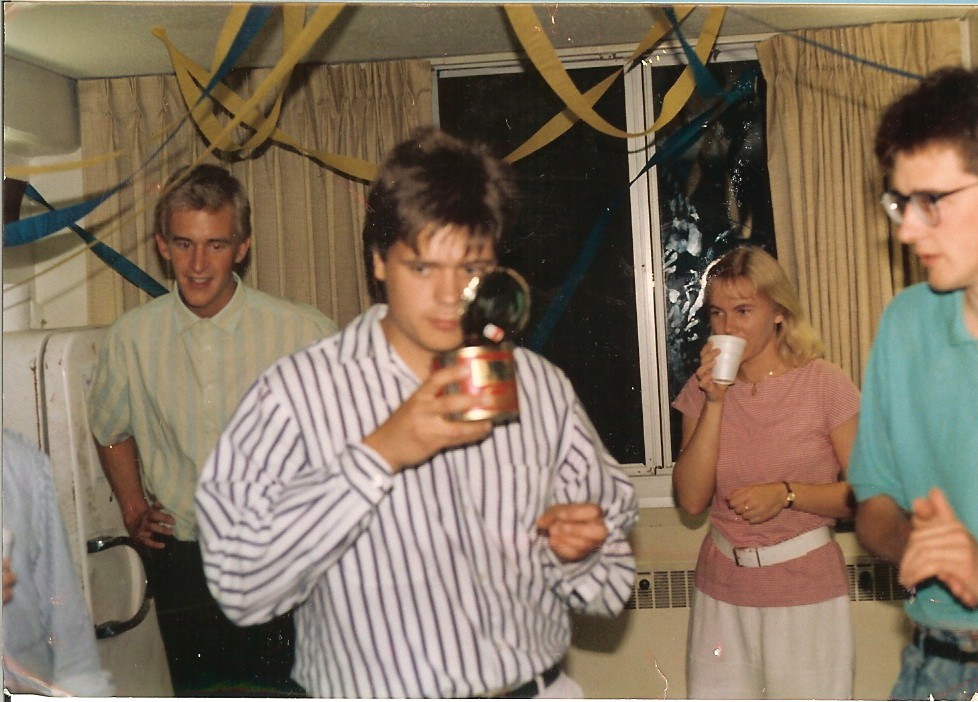
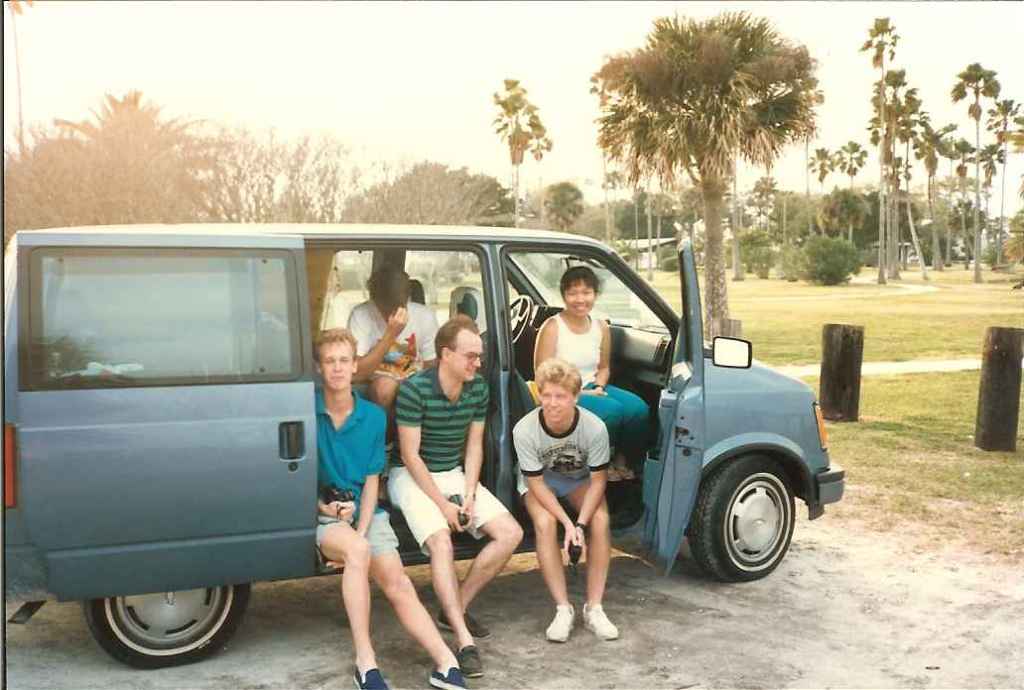
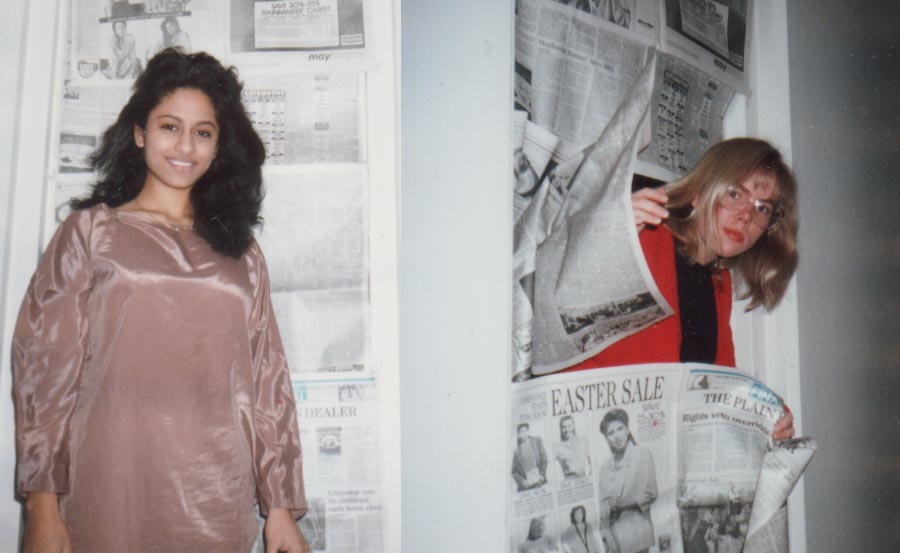
Street view of the old city of the Swedish city of Uppsala (1000+ years old). Photo by Aliia Troitskaya on Pexels.comFour Swedes inviting Americans to a fermented herring party. Fermented herring is a north Swedish specialty. Unfortunately, all the Americans experienced a culture shock from the fermented herring. I am the guy smelling the fermented herring can.Four Swedes and Jonas girlfriend from Indonesia. We were on a trip to Florida.Swedish exchange student Linda and her Indian friend Anuradha.
I arrived in the US in August 1987, and I was not well prepared for what I would experience. That doesn’t mean it wasn’t a great experience but there were challenges. Interestingly, I would later experience reverse culture shock. Reverse culture shock means that after adjusting to your new country you experience another shock when coming back to your old country.
Before heading out to Cleveland I visited Rakel, a Swedish friend who was living in California at the time. Here we are with our hosts Jay and Nancy Feinstein.
One of my first unpleasant discoveries was that the US uses imperial units instead of the metric system unlike most of the rest of the world. I quickly had to learn how to use inches, feet, miles, ounces, pounds, cups, gallons, etc. I knew about miles per hour versus kilometers per hour, but it had not dawned on me that it applied to everything. This is quite important in engineering.
The academic environment was also quite different. In the US there were fewer classes, but you were often required to participate and there were quizzes and homework in addition to the final exam, which was short and relatively rushed. In Sweden you showed what you had learned on one big final exam that lasted 6-8 hours. How you achieved success on that exam was up to you. Well certain lab work had some weight also.
In addition, in Sweden there were no dorms, no fraternities, no Greek life, no meal plans, no college sports teams, no tuition, and no health insurance. Attending a university in Sweden is more like working for a company. You are more independent, and tuition is free, and Sweden has national healthcare. In Sweden there are clubs, organizations, and parties you can go to, but it is more adult and has no likeness to fraternities. I have no opinion on which system is better, but it was a challenge to suddenly adjust to a dorm, meal plans, a different kind of student life, tuition waivers (provided by Uppsala University), etc.
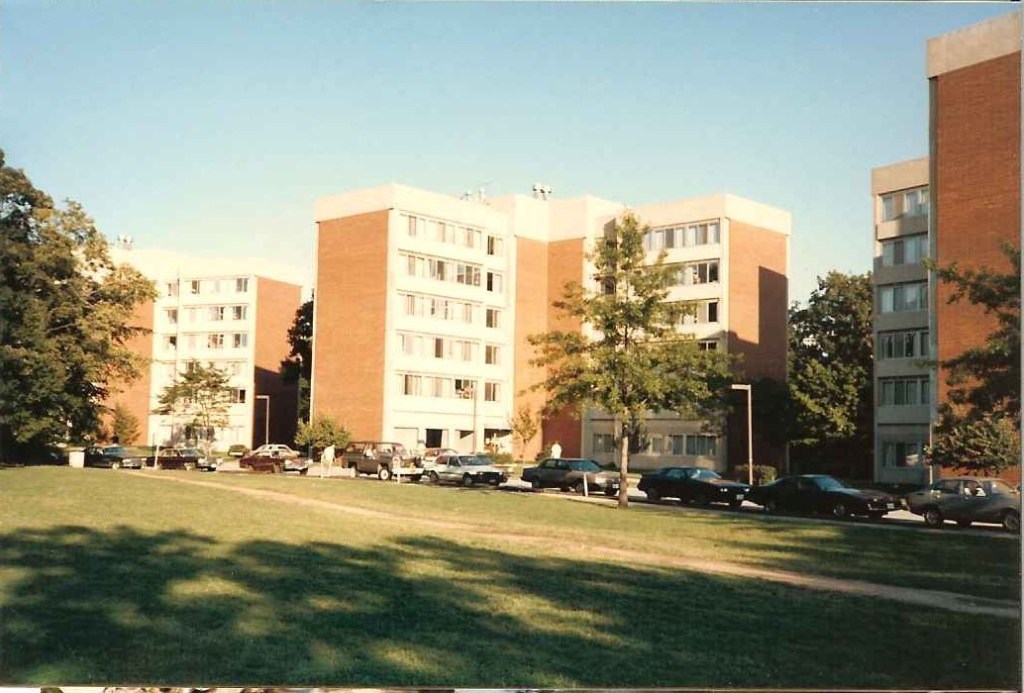
This is the Glaser dorm at Case Western Reserve University where I stayed.
Another difficulty was that I was not fluent in English at the time. I had a hard time with conversation as well as understanding portions of some lectures. People in English speaking countries often do not understand the amount of work that goes into learning how to speak a second language fluently because unlike most of the rest of the world they never had to do it. English being the premier second language comes with great benefits for native English speakers. Learning to speak a language fluently is one thing, learning to speak it without an accent if you primarily learned it as an adult is quite another. A question I’ve gotten many times is ”why do you still speak with an accent?”. Well, Arnold Schwarzenegger certainly knows the answer to that question.
Another thing people in English speaking countries sometimes miss is that people in the rest of the world are often not as familiar with the culture in English speaking countries as they might expect them to be. Well at least that was the case back then. In high school I studied Swedish and Scandinavian literature, and a little bit of German, French, Italian, and English/American literature, but I did not know much about Shakespear or famous American authors, and if you think about it, this is not strange. In addition, I did not know much about American movies or American music, but that was because I, unlike most Swedes, had not paid much attention to English speaking culture and music in general.
Add to that, the fact that Americans do not know much about cultural phenomenon in the world outside of the United States. For example, most Americans knew nothing about the world’s largest music competition, Eurovision. Eurovision is the largest song contest in the world. Countries compete against each other, and the final typically has as many viewers as the Superbowl, about 200 million. Americans also don’t know much about the second largest comic genre (largest at the time) in world, the French-Belgian Bandé-Dessiné (Astérix, Tintin, Spirou, etc.). So, we knew different things and were used to talking about different things, sometimes leading to awkward situations.
Scanned front cover of one of the Asterix comic books.
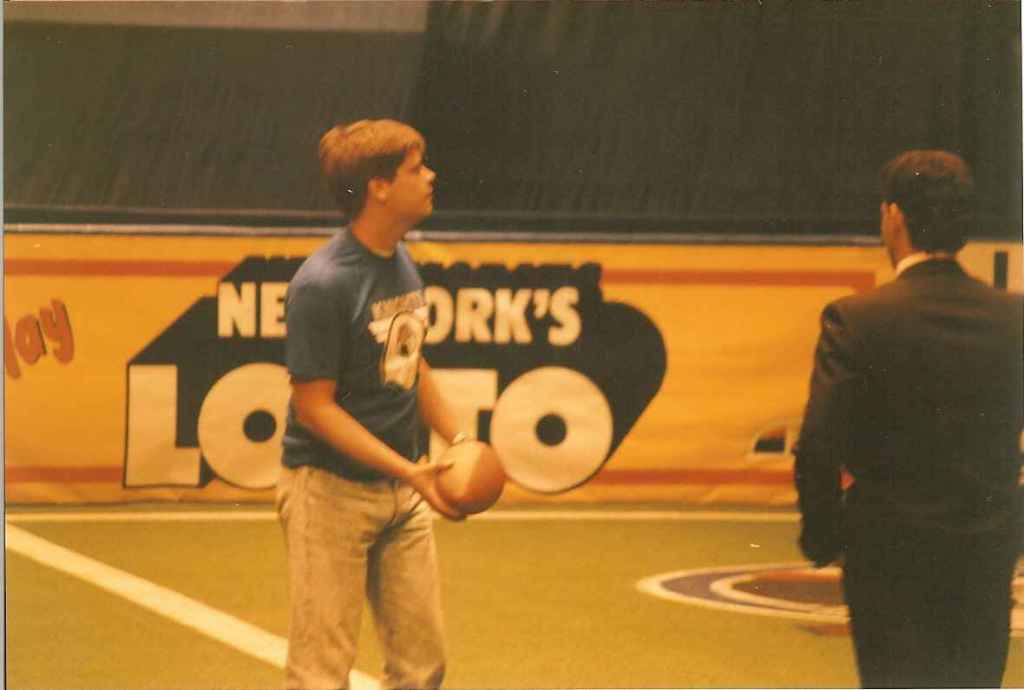
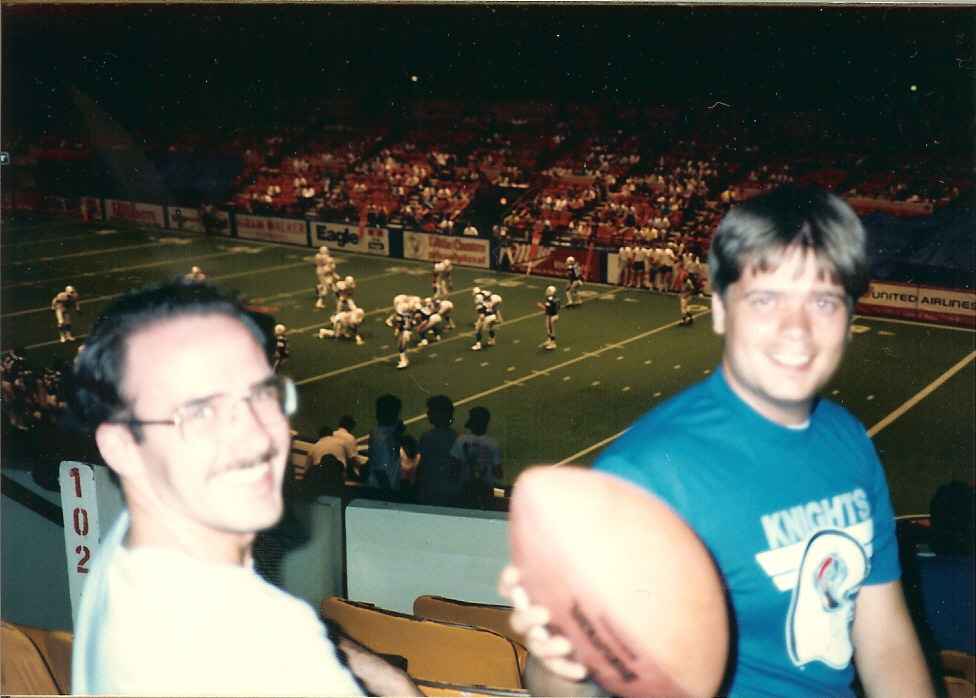
Which brings me to handegg. What most of the world call football is called soccer here, whilst a sport in which you handle an egg-shaped object mostly with your hands is called football, when it should be called “handegg”. When I arrived in the US, I had never heard of American football, but I quickly realized that I better know something about it. Later in the year I went to an indoor football game with a friend in Madison Square Garden in New York. Indoor football is a sport that has almost vanished, but it was still a thing back then. Can you guess who was called down to the field to play football at half time? I was. I told the host that I was from Sweden and that it was the first time I held a football. He showed me how to hold the ball and announced that I was from Sweden and had never held a football. The crowd was cheering for me, and luckily, I threw the ball into the goal two times out of three. Our team did not win but I did well.
I am getting ready to throw the ball.It went well, and I got to keep the ball (egg), my very first football.
Which brings me to the fact that Americans are typically polite, friendly and supportive of the underdog. They communicate well, they say excuse me when they bump into people, they smile a lot, and are often good conversationalists. Americans can be loud and not everyone is friendly but in general most Americans are friendly. I think this is a good thing that I am trying to emulate but it was yet another thing I needed to learn.
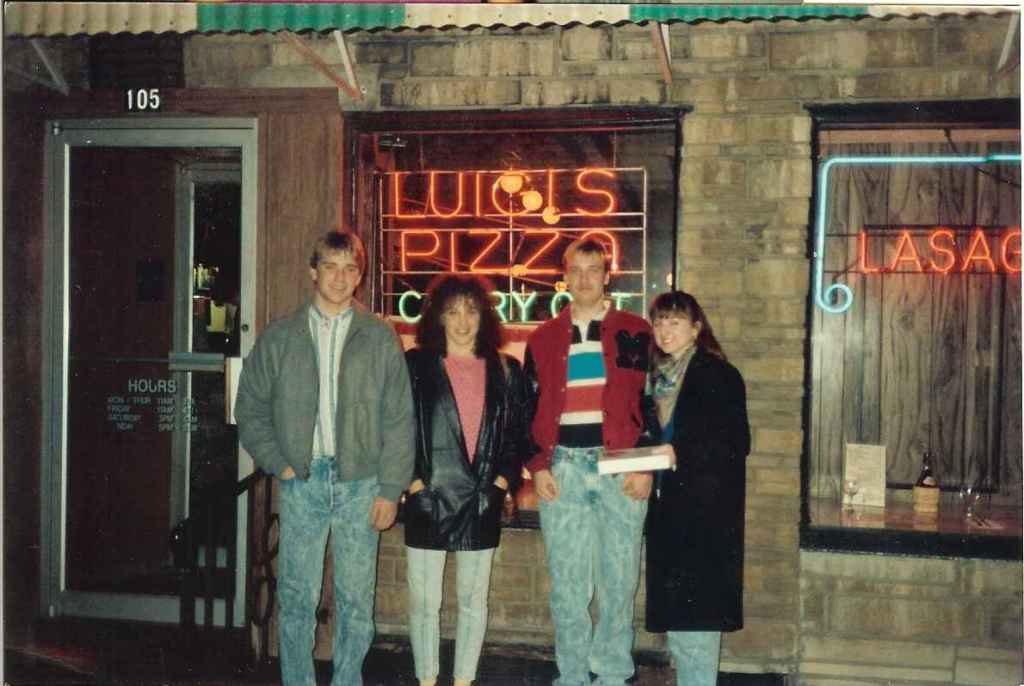
Some friendly Americans including my wife second from left. The others are (left to right) Jim Haggarty, something James Kirkpatrick and his wife.
One thing that might sound like critique is that Americans back then did not know world geography very well. Today’s youth seem to be a lot better educated in this regard. I should say that by the age of ten I knew every country in the world and their capitals, and I could say something about most of the larger countries. So, it was a little bit frustrating to me to speak to people who did not know where anything was. We met people who asked how long the drive from Sweden / or Europe was. A woman asked me where I was from and I said Sweden to which she replied, “is that where all the men wear skirts?”. I said, “no that is Scotland”. I believe that’s what she meant. Another woman asked me the same thing, and after hearing my answer, she said “Sweeting, that’s the name of your country? What a cute name for a country”. Or how about this conversation between the PhD advisor to a friend of mine and my friend’s boss:
Boss : My name is …, what is your name?
PhD advisor : My name is Bahram.
Boss : Baddam, that’s not an American name, is it?
PhD advisor : No, I am from Iran.
Boss : Iran I’ve never heard of that. Where is that?
I overcame my culture shock, and we all did well at CWRU. It was a good year. Later that year I met my wife Claudia and with her I would experience a reverse culture shock a few years later. I was working for a Swedish robotics company, and we moved to Sweden with our oldest son for one and a half year. Not only did my wife have a culture shock but I did too, coming back to Sweden. How did that happen? Well, one reason was that in the US I had gotten used to a mix of cultures and ethic groups and Sweden is a very homogenous country. This mattered because through my wife, who is not Swedish, I got to know immigrants to Sweden. It is difficult to fit in when you are different and therefore immigrants tend to hang around other immigrants, so I learned to see Swedish society through their eyes, and I saw what I had never seen before. It took some time to get used to.
My wife to be Claudia in 1988Photo by Pavel Danilyuk on Pexels.com
Have you experienced culture shock? How about a reverse culture shock?
This blog is focused on Leonbergers but every now and then I post about something else, typically a book I want to promote. This post is different. I have many hobbies and one of them is volunteering for a climate change organization called Citizens Climate Lobby
CCL, 200,000 supporters in the US, 10,000 supporters in Texas, non-partisan and non-profit. CCL supports all energy options that can be used to reduce emissions, renewables, nuclear, natural gas replacing coal, carbon capture.
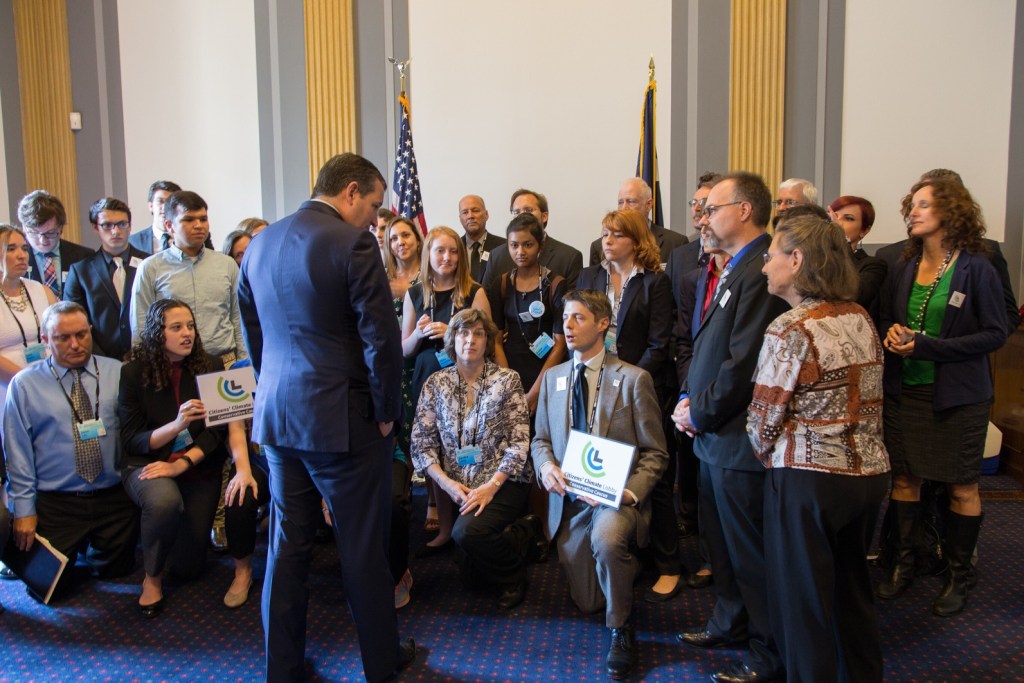
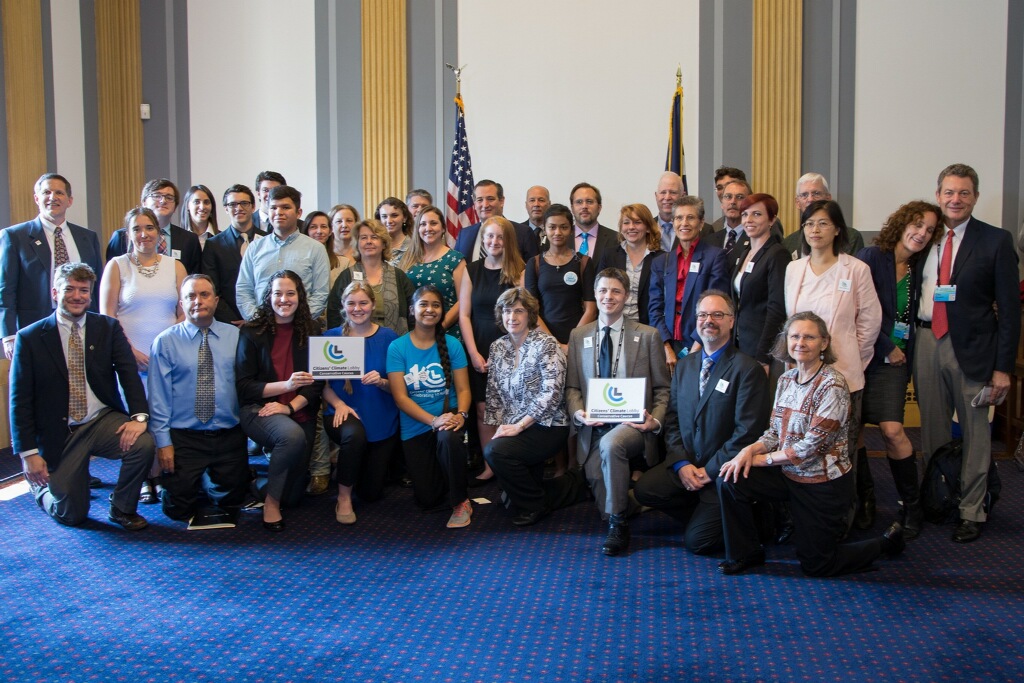
This post is about my journey towards becoming an advocate for a livable planet for future generations as well as the climate journey of my friend Larry Howe, who is a lifelong Texas Republican who became a climate activist (and he is still a Republican). Larry’s three-part article is focused mostly on solutions, and my post is focused mostly on how I got here. We both started out as “skeptical” of global warming and we both support the same solutions, so the two posts complement each other. CCL talks to both sides of the political spectrum, and we try to foster good relations with everyone. Below is a photo of us with Senator Ted Cruz.
Peter Bryn the leader of the conservatives’ action team is presenting our carbon fee and dividend proposal to Senator Ted Cruz in 2017. The CCL Texas delegation is standing in the background.
Citizens Climate Lobby is a volunteer driven non-partisan organization focused on educating the public and lobbying/talking to politicians, industries and organizations. We are not professional lobbyists. We don’t bring a billion dollars to political offices, in fact not even one dollar. We just bring ourselves as voters and constituents, and a friendly and positive attitude. We present well researched proposals for solutions and ideas. We require that the proposals are effective in reducing emissions, good for the economy, market oriented, non-partisan and acceptable to both Democrats and Republicans. In addition, we listen to the concerns of the lawmakers. One of my volunteer positions within CCL is to be the CCL liaison to Senator Ted Cruz office. Climate Change may not be Senator Ted Cruz’ cup of tea, but he voted for one climate bill that we supported, the Growing Climate Solutions Act.
Senator Ted Cruz TXJR with Citizens Climate Lobby in 2017. The senator is standing immediately to the right of the American flag, and I am standing immediately to the left of the American flag.
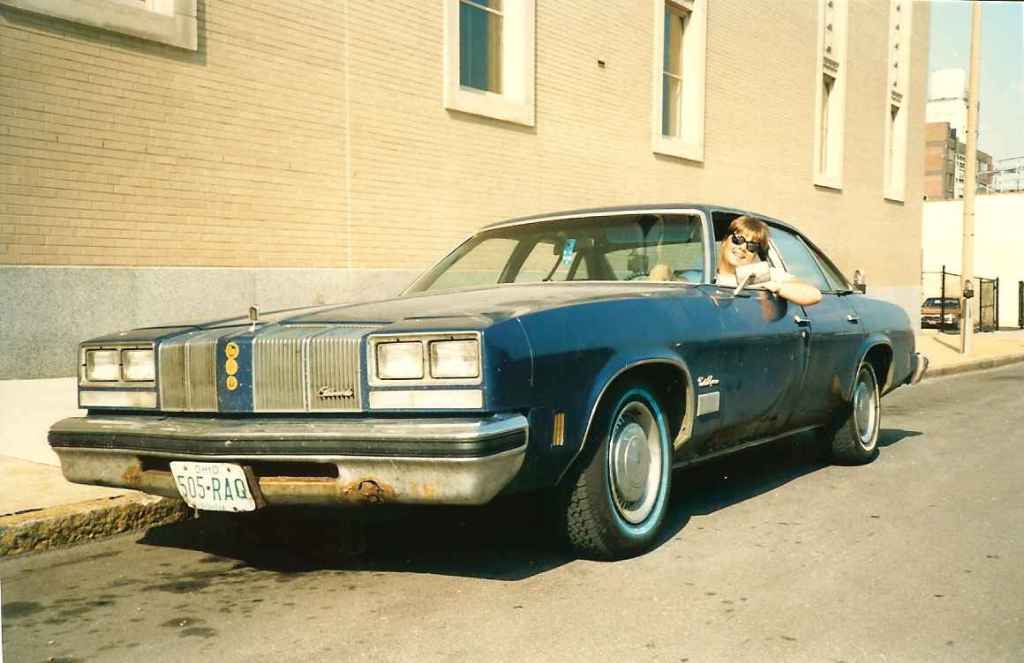
In June of 1988 I embarked on a journey with a friend and with my brother around the United States in an old Oldsmobile Cutlass Supreme 1976. I had just earned a master’s degree in electrical engineering and applied Physics from Case Western Reserve University, Cleveland, Ohio, as well as a degree in engineering physics from the University of Uppsala in Sweden (well they were really the same degree). It was an unusually hot summer. June 23, 1988 was the first time I heard the word “global warming”. I was watching some of Dr. James Hansen’s testimony before the United States Senate Committee on Energy and Natural Resources. I thought it made sense what he said. After all, I knew that greenhouse gases would increase the temperature of the atmosphere. It is hundreds of years old simple basic science and I had certainly not slept through my physics classes. It is why Venus is the hottest planet in the solar system and not Mercury.
Me in my Oldsmobile Cutlass Supreme 1976 in 1988. I bought it for $250.
As time went by (about 10-15 years ago), I became increasingly skeptical and doubtful of global warming or climate change as it was more commonly called later on. The reason was that I almost exclusively read and watched rightwing news media such as world-net-daily (tended to push conspiracy theories), Newsmax and Fox News. I believed in the concept of global warming, it is basic science after all, but I thought that it was exaggerated and that it was promoted and distorted by left-wing agendas, and I incorrectly believed that there was no scientific consensus on the issue. I also bought into the false narrative that this was about environmentalist ideology, politics, or even a sort of environmentalist religion, and not a real and serious problem. My disdain for environmentalists, my ideology, and my gut feelings certainly aided the propaganda in misleading me. In addition, I read a lot by Björn Lomborg and Patrick J. Michaels and I believed them. To clarify, I did not know it at the time, but I was wrong, very wrong. Below is a video from NASA showing the annual shrinkage of the arctic sea ice.
To see the NASA web page from where the YouTube video of the shrinking arctic ice is taken click here.
I should say that I had some lingering doubts about my own “climate skepticism”. During my travels to national parks, the great barrier reef, and other places, I encountered guides who were scientists, as well as others, and they told me about coral bleaching, ocean acidification, receding and disappearing glaciers, the pine beetle problem, white pine blister rust, the destruction of forests due to global warming, and I could see some of the effects with my own eyes in northern Sweden, which is close to the arctic and therefore the effects of global warming are more visible.
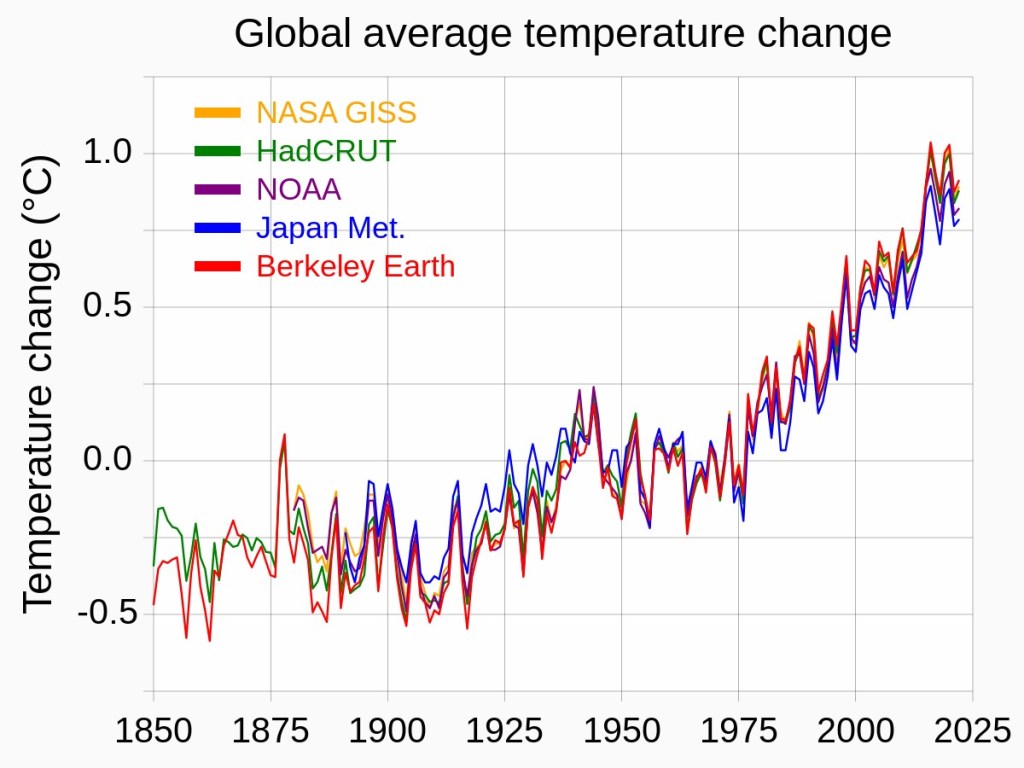
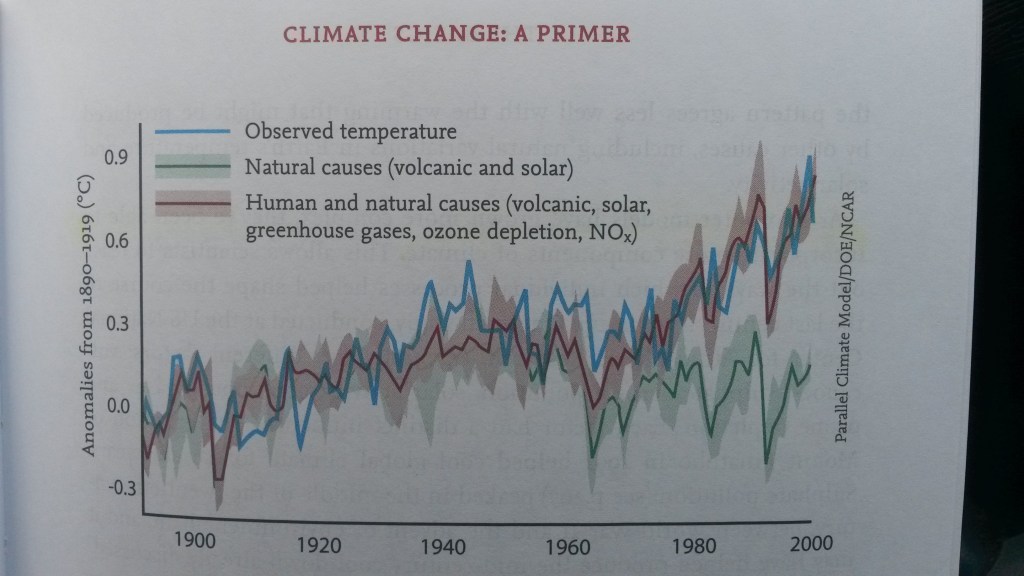
Temperature anomaly graphs from NASA, Hedley Center, Japan Meteorological Agency, NOAA, and Berkley.
It also bothered me that my physics hero Stephen Hawking was a global warming alarmist and that other leading physicists and astrophysicists whom I admired, such as Michio Kaku, promoted and warned us about human caused global warming. Add that popular science magazines I subscribed to, such as Discover and Scientific American frequently wrote about global warming. I should say that I tended to skip those articles and I believed those magazines had a left leaning bias.
The carbon dioxide concentration measurements began in 1958 at the Mauna Loa Observatory on the island of Hawaii. Since then, several other ways of measuring carbon dioxide concentration have been added.
However, there were too many red flags regarding my “climate skepticism”. It seemed like a lot of people knew and understood something I didn’t. This prompted me to take a deep dive into the matter. I had a decent scientific background. I had a master’s degree in engineering physics and a PhD in electrical engineering / computer science/ robotics and I was used to reading and writing research papers, and I had been on both sides of the peer review process, and I love mathematics. Electrical engineering and robotics is certainly not atmospheric physics but I wasn’t going to judge or review papers, I just wanted to know what scientists in the field actually were saying, and due to my background I was able to understand the papers.
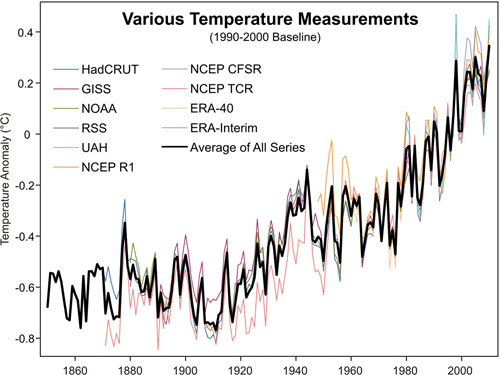
Another temperature anomaly map, this time ten different organizations.
I read peer-reviewed research articles on the topic, I read several dozens of books on the topic, including climate skeptic books, I subscribed to Nature, a very respected science journal publishing peer reviewed articles, I conversed with or listened to climate scientists online. I found out that my cousin Per Wikman-Svahn was a physicist who worked as an expert on the ethics surrounding climate change, and I extracted information from him.
Global temperature going back twenty thousand years, a hockey stick graph. Notice the stable temperature during the last 10,000 years, coinciding with the development of human civilization, and then a sudden sharp increase at the end.
I learned that the evidence that climate change is happening is undeniable and overwhelming including these few examples. I learned that the current global warming is mainly caused by our greenhouse gas emissions. I learned that global warming is not caused by natural cycles, something the experts on natural climate cycles repeatedly stressed. It is not the sun, or volcanoes and as you can see in the hockey stick graph above, it isn’t a normal cycle, and the recent increase in temperature is disturbingly quick.
Natural causes for global warming / climate change would have cooled the planet, not warm it.
I also learned that warming caused by greenhouse gas emissions have a certain fingerprint; the arctic will warm faster, nights will warm faster, the tropopause would be pushing up the boundary with the stratosphere, the mesosphere would be cooling and contracting (think the troposphere as being a blanket). All of that has been observed. It was greenhouse gases, not something else. I learned that scientists had used spectral analysis to verify that most of the warming came from increasing amounts of CO2 in the atmosphere, and they had even used carbon isotopes (C-12, C-13, C-14) in corals and the atmosphere to verify that the new CO2 added to the atmosphere and oceans come from hundreds of millions of years old underground carbon.
I learned that satellite measurements agree with surface thermometers, contrary to what the rightwing media I had read claimed. I learned that nearly all actively publishing climate scientists say humans are causing climate change (~99%). I learned that no national or international scientific body in the world rejects the findings of human-induced effects on climate change. I learned that Rachel Carson was not a fraud and that she had not killed 500 million people. I learned that Dr. Michael Mann was not a fraud and that he was right about his hockey stick curve. I learned that the so-called climate gate scandal was manufactured.
Hockey stick curve last 1,000 years, blue-Michael Mann’s original curve (proxy measurements such as tree rings), green-dots 30-year average, red temperature measurements.
I would later learn that among tens of thousands of climate change related papers only 38 are skeptical of the consensus and they all contain errors that if corrected for they ended up agreeing with consensus. I learned that the vast majority of climate skeptic papers originated with rightwing think tanks. I had foolheartedly donated to one of these organizations, the Heartland Institute. I realized that rightwing media engaged in defamation, harassment and attacks on climate scientists.
From Scripps institute. Keep two things in mind. First the warming from CO2 is delayed and may result in positive feedback that can manifest decades and centuries later. Secondly, human civilization developed during a period of stable climate. That CO2 levels and temperatures were higher millions of years ago is not much comfort.
Above all I learned that I had been bamboozled and misled and that I had believed maybe hundreds of false claims. I learned that there is a very powerful industry consisting of fossil fuel advocates and rightwing think tanks that are trying to confuse and mislead the public, attack and harass scientists, and that if you want the truth you need to trust the scientific evidence and the data, not arguments based on ideology and second guessing the motives of climate scientists is just nonsense.
Going back 800,000 years. From Scripps institute.
Long story short, we know with certainty that global warming / climate change is real and that we are causing it, chiefly with our greenhouse emissions, and we have known this for several decades. The scientific debate is over, but the public is still confused due to propaganda. Again, I had been bamboozled by rightwing think tanks, like so many others, so I understand.
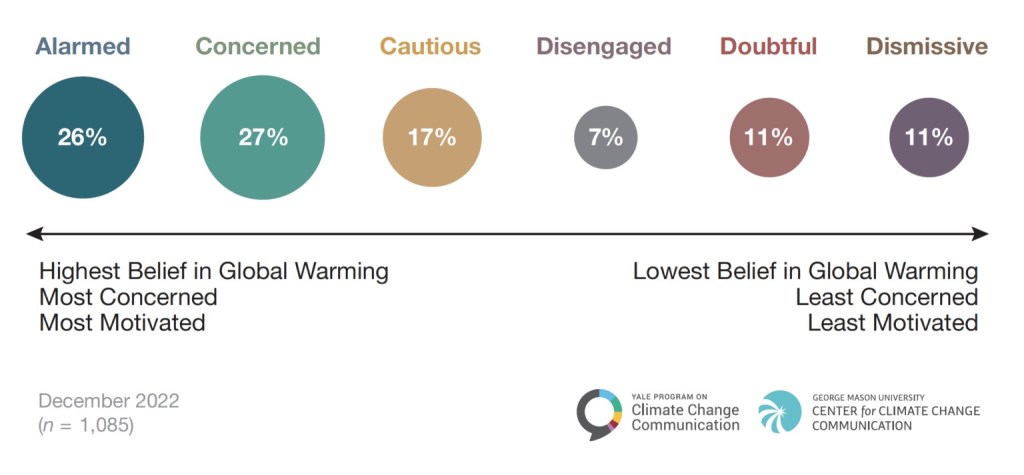
Instead of using somewhat disparaging popular labels such as “believers” or “climate change deniers” Yale University classify people into six groups. For example, climate change deniers are referred to as dismissive.
I do not think I was a “dismissive” but I was “doubtful” due to all the misinformation I had allowed myself to be fed. Again, we know with certainty that global warming / climate change is real and that we are causing it, chiefly with our greenhouse gas emissions, and we have known this for several decades. If you pay attention, there is no good reason to be doubtful, and certainly not dismissive. After reading a book by James Hansen (Storms of My Grandchildren: The Truth About the Coming Climate Catastrophe and Our Last Chance to Save Humanity) in 2013 I decided it was time for me to get involved.
American attitudes over the last 10 years. From the Yale Program on Climate Communication.
At first, I tried to argue with those who were dismissive, either by inserting myself into a discussion or after they approached me, typically because of something I said either on-line or personally. This was a surreal experience. I remember trying to explain to an acquaintance who claimed to be an expert in science (he wasn’t) about the measurements made on the age of the added carbon using isotopes. He resolutely stated that isotopes did not exist, all atoms of the same element are identical, and the peer reviewed research article I provided was fake. He claimed to be an expert on science based on reading biased media (he had no degree) and he had not even heard of isotopes, neutrons, and radiometric dating. I sent him a link to Wikipedia explaining isotopes, just as a help, but that was a mistake. He thought that since Wikipedia is sometimes wrong it proved that I was making up the entire concept of isotopes.
What NASA Knows from Decades of Earth System Observations. To see the original page, click here.
I came across so many dismissive people who thought they understood climate change much better than the scientists themselves or believed that most or all climate scientists in every country on earth were liars. I came across a lot of conspiracy theories and many very strange arguments focusing on speculative assessments of the character of climate scientists or activists rather than focusing on the data and evidence. Many invoked Al Gore, as if it was him, who invented climate science, or the UN. It is nuttier to believe that Al Gore invented climate science than that he invented the internet. However, the worst part was the insults, the mockery, the rage, and the trolls. It became clear to me that dismissives tended not to be reasonable people and that they are louder than most. Considering that they tended to be older angry guys who were unable to convince anyone, especially not the younger and educated, I came to realize that arguing with them was a waste of time. You could not have good-faith arguments with them, and after all they did not matter. There are more productive ways to engage.
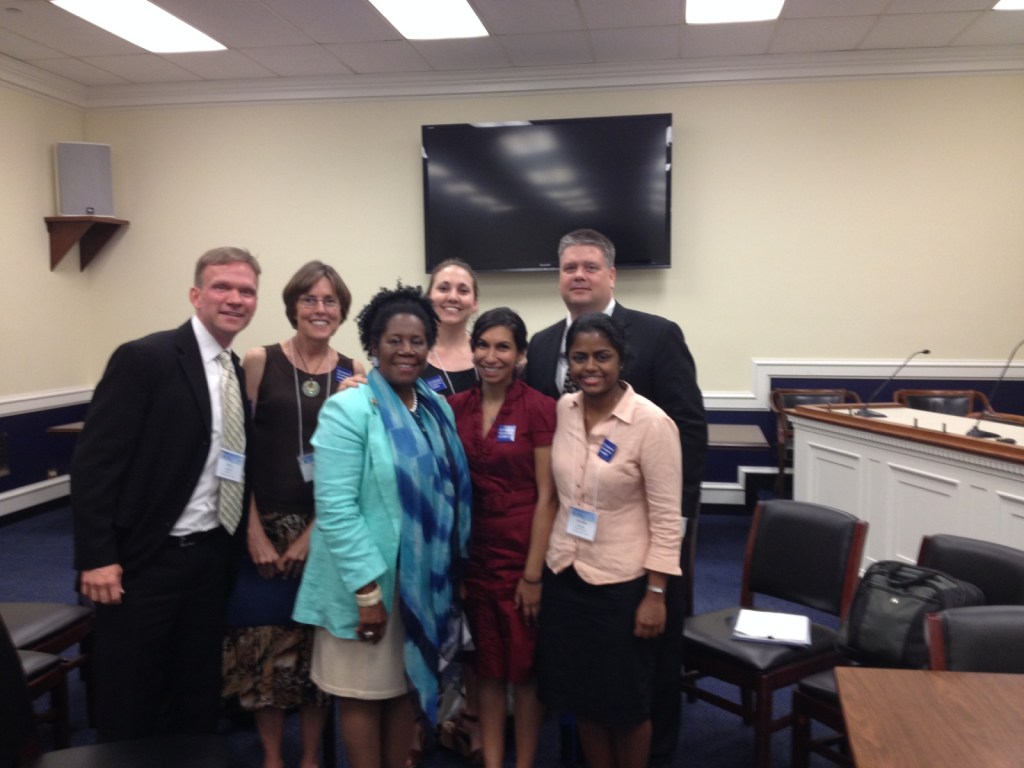
CCL meeting with Democratic Congress Woman Sheila Jackson Lee (front). She took us on an impromptu two-hour tour of congress. I am the big guy back-right.
I felt I needed to do something for future generations, especially since I had been on the “wrong side” of the issue and also considering that I understood something many people did not, that climate change was a real and serious issue that we could do something about. In James Hansen’s book Storms of My Grandchildren, I had learned about solutions that seemed effective and doable, one of them being the carbon fee and dividend. I googled carbon fee and dividend and I stumbled upon Citizens Climate Lobby. I decided to join them and as it turns out so did James Hansen, as a board member. My first CCL volunteer position was as the CCL liaison to Congressman Pete Sessions office. He is one of the most conservative congressmen from Texas. In a meeting with the congressman, we asked him whom he trusted the most on the issue, and he answered Trammel Crow (the younger), one of the six children in the Trammel Crow Dallas real estate businesses (billionaires) who was also his biggest donor. Well, after talking to Trammel Crow we got the endorsement from Trammell Crow Company, which we handed to Pete Sessions.
In the photo we are meeting with Pete Sessions legislative director Ryan Ethington who was very supportive of us and loved to talk to us about climate solutions. Ryan was a football player and very tall. The three people on the right are me, my wife and our daughter.
Next is the climate journey of my friend Larry Howe, a lifelong Texas Republican and native Texan, and climate activist. We, 90 Texas CCL members to be specific, recently came back from Austin, Texas, where we lobbied (talked to) 67 Texas lawmakers for the first time in history. This was Larry Howe’s brainchild and doing. Larry is very active and a great leader. His post (in three parts) is more focused on solutions, whereas mine was about the how and why regarding my turn around on the issue.
Click on the picture to visit the three-part climate journey of Larry Howe.
Jackson Galaxy the world’s foremost Cat Behavior Consultant
I am sure you cat lovers know about the world’s foremost Cat Behavior Consultant Jackson Galaxy. He has written a lot of very successful books on cat behavior including the best seller “Catification”, Designing a Happy and Stylish Home for Your Cat (and You). It is rumored that Jackson Galaxy is from outer space and that he got stranded on Earth without his photon blaster and therefore had to come up with a job to survive. Whatever the case is he is a beloved icon in the cat community.
Being an energetic and family-oriented giant breed, the right type of home may be an even more important feature for Leonbergers. Below I am listing ten important points to consider when preparing your home for a Leonberger.
First of all, a small apartment is not a suitable home for a Leonberger. They need room and they need a backyard or similar for running and moving around.
Leonbergers are family dogs, and they like to be with people so they should not be left outside for too long, and therefore your house needs to be able to accommodate a very large and hairy dog that sheds a lot.
In addition to shedding a lot, Leonbergers love to dig and to be messy and muddy. Allowing a little bit of a mess will make your Leonberger a happy dog.
You need a fence, preferably at least six or seven feet tall. The ground below the fence cannot be too soft since Leonbergers are expert diggers. A runaway Leonberger may be a happy Leonberger for a short time but bad things can happen to runaway Leonbergers. Check whether wild animals such as bobcats and coyotes can get in through your fence.
Check your backyard and locate and get rid of sharp or dangerous objects such as metal rods sticking up from the grass.
If you have a swimming pool, make sure the dog can easily get in and out of the pool on his own.
While the Leonberger is still a puppy you need to enclose electrical cords with cord protectors for pets with strong jaws.
Secure glass tables and vases that can easily tip and fall, the fireplace. Secure toilet-bowl additives, drain cleaners, bar soap, tampons, paint, antifreeze, pesticides, oil and gasoline, rat poison, carpet cleaner, fertilizer, bleach, detergent, hot iron, sharp objects, and glass jars.
Leonbergers can reach all counters. They love to stand on their back legs, like bears, and they are intelligent enough to open easy access pantries, so it is important to secure food items dangerous to dogs such as; coffee beans, chocolate, onions, garlic, yeast, avocados, raisins, macadamia nuts, fruits pits and seeds, raw salmon and trout, raw eggs, mushrooms, tomatoes, persimmons, rhubarb leaves, medicine, Tylenol, any food containing xylitol (sugar substitute), food left out, garbage. Click here for more information.
And Happy Belated St. Patricks’ Day from me, Thomas, the Leonberger Behavior Consultant.
Here is the second proof version of the book. This one might be it!
Proof version of the book The Life and Times of Le Bronco von der Löwenhöhle.
I received the second proof for my book The Life and Times of Le Bronco von der Löwenhöhle. All the content looks good, the front and back covers seem to be ready. This might be the final version. Even if we go (me and my editor) with this version, we have already decided that the book will be released on July 3rd, 2022, which would have been Bronco’s 15th birthday. The book will be available on Amazon, including many international Amazon websites, Barnes and Noble, as well as many other bookstores.
The ISBN number for the print edition is 978-0-9980849-5-4
The ISBN number for the e-book edition is 978-0-9980849-6-1
Endorsements for the book
I will add more detailed information about the book and the links to places to purchase the book at this location. Which is the same as clicking “The Book” menu item at the top.
The following story is an excerpt from an upcoming book about Leonbergers and especially our Leonberger Le Bronco von der Löwenhöhle and his many crazy adventures.
Back when Bronco our Leonberger was young, the kids had pet hamsters—Moldova and Montenegro. The hamsters escaped from their cages sometimes, but Bronco usually helped us find them whenever they did. Claudia would tell him, “Bronco, find the hamsters,” and he would go around the house sniffing until he found them. One time he found them in the linen closet; another time he found them on a shelf in the living room.
On one occasion, a friend of David trusted us with his two hamsters while he and his family went on vacation. A couple of days later, Claudia noticed that the two hamsters were missing from their cage. The next thing she noticed was that Bronco’s cheeks looked puffy, so she said, “Bronco, drop it!” Out came the two hamsters, both unconscious.
Cheeks full of hamsters (illustration by Naomi Rosenblatt)
In a panic, Claudia started performing CPR on the unconscious hamsters. She put one hamster at a time in her hand and gently compressed each tiny chest using the finger of the other hand. Fortunately, one hamster revived right away. The CPR didn’t seem to be working on the other hamster, but Claudia put both of them back in their cage, and soon the second hamster also woke up. We decided to keep the incident to ourselves. Hamsters don’t squeal.
Hamster CPR (illustration by Naomi Rosenblatt)
The question is, Did Bronco try to eat the hamsters? Or did he simply find them and pick them up, intending to alert us to their presence? I’ve asked several people this question, including some who know Leonbergers well. The answer they give is that he tried to save them from whatever danger he thought they might have been in. If he wanted to eat them, they say, he would have tried chewing them. But clearly, he didn’t.
The hamsters may have felt differently about the situation and may have fainted from the shock. Who knows? Bronco was a hero on many occasions, but this time, perhaps, he was a hamster superhero.
Eventually our own hamsters died, but that didn’t end Bronco’s interest in them. When the first hamster died, we held a funeral. We put the hamster in a shoe box, said goodbye, put some flowers in the box, and buried it in the backyard underneath some bushes. But when we turned our backs, Bronco was there, digging under the bushes. Perhaps he thought he could save the hamster. So, we called Bronco off and tried again: this time I dug a deeper hole and put a wide rock over the shoe box before covering it. Now Bronco couldn’t dig up the hamster. When the second hamster died, I had learned my lesson and did the same thing.
The following story is an excerpt from an upcoming book about Leonbergers and especially our Leonberger Le Bronco von der Löwenhöhle and his many crazy adventures.
It was a quiet evening, and I was home alone. My wife, Claudia, was visiting her parents a few blocks away with Rachel, our daughter. Our son Jacob was meeting with his debate team; our other son, David, was visiting a friend.
I was making myself a ham sandwich in the kitchen when I suddenly felt a hand on my right shoulder. I startled and turned my head to face what I feared was an intruder, and there he stood on his hind legs—our Leonberger, Bronco. His big paw on my shoulder felt for a moment exactly like a human hand.
Bronco looked at me with his kind, wise eyes, then he looked at the sandwich. Then he turned his head toward me again and held my gaze. At that moment I understood what he wanted. I cut the sandwich in two and gave him his half.
I should explain that we had a problem with a trespasser at that time, which was the reason I was startled. This trespasser would sit outside our bedroom window at night and make threats and shout obscene comments at Claudia when I was not present. At first, though, we didn’t know where the threats and comments were coming from. I doubted Claudia’s accounts of these incidents, especially because she thought the voice might be coming from within our bedroom, perhaps via an electronic speaker. I thought she was just having nightmares.
Then one night I heard it myself—a voice screaming, “I am going to burn your house down!” Just as Claudia had said, it sounded like it came from within our bedroom, almost as if it were right next to me.
After Claudia and I went through our “Oh, so now you believe me” routine, I started looking under our bed and inside the heating and air-conditioning vents for hidden speakers and/or microphones. It was hard to believe that someone had planted these things in our bedroom, but that seemed to be the case.
Then it finally dawned on me. Next to the headboard of our bed, on Claudia’s side, just inches from her pillow, is a window. At night, when the blinds are lowered and the slats are partially open, you can see in, even if we have just a few lights on in the house. But, of course, under these conditions, you can’t see anything that might be outside.
I ran out the front door and around the back of the house, and there, right in front of our bedroom window, was one of our lawn chairs. The trespasser had climbed our fence, taken the chair, sat down in front of the window, and spied on us. Whenever I left the room, he would shout obscenities and threats at Claudia. When his face was planted in front of our window, he was just two or three feet away. This was why the voice felt so close. This had been going on for two weeks. We were happy to have finally figured it out, but we realized we had a problem.
Trespasser at night spying on us through our bedroom window (illustration by Naomi Rosenblatt)
We talked to our neighbors about the situation, and they told us that the trespasser had terrorized them as well. He had been quite busy looking through bedroom windows at night. People in the neighborhood were scared. I called the police, who told us they could do nothing unless the man was caught in the act or he committed a crime other than trespassing.
Hiring Private Investigators
Therefore, I decided to hire private investigators. I found them in the phone book. Phone books still existed back then.
The investigators told me that they typically spy on people suspected of cheating on their spouses, so this would be a more interesting job for them. The plan was for them to hide behind the bushes in our backyard and in a dark car parked on our street. When the man appeared, they would record him on video. They had a lot of fancy equipment and instruments, including big microphones, cameras, and metal detectors. They reminded us of Ghostbusters with all their technology and enthusiasm. They clearly loved their job. Unfortunately, though, the trespasser didn’t show up, so after a couple of days I decided to let the investigators go.
However, I soon figured out who the trespasser was. I started paying attention to what was going on in the neighborhood, and one evening, I noticed a strange looking but relatively young man, apparently homeless, who seemed to be stealthily roaming our neighborhood. I did not confront him, because I had no proof.
The Tresspasser is Back
But a few days later, I heard shuffling noises outside our bedroom window. The trespasser was finally back. This time I sent Bronco out to chase him, and he did. Like the detectives, Bronco was enthusiastic but didn’t catch him. Still, he chased the man off. Having a big bearlike dog rushing toward you at night is probably a bit unnerving, even if the dog just wants to lick you. We never experienced or heard about the problem after this event, so Bronco may have helped the entire neighborhood.
A couple of weeks later, while walking Bronco on a neighboring block, I saw the homeless man across the street, at a bit of a distance. He stared at us in fright. Bronco just calmly looked at him without barking. The man was clearly terrified of Bronco, and he ran away.
But despite the nightmare the homeless man had inflicted on us, I felt sorry for him. My guess is that he was suffering from mental illness and that he had had a very tough and lonely life.
Bronco chasing off trespasser (illustration by Naomi Rosenblatt)
The following story is an excerpt from an upcoming book about Leonbergers and especially our Leonberger Le Bronco von der Löwenhöhle and his many crazy adventures.
The photos below is of our Leonberger Le Bronco von der Löwenhöhle. In the left photo he is three months old and in the right photo he is soon to be 13 years old. Due to a misunderstanding his name on the original pedigree certificate from the Leonberger Club of America was even more interesting: “Lets do le Bronco von der Löwenhöhle”—yes, without the apostrophe.
The Leonberger is a noble and relatively rare breed, and purebred Leonbergers typically have a long pedigree that can be traced back to the beginning of the twentieth century. This means that if you buy one, you and your dog will become part of a special community, and your dog’s name will reflect that. Bronco’s last name, von der Löwenhöhle, means that he originated from Kennel von der Löwenhöhle.
During an email exchange with the person writing up Bronco’s pedigree certificate, we were informed that because our dog was born in a litter identified by the letter L, his official name needed to begin with an L, too, even though at home we could call our dog whatever we liked. We knew we wanted to name him Bronco, which we thought was appropriate for a Leonberger, so later Claudia wrote, “Let’s do Le Bronco,” intending that the dog’s name would begin with the word “Le,” fulfilling the kennel’s requirement.
But when we received a copy of Bronco’s pedigree, we saw that our correspondent had misunderstood and included the words “Let’s do” as part of the name! Well, “Let’s do” starts with an L, too, so it fulfilled the pedigree requirement. And that’s how Bronco’s official full name came to be Lets do le Bronco von der Löwenhöhle. I should mention that we later got this corrected.
We got our Leonberger, whom we just called Bronco, from a breeder in Canada by the name Julie Schaffert. She is a responsible breeder and is recommended/endorsed by the Leonberger Club of America. She was among the first Leonberger breeders in North America. She got started in the 1990’s. I should add that it is important that you get your Leonberger from a responsible breeder for the sake of the breed and your dog’s health. The Leonberger Club of America maintains a list on their website where you can find LCA recommended breeders.
During his lifetime Bronco did a lot courageous and amazing things. He saved our Pug’s life, he sniffed out an oncoming insulin shock in our Labrador before it happened, he found our runaway hamsters, he chased off a guy who was trespassing and threatening my wife and other women in the neighborhood at night, thus protecting the entire neighborhood. He also did a lot less great but funny things. We have 100+ stories that I will be adding to this blog.
For a Leonberger Bronco lived a long life. He died two weeks short of 13 years old and the average life span for a Leonberger is 8-9 years. Because he reached an advanced age for a Leonberger he was awarded the Grey Muzzle Award, given by the Leonberger Health Foundation International, which bestows the award on any Leonberger who has reached the age of twelve. The Grey Muzzle Award is also given to breeders, because they are partially responsible for the dogs’ longevity.
Our Leonberger Bronco at 3 months old and at almost 13 years old